Article

Investigating the Correlation Between Mechanical Impact and Long Term Performance Degradation in Li-Ion Batteries

Department of Mechanical Engineering and Engineering Sciences, University of North Carolina at Charlotte, Charlotte, NC 28223, USA
*
Author to whom correspondence should be addressed.
Batteries 2026, 12(6), 217; https://doi.org/10.3390/batteries12060217 (registering DOI)
Submission received: 29 April 2026 / Revised: 4 June 2026 / Accepted: 9 June 2026 / Published: 15 June 2026

Abstract

Lithium-ion batteries (LIBs) are subject to mechanical abuse both in electric vehicles and consumer electronic applications when dropped, which can lead to capacity degradation even if the cells survive the impact. This study investigates the impact of mechanical damage on the electrochemical performance of LIBs, focusing on capacity retention and internal resistance changes. The batteries were subjected to dynamic mechanical impact using varying impact energies (3J, 5J, and 7J) while measuring internal resistance and capacity before and after the impact. Hybrid Pulse Power Characterization (HPPC) was employed to assess internal resistance and capacity degradation across multiple cycles. Our results demonstrate that even minor mechanical damage can cause significant performance decay, especially after several cycles. The study also reveals that the state of charge (SOC) prior to impact has a minimal effect on the survival rate of the cells but influences the extent of damage observed. Post-impact analysis using optical microscopy indicates structural damage, including separator tears and delamination, contributing to capacity fade. This work highlights the importance of considering intermediate mechanical damage in LIB safety and performance assessments.

1. Introduction

Lithium ion batteries (LIBs) have been at the forefront of consumer electronics and vehicle electrification for the past decade. Although many governments have provided incentives for the research and development of these battery electric vehicles (BEV), persistent consumer concerns about safety and performance have led to pause in BEV development. Consequently, safety has been a primary concern for LIB research, as improperly protected damaged batteries can produce enormous explosive energy.
Traditional LIBs contain a positive electrode (cathode), a negative electrode (anode), and a polymeric semipermeable separator that permits ionic transport through the electrolyte while preventing physical contact between the electrodes. Damage to the separator can lead to internal short circuits (ISCs) [1,2], which may result in capacity loss or increased heat generation capable of initiating exothermic thermal runaway. As cathode chemistries continue to improve in energy density [3], the severity of thermal runaway events may correspondingly increase. These failure mechanisms are commonly investigated using nail penetration, indentation, or bending tests performed with universal testing machines on complete cells. Additional work has likened the shorted phenomenon to placing a variable resistance resistor in parallel with the cell [1] in equivalent circuit models in conjunction with the experimental procedure [4]. For most LIB studies, the primary focus on safety explores these separator tears and ISC events leading to thermal runaway [5], where excess heat generation causes cell combustion. Because experimental investigations of battery safety and degradation can be time-intensive, mathematical and electrochemical models are frequently introduced to facilitate broader exploration of battery failure behavior. Similar to experimental safety studies, these models are often designed to investigate the operational limits of cells prior to catastrophic failure [6].
The state of health (SOH) of LIBs is typically defined by the decrease in the capacity of cells measured during a complete discharge cycle. Several mechanisms are dominant in this capacity fade phenomenon including solid electrolyte interphase (SEI) [7] and electrode cracking/delamination [8]. SEI formation results from side reactions occurring at the electrode surface involving electrolyte solvents and lithium species. Although the composition of the SEI is chemistry-dependent, its formation generally immobilizes lithium within the interphase, thereby reducing the amount of lithium available for intercalation. As the SEI thickens, increases in cell resistance become measurable [9] and the associated electrochemical kinetics evolve. Cracking and delamination affect capacity by reducing available sites to intercalate lithium while increasing the surface area for parasitic SEI growth. These reactions, alongside other prominent sources of side reactions such as lithium plating and cathode electrolyte interphase, are the primary mechanisms that researchers try to mitigate to improve longevity of cells. These degradation pathways, alongside other mechanisms such as lithium plating and cathode electrolyte interphase formation, are among the primary phenomena researchers seek to mitigate in order to improve cell longevity.
The electrochemical response of batteries to mechanical damage has been show to not be bimodal, as cells may survive after impact but show dramatic change in performance as they are cycled [10,11]. Prior studies have investigated electrochemical evolution both immediately after impact and throughout extended cycling, demonstrating that mechanically induced degradation mechanisms may not become immediately apparent. These investigations consistently show that mechanical damage can reduce cyclability across multiple cell formats, electrode chemistries, and loading conditions, even when no detectable internal short circuit is present. Most existing studies focus on quasi-static loading conditions in which electrolyte flow effects can be neglected. However, under dynamic impact conditions, nonlinear stiffening and redistribution effects associated with electrolyte motion may contribute to the overall mechanical response and cannot be captured through slow compression loading alone. This work continues with the measurement of electrochemical alteration from mechanical impact. To simulate mechanical impacts in a car crash scenario where dynamic modes of damage are prominent, LIB cells were impacted using a drop weight tower. The capacity and electrochemical parameters were measured before and after impacts and during cycling to measure the affects of dynamic mechanical impacts on the performance of cells. By observing the changes in resistances we can isolate the likely pathways affected by mechanical damage. This work provides insight into the sources of future capacity loss for LIBs under mechanical impact.

2. Methods

Capacity fade is a paramount concern for both consumers and industry, serving as a dominant metric for battery quality assessment. Therefore, understanding its relationship to mechanical stress is of critical importance. To quantify the relationship between mechanical impact and electrochemical degradation, we have designed a comprehensive experimental procedure using a method similar to Huang et al. [12]. We first cycled commercial pouch cells to establish their initial state of health (SOH). Next, we subjected the cells to mechanical impacts at various energies. Following the impact, we resumed cycling the surviving cells. We collected electrochemical data throughout this process, specifically measuring changes in capacity reduction and resistance over the cycle life of the impacted cells.
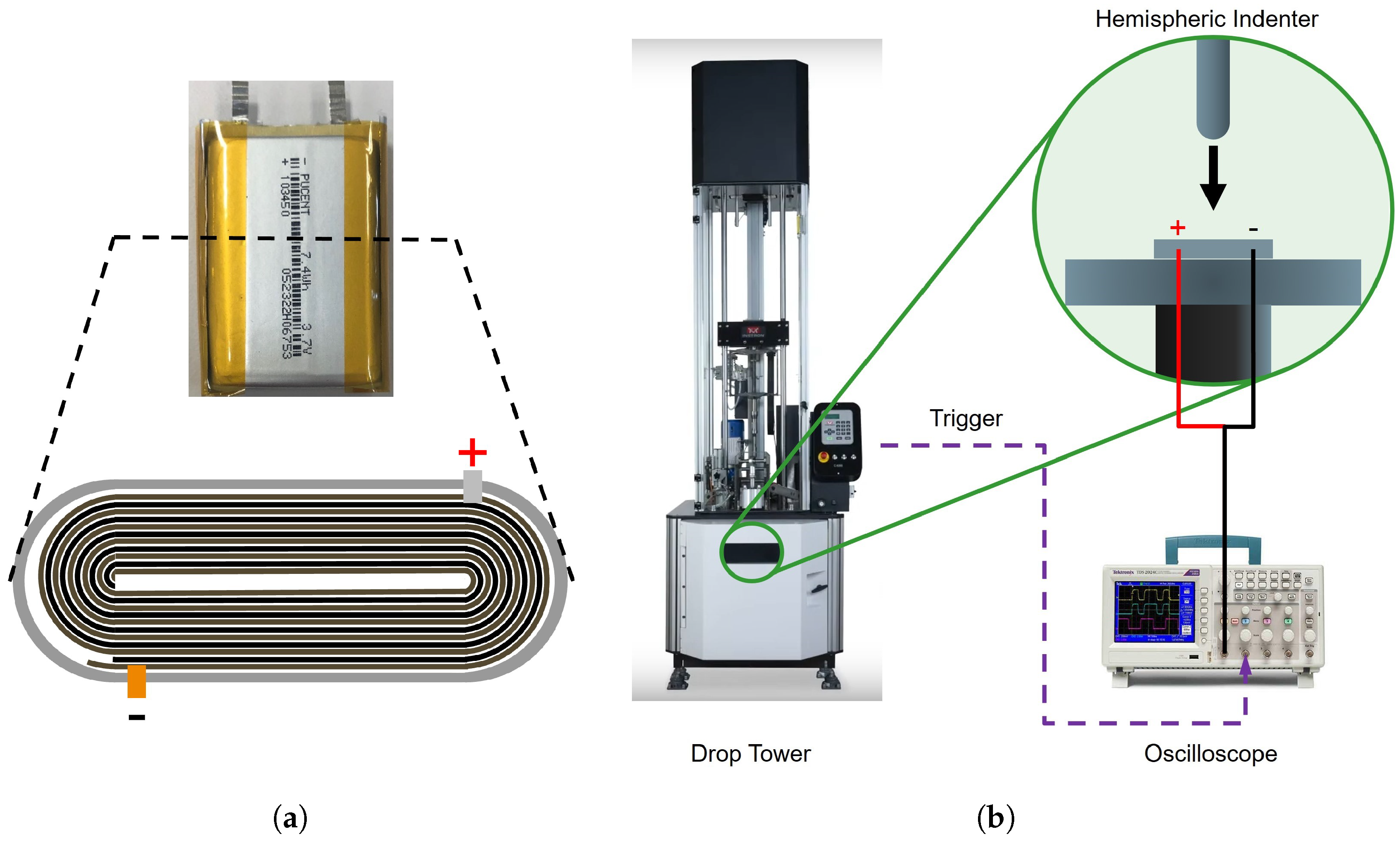
Lithium ion pouch cells with NMC chemistry and a rated capacity of 2 Ah were chosen for this study as the size of the cells allowed for safe experimentation in the case of a short and were still large enough to detect any significant electrochemical changes. Through investigation of charge/discharge profile, these cells were identified to likely be NMC 532 | Gr with an internal architecture consisting of a wound pouch format with 34 distinct anode layers. The high nickel cathode was chosen as NMC has become more prominent in applications where energy density is a major concern such as longer range BEVs. The thermal stability of these cathode materials allows investigation into mechanical performance without concern runaway events due to discharge from induced shorts. The testing setup is shown in Figure 1.

2.1. Electrochemical Cycling

All cells were cycled using Neware system cyclers at 30 °C for all cycling protocol to emulate expected operating temperatures. Cells were first cycled in a pre-characterization step. This phase consisted of an initial C/10 CC-CV with a 0.01 A cutoff current, which we will refer to as capacity cycles for the remainder of this work, to determine initial capacity of the cell. Cells were additionally limited to a voltage cutoff range of 3–4.2 V as recommended from the manufacturer. Subsequently, there was a Hybrid Pulse Power Characterization (HPPC) cycle [13], consisting of a charge phase of C/10 CC-CV, a 30 min rest, and a discharge cycle of C/5 consisting of several pulses to obtain live resistance data to understand morphological changes that can only be concretely observed after postmortem analysis. Each pulse consisted of a 1 min rest followed by a 2C discharge for 10 s and a 1 min rest, and a complementary 2C charge for 10 s and a 1 min rest. These were performed every drop in 0.1 SOC starting from SOC 0.9 to SOC 0.1. The limiting SOCs of 0.1 and 0.9 were determined to prevent the cell from exceeding the safety cutoff voltages. As the scope of this study was limited to understanding electrochemical response in relation to mechanical impact, more complicated HPPC cycles were seen as unnecessary.
After the capacity cycle and HPPC, each cell was cycled for 50 C/3 CC-charge CC-discharge cycles, followed by a 30 min rest period, with the whole procedure denoted as a life cycle. The cycle rate was chosen to maximize SEI formation as the dominant mode for capacity fade while also allowing for the procedure to be completed in a quick manner as cycling experiments can take a great deal of time. Following the 50 life cycles, another capacity and HPPC cycle were run to measure the deviation from the original values and determine an approximate rate of decay prior to any mechanical damage.
After electrochemical pre-characterization is complete, cells are charged into batches of 0%, 20% and 40% SOC. Five samples were prepared for each combination of impact energy and SOC condition. Then they were carefully centered in the drop weight impact machine to introduce mechanical damage. Voltage was recorded during the test to monitor for short circuits.
Once mechanical damage was applied to the cells, each cell was set to rest for 1 week in a thermal chamber at 30 °C while the voltage is being monitored. A small short may have been induced by the mechanical abuse and gone undetected by the oscilloscope which could ultimately lead to thermal events. During this rest period voltage was monitored and if the cell falls below 3 V it is deemed as unsafe and discarded from further experimentation. Cells which balance above 3 V during this time were further cycled for 200 cycles. Every 50 cycles additional capacity and HPPC cycles were performed to measure resistance and capacity change.

2.2. Mechanical Abuse

To simulate the mechanical impact seen by cells in a crash scenario, cells were impacted under dynamic loading by an Instron 9450 drop tower. Impact energies of 3J, 5J and 7J with a frame mass of 4.4 kg were performed with a 18 mm diameter hemisphere punch (weighing 100 mg) into the center of the batteries resting on a uniform flat plate. Voltage was recorded during the process using an oscilloscope to monitor for any internal shorts during the impact stage. The oscilloscope started recording data when a signal output of the drop weight tower timed the release of the weight.
Each cell was pre-cycled to a set SOC (0, 0.2, 0.4) before being impacted, and each impact energy saw each SOC selection. To reduce experimental bias, 5 cells for each impact energy/SOC combination were tested.

3. Results

3.1. Cell Characterization

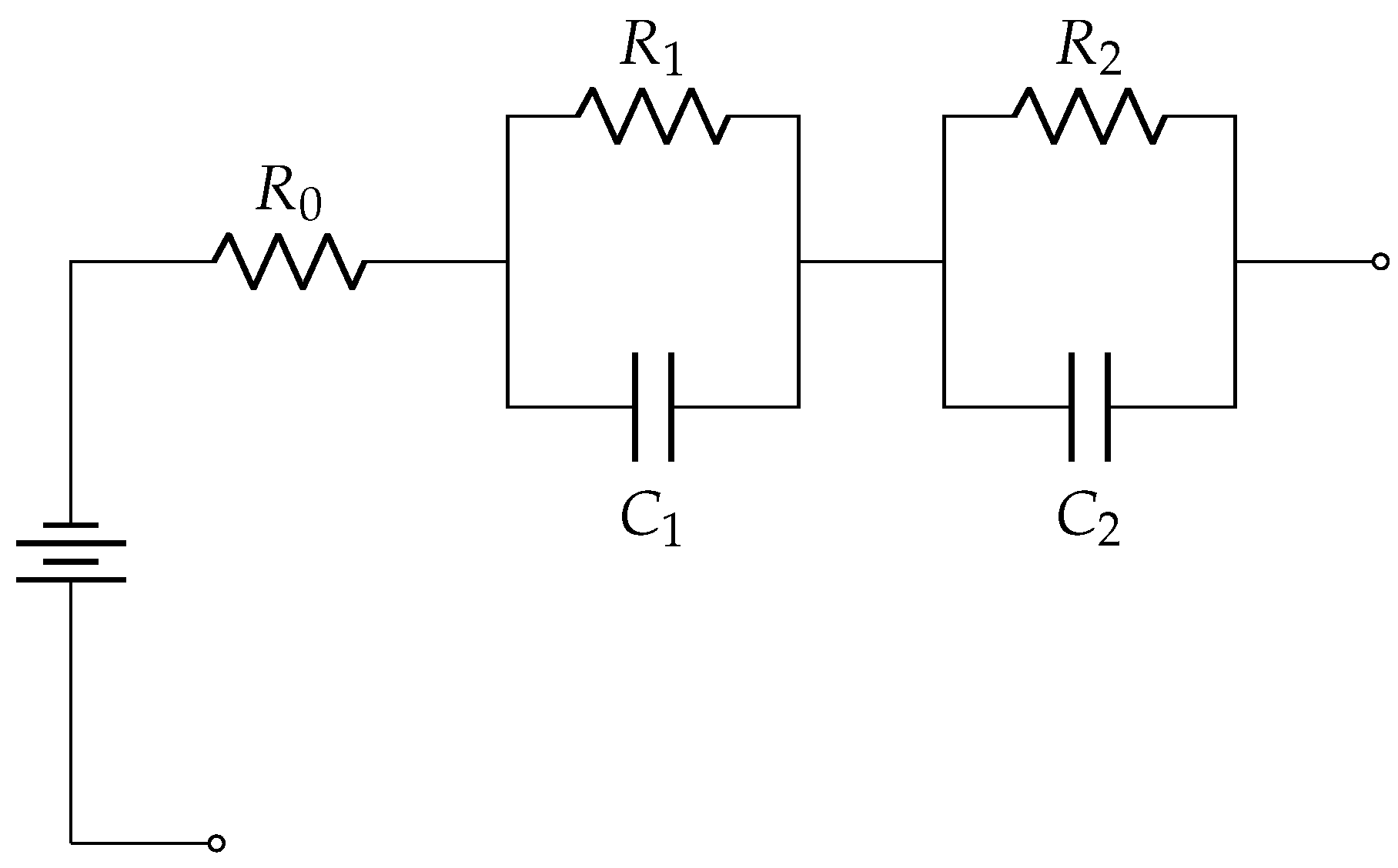
A common way to measure battery performance indicators is to perform a HPPC test [13]. This involves pulsing current at differing SOCs and analyzing the voltage response to find characteristic resistances and capacitances from a determined equivalent circuit model. While many models are developed for this function, the most common are 1 RC and 2 RC thevenin equivalent models as shown in Figure 2. Fitting models to 1 RC circuits is simple as the characteristic equation is a single exponential function, however the behaviors represented by this model do not match with experimental responses observed by the batteries. 2 RC models do better at simulating this behavior, with the compromise of being more difficult to accurately fit. These models also better line up with other experimental techniques that are more robust, such as electro-impedance spectroscopy, where equivalent order models can describe film growth and charge transfer resistances. These models often replace a capacitance element with a constant phase element to describe frequency domain phenomenon. HPPC cannot reliably obtain these values as it is a time domain measurement, but their behavior can be correlated with pulse measurements.
The voltage profile in these models is described as
V = O C V ( S O C ) + I R 0 + I R 1 e t τ 1 + I R 2 e t τ 2
where OCV (open circuit voltage) is the true potential difference of the electrodes without any dynamic losses, I is the current of the pulses, R 0 is the internal resistance of the entire battery, and R 1 , R 2 , τ 1 , and τ 2 are equivalent resistances and relaxation constants that simulate dynamic reaction kinetics such as film growth and charge transfer. The time constants τ i can further be described as
τ i = R i C i
where an additional capacitance element C i is added. For 1 RC the resistance R 2 is set to 0 in the model, removing the secondary element and simplifying the equation. In both cases of 1 and 2 RC, the internal ohmic resistance can be described as voltage change at the point of current change
R 0 = Δ V Δ I
The ohmic resistance often holds the greatest electric resistance of the battery. Additionally, this resistance is typically used as the primary indicator for capacity fade as its change can describe bulk changes in both electrochemical dynamics and usable active material that occur as a byproduct of cycling. The remaining voltages better describe the dynamics that occur during polarization, where the migration of ions affects local electrochemistry at the interfaces and interphases. Given the greater accuracy of a 2 RC circuit to describe the polarization voltage, the remainder of this work only considers this model when measuring equivalent components.
As fitting can resolve in arbitrary placement of the resistances and capacitances of the RC elements, this work applies the convention of ordering them from greatest to least in magnitude. The fitting was performed with a Levenberg-Marquardt algorithm using MATLAB R2023a. Capacity of the cells was additionally measured using cycler data to obtain
Q = 0 t   I d t
for a capacity of Q and over the entire discharge time for each cycle. This measurement was recorded for both capacity and life cycles.
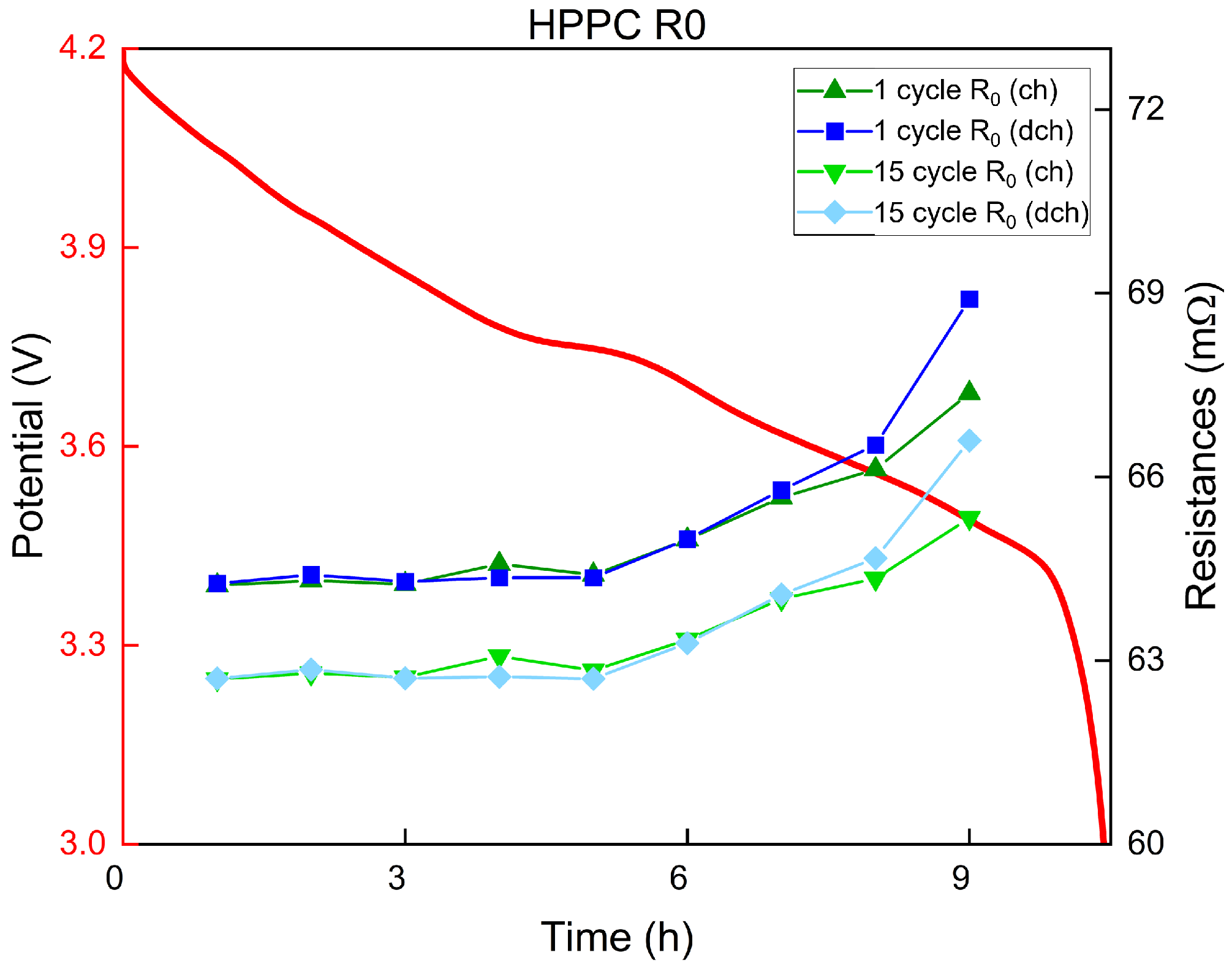
To measure early trends in capacity and performance change from cycling, HPPC and capacity cycles were performed at the beginning of life and after 15 life cycles. Figure 3 shows the impact of these cycles from a select cell over a discharge profile.
HPPC measurements from fresh cells saw resistance increase as SOC decreased. Measured values of charge and discharge pulses show little variation, with sight deviations near 0.4 SOC and at the end of discharge. The first variation may be due to cathode a phase change near that point, with excessive pulsing changing the distribution of ions at the surface of the electrodes. Near the end of discharge the increase in resistance from over discharging is related to the rapid potential increase from the anode. As cycling continues and active material is lost from the anode, resistance increases from discharge pulses at these low SOCs measures an accelerated resistance growth as the electrode surface becomes more dramatically lithiated.
Resistances were collected at the first cycle and last cycle prior to impact. In all cells a resistance decrease of 5 m Ω was noted. This corresponds with a small capacity increase which is common for nickel rich cathodes as the ceramic structure stabilizes inactive lithium sites which are important for the cathode stability [14]. This phenomenon is apparent for the early cycles of the cells, with later SEI growth and other side reactions becoming dominant. Additional resistance increase is noted at the end of capacity for discharge vs charge cycles. This is due to the coulombic inefficiencies from discharge resulting in a slightly lower capacity during discharge vs charge despite the same time and current magnitude being used for both profiles.

3.2. Mechanical Response

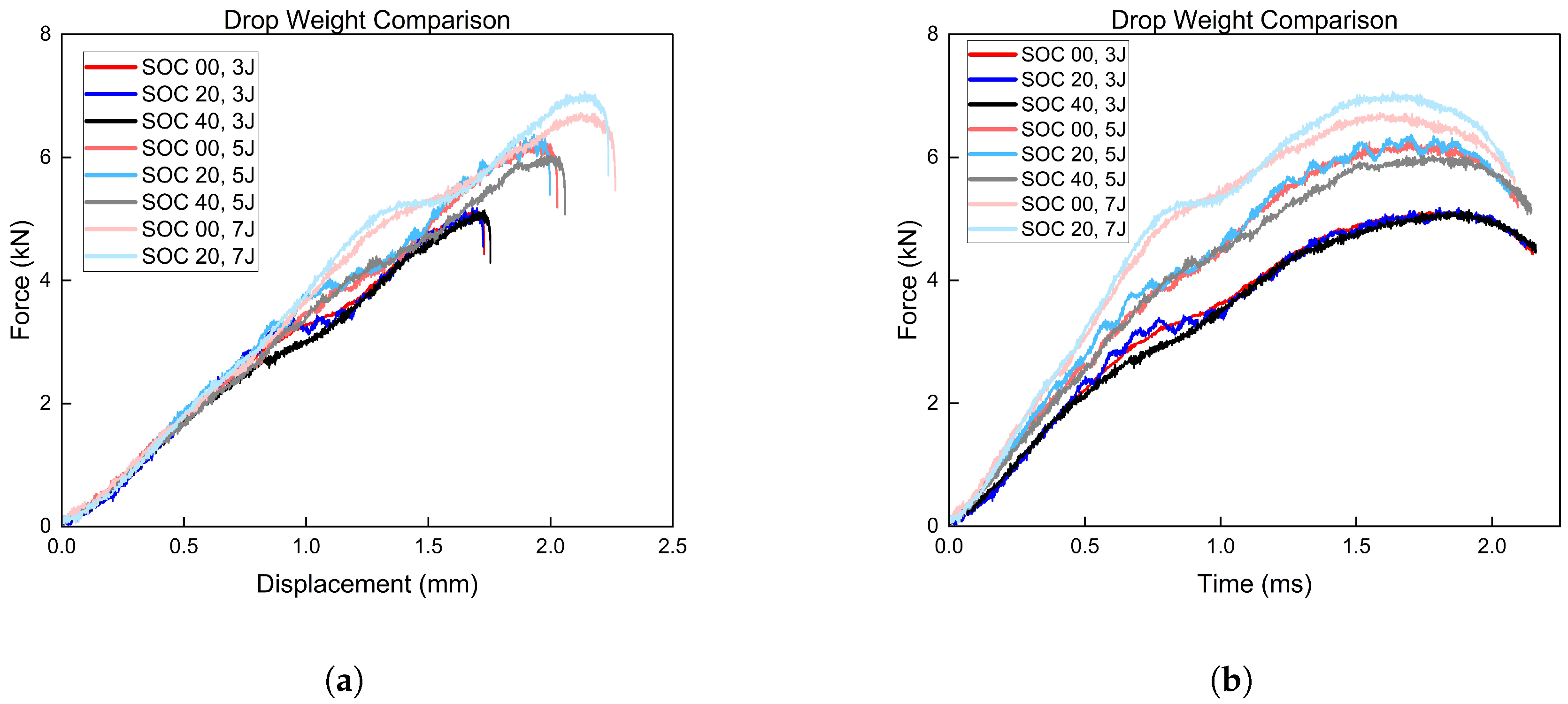
The drop weight mechanical results from the cells are shown in Figure 4. All impact energies saw a similar development of initial linear compression, followed by a short softening region and then a nonlinear plastic damage region. This nonlinearity can be explained by a combination of factors, most notably porous fluid flow and buckling of electrode sheets away from the jellyroll construction. Force plotted against time shows a slight increase in force as impact velocity increases with time, whereas the displacement response follows the same linear trajectory with only the region of yielding migrating. The similarity of initial slopes for force displacement profiles at differing impact energies across all cells shows a dynamically consistent elastic modulus. Traditional dynamic impacts on saturated porous bodies, such as battery electrode and separator, can lead to an increase in stiffening from incompressible fluid flow. Since the batteries which survived impact also did so in a region where the elastic modulus was nominally independent of impact velocity, porous saturation considerations in the damaging of the electrode can reasonably be ignored. As the highest impact energy cells still observed this relationship while all failing in voltage retention, substantial tearing of the separator appears to be present before fluid stiffening becomes a dominant material consideration. The final loads for all impact energies were within a confidence interval of the mean for every loading energy demonstrating minimal effect of defects on final yielding of the samples.
All materials saw the existence of a transition region, referred to as the plateau. This is defined as a region of lowered force loading rate with increasing displacement located inside regions of higher force loading rates. With higher impact energies the value of the onset load of these regions increases however the displacement of these regions remains consistent at 0.5 mm. SOC seemed to have minimal effect on the profile of these plateaus, with all SOCs maintaining a range of onset loads for the plateau at each impact energy. Additionally the slope of the plateau region also showed variation in each impact energy, however all began and ended within a consistent force range with the plateau remaining consistent throughout. These variations may be from experimental variations in battery placement as a 1 mm offset from center is may be large enough for the cell size to affect the force displacement response. The 7J cells saw a change in this trend, with no apparent upper limit on the initiation of the plateau region. Most 7J cells exhibited plateaus starting at 5 N with additional cells initiating plateaus at loads near the maximal force.
The format of the jellyroll also has an impact in the nonlinear force response of the batteries. The layered structure of the jellyroll alongside the flexible nature of the casing allows for the cells to behave in a bistable manner under mechanical load, with the layers deforming relative to each other to achieve a preferable final structure. During impact the whole cell becomes concave centered at the impact site until a critical response time is reached, after which the regions far from the mechanical load settle into a more mechanically stable final orientation. The time where this occurs would absorb some mechanical energy away from the impact leading to a slowing force increase during this process. All cells saw this occur from 0.7–0.95 s after impact, where the inciting force when this occurred was dependent on impact energy from 3–5.5 kN. The similar onset times can be seen as a natural material response time to the deflection which causes the bistable transition, where the force would also increase more rapidly during this response time depending on impact energies as more energy is imparted onto the structure immediately underneath.
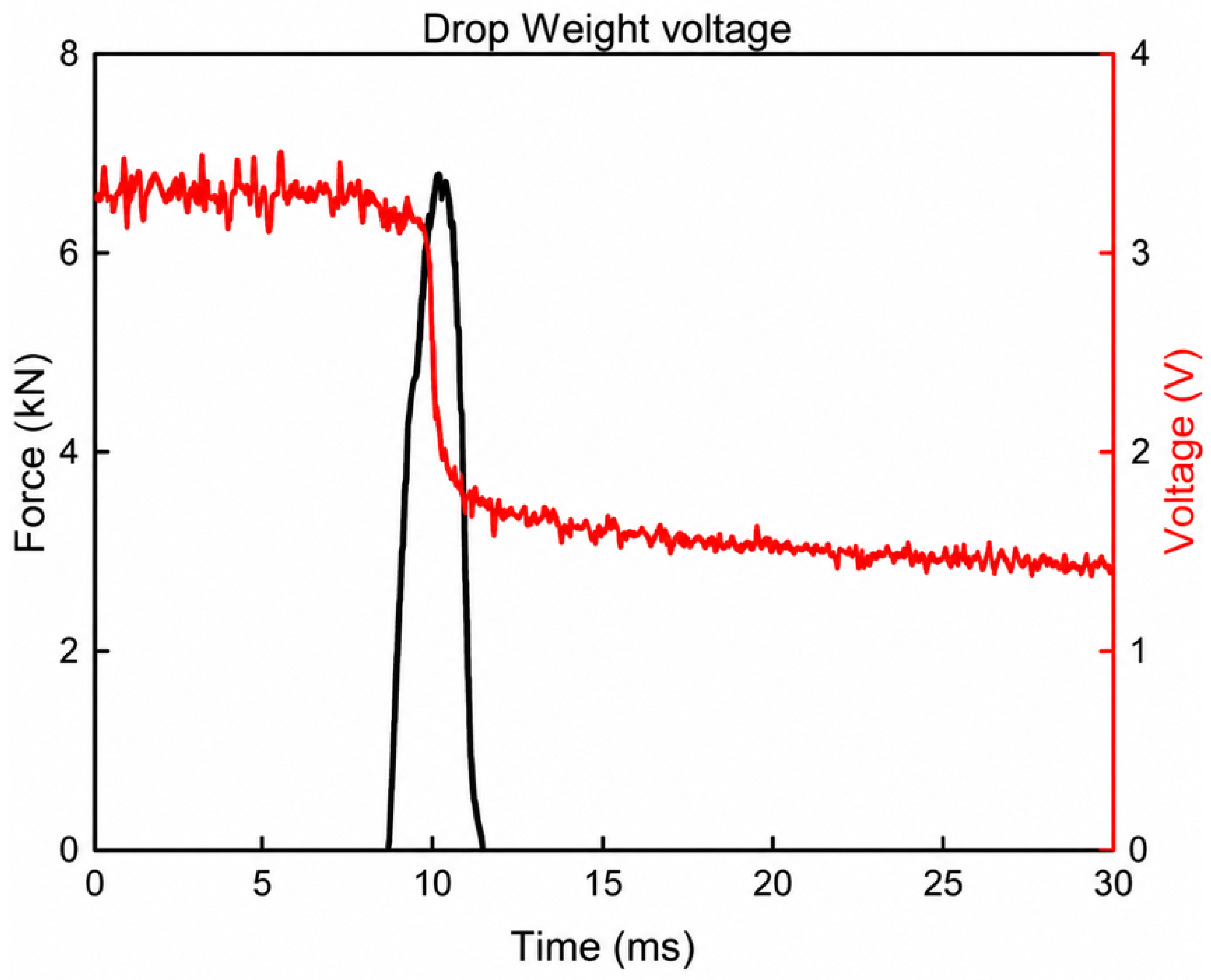
Figure 5 demonstrates the voltage vs force response window from impacts of a 7J cell. The voltage measurements from the experiment showed little live voltage drop during testing. The 3J and 5J impact groups saw no immediate voltage change from measurement, while several 7J cells saw shorts. Not all shorts were immediately demonstrative of complete voltage loss, however all shorts were irreversible and saw no recovery in the testing window. Further monitoring of the cells saw continual voltage drop from cells which had not survived. A short circuit is a reliable indicator of a mechanical event but not all mechanical events show a measurable voltage drop during impact. Nascent shorts not detected during the observation window will cause continual parasitic capacity loss throughout cycling and may lead to side reactions where excess electrolyte decomposition will dramatically affect ionic transport and charge transfer mechanisms. This shows that live voltage measurements may not be sufficient to determine all levels of mechanical impact on cells.
Higher impact energies saw lower survival rates after the week resting period, with all 3J impacted cells surviving at every SOC, half of the 5J cells surviving and none of the 15 7J cells surviving. The specific survival rates for the 5J cells are all 5 SOC = 20 cells survived while 4 SOC = 0 cells and 2 SOC = 40 cells failed after a week. The lack of survivability from the 7J impacted cells shows that for cells in this experimental configuration saw complete failure when loading reached above 6 kN. Dynamics likely have minimal effect on this threshold as stiffening was not noticed, however as the separator is known to be viscoelastic the failure loading may not necessarily be entirely strain rate independent for the measured cells. While all 5J cells survived from immediate ISC and only 3 of the 7J cells saw an ISC from oscilloscope measurements, small tears in the separator were still present creating a slower parasitic current draw. As each dataset contains too small of a sample size to statistically isolate the clear SOC dependence for 5J impacts, the effect of SOC on survival rate of both 5J and 7J energies was inconclusive. The distribution in survivability for varying SOC in 5J impact cases suggests any mechanical stiffening electrodes due to phase changes may dissipate enough energy to restrict destructive shorting, however the degree to how strong the effect is cannot be determined using present data. As the cells were manufactured in a large batch and there were some experimental variances, the exact relationship between SOC and survivability during the procedure cannot be deduced, however as cell survival was still prevalent it can be inferred that the 5J impact energy exists near the point of completed failure during mechanical impact of the measured cells under the experimental setup.

3.3. Cycling Performance

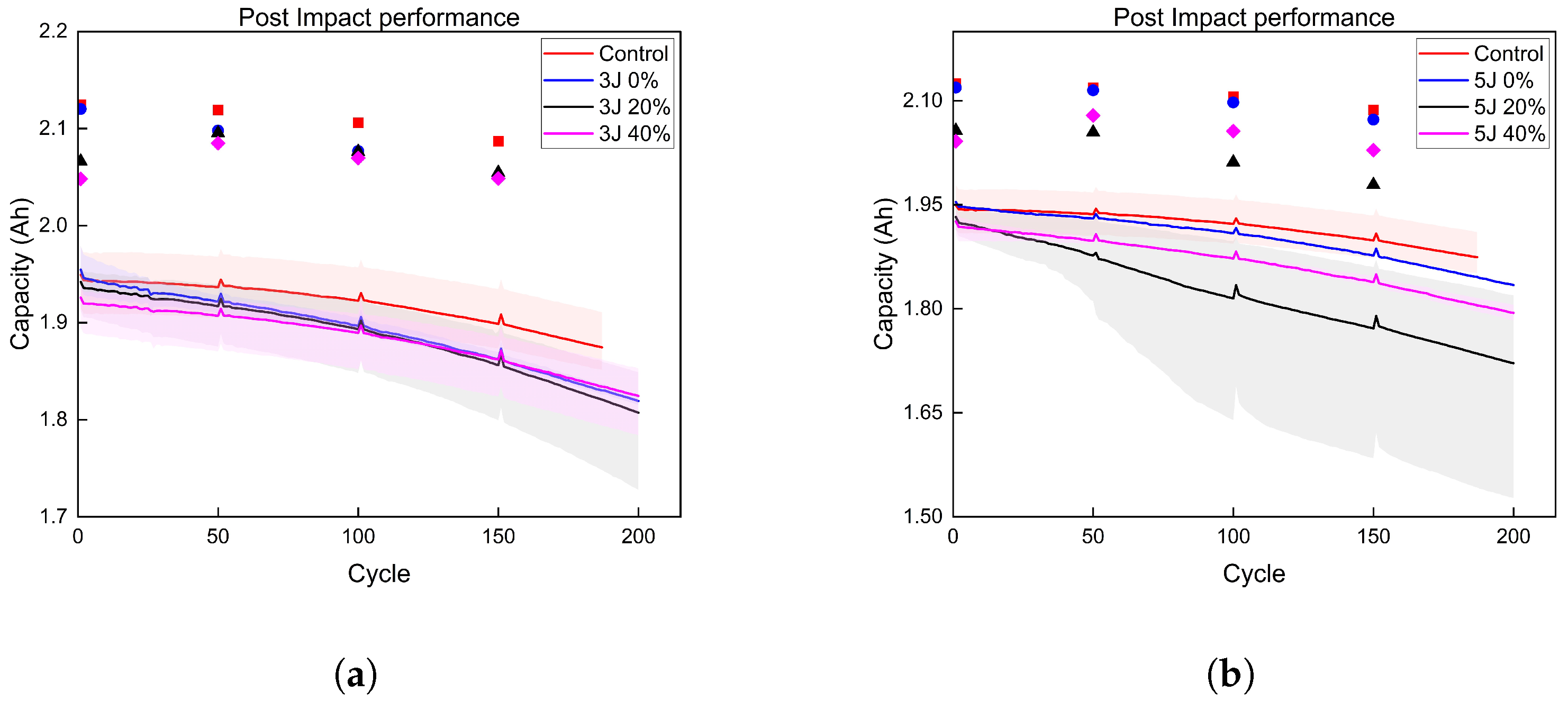
Figure 6 shows average capacity fade trajectories vs impact conditions compared against control cells for every discharge cycle with the shaded regions showing the range of cycled cells. The control cells saw a consistent decay profile following a parabolic profile. This is indicative of both film growth on the anode surface and cathode decomposition from the byproducts of electrolyte decay. This matches well with literature from similar cells. After each capacity/hppc cycle the following cycles also saw a short increase in capacity likely due to better coulombic efficiency from shorter discharge.
All impacted cells showed a similar capacity fade profile compared to control cells, with additional decrease in capacity fade rate. Most cells saw an initial capacity decrease after resting for 1 week and a slight initial change in rate of capacity fade compared to control cells. Throughout cycling this rate of capacity fade increased, or the difference in capacity between control and damaged cells grew. For 3J cells there appears to be no discrete relationship between SOC at impact and the degree of acceleration of capacity fade. 5J saw higher variation between SOC at impact however the reduced survivability of cells after impact obscures the clarity of the relationship SOC and rate of capacity fade. Cells charged to SOC 20 had high survivability, but once cycling began some cells saw rapid capacity fade after 50 cycles, similar to a knee event seen in highly aged cells. These cells later appeared to reduce their rate of capacity fade which demonstrates the instability of some cells after 5J of impact. All cells similarly saw reduction in capacity for their capacity cycles demonstrating the structural changes from impact reduce true capacity retention in addition to dynamic effects seen during the faster charge rates. The small recovery peaks after capacity cycles seen in control cells are also present in damaged cells, with damage having no correlation to larger peaks. This shows little relationship to reduced coulombic inefficiency from structural changes due to impact.

3.4. Resistance Change

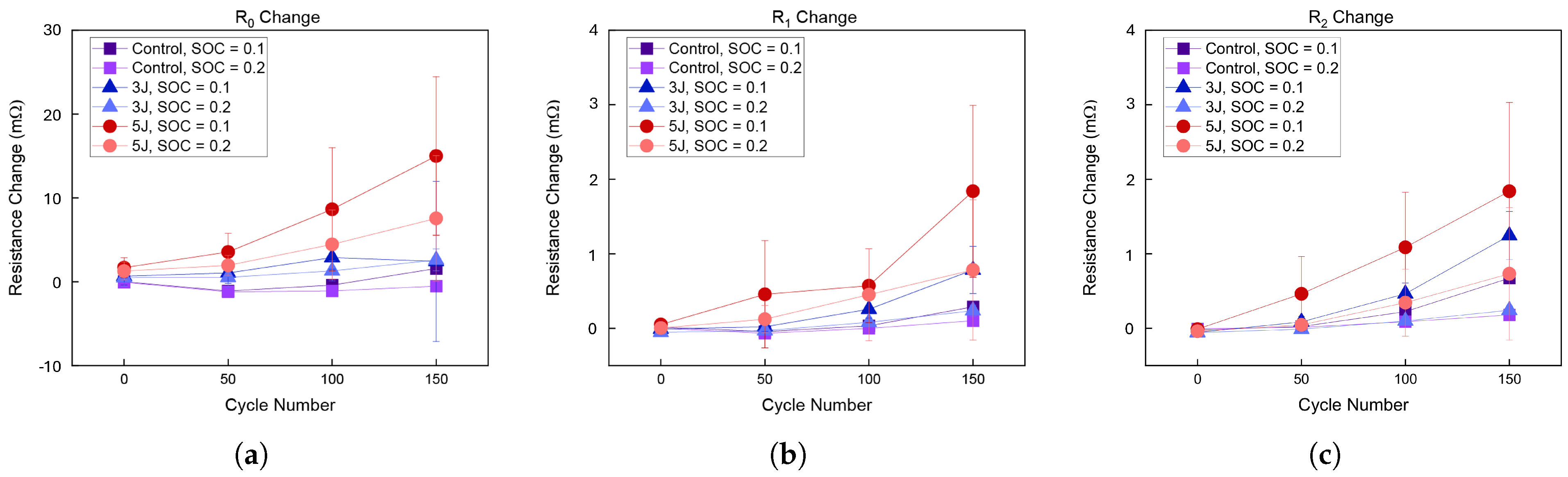
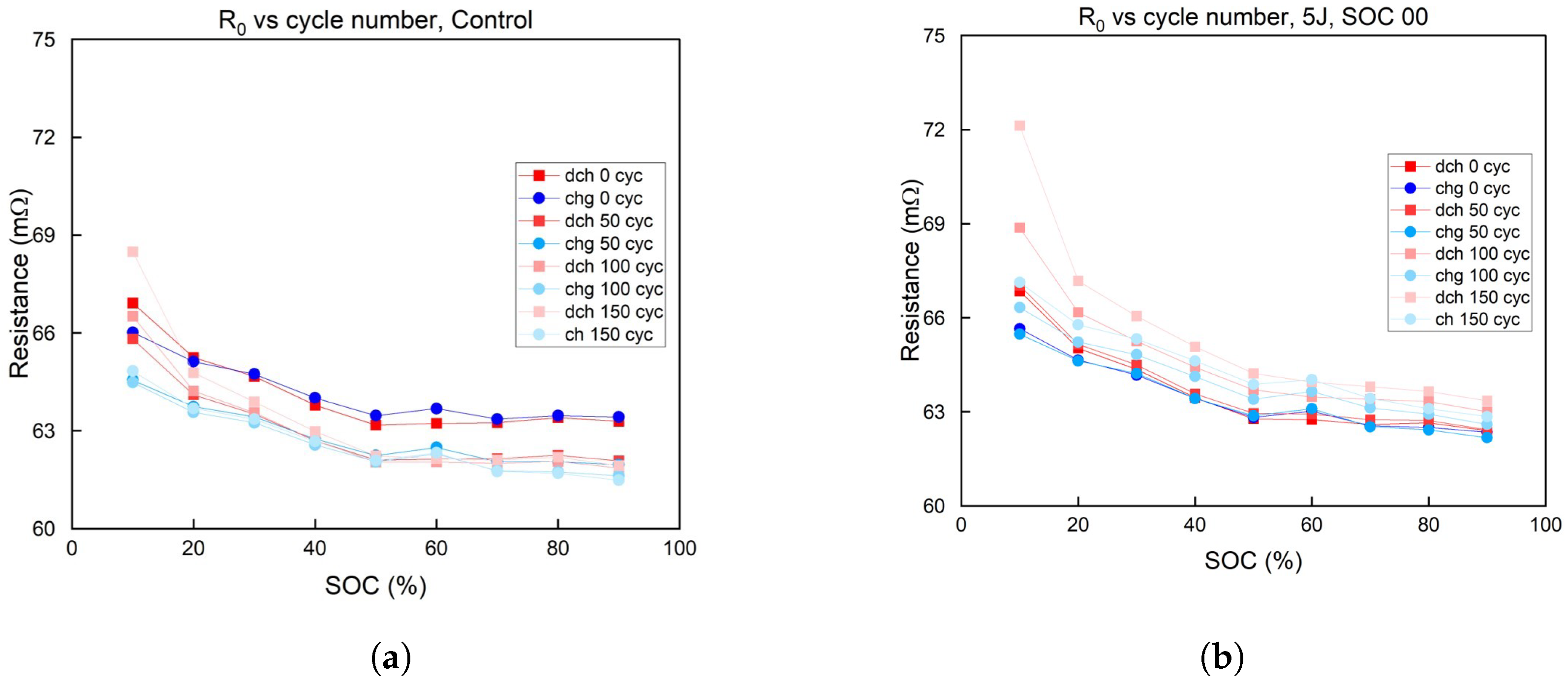
The surviving cells saw additional resistance change from impact. For the ohmic resistance R 0 , control cells saw minimal change in resistance except towards the lower SOCs, in which resistance rose up to 6 m Ω for SOC = 0.1, as shown in Figure 7.
This behavior is likely influenced by progressive capacity fade during aging, where discharge by a fixed absolute capacity may correspond to slightly different relative SOC conditions as cycling proceeds. Consequently, the terminal HPPC measurements may probe differing electrode lithiation states due to cumulative degradation processes including LLI and LAM. A similar phenomenon is noted in impacted cells for R 0 with later lower SOC ohmic resistances rising. These rises for impacted cells are paired with a general increase in resistance, and are far more pronounced than undamaged cells. The heightened shift may be attributed to larger capacity losses seen in the damaged cells leading to larger discrepancies in ideal compared to real SOCs. For the control cells minimal global resistance growth is measured, suggesting the capacity loss attributed to internal changes to cyclable lithium is minimal. For damaged cells the global ohmic resistance increased which suggests aging mechanisms are accelerated as they are cycled under the same conditions as the control cells. The larger resistance increases observed in the impacted cells are consistent with accelerated electrochemical degradation following mechanical damage. However, because HPPC-derived resistance parameters represent global cell responses, the present measurements cannot uniquely distinguish among contributing mechanisms such as SEI growth, LLI, LAM, evolving charge-transfer kinetics, separator deformation, or localized micro-short formation. The observed resistance evolution should therefore be interpreted as evidence of increased overall electrochemical heterogeneity and degradation rather than definitive identification of a single dominant mechanism. A similar trend in ohmic resistance R 0 , first equivalent resistance R 1 and second equivalent resistance R 2 for lower SOCs is also seen in Figure 8.
The ohmic resistance is a byproduct of all phenomenon affect electron migration which couples induced shorts, SEI thickness and any balancing changes that occur as the cell becomes more discharged. Internal shorts growth is likely to be limited as the change in electrode contact required to affect the resistance is the byproduct of dendrite growth from lithium plating. SEI growth is continual as more current is applied to electrode over charge cycles, however the short thickness of the films may have minimal affects compared to changes in bulk performance. The dramatic increase in R 0 for 5J compared to 3J and control cells demonstrates the 5J impact induced a change that smaller 3J impact did not perpetuate. The existence of a short would likely not see exceptional growth under the present cycling conditions during cycling signifying the primary reason for this growth is due to coupled electrochemical changes due to nonuniform stress distributions.
The changes in R 1 and R 2 describe additional changes in underlying ionic transfer dynamics, where the R 1 growth shows trends in primary dynamic modes and R 2 shows changes in secondary. The increase in 5J primary modes show there is more localized current density exposed to the electrode surfaces which creates more energy for additional to develop. The 3J cells saw a smaller increase compared to the 5 J cells while also being greater than control, demonstrating a relationship between mechanical impact load and future electrochemical change exists from nonuniform stress distributions. The secondary mode showed relationship at SOC = 0.1 where all batches showed an increase in resistance. The magnitude was greater with 5J and 3J cells where the 5J cells saw a predominant change in SOC = 0.2 whereas 3J only saw an increase in SOC = 0.1. Overall, the results demonstrate that mechanical impact severity measurably influences the long-term electrochemical evolution of the cells during subsequent cycling, with the 5J condition consistently exhibiting the largest resistance growth across all fitted resistance components.


4. Discussion

As loading energies increased, the survival rate of cells decreased, with complete failure observed at 7 J following voltage recovery. Mechanical failure of lithium-ion cells under such conditions is most commonly associated with internal separator damage, however the measured data cannot directly resolve the precise failure mode. Instead, the observations are consistent with mechanically induced disruption of the layered electrode–separator architecture leading to internal shorting under sufficiently severe loading. Mechanical loading can alter the viscoelastic and anisotropic response of the separator and composite electrodes, thereby modifying the local stress distribution within the jellyroll. In particular, non-uniaxial impact conditions introduce coupled normal and shear stress fields, which evolve spatially through the thickness of the cell. These gradients may lead to spatially heterogeneous deformation, where regions closer to the impact site experience higher local strain, while more distributed mechanical distortion may occur in adjacent regions. These local stress variations may lead to shorting of the separator and heightened electrode damage close to the loading location and more dispersed electrode fracture in neighboring regions.
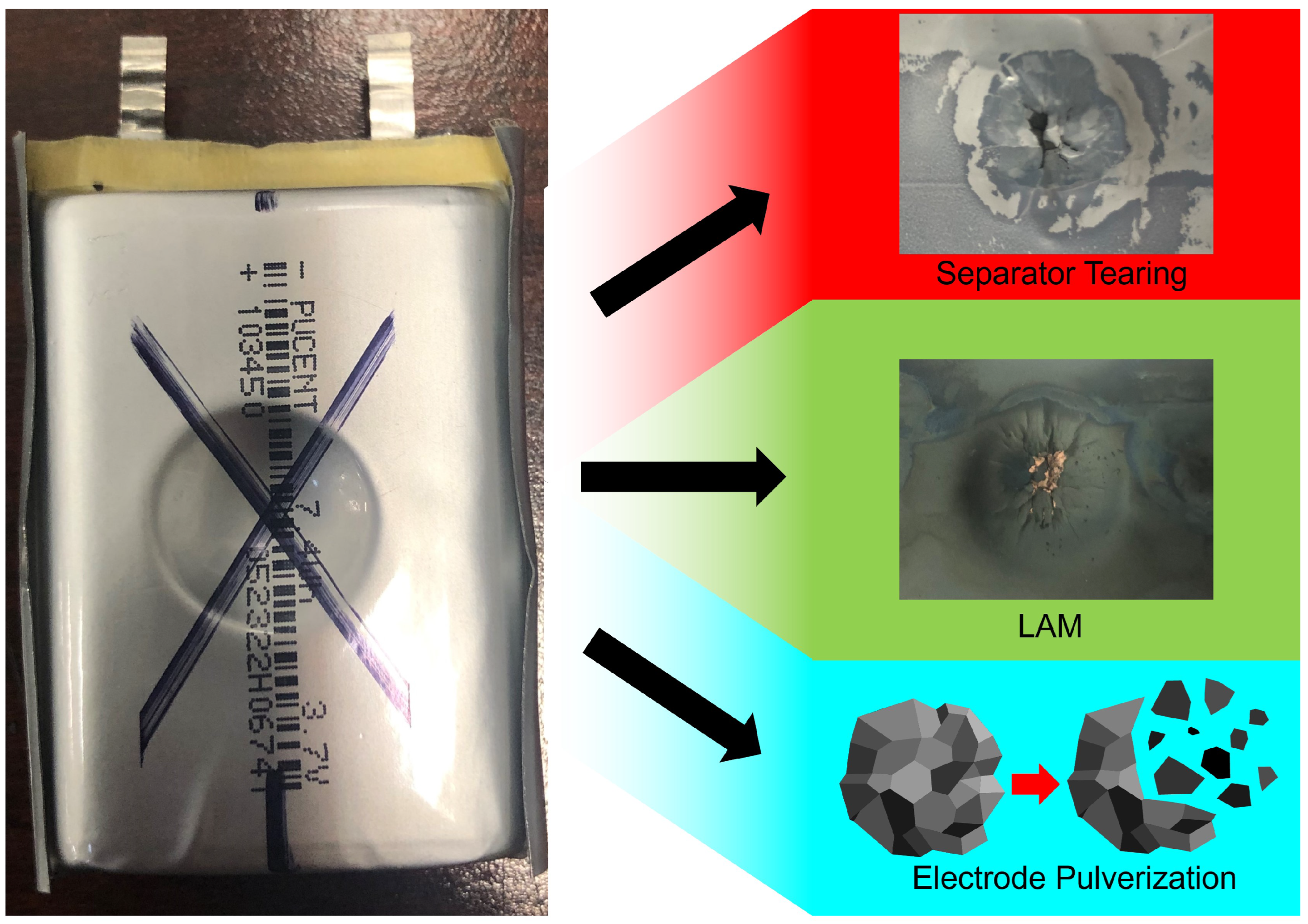
Prior to the onset of catastrophic shorting, internal mechanical stresses may still produce significant microstructural deformation within the jellyroll, influencing subsequent electrochemical behavior. Previous studies across multiple chemistries have demonstrated that mechanically induced performance decay can arise from a combination of electrode cracking, interfacial delamination, conductive network disruption, and electrolyte redistribution, although the relative contribution of each mechanism is often difficult to isolate experimentally. The complex loading conditions from any mechanical test could cause a coupling of normal and shear stresses in a nonuniform distributions, which makes discernment of the leading causes of capacity loss unknown. Figure 9 shows some expected modes of damage in the electrodes including SEI fracture, loss of active material and electrode pulverization, which lead to rapid capacity reduction.
In all surviving cells heightened degradation after impact was observed alongside immediate changes in resistance. Resistance measurements from damaged cells only considers global voltage and current changes which makes interpreting changes from specific electrodes difficult, however the resistance evolution may provide insight into interpretation. The change in resistance from baseline cells as seen in Figure 8 may incorporate SEI regrowth/reformation. Mechanically induced particle fracture and electrode deformation may reduce effective electronic and ionic transport pathways, indirectly influencing apparent resistance growth. Similarly, localized delamination or loss of contact between active material and conductive additives could increase heterogeneity in current distribution, thereby accelerating interfacial film growth in affected regions. Importantly, while the observed trends are consistent with greater degradation severity in higher-energy impact conditions, the present information does not allow unambiguous attribution of resistance changes to specific mechanisms such as separator tearing, SEI growth, or lithium inventory loss. Instead, the results should be interpreted as evidence of coupled mechanical–electrochemical degradation processes that collectively manifest as increased global resistance and capacity loss.

5. Conclusions

This work measured the relationship between mechanical damage applied to pouch batteries that did not lead to permanent internal shorting and the long term capacity fade of the surviving cells. Mechanical damage was applied to cells at differing SOCs using a drop weight tower over a range of impact energies.
During the impact stage all energies saw similar force displacement trends, with higher energies seeing higher peak forces and displacements. Lack of stiffening in higher energies suggests a minimal effect of strain rate in the investigated impact energies. No discernible relationship was observed between SOC and mechanical response of LIBs. Higher impact energies saw a reduction in survivability as determined by a minimum of relaxation voltage. Surviving impacted cells saw higher rates of capacity fade compared to control samples. Higher impact energies additionally correlated to higher degrees of capacity fade. Increased rate of capacity fade was also noticed in the increase in equivalent internal resistances, with measured capacitances having little change. The lower SOC resistances showed the largest trend with accelerated capacity fade and increased resistance growth.
This work has found that dynamic impacts to batteries may not necessarily lead to sudden catastrophic events, but instead can affect long term performance. This suggests internal electrode kinetics may be affected by mechanical damage while still being capable of performing stable electrochemical reactions. By measuring resistance changes we have found mechanical damage can be observed through deviations in resistance. This may allow for better selection of batteries for second life applications. Further work should be done to understand the relationship between mechanically damaged electrodes, long term electrochemical trends and immediate resistance measurements. To determine the specific response of each mechanism, tests should be conducted to isolate SEI fracture, particle cracking and pore closure independently. Additional postmortem analysis including cross-sectional scanning electron microscopy and X-ray tomography should be performed to validate the affect these experiments have on mechanical deformation modes.

Author Contributions

Conceptualization, J.S. and A.B.; Methodology, J.S. and A.B.; Formal analysis, J.S.; Investigation, J.S.; Data curation, J.S.; Writing—original draft, J.S.; Writing—review and editing, J.S. and A.B.; Supervision, A.B.; Project administration, A.B.; Funding acquisition, A.B. All authors have read and agreed to the published version of the manuscript.

Funding

This work was supported by the Institute of Digital Engineering.

Data Availability Statement

Dataset will be made available on request to the corresponding author. Replication material, including model parameters and code, are available on request to the corresponding author.

Conflicts of Interest

The authors declare no conflicts of interest.

References

  1. Liu, S.; Huang, S.; Zhou, Q.; Snyder, K.; Long, M.K.; Zhang, G. In Situ Measurement of Dynamic Internal Short Circuit Resistance during Nail Penetration of Lithium-Ion Cells and its Implications on Cell Robustness and Abuse Tolerance. J. Electrochem. Soc. 2023, 170, 060515. [Google Scholar] [CrossRef]
  2. Zhu, X.; Wang, H.; Wang, X.; Gao, Y.; Allu, S.; Cakmak, E.; Wang, Z. Internal short circuit and failure mechanisms of lithium-ion pouch cells under mechanical indentation abuse conditions: An experimental study. J. Power Sources 2020, 455, 227939. [Google Scholar] [CrossRef]
  3. Manfo, T.A.; Laaksonen, H. A comparative study of the modified high voltage olivine-phosphate LiMPO4 (M = Fe, Mn, Co, Ni) as promising cathode materials for next-generation rechargeable batteries. J. Energy Storage 2026, 160, 121797. [Google Scholar] [CrossRef]
  4. Li, J.; Li, W.; Song, J.; Chen, Y.; Wang, L.; Xu, J. Accurate Measurement of the Contact Resistance During Internal Short Circuit in Lithium-Ion Batteries. J. Electrochem. Soc. 2022, 169, 020505. [Google Scholar] [CrossRef]
  5. Lai, X.; Jin, C.; Yi, W.; Han, X.; Feng, X.; Zheng, Y.; Ouyang, M. Mechanism, modeling, detection, and prevention of the internal short circuit in lithium-ion batteries: Recent advances and perspectives. Energy Storage Mater. 2021, 35, 470–499. [Google Scholar] [CrossRef]
  6. Xu, R.; Yang, Y.; Yin, F.; Liu, P.; Cloetens, P.; Liu, Y.; Lin, F.; Zhao, K. Heterogeneous damage in Li-ion batteries: Experimental analysis and theoretical modeling. J. Mech. Phys. Solids 2019, 129, 160–183. [Google Scholar] [CrossRef]
  7. Pinson, M.B.; Bazant, M.Z. Theory of SEI Formation in Rechargeable Batteries: Capacity Fade, Accelerated Aging and Lifetime Prediction. J. Electrochem. Soc. 2012, 160, A243–A250. [Google Scholar] [CrossRef]
  8. Lu, B.; Ning, C.; Shi, D.; Zhao, Y.; Zhang, J. Review on electrode-level fracture in lithium-ion batteries. Chin. Phys. B 2020, 29, 026201. [Google Scholar] [CrossRef]
  9. Barcellona, S.; Colnago, S.; Dotelli, G.; Latorrata, S.; Piegari, L. Aging effect on the variation of Li-ion battery resistance as function of temperature and state of charge. J. Energy Storage 2022, 50, 104658. [Google Scholar] [CrossRef]
  10. Li, L.; Chen, X.; Yuan, Q.; Wang, T.; Ji, H.; Papović, S.; Raleva, K.; Pan, F.; Yang, T.; Li, J. Effects of Minor Mechanical Deformation on the Lifetime and Performance of Commercial 21700 lithium-Ion Battery. J. Electrochem. Soc. 2022, 169, 060544. [Google Scholar] [CrossRef]
  11. Spielbauer, M.; Soellner, J.; Berg, P.; Koch, K.; Keil, P.; Rosenmüller, C.; Bohlen, O.; Jossen, A. Experimental investigation of the impact of mechanical deformation on aging, safety and electrical behavior of 18650 lithium-ion battery cells. J. Energy Storage 2022, 55, 105564. [Google Scholar] [CrossRef]
  12. Huang, Q.; Bai, Y.; Luo, H.; Jia, Y.; Zhang, C. Dynamic Multi-Physics Behaviors and Performance Loss of Cylindrical Batteries Upon Low-Velocity Impact Loading. Energy Environ. Mater. 2024, 7, e12771. [Google Scholar] [CrossRef]
  13. Białoń, T.; Niestrój, R.; Skarka, W.; Korski, W. HPPC Test Methodology Using LFP Battery Cell Identification Tests as an Example. Energies 2023, 16, 6239. [Google Scholar] [CrossRef]
  14. Guo, J.; Li, Y.; Meng, J.; Pedersen, K.; Gurevich, L.; Stroe, D.I. Understanding the mechanism of capacity increase during early cycling of commercial NMC/graphite lithium-ion batteries. J. Energy Chem. 2022, 74, 34–44. [Google Scholar] [CrossRef]
Figure 1. Testing setup with a (a) sample battery and cross section being monitored while (b) Schematic of drop weight test including oscilloscope trigger condition.
Batteries 12 00217 g001
Figure 2. HPPC equivalent circuit for 2 RC elements.
Batteries 12 00217 g002
Figure 3. Representative HPPC ohmic resistance vs. SOC in charge and discharge pulses for fresh and 15 cycle aged cells.
Batteries 12 00217 g003
Figure 4. Drop weight force reaction of batteries at varying SOCs and drop weight energies vs. (a) impact displacement, and (b) impact duration.
Batteries 12 00217 g004
Figure 5. ISC force and voltage response from 7J impact loading leading to hard internal short.
Batteries 12 00217 g005
Figure 6. Average capacity fade of differing SOCs (0, 0.2, 0.4) over 200 cycles, with C/3 cycling population envelope (shaded regions) for (a) 3J and (b) 5J post impact including C/10 capacity cycles (diamonds) at each 50 cycle increment.
Batteries 12 00217 g006
Figure 7. Resistance change trajectory every 50 cycles for (a) Control cells after 15 cycles and (b) 5J impacted cells at SOC 0.
Batteries 12 00217 g007
Figure 8. HPPC equivalent resistance change every 50 cycles for control, 3J and 5J for discharge SOCs 0.1 and 0.2 after discharge pulse for (a) R 0 ohmic resistance growth, (b) R 1 primary dynamic resistance and (c) R 2 secondary dynamic resistance.
Batteries 12 00217 g008
Figure 9. Potential damage modes from mechanical impact demonstrating their underlying effects at the component level.
Batteries 12 00217 g009
Disclaimer/Publisher’s Note: The statements, opinions and data contained in all publications are solely those of the individual author(s) and contributor(s) and not of MDPI and/or the editor(s). MDPI and/or the editor(s) disclaim responsibility for any injury to people or property resulting from any ideas, methods, instructions or products referred to in the content.