
Enabling Holistic Tracking and Tracing in Battery Cell Production: Data Management and Applications

 , , , ,
  ,
,
Abstract
1. Introduction
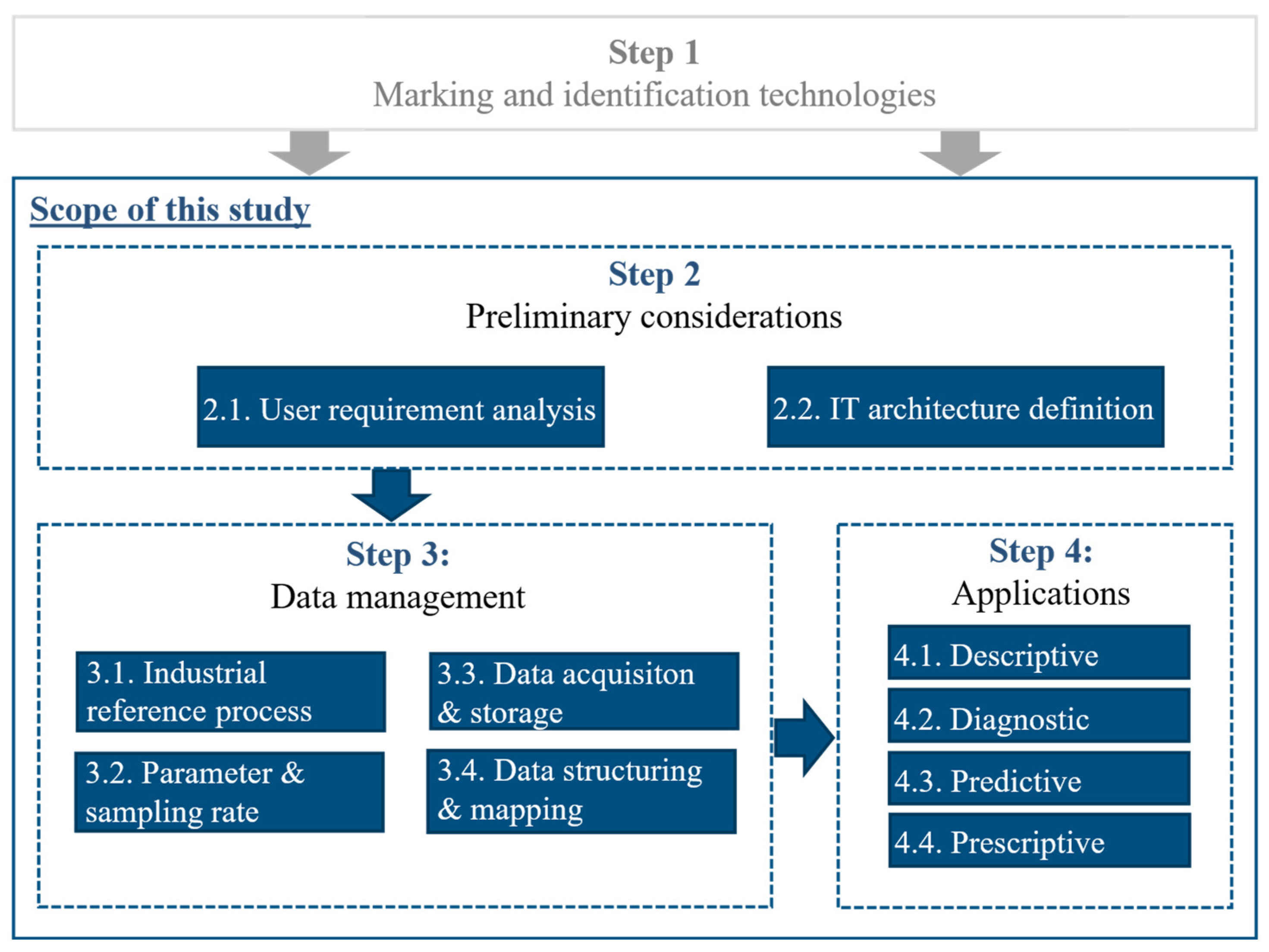
2. Methodology and Preliminary Considerations
2.1. User Requirement Analysis
2.1.1. Planner and Manager Perspective
- Technical Interoperability: This involves building upon existing data acquisition methods to minimize additional investments and ensure seamless integration with current systems for consistent information flow across manufacturing components.
- Informational Interoperability: This supports the incorporation of historical information for enhanced analysis, trend detection, and regulatory compliance.
- Scalability and Customization: These are critical for handling increased production volumes or new manufacturing processes without major redesigns.
- Automation: This aims to automate the capture, storage, and management of traceability information, reducing reliance on manual, error-prone methods, enhancing efficiency and accuracy.
- Versatility and Real-Time Capability: These are achieved by enabling diverse application scenarios like in-line data-driven methods through a pre-clustered and consistent dataset, allowing real-time data processing and analysis for immediate insights.
- Reporting: Capabilities are required to allow for the creation of custom reports and data visualizations tailored to the needs of various stakeholders, providing valuable insights to support decision-making.
- Error Handling and Compliance: This entails implementing a system for detecting and handling errors, which includes alerts, notifications, and automated responses for anomalies or data inconsistencies both in real-time and offline. It also emphasizes adherence to industry standards, regulations, and best practices in traceability, data management, and sustainability reporting.
- Continuous Improvement: This shall support systematic updates, feature enhancements, and issue resolution.
2.1.2. Data Analyst Perspective
- Non-Disruptive Implementation: This involves deploying a strategy that preserves the integrity of the existing production workflows without causing disruptions, ensuring that the identification methodology does not negatively impact the quality of the final product (FP).
- Adaptability: This requires a methodology that is highly flexible to accommodate varying conditions, such as spatial constraints across different production processes and traceable objects, while also keeping financial investments minimal.
- In-line Capability: This focuses on enabling real-time assignment of object-specific associations and data to establish an in-line pipeline to support continuous quality control processes.
2.2. Definition of IT Architecture
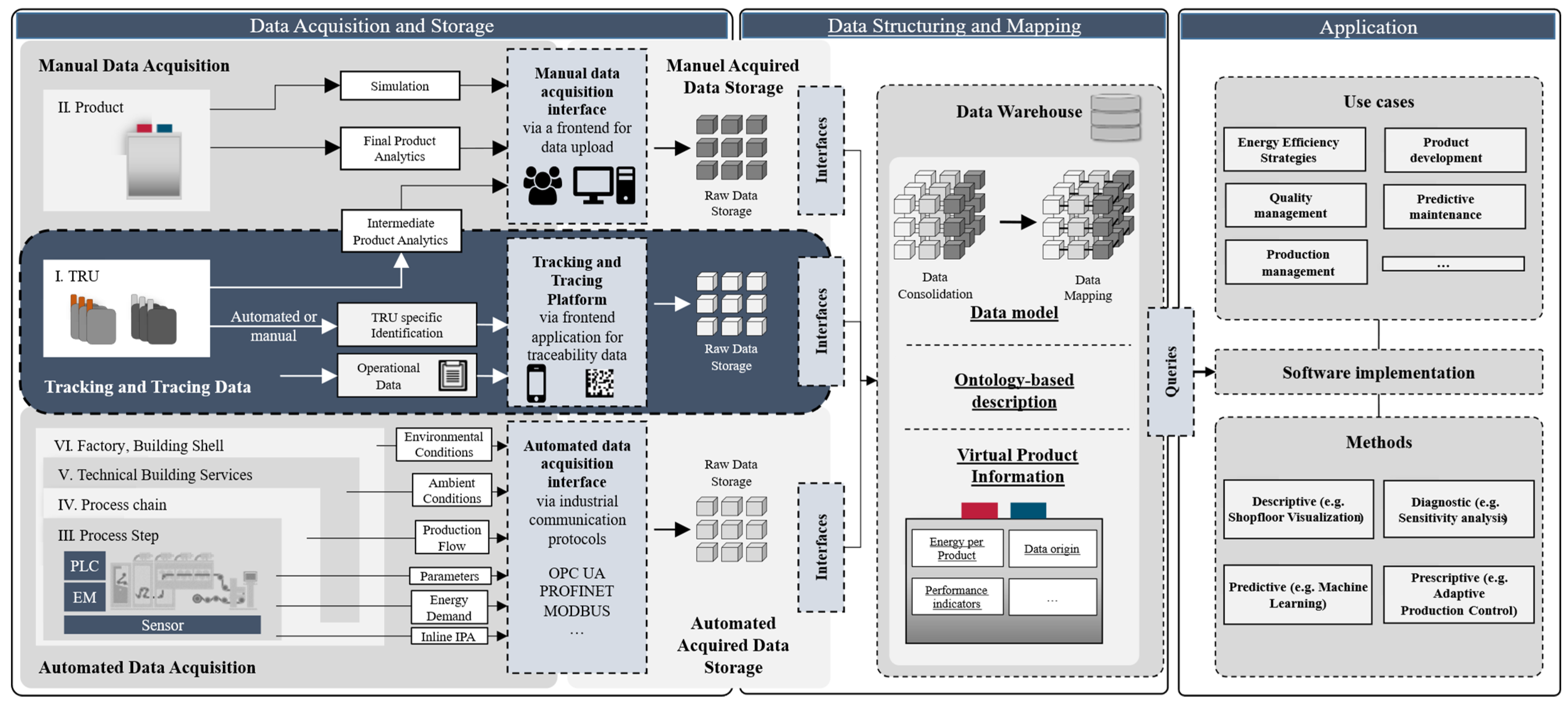
2.2.1. Data Acquisition and Storage Module
- Process Step Level: This captures data related to process parameters, settings, energy requirements, and data from additional in-line-capable sensors that provide insights into IP characteristics, such as mass loading during the coating process.
- Process Chain Level: This acquires data that pertains to the production flow, including details about scheduling and configurations within the process chain.
- Technical Building Service Level: This focuses on data concerning electric power usage, the flow of compressed air or gas, and district heating. It also collects information regarding environmental conditions, such as those found in dry rooms.
- Factory and Building Shell Level: This protects the internal system from external disturbances, gathering data on environmental factors e.g., temperature and humidity.
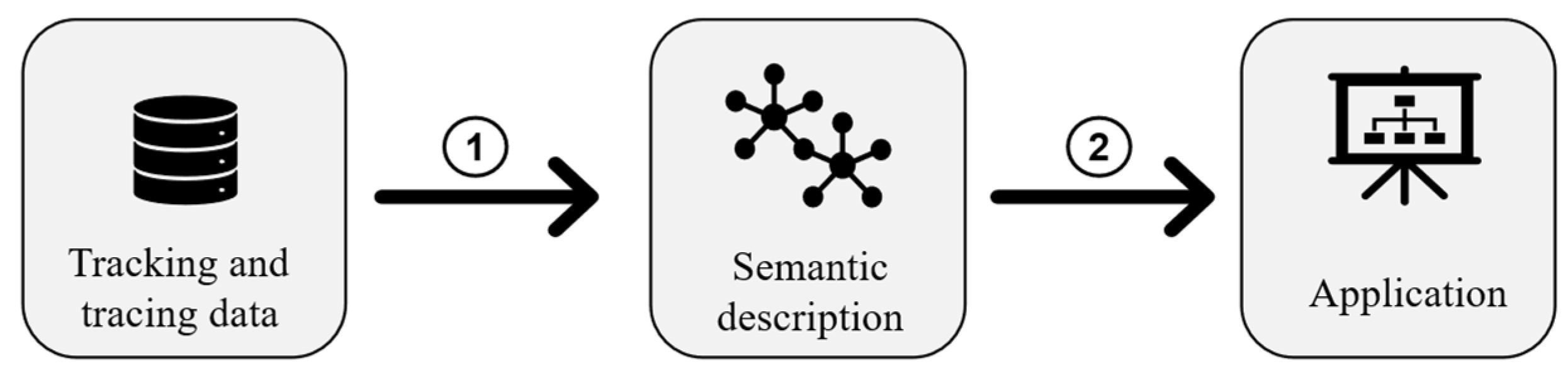
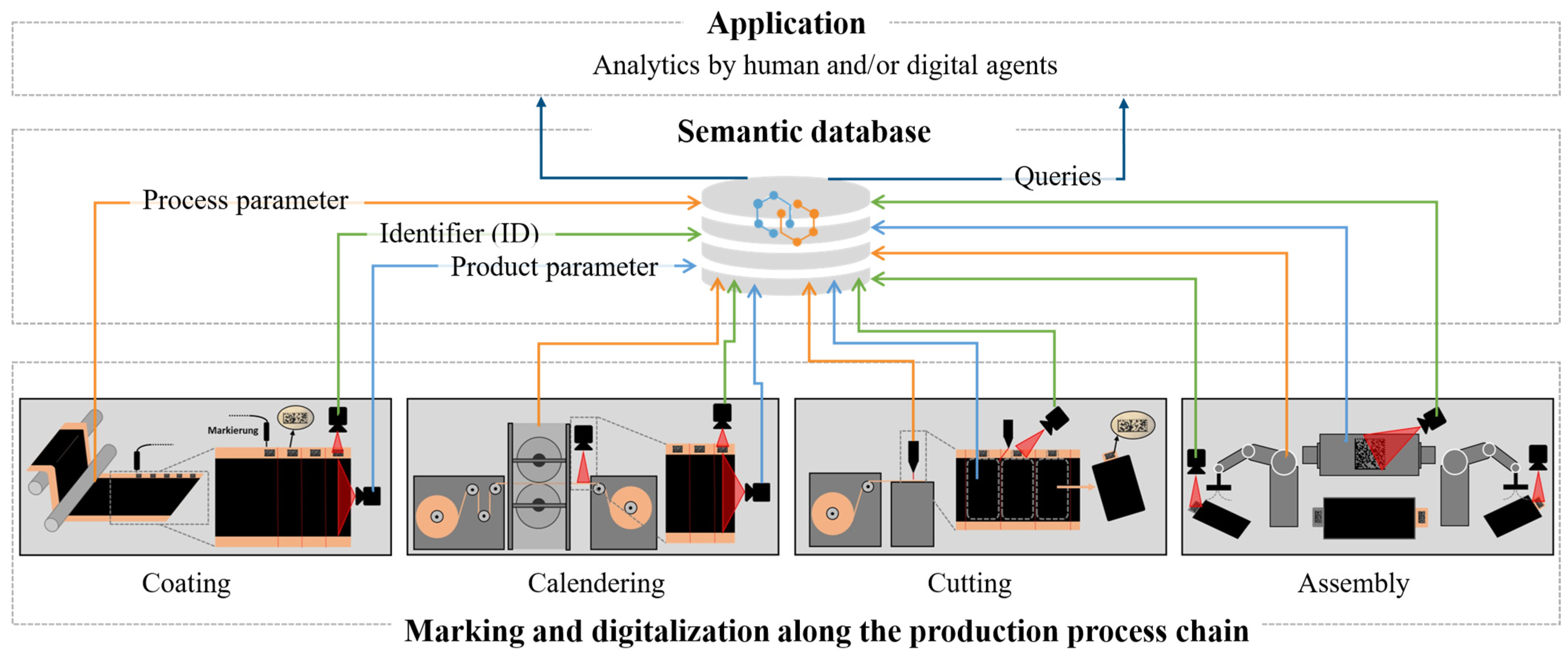
2.2.2. Data Structuring and Mapping Module
2.2.3. Application Module
3. Transferring a Marker-Based T&T System to Industrial-Scale Production—Data Management
3.1. Key Aspects of the Industrial Scale Reference Process Chain
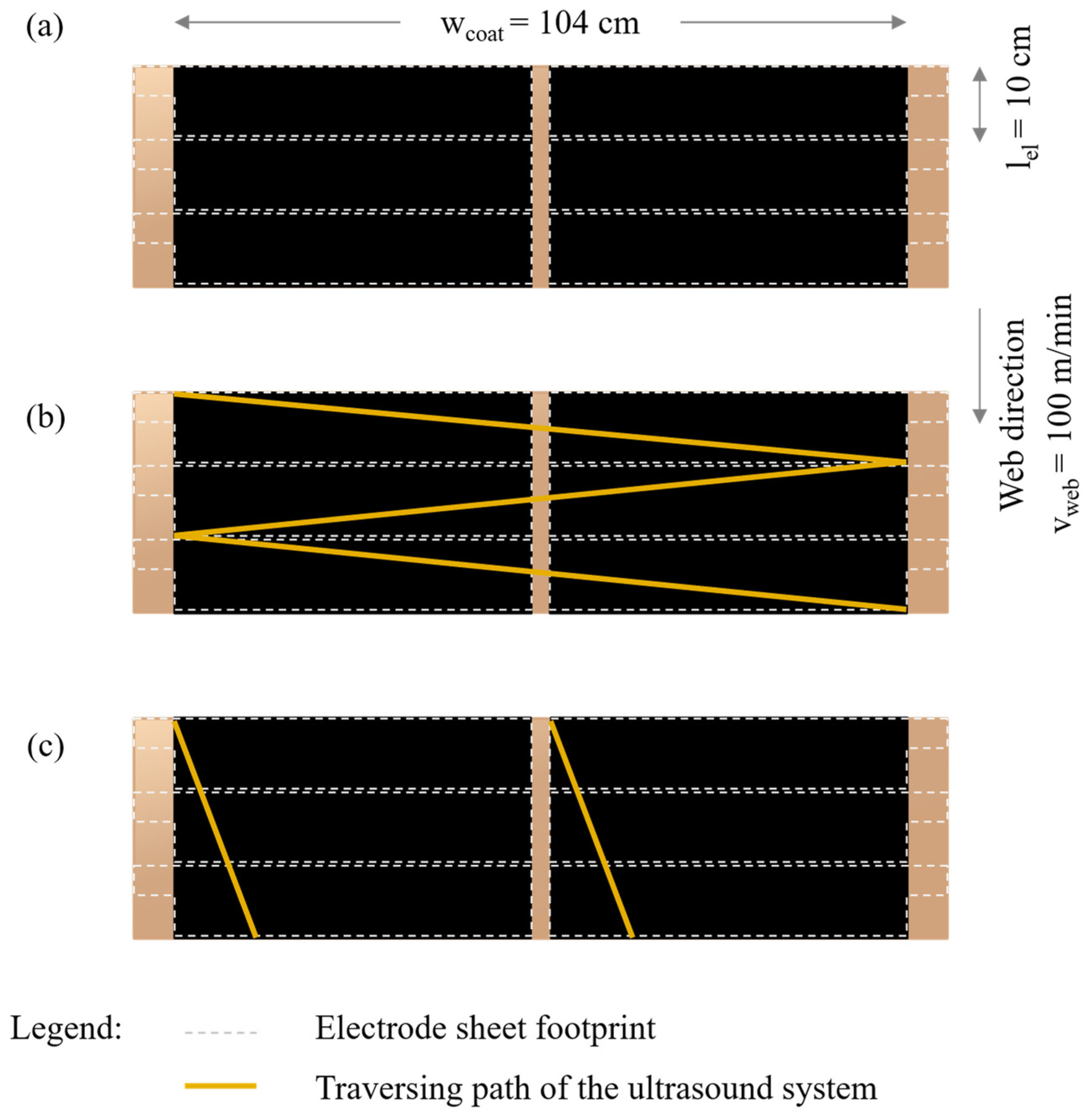
3.2. Relevant Parameters and Required Sampling Rate
3.3. Data Acquisition and Storage
- Commonly utilized communication protocols and compaction through Ethernet network systems;
- Data storage infrastructures, database types, and respective database management systems (DBMS);
- An estimation of the required data storage volumes for a suggested set of sensors relevant for electrode production.
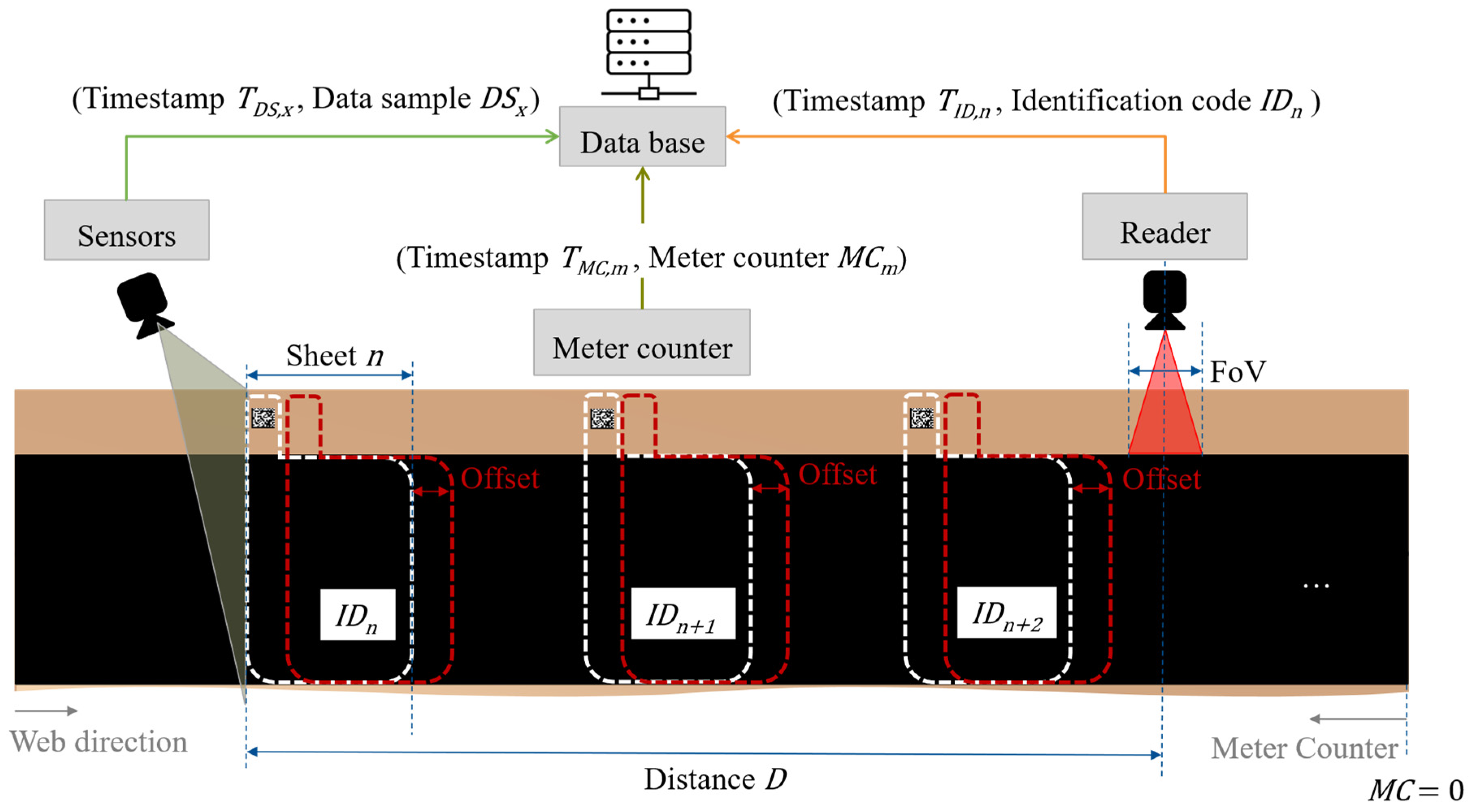
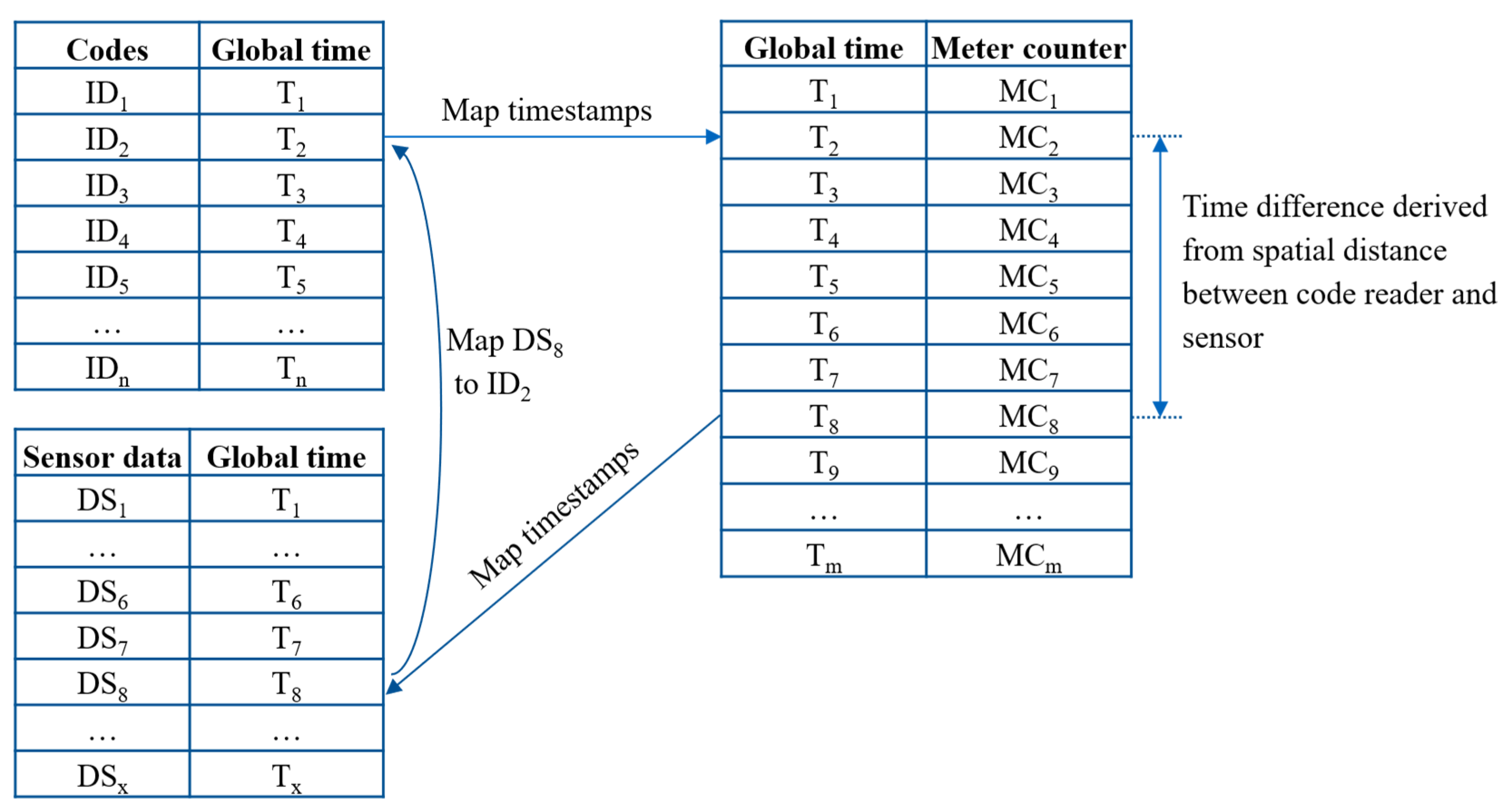
3.4. Data Structure and Mapping
4. Transferring a Marker-Based T&T System to Industrial-Scale Production—Applications
4.1. Descriptive Analytics: Shopfloor Visualization
4.2. Diagnostic Analytics: Cross-Process Relationships
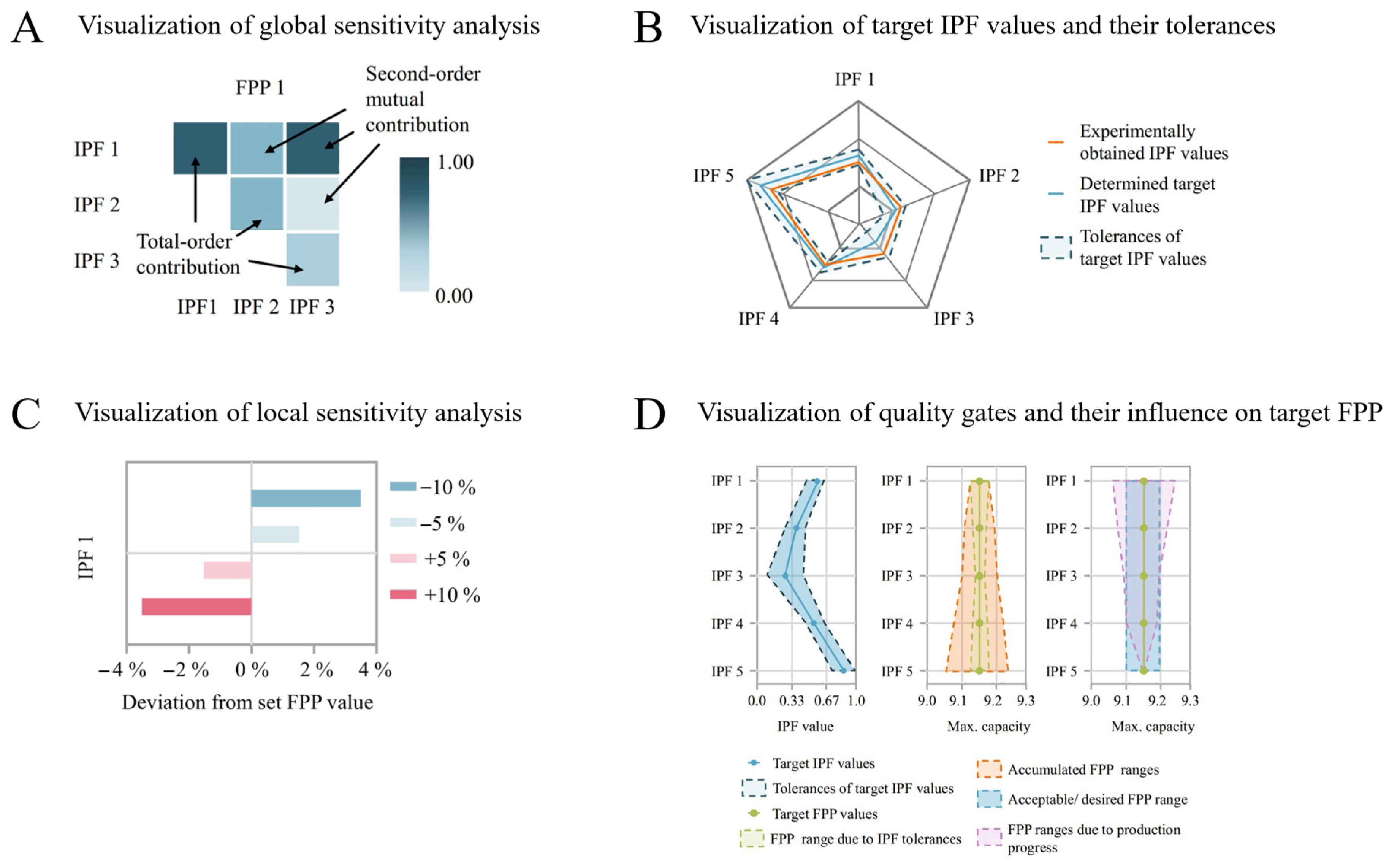
4.3. Predictive Analytics: Virtual Quality Gates and Machine Learning
4.4. Prescriptive Analytics: Adaptive Production Control
5. Conclusions and Outlook
Author Contributions
Funding
Data Availability Statement
Conflicts of Interest
References
- Kwade, A.; Haselrieder, W.; Leithoff, R.; Modlinger, A.; Dietrich, F.; Droeder, K. Current status and challenges for automotive battery production technologies. Nat. Energy 2018, 3, 290–300. [Google Scholar] [CrossRef]
- Keppeler, M.; Tran, H.-Y.; Braunwarth, W. The Role of Pilot Lines in Bridging the Gap Between Fundamental Research and Industrial Production for Lithium-Ion Battery Cells Relevant to Sustainable Electromobility: A Review. Energy Technol. 2021, 9, 2100132. [Google Scholar] [CrossRef]
- Manoharan, A.; Chong, J.J.; Choong, Z.J.; Lambert, S.; Kumar Gupta, R.; Chandra, D.; Jain, A.; Rao, A.; Sharma, A. Optimizing lithium-ion battery manufacturing with digitalization and AI-driven frameworks. Int. J. Adv. Manuf. Technol. 2026, 142, 1–37. [Google Scholar] [CrossRef]
- ISO 8402; Quality Management and Quality Assurance Vocabulary. International Organization for Standardization: Geneva, Switzerland, 1995.
- Mari Karlsen, K.; Olsen, P.; Anne-Marie Donnelly, K. Implementing traceability: Practical challenges at a mineral water bottling plant. Br. Food J. 2010, 112, 187–197. [Google Scholar] [CrossRef]
- Bertolini, M.; Bevilacqua, M.; Massini, R. FMECA approach to product traceability in the food industry. Food Control 2006, 17, 137–145. [Google Scholar] [CrossRef]
- Riexinger, G.; Doppler, J.P.; Haar, C.; Trierweiler, M.; Buss, A.; Schöbel, K.; Ensling, D.; Bauernhansl, T. Integration of Traceability Systems in Battery Production. Procedia CIRP 2020, 93, 125–130. [Google Scholar] [CrossRef]
- Wessel, J.; Turetskyy, A.; Wojahn, O.; Herrmann, C.; Thiede, S. Tracking and Tracing for Data Mining Application in the Lithium-ion Battery Production. Procedia CIRP 2020, 93, 162–167. [Google Scholar] [CrossRef]
- Sommer, A.; Leeb, M.; Haghi, S.; Günter, F.J.; Reinhart, G. Marking of Electrode Sheets in the Production of Lithium-Ion Cells as an Enabler for Tracking and Tracing. Procedia CIRP 2021, 104, 1011–1016. [Google Scholar] [CrossRef]
- Sommer, A.; Leeb, M.; Weishaeupl, L.; Daub, R. Integration of Electrode Markings into the Manufacturing Process of Lithium-Ion Battery Cells for Tracking and Tracing Applications. Batteries 2023, 9, 89. [Google Scholar] [CrossRef]
- Wessel, J.; Schoo, A.; Kwade, A.; Herrmann, C. Traceability in Battery Cell Production. Energy Technol. 2023, 11, 2200911. [Google Scholar] [CrossRef]
- Sommer, A.; Gruhn, H.; Schoo, A.; Mund, M.; Bazlen, S.; Tran, H.-Y.; Kandula, M.W.; Dilger, K.; Braunwarth, W.; Daub, R. Enabling Holistic Tracking and Tracing in Battery Cell Production: Marking Technologies and Identification; Institut für Werkzeugmaschinen und Betriebswissenschaften, TUM School of Engineering and Design: München, Germany, 2024. [Google Scholar] [CrossRef]
- Wessel, J. Traceability in Battery Production Systems. In Dissertation; Vulkan Verlag: Essen, Germany, 2024; ISBN 978-3-8027-8389-0. [Google Scholar]
- Turetskyy, A. Data Analytics in Battery Production Systems. In Dissertation; Vulkan Verlag: Essen, Germany, 2022; ISBN 978-3-8027-8368-5. [Google Scholar]
- Wessel, J.; Turetskyy, A.; Wojahn, O.; Abraham, T.; Herrmann, C. Ontology-based Traceability System for Interoperable Data Acquisition in Battery Cell Manufacturing. Procedia CIRP 2021, 104, 1215–1220. [Google Scholar] [CrossRef]
- Sarker, I.H. Data Science and Analytics: An Overview from Data-Driven Smart Computing, Decision-Making and Applications Perspective. SN Comput. Sci. 2021, 2, 377. [Google Scholar] [CrossRef]
- Günter, F.J.; Wassiliadis, N. State of the Art of Lithium-Ion Pouch Cells in Automotive Applications: Cell Teardown and Characterization. J. Electrochem. Soc. 2022, 169, 30515. [Google Scholar] [CrossRef]
- Haghi, S.; Summer, A.; Bauerschmidt, P.; Daub, R. Tailored Digitalization in Electrode Manufacturing: The Backbone of Smart Lithium-Ion Battery Cell Production. Energy Technol. 2022, 10, 2200657. [Google Scholar] [CrossRef]
- Haghi, S.; Leeb, M.; Molzberger, A.; Daub, R. Measuring Instruments for Characterization of Intermediate Products in Electrode Manufacturing of Lithium-Ion Batteries. Energy Technol. 2023, 11, 2300364. [Google Scholar] [CrossRef]
- David, L.; Ruther, R.E.; Mohanty, D.; Meyer, H.M.; Sheng, Y.; Kalnaus, S.; Daniel, C.; Wood, D.L. Identifying degradation mechanisms in lithium-ion batteries with coating defects at the cathode. Appl. Energy 2018, 231, 446–455. [Google Scholar] [CrossRef]
- Kraytsberg, A.; Ein-Eli, Y. Conveying Advanced Li-ion Battery Materials into Practice The Impact of Electrode Slurry Preparation Skills. Adv. Energy Mater. 2016, 6, 1600655. [Google Scholar] [CrossRef]
- Günther, T.; Schreiner, D.; Metkar, A.; Meyer, C.; Kwade, A.; Reinhart, G. Classification of Calendering-Induced Electrode Defects and Their Influence on Subsequent Processes of Lithium-Ion Battery Production. Energy Technol. 2020, 8, 1900026. [Google Scholar] [CrossRef]
- Fink, K.E.; Polzin, B.J.; Vaughey, J.T.; Major, J.J.; Dunlop, A.R.; Trask, S.E.; Jeka, G.T.; Spangenberger, J.S.; Keyser, M.A. Influence of metallic contaminants on the electrochemical and thermal behavior of Li-ion electrodes. J. Power Sources 2022, 518, 230760. [Google Scholar] [CrossRef]
- Wang, H.; Tan, H.; Luo, X.; Wang, H.; Ma, T.; Lv, M.; Song, X.; Jin, S.; Chang, X.; Li, X. The progress on aluminum-based anode materials for lithium-ion batteries. J. Mater. Chem. A 2020, 8, 25649–25662. [Google Scholar] [CrossRef]
- Schoo, A.; Moschner, R.; Hülsmann, J.; Kwade, A. Coating Defects of Lithium-Ion Battery Electrodes and Their Inline Detection and Tracking. Batteries 2023, 9, 111. [Google Scholar] [CrossRef]
- Zhang, Y.S.; Courtier, N.E.; Zhang, Z.; Liu, K.; Bailey, J.J.; Boyce, A.M.; Richardson, G.; Shearing, P.R.; Kendrick, E.; Brett, D.J.L. A Review of Lithium-Ion Battery Electrode Drying: Mechanisms and Metrology. Adv. Energy Mater. 2022, 12, 2102233. [Google Scholar] [CrossRef]
- VDA Measurement and Inspection Processes; Verband der Automobilindustrie e.V. (VDA): Eisenach, Germany, 2024; p. 5.
- Bauernhansl, T.; Vogel-Heuser, B.; Hompel, M. Handbuch Industrie 4.0: Band 1: Produktion, 3rd ed.; Springer: Berlin/Heidelberg, Germany, 2023; ISBN 978-3-662-58531-3. [Google Scholar]
- Connolly, T.M.; Begg, C.E. Database Systems. A Practical Approach to Design, Implementation, and Management, 6th ed.; Pearson Education Limited: London, UK, 2015; ISBN 978-1-292-06118-4. [Google Scholar]
- Stuckenschmidt, H. Ontologien: Konzepte, Technologien und Anwendungen, 2nd ed.; Springer: Berlin/Heidelberg, Germany, 2011; ISBN 978-3-642-05403-7. [Google Scholar]
- Sommer, A.; Wachter, J.; Grabmann, S.; Daub, R. Determination of Electrode Balancing in Multilayer Pouch Cells Through Tracking and Tracing in Lithium-Ion Battery Production. Batter. Supercaps 2024, 7, e202400127. [Google Scholar] [CrossRef]
- Filz, M.-A.; Gellrich, S.; Turetskyy, A.; Wessel, J.; Herrmann, C.; Thiede, S. Virtual Quality Gates in Manufacturing Systems: Framework, Implementation and Potential. J. Manuf. Mater. Process. 2020, 4, 106. [Google Scholar] [CrossRef]
- Wilde, A.-S.; Czarski, M.; Schott, A.; Abraham, T.; Herrmann, C. Utilizing Artificial Intelligence for Virtual Quality Gates in Changeable Production Systems. In Production at the Leading Edge of Technology, Proceedings of the 12th Congress of the German Academic Association for Production Technology (WGP), University of Stuttgart, October 2022; Liewald, M., Verl, A., Bauernhansl, T., Möhring, H.-C., Eds.; Springer International Publishing; Imprint Springer: Cham, Switzerland, 2023; pp. 484–493. ISBN 978-3-031-18318-8. [Google Scholar]
- Turetskyy, A.; Wessel, J.; Herrmann, C.; Thiede, S. Data-driven cyber-physical System for Quality Gates in Lithium-ion Battery Cell Manufacturing. Procedia CIRP 2020, 93, 168–173. [Google Scholar] [CrossRef]
- Haghi, S.; Keilhofer, J.; Schwarz, N.; He, P.; Daub, R. Efficient Analysis of Interdependencies in Electrode Manufacturing Through Joint Application of Design of Experiments and Explainable Machine Learning. Batter. Supercaps 2023, 7, e202300457. [Google Scholar] [CrossRef]
- Schönemann, M. Multiscale Simulation Approach for Battery Production Systems; Springer: Berlin/Heidelberg, Germany, 2017; ISBN 978-3-319-49366-4. [Google Scholar]
- Battery Passport Content Guidance. Available online: https://thebatterypass.eu (accessed on 15 April 2026).



| Sensor System | GByte/Day | GByte/Month | GByte/Year |
|---|---|---|---|
| Mass loading, array | 10.4 | 316.2 | 3794.7 |
| Mass loading, traverse | 3.5 | 105.4 | 1264.9 |
| Thickness | 0.4 | 12.6 | 151.8 |
| Error detection | 0.7 | 19.4 | 232.2 |
| Identification code | 0.07 | 1.9 | 23.2 |
| Total | 15.1 | 455.5 | 5466.8 |
Disclaimer/Publisher’s Note: The statements, opinions and data contained in all publications are solely those of the individual author(s) and contributor(s) and not of MDPI and/or the editor(s). MDPI and/or the editor(s) disclaim responsibility for any injury to people or property resulting from any ideas, methods, instructions or products referred to in the content. |
© 2026 by the authors. Licensee MDPI, Basel, Switzerland. This article is an open access article distributed under the terms and conditions of the Creative Commons Attribution (CC BY) license.
Share and Cite
Kuhr, L.; Haghi, S.; Leeb, M.; Schoo, A.; Mennenga, M.; Kwade, A.; Daub, R.; Herrmann, C. Enabling Holistic Tracking and Tracing in Battery Cell Production: Data Management and Applications. Batteries 2026, 12, 216. https://doi.org/10.3390/batteries12060216
Kuhr L, Haghi S, Leeb M, Schoo A, Mennenga M, Kwade A, Daub R, Herrmann C. Enabling Holistic Tracking and Tracing in Battery Cell Production: Data Management and Applications. Batteries. 2026; 12(6):216. https://doi.org/10.3390/batteries12060216
Chicago/Turabian StyleKuhr, Lennart, Sajedeh Haghi, Matthias Leeb, Alexander Schoo, Mark Mennenga, Arno Kwade, Rüdiger Daub, and Christoph Herrmann. 2026. "Enabling Holistic Tracking and Tracing in Battery Cell Production: Data Management and Applications" Batteries 12, no. 6: 216. https://doi.org/10.3390/batteries12060216
APA StyleKuhr, L., Haghi, S., Leeb, M., Schoo, A., Mennenga, M., Kwade, A., Daub, R., & Herrmann, C. (2026). Enabling Holistic Tracking and Tracing in Battery Cell Production: Data Management and Applications. Batteries, 12(6), 216. https://doi.org/10.3390/batteries12060216