1. Introduction
Batteries are widely promoted as a ‘green’ alternative intended to liberate society from fossil fuel reliance. However, pushing the limits of batteries reveals their significant drawbacks: they are slow to charge, hold finite energy, offer limited runtime, and have a short operational life of just a few hundred cycles before turning into a disposal burden [
1]. Battery Thermal Management Systems (BTMS) have important tasks, such as keeping the battery’s T
max below a certain value and minimizing the temperature differences within the battery pack. These tasks help to extend the lifespan of the battery packs, ensure the highest possible performance throughout the battery’s life, and maintain the safety of the battery packs [
2]. Among BTMS solutions, air cooling systems are widely used due to their advantages of low cost, simple structure, and light weight. The thermal behavior of an air-cooled battery pack depends on the pack’s geometric design (e.g., battery–battery distance) and operational conditions (e.g., cooling air velocity and ambient temperature). However, the individual and combined effects of these factors on battery temperature are complex. It is critical for designers to know which parameter has the most dominant effect on temperature control in order to direct optimization efforts and costs appropriately.
S. Ozbektas et al. focused on developing models capable of more accurate temperature prediction for Li-ion batteries. They analyzed four main test parameters that could affect the battery model’s accuracy: Pulse time gap, discharge pulse time, discharge pulse C rate, and rest time. Using the Taguchi method, this study revealed which test parameters the battery model is most sensitive to and statistically proved that the discharge C-rate is the most critical factor [
3]. S. Sudhakaran et al. focused on systems using phase change materials (PCM) to cool Li-ion batteries. They tested four different parameters at four different levels. These were: PCM material, PCM thickness, additive (copper foam additive used to improve low thermal conductivity, which is the main problem of PCMs), and heat transfer coefficient. They found that the two most effective factors in controlling battery temperature were, by far, the type of PCM material and its thickness [
4]. Sharma et al. studied three main control factors affecting the system’s performance to design a new hybrid cooling system and find the settings at which it operates most efficiently: Flow rate, coolant ratio (a mixture of ethylene glycol (EG) and water), and fan speed. Flow rate and coolant ratio (the percentage of glycol in the mixture) were identified as the most critical factors affecting system efficiency. Fan speed was found to have very little effect on performance or to be at a ‘static level’ [
5]. O. Yetik et al. numerically investigated a liquid cooling system using nanofluid for the thermal management of Li-ion batteries. They modeled a battery module consisting of 15 series-connected prismatic Li-ion cells. As the coolant, they used a nanofluid obtained by mixing Fe
2O
3 nanoparticles with the base fluid, engine oil (EO). They investigated four main control factors at four different levels: Coolant inlet velocity (V
inlet), nanoparticle mixing ratio, ambient temperature, and discharge rate. Factor Effects: As the discharge rate increased, the battery temperature also increased, as expected. As the coolant V
inlet increased, the battery temperature decreased. As the nanoparticle mixing ratio increased (i.e., as the nanofluid density increased), the battery temperature decreased and the cooling performance improved. C-rate (47.82%) and ambient temperature (35.96%) were the two most dominant factors on the T
max, while the effect of the mixing ratio remained at only 3.28%. Regarding the effect on uniformity, C-rate (54.13%) and V
inlet (25.72%) were the most dominant factors, while the effect of the mixing ratio was only 2.24% [
6]. Hosseinzadeh et al. statistically demonstrated using the ANOVA method that there is a fundamental trade-off between energy and power in battery design; thick electrodes and small particles are critical for energy, whereas thin electrodes and a high C-rate are critical for power [
7]. J. Ye et al. demonstrated that a hybrid system combining air and liquid cooling performs better than traditional systems and specifically identified that the air flow rate plays a more dominant role than the liquid flow rate in improving the system’s overall efficiency (entropy generation) [
8]. H. Fayaz et al. emphasize that there is no single solution for optimizing a battery’s thermal performance; instead, many different parameters (cooling type, flow rate, battery spacing, material, etc.) must be co-optimized depending on the application’s requirements. They noted that air cooling is simple and cheap but has low efficiency. They highlighted studies indicating that optimizing air flow channels and battery layout is essential for improvement. They stated that liquid cooling (especially mini-channel cooling plates) is much more efficient at dissipating high heat but adds complexity and cost. They determined that optimizing channel design and fluid flow rate is critical for the best performance. They emphasized studies showing that the arrangement of battery cells in the pack (e.g., inline, staggered) and the amount of spacing between them directly affect both cooling efficiency and temperature homogeneity [
9]. As a result of the study by S. Chavan et al., water cooling provided much lower battery temperatures in all channel designs compared with air cooling (e.g., in the curved channel, water was 304.44 K, while air was 305.03 K) [
10]. According to the results found by S. Birinci et al., increasing the velocity of the coolant allowed more heat to be extracted from the system. Therefore, as the flow rate increased, both the battery T
max and the temperature difference between batteries decreased significantly. As the temperature of the coolant water increased (e.g., from 15 °C to 45 °C), the T
max reached by the battery also increased, as expected. In summary, this study showed that the most effective way to reduce the T
max battery in liquid cooling is to increase the flow rate, but the coolant T
inlet is also an important factor for achieving temperature homogeneity, and a balance (trade-off) must be established between these two parameters [
11]. J. Mustafa revealed that when cooling multiple battery packs, enlarging the inlet channel cools the batteries better, but both enlarging the inlet channel and increasing the spacing between the packs significantly increase the fan power (energy consumption) required for cooling [
12]. Y. Zhang et al. found that increasing the air V
inlet significantly reduced the T
max, while increasing the horizontal distance between the batteries raised the T
max but improved homogeneity by reducing the temperature difference [
13]. S. Park et al. found that the influence of the cooling plate outer width factor on the T
max decreased as the discharge rate increased [
14]. All the mentioned studies reveal a complex scenario with hard-to-identify leading factors for battery thermal management.
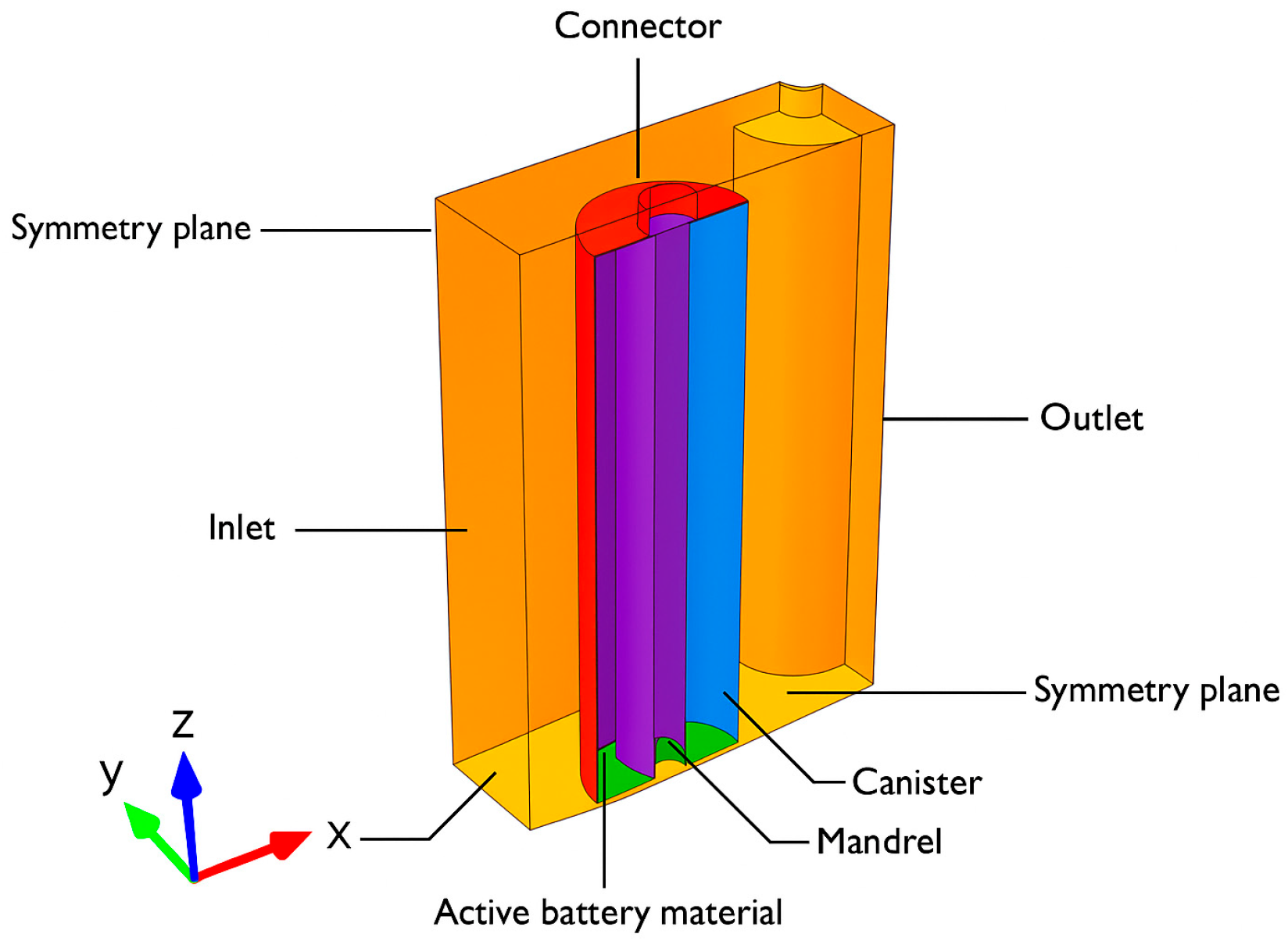
The objective of this study is to perform an optimization study on a 3D electrochemical-thermal coupled model of a cylindrical Li-ion battery, developed in COMSOL Multiphysics. The main novelty of this study is the first-time evaluation of multi-disciplinary factors such as nanofluid concentration and physical battery arrangement in this specific configuration, applying the Taguchi optimization method to a 3D electrochemical-thermal coupled cylindrical lithium-ion battery model developed in COMSOL Multiphysics. To minimize the battery’s Tmax, the Taguchi L9 orthogonal array methodology was utilized. Four main control factors (base fluid and Φ-Al2O3 of the nanofluid coolant, battery–battery distance, Tinlet) were investigated at three levels each. Using Minitab software, ANOVA was applied to determine the statistical percentage contribution of each parameter to the battery Tmax. Concurrently, S/N ratio analysis was used to identify the optimum setting combination for the lowest and most stable temperature. This study aims to reveal which design and operational parameters should be prioritized in thermal management.
3. Results
3D thermal model simulations were conducted for nine unique parameter configurations based on the Taguchi L9 orthogonal array design. The T
max, designated as the study’s primary response variable, was documented across all experimental setups and is detailed in
Table 3.
Analysis of the data presented in
Table 3 demonstrates that variations in control factor levels profoundly influence the thermal behavior of the battery. The recorded T
max values span a broad spectrum, ranging from 35.5 °C to 50.0 °C, which corresponds to a substantial temperature differential of 14.5 °C.
Minimum Tmax (optimal condition): The lowest peak temperature of 35.5 °C was achieved under the L9 experimental setup (A3, B3, C2, D1). This optimal configuration utilizes water as the base fluid combined with a 5% volume fraction of Al2O3, an inter-battery spacing of 3 × r_batt, and a coolant inlet temperature of 293.15 K. A comparable thermal response was noted in the L5 trial (A2, B2, C3, D1), which yielded a maximum temperature of 36.0 °C.
Maximum Tmax (critical condition): Conversely, the highest peak temperature of 50.0 °C occurred during the L3 experiment (A1, B3, C3, D3). This least favorable scenario involves ethylene glycol as the base fluid, a 5% Al2O3 volume fraction, an increased battery spacing of 3.5 × r_batt, and an elevated inlet temperature of 303.15 K.
The significant 14.5 °C discrepancy between the most favorable (L9) and least favorable (L3) operating conditions underscores the vital importance of proper parameter selection in the thermal optimization process.
To achieve the minimum T
max, a “smaller-the-better” S/N analysis was employed. The responses for the S/N ratios, depicted in
Table 4, outline the mean S/N values for all control factors (A, B, C, and D) across their respective levels. Following Taguchi’s principles for a “smaller-the-better” target, the specific level that yields the highest S/N ratio is deemed optimal for any given factor.
A detailed assessment of the table yields the following optimal levels:
Factor A (base fluid): The maximum S/N ratio (−32.08) was achieved at Level 3 (Water).
Factor B (Φ-Al2O3): The peak S/N ratio (−32.68) was observed at Level 3 (5%).
Factor C (battery–battery distance): The highest S/N ratio (−32.27) occurred at Level 3 (3.5 × r_batt).
Factor D (Tinlet): The maximum S/N ratio (−31.95) was recorded at Level 1 (293.15 K).
Derived from this analytical assessment, the optimal parametric configuration to effectively minimize the Tmax is established as the A3-B3-C3-D1 setup.
Within the response table, the ‘Delta’ metric defined as the difference between the peak and minimum S/N ratios for any specific factor quantifies the relative impact of that parameter on the response variable (Tmax). The ‘Rank’ designation subsequently orders these factors according to the magnitude of their overall effect:
Factor A (base fluid): Delta = 1.69
Factor D (Tinlet): Delta = 1.64
Factor C (battery–battery distance): Delta = 1.17
Factor B (Φ-Al2O3): Delta = 0.21
This established hierarchy clearly indicates that the selection of the base fluid and Tinlet are the predominant variables governing the efficiency of the battery cooling system. Conversely, the Φ-Al2O3 (Factor B) was observed to exert the least significant influence on the Tmax within the evaluated experimental boundaries.
To corroborate the conclusions drawn from the S/N ratio evaluation and to assess the direct impact of the control variables on the measured temperature data, the average T
max across all factor levels was scrutinized. The responses for means detailed in
Table 5 outline the average peak temperatures recorded across levels 1, 2, and 3 for every tested parameter. Given the primary goal of minimizing T
max, the optimal condition for each individual factor corresponds to the level that yields the lowest average temperature.
An evaluation of the mean response table reveals the following:
Factor A (base fluid): The minimum average temperature (40.50 °C) was recorded at Level 3 (Water—W).
Factor B (Φ-Al2O3): The lowest mean temperature (43.50 °C) was observed at Level 3 (5%).
Factor C (battery–battery distance): The minimum average temperature (41.50 °C) occurred at Level 3 (3.5 × r_batt).
Factor D (Tinlet): The lowest mean temperature (40.00 °C) was achieved at Level 1 (293.15 K).
These mean temperature findings serve as direct validation for the optimal parametric configuration (A3-B3-C3-D1) previously deduced via the S/N ratio analysis presented in
Table 4.
Additionally, the ‘Delta’ metric within the means table calculated as the disparity between the maximum and minimum average Tmax for any given variable illustrates the absolute magnitude of that factor’s impact on Tinlet. The parameters are subsequently ordered in the ‘Rank’ column based on this degree of influence:
Factor A (base fluid): Delta = 8.33 °C
Factor D (Tinlet): Delta = 7.83 °C
Factor C (battery–battery distance): Delta = 5.50 °C
Factor B (Φ-Al2O3): Delta = 0.83 °C
This hierarchical sequence aligns with the ranking established by the previous S/N ratio evaluation (1-A, 2-D, 3-C, 4-B). Both analytical methodologies uniformly confirm that the selection of the base fluid (Factor A) exerts the most dominant influence on the Tmax, closely followed by the Tinlet (Factor D). Conversely, the Φ-Al2O3 (Factor B) yields a substantially less pronounced impact relative to the other investigated parameters.
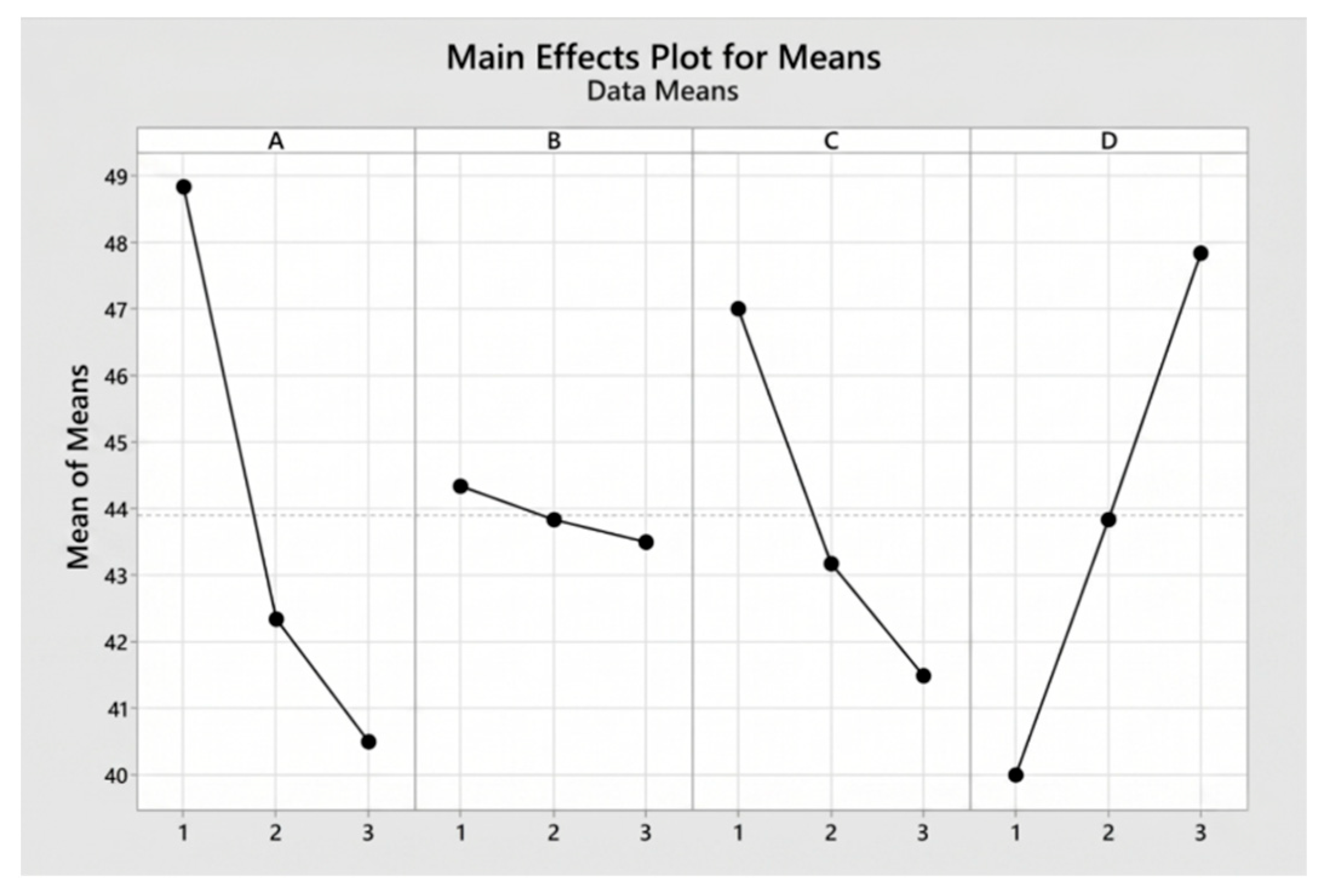
To visually assess the influence of the control parameters (A, B, C, and D) on the battery’s T
max, a main effects plot was constructed in accordance with the Taguchi methodology. Illustrated in
Figure 3, this chart serves as the graphical counterpart to the response table for means (detailed earlier in
Table 5). The vertical axis denotes the mean T
max, whereas the horizontal axis maps the distinct operational levels (1, 2, and 3) assigned to each variable.
Given the primary goal of minimizing the Tmax, the optimal condition for any specific factor corresponds to the lowest plotted point on its respective trend line:
Factor A (base fluid): The minimum mean temperature is achieved at Level 3 (Water).
Factor B (Φ-Al2O3): The lowest mean temperature is observed at Level 3 (5%).
Factor C (battery–battery distance): The minimum mean temperature is recorded at Level 3 (3.5 × r_batt).
Factor D (Tinlet): The lowest mean temperature is achieved at Level 1 (293.15 K).
This graphical evaluation definitively identifies the A3-B3-C3-D1 configuration as the optimal setup for minimizing T
max, thereby reinforcing the analytical conclusions previously derived from the data in
Table 4 and
Table 5.
Moreover, the gradient (or slope) of the plotted lines serves as a direct visual indicator of the magnitude and significance of each variable’s impact on Tmax.
Factors A (base fluid) and D (Tinlet): These parameters exhibit the most pronounced slopes across their respective levels. This provides clear visual evidence that the base fluid and Tinlet are the predominant factors governing the thermal management of the battery.
Factor C (battery–battery distance): This variable also demonstrates a substantial downward trajectory, effectively reducing the temperature as the design transitions from Level 1 to Level 3, thereby confirming its importance in the cooling system’s efficiency.
Factor B (Φ-Al2O3): In stark contrast, the trend line associated with the nanoparticle volume fraction remains relatively flat. This nearly horizontal slope implies that altering the nanofluid concentration within the investigated 2% to 5% range exerts a marginal, if not negligible, statistical influence on the overall Tmax.
These graphical observations align with the quantitative hierarchy established by the ‘Rank’ metric (1-A, 2-D, 3-C, 4-B) derived from the preceding response tables (
Table 4 and
Table 5).
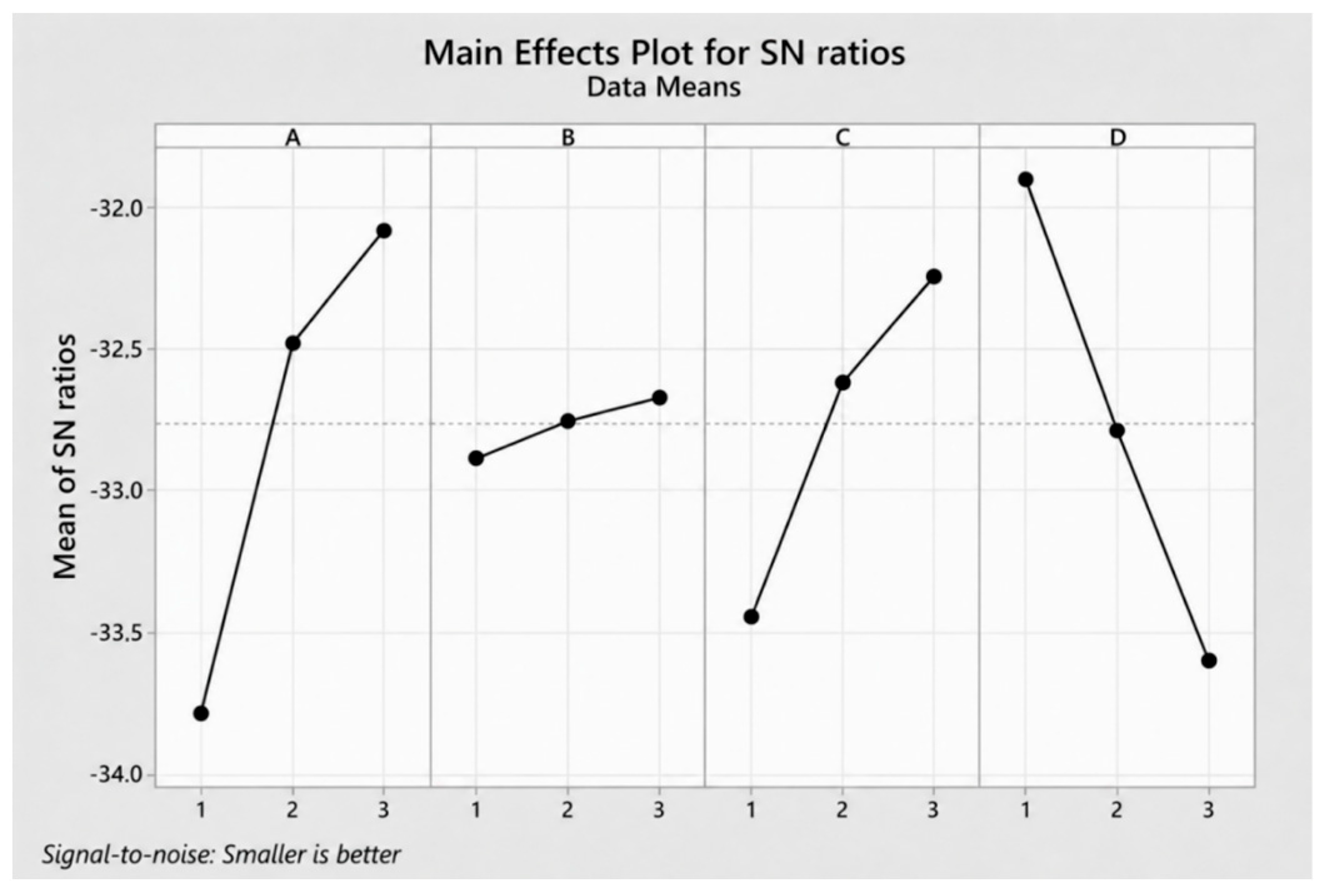
To establish the optimal configuration among the four control variables, a main effects plot was generated utilizing the “smaller-the-better” S/N ratio data, as illustrated in
Figure 4. On this chart, the vertical axis denotes the average S/N ratios. Within the framework of the Taguchi method, the maximum S/N ratio is the objective, as it indicates a system performance that closely meets the target (minimal T
max) while maintaining robustness against external noise (minimal variance).
An evaluation of the generated plot identifies the following levels as producing the highest S/N ratios for their respective factors:
Factor A (base fluid): The peak S/N ratio occurs at Level 3 (Water).
Factor B (Φ-Al2O3): The maximum S/N ratio is found at Level 3 (5%).
Factor C (battery–battery distance): The highest S/N ratio is recorded at Level 3 (3.5 × r_batt).
Factor D (Tinlet): The peak S/N ratio is achieved at Level 1 (293.15 K).
This visual assessment serves to corroborate that the A3-B3-C3-D1 setup constitutes the optimal parametric combination for minimizing T
max. This conclusion aligns seamlessly with the results derived from the main effects plot for means (
Figure 3).
Moreover, the gradients of the plotted lines further validate the established hierarchy of factor significance. Factors A (base fluid) and D (T
inlet) exhibit the most acute variations in S/N ratio across their levels, confirming their status as the predominant variables influencing thermal performance. In contrast, the nearly horizontal trajectory of the line representing Factor B (Φ-Al
2O
3) indicates a minimal shift in the S/N ratio, substantiating its position as the least impactful parameter. These graphical observations are in complete accordance with the factor rankings previously delineated in the S/N response (
Table 4).
ANOVA was executed to quantitatively evaluate the statistical significance and proportional impact of the four operational parameters (A, B, C, and D) on the battery T
max. The outcomes of this ANOVA are detailed in
Table 6.
Given the implementation of an L9 orthogonal array accommodating four factors across three distinct levels, all eight available degrees of freedom (DF) were entirely allocated to the main effects (Total DF = 9 experimental runs − 1 = 8; Factor DF = 4 factors × (3 levels − 1) = 8). This specific configuration constitutes a “saturated” design, thereby leaving zero DF assigned to residual error (DF_Error = 0). Consequently, traditional statistical metrics, namely F-values and p-values, cannot be computed, a limitation denoted by an asterisk (‘*’) within the summary table.
Under these saturated conditions, the magnitude of each parameter’s influence on Tmax is evaluated by analyzing the “adjusted sum of squares” (Adj SS) to derive its corresponding “percentage contribution” (P%). This percentage metric effectively quantifies the proportion of the total experimental variance that is attributable to each specific factor.
The analytical findings from the ANOVA provide robust statistical validation for the empirical trends previously observed in both the S/N ratio and main effects charts:
Factor A (base fluid): Emerges as the most critical parameter governing Tmax, accounting for a dominant 44.96% of the overall variance.
Factor D (Tinlet): Ranks as the second most influential variable, exhibiting a substantial percentage contribution of 36.00%.
Factor C (battery–battery distance): Demonstrates a moderate impact on the thermal response, contributing 18.65% to the total variation.
Factor B (Φ-Al2O3): Yields a minimal contribution of merely 0.41%, indicating a statistically insignificant (or negligible) effect on Tmax.
Ultimately, this quantitative evaluation underscores that future optimization strategies aimed at mitigating battery temperature elevation should prioritize the careful selection and control of the base fluid and the coolant inlet temperature.
Both the Taguchi S/N ratio evaluation and the corresponding ANOVA results conclusively pinpointed the A3-B3-C3-D1 configuration as the ideal parametric setup for minimizing Tmax. In order to verify the thermal behavior of this optimal architecture comprising a water-based fluid, a 5% Al2O3 nanoparticle volume fraction, an inter-battery spacing of 3.5 × r_batt, and a coolant inlet temperature of 293.15 K and to rigorously assess the efficacy of the optimization process, a subsequent confirmation simulation was executed utilizing COMSOL Multiphysics.
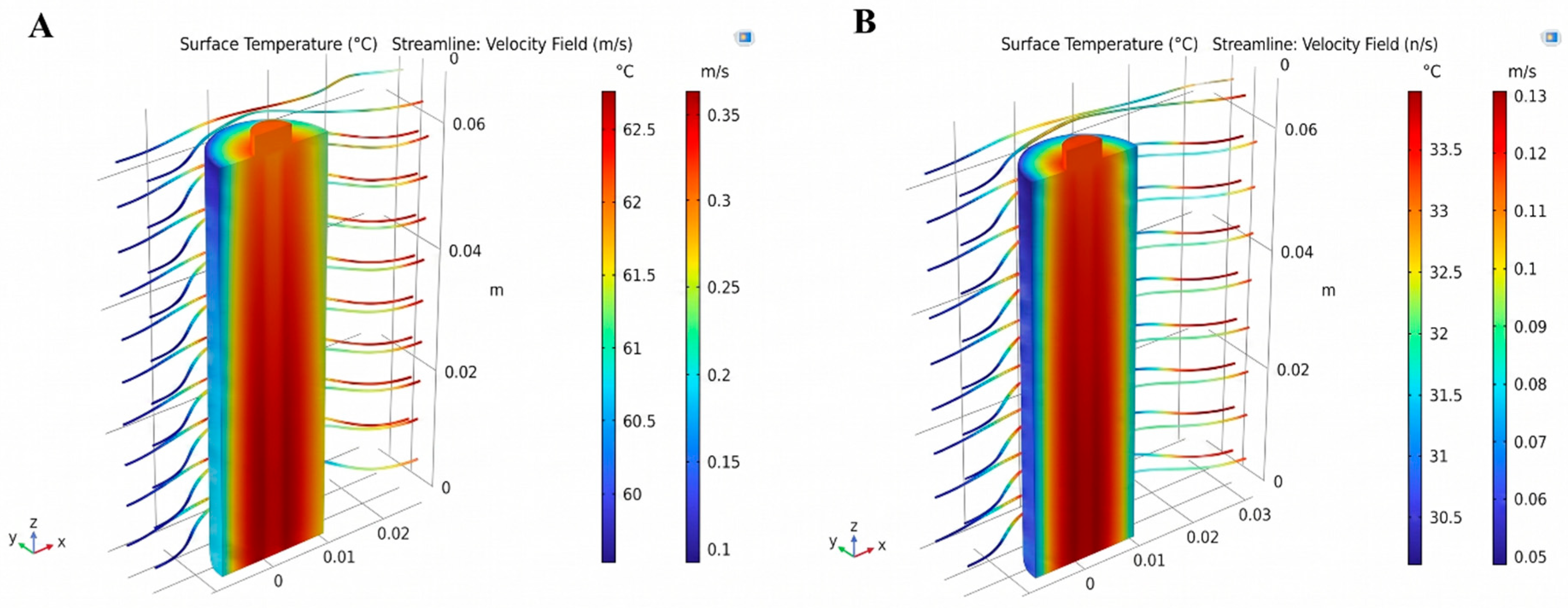
Figure 5 offers a comparative analysis between the outcomes of this confirmatory simulation (depicted as B) and the baseline, experimentally verified air-cooled reference model (depicted as A) that was established at the onset of the investigation.
Figure 5A (pre-optimization baseline): This panel illustrates the thermal profile of the initial air-cooled reference system. An inspection of the associated temperature contour scale (spanning 60 °C to 62.5 °C) reveals a predominantly red (elevated temperature) battery surface. Here, the T
max peaks at approximately 62.5 °C, a value that exceeds the conventional safe operating threshold for Li-ion cells (generally recognized as 60 °C), thereby introducing a substantial risk of thermal runaway.
Figure 5B (post-optimization configuration): This panel displays the thermal distribution for the nanofluid-cooled system operating under the optimized A3-B3-C3-D1 parameters derived from the Taguchi methodology. The corresponding temperature scale (ranging from 30.5 °C to 33.5 °C), coupled with a predominantly blue (cooler) surface profile, signifies a profound enhancement in thermal management capabilities. Notably, the optimized architecture successfully constrains the T
max to a safe limit of approximately 33.5 °C.
This direct comparison provides compelling quantitative evidence of the Taguchi optimization’s significant efficacy. Relative to the baseline air-cooled architecture, the optimized nanofluid cooling system yielded a reduction in battery Tmax of 29.0 °C.
Crucially, the achieved Tmax of 33.5 °C under the optimal conditions surpasses the lowest temperature recorded among the original L9 orthogonal array experiments (which was 35.5 °C during the L9 trial). This outcome definitively validates the robust predictive capacity of the Taguchi approach. It demonstrates that the methodology is not restricted to merely selecting the most favorable condition from a pre-defined experimental matrix; rather, it is highly capable of extrapolating a novel, mathematically derived optimal combination that yields demonstrably superior performance beyond the initially tested empirical boundaries.
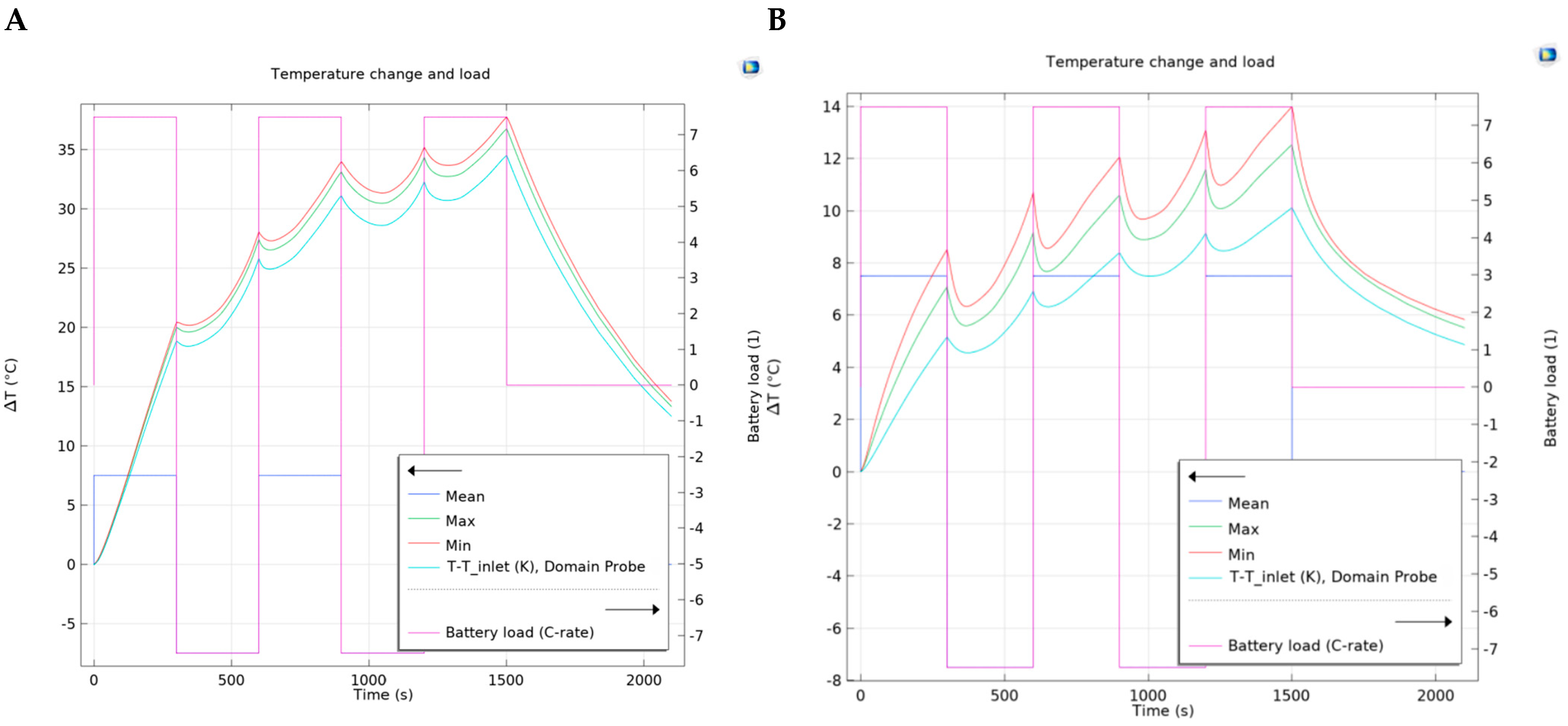
Figure 6 illustrates the temperature change over an extended, cyclic operating period of 2100 s, encompassing both heating and cooling phases. This analysis is critical for evaluating the thermal stability and the risk of heat accumulation in the battery under real-world usage conditions.
Curve A (baseline air-cooled model): In the initial air-cooled reference model, the temperature rises rapidly during consecutive charge and discharge cycles, clearly demonstrating heat accumulation with a distinct ‘staircase’ effect. By the end of the 1500 s load period, the Tmax rise (ΔT) reaches approximately 37 °C. This proves that air cooling is insufficient to keep the battery within safe operating limits under intensive cyclic loads.
Curve B (optimized nanofluid model): The A3-B3-C3-D1 configuration, determined via the Taguchi method, records a dramatic improvement in thermal stability. Under the exact same severe cyclic load, the Tmax rise at 1500 s is restricted to only 14 °C. The optimized system successfully reduces heat accumulation by approximately 62% compared with the air-cooled model. Furthermore, during the resting (cooling) phase after 1500 s, it is observed that the nanofluid cooling extracts heat from the system much faster, rapidly stabilizing the battery temperature.
These findings indicate that the cooling system driven by the dominant effects of the (A) base fluid (Water) and (D) Tinlet (293.15 K) not only reduces short-term peak temperatures but also maximizes battery life and safety by effectively preventing heat accumulation during long-term cyclic operations.