
Online Internal Temperature Estimation Method for Prismatic Li-Ion Battery Using Embedded Physics-Informed Neural Networks

 , ,
, ,
Abstract
1. Introduction
2. Principle of the Proposed Internal Temperature Estimation Method
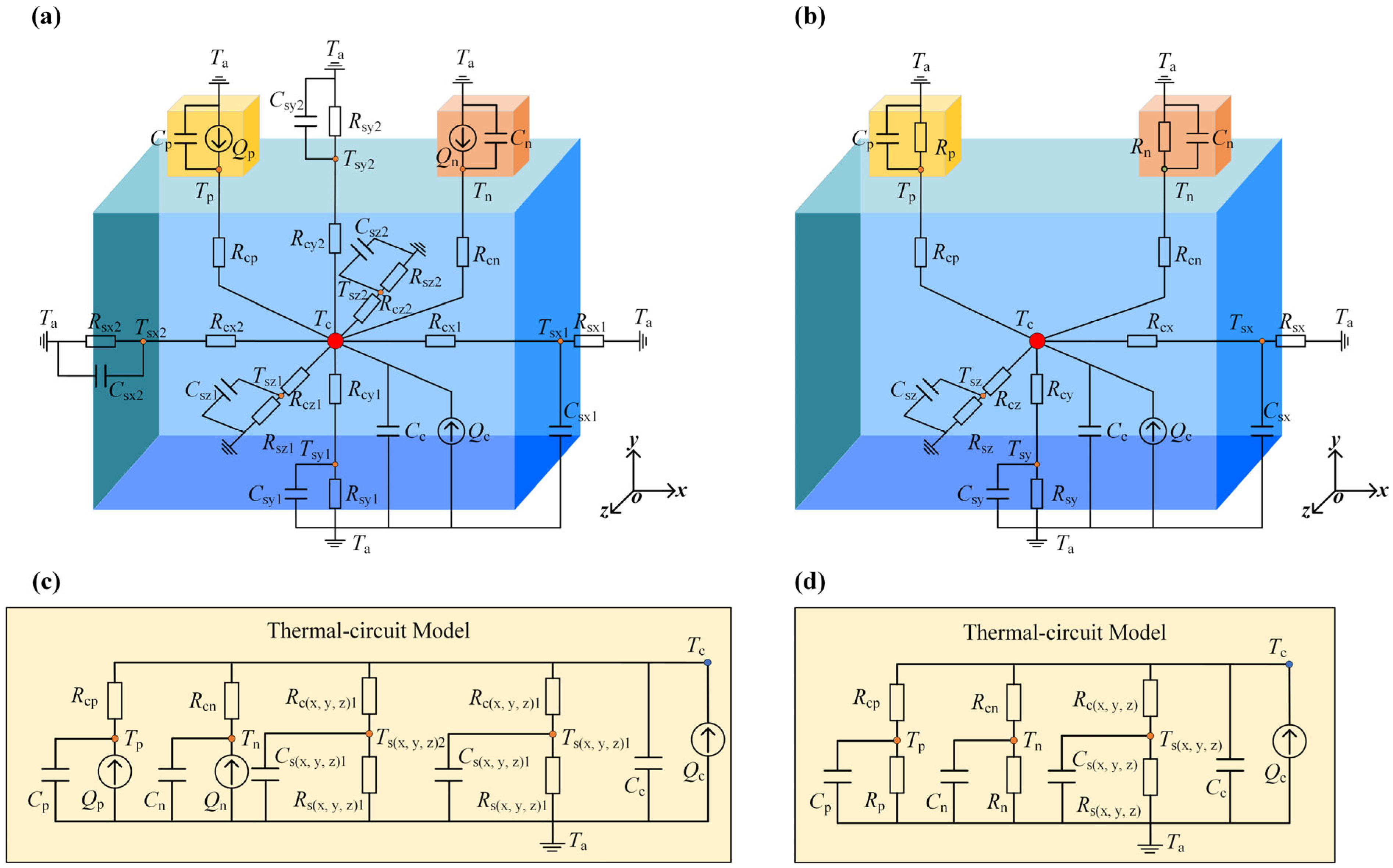

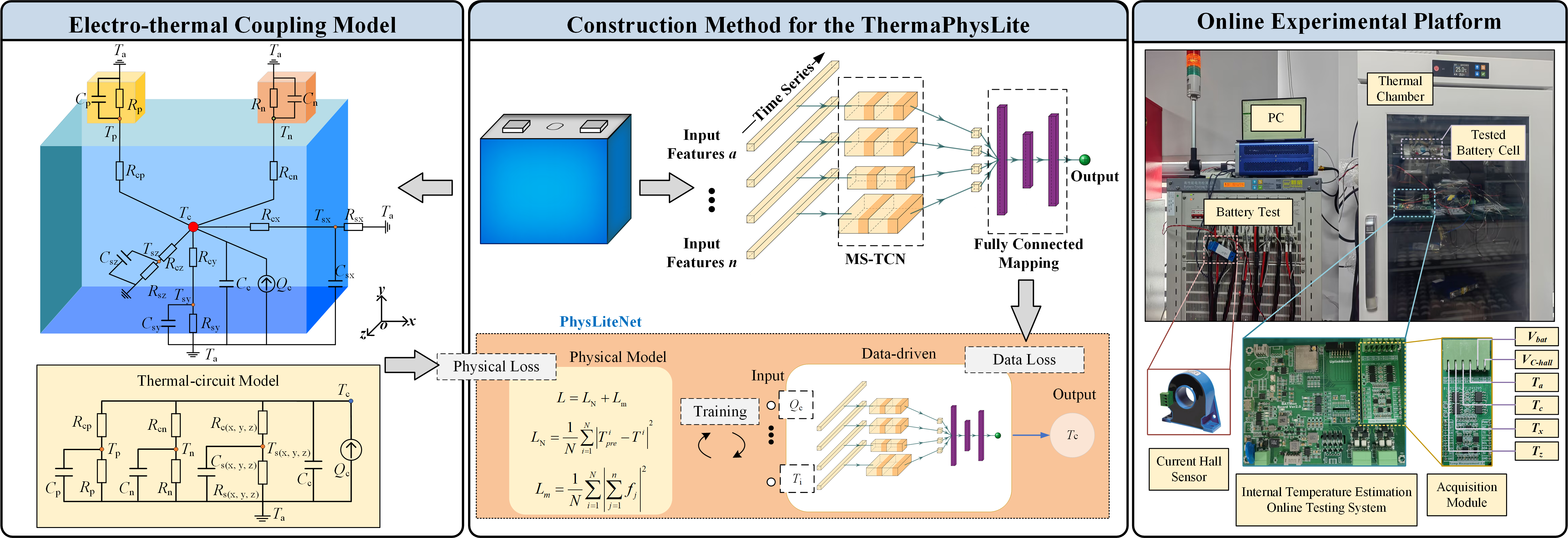
| Symbol | Description |
|---|---|
| Qc | Internal heat generation rate of the cell (Bernardi equation) |
| Tc | Core (internal) temperature |
| Ta | Ambient temperature |
| Tp, Tn | Positive/negative tab surface temperatures |
| Tsx, Tsy, Tsz | Surface temperatures along x, y, z directions |
| Cc | Thermal capacitance of cell core |
| Cp, Cn | Thermal capacitances of positive/negative tabs |
| Csx, Csy, Csz | Thermal capacitances of surface nodes |
| Rp, Rn | Tab-to-ambient thermal resistances |
| Rcp, Rcn | Core-to-tab thermal resistances |
| Rcx1, Rcy1, Rcz1 | Core-to-surface thermal resistances (x, y, z) |
| Rcx2, Rcy2, Rcz2 | Surface-to-ambient thermal resistances (x, y, z) |
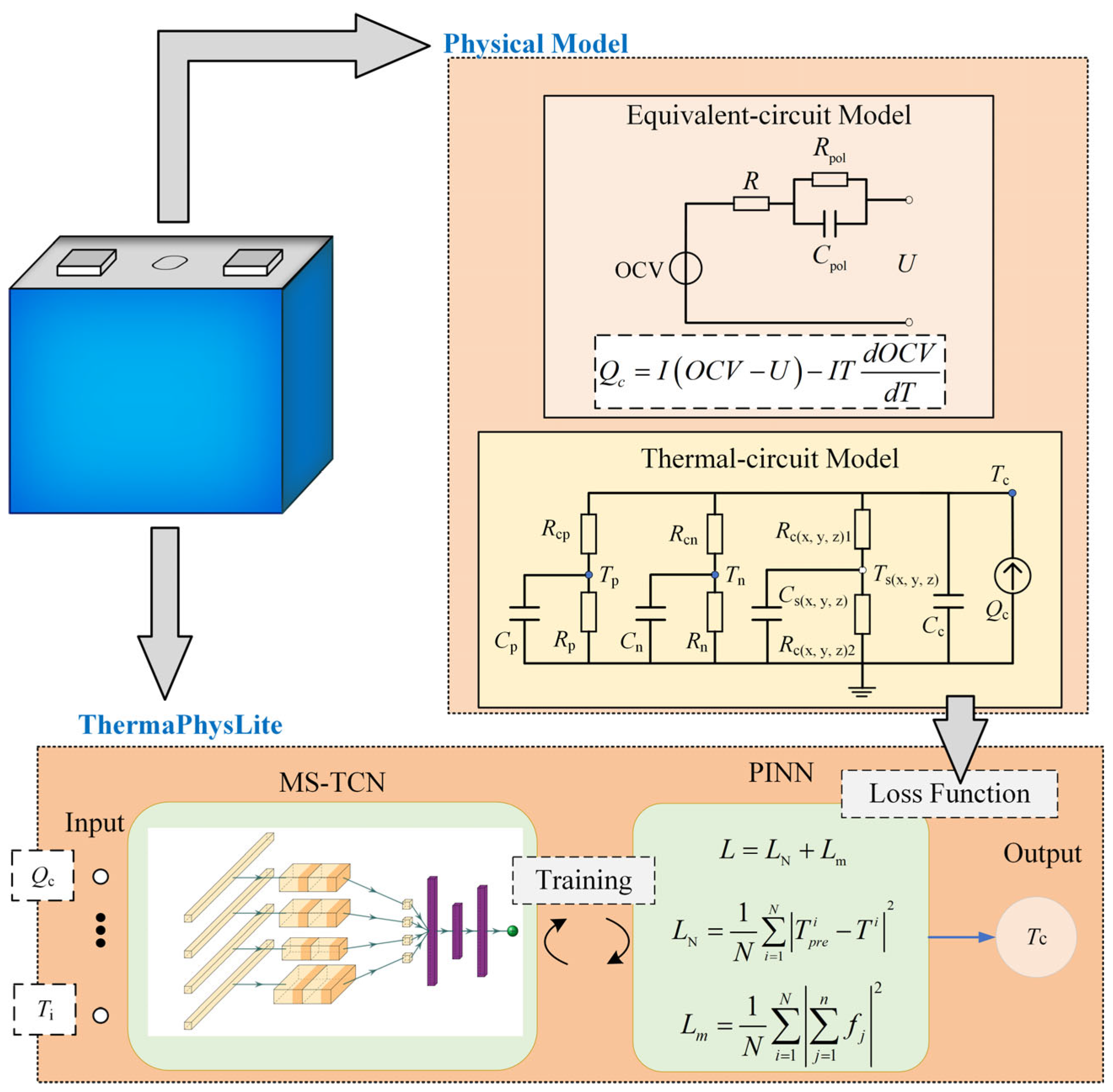
2.1. Development and Simplification of the Electro–Thermal Coupling Model
- (i)
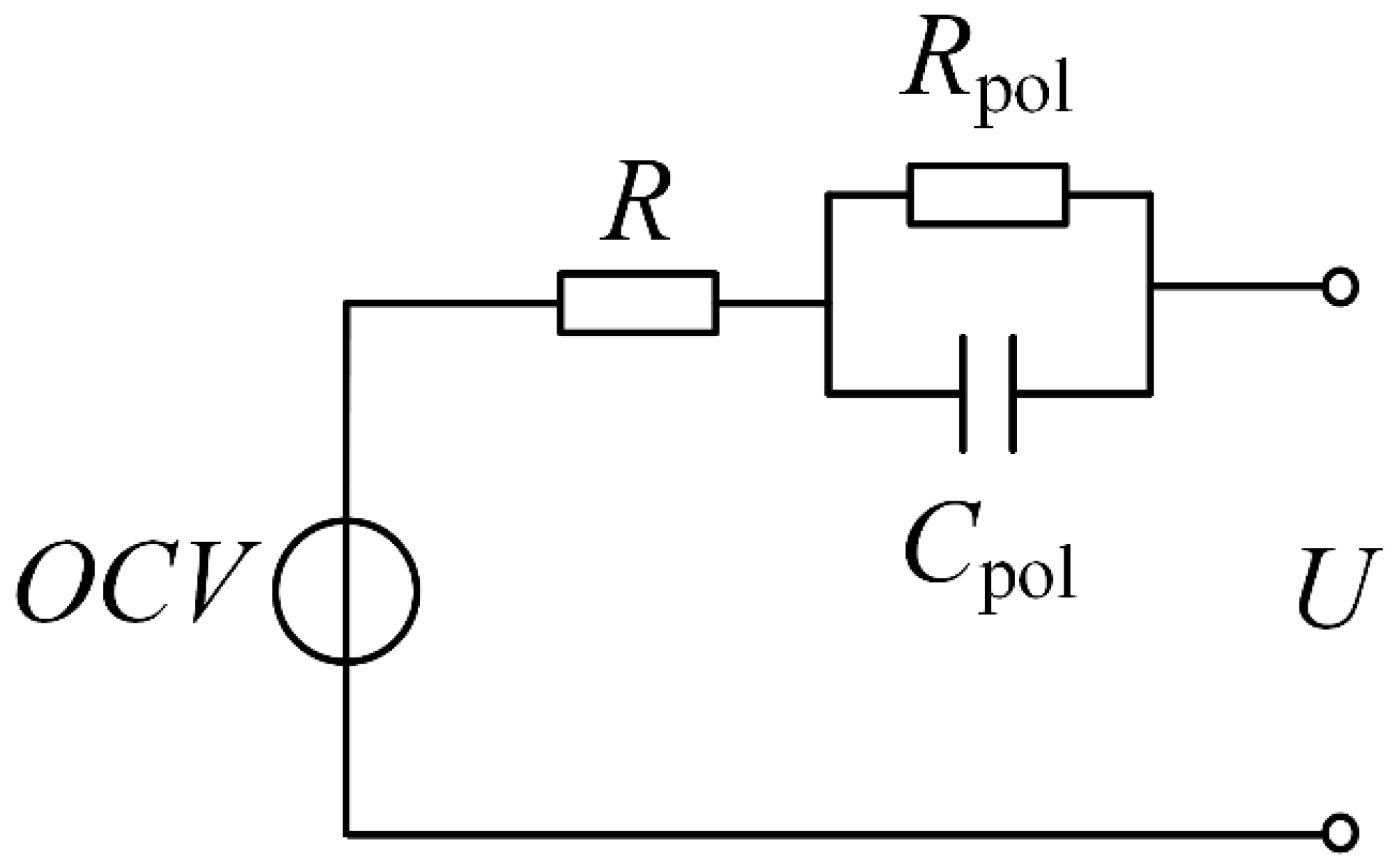
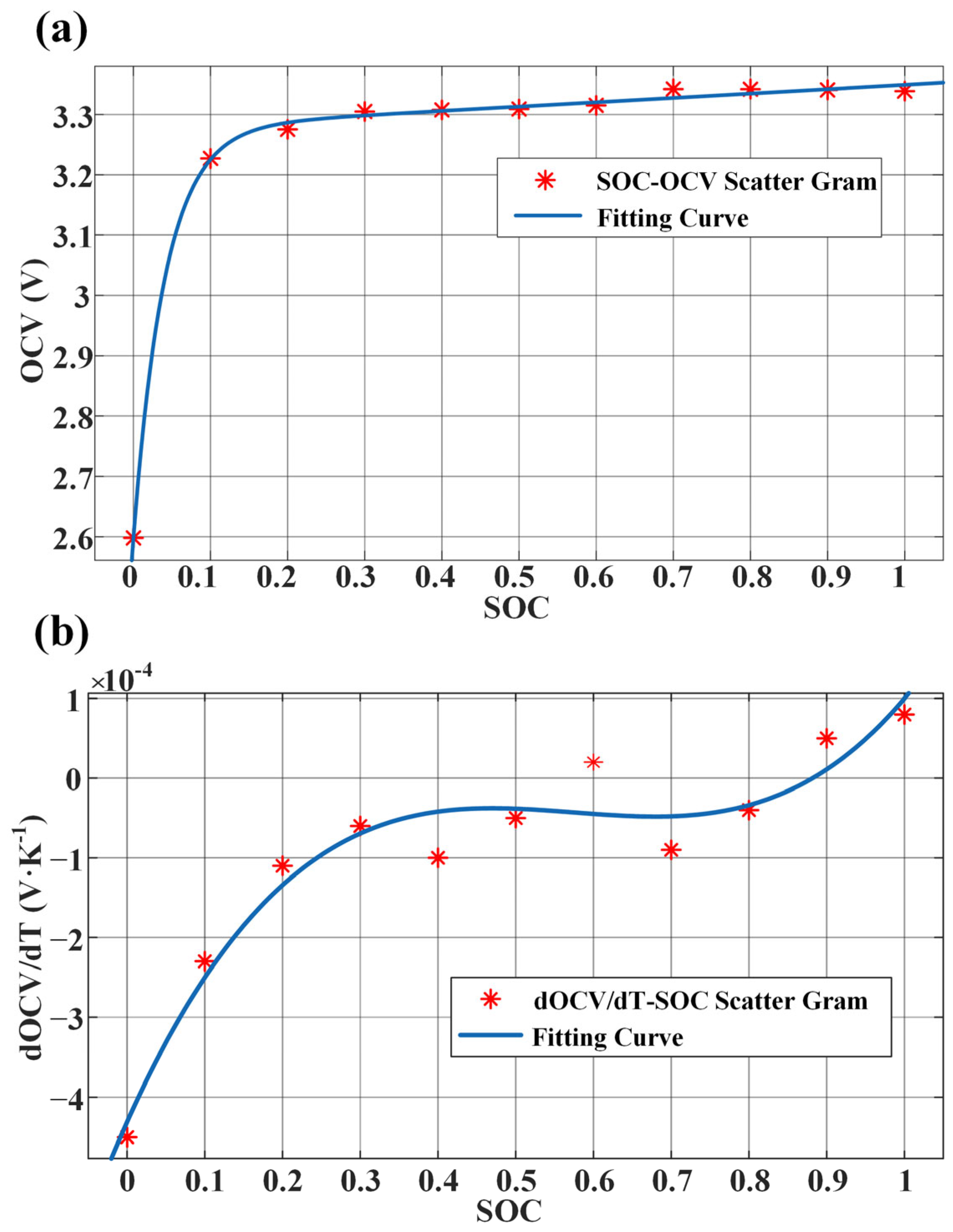
- Heat generation parameters: These include the OCV, the entropic coefficient dOCV/dT. These parameters are inherently SOC-dependent and are explicitly modeled as functions of SOC in our framework (see Section 3.2).
- (ii)
- Heat dissipation parameters: These include the thermal resistances and thermal capacitances in the thermal circuit model (Equations (4)–(9)). These parameters describe heat transfer pathways and intrinsic material thermal properties, which are governed by the battery’s geometric configuration and material thermophysical characteristics—not by the electrochemical state of charge.
2.2. Construction and Training of the ThermaPhysLite Model
3. Experimental Design and Offline Model Validation
3.1. Experimental Environment and Preparations
3.2. Lithium Battery Heat Generation Estimation and Thermal Circuit Parameter Identification
- (1)
- Set the temperature inside the constant temperature chamber to 25 °C;
- (2)
- Discharge the battery to SOC = 0, let it stand for 2 h, and record the OCV;
- (3)
- Perform constant current charging at 0.5C for 12 min, let it stand for 30 min, and record the OCV;
- (4)
- Repeat step (3) until the SOC increases to 100%;
- (5)
- Set the temperature inside the constant temperature chamber to 30 °C and then 35 °C, and repeat steps (2) through (4);
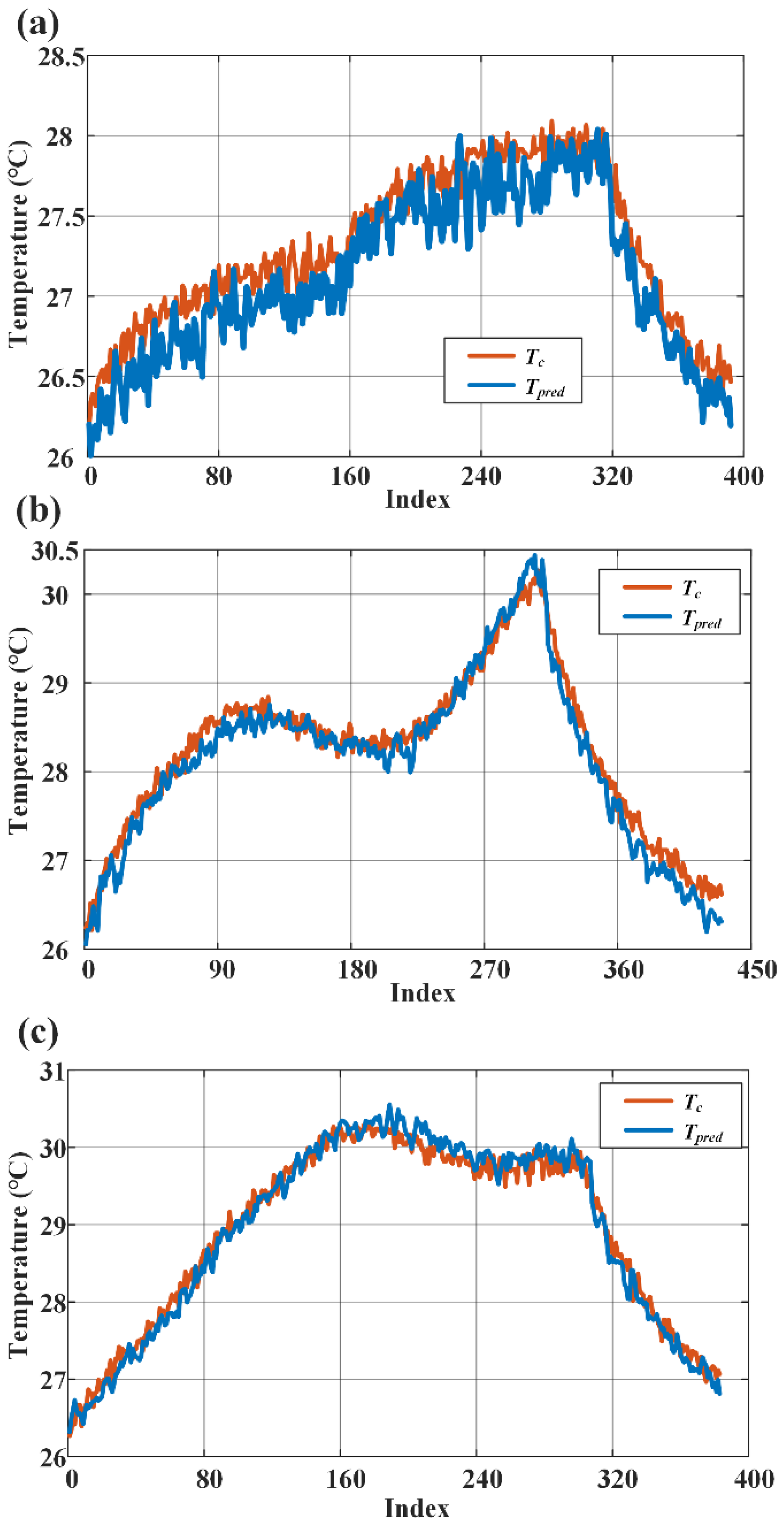
3.3. Training and Offline Validation of the ThermaPhysLite Model
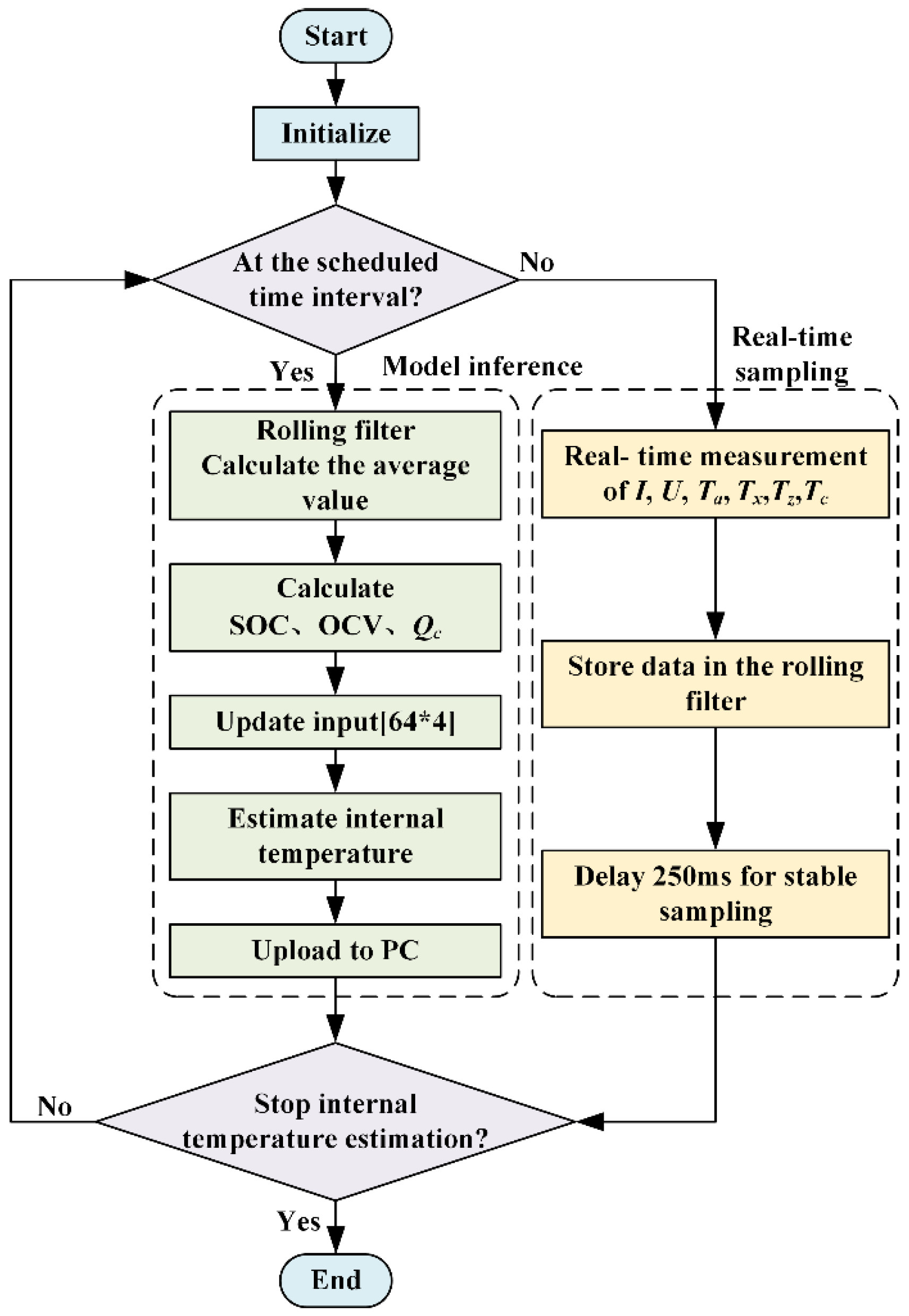
4. Design and Validation of an On-Line Internal Temperature Estimation Device for Lithium-Ion Batteries
5. Summary
5.1. Summary of Findings
5.2. Engineering Significance
5.3. Limitations
- (1)
- Operating temperature envelope: The current experimental validation was conducted at a controlled ambient temperature of 25 °C, representative of the typical operational window (15–35 °C) of thermally controlled BESS [7,8]. Within this thermally controlled envelope, both the constant-parameter assumption and the chosen validation conditions were well-justified for the intended engineering application. Extension to scenarios with significant ambient temperature drift (e.g., automotive applications spanning −20 °C to 50 °C) lies outside the scope of this work.
- (2)
- Aging-related boundary: The current validation was conducted exclusively on fresh cells. The MS-TCN residual-learning mechanism was designed to compensate for short-term parameter variations within the training distribution; long-term parameter drift caused by battery aging—particularly when SOH degrades beyond the typical BESS operational window (the standard EOL criterion of SOH = 80%)—lies outside the inherent compensation capability of the current model. While existing studies suggest that operationally relevant aging-induced changes to thermal dissipation parameters remain within a moderate range within this window, this assumption was not experimentally verified in the present work.
- (3)
- Applicability boundary—chemistry, geometry, and scale: The methodology has been developed and validated on large-format prismatic LFP cells. Extension to other Li-ion chemistries (e.g., NMC, NCA) requires re-acquisition of chemistry-specific OCV-SOC and dOCV/dT characteristics, re-identification of thermal circuit parameters, and re-training of the MS-TCN. Extension to cylindrical or pouch form factors would require corresponding adaptation of the thermal circuit topology. Furthermore, the current cell-level model does not explicitly account for inter-cell thermal crosstalk (e.g., conduction through busbars, shared cooling-plate effects) in tightly packed modules.
- (4)
- Hardware instrumentation considerations: The current ground-truth acquisition employs invasive side-drilling thermocouple embedding on cells of the same batch, which is suitable for offline model development and validation but is not practical for in-field BESS deployment. Future versions of the framework would benefit from less invasive sensing techniques.
5.4. Future Work
- (1)
- Full-lifecycle adaptation via cloud–edge collaboration: To address the aging challenge in a manner consistent with the engineering deployment scenario, we propose extending the present framework with a periodic update mechanism that exploits the cloud–edge collaborative architecture described in Section 4. The proposed pathway consists of: (a) periodic online parameter re-identification on representative cells during scheduled BESS maintenance windows; (b) cloud-side model re-training with the updated parameters and edge re-deployment of the new model; and (c) introducing SOH as an auxiliary input variable into the MS-TCN to enable learning of SOH-dependent residual patterns. Recent aging-integrated battery temperature estimation work [39] supports the feasibility of this direction.
- (2)
- Module-level thermal management extension: Extending the research object from single cells to realistic module environments, focusing on liquid-cooling-plate heat exchange boundaries and thermal crosstalk effects between adjacent batteries, to construct a system-level temperature estimation model closer to actual energy storage station scenarios.
- (3)
- System-level BMS integration: While the present work has demonstrated the algorithm-level feasibility of ThermaPhysLite on a representative embedded platform, comprehensive system-level integration into commercial BMS architectures—including detailed task scheduling, communication protocol optimization, and field validation in actual BESS deployments—remains an important engineering direction for follow-up work.
- (4)
- Comprehensive deployment metrics benchmarking: Systematic measurement and reporting of runtime memory footprint, peak heap usage, and power consumption under inference on the embedded platform, following emerging benchmarking practices in the embedded machine learning community.
- (5)
- Deeper interpretability analysis: While the proposed hybrid framework provides physical consistency through embedded thermodynamic constraints, a more comprehensive interpretability analysis—including feature attribution analysis on MS-TCN inputs, sensitivity analysis of the physics-informed loss term, and visualization of the learned residual patterns—remains a valuable direction for future research. Such analyses would provide deeper insight into how the data-driven and physics-based components interact, supporting more transparent and trustworthy deployment in safety-critical BESS applications.
- (6)
- Advanced sensing technologies: Exploring integration of wireless passive sensors or fiber-optic sensors with battery manufacturing processes to obtain more precise internal temperature field distributions, thereby further perfecting the validation framework.
Supplementary Materials
Author Contributions
Funding
Data Availability Statement
Conflicts of Interest
References
- Zhang, S.S.; Xu, K.; Jow, T.R. The low temperature performance of Li-ion batteries. J. Power Sources 2003, 115, 137–140. [Google Scholar] [CrossRef] [Scilit]
- Chen, Y.; Xiao, R.; Cui, Y.; Chen, M. Research review on early warning and suppression technology of Lithium-ion battery fire in energy storage power station. Chin. J. Electr. Eng. 2022, 17, 72–87. [Google Scholar]
- Liu, K.; Hu, X.; Wei, Z.; Li, Y.; Jiang, Y. Modified Gaussian process regression models for cyclic capacity prediction of lithium-ion batteries. IEEE Trans. Transp. Electrif. 2019, 5, 1225–1236. [Google Scholar] [CrossRef] [Scilit]
- Divakaran, A.M.; Minakshi, M.; Bahri, P.A.; Paul, S.; Kumari, P.; Divakaran, A.M.; Manjunatha, K.N. Rational design on materials for developing next generation lithium-ion secondary battery. Prog. Solid State Chem. 2021, 62, 100298. [Google Scholar] [CrossRef] [Scilit]
- Zhao, R.; Liu, J.; Gu, J.; Zhai, L.; Ma, F. Experimental study of a direct evaporative cooling approach for Li-ion battery thermal management. Int. J. Energy Res. 2020, 44, 6660–6673. [Google Scholar] [CrossRef] [Scilit]
- Parhizi, M.; Ahmed, M.B.; Jain, A. Determination of the core temperature of a Li-ion cell during thermal runaway. J. Power Sources 2017, 370, 27–35. [Google Scholar] [CrossRef] [Scilit]
- Mdachi, N.K.; Choong-koo, C. Comparative Review of Thermal Management Systems for BESS. Batteries 2024, 10, 224. [Google Scholar] [CrossRef] [Scilit]
- Alawi, A.; Saeed, A.; Sharqawy, M.H.; Al Janaideh, M. A Comprehensive Review of Thermal Management Challenges and Safety Considerations in Lithium-Ion Batteries for Electric Vehicles. Batteries 2025, 11, 275. [Google Scholar] [CrossRef] [Scilit]
- Xiong, R.; Li, X.G. Battery internal temperature estimation method through double extended Kalman filtering algorithm. Chin. J. Mech. Eng. 2020, 56, 146–151. [Google Scholar]
- Guo, Z.; Xu, J.; Xu, Z.; Mubashir, M.; Wang, H.; Mei, X. A three-heat-source electro-thermal coupled model for fast estimation of the temperature distribution of a lithium-ion battery cell. IEEE Trans. Transp. Electrif. 2022, 8, 288–297. [Google Scholar] [CrossRef] [Scilit]
- Xie, Y.; Li, W.; Hu, X.; Lin, X.; Zhang, Y.; Dan, D.; Feng, F.; Liu, B.; Li, K. An enhanced online temperature estimation for lithium-ion batteries. IEEE Trans. Transp. Electrif. 2020, 6, 375–390. [Google Scholar] [CrossRef] [Scilit]
- Rodríguez-Iturriaga, P.; Anseán, D.; López-Villanueva, J.A.; González, M.; Rodríguez-Bolívar, S. A method for the lifetime sensorless estimation of surface and core temperature in lithium-ion batteries via online updating of electrical parameters. J. Energy Storage 2023, 58, 106260. [Google Scholar] [CrossRef] [Scilit]
- Beelen, H.; Shivakumar, K.M.; Raijmakers, L.H.J.; Donkers, M.C.F.; Bergveld, H.J. Towards impedance-based temperature estimation for Li-ion battery packs. Int. J. Energy Res. 2020, 44, 2889–2908. [Google Scholar] [CrossRef] [Scilit]
- Fan, W.; Zhang, Z.; Dong, M.; Ren, M. On-line estimation method for internal temperature of lithium-ion battery based on electrochemical impedance spectroscopy. In Proceedings of the 2021 IEEE Electrical Insulation Conference (EIC), Denver, CO, USA, 7–28 June 2021; IEEE: Piscataway, NJ, USA, 2021; pp. 247–251. [Google Scholar]
- Richardson, R.R.; Ireland, P.T.; Howey, D.A. Battery internal temperature estimation by combined impedance and surface temperature measurement. J. Power Sources 2014, 265, 254–261. [Google Scholar] [CrossRef] [Scilit]
- Hussein, A.A.; Fardoun, A.A. An adaptive sensorless measurement technique for internal temperature of Li-ion batteries using impedance phase spectroscopy. IEEE Trans. Ind. Appl. 2020, 56, 3043–3051. [Google Scholar] [CrossRef] [Scilit]
- Surya, S.; Samanta, A.; Marcis, V.; Williamson, S.S. Hybrid electrical circuit model and deep learning-based core temperature estimation of Lithium-ion battery cell. IEEE Trans. Transp. Electrif. 2022, 8, 3816–3824. [Google Scholar] [CrossRef] [Scilit]
- Ouyang, K.; Fan, Y.; Yazdi, M.; Peng, W. Data-driven-based internal temperature estimation for Lithium-ion battery under variant state-of-charge via electrochemical impedance spectroscopy. Energy Technol. Ger. 2022, 10, 910–919. [Google Scholar] [CrossRef] [Scilit]
- Yuan, A.; Cai, T.; Luo, H.; Song, Z.; Wei, B. Core temperature estimation of lithium-ion battery based on numerical model fusion deep learning. J. Energy Storage 2024, 102, 114148. [Google Scholar] [CrossRef] [Scilit]
- Yao, Q.; Lu, D.D.; Lei, G. A surface temperature estimation method for Lithium-ion battery using enhanced GRU-RNN. IEEE Trans. Transp. Electrif. 2023, 9, 1103–1112. [Google Scholar] [CrossRef] [Scilit]
- Li, Y.; Ma, C.; Liu, K.; Chang, L.; Zhang, C.; Duan, B. A novel joint estimation for core temperature and state of charge of lithium-ion battery based on classification approach and convolutional neural network. Energy 2024, 308, 13272. [Google Scholar] [CrossRef] [Scilit]
- Karniadakis, G.E.; Kevrekidis, I.G.; Lu, L.; Perdikaris, P.; Wang, S.; Yang, L. Physics-informed machine learning. Nat. Rev. Phys. 2021, 3, 422–440. [Google Scholar] [CrossRef] [Scilit]
- Cho, G.; Wang, M.; Kim, Y.; Kwon, J.; Su, W. A physics-informed machine learning approach for estimating Lithium-ion battery temperature. IEEE Access 2022, 10, 88117–88126. [Google Scholar] [CrossRef] [Scilit]
- Xiong, R.; Li, X.; Li, H.; Zhu, B.; Avelin, A. Neural network and physical enable one sensor to estimate the temperature for all cells in the battery pack. J. Energy Storage 2024, 80, 110387. [Google Scholar] [CrossRef] [Scilit]
- Wang, N.; Zhao, G.; Kang, Y.; Wang, W.; Chen, A.; Duan, B.; Zhang, C. Core Temperature Estimation Method for Lithium-Ion Battery Based on Long Short-Term Memory Model with Transfer Learning. IEEE J. Emerg. Sel. Top. Power Electron. 2023, 11, 201–213. [Google Scholar] [CrossRef] [Scilit]
- Liu, Z.; Tao, C.; Luo, H.; Xiong, C. An online internal temperature estimation method for lithium-ion batteries based on physics-informed neural networks and embedded deployment. In Proceedings of the 12th Frontier Academic Forum of Electrical Engineering (FAFEE2025); Lecture Notes in Electrical Engineering; Springer: Singapore, 2026; Volume 1510, pp. 97–104. [Google Scholar]
- Lin, X.-W.; Jiang, Y.; Yu, H.T.; Shi, M.Y.; Liu, B.; Wen, X.L.; Zhou, Z.F. A comprehensive investigation on the electrochemical and thermal inconsistencies for 280 Ah energy storage lithium-ion battery. Energy Convers. Manag. 2024, 315, 118750. [Google Scholar] [CrossRef] [Scilit]
- Xu, S.; Wang, Y.; Shao, J.; Li, J.; Yu, Q. An electrochemical-thermal coupling model for prismatic lithium-ion batteries over wide temperature range. Appl. Therm. Eng. 2022, 217, 119282. [Google Scholar] [CrossRef] [Scilit]
- Damay, N.; Forgez, C.; Bichat, M.P.; Friedrich, G. Thermal modeling of large prismatic LiFePO4/graphite battery. Coupled thermal and heat generation models for characterization and simulation. J. Power Sources 2015, 283, 37–45. [Google Scholar] [CrossRef] [Scilit]
- Samba, A.; Omar, N.; Gualous, H.; Capron, O.; Van den Bossche, P.; Van Mierlo, J. Impact of tab location on large format lithium-ion pouch cell based on fully coupled tree-dimensional electrochemical-thermal modeling. Electrochim. Acta 2014, 147, 319–329. [Google Scholar] [CrossRef] [Scilit]
- Sheng, L.; Su, L.; Zhang, H.; Fang, Y.; Xu, H.; Ye, W. An improved calorimetric method for characterizations of the specific heat and the heat generation rate in a prismatic lithium ion battery cell. Energy Convers. Manag. 2019, 180, 724–732. [Google Scholar] [CrossRef] [Scilit]
- Barsoukov, E.; Jang, J.H.; Lee, H. Thermal impedance spectroscopy for Li-ion batteries using heat-pulse response analysis. J. Power Sources 2002, 109, 313–320. [Google Scholar] [CrossRef] [Scilit]
- Wang, S.; Teng, Y.; Perdikaris, P. Understanding and mitigating gradient flow pathologies in physics-informed neural networks. SIAM J. Sci. Comput. 2021, 43, A3055–A3081. [Google Scholar] [CrossRef] [Scilit]
- Kleiner, J.; Komsiyska, L.; Elger, G.; Endisch, C. Thermal modelling of a prismatic lithium-ion cell in a battery electric vehicle environment: Influences of the experimental validation setup. Energies 2019, 13, 62. [Google Scholar] [CrossRef] [Scilit]
- Wang, T.; Tseng, K.J.; Zhao, J. Development of efficient air-cooling strategies for lithium-ion battery module based on empirical heat source model. Appl. Therm. Eng. 2015, 90, 521–529. [Google Scholar] [CrossRef] [Scilit]
- Chen, S.C.; Wan, C.C.; Wang, Y.Y. Thermal analysis of lithium-ion batteries. J. Power Sources 2005, 140, 111–124. [Google Scholar] [CrossRef] [Scilit]
- Li, J.; Zhao, Y.; Xue, Z.; Cai, Z.; Li, Q. A survey of model compression for deep neural networks. Chin. J. Eng. 2019, 41, 1229–1239. [Google Scholar] [CrossRef]
- Tadoum, D.D.; Berger, F.; Krause, F.; Wasylowski, D.; Ringbeck, F.; Li, W.; Sauer, D.U. Standards and Regulations for Battery Management Systems in Germany: Review and Improvement Potentials. Glob. Chall. 2025, 9, e00129. [Google Scholar] [CrossRef] [Scilit]
- Jia, Y.; Brancato, L.; Giglio, M.; Cadini, F. Online core temperature estimation for lithium-ion batteries via an aging-integrated ECM-1D coupled model-based algorithm. Batteries 2025, 11, 160. [Google Scholar] [CrossRef] [Scilit]







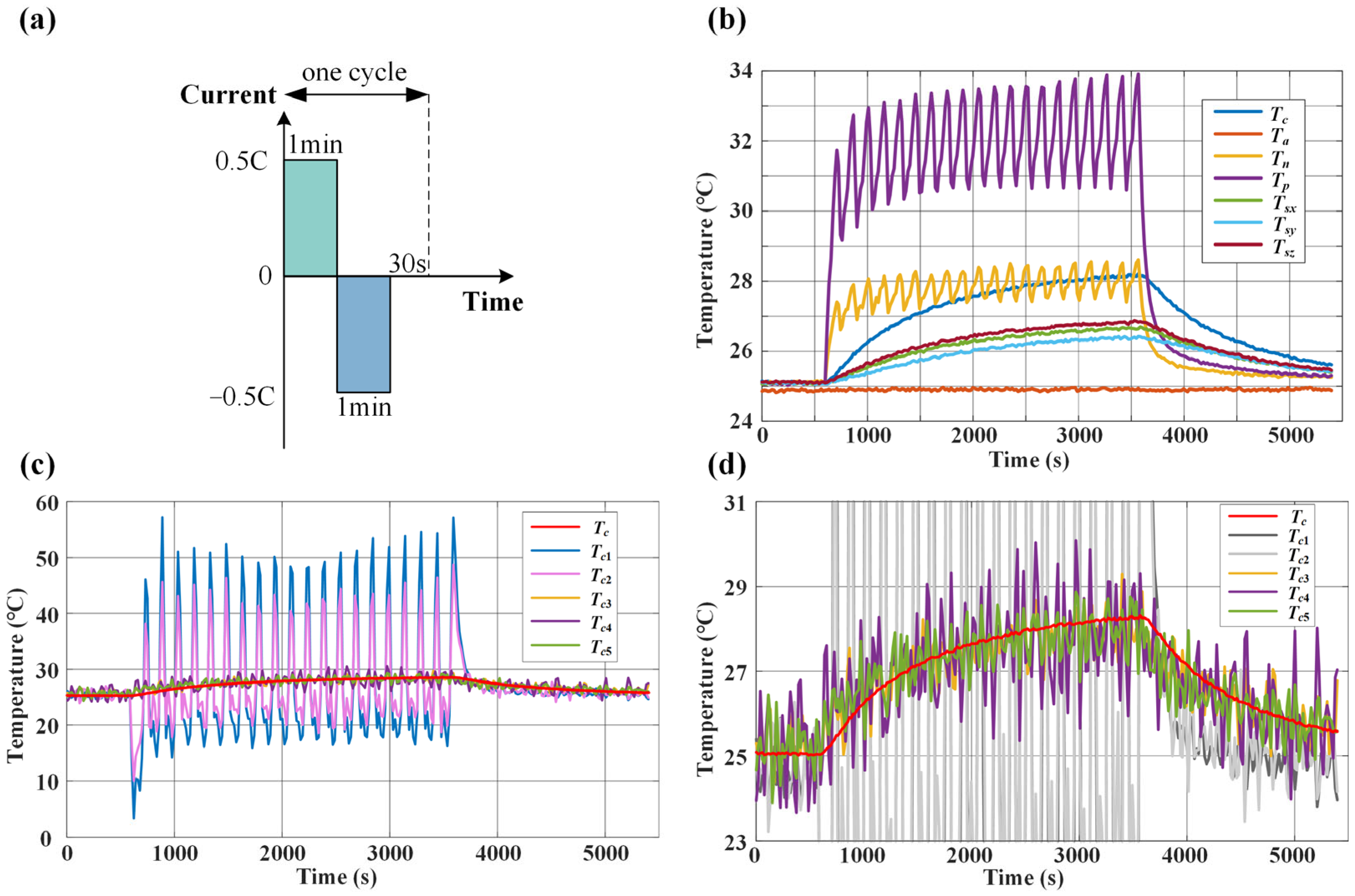
| Physical Equation | Estimated Internal Temperature Based on Parameter Identification Results | RMSE of Model After Parameter Identification (°C) |
|---|---|---|
| Tc1 | 18.9689 | |
| Tc2 | 14.2282 | |
| Tc3 | 0.5272 | |
| Tc4 | 0.9981 | |
| Tc5 | 0.5498 |
| Thermal Path Parameters | Identification Results (s) | Thermal Path Parameters | Identification Results (s) |
|---|---|---|---|
| RpCp | 476.09 | Rsx2Csx | 495.88 |
| RcpCp | −303.48 | Rsy1Csy | 910.13 |
| RnCn | 6392.91 | Rsy2Csy | 771.34 |
| RcnCn | −639.44 | Rsz1Csz | 393.25 |
| Rsx1Csx | 422.60 | Rsz2Csz | 558.91 |
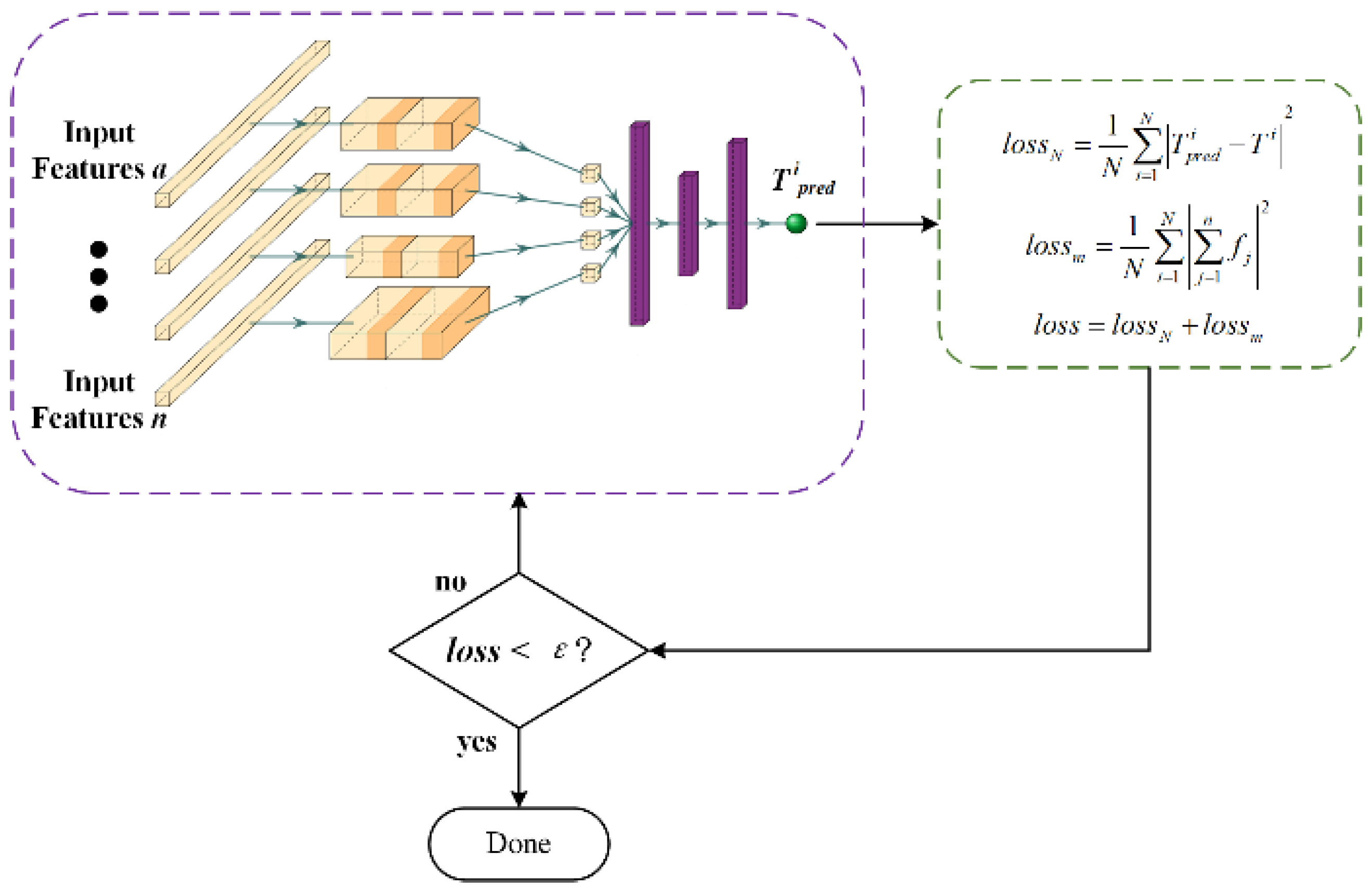
| Hyperparameter | Settings |
|---|---|
| Input channels | 4 |
| Output channels | 1 |
| Sequence length | 64 |
| Kernel size | [3, 5, 9] |
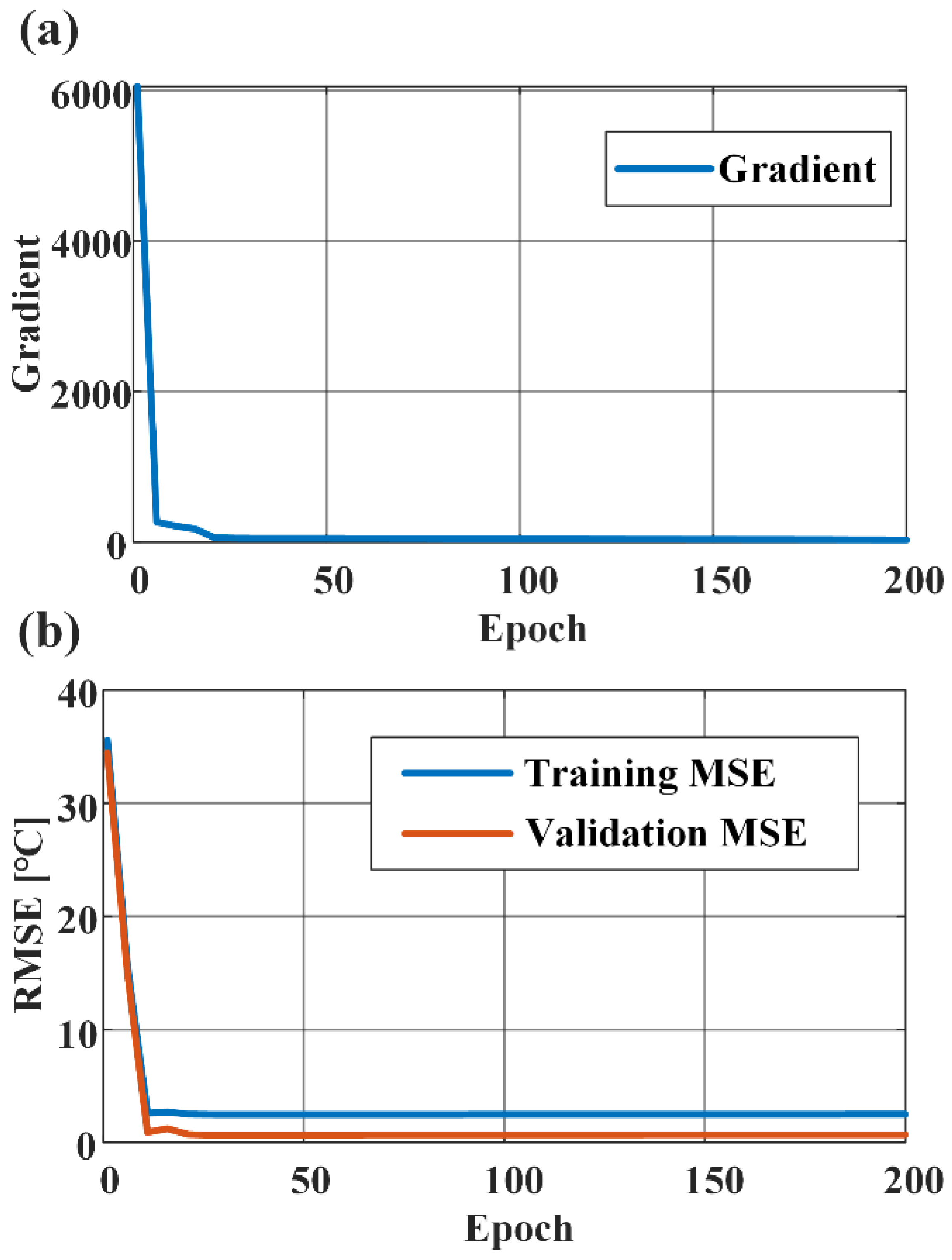
| Max epoch | 200 |
| Batch size | 20 |
| Dilation | 2 |
| Learning rate | 10−4 |
| Physical Model | ThermaPhysLite | MS-TCN | |
|---|---|---|---|
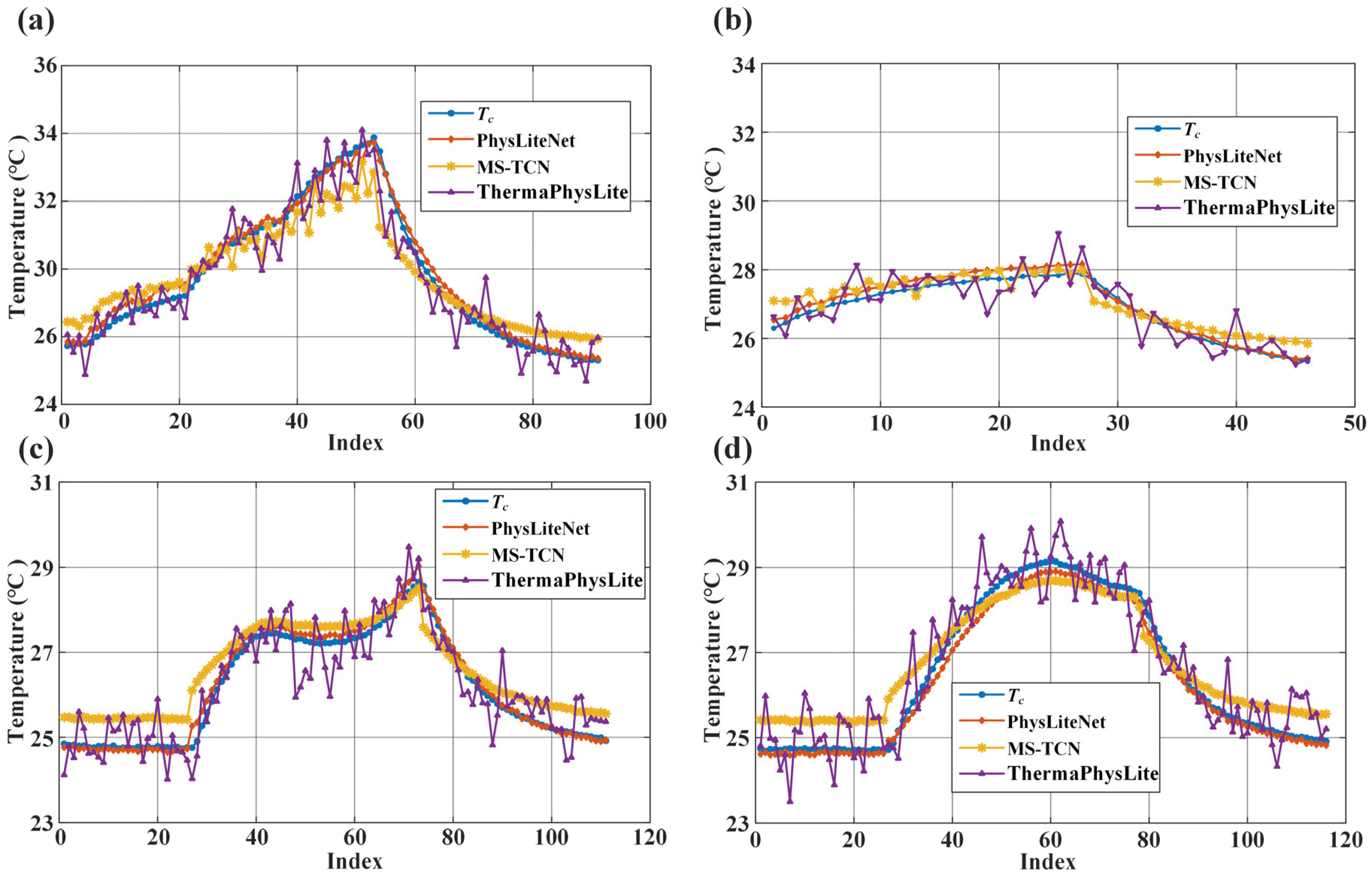
| Training Set | 0.62 | 0.18 | 0.64 |
| Testing Condition I (Offline Validation) | 0.46 | 0.19 | 0.35 |
| Testing Condition II (Offline Validation) | 0.54 | 0.15 | 0.53 |
| Testing Condition III (Offline Validation) | 0.60 | 0.20 | 0.52 |
| Physical Model | ThermaPhysLite | MS-TCN | |
|---|---|---|---|
| Training Set | 1.76 | 0.36 | 1.85 |
| Testing Condition I (Offline Validation) | 1.21 | 0.31 | 0.79 |
| Testing Condition II (Offline Validation) | 1.36 | 0.48 | 1.40 |
| Testing Condition III (Offline Validation) | 1.64 | 0.46 | 1.23 |
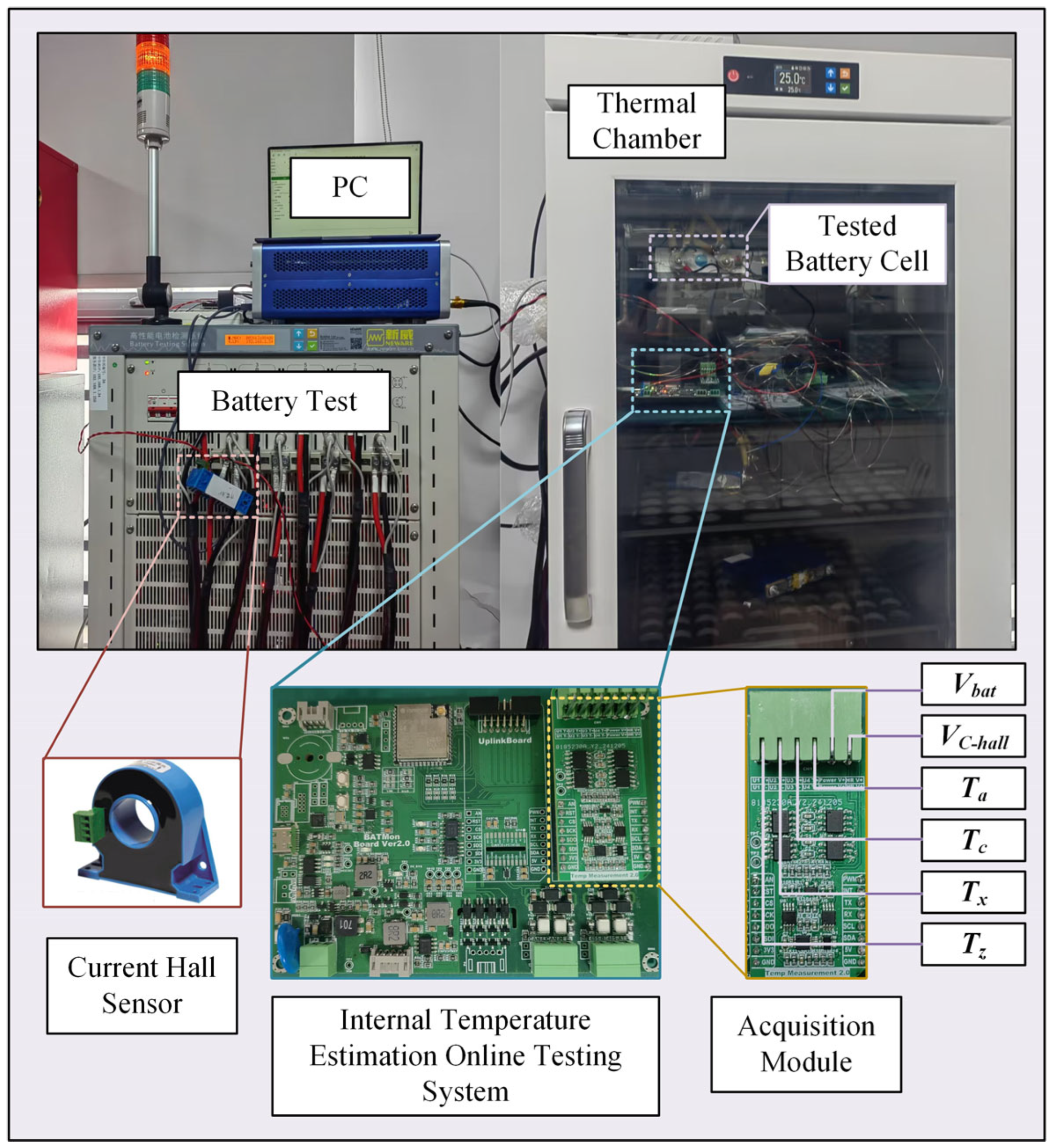
| Module Name | Module Functions | Main Parameters |
|---|---|---|
| Main controller chip ESP32-S3 | Acquires voltage, current, and temperature signals; executes the ThermaPhysLite model inference; and outputs estimation results. | Frequency: 240 Hz Dual-Core LX7 Processor Built-in 512 KB SRAM with TCM |
| Current Hall Sensor CHB-100SG/5V (Beijing Yubo Co., Ltd., Beijing, China) | Acquires the battery charge–discharge current and converts it to a voltage signal VC-hall. | Measurement Range: ±100 A Output Voltage Range: ±5 V Accuracy: ±0.8% (25 °C) |
| ADC Chip ADS1115 (Texas Instruments, Dallas, TX, USA) | Acquires the battery terminal voltage signal Vbat and the voltage signal VC-hall from the current Hall sensor and transmits these voltage signals to the ESP32-S3 via the IIC bus. | Input Range: ±6.144 V Resolution: 16 bit |
| K-Type Thermocouple TT-K-30-SLE (Omega Engineering, Norwalk, CT, USA) | Measures temperatures at various locations on the battery and the ambient temperature. | Temperature Measurement Range: −40~260 °C Temperature Resolution: 0.1 °C |
| Thermocouple Reader Chip MAX6675 (Maxim Integrated, San Jose, CA, USA) | Acquires temperature readings from the thermocouples and transmits these temperature signals to the ESP32-S3 via the SPI bus. | Temperature Measurement Range: 0~1024 °C Temperature Resolution: 0.25 °C |
| Test Conditions | RMSE (°C) | Average Processing Time for Single-Cell Internal Temperature Estimation (ms) |
|---|---|---|
| Online Test Condition I | 0.24 | 119.44 |
| Online Test Condition II | 0.20 | 119.67 |
| Online Test Condition III | 0.17 | 119.40 |
| Item | Update Cycle/Interval | Reference/Source |
|---|---|---|
| Voltage/current sampling (mainstream BMS) | 1 ms–100 ms | Standard AFE chip capability |
| Theoretical full-module scan (proposed ThermaPhysLite) | 1.44 s (for 12-cell module) | This work |
| Internal temperature refresh (proposed ThermaPhysLite) | 3–5 s (per module) | This work |
| Internal data refresh rate (BESS standard recommendation) | ≤20 s | [38] |
| Internal data refresh rate (EV/HEV standard recommendation) | ≤10 s | [38] |
Disclaimer/Publisher’s Note: The statements, opinions and data contained in all publications are solely those of the individual author(s) and contributor(s) and not of MDPI and/or the editor(s). MDPI and/or the editor(s) disclaim responsibility for any injury to people or property resulting from any ideas, methods, instructions or products referred to in the content. |
© 2026 by the authors. Licensee MDPI, Basel, Switzerland. This article is an open access article distributed under the terms and conditions of the Creative Commons Attribution (CC BY) license.
Share and Cite
Liu, Z.; Wang, Y.; Gao, P.; Luo, H.; Cai, T.; Su, G.; Wang, Z.; Meng, Y. Online Internal Temperature Estimation Method for Prismatic Li-Ion Battery Using Embedded Physics-Informed Neural Networks. Batteries 2026, 12, 189. https://doi.org/10.3390/batteries12060189
Liu Z, Wang Y, Gao P, Luo H, Cai T, Su G, Wang Z, Meng Y. Online Internal Temperature Estimation Method for Prismatic Li-Ion Battery Using Embedded Physics-Informed Neural Networks. Batteries. 2026; 12(6):189. https://doi.org/10.3390/batteries12060189
Chicago/Turabian StyleLiu, Zhengchen, Yan Wang, Ping Gao, Hangyu Luo, Tao Cai, Gen Su, Zhanqiang Wang, and Yuxin Meng. 2026. "Online Internal Temperature Estimation Method for Prismatic Li-Ion Battery Using Embedded Physics-Informed Neural Networks" Batteries 12, no. 6: 189. https://doi.org/10.3390/batteries12060189
APA StyleLiu, Z., Wang, Y., Gao, P., Luo, H., Cai, T., Su, G., Wang, Z., & Meng, Y. (2026). Online Internal Temperature Estimation Method for Prismatic Li-Ion Battery Using Embedded Physics-Informed Neural Networks. Batteries, 12(6), 189. https://doi.org/10.3390/batteries12060189