Article

Thermal Runaway Evolution, Propagation Mechanism and Multi-Dimensional Fire Investigation Methodology for 18650-Type NCA Lithium-Ion Batteries

1
Shenzhen Research Institute, China University of Mining and Technology, Shenzhen 518000, China
2
College of Safety Science and Engineering, China University of Mining and Technology, Xuzhou 221000, China
3
Haixi Mongolian and Tibetan Autonomous Prefecture Fire and Rescue Detachment, Delingha 817000, China
*
Author to whom correspondence should be addressed.
Batteries 2026, 12(5), 172; https://doi.org/10.3390/batteries12050172
Submission received: 1 April 2026 / Revised: 8 May 2026 / Accepted: 13 May 2026 / Published: 15 May 2026
(This article belongs to the Section Energy Storage System Aging, Diagnosis and Safety)

Abstract

To address the critical industry challenges of insufficient thermal safety and reliability in the stacking design of lithium-ion battery (LIB) modules, as well as the lack of accurate traceability methods for LIB fire accidents, this study takes commercial 18650-type lithium, nickel cobalt aluminum (NCA) LIBs as the research object. First, we systematically investigated the thermal runaway (TR) behavior of single cells under thermal and electrical abuse conditions, identified the significant discrepancies in TR behavior between the two abuse scenarios, quantitatively revealed a positive correlation between TR risk and state of charge (SOC), and determined that the core feature is that the maximum heat release occurs in the negative electrode of the battery. Subsequently, we quantitatively analyzed the influences of the initial TR trigger position and module stacking structure on the TR propagation characteristics within the module, and obtained the key conclusions that center-triggered TR exhibits a faster propagation rate and that the vertical stacking structure significantly aggravates the TR chain reaction. Finally, based on the TR process, this paper summarizes the burn mark characteristics caused by different triggers of thermal runaway in LIBs. The results of this study provide critical fundamental data for optimizing the thermal safety design of LIB modules, and offer a scientific basis for the formulation of LIB fire rescue schemes and the implementation of fire investigation.

1. Introduction

Against the backdrop of the global energy transition and the deepening implementation of the Carbon Peaking and Carbon Neutrality Goals, lithium-ion batteries have become a core pillar supporting the high-quality development of the new energy industry. Due to their standardized structure and high energy density, 18650-type NCA-cell ternary lithium batteries have achieved commercial application on a significant scale in new energy vehicles and electrochemical energy storage systems.
Regarding the fundamental characteristics of battery-cell thermal runaway, Lai, Y.W. et al. found that the SOC level directly determines the trigger threshold for thermal runaway, the amount of internal heat generation, and the overall safety margin [1]. Through a review and analysis, Duh, Y.S. et al. found that 18650-type NCA batteries are more dangerous than other battery types during thermal runaway [2]. Yan, W.H. et al. demonstrated through simulations that short circuits or charging faults significantly affect the risk of battery thermal runaway [3]. Jeon, M. et al. found that external heating power is positively correlated with the onset time and severity of battery thermal runaway [4]. Regarding the propagation characteristics of TR in battery packs, Yang, S. et al. found that the temperature-rise curve of lithium iron phosphate (LiFePO4) batteries is positively correlated with SOC, and that the heat generated by internal side reactions is the dominant factor causing temperature increases [5]. Yang, J. et al. revealed the relationship between the battery top cover, inter-cell spacing, and the intensity of thermal runaway [6]. Wang, B. et al. demonstrated through numerical simulations that the dominant heat-transfer mechanism changes with different stages of TR propagation [7]. Li, H. et al. found that under low-power lateral heating, air conduction is the primary heat-transfer mechanism; however, when high-power heating creates a significant temperature difference, thermal radiation replaces conduction as the dominant heat-transfer mode [8]. Zhong, G. et al. discovered that appropriate spacing and thermal management can effectively delay or halt the propagation of TR within a battery pack [9]. Zhou, G. et al. found that the thermal-runaway propagation characteristics of NCM811 lithium-ion batteries induced by dual heat sources show pronounced SOC-dependent variations [10]; Huang, Z. et al. found that lower heating powers accelerate internal propagation by enhancing pre-heating effects in non-TR regions [11].
There remain two core technical bottlenecks that urgently need to be broken through in the current research field of lithium battery thermal safety. First, most studies on thermal-runaway propagation behavior within battery modules have focused on single influencing factors such as cell spacing and passive protection measures, while the regulation mechanism of thermal-runaway initiation location on the evolution law of module-level thermal runaway propagation has not yet been systematically revealed. Meanwhile, the inherent fire hazard of stacked battery module structures, which are widely adopted to improve battery capacity, has not received a comprehensive and systematic study, resulting in the lack of targeted theoretical support for the research and development of thermal safety design and protection strategies at the module level. Second, the vast majority of current studies only revolve around thermal-runaway mechanism analysis and risk prevention and control, failing to fully consider the closed-loop research of lithium battery fire-accident investigation. Battery modules generally face difficult problems, such as complete disintegration, irreversible destruction of physical evidence, and indistinct combustion-trace characteristics. In addition, the industry has not yet established a standardized multi-dimensional fire investigation technical system, which further greatly increases the technical difficulty of on site investigation, seriously hinders the accurate determination of fire origin, and constrains the scientific formulation of targeted prevention and control strategies [12].
Therefore, a systematic study of the TR response characteristics and combustion-trace features of 18650-type NCA ternary lithium batteries holds significant scientific and engineering value for improving the technical framework of lithium battery firefighting and rescue operations and standardizing fire-accident investigation methods.

2. Experimental Equipment and Methods

2.1. Experimental Subjects

The ternary lithium-ion batteries used in this study were sourced from new energy vehicles in normal operation. The relevant battery parameters are shown in Table 1. The exterior of the 18650-type ternary lithium battery consists of a positive electrode, a negative electrode, and an aluminum casing. Internally, the cylindrical cell is composed, from the outside in, of copper foil, a separator, graphite, and aluminum. The positive and negative electrodes are equipped with a positive-pressure-relief valve, a current interrupter, a current collector, and a negative-pressure-relief device, respectively. A diagram of the battery’s disassembled structure is shown in Figure 1.

2.2. Experimental Apparatus

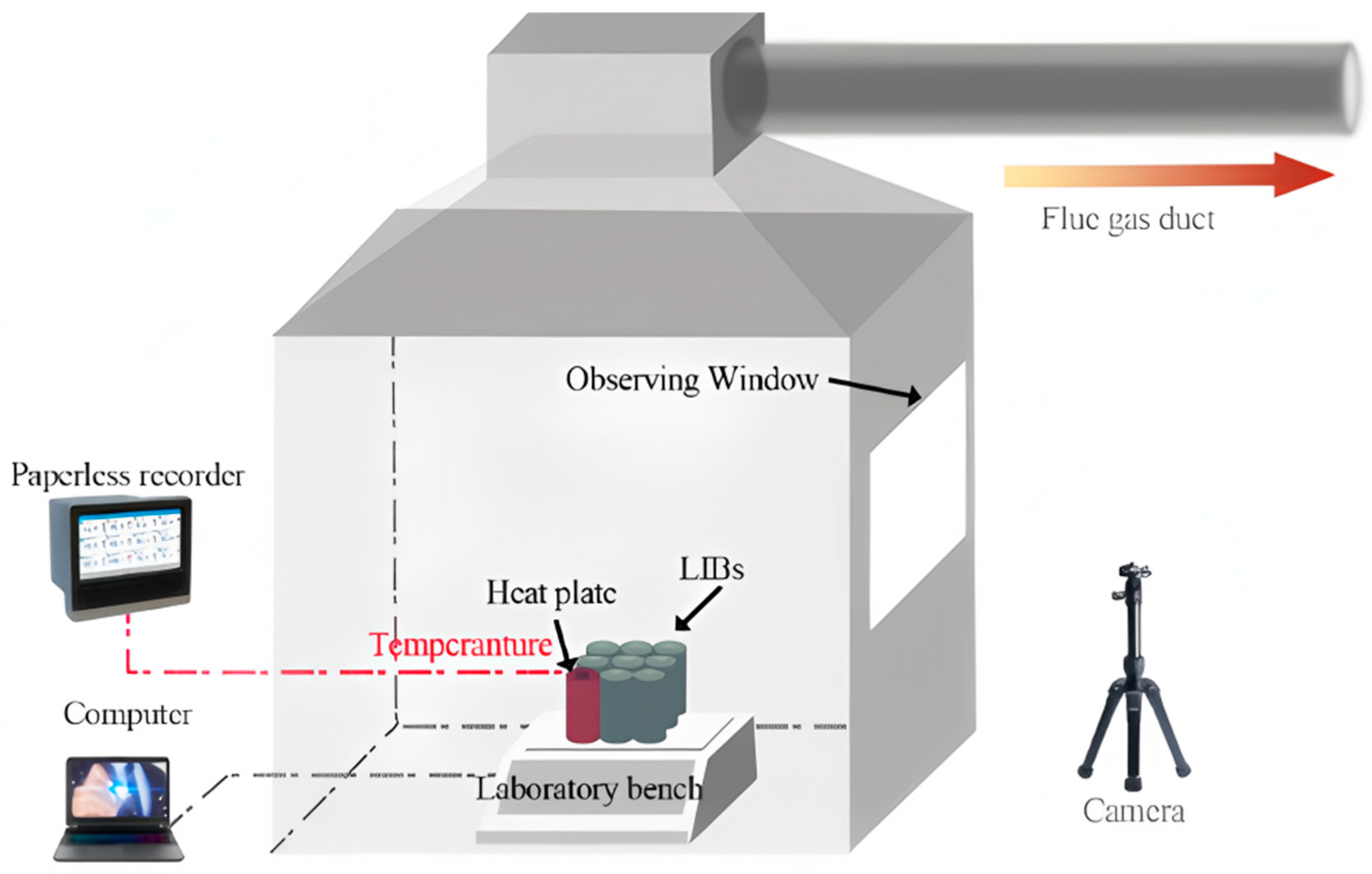
To investigate and document the performance parameters related to TR in 18650-type ternary lithium-ion batteries, a TR testing platform was established, as shown in Figure 2. The platform primarily consists of a temperature sensor, a test battery pack, thermocouples, a fire-retardant mat, a power supply, a camera, and several thermocouples. The experimental platform is configured to conduct relevant experiments on batteries under various operating conditions.
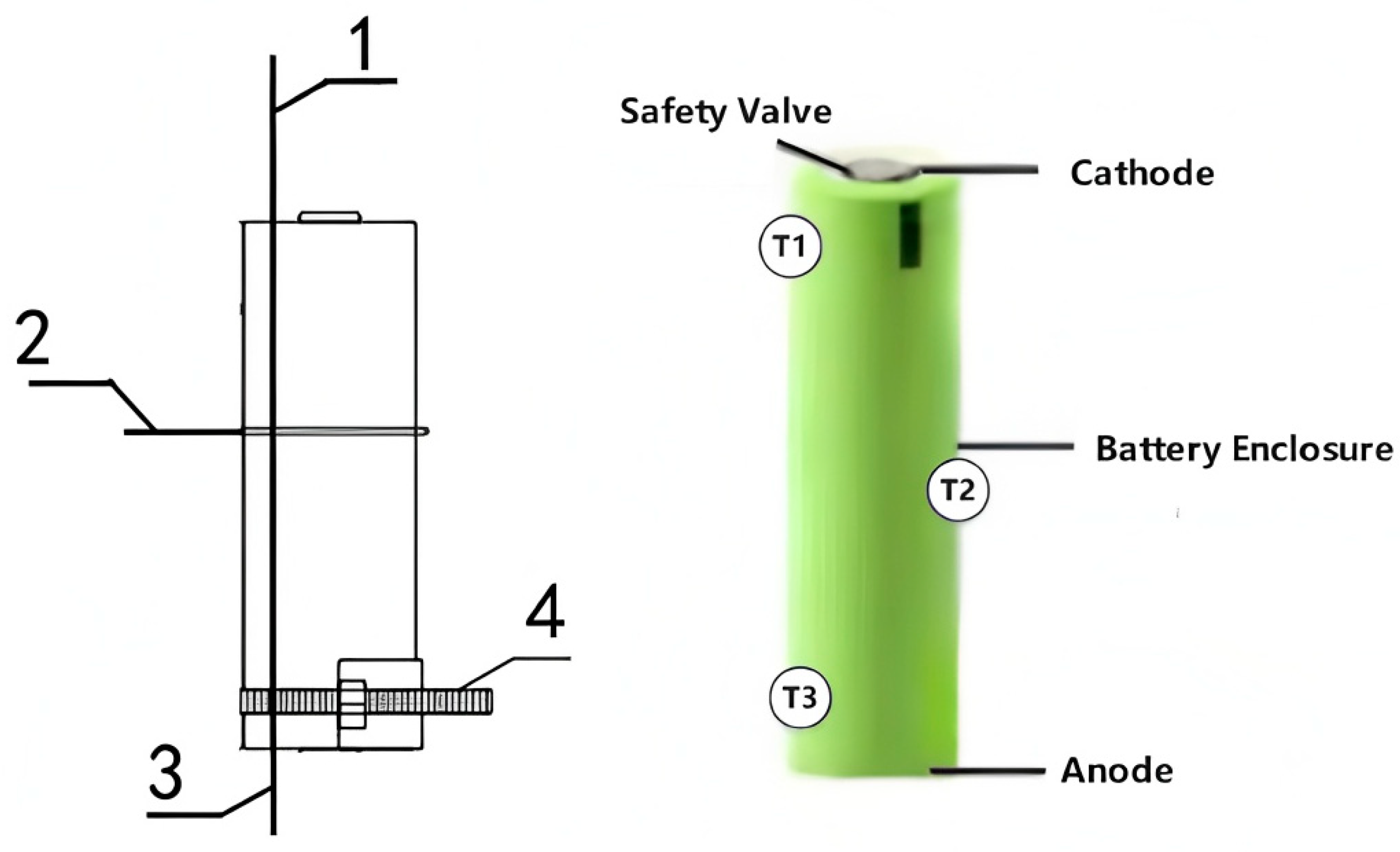
In this test, WRNK-191K pin-type thermocouples were used for temperature measurement. For the study on the TR risk of a single battery cell, three detection points were established: the positive terminal, the negative terminal, and the battery enclosure, as shown in Figure 3. For the battery pack, temperature detection points were set at the center of each cell’s surface. Before and after each test, battery voltage was measured and compared using a multifunction meter, and the TR process was recorded and measured using a video camera and an infrared thermal imager.

2.3. Experimental Methods

For details of this study, see Table 2. During the testing process, a controlled-variable method was employed, with a single parameter serving as the variable while all other parameters were kept constant. The process parameters examined included the surface of the ternary lithium battery undergoing TR, temperature changes in the positive and negative electrodes, temperature changes on the surfaces of the remaining batteries, and video recordings of the testing process to assess the hazards of ternary lithium batteries.
To preserve surface trace characteristics and ensure test consistency, all external heat sources were wrapped in aluminum foil to cover the battery surfaces, simulating a poor heat-dissipation environment. Heating was then performed using polyimide heating plates connected to an external DC-regulated power supply. Following the tests, X-ray scanning and macroscopic examination were employed to identify the trace characteristics of ternary lithium batteries relevant to fire investigations [13].

3. Research on the Hazards of Lithium-Ion Batteries

3.1. TR Process in Lithium-Ion Batteries

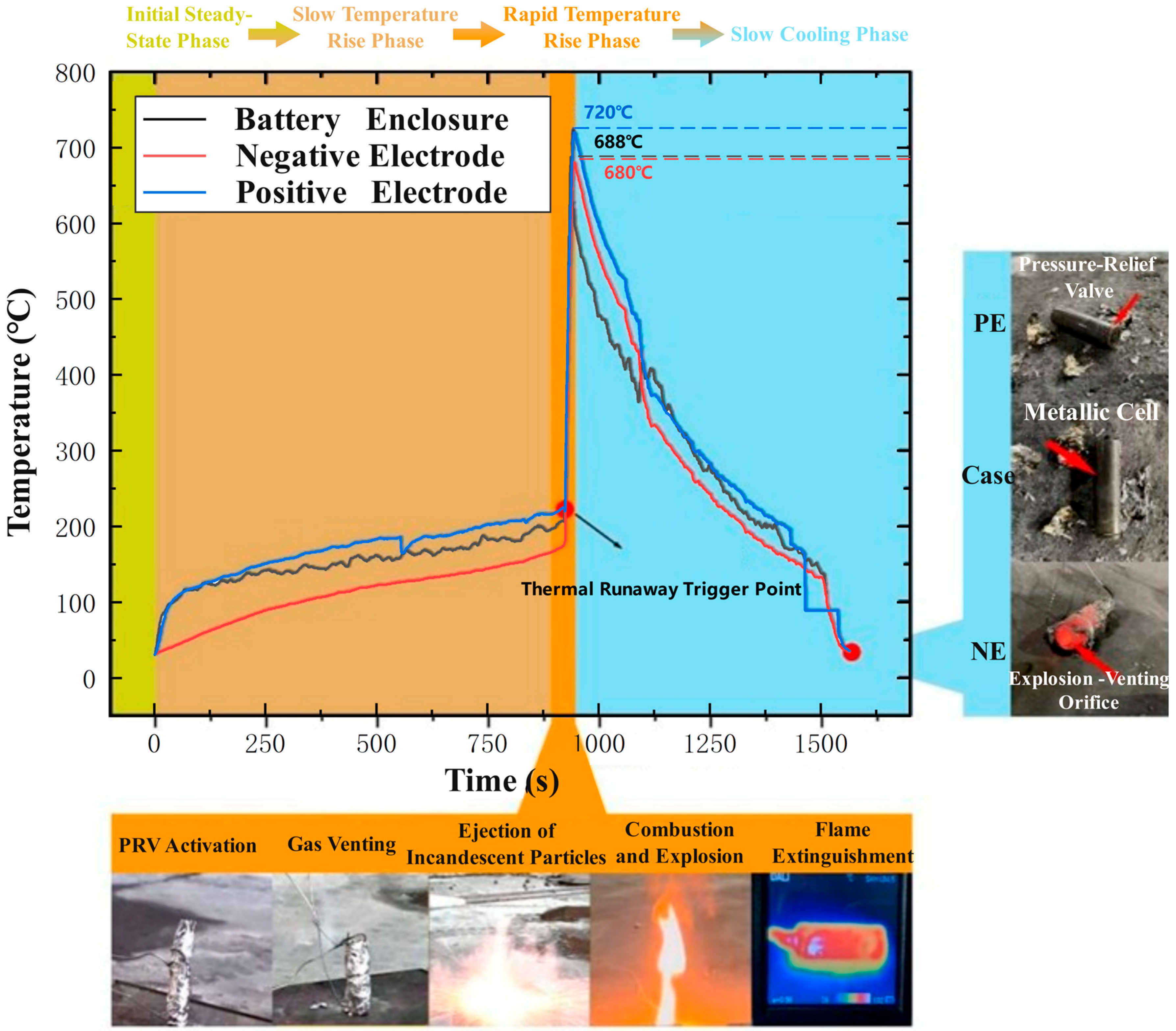
A blank test was conducted using a LIB with an SOC of 100% to analyze the TR process triggered by an external heat source. Three thermocouple measurement points were set up according to the test setup. Figure 4 illustrates the TR process of the LIB, clearly showing that TR induced by external heating typically occurs in three stages.
Stage 1: The heating sheet provides heat to the battery through thermal conduction, causing it to warm up slowly without any significant changes.
Stage 2: When the battery temperature reached 132 °C, the aluminum cathode casing emitted a crackling sound. The cathode pressure-relief valve opened, and gas was gradually and continuously released from the battery, accompanied by a hissing sound. Subsequently, the volume of released smoke gradually increased, and the battery approached the TR threshold.
Stage 3: A small amount of electrolyte and a large volume of smoke were ejected from the positive-pressure-relief valve. The reaction became exceptionally violent, accompanied by a loud hissing sound. A jet of flame erupted from the anode, after which the anode temperature reached 720 °C [14]. The temperature readings from the three thermocouples were, in order: negative electrode > positive electrode > casing. The pressure-relief port ruptured with an explosive sound, ejecting the battery’s internal structure. Sparks from the negative electrode’s pressure-relief port ignited the fumes, triggering a violent combustion lasting more than ten seconds. After the flames subsided, the battery’s external metal casing turned bright red. Thermal imaging revealed that the high-temperature areas were primarily concentrated at the negative electrode and the internal spiral structure.

3.2. TR Evolution Characteristics Under Thermal Runaway Conditions

Based on the energy-balance relationships during the battery TR process, both the location of the external heat source and the battery’s SOC exert a regulatory influence on the trigger threshold, evolution patterns, and severity of TR. In this chapter, 18650-type ternary lithium batteries at 100% SOC were selected as test subjects. Using the controlled-variable method, the effects of external heating location and SOC on battery TR behavior were investigated separately. The experimental results are shown in Table 3.
Thermal runaway was simulated by setting different heat-source positions. Polyimide heating patches were placed at the positive electrode, negative electrode, and the middle of the battery shell to conduct thermal abuse tests. Temperature-response data at each point were collected simultaneously.
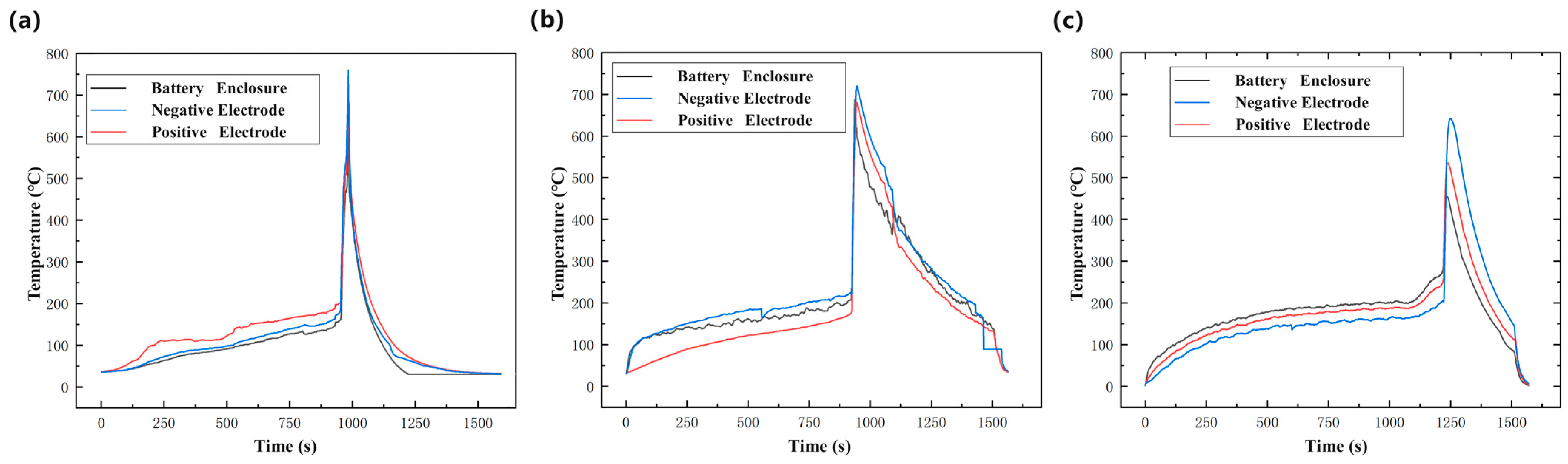
The temperature-rise curves of the battery under different heating positions are shown in Figure 5. During the thermal-runaway temperature-rise stage of lithium batteries, since the battery’s casing and interior are mostly made of thermally conductive metal materials with rapid solid-state heat-conduction characteristics, the heat generated locally on the outside of the battery casing can quickly conduct to the entire battery body. Therefore, although the temperatures at different locations vary in absolute values, the temperature-rise curves follow the same trend of change. When thermal runaway occurs, the temperature of the negative electrode rises sharply the fastest, and the highest temperature can reach about 700 °C. The reason for this phenomenon may be that the decomposition temperature of the negative-electrode material is higher than that of the positive-electrode material, so the negative electrode has a higher energy-storage capacity, and the negative-electrode vent port sprays flames first, causing the temperature to be higher.
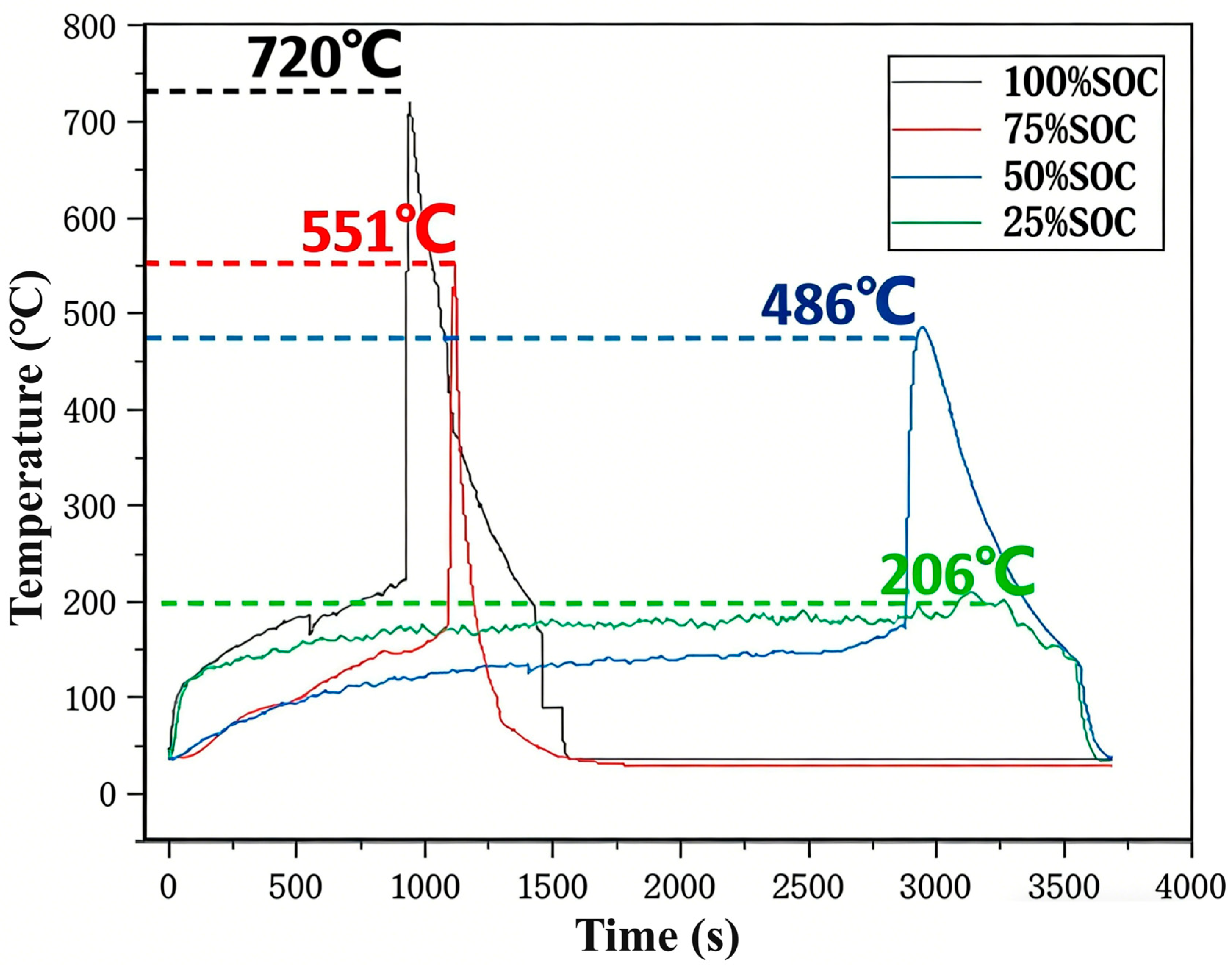
To quantify the regulatory effect of SOC on TR behavior, parallel thermal abuse tests were conducted at SOC levels of 25%, 50%, 75%, and 100%; the corresponding temperature-rise curves are shown in Figure 6. The experimental results indicate that battery SOC is significantly positively correlated with the TR temperature-rise rate and the severity of the reaction, and significantly negatively correlated with the TR onset time. Under 25% SOC conditions, thermal abuse is unlikely to trigger TR within 1 h, and the temperature curve exhibits a gradual rise.

3.3. Protection Circuit Response and Thermal-Runaway Suppression Characteristics Under Electrical Abuse Conditions

This section conducts two types of electrical abuse tests: 3C constant-current overcharging and direct external short-circuiting of the positive and negative electrodes. A control group with the positive-side pressure-relief valve blocked is also included to clarify the mitigating effects of the battery’s built-in protection mechanisms and pressure-relief structures on the risk of TR caused by electrical abuse. The test protocols and results for different electrical abuse scenarios are shown in Table 4.
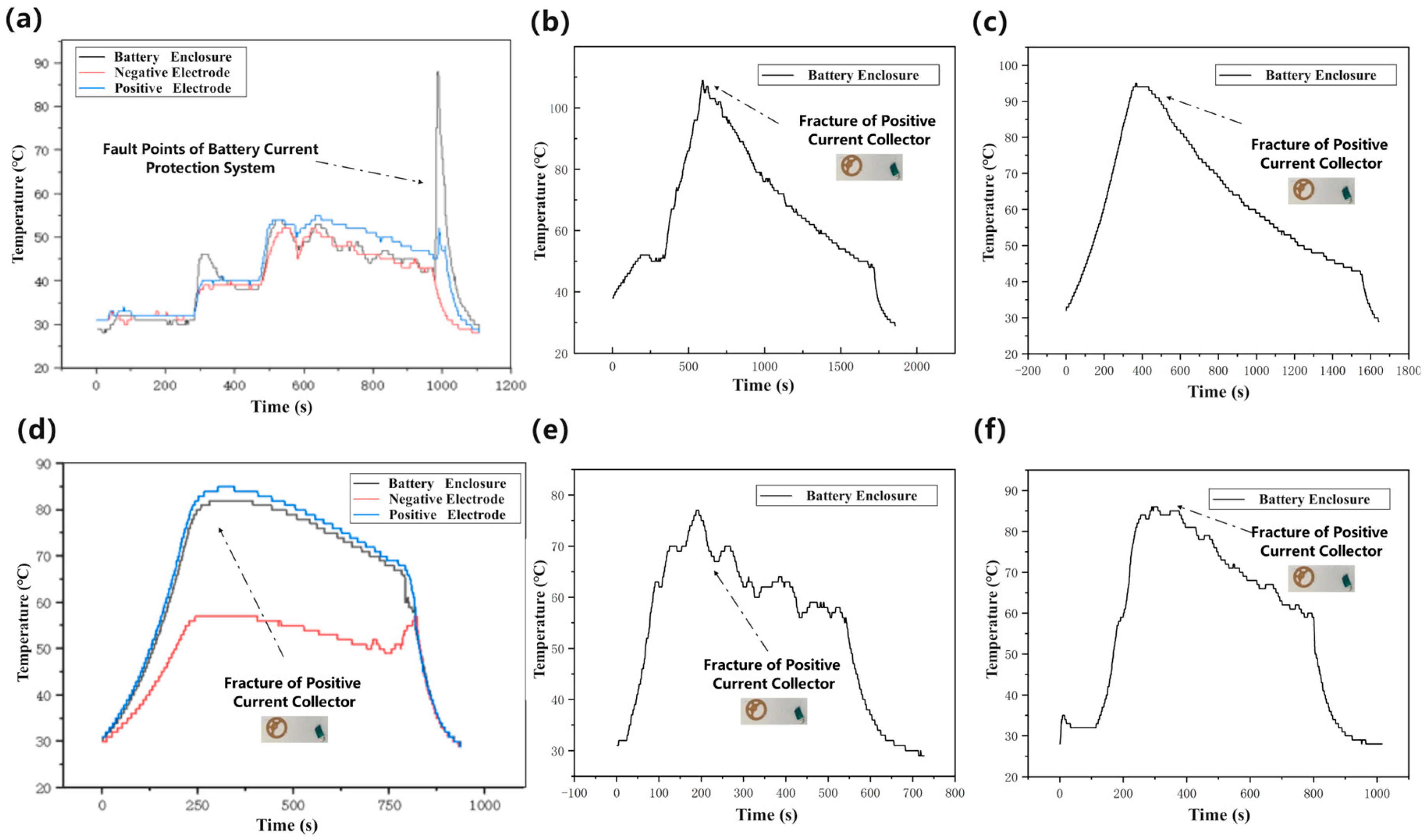
Figure 7 shows the battery temperature-versus-time curves under overcharge and short-circuit conditions. The temperature rise during overcharging can be divided into three distinct phases:
Stage 1: Charging at a rate exceeding the rated capacity causes continuous intensification of ohmic and electrochemical polarization, leading to rapid accumulation of Joule heat. As a result, the battery temperature continues to rise, and the rate of temperature increase gradually accelerates.
Stage 2: Around 200 s into the test, the battery’s positive-current collector melts, disconnecting the internal charging circuit. At this point, the battery temperature peaks at approximately 85 °C. No internal short circuit or chain TR is triggered. Due to the continued connection of the external power source, the battery remains in a weakly connected state, and the temperature decreases slowly in a fluctuating manner without a distinct single peak.
Stage 3: The battery temperature rapidly drops back to room temperature. After the test, the battery terminal voltage is 0 V, and the internal circuit is completely open. Control group tests confirm that the open/closed state of the cathode pressure-relief valve has no significant effect on the suppression of TR under overcharge conditions; overcharge protection for this battery type relies on its built-in overcurrent protection mechanism.
The temperature-rise evolution of the battery during a short-circuit event can be divided into two distinct phases:
Stage 1: Within 600 s after the short-circuit occurs, electrons rapidly migrate and accumulate via the external circuit, causing continuous accumulation of Joule heating and a steady rise in temperature; at 90 °C, the positive-electrode pressure-relief valve opens to release internal pressure.
Stage 2: The self-protection circuit activates and completely disconnects the discharge circuit; with no continuous external energy input, the battery temperature drops sharply and gradually returns to room temperature. Under these conditions, the battery temperature-rise curve exhibits a distinct single-peak characteristic, clearly distinguishing it from the fluctuating curve observed during overcharging.
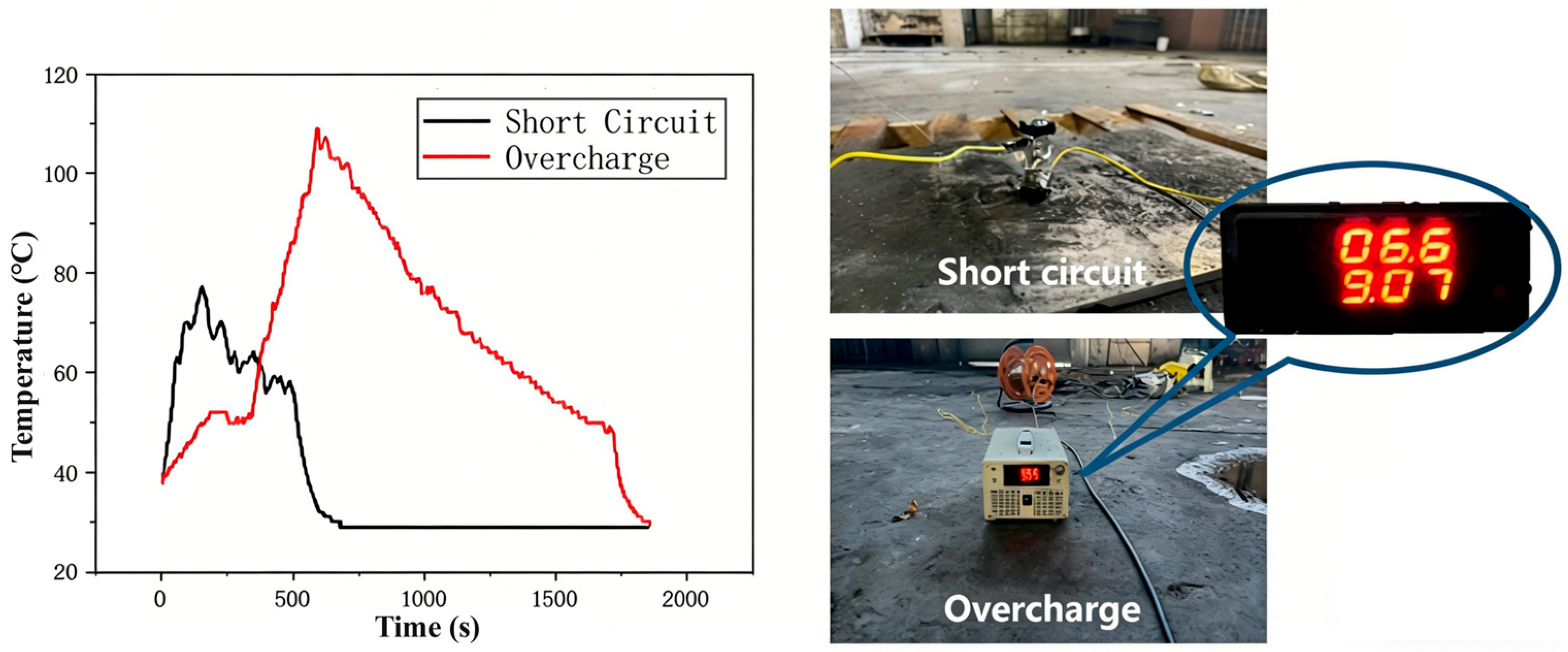
Consistent with overcharge tests, the open or closed state of the cathode pressure-relief valve has no significant effect on the suppression of TR during a short-circuit event. A comparative analysis of the two battery abuse scenarios is shown in Figure 8. The protection circuit typically trips when the battery reaches an overcharge voltage of 6.6 V and an internal temperature of approximately 90 °C if the protection mechanism fails due to battery quality defects; both overcharge and short-circuit conditions pose significant risks of TR. Notably, the protective effect of built-in current interrupt devices (CIDs) against electrical abuse has also been verified in lithium iron phosphate batteries, although their TR trigger thresholds are significantly higher than those of NCA batteries [15,16]. In summary, this study clarifies the early electrical abuse characteristics of batteries. Based on the relevant literature, even if the lithium battery protection circuit fails and thermal runaway occurs, the early-stage temperature characteristics remain consistent with those before the circuit failure. Therefore, these characteristics can serve as key criteria for identifying early abnormal signals of lithium battery incidents and tracing the causes of fires [17,18].

3.4. Effect of Different TR Trigger Locations on Heat Propagation in Battery Modules

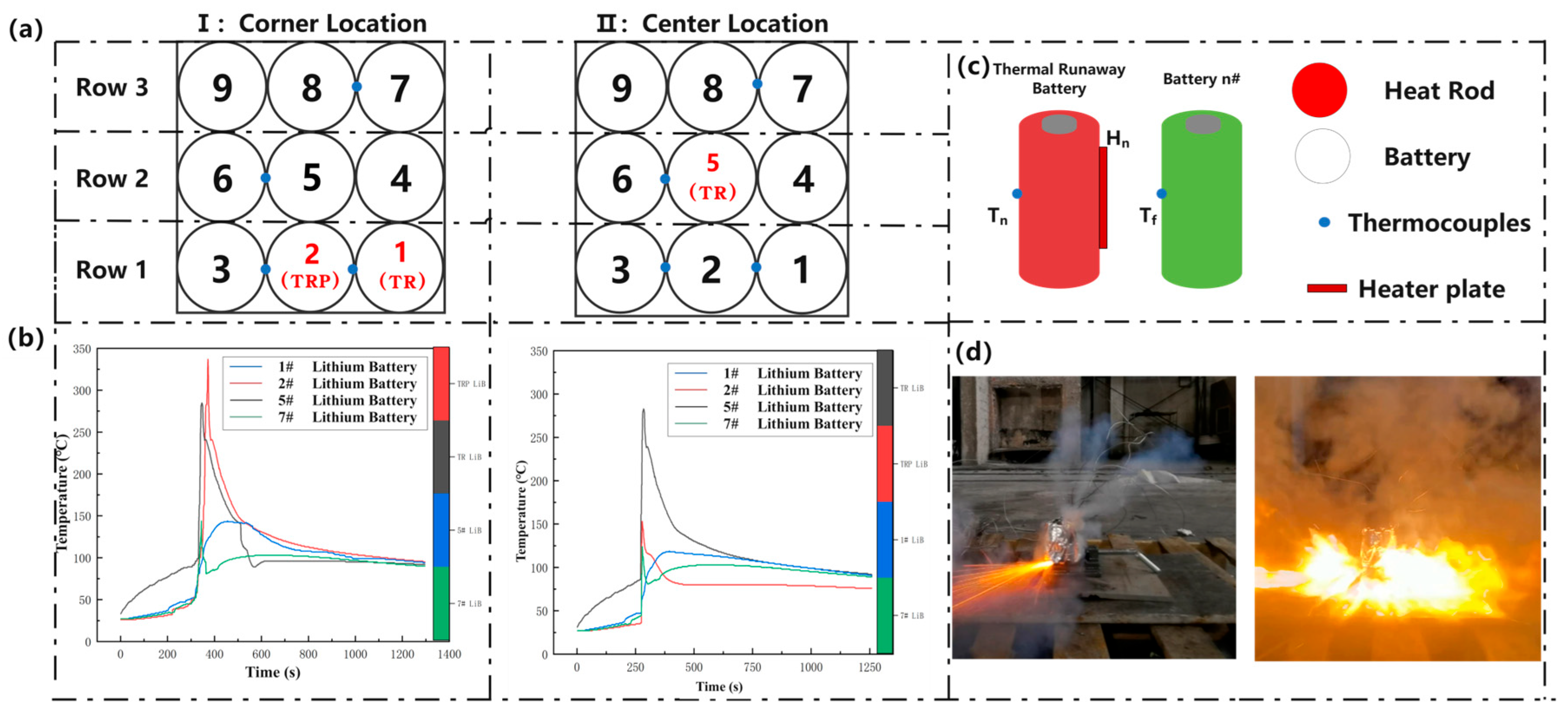
In this section, the test setup consists of a 3 × 3 battery module formed by nine test cells, with a 3 mm spacing between each cell. The bottom of the module is secured using battery clamps. Polyimide heating pads are used to heat the cells located at the corners and center of the battery module to investigate the effect of different trigger locations on heat diffusion within the module. The battery modules were numbered as shown in Figure 9a. Due to the symmetry of the module, five thermocouples were installed on the surfaces of cells 1, 2, 4, 5, and 7, respectively. Heating was stopped when the temperature-rise rate of the triggered TR cell exceeded 1 °C/s. After the experiment, all cells were collected according to their numbers to facilitate subsequent observation of the TR characteristics of the lithium-ion batteries.
As shown in the TR temperature-rise curve of the LIB module in Figure 9b, TR begins at the surface near the external heating plate. The temperature gradually propagates toward the interior of the triggered cell and the surrounding cells, resulting in the temperature on the heated side of the triggered cell remaining approximately 35 °C higher than that on the back side. A comparison of temperature changes during the TR process at different trigger locations reveals that when a ternary lithium battery module triggers TR at the edge, no significant downward temperature trend occurs due to heat diffusion into the surrounding environment. Owing to the formation of a steady flame with a duration of 53 s, thermal runaway occurred successively in two battery cells; the peak temperature of the TR is slightly higher than the maximum temperature observed when triggered at the center.
This phenomenon indicates that the heat generated by the self-combustion of ternary lithium batteries during TR is significantly higher than the heat dissipated to the external environment. From a risk-analysis perspective, the core risk of LIB TR stems from the thermal propagation of flames to surrounding cells. However, it is crucial to note that both the rate and magnitude of temperature rise caused by the battery’s own TR exceed the temperature trends resulting from flames after the fire started. Consequently, the risks associated with thermal propagation and high-temperature hazards exhibit a significant cumulative effect.
When a battery module triggers TR, the temperature field is divided into three layers: the first layer (secondary TR cells) has a temperature range of 300 °C to 350 °C; the second layer (TR cells) has a temperature range of 150 °C to 300 °C; and the third layer (near-point propagation of TR) has a temperature range of 40 °C to 150 °C. The average temperature difference between each layer is 115 °C.
The essence of TR propagation efficiency is the rate at which heat is transferred from the triggering cell to adjacent cells, thereby triggering a TR response. To characterize and compare the TR propagation behavior under different trigger positions, the thermal propagation-delay factor (γ) is defined in this study as a dimensionless metric representing the resistance to TR propagation. Formulated as the inverse of the Fourier number (Fo = λt/(ρCpd2)), γ represents the ratio of the characteristic thermal-diffusion time scale to the observed propagation delay:
γ = t 2 t 1 λ d 2 ρ C p
where t2t1 is the measured TR propagation-delay time (9 s for center-triggered, 16 s for edge-tpriggered); d = 3 mm is the inter-cell spacing; λ = 1.78 W/(m·K) is the representative effective thermal conductivity [19,20]; ρ = 1428 kg/m3 is the representative battery density; and Cp = 950 J/(kg·K) is the representative specific heat capacity [21,22,23]. A smaller γ indicates a shorter propagation delay relative to the characteristic thermal-diffusion time and, correspondingly, a higher propensity for TR propagation.
At 3 mm spacing, the propagation-delay time for TR in a LIB at the center (9 s) was 43.75% shorter than at the edge (16 s). Correspondingly, the thermal propagation-delay factor at the center (γ = 1.31 × 10⁻⁴) is only 56.2% of that at the edge (γ = 2.33 × 10⁻⁴). The results confirm that the propagation efficiency of TR triggered at the center of a LIB is significantly higher than that at the edge; the multi-directional heat-transfer pathways at the center reduce heat dissipation and enhance the thermal coupling effect between adjacent cells.
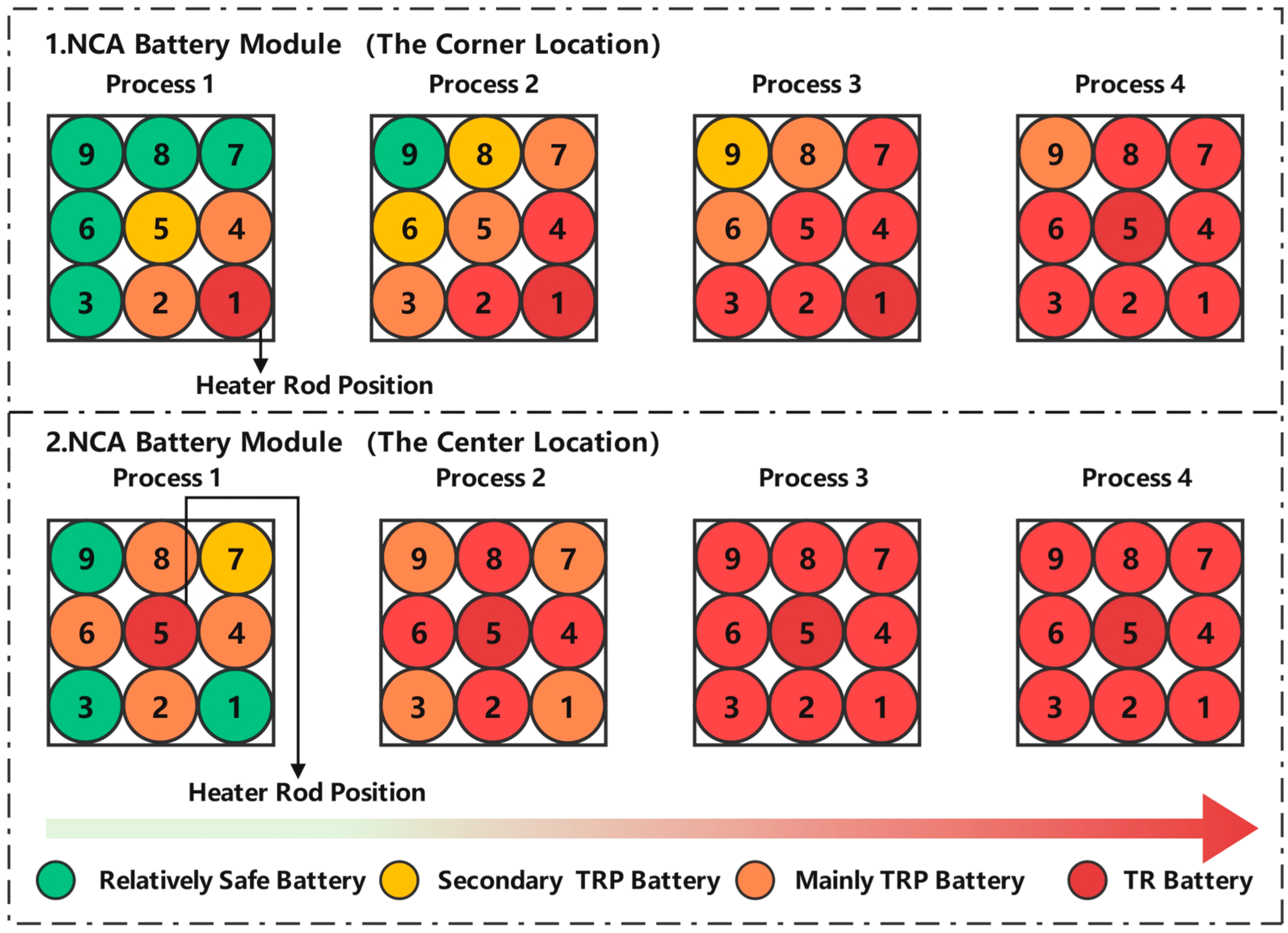
Based on the fundamental principle revealed by experimental data that the intensity of temperature propagation is inversely proportional to spatial distance, and considering the intrinsic symmetry of the battery module’s temperature field, a hypothetical benchmark timeline for the thermal-runaway propagation process was established, as shown in Figure 10. This benchmark timeline assumes that, under ideal operating conditions, the initial trigger cell marked in red serves as the origin of propagation and spreads sequentially. This benchmark timeline can serve as a unified standardized reference system for comparative analysis and validation of experimental results. After eliminating the influencing factors arising from flame generation, the core patterns of temperature field changes during the propagation of TR in lithium-ion batteries can be summarized in four aspects:
  • The heat released by the heating rod is directly conducted to the battery body, causing the battery temperature to rise;
  • The increased temperature of the battery surface is transferred to the surfaces of other batteries;
  • Once TR occurs, flames are generated, further causing a significant rise in the battery’s surface temperature;
  • TR in edge batteries poses a relatively lower risk and progresses more slowly compared to TR in central batteries; the heat generated during these processes simultaneously diffuses into the surrounding environment.
Based on this, and in conjunction with the aforementioned experimental data and analysis of the TR propagation mechanism, when designing safety protection and control measures for LIB modules, priority should be given to strengthening the protection level in the central area of the module. This can effectively suppress the rapid propagation of TR and improve the overall thermal safety of the battery module.

3.5. Effect of Module Stacking on Heat Transfer Within the Module

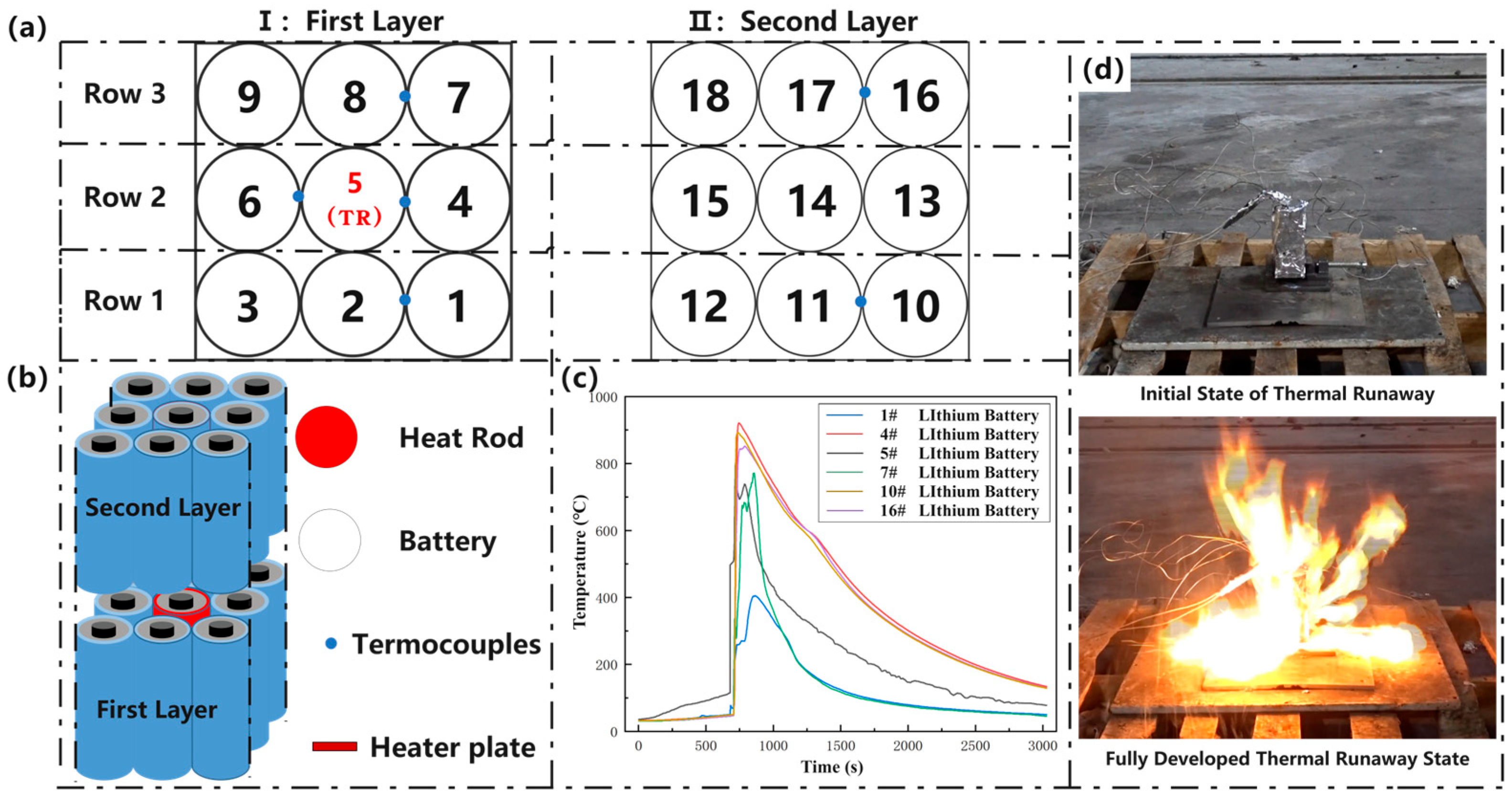
The test platform for stacking battery modules is shown in Figure 11a. Two 3 × 3 modules are stacked vertically, comprising a total of 18 cells. The bottom of the modules is secured with battery clamps spaced 3 mm apart, and the cells are numbered sequentially from bottom to top. A polyimide heating plate is positioned to the left of cell No.5 at the bottom. Thermocouples are installed on the left side of the battery casings for cells 1#, 4#, 5#, 7#, 10#, 16# in the battery, to record the heat propagation state following lithium battery TR.
The trigger battery experienced a sudden temperature surge at 678 s, leading to TR and the generation of flames. Affected by the heat propagation from the trigger battery, the upper and lower layers of cells experienced a sudden temperature surge at 704 s. The cells that had not yet undergone TR were in a high-risk state, and within 46 s, all 18 cells successively experienced TR. Vertical stacking not only accelerates thermal propagation but also increases the internal pressure of the module, which further exacerbates the risk of explosive rupture and material ejection during TR [24]. In a stacked and integrated configuration, the TR evolution of the battery module exhibits significant coupling characteristics and spatial distribution patterns, primarily manifested in the following three aspects:
  • The stacked structure of the battery module intensifies the triggering and progression of TR, resulting in a substantial increase in temperature peaks during the runaway process, with the highest temperature reaching 893 °C, while the rate of heat dissipation within the module slows significantly.
  • There are distinct vertical temperature-distribution differences within the module. The heating rate of upper-layer battery cells is significantly faster than that of lower-layer cells, and the overall peak temperatures of the upper-layer cells are higher than those of the lower-layer cells, exhibiting a higher-top, lower-bottom non-uniform temperature distribution that accelerates the propagation of LIB TR.
  • The temperature on the back side of the heat-excited region is higher than that on the directly heated side. This location is more prone to inducing the decomposition of the internal electrolyte, the accumulation of flammable gases, and ejection phenomena. The resulting ejection flames are primarily formed by the violent combustion of flammable gases released from inside the battery. It should be noted that during the violent TR process of cylindrical lithium-ion batteries, when high-temperature internal materials are ejected from the bottom vent, the temperature of the battery body drops significantly, as shown by the temperature of battery No. 7 in Figure 11c.
The TR evolution characteristics revealed by the above tests indicate that the thermal safety design of stacked LIB modules poses significant risks. The TR amplification effect caused by their stacked integrated configuration, the non-uniform temperature distribution, and the formation of localized danger zones all impose higher requirements on the thermal safety control of these modules.

4. Research on Trace Characteristics of Residues from LIB TR

4.1. Macro-Observation Method

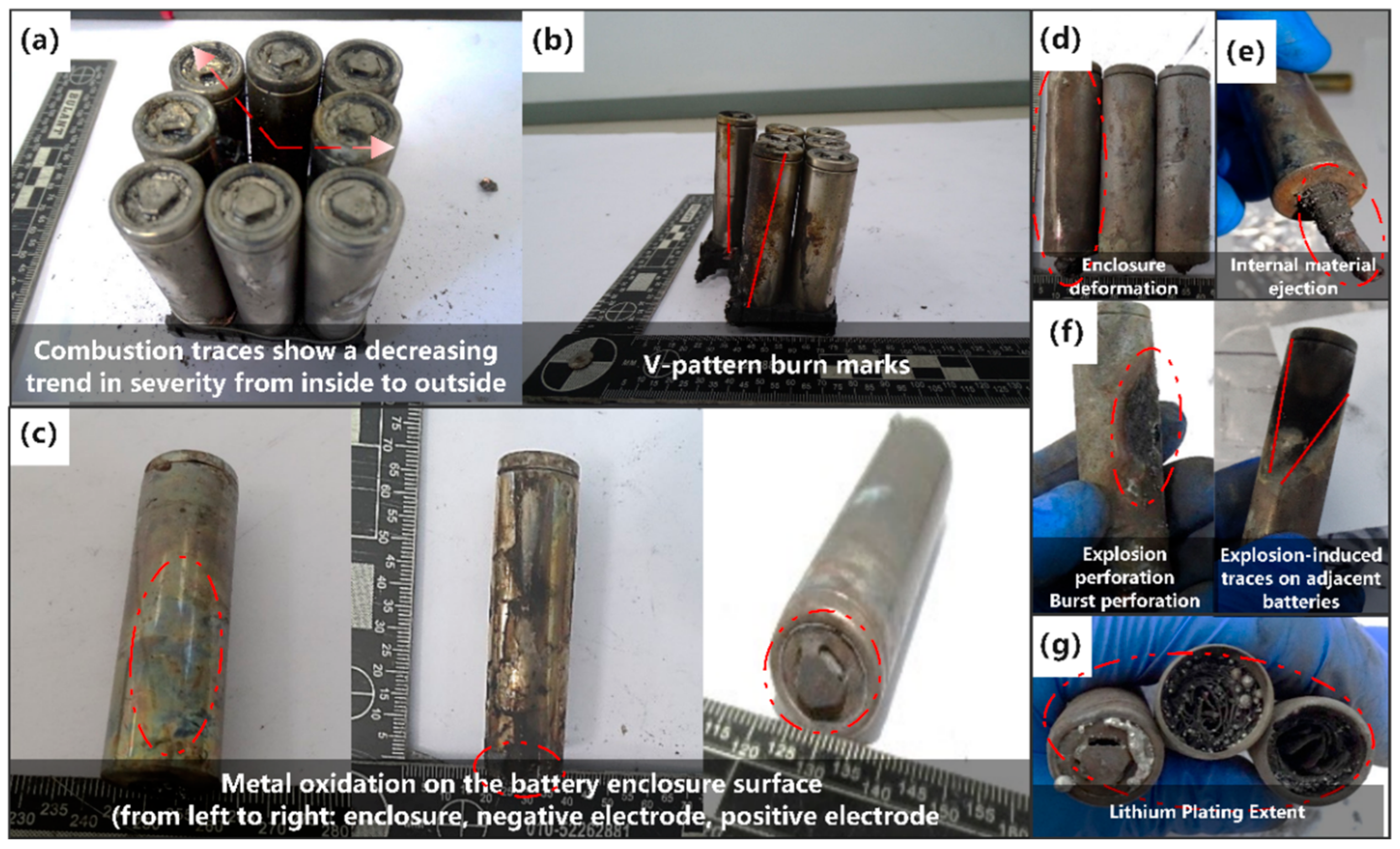
The casing of 18650-type cylindrical lithium-ion batteries is made of aluminum or steel; therefore, the trace characteristics observed can be compared to those found in fire investigations involving overheated metals. There are six characteristic traces on the LIB casing, as shown in Figure 12:
  • An external heat source causes varying degrees of oxidation on the metal surface. After cleaning the casing surface, the areas with the brightest metallic luster are closest to the overheated zones. The center of the overheated area appears bluish-green, while the surrounding overheated areas leave yellowish-brown marks. Other areas, affected by the battery’s own heat generation, exhibit grayish-white marks.
  • During TR, there is a certain probability that electrolyte will leak out, flowing down the casing along the positive electrode and forming black carbonized marks. Additionally, metallic lithium will deposit on the surface of the LIB electrodes.
  • TR is characterized by higher negative-electrode temperatures. Blue–green oxidation marks will appear at the bottom of the negative electrode, though the affected area is smaller than that of the heated region.
  • If the battery contains cylindrical core material, the closer to the center the location is after TR, the greater the heating intensity and the more violent the internal reaction, causing the battery core to be ejected outward through the negative-electrode pressure-relief port.
  • During TR, as the temperature rapidly rises above 600 °C, internal pressure surges sharply. Once this exceeds the casing’s pressure limit, explosive rupture and perforations occur on the casing surface away from the heat source, with the surface covered in carbon deposits and combustion residues.
  • Because TR in cylindrical lithium-ion batteries is accompanied by jet combustion, the resulting burn marks conform to the principles of fire traceology, forming V-shaped soot, carbonization, and ablation marks on the fire-exposed surface, with the base of the V at the point of origin.
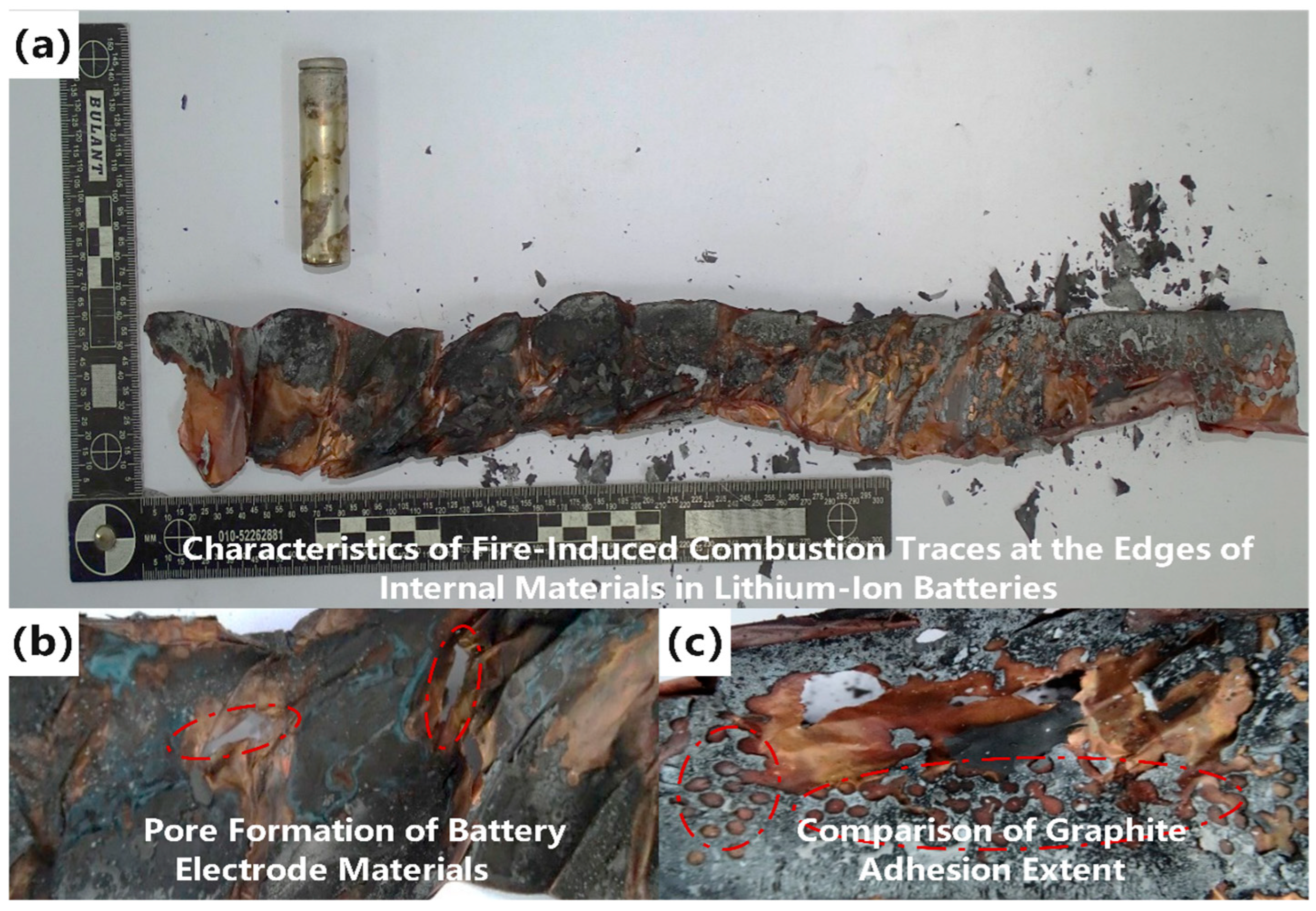
Upon dissecting the battery’s interior, the four layers of rolled material—each with a different melting point—adhere to the surface of the copper layer. When subjected to uncontrolled heating, the entire copper layer exhibits curling in distinct sections. There are three characteristic marks inside a LIB experiencing TR. These internal characteristic marks are shown in Figure 13.
  • The degree of curling of the copper layer: the more severe the curling at the edges, the more intense the reaction and the closer the burning area.
  • The extent of impurities adhering to the copper layer: since graphite and the separator have melting points lower than that of the copper layer, a lighter degree of adhesion indicates more intense combustion and reaction.
  • The size of holes in the copper layer: with copper’s melting point at approximately 1000 °C, barring external factors, the presence of holes indicates that the larger the hole, the more intense the reaction at that location, and the closer it is to the battery’s failure point.
Figure 13. Internal dismantling characteristics of 18650-type ternary lithium battery: (a) characteristics of fire-induced combustion traces at the edges of internal materials in lithiumion batteries; (b) pore formation of battery electrode materials; (c) comparison of graphite adhesion extent.
Batteries 12 00172 g013

4.2. Patterns of Voltage Variation

By recording the battery voltage before and after testing, we found that the voltage varies under different operating conditions. For lithium-ion batteries that did not experience TR, the voltage decreased as the severity of the fault increased. Based on the voltage changes in ternary lithium-ion batteries under different conditions shown in Table 5, we determined that the extent to which voltage is affected, in order of severity, is: external heat source > overcharging > short circuit.
In an environment with an external heat source, the termination voltage for batteries that experienced TR was 0 V, while the termination voltage for batteries that did not experience TR was inversely proportional to their SOC. In the experiment, batteries with an SOC of 25% experienced a 52.7% voltage drop under conditions with an external heat source. Under overcharge conditions, due to the protection circuit, the battery opens circuit even if TR does not occur; therefore, the termination voltage for all batteries is 0 V. Under short-circuit test conditions, batteries that did not experience TR exhibited a voltage drop of approximately 9% before and after the test, while those that experienced TR showed a significantly greater voltage drop.
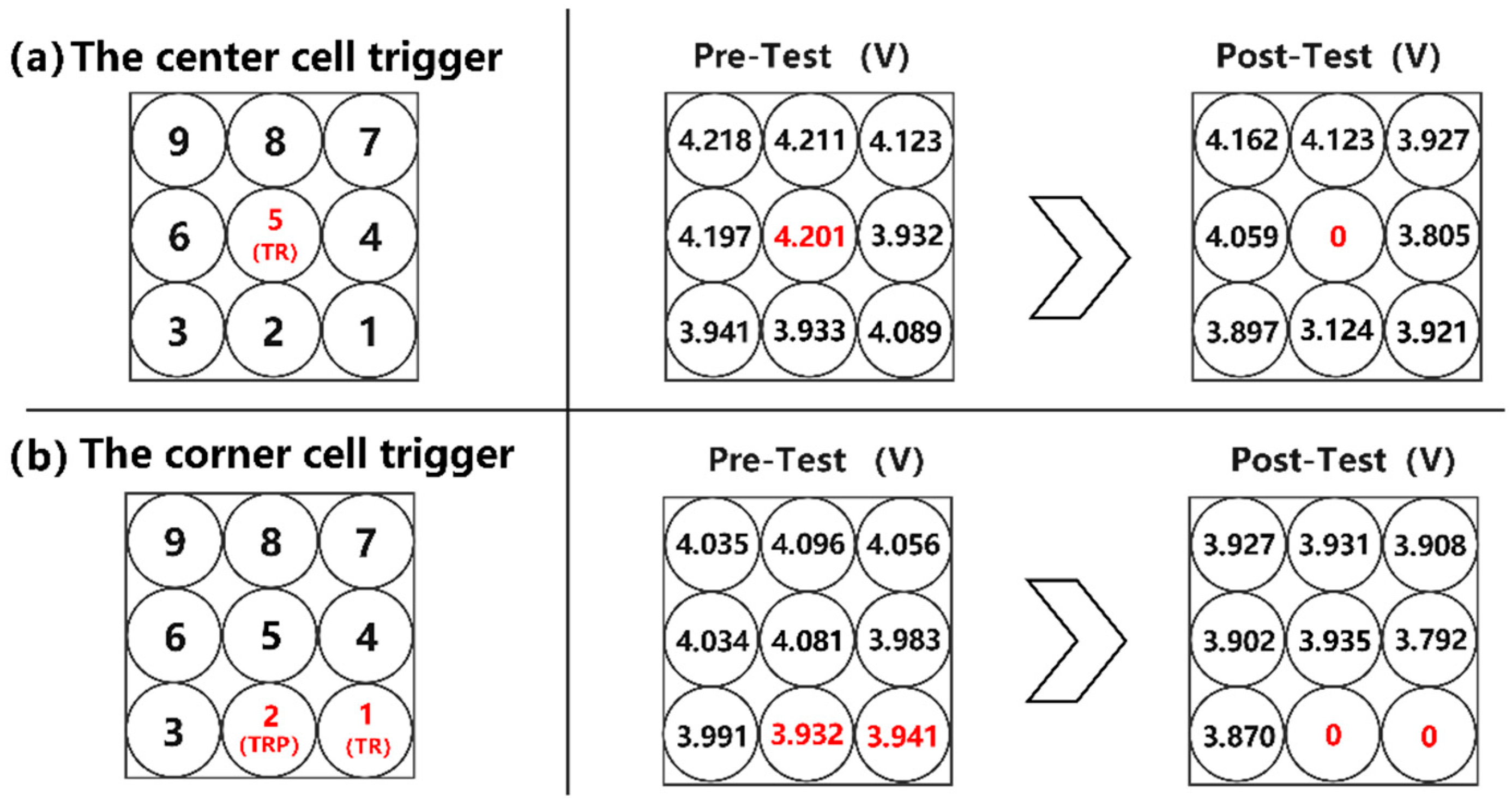
In experiments conducted at different TR trigger locations within battery modules, cells that triggered TR all experienced complete irreversible failure. Batteries significantly affected by TR exhibited a marked voltage drop. The impact of cell-triggered TR followed a radial gradient pattern, with the extent of voltage decay being positively correlated with the distance from the trigger source, as shown in Figure 14.
Therefore, during a fire investigation, by analyzing the patterns of voltage changes in faulty batteries, investigators can determine the location of the faulty battery and the cause of the failure, thereby strengthening the chain of evidence in LIB fire investigations.

4.3. Patterns in X-Ray Images

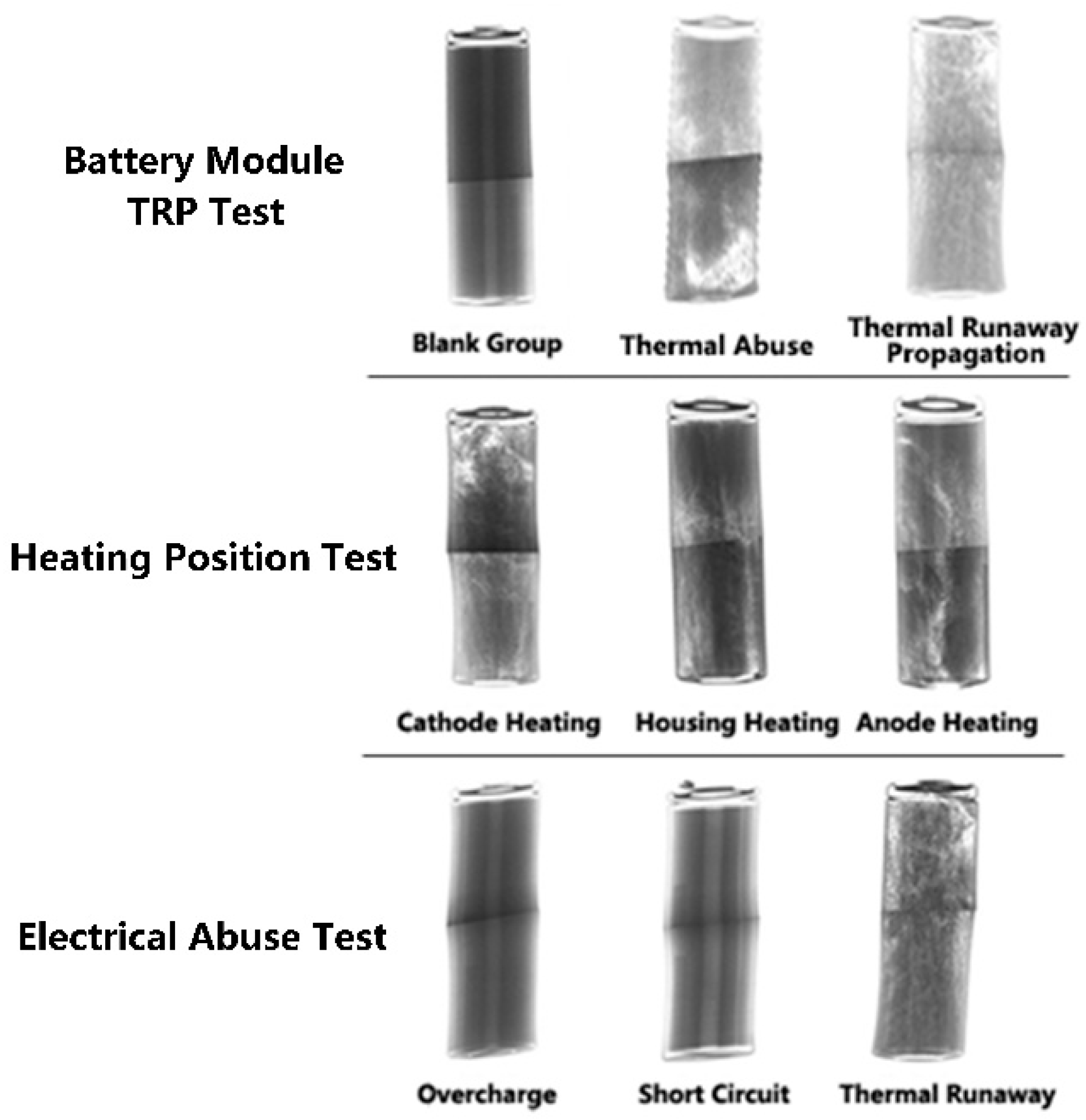
The study selected the nanoVoxel 4000 high-precision CT scanner as the testing device. The experimental subjects were 47 lithium-ion batteries that had been tested under different abuse conditions, mainly to explore the CT imaging-analysis patterns related to TR. To obtain clear images of the internal structure of the batteries, the batteries were divided into upper and lower parts for imaging, and the overall imaging results of the batteries were obtained through image-stitching technology. Figure 15 presents the X-ray images of batteries under different abuse conditions.
Figure 15. X-ray machine analysis of 18650-type ternary lithium battery.
Batteries 12 00172 g015
Under conditions involving an external heat source, the battery undergoes TR. The heated side of the battery is affected by the heat, resulting in the formation of voids at the heated location in the X-ray image. The interior of the entire battery exhibits a fluffy, disordered structure with the formation of spots. Under overcharge and short-circuit conditions, the battery did not experience TR; however, X-ray images still reveal blank stripes appearing along the edges of the core. Compared to external observation methods, X-ray image analysis allows investigators to determine the location and cause of the fire based on image patterns without damaging the battery’s internal structure during fire investigations.

5. Conclusions

In response to the engineering needs for TR risk prevention and control, as well as fire investigation and root-cause analysis of 18650-type NCA-cell ternary lithium batteries, systematic experiments were conducted on the TR characteristics of individual cells under various SOC, thermal abuse, and electrical abuse conditions, as well as experiments on the propagation patterns of TR in battery modules at different trigger locations and stacking configurations. By integrating various trace features, the relevant characteristic parameters for identifying the causes of TR are summarized. The main conclusions are as follows:
  • SOC is the core parameter determining the TR risk of 18650-type NCA-cell ternary lithium batteries. The probability of TR initiation, the severity of the reaction, and the rate of temperature rise are significantly positively correlated with SOC and negatively correlated with the time to TR initiation. Under the external thermal abuse conditions tested in this study, 25% SOC was identified as the critical threshold for triggering TR: when SOC is below this value, external heat abuse did not trigger TR within the experimental duration; at 100% SOC, the TR reaction is most severe, with peak temperatures reaching 720 °C, accompanied by extreme behaviors such as core ejection and explosions.
  • Under thermal abuse conditions, the critical trigger temperature is approximately 132 °C. The location of external heating does not alter the overall evolution pattern or peak temperature level of TR. Surface-temperature measurements consistently indicate that the negative-electrode region exhibits the highest temperature among the three measurement locations, suggesting it may serve as a significant heat-release zone during TR. Before conducting more direct internal measurements, the existing evidence indicates that the negative electrode should be prioritized as a critical area for thermal safety protection and fire trace identification.
  • The battery’s built-in protection mechanisms can effectively suppress the risk of TR triggered by electrical abuse. Under 3C overcharge and external short-circuit conditions, the protection circuit can cut off the circuit when the battery temperature reaches approximately 90 °C, preventing severe TR. The two types of electrical abuse exhibit distinct temperature-response characteristics: the temperature-rise curve under short-circuit conditions shows a distinct single-peak feature, while the temperature curve under overcharge conditions exhibits an up-and-down fluctuating pattern, which can be used for rapid identification of LIB fire failure modes.
  • The location where TR is triggered and the stacking configuration of the battery module significantly influence thermal propagation characteristics. TR triggered at the center of the module exhibits shorter propagation-delay times and higher propagation efficiency; the thermal propagation-delay factor at the center is only 56.2% of that at the edge, making it the core area for thermal safety protection within the module. A top–bottom stacking configuration significantly exacerbates the chain reaction of TR, substantially increasing the peak temperature within the module (reaching up to 893 °C) and creating a non-uniform temperature field characterized by higher temperatures at the top and lower temperatures at the bottom, which is highly prone to triggering rapid chain TR across the entire module.
  • To meet the needs of fire investigation work, based on test results, the characteristic patterns of TR burn marks of cylindrical 18650-type ternary LIBs have been summarized. At the macroscopic level, we clarified the correlation between battery-casing oxidation marks, electrolyte carbonization marks, and rupture-damage characteristics, as well as the degree of internal copper foil curling, graphite adhesion status, and pore characteristics with the severity of TR reactions. At the electrical level, the impact of different failure modes on battery voltage follows the order: external heat source > overcharging > short circuit. The remaining battery voltage is negatively correlated with the severity of the failure, which can be used for gradient localization of the ignition source. At the non-destructive testing level, X-ray imaging enables non-destructive identification of internal battery faults. TR batteries exhibit imaging patterns characterized by voids, spots, and flocculent disordered structures, while batteries subjected to electrical abuse display characteristic blank stripes along the edges of the core. These imaging features enable differentiation of fault types and ignition locations.
This study systematically reveals the full-scale TR evolution patterns of 18650-type NCA-cell ternary lithium batteries from the cell to the module level. The research findings provide scientific support for the thermal safety design of ternary lithium batteries, the R&D of fire prevention and control technologies, and the formulation of firefighting and rescue strategies. Future research could further investigate the TR characteristics and trace evolution of batteries under varying environmental pressures, humidity levels, and under the influence of fire extinguishing agents. This would refine the technical framework for tracing LIB fires in complex fire scenarios. Additionally, by integrating numerical simulation methods, high-precision predictive models for the propagation of battery TR could be developed, providing a more comprehensive theoretical basis for the intrinsic safety design of LIB energy storage systems.

Author Contributions

Conceptualization, D.Y.; formal analysis, J.W.; investigation, methodology, Y.F.; writing—review and editing, validation, H.Z. and Z.W.; investigation, J.D.; project administration, Y.F.; funding acquisition, D.Y. and Y.F. All authors have read and agreed to the published version of the manuscript.

Funding

This work was supported by the “Key-Area Research and Development Program of Guangdong Province” under Grant No. 2024B1111080003.

Data Availability Statement

The data that support the findings of this study are available from the corresponding author upon reasonable request.

Conflicts of Interest

The authors declare no conflicts of interest.

References

  1. Lai, Y.W.; Chi, K.H.; Chung, Y.H.; Liao, S.W.; Shu, C.M. Thermal runaway characteristics of 18650 lithium-ion batteries in various states of charge. J. Therm. Anal. Calorim. 2024, 149, 10477–10486. [Google Scholar] [CrossRef]
  2. Duh, Y.S.; Sun, Y.; Lin, X.; Zheng, J.; Wang, M.; Wang, Y.; Lin, X.; Jiang, X.; Zheng, Z.; Zheng, S.; et al. Characterization on thermal runaway of commercial 18650 lithium-ion batteries used in electric vehicles: A review. J. Energy Storage 2021, 41, 102888. [Google Scholar] [CrossRef]
  3. Yan, W.H.; Huang, W.X.; Yang, Y.; Wei, Z.W.; Zhen, H.S.; Lin, Y. Research on overcharge mitigations and thermal runaway risk of 18650 lithium-ion batteries. J. Energy Storage 2025, 120, 116372. [Google Scholar] [CrossRef]
  4. Jeon, M.; Lee, E.; Park, H.; Yoon, H.; Keel, S. Effect of Thermal Abuse Conditions on Thermal Runaway of NCA 18650 Cylindrical Lithium-Ion Battery. Batteries 2022, 8, 196. [Google Scholar] [CrossRef]
  5. Yang, S.; Gao, B.; Ge, J.; Xu, W.; Li, M.; Wu, X. Investigation of thermal runaway of 18650 LiFePO4 battery with influence of state of charge and lateral heating power. J. Energy Storage 2026, 141, 119106. [Google Scholar] [CrossRef]
  6. Yang, J.; Tong, J.; Yang, Y.; Zhang, Q.; Niu, J. Characteristics of thermal runaway and propagation for 18650 lithium batteries in top-confined space. Int. J. Heat Mass Transf. 2025, 241, 126663. [Google Scholar] [CrossRef]
  7. Wang, B.; Kannan, P.; Liao, Y.T.; Kwon, B.; Premnath, V.; Jeevarajan, J. A numerical model for simulating thermal runaway propagation between lithium-ion battery cells with detailed heat transfer analysis. Int. J. Heat Mass Transf. 2026, 256, 128073. [Google Scholar] [CrossRef]
  8. Li, H.; Chen, H.; Zhong, G.; Wang, Y.; Wang, Q. Experimental study on thermal runaway risk of 18650 lithium ion battery under side-heating condition. J. Loss Prev. Process Ind. 2019, 61, 122–129. [Google Scholar] [CrossRef]
  9. Zhong, G.; Li, H.; Wang, C.; Xu, K.; Wang, Q. Experimental Analysis of Thermal Runaway Propagation Risk within 18650 Lithium-Ion Battery Modules. J. Electrochem. Soc. 2018, 165, A1925–A1934. [Google Scholar] [CrossRef]
  10. Zhou, G.; Yang, S.; Liu, Y.; Wang, J.; Bian, Y.; Yu, H.; Zhang, Q.; Li, Y.; Niu, C. Experimental study on thermal runaway propagation characteristics of NCM811 lithium-ion batteries with different SOCs induced by dual heat sources. Int. Commun. Heat. Mass. Transf. 2023, 149, 107089. [Google Scholar] [CrossRef]
  11. Huang, Z.; Duan, Q.; Li, J.; Yang, F.; Sun, J.; Wang, Q. Experimental and numerical investigation of heating power effect on thermal runaway propagation within large-format lithium iron phosphate battery. J. Energy Storage 2025, 109, 115098. [Google Scholar] [CrossRef]
  12. Hu, X.; Gao, F.; Xiao, Y.; Wang, D.; Gao, Z.; Huang, Z.; Ren, S.; Jiang, N.; Wu, S. Advancements in the safety of Lithium-Ion Battery: The Trigger, consequence and mitigation method of thermal runaway. Chem. Eng. J. 2024, 481, 148450. [Google Scholar] [CrossRef]
  13. Jiang, Y.; Tian, A.; Yan, L.; Du, X.; Yang, L.; Li, L.; Zhou, J.; Wang, Q.; Ruan, S.; He, X.; et al. X-Ray Computed Tomography (CT) Technology for Detecting Battery Defects and Revealing Failure Mechanisms. J. Electron. Mater. 2024, 53, 5776–5787. [Google Scholar] [CrossRef]
  14. Shen, H.; Wang, H.; Li, M.; Li, C.; Zhang, Y.; Li, Y.; Yang, X.; Feng, X.; Ouyang, M. Thermal Runaway Characteristics and Gas Composition Analysis of Lithium-Ion Batteries with Different LFP and NCM Cathode Materials under Inert Atmosphere. Electronics 2023, 12, 1603. [Google Scholar] [CrossRef]
  15. Wang, K.; Wu, D.; Chang, C.; Zhang, J.; Ouyang, D.; Qian, X. Charging rate effect on overcharge-induced thermal runaway characteristics and gas venting behaviors for commercial lithium iron phosphate batteries. J. Clean. Prod. 2024, 434, 139992. [Google Scholar] [CrossRef]
  16. Dong, T.; Wang, Y.; Peng, P.; Jiang, F. Electrical-thermal behaviors of a cylindrical graphite-NCA Li-ion battery responding to external short circuit operation. Int. J. Energy Res. 2019, 43, 4072–4083. [Google Scholar] [CrossRef]
  17. Xu, W.; Zhou, K.; Wang, H.; Lu, L.; Gao, B.; Wang, Y.; Li, Y. Experimental and Modeling Study of Arc Fault Induced Thermal Runaway in Prismatic Lithium-Ion Batteries. Batteries 2024, 10, 269. [Google Scholar] [CrossRef]
  18. Golubkov, A.W.; Scheikl, S.; Planteu, R.; Voitic, G.; Wiltsche, H.; Stangl, C.; Fauler, G.; Thalera, A.; Hacker, V. Thermal runaway of commercial 18650 Li-ion batteries with LFP and NCA cathodes–impact of state of charge and overcharge. RSC Adv. 2015, 5, 57171–57186. [Google Scholar] [CrossRef]
  19. Cai, J.N. Experimental Study on Heat Transfer Characteristics of Horizontal and Vertical Thermal Runaway Propagation in 18650 Ternary Lithium-Ion Batteries. Master’s Dissertation, University of Science and Technology of China, Hefei, China, 2022. (In Chinese) [Google Scholar]
  20. Drake, S.J.; Wetz, D.A.; Ostanek, J.K.; Miller, S.P.; Heinzel, J.M.; Jain, A. Measurement of anisotropic thermophysical properties of cylindrical Li-ion cells. J. Power Sources 2014, 252, 298–304. [Google Scholar] [CrossRef]
  21. Madani, S.S.; Schaltz, E.; Kær, S.K. Review of Parameter Determination for Thermal Modeling of Lithium Ion Batteries. Batteries 2018, 4, 20. [Google Scholar] [CrossRef]
  22. Lei, B.; Zhao, W.; Ziebert, C.; Uhlmann, N.; Rohde, M.; Seifert, H.J. Experimental Analysis of Thermal Runaway in 18650 Cylindrical Li-Ion Cells Using an Accelerating Rate Calorimeter. Preprints 2017, 2017020033. [Google Scholar] [CrossRef]
  23. Schuster, E.; Ziebert, C.; Melcher, A.; Rohde, M.; Seifert, H.J. Thermal behavior and electrochemical heat generation in a commercial 40 Ah lithium ion pouch cell. J. Power Sources 2015, 286, 580–589. [Google Scholar] [CrossRef]
  24. Qi, C.; Yan, H.; Yang, J.; Lin, C.; Zhou, Y.; Hu, Y.; Chen, B. Study on the characteristics of thermal runaway expansion force of LiNi0.5Co0.2Mn0.3O2/graphite lithium-ion batteries with different SOCs. Electrochim. Acta 2024, 495, 144448. [Google Scholar] [CrossRef]
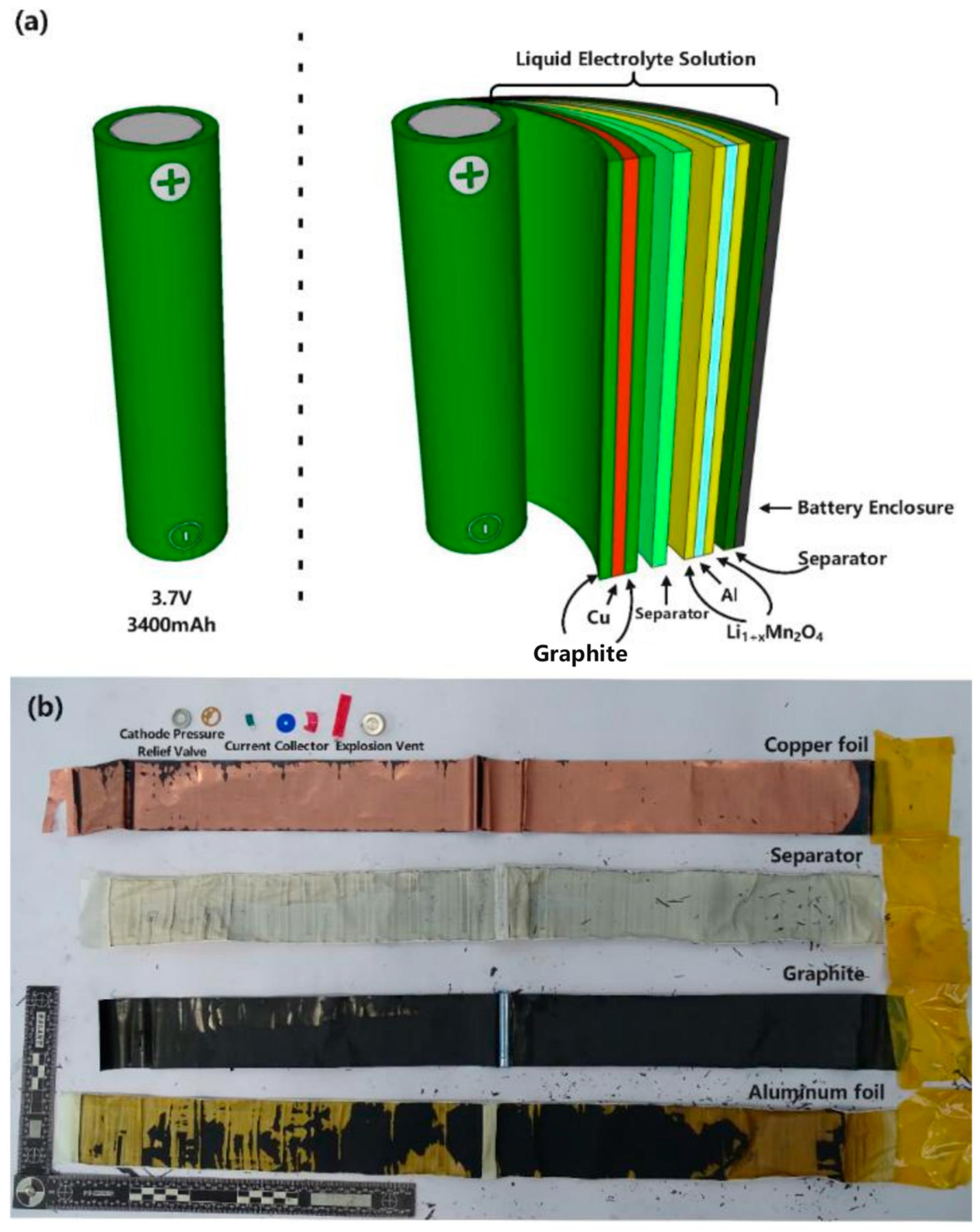
Figure 1. Diagram of dismantled battery structure: (a) battery structure schematic; (b) battery disassembly photograph.
Batteries 12 00172 g001
Figure 2. Lithium battery TR device platform.
Batteries 12 00172 g002
Figure 3. Schematic diagram of the thermocouple setup.
Batteries 12 00172 g003
Figure 4. TR process diagram of lithium battery.
Batteries 12 00172 g004
Figure 5. Temperature curves of different heating-plate settings with time: (a) positive-electrode heating; (b) negative-electrode heating; (c) battery-enclosure heating.
Batteries 12 00172 g005
Figure 6. TR temperature curves of different SOC lithium batteries with time.
Batteries 12 00172 g006
Figure 7. Temperature curves of ternary lithium battery with time under short-circuit and overcharge conditions: (a) short-circuit condition with thermocouples at negative electrode, positive electrode and battery enclosure (Case 4 in Table 4); (b) short-circuit condition with thermocouple only at battery enclosure (Case 5); (c) short-circuit condition with positive-pressure-relief vent blocked (Case 6); (d) overcharge condition with thermocouples at negative electrode, positive electrode, and battery enclosure (Case 1); (e) overcharge condition with thermocouple only at battery enclosure (Case 2); (f) overcharge condition with positive-pressure-relief vent blocked (Case 3).
Batteries 12 00172 g007
Figure 8. Comparative experiment of ternary lithium battery under overcharge and short-circuit conditions.
Batteries 12 00172 g008
Figure 9. Schematic illustration of experimental results: (a) different triggering location configurations, including corner and center locations, as well as the thermocouple arrangement; (b) temperature response of LIBs during TR propagation (TRP) at different triggering locations; (c) battery experimental arrangement schematic; (d) TR phenomena photographs.
Batteries 12 00172 g009
Figure 10. Nominal TRP sequence based on spatial proximity.
Batteries 12 00172 g010
Figure 11. Schematic diagram of experimental results: (a) triggering location configurations and thermocouple arrangement of the vertically stacked battery modules; (b) layout of the experimental battery modules; (c) temperature response of the stacked battery modules during the TR process; (d) photographs of typical TR phenomena.
Batteries 12 00172 g011
Figure 12. External trace characteristics of 18650-type ternary lithium battery cylindrical batteries; post-mortem morphological and damage traces of the TR battery: (a) extent of oxidation on the metal surface of the enclosure; (b) V-shaped smoke staining; (c) thermal oxidation traces at different positions, from left to right: enclosure, negative electrode, positive electrode; (d) extent of deformation; (e) ejection severity of negative-electrode materials; (f) explosion traces after violent TR reaction and thermal damage traces of adjacent batteries; (g) extent of lithium plating on the positive electrode.
Batteries 12 00172 g012
Figure 14. Schematic diagram of LIB voltage evolution after thermal runaway onset.
Batteries 12 00172 g014
Table 1. Relevant parameters of the experimental battery.
18650-Type Battery (NCA)
Cathode materialLi Ni0.8 Co0.15 Al0.05 O2
Anode materialC
Nominal capacity3400 mAh
Nominal voltage3.7 V
Internal impedance≤40 mΩ
Charge voltage4.20 ± 0.05 V
Discharge cut-off voltage2.5 V
Mass48.5 g
Operating temperature−20~60 °C
Table 2. The 18650-type ternary lithium battery TR hazard experimental scheme.
Battery Quantity and ConfigurationExperimental ContentExperimental Conditions
TR TriggerBattery State of Charge (SOC)Heating PositionTR Battery Location
Single Cell
(1 piece)
TR Process of LIBTR Trigger100%Negative ElectrodeSingle-Cell Body
Effect of Different Heating Positions on TR of Lithium-Ion BatteriesExternal Heat Source100%Negative Electrode, Positive Electrode, Cell Case
Effect of State of Charge on TR of Lithium-Ion BatteriesExternal Heat Source100%, 75%, 50%, 25%Negative Electrode
Effect of Electrical Abuse on TR of Lithium-Ion BatteriesExternal Heat Source, Short Circuit, Overcharge100%Negative Electrode
3 × 3 Battery Module
(9 pieces)
Effect of Different TR Initiation Positions on Heat Propagation in LIB ModulesExternal Heat Source100%Battery EnclosureMiddle Position, Edge Position
Two-Layer Stack of 3 × 3 Battery Modules
(18 pieces)
Study on the Hazard of Stacked LIB ModulesExternal Heat Source100%Battery EnclosureMiddle Position of the Bottom Layer
Table 3. The 18650-type ternary lithium battery experimental conditions with different states of charge.
Experimental CaseSOCTR TriggeredTime to Peak TemperaturePeak TemperatureObserved Phenomena
1100%Yes944 s720 °CExtremely violent reaction occurred, accompanied by the ejection of a large amount of flue gas and molten material, as well as explosion and jelly roll ejection.
275%Yes1102 s551 °CViolent reaction occurred, accompanied by the ejection of a large amount of flue gas and molten material; explosion occurred with no jelly roll ejection.
350%Yes2929 s486 °CThe reaction proceeded moderately, accompanied by a small amount of molten material ejection and explosion.
425%No3089 s206 °CDuring the experiment time, no TR occurred; no noticeable gas was observed, the positive-end pressure-relief valve was not activated.
Table 4. The 18650-type ternary lithium battery electric abuse experimental working conditions.
Experimental CaseElectrical Abuse ConditionThermocouple
Arrangement
TR
Triggered
Time to Peak
Temperature (s)
Peak
Temperature (°C)
1OverchargePositive Electrode,
Negative Electrode,
Battery Enclosure
Not Triggered30486
2OverchargeBattery EnclosureNot Triggered19278
3OverchargeBattery Enclosure
(Positive-Pressure-Relief Vent Blocked)
Not Triggered29585
4Short CircuitPositive Electrode,
Negative Electrode,
Battery Enclosure
Not Triggered100388
5Short CircuitBattery EnclosureNot Triggered591107
6Short CircuitBattery Enclosure
(Positive-Pressure-Relief Vent Blocked)
Not Triggered47894
Table 5. Voltage changes in 18650-type ternary lithium battery under different conditions.
TR-Inducing
Conditions
Condition/Voltage (V)
External Heat SourceWorking
Condition
25% SOC50% SOC75% SOC100% SOC
Initial
Voltage
3.5313.8854.0594.271
Final
Voltage
1.67000
OverchargeWorking
Condition
Normal
Condition
Normal
Condition
Positive-Pressure-Relief
Vent Blocked
 
Initial
Voltage
4.1653.9884.075 
Final
Voltage
000 
Short CircuitWorking
Condition
TR OccurredNormal Condition Positive-Pressure-Relief Vent Blocked 
Initial
Voltage
4.1653.9884.053 
Final
Voltage
0.1243.6273.452 
Disclaimer/Publisher’s Note: The statements, opinions and data contained in all publications are solely those of the individual author(s) and contributor(s) and not of MDPI and/or the editor(s). MDPI and/or the editor(s) disclaim responsibility for any injury to people or property resulting from any ideas, methods, instructions or products referred to in the content.