Review

Recent Advances in Aqueous Zinc Ion Batteries: Energy Storage Mechanisms, Challenges, and Optimization Strategies

1
School of Materials Engineering, Changzhou Vocational Institute of Industry Technology, No. 28 Mingxin Middle Road, Wujing District, Changzhou 213164, China
2
Easpring Technology (Changzhou) New Material Co., Ltd., No. 155 Jinhu Road, Jintan District, Changzhou 213200, China
3
Department of Physics and Semiconductor Science, Gachon University, Seongnam-si 13120, Gyeonggi-do, Republic of Korea
*
Authors to whom correspondence should be addressed.
Batteries 2026, 12(3), 109; https://doi.org/10.3390/batteries12030109
Submission received: 13 February 2026 / Revised: 16 March 2026 / Accepted: 19 March 2026 / Published: 23 March 2026
(This article belongs to the Special Issue Zinc-Ion Batteries: Recent Progress and Prospects)

Abstract

Aqueous zinc-ion batteries (AZIBs) are promising for large-scale grid storage due to inherent safety, low cost, environmental compatibility, high theoretical capacity (820 mAhg−1), and suitable redox potential (−0.763 V vs. SHE). However, practical deployment is hindered by coupled challenges at the zinc anode–hydrogen evolution, dendrite growth, and corrosion/passivation, which severely limit cycle life and coulombic efficiency. This review systematically summarizes key advances in AZIB research. It first elucidates working principles and four cathode energy storage mechanisms: Zn2+ insertion/extraction, H+/Zn2+ co-insertion, chemical conversion, and dissolution/deposition. Second, it examines four mainstream cathodes (manganese-based, vanadium-based, Prussian blue analogs, and organic compounds), analyzing performance bottlenecks and corresponding optimization via structural modification. Third, it explores functional mechanisms of advanced separators (polymer, inorganic/ceramic composite, MOF-based, and cellulose-based) in regulating uniform Zn2+ deposition and suppressing dendrites. Fourth, it summarizes anode optimization strategies: artificial protective layers for interface stabilization, electrolyte additives to modulate Zn2+ solvation/deposition, and 3D porous structures to reduce local current density and provide nucleation sites. Finally, key scientific challenges and future directions are discussed—multi-strategy synergy, in situ characterization, practical battery construction, and sustainable technological development, offering theoretical guidance for advancing AZIBs toward large-scale applications. This review aims to provide a comprehensive perspective spanning from materials to systems, and from mechanisms to applications. Its core objective is not merely to list the types of cathode materials, but to establish a logical bridge directly connecting “key challenges” to “optimization strategies,” with a particular emphasis on the issues and solutions related to the cathode side.

1. Introduction

Advancing energy transition and developing clean energy alongside novel energy storage technologies have become core strategic priorities for safeguarding national energy security and fostering sustainable socioeconomic development [1,2]. Among diverse energy storage pathways, battery storage is widely recognized as one of the most promising electrochemical solutions due to its core capability of efficiently reversibly converting electrical energy into chemical energy. Among these, lithium-ion batteries have dominated the global energy storage market over the past three decades due to their outstanding properties, including high energy density, long cycle life, low self-discharge rate, and absence of memory effect [3]. They are widely applied in consumer electronics, electric vehicles, and large-scale energy storage systems [4,5,6]. However, lithium-ion battery systems still face inherent challenges such as degraded performance at low temperatures, relatively high manufacturing costs, and uneven distribution of key resources. Critically, most commercial lithium-ion batteries employ organic liquid electrolytes, which exhibit poor thermal stability under high temperatures or abusive conditions. This vulnerability can trigger thermal runaway, leading to performance degradation and even safety incidents, severely limiting their application in large-scale energy storage [7,8]. Therefore, the development of novel energy storage devices combining high safety with superior electrochemical performance is urgently needed. In contrast, aqueous zinc ion batteries, with their inherent safety, low cost, and excellent environmental compatibility, are regarded as a potentially preferred system for large-scale grid energy storage. In recent years, fundamental research in aqueous batteries has achieved significant progress, offering promising key technological support for renewable energy integration and carbon neutrality goals. Among these, zinc metal is considered an ideal anode material for zinc-ion batteries due to its high theoretical specific capacity (820 mAhg−1), low standard redox potential (−0.763 V vs. SHE), and excellent electrochemical reversibility [9,10,11]. Furthermore, zinc’s abundant reserves and favorable environmental compatibility further enhance its application prospects in large-scale energy storage. Since pioneering research reports in 2012, fundamental theories and technological development for rechargeable aqueous zinc ion batteries have continuously advanced, gradually establishing them as a significant research direction in sustainable electrochemical energy storage. The basic structural components of aqueous zinc-ion batteries primarily include core elements such as the cathode, anode, separator, and electrolyte [12,13,14,15]. Research on cathode materials currently focuses on manganese-based compounds [16,17], vanadium-based compounds [18], organic electrode materials [19], and Prussian blue analogs [20]. For anodes, metallic zinc or zinc-based alloys remain the mainstream choices. Separator materials typically prioritize flexible porous substrates with excellent hydrophilicity, with glass fiber separators widely adopted due to their superior comprehensive performance [21]. As the core medium for internal charge transfer and ion transport within the battery, the composition and physicochemical properties of the electrolyte directly govern the overall electrochemical performance of aqueous zinc-ion battery devices. This is achieved by regulating key electrochemical processes such as interfacial stability, electrochemical reaction polarization, and ion migration behavior.
In summary, the unique contribution of this review is that it is not merely an introduction to the progress of cathode materials, but rather an in-depth analysis centered on the stability of the zinc anode as the core challenge, systematically elaborating on multi-dimensional solutions ranging from interfacial chemistry to electrode structure. Its purpose is to provide researchers in the field with a clear roadmap, illustrating how to advance aqueous zinc-ion batteries toward practical application through the integrated use of various optimization strategies.

2. Structural Composition and Working Principle of Aqueous Zinc-Ion Batteries

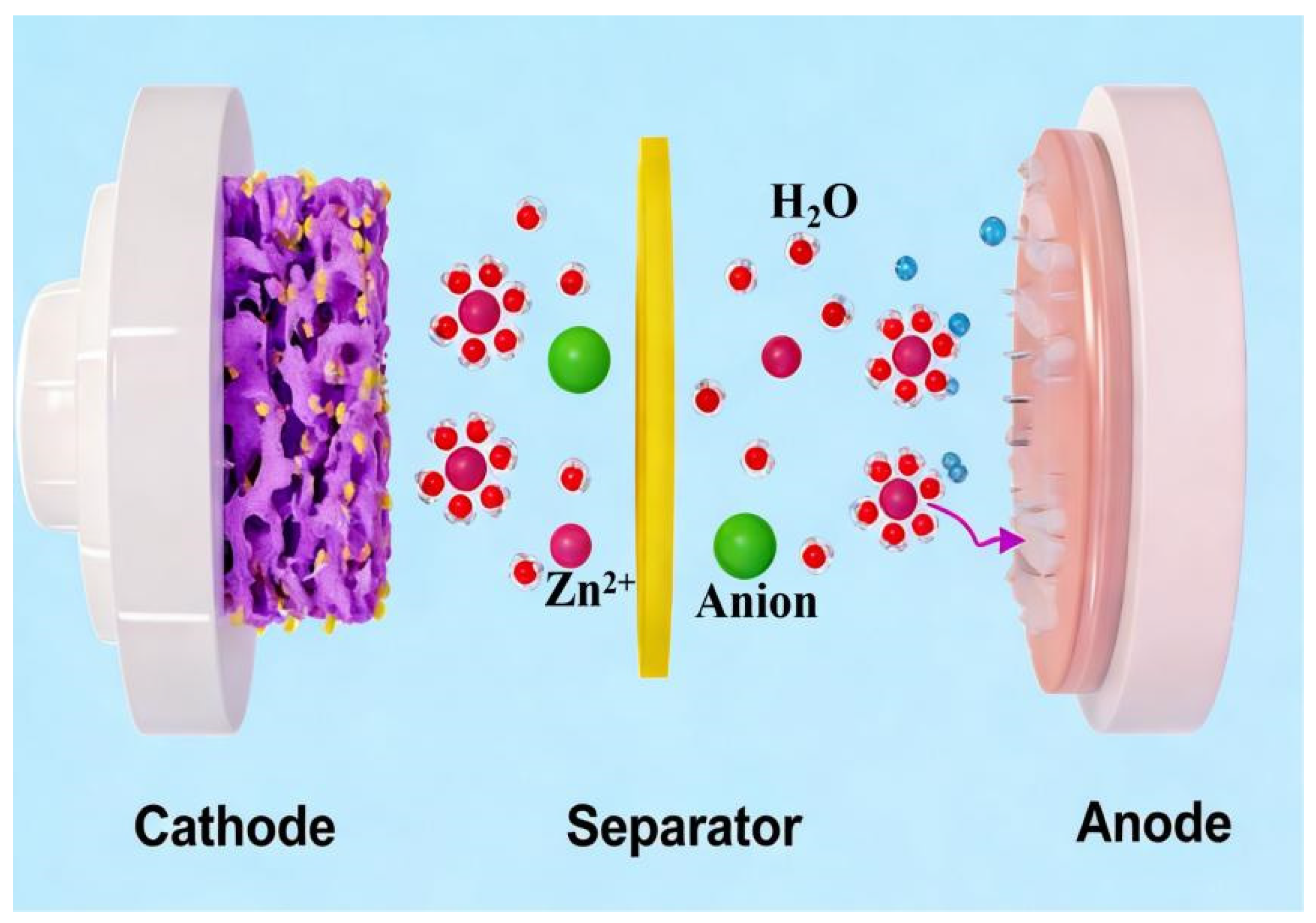
As shown in Figure 1, the fundamental structural components of aqueous zinc-ion batteries primarily include core elements such as the cathode, anode, separator, and electrolyte. Research on cathode materials currently focuses on manganese-based compounds [16,17], vanadium-based compounds [18], organic electrode materials [19], and Prussian blue analogs [20]. For anodes, metallic zinc or zinc-based alloys are the mainstream choices. Separator materials typically prioritize flexible porous substrates with excellent hydrophilicity, with glass fiber separators widely adopted due to their superior comprehensive performance [21]. As the core medium for internal charge transfer and ion transport within the battery, the composition and physicochemical properties of the electrolyte directly govern the overall electrochemical performance of aqueous zinc-ion battery devices by regulating key electrochemical processes such as interfacial stability, electrochemical reaction polarization, and ion migration behavior.
Rechargeable AZIBs operate on principles similar to those of lithium-ion batteries, primarily involving the migration of Zn2+ ions between the positive and negative electrodes within the cell and electron transfer through an external circuit, facilitating the conversion between electrical energy and chemical energy. The reported energy storage mechanisms of aqueous zinc ion batteries (AZIBs) can be primarily categorized into four types, including Zn2+ insertion/extraction, H+/Zn2+ co-insertion, chemical conversion, and dissolution/deposition mechanisms [22,23,24,25,26].
Among these, the Zn2+ insertion/extraction mechanism follows the core operating principle of rocking-chair batteries, specifically manifested as the reversible intercalation and deintercalation of Zn2+ within the lattice channels of layered cathode materials (such as MnO2, V2O5, and NaxV2O5nH2O) [27,28,29]. The H+/Zn2+ co-insertion mechanism specifically refers to the synergistic intercalation or deintercalation of H+ and Zn2+ into/from cathode materials (vanadium oxides and Prussian blue analogs) during charge/discharge cycles. Leveraging H+ superior rapid diffusion kinetics, this mechanism effectively enhances the battery’s rate performance [30]. The chemical conversion reaction mechanism primarily applies to cathode material systems like CuI, CuS, and halides [31]. These materials undergo reversible redox reactions with Zn2+, accompanied by significant chemical bond breaking and restructuring processes, thereby exhibiting high theoretical specific capacity.
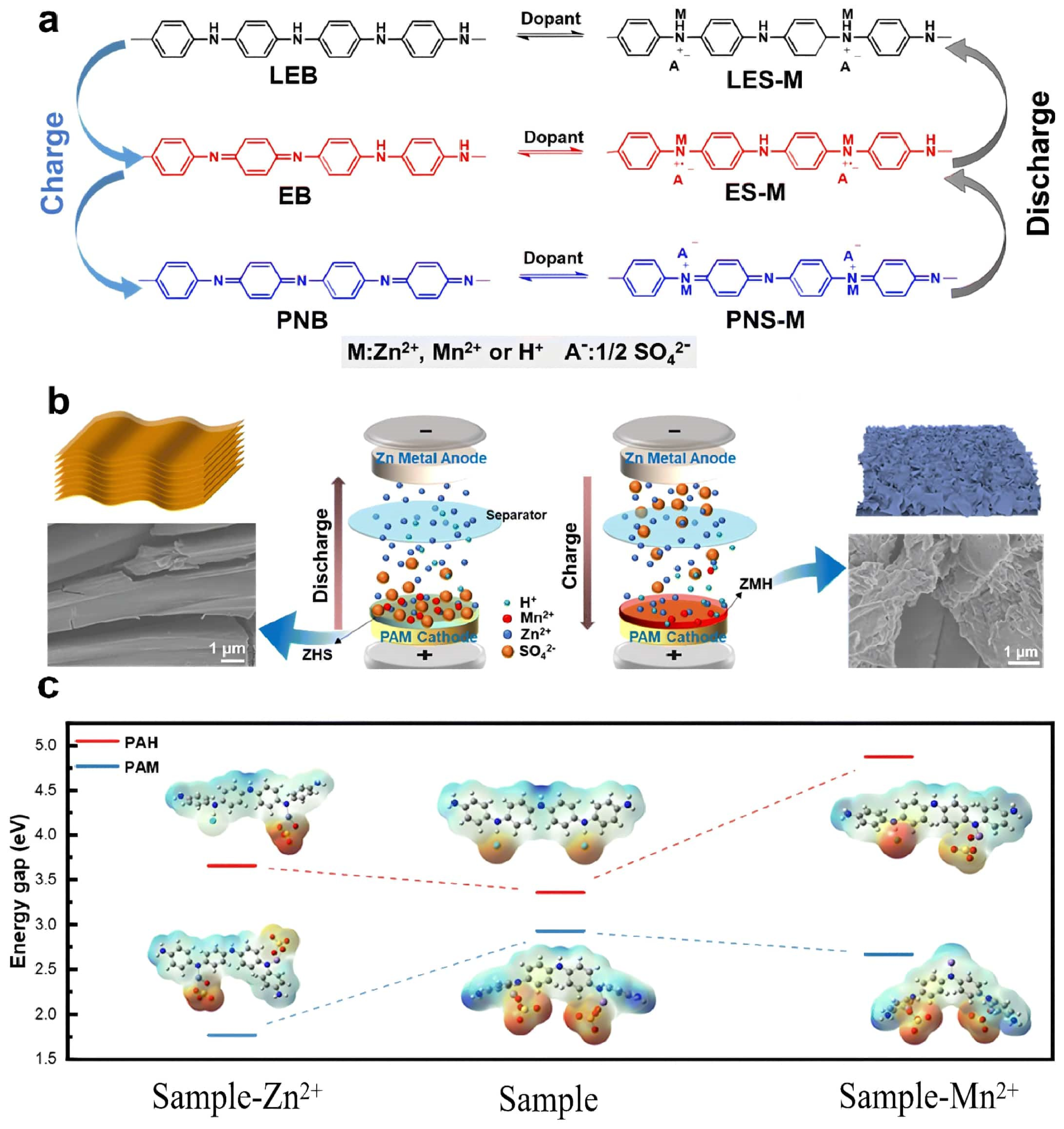
The dissolution/deposition mechanism refers to the solid–liquid phase transition process where part of the cathode active material (e.g., the I/I2 redox couple) dissolves into the electrolyte during charge–discharge cycles and subsequently redeposits on the electrode surface [32,33]. It should be noted that the aforementioned energy storage mechanisms may exist independently or synergistically in different types of AZIBs cathode materials, collectively governing the battery’s overall electrochemical performance. Gong et al. [34] developed Mn2+-doped polyaniline (PANI) cathode materials by leveraging the highly reversible doping characteristics of the conjugated framework combined with the unique dissolution-deposition behavior of Mn in ZnSO4 electrolyte. Density functional theory (DFT) calculations and non-in situ characterization techniques conclusively confirmed that the energy storage mechanism in this system is dissolution/deposition (Figure 2).
In AZIBs, the contributions of individual components to overall degradation are markedly unequal, with the zinc anode emerging as the primary bottleneck. Its coupled issues include dendrite growth, hydrogen evolution, and surface corrosion, directly inducing rapid capacity fading and catastrophic failure, such as internal short-circuiting, and these self-amplifying processes position the anode at the center of the degradation cascade. Cathode degradation, including manganese dissolution and structural collapse, is significant yet more manageable through established materials engineering strategies like doping or morphological control, typically resulting in gradual capacity loss rather than abrupt failure. The electrolyte of decomposition enables hydrogen evolution and pH fluctuations that exacerbate cathode dissolution and the solvation structure of Zn2+. In contrast, the separator contributes passively unless its physical integrity is compromised by dendrite penetration. Consequently, a quantitative assessment of criticality identifies the zinc anode as the most urgent target for stabilization, thereby justifying the field’s concentrated focus on anode protection strategies as the most impactful pathway to enhancing battery lifespan and safety.

3. Positive Electrode Materials for Aqueous Zinc-Ion Batteries

As the core component of aqueous zinc-ion batteries (AZIBs), cathode materials play a pivotal role in determining critical performance metrics such as specific capacity, cycle life, energy density, electrical conductivity, and structural stability. Despite significant progress, several practical challenges remain unresolved. Firstly, in aqueous electrolytes, Zn2+ ions tend to undergo solvation, forming [Zn(H2O)6]2+ complexes, which impede the rate of zinc insertion and extraction in the electrode material. Secondly, phase transitions of the cathode during charge–discharge cycles induce volumetric strain and structural collapse, adversely affecting cycling durability. Additionally, poor electronic conductivity and strong electrostatic interactions between the cathode and Zn2+ ions further hinder electrochemical performance. Thus, researchers predominantly focus on several categories of cathode materials, including manganese-based compounds, vanadium-based compounds, Prussian blue analogs (PBAs), and organic molecules for advancing high-performance AZIBs.

3.1. Manganese-Based Positive Electrode Materials

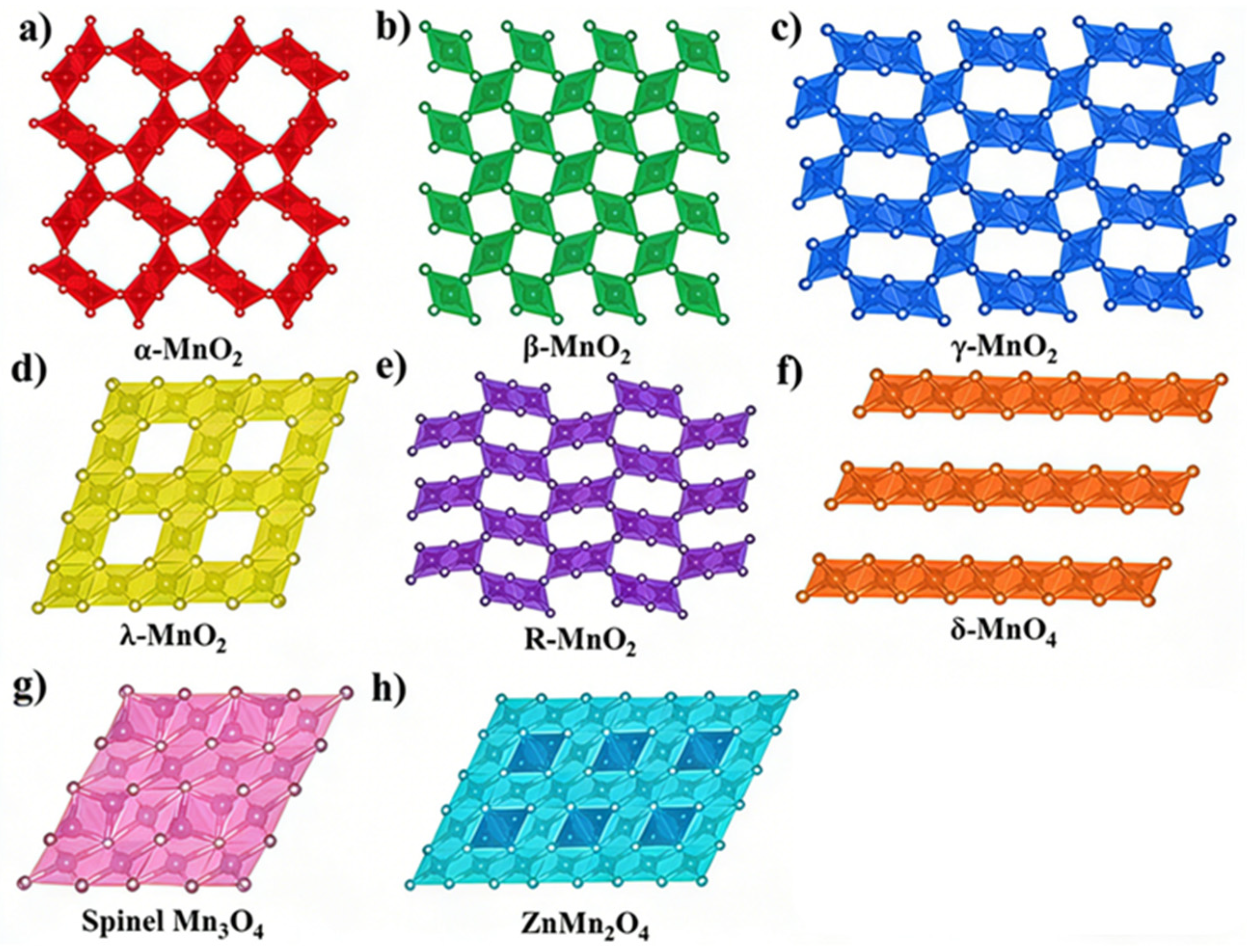
Manganese, as one of the most plentiful metal elements in the Earth’s crust, exhibits notable advantages including abundant reserves, low cost, and eco-friendliness. Its oxide systems display a diverse range of polymorphic structures, primarily including tunnel-structured α-MnO2, β-MnO2, γ-MnO2, λ-MnO2, R-MnO2, layered δ-MnO2, spinel-structured Mn3O4, and ZnMn2O4 (Figure 3). Manganese-based materials are of particular interest due to their high operating voltages and specific capacities, which play a key role in improving the energy density and the coulombic efficiency of batteries. Furthermore, their stable crystalline frameworks endow these materials with excellent high-temperature tolerance, enabling them to maintain robust energy storage capabilities even near their decomposition temperatures [35].
Among Mn-based cathode materials commonly used in AZIBs, different crystalline phases of MnO2 exhibit unique electrochemical properties due to structural variations: α-MnO2 features a [2 × 2] tunnel structure (pore size ~4.6 Å), facilitating H+/Zn2+ insertion. It is simple to prepare, offers high energy density, and is environmentally friendly, making it widely adopted as the cathode in AZIBs, but exhibits insufficient tunnel framework stability during deep cycling [35]. β-MnO2 features a rutile-type tetragonal structure ([1 × 1] tunnel) with abundant channels, facilitating ion and proton storage/migration. γ-MnO2 possesses a composite [1 × 1] and [1 × 2] tunnel structure, accommodating Zn2+ insertion/extraction. R-MnO2 exhibits a [2 × 1] tunnel structure, where its unique configuration synergizes with manganese’s slow dissolution to enhance battery cycling stability. δ-MnO2 features a layered structure (interlayer spacing ~0.7 nm) with abundant active sites, but its two-dimensional structure is prone to collapse, resulting in suboptimal discharge capacity at high current densities. To address limitations of δ-MnO2, Mohamad et al. [36] developed a stable Ni-doped Ni-δ-MnO2 composite. This enhancement increased crystallinity, expanded lattice spacing, and improved conductivity. Electrochemical testing demonstrated a maximum specific capacity of 350 mAhg−1 at a current density of 50 mAg−1.

3.2. Vanadium-Based Positive Electrode Materials

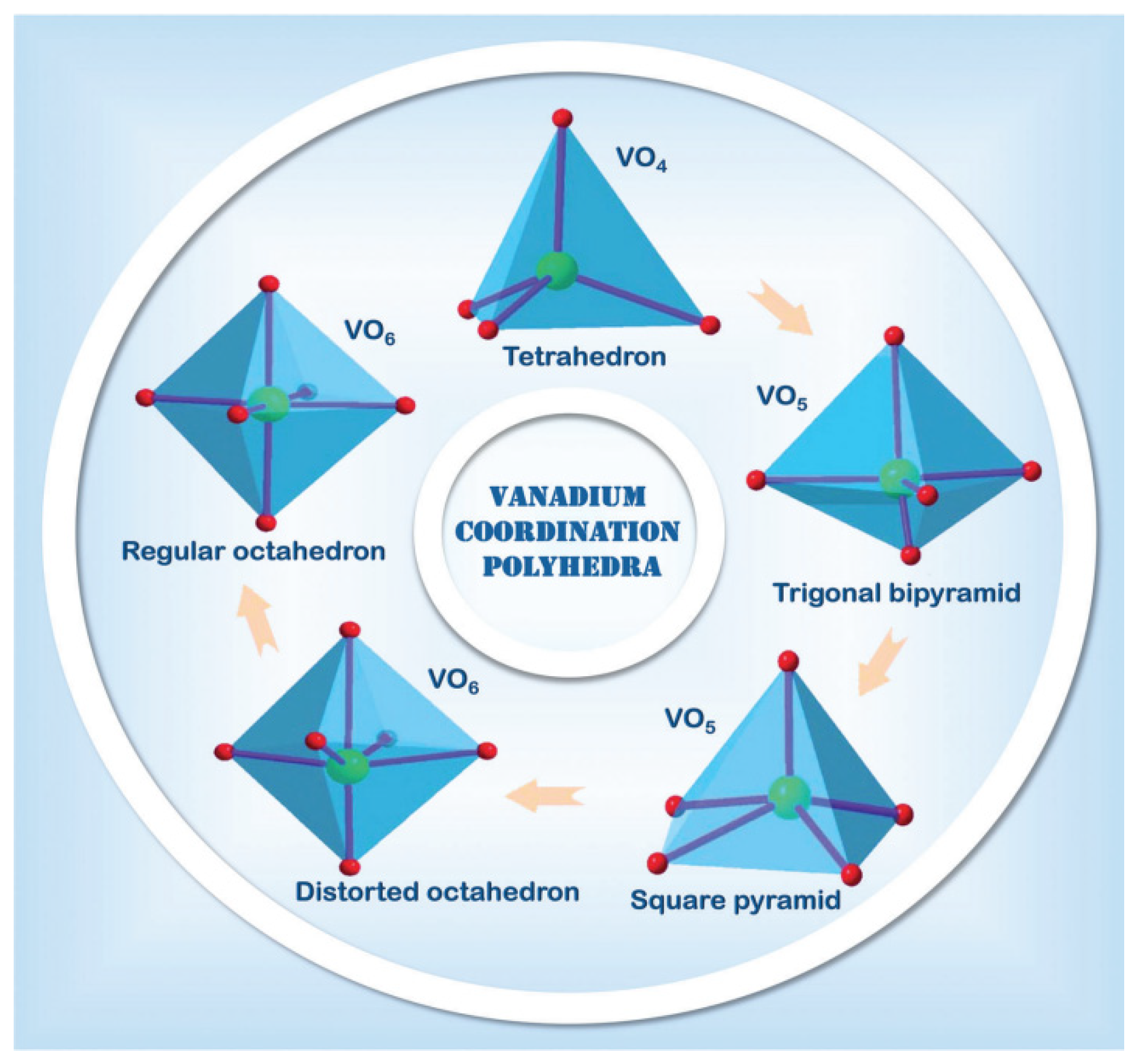
Various vanadium-based oxides have been investigated as common cathode materials for AZIBs due to their multivalency (reversible conversion between V3+/V4+/V5+), high theoretical specific capacity, and low raw material costs. The structural diversity of vanadium oxides arises from the assembly of fundamental V-O coordination polyhedra, wherein vanadium exhibits multiple coordination geometries, ranging from tetrahedral through square pyramidal and trigonal bipyramidal to both distorted and regular octahedral arrangements (Figure 4) [37]. However, these materials generally suffer from bottlenecks such as low conductivity (~10−2–10−3 Scm−1) and insufficient structural stability, resulting in a significant gap between their actual electrochemical performance and theoretical values. For instance, an ideal VO2(B)-based cathode must balance structural stability, rapid interfacial charge transfer, and ion transport rates. To address this, Li et al. [38] synthesized VO2/rGO composites that exhibit high electrical conductivity and an enlarged interlayer spacing upon initial charging to 1.6 V, contributing to enhanced Zn2+ storage performance. The as-assembled zinc-ion battery demonstrates an expanded electrochemical window of 1.6 V, delivering a specific capacity of 329.9 mAhg−1 at 0.1 Ag−1, along with excellent cycling stability, retaining 84% of its initial capacity after 1000 cycles.
Moreover, the interlayer bonding in V2O5 relies solely on van der Waals forces, making it susceptible to structural and compositional distortions during Zn2+ insertion/extraction, leading to induced aggregation and stacking of nanosheets, resulting in capacity and cycling performance degradation [39,40]. Researchers have proposed modification strategies to solve these issues, including pre-intercalation of metal ions/water molecules and composite material synthesis. Zhang et al. [41] prepared self-supporting α-Ca-V2O5 by introducing Ca2+. Its abundant active sites, fast charge transport pathways, low intercalation energy, and excellent structural stability endow the material with superior Zn2+ storage performance.
While Mn-based cathodes offer higher operating voltage and lower cost, vanadium-based systems generally exhibit superior rate capability and cycling stability due to their more open frameworks. However, vanadium-based materials face greater challenges in electronic conductivity and structural water sensitivity. This comparative analysis clarifies that the choice between these systems involves inherent trade-offs: Mn-based cathodes prioritize voltage and cost, whereas V-based cathodes favor capacity and longevity, particularly after modification strategies.

3.3. Prussian Blue Analogues Positive Electrode Materials

Prussian blue and its analogs have been considered as one of the most promising cathode materials for the AZIBs, owing to their high operating potential, three-dimensional structural stability, and facile synthesis methods. These Prussian blue analogues are open-framework materials composed of transition metal (such as Fe, Mn, Co, Ni) ions coordinated with cyanide ligands (CN), generally represented by the formula AxM1[M2(CN)6]·nH2O (where A is an alkali metal ion and M represents transition metals) [42,43]. The presence of multiple redox couples (V3+/V4+, V4+/V5+, Fe2+/Fe3+) imparts higher specific capacities and broader operative voltage windows to the nanoscale structures of these cathodes. However, the intrinsic solubility of V-based materials in aqueous environments and their diverse morphological manifestations pose significant challenges to electrochemical stability during testing. To address these issues, innovative synthesis strategies are required to enhance crystallinity and enable nanoscale modulation of the material architecture.

3.4. Organic Positive Electrode Materials

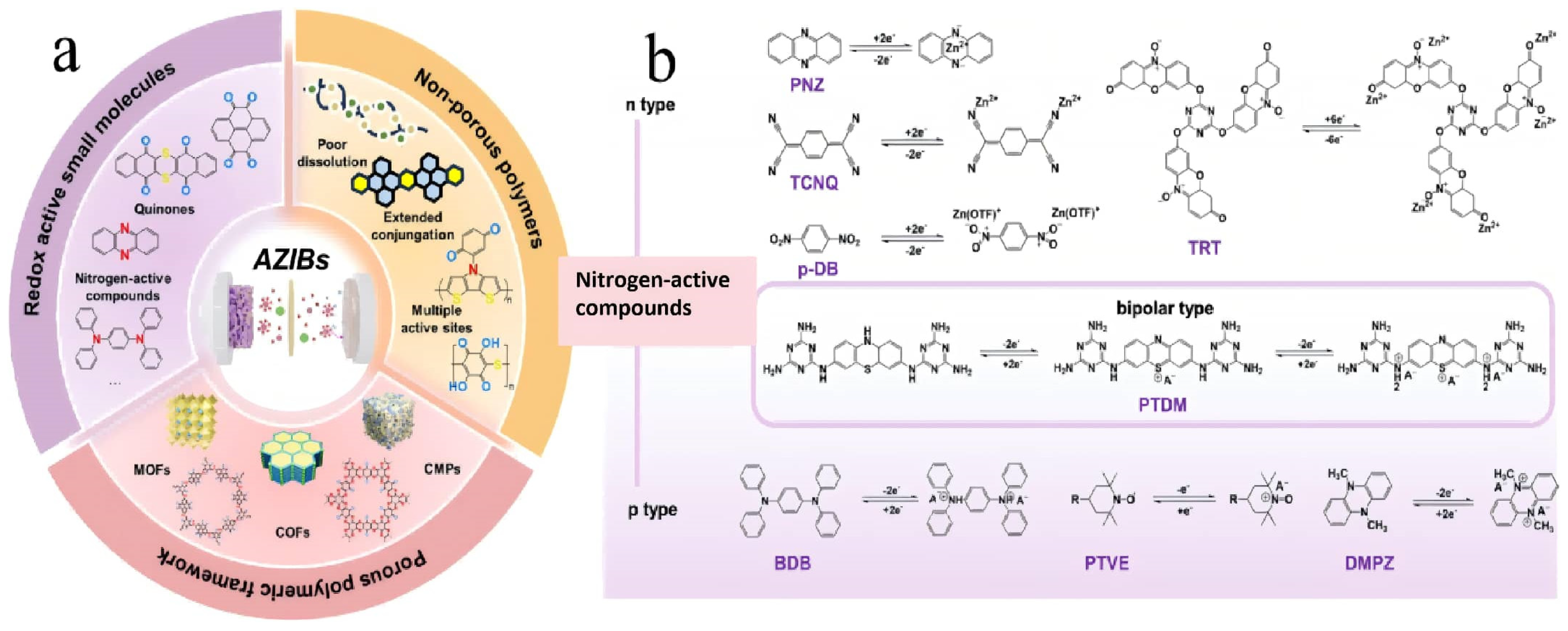
Organic cathode materials primarily encompass organic small molecules and polymeric materials. They benefit from key features, including high theoretical specific capacity, molecular structural stability, and excellent environmental compatibility, which have attracted significant attention in the field of AZIBs. Among these, organic small-molecule electrode materials can be categorized into n-type and p-type (n-type materials initiate with reduction reactions, while p-type materials preferentially undergo oxidation reactions) (Figure 5) [44]. Notably, quinone compounds have emerged as a research hotspot due to their high theoretical specific capacity, excellent chemical stability, and low raw material costs. The carbonyl functional group in their molecules undergoes electron-accepting reduction during discharge, forming coordination bonds with Zn2+ or H+. However, most small-molecule quinones are prone to dissolution in the electrolyte during charge–discharge cycles, leading to rapid capacity decay. Polymerizing small-molecule quinones into quinone polymers effectively suppresses active material dissolution, thereby enhancing battery cycling stability. For instance, Li et al. [45] significantly enhanced the electrochemical performance of 2,5-dimethoxy-1,4-benzoquinone (DMBQ) in aqueous zinc-organic batteries (AZOBs) by controlling the charge distribution symmetry at the active center of this organic small-molecule cathode material. The electrochemical performance of the polar meta-DMBQ (m-DMBQ) electrode with asymmetric charge distribution markedly outperformed its nonpolar isomer, achieving a reversible specific capacity of 312 mAhg−1 and a discharge voltage as high as 0.88 V, whereas top-performing MnO2 and V2O5 cathodes achieve 320–350 mAhg−1 at higher voltages (1.0–1.3 V) [36,38]. However, organic cathodes suffer from rapid capacity decay (>30% loss within 500 cycles) due to dissolution, while engineered Mn/V cathodes retain >80% capacity over 2000 cycles. Compared to organic small-molecule materials, conductive polymers (such as polypyrrole (PPy)) have also garnered extensive attention as novel cathode materials. Studies indicate that polypyrrole exhibits distinct energy storage mechanisms in different electrolyte systems: it follows a contraction-tension mechanism in ionic liquid electrolytes, whereas a phase transition process occurs in aqueous electrolytes. This distinction in energy storage mechanisms offers a viable approach to enhancing the cycling stability of Zn/PPy batteries by regulating electrode and electrolyte compositions [46].
Unlike inorganic materials (Mn/V-based) that rely on metal redox reactions within rigid crystal frameworks, organic cathodes operate via flexible coordination mechanisms, offering higher theoretical capacities and structural stability. However, their practical viability is constrained by severe solubility in aqueous electrolytes due to higher dissolution rates without stabilization strategies. Furthermore, scalability prospects remain uncertain due to complex synthesis routes and low tap densities, limiting volumetric energy density. This comparative analysis clarifies that while organics promise sustainability and design flexibility, resolving solubility through polymerization or electrolyte engineering is still a more fundamental challenge than in inorganic systems (Table 1).

4. Separator Materials for AZIBs

As the core component of aqueous zinc-ion batteries, membrane materials are critical for guiding uniform Zn2+ deposition and suppressing dendrite growth. While traditional glass fiber membranes are commonly used owing to their physical separation properties, including large pore sizes and weak mechanical strength, they lack active modulation capabilities. Consequently, advanced materials have been extensively developed to achieve enhanced performance. Polymer-based membranes, such as modified Celgard, construct uniform nanochannels and incorporate negatively charged functional groups to homogenize ionic flux and increase ion transference efficiency [51]. Inorganic/ceramic composite membranes, such as those coated with ZnO, leverage their high mechanical strength to physically prevent dendrite piercing and utilize surface zinc affinity to promote uniform zinc nucleation [21]. Metal-organic framework (MOF) membranes, exemplified by ZIF-8, represent cutting-edge directions; their sub-nanometer ordered pores enable high-speed Zn2+ sieving and selective transport, suppressing ion aggregation at the molecular level [52]. Additionally, cellulose-based membranes, such as bacterial cellulose, rely on their three-dimensional nano-network and abundant hydrophilic groups to effectively homogenize the electric field and regulate ion solvation structures [53]. These materials employ synergistic mechanisms, including physical blocking, ion flux regulation, and interface engineering, to maintain the stability of the anode interface, thereby significantly enhancing the cycling lifespan and safety of the batteries.

5. Key Challenges Facing Aqueous Zinc-Ion Batteries

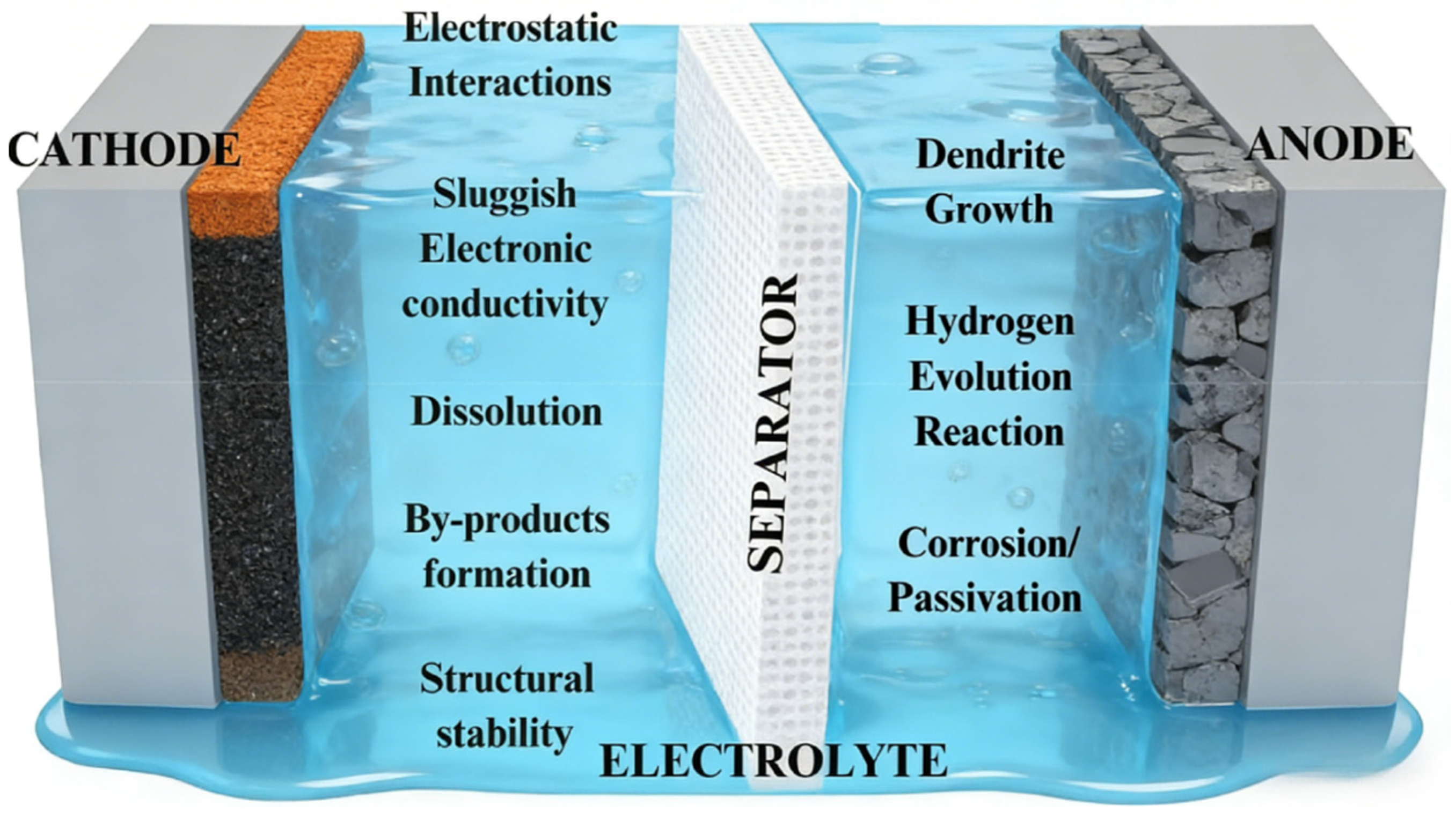
The primary technological challenges faced by aqueous zinc-ion batteries in practical applications are depicted in Figure 6, predominantly involving intertwined and synergistic phenomena such as hydrogen evolution reaction (HER), dendrite growth, electrode corrosion, and passivation. These factors not only impose independent limitations on battery performance but also accelerate overall system degradation through complex interactions [27,54]. Hydrogen evolution leads to electrolyte consumption and fluctuations in interfacial pH, thereby promoting uneven zinc dissolution and deposition on the anode, which in turn induces dendritic growth capable of puncturing the separator. The porous structure of zinc dendrites increases active surface area, further exacerbating corrosion and the irreversible accumulation of parasitic reaction products. Surface passivation layers exhibit heterogeneous distribution, which locally intensifies the vicious cycle of HER and dendrite proliferation. Dynamic coupling among electrolyte decomposition, zinc dissolution and plating (including the formation of hydroxides), and the aforementioned issues collectively result in reduced Coulombic efficiency, shortened cycle life, and heightened safety risks. These challenges constitute critical barriers impeding the commercial viability of aqueous zinc-ion batteries.

5.1. Hydrogen Evolution Reaction

Hydrogen evolution reaction (HER) in aqueous zinc-ion batteries is a critical factor influencing their electrochemical performance and cycling stability. As the primary parasitic reaction on the zinc anode surface, HER involves the reduction of water molecules in the electrolyte during charge–discharge cycles, owing to the zinc standard electrode potential of −0.76 V versus SHE, which is significantly more negative than the water reduction potential of 0 V versus SHE. This process not only consumes electrolyte components, leading to an increase in pH, but also promotes zinc corrosion, passivation layer formation, and dendritic growth. These phenomena not only drastically reduce the coulombic efficiency and shorten the cycle life but also introduce potential safety hazards, particularly battery swelling.

5.2. Growth of Zinc Dendrites

Dendrite growth on zinc anodes is one of the core bottlenecks hindering the commercialization of AZIBs. During long-term charge–discharge cycles, needle-like or dendritic structures readily form on the zinc anode surface. These not only increase electrode roughness and destabilize the interface but can also penetrate the separator, causing internal short circuits of battery and safety issues. Dendrite formation and evolution are coupled and regulated by factors including zinc deposition kinetics, electrolyte formulation, and the state of the electrode/electrolyte interface, directly impacting the battery’s cycling stability and safety. Fundamentally, dendrites originate from uneven zinc deposition during charging, Zn2+ migrates to the negative electrode and reduces to metallic zinc. However, influenced by the electrode surface morphology and uneven charge distribution, Zn2+ tends to preferentially deposit at active sites, forming microscopic protrusions. In subsequent cycles, these protrusions generate a localized enhanced electric field effect, accelerating the directional deposition of Zn2+ and ultimately leading to dendrite formation.

5.3. Corrosion and Passivation of Zinc Electrode

Corrosion and passivation of zinc metal anodes represent critical bottlenecks limiting the cycle life and safety performance of AZIBs. The highly chemically active aqueous electrolyte readily undergoes interfacial side reactions with the zinc electrode, forming non-conductive passivation layers that impede ion transport, increase interfacial impedance, and degrade battery performance. Thermodynamically, zinc is unstable across the entire pH range, inevitably undergoing electrochemical corrosion in near-neutral or weakly acidic aqueous electrolytes. During charge–discharge cycles, the dissolution-deposition process of the zinc anode involves OH reacting with Zn to form Zn (OH)2, which further transforms into a ZnO passivation layer, impeding electrode reactions [55]. Furthermore, localized pH fluctuations, hydrogen evolution reaction (HER), dissolved oxygen in the electrolyte, and acidic environments accelerate corrosion. Uneven current distribution across the electrode surface leads to heterogeneous passivation layer growth, further exacerbating performance degradation.

6. Optimization Strategy for Zinc Negative Electrode

To achieve the goals of good cycle life, high energy/power density, and high coulombic efficiency in AZIBs, researchers have developed various strategies to enhance the stability of zinc anodes. Among these, strategies for suppressing zinc dendrites at the anode interface have significantly advanced the development of rechargeable AZIBs. Zinc dendrite suppression mechanisms primarily fall into five categories: homogenizing the interfacial electric field, increasing nucleation sites, limiting ion diffusion, constructing electrostatic shielding layers, and regulating zinc deposition crystallography. Corrosion suppression methods include building hydrophobic/water-blocking interfacial layers, controlling the hydrogen evolution potential of metallic zinc, and adding corrosion-resistant additives. Overall, these strategies predominantly focus on interface engineering, encompassing the formation of in situ/ex situ protective layers (organic polymers, inorganic nanomaterials, and organic/inorganic composites [56]) and the addition of surfactants to electrolytes to regulate Zn2+ deposition behavior at the interface [57]. Additionally, constructing 3D conductive substrates (e.g., carbon-based substrates) can optimize anode performance by homogenizing electric field distribution, improving electron conduction uniformity, and promoting uniform Zn2+ deposition [58].

6.1. Interface Modification

Functional interface layer modification is one of the core strategies for enhancing the stability of zinc anodes in aqueous zinc-ion batteries (AZIBs). Its fundamental principle involves constructing a stable, dense, functionalized artificial protective layer on the zinc metal surface, which blocks the electrode from contacting the electrolyte, significantly suppressing interfacial side reactions such as water-induced corrosion, passivation, and hydrogen evolution reaction. Currently, the construction of artificial protective layers primarily focuses on three major systems: inorganic materials, organic polymers, and organic-inorganic composites. Among these, inorganic protective layers (such as ZnO and SiO2) demonstrate unique advantages in guiding uniform Zn deposition and suppressing dendrite penetration due to their high mechanical strength, excellent conductivity, and chemical stability. Significant research progress has recently been achieved through precise control of their microstructure and surface chemistry [59,60]. Artificial interface protective layers constructed from organic polymers and their derivative framework materials represent a key technological pathway for enhancing the stability of zinc anodes. Compared to inorganic coatings, polymeric materials such as polyvinylidene fluoride (PVDF), chitosan, and covalent organic frameworks (COFs) can form highly adhesive, elastic functionalized protective layers on zinc metal surfaces because of their precisely tunable molecular structures, abundant polar functional groups, and excellent mechanical flexibility [61]. Theoretical and experimental studies confirm that such polymer coatings synergistically suppress zinc dendrite nucleation and growth by providing continuous mechanical constraint through their porous frameworks and facilitating rapid, uniform ion transport pathways [62].
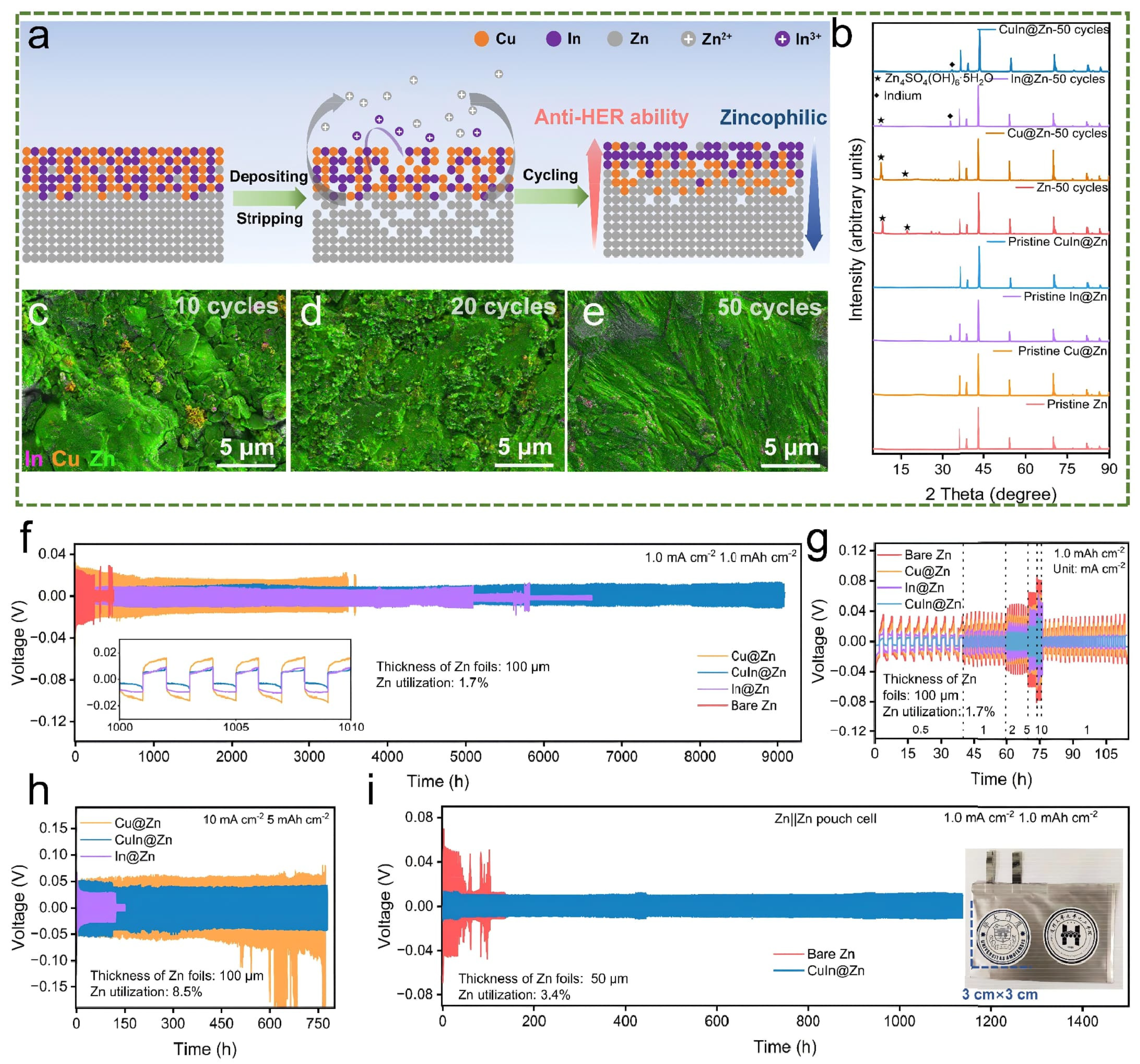
Lan et al. [63] designed and synthesized crystalline polymer materials such as anhydride-functionalized PI-DPCOF and PI-DT-COF. The zinc-affinity anhydride groups incorporated in these materials reduce the zinc nucleation barrier. This structure effectively organizes and accelerates Zn2+ interfacial migration while homogenizing the interfacial electric field distribution and lowering local current density. Additionally, metal-based protective layers constructed through alloying strategies exhibit distinct advantages. Metals such as indium (In) and tin (Sn) can form dense, robust alloy layers in situ on the negative electrode surface through spontaneous electrochemical displacement reactions with zinc. Taking the indium layer as an example, its equilibrium potential of −0.338 V vs. the standard hydrogen electrode confers excellent chemical inertness, while its high hydrogen evolution overpotential (~1.5 V) effectively suppresses hydrogen evolution reactions. Simultaneously, indium’s high adsorption energy for zinc atoms makes it an ideal nucleation site, guiding the lateral two-dimensional growth of zinc. Zhang et al. [47] further proposed a three-dimensional copper-indium alloy heterointerface (CuIn@Zn) design. This synergistically leverages copper’s high zinc affinity and conductivity (lowering nucleation barriers) with indium’s alloying effect (enhancing hydrogen evolution suppression activity), achieving coordinated optimization of dendrite inhibition and corrosion mitigation. Crucially, this alloy interface dynamically self-reconfigures during cycling, forming a surface-to-bulk gradient zinc-affinity/hydrophobic structure that enables functional self-optimization. Based on this structure, the CuIn@Zn symmetric cell achieves exceptionally long cycle life at 1 mAcm−2 and 1 mAhcm−2 (Figure 7).

6.2. Electrolyte Additives

In aqueous zinc-ion battery systems, introducing electrolyte additives represents a cost-effective and process-friendly method to improve the cycling properties of zinc anodes via multidimensional regulation of the electrode/electrolyte interface to achieve uniform Zn2+ deposition. The mechanism involves four aspects: First, solvation structure modulation through competitive coordination or hydrogen-bond reconfiguration, reducing water activity and suppressing HER. Second, polar organic additives strongly adsorb onto the zinc anode surface, forming a dynamic non-conductive interfacial layer to inhibit Zn surface diffusion and direct uniform nucleation. Third, certain additives construct electrostatic shielding layers, optimizing the interfacial electric field distribution to suppress dendrite growth. Fourth, forming stable interfacial films via in situ reactions, further enhancing interface stability. Currently, common electrolyte additives are primarily categorized into inorganic/organic metal salts, organic solvents, and so on.

6.2.1. Salts Additives

Salt additives represent a core strategy for regulating the properties of aqueous zinc-ion battery electrolytes. Their rich ionic diversity and chemically tunable structures enable multiscale precision control over zinc deposition processes. By introducing functionalized cations and anions, these additives reconfigure the solvation structure of Zn2+, modify the physicochemical properties at the electrode/electrolyte interface, and regulate deposition kinetics. This synergistically suppresses side reactions such as zinc dendrite growth, hydrogen evolution, and corrosion.
Inorganic Salts Additives
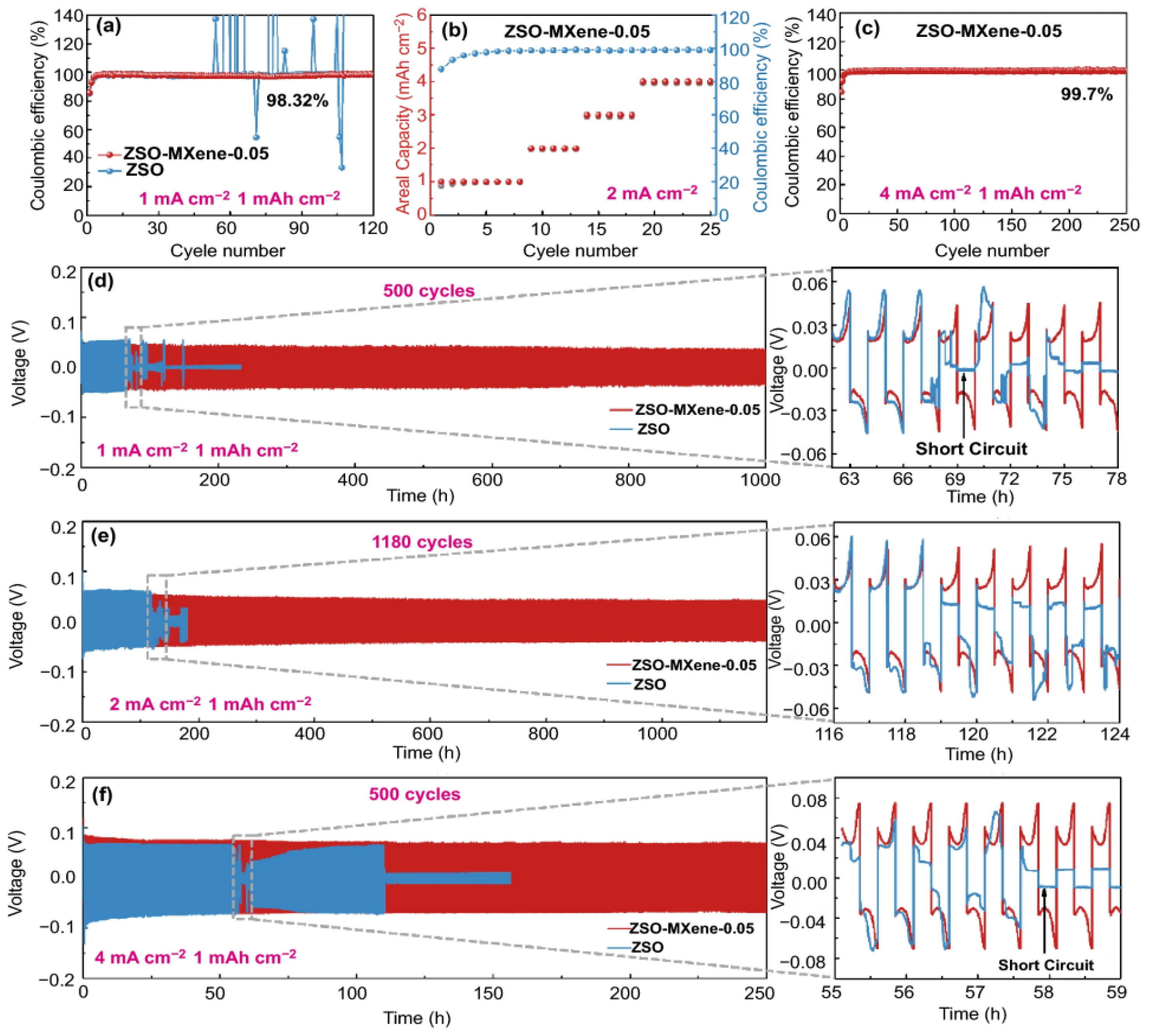
Inorganic salt additives represent a core strategy for precisely regulating the zinc anode interface in aqueous zinc-ion batteries. Their fundamental value lies in leveraging the charge number, ionic radius, standard reduction potential, and interaction characteristics of metal cations with solvents, anions, and electrode surfaces. electrode surfaces. This enables thermodynamically and kinetically multidimensional reconstruction of the electrode/electrolyte interface environment, systematically regulating zinc deposition behavior while synergistically suppressing side reactions such as dendrite growth, hydrogen evolution, and corrosion. The mechanism of action for these additives exhibits multi-pathway synergistic characteristics, primarily manifested through electrostatic shielding/induction effects and the in situ formation of solid electrolyte interphase (SEI). Typically, researchers use inorganic salt additives Ti3C2Tx MXene to prepare the uniform Zn deposition. MXene additives can not only help the formation of robust SEI film, but also reduce the Zn2+ concentration gradient during ion transportation at the electrode/electrolyte interface, realizing superior coulombic efficiency (99.7%) [48] (Figure 8). For comparison, In3+ additives could inhibit dendrites through the electrostatic shielding effect. Due to its lower reduction potential than Zn2+, the adsorption of In3+ shielding layer forces Zn2+ to deposit in the recessed areas [50]. Furthermore, the cost of In salt is significantly lower than that of MXene.
Organic Salts Additives
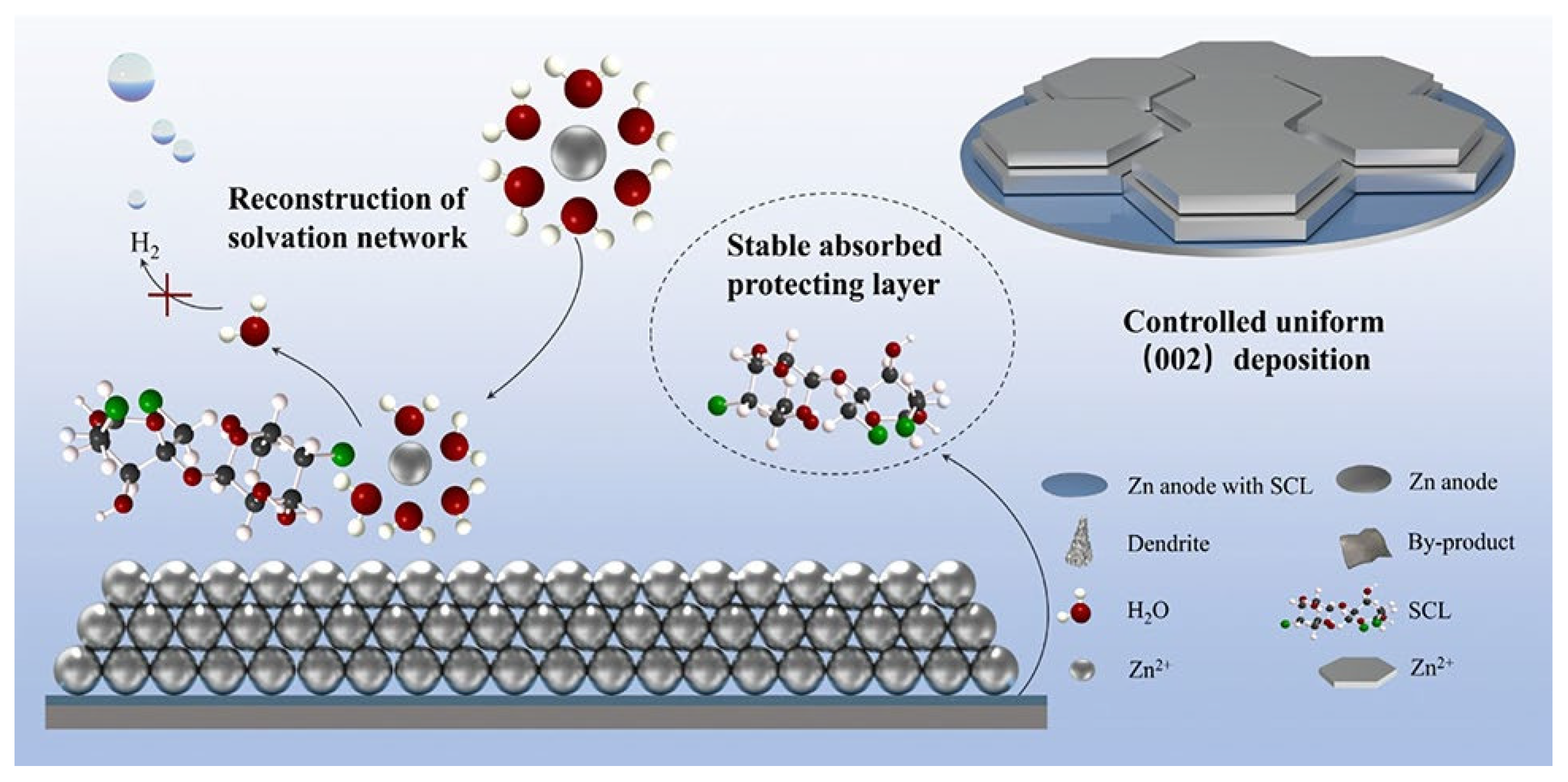
Organometallic salt additives represent a key strategy for regulating the performance of AZIBs. Their core advantages and application potential stem from the high designability of organic anion molecular structures. By precisely designing and controlling the anion framework and functional groups (such as -SO3, -COO, -OH, -CHO, etc.) [64], the physicochemical properties of additives can be controlled at the molecular level. This enables them to exert profound synergistic engineering effects on the electrolyte liquid phase microenvironment and the electrode/electrolyte interface through multiple noncovalent interactions (coordination, hydrogen bonding, and electrostatic forces) and van der Waals forces, systematically addressing critical issues such as zinc anode dendrite growth, corrosion, and hydrogen evolution [65,66]. In a representative study, researchers introduced sucralose (SCL) as an organic salt additive to adjust the Zn2+ nucleation and diffusion along different crystal facets. Moreover, substituting SCL into the [Zn(H2O)6]2+ also restricts HER because of stable solvation structure (SCL/Zn(OTF)2), resulting in better capacity (311 mAhg−1 over 580 cycles) than using the pure Zn(OTF)2 electrolyte after cycling [49] (Figure 9). Moreover, the high capacity retention of ~98.2% demonstrate excellent long-term durability compared to additive-free systems (<70% retention under equivalent conditions). The stable cycling confirms that SCL effectively maintains electrode integrity through sustained (002)-texture regulation and solvation control over extended operation.
Organic Solvent Additives
In the additive systems for the AZIBs electrolytes, organic solvent additives have emerged as a key research focus for optimizing electrolyte performance due to their high safety, low cost, and significant modification effects. These additives are predominantly small-molecule hydrocarbon derivatives, encompassing various types such as alcohols, ethers, amines, and zwitterions [65,66,67]. Their core design objectives focus on suppressing zinc dendrite growth and mitigating interfacial side reactions. Alcohol compounds serve as a representative example. The hydroxyl (-OH) functional group in their molecules has dual regulatory effects: on one hand, it coordinates with Zn2+ to reconfigure the solvation structure, lowering the ion migration energy barrier and enhancing Zn2+ bulk mass transfer efficiency; on the other hand, it forms hydrogen bond networks with water molecules, optimizing the electrode/electrolyte interface microenvironment and effectively suppressing side hydrogen evolution reactions. Through modeling studies of polyhydroxy additives, Sun et al. [68] reconfigured the Zn2+ solvation shell through multi-site coordination to reduce coordinating water molecules and suppress side reactions. When adsorbed at the zinc anode interface, they dynamically transform into extended linear conformations, enabling multi-site parallel adsorption. This not only accelerates Zn2+ desolvation kinetics but also induces preferential zinc deposition along the (002) crystal plane to form ordered coatings. The Zn//Zn symmetric cell exhibits a long cycle life of 7000 h, while the Zn//polyaniline pouch cell maintains nearly capacity retention of 100% after 500 cycles.
These additives systematically enhance the electrochemical reversibility and long-cycle stability of zinc anodes via multiple pathways to provide critical technological support for developing high-performance and low-cost aqueous zinc-based energy storage devices (Table 2).

6.3. Optimizing the Structure of the Electrode

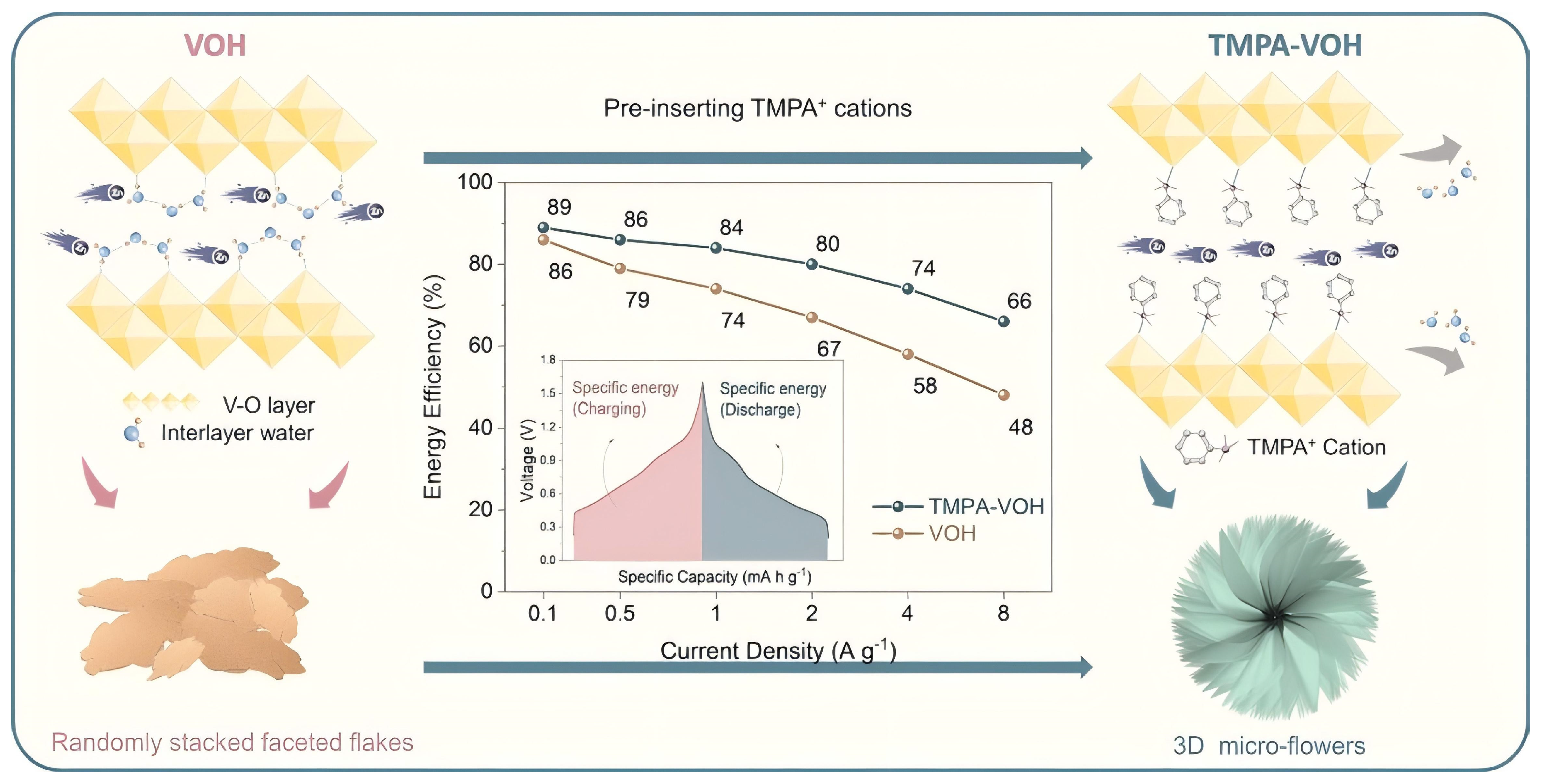
Optimizing the structure of the electrode is one of the core strategies for enhancing the performance of AZIBs. Constructing three-dimensional (3D) structured zinc anodes can enhance the specific surface area of the electrode. The structural advantages consist of three points: (1) providing abundant nucleation sites, promoting uniform zinc deposition; (2) regulating the electric field distribution on the electrode surface, avoiding the issue of excessively high local current density; (3) reducing the actual operating current density at the same apparent current, suppressing zinc dendrite nucleation and growth. Compared to traditional two-dimensional planar electrodes, three-dimensional porous or grid-like zinc anodes effectively guide uniform zinc ion deposition, significantly improving battery cycling stability. Researchers prepared a novel 3D microflowers TMPA+-modified vanadium oxide as a positive electrode in AZIBs. These modifications of TMPA+ diminish the electrostatic interactions between Zn2+ and the V-O lattice, enhancing cycling stability with a capacity retention of 87% because of a more stable structure [69] (Figure 10).
Overall, interface modification offers robust protection but adds processing steps and non-active mass, slightly reducing energy density. Electrolyte additives are simple and cost-effective but require precise concentration control and may introduce side reactions. 3D structured anodes effectively lower local current density but involve complex fabrication and increase electrode thickness, potentially compromising volumetric energy density. This comparison clarifies that optimal strategy selection involves inherent trade-offs between implementation complexity and performance gains (Table 1).

7. Summary and Outlook

This paper systematically reviews the key components, working mechanisms, and core challenges currently faced by aqueous zinc-ion batteries (AZIBs). It focuses on the latest research progress in multiple aspects, including cathode materials and anode interface optimization strategies. The review elaborates on various mechanisms such as Zn2+ intercalation, H+/Zn2+ co-insertion, chemical conversion reactions, and dissolution-deposition, emphasizing the coexistence and synergy of these different mechanisms within electrode materials. A key analysis is provided on the structural characteristics, performance bottlenecks, and modification strategies of manganese-based, vanadium-based, Prussian blue analogs, and organic cathode materials. Furthermore, the study systematically summarizes the research progress in multi-path synergistic enhancement of anode stability, spanning interface modification, electrolyte additives (including inorganic salts, organic salts, and organic solvents), and electrode structure optimization.
However, limitations and future technological progress directions are implied or not deeply explored within this article. For example: (1) there is still a lack of a unified theoretical framework regarding the dominance, synergy, and evolution of these mechanisms in different material systems; (2) it lacks a horizontal comparison of the effectiveness of different strategies and a systematic analysis of their synergistic mechanisms; (3) the interaction mechanisms between the separator and the electrode interface are unclear, and there is a lack of systematic interfacial regulation strategies; (4) the dynamic evolution processes of adsorption behavior, solvation structure regulation, and SEI formation are not yet clear.
Future research should transition from material innovation to system integration, from mechanism analysis to intelligent control, and from performance optimization to green sustainability, propelling AZIBs from the laboratory towards practical applications, mainly including five points: (1) develop responsive interface materials to achieve dynamic regulation of Zn2+ deposition behavior and construct self-healing SEI layers to improve long-term cycling stability; (2) combine DFT calculations, molecular dynamics simulations, and machine learning to conduct high-throughput screening of cathode materials and additives with high stability, high conductivity, and low solubility; (3) strengthen in situ characterization and modeling analysis of failure mechanisms under real operating conditions; (4) strengthen the investigation of multi-mechanism coexistence and synergy, such as the synergistic regulation of H+/Zn2+ co-insertion and conversion reactions, to enhance energy density and rate performance; (5) explore green synthesis and recycling pathways for electrode materials to achieve full life-cycle sustainability.
Moreover, to achieve an optimal balance among efficiency, cost, and scalability in future AZIBs, priority should be given to the development of modified Mn-based oxide cathodes. Such cathodes feature abundant and low-cost raw materials and good compatibility with conventional lithium-ion battery manufacturing lines. Doping engineering, carbon hybridization, and surface coating can effectively suppress metal dissolution and structural degradation. When paired with cost-effective sulfate-based electrolytes and low-cost functional additives, the Zn2+ solvation structure can be modulated to mitigate side reactions and improve Coulombic efficiency. For the Zn anode, crystal-plane engineering and 3D current collectors are adopted to homogenize Zn deposition and suppress dendrite growth. Meanwhile, high-loading thick electrodes and electrode densification strategies are essential for enhancing volumetric energy density. This integrated route delivers superior cycling stability, low fabrication cost, and strong scalability, representing the most industrially promising direction in the near future. Organic and vanadium-based systems can be regarded as mid- to long-term alternatives, awaiting further advances in addressing solubility issues and reducing synthetic costs.
The objective is to provide systematic theoretical support and feasible technological pathways for the development of high-performance, long-life, and low-cost AZIBs.

Author Contributions

Writing—original draft preparation, D.Z.; writing—review and editing, C.L.; supervision, T.C. and M.L.; project administration, T.C. and M.L. All authors have read and agreed to the published version of the manuscript.

Funding

This research was funded by the Qinglan Project of Jiangsu Province, Changzhou Sci@Tech Program (No. CJ20241056), and Doctoral Fund Project of Changzhou Vocational Institute of Industry Technology.

Data Availability Statement

No new data were created or analyzed in this study. Data sharing is not applicable to this article.

Conflicts of Interest

Author Changwei Liu was employed by the company Easpring Technology (Changzhou) New Material Co., Ltd. The remaining authors declare that the research was conducted in the absence of any commercial or financial relationships that could be construed as a potential conflict of interest.

References

  1. Liu, Z.; Deng, Z.; He, G.; Wang, H.; Zhang, X.; Lin, J.; Qi, Y.; Liang, X. Challenges and opportunities for carbon neutrality in China. Nat. Rev. Earth Environ. 2022, 3, 141–155. [Google Scholar] [CrossRef]
  2. Kohse-Höinghaus, K. Combustion, chemistry, and carbon neutrality. Chem. Rev. 2023, 123, 5139–5219. [Google Scholar] [CrossRef]
  3. He, M.; Sun, Y.; Han, B. Green carbon science: Efficient carbon resource processing, utilization, and recycling towards carbon neutrality. Angew. Chem. 2022, 134, e202112835. [Google Scholar] [CrossRef]
  4. Xu, X.; Han, X.; Lu, L.; Wang, F.; Yang, M.; Liu, X.; Wu, Y.; Tang, S.; Hou, Y.; Hou, J.; et al. Challenges and opportunities toward long-life lithium-ion batteries. J. Power Sources 2024, 603, 234445. [Google Scholar]
  5. Zhang, C.; Chou, S.; Guo, Z.; Dou, S.X. Beyond lithiumion batteries. Adv. Funct. Mater. 2024, 34, 2308001. [Google Scholar] [CrossRef]
  6. Zheng, Y.; Che, Y.; Hu, X.; Sui, X.; Stroe, D.I.; Teodorescu, R. Thermal state monitoring of lithium-ion batteries: Progress, challenges, and opportunities. Prog. Energy Combust. Sci. 2024, 100, 101120. [Google Scholar]
  7. Jin, Y.; Zhao, Z.; Miao, S.; Wang, Q.; Sun, L.; Lu, H. Explosion hazards study of grid-scale lithium-ion battery energy storage station. J. Energy Storage 2021, 42, 102987. [Google Scholar]
  8. Shan, T.; Zhu, X.; Wang, Z. Understanding the boundary and mechanism of gas-induced explosion for lithium-ion cells: Experimental and theoretical analysis. J. Energy Chem. 2023, 86, 546–558. [Google Scholar]
  9. Zhang, X.; Hu, J.P.; Fu, N.; Zhou, W.B.; Liu, B.; Deng, Q.; Wu, X.W. Comprehensive review on zinc-ion battery anode: Challenges and strategies. InfoMat 2022, 4, e12306. [Google Scholar] [CrossRef]
  10. Bai, Y.; Qin, Y.; Hao, J.; Zhang, H.; Li, C.M. Advances and perspectives of ion-intercalated vanadium oxide cathodes for high-performance aqueous zinc ion battery. Adv. Funct. Mater. 2024, 34, 2310393. [Google Scholar]
  11. Gourley, S.W.; Brown, R.; Adams, B.D.; Higgins, D. Zinc-ion batteries for stationary energy storage. Joule 2023, 7, 1415–1436. [Google Scholar] [CrossRef]
  12. Xu, H.; Yang, W.; Li, M.; Liu, H.; Gong, S.; Zhao, F.; Li, C.; Qi, J.; Wang, H.; Peng, W.; et al. Advances in aqueous zinc ion batteries based on conversion mechanism: Challenges, strategies, and prospects. Small 2024, 20, 2310972. [Google Scholar] [CrossRef]
  13. Liu, S.; Zhang, R.; Wang, C.; Mao, J.; Chao, D.; Zhang, C.; Zhang, S.; Guo, Z. Zinc ion Batteries: Bridging the Gap from Academia to Industry for Grid-Scale Energy Storage. Angew. Chem. 2024, 136, e202400045. [Google Scholar]
  14. Nie, C.; Wang, G.; Wang, D.; Wang, M.; Gao, X.; Bai, Z.; Wang, N.; Yang, J.; Xing, Z.; Dou, S. Recent progress on Zn anodes for advanced aqueous zinc-ion batteries. Adv. Energy Mater. 2023, 13, 2300606. [Google Scholar] [CrossRef]
  15. Zhang, Y.; Zheng, X.; Wang, N.; Lai, W.H.; Liu, Y.; Chou, S.L.; Liu, H.K.; Dou, S.X.; Wang, Y.X. Anode optimization strategies for aqueous zinc-ion batteries. Chem. Sci. 2022, 13, 14246–14263. [Google Scholar] [CrossRef]
  16. Zhang, N.; Ji, Y.R.; Wang, J.C.; Wang, P.F.; Zhu, Y.R.; Yi, T.F. Understanding of the charge storage mechanism of MnO2-based aqueous zinc-ion batteries: Reaction processes and regulation strategies. J. Energy Chem. 2023, 82, 423–463. [Google Scholar] [CrossRef]
  17. Ma, Q.; Chen, J.; Chen, Y.; Li, Y.; Wu, Q.; Sun, B.; Guo, B.; Yuan, Y.; Liao, W.; Wang, S.; et al. A review of energy storage mechanisms, modification strategies, and commercialization prospects of manganese dioxide cathodes in zinc-ion batteries. J. Energy Storage 2025, 132, 117869. [Google Scholar] [CrossRef]
  18. Guo, C.; Yi, S.; Si, R.; Xi, B.; An, X.; Liu, J.; Li, J.; Xiong, S. Advances on defect engineering of vanadium-based compounds for high-energy aqueous zinc–ion batteries. Adv. Energy Mater. 2022, 12, 2202039. [Google Scholar] [CrossRef]
  19. Cui, H.; Ma, L.; Huang, Z.; Chen, Z.; Zhi, C. Organic materials-based cathode for zinc ion battery. SmartMat 2022, 3, 565–581. [Google Scholar] [CrossRef]
  20. Liu, J.; Shen, Z.; Lu, C.Z. Research progress of Prussian blue and its analogues for cathodes of aqueous zinc ion batteries. J. Mater. Chem. A 2024, 12, 2647–2672. [Google Scholar] [CrossRef]
  21. Zong, Y.; He, H.; Wang, Y.; Wu, M.; Ren, X.; Bai, Z.; Wang, N.; Ning, X.; Dou, S.X. Functionalized separator strategies toward advanced aqueous zinc-ion batteries. Adv. Energy Mater. 2023, 13, 2300403. [Google Scholar] [CrossRef]
  22. Cui, X.; Zhang, Y.; Zhang, J.; Xie, E.; Fu, J. Insight on the Energy Storage Mechanism and Kinetic Dynamic of Manganese Oxide-Based Aqueous Zinc-Ion Batteries. Adv. Mater. Technol. 2023, 8, 2300321. [Google Scholar] [CrossRef]
  23. Shang, Z.; Wang, S.; Zhang, H.; Zhang, W.; Lu, S.; Lu, K. Advances in the regulation of kinetics of cathodic H+/Zn2+ interfacial transport in aqueous Zn/MnO2 electrochemistry. Nanoscale 2022, 14, 14433–14454. [Google Scholar] [CrossRef]
  24. Ding, J.; Gao, H.; Ji, D.; Zhao, K.; Wang, S.; Cheng, F. Vanadium-based cathodes for aqueous zinc-ion batteries: From crystal structures, diffusion channels to storage mechanisms. J. Mater. Chem. A 2021, 9, 5258–5275. [Google Scholar] [CrossRef]
  25. Mallick, S.; Raj, C.R. Aqueous rechargeable Zn-ion batteries: Strategies for improving the energy storage performance. ChemSusChem 2021, 14, 1987–2022. [Google Scholar] [CrossRef] [PubMed]
  26. Yuan, Y.; Wu, S.; Song, X.; Lee, J.Y.; Kang, B. Recent progress and regulation strategies of layered materials as cathode of aqueous zinc-ion batteries. Energy Environ. Mater. 2024, 7, e12632. [Google Scholar] [CrossRef]
  27. Franco, M.E.; Medina, R.A.; De Juan-Corpuz, L.M.; Corpuz, R.D. Advancements, challenges, and applications of rechargeable zinc-ion batteries: A comprehensive review. J. Chin. Chem. Soc. 2024, 71, 140–154. [Google Scholar] [CrossRef]
  28. Guo, A.; Wang, Z.; Chen, L.; Liu, W.; Zhang, K.; Cao, L.; Liang, B.; Luo, D. A comprehensive review of the mechanism and modification strategies of V2O5 cathodes for aqueous zinc-ion batteries. ACS Nano 2024, 18, 27261–27286. [Google Scholar] [CrossRef]
  29. Chen, X.; Chen, J.; Wan, Z.; Hu, Y.; Duan, D.; Zhao, Y.; He, Q. Sodium vanadates for metal-ion batteries: Recent advances and perspectives. Small 2025, 21, 2406458. [Google Scholar] [CrossRef]
  30. Deng, Y.; Zhang, B.; Fan, X.; Qiu, Y.; Lin, Y.; Chen, J.; Zhang, J.; Chen, Z.; Liu, Z.; Wang, Q.; et al. Visualizing the H/Zn co-intercalation and the Zn intercalation mechanisms in cathode to boost zinc-ion battery performance. Energy Storage Mater. 2025, 80, 104445. [Google Scholar] [CrossRef]
  31. Zhang, J.; Lei, Q.; Ren, Z.; Zhu, X.; Li, J.; Li, Z.; Liu, S.; Ding, Y.; Jiang, Z.; Li, J.; et al. A superlattice-stabilized layered CuS anode for high-performance aqueous zinc-ion batteries. ACS Nano 2021, 15, 17748–17756. [Google Scholar] [CrossRef]
  32. Fu, Y.; Li, J.; Wu, M.; Ba, J.; Zhang, J.; Zhao, Y.; Wei, Y.; Zhao, K.; Wang, Y. Selective Masking of Active Sites in Zinc Metal via Galvanic Replacement Reaction for Highly Reversible Ah-Level Zinc-I2 Batteries. Angew. Chem. 2025, 137, e202500731. [Google Scholar] [CrossRef]
  33. Li, Z.; Wu, X.; Yu, X.; Zhou, S.; Qiao, Y.; Zhou, H.; Sun, S.G. Long-life aqueous Zn-I2 battery enabled by a low-cost multifunctional zeolite membrane separator. Nano Lett. 2022, 22, 2538–2546. [Google Scholar] [CrossRef]
  34. Gong, S.; Zhu, M.; Zhou, Y.; Li, R.; Zhang, J.; Jia, X.; Chao, D.; Wang, C. An interactive dual energy storage mechanism boosts high-performance aqueous zinc-ion batteries. Chem. Sci. 2024, 15, 19870–19885. [Google Scholar] [CrossRef]
  35. Xiong, T.; Zhang, Y.; Lee, W.S.V.; Xue, J. Defect Engineering in Manganese-Based Oxides for Aqueous Rechargeable Zinc-Ion Batteries: A Review. Adv. Energy Mater. 2021, 10, 2001769. [Google Scholar] [CrossRef]
  36. Afiefudin, M.; Setiawan, A.R.; Rohman, F.; Suendo, V.; Prayogi, A. Impact of Ni on the structure and electrochemical behavior of δ-MnO2 cathodes in zinc ion batteries. Curr. Appl. Phys. 2025, 72, 18–27. [Google Scholar] [CrossRef]
  37. Lv, T.; Peng, Y.; Zhang, G.; Jiang, S.; Yang, Z.; Yang, S.; Pang, H. How about vanadium-based compounds as cathode materials for aqueous zinc ion batteries? Adv. Sci. 2023, 10, 2206907. [Google Scholar] [CrossRef]
  38. Li, Y.; Wang, J.; Tian, Z.; Lai, F.; Liu, T.; He, G. Phase Transformation of VO2/rGO composites as high-voltage cathodes in zinc-ion. Batter. Supercaps 2023, 6, e202200509. [Google Scholar] [CrossRef]
  39. Geng, H.; Cheng, M.; Wang, B.; Yang, Y.; Zhang, Y.; Li, C.C. Electronic structure regulation of layered vanadium oxide via interlayer doping strategy toward superior high-rate and low-temperature zinc-ion batteries. Adv. Funct. Mater. 2020, 30, 1907684. [Google Scholar] [CrossRef]
  40. Gao, X.; Liu, X.; Mariani, A.; Elia, G.A.; Lechner, M.; Streb, C.; Passerini, S. Alkoxy-functionalized ionic liquid electrolytes: Understanding ionic coordination of calcium ion speciation for the rational design of calcium electrolytes. Energy Environ. Sci. 2020, 13, 2559–2569. [Google Scholar] [CrossRef]
  41. Guo, J.; He, B.; Gong, W.; Xu, S.; Xue, P.; Li, C.; Sun, Y.; Wang, C.; Wei, L.; Zhang, Q.; et al. Emerging amorphous to crystalline conversion chemistry in Ca-doped VO2 cathodes for high-capacity and long-term wearable aqueous zinc-ion batteries. Adv. Mater. 2024, 36, 2303906. [Google Scholar] [CrossRef]
  42. Li, Y.; Zhao, J.; Hu, Q.; Hao, T.; Cao, H.; Huang, X.; Liu, Y.; Zhang, Y.; Lin, D.; Tang, Y.; et al. Prussian blue analogs cathodes for aqueous zinc ion batteries. Mater. Today Energy 2022, 29, 101095. [Google Scholar] [CrossRef]
  43. Zampardi, G.; La Mantia, F. Prussian blue analogues as aqueous Zn-ion batteries electrodes: Current challenges and future perspectives. Curr. Opin. Electrochem. 2020, 21, 84–92. [Google Scholar] [CrossRef]
  44. Li, D.; Guo, Y.; Zhang, C.; Chen, X.; Zhang, W.; Mei, S.; Yao, C.-J. Unveiling Organic Electrode Materials in Aqueous Zinc–Ion Batteries: From Structural Design to Electrochemical Performance. Nano-Micro Lett. 2024, 16, 194. [Google Scholar] [CrossRef]
  45. Li, C.; Hu, L.; Ren, X.; Lin, L.; Zhan, C.; Weng, Q.; Sun, X.; Yu, X. Asymmetric charge distribution of active centers in small molecule quinone cathode boosts high-energy and high-rate aqueous zinc-organic batteries. Adv. Funct. Mater. 2024, 34, 2313241. [Google Scholar] [CrossRef]
  46. Wu, K.; Huang, J.; Yi, J.; Liu, X.; Liu, Y.; Wang, Y.; Zhang, J.; Xia, Y. Recent advances in polymer electrolytes for zinc ion batteries: Mechanisms, properties, and perspectives. Adv. Energy Mater. 2020, 10, 1903977. [Google Scholar] [CrossRef]
  47. Zhang, M.; Sun, C.; Chen, G.; Kang, Y.; Lv, Z.; Yang, J.; Li, S.; Lin, P.; Tang, R.; Wen, Z.; et al. Synergetic bifunctional Cu-In alloy interface enables Ah-level Zn metal pouch cells. Nat. Commun. 2024, 15, 9455. [Google Scholar] [CrossRef]
  48. Sun, C.; Wu, C.P.; Gu, X.X.; Wang, C.; Wang, Q.H. Interface engineering via Ti3C2Tx MXene electrolyte additive toward dendrite-free zinc deposition. Nano-Micro Lett. 2021, 13, 89. [Google Scholar] [CrossRef]
  49. Tao, F.Y.; Ren, Y.K.; Mo, L.; Wang, Y.F.; Huang, Y.; Zhang, H.; Shi, C.W.; Li, Z.Q.; Liu, J.Q.; Chen, L.; et al. Exposing Zn(002) texture with sucralose additive for stable and dendrite free aqueous zinc-ion batteries. Nano-Micro Lett. 2026, 18, 107. [Google Scholar] [CrossRef]
  50. Zhai, C.; Zhao, D.; He, Y.; Huang, H.; Chen, B.; Wang, X.; Guo, Z. Electrolyte additive strategies for suppression of zinc dendrites in aqueous zinc-ion batteries. Batteries 2022, 8, 153. [Google Scholar] [CrossRef]
  51. Niu, B.; Wang, J.; Guo, Y.; Li, Z.; Yuan, C.; Ju, A.; Wang, X. Polymers for aqueous zinc-ion batteries: From fundamental to applications across core components. Adv. Energy Mater. 2024, 14, 2303967. [Google Scholar] [CrossRef]
  52. Chen, M.; Fu, W.; Hou, C.; Zhu, Y.; Meng, F. Recent Functionalized Strategies of Metal-Organic Frameworks for Anode Protection of Aqueous Zinc-Ion Battery. Small 2024, 20, 2403724. [Google Scholar] [CrossRef]
  53. Zhou, W.; Chen, M.; Tian, Q.; Chen, J.; Xu, X.; Wong, C.P. Cotton-derived cellulose film as a dendrite-inhibiting separator to stabilize the zinc metal anode of aqueous zinc ion batteries. Energy Storage Mater. 2022, 44, 57–65. [Google Scholar] [CrossRef]
  54. Xie, C.; Li, Y.; Wang, Q.; Sun, D.; Tang, Y.; Wang, H. Issues and solutions toward zinc anode in aqueous zinc-ion batteries: A mini review. Carbon Energy 2020, 2, 540–560. [Google Scholar] [CrossRef]
  55. Liu, R.; Hong, F.; Dai, Q.; Xing, Y.; Li, H.; Hu, S.; Tang, B.; Han, C.; Nan, D. Insight into the corrosion microcell and passivation mechanisms of a Zn anode for aqueous zinc-ion batteries. Energy Environ. Sci. 2025, 18, 5998–6008. [Google Scholar] [CrossRef]
  56. Farooq, A.; Zhao, R.; Han, X.; Yang, J.; Hu, Z.; Wu, C.; Bai, Y. Towards Superior Aqueous Zinc-Ion Batteries: The Insights of Artificial Protective Interfaces. ChemSusChem 2024, 17, e202301942. [Google Scholar] [CrossRef] [PubMed]
  57. Cao, J.; Zhao, F.; Guan, W.; Yang, X.; Zhao, Q.; Gao, L.; Ren, X.; Wu, G.; Liu, A. Additives for Aqueous Zinc-Ion Batteries: Recent Progress, Mechanism Analysis, and Future Perspectives. Small 2024, 20, 2400221. [Google Scholar] [CrossRef]
  58. Guo, N.; Huo, W.; Dong, X.; Sun, Z.; Lu, Y.; Wu, X.; Dai, L.; Wang, L.; Lin, H.; Liu, H.; et al. A review on 3D zinc anodes for zinc ion batteries. Small Methods 2022, 6, 2200597. [Google Scholar] [CrossRef] [PubMed]
  59. Jiang, Z.; Yin, K.; Pan, R.; Zhang, G.; Cui, F.; Luo, K.; Xiong, Y.; Sun, L. Heterostructured Interface Enables Uniform Zinc Deposition for High-Performance Zinc-Ion Batteries. Small 2023, 19, 2302995. [Google Scholar] [CrossRef]
  60. Gan, H.; Wu, J.; Zhang, F.; Li, R.; Liu, H. Uniform Zn2+ distribution and deposition regulated by ultrathin hydroxyl-rich silica ion sieve in zinc metal anodes. Energy Storage Mater. 2023, 55, 264–271. [Google Scholar] [CrossRef]
  61. Meng, Y.; Wang, M.; Xu, J.; Xu, K.; Zhang, K.; Xie, Z.; Zhu, Z.; Wang, W.; Gao, P.; Li, X.; et al. Balancing interfacial reactions through regulating p-band centers by an indium tin oxide protective layer for stable Zn metal anodes. Angew. Chem. 2023, 135, e202308454. [Google Scholar] [CrossRef]
  62. Bian, H.; Xue, G.; Bin, D.; Jia, S.; Zhou, Q.; Lu, H.; Meng, X. Design of porous organic polymer ASEIs for Zn anode protection and ion migration regulation. Adv. Funct. Mater. 2025, 35, 2417189. [Google Scholar] [CrossRef]
  63. Guo, C.; Huang, X.; Huang, J.; Tian, X.; Chen, Y.; Feng, W.; Zhou, J.; Li, Q.; Chen, Y.; Li, S.L.; et al. Zigzag hop site embedded covalent organic frameworks coating for Zn anode. Angew. Chem. 2024, 136, e202403918. [Google Scholar] [CrossRef]
  64. Zhou, B.; Li, X.; Yang, W.; He, M.; Chen, N.; Lu, W.; Hu, A. Salt-based electrolyte additives for regulating the interface chemistry of zinc metal anodes in high-performance aqueous zinc batteries. ChemSusChem 2025, 18, 2500423. [Google Scholar] [CrossRef]
  65. Chang, L.; Li, J.; Zhang, L.; Sun, Q.; Lu, X.; Cheng, H. Harnessing stable electrode-electrolyte interface/interphase dynamics via electrolyte additives: Rationalized pathways to practical aqueous zinc-Ion batteries. Small 2025, 21, e07546. [Google Scholar] [CrossRef] [PubMed]
  66. Zhou, Y.; Ni, X.; Hao, B.; Zhou, X.; Yan, C.; Zhou, J.; Qian, T. A mini review: How to select electrolyte additives for better Zn anode electrochemistry. Energy Storage Mater. 2024, 66, 103227. [Google Scholar] [CrossRef]
  67. Su, M.; Dou, H.; Yan, J.; Liu, S.; Xu, M.; Liu, C.; Chen, Z. Multisite cooperative regulation of solvation and interface via dynamic additive engineering for highly reversible zinc batteries. Angew. Chem. 2025, 137, e202511685. [Google Scholar] [CrossRef]
  68. Sun, P.; Ma, L.; Zhou, W.; Qiu, M.; Wang, Z.; Chao, D.; Mai, W. Simultaneous regulation on solvation shell and electrode interface for dendrite-free Zn ion batteries achieved by a low-cost glucose additive. Angew. Chem. 2021, 133, 18395–18403. [Google Scholar] [CrossRef]
  69. Jia, X.X.; Liu, C.F.; Wang, Z.; Huang, D.; Cao, G.Z. Weakly polarized organic cation-modified hydrated vanadium oxides for high-energy efficiency aqueous zinc-ion batteries. Nano-Micro Lett. 2024, 16, 129. [Google Scholar] [CrossRef]
Figure 1. Structural Composition of AZIBs.
Batteries 12 00109 g001
Figure 2. (a) Mechanism I: reversible doping mechanism of Mn2+ along with H+ and Zn+ into the conjugated backbone; (b) Mechanism II: dissolution-deposition storage mechanism of Mn2+ on the cathode surface; (c) The plot of energy gap variation for PAH and PAM sample materials doped with ZnSO4 and MnSO4 electrolytes [34].
Batteries 12 00109 g002
Figure 3. Various crystal structures of Manganese-based cathode materials: (a) α-MnO2; (b) β-MnO2; (c) γ-MnO2; (d) λ-MnO2; (e) R-MnO2; (f) δ-MnO2; (g) Mn3O4; (h) ZnMn2O4.
Batteries 12 00109 g003
Figure 4. Various vanadium coordination polyhedra (red O atoms, green V atoms, and pink V-O bonds [37].
Batteries 12 00109 g004
Figure 5. (a) Organic positive electrode materials; (b) Chemical reaction mechanism of several nitrogen-active compounds [44].
Batteries 12 00109 g005
Figure 6. Key challenges facing the AZIBs [54].
Batteries 12 00109 g006
Figure 7. (a) Schematic illustration of formation of CuIn@Zn; (b) XRD patterns of the different electrodes; (ce) SEM images of morphology and element distribution evolution on CuIn@Zn after different cycles; (f,h) The voltage–time figure of symmetric cells employing different electrodes at different conditions; (g) The rate performance of symmetric cells with different electrodes at current densities; (i) The voltage–time figure of symmetric pouch cells employing different electrodes (inset is the digital photograph of symmetric pouch cell) [47].
Batteries 12 00109 g007
Figure 8. (a,c) Coulombic efficiency of the Zn plating/stripping at different current densities; (b) Areal capacity of the Zn plating/stripping at 2 mAcm−2 with the different capacities; (df) Long-term galvanostatic cycling of Zn-Zn symmetrical cell at different current densities with the capacity of 1 mAh cm−2 [48].
Batteries 12 00109 g008
Figure 9. Schematic illustration of Zn plating behavior with SCL additive [49].
Batteries 12 00109 g009
Figure 10. Structural and mechanism diagram of 3D TMPA+-modified hydrated vanadium oxides for AZIBs [69].
Batteries 12 00109 g010
Table 1. Quantitative comparison of representative anode optimization strategies for AZIBs.
StrategyCoulombic Efficiency (%)Cycling StabilityCost and ComplexityRepresentative Example
Interface modification (alloy layer)99.5>2000 hmoderate (electrochemical displacement)CuIn alloy on Zn [47]
Electrolyte additive (inorganic salt)99.7Stable >500 hlow cost, simple additionTi3C2Tx MXene [48]
Electrolyte additive (organic salt)99.2580 cycles, 98.2% retentionvery low cost,
simple addition
Sucralose [49]
Electrolyte additive (metal salt)98.5enhanced cycling stabilitymoderate cost,
simple addition
In3+ [50]
3D structured anodeexpected >99prolonged lifehigh cost
complex fabrication
3D porous Zn (conceptual)
Table 2. Summary of electrolyte additive categories, their mechanisms of action, and key performance indicators for AZIBs.
Additive CategoryMechanismCoulombic Efficiency (%)Cycling StabilityCostRepresentative Example
Inorganic saltSEI formation, reduces Zn2+ concentration gradient99.7>500 h at 1 mA cm−2moderateTi3C2Tx MXene [62]
Inorganic saltelectrostatic
shielding effect
98.5enhanced cycling stabilitymoderate
(in salt)
In3+ [63]
Organic salt(002)-texture regulation, solvation structure modulation99.298.2% retentionvery lowSucralose [67]
Organic saltmulti-site coordination99.5>7000 h at 1 mA cm−2very lowSodium gluconate [69]
Organic solventsolvation shell regulation, hydrogen bond network99.3>7000 h at 1 mA cm−2very lowGlucose [69]
Disclaimer/Publisher’s Note: The statements, opinions and data contained in all publications are solely those of the individual author(s) and contributor(s) and not of MDPI and/or the editor(s). MDPI and/or the editor(s) disclaim responsibility for any injury to people or property resulting from any ideas, methods, instructions or products referred to in the content.