
Comparative Analysis and PSO-Based Optimization of Battery Technologies for Autonomous Mobile Robots




Abstract
1. Introduction
1.1. Battery Technologies for Autonomous Mobile Robots
1.2. Energy Efficiency and Computational Tools in AMR Design
1.3. Recent Advances in AMR Power Systems: A Comparative Review
1.4. Novel Contributions and Modular Framework of the Study

| Reference | ||||
|---|---|---|---|---|
| [36] | Scope | Systematic review and comparison of battery efficiency | Focus | Battery materials, efficiency, performance, and future directions |
| [37] | Energy prediction and optimization for AMRs | Real-time energy consumption, path models, obstacle avoidance | ||
| [10] | Review of Li-ion batteries, perspectives, and outlook | Power consumption, battery pack specifications, and future recommendations | ||
| [4] | Systematic review of energy sources, battery efficiency | Energy sources, specifications, classifications, opportunities, threats | ||
| [38] | Survey of power solutions for mobile robots | Mechanical design, perception, navigation, control, and power solutions | ||
| This Study | Modeling, simulation, and optimization of AMR batteries | Comprehensive evaluation of different battery types, chemistries, discharging/charging processes | ||
| [36] | Novelty | Proposes algorithms for energy source & system power supply selection, addressing resource-limited scenarios | ||
| [37] | Comprehensive energy prediction model with real-time component consumption profiling, energy-efficient path selection | |||
| [10] | Recommendations for cathode/anode materials to meet future power demands of AMRs | |||
| [4] | Proposes algorithms for energy source and system power supply selection, emphasizing resource minimization | |||
| [38] | Reviews energy solutions, highlights research gaps, provides guidelines for selecting robot energy sources | |||
| This Study | Detailed simulation of various battery types, chemistries; evaluates discharging and charging processes, using PSO for cost-effectiveness and energy efficiency analysis | |||
| [36] | Methodology | Narrative review, systematic analysis, bibliographic databases, critical analysis | Unique Contribution | Analysis of technologies under resource limitations, generates discussion within the community |
| [37] | Empirical studies, energy prediction model, real-time profiling, path models | Identifies lack of coordination between computation and control as a source of inefficiency, achieving 44.8% reduction in energy consumption | ||
| [10] | Literature review, comparison of commercial AMRs, battery specifications, and future recommendations | Detailed discussion on lithium-ion battery operation, short-term and long-term recommendations | ||
| [4] | Narrative review, systematic analysis, bibliographic databases, critical analysis | Discusses opportunities and threats in global policies, energy-saving technologies | ||
| [38] | Summary and review of literature, categorization of solutions, highlighting research gaps | Highlights current limitations and future directions, focuses on real-world applications and constraints | ||
| This Study | Highlights current limitations and future directions, focuses on real-world applications and constraints | Combines detailed simulation and advanced algorithm (PSO), provides a robust framework for battery selection in AMRs, with modular design for flexibility and future expansion | ||
2. Modeling and Simulation
- ▪
- High Energy Density: Enables extended operational runtime (critical for warehouse/logistics AMRs).
- ▪
- Superior Cycle Life: Withstands 500–1500 cycles, lowering replacement frequency and lifecycle costs.
- ▪
- Balanced Cost-to-Performance Ratio: Lower cost per kWh than LiPo and higher energy density than NiMH.
- ▪
- Adaptability: Compliance with fast-charging systems supports high-uptime operations.

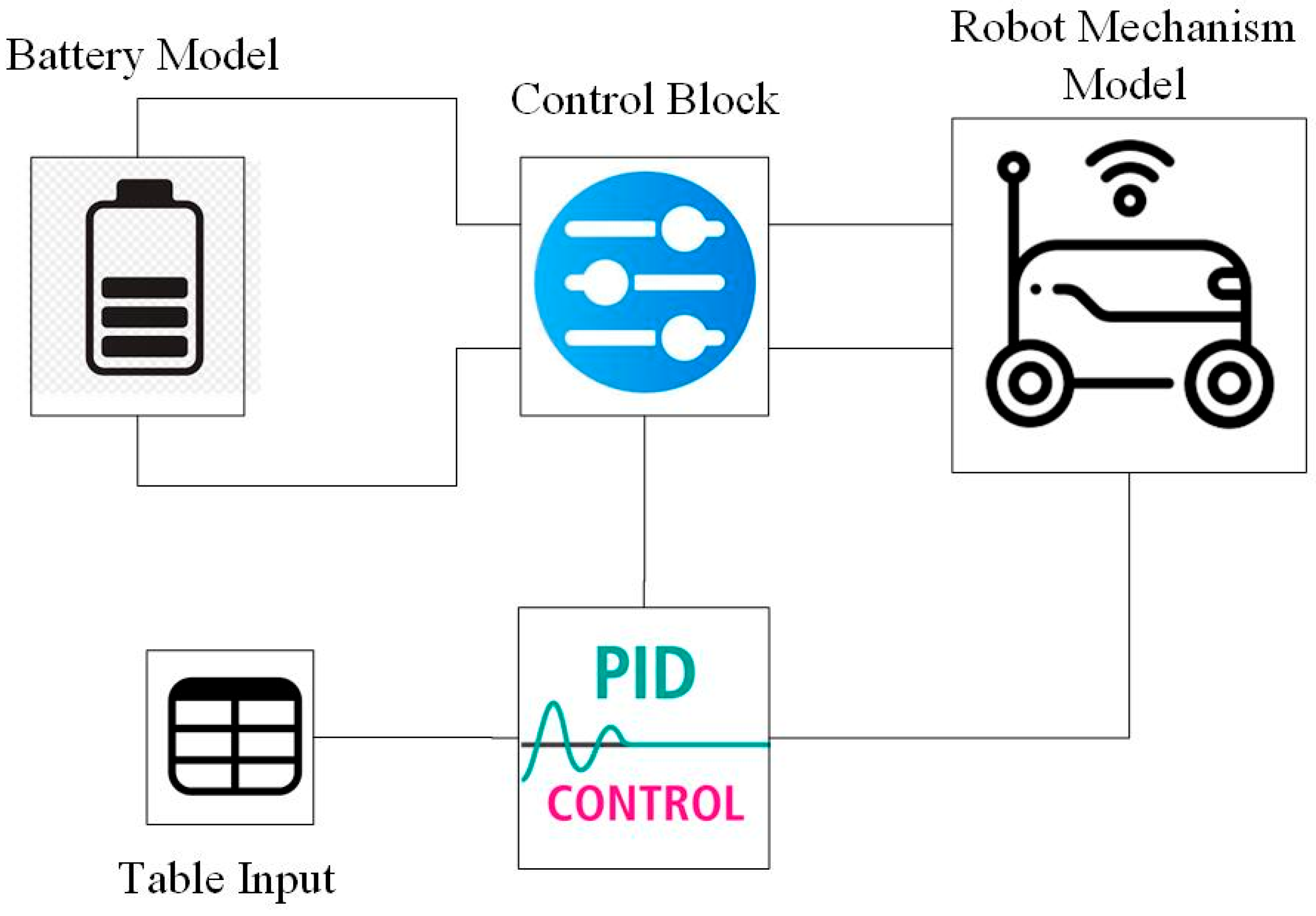
- : Current drawn from the battery
- : Desired linear velocity (PID setpoint)
| Anode | LTO | Graphite | Lithium Titanium Oxide |
|---|---|---|---|
| Cathode | LCO | LCO | LCO |
| LFP | LFP | LFP | |
| LMO | LMO | LMO | |
| Lithium Manganese Oxide (low plateau) | Lithium Manganese Oxide (low plateau) | Lithium Manganese Oxide | |
| Lithium Manganese Oxide | Lithium Manganese Oxide | NCA | |
| NCA | NCA | Lithium Nickel Cobalt Oxide | |
| Lithium Nickel Cobalt Oxide | Lithium Nickel Cobalt Oxide | Lithium Nickel Cobalt Oxide | |
| Lithium Nickel Cobalt Oxide | Lithium Nickel Cobalt Oxide | NMC | |
| NMC | NMC | Lithium Nickel Oxide | |
| Lithium Nickel Oxide | Lithium Nickel Oxide | Lithium Vanadium Oxide | |
| Lithium Vanadium Oxide | Lithium Titanium Suiphide | Sodium Cobalt Oxide | |
| Sodium Cobalt Oxide | Lithium Vanadium Oxide | ||
| Lithium Tungsten Oxide | |||
| Sodium Cobalt Oxide |
3. Optimization Using Particle Swarm Optimization (PSO)
3.1. PSO for Multi-Criteria Battery Selection
3.2. Fitness Function and Application-Specific Weighting
| Thermal Stability (Discharging) | Thermal Stability (Charging) | Energy Efficiency (Discharging) | Energy Efficiency (Charging) | Cost | |
|---|---|---|---|---|---|
| Logistics & Warehousing | 0.2 | 0.2 | 0.2 | 0.25 | 0.2 |
| Healthcare | 0.25 | 0.25 | 0.2 | 0.2 | 0.1 |
| Manufacturing | 0.15 | 0.15 | 0.2 | 0.3 | 0.3 |
| Agricultural Robots | 0.2 | 0.2 | 0.2 | 0.3 | 0.2 |
| Exploration & Mining | 0.3 | 0.3 | 0.15 | 0.2 | 0.1 |
- : Thermal stability during discharging and charging. Based on the maximum temperature reached by battery model , normalized such that lower temperatures score higher.
- : Energy efficiency during discharging and charging. For discharging, this uses the minimum SOC value (higher is better). For charging, it uses the maximum SOC reached.
- : Cost efficiency. Uses normalized battery cost data (lower cost scores higher).
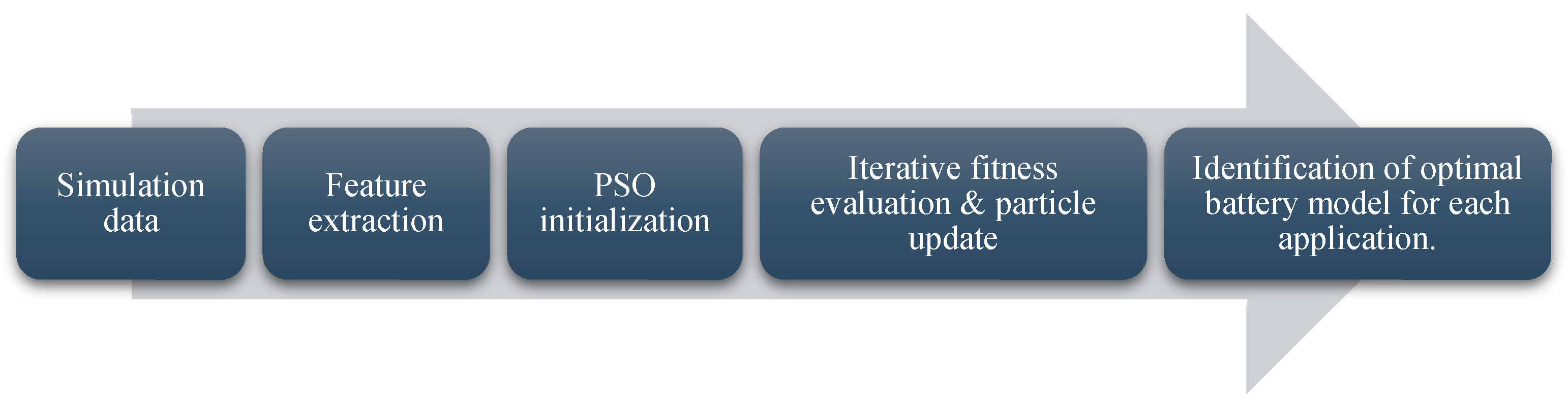
3.3. Implementation and Integration with Simulation Data
4. Conclusions
- Batteries with lower maximum temperatures during both discharge and charge cycles were consistently prioritized across applications, reducing thermal stress risks and extending operational lifespan. This proved particularly critical in safety-sensitive domains such as healthcare and exploration, where thermal stability was weighted most heavily.
- A high minimum SOC value during discharge, indicating sustained energy availability, was essential for applications requiring extended operational cycles without frequent recharging. This criterion was especially valued in logistics and manufacturing, where uptime directly impacts throughput.
- The PSO algorithm effectively balanced multiple, often competing objectives, thermal stability, energy efficiency, and cost, by dynamically adjusting its search through the 37-dimensional solution space. This allowed identification of battery chemistries that offered optimal trade-offs for each specific application context.
- Incorporating cost as a criterion ensured financial viability was maintained alongside technical performance. Battery models that provided the best weighted combination of low cost and high performance emerged as optimal, with cost weights varying depending on application priorities.
Author Contributions
Funding
Data Availability Statement
Conflicts of Interest
Abbreviations
| AMR | Autonomous Mobile Robot |
| BP | Back Propagation |
| CR | Consistency Ratio |
| CS | Cuckoo Search |
| EMF | Electromotive Force |
| GWO | Gray Wolf Optimization |
| MDP | Markov Decision Process |
| MOPSO | Multi-Objective Particle Swarm Optimization |
| NCA | Nickel Cobalt Aluminum |
| NiMH | Nickel Metal Hydride |
| NMC | Lithium Nickel Manganese Cobalt |
| LCO | Lithium Cobalt Oxide |
| LFP | Lithium Iron Phosphate |
| Li-ion | Lithium-Ion |
| LiPo | Lithium Polymer |
| LMO | Lithium Manganese Oxide |
| LTO | Lithium Titanate Oxide |
| PID | Proportional Integral Derivative |
| PSO | Particle Swarm Optimization |
| PWM | Pulse Width Modulation |
| RMSE | Root Mean Square Error |
| ROS | Robot Operating System |
| SOC | State of Charge |
Appendix A
| Parameter | Value | Unit |
|---|---|---|
| Factor for reaction rate equation | 1.2 | |
| Diffusion coefficient at standard condition | 1.8 × | |
| Activation energy | 10,000 | |
| Molar mass of SEI layer | 0.026 | |
| Radius of particle of active material in anode | 0.000002 | |
| Initial state of health | 1 | - |
| Molar concentration of electrolyte | 5000 | |
| Specific conductivity coefficient | 0.001 | |
| Density of SEI layer | 2600 | |
| Number of cells in series | 6 | - |
| Battery capacity | 25 | |
| Initial state of charge | 1 | - |
| Minimum state of charge | 0.01 | - |
| Fixed cell resistance | 0.005 | |
| Specific heat capacity of cell | 750 | |
| Mass of cell | 0.55 | |
| Convective heat transfer coefficient | 10 | |
| Cell surface area | 0.0085 | |
| Ambient temperature | 298.15 | |
| Electrolyte diffusion coefficient | ||
| Li ion diffusion coefficient in the intercalation particles of the negative electrode | ||
| Li ion diffusion coefficient in the intercalation particles of the positive electrode | ||
| Thickness of negative electrode | 0.000088 | |
| Thickness of positive electrode | 0.0008 | |
| Thickness of separator | 0.000025 | |
| Radius of intercalation particles at negative electrode | 0.000002 | |
| Radius of intercalation particles at positive electrode | 0.000002 | |
| Bruggeman coefficient | 1.5 | - |
| Initial concentration of li in electrolyte | 5000 | |
| Maximum concentration of li at anode | 30,555 | |
| Maximum concentration of li at cathode | 51,554 | |
| Volumetric fraction of negative electrode fillers | 0.0326 | - |
| Volumetric fraction of positive electrode fillers | 0.025 | - |
| Porosity of negative electrode | 0.485 | - |
| Porosity of positive electrode | 0.385 | - |
| Porosity of separator | 0.724 | - |
| Conductivity of solid phase of negative electrode | 100 | |
| Li ion transference number in the electrolyte | 0.363 | - |
References
- Korayem, M.H.; Shafei, A.M.; Seidi, E. Symbolic derivation of governing equations for dual-arm mobile manipulators used in fruit-picking and the pruning of tall trees. Comput. Electron. Agric. 2014, 105, 95–102. [Google Scholar] [CrossRef]
- Seidi, E.; Shafei, A.; Korayem, M. Derivation of dynamic equations and parametric analysis for dual arm mobile manipulators using recursive Gibbs-Appell formulation. In Proceedings of the 2014 Second RSI/ISM International Conference on Robotics and Mechatronics (ICRoM); IEEE: Tehran, Iran, 2014. [Google Scholar]
- Seidi, E.; Korayem, M.H.; Amirkhani, S.; Shafei, A.M. Dynamic modeling and parametric analysis of dual arm manipulator with revolute-prismatic joints mounted on a nonholonomic mobile base. In Proceedings of the 2015 3rd RSI International Conference on Robotics and Mechatronics (ICROM); IEEE: Tehran, Iran, 2015. [Google Scholar]
- Mikołajczyk, T.; Mikołajewski, D.; Kłodowski, A.; Łukaszewicz, A.; Mikołajewska, E.; Paczkowski, T.; Macko, M.; Skornia, M. Energy sources of mobile robot power systems: A systematic review and comparison of efficiency. Appl. Sci. 2023, 13, 7547. [Google Scholar] [CrossRef]
- Verstraten, T.; Hosen, M.S.; Berecibar, M.; Vanderborght, B. Selecting suitable battery technologies for untethered robot. Energies 2023, 16, 4904. [Google Scholar] [CrossRef]
- Velev, B.; Djudzhev, B.; Dimitrov, V.; Hinov, N. Comparative Analysis of Lithium-Ion Batteries for Urban Electric/Hybrid Electric Vehicles. Batteries 2024, 10, 186. [Google Scholar] [CrossRef]
- Daquioag, K.; Seidi, E.; Woo, R.; Miller, S. Effect of customized ride on car experience on development of pediatric patients. In Proceedings of the 2023 IEEE Asia-Pacific Conference on Computer Science and Data Engineering (CSDE); IEEE: Nadi, Fiji, 2023; pp. 1–6. [Google Scholar]
- Touzout, W.; Benazzouz, D.; Benmoussa, Y. Mobile robot energy modelling integrated into ROS and Gazebo-based simulation environment. Mechatron. Syst. Control 2022, 50, 66–73. [Google Scholar] [CrossRef]
- Aydin, S.; Yiğit, K.S.; Savci, İ.H. Survey of air battery thermal management on the autonomous mobile robots. Therm. Sci. 2023, 27, 3561–3577. [Google Scholar] [CrossRef]
- McNulty, D.; Hennessy, A.; Li, M.; Armstrong, E.; Ryan, K.M. A review of Li-ion batteries for autonomous mobile robots: Perspectives and outlook for the future. J. Power Sources 2022, 545, 231943. [Google Scholar] [CrossRef]
- Alashur, M. Advancements in Lithium-Ion Battery Technology. Int. J. Innov. Sci. Res. Technol. (IJISRT) 2024, 9, 984–985. [Google Scholar] [CrossRef]
- Berenz, V.; Tanaka, F.; Suzuki, K. Autonomous battery management for mobile robots based on risk and gain assessment. Artif. Intell. Rev. 2012, 37, 217–237. [Google Scholar] [CrossRef]
- Attanayaka, A.; Karunadasa, J.; Hemapala, K. Estimation of state of charge for lithium-ion batteries—A review. AIMS Energy 2019, 7, 186–210. [Google Scholar] [CrossRef]
- Ankathi, S.K.; Bouchard, J.; He, X. Beyond tailpipe emissions: Life cycle assessment unravels battery’s carbon footprint in electric vehicles. World Electr. Veh. J. 2024, 15, 245. [Google Scholar] [CrossRef]
- Zhang, Y.; Mussehl, V.; Piao, D. Material and Energy Flow Analysis of Hydrometallurgical Recycling for Lithium-Ion Battery Based on Aspen Plus. Coatings 2025, 15, 990. [Google Scholar] [CrossRef]
- Karthick, K.; Ravivarman, S.; Priyanka, R. Optimizing Electric Vehicle Battery Life: A Machine Learning Approach for Sustainable Transportation. World Electr. Veh. J. 2024, 15, 60. [Google Scholar] [CrossRef]
- Malik, G.R.; Reddy, K.V.T.; Reddy, Y.P.K.; Vinod, A.; Krishna, S.; KH, V.; VC, J.S. Future of Energy Storage: Advancements in Lithium-Ion Batteries and Hybrid Vehicle Technologies. In Proceedings of the 2024 7th International Conference on Circuit Power and Computing Technologies (ICCPCT); IEEE: Kollam, India, 2024. [Google Scholar]
- Preucil, L.; Behnke, S.; Kulich, M. Special Issue on the 9th European Conference on Mobile Robots (ECMR 2019). Robot. Auton. Syst. 2022, 150, 104050. [Google Scholar] [CrossRef]
- Mei, Y.; Lu, Y.H.; Hu, Y.C.; Lee, C.G. A case study of mobile robot’s energy consumption and conservation techniques. In Proceedings of the ICAR’05. Proceedings, 12th International Conference on Advanced Robotics; IEEE: Seattle, WA, USA, 2005. [Google Scholar]
- Teso-Fz-Betoño, D.; Aramendia, I.; Ramos-Hernanz, J.A.; Caballero-Martin, D.; Affou, H.; Lopez-Guede, J.M. Optimization of Energy Efficiency with a Predictive Dynamic Window Approach for Mobile Robot Navigation. Sustainability 2025, 17, 4526. [Google Scholar] [CrossRef]
- Rong, P.; Pedram, M. Battery-aware power management based on Markovian decision processes. In Proceedings of the 2002 IEEE/ACM International Conference on Computer-Aided Design; IEEE: San Jose, CA, USA, 2002. [Google Scholar]
- Mageshkumar, V.; Baxi, A.; Natarajan, V.; Murthy, G.S. Adaptive Energy Optimization for Edge-Enabled Autonomous Mobile Robots. In Proceedings of the 2024 16th International Conference on COMmunication Systems & NETworkS (COMSNETS); IEEE: Bengaluru, India, 2024. [Google Scholar]
- Wu, M.; Yeong, C.F.; Su, E.L.M.; Holderbaum, W.; Yang, C. A review on energy efficiency in autonomous mobile robots. Robot. Intell. Autom. 2023, 43, 648–668. [Google Scholar] [CrossRef]
- Muru, J.; Rassõlkin, A. A scoping review of energy consumption in industrial robotics. Machines 2025, 13, 542. [Google Scholar] [CrossRef]
- Shahbazi, M.; Feli, S. Analysis of low-velocity impact on FG-CNT reinforced cantilever sandwich beams: An FOSNDT approach. Compos. Adv. Mater. 2024, 33, 26349833241291867. [Google Scholar] [CrossRef]
- Rumelhart, D.E.; Hinton, G.E.; Williams, R.J. Learning representations by back-propagating errors. Nature 1986, 323, 533–536. [Google Scholar] [CrossRef]
- Kennedy, J.; Eberhart, R. Particle swarm optimization. In Proceedings of the ICNN’95—International Conference on Neural Networks; IEEE: Perth, WA, Australia, 1995. [Google Scholar]
- Gandomi, A.H.; Yang, X.-S.; Alavi, A.H. Cuckoo search algorithm: A metaheuristic approach to solve structural optimization problems. Eng. Comput. 2013, 29, 17–35. [Google Scholar] [CrossRef]
- Shahbazi, M.; Heidari, M.; Ahmadzadeh, M. Optimization of dynamic parameter design of Stewart platform with Particle Swarm Optimization (PSO) algorithm. Adv. Mech. Eng. 2024, 16, 16878132241263940. [Google Scholar] [CrossRef]
- Zheng, L.; Yu, W.; Li, G.; Qin, G.; Luo, Y. Particle swarm algorithm path-planning method for mobile robots based on artificial potential fields. Sensors 2023, 23, 6082. [Google Scholar] [CrossRef]
- Camas-Náfate, M.; Coronado-Mendoza, A.; Vargas-Salgado, C.; Águila-León, J.; Alfonso-Solar, D. Optimizing Lithium-Ion Battery Modeling: A Comparative Analysis of PSO and GWO Algorithms. Energies 2024, 17, 822. [Google Scholar] [CrossRef]
- Ding, X.; Ni, Y.; Zhu, D.; Li, Z.; Jiao, Y.; Wang, Q. Lithium battery state of health estimation based on PSO-GWO algorithm optimization under chaotic mapping with hybrid kernel extreme learning machine model. J. Appl. Electrochem. 2025, 55, 1383–1398. [Google Scholar] [CrossRef]
- Ghobadpour, A.; Cardenas, A.; Monsalve, G.; Mousazadeh, H. Optimal design of energy sources for a photovoltaic/fuel cell extended-range agricultural mobile robot. Robotics 2023, 12, 13. [Google Scholar] [CrossRef]
- Wang, S.C.; Liu, Y.H. A PSO-based fuzzy-controlled searching for the optimal charge pattern of Li-ion batteries. IEEE Trans. Ind. Electron. 2014, 62, 2983–2993. [Google Scholar] [CrossRef]
- Ghorbani, N.; Kasaeian, A.; Toopshekan, A.; Bahrami, L.; Maghami, A. Optimizing a hybrid wind-PV-battery system using GA-PSO and MOPSO for reducing cost and increasing reliability. Energy 2018, 154, 581–591. [Google Scholar] [CrossRef]
- Mikołajczyk, T.; Mikołajewski, D.; Kłodowski, A.; Łukaszewicz, A.; Mikołajewska, E.; Paczkowski, T.; Macko, M.; Skornia, M. Materials for batteries of mobile robot power systems: A systematic review and comparison of efficiency. Preprints 2023. [Google Scholar] [CrossRef]
- Liu, L.; Zhong, R.; Willcock, A.; Fisher, N.; Shi, W. An open approach to energy-efficient autonomous mobile robots. In Proceedings of the 2023 IEEE International Conference on Robotics and Automation (ICRA); IEEE: London, UK, 2023. [Google Scholar]
- Farooq, M.U.; Eizad, A.; Bae, H.-K. Power solutions for autonomous mobile robots: A survey. Robot. Auton. Syst. 2023, 159, 104285. [Google Scholar] [CrossRef]
- Goodenough, J.B.; Kim, Y. Challenges for rechargeable Li batteries. Chem. Mater. 2010, 22, 587–603. [Google Scholar] [CrossRef]
- Tarascon, J.-M.; Armand, M. Issues and challenges facing rechargeable lithium batteries. Nature 2001, 414, 359–367. [Google Scholar] [CrossRef]
- Plett, G.L. Battery Management Systems, Volume I: Battery Modeling; Artech House: Norwood, MA, USA, 2015. [Google Scholar]
- Vega, D.H.; Kelouwani, S.; Boulon, L. Efficient internal resistance and specific heat identification of Li-Ion battery at low temperature conditions. In Proceedings of the 2015 IEEE Vehicle Power and Propulsion Conference (VPPC); IEEE: Montréal, QC, Canada, 2015. [Google Scholar]
- Agrawal, A.; Singh, R.; Kumar, N.; Singh, V.P.; Alotaibi, M.A.; Malik, H.; Márquez, F.P.G.; Hossaini, M.A. Mathematical modeling of driving forces of an electric vehicle for sustainable operation. IEEE Access 2023, 11, 95278–95294. [Google Scholar] [CrossRef]
- Uchegbu, C.E.; Inyama, K. Simulation, linearization and parameter tracking of angular velocity of a DC motor system. J. Emerg. Technol. Innov. Res. 2023, 10, 586–613. [Google Scholar]
- Long, L.N.; Weiss, H. The velocity dependence of aerodynamic drag: A primer for mathematicians. Am. Math. Mon. 1999, 106, 127–135. [Google Scholar] [CrossRef]





| Energy Density (Wh/L) | Specific Energy (Wh/kg) | Life (Cycles) | Safety | Thermal Stability | Cost (USD/kWh) | Self-Discharge Rate (per Month) | Form Factor | Typical Applications | |
|---|---|---|---|---|---|---|---|---|---|
| Li-ion | 250–400 | 150–250 | 500–1500 | Moderate | Sensitive to >45 °C | 120–200 | 2–3% | Rigid cylindrical/prismatic | High-power & logistics AMRs |
| LiPo | 200–350 | 130–200 | 300–1000 | Moderate | Sensitive to >40 °C | 150–300 | 3–5% | Flexible, thin-film | Space-Constrained & AMRs, drones |
| NiMH | 140–300 | 60–120 | 500–800 | High | Stable up to 60 °C | 80–150 | 10–15% | Cylindrical | Low-power AMRs & Safety-critical roles, |
| Vector | Definition |
|---|---|
| Battery state of charge | |
| Battery temperature | |
| Motor angular velocity | |
| Robot linear velocity | |
| Integral term of the PID controller |
| Term | Definition |
|---|---|
| Battery capacity | |
| Battery mass | |
| Specific heat capacity | |
| Internal resistance of the battery | |
| Effective thermal transfer coefficient to the ambient environment () | |
| Motor moment of inertia | |
| Motor damping coefficient | |
| Motor torque constant | |
| Robot mass | |
| Wheel radius | |
| Proportional gains | |
| Integral gains | |
| Derivative gains |
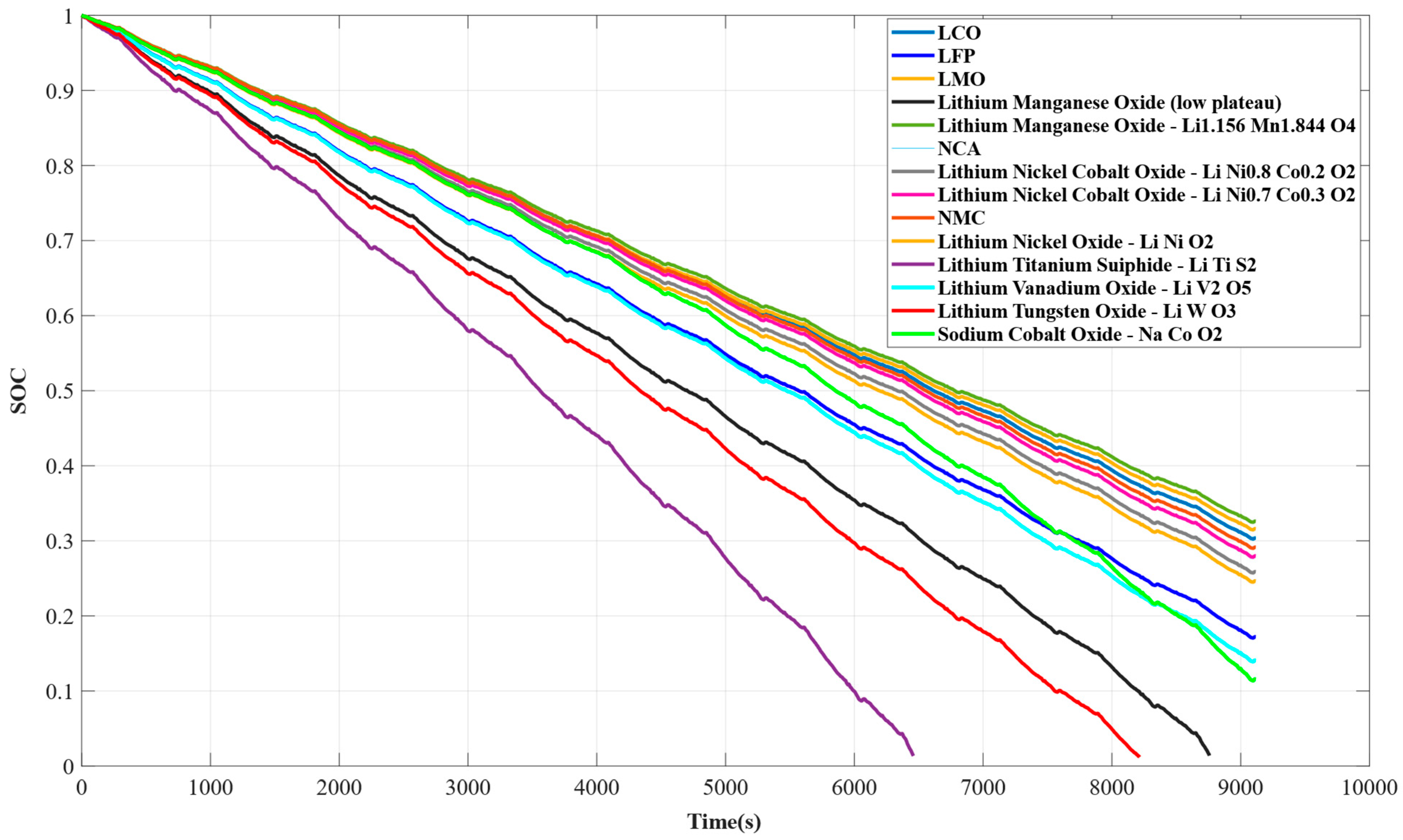
| Cathode | Min SOC (Discharging) | Max Temp (K) (Discharging) | Max SOC (Charging) | Max Temp (K) (Charging) |
|---|---|---|---|---|
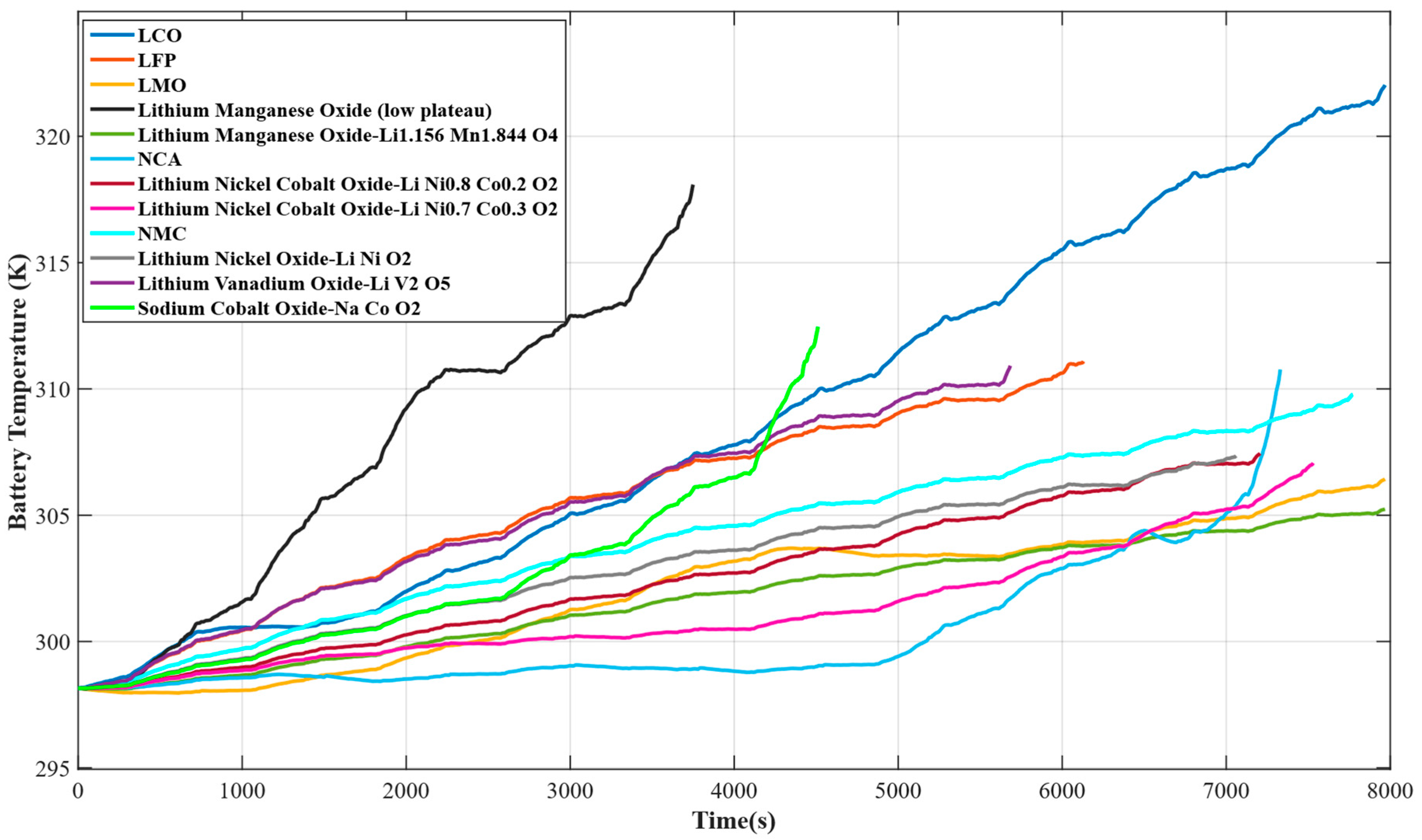
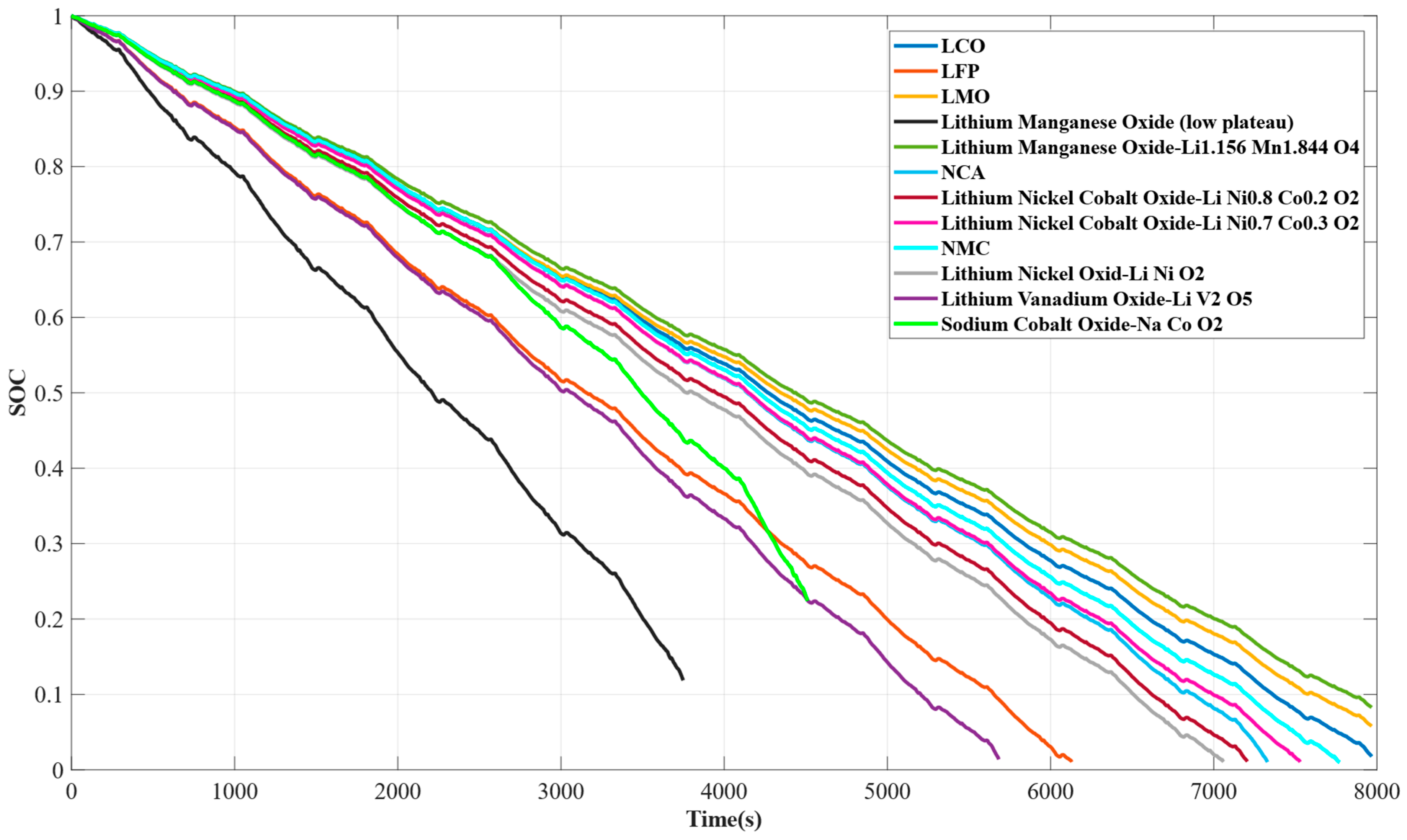
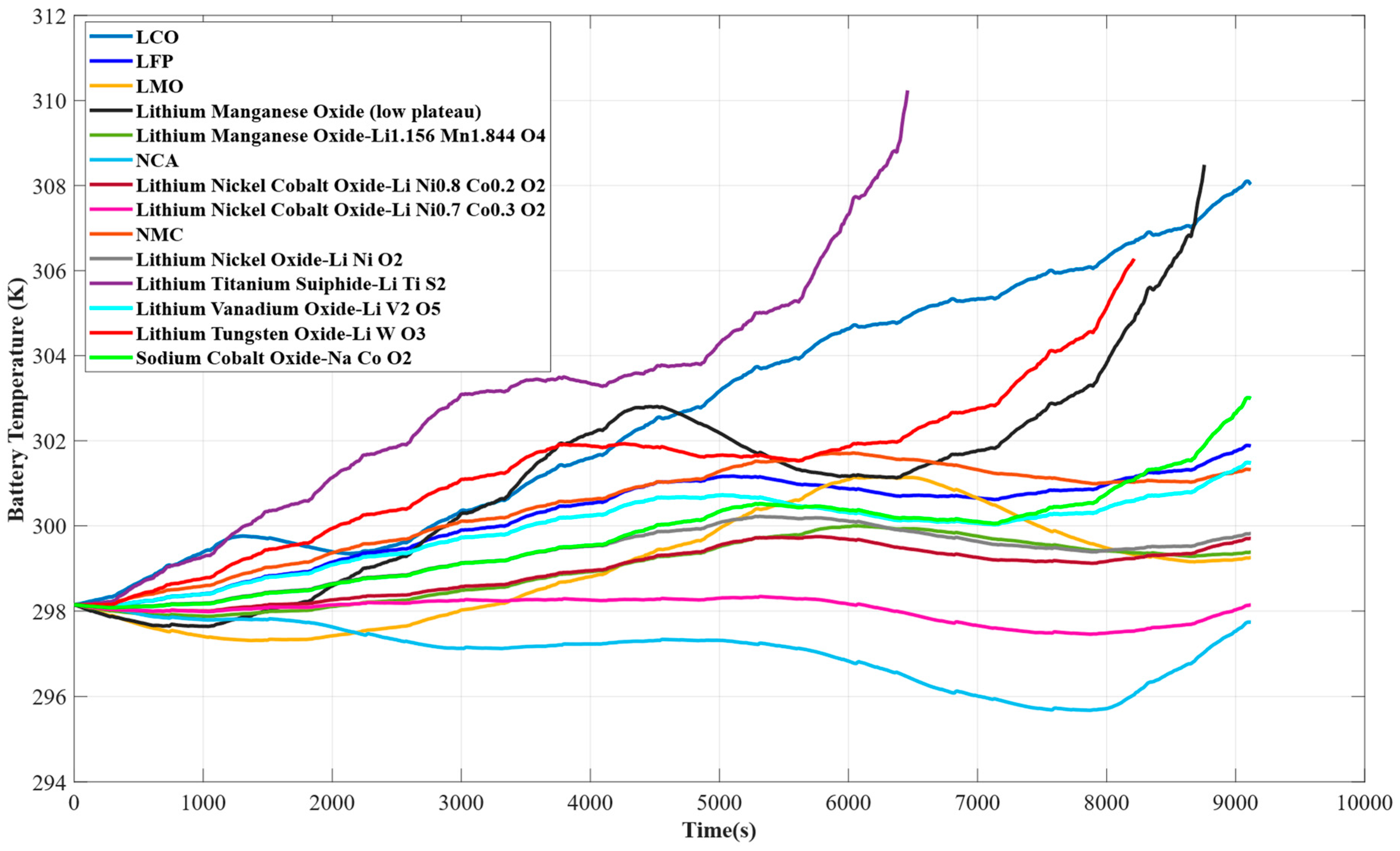
| LCO | 0.1 at 7356 s | 322.0295 | 0.99 | 298.15 |
| LFP | 0.1 at 5651 s | 311.0926 | 0.99 | 303.0574 |
| LMO | 0.1 at 4616 s | 307.6095 | 0.99 | 303.7959 |
| low plateau | 0.1 at 3749 s | 330 | 0.99 | 303.7959 |
| 0.1 at 7835 s | 306.2226 | 0.99 | 303.7727 | |
| NCA | 0.1 at 6873 s | 310.7698 | 0.99 | 306.4994 |
| 0.1 at 6618 s | 307.4504 | 0.99 | 304.3234 | |
| 0.1 at 6992 s | 307.0672 | 0.99 | 305.3811 | |
| NMC | 0.1 at 7201 s | 309.7717 | 0.99 | 301.1697 |
| 0.1 at 6503 s | 307.3512 | 0.99 | 303.8096 | |
| 0.1 at 5204 s | 310.9219 | 0.99 | 303.8515 | |
| 0.1 at 4510 s | 327 | 0.99 | 303.8057 |
| Cathode | Min SOC (Discharging) | Max Temp (K) (Discharging) | Max SOC (Charging) | Max Temp (K) (Charging) |
|---|---|---|---|---|
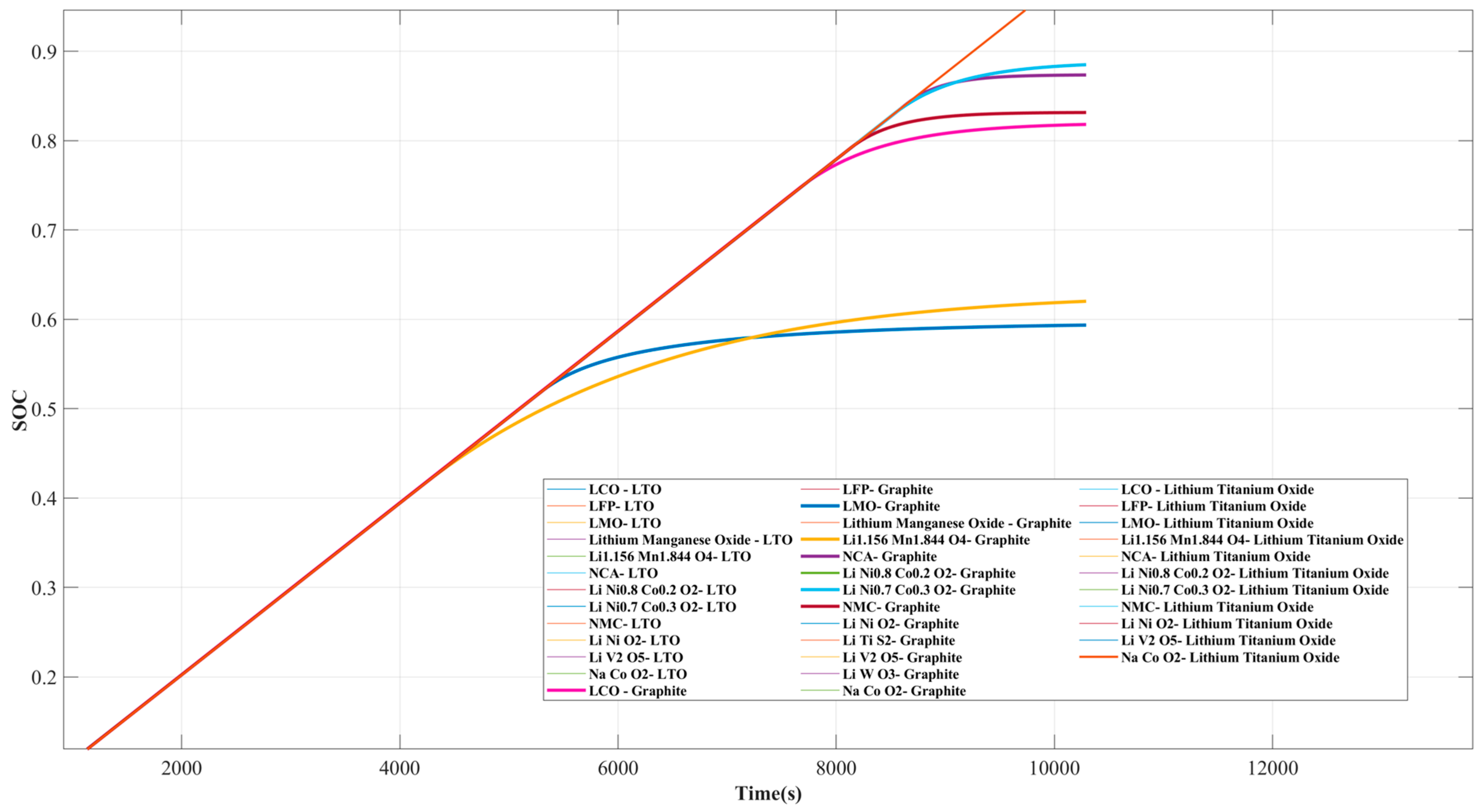
| LCO | 0.3025 | 308.101 | 0.81 | 298.15 |
| LFP | 0.1705 | 301.8898 | 0.99 | 303.6128 |
| LMO | 0.3147 | 301.1471 | 0.59 | 302.2574 |
| low plateau | 0.1 at 8200 s | 308.4875 | 0.99 | 304.354 |
| 0.3247 | 300 | 0.62 | 301.2702 | |
| NCA | 0.2760 | 298.15 | 0.87 | 305.9535 |
| 0.2573 | 299.7453 | 0.98 | 304.4761 | |
| 0.2783 | 398.3407 | 0.88 | 305.0541 | |
| NMC | 0.2900 | 301.7137 | 0.83 | 301.0725 |
| 0.2450 | 300.2218 | 0.99 | 304.3599 | |
| 0.1 at 5997 s | 310.2377 | 0.99 | 304.4095 | |
| 0.1391 | 301.4878 | 0.99 | 304.4095 | |
| 0.1 at 7603 s | 306.2792 | 0.99 | 304.4095 | |
| 0.1158 | 303.0061 | 0.99 | 304.2057 |
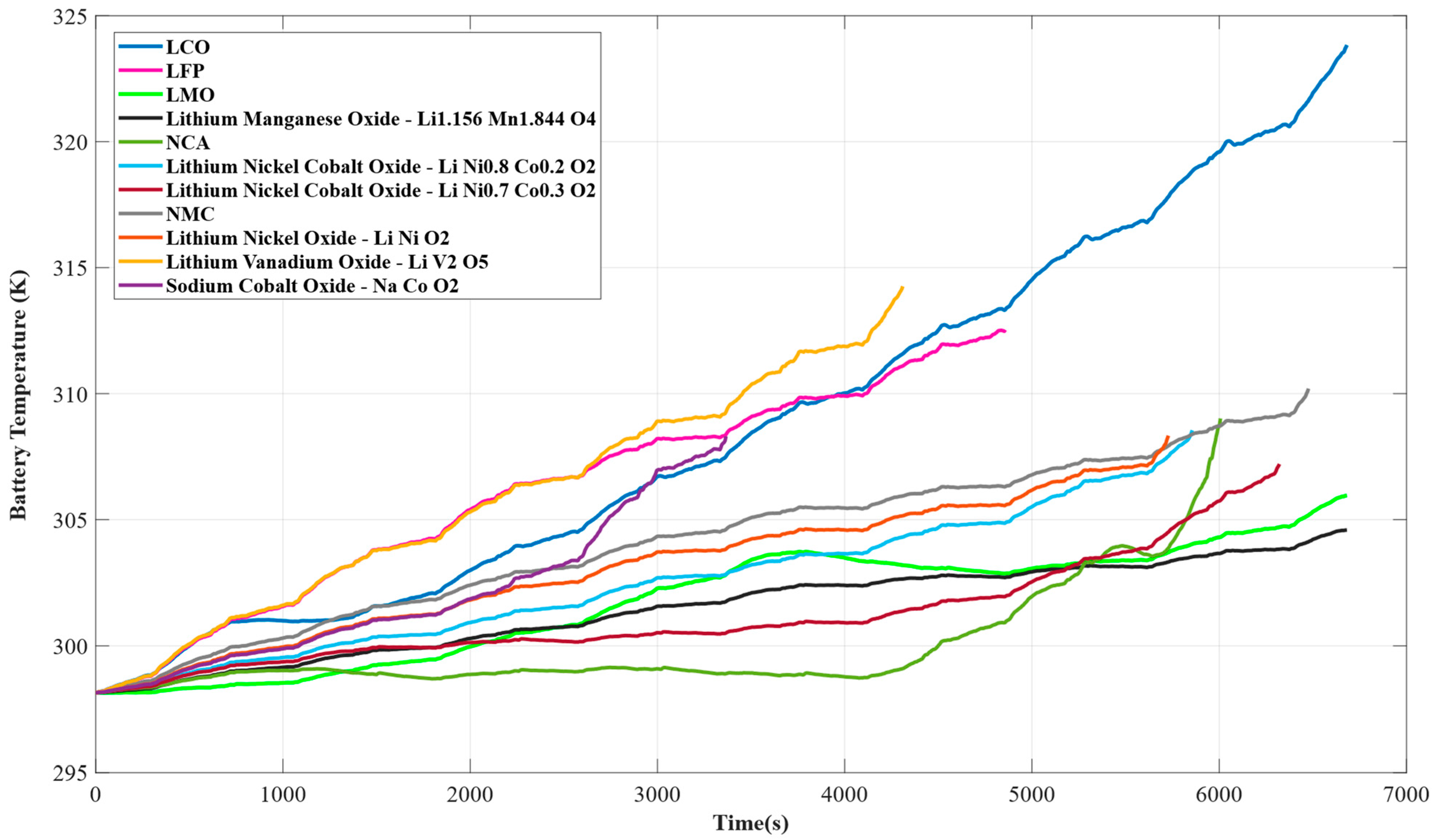
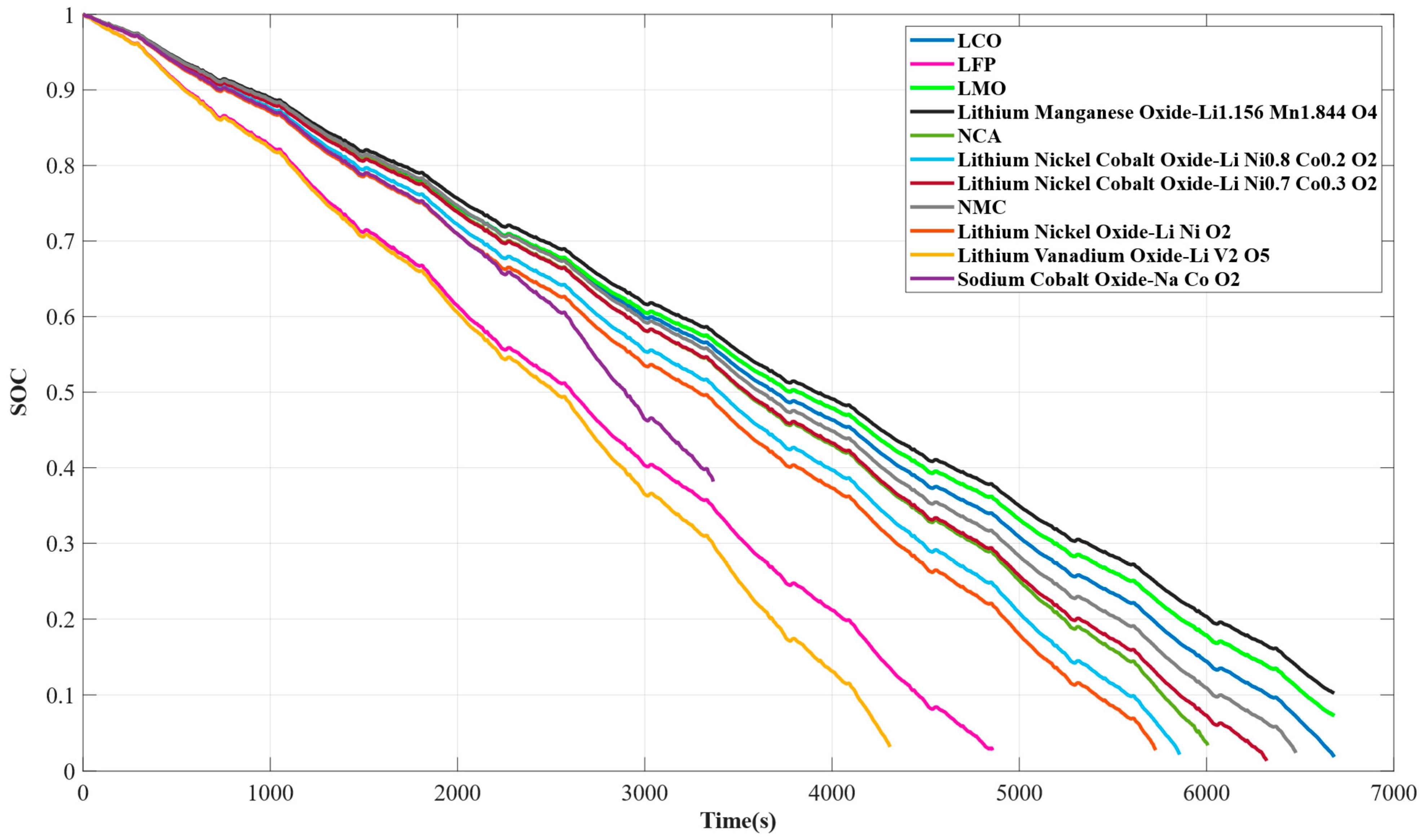
| Cathode | Min SOC (Discharging) | Max Temp (K) (Discharging) | Max SOC (Charging) | Max Temp (K) (Charging) |
|---|---|---|---|---|
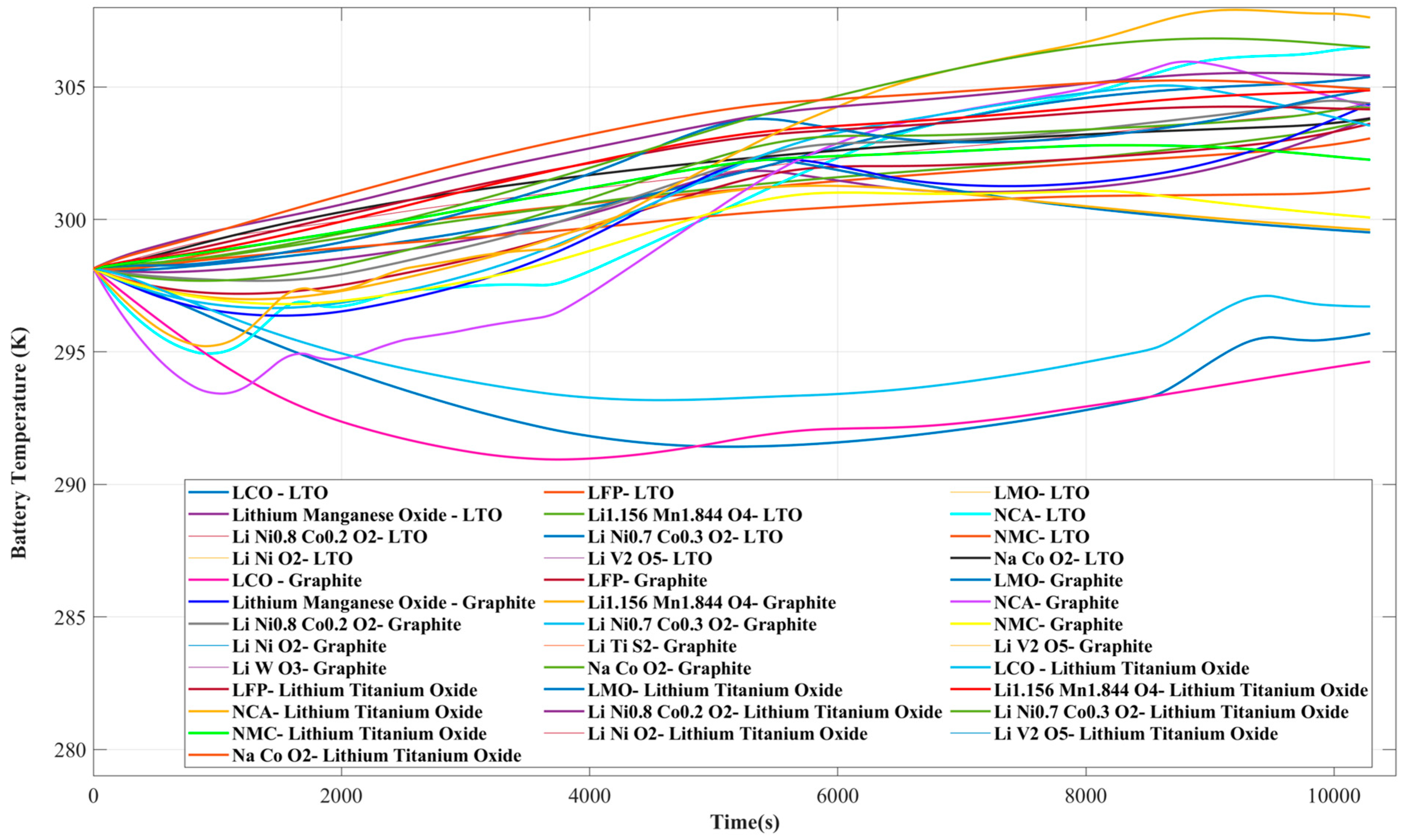
| LCO | 0.1 at 6326 s | 323.8348 | 0.99 | 298.15 |
| LFP | 0.1 at 4456 s | 312.5331 | 0.99 | 304.2549 |
| LMO | 0.1 at 6526 s | 307.4367 | 0.99 | 304.8917 |
| 0.1 at 6690 s | 306.0897 | 0.99 | 304.8713 | |
| NCA | 0.1 at 5760 s | 309.0152 | 0.99 | 307.9069 |
| 0.1 at 5578 s | 308.5457 | 0.99 | 305.5272 | |
| 0.1 at 5851 s | 307.2064 | 0.99 | 306.826 | |
| NMC | 0.1 at 6029 s | 310.1997 | 0.99 | 302.7992 |
| 0.1 at 5409 s | 308.3321 | 0.99 | 305.2497 | |
| 0.1 at 4127 s | 314.2597 | 0.99 | 305.2616 | |
| 0.1 at 4455 s | 330 | 0.99 | 305.2445 |
| Application | Max Temp (K) (Discharging) | Max Temp (K) (Charging) | SOC (Discharging) | SOC (Charging) | Ave Cost ($) |
|---|---|---|---|---|---|
| Logistics & Warehousing | Graphite | Selected Model | NMC | ||
| 301.71 | 301.07 | 0.29 | 0.83 | 300 | |
| Healthcare | Graphite | Selected Model | LCO | ||
| 309.77 | 301.16 | 0.1 | 0.99 | 350 | |
| Manufacturing | Graphite | Selected Model | Lithium Nickel Cobalt Oxide | ||
| 298.15 | 305.95 | 0.27 | 0.87 | 320 | |
| Agricultural | Graphite | Selected Model | Lithium Nickel Oxide | ||
| 301.14 | 302.25 | 0.31 | 0.59 | 280 | |
| Exploration & Mining | Graphite | Selected Model | NMC | ||
| 301.88 | 303.61 | 0.17 | 0.99 | 310 | |
Disclaimer/Publisher’s Note: The statements, opinions and data contained in all publications are solely those of the individual author(s) and contributor(s) and not of MDPI and/or the editor(s). MDPI and/or the editor(s) disclaim responsibility for any injury to people or property resulting from any ideas, methods, instructions or products referred to in the content. |
© 2026 by the authors. Licensee MDPI, Basel, Switzerland. This article is an open access article distributed under the terms and conditions of the Creative Commons Attribution (CC BY) license.
Share and Cite
Shahbazi, M.; Seidi, E.; Ferreira, A. Comparative Analysis and PSO-Based Optimization of Battery Technologies for Autonomous Mobile Robots. Batteries 2026, 12, 108. https://doi.org/10.3390/batteries12030108
Shahbazi M, Seidi E, Ferreira A. Comparative Analysis and PSO-Based Optimization of Battery Technologies for Autonomous Mobile Robots. Batteries. 2026; 12(3):108. https://doi.org/10.3390/batteries12030108
Chicago/Turabian StyleShahbazi, Masood, Ebrahim Seidi, and Artur Ferreira. 2026. "Comparative Analysis and PSO-Based Optimization of Battery Technologies for Autonomous Mobile Robots" Batteries 12, no. 3: 108. https://doi.org/10.3390/batteries12030108
APA StyleShahbazi, M., Seidi, E., & Ferreira, A. (2026). Comparative Analysis and PSO-Based Optimization of Battery Technologies for Autonomous Mobile Robots. Batteries, 12(3), 108. https://doi.org/10.3390/batteries12030108