1. Introduction
Lithium-ion batteries are fundamental to modern technologies, ranging from portable electronics to electric vehicles; however, they are highly sensitive to temperature variations. Heat generation within these batteries is an inherent byproduct of the complex electrochemical processes occurring inside the cell. During both charge and discharge cycles, heat is produced through three primary mechanisms [
1,
2]. The most significant and straightforward source is Joule heating (also known as Ohmic heating). A battery consists of various components—electrodes (anode and cathode), current collectors, liquid electrolyte, and a separator. None of these materials are perfect conductors; they all exhibit inherent internal electrical resistance. As electrons and lithium ions flow through these materials, they encounter this resistance, which converts electrical energy directly into irreversible heat. Consequently, higher charge or discharge rates (increased current) result in an exponential increase in heat generation. During the charging/discharging process, the total heat generation in the battery is denoted as Qgen; it is determined by the sum of the heat between reversible heating Q
rev and irreversible heating Q
irr, in which entropy generation leads to reversible heating and Joule heating leads to irreversible heating and is represented as below (Bernardi’s equation) [
3],
where
I represents the battery current during charging or discharging.
Uoc and
Vbat stand for open-circuit and battery voltages.
T represents battery temperature.
dUoc/
dT represents the entropic coefficient [
4]. The parameter usually used to determine the discharge or charge intensity of a cell and therefore also to determine the heat generated is the C-rate. The C-rate (Capacity Rate) is defined as the measure of the rate at which a battery is charged or discharged relative to its maximum capacity. In its most basic definition, a 1C rate means that the applied charge or discharge current will completely fill or empty the battery in exactly one hour. The larger current value (high C-rate) leads to rapid heat generation; research shows that at 3C, 5C, and 8C charging rates, the amount of heat generated is about 10.5 W, 25 W, and 54 W for a 10 Ah Lithium-ion battery.
The cooling system is a vital component for three primary reasons: safety, durability, and performance. Among these, safety is paramount, specifically in preventing thermal runaway. Thermal runaway is a phenomenon of uncontrolled thermal instability that occurs when internal heat generation within a battery cell exceeds the system’s capacity to dissipate it. This condition triggers an accelerating effect: the increase in temperature accelerates internal exothermic reactions, which in turn generate more heat. This positive feedback loop leads to a rapid temperature rise (often exceeding 1000 °C), cell rupture, the release of toxic and flammable gases, and ultimately, fire.
The triggers that push a cell past this critical temperature threshold generally fall into four main categories: mechanical abuse, electrical abuse, thermal abuse, and internal manufacturing defects.
Mechanical abuse is the most apparent trigger, typically resulting from physical damage that compromises internal structures. Events such as a severe collision or heavy impact can pierce or tear the ultra-thin polymer separator that isolates the anode from the cathode. In laboratory settings, this type of abuse is commonly simulated using the nail penetration test. When the anode and cathode come into direct physical contact, the stored energy discharges instantaneously through the localized contact point. This massive, uncontrolled current surge generates extreme Joule heating, initiating thermal runaway almost immediately.
Electrical abuse occurs when a cell is operated beyond its designed electrical parameters, often due to a faulty charger or a malfunction in the Battery Management System (BMS). A primary example is overcharging: forcing a cell above its maximum voltage limit (e.g., exceeding 4.2 V for standard Li-ion cells) causes the cathode to degrade and release oxygen, while also oxidizing and heating the electrolyte. A second instance is an external short circuit, where the positive and negative terminals are connected by a highly conductive material, causing the battery to discharge at an exceptionally high C-rate and generate catastrophic heat. Furthermore, fast charging at low temperatures constitutes electrical abuse; high charging currents under cold conditions hinder lithium ions from efficiently intercalating into the anode. Consequently, they accumulate as solid metallic spikes known as dendrites (lithium plating). Over time, these dendrites can grow and pierce the separator, leading to an internal short circuit.
Thermal abuse occurs when excessive heat is applied from an external source rather than generated internally. Prolonged exposure to extreme environmental temperatures or direct proximity to a heat source can elevate the cell’s baseline temperature into the critical zone. Additionally, in large battery packs (such as those in EVs), if a single cell undergoes thermal runaway, the intense heat released acts as a thermal abuse trigger for neighboring cells, causing a cascading failure known as thermal propagation. This phenomenon explains the intensity and rapid spread of battery fires.
Internal manufacturing defects can lead to spontaneous battery failure in the absence of user error or external abuse. Microscopic metallic impurities introduced during production can act as conductive bridges within the cell. Similarly, microscopic sharp edges on the electrode foil or weak spots in the separator film can degrade over hundreds of charge and discharge cycles, eventually culminating in an internal short circuit.
Ultimately, when any of these forms of abuse exceed the battery’s tolerance range, they trigger a cascade of irreversible internal reactions.
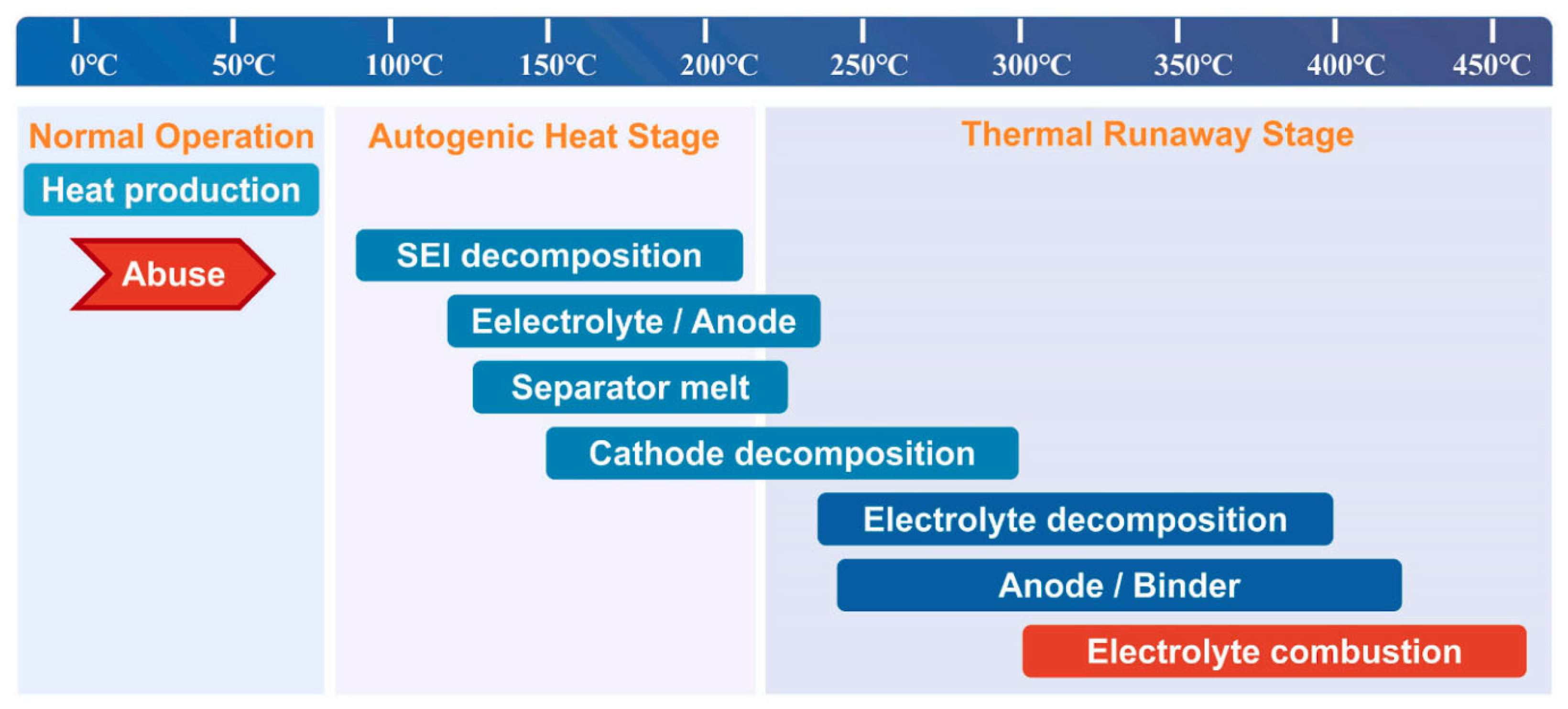
The thermal runaway process generally occurs in sequential stages (see
Figure 1), triggered by the degradation of internal materials [
5]. The first stage is called Triggering (Abuse, T > 60–100 °C), during which external causes (heat), electrical causes (overload, short circuit), or mechanical causes (perforation) cause an initial rise in temperature. The second stage, known as SEI decomposition (T > 80–130 °C), in which the electrolyte–anode interface layer (SEI) decomposes exothermically and the electrolyte begins to react with the anode. In the subsequent third phase, known as electrolyte decomposition (T > 150 °C), the electrolyte decomposes, producing flammable gases (methane, ethylene, etc.), increasing the internal pressure and causing the cell to swell. Finally, in the fourth phase, known as release and fire (T > 200–300 °C), the separator melts, causing a massive internal short circuit. The cathode decomposes, releasing oxygen, which fuels internal combustion. The cell temperature increases at rates exceeding 100 °C/min.
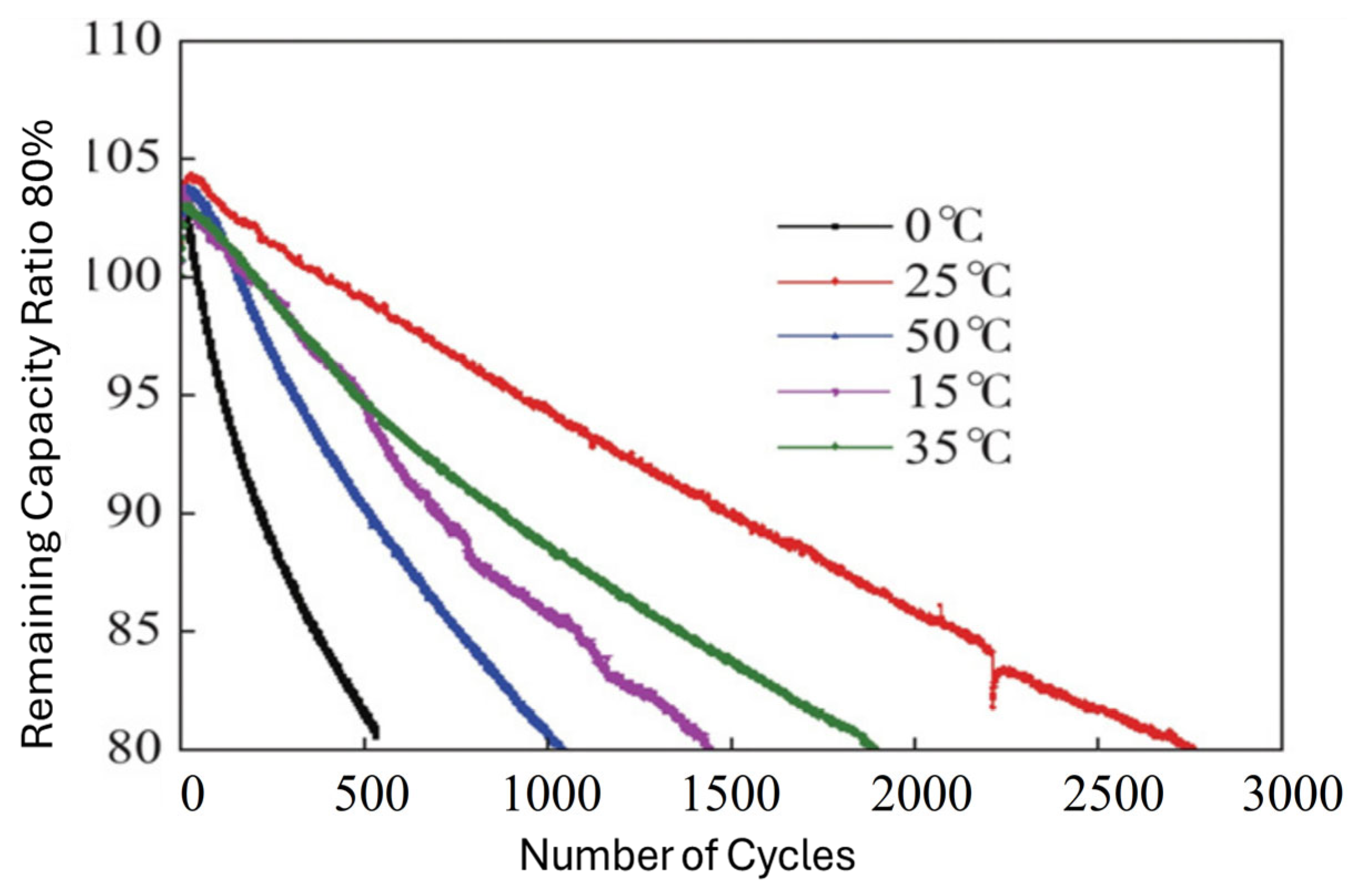
The second vital reason is durability, thus preserving battery life (degradation). Thermal battery life degradation is heavily driven by operating temperatures, with high heat (>40 °C) accelerating capacity fade through electrolyte decomposition and SEI layer growth, while extreme cold (<0 °C) causes lithium plating [
6]. Optimal lifespans are achieved by maintaining cells within a 15–35 °C range, as degradation mechanisms differ significantly between high and low-temperature conditions. In fact, the chemical reactions inside the cell are designed to occur within an ideal range (usually between 15 °C and 35 °C). The excessive heat accelerates parasitic chemical reactions that consume active lithium and degrade the anode and cathode. This reduces the battery’s capacity over time. Cooling also serves to keep all cells at the same temperature. If some cells are hotter than others, they will wear out faster, unbalancing the entire pack and reducing its useful life [
7]. The relationship between remaining battery capacity, cycle life, and temperature is complex, representing a trade-off between immediate performance (higher at warmer temperatures) and long-term degradation (faster at warmer temperatures). While warmer temperatures (e.g., 30–45 °C) can temporarily increase available capacity by reducing internal resistance, they simultaneously accelerate parasitic side-reactions that lead to faster, irreversible capacity loss over many cycles (see
Figure 2 and
Table 1).
The final reason is optimizing performance and fast charging; heat is mainly generated by the Joule effect during current flow. During fast charging the internal resistance of the cells generates a large amount of heat. Without an active cooling system (liquid or air circulation), the battery management system (BMS) would have to drastically cut power to prevent damage, making charging slower.
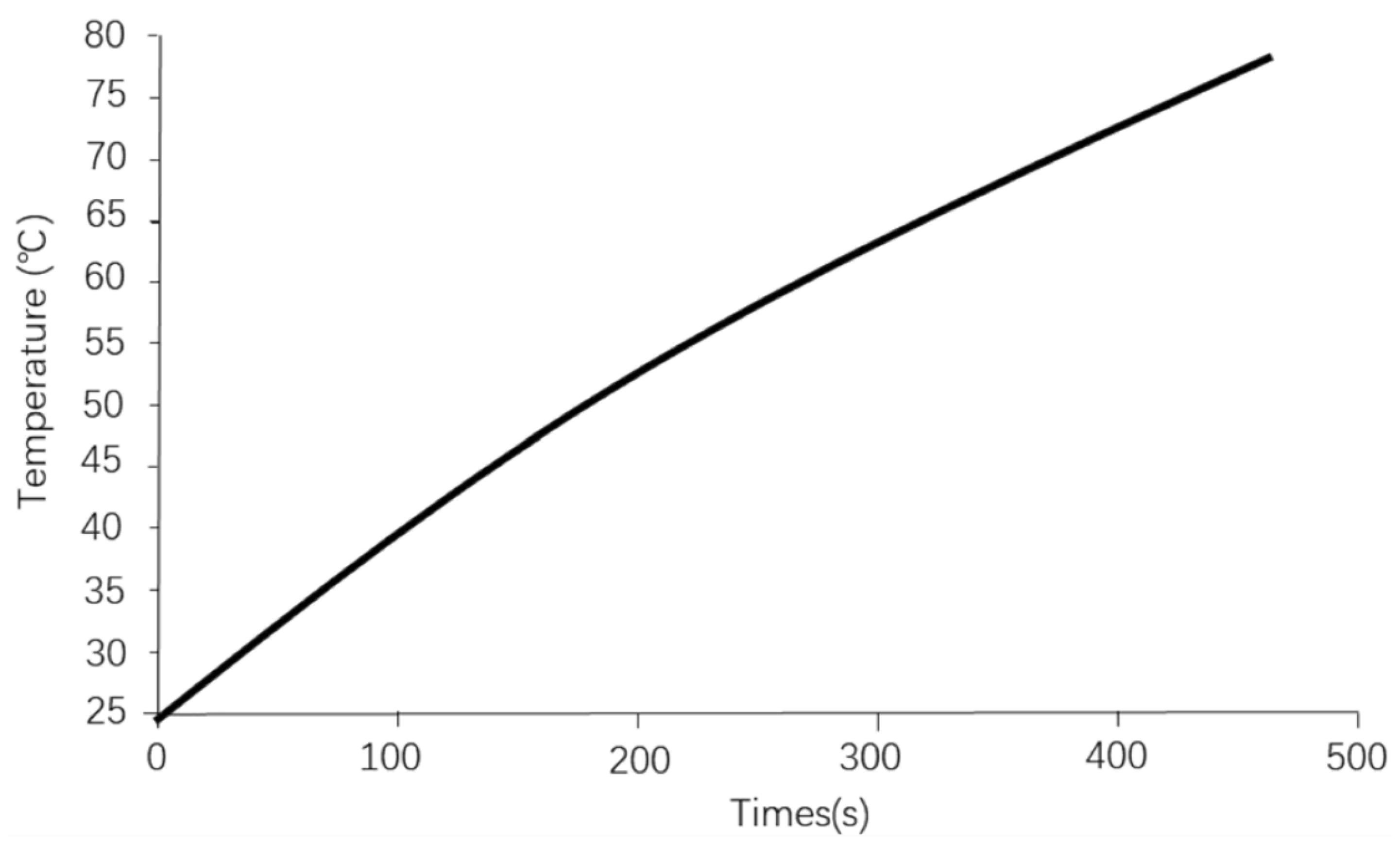
Figure 3 illustrates the thermal elevation of a battery subjected to a constant 6C charge rate at an ambient temperature of 25 °C, in the absence of active cooling. The individual cell possesses a capacity of 95 Ah, which corresponds to a 6C fast-charging current of 570 A [
8,
9].
The experimental data demonstrate that applying high-current fast charging without thermal management induces a drastic temperature surge. Within approximately 480 s, the battery temperature exceeds 75 °C, corresponding to an average heating rate greater than 0.1 °C/s. This value significantly surpasses the maximum safe operating threshold for lithium-ion cells. Consequently, sustaining ultra-fast charging is unfeasible without implementing a highly effective rapid cooling mechanism. Furthermore, to ensure battery integrity, the charging capacity is substantially curtailed by the protection system once the internal temperature breaches the upper safety limit (>45 °C).
Elevated temperatures during fast charging significantly accelerate the degradation of a lithium-ion battery’s lifespan. Excessive heat acts as a catalyst, promoting harmful parasitic chemical reactions within the cell. Rather than efficiently storing energy, the elevated thermal conditions drive the degradation of internal components. Specifically, heat induces excessive growth of the Solid Electrolyte Interphase (SEI) layer on the anode. This permanently traps active lithium ions, rendering them unavailable for energy storage and thereby reducing the overall capacity of the battery. Furthermore, at elevated temperatures, the liquid electrolyte decomposes into gas; this dries out the cell, impedes ion mobility, and leads to physical cell swelling. The combination of high thermal stress and rapid ion intercalation causes the crystal structure of the cathode to expand and micro-crack. This isolates portions of the active material, creating “dead zones” incapable of holding a charge. Cumulatively, this structural and chemical damage drastically increases the internal resistance of the cells. Because higher resistance generates additional Joule heating, a detrimental feedback loop is established: the battery operates at progressively higher temperatures during subsequent cycles, further accelerating its degradation over time. Consequently, to sustain high-current fast charging, the internal temperature of the power battery must be rigorously maintained below 45 °C; this represents the primary objective in the design of a Battery Thermal Management System (BTMS). It is imperative that the development of this system comprehensively addresses the substantial heat dissipation required during ultra-fast charging conditions. Regulating the battery temperature within its optimal operating window is essential not only to preserve high charging efficiency but also to guarantee the overall operational safety and longevity of the energy storage system.
It is therefore very interesting to analyze and compare the different cooling methods currently in use, especially in the automotive sector, and evaluate their performance for different use cases. The most significant parameter in this regard will be the discharge current intensity in relation to the battery energy, known as the C-rate. In the comparative analysis that will be carried out in this work, both through thermo-fluid dynamic simulation models and experimental tests, attention will focus in particular on three very important parameters: the temperature of the coldest cell (Tmin), the temperature of the hottest cell (Tmax), and the difference between them (DT). These three parameters are particularly important both for the health of the cells and for controlling the risk of thermal runaway. Furthermore, they are the values commonly monitored by the on-board BMS and, in particular, DT is a very important parameter for the effectiveness of the cell voltage balancing system and for improving the life cycles of the battery pack.
2. Li-Ion Cells: Structure and Mechanisms of Heat Production
In a battery, the chemical energy is converted into electrical energy through oxidation-reduction reactions, in which the electrons released are then conveyed from one pole to the other through a special electrical circuit. Regardless of its geometry and dimensions, a lithium-ion battery typically consists of:
Cathode (+) → made of lithium cobalt oxide (LiCoO2) or lithium iron phosphate (LiFePO4).
Anode (−) → made of graphite and intercalated lithium ions.
Electrolyte → interposed between the cathode and anode. Its chemical composition varies depending on the battery, but it usually consists of a solution of lithium salts mixed with specific solvents (dimethyl carbonate, diethyl carbonate, etc.).
During the discharge phase, a reduction reaction takes place at the cathode, while an oxidation reaction takes place at the anode: the electrons released by the anode reach the cathode via the electrical circuit, while the lithium ions pass from the anode to the cathode through the electrolyte. During the charging phase, however, the process is reversed: oxidation occurs at the cathode, while reduction occurs at the anode, with electrons and lithium ions flowing from the cathode to the anode [
10,
11].
The parameters characterizing a battery are as follows:
Nominal voltage (V) → the maximum potential difference to which the cell can be subjected.
Nominal capacity (Ah) → the amount of electrical charge that a fully charged battery can supply under certain discharge conditions (discharge current, temperature) until it reaches a specific end-of-discharge voltage. In other words, it is a measure of how much energy a battery can store.
Cut-off voltage (V) → voltage at which the battery is discharged
Nominal energy (Wh) → obtained by multiplying the power delivered by the cell during discharge by the time required to complete the discharge
Life cycles → the number of charge/discharge cycles that the battery can withstand before suffering a substantial decrease in its nominal capacity
Specific energy (Wh/kg) → the energy produced by the cell per unit of mass
Specific power (W/kg) → the power delivered by the cell per unit of mass
Power density (W/m3) → the power available per unit of volume
Maximum discharge current (A) → the maximum current that can be delivered by the battery during discharge
Internal resistance (mΩ) → is the internal resistance of the cell
C-rate → indicates the speed at which the discharge phase occurs in relation to the nominal capacity of the cell.
During operation, each cell that makes up the vehicle’s battery pack produces heat, which can be broken down into two components:
Reversible heat → corresponds to entropic heat and is due to the reversible entropy change caused by the electrochemical reactions that take place in the cell.
Irreversible heat → is in turn due to several contributions:
- –
Heat dissipated by the Joule effect → is related to the current supplied by the battery and the internal electrical resistance of the cell. In particular, the heat dissipated by the Joule effect increases with the square of the discharge current (and therefore with the C-rate).
- –
Polarization heat → during charging or discharging, potential differences are created between the different parts of the cell. There are three main types of polarization in a lithium cell:
- –
Activation polarization: this is due to the slowness of the electrochemical reactions that occur at the electrodes. The higher the current, the greater the activation energy.
- –
Concentration polarization: this is due to the difference in lithium ion concentration between the electrodes and the electrolyte.
- –
Resistance polarization: this is due to the internal resistance of the cell, which includes the resistance of the electrodes, electrolyte, and contacts.
As the discharge current (and therefore the C-rate) increases, polarization becomes more pronounced, resulting in an increase in the heat dissipated due to polarization. In particular, the contribution due to polarization becomes significant for high C-rates [
12,
13]. Overall, the heat generated by a single cell can be expressed using Bernardi’s Equation (1). Based on what has been said so far, the heat generated by the cell is closely linked to the charge/discharge current, and therefore to the C-rate: as the current increases, and therefore the C-rate, the heat q produced by each cell increases. Battery performance is strongly linked to the operating temperature of the individual cells.
Specifically, the lithium cells in a battery pack must always operate at a temperature between 15 °C and 35–40 °C, with a maximum difference of 5 °C between them, in order to operate in optimal conditions and, above all, safely. In fact, if:
T < 15 °C → operating below the lower operating limit significantly reduces the speed of the electrochemical reactions in the cells, causing a considerable decrease in cell capacity.
T > 40 °C → when the temperature exceeds 80 °C, highly exothermic chemical reactions are activated, which exponentially accelerate the degradation of the battery materials. At high temperatures, the electrolyte and cathode decompose, resulting in the release of highly flammable gases (venting). The combustion of these gases leads to a further release of heat, with self-sustaining reactions that cause the battery to explode violently. This phenomenon is known as thermal runaway.
3. Cooling Systems Analysed: A Brief Overview
In the automotive sector, cooling battery packs in electrified powertrains is essential, and its effectiveness has a direct impact on vehicle performance, range, and energy efficiency. Since the launch of the first hybrid road vehicle, TOYOTA Prius, 1997, actively cooled battery packs have been used, and various technological solutions have been implemented over almost 30 years of production [
14,
15].
This paper will analyze in detail four of the most widely used systems for the thermal management of a vehicle battery pack. We will therefore briefly introduce their main features.
3.1. Forced Air Cooling
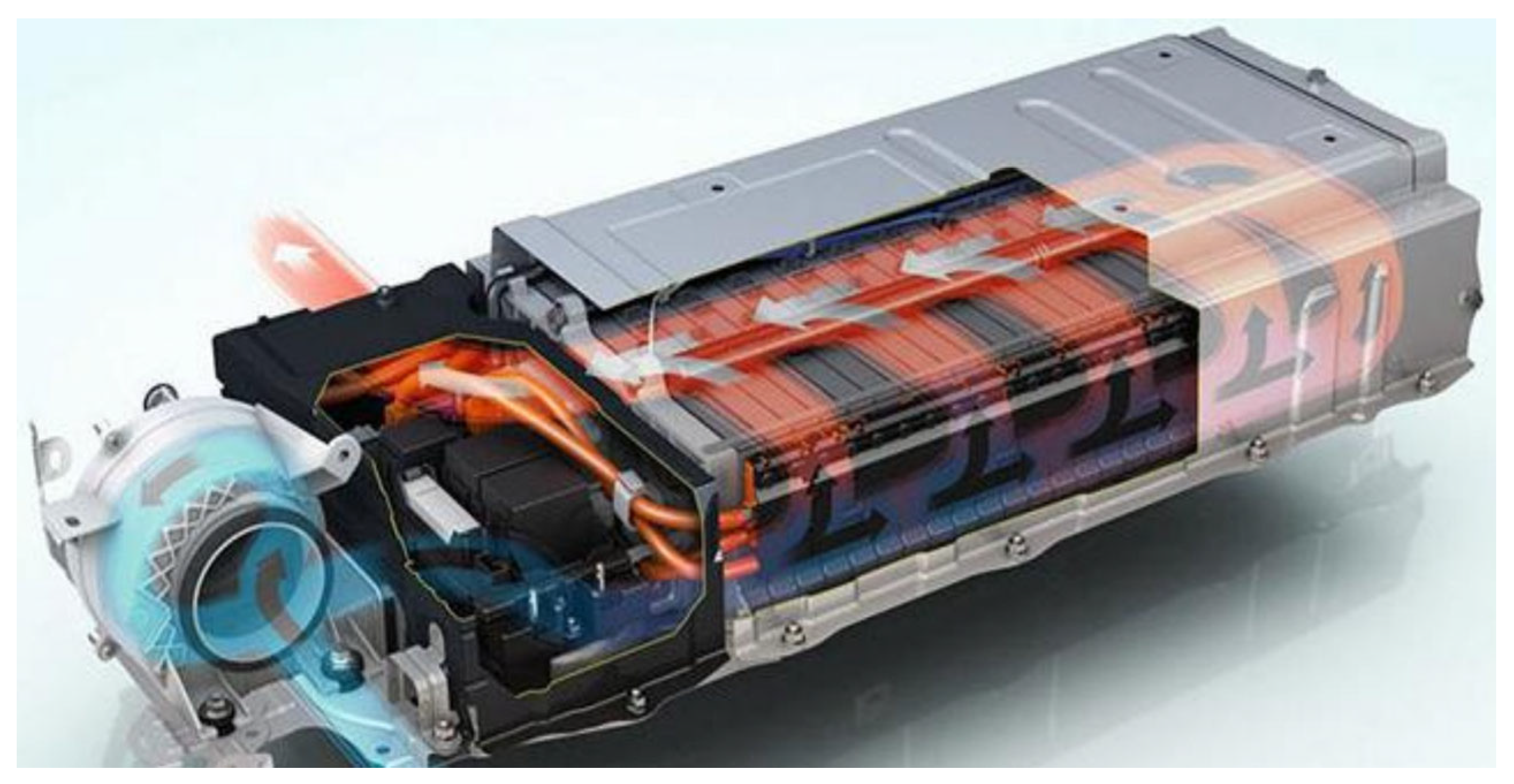
In systems of this type (
Figure 4), air is conveyed directly to the cells by means of special fans, in order to trigger a forced convection heat exchange between the air (coolant) and the cells. In general, forced air cooling systems are characterized by:
Simple construction
Low costs
High versatility
Limited efficiency → due to the low capacity and thermal conductivity of the air used for cooling, systems of this type are only truly effective for battery packs with limited energy density and/or low C-rates. Otherwise, it is necessary to build a system of considerable size in order to increase the flow rate of cooling air, with a consequent increase in size, cost, and noise.
High noise levels → mainly due to the fans that move the air, which are absolutely necessary to establish forced heat exchange capable of compensating, albeit only partially, for the poor cooling qualities of the air.
It is possible to improve the efficiency of a forced air system by taking certain measures:
Arranging the cells and fans in an optimised way.
Optimally shaping the air transit channels.
Introducing the optimal air flow rate under operating conditions.
Pre-cooling the air.
Although the forced air system is generally inefficient, especially in high C-rate conditions, it is still one of the most widely used cooling systems in the automotive sector, mainly due to its low cost.
3.2. Direct Liquid Cooling—Immersion Cooling
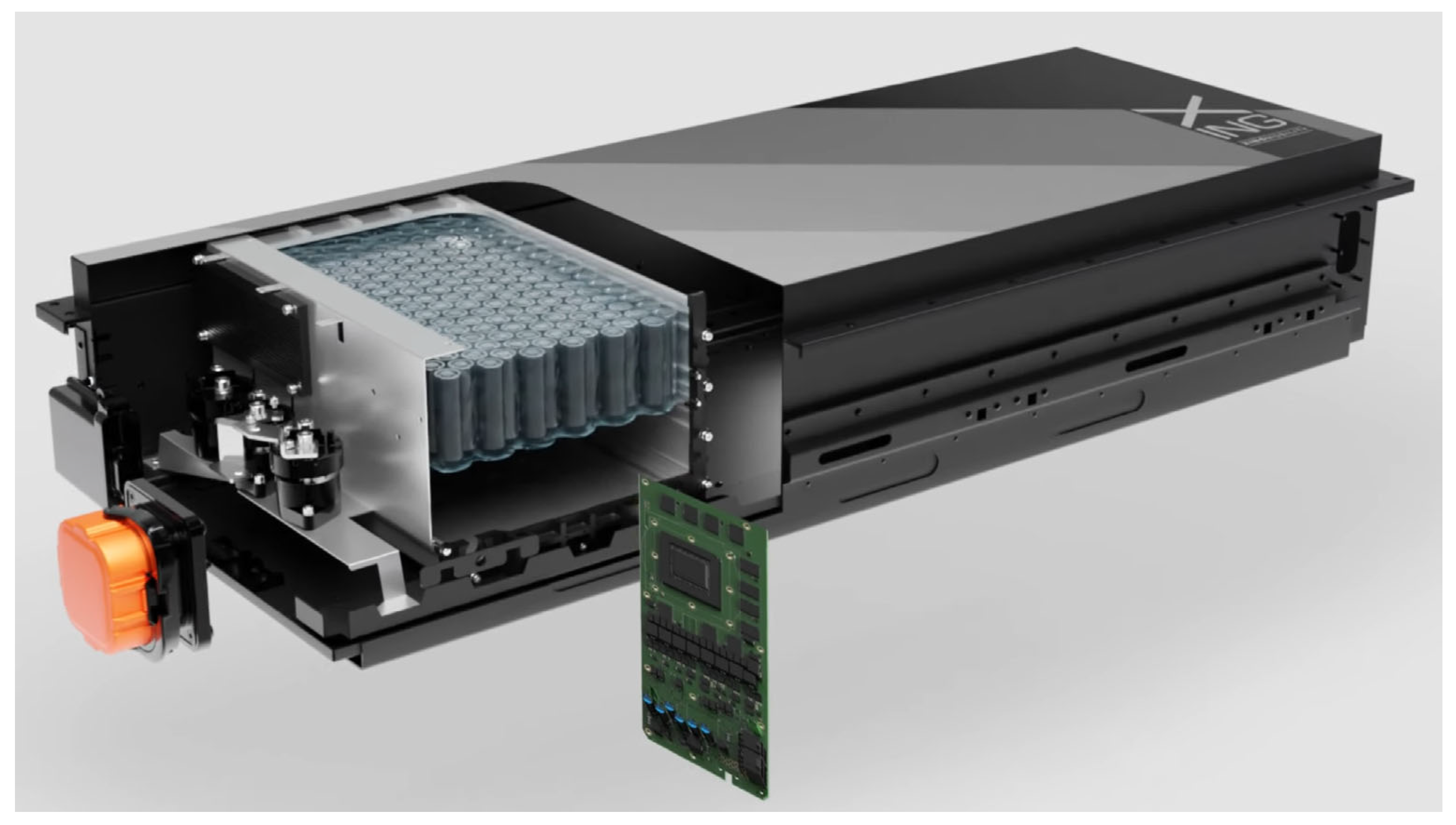
In systems of this type (
Figure 5), the battery pack is immersed directly in a dielectric liquid with high thermal conductivity, ensuring significantly more efficient cooling than forced air systems. However, it is necessary to ensure that the system is watertight and that the battery pack is cooled evenly, i.e., avoiding the formation of hot spots, which involves considerable design complexity and therefore very high costs. Therefore, such systems are still not widely used and are mainly intended for high-performance cars [
16,
17,
18,
19].
3.3. Indirect Liquid Cooling—Bottom Cooling Plate
Cold plate cooling systems basically consist of:
Aluminum/copper plate → inside the metal plate, which is made of aluminum/copper due to the high thermal conductivity of these materials, micro-channels are created in which the coolant will flow.
Coolant → usually a solution of water and ethylene glycol in varying proportions (generally 50:50), or special oils.
Dielectric but thermally conductive layer → this is placed between the plate and the cells to prevent short circuits, without compromising the heat exchange between the plate and the cells. It can be made of different materials:
- ○
Thermal pads made of polymer material enriched with conductive particles, which offer a good compromise between thermal conductivity and electrical insulation.
- ○
Graphite sheets or phase change interfaces (PCM—Phase Change Material), with high thermal conductivity.
- ○
Thermal interface material (TIM), which can be based on silicone or ceramic materials with high thermal conductivity.
Radiator/Heat exchanger → to cool the coolant.
In most cases, the cold plate is placed below the cells, but it is also possible to place several plates in parallel between the cells to ensure more uniform cooling. Despite more uniform cooling and greater silence compared to a forced air system, cold plate cooling systems are plagued by considerable design complexity (micro-channel geometry, containment, and proper coolant circulation), as well as causing a significant increase in vehicle weight [
20].
The contact layer—typically a Thermal Interface Material (TIM) such as a gap filler, pad, or thermal adhesive—bridges the microscopic air gaps between the rough surfaces of the battery cells and the cooling plate. In a bottom-cooled setup, heat generated within the cells flows downwards through the cell materials, across the contact layer, into the cooling plate, and finally into the coolant. The thermal resistance of the contact layer (R
contact) is composed of the bulk thermal resistance of the TIM itself and the interfacial contact resistances at the boundaries (cell-to-TIM and TIM-to-cold plate). It can be mathematically expressed as:
where
tTIM = Thickness of the contact layer (m)
kTIM = Thermal conductivity of the material (W/m·K)
A = Contact area (m2)
Rint,1, Rint,2 = Interfacial thermal resistances at the boundary surfaces (K/W)
Because air has an extremely low thermal conductivity (~0.026 W/m·K), even microscopic air pockets drastically increase Rint. The TIM (kTIM 1 ~1 to 5 W/m·K) displaces this air, significantly lowering the overall Rcontact.
At steady-state, the maximum temperature at the top of the cell (
Tmax) can be approximated by:
where
DTcontact =
Q‧Rcontact (with
Q being the heat generation rate in Watts). If the contact layer has high thermal resistance (e.g., the TIM is too thick, degraded, or poorly applied),
DTcontact increases. Because the heat (
Q) must still escape, the baseline temperature of the entire cell shifts upward. This increases the risk of thermal runaway and accelerates battery aging.
Bottom cooling inherently creates a vertical temperature gradient because heat must travel the entire height of the cell to escape. If there is a low Rcontact (highly efficient contact), the bottom of the cell is kept very close to the cold plate temperature. However, because the cell itself has internal thermal resistance (especially cylindrical cells, where vertical thermal conductivity kz is often lower than radial conductivity), a stark vertical gradient forms. The bottom becomes very cold, while the top remains hot. This temperature difference (DTcell) can lead to uneven current distribution, localized aging, and capacity fade. On the contrary, high Rcontact (poor contact) lead to a highly resistive contact layer that acts as an insulator. While the overall temperature of the cell (Tmax) increases dangerously, the internal vertical gradient (DTcell) might actually appear less severe relative to the baseline temperature, because the bottom of the cell is no longer being effectively chilled.
3.4. Indirect Liquid Cooling—Tube Cooling
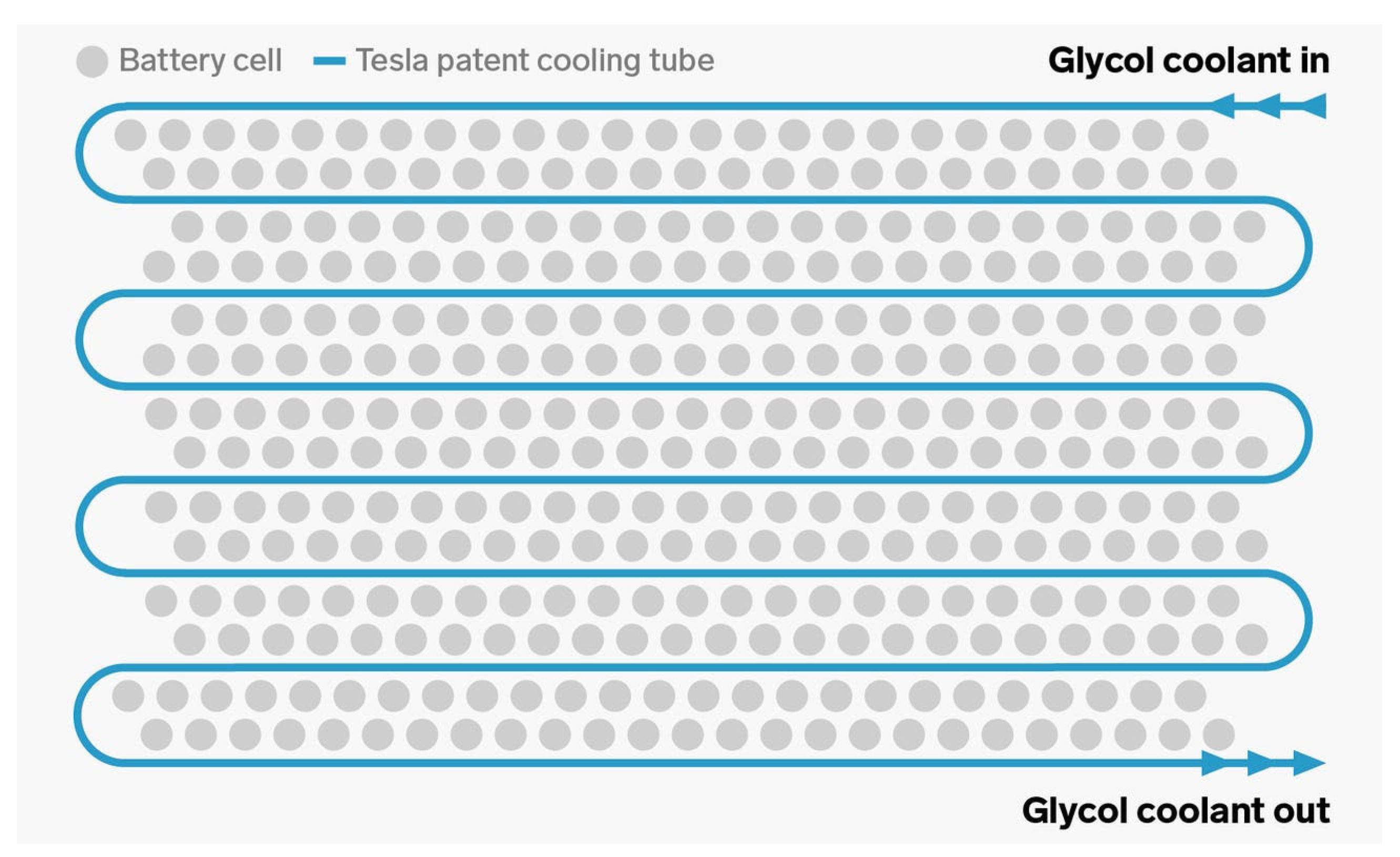
The tube cooling system, such as the one used by Tesla (
Figure 6), has a very similar operating principle to that of the cold plate: the cells are cooled indirectly by a coolant flowing inside a special channel (the coil). These systems generally consist of:
Coil → this is a hollow metal conduit placed between the cells, inside which the coolant flows. The coil is wrapped in a dielectric material with good thermal conductivity, so as to avoid short-circuiting between the coil itself and the cells without compromising the exchange with the coolant.
Coolant → usually a solution of water and ethylene glycol in varying proportions (generally 50:50), or special oils.
Radiator/Heat exchanger → to cool the coolant.
Compared to the cold plate system, the coil system is lighter and more versatile, as well as ensuring more uniform cooling of the cells thanks to the coil layout. However, this system is also characterized by considerable design complexity compared to the forced air system, for reasons similar to those of the cold plate system [
21].
Furthermore, the layout of the coil is particularly delicate, as Furthermore, the arrangement of the coil is particularly delicate, as it is necessary to ensure optimal contact with as many cells as possible.
The role of TIM (Thermal Interface Material) is in the problem that TIMs solve is thermal contact resistance, because air trapped in micro-roughnesses or gaps between the cell and the cooling system acts as an insulator. The goal of the TIM is to maximize heat transfer, governed by the following equation for conductive thermal resistance:
where
t is the material thickness (bond line thickness),
k is the thermal conductivity of the TIM, and
A is the effective contact area. In the bottom cooling plate configuration, the cells rest on a flat cold plate and heat must travel axially along the cell (from top to bottom). Because cylindrical cells (like the 2170 or 4680 formats) have limited axial thermal conductivity due to their internal winding (the jelly roll), extracting heat this way is thermodynamically disadvantaged. The contact area
A, is limited to the circular base of the cell; therefore, a TIM with a very high conductivity
k is required. Liquid gap fillers (polyurethane or silicone gels/pastes) that cure in place are frequently used; they can absorb the height tolerances of individual cells without applying mechanical stress, keeping the thickness
t to the absolute minimum.
In the tube cooling configuration, where a serpentine cooling ribbon or tube snakes between the sides of the cylindrical cells, heat is extracted radially. Since the distance from the hot core of the cell to the side surface is short, and the potential contact area is much larger compared to the base, heat transfer is inherently more efficient. It must be highlighted that the tube must interface with curved surfaces and the TIM (often a thermally conductive structural adhesive or encapsulant) must fill the complex voids between the cylinder and the cooling ribbon. The challenge here is not just thermal, but also process-oriented: the presence of voids (porosity) introduced during the TIM injection drastically reduces local efficiency and can create dangerous hot-spots [
12]. In
Table 2, a short comparison is reported.
In order to provides an overall comparative overview of four primary Battery Thermal Management Systems used in electric vehicles, evaluating their performance based on their ability to handle different charge and discharge rates (see
Table 3) [
21,
22].
Forced Air Cooling: Represents the baseline technology. It is highly cost-effective and simple to implement, but its poor thermal conductivity makes it suitable only for low-demand applications (below 1C). It struggles with temperature uniformity, making it largely obsolete for modern, fast-charging EVs, though it remains viable for micro-mobility and older hybrid models.
Bottom/Surface Cooling Plates: Currently the industry standard for mainstream electric vehicles. Operating effectively at medium C-rates (1C to 3C), this system offers a practical balance between cooling efficiency, manufacturing cost, and complexity. However, its main drawback is the creation of vertical temperature gradients—since cooling is applied only at the base, the top of the cells can remain significantly hotter during fast charging.
Serpentine Tube Cooling: A more advanced liquid-based approach, famously utilized by Tesla for cylindrical cells. By weaving cooling tubes between the cells, this system drastically increases the contact surface area. It efficiently manages high C-rates (2C to 4C) and offers better temperature uniformity than bottom plates, making it ideal for high-performance driving and sustained fast charging, albeit at the cost of higher manufacturing complexity.
Immersion Cooling: Represents the cutting edge of thermal management. By submerging the cells entirely in a dielectric fluid, it achieves unmatched cooling efficiency and perfect temperature uniformity. It is the only system currently capable of safely managing ultra-high C-rates (5C and above) without risking thermal runaway. However, its extreme cost, added weight, and sealing challenges currently restrict its use to hypercars and advanced motorsport applications.
This study focuses on thermal management systems currently in use in the automotive industry, and therefore does not consider systems that were proposed experimentally in the past but, for various reasons, never reached production, even on a niche scale. The most significant case is the use of PCMs (phase change materials). As for electric passenger cars, PCMs have never been implemented as the primary cooling system in mass-production projects. One of the main issues is thermal saturation; PCMs absorb heat by melting, but once they have fully transitioned to a liquid state, their ability to exchange heat with the outside effectively ceases. A general-purpose automotive battery pack needs to continuously transfer heat to the outside, something that only a moving fluid and a radiator can do. PCM materials also face the issue of excessive weight, as significant quantities of PCM must be added to achieve an effective thermal effect. PCM technology has, however, found its place in specific mass-market applications, such as micromobility (e-bikes) and niche motorsport applications. The authors have proposed in previous works the use of PCMs in a battery pack for a Formula Student competition vehicle, with the aim of providing a one-time boost to the cooling system to help complete the 22 km endurance test. Some manufacturers use potting resins or thermal interface materials (TIMs) infused with PCM microcapsules to be placed between individual cells. The purpose is not to cool the battery, but to act as a passive safety system; if a cell short-circuits and catches fire, the adjacent PCM absorbs the thermal peak by melting, delaying or completely preventing the spread of the fire to neighboring cells.
In contrast to PCMs, immersion cooling has garnered greater interest because it has reached limited-series production and is being used in the ultra-high-performance automotive sector. This technology is, in fact, indispensable in all high-C-rate applications where maximum heat dissipation capacity is required. Some real-world examples:
- ○
Mercedes-AMG (Premium Series Production): The AMG division has developed a high-performance battery for plug-in hybrid models such as the Mercedes-AMG GT 63 SE Performance and the C 63 SE Performance. These vehicles utilize direct cooling, in which 14 L of dielectric fluid circulate around each of the hundreds of cylindrical cells.
- ○
McLaren Speedtail: This hybrid hypercar with over 1000 hp (produced in just over 100 units) was one of the first to adopt cell immersion in a dielectric fluid to manage the high thermal stress of its ultra-compact battery pack.
- ○
Motorsport (Formula E, Formula 1 and others): In racing, where the car must deliver hundreds of kW in a matter of seconds and cost is not an issue, immersion is a widely proven technology.
For this reason, this study has examined not only traditional cooling methods but also immersion cooling, which, in the authors’ view, represents the future of a significant portion of the electric vehicle sector and is undoubtedly the most promising emerging technology to date.
Dielectric fluids used for immersion cooling must possess two fundamental characteristics: extremely high electrical resistivity and high thermal conductivity. From a chemical standpoint, these fluids are divided into three main categories:
Synthetic Oils (Hydrocarbons and PAO—Polyalphaolefins): These are currently the industry standard and the most widely used choice in the automotive sector. They offer an excellent balance between cost, durability, low viscosity, and safety. They have a high flash point, drastically reducing the risk of fire.
Ester-based fluids (synthetic or bio-based): These represent the new frontier of sustainability. Derived from vegetable oils or synthesized in the laboratory, these fluids are biodegradable and non-toxic. They have excellent thermal capacity and a very high flash point, but compared to synthetic oils, they are characterized by slightly higher viscosity at low temperatures and compatibility with certain plastics or battery seals.
Fluorinated fluids (e.g., hydrofluoroethers—HFE): Historically, these have been the absolute best in terms of pure performance. They can also be used for “two-phase” cooling (the liquid boils upon contact with the hot cell, turning into a gas and absorbing large amounts of heat, before recondensing). However, they are disappearing from the market. They contain PFAS (poly- and perfluoroalkyl substances, known as “forever chemicals”). Giants like 3M have announced their exit from this market (e.g., the well-known Novec line), pushing the automotive industry toward the first two options.
In the fluid dynamics simulations presented here and in the experimental validation activities, a dielectric fluid produced by Petronas, called Iona, is used, which was developed specifically for the application of immersion cooling of lithium-ion cells. Petronas Iona constitutes a family of engineered, synthetic dielectric heat transfer fluids specifically formulated for advanced thermal management in high-voltage and high-heat-flux environments. The product line is designed to bridge the gap between electrical insulation and highly efficient thermodynamic performance (see
Table 4). Its core physicochemical properties are:
High Dielectric Strength: The fluids exhibit exceptional electrical insulation capabilities (high breakdown voltage), allowing direct, bare-board contact with energized electronics without inducing short circuits or signal interference.
Optimized Heat Transfer Coefficients: Formulated with a favorable balance of specific heat capacity and thermal conductivity, these fluids enable rapid and uniform heat dissipation from localized hot spots.
Low Kinematic Viscosity: Maintaining low viscosity, especially at lower operating temperatures, minimizes fluid friction. This reduces the mechanical pumping power required to circulate the coolant, thereby decreasing the overall system pressure drop.
Chemical Inertness and Material Compatibility: The fluids are highly stable and non-corrosive, ensuring long-term compatibility with printed circuit boards (PCBs), polymers, elastomers, and reactive metals found in modern microelectronics and battery architectures.
Oxidative and Thermal Stability: The formulation resists molecular degradation under prolonged exposure to high temperatures, extending the operational lifespan of the fluid and preventing sludge formation.
4. Case Study: Definition and Models
The present work aims to numerically and experimentally compare the four aforementioned cooling methods, which represent the state of the art in automotive battery pack thermal management. The initial phase involves developing simulation models of the cooling systems for a cylindrical cell battery module. These models are utilized to perform computational fluid dynamics (CFD) thermal analyses, calculating the temperature distribution (thermal map) across the cells during constant-current discharge phases at various C-rates. Subsequently, a physical prototype of the module is fabricated. Its modular construction enables the consecutive implementation and testing of the four discussed cooling methods: forced air, bottom cold plate, liquid tube, and immersion cooling [
22,
23]. The design of the battery module is inspired by projects conducted at FCE S.r.l., Rome, Italy, a company that manufactures a specialized immersion-cooled module for innovative, high-performance vehicle battery packs. This system is highly adaptable to other cooling techniques, requiring only minor modifications to the covers and the holders that secure the 21700 cylindrical cells. For the proposed comparative analysis, the Molicel P42A—a commercially mature and widely recognized cell in the high-power sector—is utilized. This cell features a moderate energy density (222 Wh/kg) alongside high power capabilities (supporting continuous discharge rates greater than 10C), enabling the experimental testing of the module under high discharge currents (up to 6C in the present study). The primary mechanical and electrical characteristics of the individual P42A cell are detailed in
Table 5.
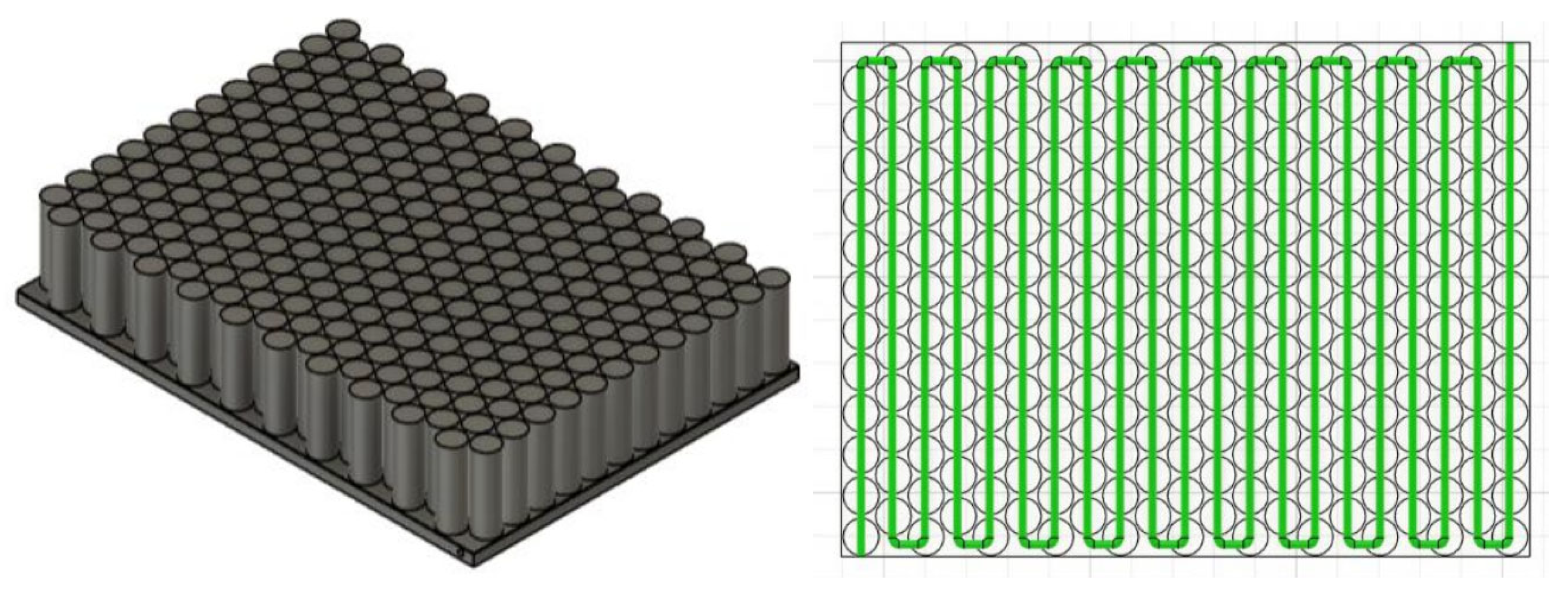
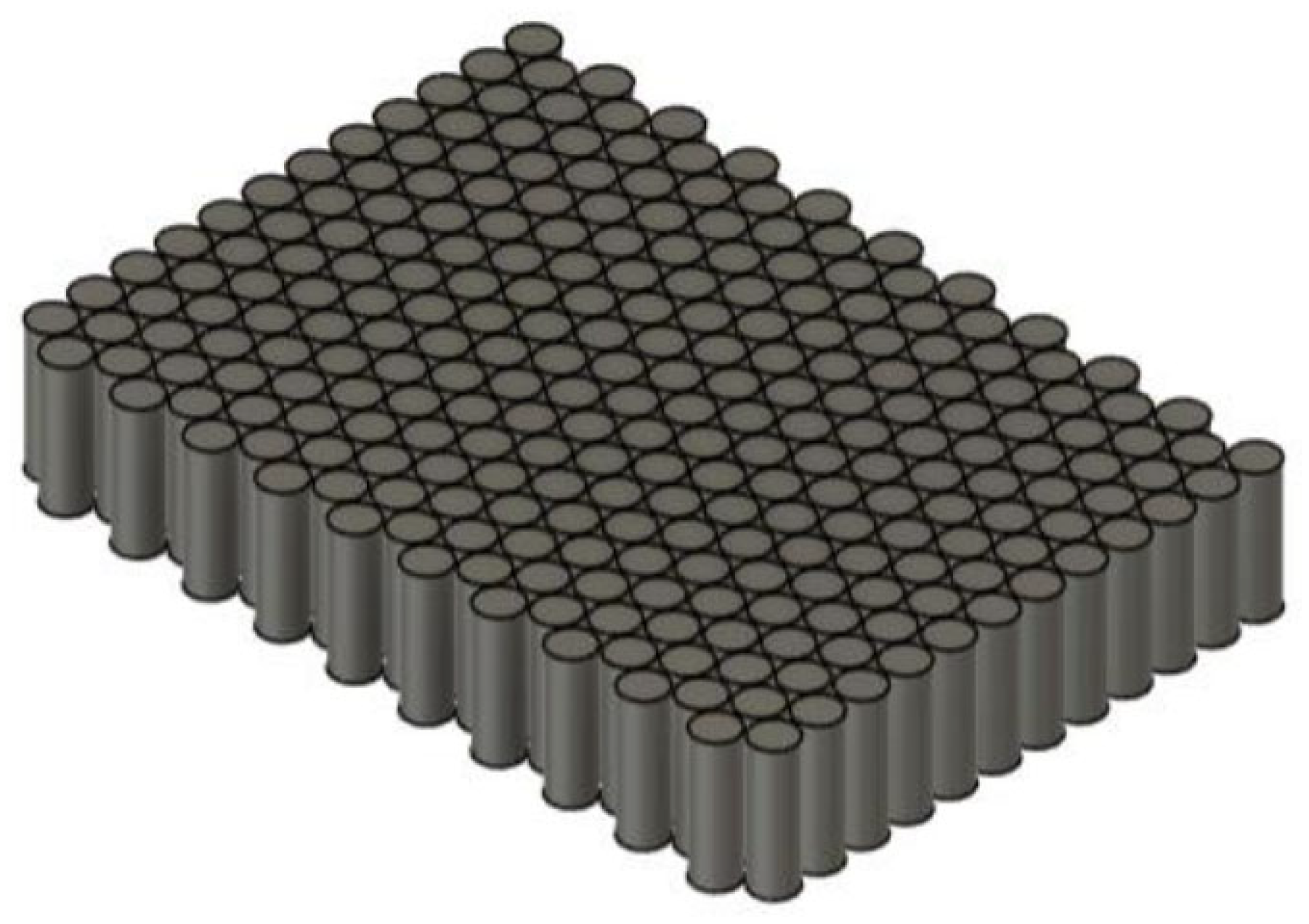
First, the geometric layout of the cells was defined by creating a CAD model (
Figure 7), with 252 cylindrical cells arranged vertically in a 12s21p electrical configuration. Next, a connection plate was created between the cells so that Ansys Fluent could perceive the cells as a single body. In this way, it is possible to assign the same parameters to the single body formed by the cells, rather than having to assign them individually to each cell, thus simplifying the analysis. The model was then imported into Ansys Fluent SpaceClaim, Version 2025 R1, where the volume was created that will be interpreted by the software as the fluid passage zone (dry air or liquid).
This model can be used for both forced air cooling and immersion cooling systems; in both cases, the cooling fluid, air and dielectric liquid respectively, flows around the perimeter of the cells, cooling them mainly on the cylindrical side shell of each individual cell. CFD analysis allows the flow rates and crossing speeds of the fluid to be evaluated and thus quantifies the extraction of heat produced by the cells.
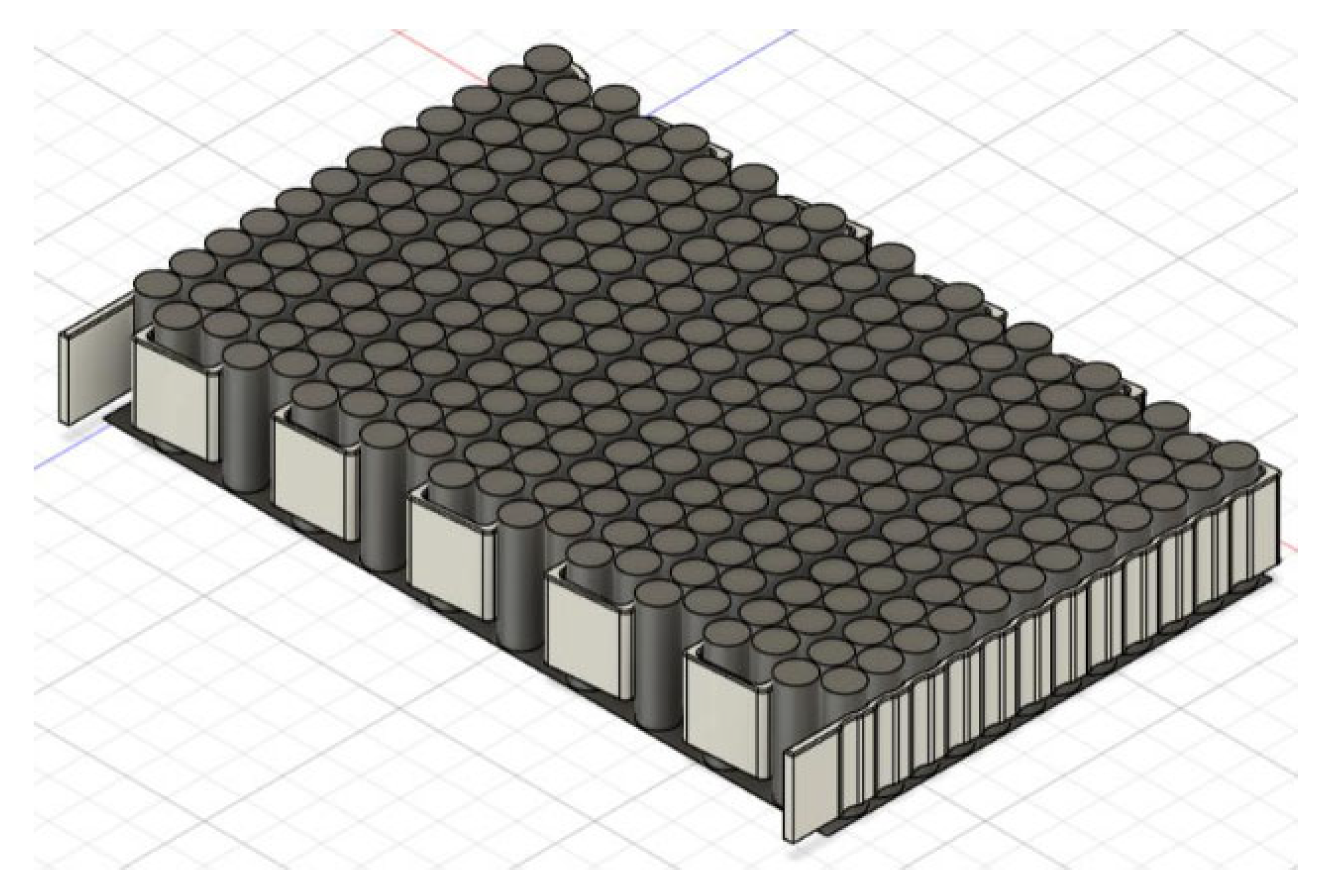
For cooling with a lower cooling plate, a layer of dielectric material (ABS) with moderate thermal conductivity was added between the aluminum base and the cells to the CAD model used previously (
Figure 7). This layer allows the fluid (water + ethylene glycol 50:50) to flow through the appropriate channels. This prevents the possibility of a short circuit between cells. The cooling plate is located under the aluminum base, inside which the cooling fluid, consisting of a 50:50 mixture of water and ethylene glycol, flows through special channels. This configuration reflects the actual operating conditions of the cooling system with a cooling plate, preventing the possibility of a short circuit between the cells and the aluminum plate, while allowing heat exchange between the coolant and the cells themselves (
Figure 8).
To implement the tube cooling system, the CAD model was further modified by introducing insulating material pipelines inside the holders that support the cylindrical cells, which “embrace” the cells. The most efficient configuration among those used by Tesla was chosen, which involves one tube for every two rows of cells. The arrangement of the cells and the electrical configuration remain unchanged and are identical to those of the two previous cases.
A coil has been added to the CAD model used previously, which encompasses two rows of cells at a time, whose profile has been specifically designed to fit the geometry of the cells (
Figure 9). The coil, through which the coolant (50:50 water+ethylene glycol) flows, is made of dielectric material (P-THERM Gap Fillers) rather than metal, again in order to prevent short-circuiting with the cells. This model was then imported into the SpaceClaim environment of Ansys Fluent, where the inlet and outlet sections for the coolant were assigned. This model was then imported into the SpaceClaim environment of Ansys Fluent, where the inlet and outlet sections for the coolant were assigned.
5. Case Study: Thermal and Fluid Dynamics Analysis
Once the geometries of the module, cells, and cooling systems have been defined, it is possible to implement the fluid dynamic and thermal analysis of the module during a constant current discharge.
As regards the forced air and immersion systems, it is established that the outflow of air and dielectric fluid, respectively, occurs in a direction parallel to the long side of the module, with entry on the short right side and exit on the short left side. As regards the channelized systems, i.e., the one with a lower cooling plate and the one with tube cooling, the geometries defined in
Figure 8 and
Figure 9 define the flow path of water and glycol.
As regards air and liquid cooling cases, after creating the CAD model, it was imported into SpaceClaim in order to create the air/liquid volume where the equations could be solved. After that, the mesh was performed, taking care to model the boundary layer well to manage the heat exchange at the wall. The two different regions were also assigned, solid for the cells and gaseous/liquid for the computational domain. Afterwards, the turbulence models were set up. It was decided to use a RANS approach, using a k-ω SST turbulence model to effectively study the wall flow.
The boundary conditions were assigned, the inlet was assigned the flow rate condition, the outlet was defined as a pressure outlet, and the side and top walls were defined as walls. For bottom cold plate and tube cooling cases, the computational domain was not created, as it is represented by the internal volume of the coils. In this case too, meshes of the solid and liquid/gaseous regions were created, taking care to correctly reproduce the boundary layer. Finally, the same turbulence model used in the two previous cases was chosen, and flow conditions were assigned to the inlet and pressure outlet to the channel outlet and wall to the external walls. The walls were modeled as interface zones between solid and liquid in order to allow heat exchange between the two. For all four cases, 1500 iterations were performed in order to minimize residuals and achieve simulation convergence, which was also verified by checking the stability of a physical parameter such as the temperature of the module.
The numerical study aims to evaluate the maximum thermal stress on the battery module. To identify the worst-case scenario, a steady-state approach was adopted rather than a transient time-stepping method. This approach simulates the thermal equilibrium reached by the system as t = ∞, representing the maximum temperature asymptotic limit under continuous load. Unlike standard transient simulations that utilize time-varying current profiles (), this model applies a constant power dissipation condition:
Source Term: a uniform volumetric heat source () was applied to the cell zones, derived from the maximum expected discharge power.
Conservative Assumption: by neglecting the depletion of the State of Charge (SoC) and the subsequent termination of current flow, the simulation ensures that the cooling system is sized for the most demanding operational environment.
While this establishes a rigorous safety boundary for the thermal management system, it inherently possesses physical limitations. A continuous 1 C-rate or 10 C-rate discharge would completely deplete the battery capacity in approximately 60 min or 6 min. In reality, a true steady-state thermal profile cannot be reached within this finite discharge window. Furthermore, the steady-state model neglects the system’s thermal inertia and the transient nature of battery electrochemistry, where internal resistance and entropic heat generation fluctuate significantly with temperature and State of Charge (SoC). Under real-world transient conditions—such as standardized WLTP drive cycles or dynamic fast-charging protocols—the thermal mass absorbs peak thermal loads, and heat generation is intermittent. Consequently, the steady-state peak temperatures reported in this study represent an absolute, albeit theoretical, upper boundary. While transient simulations would yield more realistic lower temperature profiles and are recommended for future dynamic performance optimization, the steady-state approach was explicitly chosen to validate the cooling architecture’s ultimate heat rejection capacity under the most severe continuous thermal load.
The simulation was performed using the finite volume solver Ansys Fluent. The physics involve Conjugate Heat Transfer (CHT), coupling the solid conduction within the cylindrical cells and the convective heat transfer within the surrounding fluid (air or liquid coolant). The solver reached convergence for the Continuity, Momentum (Navier–Stokes), and Energy equations. The “Steady” solver was utilized, effectively removing the
terms from the governing equations, which focuses the computation on the final balanced state between heat generation and heat rejection (see
Table 6). The Boundary Conditions considered are shown below:
Inlet: Constant mass flow rate or velocity at a fixed ambient temperature.
Outlet: Pressure outlet set to atmospheric conditions.
Cells: Defined as solid volumes with high-fidelity thermal conductivity and internal heat generation.
Walls: Adiabatic or convective boundary conditions depending on the module casing characteristics.
By ignoring the temporal evolution of the discharge, the problem has been simplified into a robust safety check. If the module stays within safe temperature limits in this infinite discharge scenario, it will certainly be safe during a real-world, time-limited discharge cycle. To provide a clear justification for this methodology, it is helpful to contrast it with the more common transient approach. This comparison highlights why the “Worst-Case” steady-state simulation is a robust choice for safety and cooling system design. The main difference lies in how the thermal mass of the battery and the duration of the discharge are treated. In a CFD solver like Fluent, the energy equation is simplified in your model by removing the transient term:
Transient Energy Equation:
Steady-State Energy Equation:
By setting it is being assumed that the battery has been discharging at peak power for an infinite amount of time.
In reality, a battery discharge is limited by its capacity. However, the steady-state approach is often preferred for Thermal Management System (TMS) sizing for the following reasons:
Elimination of Thermal Lag: Transient simulations often show lower temperatures because the material’s heat capacity “soaks up” heat. The model here used ignores this “buffer” ensuring the cooling system can handle the heat even if the thermal mass is fully saturated.
Boundary Limit Discovery: It defines the absolute upper bound of temperature. If the cells remain below the critical threshold (e.g., 60 °C) in this steady-state simulation, they are guaranteed to be safe during any shorter, real-world discharge cycle.
Computational Efficiency: it can iterate through many design changes (e.g., changing fin spacing or air flow velocity) much faster than running multiple 30 min transient discharge cycles.
While robust, it is worth noting that this method does not account for peak pulse loads that might exceed the average constant power for very short durations, and may result in an over-designed cooling system (heavier or more powerful than strictly necessary), which is a common trade-off for increased safety.
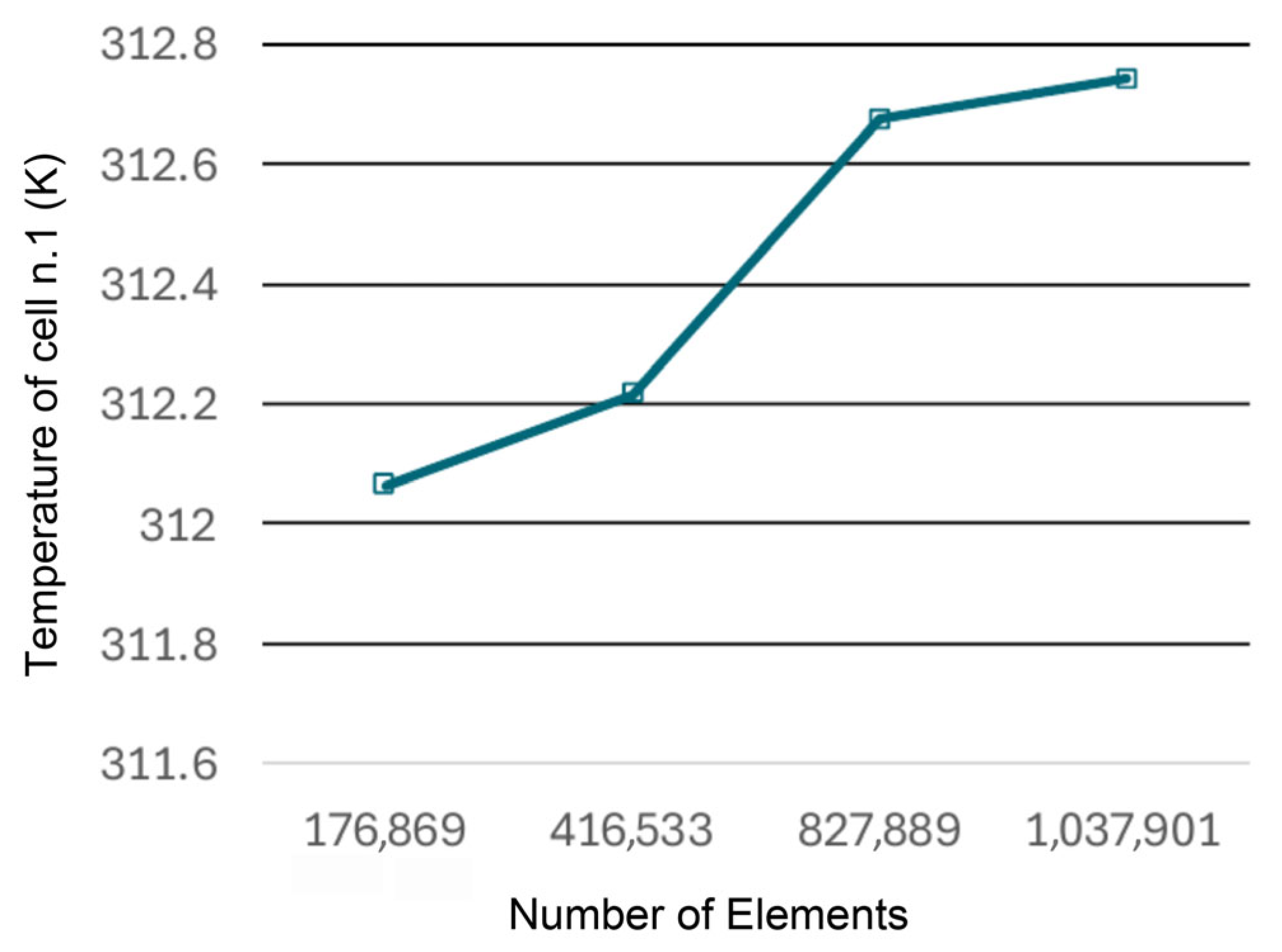
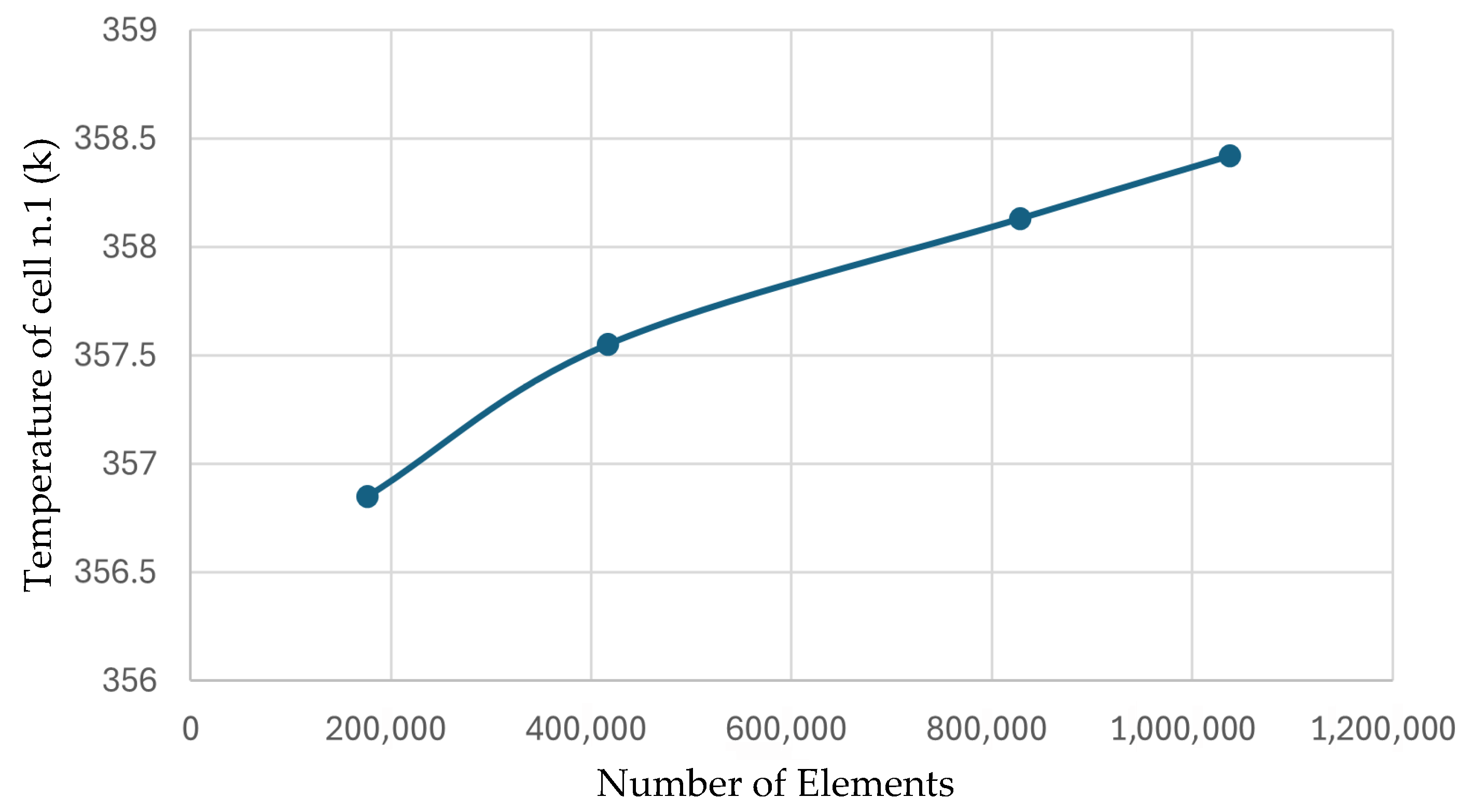
For each cooling system, both in the C-rate = 1 and C-rate = 10 conditions, a mesh sensitivity analysis was performed to verify the influence of the mesh on the results obtained during simulation. Taking the case of forced air cooling with C-rate = 1 as a representative example, the results were found to be insensitive to significant variations in the mesh. Therefore, for the purpose of verifying the results obtained in the simulation phase, the mesh sensitivity analysis was performed only for the C-rate = 1 condition. Taking the case of forced air cooling with C-rate = 1 as a representative example, the results showed little sensitivity to significant variations in the mesh. A compromise was therefore made between the number of mesh elements and the calculation time. Similar results were also observed for the other cooling systems. The results obtained in the simulation phase were then verified by comparing them with the results obtained from the actual tests (
Table 7 and
Figure 10).
For the analysis with C-rate = 10, the increase in volumetric heat generation causes higher thermal gradients compared to the C-rate = 1 case. This resulted in a higher sensitivity of the solution to the spatial discretisation, in particular for coarser meshes. Despite this, as for the previous case, a monotonic convergence is highlighted; this led to the choice of the 800,000 elements mesh, which offers a good compromise between computational costs and solution accuracy (
Figure 11 and
Table 8).
5.1. C-Rate = 1 Simulation Results
Under discharge conditions of C-rate = 1, the module delivers an electrical power equal to P = 4.4 kW. Considering an approximate cell efficiency of 95%, the portion of power that is dissipated in the form of heat is equal to 5% of P, Q = 0.05 P = 222.5 W.
5.1.1. Air Forced Cooling
The dry air used as a refrigerant is characterized by:
Thermal conductivity, k = 0.0242
Specific heat, Cp = 1006.4
Density, ρ = 1.225
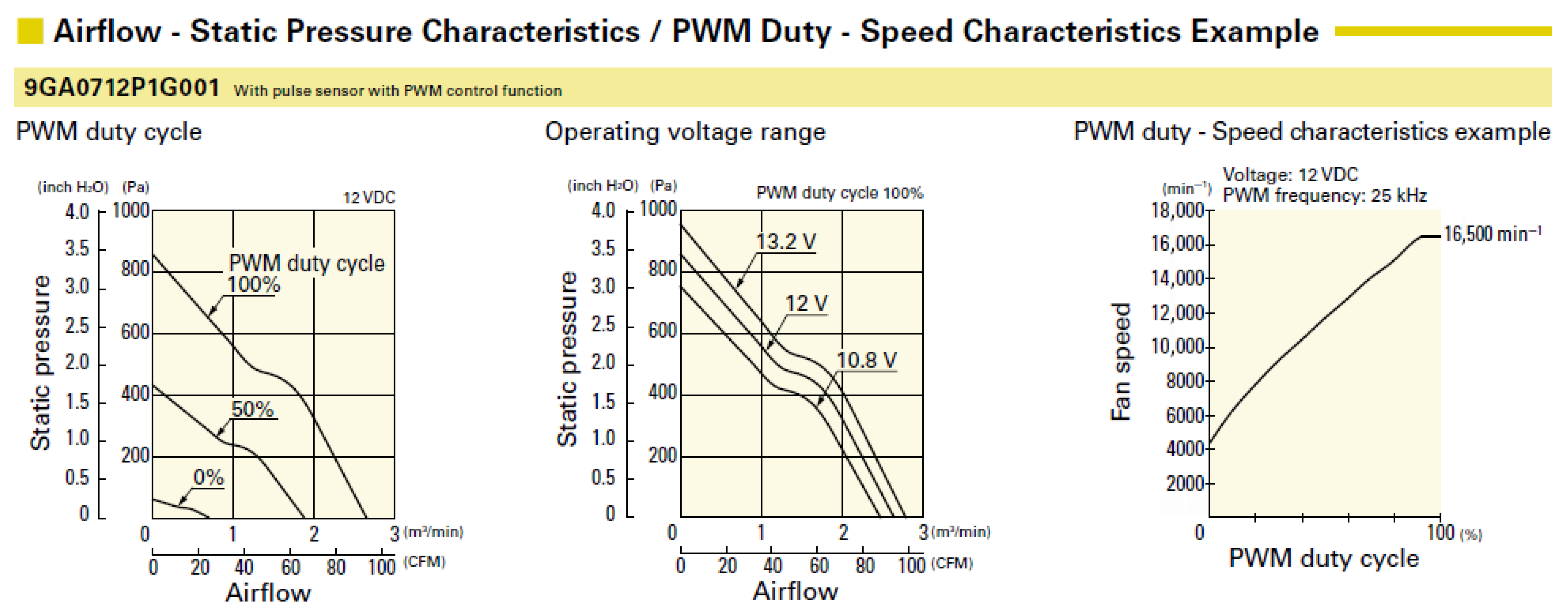
Under these conditions, an air flow rate of V̇ = 0.026 = 1273 was chosen, which can be achieved using two San Ace 70 fans produced by Sanyo Denki, Tokyo, Japan.
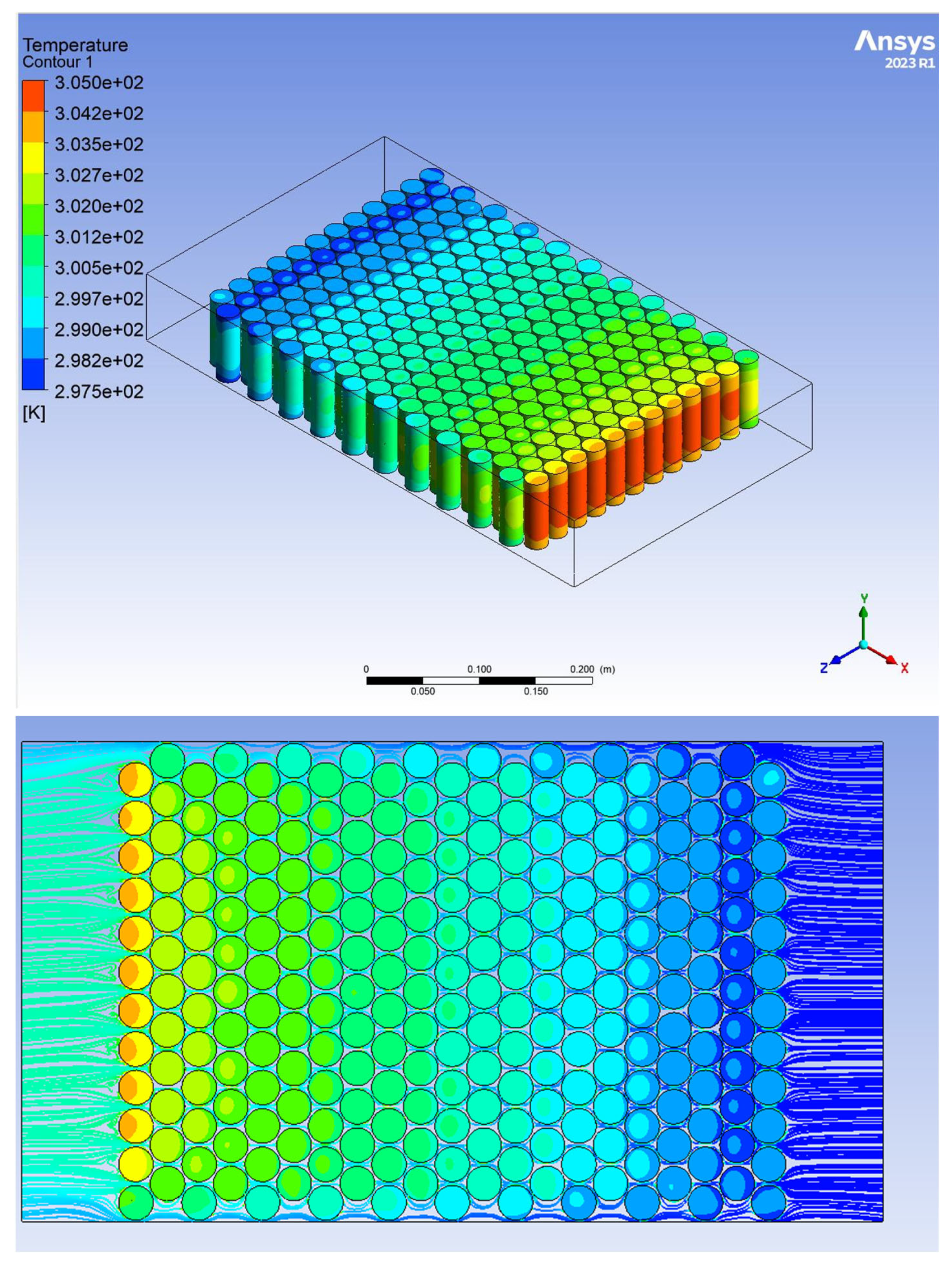
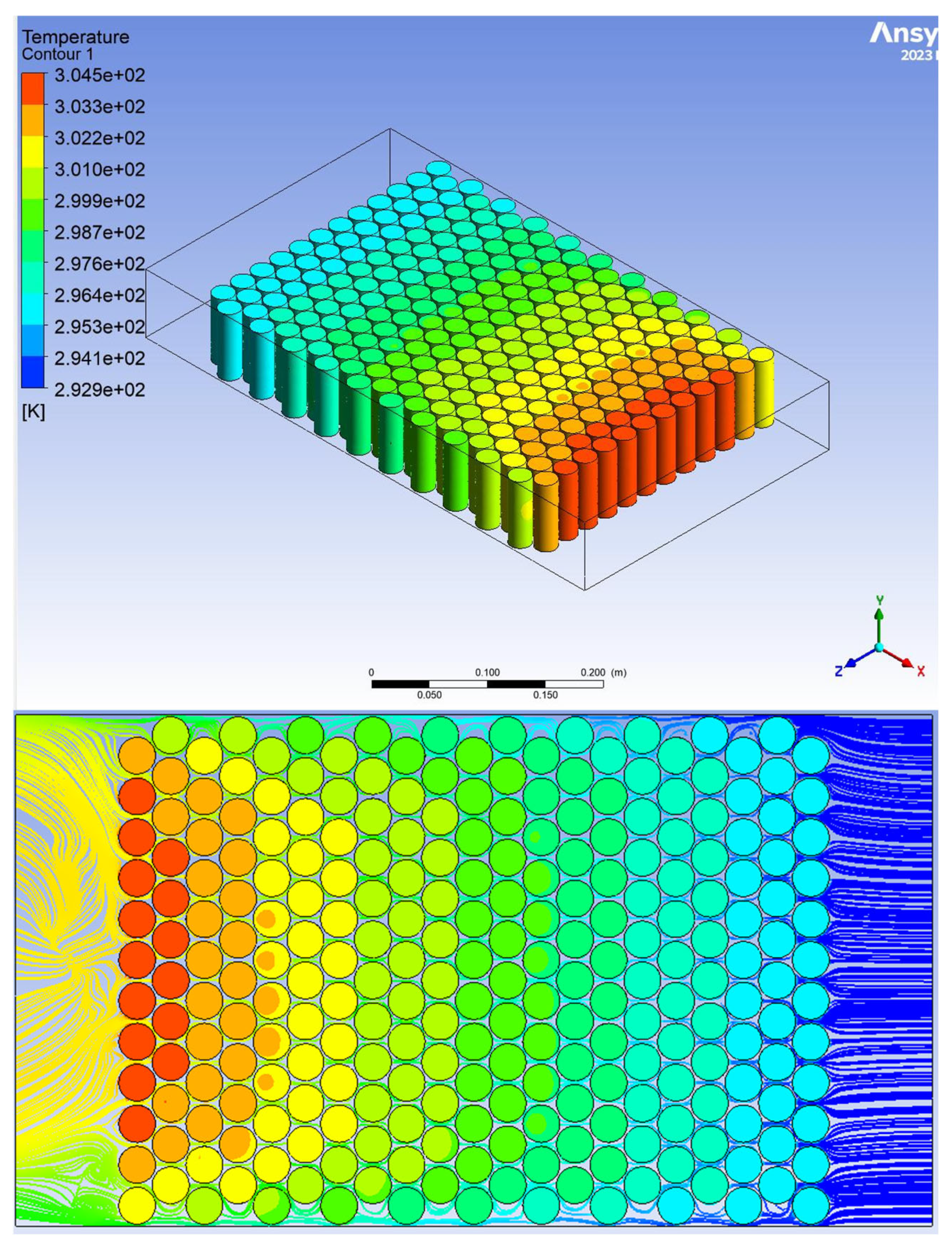
As can be seen in
Figure 12, the forced air cooling system is particularly efficient in cooling the cells immediately exposed to the air flow compared to the other systems. Overall, under conditions of C-Rate = 1, the system is quite effective despite the fact that cells not directly exposed to the air flow are not cooled in the same way as the others. This is mainly attributable to:
5.1.2. Immersion Cooling
Petronas Iona oil used as a coolant is characterized by:
Thermal conductivity, k = 0.144
Specific heat, Cp = 1803.9
Density, ρ = 910
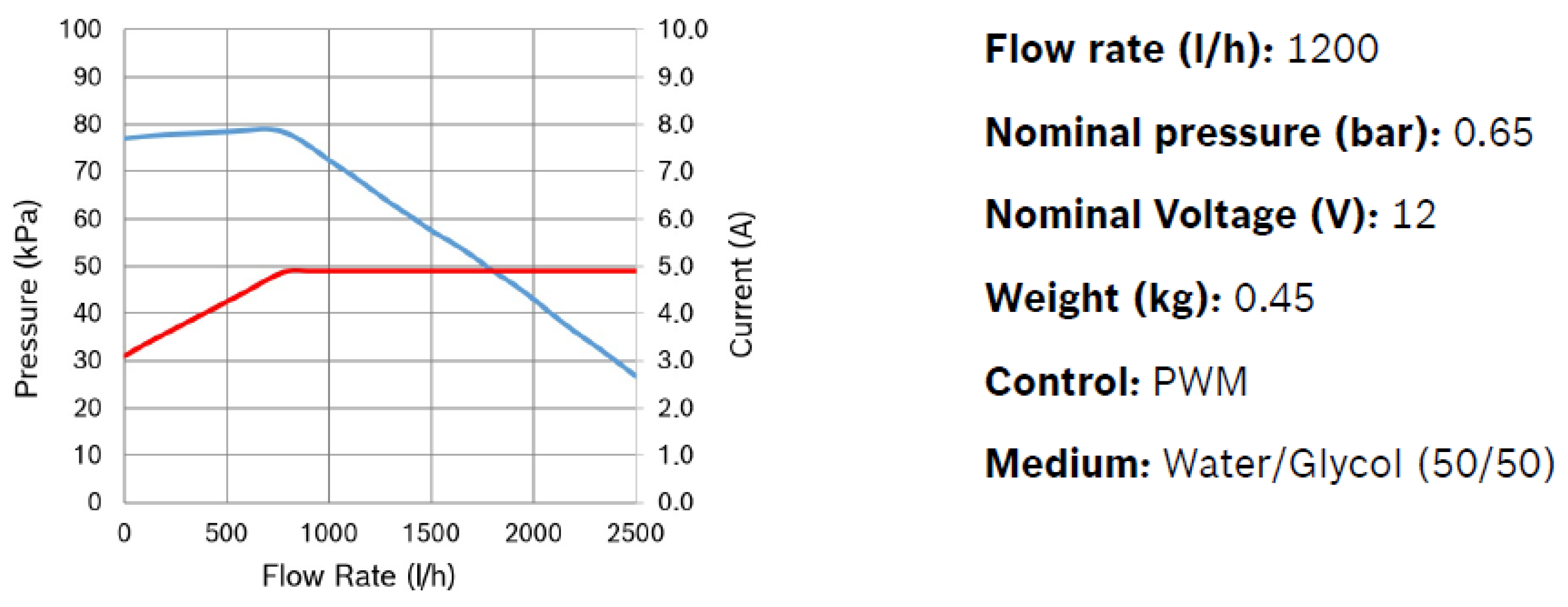
The oil flow rate used in the simulation is V̇ = 0.03
= 2
. To ensure this flow rate, the Bosch PCE2-L pump was chosen, the main characteristics of which are shown in
Figure 14.
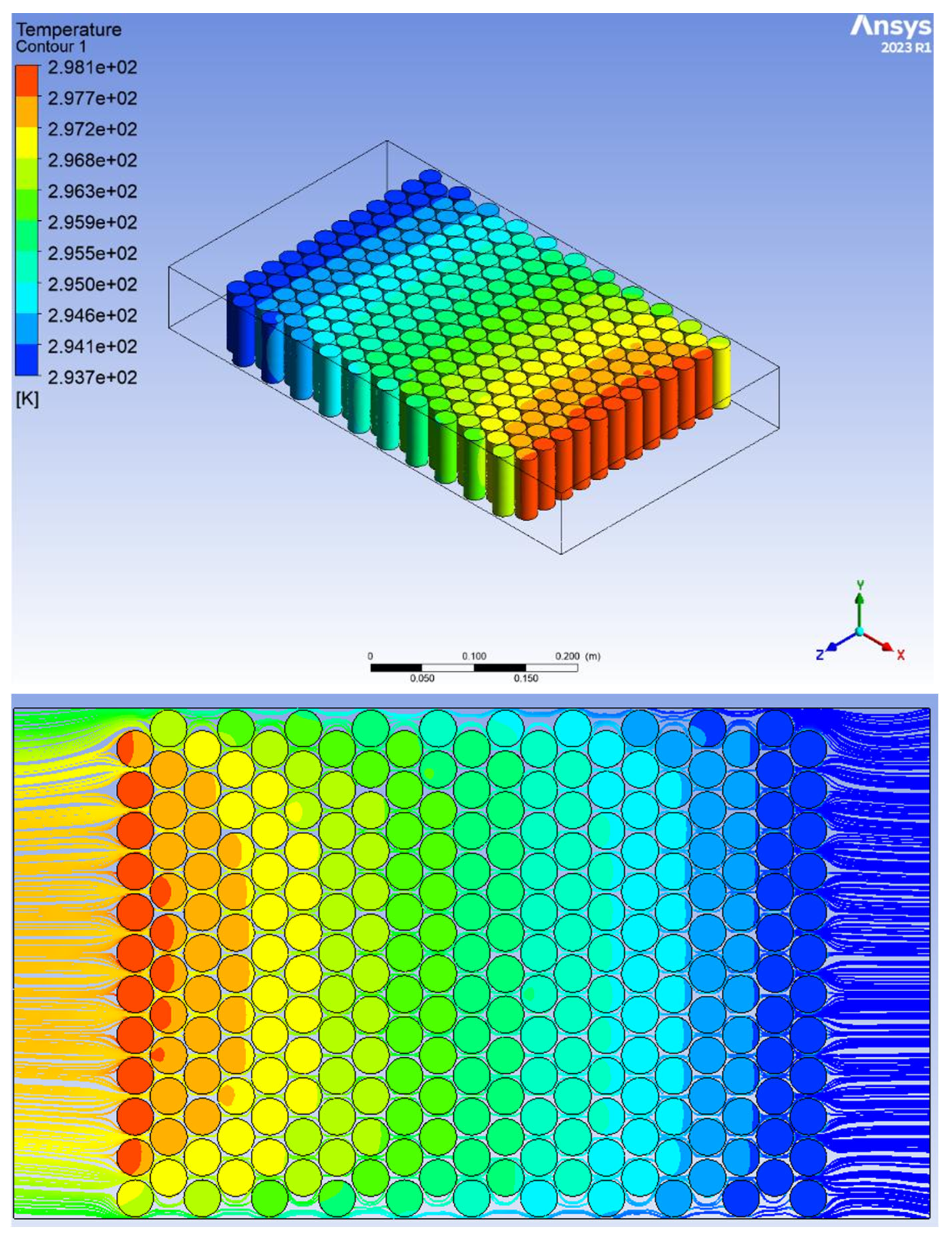
Figure 15 displays the temperature contours and the flow field lines of the dielectric fluid (Petronas Iona oil) for the immersion cooling system at 1C. The fluid dynamics analysis reveals that the dielectric liquid uniformly envelops the entire lateral surface of the cells, resulting in a very high global heat transfer coefficient. As expected from the flow direction, the cells located near the fluid inlet benefit from optimal cooling (
Tmin = 20.5 °C). As the oil traverses the module and absorbs sensible heat, a slight longitudinal thermal gradient develops, bringing the cells near the outlet to a
Tmax of 24.9 °C. The resulting modest ∆
T of 4.4 °C confirms the high efficiency of the immersion setup in maintaining near-isothermal conditions across the battery pack.
5.1.3. Cooling with Bottom Plate
The coolant, consisting of a 50:50 solution of water and ethylene glycol, is characterized by:
Thermal conductivity, k = 0.367
Specific heat, Cp = 3419.4
Density, ρ = 1074
The oil flow rate used in the simulation is V̇ = 0.03 = 2 . To ensure this flow rate, the Bosch PCE2-L pump was chosen, the same used for immersion cooling system.
Furthermore, to prevent short-circuiting between the cells and the aluminum base where the coolant flows, a thin layer of Gap Filler P-THERM with the following characteristics was inserted between them:
Thermal conductivity, k = 5
Specific heat, Cp = 870
Density, ρ = 1100
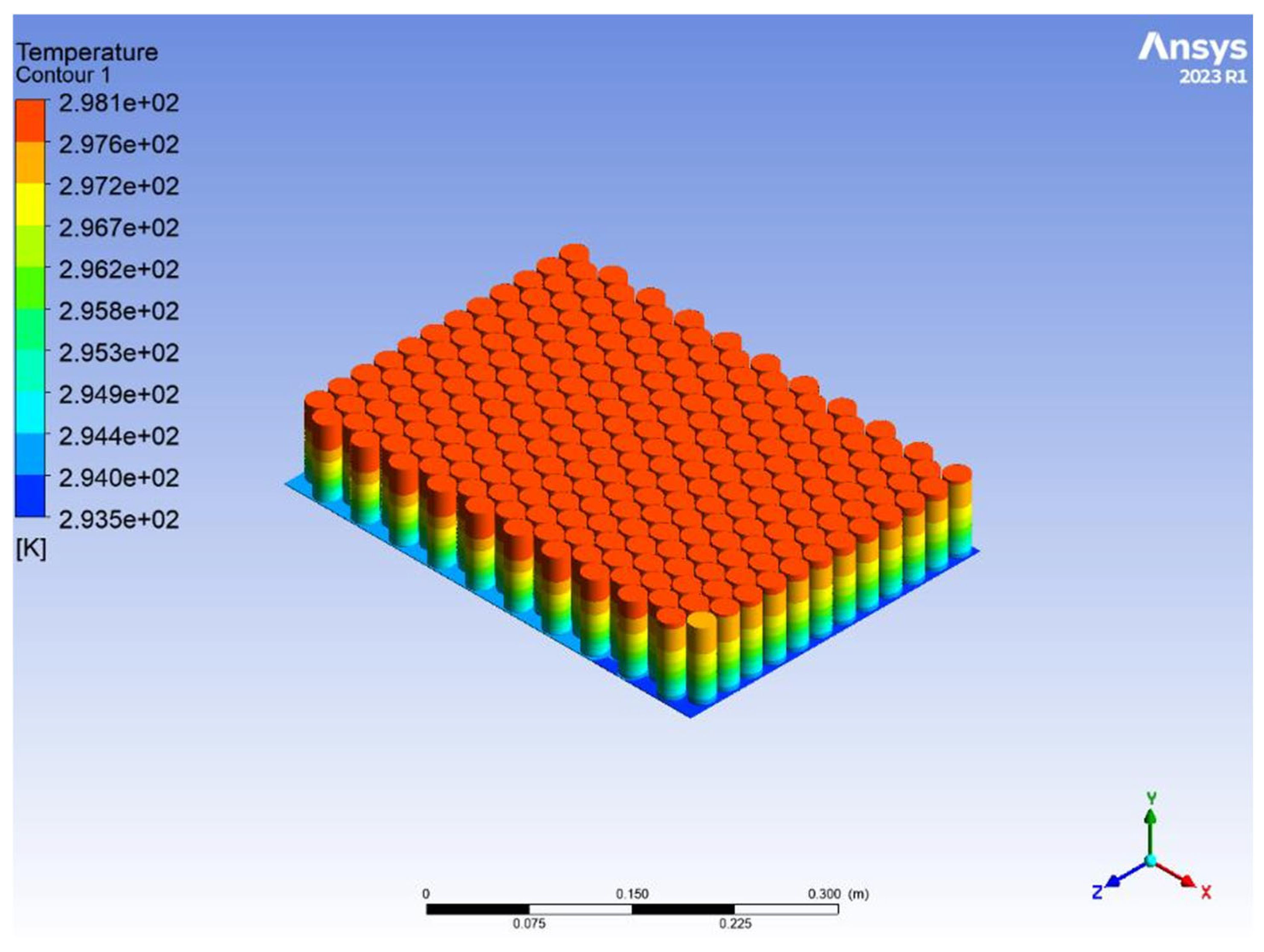
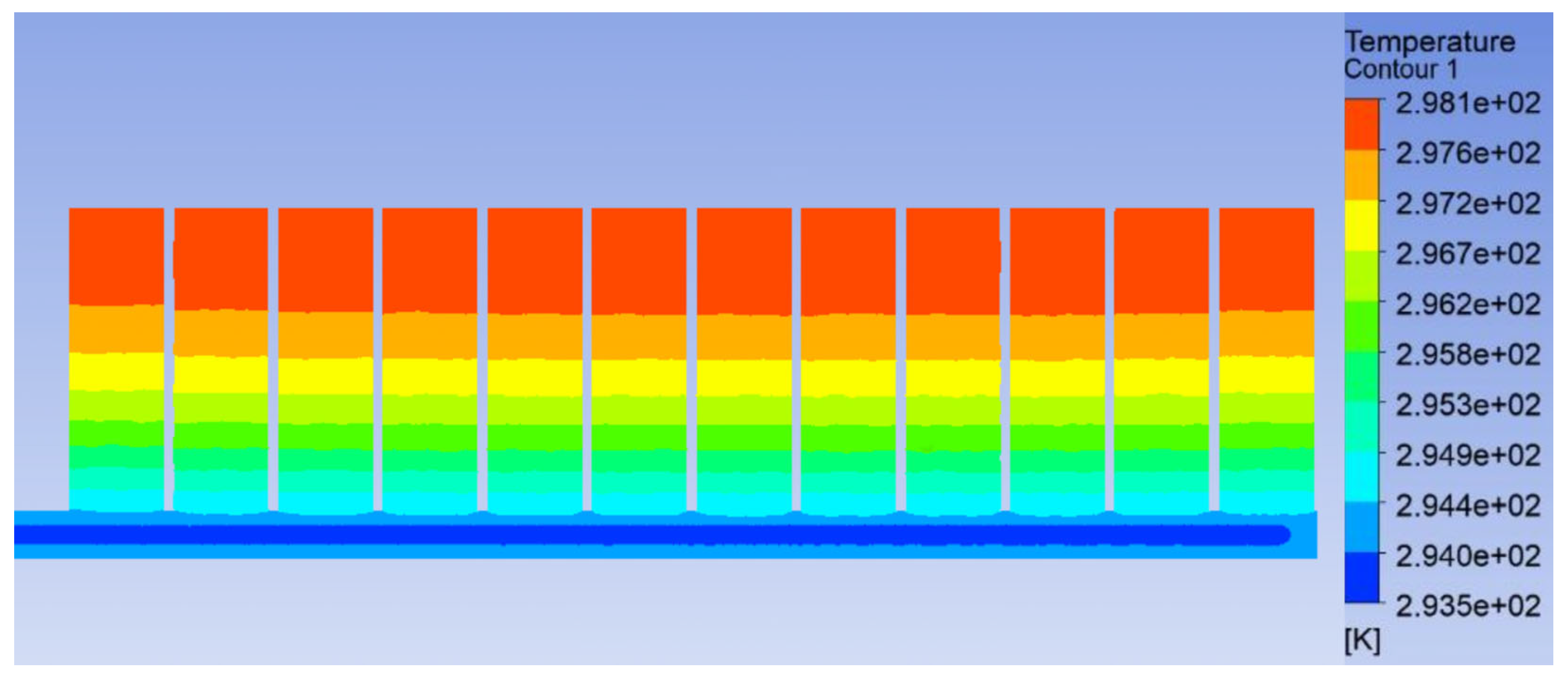
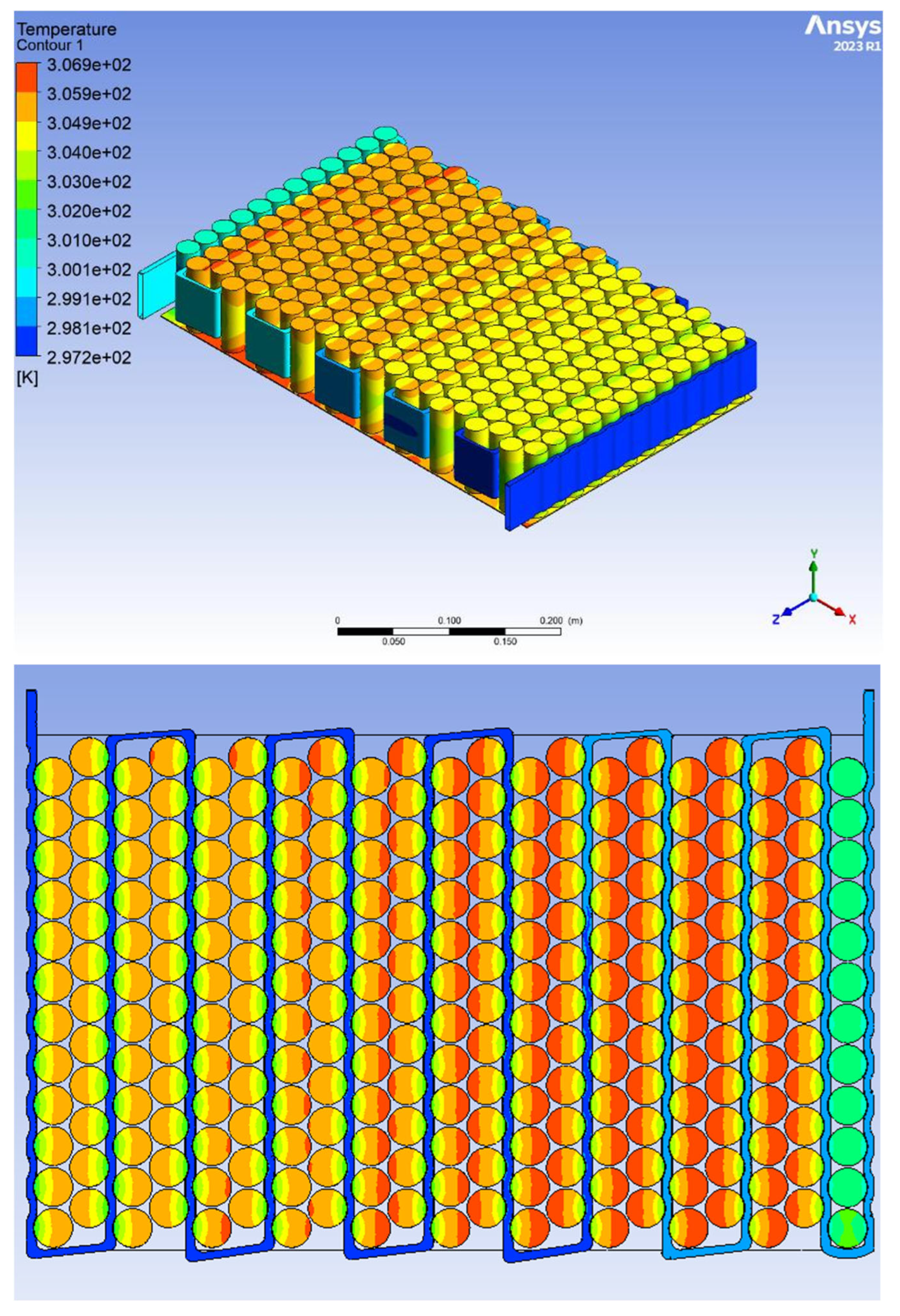
Figure 16 and
Figure 17 illustrate the temperature contours and the pronounced vertical thermal gradient induced by the bottom cold plate system. As the coolant (water-glycol mixture) flows through the basal micro-channels, it aggressively removes heat from the bottom face of the cells, maintaining a local minimum temperature (
Tmin) of 21.3 °C. However, due to the high internal thermal resistance of the cylindrical cells along their axial direction, the cooling effect diminishes significantly towards the top of the module. This restricted heat path results in localized heat accumulation at the upper terminals, reaching a maximum temperature (
Tmax) of 24.9 °C. Although the overall maximum temperature remains well within the safe operational window at 1C, the resulting ∆
T of 3.6 °C along the cell height highlights the intrinsic limitation of bottom cooling architectures in ensuring axial thermal uniformity.
5.1.4. Tube Cooling
The coolant, consisting of a 50:50 solution of water and ethylene glycol, is characterized by:
Thermal conductivity, k = 0.367
Specific heat, Cp = 3419.4
Density, ρ = 1074
The oil flow rate used in the simulation is V̇ = 0.03 = 2 . To ensure this flow rate, the Bosch PCE2-L pump was chosen, the same used for immersion cooling system.
Furthermore, to prevent short circuits between the cells and the coil through which the coolant flows, the latter has been coated with a thin layer of Gap Filler P-THERM (the same used in the cold plate system).
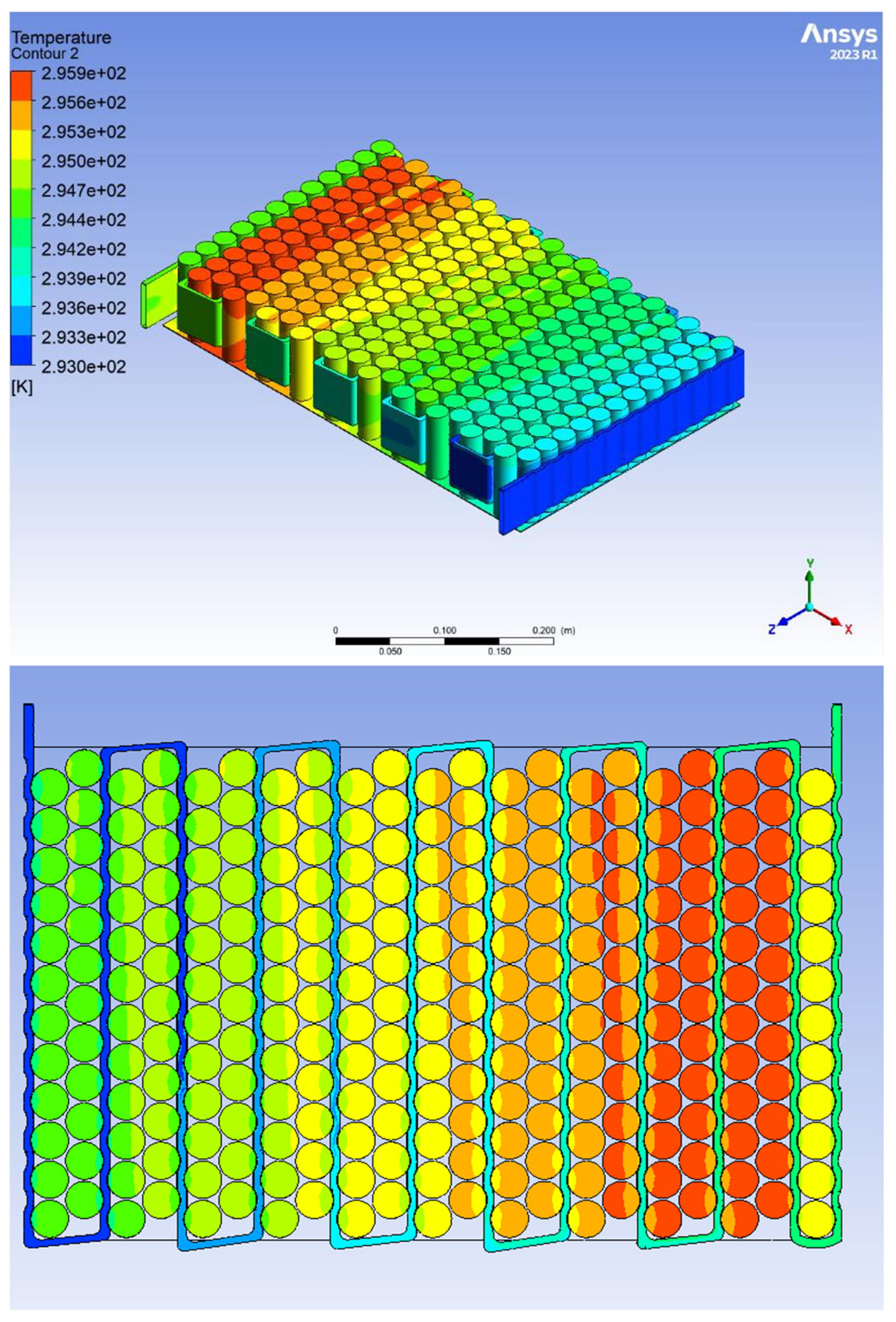
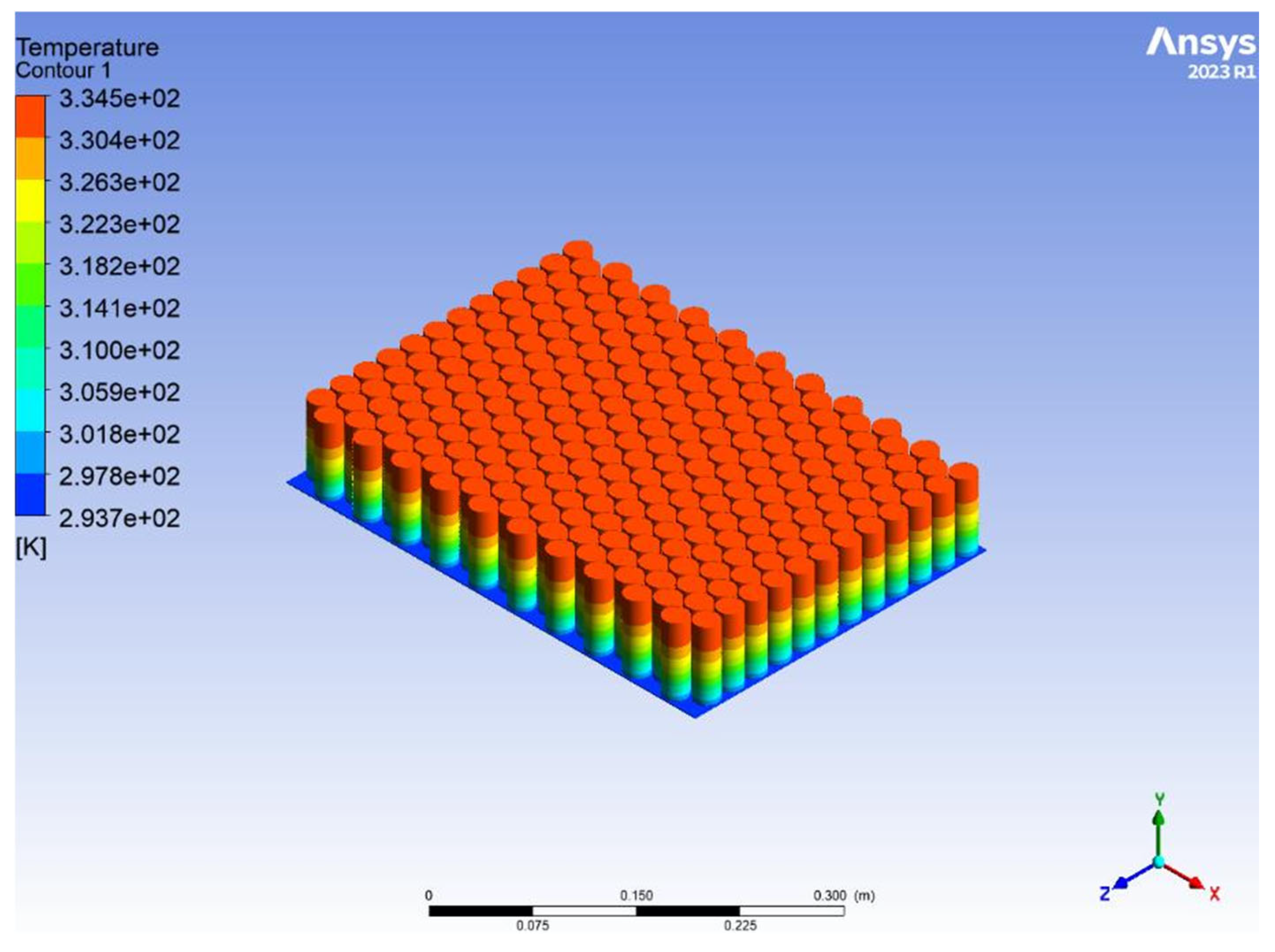
Figure 18 illustrates the temperature distribution and the excellent thermal uniformity guaranteed by the tube cooling system at 1C. Thanks to the large radial contact area between the cooling coil and the cells, heat is extracted extremely evenly. Although the coolant (water-glycol mixture) gradually absorbs sensible heat as it flows from the inlet to the outlet section, its high thermal capacity maintains an exceptionally low thermal gradient across the module. Consequently, the coolest cell registers a
Tmin of 20.7 °C, while the hottest reaches a
Tmax of 22.7 °C. This minimal ∆
T of just 2.0 °C ensures an ideal thermal balancing of the module, completely avoiding the non-uniform aging issues typical of bottom-cooled systems.
This behavior is mainly attributable to the good thermal conductivity and specific heat of the solution used (water and glycol) and the large contact surface between the cells and the coil.
5.2. C-Rate = 10 Simulation Results
Under conditions C-rate = 10, the module delivers a power equal to P = 44.4 kW. Considering an approximate cell efficiency of 95%, the portion of power that is dissipated in the form of heat is equal to 5% of P, or Q = 0.05 P = 2225 W. Given the high thermal power developed by the module, the forced air system will not be able to cool the cells adequately, unless very high air flow rates are achieved, which would require fans of a size and power that are not compatible with a road vehicle. In order to be able to make a comparison between the forced air system and the other systems, the analyses were carried out assuming conditions such that the power absorbed by the fans of the air system is equal to that absorbed by the pump of the other systems.
5.2.1. Air Forced Cooling
An air flow rate of V̇ = 0.051 = 2500 was chosen, which can be achieved using two San Ace 70 fans at maximum power, one responsible for conveying air from the outside to the cells and one responsible for conveying air from the cells to the outside.
Under these conditions, the fans in question require approximately 60 watts of power to operate, which is the same power required by the Bosch PCE2-L pump used in liquid systems under C-Rate = 10 conditions. The temperature distribution and flow field lines for the forced air system under a 10C discharge are presented in
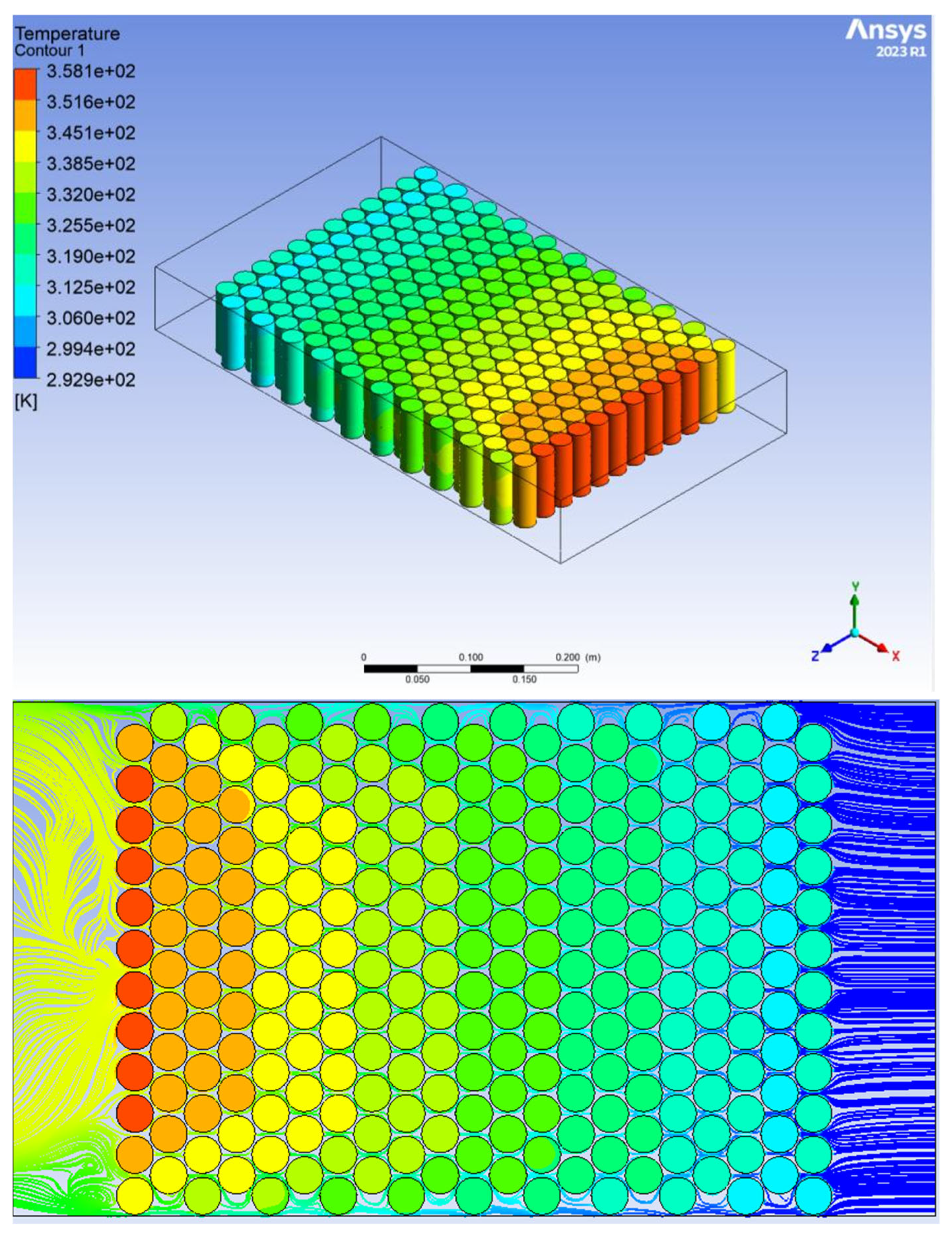
Figure 19. The flow field analysis reveals that the cells located at the air inlet experience the highest cooling rates, establishing a localized cold zone (
Tmin = 32.0 °C). However, as the air traverses the module, its sensible heat increases rapidly, drastically reducing its cooling capacity for the downstream rows. This flow maldistribution and thermal saturation of the air lead to a severe downstream hotspot, with
Tmax peaking at 84.9 °C. The massive maximum temperature difference (∆
T approx 52.9 °C) not only exceeds the optimal operating threshold but also poses a severe risk of triggering thermal runaway, demonstrating that forced air convection is entirely inadequate for high C-rate applications.
5.2.2. Immersion Cooling
The oil flow rate used in the simulation is V̇ = 0.03
= 2
, the same values used for the case with C-rate = 1. Under the extreme thermal stress of a 10C discharge, the flow lines and thermal map in
Figure 20 highlight the overwhelming superiority of immersion cooling compared to both air and indirect liquid systems. Because the cells are completely submerged in the dielectric fluid, there are virtually no thermal stagnation zones or conductive bottlenecks. The oil removes heat directly from the external source area of the cell casing, effectively suppressing the temperature spike to a mere
Tmax = 31.7 °C. With a
Tmin of 24.3 °C, the maximum thermal gradient across the entire module is tightly restricted to ∆
T = 7.4 °C. This exceptional fluid-dynamic outcome proves that direct immersion virtually eliminates the risks of thermal runaway and prevents temperature-induced material degradation even at peak operational powers.
The considerable improvement in the thermal performance of the immersion cooling system compared to forced air cooling is clearly evident; maximum temperatures are now fully compatible with lithium cell chemistry and undoubtedly allow performance to be achieved without thermal issues.
5.2.3. Cooling with Bottom Plate
The oil flow rate used in the simulation is V̇ = 0.03 = 2 , under the same conditions used for the test with C-rate = 1.
As shown in
Figure 21, the cooling system with a cold plate (bottom cold plate) is particularly efficient in cooling the lower part of the cells, i.e., the part closest to the base where the coolant flows. However, the cooling system is insufficient in the upper part of the cells, which is furthest from the cooling plate and closest to the electrical connection bars, where the temperature exceeds the 60 °C threshold that is generally critical for lithium-ion cells.
The temperature difference between the hot and cold areas of the cells is also particularly high, which could have a very negative impact on the useful life of the cells. The cooling system with a lower plate therefore does not seem to guarantee the possibility of safely achieving a C-rate = 10 performance.
5.2.4. Tube Cooling
Considering the same geometries, materials, and fluids used for the C-rate = 1 case, the simulation with C-rate = 10 was performed with the same flow rate as in the previous case, oil flow rate V̇ = 0.03
= 2
. The analysis of the thermal field for the tube cooling architecture under a severe 10C discharge (
Figure 22) confirms the fluid-dynamic and thermal robustness of this configuration. Even at extreme discharge power, where heat generation via the Joule effect is maximized, the high efficiency of the radial heat transfer prevents the formation of critical hotspots. The maximum recorded temperature peaks at
Tmax = 37.5 °C (remaining well below the critical safety threshold of 60 °C), while the minimum temperature is
Tmin = 26.8 °C. The overall module thermal gradient ∆
T = 10.7 °C) predictably increases compared to the 1C scenario due to the massive heat flux to be dissipated; however, it remains highly controlled. This demonstrates that the serpentine design is highly suitable for high-performance vehicles and sustained ultra-fast charging.
6. Case Study: Experimental Tests and Validation
In order to verify the accuracy of the numerical simulations, a real module was built with provisions for different types of cooling. Discharge tests were then carried out with C-rate = 1 and C-rate = 10 to faithfully reproduce the simulation models referred to in the previous paragraph.
The module is equipped with a double holder for 21700 cells contained within a plastic casing. The module has short side walls equipped with housings for mounting San Ace 70 fans for forced air cooling; the fans can be removed and replaced with hydraulic manifolds for immersion cooling. Alternatively, the bottom face of the module can be equipped with an aluminum cooling plate (supplied by XDThermal, Suzhou, China) to implement cooling with a cooling plate. Finally, the radial space between the cells allows for the installation, between the two holders, of special cooling tubes produced by XDThermal, in order to experimentally reproduce the case of tube cooling.
In this way, with minor modifications and using the same group of cells and the same electrical connections, it was possible to test the various cooling systems under consideration. For assembly reasons, only the tube cooling solution required the use of a second twin module, as the special XDThermal pipes must be positioned before the busbars are welded to the cell poles. The setup consists of three main interconnected loops: the Power Circuit (for discharging), the Thermal Management Loop (for the cooling systems), and the Data Acquisition (DAQ) & Control System. The main Hardware Components are the following:
Device Under Test (DUT): The battery module fitted with the specific cooling system being evaluated.
DC Electronic Load (80 V, 450 A): Configured in Constant Current (CC) mode. This will draw the specified current from the battery module and dissipate the electrical energy as heat or on grid.
Power Cabling & Routing: Heavy-duty DC cables sized for continuous 450 A operation (4/0 AWG) to minimize voltage drop and cable heating.
High-speed DC fuses and an emergency DC contactor placed as close to the battery module terminals as possible.
Thermal Management System (TMS):
- ○
For liquid cooling: A controlled chiller unit with a circulating pump, reservoir, inline flow meter, and pressure transducers to regulate and monitor the inlet fluid temperature and flow rate.
- ○
For air cooling: An adjustable blower/fan system with an anemometer to measure air velocity.
Environmental Chamber: To isolate the battery module and maintain a constant ambient testing temperature (25 °C), ensuring the cooling system performance is not influenced by room temperature fluctuations.
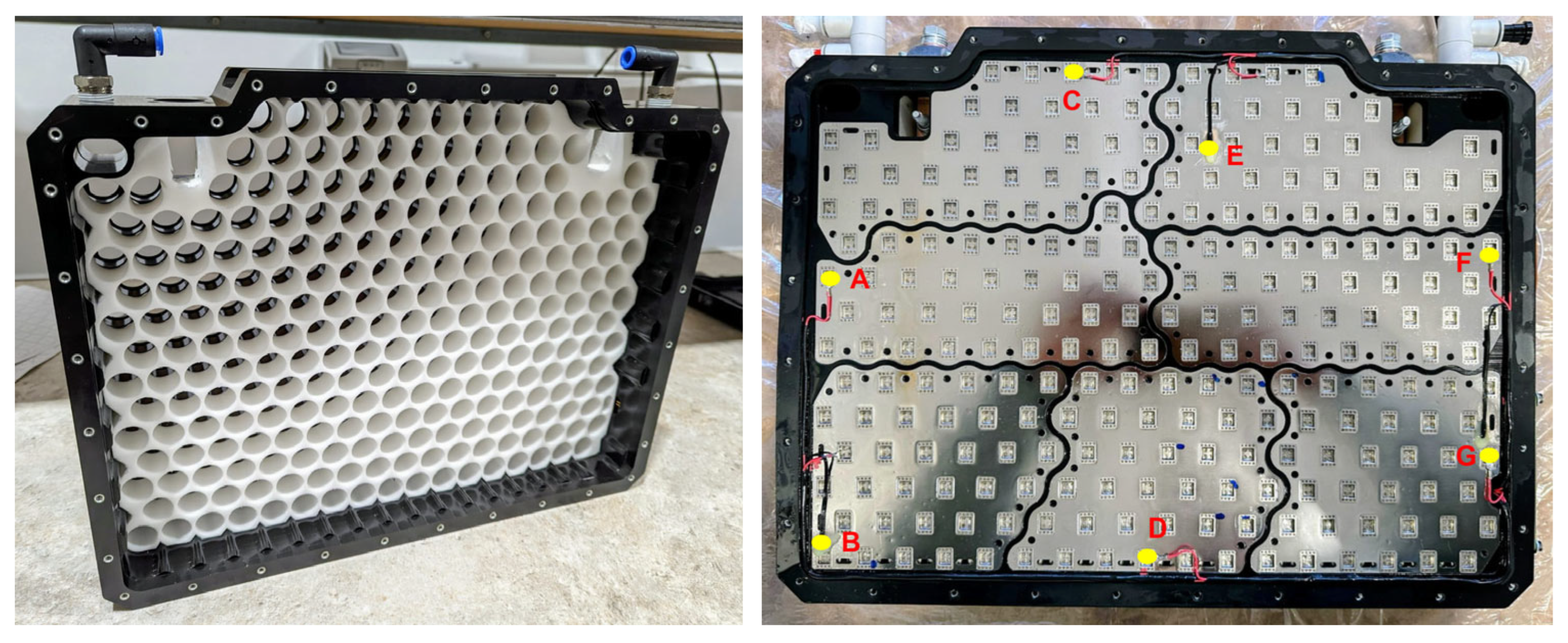
The module is equipped with a Battery Management System with a master PCB and a single slave PCB capable of measuring the voltage of up to 14 cells in series and 14 temperature measurement points. The temperature measurement points are distributed throughout the module as shown in
Figure 23 with yellow dots, located near the negative pole of the nearest cell and on both sides of the module (the red wiring shows the connection of the thermoresistors to the slave). In this way, during the electrical discharge process at C-rate = 1 and C-rate = 10, it is possible to acquire the temperature trend of these points in real time, and then make a precise comparison with the results of the CFD simulations referred to in the previous paragraph.
An ITech mod. IT8015-80-450 (by ITech, Nanjing, China) electronic load was used to perform the tests. This device is capable of charging and discharging up to 80 V and 450 A, which is more than sufficient to test the module up to 15 kW, both in charging and discharging modes. The tests were carried out in climatic chambers with an internal temperature set at 25 °C, and an external chiller was used to cool both the air and the cooling liquids to 20 °C before entering the climatic chamber, reproducing the boundary conditions set in the CFD simulations.
Real-time voltage and temperature measurements, as well as the estimation of the state of charge, are performed using a Battery Management System manufactured by FCE S.r.l., featuring a classic master-slave architecture. The slaves are based on the L9983 chip; the L9963E is intended for operation in both hybrid (HE) and full electric (FE) vehicles using lithium battery packs. The IC embeds all the features needed to perform battery management. A single device can monitor from 4 up to 14 cells. Several devices can be stacked in a vertical arrangement in order to monitor up to 31 battery packs for a total of 434 series cells. The chip has 9 GPIO pins, up to 7 of which can be configured as analog inputs to interface with external temperature sensors, typically NTC (Negative Temperature Coefficient) thermistors. It can use up to 7 of its GPIO pins as analog inputs to measure the voltage drop across the external sensors. The chip’s internal 16-bit ADC is extremely accurate, providing voltage readings with a maximum error margin of just ±2 mV. The chip’s function is to measure the voltage drop across the sensor using its 16-bit ADC (Analog-to-Digital Converter). The internal measurement circuitry is extremely precise, with a maximum error of just ±2 mV across the entire operating temperature range. Since the L9963 simply provides a digital output based on a high-precision voltage reading, the final thermal accuracy of your system depends almost entirely on the external hardware and software. The most significant factor is the quality of the NTC sensors, selected with 1% tolerances for excellent measurement accuracy. Also crucial is the reference resistance of the readout pull-up circuit; the tolerance and thermal stability of the resistor used to create the voltage divider together with the NTC directly influence the reading. Finally, it is the central microcontroller (the Master) that must convert the voltage value provided by the L9963 into degrees. The use of precise algorithms, such as the Steinhart-Hart equation, allows for minimizing mathematical conversion errors.
6.1. C-Rate = 1 Experimental Test Results
In order to obtain effective feedback from the experimental tests, the temperature data of the cells closest to the points where the thermoresistors are physically installed were extracted from the CFD simulation data of the four different cooling systems, as shown in
Figure 23, both at the height of the positive pole and at the height of the negative pole, i.e., on both sides. The points are identified as shown in
Figure 19, with 1 indicating the lower face and 2 indicating the upper face of the module.
The results were organized into
Table 9,
Table 10,
Table 11 and
Table 12 for each type of cooling system, reporting the experimental data for each measurement point with the designation illustrated above; next to each measurement is the value extracted from the corresponding CFD simulation in the area near the measurement point. For the case C-rate = 1, it was possible to carry out experimental tests on all the cooling systems considered without the risk of encountering problems of excessive cell temperatures; in all the tests carried out, the temperatures reached with the module at 20% SOC were considered, assuming this condition to be comparable to the “steady state” condition used for the CFD simulations. The Tables therefore collect and compare the experimental and numerical data.
The experimental results collected in the previous Tables qualitatively confirm the thermal maps obtained with the CFD simulations reported in
Section 5. At the measurement points, the margin of error remains below 5%, which is an acceptable result. The errors are mainly due to input errors, as the BMS slave thermoresistors are glued to the module’s copper busbars, while the CFD simulations measure the temperatures of the cells. On the one hand, this means that in reality there are contact points, welds, and interposed materials that slightly distort the measurement. On the other hand, the busbars are in fact extended plates that disturb the flow of cooling fluids and therefore slightly modify the velocity field in the measurement point areas. Overall, it can be said that the experimental results obtained during the electrical discharge at C-rate = 1 confirm the simulation results to a reasonable degree, net of the inevitable differences between models and real cases.
6.2. C-Rate = 10 Experimental Test Results
The same validation tests were then carried out with higher power electrical discharges with C-rate = 10, i.e., with a constant 42 A electrical discharge until 20% SOC was reached. At C-rate = 10, it was not possible to perform the test for the forced air cooling module due to the temperatures that occur after the first two minutes of discharge, which reach the thermal limit of 60 °C, which it was decided not to exceed for safety reasons. Similarly, for the system with a lower cooling plate, it was necessary to interrupt at 30% SOC for the same reason, as in the upper area, face 1, temperatures very quickly reached the limit of 60 °C. The experimental results for the case with the lower cooling plate are therefore only partially comparable with the data obtained from the simulations. The following
Table 13,
Table 14 and
Table 15 show the experimental data and the corresponding simulation values, using the same symbols as for C-rate = 1.
As for C-rate = 1 tests, the experimental results for C-rate = 10, collected in the previous Tables, qualitatively confirm the thermal maps obtained with the CFD simulations reported in
Section 5. The margin of error remains below 5%, which is an acceptable result, except in the case of the lower cooling plate, where, as mentioned, for safety reasons, the experimental test could not be continued down to SOC 20% due to the excessive temperatures that develop. As already explained, the numericalerrors between numerical simulations and experimental measurements are mainly due to input errors, as the BMS slave thermoresistors are glued to the module’s copper busbars, while the CFD simulations measure the temperatures of the cells. It can be said that the experimental results obtained during the electrical discharge at C-rate = 10 confirm the simulation results to a reasonable degree, net of the inevitable differences between models and real cases.
The experimental results therefore confirmed that cooling systems guarantee very different levels of performance; given that, for the case with C-rate = 1, as expected, all the cooling systems considered ensure good thermal management, while the more demanding electrical discharge at C-rate = 10 clearly shows that only immersion or cooling tube systems allow performance to be achieved until the module is practically completely discharged without encountering problems of excessively high temperatures. Due to the poor thermodynamic properties of air, forced air cooling reaches temperatures in simulations that are totally incompatible with lithium-ion cell technology. The system with lower cooling plate, despite performing better than the forced air cooling system, suffers from excessive temperature imbalance between the lower cells, which are well cooled by the nearby cooling plate, and the upper cells, where the temperature quickly reaches safety limits in the C-rate = 10 test, This does not guarantee proper thermal management of the module and cells and places the cells in operating conditions that are highly detrimental to their useful life. In
Table 16 a systematic comparison of key performance metrics for the evaluated architectures is summarised, with simulation and experimental data.
7. Conclusions
From the analysis of simulations and experimental tests on the prototype module with electrical discharges at C-rate = 1 and from the comparison of temperatures (see
Table 17), it is clear that the direct immersion liquid cooling system is the best of the four systems analyzed, together with the system with tube cooling, both in terms of the maximum temperature reached by the cells and the uniformity of temperature between them. However, under C-rate = 1 conditions, all the systems analyzed are effective, so the forced air system could represent the best compromise between simplicity of construction, resulting in lower costs, and performance. In fact, the other systems are characterized by greater complexity of construction, particularly in relation to the correct circulation of the liquid and the need to ensure the watertightness of the system, resulting in higher costs.
Similar to the analyses with C-rate = 1, the immersion liquid system is also the best in the analyses with C-rate = 10 (see
Table 18). Under these conditions, the forced air system cannot be used, as it is unable to sufficiently cool the module cells, unlike in the case with C-rate = 1, where it proved to be effective. As for indirect liquid cooling systems, the coil system (tube cooling) is superior to the cold plate system (bottom cold plate), both in terms of maximum temperature and thermal gradient uniformity. Furthermore, it can be observed that the tube cooling system has lower performance, but comparable to that of the direct liquid (immersion) system, thus representing a valid alternative to the latter also due to its lower design complexity (and therefore lower costs). Immersion cooling is still the most efficient system overall and, if it could be implemented with a limited increase in construction complexity, it would be an optimal solution, also considering the greater safety associated with the use of dielectric fluids instead of the water and glycol mixture used in the cooling tube system.
This comprehensive review and comparative analysis evaluated the thermal and fluid-dynamic performance of four distinct Battery Thermal Management Systems (BTMS)—forced air, bottom cold plate, liquid tube cooling, and direct immersion cooling—applied to a standard 21700 lithium-ion cylindrical cell module. Through steady-state CFD simulations and experimental validations at continuous discharge rates of 1C and 10C, the intrinsic physical limitations and cooling efficiencies of each architecture were systematically quantified. The key findings can be summarized as follows:
Low to Moderate Loads (1C): At a standard 1C discharge rate, all evaluated systems successfully maintained the maximum temperature (Tmax) below the critical 40 °C threshold. However, their thermal uniformity (∆T) varied significantly. Tube cooling provided the best thermal balancing (∆T = 2.0 °C), while the bottom cold plate, despite keeping a low average temperature, induced an axial thermal gradient (∆T = 3.6 °C) due to the high internal vertical thermal resistance of the cylindrical cells.
Failure of Air Cooling at High Loads (10C): Under extreme fast-discharging conditions (10C), forced air convection proved entirely inadequate. The poor sensible heat capacity of air and flow maldistribution led to severe downstream thermal saturation, causing Tmax to spike to 84.9 °C with a massive thermal gradient of ∆T = 52.9 °C. This configuration poses a severe thermal runaway risk for high-performance applications.
Limitations of Indirect Liquid Cooling: The bottom cold plate struggled at 10C, allowing the upper terminals of the cells to exceed the 60 °C safety limit (Tmax = 61.3 °C, ∆T = 33.2 °C). In contrast, the serpentine tube cooling system leveraged its large radial contact area to efficiently extract heat, safely limiting Tmax to 37.5 °C and maintaining a highly controlled gradient (∆T = 10.7 °C), making it the most balanced and viable solution for current mass-market EVs.
Superiority of Immersion Cooling: Direct dielectric liquid immersion demonstrated unmatched cooling efficiency and thermal stability at 10C. By completely enveloping the cell casing, it eliminated conductive bottlenecks and contact resistances, achieving the lowest maximum temperature (Tmax = 31.7 °C) and the tightest thermal uniformity (∆T = 7.4 °C) under peak loads.
In conclusion, while liquid tube cooling represents the best current trade-off between performance, manufacturing complexity, and cost, direct immersion cooling stands as the definitive technological frontier. Its superior capacity to suppress localized hotspots and manage extreme heat fluxes makes it strictly necessary for the next generation of ultra-fast charging infrastructures and high-performance electric powertrains.