Article

Intelligent Assessment Framework of Unmanned Air Vehicle Health Status Based on Bayesian Stacking

Department of Automation, Taiyuan Institute of Technology, Taiyuan 030008, China
*
Author to whom correspondence should be addressed.
Batteries 2026, 12(2), 62; https://doi.org/10.3390/batteries12020062
Submission received: 20 December 2025 / Revised: 6 February 2026 / Accepted: 10 February 2026 / Published: 14 February 2026
(This article belongs to the Section Energy Storage System Aging, Diagnosis and Safety)

Abstract

This paper proposed a stacking-based ensemble model to replace the traditional single machine learning model prediction approach, significantly improving the evaluation efficiency of SoC and SoH of lithium batteries. Firstly, a dataset was constructed including three input variables (temperature, current, and voltage) and two output variables (SoC and SoH). Pearson correlation coefficients and histograms were used for preliminary analysis of the correlations and distributions of the dataset. The multi-layer perceptron (MLP), support vector machine (SVM), random forest (RF), and extreme gradient boosting tree (XGB) were used as base prediction models. Bayesian optimization (BO) was used to fine-tune the parameters of these models, then three statistical indicators were compared to assess the prediction accuracy of the four ML models. Furthermore, MLP, SVM, and RF were selected as base models, while XGB was used as the meta-model, enhancing the integrated performance of the prediction models. SHAP was used to quantify the influence of the output variables on SoC. Finally, linked measures for the prediction model were proposed to achieve autonomous monitoring of drones. The results showed that XGB exhibited superior prediction accuracy, with R2 of 0.93 and RMSE of 0.14. The ensemble model obtained using stacking reduced the number of outliers by 89.4%. Current was identified as the key variable influencing both SoC and SoH. Furthermore, the intelligent prediction model proposed in this paper can be integrated with controllers, visualization web pages, and other systems to enable the health status assessment of drones.

1. Introduction

Unmanned Aerial Vehicles (UAVs) have rapidly developed in recent years due to their wide range of applications, including surveillance, agriculture, and healthcare, etc. [1,2]. UAVs can be classified based on factors such as weight, autonomy, and flight altitude. For instance, small UAVs are typically equipped with batteries of around 5 Ah, whereas larger devices, such as military UAVs, use batteries exceeding 25 Ah. Currently, UAVs primarily rely on lithium batteries due to their low self-discharge rate and high energy density. The electrochemical composition of lithium-ion batteries changes with increased charge and discharge cycles and prolonged usage, leading to a gradual decline in battery capacity and power. This phenomenon is referred to as battery aging [3,4]. Battery aging is the result of the coupling of multiple mechanisms influenced by various factors, including the electrochemical principles of the battery, manufacturing processes, environmental changes, and operating conditions. When a battery can no longer meet the energy or power requirements of its application, it is considered to have reached the end of its useful life [5,6]. To monitor the stability and safety of batteries over long-term use, the concept of Battery Management Systems (BMS) has been introduced. In order to ensure the stable operation of UAVs, the system should monitor the battery’s status in real-time and provide accurate information regarding the State of Charge (SoC) and State of Health (SoH) [7,8]. By predicting potential battery issues in advance, the system can effectively reduce the risk of failure and improve the reliability of the UAV system. Ultimately, this not only helps extend the battery’s lifespan but also prevents the negative consequences that may arise from UAV malfunctions caused by battery failure.
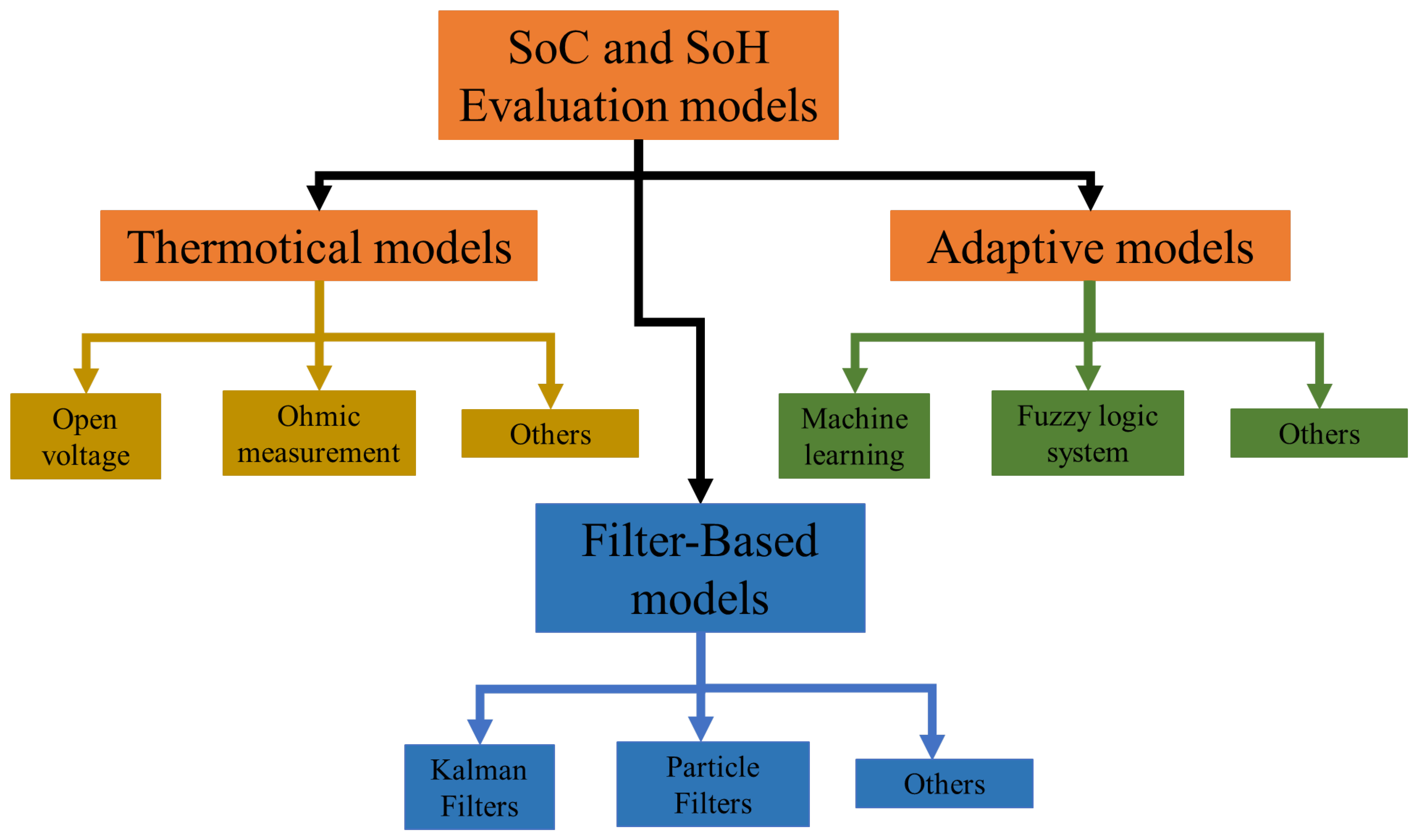
Due to the complexity of the electrochemical reactions in lithium-ion batteries during operation, the variability of operating conditions, and the limitations in measurement and detection, accurately predicting the health status and lifespan of batteries is a challenging task. The existing prediction methods can generally be categorized into two types (Figure 1): model-based methods and data-driven methods. Typically, model-based methods require an in-depth investigation of the internal electrochemical mechanisms of the battery, the construction of models that reflect the battery’s degradation process, and the estimation of parameters from these models to predict the battery’s health status and remaining useful life. Common battery models include electrochemical models, equivalent circuit models, and aging models, among others. After the model is constructed, corresponding parameter identification methods are used to estimate the parameters within the model based on experimental data from the battery, enabling the model to exhibit external characteristics that simulate real-world conditions. Chiodo et al. [9] employed Burr distribution and inverse Gaussian distribution to analyze battery datasets, using the Monte Carlo method to simulate the battery’s lifespan. Iurilli et al. [10] proposed a method for estimating the State of Health (SoH) of lithium batteries based on electrochemical impedance, utilizing the distribution of relaxation times to simulate the aging process over the entire lifecycle of the battery. Gismero et al. [11] analyzed voltage variations during the charging and discharging processes of lithium batteries, extracting key features from the incremental curves to assess the battery’s SoH as a health factor. Equivalent circuit models simulate the dynamic behavior of batteries, revealing the degradation of battery performance. Widely applied models include the Rint model [12], RC network model [13], PNGV model [14], Thevenin model [15], and nonlinear ECM model [16].
Data-driven methods utilize data collected from batteries to establish predictive models through machine learning algorithms. This approach does not rely on complex battery modeling processes but instead predicts the future state of the battery by analyzing large volumes of historical and real-time data. The charge and discharge datasets of batteries exhibit distinct time-series characteristics, and scholars have preliminarily explored the feasibility of using machine learning to predict the SoH of lithium batteries. Wang et al. [17] used an adaptive attention Long Short-Term Memory (LSTM) network, using features highly correlated with capacity as inputs, while integrating an online self-tuning mechanism to adjust the network’s weights and biases, thereby reducing the impact of local fluctuations and enhancing prediction accuracy. Wickramaarachchi et al. [18] utilized deep neural networks with memory features to predict the battery’s lifespan. Franzese et al. [19] proposed a model for estimating the remaining capacity of LFP batteries based on artificial neural networks (ANN). This study focused on the evaluation of the prediction performance of ANN for LFP batteries, while the improvement of the prediction performance for large battery datasets by multi-model integration received limited attention. Zhang et al. [20] employed artificial neural networks in combination with an incremental capacity model to assess both SoH and remaining useful life. Zhang et al. [21] applied a dynamic time-series analysis method using LSTM to estimate battery SoH, enabling the network to utilize more labeled samples for training, thereby improving prediction accuracy and robustness. Shibl et al. [22] employed the LSTM algorithm to evaluate the SoH of lithium batteries and studied the necessity of detection in Battery Management Systems. Chemali et al. [23] used deep neural networks to predict the battery State of Charge (SoC) under multiple laboratory environments. Bello et al. [24] highlighted the application of ML for Ni-Zn batteries.
Mansouri et al. [25] compared the impact of four machine learning algorithms on the SoC of lithium batteries, but found that the accuracy of these algorithms was relatively low, making it difficult to provide reliable results for SoC estimation.
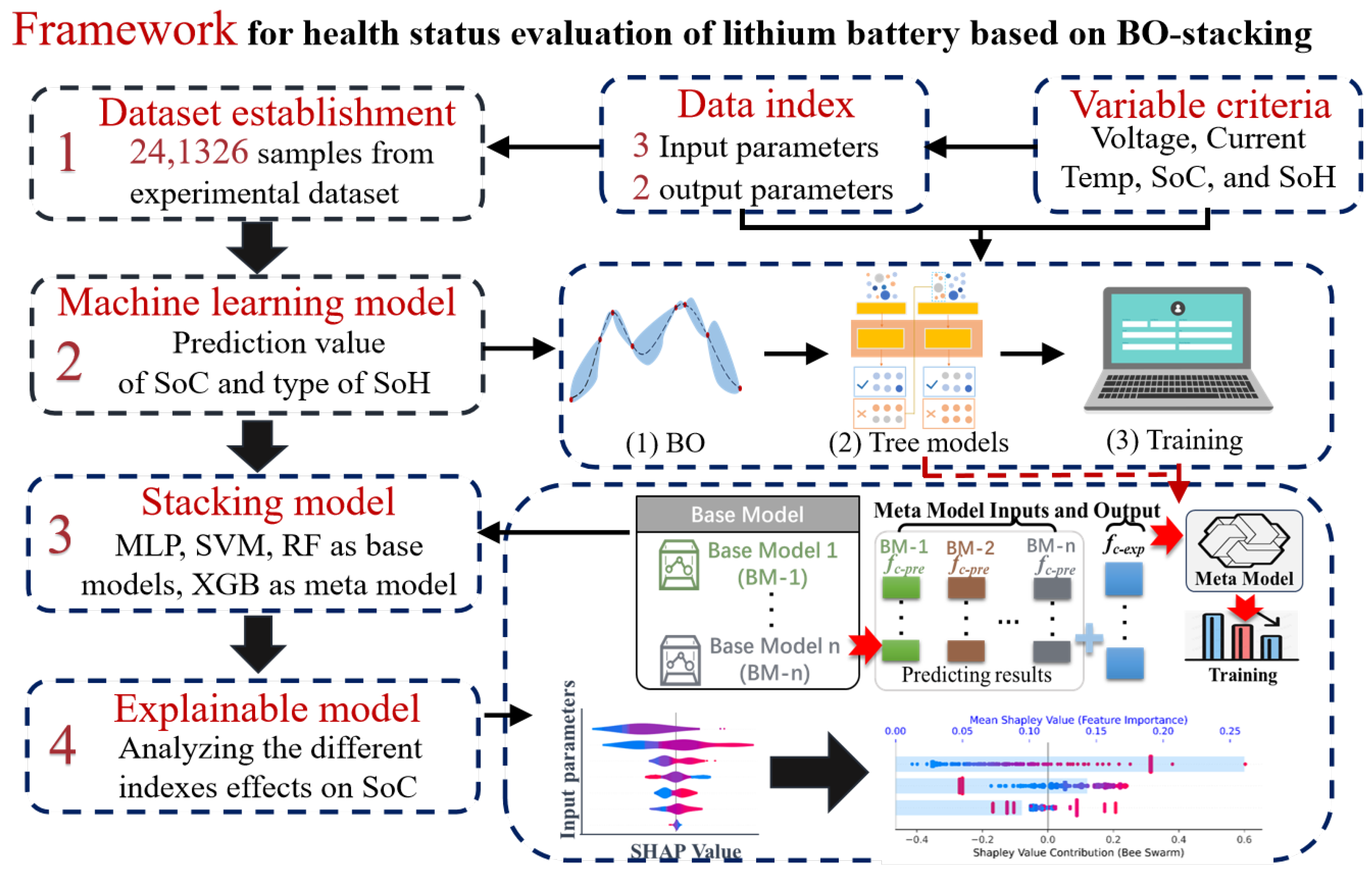
In summary, existing research has evaluated various estimation methods for the State of Charge (SoC) of lithium batteries, but these methods mainly exhibit the following drawbacks: (1) complexity of the evaluation models; (2) large estimation step sizes for SoC and State of Health (SoH); (3) low prediction accuracy for SoC; and (4) poor generalization ability of individual machine learning algorithms when predicting large datasets. Based on these issues, the aim of this study is not to assess the accuracy of machine learning models, but rather to propose a model enhancement technique based on Bayesian methods and stacking for evaluating the health status of the battery and providing implementation recommendations (Figure 2). Specifically, a dataset comprising battery physical parameters (current, voltage, and ambient temperature) was constructed to predict SoC and evaluate SoH. In this process, MLP, RF, and SVM were used as base models, while XGB was used as the meta-model. BO was utilized to optimize the prediction performance of the base and meta-models, and the accuracy of the proposed model was validated. Additionally, the interpretable algorithm SHapley Additive Explanation (SHAP) was used to quantify the influence patterns of different feature parameters. Finally, recommendations for the applicability of battery health management were provided.

2. The Principle of Machine Learning Model

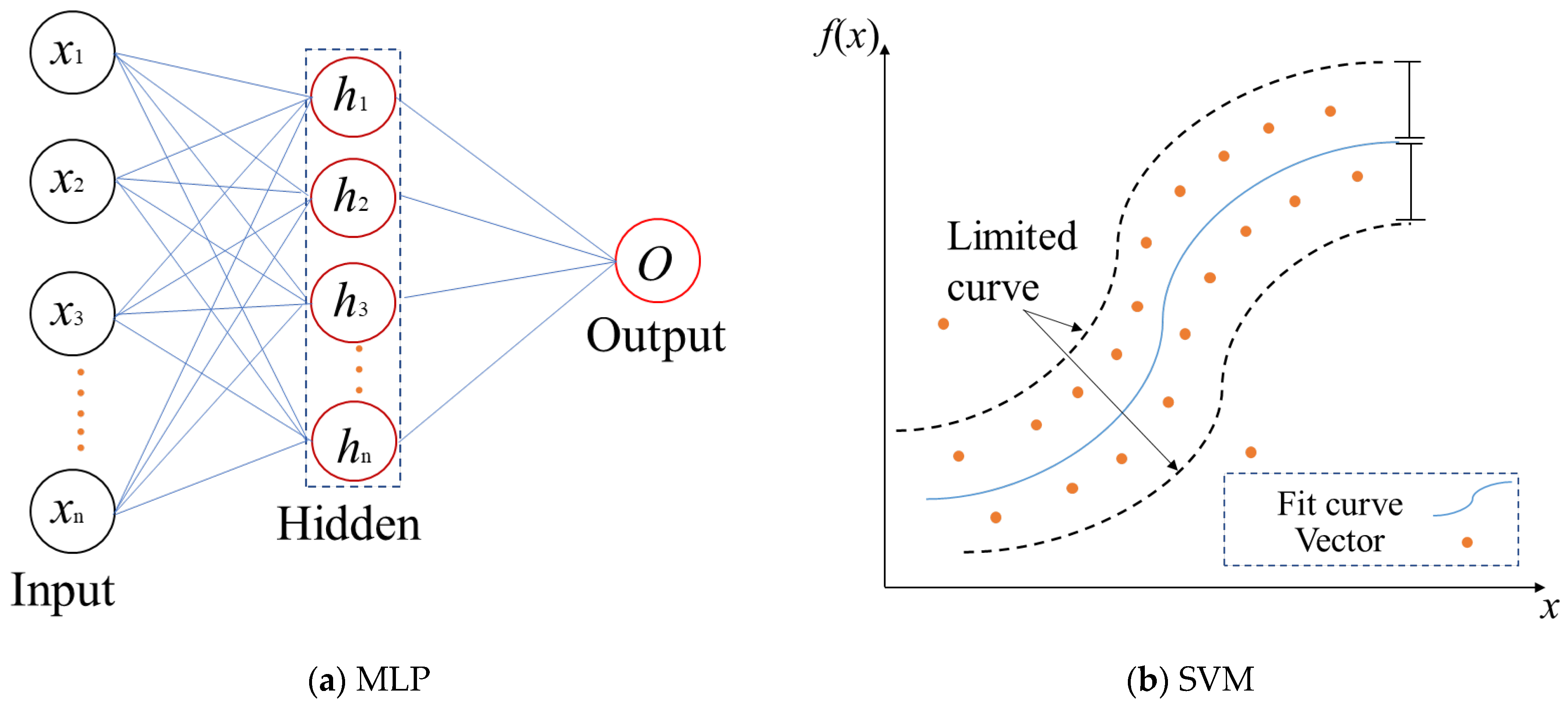
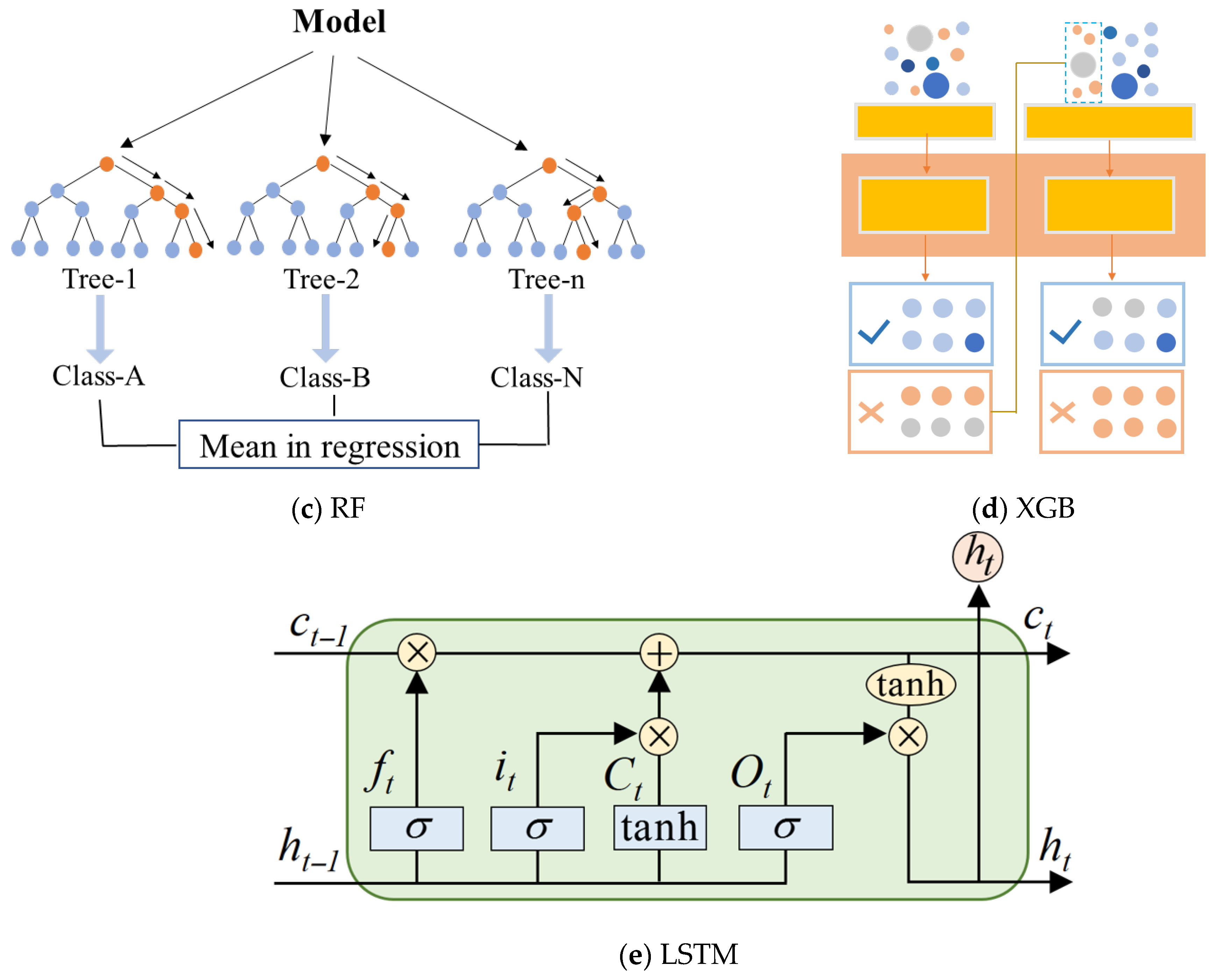
This section introduced the principles of the five ML algorithms and optimization algorithm used in this paper (Figure 3) and the integrated model based on stacking constructed in this paper.

2.1. Multi-Layer Perceptron

MLP simulates the information processing method of biological neural systems, where signals are transmitted and processed through multiple layers of neurons to extract features and learn patterns from input data [26,27]. The core idea of MLP is to train the network using the error propagation algorithm, allowing the network to minimize the error between the predicted and actual values by adjusting the weights and biases, thereby gradually improving the accuracy of the model. MLP is capable of processing complex input data through multiple layers of neurons and nonlinear activation functions, and it can learn the mapping relationship between inputs and outputs using the backpropagation algorithm. Through a proper training process, MLP can adapt to various complex tasks.

2.2. Support Vector Machine

SVM uses an optimal decision boundary in the feature space that ensures data points are classified as accurately as possible. For binary classification problems, SVM constructs a hyperplane to separate the two classes of data, aiming to maximize the margin between the two classes. This approach of maximizing the margin enhances the model’s generalization ability and reduces errors on test data [28]. SVM is not only applicable to linearly separable data but can also handle nonlinear classification problems through the use of kernel functions. It has demonstrated exceptional performance in many machine learning tasks, particularly in high-dimensional data and small sample data, where it exhibits strong generalization ability [29].

2.3. Random Forest

RF improves the predictive accuracy and generalization ability of a model by constructing multiple decision trees and aggregating their results [28]. Random forest combines the predictions of multiple decision trees using a “voting” mechanism for classification tasks or an “averaging” mechanism for regression tasks, ultimately providing more accurate and robust prediction outcomes. This algorithm is characterized by its strong resistance to data noise and its ability to perform parallel processing, among other advantages.

2.4. Extreme Gradient Boosting

XGB gradually reduces the prediction error by gradually constructing a decision tree and optimizing the loss function. The training goal of each tree is to reduce the residuals of the current model, and the new tree is added to the existing model through the addition model, thereby gradually improving the performance of the overall model [29]. Compared with the traditional boosting model, the algorithm has the advantages of regularization terms, second derivative optimization, and column sampling.

2.5. Long Short-Term Memory

Long Short-Term Memory (LSTM) networks are a specialized form of recurrent neural networks (RNNs) designed to overcome the limitations of traditional RNNs in modeling long-range dependencies. The key innovation of LSTM lies in its cell structure, which introduces a memory component capable of selectively retaining or discarding information over time. At the core of each LSTM unit are three gates—the input gate, forget gate, and output gate. These gates regulate the flow of information by applying sigmoid activations to decide what proportion of data should be updated, erased, or passed forward. Meanwhile, the cell state acts as a conveyor of long-term information, allowing gradients to propagate more effectively and mitigating the vanishing gradient problem that hampers standard RNNs.

2.6. Bayesian Optimization

Bayesian optimization is a high-efficiency method for global hyperparameters search, especially for the case where the objective function is expensive or unknown [30,31,32]. Unlike traditional optimization algorithms, Bayesian optimization uses a probabilistic model to describe the objective function. By gradually improving the optimal solution in the search space, it does not need to completely analyze the objective function or rely on gradient information. The basic process includes the following steps: (1) select the probability model; (2) select the sampling point; (3) evaluate the optimized objective function and update the surrogate model; and (4) determine whether the current target meets the optimization conditions.

2.7. Ensemble Models Based on Stacking

Stacking is an ensemble learning model that constructs a more robust meta-model by combining the prediction results of multiple base models [33]. The core idea of this algorithm is to treat the outputs of multiple base models as new features, which are then used to train a meta-model that ultimately generates the final prediction. In this study, MLP, SVM, and RF were used as base models, while XGB was employed as the meta-model. The inclusion of MLP enables the stacking model to handle continuous data predictions, thereby addressing issues such as gradient plateaus in the XGB model within unknown spaces and enhancing the model’s learning capability.

2.8. Evaluation of Model Performance

This study used coefficient of determination (R2), correlation coefficient (R), root mean square error (RMSE), and standard deviation (SD) to evaluate the ML models:
R 2 = d i d mean f i x f x mean i = 1 n d i d mean 2 i = 1 n f i x f x mean 2
R = i = 1 n d i y mean f i x f x mean i = 1 n d i d mean 2 i = 1 n f i x f x mean 2
R M S E = 1 n i = 1 n d i f i x 2
where di is the experimental value; dmean is the mean value of the experimental dataset; fi(x) is the predicted value obtained by ML models; f(x)mean is the predicted mean value; and n is the number of samples.

3. Indicator Definition and Database Description

3.1. The Definition of SoC and SoH

The SoC of the lithium battery is mainly through the ratio of the battery ‘s power (Q(t) at time (t) to the total charging capacity (Qtot,t)):
S O C = Q t Q t o t , t
In addition, SoH(t) is the ratio of the current charging capacity to the initial charging capacity:
S O H t = Q t o t , t Q t o t , i
The SoH assessment of lithium-ion batteries is primarily analyzed through a four-class classification, which provides the design information required for the BMS. With the charging and discharging cycles of the battery, such a classification of SoH is deemed reasonable:
S O H t = Healthy ,   Q t o t , t Q t o t , i > 0.9 Critical   0.9 > Q t o t , t Q t o t , i > 0.8 Faulty   0.8 > Q t o t , t Q t o t , i > 0.7 Recycle Q t o t , t Q t o t , i < 0.7
When the capacity ratio is greater than 90%, the battery is in a healthy state. When 80% < capacity ratio < 90%, it is in a critical state. If 70% < capacity ratio < 80%, the battery is in a state of failure. If the capacity ratio is less than 70%, the battery is considered to be in a recycling state and needs to be replaced as soon as possible [34,35,36].

3.2. Database Description

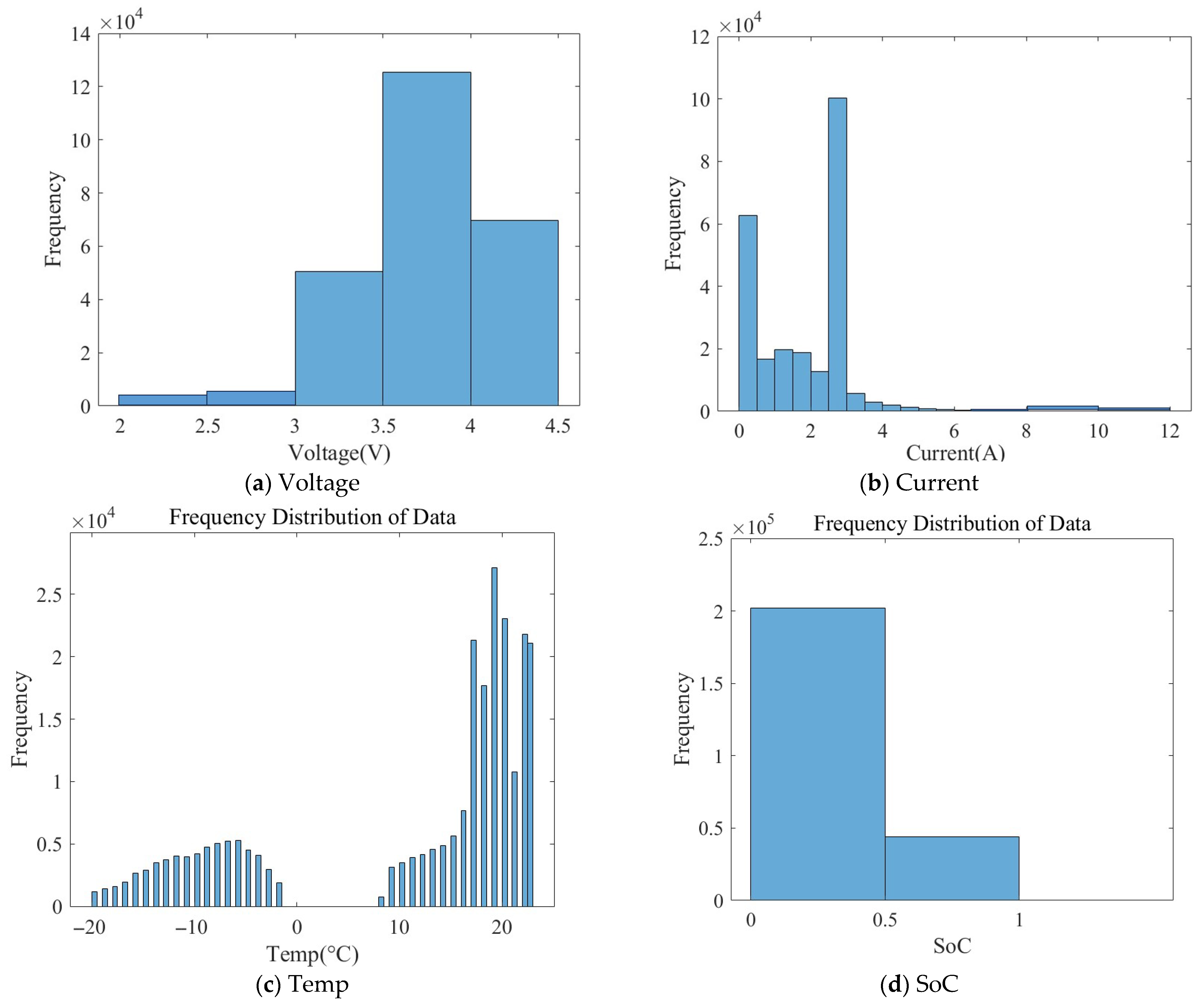
Based on this, the dataset used in this study included 241,326 samples from the Panasonic 18650PF battery [37,38,39,40], which used driving cycle charge and discharge test data. The cyclic data of the battery is obtained by simulating the battery’s wear-and-tear behavior during the use of an electric vehicle through multiple cycles of charging and discharging processes. Each record consists of 5 variables, with 3 input variables and 2 output variables. The independent variables in the dataset are voltage, current, and temperature, while the dependent variables are SoC and SoH. Therefore, the machine learning model predicts the value of SoC and the category of SoH by analyzing the variations in voltage, current, and temperature. Specifically, the values and distributions of the variables in the dataset are as follows: (1) Voltage: Numerical type with units in Volts, ranging from 2.49 to 4.20; (2) Current: Numerical type with units in Amperes, ranging from 0 to 11.62; (3) Temperature: Numerical type with units in Celsius, ranging from −20 to 25; (4) SoC: Numerical type without units, ranging from 0 to 1. Figure 4 illustrates the distribution histograms of the input variables in the dataset. It can be observed that the majority of voltage values are concentrated between 3 and 4.5, current values are concentrated between 0 and 4 A, and temperature values are sparsely distributed between −20 and 20.
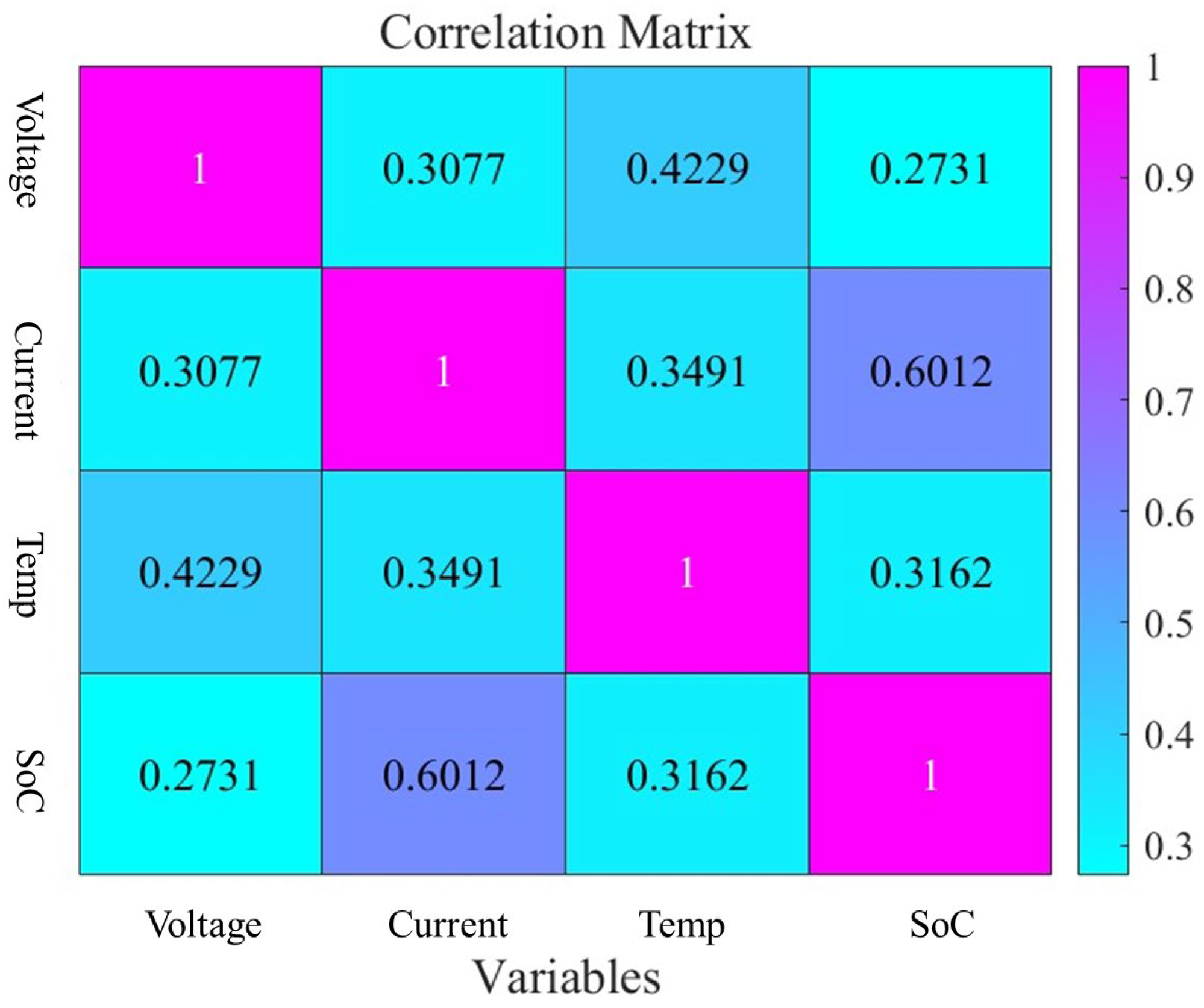
In addition, Figure 5 analyzed the correlation degree of the dataset. It should be noted that the data correlation only analyzes the linear correlation between different variables, and the specific logical relationship needs to be further analyzed by an interpretable algorithm. It can be found that SoC is highly correlated with current, and is related to voltage and temperature, which is consistent with the existing logic, but the correlation with voltage is because SoC may have a certain nonlinear relationship with voltage. This can also be confirmed by observing the correlation between voltage and current.

4. Results Analysis and Discussion

4.1. Results Discussion

The key to predicting the SoC and SoH of lithium batteries is to predict the variation in the charging capacity of the battery with the charging and discharging cycles. Therefore, in order to improve the evaluation accuracy of SoC and SoH, this section will explore the feasibility of the enhanced machine learning model for battery health status evaluation. Firstly, Bayesian optimized MLP, SVM, and RF are used as the base model, and Bayesian optimized XGB is used as the meta-model. Then, stacking is used to combine the base model and the meta-model to construct an enhanced prediction model. This model is used to predict the SoC change in the battery, which is a typical regression problem. After the SoC is predicted by the enhanced model, the SoH of the battery is evaluated by the enhanced model, which is a classification problem. It should be noted that the advantage of using the XGB model as the meta-model in this paper is that the model also has excellent classification ability. For the 4-classification problem, the model can effectively identify the data rules to give accurate evaluation results. To ensure the improvement effect of the prediction performance of the stacking model proposed in this paper, we also compared the prediction performance of the LSTM model optimized by Bayesian optimization. The parameter settings and optimization ranges of LSTM are shown in Table 1.
In this paper, we used the device with RTX4080 and i9-13900K, and the scikit-learn, Bayesian and xgboost library are used in this paper for model optimization and prediction. Furthermore, we designed the number of Bayesian optimization iterations to be 120 to ensure that the Bayesian model can find relatively optimal model parameters. During the training process, 5-fold cross-validation was used to ensure the generalization ability of the model and avoid the overfitting or underfitting problems caused by the dataset splitting ratio. Table 1 analyzed the optimal parameter range and optimal hyperparameters of different models obtained by Bayesian optimization. It can be found that Bayesian optimization determines the optimal hyperparameters of the four machine learning models respectively. When the model adopts the optimal hyperparameters, it can ensure that the ML model has better generalization performance. It should be noted that Bayesian optimization is based on historical iteration information for parameter optimization, so within a certain number of iterations, Bayesian optimization will find a relatively optimal (local optimal) parameter set. It should be noted that all models are trained on the same dataset, and the completely consistent training/testing sample division ratio and the same random seed (or fixed division) are adopted to ensure that R2 and RMSE are calculated on the same test set for all models.
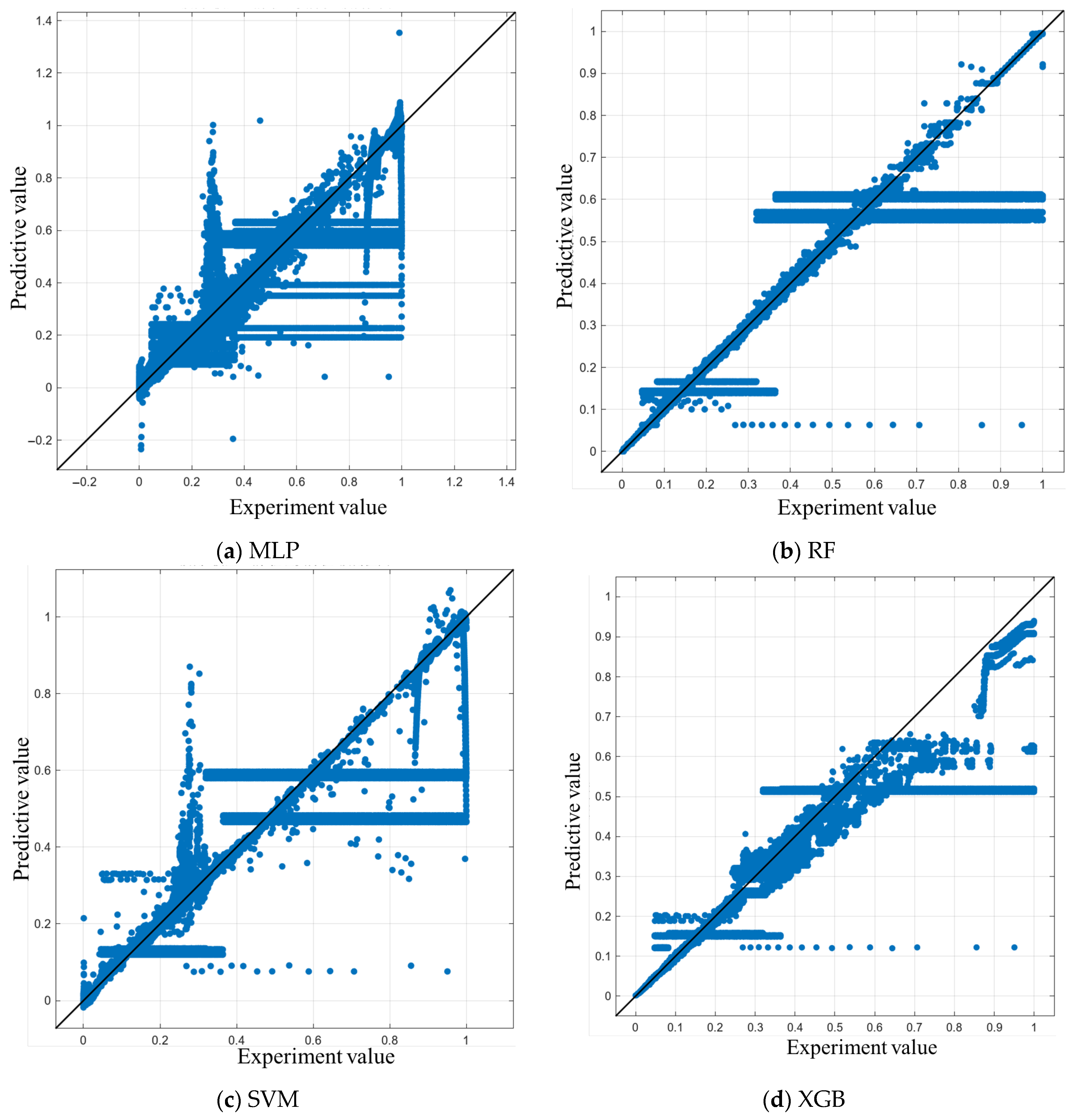
Figure 6 analyzed the prediction performance of four ML models under the optimal hyperparameters obtained by BO. It can be found that the machine learning model used in this paper can predict the health status of the battery. Table 2 analyzed the specific prediction performance evaluation results of four ML models. The prediction performance of ML models is ranked as follows: XGB > RF > MLP > SVM, and R2 was 0.93 > 0.90 > 0.82 > 0.80, respectively. R were 0.96 > 0.95 > 0.90 > 0.89 and RMSE were 0.14 < 0.16 < 0.41 < 0.42. This is because the battery health data used in this paper are mainly time series data. XGB model and RF have strong data interpolation ability, so they have stronger ability to analyze periodic data, and MLP is more suitable for predicting continuous non-temporal data. In addition, SVM is more suitable for problems such as binary classification, so XGB has better prediction performance.
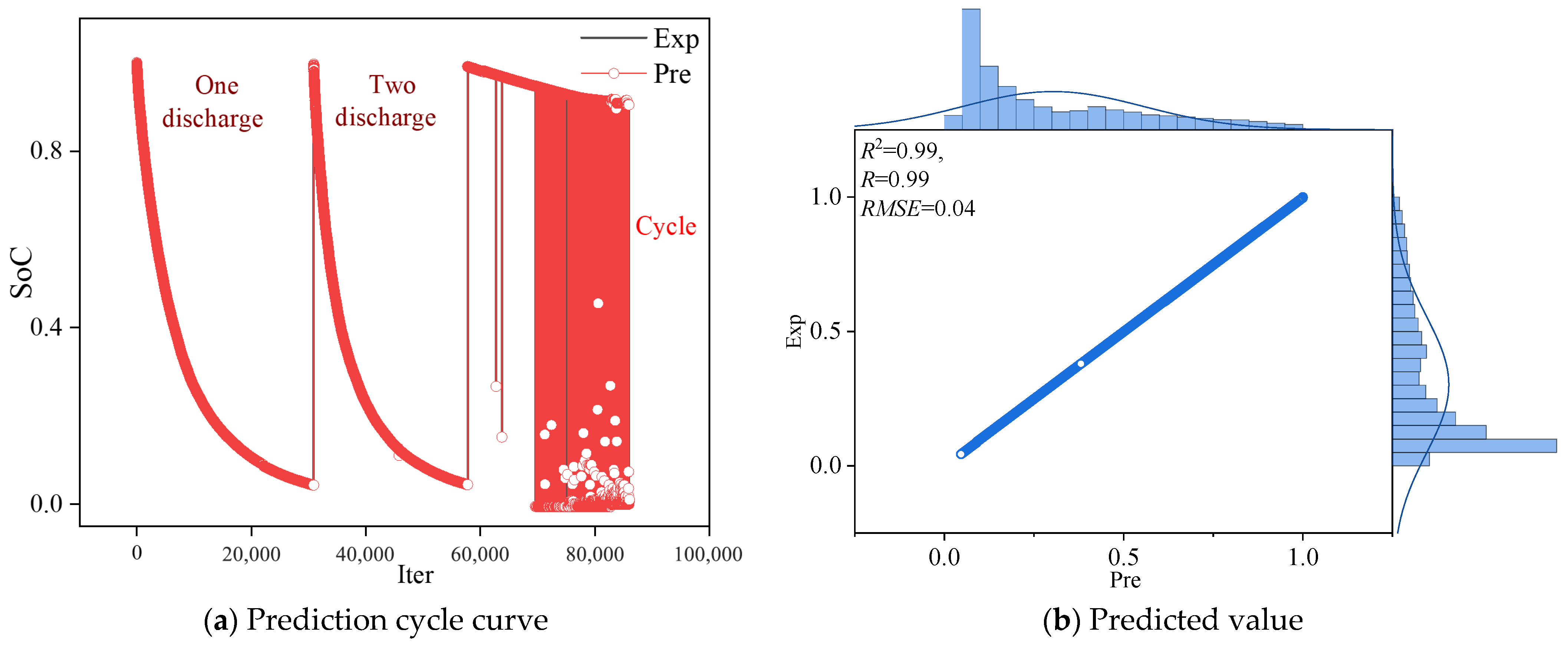
Based on this, this section used the above three models as the base model, and XGB as the meta-model to construct the stacking model. Figure 7 analyzed the prediction results obtained by using the stacking proposed in this paper. Figure 7a analyzed the prediction results of the stacking model under partial charge and discharge. It can be found that after two long charge and discharge processes, the SoC of the battery undergoes multiple cyclic charge and discharge processes, and the model proposed in this paper effectively predicts the change in this process. In addition, Figure 7b analyzed the comparison between the predicted value and the experimental value obtained by the model proposed in this paper. It can be found that the stacking model proposed in this paper has better accuracy than the four ML models after Bayesian optimization. Compared with the XGB model with the best prediction performance, the stacking model proposed in this paper can improve R2, R, and RMSE by 5.4%, 3.1%, and 64.3%, respectively. Because the advantages and disadvantages of the four ML models are fully combined, the outliers basically disappear. This is because MLP combined with XGB model can enhance the interpolation effect of continuous data and individual point data. We also calculated the discrete points count for stacking models and XGB model to valid the performance improvement of the proposed models. Compared with XGB models, the discrete points of stacking model decrease up to 89.4%. It should be noted that discrete points are defined as points where the error between the predicted value and the experimental value exceeds 10%, which ensures that the model has a certain generalization ability for the dataset. Although the LSTM model has better prediction performance than other ML models, the R2, R, and RMSE of the stacking model proposed in this paper are still improved by 3.2%, 2.1%, and 54.5%, respectively.
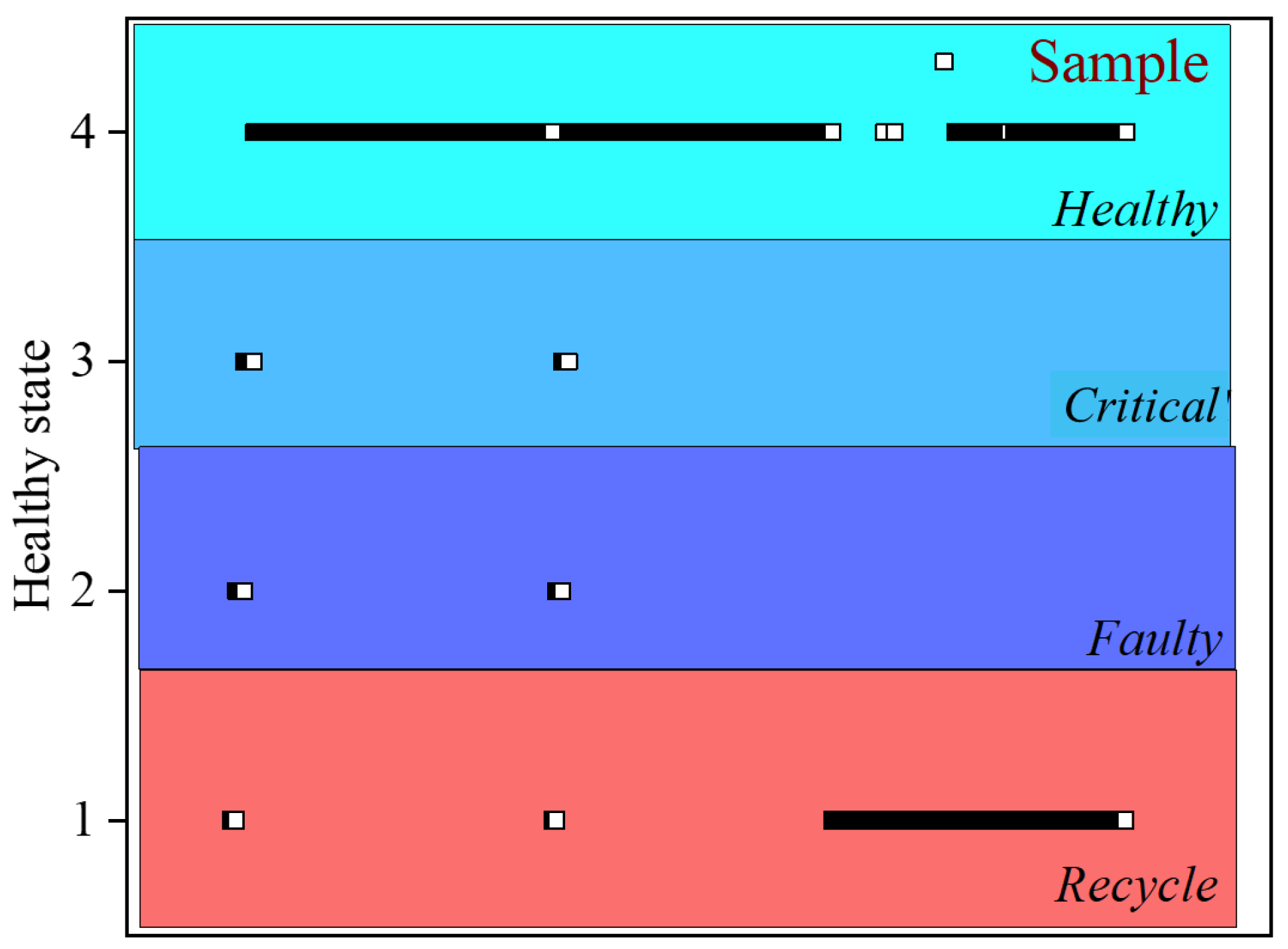
Based on this, the trained stacking model was used to calculate the relationship between SoH and SoC, and then the SoH of the battery was evaluated. Specifically, substituting the SoC prediction results obtained by stacking into Equations (4) and (5) can achieve the classification state assessment of SoH. Therefore, the same stacking model structure and parameters as those used for SoC prediction are adopted for the classification of SoH. It can be seen that the health status of the battery remains mainly in the Healthy and Recycle stages during charging and discharging (Figure 8). This is because the state of the battery is in constant use—discharging and charging to improve battery life. The model proposed in this paper can effectively predict the change process of SoH.

4.2. Feature Importance Analysis

Machine learning is often considered to have low interpretability due to the black-box problem, which limits its ability to effectively guide the physical design in practical engineering. Existing interpretability algorithms include SHAP, Local Interpretable Model-Agnostic Explanations [41], and others. Among these, SHAP is an interpretability algorithm based on game theory, with the core concept being the analysis of each input variable’s contribution to the prediction outcome. The algorithm aggregates the contributions of all input variables to generate the final prediction result. SHAP introduces Shapley values to measure the contribution of each input variable to the model. The advantages of this method include: (1) Good local fidelity: The prediction obtained from the ML model is the same as the prediction obtained from the interpretable ML model; (2) The model is not affected by missing values. If a single sample has missing values, the SHAP value for that sample will be zero; (3) The interpretable ML model exhibits continuity. If the contribution of an input variable to the output increases, the SHAP value of that variable will also increase.
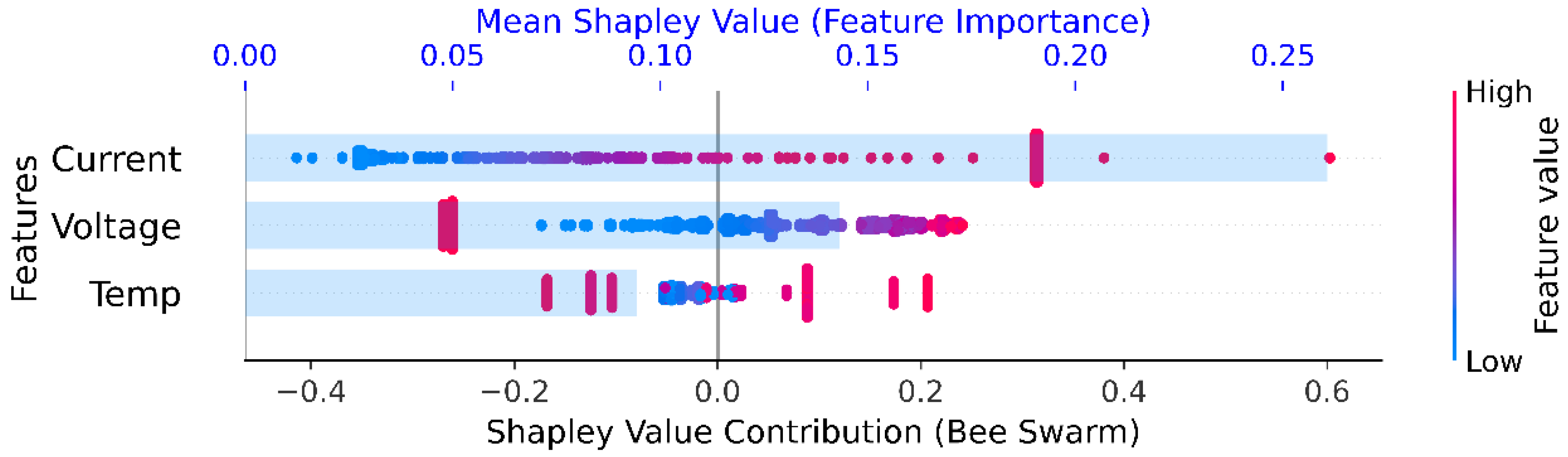
Figure 9 analyzed the influence of battery input variables and SoC obtained by SHAP method. The x-axis is the predicted SHAP value corresponding to each data sample, while the Y-axis represents the input variable; the color bar on the right side of the Y-axis corresponds to the change in SHAP value. It can be found that the current is positively correlated with the SoC, which is because the SoC of the battery increases during charging. During the discharge process, the voltage is negatively correlated with the SoC, and the voltage is positively correlated with the SoC. Temperature is negatively correlated with SoC in a certain stage, and positively correlated to a certain extent, which mainly depends on the change in current and voltage. It should be noted that this paper uses the integrated model constructed in Section 4.1 as the prediction model of SHAP.

4.3. Feasibility Analysis

The BMS of UAV runs usually on embedded hardware (MCU or low-power processors) with limited computing power. It is necessary to ensure that the model can still perform fast inference in a low-power environment. If the lightweight stacking proposed in this paper is used, the prediction time can be controlled within <10 ms, meeting the real-time requirement. In addition, UAV missions have extremely high requirements for safety. The advantage of the stacking model lies in integrating multiple learners to improve prediction stability and noise resistance. This is more suitable for dealing with the nonlinear degradation of battery performance and complex environmental changes than a single model.

5. Future Improvement

Building upon the machine learning prediction model proposed in this study, the prediction results of this model can be applied to the actual operation and maintenance (O&M) of facilities such as drones and autonomous vehicles. A simple case of real-time monitoring for drone battery O&M is provided here: the ML model is trained and constantly updated using a cloud server, with a controller employed to monitor the battery status of drones or autonomous vehicles. Sensors are used to take readings from the drone battery to minimize reading errors. This information can be encapsulated into a visualization web page, where users can access battery temperature, detect whether the battery has any faults, and receive recommendations regarding the health status of the drone’s battery. In addition, more advanced machine learning algorithms can be used to assess the State of Charge (SoC) and State of Health (SoH) of the battery. The model proposed in this study can also be trained and tested using other battery datasets. By changing the feature variables of the dataset and inputting them into the ML model and then adjusting the number of Bayesian optimizations and the parameter optimization range of the ML model, the generalization ability of the new dataset on the model can be ensured. In addition, the model proposed in this paper can be used to consider the influence of different temperatures on the State of Health of the battery. By collecting relevant datasets and inputting the dataset containing temperature into the model, the State of Health of the battery can be evaluated.

6. Conclusions

This paper proposed a stacking-based framework for drone battery health assessment and prediction, specifically focusing on the prediction and evaluation of both SoC and SoH to improve the service life assessment and monitoring of drone batteries. A drone cycle charge and discharge dataset containing 241,326 samples, with three input variables and two output variables, was utilized in this study. The Pearson correlation coefficient was used to analyze the relationships between the dataset variables. Subsequently, Bayesian optimization was employed to fine-tune the hyperparameters of the MLP, SVM, RF, and XGB models. The optimized machine learning models exhibited the following prediction performance ranking: XGB > RF > MLP > SVM, with XGB demonstrating the best performance, achieving an R2 of 0.93 and an RMSE of 0.14. Based on this, an ensemble model using stacking was constructed, considering MLP, SVM, and RF as base models and XGB as the meta-model. The prediction performance of this model was improved by 89.4%, leading to the classification assessment of the battery’s SoH. SHAP was employed to quantify the influence of the three input variables on the SoC, revealing a positive correlation between SoC and current. Finally, a drone battery intelligent health assessment framework was proposed, integrating a cloud server, the stacking model, and a visualization web page.

Author Contributions

Conceptualization, J.Q. and Y.L.; methodology, Y.L.; software, J.G.; validation, J.Q.; formal analysis, Y.Z.; investigation, J.Q.; writing—original draft preparation, J.Q. and Y.Z.; writing—review and editing, Y.L. and J.G.; project administration, J.Q.; All authors have read and agreed to the published version of the manuscript.

Funding

The research work in this paper was supported by Shanxi Province Science and Technology Cooperation and Exchange Special Program (No. 202304041101001), Basic Research Program of Shanxi province (No. 202203021212335), Taiyuan Academician Workstation Building Unit: Taiyuan Institute of Technology (TYSYSGZZ201903).

Data Availability Statement

Data will be made available on request.

Conflicts of Interest

The authors declare no conflicts of interest.

References

  1. Sonmez, Y. Leveraging machine learning methods to determine the charging status and capacity of hydrogen-based batteries through current analysis. Int. J. Hydrogen Energy 2025, 144, 686–696. [Google Scholar] [CrossRef]
  2. Li, R.; Zhao, W.; Li, R.; Gan, C.; Chen, L.; Wang, Z.; Yang, X. Leveraging machine learning for accelerated materials innovation in lithium-ion battery: A review. J. Energy Chem. 2025, 106, 44–62. [Google Scholar] [CrossRef]
  3. Zou, J.; Gao, Y.; Frieges, M.H.; Börner, M.F.; Kampker, A.; Li, W. Machine learning for battery quality classification and lifetime prediction using formation data. Energy AI 2024, 18, 100451. [Google Scholar] [CrossRef]
  4. Galiounas, E.; Owen, R.E.; Robinson, J.B.; Jervis, R. The generalisation challenge: Assessment of the efficacy of acoustic signals for state estimation of lithium-ion batteries via machine learning. J. Power Sources 2025, 630, 236047. [Google Scholar] [CrossRef]
  5. Sudarshan, M.; Gautam, R.; Singh, M.; García, R.E.; Tomar, V. A comparative analysis of the influence of data-processing on battery health prediction by two machine learning algorithms. J. Energy Storage 2024, 104, 114524. [Google Scholar] [CrossRef]
  6. Zhou, X.; Han, X.; Shi, K.; Chen, X.; Guo, D.; Zheng, Y.; Lu, L.; Ouyang, M. Intelligent battery life management through mechanism and machine learning under real vehicle working conditions. J. Power Sources 2025, 640, 236749. [Google Scholar] [CrossRef]
  7. Jiao, M.; Huang, P.; Pang, Z.; Wang, S.; Liu, H.; Lin, Y.; Lian, C. Uncovering the battery direct current internal resistance puzzle: A machine learning-driven pore network approach. J. Power Sources 2025, 628, 235891. [Google Scholar] [CrossRef]
  8. Han, D.; Lin, C. Combination of high-throughput phase field modeling and machine learning to study the performance evolution during lithium battery cycling. Energy Storage Mater. 2025, 74, 103982. [Google Scholar] [CrossRef]
  9. Chiodo, E.; Falco, P.D.; Noia, L.P.D. Probabilistic Modeling of Li-Ion Battery Remaining Useful Life. IEEE Trans. Ind. Appl. 2022, 58, 5214–5226. [Google Scholar] [CrossRef]
  10. Iurilli, P.; Brivio, C.; Carrillo, R.; Wood, V. Physics-Based SoH Estimation for Li-Ion Cells. Batteries 2022, 8, 204. [Google Scholar] [CrossRef]
  11. Gismero, A.; Nørregaard, K.; Johnsen, B.; Stenhøj, L.; Stroe, D.-I.; Schaltz, E. Electric vehicle battery state of health estimation using Incremental Capacity Analysis. J. Energy Storage 2023, 64, 107110. [Google Scholar] [CrossRef]
  12. Zheng, Y.; Gao, W.; Ouyang, M.; Lu, L.; Zhou, L.; Han, X. State-of-charge inconsistency estimation of lithium-ion battery pack using mean-difference model and extended Kalman filter. J. Power Sources 2018, 383, 50–58. [Google Scholar] [CrossRef]
  13. Chin, C.S.; Gao, Z.; Zhang, C.Z. Comprehensive electro-thermal model of 26650 lithium battery for discharge cycle under parametric and temperature variations. J. Energy Storage 2020, 28, 101222. [Google Scholar] [CrossRef]
  14. Liu, C.; Liu, W.; Wang, L.; Hu, G.; Ma, L.; Ren, B. A new method of modeling and state of charge estimation of the battery. J. Power Sources 2016, 320, 1–12. [Google Scholar] [CrossRef]
  15. Tian, N.; Wang, Y.; Chen, J.; Fang, H. One-shot parameter identification of the Thevenin’s model for batteries: Methods and validation. J. Energy Storage 2020, 29, 101282. [Google Scholar] [CrossRef]
  16. Hariharan, K.S.; Senthil Kumar, V. A nonlinear equivalent circuit model for lithium ion cells. J. Power Sources 2013, 222, 210–217. [Google Scholar] [CrossRef]
  17. Wang, Z.; Liu, N.; Chen, C.; Guo, Y. Adaptive self-attention LSTM for RUL prediction of lithium-ion batteries. Inf. Sci. 2023, 635, 398–413. [Google Scholar] [CrossRef]
  18. Wickramaarachchi, S.M.; Suraweera, S.A.D.; Akalanka, D.M.P.; Logeeshan, V.; Wanigasekara, C. Accurate Prediction of Remaining Useful Life for Lithium-ion Battery Cells Using Deep Neural Networks. In Proceedings of the 2024 IEEE World AI IoT Congress (AIIoT), Seattle, WA, USA, 29–31 May 2024; pp. 562–568. [Google Scholar]
  19. Franzese, P.; Iannuzzi, D.; Merolla, R.; Ribera, M.; Spina, I. Artificial Neural Networks for Residual Capacity Estimation of Cycle-Aged Cylindric LFP Batteries. Batteries 2025, 11, 260. [Google Scholar] [CrossRef]
  20. Zhang, S.; Zhai, B.; Guo, X.; Wang, K.; Peng, N.; Zhang, X. Synchronous estimation of state of health and remaining useful lifetime for lithium-ion battery using the incremental capacity and artificial neural networks. J. Energy Storage 2019, 26, 100951. [Google Scholar] [CrossRef]
  21. Zhang, W.; Li, X.; Li, X. Deep learning-based prognostic approach for lithium-ion batteries with adaptive time-series prediction and on-line validation. Measurement 2020, 164, 108052. [Google Scholar] [CrossRef]
  22. Shibl, M.M.; Ismail, L.S.; Massoud, A.M. A machine learning-based battery management system for state-of-charge prediction and state-of-health estimation for unmanned aerial vehicles. J. Energy Storage 2023, 66, 107380. [Google Scholar] [CrossRef]
  23. Chemali, E.; Kollmeyer, P.J.; Preindl, M.; Emadi, A. State-of-charge estimation of Li-ion batteries using deep neural networks: A machine learning approach. J. Power Sources 2018, 400, 242–255. [Google Scholar] [CrossRef]
  24. Bello, I.T.; Raza, H.; Michael, A.T.; Muneeswara, M.; Tewari, N.; Wang, B.; Cheung, Y.N.; Choi, Z.; Boles, S.T. Charging Ahead: The Evolution and Reliability of Nickel-Zinc Battery Solutions. EcoMat 2025, 7, e12505. [Google Scholar] [CrossRef]
  25. Mansouri, S.S.; Karvelis, P.; Georgoulas, G.; Nikolakopoulos, G. Remaining Useful Battery Life Prediction for UAVs based on Machine Learning. IFAC-PapersOnLine 2017, 50, 4727–4732. [Google Scholar] [CrossRef]
  26. Wang, S.; Xia, P.; Chen, K.; Gong, F.; Wang, H.; Wang, Q.; Zhao, Y.; Jin, W. Prediction and optimization model of sustainable concrete properties using machine learning, deep learning and swarm intelligence: A review. J. Build. Eng. 2023, 80, 108065. [Google Scholar] [CrossRef]
  27. Wang, S.; Xia, P.; Wang, Z.; Meng, T.; Gong, F. Intelligent mix design of recycled brick aggregate concrete based on swarm intelligence. J. Build. Eng. 2023, 71, 106508. [Google Scholar] [CrossRef]
  28. Wang, S.; Liu, J.; Wang, Q.; Dai, R.; Chen, K. Prediction of non-uniform shrinkage of steel-concrete composite slabs based on explainable ensemble machine learning model. J. Build. Eng. 2024, 88, 109002. [Google Scholar] [CrossRef]
  29. Wang, S.; Chen, K.; Liu, J.; Xia, P.; Xu, L.; Chen, B.; Wu, D.; Chen, W. Multi-performance optimization of low-carbon geopolymer considering mechanical, cost, and CO2 emission based on experiment and interpretable learning. Constr. Build. Mater. 2024, 425, 136013. [Google Scholar] [CrossRef]
  30. Liu, J.; Zou, Z.; Gao, K.; Yang, J.; He, S.; Wu, Z. A novel digital unit cell library generation framework for topology optimization of multi-morphology lattice structures. Compos. Struct. 2025, 354, 118824. [Google Scholar] [CrossRef]
  31. Liu, J.; Zou, Z.; Li, Z.; Zhang, M.; Yang, J.; Gao, K.; Wu, Z. A clustering-based multiscale topology optimization framework for efficient design of porous composite structures. Comput. Method. Appl. M 2025, 439, 117881. [Google Scholar] [CrossRef]
  32. Wu, R.-j.; Wang, Y.-z.; Swe Hein, K.; Xia, J. An enhancement method for chloride diffusion coefficient long-term prediction based on Hilbert dynamic probabilistic interpolation and BO-LSTM. Measurement 2025, 247, 116820. [Google Scholar] [CrossRef]
  33. Wu, R.J.; Xia, Y.; Xia, J. Long-term prediction of surface chloride content of marine concrete structures using inverse physics-informed neural networks. Eng. Struct. 2025, 329, 119752. [Google Scholar] [CrossRef]
  34. Shen, P.; Ouyang, M.; Lu, L.; Li, J.; Feng, X. The Co-estimation of State of Charge, State of Health, and State of Function for Lithium-Ion Batteries in Electric Vehicles. IEEE Trans. Veh. Technol. 2018, 67, 92–103. [Google Scholar] [CrossRef]
  35. Mao, L.; Zou, Y.; Yang, R.; Fan, C.; Dong, X.; Yan, Y.; Zhong, L.; Xu, Y. Advances in the density functional theory (DFT) calculation of lithium-sulfur battery cathodes. Mater. Today Commun. 2023, 36, 106814. [Google Scholar] [CrossRef]
  36. Sun, K.; Li, X.; Fu, K.; Yang, H.; Gong, L.; Tan, P. Extending the calendar life of LiNi0.8Co0.1Mn0.1O2-based lithium-ion batteries via low-temperature storage. Mater. Today Commun. 2024, 39, 108765. [Google Scholar] [CrossRef]
  37. Chemali, E.; Kollmeyer, P.J.; Preindl, M.; Ahmed, R.; Emadi, A. Long Short-Term Memory Networks for Accurate State-of-Charge Estimation of Li-ion Batteries. IEEE Trans. Ind. Electron. 2018, 65, 6730–6739. [Google Scholar] [CrossRef]
  38. Zhao, R.; Kollmeyer, P.J.; Lorenz, R.D.; Jahns, T.M. A compact unified methodology via a recurrent neural network for accurate modeling of lithium-ion battery voltage and state-of-charge. In Proceedings of the 2017 IEEE Energy Conversion Congress and Exposition (ECCE), Cincinnati, OH, USA, 1–5 October 2017; pp. 5234–5241. [Google Scholar]
  39. Kollmeyer, P.; Hackl, A.; Emadi, A. Li-ion battery model performance for automotive drive cycles with current pulse and EIS parameterization. In Proceedings of the 2017 IEEE Transportation Electrification Conference and Expo (ITEC), Chicago, IL, USA, 22–24 June 2017; pp. 486–492. [Google Scholar]
  40. Phillip, K. Panasonic 18650PF Li-Ion Battery Data; V1; Mendeley Data: London, UK, 2018. [Google Scholar] [CrossRef]
  41. de Vera, G.; Antón, C.; Climent, M.A. Effect of exposure conditions on the chloride concentration profiles in a marine concrete structure, studied by means of the kernel density estimation technique and a Gaussian–Lorentzian model. Constr. Build. Mater. 2024, 413, 134833. [Google Scholar] [CrossRef]
Figure 1. Typical evaluation methods of SoC.
Batteries 12 00062 g001
Figure 2. The battery health state prediction framework proposed in this paper.
Batteries 12 00062 g002
Figure 3. Flow chart of ML algorithms.
Batteries 12 00062 g003aBatteries 12 00062 g003b
Figure 4. Distribution of datasets.
Batteries 12 00062 g004
Figure 5. Correlation analysis of dataset variables.
Batteries 12 00062 g005
Figure 6. Prediction results of ML models.
Batteries 12 00062 g006
Figure 7. Prediction results using stacking model.
Batteries 12 00062 g007
Figure 8. SoH evaluation results obtained by stacking model.
Batteries 12 00062 g008
Figure 9. Interpretability analysis of battery health status analysis based on SHAP.
Batteries 12 00062 g009
Table 1. The optimal hyperparameters of the ML models.
ModelParametersRangeOptimal Value
MLPAlpha[1 × 10⁻⁵, 0.1]2.415 × 10⁻³
Hidden_layer_size[0, 200]147
RFMax_depth[1, 100]45
Min_samples_leaf[1, 10]2
Min_sample_split[2, 10]2
N_estimators[0, 200]162
SVMC[1 × 10⁻⁵, 1 × 10⁵]101.37
Epsilon[1 × 10⁻¹, 10]2.54
XGBColsample_bytree[0.1, 1.0]0.47
Gamma[0, 4]1
Max_depth[2, 20]3
N_estimators[0, 1000]400
Subsample[0, 1.0]1.0
LSTMHidden Units[32, 512]128
Number of Layers[1, 10]5
Batch Size[16, 128]64
Learning Rate[1 × 10⁻⁴, 1 × 10⁻²]0.001
Table 2. The predictive performance of ML models based on multi-indexes.
ModelsR2RRMSE
MLP0.820.900.41
RF0.900.950.16
SVM0.800.890.42
XGB0.930.960.14
Stacking0.980.990.05
LSTM0.950.970.11
Disclaimer/Publisher’s Note: The statements, opinions and data contained in all publications are solely those of the individual author(s) and contributor(s) and not of MDPI and/or the editor(s). MDPI and/or the editor(s) disclaim responsibility for any injury to people or property resulting from any ideas, methods, instructions or products referred to in the content.