Article

Free-Standing and Binder-Free Porous Carbon Cloth (C-Felt) Anodes for Lithium-Ion Full Batteries

1
Department of Chemical and Biomedical Engineering, FAMU-FSU College of Engineering, 2525 Pottsdamer St., Tallahassee, FL 32310, USA
2
Department of Electrical and Computer Engineering, FAMU-FSU College of Engineering, 2525 Pottsdamer St., Tallahassee, FL 32310, USA
*
Author to whom correspondence should be addressed.
Batteries 2025, 11(3), 111; https://doi.org/10.3390/batteries11030111

Submission received: 2 January 2025 / Revised: 14 February 2025 / Accepted: 6 March 2025 / Published: 14 March 2025

Abstract

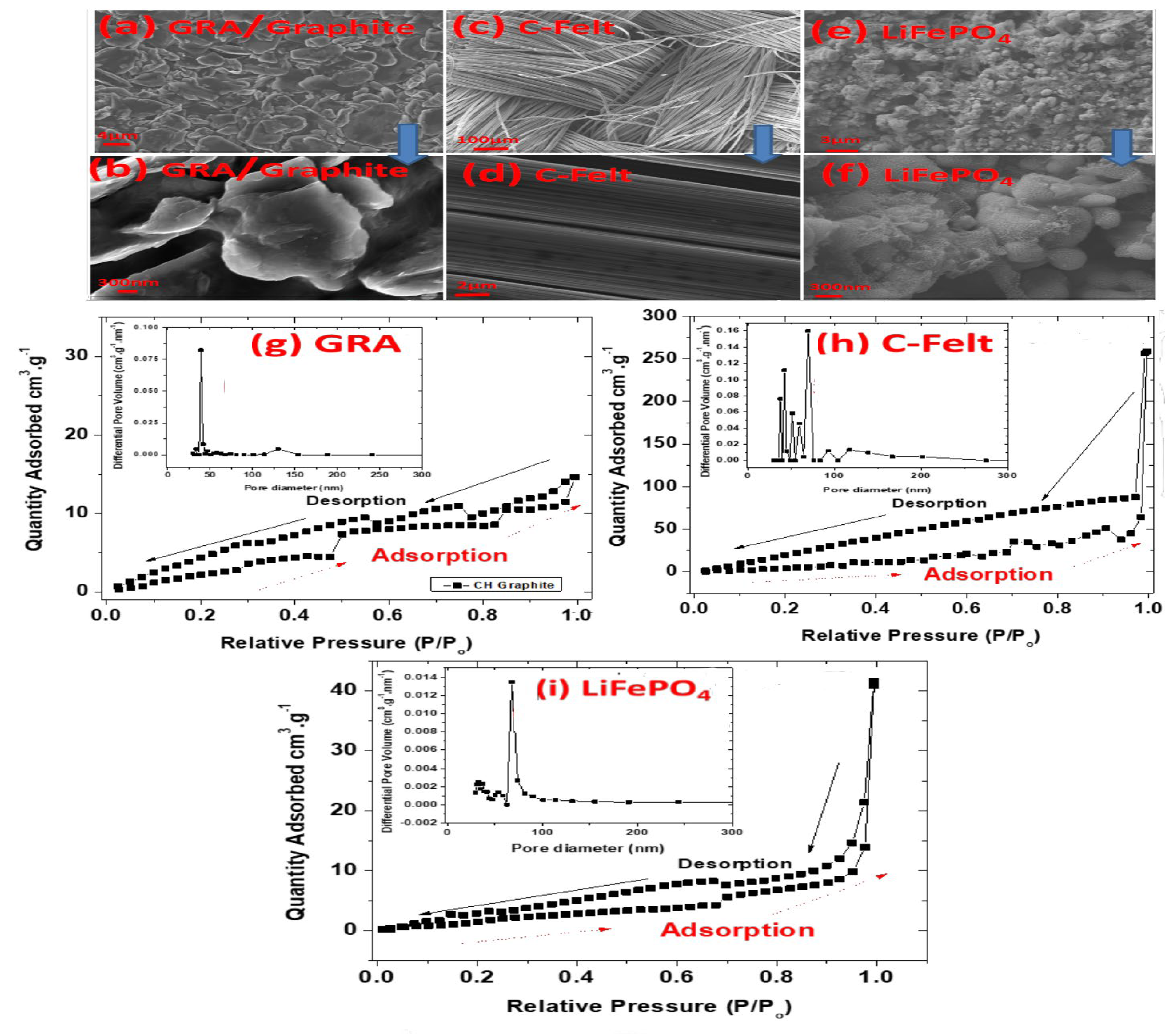
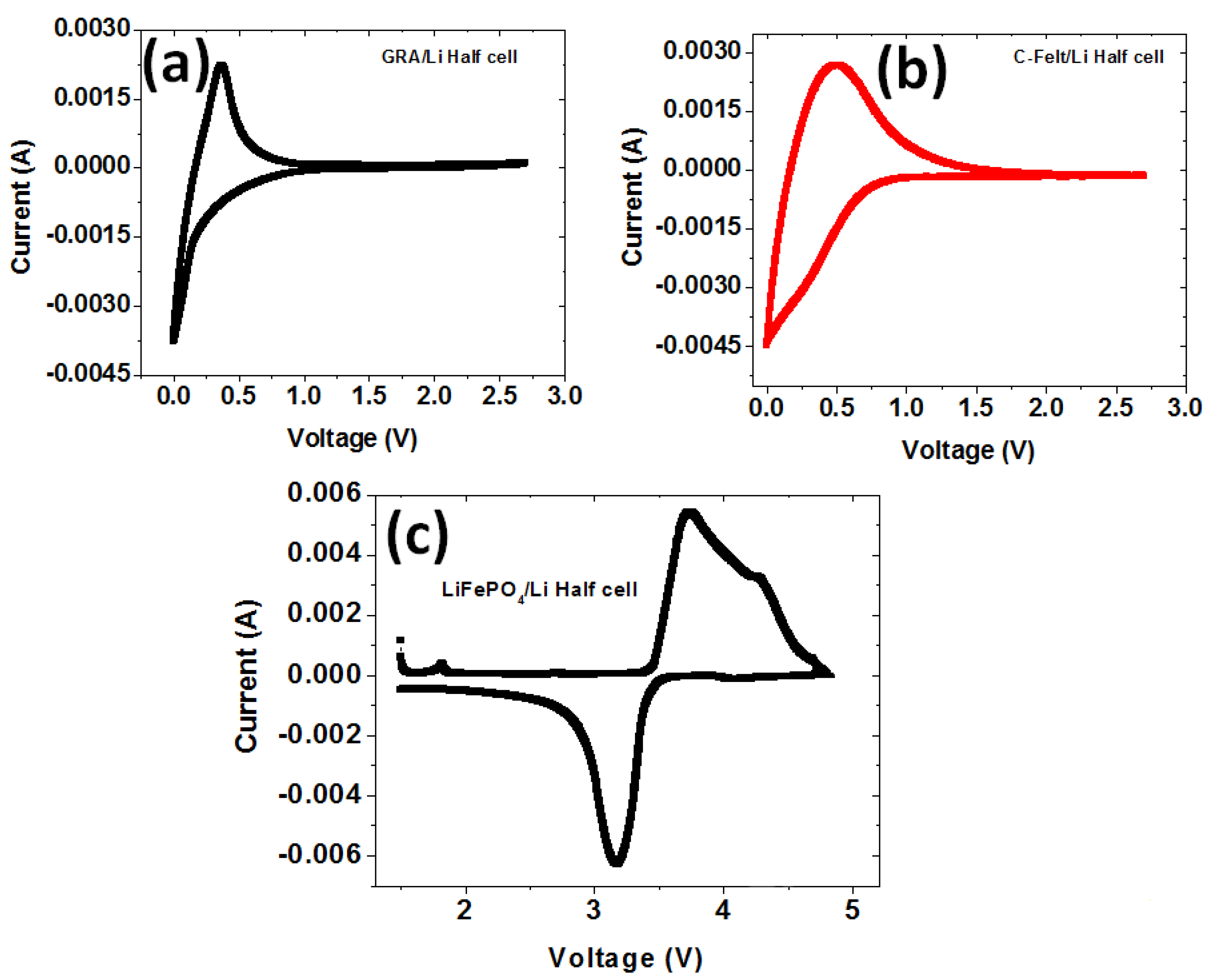
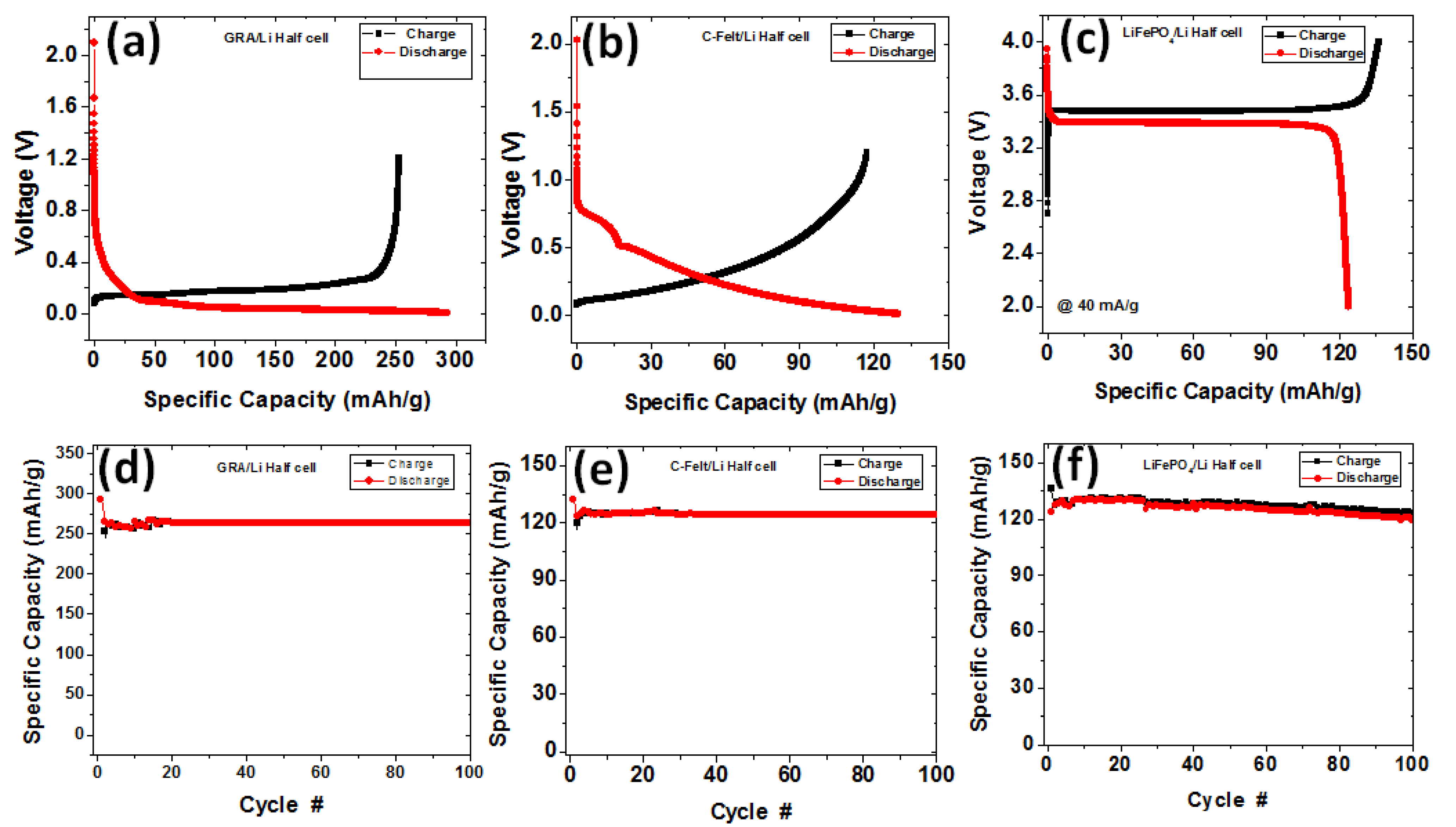
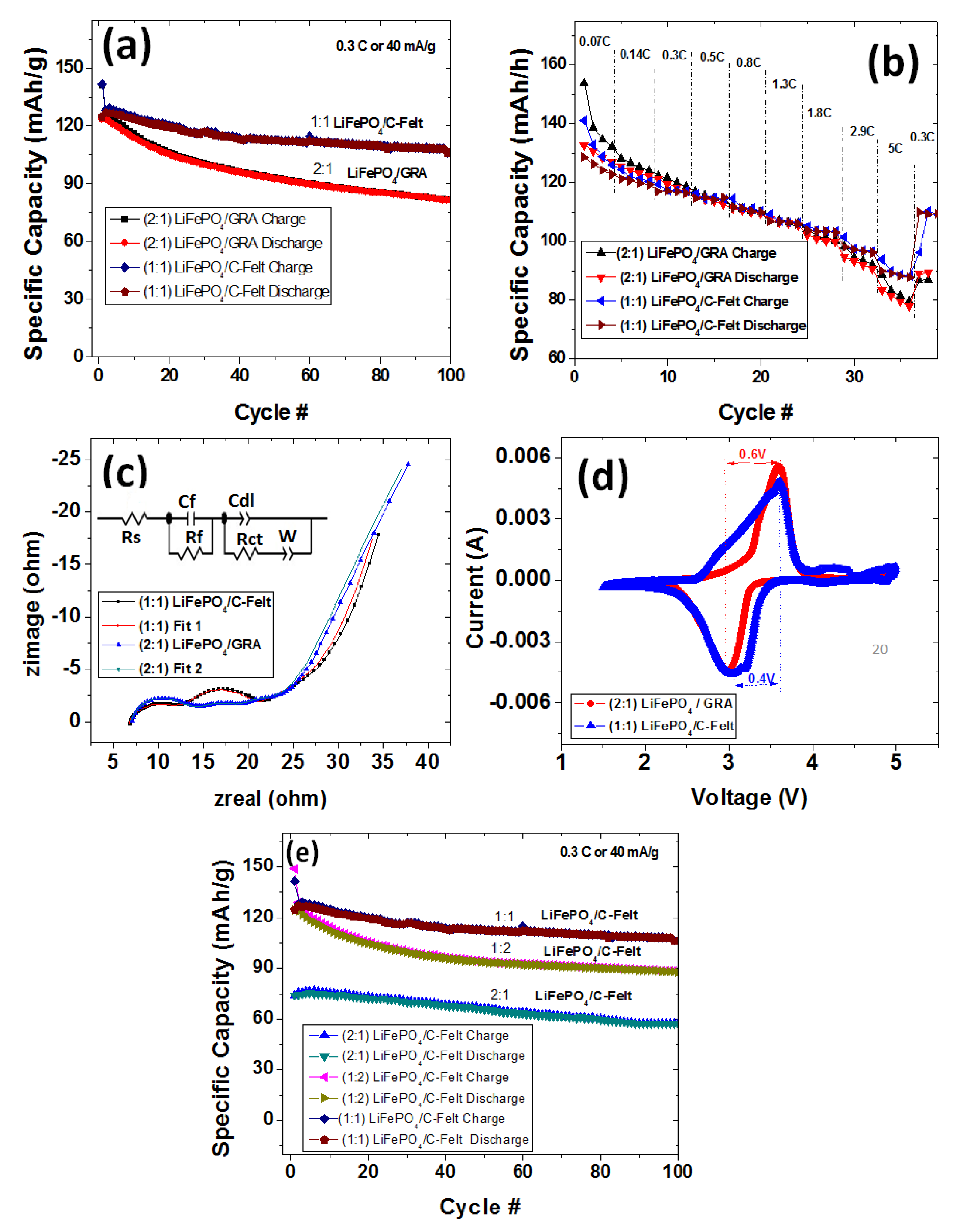
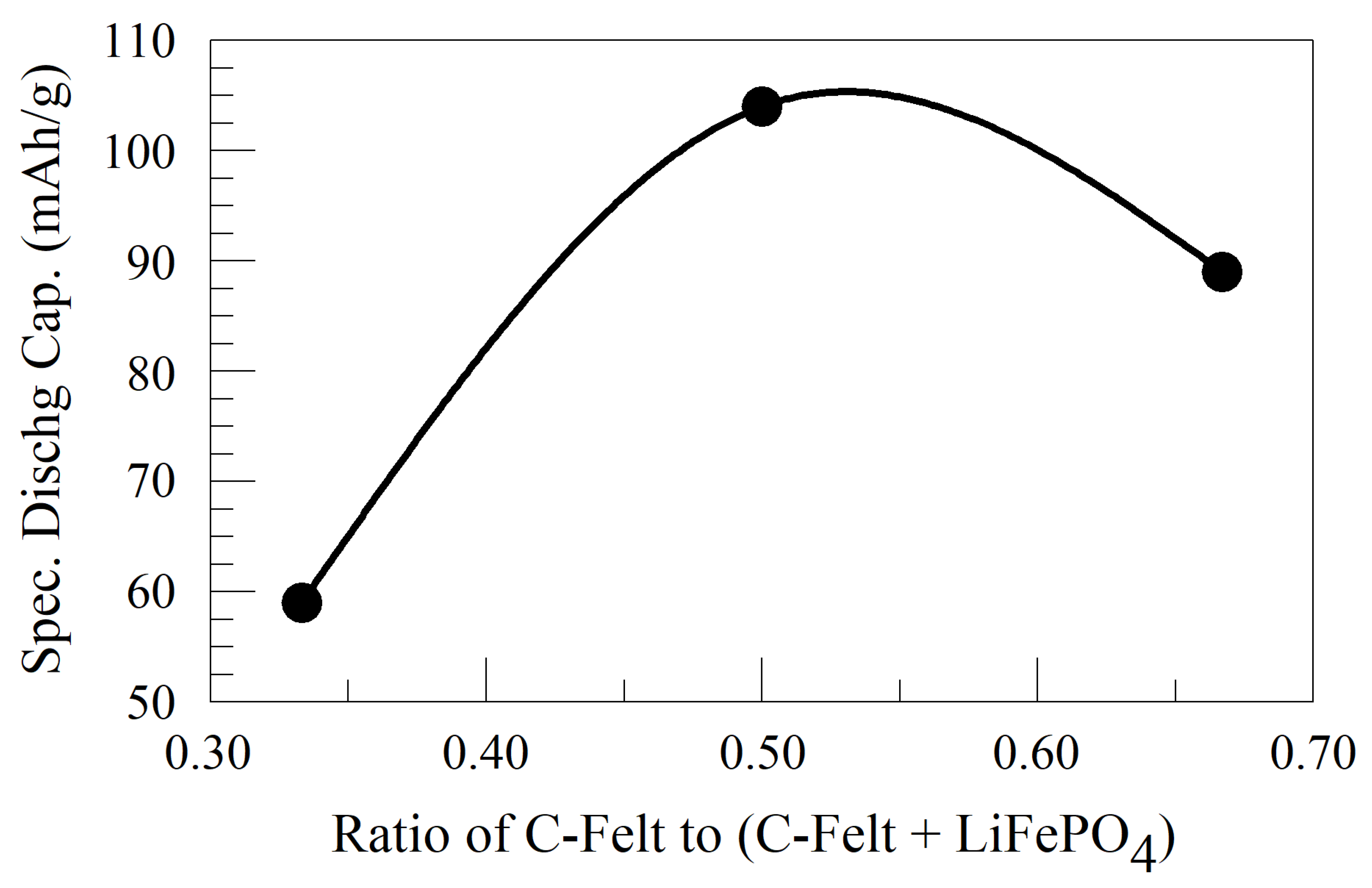
A priority area for low-cost LIBs is the commercial production of electrodes with a high cycle life and efficiency in an environmentally benign fashion and a cost-effective manner. We demonstrate the use of undoped/untreated, flexible, stand-alone, mesh-like carbon cloth (C-felt) as a potential alternative anode to commonly used graphite composite anodes (GRAs) in LIBs. The performances of commercial GRAs (9 m2/g) and C-felt (102 m2/g) were compared as anodes vs. LiFePO4 (14.5 m2/g) cathodes in the full battery. Half-cell test results determined appropriate mass ratios of 2:1 for GRAs (LiFePO4/GRA) and 1:1 for C-felt (LiFePO4/C-felt). At a 0.3 C discharge rate, the 1:1 ratio yielded a specific discharge capacity of 104 mAh/g, in contrast to 87 mAh/g for the 2:1 ratio for a full cell in the 100th cycle, corresponding to a retention of 82% for the 1:1 LiFePO4/C-felt full cell and 70% for the 2:1 LiFePO4/GRA full cell from their first specific discharge capacities. By varying the ratio of C-felt anode to LiFePO4 cathode in a full cell and expressing the specific capacity in the 100th cycle as a function of the fraction of C-felt present (at a fixed amount of LiFePO4), a maximum specific capacity was achieved at a fraction of C-felt equal to 0.542 or (1:1.18) LiFePO4/C-felt or 106 mAh/g. This corresponds closely to the experimentally determined value and supports (1:1) LiFePO4/C-felt full cell as an optimum ratio that can outperform the (2:1) LiFePO4/GRA full cell in our test conditions. Hence, we present C-felt anode as a potential cost-effective, lightweight anode material for low-cost LIBs.
Keywords: lithium-ion battery; full cell; carbon cloth anode; lithium-ion phosphate; binder-free; high capacity lithium-ion battery; full cell; carbon cloth anode; lithium-ion phosphate; binder-free; high capacity