Article

State of Health Estimation for Lithium-Ion Battery Using Partial Incremental Capacity Curve and Transfer Learning

1
School of Electric Power, South China University of Technology, Guangzhou 510641, China
2
College of New Energy, Longdong University, Qingyang 745000, China
3
Guangdong Hynn Technology Co., Ltd., Dongguan 518109, China
*
Authors to whom correspondence should be addressed.
Batteries 2024, 10(9), 324; https://doi.org/10.3390/batteries10090324

Submission received: 3 August 2024 / Revised: 3 September 2024 / Accepted: 10 September 2024 / Published: 13 September 2024
(This article belongs to the Section Battery Modelling, Simulation, Management and Application)

Abstract

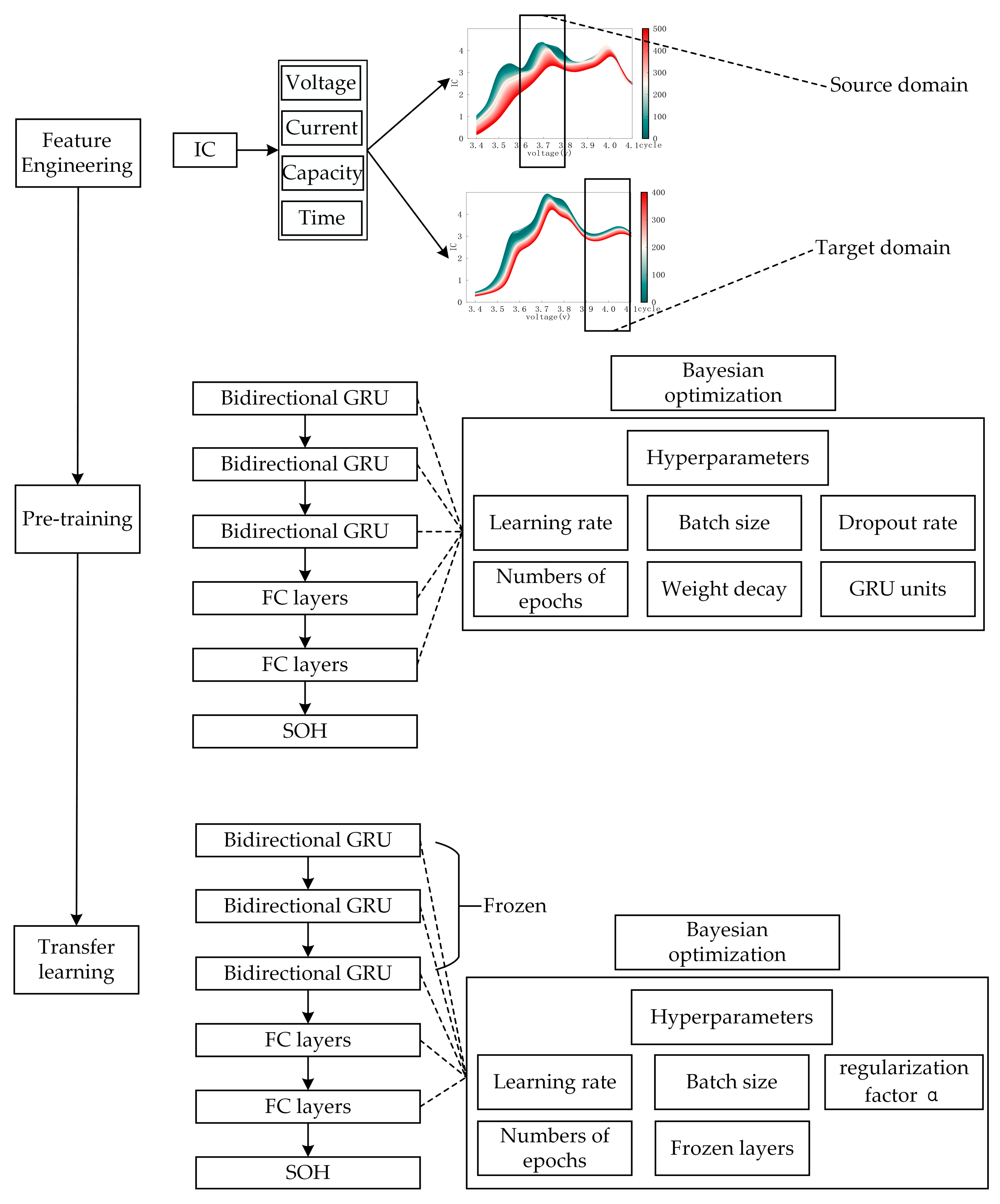
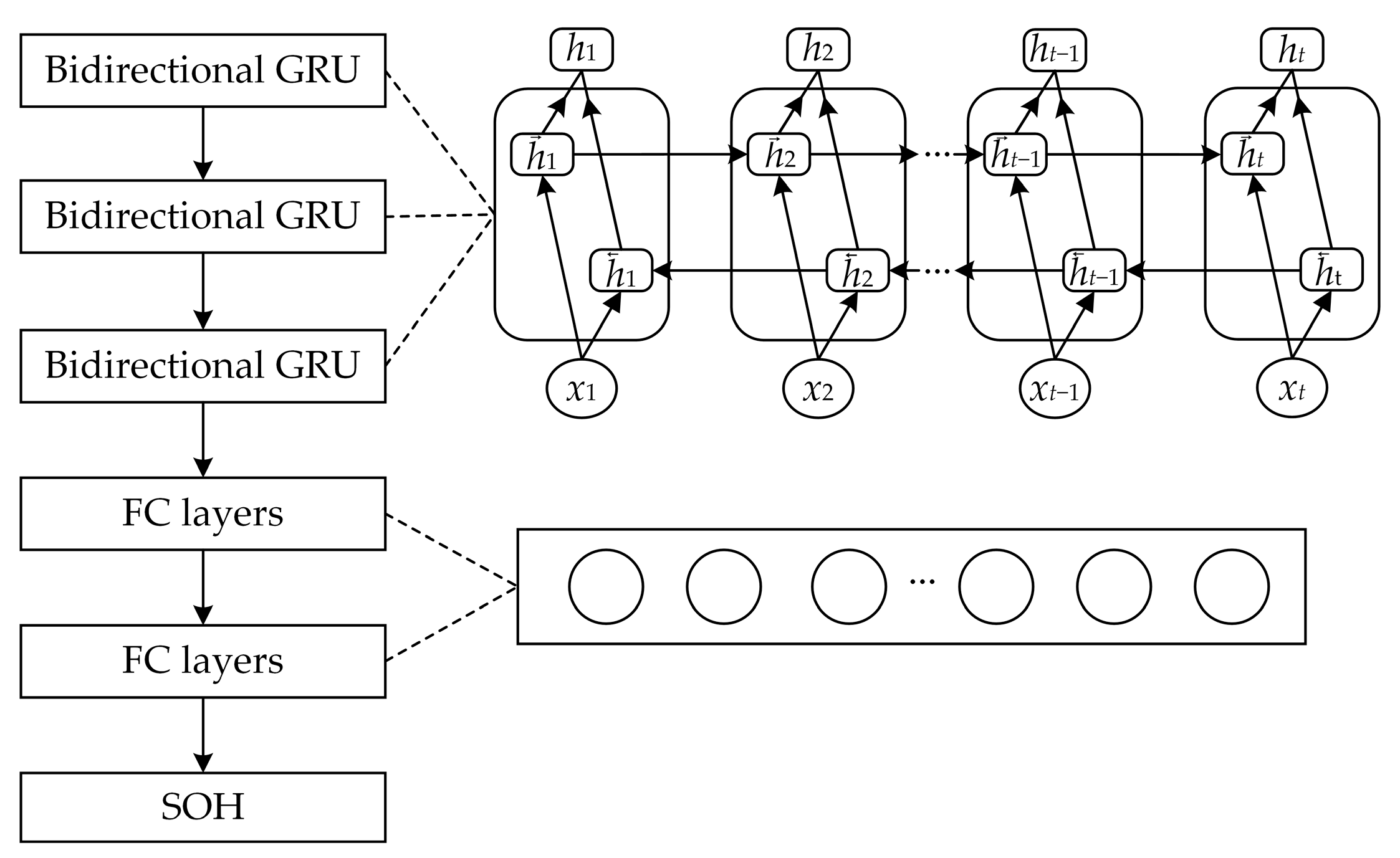
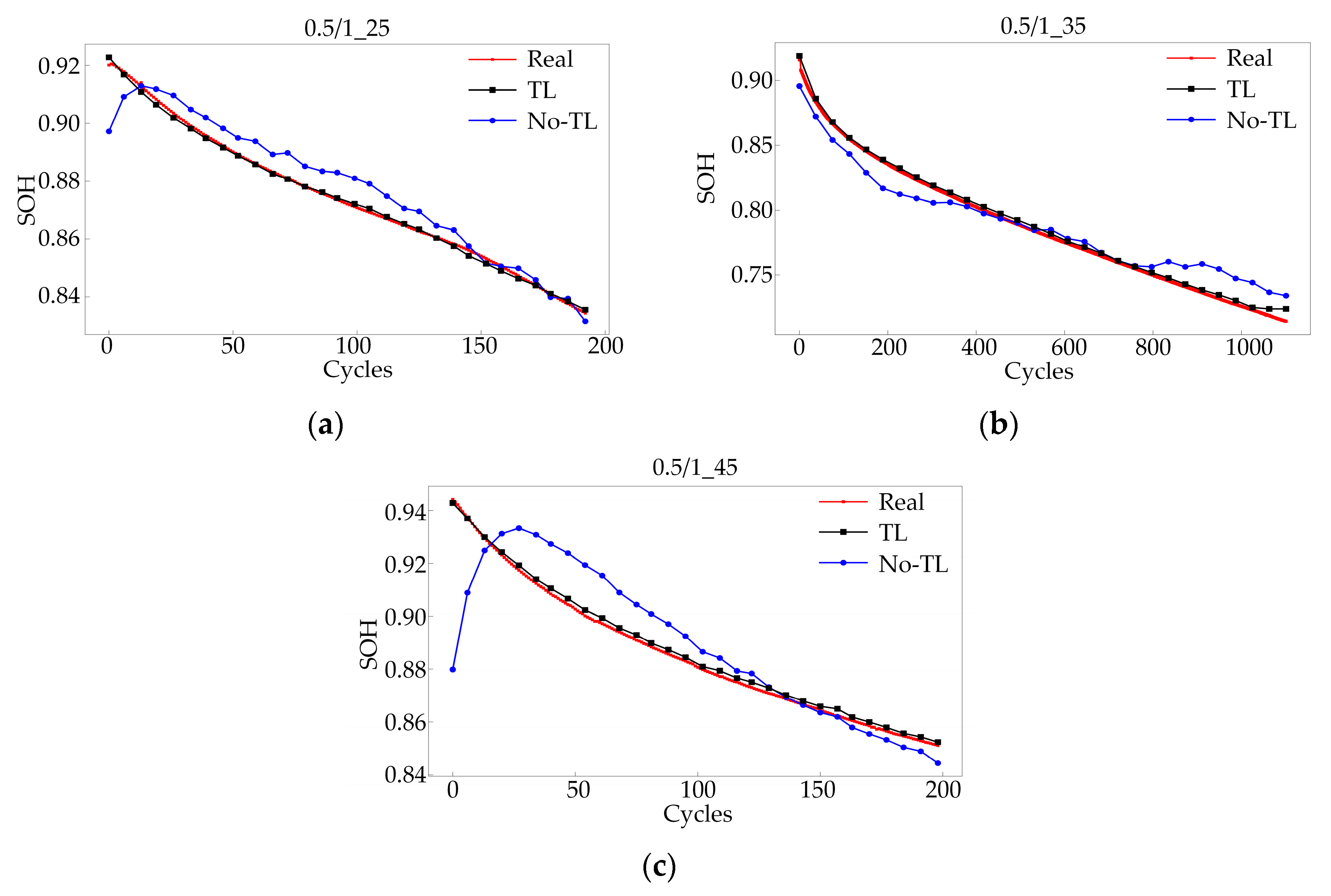
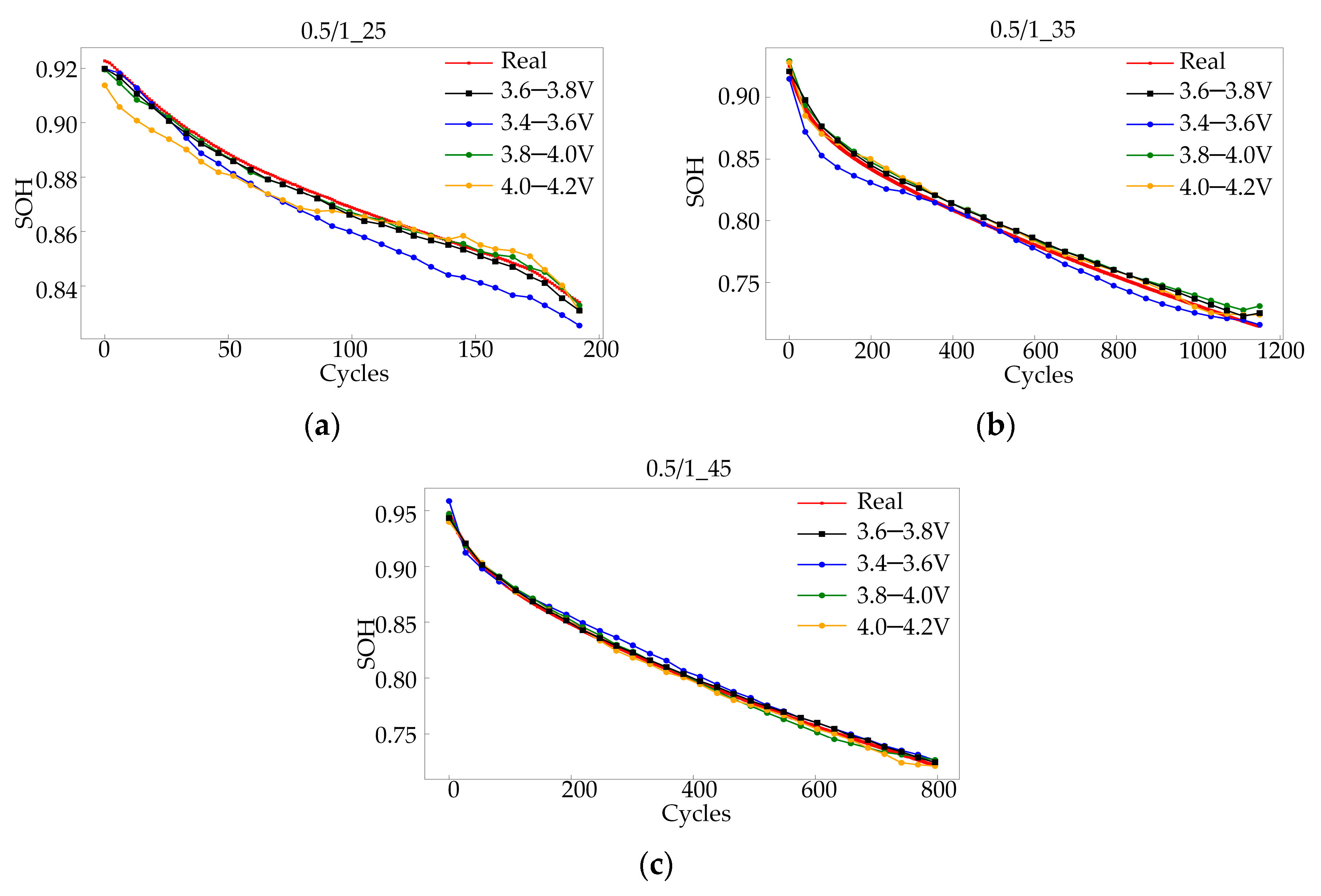
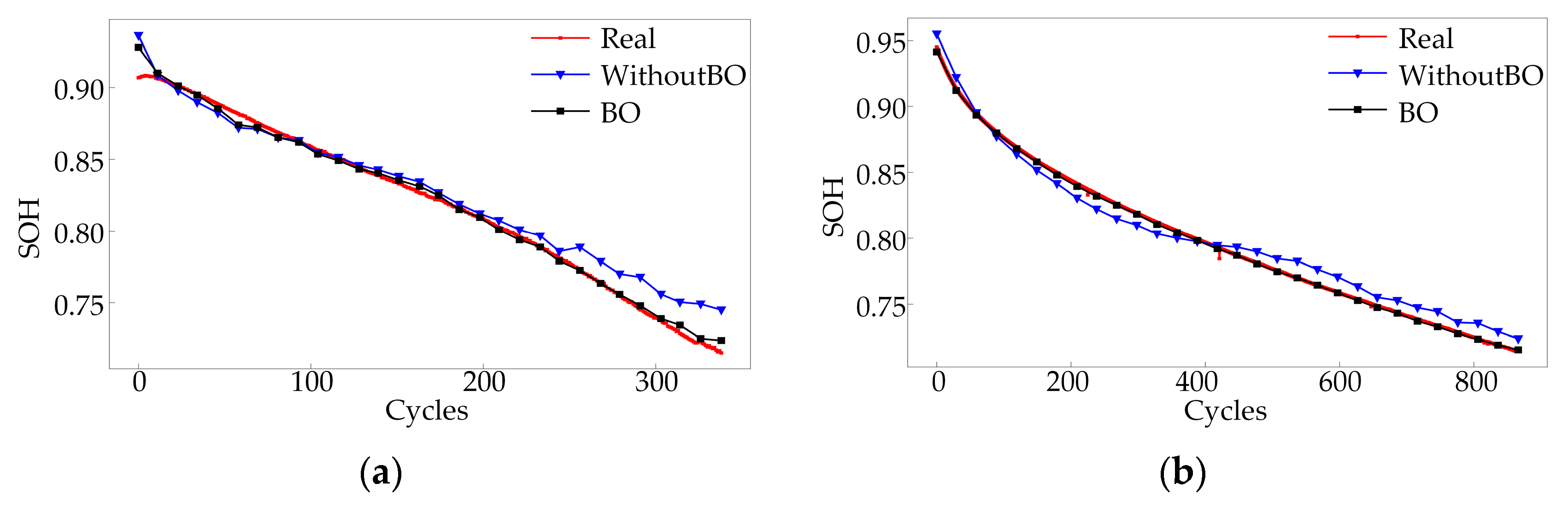
Lithium-ion battery state of health (SOH) estimation is critical in battery management systems (BMS), with data-driven methods proving effective in this domain. However, accurately estimating SOH for lithium-ion batteries remains challenging due to the complexities of battery cycling conditions and the constraints of limited data. This paper proposes an estimation approach leveraging partial incremental capacity curves and transfer learning to tackle these challenges. First, only partial voltage segments are utilized for incremental capacity analysis, which are then fed into a stacked bidirectional gated recursive unit (SBiGRU) network, and finally, transfer learning is utilized to address issues related to limited data availability and differing data distributions. The method is further enhanced through hyperparameter optimization to refine estimation accuracy. The proposed method is validated in two publicly available datasets. For the base model, the root mean square error is 0.0033. With the transfer learning method, which utilized only 1.6% of the target domain data, the root mean square error is 0.0039. Experimental results demonstrate that the proposed method can accurately estimate SOH and works well in training and testing over different voltage ranges. The results underscore the potential of the proposed SOH estimation method for lithium-ion batteries.
Keywords: lithium-ion batteries; state of health (SOH); incremental capacity analysis; Bayesian optimization; gated recurrent unit (GRU); transfer learning lithium-ion batteries; state of health (SOH); incremental capacity analysis; Bayesian optimization; gated recurrent unit (GRU); transfer learning