1. Introduction
Ornamental horticulture is a high-value component of contemporary agriculture. It includes cut flowers, potted and garden plants, ornamental nursery stock and activities connected with wholesale and retail distribution, floral design, landscaping and the management of green spaces. Unlike agricultural sectors centred on food production, ornamental products generate value through a combination of aesthetic, symbolic, recreational, environmental and social attributes. Horticulture is also characterised by intensive production, specialised farms and relatively high resource use, which make questions of efficiency and sustainability economically consequential [
1].
The sector operates through geographically dispersed markets and production systems. Europe, the United States and Japan remain major consumption areas, while production is distributed across Europe, Africa, Latin America and the Asia-Pacific region [
2,
3,
4]. Household expenditure on flowers and potted plants varies with demographic characteristics, purchasing occasions and product categories [
5]. The sector has also been affected by shifts in lifestyle and consumption. During and after the COVID-19 pandemic, gardening and plant-related activities expanded in the United States, increasing the potential customer base for nurseries, garden centres and extension services [
6,
7,
8]. This broader participation has encouraged firms to refine assortment, service and marketing strategies [
9].
At the same time, sustainability has become a central concern. The concept integrates environmental, social and economic dimensions [
10,
11], but its application to ornamental horticulture raises a specific economic question: whether environmentally and socially preferable practices can be financed, implemented and rewarded within the market. In this review, economic value is defined as the measurable or expected economic benefit associated with a sustainability attribute or practice. It may arise through consumers’ willingness to pay, purchase intentions and observed choices; realised prices, revenues and market access; producer income, profitability, productivity or cost savings; or the distribution of costs, risks and returns among value-chain actors. These outcomes represent different levels of evidence and should not be treated as interchangeable.
Gabellini and Scaramuzzi [
12] previously examined evolving consumption trends, marketing strategies and governance arrangements in ornamental horticulture through an integrative review based primarily on sector reports and grey literature. Their review provided a broad account of structural and commercial change in the sector but did not apply a systematic search and selection protocol to peer-reviewed studies, undertake bibliometric mapping or evaluate how different forms of sustainability-related economic value are connected. The present study therefore does not replicate or merely update that review. It examines a systematically delimited corpus of peer-reviewed research and distinguishes three analytically separate stages: market potential, indicated by consumer preferences and willingness to pay; firm-level viability, reflected in adoption capacity, costs, productivity and profitability; and realised value-chain outcomes, demonstrated by observed prices, income, market access or the distribution of benefits among chain actors.
Adoption can create both opportunities and constraints. Sustainability innovations may strengthen reputation, respond to retailer requirements and open access to differentiated markets, but they can also raise costs, production risk and coordination needs [
13]. More generally, the greening of ornamental systems requires technical change to be reconciled with commercial and organisational feasibility [
14]. Sustainability becomes economically meaningful only when additional effort is recognised through price premiums, customer loyalty, access to qualified channels, reduced risk or improved long-term competitiveness.
Demand-side research offers encouraging, although conditional, evidence. Consumers may value organic, environmentally friendly, certified, locally produced, pollinator-friendly or pesticide-reduced ornamental products [
15,
16]. Pollinator decline has increased attention to the consequences of production and purchasing choices [
17,
18], while valuation studies indicate that members of the public may support pollinator conservation and related product attributes [
19,
20]. In floriculture, consumers have shown positive valuations for bee-friendly and neonicotinoid-free practices, although plant health, appearance and price remain decisive [
21,
22]. The relevant question is therefore not whether sustainability is viewed favourably in the abstract, but whether it changes actual product choice once consumers face competing attributes and budget constraints.
Information is crucial because many sustainability characteristics are credence attributes that cannot be verified at the point of purchase. Labels, standards and certification can reduce information asymmetry, but only when claims are intelligible and trusted [
23,
24]. Visual salience and consumer involvement influence whether labels enter the decision process [
25], and attention to eco-labels is associated with preferences for pollinator-friendly plants [
26]. Technical or unfamiliar wording may weaken the signal even when the underlying practice is valued. This creates a direct link between communication design, credibility and the economic return to sustainable production.
The creation of economic value also depends on mechanisms operating beyond the consumer transaction. Sustainability-oriented innovation may affect products, processes, organisations and inter-firm relationships [
27]. Ornamental value chains connect breeders, propagators, growers, wholesalers, auctions, retailers, landscape businesses and final consumers, while also transmitting biological and commercial risks [
28]. However, environmental assessments often concentrate on individual production stages [
29], and research on export chains shows that labour outcomes depend on management practices and institutional arrangements as well as on certification [
30]. A retail premium therefore does not, by itself, establish whether growers recover compliance costs, workers benefit or measurable environmental improvements occur.
Existing evidence remains divided among research streams that examine different stages of the value-creation process. Consumer studies estimate preferences, willingness to pay and responses to labels [
15,
16,
21,
22,
23,
24,
25,
26], whereas other contributions analyse innovation and production feasibility [
13,
14,
27], environmental assessment [
29], certification, labour relations and value-chain governance [
28,
30]. These streams use different units of analysis and economic outcomes and are rarely integrated within the same analytical framework. Consequently, evidence that consumers value a sustainability attribute cannot, by itself, demonstrate that the corresponding practice is financially viable for producers, that any premium is transmitted upstream, or that environmental and social performance improves. This analytical disconnection provides the rationale for distinguishing market potential, firm-level viability and realised value-chain outcomes.
Against this background, this review systematically maps and synthesises peer-reviewed research on the economic dimensions of sustainability in floriculture and ornamental horticulture. Its original contribution lies in connecting forms of evidence that previous studies and reviews have generally considered separately. First, the study describes the temporal and thematic development of the field and uses bibliometric mapping to examine relationships among its principal concepts. Second, it synthesises the conditions under which sustainability-related attributes influence consumer valuation, distinguishing stated preferences and purchase intentions from observed choices and price outcomes. Third, it examines whether this market potential is supported by firm-level viability and by governance arrangements capable of allocating costs, risks and benefits across the value chain. The resulting framework prevents willingness to pay from being interpreted automatically as realised economic value and identifies the evidence required to establish whether sustainability produces measurable benefits for firms, producers and other value-chain actors. The review addresses the following research questions:
RQ1. How has peer-reviewed research on the economic dimensions of sustainability in floriculture and ornamental horticulture evolved since 2015, and what thematic and conceptual structure characterises the field?
RQ2. Which sustainability-related attributes generate consumer value in floriculture and ornamental horticulture, and under what product, informational and trust conditions does this valuation translate into purchase intentions, choices or price premiums?
RQ3. Which firm-level conditions and value-chain governance arrangements shape the feasibility and adoption of sustainable practices and the distribution of their costs, risks and economic benefits?
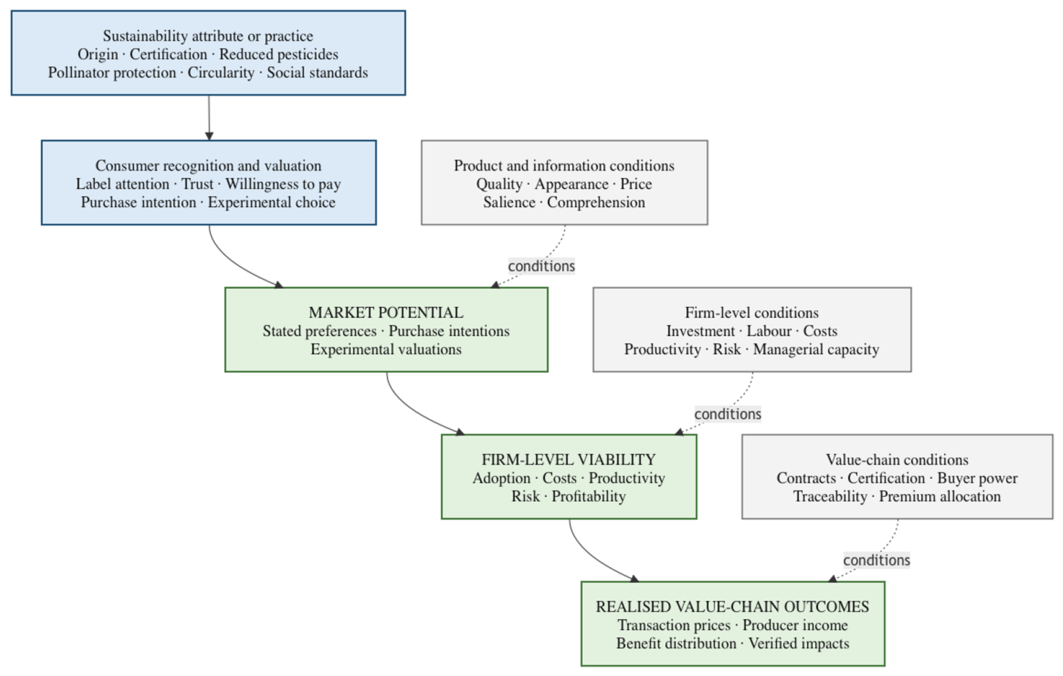
To guide the analysis,
Figure 1 presents the conceptual framework adopted in this review. The framework distinguishes three analytically related but empirically distinct dimensions of economic value: market potential, firm-level viability and realised value-chain outcomes. Sustainability attributes and practices may generate consumer recognition, willingness to pay and purchase intentions, thereby creating market potential. However, this potential translates into economically viable adoption only when production costs, investment requirements, productivity, risk and managerial capacity are favourable. Realised value-chain outcomes further depend on governance conditions, including contractual arrangements, certification costs, buyer power, traceability and the distribution of price premiums. The framework is used to organise and interpret the reviewed evidence; the relationships represented in the figure should therefore be understood as analytical connections rather than as an empirically tested causal sequence.
2. Materials and Methods
2.1. Literature Search, Eligibility Criteria and Corpus Definition
This systematic mapping review used a structured literature-selection process to identify peer-reviewed research on the economic dimensions of sustainability in floriculture and ornamental horticulture. A systematic search protocol was combined with descriptive analysis, bibliometric mapping and narrative synthesis to provide both a transparent definition of the corpus and a quantitative representation of the field’s principal research patterns. Systematic reviews require explicit procedures for searching, selecting and analysing scientific evidence so that the process can be replicated and critically assessed [
31]. The review was reported in accordance with the PRISMA 2020 statement [
32,
33]. The review was not registered, and no separate review protocol was prepared. Comparable designs combining PRISMA-guided selection with descriptive and bibliometric analyses have been applied in recent agricultural and agri-food reviews [
34,
35,
36].
Scopus and Web of Science were selected because their complementary coverage reduces dependence on a single indexing system [
37]. The review covered publications from 2015 onwards to examine the recent period in which sustainability claims, pollinator-related concerns, private standards, digitalisation and value-chain governance became increasingly visible in sectoral research. This temporal boundary limits the historical reach of the findings and is considered in their interpretation [
38]. Searches combined three concept blocks: (i) floriculture and ornamental horticulture; (ii) sustainability-related practices, labels or attributes; and (iii) consumer, market, firm, adoption or value-chain outcomes. The complete database-specific search strings, fields and filters are reported in
Appendix A in accordance with established search-reporting guidance [
39,
40]. Both databases were searched on 10 May 2026; coverage of publications indexed in 2026 is therefore partial. Eligibility was limited to English-language, peer-reviewed records published from 2015 onwards and classified as journal articles by Scopus or Web of Science. Records classified as reviews, conference papers, conference reviews, book chapters, editorials, reports or other document types were excluded. This restriction concerned the document type assigned by the databases rather than the analytical method: records indexed as articles could remain eligible when they used bibliometric or review-based methods.
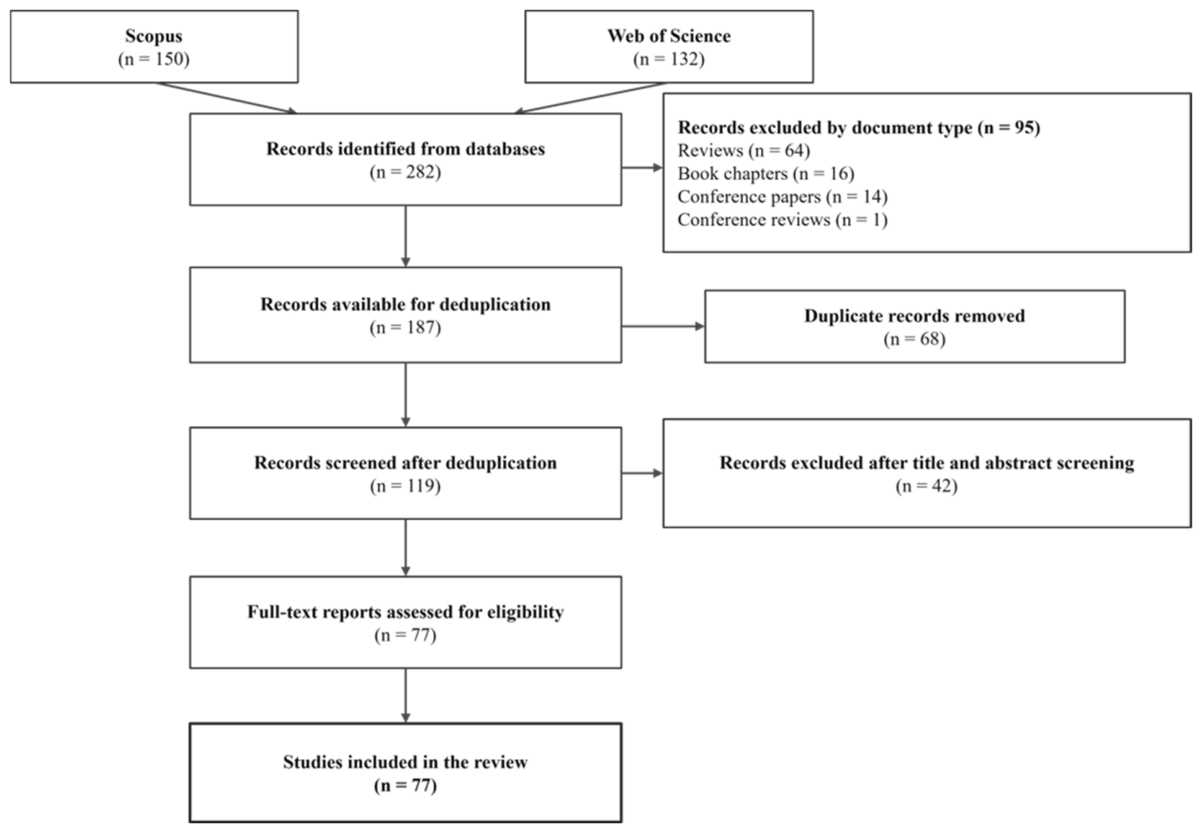
The study-selection process is summarised in the PRISMA flow diagram presented in
Figure 2. The searches identified 150 records in Scopus and 132 in Web of Science, for a total of 282 records. Before deduplication, the database-assigned document-type filters removed 95 ineligible records: 64 reviews, 16 book chapters, 14 conference papers and one conference review. The remaining 187 records, all classified as journal articles, proceeded to deduplication.
The Scopus and Web of Science exports were merged into a single dataset. Duplicate records were identified hierarchically. Normalised DOI matching identified 65 of the 68 duplicates (95.6%). The remaining three duplicates (4.4%) lacked a usable matching DOI and were identified through normalised title comparison followed by manual verification of authors, publication year and source title. After removal of the 68 duplicates, 119 unique records remained for title and abstract screening.
The titles, abstracts and bibliographic metadata of all 119 unique records were initially screened against the three substantive eligibility dimensions reported in
Table 1: relevance to floriculture or ornamental horticulture, presence of a sustainability-related dimension, and inclusion of an economic or organisational perspective. At this stage, 42 records were excluded based on their titles and abstracts. Exclusion was applied only when the available information clearly showed that at least one of these dimensions was absent. Records whose eligibility remained uncertain after title and abstract screening were retained for full-text assessment. The 42 exclusions therefore occurred before, rather than during, full-text assessment.
The full texts of the remaining 77 publications were retrieved and assessed using the same eligibility criteria. This stage verified the sectoral setting, the substantive treatment of sustainability and the presence of an economic, consumer, managerial, adoption or value-chain outcome. In borderline technical studies, a record was retained only when the technical or environmental analysis was explicitly connected to an economic or organisational outcome, such as costs, profitability, productivity, adoption, competitiveness, market access or value-chain coordination. Studies reporting only agronomic, physiological, genetic, pathological, technical or environmental outcomes were considered ineligible. Because uncertain records had been deliberately retained during title and abstract screening, the full-text assessment served as a confirmatory and conservative eligibility check. All 77 retrieved publications satisfied the criteria, and no additional records were excluded at this stage.
A post hoc search-sensitivity assessment was conducted to examine the possibility that the database strategy had failed to retrieve relevant studies. The earlier integrative review by Gabellini and Scaramuzzi [
12] was used as an external reference source because it covered consumption, marketing and governance in ornamental horticulture and included both academic and grey literature. Backward reference checking identified 11 potentially relevant peer-reviewed journal articles published within the eligible period. The review’s substantive eligibility criteria were then applied to each record. Three articles satisfied all three dimensions of eligibility—ornamental-horticulture relevance, a sustainability-related dimension and an economic or organisational perspective—and all three had already been retrieved by the Scopus and Web of Science searches and included in the final corpus. The remaining eight records lacked at least one substantive eligibility dimension. This check therefore identified no additional eligible journal articles. The broad database strategy prioritised sensitivity over precision: 42 of the 119 unique records screened (35.3%) were non-eligible search hits and were removed during title and abstract screening. Grey-literature sources cited by the earlier review were examined qualitatively as a sensitivity check but were not added to the corpus, because doing so would have conflicted with the prespecified restriction to peer-reviewed journal articles.
Table 1 summarises the eligibility criteria, while the complete characteristics and extracted evidence for the 77 included studies are reported in
Supplementary Table S1.
The distinction between eligible economic evidence and purely technical or environmental research was based on the outcomes analysed rather than on the disciplinary label of the study. For example, a technical or environmental assessment remained eligible when it also examined costs, benefits, profitability, productivity, adoption decisions or other economic and organisational consequences.
2.2. Data Extraction, Thematic Coding, Evidence Appraisal and Narrative Synthesis
A standardised extraction matrix was developed for all included records. It captured bibliographic information, database coverage, country or geographical context, study design and sample, principal object of analysis, predominant theme, main findings and economic or managerial implications. These fields supported three linked analytical purposes: describing the development and structure of the field (RQ1), synthesising consumer valuation and its conditioning factors (RQ2), and examining firm-level feasibility, adoption and value-chain governance (RQ3).
The complete study-level extraction matrix is provided in
Supplementary Table S1. For each of the 77 included studies, it reports the authors, publication year, source, database coverage, geographical context, study design and sample or data source, principal object of analysis, predominant theme, main evidence, economic or managerial implication and DOI or source URL. For descriptive comparison, country-specific studies were grouped into high-income and low- or middle-income settings according to the World Bank income classification [
41]. Multicountry studies were assigned to a group only when all the countries examined belonged to the same income category. Global, conceptual, bibliometric and other studies without a clearly identifiable national setting were classified separately. Domestic or export-market orientation was recorded only when it was explicitly stated in the publication and was not inferred from the country studied.
One author conducted the initial full-text extraction and assigned each publication to a predominant theme. The completed matrix and thematic assignments were then reviewed collectively by the author team, with particular attention to ambiguous evidence, borderline classifications and publications spanning more than one research area. Differences in interpretation were discussed until consensus was reached. This procedure provided a collaborative verification of extraction and coding decisions, although the two tasks were not conducted independently in duplicate.
To provide an additional independent reliability check, a second reviewer recoded a stratified sample of 17 included publications, corresponding to 22.1% of the final corpus. The sample represented all seven predominant thematic categories. The second reviewer applied the predefined codebook and was blinded to the original thematic assignments. Agreement on the predominant theme was 100% (17 of 17 publications), with a Cohen’s kappa of 1.00, indicating perfect inter-reviewer agreement. No disagreements required consensus resolution. This exercise constituted an independent validation of the thematic classification rather than a duplicate extraction of the complete study-level matrix.
Each eligible publication was treated as a single corpus record, irrespective of its analytical design. Articles employing review, bibliometric or policy-synthesis methods were retained only when they were indexed by the databases as journal articles and satisfied the substantive eligibility criteria. To prevent double-counting, evidence from primary studies discussed within these publications was not treated as an additional empirical observation and was not added to the corpus unless the primary publication had been independently retrieved and found eligible through the systematic search. Publication counts therefore refer to unique records, while the narrative synthesis distinguishes findings reported directly by primary empirical studies from the contextual or field-level evidence provided by review, bibliometric and policy-oriented articles.
The corpus included experimental auctions, discrete-choice experiments, cross-sectional surveys, qualitative studies, optimisation and decision models, bibliometric studies and policy analyses. These designs differed substantially in their research objectives, units of analysis, data structures and inferential capacity. A single standardised risk-of-bias instrument would therefore have treated methodologically different studies as directly comparable. For this reason, the synthesis adopted a design-sensitive qualitative appraisal informed by the Weight of Evidence framework and established guidance for narrative synthesis [
42,
43]. The purpose was to assess the relevance and evidential contribution of each study in relation to the review questions rather than to generate a common numerical quality score.
Four dimensions were considered for each study: (i) methodological appropriateness, defined as the suitability of the research design and analytical method for the question addressed; (ii) adequacy of the empirical basis, including the sample, data source or modelling assumptions; (iii) transparency of reporting, including the description of data, methods and limitations; and (iv) directness of the evidence, defined as the extent to which the reported outcomes directly addressed consumer valuation, firm-level viability or value-chain governance. These dimensions informed the weight and wording assigned to individual findings in the narrative synthesis. Stated intentions, experimental valuations, observed market outcomes, modelling results and qualitative or policy evidence were therefore identified according to their evidential basis and were not treated as methodologically equivalent. The appraisal was not used to exclude studies, rank them or calculate an aggregate quality score and should not be interpreted as a substitute for design-specific risk-of-bias assessment.
Each study was assigned to one predominant theme on the basis of its research objective, unit of analysis, principal analytical focus and main reported outcome. The seven themes were: (1) consumer preferences and willingness to pay; (2) market, competitiveness and business performance; (3) value chain, supply chain and governance; (4) certification, standards and ethical trade; (5) adoption, innovation and management decisions; (6) product attributes, native plants and floral design; and (7) sustainability assessment, policy and review evidence. For publications covering several areas, the category corresponding most closely to the principal contribution was used in the descriptive frequency and time-trend analyses. This single-theme rule prevented double counting in those analyses; evidence relevant to additional themes was nevertheless retained in the narrative synthesis.
The narrative synthesis was organised around the three research questions. Evidence on the temporal and conceptual development of the field informed RQ1; consumer valuation, product attributes, information and trust informed RQ2; and firm-level feasibility, adoption constraints, certification and value-chain governance informed RQ3. Sustainability assessment and policy were treated as cross-cutting dimensions where they affected the interpretation of economic value. Given the heterogeneity of study designs, outcomes and units of analysis, a quantitative meta-analysis was not appropriate.
2.3. Bibliometric Mapping
Bibliometric mapping was used exclusively to address RQ1 by examining the conceptual structure of the corpus. The analysis focused on the co-occurrence of author keywords and of terms extracted from titles and abstracts. It did not include co-authorship, bibliographic coupling or co-citation analyses because the purpose was to identify relationships among the subjects and concepts represented in the literature rather than collaboration patterns or intellectual linkages among authors and cited publications. The substantive findings concerning consumer valuation, firm-level feasibility and value-chain governance in RQ2 and RQ3 were derived from the systematic full-text extraction and narrative synthesis described in
Section 2.2, not from the bibliometric maps.
Bibliographic metadata were cleaned and standardised before mapping. Titles, authors, publication years, source titles, DOI fields, abstracts and author keywords were checked. VOSviewer version 1.6.21 was used to construct and visualise the co-occurrence networks [
41,
44]. Author-keyword and title–abstract analyses were conducted separately because author keywords represent concepts explicitly selected by the authors, whereas title and abstract terms provide broader coverage of article content. Co-occurrence mapping is appropriate for this purpose because it identifies recurrent concepts and the frequency with which they appear together across the corpus [
45,
46,
47,
48].
For both analyses, links were normalised using the association-strength method. Network visualisation and clustering were performed using the VOSviewer clustering algorithm with the default settings: a resolution parameter of 1.00, a minimum cluster size of 1 and a random seed of 0. Full counting was used so that every occurrence of a keyword or term within a publication contributed equally to the network.
Author keywords were available for 74 of the 77 records. The analysis used bibliographic data, co-occurrence as the type of relationship, author keywords as the unit of analysis, full counting and a minimum threshold of two occurrences. Forty-seven author keywords met this threshold. The title–abstract analysis was based on text data, used full counting and applied a minimum threshold of eight occurrences; 32 terms met the final threshold. Generic and non-informative terms that did not contribute to interpretation were removed before the maps were finalised.
Alternative occurrence thresholds were inspected during map development. The final thresholds were selected because they provided the most appropriate balance between thematic coverage and map readability. These checks were exploratory and were used to support the visual and substantive interpretability of the maps rather than as formal statistical robustness tests.
Full counting was retained to preserve the contribution of each record in a relatively small and specialised corpus, while recognising that the counting method can affect network structure [
49]. The final term and cluster tables and the VOSviewer network files are supplied in the
Supplementary Materials to permit inspection of the bibliometric outputs. Interpretation followed established principles for science mapping and bibliometric review design [
50,
51].
3. Results
The results are presented in two complementary parts.
Section 3.1 describes the temporal development, publication outlets and thematic distribution of the corpus, whereas
Section 3.2 examines its conceptual structure through author-keyword and title–abstract co-occurrence analyses. Together, these analyses address RQ1.
3.1. Descriptive Development of the Field (RQ1)
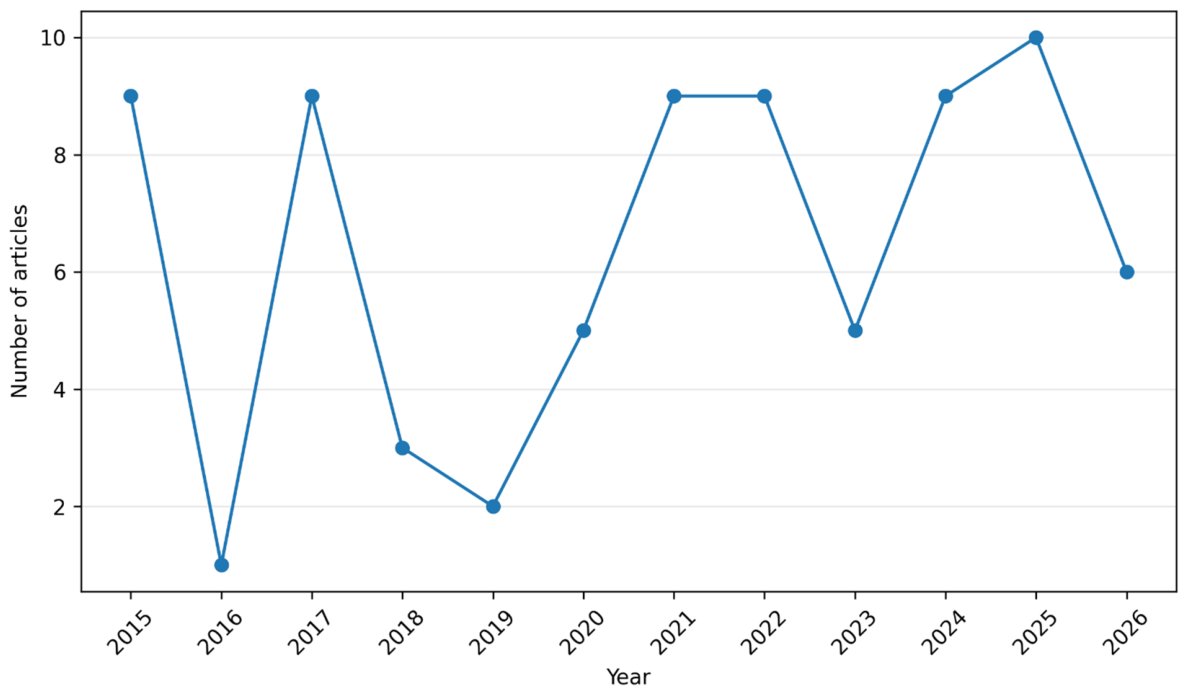
The final corpus comprised 77 studies published from 2015 onwards and indexed in Scopus or Web of Science by the search date of 10 May 2026. Consequently, the six publications recorded for 2026 represent only partial-year coverage. As shown in
Figure 3, the annual distribution of publications was characterised by considerable fluctuations, particularly during the first half of the period considered. Nine studies were published in both 2015 and 2017, whereas only one publication was recorded in 2016. The number subsequently declined to three studies in 2018 and two in 2019, before increasing again from 2020 onwards.
Overall, 24 studies, corresponding to 31.2% of the final corpus, were published between 2015 and 2019, while the remaining 53 studies (68.8%) appeared from 2020 through the search date of 10 May 2026. Annual scientific output reached nine publications in both 2021 and 2022, decreased to five in 2023, and returned to nine in 2024. The highest annual value was observed in 2025, with ten publications, representing 13.0% of the entire corpus. Six studies were recorded in 2026; however, this figure should be interpreted cautiously because the bibliographic search covered only part of that publication year. Despite the absence of a strictly linear trend, the distribution indicates that research on the economic dimensions of sustainability in ornamental horticulture became more continuous after 2020.
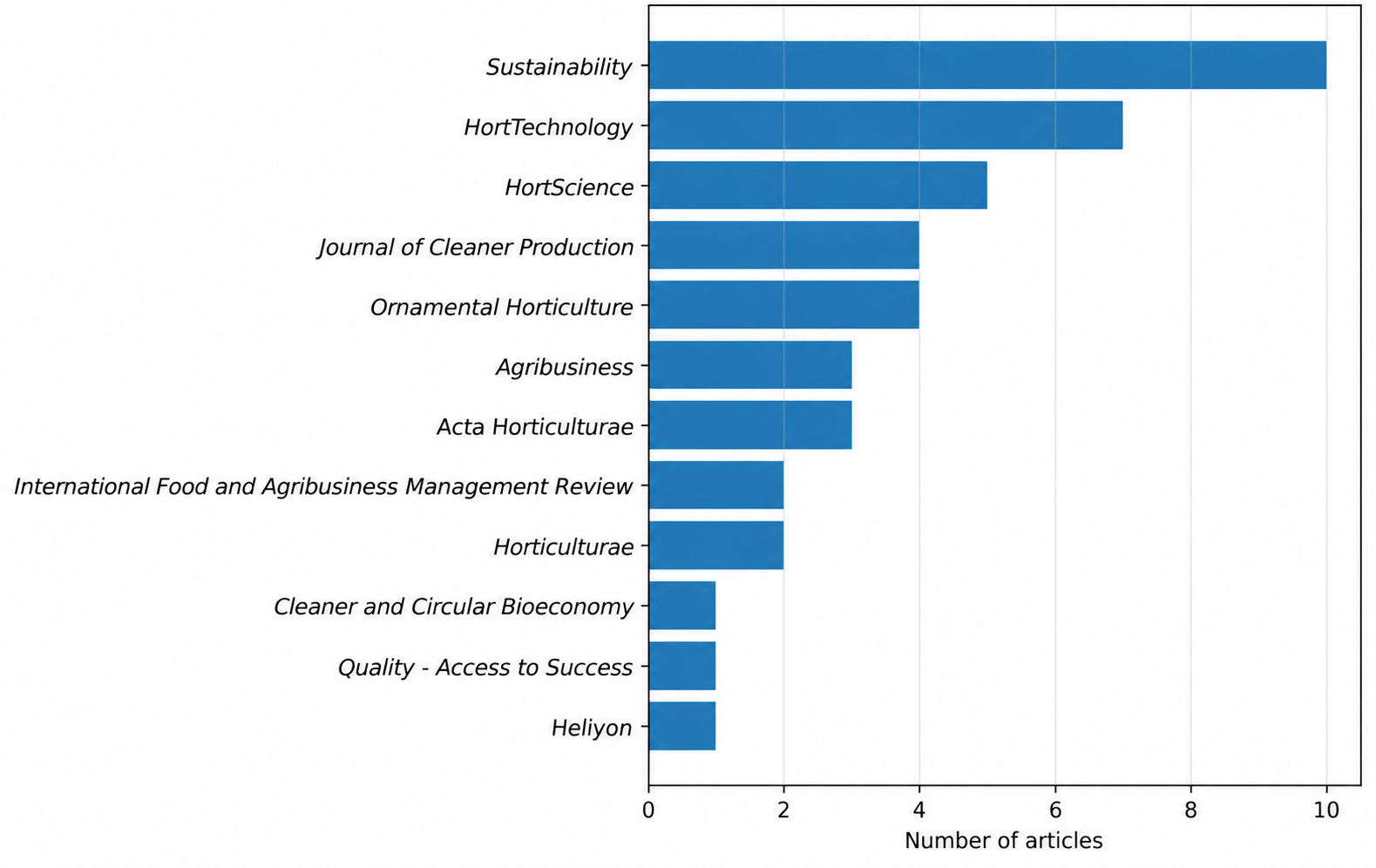
The selected studies were distributed across a relatively broad range of publication sources, confirming the interdisciplinary nature of the research domain (
Figure 4).
Sustainability was the most represented journal, with ten articles, accounting for 13.0% of the final corpus. It was followed by
HortTechnology, with seven publications (9.1%), and
HortScience, with five (6.5%).
Journal of Cleaner Production and Ornamental Horticulture each contributed four studies (5.2%), whereas
Agribusiness and
Acta Horticulturae each accounted for three publications (3.9%).
Two articles were published in both the
International Food and Agribusiness Management Review and
Horticulturae, while the remaining sources shown in
Figure 4 contributed one article each. Overall, the twelve publication sources represented in the figure accounted for 43 studies, or 55.8% of the corpus. The remaining 34 studies (44.2%) were dispersed across journals contributing fewer publications. The coexistence of general sustainability journals, specialised horticultural outlets and agricultural economics or agribusiness journals reflects the intersection of environmental, sectoral and market-oriented perspectives within this field of research.
The geographical distribution of the evidence was uneven. Forty-two studies (54.5% of the corpus) examined high-income settings, whereas 22 (28.6%) concerned low- or middle-income economies. The remaining 13 studies (16.9%) were global, conceptual, bibliometric or otherwise lacked a geographical setting that could be classified consistently. The United States, considered alone or together with Canada, accounted for 24 studies (31.2%), while Germany accounted for 11 (14.3%). These two geographical areas therefore represented 35 of the 77 studies (45.5%). Consumer-valuation evidence was particularly concentrated in the United States and Germany, whereas studies explicitly addressing export-oriented production and value-chain conditions were more frequently situated in countries such as Kenya, Ethiopia, Ecuador and Colombia. Domestic versus export-market orientation could not be coded consistently for the entire corpus because many publications did not state it explicitly. This concentration limits the extent to which the identified consumer and market patterns can be generalised across institutional and production contexts.
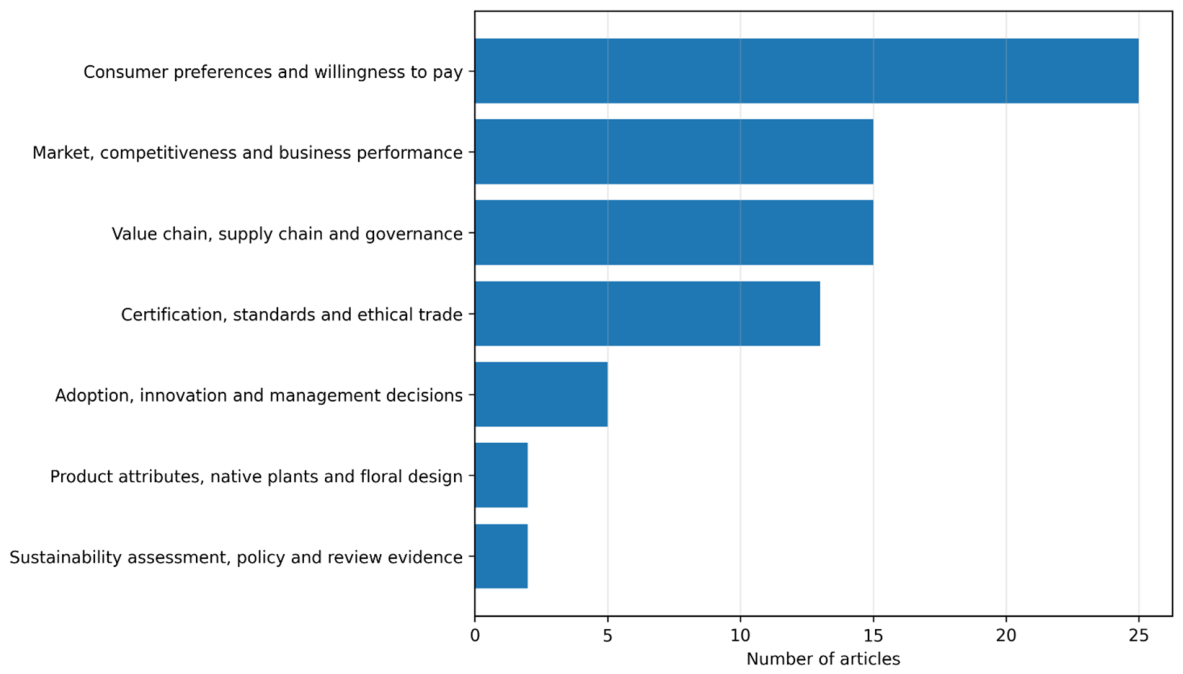
The descriptive classification of the corpus identified seven main research topics (
Figure 5). Each study was assigned to one theme according to its principal research objective and analytical focus. Consumer preferences and willingness to pay represented the largest category, comprising 25 studies and accounting for 32.5% of the final corpus. This was followed by two equally represented themes: market, competitiveness and business performance, and value chain, supply chain and governance, each including 15 studies (19.5%). A further 13 studies (16.9%) focused primarily on certification, standards and ethical trade.
Taken together, these four thematic categories comprised 68 of the 77 studies, corresponding to 88.3% of the corpus. The remaining literature was considerably more limited. Five studies (6.5%) addressed adoption, innovation and management decisions, while product attributes, native plants and floral design and sustainability assessment, policy and review evidence were each represented by only two studies (2.6%). The distribution therefore shows that the existing literature is strongly concentrated on consumer valuation, market performance, certification and value-chain relationships, while comparatively less attention has been devoted to firm-level adoption processes, managerial decision-making and policy assessment. Although numerically limited, the three minority categories are retained separately in
Figure 6 because they represent analytically distinct research gaps. Aggregating them into a single “other themes” category would conceal their different temporal trajectories and would prevent readers from identifying which areas appeared only sporadically during the period examined.
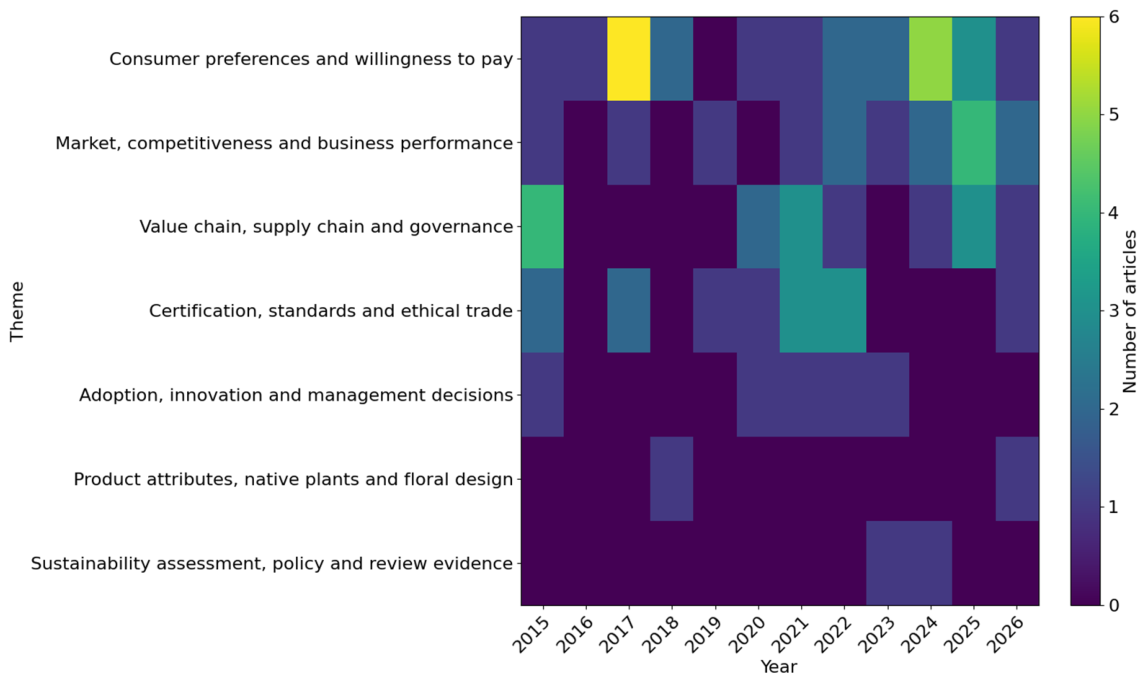
The distribution of main research topics by publication year provides additional insight into the evolution of the field (
Figure 6). Consumer preferences and willingness to pay was the most persistent theme, appearing in 11 of the 12 publication years and accounting for 25 studies overall. Its strongest concentration occurred in 2017 (six studies), followed by 2024 (five), while no consumer-oriented study was recorded in 2019. This pattern indicates a sustained, although uneven, demand-side emphasis throughout the period.
Research on market dynamics, competitiveness and business performance became more visible in the later years. Four studies were published in 2025—the highest annual value for this theme—and two in each of 2022, 2024 and 2026. By contrast, value-chain, supply-chain and governance research was most prominent at the beginning of the period, with four studies in 2015, before reappearing more strongly in 2021 and 2025 (three studies in each year). Certification, standards and ethical trade followed a different trajectory: the theme was concentrated in 2021 and 2022, with three studies in each year, and was absent from 2023 to 2025.
The three less-represented topics remained sporadic. Adoption, innovation and management decisions appeared once in 2015 and once annually from 2020 to 2023. Product attributes, native plants and floral design was represented only in 2018 and 2026, whereas sustainability assessment, policy and review evidence appeared only in 2023 and 2024. Overall, the temporal distribution suggests some diversification beyond consumer valuation, but not the emergence of a stable and continuous evidence base in the less-developed areas.
3.2. Bibliometric Structure of the Field (RQ1)
3.2.1. Author-Keyword Co-Occurrence Analysis
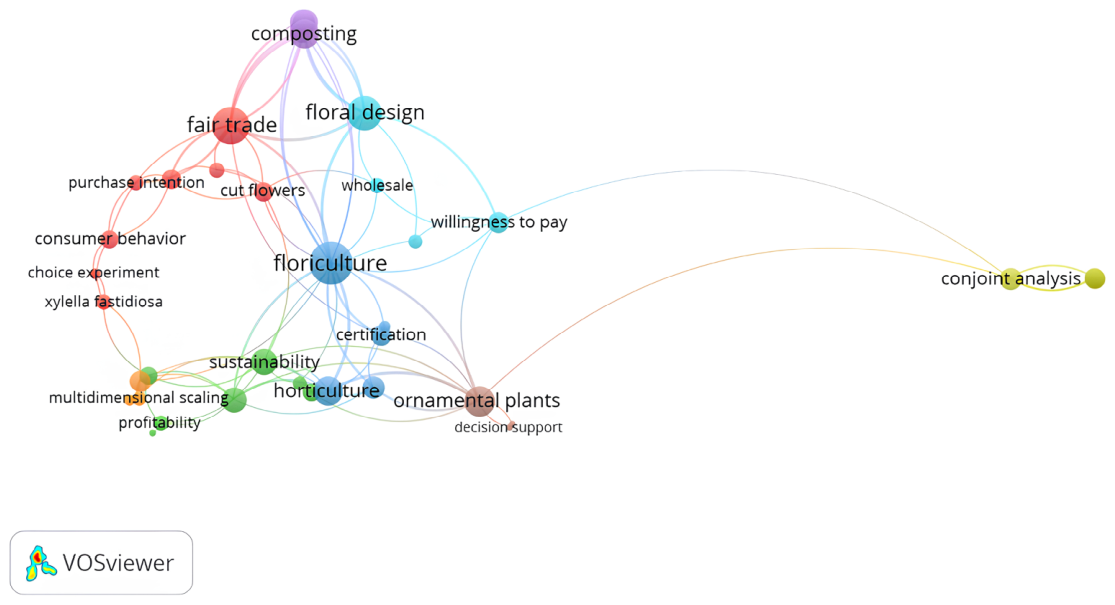
The author-keyword co-occurrence analysis was based on the 74 publications for which author keywords were available. After applying the minimum threshold of two occurrences, VOSviewer generated the network presented in
Figure 7. Node size is proportional to the frequency of occurrence of each keyword, while the links and distances between nodes represent their co-occurrence relationships.
The network revealed a central conceptual area organised around floriculture, horticulture and sustainability. This core connected the main research perspectives represented in the corpus, including consumer behaviour, product certification, ornamental plant production and market valuation. A distinct demand-side area was associated with consumer preferences, purchase intentions, willingness to pay and ethical attributes, particularly fair-trade certification. Other portions of the network reflected production and management topics, such as composting, profitability, wholesale activities, floral design and decision-support methods.
The map also contained several comparatively peripheral topics. These corresponded either to specialised analytical methods, such as conjoint analysis and multidimensional scaling, or to specific sectoral problems, such as the economic implications of Xylella fastidiosa. Overall, the network showed a common conceptual core accompanied by several relatively specialised research areas.
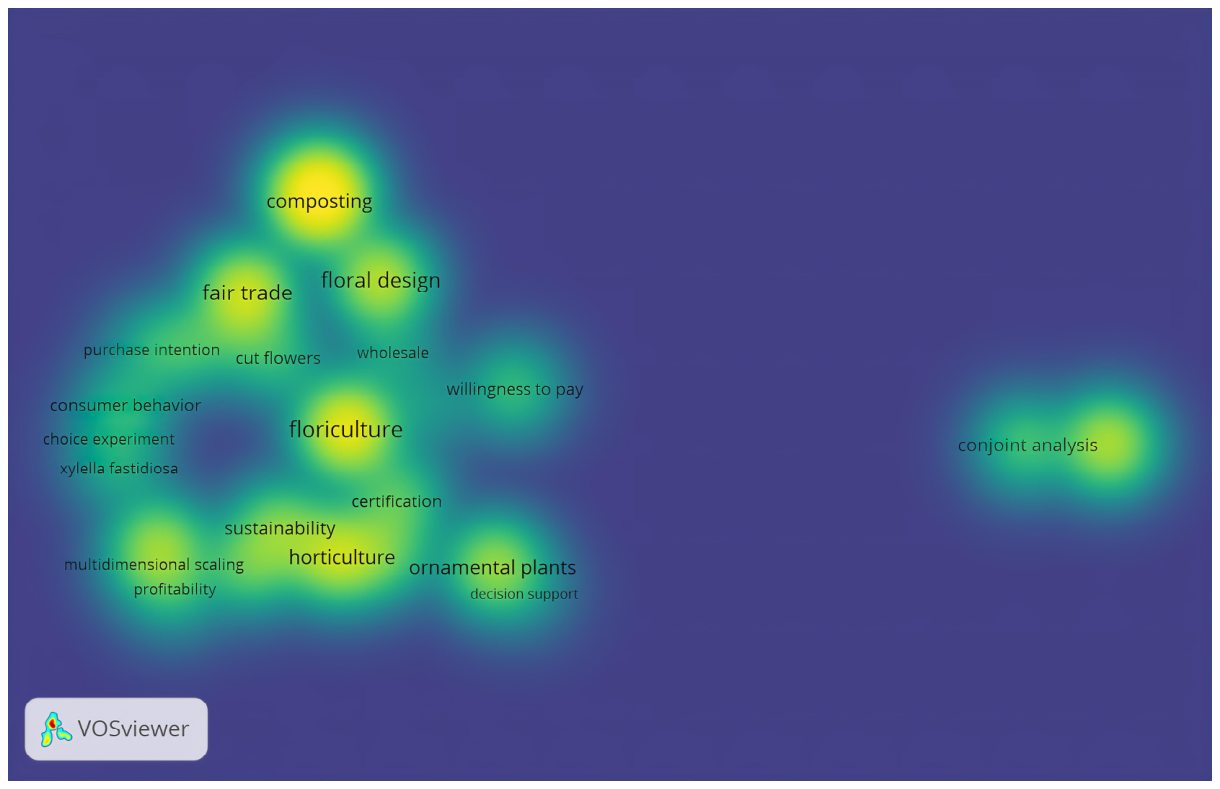
The density visualisation confirmed the structure emerging from the co-occurrence network (
Figure 8). The most evident concentrations were observed around floriculture and horticulture, as well as around fair trade, composting and floral design. These areas indicate the topics with the greatest local concentration of recurrent keywords.
A separate concentration was visible around conjoint analysis. However, its peripheral position in the network suggests that this density represents a specialised methodological stream rather than a concept connecting the literature. Consumer-related and sustainability-related keywords were distributed across a broader portion of the map, reflecting their connections with different research topics.
3.2.2. Title and Abstract Term Co-Occurrence Analysis
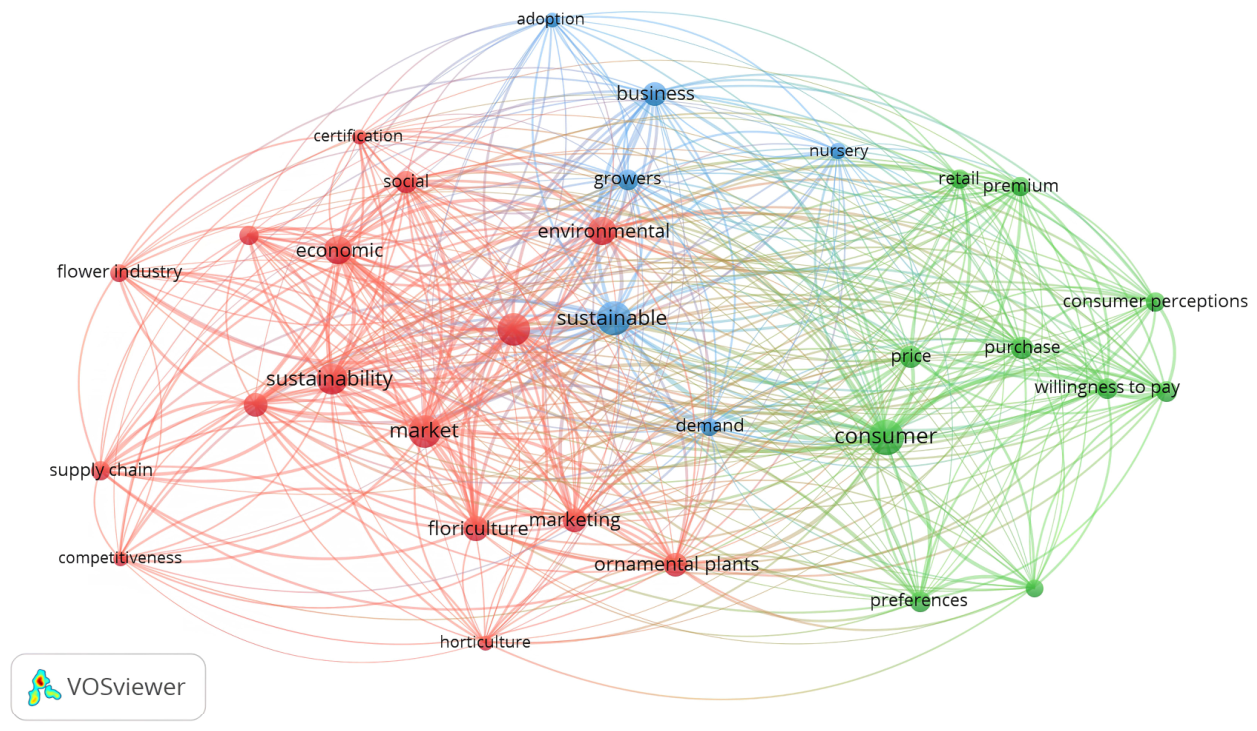
The analysis of terms extracted from titles and abstracts produced a denser network than the author-keyword analysis. A total of 32 terms met the selected occurrence threshold and were organised by VOSviewer into three clusters (
Figure 9). Cluster 1, represented in red, was the largest and included 16 items. Cluster 2, shown in green, comprised 10 items, while Cluster 3, represented in blue, consisted of six items (
Table 2).
Cluster 1 represented the broadest research area and brought together the economic, environmental and social dimensions of sustainability with market structure, sector competitiveness and supply-chain organisation. This cluster therefore describes the literature concerned with the relationship between sustainability and the economic performance of the floriculture and ornamental horticulture sector.
Cluster 2 was predominantly associated with the demand side of the market. It reflected research on consumer preferences, perceptions, purchasing behaviour, willingness to pay and price premiums for differentiated floricultural products. The cluster also included the retail dimension, indicating that consumer valuation was frequently examined in relation to market positioning and purchasing contexts.
Cluster 3 focused more directly on producers and firms. It represented research concerning growers, nurseries, business decisions and the adoption of sustainable practices in response to market demand. Although it was the smallest cluster, it identified a distinct producer-side component within the literature.
The spatial organisation of the network showed numerous connections between the three clusters. In particular, the central portion of the map linked sustainability, market-related concepts and consumer demand, indicating that the environmental and social attributes of floricultural products were frequently examined in relation to their economic and commercial implications.
Compared with the author-keyword map, the title–abstract network presented a more cohesive conceptual structure. The three clusters can consequently be interpreted as the principal dimensions around which the literature was organised: sectoral sustainability and competitiveness, consumer valuation, and business adoption.
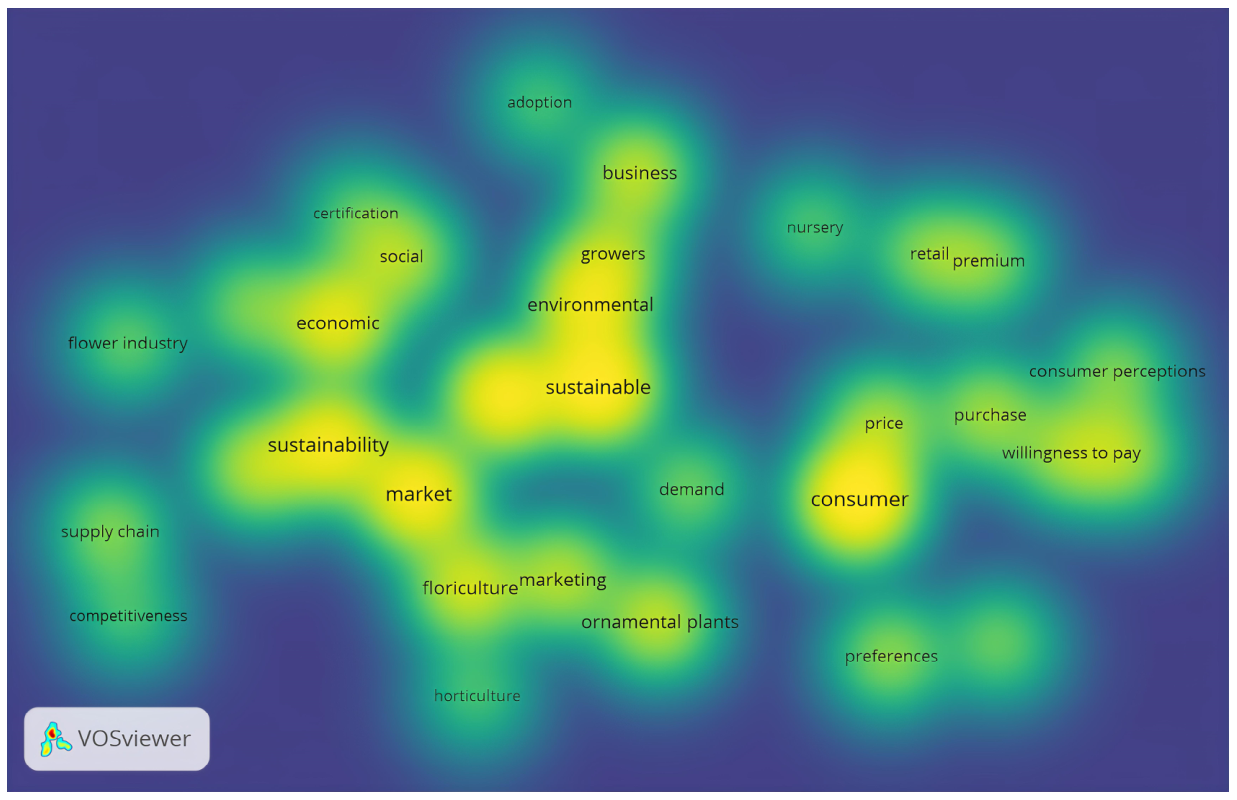
The title–abstract density map showed three main areas of concentration (
Figure 10). The first was centred on sustainability and its relationship with market and sectoral variables. The second concerned sustainable production, environmental aspects and business activities. The third was associated with consumers, prices, purchases and willingness to pay.
The strongest and most continuous concentrations were observed in the sustainability–market and consumer-valuation areas. The producer-side area was visible but comparatively less extensive. The density visualisation therefore confirmed the three-part conceptual organisation identified through the cluster analysis.
Taken together, the descriptive and bibliometric findings answer RQ1 by showing that the field became more continuous after 2020 but remains unevenly developed. Its conceptual structure is organised around three connected domains—sectoral sustainability and competitiveness, consumer valuation, and business adoption—with consumer-oriented research forming the most developed component and producer-side, policy and integrated value-chain evidence remaining comparatively limited.
3.3. Consumer Valuation and the Reliability of Market Signals (RQ2)
The systematic full-text synthesis identified consumer valuation as the most extensively investigated economic dimension of sustainability in the corpus. The reviewed studies examined whether sustainability attributes affected willingness to pay, purchase intentions, experimental choices and, less frequently, observed purchasing behaviour. Research conducted mainly in the United States and Germany reported favourable consumer responses to locally sourced flowers, composting practices, Fairtrade roses, pollinator-friendly plants, neonicotinoid-free production and sustainable nursery management. For example, Etheredge et al. [
52,
53,
54] found strong support for local sourcing and composting in the retail floral market, although the magnitude of willingness to pay varied across regions and demographic groups. Research on Fairtrade roses also identified green values, knowledge, attitudes, emotional responses and concern for workers as relevant influences on purchasing intentions and behaviour [
55,
56,
57]. These findings indicate that sustainability attributes can contribute to market differentiation, although the evidence relates predominantly to stated preferences, intentions and experimental valuations rather than observed transaction prices.
These favourable responses do not imply that sustainable products will command a premium across all consumer groups or purchasing situations. In the German cut-flower market, appearance, freshness and scent carry more weight than origin and ethical labels for many consumers, despite the presence of a segment with a stronger ethical orientation [
58]. U.S. studies of pest-management attributes report a comparable hierarchy: plant species, health, appearance and price continue to influence choice even when bee-friendly or neonicotinoid-related claims are included [
21,
22]. Preferences for native plants and floral designs are similarly affected by aesthetic characteristics, product form and suitability to regional conditions [
59]. Sustainability appears to add value once basic expectations regarding quality and price have been met; it is less likely to compensate for poor appearance, limited freshness, unhealthy plants or an uncompetitive price.
The response to sustainability attributes also varies with the way information is presented. Khachatryan et al. [
26] find that consumers who devote greater visual attention to an eco-label are more likely to prefer pollinator-friendly plants. Research on neonicotinoid labelling, however, reveals limited familiarity with technical terminology and marked sensitivity to alternative ways of framing the same information [
60,
61,
62]. Providing information is thus unlikely to reduce information asymmetry when consumers fail to notice the label or cannot understand what it certifies. Evidence concerning pollinator-friendly and neonicotinoid-related labels was geographically concentrated. Most of these studies were conducted in the United States [
21,
22,
26,
60,
61,
62], frequently using surveys, choice experiments, experimental auctions or visual-attention measures. The observed effects should therefore be interpreted within the institutional, regulatory and consumer context of the United States and should not be generalised directly to markets in which pesticide regulation, label familiarity and attitudes towards pollinator protection differ.
Even a clearly presented claim may have limited influence if consumers do not trust the organisation making it. Derksen and Mithöfer [
63] show that corporate sustainability initiatives may be recognised and understood while still being perceived as inauthentic or inadequate, particularly in relation to social sustainability. Studies of Fairtrade products similarly find that purchasing behaviour is influenced by emotional responses and perceived consumer effectiveness. Consumers appear to consider both the content of a claim and whether their purchase is likely to contribute to the outcome being promised. This combination of product quality, accessible information and organisational credibility helps explain why premiums emerge for certain consumer segments but not as a uniform feature of the floricultural market.
Research on locally produced specialty flowers [
64], customer satisfaction and purchase occasion [
65], luxury positioning [
66] and floral form [
67] confirms the continuing importance of hedonic, symbolic and design attributes. Findings on sustainable attributes, labelled roses, native and pollinator-friendly plants and a Mexican native ornamental species likewise point to heterogeneous preferences shaped by certification, product characteristics and prior knowledge [
68,
69,
70,
71]. The meaning of local origin is itself product- and consumer-dependent [
72], while attention to territorial labels increases when consumers value support for the local economy [
73]. Studies of IPM knowledge, novel diagnostic information and pollinator-friendly plants further indicate that unfamiliar terminology, limited knowledge and perceived barriers can weaken otherwise favourable attitudes [
74,
75,
76].
In response to RQ2, the evidence indicates that local origin, certification, pollinator-friendly production, reduced pesticide use, native plants and related attributes can generate consumer value, but only conditionally. Their influence is strongest when expected aesthetic and functional quality is maintained, prices remain acceptable, claims are salient and comprehensible, and the certifying or communicating organisation is trusted. Effects also vary across consumer segments and purchasing contexts. Consequently, stated willingness to pay should be interpreted as evidence of market potential rather than as proof of an observable and transferable price premium.
3.4. Firm-Level Feasibility and Adoption Constraints (RQ3)
Compared with the extensive demand-side literature, the systematic full-text synthesis identified a more limited body of evidence on the costs, risks and returns experienced by firms adopting sustainable practices. The available studies indicate that adoption varies according to the type and scale of the operation, labour requirements, anticipated cost increases, investment capacity and managerial preparedness. In the U.S. ornamental industry, growers expecting larger increases in labour inputs or labour costs were less likely to adopt non-neonicotinoid practices [
77]. Automation in the nursery sector was similarly constrained by initial investment and installation costs, although firm characteristics and expected improvements in product quality also influenced adoption [
78]. Among flower growers in Bangladesh, restricted access to credit was associated with lower technical efficiency, slower technological progress and reduced profitability [
79]. These findings provide direct evidence that producer adoption cannot be inferred from consumer interest alone, because firms must also possess the financial, technical and organisational capacity required to implement the relevant practices.
For ornamental growers, financial and operational constraints are compounded by production risk, particularly because product quality may deteriorate rapidly and many ornamental products have a limited shelf life. In German heather production, reducing preventive treatments without improving crop monitoring was found to increase the probability of economic losses, whereas more intensive visual monitoring could produce higher expected net benefits [
80,
81]. Unlike comparisons based solely on average costs, these analyses account for uncertainty, the distribution of potential losses and the value of additional information. An apparently profitable practice may remain unattractive to firms with limited financial reserves or a low capacity to absorb production losses.
Some studies nevertheless document situations in which environmental improvement and private profitability are compatible. In Apulian nurseries affected by quarantine pests, Frem et al. [
82] combine life-cycle assessment with cost–benefit analysis and find that innovative practices can reduce environmental impacts while improving gross margins. Cao et al. [
83] show that consumer premiums may compensate for the costs of recycling irrigation water, provided that a sufficient share of the premium reaches the grower. Evidence from Palestinian nurseries associates integrated green and circular practices with greater resource efficiency, lower costs and improved productivity [
84]. The economic results in these studies depend on the technology, market and institutional setting being examined, however, and do not establish that sustainability investments are generally profitable.
Research on local flower production illustrates particularly well the difference between market potential and firm-level viability. Studies from Sweden, Utah and Brazil identify increasing demand, opportunities for income diversification and some advantages associated with shorter supply chains. They also report demanding workloads, limited profitability, information shortages and difficulties in coordinating varieties, volumes, delivery schedules and communication with buyers [
85,
86,
87]. Local demand may offer new commercial opportunities without ensuring that producers can serve the market profitably or at sufficient scale.
Digitalisation and big-data applications could address some of these difficulties by improving innovation, supply-chain capabilities and firms’ responses to market disruptions [
88,
89,
90]. The empirical basis remains relatively limited because much of this research relies on regional cross-sectional surveys or individual case studies. The evidence currently available links successful adoption to the joint availability of finance, labour, information, organisational capacity and coordination with buyers, rather than to consumer demand or technological availability in isolation.
Environmental and private-cost criteria can lead to conflicting technology rankings [
91], and the prevalence of sustainability practices differs across floriculture segments [
92]. Evidence from Northeast India and northern Australia shows that growth and viability depend on crop choice, infrastructure, transport and market access [
93,
94], while studies of Ecuadorian and Colombian exporters link competitiveness to technology, organisational capabilities and the external business environment [
95,
96]. Comparable work on aglaonema farming, flower clusters and small ornamental businesses stresses the importance of local resources, organisational upgrading, social capital and business communication [
97,
98,
99]. The feasibility of commercialising endemic plants and the drivers of native-plant production also show that biological opportunity must be matched by propagation capacity, market readiness and diversified production and sales strategies [
100,
101].
3.5. Value-Chain Governance and the Distribution of Value (RQ3)
The systematic full-text synthesis identified value-chain governance as a separate determinant of whether sustainability-related market potential produces economic benefits for growers and other upstream actors. Much of the consumer literature estimates premiums or willingness to pay at the final-market level but does not examine how these benefits are distributed along the chain. This omission is particularly relevant in floriculture because production is geographically dispersed, products are frequently perishable, retailers may possess substantial bargaining power and consumers cannot directly verify many environmental and social attributes. The reviewed governance studies therefore focused on certification, standards, contracts, coordination, traceability and the allocation of compliance costs, production risks and economic returns. Evidence from the German flowering-potted-plant sector shows that sustainability innovations may increase costs, production risk and coordination requirements. Limited transparency makes it difficult to determine how premiums are transferred between actors, while business-to-business standards may strengthen the bargaining position of retailers relative to suppliers [
13]. Contracts and governance arrangements consequently provide the connection between consumer willingness to pay and producer adoption, since they determine how market requirements, additional costs, risks and economic returns are allocated along the chain.
Certification is the governance instrument most frequently discussed in the corpus, although its effects vary considerably. An agent-based model of the Kenyan rose sector indicates that compliance costs may exclude smaller farms from certified markets when they operate below a critical scale [
102]. Farm-level evidence from Ethiopia identifies limited differences among certification schemes for several environmental and occupational-safety outcomes. Certification was nevertheless associated with better documentation, stronger business reputation and improved access to international markets, with some social benefits arising under more demanding schemes [
103]. Studies conducted in the Lake Naivasha region and Ecuador further show that certification may support certain forms of worker empowerment without substantially changing buyer power, associational capacity or the wider structure of labour relations [
104,
105]. No eligible study in the final corpus provided a direct empirical assessment of European sector-specific schemes such as MPS or Fair Flowers Fair Plants. Their absence should not be interpreted as evidence that these initiatives are unimportant within European floriculture. It reflects the boundaries of the searchable corpus, including the restriction to English-language journal articles indexed in Scopus or Web of Science and the exclusion of industry reports and other grey literature, through which these schemes may be more extensively documented.
Variation across schemes, firms and countries suggests that certification operates within, rather than independently of, existing market and institutional conditions. Prado and Woodside [
106], for instance, find that adoption among exporting firms in Colombia and Ecuador cannot be explained by a single antecedent condition. Several combinations of factors may lead firms to seek certification, while the reasons for rejection are not simply the reverse of those associated with participation. Firm size, relationships with buyers, public-sector capacity, collective organisation and access to technical assistance can all influence whether the same standard produces inclusion, exclusion or only limited changes in production practices.
Reducing the barriers faced by smaller firms may require group certification, technical assistance, shared auditing services and longer-term purchasing agreements. Greater transparency in the allocation of premiums would also make it possible to assess whether producers are adequately compensated for the additional requirements imposed on them. Strategic alliances may allow firms to share marketing, purchasing and life-cycle assessment functions, while integrated supply-and-waste network models indicate that improved circularity and resilience can reduce waste and support profitability [
107,
108]. Since many of these findings derive from optimisation models or studies of individual markets, their applicability to other firms and institutional settings remains to be tested.
The geographical distribution of the studies reveals a related gap. Consumer valuation is examined largely in affluent destination markets, especially the United States and Germany, while research on labour conditions, certification and international market access concentrates mainly on exporting countries such as Kenya, Ethiopia and Ecuador. Few studies use transaction, contractual or traceability data to follow products and premiums across both ends of the same chain. It is consequently difficult to establish whether a premium paid by consumers produces higher margins for growers, better working conditions or measurable environmental improvements in production regions. Analyses centred on individual transnational chains would allow these outcomes to be examined within the same empirical setting.
Work on emerging value chains and urban floriculture suggests that shorter or reconfigured networks may create new forms of value, but only when supply functions, waste flows and market coordination are redesigned together [
109,
110]. International trade in ornamental plants introduces environmental, social and biosecurity risks that fragmented standards and data systems do not fully contain [
111]. Online trade in Greek tulips similarly illustrates the tension between market development, conservation, legal propagation and traceability [
112], while evidence from Curitiba associates weak chain performance with deficiencies in market organisation and coordination [
113]. More generally, value-chain inclusion should not be equated with social progress: economic upgrading can coexist with deterioration in labour processes when bargaining relations remain unchanged [
114].
In response to RQ3, adoption is shaped jointly by investment capacity, labour and information requirements, production risk, access to finance, managerial capabilities and coordination with buyers. Governance arrangements then determine whether compliance costs and risks are compensated through prices, longer contracts, market access or other benefits. Certification can strengthen reputation and access to international markets, but fixed compliance costs, minimum-scale requirements and buyer power may exclude smaller firms or retain benefits downstream. Sustainable practices therefore become economically viable only when firm capabilities and value-chain arrangements are aligned, and when the distribution of costs, risks and returns supports continued participation by upstream actors.
4. Discussion
4.1. From Market Potential to Realised Economic Value
The findings show that the economic literature on sustainable floriculture is more developed in relation to consumer valuation than to producer viability and the distribution of value along the chain. This imbalance is visible in both the descriptive mapping and the full-text synthesis. Consumer studies provide evidence that local origin, certification, pollinator-friendly production, reduced pesticide use and other sustainability attributes can influence preferences and willingness to pay. However, comparatively few studies connect these market signals with adoption costs, realised prices, producer income or verified environmental and social outcomes.
This result extends the sectoral account provided by Gabellini and Scaramuzzi [
12]. Their integrative review showed that changes in consumption, marketing, digitalisation and governance were reshaping ornamental horticulture. The present review demonstrates that the economic effects of these changes must be assessed at different analytical levels. Consumer recognition indicates market potential, but it does not establish that firms can implement the required practices profitably or that the resulting benefits reach growers and workers. The distinction among market potential, firm-level viability and realised value-chain outcomes therefore provides the principal interpretative contribution of this study.
The evidence also explains why favourable consumer attitudes may coexist with slow or uneven adoption. Sustainability attributes generally add value when products continue to satisfy expectations concerning appearance, freshness, functionality and price. Firms must then convert this potential into viable production decisions while managing investment, labour requirements, biological risk and uncertainty. Finally, contracts, certification schemes and bargaining relationships determine whether additional costs are compensated through price premiums, market access, longer purchasing commitments or other benefits. Evidence from flowering-potted-plant and export-flower chains confirms that these outcomes depend on coordination and institutional arrangements as well as on consumer demand [
13,
30].
These relationships should be interpreted as an analytical framework derived from patterns across heterogeneous studies, not as a causal sequence demonstrated by the bibliometric maps. The maps identify the conceptual organisation of the literature, whereas the evidence concerning consumer valuation, firm-level feasibility and governance derives from the systematic full-text synthesis. The geographical concentration of consumer studies in the United States and Germany and of certification and labour studies in selected exporting countries further limits generalisation. The available evidence supports conditional conclusions about the mechanisms through which sustainability may create economic value, rather than a universal claim that sustainable practices generate premiums or profitability.
4.2. Methodological Gaps and Priorities for Future Research
The full-text synthesis revealed substantial methodological fragmentation in the ways sustainability and economic value are assessed. Frameworks developed for flowering potted plants show that generic assessment tools may overlook impacts that vary according to the product or stage of the value chain [
115]. Dominguez et al. [
116] similarly find that most studies examine only selected parts of the ornamental value chain. Multidimensional assessments conducted in Indonesia identify economic, environmental, social and technological constraints, but their cross-sectional indices cannot establish how changes in one dimension affect the others over time [
117,
118]. Bibliometric reviews have highlighted gaps relating to supply chains, sustainability and social outcomes, although they cannot provide evidence on the actual effects of the practices being studied [
119,
120]. Empirical research has rarely combined these dimensions in a way that explains how value is created, how risk influences adoption and how benefits are distributed.
Research on consumer behaviour would gain from closer links between stated preferences and observed purchasing decisions. Surveys and choice experiments remain useful, but their results could be compared with actual sales, repeated choices and retailer data. Experimental auctions and eye-tracking provide a firmer behavioural basis than conventional measures of purchase intention, although longitudinal studies are still uncommon. Attribute interactions also deserve closer examination. Consumers evaluate sustainability claims alongside appearance, freshness, price, origin and certification, making estimates based on isolated attributes potentially misleading when applied to real purchasing situations.
Firm-level studies need to follow adoption beyond the initial decision. Investment requirements, operating costs, labour use, learning, production risk, quality effects, market access and realised prices may all change after a new practice is introduced. The probabilistic methods employed in disease-management studies offer a useful approach because they incorporate uncertainty and the value of additional information. Similar methods could be applied to irrigation-water recycling, alternative pest-management practices, automation, digital technologies and circular production models. Panel data and quasi-experimental designs would help separate the characteristics that lead firms to adopt from the effects subsequently produced by adoption.
At the value-chain level, transaction and traceability data could be used to determine whether sustainability premiums are retained by retailers, transferred to producers or converted into non-price benefits such as longer contracts and more secure market access. The same data could help identify whether compliance costs create minimum scale requirements that exclude smaller firms and whether collective organisation reduces these barriers. Direct measures are particularly important for social sustainability. Certification status provides limited information about wages, occupational safety, worker representation and bargaining power unless these outcomes are observed separately.
Broader geographical coverage would also enable comparisons between global cut-flower chains and local, regional or urban production systems. Such comparisons need to consider transport, energy use and seasonality alongside product losses, labour conditions and rural-development effects. The Romanian analysis of the CAP 2023–2027 indicates that targeted public support could strengthen production capacity, market integration and rural livelihoods [
121]. Ex post evaluation will be needed to determine whether these benefits are additional, which groups receive them and whether they persist after the intervention.
Beyond these empirical gaps, the literature lacks a sufficiently clear and shared economic definition of sustainability performance. Profitability cannot be considered an adequate measure when economic gains depend on worsening labour conditions or environmental costs that remain outside market prices. Environmental improvements are also unlikely to persist if the firms introducing them cannot remain economically viable. An integrated assessment would need to relate environmental impacts at the relevant stages of the life cycle to firms’ investment requirements and exposure to risk, consumer responses in actual markets and the distribution of value and bargaining power across the chain. Although these elements correspond closely to the areas identified by the bibliometric analysis, they have rarely been investigated together.
4.3. Managerial and Policy Implications
At the firm level, sustainability is unlikely to function effectively as a stand-alone selling proposition. Producers and retailers need to combine environmental and social attributes with the aesthetic and functional qualities already expected by consumers. Claims should be understandable and supported by adequate traceability, particularly when the attributes concerned cannot be directly verified. Differences in ethical orientation, knowledge, age, education, geographical location and retail channel also make consumer segmentation relevant when deciding which attributes to communicate and how to present them.
Adoption decisions require a broader assessment than a comparison between implementation costs and average willingness-to-pay estimates. Firms need to account for changes in labour requirements, investment costs, production risk and the possibility that the premium estimated in a survey will not be realised in the market. Risk-adjusted budgets and staged trials may provide a more reliable basis for these decisions, especially for smaller firms that have limited capacity to absorb temporary production losses or unexpected cost increases.
Along the value chain, the incentives facing producers depend partly on the requirements imposed by buyers. Certification, changes in pesticide use, waste-reduction measures and additional data disclosure all generate costs that cannot automatically be assigned to growers. Longer purchasing commitments, shared investments, collective support services and transparent arrangements for allocating premiums could make compliance more feasible. Digital systems may improve traceability, demand forecasting and resilience, but their economic contribution will also depend on who controls the data, which actors can access them and how the resulting value is shared.
Private standards can support market access and reduce information asymmetry, but their effectiveness remains closely related to the quality of public institutions. Where enforcement, worker representation and local ownership are weak, certification may exclude smaller firms or produce only modest environmental and social improvements. Technical assistance, suitable financial instruments, collective infrastructure and public monitoring may therefore be required alongside proportionate regulation. Evaluations of these interventions should consider their distributional effects and additionality, rather than concentrating exclusively on adoption or certification rates.
These managerial and policy implications should be interpreted in light of the composition and limitations of the evidence base. Consumer findings are concentrated mainly in the United States and Germany, whereas evidence on certification, labour and export governance derives from a limited number of producing countries. The review also excludes non-English publications, grey literature and records not indexed as journal articles in Scopus or Web of Science. The recommendations should therefore be understood as mechanisms and options supported by the reviewed evidence, not as universally applicable prescriptions. Their implementation requires adaptation to local market structures, regulatory systems, firm sizes and value-chain relationships.
4.4. Contribution and Limitations
This review contributes to the literature by moving beyond a catalogue of sustainability attributes and treating economic value creation as a chain-dependent process. The systematic mapping identifies the temporal, thematic and conceptual structure of the field (RQ1), while the narrative synthesis clarifies the conditions under which sustainability attributes generate consumer value (RQ2) and the firm-level and governance conditions that shape adoption and value distribution (RQ3). The principal conceptual contribution is therefore the distinction among market potential, firm-level viability and realised value-chain outcomes. This distinction helps explain why favourable consumer attitudes can coexist with slow adoption, limited returns for growers and contested certification outcomes.
Several limitations qualify these contributions. First, the main search was restricted to English-language records indexed in Scopus and Web of Science, published from 2015 onwards and classified by the databases as journal articles. The post hoc backward-reference check retrieved all the external sentinel articles that met the review’s eligibility criteria, but it cannot exclude omissions outside the coverage of the two databases. Earlier research, non-English and locally published studies, grey literature and records assigned to other document types may therefore remain underrepresented. The grey-literature sources examined during the sensitivity check were not incorporated into the main corpus and did not contribute to publication counts or bibliometric analyses. Coverage of 2026 is also incomplete because the searches were conducted on 10 May 2026. Second, initial screening and study-level extraction were conducted by one author and subsequently reviewed by the author team rather than performed independently in duplicate. Although the predominant thematic classification was independently validated on a stratified sample of 17 studies, with 100% agreement and a Cohen’s kappa of 1.00, this validation does not substitute for fully independent duplicate screening and extraction. Third, the heterogeneous corpus was appraised qualitatively; no design-specific risk-of-bias instruments or aggregate quality scores were applied. Fourth, the bibliometric maps depend on keyword normalisation, occurrence thresholds and full counting and indicate conceptual proximity rather than causal relationships. Finally, assigning one predominant theme to each publication simplifies multidimensional contributions, while heterogeneity in research designs, samples and outcomes prevented quantitative meta-analysis.
Future reviews could address these limitations by extending database and language coverage, incorporating relevant grey literature, using independent duplicate screening and extraction, and applying design-specific appraisal tools to comparable subsets of studies. The more important requirement, however, concerns primary research. Studies capable of following products, transactions and sustainability outcomes across the same value chains are needed to determine whether consumer preferences translate into viable production practices, whether premiums or non-price benefits reach growers and workers, and whether adoption produces measurable environmental and social improvements.
Within these limitations, the evidence does not support interpreting sustainable floriculture as a straightforward market response to environmental awareness. Consumer recognition is a necessary but insufficient condition. Economic value also depends on firms’ capacity to manage investment, labour and uncertainty and on governance arrangements determining who bears the costs and risks and who receives the returns. The review therefore shifts the analytical focus from isolated willingness-to-pay estimates towards the alignment of demand, production feasibility and value-chain governance.
5. Conclusions
Regarding RQ1, the mapping of 77 studies published from 2015 onwards and indexed through 10 May 2026 shows a field that has expanded since 2020 but remains fragmented. Evidence concentrates on consumer preferences and willingness to pay, while adoption, value distribution and verified sustainability outcomes are less developed. Research therefore explains attribute recognition more convincingly than conversion into realised economic value.
Regarding RQ2, local origin, certification, pollinator-friendly production, reduced pesticide use and native plants can generate consumer value, but effects vary across products and consumer groups. Price, aesthetic and functional quality, label comprehension and trust remain decisive. Sustainability thus complements core product attributes; stated willingness to pay alone does not establish durable premiums.
Regarding RQ3, adoption depends on investment, labour, production risk, finance, firm capabilities and buyer coordination. Although certification may improve reputation and market access, compliance costs, scale requirements and bargaining asymmetries can exclude smaller firms or prevent benefits from reaching growers and workers. Viability therefore requires transparent allocation of costs, risks and returns across the value chain.
Overall, sustainability creates economic value when consumer recognition, firm-level feasibility and credible governance are aligned. This perspective distinguishes market potential from realised outcomes. Future value-chain studies should link purchases and transaction prices with adoption costs, contracts and measurable environmental and social outcomes.