CRISPR/Cas9-Mediated Dual Editing of BcSGR1 and BcSGR2 Exerts Additive Enhancement on Delaying Leaf Senescence in Non-Heading Chinese Cabbage


 , and
, and
Highlights
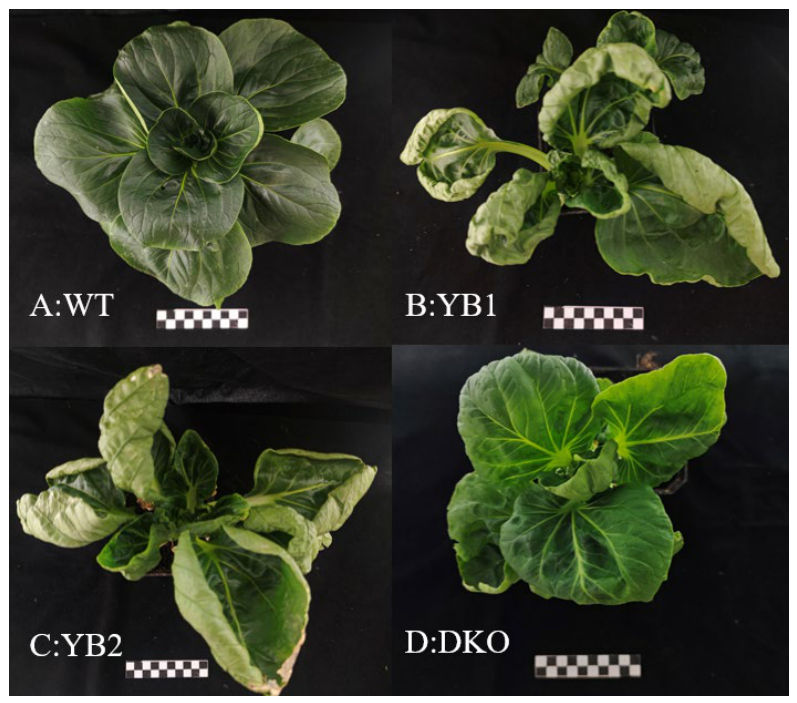
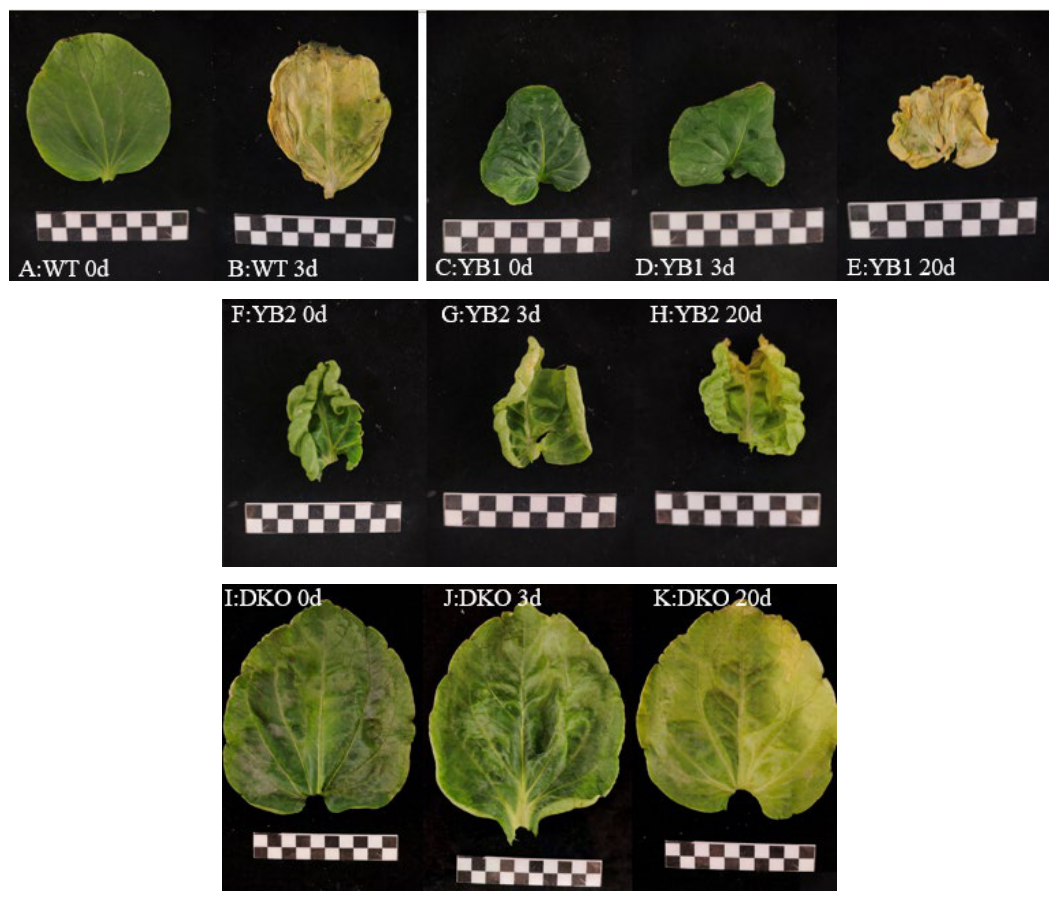
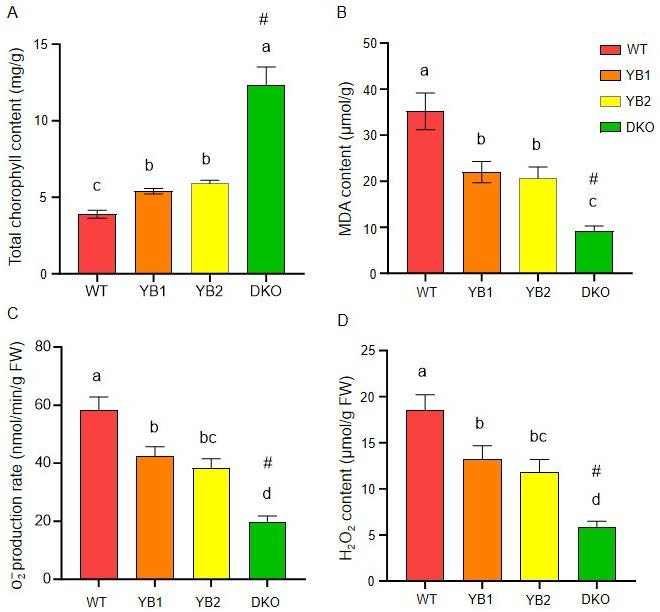
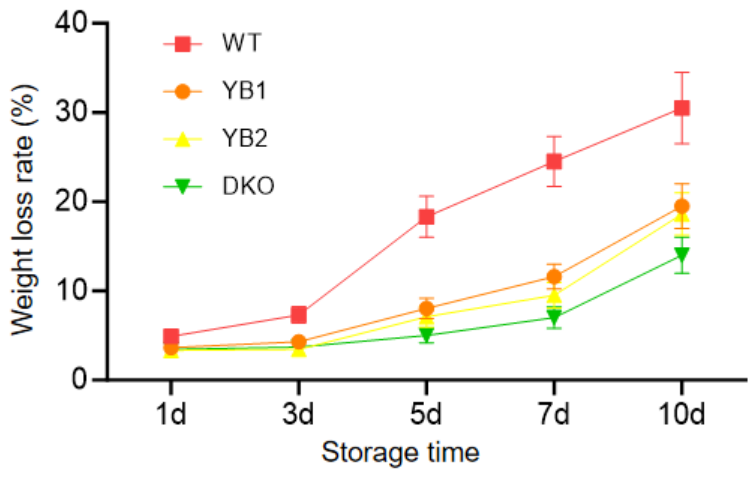
- Dual CRISPR/Cas9 knockout of BcSGR1 and BcSGR2 additively delays leaf senescence, boosting chlorophyll 3.15-fold, cutting MDA to one-quarter, and extending shelf life to 11 days.
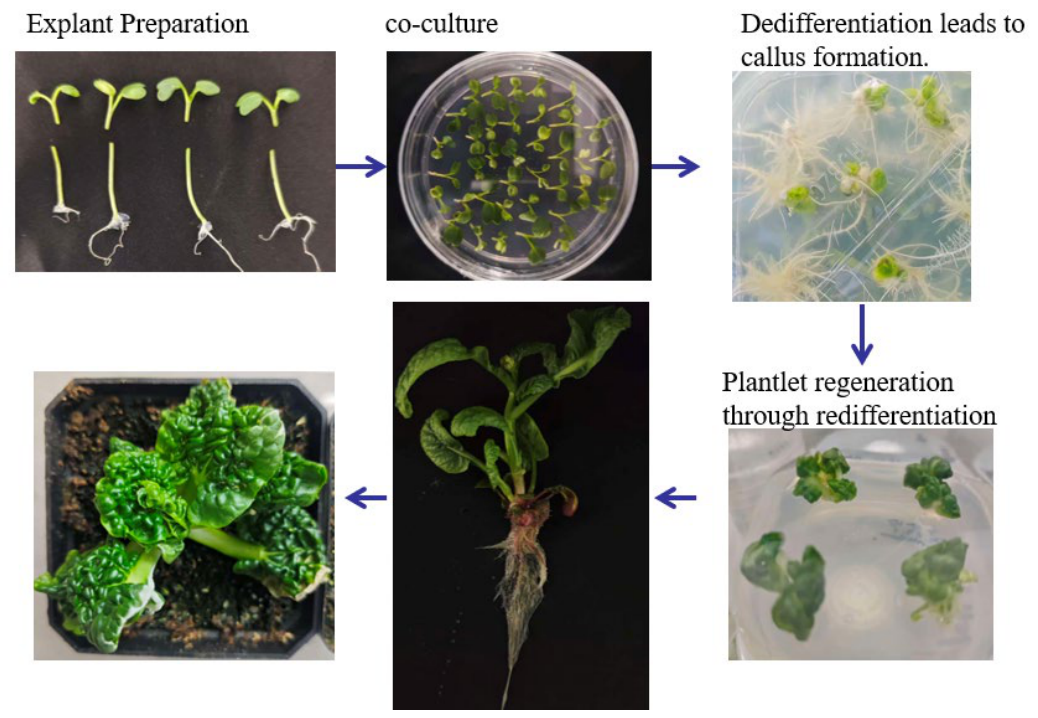
- Optimized Agrobacterium transformation (petiolate cotyledons + AgNO3) achieved 26% efficiency without agronomic penalties.
- Provides a heritable breeding strategy for stay-green, longer-shelf-life non-heading Chinese cabbage.
- Reveals SGR paralog functional divergence, transferable to other Brassica crops.
Abstract
1. Introduction
2. Materials and Methods
2.1. Plant Materials and Reagents
2.2. sgRNA Design and Screening
2.3. Construction of CRISPR/Cas9 Editing Vectors
2.4. Agrobacterium-Mediated Transformation and Optimization of the Regeneration System
2.5. Screening, Identification, and Phenotypic Evaluation of Gene-Edited Plants
2.6. Phenotypic and Physiological Measurements
2.7. Statistical Analysis
3. Results
3.1. Screening of sgRNAs and Construction of Editing Vectors
3.2. Optimization of the Regeneration System
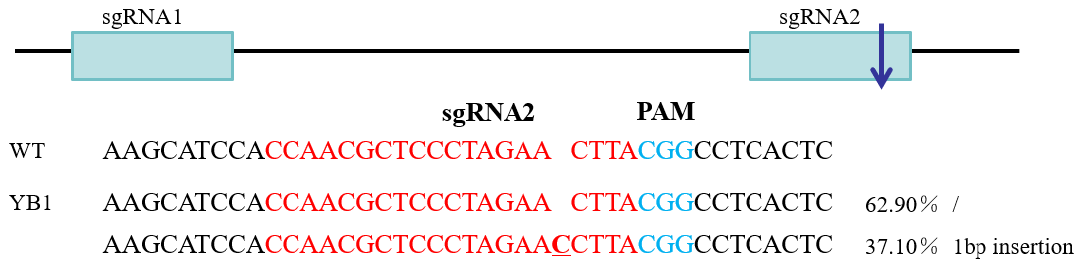
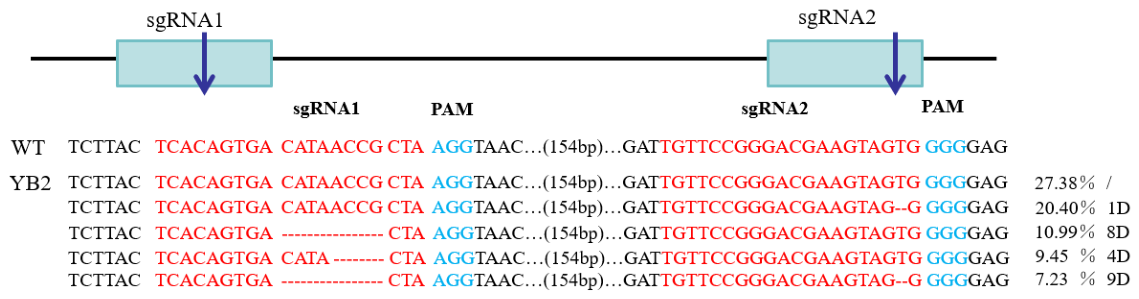
3.3. Molecular Identification of Positive Mutant Plants
3.4. Leaf Senescence and Shelf-Life Phenotypes of Edited Plants
3.5. Changes in Physiological Indices of Edited Plants
3.6. Agronomic Trait Analysis of Edited Plants
4. Discussion
4.1. Functional Regulation of BcSGR1 and BcSGR2 Mutagenesis on the Stay-Green Phenotype in Non-Heading Chinese Cabbage
4.2. Possible Mechanisms Underlying the Additive Enhancement Effect of Dual BcSGR Editing
4.3. Optimized Regeneration and Transformation Pipeline for CRISPR Mutagenesis in Non-Heading Chinese Cabbage
4.4. Limitations of This Study
4.5. Translational Potential of CRISPR Genome Editing for Genetic Improvement of Non-Heading Chinese Cabbage
5. Conclusions
Author Contributions
Funding
Data Availability Statement
Conflicts of Interest
References
- Yang, B.; Zhang, D.; Meng, Z.; Yin, Y.; Yang, X.; Cao, M.; Li, R.; Song, Y.; Zhu, H. NAC047/052/104 synergistically regulate the dark-induced leaf senescence in non-heading Chinese cabbage. Int. J. Mol. Sci. 2025, 26, 2340. [Google Scholar] [CrossRef] [Scilit]
- Luo, Y.; Wang, X.; Yin, M.; Zhao, R.; Zhang, D.; Zhu, H. Hydrogen-rich water suppresses dark- and ABA-induced postharvest senescence in non-heading Chinese cabbage (Brassica rapa ssp. chinensis). Antioxidants 2026, 15, 554. [Google Scholar] [CrossRef] [Scilit]
- Casajús, V.; Fish, T.; Civello, P.; Thannhauser, T.; Gómez Lobato, M.; Martínez, G. Glucosinolate metabolism during postharvest storage of Broccoli heads treated with ethylene, cytokinins and 1-MCP. Horticulturae 2026, 12, 578. [Google Scholar] [CrossRef] [Scilit]
- Song, L.; Li, T.; Li, X.; Wang, L.; Zhai, W.; Yin, R.; Luo, H. Involvement of BcERF109 in 1-MCP-delayed yellowing of pak choi (Brassica rapa ssp. chinensis) via mitigation of major chlorophyll-degrading gene expression during storage. Postharvest Biol. Technol. 2024, 214, 112988. [Google Scholar] [CrossRef] [Scilit]
- Song, L.; Li, T.; Wang, L.; Li, X.; Yin, R.; Zhai, W.; Luo, H. Involvement of BcNAC083 in 1-MCP-induced delayed yellowing of pak choi (Brassica rapa ssp. chinensis) through the regulation of reactive oxygen species metabolism and inhibition of major chlorophyll catabolic genes. Postharvest Biol. Technol. 2024, 218, 113168. [Google Scholar] [CrossRef] [Scilit]
- Dhandapani, S.; Philip, V.S.; Nabeela Nasreen, S.A.A.; Tan, A.M.X.; Jayapal, P.K.; Ram, R.J.; Park, B.S. Effects of storage temperatures on nitrogen assimilation and remobilization during post-harvest senescence of pak choi. Biomolecules 2023, 13, 1540. [Google Scholar] [CrossRef] [Scilit]
- Hörtensteiner, S. Stay-green regulates chlorophyll and chlorophyll-binding protein degradation during senescence. Trends Plant Sci. 2009, 14, 155–162. [Google Scholar] [CrossRef] [Scilit]
- Park, S.-Y.; Yu, J.-W.; Park, J.-S.; Li, J.; Yoo, S.-C.; Lee, N.-Y.; Lee, S.-K.; Jeong, S.-W.; Seo, H.S.; Koh, H.-J.; et al. The senescence-induced stay-green protein regulates chlorophyll degradation. Plant Cell 2007, 19, 1649–1664. [Google Scholar] [CrossRef] [Scilit]
- Ren, H.; Yu, Y.; Huang, C.; Li, D.; Ni, J.; Lv, W.; Wei, K.; Wang, L.; Wang, Y. Genome-wide identification and characterization of tea SGR family members reveal their potential roles in chlorophyll degradation and stress tolerance. Agronomy 2024, 14, 769. [Google Scholar] [CrossRef] [Scilit]
- Sakuraba, Y.; Park, S.-Y.; Paek, N.-C. The divergent roles of STAYGREEN (SGR) homologs in chlorophyll degradation. Mol. Cells 2015, 38, 390–395. [Google Scholar] [CrossRef] [Scilit]
- Wang, N.; Zhang, Y.; Huang, S.; Liu, Z.; Li, C.; Feng, H. Defect in Brnym1, a magnesium-dechelatase protein, causes a stay-green phenotype in an EMS-mutagenized Chinese cabbage (Brassica campestris L. ssp. pekinensis) line. Hortic. Res. 2020, 7, 8. [Google Scholar] [CrossRef] [Scilit]
- Kim, Y.-C.; Thu, M.P.; Rahman, F.M.; Yun, Y.J.; Jang, J.H.; Lee, O.R. Establishment of an Agrobacterium-mediated genetic transformation and CRISPR/Cas9-mediated mutagenesis of haploid inducer genes in pak-choi plants (Brassica rapa ssp. chinensis). Plant Biotechnol. Rep. 2024, 18, 263–273. [Google Scholar] [CrossRef] [Scilit]
- Lee, Y.R.; Ko, K.S.; Lee, H.E.; Lee, E.S.; Han, K.; Yoo, J.Y.; Vu, B.N.; Choi, H.N.; Lee, Y.N.; Hong, J.C.; et al. CRISPR/Cas9-mediated HY5 gene editing reduces growth inhibition in Chinese cabbage (Brassica rapa) under ER stress. Int. J. Mol. Sci. 2023, 24, 13105. [Google Scholar] [CrossRef] [Scilit]
- Zhang, J.; Li, X.; Wang, N.; Feng, H. BrCYP71 mutation resulted in stay-green in pak choi (Brassica rapa L. ssp. chinensis). Theor. Appl. Genet. 2025, 138, 37. [Google Scholar] [CrossRef] [Scilit]
- Cui, Y.; Cao, Q.; Li, Y.P.; He, M.Q.; Liu, X.G. Advances in cis-element and natural variation-mediated transcriptional regulation and applications in gene editing of major crops. J. Exp. Bot. 2023, 74, 5441–5457. [Google Scholar] [CrossRef] [Scilit] [PubMed]
- Wang, Y.; Yang, X.; Wang, W.; Wang, Y.; Chen, X.; Wu, H.; Gao, Z.; Xu, H.; Liu, T.; Li, Y.; et al. Efficient genetic transformation and gene editing of Chinese cabbage using Agrobacterium rhizogenes. Plant Physiol. 2024, 197, kiae401. [Google Scholar] [CrossRef] [Scilit]
- Hörtensteiner, S.; Kräutler, B. Chlorophyll breakdown in higher plants. Biochim. Biophys. Acta (BBA)-Bioenerg. 2011, 1807, 977–988. [Google Scholar] [CrossRef] [Scilit]
- Mani, R.; St. Onge, R.P.; Hartman, J.L., IV; Giaever, G.; Roth, F.P. Defining genetic interaction. Proc. Natl. Acad. Sci. USA 2008, 105, 3461–3466. [Google Scholar] [CrossRef] [Scilit]
- Zheng, H.; Torres-Montilla, S.; Huang, X.; Rodríguez-Concepción, M.; Lu, S. STAY-GREEN overexpression in dark-incubated leaves promotes the formation of transitional chromoplast-like plastids. Plant Physiol. 2025, 198, kiae612. [Google Scholar] [CrossRef] [Scilit]
- Wang, S.; Liu, S.; Wang, R.; Zhang, Z.; Xu, N.; Li, Q.; Zhao, Z. Enhanced Agrobacterium-mediated transformation in Chinese cabbage via tenoxicam, phytohormone optimization, and visual reporters. Plants 2025, 14, 3802. [Google Scholar] [CrossRef] [Scilit]
- Lawrenson, T.; Clarke, M.; Kirby, R.; Forner, M.; Steuernagel, B.; Brown, J.K.M.; Harwood, W. An optimised CRISPR Cas9 and Cas12a mutagenesis toolkit for barley and wheat. Plant Methods 2024, 20, 123. [Google Scholar] [CrossRef] [Scilit]
- Huang, Y.; Jia, L.; Ma, K.; Mao, Z.; Zhang, K.; Zhang, X. Genome-wide identification and stress response analysis of the GATA gene family in eggplant (Solanum melongena L.). Horticulturae 2026, 12, 927. [Google Scholar] [CrossRef] [Scilit]
- Xu, M.; Wang, B.; Jiang, F.; Han, L.; Guo, Z.; Lu, Y.; Wang, D.; Feng, D. Comparative analysis of SUS in Chinese cabbage, black mustard, and cabbage, and their diurnal expression response to light. Horticulturae 2026, 12, 889. [Google Scholar] [CrossRef] [Scilit]
- Li, P.; Lu, Z.; Chen, Y.; Zhang, X.; Wang, S.; Luo, Y.; Yang, C.; Shu, G.; Zhou, T.; Yang, Y. Genome-wide identification and light-induced expression analysis of the BPC gene family in Peucedanum praeruptorum Dunn. Horticulturae 2026, 12, 905. [Google Scholar] [CrossRef] [Scilit]
- Li, Z.P.; Huard, J.; Bayer, E.; Wattelet-Boyer, V. Versatile cloning strategy for efficient multigene editing in Arabidopsis. Bio-protocol 2024, 14, e5029. [Google Scholar] [CrossRef] [Scilit]
- Impens, L.; Lorenzo, C.D.; Vandeputte, W.; Wytynck, P.; Debray, K.; Haeghebaert, J.; Herwegh, D.; Jacobs, T.B.; Ruttink, T.; Nelissen, H.; et al. Combining multiplex gene editing and doubled haploid technology in maize. New Phytol. 2023, 239, 1521–1532. [Google Scholar] [CrossRef] [Scilit]
- Kushwaha, S.B.S.; Nagesh, C.; Lele, S.S.; Viswanathan, C.; Prashat, G.R.; Goswami, S.; Kumar, R.R.; Kunchget, N.; Gokhale, J.S.; Vinutha, T. CRISPR/Cas technology in vegetable crops for improving biotic, abiotic stress and quality traits: Challenges and opportunities. Sci. Hortic. 2025, 341, 113957. [Google Scholar] [CrossRef] [Scilit]
- Chen, W.; Zhang, X.; Liu, X.; Dai, F.; Zhang, C.; Wu, J. Genome-wide analysis of the BBX gene family and their drought stress responses in the Gymnosperm Torreya grandis. Horticulturae 2026, 12, 932. [Google Scholar] [CrossRef] [Scilit]
- Ma, X.; Zhang, Q.; Zhu, Q.; Liu, W.; Chen, Y.; Qiu, R.; Wang, B.; Yang, Z.; Li, H.; Lin, Y.; et al. A robust CRISPR/Cas9 system for convenient, high-efficiency multiplex genome editing in monocot and dicot plants. Mol. Plant 2015, 8, 1274–1284. [Google Scholar] [CrossRef] [Scilit]
- Chen, X.; Zhong, Z.; Tang, X.; Yang, S.; Zhang, Y.; Wang, S.; Liu, Y.; Zhang, Y.; Zheng, X.; Zhang, Y.; et al. Advancing PAM-less genome editing in soybean using CRISPR-SpRY. Hortic. Res. 2024, 11, uhae160. [Google Scholar] [CrossRef] [Scilit]
- Hu, J.H.; Miller, S.M.; Geurts, M.H.; Tang, W.; Chen, L.; Sun, N.; Zeina, C.M.; Gao, X.; Rees, H.A.; Lin, Z.; et al. Evolved Cas9 variants with broad PAM compatibility and high DNA specificity. Nature 2018, 556, 57–63. [Google Scholar] [CrossRef] [Scilit]
- Li, W.; Li, X.; Wang, C.; Huo, G.; Zhang, X.; Yu, J.; Yu, X.; Li, J.; Zhang, C.; Zhao, J.; et al. Expanding the targeting scope of CRISPR/Cas9-mediated genome editing by Cas9 variants in Brassica. aBIOTECH 2024, 5, 202–208. [Google Scholar] [CrossRef] [Scilit]
- Zhang, H.; Zhang, J.S.; Wei, P.L.; Zhang, B.T.; Gou, F.; Feng, Z.Y.; Mao, Y.F.; Yang, L.; Zhang, H.; Xu, N.F.; et al. The CRISPR/Cas9 system produces specific and homozygous targeted gene editing in rice in one generation. Plant Biotechnol. J. 2014, 12, 797–807. [Google Scholar] [CrossRef] [Scilit]
- Zhang, H.W.; Si, X.M.; Ji, X.; Fan, R.; Liu, J.X.; Chen, K.L.; Wang, D.W.; Gao, C.X. Genome editing of upstream open reading frames enables translational control in plants. Nat. Biotechnol. 2018, 36, 894–898. [Google Scholar] [CrossRef] [Scilit]
- Liang, X.H.; Shen, W.; Sun, H.; Migawa, M.T.; Vickers, T.A.; Crooke, S.T. Translation efficiency of mRNAs is increased by antisense oligonucleotides targeting upstream open reading frames. Nat. Biotechnol. 2016, 34, 875–880. [Google Scholar] [CrossRef] [Scilit]



| Target Gene | sgRNA Name | Sequence (5′–3′) | PAM | In Vitro Cleavage Efficiency (%) |
|---|---|---|---|---|
| BcSGR1 | S1-g1 | CCAACGCTCCCTAGAACTTA | CGG | 92 |
| BcSGR1 | S1-g2 | TGATTCGAAGATCGCTGGTC | CGG | 88 |
| BcSGR2 | S2-g1 | TCACAGTGACATAACCGCTA | AGG | 93 |
| BcSGR2 | S2-g2 | TGTTCCGGGACGAAGTAGTG | GGG | 89 |
| Explant | Medium (AgNO3) | Explant Browning Rate (%) | Adventitious-Shoot Rate (%) | PCR-Positive Transformation Efficiency (%) |
|---|---|---|---|---|
| Petiolate cotyledon | +(6 mg·L−1) | 15 ± 5 | 38 ± 6.5 | 26 ± 2.9 a |
| Petiolate cotyledon | − | 44 ± 10 | 20 ± 5.6 | 12.0 ± 2.1 b |
| Hypocotyl | +(6 mg·L−1) | 30 ± 8 | 16 ± 4 | 10.5 ± 1.6 b |
| Hypocotyl | − | 65 ± 12 | 6 ± 2 | 3.1 ± 1.5 c |
| Sort | Reads | Ratio | Left Variation | Right Variation | Left Variation | Right Variation |
|---|---|---|---|---|---|---|
| 1 | 4821 | 62.90% | WT | WT | - | - |
| 2 | 2843 | 37.10% | WT | 1I | - | C |
| Sort | Reads | Ratio | Left Variation | Right Variation | Left Variation | Right Variation |
|---|---|---|---|---|---|---|
| 1 | 2175 | 27.38% | WT | WT | - | - |
| 2 | 1620 | 20.40% | WT | 1D | - | T |
| 3 | 873 | 10.99% | 8D | WT | CATAAACCG | - |
| 4 | 751 | 9.45% | 4D | WT | ACCG | - |
| 5 | 574 | 7.23% | 8D | 1D | CATAAACCG | T |
| Line | Plant Height (cm) | Maximum Leaf Area (cm2) | Plant Weight (g) |
|---|---|---|---|
| WT | 22.5 ± 1.8 a | 125.1 ± 8 a | 130.78 ± 11.35 a |
| YB1 | 23.2 ± 2.3 a | 129.5 ± 10 a | 133.27 ± 8.08 a |
| YB2 | 23.1 ± 2.1 a | 137.6 ± 9 a | 129.31 ± 3.26 a |
| DKO | 24.2 ± 2.3 a | 141.2 ± 10.2 a | 131.95 ± 6.37 a |
Disclaimer/Publisher’s Note: The statements, opinions and data contained in all publications are solely those of the individual author(s) and contributor(s) and not of MDPI and/or the editor(s). MDPI and/or the editor(s) disclaim responsibility for any injury to people or property resulting from any ideas, methods, instructions or products referred to in the content. |
© 2026 by the authors. Licensee MDPI, Basel, Switzerland. This article is an open access article distributed under the terms and conditions of the Creative Commons Attribution (CC BY) license.
Share and Cite
Pan, E.; Zhang, C.; Zhu, H.; Chen, P.; Pang, T.; Chen, C.; Wang, Y.; Xiao, D. CRISPR/Cas9-Mediated Dual Editing of BcSGR1 and BcSGR2 Exerts Additive Enhancement on Delaying Leaf Senescence in Non-Heading Chinese Cabbage. Horticulturae 2026, 12, 1104. https://doi.org/10.3390/horticulturae12091104
Pan E, Zhang C, Zhu H, Chen P, Pang T, Chen C, Wang Y, Xiao D. CRISPR/Cas9-Mediated Dual Editing of BcSGR1 and BcSGR2 Exerts Additive Enhancement on Delaying Leaf Senescence in Non-Heading Chinese Cabbage. Horticulturae. 2026; 12(9):1104. https://doi.org/10.3390/horticulturae12091104
Chicago/Turabian StylePan, Eryang, Changwei Zhang, Hongfang Zhu, Pan Chen, Tong Pang, Chenyu Chen, Yaolong Wang, and Dong Xiao. 2026. "CRISPR/Cas9-Mediated Dual Editing of BcSGR1 and BcSGR2 Exerts Additive Enhancement on Delaying Leaf Senescence in Non-Heading Chinese Cabbage" Horticulturae 12, no. 9: 1104. https://doi.org/10.3390/horticulturae12091104
APA StylePan, E., Zhang, C., Zhu, H., Chen, P., Pang, T., Chen, C., Wang, Y., & Xiao, D. (2026). CRISPR/Cas9-Mediated Dual Editing of BcSGR1 and BcSGR2 Exerts Additive Enhancement on Delaying Leaf Senescence in Non-Heading Chinese Cabbage. Horticulturae, 12(9), 1104. https://doi.org/10.3390/horticulturae12091104