Article

Bioactive Phytochemicals Found in Landraces of Brassica rapa L. subsp. sylvestris (L.) Janch. Cultivated in Salento Area


Department of Biological and Environmental Sciences and Technologies, University of Salento, 73100 Lecce, Italy
*
Authors to whom correspondence should be addressed.
Horticulturae 2026, 12(9), 1103; https://doi.org/10.3390/horticulturae12091103
Submission received: 11 June 2026 / Revised: 20 August 2026 / Accepted: 25 August 2026 / Published: 3 September 2026

Abstract

With the intention of investigating in further depth the horticultural biodiversity resulting from the selection and conservation effort carried out by farmers (custodians) who are dedicated to growing traditional products, we focused on six local landraces of Brassica rapa L. subsp. sylvestris (L.) Janch.; we conducted analyses addressing the presence of glucosinolates (GLSs), phenolic compounds and the antioxidant capacity of extracts of B. rapa landraces belonging to three groups with different growth phase behavior from planting to inflorescence appearance in the Salento area (Puglia or Apulia region, Italy). The studies focused on three local landraces known by Salento farmers as cima di rapa cinquantina (two separate accessions, 50SC and 50SD), cima di rapa sessantina (accessions 60SC and 60SD) and rapacaula (accessions rcSD and rcGA). We revealed the presence of eleven different glucosinolates and three main flavonoids, such as kaempferol, quercetin and isorhamnetin derivatives. The distribution and content of glucosinolates and flavonoids varied widely among the different landraces. Glucobrassicanapin was the predominant compound in all landraces, followed by gluconapin, except for 60SC, where the main GLS was the indolic glucobrassicin. Moreover, 50SC, 50SD and 60SC are characterized by the highest flavonoid content and the highest antioxidant capacity. The findings provide the basis for the characterization of B. rapa subsp. sylvestris L. local landraces as a useful source of valuable metabolites for human health, as well as for identifying one landrace with higher nutritional value as a starting point for accession conservation and economic development.

1. Introduction

Brassica crops, widely diffused for human consumption, include important species such as B. rapa (turnip) and B. oleracea (broccoli, cabbage and cauliflower). After extensive breeding selection, the Brassica genus is employed as leafy vegetables (Chinese cabbage, pak choi), inflorescence vegetables (cima di rapa, broccoletto), floral shoot and stem vegetables (turnip top), and oilseed crops (yellow sarson).
The main feature of Brassica species is high morphological and genetic variability, suitable for growing under a wide range of conditions [1]. Their adaptability, short growth period, high yield, particular flavor, and above all, excellent nutritional value have allowed their diffusion [2].
Over the last decade, some studies have discussed the role of Brassicaceae in preventing human diseases because the high content of glucosinolates and phenolic compounds may regulate cancer cell development by modulating target enzymes, controlling apoptosis and inhibiting the cell cycle [3,4,5,6,7]. Glucosinolates (GLSs), also called β-thioglucoside-N-hydroxysulfates, are an important class of sulphurated secondary plant metabolites naturally occurring in Brassica species [8,9,10,11]; the hydrolysis of GSLs, catalyzed by myrosinase, produces bioactive compounds, such as thiocyanates, isothiocyanates, benzyl isothiocyanate, phenyl isothiocyanate, sulforaphane, and nitriles, with a high capacity to prevent the onset of chronic diseases, including certain cancers in mammalian cells [11,12]. GSLs are classified as aliphatic, aromatic, and indolic based on their side chain (R group) structure. In nature, over 200 different GLSs have been found, and each vegetable species has a distinctive profile [13]. The biological activities of Brassica GSLs depend on their amount per fresh weight and specific mix, resulting in disparities among different plant species and even within different portions of the same plant [14]. Although GLS variability depends on environmental variables, such as climatic and cultivation conditions and development stages, genetic diversity is one of the key factors that define the GLS profile [6], and the different GSL contents can significantly influence the nutritional quality and biotic stress resistance of crops [15]. Due to the variation patterns in their distribution and effect on biological systems, the analysis of GSL content and their biological roles is crucial for both agricultural and health-related applications.
Brassica species also contain phenols, with a well-documented key role in plant foods due to their antioxidant and free radical-scavenging activities [16,17]. The most common phenols are flavonoids, conjugated with different sugar residues that influence their activity and bioavailability [18,19]. The antioxidant activities of vegetables belonging to the Brassica genus, such as cauliflower, broccoli, and turnip, have been widely studied. To date, little information is available about the content of GLSs and phenolics and the antioxidant activity in B. rapa L. subsp. sylvestris (L.) Janch. [20,21,22,23], which mainly represents, in Italy, the B. rapa group. Some previous reports have analyzed landraces of cima di rapa cultivated in different parts of Italy, such as Campania, where they are named friarelli [22,23,24], Tuscany–Florence [20], and Foggia, a northern province of the Puglia region [25].
The economic importance of B. rapa subsp. sylvestris in central and southern Italy depends on its distinctive taste (pungent and slightly bitter flavor), which is linked to a high amount of glucosinolates [26] and has led to the plant being considered a traditional product of southern Italy. In recent years, the species has attracted considerable interest among consumers in northern Italy, Europe, the United States, Canada and Australia [27].
Puglia, a region in southern Italy, is rich in local landraces, traditional crop varieties of cima di rapa obtained by farmers after selection over generations that led to genetic diversity; thus, landrace diversity has raised the need for on-farm crop diversity conservation to generate vegetables with improved qualities [28].
In recent years, a growing interest in healthy vegetables has promoted the search of local landraces, adapted to specific areas without being subjected to specific plant breeding, reaching favorable features through in situ selection operated by growers [27]. Thus, because of the crop’s popularity, farmers around the region have spread a steady number of cima di rapa landraces/local varieties that are characterized by large differences, especially in relation to cycle length (the period between planting and the appearance of the main inflorescence), taking their names from the area of cultivation, the length of the crop cycle, the most likely time of harvest, the size of the inflorescence, or two or more of the above characteristics. Although such a crop arouses great interest, no single variety is recorded in the Italian or European register of vegetable landraces, and only one study has been conducted to study the genetic diversity of a representative collection of Apulian cima di rapa empirically selected by local farmers [29].
Therefore, with the aim of supporting the biodiversity of cima di rapa plants based on genetic differences unintentionally produced by farmers who act as custodians, we focused attention on evaluating the GLS and flavonoid profiles of six different B. rapa subp. sylvestris landraces typical of the Salento area to identify distinctive characteristics associated with certain landraces, thereby ensuring greater consumer demand, higher returns for farmers and justifying a detailed genetic analysis.

2. Materials and Methods

2.1. Plant Material

B. rapa L. subsp. sylvestris (L.) Janch. local landraces were obtained from local farmers and distinguished according to the classification made by the farmers themselves regarding the cultivation site, harvesting period and phenotypic characteristics. The cultivation spans fall–winter cycles of 50–120 days in an open field with minimal agronomic practices. For this study, we chose six different local landraces grown by farming custodians in three different municipalities of Lecce province, Italy (San Cesario N 40.274828–E 18.133795, San Donato N 40.273930–E 18.198497 and Galatina N 40.140111–E 18.167444), situated within a flat region of the Salento peninsula some distance from the sea. The municipalities are no more than ten km apart and are characterized by virtually identical pedoclimatic conditions, sharing a typical Mediterranean climate, with hot, dry summers (maximum temperatures of 35–40 °C) and mild, windy winters (maximum temperatures of 5–9 °C). Mean annual rainfall is approximately 650 mm, mainly concentrated in autumn and spring.
The selected landraces differ in the amount of time (expressed in days) between sowing and inflorescence appearance and are known as “cima di rapa cinquantina and sessantina” and “centoventina”, referred to as “rapacula”. We named the landrace cinquantina from San Cesario 50SC, cinquantina from San Donato 50SD, sessantina from San Cesario 60SC, sessantina from San Donato 60SD, rapacaula from San Donato rcSD and rapacaula from Galatina rcGA.
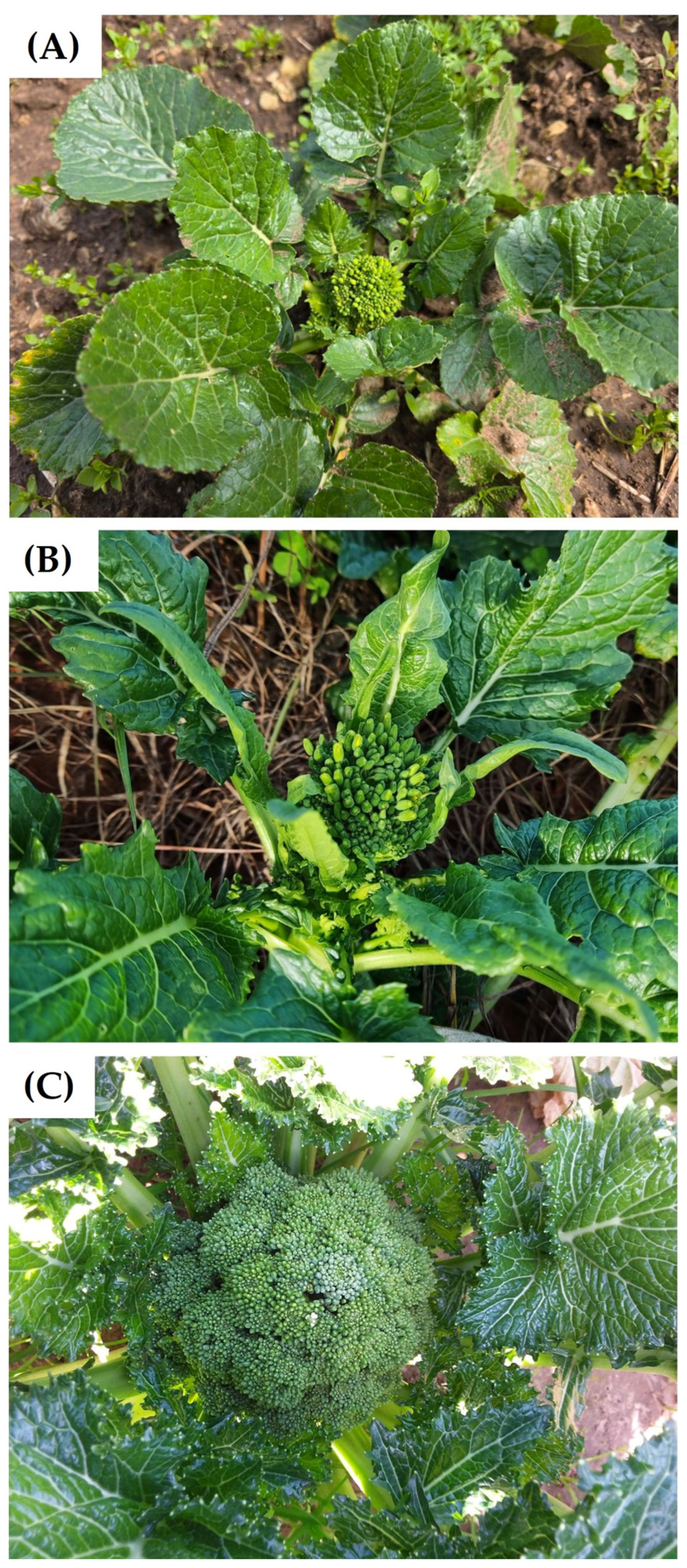
Cima di rapa and rapacaula show a very similar morphological appearance, with some notable differences: rapacaula has some characteristics closer to cabbage rather than to cima di rapa, such as an enlarged root that protrudes from the ground and a very developed central inflorescence like the cabbage head. In the past, it was often used for livestock purposes (the root) and later also for human food (the aerial portion) (Figure 1). Typically, farmers keep separate bulks of seeds according to the harvesting time and cultivate different landraces in the same location.
The growing conditions for all landraces are the same: the plants are seed-propagated and exposed to S-SW; the soil is clay loam with moderate stoniness and organic matter content; and the water supply is assured by on-site pumps.
Samples were harvested according to the maturity cycle of each variety, just after flower bud formation and before flower opening. Turnip tops, which contained a closed inflorescence and generally one young leaf at the base, were clipped about 10/15 cm from the top 50, 60, and 120 days after sowing for cinquantina, sessantina, and rapacaula, respectively.
To minimize the effect of environmental factors, such as temperature, rainfall and light, which could alter the phytochemical content, all samples were harvested at the identical stage of development during the same season, at the end of April.

2.2. Metabolite Extraction and Analysis

All solvents were high-performance liquid chromatography–mass spectrometry (HPLC/MS) grade, and the analytical standards (purity ≥ 90%) were glucoiberin, glucoraphanin, gluconapin, glucobrassicanapin, glucobrassicin (PhytoLab GmbH & Co., Vestenbergsgreuth, Germany), kaempferol, kaempferol 3-glucoside, quercetin 3-glucoside, and chlorogenic acid (Merck Life Science, Milan branch, Italy), and isorhamnetin 3-glucoside (Cayman chemical, Ann Arbor, MI, USA, purchased from Vinci-Biochem, Vinci, Firenze, Italy).
Three independent biological replicates, obtained for each of the six varieties, consisted of pooled samples of mature inflorescences from five different plants (about 500 g in total) to minimize biological variability. Samples were ground to powder and frozen at −80 °C.
Each sample (250 mg) was incubated with 3 mL of 70% methanol at 70 °C for 30 min. The supernatant was collected after centrifugation (10 min, 3000g), evaporated by Speed Vacuum, and resuspended in H2O with 0.1% acid formic (1:2 v/v).
The identification of phytochemicals in the extracts was performed using an Agilent (Agilent Technologies, Santa Clara, CA, USA) 1200 series HPLC system coupled with an Agilent 6230 Time-of-Flight (TOF) mass spectrometer via an electrospray ionization (ESI) interface in negative mode. Chromatographic analysis was conducted using an Agilent Zorbax extended C18 column (2.1 × 100 mm, 1.8 μm). The mobile phase consisted of HPLC/MS-grade water (A) and acetonitrile (B), both acidified with 0.1% formic acid, at a flow rate of 0.3 mL/min. The programmed elution gradient was as follows: 0–2 min: 100% solvent A, 16 min: 75% solvent A, 19 min: 60% solvent A, 22 min: 30% solvent A. Nitrogen was used as the desolvation and nebulizing gas for the ESI interface. The specific parameters were as follows: desolvation temperature: 350 °C with a flow of 12 L/min; nebulization pressure: 82 kPa. The interface was set with an ionization voltage of 3500 V and a current of 0.076 μA. The fragmentor and skimmer of the octupole were regulated at 175 V and 65 V, respectively. High-resolution mass analysis was performed using the TOF spectrometer, including online calibration through the continuous introduction of reference standards with known masses (Agilent cat. no. G1969-85001) at a flow rate of 0.02 mL/min. Additionally, the instrument was calibrated at the beginning of each analytical sequence Data management and analysis were performed using the Agilent Mass Hunter Data Acquisition software, version B.06.01, for data collection and Agilent Mass Hunter Qualitative Analysis software, version B.07.00, for data processing and quantification. Compound identification was achieved by comparing the exact molecular masses with the existing literature data, online databases, or available standards (indicated above). The compounds were quantified using calibration curves of the same authentic standards, and the regression equation and the correlation coefficient were calculated (Figure S1).

2.3. Antioxidant Capacity

The antioxidant capacity of methanolic extracts was determined in vitro by evaluation of the free radical-scavenging capacity using the DPPH assay (2,2-diphenyl-1-picrylhydrazyl, DPPH), ABTS assay (2,2′-azinobi-(3-ethylbenzothiazoline-6-sulfonic acid), ABTS) and FRAP assay (ferric-reducing antioxidant power) [30]. The antioxidant levels were calculated after creating a standard curve with different concentrations of 6-hydroxy-2,5,7,8-tetramethylchroman-2-carboxylic acid (Trolox). DPPH, ABTS and FRAP results were reported as μmol of Trolox equivalents (TE) per g of fresh weight of sample.
For the DPPH assay, samples were diluted to the required concentration and mixed with an equal volume of a 100 µM DPPH solution. Their absorbances were measured at a wavelength of 517 nm at 0 and after 15 min of reaction time.
For the ABTS assay, 7 mM ABTS and 2.4 mM ammonium peroxydisulfate solutions were prepared. Both solutions were mixed at a 1:1 ratio and allowed to react to generate the ABTS radical. The ABTS radical solution was then diluted to an absorbance of 0.7 ± 0.02 at 734 nm. The samples were mixed with an equal volume of the ABTS radical solution and kept in darkness for 30 min at room temperature. The absorbance was determined at 734 nm as the difference between the value after incubation and the value at time 0.
For the FRAP assay, the reaction mixture was obtained by mixing TPTZ (2,4,6-Tris(2-pyridyl)-s-triazine) water solution (10 mM), FeCl3 water solution (20 mM) and acetic acid buffer pH 3.6 (0.3 M) at a 10:1:1 volume ratio. The absorbance of the reaction mixture was measured at 593 nm using a Perkin Elmer 2030 Multilabel reader Victor X5 (PerkinElmer, Inc., Waltham, MA, USA) at time 0 and after 3 min of incubation at 37 °C in the dark. Samples were diluted fivefold before the assay; the blank solution and the standard solution were mixed with the reaction mixture at a 1:10 volume ratio.

2.4. Statistical Analysis

The results were reported as means ± standard deviation (SD) of at least three measurements (three biological replicates), each performed in triplicate. Data normality was assessed using the Shapiro–Wilk test before the statistical analysis. Differences in antioxidant capacity among the six B. rapa L. samples were evaluated by one-way analysis of variance (ANOVA), followed by Tukey’s honestly significant difference (HSD) post hoc test. Differences in flavonoid and glucosinolate content among samples were analyzed by one-way ANOVA followed by Duncan’s multiple-range test. Statistical analyses were performed using R software (version 4.3.3; R Core Team, Vienna, Austria), and differences were considered statistically significant at p < 0.05.
Multivariate analyses, including Pearson’s correlation analysis, principal component analysis (PCA), and hierarchical clustering analysis (heatmap), were performed using Python (version 3.10) with the pandas (v.2.2.3), NumPy, (v.2.0.2) seaborn (v.0.13.2), and Matplotlib (v.3.11) libraries.

3. Results

3.1. Identification and Quantification of Glucosinolates and Flavonoids Accumulated in Inflorescences of Different B. rapa subsp. sylvestris Landraces

The compounds from inflorescence extracts were separated by HPLC/MS and registered in Table 1, which shows the main metabolites detected in negative ionization mode, numbered in accordance with the retention time on the chromatographic column (Table 1 and Table S1), including the formula and m/z of each ion. In addition to many glucosinolates and different flavonoids present in glycosylated form, we found some hydroxycinnamic acid derivatives, phenols and organic acids.
The analysis revealed the presence of eleven glucosinolates in extracts of the six landrace inflorescences, including six aliphatic, four indolic and one aromatic glucosinolate (Table 2).
Total and individual GLS concentrations varied significantly among landraces, as well as their distribution, as shown in Table 2. The total GLS content in cinquantina 50SC was remarkably high (551.14 μg/g FW) among the landraces analyzed, even compared to that in the other cinquantina 50SD, which, on the contrary, showed the lowest total GLS content among the landraces, with a prevalence of aliphatic GLSs followed by the only aromatic GLS gluconasturtiin.
Among all landraces, the 60SC profile showed the highest content of total indolic GLSs (51%).
Comparing the two sessantina samples, 60SD had a lower total GLS content than 60SC, with a prevalence of aliphatic GLSs. Moreover, 60SD showed a higher level of glucoalissin, while for 60SC, we registered a higher level of glucoraphanin.
Samples rcSD and rcGA had a similar total GLS amount (about 77 μg/g FW), and both extracts showed the highest levels of aliphatic GLSs (about 93% and 84% of the total GLSs). Among the landraces, rapacaula rcSD has the highest content of gluconapin and glucobrassicanapin, following 50SC.
However, the two landraces showed some quantitative differences: rcGA had a higher content of glucocochlearin than rcSD, which showed a gluconapin amount equal to twice that of rcGA and a higher glucobrassicanapin level.
As shown in Table 3, flavonoid composition varied among Brassica landraces; the concentration of total flavonoids (TF) was highest in three cima di rapa landraces, 50SC, 50SD and 60SC, with a range of 506.47–693.34 μg/g FW, whilst sessantina 60SD had a content of about half this level (251.10 μg/g FW). Among the samples analyzed, both rapacaula landraces showed the lowest TF contents among the landraces, 145.66 and 166.26 μg/g FW, respectively.
Samples 50SD and 60SC showed the highest contents of total isorhamnetin derivatives, about 320 and 260 μg/g FW, respectively, while 50SC showed the highest amount of kaempferol derivatives (about 260 μg/g FW), followed by 60SC and 50SD (about 200 μg/g FW). The amount of quercetin derivatives was the highest in 50SD, with a value of about 180 μg/g FW.
Comparing the rapacaula samples, rcSD was characterized by a higher content (about 60% of total flavonoids) of isorhamnetin than of quercetin and kaempferol derivatives.

3.2. Changes in Metabolites in Different B. rapa subsp. sylvestris Landraces

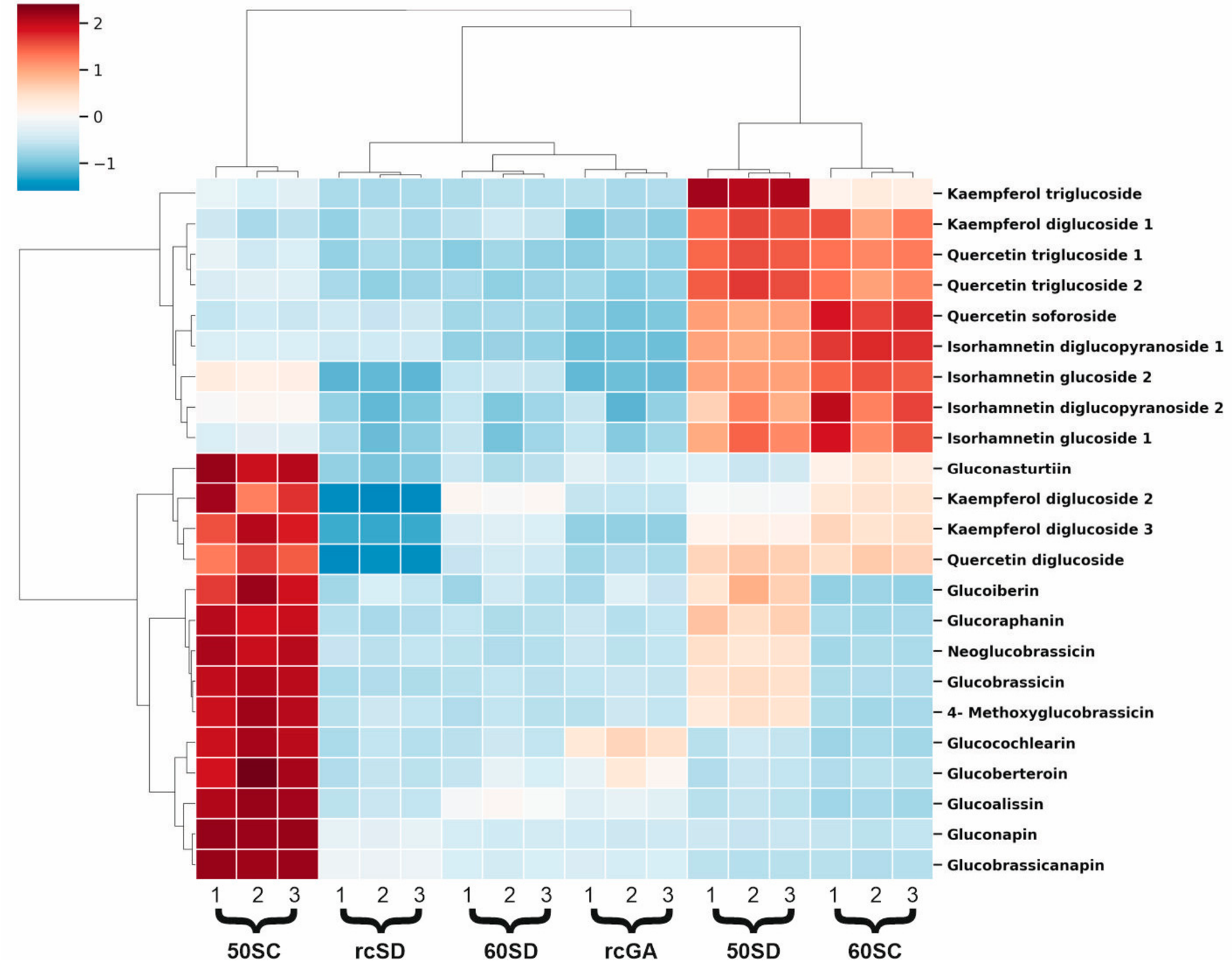
The heatmap in Figure 2, which depicts an overview of metabolite profiles among the landraces, showed that 50SC had the highest concentrations of individual glucosinolates, whereas 50SD and 60SC had the highest contents of flavonoids.
Clustering based on the main GLS and flavonoid composition was obtained by heatmap and cluster analysis: we observed two major clusters, one including only the 50SC landrace, which clearly diverged from the others; the second cluster was further subdivided into two subclusters, the first including rcSD, 60SD and rcGA, characterized by the lowest contents of both classes of compounds, and the second consisting of 50SD and 60SC, grouped based on the highest content of flavonoids.
Figure 2. Heatmap and cluster analysis showing the differences in the relative glucosinolates and flavonoids in six B. rapa subsp. sylvestris landraces. For each landrace, three biological replicates were analyzed as separate samples. Blue denotes a reduction, whereas red indicates an increase in metabolite concentration.
Horticulturae 12 01103 g002

3.3. PCA

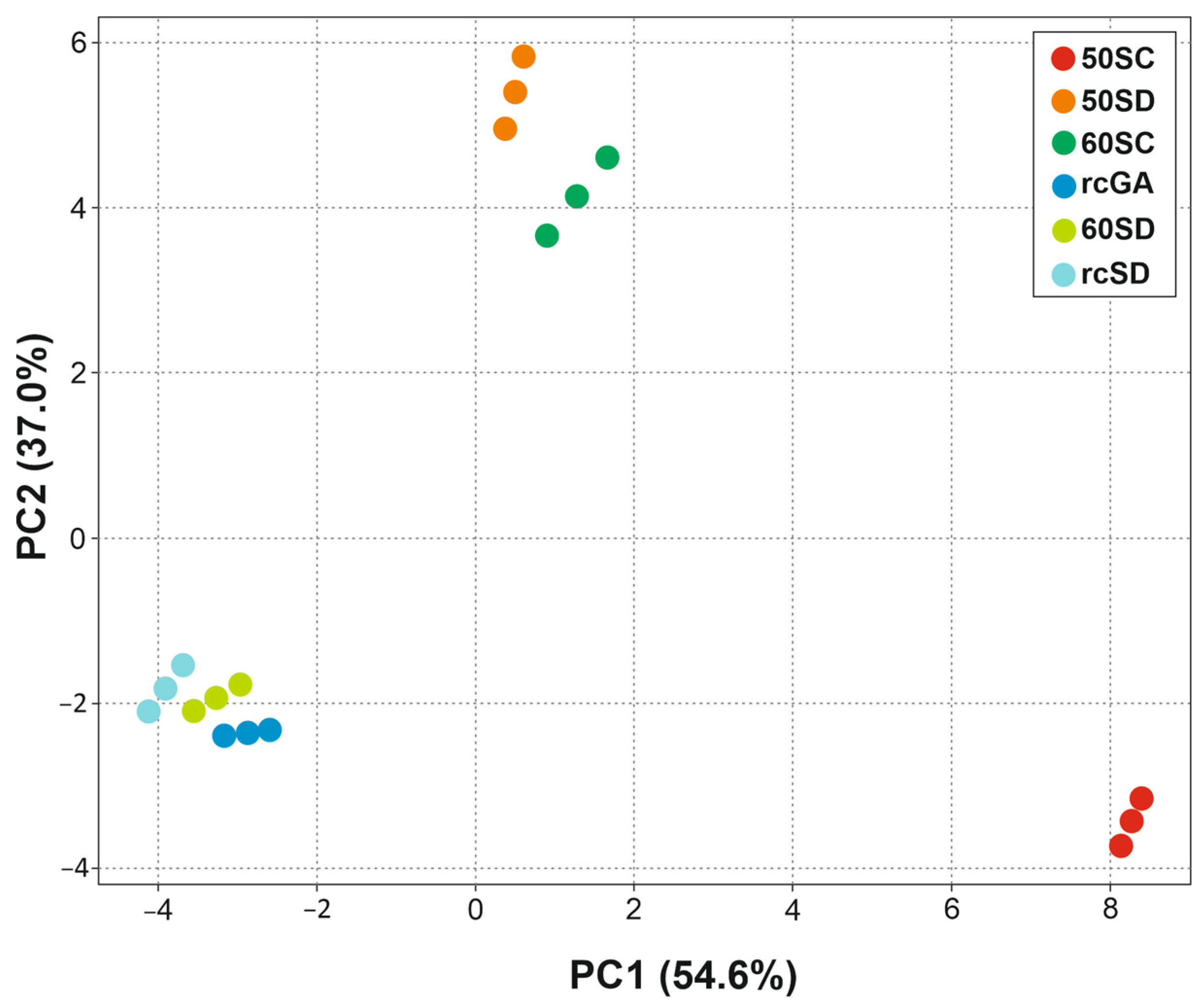
The results of PCA (Figure 3) show strong clustering of multivariate covariance in the first two principal components (scree plots with parallel analysis are visualized in Figure S2), explaining 91.6% of the total observed variance. According to the loading plot (visualized with the score plot in a PCA plot, Figure S3), GLS content and antioxidant capacity were major factors for PC1, while flavonoid content was significant for PC2. Regarding landrace distribution, 50SC is distinctly separated along PC1, suggesting different biochemical characteristics (GLS content and antioxidant capacity) compared to the other landraces. Landraces 50SD and 60SC display a high content of flavonoids and are grouped together (Figure 3). 60SD, rcSD and rcGA do not show relationships regarding flavonoid and GLS content or antioxidant capacity (Figure 3).
Figure 3. Principal component analysis (PCA) score plot. The plot shows distinct clustering of samples, highlighting differences in flavonoid and glucosinolate composition and antioxidant capacity. 50SC and 50SD: cinquantina; 60SC and 60SD: sessantina; and rcGA and rcSD: rapacaula.
Horticulturae 12 01103 g003

3.4. Antioxidant Capacity

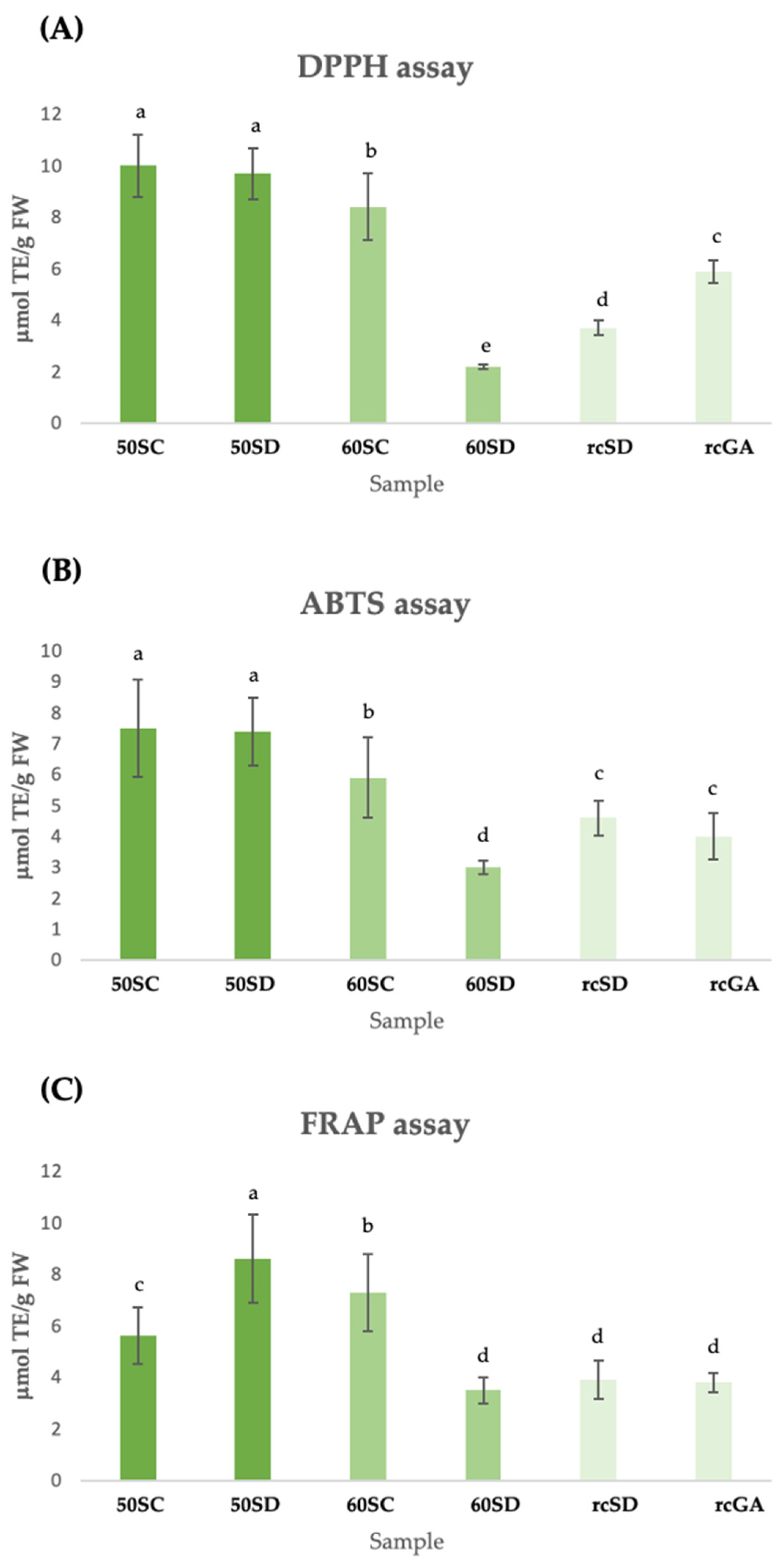
To evaluate the antioxidant capacity of the six extracts, we used three different methods: 2,2-di-phenyl-1-picrylhydrazyl (DPPH) radical-scavenging capacity assay, Trolox equivalent antioxidant capacity (ABTS) assay and ferric-reducing (FRAP) assay. The results obtained from antioxidant tests showed that the capacity was higher in “cima di rapa” samples 50SC, 50SD and 60SC than in 60SD and the two “rapacaula” samples. Among cima di rapa landraces, both cinquantina samples were characterized by the highest antioxidant power as reported in the DPPH and ABTS assays (Figure 4), whilst for 60SD, we registered the lowest value among all samples; rcGA has a higher value of capacity measured by DPPH than rcSD.
For the ferric-reducing capacity (FRAP), we registered the greatest value for 50SD and 60SC; the capacity of the 50SC extract decreased compared to its radical-scavenging power; for 60SD, rcSD, and rcGA, the trend of the FRAP assay was like that of DPPH and ABTS.

3.5. Correlation of GLS and Flavonoids with Antioxidant Capacity

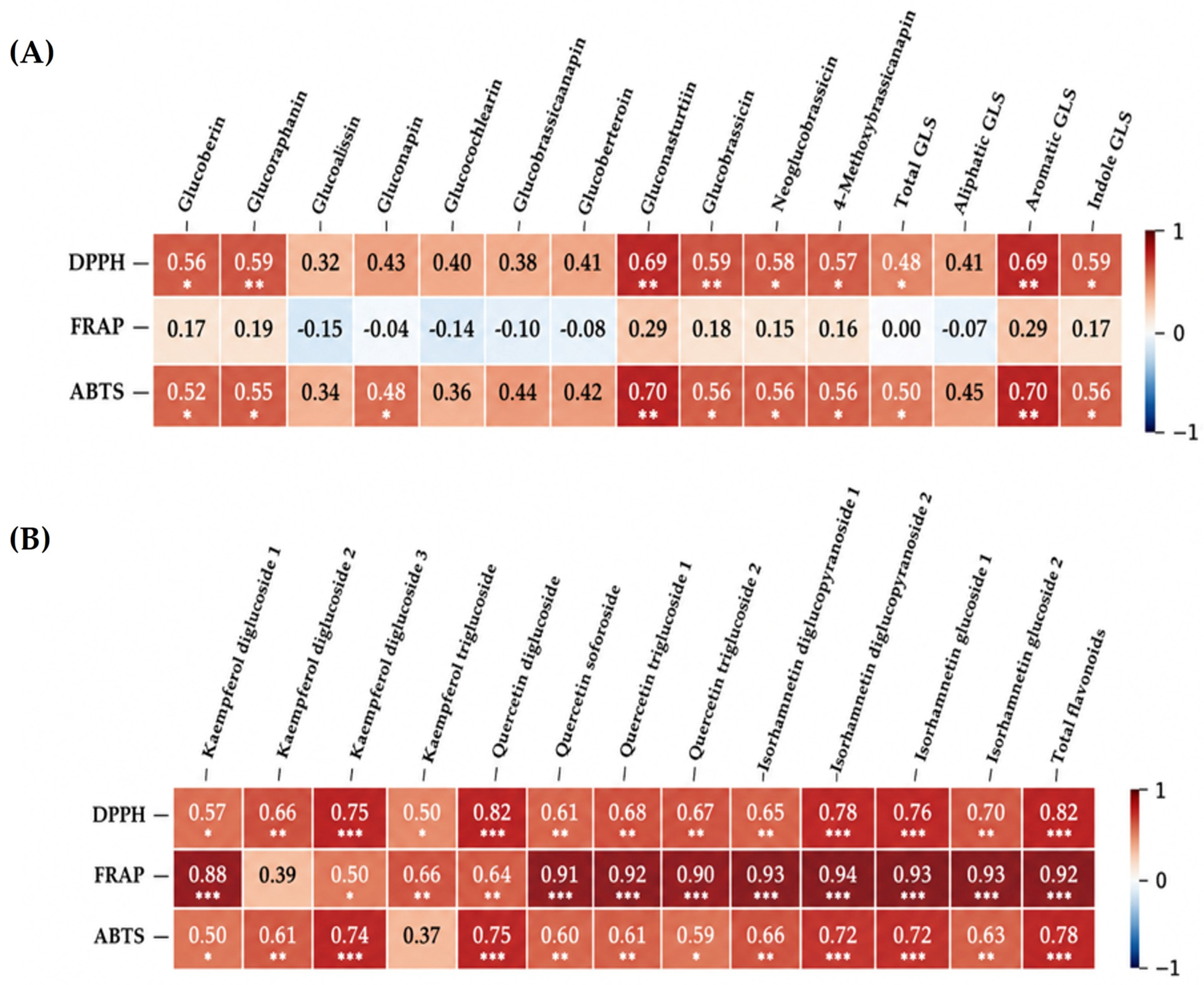
To clarify the contribution of each compound to overall antioxidant capacity, a correlation analysis was carried out regardless of the six landraces (Figure 5). Among GLSs, gluconasturtiin showed a positive correlation with antioxidant capacity assayed by the DPPH and ABTS tests, with values of Pearson’s r = 0.69, 95% IC [0.33, 0.88], p-value < 0.01 and r = 0.70, 95% IC [0.34, 0.88], p-value < 0.01 (Table S2). However, total GLSs had a positive correlation with DPPH and ABTS capacity but no significant correlation with the FRAP assay. Total aromatic and indole GLSs showed a higher correlation with the DPPH and ABTS assay than total aliphatic GLSs. Among aliphatic GLSs, glucoraphanin demonstrated the highest correlation with DPPH capacity.
Among flavonoids, isorhamnetin derivatives and triglucoside- and sophoroside-quercetin were found to be positively correlated with FRAP antioxidant capacity compared with the DPPH and ABTS assays. In addition, total flavonoids showed a positive correlation with antioxidant capacity in each assay (Table S3).

4. Discussion

The consumption of plants belonging to the Brassica rapa species has increased in recent years, most likely due to the presence of phytochemicals, particularly glucosinolates and phenolic compounds, that confer a distinct taste and are beneficial, given that they are included in the European Food Safety Authority (EFSA) list of health claims related to various food constituents [31,32]. The potential activity and availability of these metabolites in plants depend on their chemical structure, combination, and content. Because of the variety in the compounds’ patterns and their impact on biological systems, it is important to analyze the metabolites before considering their biological effects. Understanding these aspects is crucial for both agriculture and human health applications to develop cultivars with high bioavailability of GLSs and flavonoids, which can then be used to produce high-quality products.
In the absence of genetic characterization of many B. rapa subsp. sylvestris L. landraces cultivated in the Apulia region, the identification of the main and characteristic GLS and flavonoid profiles in different landraces belonging to B. rapa subsp. sylvestris cultivated in a small area of Salento could provide a marker to better discriminate among landraces that have previously been selected by farmers based on flavor and morphological characteristics. In fact, each landrace indicates a population of a seed-propagated crop that has been conserved by local farmers in several locations, is easily recognized, and has been assigned a local name.
The results showed great variability in terms of the qualitative and quantitative composition of GLSs, with a total glucosinolate content ranging from 36.17 to 551.14 μg/g FW. The 50SC landrace stands out from the 50SD and the others for its higher GLS content, by about 5–15-fold. Gluconapin and glucobrassicanapin were the most abundant GLSs among the landraces analyzed, except for 60SC, which, although it had a good amount of both GLSs (11% and 13.8% of total GLSs, respectively), was characterized by a higher content of indolic GLSs (about 51% of total GLSs), mainly glucobrassicin, a precursor of indole-3-carbinol, which is reported in the list of EFSA health claims as a potent anticancer compound [33,34,35]. It is interesting to note that glucobrassicanapin was by far the predominant glucosinolate in six of the seven varieties of Chinese flowering cabbage (B. rapa var. parachinensis L.) analyzed by Wu et al. [36].
According to results of a previous study on cima di rapa landraces cultivated under organic and conventional systems in Foggia, a province of the Puglia region, Conversa et al. [25] identified glucobrassicanapin and gluconapin as the main aliphatic GLSs, while the amount of indolic GLSs was low. Barbieri et al. [23] revealed a similar GLS profile, with some differences, in an ecotype of B. rapa subsp. sylvestris known as “friarelli” in the Campania region, with a high quantity of gluconapin and glucobrassicanapin. The two GLSs were indicated as the most common GLS compounds in turnip top and turnip green (B. rapa subsp. rapa) by Dejanovic et al. [37].
Glucoraphanin, absent in friarelli, was mainly found in samples of 60SC and, although at a low level, in all cima di rapa samples. Although 60SC was considered by local farmers a cima di rapa sessantina, its metabolic profile showed a remarkable difference from the other local landraces in terms of a significant amount of glucoraphanin, an aliphatic GLS described in the EFSA health claims as a powerful antioxidant and anticancer isothiocyanate [32,33,34,38,39]. The GLS profile was more comparable to that highlighted in broccoli (B. oleracea), a species widely studied, for which Vallejo et al. [40] reported a higher content of indolic than aliphatic GLSs, and the glucoraphanin was among the main GLSs.
Besides decreased GLS content, 60SD, another kind of sessantina, had a high level of glucoalissin. Padilla et al. [38] identified a high amount of glucoalissin in some turnip green (B. rapa) crops, which represents a precursor in glucobrassicanapin biosynthesis.
Although cima di rapa and friarelli belong to the same subspecies, the variability can be explained by considering that various factors, like environment, growing conditions, agronomic practices, and particularly genotype, influence the GLS composition, as indicated by Francisco et al. [41]. Since there is no clear-cut botanical classification for Brassica, the data obtained suggest that metabolite profiles could provide a useful tool to discriminate among Brassica vegetables and numerous local landraces distributed in a specific area, according to the hypothesis proposed by Carlson et al. [42]. Based on the GLS profile, gluconabrassicanapin and gluconapin could be considered the chemical markers of the majority of cima di rapa landraces growing in Salento, but it is noteworthy that there are some remarkable differences among all samples, even between samples belonging to the same group. Each landrace has a specific phytochemical profile, which could be considered a potential marker of local variety, but only after careful genetic characterization. In addition to 50SC, 50SD showed the highest content of the aromatic GLS gluconasturtiin (about 22% of total GLS content); a previous study reported that this GLS is hydrolyzed by the plant myrosinase to phenethyl isothiocyanate, which has anticancer and antimicrobial activities [34,43].
Comparing the metabolic profiles of the two rapacaula landraces, rcSD presented the highest level of aliphatic GLSs (about 92%) among all samples. Although both rapacaula samples had a similar amount of total GLSs, they showed different profiles; rcGA displayed a significant content of glucocochlearin, a GLS found in several Brassica species [44], while rcSD was characterized by the highest content of gluconapin and glucobrassicanapin following 50SC. Furthermore, we hypothesize that the similarly low content of GLSs in the two rapacaula landraces is primarily explained by their genotypic characteristics and the fact that their longer growth cycle (around 120 days) extends into a mild winter in Salento, resulting in a stress-free season for Brassicaceae; in fact, the main climatic stresses in Salento are caused by high temperatures and low rainfall in late spring and summer.
In our research, HPLC/MS analysis of six landraces also allowed the identification of phenolic compounds present mainly as glycosides of the three aglycones kaempferol, isorhamnetin and quercetin. In the samples analyzed, mono-, di-, and tri-glycosides of kaempferol, mono- and diglycosides of quercetin, as well as mono- and diglycosides of isorhamnetin, were found. Among landraces, there was high variability in terms of content and flavonoid combination. The flavonoid content ranged from the highest value (693.34 μg/g FW) in 50SD to the lowest value (145.66 μg/g FW) in rcSD. The two rapacaula samples had a similar content of total flavonoids, but rcSD was characterized by a higher content of isorhamnetin derivatives, while in rcGA, the main flavonoids were kaempferol and isorhamnetin conjugates. Kaempferol derivatives were the most prevalent in 50SC and 60SD, while in 50SD and 60SC, isorhamnetin derivatives were the main flavonoids.
Our results are in accordance with data reported for Spanish and Portuguese Brassica crops, in which the flavonoids kaempferol, quercetin and isorhamnetin are the most represented, as also confirmed in B. rapa subsp. sylvestris by Romani et al. [20]. In addition, Li et al. [44] found quercetin, kaempferol and isorhamnetin as the main flavonoids in Brassica vegetables. Unlike our results, De Pascale et al. [22] showed the presence of quercetin and kaempferol in two friarelli ecotypes, with total flavonoid content of about 400 and 210 μg/g FW, lower than those in cima di rapa 50SC, 50SD and 60SC (506.47, 693.34, and 631.91 μg/g FW, respectively). Moreover, comparing our results with the literature data, we could identify the presence of isorhamnetin in B. rapa subsp. Sylvestris, which was not found in B. oleracea but was present in B. juncea leaves. Kaempferol and quercetin are undoubtedly the most prevalent flavonoids, mainly glycosylated, in the Brassicaceae family [8]; in the EFSA list of health claims, kaempferol is known to be a strong antioxidant, and quercetin is stated to be a potent free radical scavenger, protecting against cardiovascular diseases [31,45].
Generally, B. rapa vegetables, in particular turnip greens and turnip tops, contain high levels of phenolic compounds correlated with environmental conditions influenced by abiotic (light and temperature) and biotic (insect attacks and pathogen infections) stresses [8]. It is known that they possess many beneficial properties for human health, including the prevention of cancer, aging, atherosclerosis, and neurodegenerative diseases [45].
Following metabolite analysis, the heatmap and PCA support the chemical variability within local landraces, providing useful information for their identification and classification based on their metabolite composition. As clearly highlighted by the heatmap analysis and PCA, the 50SC landrace is distinctly separated from all other landraces in terms of the quality and quantity of glucosinolates, as well as its distinctive flavonoid pattern characterized by the highest kaempferol derivative content among all samples.
The evaluation of the in vitro antioxidant capacity of extracts followed by the correlation analysis contributes to hypothesizing a possible relationship between bioactive compounds of B. rapa subsp. sylvestris landraces and their antioxidant capacity. Comparing our data regarding the in vitro antioxidant capacity of 50SC, 50SD and 60SC extracts with results obtained in two friarelli ecotypes [22], very similar values were obtained through the ABTS assay, although the flavonoid content in friarelli was lower (436 and 212 μg/g FW) than that in cima di rapa samples.
50SD showed higher antioxidant capacity measured through different in vitro assays, probably due to the abundance of flavonoids. Although it had a very low level of GLSs, it was characterized by a significant amount of gluconasturtiin, an aromatic GLS known for its capacity to protect LDL from copper-catalyzed oxidation [10]. Interestingly, our results showed that gluconasturtiin, among GLSs, had the highest correlation value (about 0.69) with antioxidant capacity measured by scavenging ABTS and DPPH radicals, a result in contradiction with Natella et al. [10], who postulated a role for this GLS in metal chelation.
The antioxidant capacity value observed for 60SC was high for the three assays; this landrace displayed a substantial amount of indolic GLSs, which in earlier studies were deemed potential B. oleracea antioxidants [46,47]. The correlation analysis showed that total indolic GLSs had a positive value for the DPPH and ABTS tests compared with aliphatic GLS. This variety showed a high content of isorhamnetin derivatives, which are considered to have a high free radical-scavenging property [48].
There are few data about the antioxidant activity of GLSs and their derivatives; generally, it is very weak for most GSLs, as reported by Natella et al. [10], who highlighted that glucobrassicin showed a moderate capacity for quenching the ABTS radical. The authors have speculated that ability of glucobrassicin to quench the ABTS radical could be attributed to the capacity of phenolic compounds and indolic groups to function as hydrogen donors. In contrast, Cabello-Hurtado et al. did not observe any ABTS activity for glucobrassicin, which instead showed antioxidant activity through the ORAC assay [46].
For sample 50SC, we discovered a higher capacity for the DPPH and ABTS assays but no significant correlation value for the FRAP test, most likely due to the chemical characteristics of the metabolite mixture in the extract. For 60SD, rcSD and rcGA, we registered the same trend for each assay, suggesting that the low antioxidant capacity could be linked to lower contents of both GLSs and flavonoids. The involvement of GLSs in antioxidant activity was investigated by Choi et al. [49] by developing doubled haploid lines of Brassica rapa with high GLS content, which exhibited scavenging activity against reactive oxygen species and free radicals. According to our results, the in vitro DPPH and ABTS assays revealed dose-dependent antioxidant power, except for 50SD, suggesting that GLSs could have high antioxidant properties. Although characterized by a different combination of GLSs, Kusznierewicz et al. [50] found in white cabbage a high correlation between antioxidant activity measured by the ABTS and DPPH assays and total GLSs.
Unlike our results, Bhandari and Kwak [51] found that in different Brassica cultivars, total GLSs showed a low correlation with antioxidant activity, probably due to the low antioxidant ability of GLSs or their low amount in this species. In contrast, our correlation data about total flavonoids evidenced a high correlation with antioxidant capacity through the three assays. The differences observed among the three different assays utilized to evaluate antioxidant properties of cima di rapa extracts could be explained by considering that the tests were based on different chemical properties of each compound and different mechanisms, such as scavenging, metal chelating, and ferric-reducing activity; therefore, it is difficult to determine the contribution of single molecules.
Although many studies suggest the direct antioxidant properties of Brassica species extracts [52,53], few of them were able to evaluate the activity of particular GLSs. In the absence of evaluation of the antioxidant activity of single compounds, based on correlation data, we assume that GLSs, as the primary compounds of cima di rapa extracts, may contribute with flavonoids to antioxidant capacity.
The data revealed significant variability among six local landraces, even between two different accessions belonging to the same group (cinquantina, sessantina and rapacaula), probably due to the continuous selection operated over time by farmers without any planned program of genetic improvement.
Among all samples, cima di rapa 50SC and 60SC, characterized by a high level of total GLSs with a significant level of glucoraphanin, could be considered good natural sources of bioactive molecules that might be used in health-related applications. Although cima di rapa 60SC does not have the highest total GLS content, it showed the best profile of useful GLSs, such as glucoraphanin and especially glucobrassicin, the precursor of indole-3-carbinol, which, along with sulphoraphane, a glucoraphanin derivative, acts as a potent anticancer compound [32,33]. Because customers need consistent support from plant phytochemicals with strong biological activity for disease prevention, starting from data obtained from phytochemical analysis, a deeper genetic and molecular characterization of both landraces is necessary with the aim of producing varieties with greater GLS levels and positive effects.

5. Conclusions

This study provides preliminary insights into the biochemical characteristics of B. rapa subsp. sylvestris landraces cultivated in Salento. The phytochemical analysis showed the high diversity among traditional crop varieties continuously maintained by farmers and researchers within a local biological, cultural and economic context. The wide range of variability represents an important base for developing high-quality, added-value products with beneficial effects. Future research is needed to investigate genetic diversity among landraces to support plant breeding strategies for high-value crops.

Supplementary Materials

The following supporting information can be downloaded at https://www.mdpi.com/article/10.3390/horticulturae12091103/s1, Figure S1: Representative EIC and corresponding accurate MS spectra of the compounds identified in the analyzed samples, displayed in order of elution; Figure S2. Screen plot with parallel analysis; Figure S3. PCA biplot (score plot + loading plot); Figure S4: Scatter plots with regression lines showing the relationship between antioxidant activity and glucosinolates; Figure S5: Scatter plots with regression lines showing the relationship between antioxidant activity and flavonoids; Table S1: The calibration and validation parameters of HPLC- TOF-MS methods for chemical quantification; Table S2: p-value and confidence interval of correlation between GLSs and antioxidant capacity; Table S3. p-value and confidence interval of correlation between flavonoids and antioxidant capacity.

Author Contributions

Conceptualization, E.N., C.N. and R.A.A.; methodology, C.N., E.S. and E.N.; software, E.S., E.N. and C.N.; validation, R.A.A. and C.N.; formal analysis, E.N., C.N. and A.F.; investigation, R.A.A. and E.N.; resources, L.D.B., R.A.A. and A.L.; data curation, E.N., R.A.A. and C.N.; writing—original draft preparation, E.N., C.N. and R.A.A.; writing—review and editing, E.N., L.D.B. and A.L.; visualization, L.D.B. and E.N.; supervision, L.D.B.; project administration, L.D.B.; funding acquisition, L.D.B. and R.A.A. All authors have read and agreed to the published version of the manuscript.

Funding

This research was funded by Regione Puglia under the Rural Development Program 2014–2022, Project ‘Biodiversity of Apulian vegetable species (BiodiverSO Veg)’, Measure 10, Submeasure 10.2, Operation 1 “Program for the conservation and the valorization of the genetic resources in agriculture” (DDS n. 04250182807, CUP: B97H22003760009).

Data Availability Statement

The original contributions presented in this study are included in the article/Supplementary Material. Further inquiries can be directed to the corresponding authors.

Conflicts of Interest

The authors declare no conflicts of interest.

Abbreviations

The following abbreviations are used in this manuscript:
ABTS2,2′-azinobi-(3-ethylbenzothiazoline-6-sulfonic acid
BITCBenzyl isothiocyanate
DPPH2,2-diphenyl-1-picrylhydrazyl
ESIElectrospray ionization
FRAPFerric-reducing antioxidant power
FWFresh weight
GLSGlucosinolate
HPLC/MSHigh-performance liquid chromatography–mass spectrometry
ITCsIsothiocyanates
ORACOxygen radical absorbance capacity
PEITCPhenyl isothiocyanate
ROSReactive oxygen species
SFNSulforaphane
TETrolox equivalent
TOFTime-of-flight
TROLOX6-hydroxy-2,5,7,8-tetramethylchroman-2-carboxylic acid

References

  1. Thakur, A.K.; Singh, K.H.; Singh, L.; Nanjundan, J.; Khan, Y.J.; Singh, D. Patterns of subspecies genetic diversity among oilseed Brassica rapa as revealed by agro-morphological traits and SSR markers. J. Plant Biochem. Biotech. 2017, 26, 282–292. [Google Scholar] [CrossRef] [Scilit]
  2. Salehi, B.; Quispe, C.; Butnariu, C.; Sarac, M.; Marmouzi, I.; Kamle, M. Phytotherapy and food applications from Brassica genus. Phytother. Res. 2021, 35, 3590–3609. [Google Scholar] [CrossRef] [Scilit] [PubMed]
  3. Raiola, A.; Errico, G.; Monti, D.M.; Barone, A.; Rigano, M.M. Bioactive compounds in Brassicaceae vegetables with a role in the prevention of cronic diseases. Molecules 2018, 23, 15. [Google Scholar] [CrossRef] [Scilit] [PubMed]
  4. Kristal, A.R.; Lampe, J.W. Brassica vegetables and prostate cancer risk: A review of the epidemiological evidence. Nutr. Cancer 2002, 42, 1–9. [Google Scholar] [CrossRef] [Scilit] [PubMed]
  5. Cicio, A.; Serio, R.; Zizzo, M.G. Anti-inflammatory potential of Brassicaceae-derived phytochemicals: In vitro and in vivo evidence for a putative role in the prevention and treatment of IBD. Nutrients 2023, 15, 31. [Google Scholar] [CrossRef] [Scilit] [PubMed]
  6. Olas, B. Bioactive compounds from Cruciferous vegetables as a therapeutic option for the prevention and treatment of cardiovascular diseases. Nutrients 2026, 18, 810. [Google Scholar] [CrossRef] [Scilit] [PubMed]
  7. Pagnotta, E.; Matteo, R.; Ugolini, L. From functional ingredients to functional foods: Focus on Brassicales plant species and glucosinolates. Foods 2026, 15, 537. [Google Scholar] [CrossRef] [Scilit] [PubMed]
  8. Podsedek, A. Natural antioxidants and antioxidant capacity of Brassica vegetables: A review. LWT-Food Sci. Technol. 2007, 40, 1–11. [Google Scholar] [CrossRef] [Scilit]
  9. Cartea, M.E.; Velasco, P. Glucosinolates in Brassica foods: Bioavailability in food and significance for human health. Phytochem. Rev. 2008, 7, 213–229. [Google Scholar] [CrossRef] [Scilit]
  10. Natella, F.; Maldini, M.; Leoni, G.; Scaccini, C. Glucosinolates redox activities: Can they act as antioxidants? Food Chem. 2014, 149, 226–232. [Google Scholar] [CrossRef] [Scilit] [PubMed]
  11. Bhandari, S.R.; Jo, J.S.; Lee, J.G. Comparison of glucosinolate profiles in different tissues of nine Brassica crops. Molecules 2015, 20, 15827–15841. [Google Scholar] [CrossRef] [Scilit] [PubMed]
  12. Soundararajan, P.; Kim, J.S. Anti-Carcinogenic glucosinolates in cruciferous vegetables and their antagonistic effects on prevention of cancers. Molecules 2018, 23, 2983. [Google Scholar] [CrossRef] [Scilit] [PubMed]
  13. Clarke, D.B. Glucosinolates, structures and analysis in food. Anal. Met. 2010, 2, 310–325. [Google Scholar] [CrossRef] [Scilit]
  14. Maina, S.; Misinzo, G.; Bakari, G.; Kim, H.-Y. Human, animal and plant health benefits of glucosinolates and strategies for enhanced bioactivity: A systematic review. Molecules 2020, 25, 3682. [Google Scholar] [CrossRef] [Scilit] [PubMed]
  15. Qin, H.; King, G.J.; Borpatragohain, P.; Zou, J. Developing multifunctional crops by engineering Brassicaceae glucosinolate pathways. Plant Commun. 2023, 4, 100565. [Google Scholar] [CrossRef] [Scilit] [PubMed]
  16. Balasundram, N.; Sundram, K.; Samman, S. Phenolic compounds in plants and agri-industrial by-product: Antioxidant activity, occurrence and potential uses. Food Chem. 2006, 99, 191–203. [Google Scholar] [CrossRef] [Scilit]
  17. Roy, M.K.; Juneja, L.R.; Isobe, S.; Tsushida, T. Steam processed broccoli (Brassica oleracea) has higher antioxidant activity in chemical and cellular assay systems. Food Chem. 2009, 114, 263–269. [Google Scholar] [CrossRef] [Scilit]
  18. Cermak, R.; Landgraf, S.; Wolffram, S. The bioavailability of quercetin in pigs depends on the glycoside moiety and dietary factors. J. Nutr. 2003, 133, 2802–2807. [Google Scholar] [CrossRef] [Scilit] [PubMed]
  19. Halliwell, B.; Rafter, J.; Jenner, A. Health promotion by flavonoids, tocopherols, tocotrienols, and other phenols: Direct and indirect effects? Antioxidant or not? Am. J. Clin. Nutr. 2005, 81, 268S–276S. [Google Scholar] [CrossRef] [Scilit] [PubMed]
  20. Romani, A.; Vignolini, P.; Isolani, L.; Ieri, F.; Heimler, D. HPLC-DAD/MS characterization of flavonoids and hydroxycinnamic derivatives in turnip tops (Brassica rapa L. subsp. sylvestris L.). J. Agric. Food Chem. 2006, 54, 1342–1346. [Google Scholar] [CrossRef] [Scilit] [PubMed]
  21. Conversa, G.; Lazzizera, C.; Bonasia, A.; La Rotonda, P.; Elia, A. Nutritional characterization of two rare landraces of turnip (Brassica rapa var. rapa) tops and their on-farm conservation in Foggia province. Sustainability 2020, 12, 3842. [Google Scholar] [CrossRef] [Scilit]
  22. De Pascale, S.; Maggio, A.; Pernice, R.; Fogliano, V.; Barbieri, G. Sulphur fertilization may improve the nutritional value of Brassica rapa L. subsp. sylvestris. Eur. J. Agron. 2007, 26, 418–424. [Google Scholar] [CrossRef] [Scilit]
  23. Barbieri, G.; Pernice, R.; Maggio, A.; De Pascale, S.; Fogliano, V. Glucosinolates profile of Brassica rapa L. subsp. sylvestris L. Janch. var. esculenta Hort. Food Chem. 2008, 107, 1687–1691. [Google Scholar] [CrossRef] [Scilit]
  24. Giannino, D.; Testone, G.; Nicolodi, C.; Giorgetti, L.; Bellani, L.; Gonnella, M.; Ciardi, M.; Cappuccio, P.; Moscatello, S.; Battistelli, A.; et al. Nutritive parameters and antioxidant quality of minimally processed “cime di rapa” (Brassica rapa subsp. sylvestris) vary as influenced by genotype and storage time. Pol. J. Food Nutr. Sci. 2020, 70, 337–346. [Google Scholar] [CrossRef] [Scilit]
  25. Conversa, G.; Bonasia, A.; Lazzizera, C.; Elia, A. Bio-physical, physiological, and nutritional aspects of ready-to-use cima di rapa (Brassica rapa L. subsp. sylvestris L. Janch. var. esculenta Hort.) as affected by conventional and organic growing systems and storage time. Sci. Hort. 2016, 213, 76–86. [Google Scholar] [CrossRef] [Scilit]
  26. Renna, M.; Rinaldi, V.A.; Gonnella, M. The Mediterranean Diet between traditional foods and human health: The culinary example of Puglia (Southern Italy). Int. J. Gastron. Food Sci. 2015, 2, 63–71. [Google Scholar] [CrossRef] [Scilit]
  27. Elia, A.; Santamaria, P. Biodiversity in vegetable crops, a heritage to save: The case of the Puglia Region. Ital. J. Agron. 2013, 8, 21–34. [Google Scholar] [CrossRef] [Scilit]
  28. Veteläinen, M.; Negri, V.; Maxted, N. (Eds.) European Landraces: On-Farm Conservation Management and Use; Bioversity Technical Bullettin no. 15; Bioversity International: Rome, Italy, 2009; pp. 13–34. [Google Scholar]
  29. Mazzeo, R.; Morgese, A.; Sonnante, G.; Zuluaga, D.; Pavan, S.; Ricciardi, L.; Lotti, C. Genetic diversity in broccoli rabe (Brassica rapa L. subsp. sylvestris (L.) Janch.) from Southern Italy. Sci. Hortic. 2016, 253, 140–146. [Google Scholar] [CrossRef] [Scilit]
  30. Xiao, F.; Xu, T.; Lu, B.; Liu, R. Guidelines for Antioxidant Assays for Food Components. Food Front. 2020, 1, 60–69. [Google Scholar] [CrossRef] [Scilit]
  31. EFSA (European Food Safety Authority). Consolidated List of Article 13 Health Claims—List of References Received by EFSA, Part 2. 2011. Available online: https://www.efsa.europa.eu/sites/default/files/topic/ndaart13ref02.pdf (accessed on 16 July 2026).
  32. EFSA (European Food Safety Authority). Consolidated List of Article 13 Health Claims—List of References Received by EFSA, Part 3. 2011. Available online: https://www.efsa.europa.eu/sites/default/files/topic/ndaart13ref03.pdf (accessed on 16 July 2026).
  33. Zhang, Y.; Talalay, P.; Cho, C.G.; Posner, G.H. A major inducer of anticarcinogenic protective enzymes from broccoli: Isolation and elucidation of structure. Proc. Natl. Acad. Sci. USA 1992, 89, 2399. [Google Scholar] [CrossRef] [Scilit] [PubMed]
  34. EFSA (European Food Safety Authority). Consolidated List of Article 13 Health Claims—List of References Received by EFSA, Part 4. 2011. Available online: https://www.efsa.europa.eu/sites/default/files/topic/ndaart13ref04.pdf (accessed on 16 July 2026).
  35. Zhu, B.; Liang, Z.; Zang, Y.; Zhu, Z.; Yang, J. Diversity of glucosinolates among common Brassicaceae vegetables in China. Hort. Plant J. 2023, 9, 365–380. [Google Scholar] [CrossRef] [Scilit]
  36. Wu, M.; Cheng, J.; Zhou, X.; Li, T.; Yang, Y.; Wu, Z.; Zhang, Y. Comparative characterization of nutritional and aroma profiles among seven Chinese flowering cabbage (Brassica rapa var. parachinensis L.) varieties. Food Chem. 2026, 501, 147594. [Google Scholar] [CrossRef] [Scilit] [PubMed]
  37. Dejanovic, G.M.; Asllanaj, E.; Gamba, M.; Raguindin, P.F.; Itodo, O.A.; Minder, B.; Bussler, W.; Metzger, B.; Muka, T.; Glisic, M.; et al. Phytochemical characterization of turnip greens (Brassica rapa ssp. rapa): A systematic review. PLoS ONE 2021, 16, e0247032. [Google Scholar] [CrossRef] [Scilit] [PubMed]
  38. Padilla, G.; Cartea, M.E.; Velasco, P.; De Haro, A.; Ordás, A. Variation of glucosinolates in vegetables crops in Brassica rapa. Phytochemistry 2007, 68, 536–545. [Google Scholar] [CrossRef] [Scilit] [PubMed]
  39. Zhao, Z.; Che, Q.; Qiao, X.; Wang, J.; Ali, Z.T.A.; Li, J.; Yin, L. Sulforaphane in cancer precision medicine: From biosynthetic origins to multiscale mechanisms and clinical translation. Front. Immunol. 2023, 16, 1702860. [Google Scholar] [CrossRef] [Scilit] [PubMed]
  40. Vallejo, F.; Tomás-Barberán, F.A.; Gonzalez Benavente-García, A.; García-Viguera, C. Total and individual glucosinolate contents in inflorescences of eight broccoli cultivars grown under various climatic and fertilisation conditions. J. Sci. Food Agric. 2003, 83, 307–313. [Google Scholar] [CrossRef] [Scilit]
  41. Francisco, M.; Moreno, D.A.; Cartea, M.E.; Ferreres, F.; Garcia-Viguera, C.; Velasco, P. Simultaneous identification of glucosinolates and phenolic compounds in a representative collection of vegetable Brassica rapa. J. Chromatogr. A 2009, 1216, 6611–6619. [Google Scholar] [CrossRef] [Scilit] [PubMed]
  42. Carlson, D.G.; Daxenbichler, M.E.; VanEtten, C.H.; Kwolek, W.F.; William, P.H. Glucosinolates in crucifer vegetables: Broccoli, brussels sprouts, cauliflower, collard, kale, mustard greens, and kohlrabi. J. Am. Soc. Hort. Sci. 1987, 112, 173–178. [Google Scholar] [CrossRef] [Scilit]
  43. Bansal, S.; Lakra, N.; Mishra, S.; Ahlawat, Y.K. Unraveling the potential of glucosinolates for nutritional enhancement and stress tolerance in Brassica crops. Veg. Res. 2024, 4, e015. [Google Scholar] [CrossRef] [Scilit]
  44. Li, Z.; Lee, H.; Liang, X. Profiling of phenolic compounds and antioxidant activity of 12 cruciferous vegetables. Molecules 2018, 23, 1139. [Google Scholar] [CrossRef] [Scilit] [PubMed]
  45. Shen, S.S.; Callaghan, D.; Juzwik, C.; Xiong, H.Q.; Huang, P.L.; Zhang, W.D. ABCG2 reduces ROS-mediated toxicity and inflammation: A potential role in Alzheimer’s disease. J. Neurochem. 2010, 114, 1590–1604. [Google Scholar] [CrossRef] [Scilit] [PubMed]
  46. Cabello-Hurtado, F.; Gicquel, M.; Esnault, M.A. Evaluation of the antioxidant potential of cauliflower (Brassica oleracea) from a glucosinolate content perspective. Food Chem. 2011, 132, 1003–1009. [Google Scholar] [CrossRef] [Scilit]
  47. Süzen, S. Antioxidant activities of synthetic indolic derivatives and possible activity mechanisms. In Bioactive Heterocycles V; Khan, M.T.H., Ed.; Topics in Heterocyclic Chemistry; Spinger: Berlin/Heidelberg, Germany, 2007; Volume 11, pp. 145–178. [Google Scholar]
  48. Edenharder, R.; Grünhage, D. Free radical scavenging abilities of flavonoids as mechanism of protection against mutagenicity induced by tert-butyl hydroperoxide or cumene hydroperoxide in Salmonella typhimurium TA102. Mutat. Res. 2003, 540, 1–18. [Google Scholar] [CrossRef] [Scilit] [PubMed]
  49. Choi, H.; Kim, H.; Han, S.; Park, H.W.; Ha, I.J.; Kim, J.S.; Lee, S. Antioxidant and anti-inflammatory activities of high-glucosinolate-synthesis lines of Brassica rapa. Antioxidant 2023, 12, 1693. [Google Scholar] [CrossRef] [Scilit] [PubMed]
  50. Kusznierewicz, B.; Bartoszek, A.; Wolska, L.; Drzewiecki, J.; Gorinstein, G.; Namiesnìk, J. Partial characterization of white cabbage (Brassica oleracea var. capitata f. alba) from different regions by glucosinolates, bioactive compounds, total antioxidant activities, and proteins. LWT-Food Sci. Tech. 2008, 41, 1–9. [Google Scholar] [CrossRef] [Scilit]
  51. Bhandari, S.R.; Kwak, J.H. Chemical composition and antioxidant activity in different tissues of brassica vegetables. Molecules 2015, 20, 1228–1243. [Google Scholar] [CrossRef] [Scilit] [PubMed]
  52. Biovin, D.; Lamy, S.; Lord-Dufour, S.; Jackson, J.; Beaulieu, E.; Cote, M.; Moghrabi, A.; Barrette, S.; Gingras, D.; Béliveau, R. Antiproliferative and antioxidant activities of common vegetables: A comparative study. Food Chem. 2009, 112, 374–380. [Google Scholar] [CrossRef] [Scilit]
  53. Sandoval, M.; Okuhama, N.N.; Angeles, F.M.; Melchor, V.V.; Condezo, L.A.; Lao, J. Antioxidant activity of the cruciferous vegetable Maca (Lepidium meyenii). Food Chem. 2002, 79, 207–213. [Google Scholar] [CrossRef] [Scilit]
Figure 1. Local landraces of B. rapa subsp. sylvestris. Representative images of (A) cima di rapa cinquantina, (B) cima di rapa sessantina and (C) rapacaula.
Horticulturae 12 01103 g001
Figure 4. Histograms of antioxidant assays: (A) DPPH, (B) ABTS, and (C) FRAP. Values are expressed as µmol of Trolox equivalents (TE) per gram of sample (FW). In each histogram, columns with different letters present statistically significant differences (p < 0.05); columns with the same letter do not show any statistically significant difference (p > 0.05). The statistically significant differences between different samples were assessed by one-way ANOVA followed by Tukey’s post hoc test (HSD).
Horticulturae 12 01103 g004
Figure 5. Correlation coefficients among antioxidant capacity, measured through DPPH, FRAP and ABTS assays, and glucosinolates (A) and flavonoids (B). * p-value < 0.05, ** p-value < 0.01, and *** p-value < 0.001.
Horticulturae 12 01103 g005
Table 1. Identification by high-performance liquid chromatography/mass spectrometry (HPLC/MS) of main compounds in extracts from inflorescences of six B. rapa subsp. sylvestris landraces. Glucosinolates are shown in red, while flavonoids are shown in blue.
N.RT a (min)Compound Name(M-H)m/z Calc bm/z Exp cΔ ppmScore d
10.898Gluconic acidC6H12O7195.0510195.0517−3.4597.61
21.144Glucoiberin *C11H21NO10S3422.0250422.0255−1.1896.95
31.365Glucoraphanin *C12 H23 NO10 S3436.0411436.0417−1.3596.21
41.721UridineC9 H12N2O6243.0623243.0625−0.899.36
51.881UnknownC19H36N2O16S2611.1433611.1454−3.3592.55
62.63GlucoalissinC13H25NO10S3450.0568450.0576−1.8496.04
72.799Gluconapin *C11H19NO9S2372.0418372.0436−2.197.05
84.242UnknownC14H17O11360.0698360.0701−0.7197.18
94.402Salicylic acid glucosideC13H16O8299.0772299.07671.786.84
105.505GlucocochlearinC11H21NO9S2374.0585374.0593−2.2695.42
115.649ProtocatechuicoylglucoseC13H16O9315.0722315.0728−1.8998.13
125.915UnknownC12H22O9309.1191309.1198−2.2599.21
136.111Glucobrassicanapin *C12H21NO9S2386.0585386.0594−1.7297.06
147.077Chlorogenic acid *C16H18O9353.0878353.0881−0.7598.63
157.201Dimethyl acetylsuccinateC8H12O5187.0612187.0616−2.0398.31
167.559Glucobrassicin *C16H20N2O9S2447.0537447.0538−0.0797.87
177.921Dideoxy-glucopyranosyl-methyl-ribo-hexoseC13H24O9323.1348323.1353−1.6298.01
188.102UnknownC11H17NO13S2434.0069434.0075−1.5192.45
198.258UnknownC15H18N2O5S337.0864337.08533.1289.89
208.453Quercetin sophoroside glucoside isomer 1C33H40O22787.1936787.1938−0.3195.78
218.636Quercetin sophoroside glucoside isomer 2C33H40O22787.1939787.19380.0797.97
228.875Kaempferol triglucosideC33H40O21771.1989771.2001−1.5596.43
239.002GluconasturtiinC15H21NO9S2422.0585422.05791.3395.74
249.12UnknownC17H30N2O16517.1523517.1539−3.2693.60
259.317GlucoberteroinC13H25NO9S3434.0619434.06141.1197.19
269.351Sinapoyl gentiobiosideC23H32O15547.1668547.16611.3597.56
279.579Quercetin diglucoside isomer 1C27H30O17625.1410625.1421−1.8098.48
289.8FeruloylglucopyranosideC16H20O9355.1035355.1034−0.0798.08
299.914NeoglucobrassicinC17H22N2O10S2477.0643477.06341.8597.00
3010.097Raphanusol BC17H22O10385.1140385.1140−0.0397.23
3110.381Kaempferol diglucosideC27H30O16609.1461609.1463−0.3797.97
3210.677Isorhamnetin diglucopyranoside isomer 1C28H32O17639.1567639.1579−1.8897.32
3311.081UnknownC23H32O15S2611.1121611.1127−0.9694.58
3411.366Quercetin diglucoside isomer 2C27H30O17625.1410625.1426−2.9599.86
3511.516Kaempferol diglucoside isomer 2C27H30O16609.1461609.1474−2.1598.66
3611.7724-methoxyglucobrassicinC17H22N2O10S2477.0643477.0639−0.9496.86
3711.909Isorhamnetin diglucopyranoside isomer 2C28H32O17639.1567639.1560−1.0298.08
3812.265Kaempferol diglucoside isomer 3C27H30O16609.1461609.1458−1.6599.35
3912.417UnknownC22H33N2O7436.2215436.2225−2.3697.68
4013.058UnknownC33H42O21773.2145773.2146−0.1098.61
4113.228SinapoylmalateC15H16O9339.0722339.0722−0.1698.68
4214.219Kaempferol glucoside *C21H20O11447.0933447.0938−1.0897.59
4314.578Isorhamnetin glucoside isomer 1 *C22H22O12477.1038477.1046−1.4997.36
4415.016Isorhamnetin glucoside isomer 2 *C22H22O12477.1038477.1046−1.4997.36
4515.506Disinapoyl gentiobiosideC34H42O19753.2247753.2250−0.3998.14
4615.703UnknownC24H31NO13540.1723540.17210.2798.21
4715.876Sinapoyl feruloyl gentiobiosideC33H40O18723.2142723.2150−1.1597.82
4816.144Diferuloyl gentiobiosideC32H38O17693.2036693.2049−1.8099.03
a Retention time (min), b m/z experimental, c m/z calculated with the Agilent Mass Hunter Qualitative Analysis Version B.07.00 software. d Score: isotopic score. * Compounds confirmed using specific analytical standards.
Table 2. Quantification of glucosinolates identified in inflorescences from different landraces of B. rapa subsp. sylvestris.
N.Glucosinolate Content (μg/g FW)
Compound/Peak No.Landraces
Aliphatic50SC50SD60SC60SDrcSDrcGA
1 Glucoiberin (2)6.47 ± 0.19 a0.12 ± 0.03 d3.52 ± 0.11 b0.57 ± 0.07 c0.70 ± 0.02 c0.82 ± 0.08 c
2Glucoraphanin (3)19.65 ± 0.56 a0.09 ± 0.03 d9.92 ± 0.29 b0.78 ± 0.03 c0.40 ± 0.07 c1.13 ± 0.09 c
3Glucoalissin (6) *49.52 ± 1.49 a2.75 ± 0.08 e5.27 ± 0.16 d14.70 ± 0.44 b5.75 ± 0.17 d10.42 ± 0.31 c
4Gluconapin (7)143.98 ± 4.32 a9.28 ± 0.28 e11.78 ± 0.35 d16.33 ± 0.49 c25.89 ± 0.77 b13.88 ± 0.62 d
5Glucocochlearin (10) *24.09 ± 0.72 a0.59 ± 0.18 d2.25 ± 0.57 c2.20 ± 0.37 c1.51 ± 0.25 c10.84 ± 0.32 b
6Glucobrassicanapin (13)154.35 ± 4.63 a13.25 ± 0.40 d14.57 ± 0.43 d25.54 ± 0.77 c37.48 ± 1.12 b26.26 ± 0.79 c
7Glucoberteroin (25) *5.47 ± 0.16 a0.10 ± 0.07 c0.19 ± 0.06 c0.59 ± 0.32 b0.16 ± 0.05 c1.43 ± 0.44 b
Aromatic
8Gluconasturtiin (23) *19.24 ± 0.58 a8.03 ± 0.24 b3.66 ± 0.31 c2.61 ± 0.38 c0.65 ± 0.09 d3.96 ± 0.42 c
Indolic
9Glucobrassicin (16)65.26 ± 1.96 a1.14 ± 0.03 e28.14 ± 0.84 b2.78 ± 0.08 d0.83 ± 0.03 e4.26 ± 0.13 c
10Neoglucobrassicin (29) **37.09 ± 1.11 a0.47 ± 0.28 e15.52 ± 0.47 b1.45 ± 0.14 d2.29 ± 0.07 c2.47 ± 0.07 c
114-Methoxyglucobrassicin (36) **26.02 ± 0.78 a0.35 ± 0.01 d10.65 ± 0.31 b1.21 ± 0.04 c1.69 ± 0.05 c1.78 ± 0.05 c
Total GLS551.1436.17105.4768.7677.3577.25
Glucosinolate %
Aliphatic73.1972.2745.0388.2992.9383.85
Aromatic3.5022.203.473.790.845.13
Indolic23.315.5351.507.926.2311.02
Values are the means of three independent biological replicates. Different letters in the same row indicate statistically significant differences according to Duncan’s multiple-range test at p ≤ 0.05. For each compound, the same letters indicate non-significant differences (p > 0.05) among different landraces. * Indicates compounds quantified as gluconapin; ** indicates compounds quantified as glucobrassicin.
Table 3. Quantification of flavonoids identified in extracts from different landraces of B. rapa subsp. sylvestris.
Flavonoid Content (μg/g FW)
N.Compound Name/Peak No.Landraces
50SC50SD60SC60SDrcSDrcGA
1Kaempferol diglucoside 1 (31) *6.08 ± 0.18 b24.68 ± 0.74 a26.92 ± 0.81 a6.77 ± 0.23 b5.01 ± 0.15 c3.34 ± 0.11 d
2Kaempferol diglucoside 2 (35) *114.60 ± 3.44 a72.41 ± 2.17 b57.92 ± 1.76 c60.79 ± 1.82 c8.89 ± 0.27 e41.29 ± 1.24 d
3Kaempferol diglucoside 3 (38) *130.57 ± 3.92 a76.62 ± 2.31 b62.56 ± 1.88 c42.81 ± 1.28 d5.52 ± 0.17 f21.93 ± 0.67 e
4Kaempferol triglucoside (22) *9.99 ± 0.30 c19.86 ± 0.59 b56.23 ± 1.69 a3.08 ± 0.29 d1.85 ± 0.36 d2.60 ± 0.28 d
5Quercetin diglucoside (34) **52.17 ± 1.57 a37.72 ± 1.13 b38.49 ± 1.15 b20.53 ± 0.62 c3.79 ± 0.11 e16.76 ± 0.51 d
6Quercetin soforoside (27) **23.76 ± 0.72 c84.36 ± 2.53 a64.80 ± 1.94 b17.80 ± 0.53 d24.38 ± 0.73 c11.78 ± 0.41 e
7Quercetin triglucoside 1 (20) **9.65 ± 0.29 b29.84 ± 0.89 a32.49 ± 0.98 a3.62 ± 0.11 c4.53 ± 0.26 c3.80 ± 0.11 c
8Quercetin triglucoside 2 (21) **9.45 ± 0.28 c26.94 ± 0.81 b31.40 ± 0.94 a4.06 ± 0.13 d4.03 ± 0.12 d3.67 ± 0.21 d
9Isorhamnetin diglucopyranoside 1 (32) #74.91 ± 2.25 c182.61 ± 5.48 a144.33 ± 4.32 b49.71 ± 1.49 e68.64 ± 2.05 d39.38 ± 1.18 f
10Isorhamnetin diglucopyranoside 2 (37) #5.21 ± 0.16 b10.40 ± 0.41 a8.06 ± 0.74 a2.48 ± 0.27 c1.86 ± 0.27 c2.24 ± 0.28 c
11Isorhamnetin glucoside 2 (43) #64.64 ± 1.95 c114.43 ± 3.43 a96.60 ± 2.91 b36.18 ± 1.12 d14.41 ± 0.63 e16.07 ± 0.78 e
12Isorhamnetin glucoside 1 (44) #5.44 ± 0.16 b13.49 ± 0.41 a12.11 ± 0.36 a3.28 ± 0.09 c2.76 ± 0.08 c3.40 ± 0.11 c
Total flavonoids (TF)506.47693.34631.91251.10145.66166.26
Values are the means of three independent biological replicates. Different letters in the same row indicate statistically significant differences according to Duncan’s multiple-range test at p ≤ 0.05. For each compound, the same letters indicate non-significant differences (p > 0.05) among different landraces. * Indicates compounds quantified as kaempferol 3-glucoside; ** indicates compounds quantified as quercetin 3-glucoside; and # indicates compounds quantified as isorhamnetin 3-glucoside.
Disclaimer/Publisher’s Note: The statements, opinions and data contained in all publications are solely those of the individual author(s) and contributor(s) and not of MDPI and/or the editor(s). MDPI and/or the editor(s) disclaim responsibility for any injury to people or property resulting from any ideas, methods, instructions or products referred to in the content.