Genetic Basis and Molecular Breeding Strategies for Processing Quality in Chestnut (Castanea spp.)

Abstract
1. Introduction
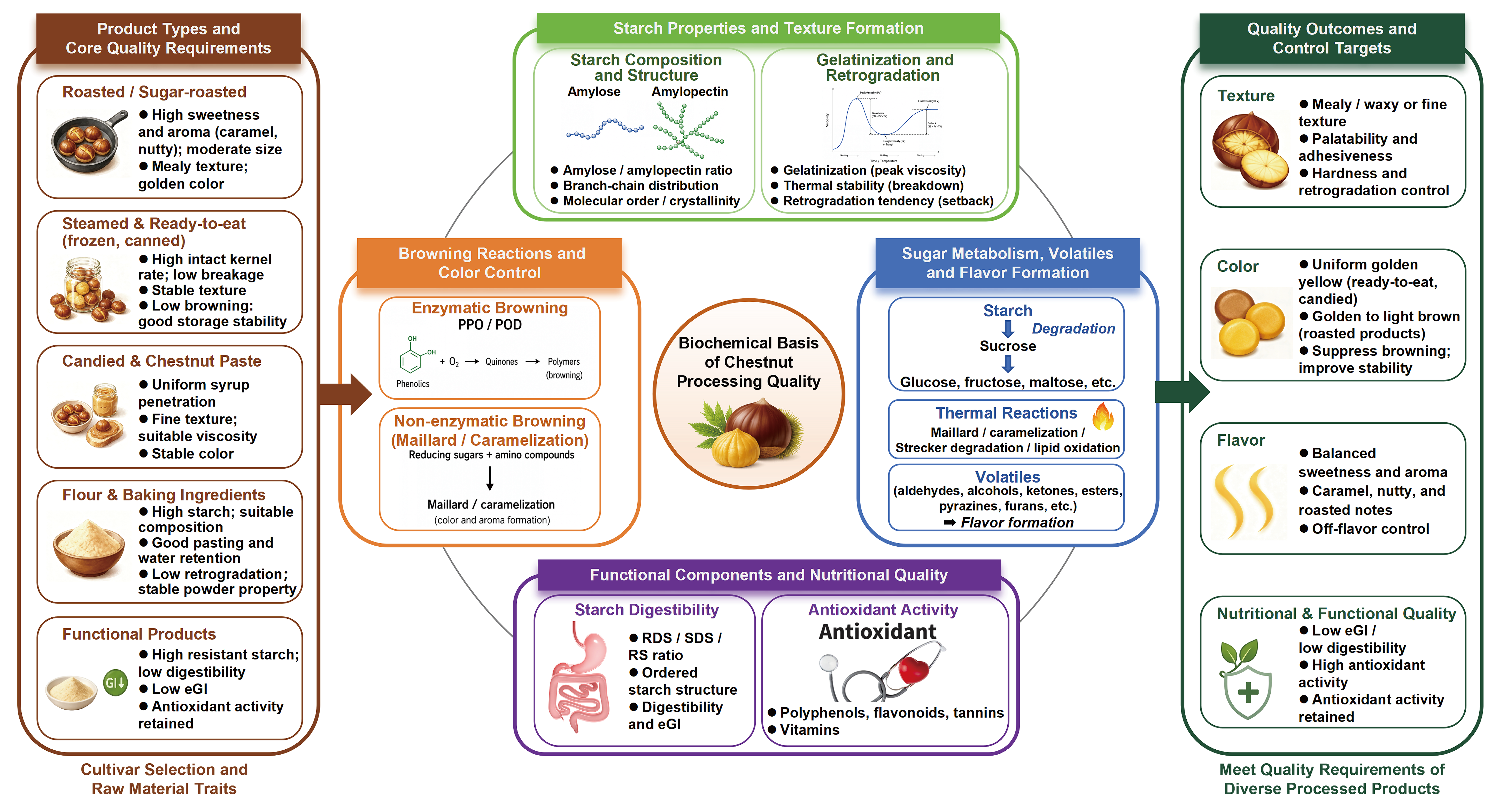
2. Core Target Traits of Chestnut Processing Quality and Their Biochemical Basis
2.1. Starch Properties and the Formation of Textural Quality
2.1.1. Starch Composition and Fine Structure
2.1.2. Starch Gelatinization and Retrogradation
2.2. Browning Reactions and Control of Color Quality
2.3. Sugar Metabolism, Volatile Compounds, and Flavor Formation
2.4. Functional Components and Nutritional Quality
3. Genetic Basis and Candidate Genes of Processing-Quality Traits
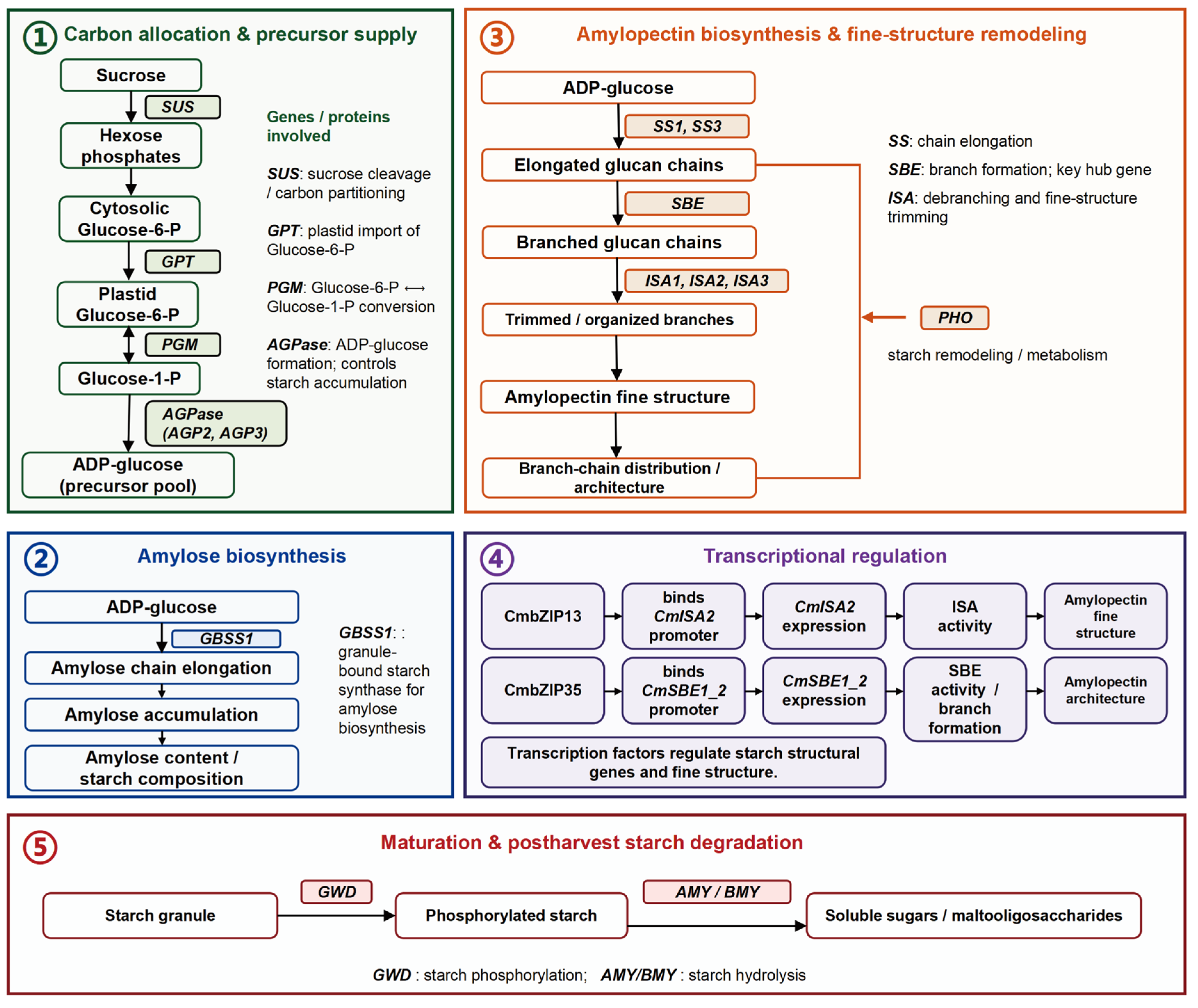
3.1. Genetic Evidence for Starch Metabolism and Textural Quality
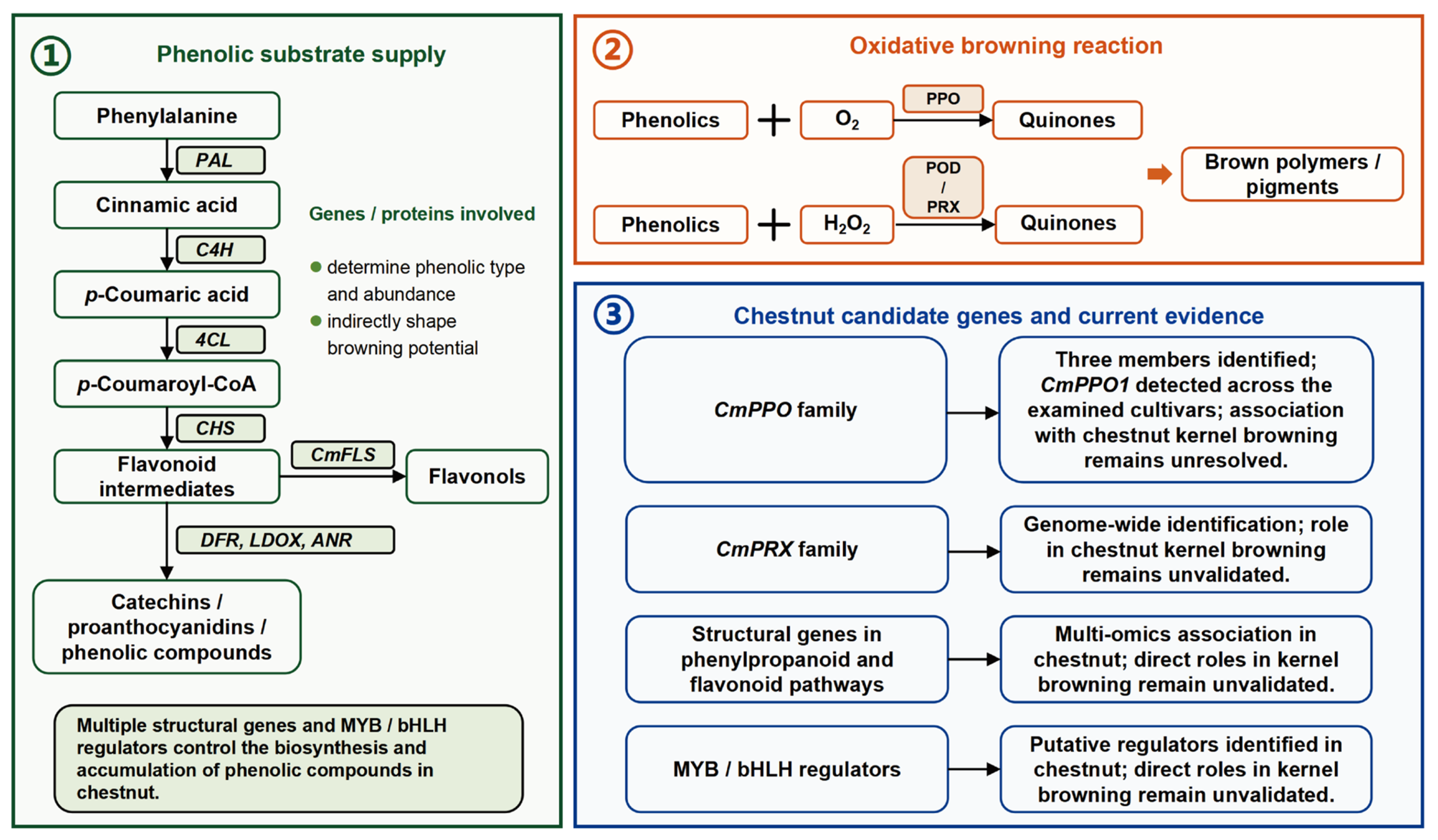
3.2. Genetic Evidence for Enzymatic Browning and Color Quality
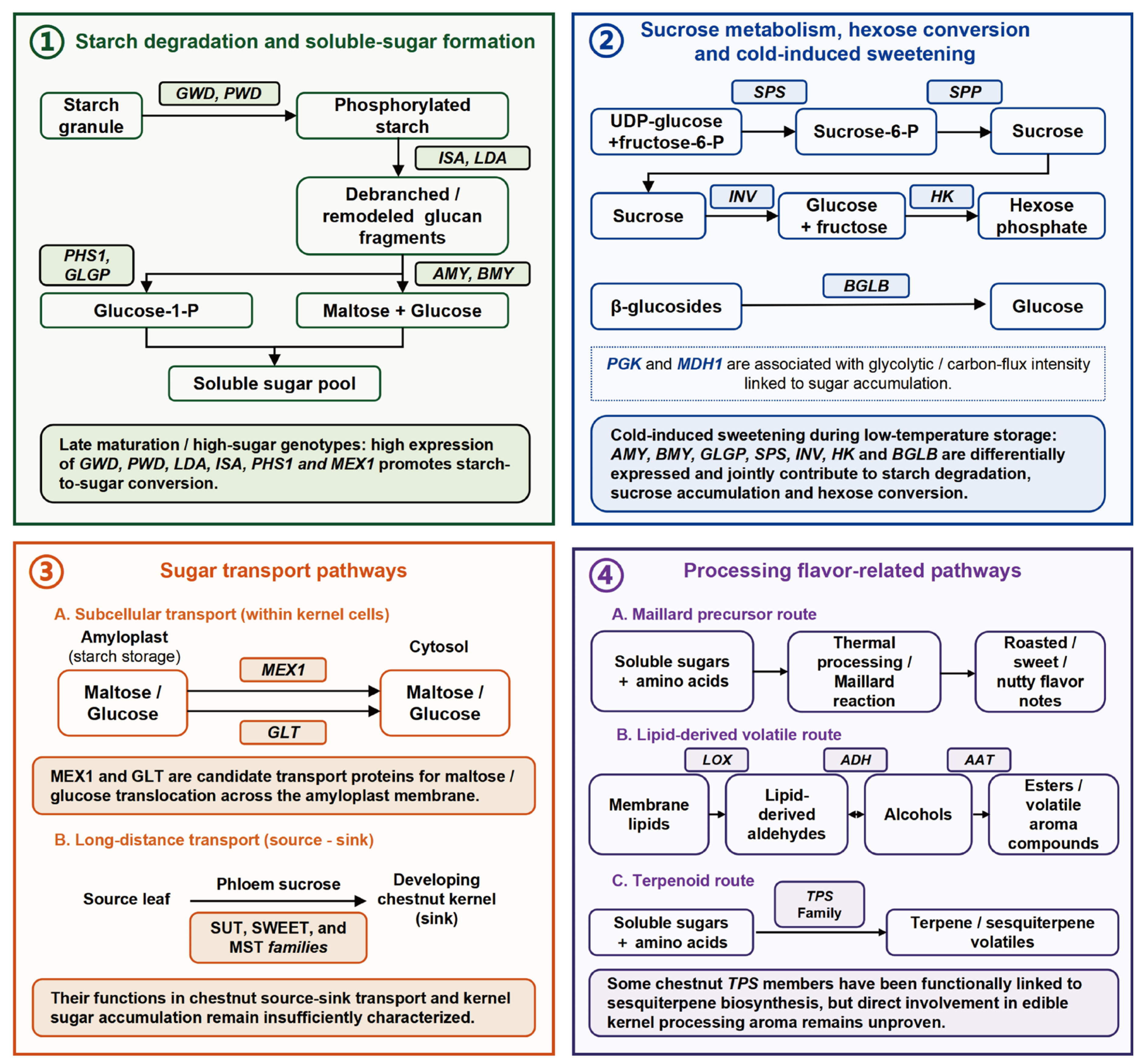
3.3. Genetic Evidence for Sugar Accumulation and Flavor Formation
3.4. Genetic Evidence for Nutritional Quality and Functional Components
4. Applicability and Strategies of Molecular Breeding Technologies for Improving Processing Quality
4.1. Marker-Assisted Selection for Processing Quality
4.2. Genomic Selection and Prediction Models for Processing Quality
4.3. Gene Editing for Developing New Processing-Quality Germplasm
5. A Molecular Design Breeding Strategy for Processing-Specific Cultivars
5.1. Standardized High-Throughput Phenotyping and AI-Assisted Evaluation of Processing Quality
5.2. A Processing-Quality-Oriented Roadmap for Molecular Design Breeding
6. Challenges and Perspectives
7. Conclusions
Author Contributions
Funding
Data Availability Statement
Conflicts of Interest
References
- Zhang, S.; Wang, L.; Fu, Y.; Jiang, J.-C. Bioactive constituents, nutritional benefits and woody food applications of Castanea mollissima: A comprehensive review. Food Chem. 2022, 393, 133380. [Google Scholar] [CrossRef] [Scilit] [PubMed]
- Li, R.; Sharma, A.K.; Zhu, J.; Zheng, B.; Xiao, G.; Chen, L. Nutritional biology of chestnuts: A perspective review. Food Chem. 2022, 395, 133575. [Google Scholar] [CrossRef] [Scilit] [PubMed]
- Food and Agriculture Organization of the United Nations (FAO). FAOSTAT: Crops and Livestock Products. Available online: https://www.fao.org/faostat/en/#data/QCL (accessed on 26 July 2026).
- Santos, M.J.; Pinto, T.; Vilela, A. Sweet Chestnut (Castanea sativa Mill.) Nutritional and Phenolic Composition Interactions with Chestnut Flavor Physiology. Foods 2022, 11, 4052. [Google Scholar] [CrossRef] [Scilit] [PubMed]
- Gonçalves, B.; Pinto, T.; Aires, A.; Morais, M.C.; Bacelar, E.; Anjos, R.; Ferreira-Cardoso, J.; Oliveira, I.; Vilela, A.; Cosme, F. Composition of Nuts and Their Potential Health Benefits—An Overview. Foods 2023, 12, 942. [Google Scholar] [CrossRef] [Scilit] [PubMed]
- Massantini, R.; Moscetti, R.; Frangipane, M.T. Evaluating progress of chestnut quality: A review of recent developments. Trends Food Sci. Technol. 2021, 113, 245–254. [Google Scholar] [CrossRef] [Scilit]
- Aglietti, C.; Cappelli, A.; Andreani, A. From Chestnut Tree (Castanea sativa) to Flour and Foods: A Systematic Review of the Main Criticalities and Control Strategies towards the Relaunch of Chestnut Production Chain. Sustainability 2022, 14, 12181. [Google Scholar] [CrossRef] [Scilit]
- Yu, Z.; Deng, J.; Ma, N.; Sun, Y.; Wang, J.; Liu, J.-M.; Zhang, Y.; Lu, Y.; Wang, S. Comparative analysis of quality, structural, and flavor alterations in chestnuts (Castanea mollissima Blume) subjected to different thermal processing techniques. Food Chem. 2025, 474, 143149. [Google Scholar] [CrossRef] [Scilit] [PubMed]
- Liu, C.; Liu, S.; Li, R.; Zhang, X.; Chang, X. A mechanistic study of chestnut starch retrogradation and its effects on in vitro starch digestion. Int. J. Biol. Macromol. 2024, 276, 133803. [Google Scholar] [CrossRef] [Scilit] [PubMed]
- Fang, H.; Wang, L.; Chen, Y.; Wang, Z.; Wang, X.; Wang, S. Analysis of the Physicochemical and Structural Properties of Chestnut Starch After Thermal Processing. Foods 2025, 14, 1190. [Google Scholar] [CrossRef] [Scilit] [PubMed]
- Zeng, X.; Wang, M.; Chen, L.; Zheng, B. Impact of using whole chestnut flour as a substitute for cake flour on digestion, functional and storage properties of chiffon cake: A potential application study. Food Chem. 2024, 432, 137016. [Google Scholar] [CrossRef] [Scilit] [PubMed]
- Xu, K.; Zhang, Z.; Jiang, K.; Yang, A.; Wang, T.; Xu, L.; Li, X.; Zhang, X.; Meng, F.; Wang, B. Elucidating the effect of different processing methods on the sensory quality of chestnuts based on multi-scale molecular sensory science. Food Chem. 2024, 431, 136989. [Google Scholar] [CrossRef] [Scilit] [PubMed]
- Gavilán-CuiCui, G.; Lagos-Muñoz, R.; Ellena, F.M.; Di Matteo, A.; Morina, F.; Meriño-Gergichevich, C. Unraveling Mechanisms of Enzymatic Browning in Nuts and Their Relationship with Pre- and Post-Harvest Factors: Management Strategies for Mitigation. Molecules 2025, 30, 3866. [Google Scholar] [CrossRef] [Scilit] [PubMed]
- Zhou, D.; Li, L.; Wu, Y.; Fan, J.; Ouyang, J. Salicylic acid inhibits enzymatic browning of fresh-cut Chinese chestnut (Castanea mollissima) by competitively inhibiting polyphenol oxidase. Food Chem. 2015, 171, 19–25. [Google Scholar] [CrossRef] [Scilit] [PubMed]
- Zhan, C.; Jia, R.; Yang, S.; Zhang, M.; Peng, L. Transcriptome Analysis Reveals the Mechanism of Cold-Induced Sweetening in Chestnut during Cold Storage. Foods 2024, 13, 2822. [Google Scholar] [CrossRef] [Scilit] [PubMed]
- Revord, R.S.; Miller, G.; Meier, N.A.; Webber, J.B.; Romero-Severson, J.; Gold, M.A.; Lovell, S.T. A Roadmap for Participatory Chestnut Breeding for Nut Production in the Eastern United States. Front. Plant Sci. 2022, 12, 735597. [Google Scholar] [CrossRef] [Scilit] [PubMed]
- Li, Y.; Guo, Y.; Liu, H.; Zhang, X.; Zhang, S.; Liu, J.; Fan, L.; Wang, G. Different Chinese Chestnut Varieties under Different Processing Treatments: Response Patterns of Starch and Soluble Sugars and Quality Evaluation. Food Sci. 2025, 46, 227–234. [Google Scholar] [CrossRef]
- Jiang, X.; Fang, Z.; Lai, J.; Wu, Q.; Wu, J.; Gong, B.; Wang, Y. Genetic Diversity and Population Structure of Chinese Chestnut (Castanea mollissima Blume) Cultivars Revealed by GBS Resequencing. Plants 2022, 11, 3524. [Google Scholar] [CrossRef] [Scilit] [PubMed]
- Manzoor, I.; Samantara, K.; Bhat, M.S.; Farooq, I.; Bhat, K.M.; Mir, M.A.; Wani, S.H. Advances in genomics for diversity studies and trait improvement in temperate fruit and nut crops under changing climatic scenarios. Front. Plant Sci. 2023, 13, 1048217. [Google Scholar] [CrossRef] [Scilit] [PubMed]
- Alemu, A.; Åstrand, J.; Montesinos-López, O.A.; Isidro y Sánchez, J.; Fernández-Gónzalez, J.; Tadesse, W.; Vetukuri, R.R.; Carlsson, A.S.; Ceplitis, A.; Crossa, J.; et al. Genomic selection in plant breeding: Key factors shaping two decades of progress. Mol. Plant 2024, 17, 552–578. [Google Scholar] [CrossRef] [Scilit] [PubMed]
- Wang, J.; Tian, S.; Sun, X.; Cheng, X.; Duan, N.; Tao, J.; Shen, G. Construction of Pseudomolecules for the Chinese Chestnut (Castanea mollissima) Genome. G3 Genes Genomes Genet. 2020, 10, 3565–3574. [Google Scholar] [CrossRef] [Scilit] [PubMed]
- Hu, G.; Cheng, L.; Cheng, Y.; Mao, W.; Qiao, Y.; Lan, Y. Pan-genome analysis of three main Chinese chestnut varieties. Front. Plant Sci. 2022, 13, 916550. [Google Scholar] [CrossRef] [Scilit] [PubMed]
- Fan, J.; Zhang, Y.; Nie, X.; Liu, Y.; Wei, S.; Peng, H.; Li, H.; Zhang, M.; Ning, L.; Wang, S.; et al. Comprehensive curation and validation of genomic datasets for chestnut. Sci. Data 2025, 12, 860. [Google Scholar] [CrossRef] [Scilit] [PubMed]
- Chu, S.; Nie, X.; Li, C.; Sun, W.; Liu, Y.; Fang, K.; Qin, L.; Xing, Y. Development and characterization of genome-wide microsatellite molecular markers for Chinese chestnut. J. Integr. Agric. 2025, 24, 2655–2669. [Google Scholar] [CrossRef] [Scilit]
- Zhang, Y.; Zhang, W.; Liu, Y.; Zheng, Y.; Nie, X.; Wu, Q.; Yu, W.; Wang, Y.; Wang, X.; Fang, K.; et al. GWAS identifies two important genes involved in Chinese chestnut weight and leaf length regulation. Plant Physiol. 2024, 194, 2387–2399. [Google Scholar] [CrossRef] [Scilit] [PubMed]
- De Mori, G.; Cipriani, G. Marker-Assisted Selection in Breeding for Fruit Trait Improvement: A Review. Int. J. Mol. Sci. 2023, 24, 8984. [Google Scholar] [CrossRef] [Scilit] [PubMed]
- Wang, W.; Zhang, S.; Chen, Y.; Zhao, Y.; Khalil-Ur-Rehman, M.; Zhu, C.; Nieuwenhuizen, N.J. Metabolomics integrated with transcriptomics provides insights into the regulatory networks of phenylpropanoids and flavonoids accumulation in Chinese chestnut kernels. Sci. Hortic. 2024, 325, 112716. [Google Scholar] [CrossRef] [Scilit]
- Fan, S.; Cai, T.; Cao, F.; Wang, D.; Yu, L.; Sun, T.; Tang, Y.; Zhang, J.; Huang, R. Integrated metabolome and transcriptome profiling unveil the mechanisms of tissue-specific polyphenol synthesis in Chinese chestnut (Castanea mollissima BL.). Sci. Hortic. 2025, 353, 114498. [Google Scholar] [CrossRef] [Scilit]
- Li, R.; Huang, X.; Yang, L.; Liao, J.; Wei, X.; Li, J.; Zeng, G.; Liu, D.; Shi, Z.; Zhao, Z. Whole genome sequencing of Castanea mollissima and molecular mechanisms of sugar and starch synthesis. Front. Plant Sci. 2024, 15, 1455885. [Google Scholar] [CrossRef] [Scilit] [PubMed]
- Song, L.; Xu, M.; Zhang, K.; Guo, G.; Huai, L.; Zhao, Y.; Wang, T.; Pan, L.; Cui, R.; Zhang, L. Impact of Cooking Method on the Physicochemical Properties, Digestibility, and Sensory and Flavor Profiles of Chinese Chestnuts. Foods 2025, 14, 4331. [Google Scholar] [CrossRef] [Scilit] [PubMed]
- Xu, K.; Jiang, K.; Yang, A.; Zhang, Z.; Lin, Z.; Wang, T.; Xu, L.; Meng, F.; Wang, B. Sensory and chemical characterization of chestnuts processed in different methods using instrumental analyses and the Check-all-that-apply method. Arab. J. Chem. 2024, 17, 105876. [Google Scholar] [CrossRef] [Scilit]
- Foucher, L.; Barroca, M.J.; Dulyanska, Y.; Correia, P.M.R.; Guiné, R.P.F. Development of Innovative Candied Chestnuts from Three Chestnut Cultivars Grown in Portugal. Foods 2022, 11, 917. [Google Scholar] [CrossRef] [Scilit] [PubMed]
- Bresciani, A.; Russo, D.; Cervini, M.; Magni, C.; Giuberti, G.; Marti, A. Starch and Protein Characteristics of Chestnut Flours and Their Applications in Gluten-Free Products. J. Agric. Food Chem. 2024, 72, 25298–25305. [Google Scholar] [CrossRef] [Scilit] [PubMed]
- Huang, H.; Wu, M.; Wu, Y.; Ouyang, J. Preparation of low estimated glycemic index (eGI) chestnut flours using enzymatic debranching and heat moisture treatment. J. Food Compos. Anal. 2024, 131, 106260. [Google Scholar] [CrossRef] [Scilit]
- Wang, L.; Shi, D.; Chen, J.; Dong, H.; Chen, L. Effects of Chinese chestnut powder on starch digestion, texture properties, and staling characteristics of bread. Grain Oil Sci. Technol. 2023, 6, 82–90. [Google Scholar] [CrossRef] [Scilit]
- He, W.; Han, M.; Wu, Y.; Ouyang, J.; Xu, C. Impact of molecular structure of starch on the glutinous taste quality of cooked chestnut kernels. Int. J. Biol. Macromol. 2024, 254, 127704. [Google Scholar] [CrossRef] [Scilit] [PubMed]
- Li, C. Unraveling the Complexities of Starch Retrogradation: Insights from Kinetics, Molecular Interactions, and Influences of Food Ingredients. Food Rev. Int. 2024, 40, 3159–3182. [Google Scholar] [CrossRef] [Scilit]
- Wang, Z.; Han, M.; Liu, Y.; Wu, Y.; Ouyang, J. Insights into the multiscale structure and thermal characteristics of chestnut starch. J. Food Compos. Anal. 2023, 115, 104973. [Google Scholar] [CrossRef] [Scilit]
- Yang, Q.; Kan, L.; Wu, Y.; Liu, Y.; Ouyang, J. Influence of nutritional components on the texture characteristics and sensory properties of cooked chestnut kernel. J. Food Process. Preserv. 2019, 43, e14112. [Google Scholar] [CrossRef] [Scilit]
- Gao, X.; Yuan, J.; Du, B.; Wang, M.; Xu, M.; Jiang, Y.; Song, L.; Liu, W. Thermal processing modulates starch and non-starch macromolecules digestibility in chestnut: Structural reconfiguration and molecular interactions. Int. J. Biol. Macromol. 2025, 319, 145319. [Google Scholar] [CrossRef] [Scilit] [PubMed]
- Liu, W.; Wang, R.; Li, J.; Xiao, W.; Rong, L.; Yang, J.; Wen, H.; Xie, J. Effects of different hydrocolloids on gelatinization and gels structure of chestnut starch. Food Hydrocoll. 2021, 120, 106925. [Google Scholar] [CrossRef] [Scilit]
- Liu, W.; Zhang, Y.; Wang, R.; Li, J.; Pan, W.; Zhang, X.; Xiao, W.; Wen, H.; Xie, J. Chestnut starch modification with dry heat treatment and addition of xanthan gum: Gelatinization, structural and functional properties. Food Hydrocoll. 2022, 124, 107205. [Google Scholar] [CrossRef] [Scilit]
- Pino-Hernández, E.; Fasolin, L.H.; Ballesteros, L.F.; Pinto, C.A.; Saraiva, J.A.; Abrunhosa, L.; Teixeira, J.A. Structural and Physicochemical Properties of Starch from Rejected Chestnut: Hydrothermal and High-Pressure Processing Dependence. Molecules 2023, 28, 700. [Google Scholar] [CrossRef] [Scilit] [PubMed]
- Liu, W.; Pan, W.; Li, J.; Chen, Y.; Yu, Q.; Rong, L.; Xiao, W.; Wen, H.; Xie, J. Dry heat treatment induced the gelatinization, rheology and gel properties changes of chestnut starch. Curr. Res. Food Sci. 2022, 5, 28–33. [Google Scholar] [CrossRef] [Scilit] [PubMed]
- Wang, Y.; Yao, J.; Jiang, X.; Gong, B.; Yang, J.; Wang, Y. Hot Water Treatment Preserves Chinese Chestnut (Castanea mollissima Blume) Quality during Storage by Increasing Its Sugar Accumulation and ROS-Scavenging Ability. Horticulturae 2024, 10, 643. [Google Scholar] [CrossRef] [Scilit]
- Yıldırım Vardin, A.; Göncü, A.; Karaman, A.D. Effects of Process Parameters and Storage on the Quality Characteristics and Formation of Potential Hazardous Maillard Reaction Products in Gluten-Free Chestnut (Castanea sativa Mill.) Biscuits. J. Food Meas. Charact. 2026, 20, 10320–10334. [Google Scholar] [CrossRef] [Scilit]
- Huang, R.; Peng, F.; Wang, D.; Cao, F.; Guo, C.; Yu, L.; Zhang, J.; Yang, Y. Transcriptome analysis of differential sugar accumulation in the developing embryo of contrasting two Castanea mollissima cultivars. Front. Plant Sci. 2023, 14, 1206585. [Google Scholar] [CrossRef] [Scilit] [PubMed]
- Zhang, C.; Chen, X.; Liu, W.; Ji, Y.; Yang, Y.; Chen, J.; Li, P.; Li, D. Differential expression analysis of sugar accumulation-related genes during chestnut nut development. J. Plant Physiol. 2023, 282, 153918. [Google Scholar] [CrossRef] [Scilit] [PubMed]
- Shakoor, A.; Zhang, C.; Xie, J.; Yang, X. Maillard reaction chemistry in formation of critical intermediates and flavour compounds and their antioxidant properties. Food Chem. 2022, 393, 133416. [Google Scholar] [CrossRef] [Scilit] [PubMed]
- Tian, J.; Li, Y.; Li, X.; Zhou, D.; Li, T.; Wu, C.; Fan, G. Preparation and characterization of low estimated glycemic index (eGI) chestnut flours using plasma jet combined lipase hydrolysis. Food Chem. 2025, 495, 146399. [Google Scholar] [CrossRef] [Scilit] [PubMed]
- Yang, Z.; Wu, Y.; Ouyang, J. Effect of Cooking Method and Enzymatic Treatment on the in vitro Digestibility of Cooked and Instant Chestnut Flour. Plant Foods Hum. Nutr. 2023, 78, 166–172. [Google Scholar] [CrossRef] [Scilit] [PubMed]
- Fedorková, S.; Musilová, J.; Cifrová, M.; Šnirc, M.; Harangozo, Ľ.; Árvay, J. Effect of thermal processing on the nutritional quality and bioactive potential of sweet chestnuts (Castanea sativa Mill.) grown in Slovakia. Discov. Food 2026, 6, 265. [Google Scholar] [CrossRef] [Scilit]
- Mustafa, A.M.; Abouelenein, D.; Acquaticci, L.; Alessandroni, L.; Abd-Allah, R.H.; Borsetta, G.; Sagratini, G.; Maggi, F.; Vittori, S.; Caprioli, G. Effect of Roasting, Boiling, and Frying Processing on 29 Polyphenolics and Antioxidant Activity in Seeds and Shells of Sweet Chestnut (Castanea sativa Mill.). Plants 2021, 10, 2192. [Google Scholar] [CrossRef] [Scilit] [PubMed]
- Yang, M.; Li, J.; Chen, L.; Guo, X. Effect of thermal processing on starch and micronutrients of Castanea henryi. Int. J. Food Sci. Technol. 2025, 60, vvaf246. [Google Scholar] [CrossRef] [Scilit]
- Qiao, Q.; Zhu, D.; Sun, S.; Hong, P.; Li, X.; Yu, T.; Zhang, L.; Liu, W.; Gao, Y.; Wang, J.; et al. Chromosome-level genome assembly of the red mutant of Chinese chestnut (Castanea mollissima) provides new insights into anthocyanin accumulation. Sci. Hortic. 2024, 338, 113683. [Google Scholar] [CrossRef] [Scilit]
- Shi, L.; Wang, J.; Liu, Y.; Ma, C.; Guo, S.; Lin, S.; Wang, J. Transcriptome analysis of genes involved in starch biosynthesis in developing Chinese chestnut (Castanea mollissima Blume) seed kernels. Sci. Rep. 2021, 11, 3570. [Google Scholar] [CrossRef] [Scilit] [PubMed]
- Li, S.; Shi, Z.; Zhu, Q.; Tao, L.; Liang, W.; Zhao, Z. Transcriptome sequencing and differential expression analysis of seed starch accumulation in Chinese chestnut Metaxenia. BMC Genom. 2021, 22, 617. [Google Scholar] [CrossRef] [Scilit] [PubMed]
- Wang, W.; Zhang, S.; Chen, Y.; Zhao, Y.; Shi, F.; Khalil-Ur-Rehman, M.; Bai, X.; Zhu, C. Transcriptome Analysis Provides Insights into the Mechanisms of Starch Biosynthesis in the Kernels of Three Chestnut Cultivars. Forests 2022, 13, 2028. [Google Scholar] [CrossRef] [Scilit]
- Zhang, P.; Liu, J.; Jia, N.; Wang, M.; Lu, Y.; Wang, D.; Zhang, J.; Zhang, H.; Wang, X. Genome-wide identification and characterization of the bZIP gene family and their function in starch accumulation in Chinese chestnut (Castanea mollissima Blume). Front. Plant Sci. 2023, 14, 1166717. [Google Scholar] [CrossRef] [Scilit] [PubMed]
- Cheng, L.; Cheng, Y.; Cao, Q.; Hu, G.; Lan, Y. Identification and bioinformatics analysis of PPO gene family in Chinese chestnut (Castanea mollissima). J. Fruit. Sci. 2020, 37, 1305–1313. [Google Scholar] [CrossRef]
- Liu, X.; Zhang, T.; Lu, G.; Li, Q.; Zhao, Y.; Wang, D.; Wang, X.; Zhang, G.; Zhang, H.; Wang, X.; et al. Genome-wide identification and alkaline stress response analysis of the class III peroxidase (PRX) gene family in Castanea mollissima. BMC Plant Biol. 2026, 26, 1013. [Google Scholar] [CrossRef] [Scilit] [PubMed]
- Qin, F.; Hu, C.; Dou, T.; Sheng, O.; Yang, Q.; Deng, G.; He, W.; Gao, H.; Li, C.; Dong, T.; et al. Genome-wide analysis of the polyphenol oxidase gene family reveals that MaPPO1 and MaPPO6 are the main contributors to fruit browning in Musa acuminate. Front. Plant Sci. 2023, 14, 1125375. [Google Scholar] [CrossRef] [Scilit] [PubMed]
- Yang, X.; Wang, G.; Mo, Z.; Li, Y.; Zhang, Y.; Jia, X.; Xuan, J. Transcriptomics unravel the mechanism of CiPPO1 and CiPPO2 involved in regulating pecan kernel pellicle browning during storage. Sci. Hortic. 2024, 336, 113412. [Google Scholar] [CrossRef] [Scilit]
- Wang, Y.; Guo, Z.; Zhou, R.; Tang, Y.; Ye, N.; Zhang, D.; Rasel, M.; Huang, N.; Qiu, L.; Wang, N.; et al. JrPPO1/2 play distinct roles in regulating walnut fruit browning by different spatiotemporal expression and enzymatic characteristics. Plant Physiol. Biochem. 2024, 215, 109018. [Google Scholar] [CrossRef] [Scilit] [PubMed]
- Wang, W.; Wang, M.; Feng, J.; Zhang, S.; Chen, Y.; Zhao, Y.; Tian, R.; Zhu, C.; Nieuwenhuizen, N.J. Terpene Synthase Gene Family in Chinese Chestnut (Castanea mollissima BL.) Harbors Two Sesquiterpene Synthase Genes Implicated in Defense against Gall Wasp Dryocosmus kuriphilus. J. Agric. Food Chem. 2024, 72, 1571–1581. [Google Scholar] [CrossRef] [Scilit] [PubMed]
- Wang, Q.; Gao, F.; Chen, X.; Wu, W.; Wang, L.; Shi, J.; Huang, Y.; Shen, Y.; Wu, G.; Guo, J. Characterization of key aroma compounds and regulation mechanism of aroma formation in local Binzi (Malus pumila × Malus asiatica) fruit. BMC Plant Biol. 2022, 22, 532. [Google Scholar] [CrossRef] [Scilit] [PubMed]
- Shen, H.; Li, J.; Chen, L.; Guo, X. Insights into multiscale structure and digestive characteristic of starch from two cultivars of chestnut during kernel development. Int. J. Biol. Macromol. 2024, 269, 131978. [Google Scholar] [CrossRef] [Scilit] [PubMed]
- Sami, A.; Han, S.; Haider, M.Z.; Khizar, R.; Ali, Q.; Shafiq, M.; Tabassum, J.; Khalid, M.N.; Javed, M.A.; Sajid, M.; et al. Genetics aspect of vitamin C (Ascorbic Acid) biosynthesis and signaling pathways in fruits and vegetables crops. Funct. Integr. Genom. 2024, 24, 73. [Google Scholar] [CrossRef] [Scilit] [PubMed]
- Kubisiak, T.L.; Nelson, C.D.; Staton, M.E.; Zhebentyayeva, T.; Smith, C.; Olukolu, B.A.; Fang, G.C.; Hebard, F.V.; Anagnostakis, S.; Wheeler, N.; et al. A transcriptome-based genetic map of Chinese chestnut (Castanea mollissima) and identification of regions of segmental homology with peach (Prunus persica). Tree Genet. Genomes 2013, 9, 557–571. [Google Scholar] [CrossRef] [Scilit]
- Kaňovská, I.; Biová, J.; Škrabišová, M. New perspectives of post-GWAS analyses: From markers to causal genes for more precise crop breeding. Curr. Opin. Plant Biol. 2024, 82, 102658. [Google Scholar] [CrossRef] [Scilit] [PubMed]
- Lee, A.M.J.; Foong, M.Y.M.; Song, B.K.; Chew, F.T. Genomic selection for crop improvement in fruits and vegetables: A systematic scoping review. Mol. Breed. 2024, 44, 60. [Google Scholar] [CrossRef] [Scilit] [PubMed]
- Kostick, S.A.; Bernardo, R.; Luby, J.J. Genomewide selection for fruit quality traits in apple: Breeding insights gained from prediction and postdiction. Hortic. Res. 2023, 10, uhad088. [Google Scholar] [CrossRef] [Scilit] [PubMed]
- Minamikawa, M.F.; Kunihisa, M.; Moriya, S.; Shimizu, T.; Inamori, M.; Iwata, H. Genomic prediction and genome-wide association study using combined genotypic data from different genotyping systems: Application to apple fruit quality traits. Hortic. Res. 2024, 11, uhae131. [Google Scholar] [CrossRef] [Scilit] [PubMed]
- Westbrook, J.W.; Malukiewicz, J.; Zhang, Q.; Sreedasyam, A.; Jenkins, J.W.; Lakoba, V.; Fitzsimmons, S.; Van Clief, J.; Collins, K.; Hoy, S.; et al. Genomic approaches to accelerate American chestnut restoration. Science 2026, 391, 730–735. [Google Scholar] [CrossRef] [Scilit] [PubMed]
- Westbrook, J.W.; Zhang, Q.; Mandal, M.K.; Jenkins, E.V.; Barth, L.E.; Jenkins, J.W.; Grimwood, J.; Schmutz, J.; Holliday, J.A. Optimizing genomic selection for blight resistance in American chestnut backcross populations: A trade-off with American chestnut ancestry implies resistance is polygenic. Evol. Appl. 2020, 13, 31–47. [Google Scholar] [CrossRef] [Scilit] [PubMed]
- Pavese, V.; Moglia, A.; Corredoira, E.; Martínez, M.T.; Torello Marinoni, D.; Botta, R. First Report of CRISPR/Cas9 Gene Editing in Castanea sativa Mill. Front. Plant Sci. 2021, 12, 728516. [Google Scholar] [CrossRef] [Scilit] [PubMed]
- Pavese, V.; Moglia, A.; Abbà, S.; Milani, A.M.; Torello Marinoni, D.; Corredoira, E.; Martínez, M.T.; Botta, R. First Report on Genome Editing via Ribonucleoprotein (RNP) in Castanea sativa Mill. Int. J. Mol. Sci. 2022, 23, 5762. [Google Scholar] [CrossRef] [Scilit] [PubMed]
- Pavese, V.; Martínez, M.T.; Piñeiro, P.; Castillo-González, L.D.; Berrocal-Lobo, M.; Marinoni, D.T.; Sampedro, J.; Botta, R.; Moglia, A.; Corredoira, E. Targeted editing of the Cspmr4 gene via CRISPR/Cas9 to enhance tolerance to Phytophthora cinnamomi in Castanea sativa. Plant Stress. 2026, 21, 101376. [Google Scholar] [CrossRef] [Scilit]
- Fu, Y.; Hua, Y.; Luo, T.; Liu, C.; Zhang, B.; Zhang, X.; Liu, Y.; Zhu, Z.; Tao, Y.; Zhu, Z.; et al. Generating waxy rice starch with target type of amylopectin fine structure and gelatinization temperature by waxy gene editing. Carbohydr. Polym. 2023, 306, 120595. [Google Scholar] [CrossRef] [Scilit] [PubMed]
- Toinga-Villafuerte, S.; Vales, M.I.; Awika, J.M.; Rathore, K.S. CRISPR/Cas9-Mediated Mutagenesis of the Granule-Bound Starch Synthase Gene in the Potato Variety Yukon Gold to Obtain Amylose-Free Starch in Tubers. Int. J. Mol. Sci. 2022, 23, 4640. [Google Scholar] [CrossRef] [Scilit] [PubMed]
- Ma, M.; Sun, S.; Zhu, J.; Qi, X.; Li, G.; Hu, J.; Xie, C.; Liu, C. Engineering high amylose and resistant starch in maize by CRISPR/Cas9-mediated editing of starch branching enzymes. Crop J. 2024, 12, 1252–1258. [Google Scholar] [CrossRef] [Scilit]
- Jose, J.; Hamow, K.Á.; Éva, C.; Moncsek, B.; Kyrpa, T.; Gamarra Reinoso, L.; Bozsó, Z.; Bakonyi, J.; Balázs, E.; Sági, L. CRISPR/Cas-mediated polyphenol oxidase gene knockout in potato reveals divergent roles in resistance to bacterial wilt and late blight. Plant Sci. 2026, 364, 112944. [Google Scholar] [CrossRef] [Scilit] [PubMed]
- Wang, Z.; Chen, Y.; Fang, H.; Jia, Y.; Yun, Z.; Wang, L.; Wang, X. Comparative evaluation of physical and chemical properties, nutritional components and volatile substances of 24 chestnut varieties in Yanshan area. Food Chem. 2025, 477, 143624. [Google Scholar] [CrossRef] [Scilit] [PubMed]
- Kuang, H.; Xu, K.; Liu, S.; Yang, Y.; Wang, B.; Wang, S.; Meng, F.; Wang, T.; Xu, L. The study of frozen chestnut consumer preference based on sensory oriented flavor analysis and physicochemical properties. J. Food Compos. Anal. 2025, 139, 107123. [Google Scholar] [CrossRef] [Scilit]
- Lee, I.-H.; Ma, L. Integrating machine learning, optical sensors, and robotics for advanced food quality assessment and food processing. Food Innov. Adv. 2025, 4, 65–72. [Google Scholar] [CrossRef] [Scilit]
- Farooq, M.A.; Gao, S.; Hassan, M.A.; Huang, Z.; Rasheed, A.; Hearne, S.; Prasanna, B.; Li, X.; Li, H. Artificial intelligence in plant breeding. Trends Genet. 2024, 40, 891–908. [Google Scholar] [CrossRef] [Scilit] [PubMed]
- Sheikh, M.; Iqra, F.; Ambreen, H.; Pravin, K.A.; Ikra, M.; Chung, Y.S. Integrating artificial intelligence and high-throughput phenotyping for crop improvement. J. Integr. Agric. 2024, 23, 1787–1802. [Google Scholar] [CrossRef] [Scilit]
- Varshney, R.K.; Bohra, A.; Yu, J.; Graner, A.; Zhang, Q.; Sorrells, M.E. Designing Future Crops: Genomics-Assisted Breeding Comes of Age. Trends Plant Sci. 2021, 26, 631–649. [Google Scholar] [CrossRef] [Scilit] [PubMed]
- Kumar, R.; Das, S.P.; Choudhury, B.U.; Kumar, A.; Prakash, N.R.; Verma, R.; Chakraborti, M.; Devi, A.G.; Bhattacharjee, B.; Das, R.; et al. Advances in genomic tools for plant breeding: Harnessing DNA molecular markers, genomic selection, and genome editing. Biol. Res. 2024, 57, 80. [Google Scholar] [CrossRef] [Scilit] [PubMed]
- Bradbury, A.; Clapp, O.; Biacsi, A.-S.; Kuo, P.; Gaju, O.; Hayta, S.; Zhu, J.-K.; Lambing, C. Integrating genome editing with omics, artificial intelligence, and advanced farming technologies to increase crop productivity. Plant Commun. 2025, 6, 101386. [Google Scholar] [CrossRef] [Scilit] [PubMed]



| Product Category | Core Quality Requirements | Key Biochemical Basis | Representative Cultivars | References |
|---|---|---|---|---|
| Sugar-roasted and roasted products | High sweetness; moderate nut size; pronounced caramel-like and nutty aromas; mealy–glutinous texture with moderate hardness; uniform golden color. | Content and conversion of soluble sugars, particularly sucrose; amylose and amylopectin composition, starch gelatinization, and partial starch degradation; Maillard reaction and caramelization; formation of volatile aldehydes, alcohols, furans, and related compounds. | In a comparative evaluation of different cultivars, ‘Yanshan Duanzhi’ and ‘Dabanhong’ showed favorable performance under roasting and sand-frying, while ‘Zipo’ showed favorable performance under roasting. | [17,30,31] |
| Steamed, boiled, and ready-to-eat products (including frozen and canned products) | High intact-kernel rate and low breakage; good texture retention after cooking or sterilization; limited browning and good storage stability. | Starch gelatinization, gel-network formation, and retrogradation behavior of amylose and amylopectin; polyphenol content, PPO activity, and related oxidation reactions. | In a comparative evaluation of different cultivars, ‘Zipo’ showed favorable performance under steaming. | [17,30,31] |
| Candied products and chestnut paste | Uniform syrup penetration and uptake; homogeneous and smooth mouthfeel with little coarse-fiber sensation or graininess; suitable viscosity, cohesiveness, and spreadability; stable color. | Syrup penetration and water migration; starch composition and degree of gelatinization; cell-wall and dietary-fiber composition and fragmentation behavior; enzymatic and non-enzymatic browning. | ‘Martainha’, ‘Longal’, and ‘Judia’ showed good potential for candied products under the tested conditions. | [32] |
| Flour and baking-ingredient products | High starch content and an appropriate amylose-to-amylopectin ratio; favorable gelatinization, water absorption, and water-holding capacity; low retrogradation tendency; stable flour-processing performance. | Starch content and amylose/amylopectin composition; granule and crystalline structures; gelatinization temperature, peak viscosity, and setback; interactions among starch, water, and other components. | Chestnut flours from ‘Balestrera’ and ‘Rossera’ showed good performance for gluten-free baked foods and fresh pasta under the tested conditions. | [33] |
| Functional products | High resistant-starch content, a low starch digestion rate, and a low estimated glycemic index (eGI); good retention of bioactive compounds such as polyphenols and maintenance of antioxidant activity. | Formation and retention of resistant starch; starch digestion kinetics; retention of polyphenols, flavonoids, vitamin C, and other bioactive compounds. | ‘Dabanhong’ was used in studies of modified low-eGI chestnut flour; this does not establish intrinsic low-eGI characteristics of the cultivar. | [11,34,35] |
| Processing-Quality Trait | Representative Candidate Genes/Regulators | Evidence Status | References |
|---|---|---|---|
| Starch metabolism and textural quality | AGP2/3, GBSS1, SS1/3, SBE, ISA; CmbZIP13, CmbZIP35 | Transcriptomic/co-expression evidence; Y1H promoter-binding evidence for CmbZIP13–CmISA2 and CmbZIP35–CmSBE1_2. | [29,56,59] |
| Enzymatic browning and color quality | CmPPO family; CmPRX family; PAL, C4H, 4CL, CHS; MYB/bHLH factors | PPO/PRX gene-family identification and multi-omics association; individual roles in kernel browning remain largely unvalidated, with additional PPO evidence mainly comparative. | [28,60,61,62,63,64] |
| Sugar accumulation and flavor formation | BAM, GWD, PWD, MEX1, AMY, BMY, SPS, INV; LOX, ADH, AAT | Transcriptomic/physiological association for sugar traits; LOX/ADH/AAT evidence is comparative. | [15,47,48,66] |
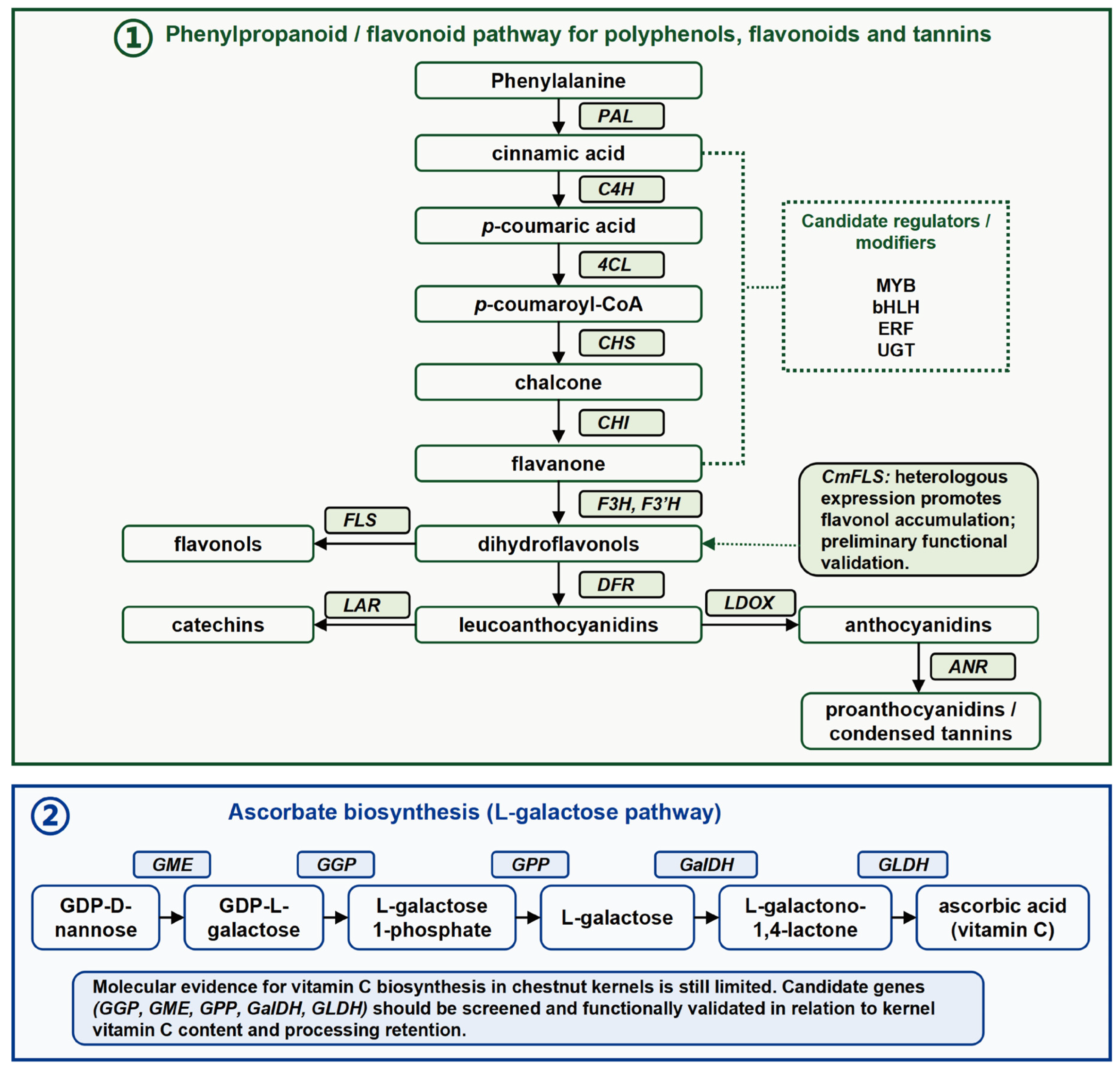
| Nutritional quality and functional components | CmFLS; MYB/bHLH/ERF/UGT factors; GME, GGP, GPP, GalDH, GLDH | Integrated multi-omics evidence; heterologous functional evidence for CmFLS; vitamin C candidates remain pathway-based and unvalidated in Castanea. | [27,28,68] |
Disclaimer/Publisher’s Note: The statements, opinions and data contained in all publications are solely those of the individual author(s) and contributor(s) and not of MDPI and/or the editor(s). MDPI and/or the editor(s) disclaim responsibility for any injury to people or property resulting from any ideas, methods, instructions or products referred to in the content. |
© 2026 by the authors. Licensee MDPI, Basel, Switzerland. This article is an open access article distributed under the terms and conditions of the Creative Commons Attribution (CC BY) license.
Share and Cite
Xu, J.; Yang, Y.; Ni, Y.; Shi, T.; Xiong, R.; Yang, Y. Genetic Basis and Molecular Breeding Strategies for Processing Quality in Chestnut (Castanea spp.). Horticulturae 2026, 12, 1080. https://doi.org/10.3390/horticulturae12091080
Xu J, Yang Y, Ni Y, Shi T, Xiong R, Yang Y. Genetic Basis and Molecular Breeding Strategies for Processing Quality in Chestnut (Castanea spp.). Horticulturae. 2026; 12(9):1080. https://doi.org/10.3390/horticulturae12091080
Chicago/Turabian StyleXu, Jiayue, Yuzhang Yang, Yang Ni, Tianle Shi, Rong Xiong, and Yuan Yang. 2026. "Genetic Basis and Molecular Breeding Strategies for Processing Quality in Chestnut (Castanea spp.)" Horticulturae 12, no. 9: 1080. https://doi.org/10.3390/horticulturae12091080
APA StyleXu, J., Yang, Y., Ni, Y., Shi, T., Xiong, R., & Yang, Y. (2026). Genetic Basis and Molecular Breeding Strategies for Processing Quality in Chestnut (Castanea spp.). Horticulturae, 12(9), 1080. https://doi.org/10.3390/horticulturae12091080