Review

The Sugar-Acid-Aroma Balance: Integrating the Key Components of Fruit Quality and Their Implications in Stone Fruit Breeding


1
Institute of Forestry and Pomology, Beijing Academy of Agriculture and Forestry Sciences, Beijing 100093, China
2
Beijing Engineering Research Center for Deciduous Fruit Trees, Beijing 100093, China
3
Apricot Engineering and Technology Research Center of National Forestry and Grassland Administration, Beijing 100093, China
*
Author to whom correspondence should be addressed.
These authors contributed equally to this work.
Horticulturae 2026, 12(2), 170; https://doi.org/10.3390/horticulturae12020170
Submission received: 26 December 2025 / Revised: 26 January 2026 / Accepted: 28 January 2026 / Published: 30 January 2026

Abstract

Improving fruit quality is one of the most critical core tasks in fruit tree breeding. However, the complexity of the constituent factors of fruit quality and their interrelationships, the significant influence of environmental factors on quality, and the diversity of consumer demands, among other factors, make quality breeding a more challenging endeavor than other breeding objectives. Essentially, fruit quality is defined by the delicate balance of sugar, acid, and aromas, which collectively influence the fruit’s flavor, consumer satisfaction, and economic value. While substantial progress has been made in the depiction of the metabolic pathways underlying these traits, the molecular mechanism coordinating carbon partitioning and competition between sugars, acids, and volatiles remains unknown. This review focuses on recent advances in understanding stone fruit metabolism and identifies key gaps in knowledge. We emphasize the need for integrated approaches combining spatial metabolomics, transcriptomics, genetics, and genomics to reveal the regulatory networks underlying metabolomic variation during fruit development and ripening. We also discuss the application of molecular tools, such as marker-assisted selection and metabolite-associated markers, to accelerate the breeding of flavor-balanced stone fruit cultivars. By adapting these advances in breeding practices, we can achieve coordinated improvement and precise regulation of various components of fruit quality, thereby developing elite stone fruit cultivars with improved flavor that meet prevailing consumer demands.

1. Introduction

Fruit quality drives consumer preferences and market value making it a key focus for breeders and researchers. As a complex trait, it integrates taste, aroma, texture, nutrition, appearance and postharvest performance [1]. Soluble sugars and organic acids are crucial because they affect fruit growth, ripening, and flavor perception. Beyond sugars and acids, metabolites like fatty acids, amino acids and secondary compounds contribute to the fruit’s quality, nutritional value, and health benefits [2]. As consumers seek palatable, nutritious fruits, evaluating quality from their perspective is crucial. Yet, limited research has explored which attributes of stone fruits align with consumer satisfaction, revealing a gap in understanding the sensory and biochemical drivers of preferred fruit quality that result from coordinated changes in metabolic pathways [3]. Moreover, the specific contributions of individual sugars, acids, and metabolites to flavor perception remain poorly understood. Elucidating these relationships will inform targeted strategies to enhance fruit quality in stone fruit breeding programs.
Research on stone fruits, the genus Prunus (Rosaceae), like peach, apricot, plum, and cherry, has focused on carbohydrate metabolism [4]. Key soluble sugars such as sucrose, fructose, glucose, and sorbitol are the main soluble sugars accumulated during fruit development. At the same time, malate and citric acid primarily drive fruit acidity and flavor perception. Sorbitol and sucrose are key products of photosynthesis, synthesised in leaves and transported to fruits via the phloem [5]. In fruit tissues, sucrose is resynthesized by sucrose phosphate synthase (SPS) or broken down into glucose and fructose by invertases (INV) or sucrose synthase (SUS) enzymes [6,7]. Sorbitol is either stored directly or converted to fructose by sorbitol dehydrogenase (SDH), thereby increasing the levels of soluble sugars. Organic acids in fruits are mainly synthesized de novo in cellular organelles. Malate, a key intermediate in the tricarboxylic acid (TCA) cycle, is predominant in fruits such as peach and contributes to flavor and quality [7,8]. Early on, acids accumulate rapidly, fueling respiration and biosynthesis. As fruits mature, acid levels decrease due to metabolic turnover, dilution, and energy shifts, resulting in an increased sugar-to-acid ratio, a crucial determinant of sensory quality. Aroma formation, a key aspect of fruit quality, involves the biosynthesis and accumulation of volatile organic compounds (VOCs). Stone fruits produce diverse VOCs, including alcohols, acids, esters and terpenes, which determine cultivar-specific aromas [9]. Compounds such as propyl acetate and hexyl acetate contribute notably to the characteristic aromas of stone fruits [10].
In fruit breeding, quality traits are essential, yet they must be balanced with disease resistance, pest tolerance and adaptability. Enhancing one trait may often negatively impact another’s, especially fruit quality, which is a major driver of consumer acceptance and market performance [11]. Long juvenile phases in fruit trees slow breeding, extending progeny evaluation and cultivar development. Shifting consumer preferences and environmental pressures require breeders to adapt strategies [12]. Modern innovations, such as marker-assisted selection, genomic selection, and high-throughput phenotyping, help shorten breeding cycles and boost precision [13]. Integrating these tools with conventional breeding methods accelerates the development of high-quality, resilient fruit varieties. Fruit quality and commercial success depend on a complex cascade of factors. Genetic variation influences fruit biochemistry, affecting sensory traits such as sweetness and aroma, which ultimately drive consumer acceptance and market success. Contemporary breeding increasingly combines molecular markers, metabolite profiles, and sensory evaluation to predict and select for superior traits, thereby accelerating the development of elite cultivars.
This review summarizes recent advances in the genetic basis of stone fruit quality, with a focus on traits that influence market value and consumer acceptance. It focuses on progress in elucidating the genetic architecture of sugar, acid, and aroma biosynthesis, and highlights key regulators of flavor-related phenotypes in stone fruits. Moreover, the review assesses the potential of modern genetic and breeding technologies to accelerate the development of cultivars with improved sensory and quality attributes.

2. Biochemistry and Genetics of Sugar Metabolism in Stone Fruits

2.1. Sugar Composition

The soluble sugar content in stone fruits changes significantly during development, varying markedly across species and stages [14]. Stone fruit growth, encompassing both whole fruit and mesocarp development, typically exhibits a double-sigmoidal pattern. This developmental process is classically divided into three distinct stages: Stage I, characterized by rapid cell division and fruit enlargement; Stage II, a lag phase marked by diminished growth and often associated with endocarp hardening; and Stage III, wherein rapid growth resumes, primarily driven by cell expansion and accumulation of storage reserves. The composition and concentration of soluble sugars in stone fruit flesh undergo marked developmental and species-specific changes during ripening. At Stage II (unripe), sugar levels are generally low, with distinct profiles among species [2,15]. Apricot (Prunus armeniaca) flesh contains modest amounts of glucose (≈2–3 mg g−1 FW) and sucrose (≈1–2 mg g−1 FW), with minor contributions from fructose and sorbitol [16,17]. In contrast, sweet cherry (P. avium) at this stage exhibits substantially higher hexose levels, with glucose (≈23 mg g−1 FW) and fructose (≈9 mg g−1 FW) dominating, while sucrose remains negligible [18]. Unripe peach (P. persica) and Japanese plum (P. salicina) display moderate and more balanced sugar profiles, with fructose and glucose ranging from 11–14 mg g−1 FW, sucrose from 3 to 7 mg g−1 FW, and sorbitol around 3 mg g−1 FW. At Stage III (ripe), all examined stone fruits exhibit substantial sugar accumulation, though the dominant sugar species differ. In apricot, sucrose becomes the principal sugar, reaching ≈65 mg g−1 FW in common apricot and ≈9 mg g−1 FW in Japanese apricot, while glucose and fructose remain moderate. [17]. Sweet cherry is characterized by very high concentrations of glucose and fructose (≈65–78 mg g−1 FW) and a marked increase in sorbitol (up to ≈40 mg g−1 FW), with sucrose remaining low. Sour cherry (P. cerasus) and Morello cherry lines similarly show hexose-dominated profiles, with glucose (≈52–68 mg g−1 FW) and fructose (17–60 mg g−1 FW) as major contributors, accompanied by variable but sometimes substantial sorbitol levels [19,20]. In peach and nectarine, sucrose is the predominant sugar at ripeness, reaching ≈48–115 mg g−1 FW, while glucose and fructose remain below 20 mg g−1 FW and sorbitol contributes modestly [21]. Japanese plum also accumulates high sucrose (≈92 mg g−1 FW), with intermediate glucose and fructose levels and a notable sorbitol fraction. By contrast, Prunus davidiana maintains comparatively low overall sugar concentrations, with sucrose around 10 mg g−1 FW and minor amounts of other sugars [22]. Stone fruit species differ markedly in both total soluble sugar content and relative sugar composition. Sucrose-dominant profiles are typical of peach, nectarine, apricot, and plum, whereas hexose-dominant (glucose and fructose) profiles characterize cherry species. Such developmental and species-specific patterns underlie key differences in fruit sweetness and flavor quality.

2.2. Sugar Metabolic Pathway

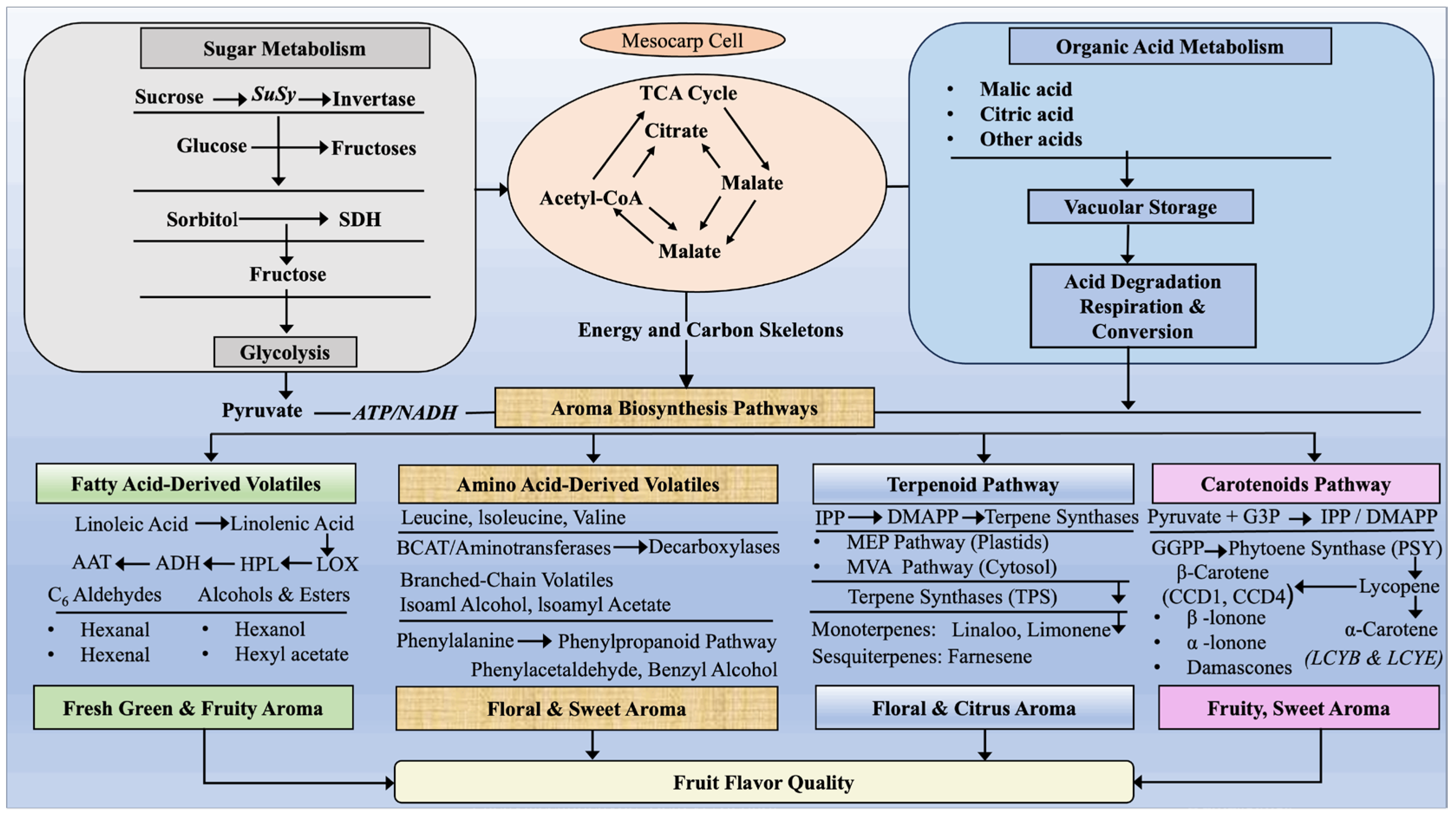
The sugar metabolic pathway plays an essential role in regulating fruit sweetness, osmotic balance, and overall quality (Figure 1). Sucrose, the primary phloem-translocated carbohydrate, is a significant product of photosynthesis and a key determinant of fruit sweetness and energy status [23,24]. The sucrose metabolic pathway is tightly regulated, with activation by photosynthate supply and low cellular energy status and repression by hormonal signals, including ethylene and abscisic acid (ABA), as well as feedback inhibition by high glucose concentrations [14,25]. In stone fruits, sucrose accumulation during development, particularly during late ripening, is primarily driven by increased activities of sucrose synthase (SS) and sucrose phosphate synthase (SPS). Additionally, sorbitol, a primary carbohydrate in Rosaceae species, is converted to glucose and fructose via sorbitol oxidase (SO) and sorbitol dehydrogenase (SDH), contributing to the soluble sugar pool [24]. The developmental regulation of SS, SO, and SDH activities supports metabolic shifts during ripening, thereby influencing the final sugar composition of the fruit. The end-products of this pathway, glucose and fructose, contribute to fruit sweetness and serve as substrates for cellular respiration [26,27,28]. Additionally, sorbitol can accumulate in response to abiotic stress, acting as a compatible solute that stabilizes cellular structures and maintains osmotic balance, thereby enhancing stress tolerance and improving the quality of peach fruit.

2.3. Genetic Control

In peach and apricot fruits, sucrose unloading from the phloem is regulated by sugars transporters (sugars will eventually be exported transporter, SWEETs) genes. In contrast, apoplastic sucrose is partially hydrolyzed by cell wall invertase, leading to the import of hexoses through specific transporters [29,30]. The tonoplast sugar transporter PpTST1 regulates sucrose accumulation and localizes with a significant QTL for sucrose content in cherry fruit. Similar mechanisms, involving sorbitol/proton symporters, occur in sour cherry [31,32], indicating the complex regulation of sugar composition in stone fruits. Like apricot fruit, ripening involves substantial changes in starch and sucrose metabolism, driven by (SS), (SPS), and (SDH). SS expression and sucrose content increase significantly, contributing to the accumulation of soluble solids. Sorbitol oxygenase (SO) and SDH convert sorbitol to glucose and fructose, enriching the sugar pool. Candidate genes SDH (LOC103333266) and SS (LOC103340632) regulate sugar accumulation, influencing fruit quality traits [33,34]. It provides a valuable genomic framework for marker-assisted selection (MAS), enabling the early identification and breeding of fruit genotypes with enhanced sweetness, improved quality attributes, and greater nutraceutical potential [35].

3. Biochemistry and Genetic Regulation of Organic Acid Metabolism in Stone Fruits

3.1. Organic Acid Composition

Stone fruits exhibit a diverse range of organic acids, with malic and citric acids typically predominating, while quinic, isocitric, galacturonic, and oxalic acids are present at low concentrations [14]. These compounds play central roles in plant metabolism, serving as intermediates in carbon pathways, precursors for amino acids and plant hormones, contributors to fatty acid and secondary metabolite biosynthesis, and structural components of the cell wall. Their abundance varies significantly among species and is influenced by the ripening stage [36]. The organic acid composition and titratable acidity (TA) of major stone fruit species exhibit marked interspecific and cultivar-dependent variation, which fundamentally give fruit taste and overall quality. In apricot (Prunus armeniaca), malic acid concentrations range from 440 to 770 mg 100 g−1 fresh weight (FW). In contrast, citric acid levels display substantial cultivar variation, reaching 2130 mg 100 g−1 FW in ‘Bavinity’ but declining to 660 mg 100 g−1 FW in ‘Trevatt’. Quinic acid remains comparatively low (62–76 mg 100 g−1 FW), resulting in moderate to high TA (17.5–33.7 mg 100 g−1 FW [14]. In Peach (P. persica) cultivars exhibit moderate malic acid levels (310–470 mg 100 g−1 FW), variable citric acid concentrations (120–430 mg 100 g−1 FW), and quinic acid contents of 160–290 mg 100 g−1 FW, resulting in relatively low to intermediate TA (8.2–13.5 mg 100 g−1 FW). Sweet cherry (P. avium) cultivars are characterized by malic acid as the dominant organic acid (990–1150 mg 100 g−1 FW), with minimal contributions from citric (12–37 mg 100 g−1 FW) and quinic acids (4–7 mg 100 g−1 FW). This profile corresponds to relatively low TA (8.9–13.2 mg 100 g−1 FW). In nectarine (P. persica var. nucipersica), malic acid content declines from 810 mg 100 g−1 FW in ‘Goldmine’ to 300 mg 100 g−1 FW in ‘P6’. In comparison, citric (230–470 mg 100 g−1 FW) and quinic acids (120–230 mg 100 g−1 FW) contribute substantially to total acidity, forming TA values between 9.0 and 16.6 mg 100 g−1 FW [37,38,39]. In plum (P. domestica and related species), malic acid is the predominant organic acid. It shows the widest cultivar variation, ranging from 1140 mg 100 g−1 FW in ‘Blood’ to 2540 mg 100 g−1 FW in ‘Santa Rosa’. Citric acid remains low (18–44 mg 100 g−1 FW), while quinic acid varies markedly (120–410 mg 100 g−1 FW). These profiles are associated with comparatively high TA (13.7–30.5 mg 100 g−1 FW) [15,40]. Overall, malic acid is the principal organic acid in most stone fruits, with citric and quinic acids contributing in a species- and cultivar-dependent manner [2,41]. This diversity in organic acid composition contributes to the unique sensory traits and consumer preferences of different fruit species.

3.2. Metabolism and Degradation

Malate biosynthesis is initiated by the carboxylation of phosphoenolpyruvate (PEP) via PEP carboxylase (PEPC), forming oxaloacetate (OAA), which is subsequently reduced to malate by NAD-dependent malate dehydrogenase (NAD-MDH) (Figure 1). The resulting malate may be sequestered into the vacuole or further metabolized through multiple pathways, including the TCA cycle, the glyoxylate cycle, or decarboxylation to pyruvate via malic enzyme (ME). These metabolic fates collectively regulate malate accumulation and degradation, thereby exerting a significant influence on fruit acidity [42,43].

3.3. Genetic Control

Citric acid biosynthesis in stone fruits involves PEPC and citrate synthase (CS). In apricots, the relationship between CS activity and citrate accumulation is unclear, with inconsistent correlations reported [44]. PEPC1 and CS genes are upregulated during ripening, despite declining citric acid levels, suggesting that downstream catabolic enzymes may regulate citrate abundance. In other fruits, organic acid degradation is regulated by key enzymes. In stone fruits, (ACO) and (ME) drive citrate and malate breakdown, respectively [45,46,47]. Malate homeostasis involves malate dehydrogenase (MDH) and aluminium-activated malate transporters (ALMTs), with specific isoforms exhibiting stage-specific expression. Downregulation of ALMT genes during ripening reduces malate accumulation [48]. These findings reveal a complex regulatory network governing organic acid metabolism during fruit development.

4. Aroma Formation and Its Genetic Regulation in Stone Fruits

4.1. The Aroma Profile

The characteristic aroma of stone fruits, including peach (Prunus persica), apricot (P. armeniaca), sweet and sour cherry (P. avium and P. cerasus), and plum (P. domestica), arises from the accumulation of a complex and dynamic blend of volatile organic compounds (VOCs) [49,50,51,52]. These compounds are synthesized through tightly regulated metabolic networks during fruit development and ripening, with their qualitative and quantitative composition varying markedly among species, cultivars, and environmental conditions. [53]. Although individual volatiles often occur at low concentrations, their combined effects and interactions largely determine fruit aroma intensity, complexity, and consumer preference [54]. A major contribution to stone fruit aroma originates from fatty acid–derived volatiles, which are generated through the lipoxygenase (LOX) pathway. This pathway converts linoleic and linolenic acids into hydroperoxides that are subsequently cleaved and reduced to form C6 and C9 aldehydes, alcohols, and esters. Compounds such as hexanal, (E)-2-hexenal, hexanol, and hexyl acetate are commonly associated with green, grassy, and fresh notes, particularly during the early ripening stage. As ripening progresses, these volatiles may undergo esterification, enhancing fruity and sweet aroma nuances, especially in peach and apricot [55,56]. Amino acid metabolism represents another key source of aroma volatiles in stone fruits. Branched-chain amino acids (leucine, isoleucine, and valine) serve as precursors of branched-chain alcohols, aldehydes, and esters that contribute fruity and malty notes. Phenylalanine-derived compounds, including benzaldehyde, phenethyl alcohol, and related esters, are especially important in peach, cherry, and apricot, imparting almond-like, floral, and sweet aromas [57,58]. Additionally, sulfur-containing volatiles derived from methionine, although typically present in trace amounts, have low odour thresholds and can exert a strong influence on overall aroma perception. Terpenoid volatiles play a central role in conferring floral and sweet characteristics to stone fruits [59]. These compounds are synthesized via the methylerythritol phosphate (MEP) and mevalonate (MVA) pathways, which supply the universal isoprenoid precursors for monoterpene and sesquiterpene formation [60]. Terpenes such as linalool, geraniol, nerol, and α-terpineol are particularly abundant in aromatic peach and apricot cultivars and are often associated with premium fruit quality [60,61]. The diversity and abundance of terpenes are largely controlled by terpene synthase (TPS) gene families, whose expression patterns are highly cultivar-specific. A distinct yet highly impactful group of aroma compounds in stone fruits is carotenoid-derived apocarotenoids [62]. These volatiles are produced through the enzymatic cleavage of carotenoids by carotenoid cleavage dioxygenases (CCDs). Compounds such as β-ionone, β-damascenone, and related norisoprenoids possess extremely low odour thresholds and contribute floral, violet-like, and fruity notes even at very low concentrations. In yellow- and orange-fleshed stone fruits, particularly peach, plum, and apricot, apocarotenoids are key contributors to the characteristic ripe fruit aroma [62,63,64]. The final aroma profile of stone fruits reflects the integration of multiple metabolic pathways and their genetic regulation, coordinated by developmental signals and plant hormones such as ethylene. Changes in carbon allocation among sugars, organic acids, and secondary metabolites during ripening strongly influence volatile biosynthesis. Moreover, environmental factors, including temperature, light, and water availability, can modulate enzyme activity and gene expression, further forming aroma composition [65]. Mutually, these processes determine not only the presence of specific aroma compounds but also their relative balance, which is critical for defining the distinctive sensory attributes of each stone fruit species.

4.2. Biosynthetic Pathways

Aroma compound biosynthesis in fruits involves various interconnected pathways. In stone fruits such as peach, apricot, cherry, and plum, key aroma volatiles derive from defined metabolic precursors [50,66,67,68]. The biosynthesis of aroma compounds in stone fruits is governed by three interconnected metabolic pathways: fatty acid–derived volatiles, amino acid–derived volatiles, and terpenoid biosynthesis (Figure 1). The fatty acid pathway, initiated by (LOX), generates C6 aldehydes (e.g., hexanal, hexenal) that impart green and fresh aromas. These aldehydes are converted to alcohols and esters (e.g., hexyl acetate) by alcohol dehydrogenase (ADH) and alcohol acyltransferase (AAT), contributing fruity notes [69]. This pathway is ethylene-regulated and prominent in early to mid-ripening stages. Amino acid-derived volatiles, originating from branched-chain and aromatic amino acids, produce sweet and floral aromas. Branched-chain aminotransferases (BCATs) transaminate amino acids to α-keto acids, which are decarboxylated to aldehydes and reduced to alcohols or esterified to esters (e.g., isoamyl acetate). Phenylalanine metabolism produced phenylacetaldehyde and benzyl alcohol, contributing floral, honey-like, and fruity aromas [63]. The terpenoid pathway synthesizes monoterpenes (e.g., linalool, limonene) and sesquiterpenes, imparting floral, citrus and fruity aromas. Terpene synthases convert isoprenoid precursors to volatile compounds, determining cultivar-specific aroma profiles. The coordinated regulation of these pathways during fruit development and ripening defines the final aroma quality and sensory attributes of stone fruits [67,70]. In addition, carotenoid cleavage by carotenoid cleavage dioxygenases (CCDs) generates apocarotenoids such as β-ionone and damascenone, which are also important contributors to stone fruit aroma despite their low concentrations [43,56,71].

4.3. Genetic Regulation

Recent advances in functional genomics have identified key genes and regulatory networks that drive fruit aroma biosynthesis in Rosaceae species. (LOX) genes produce C6 aldehydes, alcohols, and lactones, while alcohol acyltransferase AAT1 and acyl-CoA oxidase ACX1 mediate ester formation and lactone biosynthesis in apricots and cherries [72,73]. Transcriptional regulation, particularly through the NAC1 transcription factor, modulates AAT1 expression and ester abundance. Fatty acid desaturase (FAD) genes and carboxylesterase CXE1 also contribute to volatile formation and ester balance [72,74]. Terpenoids, key contributors to fruit aroma, are synthesized via the (MVA) pathway and the (MEP) pathway, which generate isopentenyl diphosphate (IPP) and dimethylallyl diphosphate (DMAPP), respectively. TPS produce linalool, a monoterpene with floral and fruity notes, from geranyl diphosphate (GPP) [75,76]. In peach, PpTPS1 and PpTPS3 drive linalool formation and accumulation, with the primary synthesis locus mapped to linkage group 4, facilitating the targeted identification of TPS family members involved in monoterpene biosynthesis (LG4) [75,77]. PpCCD4 regulates norisoprenoid biosynthesis, influencing peach fragrance and color. CCD genes are promising targets for genetic improvement in apricot aroma [78,79]. Transcription factors such as PuWRKY24, PuIAA29, PuTINY, and MdMYC2 regulate aroma formation in peach, suggesting that similar factors influence the aroma of other fruits.

5. Integration of Sugar, Acid, and Aroma Pathways in Stone Fruit Flavor Quality

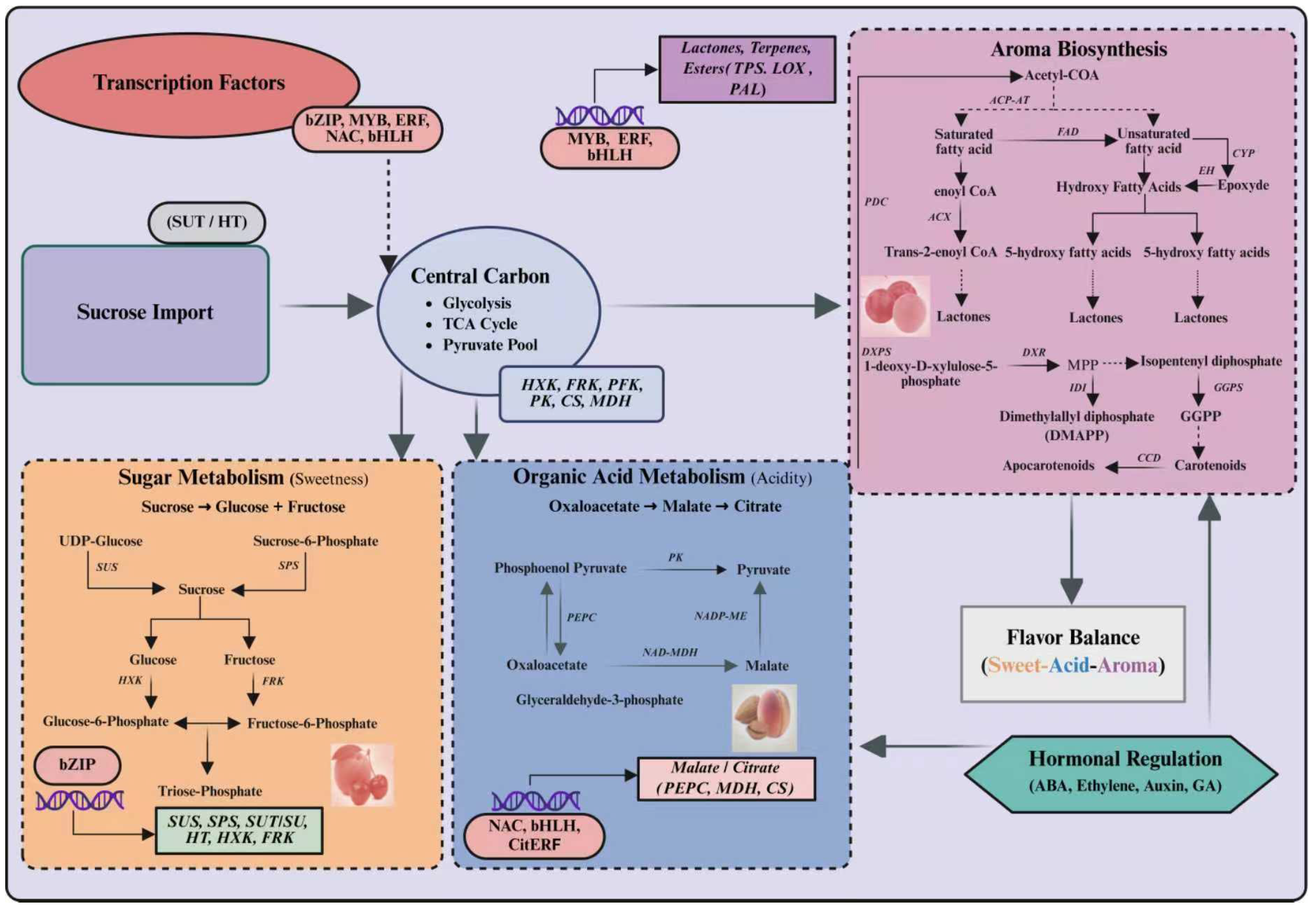
Interpreting the interactions between these metabolic pathways, which comprise combined regulatory networks, is crucial for understanding the biochemical basis of fruit flavor and informing targeted quality improvement in stone fruit crops. The relative partitioning of carbon among sucrose accumulation, malate synthesis, and volatile formation determines the sugar–acid–aroma balance that defines fruit flavor. Increased PEPC activity promotes malate accumulation and acidity, whereas enhanced SPS or NADP-ME activity favors the formation of sweetness and aroma (Figure 2). The integration of sugars, organic acids, and volatile aroma compounds determines the flavor of fruits such as apricots, peaches, and plums. The balance and richness of these components regulate taste insight and consumer preference [80,81].

5.1. Metabolic Crosstalk

The coordinated regulation of sugar, organic acid, and aroma metabolism shapes the multidimensional flavor profile of stone fruits, including apricots, peaches, cherries, and plums. [82,83,84,85]. These metabolic domains, traditionally examined as independent processes, are interconnected through shared precursors, redox balance, and regulatory control points. Central carbon intermediates, such as PEP, pyruvate, and acetyl-CoA, serve as central metabolic nodes, orchestrating carbon allocation between sweetness, acidity, and volatile formation, thereby integrating the complex biochemical pathways that define fruit flavor [86].
Sugar metabolism initiates organic acid synthesis and aroma volatile biosynthesis by keeping primary carbon sources. Key enzymes, including (SPS), (SUS), (HXK), and (FRK), regulate the flux of sucrose and hexose into glycolysis, thereby controlling the availability of glyceraldehyde-3-phosphate (G3P) and pyruvate. Increased glycolytic flux increases substrate supply to the TCA cycle and the (MEP) and β-oxidation pathways, leading to significant volatile synthesis [87]. Consequently, the sucrose turnover rate affects (SSC), sweetness perception, and the metabolic capacity for organic acid storage and aroma development, thereby underscoring the predominant role of sugar metabolism in shaping fruit flavor and aroma profiles [88,89,90].
Organic-acid metabolism, encompassing PEP, OAA, and malate, is a dynamic flavor modulator. PEPC-mediated carboxylation of PEP facilitates the conversion of carbon from sugar accumulation to malate synthesis, thereby increasing (TA). Conversely, malate catabolism via (NADP-ME) stimulates the production of pyruvate and NADPH, thereby enhancing glycolysis and the acetyl-CoA pool, as well as dynamic fatty acid and volatile biosynthesis. Reduced acid levels can increase substrate supply and reduce availability for volatile production, contributing to stronger fruity and floral notes [90,91]. Thus, the balance between malate accumulation and degradation influences both sourness and the metabolic potential for aroma formation, indicating the intricate interplay between acidity and aroma in the formulation of fruit flavor profiles.
Aroma-volatile synthesis, the third dimension of this metabolic interplay, draws precursors from glycolysis and fatty-acid metabolism. Pyruvate and (G3P) started the (MEP) pathway, creating carotenoid-derived apocarotenoids, while acetyl-CoA enters fatty acid biosynthesis and β-oxidation, producing lactones and additional volatiles [67,92]. These pathways rely on sugar-derived intermediates and reducing equivalents (NADPH, NADH), linking their output to increased sugar and acid metabolism. Enhanced glycolytic flux or increased malate decarboxylation improves volatile biosynthesis. In contrast, higher phosphoenolpyruvate carboxylase activity and malate accumulation may limit volatile synthesis by constraining pyruvate availability, thereby accentuating the intricate metabolic balance that leads to fruit aroma profiles [93,94,95].
This metabolic interplay forms the organoleptic perception of fruit flavor. High sugar levels can mask acidity, while moderate acidity enhances the taste and volatile perception. Aroma volatiles modulate sweetness perception through olfactory-gustatory integration, allowing fruits with sufficient SSC to achieve high consumer liking when balanced with firm aromatic profiles. The inclusive flavor balance develops from the dynamic competition for carbon skeletons and reducing power among these pathways, reveals the complex biochemical orchestration essential for fruit flavor perception and consumer preference [90,96,97].
Targeting critical enzymatic nodes, such as SPS and SUS in sugar metabolism, PEPC and NADP-ME in organic-acid regulation, and DXPS, CCD, ACX, and FAD in aroma biosynthesis, offers promising strategies to fine-tune fruit flavor. Integrating metabolic, transcriptomic, and sensory evaluations will be essential to producing cultivars with optimized sweetness, acidity, and aromatic complexity, thereby enriching fruit quality and consumer acceptance. A multidisciplinary approach combining genetic, biochemical, and sensory insights will enable breeders to develop fruit varieties with tailored flavor profiles that meet evolving consumer preferences and market demands.

5.2. Sensory Perception

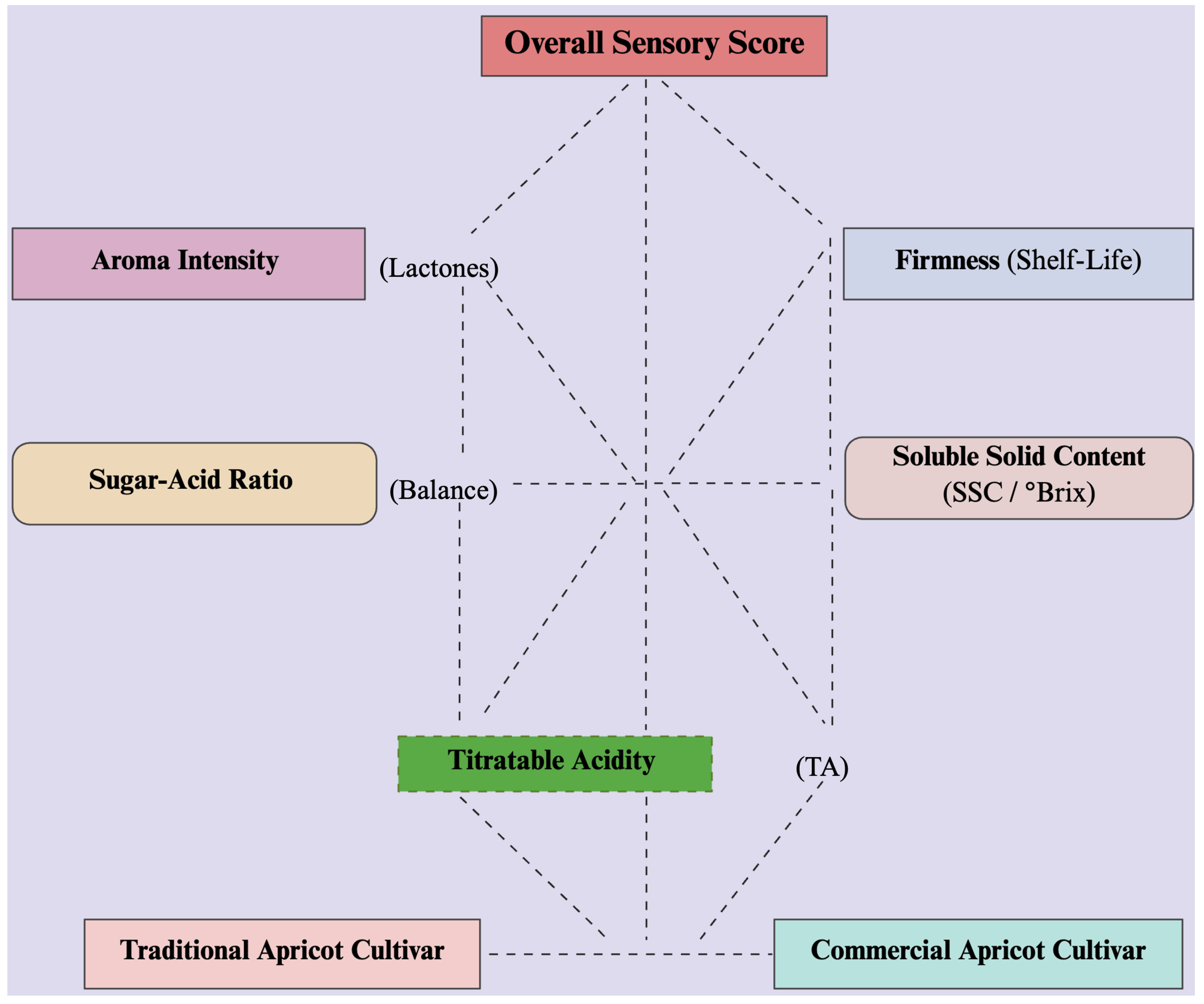
Fruit quality encompasses appearance, texture, flavor, and color, which undergo significant changes during ripening. As a climacteric fruit, the fruit quality is prime within a narrow window surrounding the climacteric peak, when ethylene production accelerates ripening postharvest deterioration [98,99]. Correct harvest timing and controlled storage conditions are crucial for preserving the quality of consumer fruit. Sensory assessment is typically conducted between commercial maturity and the onset of senescence, 3–5 days postharvest, when traits such as sweetness and firmness correlate with physical and biochemical measurements. The conventional variety exhibits a more balanced and complex flavor profile, characterized by higher intensities of main aroma volatiles and a balanced sugar-acid ratio, resulting in a superior overall sensory profile. Here, the sensory attributes of diverse apricot genotypes are used as an example (Figure 3).
In contrast, the commercial cultivar scores higher in firmness, a trait that has been selectively bred for enhanced shelf life. Complex sensory attributes, including flavor and texture, require direct sensory panel evaluation [100]. Integrative approaches combining sensory profiling and instrumental analyses have characterized the quality dynamics, enabling the identification of optimal ripening stages that maximize consumer preference [41,101].

6. Implications for Stone Fruit Breeding with Improved Quality

Stone-fruit breeding programs aim to develop cultivars with superior flavor, disease resistance, and productivity. Achieving these goals relies on integrating precision phenotyping for flavor, which captures sensory attributes through biochemical, instrumental, and human sensory evaluations, with genetic and genomic approaches. The latter includes marker-assisted selection (MAS), genomic selection (GS), and omics tools like transcriptomics, metabolomics, and multi-omics analyses. These integrated tools enable breeders to dissect the genetic basis of complex flavor traits, accelerating the development of high-quality stone-fruit cultivars with desirable traits [102].

6.1. Phenotyping for Flavor

Fruit flavor phenotyping involves evaluating pomological and sensory traits, including fruit size, flesh firmness, color, texture, taste, aroma, nutritional composition, and mechanical properties [28,103]. While breeding efforts have improved, external attributes, such as color, firmness, and shelf life after harvest, the intrinsic eating quality of fruits remains below consumer expectations. In response to market demand, breeders are now focusing on sensory-driven traits, aiming to improve firmness, blush intensity, sweetness, and overall flavor. This shift aims to bridge the gap between fruit quality and consumer preferences, driving the development of more appealing and flavorful cultivars [104].
Elevating fruit quality has become a primary objective in modern fruit breeding programs, given the central role of flavor in consumer acceptance. This approach has prompted a renewed emphasis on key eating-quality parameters, particularly sweetness and acidity, which form a fruit’s characteristic taste. Sweetness is reflected in (SSC), while acidity is governed by (OA) levels. Their interplay, expressed as the sugar/acid ratio or BrimA index, robustly predicts flavor perception and strongly influences consumer preference [5,105,106].
The acidity-related traits exhibited clear transgressive segregation, with several progeny exceeding the parental phenotypic range, indicating the presence of complementary alleles and substantial parental genetic influence on fruit acidity inheritance. The citrate and quinate contents displayed non-normal distributions, suggesting that major-effect loci influence these traits. Malate is the predominant organic acid in stone fruits, which determines the overall acidity. However, some progeny showed unusually high citrate levels, exceeding malate, and deviating from the typical stone fruit acid profile. It likely reflects underlying genotypic variation, consistent with strong genetic control of organic acid accumulation. Citrate and malate, central intermediates of the Krebs cycle, exhibit significant correlations across fruit germplasm collections, indicating their coordinated metabolic regulation [41,107].
Modern analytical technologies have advanced the assessment of fruit quality. Near-infrared and mid-infrared spectroscopy enable rapid, non-destructive quantification of sugars, organic acids, and other traits, while reflectance colorimetry measures carotenoid-associated color attributes. These tools support high-throughput screening and efficient identification of superior breeding lines. Standardized sensory evaluations remain essential for characterizing consumer-relevant eating qualities and ensuring that biochemical improvements align with perceived flavor and fruit acceptability.

6.2. Genetical Genomics: Manipulating Omics Technologies

Integrating genomic, transcriptomic, metabolomic, and phenotypic datasets is revolutionizing our understanding of stone fruit ripening and the formation of quality. This multi-omics approach identifies regulatory genes, transcription factors, and environment-responsive elements driving fruit flavor, texture, and nutrition [94]. Identifying transcription factors, pathway-specific genes, and environmental modulators controlling quality traits will enable the development of robust molecular markers. These can be incorporated into (MAS) pipelines, improving breeding precision and efficiency [108]. This integrative approach will support the creation of superior stone fruit cultivars with enhanced sensory quality and functional value, meeting global consumer expectations.
DNA-based markers have revolutionized plant breeding, especially for complex traits. They enable the identification of quantitative trait loci (QTLs) and the distinction between them and Mendelian trait loci (MTLs), which control discrete characteristics. In fruit breeding, genetic mapping and QTL discovery are crucial for pinpointing candidate genes and developing markers for MAS. Recent advances in high-throughput sequencing (HTS) and bioinformatics have increased marker density and map resolution, thereby improving the accuracy of QTL analysis [109]. It has facilitated the translation of QTLs into reliable markers for MAS, particularly for fruit quality traits, such as in apricot, where QTLs for sweetness, acidity, texture, and aroma map to linkage groups (LGs) 4 and 5, regions also harboring major fruit quality QTLs in related Prunus species. These loci’s recurrence across species shows the evolutionary significance of these conserved genomic regions. Initiatives are integrating QTL information into consensus genetic maps, enabling cross-species comparisons and improving trait dissection efficiency. High-density molecular markers are also facilitating fine-mapping and candidate gene identification within QTL regions [110]. These advances are paving the way for more targeted breeding strategies, accelerating the development of superior fruit cultivars with enhanced fruit quality.
Transcriptomic analysis has evolved significantly, shifting from microarrays to high-throughput sequencing (HTS) platforms, such as RNA-Seq, which offers unparalleled depth and resolution. RNA-Seq enables the simultaneous detection, quantification, and characterization of coding and non-coding transcripts, revolutionizing the understanding of gene expression dynamics in Prunus fruit crops [111]. In stone fruit species, RNA-Seq has revealed molecular networks that govern fruit ripening and the formation of fruit quality. Transcriptomic datasets reveal stage-specific activation of pathways for sugars, organic acids, carotenoids, and aroma volatiles, as well as the regulatory roles of transcription factors and hormone-responsive genes. Integrating transcriptomic data with genomic, metabolomic, and phenotypic information enables a systems-level understanding of genetic regulation and metabolic reprogramming during ripening [112].
Genes differentially expressed in relation to contrasting quality traits provide insights into the determinants of flavor, texture, and nutrition. RNA-Seq identifies these genes, enabling analysis of regulatory networks, allelic variants, and functional roles [113]. This multi-omics approach clarifies the basis of fruit quality traits and accelerates the identification of candidate genes and regulatory hubs for molecular breeding in stone fruits. In Prunus species, such as apricot, peach, and cherry, detailed expression profiles have been generated, revealing the transcriptional programs that drive fruit development and ripening [108,114]. It displays dynamic changes in pathways such as sugar accumulation, acid metabolism, pigment formation, cell wall modification, and volatile biosynthesis. Integrating transcriptomic data with genetic mapping enables expression quantitative trait locus (eQTL) analysis, linking gene expression variation to specific genomic regions. eQTLs offer insights into complex traits such as fruit color, sugar, acid content, and aroma. Genes within QTL intervals can be validated using qPCR, strengthening causal inferences and enhancing marker development [115].

6.3. Breeding Strategies

Stone fruit quality is a complex trait influenced by genetics and environment. Advances in sensory science and multi-omics have deepened understanding of flavor’s biochemical and molecular bases, equipping breeders with tools for more precise improvement strategies [107,116]. Integrating sensory evaluation with consumer preferences helps identify metabolites and attributes that drive a desirable flavor. These insights refine breeding priorities and inform the selection of elite germplasm. Omics platforms, such as genomics, transcriptomics, and metabolomics, accelerate the discovery of genes, networks, and pathways underlying flavor traits. These analyses identify molecular markers and haplotypes impacting sensory quality, providing targets for marker-assisted and genomic selection [117].
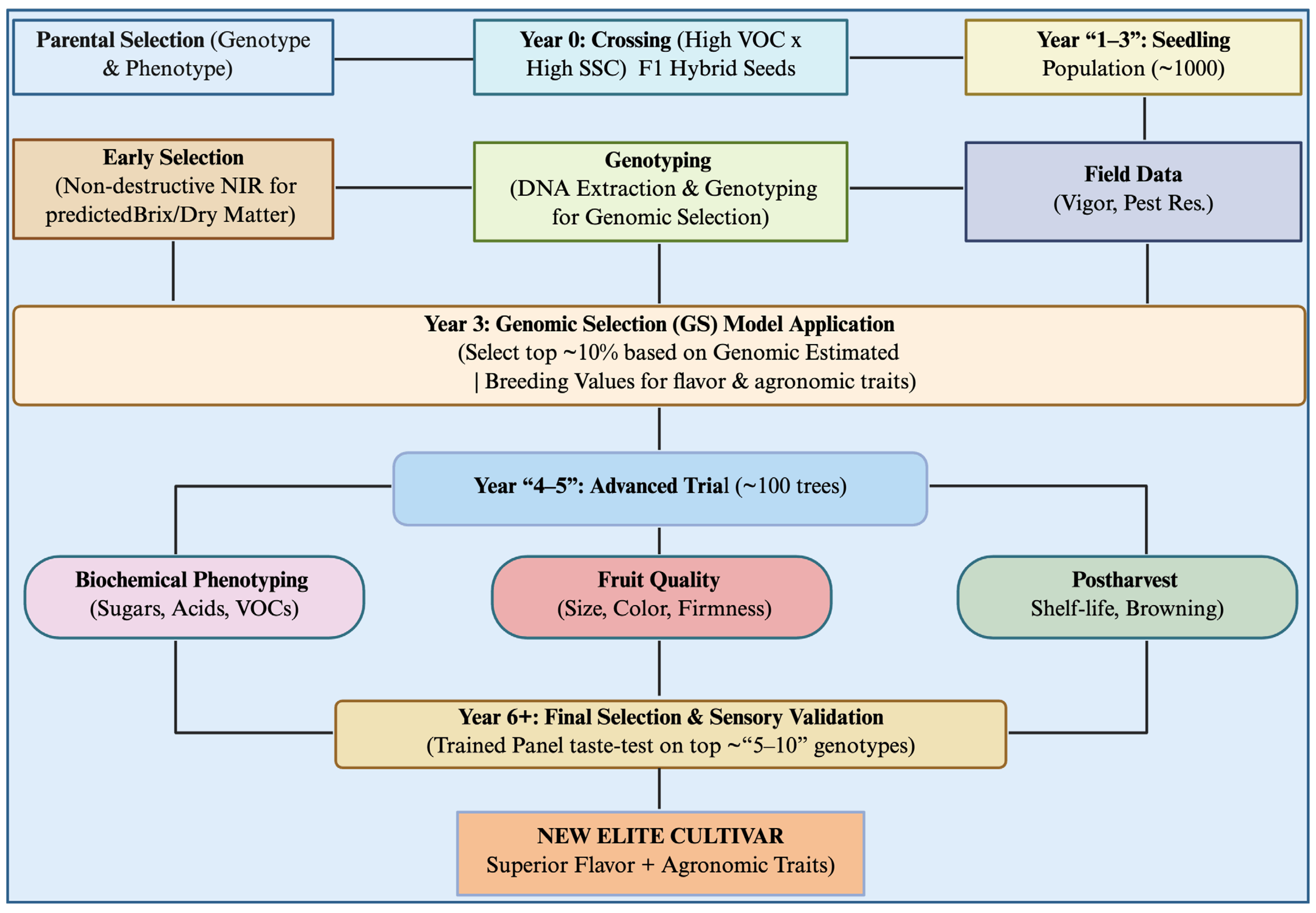
It transforms stone fruit flavor improvement into a data-driven science. A breeding pipeline was established to develop high-quality fruits, starting with the selection of parents with superior traits, such as high VOCs and SSC. The program involved cultivating a diverse seedling population and then evaluating it using NIR spectroscopy, genotyping, and field assessments. Genomic selection (GS) was used to build predictive models and estimate GEBVs, enabling early identification of top seedlings. This led to the identification and commercialization of an elite fruit cultivar with improved flavor and agronomic performance, as validated through phenotyping and sensory panels. This integrated approach facilitates the selection of genotypes with desirable sugar, acid, and aroma profiles, considerably reforming the breeding process and reducing the costs and generation times inherent to traditional fruit flavor evaluation methods (Figure 4). Stone fruit improvement relies on robust breeding methodologies. Key approaches can enhance efficiency and precision, including:

6.3.1. Parental Selection

Parental selection is crucial in stone fruit breeding, as it involves identifying genotypes with desirable traits such as fruit quality, disease resistance, and climate resilience [118]. It increases the likelihood of passing favorable alleles to offspring, supporting the development of improved cultivars with better agronomic performance and consumer quality.

6.3.2. Early Selection

Early selection identifies superior stone fruit seedlings before maturity using phenotypic, genotypic, and marker-assisted selection [119]. It shortens breeding cycles, boosts accuracy, and improves efficiency, rapidly advancing elite genotypes and accelerating the development of high-quality cultivars.

6.3.3. Balancing Act

Stone fruit breeding involves balancing competing traits, such as flavor, texture, disease resistance, yield, and size [105]. Improving one trait may impact others, so breeders must strategically balance genetic, physiological, and market needs to develop cultivars that meet the demands of growers, processors, and consumers, thereby enhancing quality and sustainability. Although such a balance is necessary and should be followed to improve a given species, to the extent that enhancing certain traits often encounters a ceiling in breeding, from our perspective, in practice, this balance urgently needs to be broken. Especially for us breeders, it must be disrupted through techniques such as wide crosses, thereby creating a broader, more diverse spectrum of variation for selection in breeding programs. Only in this way can we adapt to the diverse demands of production, the market, and global climate change. This means that breaking the existing metabolic balance within a tree species to establish a new equilibrium is an essential requirement for germplasm innovation and the development of breakthrough varieties.

7. Conclusions and Future Prospects

The sugar-acid-aroma balance describes the quality of stone fruit, influencing flavor, consumer satisfaction, and marketable value. Sweetness and acidity define the taste profile, while aroma volatiles contribute to sensory perception. Despite advances in characterizing metabolic pathways, the molecular mechanisms coordinating carbon partitioning among sugars, acids, and volatiles remain poorly understood, hindering the development of reliably flavorful cultivars. Forthcoming progress relies on integrating spatial metabolomics, genetics, transcriptomics, and genomics to reveal regulatory networks and transport systems that control metabolic changes and the balance of sugars, acids, and aromas during fruit development. Identifying key nodes leading to crosstalk among glycolysis, organic acid metabolism, and volatile biosynthesis will provide targets for breeding flavor-balanced stone fruit cultivars. Deciphering innovations into breeding applications is imperative to fix the fruit’s long breeding cycles. Molecular tools, such as MAS, expression-based markers, and metabolite-associated markers, can accelerate trait selection. Combining these with high-throughput phenotyping (NIR spectroscopy, metabolite profiling, sensory scoring) enables earlier, more precise identification of elite genotypes with favorable sugar-acid-aroma profiles. Strategic primacies include improving genetic markers for flavor traits, mapping predictive haplotypes, and determining metabolic or genome engineering to modulate carbon pathways. Emerging breeding technologies provide breeders with crucial support to synergistically balance quality components and accelerate the development of new varieties. However, for germplasm innovation and the cultivation of breakthrough varieties, traditional breeding techniques, including wide hybridization, remain indispensable. Through wide crosses, breeders can disrupt the existing metabolic balance within a tree species to establish a new equilibrium, which is an essential requirement for quality breeding of stone fruits in the new era. Integrating classical breeding with omics-driven strategies will develop next-generation stone fruit cultivars with stronger flavor, meeting up-to-date consumer expectations for quality and reliability.

Author Contributions

Conceptualization, H.S. and M.M.A.; data curation, M.M.A.; writing—original draft preparation, M.M.A.; writing—review and editing, M.M.A., W.Y., J.Z., F.J., M.Z. and L.Y.; visualization, M.M.A.; supervision, H.S.; funding acquisition, H.S. All authors have read and agreed to the published version of the manuscript.

Funding

This work was supported by the Key Research and Development Program Project of Xinjiang Autonomous Region (2024B02019-3).

Data Availability Statement

No new data were created or analyzed in this study. Data sharing is not applicable to this article.

Conflicts of Interest

The authors declare no conflicts of interest.

References

  1. Echeverría, G.; Cantín, C.; Ortiz, A.; López, M.; Lara, I.; Graell, J. The impact of maturity, storage temperature and storage duration on sensory quality and consumer satisfaction of ‘Big Top®’ nectarines. Sci. Hortic. 2015, 190, 179–186. [Google Scholar] [CrossRef]
  2. Su, C.; Zheng, X.; Zhang, D.; Chen, Y.; Xiao, J.; He, Y.; He, J.; Wang, B.; Shi, X. Investigation of sugars, organic acids, phenolic compounds, antioxidant activity and the aroma fingerprint of small white apricots grown in Xinjiang. J. Food Sci. 2020, 85, 4300–4311. [Google Scholar] [CrossRef] [PubMed]
  3. Mikulic-Petkovsek, M.; Ivancic, A.; Schmitzer, V.; Veberic, R.; Stampar, F. Comparison of major taste compounds and antioxidative properties of fruits and flowers of different Sambucus species and interspecific hybrids. Food Chem. 2016, 200, 134–140. [Google Scholar] [CrossRef] [PubMed]
  4. Walker, R.P.; Battistelli, A.; Bonghi, C.; Drincovich, M.F.; Falchi, R.; Lara, M.V.; Moscatello, S.; Vizzotto, G.; Famiani, F. Non-structural carbohydrate metabolism in the flesh of stone fruits of the genus Prunus (Rosaceae)—A review. Front. Plant Sci. 2020, 11, 549921. [Google Scholar]
  5. Fan, X.; Zhao, H.; Wang, X.; Cao, J.; Jiang, W. Sugar and organic acid composition of apricot and their contribution to sensory quality and consumer satisfaction. Sci. Hortic. 2017, 225, 553–560. [Google Scholar] [CrossRef]
  6. Cirilli, M.; Bassi, D.; Ciacciulli, A. Sugars in peach fruit: A breeding perspective. Hortic. Res. 2016, 3, 15067. [Google Scholar] [CrossRef]
  7. Kroger, M.; Meister, K.; Kava, R. Low-calorie sweeteners and other sugar substitutes: A review of the safety issues. Compr. Rev. Food Sci. Food Saf. 2006, 5, 35–47. [Google Scholar]
  8. Baccichet, I.; Chiozzotto, R.; Bassi, D.; Gardana, C.; Cirilli, M.; Spinardi, A. Characterization of fruit quality traits for organic acids content and profile in a large peach germplasm collection. Sci. Hortic. 2021, 278, 109865. [Google Scholar] [CrossRef]
  9. Guillot, S.; Peytavi, L.; Bureau, S.; Boulanger, R.; Lepoutre, J.P.; Crouzet, J.; Schorr-Galindo, S. Aroma characterization of various apricot varieties using headspace–solid phase microextraction combined with gas chromatography–mass spectrometry and gas chromatography–olfactometry. Food Chem. 2006, 96, 147–155. [Google Scholar]
  10. Feng, J.R.; Xi, W.P.; Li, W.H.; Liu, H.N.; Liu, X.F.; Lu, X.Y. Volatile characterization of major apricot cultivars of southern Xinjiang region of China. J. Am. Soc. Hortic. Sci. 2015, 140, 466–471. [Google Scholar] [CrossRef]
  11. van Nocker, S.; Gardiner, S.E. Breeding better cultivars, faster: Applications of new technologies for the rapid deployment of superior horticultural tree crops. Hortic. Res. 2014, 1, 14022. [Google Scholar] [CrossRef]
  12. Fratianni, F.; d’Acierno, A.; Albanese, D.; Matteo, M.D.; Coppola, R.; Nazzaro, F. Biochemical characterization of traditional varieties of apricots (Prunus armeniaca L.) of the Campania region, Southern Italy. Foods 2021, 11, 100. [Google Scholar] [CrossRef]
  13. Khan, A.; Korban, S.S. Breeding and genetics of disease resistance in temperate fruit trees: Challenges and new opportunities. Theor. Appl. Genet. 2022, 135, 3961–3985. [Google Scholar] [CrossRef]
  14. Johari, N.H.F.; Dolhaji, N.H.; Shamsuri, S.; Abdol Latif, P. A review on sugar and organic profiles on the postharvest quality of fruits. Sci. Lett. (ScL) 2023, 17, 91–108. [Google Scholar]
  15. Ma, Y.; Tian, T.; Zhou, J.; Huang, F.; Wang, Y.; Liu, Y.; Liu, Z.; He, W.; Li, M.; Lin, Y. Fruit sugar and organic acid composition and inheritance analysis in an intraspecific cross of Chinese cherry. LWT 2024, 198, 116101. [Google Scholar] [CrossRef]
  16. Fukuma, K.; Seki, H. Effect of Pickling Methods on the Quality and Flavor of Umeboshi. Eur. J. Agric. Food Sci. 2024, 6, 19–25. [Google Scholar] [CrossRef]
  17. Baldicchi, A.; Farinelli, D.; Micheli, M.; Di Vaio, C.; Moscatello, S.; Battistelli, A.; Walker, R.; Famiani, F. Analysis of seed growth, fruit growth and composition and phospoenolpyruvate carboxykinase (PEPCK) occurrence in apricot (Prunus armeniaca L.). Sci. Hortic. 2015, 186, 38–46. [Google Scholar] [CrossRef]
  18. Walker, R.P.; Battistelli, A.; Moscatello, S.; Chen, Z.-H.; Leegood, R.C.; Famiani, F. Phosphoenolpyruvate carboxykinase in cherry (Prunus avium L.) fruit during development. J. Exp. Bot. 2011, 62, 5357–5365. [Google Scholar] [CrossRef]
  19. Ballistreri, G.; Continella, A.; Gentile, A.; Amenta, M.; Fabroni, S.; Rapisarda, P. Fruit quality and bioactive compounds relevant to human health of sweet cherry (Prunus avium L.) cultivars grown in Italy. Food Chem. 2013, 140, 630–638. [Google Scholar] [CrossRef]
  20. Winkler, A.; Knoche, M. Predicting osmotic potential from measurements of refractive index in cherries, grapes and plums. PLoS ONE 2018, 13, e0207626. [Google Scholar] [CrossRef]
  21. Moing, A.; Poëssel, J.L.; Svanella-Dumas, L.; Loonis, M.; Kervella, J. Biochemical basis of low fruit quality of Prunus davidiana, a pest and disease resistance donor for peach breeding. J. Am. Soc. Hortic. Sci. 2003, 128, 55–62. [Google Scholar] [CrossRef]
  22. Farcuh, M.; Li, B.; Rivero, R.M.; Shlizerman, L.; Sadka, A.; Blumwald, E. Sugar metabolism reprogramming in a non-climacteric bud mutant of a climacteric plum fruit during development on the tree. J. Exp. Bot. 2017, 68, 5813–5828. [Google Scholar] [CrossRef]
  23. Durán-Soria, S.; Pott, D.M.; Osorio, S.; Vallarino, J.G. Sugar signaling during fruit ripening. Front. Plant Sci. 2020, 11, 564917. [Google Scholar] [CrossRef] [PubMed]
  24. Falchi, R.; Bonghi, C.; Drincovich, M.F.; Famiani, F.; Lara, M.V.; Walker, R.P.; Vizzotto, G. Sugar metabolism in stone fruit: Source-sink relationships and environmental and agronomical effects. Front. Plant Sci. 2020, 11, 573982. [Google Scholar] [CrossRef] [PubMed]
  25. Julius, B.T.; Leach, K.A.; Tran, T.M.; Mertz, R.A.; Braun, D.M. Sugar transporters in plants: New insights and discoveries. Plant Cell Physiol. 2017, 58, 1442–1460. [Google Scholar] [CrossRef] [PubMed]
  26. Yamaki, S. Metabolism and accumulation of sugars translocated to fruit and their regulation. J. Jpn. Soc. Hortic. Sci. 2010, 79, 1–15. [Google Scholar] [CrossRef]
  27. Aslam, M.M.; Deng, L.; Wang, X.; Wang, Y.; Pan, L.; Liu, H.; Niu, L.; Lu, Z.; Cui, G.; Zeng, W. Expression patterns of genes involved in sugar metabolism and accumulation during peach fruit development and ripening. Sci. Hortic. 2019, 257, 108633. [Google Scholar] [CrossRef]
  28. Stein, O.; Granot, D. An overview of sucrose synthases in plants. Front. Plant Sci. 2019, 10, 95. [Google Scholar] [CrossRef]
  29. Zanon, L.; Falchi, R.; Santi, S.; Vizzotto, G. Sucrose transport and phloem unloading in peach fruit: Potential role of two transporters localized in different cell types. Physiol. Plant. 2015, 154, 179–193. [Google Scholar] [CrossRef]
  30. Jiang, F.; Yang, L.; Zhang, J.; Zhang, M.; Yu, W.; Sun, H. Integrated QTL mapping and transcriptomic profiling elucidate molecular determinants of sucrose accumulation in apricot (Prunus armeniaca L.). Curr. Plant Biol. 2025, 43, 100500. [Google Scholar] [CrossRef]
  31. Peng, Q.; Wang, L.; Ogutu, C.; Liu, J.; Liu, L.; Mollah, M.D.A.; Han, Y. Functional analysis reveals the regulatory role of PpTST1 encoding tonoplast sugar transporter in sugar accumulation of peach fruit. Int. J. Mol. Sci. 2020, 21, 1112. [Google Scholar] [CrossRef]
  32. Gao, Z.; Maurousset, L.; Lemoine, R.; Yoo, S.D.; Van Nocker, S.; Loescher, W. Cloning, expression, and characterization of sorbitol transporters from developing sour cherry fruit and leaf sink tissues. Plant Physiol. 2003, 131, 1566–1575. [Google Scholar] [CrossRef] [PubMed]
  33. Iqbal, S.; Ni, X.; Bilal, M.S.; Shi, T.; Khalil-ur-Rehman, M.; Zhenpeng, P.; Jie, G.; Usman, M.; Gao, Z. Identification and expression profiling of sugar transporter genes during sugar accumulation at different stages of fruit development in apricot. Gene 2020, 742, 144584. [Google Scholar] [CrossRef] [PubMed]
  34. Riaz, Z.; Jamil, I.; Mehdi, F.; Sahar, S.; Afzal, N.; Galani, S. Comparative biochemical analysis and profiling of sucrose-metabolizing enzyme activity in female and hermaphrodite papaya fruits at different phenological stages. Pure Appl. Biol. (PAB) 2025, 14, 734–746. [Google Scholar] [CrossRef]
  35. Granot, D.; David-Schwartz, R.; Kelly, G. Hexose kinases and their role in sugar-sensing and plant development. Front. Plant Sci. 2013, 4, 44. [Google Scholar] [CrossRef]
  36. Walker, R.P.; Chen, Z.-H.; Famiani, F. Gluconeogenesis in plants: A key interface between organic acid/amino acid/lipid and sugar metabolism. Molecules 2021, 26, 5129. [Google Scholar] [CrossRef]
  37. Zheng, B.; Zhao, L.; Jiang, X.; Cherono, S.; Liu, J.; Ogutu, C.; Ntini, C.; Zhang, X.; Han, Y. Assessment of organic acid accumulation and its related genes in peach. Food Chem. 2021, 334, 127567. [Google Scholar] [CrossRef]
  38. Budak, N.H.; Özdemir, N.; Gökırmaklı, Ç. The changes of physicochemical properties, antioxidants, organic, and key volatile compounds associated with the flavor of peach (Prunus cerasus L. Batsch) vinegar during the fermentation process. J. Food Biochem. 2022, 46, e13978. [Google Scholar] [CrossRef]
  39. Brozdowski, J.; Waliszewska, B.; Loffler, J.; Hudina, M.; Veberic, R.; Mikulic-Petkovsek, M. Composition of phenolic compounds, cyanogenic glycosides, organic acids and sugars in fruits of black cherry (Prunus serotina Ehrh.). Forests 2021, 12, 762. [Google Scholar] [CrossRef]
  40. Cao, S.; Zhang, G.; Luo, Y.; Qiu, J.; Ba, L.; Xu, S.; Zhao, Z.; Luo, D.; Dong, G.; Ren, Y. Recent Advances in Postharvest Physiology and Preservation Technology of Peach Fruit: A Systematic Review. Horticulturae 2025, 11, 1007. [Google Scholar] [CrossRef]
  41. Baccichet, I.; Chiozzotto, R.; Spinardi, A.; Gardana, C.; Bassi, D.; Cirilli, M. Evaluation of a large apricot germplasm collection for fruit skin and flesh acidity and organic acids composition. Sci. Hortic. 2022, 294, 110780. [Google Scholar] [CrossRef]
  42. Etienne, A.; Génard, M.; Lobit, P.; Mbeguié-A-Mbéguié, D.; Bugaud, C. What controls fleshy fruit acidity? A review of malate and citrate accumulation in fruit cells. J. Exp. Bot. 2013, 64, 1451–1469. [Google Scholar] [CrossRef]
  43. Zhang, Q.; Feng, C.; Li, W.; Qu, Z.; Zeng, M.; Xi, W. Transcriptional regulatory networks controlling taste and aroma quality of apricot (Prunus armeniaca L.) fruit during ripening. BMC Genom. 2019, 20, 45. [Google Scholar] [CrossRef]
  44. Gou, N.; Chen, C.; Huang, M.; Zhang, Y.; Bai, H.; Li, H.; Wang, L.; Wuyun, T. Transcriptome and metabolome analyses reveal sugar and acid accumulation during apricot fruit development. Int. J. Mol. Sci. 2023, 24, 16992. [Google Scholar] [CrossRef] [PubMed]
  45. Zhou, Y.; He, W.; Zheng, W.; Tan, Q.; Xie, Z.; Zheng, C.; Hu, C. Fruit sugar and organic acid were significantly related to fruit Mg of six citrus cultivars. Food Chem. 2018, 259, 278–285. [Google Scholar] [CrossRef] [PubMed]
  46. Zhang, W.; Jiang, Y.; Zhang, Z. The role of different natural organic acids in postharvest fruit quality management and its mechanism. Food Front. 2023, 4, 1127–1143. [Google Scholar] [CrossRef]
  47. Jia, D.; Xu, Z.; Chen, L.; Huang, Q.; Huang, C.; Tao, J.; Qu, X.; Xu, X. Analysis of organic acid metabolism reveals citric acid and malic acid play major roles in determining acid quality during the development of kiwifruit (Actinidia eriantha). J. Sci. Food Agric. 2023, 103, 6055–6069. [Google Scholar] [CrossRef]
  48. Sharma, T.; Dreyer, I.; Kochian, L.; Piñeros, M.A. The ALMT family of organic acid transporters in plants and their involvement in detoxification and nutrient security. Front. Plant Sci. 2016, 7, 1488. [Google Scholar] [CrossRef]
  49. Taiti, C.; Pandolfi, C.; Caparrotta, S.; Dei, M.; Giordani, E.; Mancuso, S.; Nencetti, V. Fruit aroma and sensorial characteristics of traditional and innovative Japanese plum (Prunus salicina Lindl.) cultivars grown in Italy. Eur. Food Res. Technol. 2019, 245, 2655–2668. [Google Scholar] [CrossRef]
  50. Sun, H.; Lu, X.; Wang, Y.; Li, J.; Liu, S. Study on Evaluation of Fruit Aroma of Plum Variety Resources Based on Headspace Solid-Phase Microextraction Combined with Gas Chromatography–Mass Spectrometry. Foods 2024, 13, 3515. [Google Scholar] [CrossRef]
  51. He, Y.; Li, J.; Yu, Z.; Lin, C.; Wang, Z.; Zhang, B. Comprehensive characterization of volatile components reveals the complexity of apricot fruit aroma with distinct coloration. J. Agric. Food Res. 2026, 26, 102685. [Google Scholar] [CrossRef]
  52. Mohammed, J.; Belisle, C.E.; Wang, S.; Itle, R.A.; Adhikari, K.; Chavez, D.J. Volatile profile characterization of commercial peach (Prunus persica) cultivars grown in Georgia, USA. Horticulturae 2021, 7, 516. [Google Scholar] [CrossRef]
  53. Defilippi, B.G.; Manríquez, D.; Luengwilai, K.; González-Agüero, M. Aroma volatiles: Biosynthesis and mechanisms of modulation during fruit ripening. Adv. Bot. Res. 2009, 50, 1–37. [Google Scholar] [CrossRef]
  54. Sánchez, G.; Besada, C.; Badenes, M.L.; Monforte, A.J.; Granell, A. A non-targeted approach unravels the volatile network in peach fruit. PLoS ONE 2012, 7, e38992. [Google Scholar] [CrossRef]
  55. Zhang, B.; Shen, J.Y.; Wei, W.W.; Xi, W.P.; Xu, C.J.; Ferguson, I.; Chen, K. Expression of genes associated with aroma formation derived from the fatty acid pathway during peach fruit ripening. J. Agric. Food Chem. 2010, 58, 6157–6165. [Google Scholar] [CrossRef]
  56. Xi, W.; Zheng, H.; Zhang, Q.; Li, W. Profiling taste and aroma compound metabolism during apricot fruit development and ripening. Int. J. Mol. Sci. 2016, 17, 998. [Google Scholar] [CrossRef]
  57. Yang, H.; Tian, C.; Ji, S.; Ni, F.; Fan, X.; Yang, Y.; Sun, C.; Gong, H.; Zhang, A. Integrative analyses of metabolome and transcriptome reveals metabolomic variations and candidate genes involved in sweet cherry (Prunus avium L.) fruit quality during development and ripening. PLoS ONE 2021, 16, e0260004. [Google Scholar] [CrossRef]
  58. Zhao, Y.; Liu, R.; Mu, Y.; Lv, M.; Xing, J.; Zheng, L.; Aihaiti, A.; Wang, L. Study on the Mechanisms of Flavor Compound Changes During the Lactic Fermentation Process of Peach and Apricot Mixed Juice. Foods 2024, 13, 3835. [Google Scholar] [CrossRef]
  59. Zhang, H.; Liu, W.; Fang, J.; Chen, S.; Liu, Y.; Wu, B.; Li, S. Volatile profiles of apricot cultivars (Prunus armeniaca Lam.) evaluated by head space solid phase microextraction gas chromatography mass spectrometry. Anal. Lett. 2014, 47, 433–452. [Google Scholar] [CrossRef]
  60. El Hadi, M.A.M.; Zhang, F.-J.; Wu, F.-F.; Zhou, C.-H.; Tao, J. Advances in fruit aroma volatile research. Molecules 2013, 18, 8200–8229. [Google Scholar] [CrossRef]
  61. Greger, V.; Schieberle, P. Characterization of the key aroma compounds in apricots (Prunus armeniaca) by application of the molecular sensory science concept. J. Agric. Food Chem. 2007, 55, 5221–5228. [Google Scholar] [CrossRef] [PubMed]
  62. Pintea, A.; Dulf, F.V.; Bunea, A.; Socaci, S.A.; Pop, E.A.; Opriță, V.-A.; Giuffrida, D.; Cacciola, F.; Bartolomeo, G.; Mondello, L. Carotenoids, fatty acids, and volatile compounds in apricot cultivars from Romania—A chemometric approach. Antioxidants 2020, 9, 562. [Google Scholar] [CrossRef] [PubMed]
  63. Long, Y.; Wu, Z.; Liu, D.; Fang, B.; Zhao, X. Color and Aroma of Plums: Biosynthesis, Regulation, and Interrelationships. J. Agric. Food Chem. 2025, 73, 31742–31759. [Google Scholar] [CrossRef] [PubMed]
  64. Frisina, C. Relationship Between Fruit Maturity and Aroma Volatile Profiles of Peaches and Nectarines. Ph.D. Thesis, RMIT University, Melbourne, Australia, 2023. [Google Scholar]
  65. Fu, X.; G. G, L.; R. M, R. Interactions Between Biochemical Pathways Producing Plant Colors and Scents. Front. Plant Sci. 2022, 13, 955431. [Google Scholar] [CrossRef]
  66. Li, X.; Gao, P.; Zhang, C.; Xiao, X.; Chen, C.; Song, F. Aroma of peach fruit: A review on aroma volatile compounds and underlying regulatory mechanisms. Int. J. Food Sci. Technol. 2023, 58, 4965–4979. [Google Scholar] [CrossRef]
  67. Xiujun, W.; Zhenqi, S.; Yujing, T.; Kaifeng, M.; Qingwei, L. Comparative transcriptome analysis linked to key volatiles reveals molecular mechanisms of aroma compound biosynthesis in Prunus mume. BMC Plant Biol. 2022, 22, 395. [Google Scholar] [CrossRef]
  68. Nunes, A.R.; Gonçalves, A.C.; Pinto, E.; Amaro, F.; Flores-Félix, J.D.; Almeida, A.; Guedes de Pinho, P.; Falcão, A.; Alves, G.; Silva, L.R. Mineral content and volatile profiling of Prunus avium L. (sweet cherry) by-products from Fundao region (Portugal). Foods 2022, 11, 751. [Google Scholar] [CrossRef]
  69. Xu, L.; Wang, S.; Tian, A.; Liu, T.; Benjakul, S.; Xiao, G.; Ying, X.; Zhang, Y.; Ma, L. Characteristic volatile compounds, fatty acids and minor bioactive components in oils from green plum seed by HS-GC-IMS, GC–MS and HPLC. Food Chem. X 2023, 17, 100530. [Google Scholar] [CrossRef]
  70. Zhang, W.; Zhu, D.; Mao, J.; Du, H.; Qin, H.; Wang, J.; Zhu, C.; Yan, M.; Bai, B. Insight into flavor difference of cherry (Prunus avium L.) grown in facility environment and outdoors through metabolomics and correlation analysis. Food Chem. X 2024, 24, 101802. [Google Scholar] [CrossRef]
  71. Baz, N.M.; Wang, J.; Zhao, X.; Maqbool, A.; Gao, C.; Wang, P.; Chen, H.; Cao, H. Carotenoid biosynthesis in Prunus species: From pathway and accumulation structure to diverse pigmentation. Mol. Hortic. 2026, 6, 3. [Google Scholar] [CrossRef]
  72. Zhou, W.; Kong, W.; Yang, C.; Feng, R.; Xi, W. Alcohol acyltransferase is involved in the biosynthesis of C6 esters in apricot (Prunus armeniaca L.) fruit. Front. Plant Sci. 2021, 12, 763139. [Google Scholar] [CrossRef]
  73. Villavicencio, J.D.; Tobar, J.; Zoffoli, J.P.; O’Brien, J.A.; Contreras, C. Identification, characterization, and expression of lipoxygenase genes in sweet cherry (Prunus avium L.) cv. Regina and their relationship with the development of an herbaceous off-flavor during fruit ripening. Plant Physiol. Biochem. 2024, 206, 108271. [Google Scholar] [CrossRef] [PubMed]
  74. Pei, L.; Xu, H.; Mi, X.; Tan, H.; Wu, B.; Liu, W.; Li, H.; Wang, X.; Wang, M.; Wu, Z. LOX and AAT Genes Affect the Aroma of “Xiaobai” Apricot during Postharvest Storage. J. Food Process. Preserv. 2023, 2023, 5558605. [Google Scholar] [CrossRef]
  75. Lu, H.; Zhao, H.; Zhong, T.; Chen, D.; Wu, Y.; Xie, Z. Molecular regulatory mechanisms affecting fruit aroma. Foods 2024, 13, 1870. [Google Scholar] [CrossRef] [PubMed]
  76. Siebert, T.E.; Barker, A.; Pearson, W.; Barter, S.R.; de Barros Lopes, M.A.; Darriet, P.; Herderich, M.J.; Francis, I.L. Volatile compounds related to ‘stone fruit’aroma attributes in Viognier and Chardonnay wines. J. Agric. Food Chem. 2018, 66, 2838–2850. [Google Scholar] [CrossRef]
  77. Cao, X.; Su, Y.; Zhao, T.; Zhang, Y.; Cheng, B.; Xie, K.; Yu, M.; Allan, A.; Klee, H.; Chen, K. Multi-omics analysis unravels chemical roadmap and genetic basis for peach fruit aroma improvement. Cell Rep. 2024, 43, 114623. [Google Scholar] [CrossRef]
  78. Xi, W.; Zhang, L.; Liu, S.; Zhao, G. The genes of CYP, ZEP, and CCD1/4 play an important role in controlling carotenoid and aroma volatile apocarotenoid accumulation of apricot fruit. Front. Plant Sci. 2020, 11, 607715. [Google Scholar] [CrossRef]
  79. Yao, Z.; Duan, W.; Li, A.; Zhan, W.; Sun, S.; Pan, L.; Niu, L.; Cui, G.; Zeng, W. Genome-wide identification of CCD gene family in Peach (Prunus persica L. Batsch) and expression analysis with aroma norisoprenoids. BMC Plant Biol. 2025, 25, 954. [Google Scholar] [CrossRef]
  80. Xiao, Q.; Ye, S.; Wang, H.; Xing, S.; Zhu, W.; Zhang, H.; Zhu, J.; Pu, C.; Zhao, D.; Zhou, Q. Soluble sugar, organic acid and phenolic composition and flavor evaluation of plum fruits. Food Chem. X 2024, 24, 101790. [Google Scholar] [CrossRef]
  81. Jiang, Y.; Song, J. Fruits and fruit flavor: Classification and biological characterization. In Handbook of Fruit and Vegetable Flavors; John Wiley & Sons, Inc.: Hoboken, NJ, USA, 2010; pp. 1–23. [Google Scholar]
  82. Gao, X.; Wu, S.; Lv, G.; Wang, M.; Li, L.; Liu, Y.; He, F.; Xiao, J. The key metabolic genes and networks regulating the fruit acidity and flavonoid of Prunus mume revealed via transcriptomic and metabolomic analyses. Front. Plant Sci. 2025, 16, 1544500. [Google Scholar] [CrossRef]
  83. Jiang, X.; Liu, K.; Peng, H.; Fang, J.; Zhang, A.; Han, Y.; Zhang, X. Comparative network analysis reveals the dynamics of organic acid diversity during fruit ripening in peach (Prunus persica L. Batsch). BMC Plant Biol. 2023, 23, 16. [Google Scholar] [CrossRef] [PubMed]
  84. Fu, B.-L.; Chen, L.-Y. Molecular orchestration of malate and citrate metabolism: Regulatory networks governing organic acid dynamics and fruit quality attributes. Hortic. Res. 2025, uhaf292. [Google Scholar] [CrossRef]
  85. Veerappan, K.; Natarajan, S.; Chung, H.; Park, J. Molecular insights of fruit quality traits in peaches, Prunus persica. Plants 2021, 10, 2191. [Google Scholar] [CrossRef] [PubMed]
  86. Osorio, S.; Muñoz, C.; Valpuesta, V. Physiology and biochemistry of fruit flavors. Handb. Fruit Veg. Flavors 2010, 25, 43. [Google Scholar] [CrossRef]
  87. Chen, T.; Zhang, Z.; Li, B.; Qin, G.; Tian, S. Molecular basis for optimizing sugar metabolism and transport during fruit development. Abiotech 2021, 2, 330–340. [Google Scholar]
  88. García-Gómez, B.E.; Salazar, J.A.; Nicolás-Almansa, M.; Razi, M.; Rubio, M.; Ruiz, D.; Martínez-Gómez, P. Molecular bases of fruit quality in Prunus species: An integrated genomic, transcriptomic, and metabolic review with a breeding perspective. Int. J. Mol. Sci. 2020, 22, 333. [Google Scholar] [CrossRef]
  89. Fortes, A.M.; Granell, A.; Pezzotti, M.; Bouzayen, M. Molecular and metabolic mechanisms associated with fleshy fruit quality. Front. Plant Sci. 2017, 8, 236. [Google Scholar] [CrossRef]
  90. Ortuno-Hernandez, G.; Sandoval-Belmar, P.; Ruiz, D.; Martinez-Gomez, P.; Meneses, C.; Salazar, J.A. Insights into the Molecular Basis of Fruit Development in Prunus Species. Plant Mol. Biol. Report. 2025, 43, 1397–1413. [Google Scholar] [CrossRef]
  91. Mathiazhagan, M.; Chidambara, B.; Hunashikatti, L.R.; Ravishankar, K.V. Genomic approaches for improvement of tropical fruits: Fruit quality, shelf life and nutrient content. Genes 2021, 12, 1881. [Google Scholar] [CrossRef]
  92. Zhang, Y.; Liu, W.; Zhang, B.; Zhang, Y.; Cai, Z.; Song, H.; Ma, R.; Yu, M. Analysis of volatile compounds and their potential regulators in four high-quality peach (Prunus persica L.) cultivars with unique aromas. LWT 2022, 160, 113195. [Google Scholar] [CrossRef]
  93. Qin, Q.; Wang, R.; Zhang, J.; Wang, C.; He, H.; Wang, L.; Li, C.; Qiao, Y.; Liu, H. From Biosynthesis to Regulation: Recent Advances in the Study of Fruit-Bound Aroma Compounds. Horticulturae 2025, 11, 1185. [Google Scholar] [CrossRef]
  94. Martínez-Rivas, F.J.; Fernie, A.R. Metabolomics to understand metabolic regulation underpinning fruit ripening, development, and quality. J. Exp. Bot. 2024, 75, 1726–1740. [Google Scholar] [CrossRef] [PubMed]
  95. Ba, L.; Luo, C.; Wang, X.; Cao, S.; Chen, J.; Luo, D. Developmental stage-specific modulation of sugar–acid metabolism in ‘Fengtang’plum as revealed by UPLC-MS/MS-based metabolomics. Agronomy 2025, 15, 2846. [Google Scholar] [CrossRef]
  96. Zhao, Y.; He, Y.; Xing, W.; Bai, Y.-e.; Li, H.; Ye, D.; Kang, M. Spatial metabolic heterogeneity of sugar–acid balance and pigment accumulation in distinct color regions of Yanzhihong apricot (Prunus armeniaca L.) revealed by MALDI-IMS. Front. Plant Sci. 2025, 16, 1636734. [Google Scholar] [CrossRef]
  97. Xue, H.; Liu, Z.; Liu, W.; Huang, G.; Wang, X.; Du, M.; Li, C.; Xu, X.; Li, J.; Yang, X. The genomic design of fruit metabolomes. Plant Commun. 2025, 6, 101484. [Google Scholar] [CrossRef]
  98. Egea, M.; Martinez-Madrid, M.; Sanchez-Bel, P.; Murcia, M.; Romojaro, F. The influence of electron-beam ionization on ethylene metabolism and quality parameters in apricot (Prunus armeniaca L. cv Búlida). LWT-Food Sci. Technol. 2007, 40, 1027–1035. [Google Scholar] [CrossRef]
  99. Defilippi, B.; San Juan, W.; Valdés, H.; Moya-León, M.; Infante, R.; Campos-Vargas, R. The aroma development during storage of Castlebrite apricots as evaluated by gas chromatography, electronic nose, and sensory analysis. Postharvest. Biol. Technol. 2009, 51, 212–219. [Google Scholar] [CrossRef]
  100. Valdés, H.H.; Pizarro, M.M.; Campos-Vargas, R.R.; Infante, R.R.; Defilippi, B. Effect of ethylene inhibitors on quality attributes of apricot cv. Modesto and Patterson during storage. Chil. J. Agric. Res. 2009, 69, 134–144. [Google Scholar] [CrossRef]
  101. Herrera, S.; Hormaza, J.I.; Lora, J.; Ylla, G.; Rodrigo, J. Molecular characterization of genetic diversity in apricot cultivars: Current situation and future perspectives. Agronomy 2021, 11, 1714. [Google Scholar] [CrossRef]
  102. Khadivi-Khub, A.; Khalili, Z. A breeding project: The selection of promising apricot (Prunus armeniaca L.) genotypes with late blooming time and high fruit quality. Sci. Hortic. 2017, 216, 93–102. [Google Scholar] [CrossRef]
  103. Tricon, D.; Bourguiba, H.; Ruiz, D.; Blanc, A.; Audergon, J.M.; Bureau, S.; Gouble, B.; Grotte, M.; Reich, M.; Renard, C. Evolution of apricot fruit quality attributes in the new released cultivars. Acta Hortic. 2009, 814, 571–576. [Google Scholar] [CrossRef]
  104. Liu, J.C.; Zhang, Q.P.; Niu, T.P.; Liu, N.; Zhang, Y.P.; Xu, M.; Ma, X.X.; Zhang, Y.J.; Liu, S.; Liu, W.S. Analysis of inherited tendency of fruit characteristics in F1 group of reciprocal crossing between ‘Chuanzhihong’ and ‘Saimaiti’ in apricots. J. Fruit Sci. 2020, 37, 625–634. [Google Scholar]
  105. Al-Suwaid, I.; Stănică, F.; Butcaru, A.; Mihai, C.; Ghasheem, N.A. An overview of apricot breeding programs focused on production improvement, field resistance and high-quality fruits. Sci. Pap. Ser. B Hortic. 2022, 66. [Google Scholar]
  106. Bassi, D.; Foschi, S. Raising the standards in breeding apricots at MAS.PES, Italy. Acta Hortic. 2019, 1290, 27–30. [Google Scholar] [CrossRef]
  107. Bianchi, G.; Rizzolo, A.; Buccheri, M.; Papa, V.; Grassi, M.; Lo Scalzo, R. Carotenoids production and fruit quality changes during shelf life of peach [Prunus persica (L.) Batsch] cultivars harvested at two ripening stages. Acta Hortic. 2013, 1084, 717–724. [Google Scholar] [CrossRef]
  108. García-Gómez, B.E.; Salazar, J.A.; Egea, J.A.; Rubio, M.; Martínez-Gómez, P.; Ruiz, D. Monitoring apricot (Prunus armeniaca L.) ripening progression through candidate gene expression analysis. Int. J. Mol. Sci. 2022, 23, 4575. [Google Scholar] [CrossRef]
  109. Martínez-Gómez, P. Plant Genetics and Molecular Breeding; MDPI: Basel, Switzerland, 2019; p. 626. [Google Scholar] [CrossRef]
  110. Calle, A.; Wünsch, A. Multiple-population QTL mapping of maturity and fruit-quality traits reveals LG4 region as a breeding target in sweet cherry (Prunus avium L.). Hortic. Res. 2020, 7, 127. [Google Scholar] [CrossRef]
  111. Aranzana, M.J.; Decroocq, V.; Dirlewanger, E.; Eduardo, I.; Gao, Z.S.; Gasic, K.; Iezzoni, A.; Jung, S.; Peace, C.; Prieto, H. Prunus genetics and applications after de novo genome sequencing: Achievements and prospects. Hortic. Res. 2019, 6, 58. [Google Scholar] [CrossRef]
  112. Tahzima, R.; Foucart, Y.; Peusens, G.; Beliën, T.; Massart, S.; De Jonghe, K. High-throughput sequencing assists studies in genomic variability and epidemiology of little cherry virus 1 and 2 infecting Prunus spp. in Belgium. Viruses 2019, 11, 592. [Google Scholar] [CrossRef]
  113. Conesa, A.; Madrigal, P.; Tarazona, S.; Gomez-Cabrero, D.; Cervera, A.; McPherson, A.; Szcześniak, M.W.; Gaffney, D.J.; Elo, L.L.; Zhang, X. A survey of best practices for RNA-seq data analysis. Genome Biol. 2016, 17, 13. [Google Scholar] [CrossRef]
  114. Kim, H.-Y.; Saha, P.; Farcuh, M.; Li, B.; Sadka, A.; Blumwald, E. RNA-seq analysis of spatiotemporal gene expression patterns during fruit development revealed reference genes for transcript normalization in plums. Plant Mol. Biol. Report. 2015, 33, 1634–1649. [Google Scholar] [CrossRef]
  115. Shang, X.; Zhang, J.; Ma, Y.; Wang, L. Preliminary identification of candidate genes associated with the peach fruit sorbitol content based on comparative transcriptome analysis. Sci. Hortic. 2020, 263, 109151. [Google Scholar] [CrossRef]
  116. Groppi, A.; Liu, S.; Cornille, A.; Decroocq, S.; Bui, Q.T.; Tricon, D.; Cruaud, C.; Arribat, S.; Belser, C.; Marande, W. Population genomics of apricots unravels domestication history and adaptive events. Nat. Commun. 2021, 12, 3956. [Google Scholar] [CrossRef]
  117. Geuna, F.; Salazar, J.A.; Martinez-Gomez, P. Allele Mining in Apricot (Prunus armeniaca L.) Breeding: Current State and Future Prospect. In Allele Mining for Genomic Designing of Fruit Crops; CRC Press: Boca Raton, FL, USA, 2024; pp. 292–308. [Google Scholar]
  118. Herrera, S.; Lora, J.; Hormaza, J.I.; Rodrigo, J. Self-incompatibility in apricot: Identifying pollination requirements to optimize fruit production. Plants 2022, 11, 2019. [Google Scholar] [CrossRef]
  119. Gomez-Abajo, M.; Dicenta, F.; Martínez-García, P.J. Dissecting the genetic architecture of flowering and maturity time in almond (Prunus dulcis): Heritability estimates and breeding value predictions from historical data. bioRxiv 2025. [Google Scholar] [CrossRef]
Figure 1. Fruit flavor metabolic pathways. Sucrose metabolism drives sweetness, while malate and citrate pathways control acidity. Volatile pathways from fatty acids, terpenoids, and carotenoids create aromas. Interactions among these pathways determine the overall sensory quality of fruit.
Horticulturae 12 00170 g001
Figure 2. Integrated metabolic network of sugar, acid, and aroma biosynthetic pathways underlying fruit flavor balance. Carbon flow from sugars through glycolysis provides the substrates (PEP, pyruvate, and acetyl-CoA) that link these three networks. Yellow, carbohydrate metabolism; blue, organic acid metabolism; magenta, aroma volatile biosynthesis.
Horticulturae 12 00170 g002
Figure 3. Sensory attributes of diverse apricot genotypes: Schematic representation of the comparative sensory profile of a commercial fruit cultivar vs. a traditional cultivar.
Horticulturae 12 00170 g003
Figure 4. Integrated breeding framework with improved fruit flavor: Propose a genomics-assisted breeding pipeline that combines genetic screening at early stages with biochemical and sensory validation at advanced stages.
Horticulturae 12 00170 g004
Disclaimer/Publisher’s Note: The statements, opinions and data contained in all publications are solely those of the individual author(s) and contributor(s) and not of MDPI and/or the editor(s). MDPI and/or the editor(s) disclaim responsibility for any injury to people or property resulting from any ideas, methods, instructions or products referred to in the content.