1. Introduction
Aquaponics is a form of agriculture that combines aquaculture (culture of aquatic organisms, such as fish, crustaceans, and algae) and hydroponics (soilless plant production). Aquaponic systems are engineered to blend technologies from both the aquaculture and hydroponics industries together in a way that economically and biologically supports fish and plant production within a single system. While still considered to be an immature industry, growing interest in aquaponics, due to the minimal resource requirements (land, freshwater) to produce marketable fish and plants practically anywhere with access to freshwater and electricity, has enabled steady growth within the global industry. However, there still remains a lack of research and data to support producers, which are vital for the industry to grow and be profitable [
1,
2,
3]. A recent survey of aquaponics practitioners found that a major challenge area for producers was system design and management [
3].
The three most common aquaponic system designs are (1) deep water culture (DWC; also known as floating raft); (2) the nutrient film technique (NFT); and (3) media bed or “ebb and flow” [
4]. Producers often select a system design based on the crop(s) that they are producing, as plant production typically generates the largest margin of revenue for producers [
5]. Beyond the plants, aquaponic system design should also consider the type of fish and the densities at which the fish is being grown. Typically, NFT or raft systems are associated with leafy green production (lettuce, arugula, kale, herbs, etc.), while media bed systems are associated with longer-life-cycle fruiting or flowering crop production (tomatoes, peppers, non-edible flowers). This is due to the support structure and root zone area created through the use of soilless media, such as expanded clay or shale materials [
4]. Substrate qualities to consider for media beds are materials that are lightweight, porous, inert, readily available, cheap, and reusable. While media beds can be designed to act as the primary bio- and mechanical solids filtration within a system, most commercial aquaponic systems are designed to have separate solids and biofiltration components [
6,
7]. This is because fish stocking densities must be significantly reduced when media beds serve as the primary solids filtration system in order to avoid the clogging of the media with excess organic waste [
6,
7]. Overall, the selection of aquaponic system design is a critical decision-making step for any aquaponic producer.
A review found that 9% of aquaponics publications compared different types of system designs within aquaponics studies [
8], with even fewer directly comparing media bed and floating raft aquaponic systems. While there is available literature, often, it is limited, inconsistent, or conflicting. For instance, mint (
Mentha arvensis) had better yields when grown in media beds consisting of crushed shale compared to floating rafts [
9]; however, this was in contrast to Knaus et al. [
10], who reported that spearmint (
Mentha spicata) had higher yields when grown in floating rafts compared to plants grown in media beds [
10]. Lettuce had the highest plant growth when grown in gravel compared to plants grown in floating rafts [
11]. These reports are in contrast to other reports stating that sub-systems had little effect on the growth or production of plants. Knaus et al. [
12] compared basil (
Ocimum basilicum) and African catfish (
Clarias gariepinus) production within media bed, floating raft, and NFT decoupled aquaponic systems and reported that, while plants grown in media beds had increased yields of basil (425 g) compared to plants grown in floating rafts (361 g) or NFT systems (383 g), no production parameter measured was significantly different among the three systems evaluated. Similarly, Lennard and Leonard [
11] compared three different aquaponic systems (media bed, NFT, and floating raft) growing Murray cod (
Maccullochella peelii peeli) and green oak lettuce (
Lactuca sativa) and reported no significant differences in fish production, while finding significant increases in lettuce production within media beds (132 g/plant) as compared to rafts (117 g/plant) and NFT systems (108 g/plant). This is in contrast to a published report in which lettuce produced in an NFT sub-system produced higher yields compared to plants grown in floating rafts with vertical felt sub-systems [
13]. Dunwoody [
14] reported that basil grown in floating rafts had a higher leaf mass and yield, but the plant height and absolute growth rate were higher when basil was grown in media beds. These conflicting data underscore the need to determine the most efficient and productive sub-system for each cultivated aquatic organism and plant species to achieve the maximum harvestable yield. Furthermore, having data that reflect commercially relevant fish and plant species under different system designs is key.
Nile tilapia (
Oreochromis niloticus) is a tropical cichlid native to the Middle East (Jordan, Egypt, and Israel) and parts of Africa and is the third most cultured fish in the world. The fish has many highly desirable culture traits, which include a rapid growth rate, excellent flesh taste and quality, resistance to numerous diseases, the ability to reproduce easily in captivity, possessing dietary requirements at the lower end of the food chain (herbivorous/omnivorous), and the ability to tolerate varied environmental and production conditions [
15]. These traits make this species suitable for aquaponic production and explain why approximately 57% of aquaponic operations grow tilapia [
16,].
Leafy green crops (such as lettuce, basil, and microgreens) are vital to the aquaponics/hydroponics agricultural industries as cash crops because they tend to have low input demands (such as energy) and the ability to be produced in high densities with short growing cycles, which allows for large and rapid harvests resulting in cash inflow. Lettuce (
Lactuca sativa) is one of the most produced crops within soilless systems in the world [
16], and basil (
Ocimum basilicum) is one of the most popular herbs used for food preparation [
17]. A recent survey of aquaponic producers found that 83% of respondents reported growing lettuce and 73% of respondents reported growing basil within their aquaponic facilities [
18]. While published data on growing lettuce and basil within aquaponics exist, most of these refer to the growth and production of these crops when grown under various aquaponic research conditions or when grown aquaponically compared to hydroponically [
19,
20,
21,
22,
23,
24,
25,
26]. While it is vital to distinguish between and compare different soilless growing techniques to achieve maximal plant yields, few aquaponics studies have directly compared production between different system designs. This is a critical point, as merely comparing hydroponic to aquaponic production leaves the fish production component omitted from system design reviews.
The lack of—and the inconsistencies found within—comparative studies between common aquaponic system designs in the literature necessitates research into this area so that producers can have data to make informed decisions on the most beneficial system type to use. Data on commercially important plant and fish production within these different system designs is essential if the industry is to expand and improve its efficiency. Given the widespread production of tilapia, lettuce, and basil among commercial aquaponic practitioners, utilizing a combination of these species in different designs is sensible. Therefore, the objective of the present study was to compare the growth and quality of red Salanova lettuce, green Salanova lettuce, and Genovese basil when grown with Nile tilapia (Oreochromis niloticus) in either a floating raft or media bed coupled aquaponic system.
2. Materials and Methods
2.1. Location and System Design
Two separate trials were conducted, with Trial 1 running from February to March 2024 (35 days) and Trial 2 running from April to May 2024 (28 days). Each trial utilized a 600-m
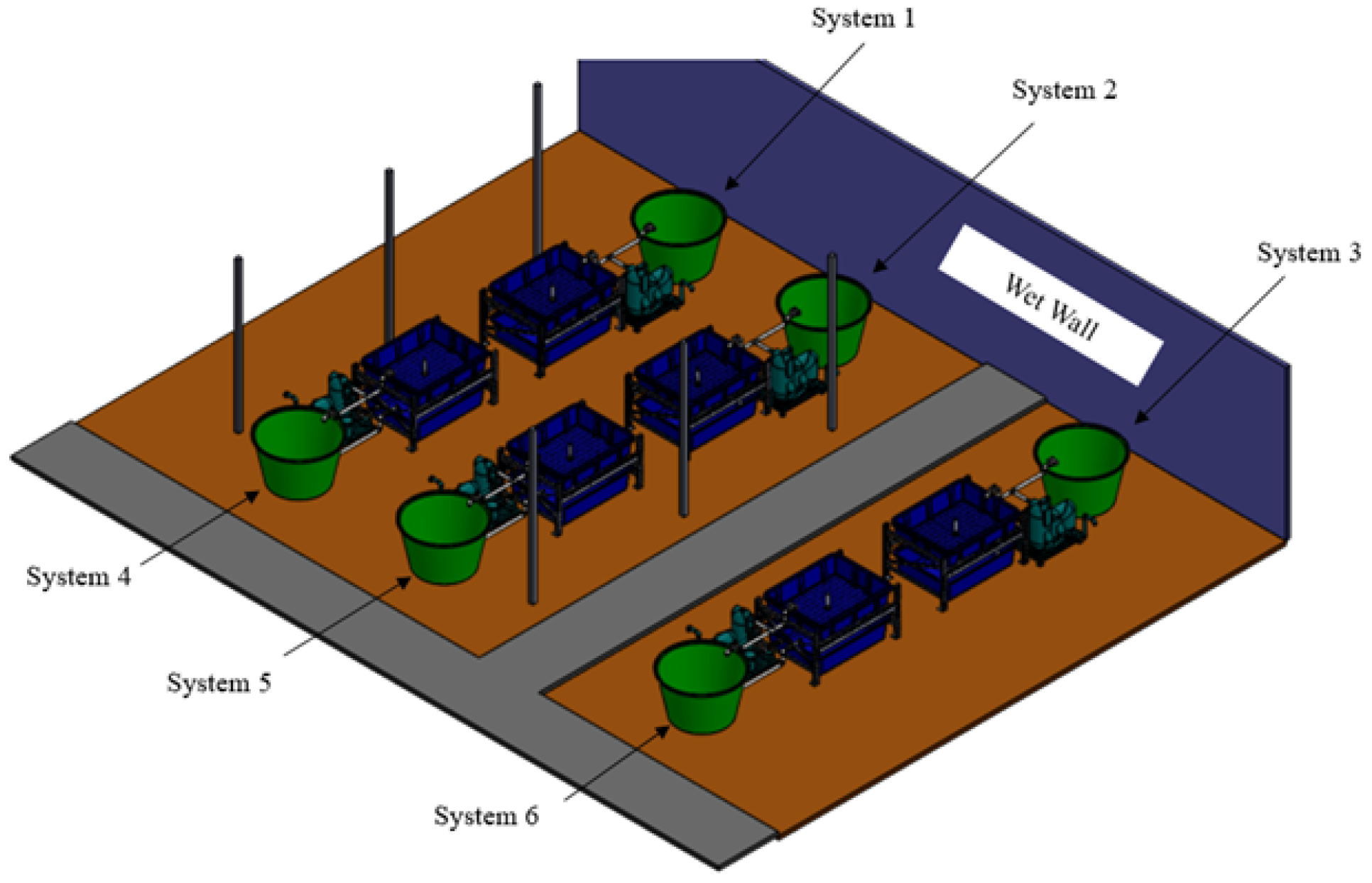
2 controlled-environment greenhouse located at Virginia State University’s Randolph Farm (Petersburg, VA, USA), and both trials were conducted in six replicated aquaponic systems, each consisting of one 757-L fish tank; one 568-L sump tank; one 379-L grow bed (1.7 m
2 grow area); and one Endurance 2000 bead filter (Aquaculture Systems Technologies; Lafayette, LA, USA;
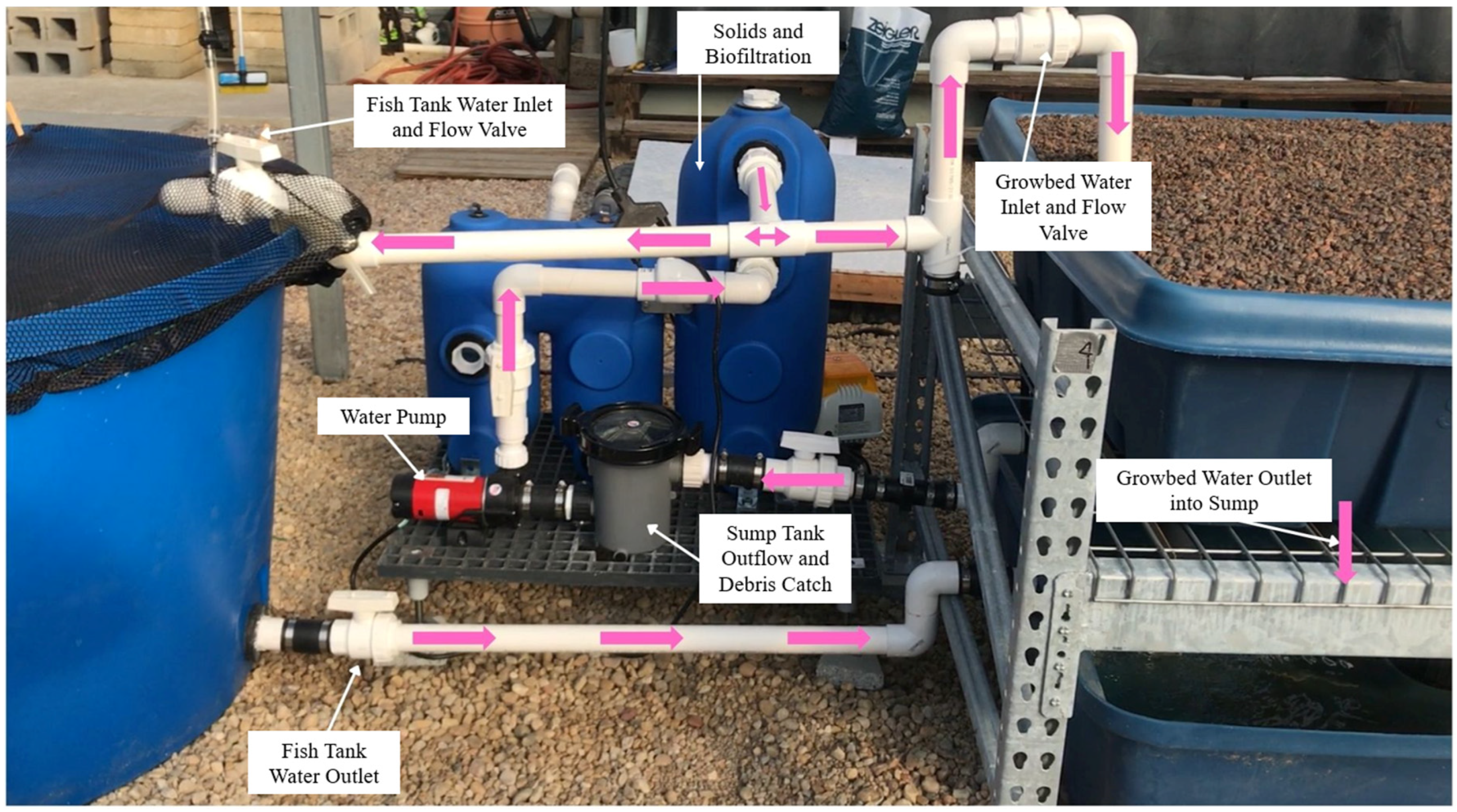
Figure 1). Each system was connected to a Tiny Might 115-V water pump (Waterway Plastics; Oxnard, CA, USA), which pumped water from the sump tank and distributed it to the fish tank and grow beds. Water flowed back to the sump tank via gravity from the fish and sump tanks (
Figure 2).
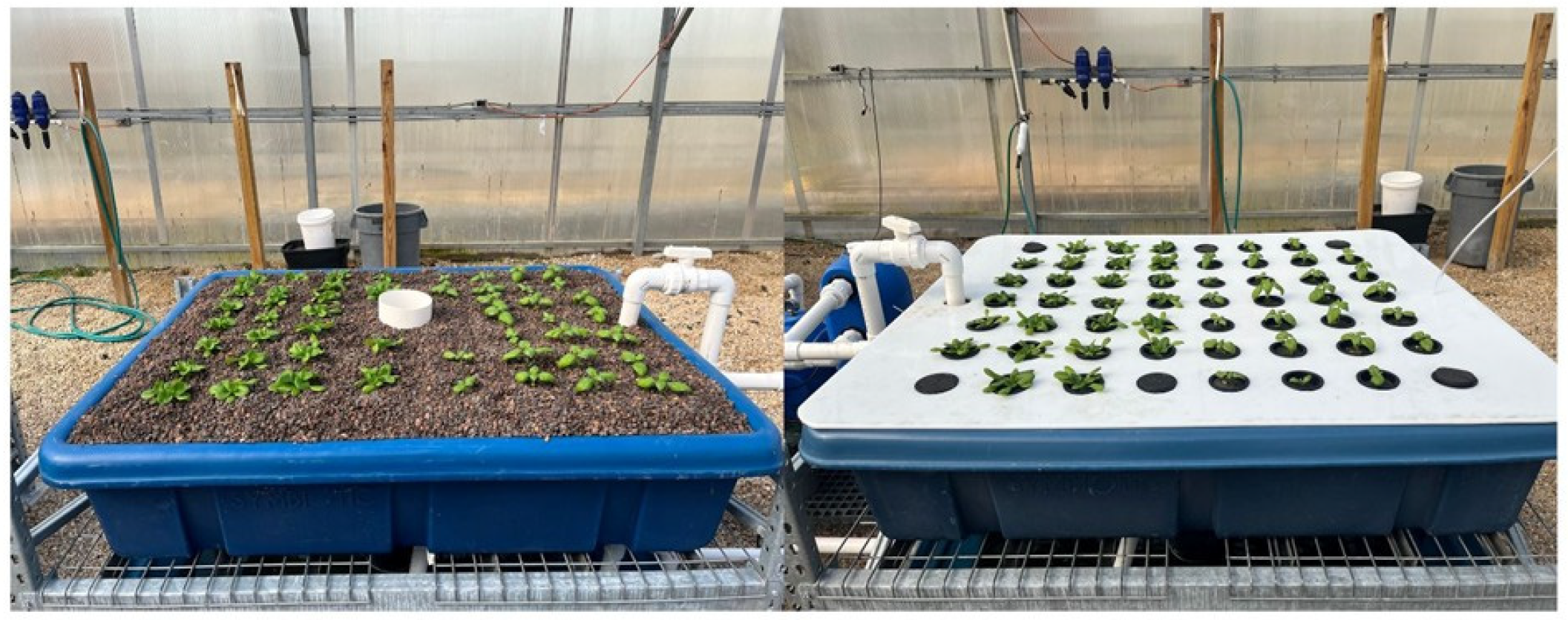
Of the six systems, three were connected to a media bed (1136 L) and three were connected to tanks containing floating rafts (1514 L). Each media bed was filled with expanded shale material (Symbiotic LLC, McAlester, OK, USA) and had a centrally-located bell siphon to allow the water to flood and drain the bed on a 15 min cycle (13 min flood; 2 min drain;
Figure 3). Each floating raft sub-system had an airstone connected to an air pump to provide oxygen to the plant roots. Media beds did not have aeration as the flood and drain within the bed allowed plant roots to be exposed to oxygen during each cycle. The air temperature (°C) and humidity (%) were measured twice daily (AM and PM) in each system using a digital hygrometer (Sper Scientific Instruments, Scottsdale, AZ, USA). These readings were averaged before reporting.
2.2. Water Quality
Water from each fish tank was measured daily for dissolved oxygen (DO; mg/L), temperature (°C), pH, and electrical conductivity (EC; uS/cm) using a multi-parameter photometer (Hanna Instruments; Woonsocket, RI, USA). Weekly measurements of the following parameters were conducted: total ammonia nitrogen (TAN; mg/L), nitrite nitrogen (NO2-N; mg/L), nitrate nitrogen (NO3-N; mg/L), and alkalinity (CaCO3; mg/L) were obtained using a WaterLink Spin Touch (LaMotte Company; Chestertown, MD, USA); iron (Fe; mg/L) was measured using a multiparameter photometer (Hanna Instruments; Woonsocket, RI, USA); turbidity (NTU) was obtained using a turbidity meter (Hanna Instruments; Woonsocket, RI, USA); and the flow rate (L/min) into the fish tank was measured using a timer and volumetric pitcher. Pre- and post-water samples were obtained from each replicate’s sump tank and sent to the Waypoint Analytical (Chesterfield, VA, USA) laboratory for analysis. Previous research has indicated that the analysis of certain ions and elements is useful to discern nutrients in the aquaponic system, namely Na+, Ca2+, Mg2+, K+, SO4 2−, HCO3−, NO3−, PO43−, Cu, Zn, Mn, Fe, B, F, and Mo.
Iron chelate (DTPA 11%) was added weekly to maintain the iron concentration at 1.5 mg/L; MgSO4 was added weekly to each sump tank at 0.013 g/L to ensure sufficient ratios of magnesium, calcium, and potassium; and the pH was maintained between 6.5 and 6.8 using potassium bicarbonate (KHCO3) and calcium hydroxide (Ca(OH)2). Fresh water was added weekly and recorded using a FLOMEC electronic flowmeter (Great Plains Industries, Inc.; Wichita, KS, USA). The flow rate into the fish tanks was maintained for each system at 36 L/min.
2.3. Fish Maintenance and Data Collection
Throughout the trials, any dead fish were removed and recorded. At the end of each trial, all surviving tilapia were counted and weighed for each tank. Fish weights were used to calculate weight gain (g), percent weight gain, the specific growth rate (SGR; %/day), and the feed conversion ratio (FCR). The SGR was calculated using the equation [(100 × (ln(final average weight) − ln(initial average weight))]/days of culture]. The FCR was calculated using the equation FCR = weight of diet fed (g)/weight gain of fish (g).
2.4. Plant Data Collection
At the end of each trial, the total fresh plant biomass was determined for each system. The fresh weight was determined by cutting the plant shoots at the top of the rockwool cube (Rockwool International; Hedehusene, Denmark), and plants were weighed without the roots. As the visual inspection of the plants at the conclusion of the study indicated little noticeable difference in plant growth within each sub-system, three plants per plant variety per system were chosen as representative samples. These samples were used to determine the fresh weight (FW, g of edible biomass), plant height (cm), and number of leaves. Additionally, these representative samples were sent for plant tissue elemental analysis at a commercial analytical laboratory. This included an analysis of 15 different elements (%—N, S, P, K, Mg, Ca, Na; mg/L—B, Zn, Mn, Fe, Cu, Al, Cl), which were analyzed using modified AOAC methods 968.08 and 935.13 [
27].
In our study, the systems were the experimental units that were independently assigned to treatments. The individual plants represented multiple observational units within each experimental unit. The degrees of freedom—and therefore the statistical power—of the analysis of variance is dependent on the number of experimental units (systems). It is well known that increasing the number of plants sampled within each system would increase the precision of the estimate for that system, but, as long as the three plants were randomly sampled, increasing the number measured within each system was expected to have a negligible effect on the effect size estimate.
2.5. Trial 1
2.5.1. Fish Stocking
Each of the six aquaponic systems was stocked with Nile tilapia (mean individual weight of 181.2 g) with a final target biomass of 6000 g/system. The tilapia used were mixed-sex but of unknown origin and age. At the time of stocking, 10% of the population was randomly sampled as representatives for weight (g) and length (cm). The fish were fed at a rate of 1% of their total stocking biomass/day. The diet contained 35% protein and the pellet size was 5.0 mm (Zeigler; Gardners, PA, USA). Fish were fed equal portions of the diet twice daily (0700 and 1430) and were fed 5 days/week.
2.5.2. Plant Stocking
Two weeks prior to the beginning of the trial, lettuce and basil seeds were sown in rockwool cubes and raised under fluorescent lights within an indoor germination system until the first true leaves emerged. At this time, each plant species was planted in each system in February (2024), with 25 green lettuce and 25 basil plants, resulting in a planting density of 28 plants/m
2. Plant species were separated on different halves of the grow bed to avoid any potential competition. Plants in media beds were planted in pockets that were spaced 12.7 cm apart (
Figure 3). The pockets were dug deep enough to ensure that water would reach them at each flood and drain cycle. For the plants in the raft systems, rockwool cubes were placed in 3-inch net cups, spaced 12.7 cm apart, and situated with neoprene collars (
Figure 3).
2.5.3. Statistical Analysis
A two-sample Student’s t-test was used to compare the plant, fish, and water quality data using the Jamovi statistical software (Jamovi, Sydney, Australia; version 2.7.38). These data were compared as raft versus media bed. All data were log-transformed to correct for any unequal variance. Data were deemed significant if p < 0.05, and all presented data are in the form of mean ± standard deviation (SD).
2.6. Trial 2
2.6.1. Fish Stocking
Each of the six aquaponic systems was stocked with Nile tilapia (mean individual weight of 202.2 g), with a final target biomass of 6500 g/system. The tilapia used were the same fish as used in Trial 1; however, the fish were randomly placed into the systems at the beginning of the trial. At the time of stocking, 10% of the population was randomly sampled as representatives for weight (g) and length (cm). Fish were fed at a rate of 1.1% of their total biomass. The diet fed and the feeding regime were the same as in Trial 1.
2.6.2. Plant Stocking
Two weeks prior to the beginning of the trial, the two varieties of salanova lettuce were sown in rockwool cubes and raised under fluorescent lights within an indoor germination system until the first true leaves emerged. Each system was planted in April (2024), with 25 red lettuce and 25 green lettuce plants, resulting in a planting density of 28 plants/m2. Plant varieties were separated on different halves of the grow bed. Transplanting into the systems followed the same protocol as outlined for Trial 1.
2.6.3. Water Quality
All water quality conditions were maintained and measured as in Trial 1, except that the quantification of the total settleable solids discharged from the filtration device in each system was also performed weekly. Settleable solids were quantified using Imhoff cones following the APHA standard method 2540F [
28]. The collection of the aquaculture sludge discharge from the filter of each system was conducted following the manufacturer’s recommendations, which included turning the filter drain valve after a backwash sequence to initiate sludge removal. The sludge was then drained into a large volumetric container until the discharge turned clear [
29]. Upon the discharge water turning clear, the drain valve was then closed, allowing the filter to become operational again (<30 s). Once collected, the discharge was homogenized, and 1 L of discharge was added to the Imhoff cone.
2.6.4. Statistical Analysis
A two-sample Student’s t-test was used to compare the plant, fish, and water quality data using the Jamovi statistical software (version 2.7.38). These data were compared as raft versus media bed. All data were log-transformed to correct for any unequal variance. Data were deemed significant if p < 0.05, and all presented data are in the form of mean ± SD.
4. Discussion
4.1. Fish Performance (Trials 1 and 2)
A key indicator of any aquaponic system is fish production, as the fish supply the nutrients for the plants, as well as generating additional revenue. The results showed that the system type did not have an impact on tilapia growth. These results are consistent with other trials comparing system types, which is likely due to the aquaculture components within the systems, such as having the same type and size of filtration, as well as life support (i.e., oxygen and flow), to maintain healthy fish populations. Fish in both trials had relatively low SGRs (avg. 0.33%/day and 0.37%/day for Trials 1 and 2, respectively); however, this could have been due to the short duration of each trial (4–5 weeks), as well as the lower-than-optimal water temperatures present during the study. The water temperatures in both trials ranged from 20.2 to 22.7°C, which would result in slower/lower growth rates for tilapia, which is a warmwater species [
15]. Despite the slower growth of the fish during both trials, the survival rates were high and the fish appeared to be in excellent health. Furthermore, the growth rates in the present study were similar to those in other reports of warmwater fish when grown in lower-than-optimal water temperatures [
31,
32].
4.2. Water Quality and Chemistry
Since water quality directly affects fish performance and health, as well as plant growth and quality, in an aquaponic system, it is a primary consideration when evaluating yield and production parameters. The DO levels in the current study were well above the minimum levels and were approximately 82% (Trial 1) and 94% (Trial 2) of saturation for the water temperatures in the trials. Oxygen is also required by plants in an aquaponic system, not only for essential transpiration processes to occur but also to ensure that the roots are not exposed to anoxic conditions, which can reduce growth and production and even cause plant mortality in severe situations. It seems unlikely that there were any adverse effects on the plants grown during the present study, as the DO levels were always maintained at optimum levels for fish health and plant performance.
The water quality within aquaponic systems is a strong indicator of microorganism health, function, and efficiency. Water quality ultimately impacts both fish and plant growth within any recirculating system and is critical in indicating proper system design. In both trials, the inputs for Fe, Ca(OH)2, KHCO3, MgSO4, and H2O, were in line with the protocols. A 5:1 ratio was used for pH buffer inputs (KHCO3:Ca(OH)2) for Trial 1 and a 3:1 ratio was used during Trial 2, which maintained the pH between 6.5 and 6.8 while also supplementing potassium and calcium for the plants. Due to the addition of potassium and calcium, MgSO4 was added to balance the nutrient ratios. Media bed sub-systems received smaller pH buffer and MgSO4 inputs as compared to floating raft sub-systems because of water volume differences between the system designs. The water inputs between the two system designs were similar, indicating similar water uptake and evaporation loss for each system design.
For both trials, the system type had an effect on water quality parameters, which included the electrical conductivity (EC), turbidity, settleable solids removed from the filter, and elemental concentrations within the water. The differences in water quality may be worthy of attention. The EC was significantly higher in media beds for both trials, which could have been partially due to plants not up taking as many nutrients due to reduced growth as compared to the raft system. The difference in EC could also be due to media bed systems having a significantly lower turbidity concentration, as well as the quantity of settleable solids removed from the filtration units as compared to the rafts. This resulted in more solids accumulating within the system, likely contained in the grow bed, which, over time, would result in more nutrients being present in media bed systems due to the bacterial mineralization of the solid waste retained within the system [
33]. This was reflected in the elemental analysis conducted on the culture water of the systems, which indicated that 8 of 14 elemental concentrations were higher in media beds compared to floating raft sub-systems in Trial 1, while Trial 2 had 9 of 14 elemental concentrations higher in media beds compared to floating raft sub-systems. Future studies that investigate crops with longer life cycles are key to understanding the ability of media beds to mineralize solids as compared to other system designs.
It appears that the pH, water temperature, and mineral composition of the system water in the present study were acceptable for proper plant growth and health in basil and lettuce. There were no signs of mineral imbalances or deficiencies in any of the plants grown in either floating rafts or media beds. In both trials, the final concentrations of all analyzed minerals and water quality parameters were higher than the initial values (except PO43−, which was similar in the final analysis for the culture water in media bed sub-systems). Furthermore, while there were some differences in the analyzed values between the two sub-systems, most were not considered biologically important, with the exception of Ca (33.7 mg/L in floating rafts vs. 63.1 mg/L in media beds) and P (14.0 mg/L in floating rafts vs. 7.1 mg/L in media beds); there were no large differences observed in the chemical analysis of the culture water between the two sub-systems in Trial 2.
4.3. Plant Growth and Production
4.3.1. Plant Biomass
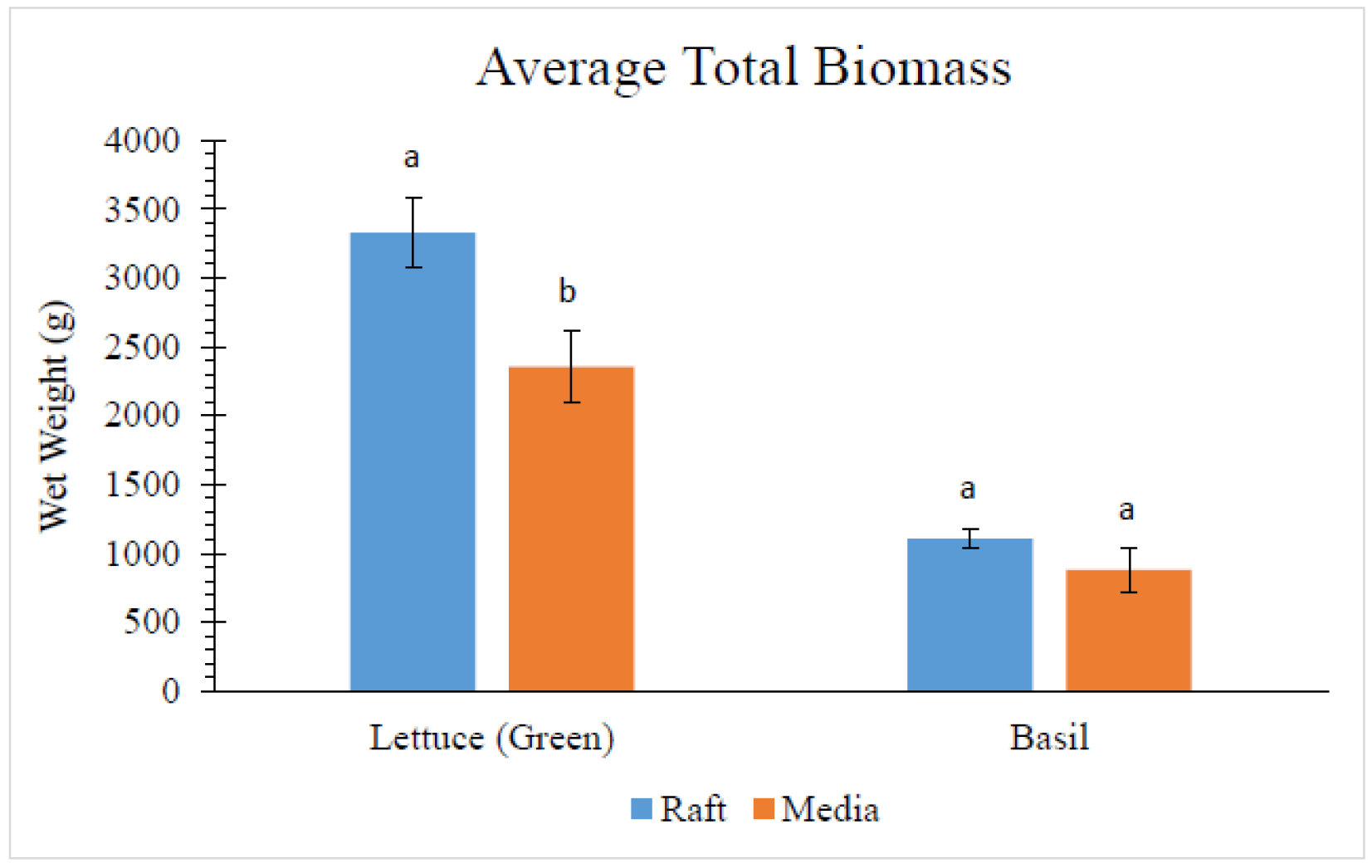
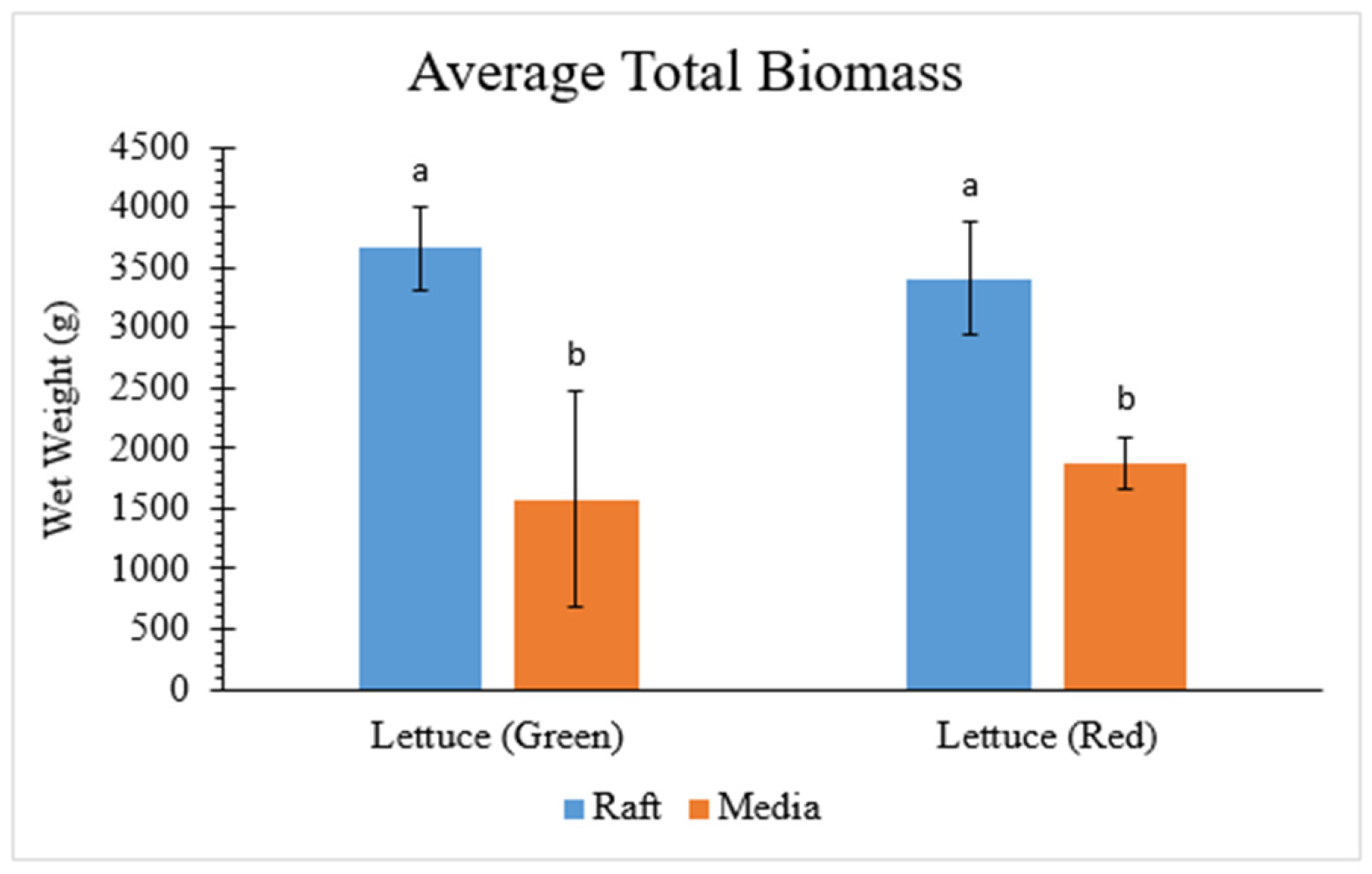
While not significantly different, the average total biomass of basil was higher in raft systems (1,106 g) than media beds (879 g). The individual wet weights of representative basil plants also indicated no difference between basil grown in floating rafts (55 g) compared to plants grown in media beds (42 g) but still indicated a slightly higher weight. The results from the present study are in agreement with those of [
34], which reported that the wet weights of the shoots of basil grown in various substrates within aquaponic systems ranged from 19.5 to 72.3 g/plant. The results are also partially in agreement with [
12], which reported that the wet weight of basil was not significantly different when grown in floating rafts or gravel; however, they found basil to be slightly more productive in media beds (425 g/plant) as compared to rafts (360 g/plant) after 71 days of growth. A major difference between the current study and [
12] was the amount of time for which basil was grown within the systems (35 days vs. 71 days), as well as the plant wet weight data collection protocol, where [
12] included the root and shoot wet weight and utilized a cut-and-comeback technique during harvesting. This could indicate that media beds become more productive over a longer grow period, while also producing a larger root mass as compared to raft systems. Furthermore, this could indicate that, if producers are utilizing raft systems to grow basil, there may be an optimum operating point in terms of growth within the system, as observed for the duration of Trial 1. However, in order to confirm this, a longer study period would need to be implemented, and weekly data points would need to be taken in order to evaluate the growth curves within raft and media beds, which this study did include.
In terms of lettuce growth, the yields of green lettuce in floating raft sub-systems were higher in Trial 2 than Trial 1, and the difference in yield between the system designs was higher when compared to Trial 1. This was likely due to the time of production and the time of year during which the study was conducted, where Trial 1 (35 days total) was conducted in the winter months, where there were cooler temperatures as well as less sunlight as compared to Trial 2 (28 days total). The results from both trials showed that the yield of green lettuce was significantly higher in the raft systems as compared to the media bed systems. Additionally, Trial 2 showed a significantly higher yield of red lettuce within the raft systems as compared to the media beds. The white reflective surface of the floating raft board may have resulted in improved lighting conditions during both trials as compared to the media beds, which may have also contributed to the increased yields for the shorter lettuce crops.
The lettuce production results differ from those in [
11], which found that media beds produced significantly higher yields of green oak lettuce as compared to raft and NFT systems. These differences may have been the result of the slightly different system designs used within the current study and the previous report [
11]. For instance, the media bed systems used in the present study utilized a bell siphon mechanism to ebb and flow water in and out of the hydroponic grow bed, while the water level within the raft hydroponic grow beds remained constant. Lennard and Leonard [
11] did not use a bell siphon; rather, their media bed systems were constantly filled with water within the hydroponic grow bed. This consistently filled media bed could have allowed the plants to better access nutrients, whereas, in our system, the plants were exposed within a cycle (~15 min) to the nutrient-rich aquaculture water. While this cyclical rotation is standard when using bell siphons in order to create the ebb and flow of water in and out of the grow bed, it may have limited plant growth due to reduced exposure to oxygen at the root zone as compared to raft systems.
At the time of this study, there were limited peer-reviewed publications on the use of media bed sub-systems that reported ebb and flow times. The 15 min cycle time for the bell siphon was used in this study due to the ability of the pump on the system to activate the bell siphon while still maintaining appropriate flow into the fish tank (30–37 L/min). Lennard and Leonard [
35] reported using a 70 min cycle (10 min on/60 min off) within a media bed system that did not have a bell siphon attached to it; rather, they simply used a timer to turn the pump on and off accordingly. They reported that the sequence used was based on previous unpublished research. Romano et al. [
33] reported using a 25 min flood and 45 s drain time for media bed systems using a bell siphon; however, no current literature assessing optimal flood and drain time sequencing for media bed systems could be found. This could indicate a gap in the literature and a need for future research to understand the effects of flood and drain sequences and frequencies on plant growth within media bed systems. Future research should also take into consideration that the use of bell siphons has the potential to create difficulties in controlling cycling times and ensuring consistent cycling. The elimination or replacement of the bell siphon with a cycle timer, as used in Lennard and Leonard [
11,
35], attached to a pump, would better serve research and producers in the future as it would lead to more consistent flow control, as well as clearing up the grow area within the media beds by eliminating large gravel guards and bell siphons.
In addition to the ebb and flow differences, Lennard and Leonard [
11] did not mention whether the raft beds contained airstones to provide oxygen to the plant roots, which can be a common design within aquaponic raft production []. The raft systems used in the current study had an airstone, providing constant oxygen to the plant root zone, while our media beds did not. Due to the ebb and flow nature of the media beds, an airstone was not placed in the hydroponic beds, as the roots were exposed to oxygen through the atmospheric exchange of gases when the water was siphoned out of the bed during the 15 min cycle period [
33,
35]. This reduced need for an airstone within the media bed is considered of value for small-scale producers as it reduces the costs for additional airstones and air pumps to provide oxygen within the system. While the DO concentrations measured daily in the fish tanks of each system type did not have any significant differences, the constant oxygen supplied to the root zones within the rafts compared to the media systems may have contributed to the differences in plant growth. This indicates that further research evaluating the use of airstones placed within the media bed is warranted.
While few published reports have directly compared the growth of lettuce between floating rafts (deep water culture) and media beds, the results of the present study are comparable with other studies that have grown lettuce either in floating rafts or media beds. For example, shoot masses of 91–327 g/plant and biomasses of 2.4–6.0 kg/m
2 have been reported for lettuce grown in floating rafts [
22,
23,
36,
37,
38,
39,
40], whereas the current study yielded 123–176 g/plant and 3.7–3.9 kg/m
2. When grown within media beds, the reported lettuce shoot masses were between 144 and 355 g/plant and biomass was between 1 and 2.88 kg/m
2 [
41,
42,
43,
44], whereas the current study found the average shoot weight to be 79–96 g/plant and total biomass to be 1.8–2.2 kg/m
2. While numerous environmental, system design, and methodological differences exist between the current study and the abovementioned studies, the similar production numbers for lettuce indicate high-quality growing conditions for both treatments.
4.3.2. Plant Height
In the present study, the plant heights of basil and lettuce grown in either floating rafts or media beds compared favorably with other reports, indicating that the conditions were acceptable for the growth and production of basil and lettuce. Knaus et al. [
34] reported that basil grown in various substrates in a semi-coupled aquaponic system had plant heights ranging from 40.5 to 61.9 cm, depending upon the substrate used. Knaus et al. [
12] reported that basil was tallest in gravel (101.8 cm) compared to plants grown in floating rafts (94.8 cm) or grow pipes (96.7 cm). The basil height has also been reported to be 74.4 cm after 70 days of growing in a hydroponic system [
45]. The taller basil resulting from growing in media beds could be the result of nitrification supported by beneficial bacteria colonizing the substrate [
6]. The substrate could serve as a bio-filter, with supplemental nitrification provided directly at the root–substrate–water interface.
4.3.3. Mineral and Chemical Composition of Plants
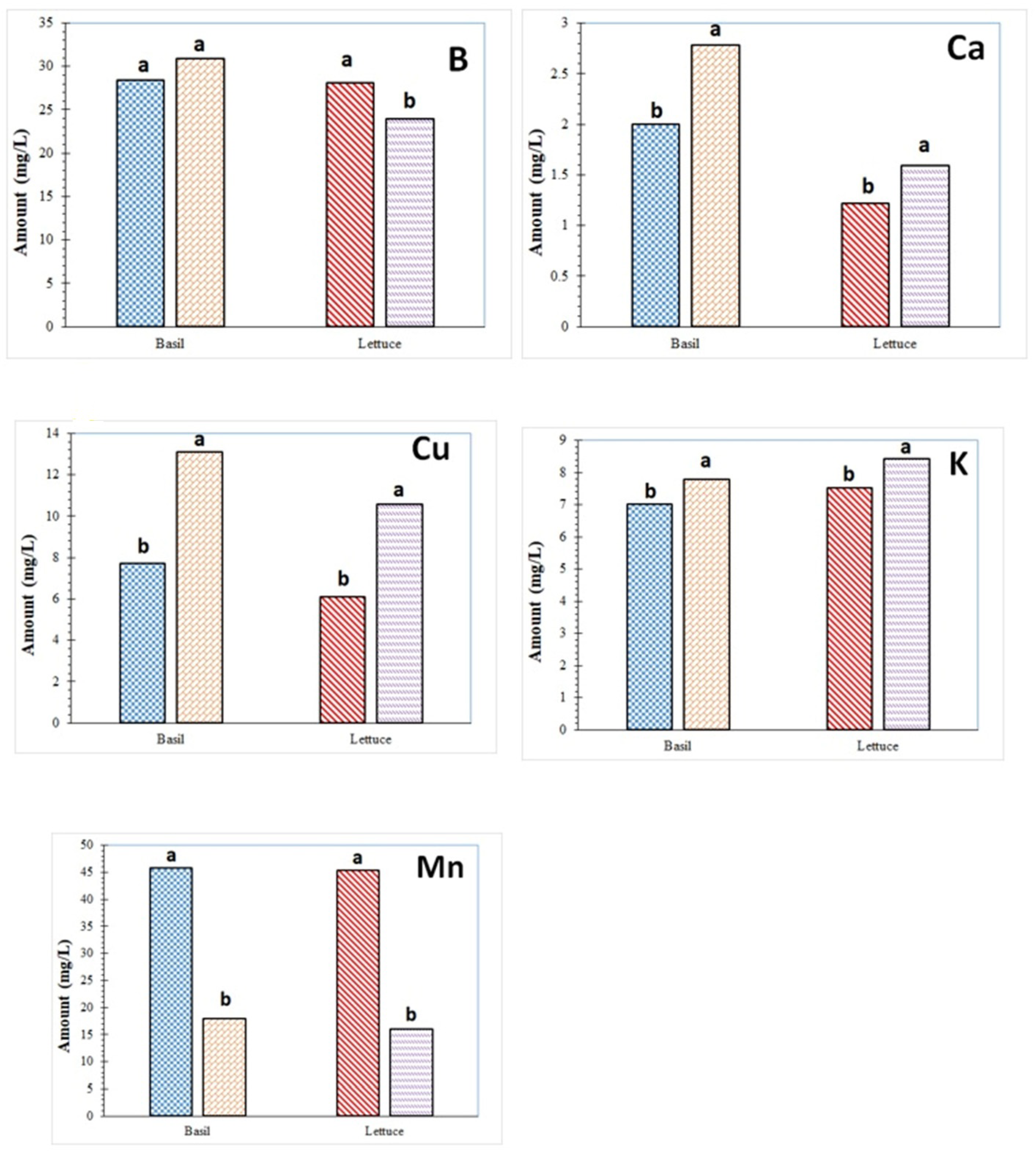
The nutrients in aquaponic systems can be modulated by the diet fed to the fish grown in the system; however, it may not be prudent to rely on the fish diet as the sole source of nutrients. Nutrients (or a lack thereof) may influence plant growth and performance, provide data on the suitability of the aquaponic system to facilitate plant and fish performance, and indicate the overall and nutritional quality of the plant(s) grown in the system. Thus, the elemental/nutritional analysis of plants grown in an aquaponic system is important. In both trials, the plant elemental tissue concentrations for basil and both varieties of lettuce were significantly different across a variety of elements between floating rafts and media beds. Typically, the element concentrations that showed significant differences were higher in plants grown in media bed systems as compared to those grown in floating rafts. These differences may have been caused by the lower overall plant yields within the media systems, which made the elemental concentrations within the leaves higher as compared to the raft systems. This effect is known as size scaling, which is reflected in the inverse relationship between plant tissue elemental concentrations and plant size [
46]; however, as all plants grew comparably to plants in other reports, it appears that the basil and lettuce grown in media beds, while having smaller yields, had adequate levels of minerals in the plant. Indeed, this appears to be accurate, as the levels of P, K, S, Ca, Mg, Na, and Cl in both basil and lettuce (both trials) were similar to or higher than in other reports [
23,
26,
47,
48,
49].
5. Conclusions
The present study indicates that the system design and the effects on plant and fish growth within aquaponic systems are complex and that there is still a gap in the literature regarding the comparison of commercially available system designs for aquaponic production. While the data from the present study are useful to the aquaponic industry, research comparing system designs should consider experimenting with different plant and fish species to understand how plants with longer life cycles or more sensitive fish species can be influenced by the system design. Studies of longer durations, so that plants and fish can grow to commercial sizes, are recommended to fully understand how each system design performs over an extended amount of time. Additionally, the elimination or replacement of bell siphons within media bed systems is recommended to free up space within the grow bed, as well as enabling control over water delivery and retention within the grow bed.
While the present study demonstrated that floating raft systems produced significantly higher yields of green and red lettuce, these results sometimes conflict with the limited research available. These conflicting results are indicative of the complexity of the system designs and protocols that exist within the available literature. Standardizing research designs, system designs, and production protocols for aquaponic systems is critical in the future to ensure coherent, conclusive results that producers can readily adopt. Lastly, while basil growth was not significantly impacted by the system type, floating rafts do not have the expense or weight of media, making them a more compelling choice over media beds.