Physiological and Transcriptomic Response of Exogenous Abscisic Acid and Brassinosteroid on Citrus Under Heat Stress


Abstract
1. Introduction
2. Materials and Methods
2.1. Materials
2.2. Determination of Physiological and Biochemical Indicators
2.3. Determination of Phytohormone
2.4. RNA-Seq and Fluorescence Quantitative Real-Time PCR Analysis
2.5. Data Analysis
3. Results
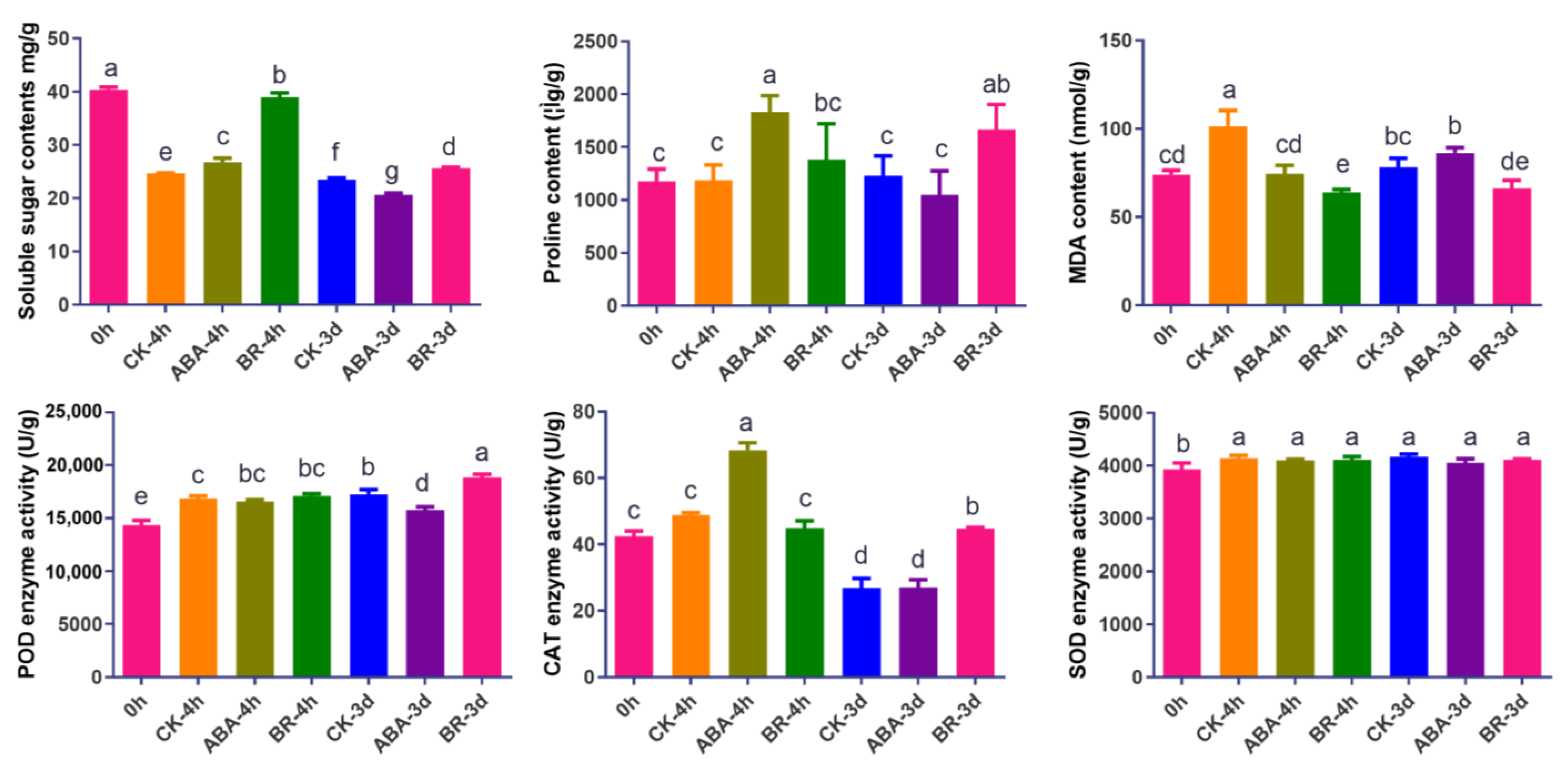
3.1. Effects of Exogenous Abscisic Acid and Brassinosteroid Application on Osmotic Regulators, Malondialdehyde Content, and Antioxidant Enzyme Activity in Citrus Leaves Under Heat Stress
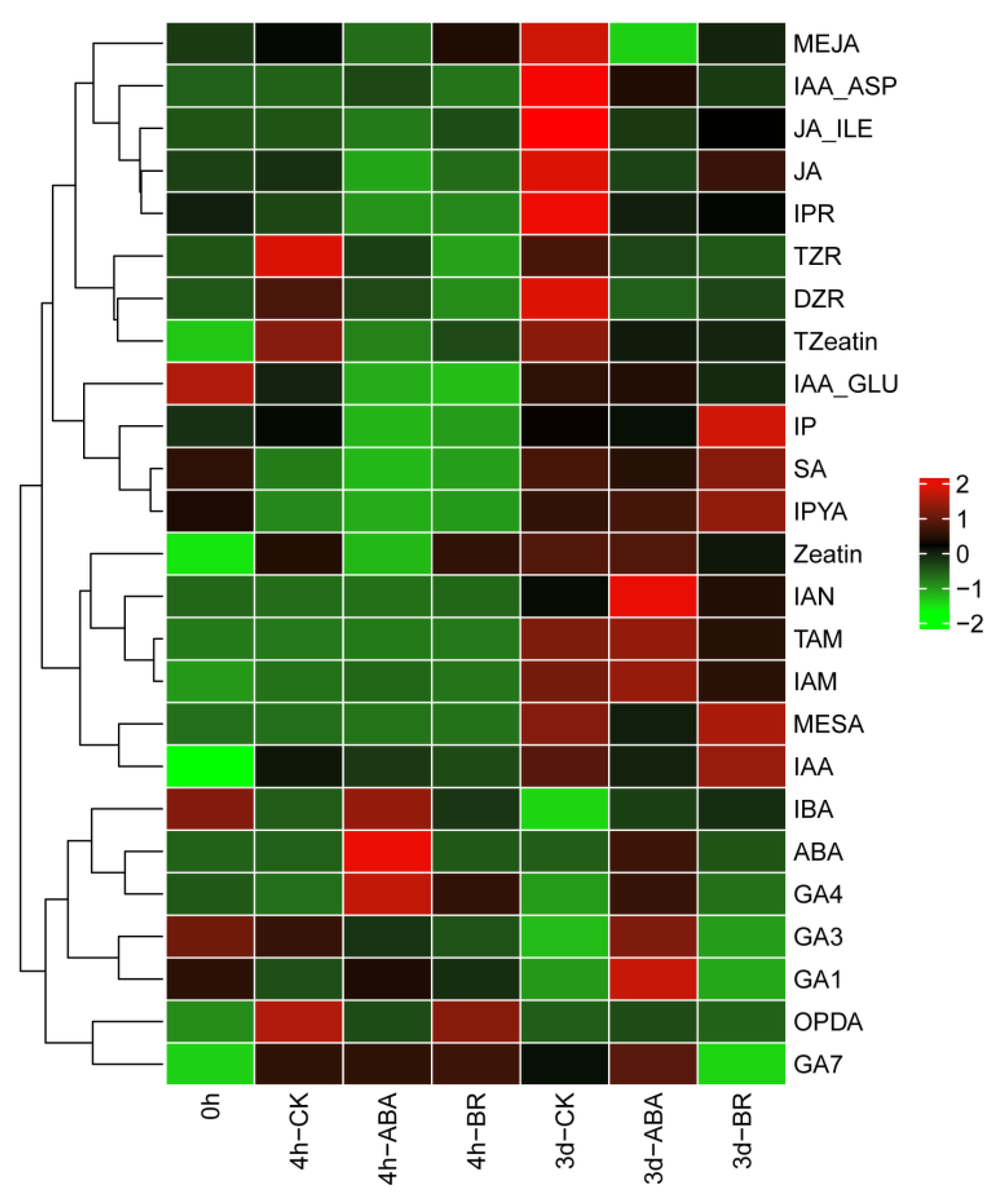
3.2. Effects of Exogenous Abscisic Acid and Brassinosteroid Spraying on Phytohormone Content in Citrus Leaves Under Heat Stress
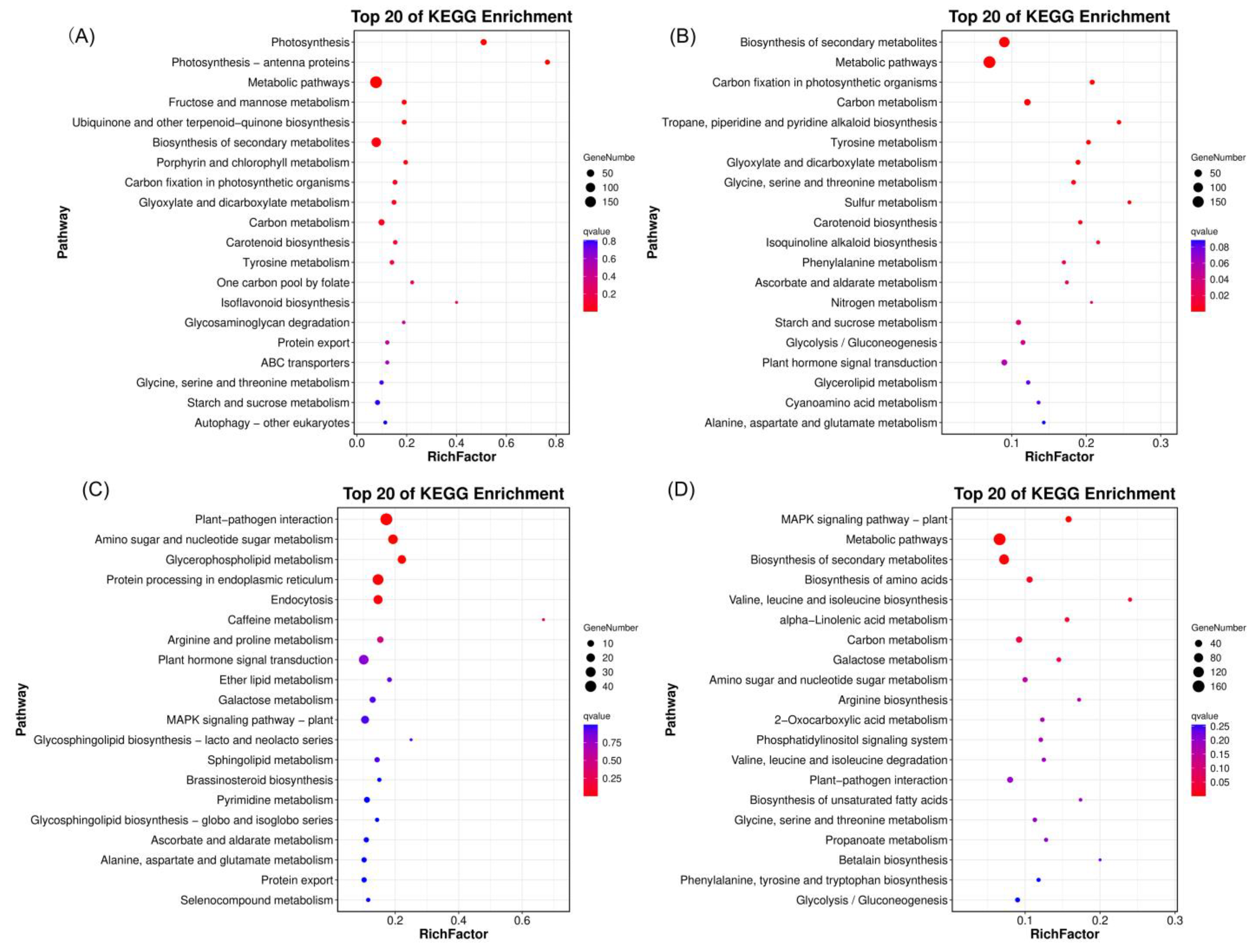
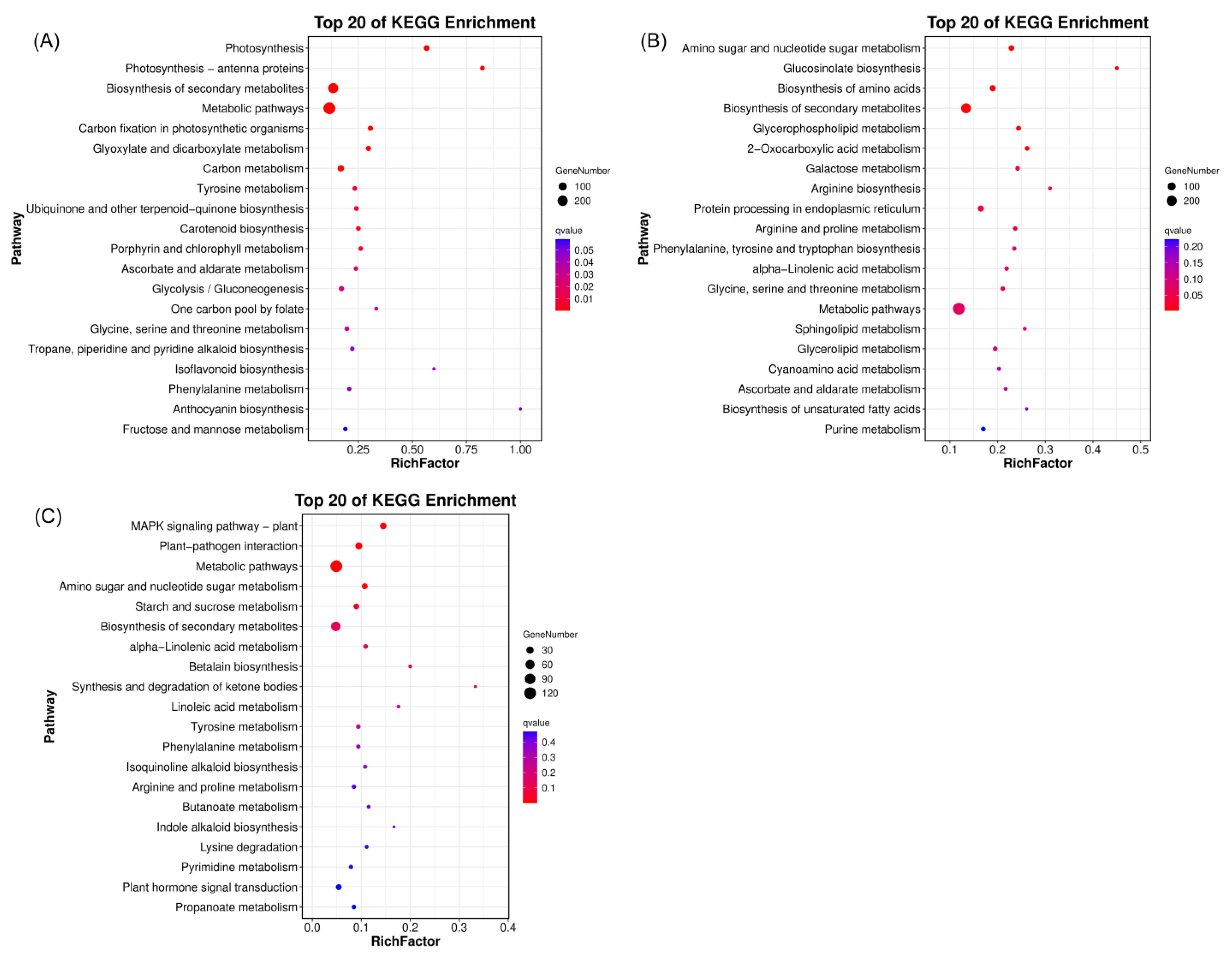
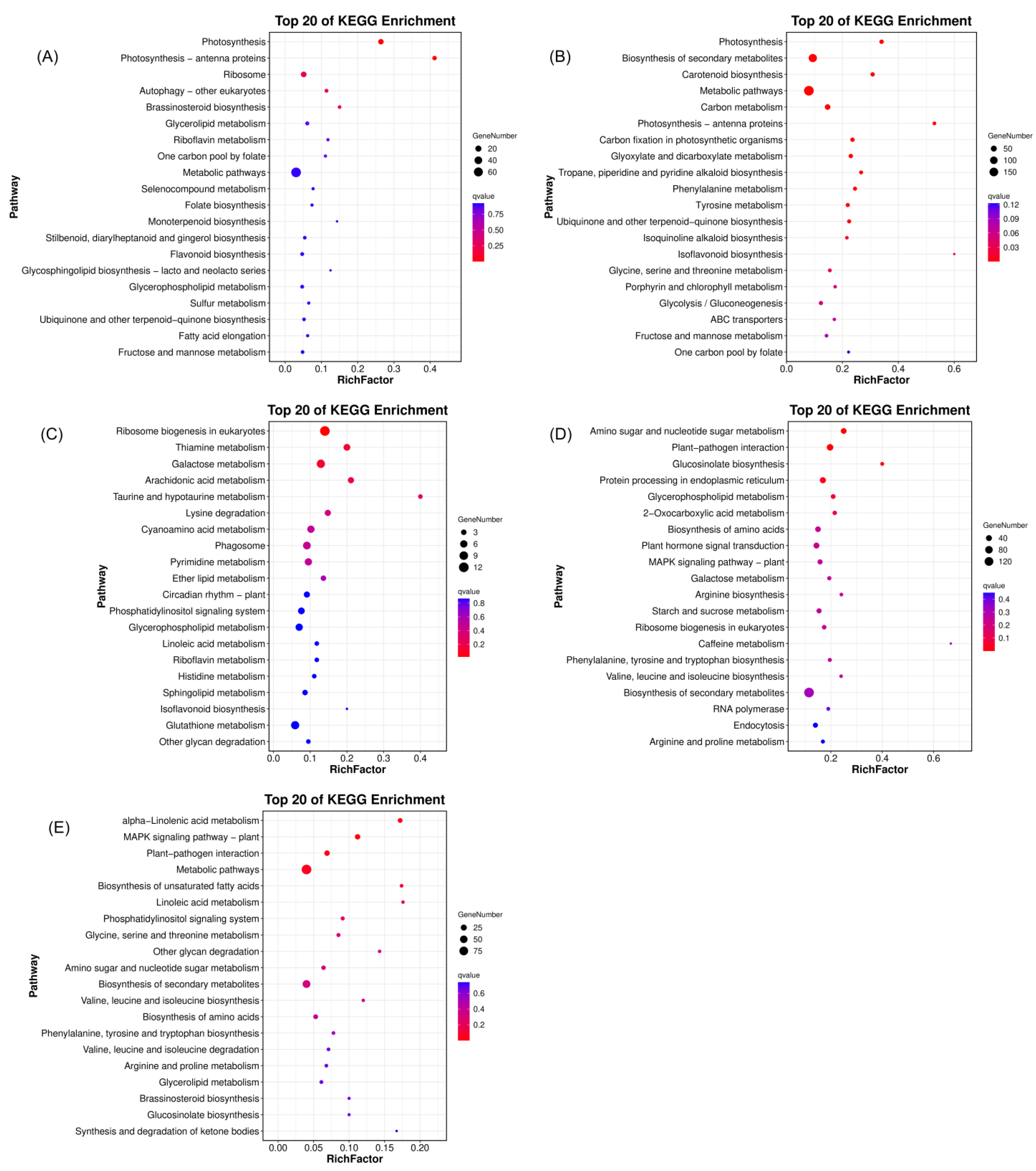
3.3. Transcriptome Sequencing Analysis in Citrus Leaves Under Heat Stress
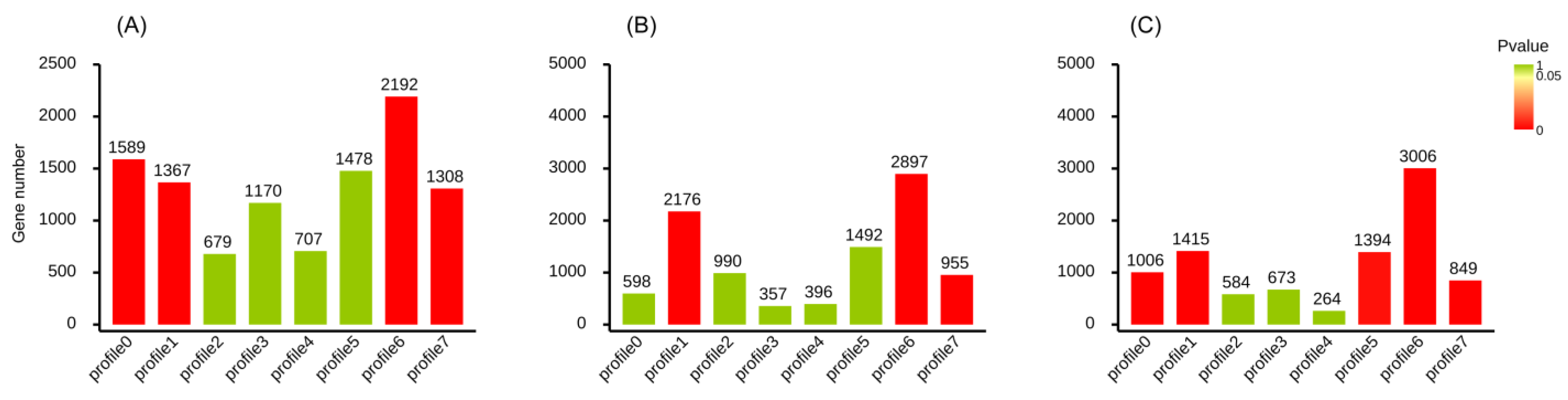
3.4. Effects of Exogenous Abscisic Acid and Brassinosteroid Spraying on Gene Expression Trend in Citrus Leaves Under Heat Stress
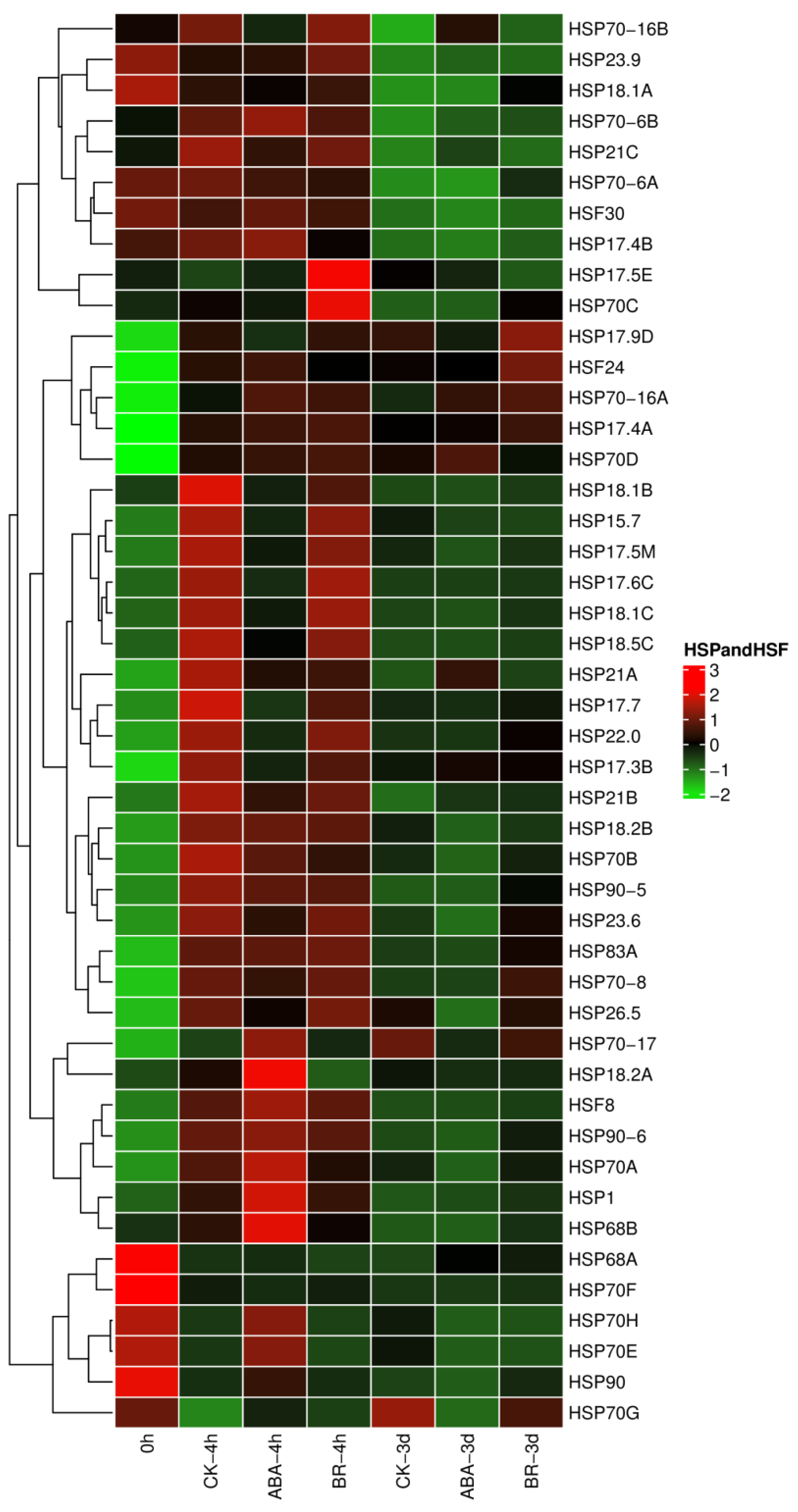
3.5. Effects of Exogenous Abscisic Acid and Brassinosteroid Spraying on Gene Expression of Heat Shock Proteins and Heat Shock Transcription Factors in Citrus Leaves Under Heat Stress
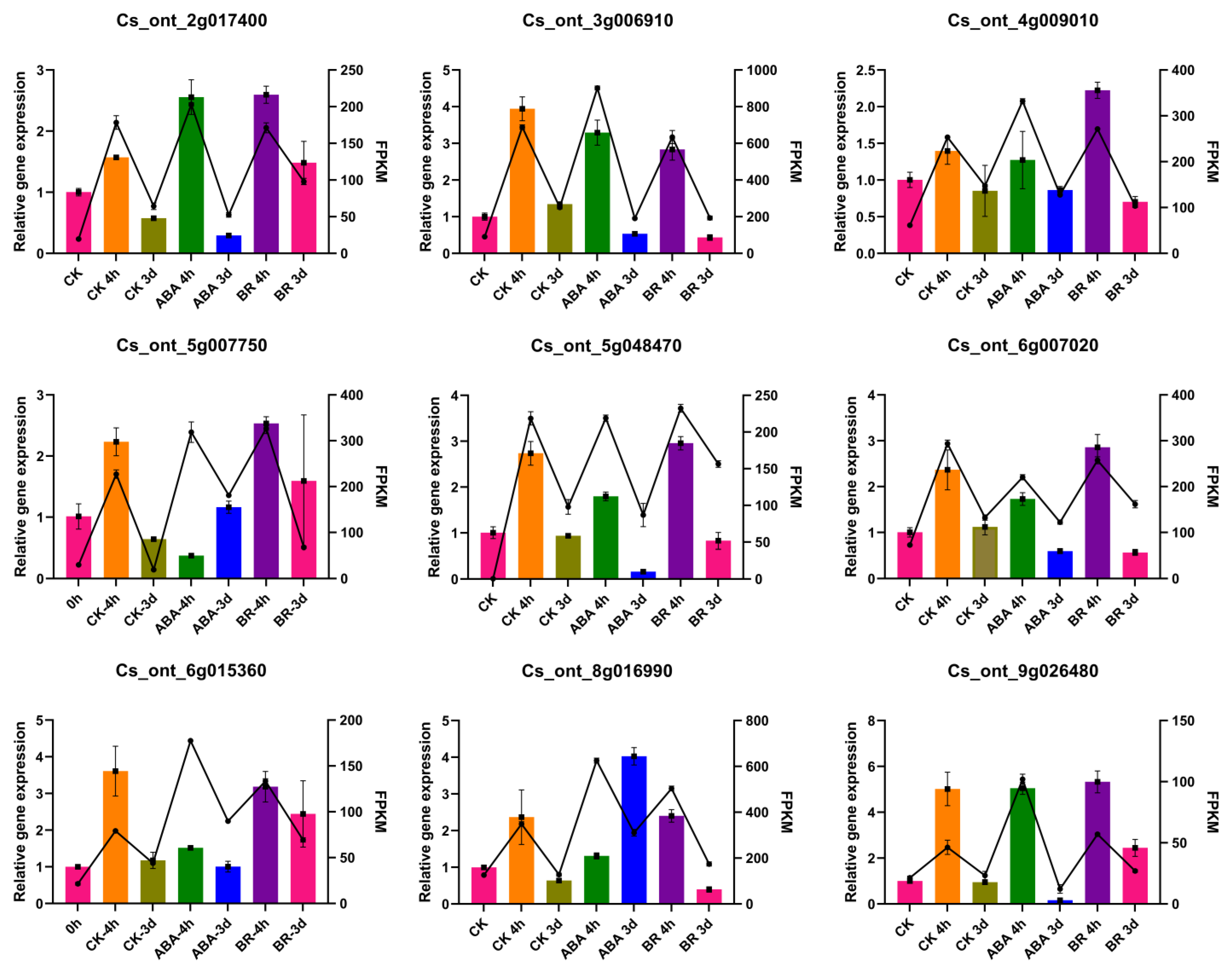
3.6. qRT-PCR Analysis of Differentially Expressed Genes in Citrus Leaves Under Heat Stress
4. Discussion
5. Conclusions
Supplementary Materials
Author Contributions
Funding
Data Availability Statement
Conflicts of Interest
References
- Wu, C.; Cui, K.; Fahad, S. Heat Stress Decreases Rice Grain Weight: Evidence and Physiological Mechanisms of Heat Effects Prior to Flowering. Int. J. Mol. Sci. 2022, 23, 10922. [Google Scholar] [CrossRef] [Scilit] [PubMed]
- Li, B.; Gao, K.; Ren, H.; Tang, W. Molecular mechanisms governing plant responses to high temperatures. J. Integr. Plant Biol. 2018, 60, 757–779. [Google Scholar] [CrossRef] [Scilit] [PubMed]
- Srivastava, A.K.; Barlas, N.T.; Wu, Q.; Raveh, E.; Brunetto, G.; Vashisth, T.; Mousavi, S.M.; Acharya, U.K. Climate change and citrus nutrition: Mechanisms, nutrient imbalances, and inclusive management. Front. Plant Sci. 2026, 17, 1798826. [Google Scholar] [CrossRef] [Scilit] [PubMed]
- Singh, P.; Thakur, G.; Sharma, V.; Singh, J.; Sharma, A. Genetic regulations of citrus flowering: Insights towards climatic factors and modern biotechnological approaches. Planta 2025, 262, 120. [Google Scholar] [CrossRef] [Scilit] [PubMed]
- Wu, S.; Liao, J.; Ye, C.; Chen, S.; Wang, Y.; Zhang, X.; Huang, J.; Chen, C. Physiological Response of Citrus reticulata Blanco var. Gonggan Seedlings to High-Temperature Stress. Life 2025, 15, 806. [Google Scholar] [CrossRef] [Scilit] [PubMed]
- Zhang, Z.; Hu, Y.; Wang, M.; Lei, Z.; Liao, S.; Li, L.; Zheng, X.; Zhu, K.; Chai, L.; Ye, J.; et al. The transcription factor CsbHLH60 relieves high-temperature inhibition of chlorophyll degradation in citrus. J. Integr. Plant Biol. 2026, early view. [Google Scholar] [CrossRef] [Scilit] [PubMed]
- Balfagón, D.; Gómez-Cadenas, A. Combined abiotic stresses in mediterranean citrus orchards: Impacts, adaptation strategies, and climate-resilient solutions. Sci. Hortic. 2025, 353, 114462. [Google Scholar] [CrossRef] [Scilit]
- Terán, F.; Vives-Peris, V.; López-Climent, M.F.; Gómez-Cadenas, A.; Pérez-Clemente, R.M. Palliative Effects of Kaolin on Citrus Plants Under Controlled Stress Conditions of High Temperature and High Light Intensity. J. Plant Growth Regul. 2024, 43, 486–499. [Google Scholar] [CrossRef] [Scilit]
- Islam, M.R.; Feng, B.; Chen, T.; Tao, L.; Fu, G. Role of Abscisic Acid in Thermal Acclimation of Plants. J. Plant Biol. 2018, 61, 255–264. [Google Scholar] [CrossRef] [Scilit]
- Krishna, P.; Prasad, B.D.; Rahman, T. Brassinosteroid Action in Plant Abiotic Stress Tolerance; Russinova, E., Caño-Delgado, A.I., Eds.; Springer: New York, NY, USA, 2017; Volume 1564, pp. 193–202. ISBN 1064-3745. [Google Scholar]
- Ali, S.; Rizwan, M.; Arif, M.S.; Ahmad, R.; Hasanuzzaman, M.; Ali, B.; Hussain, A. Approaches in Enhancing Thermotolerance in Plants: An Updated Review. J. Plant Growth Regul. 2020, 39, 456–480. [Google Scholar] [CrossRef] [Scilit]
- Vishwakarma, K.; Upadhyay, N.; Kumar, N.; Yadav, G.; Singh, J.; Mishra, R.K.; Kumar, V.; Verma, R.; Upadhyay, R.G.; Pandey, M.; et al. Abscisic Acid Signaling and Abiotic Stress Tolerance in Plants: A Review on Current Knowledge and Future Prospects. Front. Plant Sci. 2017, 8, 161. [Google Scholar] [CrossRef] [Scilit] [PubMed]
- Lv, J.; Dong, T.; Zhang, Y.; Ku, Y.; Zheng, T.; Jia, H.; Fang, J. Metabolomic profiling of brassinolide and abscisic acid in response to high-temperature stress. Plant Cell Rep. 2022, 41, 935–946. [Google Scholar] [CrossRef] [Scilit] [PubMed]
- Tao, Z.; Yan, P.; Zhang, X.; Wang, D.; Wang, Y.; Ma, X.; Yang, Y.; Liu, X.; Chang, X.; Sui, P.; et al. Physiological Mechanism of Abscisic Acid-Induced Heat-Tolerance Responses to Cultivation Techniques in Wheat and Maize—Review. Agronomy 2022, 12, 1579. [Google Scholar] [CrossRef] [Scilit]
- Wang, Y.; Lei, B.; Deng, H.; Liu, X.; Dong, Y.; Chen, W.; Lu, X.; Chen, G.; Zhang, G.; Tang, W.; et al. Exogenous Abscisic Acid Affects the Heat Tolerance of Rice Seedlings by Influencing the Accumulation of ROS. Antioxidants 2023, 12, 1404. [Google Scholar] [CrossRef] [Scilit] [PubMed]
- Zhu, J. Abiotic Stress Signaling and Responses in Plants. Cell 2016, 167, 313–324. [Google Scholar] [CrossRef] [Scilit] [PubMed]
- Liu, X.; Ji, P.; Yang, H.; Jiang, C.; Liang, Z.; Chen, Q.; Lu, F.; Chen, X.; Yang, Y.; Zhang, X. Priming effect of exogenous ABA on heat stress tolerance in rice seedlings is associated with the upregulation of antioxidative defense capability and heat shock-related genes. Plant Growth Regul. 2022, 98, 23–38. [Google Scholar] [CrossRef] [Scilit]
- Ahammed, G.J.; Li, X.; Liu, A.; Chen, S. Brassinosteroids in Plant Tolerance to Abiotic Stress. J. Plant Growth Regul. 2020, 39, 1451–1464. [Google Scholar] [CrossRef] [Scilit]
- Gao, Y.; Ma, X.; Zhang, Z.; Wang, X.; Wang, Y. Brassinolides signaling pathway: Tandem response to plant hormones and regulation under various abiotic stresses. Hortic. Adv. 2024, 2, 27. [Google Scholar] [CrossRef] [Scilit]
- Nazir, F.; Jahan, B.; Kumari, S.; Iqbal, N.; Albaqami, M.; Sofo, A.; Khan, M.I.R. Brassinosteroid modulates ethylene synthesis and antioxidant metabolism to protect rice (Oryza sativa) against heat stress-induced inhibition of source-sink capacity and photosynthetic and growth attributes. J. Plant Physiol. 2023, 289, 154096. [Google Scholar] [CrossRef] [Scilit] [PubMed]
- Dündar, G.; Ramirez, V.E.; Poppenberger, B. The heat shock response in plants: New insights into modes of perception, signaling, and the contribution of hormones. J. Exp. Bot. 2025, 76, 1970–1977. [Google Scholar] [CrossRef] [Scilit] [PubMed]
- von Koskull-Döring, P.; Scharf, K.; Nover, L. The diversity of plant heat stress transcription factors. Trends Plant Sci. 2007, 12, 452–457. [Google Scholar] [CrossRef] [Scilit] [PubMed]
- Ohama, N.; Sato, H.; Shinozaki, K.; Yamaguchi-Shinozaki, K. Transcriptional Regulatory Network of Plant Heat Stress Response. Trends Plant Sci. 2017, 22, 53–65. [Google Scholar] [CrossRef] [Scilit] [PubMed]
- Xue, P.; Sun, Y.; Hu, D.; Zhang, J.; Wan, X. Genome-wide characterization of DcHsp90 gene family in carnation (Dianthus caryophyllus L.) and functional analysis of DcHsp90-6 in heat tolerance. Protoplasma 2023, 260, 807–819. [Google Scholar] [CrossRef] [Scilit] [PubMed]
- Wu, Z.; Liang, J.; Wang, C.; Zhao, X.; Zhong, X.; Cao, X.; Li, G.; He, J.; Yi, M. Overexpression of lily HsfA3s in Arabidopsis confers increased thermotolerance and salt sensitivity via alterations in proline catabolism. J. Exp. Bot. 2018, 69, 2005–2021. [Google Scholar] [CrossRef] [Scilit] [PubMed]
- Liu, H.C.; Liao, H.T.; Charng, Y.Y. The role of class A1 heat shock factors (HSFA1s) in response to heat and other stresses in Arabidopsis. Plant Cell Environ. 2011, 34, 738–751. [Google Scholar] [CrossRef] [Scilit] [PubMed]
- Li, S.; Yuan, L.; Yu, H.; Li, Y.; Kong, L.; Duan, W.; Liang, Z.; Wang, L. The HSFA2–HSFB2a–WRKY10 transcriptional cascade mediates thermotolerance across grape germplasms. Plant Physiol. 2026, 200, f651. [Google Scholar] [CrossRef] [Scilit] [PubMed]
- Wang, X.; Zhuang, L.; Shi, Y.; Huang, B. Up-Regulation of HSFA2c and HSPs by ABA Contributing to Improved Heat Tolerance in Tall Fescue and Arabidopsis. Int. J. Mol. Sci. 2017, 18, 1981. [Google Scholar] [CrossRef] [Scilit] [PubMed]
- Luo, J.; Jiang, J.; Sun, S.; Wang, X. Brassinosteroids promote thermotolerance through releasing BIN2-mediated phosphorylation and suppression of HsfA1 transcription factors in Arabidopsis. Plant Commun. 2022, 3, 100419. [Google Scholar] [CrossRef] [Scilit] [PubMed]
- Zhang, Z.; Qu, W.; Li, X. Experimental Manual of Plant Physiology, 4th ed.; Higher Education Press: Beijing, China, 2009. [Google Scholar]
- Jin, L.; Liu, Y.; Du, W.; Fu, L.; Hussain, S.B.; Peng, S. Physiological and transcriptional analysis reveals pathways involved in iron deficiency chlorosis in fragrant citrus. Tree Genet. Genomes 2017, 13, 51. [Google Scholar] [CrossRef] [Scilit]
- Trapnell, C.; Williams, B.A.; Pertea, G.; Mortazavi, A.; Kwan, G.; van Baren, M.J.; Salzberg, S.L.; Wold, B.J.; Pachter, L. Transcript assembly and quantification by RNA-Seq reveals unannotated transcripts and isoform switching during cell differentiation. Nat. Biotechnol. 2010, 28, 511–515. [Google Scholar] [CrossRef] [Scilit] [PubMed]
- Jin, L.; Yin, X.; Wen, M.; Huang, B.; Liu, F.; Li, X.; Wang, P. Genome-Wide Identification, Characterization, and Expression of the HAK/KUP/KT Potassium Transporter Gene Family in Poncirus trifoliata and Functional Analysis of PtKUP10 under Salt Stress. Horticulturae 2024, 6, 628. [Google Scholar]
- Rascio, A.; Altamura, G.; Pecorella, I.; Goglia, L.; Sorrentino, G. Physiological mechanisms preventing plant wilting under heat stress: A case study on a wheat (Triticum durum Desf.) bound water-mutant. Environ. Exp. Bot. 2023, 215, 105502. [Google Scholar] [CrossRef] [Scilit]
- Tadayon, M.S.; Mousavi, S.M.; Hosseini, S.M.; Sadeghi, S. Improving Washington Navel orange yield under drought: Effects of artificial mulch and shade netting. J. Hortic. Sci. Biotechnol. 2025, 100, 723–740. [Google Scholar] [CrossRef] [Scilit]
- Wang, M.; Qiu, J.; He, Y.; Li, W.; Ling, L.; Chun, C.; Fu, X.; Cao, L.; Peng, L. Effects of lime concentration and spray coverage on the severity of citrus sunburn and fruit quality. J. Fruit Sci. 2020, 37, 1518–1527. [Google Scholar]
- Pantoja-Benavides, A.D.; Garces-Varon, G.; Restrepo-Díaz, H. Foliar Growth Regulator Sprays Induced Tolerance to Combined Heat Stress by Enhancing Physiological and Biochemical Responses in Rice. Front. Plant Sci. 2021, 12, 702892. [Google Scholar] [CrossRef] [Scilit] [PubMed]
- Salwa, N.; Swarna, S.S.; Moonmoon, S. Exogenous regulators enhance strawberry yield under heat stress conditions. Sci. Rep. 2026, 16, 5573. [Google Scholar] [CrossRef] [Scilit] [PubMed]
- Preet, T.; Ghai, N.; Jindal, S.K. Mitigating the effects of elevated temperature through the use of growth regulators in bell pepper. Agric. Res. J. 2022, 59, 400–406. [Google Scholar] [CrossRef] [Scilit]
- Khan, M.A.; Liu, D.; Alam, S.M.; Zaman, F.; Luo, Y.; Han, H.; Ateeq, M.; Liu, Y. Molecular physiology for the increase of soluble sugar accumulation in citrus fruits under drought stress. Plant Physiol. Biochem. 2023, 203, 108056. [Google Scholar] [CrossRef] [Scilit] [PubMed]
- Ma, W.; Li, Y.; Nai, G.; Liang, G.; Ma, Z.; Chen, B.; Mao, J. Changes and response mechanism of sugar and organic acids in fruits under water deficit stress. PeerJ 2022, 10, e13691. [Google Scholar] [CrossRef] [Scilit] [PubMed]
- Sun, S.; Zhao, X.; Li, X.; Niu, Y. Brassinosteroids Enhance Low-Temperature Resistance by Promoting the Formation of Sugars in Maize Mesocotyls. Plants 2025, 14, 2612. [Google Scholar] [CrossRef] [Scilit] [PubMed]
- Kavi Kishor, P.B.; Suravajhala, P.; Rathnagiri, P.; Sreenivasulu, N. Intriguing Role of Proline in Redox Potential Conferring High Temperature Stress Tolerance. Front. Plant Sci. 2022, 13, 867531. [Google Scholar] [CrossRef] [Scilit] [PubMed]
- Park, S.; La, V.H.; Bae, D.; Lee, B.; Kim, T. Drought-induced ABA-responsive glutamate dehydrogenase activation is a dominant pathway for proline synthesis in Brassica napus leaves. J. Plant Physiol. 2026, 320, 154754. [Google Scholar] [CrossRef] [Scilit] [PubMed]
- Choudhury, F.K.; Rivero, R.M.; Blumwald, E.; Mittler, R. Reactive oxygen species, abiotic stress and stress combination. Plant J. 2017, 90, 856–867. [Google Scholar] [CrossRef] [Scilit] [PubMed]
- Sadura, I.; Janeczko, A. Brassinosteroids and the Tolerance of Cereals to Low and High Temperature Stress: Photosynthesis and the Physicochemical Properties of Cell Membranes. Int. J. Mol. Sci. 2021, 23, 342. [Google Scholar] [CrossRef] [Scilit] [PubMed]
- Li, Y.; Cao, T.; Guo, Y.; Grimm, B.; Li, X.; Duanmu, D.; Lin, R. Regulatory and retrograde signaling networks in the chlorophyll biosynthetic pathway. J. Integr. Plant Biol. 2025, 67, 887–911. [Google Scholar] [CrossRef] [Scilit] [PubMed]
- Lai, H.; Li, X.; Chen, Y.; Liu, Z. Mitigating heat-induced yield loss in peanut: Insights into 24-epibrassinolide-mediated improvement in antioxidant capacity, photosynthesis, and kernel weight. Field Crops Res. 2024, 316, 109521. [Google Scholar] [CrossRef] [Scilit]
- Shi, L.; Shi, W.; Qiu, Z.; Yan, S.; Liu, Z.; Cao, B. CaMAPK1 Plays a Vital Role in the Regulation of Resistance to Ralstonia solanacearum Infection and Tolerance to Heat Stress. Plants 2024, 13, 1775. [Google Scholar] [CrossRef] [Scilit] [PubMed]
- Kumar, R.R.; Dubey, K.; Arora, K.; Dalal, M.; Rai, G.K.; Mishra, D.; Chaturvedi, K.K.; Rai, A.; Kumar, S.N.; Singh, B.; et al. Characterizing the putative mitogen-activated protein kinase (MAPK) and their protective role in oxidative stress tolerance and carbon assimilation in wheat under terminal heat stress. Biotechnol. Rep. 2021, 29, e597. [Google Scholar] [CrossRef] [Scilit] [PubMed]
- Chen, M.; Zheng, H.; Ye, J.; Li, M.; Yao, B.; Wu, H.; Wang, J.; Qu, H.; Meng, Y.; Li, M.; et al. ZmMKK1 phosphorylates ZmCAT2 to regulate H2O2 homeostasis and improve heat stress tolerance in maize. New Phytol. 2026, 250, 1722–1739. [Google Scholar] [CrossRef] [Scilit] [PubMed]
- Li, Y.; Gong, K.; Wang, X.; Sun, Z.; Ding, F. Heat Shock Transcription Factors as Central Integrators of Plant Stress Responses: From Thermotolerance to Multi-Stress Resilience. Biology 2025, 14, 1800. [Google Scholar] [CrossRef] [Scilit] [PubMed]
- Fang, Y.; Liao, H.; Wei, Y.; Yin, J.; Cha, J.; Liu, X.; Chen, X.; Chen, L.; Ma, Z.; Zhang, J.; et al. OsCDPK24 and OsCDPK28 phosphorylate heat shock factor OsHSFA4d to orchestrate abiotic and biotic stress responses in rice. Nat. Commun. 2025, 16, 6485. [Google Scholar] [CrossRef] [Scilit] [PubMed]
- Zhao, P.; Wang, D.; Wang, R.; Kong, N.; Zhang, C.; Yang, C.; Wu, W.; Ma, H.; Chen, Q. Genome-wide analysis of the potato Hsp20 gene family: Identification, genomic organization and expression profiles in response to heat stress. BMC Genom. 2018, 19, 61. [Google Scholar] [CrossRef] [Scilit] [PubMed]
- Alhaj Hamoud, Y.; Noman, M.; Yang, X.; Ahmed, T.; Alwutayd, K.M.; Qin, H.; Shaghaleh, H. Integrated multi-omics and transcriptomic analysis reveals key regulatory networks of heat stress responses in potato. Plant Physiol. Biochem. 2025, 228, 110204. [Google Scholar] [CrossRef] [Scilit] [PubMed]



| Heat stress 0 h | Foliage spray water, ABA, and BR, respectively. | After the leaf surface solution has dried, transfer the plants to an artificial climate chamber for heat stress treatment. | Heat stress 4 h | Heat stress 3 d |
| CK-0 h | CK-4 h | Water-3 d | ||
| ABA-4 h | ABA-3 d | |||
| BR-4 h | BR-3 d |
Disclaimer/Publisher’s Note: The statements, opinions and data contained in all publications are solely those of the individual author(s) and contributor(s) and not of MDPI and/or the editor(s). MDPI and/or the editor(s) disclaim responsibility for any injury to people or property resulting from any ideas, methods, instructions or products referred to in the content. |
© 2026 by the authors. Licensee MDPI, Basel, Switzerland. This article is an open access article distributed under the terms and conditions of the Creative Commons Attribution (CC BY) license.
Share and Cite
Jin, L.; Wang, P.; Sun, Y.; Wu, Y.; Liu, F.; Wang, P. Physiological and Transcriptomic Response of Exogenous Abscisic Acid and Brassinosteroid on Citrus Under Heat Stress. Horticulturae 2026, 12, 924. https://doi.org/10.3390/horticulturae12080924
Jin L, Wang P, Sun Y, Wu Y, Liu F, Wang P. Physiological and Transcriptomic Response of Exogenous Abscisic Acid and Brassinosteroid on Citrus Under Heat Stress. Horticulturae. 2026; 12(8):924. https://doi.org/10.3390/horticulturae12080924
Chicago/Turabian StyleJin, Longfei, Penghui Wang, Yueting Sun, Yanmei Wu, Feng Liu, and Peng Wang. 2026. "Physiological and Transcriptomic Response of Exogenous Abscisic Acid and Brassinosteroid on Citrus Under Heat Stress" Horticulturae 12, no. 8: 924. https://doi.org/10.3390/horticulturae12080924
APA StyleJin, L., Wang, P., Sun, Y., Wu, Y., Liu, F., & Wang, P. (2026). Physiological and Transcriptomic Response of Exogenous Abscisic Acid and Brassinosteroid on Citrus Under Heat Stress. Horticulturae, 12(8), 924. https://doi.org/10.3390/horticulturae12080924