Article

Physiological and Transcriptomic Response of Exogenous Abscisic Acid and Brassinosteroid on Citrus Under Heat Stress


1
Institute of Citrus Research, Zhejiang Academy of Agricultural Sciences, Taizhou 318026, China
2
Hubei Key Laboratory of Spices & Horticultural Plant Germplasm Innovation & Utilization, College of Horticulture and Gardening, Yangtze University, Jingzhou 434020, China
*
Author to whom correspondence should be addressed.
Horticulturae 2026, 12(8), 924; https://doi.org/10.3390/horticulturae12080924
Submission received: 11 June 2026 / Revised: 23 July 2026 / Accepted: 24 July 2026 / Published: 27 July 2026
(This article belongs to the Special Issue New Insights into Horticultural Crops Resistance to Abiotic Stresses)

Abstract

Heat stress severely hinders citrus yield and fruit quality. This study employed integrated physiological and transcriptomic analyses to investigate the effects of the exogenous application of abscisic acid (ABA) and brassinosteroid (BR) on heat stress responses in citrus. The results showed that the exogenous application of ABA and BR increased the contents of soluble sugar, proline, and ABA, and enhanced the activities of peroxidase and catalase under heat stress. Transcriptome trend analysis identified profiles 1, 6, and 7 as significantly enriched across exogenous ABA, BR, and control conditions. Profile 6 exhibited rapid upregulation followed by stabilization and showed a significantly higher gene count under both ABA and BR treatments than under the control. KEGG enrichment analysis revealed that genes in profile 6 were primarily enriched in amino sugar, nucleotide sugar, galactose, amino acids, 2-oxocarboxylic acid, glycerophospholipid, glucosinolate metabolism, MAPK signaling pathway, plant hormone signal transduction, protein processing in the endoplasmic reticulum, plant–pathogen interaction, and endocytosis. Furthermore, four genes encoding heat shock proteins (HSP), including HSP21A, HSP21B, HSP70-17, and HSP70A, were induced under heat stress and showed significant upregulation in response to exogenous ABA and BR treatments. In conclusion, these findings indicated that exogenous ABA and BR regulated ABA and osmoprotectant accumulation and antioxidant defense activation in response to heat stress.

1. Introduction

In recent years, with global warming, extreme weather events have occurred frequently, and high-temperature heat stress (HS) has become one of the main meteorological disasters limiting crop production [1,2]. Citrus, the world’s most widely produced fruit crop, has a long history of cultivation and is primarily grown in tropical and subtropical regions. In China, citrus cultivation ranks among the top in both area and yield, serving as a significant source of income for farmers in the south. The optimal temperature range for citrus growth is 23–29 °C, and temperatures exceeding 35 °C will inhibit citrus growth and fruit development [3,4]. HS triggers disordered stomatal closure in citrus leaves, degradation of photosynthetic pigments, and reduced metabolic enzyme activity, resulting in decreased photosynthetic efficiency, burst accumulation of reactive oxygen species (ROS), and damage to the cellular membrane system [5]. Prolonged HS causes leaf yellowing and defoliation, sunburn on fruit surfaces, fruit enlargement and coloration obstacles [6], fruit dehydration and drop, inhibited growth of autumn shoots, and even tree death [7]. HS causes a significant decline in citrus yield and quality, severely and negatively affecting citrus production [8]. Therefore, it is urgent to develop efficient and low-cost heat-resistant cultivation techniques to ensure the stable and sustainable development of the citrus industry.
Phytohormones play a crucial regulatory role in plants’ responses to abiotic stress [9,10]. Exogenous application of plant growth regulators effectively regulates the metabolism of endogenous plant hormones in crops, thereby controlling the adaptability of crops to HS [11]. Abscisic acid (ABA) is a key hormone for plants to cope with various abiotic stresses such as drought, salinity, low temperature, and high temperature [12]. A large number of studies have shown that the content of ABA in plants significantly increases under HS [9,13,14,15]. At the same time, exogenous application of ABA effectively enhances thermotolerance in various crops [16,17]. Brassinosteroid (BR), as a type of plant sterol hormone, also participates in the regulation of plant thermotolerance [18]. BR regulates the expression of various stress-responsive genes by activating a series of phosphorylation cascades and downstream transcription factors, thereby enhancing thermotolerance of plants [19]. For example, spraying BR during the rice (Oryza sativa) grain-filling stage effectively alleviated the yield reduction caused by high temperatures and significantly improved yield and quality [20]. Numerous studies have indicated that ABA and BR form a multi-level signal interaction network with both synergy and antagonism under HS, thereby enhancing plant thermotolerance [21].
Heat shock proteins (HSPs) and heat shock transcription factors (HSFs) function as the master regulators in plants’ response to HS [22,23]. Overexpression of DcHsp90-6 positively enhances thermotolerance in transgenic Arabidopsis seedlings by upregulating superoxide dismutase (SOD) activity [24]. Overexpression of LiHsfA3s in Arabidopsis increased thermotolerance via alterations in proline catabolism [25]. Quadruple knockout of HSFA1s significantly reduced thermotolerance in Arabidopsis mutants [26]. The HSFA2-HSFB2a-WRKY10 transcriptional cascade modulated HS responses in grapevine (Vitis vinifera) through regulating the expression of APX3 and HSP18.1 [27]. The research conducted in tall fescue (Festuca arundinacea) and Arabidopsis thaliana revealed that ABA interacts with HSFA2c and HSP to enhance the photosynthetic efficiency of leaves and the stability of cell membranes, thereby improving thermotolerance [28]. Further analysis of the target genes of BR interaction revealed that BR enhanced thermotolerance through releasing BIN2-mediated phosphorylation and suppression of HsfA1 in Arabidopsis [29].
Although exogenous application of plant growth regulators enhances thermotolerance in various crops, there are still few reports on citrus. Citrus, as a perennial woody fruit tree, may exhibit significant differences in response to HS and phytohormones compared to annual herbaceous plants. This study compared the effects of exogenous spraying of ABA and BR on the thermotolerance of citrus seedlings. Simultaneously, the contents of malondialdehyde, soluble sugar, proline, plant hormones, antioxidant enzyme activities, and the transcriptome in leaves were investigated to reveal the physiological and molecular mechanisms.

2. Materials and Methods

2.1. Materials

The one-year-old seedlings of ’Beni Madonna’ citrus (Citrus nankao × C. amakusa) grafted on trifoliate orange (Poncirus trifoliata) were used as materials. Three treatments were established as follows: Treatment 1, foliar spraying of ABA (200 mg/L); Treatment 2, foliar spraying of BR (0.04 mg/L, 24-Epibrassinolide); and Treatment 3, foliar spraying of deionized water as the control (Table 1). To enhance solution adhesion, 0.05% (v/v) Tween 80 was added to the ABA, BR, and control treatments. ABA and BR were purchased from Zhejiang Dapeng Pharmaceutical Co., Ltd. (Taizhou, China), with catalog numbers PD20183152 and PD20211488, respectively. The temperature for heat treatment was determined based on previous research [5] and the typical temperature range observed in local citrus production areas. HS (42 °C) was applied in an artificial climate chamber, and leaves were collected at 0 h, 4 h, and 3 d. The environmental parameters of the artificial climate chamber are as follows: a light cycle of 16 h of light and 8 h of darkness; air humidity of 80%; LED full-spectrum lighting with an illuminance of 40,000 lux. Each treatment included three biological replicates, each consisting of three seedlings. After HS treatment, the leaf samples were rapidly frozen in liquid nitrogen and stored at −80 °C in a refrigerator for subsequent experiments.

2.2. Determination of Physiological and Biochemical Indicators

Each biological replicate for physiological parameter measurements consisted of a pooled sample from three independent citrus seedlings. The soluble sugar content of the citrus leaves was determined by the anthrone colorimetric method. The proline (Pro) content was determined by the ninhydrin colorimetric method. The malondialdehyde (MDA) content was determined by the thiobarbituric acid colorimetric method. The peroxidase (POD) enzymatic activity was determined by the colorimetric method. The catalase (CAT) enzymatic activity was determined by the ammonium molybdate method. The superoxide dismutase (SOD) enzymatic activity was determined by the hydroxylamine method. The detailed experimental procedure was followed according to the kit instructions (Nanjing Jiancheng Bioengineering Institute, Nanjing, China) and a monograph on the physiological and biochemical laboratory guide [30]. The kit catalog numbers were as follows: A145-1-1, A107-1-1, A003-2, A084-3-1, A007-1-1, A001-1.

2.3. Determination of Phytohormone

The phytohormone content in citrus leaves was analyzed using LX50-Qsight420 (PerkinElmer, Waltham, MA, USA) liquid chromatography–mass spectrometry (LC-MS). After collection, leaf samples were rinsed twice with deionized water, dried, and cut into small pieces. The leaf samples were frozen with liquid nitrogen and ground into powder. About 1.0 g of samples (pooled sample from three independent citrus seedlings) was precisely weighed and transferred into the centrifuge tubes. A total of 10 mL of pre-chilled (4 °C) acetonitrile and 80 μL of internal standard stock solution (100 μg/mL) were added. After mixing thoroughly, the mixture was extracted using ultrasonic ion at 4 °C for 30 min, then centrifuged at 4 °C and 12,000 rpm for 10 min. 35 mg of Octadecylsilyl (C18) and 20 mg of Graphitized Carbon Black (GCB) were added to the supernatant. After vortexing the mixture for 30 s, the mixture was centrifuged at 12,000 rpm for 10 min at 4 °C. The supernatant was dried with nitrogen and reconstituted with methanol and ultrapure water. After centrifuging at 12,000 rpm for 5 min at 4 °C, the supernatant was filtered through a 0.11 μm organic-phase membrane and stored at −20 °C until analysis. LC-MS analysis was performed to detect phytohormones. The chromatographic column used in liquid chromatography was a Poroshell 120 EC-C18 reversed-phase column (2.1 × 100 mm, 2.7 μm). Chromatographic conditions included column temperature: 40 °C; flow rate: 0.3 mL/min; injection volume: 10 µL; mobile phase was 0.02% formic acid in water and acetonitrile. The mass spectrometry conditions were as follows: ionization mode was electrospray ionization (ESI), multiple reaction monitoring (MRM), with alternating positive and negative ion scanning; the dry gas flow rate was 120 mL/min; the heated spray interface (HSID) temperature was 300 °C; the nebulizer gas flow rate was 240 mL/min; the electrospray voltage was +5500 V/−5000 V; and the source temperature was 300 °C. The analysis was performed by Nanjing Webiolotech Testing Technology Company (Nanjing, China).

2.4. RNA-Seq and Fluorescence Quantitative Real-Time PCR Analysis

The total RNA was extracted from citrus leaf samples (pooled sample from three independent citrus seedlings) using a plant total RNA extraction kit (Takara, Dalian, China). Each treatment contained three biological replicates, and each biological replicate was a mixture of leaves from three seedlings. The mRNA was enriched using mRNA Capture Beads. The purified mRNA was reverse transcribed to construct the library. The sequencing was performed on an Illumina Novaseq6000 by Gene Denovo Biotechnology Company (Guangzhou, China). The clean reads were mapped to the citrus genome (http://citrus.hzau.edu.cn/download.php, accessed on 28 March 2025). The detailed RNA-Seq data analysis process was performed according to previous research [31]. A fragments per kilobase of transcript per million mapped reads (FPKM) method [32] was calculated to quantify its expression levels in each library using RSEM (1.2.19) software. The correlation between different samples was quantified using the Pearson correlation coefficient and principal component analysis (PCA) through R (4.5.2). Differentially expressed genes (DEGs) were screened using DESeq (v1.20.0), with the threshold value of an absolute log2 (fold change) ≥ 1 and a false discovery rate (FDR) ≤ 0.05 based on FPKM. p-values were calculated individually for each gene using the Wald test under a negative binomial model, while FDR was obtained by correcting all gene p-values through Benjamini–Hochberg ranking adjustment to control the false positive rate in high-throughput screening. The trend analysis was performed using the OmicShare tools (www.omicshare.com/tools, accessed on 10 April 2025). The expression profiles significantly enriched in the trend analysis were subsequently subjected to Kyoto Encyclopedia of Genes and Genomes (KEGG) pathway enrichment analyses. KEGG enrichment analysis identified significantly enriched metabolic and signaling pathways using a hypergeometric test (Q-value 0.05) against the genomic background. Nine differentially expressed genes were randomly selected to verify the transcriptome data by fluorescent quantitative PCR (qRT-PCR). β-actin was used as the internal reference gene. The qRT-PCR primers were designed using the Primer-BLAST online tool (https://www.ncbi.nlm.nih.gov/tools/primer-blast/, accessed on 20 April 2025), and the sequence information was listed in Supplementary Table S1. The qRT-PCR methods were followed from previous research [33].

2.5. Data Analysis

All data are shown as mean ± standard error (SE). GraphPad Prism 8 software was used for plotting. The heatmaps were drawn using TBtools-II (v2.25). The normality of the data and homogeneity of variances were verified using the Shapiro–Wilk test and Levene’s test, respectively. The physiological indicators and gene expression data were analyzed using SPSS 13.0 with the Duncan test at the 0.05 level.

3. Results

3.1. Effects of Exogenous Abscisic Acid and Brassinosteroid Application on Osmotic Regulators, Malondialdehyde Content, and Antioxidant Enzyme Activity in Citrus Leaves Under Heat Stress

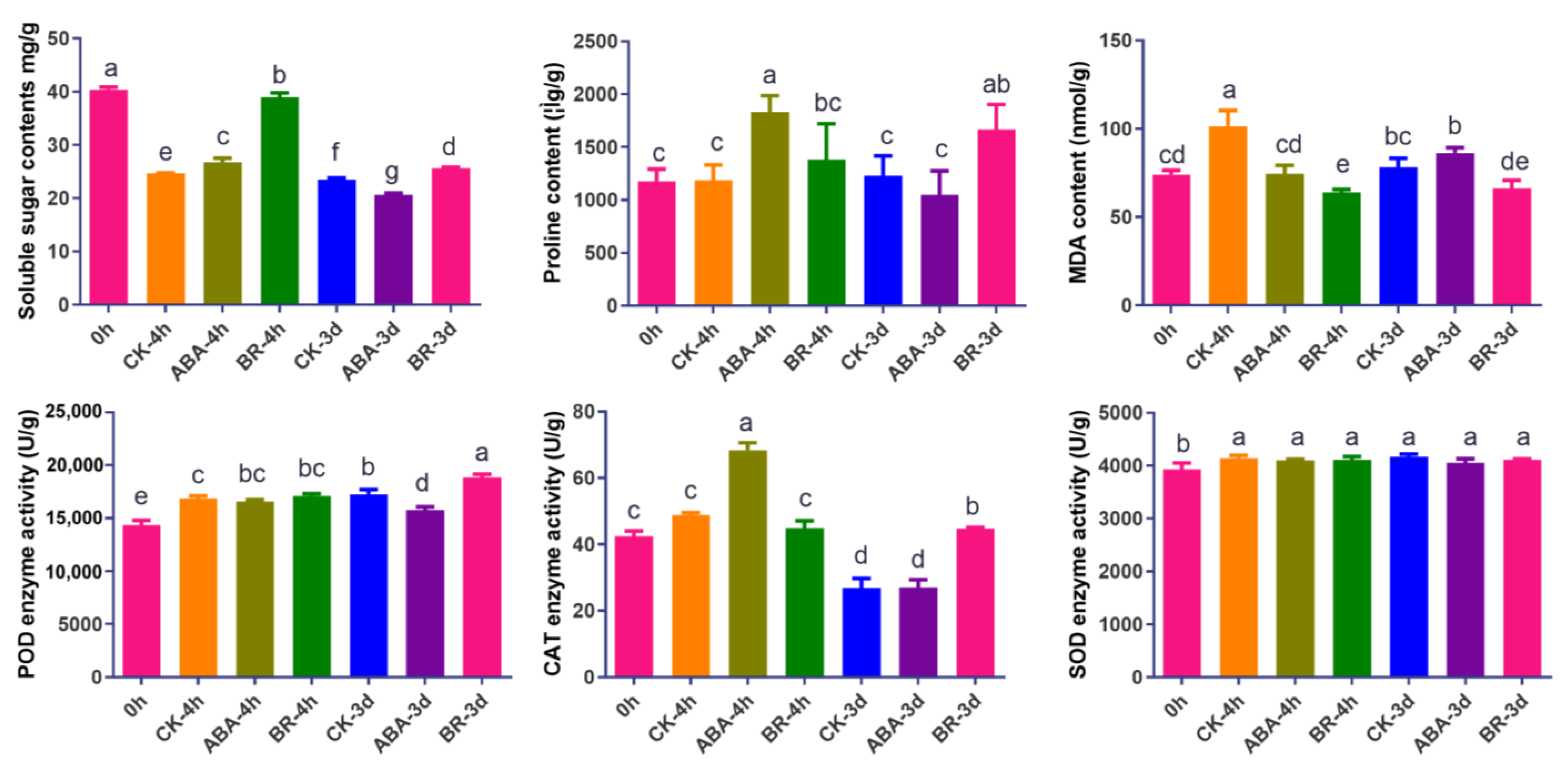
Under heat stress (HS), the soluble sugar (SS) content in citrus leaves decreased significantly relative to the control. In contrast, foliar application of brassinosteroids (BR) markedly enhanced SS accumulation, increasing SS levels by 58% under prolonged HS (3 d). Under short-term HS (4 h), proline content in abscisic acid (ABA)-treated citrus leaves increased significantly by 55% relative to the control. Under prolonged HS, proline content in BR-treated leaves increased significantly by 36% relative to the control. Under short-term HS, the malondialdehyde (MDA) content in citrus leaves treated with ABA and BR was significantly lower than that in the control by 27% and 37%, respectively. Under prolonged HS, the MDA content in BR-treated leaves was significantly lower than in the control by 15%. Under prolonged HS, POD activity in citrus leaves significantly increased, and the activity in BR-treated plants was significantly higher than that in the control by 9%. Under short-term HS, the CAT activity in ABA-treated citrus leaves was significantly higher than that in the control by 61%. Under prolonged HS, the CAT activity in BR-treated leaves was significantly higher than in the control by 67%. Following heat treatment, SOD activity in citrus leaves increased significantly, but there were no significant differences among the different treatments (Figure 1).

3.2. Effects of Exogenous Abscisic Acid and Brassinosteroid Spraying on Phytohormone Content in Citrus Leaves Under Heat Stress

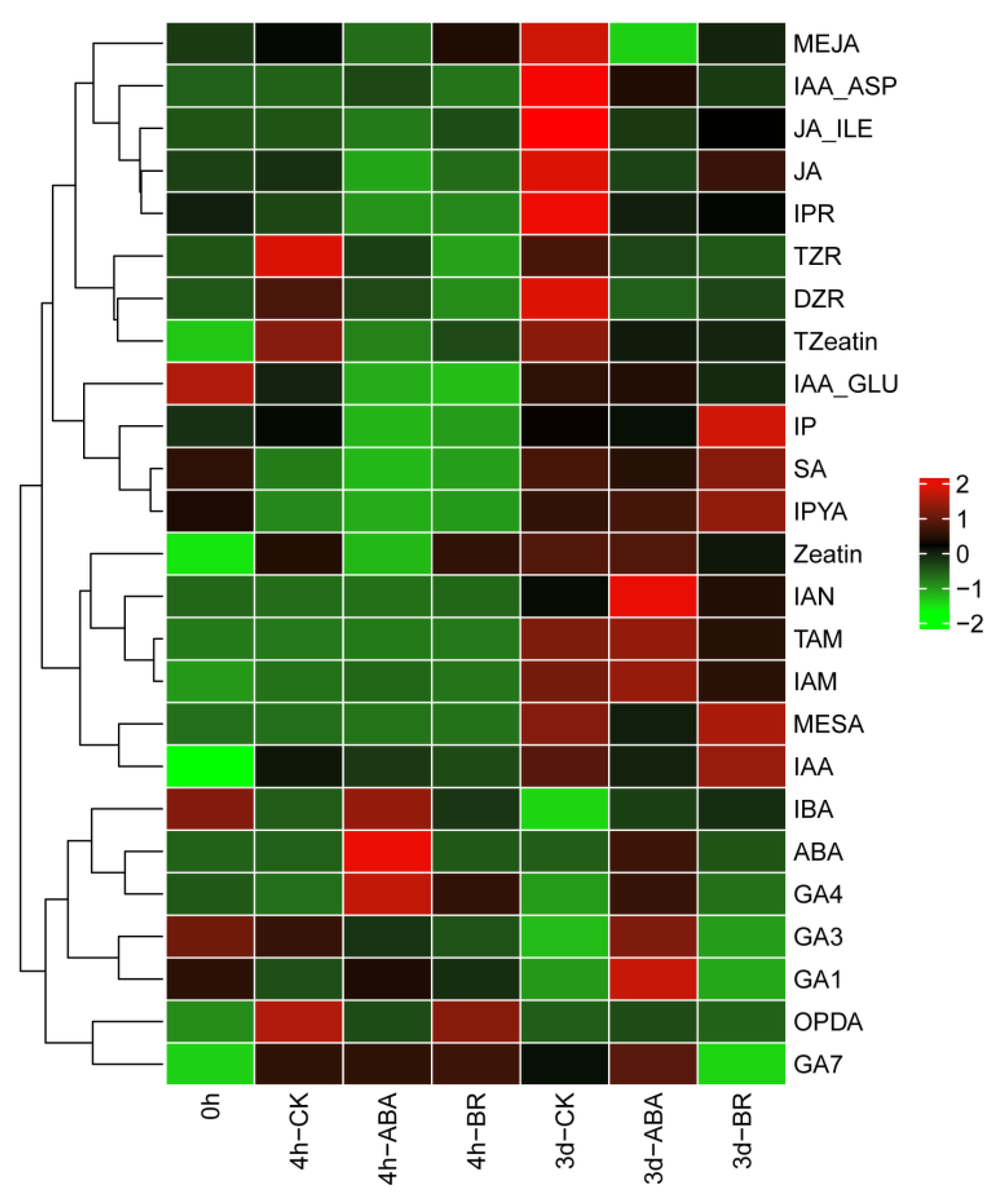
A total of 22 phytohormones and their derivatives were detected in citrus leaves by LC-MS. Exogenous application of ABA and BR significantly modulated the phytohormone profiles in citrus leaves under HS (Figure 2). Under short-term HS, ABA pre-treatment (4 h-ABA) dramatically elevated ABA levels to 3680.10 ng/g, compared to 33.81 ng/g in the control (4 h-CK) and 121.96 ng/g in the BR treatment (4 h-BR). Conversely, jasmonic acid (JA) and its bioactive conjugate JA-ILE were markedly suppressed by ABA at 4 h, with JA content decreasing from 176.51 to 33.54 ng/g and JA-ILE from 11.33 to 4.82 ng/g. Under prolonged HS, ABA treatment (3 d-ABA) maintained elevated ABA levels at 1783.59 ng/g, substantially higher than the control (64.08 ng/g) and BR treatment (171.90 ng/g). The auxin conjugate IAA-ASP accumulated sharply in 3 d-CK (46.68 ng/g), but this increase was attenuated by ABA (20.84 ng/g) and further suppressed by BR (10.79 ng/g). Tryptamine (TAM), a precursor of melatonin and serotonin, showed a massive increase under prolonged HS, exceeding 6500 ng/g in both control and ABA treatments, but was lower in BR-treated samples (4131.70 ng/g). Gibberellins (GA1 and GA3) accumulation was generally suppressed under HS but was partially restored by ABA at 3 days. Cytokinin (such as IPR and DZR) contents were elevated by HS but reduced by both ABA and BR treatments.

3.3. Transcriptome Sequencing Analysis in Citrus Leaves Under Heat Stress

A total of 21 cDNA libraries were constructed from citrus leaves treated with exogenous ABA and BR under high-temperature stress. These libraries yielded clean reads ranging from 41.3 Gb to 56.4 Gb, respectively (Supplementary Table S2). All libraries achieved Q20 values exceeding 98% and Q30 values exceeding 94%, confirming high-quality sequencing data suitable for bioinformatic analysis (Supplementary Table S2). After ribosomal RNA was removed, sequencing reads were aligned to the reference genome using Bowtie2 (version 2.2.8). The unique mapping rate across different libraries ranged from 88.32% to 90.72%, while the multi-mapping rate ranged from 2.43% to 3.03% (Supplementary Table S2). The mean unique mapping rate and multiple mapping rate were 89.65% and 2.66% (Supplementary Table S2). Sequencing saturation analysis demonstrated that the number of detected genes plateaued with increasing sequencing depth, confirming that the sequencing depth is sufficient for analysis (Supplementary Figure S1). The FPKM density distributions across all 21 samples were highly consistent and exhibited a unimodal, slightly right-skewed pattern peaking at log10(FPKM) = 1, indicating reliable sample quality and similar global expression profiles between groups (Supplementary Figure S2). The Pearson correlation coefficients among biological replicates ranged from 0.979 to 0.999, demonstrating exceptionally high concordance in genome-wide gene expression profiles (Supplementary Figure S2). PCA revealed that the first two principal components collectively accounted for 82.4% of the total transcriptomic variance (PC1: 60.2%; PC2: 22.2%). Replicates clustered tightly within treatment groups but separated clearly between groups, showing that ABA, BR, and time points (4 h, 3 days) strongly and distinctly altered global gene expression (Supplementary Figure S2). A total of 29,875 genes were detected by aligning with the reference genome, and 1186 new genes were assembled (Supplementary Table S3). DEGs in citrus under high-temperature stress among different hormone treatments were listed in Supplementary Figure S3 and Supplementary Table S4. Compared with the control (0 h), HS induced 6726 DEGs (4000 up and 2726 down) at 4 h, and 7737 (3889 up and 3848 down) DEGs at 3 days in citrus leaves. After 4 h of HS, compared to the control (CK-4 h), ABA-sprayed citrus leaves showed 3031 DEGs (1407 up and 1624 down), and BR-sprayed citrus leaves showed 683 DEGs (591 up and 92 down). After 3 days of HS, compared to the control (CK-3 d), ABA-sprayed citrus leaves showed 3031 DEGs (1835 up and 1078 down), and BR-sprayed citrus leaves showed 2094 DEGs (1320 up and 774 down).

3.4. Effects of Exogenous Abscisic Acid and Brassinosteroid Spraying on Gene Expression Trend in Citrus Leaves Under Heat Stress

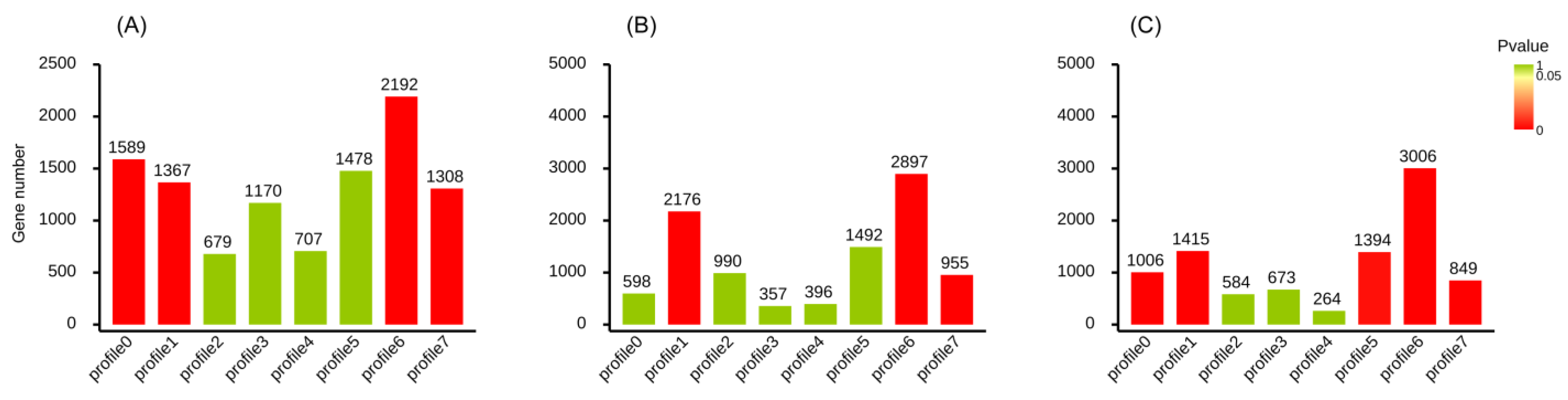
Short Time-series Expression Miner (STEM) was performed to identify temporal gene expression patterns in response to foliar application of ABA and BR under HS. A total of eight distinct expression profiles (profiles 0–7; Figure 3, Supplementary Figure S4) were generated. Profile enrichment analysis revealed that profiles 0, 1, 6, and 7 were significantly overrepresented in the untreated control group; profiles 1, 6, and 7 were significantly enriched in the ABA-treated group; and profiles 0, 1, 5, 6, and 7 were significantly enriched in the BR-treated group. The shared expression profiles are profile 1, profile 6, and profile 7. Profile 1 is characterized by rapid downregulation followed by sustained stability; profile 6 by rapid upregulation followed by sustained stability; and profile 7 by sustained, progressive upregulation. The number of genes assigned to profile 6 was significantly greater under ABA and BR treatment than in the control, suggesting that exogenous ABA or BR application accelerated the transcriptional activation of HS-responsive pathways in citrus.
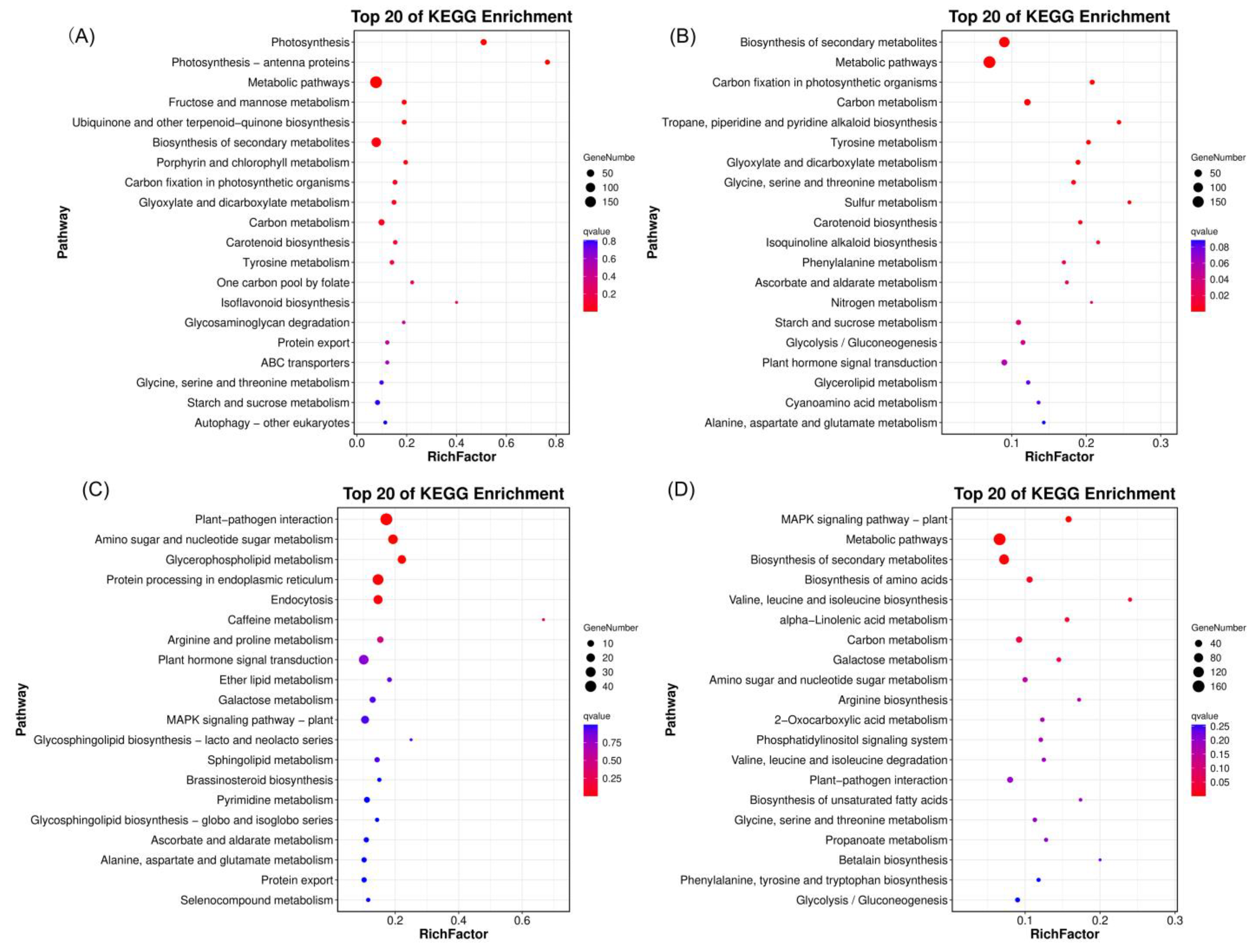
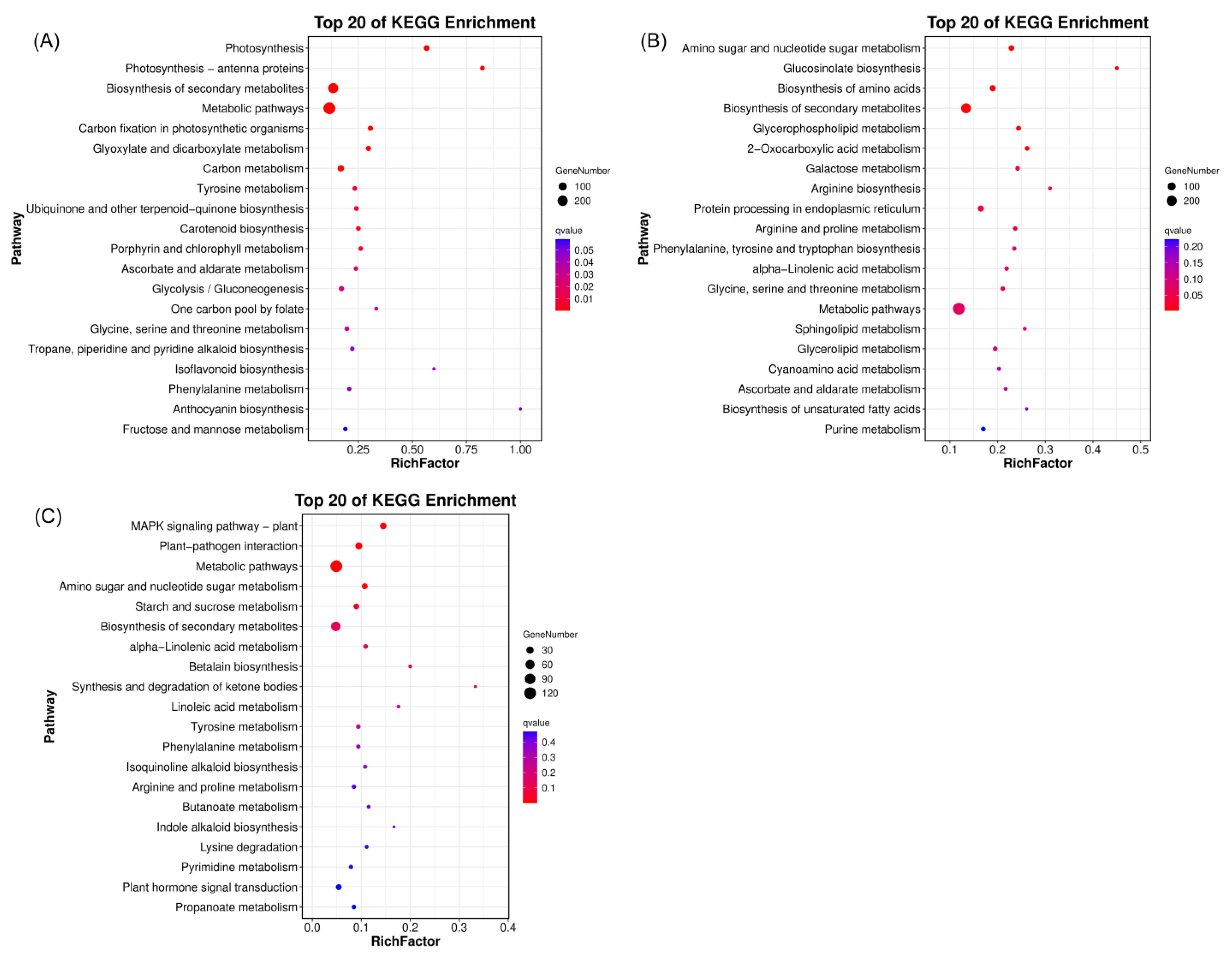
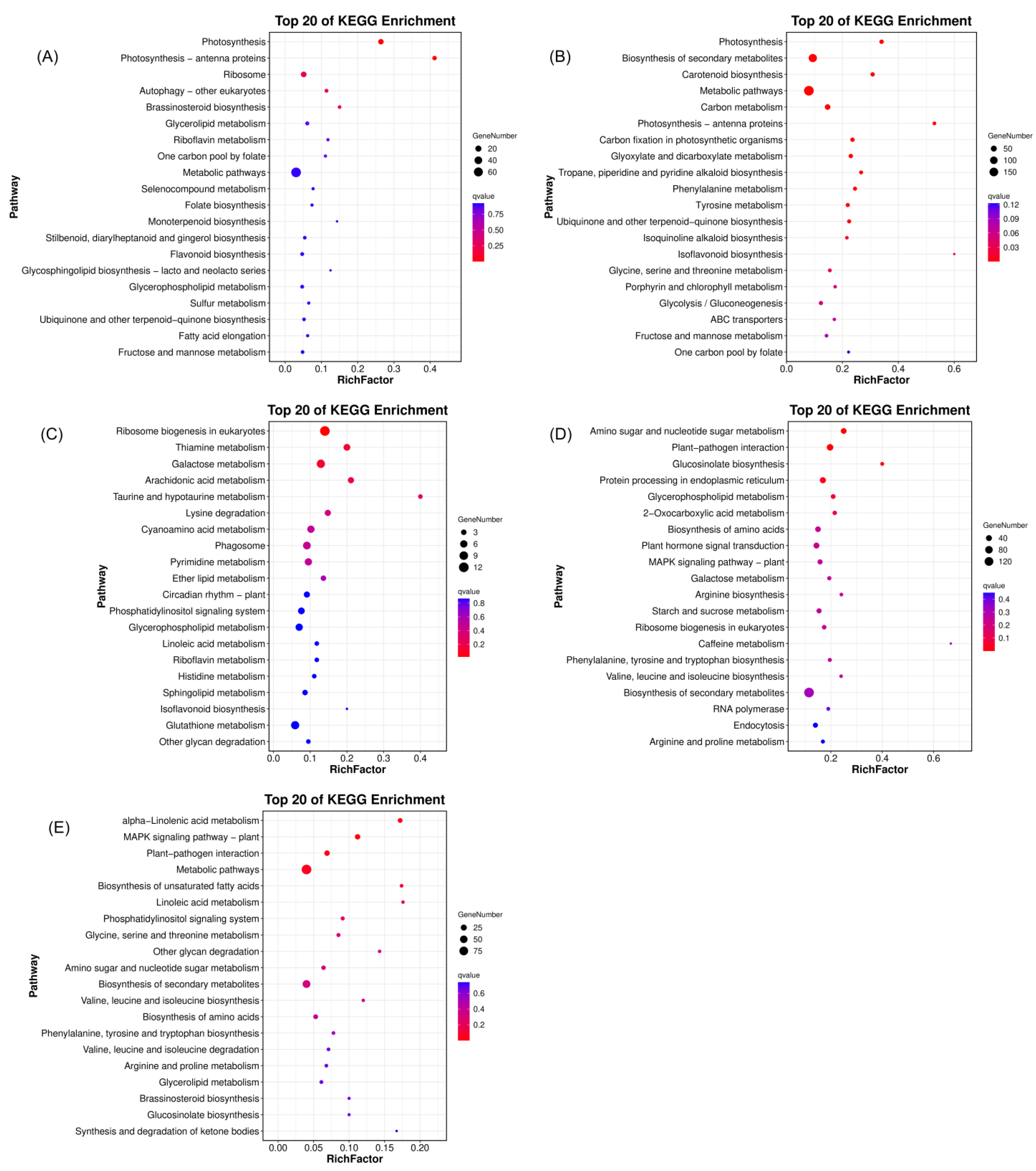
The Kyoto Encyclopedia of Genes and Genomes (KEGG) database was used to conduct metabolic pathway enrichment analysis on different expression profiles. Under HS, a total of 1589, 1367, 2192, and 1308 genes were clustered into profile 0, profile 1, profile 6, and profile 7, respectively. The genes in profile 0 were enriched in photosynthesis and antenna proteins, fructose and mannose metabolism, ubiquinone and other terpenoid-quinone biosynthesis, porphyrin and chlorophyll metabolism, and carbon fixation in photosynthetic organisms. The genes in profile 1 were enriched in starch and sucrose metabolism, amino acid (tyrosine, glycine, serine, and threonine) metabolism, carotenoid biosynthesis, ascorbate and aldarate metabolism, alkaloid biosynthesis, and glycolysis. The genes in profile 6 were enriched in plant–pathogen interaction, amino sugar and nucleotide sugar metabolism, glycerophospholipid metabolism, protein processing in the endoplasmic reticulum, and endocytosis. The genes in profile 7 were enriched in the MAPK signaling pathway, amino acid (valine, leucine, and isoleucine) biosynthesis, and alpha-linolenic acid metabolism (Figure 4).
After exogenous ABA application under HS, a total of 2176, 2897, and 955 genes were clustered into profile 1, profile 6, and profile 7, respectively. The genes in profile 1 were enriched in photosynthesis and antenna proteins, carbon fixation in photosynthetic organisms, carotenoid biosynthesis, porphyrin and chlorophyll metabolism, amino acid (tyrosine, glycine, serine, and threonine) metabolism, ascorbate and aldarate metabolism, isoflavonoid biosynthesis, and phenylalanine metabolism. The genes in profile 6 were enriched in amino sugar and nucleotide sugar metabolism, glucosinolate biosynthesis, amino acids (arginine and proline) biosynthesis, glycerophospholipid metabolism, 2-oxocarboxylic acid metabolism, and protein processing in the endoplasmic reticulum. The genes in profile 7 were enriched in the MAPK signaling pathway, plant–pathogen interaction, amino sugar and nucleotide sugar metabolism, starch and sucrose metabolism (Figure 5).
After exogenous BR application under HS, a total of 1106, 1415, 1394, 3006, and 849 genes were clustered into profile 0, profile 1, profile5, profile 6, and profile 7, respectively. The genes in profile 0 were enriched in photosynthesis and antenna proteins. The genes in profile 1 were enriched in photosynthesis and antenna proteins, carbon fixation in photosynthetic organisms, carotenoid biosynthesis, alkaloid biosynthesis, phenylalanine metabolism, amino acid (tyrosine, glycine, serine, and threonine) metabolism, porphyrin and chlorophyll metabolism. The genes in profile 5 were enriched in ribosome biogenesis in eukaryotes. The genes in profile 6 were enriched in amino sugar and nucleotide sugar metabolism, plant–pathogen interaction, glucosinolate biosynthesis, and protein processing in endoplasmic reticulum. The genes in profile 7 were enriched in alpha-linolenic acid metabolism, MAPK signaling pathway, and plant–pathogen interaction (Figure 6).

3.5. Effects of Exogenous Abscisic Acid and Brassinosteroid Spraying on Gene Expression of Heat Shock Proteins and Heat Shock Transcription Factors in Citrus Leaves Under Heat Stress

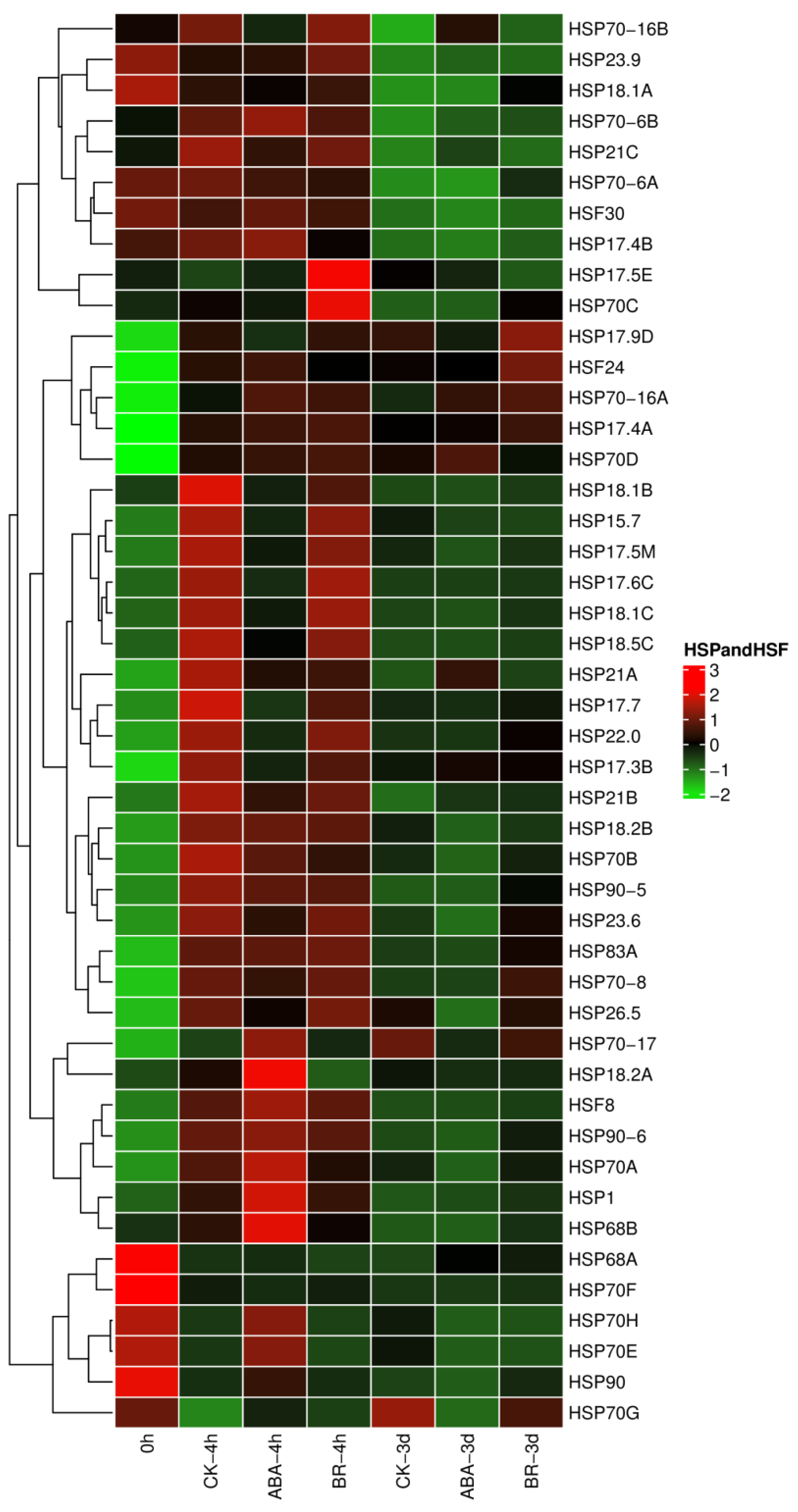
The expression patterns of plant heat shock proteins (HSP) and heat shock transcription factors (HSF) under HS following exogenous ABA and BR foliar application were analyzed using a heatmap (Figure 7). Under short-term HS, numerous HSPs were highly induced, especially HSP17.3B (Cs_ont_6g016010), HSP17.4A (Cs_ont_8g002810), HSP18.5C (Cs_ont_8g001460), HSP21A (Cs_ont_2g023270), HSP23.6 (Cs_ont_9g023650), and HSP83A (Cs_ont_5g048470), with expression levels peaking in CK-4 h compared to those at 0 h. Interestingly, ABA and BR pre-treatments generally led to moderate reductions at 4 h, including those of HSP17.3B and HSP18.5C. In contrast, HSP70-17 (Cs_ont_6g011790), HSP70A (Cs_ont_1g010380), and HSP70B (Cs_ont_1g010810) were more highly induced by ABA. Under prolonged HS, overall expression levels of most HSPs and HSFs decreased compared to those at 4 h. The expression of HSP17.4A, HSP17.9D (Cs_ont_4g023620), HSP21A (Cs_ont_2g023270), and HSP90-5 (Cs_ont_7g020630) maintained a relatively high level after 3 d. Importantly, ABA pre-treatment enhanced the expression of HSP21A, HSP21B, and HSP70-17 under prolonged HS. BR pre-treatment also showed modulatory effects, particularly at 4 h. For instance, HSP70A and HSP70B were strongly induced by ABA and BR at 4 h but dropped at 3 d. HSF30 was highly expressed under control conditions but sharply declined under prolonged HS.

3.6. qRT-PCR Analysis of Differentially Expressed Genes in Citrus Leaves Under Heat Stress

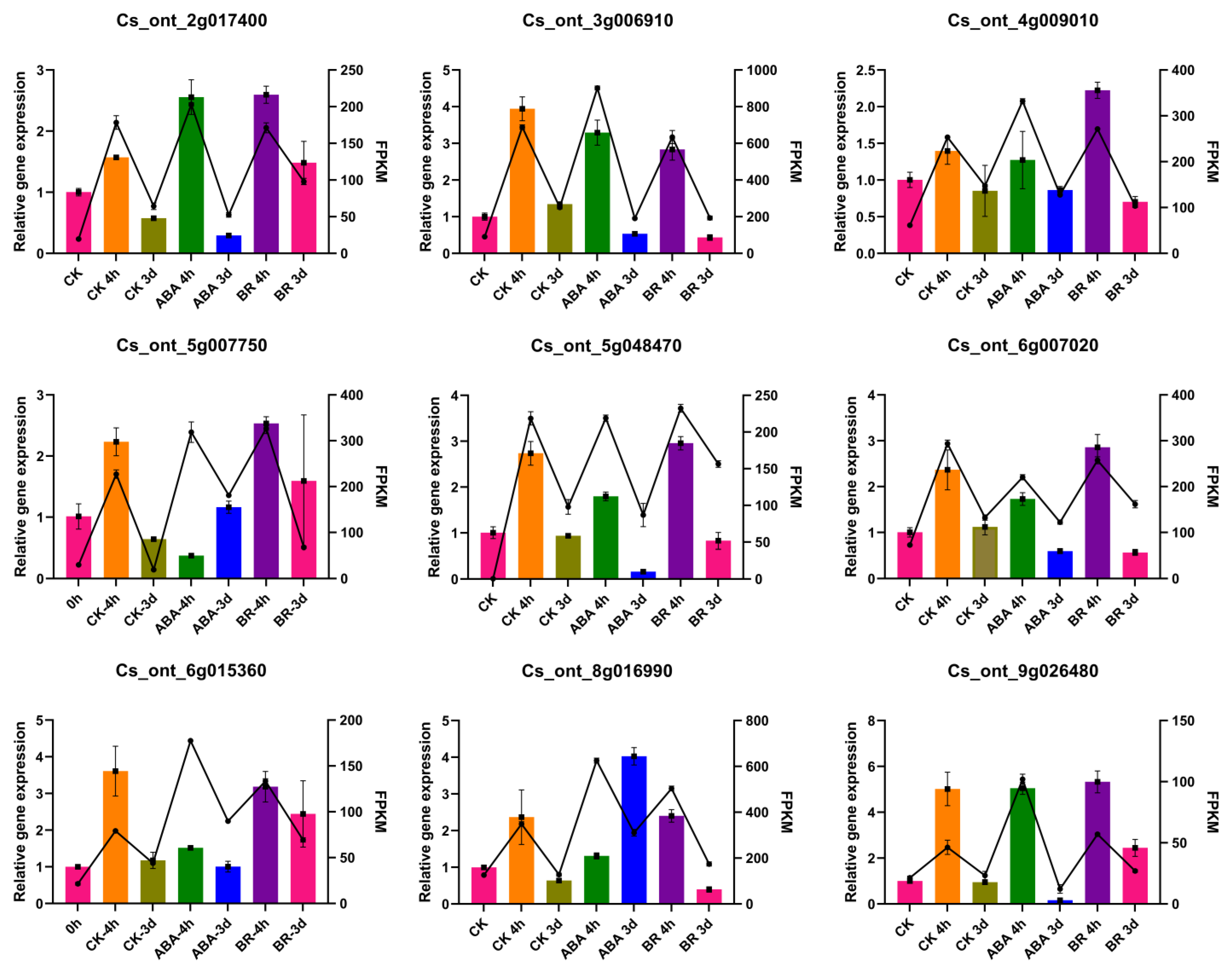
To validate the reliability of transcriptome data, nine differentially expressed genes were randomly selected for fluorescence quantitative real-time PCR (qRT-PCR) analysis. As shown in Figure 8, the expression patterns in the transcriptome sequencing data and qRT-PCR were in overall positive agreement (R2 = 0.659), thereby confirming the technical reproducibility and biological reliability of the transcriptome data.

4. Discussion

Under heat stress (HS), plant extracellular water potential declines. Should the plant’s intracellular osmotic potential fail to decrease commensurately, water efflux from the cytosol into the apoplast ensues, leading to cellular dehydration and plasmolysis [34]. In citrus cultivation, growers commonly implement agronomic practices, including shade nets and foliar applications of light calcium carbonate, to mitigate heat stress and reduce the incidence of fruit sunburn [35,36]. The installation of shade nets in citrus orchards incurs substantial labor costs, while lime water application poses challenges for citrus fruit harvesting. In recent years, numerous studies have demonstrated that exogenous application of plant growth regulators significantly improved thermotolerance in rice [37], strawberry (Fragaria ananassa) [38], and pepper (Capsicum annuum) [39]. Applying plant growth regulators to enhance citrus heat tolerance may be a cultivation practice for simplifying production and improving fruit quality.
The accumulation of soluble sugars (SS) in plants directly reduces the cell water potential, maintains the cell turgor, ensures the basic morphology and functions of the cells, and thereby enhances the tolerance to abiotic stress such as high temperature, drought, and low temperature [40,41]. In this study, the SS content in citrus leaves significantly decreased after exposure to HS. Under HS, the SS content in the leaves treated with ABA and BR was significantly higher than that in the control. Meanwhile, SUS6 (Cs_ont_6g006950), which encodes sucrose synthase, showed significantly higher expression levels in both ABA treatment and BR treatment compared to the control (Table S2). Studies on corn showed that exogenous BR promoted the accumulation of glucose and sucrose and enhanced tolerance to low-temperature stress [42]. These results indicated that the application of exogenous ABA and BR might enhance citrus thermotolerance through inducing the synthesis of SS in citrus leaves. Proline is involved in the regulation of osmotic potential and the scavenging of reactive oxygen species (ROS) in plant cells and is a critical metabolite for plants to respond to high temperature [43]. ABA enhanced drought tolerance in Brassica napus by mediating proline synthesis in leaves [44]. In this study, under HS, the proline content in ABA-treated and BR-treated citrus leaves was significantly higher than that in the control. These results suggested that spraying ABA and BR regulated osmoprotectant accumulation in citrus under HS.
HS leads to a severe imbalance in the metabolism of ROS in plant cells [44,45]. Under HS, the increase in malondialdehyde (MDA) content in plant leaves is a direct indicator of the intensification of membrane lipid peroxidation, reflecting the degree of damage to the cell membrane system. In this study, under short-term HS, the MDA content in the citrus leaves treated with ABA and BR was significantly lower than that of the control. Under prolonged HS, the MDA content in BR-treated citrus leaves was significantly lower than that of the control. These findings indicate that the ABA and BR treatments alleviated HS-induced membrane lipid peroxidation in citrus leaves, thereby reducing the accumulation of MDA. The regulation of ROS clearance by the antioxidant enzyme system plays a crucial role in plants’ responses to high-temperature stress and in alleviating membrane lipid peroxidation damage [16]. Under HS, exogenous ABA application significantly increased antioxidant enzyme activity and reduced ROS content in rice [17]. In this study, the CAT activity of the ABA-treated and BR-treated citrus leaves was significantly higher than that of the control under HS. Transcriptomic analysis also revealed that the expression level of CAT1 (Cs_ont_3g001020) in ABA-treated citrus leaves was significantly upregulated (Table S2). These results demonstrate that exogenous application of ABA and BR enhanced antioxidant enzyme activity in citrus leaves and improved ROS scavenging capacity in response to HS.
HS disrupted the ultrastructure of plant chloroplasts, causing both structural disorganization and functional impairment, which directly reduced net photosynthetic efficiency [5]. Exogenous application of ABA and BR significantly increased the contents of chlorophyll a, chlorophyll b, and carotenoids in leaves under HS, thereby preserving photosynthetic capacity in rice and barley (Hordeum vulgare) plants [46]. The chlorophyll A synthase (CHLG) catalyzed the reaction between chlorophyll acid esters and phytol to produce chlorophyll [47]. Chlorophyll acid ester A oxygenase (CAO) catalyzes the conversion of chlorophyll A into chlorophyll B [47]. In this study, the expression of CHLG (Cs_ont_9g003560) and CAO (Cs_ont_3g009260) in citrus leaves was inhibited by HS (Table S2). However, the expression levels of CHLG and CAO in the ABA and BR treatments were significantly higher than those in the control (Table S2). In peanut, BR notably alleviated the oxidation damage to chloroplast membranes and grana lamellae and increased net photosynthetic rate under HS [48]. These results indicated that the exogenous application of ABA and BR altered the expression patterns of genes related to chlorophyll metabolism in citrus leaves under HS.
The mitogen-activated protein kinase (MAPK) cascades play critical roles in plant responses to biotic and abiotic stress. The interaction between the MAPK signaling pathway and phytohormones is involved in plant responses to HS. In chili pepper, CaMAPK1 was induced by HS; overexpression of CaMAPK1 significantly enhanced heat tolerance in transgenic plants, while its knockout reduced heat tolerance [49]. MAPK expression and kinase activity were significantly higher in thermotolerant wheat cultivars compared with thermosusceptible cultivars [50]. Overexpression of ZmMKK1 significantly enhanced maize thermotolerance through phosphorylating ZmCAT2 to regulate H2O2 homeostasis [51]. In this study, 24 genes assigned to profile 6 under BR treatment were enriched in the MAPK signaling pathway, suggesting that exogenous BR application may modulate the MAPK signaling cascade in citrus to promote thermotolerance. After three days of HS, the catalase activity in citrus leaves treated with exogenous BR was significantly higher than that in the control. Therefore, we hypothesize that exogenous application of BR may enhance catalase activity by regulating the MAPK signaling cascade under HS.
To adapt to HS, heat shock transcription factors (HSFs) and heat shock proteins (HSPs) form a highly conserved and dynamically coordinated regulatory module in plants [52]. OsHSFA4d enhances thermotolerance by binding to the heat shock element (HSE) in the promoter of HSP101 to activate its expression [53]. The research conducted on potatoes (Solanum tuberosum) revealed that 14 HSP20 genes were significantly upregulated in response to HS [54]. This study identified 28 heat-induced HSF and HSP genes, highlighting their key regulatory role in citrus thermotolerance. Meanwhile, the expression levels of HSF and HSP genes are also regulated by ABA and BR application. HSP20 interacts with the plant hormone signaling pathway to regulate the thermotolerance of potatoes [55]. In this study, ABA pre-treatment at 3 days enhanced the expression of HSP21A, HSP21B, and HSP70-17. Exogenous application of ABA and BR also significantly increased the ABA content in citrus leaves. These results suggested that ABA and BR might interact with HSPs in citrus to respond to HS.

5. Conclusions

In conclusion, under HS, ABA- and BR-treated leaves exhibited significantly elevated levels of soluble sugars, proline, and ABA, concomitant with a marked reduction in malondialdehyde (MDA) content. Furthermore, pre-treatment with ABA and BR significantly increased the activities of peroxidase (POD) and catalase (CAT) in heat-stressed leaves. The MAPK signaling pathway and heat shock proteins (HSPs) are critically involved in regulating citrus responses to heat stress. Integrated physiological and transcriptomic analyses revealed that exogenous ABA and BR regulated ABA and osmoprotectant accumulation and antioxidant defense activation. Meanwhile, due to design limitations, the interaction between phytohormone treatment and heat treatment cannot be effectively evaluated. The effects of ABA and BR on citrus leaf survival rate, visible injury scoring, recovery growth, biomass accumulation, electrolyte leakage, chlorophyll content, chlorophyll fluorescence, gas exchange, and photosynthetic rate under HS remain to be further investigated.

Supplementary Materials

The following supporting information can be downloaded at: https://www.mdpi.com/article/10.3390/horticulturae12080924/s1, Figure S1: Sequencing saturation analysis; Figure S2: Pearson correlation analysis, principal component analysis (PCA), and all genes expressed distribution of all samples; Figure S3: Differentially expressed genes in citrus under high-temperature stress among different hormone treatments; Figure S4: Profiles ordered based on the number of genes assigned; Table S1: List of primers used in this study; Table S2: Transcriptome sequencing information; Table S3: All genes expression and annotation; Table S4: All differentially expressed genes expression and annotation.

Author Contributions

Conceptualization, L.J. and P.W. (Peng Wang); methodology, L.J.; software, L.J.; validation, P.W. (Penghui Wang), Y.S., Y.W. and F.L.; investigation, P.W. (Penghui Wang); writing—original draft preparation, L.J.; writing—review and editing, L.J. and P.W. (Peng Wang); supervision, P.W. (Peng Wang); funding acquisition, L.J. All authors have read and agreed to the published version of the manuscript.

Funding

This research was funded by the Zhejiang Provincial Natural Science Foundation of China, grant number LTGN24C150001.

Data Availability Statement

The raw data of RNA-Seq have been uploaded to the China National Center for Bioinformation (CNCB, https://ngdc.cncb.ac.cn/gsa/, accessed on 4 June 2026). The accession number is CRA044117.

Conflicts of Interest

The authors declare no conflicts of interest.

References

  1. Wu, C.; Cui, K.; Fahad, S. Heat Stress Decreases Rice Grain Weight: Evidence and Physiological Mechanisms of Heat Effects Prior to Flowering. Int. J. Mol. Sci. 2022, 23, 10922. [Google Scholar] [CrossRef] [Scilit] [PubMed]
  2. Li, B.; Gao, K.; Ren, H.; Tang, W. Molecular mechanisms governing plant responses to high temperatures. J. Integr. Plant Biol. 2018, 60, 757–779. [Google Scholar] [CrossRef] [Scilit] [PubMed]
  3. Srivastava, A.K.; Barlas, N.T.; Wu, Q.; Raveh, E.; Brunetto, G.; Vashisth, T.; Mousavi, S.M.; Acharya, U.K. Climate change and citrus nutrition: Mechanisms, nutrient imbalances, and inclusive management. Front. Plant Sci. 2026, 17, 1798826. [Google Scholar] [CrossRef] [Scilit] [PubMed]
  4. Singh, P.; Thakur, G.; Sharma, V.; Singh, J.; Sharma, A. Genetic regulations of citrus flowering: Insights towards climatic factors and modern biotechnological approaches. Planta 2025, 262, 120. [Google Scholar] [CrossRef] [Scilit] [PubMed]
  5. Wu, S.; Liao, J.; Ye, C.; Chen, S.; Wang, Y.; Zhang, X.; Huang, J.; Chen, C. Physiological Response of Citrus reticulata Blanco var. Gonggan Seedlings to High-Temperature Stress. Life 2025, 15, 806. [Google Scholar] [CrossRef] [Scilit] [PubMed]
  6. Zhang, Z.; Hu, Y.; Wang, M.; Lei, Z.; Liao, S.; Li, L.; Zheng, X.; Zhu, K.; Chai, L.; Ye, J.; et al. The transcription factor CsbHLH60 relieves high-temperature inhibition of chlorophyll degradation in citrus. J. Integr. Plant Biol. 2026, early view. [Google Scholar] [CrossRef] [Scilit] [PubMed]
  7. Balfagón, D.; Gómez-Cadenas, A. Combined abiotic stresses in mediterranean citrus orchards: Impacts, adaptation strategies, and climate-resilient solutions. Sci. Hortic. 2025, 353, 114462. [Google Scholar] [CrossRef] [Scilit]
  8. Terán, F.; Vives-Peris, V.; López-Climent, M.F.; Gómez-Cadenas, A.; Pérez-Clemente, R.M. Palliative Effects of Kaolin on Citrus Plants Under Controlled Stress Conditions of High Temperature and High Light Intensity. J. Plant Growth Regul. 2024, 43, 486–499. [Google Scholar] [CrossRef] [Scilit]
  9. Islam, M.R.; Feng, B.; Chen, T.; Tao, L.; Fu, G. Role of Abscisic Acid in Thermal Acclimation of Plants. J. Plant Biol. 2018, 61, 255–264. [Google Scholar] [CrossRef] [Scilit]
  10. Krishna, P.; Prasad, B.D.; Rahman, T. Brassinosteroid Action in Plant Abiotic Stress Tolerance; Russinova, E., Caño-Delgado, A.I., Eds.; Springer: New York, NY, USA, 2017; Volume 1564, pp. 193–202. ISBN 1064-3745. [Google Scholar]
  11. Ali, S.; Rizwan, M.; Arif, M.S.; Ahmad, R.; Hasanuzzaman, M.; Ali, B.; Hussain, A. Approaches in Enhancing Thermotolerance in Plants: An Updated Review. J. Plant Growth Regul. 2020, 39, 456–480. [Google Scholar] [CrossRef] [Scilit]
  12. Vishwakarma, K.; Upadhyay, N.; Kumar, N.; Yadav, G.; Singh, J.; Mishra, R.K.; Kumar, V.; Verma, R.; Upadhyay, R.G.; Pandey, M.; et al. Abscisic Acid Signaling and Abiotic Stress Tolerance in Plants: A Review on Current Knowledge and Future Prospects. Front. Plant Sci. 2017, 8, 161. [Google Scholar] [CrossRef] [Scilit] [PubMed]
  13. Lv, J.; Dong, T.; Zhang, Y.; Ku, Y.; Zheng, T.; Jia, H.; Fang, J. Metabolomic profiling of brassinolide and abscisic acid in response to high-temperature stress. Plant Cell Rep. 2022, 41, 935–946. [Google Scholar] [CrossRef] [Scilit] [PubMed]
  14. Tao, Z.; Yan, P.; Zhang, X.; Wang, D.; Wang, Y.; Ma, X.; Yang, Y.; Liu, X.; Chang, X.; Sui, P.; et al. Physiological Mechanism of Abscisic Acid-Induced Heat-Tolerance Responses to Cultivation Techniques in Wheat and Maize—Review. Agronomy 2022, 12, 1579. [Google Scholar] [CrossRef] [Scilit]
  15. Wang, Y.; Lei, B.; Deng, H.; Liu, X.; Dong, Y.; Chen, W.; Lu, X.; Chen, G.; Zhang, G.; Tang, W.; et al. Exogenous Abscisic Acid Affects the Heat Tolerance of Rice Seedlings by Influencing the Accumulation of ROS. Antioxidants 2023, 12, 1404. [Google Scholar] [CrossRef] [Scilit] [PubMed]
  16. Zhu, J. Abiotic Stress Signaling and Responses in Plants. Cell 2016, 167, 313–324. [Google Scholar] [CrossRef] [Scilit] [PubMed]
  17. Liu, X.; Ji, P.; Yang, H.; Jiang, C.; Liang, Z.; Chen, Q.; Lu, F.; Chen, X.; Yang, Y.; Zhang, X. Priming effect of exogenous ABA on heat stress tolerance in rice seedlings is associated with the upregulation of antioxidative defense capability and heat shock-related genes. Plant Growth Regul. 2022, 98, 23–38. [Google Scholar] [CrossRef] [Scilit]
  18. Ahammed, G.J.; Li, X.; Liu, A.; Chen, S. Brassinosteroids in Plant Tolerance to Abiotic Stress. J. Plant Growth Regul. 2020, 39, 1451–1464. [Google Scholar] [CrossRef] [Scilit]
  19. Gao, Y.; Ma, X.; Zhang, Z.; Wang, X.; Wang, Y. Brassinolides signaling pathway: Tandem response to plant hormones and regulation under various abiotic stresses. Hortic. Adv. 2024, 2, 27. [Google Scholar] [CrossRef] [Scilit]
  20. Nazir, F.; Jahan, B.; Kumari, S.; Iqbal, N.; Albaqami, M.; Sofo, A.; Khan, M.I.R. Brassinosteroid modulates ethylene synthesis and antioxidant metabolism to protect rice (Oryza sativa) against heat stress-induced inhibition of source-sink capacity and photosynthetic and growth attributes. J. Plant Physiol. 2023, 289, 154096. [Google Scholar] [CrossRef] [Scilit] [PubMed]
  21. Dündar, G.; Ramirez, V.E.; Poppenberger, B. The heat shock response in plants: New insights into modes of perception, signaling, and the contribution of hormones. J. Exp. Bot. 2025, 76, 1970–1977. [Google Scholar] [CrossRef] [Scilit] [PubMed]
  22. von Koskull-Döring, P.; Scharf, K.; Nover, L. The diversity of plant heat stress transcription factors. Trends Plant Sci. 2007, 12, 452–457. [Google Scholar] [CrossRef] [Scilit] [PubMed]
  23. Ohama, N.; Sato, H.; Shinozaki, K.; Yamaguchi-Shinozaki, K. Transcriptional Regulatory Network of Plant Heat Stress Response. Trends Plant Sci. 2017, 22, 53–65. [Google Scholar] [CrossRef] [Scilit] [PubMed]
  24. Xue, P.; Sun, Y.; Hu, D.; Zhang, J.; Wan, X. Genome-wide characterization of DcHsp90 gene family in carnation (Dianthus caryophyllus L.) and functional analysis of DcHsp90-6 in heat tolerance. Protoplasma 2023, 260, 807–819. [Google Scholar] [CrossRef] [Scilit] [PubMed]
  25. Wu, Z.; Liang, J.; Wang, C.; Zhao, X.; Zhong, X.; Cao, X.; Li, G.; He, J.; Yi, M. Overexpression of lily HsfA3s in Arabidopsis confers increased thermotolerance and salt sensitivity via alterations in proline catabolism. J. Exp. Bot. 2018, 69, 2005–2021. [Google Scholar] [CrossRef] [Scilit] [PubMed]
  26. Liu, H.C.; Liao, H.T.; Charng, Y.Y. The role of class A1 heat shock factors (HSFA1s) in response to heat and other stresses in Arabidopsis. Plant Cell Environ. 2011, 34, 738–751. [Google Scholar] [CrossRef] [Scilit] [PubMed]
  27. Li, S.; Yuan, L.; Yu, H.; Li, Y.; Kong, L.; Duan, W.; Liang, Z.; Wang, L. The HSFA2–HSFB2a–WRKY10 transcriptional cascade mediates thermotolerance across grape germplasms. Plant Physiol. 2026, 200, f651. [Google Scholar] [CrossRef] [Scilit] [PubMed]
  28. Wang, X.; Zhuang, L.; Shi, Y.; Huang, B. Up-Regulation of HSFA2c and HSPs by ABA Contributing to Improved Heat Tolerance in Tall Fescue and Arabidopsis. Int. J. Mol. Sci. 2017, 18, 1981. [Google Scholar] [CrossRef] [Scilit] [PubMed]
  29. Luo, J.; Jiang, J.; Sun, S.; Wang, X. Brassinosteroids promote thermotolerance through releasing BIN2-mediated phosphorylation and suppression of HsfA1 transcription factors in Arabidopsis. Plant Commun. 2022, 3, 100419. [Google Scholar] [CrossRef] [Scilit] [PubMed]
  30. Zhang, Z.; Qu, W.; Li, X. Experimental Manual of Plant Physiology, 4th ed.; Higher Education Press: Beijing, China, 2009. [Google Scholar]
  31. Jin, L.; Liu, Y.; Du, W.; Fu, L.; Hussain, S.B.; Peng, S. Physiological and transcriptional analysis reveals pathways involved in iron deficiency chlorosis in fragrant citrus. Tree Genet. Genomes 2017, 13, 51. [Google Scholar] [CrossRef] [Scilit]
  32. Trapnell, C.; Williams, B.A.; Pertea, G.; Mortazavi, A.; Kwan, G.; van Baren, M.J.; Salzberg, S.L.; Wold, B.J.; Pachter, L. Transcript assembly and quantification by RNA-Seq reveals unannotated transcripts and isoform switching during cell differentiation. Nat. Biotechnol. 2010, 28, 511–515. [Google Scholar] [CrossRef] [Scilit] [PubMed]
  33. Jin, L.; Yin, X.; Wen, M.; Huang, B.; Liu, F.; Li, X.; Wang, P. Genome-Wide Identification, Characterization, and Expression of the HAK/KUP/KT Potassium Transporter Gene Family in Poncirus trifoliata and Functional Analysis of PtKUP10 under Salt Stress. Horticulturae 2024, 6, 628. [Google Scholar]
  34. Rascio, A.; Altamura, G.; Pecorella, I.; Goglia, L.; Sorrentino, G. Physiological mechanisms preventing plant wilting under heat stress: A case study on a wheat (Triticum durum Desf.) bound water-mutant. Environ. Exp. Bot. 2023, 215, 105502. [Google Scholar] [CrossRef] [Scilit]
  35. Tadayon, M.S.; Mousavi, S.M.; Hosseini, S.M.; Sadeghi, S. Improving Washington Navel orange yield under drought: Effects of artificial mulch and shade netting. J. Hortic. Sci. Biotechnol. 2025, 100, 723–740. [Google Scholar] [CrossRef] [Scilit]
  36. Wang, M.; Qiu, J.; He, Y.; Li, W.; Ling, L.; Chun, C.; Fu, X.; Cao, L.; Peng, L. Effects of lime concentration and spray coverage on the severity of citrus sunburn and fruit quality. J. Fruit Sci. 2020, 37, 1518–1527. [Google Scholar]
  37. Pantoja-Benavides, A.D.; Garces-Varon, G.; Restrepo-Díaz, H. Foliar Growth Regulator Sprays Induced Tolerance to Combined Heat Stress by Enhancing Physiological and Biochemical Responses in Rice. Front. Plant Sci. 2021, 12, 702892. [Google Scholar] [CrossRef] [Scilit] [PubMed]
  38. Salwa, N.; Swarna, S.S.; Moonmoon, S. Exogenous regulators enhance strawberry yield under heat stress conditions. Sci. Rep. 2026, 16, 5573. [Google Scholar] [CrossRef] [Scilit] [PubMed]
  39. Preet, T.; Ghai, N.; Jindal, S.K. Mitigating the effects of elevated temperature through the use of growth regulators in bell pepper. Agric. Res. J. 2022, 59, 400–406. [Google Scholar] [CrossRef] [Scilit]
  40. Khan, M.A.; Liu, D.; Alam, S.M.; Zaman, F.; Luo, Y.; Han, H.; Ateeq, M.; Liu, Y. Molecular physiology for the increase of soluble sugar accumulation in citrus fruits under drought stress. Plant Physiol. Biochem. 2023, 203, 108056. [Google Scholar] [CrossRef] [Scilit] [PubMed]
  41. Ma, W.; Li, Y.; Nai, G.; Liang, G.; Ma, Z.; Chen, B.; Mao, J. Changes and response mechanism of sugar and organic acids in fruits under water deficit stress. PeerJ 2022, 10, e13691. [Google Scholar] [CrossRef] [Scilit] [PubMed]
  42. Sun, S.; Zhao, X.; Li, X.; Niu, Y. Brassinosteroids Enhance Low-Temperature Resistance by Promoting the Formation of Sugars in Maize Mesocotyls. Plants 2025, 14, 2612. [Google Scholar] [CrossRef] [Scilit] [PubMed]
  43. Kavi Kishor, P.B.; Suravajhala, P.; Rathnagiri, P.; Sreenivasulu, N. Intriguing Role of Proline in Redox Potential Conferring High Temperature Stress Tolerance. Front. Plant Sci. 2022, 13, 867531. [Google Scholar] [CrossRef] [Scilit] [PubMed]
  44. Park, S.; La, V.H.; Bae, D.; Lee, B.; Kim, T. Drought-induced ABA-responsive glutamate dehydrogenase activation is a dominant pathway for proline synthesis in Brassica napus leaves. J. Plant Physiol. 2026, 320, 154754. [Google Scholar] [CrossRef] [Scilit] [PubMed]
  45. Choudhury, F.K.; Rivero, R.M.; Blumwald, E.; Mittler, R. Reactive oxygen species, abiotic stress and stress combination. Plant J. 2017, 90, 856–867. [Google Scholar] [CrossRef] [Scilit] [PubMed]
  46. Sadura, I.; Janeczko, A. Brassinosteroids and the Tolerance of Cereals to Low and High Temperature Stress: Photosynthesis and the Physicochemical Properties of Cell Membranes. Int. J. Mol. Sci. 2021, 23, 342. [Google Scholar] [CrossRef] [Scilit] [PubMed]
  47. Li, Y.; Cao, T.; Guo, Y.; Grimm, B.; Li, X.; Duanmu, D.; Lin, R. Regulatory and retrograde signaling networks in the chlorophyll biosynthetic pathway. J. Integr. Plant Biol. 2025, 67, 887–911. [Google Scholar] [CrossRef] [Scilit] [PubMed]
  48. Lai, H.; Li, X.; Chen, Y.; Liu, Z. Mitigating heat-induced yield loss in peanut: Insights into 24-epibrassinolide-mediated improvement in antioxidant capacity, photosynthesis, and kernel weight. Field Crops Res. 2024, 316, 109521. [Google Scholar] [CrossRef] [Scilit]
  49. Shi, L.; Shi, W.; Qiu, Z.; Yan, S.; Liu, Z.; Cao, B. CaMAPK1 Plays a Vital Role in the Regulation of Resistance to Ralstonia solanacearum Infection and Tolerance to Heat Stress. Plants 2024, 13, 1775. [Google Scholar] [CrossRef] [Scilit] [PubMed]
  50. Kumar, R.R.; Dubey, K.; Arora, K.; Dalal, M.; Rai, G.K.; Mishra, D.; Chaturvedi, K.K.; Rai, A.; Kumar, S.N.; Singh, B.; et al. Characterizing the putative mitogen-activated protein kinase (MAPK) and their protective role in oxidative stress tolerance and carbon assimilation in wheat under terminal heat stress. Biotechnol. Rep. 2021, 29, e597. [Google Scholar] [CrossRef] [Scilit] [PubMed]
  51. Chen, M.; Zheng, H.; Ye, J.; Li, M.; Yao, B.; Wu, H.; Wang, J.; Qu, H.; Meng, Y.; Li, M.; et al. ZmMKK1 phosphorylates ZmCAT2 to regulate H2O2 homeostasis and improve heat stress tolerance in maize. New Phytol. 2026, 250, 1722–1739. [Google Scholar] [CrossRef] [Scilit] [PubMed]
  52. Li, Y.; Gong, K.; Wang, X.; Sun, Z.; Ding, F. Heat Shock Transcription Factors as Central Integrators of Plant Stress Responses: From Thermotolerance to Multi-Stress Resilience. Biology 2025, 14, 1800. [Google Scholar] [CrossRef] [Scilit] [PubMed]
  53. Fang, Y.; Liao, H.; Wei, Y.; Yin, J.; Cha, J.; Liu, X.; Chen, X.; Chen, L.; Ma, Z.; Zhang, J.; et al. OsCDPK24 and OsCDPK28 phosphorylate heat shock factor OsHSFA4d to orchestrate abiotic and biotic stress responses in rice. Nat. Commun. 2025, 16, 6485. [Google Scholar] [CrossRef] [Scilit] [PubMed]
  54. Zhao, P.; Wang, D.; Wang, R.; Kong, N.; Zhang, C.; Yang, C.; Wu, W.; Ma, H.; Chen, Q. Genome-wide analysis of the potato Hsp20 gene family: Identification, genomic organization and expression profiles in response to heat stress. BMC Genom. 2018, 19, 61. [Google Scholar] [CrossRef] [Scilit] [PubMed]
  55. Alhaj Hamoud, Y.; Noman, M.; Yang, X.; Ahmed, T.; Alwutayd, K.M.; Qin, H.; Shaghaleh, H. Integrated multi-omics and transcriptomic analysis reveals key regulatory networks of heat stress responses in potato. Plant Physiol. Biochem. 2025, 228, 110204. [Google Scholar] [CrossRef] [Scilit] [PubMed]
Figure 1. Effect of exogenous abscisic acid and brassinosteroid application on osmoprotectants, malondialdehyde content, and antioxidant enzyme activity in citrus leaves under heat stress. 0 h: no heat stress, CK-4 h: heat stress for 4 h, ABA-4 h: heat stress for 4 h after abscisic acid spraying, BR-4 h: heat stress for 4 h after brassinosteroid spraying, CK-3 d: heat stress for 3 d, ABA-3 d: heat stress for 3 d after abscisic acid spraying, BR-3 d: heat stress for 3 d after brassinosteroid spraying. Different lowercase letters indicate significant differences among treatments at the 0.05 level.
Horticulturae 12 00924 g001
Figure 2. Phytohormone content in citrus leaves under high-temperature stress after exogenous application of abscisic acid and brassinosteroid. ABA: abscisic acid, DZR: dihydrozeatin riboside, GA: gibberellin, IAA: indole-3-acetic acid, IAA_ASP: indole-3-acetyl aspartic acid, IAA_GLU: indole-3-acetyl glucose ester, IAM: indole-3-acetamide, IAN: indole-3-acetonitrile, IBA: indole-3-butyric acid, IP: isopentenyladenine, IPR: isopentenyladenosine, IPYA: indole-3-pyruvic acid, JA: jasmonic acid, JA-ILE: jasmonoyl-isoleucine, MEJA: methyl jasmonate, MeSA: methyl salicylate, OPDA:12-oxo phytodienoic acid, SA: salicylic acid, TAM: tryptamine, TZeatin: trans-zeatin, TZR: trans-zeatin riboside. 0 h: no heat stress, CK-4 h: heat stress for 4 h, ABA-4 h: heat stress for 4 h after abscisic acid spraying, BR-4 h: heat stress for 4 h after brassinosteroid spraying, CK-3 d: heat stress for 3 d, ABA-3 d: heat stress for 3 d after abscisic acid spraying, BR-3 d: heat stress for 3 d after brassinosteroid spraying.
Horticulturae 12 00924 g002
Figure 3. Gene expression trend analysis in citrus leaves under heat stress after exogenous application of abscisic acid and brassinosteroid. (A) 0 h vs. CK 4 h vs. CK 3 d, (B) 0 h vs. ABA 4 h vs. ABA 3 d, (C) 0 h vs. BR 4 h vs. BR 3 d. The red bar chart indicates significant enrichment.
Horticulturae 12 00924 g003
Figure 4. KEGG enrichment analysis in citrus leaves under heat stress. (A) Profile 0, (B) profile 1, (C) profile 6, and (D) profile 7.
Horticulturae 12 00924 g004
Figure 5. KEGG enrichment analysis in citrus leaves after exogenous abscisic acid application under heat stress. (A) Profile 1, (B) profile 6, and (C) profile 7.
Horticulturae 12 00924 g005
Figure 6. KEGG enrichment analysis in citrus leaves after exogenous brassinosteroid application under heat stress. (A) Profile 0, (B) profile 1, (C) profile 5, (D) profile 6, and (E) profile 7.
Horticulturae 12 00924 g006
Figure 7. Heat map of citrus heat shock proteins and heat shock transcription factors after exogenous application of abscisic acid and brassinosteroid under heat stress. 0 h: no heat stress, CK-4 h: heat stress for 4 h, ABA-4 h: heat stress for 4 h after abscisic acid spraying, BR-4 h: heat stress for 4 h after brassinosteroid spraying, CK-3 d: heat stress for 3 d, ABA-3 d: heat stress for 3 d after abscisic acid spraying, BR-3 d: heat stress for 3 d after brassinosteroid spraying.
Horticulturae 12 00924 g007
Figure 8. qRT-PCR validation of the differentially expressed genes. The bar chart represents the FPKM values of the transcriptome. The line chart presents the relative expression levels measured via qRT-PCR. 0 h: no heat stress, CK-4 h: heat stress for 4 h, ABA-4 h: heat stress for 4 h after abscisic acid spraying, BR-4 h: heat stress for 4 h after brassinosteroid spraying, CK-3 d: heat stress for 3 d, ABA-3 d: heat stress for 3 d after abscisic acid spraying, BR-3 d: heat stress for 3 d after brassinosteroid spraying.
Horticulturae 12 00924 g008
Table 1. Procedure for exogenous abscisic acid application, brassinosteroid application and heat treatment on citrus leaves.
Heat stress 0 hFoliage spray water, ABA, and BR, respectively.After the leaf surface solution has dried, transfer the plants to an artificial climate chamber for heat stress treatment.Heat stress 4 hHeat stress 3 d
CK-0 hCK-4 hWater-3 d
ABA-4 hABA-3 d
BR-4 hBR-3 d
Disclaimer/Publisher’s Note: The statements, opinions and data contained in all publications are solely those of the individual author(s) and contributor(s) and not of MDPI and/or the editor(s). MDPI and/or the editor(s) disclaim responsibility for any injury to people or property resulting from any ideas, methods, instructions or products referred to in the content.