Article

Effects of Melatonin on Physiological Characteristics of Trichosanthes kirilowii Seedlings Under Drought Stress


1
School of Urban and Rural Construction, Fuyang Institute of Technology, Fuyang 236031, China
2
College of Biology and Food Engineering, Fuyang Normal University, Fuyang 236037, China
3
School of Life Sciences, South China Normal University, Guangzhou 510631, China
4
Research Institute of Tropical Forestry, Chinese Academy of Forestry, Guangzhou 510520, China
*
Author to whom correspondence should be addressed.
Horticulturae 2026, 12(8), 1039; https://doi.org/10.3390/horticulturae12081039
Submission received: 5 July 2026 / Revised: 17 August 2026 / Accepted: 18 August 2026 / Published: 20 August 2026
(This article belongs to the Section Biotic and Abiotic Stress)

Highlights

What are the main findings?
Melatonin promotes the growth of Trichosanthes kirilowii under drought stress.
Melatonin enhances the antioxidant capacity of Trichosanthes kirilowii under drought stress.
What are the implications of the main findings?
This study provides physiological evidence for the potential use of melatonin to improve drought tolerance in Trichosanthes kirilowii.

Abstract

Melatonin (MT), a potent antioxidant, can mitigate abiotic stress. The objective of this study was to determine if foliar spraying of MT can alleviate the stress of Trichosanthes kirilowii seedlings under drought conditions. The results showed that drought stress significantly inhibited the growth of T. kirilowii seedlings, whereas exogenous MT alleviated this inhibition. Compared with the treatment with drought stress alone, the addition of MT significantly increased the stem length, net photosynthetic rate, chlorophyll content, maximum photochemical efficiency, and relative leaf water content of T. kirilowii seedlings after 20 days of drought stress. Under drought stress, the addition of MT significantly reduced the levels of malondialdehyde (MDA) and hydrogen peroxide (H2O2), and reduced electrolyte leakage (EL) in the leaves of T. kirilowii seedlings. Compared with the control group, the antioxidant enzyme activity was significantly enhanced under drought stress, and the contents of soluble sugars (SSs) and proline (Pro) increased significantly. The antioxidant enzyme activity was strongest in the group treated with MT, and the SS and Pro contents were the highest in this group. The results indicate that the addition of MT can maintain the relative water content (RWC) of the leaves of T. kirilowii seedlings under drought stress, significantly enhance antioxidant capacity, reduce drought-induced damage, maintain the stability of the photosynthetic system, and promote the growth of T. kirilowii seedlings.

1. Introduction

Trichosanthes kirilowii Maxim. is a climbing cucurbit in the genus Trichosanthes and has a relatively long growth cycle of about 210 d [1]. Its root is the source of Trichosanthis Radix, a traditional Asian medicinal material used for a range of conditions, including diabetes, cancer, inflammatory disorders, and cardiovascular and respiratory diseases [2]. The peel and seeds are also utilized [2], giving the species value as both medicine and food [3]. These uses have supported the cultivation of T. kirilowii as a health-related crop. At the same time, its long production period increases the chance that plants will encounter unfavorable environmental conditions before harvest, with possible consequences for yield and product quality.
Abiotic stresses are important constraints on plant performance [4,5,6], and drought has become an increasingly serious concern as temperatures rise and rainfall patterns become less predictable. Water shortage can alter both shoot and root development [7], and, as stress progresses, restrict photosynthetic carbon gain. One accompanying consequence is an imbalance between the formation and removal of reactive oxygen species (ROS). When ROS accumulate beyond the buffering capacity of the cell, membrane integrity is compromised and lipid-peroxidation products such as malondialdehyde (MDA) increase [8]. Plants counter this injury through overlapping antioxidant and osmotic responses. Superoxide dismutase (SOD, EC 1.15.1.1), peroxidase (POD, EC 1.11.1.7), and catalase (CAT, EC 1.11.1.6) are major enzymatic routes for ROS removal [9], whereas proline (Pro) and soluble sugars (SSs) contribute to osmotic adjustment and help maintain cellular water balance and metabolic stability during drought [10,11].
Melatonin (MT) is an indoleamine found in both animals and plants [12,13,14]. After it was identified in higher plants in the 1990s, its functions in plant growth and stress responses have been attracting increasing attention [14]. Although endogenous MT generally occurs at a low abundance, it has been associated with root development, photosynthetic regulation, leaf senescence, flowering, fruit ripening, and circadian processes [15]. Its antioxidant and free radical-scavenging properties are especially relevant under stress conditions. Owing to its mobility in tissues and its capacity to neutralize free radicals, MT is now regarded as part of the plant antioxidant network [15]. Exogenous MT can also influence tolerance to a broad range of adverse conditions, including drought, salinity–alkalinity, ultraviolet exposure, temperature extremes, pathogens, and insect attack [16]. For example, improved cadmium (Cd) tolerance in Solanum lycopersicum was linked with stronger ROS detoxification and antioxidant activity after MT treatment [17]. Wu et al. [18] demonstrated that MT promoted cold tolerance by modulating antioxidant enzymes, hormone levels, and cold-responsive genes. In Festuca elata exposed to heat stress, MT pretreatment reduced ROS levels, electrolyte leakage (EL), and MDA levels while concurrently increasing the chlorophyll content (CC) and antioxidant enzyme activities, thereby alleviating growth inhibition [19]. In several other studies, researchers have also addressed the role of MT in drought tolerance. Zhu et al. [20] reported that MT reduced drought-induced growth inhibition in Citrus reticulata by promoting root development. Li et al. [21] found that exogenous MT enhanced free radical scavenging, reduced drought-induced ROS and MDA accumulation, and supported the growth of Triticum aestivum. Despite these advances, the influence of MT on the physiological responses of T. kirilowii seedlings to drought remains unclear. To address this gap, we examined the effects of foliar MT application on drought-stressed T. kirilowii seedlings, with the aim of providing a physiological basis for using MT to regulate plant growth in arid environments. This controlled seedling experiment was intended as an initial physiological assessment rather than a direct simulation of field drought. The findings are expected to provide a basis for subsequent long-term field experiments in which the performance of MT can be evaluated under more variable drought conditions.

2. Materials and Methods

2.1. Plant Materials

Seeds of T. kirilowii were surface-disinfected with 67 mmol L−1 sodium hypochlorite for 10 min, rinsed three times with distilled water, and germinated in culture dishes containing two layers of filter paper and 5 mL of distilled water. After the radicles reached about 2 cm, seedlings were transferred to hydroponic culture containing Hoagland nutrient solution [22], which was replaced weekly. Plants with five leaves, similar vigor, and no visible pest or disease symptoms were selected. In the preliminary experiment, five MT concentrations were set: 25, 50, 100, 150, and 200 μmol L−1. Significant differences in phenotype were found with the 100 μmol L−1 treatment. Thus, three treatments were used. Control plants were maintained in Hoagland solution and sprayed with distilled water. For the drought treatment (D), the Hoagland solution contained 11% polyethylene glycol-6000 (PEG-6000) and the leaves were sprayed with distilled water. The drought plus MT treatment (D+M) received the same 11% PEG-6000 treatment together with a foliar application of 100 μmol L−1 MT. Each treatment contained five biological replicates. Leaves were sprayed until the surface was evenly wetted, and samples were collected after 10 and 20 d of drought exposure.

2.2. Gas-Exchange and Chlorophyll Fluorescence Measurements

Leaf gas exchange was monitored using an LI-6800 portable photosynthesis system (LI-COR, Inc., Lincoln, NE, USA). Measurements were conducted from 9:00 to 11:00 a.m. on sunny days. During measurement, the chamber was maintained at a light intensity of 950 μmol m−2 s−1, a red-to-blue light ratio of 9:1, 65% relative humidity, and 28 °C. Values were recorded after the instrument readings had stabilized. Chlorophyll fluorescence was subsequently assessed with a PAM-2500 pulse-amplitude-modulated fluorometer (Walz, Effeltrich, Germany) using the procedure reported previously [23].

2.3. Chlorophyll Content Determination

A 0.05 g portion of fresh leaf tissue was finely cut and transferred to a 10 mL centrifuge tube containing 4 mL of 80% acetone. Pigments were extracted for 24 h at 4 °C in the dark. The absorbance of the resulting extract was recorded at 663 and 645 nm with a UV-2450 spectrophotometer (Shimadzu, Kyoto, Japan), and the contents of Chl a and Chl b were subsequently calculated according to Wellburn [24].

2.4. Enzyme Activities

Fresh leaf samples (0.2 g) were ground on ice with 2 mL of 0.05 M phosphate buffer (pH 7.0) containing 0.1 M EDTA, 0.1% Triton X-100, and 2% (w/v) polyvinylpyrrolidone. The homogenates were then centrifuged at 12,000× g for 20 min at 4 °C. The clear supernatant obtained after centrifugation was retained and used to assay CAT, POD, and SOD activities according to the procedure described in [25].

2.5. MDA Content Determination

Fresh leaf tissue (0.2 g) was homogenized in 2 mL of 10% trichloroacetic acid. The extract was centrifuged at 4000× g for 15 min at 4 °C, and 1 mL of the resulting supernatant was transferred to a new tube and mixed with 1 mL of 0.67% thiobarbituric acid. The mixture was kept in a boiling-water bath for 20 min and then allowed to cool to room temperature. After a second centrifugation under the same conditions, absorbance of the clarified solution was measured at 450, 532, and 600 nm using a UV-2450 spectrophotometer (Shimadzu, Kyoto, Japan). The MDA content was subsequently determined following the procedure reported by Sun et al. [25].

2.6. EL Analysis

Electrolyte leakage (EL) was evaluated using three 0.7 cm leaf disks excised from fully expanded leaves. The disks were incubated in 10 mL of deionized water for 3 h, after which the conductivity of the bathing solution was measured with a conductivity meter (Mettler Toledo, Zurich, Switzerland). The same samples were subsequently boiled for 30 min to release the remaining electrolytes. After cooling, the final conductivity was determined. EL was calculated as described by Zhang et al. [26].

2.7. SS Content

For SS determination, 0.5 g of dried and finely ground leaf tissue was suspended in 5 mL of distilled water and incubated in a boiling-water bath for 40 min. An aliquot of the resulting extract (0.5 mL) was then combined with 0.5 mL of anthrone reagent and 5 mL of concentrated sulfuric acid. The mixture was thoroughly mixed and kept in boiling water for an additional 1 min to allow for color development. After cooling, the absorbance was recorded at 620 nm, and the SS content was determined according to the procedure described in [27].

2.8. Pro Content

Proline was extracted from 0.5 g of fresh leaf tissue using 5 mL of 3% sulfosalicylic acid. After heating the extract in a boiling-water bath for 10 min, it was allowed to cool and then centrifuged at 5000× g for 10 min. An aliquot (2 mL) of the resulting supernatant was combined with equal volumes (2 mL each) of glacial acetic acid and 2.5% ninhydrin solution. The reaction mixture was maintained in boiling water for 40 min and subsequently cooled to room temperature. Toluene (4 mL) was then added for color extraction, and the absorbance of the resulting phase was recorded at 520 nm for determination of Pro content [27].

2.9. Hydrogen Peroxide (H2O2) Determination

Leaf H2O2 levels were determined using 0.2 g of fresh tissue. The tissue was ground in 10 mL of acetone chilled to 4 °C, and the homogenate was clarified by centrifugation at 6000× g for 10 min. Subsequently, 0.1 mL of the resulting extract was mixed with 0.1 mL of 5% titanium sulfate and 0.2 mL of concentrated ammonia to induce precipitation. The precipitate was recovered by centrifugation at 3000× g for 10 min and then redissolved in 5 mL of 2 mol L−1 sulfuric acid. The H2O2 content was quantified from the absorbance measured at 415 nm according to the method described in [25].

2.10. Statistics

All statistical analyses were conducted using SPSS 19.0. Data were first examined for normal distribution and homogeneity of variance. Treatment effects were then evaluated using two-way analysis of variance (ANOVA). Where significant differences were detected, Tukey’s post hoc test was applied for pairwise comparisons. A value of p < 0.05 was considered statistically significant. Graphs were prepared using SigmaPlot 12.5, and the data are reported as the mean ± SD of five biological replicates.

3. Results

3.1. Relative Water Content (RWC) and Stem Length

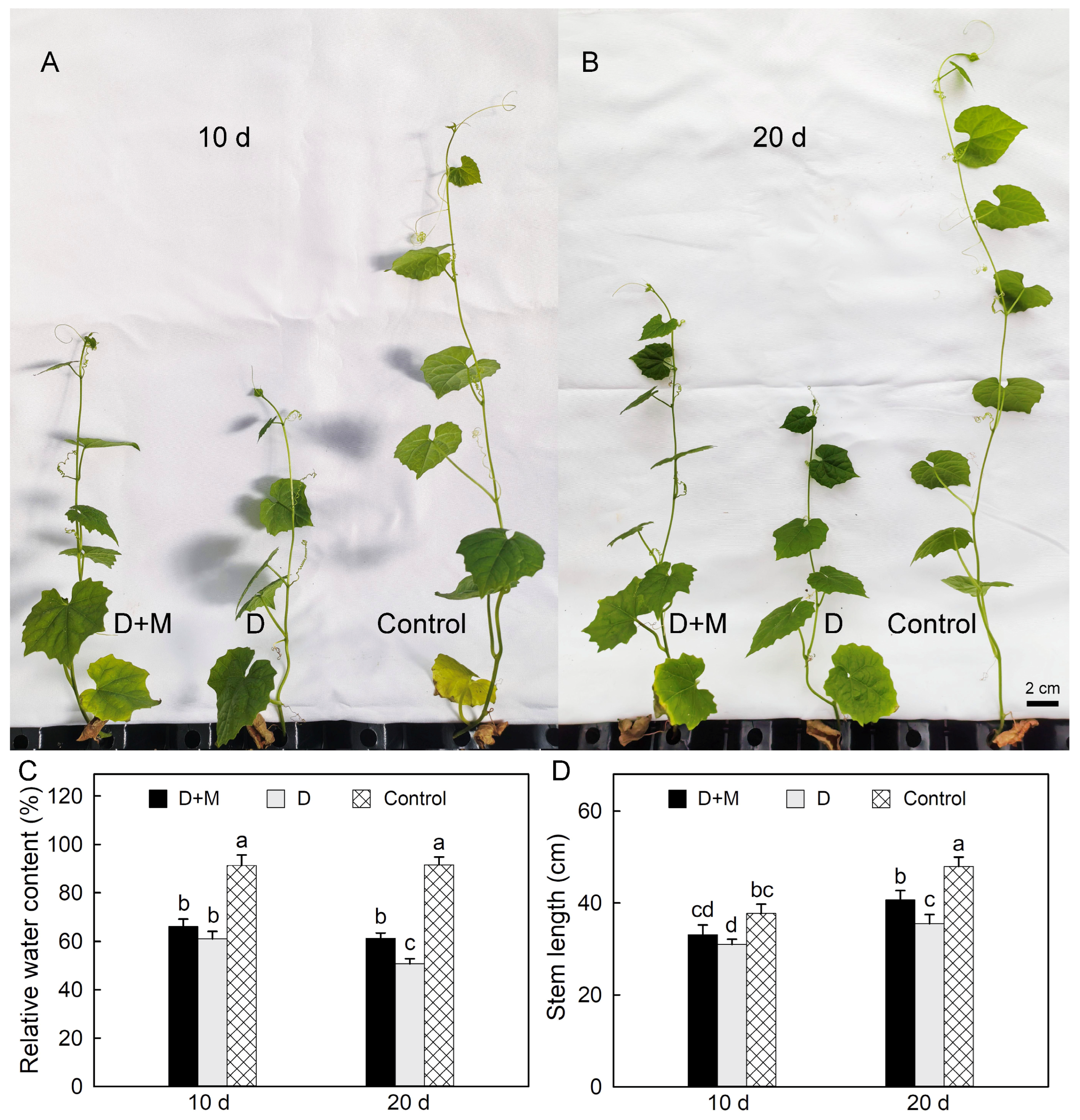
Drought progressively restricted T. kirilowii seedling growth and reduced leaf RWC (Figure 1A–C). After 10 d, RWC was lower in both the D and D+M treatments than in the control. The D+M group exhibited a slight increase compared with the D group; however, the difference was not significant. A similar pattern was observed for stem length: drought shortened the seedlings, whereas MT had not yet induced a significant recovery at 10 d. After 20 d, the effects of water deficit became more evident. MT significantly improved both water status and growth under prolonged stress.

3.2. Chlorophyll Content and Gas Exchange Parameters

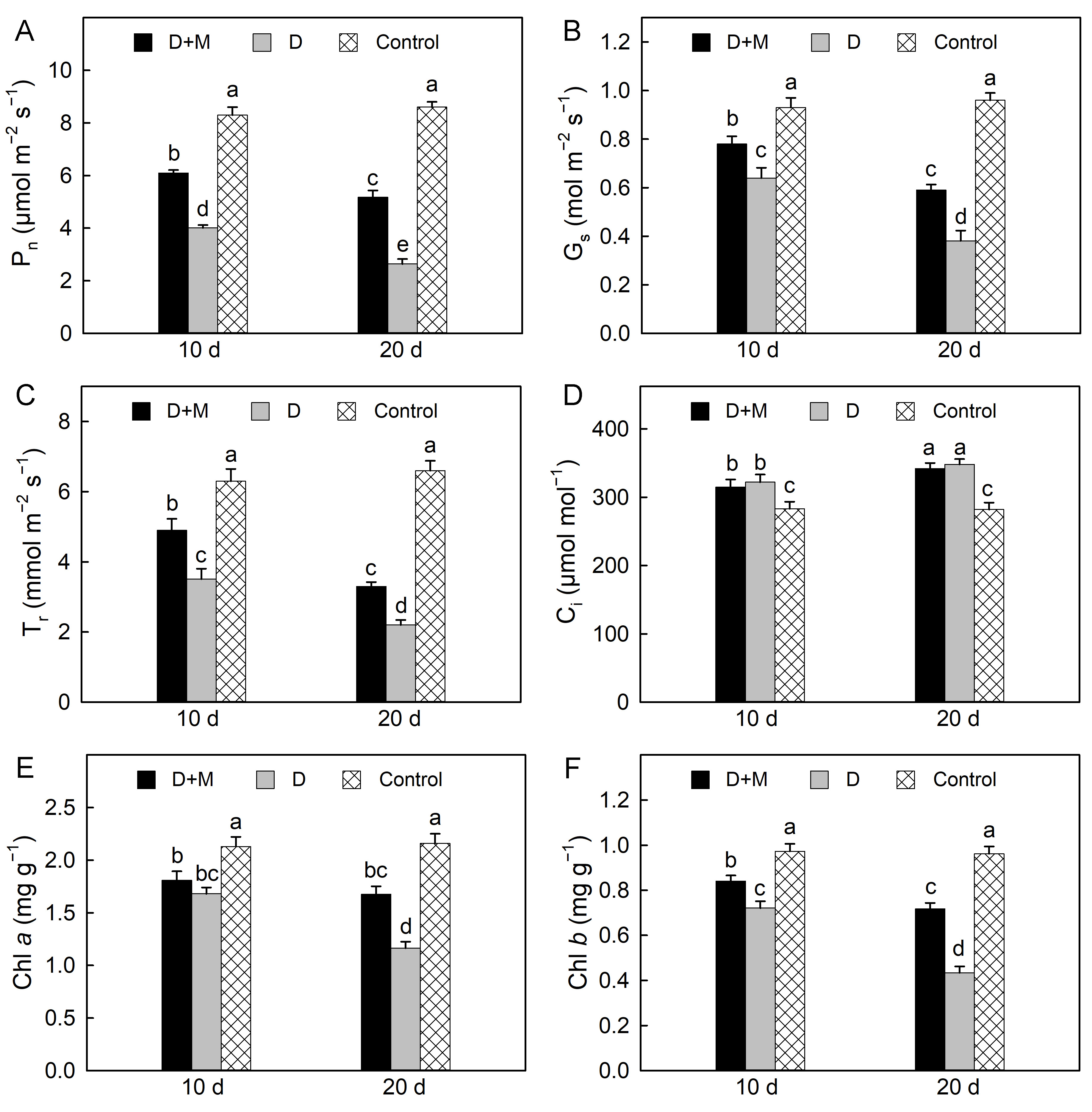
Drought significantly altered leaf gas exchange in T. kirilowii seedlings (Figure 2A–D). Compared with the control, the net photosynthetic rate (Pn), stomatal conductance (Gs), and transpiration rate (Tr) were significantly lower in the D group at both 10 and 20 d, and the reductions became more pronounced as drought continued. MT significantly increased Pn, Gs, and Tr compared with drought alone at both 10 and 20 d. The intercellular CO2 concentration (Ci) increased under drought. The D and D+M groups did not differ significantly from each other in terms of Ci; however, both remained higher than the control. Drought also reduced Chl a and Chl b contents (Figure 2E,F). At 10 d, MT significantly mitigated the decline in Chl b, whereas the difference in Chl a between D and D+M was not significant. By 20 d, Chl a and Chl b were both significantly higher in D+M than in D, although CC remained lower in both drought-treated groups compared to the control.

3.3. Chlorophyll Fluorescence

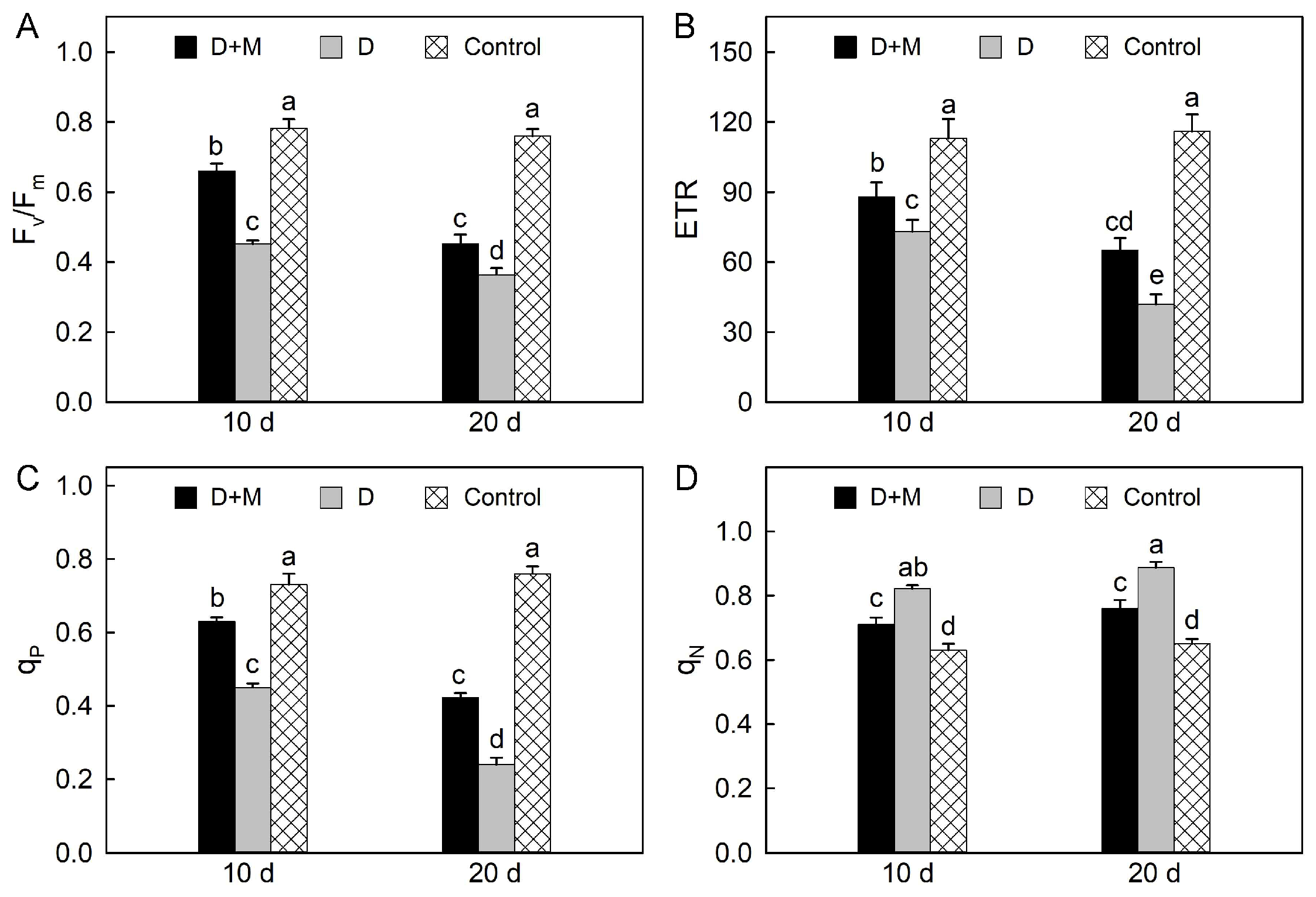
The chlorophyll fluorescence analysis results indicated that drought impaired PSII function (Figure 3). The maximal quantum yield of PSII photochemistry (Fv/Fm), electron transport rate (ETR), and photochemical quenching coefficient (qP) were significantly lower in D than in the control and D+M groups, with stronger inhibition at 20 d. MT treatment significantly improved Fv/Fm, ETR, and qP compared with drought alone. In contrast, non-photochemical quenching (qN) increased under drought and was highest in the D group. Although MT reduced qN relative to D, qN remained higher in D+M than in the control.

3.4. MDA, Electrolyte Leakage, and H2O2

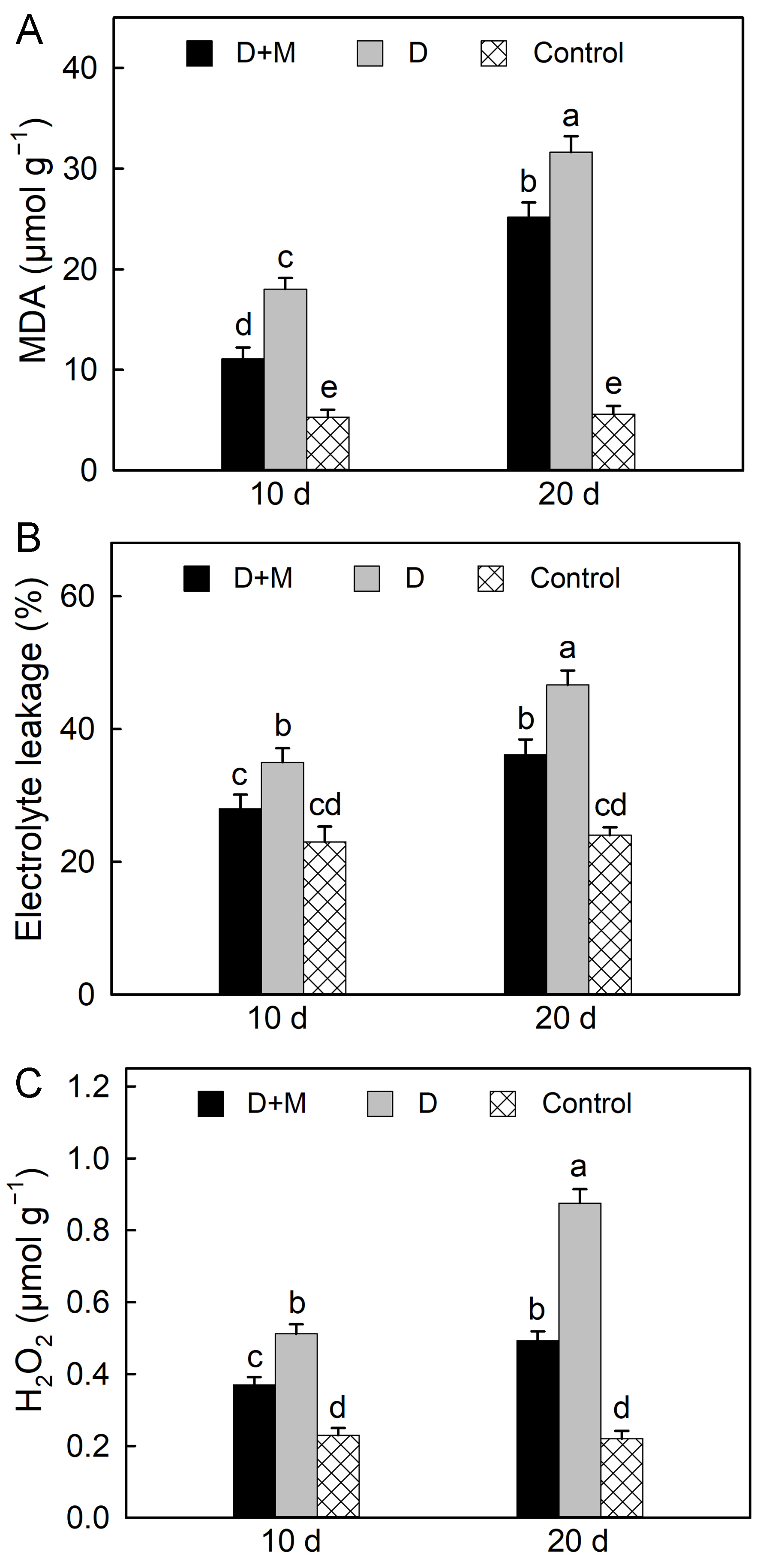
Drought increased oxidative damage in T. kirilowii leaves (Figure 4). The EL, MDA content, and H2O2 content were all significantly elevated under drought. MT reduced MDA and H2O2 accumulation at both 10 and 20 d compared with drought alone, and EL was also lower in D+M than in D.

3.5. Antioxidant Enzyme Activities

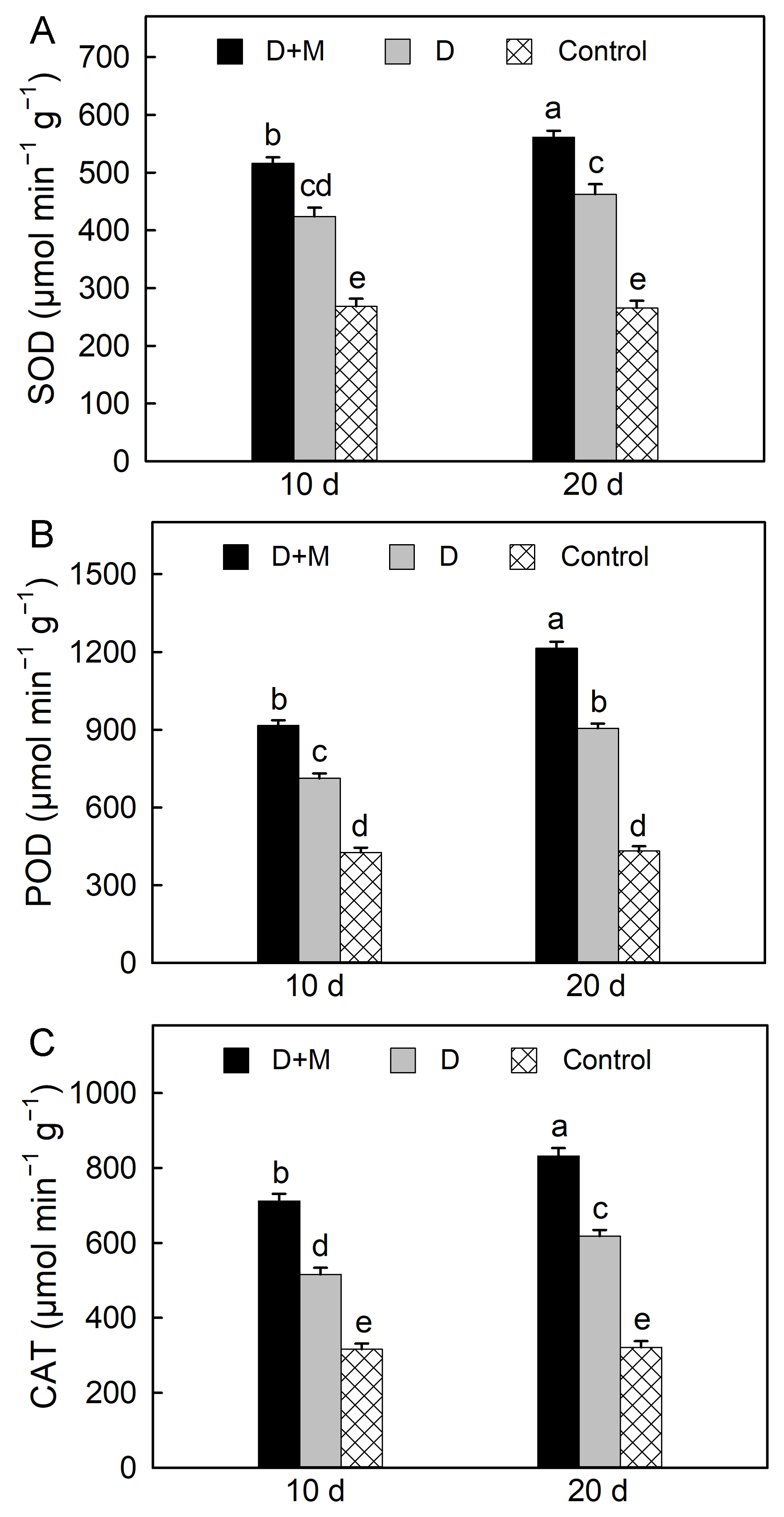
The SOD, POD, and CAT activities showed a marked response to drought treatment (Figure 5). Compared with the D group, MT significantly increased all three enzyme activities at both 10 and 20 d. The maximum activities were observed in the D+M group at 20 d.

3.6. Pro and SSs

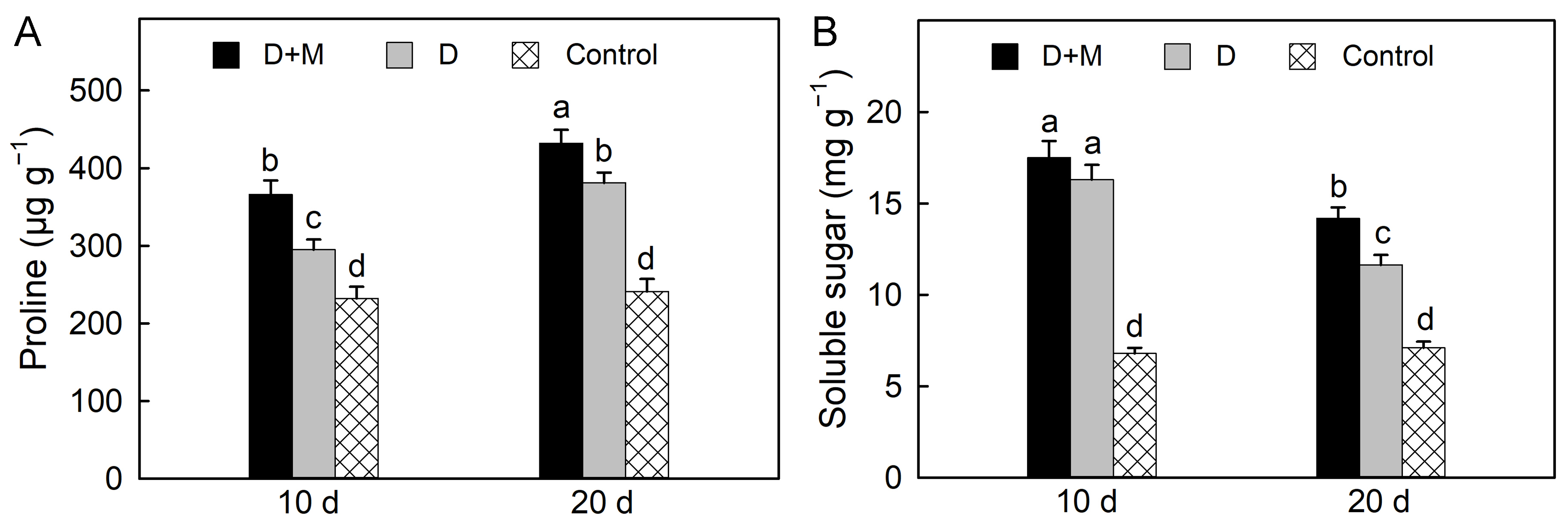
Drought promoted the accumulation of Pro and SSs in T. kirilowii leaves (Figure 6). The Pro content was higher in the D group than in the control group at both 10 and 20 d, and MT further increased Pro accumulation, with the highest value recorded in the D+M group at 20 d. SS levels exhibited a different temporal response. At 10 d, both drought-treated groups contained more SSs than the control; however, the D group and D+M group did not differ significantly. At 20 d, SS levels decreased in both the D group and D+M group relative to 10 d, yet they remained above the control level, with D+M retaining a higher content than D.

4. Discussion

Photosynthetic performance declined as water deficit progressed, consistent with the high sensitivity of this process to drought [28,29]. Stomatal closure is an early measure to limit transpirational water loss, but it also constrains CO2 diffusion and is therefore accompanied by reductions in Gs, Tr, and Pn. With longer stress exposure, non-stomatal impairment of the photosynthetic machinery can become more important and may contribute to an increase in Ci [25]. MT has been reported to improve stomatal performance under drought, thereby alleviating the decline in Gs and supporting Tr and Pn [30]. In this study, under drought stress, the Pn, Gs, and Tr of T. kirilowii leaves significantly decreased. Among these parameters, the Pn, Tr, and Gs were significantly increased by the application of MT. Chlorophyll is a fundamental substance for photosynthesis in plants, and drought stress leads to chlorophyll degradation and a decrease in its content. The contents of chlorophyll a and chlorophyll b in the leaves of T. kirilowii seedlings significantly decreased under drought stress in this study, suggesting that drought conditions accelerate chlorophyll degradation in plant leaves [31]. After exogenous application of MT, the content of chlorophyll in the leaves of T. kirilowii seedlings significantly increased. This finding is consistent with the results of research on Actinidia chinensis seedlings [32]. The results obtained in this study suggest that under drought stress, the application of MT can aid in maintaining leaf CC and improve the photosynthetic capacity of T. kirilowii. The genes PsbC, PsaK and Psb27, which are related to photosynthetic regulation, were significantly upregulated after MT application [33]. Zhang et al. [34] found that after application of MT, the expression of IAA2-2, AUX1A-2 and HP2-1 was upregulated, while the expression of ABI1 was downregulated, thereby improving the drought resistance of plants.
Drought-related inhibition of photosynthesis is typically accompanied by excessive light energy uptake and damage to PSII, which is reflected by decreases in Fv/Fm and ETR [35,36]. The results of a previous study demonstrated that drought lowers photosynthetic system activity and reduces both Fv/Fm and ETR. Todorova et al. [37] reported that foliar MT treatment mitigated the decline in Fv/Fm and ETR in Vitis vinifera under drought. In this study, the Fv/Fm and ETR of T. kirilowii leaves significantly decreased under drought stress, and the application of MT alleviated the decrease in Fv/Fm and ETR under drought stress. These findings indicate that MT contributes to photosynthetic system stability, enhanced light energy conversion, and more efficient electron transport under drought stress.
Oxidative injury is another prominent component of the drought response. Excess ROS can attack membranes and other cellular macromolecules and, when the imbalance is severe, disrupt organelles and cell viability [9]. The increase in H2O2 content in drought-treated T. kirilowii therefore points to greater oxidative pressure; comparable drought-associated oxidative responses have been reported in other plant systems [32,38]. This interpretation is also supported by the rise in EL and MDA content. Membrane injury caused by ROS promotes lipid peroxidation and EL, while MDA content serves as a commonly used indicator of this process [26]. The MDA content and EL of the leaves of T. kirilowii seedlings significantly increased under drought stress. The results obtained in this study suggest an increased degree of membrane lipid peroxidation in cells, similar to responses reported in T. aestivum [21]. In this study, the application of MT significantly reduced the EL, H2O2 content, and MDA content of T. kirilowii leaves under drought stress. This effect is consistent with reports that MT lowers H2O2 accumulation and improves stress tolerance [21], likely because it functions as a broad-spectrum antioxidant and endogenous free radical scavenger [21]. Taken together, the results obtained in this study suggest that MT protects T. kirilowii seedlings by limiting membrane lipid peroxidation and maintaining membrane stability under drought.
Antioxidant enzymes provide an important line of defense against drought-induced oxidative stress. SOD converts superoxide radicals, while POD and CAT participate in the removal of H2O2; coordinated increases in these enzymes can therefore reduce ROS accumulation [10]. MT can enhance this process by stimulating antioxidant enzyme activity. Based on the results of this study, drought raised all three antioxidant enzyme activities in T. kirilowii, suggesting the activation of an endogenous defense response. MT treatment produced a further increase at 10 d and 20 d, with the strongest activities generally observed after 20 d. A similar enhancement of SOD, POD, and CAT activities has been reported in MT-treated cotton under drought [39]. Exogenous addition of MT further enhanced the antioxidant enzyme activity of T. kirilowii seedlings under drought stress. The results obtained in this study suggest that MT may enhance antioxidant enzyme activity, leading to more efficient elimination of ROS and ultimately alleviating the oxidative damage caused by drought stress in T. kirilowii seedlings. Tian et al. [19] found in their study that exogenous MT significantly enhanced FeCAT, FePOD, and FeSOD gene expression, and molecular docking demonstrated that the antioxidant enzyme structures were more stable in Fagopyrum esculentum under drought stress.
Osmotic adjustment is another important strategy through which plants tolerate abiotic stress. During drought, plants accumulate organic and inorganic solutes to stabilize the cellular internal environment [10]. Pro and SSs are widely used indicators of this adjustment, and their accumulation has been associated with drought tolerance [40]. Tian et al. [19] found that under drought stress, MT treatment resulted in significant accumulation of SSs and Pro, in addition to maintenance of cell osmotic balance. The results of another study demonstrated that MT treatment regulated the osmotic protection of Pro and relative gene (P5CS) expression levels, enhancing plant tolerance to drought conditions [33]. In this study, the contents of Pro and SSs in the leaves of T. kirilowii seedlings significantly increased under drought stress, and their contents further increased following MT application. The results obtained in this study suggest that MT effectively increases the accumulation of osmotic substances, thereby regulating cell osmotic potential and promoting the stability of the internal environment of cells to resist drought stress. This response is consistent with the conclusion that MT enhances the stress resistance of plants such as Zea mays under adverse stress conditions [32]. In addition, Zhong et al. [39] found that MT specifically modulated the “plant circadian rhythm”, “thiamine metabolism”, and “taurine and hypotaurine metabolism” pathways for drought adaptation, and proposed PIF8 and MYC5 as candidate regulators of MT-mediated drought tolerance [39].

5. Conclusions

Foliar application of 100 μmol L−1 MT mitigated the physiological damage caused by PEG-induced drought in T. kirilowii seedlings. The treatment helped maintain stem growth, leaf RWC, gas exchange, chlorophyll content, and PSII performance, while increasing SOD, POD, and CAT activities and promoting Pro and SS accumulation. The lower H2O2 and MDA contents, and lower EL in the D+M group also indicated less oxidative membrane injury. These coordinated responses explain the greater drought tolerance of MT-treated seedlings from a physiological perspective. The experiment was limited to a relatively short treatment period under controlled hydroponic conditions, and no field validation was conducted. Therefore, the molecular targets and regulatory pathways underlying the MT response in T. kirilowii require further investigation.

Author Contributions

Conceptualization, N.W. and Q.Z.; methodology, N.W., Y.W., Y.H. and Q.Z.; investigation, N.W., Y.W. and Y.H.; data curation, N.W. and Y.W.; writing—original draft preparation, N.W. and Y.W.; writing—review and editing, N.W. and Q.Z.; supervision, Q.Z.; funding acquisition, N.W. and Q.Z. All authors have read and agreed to the published version of the manuscript.

Funding

This research was funded by the National Natural Science Foundation of China (32501397); Start-up Fund for Advanced Talents of Fuyang Institute of Technology (2025BSGZS003); Key Projects of the Scientific Research Plan of the Colleges and Universities of Anhui Province (2025AHGXZK31093); Scientific Research Project of Fuyang Normal University (2025KYQD0120); Horizontal Cooperation Project of the Fuyang Municipal Government and Fuyang Institute of Technology (2025FZYHXKYPT303); and Horizontal Cooperation Project of the Fuyang Municipal Government and Fuyang Normal University (20260429061).

Data Availability Statement

All data are available in the article.

Conflicts of Interest

The authors declare no conflicts of interest.

References

  1. Zhang, Y.P.; Wang, K.Y.; Huang, Q.Y.; Shu, S.H. Molecular cloning and characterization of an alpha-amylase inhibitor (TkAAI) gene from Trichosanthes kirilowii Maxim. Biotechnol. Lett. 2022, 44, 1127–1138. [Google Scholar] [CrossRef] [Scilit]
  2. Mudondo, J.; Happy, K.; Okello, D.; Kang, Y. Trichosanthis Radix: A comprehensive review on botany, ethnomedicine, phytochemistry, pharmacology, quality control and toxicology. Fitoterapia 2025, 183, 106597. [Google Scholar] [CrossRef] [Scilit] [PubMed]
  3. Song, Q.Y.; Zhang, K.P.; Kong, L.Q.; Ye, Y.F. Trichosanthes kirilowii Maxim. polysaccharides mitigate DSS-induced ulcerative colitis in mice via inflammation inhibition and gut microbiota modulation. J. Funct. Foods 2026, 142, 107322. [Google Scholar] [CrossRef] [Scilit]
  4. dos Santos, T.B.R.A.F.; de Souza, S.G.H.; Budzinski, I.G.F.; Domingues, D.S. Physiological responses to drought, salinity, and heat stress in plants: A review. Stresses 2022, 2, 113–135. [Google Scholar] [CrossRef] [Scilit]
  5. Zhang, Y.; Xu, J.; Li, R.F.; Ge, Y.R.; Li, Y.F.; Li, R.L. Plants’ response to abiotic stress: Mechanisms and strategies. Int. J. Mol. Sci. 2023, 24, 10915. [Google Scholar] [CrossRef] [Scilit] [PubMed]
  6. Kopecká, R.; Kameniarová, M.; Cerny, M.; Brzobohaty, B.; Novák, J. Abiotic stress in crop production. Int. J. Mol. Sci. 2023, 24, 6603. [Google Scholar] [CrossRef] [Scilit] [PubMed]
  7. Zhao, N.N.; Zhou, Z.G.; Cui, S.L.; Zhang, X.Y.; Zhu, S.; Wang, Y.; Zenda, T.; Wenjing, L. Advanced imaging-enabled understanding of cell wall remodeling mechanisms mediating plant drought stress tolerance. Front. Plant Sci. 2025, 16, 1635078. [Google Scholar] [CrossRef] [Scilit] [PubMed]
  8. Alshammari, W.B.; Alshammery, K.; Lotfi, S.; Altamimi, H.; Alshammari, A.; Al-Harbi, N.A.; Jakovljević, D.; Alharbi, M.H.; Moustapha, M.E.; Abd El-Moneim, D.; et al. Improvement of morphophysiological and anatomical attributes of plants under abiotic stress conditions using plant growth-promoting bacteria and safety treatments. PeerJ 2024, 12, e17286. [Google Scholar] [CrossRef] [Scilit] [PubMed]
  9. Zhu, X.; Wang, K.T.; Duan, X.Q.; Pang, X.D.; Du, X.R.; Han, Z.L.; Li, W.; Chen, S.; Jin, H.; Chen, Z.; et al. Genome-wide identification of StMAPKKKs and functional characterization of StMAPKKK44 in regulating salt and drought tolerance in potato (Solanum tuberosum L.). J. Plant Physiol. 2026, 323, 154799. [Google Scholar] [CrossRef] [Scilit] [PubMed]
  10. Ru, C.; Hu, X.T.; Chen, D.Y.; Wang, W.E.; Zhen, J.B. Photosynthetic, antioxidant activities, and osmoregulatory responses in winter wheat differ during the stress and recovery periods under heat, drought, and combined stress. Plant Sci. 2023, 327, 111557. [Google Scholar] [CrossRef] [Scilit] [PubMed]
  11. Zuo, J.; Wei, C.J.; Liu, X.Z.; Jiang, L.B.; Gao, J. Multifunctional transcription factor YABBY6 regulates morphogenesis, drought and cold stress responses in rice. Rice 2024, 17, 69. [Google Scholar] [CrossRef] [Scilit] [PubMed]
  12. Ahmad, I.; Zhu, G.L.; Zhou, G.S.; Liu, J.; Younas, M.U.; Zhu, Y.M. Melatonin role in plant growth and physiology under abiotic stress. Int. J. Mol. Sci. 2023, 24, 8759. [Google Scholar] [CrossRef] [Scilit] [PubMed]
  13. Song, R.X.; Ritonga, F.N.; Yu, H.Y.; Ding, C.J.; Zhao, X.Y. Plant melatonin: Regulatory and protective role. Horticulturae 2022, 8, 810. [Google Scholar] [CrossRef] [Scilit]
  14. Zeng, W.; Mostafa, S.; Lu, Z.G.; Jin, B. Melatonin-mediated abiotic stress tolerance in plants. Front. Plant Sci. 2022, 13, 847175. [Google Scholar] [CrossRef] [Scilit] [PubMed]
  15. Zhao, J.; Hu, J.J. Melatonin: Current status and future perspectives in horticultural plants. Front. Plant Sci. 2023, 14, 1140803. [Google Scholar] [CrossRef] [Scilit] [PubMed]
  16. Xu, L.N.; Zhu, Y.F.; Wang, Y.K.; Zhang, L.Y.; Li, L.J.; Looi, L.J.; Zhang, Z.Y. The potential of melatonin and its crosstalk with other hormones in the fight against stress. Front. Plant Sci. 2024, 15, 1492036. [Google Scholar] [CrossRef] [Scilit] [PubMed]
  17. Xu, J.; Wei, Z.; Lu, X.; Liu, Y.; Yu, W.; Li, C. Involvement of nitric oxide and melatonin enhances cadmium resistance of tomato seedlings through regulation of the ascorbate-glutathione cycle and ros metabolism. Int. J. Mol. Sci. 2023, 24, 9526. [Google Scholar] [CrossRef] [Scilit] [PubMed]
  18. Wu, B.J.; Li, R.X.; Ye, M.H.; Wang, W.; Zhang, H.J.; Zhuang, K.Y.; Qin, T.F.; Guo, S.J.; Ling, Y.; Zhou, C.; et al. Exogenous melatonin enhances the cold resistance of pepper (Capsicum annuum L. var. cerasiforme Bailey) by promoting the synthesis of long-chain alkanes in the epicuticular wax. J. Pineal Res. 2025, 77, e70097. [Google Scholar] [CrossRef] [Scilit] [PubMed]
  19. Tian, Z.M.; He, J.D.; Wang, Z.Y.; Zhang, Z.; Quinet, M.; Meng, Y. Exogenous melatonin enhances drought tolerance and germination in common buckwheat seeds through the coordinated effects of antioxidant and osmotic regulation. BMC Plant Biol. 2025, 25, 613. [Google Scholar] [CrossRef] [Scilit] [PubMed]
  20. Zhu, J.; Zhang, Y.; Wang, Y.; Xiao, W.; Khan, M.; Fang, T.; Ming, R.H.; Dahro, B.; Liu, J.H.; Jiang, L. The ABF4-bHLH28-COMT5 module regulates melatonin synthesis and root development for drought tolerance in citrus. Plant J. 2025, 121, e70078. [Google Scholar] [CrossRef] [Scilit] [PubMed]
  21. Li, X.; Liu, J.; Zhang, C.P.; Liu, Z.; Guo, X.; Li, S.X.; Li, H.S.; Liu, K.; Li, K.Z.; Ding, M.L. Melatonin promotes yield increase in wheat by regulating its antioxidant system and growth under drought stress. Biology 2025, 14, 94. [Google Scholar] [CrossRef] [Scilit] [PubMed]
  22. Göre, M. Mitigation of salt stress in Camelina sativa by epibrassinolide and salicylic acid treatments. Sci. Rep. 2025, 15, 7965. [Google Scholar] [CrossRef] [Scilit] [PubMed]
  23. Ndhlovu, N.T.; Khuzwayo, T.N.; Minibayeva, F.V.; Beckett, R.P. Subtropical lichens from the Afromontane can display rapid photosynthetic acclimation to simulated climate change. Photosynthetica 2025, 63, 64–72. [Google Scholar] [CrossRef] [Scilit] [PubMed]
  24. Wellburn, A.R. The spectral determination of chlorophylls a and b, as well as total carotenoids, using various solvents with spectrophotometers of different resolution. J. Plant Physiol. 1994, 144, 307–311. [Google Scholar] [CrossRef] [Scilit]
  25. Cai, M.L.; Lin, X.H.; Peng, J.D.; Zhang, J.J.; Chen, M.H.; Huang, J.D.; Chen, L.H.; Sun, F.; Ding, W.Q.; Peng, C.L. Why is the invasive plant Sphagneticola trilobata more resistant to high temperature than its native congener? Int. J. Mol. Sci. 2021, 22, 748. [Google Scholar] [CrossRef] [Scilit] [PubMed]
  26. Zhang, Q.L.; Chen, G.X.; Ke, W.Q.; Peng, C.L. Adaptation of the invasive plant Sphagneticola trilobata to flooding stress by hybridization with native relatives. Int. J. Mol. Sci. 2024, 25, 6783. [Google Scholar] [CrossRef] [Scilit] [PubMed]
  27. Zhang, Q.L.; Wang, Y.; Weng, Z.L.; Chen, G.X.; Peng, C.L. Adaptation of the invasive plant Sphagneticola trilobata (L.) pruski to drought stress. Plants 2024, 13, 2207. [Google Scholar] [CrossRef] [Scilit] [PubMed]
  28. Lu, X.Y.; Yin, Y.; Yang, M.L.; Zhang, S.C.; Niu, Z.T.; Wu, L.L.; Chen, C. Effects of drought stress on the growth and physiological characteristics of Idesia polycarpa Maxim. Horticulturae 2025, 11, 834. [Google Scholar] [CrossRef] [Scilit]
  29. Wang, S.J.; Ma, Q.H.; Li, C.; Zhang, S.H.; Liu, X.M. Chloroplast responses to drought: Integrative mechanisms and mitigation strategies. Int. J. Mol. Sci. 2025, 26, 11872. [Google Scholar] [CrossRef] [Scilit] [PubMed]
  30. Waseem, M.; Hasan, M.M.; Hazzazi, Y.; Alharbi, B.M.; Ghani, M.U.; Ahmad, P.; Carriqui, M. Potential mechanisms for the rapid post-drought reversal of ABA-induced stomatal closure by melatonin, 5-aminolevulinic acid, and brassinosteroids. Photosynthetica 2025, 63, 104–115. [Google Scholar] [CrossRef] [Scilit] [PubMed]
  31. Shaheen, S.; Lalarukh, I.; Ahmad, J.; Zulqadar, S.A.; Alharbi, S.A.; Hareem, M.; Alarfaj, A.A.; Ansari, M.J. Physio-biochemical mechanism of melatonin seed priming in stimulating growth and drought tolerance in bread wheat. BMC Plant Biol. 2024, 24, 918. [Google Scholar] [CrossRef] [Scilit] [PubMed]
  32. Zhu, M.; Guo, T.; Liu, Y.B.; Xiao, R.; Yu, T.; Huang, J.X.; Du, W.L.; Zhong, X.M.; Song, B.; Li, F.H. Ascorbic acid is involved in melatonin-induced salinity tolerance of maize (Zea mays L.) by regulating antioxidant and photosynthetic capacities. Photosynthetica 2024, 62, 361–371. [Google Scholar] [CrossRef] [Scilit] [PubMed]
  33. Zhao, Q.H.; Zheng, X.L.; Wang, C.; Wang, Q.Y.; Wei, Q.Y.; Liu, X.S.; Liu, Y.J.; Chen, A.L.; Jiang, J.; Zhao, X.Y.; et al. Exogenous melatonin improves drought tolerance by regulating the antioxidant defense system and photosynthetic efficiency in fodder Soybean seedings. Plants 2025, 14, 460. [Google Scholar] [CrossRef] [Scilit] [PubMed]
  34. Zhang, X.L.; Ma, X.H.; Hu, Y.P.; Hu, Q.D.; Wen, J.X.; Chen, Y.Z.; Qian, R.J.; Zheng, J. Effects of exogenous spraying of melatonin on the growth of Platycrater arguta under drought stress. Front. Plant Sci. 2025, 15, 1516302. [Google Scholar] [CrossRef] [Scilit] [PubMed]
  35. Li, X.; Zhang, W.; Niu, D.; Liu, X.M. Effects of abiotic stress on chlorophyll metabolism. Plant Sci. 2024, 342, 112030. [Google Scholar] [CrossRef] [Scilit] [PubMed]
  36. Sharma, S.; Alberti, T.; Raposo, R.D.; Anterola, A.M.; Weber, J.; Diatta, A.A.; Leme, J.F.D. The effects of water-deficit stress on Cannabis sativa L. development and production of secondary metabolites: A review. Horticulturae 2025, 11, 646. [Google Scholar] [CrossRef] [Scilit]
  37. Todorova, D.; Anev, S.; Iliev, M.; Petrakova, M.; Sergiev, I. Changes of photosynthetic parameters in melatonin-treated wheat subjected to drought. Plants 2024, 13, 3414. [Google Scholar] [CrossRef] [Scilit] [PubMed]
  38. Liu, L.; Mu, H.N. Mycorrhizas promote total flavonoid levels in Trifoliate orange by accelerating the flavonoid biosynthetic pathway to reduce oxidative damage under drought. Horticulturae 2025, 11, 910. [Google Scholar] [CrossRef] [Scilit]
  39. Zhong, X.Y.; Han, A.X.; Liusui, Y.; Zhang, X.; Fu, W.W.; Wang, Z.Y.; Li, Y.X.; Cao, J.; Guo, Y.J.; Zhang, J.B. Identification of key pathways and genes underlying melatonin-enhanced drought tolerance in cotton. Peerj 2025, 13, e20005. [Google Scholar] [CrossRef] [Scilit] [PubMed]
  40. Liu, B.H.; Jing, D.W.; Liu, F.C.; Ma, H.L.; Liu, X.H.; Peng, L. alleviates drought stress responses in walnut (Juglans regia L.) seedlings by stimulating osmotic adjustment and antioxidant defense system. Appl. Microbiol. Biotechnol. 2021, 105, 8951–8968. [Google Scholar] [CrossRef] [Scilit] [PubMed]
Figure 1. Effects of exogenous MT on leaf RWC and seedling growth of T. kirilowii under drought stress at 10 and 20 d. Changes in phenotypes (A,B), RWC (C), and stem length (D). D+M: 11% PEG + 100 μmol L–1 MT; D: 11% PEG; Control: well-watered. Values are shown as mean ± SD of five biological replicates. Different lowercase letters indicate groups with significant differences at p < 0.05.
Horticulturae 12 01039 g001
Figure 2. Effects of exogenous MT on gas-exchange parameters and CC of T. kirilowii seedling leaves under drought stress at 10 and 20 d. Changes in net photosynthetic rate (Pn, (A)), stomatal conductance (Gs, (B)), transpiration rate (Tr, (C)), intercellular CO2 concentration (Ci, (D)), chlorophyll a content (Chl a, (E)), and chlorophyll b content (Chl b, (F)). D+M: 11% PEG + 100 μmol L–1 MT; D: 11% PEG; Control: well-watered. Values are shown as mean ± SD of five biological replicates. Different lowercase letters indicate groups with significant differences at p < 0.05.
Horticulturae 12 01039 g002
Figure 3. Effects of exogenous MT on chlorophyll fluorescence parameters of T. kirilowii seedling leaves under drought stress at 10 and 20 d. (A) Maximum photochemical efficiency of photosystem II (Fv/Fm), (B) relative electron transport rate (ETR), (C) photochemical quenching coefficient (qP), and (D) non-photochemical quenching coefficient (qN). D+M: 11% PEG + 100 μmol L–1 MT; D: 11% PEG; Control: well-watered. Values are shown as mean ± SD of five biological replicates. Different lowercase letters indicate groups with significant differences at p < 0.05.
Horticulturae 12 01039 g003
Figure 4. Effects of exogenous MT on oxidative damage and membrane integrity in T. kirilowii seedling leaves under drought stress at 10 and 20 d. (A) MDA content, (B) electrolyte leakage, (C) H2O2 content. D+M: 11% PEG + 100 μmol L–1 MT; D: 11% PEG; Control: well-watered. Values are shown as mean ± SD of five biological replicates. Different lowercase letters indicate groups with significant differences at p < 0.05.
Horticulturae 12 01039 g004
Figure 5. Antioxidant enzyme responses in T. kirilowii leaves to drought and foliar MT treatment at 10 and 20 d. (A) SOD, (B) POD, and (C) CAT activities. D+M: 11% PEG + 100 μmol L–1 MT; D: 11% PEG; Control: well-watered. Data are shown as means ± SD of five biological replicates (n = 5). Different letters (a–e) above bars indicate significant differences (p < 0.05).
Horticulturae 12 01039 g005
Figure 6. Effects of exogenous MT on osmolyte accumulation in T. kirilowii seedling leaves under drought stress at 10 and 20 d. (A) Pro content and (B) SS content. D+M: 11% PEG + 100 μmol L–1 MT; D: 11% PEG; Control: well-watered. Data are shown as means ± SD of five biological replicates (n = 5). Different letters (a–d) above bars indicate significant differences (p < 0.05).
Horticulturae 12 01039 g006
Disclaimer/Publisher’s Note: The statements, opinions and data contained in all publications are solely those of the individual author(s) and contributor(s) and not of MDPI and/or the editor(s). MDPI and/or the editor(s) disclaim responsibility for any injury to people or property resulting from any ideas, methods, instructions or products referred to in the content.