Article

Effects of Pre-Storage Methods and Storage Temperatures on Chemical Composition and Colour Development of Canarium (Canarium indicum) Kernels

1
Centre for Bioinnovation, University of the Sunshine Coast, Maroochydore DC, QLD 4558, Australia
2
School of Biology and Environmental Sciences, Faculty of Science, Queensland University of Technology, Brisbane, QLD 4000, Australia
3
School of Environment and Science, Griffith University, Nathan, QLD 4111, Australia
4
National Agricultural Research Institute, Islands Regional Centre, Keravat, P.O. Box 204, Kokopo 613, Papua New Guinea
5
Australian Research Centre for Human Evolution, Griffith University, Brisbane, QLD 4111, Australia
*
Author to whom correspondence should be addressed.
Horticulturae 2026, 12(7), 902; https://doi.org/10.3390/horticulturae12070902

Submission received: 7 May 2026 / Revised: 10 July 2026 / Accepted: 15 July 2026 / Published: 22 July 2026

Abstract

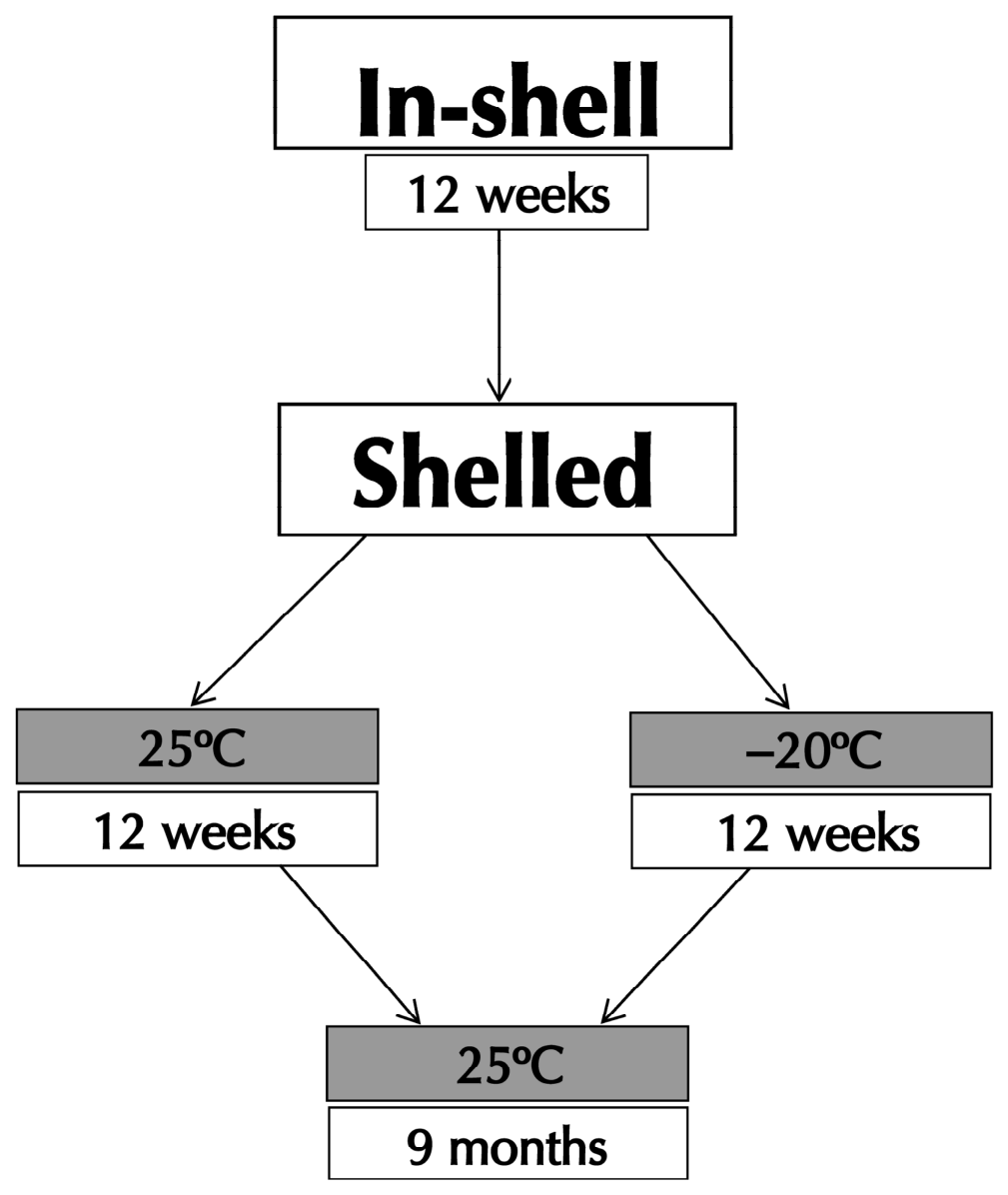
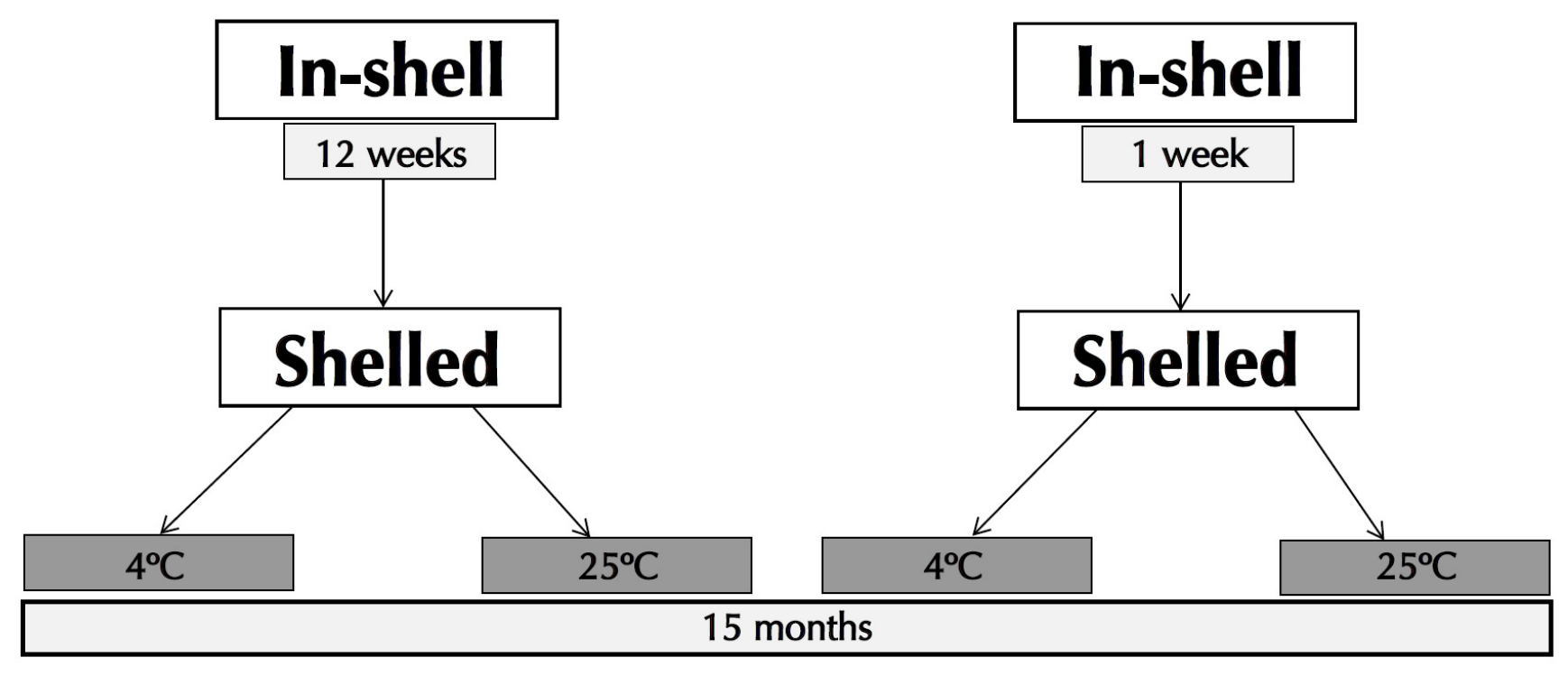
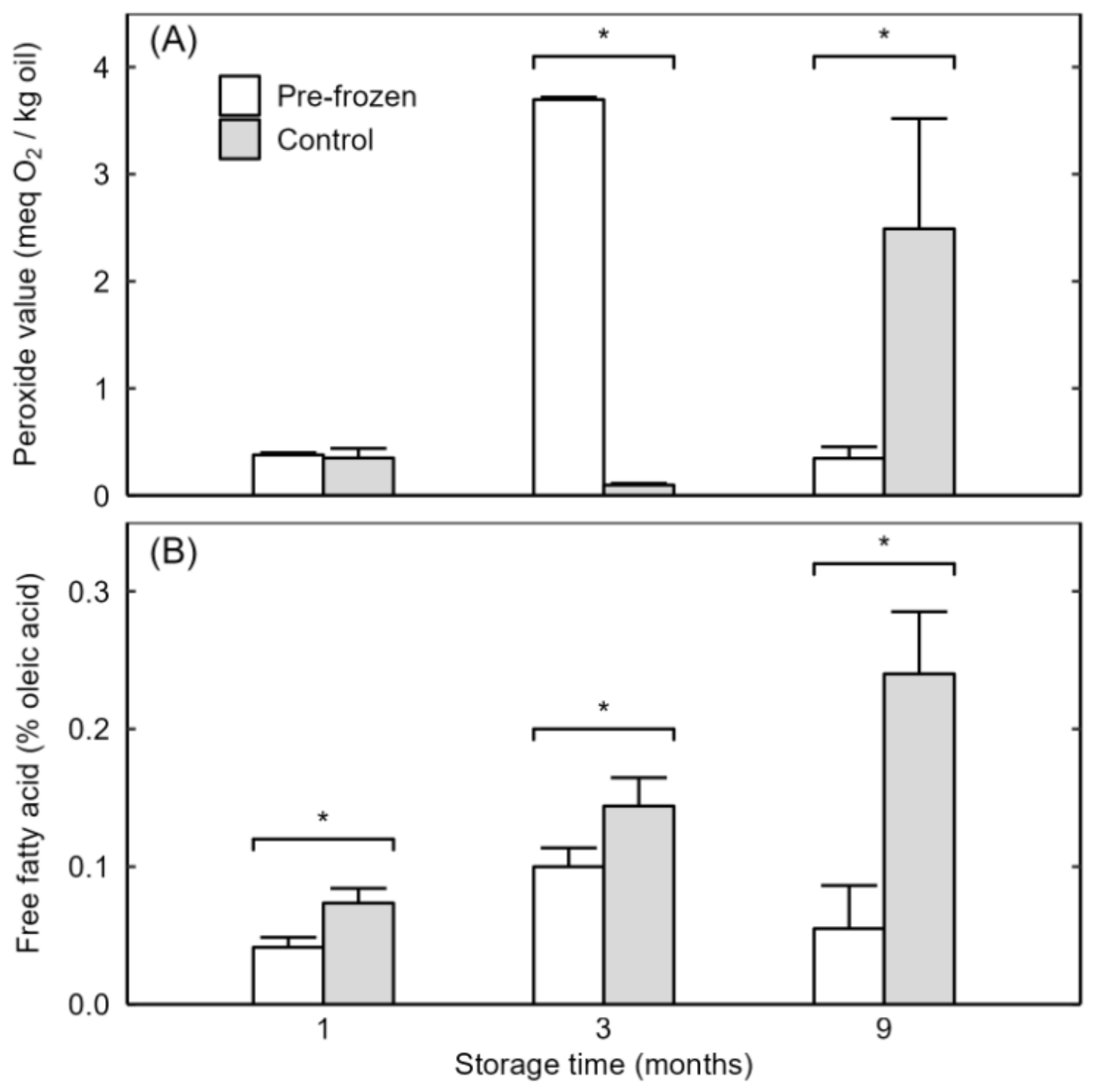
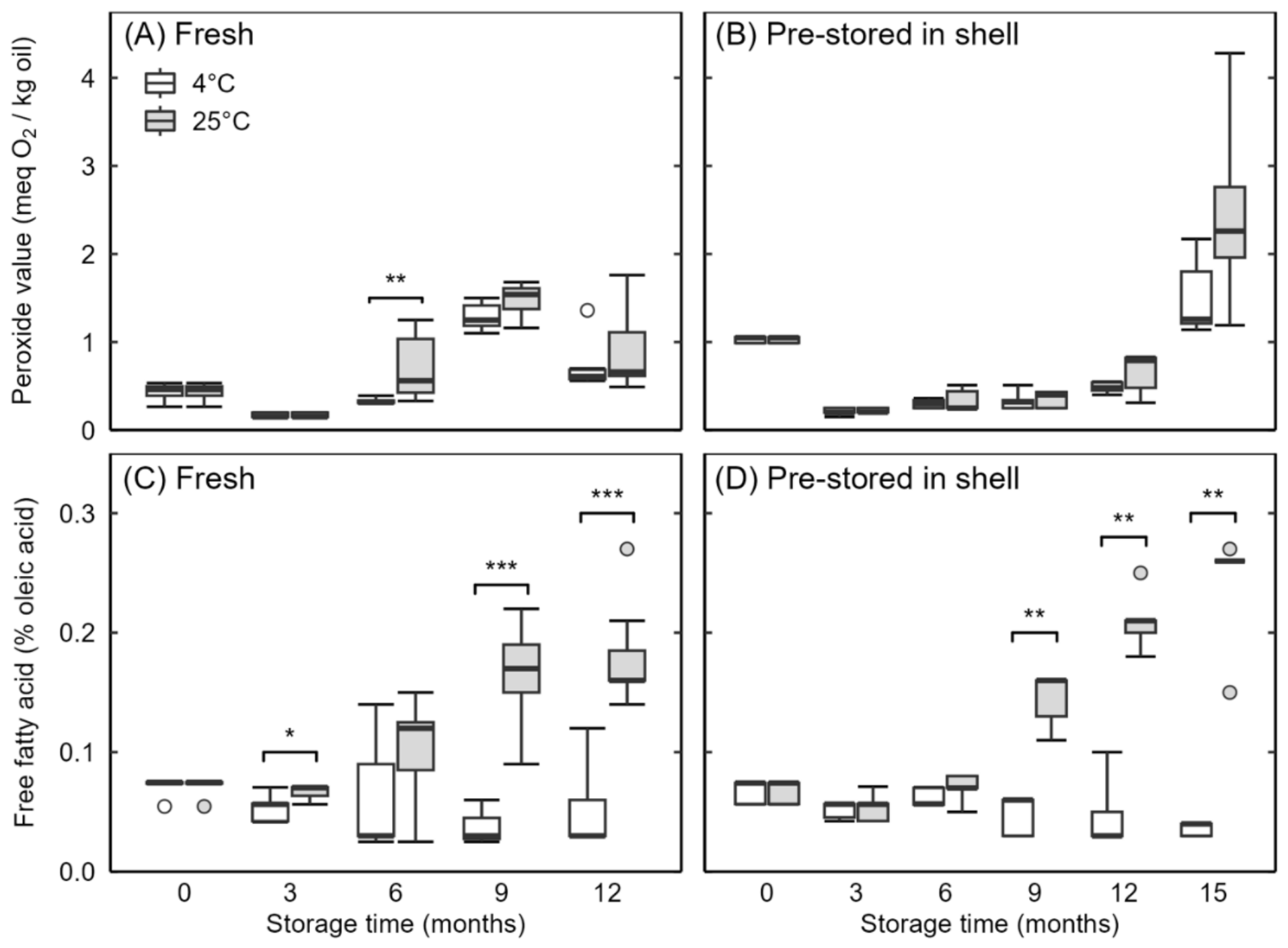
Nut quality is of great economic concern because nuts are rich in oil, which can be rapidly oxidised if the nuts are not properly handled. Tree nuts are often maintained in-shell after harvest so that they can be processed later and marketed out of season. Poor handling procedures prior to kernel storage, and suboptimal temperatures during storage, may compromise quality and lead to colour development, particularly for tree nuts with high oil content that are susceptible to oxidative rancidity. However, there is limited information on the effects of in-shell handling procedures or kernel storage temperatures on the quality and colour development of tree nuts during long-term storage. We determined how the freezing of kernels from the tropical tree, canarium (Canarium indicum), affected their subsequent kernel quality when stored at 25 °C for up to 9 months. Pre-frozen kernels had significantly higher peroxide values than non-frozen kernels (3.90 and 0.35 meq O2/kg oil, respectively) after 3 months of storage. However, pre-frozen kernels had significantly lower peroxide values than non-frozen kernels after 9 months of storage, most likely due to degradation of peroxides to secondary compounds over time. We also evaluated how the prolonged maintenance of nuts-in-shell prior to processing affected kernel quality, oil composition and colour development during storage at 4 °C or 25 °C for up to 15 months. Storage at 25 °C led to higher free fatty acid levels from 9 months onwards than storage at 4 °C, both for the kernels that had been maintained previously in-shell and for the fresh kernels. Nonetheless, peroxide values and free fatty acid levels of the previously stored in-shell and of the fresh kernels were still below the acceptable quality limits for tree nuts. The concentrations of palmitic, stearic and linoleic acid in fresh kernels stored at 4 °C or 25 °C did not differ between the storage temperatures. However, the oleic acid concentration was higher in refrigerated kernels than unrefrigerated kernels. Kernels stored in-shell had lower reflectance at 25 °C than those stored at 4 °C at 12 months of storage. Our findings demonstrate that freezing of canarium kernels accelerates lipid oxidation and quality loss, but that refrigeration suppresses lipid oxidation. Kernels stored at room temperature were still below the maximum acceptable limits for peroxide values and free fatty acid levels, although they would likely develop rancidity if stored for more than 15 months. We recommend that the kernels of tropical tree nuts with high oil content like canarium not be frozen, but should be freshly processed, kept at 4 °C if shelled, and stored immediately, to ensure high quality.
Keywords: tree nuts; peroxide values; free fatty acids; rancidity tree nuts; peroxide values; free fatty acids; rancidity
Graphical Abstract