Article

Effects of Different Light-Quality Ratios on Growth and Development of Chrysanthemum morifolium Tissue-Cultured Plantlets

1
College of Landscape Architecture and Art, Henan Agricultural University, Zhengzhou 450002, China
2
School of Horticulture Landscape Architecture, Henan Institute of Science and Technology, Xinxiang 453003, China
*
Authors to whom correspondence should be addressed.
These authors contributed equally to this work.
Horticulturae 2026, 12(7), 878; https://doi.org/10.3390/horticulturae12070878
Submission received: 2 June 2026 / Revised: 8 July 2026 / Accepted: 9 July 2026 / Published: 17 July 2026

Abstract

This study aimed to investigate the effects of different light-emitting diode (LED) light-quality combinations on the growth and development of Chrysanthemum morifolium tissue-cultured plantlets and to identify the optimal light-quality combinations for adventitious shoot induction and rooting. Six LED light-quality combinations consisting of red (R), blue (B), and far-red (Fr) light (80%R + 20%B, 70%R + 30%B, 60%R + 40%B, 80%R + 20%B + Fr, 70%R + 30%B + Fr, and 60%R + 40%B + Fr) were evaluated, with a fluorescent lamp serving as the control (CK). The responses to different light-quality combinations varied markedly between the adventitious shoot induction and rooting stages. During adventitious shoot induction, the carotenoid content, soluble protein content, and POD activity were highest under the 70%R + 30%B treatment, whereas chlorophyll a, chlorophyll b, total chlorophyll, and CAT activity reached their highest levels under the 70%R + 30%B + Fr treatment. The highest soluble sugar content and SOD activity were observed under the 60%R + 40%B + Fr treatment. These results suggest that the incorporation of far-red light into red–blue light combinations promoted photosynthetic pigment synthesis, photosynthate accumulation, and antioxidant capacity, thereby facilitating adventitious shoot induction. During the rooting stage, the greatest leaf number and SOD activity were observed under the 70%R + 30%B treatment, while the highest chlorophyll a, chlorophyll b, and total chlorophyll contents were obtained under the 60%R + 40%B + Fr treatment. Plant height, leaf length, root length, fresh mass, dry mass, carotenoid content, soluble protein content, and CAT activity were highest under the 60%R + 40%B treatment. These findings indicate that red–blue mixed light effectively promoted leaf and root development, photosynthetic pigment synthesis, biomass accumulation, and maintenance of antioxidant capacity. Therefore, the 70%R + 30%B + Fr and 60%R + 40%B + Fr treatments were identified as the most suitable light-quality combinations for adventitious shoot induction, whereas the 60%R + 40%B treatment was the most suitable for rooting of C. morifolium tissue-cultured plantlets.

1. Introduction

Chrysanthemum morifolium is a perennial herbaceous flowering species belonging to the family Asteraceae. It is one of the ten traditional flowers of China and one of the four major cut flowers worldwide, with high ornamental and economic value [1]. The traditional propagation of chrysanthemums is based on cuttings and divisions, which are limited by seasons and the environment, resulting in a low propagation rate and poor seedling quality [2]. Tissue culture offers several advantages, including a short production cycle, a high propagation coefficient, and suitability for factory-based and automated production. It enables the rapid production of large numbers of uniform, high-quality chrysanthemum tissue-cultured plantlets and helps overcome germplasm degeneration and yield reduction associated with long-term vegetative propagation [2]. A previous study established a rapid tissue culture propagation system for C. morifolium, providing a theoretical and technical basis for its large-scale propagation [3].
Light is one of the most important environmental factors influencing plant growth and development throughout the plant life cycle. It regulates plant morphogenesis, photosynthesis, and numerous physiological processes [4]. In particular, light quality has profound effects on plant growth and development, and different light-quality combinations often produce distinct physiological and morphological responses [5]. Appropriate combinations of red and blue light have been reported to promote plant growth and improve root vigor, while far-red light also plays an important regulatory role in plant growth and development. The chrysanthemum tissue-cultured plantlets treated with a high red-to-blue light ratio exhibited higher root vigor, while far-red and blue light treatments showed significantly lower root vigor compared with the other light treatments [6]. Studies have shown that Solanum lycopersicum plantlets accumulated the highest levels of soluble sugars, carbohydrates, and the carbon-to-nitrogen ratio under a red-to-blue light ratio of 3:1 [7]; the combination of red and blue light promoted the accumulation of chlorophyll a, chlorophyll b, total chlorophyll and carotenoids in Eucalyptus grandis × Eucalyptus urophylla leaves [8]; and Lactuca sativa had the highest total chlorophyll content and carotenoids under the red and blue combination of light in a 3:3 treatment [9]. Far-red light plays an important role in regulating photosynthesis, photomorphogenesis, and secondary metabolism [10]. Previous studies have shown that supplementation with far-red light (703–731 nm) improves photochemical efficiency and promotes sugar accumulation [11].
Although the effects of light-emitting diode (LED) light quality on plant growth have been extensively investigated, most studies have focused on a single developmental stage. Information regarding the optimal light-quality combinations for both adventitious shoot induction and rooting during chrysanthemum tissue culture remains limited.
In this study, different combinations of red (R), blue (B), and far-red (Fr) LED light were applied to investigate their effects on adventitious shoot induction and rooting of C. morifolium tissue-cultured plantlets. The objective was to identify the optimal light-quality combinations for each developmental stage and to provide a scientific basis for optimizing LED lighting strategies in chrysanthemum tissue culture.

2. Materials and Methods

2.1. Plant Materials and Culture Conditions

In vitro plantlets of C. morifolium HH-1 with uniform growth and morphological characteristics were selected as experimental materials. Leaves were excised from the plantlets and cut into approximately 0.5 × 0.5 cm segments. The explants were inoculated onto semi-solid MS medium supplemented with 1.5 mg L−1 6-BA, 0.5 mg L−1 IBA, 30 g L−1 sucrose and 8 g L−1 agar (pH 5.8). Three explants were cultured in each 350 mL culture flask containing 70 mL of medium.
For adventitious shoot induction, leaf explants were cultured under different LED light treatments for 40 days. After 40 days of culture, the number of regenerated adventitious shoots, as well as morphological, physiological, and biochemical parameters, were determined.
For rooting culture, regenerated shoots with similar growth status were transferred onto 1/2 MS semi-solid medium supplemented with 0.2 mg L−1 NAA, 30 g L−1 sucrose and 8 g L−1 agar (pH 5.8). Three regenerated shoots were cultured in each 350 mL culture flask containing 70 mL of medium, and 40 culture flasks were used for each light-quality treatment. The shoots were cultured under corresponding LED light treatments for 50 days, after which morphological and physiological parameters were evaluated.
All cultures were maintained under controlled environmental conditions at a light intensity of 40 μmol m−2 s−1, a temperature of 24 ± 1 °C, and a 12 h photoperiod.

2.2. Light Treatments

LED red light (R, peak wavelength 661.2 nm), blue light (B, peak wavelength 447 nm), and far-red light (Fr, peak wavelength 734.6 nm) provided by Zhongshan Liangfeng Lighting Appliance Co., Ltd. (Zhongshan, China) were used as light sources. Six LED light treatments with different ratios of red, blue, and far-red light were designed, and a fluorescent lamp was used as the control (CK). The detailed light-quality treatments are shown in Table 1.

2.3. Determination of Morphological Parameters

The number of effective adventitious shoots induced from leaf explants was recorded for each treatment. Morphological parameters, including plant height (cm), leaf number, leaf length (cm), root length (cm), fresh mass (g), and dry mass (g), were measured after culture. The fresh mass and dry mass were determined using an analytical balance (FA2104B, Shanghai Precision Scientific Instrument Co., Ltd., Shanghai, China).

2.4. Determination of Physiological and Biochemical Parameters

Leaf photosynthetic pigment contents were determined using the 80% acetone–ethanol extraction method [12]. Root vigor was determined using the 2,3,5-triphenyltetrazolium chloride (TTC) reduction assay. Soluble sugar content was determined by the anthrone colorimetric method [12], whereas soluble protein content was determined by the Coomassie Brilliant Blue method [12]. Antioxidant enzyme activities were measured according to the methods described by Li [13]. Superoxide dismutase (SOD) activity was determined using the nitroblue tetrazolium assay, peroxidase (POD) activity by the guaiacol method, catalase (CAT) activity by the potassium permanganate titration method, and malondialdehyde (MDA) content by the thiobarbituric acid method [14].

2.5. Data Processing and Analysis

Morphological parameters were determined using five biological replicates, whereas photosynthetic pigment contents and the remaining physiological and biochemical parameters were determined using three biological replicates.
Duncan’s multiple range test (SSR) was used to evaluate significant differences among treatments at p ≤ 0.05. DPS 19.01(IBM, Inc., Chicago, IL, USA) and Excel 2021 (Microsoft Crop, Redmond, WA, USA) were used for statistical analysis and data processing.

3. Results

3.1. Effects of Different Light Qualities on the Number of Adventitious Shoots Induced from C. morifolium Leaves

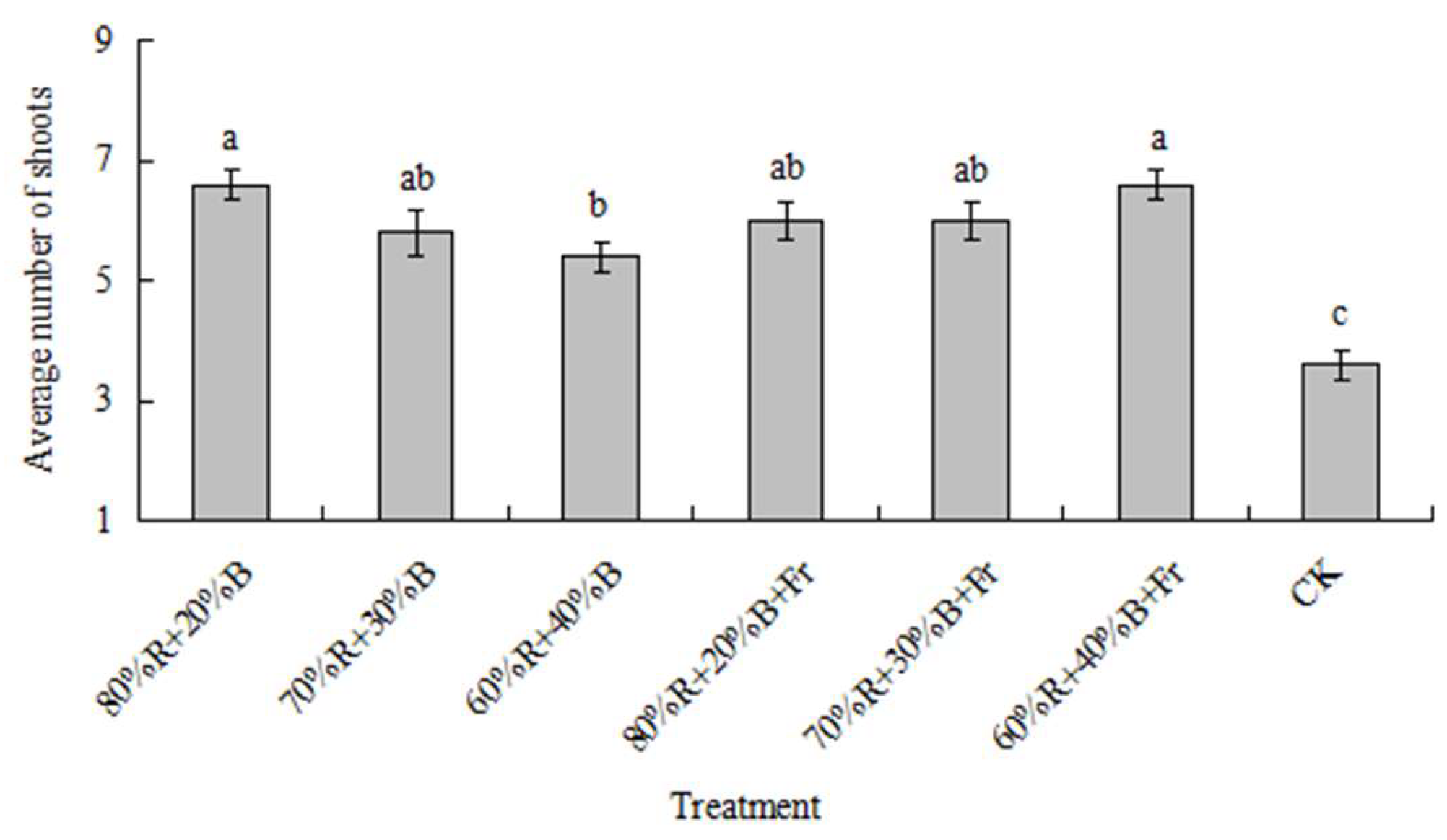
The number of induced adventitious shoots of chrysanthemum leaves showed an overall decreasing trend with increasing blue light proportion under red (R) and blue (B) light treatments. In contrast, under red, blue, and far-red light treatments, the number of adventitious shoots generally increased as the proportion of blue light increased. The highest numbers of adventitious shoots were obtained under the 60%R + 40%B + Fr and 80%R + 20%B treatments, whereas the lowest number was recorded in the CK treatment (Figure 1). The morphological characteristics of the adventitious shoots under the different light-quality treatments are shown in Figure S1.

3.2. Effects of Different Light Qualities on Photosynthetic Pigment Contents in Adventitious Shoots Induced from C. morifolium Leaves

In adventitious shoots induced from C. morifolium leaves, the contents of chlorophyll a, chlorophyll b, and total chlorophyll (a + b) showed an increasing trend with the rise in blue light proportion under combined red and blue light treatment. Under red, blue, and far-red light treatments, chlorophyll a, chlorophyll b, and total chlorophyll contents initially increased and then decreased with increasing blue light proportion. The 70%R + 30%B + Fr treatment produced the highest chlorophyll a, chlorophyll b, and total chlorophyll contents, which were significantly higher than those of the other treatments. The highest carotenoid contents were observed under the 70%R + 30%B and 70%R + 30%B + Fr treatments, with no significant difference from that under the 60%R + 40%B treatment (Table 2).

3.3. Effects of Different Light Qualities on Soluble Sugar and Soluble Protein Contents in Adventitious Shoots Induced from C. morifolium Leaves

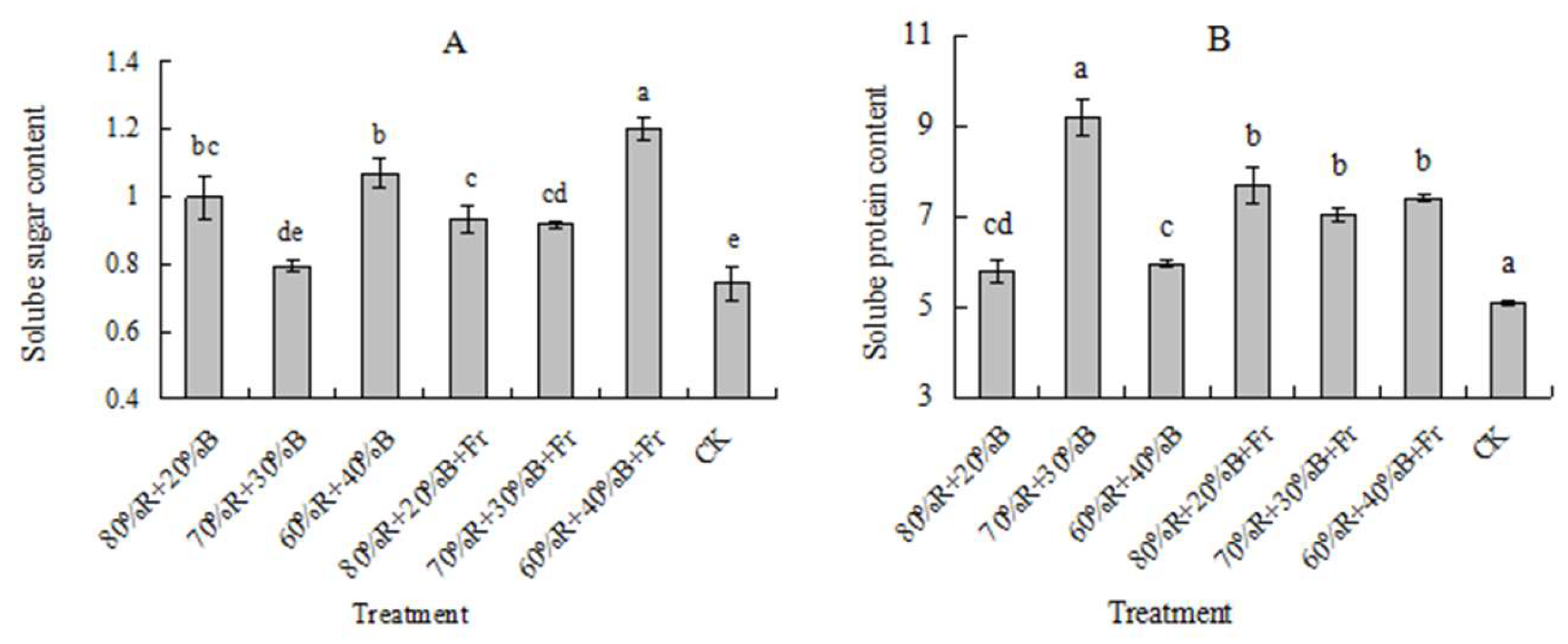
Under red and blue light treatments, soluble sugar content first decreased and then increased with increasing blue-light proportion, reaching the lowest value under the 70%R + 30%B treatment. Similarly, under red, blue, and far-red light treatments, soluble sugar content first decreased and then increased with increasing blue-light proportion, reaching the highest value under the 60%R + 40%B + Fr treatment. The soluble sugar content under the 60%R + 40%B + Fr treatment was significantly higher than that under the other treatments. In addition, the 80%R + 20%B and 60%R + 40%B treatments showed significantly higher soluble sugar contents than the CK treatment (Figure 2A). Under red and blue light treatments, soluble protein content first increased and then decreased with increasing blue-light proportion, reaching the highest value under the 70%R + 30%B treatment. By contrast, under red, blue, and far-red light treatments, soluble protein content first decreased and then increased with increasing blue-light proportion, with the lowest value observed under the 70%R + 30%B + Fr treatment. The soluble protein content under the 70%R + 30%B treatment was significantly higher than that under the other treatments. Furthermore, all LED light treatments exhibited significantly higher soluble protein contents than the CK treatment (Figure 2B).

3.4. Effects of Different Light Qualities on Antioxidant Enzyme Activities in Adventitious Shoots Induced from C. morifolium Leaves

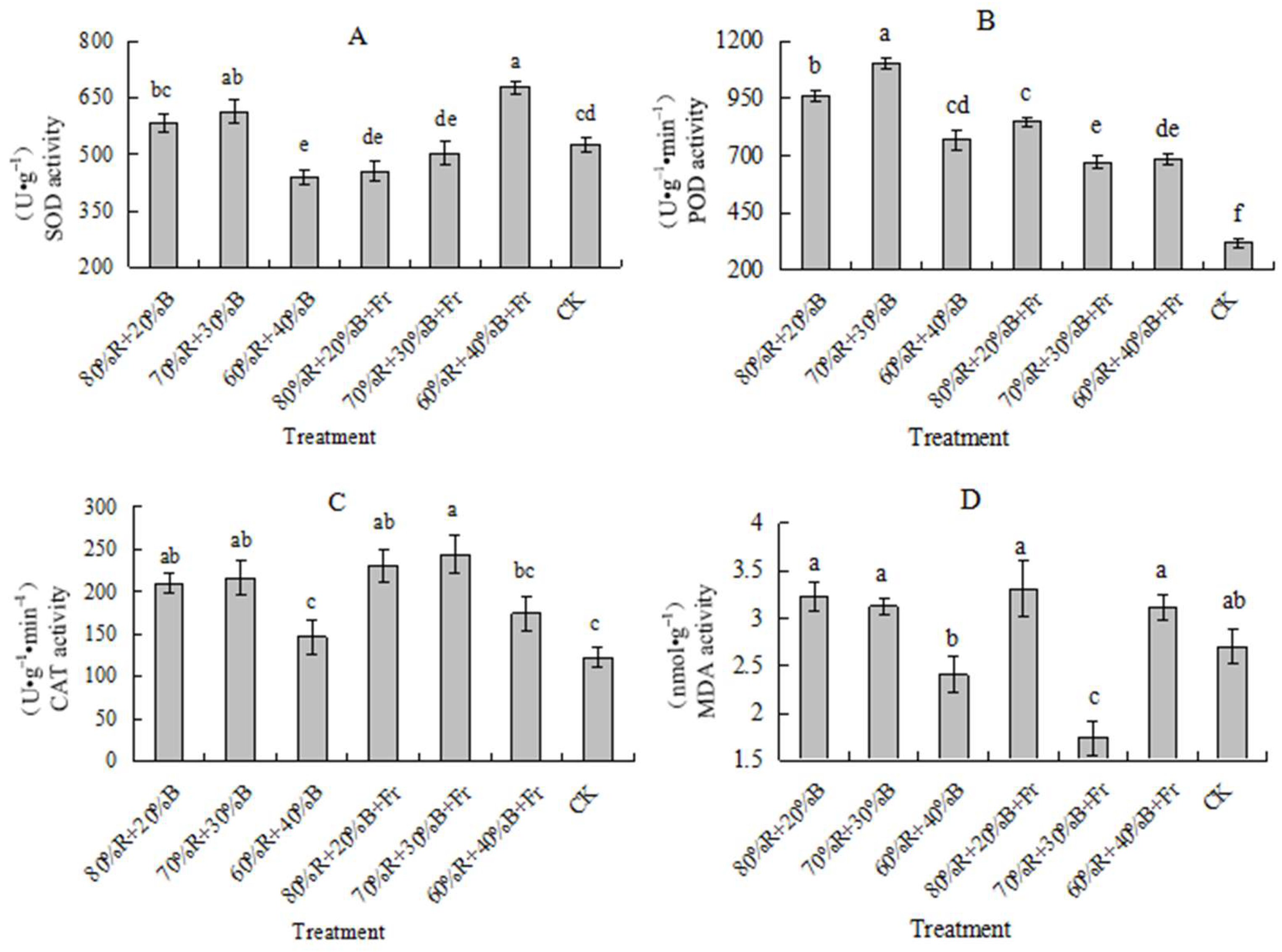
SOD activity was highest under the 60%R + 40%B + Fr treatment, which was significantly higher than that under the other treatments. The 70%R + 30%B and 80%R + 20%B treatments showed the next highest SOD activities, whereas the lowest SOD activity was observed under the 60%R + 40%B treatment (Figure 3A). POD activity varied among treatments. Under red and blue light treatments, POD activity increased initially and then decreased as the proportion of blue light increased. The highest POD activity was observed under the 70%R + 30%B treatment, followed by the 80%R + 20%B treatment. Under red, blue, and far-red light treatments, POD activity decreased initially and then increased with increasing blue light proportion, reaching its highest value under the 80%R + 20%B + Fr treatment (Figure 3B). Under red and blue light treatments, CAT activity increased slightly and then decreased as the proportion of blue light increased. Under red, blue, and far-red light treatments, CAT activity increased initially and then decreased with increasing blue light proportion. The highest CAT activity was observed under the 70%R + 30%B + Fr treatment, followed by the 80%R + 20%B + Fr, 70%R + 30%B, and 80%R + 20%B treatments. The lowest CAT activity was observed under the 60%R + 40%B treatment (Figure 3C). The MDA content showed a gradual decrease with increasing blue light proportion under red and blue light treatments. Under red, blue, and far-red light treatments, MDA content decreased initially and then increased as the proportion of blue light increased. The highest MDA content was observed under the 80%R + 20%B + Fr treatment, which was significantly higher than that of the CK treatment. In contrast, the lowest MDA content was observed under the 70%R + 30%B + Fr treatment, which was significantly lower than that of the other treatments (Figure 3D).

3.5. Effects of Different Light Qualities on the Growth and Morphological Characteristics of C. morifolium Tissue-Cultured Plantlets

The morphological characteristics of chrysanthemum tissue-cultured plantlets after 50 days of rooting under different light-quality treatments are presented in Table 3, and representative images are shown in Figure S2. Under red and blue light treatments, plant height increased as the proportion of blue light increased. Plant height reached its maximum under the 60%R + 40%B treatment. Under red, blue, and far-red light treatments, plant height decreased as the proportion of blue light increased. The CK treatment showed the overall lowest plant height. Leaf number was highest under the 70%R + 30%B treatment, followed by the 60%R + 40%B treatment. Leaf length was greatest under the 60%R + 40%B treatment, followed by the 60%R + 40%B + Fr and 80%R + 20%B + Fr treatments. Leaf length under the 60%R + 40%B treatment was significantly greater than that under most of the other treatments. Leaf width was greatest under the 60%R + 40%B + Fr treatment and was significantly greater than that under the remaining treatments. Root length was greatest under the 60%R + 40%B and 70%R + 30%B treatments, both of which showed significantly higher root lengths than the other treatments. The highest fresh and dry mass values were observed under the 60%R + 40%B treatment, with both values being significantly higher than those under all other treatments. Overall, the 60%R + 40%B treatment showed superior growth performance, with greater plant height, leaf length, root length, fresh mass, and dry mass than most of the other treatments.

3.6. Effects of Different Light Qualities on Root Vigor of C. morifolium Tissue-Cultured Plantlets

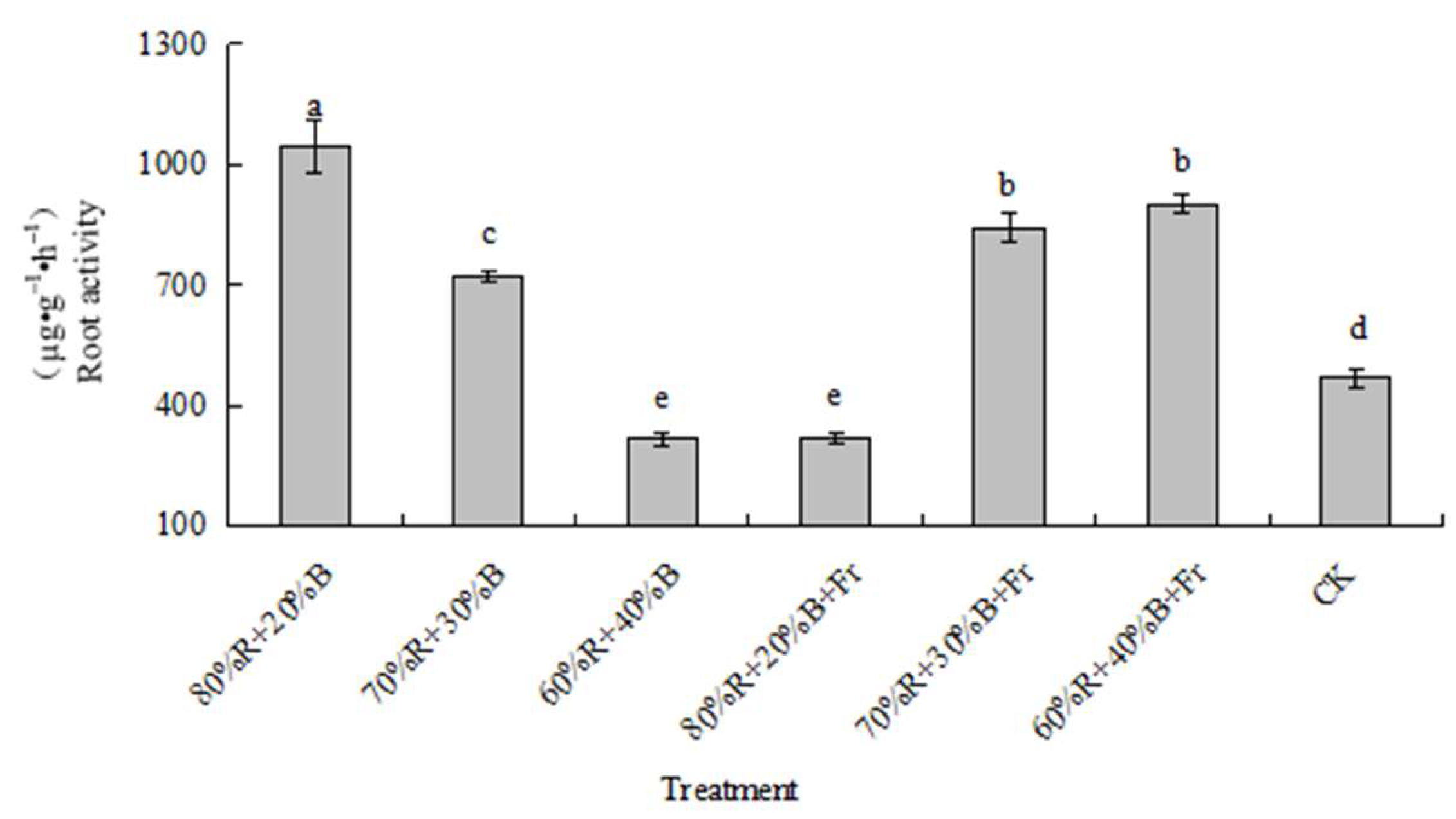
As shown in Figure 4, the root vigor of chrysanthemum tissue-cultured plantlets decreased as the proportion of blue light increased under red and blue light treatments, reaching its highest value under the 80%R + 20%B treatment and its lowest value under the 60%R + 40%B treatment. In contrast, under red, blue, and far-red light treatments, root vigor increased as the proportion of blue light increased, with higher values observed under the 60%R + 40%B + Fr and 70%R + 30%B + Fr treatments. Compared with the CK treatment, root vigor was significantly higher under the 80%R + 20%B, 70%R + 30%B + Fr, and 60%R + 40%B + Fr treatments, whereas it was significantly lower under the 60%R + 40%B and 80%R + 20%B + Fr treatments.

3.7. Effects of Different Light Qualities on Photosynthetic Pigment Contents of C. morifolium Tissue-Cultured Plantlets

As shown in Table 4, under red and blue light treatments, the contents of chlorophyll a, chlorophyll b, and total chlorophyll generally increased with increasing blue-light proportion. Among all light treatments, the highest contents of chlorophyll a, chlorophyll b, and total chlorophyll were observed under the 60%R + 40%B + Fr treatment, followed by the 60%R + 40%B treatment. The highest carotenoid content was observed under the 60%R + 40%B treatment; however, this value was not significantly different from those under the 80%R + 20%B + Fr, 60%R + 40%B + Fr and 70%R + 30%B + Fr treatments.

3.8. Effects of Different Light Qualities on Soluble Sugars and Soluble Proteins in C. morifolium Tissue-Cultured Plantlets

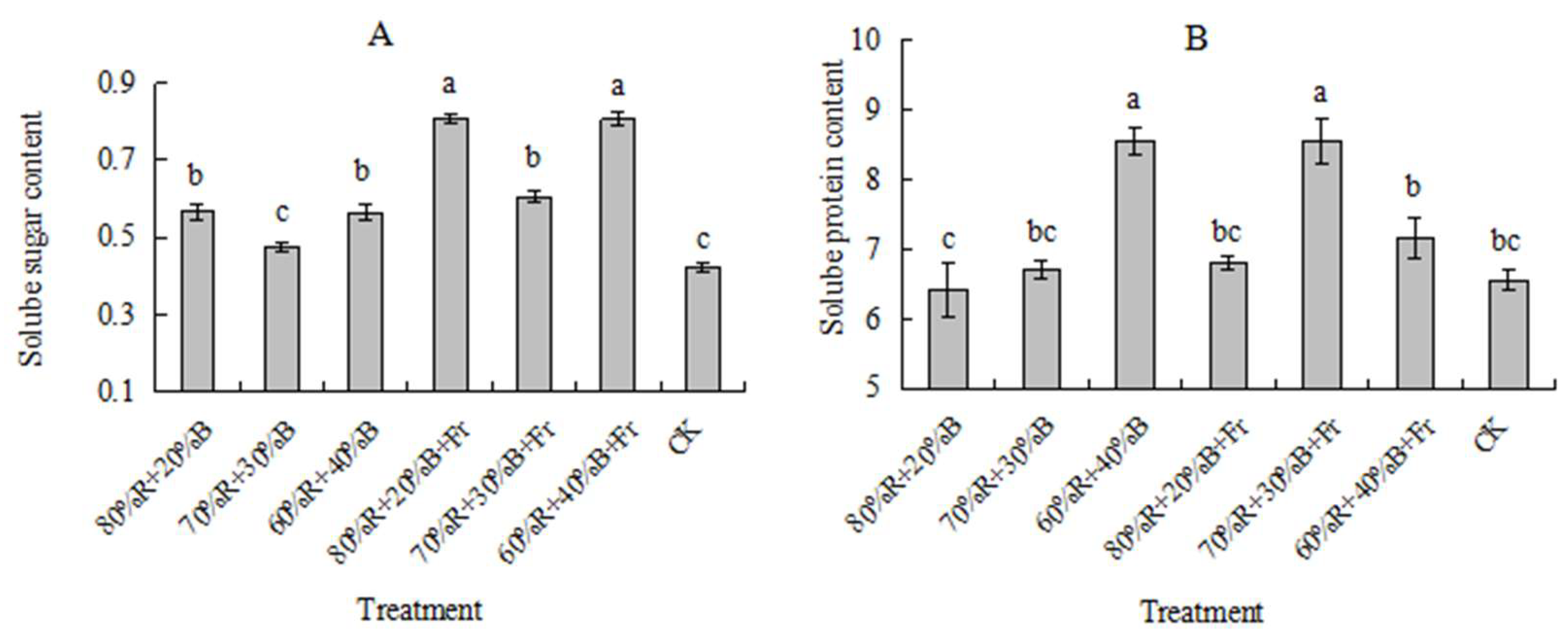
Under red–blue light treatments, soluble sugar content first decreased and then increased with increasing blue-light proportion. Far-red supplementation generally increased soluble sugar content across different red–blue light ratios. The highest soluble sugar contents were observed under the 80%R + 20%B + Fr and 60%R + 40%B + Fr treatments, with no significant difference between them. Both treatments showed significantly higher soluble sugar contents than the CK treatment (Figure 5A). Soluble protein content under red–blue light treatments gradually increased with increasing blue-light proportion. In contrast, under far-red supplementation, soluble protein content showed a trend of initially increasing and subsequently decreasing with increasing blue-light proportion. The highest soluble protein contents were observed under the 60%R + 40%B and 70%R + 30%B + Fr treatments, with no significant difference between them. These two treatments exhibited significantly higher soluble protein contents than the CK treatment (Figure 5B).

3.9. Effects of Different Light Qualities on Antioxidant Enzyme Activities in C. morifolium Tissue-Cultured Plantlets

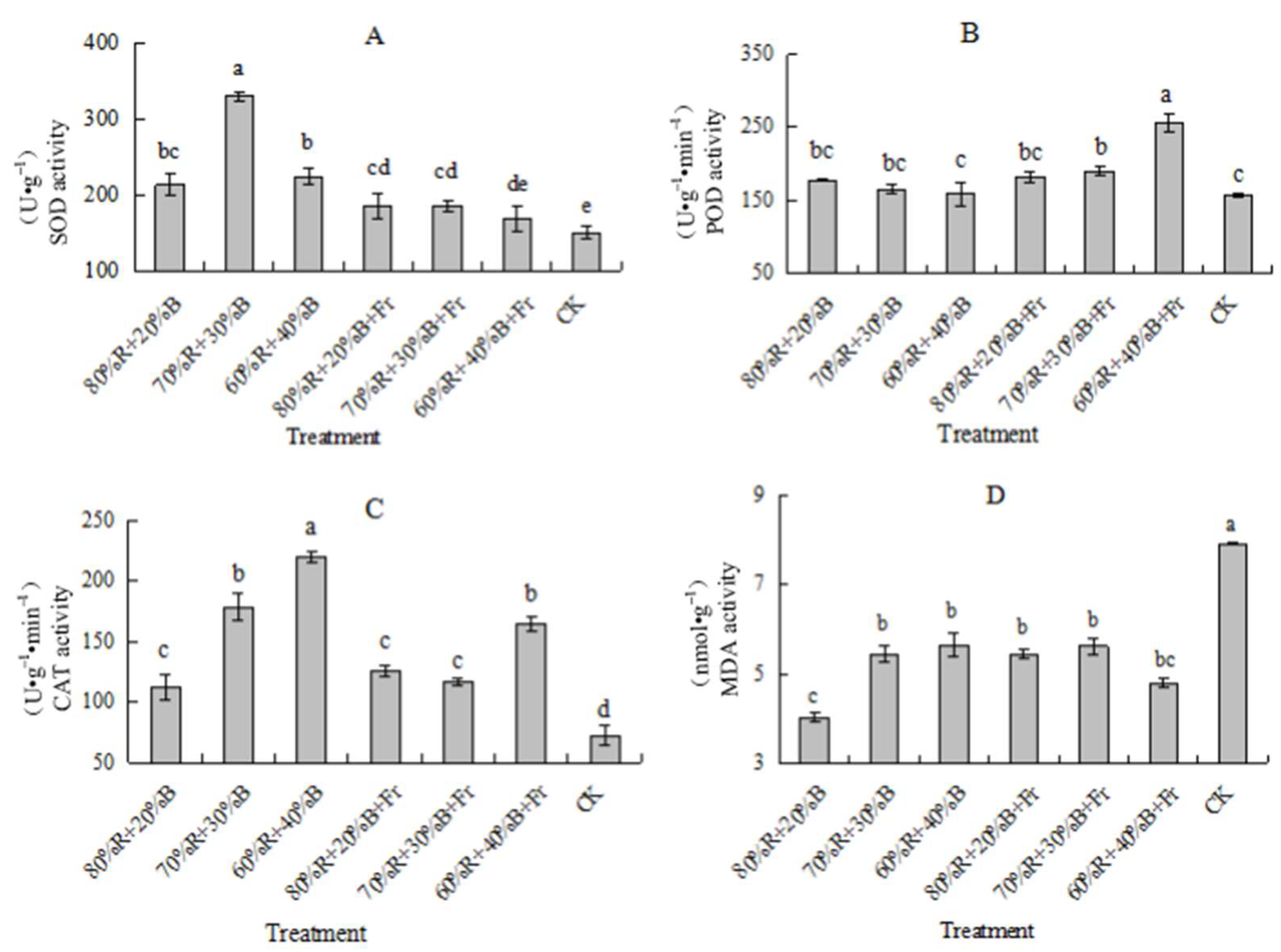
As shown in Figure 6, antioxidant enzyme activities and MDA content were significantly influenced by light quality. Under red–blue light treatments, SOD activity exhibited a bell-shaped response to increasing blue-light proportion, reaching a maximum under 70%R + 30%B. Both 70%R + 30%B and 60%R + 40%B significantly enhanced SOD activity compared with CK (Figure 6A). In contrast, POD activity showed a decreasing trend with increasing blue-light proportion. CAT activity showed an increasing trend with increasing blue-light proportion and peaked under 60%R + 40%B (Figure 6C). Meanwhile, MDA content increased with higher blue-light ratios (Figure 6D). Under far-red (Fr) supplementation, these patterns were modified. POD activity increased with increasing blue-light proportion, reaching its highest level under 60%R + 40%B + Fr, which was significantly higher than that of the CK treatment (Figure 6B). CAT activity showed a non-linear response but remained higher than CK across all treatments (Figure 6C). The MDA content was lowest under the 60%R + 40%B + Fr treatment (Figure 6D). Overall, SOD, POD, and CAT activities reached their highest levels under 70%R + 30%B, 60%R + 40%B + Fr, and 60%R + 40%B, respectively, whereas the lowest MDA contents were observed under 80%R + 20%B and 60%R + 40%B + Fr treatments.

4. Discussion

Light quality is a key environmental signal regulating plant photomorphogenesis and photosynthesis. Different combinations of red (R), blue (B), and far-red (Fr) light can differentially regulate morphogenesis, leaf expansion, root development, and biomass accumulation, with responses being highly species- and stage-dependent [15]. In the present study, C. morifolium tissue-cultured plantlets exhibited distinct morphological and physiological responses under six LED light treatments during the adventitious shoot induction stage and the rooting stage of tissue-cultured plantlets.
During the adventitious shoot induction stage, light quality markedly affected regeneration efficiency. The number of induced adventitious shoots reached its highest level under the 60%R + 40%B + Fr treatment, demonstrating that supplementation with far-red light combined with an appropriate red-to-blue ratio can effectively promote shoot organogenesis. Light quality regulates not only the initiation of bud primordia but also their subsequent development through photoreceptor-mediated signaling pathways [16]. Previous studies have shown contrasting responses among species. Blue light increased both the induction rate and the average number of adventitious shoots in cactus, whereas red light inhibited shoot formation [17]. Conversely, red and white light enhanced shoot regeneration while blue light showed inhibitory effects in other species [16]. Similar species-dependent responses have also been reported in peanut and marigold [18]. These differences indicate that the regulatory effects of LED light treatments depend on the interaction among light quality ratios, endogenous physiological status, and developmental stage [19]. Therefore, the enhanced shoot regeneration observed under far-red-supplemented red–blue light in chrysanthemum may result from optimized activation of multiple photoreceptor pathways rather than the effect of a single wavelength.
Photosynthetic pigment accumulation was also strongly regulated by light quality. Plant photosynthetic pigments possess characteristic absorption spectra and are closely associated with photosynthetic efficiency, while the wavelengths regulating phytochrome responses are referred to as action spectra [20]. Chlorophylls and carotenoids mainly absorb light within the ranges of 400–500 nm and 630–680 nm, with relatively weak absorption at 530–610 nm. In the present study, chlorophyll a, chlorophyll b, and total chlorophyll contents during adventitious shoot induction were highest under the 70%R + 30%B + Fr treatment, whereas carotenoid content reached its maximum under 70%R + 30%B. During the rooting stage of tissue-cultured plantlets, chlorophyll accumulation was greatest under 60%R + 40%B + Fr, while carotenoids were highest under 60%R + 40%B. In both developmental stages, chlorophyll and carotenoid contents increased as the proportion of blue light increased to approximately 30–40%, followed by a decline at higher blue light ratios, suggesting that blue light promotes pigment biosynthesis within an optimal range but is subjected to feedback regulation beyond this threshold. Similar responses have been reported in cucumber and lettuce [21,22]. Blue light is known to positively regulate chloroplast biogenesis through coordinated effects on the genome, nucleus, and plastids [23], while simultaneously up-regulating genes involved in chlorophyll biosynthesis, thereby enhancing chlorophyll accumulation [24]. Moreover, treatments containing 40% blue light generally produced greater leaf length, leaf number, and chlorophyll content than corresponding red–blue combinations with lower blue light proportions. Increased chlorophyll accumulation may enhance photosynthetic efficiency, promote organic matter synthesis, and ultimately contribute to biomass accumulation [25,26]. These results indicate that optimizing blue-light ratios is critical for balancing pigment synthesis and photosynthetic performance during chrysanthemum tissue culture.
Carbon and nitrogen metabolism also exhibited clear responses to different light-quality ratios. Soluble sugars function not only as photosynthetic products but also as signaling molecules regulating plant growth and development, and relatively high soluble sugar levels are generally associated with vigorous plant growth [27]. During the adventitious shoot induction stage, soluble sugar content was highest under the 60%R + 40%B + Fr treatment, whereas soluble protein content reached its maximum under 70%R + 30%B. During the rooting stage, soluble sugars accumulated preferentially under 80%R + 20%B + Fr and 60%R + 40%B + Fr, while soluble protein contents were highest under 60%R + 40%B and 70%R + 30%B + Fr. These findings indicate that far-red supplementation favors carbohydrate accumulation, whereas red–blue combinations are more conducive to soluble protein synthesis. Similar increases in soluble protein content under mixed red and blue light have previously been reported in lettuce and tomato [28]. Therefore, appropriate coordination of red, blue, and far-red light ratios may optimize carbon and nitrogen metabolism, thereby supporting tissue growth and regeneration.
Light quality also markedly influenced the antioxidant defense system. Oxidative stress is closely associated with plant developmental physiology and plays an important role in inducing embryogenic competence and activating morphogenetic pathways during in vitro regeneration [29]. Plants maintain intracellular redox homeostasis through endogenous antioxidant enzymes, and appropriate oxidative stress can promote tissue regeneration by modulating the balance between reactive oxygen species (ROS) production and scavenging [29]. Previous studies demonstrated that lettuce grown under combined red and blue light exhibited stronger antioxidant capacity than plants grown under monochromatic light, suggesting that mixed red and blue light establishes a more efficient antioxidant defense system [30]. Consistent with these findings, the activities of SOD, POD, and CAT in chrysanthemum were generally enhanced under red–blue light combinations. During the adventitious shoot induction stage, SOD activity was highest under 60%R + 40%B + Fr, POD under 70%R + 30%B, CAT under 70%R + 30%B + Fr, and MDA content was lowest under 70%R + 30%B + Fr. During the rooting stage, SOD activity peaked under 70%R + 30%B, POD under 60%R + 40%B + Fr, CAT under 60%R + 40%B, and MDA content was minimized under 80%R + 20%B and 60%R + 40%B + Fr. These results indicate that moderate proportions of blue light combined with red light effectively enhance antioxidant enzyme activity, reduce lipid peroxidation, and maintain ROS homeostasis [31,32,33]. Because excessive ROS accumulation can damage cellular structures and inhibit plant growth, whereas efficient antioxidant systems alleviate oxidative injury, the enhanced antioxidant capacity observed under optimized red–blue light treatments likely provides a favorable physiological environment for adventitious shoot regeneration and subsequent plant development [34,35,36,37].
Morphological characteristics further confirmed that plant growth was highly dependent on light quality. During the rooting stage of tissue-cultured plantlets, root vigor reached its maximum under 80%R + 20%B, whereas plant height, leaf length, root length, fresh mass, and dry mass were highest under 60%R + 40%B. Under red–blue treatments without far-red light, root vigor increased as the proportion of red light increased, while plant height decreased. In contrast, under treatments supplemented with far-red light, plant height increased, whereas root vigor decreased with increasing red light proportion. These contrasting responses suggest that the interaction between red and far-red light regulates stem elongation and root activity through complex physiological processes. Leaves play a crucial role in controlling internode elongation, and direct perception of far-red light by leaves may contribute to the regulation of stem elongation [38]. In the present study, plants grown under 80%R + 20%B + Fr and 70%R + 30%B + Fr produced more leaves than those under 60%R + 40%B + Fr, supporting this hypothesis. Furthermore, the superior biomass accumulation observed under 60%R + 40%B agrees with previous reports in cucumber, radish, and soybean, in which mixed red and blue light effectively promoted leaf expansion, root development, and biomass accumulation [39,40,41,42].
Collectively, the present results demonstrate that optimal LED light-quality ratios are highly stage-dependent during chrysanthemum micropropagation. Far-red-supplemented red–blue light, particularly 60%R + 40%B + Fr and 70%R + 30%B + Fr, is more suitable for adventitious shoot induction by promoting shoot regeneration, pigment accumulation, carbohydrate metabolism, and antioxidant capacity. In contrast, the red–blue combination of 60%R + 40%B without far-red light is more favorable for rooting, biomass accumulation, and overall growth of tissue-cultured plantlets. These findings highlight the importance of adjusting light-quality ratios according to developmental stage to improve the efficiency of chrysanthemum tissue culture and provide a theoretical basis for optimizing LED lighting strategies in commercial micropropagation.

5. Conclusions

This study demonstrated that the effects of different LED light-quality ratios on C. morifolium tissue culture are highly dependent on the developmental stage. Supplementation with far-red light promoted adventitious shoot induction, whereas a red-to-blue ratio of 60:40 without far-red light was more favorable for rooting and subsequent plantlet growth. These findings indicate that stage-specific optimization of light quality is more effective than applying a single lighting strategy throughout the tissue culture process.
Collectively, these findings provide a practical basis for developing stage-specific LED lighting strategies to improve the efficiency and quality of chrysanthemum tissue culture. In addition, this study provides new insights into the coordinated roles of red, blue, and far-red light in regulating morphogenesis and plant development during in vitro culture, thereby providing a useful reference for optimizing lighting regimes in tissue culture systems.
This study was conducted using a single chrysanthemum cultivar under controlled culture conditions, and the molecular mechanisms underlying the differential responses to light quality were not investigated. Therefore, future studies should evaluate the applicability of the proposed lighting strategy across different chrysanthemum cultivars and tissue culture systems and further elucidate the signaling pathways and gene regulatory networks underlying light-quality-mediated morphogenesis and development.

Supplementary Materials

The following supporting information can be downloaded at: https://www.mdpi.com/article/10.3390/horticulturae12070878/s1, Figure S1. Morphology of adventitious shoots induced from Chrysanthemum morifolium leaves under different light-quality treatments; Figure S2. Rooting morphology of Chrysanthemum morifolium tissue-cultured plantlets under different light-quality treatments.

Author Contributions

Study conception and design: L.S., Z.W. and Y.S. (Yinglong Song); data collection: W.L. and Y.Z.; analysis and interpretation of results: W.S., S.H., Y.S. (Yuxiao Shen) and D.H.; draft manuscript preparation: W.L. and Y.Y. All authors have read and agreed to the published version of the manuscript.

Funding

This study was financially supported by the Science and Technology Innovation Teams in Colleges and Universities of Henan Province (26IRTSTHN011), the Henan Provincial Post Expert (Grant No. HARS-22-11-G4) and the University-Industry Cooperation Foundation of Henan Province (Grant No. 162107000068).

Data Availability Statement

The original contributions presented in this study are included in the article/Supplementary Materials. Further inquiries can be directed to the corresponding authors.

Conflicts of Interest

The authors declare that they have no conflicts of interest to report regarding the present study.

References

  1. Boase, M.R.; Miller, R.; Deroles, S.C. Chrysanthemum systematics, genetics, and breeding. Plant Breed. Rev. 1996, 14, 321–361. [Google Scholar] [CrossRef] [Scilit]
  2. Bhardwaj, S.; Kumari, M.; Chethan, T. Advances in Micropropagation and Tissue Culture for Horticultural Crops: A Review. Plant Cell Biotechnol. Mol. Biol. 2025, 26, 166–182. [Google Scholar] [CrossRef] [Scilit]
  3. Wu, L. Establishment of Tissue Culture Rapid Propagation and Regeneration System for Chrysanthemum ‘Jiangling Jinju’ and ‘Fubaiju’. Master’s Thesis, Huazhong Agricultural University, Wuhan, China, 2024. [Google Scholar]
  4. Capite, L.D. Action of light and temperature on growth of plant tissue cultures in vitro. Am. J. Bot. 1955, 42, 869–873. [Google Scholar] [CrossRef] [Scilit]
  5. Lefsrud, M.G.; Kopsell, D.A.; Sams, C.E. Irradiance from distinct wavelength light-emitting diodes affect secondary metabolites in Kale. HortScience 2008, 43, 2243–2244. [Google Scholar] [CrossRef] [Scilit]
  6. Di, X.R.; Jiao, X.L.; Cui, J.; Liu, X.Y.; Xu, Z.G. Effects of different light quality ratios of LED on growth of chrysanthemum plantlets in vitro. Plant Physiol. Commun. 2008, 44, 661–664. [Google Scholar]
  7. Dong, F.; Wang, C.; Sun, X. Sugar metabolic changes in protein expression associated with different light quality combinations in tomato fruit. Plant Growth Regul. 2019, 88, 267–282. [Google Scholar] [CrossRef] [Scilit]
  8. Souza, D.M.S.C.; Fernandes, S.B.; Avelar, M.L.M. Light quality in micropropagation of Eucalyptus grandis× Eucalyptus urophylla. Sci. For. 2020, 48, 127. [Google Scholar] [CrossRef] [Scilit]
  9. Zhang, H.; Xu, Z.G.; Cui, J.; Gu, A.S.; Guo, Y.S. Effects of light quality on growth and chloroplast ultrastructure of tomato and lettuce seedlings. Chin. J. Appl. Ecol./Yingyong Shengtai Xuebao 2021, 21, 4. [Google Scholar]
  10. Ouzounis, T.; Fretté, X.; Rosenqvist, E. Spectral effects of supplementary lighting on the secondary metabolites in roses, chrysanthemums, and campanulas. J. Plant Physiol. 2014, 171, 1491–1499. [Google Scholar] [CrossRef] [Scilit] [PubMed]
  11. Zhen, S.; Haidekker, M.; van Iersel, M.W. Far-red light enhances photochemical efficiency in a wavelength-dependent manner. Physiol. Plant. 2019, 167, 21–33. [Google Scholar] [PubMed]
  12. Zhao, S.J. Experimental Guide to Plant Physiology; Chinese Agricultural Science Press: Beijing, China, 1998; Volume 31–33, pp. 88–93. [Google Scholar]
  13. Li, H.S. Principles and Techniques of Plant Physiological and Biochemical Experiments; Higher Education Press: Beijing, China, 2000; Volume 119–120, pp. 164–169. [Google Scholar]
  14. Zhang, Z.; Zhai, W.J. Experimental Guidance in Plant Physiology; Higher Education Press: Beijing, China, 2009; Volume 98–100, pp. 227–229. [Google Scholar]
  15. Goins, G.D.; Yorio, N.C.; Sanwo, M.M. Photomorphogenesis, photosynthesis, and seed yield of wheat plants grown under red light-emitting diodes (LEDs)with and without supplemental blue lighting. J. Exp. Bot. 1997, 48, 1407–1413. [Google Scholar] [CrossRef] [Scilit] [PubMed]
  16. Burritt, D.J.; Leung, D.W.M. Adventitious shoot regeneration from Begonia × erythrophylla petiole sections is developmentally sensitive to light quality. Physiol. Plant. 2003, 118, 289–296. [Google Scholar] [CrossRef] [Scilit]
  17. Cybularz-Urban, T.; Hanus-Fajerska, E.; Świderski, A. Effect of light wavelength on in vitro organogenesis of a Cattleya hybrid. Acta Biol. Cracoviensia Ser. Bot. 2007, 49, 113–118. [Google Scholar]
  18. Assou, J.; Bethge, H.; Wamhoff, D.; Winkelmann, T. Effect of cytokinins and light quality on adventitious shoot regeneration from leaflet explants of peanut (Arachis hypogaea). J. Hortic. Sci. Biotechnol. 2023, 98, 508–525. [Google Scholar]
  19. Abaszadeh, F.R.; Hatamzadeh, A.; Sharifi, A.; Kharrazi, M. Investigation of Seed Germination Parameters and Morphophysiological Traits of Tagetes erecta (Tagetes erecta Antigua orange) in Response to Different LED Light Qualities. J. Hortic. Sci. 2025. Available online: https://www.sid.ir/paper/1905139/en (accessed on 1 June 2026).
  20. Zhang, Y.; Wang, C.; Huang, J.; Wang, F.; Huang, R.; Lin, H.; Chen, F.; Wu, K. Exploring the Optical Properties of Leaf Photosynthetic and Photo-Protective Pigments In Vivo Based on the Separation of Spectral Overlapping. Remote Sens. 2020, 12, 3615. [Google Scholar] [CrossRef] [Scilit]
  21. Wang, H.; Gu, M.; Cui, J.; Shi, K.; Zhou, Y.; Yu, J. Effects of light quality on CO2 assimilation, chlorophyll-fluorescence quenching, expression of Calvin cycle genes and carbohydrate accumulation in Cucumis sativus. J. Photochem. Photobiol. B Biol. 2009, 96, 30–37. [Google Scholar] [CrossRef] [Scilit]
  22. Wang, J.; Lu, W.; Tong, Y.; Yang, Q. Leaf Morphology, Photosynthetic Performance, Chlorophyll Fluorescence, Stomatal Development of Lettuce (Lactuca sativa L.) Exposed to Different Ratios of Red Light to Blue Light. Front. Plant Sci. 2016, 7, 250. [Google Scholar] [CrossRef] [Scilit] [PubMed]
  23. Kamiya, A.; Ikegami, I.; Hase, E. Effects of light on chlorophyll formation in cultured tobacco cells II. blue light effect on 5-aminolevulinic acid formation. Plant Cell Physiol. 1983, 24, 799–809. [Google Scholar] [CrossRef] [Scilit]
  24. Richter, G.; Wessel, K. Red light inhibits blue light-induced chloroplast development in cultured plant cells at the mRNA level. Plant Mol. Biol. 1985, 5, 175–182. [Google Scholar] [CrossRef] [Scilit] [PubMed]
  25. Nguyen, T.N.P.; Sung, J. Light Spectral-Ranged Specific Metabolisms of Plant Pigments. Metabolites 2025, 15, 1. [Google Scholar] [PubMed]
  26. Wu, W.; Chen, L.; Liang, R.; Huang, S.; Li, X.; Huang, B.; Luo, H.; Zhang, M.; Wang, X.; Zhu, H. The role of light in regulating plant growth, development and sugar metabolism: A review. Front. Plant Sci. 2025, 15, 1507628. [Google Scholar] [CrossRef] [Scilit] [PubMed]
  27. Lin, K.H.; Huang, M.Y.; Huang, W.D.; Hsu, M.H.; Yang, Z.W.; Yang, C.M. The effects of red, blue, and white light-emitting diodes on the growth, development, and edible quality of hydroponically grown lettuce (Lactuca sativa L. var. capitata). Sci. Hortic. 2013, 150, 86–91. [Google Scholar] [CrossRef] [Scilit]
  28. Kim, S.-J.; Hahn, E.-J.; Heo, J.-W.; Paek, K.-Y. Effects of LEDs on net photosynthetic rate, growth and leaf stomata of chrysanthemum plantlets in vitro. Sci. Hortic. 2004, 101, 143–151. [Google Scholar] [CrossRef] [Scilit]
  29. Zavattieri, M.A.; Frederico, A.M.; Lima, M. Induction of somatic embryogenesis as an example of stress-related plant reactions. Electron. J. Biotechnol. 2010, 13, 12–13. [Google Scholar] [CrossRef] [Scilit]
  30. Lee, M.J.; Son, K.H.; Oh, M.M. Increase in biomass and bioactive compounds in lettuce under various ratios of red to far-red LED light supplemented with blue LED light. Hortic. Environ. Biotechnol. 2016, 57, 139–147. [Google Scholar] [CrossRef] [Scilit]
  31. Rahman, M.A.; Lee, S.-H.; Park, H.S.; Min, C.-W.; Woo, J.H.; Choi, B.R.; Rahman, M.M.; Lee, K.-W. Light Quality Plays a Crucial Role in Regulating Germination, Photosynthetic Efficiency, Plant Development, Reactive Oxygen Species Production, Antioxidant Enzyme Activity, and Nutrient Acquisition in Alfalfa. Int. J. Mol. Sci. 2025, 26, 360. [Google Scholar] [CrossRef] [Scilit] [PubMed]
  32. Kim, E.Y.; Park, S.A.; Park, B.J. Growth and antioxidant phenolic compounds in cherry tomato seedlings grown under monochromatic light-emitting diodes. Hortic. Environ. Biotechnol. 2014, 55, 506–513. [Google Scholar] [CrossRef] [Scilit]
  33. Kook, K.K.H.S. The Effect of Blue-light-emitting Diodes on Antioxidant Properties and Resistance to Botrytis cinerea in Tomato. J. Plant Pathol. Microbiol. 2013, 4, 203. [Google Scholar]
  34. Wu, M.-C.; Hou, C.-Y.; Jiang, C.-M.; Wang, Y.-T.; Wang, C.-Y.; Chen, H.-H.; Chang, H.-M. A novel approach of LED light radiation improves the antioxidant activity of pea seedlings. Food Chem. 2007, 101, 1753–1758. [Google Scholar] [CrossRef] [Scilit]
  35. Yang, Z.Q.; Yuan, C.H.; Han, W. Effects of low irradiation on photosynthesis and antioxidant enzyme activities in cucumber during ripening stage. Photosynthetica 2016, 54, 251–258. [Google Scholar] [CrossRef] [Scilit]
  36. Wang, L.H. Study on the Effects of Different Light Qualities on the Growth, Antioxidant Enzyme System and Effective Components of Ganoderma Lucidum. Master’s Thesis, Peking Union Medical College, Beijing, China, 2012. [Google Scholar]
  37. Soltani, S.; Arouiee, H.; Salehi, R.; Nemati, S.H.; Moosavi-Nezhad, M.; Gruda, N.S.; Aliniaeifard, S. Morphological, Phytochemical, and Photosynthetic Performance of Grafted Tomato Seedlings in Response to Different LED Light Qualities under Protected Cultivation. Horticulturae 2023, 9, 471. [Google Scholar] [CrossRef] [Scilit]
  38. Runkle, E.S.; Heins, R.D. Specific functions of red, far red, and blue light in flowering and stem extension of long-day plants. J. Am. Soc. Hortic. 2001, 126, 275–282. [Google Scholar] [CrossRef] [Scilit]
  39. Hernández, R.; Kubota, C. Physiological responses of cucumber seedlings under different blue and red photon flux ratios using LEDs. Environ. Exp. Bot. 2016, 121, 66–74. [Google Scholar] [CrossRef] [Scilit]
  40. Hogewoning, S.W.; Trouwborst, G.; Maljaars, H. Blue light dose-responses of leaf photosynthesis, morphology, and chemical composition of Cucumis sativus grown under different combinations of red and blue light. J. Exp. Bot. 2010, 61, 3107–3117. [Google Scholar] [CrossRef] [Scilit] [PubMed]
  41. Samuoliene, G.; Sirtautas, R.; Brazaityte, A. The impact of red and blue light-emitting diode illumination on radish physiological indices. Cent. Eur. J. Biol. 2011, 6, 821–828. [Google Scholar] [CrossRef] [Scilit]
  42. Fang, L.; Ma, Z.; Wang, Q. Plant Growth and Photosynthetic Characteristics of Soybean Seedlings Under Different LED Lighting Quality Conditions. J. Plant Growth Regul. 2021, 40, 668–678. [Google Scholar]
Figure 1. Effect of different light qualities on the number of adventitious shoots induced from C. morifolium leaves. Data are presented as means ± SE (n = 5). Different lowercase letters indicate statistically significant differences among treatments (p ≤ 0.05).
Horticulturae 12 00878 g001
Figure 2. Effects of different light qualities on soluble sugar and soluble protein contents in adventitious shoots induced from C. morifolium leaves. (A) Soluble sugar content, (B) soluble protein content. Data are presented as means ± SE (n = 3). Different lowercase letters indicate statistically significant differences among treatments (p ≤ 0.05).
Horticulturae 12 00878 g002
Figure 3. Effects of different light qualities on antioxidant enzyme activities in adventitious shoots induced from C. morifolium leaves. (A) Superoxide dismutase (SOD), (B) Peroxidase (POD), (C) Catalase (CAT), and (D) Malondialdehyde (MDA). Data are presented as means ± SE (n = 3). Different lowercase letters indicate statistically significant differences among treatments (p ≤ 0.05).
Horticulturae 12 00878 g003
Figure 4. Effect of different light qualities on root vigor of C. morifolium tissue-cultured plantlets. Data are presented as means ± SE (n = 3). Different lowercase letters indicate statistically significant differences among treatments (p ≤ 0.05).
Horticulturae 12 00878 g004
Figure 5. Effects of different light qualities on soluble sugars and soluble proteins in C. morifolium tissue-cultured plantlets. (A) Soluble sugar content, (B) soluble protein content. Data are presented as means ± SE (n = 3). Different lowercase letters indicate statistically significant differences among treatments (p ≤ 0.05).
Horticulturae 12 00878 g005
Figure 6. Effect of different light qualities on antioxidant enzyme activities in C. morifolium tissue-cultured plantlets. (A) Superoxide dismutase (SOD), (B) Peroxidase (POD), (C) Catalase (CAT), and (D) Malondialdehyde (MDA). Data are presented as means ± SE (n = 3). Different lowercase letters indicate statistically significant differences among treatments (p ≤ 0.05).
Horticulturae 12 00878 g006
Table 1. Different LED light-quality treatments.
TreatmentLight QualityPeak Wavelength/nm
80%R + 20%B80% red (R) + 20% blue (B)661.2 + 447.0
70%R + 30%B70% red (R) + 30% blue (B)661.2 + 447.0
60%R + 40%B60% red (R) + 40% blue (B)661.2 + 447.0
80%R + 20%B + Fr80% red (R) + 20% blue (B) + Fr661.2 + 447.0 + 734.6
70%R + 30%B + Fr70%red (R) + 30% blue (B) + Fr661.2 + 447.0 + 734.6
60%R + 40%B + Fr60%red (R) + 40% blue (B) + Fr661.2 + 447.0 + 734.6
CKFluorescent380–750
Table 2. Effects of different light qualities on photosynthetic pigment contents in adventitious shoots induced from C. morifolium leaves.
Treatment(mg·g−1) Chl a(mg·g−1) Chl b(mg·g−1) Chl a + b(mg·g−1) Car
80%R + 20%B0.307 ± 0.027 e0.207 ± 0.011 c0.514 ± 0.037 e0.090 ± 0.001 d
70%R + 30%B0.694 ± 0.025 b0.219 ± 0.003 bc0.914 ± 0.028 bc0.173 ± 0.003 a
60%R + 40%B0.679 ± 0.034 b0.242 ± 0.015 b0.922 ± 0.020 b0.151 ± 0.007 ab
80%R + 20%B + Fr0.601 ± 0.038 b0.219 ± 0.010 bc0.820 ± 0.028 c0.142 ± 0.011 b
70%R + 30%B + Fr0.912 ± 0.037 a0.298 ± 0.014 a1.210 ± 0.049 a0.165 ± 0.010 a
60%R + 40%B + Fr0.433 ± 0.005 c0.241 ± 0.005 bc0.674 ± 0.009 d0.095 ± 0.005 d
CK0.427 ± 0.004 c0.231 ± 0.006 bc0.658 ± 0.008 d0.119 ± 0.002 c
Data are presented as means ± SE (n = 3). Different lowercase letters indicate statistically significant differences among treatments (p ≤ 0.05).
Table 3. Effects of different light qualities on the growth and morphological characteristics of C. morifolium tissue-cultured plantlets.
TreatmentPlant Height/cmLeaf NumberLeaf Length/cmLeaf Width/cmRoot Length/cmFresh Mass/gDry Mass/g
80%R + 20%B8.70 ± 0.14 c17.60 ± 0.51 b1.70 ± 0.04 d1.32 ± 0.04 c7.84 ± 0.09 d1.26 ± 0.07 bc0.075 ± 0.002 bc
70%R + 30%B9.44 ± 0.06 b20.00 ± 0.71 a1.72 ± 0.04 d0.98 ± 0.04 d9.78 ± 0.12 a1.12 ± 0.04 c0.070 ± 0.002 c
60%R + 40%B10.06 ± 0.19 a19.00 ± 0.71 ab2.40 ± 0.05 a1.58 ± 0.04 b9.80 ± 0.09 a1.55 ± 0.05 a0.101 ± 0.003 a
80%R + 20%B + Fr9.30 ± 0.13 b17.80 ± 0.37 b2.12 ± 0.06 b1.54 ± 0.05 b8.52 ± 0.06 c1.27 ± 0.03 bc0.079 ± 0.002 b
70%R + 30%B + Fr7.22 ± 0.10 d17.80 ± 0.37 b1.90 ± 0.03 c1.62 ± 0.04 b9.18 ± 0.20 b1.42 ± 0.05 ab0.076 ± 0.002 bc
60%R + 40%B + Fr6.36 ± 0.05 e15.00 ± 0.32 c2.24 ± 0.05 ab1.78 ± 0.04 a7.66 ± 0.24 d1.41 ± 0.03 ab0.074 ± 0.001 bc
CK6.32 ± 0.07 e14.40 ± 0.51 c1.60 ± 0.03 d1.30 ± 0.04 c6.62 ± 0.15 e0.72 ± 0.02 d0.062 ± 0.001 d
Data are presented as means ± SE (n = 5). Different lowercase letters indicate statistically significant differences among treatments (p ≤ 0.05).
Table 4. Effects of different light qualities on photosynthetic pigment contents of C. morifolium tissue-cultured plantlets.
Treatment(mg·g−1) Chl a(mg·g−1) Chl b(mg·g−1) Chl a + b(mg·g−1) Car
80%R + 20%B0.767 ± 0.005 c0.236 ± 0.008 d1.002 ± 0.013 c0.196 ± 0.014 a
70%R + 30%B0.785 ± 0.019 c0.236 ± 0.007 d1.022 ± 0.015 c0.169 ± 0.004 b
60%R + 40%B1.069 ± 0.024 b0.333 ± 0.013 b1.402 ± 0.036 b0.226 ± 0.004 a
80%R + 20%B + Fr1.030 ± 0.058 b0.295 ± 0.008 c1.324 ± 0.057 b0.223 ± 0.007 a
70%R + 30%B + Fr1.000 ± 0.030 b0.313 ± 0.003 bc1.314 ± 0.032 b0.209 ± 0.003 a
60%R + 40%B + Fr1.395 ± 0.043 a0.580 ± 0.009 a1.974 ± 0.051 a0.214 ± 0.015 a
CK0.626 ± 0.014 d0.184 ± 0.009 e0.811 ± 0.018 d0.155 ± 0.008 b
Data are presented as means ± SE (n = 3). Different lowercase letters indicate statistically significant differences among treatments (p ≤ 0.05).
Disclaimer/Publisher’s Note: The statements, opinions and data contained in all publications are solely those of the individual author(s) and contributor(s) and not of MDPI and/or the editor(s). MDPI and/or the editor(s) disclaim responsibility for any injury to people or property resulting from any ideas, methods, instructions or products referred to in the content.