Article

Functional Characterization of Rose ABC Transporters Identifies RcABCG5/50/59 as Candidate Genes Associated with Botrytis cinerea Resistance

1
Beijing Key Laboratory of Development and Quality Control of Ornamental Crops, Department of Ornamental Horticulture, China Agricultural University, Beijing 100193, China
2
Institute of Leisure Agriculture, Jiangsu Academy of Agricultural Sciences, Nanjing 210014, China
*
Authors to whom correspondence should be addressed.
Horticulturae 2026, 12(7), 870; https://doi.org/10.3390/horticulturae12070870
Submission received: 11 June 2026 / Revised: 14 July 2026 / Accepted: 15 July 2026 / Published: 17 July 2026
(This article belongs to the Section Biotic and Abiotic Stress)

Abstract

Gray mold caused by Botrytis cinerea severely limits the postharvest quality of rose, but the contribution of ATP-binding cassette (ABC) transporters to rose defense remains unclear. Here, we identified 185 RcABC genes in the Rosa chinensis genome and classified them into eight subfamilies, with RcABCG as the largest subfamily. DESeq2-based RNA-seq analysis identified 13 significantly upregulated RcABC genes in response to B. cinerea infection at 48 hpi, nine of which belonged to the RcABCG subfamily. At 48 hpi, the log2 fold changes of these induced genes ranged from 1.34 to 7.98, and RcABCG5, RcABCG50, RcABCG59, and RcABCG60 were selected for functional analysis. Further phylogenetic, gene-structure, and promoter analyses showed that several full-size RcABCG members were closely related to previously reported defense-associated ABCG transporters and harbored predicted GA-, MeJA-, and ABA-responsive cis-elements. Virus-induced gene silencing reduced the relative transcript levels of RcABCG5, RcABCG50, RcABCG59, and RcABCG60 to 22.8%, 17.9%, 35.2%, and 27.5% of the TRV-GFP control, respectively. Mean lesion area increased from 39.27 mm2 in TRV-GFP discs to 44.96, 46.95, and 43.23 mm2 in RcABCG5-, RcABCG50-, and RcABCG59-silenced discs, respectively, whereas no significant lesion increase was observed in RcABCG60-silenced discs. Together, these results establish a genome-wide framework for defense-related ABC transporters in rose and identify RcABCG5/50/59 as candidate genes associated with gray mold resistance under VIGS conditions.

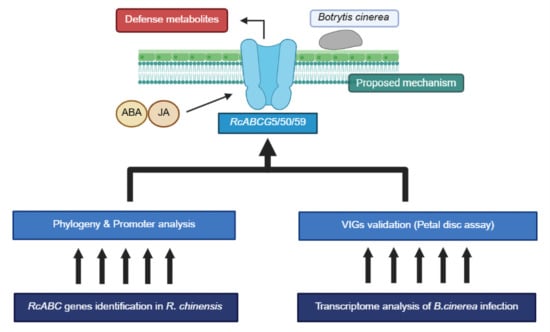
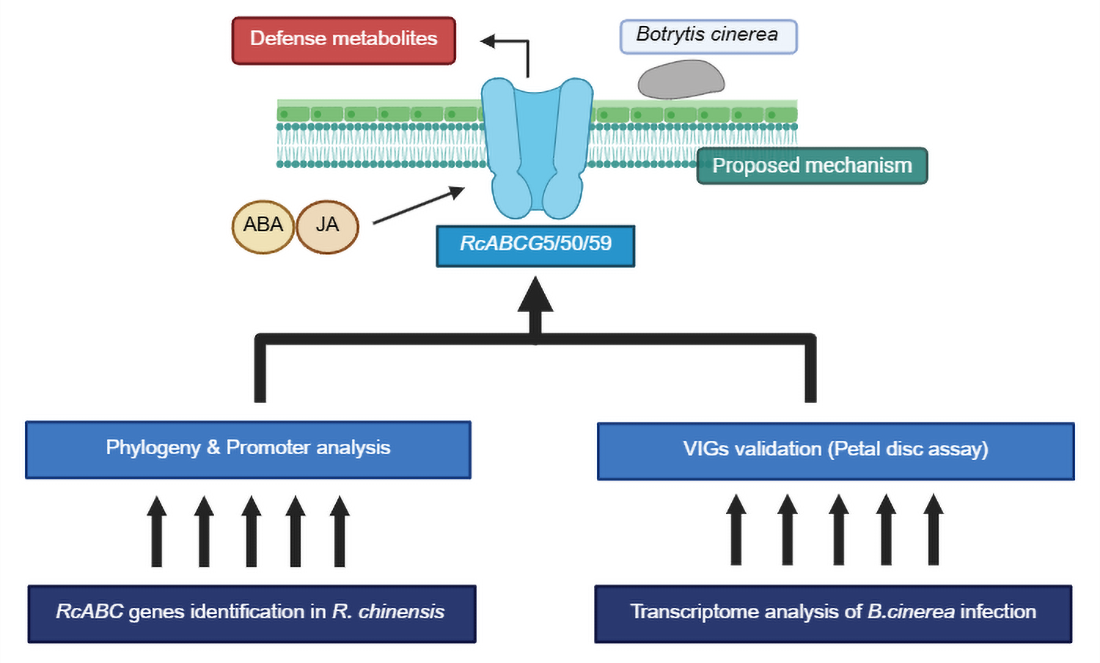
Graphical Abstract

1. Introduction

ATP-binding cassette (ABC) transporters constitute one of the largest membrane protein families in plants and mediate the translocation of diverse substrates across biological membranes [1]. Canonical ABC transporters contain highly conserved nucleotide-binding domains (NBDs) and variable transmembrane domains (TMDs), which together determine ATP-dependent transport activity and substrate specificity [2]. The NBD is the signature structural domain of ABC transporter proteins, which is very conserved and contains five characteristic sequences: the Walker A motif [GX4GK(ST)], Walker B motif [(RK)X3GX3L((hydrophobic)3)], ABC signature motif (also known as the Walker C motif [(LIVMFY)S(SG)GX3(RKA)(LIVMYA)X(LIVMF)(AG)], located between Walker A and Walker B), the H loop, and the Q loop [3]. In contrast, the TMD exhibits high variability and facilitates the transport of numerous substrates, including hormones, pigments, toxic chemicals, defense-related secondary metabolites, lipid molecules, and reactive oxygen species (ROS)-related compounds [4]. According to the different combinations of NBDs and TMDs, transport proteins are classified into full-size proteins possessing two NBDs and two TMDs, half-size proteins containing one NBD and one TMD, and quarter-size proteins harboring only NBDs [5,6]. Based on sequence similarity, phylogenetic relationships, and domain organization, the plant ABC transporter family is divided into eight subfamilies: ABCA, ABCB, ABCC, ABCD, ABCE, ABCF, ABCG, and ABCI [7].
ABC transporters display broad substrate specificity and fulfill critical roles in diverse physiological processes such as hormone transport, lipid metabolism, stomatal regulation, and stress responses [8,9,10]. Among these subfamilies, ABCG constitutes the largest group and comprises full-size proteins (Pleiotropic Drug Resistance proteins, PDRs) and half-size proteins (White-Brown Complex proteins, WBCs), both of which are particularly crucial for plant disease resistance [8,11,12,13]. Expression of multiple ABCG members is induced by pathogen infection, including ABCG16, ABCG33, ABCG36, ABCG37, and ABCG40 [11,13,14]. Specifically, ABCG34 mediates the transport of the indole alkaloid camalexin in response to pathogen invasion [15], whereas ABCG36 not only transports bioactive products of the PEN2 pathway [16] and camalexin [17] but also participates in hormone transport [18]. Additionally, AtABCG5 restricts pathogen invasion by regulating stomatal movement, while OsABCG5 promotes subepidermal lignification through transporting lignin precursors, thereby establishing a physical defense barrier [19].
Rose (Rosa spp.) represents a popular ornamental flower, which is known for its rich flower color, diverse flower types and long flowering period [20]. Rose symbolizes profound cultural meanings and serves as an indispensable element in both landscape design and daily life. However, gray mold caused by Botrytis cinerea has emerged as the most severe postharvest disease affecting roses, substantially diminishing their ornamental and commercial value and being figuratively termed the postharvest “cancer” of cut rose flowers [21]. Currently, ABC genes associated with rose resistance to gray mold remain unidentified. Although ABC transport proteins have been demonstrated to fulfill important roles in pathogen defense in other plant species [22], comprehensive investigation is still required to elucidate the specific functions and mechanisms underlying gray mold resistance in roses. Advances in this research area will enhance our understanding of rose defense mechanisms and provide a theoretical foundation for developing more effective disease management strategies to mitigate the impact of gray mold on rose ornamental quality.
To address this gap and to support the development of genetic resources for gray mold resistance in rose, we aimed to systematically characterize the ABC transporter family in R. chinensis. We performed genome-wide identification and classification of RcABC genes, followed by analyses of chromosomal distribution, duplication patterns, phylogenetic relationships, gene structures, conserved motifs, promoter cis-elements, and B. cinerea-responsive expression profiles. Selected RcABCG candidates were then functionally evaluated using virus-induced gene silencing (VIGS). We hypothesized that Botrytis-induced RcABCG transporters may participate in rose defense against gray mold. This study is expected to provide a basis for investigating ABC transporter-mediated disease resistance and for future molecular improvement of postharvest disease resistance in rose.

2. Materials and Methods

2.1. Identification and Characteristics of RcABC Transporter Genes in Rose Genome

Arabidopsis ABC transporter protein sequences were retrieved from TAIR/Araport11 (https://www.arabidopsis.org, accessed on 14 July 2026) and used as reference queries. The genome assembly and annotation files of R. chinensis ‘Old Blush’ were obtained from the INRA RchiOBHm-V2 resource (https://lipm-browsers.toulouse.inra.fr/pub/RchiOBHm-V2/, accessed on 14 July 2026) [23].
Candidate RcABC proteins were identified using both BLASTP and HMMER searches. BLASTP searches were performed against the rose protein database using BLAST+ v2.6.0, with Arabidopsis ABC proteins as queries and an E-value < 1 × 10⁻⁵, sequence identity ≥ 30%, query coverage ≥ 50%, and a maximum of 20 target hits retained for each query. In parallel, hidden Markov model profiles of the conserved ABC_trans domain (PF00005.29) and ABC_membrane domain (PF00664.25) were downloaded from Pfam (http://pfam.xfam.org/, accessed on 14 July 2026) and used to search the rose protein dataset using HMMER v3.3.2, with an E-value < 1 × 10⁻⁵. Candidate sequences obtained from BLASTP and HMM searches were merged and further validated using InterPro, CDD (NCBI), and Pfam (EMBL). Proteins lacking a recognizable ABC conserved domain were excluded.
Non-redundant RcABC genes were determined after merging identical protein sequences obtained from different searches and removing redundant transcript isoforms. When multiple transcript isoforms were annotated at the same genomic locus, only the longest protein isoform was retained. Candidates without recognizable ABC conserved domain support from Pfam, CDD, or InterPro were excluded. Full-size, half-size, and quarter-size ABC proteins were classified according to the number and organization of nucleotide-binding domains and transmembrane domains [24]. Members with recognizable nucleotide-binding domains but lacking predicted transmembrane domains were retained only when supported by conserved ABC domains. Because ABCE and ABCF proteins are generally soluble ABC proteins [25], the absence of transmembrane domains in these subfamilies was not considered unusual. However, short or atypical members from other subfamilies were interpreted cautiously as putative quarter-size, partial, or annotation-dependent ABC candidates.

2.2. Phylogenetic Analyses, Gene Structure, Conserved Motif, and Promoter Analysis

Protein sequences of RcABC genes and Arabidopsis ABC reference proteins were aligned using ClustalW implemented in MEGA 7.0 [26]. The alignment was performed with the following parameters: protein weight matrix, BLOSUM; gap opening penalty, 10; gap extension penalty, 0.1; and all other parameters kept at default settings. The resulting alignments were visually inspected before tree construction, and obviously poorly aligned terminal regions were removed when necessary.
For family-level classification of RcABC proteins, a phylogenetic tree containing 185 RcABC and 129 Arabidopsis ABC proteins was constructed in MEGA 7.0 using the Neighbor-Joining method [27]. The Poisson correction model was used to calculate evolutionary distances, and the reliability of each node was evaluated with 1000 bootstrap replicates. The Neighbor-Joining tree was used mainly for broad subfamily classification because of the large number of ABC family members included in the analysis.
For detailed analysis of the RcABCG subfamily, exon–intron structures were visualized using TBtools v2.056 based on the rose genome annotation file [28]. The phylogenetic tree of the RcABCG subfamily was reconstructed using IQ-TREE v2.2.2 with the Maximum-Likelihood method [29] and visualized using ChiPlot (https://www.chiplot.online/, accessed on 14 July 2026). The best-fit amino acid substitution model was automatically selected using ModelFinder implemented in IQ-TREE, and the LG + F + R5 model was selected for final tree construction. Branch support was estimated using 1000 ultrafast bootstrap replicates [30]. The Neighbor-Joining tree was used for broad family-level classification, whereas the Maximum-Likelihood method was used for higher-resolution phylogenetic analysis of the RcABCG subfamily.
Promoter sequences corresponding to the 2000 bp region upstream of the transcription start site of each RcABCG gene were extracted for cis-element analysis. This region was selected because it is commonly used to represent the proximal promoter region and to capture major cis-regulatory elements in plant gene-family studies. Cis-acting elements were predicted using the PlantCARE database (http://bioinformatics.psb.ugent.be/webtools/plantcare/html/, accessed on 14 July 2026) [31] and grouped into light-responsive, hormone-responsive, stress-responsive, growth/development-related, and other regulatory categories. All predicted cis-acting elements were retained for summary, and no additional frequency-based filtering was applied. Conserved motifs of RcABCG proteins were identified using MEME Suite 5.5.5 (http://meme-suite.org/tools/meme, accessed on 14 July 2026), with the maximum number of motifs set to 10 and motif lengths set to 50–100 amino acids [32]. Sequence logos of conserved ABC domains were generated using WebLogo3 (http://weblogo.threeplusone.com/, accessed on 14 July 2026).

2.3. Chromosome Distribution and Collinearity Analyses

Chromosomal positions of RcABC genes were extracted from the R. chinensis ‘Old Blush’ RchiOBHm-V2 genome annotation file and visualized using TBtools v2.056 [33]. To identify duplicated RcABC gene pairs and collinear relationships, BLASTP search was first performed using the complete rose protein dataset, with an E-value < 1 × 10⁻¹⁰. The BLASTP results and gene position file were used as input files for MCScanX [28] and ColinearScan [34]. Collinear blocks were identified with a minimum block size of five genes. For ColinearScan, microsynteny chains were detected with an E-value < 1 × 10⁻¹⁰ and a minimum block size of five.
Duplicated RcABC gene pairs located within the same collinear block were defined as segmentally duplicated gene pairs. Tandem duplicated RcABC genes were defined as homologous RcABC genes located on the same chromosome, separated by no more than one intervening gene, and showing sequence identity ≥ 70% and alignment coverage ≥ 70%. Interchromosomal collinearity relationships were visualized using TBtools and Circos. Homologous RcABC gene pairs that did not satisfy the criteria for segmental or tandem duplication were not classified as duplicated gene pairs.

2.4. Calculation of Ratios of Non-Synonymous (Ka) to Synonymous (Ks) Nucleotide Substitutions

Duplicated RcABC gene pairs identified from the collinearity analysis were used for Ka/Ks analysis. Protein sequences were first aligned using MAFFT v7.505 with default parameters, and the resulting protein alignments were converted into codon alignments based on the corresponding CDS sequences using PAL2NAL v14. The codon alignments were then used to calculate nonsynonymous substitution rates (Ka), synonymous substitution rates (Ks), and Ka/Ks ratios using EasyCodeML v1.4 [33]. The Ka/Ks ratio was used to infer the selective pressure acting on duplicated RcABC gene pairs, with Ka/Ks < 1, Ka/Ks = 1, and Ka/Ks > 1 indicating purifying selection, neutral evolution, and positive selection, respectively.

2.5. Expression of RcABC Genes in Response to B. cinerea

RNA-Seq data of rose petals under B. cinerea infection are available from the National Center for Biotechnology Information (NCBI) database, under accession number PRJNA414570. The RNA-Seq material consists of rose petal slices collected at 30 hpi and 48 hpi, with three biological replicates for both infected and control treatments.
Raw paired-end reads were first assessed using FastQC v0.11.9. Adapter sequences, low-quality bases, and short reads were removed using fastp v0.23.2. Reads shorter than 50 bp after trimming were discarded, and other filtering parameters were kept at default settings. The resulting clean paired-end reads were aligned to the R. chinensis ‘Old Blush’ reference genome RchiOBHm-V2 using HISAT2 v2.2.1 with the --dta option [35,36]. HISAT2 was run in paired-end mode. Only concordantly mapped read pairs were used for downstream analysis. Reads with multiple genomic alignments were handled according to the default HISAT2/StringTie strategy and were not manually reallocated. Transcript assembly and expression quantification were performed using StringTie v2.2.1 with the RchiOBHm-V2 genome annotation file as reference guidance [37]. StringTie was run in reference-guided mode with the -e and -B options to estimate the abundance of annotated transcripts and generate files for downstream count-matrix construction. FPKM and TPM values were generated for expression-profile visualization only and were not used for differential expression analysis. For differential expression analysis, gene-level raw count matrices were generated from the StringTie output using the prepDE.py script provided with StringTie. The count matrix was imported into R v4.2.2 and analyzed using DESeq2 v1.38.3 [38]. Genes with fewer than 10 total reads across all samples were removed before analysis. DESeq2 normalization was performed to correct for differences in sequencing depth among libraries. Differential expression was analyzed separately for B. cinerea-infected versus mock-treated samples at 30 hpi and 48 hpi using the design formula ~ treatment. p values were adjusted using the Benjamini–Hochberg method to control the false discovery rate. Genes with an adjusted p value < 0.05 and |log2 fold change| ≥ 1 were considered significantly differentially expressed genes. Among the significantly differentially expressed RcABC genes, those with log2 fold change > 1 in infected samples were defined as infection-induced RcABC genes.
To validate the RNA-seq expression profiles of selected RcABC genes, real-time quantitative PCR (RT-qPCR) was performed. Briefly, 1 μg of total RNA was used for first-strand cDNA synthesis in a 20 μL reaction system using HiScript II Q Select RT SuperMix (Vazyme, Nanjing, China). RT-qPCR was conducted on a StepOnePlus Real-Time PCR System (Applied Biosystems, Carlsbad, California, USA) with ChamQ SYBR qPCR Master Mix (Vazyme, Nanjing, China). RcUBI2 was used as the internal reference gene [39], and relative expression levels were calculated using the 2−ΔΔCt method. All primers used in this study are listed in Supplementary Table S1.

2.6. VIGS and B. cinerea Inoculation Assays

To construct the silencing vectors, gene-specific fragments were selected from the coding sequences and/or 3′ untranslated regions (3′ UTRs) of RcABCG5/50/59/60. A 231 bp coding-region fragment of RcABCG5, a 105 bp 3′ UTR fragment of RcABCG50, a 127 bp 3′ UTR fragment of RcABCG59, and a 193 bp fragment of RcABCG60 containing 80 bp of coding sequence and 113 bp of 3′ UTR were used for vector construction. The 3′ UTR fragments of RcABCG50 and RcABCG59 were selected to distinguish them from their closely related homologs, RcABCG51/52 and RcABCG58, respectively. The specificity of each fragment was examined by BLASTN against the R. chinensis ‘Old Blush’ genome/transcriptome sequences and the identified RcABC gene sequences. Fragments with substantial similarity to non-target RcABC genes were discarded, and only fragments showing high specificity to the corresponding target genes were cloned into the TRV2 vector. TRV-GFP was used as the negative control, as previously described [40]. VIGS was established as previously described [41]. In brief, flowering roses at stage 2 were used for petal disc preparation. In each independent experiment, five constructs were tested, including TRV-GFP and four TRV-RcABCG silencing constructs. Twenty flowers were used per experiment. After removing the outermost four petal whorls, petals from the following five whorls were collected, and three 15 mm discs were punched from each whorl, resulting in 15 discs per flower. To reduce variation among flowers and petal positions, all discs collected in the same experiment were pooled and randomly assigned to the five constructs, with at least 48 discs per construct. Agrobacterium cultures containing constructs expressing TRV1 and TRV2 were mixed in a 1:1 ratio and vacuum-infiltrated into the petal discs. After 6 d of TRV infection, the petal discs were inoculated with 2 μL of B. cinerea spore suspension at a concentration of 1 × 10⁵ spores/mL. The inoculated petal discs were placed on 0.4% water agar under humid conditions, and disease symptoms were photographed at 60 hpi. Lesion areas of individual discs were measured using ImageJ1.48v. For each construct, at least 48 individual discs were analyzed in each independent experiment. The entire VIGS assay was independently repeated three times with similar results. Target gene silencing efficiency was determined by RT-qPCR. The statistical analysis is described in Section 2.7, and all primers are listed in Supplementary Table S1.

2.7. Statistical Analysis

Lesion area and RT-qPCR data are presented as mean ± standard deviation. For VIGS assays, each independent experiment included at least 48 petal discs per construct. Lesion areas were measured for each petal disc using ImageJ, and the individual disc values from the same independent experiment were used for statistical comparisons between TRV-GFP and each TRV-RcABCG treatment. The VIGS assay was independently repeated three times to confirm the reproducibility of the observed trends. For RT-qPCR analysis, three biological replicates and three technical replicates were used for each treatment. Significant differences between two groups were determined using Student’s t-test. Differences were considered statistically significant at p < 0.05 and highly significant at p < 0.01.

3. Results

3.1. Identification and Phylogenetic Analysis of RcABC Genes in Rose

To identify ABC family genes in the rose genome, predictions were performed through BLASTP and HMM analysis targeting conserved domains (PF00005, PF00664), followed by validation using the InterPro database. This approach ultimately yielded 185 non-redundant ABC transporter genes. All of which contained the conserved ATP-binding domain (NBD). Based on domain composition, transporters were classified into full-size (71 members), half-size (63 members), and quarter-size (44 members) categories, with 7 exceptional members exhibiting atypical domain architectures.
Phylogenetic analysis of rose RcABC (185) and Arabidopsis AtABC (129) member protein sequences was conducted using the NJ method (Supplementary Figure S1). This analysis identified eight RcABC subfamilies (ABCA through ABCI, excluding ABCH), comprising 7, 49, 33, 3, 1, 9, 70, and 13 members, respectively. The ABCG subfamily was predominant (approximately 40%), while the ABCD and ABCE subfamilies accounted for lower proportions (1.62% and 1.08%, respectively). Each subfamily received robust bootstrap support, thereby confirming the validity of the classification. Protein sizes displayed considerable variation, ranging from the longest member RcABCA1 (1887 amino acids) to the shortest member RcABCG68 (114 amino acids), with an average length of 890 amino acids. Detailed characteristics of all identified genes are presented in Table 1.
Furthermore, domain analysis showed that RcABC proteins possessed three highly conserved domains (Supplementary Figure S2b): Walker A (positions 10–20), Walker B (positions 140–152), and signature C motif (positions 127–140). These conserved motifs were also observed in Arabidopsis AtABC proteins (Supplementary Figure S2a).

3.2. Chromosomal Locations, Gene Duplication and Microsynteny Analysis

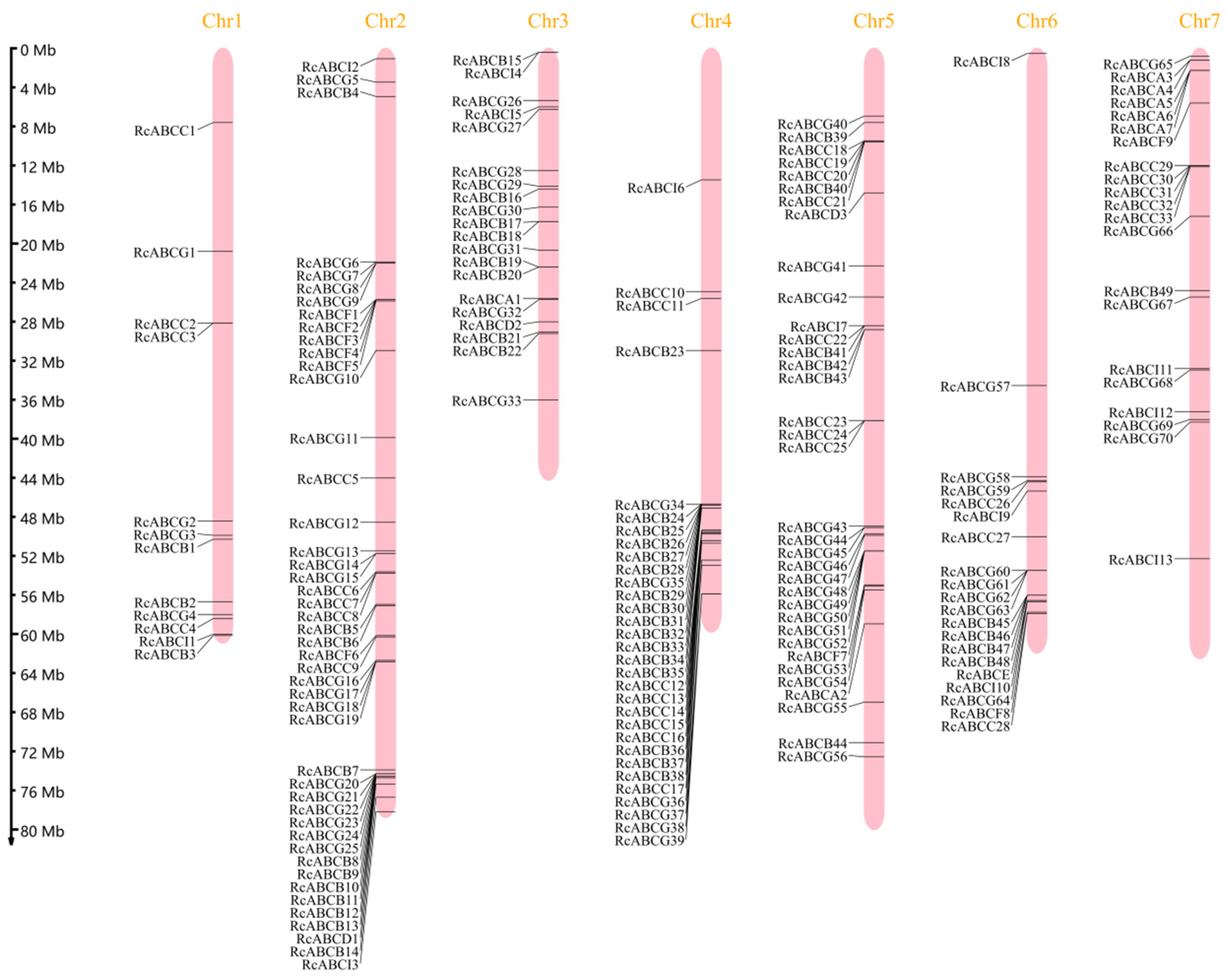
The 185 RcABC genes were unevenly distributed across the seven rose chromosomes (Figure 1). Chromosome 2 harbored the largest number of genes (46 members), followed by chromosome 5 (35 members) and chromosome 4 (31 members), whereas chromosome 1 contained the fewest (12 members) genes. The distribution of RcABC genes differed among chromosomes. Several genes on chromosomes 4 and 6 were enriched at distal chromosomal regions, while most others clustered within specific localized areas. The eight subfamilies demonstrated non-uniform distribution patterns, with the ABCG subfamily (the largest group) being predominantly localized on chromosomes 2 and 5 (collectively accounting for 54% of ABCG members). The ABCB subfamily (the second largest group) was mainly positioned on chromosomes 2 and 4 (representing 55% of ABCB members), whereas the ABCA subfamily was primarily concentrated on chromosome 7.
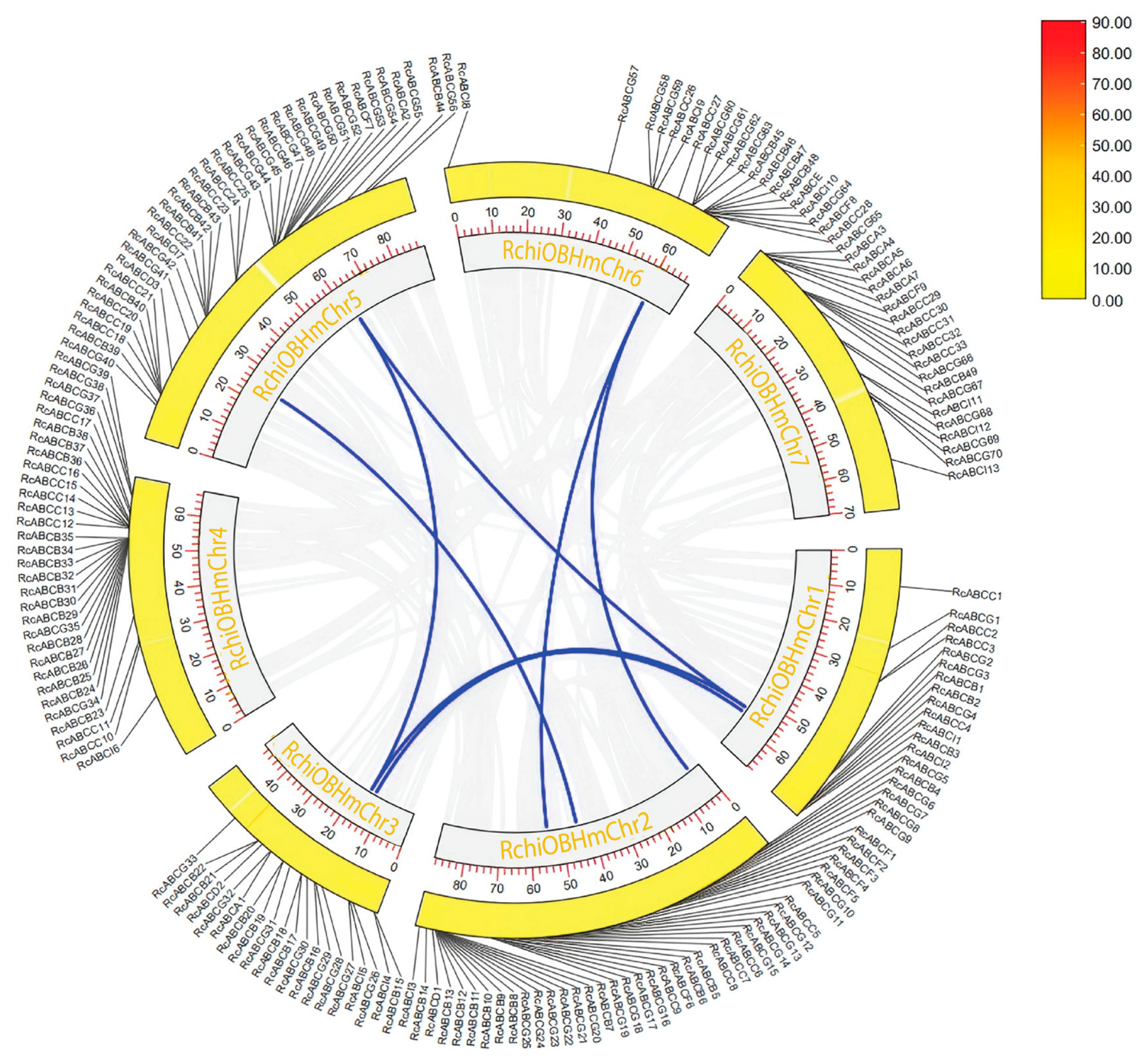
Gene duplication events within the RcABC family were further investigated, showing seven duplicated gene pairs that exclusively belonged to the ABCG subfamily (Figure 2). These duplicated gene pairs were classified as segmentally duplicated pairs because they were located on different chromosomes. Notably, RcABCG2 located on chromosome 1 underwent independent segmental duplication events with both RcABCG29 on chromosome 3 and RcABCG54 on chromosome 5. Comprehensive microsynteny relationships among RcABC genes across chromosomes are illustrated in Figure 2.
To evaluate selective constraints on duplicated RcABC genes, the Ka and Ks were calculated for each duplicated gene pair, and their ratio (Ka/Ks) was subsequently determined for evolutionary analysis (Table 2). It is well-known that Ka/Ks > 1 indicates positive selection, while Ka/Ks < 1 indicates purifying selection. Ka/Ks values were successfully estimated for six of the seven duplicated RcABCG gene pairs and ranged from 0.110 to 0.223, all below 1, suggesting purifying selection. The RcABCG5/RcABCG63 pair showed an undefined Ks value, likely due to synonymous-site saturation, and was therefore excluded from Ka/Ks-based selection inference.

3.3. The Expression of RcABC Genes in Response to B. cinerea Infection

To investigate the expression patterns of RcABC genes in response to B. cinerea infection, DESeq2-based differential expression analysis was performed using RNA-seq data from rose petals collected at 30 hpi and 48 hpi. The 13 RcABC genes, including RcABCB11, RcABCB29, RcABCB30, RcABCC2, RcABCG5, RcABCG6, RcABCG29, RcABCG50, RcABCG51, RcABCG52, RcABCG58, RcABCG59, and RcABCG60, showed increased expression at 48 hpi (Table 3). Among these genes, eight also showed increased expression at 30 hpi. Notably, nine of the 13 infection-responsive RcABC genes belonged to the RcABCG subfamily, accounting for 69.23% of the responsive genes. Based on their expression profiles, subfamily classification, phylogenetic relationships, and promoter features, selected RcABCG genes were further analyzed in subsequent functional assays.
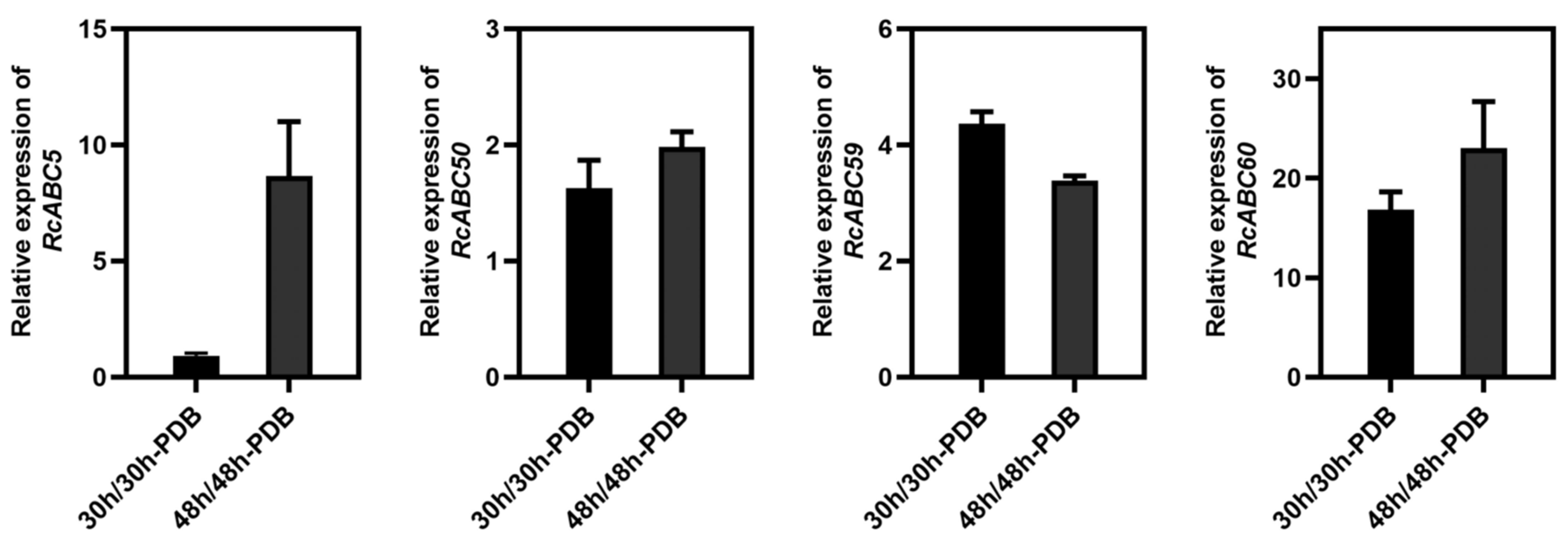
To validate the RNA-seq results, RT-qPCR was performed for selected infection-responsive RcABCG genes, including RcABCG5, RcABCG50, RcABCG59, and RcABCG60. RT-qPCR analysis showed that these genes were upregulated after B. cinerea infection compared with the mock-treated controls (Figure 3). The expression trends of RcABCG5, RcABCG50, RcABCG59, and RcABCG60 were generally consistent with the RNA-seq profiles, especially at 48 hpi.

3.4. Phylogenetic Analysis of Rose ABCG Genes

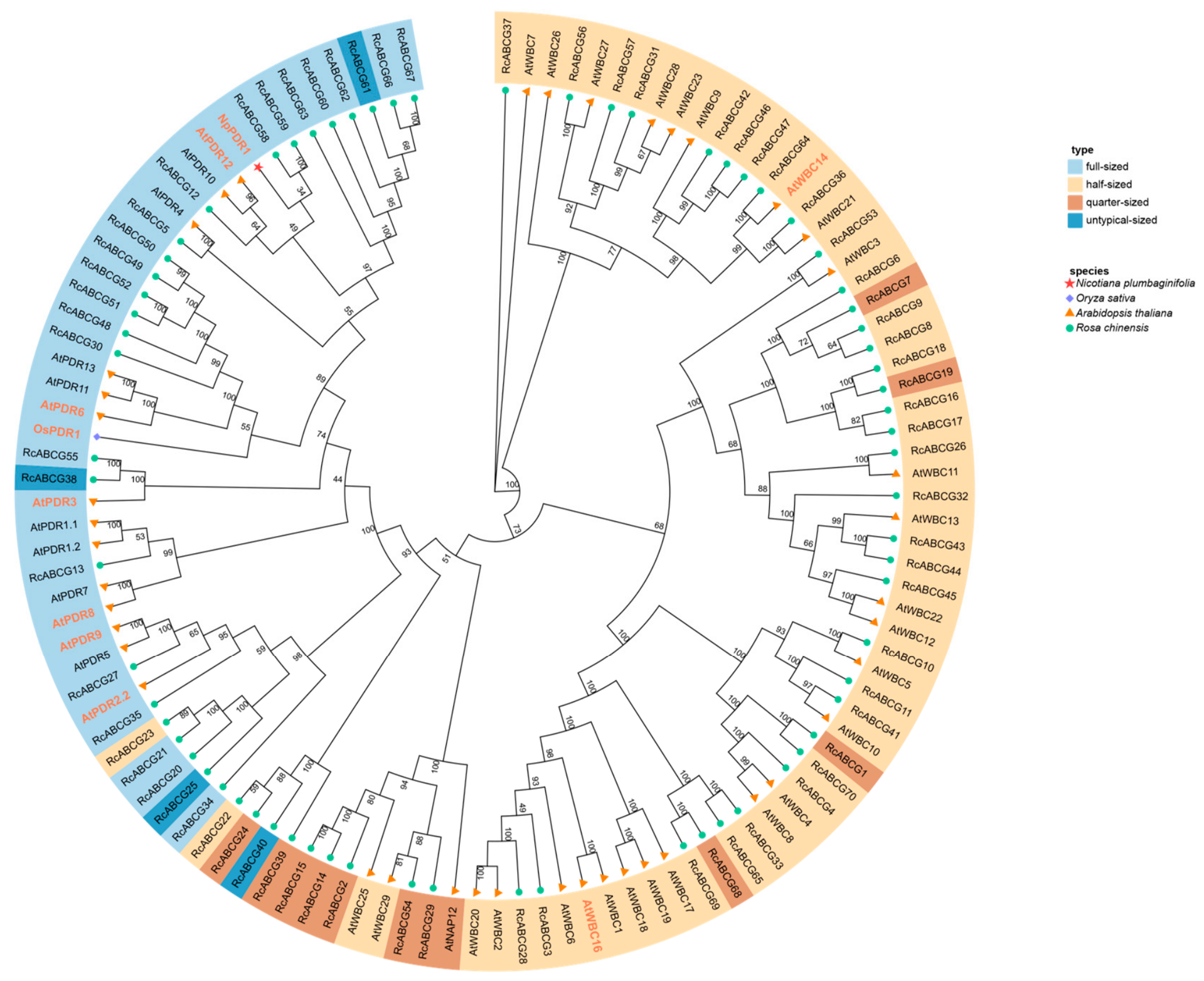
To assess the evolutionary relationships among RcABCG proteins, Arabidopsis AtABCG proteins, and previously reported plant ABCG proteins associated with disease resistance, a phylogenetic tree was constructed using the Maximum-Likelihood method (Figure 4). The RcABCG proteins were grouped with their corresponding Arabidopsis ABCG members. Full-size RcABCG transporters clustered with PDR-type ABCG proteins, whereas half-size RcABCG transporters clustered with WBC-type ABCG proteins. Five quarter-size transporters, including RcABCG2, RcABCG14, RcABCG15, RcABCG29, and RcABCG54, formed an independent clade. These five genes included three of the seven duplicated gene pairs identified in the RcABC family. The remaining quarter-size RcABCG proteins were distributed in branches containing half-size ABCG transporters. Several previously characterized defense-associated ABCG proteins were located within branches containing full-size ABCG transporters.
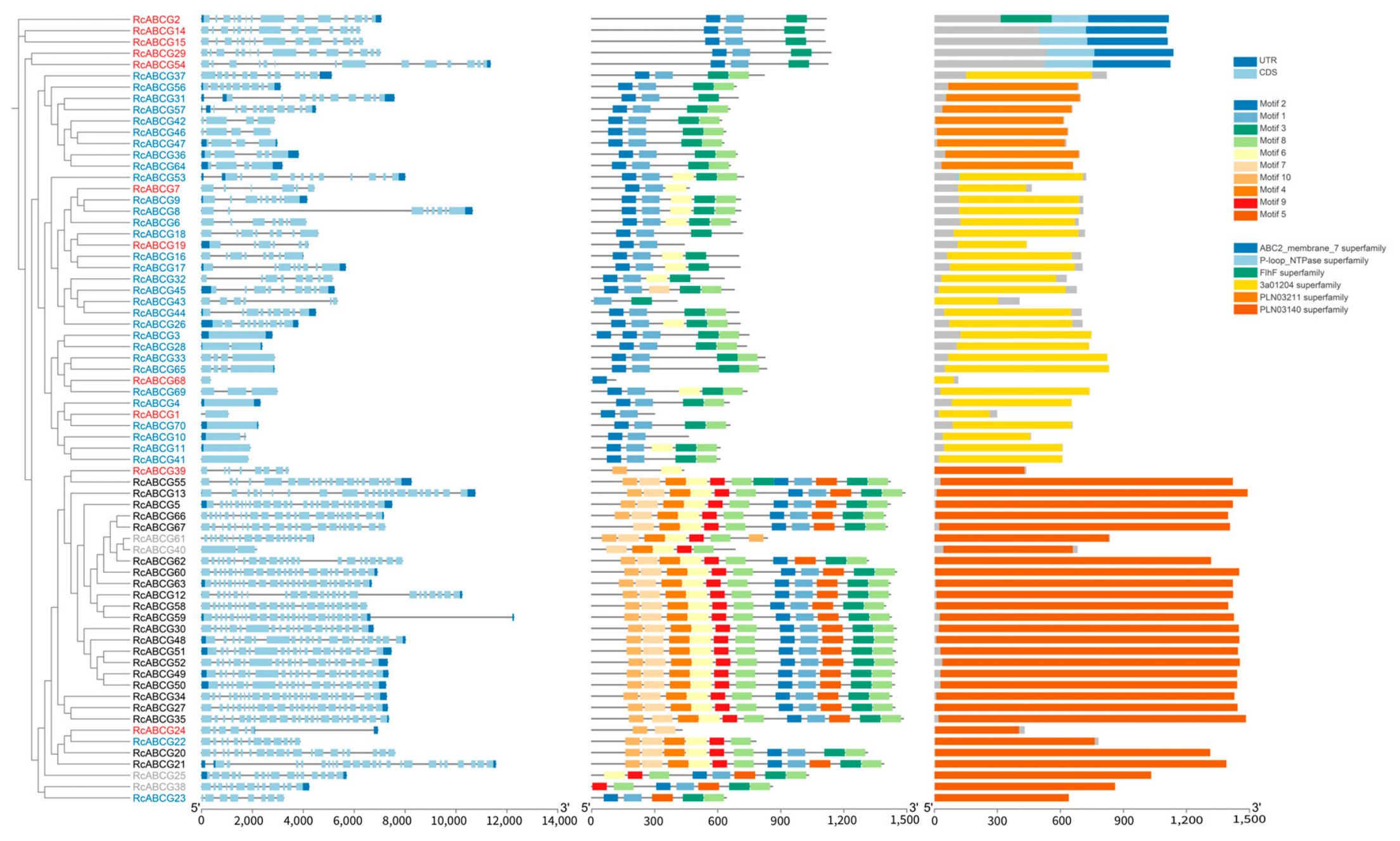
Exon–intron structure and conserved motif analyses were performed to further characterize the RcABCG subfamily (Figure 5). RcABCG genes with close phylogenetic relationships generally showed similar exon–intron structures. Conserved motif analysis showed differences in motif composition among full-size, half-size, quarter-size, and atypical RcABCG proteins. Full-size RcABCG proteins contained most of the identified motifs, except for RcABCG67 and RcABCG20. Motifs 2, 1, 3, and 8 were detected in most RcABCG proteins, whereas motifs 7, 10, 4, 9, and 5 were mainly present in full-size proteins. A total of 10 conserved motifs, with lengths ranging from 50 to 100 amino acids, were identified using MEME (Supplementary Table S2). Conserved domain prediction using NCBI-CDD showed differences in domain composition among RcABCG members (Figure 4).

3.5. Analysis of Cis-Regulatory Elements in RcABCG Promoters

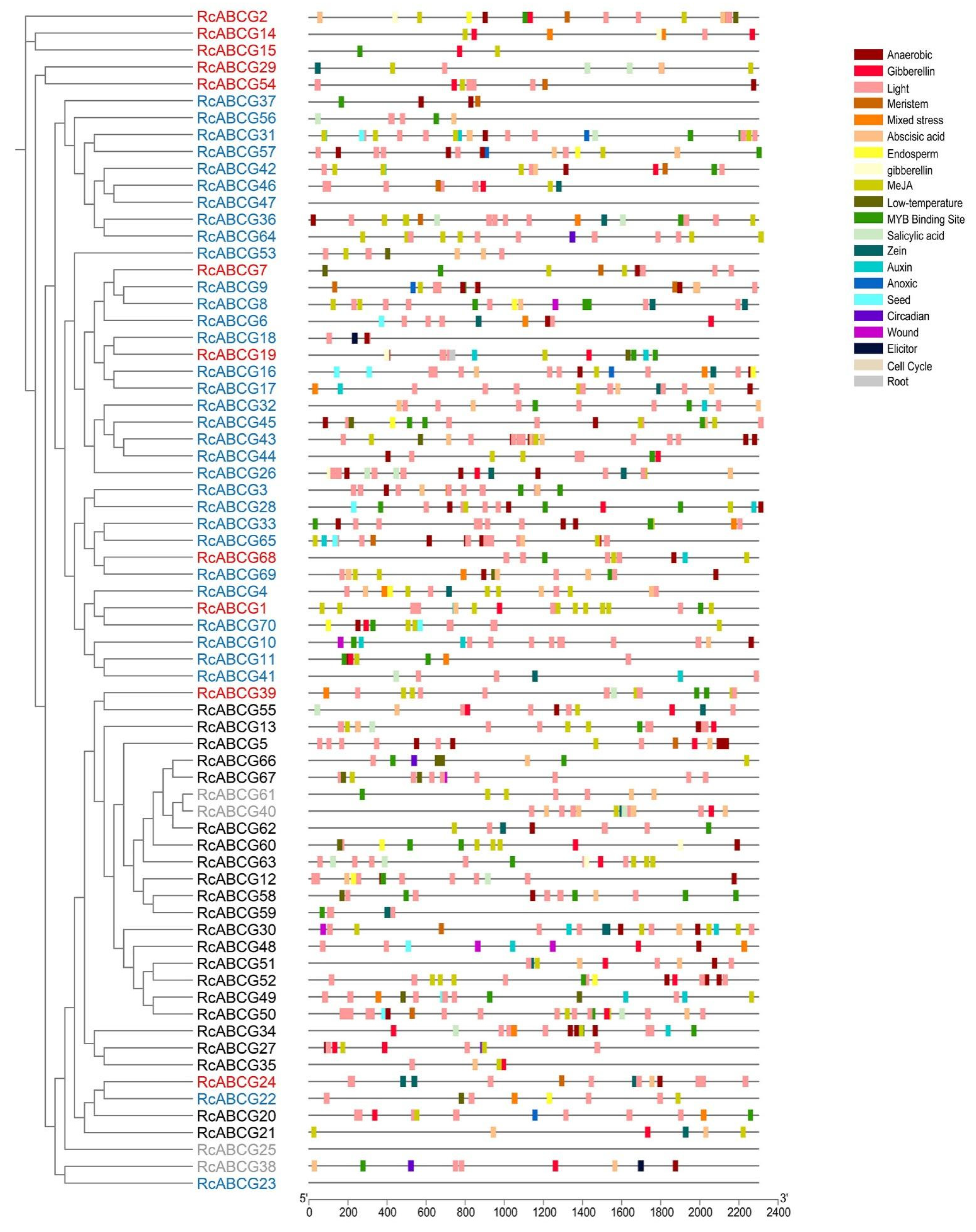
To characterize the potential regulatory features of the RcABCG subfamily, cis-acting elements in the 2000 bp upstream promoter regions of 70 RcABCG genes were predicted using the PlantCARE database (Figure 6). Multiple types of cis-acting elements were identified, including light-responsive, hormone-responsive, stress-responsive, growth/development-related, and transcription factor binding-related elements. Light-responsive elements were detected in most RcABCG promoters. Hormone-responsive elements were also widely distributed, including MeJA-, ABA-, and GA-responsive elements, which were present in 77%, 56%, and 44% of RcABCG genes, respectively. In addition, anaerobic induction-related elements and other stress-responsive elements were detected in 61% and 26% of RcABCG genes, respectively.
The promoter regions of seven infection-responsive full-size RcABCG genes, including RcABCG5, RcABCG50, RcABCG51, RcABCG52, RcABCG58, RcABCG59, and RcABCG60, were further examined (Supplementary Figure S3). Among them, six genes, except RcABCG59, contained multiple hormone- and stress-responsive elements. The promoter of RcABCG50 contained several light-responsive, ABA-responsive, MeJA-responsive, and wound-responsive elements. MYB- and MYC-binding motifs were also detected in the promoter regions of several candidate genes, including RcABCG50 and RcABCG58.

3.6. RcABCG5, RcABCG50 and RcABCG59 Were Associated with Rose Petal Resistance to B. cinerea Under VIGS Conditions

To evaluate the potential involvement of infection-responsive RcABCG genes in rose resistance to gray mold, four full-size transporter genes, RcABCG5, RcABCG50, RcABCG59, and RcABCG60, were selected for VIGS analysis. These genes were selected based on their infection-induced expression patterns, full-size transporter structure, successful amplification of gene-specific fragments, and phylogenetic and promoter features (Supplementary Figures S3 and S4).
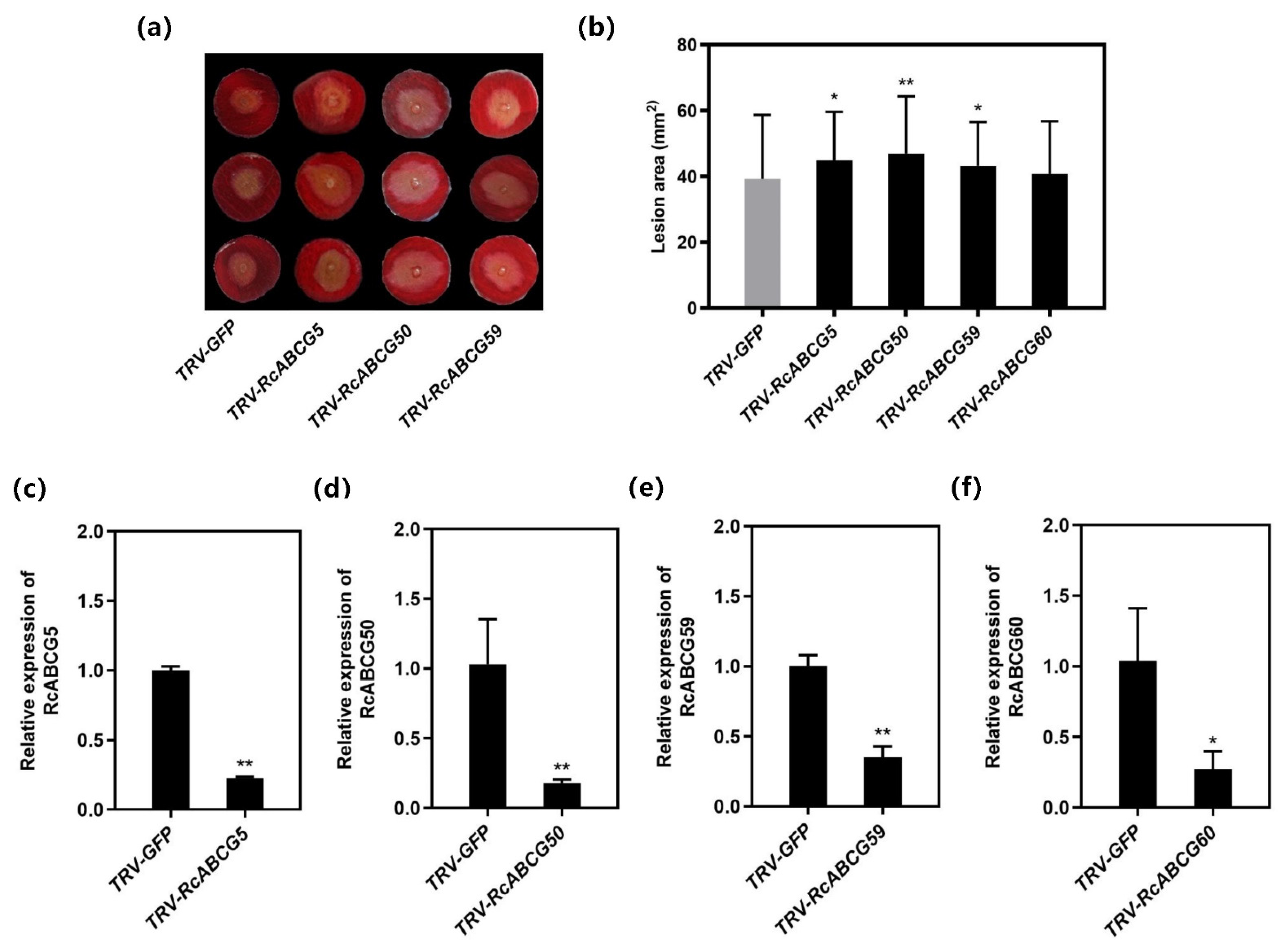
Gene-specific fragments of RcABCG5, RcABCG50, RcABCG59, and RcABCG60 were cloned into the pTRV2 vector, and transient silencing was performed in rose petal discs through Agrobacterium-mediated vacuum infiltration. RT-qPCR analysis showed that the relative transcript levels of RcABCG5, RcABCG50, RcABCG59, and RcABCG60 were reduced to 22.8%, 17.9%, 35.2%, and 27.5% of the TRV-GFP control, respectively (Figure 7c–f).
After B. cinerea inoculation, larger lesion areas were observed in TRV-RcABCG5, TRV-RcABCG50, and TRV-RcABCG59 discs compared with TRV-GFP discs. The mean lesion area was 39.27 mm2 in TRV-GFP discs and 44.96, 46.95, and 43.23 mm2 in RcABCG5-, RcABCG50-, and RcABCG59-silenced discs, respectively (Figure 7a,b). Compared with TRV-GFP, lesion areas were significantly increased in TRV-RcABCG5 (p = 0.0144), TRV-RcABCG50 (p = 0.0015), and TRV-RcABCG59 (p = 0.0381), whereas no significant difference was observed in TRV-RcABCG60 (p = 0.2658). These results suggest that RcABCG5, RcABCG50, and RcABCG59 may contribute to rose petal resistance to B. cinerea under the VIGS assay conditions.

4. Discussion

Rose is an important ornamental economic crop worldwide, but gray mold caused by B. cinerea has become one of the most severe postharvest diseases, significantly reducing the ornamental and commercial value of roses [42,43]. The ABC transporter family plays a crucial role in the transmembrane transport of plant secondary metabolites, environmental adaptation, and defense responses [1,44]. Although ABC transporters have been extensively studied in various plant species [22], systematic identification of the ABC transporter family in rose and its functional involvement in resistance to pathogenic fungi remain limited.
In the present study, 185 ABC gene family members were identified in the rose genome (Table 1), a number that falls between those found in potato (54) [45] and rapeseed (314) [46]. Through phylogenetic analysis, RcABC was classified into eight subfamilies (A-G and I; Supplementary Figure S1), consistent with the classification patterns observed in Arabidopsis (129) [47], rice (133) [48], maize (133) [49], tomato (154) [50], and pepper (200) [51]. The variation in ABC transporter numbers among different plant species may reflect different degrees of gene family expansion during evolution. Notably, the RcABCG subfamily contained 70 members and represented the largest subfamily, accounting for 38% of all RcABC genes. Similar expansion of the ABCG subfamily has also been observed in other plant species [52]. This phenomenon may be attributed to the sessile lifestyle of plants, which necessitates the export of toxic substances and numerous secondary metabolites, many of which must be transported across membranes to reach their functional sites.
Gene duplication is an important mechanism contributing to gene family expansion. In this study, seven pairs of duplicated genes were identified within the rose RcABC family, and all of them belonged to the RcABCG subfamily (Figure 2). These duplicated gene pairs were located on different chromosomes and were classified as segmentally duplicated pairs. Ka/Ks analysis revealed that the Ka/Ks ratios of these duplicated gene pairs were consistently below 0.3 (Table 2), suggesting that these duplicated RcABCG genes may have undergone purifying selection during evolution. This pattern indicates that selective constraints may have contributed to maintaining conserved functions among duplicated RcABCG members.
ABCG subfamily transporters play important roles in plant pathogen defense by transporting defense-related metabolites and regulating hormone distribution [53]. For example, tomato SlABCG9 enhances resistance to gray mold by participating in JA synthesis and secretion [54]. In this study, DESeq2-based RNA-seq analysis identified 13 RcABC genes that were significantly upregulated after B. cinerea infection, nine of which belonged to the RcABCG subfamily (Table 3). This enrichment of infection-responsive genes in the RcABCG subfamily supports the possibility that RcABCG members play important roles in rose responses to gray mold infection. Phylogenetic analysis further showed that rose full-size and half-size RcABCG transporters clustered with Arabidopsis PDR and WBC transporters, respectively (Figure 4). Several previously reported defense-associated ABCG proteins were also located within branches containing full-size ABCG transporters. In addition, RcABCG genes with close phylogenetic relationships generally exhibited similar exon–intron structures and conserved motif compositions (Figure 5). These results suggest that phylogenetic relationships, gene structures, and motif patterns may provide useful clues for predicting the potential functions of RcABCG members.
Promoter cis-acting element analysis unveiled a complex regulatory network governing RcABCG genes (Figure 6). Hormone-responsive elements (MeJA, ABA, gibberellin) and stress-responsive elements (anaerobic, wound) were widely distributed across RcABCG genes, being particularly highly enriched in candidate disease resistance genes. Notably, ABCG genes known to be involved in defense responses tended to cluster in the full-size transporter branch [8,11,12,13], and the promoter regions of these genes were enriched with MeJA, ABA, and defense-related elements. These hormones fulfill critical roles in plant resistance to gray mold: JA participates in induced defense responses, while ABA regulates stomatal closure to restrict pathogen invasion [55,56]. MYB and MYC transcription factor binding sites appeared with high frequency in multiple candidate genes (such as RcABCG50 and RcABCG58), suggesting that these transcription factors may regulate the expression of RcABCG genes during pathogen infection through direct promoter binding.
To validate the functions of candidate genes, four full-size ABCG genes (RcABCG5/50/59/60) were selected for VIGS-mediated gene silencing experiments. These genes were selected based on their infection-induced expression patterns, phylogenetic relationships with defense-associated ABCG members, and the presence of hormone- and stress-responsive elements in their promoter regions. After B. cinerea inoculation, larger lesion areas were observed in TRV-RcABCG5, TRV-RcABCG50, and TRV-RcABCG59 petal discs compared with TRV-GFP discs, whereas no significant difference was observed in TRV-RcABCG60 discs (Figure 7). These results indicate that RcABCG5/50/59 may contribute to rose resistance against gray mold. Considering the known functions of ABCG transporters in other plants, these genes may participate in rose defense responses by transporting defense-related metabolites or hormone-associated compounds, although their specific substrates remain to be identified.
There are several limitations in this study. First, the identification of RcABC genes was based on the current R. chinensis ‘Old Blush’ genome annotation, and some short or atypical proteins may represent incomplete annotations or truncated predictions. Therefore, further validation using improved genome assemblies or transcript evidence would help refine the RcABC gene set. Second, although DESeq2-based RNA-seq analysis and RT-qPCR validation supported the infection-induced expression patterns of selected RcABC genes, the transcriptomic analysis included only two infection time points. Additional time-course transcriptome data and broader biological conditions would provide a more comprehensive understanding of RcABC gene responses to B. cinerea infection. Third, promoter cis-element analysis provides only predictive information, and the potential regulation of RcABCG genes by MYB, MYC, or hormone-related transcription factors remains to be validated by approaches such as yeast one-hybrid, EMSA, dual-luciferase assays, or ChIP-qPCR. Finally, VIGS provides transient functional evidence in rose petal discs, but stable genetic transformation, overexpression analysis, and substrate transport assays are needed to further confirm the biological functions and transport mechanisms of RcABCG5, RcABCG50, and RcABCG59.
Overall, this study provides a genome-wide characterization of the ABC transporter family in rose and identifies RcABCG5, RcABCG50, and RcABCG59 as candidate genes associated with B. cinerea resistance under VIGS conditions. These findings provide candidate genes and a useful framework for further investigation of ABCG-mediated defense mechanisms and for future molecular improvement of gray mold resistance in rose.

5. Conclusions

In summary, systematic identification and functional analysis of the rose ABC transporter family were conducted in the present study. A total of 185 RcABC genes were identified and classified into 8 subfamilies, with ABCG constituting the largest subfamily. Gene duplication, phylogenetic, promoter, and expression analyses indicated that RcABCG members may play important roles in rose responses to B. cinerea. VIGS-based functional assays further showed that RcABCG5, RcABCG50, and RcABCG59 may participate in resistance to gray mold.
This study provides the first genome-wide framework for ABC transporter genes in rose and identifies defense-related RcABCG candidates for future functional studies and molecular breeding. Nevertheless, the present work is limited by the use of RNA-seq and transient VIGS assays, and the specific substrates transported by these RcABCG proteins remain to be determined. Future work should include additional time-course transcriptome analysis, stable genetic validation, overexpression analysis, transport assays, and metabolite profiling to further elucidate the mechanisms of ABCG-mediated resistance to B. cinerea in rose.

Supplementary Materials

The following supporting information can be downloaded at https://www.mdpi.com/article/10.3390/horticulturae12070870/s1, Supplementary Figure S1: Phylogenetic analyses of ABC protein subfamily in rose with Arabidopsis thaliana ABC protein family. The phylogenetic tree was constructed by MEGA7.0 using the Neighbor-joining method. Numbers on the branches represent bootstrap values. Different groups are marked with different colors. Supplementary Figure S2: (a) The sequence logos of the ABC motif in Arabidopsis thaliana. (b) The sequence logos of the ABC motif in rose. Supplementary Figure S3: Cis-element analysis of promoters of seven full-size RcABCG genes. Different cis-element types are indicated by different colors. Supplementary Figure S4: Homologous alignment of RcABCG50, RcABCG51, and RcABCG52 sequences. Supplementary Figure S5: Homologous alignment of RcABCG58 and RcABCG59 sequences. Supplemental Table S1: List of primers used in this study. Supplemental Table S2: MEME motifs identified in RcABCG proteins.

Author Contributions

Z.Z., X.C. and M.C. conceived this study, Z.Z. and X.L. supervised the project. X.C. and M.C. carried out experiments. X.C., H.Z. and Z.W. analyzed the data. X.C. and M.C. prepared the figures. X.C. wrote the manuscript with contributions from other co-authors. All authors have read and agreed to the published version of the manuscript.

Funding

This study was supported by the National Natural Science Foundation of China awarded to Zhao Zhang (grant numbers 32472780 and 31972444).

Data Availability Statement

The RNA-seq dataset analyzed in this study is available in the NCBI Sequence Read Archive under accession number PRJNA414570. Other data supporting the findings of this study are available from the corresponding author upon reasonable request.

Conflicts of Interest

The authors declare no conflicts of interest.

Abbreviations

VIGS, virus-induced gene silencing; Botrytis cinerea, B. cinerea; hpi, hour post inoculation; Rosa chinensis, R. chinensis; ATP-binding cassette transporters, ABC; nucleotide-binding domains, NBDs; transmembrane domains, TMDs; reactive oxygen species, ROS; Pleiotropic Drug Resistance proteins, PDRs; White-Brown Complex proteins, WBCs; gibberellic acid, GA; methyl jasmonate, MeJA; abscisic acid, ABA.

References

  1. Theodoulou, F.L.; Kerr, I.D. ABC transporter research: Going strong 40 years on. Biochem. Soc. Trans. 2015, 43, 1033–1040. [Google Scholar] [CrossRef] [Scilit] [PubMed]
  2. Furuta, T. Structural dynamics of ABC transporters: Molecular simulation studies. Biochem. Soc. Trans. 2021, 49, 405–414. [Google Scholar] [CrossRef] [Scilit] [PubMed]
  3. Stratford, F.L.L.; Ramjeesingh, M.; Cheung, J.C.; Huan, L.J.; Bear, C.E. The Walker B motif of the second nucleotide-binding domain (NBD2) of CFTR plays a key role in ATPase activity by the NBD1-NBD2 heterodimer. Biochem. J. 2007, 401, 581–586. [Google Scholar] [CrossRef] [Scilit] [PubMed]
  4. Do, T.H.T.; Martinoia, E.; Lee, Y.; Hwang, J.U. 2021 update on ATP-binding cassette (ABC) transporters: How they meet the needs of plants. Plant Physiol. 2021, 187, 1876–1892. [Google Scholar] [CrossRef] [Scilit] [PubMed]
  5. Nogia, P.; Pati, P.K. Plant secondary metabolite transporters: Diversity, functionality, and their modulation. Front. Plant Sci. 2021, 12, 758202. [Google Scholar] [CrossRef] [Scilit] [PubMed]
  6. Zhang, D.D.; Yu, Z.F.; Zeng, B.; Liu, X.Y. Genome-wide analysis of the ABC gene family in almond and functional predictions during flower development, freezing stress, and salt stress. BMC Plant Biol. 2024, 24, 12. [Google Scholar] [CrossRef] [Scilit] [PubMed]
  7. Andolfo, G.; Ruocco, M.; Di Donato, A.; Frusciante, L.; Lorito, M.; Scala, F.; Ercolano, M.R. Genetic variability and evolutionary diversification of membrane ABC transporters in plants. BMC Plant Biol. 2015, 15, 51. [Google Scholar] [CrossRef] [Scilit] [PubMed]
  8. Dhara, A.; Raichaudhuri, A. ABCG transporter proteins with beneficial activity on plants. Phytochemistry 2021, 184, 112663. [Google Scholar] [CrossRef] [Scilit] [PubMed]
  9. Do, T.H.T.; Martinoia, E.; Lee, Y. Functions of ABC transporters in plant growth and development. Curr. Opin. Plant Biol. 2018, 41, 32–38. [Google Scholar] [CrossRef] [Scilit] [PubMed]
  10. Li, P.; Luo, T.; Pu, X.J.; Zhou, Y.; Yu, J.N.; Liu, L. Plant transporters: Roles in stress responses and effects on growth and development. Plant Growth Regul. 2021, 93, 253–266. [Google Scholar] [CrossRef] [Scilit]
  11. Crouzet, J.; Trombik, T.; Fraysse, A.S.; Boutry, M. Organization and function of the plant pleiotropic drug resistance ABC transporter family. FEBS Lett. 2006, 580, 1123–1130. [Google Scholar] [CrossRef] [Scilit] [PubMed]
  12. Lee, M.; Lee, K.; Lee, J.; Noh, E.W.; Lee, Y. AtPDR12 contributes to lead resistance in arabidopsis. Plant Physiol. 2005, 138, 827–836. [Google Scholar] [CrossRef] [Scilit] [PubMed]
  13. Ji, H.; Peng, Y.H.; Meckes, N.; Allen, S.; Stewart, C.N.; Traw, M.B. ATP-dependent binding cassette transporter G family member 16 increases plant tolerance to abscisic acid and assists in basal resistance against Pseudomonas syringae DC3000. Plant Physiol. 2014, 166, 879-U618. [Google Scholar] [CrossRef] [Scilit] [PubMed]
  14. Stein, M.; Dittgen, J.; SánChez-RodrígUez, C.; Hou, B.-H.; Molina, A.; Schulze-Lefert, P.; Lipka, V.; Somerville, S. Arabidopsis PEN3/PDR8, an ATP binding cassette transporter, contributes to nonhost resistance to inappropriate pathogens that enter by direct penetration. Plant Cell 2006, 18, 731–746. [Google Scholar] [CrossRef] [Scilit] [PubMed]
  15. Khare, D.; Choi, H.; Huh, S.U.; Bassin, B.; Kim, J.; Martinoia, E.; Sohn, K.H.; Paek, K.-H.; Lee, Y. ABCG34 contributes to defense against necrotrophic pathogens by mediating the secretion of camalexin. Proc. Natl. Acad. Sci. USA 2017, 114, E5712–E5720. [Google Scholar] [CrossRef] [Scilit] [PubMed]
  16. Lu, X.; Dittgen, J.; Piślewska-Bednarek, M.; Molina, A.; Schneider, B.; Svatoš, A.; Doubský, J.; Schneeberger, K.; Weigel, D.; Bednarek, P.; et al. Mutant allele-specific uncoupling of PENETRATION3 functions reveals engagement of the ATP-binding cassette transporter in distinct tryptophan metabolic pathways. Plant Physiol. 2015, 168, 814. [Google Scholar] [CrossRef] [Scilit] [PubMed]
  17. He, Y.; Xu, J.; Wang, X.; He, X.; Wang, Y.; Zhou, J.; Zhang, S.; Meng, X. The Arabidopsis pleiotropic drug resistance transporters PEN3 and PDR12 mediate camalexin secretion for resistance to. Plant Cell 2019, 31, 2206–2222. [Google Scholar] [CrossRef] [Scilit] [PubMed]
  18. Strader, L.C.; Bartel, B. The PLEIOTROPIC DRUG RESISTANCE8/ABCG36 ATP binding cassette transporter modulates sensitivity to the auxin precursor indole-3-butyric acid. Plant Cell 2009, 21, 1992–2007. [Google Scholar] [CrossRef] [Scilit] [PubMed]
  19. Shiono, K.; Ando, M.; Nishiuchi, S.; Takahashi, H.; Watanabe, K.; Nakamura, M.; Matsuo, Y.; Yasuno, N.; Yamanouchi, U.; Fujimoto, M.; et al. RCN1/OsABCG5, an ATP-binding cassette (ABC) transporter, is required for hypodermal suberization of roots in rice (Oryza sativa). Plant J. 2014, 80, 40–51. [Google Scholar] [CrossRef] [Scilit] [PubMed]
  20. Liorzou, M.; Pernet, A.; Li, S.; Chastellier, A.; Thouroude, T.; Michel, G.; Malécot, V.; Gaillard, S.; Briée, C.; Foucher, F.; et al. Nineteenth century French rose (Rosa sp.) germplasm shows a shift over time from a European to an Asian genetic background. J. Exp. Bot. 2016, 67, 4711–4725. [Google Scholar] [CrossRef] [Scilit] [PubMed]
  21. Ullah, I.; Yuan, W.; Khalil, H.B.; Khan, M.R.; Lak, F.; Uzair, M.; Abbas, A.; Gohari, A.M.; Wu, H. Understanding infection and gray mold management: A review paper on deciphering the rose’s thorn. Phytopathol. Res. 2024, 6, 42. [Google Scholar] [CrossRef] [Scilit]
  22. Banasiak, J.; Jasinski, M. ATP-binding cassette transporters in nonmodel plants. New Phytol. 2022, 233, 1597–1612. [Google Scholar] [CrossRef] [Scilit] [PubMed]
  23. Raymond, O.; Gouzy, J.; Just, J.; Badouin, H.; Verdenaud, M.; Lemainque, A.; Vergne, P.; Moja, S.; Choisne, N.; Pont, C.; et al. The genome provides new insights into the domestication of modern roses. Nat. Genet. 2018, 50, 772. [Google Scholar] [CrossRef] [Scilit] [PubMed]
  24. Verrier, P.J.; Bird, D.; Buria, B.; Dassa, E.; Forestier, C.; Geisler, M.; Klein, M.; Kolukisaoglu, Ü.; Lee, Y.; Martinoia, E.; et al. Plant ABC proteins—A unified nomenclature and updated inventory. Trends Plant Sci. 2008, 13, 151–159. [Google Scholar] [CrossRef] [Scilit] [PubMed]
  25. Lane, T.S.; Rempe, C.S.; Davitt, J.; Staton, M.E.; Peng, Y.H.; Soltis, D.E.; Melkonian, M.; Deyholos, M.; Leebens-Mack, J.H.; Chase, M.; et al. Diversity of ABC transporter genes across the plant kingdom and their potential utility in biotechnology. BMC Biotechnol. 2016, 16, 47. [Google Scholar] [CrossRef] [Scilit] [PubMed]
  26. Larkin, M.A.; Blackshields, G.; Brown, N.P.; Chenna, R.; McGettigan, P.A.; McWilliam, H.; Valentin, F.; Wallace, I.M.; Wilm, A.; Lopez, R.; et al. Clustal W and clustal X version 2.0. Bioinformatics 2007, 23, 2947–2948. [Google Scholar] [CrossRef] [Scilit] [PubMed]
  27. Kumar, S.; Stecher, G.; Tamura, K. MEGA7: Molecular evolutionary genetics analysis Version 7.0 for bigger datasets. Mol. Biol. Evol. 2016, 33, 1870–1874. [Google Scholar] [CrossRef] [Scilit] [PubMed]
  28. Chen, C.J.; Wu, Y.; Li, J.W.; Wang, X.; Zeng, Z.H.; Xu, J.; Liu, Y.L.; Feng, J.T.; Chen, H.; He, Y.H.; et al. TBtools-II: A “one for all, all for one” bioinformatics platform for biological big-data mining. Mol. Plant 2023, 16, 1733–1742. [Google Scholar] [CrossRef] [Scilit] [PubMed]
  29. Nguyen, L.T.; Schmidt, H.A.; von Haeseler, A.; Minh, B.Q. IQ-TREE: A fast and effective stochastic algorithm for estimating Maximum-Likelihood phylogenies. Mol. Biol. Evol. 2015, 32, 268–274. [Google Scholar] [CrossRef] [Scilit] [PubMed]
  30. Kalyaanamoorthy, S.; Minh, B.Q.; Wong, T.K.F.; von Haeseler, A.; Jermiin, L.S. ModelFinder: Fast model selection for accurate phylogenetic estimates. Nat. Methods 2017, 14, 587–589. [Google Scholar] [CrossRef] [Scilit] [PubMed]
  31. Lescot, M.; Déhais, P.; Thijs, G.; Marchal, K.; Moreau, Y.; Van de Peer, Y.; Rouzé, P.; Rombauts, S. PlantCARE, a database of plant -acting regulatory elements and a portal to tools for analysis of promoter sequences. Nucleic Acids Res. 2002, 30, 325–327. [Google Scholar] [CrossRef] [Scilit] [PubMed]
  32. Bailey, T.L.; Johnson, J.; Grant, C.E.; Noble, W.S. The MEME Suite. Nucleic Acids Res. 2015, 43, W39–W49. [Google Scholar] [CrossRef] [Scilit] [PubMed]
  33. Chen, C.J.; Chen, H.; Zhang, Y.; Thomas, H.R.; Frank, M.H.; He, Y.H.; Xia, R. TBtools: An integrative toolkit developed for interactive analyses of big biological data. Mol. Plant 2020, 13, 1194–1202. [Google Scholar] [CrossRef] [Scilit] [PubMed]
  34. Wang, Y.P.; Tang, H.B.; DeBarry, J.D.; Tan, X.; Li, J.P.; Wang, X.Y.; Lee, T.H.; Jin, H.Z.; Marler, B.; Guo, H.; et al. MCScanX: A toolkit for detection and evolutionary analysis of gene synteny and collinearity. Nucleic Acids Res. 2012, 40, e49. [Google Scholar] [CrossRef] [Scilit] [PubMed]
  35. Chen, S.F.; Zhou, Y.Q.; Chen, Y.R.; Gu, J. fastp: An ultra-fast all-in-one FASTQ preprocessor. Bioinformatics 2018, 34, 884–890. [Google Scholar] [CrossRef] [Scilit] [PubMed]
  36. Kim, D.; Paggi, J.M.; Park, C.; Bennett, C.; Salzberg, S.L. Graph-based genome alignment and genotyping with HISAT2 and HISAT-genotype. Nat. Biotechnol. 2019, 37, 907–915. [Google Scholar] [CrossRef] [Scilit] [PubMed]
  37. Pertea, M.; Pertea, G.M.; Antonescu, C.M.; Chang, T.C.; Mendell, J.T.; Salzberg, S.L. StringTie enables improved reconstruction of a transcriptome from RNA-seq reads. Nat. Biotechnol. 2015, 33, 290–295. [Google Scholar] [CrossRef] [Scilit] [PubMed]
  38. Love, M.I.; Huber, W.; Anders, S. Moderated estimation of fold change and dispersion for RNA-seq data with DESeq2. Genome Biol. 2014, 15, 550. [Google Scholar] [CrossRef] [Scilit] [PubMed]
  39. Meng, Y.L.; Li, N.; Tian, J.; Gao, J.P.; Zhang, C.Q. Identification and validation of reference genes for gene expression studies in postharvest rose flower (Rosa hybrida). Sci. Hortic. 2013, 158, 16–21. [Google Scholar] [CrossRef] [Scilit]
  40. Liu, Y.L.; Schiff, M.; Dinesh-Kumar, S.P. Virus-induced gene silencing in tomato. Plant J. 2002, 31, 777–786. [Google Scholar] [CrossRef] [Scilit] [PubMed]
  41. Cao, X.Q.; Yan, H.J.; Liu, X.T.; Li, D.D.; Sui, M.J.; Wu, J.; Yu, H.Q.; Zhang, Z. A detached petal disc assay and virus-induced gene silencing facilitate the study of resistance in rose flowers. Hortic. Res. 2019, 6, 136. [Google Scholar] [CrossRef] [Scilit] [PubMed]
  42. Dean, R.; Van Kan, J.A.L.; Pretorius, Z.A.; Hammond-Kosack, K.E.; Di Pietro, A.; Spanu, P.D.; Rudd, J.J.; Dickman, M.; Kahmann, R.; Ellis, J.; et al. The Top 10 fungal pathogens in molecular plant pathology. Mol. Plant Pathol. 2012, 13, 414–430. [Google Scholar] [CrossRef] [Scilit] [PubMed]
  43. Debener, T.; Byrne, D.H. Disease resistance breeding in rose: Current status and potential of biotechnological tools. Plant Sci. 2014, 228, 107–117. [Google Scholar] [CrossRef] [Scilit] [PubMed]
  44. Yu, L.Y.; Tian, Y.J.; Wang, X.Y.; Cao, F.; Wang, H.F.; Huang, R.M.; Guo, C.L.; Zhang, H.E.; Zhang, J.Z. Genome-wide identification, phylogeny, evolutionary expansion, and expression analyses of ABC gene family in Castanea mollissima under temperature stress. Plant Physiol. Bioch. 2025, 219, 109450. [Google Scholar] [CrossRef] [Scilit] [PubMed]
  45. Zaynab, M.; Wang, Z.K.; Hussain, A.; Bahadar, K.; Sajid, M.; Sharif, Y.; Azam, M.; Sughra, K.; Raza, M.A.; Khan, K.A.; et al. ATP-binding cassette transporters expression profiling revealed its role in the development and regulating stress response in Solanum tuberosum. Mol. Biol. Rep. 2022, 49, 5251–5264. [Google Scholar] [CrossRef] [Scilit] [PubMed]
  46. Zhang, X.D.; Zhao, K.X.; Yang, Z.M. Identification of genomic ATP binding cassette (ABC) transporter genes and Cd-responsive ABCs in. Gene 2018, 664, 139–151. [Google Scholar] [CrossRef] [Scilit] [PubMed]
  47. Sánchez-Fernández, R.; Davies, T.G.E.; Coleman, J.O.D.; Rea, P.A. The ABC protein superfamily, a complete inventory. J. Biol. Chem. 2001, 276, 30231–30244. [Google Scholar] [CrossRef] [Scilit] [PubMed]
  48. Garcia, O.; Bouige, P.; Forestier, C.; Dassa, E. Inventory and comparative analysis of rice Arabidopsis ATP-binding cassette (ABC) systems. J. Mol. Biol. 2004, 343, 249–265. [Google Scholar] [CrossRef] [Scilit] [PubMed]
  49. Pang, K.Y.; Li, Y.J.; Liu, M.H.; Meng, Z.D.; Yu, Y.L. Inventory and general analysis of the ATP-binding cassette (ABC) gene superfamily in maize (Zea mays L.). Gene 2013, 526, 411–428. [Google Scholar] [CrossRef] [Scilit] [PubMed]
  50. Ofori, P.A.; Mizuno, A.; Suzuki, M.; Martinoia, E.; Reuscher, S.; Aoki, K.; Shibata, D.; Otagaki, S.; Matsumoto, S.; Shiratake, K. Genome-wide analysis of ATP binding cassette (ABC) transporters in tomato. PLoS ONE 2018, 13, e0200854. [Google Scholar] [CrossRef] [Scilit] [PubMed]
  51. Lopez-Ortiz, C.; Dutta, S.K.; Natarajan, P.; Peña-Garcia, Y.; Abburi, V.; Saminathan, T.; Nimmakayala, P.; Reddy, U.K. Genome-wide identification and gene expression pattern of ABC transporter gene family in Capsicum spp. PLoS ONE 2019, 14, e0215901. [Google Scholar] [CrossRef] [Scilit] [PubMed]
  52. Zhang, D.; Hu, Y.Y.; Tang, L.; Du, Y.X.; Mao, R.H.; Sheng, X.B.; Liu, H.M.; Liu, X.L.; Zhao, B.R.; Lei, D.Y. ABCG transporters in the adaptation of rice to salt stresses. Int. J. Mol. Sci. 2024, 25, 10724. [Google Scholar] [CrossRef] [Scilit] [PubMed]
  53. Gupta, B.B.; Selter, L.L.; Baranwal, V.K.; Arora, D.; Mishra, S.K.; Sirohi, P.; Poonia, A.K.; Chaudharya, R.; Kumar, R.; Krattinger, S.G.; et al. Updated inventory, evolutionary and expression analyses of G, (PDR) type ABC transporter genes of rice. Plant Physiol. Bioch. 2019, 142, 429–439. [Google Scholar] [CrossRef] [Scilit] [PubMed]
  54. Tao, N.; Liu, Y.H.; Zhang, B.; Guo, Y.; Wang, Q.G.; Li, Q.Q. SlABCG9 functioning as a jasmonic acid transporter influences tomato resistance to Botrytis cinerea. J. Agr. Food Chem. 2025, 73, 3897–3907. [Google Scholar] [CrossRef] [Scilit] [PubMed]
  55. Wang, Q.Y.; Chen, X.L.; Chai, X.F.; Xue, D.Q.; Zheng, W.; Shi, Y.Y.; Wang, A.X. The involvement of jasmonic acid, ethylene, and salicylic acid in the signaling pathway of Clonostachys rosea -induced resistance to gray mold disease in tomato. Phytopathology 2019, 109, 1102–1114. [Google Scholar] [CrossRef] [Scilit] [PubMed]
  56. Yu, Y.Y.; Si, F.J.; Wang, N.; Wang, T.; Jin, Y.; Zheng, Y.; Yang, W.; Luo, Y.M.; Niu, D.D.; Guo, J.H.; et al. Bacillus-secreted oxalic acid induces tomato resistance against gray mold disease caused by activating the JA/ET pathway. Mol. Plant-Microbe Interact. 2022, 35, 659–671. [Google Scholar] [CrossRef] [Scilit] [PubMed]
Figure 1. Chromosomal distribution of the RcABC genes. The physical location of each RcABC gene is listed on the seven chromosomes of R. chinensis. Chr1–7 represents chromosome numbers 1–7.
Horticulturae 12 00870 g001
Figure 2. Microsyntenic analyses of the rose ABC super protein family in the R. chinensis genome. Circular visualization of rose ABC protein family members is mapped onto different chromosomes using Circosv0.69-9. The blue lines indicate rose ABC genes with a syntenic relationship. The grey lines represent all syntenic blocks in the genome of R. chinensis.
Horticulturae 12 00870 g002
Figure 3. Validation of expression of selected RcABCG genes using qPCR at 30 and 48 h post inoculation. RcUBI2 was used as a reference gene. The primers used for each transcript are listed in Table S1. PDB, potato dextrose broth. ‘T’ represents the standard deviation.
Horticulturae 12 00870 g003
Figure 4. Phylogenetic analyses of ABCG protein subfamily in rose, Arabidopsis, and the disease-resistance-related ABCG protein subfamily from other plant species, including tobacco (Nicotiana benthamiana) and rice (Oryza sativa). The phylogenetic tree uses an IQ-tree with the maximum likelihood method. Numbers on the nodes of the branches represent bootstrap values. The ABCGs reported to be involved in plant disease resistance are marked in orange. Different groups are marked with different colors.
Horticulturae 12 00870 g004
Figure 5. Gene structures and protein motifs of rose ABCG family genes. Exon–intron structure of RcABCGs is shown in the left part of the figure, and the blue boxes, light blue boxes, and gray lines represent UTRs, exons, and introns, respectively. Conserved domains of RcABCs are displayed in the middle part of the figure. The right part displays the visualization of CDD-predicted protein structure. The scale on the bottom is provided as a reference. The clustering is performed according to the results of phylogenetic analysis.
Horticulturae 12 00870 g005
Figure 6. Cis-element analysis of the promoter of rose ABCG family genes. The type of each cis-element is indicated by colors for each RcABCG gene. The clustering is performed according to the results of phylogenetic analysis.
Horticulturae 12 00870 g006
Figure 7. VIGS-based analysis of RcABCG5, RcABCG50, RcABCG59, and RcABCG60 in rose petal discs after B. cinerea inoculation. (a) Disease symptoms of TRV-GFP, TRV-RcABCG5, TRV-RcABCG50, TRV-RcABCG59, and TRV-RcABCG60 petal discs at 60 hpi. (b). Quantification of B.cinerea disease lesions on TRV-RcABCG5-, TRV-RcABCG50-, TRV-RcABCG59-, TRV-RcABCG60-, and TRV-GFP-inoculated rose petal discs. Data are shown as mean ± SD from one representative independent experiment, with at least 48 individual petal discs analyzed for each construct. (c) Expression of TRV-RcABCG5 relative to that during the control at 6 days of post-silencing. (d) Quantification of RcABCG50 expression in TRV-RcABCG50- and TRV-GFP-inoculated petal discs. (e) Expression of TRV-RcABCG59 relative to that during the control at 6 days of post-silencing. (f) Quantification of RcABCG60 expression in TRV-RcABCG60- and TRV-GFP-inoculated petal discs. The VIGS assay was independently repeated three times with similar results. Statistical significance was determined using Student’s t-test compared with TRV-GFP. * p < 0.05, ** p < 0.01, ns, not significant. Exact p values are provided in the Results section.
Horticulturae 12 00870 g007
Table 1. Members of the ABC gene family, as predicted in the rose genome sequence.
Accession Number aGeneSub bAA cTMDNBDCDS (bp)ExonIntron
RchiOBHmChr3g0482761RcABCA1A18872256644039
RchiOBHmChr5g0061021RcABCA2A9881129671514
RchiOBHmChr7g0178831RcABCA3A9421128291817
RchiOBHmChr7g0178841RcABCA4A9701129131413
RchiOBHmChr7g0180781RcABCA5A9071127241514
RchiOBHmChr7g0180791RcABCA6A9621128891817
RchiOBHmChr7g0180811RcABCA7A9371128141817
RchiOBHmChr1g0365761RcABCB1B14092242301110
RchiOBHmChr1g0376591RcABCB2B7161121511615
RchiOBHmChr1g0383351RcABCB3B127022381398
RchiOBHmChr2g0091821RcABCB4B124622374198
RchiOBHmChr2g0146391RcABCB5B1540146521
RchiOBHmChr2g0146621RcABCB6B151322454298
RchiOBHmChr2g0168761RcABCB7B1250223753109
RchiOBHmChr2g0169781RcABCB8B51911156054
RchiOBHmChr2g0169791RcABCB9B2501175310
RchiOBHmChr2g0169801RcABCB10B1270138410
RchiOBHmChr2g0169841RcABCB11B125222375976
RchiOBHmChr2g0169851RcABCB12B59012177332
RchiOBHmChr2g0169861RcABCB13B1360141121
RchiOBHmChr2g0173091RcABCB14B6791120401817
RchiOBHmChr3g0448061RcABCB15B12602237831211
RchiOBHmChr3g0470311RcABCB16B1347224044109
RchiOBHmChr3g0474221RcABCB17B64411193554
RchiOBHmChr3g0474231RcABCB18B60111180676
RchiOBHmChr3g0479341RcABCB19B53311160265
RchiOBHmChr3g0479351RcABCB20B49711149487
RchiOBHmChr3g0485931RcABCB21B12952238881211
RchiOBHmChr3g0485961RcABCB22B12952238881211
RchiOBHmChr4g0410931RcABCB23B45011135376
RchiOBHmChr4g0427151RcABCB24B12902238731211
RchiOBHmChr4g0427161RcABCB25B12862238611211
RchiOBHmChr4g0427211RcABCB26B2300169343
RchiOBHmChr4g0427241RcABCB27B12852238581211
RchiOBHmChr4g0427271RcABCB28B13162239511110
RchiOBHmChr4g0427711RcABCB29B12842238551211
RchiOBHmChr4g0427721RcABCB30B13012239061211
RchiOBHmChr4g0427771RcABCB31B3210196643
RchiOBHmChr4g0427781RcABCB32B49111147654
RchiOBHmChr4g0427791RcABCB33B12842238551211
RchiOBHmChr4g0427851RcABCB34B13112239361110
RchiOBHmChr4g0427861RcABCB35B13872241641211
RchiOBHmChr4g0432491RcABCB36B3311199632
RchiOBHmChr4g0432501RcABCB37B126322379276
RchiOBHmChr4g0432941RcABCB38B7061121211817
RchiOBHmChr5g0012641RcABCB39B12662238011211
RchiOBHmChr5g0015481RcABCB40B2981189787
RchiOBHmChr5g0037461RcABCB41B83711251421
RchiOBHmChr5g0037681RcABCB42B92621278165
RchiOBHmChr5g0037691RcABCB43B2890187021
RchiOBHmChr5g0073901RcABCB44B7181121571817
RchiOBHmChr6g0303231RcABCB45B1720151910
RchiOBHmChr6g0303241RcABCB46B1240137510
RchiOBHmChr6g0303261RcABCB47B35211105987
RchiOBHmChr6g0303281RcABCB48B43311130232
RchiOBHmChr7g0210291RcABCB49B12632237921211
RchiOBHmChr1g0321081RcABCC1C2700181343
RchiOBHmChr1g0340111RcABCC2C14702244131110
RchiOBHmChr1g0340151RcABCC3C15152245481110
RchiOBHmChr1g0379781RcABCC4C1810154621
RchiOBHmChr2g0132931RcABCC5C14402243233534
RchiOBHmChr2g0142721RcABCC6C12932238821211
RchiOBHmChr2g0142761RcABCC7C14732244221211
RchiOBHmChr2g0142771RcABCC8C14672244041211
RchiOBHmChr2g0150061RcABCC9C8841226551110
RchiOBHmChr4g0406401RcABCC10C1502224509109
RchiOBHmChr4g0406811RcABCC11C1509224530109
RchiOBHmChr4g0431141RcABCC12C1474224425109
RchiOBHmChr4g0431381RcABCC13C70412211598
RchiOBHmChr4g0431391RcABCC14C1770153410
RchiOBHmChr4g0431551RcABCC15C1474224425109
RchiOBHmChr4g0431711RcABCC16C14492243501110
RchiOBHmChr4g0435371RcABCC17C2521175976
RchiOBHmChr5g0015421RcABCC18C16302248932928
RchiOBHmChr5g0015441RcABCC19C15092245302625
RchiOBHmChr5g0015451RcABCC20C16442249352625
RchiOBHmChr5g0015491RcABCC21C76111228698
RchiOBHmChr5g0037451RcABCC22C66511199887
RchiOBHmChr5g0046661RcABCC23C14412243261110
RchiOBHmChr5g0046671RcABCC24C14802244431110
RchiOBHmChr5g0046681RcABCC25C1509224530109
RchiOBHmChr6g0286471RcABCC26C15422246291110
RchiOBHmChr6g0293781RcABCC27C15102245331211
RchiOBHmChr6g0306331RcABCC28C15562246711110
RchiOBHmChr7g0195711RcABCC29C14862244611211
RchiOBHmChr7g0195721RcABCC30C14892244701110
RchiOBHmChr7g0195751RcABCC31C12432237321110
RchiOBHmChr7g0195781RcABCC32C12372237141211
RchiOBHmChr7g0195801RcABCC33C14432243321312
RchiOBHmChr2g0171001RcABCD1D2931188276
RchiOBHmChr3g0484971RcABCD2D13432240322726
RchiOBHmChr5g0022531RcABCD3D749112250109
RchiOBHmChr6g0304351RcABCEE34001102387
RchiOBHmChr2g0116631RcABCF1F71602215198
RchiOBHmChr2g0116661RcABCF2F47902144087
RchiOBHmChr2g0116701RcABCF3F1150134832
RchiOBHmChr2g0116821RcABCF4F2340170521
RchiOBHmChr2g0116831RcABCF5F1160135132
RchiOBHmChr2g0149831RcABCF6F71602215121
RchiOBHmChr5g0057741RcABCF7F59702179465
RchiOBHmChr6g0306241RcABCF8F69902210010
RchiOBHmChr7g0186321RcABCF9F7120221391817
RchiOBHmChr1g0332261RcABCG1G2990190021
RchiOBHmChr1g0362891RcABCG2G11160133511413
RchiOBHmChr1g0365031RcABCG3G74811224710
RchiOBHmChr1g0378951RcABCG4G65411196510
RchiOBHmChr2g0089741RcABCG5G14212242662423
RchiOBHmChr2g0112551RcABCG6G68711206476
RchiOBHmChr2g0112561RcABCG7G46401139565
RchiOBHmChr2g0112631RcABCG8G70911213087
RchiOBHmChr2g0112641RcABCG9G70811212787
RchiOBHmChr2g0121921RcABCG10G46011138321
RchiOBHmChr2g0129131RcABCG11G61111183610
RchiOBHmChr2g0137121RcABCG12G14222242692423
RchiOBHmChr2g0140401RcABCG13G14912244762120
RchiOBHmChr2g0140691RcABCG14G11050133181413
RchiOBHmChr2g0140701RcABCG15G11110133361413
RchiOBHmChr2g0153091RcABCG16G69911210087
RchiOBHmChr2g0153111RcABCG17G70611212187
RchiOBHmChr2g0153141RcABCG18G71711215487
RchiOBHmChr2g0153161RcABCG19G44001132365
RchiOBHmChr2g0169331RcABCG20G13132239422019
RchiOBHmChr2g0169361RcABCG21G13902241732423
RchiOBHmChr2g0169371RcABCG22G7811123461312
RchiOBHmChr2g0169381RcABCG23G64011192387
RchiOBHmChr2g0169401RcABCG24G43001129376
RchiOBHmChr2g0169411RcABCG25G10322130991615
RchiOBHmChr3g0456491RcABCG26G706112121109
RchiOBHmChr3g0458321RcABCG27G14432243322423
RchiOBHmChr3g0467991RcABCG28G73711221421
RchiOBHmChr3g0469991RcABCG29G11380134171413
RchiOBHmChr3g0472451RcABCG30G14492243502019
RchiOBHmChr3g0477391RcABCG31G6971120941110
RchiOBHmChr3g0482931RcABCG32G63011189387
RchiOBHmChr3g0493261RcABCG33G82411247543
RchiOBHmChr4g0427141RcABCG34G14282242872423
RchiOBHmChr4g0427321RcABCG35G14832244522322
RchiOBHmChr4g0436231RcABCG36G69211207954
RchiOBHmChr4g0440941RcABCG37G8211124661211
RchiOBHmChr4g0441011RcABCG38G8602125831312
RchiOBHmChr4g0441021RcABCG39G43801131787
RchiOBHmChr5g0011781RcABCG40G68221204932
RchiOBHmChr5g0031401RcABCG41G61011183310
RchiOBHmChr5g0034741RcABCG42G61811185743
RchiOBHmChr5g0052851RcABCG43G40611122165
RchiOBHmChr5g0052971RcABCG44G70111210698
RchiOBHmChr5g0053001RcABCG45G67811203798
RchiOBHmChr5g0053511RcABCG46G63811191743
RchiOBHmChr5g0053631RcABCG47G62911189043
RchiOBHmChr5g0055051RcABCG48G14522243592019
RchiOBHmChr5g0055091RcABCG49G14412243262019
RchiOBHmChr5g0055111RcABCG50G14412243262019
RchiOBHmChr5g0055121RcABCG51G14452243382019
RchiOBHmChr5g0055131RcABCG52G14542243652019
RchiOBHmChr5g0057821RcABCG53G7231121721211
RchiOBHmChr5g0058181RcABCG54G11240133751413
RchiOBHmChr5g0069411RcABCG55G14212242661918
RchiOBHmChr5g0075901RcABCG56G68811206798
RchiOBHmChr6g0276641RcABCG57G6581119771211
RchiOBHmChr6g0286071RcABCG58G13992242002322
RchiOBHmChr6g0286401RcABCG59G14262242812524
RchiOBHmChr6g0298851RcABCG60G14512243562322
RchiOBHmChr6g0298871RcABCG61G8361225111716
RchiOBHmChr6g0298901RcABCG62G13172239542221
RchiOBHmChr6g0298911RcABCG63G14212242662423
RchiOBHmChr6g0304401RcABCG64G66011198343
RchiOBHmChr7g0178121RcABCG65G83211249943
RchiOBHmChr7g0201801RcABCG66G13982241972221
RchiOBHmChr7g0211531RcABCG67G14072242242120
RchiOBHmChr7g0218751RcABCG68G1140134510
RchiOBHmChr7g0221691RcABCG69G73911222032
RchiOBHmChr7g0221951RcABCG70G65811197710
RchiOBHmChr1g0382991RcABCI1I1380141732
RchiOBHmChr2g0086001RcABCI2I2280168721
RchiOBHmChr2g0175931RcABCI3I27501828109
RchiOBHmChr3g0448111RcABCI4I343011032109
RchiOBHmChr3g0457711RcABCI5I3180195732
RchiOBHmChr4g0398581RcABCI6I2730182243
RchiOBHmChr5g0037441RcABCI7I46211138943
RchiOBHmChr6g0244501RcABCI8I3320199954
RchiOBHmChr6g0287691RcABCI9I2830185265
RchiOBHmChr6g0304361RcABCI10I2510175654
RchiOBHmChr7g0218741RcABCI11I1730152243
RchiOBHmChr7g0220961RcABCI12I2710181676
RchiOBHmChr7g0234131RcABCI13I1900157321
a Available at https://lipm-browsers.toulouse.inra.fr/pub/RchiOBHm-V2/, accessed on 14 July 2026; b Subfamily; c Amino Acids.
Table 2. Duplication analysis of the ABC gene family.
Seq1Seq2Ka (dN)Ks (dS)Ka/Ks (ω)S SitesN SitesEffective
Len
RcABCG2RcABCG290.2771081.2424450.223035776.752523.253300
RcABCG3RcABCG280.232962.1116310.110322534.9166671652.0833332187
RcABCG2RcABCG540.2591421.4131520.183378766.3333332503.6666673270
RcABCG11RcABCG410.2545561.4824790.17171424.0833331375.9166671800
RcABCG5RcABCG630.314687NANA996.0833333212.9166674209
RcABCG12RcABCG600.1850581.6600430.111478997.753259.254257
RcABCG29RcABCG540.2845131.3190610.215693774.6666672513.3333333288
NA indicates that Ks and Ka/Ks could not be reliably estimated because of synonymous-site saturation/high sequence divergence (pS ≥ 0.75).
Table 3. Expression of the rose ABC genes under B. cinerea infection a.
Accession NumberGene aGrouplog2FC 30 hpi (Adjusted p Value < 0.05)log2FC 48 hpi (Adjusted p Value < 0.05)
RchiOBHm_Chr2g0169841RcABCB11ABCB-6.14344
RchiOBHm_Chr4g0427711RcABCB29ABCB2.351833.95003
RchiOBHm_Chr4g0427721RcABCB30ABCB4.597975.22688
RchiOBHm_Chr1g0340111RcABCC2ABCC1.225621.33914
RchiOBHm_Chr2g0089741RcABCG5ABCG-1.46865
RchiOBHm_Chr2g0112551RcABCG6ABCG3.739724.91396
RchiOBHm_Chr3g0469991RcABCG29ABCG-4.67551
RchiOBHm_Chr5g0055111RcABCG50ABCG2.429423.92323
RchiOBHm_Chr5g0055121RcABCG51ABCG3.881374.39874
RchiOBHm_Chr5g0055131RcABCG52ABCG3.143333.67407
RchiOBHm_Chr6g0286071RcABCG58ABCG-4.68104
RchiOBHm_Chr6g0286401RcABCG59ABCG-2.92895
RchiOBHm_Chr6g0298851RcABCG60ABCG5.72427.97836
a Duplicated RcABC genes are shown in bold.
Disclaimer/Publisher’s Note: The statements, opinions and data contained in all publications are solely those of the individual author(s) and contributor(s) and not of MDPI and/or the editor(s). MDPI and/or the editor(s) disclaim responsibility for any injury to people or property resulting from any ideas, methods, instructions or products referred to in the content.