Article

Overexpression of MnERF/ABR1 from Mulberry Enhances Resistance to Botrytis cinerea

1
Guangxi Key Laboratory of Sericulture Ecology and Applied Intelligent Technology, Hechi University, Hechi 546300, China
2
Guangxi Collaborative Innovation Center of Modern Sericulture Silk, School of Chemistry and Bioengineering, Hechi University, Hechi 546300, China
3
College of Forestry, Shandong Agricultural University, Tai’an 271018, China
*
Authors to whom correspondence should be addressed.
These authors contributed equally to this work.
Horticulturae 2026, 12(7), 844; https://doi.org/10.3390/horticulturae12070844

Submission received: 8 June 2026 / Revised: 8 July 2026 / Accepted: 9 July 2026 / Published: 10 July 2026

Abstract

Ethylene response factors (ERFs) are transcription factors specific to plants that serve critical functions in various aspects of plant growth, development, and responses to environmental stressors. Despite the significance of these factors, the specific mechanisms by which mulberry ERFs interact with and respond to the pathogenic fungus Botrytis cinerea have not yet been fully elucidated. This study focuses on the isolation of a particular ERF transcription factor, known as MnERF/ABR1, which is localized in the cell nucleus and is derived from mulberry. Overexpression of MnERF/ABR1 in Arabidopsis or transient overexpression of MnERF/ABR1 in mulberry leaves can significantly enhance its resistance to B. cinerea. Our results suggest that empty vector control (CK) has higher levels of malondialdehyde (MDA), a marker of oxidative stress, compared to overexpression lines. In contrast, the catalase (CAT) activity of overexpression lines was higher than that of CK plants. Furthermore, staining with 3,3′-diaminobenzidine (DAB) and nitro blue tetrazolium (NBT) indicated that the resistance to B. cinerea was more pronounced in plants with overexpression than in those of the CK plants. These findings uncovered the molecular regulatory pathway involving MnERF/ABR1 in response to B. cinerea and established a basis for the development of disease-resistant mulberry varieties through genome editing.

1. Introduction

The mulberry tree (Morus spp.) consists of deciduous trees and shrubs of the Moraceae family. As the primary source of nutrition for Bombyx mori, mulberry has been cultivated in China for over 5000 years and has significantly influenced human civilization along the Silk Road. The medicinal value of mulberry fruit, leaves, and roots further increases its economic importance [1,2]. Mulberry is believed to have originated in the Himalayan foothills and has since spread across nearly all regions of the world, with the exception of Antarctica [3]. Its remarkable ability to adapt to various environmental conditions further enhances its significance in ecological conservation [4,5]. However, mulberry cultivation is frequently threatened by a variety of biotic stresses, particularly fungal, bacterial, and viral pathogens, which can severely reduce yield and quality [6]. Understanding the mechanisms underlying mulberry–pathogen interactions is therefore essential for improving disease resistance and sustaining production.
To combat pathogen invasion, plants have evolved two major immune systems [7]. The first consists of transmembrane pattern recognition receptors (PRRs), which detect pathogen-associated molecular patterns (PAMPs). Recognition of microbial-associated molecular patterns (MAMPs) by PRRs activates a defense response known as PAMP-triggered immunity (PTI) [8]. The second system involves the activation of specific resistance genes that encode plant resistance proteins, which recognize pathogen effectors and trigger a stronger defense response known as effector-triggered immunity (ETI) [8]. In these immune processes, transcription factors play essential regulatory roles, with major families including bHLH, bZIP, MYB, NAC, WRKY, and AP2/ERF [9].
The apetala 2/ethylene response factor (AP2/ERF) transcription factors are one of the largest families of transcription factors involved in plant transcriptional regulation, with a highly conserved AP2 domain [10,11]. ERF proteins with ERF DNA-binding domains bind to conserved cis-elements to form GCC boxes or DRE motifs that mediate developmental changes or stress responses [12,13,14,15]. The ethylene signaling pathway plays an important role in plant response to biological stress, and many resistance genes are induced and regulated by this signaling pathway [16,17,18,19,20]. In Arabidopsis, fungal infection significantly induces the expression of AP2/ERF transcription factors such as AtERF1, AtERF6, AtERF104, and AtORA59, and overexpression of these genes enhances resistance to B. cinerea and Alternaria alternate [16,17]. The overexpression of AtERF1 can promote the expression of PDF1.2 in plants, thereby improving the resistance of overexpressed lines [21]. The overexpression of GmERF5 enhanced the expression of the PR gene, which enhanced the resistance of soybean to Phytophthora sojae [22]. AtERF72 enhances plant resistance to B. cinerea by modulating the expression of the Camalexin biosynthesis gene [19].
In this study, the ERF/ABR1 gene was identified and cloned from mulberry. Subsequently, through Arabidopsis overexpression and mulberry transient overexpression experiments, we elucidated the function of this gene, and its response to B. cinerea disease was mainly studied. This study has improved the understanding of the molecular mechanism of resistance to B. cinerea in mulberry and may help to discover new resistance genes in mulberry. In addition, this work identifies new genetic resources that can be used in mulberry-breeding programs to improve disease resistance.

2. Materials and Methods

2.1. Plant Material, Fungus and Gene Selection

Mulberry seedlings were cultured in a growth chamber with a light/dark cycle of 27 °C (daytime)/23 °C (nighttime). Wild-type Arabidopsis thaliana (COL-0) was cultured at 22 °C with a light/dark cycle of 16/8 h. B. cinerea (MM1) was cultured on potato dextrose agar (PDA) plates under standard laboratory conditions (22–25 °C in the dark) [23]. Based on previously available RNA-Seq data [24], MnERF/ABR1 was selected for subsequent experiments due to its high expression of B. cinerea infection. Plant inoculation treatments were divided into two groups and carried out for three days: one group was inoculated with agar blocks free of B. cinerea (Mock group), and the other group was inoculated with agar blocks containing Botrytis cinerea (Inoculated group).

2.2. Phylogenetic Analysis

MnERF/ABR1 protein sequence was retrieved from mulberry database (https://morus.swu.edu.cn, accessed on 7 July 2026) [25]. ERF/ABR1 protein sequences of different species were extracted from National Center for Biotechnology Information database (https://www.ncbi.nlm.nih.gov/, accessed on 25 October 2025). Then, MUSCLE v5 [26] was used to align the conserved domains of ERF/ABR1 in mulberry and other species, and phylogenetic trees of ERF/ABR1 members were constructed using maximum likelihood method with 1000 bootstrap replicates.

2.3. RNA Extraction and Quantitative PCR

Total RNA was isolated from 1 g samples using the RNAprep Pure Plant Kit (Tiangen, Beijing, China) according to the manufacturer’s instructions. The first strand cDNA was generated using the PrimeScriptTM RT Kit (Takara, Kusatsu, Japan) according to the manufacturer’s instructions. On the QuantStudio® 3 real-time fluorescent quantitative PCR instrument (Thermo, Waltham, MA, USA), we used SYBR®Premix Ex TaqTM (Takara, Kusatsu, Japan) with MnActin as the reference gene, and followed the manufacturer’s recommendation for all reagents. Three days after B. cinerea inoculation, qRT-PCR experiments were performed with three biological replicates and three technical replicates. Relative gene expression was calculated by 2−ΔΔCT [27]. qRT-PCR primers were shown in Table S1.

2.4. Generation of Transgenic Arabidopsis

The MnERF/ABR1 gene was linked to the KpnI and EcoRI restriction sites. This resulted in the development of an expression vector known as pLGNL-MnERF/ABR1. This vector was used to transform Agrobacterium strain GV3101. Transgenic Arabidopsis plants were produced using a flower-soaking dip [28]. T3 transgenic lines were selected on half-strength Murashige and Skoog medium that was supplemented with kanamycin. The expression levels of the T3 transgenic lines were evaluated through qRT-PCR and were employed in further experiments.

2.5. GUS Staining Analysis

The 7-day-old Arabidopsis seedlings and mulberry leaves were treated with histochemical GUS staining. After soaking in vacuum for 15 min, the samples were incubated in the dyeing solution at 37 °C overnight. The tissue was decolorized with 70% ethanol to completely remove the chlorophyll and photographed with a stereo microscope.

2.6. Transient Overexpression of MnERF/ABR1

Agrobacterium strain GV3101 harboring either the pLGNL-MnERF/ABR1 or pLGNL constructs was prepared using a conversion solution consisting of 1/2 MS, 5% sucrose, 200 µM acetosyringone, 0.05% Tween-20, and adjusted to a pH of 5.6, achieving a final optical density (OD600) of 0.5. Mulberry seedlings, 15 days old, were immersed in the GV3101 infiltration solution containing either pLGNL-MnERF/ABR1 or pLGNL and then subjected to vacuum at room temperature for a duration of 20 min.

2.7. Biochemical Analysis

The concentrations of malondialdehyde (MDA) and catalase (CAT) were measured using a kit from Solarbio (Beijing, China), following the guidelines provided by the manufacturer. Each treatment was conducted in triplicate. The levels of superoxide radical (O2) and hydrogen peroxide (H2O2) present in the leaves were assessed using nitro blue tetrazolium (NBT) and 3,3′-diaminobenzidine (DAB) staining techniques.

2.8. Transactivation Assay

The coding sequence (CDS) of MnERF/ABR1 was inserted into pGBKT7 vector and introduced into yeast strain AH109 according to our previous protocol [29]. The empty vector was used as control. The growth was detected on SD/-Trp/-His/-Ade and SD/-Trp/-His/-Ade/X-α-Gal medium, respectively.

2.9. Subcellular Localization

The MnERF/ABR1-GFP overexpression vector was constructed by integrating the full-length encoding sequence of MnERF/ABR1 with the termination codon removed into pCAMBIA3300 vector containing GFP tags. GFP- and mCherry-tagged proteins were expressed in N. benthamiana leaves through Agrobacterium-mediated gene expression. Subsequently, a solution comprising MnERF/ABR1-GFP along with a suitable buffer was injected into the leaves of 4-week-old tobacco plants using a syringe. The injection buffer consisted of 10 mM MES, 10 mM MgCl2, and 200 μM acetosyringone (AS), with the pH precisely adjusted to 5.7. After the injection, the treated tobacco plants were initially kept in the dark for a duration of 24 h to facilitate the process. Following this dark phase, the plants were moved to normal light conditions for the following 72 h. The emission of fluorescence from the leaves was then examined using confocal laser microscopy, allowing for detailed observation of the introduced fluorescence marker.

2.10. Statistical Analysis

Data were analyzed using GraphPad Prism 8 (version 8.4.3). The differences were assessed by a two-tailed t-test. Data are expressed as mean ± standard deviation (SD).

3. Results

3.1. Phylogenetic Analysis of MnERF/ABR1

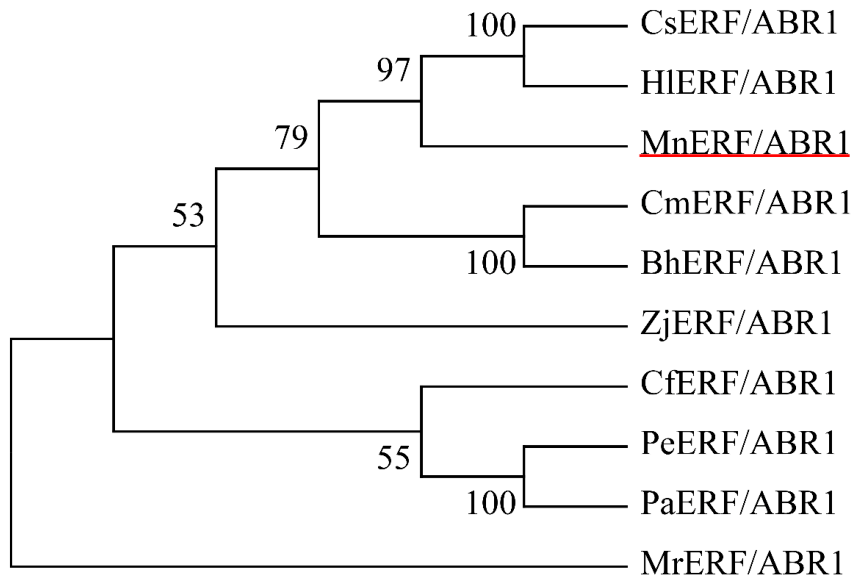
Multiple alignments were performed with other plant ERF/ABR1 protein sequences retrieved from the NCBI database. Phylogenetic and molecular evolutionary analyses of ERF/ABR1 proteins between different species were performed using MEGA 7 (Figure 1). As shown in the figure, ERF/ABR1 in mulberry trees is more closely related to ERF/ABR1 in the Humulus lupulus and Cannabis sativa, but is less related to ERF/ABR1 in Morella rubra.

3.2. B. cinerea Induced the Expression of MnERF/ABR1

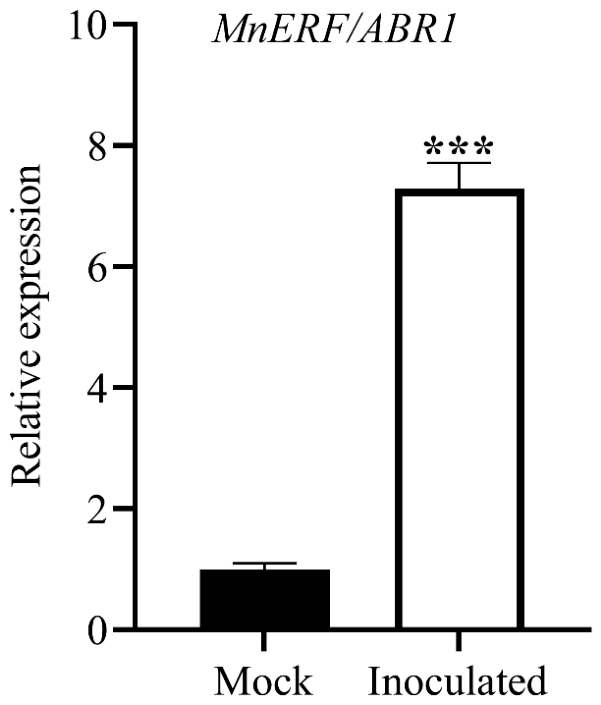
qRT-PCR was used to analyze the expression of MnERF/ABR1 in the infected B. cinerea of mulberry seedlings (Figure 2). Compared with the simulated treatment for 3 days, the expression level of MnERF/ABR1 after inoculation for 3 days was significantly increased, which was consistent with our previous transcriptomic data. This indicates that the MnERF/ABR1 gene could be significant in mulberry’s resistance to B. cinerea.

3.3. MnERF/ABR1 Acts as an Activating Transcription Factor

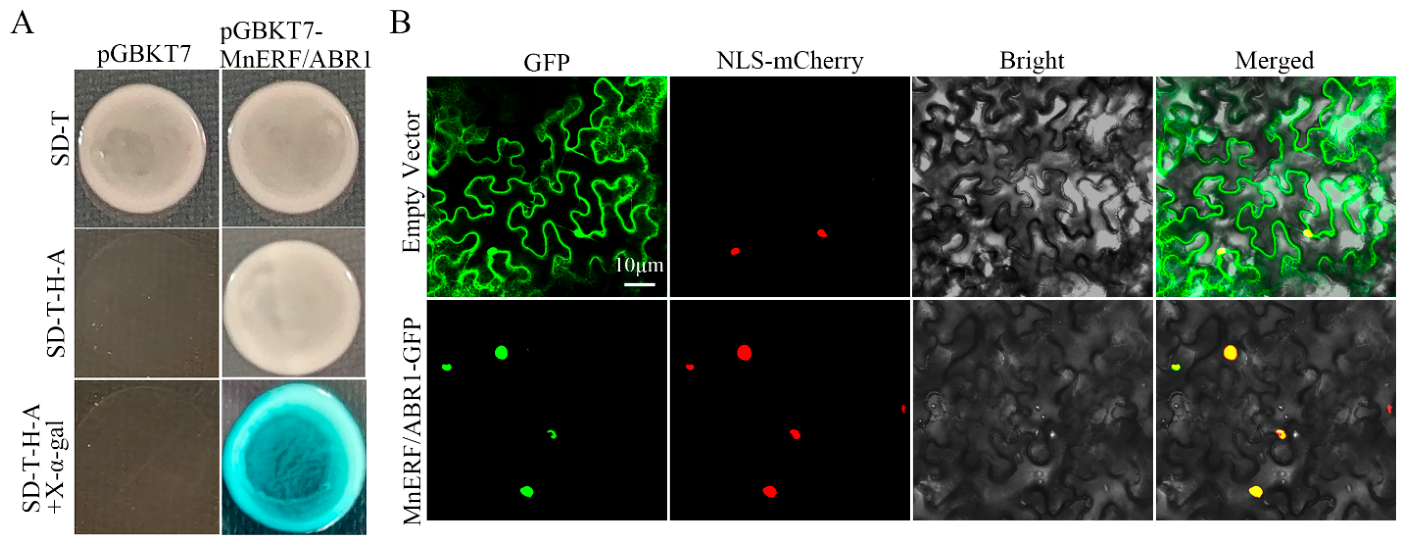
To investigate whether MnERF/ABR1 is a typical transcription factor, its transcriptional activity was measured. After fusing MnERF/ABR1 with the GAL4 DNA-binding domain in the yeast expression vector pGBKT7, it was found that the yeast grew vigorously, whereas yeast transformed with the empty pGBKT7 vector showed inhibited growth (Figure 3A). These results indicate that MnERF/ABR1 has transcriptional activation activity. At the same time, a fusion protein of MnERF/ABR1 and green fluorescent protein (GFP) was constructed and expressed, and the subcellular localization of MnERF/ABR1 was explored (Figure 3B). The fluorescence signal showed that MnERF/ABR1 is a nuclear-localized protein.

3.4. Heterologous Expression of MnERF/ABR1

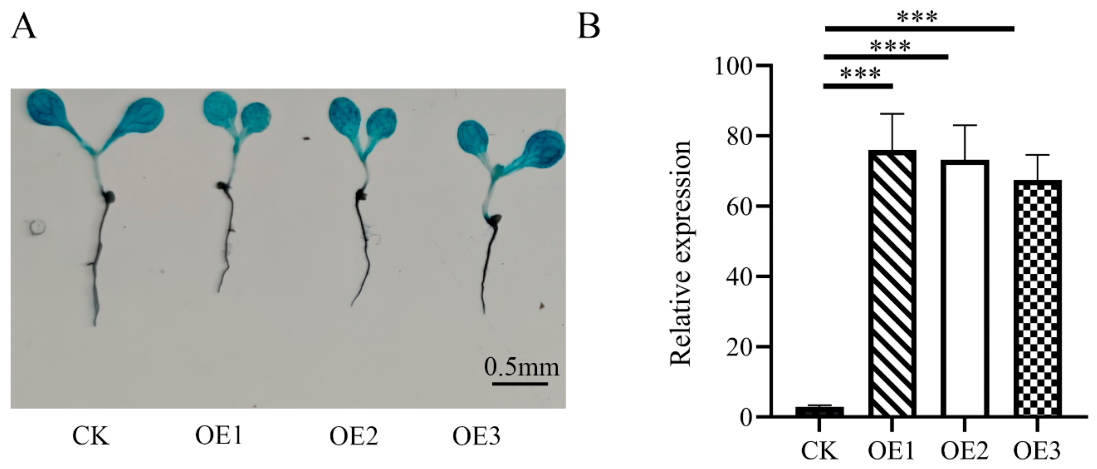
In order to further explore the function of the MnERF/ABR1 gene in plant disease resistance, we overexpressed the MnERF/ABR1 gene in Arabidopsis. Under the control of the 35S promoter of Cauliflower mosaic virus, the cDNA of MnERF/ABR1 was transferred into Arabidopsis and T3 transgenic Arabidopsis lines were screened. Then, the positive transgenic plants were identified by GUS staining. After GUS staining, positive plants appeared blue (Figure 4A). Meanwhile, the gene expression of MnERF/ABR1 was detected by qRT-PCR (Figure 4B), and the gene expression of MnERF/ABR1 in positive plants was significantly enhanced. These results indicated that the MnERF/ABR1 gene was successfully overexpressed in Arabidopsis.

3.5. Overexpression of MnERF/ABR1 Enhances Resistance to B. cinerea

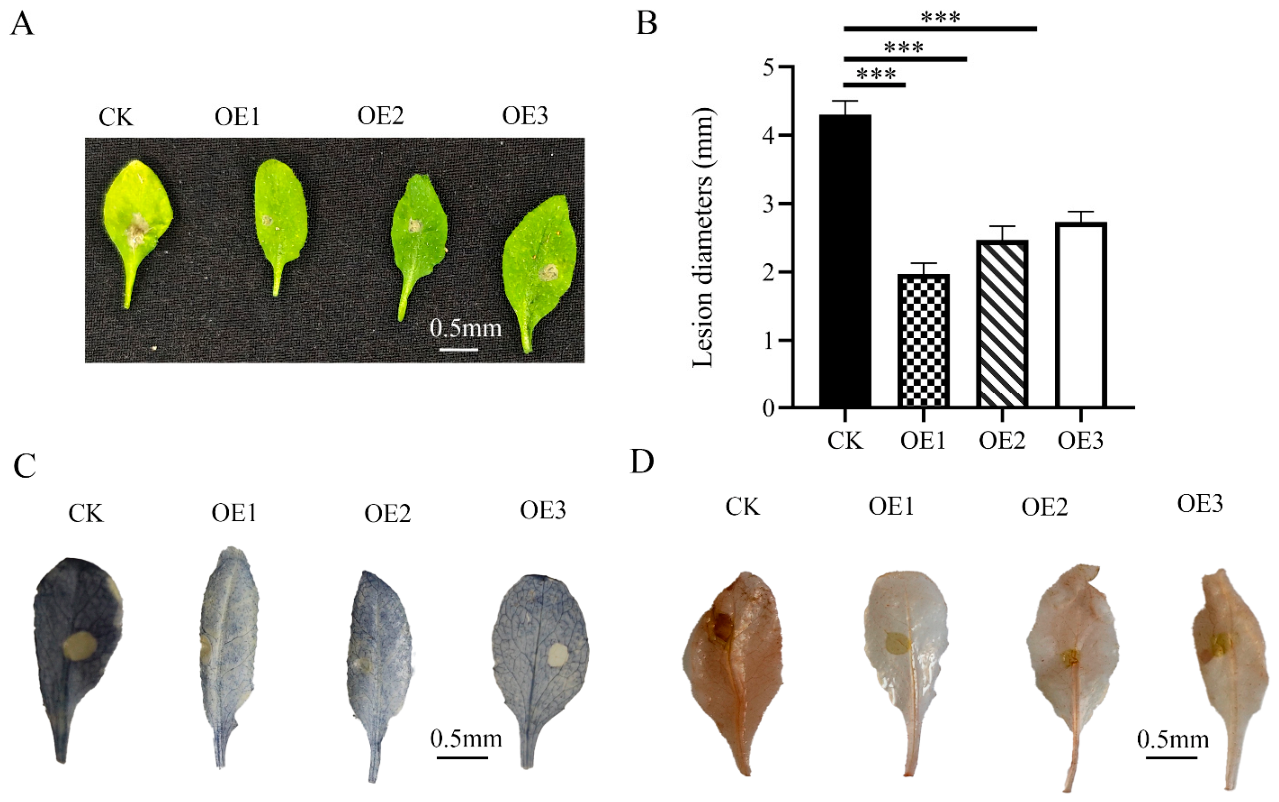
To test the resistance of MnERF/ABR1 overexpressed lines to B. cinerea, we inoculated Arabidopsis leaves with agar blocks containing the mycelia of B. cinerea (Figure 5A). After treatment for 36 h, the leaves of control plants showed large areas of disease spots, while the leaves of MnERF/ABR1 overexpression plants only showed small areas of disease spots. Measurement analysis showed that overexpression of MnERF/ABR1 significantly inhibited the infection of B. cinerea (Figure 5B). Simultaneously, the accumulation of reactive oxygen species (ROS) reflects the plant’s stress response. To explore this further, staining with DAB and NBT was employed to quantify the levels of hydrogen peroxide (H2O2) and superoxide (O2) in the leaves of Arabidopsis, respectively (Figure 5C,D). The results showed that the leaves of Arabidopsis overexpressing MnERF/ABR1 had only a small area of dark brown patches after DAB staining, indicating less H2O2 accumulation. In contrast, CK Arabidopsis leaves showed large areas of dark brown patches, indicating higher H2O2 accumulation. Similarly, NBT staining showed a small area of dark blue patches in the leaves of Arabidopsis overexpressing MnERF/ABR1, indicating less O2 content, while a large area of dark blue patches in the leaves of CK Arabidopsis indicated more O2 content.

3.6. Biochemical Index Determination

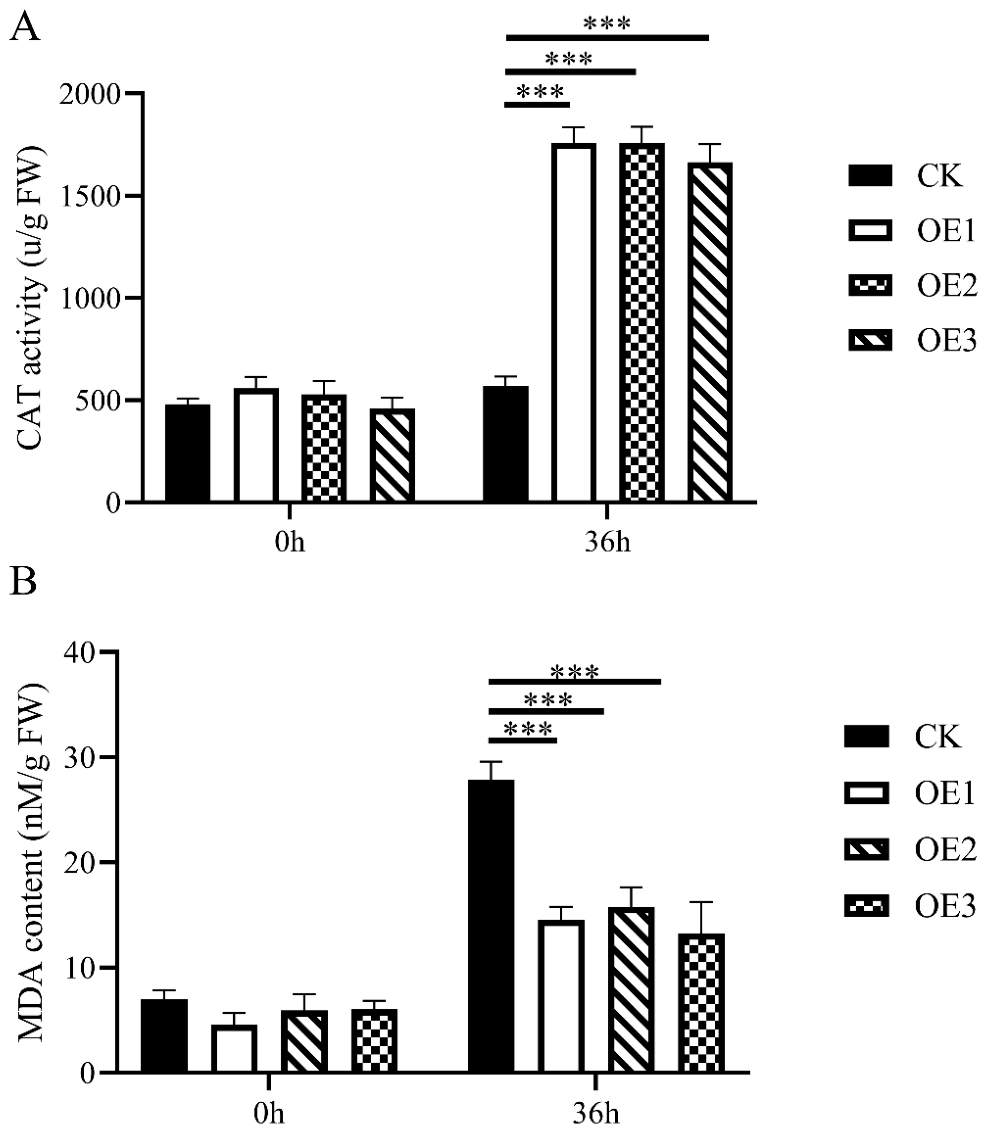
The physiological changes of overexpressed MnERF/ABR1 Arabidopsis and CK Arabidopsis were analyzed by detecting MDA content and CAT activity (Figure 6). Under normal conditions, there was no significant difference in MDA content and CAT activity between Arabidopsis overexpressing MnERF/ABR1 and CK Arabidopsis. Following infection with B. cinerea, the activity of CAT in Arabidopsis plants overexpressing MnERF/ABR1 was found to be markedly elevated compared to that of the CK Arabidopsis (Figure 6A). In contrast, the MDA levels in the CK Arabidopsis were significantly greater than those in the Arabidopsis lines overexpressing MnERF/ABR1 (Figure 6B). These results confirmed that CK Arabidopsis showed more serious plasma membrane damage after B. cinerea infection than Arabidopsis overexpressing MnERF/ABR1. Overexpression of the MnERF/ABR1 gene significantly enhanced the ability of plants to resist oxidative damage.

3.7. Transient Overexpression of MnERF/ABR1 Increased Resistance of Mulberry

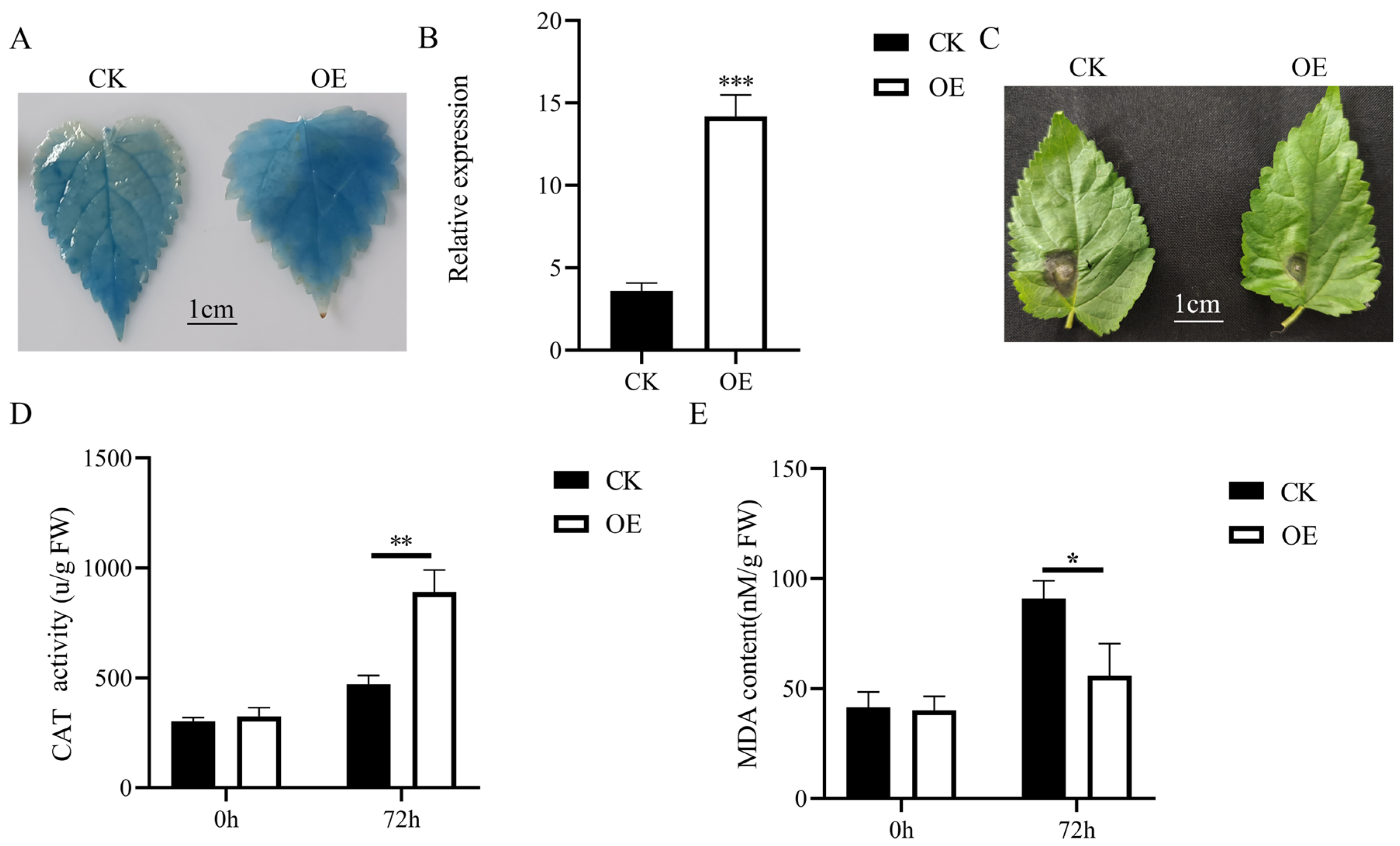
In order to further understand the role of MnERF/ABR1 in mulberry disease resistance, transient overexpression of MnERF/ABR1 was performed in mulberry (Figure 7). Histochemical staining showed that transient overexpression plants in mulberry leaves showed strong GUS staining (Figure 7A). Meanwhile, the gene expression of MnERF/ABR1 was detected by qRT-PCR, and the gene expression of MnERF/ABR1 in positive plants was significantly enhanced (Figure 7B). These results indicated that MnERF/ABR1 demonstrated successful transient overexpression in mulberry leaves. Compared with the control plants, the transient overexpression of MnERF/ABR1 significantly increased the resistance to B. cinerea (Figure 7C). After infection with B. cinerea, in plants with transient overexpression of the MnERF/ABR1 gene, the activity of CAT significantly increased (Figure 7D), while the content of MDA significantly decreased (Figure 7E). These results are consistent with those previously observed in Arabidopsis with overexpression of MnERF/ABR1.

3.8. Overexpression of MnERF/ABR1 Enhanced the Expression of AtPR1 in Transgenic Plants

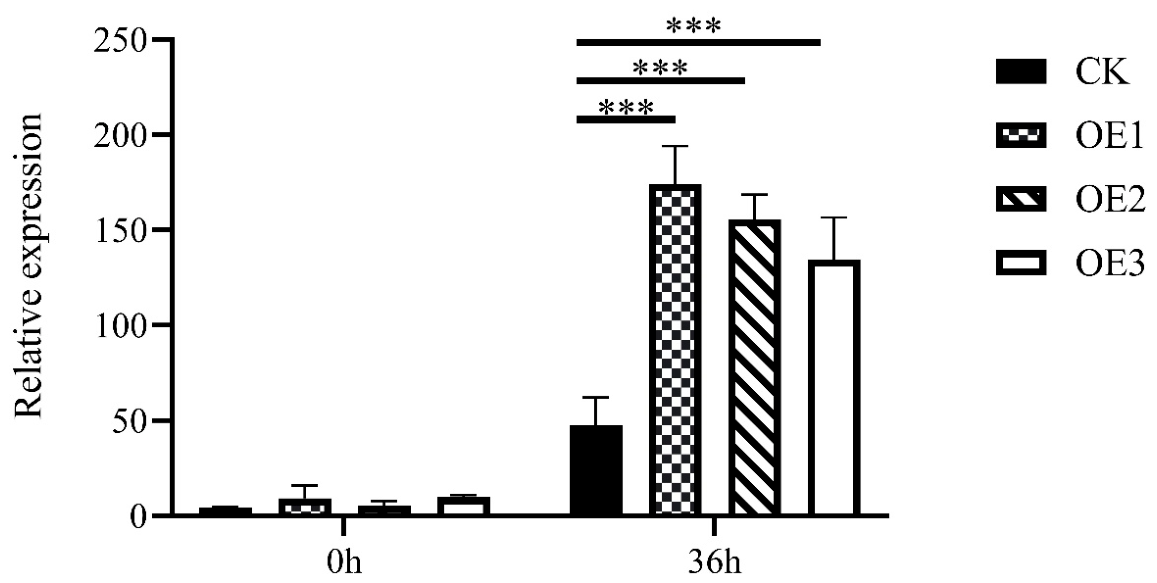
The PR1 gene is a defense-related marker gene in plants. After infection by B. cinerea, the expression level of AtPR1 in Arabidopsis plants overexpressing MnERF/ABR1 was significantly increased compared with that of CK Arabidopsis (Figure 8). There was no difference in PR1 gene expression between Arabidopsis overexpressing MnERF/ABR1 gene and CK Arabidopsis before infection by B. cinerea. These results suggest that overexpression of the MnERF/ABR1 gene may protect against B. cinerea infection by enhancing the expression of the resistance-related gene AtPR1.

4. Discussion

The AP2/ERF transcription factor family plays essential roles in plant growth, development, and stress responses, particularly in regulating resistance to both biotic and abiotic stresses [30]. However, functional characterization of ERF genes in mulberry remains limited compared with model plants. In this study, we identified and characterized a mulberry ERF gene, MnERF/ABR1, and demonstrated its positive role in resistance to B. cinerea.
Phylogenetic analysis indicated that MnERF/ABR1 is closely related to ABR1-like proteins from other plant species, suggesting evolutionary conservation of its function (Figure 1). Consistently, MnERF/ABR1 was significantly induced after B. cinerea infection (Figure 2), indicating its involvement in pathogen-responsive signaling pathways. Similar induction patterns have been reported for other ERF genes associated with fungal resistance [16,19], supporting the idea that ERF family members are key components of plant defense against necrotrophic pathogens.
Functional analysis in both Arabidopsis and mulberry showed that MnERF/ABR1 overexpression significantly enhanced resistance to B. cinerea. Overexpression lines exhibited reduced disease symptoms compared with control plants, indicating a conserved positive regulatory role. These findings are consistent with previous reports showing that ERF transcription factors such as AtERF1 and GmERF5 improve resistance to B. cinerea and other necrotrophic fungi [17,22].
Physiological analyses further revealed that MnERF/ABR1 improves resistance by enhancing antioxidant capacity. Overexpression lines showed decreased MDA content and reduced accumulation of reactive oxygen species (H2O2 and O2), as well as increased CAT activity. These results suggest that MnERF/ABR1 helps maintain redox homeostasis and reduces oxidative damage during pathogen infection, which is consistent with previous studies highlighting the importance of antioxidant systems in plant defense [31,32].
In addition, MnERF/ABR1 overexpression led to increased expression of the defense-related gene AtPR1, a marker of the salicylic acid signaling pathway. This suggests that MnERF/ABR1 may participate in the regulation of immune-related gene expression through SA-associated defense responses. Similar regulatory effects of ERF proteins on PR gene expression have been reported in other plant systems [33,34,35].
Taking these findings together, MnERF/ABR1 functions as a positive regulator of resistance to B. cinerea by modulating antioxidant defenses and activating defense-related gene expression. This study provides new evidence for the role of ERF transcription factors in mulberry immunity and identifies MnERF/ABR1 as a potential candidate gene for improving disease resistance through molecular breeding.

5. Conclusions

B. cinerea poses a significant threat to mulberry, leading to increasing yield losses each year. As a result, the development of disease-resistant mulberry varieties has become an urgent need. Identifying candidate genes that are responsible for disease resistance, particularly against the pathogenic fungus B. cinerea, is crucial for the breeding of resistant plant varieties. This study focused on selecting and screening the MnERF/ABR1 gene derived from mulberry trees to investigate its potential role in providing protection against B. cinerea in both mulberry and Arabidopsis species. The results showed that overexpressing the MnERF/ABR1 gene in both Arabidopsis and mulberry plants serves as a positive regulator of disease resistance, indicating its significant impact on the plant’s ability to fend off this specific pathogen. To validate the findings, we employed qRT-PCR and DAB staining techniques, which collectively confirmed that the MnERF/ABR1 gene is instrumental in boosting plant resistance to B. cinerea. The data strongly support the conclusion that MnERF/ABR1 enhances the defensive mechanisms of the plants against this disease-causing agent. Consequently, these findings provide a solid foundation for utilizing MnERF/ABR1 in future breeding programs aimed at developing mulberry varieties that exhibit improved resistance to diseases, thus advancing agricultural practices and enhancing crop resilience.

Supplementary Materials

The following supporting information can be downloaded at: https://www.mdpi.com/article/10.3390/horticulturae12070844/s1, Table S1. Primers used in this study.

Author Contributions

Conceptualization, X.L.; methodology, Z.L. and X.L.; formal analysis, W.Z.; writing—original draft preparation, H.A.; validation, H.W.; investigation, L.Y.; data curation, Z.L. and W.Z.; writing—review and editing, Y.X.; visualization, H.A. All authors have read and agreed to the published version of the manuscript.

Funding

This study was funded by the Hechi University Research project of Guangxi Postdoctoral Innovation Practice Base (2023GXPPBHC01).

Data Availability Statement

The original contributions presented in this study are included in the article/Supplementary Material. Further inquiries can be directed to the corresponding authors.

Conflicts of Interest

The authors declare no conflicts of interest.

References

  1. Chen, H.; Pu, J.; Liu, D.; Yu, W.; Shao, Y.; Yang, G.; Xiang, Z.; He, N. Anti-Inflammatory and Antinociceptive Properties of Flavonoids from the Fruits of Black Mulberry (Morus nigra L.). PLoS ONE 2016, 11, e0153080. [Google Scholar] [CrossRef] [PubMed]
  2. Zhu, Y.Y.; Xiang, W.; Shen, Y.; Jia, Y.A.; Zhang, Y.S.; Zeng, L.S.; Chen, J.; Zhou, Y.; Xue, X.; Huang, X.; et al. New butyrylcholinesterase inhibitor derived from mulberry twigs, a kind of agricultural byproducts. Ind. Crop Prod. 2022, 187, 115535. [Google Scholar] [CrossRef]
  3. Nepal, M.P.; Ferguson, C.J. Phylogenetics of (Moraceae) Inferred from ITS and trnL-trnF Sequence Data. Syst. Bot. 2012, 37, 442–450. [Google Scholar] [CrossRef]
  4. Shukla, P.; Reddy, R.A.; Ponnuvel, K.M.; Rohela, G.K.; Shabnam, A.A.; Ghosh, M.K.; Mishra, R.K. Selection of suitable reference genes for quantitative real-time PCR gene expression analysis in Mulberry (Morus alba L.) under different abiotic stresses. Mol. Biol. Rep. 2019, 46, 1809–1817. [Google Scholar] [CrossRef] [PubMed]
  5. Li, R.X.; Fan, T.; Wang, T.C.; Dominic, K.; Hu, F.; Liu, L.; Zhang, L.; Fang, R.; Pan, G.; Li, L.; et al. Characterization and functional analysis of miR166f in drought stress tolerance in mulberry (Morus multicaulis). Mol. Breed. 2018, 37, 450–463. [Google Scholar]
  6. Baruah, J.P.; Borthakur, I. Infectious Disease (Fungal, Bacterial, Viral, and Nematodal) of Mulberry Plant and Its Control Measure: A Review. Int. J. Plant Soil Sci. 2021, 33, 110–116. [Google Scholar] [CrossRef]
  7. Bi, M.; Li, X.; Yan, X.; Liu, D.; Gao, G.; Zhu, P.; Mao, H. Chrysanthemum WRKY15-1 promotes resistance to Puccinia horiana Henn. via the salicylic acid signaling pathway. Hortic. Res. 2021, 8, 6. [Google Scholar] [CrossRef] [PubMed]
  8. Ngou, B.P.M.; Ding, P.T.; Jones, J.D.G. Thirty years of resistance: Zig-zag through the plant immune system. Plant Cell 2022, 34, 1447–1478. [Google Scholar] [CrossRef] [PubMed]
  9. Tsuda, K.; Somssich, I.E. Transcriptional networks in plant immunity. New Phytol. 2015, 206, 932–947. [Google Scholar] [CrossRef] [PubMed]
  10. Jofuku, K.D.; Omidyar, P.K.; Gee, Z.; Okamuro, J.K. Control of seed mass and seed yield by the floral homeotic gene APETALA2. Proc. Natl. Acad. Sci. USA 2005, 102, 3117–3122. [Google Scholar] [CrossRef] [PubMed]
  11. Mizoi, J.; Shinozaki, K.; Yamaguchi-Shinozaki, K. AP2/ERF family transcription factors in plant abiotic stress responses. Biochim. Biophys. Acta 2012, 1819, 86–96. [Google Scholar] [CrossRef] [PubMed]
  12. Ksouri, N.; Castro-Mondragon, J.A.; Montardit-Tarda, F.; van Helden, J.; Contreras-Moreira, B.; Gogorcena, Y. Tuning promoter boundaries improves regulatory motif discovery in nonmodel plants: The peach example. Plant Physiol. 2021, 185, 1242–1258. [Google Scholar] [CrossRef] [PubMed]
  13. Li, T.; Jiang, Z.; Zhang, L.; Tan, D.; Wei, Y.; Yuan, H.; Li, T.; Wang, A. Apple (Malus domestica) MdERF2 negatively affects ethylene biosynthesis during fruit ripening by suppressing MdACS1 transcription. Plant J. 2016, 88, 735–748. [Google Scholar] [CrossRef] [PubMed]
  14. Ohme-Takagi, M.; Shinshi, H. Ethylene-inducible DNA binding proteins that interact with an ethylene-responsive element. Plant Cell 1995, 7, 173–182. [Google Scholar] [PubMed]
  15. Solano, R.; Stepanova, A.; Chao, Q.; Ecker, J.R. Nuclear events in ethylene signaling: A transcriptional cascade mediated by ETHYLENE-INSENSITIVE3 and ETHYLENE-RESPONSE-FACTOR1. Genes Dev. 1998, 12, 3703–3714. [Google Scholar] [CrossRef] [PubMed]
  16. Berrocal-Lobo, M.; Molina, A.; Solano, R. Constitutive expression of ETHYLENE-RESPONSE-FACTOR1 in Arabidopsis confers resistance to several necrotrophic fungi. Plant J. 2002, 29, 23–32. [Google Scholar] [CrossRef] [PubMed]
  17. Pre, M.; Atallah, M.; Champion, A.; De Vos, M.; Pieterse, C.M.; Memelink, J. The AP2/ERF domain transcription factor ORA59 integrates jasmonic acid and ethylene signals in plant defense. Plant Physiol. 2008, 147, 1347–1357. [Google Scholar] [CrossRef] [PubMed]
  18. Xu, J.; Meng, J.; Meng, X.Z.; Zhao, Y.T.; Liu, J.M.; Sun, T.F.; Liu, Y.; Wang, Q.; Zhang, S. Pathogen-Responsive MPK3 and MPK6 Reprogram the Biosynthesis of Indole Glucosinolates and Their Derivatives in Arabidopsis Immunity. Plant Cell 2016, 28, 1144–1162. [Google Scholar] [CrossRef] [PubMed]
  19. Li, Y.H.; Liu, K.; Tong, G.L.; Xi, C.; Liu, J.; Zhao, H.P.; Wang, Y.; Ren, D.; Han, S. MPK3/MPK6-mediated phosphorylation of ERF72 positively regulates resistance to Botrytis cinerea through directly and indirectly activating the transcription of camalexin biosynthesis enzymes. J. Exp. Bot. 2022, 73, 413–428. [Google Scholar] [PubMed]
  20. Yang, C.; Lu, X.; Ma, B.; Chen, S.Y.; Zhang, J.S. Ethylene signaling in rice and Arabidopsis: Conserved and diverged aspects. Mol. Plant 2015, 8, 495–505. [Google Scholar] [CrossRef] [PubMed]
  21. Lorenzo, O.; Piqueras, R.; Sanchez-Serrano, J.J.; Solano, R. ETHYLENE RESPONSE FACTOR1 integrates signals from ethylene and jasmonate pathways in plant defense. Plant Cell 2003, 15, 165–178. [Google Scholar] [CrossRef] [PubMed]
  22. Dong, L.; Cheng, Y.; Wu, J.; Cheng, Q.; Li, W.; Fan, S.; Jiang, L.; Xu, Z.; Kong, F.; Zhang, D.; et al. Overexpression of GmERF5, a new member of the soybean EAR motif-containing ERF transcription factor, enhances resistance to Phytophthora sojae in soybean. J. Exp. Bot. 2015, 66, 2635–2647. [Google Scholar] [CrossRef] [PubMed]
  23. Wang, D.; Chen, L.; Liu, C.; Wang, H.; Liu, Z.; Ji, X.; He, N.; Xin, Y. Mno-miR164a and MnNAC100 regulate the resistance of mulberry to Botrytis cinerea. Physiol. Plant 2024, 176, e14309. [Google Scholar] [CrossRef] [PubMed]
  24. Xin, Y.; Ma, B.; Zeng, Q.; He, W.; Qin, M.; He, N. Dynamic changes in transposable element and gene methylation in mulberry (Morus notabilis) in response to Botrytis cinerea. Hortic. Res. 2021, 8, 154. [Google Scholar] [CrossRef] [PubMed]
  25. Ma, B.; Wang, H.; Liu, J.; Chen, L.; Xia, X.; Wei, W.; Yang, Z.; Yuan, J.; Luo, Y.; He, N. The gap-free genome of mulberry elucidates the architecture and evolution of polycentric chromosomes. Hortic. Res. 2023, 10, uhad111. [Google Scholar] [CrossRef] [PubMed]
  26. Robert, C.; Edgar. Muscle5: High-accuracy alignment ensembles enable unbiased assessments of sequence homology and phylogeny. Nat. Commun. 2022, 13, 6968. [Google Scholar] [CrossRef]
  27. Livak, K.J.; Schmittgen, T.D. Analysis of relative gene expression data using real-time quantitative PCR and the 2(-Delta Delta C(T)) Method. Methods 2001, 25, 402–408. [Google Scholar] [CrossRef] [PubMed]
  28. Clough, S.J.; Bent, A.F. Floral dip: A simplified method for Agrobacterium-mediated transformation of Arabidopsis thaliana. Plant J. 1998, 16, 735–743. [Google Scholar] [CrossRef] [PubMed]
  29. Yu, L.; Liu, C.; Wu, H.; Lu, Z.; Wang, D.; Xin, Y. The MnBPC6-MnPLATZ5 module regulates the salt stress tolerance of mulberry. Plant Physiol. Biochem. 2025, 229, 110601. [Google Scholar] [CrossRef] [PubMed]
  30. Feng, K.; Hou, X.L.; Xing, G.M.; Liu, J.X.; Duan, A.Q.; Xu, Z.S.; Li, M.-Y.; Zhuang, J.; Xiong, A.-S. Advances in AP2/ERF super-family transcription factors in plant. Crit. Rev. Biotechnol. 2020, 40, 750–776. [Google Scholar] [CrossRef] [PubMed]
  31. Gechev, T.; Gadjev, I.; Van Breusegem, F.; Inze, D.; Dukiandjiev, S.; Toneva, V.; Minkov, I. Hydrogen peroxide protects tobacco from oxidative stress by inducing a set of antioxidant enzymes. Cell. Mol. Life Sci. 2002, 59, 708–714. [Google Scholar] [CrossRef] [PubMed]
  32. Wang, D.; Liu, Z.; Qin, Y.; Zhang, S.; Yang, L.; Shang, Q.; Ji, X.; Xin, Y.; Li, X. Mulberry MnGolS2 Mediates Resistance to Botrytis cinerea on Transgenic Plants. Genes 2023, 14, 1912. [Google Scholar] [CrossRef] [PubMed]
  33. Binbin, S.; Jiahui, L.; Wufen, Z.; Rong, M.; Cao, Y. TaERF109: A Novel ERF Transcription Factor Contributing to Enhanced Resistance to Puccinia graminis f. sp. tritici Infection in Wheat. Pathogens 2026, 15, 387. [Google Scholar] [CrossRef]
  34. Chaowei, X.; Xinye, L.; Yu, Z. Genome-wide identification of AP2/ERF transcription factors in Populus trichocarpa: Structural analysis, expression patterns, and response to Melampsora larici-populina. BMC Plant Biol. 2026, 26, 1. [Google Scholar] [CrossRef]
  35. Shan, L.; Yulin, H.; Yu, Z.; Pan, W.; Sumin, G.; Xiaofen, Y.; Benzhong, Z.; Kunsong, C.; Donald, G.; Lei, G. Ripening-induced defence signalling in Botrytis cinerea-infected tomato fruits involves activation of ERF.F4 by a MYC2-NOR/RIN protein complex. Plant Biotechnol. J. 2025, 23, 4126–4139. [Google Scholar] [CrossRef]
Figure 1. A phylogenetic tree illustrating the ERF/ABR1 from mulberry and other plant species. The numbers indicate the confidence percentages for the relationships depicted. The accession numbers for these sequences, which were sourced from GenBank, are as follows: CsERF/ABR1 (C. sativa, XP_030496366.2); HlERF/ABR1 (H. lupulus, XP_062097225.1); MnERF/ABR1 (Morus notabilis, XP_024021449.1); CmERF/ABR1 (Cucurbita moschata, XP_022950524.1); BhERF/ABR1 (Benincasa hispida, XP_038883082.1); ZjERF/ABR1 (Ziziphus jujuba, XP_015890996.3); CfERF/ABR1 (Cornus florida, XP_059624789.1); PeERF/ABR1 (Populus euphratica, XP_011021969.1); PaERF/ABR1 (Populus alba, XP_034901430.1); and MrERF/ABR1 (M. rubra, KAB1210350.1). Red underlines indicate the mulberry MnERF/ABR1.
Horticulturae 12 00844 g001
Figure 2. The expression levels of MnERF/ABR1 in mulberry leaves were compared between the mock treatment (Mock) and after inoculation with B. cinerea (Inoculated). The values shown represent averages, with the standard error (SE) indicated as error bars. This data is based on three independent biological samples, each consisting of three technical replicates (*** p < 0.001; two-tailed t-test). Mock refers to agar blocks free of B. cinerea; Inoculated denotes agar blocks that were inoculated with B. cinerea.
Horticulturae 12 00844 g002
Figure 3. Transcriptional activation assay and subcellular localization of MnERF/ABR1. (A) Assessment of the transcriptional activity of MnERF/ABR1. The negative control employed an empty vector, pGBKT7. Growth conditions for yeast transformed with the empty vector and those expressing MnERF/ABR1 were evaluated across different media. (B) The constructs 35S::GFP and MnERF/ABR1-GFP were co-transformed into tobacco leaves. The fluorescence of GFP was observed using a laser confocal scanning microscope. NLS-mCherry: a nuclear marker.
Horticulturae 12 00844 g003
Figure 4. Identification of transgenic Arabidopsis. (A) GUS staining results for transgenic Arabidopsis. (B) Relative expression levels of MnERF/ABR1 in transgenic Arabidopsis were assessed. CK refers to empty vector control Arabidopsis, and OE indicates Arabidopsis containing the MnERF/ABR1 transgene. The values represent averages, with standard error (SE) shown as error bars. This data is derived from three independent biological samples, each with three technical replicates (*** p < 0.001; two-tailed t-test).
Horticulturae 12 00844 g004
Figure 5. Assessment of transgenic Arabidopsis resistance to B. cinerea. (A) Leaf morphology of Arabidopsis observed 36 h post-infection with B. cinerea. (B) Quantitative evaluation of resistance in transgenic Arabidopsis. (C) NBT staining was employed to illustrate O2 levels. (D) DAB staining was used to visualize H2O2 levels. Values represent averages, with standard error (SE) indicated as error bars. This data is based on three independent biological samples, each comprising three technical replicates (*** p < 0.001; two-tailed t-test).
Horticulturae 12 00844 g005
Figure 6. Physicochemical indexes before and after B. cinerea inoculation. (A) CAT activity, and (B) MDA content. The values represent averages, with standard error (SE) shown as error bars. This data is derived from three independent biological samples, each consisting of three technical replicates (*** p < 0.001; two-tailed t-test).
Horticulturae 12 00844 g006
Figure 7. Analysis of MnERF/ABR1 resistance to B. cinerea through transient expression in mulberry. (A) GUS staining results for CK plants and those with transient overexpression after 72 h in mulberry leaves. CK refers to the empty vector. (B) Relative expression levels of MnERF/ABR1 in transgenic mulberry were assessed. (C) Photographs of mulberry leaves taken 72 h post-infection with B. cinerea. (D) CAT activity, and (E) MDA content measurements are presented. The values shown represent averages, with standard error (SE) indicated by error bars. Data are based on three independent biological samples, each consisting of three technical replicates (* p < 0.05, ** p < 0.01, and *** p < 0.001; two-tailed t-test).
Horticulturae 12 00844 g007
Figure 8. Relative expression of AtPR1 in leaves of Arabidopsis CK and MnERF/ABR1 transgenic (OE) plants before and after inoculation with B. cinerea. The values represent averages, with standard error (SE) indicated by error bars. This data is based on three independent biological samples, each comprising three technical replicates (*** p < 0.001; two-tailed t-test).
Horticulturae 12 00844 g008
Disclaimer/Publisher’s Note: The statements, opinions and data contained in all publications are solely those of the individual author(s) and contributor(s) and not of MDPI and/or the editor(s). MDPI and/or the editor(s) disclaim responsibility for any injury to people or property resulting from any ideas, methods, instructions or products referred to in the content.