Article

Interplay Between Genetic Background and Environment in Somatic Embryogenesis Induction in Spinach: Effects of Individual Seedling, Seed Origin, and Cultivation Locality


by
Jelena Milojević
1,*,
Snežana Zdravković-Korać
1,
Suzana Pavlović
2,
Zdenka Girek
2 and
Maja Belić
1
1
Institute for Biological Research “Siniša Stanković” (IBISS)—National Institute of the Republic of Serbia, University of Belgrade, Despot Stefan Boulevard 142, 11108 Belgrade, Serbia
2
Institute for Medical Research (IMI)—National Institute of the Republic of Serbia, University of Belgrade, Tadeuša Košćuška 1, 11000 Belgrade, Serbia
*
Author to whom correspondence should be addressed.
Horticulturae 2026, 12(7), 820; https://doi.org/10.3390/horticulturae12070820 (registering DOI)
Submission received: 18 May 2026 / Revised: 30 June 2026 / Accepted: 3 July 2026 / Published: 5 July 2026
(This article belongs to the Section Propagation and Seeds)

Abstract

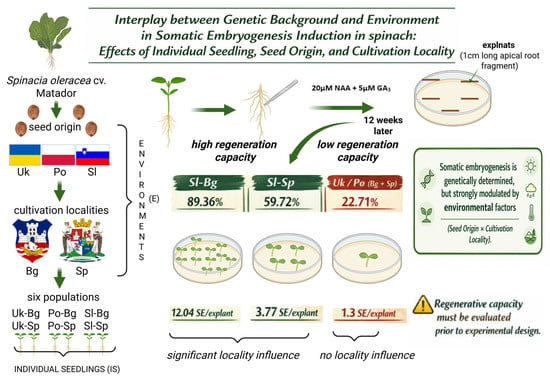
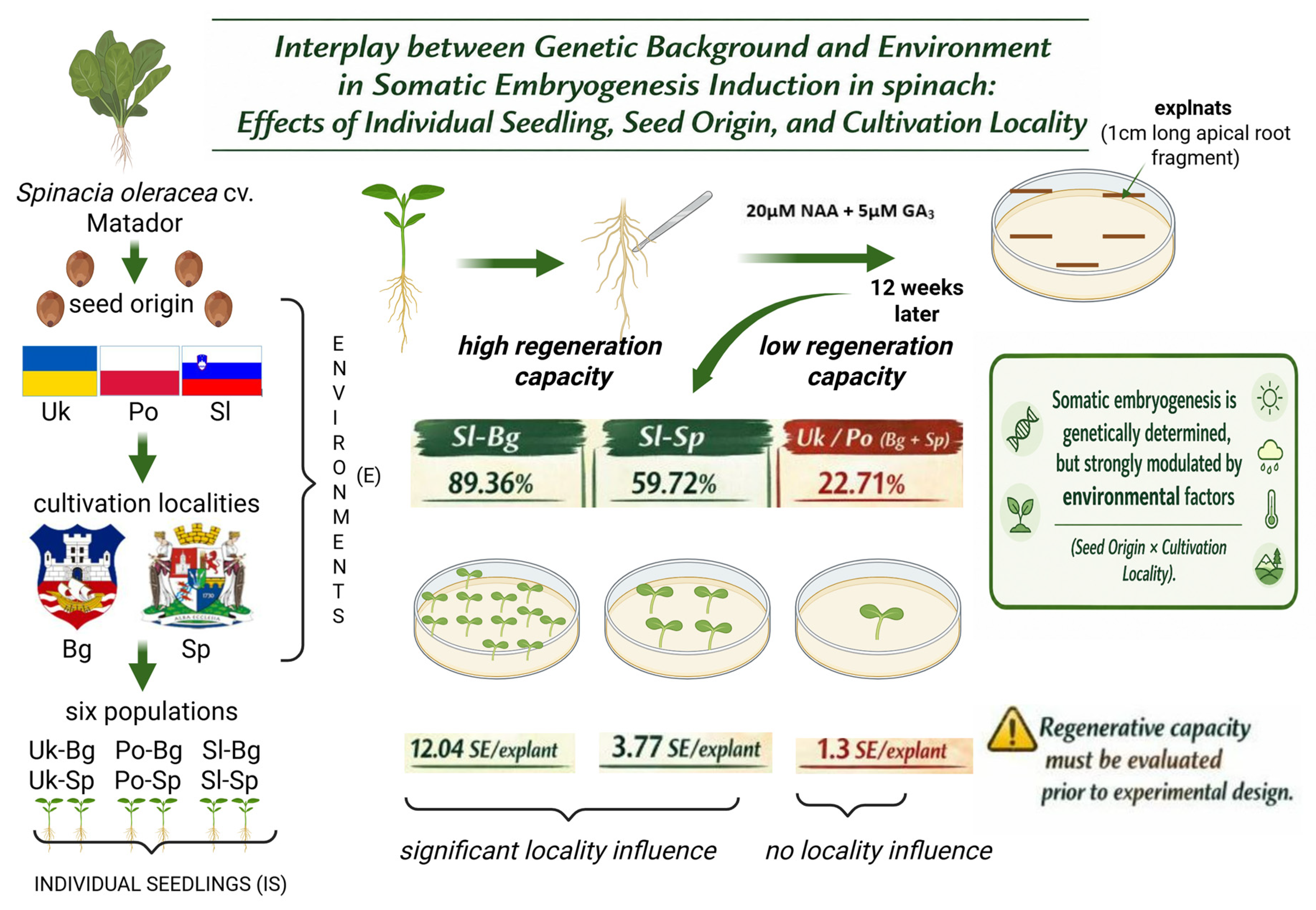
Complex sex determination and a large genome hinder conventional spinach breeding. To address this challenge, a biotechnological approach could be used to establish a reliable protocol for somatic embryogenesis and apply genetic tools such as CRISPR. However, spinach is recalcitrant to somatic embryogenesis, with substantial inter- and intrapopulation variability in embryogenic capacity. In this study, we assessed the impact of environmental conditions during donor plant growth on the embryogenic capacity of the resulting seedlings. Seed populations, selected for differing embryogenic capacities, were sown in greenhouses at two distinct locations, and cross-pollination was only permitted between plants of the same origin. The resulting seeds were aseptically sown, and the embryogenic capacity of the seedlings’ root apices was determined. Root explants from seedlings originating from Ukraine and Poland showed low regenerative capacity regardless of cultivation locality, with a maximum of 22.71% regenerating explants and 1.3 somatic embryos per explant. Conversely, seedlings originating from Slovenia exhibited high regeneration potential, with significant differences between cultivation localities: 89.36% vs. 59.72% regenerating explants and 12.04 vs. 3.77 somatic embryos per explant. Therefore, the embryogenic capacity in spinach is strongly influenced by environmental conditions during donor plant growth and could be further increased by manipulating these factors.

Graphical Abstract

1. Introduction

Spinach (Spinacia oleracea L.) is a diploid, dioecious species belonging to the family Amaranthaceae [1], with a natural distribution from Afghanistan to the eastern Mediterranean [2]. Primarily cultivated for its foliage, it is consumed fresh or thermally processed [3]. In addition to being a major vegetable source of dietary iron (Fe), spinach is rich in essential vitamins and minerals important for human health [4]. Its diverse functional and biological properties are largely attributed to its high content of phenolic compounds, specifically spinacetin, patuletin, and glucuronide derivatives [5,6]. Additionally, recent studies highlight its potential as a phytoremediator due to its strong capacity to absorb heavy metals and toxic elements through the root system [7,8].
The growing global demand for spinach, reflected in both increasing production and market value, highlights the need for improved cultivation and breeding strategies to address climate change, water scarcity, and sustainable production challenges [9]. Conventional spinach breeding remains laborious and time-consuming, largely due to its complex sex determination system [10]. This challenge is further compounded by the relatively large spinach genome (935.7 Mb), which contains a high proportion of repetitive sequences [11]. As a result, biotechnological and genetic engineering approaches represent promising alternatives; however, their effective application critically depends on developing a robust and efficient plant regeneration system.
Somatic embryogenesis is defined as the reprogramming of somatic cells from a vegetative state to an embryogenic developmental state without gamete formation or fertilization [12,13]. While rare under natural conditions, in vitro somatic embryogenesis has been documented across a wide range of plant species. This regeneration pathway is generally preferred over caulogenesis, as somatic embryos (SEs), unlike adventitious shoots, are bipolar structures and thus do not require a rooting phase.
However, spinach has always been considered recalcitrant to in vitro regeneration [14,15,16]. Additionally, substantial variability in regeneration capacity among spinach cultivars [17,18,19], as well as among individuals within populations [20,21,22], has been reported. Although recent studies have proposed potential mechanisms and strategies to overcome regeneration recalcitrance in spinach, the exact causes of this phenomenon remain unclear [16]. The pronounced variability observed among cultivars and individual seedlings further suggests that recalcitrance is a complex trait that cannot yet be attributed to a single underlying factor.
It is widely accepted that plant cells possess inherent regenerative competence. However, the acquisition and expression of embryogenic potential are tightly dependent on complex interactions between the genetic background and in vitro culture conditions [12,23]. In this study, “genetic background” was used sensu stricto to represent “genotype” at different levels: individual, population, and cultivar. Moreover, it is not based on the plants’ genetic characteristics. In spinach, pronounced genetic variability in embryogenic capacity—particularly evident in the cultivar “Matador”—hampers the dissection of individual factors involved in inducing somatic embryogenesis [22,24]. Most studies have focused on in vitro culture conditions acting directly on cultured explants, with light intensity, photoperiod [24,25], and temperature [26] reported as major determinants of somatic embryogenesis initiation from different explant types. An extensive body of literature has documented the effects of such stress-related in vitro culture conditions on somatic embryogenesis induction (for review see [27]). In contrast, considerably less attention has been paid to the environmental conditions experienced by donor plants prior to explant excision, although a limited number of studies suggest that the donor plant’s growth environment may also influence subsequent somatic embryogenesis [28,29,30]. Thus, both genotype and donor plant environment have been recognized as important factors affecting tissue culture responses [31].
In a previous study, we reported substantial inter- and intrapopulation variability in embryogenic capacity in the spinach cultivar Matador [22]. This variability may be attributed to genotypic differences, as well as the diverse climatic conditions under which the seeds were produced across nine European countries. Additionally, variations in the seeds’ physiological ages at harvest and during storage prior to shipment may have contributed to the observed differences in embryogenic capacity. To address these issues, we used the same seed lots as in Belić et al. [22] and cultivated seeds from three selected populations in two distinct locations. Additionally, cross-pollination between plants was restricted to individuals within each population, and the resulting seeds were then used to evaluate the impact of genetic background and maternal environment on embryogenic capacity.
Therefore, the aim of this study is to assess the impact of environmental conditions during donor plant growth and seed set on subsequent embryogenic capacity. Special emphasis is placed on individual variability, which in some cases may account for a greater proportion of the observed differences in embryogenic response than the experimental factors under investigation [24].

2. Materials and Methods

2.1. Plant Material

Spinach (Spinacia oleracea L.) seeds were purchased from three European seed companies: Semenarna (Ljubljana, Slovenia), W. Legutka (Jutrosin, Poland), and Nikitovka Seeds (Slowjansk, Ukraine). The seeds were produced in the same season and stored under uniform dry conditions at room temperature upon arrival at our laboratory. These seed lots were selected based on their previously documented differing embryogenic capacities: high (Slovenia—SL), moderate (Poland—PO), and low (Ukraine—UK) [22].
Sowing was conducted in March in greenhouses at two locations in Serbia, namely Smederevska Palanka (SP; 44.35° N, 20.94° E) and Belgrade (BG; 44.81° N, 20.48° E), which were approximately 100 km apart. Seeds were sown at a depth of 2–3 cm, with spacings of 50 cm between rows and 30 cm between plants after thinning. To prevent inter-population cross-pollination, plants grown from seeds of different geographic origins were cultivated in separate, glass-partitioned greenhouse compartments. Mother plants were grown at both locations using the same substrate and cultivation practices and without active cooling systems.
The seed production cycle lasted approximately 130 days, with flowering occurring in May and seed maturation in July. Harvesting, followed by drying and threshing, was performed when approximately 80% of the seeds reached physiological maturity, and the resulting seeds were categorized into six experimental groups based on their country of origin (SL, PO, or UK) and production locality (SP or BG).

2.2. Medium Content

The basal medium (BM) consisted of full-strength Murashige and Skoog [32] macro- and microsalts (Lachner, Brno, Czech Republic), supplemented with 20 g L−1 sucrose, 100 mg L−1 myo-inositol, 2 mg L−1 thiamine, 2 mg L−1 pyridoxine, 5 mg L−1 nicotinic acid, and 2 mg L−1 adenine (Sigma-Aldrich, St. Louis, MO, USA). The induction medium (IM) was prepared by supplementing BM with 20 μM α-naphthaleneacetic acid (NAA, Sigma-Aldrich) and 5 μM gibberellic acid (GA3, Sigma-Aldrich). GA3 was dissolved in absolute ethanol, filter-sterilized (0.22 μm, Merck Millipore, Billerica, MA, USA), and added to the autoclaved medium once cooled to approximately 40 °C to a final concentration of 5 μM. The pH was adjusted to 5.50 with KOH (Lachner, Brno, Czech Republic) prior to the addition of 0.7% (w/v) agar (Torlak, Belgrade, Serbia) and subsequent sterilization at 114 °C (80 kPa) for 25 min.

2.3. Seed Sterilization and Culture Conditions

Seeds were washed under running tap water with several drops of a commercial detergent (Fairy, Procter and Gamble Co., Cincinnati, OH, USA). Subsequently, seeds were treated with a 40% (v/v) commercial sodium hypochlorite solution (4% NaClO, Panonia, Pančevo, Serbia) for 3 h, with the solution renewed every hour under continuous agitation. After sterilization, seeds were rinsed three times with sterile deionized water and blotted dry on sterile filter paper. The sterilized seeds were then transferred to Petri dishes containing BM for germination under short-day photoperiods (8 h light/16 h dark) for 7 days, followed by 14 days under long-day photoperiods (16 h light/8 h dark). Cultures were maintained under LED panels with a photosynthetic photon flux density (PPFD) of 70 µmol m−2 s−1 at 25 ± 2 °C, and germinated seedlings were individually transferred to a new Petri dish with fresh BM and cultivated for an additional three weeks under long-day photoperiods. Seedlings with four fully expanded leaves and a well-developed root system were used as donor material for explant isolation.

2.4. Regeneration Procedure

Apical root segments (1 cm) from the seedlings’ lateral roots were used to induce somatic embryogenesis, and approximately 15 to 25 root sections were excised from each seedling. Explants isolated from a single seedling and the SEs regenerated from them were considered an individual line, and between 6 and 35 seedlings were used for each experimental group. All seedlings of the same origin and seed production locality were defined as a population. Explants were subcultured onto fresh IM at four-week intervals over a total cultivation period of 12 weeks, and cultures were maintained under the conditions described above.

2.5. Assessment of Regeneration Capacity

For clarity, the following terminology is used throughout this study: ‘embryogenic capacity’ refers to the general ability of explants to regenerate SEs, while ‘embryogenic response’ indicates that explants are able to regenerate SEs in response to SE induction treatment. To quantitatively describe SE regeneration, two parameters were used: ‘regeneration frequency’ (the proportion of explants forming SEs relative to the total number of explants subjected to SE induction treatment) and ‘the mean SE number per explant’.
Because the number of lateral roots differs among seedlings, the number of explants collected from each seedling was not identical. Thus, all suitable apical segments of lateral roots were excised and cultured to obtain a representative estimate of the regenerative potential of each seedling. That is, all explants originating from the same seedling were used to assess the embryogenic capacity of that particular seedling. Importantly, the same seedlings and their corresponding explants were used for all levels of analyses, including the assessment of regeneration dynamics, population-level embryogenic capacity, and single-seedling variability, thereby ensuring the consistency of the experimental system across all analyses.
Regeneration dynamics were assessed at the population level by recording the proportion of responsive seedlings in each population weekly over a 12-week period. A seedling was considered responsive if at least one of its explants regenerated SEs. Embryogenic capacity was described using three variables: regeneration frequency, mean SE number, and the SE-forming capacity (SEFC) index. All three variables were calculated as the mean for each population over the entire cultivation period, which spanned 12 weeks. The number of SEs per explant was determined at the end of each four-week subculture using a stereomicroscope, and SEs were removed after counting and prior to being transferred to fresh IM. The SEFC index, used to assess the cumulative effect of both regeneration frequency and the mean SE number, was calculated as follows: SEFC = (mean SE number per explant × regeneration frequency (%))/100. It was calculated first for each seedling and then averaged for the entire population.
To gain deeper insight into the variation in embryogenic capacity at the single-seed level within each population, the distributions of explant regeneration frequency and the mean number of SEs were analyzed. The regeneration percentage of explants was determined for each seedling, and the resulting data were sorted into the following classes: 0–20%, 21–40%, 41–60%, 61–80%, and 81–100%. Regarding the mean number of SEs per explant, seedlings were categorized into five groups: n = 0, 0 < n ≤ 1, 1 < n ≤ 10, 10 < n ≤ 20, and n > 20. The results are presented as the frequency distribution of seedlings across these groups for each population.

2.6. Data Analysis

Cultures were arranged in a completely randomized design, and the normality of the data distribution was assessed using the Kolmogorov–Smirnov test. Percentage data were subjected to angular transformation, while the number of SEs and SEFC values were square-root-transformed prior to statistical analysis to meet normality assumptions. The mean values were back-transformed for presentation, and the effects of seed origin and cultivation locality, as well as their interaction, on embryogenic capacity were analyzed using a two-way factorial analysis of variance (ANOVA). Effect sizes were estimated using eta squared (η2). Post hoc comparisons among means were performed using Tukey’s honestly significant difference (HSD) test at p ≤ 0.05.
To evaluate the effects of seed origin, cultivation locality, and individual seedling (IS) variability on the number of SEs produced, as well as the stability of the observed trait, an Additive Main Effects and Multiplicative Interaction (AMMI) analysis was performed [33,34]. Seed origin and cultivation locality were considered jointly as a single factor termed the environment (E), representing specific origin × locality combinations (SL, PO, or UK × SP or BG).
The AMMI model’s equation is expressed as follows:
Y i j = μ + α i + β j + k = 1 n λ k γ i k δ j k + θ i j
where Yij is the mean SE number of individual seedling i in environment j; μ is the grand mean; αi is the individual seedling’s main effect; βj is the environment’s main effect; λk is the singular value for the principal component (PC) axis k; γik and δjk are the PC scores for individual seedling i and environment j, respectively; and θij is the residual.
The AMMI stability value (ASV) was calculated based on the first two interaction principal components (PC1 and PC2) using the formula described by Purchase et al. [35]:
A S V = S S P C 1 S S P C 2 × P C 1 s c o r e 2 + P C 2 s c o r e 2
where SSPC1/SSPC2 is the weight proportional to the variance explained by PC1 relative to PC2. All statistical analyses, AMMI modeling experiments, and principal component partitions were performed using the metan (version 1.18.0) and agricolae packages (version 1.3-5) in R software (version 4.4.1).

3. Results

Spinach plants grown from UK, PO, and SL seeds, cultivated at both locations (BG and SP) showed no observable morphological differences. All plants reached the flowering stage at approximately the same time and produced seeds that were also morphologically indistinguishable. Seeds collected from all populations germinated in vitro within three weeks, and no differences in subsequent seedling development were observed among the populations.

3.1. Regeneration Capacity at the Population Level

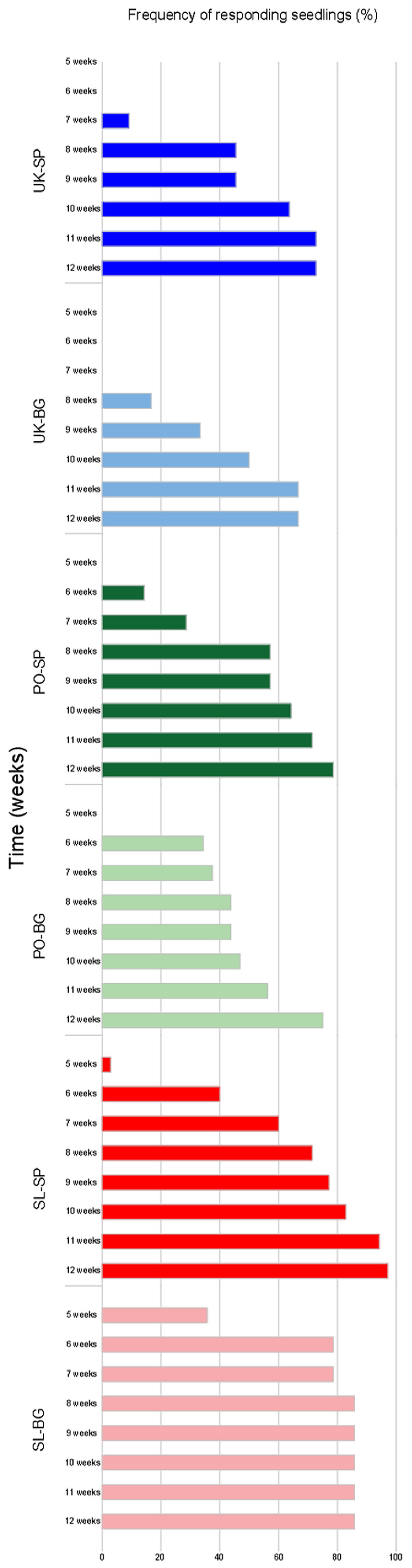
The explants from the three populations required different time periods to initiate SEs. Regeneration began in the fifth and sixth weeks in the SL and PO populations, respectively, for both cultivation localities. In contrast, UK-SP and UK-BG seedlings initiated SE regeneration later, in the seventh and eighth weeks of cultivation on IM, respectively (Figure 1). Approximately 50% of SL-BG seedlings started SE regeneration between the fifth and sixth weeks of induction. The remaining populations reached the same regeneration level considerably later: between the sixth and seventh weeks (SL-SP), after the eighth week (PO-SP), or as late as the tenth week (PO-BG, UK-BG, and UK-SP) (Figure 1).
After 12 weeks of cultivation, the lowest response was observed in the UK-BG population (66.67% of seedlings), while the highest frequency was recorded in the SL-SP population, where nearly all seedlings regenerated SEs (97.14%) (Figure 1). This result underscores the robustness of the experimental system, as the majority of individual seedlings retained responsiveness to somatic embryogenesis induction by the end of the experimental period.
However, over the entire 12-week period, ANOVA revealed that seed origin had a highly significant effect on the frequency of regenerating explants, the mean number of SEs per explant, and SEFC (p ≤ 0.0001 for all traits). Effect size estimates further confirmed the predominant role of seed origin, with η2 values of 0.299, 0.317, and 0.334 for regeneration frequency, mean number of SEs per explant, and SEFC, respectively. In contrast, cultivation locality showed no significant main effect on any of the examined traits and was associated with very small effect sizes (η2 = 0.008–0.026). A significant interaction between seed origin and cultivation locality was observed for the mean number of SEs per explant and SEFC (p ≤ 0.01 for both) but not for the frequency of regenerating explants (p = 0.14), with η2 for the interaction ranging from 0.036 to 0.110. Overall, the effect size analysis indicated that seed origin was the main factor influencing embryogenic potential (Supplementary Table S1).
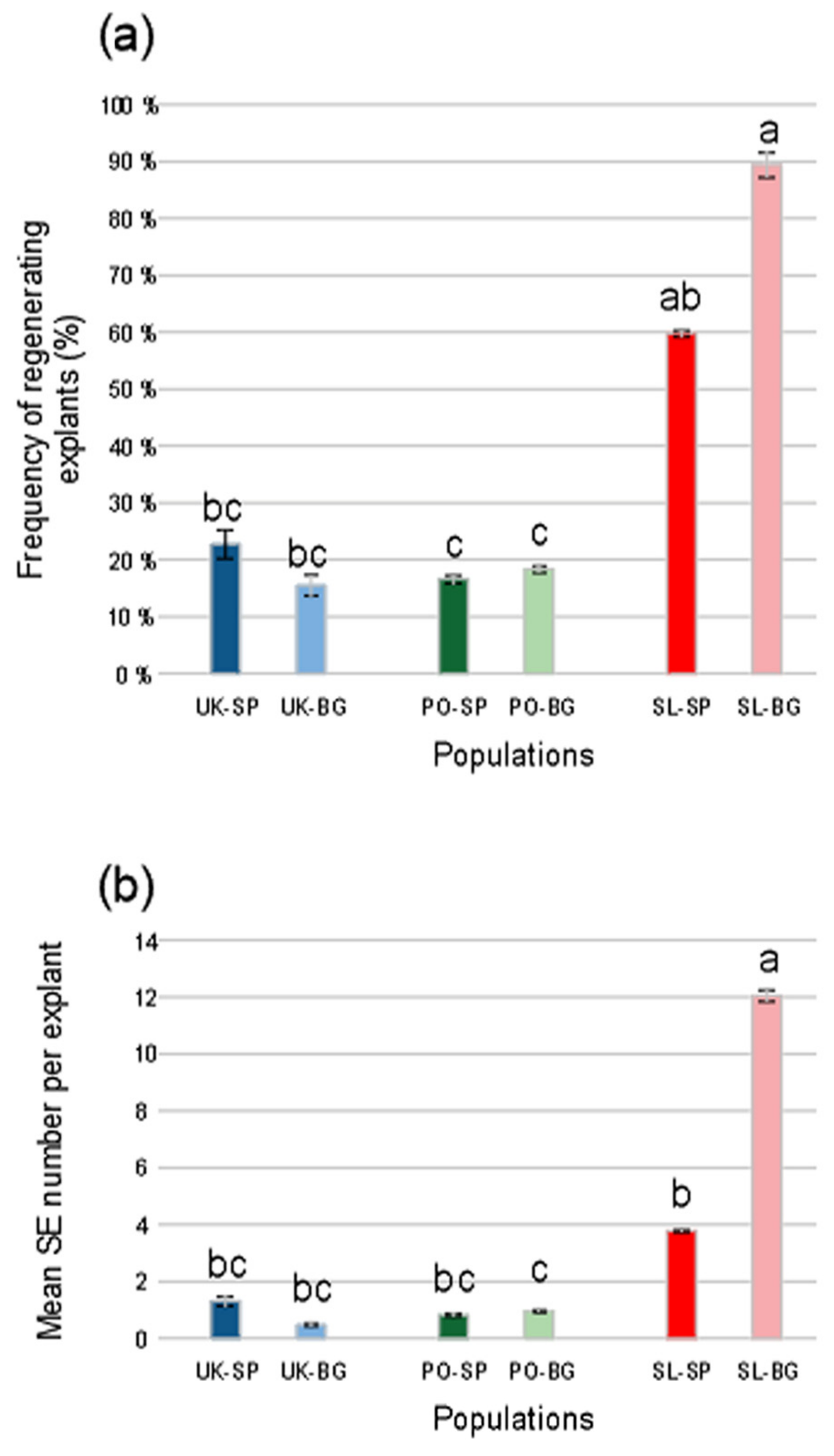
The SL population exhibited the highest embryogenic capacity at both the seedling and explant levels. The highest frequency of regenerating explants was observed in the SL-BG and SL-SP populations (89.36% and 59.72%, respectively; Figure 2a). In contrast, the PO and UK populations exhibited regeneration frequencies below 25%, with no significant differences observed between populations or cultivation localities.
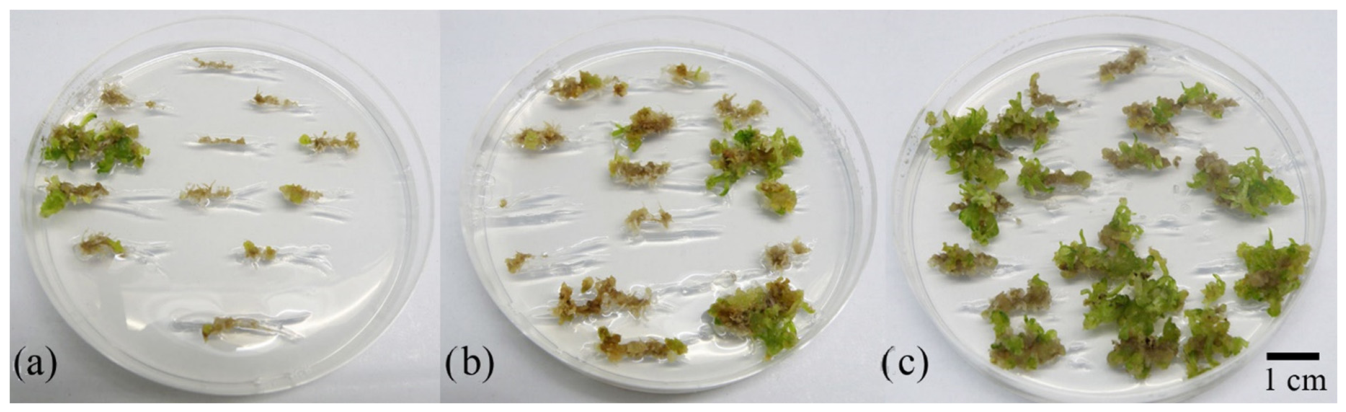
Explants from the SL population also regenerated the highest number of SEs per explant: 12.04 and 3.77 for SL-BG and SL-SP, respectively (Figure 2b and Figure 3c). Explants from all other populations produced up to 1.50 SEs per explant, with no significant differences among them (Figure 2b).
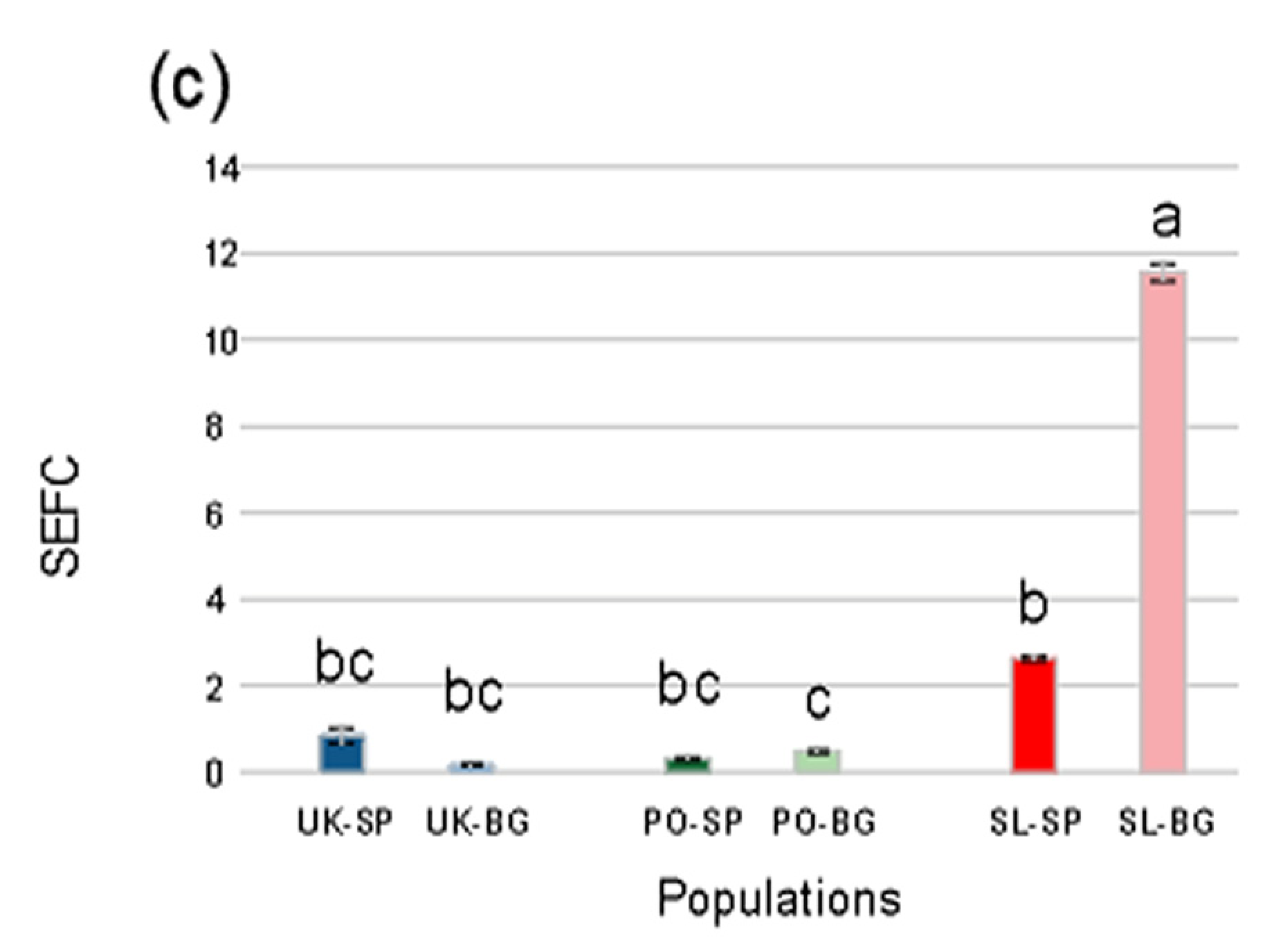
Explants from UK and PO seedlings exhibited extremely low SEFC values, regardless of cultivation locality, and in both populations, SEFC remained below one, indicating very low embryogenic capacity (Figure 2c and Figure 3a,b). In contrast, explants from SL seedlings showed significant locality-dependent differences: SL-BG displayed a high SEFC of 11.55, whereas SL-SP exhibited a significantly lower SEFC of 2.62 (Figure 2c).

3.2. Regeneration Capacity at the Individual Seedling Level

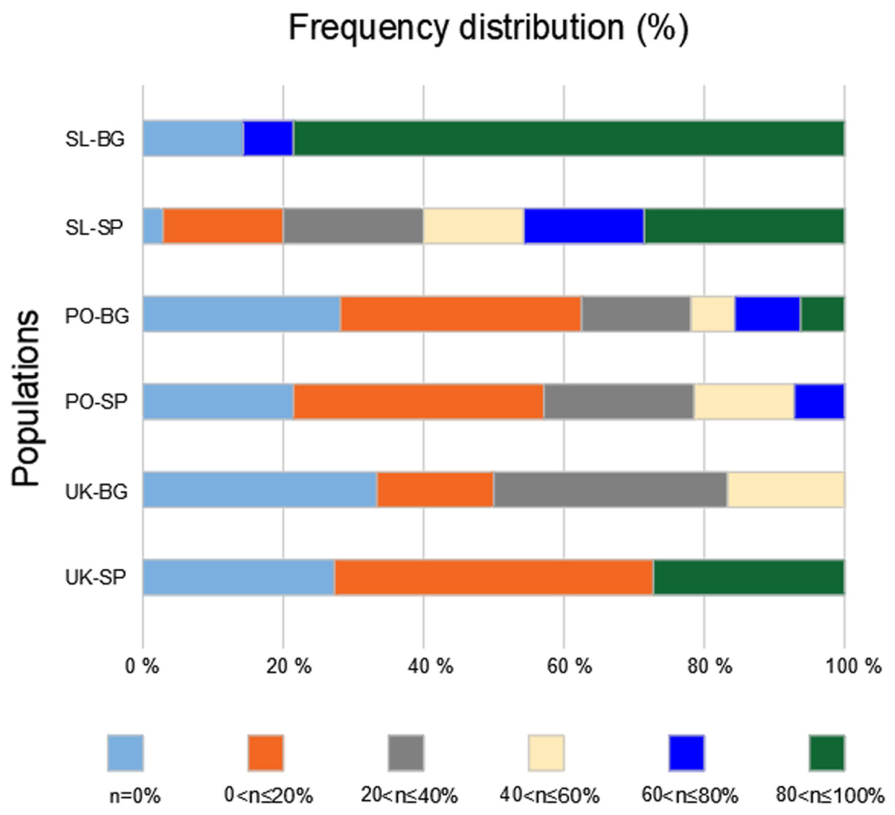
For efficient somatic embryogenesis, it is important not only that a high number of seedlings possess embryogenic capacity but also that a greater number of root explants per seedling regenerate multiple SEs. To gain deeper insight into the factors contributing to embryogenic capacity, frequency distributions were used, with the distribution of explant responses at the seedling level revealing pronounced differences among populations (Figure 4). In the UK and PO populations, the explants of more than 20% of seedlings were unresponsive. In only about 15% of seedlings, ≥50% of explants regenerated SEs, while seedlings with >80% regenerating explants were rare (<10%), except in the UK-SP population, where such individuals accounted for 27.27%. In contrast, individuals from the SL population showed substantially higher embryogenic capacity, particularly those cultivated at the BG locality. Specifically, 97.14% and 85.71% of SL-SP and SL-BG seedlings, respectively, contained responsive explants. Notably, the SL-BG population was predominantly composed of highly responsive seedlings (78.57%) with >80% of explants regenerating SEs, whereas only 28.57% of SL-SP seedlings reached this level of responsiveness (Figure 4).
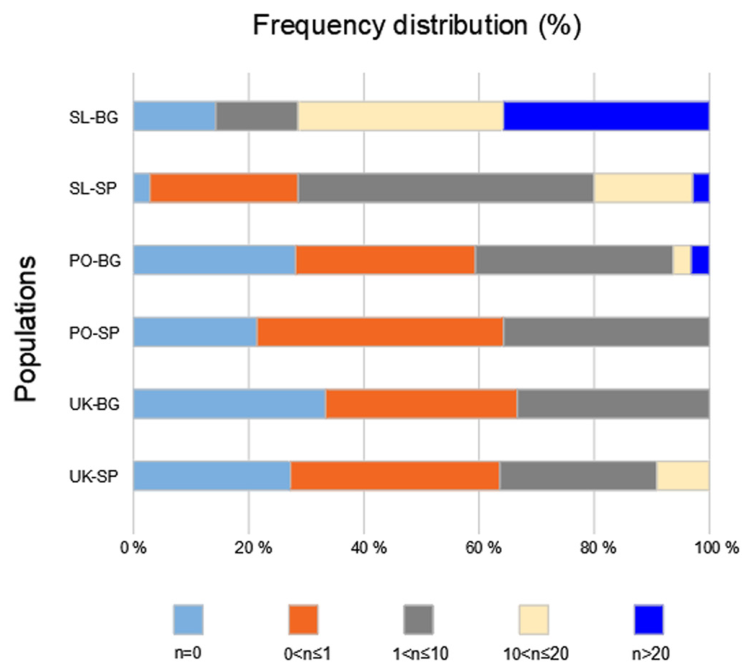
These differences were further emphasized following the analysis of the mean number of SEs per responding explant (Figure 5). In the UK and PO populations, over 60% of responding explants produced fewer than 10 SEs. High-intensity regeneration was rare; for example, only 3.12% of explants in the PO-BG population produced more than 20 SEs. A similar pattern was observed in the SL-SP population, where over 75% of explants regenerated fewer than 10 SEs, and only 2.86% of explants exceeded 20 SEs per explant. In contrast, the SL-BG population exhibited markedly higher productivity, with more than 70% of explants producing more than 10 SEs and a remarkable 35.71% of them exceeding 20 SEs per explant (Figure 5).
Collectively, these results demonstrate that the SL population—particularly the SL-BG group—consists predominantly of highly responsive seedlings capable of sustained and intensive somatic embryogenesis. Conversely, the UK and PO populations exhibited limited embryogenic performance. Additionally, the overall SE yield per explant remained low, even in the UK-SP population, where nearly one-third of the seedlings showed strong explant responsiveness (over 80%).

3.3. Influence of Seed Origin, Cultivation Locality, and Individual Seedlings on the Number of Somatic Embryos Produced from Spinach Root Explants

The results indicate that the mean SE number per explant is the most informative parameter for assessing SEFC. Therefore, the effects of IS variability, seed origin, and cultivation locality (defined jointly as the environment, E; seed origin × cultivation locality), as well as their interactions, were evaluated on this trait.
Analysis of variance based on the AMMI model (Table 1) revealed significant effects of IS, the environment (E), and their interaction (E × IS) on the number of SEs per explant. The environment (E) and the E × IS interaction accounted for 52.22% and 35.67% of the total sum of squares, respectively, together explaining 87.89% of the total variation (as shown in Table 1). Although IS had a significant effect, its contribution was substantially smaller than those of the environment and the E × IS interaction (Table 1).
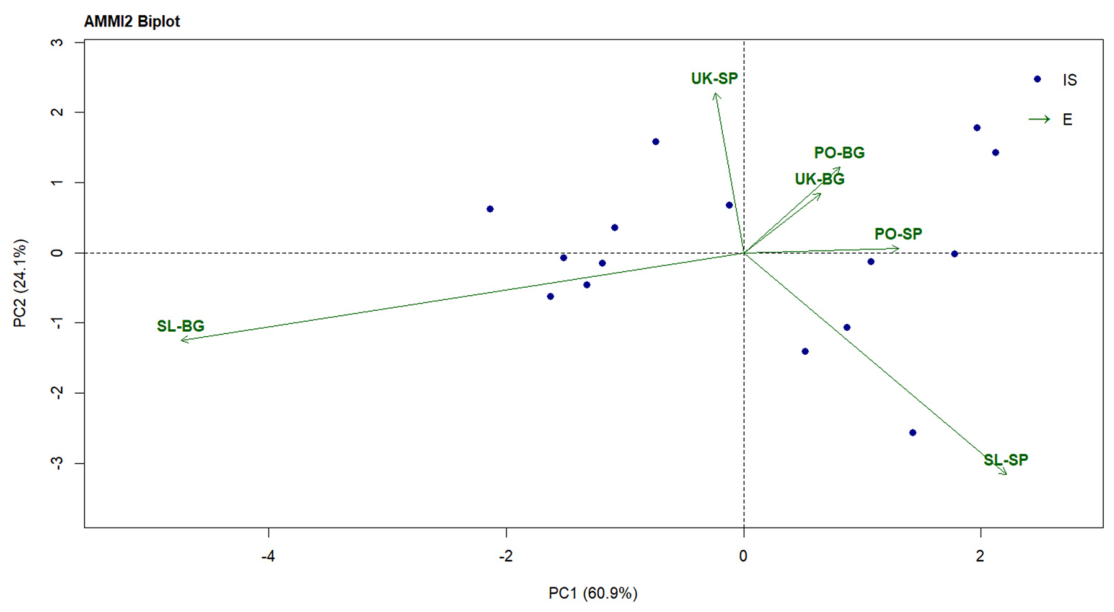
Furthermore, the first and second interaction principal components (PC1 and PC2) explained 85% of the E × IS interaction’s sum of squares (Table 1), indicating that most of the interaction structure was captured by the first two axes. Accordingly, an AMMI model including two PCs provides an adequate description of the observed variation in this experiment. Therefore, the AMMI2 biplot was considered sufficient for interpreting the E × IS interaction pattern.
The UK populations showed the highest stability in terms of the mean SE number, particularly under BG conditions (ASV = 1.8375), whereas the greatest variability was recorded in the SL population, especially in SL-BG (ASV = 12.0063), followed by SL-SP (ASV = 6.4069) (Table 2). The PO population showed intermediate stability, with ASVs ranging from 2.3820 to 3.2927.
The AMMI2 biplot (Figure 6) confirmed these results, with UK-BG and UK-SP positioned closest to the origin, indicating low interaction effects and stable responses across environments. In contrast, the SL populations were located farther from the origin and exhibited longer vectors, reflecting stronger E × IS interactions and greater variability. Furthermore, the two cultivation localities (BG and SP) induced opposite responses in the SL population, as shown by their opposite PC scores (Table 2). Although the UK populations produced relatively low mean SE numbers, their low ASV and proximity to the biplot origin indicate genuine stability across cultivation environments.
For environments with higher mean SE numbers, a general tendency to display greater variability was observed, while lower SE production was typically associated with more stable responses across environments.
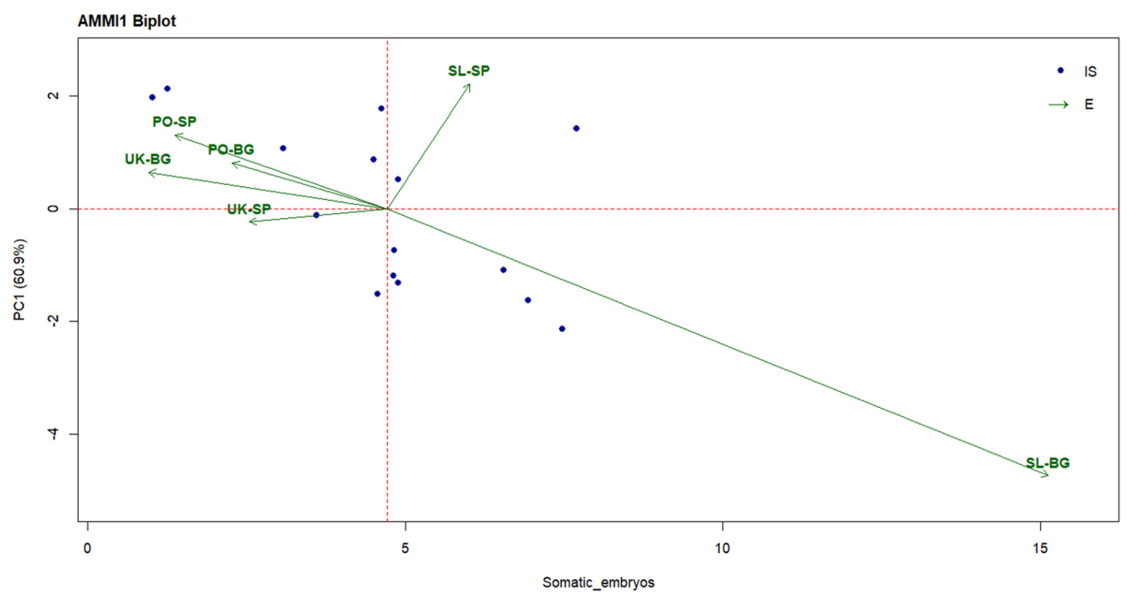
The AMMI analysis indicated that environments were primarily differentiated along the first interaction principal component (PC1), which explained 60.9% of the interaction variance (Table 1). The largest absolute PC1 scores were observed for the SL population, particularly in SL-BG (−4.7370) and SL-SP (2.2103), indicating a strong contribution of this population to the E × IS interaction. In contrast, the UK and PO populations exhibited lower PC1 values and weaker interaction effects.
The AMMI1 biplot (Figure 7) distinguishes environments with below-average values from those with above-average SE production relative to the grand mean. The SL population showed the highest embryogenic response, while the UK and PO populations were characterized by lower SE production. Moreover, the opposite PC1 scores of SL-BG and SL-SP suggest contrasting responses of the SL population to the two cultivation localities.
Overall, environments associated with higher mean SE production tended to exhibit stronger interaction effects and greater variability, whereas lower SE production was generally associated with more stable responses. These results indicate that individual seedling variability, seed origin, and cultivation locality all contributed significantly to the observed variation in somatic embryogenesis.

4. Discussion

The spinach cultivar ‘Matador’, selected for this study due to its high economic relevance in the domestic market, exhibits inherently low embryogenic capacity, largely because of the limited proportion of highly responsive individuals within the population [21]. Such intra-cultivar variability is consistent with previous reports on spinach [17,18,21] and some other plant species, where substantial differences in de novo regeneration potential have been documented among subspecies, cultivars, and ecotypes [36,37]. These findings collectively underscore the strong genotype dependence of embryogenic competence. Accumulating evidence further indicates that embryogenic potential is a quantitatively inherited trait controlled by multiple genes [38,39], supported by its transfer through sexual hybridization [40] and stable transmission across generations [21,41,42].
In addition to the predominant role of genetic factors, the results of the present study also highlight the importance of environmental effects in the induction of somatic embryogenesis from spinach root fragments. The SL population exhibited the highest responsiveness, primarily because it contained a large proportion of seedlings responding to the induction treatment (97.14% in SL-SP and 85.71% in SL-BG). These findings are consistent with our previous report, in which the SL population showed 100% responsive individuals and an average of 14.4 SEs per explant [22], a value comparable to that observed here for the SL-BG population (12.04 SEs per explant). However, the SL population also displayed pronounced variability, indicating that enhanced responsiveness may be accompanied by reduced stability. This pattern strongly suggests the influence of environmental factors, especially in individual seedlings with inherently high embryogenic competence. In contrast, the UK population exhibited consistently low responsiveness in previous studies (mean of 0.6 SEs per explant [22]). In the present study, a modest increase to 1.3 SEs per explant was observed. Although environmental conditions appear to have contributed to the observed increase in SE production, they were not sufficient to fully compensate for the low embryogenic potential of the UK population.
The strong effect of seed origin observed in both the present study and our previous study may reflect environmental influences experienced by the mother plants before the seeds were acquired. Information on the environmental conditions under which the source plants were cultivated, as well as on seed storage conditions and duration, was not available, and such factors may contribute to differences in embryogenic competence among seed lots. Indeed, previous studies have shown that seed history can influence somatic embryogenesis; for example, even when young Arabidopsis seeds were collected and stored under identical conditions, the efficiency of SE initiation declined significantly after 30 and 60 days of storage [30].
Although detailed greenhouse microclimatic parameters were not continuously monitored, available meteorological data indicate slightly higher temperatures in BG compared with SP, and greenhouse conditions were likely further elevated due to the absence of cooling systems. These combined factors may have influenced plant physiological processes and seed development, thereby affecting somatic embryogenic potential in the progeny. However, due to the lack of detailed environmental, phenological, and seed quality data, the specific factors underlying the observed E × IS interaction remain unclear and require further investigation.
Previous studies in Arabidopsis and wheat further support that donor plant physiological status and environmental conditions strongly affect regeneration capacity, including hormone balance and developmental competence [28,29,30,31,43,44,45,46]. The phenomenon, often referred to as transgenerational “memory” of environmental conditions, has been demonstrated in Arabidopsis, where stress-induced responses are maternally transferred to the embryo [47].
Evidence related to factors governing somatic embryogenesis has been reported in Medicago truncatula, where the low-embryogenic cultivar ‘Jemalong’ produced highly embryogenic lines during in vitro culture, likely due to culture-induced reprogramming events [48]. In conifers, embryogenic potential is also strongly influenced by the season of explant collection, as Larix decidua explants collected in early spring or late summer showed increased responsiveness, which was further enhanced by cold storage that acted as a mild stress factor [49]. Collectively, these observations indicate that while embryogenic capacity is fundamentally genetically determined, its expression is highly sensitive to environmentally induced regulatory processes.
Historically, endogenous hormone levels were considered the primary trigger of somatic cell transition toward totipotency and the main link between environmental conditions and cell fate [50]. However, later studies showed that hormone levels are not consistently associated with regeneration competence, suggesting that hormonal balance alone cannot explain differences in embryogenic capacity [50,51]. Instead, accumulating evidence highlights differential gene expression and the activation of key developmental regulators as central determinants of embryogenic potential, as demonstrated by somatic embryogenesis induced in the absence of exogenous phytohormones through the activation of PLETHORA (PLT) and WUSCHEL-related homeobox (WOX) transcription factor families, which resulted in successful regeneration in Arabidopsis thaliana and Capsicum annuum [52].
Lines with high embryogenic potential are characterized by coordinated expression of stress-related proteins (superoxide dismutase and DELLA), histone-modifying enzymes, and core somatic embryogenesis regulators, including Somatic Embryogenesis Receptor Kinase (SERK), Leafy Cotyledon 2 (LEC2), and WUSCHEL (WUS) [53,54], with their regulation tightly controlled by DNA methylation and histone modifications affecting key developmental pathways, including PIN-FORMED 1 (PIN1) via MET1-dependent CG methylation [27,53,54,55]. Genotype-dependent differences further shape embryogenic competence, where reduced CHH methylation in the highly embryogenic Gossypium hirsutum line is associated with enhanced embryogenic capacity, while increased mCG methylation in the recalcitrant line suppresses SE-related gene expression [56,57]. In parallel, chromatin remodeling pathways involving DNA hypomethylation and regulators such as PICKLE (AsPKL), Curly Leaf (AsCLF), and Like Heterochromatin Protein (AsLHP) further contribute to transcriptional reprogramming through polycomb-mediated histone modifications, collectively enabling embryogenic competence acquisition [58]. Despite these advances, and in line with the significant effects of seed origin and cultivation locality observed in the present study, the mechanisms by which epigenetic factors operating in donor plants prior to explant excision modulate subsequent embryogenic competence remain insufficiently understood and require further investigation.
The combined influence of genotype and environment has also been documented in other physiological processes, including metabolite accumulation, stress responses, and yield performance in plants [59,60].
The results presented here emphasize the need for careful selection of plant material in experimental studies of somatic embryogenesis. An uneven distribution of individuals with high and low embryogenic potential among treatments may lead to biased outcomes and the misinterpretation of results. Therefore, evaluating embryogenic capacity prior to experimental allocation is strongly recommended, particularly in populations composed largely of low-regenerating individuals. Such pre-screening enables more reliable comparisons of treatment effects by minimizing intrinsic genotypic variability. The use of molecular markers, such as the gene encoding ribosome-inactivating protein 2 (RIP2), may further facilitate rapid and reliable identification of highly embryogenic individuals in spinach, thereby improving experimental accuracy and reproducibility [22,61].
Spinach is characterized by certain unfavorable traits, including relatively high oxalate levels associated with kidney stone formation [62] and elevated nitrate content linked to methemoglobinemia in newborns [63], highlighting the need for targeted genetic improvement. Genome-editing tools such as CRISPR–Cas9, which enable precise DNA modification, offer considerable potential for improving disease resistance, reducing pesticide use, and enhancing nutritional quality, particularly in crops with complex genomes such as spinach; however, their application critically depends on efficient and reliable regeneration systems. The integration of advanced omics approaches, including transcriptomics and proteomics, with optimized tissue culture protocols may further elucidate the regulatory networks underlying somatic embryogenesis and support the refinement of regeneration systems [64].

5. Conclusions

The results of this study demonstrate that the induction of somatic embryogenesis from spinach root explants is governed by a complex interplay between genetic background and environmental influences. While IS represents a primary determinant of embryogenic competence, environmental factors, such as seed origin and cultivation locality, substantially modulate this response. The effect of cultivation locality is more pronounced in populations with a higher proportion of responsive IS, such as the SL population, and the observed variability among individuals within the same population further highlights the importance of intrinsic genetic heterogeneity. Collectively, these findings indicate that both genetic constitution and environmental factors should be taken into account when optimizing regeneration protocols and interpreting experimental outcomes.
Variability among individual seedlings and environmental effects underscores the need for reproducible regeneration systems essential for plant transformation and genome editing, including CRISPR/Cas applications, where regeneration efficiency is a key limiting factor.

Supplementary Materials

The following supporting information can be downloaded at: https://www.mdpi.com/article/10.3390/horticulturae12070820/s1, Table S1. Results of the two-way ANOVA, including p-values, η2 effect sizes, and effect interpretation for (a) frequency of regenerating explants, (b) mean number of SEs per explant, and (c) SEFC.

Author Contributions

J.M.: conceptualization, formal analysis, investigation, methodology, data curation, resources, supervision, validation, visualization, and writing—original draft. S.Z.-K.: conceptualization, formal analysis, investigation, methodology, data curation, resources, validation, visualization, and writing—review and editing. S.P.: formal analysis, investigation, methodology, data curation, resources, visualization, and writing—review and editing. Z.G.: formal analysis, investigation, methodology, data curation, resources, visualization, and writing—original draft. M.B.: formal analysis, investigation, methodology, data curation, validation, visualization, and writing—review and editing. All authors have read and agreed to the published version of the manuscript.

Funding

This research was funded by the Ministry of Science, Technological Development and Innovation of the Republic of Serbia under Contracts № 451-03-33/2026-03/200007 (IBISS) and № 451-03-33/2026-03/200015 (IMI). The APC was funded by the University of Belgrade, Institute for Biological Research “Siniša Stanković”, National Institute of the Republic of Serbia.

Data Availability Statement

The original contributions presented in this study are included in the article/Supplementary Material. Further inquiries can be directed to the corresponding author.

Acknowledgments

The authors would like to thank the Ministry of Science, Technological Development and Innovation of the Republic of Serbia, for financial support through Contracts № 451-03-33/2026-03/200007 (IBISS) and № 451-03-33/2026-03/200015 (IMI). The graphical abstract was created using BioRender (https://BioRender.com/6od11t3, agreement № ZC29QAPLTZ) The findings of this study are directly aligned with the Sustainable Development Goals (SDGs) established under the United Nations 2030 Agenda for Sustainable Development, particularly SDG 2 (Zero Hunger) and SDG 12 (Responsible Consumption and Production). The funders had no role in the design of the study; in the collection, analyses, or interpretation of data; in the writing of the manuscript; or in the decision to publish the results.

Conflicts of Interest

The authors declare no conflicts of interest.

Abbreviations

The following abbreviations are used in this manuscript:
UKUkraine
POPoland
SLSlovenia
BGBelgrade
SPSmederevska Palanka
SEsSomatic embryos
FAOFood and Agriculture Organization
BMBasal medium
IMInduction medium
NAAα-naphthaleneacetic acid
GA3Gibberellic acid
PPFDPhotosynthetic photon flux density
SEFCSomatic embryo forming capacity
ANOVAAnalysis of variance
Tukey’s HSDTukey’s honestly significant difference test 
AMMIAdditive Main Effects and Multiplicative Interaction
ISIndividual seeding
EEnvironment
ASVAMMI stability value
PC1First principal component scores
PC2Second principal component scores
SERKSomatic Embryogenesis Receptor Kinase
LEC2Leafy Cotyledon2
WUSWUSCHEL
MET2METHYLTRANSFERSE1
PIN1PIN-FORMED 1
AsPKLArgania spinosa PICKLE protein
AsCLFArgania spinosa CURLY LEAF protein
AsLHPArgania spinosa LIKE HETEROCHROMATIN PROTEIN 1

References

  1. Morelock, T.E.; Correll, J.C. Spinach. In Handbook of Plant Breeding. Vegetables I; Springer: New York, NY, USA, 2008; pp. 189–218. [Google Scholar] [CrossRef]
  2. Kondo, K.; Nadamitsu, S.; Tanaka, R.; Taniguchi, K. Micropropagation of Spinacia oleracea L. through culture of shoot primordia. Plant Tissue Cult. Lett. 1991, 8, 1–4. [Google Scholar] [CrossRef]
  3. Le Strange, M.; Koike, S.; Valencia, J.; Chaney, W. Spinach Production in California; University of California Agriculture and Natural Resources: Davis, CA, USA, 2003; Volume 7212, ISBN 978-1-60107-004-3. [Google Scholar]
  4. FAO. Spinach production in 2021. In FAO Stat; FAO: Rome, Italy, 2023. [Google Scholar]
  5. Singh, J.; Jayaprakasha, G.; Patil, B.S. Extraction, identification, and potential health benefits of spinach flavonoids: A review. In Advances in Plant Phenolics: From Chemistry to Human Health; Jayaprakasha, G., Patil, B.S., Gattuso, G., Eds.; American Chemical Society (ACS Publications): Washington, DC, USA, 2018; pp. 107–136. [Google Scholar] [CrossRef]
  6. Kausar, A.; Zahra, N.; Tahir, H.; Hafeez, M.B.; Abbas, W.; Raza, A. Modulation of growth and biochemical responses in spinach (Spinacia oleracea L.) through foliar application of some amino acids under drought conditions. S. Afr. J. Bot. 2023, 158, 243–253. [Google Scholar] [CrossRef]
  7. Bashir, S.; Ali, U.; Shaaban, M.; Gulshan, A.B.; Iqbal, J.; Khan, S.; Husain, A.; Ahmed, N.; Mehmood, S.; Kamran, M.; et al. Role of sepiolite for cadmium (Cd) polluted soil restoration and spinach growth in wastewater irrigated agricultural soil. J. Environ. Manag. 2020, 258, 110020. [Google Scholar] [CrossRef] [PubMed]
  8. Miao, M.; Li, J.; Lei, X.; Liao, J.; Zhong, J.; Li, J.; Li, Z.; Yang, L.; Ma, Y.; Li, Y.; et al. Methyl jasmonate alleviates Cd-induced lipid peroxidation in spinach by enhancing photosynthesis and the antioxidant defence system. Sci. Rep. 2025, 15, 40325. [Google Scholar] [CrossRef] [PubMed]
  9. Rupawalla, Z.; Shaw, L.; Ross, I.; Schmidt, S.; Hankamer, B.; Wolf, J. Germination screen for microalgae-generated plant growth biostimulants. Algal Res. 2022, 66, 102784. [Google Scholar] [CrossRef]
  10. Okazaki, Y.; Takahata, S.; Hirakawa, H.; Suzuki, Y.; Onodera, Y. Molecular evidence for recent divergence of X- and Y-linked gene pairs in Spinacia oleracea L. PLoS ONE 2019, 14, e0214949. [Google Scholar] [CrossRef] [PubMed]
  11. Hirakawa, H.; Toyoda, A.; Itoh, T.; Suzuki, Y.; Nagano, A.J.; Sugiyama, S.; Onodera, Y. A spinach genome assembly with remarkable completeness, and its use for rapid identification of candidate genes for agronomic traits. DNA Res. 2021, 28, dsab004. [Google Scholar] [CrossRef] [PubMed]
  12. Von Arnold, S.; Sabala, I.; Bozhkov, P.; Kyachok, J.; Filonova, L. Developmental pathways of somatic embryogenesis. Plant Cell Tissue Organ Cult. 2002, 69, 233–249. [Google Scholar] [CrossRef]
  13. Jha, P.; Ochatt, S.J.; Kumar, V. WUSCHEL: A master regulator in plant growth signaling. Plant Cell Rep. 2020, 39, 431–444. [Google Scholar] [CrossRef] [PubMed]
  14. Nešković, M.; Radojević, L. The growth of and morphogenesis in tissue culture of Spinacia oleracea L. Bull. Inst. Jard. Bot. Univ. Belg. 1973, 8, 35–37. [Google Scholar]
  15. Zdravković-Korać, S.; Belić, M.; Ćalić, D.; Milojević, J. Somatic embryogenesis in spinach—A review. Horticulturae 2023, 9, 1048. [Google Scholar] [CrossRef]
  16. Hodaei, A.; Werbrouck, S.P. Novel application of CKX inhibitors and chlorpromazine overcomes recalcitrance in spinach tissue culture. Plant Cell Tissue Organ Cult. 2025, 161, 73. [Google Scholar] [CrossRef]
  17. Al-Khayri, J.M.; Huang, F.H.; Morelock, T.E.; Busharar, T.A.; Gbur, E.E. Genotype-dependent response of spinach cultivars to in vitro callus induction and plant regeneration. Plant Sci. 1991, 78, 121–127. [Google Scholar] [CrossRef]
  18. Komai, F.; Okuse, I.; Harada, T. Somatic embryogenesis and plant regeneration in culture of root segments of spinach (Spinacia oleracea L.). Plant Sci. 1996, 113, 203–208. [Google Scholar] [CrossRef]
  19. Goto, T.; Miyazaki, M.; Oku, M. Varietal variations in plant regenerative potential from protoplast in spinach (Spinacia oleracea L.). J. Jpn. Soc. Hortic. Sci. 1998, 67, 503–506. [Google Scholar] [CrossRef]
  20. Ishizaki, T.; Komai, F.; Masuda, K. Screening for strongly regenerative genotypes of spinach in tissue culture using subcultured root explants. Plant Cell Tissue Organ Cult. 2001, 67, 251–255. [Google Scholar] [CrossRef]
  21. Milojević, J.; Tubić, L.; Zdravković-Korać, S.; Dragićević, I.; Ćalić-Dragosavac, D.; Vinterhalter, B. Increased regeneration capacity in spinach lines obtained by in vitro self-fertilisation. Sci. Hortic. 2011, 130, 681–690. [Google Scholar] [CrossRef]
  22. Belić, M.; Zdravković-Korać, S.; Uzelac, B.; Ćalić, D.; Pavlović, S.; Milojević, J. Variability in somatic embryo-forming capacity of spinach. Sci. Rep. 2020, 10, 19290. [Google Scholar] [CrossRef] [PubMed]
  23. Fehér, A. The initiation phase of somatic embryogenesis: What we know and what we don’t. Acta Biol. Szeged. 2008, 52, 53–56. [Google Scholar]
  24. Milojević, J.; Tubić, L.; Pavlović, S.; Mitić, N.; Ćalić, D.; Vinterhalter, B.; Zdravković-Korać, S. Long days promote somatic embryogenesis in spinach. Sci. Hortic. 2012, 142, 32–37. [Google Scholar] [CrossRef]
  25. Geekiyanage, S.; Takase, T.; Watanabe, S.; Fukai, S.; Kiyouse, T. The combined effect of photoperiod, light intensity and GA3 on adventitious shoot regeneration from cotyledons of spinach (Spinacia oleracea L.). Plant Biotechnol. 2006, 23, 431–435. [Google Scholar] [CrossRef]
  26. Chin, D.P.; Bao, J.H.; Mii, M. Transgenic spinach plants produced by Agrobacterium-mediated method based on the low temperature-depended high plant regeneration ability of leaf explants. Plant Biotechnol. 2009, 26, 243–248. [Google Scholar] [CrossRef]
  27. Fehér, A. Somatic embryogenesis—Stress-induced remodeling of plant cell fate. Biochim. Biophys. Acta 2015, 1849, 385–402. [Google Scholar] [CrossRef] [PubMed]
  28. Hess, J.R.; Carman, J.G. Embryogenic competence of immature wheat embryos: Genotype, donor plant environment, and endogenous hormone levels. Crop Sci. 1998, 38, 249–253. [Google Scholar] [CrossRef]
  29. Mitić, N.; Dodig, D.; Nikolić, R.; Ninković, S.; Vinterhalter, D.; Vinterhalter, B. Effects of donor plant environmental conditions on immature embryo cultures derived from worldwide origin wheat genotypes. Russ. J. Plant Physiol. 2009, 56, 540–545. [Google Scholar] [CrossRef]
  30. Wu, H.; Chen, B.; Fiers, M.; Wrobel-Marek, J.; Kodde, J.; Groot, S.P.C.; Angenent, G.; Feng, H.; Bentsink, L.; Boutilier, K. Seed maturation and post-harvest ripening negatively affect arabidopsis somatic embryogenesis. Plant Cell Tissue Organ Cult. 2019, 139, 17–27. [Google Scholar] [CrossRef]
  31. Dodig, D.; Zorić, M.; Mitić, N.; Nikolić, R.; King, S.R.; Lalević, B.; Šurlan-Momirović, G. Morphogenetic responses of embryo culture of wheat related to environment culture conditions of the explant donor plant. Sci. Agric. 2010, 67, 295–300. [Google Scholar] [CrossRef]
  32. Murashige, T.; Skoog, F. A revised medium for rapid growth and bio assays with tobacco tissue cultures. Physiol. Plant. 1962, 15, 473–497. [Google Scholar] [CrossRef]
  33. Gauch, H.G., Jr. Mixed model, AMMI and Eberhart-Russel comparison via simulation on genotype × environment interaction study in sugarcane. Biometrics 1988, 44, 705–715. [Google Scholar] [CrossRef]
  34. Gauch, H.J. Statistical Analysis of Regional Yield Trials: AMMI Analysis of Factorial Designs; Elsevier Science Publishers: Amsterdam, The Netherlands, 1992. [Google Scholar]
  35. Purchase, J.L.; Hatting, H.; Van Deventer, C.S. Genotype × environment interaction of winter wheat (Triticum aestivum L.) in South Africa: II. Stability analysis of yield performance. S. Afr. J. Plant Soil 2000, 17, 101–107. [Google Scholar] [CrossRef]
  36. Li, J.R.; Zhuang, F.Y.; Ou, C.G.; Hu, H.; Zhao, Z.W.; Mao, J.H. Microspore embryogenesis and production of haploid and doubled haploid plants in carrot (Daucus carota L.). Plant Cell Tissue Organ Cult. 2013, 112, 275–287. [Google Scholar] [CrossRef]
  37. Shmykova, N.; Domblides, E.; Vjurtts, T.; Domblides, A. Haploid embryogenesis in isolated microspore culture of carrots (Daucus carota L.). Life 2021, 11, 20. [Google Scholar] [CrossRef] [PubMed]
  38. Jia, H.Y.; Yi, D.L.; Yu, J.; Xue, S.L.; Xiang, Y.; Zhang, C.Q.; Zhang, Z.Z.; Zhang, L.X.; Ma, Z.Q. Mapping QTLs for tissue culture response of mature wheat embryos. Mol. Cells 2007, 23, 323–330. [Google Scholar] [CrossRef] [PubMed]
  39. Jia, H.; Yu, J.; Yi, D.; Cheng, Y.; Xu, W.; Zhang, L.; Ma, Z. Chromosomal intervals responsible for tissue culture response of wheat immature embryos. Plant Cell Tissue Organ Cult. 2009, 97, 159–165. [Google Scholar] [CrossRef]
  40. Moltrasio, R.; Robredo, C.G.; Gómez, M.C.; Díaz Paleo, A.H.; Díaz, D.G.; Rios, R.D.; Franzone, P.M. Alfalfa (Medicago sativa) somatic embryogenesis: Genetic control and introduction of favorable alleles into elite Argentinean germplasm. Plant Cell Tissue Organ Cult. 2004, 77, 119–124. [Google Scholar] [CrossRef]
  41. Bolibok, H.; Gruszczyńska, A.; Hromada-Judycka, A.; Rakoczy-Trojanowska, M. Identification of QTLs associated with in vitro response of rye (Secale cereale L.). Cell. Mol. Biol. Lett. 2007, 12, 523–535. [Google Scholar] [CrossRef] [PubMed]
  42. Anami, S.E.; Mgutu, A.J.; Taracha, C.; Coussens, G.; Karimi, M.; Hilson, P.; Van Lijsebettens, M.; Machuka, J. Somatic embryogenesis and plant regeneration of tropical maize genotypes. Plant Cell Tissue Organ Cult. 2010, 102, 285–295. [Google Scholar] [CrossRef]
  43. Chen, X.; Yoong, F.Y.; O’Neill, C.M.; Penfield, S. Temperature during seed maturation controls seed vigour through ABA breakdown in the endosperm and causes a passive effect on DOG1 mRNA levels during entry into quiescence. New Phytol. 2021, 232, 1311–1322. [Google Scholar] [CrossRef] [PubMed]
  44. Mácová, K.; Prabhullachandran, U.; Štefková, M.; Spyroglou, I.; Pěnčík, A.; Endlová, L.; Novák, O.; Robert, H.S. Long-term high-temperature stress impacts on embryo and seed development in Brassica napus. Front. Plant Sci. 2022, 13, 844292. [Google Scholar] [CrossRef] [PubMed]
  45. Zhang, Y.; Ni, C.; Dong, Y.; Jiang, X.; Liu, C.; Wang, W.; Zhao, C.; Li, G.; Xu, K.; Huo, Z. The role of the ascorbic acid–glutathione cycle in young wheat ears’ response to spring freezing stress. Plants 2023, 12, 4170. [Google Scholar] [CrossRef] [PubMed]
  46. Escudero, V.; Fuenzalida, M.; Rezende, E.L.; González-Guerrero, M.; Roschzttardtz, H. Perspectives on embryo maturation and seed quality in a global climate change scenario. J. Exp. Bot. 2024, 75, 4394–4399. [Google Scholar] [CrossRef] [PubMed]
  47. Luo, X.; Ou, Y.; Li, R.; He, Y. Maternal transmission of the epigenetic ‘memory of winter cold’ in Arabidopsis. Nat. Plants 2020, 6, 1211–1218. [Google Scholar] [CrossRef] [PubMed]
  48. Rose, R.J. Somatic embryogenesis in the Medicago truncatula model: Cellular and molecular mechanisms. Front. Plant Sci. 2019, 10, 267. [Google Scholar] [CrossRef] [PubMed]
  49. Bonga, J.M.; Klimaszewska, K.K.; von Aderkas, P. Recalcitrance in clonal propagation, in particular of conifers. Plant Cell Tissue Organ Cult. 2010, 100, 241–254. [Google Scholar] [CrossRef]
  50. Jiménez, V.M.; Thomas, C. Participation of plant hormones in determination and progression of somatic embryogenesis. In Plant Cell Monographs; Springer: Berlin/Heidelberg, Germany, 2005; Volume 2, pp. 103–118. [Google Scholar]
  51. Zavattieri, M.A.; Frederico, A.M.; Lima, M.; Sabino, R.; Arnholdt-Schmitt, B. Induction of somatic embryogenesis. Electron. J. Biotechnol. 2010, 13. [Google Scholar] [CrossRef]
  52. Wittmer, J.; Pijnenburg, M.; Wijsman, T.; Pelzer, S.; Adema, K.; Kerstens, M.; Kutevska, A.N.; Fierens, J.; Hofhuis, H.; Sevenier, R.; et al. Rational design of induced regeneration via somatic embryogenesis in the absence of exogenous phytohormones. Plant Cell 2025, 37, koaf252. [Google Scholar] [CrossRef] [PubMed]
  53. Karim, R.; Tan, Y.S.; Singh, P.; Nuruzzaman, M.; Khalid, N.; Harikrishna, J.A. Expression and DNA methylation of MET1, CMT3 and DRM2 during in vitro culture of Boesenbergia tundaro (L.) Mansf. Philipp. Agric. Sci. 2018, 101, 261–270. [Google Scholar] [CrossRef]
  54. Long, Y.; Yang, Y.; Pan, G.; Shen, Y. New insights into tissue culture plant regeneration mechanisms. Front. Plant Sci. 2022, 13, 926752. [Google Scholar] [CrossRef] [PubMed]
  55. Wójcikowska, B.; Wójcik, A.M.; Gaj, M.D. Epigenetic regulation of auxin-induced somatic embryogenesis in plants. Int. J. Mol. Sci. 2020, 21, 2307. [Google Scholar] [CrossRef] [PubMed]
  56. Ayubov, M.; Shermatov, S.; Mirzakhmedov, M.; Ubaydullaeva, K.; Obidov, N.; Buriev, Z.; Abdurakhmonov, I. Molecular insights into genetic transformation and somatic embryogenesis in cotton (Gossypium hirsutum L.). J. Cotton Res. 2026, 9, 15. [Google Scholar] [CrossRef]
  57. Guo, H.; Fan, Y.; Guo, H.; Wu, J.; Yu, X.; Wei, J.; Lian, X.; Zhang, L.; Guo, Z.; Fan, Y.; et al. Somatic embryogenesis critical initiation stage-specific m CHH hypomethylation reveals epigenetic basis underlying embryogenic redifferentiation in cotton. Plant Biotechnol. J. 2020, 18, 1648–1650. [Google Scholar] [CrossRef] [PubMed]
  58. Lamaoui, M.; Chakhchar, A. Genetic and epigenetic alterations associated with somatic embryogenesis in Argania spinosa. Plant Biotechnol. Rep. 2025, 19, 529–542. [Google Scholar] [CrossRef]
  59. Solar, A.; Colarič, M.; Usenik, V.; Štampar, F. Seasonal variations of selected flavonoids, phenolic acids and quinones in annual shoots of common walnut (Juglans regia L.). Plant Sci. 2006, 170, 453–461. [Google Scholar] [CrossRef]
  60. Hongyu, K.; García-Peña, M.; Borges de Araújo, L.; dos Santos Dias, C.T. Statistical analysis of yield trials by AMMI analysis of genotype × environment interaction. Biom. Lett. 2014, 51, 89–102. [Google Scholar] [CrossRef]
  61. Milić, M.; Savić, J.; Tubić, L.; Devrnja, N.; Ćalić, D.; Zdravković-Korać, S.; Milojević, J. Expression of the gene for ribosome-inactivating protein, SoRIP2, as a tool for the evaluation of somatic embryogenesis in spinach. Plant Cell Tissue Organ Cult. 2017, 129, 483–491. [Google Scholar] [CrossRef]
  62. Wang, X.; Cheng, Y.; You, Z.; Sha, H.; Gong, S.; Liu, J.; Sun, W. Sensitive electrochemical determination of oxalic acid in spinach samples by a graphene-modified carbon ionic liquid electrode. Ionics 2015, 21, 877–884. [Google Scholar] [CrossRef]
  63. Santamaria, P. Nitrate in vegetables: Toxicity, content, intake and EC regulation. J. Sci. Food Agric. 2006, 86, 10–17. [Google Scholar] [CrossRef]
  64. Loyola-Vargas, V.M.; Ochoa-Alejo, N. An introduction to plant tissue culture: Advances and perspectives. In Plant Cell Culture Protocols. Methods in Molecular Biology; Humana Press: New York, NY, USA, 2018; Volume 1815, pp. 3–13. [Google Scholar] [CrossRef] [PubMed]
Figure 1. Regeneration dynamics, expressed as the frequency of responsive seedlings per population, were recorded weekly over a 12-week cultivation period on an induction medium (IM) supplemented with 20 μM α-naphthaleneacetic acid (NAA) and 5 μM gibberellic acid (GA3). A seedling was considered responsive if at least one root explant produced somatic embryos (SEs). Root explants were excised from seedlings belonging to six populations: UK-SP, UK-BG, PO-SP, PO-BG, SL-SP, and SL-BG. Sample size varied among populations, ranging from 6 to 35 seedlings per population, with 15–25 root explants analyzed per seedling.
Horticulturae 12 00820 g001
Figure 2. Assessment of the embryogenic capacity of the populations. (a) Frequency of regenerating explants (%); (b) mean number of somatic embryos (SEs) per explant; (c) somatic embryo-forming capacity (SEFC). Explants were cultivated on IM supplemented with 20 μM NAA and 5 μM GA3 for 12 weeks. Explants were excised from seedlings belonging to six populations (UK-SP, UK-BG, PO-SP, PO-BG, SL-SP, and SP-BG). Sample size ranged from 6 to 35 seedlings per population, with 15–25 root explants per seedling. SEFC was calculated as (mean number of SEs per explant × percentage of regenerating explants)/100. Data are presented as mean ± standard error. Means sharing the same letter are not significantly different according to Tukey’s HSD post hoc test (p ≤ 0.05).
Horticulturae 12 00820 g002aHorticulturae 12 00820 g002b
Figure 3. Variable embryogenic responses of root explants isolated from seedlings originating from (a) UK, (b) PO, and (c) SL seeds collected from plants cultivated in BG and assessed after 12 weeks of cultivation on IM.
Horticulturae 12 00820 g003
Figure 4. Frequency distribution of seedlings across six regeneration capacity classes based on the proportion of responding root explants per seedling. Explants were cultivated on IM for 12 weeks, and their root explants were excised from seedlings belonging to six populations (UK-SP, UK-BG, PO-SP, PO-BG, SL-SP, and SL-BG). Sample size ranged from 6 to 35 seedlings per population, with 15–25 root explants analyzed per seedling. The percentage of regenerating root explants per seedling was used to assign each seedling to one of six classes: (1) n = 0; (2) 0 < n ≤ 20%; (3) 20 < n ≤ 40%; (4) 40 < n ≤ 60%; (5) 60 < n ≤ 80%; and (6) 80 < n ≤ 100%. Results are presented as the proportion of seedlings assigned to each regeneration-frequency class within each population.
Horticulturae 12 00820 g004
Figure 5. Frequency distribution of seedlings across five categories based on the mean number of somatic embryos (SEs) per explant. Explants were cultured on IM for 12 weeks, and their root explants were excised from seedlings belonging to six populations (UK-SP, UK-BG, PO-SP, PO-BG, SL-SP, and SL-BG). Sample size ranged from 6 to 35 seedlings per population, with 15–25 root explants analyzed per seedling. For each seedling, the mean number of SEs per explant was calculated and used for classification into five categories: (1) n = 0; (2) 0 < n ≤ 1; (3) 1 < n ≤ 10; (4) 10 < n ≤ 20; and (5) n > 20. Data are presented as the proportion of seedlings assigned to each SE-number class within each population.
Horticulturae 12 00820 g005
Figure 6. AMMI2 biplot based on the first two interaction principal components (PC1 and PC2) showing the relationship between individual seedlings (ISs) and environments (Es), defined as combinations of seed origin and cultivation locality (SL-SP, SL-BG, PO-SP, PO-BG, UK-SP, and UK-BG). PC1 and PC2 explain 60.9% and 24.1% of the total variation in the E × IS interaction, respectively. Blue points represent individual seedlings (ISs), while green vectors represent environments (Es). The origin (0,0) represents minimal interaction effects. Individual seedlings (ISs) or environments closer to the origin exhibit greater stability, whereas those located further from the origin show stronger interaction effects and higher variability.
Horticulturae 12 00820 g006
Figure 7. AMMI1 biplot showing the relationship between the mean somatic embryo (SE) number per explant and the first interaction principal component (PC1) for individual seedlings (ISs) and environments (Es), defined as combinations of seed origin and cultivation locality.
Horticulturae 12 00820 g007
Table 1. Analysis of variance (ANOVA) based on the AMMI model for the mean number of somatic embryos (SEs) per explant across environments and individual seedlings. Individual seedling (IS); environments (Es) (seed origin × cultivation locality); SE: somatic embryo; SS%: percentage of total sum of squares. PC1–PC5 represent interaction principal component axes derived from the E × IS interaction in the AMMI model. The environment consists of seed origin (SL, PO, or UK) and cultivation locality (SP or BG). Percentages refer to the proportion of the total sum of squares explained by each source of variation. **—significant at p < 0.01 level.
Source of VariationdfSSSS%MSF
Individual seedling (IS)14979.27.7969.9422.21 **
Environments (Es)56566.052.221313.211180.31 **
E × IS704484.535.6764.0620.34 **
PC1182729.360.86151.6348.14
PC2161082.724.1467.6721.48
PC314495.411.0535.3811.23
PC412117.22.619.773.10
PC51059.91.345.991.90
Error168529.24.213.15 
Total26912,572.3 46.74 
Table 2. Mean number of somatic embryos (SEs) per explant, scores of the first two AMMI interaction principal components (PC1 and PC2), AMMI stability value (ASV), and stability ranking of environments (Es) defined by seed origin and cultivation locality. PC1–PC2 represent the first two interaction principal components derived from the AMMI model. Lower ASVs indicate greater stability, whereas higher values indicate a stronger environment × individual seedling interaction and greater variability in somatic embryogenesis.
NoEnvironments (Es)SEPC1PC2ASV
MeanRankValueRank
1SL-SP6.0222.2103−3.16296.40695
2PO-SP1.3851.30600.05793.29274
3UK-SP2.553−0.23712.28402.36092
4SL-BG15.131−4.7370−1.249212.00636
5PO-BG2.2840.81091.22292.38203
6UK-BG0.9660.64680.84731.83751
Disclaimer/Publisher’s Note: The statements, opinions and data contained in all publications are solely those of the individual author(s) and contributor(s) and not of MDPI and/or the editor(s). MDPI and/or the editor(s) disclaim responsibility for any injury to people or property resulting from any ideas, methods, instructions or products referred to in the content.