Endodormancy Release in Two Table Grape Cultivars with Contrasting Chilling Requirements: Linking Phenological Modeling with Biochemical Characterization


Abstract
1. Introduction
2. Materials and Methods
2.1. Plant Materials and Experimental Site
2.2. Temperature Monitoring
2.3. Forced Budbreak Assay
2.4. Phenological Modeling
2.5. Sample Collection for Biochemical Analysis
2.6. Determination of Soluble Sugar and Starch Contents
2.7. Determination of Endogenous Hormone Contents
2.8. Determination of H2O2 Content and CAT Activity
2.9. Hydrogen Cyanamide (HC) Treatment
2.10. Statistical Analysis
3. Results
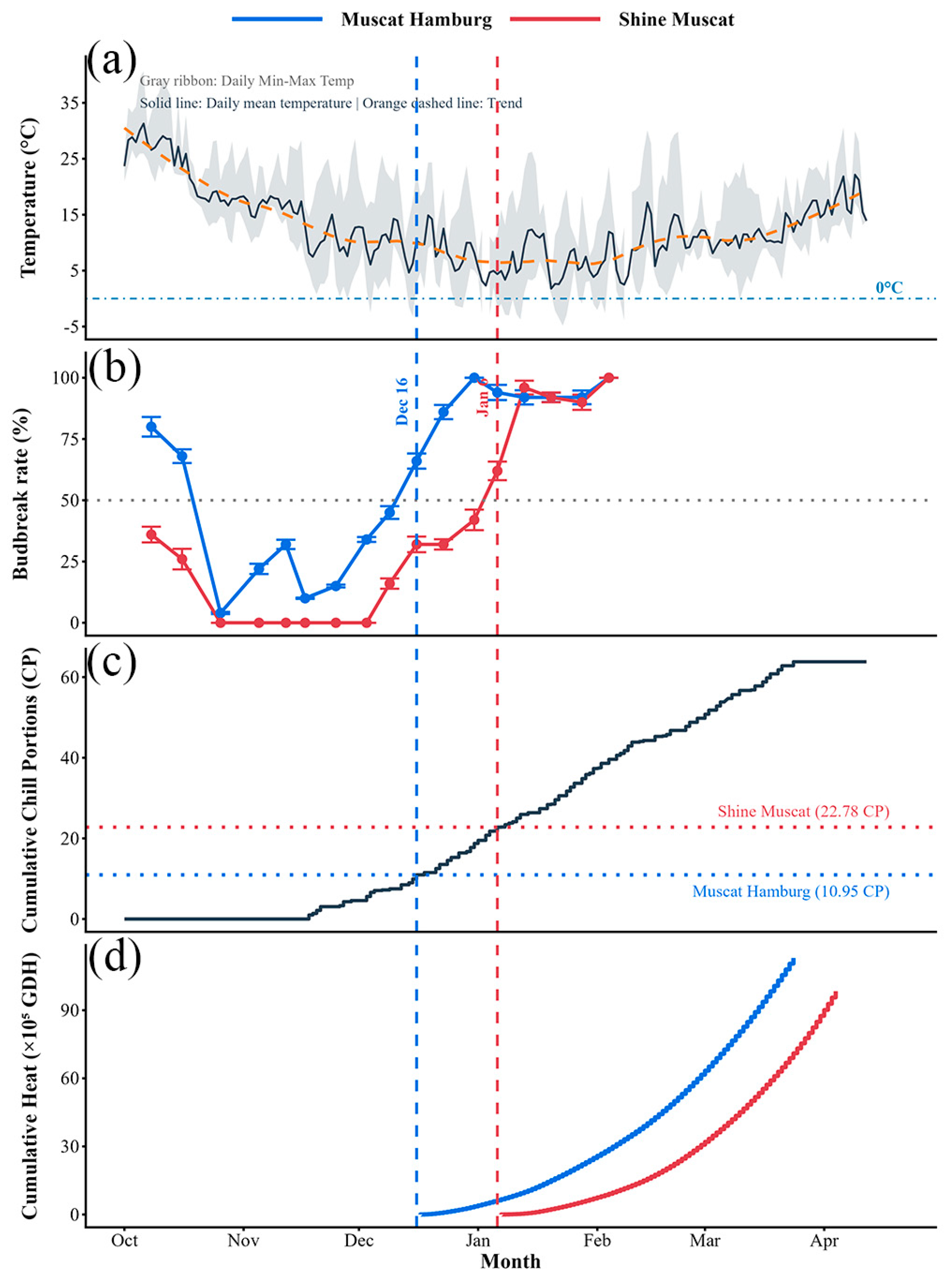
3.1. Temperature Dynamics and Sequential Endodormancy Release
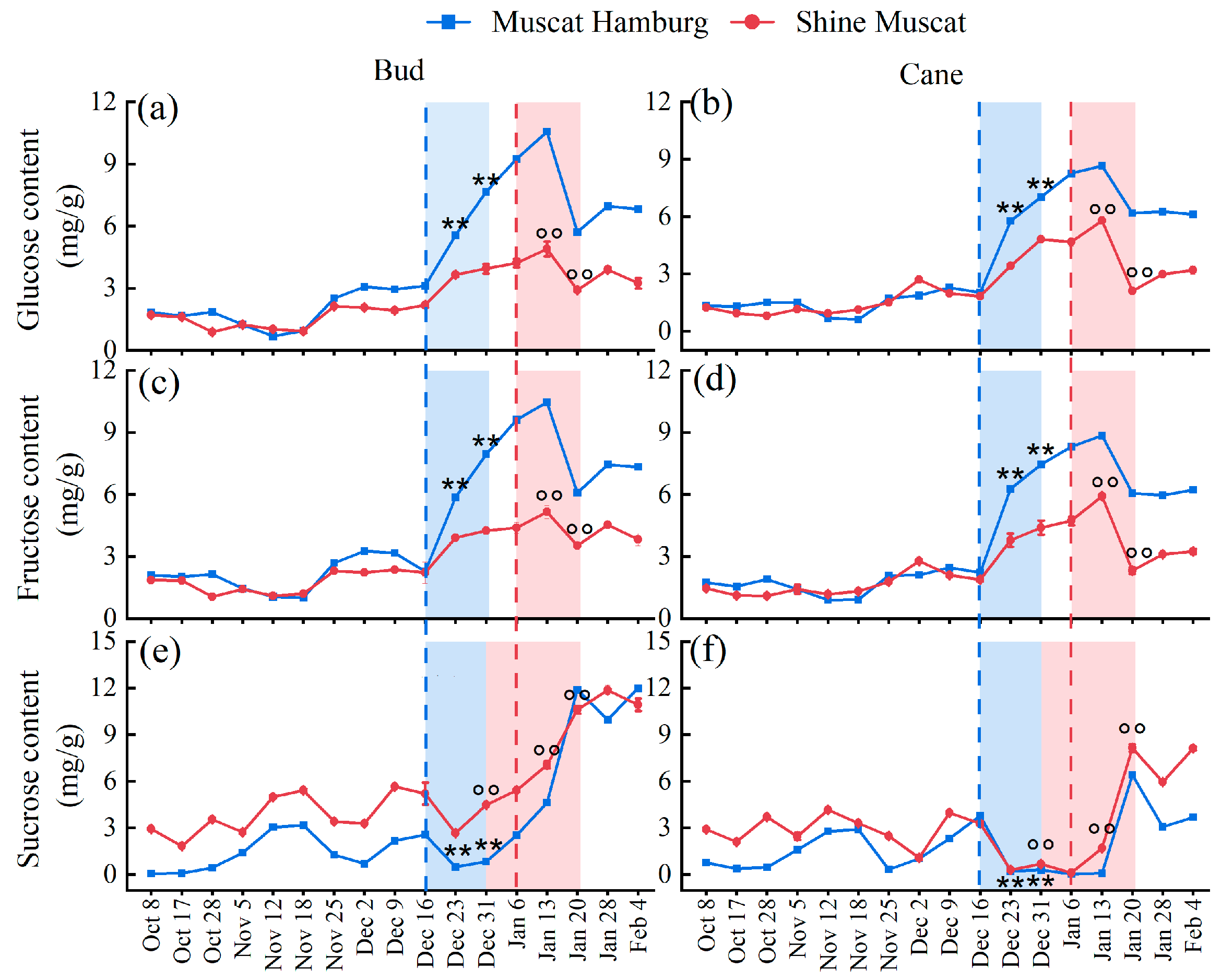
3.2. Dynamic Changes in Soluble Sugar Contents During Dormancy

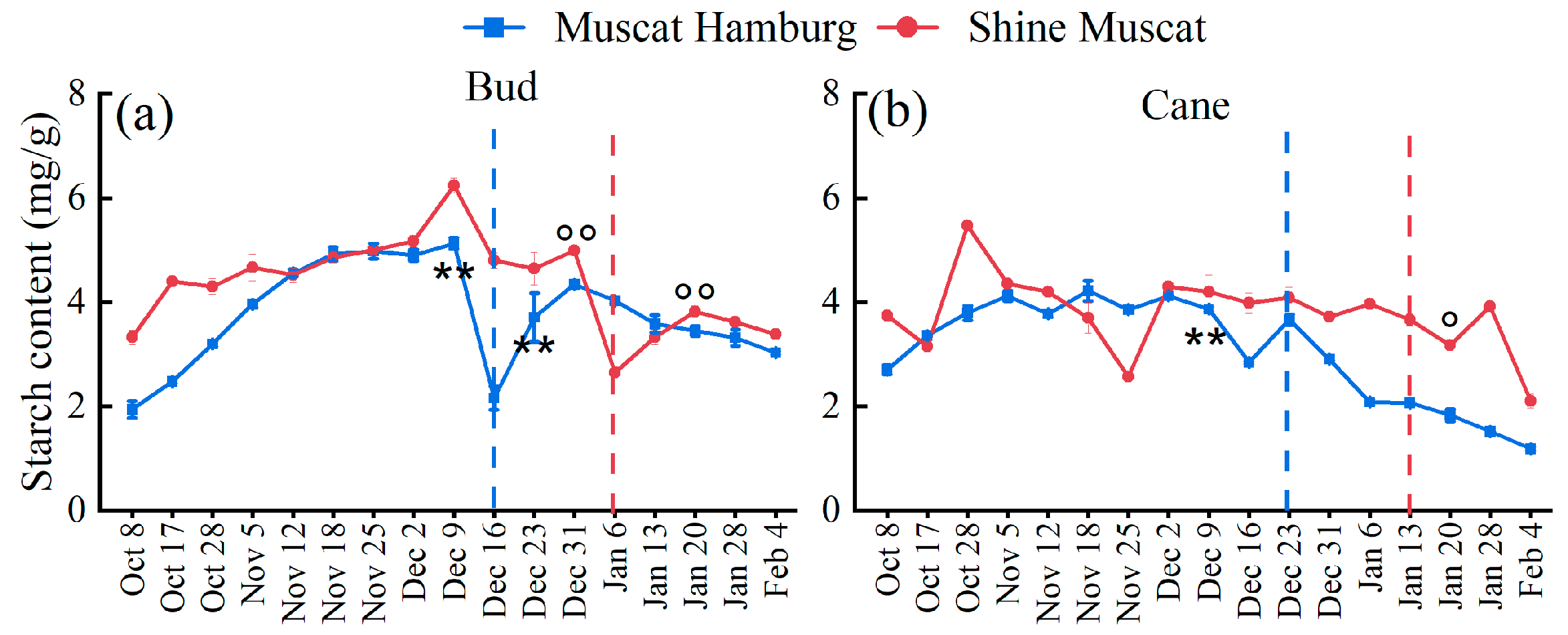
3.3. Dynamic Changes in Starch Content During Dormancy

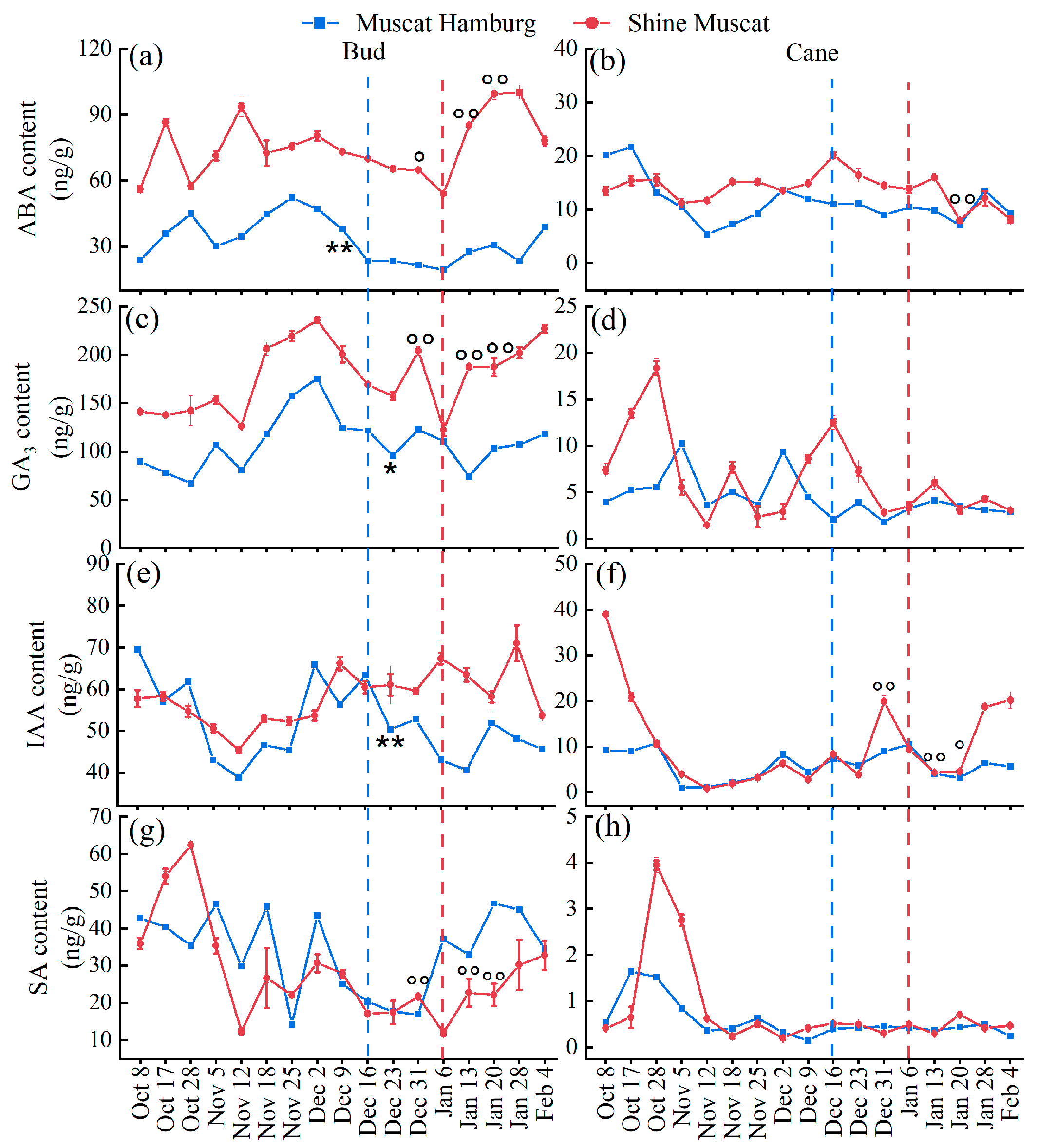
3.4. Dynamic Changes in Endogenous Hormone Contents During Dormancy

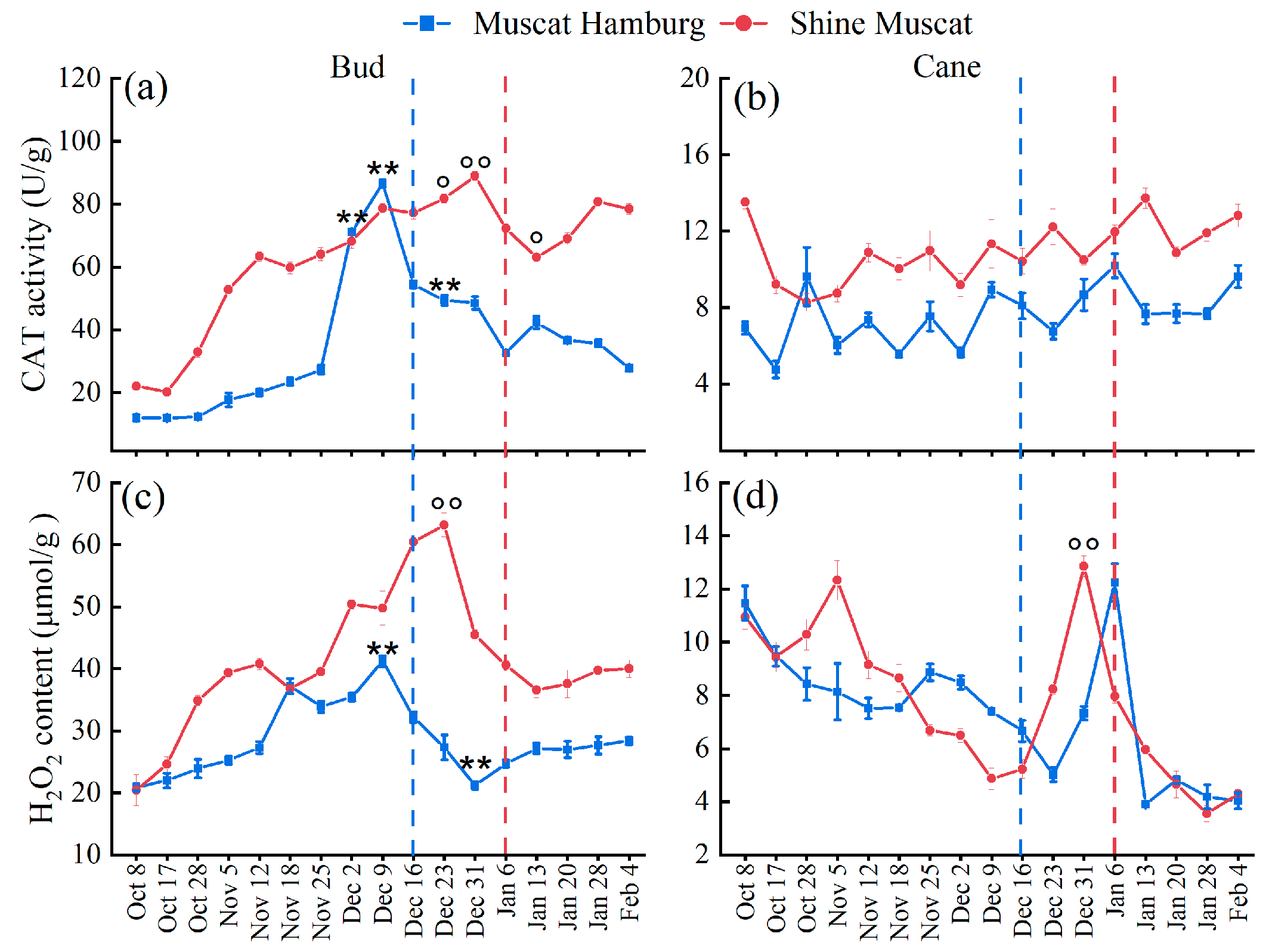
3.5. Dynamic Changes in CAT Activity and H2O2 Content During Dormancy

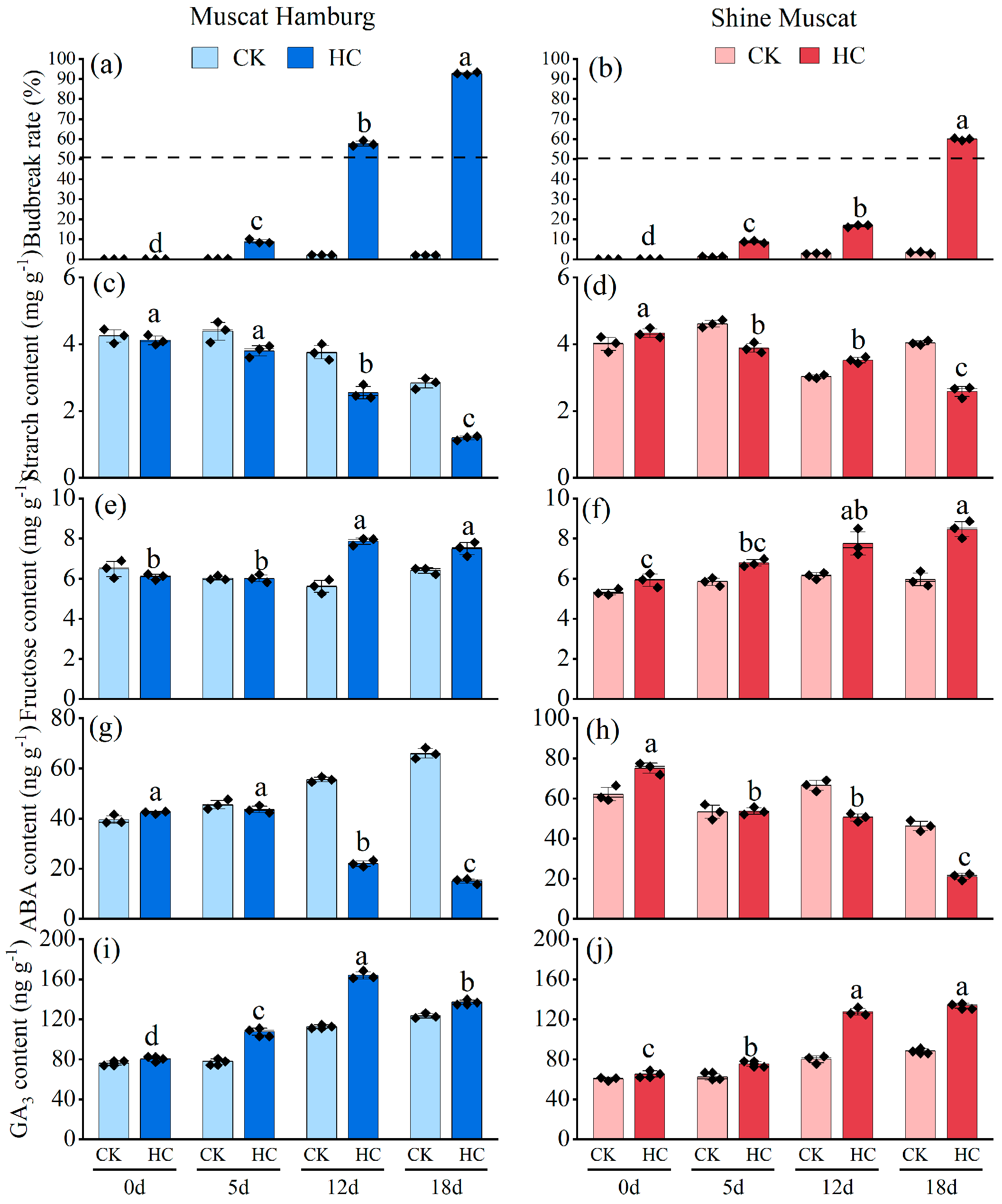
3.6. Biochemical Responses to Hydrogen Cyanamide Treatment
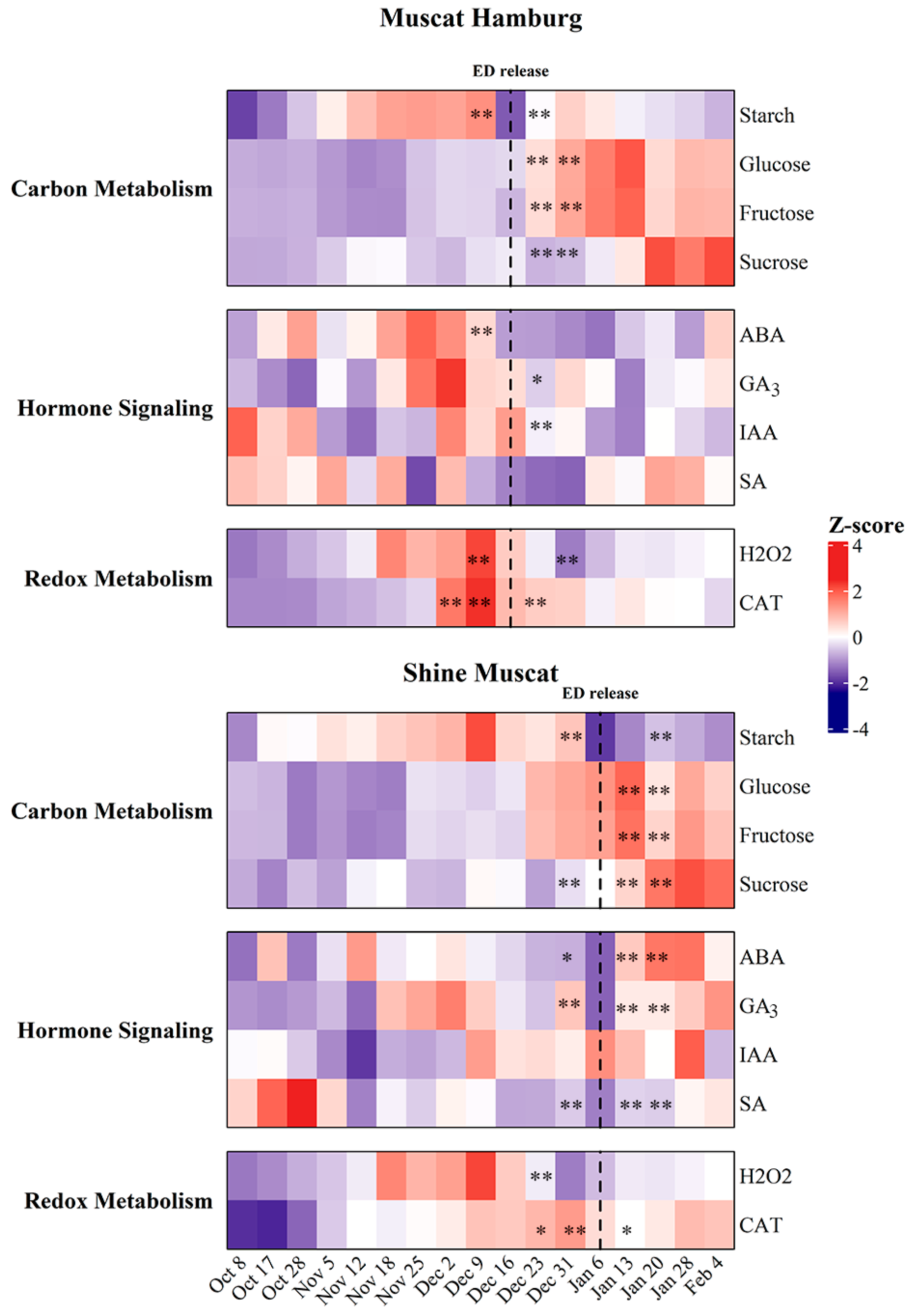
3.7. Integrated Temporal Patterns of Biochemical Indicators During Natural Dormancy
4. Discussion
4.1. Cultivar-Specific Chilling Requirements and the Value of High-Resolution Temperature Data
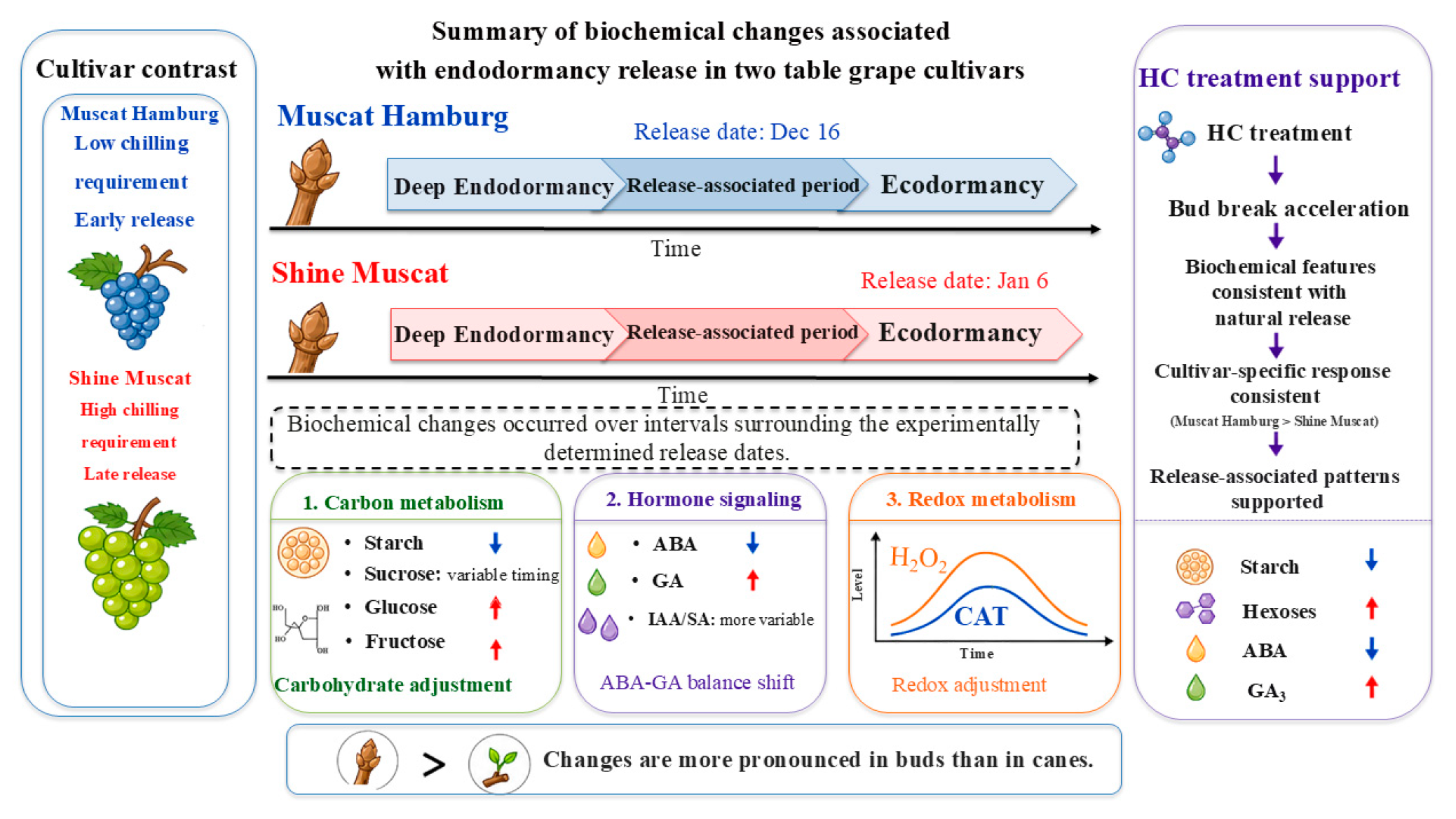
4.2. Biochemical Changes Associated with Endodormancy Release
4.3. Tissue-Specific Responses: Buds Versus Canes
4.4. HC Treatment as Supporting Evidence for Natural Dormancy Release Patterns
4.5. Integrating Phenological Modeling with Biochemical Validation
5. Conclusions
Supplementary Materials
Author Contributions
Funding
Data Availability Statement
Acknowledgments
Conflicts of Interest
References
- Lang, G.A.; Early, J.D.; Martin, G.C.; Darnell, R.L. Endo-, para-, and ecodormancy: Physiological terminology and classification for dormancy research. HortScience 1987, 22, 371–377. [Google Scholar] [CrossRef]
- Rohde, A.; Bhalerao, R.P. Plant dormancy in the perennial context. Trends Plant Sci. 2007, 12, 217–223. [Google Scholar] [CrossRef] [PubMed]
- Considine, M.J.; Considine, J.A. On the language and physiology of dormancy and quiescence in plants. J. Exp. Bot. 2016, 67, 3189–3203. [Google Scholar] [CrossRef] [PubMed]
- Kovaleski, A.P. Woody species do not differ in dormancy progression: Differences in time to budbreak due to forcing and cold hardiness. Proc. Natl. Acad. Sci. USA 2022, 119, e2112250119. [Google Scholar] [CrossRef] [PubMed]
- Arora, R.; Rowland, L.J.; Tanino, K. Induction and release of bud dormancy in woody perennials: A science comes of age. HortScience 2003, 38, 911–921. [Google Scholar] [CrossRef]
- Pouget, R. Considérations générales sur le rythme végétatif et la dormance des bourgeons de la vigne. Vitis 1972, 11, 198–217. [Google Scholar]
- Benmoussa, H.; Ghrab, M.; Ben Mimoun, M.; Luedeling, E. Chilling and heat requirements for local and foreign almond (Prunus dulcis Mill.) cultivars in a warm Mediterranean location based on 30 years of phenology records. Agric. For. Meteorol. 2017, 239, 34–46. [Google Scholar] [CrossRef]
- García de Cortázar-Atauri, I.; Brisson, N.; Gaudillere, J.P. Performance of several models for predicting budburst date of grapevine (Vitis vinifera L.). Int. J. Biometeorol. 2009, 53, 317–326. [Google Scholar] [CrossRef] [PubMed]
- Luedeling, E. Climate change impacts on winter chill for temperate fruit and nut production: A review. Sci. Hortic. 2012, 144, 218–229. [Google Scholar] [CrossRef]
- Pouget, R. Nouvelle conception du seuil de croissance chez la vigne. Vitis 1968, 7, 201–205. [Google Scholar]
- Swanepoel, J.; De Villiers, F.; Pouget, R. Predicting the date of bud burst in grapevines. S. Afr. J. Enol. Vitic. 1990, 11, 46–49. [Google Scholar]
- Zapata, D.; Salazar-Gutierrez, M.; Chaves, B.; Keller, M.; Hoogenboom, G. Predicting key phenological stages for 17 grapevine cultivars (Vitis vinifera L.). Am. J. Enol. Vitic. 2017, 68, 60–72. [Google Scholar] [CrossRef]
- Fernandez, E.; Whitney, C.; Luedeling, E. The importance of chill model selection—A multi-site analysis. Eur. J. Agron. 2020, 119, 126103. [Google Scholar] [CrossRef]
- Egea, J.; Ortega, E.; Martínez-Gómez, P.; Dicenta, F. Chilling and heat requirements of almond cultivars for flowering. Environ. Exp. Bot. 2003, 50, 79–85. [Google Scholar] [CrossRef]
- Harrington, C.A.; Gould, P.J.; St. Clair, J.B. Modeling the effects of winter environment on dormancy release of Douglas-fir. For. Ecol. Manag. 2010, 259, 798–808. [Google Scholar] [CrossRef]
- Chuine, I. A unified model for budburst of trees. J. Theor. Biol. 2000, 207, 337–347. [Google Scholar] [CrossRef] [PubMed]
- Flynn, D.; Wolkovich, E. Temperature and photoperiod drive spring phenology across all species in a temperate forest community. New Phytol. 2018, 219, 1353–1362. [Google Scholar] [CrossRef] [PubMed]
- Chamberlain, C.J.; Cook, B.I.; García de Cortázar-Atauri, I.; Wolkovich, E.M. Rethinking false spring risk. Glob. Change Biol. 2019, 25, 2209–2220. [Google Scholar] [CrossRef] [PubMed]
- Fernandez, E.; Mojahid, H.; Fadón, E.; Rodrigo, J.; Ruiz, D.; Egea, J.A.; Ben Mimoun, M.; Kodad, O.; El Yaacoubi, A.; Ghrab, M. Climate change impacts on winter chill in Mediterranean temperate fruit orchards. Reg. Environ. Change 2023, 23, 7. [Google Scholar] [CrossRef]
- Caffarra, A.; Eccel, E. Increasing the robustness of phenological models for Vitis vinifera cv. Chardonnay. Int. J. Biometeorol. 2010, 54, 255–267. [Google Scholar] [CrossRef] [PubMed]
- Camargo-Alvarez, H.; Salazar-Gutiérrez, M.; Keller, M.; Hoogenboom, G. Modeling the effect of temperature on bud dormancy of grapevines. Agric. For. Meteorol. 2020, 280, 107782. [Google Scholar] [CrossRef]
- Fishman, S.; Erez, A.; Couvillon, G. The temperature dependence of dormancy breaking in plants: Computer simulation of processes studied under controlled temperatures. J. Theor. Biol. 1987, 126, 309–321. [Google Scholar] [CrossRef]
- Rubio, S.; Dantas, D.; Bressan-Smith, R.; Pérez, F.J. Relationship between endodormancy and cold hardiness in grapevine buds. J. Plant Growth Regul. 2016, 35, 266–275. [Google Scholar] [CrossRef]
- Pérez, F.J.; Vergara, R.; Rubio, S. H2O2 is involved in the dormancy-breaking effect of hydrogen cyanamide in grapevine buds. Plant Growth Regul. 2008, 55, 149–155. [Google Scholar] [CrossRef]
- Beauvieux, R.; Wenden, B.; Dirlewanger, E. Bud dormancy in perennial fruit tree species: A pivotal role for oxidative cues. Front. Plant Sci. 2018, 9, 657. [Google Scholar] [CrossRef] [PubMed]
- Kaufmann, H.; Blanke, M. Changes in carbohydrate levels and relative water content (RWC) to distinguish dormancy phases in sweet cherry. J. Plant Physiol. 2017, 218, 1–5. [Google Scholar] [CrossRef] [PubMed]
- Rinne, P.L.H.; Welling, A.; Vahala, J.; Ripel, L.; Ruonala, R.; Kangasjärvi, J.; van der Schoot, C. Chilling of dormant buds hyperinduces FLOWERING LOCUS T and recruits GA-inducible 1,3-beta-glucanases to reopen signal conduits and release dormancy in Populus. Plant Cell 2011, 23, 130–146. [Google Scholar] [CrossRef] [PubMed]
- Zheng, C.; Halaly, T.; Acheampong, A.K.; Takebayashi, Y.; Jikumaru, Y.; Kamiya, Y.; Or, E. Abscisic acid (ABA) regulates grape bud dormancy, and dormancy release stimuli may act through modification of ABA metabolism. J. Exp. Bot. 2015, 66, 1527–1542. [Google Scholar] [CrossRef] [PubMed]
- Aloni, R.; Baum, S.F.; Peterson, C.A. The role of cytokinin in sieve tube regeneration and callose production in wounded coleus internodes. Plant Physiol. 1990, 93, 982–989. [Google Scholar] [CrossRef] [PubMed]
- Howe, G.T.; Horvath, D.P.; Dharmawardhana, P.; Priest, H.D.; Mockler, T.C.; Strauss, S.H. Extensive transcriptome changes during natural onset and release of vegetative bud dormancy in Populus. Front. Plant Sci. 2015, 6, 989. [Google Scholar] [CrossRef] [PubMed]
- Vergara, R.; Rubio, S.; Pérez, F.J. Hypoxia and hydrogen cyanamide induce bud-break and up-regulate hypoxic responsive genes (HRG) and VvFT in grapevine buds. Plant Mol. Biol. 2012, 79, 171–178. [Google Scholar] [CrossRef] [PubMed]
- Pouget, R. Recherches physiologiques sur le repos végétatif de la vigne (Vitis vinifera L.): La dormance des bourgeons et le mécanisme de sa disparition. Ann. Amélior. Plant. 1963, 13, 1–247. [Google Scholar]
- Lorenz, D.H.; Eichhorn, K.W.; Bleiholder, H.; Klose, R.; Meier, U.; Weber, E. Growth stages of the grapevine: Phenological growth stages of the grapevine (Vitis vinifera L. ssp. vinifera)-Codes and descriptions according to the extended BBCH scale. Aust. J. Grape Wine Res. 1995, 1, 100–103. [Google Scholar] [CrossRef]
- Dennis, F.G., Jr. Problems in standardizing methods for evaluating the chilling requirements for the breaking of dormancy in buds of woody plants. HortScience 2003, 38, 347–350. [Google Scholar] [CrossRef]
- Anderson, J.; Richardson, E.; Kesner, C. Validation of chill unit and flower bud phenology models for ‘Montmorency’ sour cherry. In Proceedings of the I International Symposium on Computer Modelling in Fruit Research and Orchard Management; International Society for Horticultural Science: Leuven, Belgium, 1985; Volume 184, pp. 71–78. [Google Scholar]
- Moing, A.; Carbonne, F.; Rashad, M.H.; Gaudillère, J.P. Carbon fluxes in mature peach leaves. Plant Physiol. 1992, 100, 1878–1884. [Google Scholar] [CrossRef] [PubMed]
- Li, J.; Liu, B.; Li, X.; Li, D.; Han, J.; Zhang, Y.; Li, L.; Wang, H.; Wang, H.; Wang, J.; et al. Exogenous abscisic acid mediates berry quality improvement by altered endogenous plant hormone levels in ‘Ruiduhongyu’ grapevine. Front. Plant Sci. 2021, 12, 739964. [Google Scholar] [CrossRef] [PubMed]
- Anzanello, R.; Fialho, F.B.; dos Santos, H.P. Chilling requirements and dormancy evolution in grapevine buds. Ciênc. Agrotec. 2018, 42, 364–371. [Google Scholar] [CrossRef]
- Campoy, J.A.; Ruiz, D.; Egea, J. Dormancy in temperate fruit trees in a global warming context: A review. Sci. Hortic. 2011, 130, 357–372. [Google Scholar] [CrossRef]
- Salama, A.-M.; Ezzat, A.; El-Ramady, H.; Alam-Eldein, S.M.; Okba, S.K.; Elmenofy, H.M.; Hassan, I.F.; Illés, A.; Holb, I.J. Temperate fruit trees under climate change: Challenges for dormancy and chilling requirements in warm winter regions. Horticulturae 2021, 7, 86. [Google Scholar] [CrossRef]
- Baumgarten, F.; Zohner, C.M.; Gessler, A.; Vitasse, Y. Chilled to be forced: The best dose to wake up buds from winter dormancy. New Phytol. 2021, 230, 1366–1377. [Google Scholar] [CrossRef] [PubMed]
- Cooke, J.E.K.; Eriksson, M.E.; Junttila, O. The dynamic nature of bud dormancy in trees: Environmental control and molecular mechanisms. Plant Cell Environ. 2012, 35, 1707–1728. [Google Scholar] [CrossRef] [PubMed]
- Milyaev, A.; Born, U.; Sprich, E.; Hagemann, M.; Flachowsky, H.; Luedeling, E. Identifying indicators of apple bud dormancy status by exposure to artificial forcing conditions. Tree Physiol. 2024, 44, tpae112. [Google Scholar] [CrossRef] [PubMed]
- Signorelli, S.; Velappan, Y.; Hermawaty, D.; Feil, R.; Couture, C.; Considine, J.A.; Lunn, J.E.; Considine, M.J. Seasonal changes in the physiology and metabolism of grapevine latent buds. J. Exp. Bot. 2026, 77, 1756–1772. [Google Scholar] [CrossRef] [PubMed]
- Călugăr, A.; Cordea, M.I.; Babeş, A.; Fejer, M. Dynamics of starch reserves in some grapevine varieties (Vitis vinifera L.) during dormancy. Bull. UASVM. Hortic. 2019, 76, 185–192. [Google Scholar] [CrossRef] [PubMed]
- Wang, D.; Gao, Z.; Du, P.; Xiao, W.; Tan, Q.; Chen, X.; Li, L.; Gao, D. Expression of ABA metabolism-related genes suggest similarities and differences between seed dormancy and bud dormancy of peach (Prunus persica). Front. Plant Sci. 2016, 6, 1248. [Google Scholar] [CrossRef] [PubMed]
- Li, J.; Xu, Y.; Niu, Q.; He, L.; Teng, Y.; Bai, S. Abscisic acid (ABA) promotes the induction and maintenance of pear (Pyrus pyrifolia White Pear Group) flower bud endodormancy. Int. J. Mol. Sci. 2018, 19, 310. [Google Scholar] [CrossRef] [PubMed]
- Chmielewski, F.M.; Gotz, K.; Homann, T.; Huschek, G.; Rawel, H. Identification of endodormancy release for cherries (Prunus avium L.) by abscisic acid and sugars. J. Hortic. 2017, 4, 210. [Google Scholar] [CrossRef]
- Noriega, X.; Pérez, F.J. ABA biosynthesis genes are down-regulated while auxin and cytokinin biosynthesis genes are up-regulated during the release of grapevine buds from endodormancy. J. Plant Growth Regul. 2017, 36, 814–823. [Google Scholar] [CrossRef]
- Sabir, I.A.; Hu, X.; Khan, I.; Qin, Y. Regulatory Mechanisms of Bud Dormancy: Environmental, Hormonal, and Genetic Perspectives. Int. J. Mol. Sci. 2025, 26, 2517. [Google Scholar] [CrossRef] [PubMed]
- Götz, K.-P.; Chmielewski, F.-M. Metabolites that confirm induction and release of dormancy phases in sweet cherry buds. Metabolites 2023, 13, 231. [Google Scholar] [CrossRef] [PubMed]
- Bonhomme, M.; Rageau, R.; Lacointe, A.; Gendraud, M. Influences of cold deprivation during dormancy on carbohydrate contents of vegetative and floral primordia and nearby structures of peach buds (Prunus persica L. Batch). Sci. Hortic. 2005, 105, 223–240. [Google Scholar] [CrossRef]
- Velappan, Y.; Chabikwa, T.G.; Considine, J.A.; Agudelo-Romero, P.; Foyer, C.H.; Signorelli, S.; Considine, M.J. The bud dormancy disconnect: Latent buds of grapevine are dormant during summer despite a high metabolic rate. J. Exp. Bot. 2022, 73, 2061–2076. [Google Scholar] [CrossRef] [PubMed]
- De Rosa, V.; Falchi, R.; Moret, E.; Vizzotto, G. Insight into carbohydrate metabolism and signaling in grapevine buds during dormancy progression. Plants 2022, 11, 1027. [Google Scholar] [CrossRef] [PubMed]
- Ophir, R.; Pang, X.; Halaly, T.; Venkateswari, J.; Lavee, S.; Galbraith, D.; Or, E. Gene-expression profiling of grape bud response to two alternative dormancy-release stimuli expose possible links between impaired mitochondrial activity, hypoxia, ethylene-ABA interplay and cell enlargement. Plant Mol. Biol. 2009, 71, 403–423. [Google Scholar] [CrossRef] [PubMed]
- Zhang, Z.; Zhuo, X.; Zhao, K.; Zheng, T.; Han, Y.; Yuan, C.; Zhang, Q. Transcriptome profiles reveal the crucial roles of hormone and sugar in the bud dormancy of Prunus mume. Sci. Rep. 2018, 8, 5090. [Google Scholar] [CrossRef] [PubMed]
- Luedeling, E.; Schiffers, K.; Fohrmann, T.; Urbach, C. PhenoFlex—An integrated model to predict spring phenology in temperate fruit trees. Agric. For. Meteorol. 2021, 307, 108491. [Google Scholar] [CrossRef]
- Kamimori, M.; Hosomi, A. Predicting budbreak dates for ‘Delaware’ grape considering chilling and heat requirements using PhenoFlex. Ecol. Model. 2025, 501, 110985. [Google Scholar] [CrossRef]


Disclaimer/Publisher’s Note: The statements, opinions and data contained in all publications are solely those of the individual author(s) and contributor(s) and not of MDPI and/or the editor(s). MDPI and/or the editor(s) disclaim responsibility for any injury to people or property resulting from any ideas, methods, instructions or products referred to in the content. |
© 2026 by the authors. Licensee MDPI, Basel, Switzerland. This article is an open access article distributed under the terms and conditions of the Creative Commons Attribution (CC BY) license.
Share and Cite
Sun, Y.; Qiu, Q.; Zhou, M.; Hu, Y.; Lou, Y.; Wang, L.; Wang, S. Endodormancy Release in Two Table Grape Cultivars with Contrasting Chilling Requirements: Linking Phenological Modeling with Biochemical Characterization. Horticulturae 2026, 12, 819. https://doi.org/10.3390/horticulturae12070819
Sun Y, Qiu Q, Zhou M, Hu Y, Lou Y, Wang L, Wang S. Endodormancy Release in Two Table Grape Cultivars with Contrasting Chilling Requirements: Linking Phenological Modeling with Biochemical Characterization. Horticulturae. 2026; 12(7):819. https://doi.org/10.3390/horticulturae12070819
Chicago/Turabian StyleSun, Yanli, Qian Qiu, Min Zhou, Yang Hu, Yusui Lou, Lei Wang, and Shiping Wang. 2026. "Endodormancy Release in Two Table Grape Cultivars with Contrasting Chilling Requirements: Linking Phenological Modeling with Biochemical Characterization" Horticulturae 12, no. 7: 819. https://doi.org/10.3390/horticulturae12070819
APA StyleSun, Y., Qiu, Q., Zhou, M., Hu, Y., Lou, Y., Wang, L., & Wang, S. (2026). Endodormancy Release in Two Table Grape Cultivars with Contrasting Chilling Requirements: Linking Phenological Modeling with Biochemical Characterization. Horticulturae, 12(7), 819. https://doi.org/10.3390/horticulturae12070819