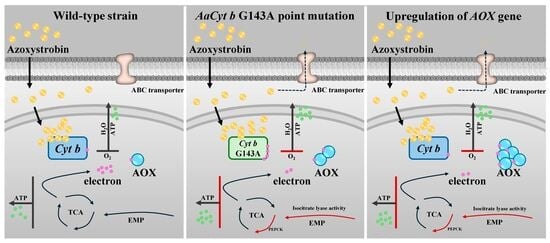
AaCyt b Point Mutation and Overexpression of the Alternative Oxidase (AOX) Gene Conferred Moderate to High Level Resistance to Azoxystrobin in Alternaria alternata, the Causal Agent of Ginseng Leaf and Stem Blight Disease
 ,
,
Abstract
1. Introduction
2. Materials and Methods
2.1. Fungicides and Strains
2.2. Detection of Point Mutations in AaCyt b Gene of A. alternata Strains
2.3. Molecular Docking Experiment of Azoxystrobin with AaCyt b Protein
2.4. Azoxystrobin-Resistant A. alternata RNA-Seq Analysis
2.5. Detecting AaAOX and AaCyt b Expression in A. alternata Resistant Mutants and Parental Strains
2.6. Effect of AaAOX Inhibitor SHAM on the Sensitivity of A. alternata to Azoxystrobin
2.7. Functional Verification of AaAOX in A. alternata
2.7.1. Construction of AaAOX Knockout and Complementation Vectors
2.7.2. Phenotypic Analysis of Transformants
2.8. Statistical Analysis
3. Results
3.1. AaCyt b Gene Mutations in Partial Azoxystrobin-Resistant Mutants
3.2. Decreased Binding Affinity Between Azoxystrobin and AaCyt b Protein Due to G143A Mutation
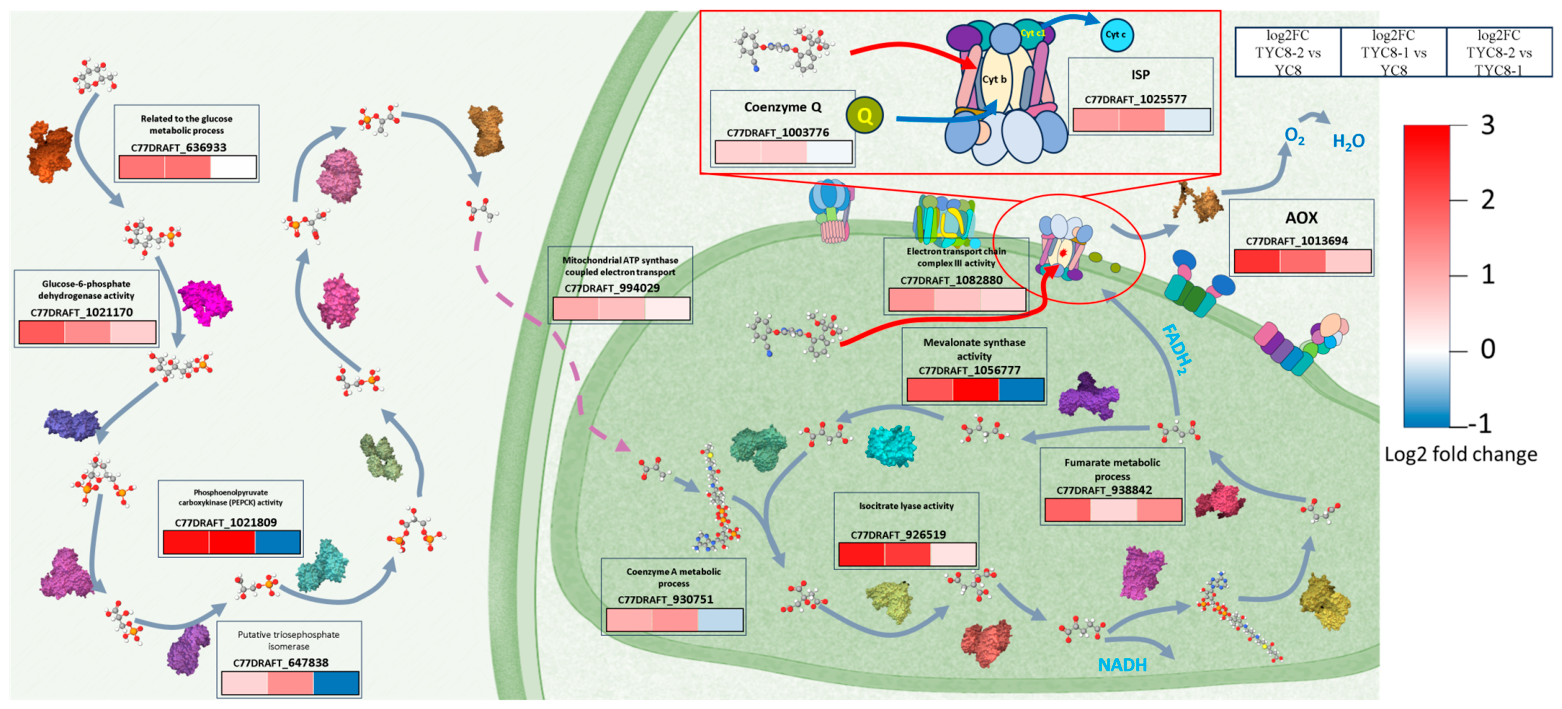
3.3. Upregulation of AaAOX Gene and Key Energy Metabolism-Related Genes in Resistant Strains
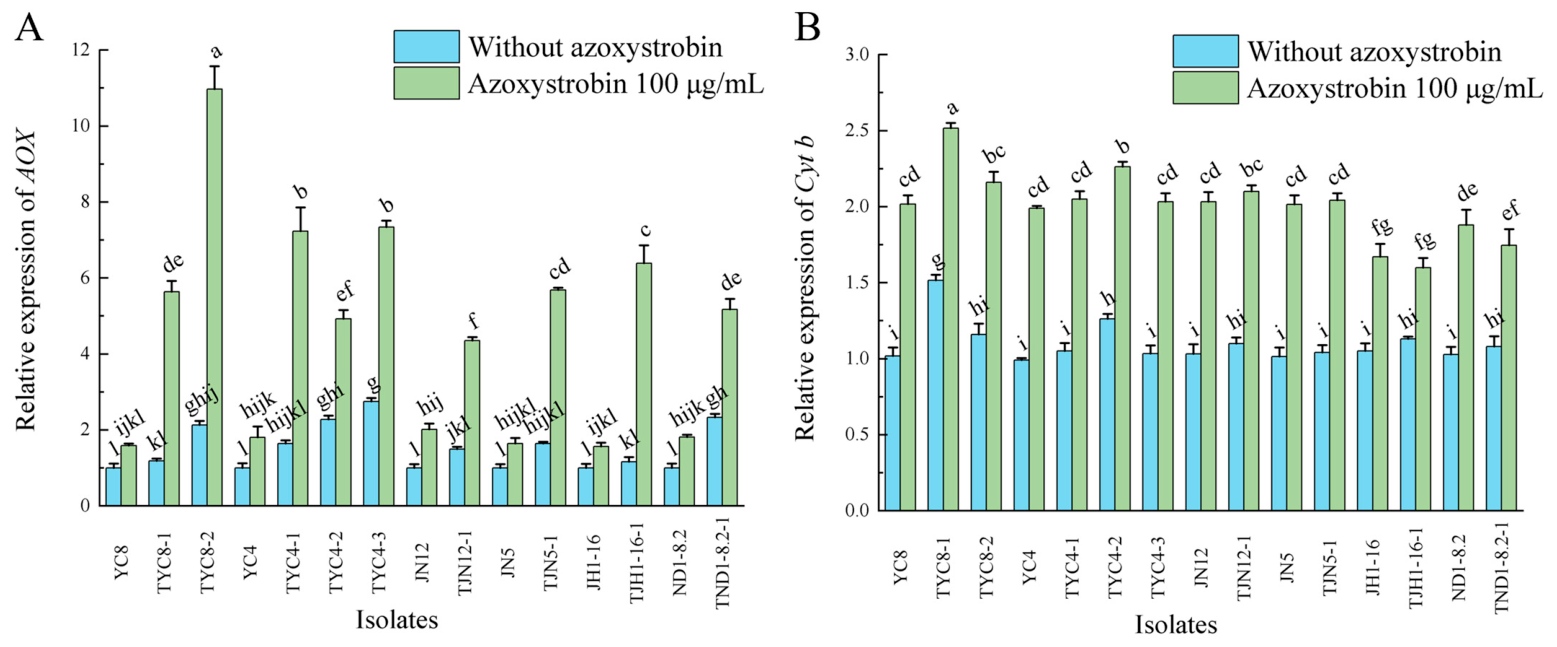
3.4. Upregulated AaAOX Expression in Azoxystrobin-Resistant Mutants
3.5. Increased Sensitivity of A. alternata to Azoxystrobin After SHAM Addition
3.6. Effects of Alternative Oxidase Gene (AaAOX) on the Biological Functions of A. alternata
3.6.1. Screening and Verification of Transformants
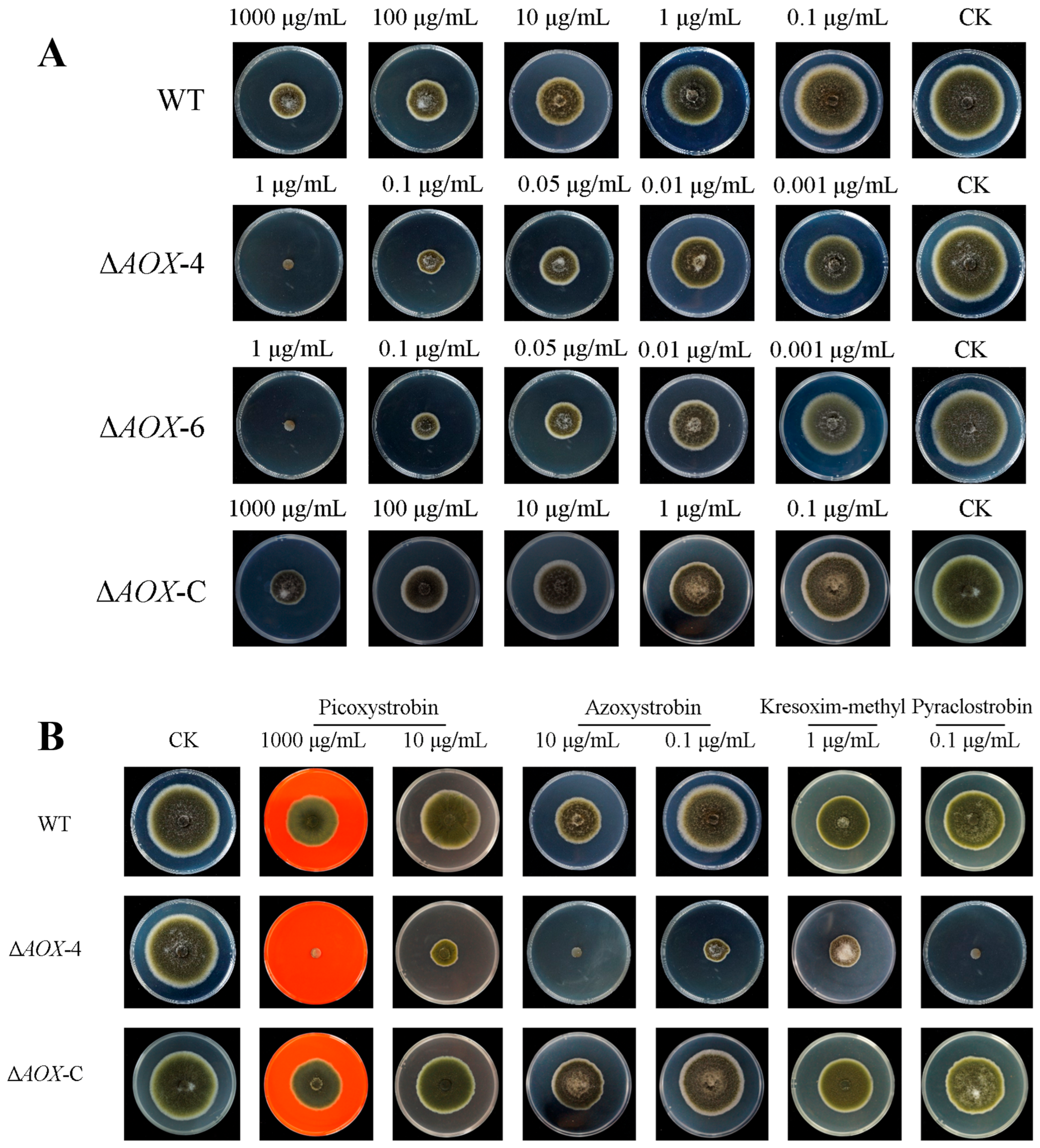
3.6.2. Increased Sensitivity of AaAOX Gene Knockout Mutants to Azoxystrobin
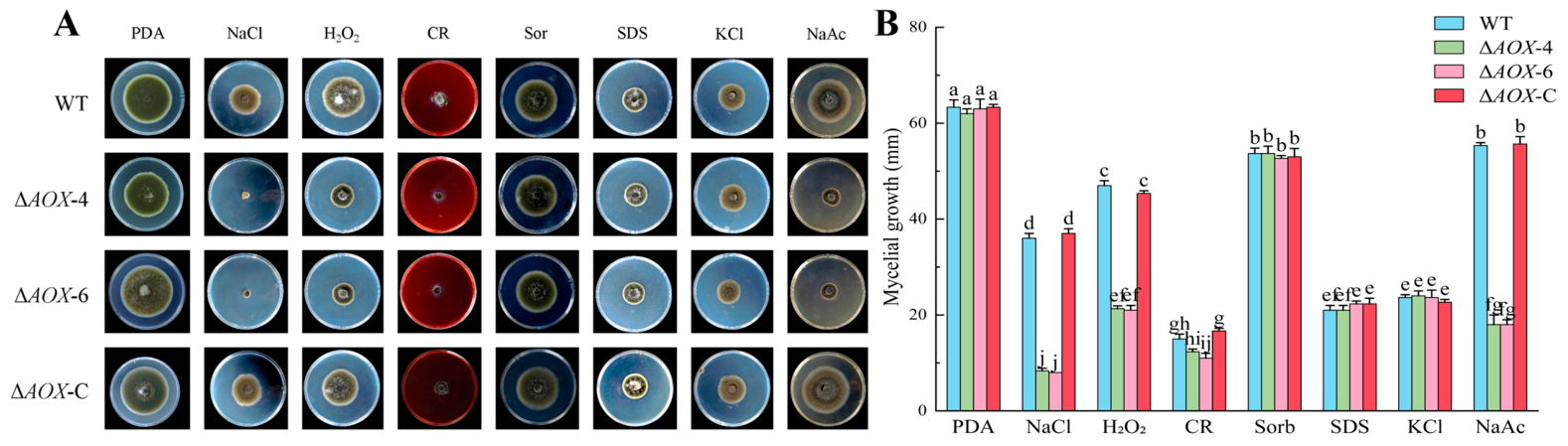
3.6.3. AaAOX Gene Affects the Response of Strains to Multiple Stress Conditions
3.6.4. Increased Sensitivity of AaAOX Gene Knockout Mutants to Different Fungicides
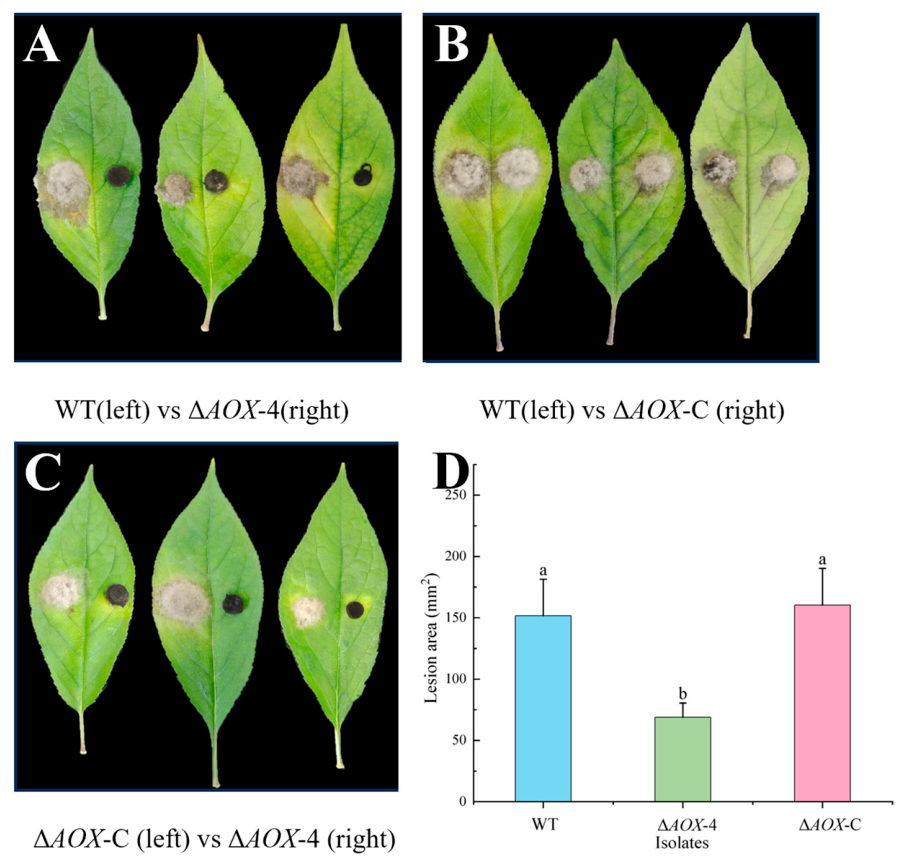
3.6.5. Reduced Pathogenicity of AaAOX Gene Knockout Mutants to Ginseng Leaves
4. Discussion
4.1. The Relationship Between Gene Point Mutations, Gene Upregulation, and QoI Resistance in A. alternata
4.2. AaAOX Overexpression Confers QoI Resistance and Environmental Stress Tolerance in A. alternata from Ginseng
4.3. Novel Findings from Transcriptome Sequencing Analysis for Resistant Strains
4.4. Future Perspectives
5. Conclusions
Supplementary Materials
Author Contributions
Funding
Data Availability Statement
Conflicts of Interest
Abbreviations
| Aa | Alternaria alternata |
| AOX | Alternative oxidase |
| ARP | Alternative respiratory pathway |
| Azo | Azoxystrobin |
| Cyt b | Cytochrome b |
| DEGs | Differentially expressed genes |
| GALSB | Ginseng Alternaria leaf and stem blight |
| HR | High resistant |
| MR | Moderate resistant |
| PPI | Protein–protein interaction |
| QoI | Quinone outside inhibitor |
| SHAM | Salicylhydroxamic acid |
References
- Gao, J.; Yang, M.; Xie, Z.; Lu, B.; Tom, H.; Liu, L. Morphological and molecular identification and pathogenicity of Alternaria spp. associated with ginseng in Jilin province, China. Can. J. Plant Pathol. 2021, 43, 537–550. [Google Scholar] [CrossRef]
- Chen, H.; Liu, J.; Hu, L.; Yang, J.; Wang, Y.; Sun, W.; Wang, R.; Ding, G.; Li, Y. Mycotoxins from Alternaria panax, the specific plant pathogen of Panax ginseng. Mycology 2024, 14, 381–392. [Google Scholar] [CrossRef] [PubMed]
- Sun, Z.; Yang, L.; Zhang, L.; Han, M. An investigation of Panax ginseng Meyer growth promotion and the biocontrol potential of antagonistic bacteria against ginseng black spot. J. Ginseng Res. 2018, 42, 304–311. [Google Scholar] [CrossRef] [PubMed]
- Li, M.; Wang, Q.; Liu, Z.; Pan, X.; Zhang, Y. Silicon application and related changes in soil bacterial community dynamics reduced ginseng black spot incidence in Panax ginseng in a short-term study. BMC Microbiol. 2019, 19, 263. [Google Scholar] [CrossRef] [PubMed]
- Shao, S.; Hu, M.; Chen, X.; Jang, M.; Chen, C.; Lu, B.; Gao, J. Evaluation of the potential of pyrimidine nucleoside antibiotics against Alternaria spp. resistant to QoIs fungicides: Insights for the management of ginseng Alternaria leaf and stem blight disease. Agriculture 2025, 18, 875. [Google Scholar] [CrossRef]
- Veronika, H.; Johannes, D.; Dörte, K.; Stefan, K.; Tilman, S.; Peter, S.; Bert, S.; Wolfgang, S. New benzodioxepin type strobilurins from basidiomycetes. Structural revision and determination of the absolute configuration of strobilurin D and related β-methoxyacrylate antibiotics. Tetrahedron 1999, 55, 10101–10118. [Google Scholar] [CrossRef]
- Gisi, U.; Sierotzki, H.; Cook, A.; McCaffery, A. Mechanisms influencing the evolution of resistance to Qo inhibitor fungicides. Pest. Manag. Sci. 2002, 58, 859–867. [Google Scholar] [CrossRef] [PubMed]
- De Miccolis Angelini, R.M.; Rotolo, C.; Masiello, M.; Pollastro, S.; Ishii, H.; Faretra, F. Genetic analysis and molecular characterisation of laboratory and field mutants of Botryotinia fuckeliana (Botrytis cinerea) resistant to QoI fungicides. Pest. Manag. Sci. 2012, 68, 1231–1240. [Google Scholar] [CrossRef] [PubMed]
- Fouché, G.; Michel, T.; Lalève, A.; Wang, N.X.; Young, D.H.; Meunier, B.; Debieu, D.; Fillinger, S.; Walker, A.S. Directed evolution predicts cytochrome b G37V target site modification as probable adaptive mechanism towards the QiI fungicide fenpicoxamid in Zymoseptoria tritici. Environ. Microbiol. 2021, 24, 1117–1132. [Google Scholar] [CrossRef] [PubMed]
- Vega, B.; Dewdney, M. Distribution of QoI resistance in populations of tangerine-infecting Alternaria alternata in Florida. Plant Dis. 2014, 98, 67–76. [Google Scholar] [CrossRef] [PubMed]
- Wu, Z.; Chen, F.; Zhang, L.; Zhou, M.; Hou, Y. Cytochrome c Oxidase Influences Pyraclostrobin Sensitivity in Fusarium graminearum by Regulating FgAox Through Transcription Factors FgAod2 and FgAod5. Agric. Food. Chem. 2024, 72, 18412–18422. [Google Scholar] [CrossRef] [PubMed]
- Ma, Z.; Michailides, T.J. An allele-specific PCR assay for detecting azoxystrobin-resistant Alternaria isolates from pistachio in California. J. Phytopathol. 2004, 152, 118–121. [Google Scholar] [CrossRef]
- Pasche, J.S.; Piche, L.M.; Gudmestad, N.C. Effect of the F129L mutation in Alternaria solani on fungicides affecting mitochondrial respiration. Plant Dis. 2005, 89, 269–278. [Google Scholar] [CrossRef] [PubMed]
- Sierotzki, H.; Frey, R.; Wullschleger, J.; Palermo, S.; Karlin, S.; Godwin, J.; Gisi, U. Cytochrome b gene sequence and structure of Pyrenophora teres and P. tritici-repentis and implications for QoI resistance. Pest. Manag. Sci. 2007, 63, 223–233. [Google Scholar] [CrossRef] [PubMed]
- Leonardi, G.R.; Quatra, G.L.; Gusella, G.; Aiello, D.; Vitale, A.; Camiletti, B.X.; Polizzi, G. Sensitivity profile to pyraclostrobin and fludioxonil of Alternaria alternata from citrus in Italy. Agronomy 2024, 14, 2116. [Google Scholar] [CrossRef]
- Matsuzaki, Y.; Uda, Y.; Harada, T.; Iwahashi, F. Metyltetraprole activity against plant pathogens with relatively rare cytochrome b haplotypes for azoxystrobin resistance. J. Gen. Plant. Pathol. 2022, 88, 318–324. [Google Scholar] [CrossRef]
- Jacobs, H.T.; Ballard, J.W.O. What physiological role(s) does the alternative oxidase perform in animals? BBA Bioenerg. 2022, 1863, 148556. [Google Scholar] [CrossRef] [PubMed]
- Castro-Guerrero, N.A.; Krab, K.; Moreno-Sánchez, R. The alternative respiratory pathway of euglena mitochondria. J. Bioenerg. Biomembr. 2004, 36, 459–469. [Google Scholar] [CrossRef] [PubMed]
- McDonald, A.E. Unique opportunities for future research on the alternative oxidase of plants. Plant Physiol. 2023, 191, 2084–2092. [Google Scholar] [CrossRef] [PubMed]
- Sharma, R.; Gibb, A.A.; Barnts, K.; Elrod, J.W.; Puri, S. Alternative oxidase promotes high iron tolerance in Candida albicans. Microbiol. Spectrum. 2023, 11, e02157-02123. [Google Scholar] [CrossRef] [PubMed]
- Dong, G.; Zhang, Y.; Liang, X.; Wang, M.; Ye, Q.; Xian, X.; Yang, Y. Resistance characterization of the natural population and resistance mechanism to pyraclostrobin in Lasiodiplodia theobromae. Pestic. Biochem. Physiol. 2022, 188, 105232. [Google Scholar] [CrossRef] [PubMed]
- Wang, D.; Wang, S.; Yang, M.; Lu, B.; Liu, L.; Gao, J. Detection of the resistance of Alternaria panax and cross-resistance on ginseng in Jilin Province. Agrochemicals 2018, 57, 603–605. [Google Scholar] [CrossRef]
- Huang, Y.; Wang, H.; Chen, Q.; Wang, J.; Zhang, C.; Lu, H. Inhibitory effects of six fungicides on mycelial growth and conidial germination of Alternaria alternata from tobacco. J. Pestic. Sci. 2016, 18, 263–267. [Google Scholar]
- Veloukas, T.; Markoglou, A.N.; Karaoglanidis, G.S. Differential effect of Sdh B gene mutations on the sensitivity to SDHI fungicides in Botrytis cinerea. Plant Dis. 2013, 97, 118–122. [Google Scholar] [CrossRef] [PubMed]
- Waterhouse, A.; Bertoni, M.; Bienert, S.; Studer, G.; Tauriello, G.; Gumienny, R.; Heer, F.T.; de Beer, T.A.P.; Rempfer, C.; Bordoli, L.; et al. SWISS-MODEL: Homology modelling of protein structures and complexes. NAR 2018, 46, 296–303. [Google Scholar] [CrossRef] [PubMed]
- Tang, S.; Chen, R.; Lin, M.; Lin, Q.; Zhu, Y.; Ding, J.; Hu, H.; Ling, M.; Wu, J. Accelerating autodock vina with gpus. Molecules 2022, 27, 3041. [Google Scholar] [CrossRef] [PubMed]
- Hasankhani, A.; Bahrami, A.; Sheybani, N.; Fatehi, F.; Abadeh, R.; Ghaem Maghami Farahani, H.; Bahreini Behzadi, M.R.; Javanmard, G.; Isapour, S.; Khadem, H. Integrated network analysis to identify key modules and potential hub genes involved in bovine respiratory disease: A systems biology approach. Front. Genet. 2021, 12, 753839. [Google Scholar] [CrossRef] [PubMed]
- Fei, X.; Xie, B.; Tang, J.; Wang, L.; Zheng, Y.; Kuai, H.; Li, S.; Zhang, D.; Gu, W. Osthole–pyrethrins combination loaded onto hollow microsphere silica nanoparticles inhibits Fusarium solani growth and controls root rot incidence in Cynanchum auriculatum. Physiol. Mol. Plant Pathol. 2025, 138, 102673. [Google Scholar] [CrossRef]
- Ren, W.; Wang, S.; Wang, Z.; Zhu, M.; Zhang, Y.; Lian, S.; Li, B.; Dong, X.; Liu, N. Detection of Cytb point mutation (G143A) that confers high-level resistance to pyraclostrobin in Glomerella cingulata using LAMP method. Plant Dis. 2023, 107, 1166–1171. [Google Scholar] [CrossRef] [PubMed]
- Johnson, K.A.; Douglas, R.K.; Bradshaw, M.J.; Brannen, P.M.; Jurick, W.M.; Villani, S.M. Colletotrichum species causing glomerella leaf spot and apple bitter rot in the Southeastern United States exhibit disparities in relative frequency, morphological phenotype, and quinone outside inhibitor sensitivity. Plant Dis. 2025, 109, 579–592. [Google Scholar] [CrossRef] [PubMed]
- Dorigan, A.F.; Moreira, S.I.; Condé, T.O.; da Silveira, P.R.; Pinheiro, I.C.L.; Ceresini, P.C.; Alves, E. Fitness cost and competitive disadvantages of a G143A mutant Alternaria alternata on tangerine resistant to QoI fungicides. Eur. J. Plant Pathol. 2025, 172, 673–684. [Google Scholar] [CrossRef]
- Drew, D.; North, R.A.; Nagarathinam, K.; Tanabe, M. Structures and general transport mechanisms by the major facilitator superfamily (MFS). Chem. Rev. 2021, 121, 5289–5335. [Google Scholar] [CrossRef] [PubMed]
- Chen, L.; Tsai, H.; Yu, P.; Chung, K. A major facilitator superfamily transporter-mediated resistance to oxidative stress and fungicides requires Yap1, Skn7, and MAP kinases in the citrus fungal pathogen Alternaria alternata. PLoS ONE 2017, 12, e0169103. [Google Scholar] [CrossRef] [PubMed]
- Wang, T.; Shi, X.; Wu, Z.; Zhang, J.; Hao, J.; Liu, P.; Liu, X. Carboxylesterase and Cytochrome P450 Confer Metabolic Resistance Simultaneously to Azoxystrobin and Some Other Fungicides in Botrytis cinerea. Agric. Food. Chem. 2024, 72, 9680–9690. [Google Scholar] [CrossRef] [PubMed]
- Castell-Miller, C.V.; Samac, D. Sensitivity of Bipolaris oryzae isolates pathogenic on cultivated wild rice to the quinone outside inhibitor azoxystrobin. Plant Dis. 2019, 103, 1910–1917. [Google Scholar] [CrossRef] [PubMed]
- Ebiloma, G.U.; Balogun, E.O.; Cueto-Díaz, E.J.; de Koning, H.P.; Dardonville, C. Alternative oxidase inhibitors: Mitochondrion-targeting as a strategy for new drugs against pathogenic parasites and fungi. Med. Res. Rev. 2019, 39, 1553–1602. [Google Scholar] [CrossRef] [PubMed]
- Jing, S.; Zhu, F.; Wen, X.; Zhang, J.; Feng, G. Effect of SHAM on the activity of coumoxystrobin against Phytophthora litchii. Trop. Plant. Pathol. 2024, 49, 765–773. [Google Scholar] [CrossRef]
- Szibor, M.; Gainutdinov, T.; Fernandez-Vizarra, E.; Dufour, E.; Gizatullina, Z.; Debska-Vielhaber, G.; Heidler, J.; Wittig, I.; Viscomi, C.; Gellerich, F. Bioenergetic consequences from xenotopic expression of a tunicate AOX in mouse mitochondria: Switch from RET and ROS to FET. BBA Bioenerg. 2020, 1861, 148137. [Google Scholar] [CrossRef] [PubMed]
- Garmash, E. Suppression of mitochondrial alternative oxidase can result in upregulation of the ROS scavenging network: Some possible mechanisms underlying the compensation effect. Plant Biol. 2023, 25, 43–53. [Google Scholar] [CrossRef] [PubMed]
- Li, J.; Yang, S.; Wu, Y.; Wang, R.; Liu, Y.; Liu, J.; Ye, Z.; Tang, R.; Whiteway, M.; Lv, Q. Alternative oxidase: From molecule and function to future inhibitors. ACS. Omega 2024, 9, 12478–12499. [Google Scholar] [CrossRef] [PubMed]
- Dinakar, C.; Vishwakarma, A.; Raghavendra, A.S.; Padmasree, K. Alternative oxidase pathway optimizes photosynthesis during osmotic and temperature stress by regulating cellular ROS, malate valve and antioxidative systems. Front. Plant Sci. 2016, 7, 68. [Google Scholar] [CrossRef] [PubMed]
- Hou, L.; Liu, L.; Zhang, H.; Zhang, L.; Zhang, L.; Zhang, J.; Gao, Q.; Wang, D. Functional analysis of the mitochondrial alternative oxidase gene (aox1) from Aspergillus niger CGMCC 10142 and its effects on citric acid production. Appl. Microbiol. Biotechnol. 2018, 102, 7981–7995. [Google Scholar] [CrossRef] [PubMed]
- Kirimura, K.; Yoda, M.; Shimizu, H.; Sugano, S.; Mizuno, M.; Kino, K.; Usami, S. Contribution of cyanide-insensitive respiratory pathway, catalyzed by the alternative oxidase, to citric acid production in Aspergillus niger. Biosci. Biotech. Bioch. 2000, 64, 2034–2039. [Google Scholar] [CrossRef] [PubMed]
- Tran-Ly, A.N.; Reyes, C.; Schwarze, F.W.; Ribera, J. Microbial production of melanin and its various applications. World J. Microb. Biot. 2020, 36, 170. [Google Scholar] [CrossRef] [PubMed]
- Al-Azzani, H.; Arthur Vithran, D.T.; Aliouat, H.; Zhou, W.; Mao, X. Precision bacterial immunotherapy: An integrated mechanistic taxonomy and translational roadmap against antimicrobial resistance. Front. Immunol. 2025, 16, 1675682. [Google Scholar] [CrossRef] [PubMed]
- Liao, A.; Sun, W.; Yan, H.; Tang, X.; Kandegama, W.M.W.W.; Guo, S.; Wu, J. Morpholine ring facilitates antiviral potency of Pyrazoline Acylhydrazone against TMV: Design, synthesis, and mechanistic study. Pest. Manag. Sci. 2026, 82, 5442–5451. [Google Scholar] [CrossRef] [PubMed]



| Geographic Origin | Number of Strains | EC50 (μg/mL) (Azo) | EC50 (μg/mL) (Azo + SHAM) | Fold Decrease in EC50 | ||
|---|---|---|---|---|---|---|
| Range | Mean ± SD * | Range | Mean ± SD * | |||
| Baishan City | 54 | 7.4811~296.7761 | 99.0426 ± 45.6339 a | 0.0352~34.1890 | 8.4198 ± 15.0470 b | 11.76 |
| Dunhua City | 14 | 2.2030~254.8740 | 103.5884 ± 75.2379 a | 0.2379~45.4485 | 18.6287 ± 15.5597 a | 5.56 |
| Jilin City | 7 | 3.3902~208.8421 | 115.2909 ± 71.8518 a | 0.2500~9.3677 | 4.0582 ± 3.3024 ab | 28.41 |
| Tonghua City | 36 | 0.8127~338.3047 | 99.6048 ± 83.0539 a | 0.0331~32.1715 | 6.7790 ± 7.4204 b | 14.70 |
| Changchun City | 29 | 0.3284~232.2230 | 98.8807 ± 78.0944 a | 0.0016~50.5887 | 7.5120 ± 10.7372 b | 13.16 |
| Total | 140 | 0.3284~338.3047 | 100.4206 ± 67.2701 | 0.0016~50.5887 | 8.6126 ± 12.6023 | 11.66 |
| Strain | Type | Toxicity Regression Equation | EC50 (μg/mL) | r |
|---|---|---|---|---|
| WT | Wild | y = 0.2762x + 4.4526 | 98.2656 | 0.9695 |
| ΔAOX-4 | Mutant | y = 0.5500x + 6.3614 | 0.0036 | 0.9678 |
| ΔAOX-6 | Mutant | y = 0.6845x + 6.7738 | 0.0027 | 0.9834 |
| ΔAOX-C | Mutant | y = 0.2773x + 4.4779 | 102.1629 | 0.9810 |
| Fungicides | Concentration (μg/mL) | Mycelial Growth (mm) | ||
|---|---|---|---|---|
| WT * | ΔAOX-4 * | ΔAOX-C * | ||
| CK | 0.0 | 62.50 ± 1.25 a | 62.05 ± 1.50 a | 61.75 ± 2.00 a |
| Picoxystrobin | 1000.0 | 32.50 ± 2.00 a | 8.00 ± 0.00 b | 31.50 ± 1.50 a |
| 10.0 | 51.00 ± 1.75 a | 16.50 ± 0.50 b | 49.75 ± 2.50 a | |
| Azoxystrobin | 10.0 | 28.50 ± 1.75 a | 8.00 ± 0.00 b | 27.50 ± 2.50 a |
| 0.1 | 57.65 ± 1.50 a | 14.50 ± 1.50 b | 56.75 ± 1.00 a | |
| Kresoxim-methyl | 1.0 | 44.55 ± 2.75 a | 20.75 ± 2.50 b | 45.50 ± 1.75 a |
| Pyraclostrobin | 0.1 | 51.50 ± 1.50 a | 8.00 ± 0.00 b | 52.00 ± 3.75 a |
Disclaimer/Publisher’s Note: The statements, opinions and data contained in all publications are solely those of the individual author(s) and contributor(s) and not of MDPI and/or the editor(s). MDPI and/or the editor(s) disclaim responsibility for any injury to people or property resulting from any ideas, methods, instructions or products referred to in the content. |
© 2026 by the authors. Licensee MDPI, Basel, Switzerland. This article is an open access article distributed under the terms and conditions of the Creative Commons Attribution (CC BY) license.
Share and Cite
Shao, S.; Song, Y.; Gao, Y.; Cao, Y.; Chen, C.; Lu, B.; Wang, X.; Zhang, Y.; Gao, J. AaCyt b Point Mutation and Overexpression of the Alternative Oxidase (AOX) Gene Conferred Moderate to High Level Resistance to Azoxystrobin in Alternaria alternata, the Causal Agent of Ginseng Leaf and Stem Blight Disease. Horticulturae 2026, 12, 810. https://doi.org/10.3390/horticulturae12070810
Shao S, Song Y, Gao Y, Cao Y, Chen C, Lu B, Wang X, Zhang Y, Gao J. AaCyt b Point Mutation and Overexpression of the Alternative Oxidase (AOX) Gene Conferred Moderate to High Level Resistance to Azoxystrobin in Alternaria alternata, the Causal Agent of Ginseng Leaf and Stem Blight Disease. Horticulturae. 2026; 12(7):810. https://doi.org/10.3390/horticulturae12070810
Chicago/Turabian StyleShao, Shuai, Ying Song, Yuguang Gao, Yi Cao, Changqing Chen, Baohui Lu, Xue Wang, Yanjing Zhang, and Jie Gao. 2026. "AaCyt b Point Mutation and Overexpression of the Alternative Oxidase (AOX) Gene Conferred Moderate to High Level Resistance to Azoxystrobin in Alternaria alternata, the Causal Agent of Ginseng Leaf and Stem Blight Disease" Horticulturae 12, no. 7: 810. https://doi.org/10.3390/horticulturae12070810
APA StyleShao, S., Song, Y., Gao, Y., Cao, Y., Chen, C., Lu, B., Wang, X., Zhang, Y., & Gao, J. (2026). AaCyt b Point Mutation and Overexpression of the Alternative Oxidase (AOX) Gene Conferred Moderate to High Level Resistance to Azoxystrobin in Alternaria alternata, the Causal Agent of Ginseng Leaf and Stem Blight Disease. Horticulturae, 12(7), 810. https://doi.org/10.3390/horticulturae12070810