Article

Genome-Wide Identification of the CaMED Gene Family in Pepper (Capsicum annuum L.) and Functional Characterization of CaMED25a in the Heat Stress Response

1
College of Horticulture, Nanjing Agricultural University, 1 Weigang, Nanjing 210095, China
2
Yuelushan Laboratory, Changsha 410128, China
3
Key Laboratory for Vegetable Biology of Hunan Province, Engineering Research Center for Horticultural Crop Germplasm Creation and New Variety Breeding, Ministry of Education, College of Horticulture, Hunan Agricultural University, Changsha 410125, China
*
Authors to whom correspondence should be addressed.
Horticulturae 2026, 12(7), 772; https://doi.org/10.3390/horticulturae12070772 (registering DOI)
Submission received: 7 May 2026 / Revised: 6 June 2026 / Accepted: 22 June 2026 / Published: 24 June 2026

Abstract

Pepper (Capsicum annuum L.) is an important horticultural crop whose growth, development, and yield formation are severely constrained by heat stress. The Mediator complex is a key transcriptional co-regulator in plants and plays important roles in developmental processes and stress responses. However, the MED gene family and its functions in heat stress responses remain largely unexplored in pepper. Using the chromosome-level reference genome of the cultivated pepper (Capsicum annuum var. annuum) cultivar Zhangshugang, a total of 49 CaMED genes were identified and classified into four conserved Mediator modules, namely the head, middle, tail, and kinase modules. Comprehensive bioinformatic analyses showed that CaMED genes are evolutionarily conserved across species, whereas differences in gene structure and sequence characteristics among family members may contribute to their functional diversification. Promoter analysis further showed that these genes contain abundant cis-acting elements related to light, phytohormone, and stress responses. Transcriptome analysis of the 49 identified CaMED genes showed distinct tissue-specific expression patterns, with many members showing preferential expression during early flower development and late placenta development. Furthermore, expression profiling of all CaMED genes using publicly available transcriptome datasets under 42 °C heat-stress conditions, followed by RT-qPCR validation of selected candidates, showed that CaMED25a displayed a relatively stable heat-responsive expression pattern. Virus-induced gene silencing of CaMED25a compromised heat tolerance in pepper plants under heat stress, as evidenced by increased H2O2 accumulation and significantly reduced expression of heat defense-related genes, including CaHSP18, CaHSP25.9, and CaHSP70.1. Taken together, this study provides an integrated analysis of the pepper CaMED gene family and reveals the positive contribution of CaMED25a to heat stress tolerance. These findings lay the groundwork for subsequent studies on CaMED gene function and the molecular regulation of high-temperature responses in pepper.

1. Introduction

The Mediator complex is a key coactivator in eukaryotic transcriptional regulation and is involved in nearly all transcriptional regulatory activities in eukaryotes [1]. As a molecular bridge between gene-specific transcription factors and the Pol II transcriptional machinery, the Mediator complex plays central roles in promoting transcription pre-initiation complex assembly, mediating transcriptional reprogramming, and integrating upstream regulatory signals [2,3]. The canonical Mediator complex is composed of multiple functionally specialized subunits and is generally organized into four modules: Head, Middle, Tail, and the dissociable Kinase/CDK module [4]. These modules perform distinct functions in transcriptional regulation [5,6]. In plants, increasing evidence indicates that MED subunits are involved not only in growth and development, hormone signaling, and immune regulation, but also in abiotic stress responses [7,8,9,10]. For example, MED25 regulates drought and salt stress responses [11], MED2 positively regulates cold stress responses [12], and MED8 participates in oxidative stress responses [13].
Heat stress is one of the major abiotic stresses that restrict plant growth, development, and yield formation [14]. Under heat stress, plants activate complex defense mechanisms to perceive heat signals and initiate heat stress responses. These mechanisms include heat shock transcription factor-mediated synthesis and accumulation of heat shock proteins, activation of antioxidant enzyme systems to maintain reactive oxygen species homeostasis, and epigenetic regulation of heat-responsive gene expression, thereby alleviating heat-induced damage [15,16,17]. Previous studies have shown that the Mediator complex is also involved in transcriptional regulation associated with plant heat responses. For instance, MED17 integrates jasmonic acid and auxin signaling to regulate thermomorphogenesis [18], MED14 participates in the activation of heat-responsive genes [19], and CDK8 and MED12 are associated with the establishment and maintenance of heat stress memory [20]. These findings highlight the importance of the Mediator complex in heat-stress adaptation. However, studies on the role of the MED family in heat responses have mainly focused on model plants such as Arabidopsis thaliana, whereas its functions in horticultural crops remain poorly understood.
Pepper (Capsicum annuum L.) is widely cultivated as both a vegetable and spice crop and has considerable economic importance in global horticulture. Heat stress represents a major environmental constraint on pepper growth and development. Under high temperature conditions, particularly during summer production, temperatures above 32 °C can increase flower abscission, reduce fruit set, cause leaf injury, suppress photosynthesis, and impair reproductive growth, ultimately affecting yield formation [21,22]. Plant adaptation to heat stress largely depends on the transcriptional regulation of heat response genes, and Mediator subunits play critical roles in integrating heat signals and regulating the expression of heat response genes. Although MED gene families have been identified in several plant species [23,24,25], the MED gene family in pepper has not yet been systematically characterized, and its response mechanism under heat stress remains unclear. Therefore, genome-wide identification of pepper MED genes, combined with heat-stress expression profiling to screen key candidate members, is necessary for clarifying the possible functions of the CaMED family in pepper development and heat stress adaptation.
Considering the regulatory significance of the Mediator complex in plant development and stress responses, together with the detrimental effects of heat stress on pepper production, this study conducted a genome-wide identification of CaMED family members in pepper. Their physicochemical features, phylogenetic relationships, syntenic associations, promoter cis-acting elements, and tissue expression patterns were analyzed in detail. In addition, expression profiling under 42 °C heat treatment and qRT-PCR validation indicated that most CaMED genes were responsive to heat stress, suggesting that this family may be involved in pepper heat-stress regulation. Based on these analyses, CaMED25a was selected as a candidate gene associated with heat stress responses. Furthermore, the potential involvement of CaMED25a in pepper heat-stress responses was preliminarily assessed using virus-induced gene silencing (VIGS). Overall, this study offers a basis for future functional analyses of the pepper MED gene family and provides useful insights for screening heat-responsive genes and improving thermotolerance in pepper breeding.

2. Materials and Methods

2.1. Plant Materials and Cultivation Conditions

The cultivated pepper (Capsicum annuum L.) cultivar ‘Zhangshugang’ and Nicotiana benthamiana were selected as the plant materials for this study. The pepper seeds were supplied by the Pepper Research Team, Hunan Agricultural University. Plants were grown in a controlled-environment growth room set to a 28 °C/20 °C day/night temperature regime, with a 16 h light/8 h night cycle, approximately 10,000 lx light intensity, and 60–70% relative humidity. N. benthamiana was used in subsequent transient expression experiments.

2.2. Identification of CaMED Gene Family Members

Arabidopsis MED protein sequences were retrieved from the TAIR database and used as queries to identify MED family members in pepper. The genome assembly and annotation files of the cultivated pepper (Capsicum annuum var. annuum) cultivar Zhangshugang were downloaded from the Pepper Genome Database (https://ted.bti.cornell.edu/ftp/pepper/genome/Zhangshugang/, accessed on 4 June 2025) [26]. Candidate CaMED proteins were identified by BLASTP searches against the Zhangshugang protein database with an E-value threshold of 1 × 10⁻⁵. After redundant sequences were removed, MED related conserved domains from the Pfam database were used for further screening with the hmmsearch program in HMMER (v3.3.2) [27]. The domain composition of each candidate was then confirmed using PROSITE (https://prosite.expasy.org/ (accessed on 4 June 2025)) and SMART (http://smart.embl.de/, accessed on 4 June 2025) [28,29], and the final members of the pepper CaMED gene family were identified.
Protein characteristics of the identified CaMED members, including sequence length, molecular weight, and theoretical isoelectric point, were calculated with the ExPASy ProtParam tool (https://web.expasy.org/protparam/, accessed on 5 June 2025) [30]. Subcellular localization was predicted using Plant mPLoc (http://www.csbio.sjtu.edu.cn/bioinf/plant-multi/, accessed on 5 June 2025) [31]. CaMED proteins were assigned to the Head, Middle, Tail, and Kinase modules based on the established classification of the Arabidopsis MED family [23].

2.3. Evolutionary Relationship Analysis of the CaMED Family

MED protein sequences from pepper, Arabidopsis, and tomato were aligned with MEGA 11. Based on the alignment results, a Neighbor-Joining phylogeny was inferred under the JTT + G protein substitution model, and node reliability was assessed using 1000 bootstrap replicates [32]. The constructed phylogenetic tree was then displayed and annotated with the iTOL online tool (https://itol.embl.de/, accessed on 7 June 2025) [33].

2.4. Prediction of Cis-Regulatory Elements in CaMED Promoters

For each CaMED gene, the 2-kb genomic region located before the translation initiation codon was retrieved and analyzed with PlantCARE (http://bioinformatics.psb.ugent.be/webtools/plantcare/html/ (accessed on 8 June 2025)) to identify potential cis-acting elements. The predicted motifs were grouped according to their putative regulatory roles, and the summarized data were plotted using the Python (v3.10.2) matplotlib package [34].

2.5. Chromosomal Localization, Gene Structure and Synteny Analysis

Gene annotation files of CaMED family members were obtained from the Zhangshugang pepper genome. Exon–intron structures were visualized using the GSDS online tool (https://gsds.gao-lab.org/index.php, accessed on 10 June 2025) [35], whereas genomic positions of CaMED genes on chromosomes were mapped using TBtools-II (v2.454) [36].
BLASTP analysis was performed using CaMED protein sequences (E-value ≤ 1 × 10⁻¹⁰). Intraspecific syntenic relationships among CaMED genes were identified using MCScanX (v1.0.0), and the corresponding gene duplication types were classified using duplicate_gene_classifier (v1.0.0) [37]. For comparative collinearity analysis, Arabidopsis and tomato genome assemblies together with their annotation files were downloaded from Phytozome v13 and the Sol Genomics Network, respectively. MCScanX was further used to analyze interspecific syntenic relationships between pepper and Arabidopsis, as well as between pepper and tomato. The final collinearity results were visualized using TBtools-II (v2.454).

2.6. Transcriptome-Based Analysis of Tissue-Specific and Heat-Responsive Expression Patterns of CaMED Genes

Public RNA-seq datasets deposited in PepperHub (http://lifenglab.hzau.edu.cn/PepperHub/index.php, accessed on 10 July 2025), an informatics hub for pepper genomic and transcriptomic resources [38], were used to evaluate CaMED transcript abundance in different pepper tissues and under high-temperature treatment. The dataset included samples from 48 tissues, as well as leaf and root samples collected at 1, 1.5, 3, 6, 12, and 24 h following 42 °C heat-stress treatment, with the 0 h samples used as controls. Gene expression values were represented as TPM (Transcripts Per Million) according to the original transcriptome analysis pipeline described by Tang et al. [39]. Heatmaps were generated using TBtools-II (v2.454). Gene expression data were Z-score normalized per row and hierarchically clustered (Euclidean distance, average linkage) to compare transcriptional profiles.

2.7. Subcellular Localization

The complete coding region of CaMED25a, excluding the stop codon, was amplified from cDNA of the pepper cultivar ‘Zhangshugang’ using 2 × Phanta Max Master Mix (Dye Plus) (Vazyme, Nanjing, China). The amplified fragment was inserted into the pCAMBIA1300-35S-GFP vector using the Uniclone One Step Seamless Cloning Kit (Genesand, Beijing, China), generating the 35S: CaMED25a-GFP fusion construct. After sequencing verification, the recombinant vector was introduced into Agrobacterium tumefaciens strain GV3101 competent cells (WeidiBio, Shanghai, China), with 35S: GFP serving as the control. According to the Agrobacterium-mediated transient expression method in tobacco [40], bacterial suspensions harboring 35S: CaMED25a-GFP or 35S: GFP were separately mixed with the nuclear localization marker suspension and infiltrated into leaves of Nicotiana benthamiana. GFP fluorescence and nuclear marker signals were observed at 48 h post-infiltration using a confocal laser scanning microscope (Leica DMI8, Wetzlar, Germany). The subcellular localization of CaMED25a was determined according to the fluorescence distribution. Primer sequences are listed in Table S1.

2.8. Heat Stress Treatment and RT-qPCR Analysis

The publicly available heat-stress transcriptome datasets used in this study were generated from the pepper line 6421, whereas RT-qPCR validation was performed using the cultivar Zhangshugang, which served as the reference genome for CaMED gene identification. Pepper plants selected for heat treatment were initially grown under standard conditions in a controlled-environment growth room until reaching the required developmental stage. The plants were then transferred to a constant temperature and humidity chamber (Hanyu Instrument HWS-50, Shanghai, China) and subjected to heat treatment at 42 °C for the indicated time periods. Leaf samples were harvested at 0, 1, 2, 3, 4, 5, and 6 h after heat exposure, with three biological replicates prepared for each sampling point. All harvested samples were rapidly frozen in liquid nitrogen and kept at −80 °C before RNA extraction.
Total RNA was isolated from pepper leaves using the Eastep® Super Total RNA Extraction Kit (Promega, Shanghai, China) according to the manufacturer’s instructions. Qualified RNA was subsequently reverse-transcribed using the HiScript II Q Select RT SuperMix for qPCR (+gDNA wiper) (Vazyme, Nanjing, China). RT-qPCR was performed using ChamQ Universal SYBR qPCR Master Mix (Vazyme, Nanjing, China) on a LightCycler 96 Real-Time PCR System (Roche, Basel, Switzerland). CaUBI served as the internal control gene. For each sample, For each treatment, three independent biological replicates were collected, and each biological replicate consisted of pooled samples from five individual pepper plants. Relative transcript levels were determined using the 2−ΔΔCt method. Statistical analyses and data visualization were performed using GraphPad Prism (v10.5.0). Primer information is provided in Table S1.

2.9. VIGS Validation of CaMED25a and Heat Stress Treatment

A 299-bp fragment (886–1184 bp of the CaMED25a coding sequence) was designed using the VIGS Tool (https://vigs.solgenomics.net/, accessed on 28 July 2025) in the Sol Genomics Network and cloned into the SmaI restriction enzyme-linearized (Thermo Fisher Scientific, Waltham, MA, USA) pTRV2-C2b vector by homologous recombination using the Uniclone One Step Seamless Cloning Kit (Genesand, Beijing, China). The resulting construct was designated TRV2:CaMED25a. TRV2:00 and TRV2:PDS were used as the negative and positive controls, respectively.
The TRV-mediated VIGS assay was performed following the pepper infiltration protocol reported by Zhou et al. [41]. Approximately 4 weeks after infiltration, when TRV2:PDS plants showed a photobleaching phenotype, the silencing efficiency in TRV2:CaMED25a plants was evaluated using RT-qPCR. Silenced and control plants at the same developmental stage were transferred to a constant temperature and humidity chamber and exposed to 42 °C for 8–12 h until clear phenotypic differences were observed. Leaf samples were collected before and after heat treatment for DAB staining and RT-qPCR analysis of related genes. For each treatment and time point, three independent biological replicates were sampled and analyzed. Primer information is provided in Table S1.

2.10. DAB Staining

To detect H2O2 accumulation in leaves under heat stress, histochemical analysis was conducted using a freshly prepared DAB (3,3′-diaminobenzidine) solution (1 mg/mL, pH 3.8) prepared from DAB tetrahydrochloride hydrate powder (Coolaber, Beijing, China). Leaf samples were incubated in freshly prepared DAB solution (1 mg/mL, pH 3.8) under dark conditions for 6–8 h. After staining, chlorophyll was removed by heating the leaves in 95% ethanol (Sinopharm Chemical Reagent Co., Ltd., Shanghai, China) until the tissues became sufficiently decolorized. The decolorized leaves were then transferred to a preservation solution consisting of glycerol (Sinopharm Chemical Reagent Co., Ltd., Shanghai, China) and 1 × PBS buffer (Coolaber, Beijing, China) mixed at a 1:1 (v/v) ratio, and representative phenotypes were photographed using a digital camera [42]. The intensity of brown precipitate accumulation was used to indicate the relative level of H2O2 accumulation.

3. Results

3.1. Identification, Structural Features, and Physicochemical Properties of CaMED Family Members

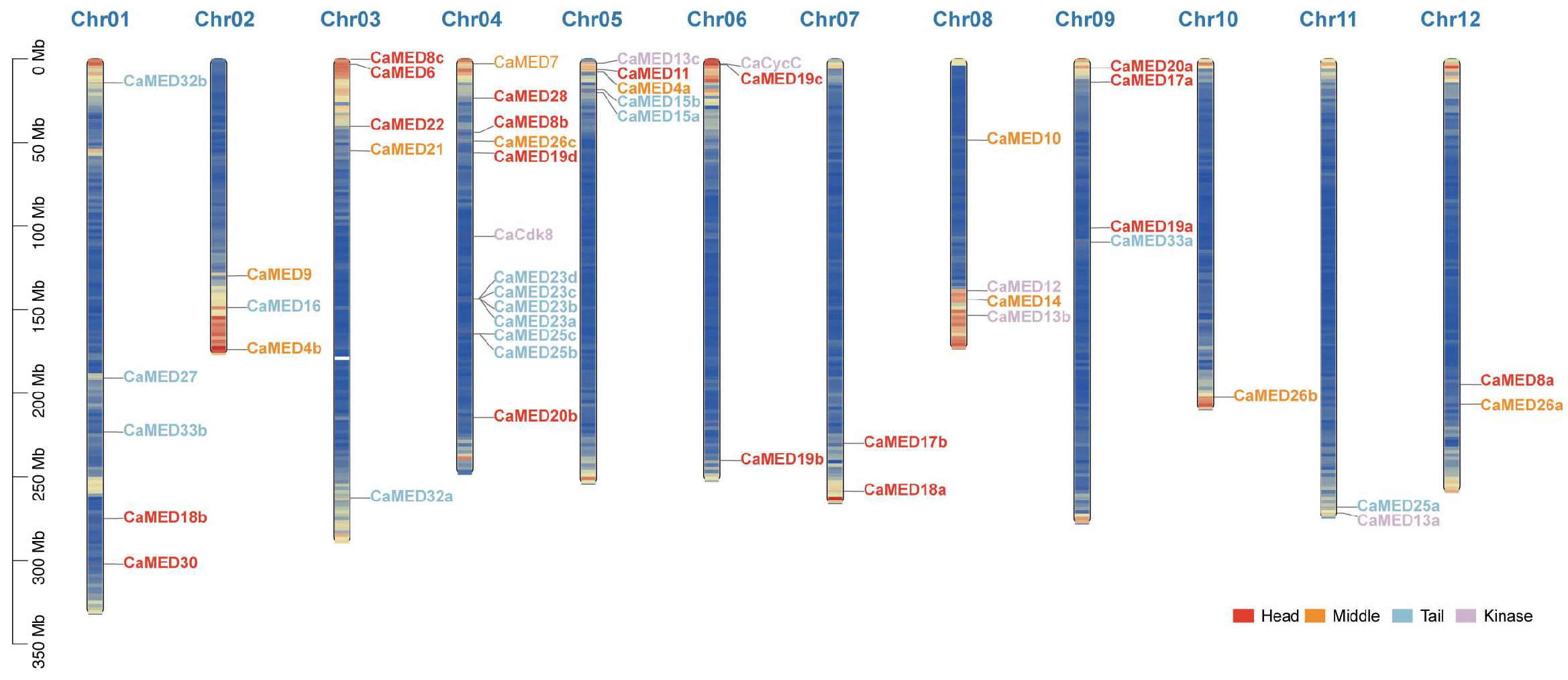
To gain insights into the composition, evolutionary conservation, and potential functional diversification of the CaMED gene family in pepper, CaMED family members were identified from the Zhangshugang pepper genome and subjected to comprehensive analyses of their structural characteristics and physicochemical properties. Through BLASTP homology searches complemented by conserved domain validation against the CDD, a total of 49 CaMED genes were mined from the Zhangshugang pepper genome (Table S2). Chromosomal mapping showed that these CaMED genes were not evenly located among the 12 pepper chromosomes. Chromosome 4 harbored the highest number of CaMED genes, with 13 members, whereas only one member was detected on chromosome 10 (Figure 1). Physicochemical analysis revealed clear variation in the predicted CaMED proteins, including amino acid length (79–2267 aa), molecular weight (9.4–250.97 kDa), and theoretical isoelectric point (4.36–11.89). Based on the modular classification of the Arabidopsis Mediator complex, the 49 identified CaMED family members were assigned to four modules, including 18 members in the Head module, 10 in the Middle module, 15 in the Tail module, and 6 in the Kinase module (Table S2). Gene structure analysis revealed marked structural differences among CaMED genes (Figure S1). Among them, CaMED13a contained the largest number of exons, whereas CaMED4a, CaMED8a, CaMED17b, and CaMED32a each contained only one exon, suggesting that the CaMED gene family has undergone considerable structural divergence during evolution.

3.2. Evolutionary Relationship Analysis of the CaMED Gene Family

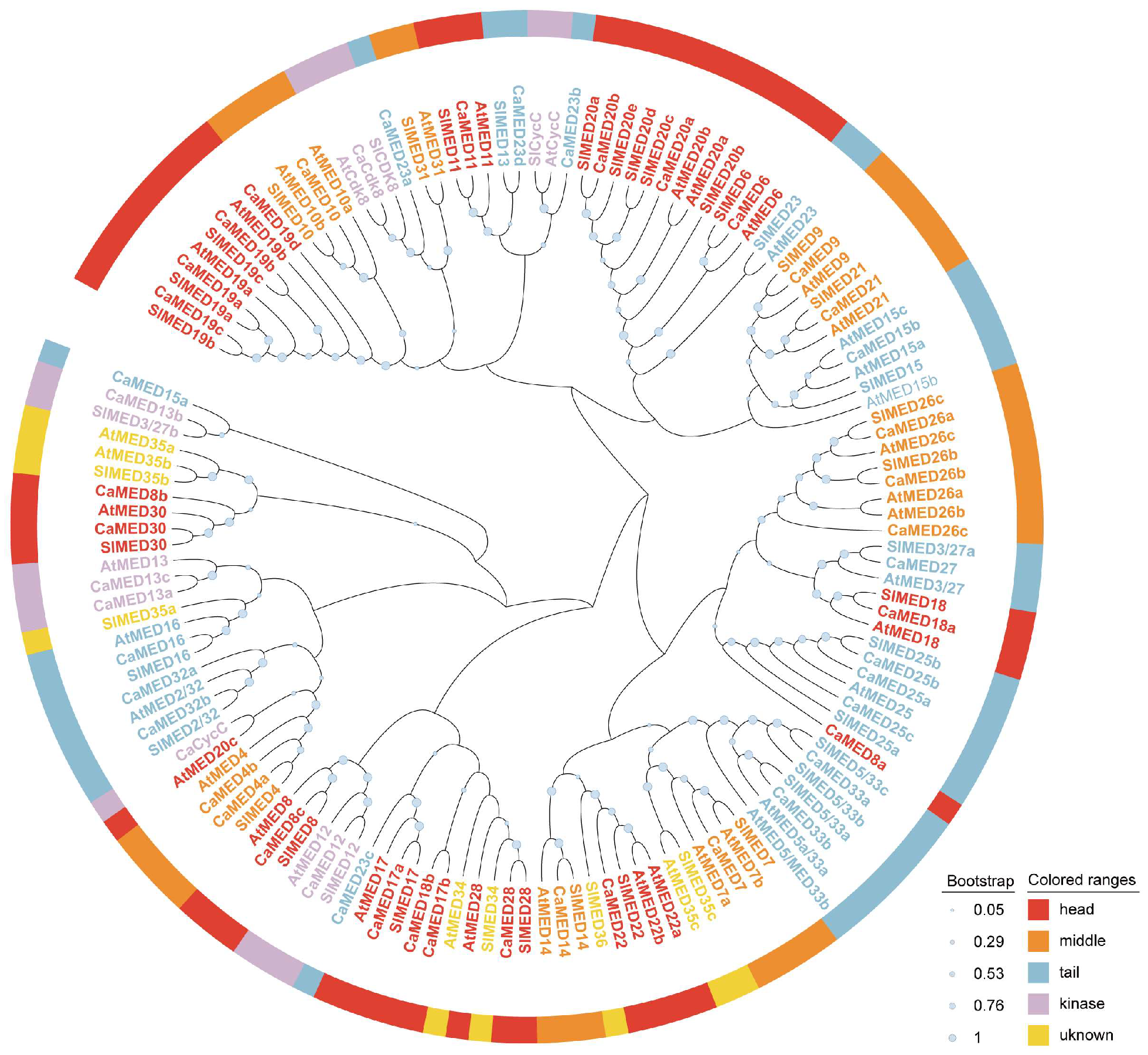
To further elucidate the evolutionary relationships and evolutionary conservation between pepper MED proteins and those from other plant species, MED protein sequences from pepper, Arabidopsis, and tomato were aligned using MEGA, and an NJ phylogenetic tree was then generated (Figure 2). The results showed that most MED proteins from pepper, Arabidopsis, and tomato clustered with their corresponding homologs in the phylogenetic tree, indicating close evolutionary relationships. For example, CaMED21, SlMED21, and AtMED21; CaMED25a, CaMED25b, SlMED25b, and AtMED25; as well as CaMED9, SlMED9, and AtMED9 were grouped into the same respective clades. These results suggest that MED proteins are highly homologous and evolutionarily conserved across different species. However, not all members within the same module clustered closely together. For instance, the Head module members CaMED8a, CaMED8b, CaMED8c, SlMED8, and AtMED8 were relatively distant from one another in the phylogenetic tree. These findings indicate that although the CaMED family is generally conserved during long-term evolution, some members may have undergone sequence divergence to varying degrees, which may provide a basis for functional diversification.

3.3. Intraspecific and Interspecific Synteny Analysis of the CaMED Gene Family

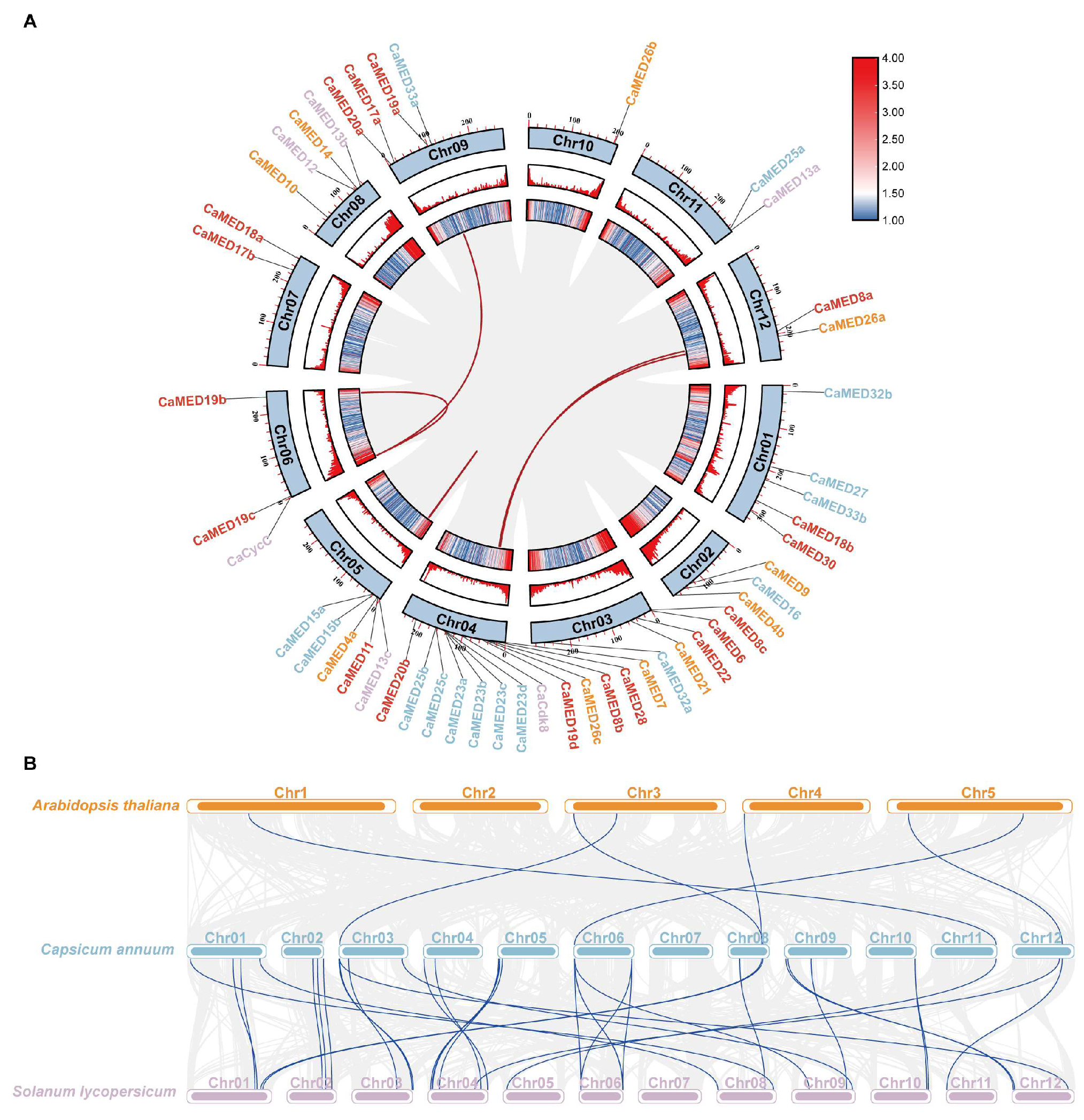
To clarify the expansion characteristics and evolutionary conservation of the pepper CaMED family, synteny analyses were conducted within pepper and among different species. In the pepper genome, five pairs of syntenic CaMED genes were identified (Figure 3A), including CaMED8a/CaMED8b, CaMED26a/CaMED26c, CaMED15a/CaMED15b, CaMED19b/CaMED19c, and CaMED19a/CaMED19c. Gene duplication classification showed that dispersed duplication and singleton genes were the predominant duplication types among CaMED family members (Table S3), suggesting that gene duplication events contributed to the retention and evolution of some CaMED genes. Interspecific synteny analysis identified 35 homologous syntenic gene pairs between pepper and tomato, whereas only 6 such pairs were detected between pepper and Arabidopsis (Figure 3B). These results suggest stronger conservation of the CaMED family between closely related Solanaceae species.

3.4. Analysis of Cis-Acting Elements in CaMED Gene Promoters

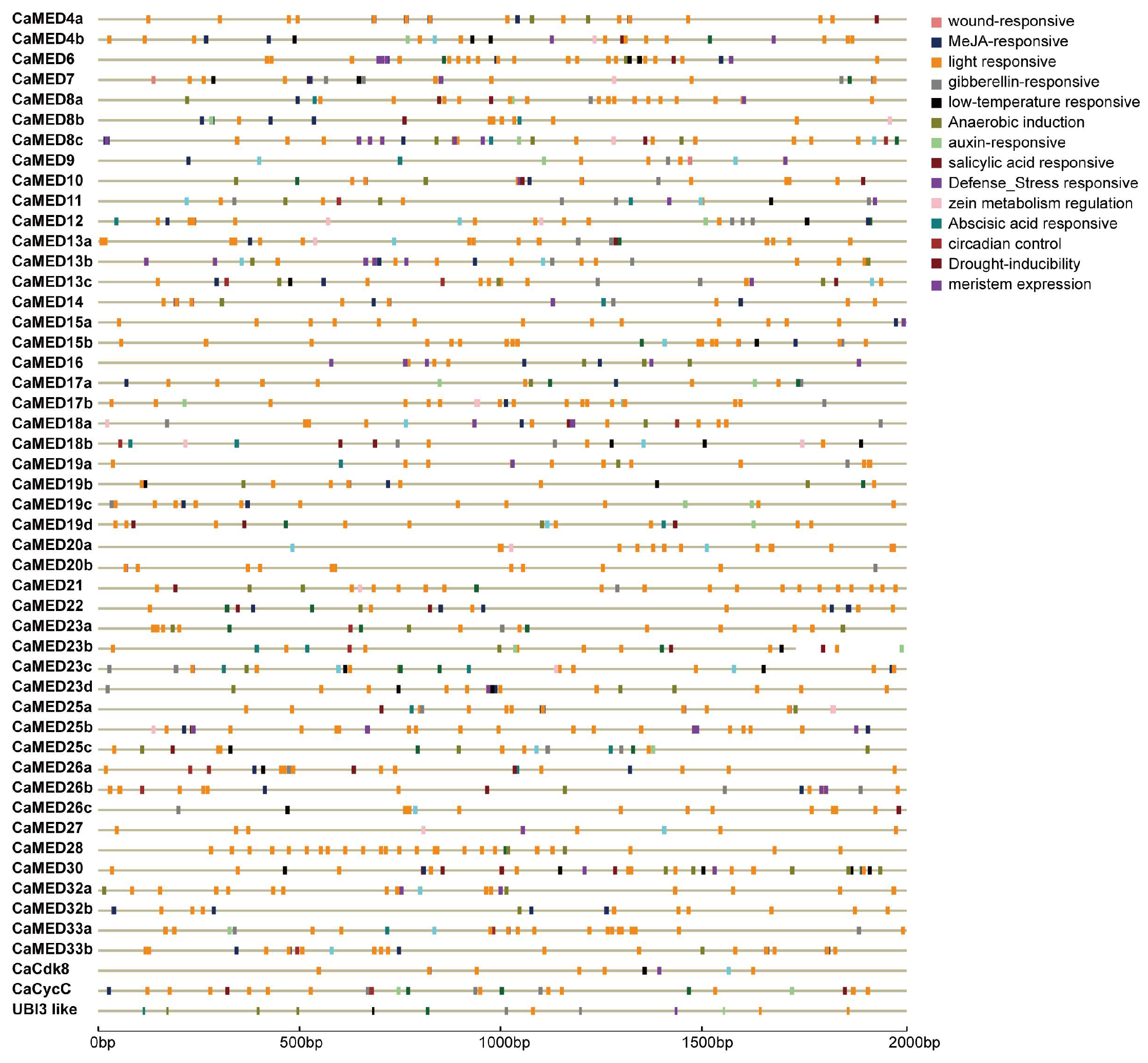
To investigate the potential transcriptional regulatory mechanisms of CaMED genes and assess their possible roles in hormone signaling and abiotic stress responses, cis-acting elements in their promoter regions were analyzed. Cis-acting elements were predicted within the 2-kb upstream promoter regions of the 49 CaMED genes. The analysis revealed that the promoters of CaMED family members contained abundant elements related to light response, phytohormone signaling, and stress regulation (Figure 4). Among these elements, light-responsive motifs showed the broadest distribution and were detected in all CaMED promoters. The hormone-related elements were mainly associated with abscisic acid, methyl jasmonate, auxin, salicylic acid, and gibberellin responses. Stress-associated motifs primarily included elements related to low-temperature response, drought response, and defense/stress regulation.
Overall, diverse cis-acting elements were distributed throughout the promoter regions of CaMED genes, but their number and composition varied considerably among different members. For example, the CaMED25a promoter contained 13 light-responsive elements, 4 methyl jasmonate-responsive elements, 4 abscisic acid-responsive elements, 1 gibberellin-responsive element, and 1 drought-responsive element. It also contained anaerobic induction and circadian rhythm-related elements. These cis-acting elements suggest potential roles of CaMED25a in responses to light, phytohormone signaling, and abiotic stresses; however, their biological functions require further experimental validation. In contrast, the CaMED25b promoter contained 22 light-responsive elements, 6 abscisic acid-responsive elements, and 6 methyl jasmonate-responsive elements, whereas the CaMED25c promoter lacked methyl jasmonate- and abscisic acid-responsive elements.

3.5. Transcriptome-Based Tissue-Specific Expression Patterns of CaMED Genes

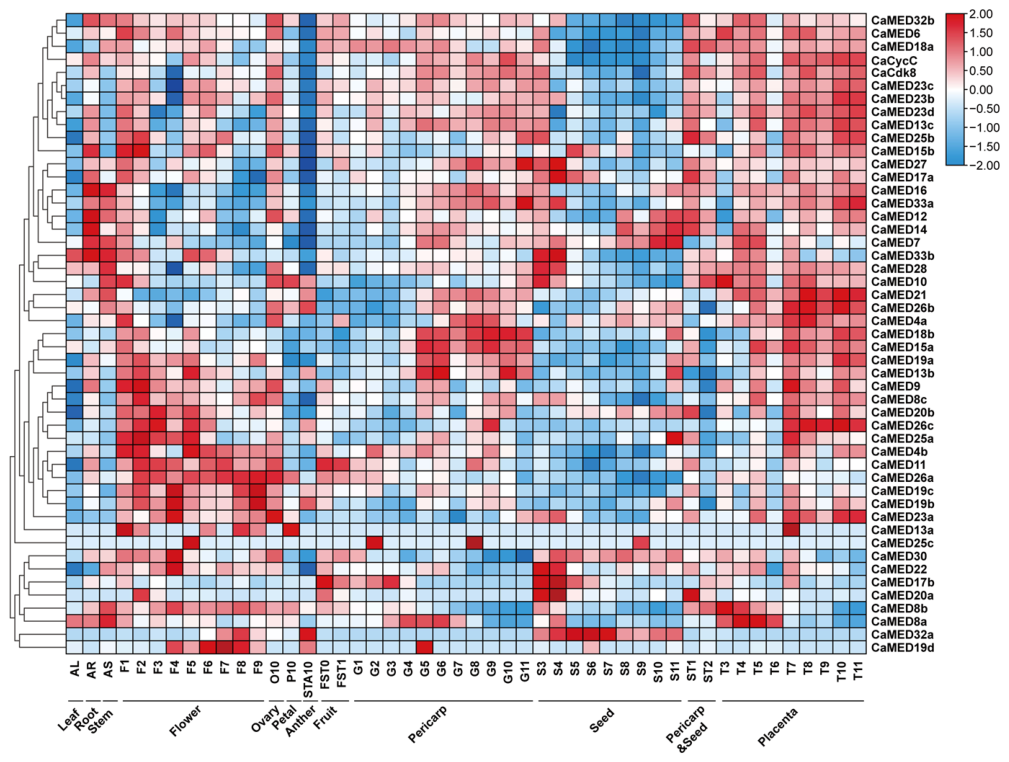
To investigate the tissue-specific expression patterns of CaMED genes, publicly available transcriptome datasets were retrieved from the PepperHub database and analyzed across 48 tissues, including roots, stems, leaves, flowers, ovaries, petals, anthers, fruits, pericarps, seeds, and placentas at different developmental stages (Figure 5). The results showed that CaMED genes exhibited substantial differences in expression levels among tissues, indicating strong spatiotemporal expression specificity. Overall, most CaMED members showed relatively high expression during early flower development (F1-F2) and late placenta development (T7-T11). In leaves, only CaMED33a and CaMED8a showed relatively high expression levels, whereas most other members were expressed at low levels, suggesting that this gene family may be closely associated with the growth and development of reproductive organs in pepper. In addition, several members showed clear tissue-preferential expression. For instance, CaMED32a was highly expressed in seeds, CaMED25a maintained high expression throughout early flower development (F1-F5), whereas CaMED25c showed low expression levels in most tissues. These results indicate that CaMED gene family members exhibit marked expression divergence among different tissues, suggesting that they may perform diverse biological functions during pepper growth and development.

3.6. Transcriptome-Based Analysis of Heat-Responsive Expression Patterns of CaMED Genes

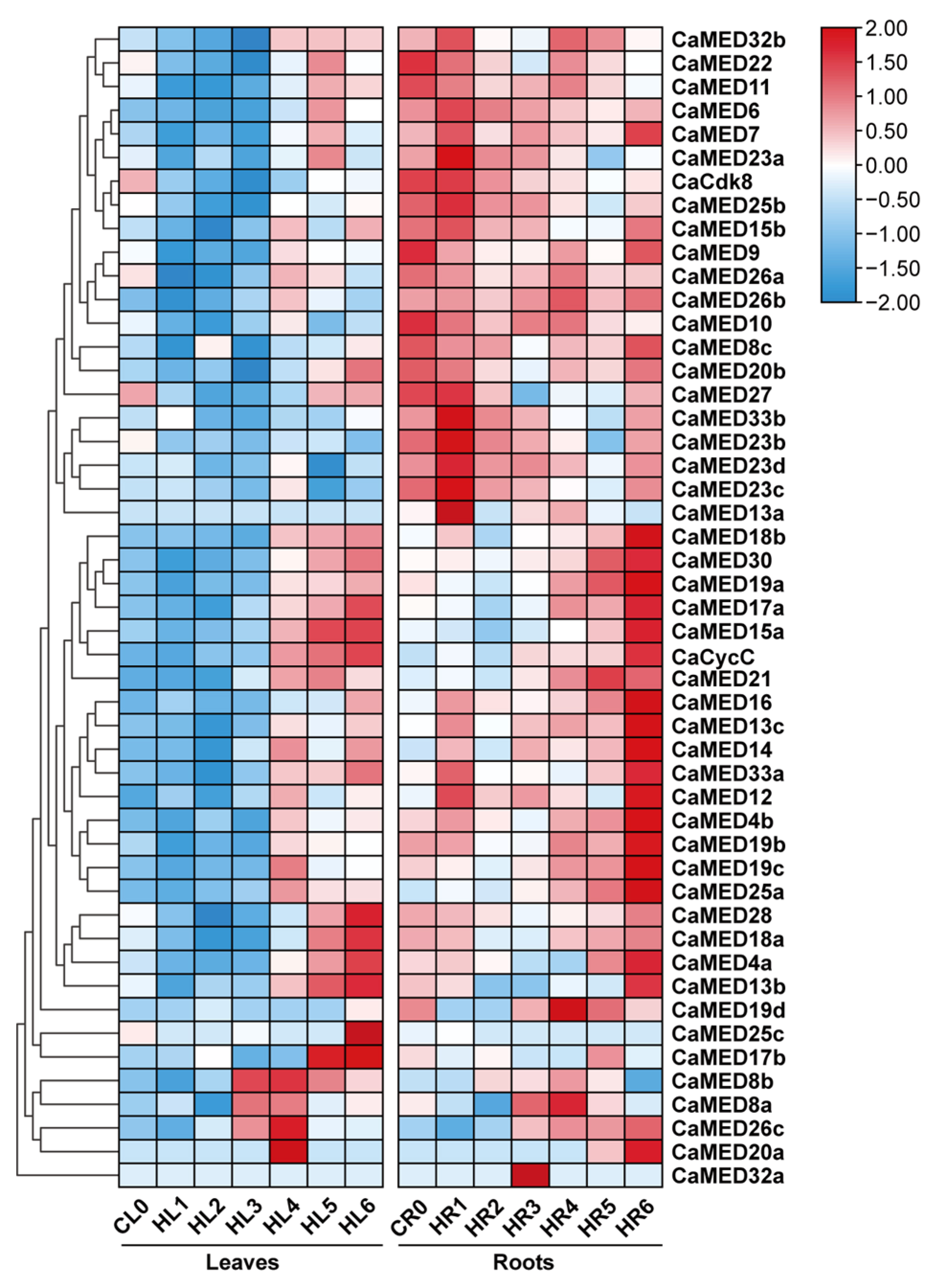
To assess the heat responsiveness of the CaMED gene family, publicly available heat-stress transcriptome datasets retrieved from the PepperHub database were analyzed. The datasets included pepper leaves and roots sampled at 1, 1.5, 3, 6, 12, and 24 h after heat treatment (Figure 6). The results showed that CaMED gene family members exhibited distinct tissue-specific responses to heat stress. In leaves, most CaMED genes showed increased expression after heat treatment, except for CaMED13a and CaMED32a, which exhibited only minor changes in expression. In roots, however, different members displayed more variable response patterns, with both upregulated and downregulated expression observed.
Notably, CaMED4a, CaMED18a, CaMED25a, CaMED19c, CaMED19b, CaMED4b, CaMED12, CaMED33a, CaMED14, CaMED13c, CaMED16, CaMED21, CaCycC, CaMED15a, CaMED17a, CaMED19a, CaMED30, and CaMED18b showed increased expression in both leaves and roots following heat treatment. These results indicate that CaMED genes are generally responsive to heat stress, although their response patterns differ among family members. The heat-induced expression of several CaMED genes in both aboveground and belowground tissues further indicates their potential involvement in pepper heat-stress responses.

3.7. RT-qPCR Validation of Heat-Responsive CaMED Genes and Subcellular Localization of CaMED25a

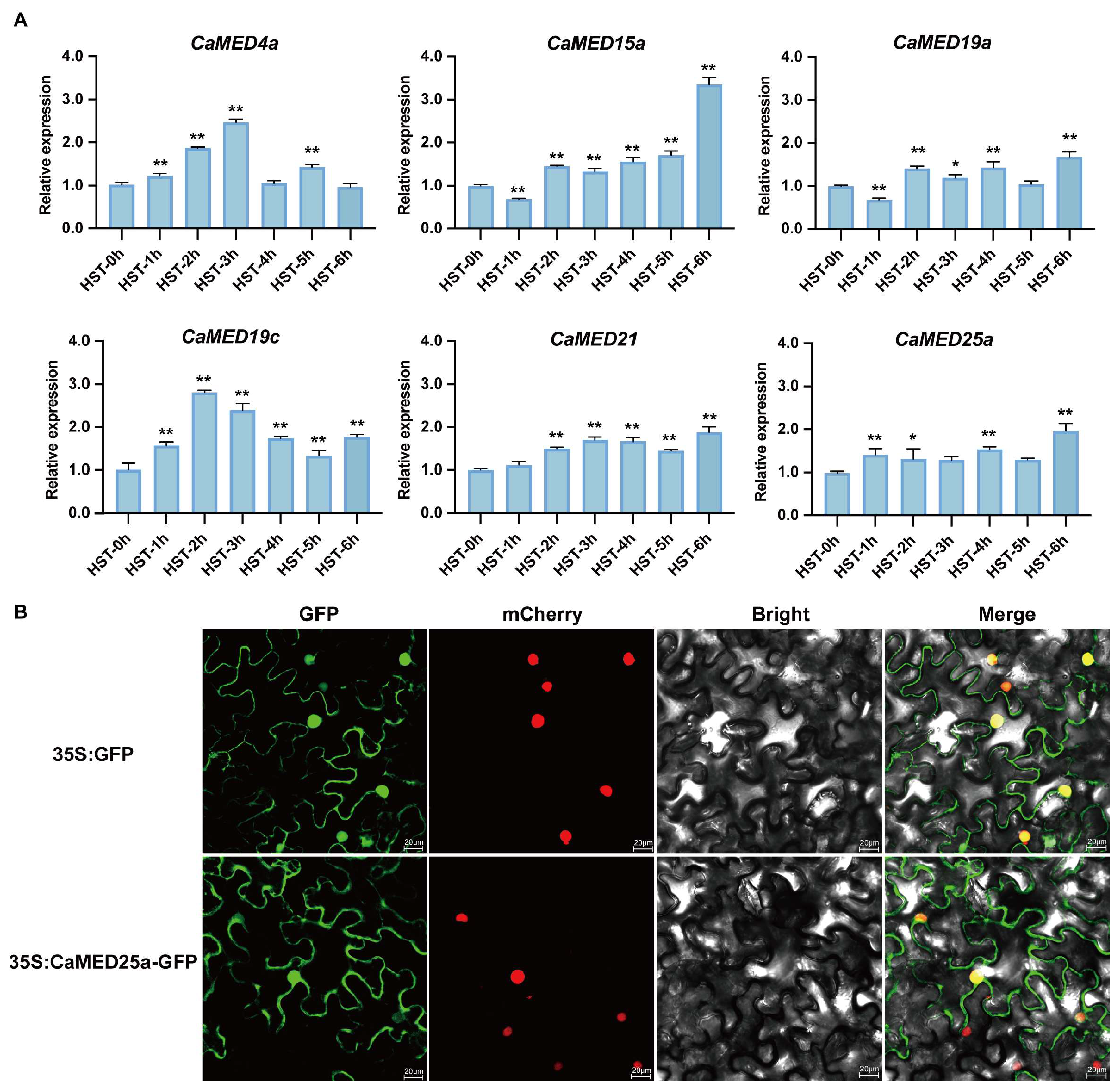
To validate the transcriptome-based expression patterns and identify key CaMED genes associated with heat-stress responses, six candidate genes induced in both leaves and roots according to transcriptome analysis were selected for RT-qPCR validation. Leaf samples were collected after 42 °C treatment for 1, 2, 3, 4, 5, and 6 h (Figure 7A). The results showed that CaMED4a, CaMED15a, CaMED19a, CaMED19c, CaMED21, and CaMED25a were induced to varying degrees after heat treatment, and their expression trends were generally consistent with the transcriptome data. Although the transcriptome data were derived from publicly available datasets generated from a different pepper cultivar than that used for RT-qPCR validation, the two approaches showed broadly consistent expression trends, suggesting that these candidate genes exhibit relatively stable responses to heat stress. Among these genes, CaMED25a showed significant induction at several heat-treatment time points, indicating a strong transcriptional response to heat stress. Therefore, CaMED25a was chosen as a candidate gene for subsequent functional analyses.
To gain insight into its potential biological function and determine whether it is localized in cellular compartments associated with transcriptional regulation, the subcellular localization of CaMED25a was further analyzed. The 35S: CaMED25a-GFP fusion protein produced clear fluorescence signals in both the nucleus and plasma membrane of Nicotiana benthamiana leaf cells (Figure 7B), indicating that CaMED25a is localized to the nucleus and plasma membrane.

3.8. Effects of Transient CaMED25a Silencing on Heat Stress Tolerance in Pepper

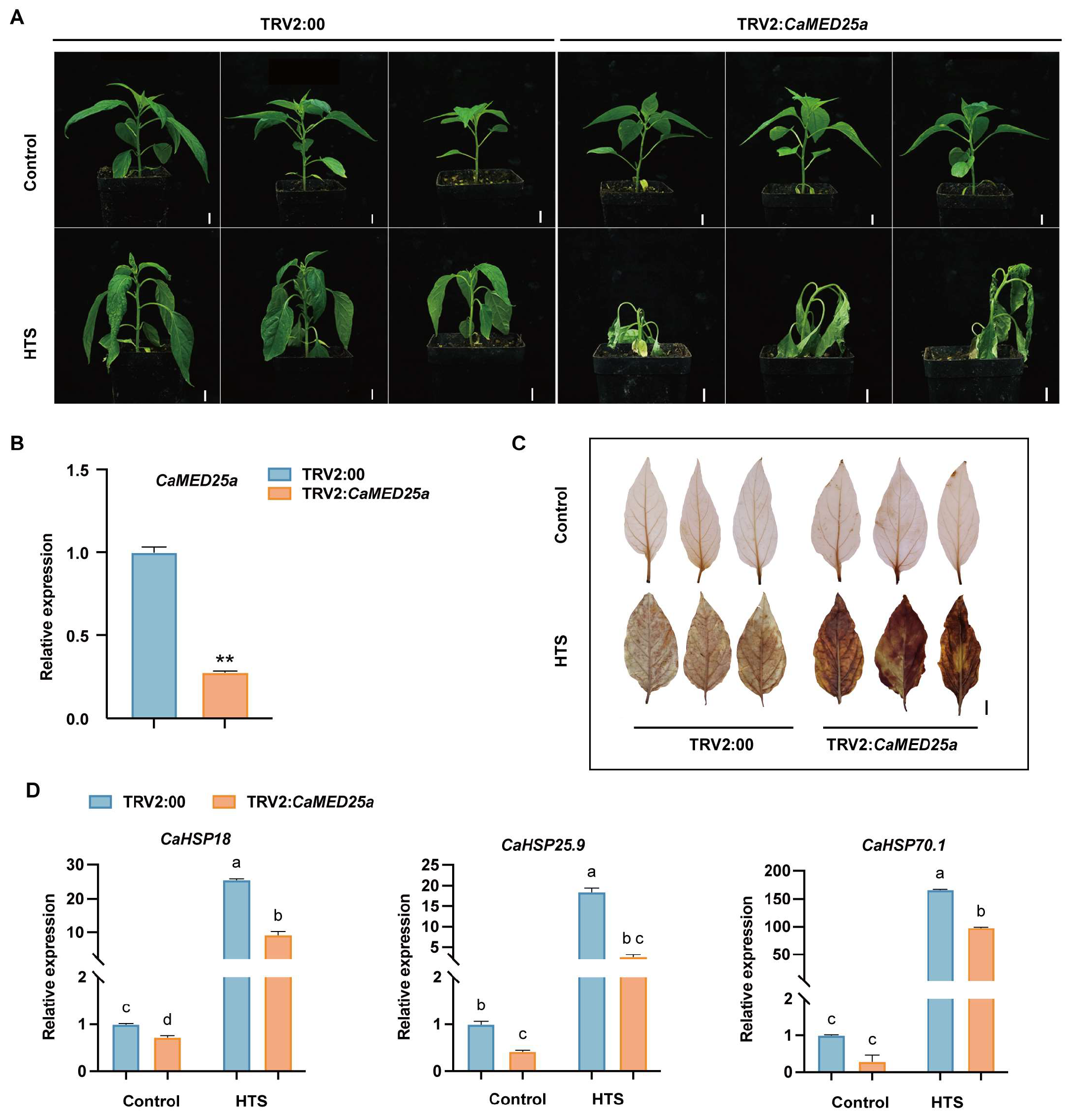
Based on the transcriptome analysis and RT-qPCR validation described above, CaMED25a was selected for further functional characterization because it displayed a strong and relatively stable response to heat stress. To determine whether CaMED25a contributes to pepper heat-stress tolerance, its expression was transiently suppressed using virus-induced gene silencing (VIGS). Silenced plants and corresponding controls at the same developmental stage were subsequently exposed to 42 °C. Compared with the TRV2:00 control, TRV2:CaMED25a plants exhibited more severe injury symptoms after heat stress treatment, indicating enhanced heat sensitivity (Figure 8A). RT-qPCR analysis confirmed that the transcript abundance of CaMED25a was significantly lower in TRV2:CaMED25a plants than in TRV2:00 plants, demonstrating effective gene silencing (Figure 8B). Further analysis showed that H2O2 accumulation was markedly increased in the leaves of TRV2:CaMED25a plants after heat stress (Figure 8C). Meanwhile, the heat defense-related genes CaHSP18, CaHSP25.9, and CaHSP70.1 showed suppressed induction under heat stress (Figure 8D). These results indicate that silencing CaMED25a reduces heat tolerance in pepper, supporting its positive role in regulating heat-stress responses.

4. Discussion

The Mediator complex acts as an important transcriptional co-regulator in plants and participates in a wide range of biological processes, including organ development, hormone responses, and stress responses [43,44]. Although genome-wide identification and characterization of MED genes have been reported in several plant species, such as Arabidopsis, rice, and tomato [23,24], information on this gene family in pepper remains limited. As an important horticultural crop, pepper is sensitive to heat stress, which can adversely affect plant growth, development, and yield formation [45]. In the present study, the pepper CaMED gene family was identified at the genome-wide level for the first time. Its family characteristics, promoter cis-acting elements, tissue-specific expression patterns, and heat stress-responsive transcriptional profiles were comprehensively analyzed to preliminarily insights into the potential roles of CaMED genes in pepper development and heat stress responses.

4.1. Characteristics and Evolutionary Analysis of the CaMED Gene Family

The Mediator complex is highly conserved during eukaryotic evolution and consists of multiple functionally specialized subunits [46]. To date, 54, 55, and 46 genes encoding MED subunits have been reported in rice, Arabidopsis, and tomato, respectively [23,24]. In this study, 49 CaMED genes were identified in pepper, and their modular classification was largely consistent with that reported in other plant species. These findings indicate that the general composition of the pepper MED family has remained relatively conserved, despite interspecific differences in the number of MED members.
In terms of structural characteristics, CaMED genes showed considerable differences in exon number, protein length, and theoretical isoelectric point, indicating structural diversity within this gene family. Comparable patterns have also been observed in MED gene families of tomato, cassava, and asparagus bean, where different members show substantial variation in exon–intron organization, protein length, and molecular weight [24,47,48]. These results further suggest that although the MED gene family maintains a relatively stable core composition, its members have undergone structural divergence to varying degrees.
Phylogenetic analysis showed that most MED proteins from pepper, Arabidopsis, and tomato clustered with their corresponding homologous clades (Figure 2), indicating a high degree of homology and evolutionary conservation among MED proteins across species, which is consistent with previous reports [23]. However, some members belonging to the same module were phylogenetically distant from one another (Figure 2), suggesting that partial sequence divergence has occurred among specific MED members. Duplication and synteny analyses identified only five pairs of intraspecific syntenic CaMED genes in pepper (Figure 3). In addition, dispersed duplication and singleton genes represented the predominant duplication categories, suggesting that the expansion of the CaMED family was not primarily driven by large-scale duplication events. Interspecific synteny analysis further indicated that the CaMED family is more conserved between closely related Solanaceae species. Overall, the CaMED family is evolutionarily conserved but exhibits partial divergence, suggesting that different CaMED members may have distinct roles in pepper growth, development, and stress responses.

4.2. Expression Characteristics and Functional Divergence of CaMED Genes

Promoter cis-element profiling is useful for inferring gene function from the perspective of transcriptional regulation. In this study, CaMED family members contained abundant elements associated with light response, phytohormone signaling, and stress regulation. Notably, light-responsive elements were identified in all CaMED promoters, indicating their potential responsiveness to light-related signals. Previous studies have shown that MED subunits participate in light-associated regulatory pathways. For example, Arabidopsis MED25/PFT1 regulates FT expression through the phytochrome signaling pathway [49,50]. MED18 also cooperates with HY5 to regulate anthocyanin accumulation under high light conditions [51]. These studies provide a useful framework for investigating the potential roles of CaMED genes in light-responsive processes in pepper. In addition, CaMED promoters commonly contained phytohormone-responsive elements related to ABA, MeJA, IAA, and GA, as well as stress-responsive elements associated with drought and other stresses. Previous reports have demonstrated that MED subunits participate broadly in hormone- and stress-related regulatory processes. For example, RhMED15A participates in drought stress responses in rose through ABA- and MeJA-related pathways [52]. In this study, the promoters of CaMED15a and CaMED15b were also enriched in ABA-responsive, MeJA- responsive, and stress-related elements, suggesting that they may have similar functions in pepper. Overall, the cis-element composition of CaMED promoters suggests potential roles in growth, development, and stress responses in pepper; however, these predictions require further experimental validation.
Tissue expression profiling further revealed distinct expression patterns of CaMED family members across different organs and developmental stages in pepper. Most CaMED members were highly expressed during early flower development and late placenta development, suggesting that this gene family may be closely associated with reproductive organ development in pepper. Previous reports indicate that MED18 participates in floral organ formation and flowering-time control in Arabidopsis [53]. MED25/PFT1 negatively regulates floral organ size by modulating cell proliferation and cell expansion [54]. These findings provide a useful framework for exploring the potential roles of CaMED genes in reproductive development. Furthermore, CaMED8a showed relatively high expression in leaves, and MED8 has been reported to regulate leaf thickness and leaf number in tobacco [55], suggesting that CaMED8a may have a similar role in vegetative organ development in pepper. Taken together, the differential expression patterns of CaMED family members in different tissues suggest that they may perform distinct biological functions during pepper growth and development.
Heat stress is an important environmental constraint affecting pepper growth, development, and yield formation. Therefore, analyzing heat-responsive patterns at the gene family level is important for identifying key regulatory factors and elucidating the molecular mechanisms underlying heat tolerance. Previous studies have shown that Mediator subunits participate in both heat-stress responses and thermomorphogenesis in plants. In Arabidopsis, MED14 and MED17 participate in heat-induced transcriptional reprogramming and act as coactivators of heat-induced gene expression, and their mutants usually exhibit heat-sensitive phenotypes [19]. MED14 also cooperates with PIF4 to regulate hypocotyl elongation under high temperature conditions [56]. In the present study, the pepper CaMED family also showed clear responses to heat stress, but the response patterns differed among tissues. In leaves, most CaMED members were mainly upregulated after heat treatment, whereas both upregulated and downregulated patterns were observed in roots. The generally consistent expression trends obtained from public transcriptome datasets and RT-qPCR validation suggest that several CaMED genes may participate in pepper heat-stress responses. Notably, MED25 family members have been reported to play important roles in plant responses to environmental stimuli and abiotic stresses [57,58]. Similar to conclusions reported in previous studies, CaMED25a, which may also participate in abiotic stress responses, exhibited a pronounced heat-responsive expression pattern, supporting its potential involvement in regulating heat-stress responses in pepper.

4.3. CaMED25a Participates in Heat Stress Tolerance Regulation in Pepper

Based on the heat stress expression profiles and RT-qPCR validation results described above, CaMED25a was selected as a key candidate gene involved in the pepper heat stress response. Functional validation using VIGS showed that silencing CaMED25a increased heat sensitivity in pepper plants under high-temperature conditions, indicating that CaMED25a participates in the regulation of heat stress tolerance. Previous studies have shown that Arabidopsis MED25 promotes YUCCA8 transcription under high-temperature conditions by interacting with PIF4 and HDA9, thereby promoting hypocotyl elongation [58]. In contrast to previous reports in which MED25 was mainly associated with thermomorphogenesis, our results indicate that CaMED25a contributes importantly to heat stress tolerance in pepper. This finding indicates that MED25 homologs may not only participate in temperature-induced morphological regulation but also contribute to plant adaptation to heat stress, suggesting functional divergence in different plant backgrounds.
Heat stress generally induces excessive production of reactive oxygen species (ROS), which may subsequently cause cellular injury. Previous studies have shown that CaWRKY27 regulates heat tolerance in pepper through an H2O2-related pathway, further supporting the importance of ROS homeostasis in pepper heat stress responses [59]. In this study, DAB staining showed that H2O2 accumulation was markedly increased in CaMED25a-silenced plants after heat stress, consistent with their heat-sensitive phenotype. Meanwhile, the heat-induced transcription of heat defense-related genes, including CaHSP18, CaHSP25.9, and CaHSP70.1, was inhibited in CaMED25a-silenced plants. Previous studies have shown that pepper HSP family members are involved in heat stress responses and contribute to protein homeostasis and thermotolerance [60,61,62]. Therefore, CaMED25a may improve heat stress tolerance in pepper by maintaining ROS homeostasis and promoting the expression of heat defense-related genes. However, the current results do not determine whether CaMED25a directly regulates the expression of CaHSP18, CaHSP25.9, and CaHSP70.1. Given that Mediator subunits usually function as transcriptional coactivators by interacting with specific transcription factors to regulate gene transcription [4], we hypothesize that CaMED25a may enhance pepper thermotolerance through interactions with heat-responsive transcription factors, such as HSFs, thereby facilitating the activation of downstream heat defense genes and ROS-scavenging pathways. This hypothesis is supported by the reduced expression of heat-responsive genes and increased H2O2 accumulation observed in CaMED25a-silenced plants. Future studies combining protein–protein interaction analyses, transcriptome profiling, and target-gene identification will help test this hypothesis and elucidate the molecular mechanism underlying heat-stress responses mediated by the CaMED25a protein in pepper.

5. Conclusions

In the present study, the pepper CaMED gene family was identified and systematically characterized at the genome-wide level for the first time. A total of 49 CaMED members were obtained, and their chromosomal localization, gene organization, physicochemical characteristics, phylogenetic relationships, syntenic associations, promoter cis-acting elements, tissue expression patterns, and heat-responsive features were comprehensively analyzed using publicly available genomic and transcriptomic datasets. The results showed that the CaMED family is highly conserved during evolution, while different members exhibit clear divergence in structural features, regulatory element composition, and expression patterns. Expression analysis indicated that the CaMED family may participate broadly in pepper growth, development, and heat stress responses. Furthermore, experimental analyses, including RT-qPCR expression profiling and VIGS-mediated functional validation, demonstrated that CaMED25a is involved in regulating heat stress tolerance in pepper. Silencing CaMED25a decreased heat tolerance, enhanced H2O2 accumulation, and suppressed the transcription of heat defense-related genes. Overall, this study provides an important reference for understanding the composition, evolutionary relationships, and functional divergence of the pepper CaMED gene family, while also offering a theoretical basis for future studies on the molecular regulation of heat stress responses in pepper.

Supplementary Materials

The following supporting information can be downloaded at: https://www.mdpi.com/article/10.3390/horticulturae12070772/s1, Figure S1: Gene structure analysis of pepper CaMED genes; Table S1: Primer information used in this study; Table S2: Summary of CaMED gene information in pepper; Table S3: Duplication types and intragenomic duplicated gene pairs of the CaMED family.

Author Contributions

Conceptualization, methodology, data curation, and writing—original draft preparation, H.Y.; methodology and investigation, B.T. and Z.J.; formal analysis, Q.Y.; data curation, J.D.; funding acquisition and resources, C.X.; project administration, supervision, funding acquisition, and writing—review and editing, F.L. and X.Z. All authors have read and agreed to the published version of the manuscript.

Funding

This work was funded by the National Natural Science Foundation of China (Grant Nos. 32341047 and U22A20497).

Data Availability Statement

The data supporting the findings of this study are available within the article and its Supplementary Materials. Additional relevant data are available from the corresponding author upon reasonable request, subject to the data management and authorization rules of the corresponding author’s institution.

Acknowledgments

The authors thank the Hunan Agricultural University Pepper Research Team for providing the pepper material ‘Zhangshugang’ used in this study. The authors also acknowledge PepperHub for providing publicly available genomic and transcriptomic resources for pepper research. During the preparation of this manuscript, the authors used ChatGPT (OpenAI, GPT-5.5 Thinking) for language polishing. The authors have reviewed and edited the output and take full responsibility for the content of this publication.

Conflicts of Interest

The authors declare no conflicts of interest.

References

  1. Kornberg, R.D. Mediator and the Mechanism of Transcriptional Activation. Trends Biochem. Sci. 2005, 30, 235–239. [Google Scholar] [CrossRef] [PubMed]
  2. Dotson, M.R.; Yuan, C.X.; Roeder, R.G.; Myers, L.C.; Gustafsson, C.M.; Jiang, Y.W.; Li, Y.; Kornberg, R.D.; Asturias, F.J. Structural Organization of Yeast and Mammalian Mediator Complexes. Science 2000, 97, 14307–14310. [Google Scholar] [CrossRef] [PubMed]
  3. Yang, Y.; Li, L.; Qu, L.-J. Plant Mediator Complex and Its Critical Functions in Transcription Regulation. J. Integr. Plant Biol. 2016, 58, 106–118. [Google Scholar] [CrossRef] [PubMed]
  4. Freytes, S.N.; Gobbini, M.L.; Cerdán, P.D. The Plant Mediator Complex in the Initiation of Transcription by RNA Polymerase II. Annu. Rev. Plant Biol. 2024, 75, 211–237. [Google Scholar] [CrossRef] [PubMed]
  5. Taatjes, D.J.; Näär, A.M.; Andel, F.; Nogales, E.; Tjian, R. Structure, Function, and Activator-Induced Conformations of the CRSP Coactivator. Science 2002, 295, 1058–1062. [Google Scholar] [CrossRef] [PubMed]
  6. Verger, A.; Monté, D.; Villeret, V. Twenty Years of Mediator Complex Structural Studies. Biochem. Soc. Trans. 2019, 47, 399–410. [Google Scholar] [CrossRef] [PubMed]
  7. Xu, R.; Chong, L.; Zhu, Y. Mediator Kinase Subunit CDK8 Phosphorylates Transcription Factor TCP15 during Tomato Pollen Development. Plant Physiol. 2024, 195, 865–878. [Google Scholar] [CrossRef] [PubMed]
  8. Lai, Z.; Schluttenhofer, C.M.; Bhide, K.; Shreve, J.; Thimmapuram, J.; Lee, S.Y.; Yun, D.-J.; Mengiste, T. MED18 Interaction with Distinct Transcription Factors Regulates Multiple Plant Functions. Nature 2023, 5, 3064. [Google Scholar] [CrossRef] [PubMed]
  9. Wu, Q.; Tong, C.; Chen, Z.; Huang, S.; Zhao, X.; Hong, H.; Li, J.; Feng, M.; Wang, H.; Xu, M.; et al. NLRs Derepress MED10b- and MED7-Mediated Repression of Jasmonate-Dependent Transcription to Activate Immunity. Proc. Natl. Acad. Sci. USA 2023, 120, e2302226120. [Google Scholar] [CrossRef] [PubMed]
  10. Chen, J.; Yang, S.; Fan, B.; Zhu, C.; Chen, Z. The Mediator Complex: A Central Coordinator of Plant Adaptive Responses to Environmental Stresses. Int. J. Mol. Sci. 2022, 23, 6170. [Google Scholar] [CrossRef] [PubMed]
  11. Elfving, N.; Davoine, C.; Benlloch, R.; Blomberg, J.; Brännström, K.; Müller, D.; Nilsson, A.; Ulfstedt, M.; Ronne, H.; Wingsle, G.; et al. The Arabidopsis thaliana Med25 Mediator Subunit Integrates Environmental Cues to Control Plant Development. Proc. Natl. Acad. Sci. USA 2011, 108, 8245–8250. [Google Scholar] [CrossRef] [PubMed]
  12. Liang, L.; Sui, X.; Xiao, J.; Tang, W.; Song, X.; Xu, Z.; Wang, D.; Xie, M.; Sun, B.; Tang, Y.; et al. ERD14 Regulation by the HY5- or HY5-MED2 Module Mediates the Cold Signal Transduction of Asparagus Bean. Plant J. 2025, 121, e17172. [Google Scholar] [CrossRef] [PubMed]
  13. He, H.; Denecker, J.; Van Der Kelen, K.; Willems, P.; Pottie, R.; Phua, S.Y.; Hannah, M.A.; Vertommen, D.; Van Breusegem, F.; Mhamdi, A. The Arabidopsis Mediator Complex Subunit 8 Regulates Oxidative Stress Responses. Plant Cell 2021, 33, 2032–2057. [Google Scholar] [CrossRef] [PubMed]
  14. Janni, M.; Gullì, M.; Maestri, E.; Marmiroli, M.; Valliyodan, B.; Nguyen, H.T.; Marmiroli, N. Molecular and Genetic Bases of Heat Stress Responses in Crop Plants and Breeding for Increased Resilience and Productivity. Horticulturae 2020, 71, 3780–3802. [Google Scholar] [CrossRef] [PubMed]
  15. Hayes, S.; Schachtschabel, J.; Mishkind, M.; Munnik, T.; Arisz, S.A. Hot Topic: Thermosensing in Plants. Nucleic Acids Res. 2021, 44, 2018–2033. [Google Scholar] [CrossRef] [PubMed]
  16. Fragkostefanakis, S.; Röth, S.; Schleiff, E.; Scharf, K.-D. Prospects of Engineering Thermotolerance in Crops through Modulation of Heat Stress Transcription Factor and Heat Shock Protein Networks. Horticulturae 2014, 38, 1881–1895. [Google Scholar] [CrossRef] [PubMed]
  17. Mlynárová, L.; Nap, J.-P.; Bisseling, T. The SWI/SNF Chromatin-remodeling Gene AtCHR12 Mediates Temporary Growth Arrest in Arabidopsis Thaliana upon Perceiving Environmental Stress. Plant J. 2007, 51, 874–885. [Google Scholar] [CrossRef] [PubMed]
  18. Agrawal, R.; Sharma, M.; Dwivedi, N.; Maji, S.; Thakur, P.; Junaid, A.; Fajkus, J.; Laxmi, A.; Thakur, J.K. MEDIATOR SUBUNIT17 Integrates Jasmonate and Auxin Signaling Pathways to Regulate Thermomorphogenesis. Plant Physiol. 2022, 189, 2259–2280. [Google Scholar] [CrossRef] [PubMed]
  19. Ohama, N.; Moo, T.L.; Chua, N.-H. Differential Requirement of MED14/17 Recruitment for Activation of Heat Inducible Genes. New Phytol. 2020, 229, 3360–3376. [Google Scholar] [CrossRef] [PubMed]
  20. Crawford, T.; Siebler, L.; Sulkowska, A.; Nowack, B.; Jiang, L.; Pan, Y.; Lämke, J.; Kappel, C.; Bäurle, I. The Mediator Kinase Module Enhances Polymerase Activity to Regulate Transcriptional Memory after Heat Stress in Arabidopsis. EMBO J. 2024, 43, 437–461. [Google Scholar] [CrossRef] [PubMed]
  21. Lamesch, P.; Berardini, T.Z.; Li, D.; Swarbreck, D.; Wilks, C.; Sasidharan, R.; Muller, R.; Dreher, K.; Alexander, D.L.; Garcia-Hernandez, M.; et al. Growing Environment and Heat Treatment Effects on Intra- and Interspecific Pollination in Chile Pepper (Capsicum spp.). Agronomy 2021, 11, 1275. [Google Scholar] [CrossRef]
  22. Sajjad, N.; Kang, Y.; Khattak, M.; Lu, M. Molecular Cascades of Heat Stress Responses in Solanaceae with Emphasis on Capsicum Annuum L., Integrating Heat Shock Transcription Factors and Proteins. Horticulturae 2025, 11, 1038. [Google Scholar] [CrossRef]
  23. Fondell, J.D.; Ge, H.; Roeder, R.G.; Hasan, A.S.M.M.; Vander Schoor, J.K.; Hecht, V.; Weller, J.L.; van Rongen, M.; Bennett, T.; Ticchiarelli, F.; et al. The Mediator Complex in Plants: Structure, Phylogeny, and Expression Profiling of Representative Genes in a Dicot (Arabidopsis) and a Monocot (Rice) during Reproduction and Abiotic Stress. Plant Physiol. 2011, 157, 1609–1627. [Google Scholar] [CrossRef] [PubMed]
  24. Wang, Y.; Liang, H.; Chen, G.; Liao, C.; Wang, Y.; Hu, Z.; Xie, Q. Molecular and Phylogenetic Analyses of the Mediator Subunit Genes in Solanum lycopersicum. Front. Genet. 2019, 10, 1222. [Google Scholar] [CrossRef] [PubMed]
  25. Xue, D.; Guo, N.; Zhang, X.-L.; Zhao, J.-M.; Bu, Y.-P.; Jiang, D.-L.; Wang, X.-T.; Wang, H.-T.; Guan, R.-Z.; Xing, H. Genome-Wide Analysis Reveals the Role of Mediator Complex in the Soybean—Phytophthora sojae Interaction. Int. J. Mol. Sci. 2019, 20, 4570. [Google Scholar] [CrossRef]
  26. Liu, F.; Zhao, J.; Sun, H.; Xiong, C.; Sun, X.; Wang, X.; Wang, Z.; Jarret, R.; Wang, J.; Tang, B.; et al. Genomes of Cultivated and Wild Capsicum Species Provide Insights into Pepper Domestication and Population Differentiation. Nat. Commun. 2023, 14, 5487. [Google Scholar] [CrossRef] [PubMed]
  27. Mistry, J.; Chuguransky, S.; Williams, L.; Qureshi, M.; Salazar, G.A.; Sonnhammer, E.L.L.; Tosatto, S.C.E.; Paladin, L.; Raj, S.; Richardson, L.J.; et al. Pfam: The Protein Families Database in 2021. Nucleic Acids Res. 2021, 49, D412–D419. [Google Scholar] [CrossRef]
  28. Tamura, K.; Stecher, G.; Kumar, S.; Sigrist, C.J.A.; de Castro, E.; Cerutti, L.; Cuche, B.A.; Hulo, N.; Bridge, A.; Bougueleret, L.; et al. New and Continuing Developments at PROSITE. Nucleic Acids Res. 2012, 41, D344–D347. [Google Scholar] [CrossRef] [PubMed]
  29. Letunic, I.; Bork, P. 20 Years of the SMART Protein Domain Annotation Resource. Nucleic Acids Res. 2017, 46, D493–D496. [Google Scholar] [CrossRef] [PubMed]
  30. Duvaud, S.; Gabella, C.; Lisacek, F.; Stockinger, H.; Ioannidis, V.; Durinx, C. Expasy, the Swiss Bioinformatics Resource Portal, as Designed by Its Users. Nucleic Acids Res. 2021, 49, W216–W227. [Google Scholar] [CrossRef] [PubMed]
  31. Chou, K.-C.; Shen, H.-B. Plant-mPLoc: A Top-Down Strategy to Augment the Power for Predicting Plant Protein Subcellular Localization. PLoS ONE 2010, 5, e11335. [Google Scholar] [CrossRef] [PubMed]
  32. Tamura, K.; Stecher, G.; Kumar, S. MEGA11: Molecular Evolutionary Genetics Analysis Version 11. Mol. Biol. Evol. 2021, 38, 3022–3027. [Google Scholar] [CrossRef] [PubMed]
  33. Letunic, I.; Bork, P. Interactive Tree of Life (iTOL) v5: An Online Tool for Phylogenetic Tree Display and Annotation. Nucleic Acids Res. 2021, 49, W293–W296. [Google Scholar] [CrossRef] [PubMed]
  34. Tang, B.; Xie, L.; Li, X.; Yang, H.; Liu, Y.; Cheng, X.; Liang, C.; Chen, J.; Zhou, S.; Wang, D.; et al. Novel Structural Annotation and Functional Expression Analysis of GTP_EFTU Conserved Genes in Pepper Based on the PacBio Sequencing Data. Hortic. Plant J. 2021, 7, 443–456. [Google Scholar] [CrossRef]
  35. Chou, K.-C.; Shen, H.-B.; Hu, B.; Jin, J.; Guo, A.-Y.; Zhang, H.; Luo, J.; Gao, G. GSDS 2.0: An Upgraded Gene Feature Visualization Server. Bioinformatics 2014, 31, 1296–1297. [Google Scholar] [CrossRef] [PubMed]
  36. Chen, C.; Chen, H.; Zhang, Y.; Thomas, H.R.; Frank, M.H.; He, Y.; Xia, R. TBtools: An Integrative Toolkit Developed for Interactive Analyses of Big Biological Data. Mol. Plant 2020, 13, 1194–1202. [Google Scholar] [CrossRef] [PubMed]
  37. Zhang, K.; Yang, Z.; Chen, E.; Shi, J.; Yang, T.; Wang, H.; Wang, X.; Liu, S.; Luan, F.; Dai, Z.; et al. MCScanX: A Toolkit for Detection and Evolutionary Analysis of Gene Synteny and Collinearity. Nucleic Acids Res. 2012, 40, e49. [Google Scholar] [CrossRef] [PubMed]
  38. Liu, F.; Yu, H.; Deng, Y.; Zheng, J.; Liu, M.; Ou, L.; Yang, B.; Dai, X.; Ma, Y.; Feng, S.; et al. PepperHub, an Informatics Hub for the Chili Pepper Research Community. Mol. Plant 2017, 10, 1129–1132. [Google Scholar] [CrossRef] [PubMed]
  39. Tang, B.; Yang, H.; Zhang, X.; Du, J.; Xie, L.; Dai, X.; Zou, X.; Liu, F. A Global View of Transcriptome Dynamics during Flower Development in Capsicum annuum L. Hortic. Plant J. 2023, 9, 999–1012. [Google Scholar] [CrossRef]
  40. Sparkes, I.A.; Runions, J.; Kearns, A.; Hawes, C.; Fragkostefanakis, S.; Röth, S.; Schleiff, E.; Scharf, K.; Raya-González, J.; López-Bucio, J.S.; et al. Rapid, Transient Expression of Fluorescent Fusion Proteins in Tobacco Plants and Generation of Stably Transformed Plants. Nat. Protoc. 2006, 1, 2019–2025. [Google Scholar] [CrossRef] [PubMed]
  41. Zhou, Y.; Deng, Y.; Liu, D.; Wang, H.; Zhang, X.; Liu, T.; Wang, J.; Li, Y.; Ou, L.; Liu, F.; et al. Promoting Virus-Induced Gene Silencing of Pepper Genes by a Heterologous Viral Silencing Suppressor. Plant Biotechnol. J. 2021, 19, 2398–2400. [Google Scholar] [CrossRef] [PubMed]
  42. Du, J.; Jia, Z.; Qi, F.; Tang, B.; Yang, H.; Zhang, X.; Yin, Q.; Wang, J.; Xiong, C.; Zou, X.; et al. CaCBP2 Negatively Regulates Pepper Resistance to Phytophthora Capsici Infection. Plants 2026, 15, 381. [Google Scholar] [CrossRef] [PubMed]
  43. Prusty, A.; Sharma, S.; Malik, N.; Kapoor, S.; Tyagi, A.K. Functional Versatility of Multi-Protein Mediator Complex in Plant Growth and Development. Crit. Rev. Plant Sci. 2023, 42, 138–176. [Google Scholar] [CrossRef]
  44. Zhang, L.; Guo, C. The Important Function of Mediator Complex in Controlling the Developmental Transitions in Plants. Int. J. Mol. Sci. 2020, 21, 2733. [Google Scholar] [CrossRef] [PubMed]
  45. Li, Y.; Zhang, X.; Xia, C.; Wu, T.; Gao, Y.; Zeng, L.; Wu, Z.; Dai, X.; Yuan, F.; Liu, F.; et al. Molecular Mechanisms and Breeding Strategies for Heat Tolerance in Vegetable Crops under Global Warming. Hortic. Res. 2026, 13, uhaf309. [Google Scholar] [CrossRef]
  46. Maji, S.; Dahiya, P.; Waseem, M.; Dwivedi, N.; Bhat, D.S.; Dar, T.H.; Thakur, J.K. Interaction Map of Arabidopsis Mediator Complex Expounding Its Topology. Nucleic Acids Res. 2019, 47, 3904–3920. [Google Scholar] [CrossRef] [PubMed]
  47. Liang, L.; Wang, D.; Xu, D.; Xiao, J.; Tang, W.; Song, X.; Yu, G.; Liang, Z.; Xie, M.; Xu, Z.; et al. Comparative Phylogenetic Analysis of the Mediator Complex Subunit in Asparagus Bean (Vigna unguiculata ssp. sesquipedialis) and Its Expression Profile under Cold Stress. BMC Genom. 2024, 25, 149. [Google Scholar] [CrossRef] [PubMed]
  48. Zhou, L.; Sun, S.; Zhu, L.; Chen, X.; Xu, R.; Wu, L.; Gu, S. Genome-Wide Identification and Expression Analysis of the Mediator Complex Subunit Gene Family in Cassava. Int. J. Mol. Sci. 2025, 26, 1666. [Google Scholar] [CrossRef] [PubMed]
  49. Cerdán, P.D.; Chory, J. Regulation of Flowering Time by Light Quality. Plant Biotechnol. J. 2003, 423, 881–885. [Google Scholar] [CrossRef] [PubMed]
  50. Iñigo, S.; Alvarez, M.J.; Strasser, B.; Califano, A.; Cerdán, P.D. PFT1, the MED25 Subunit of the Plant Mediator Complex, Promotes Flowering through CONSTANS Dependent and Independent Mechanisms in Arabidopsis. Plant J. 2012, 3, 541–545. [Google Scholar] [CrossRef] [PubMed]
  51. Zhu, Y.; Wagner, D.; Elitzur, T.; Nahum, H.; Borovsky, Y.; Pekker, I.; Eshed, Y.; Paran, I.; Cohen, O.; Borovsky, Y.; et al. Mediator Subunit MED18 Interacts with HY5 to Regulate Anthocyanin Accumulation under High Light in Arabidopsis. Plant Physiol. 2026, 200, kiag105. [Google Scholar] [CrossRef] [PubMed]
  52. Shang, X.; Xie, N.; Li, Y.; Zhao, Z.; Luo, P.; Cui, Y.; Rao, X.; Chen, W. Mediator Subunit RhMED15a Regulates Drought Tolerance in Rose. Horticulturae 2024, 10, 84. [Google Scholar] [CrossRef]
  53. Zheng, Z.; Guan, H.; Leal, F.; Grey, P.H.; Oppenheimer, D.G. Mediator Subunit18 Controls Flowering Time and Floral Organ Identity in Arabidopsis. PLoS ONE 2013, 8, e53924. [Google Scholar] [CrossRef] [PubMed]
  54. Raya-González, J.; Ortiz-Castro, R.; Ruíz-Herrera, L.F.; Kazan, K.; López-Bucio, J. PHYTOCHROME AND FLOWERING TIME1/MEDIATOR25 Regulates Lateral Root Formation via Auxin Signaling in Arabidopsis. Plant Physiol. 2014, 165, 880–894. [Google Scholar] [CrossRef]
  55. Wang, F.; Wei, H.; Tong, Z.; Zhang, X.; Yang, Z.; Lan, T.; Duan, Y.; Wu, W. Knockdown of NtMed8, a Med8-like Gene, Causes Abnormal Development of Vegetative and Floral Organs in Tobacco (Nicotiana tabacum L.). Plant Cell Rep. 2011, 30, 2117–2129. [Google Scholar] [CrossRef] [PubMed]
  56. Bajracharya, A.; Xi, J.; Grace, K.F.; Bayer, E.E.; Grant, C.A.; Clutton, C.H.; Baerson, S.R.; Agarwal, A.K.; Qiu, Y. PHYTOCHROME-INTERACTING FACTOR 4/HEMERA-Mediated Thermosensory Growth Requires the Mediator Subunit MED14. Plant Physiol. 2022, 190, 2706–2721. [Google Scholar] [CrossRef] [PubMed]
  57. Chen, R.; Jiang, H.; Li, L.; Zhai, Q.; Qi, L.; Zhou, W.; Liu, X.; Li, H.; Zheng, W.; Sun, J.; et al. The Arabidopsis Mediator Subunit MED25 Differentially Regulates Jasmonate and Abscisic Acid Signaling through Interacting with the MYC2 and ABI5 Transcription Factors. Plant Cell 2012, 24, 2898–2916. [Google Scholar] [CrossRef] [PubMed]
  58. Fan, J.; Wang, P.; Zheng, H.; Saba, T.; Hui, W.; Wang, J.; Wang, G.; Gong, W.; Tang, P.; Huang, J.; et al. The Mediator Complex Subunit MED25 Interacts with HDA9 and PIF4 to Regulate Thermomorphogenesis. Plant Physiol. 2022, 192, 582–600. [Google Scholar] [CrossRef] [PubMed]
  59. Dang, F.; Lin, J.; Xue, B.; Chen, Y.; Guan, D.; Wang, Y.; He, S. CaWRKY27 Negatively Regulates H2O2-Mediated Thermotolerance in Pepper (Capsicum annuum). Front. Plant Sci. 2018, 9, 1633. [Google Scholar] [CrossRef] [PubMed]
  60. Feng, X.-H.; Zhang, H.-X.; Ali, M.; Gai, W.-X.; Cheng, G.-X.; Yu, Q.-H.; Yang, S.-B.; Li, X.-X.; Gong, Z.-H. A Small Heat Shock Protein CaHsp25.9 Positively Regulates Heat, Salt, and Drought Stress Tolerance in Pepper (Capsicum annuum L.). Plant Physiol. Biochem. 2019, 142, 151–162. [Google Scholar] [CrossRef] [PubMed]
  61. Liu, Y.-L.; Liu, S.; Xiao, J.-J.; Cheng, G.-X.; Ul, H.S.; Gong, Z.-H. CaHSP18.1a, a Small Heat Shock Protein from Pepper (Capsicum annuum L.), Positively Responds to Heat, Drought, and Salt Tolerance. Horticulturae 2021, 7, 117. [Google Scholar] [CrossRef]
  62. Li, H.; Liang, M.; Huang, G.; Fan, H.; Liu, R.; Cao, L.; Lu, M. Chromatin Remodeling Factor 28 and Heat Shock Factor A2 Activate Binding Immunoglobulin Protein 3 under Heat Stress. Plant Physiol. 2025, 197, kiaf090. [Google Scholar] [CrossRef]
Figure 1. Chromosomal distribution of CaMED genes in pepper. Different colors represent members belonging to different Mediator modules.
Horticulturae 12 00772 g001
Figure 2. Phylogenetic analysis of CaMED proteins in different plant species. The tree was inferred using the neighbor-joining approach and illustrates the clustering patterns of MED proteins from pepper (Capsicum annuum, Ca), Arabidopsis (Arabidopsis thaliana, At) and tomato (Solanum lycopersicum, Sl). Different colors represent members belonging to different Mediator modules.
Horticulturae 12 00772 g002
Figure 3. Intraspecific and interspecific synteny analysis of CaMED genes. (A) Genomic collinearity of CaMED genes within the pepper genome. Red lines indicate collinear gene pairs generated by genomic duplication events. (B) Comparative synteny of MED genes among Arabidopsis, tomato, and pepper. Blue lines connect orthologous gene pairs across different species.
Horticulturae 12 00772 g003
Figure 4. Distribution of cis-acting elements in CaMED gene promoters.
Horticulturae 12 00772 g004
Figure 5. Expression patterns of pepper CaMED genes in different tissues and organs. The heatmap was generated using PepperHub RNA-seq datasets to illustrate the transcript abundance of CaMED family members across different tissues and organs. The analyzed tissues and organs included mature leaves (AL), developing roots (AR), developing stems (AS), flowers (F1-F9), ovaries (O10), petals (P10), anthers (STA10), fruits (FST0-FST1), pericarps (G1-G11), seeds (S3-S11), pericarps and seeds (ST1-ST2), and placentas (T3-T11).
Horticulturae 12 00772 g005
Figure 6. Expression patterns of pepper CaMED genes under heat stress. The heatmap was generated from PepperHub RNA-seq data to show CaMED transcript changes under heat treatment. The heat stress treatment time points were 1, 1.5, 3, 6, 12, and 24 h.
Horticulturae 12 00772 g006
Figure 7. Relative expression analysis of selected CaMED genes under heat stress and subcellular localization of CaMED25a. (A) Relative transcript levels of selected CaMED genes in pepper leaves exposed to 42 °C for 1, 2, 3, 4, 5, and 6 h, as determined by RT-qPCR. Data represent the mean ± SD (n = 3). Different asterisks denote significant differences between heat-treated samples and the untreated control (*, p < 0.05; **, p < 0.01; one-way ANOVA with Tukey’s test). (B) Subcellular localization of CaMED25a in leaf epidermal cells of Nicotiana benthamiana. H2B-mCherry was used as a nuclear marker, and 35S: GFP served as a positive control. Green fluorescence corresponds to GFP, red fluorescence corresponds to mCherry, and the yellow signal in the merged images reflects the overlap of the two fluorescent proteins. Scale bar = 20 μm.
Horticulturae 12 00772 g007
Figure 8. CaMED25a positively regulates heat tolerance in pepper. (A) Phenotypic comparison of TRV2:00 and TRV2:CaMED25a plants subjected to 42 °C heat stress. Scale bar = 1 cm. (B) Relative CaMED25a transcript levels in leaves of TRV2:00 and TRV2:CaMED25a plants. Data represent the mean ± SD (n = 3). ** p < 0.01 (Student’s t-test). (C) DAB staining showing H2O2 accumulation in leaves of TRV2:00 and TRV2:CaMED25a plants. Scale bar = 1 cm. (D) Expression levels of heat-defense-related genes, including CaHSP18, CaHSP25.9, and CaHSP70.1, in pepper leaves before and after 42 °C treatment. Data represent the mean ± SD (n = 3). Different lowercase letters denote significant differences (p < 0.05, one-way ANOVA with Tukey’s test).
Horticulturae 12 00772 g008
Disclaimer/Publisher’s Note: The statements, opinions and data contained in all publications are solely those of the individual author(s) and contributor(s) and not of MDPI and/or the editor(s). MDPI and/or the editor(s) disclaim responsibility for any injury to people or property resulting from any ideas, methods, instructions or products referred to in the content.