Article

The Gshdz4-GsNAC019-GsEXPA8 Multi-Component Module Enhances Alkaline Stress Tolerance in Lupinus angustifolius


1
College of Horticulture, Northeast Agricultural University, Harbin 150036, China
2
School of Geography and Tourism, Harbin University, Harbin 150030, China
*
Author to whom correspondence should be addressed.
Horticulturae 2026, 12(6), 741; https://doi.org/10.3390/horticulturae12060741
Submission received: 15 May 2026 / Revised: 12 June 2026 / Accepted: 15 June 2026 / Published: 17 June 2026
(This article belongs to the Section Biotic and Abiotic Stress)

Abstract

Lupinus angustifolius is an important ornamental plant; however, its poor tolerance to alkaline soils limits its cultivation and production. Based on the alkaline-tolerance-related Gshdz4-GsNAC019-GsEXPA8 regulatory module previously screened and identified in soybean, we used Agrobacterium rhizogenes-mediated transformation to overexpress in lupine roots the combinations Gshdz4-GsNAC019-GsEXPA8 (HNE), Gshdz4-GsNAC019 (HN), and GsNAC019-GsEXPA8 (NE) to investigate their effects on root development and alkaline tolerance. RT-PCR confirmed the successful generation of all overexpression lines. Under 100 mM NaHCO3 stress, all overexpression lines exhibited less wilting and longer survival than the wild type (WT), with the HNE line showing the best phenotype. Physiological measurements showed that the overexpression lines had significantly higher proline content, antioxidant enzyme (SOD, CAT, POD) activities, and root activity, as well as lower malondialdehyde content. DAB and NBT staining of leaves indicated reduced accumulation of O2 and H2O2, suggesting enhanced antioxidant capacity. Root architecture analysis revealed that root length, surface area, volume, tip number, and fork number were significantly increased in HNE, HN, and NE lines compared with WT, with the most pronounced effect observed in HNE. Bioinformatics analysis and qPCR confirmed that Gshdz4 binds to and activates the promoter of the endogenous LaNAC072 (the lupine homolog of GsNAC019), while GsNAC019 binds to and activates the promoter of the endogenous LaEXPA8 (the lupine homolog of GsEXPA8), thereby triggering the endogenous alkaline tolerance regulatory mechanism. Furthermore, the overexpression combinations significantly upregulated the expression of alkaline stress-responsive genes, including LaSOS1, LaNHX6, LaP5CS, LaMYB39, and LaDnaJ1. This study provides theoretical support for molecular breeding of alkaline-tolerant lupine.

1. Introduction

Soil salinization and alkalization affect agricultural productivity and soil ecological health, posing a serious challenge to global agriculture [1]. Exacerbated by climate change, irrational irrigation practices, and over-extraction of groundwater, it has become a major constraint to the sustainable development of global agriculture [2]. Such saline-alkali damage is particularly severe in arid and semi-arid regions, where insufficient rainfall leads to continuous accumulation of soil salts. Worldwide, soil salinity results in the loss of 2000 hectares of farmland every day in more than 75 countries, causing annual agricultural economic losses of 27 billion US dollars. It is projected that one-third of global irrigated farmland will lose its agricultural productivity by 2100, seriously threatening global food security alongside population growth [2]. Saline-alkali stress inhibits plant growth and is mainly divided into salt stress and alkali stress [3]. Alkali stress, predominantly induced by NaHCO3 and Na2CO3, causes more severe damage than salt stress. Besides the universal Na+ toxicity shared by both stresses, alkali stress also raises soil pH dramatically. A high pH environment severely disrupts intracellular pH homeostasis, impairs cell membrane integrity, reduces root activity, and inhibits leaf photosynthesis [4,5,6]. Furthermore, alkali stress disturbs cellular ion and osmotic homeostasis [7,8]. A large number of studies have demonstrated that alkali stress triggers a severe imbalance in nutrient ions, weakens the osmotic adjustment ability, suppresses antioxidant systems, and eventually causes pronounced growth inhibition [7,8,9,10]. Nevertheless, Lupinus angustifolius shows poor adaptability to alkaline environments and is highly susceptible to NaHCO3-induced alkaline stress at pH 8.5. Transcriptomic analysis has verified that alkaline stress with high bicarbonate concentration strongly restricts plant growth and nutrient uptake, which acts as the core factor limiting the cultivation and survival of Lupinus angustifolius in vast calcareous and alkaline soils [11]. Therefore, improving the alkaline tolerance of lupine to overcome cultivation bottlenecks can fully realize its landscape and ecological values, and this research has important theoretical significance and agricultural application prospects.
Among all cultivated species of the genus Lupinus, Lupinus angustifolius has the largest planting area across the globe [12]. As the cultivar with the longest cultivation history and the strongest adaptability, it is also the only cultivated lupine that can thrive in northern high-latitude regions. This crop is widely grown in Northern and Eastern Europe (including Germany, the Netherlands, Poland, and other countries), the United States, New Zealand, and Belarus [12]. It has multiple uses and has been traditionally planted as green manure and forage [12]. The Royal Horticultural Society (RHS), one of the world’s most authoritative horticultural institutions, includes Lupinus angustifolius in its plant database and provides guidance on its cultivation and care: https://www.rhs.org.uk/plants/24038/wd/details (accessed on 10 June 2026). Australia ranks first worldwide in the planting and export of Lupinus angustifolius, with outstanding achievements in research on its genetic diversity and leading progress in variety breeding [13,14]. In 2019, the planting area of Lupinus angustifolius in the Russian Federation reached 78,971 hectares, making Russia one of the major producers of this crop worldwide [12]. At present, research on the hybrid breeding of lupine remains blank in China. Saline-alkali land in China accounts for approximately 10.1% of the global total. With the reduction in arable land and population growth, the country is confronted with mounting pressure on land resources [15]. The Songnen Plain of China is recognized as one of the three major concentrated areas of soda saline-alkali land across the world [16]. Lupinus angustifolius is highly sensitive to NaHCO3-induced alkaline stress. At soil pH ≥ 8.5, its growth and nutrient uptake are severely inhibited, making it difficult to survive in calcareous soils and saline-alkali land [11]. Considering the great differences in application orientation of Lupinus angustifolius at home and abroad, as well as its weak tolerance to salt and alkali, improving its alkaline tolerance via molecular module technology can not only promote the industrial development of lupine in China, but also provide technical references for salt-alkali tolerance breeding of other leguminous crops. For the above reasons, Lupinus angustifolius was selected as the experimental material in this study.
The majority of field crops and horticultural plants suffer from severe damage under alkaline field conditions, generally manifested as suppressed growth, leaf chlorosis, and root damage [17]. Among major food crops, alkaline stress is one of the important abiotic stress factors limiting rice production, with its detrimental effects being particularly prominent at the seedling stage [18]. Petunia, a representative horticultural plant, also suffers severe damage under alkaline conditions at pH 8.3. Its plant biomass decreases by approximately 49–52%, and the total chlorophyll content declines by nearly 80% [19]. As a typical calcifuge plant, rhododendron fails to grow normally in calcareous alkaline soils. High soil pH markedly increases the incidence of leaf malformation and plant mortality [20]. Meanwhile, Hordeum jubatum, an ornamental grass, suffers the most severe inhibition in growth and photosynthetic performance under alkaline stress. The damage caused by alkalinity is even greater than that from salt stress and drought stress [21]. When the growing medium pH rises above 7.0, or alkaline irrigation water is used, the high pH environment significantly inhibits plant nutrient assimilation, reduces chlorophyll content, and leads to decreased photosynthetic rate and reduced biomass accumulation [22]. Studies have shown that iron deficiency under alkaline conditions is a key factor causing growth restriction, developmental disorders, and leaf chlorosis [23]. When soil pH exceeds 7.0, iron tends to form insoluble ferric hydroxide precipitates, significantly reducing its availability and thereby inducing iron-deficiency chlorosis in plants [24].
Lupine (Lupinus angustifolius) is an economically important legume crop with high ornamental value and high plant protein content. It is widely distributed around the world and holds potential for development and utilization [25,26,27]. It mainly grows in acidic or neutral soils (pH 5.0–7.0) [25] and has poor alkali tolerance. However, existing research on lupine has largely focused on abiotic stresses such as water deficit and high temperature, as well as on population genetics and evolution. For example, studies have examined the effects of water stress on protein, oil, total soluble sugar, and α-galactoside component contents in lupine seeds [28]; the impacts of high-temperature stress on photosynthetic physiology, yield, and grain quality in Lupinus angustifolius [29]; and the regulatory effects of gene flow on flowering and growth traits via assisted gene flow experiments in north–south populations, leading to the identification of key genetic loci [30]. Overall, research on the physiological mechanisms, germplasm improvement, and development of alkali-tolerant germplasm in lupine remains very limited, hindering its introduction and large-scale cultivation in saline-alkaline soil regions. Wild soybean (Glycine soja), the ancestor of cultivated soybean, possesses strong alkali tolerance and remarkable environmental adaptability, making it a valuable wild legume germplasm resource [31,32]. Wild soybean is rich in alkali-tolerance genes, which can be explored to uncover signal transduction pathways. Through genetic engineering, alkali-tolerance genes and regulatory modules can be heterologously transformed into lupine to enhance its alkali tolerance and thereby expand its cultivation range.
The homeodomain–leucine zipper (HD-Zip) family is a plant-specific transcription factor family widely involved in plant growth, development, and abiotic stress responses [33]. This family is divided into four subfamilies, all of which contain a conserved DNA-binding homeodomain (HD) and a leucine zipper (LZ) domain responsible for protein dimerization [34]. Studies have shown that the HD-Zip II member ZaHB15 induces flowering in Zanthoxylum armatum and negatively regulates plant growth and drought tolerance [35]; JrHDZ28 in walnut participates in salt and drought stress responses and improves salt and drought tolerance [36]; and ArHDZ22 in Anoectochilus roxburghii negatively regulates plant growth and salt tolerance, with overexpression significantly reducing plant height and salt tolerance [37]. Previous research has demonstrated that Gshdz4, a member of the HD-Zip I subfamily, is induced by alkali stress (NaHCO3) in wild soybean, is expressed in both leaves and roots, and its overexpression in Arabidopsis enhances tolerance to NaHCO3 [38]. The NAC family (NAM, ATAF1/2, CUC1/2) is another plant-specific regulatory protein family widely distributed in plants, with nearly 100 members reported in most species studied to date [39]. These proteins are predominantly localized in the nucleus [40,41,42], although some are found outside the nucleus [43,44]. Expansins, discovered two decades ago, are cell wall proteins that mediate acid-induced cell wall extension and catalyze cell wall loosening without degrading cell wall polymers [45]. Plant expansins are classified into two major families based on sequence-based phylogenetic analysis: EXPA (α-expansin) and EXPB (β-expansin), with EXPA recognized as the mediator of acid-induced cell wall loosening [45].
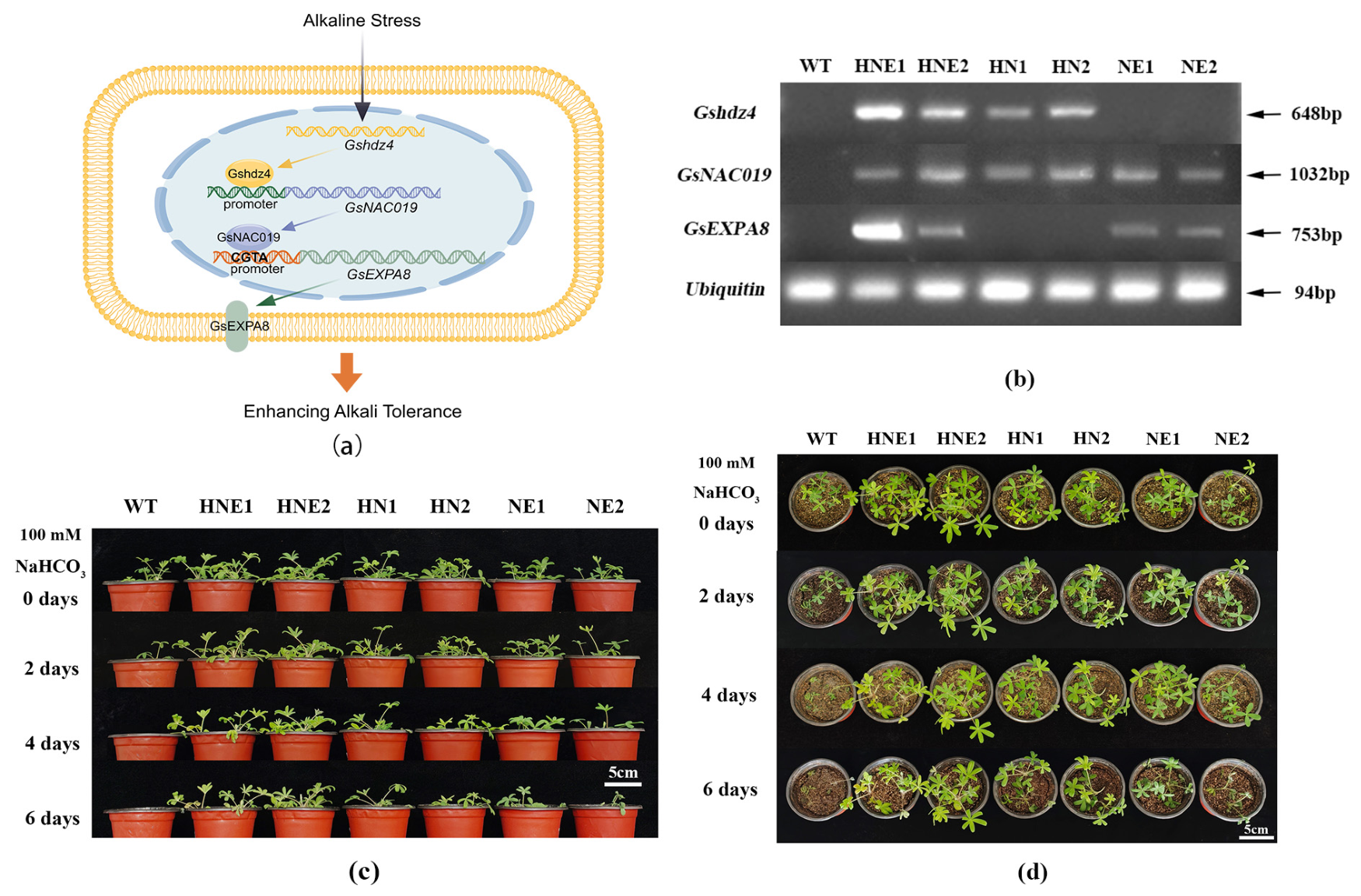
Previous studies have verified a hierarchical regulatory relationship among three key genes, namely Gshdz4, GsNAC019, and GsEXPA8, which jointly mediate plant alkali stress tolerance. The transcription factor Gshdz4 can specifically bind to the cis-acting elements CAATTA and CAATAA in the promoters of AtNAC019/GsNAC019, and heterologous overexpression of Gshdz4 significantly upregulates AtNAC019 expression in transgenic Arabidopsis, confirming that AtNAC019/GsNAC019 acts as a downstream target gene of Gshdz4 [46]. As a downstream transcription factor, GsNAC019 specifically recognizes and binds to the CGTA sequence in the promoters of its target genes. The presence of typical CGTA binding sites in the GsEXPA8 promoter further indicates that GsEXPA8 is a downstream functional gene of GsNAC019 [46] (Figure 1a). Under alkali stress, Gshdz4 acts as an upstream regulatory gene to activate the transcription of GsNAC019, and the activated GsNAC019 subsequently induces the expression of GsEXPA8. This regulatory pattern forms a unique three-tiered “nucleus-nucleus-membrane” signal transduction cascade of the Gshdz4-GsNAC019-GsEXPA8 module, which coordinates multiple stress response pathways and ultimately enhances alkali tolerance in soybean [47] (Figure 1a). Functional verification of individual genes further supports the alkali-tolerant function of this regulatory module in lupine. Heterologous transformation assays have demonstrated that root-specific heterologous expression of the HD-Zip family gene GsHZ4 (i.e., Gshdz4) in lupine improves alkali resistance by increasing the activities of antioxidant enzymes (CAT, POD, and SOD) and reducing malondialdehyde accumulation, accompanied by the upregulated expression of stress-responsive genes [48]. Consistent with this finding, heterologous expression of GsEXPA8 in lupine roots also confers enhanced alkali tolerance. The improved stress adaptability is attributed to promoted root growth, enhanced antioxidant capacity and osmotic regulation ability, dynamic modulation of stress-related gene expression, and optimized rhizosphere microbial community structure [49].
To improve the alkali tolerance of lupine roots, this study employed an Agrobacterium rhizogenes (strain K599)-mediated transformation method [50] to perform multi-component transformations of Gshdz4, GsNAC019, and GsEXPA8. Specifically, we overexpressed the gene combinations Gshdz4-GsNAC019-GsEXPA8 (HNE), Gshdz4-GsNAC019 (HN), and GsNAC019-GsEXPA8 (NE) in lupine roots. By systematically observing the growth phenotypes under alkali stress, measuring stress-related physiological indices, and determining the relative expression levels of alkali stress-responsive genes, we aimed to clarify the regulatory effects and functional differences in these multi-component overexpression constructs on alkali tolerance in lupine. This study goes beyond the limitations of single-gene functional studies by adopting a perspective of gene interaction and combinatorial regulation. It investigates the synergistic regulatory effects of different pairwise combinations of these three genes on lupine alkali tolerance and identifies the optimal gene combination pattern. The findings provide a strategy for improving lupine alkali tolerance using wild soybean as a related genetic resource, lay the foundation for lupine stress tolerance research and molecular breeding, and offer theoretical and technical support for expanding the cultivation range of lupine.

2. Materials and Methods

2.1. Plant Growth Conditions

This experiment was carried out at the Horticultural Experiment Center of Northeast Agricultural University (44°45′28″ N, 126°43′16″ E). Lupinus angustifolius seeds were purchased from Huayouxiu commercial seed supplier (Suqian, China) [48]. To generate overexpression constructs, the coding sequence (CDS) of Gshdz4 was cloned into the pCAMBIA1302 vector using the NcoI restriction site [47]; the CDS of GsNAC019 was inserted into the pBI121 vector using BamHI and EcoRI sites [47]; and the full-length cDNA of GsEXPA8 was cloned into the pBI121 vector using BamHI and EcoRI sites [49]. All target genes were driven by the CaMV 35S constitutive promoter in the recombinant vectors described above. The recombinant vectors were amplified in Escherichia coli DH5α cells (DL1001; Weidi Biology, Shanghai, China). Purified recombinant expression vectors were introduced into Agrobacterium rhizogenes strain K599 (AC1080; Weidi Biology, Shanghai, China) by the freeze–thaw method. The three engineered strains were individually cultured in LB liquid medium containing 50 mg/L kanamycin at 28 °C with shaking at 200 rpm until the late-logarithmic phase (OD600 of approximately 1.0). The bacterial cells were collected by centrifugation (5000× g, 10 min, 4 °C), resuspended in liquid LB medium, and adjusted to an OD600 of 1.0. According to the three different combinations (Gshdz4-GsNAC019-GsEXPA8, Gshdz4-GsNAC019, and GsNAC019-GsEXPA8), the corresponding bacterial suspensions were mixed in equal volume ratios (1:1:1 or 1:1). Then, 100 µL of each mixed suspension was evenly spread onto solid LB medium containing 50 mg/L kanamycin and incubated in an inverted position at 28 °C for 48 h to form a bacterial lawn. Transgenic lupine plants were generated using a conventional Agrobacterium rhizogenes-mediated root transformation system [49,50]. Hairy roots were induced by inoculating wounds on cotyledons of sterile seedlings with the bacterial lawn of Agrobacterium rhizogenes K599 [50]. For infection, a sterile inoculation loop was used to scrape a fresh bacterial lawn, which was then evenly smeared onto the wounds of sterile lupine seedlings. This method has been reported to achieve a high hairy root induction rate in soybean and has also been shown to be effective for genetic transformation of Lupinus angustifolius [49,50].
Transgenic lupine seedlings were transplanted into pots filled with a growth substrate (nutrient soil–vermiculite = 1:1). The plants were grown under controlled conditions at 22–25 °C with a 16 h light/8 h dark photoperiod until the third pair of palmate compound leaves had fully developed [49]. The resulting plants with root-specific overexpression of different gene combinations were designated as Gshdz4-GsNAC019-GsEXPA8 (abbreviated HNE), Gshdz4-GsNAC019 (HN), and GsNAC019-GsEXPA8 (NE).

2.2. RT-PCR Identification of Transgenic Roots

Roots of wild-type (WT) and HNE, HN, and NE plants were collected, immediately frozen in liquid nitrogen, and stored at −80 °C for total RNA extraction. Total RNA was extracted using the TransZol Up reagent kit (ET111-01-V2; TransGen Biotech, Beijing, China). First-strand cDNA was synthesized from 1 μg of total RNA using the SPARKSCRIPT II RT Plus kit (with gDNA Eraser; AG0304-B; Sparkjade Biotechnology, Jinan, China). PCR was performed using the cDNA as template, and the products were analyzed by electrophoresis to verify the integration of Gshdz4, GsNAC019, and GsEXPA8 into the lupine plants. The primers used for RT-PCR are listed in Table 1.

2.3. Plant Phenotyping Under Stress Treatment

Healthy 45-day-old WT and root-transgenic lupine plants were photographed to record initial phenotypes, which served as the day 0 baseline before NaHCO3 treatment. The plants were then irrigated with 0 mM or 100 mM NaHCO3 solutions, and subsequent phenotypic changes were continuously observed and recorded.
For physiological measurements, healthy and uniformly grown plants at 45 days after growth were selected. Their roots were treated with water or 100 mM NaHCO3 for 6 h [49]. This study evaluated the wild-type (WT) along with six independent transgenic lines (designated HNE1, HNE2, HN1, HN2, NE1, and NE2). For each treatment (0 or 100 mM NaHCO3), three biological replicates were used per line. Each biological replicate consisted of equal amounts of root tissue pooled from 15 individual plants. The alkali-stressed (treated with 100 mM NaHCO3) WT and overexpression plants constituted the experimental groups, while 0 mM NaHCO3-treated (water-treated) WT and overexpression plants served as the controls. Roots were used as experimental materials for physiological assays. Proline (PRO) content, malondialdehyde (MDA) content, superoxide dismutase (SOD) activity, catalase (CAT) activity, peroxidase (POD) activity, and root activity were determined using commercial kits: PRO kit (No. G0111W; Geruisi Biotechnology, Suzhou, China), MDA kit (No. G0109W; Geruisi Biotechnology, Suzhou, China), SOD kit (No. G0101W; Geruisi Biotechnology, Suzhou, China), CAT kit (No. G0105W; Geruisi Biotechnology, Suzhou, China), POD kit (No. BN0051-W96; Bainian Chuangxing Biotechnology, Chongqing, China), and root activity kit (No. G0124W; Geruisi Biotechnology, Suzhou, China). All measurements were performed according to the manufacturers’ instructions [48,49].

2.4. Diaminobenzidine (DAB) Staining

DAB staining was used to visualize hydrogen peroxide (H2O2) levels in plant tissues. Healthy 45-day-old WT and overexpression plants were treated with water or 100 mM NaHCO3 for 6 h [49], and then leaves were collected. DAB powder (Biotopped, Beijing, China) was prepared as follows: 0.1 g DAB powder was dissolved in 45 mL of distilled water (prepared in the dark) in a brown bottle. The pH was adjusted to 5.7, and the volume was brought to 50 mL with distilled water. Leaves from treated WT and overexpression plants were immersed in DAB staining solution and subjected to vacuum infiltration, followed by staining for 18 h. The stained leaves were placed in a beaker containing absolute ethanol, and the beaker was heated in boiling water. Absolute ethanol was replenished as needed to prevent drying. After complete decolorization, the leaves were removed and photographed [51]. The percentage of stained leaf area was calculated using ImageJ 1.54p (National Institutes of Health, Bethesda, MD, USA).

2.5. Nitroblue Tetrazolium (NBT) Staining

NBT staining was used to visualize superoxide anion (O2) levels in plant tissues. Healthy 45-day-old WT and overexpression plants were treated with water or 100 mM NaHCO3 for 6 h [49], and then the leaves were harvested. NBT powder (Biotopped, Beijing, China) was prepared by mixing 1.6 mL of NaH2PO4 buffer and 8.4 mL of Na2HPO4 buffer, adjusting the volume to 200 mL with distilled water (pH 7.5). Then, 0.1 g of NBT powder was dissolved in 50 mL of this buffer in a brown bottle (prepared in the dark). Leaves from treated WT and overexpression plants were immersed in the NBT solution, vacuum-infiltrated, and stained for 18 h in the dark. The stained leaves were decolorized with absolute ethanol as described for DAB staining, then photographed [51]. The percentage of stained leaf area was calculated using ImageJ 1.54p (National Institutes of Health, Bethesda, MD, USA).

2.6. Root Scanning

At 60 days after cultivation, WT and overexpression lupine plants exhibited similar above-ground growth. Plants at this non-stressed growth stage were sampled. Plant height was measured with a digital vernier caliper (DWKC-2013; Delixi Electric, Wenzhou, China) for statistical analysis, and whole-plant phenotypes were recorded with a digital camera (two pots per line, three plants per pot). To investigate the effects of multi-component overexpression on root growth, we performed root scanning on plants of the same age under non-stressed conditions. Roots were thoroughly cleaned and scanned using an LA-S root analyzer (Wanshen, Hangzhou, China). Total root length, surface area, root volume, number of root tips, and number of root forks were automatically calculated by the system [52].

2.7. Stress Treatment, RNA Extraction, and qPCR

For alkali stress treatment, lupine roots were treated with water or 100 mM NaHCO3 for 0, 3, 6, or 12 h [49]. Root samples of WT, HNE, HN, and NE plants were collected, frozen in liquid nitrogen, and stored at −80 °C for RNA extraction. Total RNA was extracted using the TransZol Up kit (ET111-01-V2; TransGen Biotech, Beijing, China). First-strand cDNA was synthesized from 1 μg of total RNA using the SPARKSCRIPT II RT Plus kit (with gDNA Eraser; AG0304-B; Sparkjade Biotechnology, Jinan, China). Specific primers for the endogenous lupine genes LaNAC072 and LaEXPA8, as well as for alkali stress-responsive genes, were designed. Quantitative real-time PCR (qPCR) was performed on a CFX384 Real-Time System (Bio-Rad, Hercules, CA, USA) using 2× Universal SYBR Green qPCR Mix (AH0105-B; Sparkjade Biotechnology, Jinan, China) [47]. Relative expression levels were calculated using the 2−ΔΔCT method [53], with the lupine Ubiquitin gene as an internal control. All qPCR primers are listed in Table 2.

2.8. Promoter Analysis of Endogenous LaNAC072 and LaEXPA8

Using BLAST on the NCBI website (https://www.ncbi.nlm.nih.gov/, accessed on 10 May 2026), we identified the lupine homologs of GsNAC019 and GsEXPA8, designated LaNAC072 and LaEXPA8, respectively. The 2000 bp promoter sequence upstream of the transcription start site (TSS) of LaNAC072 and the 2000 bp reverse-complement promoter sequence downstream of the TSS of LaEXPA8 (located on the negative strand) were downloaded from NCBI. Putative cis-regulatory motifs were identified using MEGA 12.0.14 (Mega Software, LLC, North Salt Lake, UT, USA).

2.9. Data Visualization and Statistical Analysis

Data visualization was performed using GraphPad Prism 10.6.1 (GraphPad Software, San Diego, CA, USA), and schematic diagrams were created using BioGDP (https://BioGDP.com). All data are presented as mean ± standard deviation (SD). Statistical analyses were performed using GraphPad Prism 10.6.1. One-way ANOVA was used for plant height and root scanning data. Two-way ANOVA followed by Tukey’s post hoc test was used for physiological indices, stained area percentages, and qPCR data. Different lowercase letters indicate significant differences between groups (p < 0.05). Asterisks denote levels of significance: * p < 0.05, ** p < 0.01, *** p < 0.001, **** p < 0.0001.

3. Results

3.1. Identification of Positive Transgenic Lupine Roots

RT-PCR analysis was performed to detect the expression of Gshdz4, GsNAC019, and GsEXPA8 in wild-type (WT) and transgenic lupine lines (HNE, HN, NE) (Figure 1b). The internal control Ubiquitin band was present in all samples. The HNE line showed bands corresponding to Gshdz4, GsNAC019, and GsEXPA8; the HN line showed bands for Gshdz4 and GsNAC019; and the NE line showed bands for GsNAC019 and GsEXPA8 (Figure 1b). These results confirmed that the target genes were successfully transformed into lupine plants and that root-specific overexpression lines were successfully established.
WT and overexpression plants (45-day-old) were treated with 100 mM NaHCO3. Two days after treatment, the WT plants were the first to show wilting symptoms (Figure 1c,d). After four days, WT plants were completely wilted, at which time the NE line began to show wilting (Figure 1c,d). After six days, WT plants had completely died, while NE plants exhibited pronounced wilting, and HNE and HN plants displayed only mild wilting (Figure 1c,d). Compared with WT, the HNE, HN, and NE lines all showed enhanced tolerance to alkali stress, with the HNE line exhibiting the strongest tolerance (Figure 1c,d). Taken together, these phenotypic observations indicate that multi-component overexpression of Gshdz4, GsNAC019, and GsEXPA8 improves the alkali tolerance of lupine plants, and among the tested combinations, the HNE line conferred the highest level of tolerance.

3.2. Root-Specific Multi-Component Overexpression of Gshdz4/GsNAC019/GsEXPA8 Enhances Alkali Tolerance in Lupine

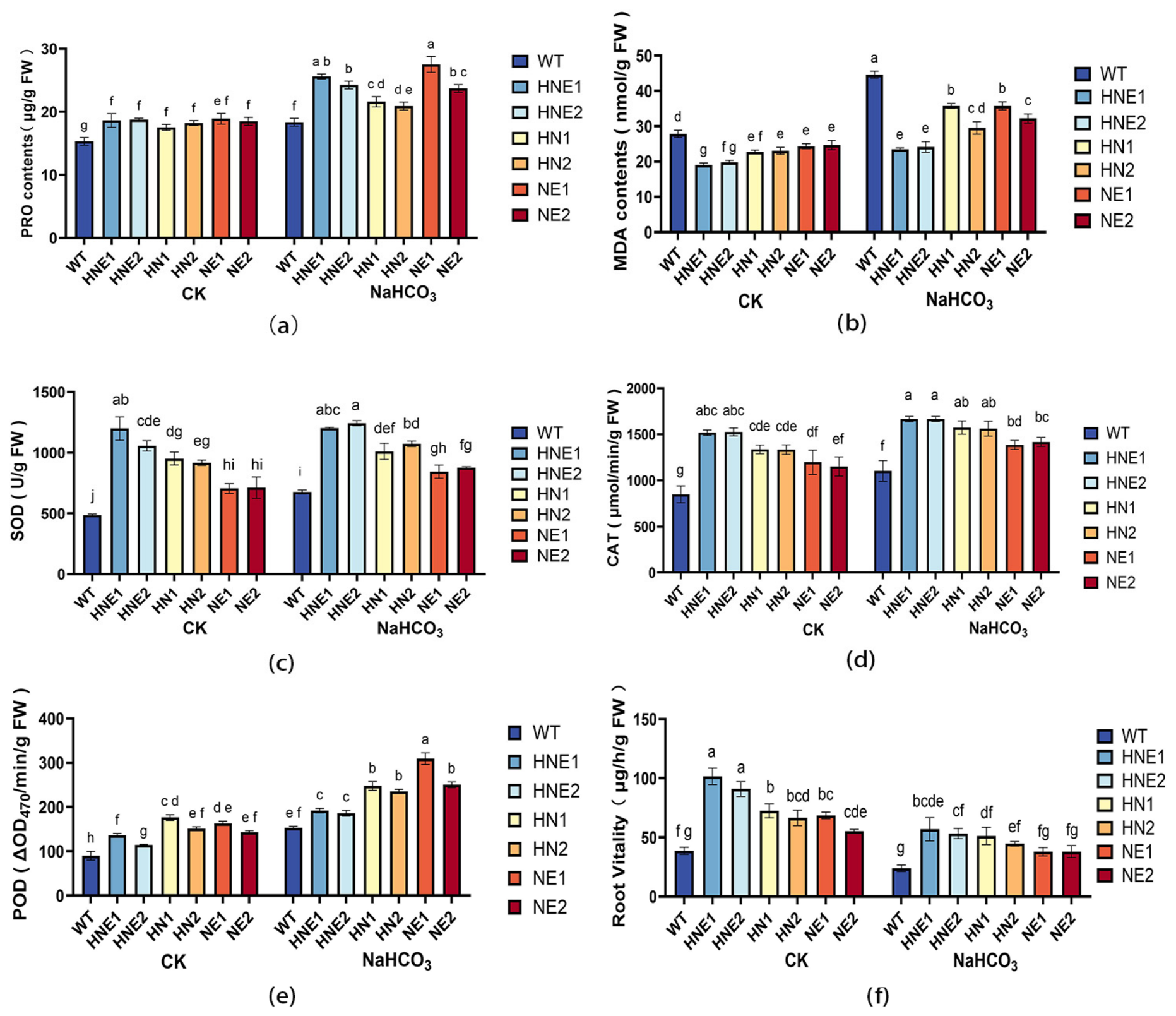
The proline (PRO) content, malondialdehyde (MDA) content, antioxidant enzyme activities, and root activity of WT plants and overexpression plants under water (untreated) and NaHCO3 treatment reflect differences in alkali tolerance (Figure 2).
Compared with the untreated control group, the proline content and peroxidase (POD) activity of multi-component overexpression lines increased significantly under NaHCO3 stress (Figure 2a,e). Meanwhile, under NaHCO3 stress, the activities of superoxide dismutase (SOD) and catalase (CAT) in multi-component overexpression lines were higher than those in the untreated control group (Figure 2c,d). Under both untreated and NaHCO3-treated conditions, all overexpression lines exhibited significantly higher PRO content, SOD activity, catalase (CAT) activity, and peroxidase (POD) activity than WT (Figure 2a,c,d,e), whereas MDA content was significantly lower in the overexpression lines than WT (Figure 2b). For root activity, all overexpression lines had significantly higher values than WT under normal conditions. Under NaHCO3 stress, the HNE and HN lines showed significantly higher root activity than WT, and the NE line also possessed higher root activity than WT (Figure 2f). These results demonstrate that multi-component overexpression of Gshdz4/GsNAC019/GsEXPA8 in lupine roots significantly increases PRO accumulation, antioxidant enzyme activities, and root activity under both normal and alkali-stress conditions, while reducing lipid peroxidation levels, thereby enhancing stress tolerance.
Specifically, under untreated conditions, all overexpression lines had high proline (PRO) levels, which were significantly higher than those of WT (Figure 2a). The HNE line had the lowest malondialdehyde (MDA) content, while the HN and NE lines showed similar MDA levels, all of which were significantly lower than WT (Figure 2b). Under NaHCO3 treatment, the NE line showed the highest PRO content (approximately 1.3–1.5-fold that of WT) and the highest POD activity (approximately 1.6–2-fold that of WT). The HNE line consistently exhibited the lowest MDA content under both untreated and NaHCO3-treated conditions (approximately 50% reduction compared with WT under NaHCO3 treatment), and the highest SOD activity (approximately 1.8-fold that of WT under NaHCO3), CAT activity (approximately 1.5-fold that of WT under NaHCO3), and root activity (approximately 2.2-fold that of WT under NaHCO3). Alkali stress caused a significant reduction in root activity. However, all overexpression lines still exhibited higher root activity than WT under alkaline conditions, and the HNE and HN lines showed significantly higher values than WT. Taken together, these results confirm that multi-component overexpression of Gshdz4/GsNAC019/GsEXPA8 effectively enhances alkali tolerance in lupine, with the HNE line exhibiting the best overall performance (Figure 2a–f).

3.3. Root-Specific Multi-Component Overexpression of Gshdz4/GsNAC019/GsEXPA8 Improves Antioxidant Capacity in Lupine Leaves Under Alkali Stress

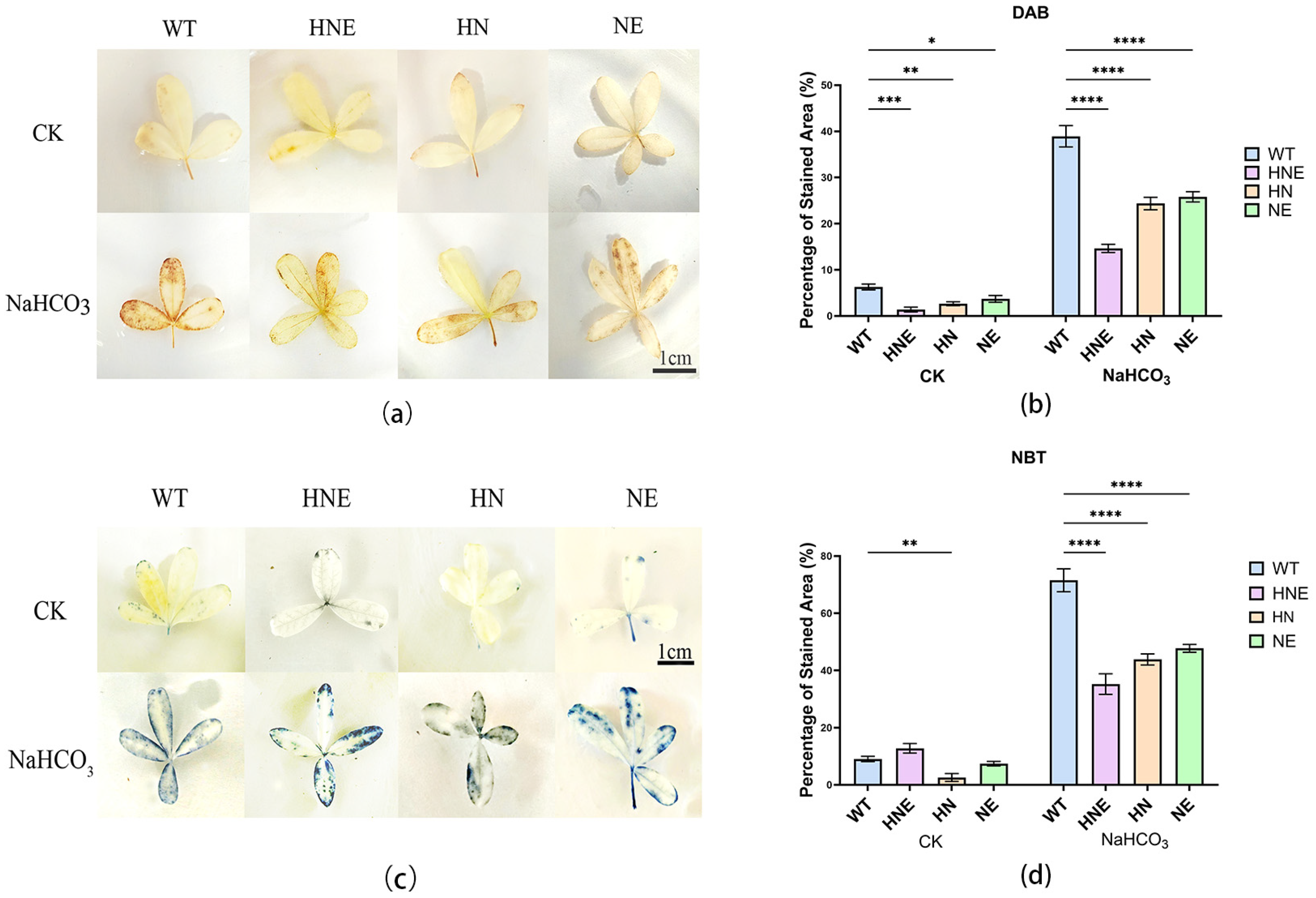
DAB and NBT staining revealed that, compared with the untreated groups, the stained leaf area increased in plants treated with NaHCO3 (Figure 3). Under both untreated and NaHCO3-treated conditions, the DAB-stained area in leaves of HNE, HN, and NE lines was significantly smaller than that in WT leaves, with the HNE line showing the smallest stained area (Figure 3a,b). Under NaHCO3 treatment, the NBT-stained area in leaves of HNE, HN, and NE lines was significantly smaller than that in WT leaves, and the HNE line again exhibited the smallest stained area (Figure 3c,d). Collectively, these results indicate that the overexpression lines HNE, HN, and NE significantly reduce the accumulation of O2 and H2O2 in leaves after alkali stress, with the HNE line showing the lowest levels of both reactive oxygen species. Therefore, multi-component overexpression of Gshdz4/GsNAC019/GsEXPA8 in lupine roots enhances root alkali tolerance, which in turn effectively reduces the accumulation of reactive oxygen species (ROS) in lupine leaves under alkali stress.

3.4. Root-Specific Multi-Component Overexpression of Gshdz4/GsNAC019/GsEXPA8 Promotes Root Growth in Lupine

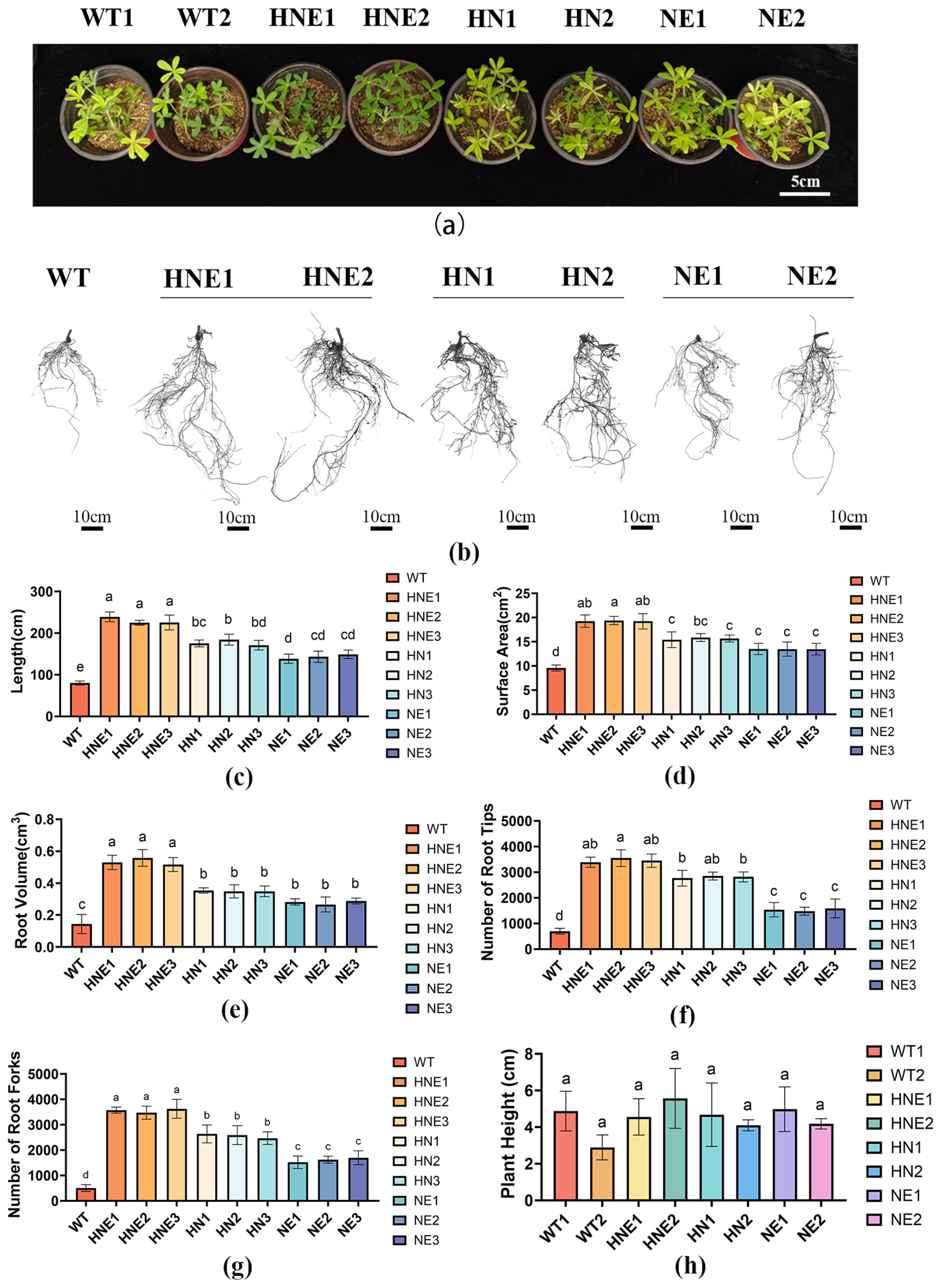
When WT and overexpression plants were grown for 60 days, no significant difference in plant height was observed (Figure 4h), and the aerial parts showed similar growth patterns (Figure 4a). Root architecture analysis of 60-day-old plants revealed that the roots of HNE, HN, and NE lines were more robust than those of WT, with the HNE line exhibiting the best root growth (Figure 4b). Compared with WT, the HNE, HN, and NE lines showed significant increases in root length, surface area, root volume, number of root tips, and number of root forks (Figure 4c–g). These results demonstrate that overexpression of Gshdz4-GsNAC019-GsEXPA8 (HNE), Gshdz4-GsNAC019 (HN), and GsNAC019-GsEXPA8 (NE) all significantly promote root growth in lupine plants, thereby enhancing nutrient uptake. Among these, overexpression of Gshdz4-GsNAC019-GsEXPA8 (HNE) had the most pronounced effect on promoting root growth.

3.5. Gshdz4 and GsNAC019 Bind to Promoters of Endogenous Lupine Genes to Activate the Endogenous Alkali Tolerance Regulatory Mechanism

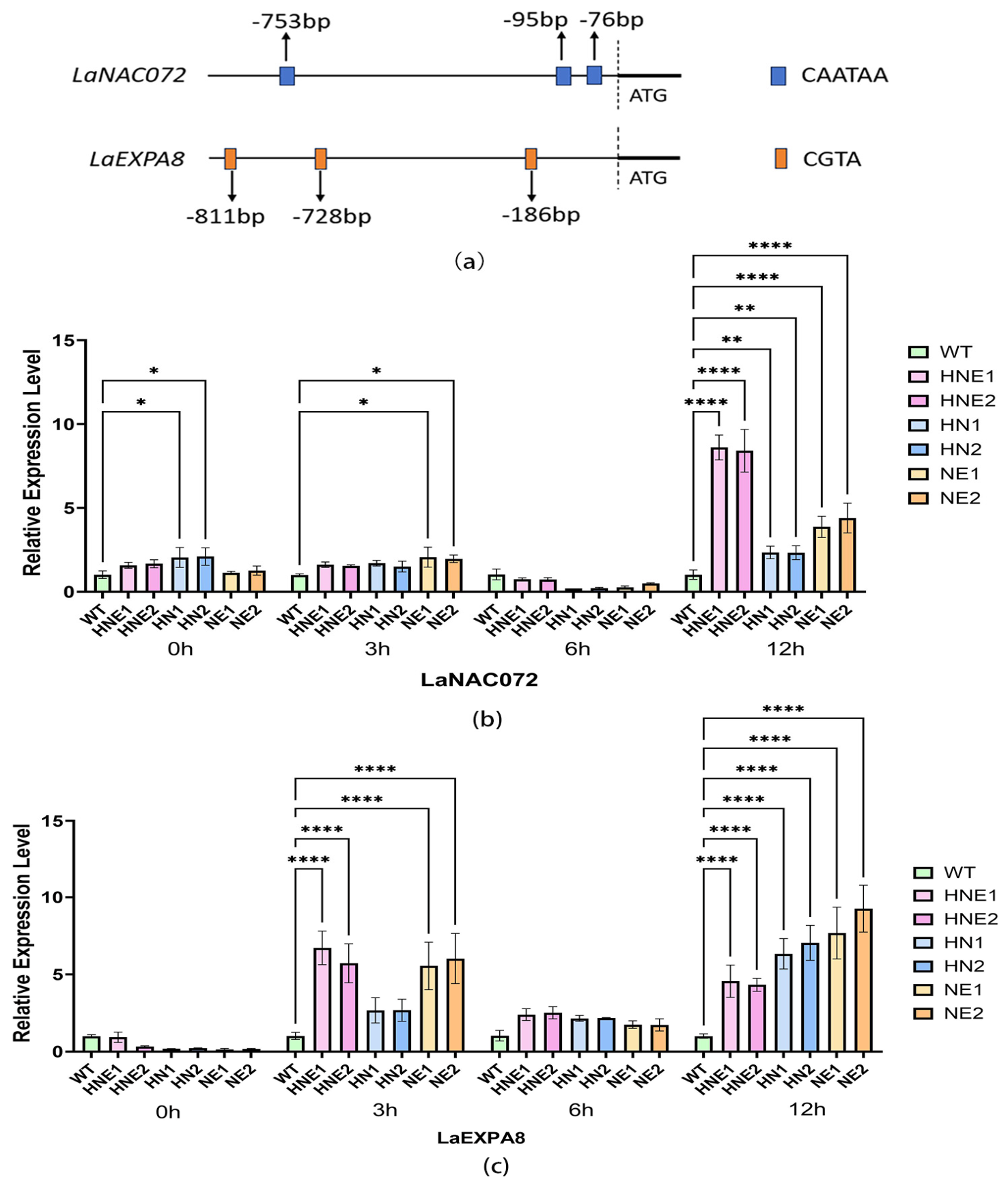
Since the lupine homolog of GsNAC019 is LaNAC072, and the lupine homolog of GsEXPA8 is LaEXPA8, we analyzed the promoter sequences of LaNAC072 and LaEXPA8. The analysis revealed the presence of the Gshdz4-binding motif CAATAA at positions −76 bp, −95 bp, and −753 bp in the LaNAC072 promoter, and the GsNAC019-binding motif CGTA at positions −186 bp, −728 bp, and −811 bp in the LaEXPA8 promoter (Figure 5a). Previous studies have demonstrated that Gshdz4 directly binds the CAATAA/CAATTA motif via yeast one-hybrid and dual-luciferase assays [46], and that GsNAC019 recognizes the CGTA motif [46]. Furthermore, under alkaline stress, Gshdz4 directly activates the GsNAC019 promoter as validated by dual-luciferase assays and CUT&Tag-seq [47]. Based on these findings, we hypothesize that under alkali stress, Gshdz4 may bind to the promoter of the endogenous lupine gene LaNAC072 and activate its expression, and that GsNAC019 may bind to the promoter of the endogenous lupine gene LaEXPA8 and activate its expression.
To validate the above hypothesis, we determined the expression levels of the endogenous lupine genes LaNAC072 and LaEXPA8 by qPCR in WT and overexpression lines (HNE, HN, NE) treated with 100 mM NaHCO3 for 0, 3, 6, and 12 h. The results showed that at 12 h of NaHCO3 treatment, the expression levels of LaNAC072 in all overexpression lines (HNE, HN, NE) were significantly higher than those in WT (Figure 5b). For LaEXPA8, expression levels in the overexpression lines were higher than in WT at 3, 6, and 12 h, and the differences became significant at 12 h for all overexpression lines (Figure 5c). In summary, the qPCR results are consistent with the hypothesis that, under long-term NaHCO3-alkali stress, Gshdz4 may bind to the promoter of the endogenous target gene LaNAC072 and activate its expression, while GsNAC019 may bind to the promoter of the endogenous target gene LaEXPA8 and activate its expression, thereby potentially triggering the endogenous alkali tolerance regulatory mechanism and enhancing lupine tolerance to alkali stress. Thus, exogenous genes and regulatory mechanisms can effectively modulate the expression levels of endogenous genes, thereby influencing stress-related traits.
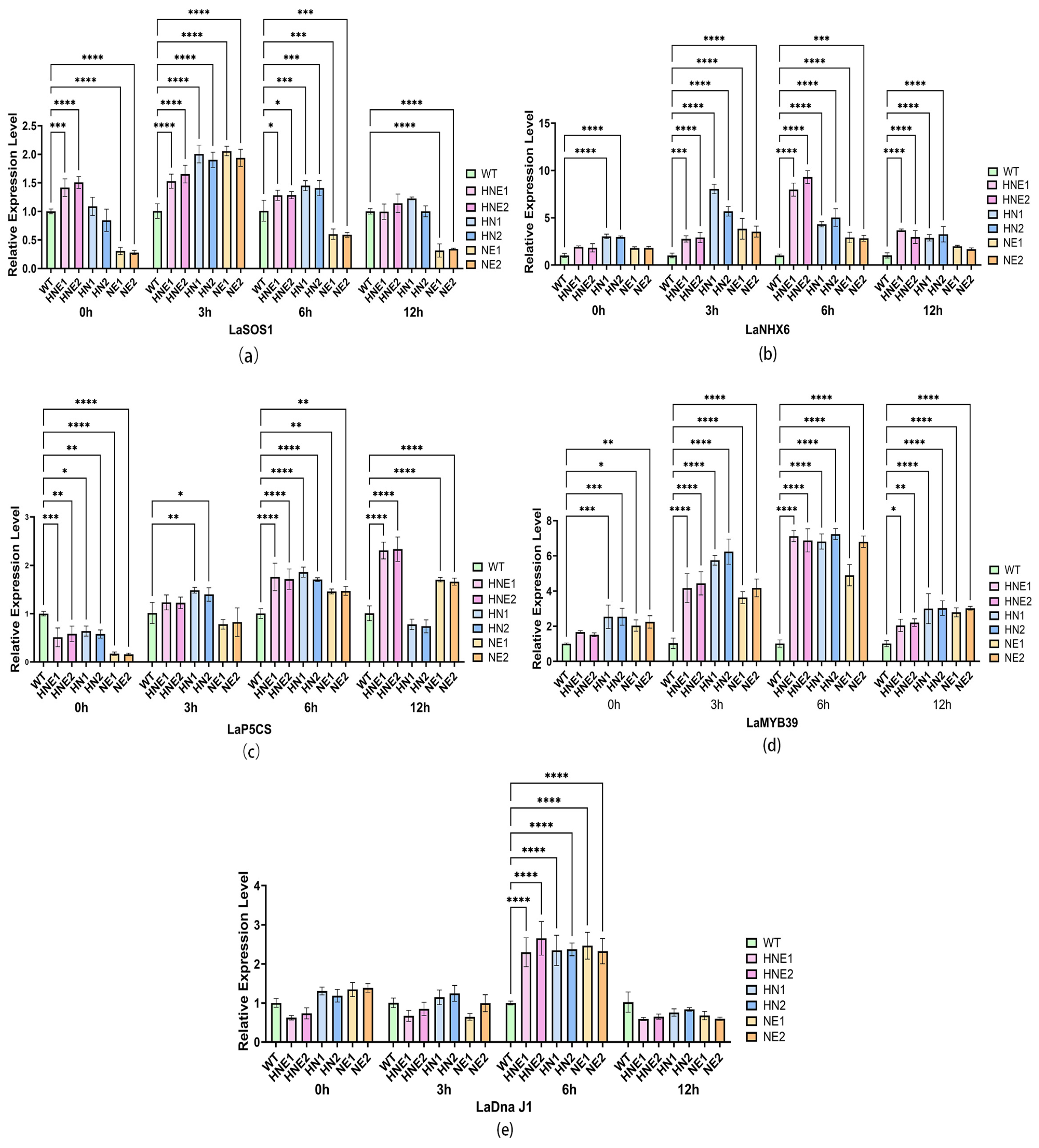
To investigate the effects of multi-component overexpression of Gshdz4/GsNAC019/GsEXPA8 on the expression of endogenous alkali stress-responsive genes in lupine, we performed qPCR to measure the expression dynamics of these genes at different time points (Figure 6). Based on previous studies, we selected LaSOS1, LaNHX6, LaP5CS, LaMYB39, and LaDnaJ1 for analysis, all of which are known to respond to alkaline salt stress and play important roles in plant adaptation to alkali stress.
The expression of LaSOS1 in HNE, HN, and NE lines initially increased and then decreased over the 0–12 h alkali stress period, peaking at 3 h. At this time point, LaSOS1 expression was significantly higher in all overexpression lines than in WT (Figure 6a). Specifically, at 3 h, the relative expression level of LaSOS1 in HNE was approximately 1.4-fold that of WT, while in HN and NE it was approximately 1.7-fold that of WT (Figure 6a).
The expression of LaNHX6 in HNE, HN, and NE also followed an initial increase, followed by a decline. In HNE plants, LaNHX6 expression reached its highest level at 6 h of stress, approximately 8–9-fold that of WT; in HN and NE plants, the peak occurred at 3 h, with expression in HN being approximately 5–8-fold that of WT and in NE approximately 4-fold that of WT (Figure 6b). At 3 h and 6 h of alkali stress, LaNHX6 expression was significantly higher in HNE, HN, and NE than in WT; at 12 h, expression remained higher in all overexpression lines, with HNE and HN showing significant differences compared to WT (Figure 6b).
Under NaHCO3 stress, LaP5CS expression increased continuously with stress duration in HNE and HN, whereas in NE it first increased and then decreased over 0–12 h (Figure 6c). At 0 h, LaP5CS expression in all overexpression lines was significantly lower than in WT. At 3 h, expression in HN was significantly higher than in WT, approximately 1.4-fold. At 6 h, expression in HNE, HN, and NE was significantly higher than in WT, approximately 1.7-fold, 1.8-fold, and 1.4-fold, respectively. At 12 h, expression in HNE and NE remained significantly higher than in WT, approximately 2.3-fold and 1.7-fold, respectively (Figure 6c).
The expression of LaMYB39 in HNE, HN, and NE first increased and then decreased over 0–12 h of alkali stress, peaking at 6 h (Figure 6d). At 3, 6, and 12 h of NaHCO3 treatment, LaMYB39 expression was significantly higher in all overexpression lines than in WT (Figure 6d). At 6 h, the expression levels in HNE and HN were approximately 7-fold that of WT, and in NE approximately 5–7-fold that of WT.
Finally, LaDnaJ1 expression peaked at 6 h of NaHCO3 treatment in HNE, HN, and NE, and was significantly higher than in WT at that time point, with all three overexpression lines showing expression levels approximately 2.5-fold that of WT (Figure 6e).
Taken together, these results demonstrate that multi-component overexpression of Gshdz4/GsNAC019/GsEXPA8 activates the endogenous alkali tolerance regulatory mechanism in lupine under alkali stress, upregulates the expression of endogenous alkali stress-responsive genes, and thereby enhances lupine tolerance to alkali stress. Among the tested combinations, simultaneous expression of all three genes conferred the strongest regulatory capacity and the most pronounced improvement in alkali tolerance.

4. Discussion

4.1. Relationship Between Alkali Stress and the Reactive Oxygen Species Scavenging Mechanism

Under NaHCO3 stress, all overexpression lines (HNE, HN, NE) in this study exhibited significantly enhanced antioxidant capacity, elevated proline (PRO) content and root activity, as well as reduced malondialdehyde (MDA) accumulation compared with the wild-type (WT) plants. Meanwhile, multi-gene overexpression effectively reduced alkali stress-induced accumulation of reactive oxygen species (ROS) in lupine leaves. These results suggest that multi-component module overexpression may enhance the adaptability of plants to alkali stress by modulating physiological and metabolic processes. The osmoprotective function of proline was first discovered in bacteria, and subsequent studies have confirmed a clear causal relationship between proline accumulation and salt tolerance in plants, establishing proline as a key osmolyte that plays a central role in plant responses to abiotic stress [54,55]. Furthermore, the ROS-scavenging capability of proline was first documented in the pioneering work of Smirnoff and Cumbes [56]. As early as 1989, they demonstrated that proline can effectively scavenge hydroxyl radicals (·OH) and interact with various reactive oxygen species, laying the theoretical foundation for subsequent in-depth investigations into the antioxidant properties of proline [57]. Based on these findings and our results, the significantly increased proline content in the overexpression lines is speculated to help maintain cellular osmotic balance and stabilize membrane integrity, thereby alleviating NaHCO3-induced cell damage and enhancing plant alkali tolerance. Notably, the antioxidant capacity of the transgenic lines was also significantly higher than that of WT under normal growth conditions without alkaline stress. This can be explained by the CaMV 35S constitutive promoter used in the overexpression vectors, which drives continuous and stable expression of individual exogenous genes independent of external stress signals. Consistent with the hierarchical regulatory relationships among Gshdz4, GsNAC019, and GsEXPA8 described above, these persistently expressed genes can autonomously activate downstream antioxidant signaling pathways under non-stressed conditions, thereby elevating basal antioxidant levels and improving the intrinsic stress tolerance of transgenic lupine plants.
Meanwhile, environmental stress often induces oxidative stress in plant cells, leading to ROS accumulation. MDA, as a marker of membrane lipid peroxidation, directly reflects the degree of membrane damage [58]. In this study, after alkali stress treatment, the activities of three key antioxidant enzymes—catalase (CAT), peroxidase (POD), and superoxide dismutase (SOD)—were significantly higher in the overexpression lines than in WT, indicating a marked enhancement of antioxidant capacity. We speculate that there may be a direct causal relationship between the improved antioxidant capacity and the significantly reduced MDA accumulation in the overexpression lines. This phenomenon suggests that multi-component overexpression of Gshdz4/GsNAC019/GsEXPA8 strengthens the ROS scavenging system, effectively reduces oxidative damage caused by ROS accumulation, alleviates membrane lipid peroxidation under alkali stress, and ultimately improves plant alkali tolerance. However, the precise regulatory connections among these physiological and metabolic processes remain to be fully elucidated and require further experimental validation.

4.2. Association Between Promoted Root Growth and Alkali Tolerance Phenotype by Multi-Component Module Overexpression

Our results showed that multi-component overexpression of Gshdz4, GsNAC019, and GsEXPA8 in lupine roots significantly promoted root growth, with the HNE line (Gshdz4-GsNAC019-GsEXPA8) exhibiting the best root growth. Roots are crucial organs for plant growth and development, providing mechanical support and absorbing water and essential nutrients from the soil to meet the needs of normal physiological metabolism [59]. Meanwhile, in alkali stress phenotyping experiments with NaHCO3, the HNE line displayed the strongest alkali tolerance, exhibiting significantly better growth under alkali stress than the other lines and the longest survival time. It is worth noting whether a direct link exists between superior root growth and alkali tolerance—that is, whether a well-developed root system enhances water uptake efficiency, optimizes nutrient transport, or accelerates stress signal transduction, thereby improving lupine adaptation to NaHCO3 stress. This scientific question requires further experimental verification and in-depth investigation.

4.3. Activation Mechanism of Endogenous Alkali Tolerance Regulatory Pathways by Exogenous Genes

The Gshdz4-GsNAC019-GsEXPA8 module constitutes a “nucleus–nucleus–membrane” three-tiered signaling cascade that integrates multiple stress-response pathways and participates in the comprehensive regulation of abiotic stress tolerance [47]. Within this module, Gshdz4 acts as a master regulator, not only directly binding and regulating a series of different stress-responsive genes but also modulating core defense mechanisms against multiple stresses. Under alkaline stress, Gshdz4 differentially regulates GmSLX8, GmSF3, and GmPP4; under cadmium stress, it specifically regulates GmGMFL01 and GmUNC expression [47]. Previous studies have demonstrated that the transcription factor Gshdz4 specifically binds to the cis-acting elements (CAATTA or CAATAA sequences) in the promoter region of AtNAC019/GsNAC019, and overexpression of Gshdz4 positively regulates AtNAC019 expression in transgenic Arabidopsis, suggesting that AtNAC019/GsNAC019 is a downstream target of Gshdz4 [46]. In this study, the lupine homolog of GsNAC019, LaNAC072, was identified. Bioinformatics analysis of its promoter sequence revealed the presence of a specific Gshdz4-binding motif in the promoter region, leading us to hypothesize that Gshdz4 directly binds the LaNAC072 promoter and activates its transcription. To test this hypothesis, we measured the expression levels of LaNAC072 in WT and overexpression lines under alkali stress. The results showed that under prolonged alkali stress, LaNAC072 expression was significantly higher in the overexpression lines than in WT. This finding raised the question of whether the introduction of GsNAC019 might indirectly regulate LaNAC072 expression. However, given the presence of the Gshdz4 binding motif in the LaNAC072 promoter and the marked increase in its expression under alkali stress, these lines of evidence indirectly suggest that Gshdz4 may directly bind to specific sequences in the LaNAC072 promoter and activate its transcription under alkali stress. Similarly, these findings also indirectly indicate that, under alkali stress, GsNAC019 may directly bind to the corresponding binding motif in the LaEXPA8 promoter and initiate its transcription.

4.4. Rationale for Selection of Physiological Indices and Endogenous Alkali Stress-Responsive Genes

We chose to measure the expression levels of the endogenous lupine genes LaSOS1, LaNHX6, LaP5CS, LaMYB39, and LaDnaJ1 to assess differences in the regulation of endogenous alkali stress-responsive genes between WT and overexpression lines. Plant stress responses are closely associated with the expression regulation of a series of endogenous stress-responsive genes. SOS1 encodes a Na+/H+ exchanger, and plants can export Na+ out of the cytoplasm via the plasma membrane Na+/H+ antiporter SOS1 to counteract salt stress; this transport activity is critical for Na+ efflux in Arabidopsis cells [60,61,62]. NHX-type Na+(K+)/H+ exchangers are important for regulating intracellular pH and ion homeostasis and are also involved in various physiological processes such as osmotic adjustment and stress responses [63]. For example, GmNHX6 encodes a Golgi-localized Na+/H+ exchanger whose transcript abundance is upregulated in alkaline-tolerant soybean varieties in response to NaHCO3 stress, and overexpression of GmNHX6 improves tolerance to alkaline salt stress in soybean [64]. Proline accumulation is a common physiological response of higher plants to drought and salt stress [65,66]. It is synthesized from glutamate and ornithine [65], and the synthesis of proline from glutamate is catalyzed by delta-1-pyrroline-5-carboxylate synthase (P5CS) [67]. Furthermore, previous studies have shown that MYB transcription factors, one of the largest families of plant transcription factors, play important regulatory roles in plant secondary metabolism, hormonal and environmental factor responses, and organ morphogenesis. They bind to cis-acting elements upstream of stress-responsive genes and specifically regulate their expression, playing crucial roles in breeding for abiotic stress tolerance, such as drought, salt, and temperature [68,69]. One study found that the SHR-MYB36-MYB39-FAR5 pathway coordinately regulates root suberin formation in plants, and the suberin lamellae form a hydrophobic protective barrier against biotic and abiotic stresses [70]. For lupine itself, previous transcriptome sequencing and qPCR validation confirmed that LaDnaJ1 is a gene responsive to alkaline stress, and transformation of GsHZ4 (i.e., Gshdz4) into lupine may improve alkali tolerance by modulating the expression of LaDnaJ1 under alkaline stress [48].
These five genes were selected because they have been established as downstream targets of the Gshdz4-GsNAC019-GsEXPA8 regulatory module. Specifically, heterologous overexpression of GsEXPA8 in narrow-leaved lupine (Lupinus angustifolius) significantly upregulated the expression of LaSOS1, LaNHX6, LaP5CS, and LaMYB39 in a time-dependent manner under alkaline stress conditions [49]. For LaDnaJ1, independent studies have confirmed that transformation of Gshdz4 into narrow-leaved lupine upregulates LaDnaJ1 expression under alkaline stress conditions. After treatment with 50 mM and 100 mM NaHCO3, LaDnaJ1 transcript levels were significantly higher in Gshdz4-overexpressing hairy root lines than in wild-type controls, indicating that LaDnaJ1 is a downstream target of Gshdz4 under alkaline conditions [48]. From a physiological perspective, these downstream effector genes function synergistically: LaSOS1 and LaNHX6 maintain ion homeostasis; LaP5CS drives osmotic adjustment; LaMYB39 orchestrates transcriptional defense responses; and LaDnaJ1 responds to alkaline stress as a downstream gene of Gshdz4. The cooperative activation of these genes contributes to the enhanced alkaline tolerance of transgenic lines overexpressing the Gshdz4-GsNAC019-GsEXPA8 module.

4.5. Limitations of This Study

Several limitations of this study should be acknowledged. This study focused solely on a single stress condition of 100 mM NaHCO3 to compare alkali tolerance differences between WT and overexpression lupine plants. Whether the alkali tolerance of the overexpression lines remains stable across different concentrations of NaHCO3, other types of alkali stress (e.g., Na2CO3 stress), or at different growth stages (especially with regard to ornamental value) remains unclear. In addition, the specific regulatory mechanisms of endogenous lupine alkali stress-responsive genes (such as LaSOS1 and LaP5CS) have not yet been elucidated, and the upstream/downstream regulatory relationships between these genes and the target genes identified in this study (LaNAC072 and LaEXPA8) still lack in-depth analysis. Further studies are needed to validate and refine these aspects.

4.6. Research Value and Application Potential

Agrobacterium rhizogenes K599 is widely utilized for hairy root transformation in diverse plant species, largely attributed to its broad host adaptability and stable transformation efficiency. This technique is highly portable across different crops. Previous studies conducted in vivo inoculation experiments using wild-type K599 on soybean (Fabaceae), cucumber (Cucurbitaceae), and garden balsam (Balsaminaceae) and demonstrated that K599 induced adventitious root formation from wounded cotyledons with frequencies of 100%, 65%, and 91%, respectively, and from unwounded cucumber axillary buds with a frequency of 10% [50]. PCR amplification of the rolC gene confirmed the presence of K599 T-DNA sequences in the regenerated hairy roots, confirming the universality and stability of this transformation system across different plant families. The transgenic roots obtained in that study provided valuable materials for further research on root-knot nematode pathology in soybean and cucumber, as well as dwarf breeding in garden balsam [50]. Among leguminous crops beyond soybean, K599 achieved a transformation efficiency of 92% in fenugreek (Trigonella foenum-graecum), with the transgenic roots retaining full symbiotic competence with both arbuscular mycorrhizal fungi (Rhizophagus irregularis) and rhizobia (Sinorhizobium meliloti) [71]. In Rosaceae species, stable K599-mediated hairy root protocols have been developed for rose, with the latter achieving a transformation efficiency of 74.1% and enabling CRISPR/Cas9-mediated gene editing for the first time in rose (with an efficiency of 62%) [72]. In woody plants, K599 achieved a transformation efficiency of up to 60.38% in Liriodendron hybrids, also enabling gene editing applications [73]. Collectively, these case studies demonstrate that the K599 hairy root transformation system has reliable cross-species adaptability. When integrated with the multi-gene alkali-tolerance module characterized in the present study, this feasible transformation strategy can be applied to genetic improvement and multi-gene overexpression in various crop species, providing broad application prospects for crop stress tolerance breeding.

5. Conclusions

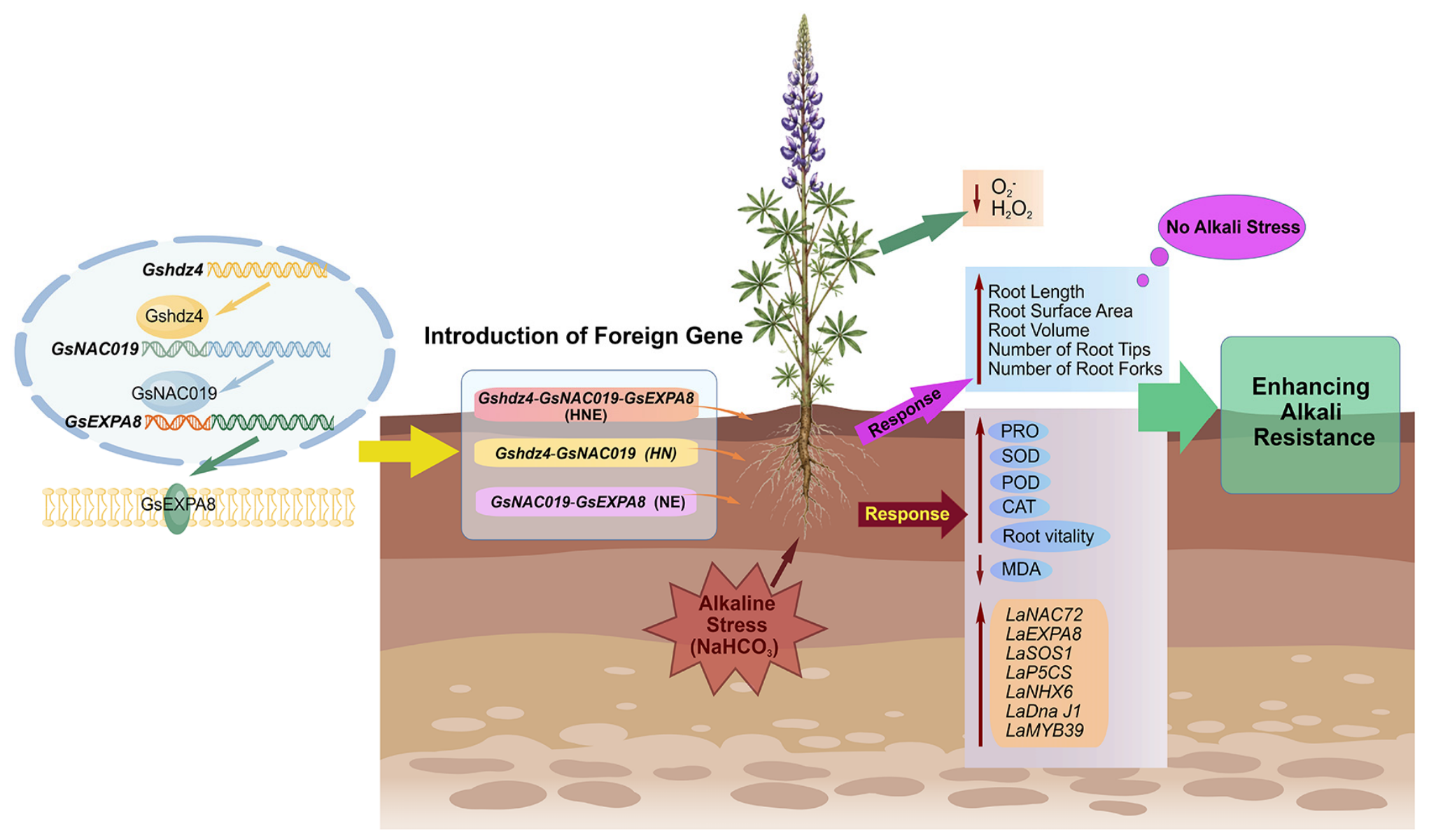
In summary, we overexpressed three gene combinations—Gshdz4-GsNAC019-GsEXPA8 (HNE), Gshdz4-GsNAC019 (HN), and GsNAC019-GsEXPA8 (NE)—in lupine roots via Agrobacterium rhizogenes-mediated root transformation. Under 100 mM NaHCO3 stress, all overexpression lines (HNE, HN, NE) showed milder wilting and longer survival compared to the wild type (WT). Physiologically, they exhibited significantly enhanced antioxidant capacity, increased proline content, reduced MDA accumulation, and improved root activity (Figure 7). The overexpression lines also showed markedly reduced accumulation of reactive oxygen species (ROS) in leaves under alkali stress (Figure 7). Furthermore, the HNE, HN, and NE lines displayed better root growth than WT (Figure 7). This study revealed that Gshdz4 likely activates the expression of the endogenous target gene LaNAC072, and GsNAC019 activates the expression of LaEXPA8, thereby regulating the endogenous alkali tolerance mechanism and upregulating the alkali stress-responsive genes LaSOS1, LaNHX6, LaP5CS, LaMYB39, and LaDnaJ1 (Figure 7), ultimately enhancing lupine tolerance to alkali stress. Collectively, the line overexpressing all three genes in roots exhibited the strongest alkali tolerance.

Author Contributions

H.W.: writing—original draft, investigation, visualization, formal analysis. Y.R.: investigation. M.Z.: investigation. Y.L.: investigation. X.W.: investigation. X.D.: validation. Y.F.: validation. T.Z.: validation. J.Z. and L.C.: project administration, conceptualization, writing—review and editing, resources, funding acquisition. All authors have read and agreed to the published version of the manuscript.

Funding

This work was supported by the National Natural Science Foundation of China (32001505) and the Natural Science Foundation of Heilongjiang Province (LH2023C006).

Data Availability Statement

The original contributions presented in this study are included in the article. Further inquiries can be directed to the corresponding author.

Acknowledgments

We are grateful to the College of Horticulture at Northeast Agricultural University for providing the experimental platform. We also extend our sincere thanks to Mengyu Liu and Jixiang Tang for their support.

Conflicts of Interest

The authors declare no conflicts of interest.

Correction Statement

This article has been republished with a minor correction to the readability of Table 1 and Table 2. This change does not affect the scientific content of the article.

References

  1. Hassani, A.; Azapagic, A.; Shokri, N. Global predictions of primary soil salinization under changing climate in the 21st century. Nat. Commun. 2021, 12, 6663. [Google Scholar] [CrossRef] [PubMed]
  2. Shahid, S.A.; Alkandari, A.J.; Alnajdi, F.M. Soil Salinity Dynamics in Arid Lands and Impact on Agriculture for Food Security. In Fostering Arid Lands Agriculture in the Face of Climate Change: Mitigation and Adaptation Synergy, 1st ed.; Suleiman, M.K., Shahid, S.A., Eds.; Springer Nature: Cham, Switzerland, 2026; Volume 81, pp. 131–154. [Google Scholar] [CrossRef]
  3. Fang, S.; Hou, X.; Liang, X. Response Mechanisms of Plants Under Saline-Alkali Stress. Front. Plant Sci. 2021, 12, 667458. [Google Scholar] [CrossRef] [PubMed]
  4. Zhang, H.; Liu, X.L.; Zhang, R.X.; Yuan, H.Y.; Wang, M.M.; Yang, H.Y.; Ma, H.Y.; Liu, D.; Jiang, C.J.; Liang, Z.W. Root Damage under Alkaline Stress Is Associated with Reactive Oxygen Species Accumulation in Rice (Oryza sativa L.). Front. Plant Sci. 2017, 8, 1580. [Google Scholar] [CrossRef] [PubMed]
  5. Kaiwen, G.; Zisong, X.; Yuze, H.; Qi, S.; Yue, W.; Yanhui, C.; Jiechen, W.; Wei, L.; Huihui, Z. Effects of salt concentration, pH, and their interaction on plant growth, nutrient uptake, and photochemistry of alfalfa (Medicago sativa) leaves. Plant Signal Behav. 2020, 15, 1832373. [Google Scholar] [CrossRef] [PubMed]
  6. Oster, J.D.; Shainberg, I.; Abrol, I.P. Reclamation of Salt-Affected Soils. In Agricultural Drainage, 1st ed.; Skaggs, R.W., van Schilfgaarde, J., Eds.; ASA-CSSA-SSSA: Madison, WI, USA, 1999; Volume 38, pp. 659–691. [Google Scholar] [CrossRef]
  7. Amirinejad, A.A.; Sayyari, M.; Ghanbari, F.; Kordi, S. Salicylic acid improves salinity-alkalinity tolerance in pepper (Capsicum annuum L.). Adv. Hortic. Sci. 2017, 31, 157–163. [Google Scholar] [CrossRef]
  8. Chen, Y.; Li, Y.; Sun, P.; Chen, G.; Xin, J. Interactive effects of salt and alkali stresses on growth, physiological responses and nutrient (N, P) removal performance of Ruppia maritima. Ecol. Eng. 2017, 104, 177–183. [Google Scholar] [CrossRef]
  9. Wang, X.-s.; Ren, H.-l.; Wei, Z.-w.; Wang, Y.-w.; Ren, W.-b. Effects of neutral salt and alkali on ion distributions in the roots, shoots, and leaves of two alfalfa cultivars with differing degrees of salt tolerance. J. Integr. Agric. 2017, 16, 1800–1807. [Google Scholar] [CrossRef]
  10. Wang, J.; Zhang, Y.; Yan, X.; Guo, J. Physiological and transcriptomic analyses of yellow horn (Xanthoceras sorbifolia) provide important insights into salt and saline-alkali stress tolerance. PLoS ONE 2020, 15, e0244365. [Google Scholar] [CrossRef] [PubMed]
  11. Ding, W.; Clode, P.L.; Lambers, H. Is pH the key reason why some Lupinus species are sensitive to calcareous soil? Plant Soil 2019, 434, 185–201. [Google Scholar] [CrossRef]
  12. Vishnyakova, M.A.; Vlasova, E.V.; Egorova, G.P. Genetic resources of narrow-leaved lupine (Lupinus angustifolius L.) and their role in its domestication and breeding. Vavilovskii Zhurnal Genet. Sel. 2021, 25, 620–630. [Google Scholar] [CrossRef] [PubMed]
  13. Cowling, W.A. Genetic Diversity in Narrow-Leafed Lupin Breeding After the Domestication Bottleneck. In The Lupin Genome; Singh, K.B., Kamphuis, L.G., Nelson, M.N., Eds.; Springer: Cham, Switzerland, 2020; pp. 1–21. [Google Scholar] [CrossRef]
  14. Vishnyakova, M.A.; Kushnareva, A.V.; Shelenga, T.V.; Egorova, G.P. Alkaloids of narrow-leaved lupine as a factor determining alternative ways of the crop’s utilization and breeding. Vavilovskii Zhurnal Genet. Sel. 2020, 24, 625–635. [Google Scholar] [CrossRef] [PubMed]
  15. Lei, S.; Jia, X.; Zhao, C.; Shao, M. A review of saline-alkali soil improvements in China: Efforts and their impacts on soil properties. Agric. Water Manag. 2025, 317, 109617. [Google Scholar] [CrossRef]
  16. Qi, P.; Li, B.; Zhang, D.; Xu, H.; Zhang, G. Supply and demand of agricultural water resources under future saline-alkali land improvement. Agric. Water Manag. 2025, 314, 109503. [Google Scholar] [CrossRef]
  17. Yang, S.; Xu, Y.; Tang, Z.; Jin, S.; Yang, S. The Impact of Alkaline Stress on Plant Growth and Its Alkaline Resistance Mechanisms. Int. J. Mol. Sci. 2024, 25, 13719. [Google Scholar] [CrossRef] [PubMed]
  18. Ma, C.; Li, Q.; Song, Z.; Su, L.; Tao, W.; Zhou, B.; Wang, Q. Irrigation with Magnetized Water Alleviates the Harmful Effect of Saline–Alkaline Stress on Rice Seedlings. Int. J. Mol. Sci. 2022, 23, 10048. [Google Scholar] [CrossRef] [PubMed]
  19. Hussein, A.N.; Jabbarzadeh, Z.; Reazpour-Fard, J.; Darvishzadeh, R.; Amiri, J. Mitigation of alkaline stress and iron deficiency in Petunia hybrida through resveratrol-induced physiological and nutrient responses. BMC Plant Biol. 2025, 25, 1455. [Google Scholar] [CrossRef] [PubMed]
  20. Wang, S.; Leus, L.; Lootens, P.; Van Huylenbroeck, J.; Van Labeke, M.-C. Germination Kinetics and Chlorophyll Fluorescence Imaging Allow for Early Detection of Alkalinity Stress in Rhododendron Species. Horticulturae 2022, 8, 823. [Google Scholar] [CrossRef]
  21. Shi, C.; Yang, F.; Liu, Z.; Li, Y.; Di, X.; Wang, J.; Lin, J. Uniform Water Potential Induced by Salt, Alkali, and Drought Stresses Has Different Impacts on the Seedling of Hordeum jubatum: From Growth, Photosynthesis, and Chlorophyll Fluorescence. Front. Plant Sci. 2021, 12, 733236. [Google Scholar] [CrossRef] [PubMed]
  22. Aung, T.T.; Shi, F.; Zhai, Y.; Xue, J.; Wang, S.; Ren, X.; Zhang, X. Acidic and Alkaline Conditions Affect the Growth of Tree Peony Plants via Altering Photosynthetic Characteristics, Limiting Nutrient Assimilation, and Impairing ROS Balance. Int. J. Mol. Sci. 2022, 23, 5094. [Google Scholar] [CrossRef] [PubMed]
  23. Li, Y.; Chen, P.; Zeng, F.; Wang, H.; Ma, W.; Wu, A.; Ma, Z.; Mao, J.; Chen, B. Transcriptome and metabolome analysis reveal the mechanisms of iron absorption differences in apple rootstocks under alkaline condition. Physiol. Plant. 2025, 177, e70134. [Google Scholar] [CrossRef] [PubMed]
  24. Liu, S.; Zhang, M.; Wang, H.; Xu, Y.; Wen, C.; Zhang, J.; Zhang, Y.; Shi, H. Coordinated Regulation of Iron-Acquisition Genes and Citrate Biosynthesis Drives Seasonal Iron Deficiency Adaptation in ‘Yali’ Pears (Pyrus bretschneideri Rehd.). Horticulturae 2025, 11, 460. [Google Scholar] [CrossRef]
  25. Sánchez-Cañizares, C.; Rey, L.; Durán, D.; Temprano, F.; Sánchez-Jiménez, P.; Navarro, A.; Polajnar, M.; Imperial, J.; Ruiz-Argüeso, T. Endosymbiotic bacteria nodulating a new endemic lupine Lupinus mariae-josephi from alkaline soils in Eastern Spain represent a new lineage within the Bradyrhizobium genus. Syst. Appl. Microbiol. 2011, 34, 207–215. [Google Scholar] [CrossRef] [PubMed]
  26. Lamrabet, M.; ElFaik, S.; Laadraoui, C.; Bouhnik, O.; Lamin, H.; Alami, S.; Abdelmoumen, H.; Bedmar, E.J.; El Idrissi, M.M. Phylogenetic and symbiotic diversity of Lupinus albus and L. angustifolius microsymbionts in the Maamora forest, Morocco. Syst. Appl. Microbiol. 2022, 45, 126338. [Google Scholar] [CrossRef] [PubMed]
  27. Mellal, H.; Yacine, B.; Boukaous, L.; Khouni, S.; Benguedouar, A.; Castellano-Hinojosa, A.; Bedmar, E.J. Phylogenetic diversity of Bradyrhizobium strains isolated from root nodules of Lupinus angustifolius grown wild in the North East of Algeria. Syst. Appl. Microbiol. 2019, 42, 397–402. [Google Scholar] [CrossRef] [PubMed]
  28. Carvalho, I.S.; Chaves, M.; Pinto Ricardo, C. Influence of Water Stress on the Chemical Composition of Seeds of Two Lupins (Lupinus albus and Lupinus mutabilis). J. Agron. Crop Sci. 2005, 191, 95–98. [Google Scholar] [CrossRef]
  29. Kňazovický, M.; Rosenqvist, E.; Bouché, O.; Zhou, R.; Ottosen, C.-O. Reproductive stage-dependent heat stress responses from perspectives of photosynthesis, yield, and grain composition in contrasting Lupinus angustifolius varieties. Plant Physiol. Biochem. 2025, 229, 110325. [Google Scholar] [CrossRef] [PubMed]
  30. Sacristán-Bajo, S.; Lara-Romero, C.; García-Fernández, A.; Prieto-Benítez, S.; Morente-López, J.; Rubio Teso, M.L.; Torres, E.; Iriondo, J.M. Assisted Gene Flow Management to Climate Change in the Annual Legume Lupinus angustifolius L.: From Phenotype to Genotype. Evol. Appl. 2025, 18, e70087. [Google Scholar] [CrossRef] [PubMed]
  31. Li, Y.H.; Zhou, G.; Ma, J.; Jiang, W.; Jin, L.G.; Zhang, Z.; Guo, Y.; Zhang, J.; Sui, Y.; Zheng, L.; et al. De novo assembly of soybean wild relatives for pan-genome analysis of diversity and agronomic traits. Nat. Biotechnol. 2014, 32, 1045–1052. [Google Scholar] [CrossRef] [PubMed]
  32. Yin, X.; Ren, Z.; Jia, R.; Wang, X.; Yu, Q.; Zhang, L.; Liu, L.; Shen, W.; Fang, Z.; Liang, J.; et al. Metabolic profiling and spatial metabolite distribution in wild soybean (G. soja) and cultivated soybean (G. max) seeds. Food Chem. X 2024, 23, 101717. [Google Scholar] [CrossRef] [PubMed]
  33. Zhang, Z.-P.; Wang, Z.; Lu, J.-X.; Yan, S.; He, L.-Q.; Wang, P.-P.; Qin, C.; Ren, W.-C.; Xu, J.; Wu, J.-L.; et al. In silico genome-wide analysis of homeodomain-leucine zipper transcription factors in Cannabis sativa L. Heliyon 2024, 10, e28045. [Google Scholar] [CrossRef] [PubMed]
  34. Ariel, F.D.; Manavella, P.A.; Dezar, C.A.; Chan, R.L. The true story of the HD-Zip family. Trends Plant Sci. 2007, 12, 419–426. [Google Scholar] [CrossRef] [PubMed]
  35. Qin, J.; Zhou, T.; Lang, C.; Zhang, Q.; Lan, H.; Yu, Y.; Li, J.; Zeng, X. Zanthoxylum armatum HD-ZIP II transcription factor ZaHB15 induces flowering and negatively regulates plant growth and drought tolerance. Plant Sci. 2026, 362, 112849. [Google Scholar] [CrossRef] [PubMed]
  36. Zhang, X.; Liu, J.; Liu, Y.; Zhang, J.; Song, Y.; Wang, Y.; Liu, M.; Wang, J.; Liang, Y.; Wang, X.; et al. Genome-wide analysis of HD-Zip genes in walnut identifies JrHDZ28 as a key regulator of drought and salt stress tolerance. Ind. Crops Prod. 2025, 236, 121933. [Google Scholar] [CrossRef]
  37. Zhang, Y.; Wan, S.; Xing, B.; Peng, C.; Zhu, J.; Shao, Q.; Lv, A. An HD-Zip transcription factor ArHDZ22 regulates plant height and decreases salt tolerance in Anoectochilus roxburghii. Ind. Crops Prod. 2025, 223, 120251. [Google Scholar] [CrossRef]
  38. Cao, L.; Yu, Y.; DuanMu, H.; Chen, C.; Duan, X.; Zhu, P.; Chen, R.; Li, Q.; Zhu, Y.; Ding, X. A novel Glycine soja homeodomain-leucine zipper (HD-Zip) I gene, Gshdz4, positively regulates bicarbonate tolerance and responds to osmotic stress in Arabidopsis. BMC Plant Biol. 2016, 16, 184. [Google Scholar] [CrossRef] [PubMed]
  39. Chen, Y.; Xia, P. NAC transcription factors as biological macromolecules responded to abiotic stress: A comprehensive review. Int. J. Biol. Macromol. 2025, 308, 142400. [Google Scholar] [CrossRef] [PubMed]
  40. Liu, X.; Zong, X.; Wu, X.; Liu, H.; Han, J.; Yao, Z.; Ren, Y.; Ma, L.; Wang, B.; Zhang, H. Ectopic expression of NAC transcription factor HaNAC3 from Haloxylon ammodendron increased abiotic stress resistance in tobacco. Planta 2022, 256, 105. [Google Scholar] [CrossRef] [PubMed]
  41. Cao, H.; Wang, L.; Nawaz, M.A.; Niu, M.; Sun, J.; Xie, J.; Kong, Q.; Huang, Y.; Cheng, F.; Bie, Z. Ectopic Expression of Pumpkin NAC Transcription Factor CmNAC1 Improves Multiple Abiotic Stress Tolerance in Arabidopsis. Front. Plant Sci. 2017, 8, 2052. [Google Scholar] [CrossRef] [PubMed]
  42. Xu, Y.; Cheng, J.; Hu, H.; Yan, L.; Jia, J.; Wu, B. Genome-Wide Identification of NAC Family Genes in Oat and Functional Characterization of AsNAC109 in Abiotic Stress Tolerance. Plants 2024, 13, 1017. [Google Scholar] [CrossRef] [PubMed]
  43. Yang, Q.; Li, Z.; Wang, X.; Jiang, C.; Liu, F.; Nian, Y.; Fu, X.; Zhou, G.; Liu, L.; Wang, H. Genome-Wide Identification and Characterization of the NAC Gene Family and Its Involvement in Cold Response in Dendrobium officinale. Plants 2023, 12, 3626. [Google Scholar] [CrossRef] [PubMed]
  44. Nie, G.; Yang, X.; Yang, Z.; Zhong, M.; Zhu, Y.; Zhou, J.; Appiah, C.; Liao, Z.; Feng, G.; Zhang, X. Genome-wide investigation of the NAC transcript factor family in perennial ryegrass (Lolium perenne L.) and expression analysis under various abiotic stressor. Genomics 2020, 112, 4224–4231. [Google Scholar] [CrossRef] [PubMed]
  45. Cosgrove, D.J. Plant expansins: Diversity and interactions with plant cell walls. Curr. Opin. Plant Biol. 2015, 25, 162–172. [Google Scholar] [CrossRef] [PubMed]
  46. Cao, L.; Yu, Y.; Ding, X.; Zhu, D.; Yang, F.; Liu, B.; Sun, X.; Duan, X.; Yin, K.; Zhu, Y. The Glycine soja NAC transcription factor GsNAC019 mediates the regulation of plant alkaline tolerance and ABA sensitivity. Plant Mol. Biol. 2017, 95, 253–268. [Google Scholar] [CrossRef] [PubMed]
  47. Liu, M.; Liu, Y.; Tang, J.; Wang, X.; Du, X.; Ruan, Y.; Wang, H.; Zhou, M.; Fu, Y.; Sun, X.; et al. Integrated CUT&Tag-seq and RNA-seq analysis reveals the transcriptional regulatory network of Gshdz4 under alkaline and heavy metal stress. Plant Physiol. Biochem. 2026, 232, 111087. [Google Scholar] [CrossRef] [PubMed]
  48. Tang, J.; Liu, M.; Liu, Y.; Wang, X.; Du, X.; Liu, X.; Zhou, M.; Mao, H.; Feng, Y.; Gao, Q.; et al. Leveraging Transcriptome Insights and GsHZ4 Gene Expression to Improve Alkaline Tolerance in Lupinus angustifolius. Plants 2025, 14, 3408. [Google Scholar] [CrossRef] [PubMed]
  49. Liu, M.; Liu, Y.; Wang, H.; Ruan, Y.; Wang, X.; Du, X.; Zhou, M.; Fu, Y.; Tang, J.; Zhang, J.; et al. GsEXPA8 Improves Alkaline Tolerance in Lupinus angustifolius by Modulating Root Architecture, Stress-Responsive Gene Expression, and Rhizosphere Microbiome. Plants 2026, 15, 679. [Google Scholar] [CrossRef] [PubMed]
  50. Xiang, T.-H.; Wang, L.-L.; Pang, J.-L.; Chen, M.; Xu, C. Hairy root induced by wild-type agrobacterium rhizogenes K599 in soybean, cucumber and garden balsam in vivo. Yi Chuan 2005, 27, 783–786. [Google Scholar] [CrossRef] [PubMed]
  51. Yu, Z.; Chen, X.; Chen, Z.; Wang, H.; Shah, S.H.A.; Bai, A.; Liu, T.; Xiao, D.; Hou, X.; Li, Y. BcSRC2 interacts with BcAPX4 to increase ascorbic acid content for responding ABA signaling and drought stress in pak choi. Hortic. Res. 2024, 11, uhae165. [Google Scholar] [CrossRef] [PubMed]
  52. Liang, F.; Wei, S.; Xue, L.; Yan, S. Adopting green absorbent for CO2 capture and agricultural utilization: Biogas slurry and biomass ash case. Green Carbon 2024, 2, 252–261. [Google Scholar] [CrossRef]
  53. Livak, K.J.; Schmittgen, T.D. Analysis of Relative Gene Expression Data Using Real-Time Quantitative PCR and the 2−ΔΔCT Method. Methods 2001, 25, 402–408. [Google Scholar] [CrossRef] [PubMed]
  54. Csonka, L.N.; Gelvin, S.B.; Goodner, B.W.; Orser, C.S.; Siemieniak, D.; Slightom, J.L. Nucleotide sequence of a mutation in the proB gene of Escherichia coli that confers proline overproduction and enhanced tolerance to osmotic stress. Gene 1988, 64, 199–205. [Google Scholar] [CrossRef] [PubMed]
  55. Csonka, L.N.; Hanson, A.D. Prokaryotic osmoregulation: Genetics and physiology. Annu. Rev. Microbiol. 1991, 45, 569–606. [Google Scholar] [CrossRef] [PubMed]
  56. Smirnoff, N.; Cumbes, Q.J. Hydroxyl radical scavenging activity of compatible solutes. Phytochemistry 1989, 28, 1057–1060. [Google Scholar] [CrossRef]
  57. Renzetti, M.; Funck, D.; Trovato, M. Proline and ROS: A Unified Mechanism in Plant Development and Stress Response? Plants 2025, 14, 2. [Google Scholar] [CrossRef]
  58. Ashraf, M.A.; Iqbal, M.; Rasheed, R.; Hussain, I.; Mubarik, M.S.; Arif, M.S.; Riaz, M. Chapter 24—Abiotic Stress-Induced Oxidative Stress in Rice. In Advances in Rice Research for Abiotic Stress Tolerance, 1st ed.; Hasanuzzaman, M., Fujita, M., Nahar, K., Biswas, J.K., Eds.; Woodhead Publishing: Cambridge, UK, 2019; pp. 489–504. [Google Scholar] [CrossRef]
  59. Viana, W.G.; Scharwies, J.D.; Dinneny, J.R. Deconstructing the root system of grasses through an exploration of development, anatomy and function. Plant Cell Environ. 2022, 45, 602–619. [Google Scholar] [CrossRef] [PubMed]
  60. Xie, Q.; Zhou, Y.; Jiang, X. Structure, Function, and Regulation of the Plasma Membrane Na+/H+ Antiporter Salt Overly Sensitive 1 in Plants. Front. Plant Sci. 2022, 13, 866265. [Google Scholar] [CrossRef] [PubMed]
  61. Qiu, Q.-S.; Guo, Y.; Dietrich, M.A.; Schumaker, K.S.; Zhu, J.-K. Regulation of SOS1, a plasma membrane Na+/H+ exchanger in Arabidopsis thaliana, by SOS2 and SOS3. Proc. Natl. Acad. Sci. USA 2002, 99, 8436–8441. [Google Scholar] [CrossRef] [PubMed]
  62. Quintero, F.J.; Ohta, M.; Shi, H.; Zhu, J.-K.; Pardo, J.M. Reconstitution in yeast of the Arabidopsis SOS signaling pathway for Na+ homeostasis. Proc. Natl. Acad. Sci. USA 2002, 99, 9061–9066. [Google Scholar] [CrossRef] [PubMed]
  63. Rodríguez-Rosales, M.P.; Gálvez, F.J.; Huertas, R.; Aranda, M.N.; Baghour, M.; Cagnac, O.; Venema, K. Plant NHX cation/proton antiporters. Plant Signal. Behav. 2009, 4, 265–276. [Google Scholar] [CrossRef] [PubMed]
  64. Jin, T.; An, J.; Xu, H.; Chen, J.; Pan, L.; Zhao, R.; Wang, N.; Gai, J.; Li, Y. A soybean sodium/hydrogen exchanger GmNHX6 confers plant alkaline salt tolerance by regulating Na+/K+ homeostasis. Front. Plant Sci. 2022, 13, 938635. [Google Scholar] [CrossRef] [PubMed]
  65. Delauney, A.J.; Verma, D.P.S. Proline biosynthesis and osmoregulation in plants. Plant J. 1993, 4, 215–223. [Google Scholar] [CrossRef]
  66. Handa, S.; Handa, A.K.; Hasegawa, P.M.; Bressan, R.A. Proline accumulation and the adaptation of cultured plant cells to water stress. Plant Physiol. 1986, 80, 938–945. [Google Scholar] [CrossRef] [PubMed]
  67. Hu, C.A.; Delauney, A.J.; Verma, D.P. A bifunctional enzyme (delta 1-pyrroline-5-carboxylate synthetase) catalyzes the first two steps in proline biosynthesis in plants. Proc. Natl. Acad. Sci. USA 1992, 89, 9354–9358. [Google Scholar] [CrossRef] [PubMed]
  68. Li, J.; Han, G.; Sun, C.; Sui, N. Research advances of MYB transcription factors in plant stress resistance and breeding. Plant Signal. Behav. 2019, 14, 1613131. [Google Scholar] [CrossRef] [PubMed]
  69. Li, X.; Li, J.; Islam, F.; Najeeb, U.; Pan, J.; Hou, Z.; Shou, J.; Qin, Y.; Xu, L. 5-Aminolevulinic acid could enhance the salinity tolerance by alleviating oxidative damages in Salvia miltiorrhiza. Food Sci. Technol. 2022, 42, e103121. [Google Scholar] [CrossRef]
  70. Wang, C.; Wang, H.; Li, P.; Li, H.; Xu, C.; Cohen, H.; Aharoni, A.; Wu, S. Developmental programs interact with abscisic acid to coordinate root suberization in Arabidopsis. Plant J. 2020, 104, 241–251. [Google Scholar] [CrossRef] [PubMed]
  71. Flores-Moreno, B.A.; Palomino-Juárez, N.F.; Nanjareddy, K.; Arthikala, M.-K. A simplified and rapid hairy root transformation system for functional promoter and symbiosis studies in Fenugreek (Trigonella foenum-graecum). Gene Rep. 2026, 43, 102492. [Google Scholar] [CrossRef]
  72. Zhang, T.; Liu, K.; Chen, J.; Zhao, S.; Zhou, W.; Chen, S.; Su, Y.; Zhang, C. An efficient hairy root transformation system for protein interaction and gene editing analysis in roses. Hortic. Plant J. 2025, 11, 1529–1540. [Google Scholar] [CrossRef]
  73. Xu, M.; Su, W.; Hwarari, D.; Zuo, Y.; Hao, Z.; Shi, J.; Chen, J.; Yang, L. An efficient genetic transformation and gene editing system mediated by Agrobacterium rhizogenes for Liriodendron hybrid and its application. J. Plant Physiol. 2025, 315, 154639. [Google Scholar] [CrossRef] [PubMed]
Figure 1. Regulatory mechanism of the target genes, their expression patterns in lupine, and phenotypic characterization. (a) Hierarchical regulatory model of the Glycine soja Gshdz4-GsNAC019-GsEXPA8 module under alkali stress, showing protein localization in the “nucleus-nucleus-cell membrane” cascade. The diagram was created using BioGDP (https://BioGDP.com). (b) RT-PCR analysis of Gshdz4, GsNAC019, and GsEXPA8 expression in WT, HNE, HN, and NE plants. (c,d) Phenotypes of 60-day-old wild-type (WT) lupine and overexpression lines (HNE, HN, NE) treated with 100 mM NaHCO3 for 0, 2, 4, and 6 days. Scale bars = 5 cm.
Horticulturae 12 00741 g001
Figure 2. Multi-component overexpression of the Gshdz4-GsNAC019-GsEXPA8 module in lupine roots enhances lupine alkaline tolerance. (a) Proline (PRO) content; (b) malondialdehyde (MDA) content; (c) superoxide dismutase (SOD) activity; (d) catalase (CAT) activity; (e) peroxidase (POD) activity; (f) root activity. Data are presented as mean ± SD (n = 3 biological replicates). Statistical significance was determined by two-way ANOVA. Different lowercase letters denote significant differences at p < 0.05 among treatments.
Horticulturae 12 00741 g002
Figure 3. Multi-component overexpression of the Gshdz4-GsNAC019-GsEXPA8 module in lupine roots improves shoot antioxidant capacity. (a) DAB staining of leaves from WT, HNE, HN, and NE lines treated with H2O (CK) or 100 mM NaHCO3; (b) quantitative analysis of DAB-stained area percentage; (c) NBT staining of leaves from WT, HNE, HN, and NE lines treated with H2O (CK) or 100 mM NaHCO3; (d) quantitative analysis of NBT-stained area percentage. Data in (b,d) are presented as mean ± SD (n = 3). Statistical significance was determined by two-way ANOVA. Asterisks indicate significant differences between groups: * p < 0.05, ** p < 0.01, *** p < 0.001, **** p < 0.0001.
Horticulturae 12 00741 g003
Figure 4. Multi-component overexpression of the Gshdz4-GsNAC019-GsEXPA8 module in lupine roots promotes root growth. Wild-type (WT), HNE, HN, and NE lupine plants were grown for 60 days. (a) Whole-plant phenotypes, scale bar = 5 cm; (b) root phenotypes, scale bar = 10 cm; (c) root length; (d) root surface area; (e) root volume; (f) number of root tips; (g) number of root forks; (h) plant height. Data in (ch) are presented as mean ± SD (n = 3). One-way ANOVA was performed, and different lowercase letters indicate significant differences between groups (p < 0.05).
Horticulturae 12 00741 g004
Figure 5. Promoter analysis and relative expression levels of the endogenous lupine genes LaNAC072 and LaEXPA8. (a) Schematic diagrams of the promoter regions of LaNAC072 and LaEXPA8: the upper diagram shows the positions of the CAATAA motif in the LaNAC072 promoter; the lower diagram shows the positions of the CGTA motif in the LaEXPA8 promoter. (b) Relative expression levels of LaNAC072 in plants treated with 100 mM NaHCO3 for 0, 3, 6, and 12 h. (c) Relative expression levels of LaEXPA8 in plants treated with 100 mM NaHCO3 for 0, 3, 6, and 12 h. Data in (b,c) are presented as mean ± SD (n = 3). Statistical significance was determined by two−way ANOVA. Asterisks indicate significant differences between groups: * p < 0.05, ** p < 0.01, **** p < 0.0001.
Horticulturae 12 00741 g005
Figure 6. Relative expression levels of alkali stress-responsive genes in wild-type and overexpression lupine plants treated with NaHCO3 for 0, 3, 6, and 12 h. (a) LaSOS1; (b) LaNHX6; (c) LaP5CS; (d) LaMYB39; (e) LaDnaJ1. Data in (ae) are presented as mean ± SD (n = 3). Statistical significance was determined by two-way ANOVA. Asterisks indicate significant differences between groups: * p < 0.05, ** p < 0.01, *** p < 0.001, **** p < 0.0001.
Horticulturae 12 00741 g006
Figure 7. Schematic diagram illustrating the enhanced alkali stress tolerance conferred by multi−component overexpression of the Gshdz4GsNAC019GsEXPA8 module in lupine roots. The diagram was created using BioGDP (https://BioGDP.com).
Horticulturae 12 00741 g007
Table 1. Primers for RT-PCR analysis.
Primer NameSequence (5′ → 3′)
Gshdz4-FATGAATCATCGACCACCTTTCC
Gshdz4-RCAGATTAATCCATTCCATGCCG
GsNAC019-FATGGGAGTTCCAGAGAAAGACCC
GsNAC019-RTCAATTTCTGAACCCGAACCCGA
GsEXPA8-FATGCCCATTGTAGCAACC
GsEXPA8-RCTAGAACTGTGCCCCTTCA
Ubiquitin-FGGCAAGACCATCACTCTCGA
Ubiquitin-RACCTCAAGGGTGATGGTCT
Table 2. Primers for qPCR analysis of marker genes.
Primer NameSequence (5′ → 3′)
qLaNAC072-FCAGTTCTTCACGCTTCCACG
qLaNAC072-RCACCGAGTCTAAACCGGACG
qLaEXPA8-FGTGACTATGGTGGAGGATGGC
qLaEXPA8-RCATAACCACAAGCTCCTCCCAT
qLaP5CS-FTGTTCTAGACGGCTTCAGGC
qLaP5CS-RAACCCAGCCTAGCAACCAAG
qLaSOS1-FTCTTCACTCTGGCAGGTTCC
qLaSOS1-RCTGTGGGCACGAAGAAATGC
qLaNHX6-FAGGAGCTTGGCACTGATGTC
qLaNHX6-RCAACACCTGCCGACATTGAC
qLaMYB39-FTGTCATGGGAAACAAGTGGGC
qLaMYB39-RCGGGGTCAATCCCCATACG
qLaDnaJ1-FGGAAATCCATTTGGTGGCGG
qLaDnaJ1-RCCAAGCTGACCTTGAGAGGG
qUbiquitin-FGGCAAGACCATCACTCTCGA
qUbiquitin-RACCTCAAGGGTGATGGTCT
Disclaimer/Publisher’s Note: The statements, opinions and data contained in all publications are solely those of the individual author(s) and contributor(s) and not of MDPI and/or the editor(s). MDPI and/or the editor(s) disclaim responsibility for any injury to people or property resulting from any ideas, methods, instructions or products referred to in the content.