Article

Genome-Wide Identification of NAC Gene Family and Their Correlation Analysis with Sugar Metabolism in Wolfberry (Lycium barbarum L.)


1
Key Laboratory of National Forestry and Grassland Administration on Goji, Research Institute of Goji Science, NingXia Academy of Agriculture and Forestry Sciences, Yinchuan 750002, China
2
Ningxia Academy of Metrology & Quality Inspection, Yinchuan 750001, China
3
State Key Laboratory for Crop Stress Resistance and High-Efficiency Production, College of Horticulture, Northwest A&F University, Yangling 712100, China
*
Authors to whom correspondence should be addressed.
Horticulturae 2026, 12(6), 705; https://doi.org/10.3390/horticulturae12060705
Submission received: 1 May 2026 / Revised: 28 May 2026 / Accepted: 4 June 2026 / Published: 7 June 2026

Abstract

The NAM, ATAF, and CUC (NAC) transcription factors represent a major class of plant-specific transcription factors that regulate plant growth, development, and responses to various biotic and abiotic stresses. Despite their importance, limited information exists about this gene family in wolfberry (Lycium barbarum), a valuable traditional Chinese medicinal plant widely cultivated in northwest China. In this study, 107 LbaNAC genes were identified from the wolfberry genome and found to be unevenly distributed across 12 chromosomes. These LbaNAC genes were clustered into 18 subfamilies, with motif composition and gene structure showing high consistency with their phylogenetic relationships. A total of 192 orthologous gene pairs were identified between wolfberry and tomato, potato, Arabidopsis thaliana, and rice, respectively. Gene duplication analysis revealed that dispersed duplication was a major driver in the expansion of the LbaNAC gene family, while the analysis of the nonsynonymous (Ka) to synonymous (Ks) substitution rates confirmed that purifying selection has been the predominant evolutionary force acting on these genes. Cis-acting element analysis showed that their promoters harbor elements associated with growth, metabolism, and various stress responses. Furthermore, correlation analysis demonstrated that the expression profiles of LbaNAC001, 027, 043, 051, 053, and 080 were significantly and positively correlated with the dynamic changes in glucose, fructose, and sucrose contents in wolfberry fruits. Furthermore, quantitative real-time PCR validation of the selected LbaNAC genes confirmed that their expression patterns were consistent with the transcriptome data. Subcellular localization and transcriptional activation analyses revealed that LbaNAC027 is a nucleus-localized transcriptional activator. This study identifies potential LbaNACs involved in wolfberry fruit sugar metabolism, providing a theoretical foundation for elucidating their regulatory mechanisms.

1. Introduction

Transcription factors (TFs) are sequence-specific DNA-binding proteins that regulate target gene expression by binding to cis-acting regulatory elements, thereby orchestrating diverse biological processes in plants [1]. Among these TFs, the NAC gene family, including NO APICAL MERISTEM (NAM) gene in Petunia hybrida [2], ARABIDOPSIS TRANSCRIPTION ACTIVATION FACTOR (ATAF) [3], and CUP-SHAPED COTYLEDON (CUC2) gene in A. thaliana [4], represents one of the largest and most evolutionarily conserved plant-specific TF families in land plants [5]. The NAC proteins possess a highly conserved N-terminal NAC domain of approximately 150 amino acids, which is further divided into A, B, C, D, and E subdomains. Subdomains A, C, and D are highly conserved and are involved in protein dimerization and DNA recognition, while subdomains B and E are more variable, contributing to the functional diversity of the NAC family [6]. On the other hand, the C-terminal variable region typically participates in transcriptional regulation and protein–protein interactions, further expanding the functional complexity of NAC TFs [7].
Several studies have shown that NAC TFs play versatile roles in plant growth, development, secondary metabolism, and stress responses [8,9,10,11]. Notably, NAC TFs serve as key regulators in sugar metabolism and fruit quality. For instance, the overexpression of FvNAC073 in strawberry (Fragaria vesca) activated FvSPS1 and FvSUS2, thereby promoting sucrose accumulation [12]. In watermelon (Citrullus lanatus), knockout of ClNAC68 via CRISPR-Cas9 significantly reduced glucose, fructose, and sucrose contents in fruit flesh [13]. In apple (Malus domestica), MdNAC5 enhanced sucrose hydrolysis by activating transcription of MdNINV6 [14]. In cucumber (Cucumis sativus), CsNAC22 promoted soluble sugar accumulation by up-regulating the expression of sucrose metabolism gene CsSUS5 [15]. Beyond sugar metabolism, NAC TFs also regulate the biosynthesis of carotenoids, chlorophyll, and anthocyanins, thereby affecting fruit colour and nutritional quality [16,17,18,19,20]. However, the association between LbaNACs and sucrose metabolism in wolfberry fruit has yet to be elucidated.
Wolfberry is a perennial woody plant belonging to the Solanaceae family and is nationally recognized as a genuine medicinal material in China, with high edible and economic values [21]. The fruit is abundant in polysaccharides, flavonoids, carotenoids, and soluble sugars, all of which serve as important quality indicators. Among these bioactive substances, the accumulation of soluble sugars is a core determinant of the fruit’s taste, nutritional value, and commercial appeal in wolfberry. In mature wolfberry fruit, glucose, fructose, and sucrose are the predominant soluble sugars, with their composition and concentration directly influencing consumer preference and overall palatability [22,23]. While the regulatory roles of NAC genes in sugar metabolism are well documented in several fruits, the specific functions of LbaNAC genes in sugar accumulation during wolfberry fruit development remain largely unexplored.
In recent years, the rapid advancement of high-throughput sequencing and genomic technologies has enabled genome-wide identification and functional analysis of the NAC TF family in numerous plant species, offering valuable insights into their evolution and biological roles. To date, comprehensive genome-wide identification of the NAC gene family has been accomplished in many horticultural and medicinal plants, including 105 AtNAC in A. thaliana [24], 93 SlNAC in Solanum lycopersicum [25], 57 SaNAC in Santalum album [26], 48 PsNAC in Paeonia suffruticosa [27], 79 MaNAC in Morus atropurpurea [28], 167 LiNAC in Lagerstroemia indica [29], 106 in RoNAC Rheum officinale [30], and 102 RdNAC in Rhododendron delavayi [31]. Nevertheless, the NAC gene family in wolfberry remains to be systematically identified and functionally characterized.
In this study, members of the LbaNAC gene family were systematically identified and characterized from the whole genome of wolfberry using bioinformatics approaches [32], and their physical and chemical properties, chromosomal location, cis-acting elements, and evolutionary relationships were comprehensively analyzed in order to further explore the function of LbaNAC genes. Furthermore, we examined the expression patterns of LbaNAC genes throughout different stages of fruit development and their association with soluble sugar concentrations. Potential LbaNAC genes related to sugar metabolism were selected and confirmed by quantitative real-time polymerase chain reaction (qRT-PCR). The subcellular localization and the transcriptional activation capability of LbaNAC027 were also verified. To our knowledge, this work is the first systematic investigation of the NAC transcription factor family in wolfberry. The results of our study present valuable candidate genes and a theoretical framework for further exploring the molecular processes through which LbaNAC TFs influence sugar metabolism and fruit quality in wolfberry.

2. Materials and Methods

2.1. Plant Materials

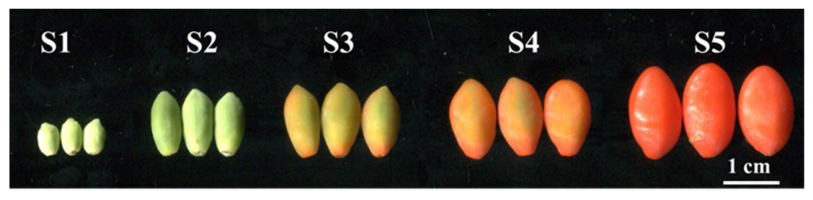
Cultivation of Lycium barbarum ‘Ningqi 7’ were planted at the Germplasm Resources Nursery of Wolfberry, located at the NingXia Academy of Agriculture and Forestry Sciences in the Ningxia Hui Autonomous Region, China. The cultivar ‘Ningqi 7’, as the main cultivated variety, is widely planted across the country. Plants were subjected to unified standardized orchard management throughout the growth period. Fruit samples were collected at five developmental stages, including 12, 19, 25, 30, and 37 days after full bloom (DAFB), each representing distinct physiological changes (Figure 1). At each stage, 10 fruits of uniform size, consistent appearance, and free from pest infestation or disease symptoms were collected as a biological replicate. Three distinct biological replicates were set up for each time point to guarantee the robustness of the data. After brief cleaning and surface drying, the fruit was quickly flash-frozen in liquid nitrogen after separation and stored at −80 °C for analyzing soluble sugar content and gene expression. For subcellular localization analysis, Nicotiana benthamiana were grown in a chamber at 22 °C. The conditions were 16 h of light followed by 8 h of darkness and relative humidity of 60% ± 5%. Seeds of N. benthamiana used in this study were obtained from our laboratory stock.

2.2. Identification and Characterization of LbaNAC Genes

The genomic data of wolfberry, and the related annotation files, were downloaded from the repository at the NCBI (https://www.ncbi.nlm.nih.gov/, accessed 3 January 2026). The genomic information of Arabidopsis was downloaded from the TAIR (https://www.arabidopsis.org/, accessed 3 January 2026). To detect potential LbaNAC sequences, HMMER v3.3.2 was utilized to built a Hidden Markov Model (HMM) profile using the NAM domain (PF02365) from the InterPro database (https://www.ebi.ac.uk/interpro/, accessed 5 January 2026), with an E-value cut off of 1 × 10⁻²⁰. In parallel, LbaNAC gene family members were also identified by performing BLASTP searches against the L. barbarum protein database using AtNAC protein sequences as queries with an E-value cutoff of 1 × 10⁻²⁰ using BLASTP v2.13.0. The candidate sequences obtained from both pipelines were subsequently verified online using the SMART database (https://smart.embl.de/help/smart_about.shtml, accessed 3 January 2026) and the NCBI database (https://www.ncbi.nlm.nih.gov/Structure/bwrpsb/bwrpsb.cgi, accessed 3 January 2026). The ExPASy ProtParam tool (https://web.expasy.org/protparam/, accessed 3 January 2026) was used to analyze the protein length, molecular weight, isoelectric point (pI), and grand average of hydropathicity (GRAVY) of LbaNAC proteins. Subcellular localization was predicted using the WoLF PSORT web server (https://wolfpsort.hgc.jp/, accessed 3 January 2026). Subsequently, the chromosomal distribution of LbaNAC genes was visualized using MG2C software v2.1 [33].

2.3. Phylogenetic Analysis and LbaNAC Proteins

To investigate the evolutionary relationship and facilitate the classification of LbaNAC proteins, NAC protein sequences from A. thaliana were retrieved from the TAIR11 database (https://www.arabidopsis.org/, accessed 5 January 2026). A rooted neighbor-joining (NJ) phylogenetic tree comprising NAC proteins from both L. barbarum and A. thaliana was constructed using MEGA v6.06 [34], with 1000 bootstrap values. The resulting phylogenetic tree was subsequently visualized using iTOL v6 [35].

2.4. Gene Structure and Motif Analysis of LbaNAC Genes

The Gene Structure Display Server (GSDS) [36] was employed to illustrate the exon-intron structures of LbaNAC genes. The Multiple Em for Motif Elicitation (MEME) server [37] was used to identify conserved motifs in LbaNAC proteins, with the maximum number of motifs set to 10.

2.5. Synteny, Gene Duplication, and Selective Pressure Analysis of LbaNAC Genes

Genome and annotation files of S. lycopersicum and Solanum tuberosum were retrieved from the SGN database (https://solgenomics.net/, accessed 10 January 2026), while the Phytozome genome database (https://phytozome-next.jgi.doe.gov/, accessed 10 January 2026) was utilized to access the genome of the rice plant. Intraspecific synteny analysis of wolfberry was performed using TBtools v2.454 [38], whereas MCScanX was employed to analyze the syntenic relationships among L. barbarum, S. lycopersicum, S. tuberosum, A. thaliana, and Oryza sativa [39]. The Gen_finder tools were used to identify gene duplication events [40]. Subsequently, the nonsynonymous (Ka) and synonymous (Ks) substitution rates were calculated using the Ka/Ks Calculator (NG) model implemented in TBtools v2.454 [38].

2.6. Gene Ontology (GO) Analysis of LbaNAC Genes

The eggNOG-mapper tool (http://eggnog5.embl.de/#/app/home, accessed 10 January 2026) was used to annotate the LbaNAC proteins with GO terms, enabling functional prediction. The resulting annotations were subsequently visualized using R software v4.5.3.

2.7. Cis-Acting Elements in the LbaNAC Promoter Regions

The promoter sequences of 2000 bp upstream of LbaNAC genes were extracted from the wolfberry genome database [32] and examined with the PlantCARE database [41] to identify potential cis-acting regulatory elements.

2.8. Expression Analysis of LbaNAC Genes During Fruit Development

To analyze the expression patterns of LbaNAC genes in L. barbarum, transcriptome data from wolfberry fruits at five developmental stages were retrieved from the NCBI database (Accession ID: PRJNA505629) [42]. The gene expression levels were quantified and normalized using the FPKM (Fragments Per Kilobase of transcript per Million mapped reads) method with TopHat v2.1.1 and Cufflinks v2.2.1 software [43]. A heatmap was constructed based on the log2-transformed FPKM + 1 value using TBtools v2.454 [38], followed by hierarchical clustering analysis to visualize the expression differences in LbaNAC gene expression across the five fruit developmental stages.

2.9. Extraction and Content Measurement of Soluble Sugar

The extraction and quantification of glucose, fructose, and sucrose were performed using ELISA-based content detection kits (Nano Diagnostics, LLC, Beijing, China) in conjunction with UV spectrophotometry as described previously [21] with minor modifications.

2.10. RNA Extraction and Quantitative Real-Time PCR (qRT-PCR) Analysis

Total RNA was extracted using EasyPure® Universal Plant Total RNA Kit (TransGen, Beijing, China) following the manufacturer’s instructions, whereas the first-strand cDNA was synthesized using EasyScript® One-Step gDNA Removal and cDNA Synthesis SuperMix Kit (TransGen, Beiijng, China). Primers for gene-specific qRT-PCR were designed using Primer Premier 5 software, as shown in Table S1. The qRT-PCR was performed using PerfectStart Green qPCR SuperMix as previously described [44], with the wolfberry actin gene as the reference gene [45]. Relative expression levels of LbaNAC genes were calculated using the 2−ΔΔCt analysis method [46]. All reactions were performed with three independent biological replicates.

2.11. Subcellular Localization and Transactivation Assay of LbaNAC27

To determine the subcellular localization of LbaNAC027, the coding sequence (CDS) of LbaNAC027 without the stop codon was amplified with gene-specific primers (Table S1) and inserted into the PBI121-GFP vector to generate the LbaNAC027-GFP recombinant vector using the pEASY-Basic Seamless Cloning and Assembly Kit (TransGen, Beijing, China). The empty GFP vector, mCherry-NLS, consisting of mCherry fused with a nuclear localization signal, and the LbaNAC027-GFP fusion vector were then separately introduced into tobacco leaves via Agrobacterium tumefaciens-mediated infiltration. After two days of incubation, green fluorescent protein (GFP) fluorescence signals were observed under a fluorescence microscope (Olympus BX63, Tokyo, Japan).
We also performed the Matchmaker Gold Yeast Two-Hybrid System assay (Clontech Laboratories, Inc., Shiga, Japan) to investigate the transcriptional activation activity of LbaNAC027. In this assay, the CDS of LbaNAC027 was amplified with gene-specific primers (Table S1) and inserted into the pGBKT7 vector to create an in-frame fusion with the GAL4 DNA-binding domain, utilizing the pEASY-Basic Seamless Cloning and Assembly Kit (TransGen, Beiijng, China). The resulting recombinant plasmid pGBKT7-LbaNAC027, along with the positive control (pGBKT7-53+pGADT7-RecT) and negative control (empty pGBKT7 vector), was transformed into the Saccharomyces cerevisiae strain AH109. The transformed yeast cells were serially diluted and spotted onto a series of selective media, including SD/-Trp-Leu, SD/-Trp-Leu-His, and SD/-Trp-Leu-His-Ade, and then incubated at 30 °C for 3–7 days to assess their growth.

2.12. Data Analysis

The data are presented as means ± SD of at least three independent experiments. For sugar concentrations, Pearson correlation analysis was performed using R software to investigate the relationships between gene expression levels and soluble sugar contents.

3. Results

3.1. Identification of LbaNAC Genes in L. barbarum Genome

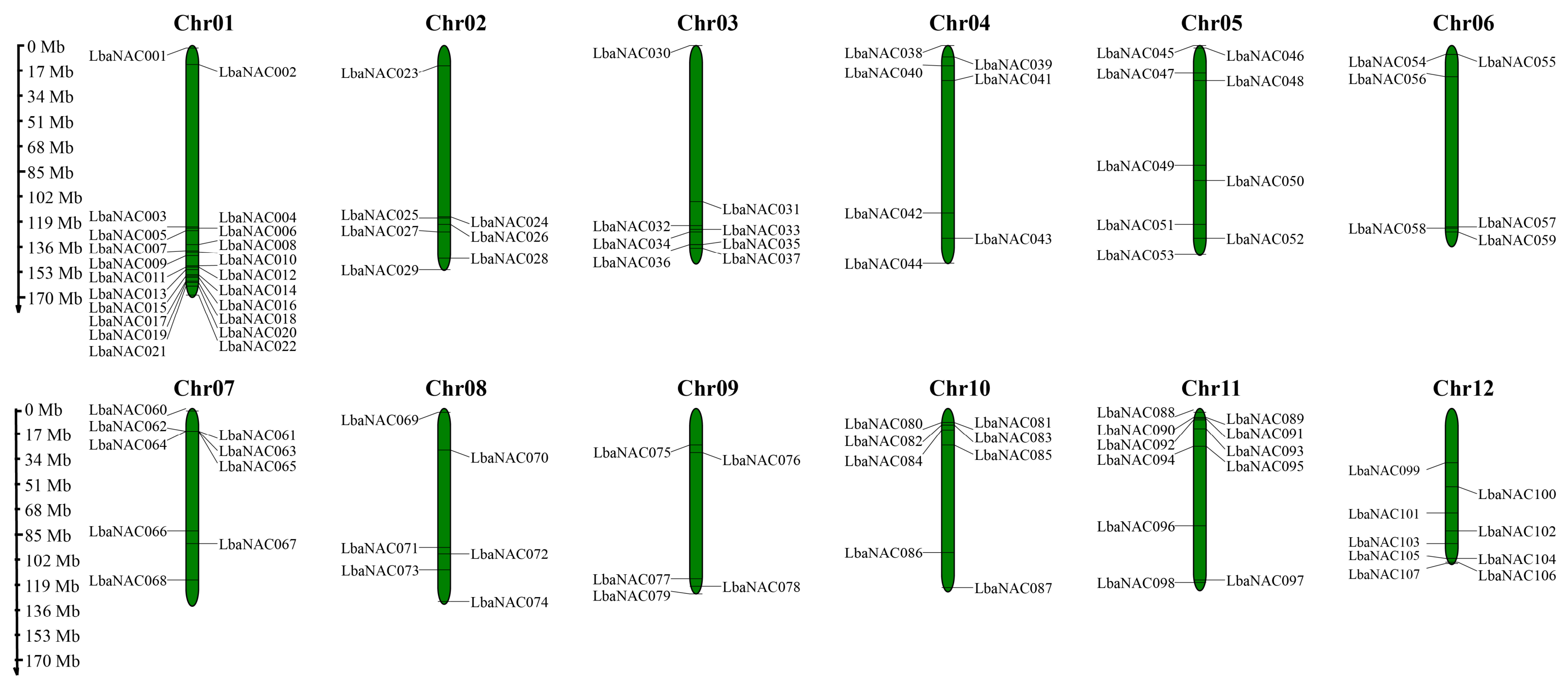
To identify the NAC TF family members in the wolfberry genome, BLASTP and HMM searches were performed using Arabidopsis NAC protein sequences as queries. These analyses identified 107 LbaNAC family members designated as LbaNAC001 to LbaNAC107 according to their chromosome locations (Table S2). The 107 LbaNAC genes were unevenly distributed across the 12 chromosomes, with chr1 containing the largest LbaNACs (22 LbaNACs) and chr9 harboring the least (5 LbaNACs) (Figure 2).
The protein sequence length of all LbaNAC proteins ranged from 111 in LbaNAC085 to 1845 in LbaNAC058 amino acids, averaging 396 amino acids. The MWs of the proteins varied from 12.80 in LbaNAC085 to 203.18 in LbaNAC058 kDa, averaging 45.09 kDa. The pI ranged from 4.48 in LbaNAC063 to 10.32 in LbaNAC057, with a mean of 6.69, suggesting that most LbaNACs are acidic. Subcellular localization prediction indicated that most LbaNACs were located in the nucleus, although some were also found in the chloroplast, peroxisome, cytoplasm, mitochondrion, cytoskeleton, and plasma membrane (Table S2).

3.2. Phylogenetic Analysis and Classification of LbaNAC Genes

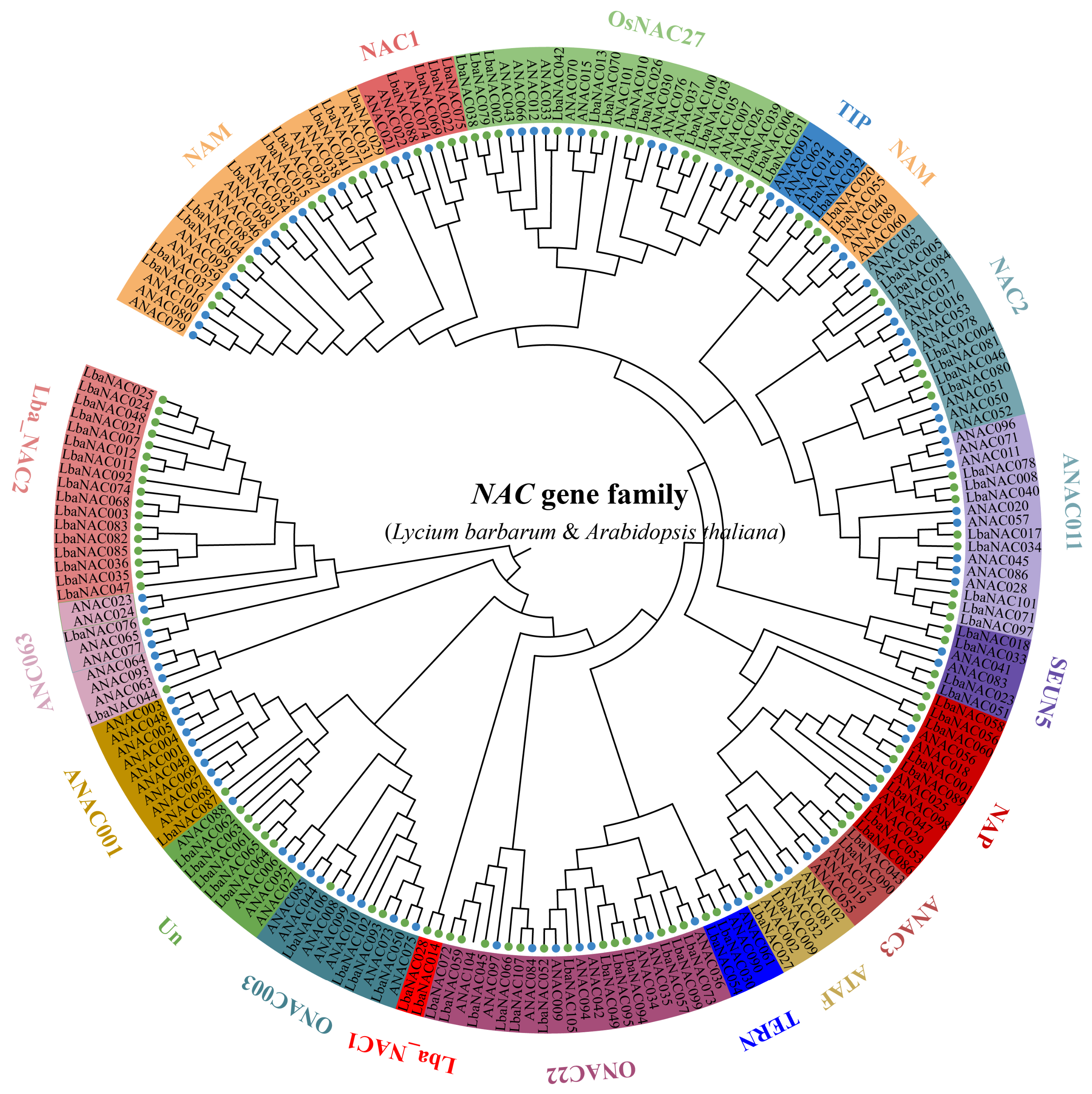
To investigate the phylogenetic associations of NAC proteins in L. barbarum and A. thaliana, we constructed a phylogenetic tree using the NJ method with MEGA 6.06, based on 107 LbaNAC and 105 AtNAC protein sequences (Figure 3). The resulting tree revealed that the LbaNAC genes were grouped into 18 distinct subgroups, while the LbaNAC proteins were distributed across NAM, NAC1, OsNAC27, TIP, NAC2, ANAC011, SEUN5, NAP, ANAC3, ATAF, TERN, ONAC22, ONAC003, ANAC001, NAC063, Lba_NAC1, Lba_NAC2, and Un subfamilies (Figure 3). Both the ONAC22 and OsNAC27 subfamilies contained the highest number of LbaNAC members, each with 13 members, whereas the ANAC001 subfamily had the fewest, with only one member.

3.3. Gene Structure and Motif Composition of LbaNAC Gene Family

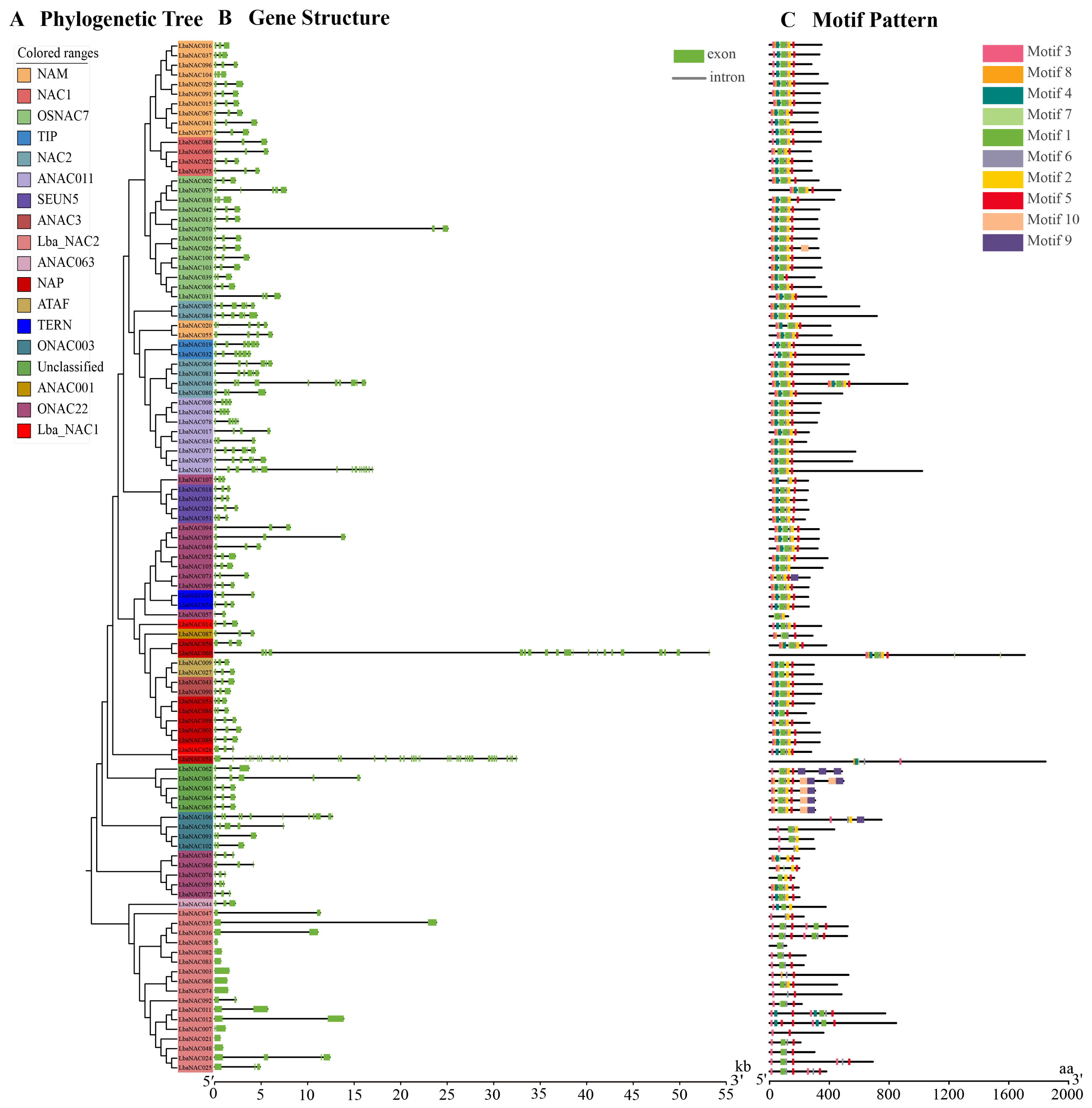
To further investigate the evolution of the NAC gene family, we examined the structural characteristics of NAC genes in L. barbarum. Gene structure examination showed that the exons in the 107 LbaNAC genes ranged from 1 to 44, with most members containing three exons (67 genes, 62.6%). The intron number also exhibited considerable variation, spanning from 0 to 43, with LbaNAC003, 021, 048, 068, 074, 083, and LbaNAC085 lacking introns, and the LbaNAC58 gene containing 43 introns (Figure 4B).
To further explore the protein sequence of LbaNAC gene family, 10 relatively conserved motifs were identified in LbaNACs, specifically motifs 1–10 (Figure 4C; Table S3). Among them, motif 3 was present in almost all LbaNAC proteins except in LbaNAC57/58/76/85, followed by motif 6 in 101 genes (94.4%), and motif 5 in 97 genes (90.6%), revealing that motifs 3, 6, and 5 are highly conserved and play an important role in L. barbarum. Within the same phylogenetic clade, LbaNAC proteins generally displayed highly conserved motif compositions. For example, members of the SENU5 subfamily showed highly consistent motif distributions. However, a few individual members in specific subgroups lacked conserved motifs found in other members. For instance, motif 4 was uniquely detected in LbaNAC011 and LbaNAC012, which belong to the Lba_NAC2 subgroup. Overall, the observed variable and subgroup-specific motif patterns among LbaNAC proteins suggest extensive functional diversification during evolution.

3.4. Synteny, Duplication Events, and Selective Pressure Analysis of LbaNAC

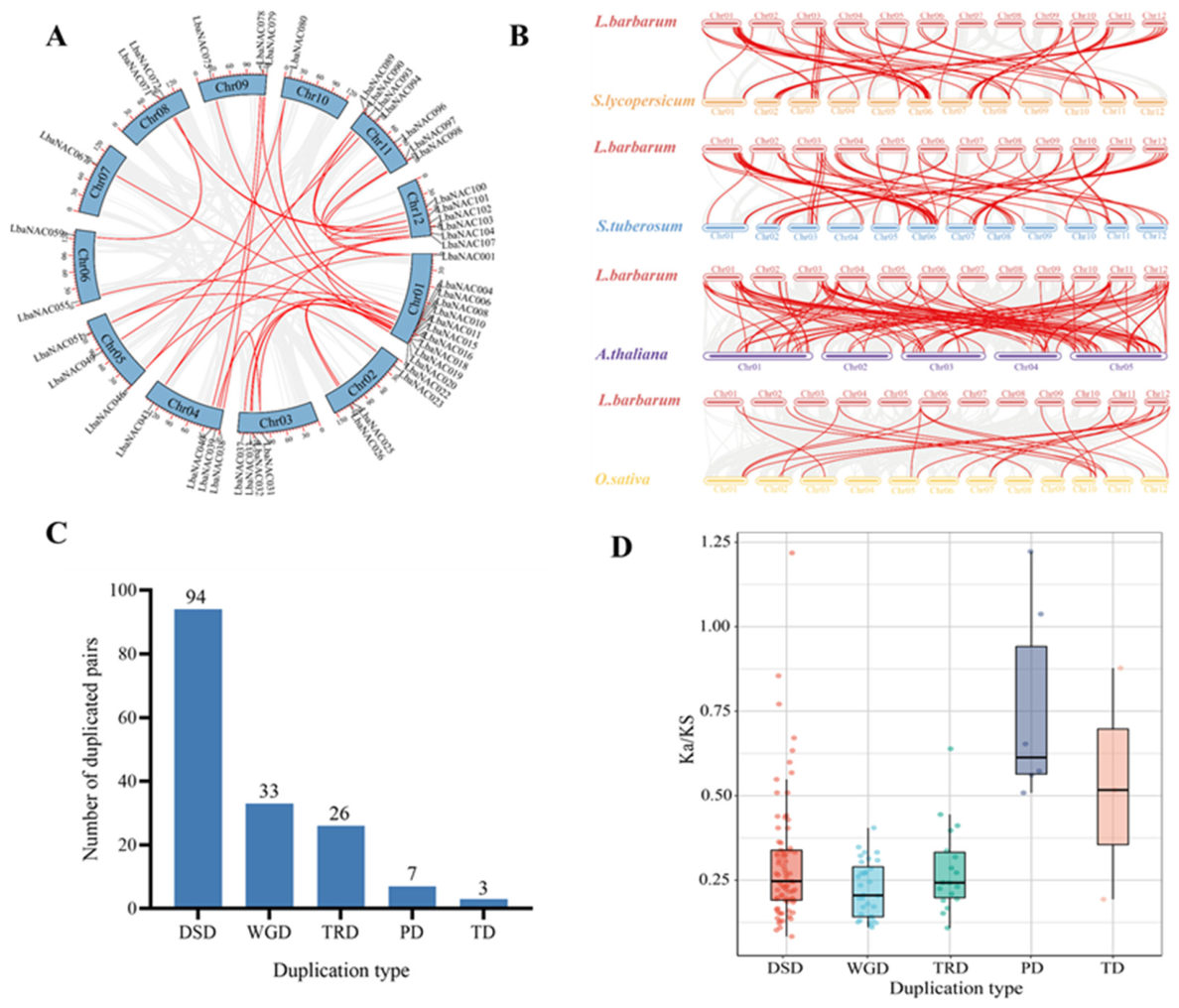
We further analyzed the syntenic relationships of the LbaNACs to investigate their evolutionary mechanisms. Based on the duplicated blocks in the L. barbarum genome, 48 syntenic gene pairs were identified (Figure 5A). Furthermore, the analyses of the syntenic relationships revealed 56, 61, 52, and 23 homologous NAC gene pairs between L. barbarum and S. lycopersicum, S. tuberosum, A. thaliana, and O. sativa, respectively (Figure 5B; Table S4), indicating that a relatively stronger collinearity has been maintained between the wolfberry and potato genomes. Additionally, seven collinear genes, including LbaNAC008, LbaNAC039, LbaNAC057, LbaNAC058, LbaNAC078, LbaNAC080, and LbaNAC089, were detected across all four species, suggesting that they may play a critical role in the evolution of the LbaNAC gene family.
To elucidate the origin of the NAC TF gene family in wolfberry, five duplication types were identified, including dispersed duplication (DSD), whole-genome duplication (WGD), transposed duplication (TRD), proximal duplication (PD), and tandem duplication (TD) (Figure 5C). There were 163 pairs of duplicated genes discovered in wolfberry, with DSD being the most predominant (94 gene pairs), followed by WGD (33 gene pairs), TRD (26 gene pairs), PD (7 gene pairs), and TD (3 gene pairs), demonstrating the highest contribution of DSD in the evolution of the LbaNAC gene family. Furthermore, the Ka/Ks values of gene pairs derived from the five duplication modes were calculated to assess the selective pressure acting on duplicated LbaNAC genes during evolution (Figure 5D; Table S5). Hence, three duplicated gene pairs, including LbaNAC062/065 with Ka/Ks of 1.2184, LbaNAC061/062 (Ka/Ks = 1.2224), and LbaNAC062/063 (Ka/Ks = 1.0375), exhibited Ka/Ks values greater than 1, indicating that the LbaNAC gene family has undergone a complex evolutionary trajectory, with positive selection (Ka/Ks > 1) acting on specific duplicated gene pairs to drive functional divergence.

3.5. GO Annotation of LbaNACs

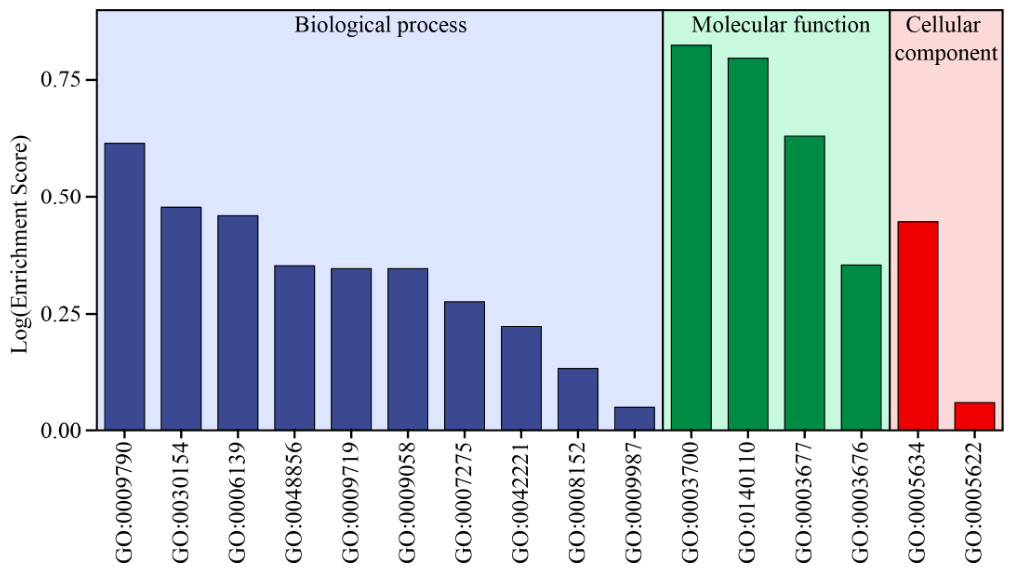
To further elucidate the function of LbaNAC proteins, GO annotation was performed for all LbaNAC members. The proteins were assigned to 16 GO terms, which were categorized into biological process (BP), molecular function (MF), and cellular component (CC) (Figure 6; Table S6). Within the BP group, most LbaNACs were enriched in embryo development (GO:0009790), cell differentiation (GO:0030154), and nucleobase-containing compound metabolic process (GO:0006139). In the MF category, the majority of LbaNAC proteins were associated with DNA-binding TF activity (GO:0003700), transcription regulator activity (GO:0140110), DNA binding (GO:0003677), and nucleic acid binding (GO:0003676). For the CC category, the majority of LbaNAC proteins were expected to be found in the nucleus (GO:0005634) and intracellular anatomical structure (GO:0005622), consistent with their roles as DNA-binding TFs.

3.6. Cis-Element Analysis of LbaNAC Genes

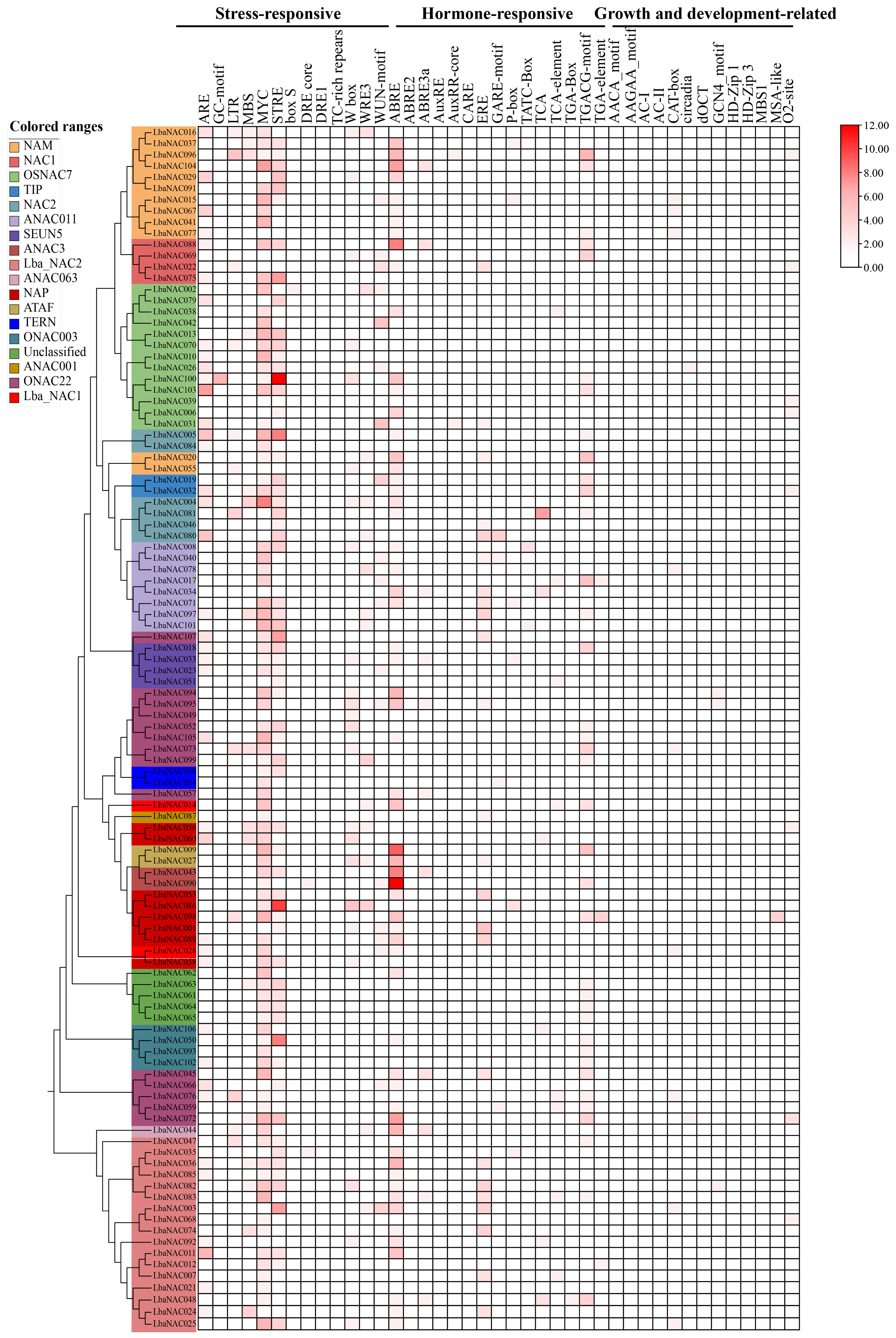
To examine the potential roles of LbaNAC genes, predictions of putative cis-acting regulatory elements within their promoter sequences were made using the PlantCARE database. In total, 2156 cis-acting elements were identified and categorized as either stress-responsive elements (STREs), hormone-responsive elements (HREs), or growth and development-related elements (GDREs) (Figure 7; Table S7), with STREs (1171) being the most abundant detected. Among the genes, LbaNAC100 had the most STREs (27), whereas LbaNAC006 had the fewest (3). These results suggest that LbaNAC genes may play crucial roles in mediating stress responses in wolfberry plants. The HREs were mainly associated with abscisic acid (ABA), methyl jasmonate (MeJA), ethylene (ETH), gibberellin (GA), auxin (IAA), and salicylic acid (SA). Among these, ABA-responsive elements (ABREs) were the most abundant (319), followed by MeJA-responsive or TGACG-motifs (146), ethylene-responsive elements (EREs; 122), and gibberellin-responsive elements (114, including GARE-motif, P-box, and TATC-box). Furthermore, several cis-elements related to plant growth and development were identified, including those involved in meristem and endosperm expression, and in the regulation of zein metabolism, with the latter being the most abundant in this category.

3.7. Identification of LbaNAC Genes Related to Sugar Metabolism

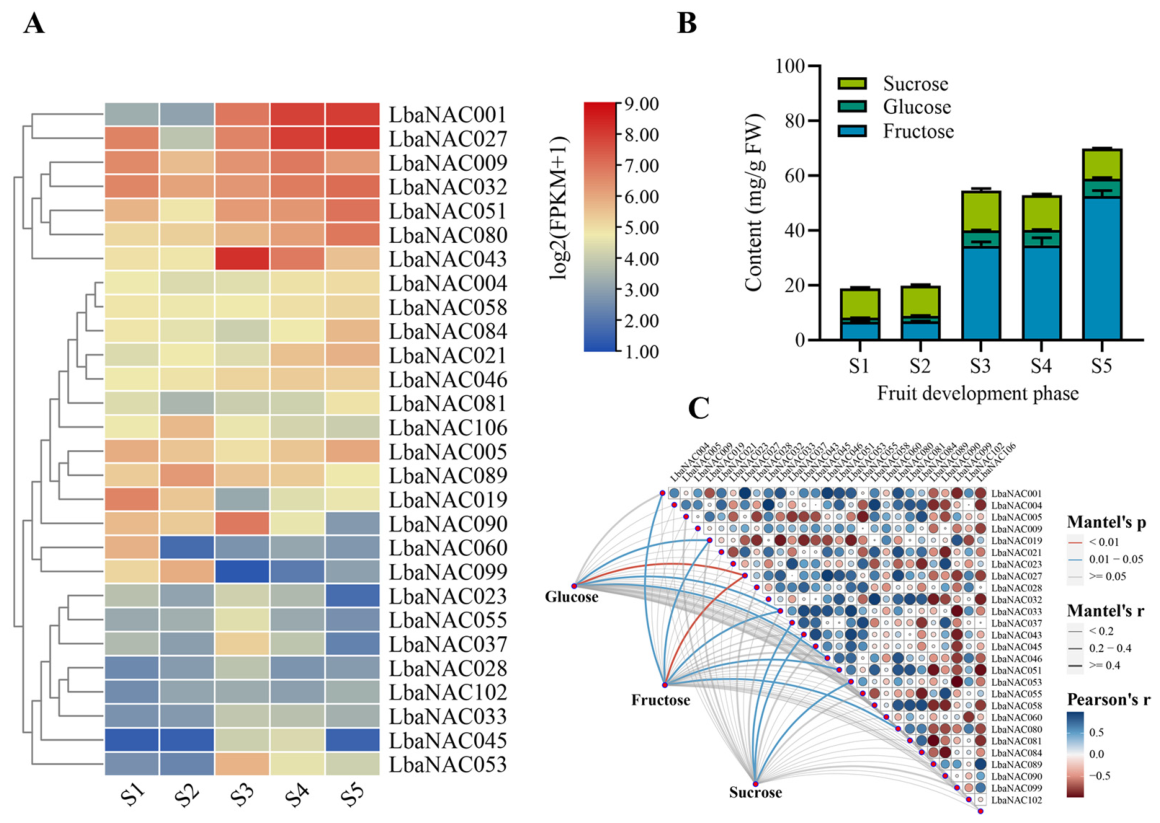
To identify LbaNAC genes involved in sugar metabolism of wolfberry, transcript profiling analysis was performed using RNA-sequencing on L. barbarum ‘Ningqi 7’at five developmental stages (12, 19, 25, 30, and 37 DAFB). The RNA-seq results revealed that 56 LbaNACs were persistently expressed in fruit throughout the entire developmental process, while 28 LbaNACs showed high expression at specific developmental stages. Conversely, 15 LbaNAC genes were not expressed at any stage during fruit development (Figure 8A; Table S8). Furthermore, soluble sugar contents were analyzed in L. barbarum ‘Ningqi 7’ at different developmental stages. The results showed that fructose and glucose contents exhibited similar accumulation patterns during fruit development, gradually increasing as the fruit ripened, reaching 6.32 ± 0.48 and 52.56 ± 2.07 mg/g fresh weight (FW), respectively, at 37 days after full bloom. In contrast, sucrose content initially increased and then decreased during fruit development, peaking at the S3 stage (14.49 ± 0.87 mg/g FW) (Figure 8B). Subsequently, Pearson correlation analysis was performed between the expression levels of the 28 LbaNACs and soluble sugar accumulation profiles (Figure 8C). Four genes, including LbaNAC001 (r = 0.94, p < 0.05), LbaNAC027 (r = 0.91, p < 0.05), LbaNAC051 (r = 0.60, p < 0.05), and LbaNAC080 (r = 0.61, p < 0.05), were positively correlated with fructose, while the expression of LbaNAC027 (r = 0.89, p < 0.01) and LbaNAC046 (r = 0.93, p < 0.05) showed a significant positive correlation with glucose. Additionally, LbaNAC043 (r = 0.98, p < 0.05) and LbaNAC053 (r = 0.70, p < 0.05) exhibited a significant positive correlation with sucrose accumulation (Table S9).

3.8. Validation by qRT-PCR

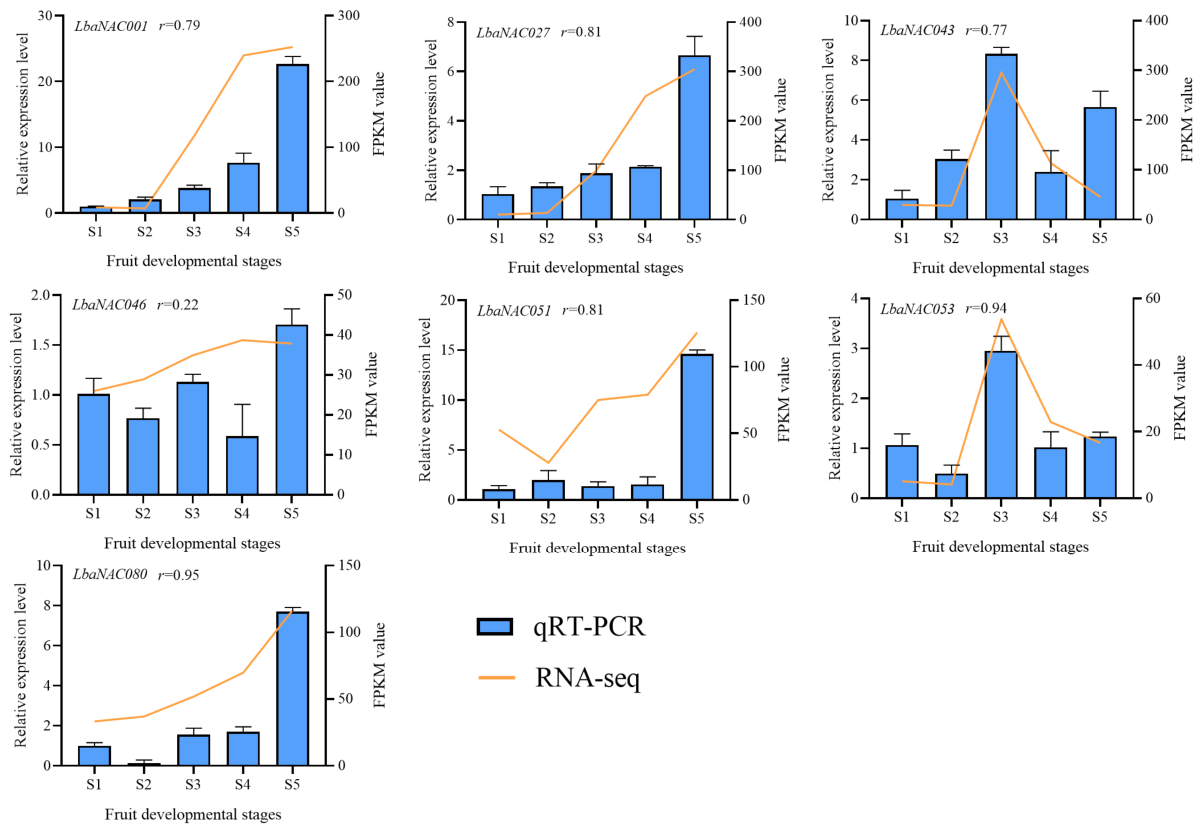
To confirm the accuracy of the RNA-seq findings, seven candidate LbaNAC genes were selected for qRT-PCR analysis. The patterns of gene expression observed via qRT-PCR were mostly consistent with the results from the transcriptome analysis (Figure 9), with the exception of LbaNAC046. Collectively, these findings indicate that our transcriptome sequencing data are highly reliable and suitable for further analysis.

3.9. Subcellular Localization and Transcriptional Activation Activity of LbaNAC027

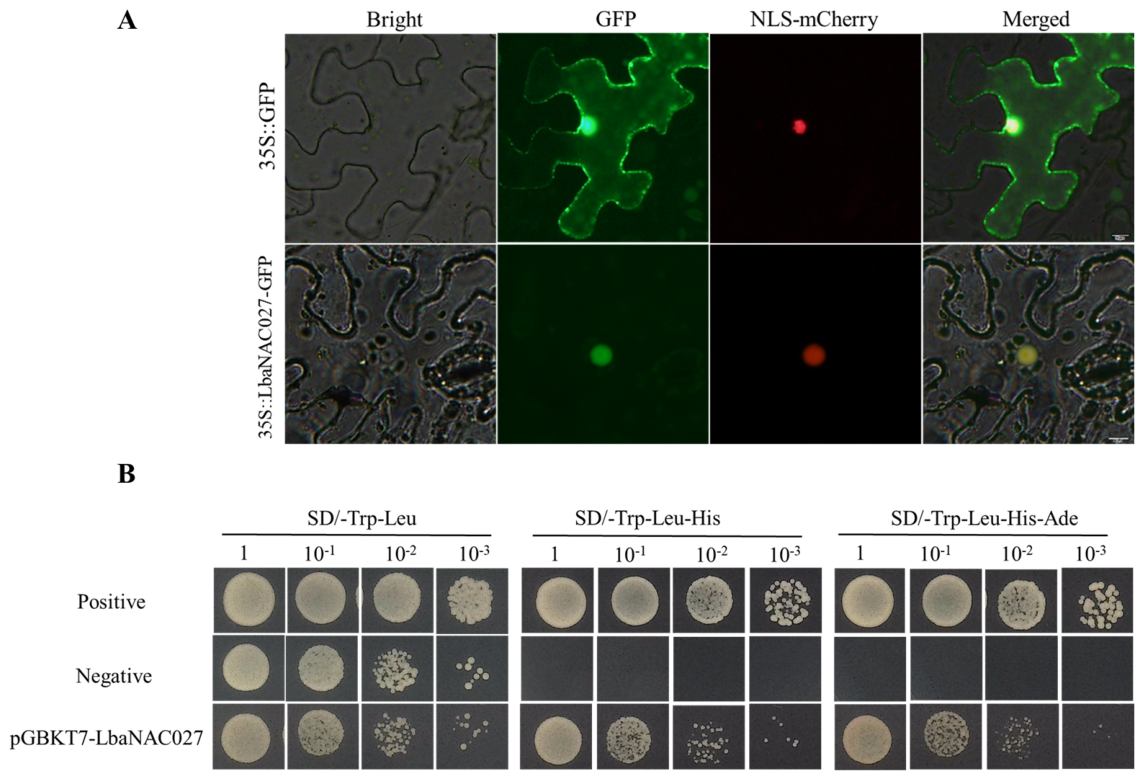
To determine the subcellular localization of LbaNAC027, its coding sequence was fused with GFP and transiently expressed in N. Benthamian leaf epidermal cells under the control of the CaMV 35S promoter. The GFP signal from the empty 35S-GFP vector appeared throughout the cytoplasm and nucleus (Figure 10A). In contrast, fluorescence from the 35S-LbaNAC027-GFP fusion protein was observed exclusively in the nucleus, demonstrating that LbaNAC027 is a nuclear-localized protein. To assess whether LbaNAC027 had transcriptional activation activity, the ORF cDNA was cloned into the pGBKT7 vector and introduced into the yeast strain AH109. The PGBKT7-LbaNAC027 transformant grew well on both SD/-Trp-Leu and SD/-Trp-Leu-His-Ade media (Figure 10B), whereas yeast cells containing only the pGBKT7 grew only on SD/-Trp-Leu medium. These findings indicate that LbaNC027 serves as a transcriptional activator, enabling the activation of downstream gene expression.

4. Discussion

The plant-specific NAC genes are key regulators of diverse biological activities, encompassing plant growth and development, stress responses, and the synthesis of secondary metabolites. The NAC genes have been identified and their functions studied across various plant species. Despite the completion of wolfberry’s whole-genome sequencing [32], the NAC gene family in this species remains largely unexplored. In this work, a total of 107 LbaNAC genes were identified using the L. barbarum genome database. This number is higher than the 105 NAC genes in A. thaliana [24], 90 in S. lycopersicum [25], 104 in Capsicum annuum [47], 100 in Camellia sinensis [48], and 56 in Scutellaria baicalensis [49], but lower than the 110 NAC genes in S. tuberosum [50], 200 in Triticum dicoccoides [51], 111 in Aquilaria sinensis [52], and 114 in Medicago sativa [53]. The variation in NAC family size across different species may be attributed to diverse whole-genome duplication events, adaptive evolution, and species-specific gene loss or expansion during long-term evolution. For example, the L. bararum genome experienced a hexaploidization event, while the T. dicoccoides genome underwent a recent burst of gene duplication events [32,54].
The phylogenetic tree was generated using NAC protein sequences from wolfberry and Arabidopsis thaliana to elucidate their evolutionary relationships. Based on sequence homology with Arabidopsis, all 107 LbaNAC proteins were classified into 18 subgroups. The classification differs from those observed in other species, such as S. lycopersicum with 5 subgroups [25], C. annuum (16 subgroups) [47], S. tuberosum (12 subgroups) [50], and T. dicoccoides with 15 subgroups [51]. Such interspecies differences in subgroup numbers likely reflect both evolutionary conservation and functional diversification of NAC genes across different plant species. Furthermore, the classification of the LbaNAC gene family is further supported by examining the gene structure and conserved motifs of LbaNAC proteins.
Gene duplication acts as a major catalyst for species evolution, playing a significant role in the enlargement and functional diversification of gene families [55]. Previous investigations have revealed that gene duplication can be categorized into five major types: WGD, PD, TD, DSD, and TRD [40]. Different duplication modes have distinct impacts on how plant gene families expand and evolve [56]. In this study, DSD (60.7%) and WGD (20.2%) were identified as the primary drivers of NAC gene family expansion in wolfberry. Similarly, several other TF families, including bZIP, bHLH, and BBX, also expand mainly through WGD and DSD [57,58,59]. Moreover, the Ka and Ks substitution rates were evaluated for pairs of paralogous LbaNAC genes. Pairwise Ka/Ks ratios reflect three types of evolutionary selection, including positive, purifying, and neutral selection. Most paralogous LbaNAC genes have Ka/Ks ratios that imply purifying selection is the predominant evolutionary force on the LbaNAC gene family.
Growing evidence has demonstrated that NAC TFs exert crucial regulatory effects on soluble sugar accumulation, which ultimately determines fruit flavour formation and nutritional quality [13,60,61]. In banana, the expression of MaSPS1 is transcriptionally activated by MaNAC19, which promotes sucrose synthesis [62]. In melon, the CmNAC-NOR protein, similar in function to the tomato NOR transcription factor, enhances the sweetness of the fruit flesh by controlling the regulatory module ‘CmNAC-NOR–CmNAC73–CmCWINV2’ [63]. In this study, the 107 LbaNAC genes identified displayed distinct expression level variations during the five developmental stages of wolfberry fruit. With the use of transcriptome expression profiles and correlation network analysis, the expression levels of seven candidate genes, including LbaNAC001, LbaNAC027, LbaNAC043, LbaNAC051, LbaNAC053, and LbaNAC080, were strongly correlated with soluble sugar contents during wolfberry fruit ripening. Furthermore, qRT-PCR verification confirmed that the expression patterns of these genes were highly consistent with transcriptome data, suggesting that they are potential regulators of sugar metabolism in wolfberry fruit. Interestingly, LbaNAC001 is homologous to two AtNACs (ANAC018 and ANAC025), while LbaNAC027 shares high protein sequence homology with ANAC002, 032, 081, and 102. Previous studies have reported that ANAC018 participates in embryogenesis regulation by controlling ovule integument development and degeneration, seed morphogenesis, as well as silique senescence [64,65]. Additionally, ANAC032 has been reported to negatively modulate anthocyanin accumulation [66]. Thus, we suggest that these potential LbaNAC genes could play a role in regulating soluble sugar metabolism in wolfberry. Nevertheless, a limitation of this study is the absence of an established genetic transformation system for wolfberry plants. Consequently, the intrinsic mechanisms underlying the expression dynamics of LbaNAC genes during wolfberry development and sugar metabolism remain to be fully clarified.

5. Conclusions

In the L. barbarum genome, a total of 107 LbaNAC genes were identified, which were distributed non-uniformly in 12 chromosomes. According to the phylogenetic analysis, these genes were divided into 18 unique subgroups, with members of each subgroup having highly conserved motif arrangement and structure. The main mechanisms for the expansion of the LbaNAC gene family are whole-genome duplication and dispersed duplication. The Ka/Ks analysis also revealed that the LbaNAC gene family experienced significant purifying selection during its evolutionary history. Correlation analysis revealed that the expression profiles of six LbaNAC genes (LbaNAC001, LbaNAC027, LbaNAC043, LbaNAC051, LbaNAC053, and LbaNAC080) were significantly positively correlated with the accumulation of glucose, fructose, and sucrose in wolfberry fruits. In addition, experiments on subcellular localization and transcriptional activity indicated that LbaNAC027 serves as a transcriptional activator in the nucleus. The research provides novel insights into how LbaNAC transcription factors might regulate sugar metabolism and establishes a solid platform for future functional studies of LbaNAC genes in wolfberry.

Supplementary Materials

The following supporting information can be downloaded at: https://www.mdpi.com/article/10.3390/horticulturae12060705/s1, Table S1: The primer sequences are listed in this study. Table S2: Information of LbaNAC genes identified in Lycium barbarum. Table S3: List of conserved motifs identified in the LbaNACs. Table S4: Orthologous pairs of NAC genes between wolfberry and other four species. Table S5: The duplication modes and KaKs values of duplication gene pairs. Table S6: Gene Ontology (GO) annotation of the LbaNAC proteins. Table S7: Cis-acting elements in the promoters of LbaNAC genes. Table S8: Relative expression levels of NAC genes in fruit during the developmental process in L. barbarum. Table S9: The significant person’s correlation coefficient of NAC genes and soluble sugar content.

Author Contributions

Writing—original draft preparation, Y.Y.; resources and methodology, B.Y.; data curation, J.H.; software, X.B.; Validation, D.Z.; resources and visualization, J.M.; supervision, W.A. and X.Z. All authors have read and agreed to the published version of the manuscript.

Funding

This research was funded by Natural Science Foundation of Ningxia, China (2023AAC05049) and Central Government-Guided Local Science and Technology Development Special Project of Ningxia Hui Autonomous Region (2024FRD05009).

Data Availability Statement

The genome datasets for wolfberry utilized in this study can be accessed in the NCBI database (https://www.ncbi.nlm.nih.gov/bioproject/PRJNA640228, accessed 3 January 2026). The genome sequences for tomato and potato were obtained from the Genome Database for the Solanaceae (https://solgenomics.net/, accessed on 5 January 2026). The genome sequence for Arabidopsis and rice were downloaded from Arabidopsis Information Resource (https://www.arabidopsis.org/, accessed on 5 January 2026) and Phytozome Database (https://phytozome-next.jgi.doe.gov/, accessed on 5 January 2026), respectively. The transcriptome analysis raw data utilized in this research were obtained from the NCBI database (PRJNA505629).

Conflicts of Interest

The authors declare no conflicts of interest.

Abbreviations

The following abbreviations are used in this manuscript:
NACNAM, ATAF, and CUC
TFsTranscription factors
qRT-PCRQuantitative real-time polymerase chain reaction
pIIsoelectric point
HMMHidden Markov model
GRAVYGrand average of hydropathicity
FPKMFragments Per Kilobase of transcript per Million mapped reads
DSDDispersed duplication
WGDWhole-genome duplication
TRDTransposed duplication
PDProximal duplication
TDTandem duplication
KaNonsynonymous
KsSynonymous
GFPGreen fluorescent protein

References

  1. Dhatterwal, P.; Sharma, N.; Prasad, M. Decoding the functionality of plant transcription factors. J. Exp. Bot. 2024, 75, 4745–4759. [Google Scholar] [CrossRef] [PubMed]
  2. Souer, E.; van Houwelingen, A.; Kloos, D.; Mol, J.; Koes, R. The No Apical Meristem Gene of Petunia Is Required for Pattern Formation in Embryos and Flowers and Is Expressed at Meristem and Primordia Boundaries. Cell 1996, 85, 159–170. [Google Scholar] [CrossRef]
  3. Jensen, M.K.; Lindemose, S.; Masi, F.d.; Reimer, J.J.; Nielsen, M.; Perera, V.; Workman, C.T.; Turck, F.; Grant, M.R.; Mundy, J.; et al. ATAF1 transcription factor directly regulates abscisic acid biosynthetic gene NCED3 in Arabidopsis thaliana. FEBS Open Bio. 2013, 3, 321–327. [Google Scholar] [CrossRef]
  4. Aida, M.; Ishida, T.; Fukaki, H.; Fujisawa, H.; Tasaka, M. Genes involved in organ separation in Arabidopsis: An analysis of the cup-shaped cotyledon mutant. Plant Cell 1997, 9, 841–857. [Google Scholar] [CrossRef]
  5. Kim, T.; Alvarez, J.C.; Rana, D.; Preciado, J.; Liu, T.; Begcy, K. Evolution of NAC transcription factors from early land plants to domesticated crops. Plant Cell Physiol. 2024, 66, 566–580. [Google Scholar] [CrossRef]
  6. Zhu, T.; Nevo, E.; Sun, D.; Peng, J. Phylogenetic analyses unravel the evolutionary history of NAC proteins in plants. Evolution 2012, 66, 1833–1848. [Google Scholar] [CrossRef]
  7. Jensen, M.K.; Skriver, K. NAC transcription factor gene regulatory and protein-protein interaction networks in plant stress responses and senescence. IUBMB Life 2014, 66, 156–166. [Google Scholar] [CrossRef]
  8. Xiong, H.; He, H.; Chang, Y.; Miao, B.; Liu, Z.; Wang, Q.; Dong, F.; Xiong, L. Multiple roles of NAC transcription factors in plant development and stress responses. J. Integr. Plant Biol. 2025, 67, 510–538. [Google Scholar] [CrossRef]
  9. Chen, Y.; Xia, P. NAC transcription factors as biological macromolecules responded to abiotic stress: A comprehensive review. Int. J. Biol. Macromol. 2025, 308, 142400. [Google Scholar] [CrossRef] [PubMed]
  10. Liu, G.S.; Li, H.L.; Grierson, D.; Fu, D.Q. NAC Transcription Factor Family Regulation of Fruit Ripening and Quality: A Review. Cells 2022, 11, 525. [Google Scholar] [CrossRef] [PubMed]
  11. Diao, P.; Chen, C.; Zhang, Y.; Meng, Q.; Lv, W.; Ma, N. The role of NAC transcription factor in plant cold response. Plant Signal. Behav. 2020, 15, 1785668. [Google Scholar] [CrossRef]
  12. Xiao, K.; Fan, J.; Bi, X.; Tu, X.; Li, X.; Cao, M.; Liu, Z.; Lin, A.; Wang, C.; Xu, P.; et al. A NAC transcription factor and a MADS-box protein antagonistically regulate sucrose accumulation in strawberry receptacles. Plant Physiol. 2025, 197, kiaf043. [Google Scholar] [CrossRef]
  13. Wang, J.; Wang, Y.; Zhang, J.; Ren, Y.; Li, M.; Tian, S.; Yu, Y.; Zuo, Y.; Gong, G.; Zhang, H.; et al. The NAC transcription factor ClNAC68 positively regulates sugar content and seed development in watermelon by repressing ClINV and ClGH3.6. Hortic. Res. 2021, 8, 214. [Google Scholar] [CrossRef] [PubMed]
  14. Zhang, B.; Yang, H.-J.; Li, Y.-N.; Zhu, Z.-Z.; Zhao, Z.-Y.; Yang, Y.-Z. MdNAC5: A key regulator of fructose accumulation in apple fruit. New Phytol. 2024, 244, 2458–2473. [Google Scholar] [CrossRef] [PubMed]
  15. Xie, Y.; Liu, W.; Li, X.; Li, X.; Fan, L.; Song, X.; Zhang, J.; Jia, J.; Wang, C.; Yan, L. The NAC transcription factor CsNAC22 modulates soluble sugar accumulation by activating the expression of sucrose synthase 5 gene in cucumber fruit. Int. J. Biol. Macromol. 2025, 331, 148502. [Google Scholar] [CrossRef]
  16. Dai, J.; Zhu, J.; Cheng, X.; Xu, Z.; Kang, T.; Xu, Y.; Lu, Z.; Ma, K.; Wang, X.; Hu, Y.; et al. NAC transcription factor PpNAP4 positively regulates the synthesis of carotenoid and abscisic acid (ABA) during peach ripening. Int. J. Biol. Macromol. 2025, 306, 141647. [Google Scholar] [CrossRef] [PubMed]
  17. Xing, S.; Li, R.; Zhao, H.; Zhai, H.; He, S.; Zhang, H.; Zhou, Y.; Zhao, N.; Gao, S.; Liu, Q. The transcription factor IbNAC29 positively regulates the carotenoid accumulation in sweet potato. Hortic. Res. 2023, 10, uhad010. [Google Scholar] [CrossRef]
  18. Shen, X.; Tang, X.; Dong, H.; Yan, X.; Lou, H.; Xu, Y.; Bao, S.; Wang, P.; Sun, X.; Gong, J. Transcription Factor FcrNAC22 Regulates Chlorophyll Catabolic Genes to Accelerate De-Greening in Kumquat Fruit. Plant Cell Environ. 2026, 49, 670–684. [Google Scholar] [CrossRef]
  19. Yang, Y.; Zhang, B.; Wang, D.; Chen, L.; Zhao, M.; Huang, Q.; Wang, M.; Zhang, Z.; Qin, Y.; Zhao, J.; et al. Molecular characterization and functional roles of NAC transcription factors in regulating chlorophyll degradation during litchi fruit ripening. Sci. Hortic. 2025, 341, 113975. [Google Scholar] [CrossRef]
  20. Shi, M.; Zhang, Y.; Zhang, T.; Zhang, W.; Wang, S.; Wei, M.; Wang, S.; Zhao, L. The NAC activator, MdNAC77L, regulates anthocyanin accumulation in red flesh apple. Hortic. Plant J. 2025, 11, 2009–2023. [Google Scholar] [CrossRef]
  21. Yajun, W.; Xiaojie, L.; Sujuan, G.; Yuekun, L.; Bo, Z.; Yue, Y.; Wei, A.; Youlong, C.; Jianhua, Z. Evaluation of nutrients and related environmental factors for wolfberry (Lycium barbarum) fruits grown in the different areas of China. Biochem. Syst. Ecol. 2019, 86, 103916. [Google Scholar] [CrossRef]
  22. Qian, D.; Yang, J.; Kang, L.-P.; Ji, R.-F.; Huang, L.-Q. Variation of Sweet Chemicals in Different Ripening Stages of Wolfberry Fruits. Chin. Herb. Med. 2017, 9, 329–334. [Google Scholar] [CrossRef]
  23. Zhao, D.; Li, S.; Han, X.; Li, C.; Ni, Y.; Hao, J. Physico-chemical properties and free amino acids profiles of six wolfberry cultivars in Zhongning. J. Food Compos. Anal. 2020, 88, 103460. [Google Scholar] [CrossRef]
  24. Ooka, H.; Satoh, K.; Doi, K.; Nagata, T.; Otomo, Y.; Murakami, K.; Matsubara, K.; Osato, N.; Kawai, J.; Carninci, P.; et al. Comprehensive Analysis of NAC Family Genes in Oryza sativa and Arabidopsis thaliana. DNA Res. 2003, 10, 239–247. [Google Scholar] [CrossRef]
  25. Jin, J.F.; Wang, Z.Q.; He, Q.Y.; Wang, J.Y.; Li, P.F.; Xu, J.M.; Zheng, S.J.; Fan, W.; Yang, J.L. Genome-wide identification and expression analysis of the NAC transcription factor family in tomato (Solanum lycopersicum) during aluminum stress. BMC Genom. 2020, 21, 288. [Google Scholar] [CrossRef]
  26. Li, X.; Meng, S.; Zhou, Y.; Wang, D.; Bian, Z.; Hu, L.; Lu, J. Genome-wide analysis of NAC gene family and function exploration of SaNAC30 in Santalum album L. Ind. Crops Prod. 2025, 227, 120827. [Google Scholar] [CrossRef]
  27. Wang, Q.; Zhou, L.; Yuan, M.; Peng, F.; Zhu, X.; Wang, Y. Genome-Wide Identification of NAC Gene Family Members of Tree Peony (Paeonia suffruticosa Andrews) and Their Expression under Heat and Waterlogging Stress. Int. J. Mol. Sci. 2024, 25, 9312. [Google Scholar] [CrossRef]
  28. Yang, Y.; He, M.; Zhang, K.; Zhai, Z.; Cheng, J.; Tian, Y.; Cao, X.; Liu, L. Genome-Wide Analysis of NAC Transcription Factor Gene Family in Morus atropurpurea. Plants 2025, 14, 1179. [Google Scholar] [CrossRef]
  29. Gao, Z.; Chen, Z.; Wang, J.; Liu, W. NAC Gene Family in Lagerstroemia indica: Genome-Wide Identification, Characterization, Expression Analysis, and Key Regulators Involved in Anthocyanin Biosynthesis. Curr. Issues Mol. Biol. 2025, 47, 542. [Google Scholar] [CrossRef]
  30. Pan, H.; Lu, H.; Li, Y.M.; Hu, X.C.; Gao, J.; Zhang, M.Y.; Peng, L.; Yan, F.; Zhang, G. Comparative analysis of the NAC gene family in five Polygonaceae species, focusing on Rheum officinale Baill. Plant Physiol. Biochem. PPB 2026, 231, 111025. [Google Scholar] [CrossRef] [PubMed]
  31. Cai, M.; Sun, C.; Ou, J.; Zeng, T. Genome identification of NAC gene family and its gene expression patterns in responding to salt and drought stresses in Rhododendron delavayi. BMC Plant Biol. 2025, 25, 924. [Google Scholar] [CrossRef] [PubMed]
  32. Cao, Y.-L.; Li, Y.-l.; Fan, Y.-F.; Li, Z.; Yoshida, K.; Wang, J.-Y.; Ma, X.-K.; Wang, N.; Mitsuda, N.; Kotake, T.; et al. Wolfberry genomes and the evolution of Lycium (Solanaceae). Commun. Biol. 2021, 4, 671. [Google Scholar] [CrossRef] [PubMed]
  33. Chao, J.; Li, Z.; Sun, Y.; Aluko, O.O.; Wu, X.; Wang, Q.; Liu, G. MG2C: A user-friendly online tool for drawing genetic maps. Mol. Hortic. 2021, 1, 16. [Google Scholar] [CrossRef]
  34. Tamura, K.; Stecher, G.; Peterson, D.; Filipski, A.; Kumar, S. MEGA6: Molecular Evolutionary Genetics Analysis version 6.0. Mol. Biol. Evol. 2013, 30, 2725–2729. [Google Scholar] [CrossRef] [PubMed]
  35. Letunic, I.; Bork, P. Interactive Tree of Life (iTOL) v6: Recent updates to the phylogenetic tree display and annotation tool. Nucleic Acids Res. 2024, 52, W78–W82. [Google Scholar] [CrossRef] [PubMed]
  36. Hu, B.; Jin, J.; Guo, A.-Y.; Zhang, H.; Luo, J.; Gao, G. GSDS 2.0: An upgraded gene feature visualization server. Bioinformatics 2015, 31, 1296–1297. [Google Scholar] [CrossRef]
  37. Bailey, T.L.; Johnson, J.; Grant, C.E.; Noble, W.S. The MEME Suite. Nucleic Acids Res. 2015, 43, W39–W49. [Google Scholar] [CrossRef]
  38. Chen, C.; Wu, Y.; Li, J.; Wang, X.; Zeng, Z.; Xu, J.; Liu, Y.; Feng, J.; Chen, H.; He, Y.; et al. TBtools-II: A “one for all, all for one” bioinformatics platform for biological big-data mining. Mol. Plant 2023, 16, 1733–1742. [Google Scholar] [CrossRef]
  39. Wang, Y.; Tang, H.; Wang, X.; Sun, Y.; Joseph, P.V.; Paterson, A.H. Detection of colinear blocks and synteny and evolutionary analyses based on utilization of MCScanX. Nat. Protoc. 2024, 19, 2206–2229. [Google Scholar] [CrossRef]
  40. Qiao, X.; Li, Q.; Yin, H.; Qi, K.; Li, L.; Wang, R.; Zhang, S.; Paterson, A.H. Gene duplication and evolution in recurring polyploidization-diploidization cycles in plants. Genome Biol. 2019, 20, 38. [Google Scholar] [CrossRef]
  41. Lescot, M.; Déhais, P.; Thijs, G.; Marchal, K.; Moreau, Y.; Van de Peer, Y.; Rouzé, P.; Rombauts, S. PlantCARE, a database of plant cis-acting regulatory elements and a portal to tools for in silico analysis of promoter sequences. Nucleic Acids Res. 2002, 30, 325–327. [Google Scholar] [CrossRef]
  42. Xie, Z.; Luo, Y.; Zhang, C.; An, W.; Zhou, J.; Jin, C.; Zhang, Y.; Zhao, J. Integrated Metabolome and Transcriptome during Fruit Development Reveal Metabolic Differences and Molecular Basis between Lycium barbarum and Lycium ruthenicum. Metabolites 2023, 13, 680. [Google Scholar] [CrossRef]
  43. Ghosh, S.; Chan, C.-K.K. Analysis of RNA-Seq Data Using TopHat and Cufflinks. In Plant Bioinformatics: Methods and Protocols; Edwards, D., Ed.; Springer: New York, NY, USA, 2016; pp. 339–361. [Google Scholar]
  44. Yin, Y.; Guo, C.; Shi, H.; Zhao, J.; Ma, F.; An, W.; He, X.; Luo, Q.; Cao, Y.; Zhan, X. Genome-Wide Comparative Analysis of the R2R3-MYB Gene Family in Five Solanaceae Species and Identification of Members Regulating Carotenoid Biosynthesis in Wolfberry. Int. J. Mol. Sci. 2022, 23, 2259. [Google Scholar] [CrossRef]
  45. Liu, Y.; Zeng, S.; Sun, W.; Wu, M.; Hu, W.; Shen, X.; Wang, Y. Comparative analysis of carotenoid accumulation in two goji (Lycium barbarum L. and L. ruthenicum Murr.) fruits. BMC Plant Biol. 2014, 14, 269. [Google Scholar] [CrossRef]
  46. Livak, K.J.; Schmittgen, T.D. Analysis of Relative Gene Expression Data Using Real-Time Quantitative PCR and the 2−ΔΔCT Method. Methods 2001, 25, 402–408. [Google Scholar] [CrossRef] [PubMed]
  47. Diao, W.; Snyder, J.C.; Wang, S.; Liu, J.; Pan, B.; Guo, G.; Ge, W.; Dawood, M.H.S.A. Genome-Wide Analyses of the NAC Transcription Factor Gene Family in Pepper (Capsicum annuum L.): Chromosome Location, Phylogeny, Structure, Expression Patterns, Cis-Elements in the Promoter, and Interaction Network. Int. J. Mol. Sci. 2018, 19, 1028. [Google Scholar] [CrossRef]
  48. Qiu, S.; Shao, C.; Xu, R.; Luo, Y.; Hu, Q.; Guo, J.; Peng, Y.; Tang, H.; Zhao, Y.; Huang, J.; et al. Identification of the NAC gene family in Camellia sinensis and expression analysis of CsNAC65 under shading treatment. Beverage Plant Res. 2025, 5, e024. [Google Scholar] [CrossRef]
  49. He, H.; Li, Q.; Fang, L.; Yang, W.; Xu, F.; Yan, Y.; Mao, R. Comprehensive analysis of NAC transcription factors in Scutellaria baicalensis and their response to exogenous ABA and GA3. Int. J. Biol. Macromol. 2023, 244, 125290. [Google Scholar] [CrossRef] [PubMed]
  50. Singh, A.K.; Sharma, V.; Pal, A.K.; Acharya, V.; Ahuja, P.S. Genome-Wide Organization and Expression Profiling of the NAC Transcription Factor Family in Potato (Solanum tuberosum L.). DNA Res. 2013, 20, 403–423. [Google Scholar] [CrossRef]
  51. Rui, Z.; Pan, W.; Zhao, Q.; Hu, H.; Li, X.; Xing, L.; Jia, H.; She, K.; Nie, X. Genome-wide identification, evolution and expression analysis of NAC gene family under salt stress in wild emmer wheat (Triticum dicoccoides L.). Int. J. Biol. Macromol. 2023, 230, 123376. [Google Scholar] [CrossRef]
  52. Yang, Z.; Mei, W.; Wang, H.; Zeng, J.; Dai, H.; Ding, X. Comprehensive Analysis of NAC Transcription Factors Reveals Their Evolution in Malvales and Functional Characterization of AsNAC019 and AsNAC098 in Aquilaria sinensis. Int. J. Mol. Sci. 2023, 24, 17384. [Google Scholar] [CrossRef]
  53. Li, Z.; Yu, Q.; Ma, Y.; Miao, F.; Ma, L.; Li, S.; Zhang, H.; Wang, Z.Y.; Yang, G.; Su, K. Screening and functional characterization of salt-tolerant NAC gene family members in Medicago sativa L. Front. Plant Sci. 2025, 16, 1461735. [Google Scholar] [CrossRef]
  54. Wang, X.; Yan, X.; Hu, Y.; Qin, L.; Wang, D.; Jia, J.; Jiao, Y. A recent burst of gene duplications in Triticeae. Plant Commun. 2022, 3, 100268. [Google Scholar] [CrossRef]
  55. Jiao, Y.; Leebens-Mack, J.; Ayyampalayam, S.; Bowers, J.E.; McKain, M.R.; McNeal, J.; Rolf, M.; Ruzicka, D.R.; Wafula, E.; Wickett, N.J.; et al. A genome triplication associated with early diversification of the core eudicots. Genome Biol. 2012, 13, R3. [Google Scholar] [CrossRef]
  56. Freeling, M. Bias in Plant Gene Content Following Different Sorts of Duplication: Tandem, Whole-Genome, Segmental, or by Transposition. Annu. Rev. Plant Biol. 2009, 60, 433–453. [Google Scholar] [CrossRef]
  57. Manzoor, M.A.; Manzoor, M.M.; Li, G.; Abdullah, M.; Han, W.; Wenlong, H.; Shakoor, A.; Riaz, M.W.; Rehman, S.; Cai, Y. Genome-wide identification and characterization of bZIP transcription factors and their expression profile under abiotic stresses in Chinese pear (Pyrus bretschneideri). BMC Plant Biol. 2021, 21, 413. [Google Scholar] [CrossRef]
  58. Wei, W.; Liu, Y.; Pan, C.; Liu, J.; Xu, S.; Shan, Y.; Li, C.; Zeng, J.; Xue, C.; Wu, J. Genome-wide identification of the rosaceae bHLH gene family and functional characterization of PybHLH182 involved in stone cell formation in pear. Gene 2026, 986, 150022. [Google Scholar] [CrossRef]
  59. Yin, Y.; Shi, H.; Mi, J.; Qin, X.; Zhao, J.; Zhang, D.; Guo, C.; He, X.; An, W.; Cao, Y.; et al. Genome-Wide Identification and Analysis of the BBX Gene Family and Its Role in Carotenoid Biosynthesis in Wolfberry (Lycium barbarum L.). Int. J. Mol. Sci. 2022, 23, 8440. [Google Scholar] [CrossRef]
  60. Song, Z.; Qin, J.; Zheng, Q.; Ding, X.; Chen, W.; Lu, W.; Li, X.; Zhu, X. The Involvement of the Banana F-Box Protein MaEBF1 in Regulating Chilling-Inhibited Starch Degradation through Interaction with a MaNAC67-Like Protein. Biomolecules 2019, 9, 552. [Google Scholar] [CrossRef]
  61. Martín-Pizarro, C.; Vallarino, J.G.; Osorio, S.; Meco, V.; Urrutia, M.; Pillet, J.; Casañal, A.; Merchante, C.; Amaya, I.; Willmitzer, L.; et al. The NAC transcription factor FaRIF controls fruit ripening in strawberry. Plant Cell 2021, 33, 1574–1593. [Google Scholar] [CrossRef]
  62. Wei, W.; Yang, Y.-y.; Wu, C.-j.; Kuang, J.-f.; Lu, W.-j.; Chen, J.-y.; Shan, W. MaNAC19–MaXB3 regulatory module mediates sucrose synthesis in banana fruit during ripening. Int. J. Biol. Macromol. 2023, 253, 127144. [Google Scholar] [CrossRef]
  63. Wang, J.; Tian, S.; Yu, Y.; Ren, Y.; Guo, S.; Zhang, J.; Li, M.; Zhang, H.; Gong, G.; Wang, M.; et al. Natural variation in the NAC transcription factor NONRIPENING contributes to melon fruit ripening. J. Integr. Plant Biol. 2022, 64, 1448–1461. [Google Scholar] [CrossRef]
  64. Forlani, S.; Mizzotti, C.; Masiero, S. The NAC side of the fruit: Tuning of fruit development and maturation. BMC Plant Biol. 2021, 21, 238. [Google Scholar] [CrossRef]
  65. Liu, M.; Sun, W.; Ma, Z.; Yu, G.; Li, J.; Wang, Y.; Wang, X. Comprehensive multiomics analysis reveals key roles of NACs in plant growth and development and its environmental adaption mechanism by regulating metabolite pathways. Genomics 2020, 112, 4897–4911. [Google Scholar] [CrossRef]
  66. Mahmood, K.; Xu, Z.; El-Kereamy, A.; Casaretto, J.A.; Rothstein, S.J. The Arabidopsis Transcription Factor ANAC032 Represses Anthocyanin Biosynthesis in Response to High Sucrose and Oxidative and Abiotic Stresses. Front. Plant Sci. 2016, 7, 1548. [Google Scholar] [CrossRef]
Figure 1. Lycium barbarum ‘Ningqi 7’ cultivar fruits at five different developmental stages (S1–S5). The periods S1, S2, S3, S4, and S5 correspond to 12, 19, 25, 30, and 37 days after full bloom, respectively. The scale bars represent 1 cm.
Horticulturae 12 00705 g001
Figure 2. Chromosomal location of LbaNAC genes in wolfberry. The chromosomes of wolfberry are represented by vertical lines, while the chromosome numbers are indicated at the top of each chromosome. The scale represents a 170 Mb chromosomal distance, whereas the bars indicate the positions of the LbaNAC genes on the chromosomes.
Horticulturae 12 00705 g002
Figure 3. Phylogenetic analysis of NAC proteins from Lycium barbarum and Arabidopsis thaliana. The phylogenetic tree was constructed using the neighbour-joining method with 1000 bootstrap replications to ensure statistical reliability. The phylogenetic tree classified the LbaNAC proteins into 18 distinct subgroups, with each subgroup represented by a uniquely coloured cluster.
Horticulturae 12 00705 g003
Figure 4. Classification, gene structure, and conserved motif analysis of LbaNAC genes. (A) The phylogenetic relationships among members of the LbaNAC gene family are illustrated, with subfamilies labeled and represented by different colours. (B) The gene structure of LbaNAC genes is depicted, where green boxes indicate exons and black lines represent introns. (C) Shows conserved motifs within LbaNAC proteins, with the length of each black line corresponding to protein length in amino acids, and distinct coloured blocks represent different conserved motifs.
Horticulturae 12 00705 g004
Figure 5. Analysis of synteny, duplication events, and selective pressure on LbaNAC genes. (A) Intraspecific collinearity analysis of LbaNAC genes. (B) Synteny analysis of NAC genes between Lycium barbarum and Solanum lycopersicum, S. tuberosum, Arabidopsis thaliana, and Oryza sativa. Gray lines in the background represent collinear blocks between genomes, whereas red lines specifically highlight syntenic NAC gene pairs. (C) The number of duplicated LbaNAC genes in dispersed (DSD), whole-genome (WGD), transposed (TRD), proximal (PD), and tandem (TD) duplications. (D) The ratio of non-synonymous substitution (Ka) to that of synonymous (Ks) values estimated for duplicated gene pairs under different duplication modes, illustrating the selective pressures acting on these genes.
Horticulturae 12 00705 g005
Figure 6. Gene ontology (GO) annotation analysis of LbaNAC proteins.
Horticulturae 12 00705 g006
Figure 7. Cis-acting elements in the promoters of LbaNAC genes. The cis-acting elements were classified into three functional categories, including stress-responsive, hormone-responsive, and growth and development-related elements. The relative abundance of each element is indicated by a red colour gradient.
Horticulturae 12 00705 g007
Figure 8. Identification of LbaNAC genes associated with sugar metabolism. (A) Expression patterns of NAC genes at five different developmental stages in Lycium barbarum No. 7. Red colour indicates high expression levels, while blue colour represents low expression levels. (B) The contents of glucose, fructose, and sucrose during fruit developmental stages are presented as means ± SDs (n = 3). (C) Correlation analysis between LbaNAC gene expression levels and glucose, fructose, and sucrose contents in L. barbarum 7 at developmental stages. The bar values represent the correlation coefficients.
Horticulturae 12 00705 g008
Figure 9. The expression levels of seven LbaNAC gene candidates were examined through RNA sequencing and qRT-PCR. The line chart illustrates gene expression profiles based on transcriptome data, represented as FPKM values. The r value shows the correlation between gene expression observed in RNAseq data and qRT-PCR analysis. For the qRT-PCR, the relative expression was normalized to the S1 stage, which was assigned a value of 1. The developmental stages S1, S2, S3, S4, and S5 correspond to 12, 19, 25, 30, and 37 days after full bloom, respectively.
Horticulturae 12 00705 g009
Figure 10. The subcellular localization and transcription activation of LbaNAC027. (A) Subcellular location of the LbaNAC027 protein was determined in Nicotiana benthamiana epidermal cells. Scale bar = 20 μm. (B) Transcriptional self-activating activity of the LbaNAC027 protein was assessed in yeast cells. SD/-Trp-Leu: synthetic dropout medium lacking tryptophan and leucine; SD/-Trp-Leu-His: synthetic dropout medium lacking tryptophan, leucine, and histidine; SD/-Trp-Leu-His-Ade: synthetic dropout medium lacking tryptophan, leucine, histidine, and adenine. Positive control: PGBKT7-53+pGADT7-T; negative control: pGBKT7+pGADT7.
Horticulturae 12 00705 g010
Disclaimer/Publisher’s Note: The statements, opinions and data contained in all publications are solely those of the individual author(s) and contributor(s) and not of MDPI and/or the editor(s). MDPI and/or the editor(s) disclaim responsibility for any injury to people or property resulting from any ideas, methods, instructions or products referred to in the content.