Article

Dynamic Accumulation and Transcriptional Regulation of Alkylamides in Developing Zanthoxylum planispinum var. Dintanensis Fruits


1
School of Karst Science, Guizhou Normal University/State Engineering Technology Institute for Karst Desertification Control, Guiyang 550025, China
2
Guizhou Provincial Leading Talent Workstation for Protein Design and Biological Imaging Innovation, Key Laboratory of National Forestry and Grassland Administration on Biodiversity Conservation in Karst Mountainous Areas of Southwestern China, School of Life Science, Guizhou Normal University, Guiyang 550025, China
3
Guizhou Key Laboratory of Advanced Computing, School of Cyber Science and Technology, Guizhou Normal University, Guiyang 550025, China
*
Authors to whom correspondence should be addressed.
These authors contributed equally to this work.
Horticulturae 2026, 12(3), 386; https://doi.org/10.3390/horticulturae12030386

Submission received: 15 February 2026 / Revised: 15 March 2026 / Accepted: 18 March 2026 / Published: 20 March 2026

Abstract

The accumulation dynamics and regulatory mechanisms of the alkylamides, the key pungent compounds in the fruits of Sichuan peppers, remain poorly understood. Using fruits of the Zanthoxylum planispinum var. dintanensis (Dintan) harvested at five key developmental stages, we comprehensively mapped the accumulation of numbering compounds and their underlying molecular drivers by integrating HPLC-based metabolite profiling and de novo transcriptomics. Total alkylamide content increased during development, with hydroxyl-α-sanshool (HαSS) being predominant. The contributions of hydroxyl-β-sanshool (HβSS) and hydroxyl-ε-sanshool (HεSS) increased in later stages. Cluster and correlation analyses identified 51 candidate genes strongly correlated (|r| ≥ 0.6) with HαSS accumulation, predominantly enriched in fatty acid and branched-chain amino acid metabolism pathways. The expression patterns of five stearoyl-CoA desaturase (SCD) genes, one long-chain acyl-CoA synthetase (ACSL/fadD), and one S-(hydroxymethyl)glutathione dehydrogenase/alcohol dehydrogenase (frmA) gene closely mirrored HαSS accumulation. In contrast, 3-oxoacyl-[acyl-carrier-protein] synthase II (fabF) and one β-ketoacyl-CoA synthase (KCS) gene exhibited a negative correlation. Accordingly, a positive regulatory network was constructed for HαSS accumulation. These findings revealed key candidate targets for deciphering the molecular basis of its unique flavor and for breeding high-pungency cultivars.

1. Introduction

The genus Zanthoxylum L., a significant member of the Rutaceae family, encompasses various life forms, including deciduous or evergreen trees, shrubs, and woody vines. It is widely distributed across warm temperate and subtropical regions globally, exhibiting rich species diversity in Asia, Africa, and the Americas [1,2]. As a representative genus in China and East Asia, plants of Zanthoxylum are not only indispensable pungent spices in traditional cuisine but also demonstrate significant economic value and application potential in food processing and medicine due to the unique aroma and “má” (numbing and tingling) sensation of their fruits and leaves [3,4].
The most striking sensory feature of Zanthoxylum plants is their distinctive numbing taste, which makes them unique among flavor compounds and directly determines their market acceptance and consumer preference [5,6]. This numbing sensation primarily originates from a class of unsaturated fatty acid amides with special structures [7], among which sanshools (such as hydroxy-α-sanshool (HαSS), hydroxy-β-sanshool (HβSS), hydroxy-γ-sanshool (HγSS), and hydroxy-ε-sanshool (HεSS)) are the main contributors [8]. Differences in carbon chain length, double bond position, and substituent groups among various sanshool analogs collectively shape the intensity and characteristics of the numbing taste in Zanthoxylum fruits [9]. Studies indicate that the accumulation patterns of these compounds vary during fruit development [10]. The content and appropriate proportion of these numbing compounds are key indicators for evaluating fruit quality, directly influencing market price and application value [11,12].
In recent years, with the advancement of molecular biology and metabolomics technologies, research on Zanthoxylum has expanded from traditional chemical component identification to systematic analysis at the multi-omics level [13,14,15]. For instance, integrated transcriptomic and metabolomic analyses have elucidated the biosynthetic pathways and environmental regulatory mechanisms of secondary metabolites such as flavonoids [16] and terpenoids [17] in Zanthoxylum fruits or leaves [14,18]. Techniques like HPLC and LC-MS have been employed for the qualitative and quantitative analysis of volatile oils [19], alkaloids [20], and coumarins [21]. However, research on the dynamic accumulation patterns and molecular regulatory mechanisms of the numbing compounds (i.e., sanshool unsaturated fatty acid amides) during fruit development remains insufficient [5,22]. Existing studies often focus on component detection at specific developmental stages or functional validation of single genes, lacking a dynamic tracking of the entire process from synthesis to accumulation, as well as in-depth analysis of the systematic correlations between key regulatory genes and metabolic pathways [23,24,25].
The fruit development period is a critical phase for the formation and accumulation of numbing compounds, which are co-regulated by gene expression, enzyme activity, and environmental factors [24,26]. Elucidating the changes in amide content during this period and identifying the key genes regulating their synthesis is of great significance for understanding the molecular mechanism underlying numbing taste formation and guiding the breeding of high-quality Zanthoxylum varieties with intense numbing characteristics. This study focuses on Zanthoxylum planispinum var. dintanensis (Dintan), a variety of Z. armatum mainly distributed in the Huajiang Valley, southwestern Guizhou [27,28,29,30]. Through transcriptome sequencing and metabolite detection, the study aims to: determine the accumulation dynamics and key stages of numbing compounds during fruit development, screen the core genes and pathways associated with numbing compound synthesis, and reveal the molecular regulatory network governing numbing compound accumulation, thereby providing a theoretical basis for improving the flavor quality of Zanthoxylum.

2. Materials and Methods

2.1. Plant Materials

Fruit samples of Dintan were collected in five batches between May and September 2024. The sampling dates were 10 May 2024 (Group 1), 1 June 2024 (Group 2), 7 July 2024 (Group 3), 3 August 2024 (Group 4), and 14 September 2024 (Group 5). Sampling was conducted at an altitude of 725 m (latitude/longitude: 25°65′65″ N, 105°65′40″ E) in Huaijiang Town, Guanling Bouyei and Miao Autonomous County, Anshun City, Guizhou Province, China. Immediately following harvest, samples from each batch were subjected to lyophilization and stored at −80°C. Subsequent experiments were uniformly conducted after all batches were collected.

2.2. HPLC Analysis

The fresh fruits of Dintan were rapidly freeze-dried after being collected, ground into powder, and sieved through a 40-mesh screen. An accurately weighed powdered sample (0.025 g) was transferred to a 50-mL centrifuge tube, and an appropriate amount of anhydrous ethanol was added. After being shaken thoroughly, it was extracted with the assistance of ultrasonics for 6 min in a solid-to-liquid ratio of 1:20 w/v, and a frequency of 20 kHz at 30 °C. After the extraction, the mixtures were centrifuged (2500 r/min, 10 min) and the supernatant was collected. The solid residue was re-extracted in the same process, and the two combined supernatants were adjusted to a final volume of 25 mL and stored at 4 °C. Three replicates were prepared for each sample. The test solutions were obtained after being filtered through a 0.22 μm organic-based microporous membrane. The ultrasonic-assisted extraction method used in this study achieved a recovery rate of 97.3–111.60% for all four alkylamide standards (Table S1).
HαSS, HβSS, HγSS and HεSS were accurately weighed and dissolved in anhydrous ethanol to prepare individual stock solutions. Mixed standard solutions with concentrations of 3.40, 8.24, 6.06, and 8.00 μg mL−1 were obtained by mixing appropriate amounts of individual stock solutions and diluting with anhydrous ethanol. All solutions were stored at −20 °C before analysis. All compound contents are expressed as mg per gram of dry weight (mg g−1).
Chromatographic analysis was performed using an LC-20A high-performance liquid chromatography–mass spectrometry system (Shimadzu Corporation, Kyoto, Japan) equipped with a PDA detector. A Phenomenon SuperLu C18 column (250 mm × 4.6 mm, 5 μm) (Guangzhou Phenomenon Scientific Instruments Co., Ltd., Guangzhou, China) was employed. The mobile phase consisted of water (Elution Solution A) and acetonitrile (Elution Solution B). The column was maintained at 35 °C, the flow rate was equal to 1 mL min−1, and the injection volume of each sample and standard solution was equal to 10 μL. Gradient elution was performed (0–30 min, 40% B; 30–50 min, 70% B).

2.3. RNA Extraction and Library Construction

Total RNA was extracted from 15 samples using the TRIzol reagent kit.(Invitrogen, Carlsbad, CA, USA) RNA purity and concentration were measured with a NanoDrop 2000 spectrophotometer (Thermo Fisher Scientific, Waltham, MA, USA). RNA integrity was assessed using an Agilent 2100 Bioanalyzer (Agilent Technologies, Santa Clara, CA, USA). Transcriptome libraries were then constructed following the instructions of the VAHTS Universal V6 RNA-seq Library Prep Kit(Vazyme, Nanjing, China). After library quality was verified using the Agilent 2100 Bioanalyzer, sequencing was performed on the Illumina NovaSeq 6000 platform, generating 150 bp paired-end reads.

2.4. De Novo Transcriptome Assembly and Annotation

Raw data (raw reads) in FASTQ format were processed using Trimmomatic 0.39 [31]. After removing reads containing ploy-N and low-quality reads, clean reads were obtained. Adapters and low-quality sequences were removed. The clean reads were assembled into expressed sequence tags (contigs) and then assembled de novo into transcripts using Trinity 2.4 software [32]. Based on sequence similarity and length, the longest transcript was selected as a Unigene for subsequent analyses. For functional annotation, unigenes were aligned against the NCBI non-redundant (NR) and Swiss-Prot databases. Alignment was performed using diamond 2.0.15 software [33] with a threshold of e < 1 × 10⁻⁵ for annotations against the evolutionary genealogy of genes: Non-supervised Orthologous Groups (eggNOG) and eukaryotic Orthologous Groups (KOG) databases. The protein with the highest sequence similarity to each unigene was selected to obtain functional annotation information. These unigenes were also mapped to the Kyoto Encyclopedia of Genes and Genomes (KEGG) database [34] for pathway annotation. Gene Ontology (GO) classification was performed based on the mapping relationship between Swiss-Prot and GO terms. Following unigene annotation, the number of reads mapped to each unigene in each sample was obtained using bowtie2 2.3.3.1 software [35]. The eXpress 1.5.1 software [36] was then used to calculate unigene expression abundance (FPKM values).

2.5. Hierarchical Clustering and Correlation Analysis

Trend analysis of unigenes was performed using STEM 1.3.8 (Short Time-series Expression Miner) software [37]. The analysis samples were processed in the order [“group 1” → “group 2” → “group 3” → “group 4” → “group 5”]. Data were filtered through a mathematical model to remove genes with insignificant differential expression across the time gradient. The remaining probes were classified into 50 profiles based on the model. Combined with the STEM clustering results (where −1 indicates non-significant profiles), profiles with a p-value < 0.05 after False Discovery Rate correction were selected as significant profiles. Trend charts and clustering heatmaps were then generated for these significant profiles. The hypergeometric distribution test was used to calculate the significance of gene enrichment in each Pathway entry for each profile. The Pearson Product-Moment Correlation Coefficient was used to quantitatively analyze correlations between genes within each cluster and the numbing compounds (HαSS) across groups. Genes within profiles showing a correlation coefficient ≥|0.6| were selected for further analysis. The threshold of |r| ≥ 0.6 was chosen based on commonly accepted practices in plant transcriptome–metabolome correlation studies, where a moderate-to-strong correlation (r ≥ 0.6 or ≤ −0.6) is considered biologically meaningful for exploratory analysis. This threshold balances the need to capture potentially relevant genes while minimizing noise.

2.6. Statistical Analysis

All experiments were performed with three biological replicates per sample group (group 1 to group 5), and data are presented as mean ± standard deviation (SD) unless otherwise stated. Statistical analyses were conducted using R software (version 4.2.1), SPSS (version 26.0), and STEM software (version 1.3.8).

3. Results

3.1. Dynamics of Pungent Compound Accumulation During Fruit Development

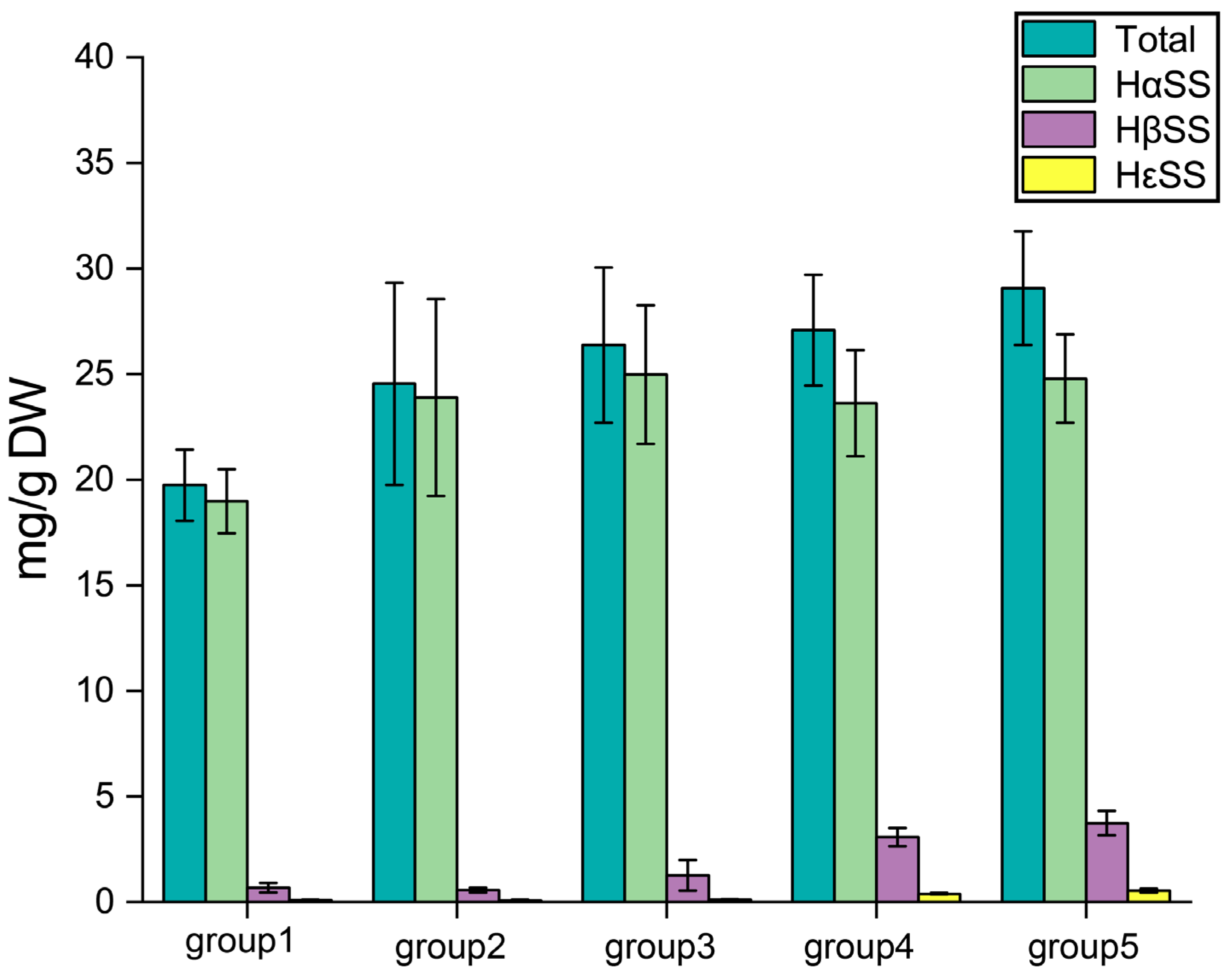
Quantitative analysis using High-Performance Liquid Chromatography (HPLC) revealed that the contents of HαSS, HβSS, HεSS, and total sanshools in Dintan fruits exhibited regular changes with the harvest date (Figure 1). The total sanshool content increased gradually from 19.75 mg g−1 on 10 May to 24.54 mg g−1 on 1 June, 26.37 mg g−1 on 7 July, and 27.08 mg g−1 on 3 August, finally reaching a peak of 29.08 mg g−1 on 14 September. As the main component of sanshools, the HαSS content ranged from 18.99 to 24.98 mg g−1. The contents of HβSS and HεSS were low. HβSS accumulated, reaching 3.07 mg g−1 on 3 August, and 3.74 mg g−1 on 14 September. HεSS gradually increased to 0.39 mg g−1 on 3 August, and 0.55 mg g−1 on 14 September.
Overall, the total content of numbing compounds was low in May. Then, it accumulated significantly In June and shows stability in July and August. Finally, the total content peaked in September, with HαSS being the dominant component and the contribution of HβSS and HεSS gradually increasing.

3.2. Transcriptome Sequencing, De Novo Assembly, and Functional Annotation

Using Dintan fruits collected at five different time points, de novo transcriptome sequencing was performed. A total of 15 high-quality fruit transcriptome datasets were obtained. After stringent quality control of the raw data, a total of 89.58 Gb of Clean Data was generated. The effective data volume for each sample ranged from 5.50 to 6.98 Gb. The Q30 base percentage ranged from 95.04% to 95.66%, and the average GC content was 43.91% (Table S1). All samples had Q30 values above 95% and GC contents greater than 43.14%, indicating excellent sequencing quality and high data reliability, fully meeting the requirements for subsequent bioinformatics analysis. To improve the completeness and accuracy of the transcriptome assembly, Trinity 2.4 software was used for de novo assembly of the clean reads. The longest transcript at each gene locus was retained as a Unigene. Subsequently, CD-HIT was used to remove redundancy, ultimately yielding 75,696 high-quality unigenes. The assembly results showed that the average unigene length was 1122.03 bp, and the N50 length was 1687 bp. Among these, 29,317 unigenes (39.73%) were longer than 1000 bp, indicating good assembly completeness (Table S2).
Unigene sequences were aligned against the KEGG, Nr, Swiss-Prot, GO, COG/KOG, Trembl, and Pfam databases using BLAST 2.16.0. After predicting the amino acid sequences of the unigenes, HMMER was used for alignment against the Pfam database to obtain annotation information. Among the seven databases, 66.08% of the unigenes were annotated using the Nr database, and 42.68% were annotated using the Swiss-Prot database. The KEGG database annotated the fewest genes, only 14.27%, which was the lowest among the seven databases (Figure S1A). Further classification of the Nr annotation results by species revealed that sequences annotated to Citrus sinensis-related genes were the most abundant, totaling 18,579, accounting for 37.15% of the genes annotated in the Nr database. Other related species with sequence homology greater than 2% included Citrus clementina, Pyrenochaeta sp. MPI-SDFR-AT-0127, Cronartium quercuum f. sp. fusiforme G11, Pistacia vera, and Pyrenochaeta sp. DS3sAY3a (Figure S1B).

3.3. Hierarchical Clustering Analysis

Taking Dintan samples as the research object, the characteristic correlations and inter-group differences among different groups (group 1–group 5) were analyzed through multiple dimensions, including correlation heatmap, principal component analysis (PCA), and orthogonal partial least squares discriminant analysis (OPLS-DA). The correlation heatmap was generated based on the Pearson correlation coefficient matrix, visually presenting the strength of feature correlations within and between groups. Correlations among samples within the same group (e.g., the three replicates of group 1) were generally high, mostly >0.80, indicating consistency within each group. The correlation between group 1 and group 2 was relatively strong, while that between group 1 and group 5 was weaker, reflecting both similarities and differences in group characteristics (Figure S2A). Principal component analysis (PCA) was employed to reduce dimensionality and illustrate the overall variation distribution among samples. PC1 and PC2 explained 29.72% and 27.23% of the total variance, respectively (cumulative 56.95%). Samples from different groups showed a preliminary separation trend in the PC space, although some groups overlapped (Figure S2B). Orthogonal partial least squares discriminant analysis (OPLS-DA) further enhanced the separation between groups. Component 1 and Component 2 explained 18.4% and 15.96% of the variance, respectively. Samples from each group clustered clearly within the 95% confidence ellipses in the component space, with no significant overlap, confirming the statistical significance of inter-group differences (Figure S2C).
Based on the expression trends at different time points from group 1 to group 5, hierarchical clustering analysis was performed on the expression patterns of all genes. After filtering out genes with insignificant expression changes across the time gradient, the remaining genes were divided into 50 modules. Combined with the clustering results from STEM (Short Time-series Expression Miner), the False Discovery Rate (FDR) method was applied for multiple testing correction to identify significant expression patterns. A total of 19 significantly enriched profiles were obtained with FDR-adjusted p-values < 0.05 (Figure S3). The temporal expression trends of these significant profiles were then visualized in Figure S2D, providing an intuitive view of the expression patterns of different gene sets across various time points in Dintan.

3.4. Identification of Genes Associated with HαSS Accumulation

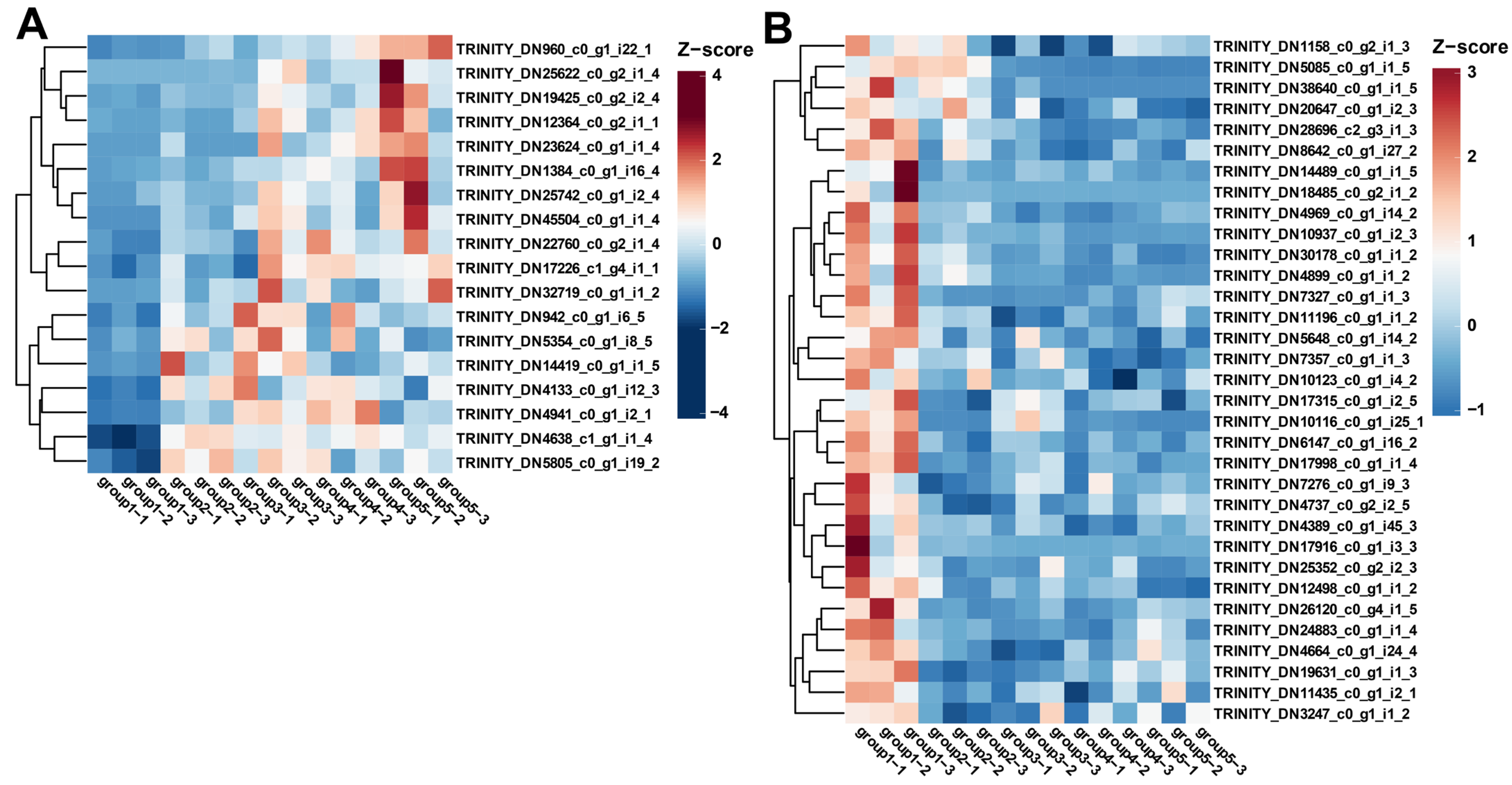
Based on the gene clustering results, the correlation between gene expression levels and the content of HαSS was further analyzed. Genes were screened based on the strength of the correlation, and only those with an absolute correlation coefficient |r| ≥ 0.6 with HαSS were retained. The analysis revealed that genes meeting this threshold were present in 11 expression modules. KEGG enrichment analysis was performed on the genes with |r| ≥ 0.6 within these modules. Based on existing knowledge of HαSS biosynthesis, genes involved in fatty acid metabolism pathways (ko00061: Fatty acid biosynthesis; ko00062: Fatty acid elongation; ko01040: Biosynthesis of unsaturated fatty acids; ko00071: Fatty acid degradation) and valine metabolism pathways (ko00280: Valine, leucine and isoleucine degradation; ko00290: Valine, leucine and isoleucine biosynthesis) were specifically selected. A total of 51 such genes were identified (Table S2), including 18 positively correlated genes and 33 negatively correlated genes. A clustering heatmap was generated to visually present the expression characteristics of these genes across different sampling time points (Figure 2). This provides key clues for elucidating the molecular regulatory mechanisms underlying HαSS synthesis in Dintan.

3.5. Association Between Fatty Acid Metabolism Gene Expression and HαSS Accumulation

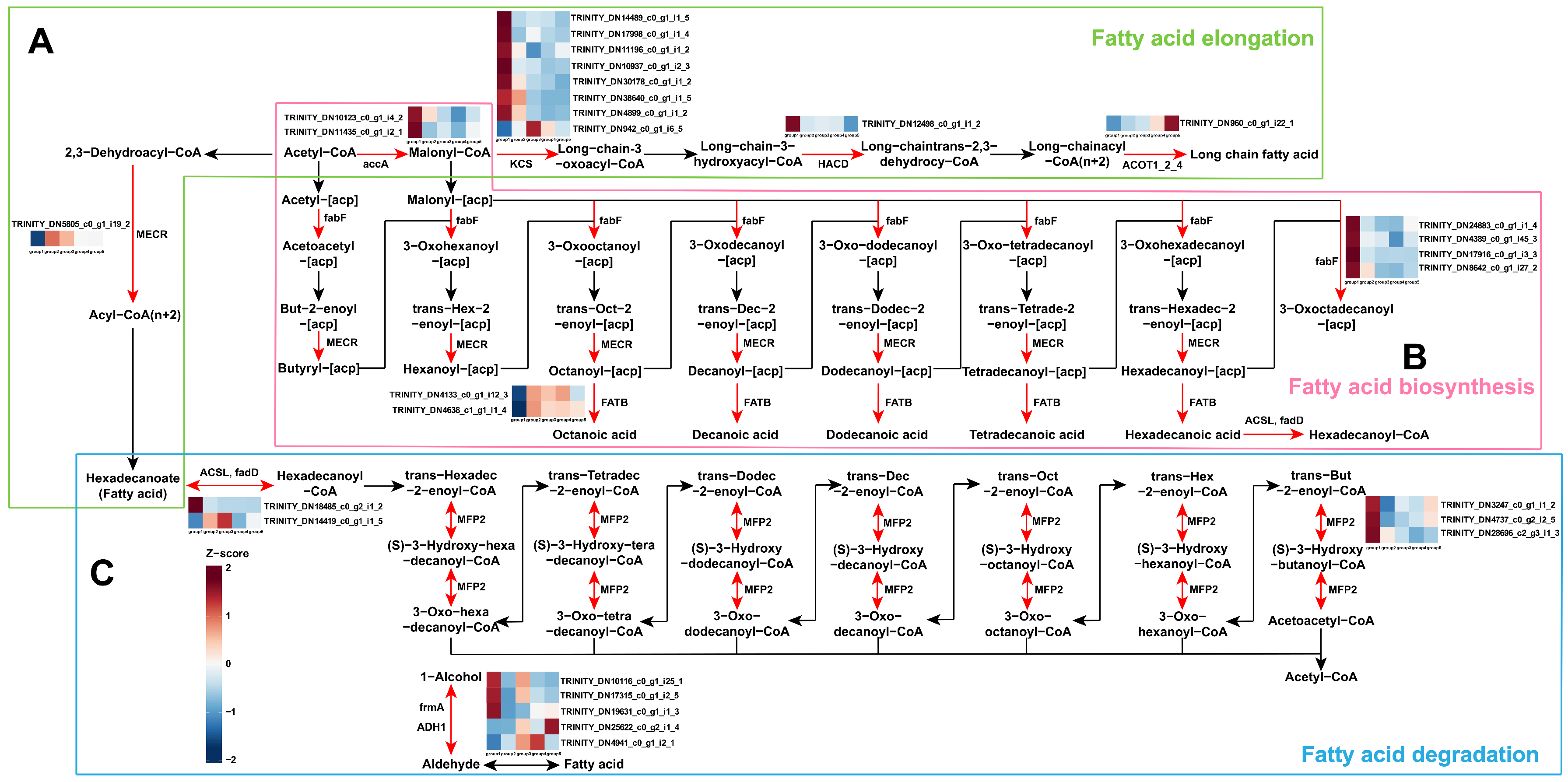
To further explore the potential relationship between fatty acid metabolism and the accumulation of HαSS, the enrichment of genes in the fatty acid metabolism pathways was analyzed in detail. For the fatty acid biosynthesis pathway (Figure 3B), 11 transcripts were enriched. These belong to the following genes: acetyl-CoA carboxylase carboxyl transferase subunit alpha (accA, 2 transcripts), 3-oxoacyl-[acyl-carrier-protein] synthase II (fabF, 4 transcripts), and fatty acyl-ACP thioesterase B (FATB, 2 transcripts). Among these, the transcript TRINITY_DN17916_c0_g1_i3_3 (fabF) displayed a “decrease-decrease-decrease-increase-decrease” temporal expression pattern and was significantly negatively correlated with HαSS accumulation. The expression of accA continuously decreased after reaching its peak on 10 May. The two FATB transcripts exhibited a synchronized bimodal pattern, with peaks occurring on 1 June and 3 August, respectively.
The fatty acid elongation pathway (Figure 3A) involved a total of 11 genes, mainly including 3-ketoacyl-CoA synthase (KCS, 8 transcripts) and acyl-CoA thioesterase 1/2/4 (ACOT1_2_4, 1 transcript). Among the KCS gene transcripts, TRINITY_DN942_c0_g1_i6_5 showed a unique trajectory distinct from the others, characterized by a continuous increase until peaking on 7 July, followed by a decline. The remaining seven KCS transcripts exhibited similar expression patterns, all showing a certain negative correlation with HαSS. The expression of ACOT1_2_4 increased continuously, contrasting sharply with the downward trend of the HACD gene.
In the fatty acid degradation pathway (Figure 3C), 10 transcripts were identified, distributed across four genes: enoyl-CoA hydratase/3-hydroxyacyl-CoA dehydrogenase (MFP2, 3 transcripts), long-chain acyl-CoA synthetase (ACSL/fadD, 2 transcripts), S-(hydroxymethyl)glutathione dehydrogenase/alcohol dehydrogenase (frmA, 4 transcripts), and alcohol dehydrogenase (ADH1, 1 transcript). ADH1 and frmA-related genes co-catalyze the conversion of 1-Alcohol to Aldehyde, which is ultimately converted to Fatty acid. Notably, transcript TRINITY_DN14419_c0_g1_i1_5 (ACSL/fadD) and transcript TRINITY_DN25622_c0_g2_i1_4 (frmA) showed expression dynamics highly consistent with HαSS accumulation, following an “increase-increase-peak (7 July)-decrease-increase” pattern. In contrast, transcript TRINITY_DN18485_c0_g2_i1_2 showed a continuous downward trend.
Within the biosynthesis of unsaturated fatty acids pathway, 11 transcripts exhibited differential expression patterns (Table 1), primarily annotated to very-long-chain (3R)-3-hydroxyacyl-CoA dehydratase (HACD, 1 transcript), stearoyl-CoA desaturase (SCD, 9 transcripts), and acyl-CoA thioesterase 1/2/4 (ACOT1_2_4, 1 transcript). Notably, the expression trends of five SCD transcripts (TRINITY_DN32719_c0_g1_i1_2, TRINITY_DN45504_c0_g1_i1_4, TRINITY_DN19425_c0_g2_i2_4, TRINITY_DN12364_c0_g2_i1_1, and TRINITY_DN25742_c0_g1_i2_4) closely mirrored the accumulation pattern of HαSS. This finding further indicates that these pathways have a shared or significant impact on HαSS biosynthesis. Therefore, they may serve as potential targets for regulating HαSS synthesis in Dintan.

3.6. Temporal Expression Changes in Genes Related to Branched-Chain Amino Acid Metabolism

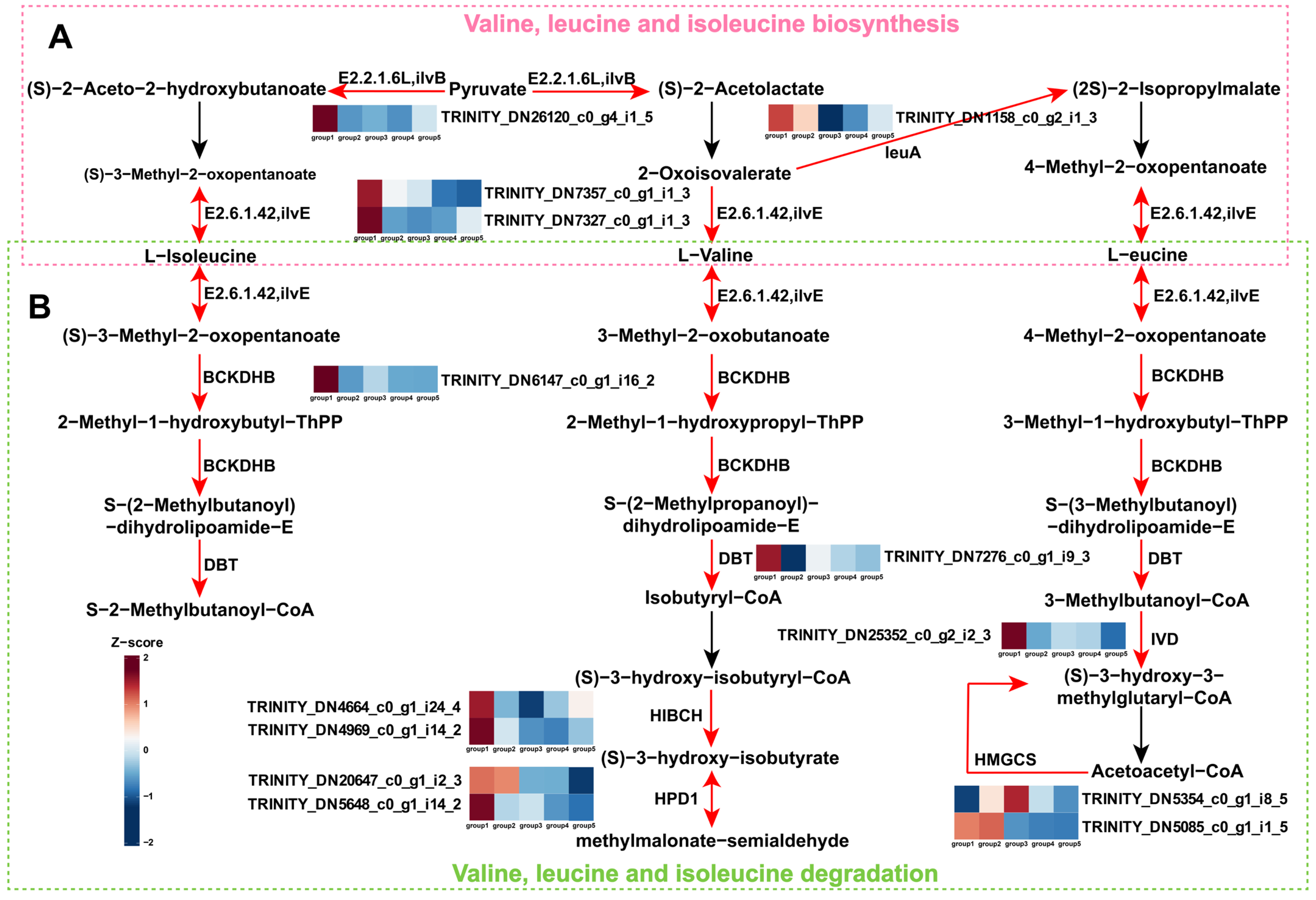
In the metabolic pathways of valine, leucine, and isoleucine, a total of 13 highly correlated and enriched genes were identified (Figure 4). During the biosynthesis phase, genes encoding acetolactate synthase (ilvB, EC 2.2.1.6; 1 transcript), branched-chain amino acid aminotransferase (ilvE; 2 transcripts), and 2-isopropylmalate synthase (leuA; 1 transcript) all exhibited high initial expression followed by a continuous down-regulation trend. The two ilvE transcripts, TRINITY_DN7327_c0_g1_i1_3 and TRINITY_DN1158_c0_g2_i1_3, are jointly involved in L-valine synthesis. In contrast, during the degradation phase, genes encoding subunits of the branched-chain α-keto acid dehydrogenase complex (BCKDHB, DBT) and the isobutyryl-CoA dehydrogenase gene (IVD) displayed significant co-expression, maintaining high expression levels from 10 May to 1 June, after which they abruptly decreased to lower levels and remained stable until 14 September. Notably, the expression level of the transcript TRINITY_DN5354_c0_g1_i8_5 from the 3-hydroxy-3-methylglutaryl-CoA synthase gene (HMGCS; 2 transcripts) continuously increased, peaking on 7 July before subsequently declining.

3.7. Construction of a Positive Regulatory Network for HαSS Accumulation

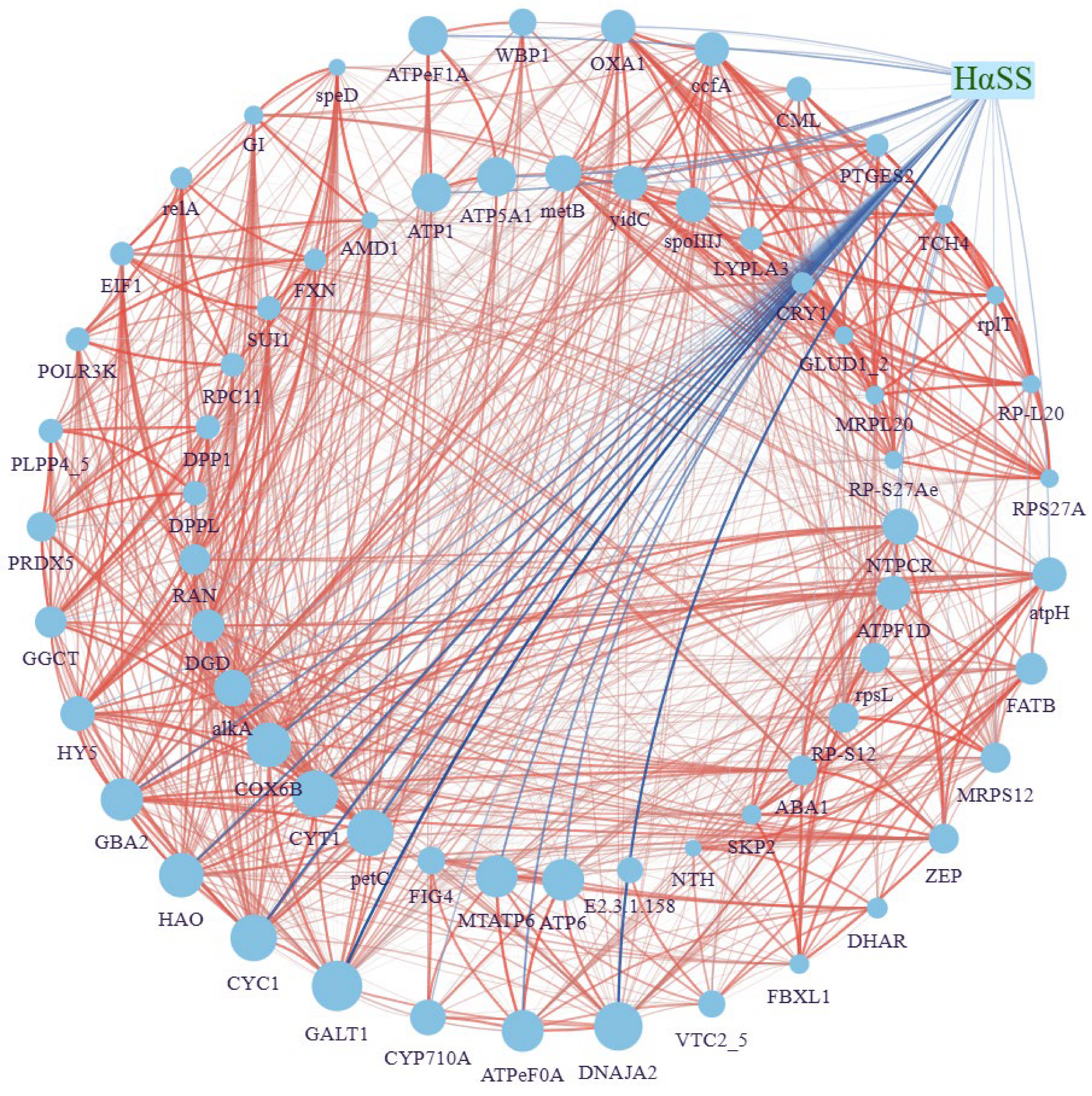
To further investigate the core gene modules that synergistically regulate the accumulation of HαSS and their interactions, a total of 66 genes with a highly significant positive correlation (r > 0.8) with HαSS accumulation were selected to construct a high-confidence positive regulatory network. A Pearson correlation coefficient matrix was calculated for all pairwise combinations of these genes. Based on this matrix, the HαSS positive gene regulatory network was visualized using Cytoscape 3.10 software (Figure 5).
This network contains several genes with correlation coefficients exceeding 0.95 with HαSS accumulation, which act as core hubs within the network. The proteins encoded by these most highly correlated genes exhibit highly diversified functions, extending beyond the core metabolic pathways previously identified through enrichment analysis. For example, the top-ranking genes include cytochrome c1-2, a component of the mitochondrial electron transport chain; chaperone protein DNAJ 1-like, involved in proper protein folding and stability; beta-1,3-galactosyltransferase GALT1, potentially involved in cell wall or glycoconjugate synthesis; as well as ABSCISIC ACID-INSENSITIVE 5-like protein (ABI5-like), implicated in abscisic acid signaling, and hydroxy-acid oxidase GLO4, a peroxisomal enzyme.
This finding suggests that the efficient accumulation of HαSS is not solely driven by metabolic genes directly involved in precursor synthesis, but may also be finely regulated by a more complex, multi-layered regulatory network. This network may function through the following mechanisms: High expression of mitochondrial function-related genes, such as cytochrome c1-2, may ensure an adequate supply of ATP to support energy-consuming processes like fatty acid elongation and modification. Chaperone proteins like DNAJ may indirectly promote HαSS synthesis by maintaining the correct conformation and stability of key enzymes in the biosynthetic pathway, such as BAHD acyltransferases or desaturases. The ABI5-like transcription factor could integrate endogenous hormone signals and environmental stimuli, coordinating multiple secondary metabolic pathways at the transcriptional level. Meanwhile, GLO4 might help create a suitable environment for related enzymatic reactions by regulating intracellular redox balance.
The construction of the HαSS positive gene regulatory network reveals a support system that extends beyond a single biosynthetic pathway. It is synergistically composed of multiple functional modules, including energy metabolism, protein homeostasis, signal transduction, and redox regulation. This provides a new perspective and key candidate regulatory factors for comprehensively understanding the molecular regulatory mechanisms underlying the accumulation of pungent compounds in Dintan.

4. Discussion

4.1. Dynamic Accumulation of Pungent Compounds During Fruit Development in Dintan

The “má” sensation, the most important flavor characteristic of Zanthoxylum, is primarily contributed by sanshool amides. Among these, HαSS is considered the key compound responsible for the intense numbing perception [8]. This study conducted a quantitative analysis of metabolites during five critical stages of fruit development in Dintan in Guizhou Province, revealing the spatio-temporal dynamics of sanshool accumulation. The results showed that the total sanshool content accumulated rapidly during the early developmental stage (May–June) and continued to increase in the later stages (July–September), eventually reaching its peak in September. This indicates that the period from fruit expansion to maturation is the critical phase for the synthesis and accumulation of numbing compounds [26]. Notably, although the content of HβSS was lower than that of HαSS, it exhibited a growth trend during the late developmental stage (August–September). This phenomenon may be related to the conversion of hydroxy-α-sanshool to HβSS, leading to an increase in the content of the latter [38]. This suggests that the synthesis of different sanshool components may be regulated by distinct temporal mechanisms [39]. The early stage likely focuses on synthesizing HαSS, establishing the basic level of numbing intensity. In contrast, the increased proportion of HβSS and HεSS during the later stage may contribute to the unique numbing sensation (e.g., prolonged tingling) in mature fruits [40,41]. Therefore, when evaluating Zanthoxylum fruit quality, it is essential not only to focus on the total amide content but also to pay attention to the proportional ratios among different components. This is particularly important for determining the optimal harvest time for specific food processing needs, such as extracting high-purity α-sanshool or pursuing a complex numbing sensation [42].

4.2. Pivotal Role of Fatty Acid Metabolism in Sanshool Biosynthesis

The essence of sanshool is an unsaturated fatty acid amide formed by the conjugation of fatty acids and branched-chain amino acids. Consequently, fatty acid metabolism serves as the core precursor supply pathway for its synthesis [43]. In this study, through an integrated analysis of the transcriptome and metabolites, a large number of genes involved in the fatty acid metabolism pathway that are highly correlated with the accumulation of HαSS were identified, and a potential molecular regulatory network was constructed (Figure 3).
Within the fatty acid biosynthesis pathway, the gene encoding 3-oxoacyl-[acyl-carrier-protein] synthase II (fabF), TRINITY_DN17916_c0_g1_i3_3, was highly expressed in the early stages of fruit development. However, its expression level decreased as the fruit matured and HαSS accumulated. fabF is responsible for catalyzing the initial carbon chain elongation to C16–C18 in the plant plastidial fatty acid synthesis system [44]. Its downregulation may indicate that, as the fruit matures, the activity of the general pathway for saturated fatty acid synthesis within plastids decreases. Metabolic flux may then shift towards the modification and elongation of fatty acid skeletons, utilizing pre-formed fatty acids for the specific synthesis of sanshools [45,46,47]. In contrast, two transcripts encoding acyl-ACP thioesterase B (FATB) exhibited a bimodal expression pattern, with expression peaks observed on 1 June (group 2) and 3 August (group 4) [46]. FATB catalyzes the hydrolysis of acyl-ACP to release free fatty acids, playing a critical role in determining fatty acid chain termination and output [48]. Its expression peaks during the stages when HαSS begins to accumulate (group 2) and when minor components increase (group 4) suggest that FATB may participate in regulating the timing of sanshool synthesis by providing fatty acid precursors of specific chain lengths at appropriate times, in response to fluctuating demands for sanshool production during different developmental periods [49].
In the fatty acid elongation pathway, β-ketoacyl-CoA synthase (KCS) exhibited complex expression patterns. KCS is the rate-limiting enzyme in the fatty acid elongation complex, determining substrate specificity and elongation activity [50]. KCS catalyzes carbon chain elongation, and the chain length of the resulting fatty acyl-CoAs (e.g., C12, C14, or C18) directly determines the carbon skeleton length of sanshool analogs [51]. The study found that the expression trend of one KCS gene, TRINITY_DN11196_c0_g1_i1_2, was opposite to the trend of HαSS content, while other genes showed stage-specific upregulation or continuous decline. This differential expression likely drives the changes in the proportions of different sanshool components (α, β, ε types) across developmental stages. Within the unsaturated fatty acid biosynthesis pathway, stearoyl-CoA desaturase (SCD) is recognized as a key enzyme introducing double bonds to generate unsaturated fatty acyl-CoAs [52,53]. Notably, this study found that the expression levels of multiple SCD gene transcripts (e.g., TRINITY_DN12364_c0_g2_i1_1, TRINITY_DN19425_c0_g2_i2_4, and TRINITY_DN25742_c0_g1_i2_4) were highly consistent with the trend of HαSS accumulation. Since sanshool molecules typically contain multiple double bonds, the coordinated high expression of SCD gene family members likely introduces the necessary unsaturated bonds into the sanshool carbon skeleton, thereby forming its unique pungency perception structure. This strong correlation positions the SCD gene cluster as a core candidate target for regulating HαSS synthesis. In the fatty acid degradation pathway, differential expression of ACSL (long-chain acyl-CoA synthetase) gene family members (e.g., TRINITY_DN14419_c0_g1_i1_5 showing a trend consistent with HαSS accumulation) may be responsible for activating free fatty acids to fatty acyl-CoAs, a necessary step for fatty acids to enter the amide synthesis pathway [54,55]. These results indicate that fatty acid synthesis, elongation, and desaturation are under strict transcriptional regulation during Dintan fruit development, collaboratively ensuring an adequate supply of precursors for the “tingling” taste compounds.

4.3. Contribution of Branched-Chain Amino Acid Metabolism to the Amide Group of Sanshools

The amine group of sanshool molecules is primarily derived from branched-chain amino acids (BCAAs), including valine, leucine, and isoleucine [56]. In this study, multiple genes involved in the degradation and synthesis pathways of valine, leucine, and isoleucine were identified as being significantly correlated with the accumulation of tingling taste compounds (Figure 4). Interestingly, key genes in the BCAA biosynthesis pathway (such as ilvB, ilvE, and leuA) showed high expression at the early developmental stage (10 May), followed by a continuous decline as the fruit developed. This pattern of “high expression in the early stage and low expression in the later stage” suggests that the early stage of fruit development may be dedicated to the synthesis and storage of BCAAs. This provides an ample substrate pool for the large-scale amide condensation reactions required for sanshool production in the later stage [57]. As the fruit enters the period of expansion and secondary metabolite accumulation, the downregulation of these synthesis genes may indicate a shift in the demand pattern for amine group donors. In the BCAA degradation pathway, multiple genes encoding the branched-chain α-keto acid dehydrogenase complex (BCKDHB, DBT) and isobutyryl-CoA dehydrogenase (IVD) maintained high expression from the early stage (group 1 to group 2), followed by a decline and maintenance at low levels. The primary function of the BCAA degradation pathway is to catabolize branched-chain amino acids. Its products can enter the tricarboxylic acid cycle to provide energy for life activities or serve as precursors for the synthesis of other secondary metabolites [58]. The high expression of genes in this pathway prior to the accumulation of HαSS may have dual biological significance. The active degradation metabolism may provide necessary energy and carbon skeletons for the fruit during the initial stages of growth and substance synthesis [59]. Furthermore, specific acyl-CoA esters produced during degradation (such as isobutyryl-CoA and isovaleryl-CoA) are highly likely to serve directly as acyl donors, participating in the amidation reaction of fatty acid precursors. These acyl-CoAs are among the direct precursors for sanshool synthesis [60]. The decrease in the expression of degradation genes coincides precisely with the onset of the HαSS accumulation phase (after group 3). This suggests a possible link to substrate consumption or feedback inhibition, indicating that alternative pathways or regulatory mechanisms may sustain precursor supply during the later stage, thereby reducing reliance on this degradation pathway. One transcript of 3-hydroxy-3-methylglutaryl-CoA synthase (HMGCS), TRINITY_DN5354_c0_g1_i8_5, exhibited a unique “increase-decrease” expression pattern, with its peak occurring precisely during HαSS accumulation. HMGCS is a key enzyme in the leucine degradation pathway. Its high expression during HαSS accumulation may imply that the degradation products of leucine are directed towards specific branch pathways related to sanshool synthesis. These findings reveal that the temporal regulation of precursor supply may be a key factor determining the final yield of the numbing sensation in Dintan fruits.

5. Conclusions

Employing an integrated multi-omics approach across multiple developmental time points, this study systematically deciphers the accumulation dynamics of pungent compounds and the underlying molecular regulatory network during fruit development in Dingtan. We demonstrate that total sanshool content increases progressively, with HαSS serving as the predominant component, while the relative contributions of HβSS and HεSS rise during later stages. Crucially, we establish that the biosynthesis of these key amides is transcriptionally co-regulated by two interconnected primary metabolic pathways. Genes within the fatty acid metabolism pathway (e.g., SCD, KCS, FATB, ACSL) orchestrate the supply and modification of the unsaturated fatty acyl precursors. Concurrently, temporally regulated genes in the branched-chain amino acid metabolism pathway (e.g., ilv, BCKDH, leuA) modulate the availability of the amine group donor. The concerted expression of these genes constructs a cohesive molecular framework governing pungency formation. These findings provide fundamental insights into the secondary metabolism of Dintan, extending the theoretical basis for its unique flavor biogenesis. Furthermore, they deliver valuable genetic resources and a clear molecular roadmap for the molecular-assisted breeding of high-pungency cultivars and the scientific optimization of cultivation and harvesting practices. Future studies should prioritize functional validation of the candidate genes identified herein. This will involve targeted approaches such as gene silencing or overexpression in Zanthoxylum, heterologous expression systems (e.g., in yeast or tobacco), and enzyme activity assays to confirm their causal roles in alkylamide biosynthesis. Additionally, multi-location trials across multiple years and the incorporation of diverse germplasm resources will be essential to assess the environmental and genotypic influences on alkylamide accumulation.

Supplementary Materials

The following supporting information can be downloaded at: https://www.mdpi.com/article/10.3390/horticulturae12030386/s1, Table S1: Validation parameters for the four alkylamides; Table S2: Clean reads data quality statistics; Table S3. Assembly results of transcriptome using Trinity software; Figure S1: Venn diagram and species distribution of homologous sequences; Figure S2: Sample correlation heatmap, PCA and OPLS-DA score plots, and temporal trends of significantly enriched expression modules; Figure S3: Temporal expression profile clusters; Table S4: Genes annotated to fatty acid biosynthesis and valine metabolism pathways with |r| ≥ 0.6.

Author Contributions

Conceptualization, Q.Y.; methodology, Q.Y. and T.S.; software, X.W.; validation, N.L.; formal analysis, H.T.; investigation, N.L.; resources, L.L.; data curation, X.W.; writing—original draft preparation, H.Z.; writing—review and editing, H.Z.; supervision, T.S. and Q.Y.; project administration, Q.Y.; funding acquisition, T.S. All authors have read and agreed to the published version of the manuscript.

Funding

This work was supported by the Guizhou Province Science and Technology Program Project (QKHJCZK [2024] Key 056), the Guizhou Provincial Basic Research Program (Natural Science) [QIANKEHEJICHU-ZK [2023] 268], Guizhou Provincial Science and Technology Projects (QIANKEHEPINGTAI KXJZ [2024] 030, the National Science Foundation of China [32260225], Guiyang University Multidisciplinary Team Construction Projects in 2025 [Gyxk202505], the Science and Research Projects for Universities of Department of Education of Guizhou Province (Grant No. QJJ [2023]063).

Data Availability Statement

The original contributions presented in this study are included in the article/Supplementary Materials. Further inquiries can be directed to the corresponding authors.

Conflicts of Interest

The authors declare that there are no conflicts of interest.

Abbreviations

The following abbreviations are used in this manuscript:
DintanZanthoxylum planispinum var. dintanensis
HαSShydroxyl-α-sanshool
HβSShydroxyl-β-sanshool
HεSShydroxyl-ε-sanshool
HγSShydroxyl-γ-sanshool

References

  1. Agnihotri, S.; Dobhal, P.; Ashfaqullah, S.; Chauhan, H.K.; Tamta, S. Review of the botany, traditional uses, pharmacology, threats and conservation of Zanthoxylum armatum (Rutaceae). S. Afr. J. Bot. 2022, 150, 920–927. [Google Scholar] [CrossRef]
  2. Appelhans, M.S.; Reichelt, N.; Groppo, M.; Paetzold, C.; Wen, J. Phylogeny and biogeography of the pantropical genus Zanthoxylum and its closest relatives in the proto-Rutaceae group (Rutaceae). Mol. Phylogenet. Evol. 2018, 126, 31–44. [Google Scholar] [CrossRef]
  3. Liang, W.; Yang, H.; Lei, H.; Xiang, Z.; Duan, Y.; Xin, H.; Han, T.; Su, J. Phytochemistry and health functions of Zanthoxylum bungeanum Maxim and Zanthoxylum schinifolium Sieb. et Zucc as pharma-foods: A systematic review. Trends Food Sci. Technol. 2024, 143, 104225. [Google Scholar] [CrossRef]
  4. Chen, Q.; Wang, Z.; Yang, B.; Yang, Q.; Kan, J. Determination of main alkylamides responsible for Zanthoxylum bungeanum pungency through quantitative analysis of multi-components by a single marker. Food Chem. 2022, 396, 133645. [Google Scholar] [CrossRef] [PubMed]
  5. Luo, J.; Ke, J.; Hou, X.; Li, S.; Luo, Q.; Wu, H.; Shen, G.; Zhang, Z. Composition, structure and flavor mechanism of numbing substances in Chinese prickly ash in the genus Zanthoxylum: A review. Food Chem. 2022, 373, 131454. [Google Scholar] [CrossRef]
  6. Ke, J.; Wang, Y.; Luo, T.; Liang, Y.; Wang, X.; Ma, Y.; Zhao, L.; Zhang, Z. Study on the effect of different bitter masking inhibitors on the bitter masking of Zanthoxylum bungeanum Maxim. Int. J. Gastron. Food Sci. 2024, 35, 100894. [Google Scholar] [CrossRef]
  7. Quanbo, X.; Dawen, S.; Yamamoto, H.; Mizuno, M. Alkylamides from pericarps of Zanthoxylum bungeanum. Phytochemistry 1997, 46, 1123–1126. [Google Scholar] [CrossRef]
  8. Bader, M.; Stark, T.D.; Dawid, C.; Lösch, S.; Hofmann, T. All-trans-Configuration in Zanthoxylum Alkylamides Swaps the Tingling with a Numbing Sensation and Diminishes Salivation. J. Agric. Food Chem. 2014, 62, 2479–2488. [Google Scholar] [CrossRef]
  9. Hu, H.; Zhang, X.; Wang, Y.; Chen, K. Structure-reactivity relationships of sanshools as the key pungent dietary components in foods: A DFT study. Comput. Theor. Chem. 2023, 1227, 114241. [Google Scholar] [CrossRef]
  10. Zheng, T.; Han, J.; Su, K.-x.; Sun, B.-y.; Liu, S.-m. Regulation mechanisms of flavonoids biosynthesis of Hancheng Dahongpao peels (Zanthoxylum bungeanum Maxim) at different development stages by integrated metabolomics and transcriptomics analysis. BMC Plant Biol. 2022, 22, 251. [Google Scholar] [CrossRef]
  11. Zhang, J.; Zhang, M.; Chen, K.; Bhandari, B.; Deng, D. Impact of cooking methods on the quality, sensory and flavor compounds of Sichuan pepper oleoresin. Food Chem. 2023, 427, 136639. [Google Scholar] [CrossRef]
  12. Shao, Y.; Liu, X.; Zhang, Z.; Wang, P.; Li, K.; Li, C. Comparison and discrimination of the terpenoids in 48 species of huajiao according to variety and geographical origin by E-nose coupled with HS-SPME-GC-MS. Food Res. Int. 2023, 167, 112629. [Google Scholar] [CrossRef]
  13. Fei, X.; Qi, Y.; Lei, Y.; Wang, S.; Hu, H.; Wei, A. Transcriptome and Metabolome Dynamics Explain Aroma Differences between Green and Red Prickly Ash Fruit. Foods 2021, 10, 391. [Google Scholar] [CrossRef] [PubMed]
  14. Guo, Y.; Fu, X.; Sun, C.; Deng, Y.; Liu, H.; Tong, L.; Kuang, M.; Tang, N.; Yang, W.; Liu, X.; et al. Integrated morphophysiological, transcriptomic, and metabolomic data uncover the molecular mechanism of environmental adaptation of Zanthoxylum armatum with different latitudinal gradients. Front. Plant Sci. 2025, 16, 1622956. [Google Scholar] [CrossRef] [PubMed]
  15. Wang, Y.; Yang, J.; Yu, S.; Fu, H.; He, S.; Yang, B.; Nan, T.; Yuan, Y.; Huang, L. Prediction of chemical indicators for quality of Zanthoxylum spices from multi-regions using hyperspectral imaging combined with chemometrics. Front. Sustain. Food Syst. 2022, 6, 1036892. [Google Scholar] [CrossRef]
  16. Yang, L.; Tian, L.; Shi, J.; Wei, A. Transcriptome and Metabolome Profiling Provide Insights into Flavonoid Biosynthesis and the Mechanism of Color Formation in Zanthoxylum bungeanum Maxim. Plants 2025, 14, 558. [Google Scholar] [CrossRef]
  17. Zhang, J.; Han, N.; Wang, Z.; Li, B.; Wang, C.; Wang, D. Transcription factor ZbERF6-ZbbHLH2 complex enhances monoterpenoid synthesis in Zanthoxylum bungeanum by synergistically activating the expression of ZbIDI. Crop J. 2026, 14, 271–284. [Google Scholar] [CrossRef]
  18. Hu, H.; He, B.; Ma, L.; Chen, X.; Han, P.; Luo, Y.; Liu, Y.; Fei, X.; Wei, A. Physiological and transcriptome analyses reveal the photosynthetic response to drought stress in drought-sensitive (Fengjiao) and drought-tolerant (Hanjiao) Zanthoxylum bungeanum cultivars. Front. Plant Sci. 2022, 13, 968714. [Google Scholar] [CrossRef]
  19. Liu, S.-m.; Wang, S.-j.; Song, S.-y.; Zou, Y.; Wang, J.-r.; Sun, B.-y. Characteristic differences in essential oil composition of six Zanthoxylum bungeanum Maxim. (Rutaceae) cultivars and their biological significance. J. Zhejiang Univ. Sci. B 2017, 18, 917–920. [Google Scholar] [CrossRef]
  20. Zhang, D.; Sun, X.; Battino, M.; Wei, X.; Shi, J.; Zhao, L.; Liu, S.; Xiao, J.; Shi, B.; Zou, X. A comparative overview on chili pepper (capsicum genus) and sichuan pepper (zanthoxylum genus): From pungent spices to pharma-foods. Trends Food Sci. Technol. 2021, 117, 148–162. [Google Scholar] [CrossRef]
  21. Du, C.; Li, X.; Chen, J.; Luo, L.; Yuan, C.; Yang, J.; Hao, X.; Gu, W. Discovery of Coumarins from Zanthoxylum dimorphophyllum var. spinifoliumas and Their Potential against Rheumatoid Arthritis. Molecules 2024, 29, 4395. [Google Scholar] [CrossRef] [PubMed]
  22. Mitani, T.; Yawata, Y.; Yamamoto, N.; Okuno, Y.; Sakamoto, H.; Nishide, M.; Kayano, S.-i. Stabilization of Hydroxy-α-Sanshool by Antioxidants Present in the Genus Zanthoxylum. Foods 2023, 12, 3444. [Google Scholar] [CrossRef]
  23. Huang, S.; Wang, L.; Wang, Z.; Yang, G.; Xiang, X.; An, Y.; Kan, J. Multiomics strategy reveals the accumulation and biosynthesis of bitter components in Zanthoxylum schinifolium Sieb. et Zucc. Food Res. Int. 2022, 162, 111964. [Google Scholar] [CrossRef]
  24. Yang, H.; Zhuo, Z.; Qian, Q.; Yang, Y.; Xu, D. Multi-omics strategy to reveal the numbing taste of Zanthoxylum armatum DC. at different developmental stages. Ind. Crops Prod. 2024, 221, 119405. [Google Scholar] [CrossRef]
  25. Zhu, L.; Wang, L.; Chen, X.; Peng, W.; Liu, Y.; Yu, L.; Liang, F.; Wu, C. Comparative studies on flavor substances of leaves and pericarps of Zanthoxylum bungeanum Maxim. at different harvest periods. Trop. J. Pharm. Res. 2019, 18, 279–286. [Google Scholar] [CrossRef]
  26. Wenkai, H.; Jingyan, W.; Lexun, M.; Feiyan, Z.; Luping, J.; Yu, Z.; Shaobo, Z.; Wei, G. Identification of key genes in the biosynthesis pathways related to terpenoids, alkaloids and flavonoids in fruits of Zanthoxylum armatum. Sci. Hortic. 2021, 290, 110523. [Google Scholar] [CrossRef]
  27. Wang, J.; Huang, X.; Chen, Z.; Chen, N.; Yang, M.; Liang, C.; Yu, Y.; Shi, D. Extraction and purification of total flavonoids from Zanthoxylum planispinum Var. Dintanensis leaves and effect of altitude on total flavonoids content. Sci. Rep. 2025, 15, 7080. [Google Scholar] [CrossRef]
  28. Fu, Y.; Yu, Y.; Yang, S.; Yang, G.; Huang, H.; Yang, Y.; Du, M. Effects of Fertilization on Soil Physicochemical Properties and Enzyme Activities of Zanthoxylum planispinum var. Dingtanensis Plantation. Forests 2025, 16, 418. [Google Scholar] [CrossRef]
  29. Guo, Y.; Yang, G.; Fu, Y.; Yang, S.; Yu, Y.; Du, M.; Zhou, Y. Fruit traits of different variants of Zanthoxylum planispinum var. dingtanensis in the karst plateau valley area of Guizhou Province, Southwest China. BMC Plant Biol. 2024, 24, 1097. [Google Scholar] [CrossRef] [PubMed]
  30. Song, Y.; Yu, Y.; Li, Y.; Du, M. Leaf litter chemistry and its effects on soil microorganisms in different ages of Zanthoxylum planispinum var. Dintanensis. BMC Plant Biol. 2023, 23, 262. [Google Scholar] [CrossRef] [PubMed]
  31. Bolger, A.M.; Lohse, M.; Usadel, B. Trimmomatic: A flexible trimmer for Illumina sequence data. Bioinformatics 2014, 30, 2114–2120. [Google Scholar] [CrossRef]
  32. Grabherr, M.G.; Haas, B.J.; Yassour, M.; Levin, J.Z.; Thompson, D.A.; Amit, I.; Adiconis, X.; Fan, L.; Raychowdhury, R.; Zeng, Q.; et al. Full-length transcriptome assembly from RNA-Seq data without a reference genome. Nat. Biotechnol. 2011, 29, 644–652. [Google Scholar] [CrossRef] [PubMed]
  33. Buchfink, B.; Xie, C.; Huson, D.H. Fast and sensitive protein alignment using DIAMOND. Nat. Methods 2015, 12, 59–60. [Google Scholar] [CrossRef] [PubMed]
  34. Kanehisa, M.; Araki, M.; Goto, S.; Hattori, M.; Hirakawa, M.; Itoh, M.; Katayama, T.; Kawashima, S.; Okuda, S.; Tokimatsu, T.; et al. KEGG for linking genomes to life and the environment. Nucleic Acids Res. 2007, 36, D480–D484. [Google Scholar] [CrossRef] [PubMed]
  35. Langmead, B.; Salzberg, S.L. Fast gapped-read alignment with Bowtie 2. Nat. Methods 2012, 9, 357–359. [Google Scholar] [CrossRef]
  36. Roberts, A.; Pachter, L. Streaming fragment assignment for real-time analysis of sequencing experiments. Nat. Methods 2013, 10, 71–73. [Google Scholar] [CrossRef]
  37. Ernst, J.; Bar-Joseph, Z. STEM: A tool for the analysis of short time series gene expression data. BMC Bioinform. 2006, 7, 191. [Google Scholar] [CrossRef]
  38. Wang, J.; Wan, J.; Hou, X.; Shen, G.; Li, S.; Cui, Q.; Yu, J.; Zhou, M.; Wang, J.; Ren, R.; et al. Increase flavour quality of Sichuan pepper (Zanthoxylum bungeanum Maxim.)with optimized cleaning technology: Soaking and spraying. LWT 2024, 212, 116971. [Google Scholar] [CrossRef]
  39. He, L.; Yi, Y.; Jia, H.; Xu, C.; Qiao, M.; Cai, X.; Leong, S.Y.; Singaram, N.; Chan, S.W.; Peng, H. Impact of Harvest Periods on the Physicochemical and Flavour Characteristics of Sichuan Pepper (Zanthoxylum bungeanum Maxim). Foods 2025, 14, 1155. [Google Scholar] [CrossRef]
  40. Wu, Z.; Wang, W.; Sun, L.; Wei, A.; Wang, D. Accumulation and biosynthesis of hydroxyl-α-sanshool in varieties of Zanthoxylum bungeanum Maxim. by HPLC-fingerprint and transcriptome analyses. Ind. Crops Prod. 2020, 145, 111998. [Google Scholar] [CrossRef]
  41. Wu, Q.; Yu, P.; Li, J.; Wang, Y.; Chen, K. Mechanistic elucidation of the degradation and transformation of hydroxy-α-sanshool and its conformers as the pungent dietary components in Sichuan pepper: A DFT study. Food Chem. 2024, 430, 137078. [Google Scholar] [CrossRef] [PubMed]
  42. Song, J.; Xia, Y.; Zhong, F. Unraveling the pungency of Sichuan pepper oleoresin: Effects of alkylamide concentration and composition. Food Chem. 2025, 479, 143710. [Google Scholar] [CrossRef]
  43. Feng, S.; Liu, Z.; Cheng, J.; Li, Z.; Tian, L.; Liu, M.; Yang, T.; Liu, Y.; Liu, Y.; Dai, H.; et al. Zanthoxylum-specific whole genome duplication and recent activity of transposable elements in the highly repetitive paleotetraploid Z. bungeanum genome. Hortic. Res. 2021, 8, 205. [Google Scholar] [CrossRef]
  44. Zubair, M.; Tong, X.; Ashraf, A.; Li, H.; Li, G.; Xin, A.; Chen, J.; Wang, Y.; Li, Z.; Huang, J.; et al. Genetic Regulation and Breeding Application of Medium-Chain Fatty Acids Metabolism in Rice. Biology 2025, 14, 1674. [Google Scholar] [CrossRef]
  45. Voelker, T.; Kinney, A.J. Variations in the Biosynthesis of Seed-Storage Lipids. Annu. Rev. Plant Biol. 2001, 52, 335–361. [Google Scholar] [CrossRef] [PubMed]
  46. Bian, X.; Qiu, Y.; Zhao, X.; Wei, H.; Zhang, Y.; Zhang, W.; Wang, J.; Sun, X.; Sun, X. Multi-omics dissection of metabolic and transcriptional regulation underlying fruit maturation in Panax ginseng. BMC Plant Biol. 2025, 25, 1133. [Google Scholar] [CrossRef] [PubMed]
  47. Olmedo, P.; Vidal, J.; Ponce, E.; Defilippi, B.G.; Pérez-Donoso, A.G.; Meneses, C.; Carpentier, S.; Pedreschi, R.; Campos-Vargas, R. Proteomic and Low-Polar Metabolite Profiling Reveal Unique Dynamics in Fatty Acid Metabolism during Flower and Berry Development of Table Grapes. Int. J. Mol. Sci. 2023, 24, 15360. [Google Scholar] [CrossRef]
  48. Zhou, X.; Jiang, L.; Li, P.; Chen, J.; Chen, Y.; Yang, Y.; Zhang, L.; Ji, Y.; Xiao, Z.; Sheng, K.; et al. The Biosynthesis Pattern and Transcriptome Analysis of Sapindus saponaria Oil. Plants 2024, 13, 1781. [Google Scholar] [CrossRef] [PubMed]
  49. Tian, J.; Tian, L.; Chen, M.; Chen, Y.; Wei, A. Low Temperature Affects Fatty Acids Profiling and Key Synthesis Genes Expression Patterns in Zanthoxylum bungeanum Maxim. Int. J. Mol. Sci. 2022, 23, 2319. [Google Scholar] [CrossRef]
  50. Mo, L.; Yao, X.; Tang, H.; Li, Y.; Jiao, Y.; He, Y.; Jiang, Y.; Tian, S.; Lu, L. Genome-Wide Investigation and Functional Analysis Reveal That CsKCS3 and CsKCS18 Are Required for Tea Cuticle Wax Formation. Foods 2023, 12, 2011. [Google Scholar] [CrossRef] [PubMed]
  51. Hu, L.; Xu, Z.; Fan, R.; Wang, G.; Wang, F.; Qin, X.; Yan, L.; Ji, X.; Meng, M.; Sim, S.; et al. The complex genome and adaptive evolution of polyploid Chinese pepper (Zanthoxylum armatum and Zanthoxylum bungeanum). Plant Biotechnol. J. 2023, 21, 78–96. [Google Scholar] [CrossRef]
  52. Li, L.; Li, Y.; Wang, R.; Chao, L.; Xiu, Y.; Wang, H. Characterization of the stearoyl-ACP desaturase gene (PoSAD) from woody oil crop Paeonia ostii var. lishizhenii in oleic acid biosynthesis. Phytochemistry 2020, 178, 112480. [Google Scholar] [CrossRef]
  53. Si, X.; Lyu, S.; Hussain, Q.; Ye, H.; Huang, C.; Li, Y.; Huang, J.; Chen, J.; Wang, K. Analysis of Delta(9) fatty acid desaturase gene family and their role in oleic acid accumulation in Carya cathayensis kernel. Front. Plant Sci. 2023, 14, 1193063. [Google Scholar] [CrossRef]
  54. Li, J.-J.; Zhang, C.-L.; Zhang, Y.-L.; Gao, H.-N.; Wang, H.-B.; Jiang, H.; Li, Y.-Y. An apple long-chain acyl-CoA synthase, MdLACS1, enhances biotic and abiotic stress resistance in plants. Plant Physiol. Biochem. 2022, 189, 115–125. [Google Scholar] [CrossRef]
  55. Ma, W.; Zhu, K.; Zhao, J.; Chen, M.; Wei, L.; Qiao, Z.; Tan, P.; Peng, F. Genome-Wide Identification, Characterization, and Expression Analysis of Long-Chain Acyl-CoA Synthetases in Carya illinoinensis under Different Treatments. Int. J. Mol. Sci. 2023, 24, 11558. [Google Scholar] [CrossRef]
  56. Wang, X.-D.; He, W.; Wang, W.-J.; Ren, Y.-Y.; Wang, N.; Hou, Z.-H.; Guo, N.; Zhai, X.-Q.; Fan, G.-Q. Economic Uses, Specific Metabolites and Molecular Biology Research of the Genus Zanthoxylum. Foods 2026, 15, 540. [Google Scholar] [CrossRef] [PubMed]
  57. Maloney, G.S.; Kochevenko, A.; Tieman, D.M.; Tohge, T.; Krieger, U.; Zamir, D.; Taylor, M.G.; Fernie, A.R.; Klee, H.J. Characterization of the Branched-Chain Amino Acid Aminotransferase Enzyme Family in Tomato. Plant Physiol. 2010, 153, 925–936. [Google Scholar] [CrossRef] [PubMed]
  58. Kochevenko, A.; Araújo, W.L.; Maloney, G.S.; Tieman, D.M.; Do, P.T.; Taylor, M.G.; Klee, H.J.; Fernie, A.R. Catabolism of Branched Chain Amino Acids Supports Respiration but Not Volatile Synthesis in Tomato Fruits. Mol. Plant 2012, 5, 366–375. [Google Scholar] [CrossRef] [PubMed]
  59. Reifenberg, P.; Zimmer, A. Branched-chain amino acids: Physico-chemical properties, industrial synthesis and role in signaling, metabolism and energy production. Amino Acids 2024, 56, 51. [Google Scholar] [CrossRef]
  60. Song, C.; Ring, L.; Hoffmann, T.; Huang, F.-C.; Slovin, J.; Schwab, W. Acylphloroglucinol Biosynthesis in Strawberry Fruit. Plant Physiol. 2015, 169, 1656–1670. [Google Scholar] [CrossRef]
Figure 1. Contents of major sanshool compounds in Dintan fruits at different harvest dates. The x-axis represents the five sampling time points; the y-axis indicates the content (mg g−1). From left to right within each group, the bars represent total sanshools (Teal), HαSS (Light green), HβSS (Purple), and HεSS (Yellow). DW: Dry Weight. Group 1 to group 5 correspond to the sampling dates of Dintan fruits on 10 May, 1 June, 7 July, 3 August, and 14 September 2024, respectively.
Horticulturae 12 00386 g001
Figure 2. Clustering heatmap of candidate genes. (A) Positively correlated genes. (B) Negatively correlated genes. Red indicates highly expressed Unigenes, while blue indicates lowly expressed Unigenes.
Horticulturae 12 00386 g002
Figure 3. Fatty acid metabolism pathways: (A) Fatty acid elongation (green box), (B) Fatty acid biosynthesis (pink box), (C) Fatty acid degradation (blue box). The color gradient (red to blue) in the heatmap represents relative expression levels, with red indicating high expression and blue indicating low expression. A more intense color denotes a greater magnitude of differential expression. Red arrows indicate genes with correlation coefficient |r| ≥ 0.6.
Horticulturae 12 00386 g003
Figure 4. (A) Valine, leucine and isoleucine biosynthesis (pink dashed box); (B) Valine, leucine and isoleucine degradation (green dashed box).
Horticulturae 12 00386 g004
Figure 5. Positive gene co-expression regulatory network for HαSS. Blue nodes represent genes, with node size reflecting the strength of correlation with HαSS—larger nodes indicate stronger correlations. Core hub genes are labeled in the figure. Red lines denote correlations between genes, while blue lines correspond to correlations between HαSS and each gene. Line thickness is proportional to the correlation strength.
Horticulturae 12 00386 g005
Table 1. The genes in the KEGG pathway of unsaturated fatty acids biosynthesis.
Gene_IdAverage FPKM (n = 3)Gene Name
Group 1Group 2Group 3Group 4Group 5
TRINITY_DN12498_c0_g1_i1_212.48116.02116.39316.18503.5655HACD
TRINITY_DN12364_c0_g2_i1_10.02790.05631.09320.80901.4413SCD
TRINITY_DN1384_c0_g1_i16_44.21959.678824.743728.999263.2182
TRINITY_DN17226_c1_g4_i1_10.35280.77011.24551.57011.5056
TRINITY_DN19425_c0_g2_i2_40.12810.50131.41880.91673.0160
TRINITY_DN25742_c0_g1_i2_40.15000.43281.34450.75022.1085
TRINITY_DN22760_c0_g2_i1_40.38931.00361.48041.83321.8580
TRINITY_DN32719_c0_g1_i1_20.01080.34240.78880.34540.9323
TRINITY_DN45504_c0_g1_i1_40.00000.34191.18120.46501.5856
TRINITY_DN23624_c0_g1_i1_40.00000.15480.56210.80211.1559
TRINITY_DN960_c0_g1_i22_119.413624.997826.753033.323347.2480ACOT1_2_4
Disclaimer/Publisher’s Note: The statements, opinions and data contained in all publications are solely those of the individual author(s) and contributor(s) and not of MDPI and/or the editor(s). MDPI and/or the editor(s) disclaim responsibility for any injury to people or property resulting from any ideas, methods, instructions or products referred to in the content.