Article

Melatonin Regulates Leaf Wilting Caused by Postharvest Drought in Chrysanthemum Cut Flowers via the ROS Pathway

1
College of Landscape and Horticulture, Yunnan Agricultural University, Kunming 650021, China
2
Faculty of Architecture and City Planning, Kunming University of Science and Technology, Kunming 650021, China
*
Authors to whom correspondence should be addressed.
These authors contributed equally to this work.
Horticulturae 2026, 12(6), 683; https://doi.org/10.3390/horticulturae12060683
Submission received: 30 April 2026 / Revised: 27 May 2026 / Accepted: 29 May 2026 / Published: 31 May 2026

Abstract

Chrysanthemum is one of the world’s four main cut flowers. However, postharvest drought stress severely disrupts water homeostasis, triggering reactive oxygen species burst and membrane lipid peroxidation, thereby reducing its ornamental quality and vase life. Melatonin serves as a multifunctional antioxidant and stress regulator. This study demonstrated that 200 μmol L−1 melatonin effectively alleviated drought-induced leaf wilting, maintained relative water content, decreased the accumulation of MDA, H2O2, and O2•−, and enhanced the activities of SOD, CAT, POD, and APX. Concurrently, non-enzymatic antioxidants (proline, GSH, ASA) accumulated to high levels. RNA-seq analysis revealed that drought affects pathways closely related to the production of antioxidant and osmoprotectant metabolites, while melatonin initiated extensive transcriptional reprogramming and responded to drought stress through distinct pathways at the early (12 h) and late (24 h) treatment stages. Melatonin also modulated key transcription factor families, including bHLH, NAC, ERF, MYB, and bZIP. Collectively, exogenous MT mitigates drought damage in chrysanthemum cut flowers by coordinating antioxidant systems and complex transcriptional regulatory networks. This study provides a theoretical foundation for improving postharvest drought tolerance and prolonging the vase life of cut flowers.

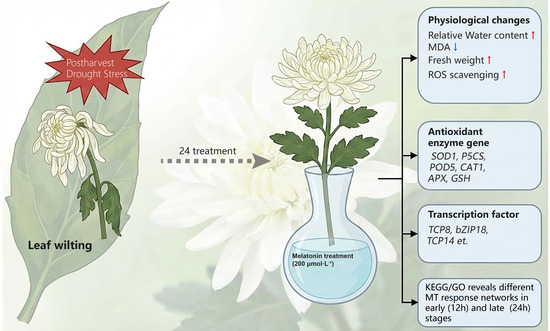
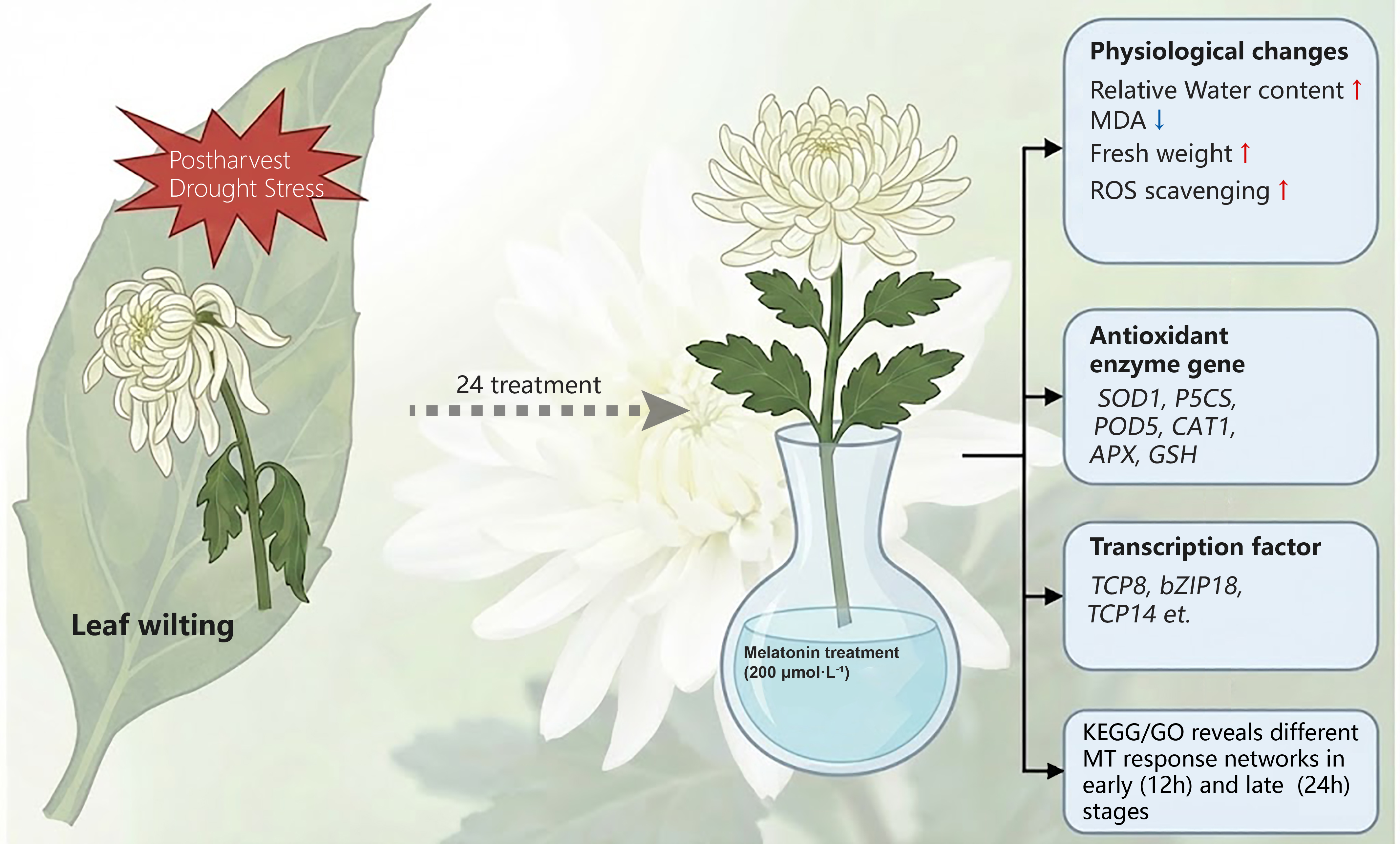
Graphical Abstract

1. Introduction

As one of the four main fresh-cut flowers worldwide, chrysanthemum (Chrysanthemum morifolium) occupies a pivotal position in the floral industry, attributed to its excellent ornamental value, profound cultural implications, and considerable economic benefits. It is extensively employed in celebrations, ceremonial occasions, and daily decorations and dominates the autumn flower market [1,2]. Nevertheless, postharvest chrysanthemum cut flowers are highly vulnerable to drought stress, which is characterized by leaf wilting, petal curling, and a decline in overall ornamental quality [1,3]. Drought exerts its effects on chrysanthemum cut flowers through an intricate regulatory network involving water status, hormonal changes, carbohydrate metabolism, oxidative stress, and other factors [4,5], and the interactions among these factors determine the postharvest performance and longevity of cut flowers under drought conditions [6,7].
Among the various stresses that compromise commodity quality, oxidative stress caused by the overproduction of reactive oxygen species (ROS) has been widely recognized as a critical determinant of postharvest performance [8,9]. Drought stress markedly stimulates ROS generation in plant tissues, which further induces membrane lipid peroxidation, causes severe cellular injury, and eventually promotes tissue necrosis. ROS molecules, such as superoxide anion (O2•−) and hydrogen peroxide (H2O2), are constitutively produced as metabolic byproducts in multiple subcellular compartments, particularly in mitochondria and peroxisomes [10,11]. Under prolonged drought stress, excess ROS accumulation breaks the intracellular redox balance, giving rise to enhanced membrane permeability, oxidative impairment of proteins and nucleic acids, and structural disruption of cellular components [12]. As a relatively stable ROS species, H2O2 tends to accumulate under stress conditions and accelerates the progression of programmed cell death [13]. The extent of oxidative injury largely depends on the effectiveness of the plant’s enzymatic antioxidant system, which functions to detoxify overgenerated ROS. This protective network comprises key antioxidant enzymes, including superoxide dismutase (SOD), catalase (CAT), and peroxidase (POD), together with the ascorbate-glutathione (AsA–GSH) cycle composed of ascorbate peroxidase (APX), monodehydroascorbate reductase (MDHAR), dehydroascorbate reductase (DHAR), and glutathione reductase (GR) [14,15,16]. These components coordinately eliminate excess ROS and preserve cellular structural stability. However, drought stress often suppresses the activities of these antioxidant systems, resulting in an imbalance between ROS production and elimination [17], and thereby negatively affecting postharvest quality attributes [18].
Melatonin (N-acetyl-5-methoxytryptamine, MT) is an important natural small-molecule indole compound widely distributed in animals and plants. Although MT content in plants is relatively low, it not only participates in various physiological processes of plants but also plays a crucial role in enhancing plant stress resistance [19]. A growing body of studies has shown that MT can alleviate oxidative stress caused by drought by increasing the levels of ROS-scavenging enzyme systems and antioxidant substances, thereby improving plant drought resistance [20]. However, the potential mechanism by which MT regulates the postharvest drought response of chrysanthemums remains unclear. MT can effectively reduce drought-induced damage to plants and is regarded as an endogenous free radical scavenger and antioxidant capable for efficiently removing H2O2. Its main mechanism of action is to eliminate drought-induced oxidative stress by increasing the content of ROS-scavenging enzyme systems and antioxidant substances, thereby enhancing plant drought resistance [20]. However, existing research has largely centered on the phenotypic outcomes of MT application, such as extended vase longevity and enhanced flower opening, while the fundamental physiological and molecular pathways—especially those linked to ROS turnover and redox balance—are yet to be fully clarified [21,22,23].
Besides its direct antioxidant capacity, MT has been documented to enhance plant tolerance to environmental stresses and extend the postharvest longevity of cut flowers [24,25]. Specifically, MT application was found to improve stem firmness and reduce wilting in Paeonia lactiflora ‘Hongyan Zhenghui’, thereby effectively enhancing its postharvest quality [26]. For Paeonia lactiflora, MT treatment mitigated ROS accumulation, decelerated the senescence process, and improved the overall quality and shelf life of cut flowers, which provides a potential strategy for promoting the postharvest performance of herbaceous peony cut flowers [27]. However, research focusing on postharvest stress remains scarce. This knowledge deficiency impedes our understanding of the regulatory mechanism of MT in postharvest flower stress and restricts its practical application in commercial postharvest management practices.
Based on this background, in the present study, we treated chrysanthemum cut flowers with 200 μmol L−1 MT after drought stress. Compared with the non-MT treatment, MT application rapidly alleviated postharvest drought stress in chrysanthemum cut flowers through the ROS pathway. RNA-seq analysis revealed the transcriptional basis of MT-induced drought alleviation in chrysanthemum cut flowers at 12 and 24 h, and related gene expression analysis evaluated MT-induced transcriptional changes. These findings provide new insights into the MT-mediated postharvest drought resistance mechanism of chrysanthemums and lay a theoretical foundation for the application of MT in the postharvest drought resistance of ornamental flowers.

2. Materials and Methods

2.1. Plant Materials, Growth Conditions, and Drought Treatments

The chrysanthemum cultivar ‘Jinba’ was acquired in November 2024 from Dounan Flower Market located in Kunming, Yunnan Province, China. Flower stems were trimmed to a consistent length of roughly 30 cm and then immersed in deionized water for 24 h to facilitate rehydration and acclimatization. After this acclimation period, the stems were randomly divided into six groups, with 20 stems in each group. In an artificial climate chamber, one group of stems was continuously cultured in deionized water as the control, while the remaining five groups were subjected to a 24 h drought stress treatment. Following the initial drought exposure, one group was kept under drought conditions, whereas the other four groups were transferred to solutions containing 0, 150, 200, or 250 μmol L−1 of MT, respectively. All hydroponically cultured stems were maintained in an artificial climate chamber with a day/night temperature cycle of 22 °C/18 °C, a 16 h photoperiod, a photosynthetic photon flux density (PPFD) of 40 μmol·m−2·s−1, and a relative humidity of 55%. At 12 and 24 h after MT treatment, the cut flowers were photographed to evaluate their recovery from drought-induced damage. Furthermore, leaves from the same node position were collected at 0, 12, and 24 h after the initiation of MT treatment, immediately frozen in liquid nitrogen, and stored at −80 °C for subsequent biochemical or molecular analyses.
Samples were collected from six groups for subsequent physiological index determination and RNA-seq sequencing analysis, Con (control group without drought treatment, maintained in ddH2O throughout the experiment), D1 (subjected to 24 h of drought stress), DR1 (24 h of drought stress followed by 12 h of treatment with 0 μmol L−1 MT), DMT1 (24 h of drought stress followed by 12 h of treatment with 200 μmol L−1 MT), DR2 (24 h of drought stress followed by 24 h of treatment with 0 μmol L−1 MT), and DMT2 (24 h of drought stress followed by 24 h of treatment with 200 μmol L−1 MT).

2.2. Measurements of Physiological Indices

2.2.1. Relative Water Content Measurement

The third leaf (counted from the top) of chrysanthemum was collected. The fresh weight of these leaves was measured immediately. The leaves were then dried in an oven at 65 °C for 48 h, after which the dry weight was recorded. The relative water content (RWC) was calculated according to the method previously described by Qingqing et al. [28]. Three biological replicates were performed.

2.2.2. ROS and Non-Enzymatic Antioxidants

The malondialdehyde (MDA) content was determined using the thiobarbituric acid method [29]. Proline content was determined using the acid ninhydrin method [30]. The H2O2 content was measured by the titanium colorimetric method [31]. The production rate of O2· was determined by the hydroxylamine method. The GSH content was determined by the DTNB method, and absorbance was measured at 412 nm [32]. The AsA content was measured by DCPIP titration. Leaves (0.5 g) were extracted in 5 mL 2% oxalic acid. The supernatant was titrated to a stable pink endpoint.

2.2.3. Antioxidant Enzyme Activities

Fresh leaves were homogenized in ice-cold phosphate buffer (0.01 M, pH7.0–7.4). The homogenate was centrifuged at 4000× g for 10 min at 4 °C, and the supernatant was used as crude enzyme extract. The SOD activity was determined by the NBT method, and the absorbance was measured at 560 nm. One unit was defined as 50% inhibition of NBT reduction. POD activity was assayed in a reaction mixture containing 1 mL 0.05 mol L−1 catechol, 0.5 mL 0.1 mol L−1 H2O2, 1 mL phosphate buffer and 0.2 mL enzyme extract. The absorbance was recorded at 470 nm. CAT activity was measured by monitoring H2O2 decomposition at 240 nm in a 3 mL mixture containing 2.9 mL phosphate buffer and 0.1 mL enzyme extract. One unit was defined as 1 μmol H2O2 decomposed per minute. The APX activity was determined by monitoring AsA oxidation at 290 nm. The 3 mL reaction mixture contained 50 mmol L−1 phosphate buffer, 0.5 mmol L−1 AsA, 0.1 mmol L−1 H2O2 and 0.1 mL enzyme extract [33,34]. All the aforementioned measurements were repeated three times, and the average value was used as the representative value for each treatment [29].

2.3. RNA Extraction, RNA-Seq Sequencing, and Bioinformatic Analysis

Chrysanthemum leaf samples used for RNA extraction were collected under long-day (LD) conditions. The third fully expanded leaf from the top to the bottom was selected, with three plants pooled as a mixed sample, and three replicates were prepared for each treatment. First, 0.1 g of chrysanthemum leaf tissue was ground in liquid nitrogen, and 1 mL of lysis buffer was added for total RNA extraction. RNA extraction was performed in accordance with the instruction manual of a plant RNA Isolation Kit (Waryong, Beijing, China). After passing strict quality inspection, the RNA samples were sent to Wuhan BGI Genomics for RNA-seq sequencing using an Illumina HiSeq™2000 instrument. Unigenes were annotated using functional databases including KEGG, GO, NR, NT, SwissPro, Pfam, and KOG. A p value < 0.05 was set as the criterion for identifying differential expressed genes (DEGs). The three categories (upregulated, downregulated, and non-DEGs) were analyzed using scatter plots in Excel to generate volcano plots.

2.4. Quantitative Real-Time PCR Analysis

Total RNA extraction was carried out following the manufacturer’s instructions. Reverse transcription was performed using 1 μg as the standard, and 1 μL of cDNA was added to each sample for quantitative real-time PCR (qRT-PCR). qRT-PCR was performed using Takara SYBR Premix Ex Taq, with 50 μL of the system per reaction. Three biological replicates were included for each selected gene, and the relative gene expression levels were calculated using the 2−ΔΔCT method, with chrysanthemum EF1α (KF305681.1) as the reference gene [35]. All primers used in this study are listed in Table S1.

2.5. Statistical Analysis

Data were initially processed in Excel 2023 (Microsoft Corporation, https://www.microsoft.com). One-way analysis of variance (ANOVA) followed by the Tukey–Kramer multiple comparison test was used for data analysis, and differences among the Con1, D1, DR1, DMT1, DR2, and DMT2 groups were considered significant at p < 0.05. All statistical analyses were performed using SPSS v27.0 software (SPSS Inc., Chicago, IL, USA).

3. Results

3.1. Exogenous MT Treatment Alleviates Leaf Wilting Caused by Postharvest Drought in Chrysanthemum Cut Flowers

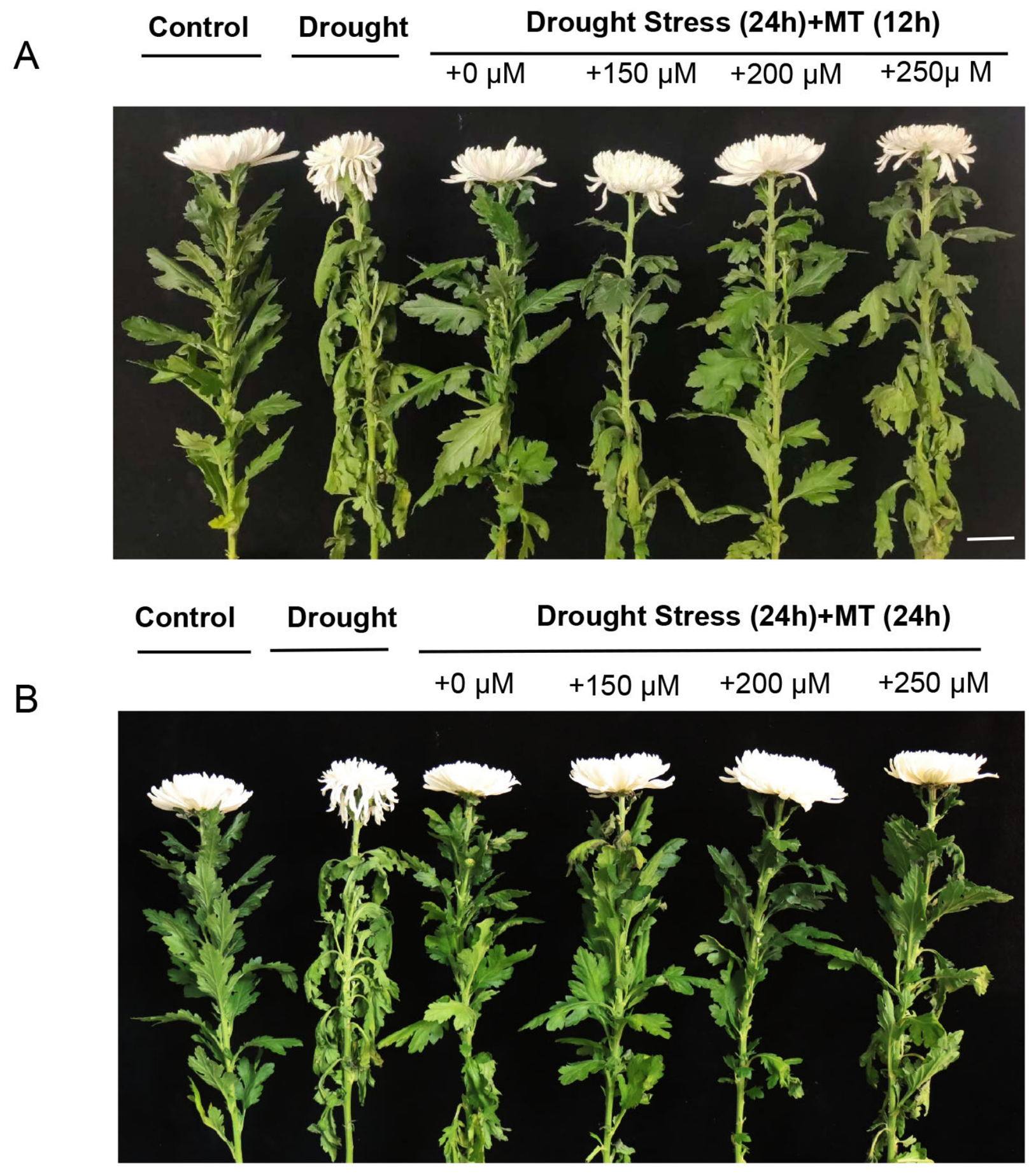
Based on preliminary experimental results, different concentrations (0, 150, 200 and 250 μmol L−1) of MT were selected to treat chrysanthemum cut flowers that had been subjected to 24 h of drought stress (Figure 1). The results indicate that exogenous treatment with 200 μmol L−1 MT significantly mitigated the drought-induced damage to the leaves of chrysanthemum cut flowers (Figure 1).
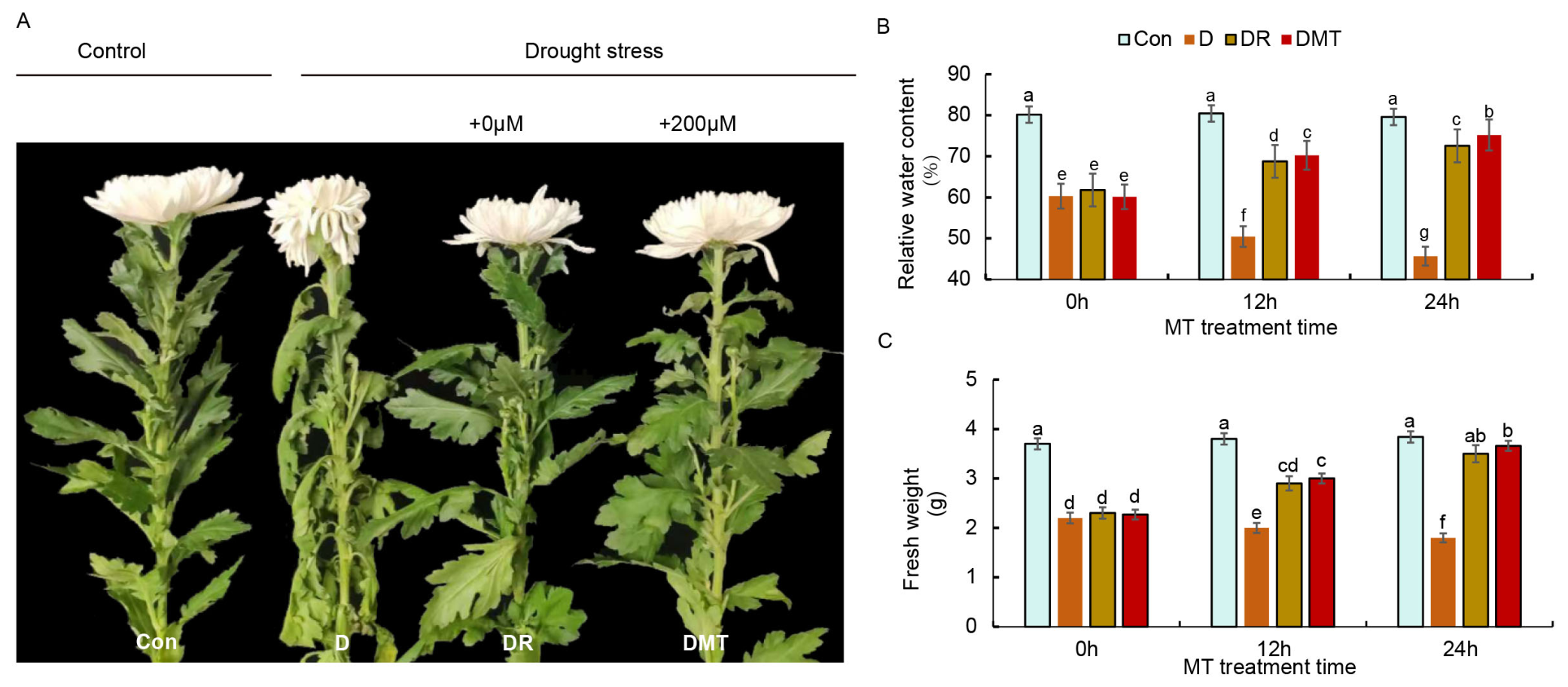
After 24 h of drought stress, the RWC of chrysanthemum leaves decreased by approximately 25%. In the DR group, the leaf RWC showed an upward trend with the extension of treatment time, increasing by 17% after 24 h. In contrast, the leaf RWC in the DMT group increased by 25% after 24 h of MT treatment. Comparison revealed that after 24 h, the leaf RWC in the DMT group was higher than that in the DR group and closer to that in the Con group. These results demonstrate that under drought stress conditions, exogenous MT could significantly increase the leaf RWC of the chrysanthemum cut flowers cultivar ‘Jinba’ (Figure 2B).
Compared with the Con group, the leaf fresh weight of the D1 group decreased by 40%. In the DR treatment group, the leaf fresh weight increased by 26 and 52% at 12 h and 24 h, respectively. For the DMT treatment group, the leaf fresh weight increased by 32 and 42% at 12 h and 24 h after MT treatment, respectively (Figure 2C).

3.2. Effects of MT on Antioxidant Enzyme Activities, ROS Levels, and Antioxidant Contents

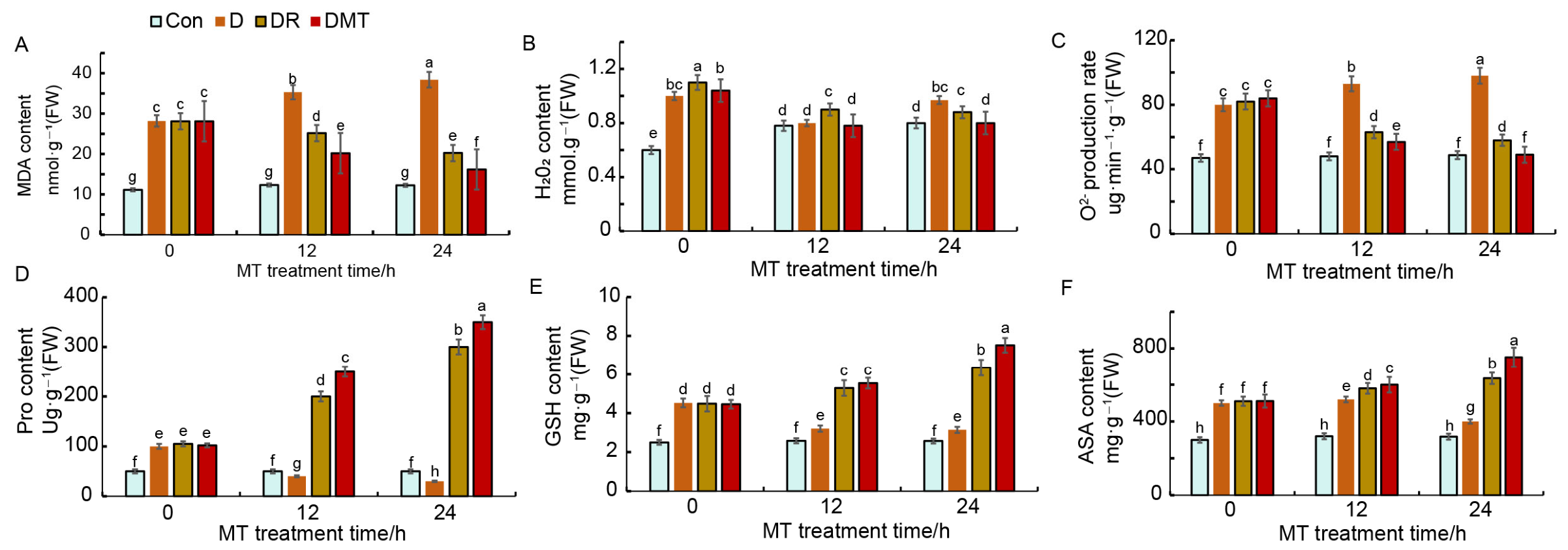
During the drought stress treatment period, the MDA content in the leaves of the D1 group increased gradually with the prolongation of stress time. After 24 h of treatment time, the MDA content in the leaves of the DR group decreased by 7%. In comparison, the MDA content in the leaves of the DMT group decreased by 12% after 24 h of MT treatment. Comparison of the MDA content showed that the leaf MDA content in the DMT group was lower than that in the DR group. Under drought stress, exogenous MT treatment significantly inhibited the increase in MDA content in chrysanthemum leaves, with a maximum reduction of 30% (Figure 3A).
Drought stress significantly increased H2O2 content relative to the control, whereas the DMT group exhibited lower H2O2 content than the DR group at the corresponding time points (Figure 3B). The O2•− generation rate in the D1 group increased by 91% compared with the control and continued to rise with drought duration. At all time points, this rate was significantly lower in the DMT group than in the D1 and DR groups and returned to control levels at 24 h (Figure 3C).
Proline content in the D1 group increased by 110% at 24 h of drought and then declined. The DR and DMT groups differed significantly at 12 h (p < 0.05). Although proline content increased in the DR group at 12 h and 24 h, it remained significantly lower than in the DMT group (Figure 3D). GSH content increased by 50% under drought stress. No significant difference was detected between the DR and DMT groups at 12 h, but GSH content was 18% higher in the DMT group than in the DR group at 24 h (Figure 3E). ASA content initially increased and then decreased under drought stress. In contrast, ASA content continuously increased in both the DR and DMT groups, with significantly higher levels in DMT than in DR at both 12 h and 24 h (Figure 3F).
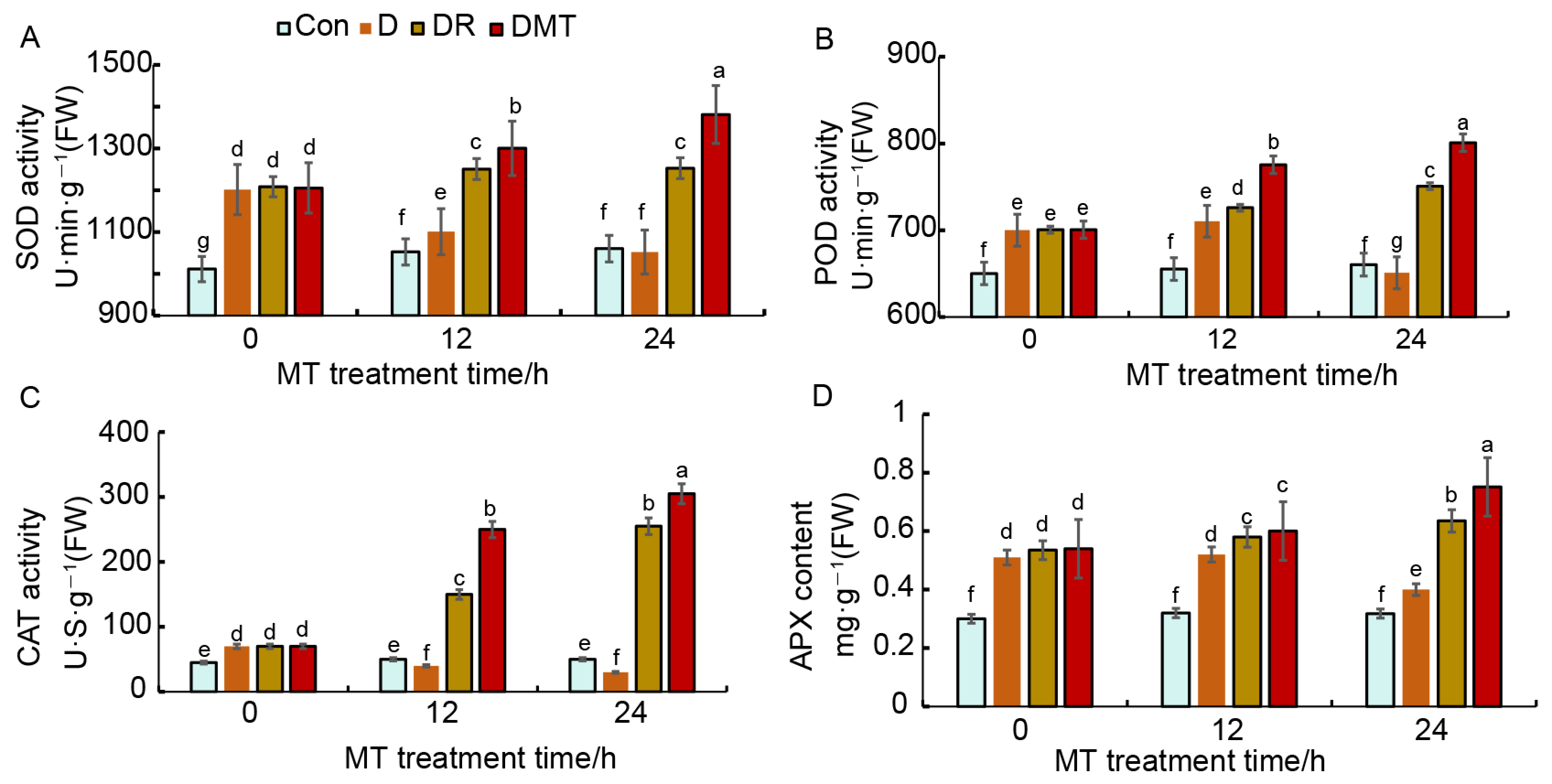
Leaf SOD activity remained relatively stable in the Con group. Following 24 h of drought stress, SOD activity in the DR group gradually increased with prolonged stress and rose by approximately 7% after 24 h. Similarly, SOD activity in the DMT group also increased with stress duration and was enhanced by 15% after 24 h of MT treatment. The increase in SOD activity was significantly higher in the DR and DMT groups than in the D1 group, with DMT showing higher activity than DR. Exogenous MT significantly elevated SOD activity in drought-stressed chrysanthemum, with a maximum increase of 35% (Figure 4A). In the D group, leaf POD activity decreased with stress duration and reached its lowest level at 24 h of drought. In contrast, POD activity in the DR and DMT groups gradually increased after 24 h of drought, rising by 10 and 14% after rehydration and MT treatment, respectively. Both DR and DMT groups exhibited significantly higher POD activity than the D1 group, and DMT exceeded DR (Figure 4B). CAT activity was significantly enhanced by both DR and DMT following drought stress. At both 12 h and 24 h, CAT activity was markedly higher in the DMT group than in the DR group, with increases of 67 and 20%, respectively (Figure 4C). The APX activity significantly increased under drought stress compared with the control. No significant difference was observed between the DR and DMT groups at 12 h, but APX activity in the DMT group was 18% higher than in the DR group at 24 h. Both treatments promoted recovery of chrysanthemum cut flowers after 24 h of drought, with faster and better recovery in the DMT group (Figure 4D).
Collectively, these results indicate that MT effectively mitigates ROS-induced oxidative damage in drought-stressed chrysanthemum cut flowers, promotes the accumulation of osmoregulatory and antioxidant compounds, reduces MDA and peroxide levels, and improves drought tolerance.

3.3. RNA-Seq Analysis of Genes Significantly Induced by Drought Stress in Chrysanthemum Cut Flowers

RNA-seq sequencing was performed on chrysanthemum leaves among the six groups. To assess the reliability of our transcriptomic data, we first evaluated sample repeatability and global transcriptomic separation. Pearson correlation analysis revealed high intra-group correlation coefficients (0.8–1.0) among biological replicates, demonstrating robust experimental reproducibility. Weighted gene co-expression network analysis was conducted to explore the regulatory modules associated with phenotypic responses. Several key co-expression modules exhibited strong positive or negative correlations with melatonin-treated and drought-recovery groups, implying that the genes within these modules participate in the molecular regulation of drought tolerance and melatonin-mediated stress response in chrysanthemum cut flowers (Figure S1).
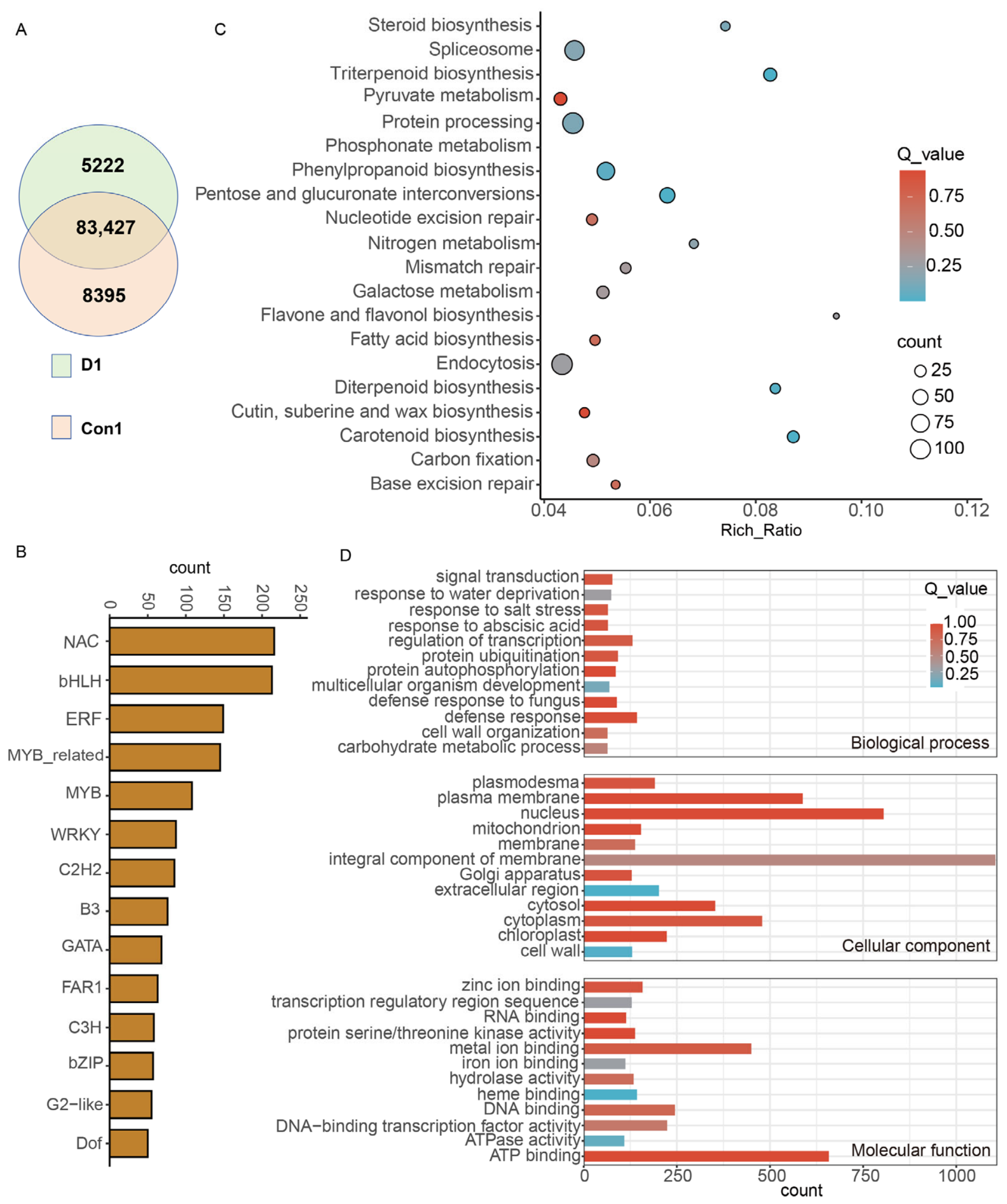
To initially explore the impact of drought stress on chrysanthemum cut flowers, a total of 97,344 transcripts were detected in the two groups, among which 5222 unique DEGs were expressed in the D1 group (Figure 5A). Of these, 2058 were annotated as transcription factors. The NAC family was the most abundant with 216 members, followed by the bHLH family (213 members) and the ERF family (149 members), suggesting their central roles in drought stress regulation (Figure 5B, Table S2).
KEGG pathway enrichment analysis demonstrated that DEGs were significantly enriched in phenylpropanoid biosynthesis, flavone and flavonol biosynthesis, and carotenoid biosynthesis (Figure 5C), pathways were closely associated with antioxidant and osmoprotective metabolite production. GO enrichment analysis further revealed that DEGs were primarily involved in stress response and signal transduction (biological process), localized to membrane and nuclear components (cellular component), and enriched in transcription factor and kinase activities (molecular function) (Figure 5D), collectively highlighting the molecular basis of drought adaptation in chrysanthemum.

3.4. RNA-Seq Analysis of Genes Significantly Induced by MT at Different Stages

To analyze the genes significantly affected by MT treatment at the early stage (12 h) of MT treatment, transcriptomic comparison between D1 vs. DMT1 and D1 vs. DR1 identified a core set of 3361 genes significantly regulated by MT. TF family analysis revealed that bHLH, NAC, MYB, WRKY, and ERF were the most prevalent families, implying their pivotal roles in orchestrating the transcriptional responses (Figure S2). Functional enrichment analyses further demonstrated that these DEGs were predominantly enriched in pathways related to ribosome biogenesis and translation, as well as multiple metabolic processes including amino sugar metabolism, sulfur metabolism, and oxidative phosphorylation. GO enrichment additionally highlighted key molecular functions such as ribonuclease activity, metal ion-transporting ATPase activity, and inositol phosphate kinase activity, indicating that the treatments exerted profound effects on protein synthesis, ion homeostasis, and signal transduction pathways (Figure S3).
To analyze the genes significantly affected by MT treatment at the late stage (24 h) of MT treatment, analysis of the D1 vs. DR1 and D1 vs. DMT2 groups revealed that 17,145 genes were significantly affected by melatonin after 24 h of MT treatment, as identified by the Venn diagram. These 17,145 melatonin-regulated genes were also subjected to KEGG and GO enrichment analyses (Table S4). KEGG enrichment showed DEGs markedly enriched in protein synthesis, metabolic and stress-responsive pathways, with Proteasome as the most significant, followed by porphyrin metabolism, monobactam biosynthesis, inositol phosphate metabolism and eukaryotic ribosome biogenesis. Photosynthesis, purine, thiamine and zeatin metabolic pathways were also enriched, affecting cellular proteostasis, photosynthesis and phytohormone biosynthesis. GO analysis annotated major biological processes, cellular components and molecular functions. Chloroplast, cytosol and ribosome were dominant cellular components, indicating vital photosynthetic and translational functions. Enriched biological processes covered photosynthetic protein degradation, proteasomal metabolism and defense response regulation, revealing crosstalk among photosynthesis, protein turnover and stress resistance. Metal ion binding, RNA binding and endopeptidase activity prevailed in molecular functions, mediating molecular recognition, post-transcriptional control and protein hydrolysis. (Figures S4 and S5).
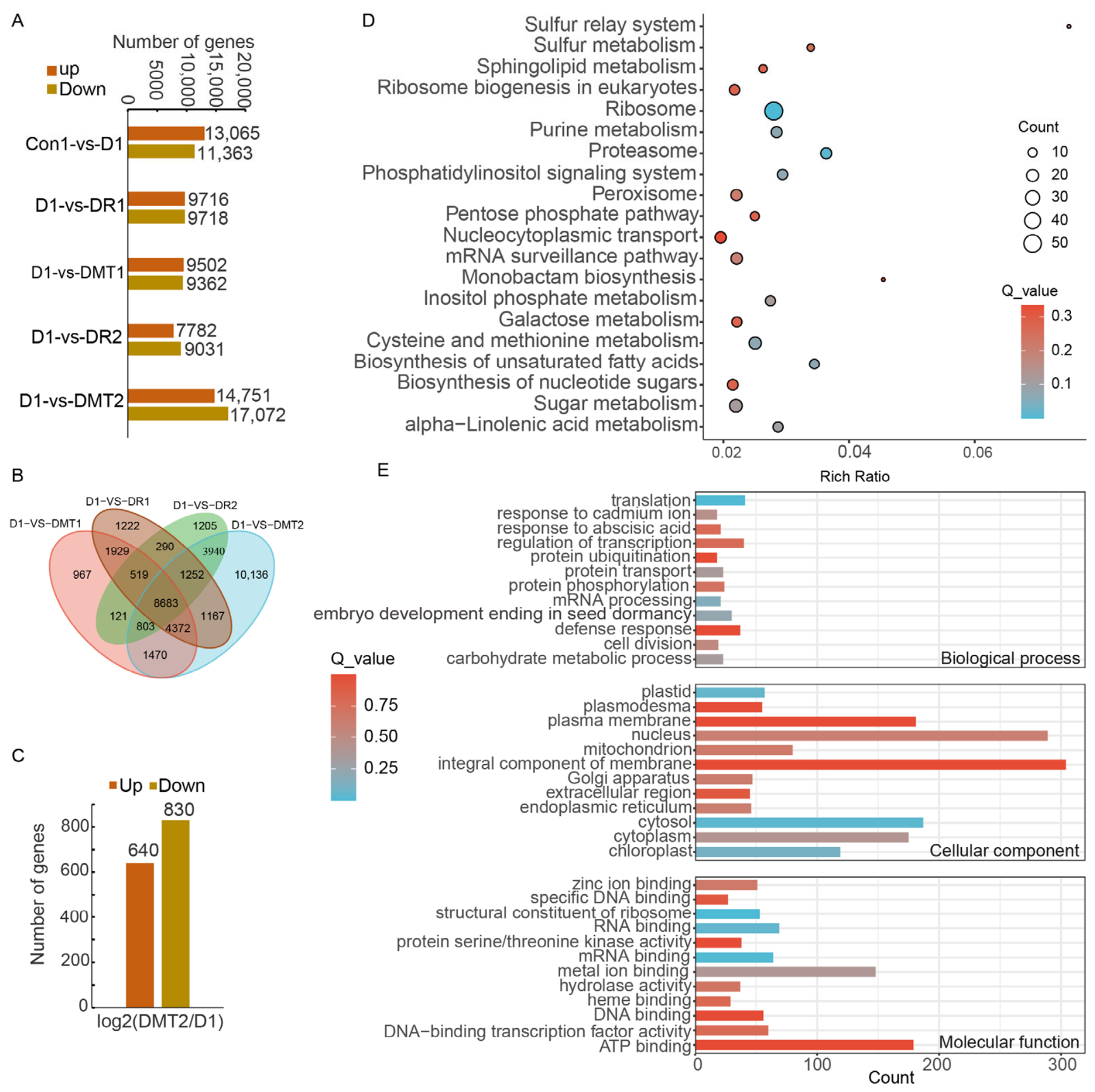
To further analyze the genes significantly induced by melatonin within 24 h (both 12 h and 24 h), Differentially expressed genes (DEGs) were identified among the five comparison groups (Figure 6A). We also performed additional Venn analysis. The results of the differential gene Venn diagram show that after treatment with 200 μmol L−1 MT, MT continuously induced significant differential expression of 1470 genes at 12 and 24 h (Figure 6B), including 640 upregulated genes and 830 downregulated genes (Figure 6C). KEGG enrichment analysis was conducted on these 1470 genes, showing enrichment in pathways related to thiamine metabolism, nucleocytoplasmic transport, mRNA surveillance, isoflavonoid biosynthesis, and biosynthesis of unsaturated fatty acids (Figure 6D). A GO enrichment analysis chart presents gene enrichment results from three dimensions: Biological Processes, Cellular Components, and Molecular Functions. The enriched biological processes include translation, response to cadmium ion, response to abscisic acid, regulation of transcription, and so on. Among these, translation showed the highest enrichment count, while carbohydrate metabolic process exhibited the highest Q value (adjusted p value, indicating statistical significance). The enriched cellular components comprised plastid, plasmodesmata, plasma membrane, and so on. Integral components of membrane had the highest enrichment count, and plastid showed the highest Q value. The enriched molecular functions include zinc ion binding, specific DNA binding, and structural constituents of ribosome. ATP binding showed the highest enrichment count, while zinc ion binding exhibited the highest Q value (Figure 6E).

3.5. DEGs Related to Redox Homeostasis and Osmotic Regulation After MT Treatment

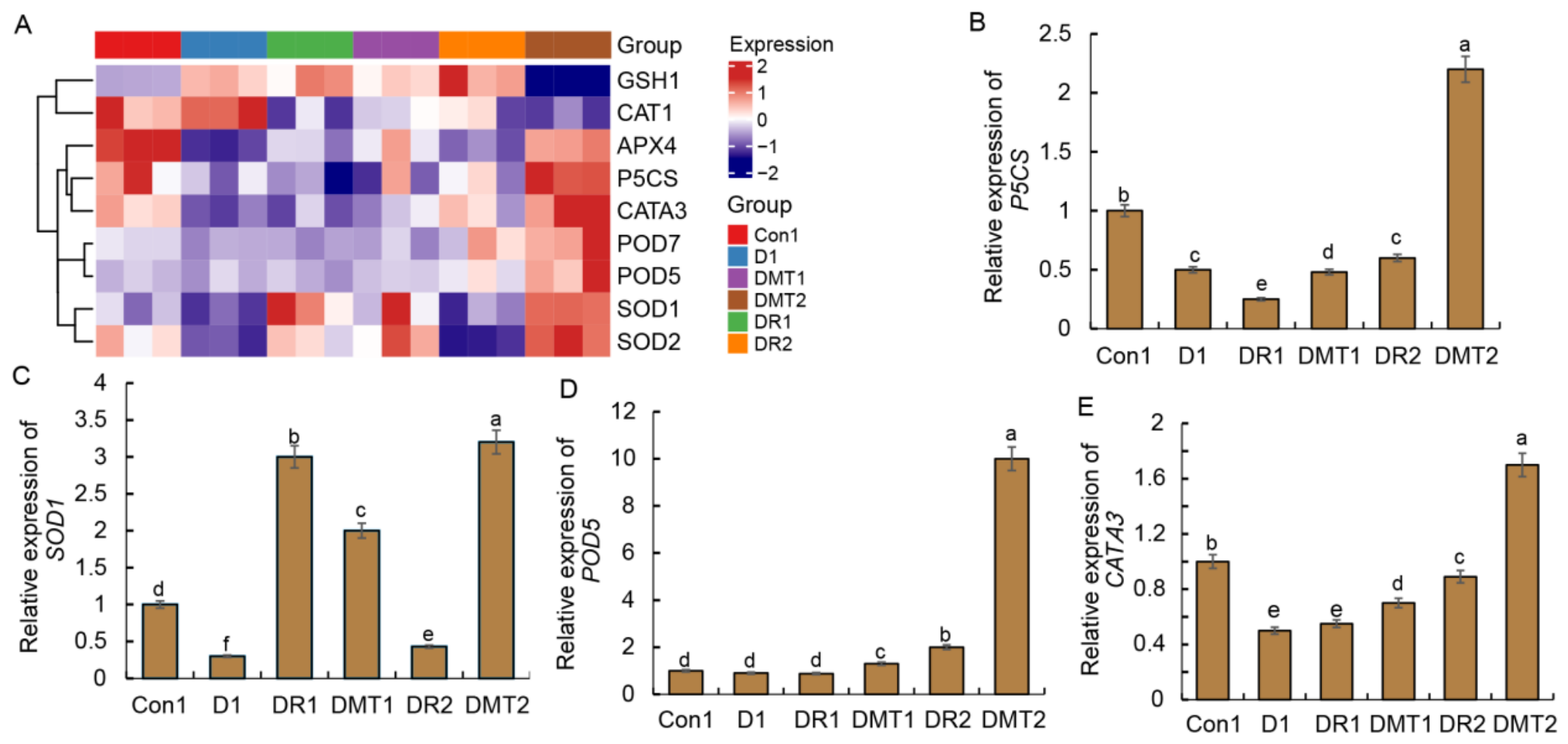
The expression patterns of antioxidant and proline synthesis-related genes were analyzed to confirm the functional roles of melatonin in stress tolerance. Hierarchical clustering revealed that melatonin treatment, especially at 24 h (DMT2), strongly induced the expression of key genes involved in ROS scavenging (SOD1, POD5, CATA3, CAT1, APX4) and proline biosynthesis (P5CS). qRT-PCR validation further confirmed that DMT2 exhibited the highest expression levels of all tested genes, including P5CS more than 2-fold, SOD1 more than 3-fold, POD5 more than 10-fold, and CATA3 about 2-fold relative to the control group. These results indicate that melatonin enhances the antioxidant defense system and proline accumulation in a time-dependent manner, with the 24 h treatment (DMT2) showing the most pronounced effect (Figure 7).

3.6. Significantly Differentially Expressed TFs Within 24 h After MT Treatment

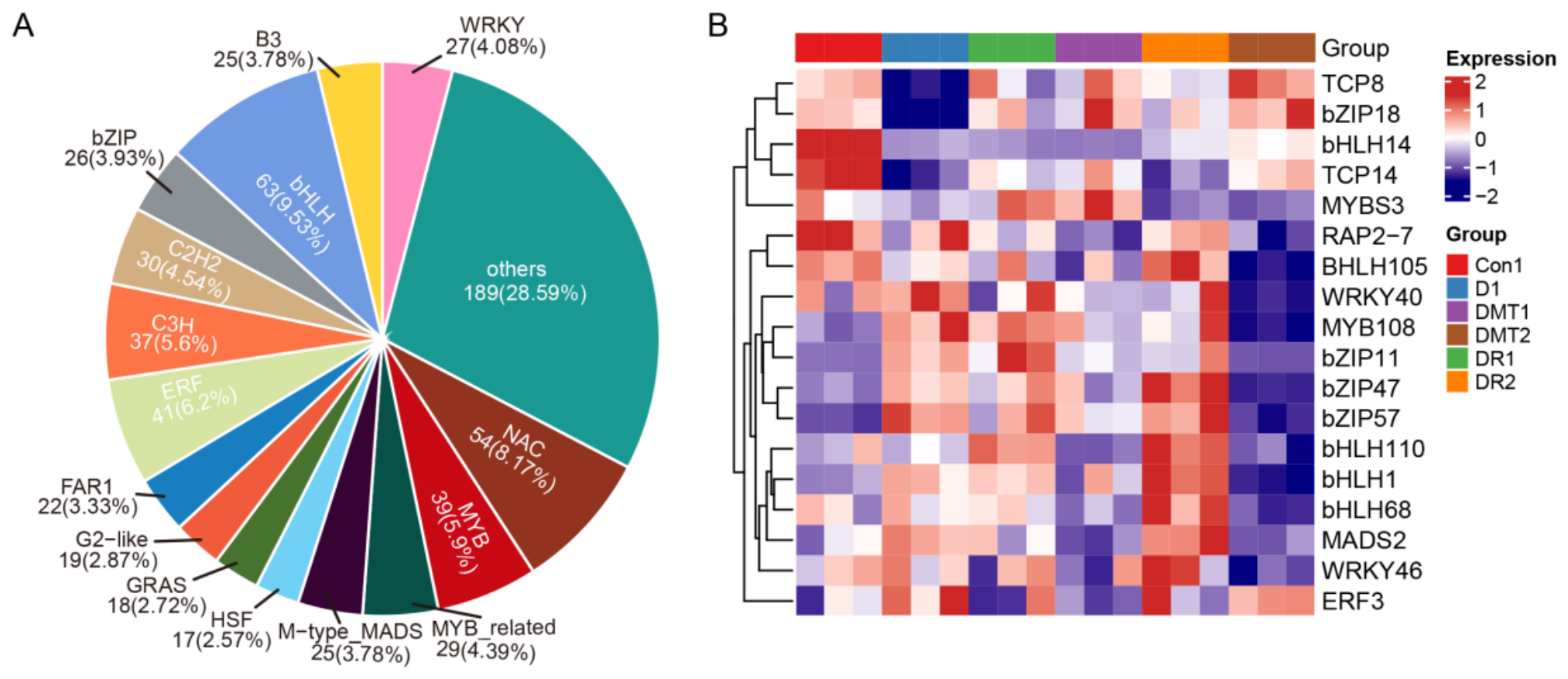
Given the powerful functions of plant transcription factor (TF) families and their widely reported involvement in plant stress resistance regulation, we further identified genes directly associated with MT and drought by conducting statistical analysis on the number of TF families among these 1470 genes. The results show that the most enriched TF family was bHLH, followed by NAC, ERF, MYB, and other families (Figure 8A). These transcription factors were selected for heatmap analysis based on their FPKM values.
TCP8, bZIP18, and TCP14 exhibited upregulated expression at 12 h and 24 h after MT treatment. In contrast, WRKY46, bZIP11, bHLH68, bZIP47, bHLH105, ERF3, bHLH110, MYB108, WRKY40, RAP2-7, bZIP57, MADS2, and bHLH1 showed significantly downregulated expression at both 12 h and 24 h post MT treatment. The expression of MYBS3 was upregulated at 12 h after MT treatment but downregulated at 24 h. Additionally, bHLH14 was downregulated at 12 h and upregulated at 24 h after MT treatment (Figure 8B).

4. Discussion

Chrysanthemum is one of the world’s four main cut flowers, but it is highly susceptible to drought stress after harvest due to insufficient water supply, which severely restricts its postharvest quality and vase life. Drought stress disrupts water balance, causing leaf wilting and flower shrinkage, and also induces metabolic disorders. Excessive accumulation of ROS is a key driver of physiological deterioration in plants under drought stress. In this context, exogenous MT application can help plants cope with adverse stress conditions.
MT acts as a multifunctional regulator in plant physiology, serving not only as a potent antioxidant but also as a modulator of plant growth, development, and stress adaptation [19,36,37]. In this study, chrysanthemum cut flowers subjected to 24 h of drought stress were treated with different concentrations of MT (0, 150, 200, and 250 μmol L−1) (Figure 1). The results show that 200 μmol L−1 MT effectively alleviated oxidative damage in leaves of drought-stressed chrysanthemum cut flowers ‘Jinba’ by inhibiting ROS production, enhancing ROS scavenging capacity, and stabilizing cell membranes (Figure 1).
Treatment with 200 μmol L−1 MT significantly improved postharvest drought resistance of chrysanthemum by increasing RWC and leaf fresh weight (Figure 2). Cellular oxidative damage, a typical indicator of abiotic stress, is characterized by increased accumulation of ROS and MDA, which impair membrane permeability and structural integrity. Sustained drought stress triggers excessive accumulation of H2O2 and O2•−, thereby inhibiting plant growth and development [38,39]. The MT treatment significantly reduced H2O2 and O2•− levels in chrysanthemum under drought stress. This protective effect can be attributed to the strong antioxidant properties of MT, which effectively scavenge free radicals and neutralize ROS responsible for cellular dysfunction. Similar antioxidant effects have been reported in other ornamental plants, including Polianthes tuberosa, where MT inhibits H2O2 accumulation and delays floral organ senescence [40,41]. In addition, MDA content increased after drought treatment, while MT application significantly reduced MDA accumulation, a key marker of ROS-induced membrane lipid peroxidation. Similar reductions have been observed in cut osmanthus, where MT decreased MDA content by approximately 23% [40]. In cut peony, MT treatment also reduced petal MDA content by 23% [41]. These results suggest the conserved role of MT in inhibiting lipid peroxidation in ornamental plants and imply the universal role of MT-mediated ROS scavenging across diverse plant species.
The MT treatment induced substantial accumulation of proline, an important osmoregulatory substance, in chrysanthemum, which helps maintain cell turgor pressure under drought stress. MT promotes proline accumulation under drought by eliminating toxic ROS and regulating the synthesis of osmoregulatory compounds, thereby enhancing membrane stability, photosynthetic efficiency, osmotic balance, carbon allocation, and protein synthesis [42]. To defend against drought-induced damage, plants synthesize enzymatic and non-enzymatic antioxidants to eliminate excess ROS and maintain cellular redox homeostasis [43]. In this study, MT enhanced the activities of enzymatic antioxidants (SOD, CAT, POD, CAT) and the levels of non-enzymatic antioxidants (AsA, GSH), which play vital roles in maintaining redox balance [44], thus facilitating ROS detoxification and post-drought recovery (Figure 3). Similar changes in antioxidant enzyme activities have been observed not only in heat-stressed chrysanthemum seedlings [45], but also in other ornamental plants. For example, in Gladiolus grandifloru, MT increased SOD, CAT, and POD activities by approximately 80% under salt stress [40]. Similar trends were also reported in cut osmanthu, gerbera and carnation [46]. Such interspecies consistency suggests that the regulation of antioxidant enzymes by MT is not species-specific and may rely on conserved transcriptional activation mechanisms, which is further supported by our RNA-seq data.
RNA-seq sequencing revealed that drought stress upregulated the expression of CmCAT1, whereas MT treatment downregulated it. In contrast, MT significantly promoted the expression of CmCATA3. Therefore, the increase in CAT activity may be associated with CmCATA3 rather than CmCAT1, since MT downregulated CmCAT1 while CAT activity was enhanced in stressed leaves (Figure 4). Furthermore, several CmSOD genes, including CmSOD1/2, were upregulated by MT. MT pretreatment also upregulated CmAPX and CmP5CS1, which may contribute to H2O2 scavenging and proline accumulation, respectively [47]. In summary, melatonin mitigates drought-induced oxidative damage by maintaining ROS homeostasis and repairing damaged cell membranes under drought conditions (Figure 7).
The Venn diagram highlights a core set of shared genes between Con1 and D1, alongside drought-specific transcriptional changes, consistent with the phenotypic wilting observed under drought stress. The dominance of NAC and bHLH TF families aligns with their well-documented roles in plant drought responses, where they act as key regulators of stress signaling and downstream defense gene expression (Figure 5). Similar results have also been reported in rice [48]. KEGG and GO enrichment analyses were performed on the DEGs. KEGG enrichment analysis underscores the importance of secondary metabolic pathways (e.g., phenylpropanoid and flavonoid biosynthesis) in drought tolerance. These pathways produce antioxidants and osmoprotectants, which scavenge reactive oxygen species (ROS) and maintain cellular osmotic balance, thus mitigating drought-induced oxidative damage [49,50,51]. GO functional enrichment confirms that drought-responsive genes are heavily involved in abiotic stress signaling and membrane integrity. The enrichment of plasma membrane-localized genes suggests that membrane-associated sensors and transducers are critical for perceiving drought signals and maintaining water homeostasis. Additionally, the overrepresentation of transcription factor and kinase activities points to a complex transcriptional regulatory network that orchestrates drought adaptation in chrysanthemum [2,52]. Collectively, these results may offer insights into a comprehensive transcriptomic landscape of chrysanthemum in response to drought stress, potentially identifying key TF families and metabolic pathways that could act as promising candidate targets for improving postharvest drought tolerance in cut flowers (Figure 5). But these results are only enrichment features related to drought resistance, and the molecular mechanism needs further verification.
Comparative transcriptome analyses were performed to dissect the dynamic molecular mechanisms underlying melatonin responsiveness at 12 h (D1 vs. DMT1/D1 vs. DR1) and 24 h (D1 vs. DMT2/D1 vs. DR2) time points. Similarly, transcriptome analysis revealed significant changes in key transcription factor families such as NAC, bHLH, MYB, ERF, and WRKY at both time points. The predominance of NAC, bHLH, and WRKY TFs further aligns with their well-documented roles in mediating melatonin-induced stress signaling networks. DEGs are mainly reflected in the enrichment of pathways related to ribosome biosynthesis and translation machines (Figures S2–S5). These findings suggest that melatonin initially triggers global translational upregulation, likely to rapidly synthesize stress-related proteins, which constitutes the foundational response mechanism at both early and intermediate stages.
KEGG and GO enrichment analyses also uncovered distinct temporal functional patterns. During the early response stage (12 h), melatonin primarily regulated pathways associated with amino sugar and nucleotide sugar metabolism, as well as ion transport and homeostasis (e.g., zinc/heavy metal transporting ATPase activity). This suggests an acute response to re-establish cellular ionic balance and modify cell wall components. These observations are consistent with the role of melatonin in stabilizing ion homeostasis under abiotic stress [53,54]. During the intermediate/late response (24 h), the molecular focus shifted towards proteasomal degradation, photosynthesis, and secondary metabolism (e.g., carotenoid, sesquiterpenoid, and phenylpropanoid biosynthesis). The significant enrichment of chloroplast-related processes and defense response regulation at 24 h indicates that melatonin transitions from an initial stress acclimation phase to a phase involving metabolic remodeling and enhancement of photosynthetic capacity, thereby promoting long-term stress adaptation. This late-phase metabolic reprogramming is in line with studies showing that melatonin promotes photosynthetic efficiency and secondary metabolite accumulation to enhance plant resilience [54]. In summary, our time-course transcriptomic data delineates a two-phase molecular mechanism: an early translational activation and ionic homeostasis regulation phase (12 h), followed by a late metabolic reprogramming and photosynthesis enhancement phase (24 h). This temporal regulation provides novel insights into the dynamic action mode of melatonin in plants (Figures S3 and S4).
To explore genes continuously induced by MT within 24 h, further Venn analysis was performed on 1470 DEGs that were significantly and persistently affected by 200 μmol L−1 MT at both 12 h and 24 h. KEGG enrichment analysis showed that thiamine metabolism and nucleocytoplasmic transport are pathways previously reported to be involved in drought stress. Thiamine (vitamin B1) enhances plant antioxidant capacity by increasing CAT and SOD activities and regulates the accumulation of proline, glycine betaine, and other osmolytes under drought. In Arabidopsis, the THIC gene participates in thiamine biosynthesis and is induced by osmotic stress; thic mutants exhibit albino lethal phenotypes, indicating its essential role in drought responses [55,56,57]. Previous studies have established the function of nucleocytoplasmic transport in drought responses: the nuclear pore complex (NPC) mediates the nucleocytoplasmic shuttling of transcription factors (e.g., DREB2A) and mRNAs, representing a core mechanism for transmitting stress signals from the cytoplasm to the nucleus (Figure 6) [58]. GO enrichment demonstrated that MT reshapes the transcriptomic landscape to enhance drought tolerance. Within the biological process category, response to abscisic acid and carbohydrate metabolic process were significantly enriched, indicating that MT modulates ABA homeostasis and osmotic adjustment [59,60]. In the cellular component category, plasma membrane and integral component of membrane were enriched, highlighting the importance of membrane-localized signaling components [61]. In the molecular function category, ATP binding and zinc ion binding were enriched. These findings illustrate that MT orchestrates a complex regulatory network to improve drought resistance in chrysanthemum (Figure 6).
Given the crucial roles of TF families in plant stress tolerance, we classified the 1470 core DEGs into TF families to further screen candidate genes associated with MT and drought responses. The most highly enriched TF family was bHLH, followed by NAC, ERF, MYB, and others. A heatmap based on FPKM values was then constructed to analyze their expression patterns (Figure 8). Among these TFs, bZIP18 reported functions as a key negative regulator of drought stress in poplar, coordinating xylem development and drought resistance via phosphorylation and transcriptional repression [62]. TCP family members, including TCP8, have been implicated in drought responses across multiple plant species, suggesting a conserved but less extensively characterized function compared with the bZIP family [63]. WRKY40 enhances drought tolerance by regulating ROS scavenging and the transcription of target genes [64]. MYBS3 is a well-documented regulator of cold stress adaptation in rice, suggesting that MYB family members function in a time-dependent manner under abiotic stress. The dynamic expression pattern of these genes implies a stage-specific regulatory role in stress responses (Figure 8). The screening of these transcription factors provides more research targets for future studies. But the enriched TFs are candidate regulatory factors predicted by bioinformatics enrichment, and further functional validation is needed.
Overall, exogenous application of 200 μmol L−1 melatonin effectively restores leaf wilting in drought-stressed chrysanthemum cut flowers through both physiological and transcriptional regulatory mechanisms. This study provides a theoretical basis for improving drought tolerance and ornamental longevity of chrysanthemum cut flowers through integrated physiological regulation, genetic improvement, and optimized postharvest management, thereby supporting the sustainable development of the ornamental flower industry.

Supplementary Materials

The following supporting information can be downloaded at https://www.mdpi.com/article/10.3390/horticulturae12060683/s1. Figure S1: Correlation and principal component analysis of sample groups. Figure S2: Transcriptomic profiling analysis of DEGs in D1 vs. DMT1 and D1 vs. DR1 comparisons. Figure S3: Functional enrichment analysis of DEGs in D1 vs. DMT1 and D1 vs. DR1 comparisons. Figure S4: Transcriptome analysis identifies differential expressed genes at 24 hours of MT treatment effects of drought on chrysanthemum cut flowers. Figure S5: Functional enrichment analysis of DEGs in D1 vs. DMT2 and D1 vs. DR2 comparisons. Figure S6: Time-series co-expression clustering analysis of differentially expressed genes. Table S1: Primer used in this study. Table S2: DEGs Con1 vs. D1.

Author Contributions

Y.H.: Writing—Original Draft, Formal Analysis, Data Curation. M.Y.: Data curation. J.L.: Visualization, Conceptualization. K.Z.: Supervision, Conceptualization. Y.Z.: Visualization, Investigation. S.H.: Supervision, Conceptualization. J.W.: Editing, Supervision. M.D.: Editing, Visualization, Supervision. All authors have read and agreed to the published version of the manuscript.

Funding

This work was financially supported by the National Natural Science Foundation of China (Grant No. 32460774) and the Yunnan Agricultural Joint Project (grant NO. 202301BD070001-164).

Data Availability Statement

The original contributions presented in this study are included in the article/Supplementary Materials. Further inquiries can be directed to the corresponding authors.

Conflicts of Interest

The authors declare no conflicts of interest.

References

  1. Yang, Y.; Qian, Z.; Li, Y.; Liu, R.; Qiao, H.; Shao, Z.; Huang, D.; Jiang, J.; Chen, F.; Chen, S.; et al. Competition binding of CmbHLH1L and CmNLP6/7L to CmbHLH63 modulates leaf senescence in Chrysanthemum. Plant Biotechnol. J. 2025, 23, 5456–5473. [Google Scholar] [CrossRef] [PubMed]
  2. Seo, P.J.; Park, C.-M. Auxin homeostasis during lateral root development under drought condition. Plant Signal. Behav. 2009, 4, 1002–1004. [Google Scholar] [CrossRef]
  3. Liu, Y.; Cheng, H.; Cheng, P.; Wang, C.; Li, J.; Liu, Y.; Song, A.; Chen, S.; Chen, F.; Wang, L.; et al. The BBX gene CmBBX22 negatively regulates drought stress tolerance in chrysanthemum. Hortic. Res. 2022, 9, uhac181. [Google Scholar] [CrossRef]
  4. Nichols, R. Senescence of the Cut Carnation Flower: Respiration and Sugar Status. J. Pomol. Hortic. Sci. 1973, 48, 111–121. [Google Scholar] [CrossRef]
  5. Sarwat, M.; Tuteja, N. Hormonal signaling to control stomatal movement during drought stress. Plant Gene 2017, 11, 143–153. [Google Scholar] [CrossRef]
  6. Naumann, G.; Alfieri, L.; Wyser, K.; Mentaschi, L.; Betts, R.A.; Carrao, H.; Spinoni, J.; Vogt, J.; Feyen, L. Global changes in drought conditions under different levels of warming. Geophys. Res. Lett. 2018, 45, 3285–3296. [Google Scholar] [CrossRef]
  7. Wang, T.; Wei, Q.; Wang, Z.; Liu, W.; Zhao, X.; Ma, C.; Gao, J.; Xu, Y.; Hong, B. CmNF-YB8 affects drought resistance in chrysanthemum by altering stomatal status and leaf cuticle thickness. J. Integr. Plant Biol. 2022, 64, 741–755. [Google Scholar] [CrossRef] [PubMed]
  8. Rogers, H.; Munné-Bosch, S. Production and scavenging of reactive oxygen species and redox signaling during leaf and flower senescence: Similar but different. Plant Physiol. 2016, 171, 1560–1568. [Google Scholar] [CrossRef]
  9. Farooq, S.; Lone, M.L.; Haq, A.U.; Parveen, S.; Altaf, F.; Tahir, I. Signalling cascades choreographing petal cell death: Implications for postharvest quality. Plant Mol. Biol. 2024, 114, 63. [Google Scholar] [CrossRef]
  10. Hasanuzzaman, M.; Bhuyan, M.H.M.B.; Zulfiqar, F.; Raza, A.; Mohsin, S.M.; Mahmud, J.A.; Fujita, M.; Fotopoulos, V. Reactive oxygen species and antioxidant defense in plants under abiotic stress: Revisiting the crucial role of a universal defense regulator. Antioxidants 2020, 9, 681. [Google Scholar] [CrossRef] [PubMed]
  11. Mittler, R.; Zandalinas, S.I.; Fichman, Y.; Breusegem, F.V. Reactive oxygen species signalling in plant stress responses. Nat. Rev. Mol. Cell Biol. 2022, 23, 663–679. [Google Scholar] [CrossRef]
  12. Jiang, L.; Liu, K.; Zhang, T.; Chen, J.; Zhao, S.; Cui, Y.; Zhou, W.; Yu, Y.; Chen, S.; Wang, C. The RhWRKY33a-RhPLATZ9 regulatory module delays petal senescence by suppressing rapid reactive oxygen species accumulation in rose flowers. Plant J. 2023, 114, 1425–1442. [Google Scholar] [CrossRef]
  13. Yi, Z.; Zhicheng, W.; Ming, F.; Jiwei, C.; Meizhu, Q.; Wenran, W.; Ying, B.; Qian, X.; Ying, Y.; Chao, M. The circadian-controlled PIF8–BBX28 module regulates petal senescence in rose flowers by governing mitochondrial ROS homeostasis at night. Plant Cell 2021, 8, 8. [Google Scholar]
  14. Rogers, H.J. Is there an important role for reactive oxygen species and redox regulation during floral senescence? Plant Cell Environ. 2012, 35, 217–233. [Google Scholar] [CrossRef]
  15. Mhamdi, A.; Van Breusegem, F. Reactive oxygen species in plant development. Development 2018, 145, dev164376. [Google Scholar] [CrossRef]
  16. Conklin, P.L.; Foyer, C.H.; Hancock, T.S. Nicholas: Ascorbic acid metabolism and functions. J. Exp. Bot. 2024, 75, 2599–2603. [Google Scholar]
  17. Alfonso, D.L.; Puppo, A. Reactive Oxygen Species in Plant Signaling; Springer: Berlin/Heidelberg, Germany, 2009. [Google Scholar]
  18. Wang, T.; Sun, Z.; Wang, S.; Feng, S.; Wang, R.; Zhu, C.; Zhong, L.; Cheng, Y.; Bao, M.; Zhang, F. DcWRKY33 promotes petal senescence in carnation (Dianthus caryophyllus L.) by activating genes involved in the biosynthesis of ethylene and abscisic acid and accumulation of reactive oxygen species. Plant J. 2023, 113, 698–715. [Google Scholar] [CrossRef]
  19. Sun, C.; Liu, L.; Wang, L.; Li, B.; Jin, C.; Lin, X. Melatonin: A master regulator of plant development and stress responses. J. Integr. Plant Biol. 2020, 63, 126–145. [Google Scholar] [CrossRef]
  20. Sharma, A.; Zheng, B. Melatonin mediated regulation of drought stress: Physiological and molecular aspects. Plants 2019, 8, 190. [Google Scholar] [CrossRef]
  21. Yang, P.; Zhang, X.; Li, K.; Bai, Y.; Wang, P.; Yin, C.; Li, C.; Song, X. Exogenous melatonin affects the opening process of cut ‘Bartzella’ Itoh peony flowers. Ind. Crops Prod. 2025, 229, 120932. [Google Scholar] [CrossRef]
  22. Wu, M.; Zhang, P.; Sun, Y.; Shang, W.; Shi, L.; Yu, S.; He, S.; Song, Y.; Wang, Z. Melatonin treatment delays the senescence of cut flowers of “Diguan” tree peony by affecting water balance and physiological properties. Horticulturae 2025, 11, 181. [Google Scholar] [CrossRef]
  23. Ji, X.; Li, K.; Sun, D.; Niu, L.; Zeng, D.; Zhang, Y. Physiological and biochemical changes during flower senescence of herbaceous peony and a new postharvest approach for extending flower longevity. Ornam. Plant Res. 2025, 5, e022. [Google Scholar] [CrossRef]
  24. Yang, W.J.; Li, D.P.; Li, J.K.; Li, M.H.; Chen, Y.L.; Zhang, P.Z. Synergistic antioxidant activities of eight traditional Chinese herb pairs. Biol. Pharm. Bull. 2009, 32, 1021. [Google Scholar] [CrossRef] [PubMed]
  25. Mazrou, R.M.; Hassan, S.; Yang, M.; Hassan, F.A.S. Melatonin preserves the postharvest quality of cut roses through enhancing the antioxidant system. Plants 2022, 11, 2713. [Google Scholar] [CrossRef]
  26. Zhao, D.; Luan, Y.; Shi, W.; Tang, Y.; Huang, X.; Tao, J. Melatonin enhances stem strength by increasing lignin content and secondary cell wall thickness in herbaceous peony. J. Exp. Bot. 2022, 17, 17. [Google Scholar] [CrossRef]
  27. He, D.; Yu, S.; Qu, L.; Yang, Y.; Luo, J.; Zhang, Y. Methyl jasmonate enhances vase life and alters physiological and molecular responses in tree peony ‘Luoyang Hong’ cut flowers. Postharvest Biol. Technol. 2025, 224, 113481. [Google Scholar] [CrossRef]
  28. Fan, Q.; Song, A.; Jiang, J.; Zhang, T.; Sun, H.; Wang, Y.; Chen, S.; Chen, F. CmWRKY1 enhances the dehydration tolerance of chrysanthemum through the regulation of ABA-associated genes. PLoS ONE 2016, 11, e0150572. [Google Scholar] [CrossRef]
  29. Schmedes, A.; Hlmer, G. A new thiobarbituric acid (TBA) method for determining free malondialdehyde (MDA) and hydroperoxides selectively as a measure of lipid peroxidation. J. Am. Oil Chem. Soc. 1989, 66, 813–817. [Google Scholar] [CrossRef]
  30. Bates, L.S.; Waldren, R.P.; Teare, I.D. Rapid determination of free proline for water-stress studies. Plant Soil 1973, 39, 205–207. [Google Scholar] [CrossRef]
  31. Willekens, H.; Chamnongpol, S.; Davey, M.; Schraudner, M.; Langebartels, C.; Van Montagu, M.; Inze, D.; Van Camp, W. Catalase is a sink for H2O2 and is indispensable for stress defence in C3 plants. EMBO J. 1997, 16, 4806–4816. [Google Scholar] [CrossRef]
  32. Ma, F.; Cheng, L. The sun-exposed peel of apple fruit has higher xanthophyll cycle-dependent thermal dissipation and antioxidants of the ascorbate–glutathione pathway than the shaded peel. Plant Sci. 2003, 165, 827. [Google Scholar] [CrossRef]
  33. Ries, G.S.K. Superoxide dismutases, 2: Purification and quantitative relationship with water-soluble protein in seedlings [of corn, peas, and oats]. Plant Physiol. 1977, 59, 315–318. [Google Scholar]
  34. Kato, M.; Shimizu, S. Chlorophyll metabolism in higher plants. VII. Chlorophyll degradation in senescing tobacco leaves; phenolic-dependent peroxidative degradation. Botany 1987, 65, 729–735. [Google Scholar] [CrossRef]
  35. Livak, K.J.; Schmittgen, T.D. Analysis of relative gene expression data using real-time quantitative PCR and the 2(-Delta Delta C(T)) method. Methods 2001, 25, 402–408. [Google Scholar] [CrossRef] [PubMed]
  36. Jayarajan, S.; Sharma, R.R. Melatonin: A blooming biomolecule for postharvest management of perishable fruits and vegetables. Trends Food Sci. Technol. 2021, 116, 318–328. [Google Scholar] [CrossRef]
  37. Murch, S.J.; Saxena, P.K. Melatonin: A potential regulator of plant growth and development? In Vitro Cell. Dev. Biol.-Plant 2002, 38, 531–536. [Google Scholar] [CrossRef]
  38. Alam, M.; Yang, L.; Yi, X.; Wang, Q.; Robin, A. Role of melatonin in inducing the physiological and biochemical processes associated with heat stress tolerance in tall fescue (Festuca arundinaceous). J. Plant Growth Regul. 2022, 41, 2759–2768. [Google Scholar] [CrossRef]
  39. Manafi, H.; Baninasab, B.; Gholami, M.; Talebi, M.; Khanizadeh, S. Exogenous melatonin alleviates heat-induced oxidative damage in strawberry (Fragaria × ananassa Duch. cv. Ventana) Plant. J. Plant Growth Regul. 2022, 41, 52–64. [Google Scholar] [CrossRef]
  40. Zulfiqar, F.; Nafees, M.; Moosa, A.; Ferrante, A.; Darras, A. Melatonin induces proline, secondary metabolites, sugars and antioxidants activity to regulate oxidative stress and ROS scavenging in salt stressed sword lily. Heliyon 2024, 10, e32569. [Google Scholar] [CrossRef] [PubMed]
  41. Wang, Y.; Sun, M.; Wang, M.; Lv, X.; Zhu, W.; Chen, L.; Chen, X.; Guo, C.; Teixeira da Silva, J.A.; Yu, X. Melatonin regulates petal senescence in peony (Paeonia lactiflora Pall.) cut flowers via the ROS pathway. Postharvest Biol. Technol. 2026, 231, 113876. [Google Scholar] [CrossRef]
  42. Jahan, M.S.; Shu, S.; Wang, Y.; Chen, Z.; He, M.; Tao, M.; Sun, J.; Guo, S. Melatonin alleviates heat-induced damage of tomato seedlings by balancing redox homeostasis and modulating polyamine and nitric oxide biosynthesis. BMC Plant Biol. 2019, 19, 414. [Google Scholar] [CrossRef]
  43. Tiwari, R.K.; Lal, M.K.; Kumar, R.; Chourasia, K.N.; Naga, K.C.; Kumar, D.; Das, S.K.; Zinta, G. Mechanistic insights on melatonin-mediated drought stress mitigation in plants. Physiol. Plant. 2021, 172, 1212–1226. [Google Scholar] [CrossRef]
  44. Jia, C.; Yu, X.; Zhang, M.; Liu, Z.; Zou, P.; Ma, J.; Xu, Y. Application of melatonin-enhanced tolerance to high-temperature stress in cherry radish (Raphanus sativus L. var. radculus pers). J. Plant Growth Regul. 2020, 39, 631–640. [Google Scholar] [CrossRef]
  45. Xing, X.; Ding, Y.; Jin, J.; Song, A.; Chen, S.; Chen, F.; Fang, W.; Jiang, J. Physiological and transcripts analyses reveal the mechanism by which melatonin alleviates heat stress in chrysanthemum seedlings. Front. Plant Sci. 2021, 12, 673236. [Google Scholar] [CrossRef]
  46. Elmongy, M.; El-Baset, M. Melatonin application induced physiological and molecular changes in carnation (Dianthus caryophyllus L.) under heat stress. Horticulturae 2024, 10, 122. [Google Scholar] [CrossRef]
  47. Yuan, Z.; Zhang, J.; Liu, L.; Zhang, L.; Gan, X.; Zhong, Y.; Wang, L. ALA up-regulated PpWRKY18 to enhance freezing tolerance of nectarine pistils. Hortic. Plant J. 2025, 11, 2061–2080. [Google Scholar] [CrossRef]
  48. Khan, Z.; Jan, R.; Asif, S.; Farooq, M.; Jang, Y.-H.; Kim, E.-G.; Kim, N.; Kim, K.-M. Exogenous melatonin induces salt and drought stress tolerance in rice by promoting plant growth and defense system. Sci. Rep. 2024, 14, 1214. [Google Scholar] [CrossRef]
  49. Li, X.; Zhang, B.; Du, J.; Chen, S.; Wang, Y.; Li, Q.; Zhuge, S.; Li, X.; Nie, Y.; Li, G.; et al. Maize leaf yellowing gene ZmCAAX modulates growth and drought resistance by regulating abscisic acid contents through interaction with the ABA biosynthetic enzyme ZmNCED3. Plant Biotechnol. J. 2025, 23, 3431–3450. [Google Scholar] [CrossRef]
  50. Connolly, J.D.; Overton, K.H. Chapter 14—Diterpenoids, sesterterpenoids and triterpenoids. In Supplements to the 2nd Edition of Rodd’s Chemistry of Carbon Compounds; Ansell, M.F., Ed.; Elsevier: Amsterdam, The Netherlands, 1975; pp. 115–142. [Google Scholar]
  51. Nguyen, T.-D.; MacNevin, G.; Ro, D.-K. Chapter thirteen—De novo synthesis of high-value plant sesquiterpenoids in yeast. In Methods in Enzymology; Hopwood, D.A., Ed.; Academic Press: Cambridge, MA, USA, 2012; Volume 517, pp. 261–278. [Google Scholar]
  52. Teng, Z.; Lyu, J.; Chen, Y.; Zhang, J.; Ye, N. Effects of stress-induced ABA on root architecture development: Positive and negative actions. Crop J. 2023, 11, 1072–1079. [Google Scholar] [CrossRef]
  53. Altaf, M.A.; Shahid, R.; Ren, M.X.; Naz, S.; Altaf, M.M.; Khan, L.U.; Lal, M.K.; Tiwari, R.K.; Shakoor, A. Melatonin mitigates cadmium toxicity by promoting root architecture and mineral homeostasis of tomato genotypes. J. Soil Sci. Plant Nutr. 2022, 22, 1112–1128. [Google Scholar] [CrossRef]
  54. Tahjib-Ul-Arif, M.; Zahan, I.; Hossain, M.S.; Imran, S.; Hasanuzzaman, M.; Dawood, M.F.A.; Dawood, A.F.A.; Asaduzzaman, M.; Rhaman, M.S.; Souri, Z.; et al. Melatonin-mediated ionic homeostasis in plants: Mitigating nutrient deficiency and salinity stress. Discov. Plants 2025, 2, 143. [Google Scholar] [CrossRef]
  55. Jabeen, M.; Akram, N.A.; Ashraf, M.; Alyemeni, M.N.; Ahmad, P.A.-O. Thiamin stimulates growth and secondary metabolites in turnip (Brassica rapa L.) leaf and root under drought stress. Physiol. Plant. 2021, 172, 1399. [Google Scholar] [CrossRef]
  56. Ahn, I.-P.; Kim, S.; Lee, Y. H: Vitamin B1 functions as an activator of plant disease resistance. Plant Physiol. 2005, 138, 1505–1512. [Google Scholar] [CrossRef]
  57. Rapała-Kozik, M.; Wolak, N.; Banaś, A. The upregulation of thiamine (vitamin B1) biosynthesis in Arabidopsis thaliana seedlings under salt and osmotic stress conditions is mediated by abscisic acid at the early stages of this stress response. BMC Plant Biol. 2012, 12, 2. [Google Scholar] [CrossRef]
  58. Yang, Y.; Wang, W.; Chu, Z.; Zhu, J.K.; Zhang, H. Roles of nuclear pores and nucleo-cytoplasmic trafficking in plant stress responses. Front. Plant Sci. 2017, 8, 574. [Google Scholar] [CrossRef]
  59. Moustafa-Farag, M.A.-O.; Almoneafy, A.A.-O.; Mahmoud, A.A.-O.; Elkelish, A.A.-O.; Arnao, M.A.-O.; Li, L.; Ai, S. Melatonin and its protective role against biotic stress impacts on plants. Biomolecules 2019, 10, 54. [Google Scholar] [CrossRef]
  60. Luo, Y.; Hu, T.; Huo, Y.; Wang, L.; Zhang, L.; Yan, R. Transcriptomic and physiological analyses reveal the molecular mechanism through which exogenous melatonin increases drought stress tolerance in chrysanthemum. Plants 2023, 12, 1489. [Google Scholar] [CrossRef]
  61. Zhao, H.; Xu, L.; Su, T.; Jiang, Y.; Hu, L.; Ma, F. Melatonin regulates carbohydrate metabolism and defenses against Pseudomonas syringae pv. tomato DC3000 infection in Arabidopsis thaliana. J. Pineal Res. 2015, 59, 109–119. [Google Scholar] [CrossRef]
  62. Jin, Z.; Li, P.; Huang, R.; Li, L.; Zhang, M.; Zhang, D.; Yuan, M.; Du, J.; Zhou, J.; Zhang, W.; et al. Natural variation in PtobZIP18 confers the trade-off between stem growth and drought tolerance in Populus. Plant Biotechnol. J. 2025, 23, 4633–4649. [Google Scholar] [CrossRef]
  63. Lei, N.; Yu, X.; Li, S.; Zeng, C.; Zou, L.; Liao, W.; Peng, M. Phylogeny and expression pattern analysis of TCP transcription factors in cassava seedlings exposed to cold and/or drought stress. Sci. Rep. 2017, 7, 10016. [Google Scholar] [CrossRef]
  64. Geilen, K.; Böhmer, M. Dynamic subnuclear relocalisation of WRKY40 in response to abscisic acid in Arabidopsis thaliana. Sci. Rep. 2015, 5, 13369. [Google Scholar] [CrossRef]
Figure 1. Phenotypes of chrysanthemums treated with different concentrations of melatonin after 24 h of drought. (A) Phenotypes of chrysanthemums treated with different concentrations of melatonin for 12 h (A) and 24 h (B).
Horticulturae 12 00683 g001
Figure 2. Physiological characterization of drought stress tolerance under MT treatment. (A) Phenotype of leaves of chrysanthemum cut flowers under Con, control; D, drought stress for 24 h; DR, drought stress for 24 h with 0 μmol L−1 MT treatment; DMT, drought stress for 24 h with 200 μmol L−1 MT treatment. (B) Relative water content of chrysanthemum cut flowers under different treatments at 0 h, 12 h, and 24 h. (C) Fresh weight of chrysanthemum cut flowers under different treatments at 0 h, 12 h, and 24 h. Data are presented as mean ± standard error (SE). Different lowercase letters above the bars indicate statistically significant differences among groups at p < 0.05 according to one-way ANOVA followed by Tukey’s multiple comparison test.
Horticulturae 12 00683 g002
Figure 3. Effects of melatonin on ROS accumulation, osmotic regulatory substances and antioxidant contents of cut chrysanthemum flowers under drought stress. (A) MDA content; (B) H2O2 content; (C) O2•− production rate; (D) proline content; (E) GSH content; (F) ASA content. Error bars represent the standard errors. The different lowercase letters above each bar represent significant differences at p < 0.05.
Horticulturae 12 00683 g003
Figure 4. Effects of melatonin on antioxidant enzyme activities of chrysanthemum cut flowers under drought stress. (A) SOD activity; (B) POD activity; (C) CAT activity; (D) APX activity. Error bars represent the standard errors. The different lowercase letters above each bar represent significant differences at p < 0.05.
Horticulturae 12 00683 g004
Figure 5. Comparative transcriptomic and functional enrichment analysis between the control group (Con1) and the drought stress group (D1). (A) Venn diagram: showing the number of shared and specifically expressed genes between the two groups. (B) Bar chart of the family distribution of differentially expressed TFs. (C) KEGG pathway enrichment bubble plot (the x-axis represents the richness, bubble size indicates the count of differentially expressed genes in the pathway, and color represents the enrichment significance Q-value). (D) GO functional enrichment analysis, displaying the functional distribution of differentially expressed genes across three categories: Biological Processes, Cellular Components, and Molecular Functions.
Horticulturae 12 00683 g005
Figure 6. Analysis of RNA-seq sequencing results of MT related genes within 24 h. (A) The numbers of up- and downregulated genes in different treatment groups. (B) Venn diagram of DEGs in identified in comparisons among the 6 groups. (C) The numbers of up- and downregulated genes. (D) KEGG enrichment analysis of DEGs. (E) GO enrichment analysis of DEGs.
Horticulturae 12 00683 g006
Figure 7. Expression profiles of antioxidant and proline synthesis-related genes. (A) Heat map of expression levels of antioxidant-related genes in six groups. (BE) Expression levels of P5CS, SOD1, POD5 and CATA3 quantified by qRT-PCR, with values normalized to Con1. Values represent means ± SE (n = 3 biological replicates). Different lowercase letters indicate significant differences.
Horticulturae 12 00683 g007
Figure 8. Significantly differentially expressed TFs within 24 h after MT treatment. (A) Pie chart of the number of transcription factor families. (B) Heat map of expression levels of transcription factors in six groups.
Horticulturae 12 00683 g008
Disclaimer/Publisher’s Note: The statements, opinions and data contained in all publications are solely those of the individual author(s) and contributor(s) and not of MDPI and/or the editor(s). MDPI and/or the editor(s) disclaim responsibility for any injury to people or property resulting from any ideas, methods, instructions or products referred to in the content.