Article

Integrated Strategies to Reduce Botryosphaeriaceae-Associated Dieback in Avocado Under Mediterranean Climatic Stress

by
Lucía Guirado-Manzano
1,2,
José Francisco Santamaría-Ortega
3,
David Sarmiento
3,
Emilio Guirado
2,
Marina Pulido-Ruiz
1,2,
Antonio de Vicente
1,
Dolores Fernández-Ortuño
1,2,
Francisco M. Cazorla
1,2 and
Eva Arrebola
1,2,*
1
Departamento de Microbiología, Facultad de Ciencias, Universidad de Málaga, Bulevar Louis Pasteur 31, 29010 Málaga, Spain
2
Instituto de Hortofruticultura Subtropical y Mediterránea “La Mayora” (IHSM), Bulevar Louis Pasteur 49, 29010 Málaga, Spain
3
Departamento Técnico de TROPS-SAT2803, Polígono Industrial “El Trapiche”, 29719 Málaga, Spain
*
Author to whom correspondence should be addressed.
Horticulturae 2026, 12(6), 673; https://doi.org/10.3390/horticulturae12060673
Submission received: 16 April 2026 / Revised: 18 May 2026 / Accepted: 26 May 2026 / Published: 28 May 2026
(This article belongs to the Section Plant Pathology and Disease Management (PPDM))

Abstract

Avocado (Persea americana Mill.) is gaining economic relevance in Mediterranean regions such as southern Spain. In recent years, production has been severely affected by dieback caused by Botryosphaeriaceae species, a problem intensified under drought conditions. Conventional chemical control has shown limited effectiveness due to the scarce availability of fungicides and the difficulty of targeting pathogens colonizing lignified tissues. This study therefore evaluated eco-friendly control strategies comparing their performance with conventional fungicides and complementary cultural practices within an integrated management framework. Varietal tolerance significantly influenced symptom development and yield, with younger trees (1–2 years old) being more susceptible. Among the tested treatments, potassium silicate (K-Link) was associated with moderate reduction in disease intensity, with decreases in disease index ranging from 5–10%. Other products, including the biostimulant Brotolom® SOILFORCE (BTL) and the disinfectant Huwa San® TR50, also showed reductions in disease severity (approximately 5% and up to 14%, respectively), although their effects varied depending on cultivar and season. Cultural practices such as autumn pruning reduced symptoms and improved yield but required greater economic and labor inputs. In contrast, gibberellic acid was highly effective, reducing flowering, improving canopy balance, decreasing dieback incidence by 28%, and increasing yield by 34%. Integrating eco-friendly products, particularly potassium silicate, with targeted cultural practices and gibberellic acid application provides effective and sustainable tools to mitigate avocado dieback under Mediterranean conditions.

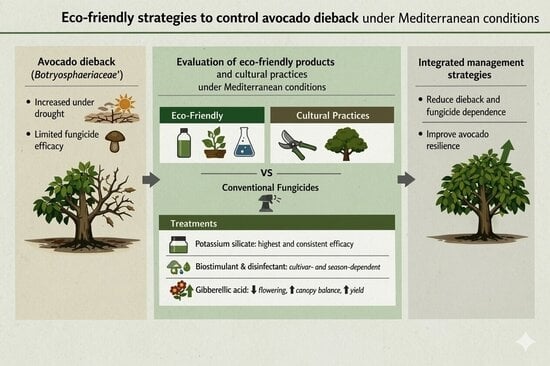
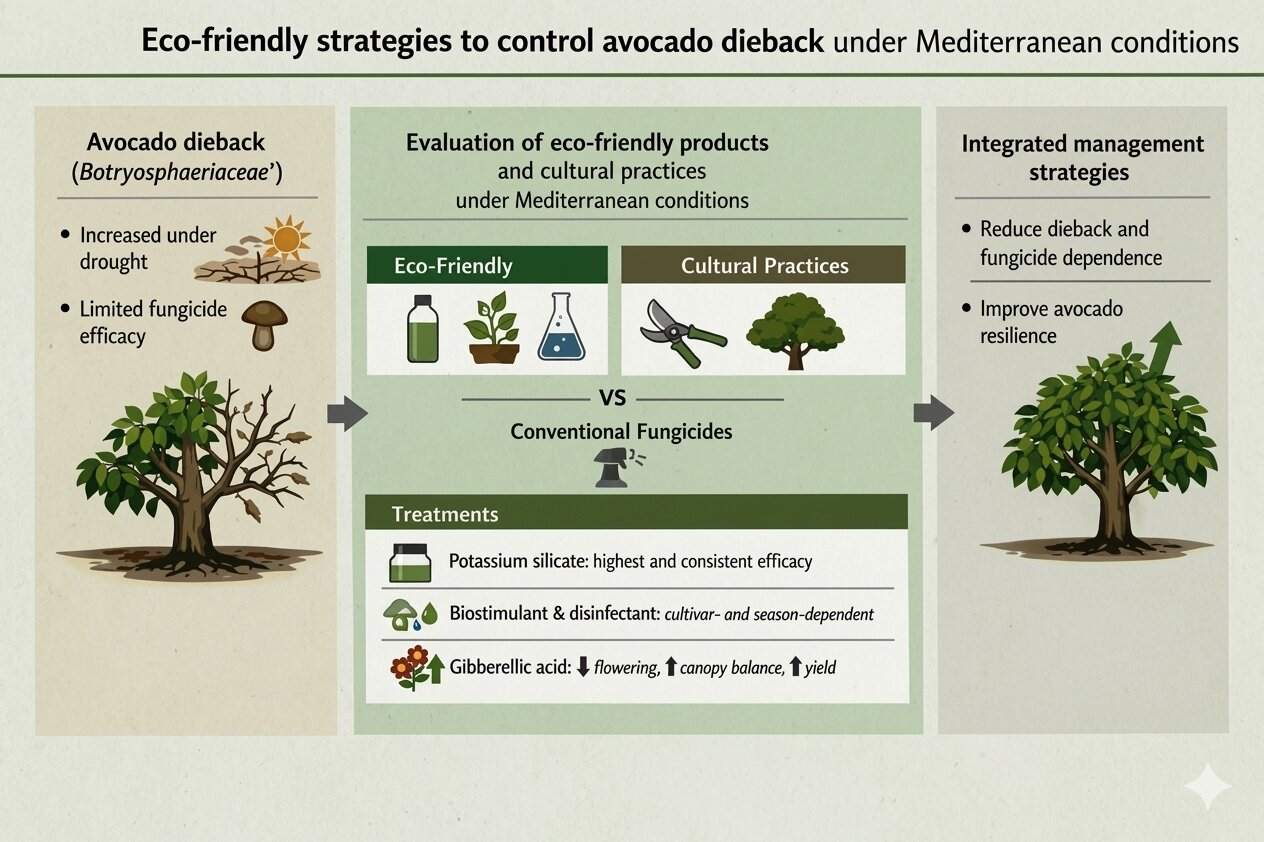
Graphical Abstract

1. Introduction

The earliest evidence of avocado (Persea americana Mill.) use dates back approximately 10,000 years and originates from Mesoamerica [1,2]. Today, avocado is cultivated worldwide in tropical and Mediterranean regions, with Mexico, Colombia, and Peru as leading producers. In Europe, production is concentrated in Mediterranean countries, particularly Spain, which, with approximately 149,000 tons, is the main exporter and ranks third globally after Peru and Mexico [3].
Persea americana belongs to the Lauraceae family, which comprises approximately 2500 species distributed across 54 genera. Native to Mesoamerica, avocado includes three botanical races, Mexican, Guatemalan, and Antillean, distinguished primarily by their ecological preferences and fruit characteristics. In southern and eastern Spain, subtropical cultivars such as “Hass”, “Bacon”, and “Fuerte” predominate, especially along the coasts of Málaga and Granada, which constitute the country’s main production area. These cultivars are hybrids between the Guatemalan and Mexican races, with varying degrees of introgression [4]. Among them, “Hass” dominates international trade due to its favorable organoleptic characteristics, long harvest period, and excellent postharvest performance, representing approximately 75% of the cultivated area worldwide [4]. The Hass avocado has a medium-thick, bumpy skin that darkens from deep green to purplish-black as it ripens, with rich, creamy flesh and a nutty flavor. In contrast, the “Fuerte” cultivar has a smooth, thin, bright-green skin that does not change color when ripe, a pear-shaped form, and a milder, buttery taste with slightly lower fat content. The Bacon variety features a smooth, thin, easy-to-peel dark-green skin, creamy yellow-green flesh, a light, delicate flavor, and a lower fat percentage (around 16–18%), making it a fresher and less dense option compared to the others [5].
During the past six years, avocado production has been increasingly affected by dieback, a disease caused by a complex of fungi belonging to the Botryosphaeriaceae family. This disease has become more prevalent under changing climatic conditions, particularly drought. For instance, avocado production in Spain decreased from 106,500 tons in 2022 to 55,682 tons in the 2023–2024 crop season, mainly due to severe drought and the higher incidence of dieback [6]. Avocado dieback is characterized by shoot and branch necrosis, cankers, rot, and wood discoloration, leading to yield losses and reduced tree longevity [6,7].
The development of Botryosphaeriaceae-related diseases is influenced by several environmental and agronomic factors. Infections can occur throughout the growing season when splashing water and favorable temperatures (10–35 °C) promote spore germination [8]. Germination and germ tube elongation require free water or relative humidity above 90%, with optimal temperatures between 25 and 30 °C. These conditions, however, vary among species and spore types, reflecting their adaptation to specific environments. Cultural factors such as high planting density (super-high-density or hedgerow systems) and nutrient imbalances, particularly nitrogen deficiency, may also increase host susceptibility [8,9].
Management of Botryosphaeriaceae diseases varies across crops depending on host and environmental conditions. In perennial crops such as walnut, almond, and grapevine, different fungicides have shown efficacy in reducing disease incidence and lesion development when applied during susceptible periods [10,11,12,13]. However, these results are often context-dependent, highlighting variability in performance under different field conditions.
Current trends in the management of Botryosphaeriaceae diseases in perennial crops emphasize the need for integrated approaches [14,15]. Orchard practices that improve air circulation and light penetration through appropriate planting density and canopy management help reduce infection risk and disease severity [16]. Sanitation measures, such as the removal and destruction of infected material, pruning of symptomatic branches, and elimination of infected stumps, also help minimize inoculum sources [17]. When combined with targeted fungicide applications, these practices form a comprehensive framework for the sustainable management of Botryosphaeriaceae pathogens [18,19].
This study provides the first comprehensive evaluation of an integrated control strategy for avocado dieback over four seasons. It assesses the role of abiotic stress factors, cultivar-dependent susceptibility, pathogen pressure during the flowering period, and the combined effects of crop management practices and commercially available eco-friendly products. The proposed integrated approach delivers practical, immediately applicable solutions for the agricultural sector.

2. Materials and Methods

2.1. Avocado Orchards and Sampling

Two commercial avocado orchards located in Vélez-Málaga (Andalusia, southern Spain) were selected for this study: Molino de las Monjas and Petit. Both orchards were planted at a spacing of 6 × 3 m and managed under standard commercial practices, including drip irrigation and fertilization programs supervised by the local cooperative.
Molino de las Monjas orchard was predominantly planted with the cultivar “Maluma” grafted onto “Toro Canyon” rootstock, with a small proportion of “Bacon” trees used as pollinizers. Petit orchard consisted of “Hass” trees grafted onto “Duke 7” rootstock. In the Petit orchard, two adjacent plots were established using trees of the same age and origin (planted simultaneously from the same nursery batch) and showing comparable vegetative development. One plot was maintained under standard management, while the second plot incorporated additional autumn pruning. Additional autumn pruning was carried out in October with the aim of reducing flowering intensity. This practice consisted of selectively removing floral buds while avoiding the removal of woody tissues, thereby minimising structural alterations to the canopy.
Treatments were arranged by rows to facilitate field management and reduce spatial interference between treatments. However, individual trees were considered the experimental units for data collection and statistical analysis. Each treatment was applied to at least two non-consecutive rows per crop season, with each row comprising approximately 50–80 trees. Except for the specific management practices under evaluation, all plots were subjected to identical cultural practices throughout the study period. Additional details on orchard characteristics and experimental layout are provided in Appendix A (Table A1).

2.2. Detection of Botryosphaeriaceae in Avocado Orchards

The presence of Botryosphaeriaceae species associated with avocado dieback was assessed through fungal isolation from plant material and airborne inoculum monitoring. Isolation from floral panicles was performed following previously described protocols [6]. Briefly, randomly collected samples were surface-disinfected, plated onto acidified potato dextrose agar, and incubated at 25 °C. Emerging fungal colonies were identified as members of the Botryosphaeriaceae family by PCR using the primers Bot-BtF1 and Bot-BtR1 [20].
Sampling was conducted every 15 days from March to May. At each sampling time, four samples were collected per row for each treatment in both orchards (Molino de las Monjas and Petit). A total of 36 samples per orchard were obtained at each sampling event, resulting in 72 samples overall. This procedure was repeated five times per crop season over four consecutive seasons (2020–2021 to 2023–2024).
Airborne Botryosphaeriaceae inoculum was monitored using spore traps as described by Maestre-Carballa et al. [21]. Glycerol-impregnated microscope slides were installed at two heights (50 and 150 cm) on nine randomly selected trees per orchard and exposed for seven days. Spores were recovered from the slides, concentrated, and total DNA was extracted for molecular detection. Quantification of airborne spores was performed by quantitative PCR using the Bot-BtF1 and Bot-BtR1 primers, and spore concentrations were estimated based on the relationship between DNA copy number and spore abundance described by Hachimi et al. [22].
Spore monitoring was conducted monthly during 2023 and 2024 in both orchards, yielding a total of 216 spore-trap samples per orchard and year. Each sample was analyzed in two independent qPCR runs with three technical replicates. Detailed protocols for fungal isolation, DNA extraction, and qPCR conditions are provided in Appendix A.

2.3. Detached Stem Evaluation of Cultivar Susceptibility

Cultivar susceptibility to Botryosphaeriaceae was evaluated using detached stem assays. Ten detached stems (approximately 15 cm of new growth) from each of three avocado cultivars (“Maluma”, “Hass”, and “Bacon”) were inoculated with three Botryosphaeriaceae species: Lasiodiplodia sp. UMAF A1953, Neofusicoccum parvum UMAF A1961, and N. luteum UMAF A1963 [6].
Inoculation was performed by placing an agar plug with actively growing mycelium onto a wound created on each stem. Wounds were sealed with Parafilm® M (Bemis Company, Inc. (now Amcor plc), Neenah, WI, USA) to maintain humidity, and control stems received sterile agar plugs. Each cultivar–isolate combination was incubated in a moist chamber at 25 °C for 10 days. Lesion length was measured and normalized using the maximum value obtained within each assay (reference = 1). The experiment was independently repeated five times, conducted on different harvest dates, generating a total of 50 measurements per cultivar–isolate combination.

2.4. Mesocosm System and Pathogen Inoculation

All mesocosm experiments were performed using commercially available avocado plants (cv. “Hass” grafted onto “Duke 7” rootstock), approximately one year old and about 1 m in height, corresponding to standard nursery material used in commercial orchards. These plants were maintained outdoors under open-field conditions. Plants were grown in 35 L containers equipped with drip irrigation and arranged to ensure homogeneous exposure to environmental conditions. Temperature and relative humidity data were recorded throughout the experimental periods using an on-site weather station.
For all mesocosm assays, plants were inoculated with Botryosphaeriaceae using a mycelial suspension composed of Neofusicoccum parvum UMAF A1961 and N. luteum UMAF A1963, prepared as previously described [23]. A mixed inoculum was used to better simulate natural field conditions, where multiple Botryosphaeriaceae species often coexist. However, this approach does not allow discrimination of the individual contribution of each species to disease development.
Inoculation was performed in November of each crop season by creating a wound with a sterile scalpel and applying the mycelial suspension directly with a sterile brush. Inoculation success was verified by random sampling of three inoculated floral buds per treatment, each obtained from a different plant to ensure independent sampling, followed by fungal isolation. This experimental framework was applied to all subsequent mesocosm assays. Detailed protocols for fungal inoculation and sample time are provided in Appendix B.

2.5. Effect of Abiotic Stress on Avocado Dieback Development

The effect of abiotic stress on dieback development was evaluated using independent drought and flowering stress assays conducted with ‘Hass’ avocado plants grafted onto “Duke 7” rootstock.

2.5.1. Drought Stress Assay

Sixty inoculated plants were subjected to two irrigation regimes from March to May: a standard irrigation regime (n = 30) and a reduced irrigation regime (n = 30), in which irrigation duration was decreased to approximately 60% of the standard watering time using a timer-controlled system. Soil moisture was not directly measured; therefore, the imposed water deficit should be interpreted as a reduction in irrigation input rather than a precise quantification of soil water availability.
After the stress period, standard irrigation was restored. During the assay, plants were maintained in a shaded area to avoid excessive solar radiation.

2.5.2. Flowering Stress Assay

To promote flowering, sixty inoculated plants were placed in a sunny area. Thirty plants were treated with gibberellic acid (150 ppm) combined with the adjuvant Nu-Film® (Miller Chemical & Fertilizer, LLC, Hanover, PA, USA) 17 (2 mL L−1), while the remaining thirty plants were left untreated as controls. Gibberellic acid (Semefil® 20SL, Nufarm S.A.S., Gennevilliers, France) was applied four times at 15-day intervals between October and November, prior to pathogen inoculation.
For both assays, disease evaluation was assessed in June, and disease incidence was assessed as the proportion of floral stems exhibiting initial dieback symptoms relative to the total number of flower stems per plant.
Incidence = (number of symptomatic floral stems/total number of floral stems per plant).
Data were expressed as proportions (values ranging from 0 to 1) to facilitate comparisons among treatments. Each abiotic stress experiment was independently repeated during the 2022–2023 and 2023–2024 crop seasons.

2.6. Evaluation of Dieback Control Strategies

In this study, disease incidence refers to the proportion of floral stems showing dieback symptoms relative to the total number of floral stems per plant. Disease severity was estimated using a categorical scale based on the extent of visible symptoms. The disease index (DI) integrates both incidence and severity into a single relative value derived from these categorical assessments. In the present study, DI values were calculated using categorical severity scales based on visual symptom assessments, as described below.
To ensure consistency, the term “disease index (DI)” is used throughout the manuscript when referring to this combined measure, while incidence and severity are used only when these components are described independently.

2.6.1. Mesocosm Trials

Dieback control assays under semi-controlled conditions were conducted using 102 commercial “Hass” avocado plants grafted onto “Duke 7” rootstock, maintained in 35 L mesocosms arranged in six rows of 17 plants. Plants were irrigated daily using a three-dripper system, with irrigation frequency adjusted seasonally.
Three floral shoots per plant were inoculated as described in Section 2.4 to ensure consistent infection within each experimental unit. The plant was considered the experimental unit, with the three inoculated shoots treated as subsamples. Treatments consisted of commercial products applied five times at 15-day intervals between March and May, with 17 plants assigned to each treatment. The combinations of products evaluated in this study were selected based on their complementary modes of action, including plant defense induction, biostimulation, disinfection, and irrigation-related stress mitigation. These combinations were hypothesized to provide additive or synergistic effects under field conditions. The evaluated products and the number of crop seasons in which each was tested are indicated in Table 1 and Table 2.
Disease index (DI) values were calculated using a categorical symptom severity scale and represent relative indices derived from field observations, rather than statistically normalized data. Disease symptoms were evaluated in June using a four-category scale: 0, no symptoms; 1, ≤15% of the plant affected; 2, 15–50%; and 3, >50%. Disease index (DI) values were calculated according to Cazorla et al. [24].

2.6.2. Field Trials

Field trials were carried out in the two commercial orchards described in Section 2.1, both with a documented history of avocado dieback and natural inoculum pressure. Treatments were applied five times between March and May at 15-day intervals. At Molino de las Monjas orchard, 80–120 trees per treatment were evaluated, whereas 25–30 trees per treatment were included at Petit orchard.
Most treatments were applied by foliar spraying using a conventional sprayer, while some products were also applied via the irrigation system during specific crop seasons. In parallel with product applications, several crop management practices were evaluated, including additional autumn pruning, modification of irrigation layouts, and ground cover management. These practices were assessed during the 2021–2022 and 2022–2023 crop seasons.
The yield index (YI) was calculated as a relative metric derived from categorical yield classes based on the number of fruits per tree. Trees were classified into four categories: 0 (>50 fruits), 1 (11–49 fruits), 2 (1–10 fruits), and 3 (no fruits). The yield index was then calculated as YI = 100 − DI, where DI represents the disease index associated with these categories. Detailed protocols for field trials are provided in Appendix C.
It is important to note that YI does not represent absolute yield (e.g., kg per tree), but rather a relative index of production performance, allowing for comparisons among treatments within each experimental context. Therefore, YI values should be interpreted as indicative of relative differences in productivity rather than precise quantitative measurements.

2.7. Statistical Analysis

Statistical analyses were conducted separately for each experiment, orchard, crop season, and management condition in order to avoid confounding effects among factors. Within each experimental context, treatment effects were evaluated using one-way analysis of variance (ANOVA), as treatments were the primary factor of interest. Comparisons across seasons, orchards, cultivars, or pruning regimes were therefore considered descriptive and were not included in a single multifactorial model. This approach was selected due to the highly unbalanced experimental design across seasons and orchards and the variable availability of treatments among years.
In all experiments, the plant was considered the experimental unit. A defined number of biological replicates (plants or trees) was included per treatment, as specified in the corresponding sections. Where applicable, subsamples (e.g., multiple inoculated shoots per plant) were averaged at the experimental unit level prior to statistical analysis.
Prior to analysis, data were checked for normality using the Shapiro–Wilk test and for homogeneity of variances using Levene’s test. When necessary, proportional data (e.g., disease incidence) were transformed using the arcsine square-root transformation to meet ANOVA assumptions; however, untransformed means are presented for clarity.
Disease index (DI) and yield index (YI) were analyzed as continuous variables. When ANOVA assumptions were not fully met, results were interpreted cautiously and supported by visual inspection of residuals.
Post hoc comparisons were performed using Fisher’s least significant difference (LSD) test with Bonferroni correction (p ≤ 0.05). All statistical analyses were conducted using GraphPad Prism 5 (GraphPad Software, San Diego, CA, USA).
Although multifactorial or mixed-effects models could provide a more integrative analysis, their application was not feasible due to the highly unbalanced design, including the absence of several treatment combinations in specific years. Therefore, independent analyses were performed to avoid introducing bias associated with incomplete factor combinations. In addition, conservative post hoc adjustments were applied to reduce the risk of Type I error inflation.
It should be noted that relatively low variability values (standard deviations) may occur in some cases, particularly for disease index (DI) and yield index (YI), as these variables are derived from categorical classes and represent aggregated indices rather than continuous field measurements.

3. Results

3.1. Effect of Environmental Conditions on Avocado Dieback Development

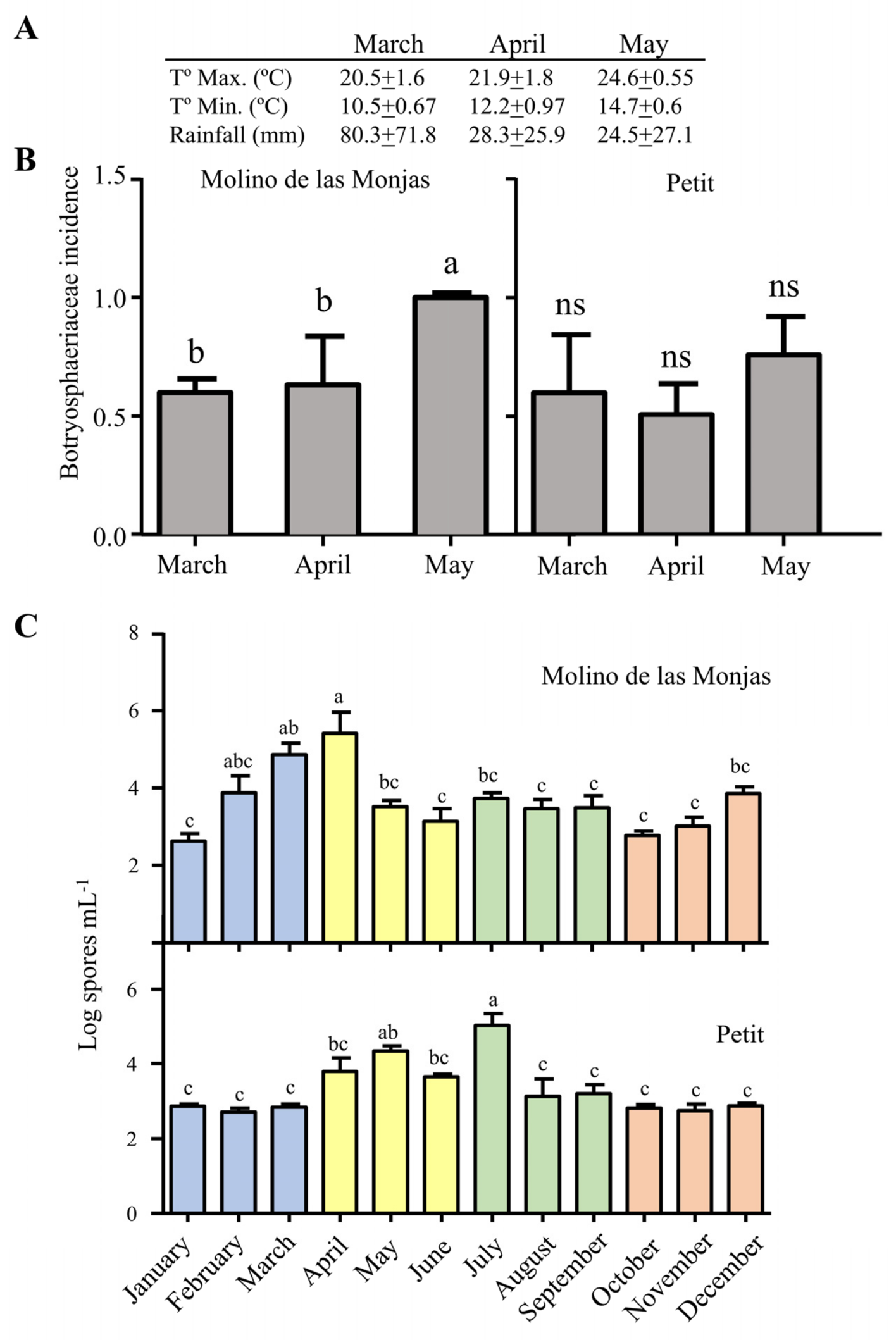
To characterize avocado dieback development and to contextualize subsequent control assays, symptom appearance, cultivar response, and the influence of abiotic stress were evaluated. Repeated isolation of Botryosphaeriaceae species from avocado flower buds and panicles occurred during late winter and spring. A progressive increase in pathogen incidence was observed during the period of increasing temperatures. Fungal isolation showed a marked increase from 40% of samples in March to 100% in May (Figure 1A,B), which coincided with the onset of visible dieback symptoms, reaching maximum expression in June during fruit set and early fruit development. This pattern was particularly evident at the Molino de las Monjas orchard. This period corresponds to the flowering stage, during which sampling was conducted, as no fungal isolation was detected before March and floral tissues were not available after May.
Isolation from avocado tissues showed a pattern similar to that of airborne Botryosphaeriaceae spores (Figure 1C). At Molino de las Monjas orchard, spore concentrations increased from February to April, coinciding with the flowering period of the “Maluma” cultivar. Mean spore concentrations peaked in April (2.4 × 10⁵ spores mL−1), approximately three orders of magnitude higher than those detected in January (4 × 10² spores mL−1) or June (1.5 × 10³ spores mL−1). In contrast, spore concentrations at the Petit orchard, planted with “Hass”, were highest from April–May (6.3 × 10³ and 1.9 × 10⁴ spores mL−1, respectively) through July (1.1 × 10⁵ spores mL−1), representing increases of two to three orders of magnitude compared with winter (January: 6.3 × 10² spores mL−1) or late summer (August: 1.2 × 10³ spores mL−1). Temporal differences between orchards were observed, which may be associated with differences in cultivar phenology and/or orchard-specific conditions.
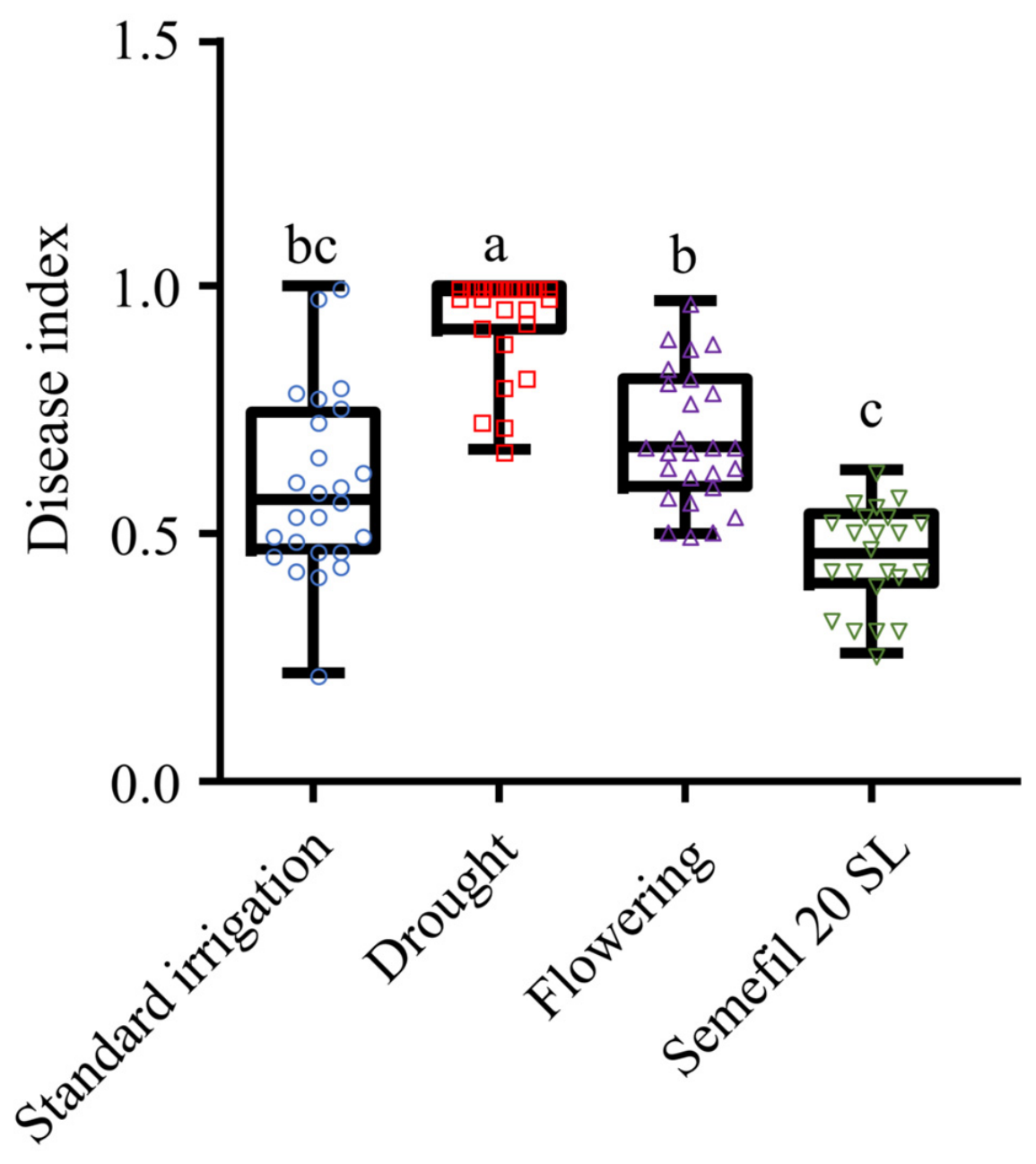
Dieback severity was strongly influenced by abiotic stress conditions (Figure 2). Water stress caused by reduced irrigation resulted in the highest disease severity, followed by flowering-associated stress. In contrast, plants maintained under adequate irrigation and treated with gibberellic acid, which was associated with reduced spring flowering intensity, exhibited significantly lower dieback development. This reduction in flowering was reflected in bud composition, with gibberellic acid-treated plants showing 90% indeterminate buds (a mixture of floral and vegetative ends) and only 10% floral buds, compared to the untreated control, which presented a balanced distribution of 50% floral and 50% indeterminate buds.

3.2. Avocado Cultivar Susceptibility to Dieback Pathogens

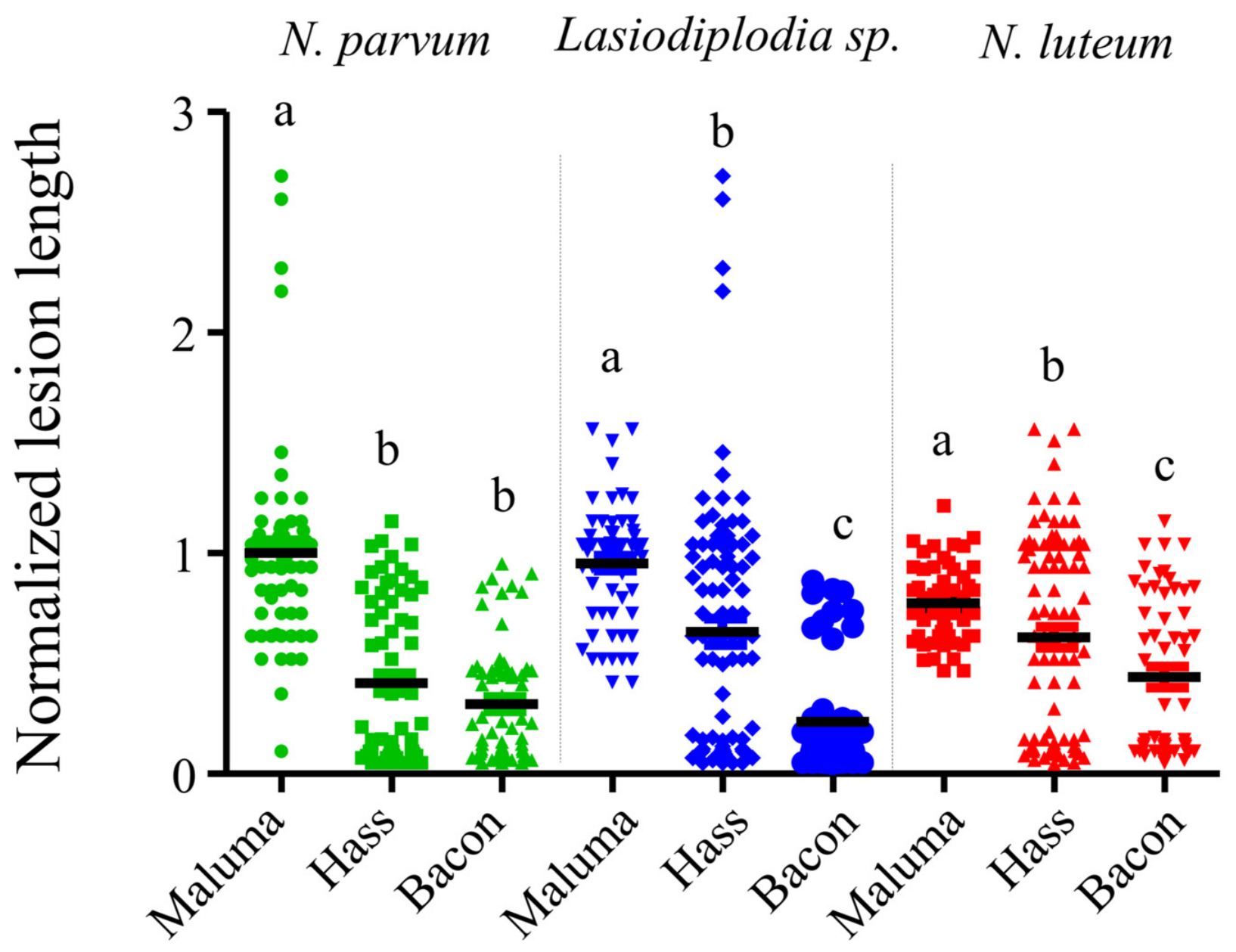
Although Botryosphaeriaceae isolates were recovered from all avocado cultivars, differences in lesion length were observed among cultivars, indicating variation in their response to pathogen infection. Detached stem inoculation assays revealed significant differences in lesion development among “Maluma”, “Hass”, and “Bacon” cultivars (Figure 3).
The “Bacon” cultivar showed significantly shorter lesion lengths when inoculated with Lasiodiplodia sp. and Neofusicoccum luteum compared with the other cultivars, whereas no significant differences were observed between “Hass” and “Bacon” following inoculation with N. parvum. The cultivar “Hass” exhibited intermediate susceptibility to all three fungal pathogens across assays. In contrast, “Maluma” consistently showed the greatest lesion development and was therefore the most susceptible cultivar under the tested conditions.
Pathogen aggressiveness also varied among cultivars (Supplementary Figure S1). N. parvum caused the greatest lesion development on “Maluma”, while Lasiodiplodia sp. produced severe lesions on both “Maluma” and “Hass”. On the “Bacon” cultivar, N. luteum resulted in the highest disease severity among the pathogens tested.

3.3. Evaluation of Inoculated Avocado Plants in the Mesocosm System

The mesocosm inoculation protocol and evaluation criteria were optimized through a preliminary trial conducted during the 2019–2020 crop season (Table 2). In this trial, two eco-friendly treatments were assessed: potassium silicate (K-Link) and the rhizobacterium Pseudomonas chlororaphis PCL1606 (Table 1). Statistical analysis revealed that treatment with the antagonist bacterium significantly reduced the disease index (DI) (Supplementary Figure S2). As this bacterium was not commercially available, subsequent assays focused on registered biological and defense-inducing products.
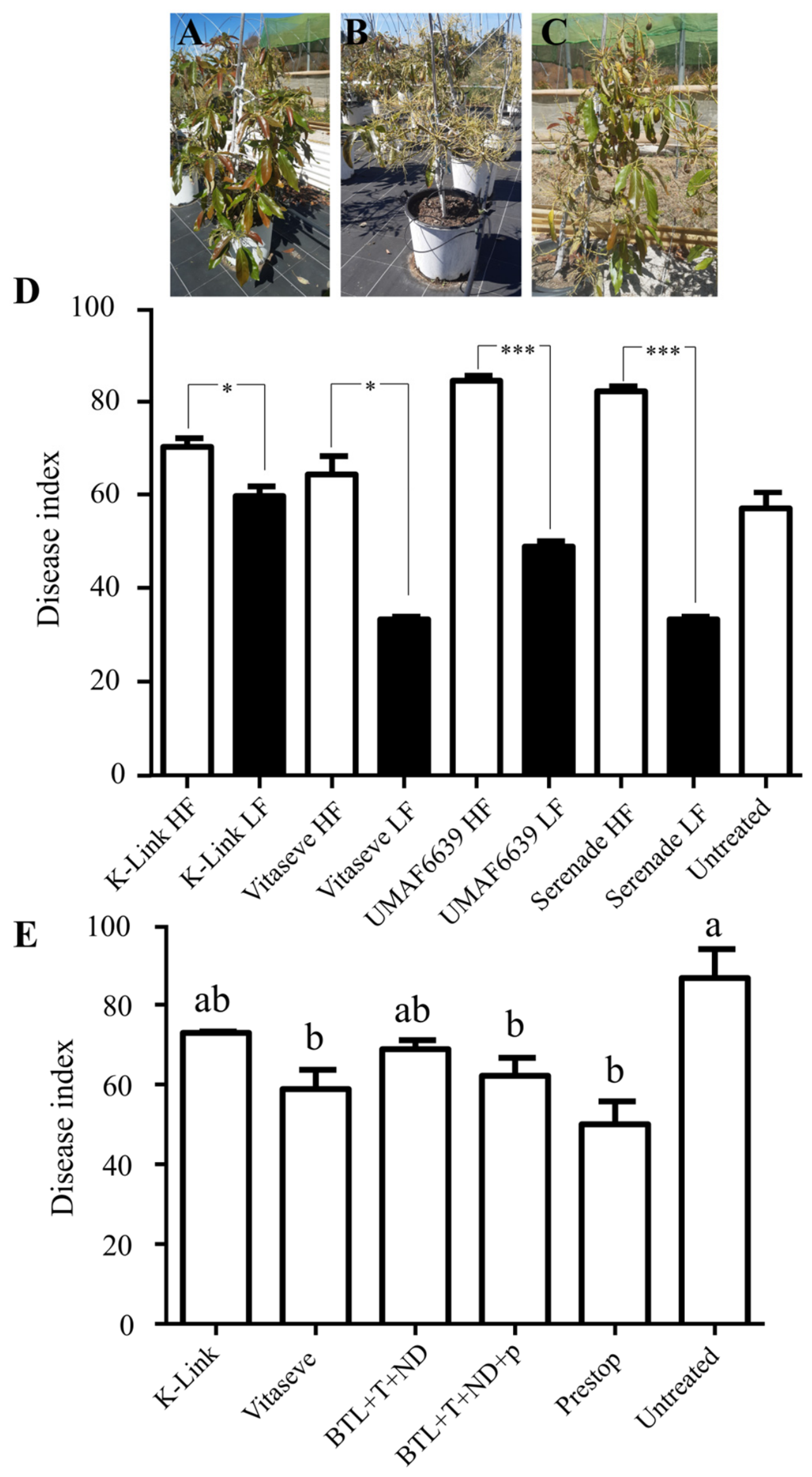
During the 2020–2021 crop season, products designed to stimulate plant defense responses, including VITASEVE, were evaluated (Figure 4). Approximately 50% of treated plants exhibited variable flowering intensity, resulting in the presence of low-flowering (LF) and high-flowering (HF) plants within each treatment group (Figure 4A–C). This variability prevented direct statistical comparisons between treatments and untreated controls; however, comparison between LF and HF plants within treatments showed significantly lower DI values in LF plants (Figure 4D), indicating that reduced flowering intensity was associated with lower disease incidence and severity.
In the 2022–2023 crop season, flowering variability was naturally lower, allowing direct comparisons among treatments. Previously tested products were re-evaluated, and additional treatments were incorporated, including the fungal antagonist PRESTOP and the biostimulant Brotolom® SOILFORCE (BTL), applied with or without flower pruning to simulate different flowering scenarios (Figure 4E). Significantly lower DI values than the untreated control were observed, with Vitaseve showing the lowest values (58.9 ± 8.39), followed by Brotolom® SOILFORCE (BTL) (68.9 ± 3.85) and Brotolom® SOILFORCE (BTL) combined with pruning (62.2 ± 7.7) (Figure 4E).
In the 2023–2024 crop season, different application regimes of Huwa San® TR50 were evaluated (Table 1). Five applications at 1% (DI = 63.9 ± 4.8) or a single application at 2% (DI = 76.9 ± 1.6) significantly reduced disease severity compared with the untreated control (DI = 94.5 ± 4.8). In contrast, five applications at higher concentrations (2% or 3%) did not significantly reduce symptom development.

3.4. Control Treatments Evaluation Under Field Conditions

Field evaluation protocols were standardized during the 2020–2021 crop season at the Molino de las Monjas orchard (Supplementary Figures S3 and S4). This preliminary trial included conventional fungicides (fludioxonil, myclobutanil, and fluopyram) and eco-friendly products (K-Link, Panacure Ag PLUS, BTL, Force Soil, and Velltrix) (Table 1). Disease incidence differed between productive trees (≥5 years old) and young non-productive trees. In productive trees, fludioxonil and fluopyram significantly reduced symptom incidence compared with untreated controls; however, all fungicide treatments were associated with yield reductions. BTL was the most effective treatment across both age groups, reducing disease incidence and increasing yield. K-Link improved tree health but did not significantly increase production.
Over four subsequent crop seasons, selected products were repeatedly evaluated, including BTL and K-Link in all trials, others (e.g., Bikafos and Huwa San) in multiple seasons, and additional products in single-year evaluations (Table 1 and Table 2). The Petit orchard was incorporated to represent the predominant ‘Hass’ cultivar. During the 2021–2022 season at Molino de las Monjas orchard, Unigreen, Serifel, K-Link, and BTL supplemented with Aminolom®-TGV and Brotolom®-N-Dux significantly reduced disease incidence relative to the control. At the Petit orchard, significant reductions were observed only with BTL supplemented with Aminolom®-TGV and Brotolom®-N-Dux and with Serifel under standard pruning, whereas no treatment differed from the control under additional October pruning due to an overall reduction in symptom incidence (Table 3).
In the 2022–2023 crop season, prolonged drought conditions (Supplementary Figure S5) resulted in a sharp increase in dieback severity and a considerable reduction in yield. Under these conditions, none of the evaluated treatments significantly mitigated disease incidence or yield losses (Table 3 and Table 4).
During the 2023–2024 crop season, October pruning was incorporated as standard orchard management. At Molino de las Monjas orchard, only Huwa San and K-Link significantly reduced disease incidence, although no treatment increased yield. At the Petit orchard, BTL supplemented with Aminolom®-TGV and Brotolom®-N-Dux was most effective under the extra-pruning plot, whereas BTL combined with K-Link showed the greatest efficacy under standard pruning. Yield increases under standard management were observed with Huwa San, K-Link, Bikafos, and BTL supplemented with Aminolom®-TGV and Brotolom®-N-Dux, while no treatment significantly improved yield under extra-pruning conditions (Table 3 and Table 4).
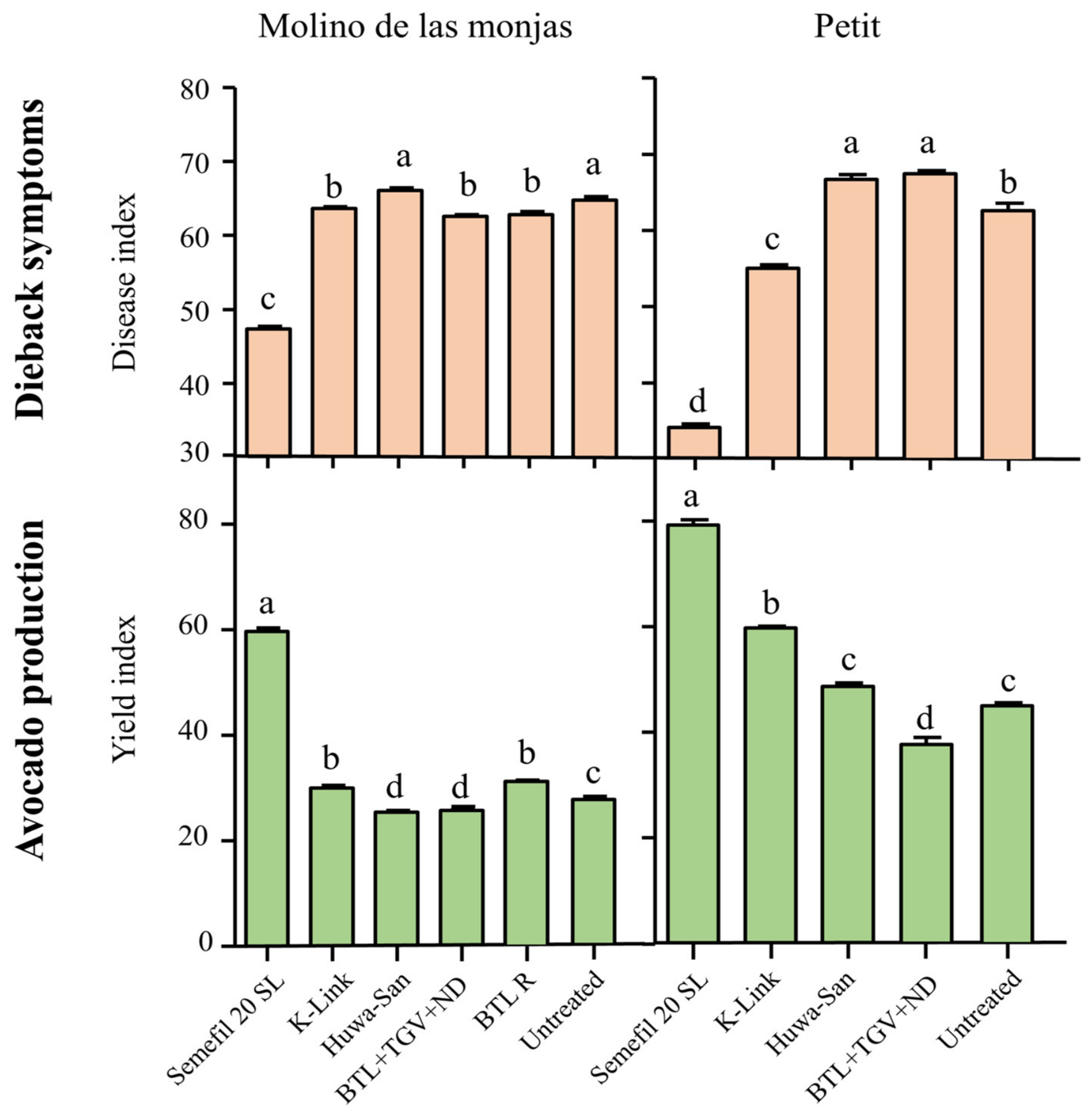
In the 2024–2025 crop season, after October pruning had been fully adopted as standard orchard management, the most consistent treatments were selected for evaluation, and gibberellic acid (Semefil® 20 SL) was tested as an alternative strategy (Figure 5). Semefil® 20 SL produced the lowest disease incidence at both orchards, significantly reducing symptoms and increasing yield. At Molino de las Monjas orchard, K-Link (foliar application) and BTL (applied via irrigation) improved both disease control and yield, whereas BTL supplemented with Aminolom®-TGV and Brotolom®-N-Dux reduced disease incidence only. At the Petit orchard, K-Link was the only treatment that significantly reduced dieback severity and increased yield (Figure 5).

3.5. Impact of Additional Crop Management on Dieback Control

In addition to product-based strategies, the influence of agronomic management practices on dieback development was evaluated during the 2021–2022 and 2022–2023 crop seasons at the Molino de las Monjas orchard, and at larger scale in the Petit orchard. Modification of ground cover management, including removal of polyfibril or replacement with straw mulch, did not result in significant differences compared with the control. Installation of additional drippers between irrigation lines slightly reduced disease incidence, but without statistical significance.
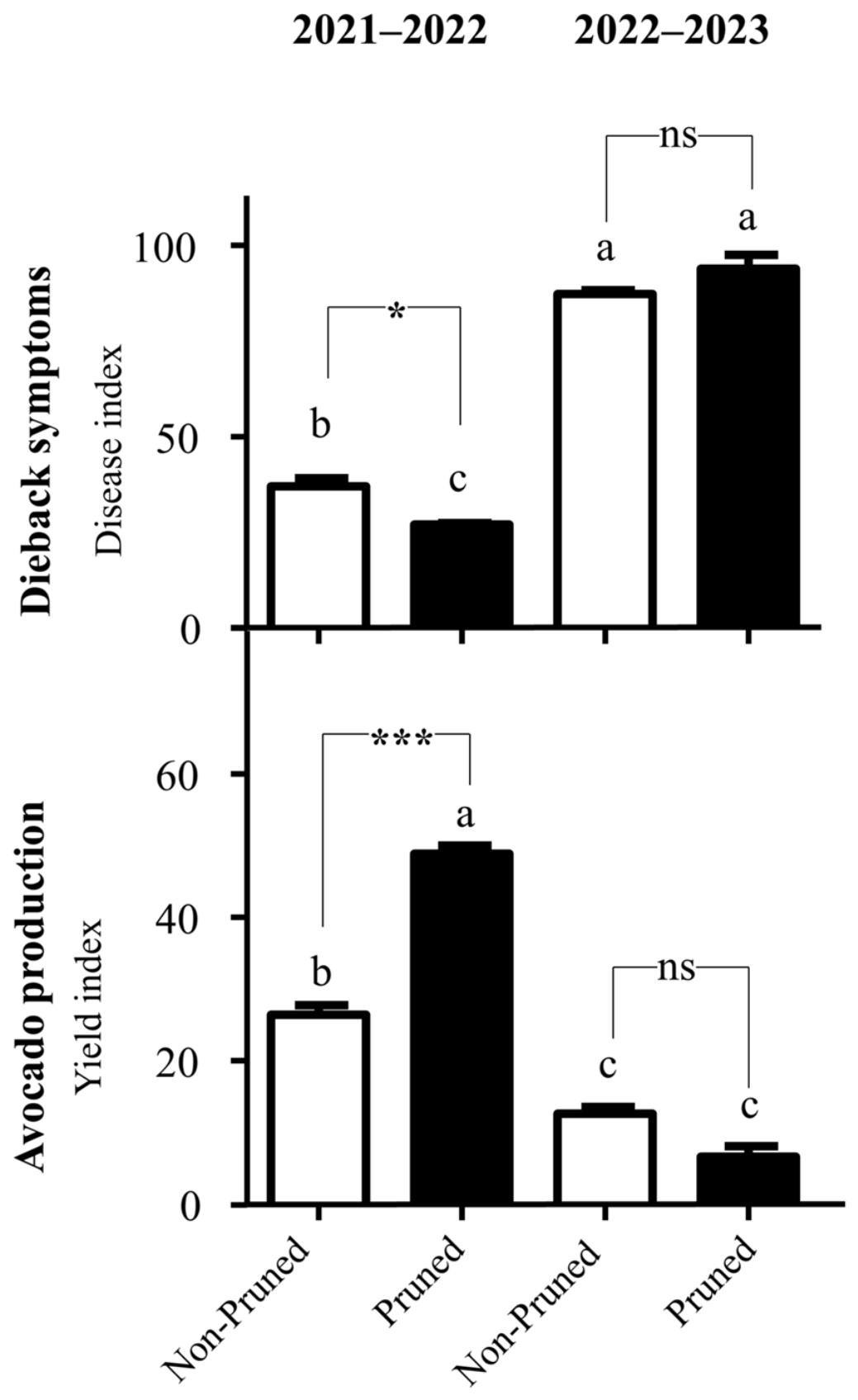
In contrast, October pruning of flower buds significantly reduced dieback severity and increased yield compared with standard pruning during the 2021–2022 crop season (Figure 6). During the subsequent 2022–2023 season, characterized by severe drought, neither pruning nor product application resulted in significant differences between treatments.

4. Discussion

Although biological control agents can contribute to reducing reliance on synthetic agrochemicals [25], chemical control has traditionally been the main strategy for managing dieback caused by Botryosphaeriaceae species, particularly in woody crops such as pistachio and walnut [11,19], and is also widely applied in grapevine [13]. However, its effectiveness in avocado systems is more limited and less well documented. Diseases caused by Botryosphaeriaceae are notoriously difficult to manage due to their ability to colonize lignified tissues, form cankers, and develop complex pathogen communities that produce pycnidia largely inaccessible to fungicides [26]. These biological characteristics have been widely described as limiting factors for the effectiveness of fungicide-based strategies, rather than being systematically demonstrated under comparable experimental conditions.
In southern Spain, the main avocado-producing region, avocado dieback has been reported primarily associated with Neofusicoccum parvum, N. luteum, and Lasiodiplodia spp. based on previous isolations and identification studies [6,27]. At the same time, the number of plant protection products authorised for use in subtropical crops, and in avocado in particular, has been progressively reduced. Currently, only a limited number of fungicides are registered for anthracnose and Phytophthora control, and their continued use is increasingly restricted under European policies aligned with the 2030 Agenda. These constraints highlight the need for alternative, sustainable strategies compatible with integrated disease management.
In this context, the present study evaluated eco-friendly products selected based on grower accessibility, economic feasibility, and suitability for mechanised application, and compared their efficacy with that of conventional fungicides. In addition, complementary agronomic practices were investigated to define an integrated approach to avocado dieback management. Although several treatments showed differences compared with the untreated control, the magnitude of these differences was, in some cases, relatively small. Therefore, their biological relevance should be interpreted with caution. In addition, treatment performance varied across crop seasons and orchards, and in some cases between years within the same orchard, likely reflecting differences in environmental conditions, cultivar response, and management practices. These results highlight the importance of distinguishing between statistical significance and practical relevance, and they underscore the need to consider seasonal variability when evaluating treatment efficacy under field conditions.
The results demonstrated that varietal tolerance plays a central role in dieback development and yield performance, directly influencing treatment efficacy. In this context, yield should be understood as a production metric based on categorical classes rather than as an absolute measure of fruit production. Productive stage also emerged as a relevant factor, with young, non-productive trees (1–2 years old) showing greater susceptibility than mature, productive trees, consistent with previous observations [28]. Treatment effectiveness was therefore assessed based on consistent performance across cultivars (“Maluma” and “Hass”), measured as both reduced symptom incidence and maintained or increased yield. Among the evaluated products, potassium silicate (K-Link) showed a generally consistent pattern of disease reduction, providing sustained reductions in disease incidence and stable yield performance across multiple crop seasons (2021–2022, 2023–2024, and 2024–2025). Although potassium silicate did not eradicate dieback, its consistency across seasons underscores its value within an integrated management strategy. The extreme drought conditions during the 2022–2023 season limited the ability to discriminate among treatments, as environmental stress became the dominant driver of disease development. Therefore, conclusions regarding treatment efficacy are primarily supported by the remaining seasons, where environmental conditions allowed differentiation among treatments. Nevertheless, the 2022–2023 data highlight the overriding importance of abiotic stress, reinforcing that disease management strategies must prioritize stress mitigation.
Avocado production is highly sensitive to climatic variability, particularly under Mediterranean conditions. Several other treatments, including the biostimulant Brotolom® SOILFORCE (BTL) supplemented with Aminolom® TGV and Brotolom® N-DUX, and the agricultural disinfectant Huwa San® TR50, also reduced disease incidence. However, their efficacy was more variable and showed cultivar-associated trends. According to the results presented in Table 3 and Table 4, BTL tended to perform better in “Hass”, whereas Huwa San showed greater efficacy in “Maluma” in some seasons, although their overall performance was less consistent than that of potassium silicate. These observations should be interpreted descriptively, as no formal cultivar x treatment interaction analysis was conducted. Further, from the 2023–2024 crop season onwards, autumn pruning was incorporated as a standard management practice across the experimental orchards. This introduces a potential confounding factor, as treatment effects can no longer be fully separated from the effects of pruning. Consequently, it is not possible to unequivocally attribute observed reductions in disease or improvements in yield to either pruning, treatment application, or their combined effects. Therefore, results from these later seasons should be interpreted with caution, particularly when comparing treatment performance across years. This limitation should be taken into account when interpreting the relative contribution of treatments in these seasons.
The protective effect of potassium silicate is consistent with previous studies reporting the efficacy of silicon-based products as physical barriers against pathogen ingress. In mango, silicon gel significantly reduced bacterial apical necrosis caused by Pseudomonas syringae pv. syringae by limiting infection and production losses [29]. In the present study, potassium silicate appeared to act as a film-forming agent, protecting susceptible tissues and limiting pathogen establishment on the plant surface. However, in addition to this physical barrier effect, silicon-mediated plant protection may also involve biochemical mechanisms. These include enhanced lignification of plant tissues and the activation of defense-related enzymes, which may contribute to increased resistance to pathogen colonization. Therefore, the observed effects of potassium silicate in this study are likely associated with a combination of physical protection and induced plant defense responses [30].
Importantly, spore monitoring revealed that peak airborne inoculum coincided with optimal temperature ranges for Botryosphaeriaceae development and with avocado flowering. The slight temporal shift observed between “Maluma” and “Hass” orchards reflected cultivar-specific flowering phenology [31]. These observations suggest that applications from early March until fruit set (May–June) coincide with periods of highest infection risk.
Variability in treatment performance can largely be attributed to the strong influence of abiotic stress on dieback development [32,33,34]. In avocado, drought stress is particularly detrimental [35], as clearly evidenced during the extremely dry 2022–2023 season, when disease incidence increased markedly and yield declined irrespective of treatment. In addition to increased drought and salinity sensitivity, avocado trees often respond to stress by excessive flowering, which exacerbates carbohydrate competition between reproductive and vegetative sinks and promotes defoliation [35]. In this study, heavily defoliated trees with high flowering intensity exhibited substantially more severe dieback than trees maintaining foliage and moderate flowering.
Balancing energy allocation, therefore, emerged as a key component of dieback management. October pruning of flower buds significantly reduced disease severity and improved yield, in agreement with studies in pistachio, where selective pruning reduced Botryosphaeria panicle and shoot blight by 50–60% [8]. However, the use of pruning must consider crop-specific risks, as pruning wounds in walnut have been shown to favour Botryosphaeriaceae infection when not adequately protected [28].
Under these circumstances, gibberellic acid application represents a practical mechanised alternative. Pre-flowering application of gibberellic acid reduced flower density, promoted mixed bud formation, and preserved leaf area, resulting in a marked reduction in disease incidence and a substantial yield increase. Gibberellic acid plays a central role in plant growth regulation and stress tolerance [35,36], although its effect on flowering is species-dependent [37]. In avocado, gibberellic acid is associated with reductions in sensitivity to abiotic stress by preventing excessive flowering, thereby enhancing plant resilience, as previously reported [38].
It should be noted that the mechanisms proposed in this study are based on existing literature and were not directly evaluated in the present work. Therefore, these interpretations should be considered as plausible explanations of the observed effects rather than experimentally demonstrated mechanisms.

Practical Implications for Avocado Dieback Management

In addition to the interpretation of the results, their practical implications for disease management can be summarised as follows.
Minimising plant stress, particularly water deficit, should be considered a primary objective, as abiotic stress was identified as a key driver of disease severity. Maintaining an appropriate balance between vegetative and reproductive growth is also essential, as excessive flowering was consistently associated with higher disease incidence and increased defoliation.
Pre-flowering application of gibberellic acid represents an effective and mechanised strategy to regulate flowering intensity, reduce disease development, and improve yield. Alternatively, October pruning of floral buds remains a valid option, although it requires higher labour input.
As a complementary approach, potassium silicate applications before and during flowering (from March to May) contribute to reducing infection risk by acting as protective barriers on susceptible tissues and by supporting plant stress tolerance, as suggested by previous studies [29,30] and the observed disease patterns. Likewise, authorised agricultural disinfectants applied during periods of high spore presence may contribute to limiting infection risk. While these products are commonly used as external protective treatments, their integration with biostimulants or fortifiers, applied either foliarly or via drip irrigation during flowering and fruit set, may improve plant performance and reduce dieback severity, according to the observed patterns and existing literature.
Another aspect that should be considered is the potential risk of resistance development in Botryosphaeriaceae populations due to repeated seasonal applications of control products. Although conventional fungicides may exert selective pressure leading to reduced sensitivity over time, many of the products evaluated in this study, such as eco-friendly compounds, biostimulants, and multi-target agents, are generally associated with a lower risk of resistance development.
Moreover, the integrated strategy proposed here does not rely on a single control method but combines cultural practices, physiological regulation, and protective treatments. This diversified approach is expected to reduce selection pressure on pathogen populations and limit the likelihood of resistance development. Nevertheless, continuous monitoring of treatment efficacy and the rotation or combination of products with different modes of action are recommended to ensure the long-term sustainability of the proposed management strategies.

5. Conclusions

This study demonstrates that avocado dieback management under Mediterranean conditions requires an integrated, multi-component approach that addresses both pathogen pressure and the plant’s physiological responses to stress. While Botryosphaeriaceae-associated dieback is widely recognized as difficult to control due to the pathogens’ capacity to colonize lignified tissues and persist in complex inoculum structures, as reported in previous studies. The results of this study suggest that the evaluated strategies, including potassium silicate application, gibberellic acid treatments, and integrated stress management practices, may contribute to the reduction of dieback symptoms and to improved production performance under Mediterranean conditions. However, these findings are based on specific environmental conditions, cultivars, and orchard management practices, and should therefore be interpreted with caution. Further research is required to validate these results across different locations and growing conditions, as well as over longer time periods. In addition, future studies should assess the economic feasibility and practical implementation of these strategies in commercial avocado production systems.
Varietal tolerance and tree age emerged as critical factors influencing disease severity and treatment effectiveness, highlighting the importance of adapting management strategies to orchard composition and developmental stage. Among the evaluated treatments, potassium silicate showed one of the most consistent performances across several seasons, although its efficacy varied among orchards and cultivars. It has shown recurrent beneficial effects on dieback incidence, particularly during periods of high disease pressure, supporting its role within integrated disease management strategies. Other products, such as biostimulants and agricultural disinfectants, provided additional benefits under certain conditions, although with more variable performance.
Abiotic stress, particularly drought, was identified as a key driver of disease escalation, emphasising the importance of considering plant stress in disease dynamics. Both October pruning and pre-flowering gibberellic acid applications were associated with reduced disease index (DI) values and improved yield index (YI), reflecting their role in modulating plant physiological responses under stress conditions.
Overall, the findings support a disease management framework centred on stress mitigation, phenological regulation, and the use of protective treatments aligned with infection risk periods. This integrated approach provides a robust basis for improving sustainability and productivity in Mediterranean avocado systems under increasingly variable climatic conditions.

Supplementary Materials

The following supporting information can be downloaded at: https://www.mdpi.com/article/10.3390/horticulturae12060673/s1.

Author Contributions

Conceptualization, A.d.V., D.F.-O., F.M.C. and E.A.; Methodology, L.G.-M., J.F.S.-O., D.S., E.G. and M.P.-R.; Investigation, L.G.-M., J.F.S.-O. and E.G.; Data curation, E.A.; Writing—original draft, E.A.; Writing—review & editing, F.M.C. and E.A.; Funding acquisition, D.S., F.M.C. and E.A. All authors have read and agreed to the published version of the manuscript.

Funding

This work has been funded by TROPS-SAT2803 (contracts 806/5.60.5345 and 806/5.60.5952), and University of Málaga funding PRO-B4-2025-002.

Data Availability Statement

Data is available in the RIUMA public database (public University of Malaga repository) (https://hdl.handle.net/10630/40657, accessed on 10 November 2025; https://doi.org/10.24310/riuma.40657).

Acknowledgments

The authors thank cooperative TROPS-SAT2803, Viveros Blanco, and Viveros Brokaw España (agreement numbers 806/5.60.5345 and 806/5.60.5952) for their important support during the study. Special thanks to Alfredo Iñesta S.L. and Roam Technology N.V. for their support in part of this study.

Conflicts of Interest

The authors declare no conflicts of interest.

Appendix A

Detailed experimental protocols are provided as an appendix to ensure reproducibility, while the main manuscript focuses on information required for the interpretation of the results.
Table A1. Orchard characteristics and experimental layout.
Plot Area (m2)Number of TreesCultivarsTree ClassificationNumber of Trees per RowTreatment Distribution
Molino de las Monjas (36.793749° N, 4.124891° W)
30,000153396% Maluma
4% Bacon
1299 productives
234 non-productives
25–502 lines non-consecutive
Petit (36.765469° N, 4.110833° W)
10,500408100% Hass169 standard management
239 additional pruning
25–301 line per management

Appendix A.1. Detailed Protocols

Appendix A.1.1. Fungal Isolation

Random samples from the commercial orchards under study were taken and superficially disinfected, followed by two consecutive washes with distilled water for five minutes each. The disinfection solution consisted of a 1:2:7 (v:v:v) mixture of ethanol, commercial bleach (35–40 g L−1 active sodium hypochlorite), and sterile water. The samples were sectioned and placed on potato dextrose agar (PDA) plates, acidified with 1 mL/L of lactic acid, and incubated for 3 to 5 days at 25 °C. Emergent fungal isolates were identified as Botryosphaeriaceae using specific primers Bot-BtF1 and Bot_BtR1 [20]. Sampling was conducted every 15 days from March to May. At each sampling time, four samples were collected per row for each treatment in both orchards. A total of 36 samples per orchard were obtained at each sampling event, resulting in 72 samples overall. This procedure was repeated five times per crop season over four consecutive seasons, from 2020 to 2024 (each crop season spans from August of one year to July of the following year).

Appendix A.1.2. Spore Trapping and Processing

Briefly, glycerol-impregnated slides were used to capture any airborne spores. Two spore-trap slides were placed per tree, one 50 cm above ground and the other 150 cm high. Nine trees were randomly selected within the plot to obtain representative values. The slides were exposed for seven days, then collected, taking care not to touch the collection surfaces, and transported in 50 mL Falcon® tubes. In the laboratory, every slide was washed with 10 mL of sterile 0.85% NaCl solution. The suspension was centrifuged for 1 min at 16,000× g to concentrate the sample to 1 mL. The resulting suspension was used for subsequent DNA extraction and molecular quantification.

Appendix A.1.3. qPCR Conditions

DNA was extracted using a DNeasy PowerSoil Pro Kit (Qiagen, Hilden, Germany). The detection of Botryosphaeriaceae spores was performed by quantitative PCR (qPCR) using Bot-BtF1 and Bot-BtR1 primers [20]. The qPCR reactions were run under the following conditions: initial denaturation at 95 °C for 10 min, followed by 40 cycles of 95 °C for 15 s and 60 °C for 1 min, with fluorescence recorded at each cycle. The assay showed a reaction efficiency of 101.34%, based on a calibration curve constructed with serial DNA dilutions (2, 0.2, 0.02, and 0.002 ng/μL), yielding the standard equation y = −3.29x + 37.95 (R2 = 0.9998). Positive controls included CECT N. parvum, while Trichoderma gamsii and water were used as negative controls. The detection limit of the assay was established at 2 pg/μL.

Appendix B. Mesocosm and Inoculation Details

Three floral shoots per plant were inoculated with a 50% mycelial suspension mix [23] of Neofusicoccum parvum strain UMAF A1961 and Neofusicoccum luteum strain UMAF A1963. Inoculation was carried out by making a wound with a scalpel and applying the mycelium mixture directly using a sterilized brush. The success of the inoculation was measured by random sampling of inoculated floral buds and subsequent isolation of the inoculated fungi. Sampling was conducted every 15 days for each treatment to detect fungal presence until dieback symptoms appeared (approx. 3 months after treatment application). The inoculations were carried out in November, and the symptoms were evaluated in June of the following year for each crop season analyzed. The evaluated products are listed in Table 1, and the number of crop seasons in which each was tested is in Table 2. Each product was applied five times between March and May each crop season, at 15-day intervals, with 17 plants assigned to each treatment.

Appendix C. Field Trials

Each product was applied five times from March to May, at 15-day intervals, with 80 to 120 plants assigned to each treatment at Molino de las Monjas orchard, and 25 to 30 plants assigned to each treatment at Petit orchard, respectively. The treatments were generally applied via foliar spraying using a conventional sprayer at the doses shown in Table 1. There were some exceptions, such as the application of Brotolom® SOILFORCE (BTL), which was also applied through the irrigation system in the last two crop seasons (2023–2024 and 2024–2025), either alone or combined with Aminolom® TGV and Brotolom® N-Dux.
In addition to the application of commercial products, several crop management options were also evaluated on experimental crops. Molino de las Monjas orchard included additional pruning in October (on 108 trees) to reduce spring floral load, the installation of extra drippers between irrigation lines (on 32 trees), the removal of polyfibril cover (on 27 trees), and the replacement of polyfibril with straw mulch (on 44 trees). The Petit orchard was divided into two plots; one was subjected to additional pruning in October to reduce spring flowering, and the other plot was subjected to standard management. These measures were evaluated during two crop seasons (2021–2022 and 2022–2023).

References

  1. Galindo-Tovar, M.E.; Arzate-Fernández, A.M.; Ogata-Aguilar, N.; Landero-Torres, I. The Avocado (Persea americana, Lauraceae) Crop in Mesoamerica: 10,000 Years of History. Harv. Pap. Bot. 2007, 12, 325–334. [Google Scholar] [CrossRef]
  2. Chen, H.; Morrell, P.L.; Ashworth, V.E.T.M.; De La Cruz, M.; Clegg, M.T. Tracing the Geographic Origins of Major Avocado Cultivars. J. Hered. 2009, 1, 56–65. [Google Scholar] [CrossRef]
  3. Statistical Database of the Food and Agriculture Organization of the United Nations (FAOSTAT). Available online: https://www.fao.org/faostat/en/ (accessed on 1 April 2026).
  4. González-Fernández, J.J.; Guirado, E.; Hermoso-González, J.M.; Hormaza, J.I. Perspectiva histórica y futuro del cultivo del aguacate en el sur de España. Vida Rural 2012, 343, 60–63. [Google Scholar]
  5. Bender, G.S. Avocado Botany and Commercial Cultivars Grown in California. In Avocado Production in California: A Cultural Handbook for Growers, 2nd ed.; Bender, G.S., Ed.; University of California Agriculture and Natural Resources: Oakland, CA, USA, 2013; pp. 19–32. [Google Scholar]
  6. Crespo, M.; Guirado-Manzano, L.; Sarmiento, D.; Guirado, E.; de Vicente, A.; Fernández-Ortuño, D.; Cazorla, F.M.; Arrebola, E. Fungal species of Botryosphaeriaceae associated with avocado dieback in southern Spain. Plant Pathol. 2026, 75, e70079. [Google Scholar] [CrossRef]
  7. Fiorenza, A.; Gusella, G.; Vecchio, L.; Aiello, D.; Polizzi, G. Diversity of Botryosphaeriaceae species associated with canker and dieback of avocado (Persea americana) in Italy. Phytopathol. Mediterr. 2023, 62, 47–63. [Google Scholar] [CrossRef]
  8. Moral, J.; Morgan, D.; Trapero, A.; Michailides, T. Ecology and epidemiology of diseases of nut crops and olives caused by Botryosphaeriaceae fungi in California and Spain. Plant Dis. 2019, 103, 1809–1827. [Google Scholar] [CrossRef] [PubMed]
  9. Swart, W.J.; Nieuwoudt, D.; Pretorius, J.C. Effect of nitrogen on susceptibility of pistachio plants to Botryosphaeria obtusa and B. dothidea in the greenhouse. Afr. J. Plant Prot. 2003, 9, 115–117. [Google Scholar]
  10. Michailides, T.; Morgan, D.P.; Felts, D.G.; Luo, Y.; Puckett, R.; Hasey, J.; Lampinen, B.; Symmes, E.; Coates, W.; Buchner, R.; et al. Epidemiology and management of Botryosphaeria/Phomopsis canker and blight and Anthracnose blight of walnut in California. In Walnut Research Reports; California Walnut Board: Folsom, CA, USA, 2016; Available online: https://fruitsandnuts.ucdavis.edu/collaborators/california-walnut-board/reports/2016/2016-epidemiology-and-management (accessed on 7 March 2026).
  11. Antony, S.; Steel, C.C.; Stodart, B.J.; Billones-Baaijens, R.; Savocchia, S. Evaluation of fungicides for management of Botryosphaeriaceae associated with dieback in Australian walnut orchards. Phytopathol. Mediterr. 2024, 63, 119–135. [Google Scholar] [CrossRef]
  12. Olmo, D.; Gramaje, D.; Armengol, J. Evaluation of fungicides to protect pruning wounds from Botryosphaeriaceae species infections on almond trees. Phytopathol. Mediterr. 2017, 56, 77–86. [Google Scholar] [CrossRef]
  13. Pitt, W.; Sosnowski, M.R.; Huang, R.; Qiu, Y.; Steel, C.C.; Savocchi, S. Evaluation of fungicides for the management of Botryosphaeria canker of grapevine. Plant Dis. 2012, 96, 1303–1308. [Google Scholar] [CrossRef]
  14. Batista, E.; Lopes, A.; Alves, A. What Do We Know about Botryosphaeriaceae? An Overview of a Worldwide Cured Dataset. Forests 2021, 12, 313. [Google Scholar] [CrossRef]
  15. Rhouma, A.; Hajji-Hedfi, L.; Khaire, P.B. Comprehensive analysis of Botryosphaeriaceae-induced panicle and shoot blight and its management strategies. DYSONA-App. Sci. 2025, 6, 40–50. [Google Scholar] [CrossRef]
  16. Leal, L.; Trotel-Aziz, P.; Gramaje, D.; Armengol, J.; Fontaine, F. Exploring factors conditioning the expression of Botryosphaeria dieback in grapevine for integrated management of the disease. Phytopathology 2024, 114, 21–34. [Google Scholar] [CrossRef]
  17. Bezerra, J.D.P.; Crous, P.W.; Aiello, D.; Gullino, M.L.; Polizzi, G.; Guarnaccia, V. Genetic Diversity and Pathogenicity of Botryosphaeriaceae Species Associated with Symptomatic Citrus Plants in Europe. Plants 2021, 10, 492. [Google Scholar] [CrossRef]
  18. Antony, S.; Billones-Baaijens, R.; Steel, C.C.; Stodart, B.J.; Savocchia, S. Pathogenicity and progression of Botryosphaeriaceae associated with dieback in walnut orchards in Australia. Eur. J. Plant Pathol. 2024, 168, 723–742. [Google Scholar] [CrossRef]
  19. Moral, J.; Morgan, D.; Michailides, T. Management of Botryosphaeria canker and blight diseases of temperate zone nut crops. Crop Prot. 2019, 126, 104927. [Google Scholar] [CrossRef]
  20. Billones-Baaijens, R.; Úrbez-Torres, J.R.; Liu, M.; Ayres, M.; Sosnowsky, M.; Savocchia, S. Molecular methods to detect and quantify Botryosphaeriaceae inocula associated with grapevine dieback in Australia. Plant Dis. 2018, 102, 1489–1499. [Google Scholar] [CrossRef] [PubMed]
  21. Maestre-Carballa, L.; Navarro-López, V.; Martínez-García, M. Metagenomic airborne resistome from urban hot spots through the one health lens. Env. Microbiol. Rep. 2024, 16, e13306. [Google Scholar] [CrossRef]
  22. Hachimi, O.; Falender, R.; Davis, G.; Wafula, R.V.; Sutton, M.; Bancroft, J.; Cieslak, P.; Kelly, C.; Kaya, D.; Radniecki, T. Evaluation of molecular-based methods for the detection and quantification of Crystosporidium spp. in wastewater. Sci. Total Environ. 2024, 947, 174219. [Google Scholar] [CrossRef]
  23. Guirado-Manzano, L.; Tienda, S.; Gutiérrez-Barranquero, J.A.; de Vicente, A.; Cazorla, F.; Arrebola, E. Biological control and cross infections of the Neofusicoccum spp. causing mango postharvest rots in Spain. Horticulturae 2024, 10, 166. [Google Scholar] [CrossRef]
  24. Cazorla, F.M.; Duckett, S.B.; Bergström, E.T.; Noreen, S.; Odijk, R.; Lugtenberg, B.J.J.; Thomas-Oates, J.E.; Bloemberg, G.V. Biocontrol of avocado Dematophora root rot by antagonistic Pseudomonas fluorescens PCL1606 correlates with the production of 2 hexyl 5-propyl resorcinorl. Mol. Plant Microb. Interac. 2006, 19, 418–428. [Google Scholar] [CrossRef]
  25. Vecchio, L.; Vitale, A.; Aiello, D.; Di Pietro, C.; Parafati, L.; Polizzi, G. Prevalence of Neofusicoccum parvum associated with fruit rot of mango in south Italy and its biological control under postharvest conditions. J. Fungi 2025, 11, 384. [Google Scholar] [CrossRef] [PubMed]
  26. Mehl, J.W.M.; Slippers, B.; Roux, J.; Wingfield, M.J. Cankers and other diseases caused by the Botryosphaeriaceae. In Infectious Forest Diseases, 1st ed.; Gonthier, P., Nicolotti, G., Eds.; CAB International: Wallingford, UK, 2013; pp. 298–317. [Google Scholar]
  27. Arjona-Girona, I.; Ruano-Rosa, D.; López-Herrera, C.J. Identification, pathogenicity and distribution of the causal agent of dieback in avocado orchards in Spain. Span. J. Agric. Res. 2019, 17, e1003. [Google Scholar] [CrossRef]
  28. Agustí-Brisach, C.; Moral, J.; Felts, D.; Trapero, A.; Michailides, T.J. Interaction between Diaporthe rhusicola and Neofusicoccum mediterraneum causing branch dieback and fruit blight of English walnut in California, and the effect of pruning wounds on the infection. Plant Dis. 2019, 103, 1196–1205. [Google Scholar] [CrossRef]
  29. Gutiérrez-Barranquero, J.A.; Arrebola, E.; Bonilla, N.; Sarmiento, D.; Cazorla, F.M.; de Vicente, A. Environmentally friendly treatment alternatives to Bordeaux mixture for controlling bacterial apical necrosis (BAN) of mango. Plant Pathol. 2012, 61, 665–676. [Google Scholar] [CrossRef]
  30. Wang, M.; Gao, L.; Dong, S.; Sun, Y.; Shen, Q.; Guo, S. Role of silicon on plant–pathogen interactions. Front. Plant Sci. 2017, 8, 701. [Google Scholar] [CrossRef]
  31. Lahack, M.; Noy, M.; Szenes, N.; Rubinovich, L. Vegetative growth, flowering, and physiological parameters of young avocado “Hass” and “Hass-like” cultivars under extreme weather conditions. Int. J. Fruit Sci. 2025, 25, 378–392. [Google Scholar] [CrossRef]
  32. Asman, A.; Iwanami, T.; Rosmana, A. Effect of drought stress on dieback development under Lasiodiplodia theobromae infection in cocoa clone “MCC 02”. Bev. Plant Res. 2024, 4, e034. [Google Scholar] [CrossRef]
  33. Agustí-Brisach, C.; Moldero, D.; Raya, M.C.; Lorite, I.J.; Orgaz, F.; Trapero, A. Water stress enhances the progression of branch dieback and almond decline under field conditions. Plants 2020, 9, 1213. [Google Scholar] [CrossRef] [PubMed]
  34. Fernández, O.; Lemaître-Guillier, C.; Songy, A.; Robert-Siegwald, G.; Lebrun, M.H.; Schmitt-Kopplin, P.; Larignon, P.; Adrian, M.; Fontaine, F. The combination of both heat and water stresses may worsen Botryosphaeria dieback symptoms in grapevine. Plants 2023, 12, 753. [Google Scholar] [CrossRef]
  35. Faber, B.; Bender, G. Drought Tip: Avocados and Water. University of California, Agriculture and Natural Resources, Publication 8503. 2014. Available online: https://ucanr.edu/ (accessed on 15 March 2026).
  36. Colebrook, E.H.; Thomas, S.G.; Phillips, A.L.; Hedden, P. The role of gibberellin signaling in plant responses to abiotic stress. J. Experimen. Biol. 2014, 217, 67–75. [Google Scholar] [CrossRef] [PubMed]
  37. Shah, K.; Zhu, X.; Zhang, T.; Chen, J.; Chen, J.; Qin, Y. Gibberellin-3 induced dormancy and suppression of flowering bud formation in pitaya (Hylocereus polyrhizus). BMC Plant Biol. 2025, 25, 47. [Google Scholar] [CrossRef] [PubMed]
  38. Salazar-García, S.; Lovatt, C.J. Flowering of avocado (Persea americana Mill.): II. Manipulation with GA3. J. Am. Soc. Hortic. Sci. 2002, 127, 478–484. [Google Scholar] [CrossRef]
Figure 1. Evaluation of the presence of Botryosphaeriaceae in both experimental orchards. (A) Average maximum and minimum temperatures, as well as mean rainfall, for the months when samples were collected across all crop seasons. (B) The data have been calculated by the proportion of Botryosphaeriaceae isolated from avocado samples, values ranging from 0 to 1, collected during four crop seasons. (C) Monthly detection of Botryosphaeriaceae fungal spores in avocado orchards throughout 2024 in Molino de las Monjas and Petit orchards. Spore concentration was estimated from qPCR-derived DNA quantities and converted to spore equivalents, expressed as log spore mL−1. Statistically significant differences (p ≤ 0.05) are indicated by different letters according to Fisher’s least significant difference (LSD) test with Bonferroni correction.
Horticulturae 12 00673 g001
Figure 2. Evaluation of the influence of water stress and flowering stress on the incidence of dieback symptoms in young avocado plants maintained in mesocosms and artificially infected with Neofusicoccum parvum and Neofusicoccum luteum (mixed inoculum). The data have been calculated by the proportion (values ranging from 0 to 1) of symptomatic floral stems related to the total number of floral stems per plant. Statistically significant differences (p ≤ 0.05) are indicated by different letters according to Fisher’s least significant difference (LSD) test with Bonferroni correction.
Horticulturae 12 00673 g002
Figure 3. Varietal susceptibility analysis of three avocado cultivars: “Maluma”, “Hass”, and “Bacon”, against three Botryosphaeriaceae species: Neofusicoccum parvum, Lasiodiplodia sp., and N. luteum. Results are expressed as the percentage lesion length and normalized to the highest value in each assay. Statistically significant differences (p ≤ 0.05) are indicated by different letters according to Fisher’s least significant difference (LSD) test with Bonferroni correction.
Horticulturae 12 00673 g003
Figure 4. Evaluation of young avocado plants grown in mesocosms and inoculated with a mixture of Neofusicoccum parvum and Neofusicoccum luteum, treated with commercial products, and compared with untreated plants. Trials were conducted during the 2021–2022 and 2022–2023 growing seasons. The results are expressed as disease incidence values. Statistically significant differences (p ≤ 0.05) are indicated by different letters according to Fisher’s least significant difference (LSD) test with Bonferroni correction, and pairwise comparisons are indicated with asterisks: (*) indicates statistical significance at p < 0.05. (***) indicates high statistical significance at p < 0.001. (A) Photograph of a young avocado plant that was inoculated and classified as having low flowering (LF). (B) Photograph of an inoculated young avocado plant classified as having high flowering (HF). (C) Photograph of an inoculated young avocado plant, untreated and used as a control plant, showing a medium level of flowering. (D) Comparison of plant disease indices for plants with high (white bars) and low (black bars) flowering levels within each treatment group. Statistical differences are indicated with asterisks. (E) Comparison of plant disease indices for plants treated with different commercial products and untreated plants (control).
Horticulturae 12 00673 g004
Figure 5. Disease index (DI) and yield index (YI) in mature avocado trees during the 2024–2025 crop season following treatment with selected products that showed the best performance in previous field trials. Experiments were conducted in two commercial orchards: Molino de las Monjas (“Maluma” cultivar) and Petit (“Hass” cultivar). Values represent mean ± standard deviation calculated from biological replicates. Disease index (DI) reflects dieback symptom incidence based on categorical severity classes, whereas yield index (YI) represents relative production performance derived from fruit categories. During this season, orchard management included autumn extra-pruning, except in trees treated with gibberellic acid (Semefil 20 SL), which was evaluated as an alternative to pruning. Treatment abbreviations are defined in Table 1. Statistically significant differences (p ≤ 0.05) are indicated by different letters according to Fisher’s least significant difference (LSD) test with Bonferroni correction.
Horticulturae 12 00673 g005
Figure 6. Effect of autumn extra-pruning on disease index (DI) and yield index (YI) in avocado trees in the Petit orchard (“Hass” cultivar) during the 2021–2022 and 2022–2023 crop seasons. Values represent mean ± standard deviation calculated from biological replicates. Disease index (DI) is derived from the incidence and severity of dieback symptoms, while yield index (YI) reflects relative production based on categorical fruit classes. This figure compares pruning as an agronomic management practice across seasons. Treatment abbreviations are defined in Table 1. Statistically significant differences (p ≤ 0.05) are indicated by different letters according to Fisher’s least significant difference (LSD) test with Bonferroni correction, and pairwise comparisons are indicated with asterisks: (*) indicates statistical significance at p < 0.05. (***) indicates high statistical significance at p < 0.001.
Horticulturae 12 00673 g006
Table 1. Products used in treatments carried out in both inoculated young avocado plants maintained in mesocosms and in commercial orchards during the crop seasons included in this study.
ProductCompositionFunctionApplication Dose
Tested in mesocosm and field conditions
Aminolom® TGV 1Free L-amino acids and natural extracts of plant originBiostimulant1 cc/L
Brotolom® N-DUXNitrogen, potassium, free amino acids, and seaweed extractsPlant defense inducer5 cc/L
Brotolom® SOILFORCENitrogen, potassium, sulfur, and L-amino acidsPlant defense inducer5 cc/L
K-LinkPotassium silicateSilicon-based protective agent7 g/L
PRESTOP 2Gliocladium catenulatum strain J1446Biological control agent5 g/L + Nu-Film 17 *
SEMEFIL® 20 SLGibberellic acidVegetative growth inducer7.5 cc/L + Nu-Film 17
Serenade® ASO 3Bacillus subtillisBiological control agent6 cc/L + Nu-Film 17
Huwa-San® TR50 4Oxygenating solutionDisinfectant20 cc/L
VITASEVE 5GEA-841Biostimulant5 cc/L + Nu-Film 17
Tested only in mesocosms
PCL1606 6Pseudomonas chlororaphisBiological control agent5 cc/L
UMAF6639 7Bacillus velezensisBiological control agent6 cc/L
Tested only in field conditions
BI-FOT Complex 8Enzyme preparation with L-amino acidsBiostimulant5 cc/L + Nu-Film 17
BIKAFOS 9Potassium phosphiteBiostimulant3 cc/L + Nu-Film 17
EM5 10Garlic and chili extractsDisinfectant6 cc/L + Nu-Film 17
FORCE SOIL 11Carbon, nitrogen, potassium, and organic materialOsmoregulator5 cc/L + Nu-Film 17
PANACURE Ag PLUS 12Oxygenating solutionDisinfectant10 cc/L
Quantum Light® 13Freeze-dried microorganismsBiostimulant9 cc/L + Nu-Film 17
Serifel® BASF Agro España 14Bacillus amyloliquefaciensBiological control agent6 cc/L + Nu-Film 17
Systhane™ Star 15MyclobutanilFungicide40 cc/hl + Nu-Film 17
Switch® ONE 16FludioxonilFungicide0.1 g/L + Nu-Film 17
Switch® Fludioxonil + CiprodinilFungicide1 cc/L + Nu-Film 17
UNIGREEN BAC+ 17Freeze-dried microorganismsBiostimulant6 cc/L + Nu-Film 17
VELLTRIX® 18Trichoderma, rhizobacteria, and mycorrhizaeBiostimulant6 cc/L + Nu-Film 17
Velum® PRIME 19FluopyramFungicide0.5 cc/L + Nu-Film 17
(*) Nu-Film 17: A terpene polymer derived from pine resin that acts as an adjuvant with wetting and adhesive action, dose 0.5 cc/L. 1 Aminolom®, Brotolom® N-DUX, and Brotolom® SOILFORCE: Alfredo Iñesta, S.L., Novelda, Alicante, Spain. 2 PRESTOP®: Danstar Ferment AG (Lallemand Group), Zug, Switzerland. 3 Serenade® ASO: Bayer CropScience, Monheim am Rhein, Germany. 4 Huwa-San® TR50: Roam Technology NV, Genk, Belgium. 5 VITASEVE: Syngenta Biologicals (ex-Valagro S.p.A), Atessa, Italy/Basel, Switzerland. 6 PCL1606: Cazorla et al. 2006, reference [24]. 7 Guirado-Manzano et al. 2024, reference [23]. 8 BI-FOT Complex: ONS Laboratorios, Producciones Enzimáticas Europeas S-A.C., Jerez de la Frontera, Cádiz, Spain. 9 BIKAFOS: PhytoHermes S.L., Madrid, Spain. 10 EM5: Frabelse S.L., Amería, Spain. 11 FORCE SOIL: Fertilizantes Ecoforce, Spain. 12 PANACURE Ag PLUS: Brikensa España S.A., Madrid, Spain. 13 Quantum Light: Quantum Growth Technologies, Inc., Baroda MI, USA. 14 Serifel® BASF Agro España: BASF SE/BASF Agricultural Solutions, Ludwigshafen am Rhein, Germany. 15 Systhane™ Star: Corteva Agriscience, Indianapolis, IN, USA. 16 Switch® ONE and Switch: Syngenta AG, Basel, Switzerland. 17 UNIGREEN BAC+: Green Universe Agriculture, S.L. Madrid, Spain. 18 VELLTRIX: Trichodex, S.L., Sevilla, Spain. 19 Velum® PRIME: Bayer CropScience, Monheim am Rhein, Germany.
Table 2. Schedule of the use of different products for the inoculated avocado plants maintained in the mesocosm (cells in brown), and for the avocado orchards (cells in green) used in this study. The shaded cells correspond to the crop season in which the corresponding product was used as a treatment.
ProductsCrop Seasons
2019–20202020–20212021–20222022–20232023–20242024–2025
Aminolom® TGV
BI-FOT Complex
BIKAFOS
Brotolom® N-Dux
Brotolom® SOILFORCE
EM5
FORCE SOIL
Huwa-San® TR50
K-Link
PANACURE Ag PLUS
PCL1606
PRESTOP
Quantum Light® Total
SEMEFIL® 20 SL
Serenade® ASO
SERIFEL
Switch®
Switch® ONE
Systhane™ Star
UMAF6639
UNIGREEN BAC+
VELLTRIX®
Velum® PRIME
VITASEVE
Table 3. Disease index (DI) relative to the incidence and severity of dieback symptoms, obtained from avocado trees treated with the corresponding product under field conditions. The DI value, standard deviation, and statistical analysis using the one-way ANOVA method among the products used are detailed. Different letters indicate significant differences. Products with a DI significantly lower than the untreated control are highlighted in bold.
TreatmentsMolino de las MonjasPetit
Productive TreesNon-ProductiveStandard
Management
Extra Pruning
2021–2022 crop season
Control (untreated)29.25 ± 0.08 ab- 137.04 ± 3.70 a27.04 ± 0.64 ab
Unigreen26.85 ± 1.18 cd-38.93 ± 2.43 a30.00 ± 8.66 ab
BTL + TGV30.23 ± 1.05 a-31.75 ± 2.75 ab22.41 ± 2.51 b
BTL + TGV + ND25.43 ± 0.47 de-17.46 ± 1.37 c27.78 ± 0.00 ab
K-Link24.47 ± 0.58 e-37.35 ± 0.27 a20.37 ± 6.42 b
Panacure + Switch 229.38 ± 0.51 ab-35.56 ± 3.85 a29.89 ± 3.0 ab
Bikafos27.65 ± 0.43 bc-31.75 ± 2.75 ab30.65 ± 5.96 ab
Serifel21.71 ± 0.70 f-24.51 ± 1.22 bc39.95 ± 2.55 a
Serenade28.23 ± 0.37 abc-34.69 ± 5.50 a38.98 ± 5.0 a
2022–2023 crop season
Control (untreated)77.75 ± 2.26 b93.61 ± 2.10 bc87.37 ± 1.59 bc93.98 ± 6.26 ab
BTL + TGV (3 apl) 387.52 ± 1.28 a99.07 ± 1.60 a86.73 ± 4.38 c81.30 ± 7.03 ab
BTL + TGV87.39 ± 1.60 a100 ± 1.0 a94.44 ± 1.92 ab91.85 ± 2.57 ab
BTL + TGV + ND81.07 ± 0.33 b99.73 ± 0.47 a95.31 ± 2.61 a96.27 ± 0.42 a
K-Link80.80 ± 1.11 b96.82 ± 1.38 ab96.42 ± 0.21 a78.52 ± 5.70 b
Bikafos80.30 ± 0.61 b92.59 ± 1.60 c96.43 ± 1.03 a89.42 ± 5.63 ab
Velum Prime81.35 ± 1.76 b100 ± 1.0 a96.27 ± 0.42 a86.67 ± 5.77 ab
Prestop82.66 ± 1.57 b100 ± 1.0 a91.98 ± 0.53 abc90.04 ± 4.65 ab
Vitaseve82.07 ± 0.33 b100 ± 1.0 a79.10 ± 3.75 d96.30 ± 6.42 a
2023–2024 crop season 4
Control (untreated)53.11 ± 0.96 e25.00 ± 8.33 bcd44.76 ± 4.15 ab39.51 ± 2.14 bc
Huwa San 39.12 ± 1.36 g11.39 ± 2.68 d31.85 ± 8.98 bc40.04 ± 0.67 bc
BTL + TGV + ND + KL 556.02 ± 0.69 d38.89 ± 9.62 abc22.22 ± 5.56 c48.61 ± 3.04 b
BTL + TGV + ND58.84 ± 0.13 bc22.94 ± 4.13 bcd45.49 ± 3.40 ab25.93 ± 2.31 d
K-Link43.52 ± 0.56 f13.80 ± 1.63 d35.19 ± 8.49 bc43.38 ± 4.50 bc
Bikafos56.21 ± 0.42 cd57.96 ± 2.25 a37.14 ± 3.43 bc60.74 ± 1.96 a
EM563.07 ± 0.57 a45.42 ± 1.82 ab37.50 ± 4.17 bc35.51 ± 5.50 c
Bi-Fox Complex 57.93 ± 0.35 bcd17.46 ± 2.75 cd32.10 ± 2.14 bc42.13 ± 4.01 bc
Quantum59.96 ± 0.69 b11.11 ± 19.25 d54.81 ± 1.28 a41.73 ± 2.38 bc
BTL R 652.84 ± 1.97 e21.16 ± 1.83 bcd--
Bi-Fot Complex R56.58 ± 0.51 bcd31.94 ± 2.41 ab--
2024–2025 crop season
Control + pruning65.13 ± 0.25 a-62.78 ± 1.68 b-
Semefil 2047.33 ± 0.53 c-34.21 ± 0.76 d-
K-Link + pruning63.65 ± 0.24 b-55.07 ± 0.76 c-
Huwa San + pruning66.10 ± 0.65 a-66.69 ± 1.11 a-
BTL + TGV + ND + prun62.62 ± 0.18 b-67.45 ± 0.68 a-
BTL + pruning R62.87 ± 0.63 b---
1 (-) no data; 2 Panacure + Switch; 3 BTL + TGV (3 apl): three applications (3 apl) of Brotolom Soilforce (BTL) mixed with Aminolom TGV were used in this treatment; 4 both orchards of the Petit farm were extra pruned in the campaign 2023–2024, since additional pruning in autumn (October) has been incorporated as standard management; 5 the treatment used a combination of Brotolom Soilforce (BTL), Aminolom TGV, Brotolom N-Dux, and K-Link; 6 treatment applied by irrigation (R).
Table 4. The avocado fruit yield index (YI) was calculated as 100-DI, based on yield categories defined by fruit number per tree, and does not represent absolute yield (kg per tree) or normalized data. The YI value, standard deviation, and statistical analysis using the one-way ANOVA method among the products used are detailed. Different letters indicate significant differences. Products with a YI significantly lower than the untreated control are highlighted in bold.
TreatmentsMolino de las MonjasPetit
Productive TreesStandard
Management
Extra Pruning
2021–2022 crop season
Control (untreated)29.69 ± 1.60 b26.46 ± 2.29 b44.89 ± 1.92 bc
Unigreen17.52 ± 1.76 e27.66 ± 3.36 b63.89 ± 4.81 ab
BTL + TGV23.05 ± 1.89 c6.11 ± 3.37 d36.51 ± 5.50 cd
BTL + TGV + ND18.63 ± 0.98 de67.50 ± 5.46 a33.33 ± 6.67 cd
K-Link22.46 ± 0.21 cd9.13 ± 0.69 cd66.67 ± 6.67 a
Panacure + Switch 228.36 ± 0.70 b11.51 ± 4.51 cd45.28 ± 5.02 cd
Bikafos40.39 ± 1.40 a22.75 ± 5.63 b29.26 ± 3.57 de
Serifel21.91 ± 0.80 cd20.06 ± 1.34 bc15.98 ± 8.22 ef
Serenade24.12 ± 1.30 c17.16 ± 2.63 bcd9.63 ± 2.57 f
2022–2023 crop season
Control (untreated)22.23 ± 0.62 a12.63 ± 1.59 bc6.61 ± 2.55 bc
BTL + TGV (3 apl) 311.40 ± 3.90 b13.27 ± 4.38 b18.70 ± 7.03 ab
BTL + TGV12.61 ± 1.60 ab5.48 ± 1.57 cd8.15 ± 2.57 abc
BTL + TGV + ND18.93 ± 0.19 a4.80 ± 3.06 d3.73 ± 0.42 c
K-Link19.20 ± 1.11 a3.58 ± 1.57 d21.27 ± 2.20 a
Bikafos19.73 ± 0.51 a3.61 ± 1.21 d12.52 ± 5.19 abc
Velum Prime19.34 ± 2.0 a3.27 ± 0.42 d13.33 ± 5.77 abc
Prestop17.42 ± 1.88 a8.02 ± 0.53 bcd9.96 ± 4.65 abc
Vitaseve18.92 ± 0.21 a20.90 ± 3.75 a3.17 ± 5.50 c
2023–2024 crop season 4
Control (untreated)25.82 ± 0.55 a36.11 ± 4.81 d59.99 ± 3.85 ab
Huwa San19.42 ± 1.13 bcd64.44 ± 3.85 ab54.01 ± 3.74 bc
BTL + TGV + ND + KL 59.05 ± 1.19 cd69.44 ± 4.81 a58.95 ± 0.53 b
BTL + TGV + ND17.47 ± 0.10 d34.44 ± 1.92 d69.44 ± 2.78 a
K-Link22.87 ± 0.65 abc64.44 ± 6.76 ab45.96 ± 3.81 c
Bikafos23.25 ± 0.23 ab51.90 ± 1.72 bc32.22 ± 1.92 d
EM518.03 ± 1.30 d47.82 ± 2.09 cd50.79 ± 1.37 bc
Bi-Fot Complex 20.83 ± 0.94 bcd44.71 ± 5.04 cd60.91 ± 6.31 ab
Quantum18.26 ± 1.15 d41.11 ± 8.39 cd53.86 ± 1.87 bc
BTL R 619.77 ± 3.36 bcd- 1-
Bi-Fot Complex R25.23 ± 1.33 a--
2024–2025 crop season
Control + pruning27.54 ± 0.2 c45.01 ± 1.11 c-
Semefil 2059.71 ± 0.66 a79.30 ± 1.72 a-
K-Link + pruning30.06 ± 0.03 b59.78 ± 0.57 b-
Huwa San + pruning25.44 ± 0.61 d48.68 ± 1.17 c-
BTL + TGV + ND + prun25.77 ± 0.28 d37.73 ± 2.44 d-
BTL + pruning R31.28 ± 0.4 b--
1 (-) no data; 2 Panacure + Switch; 3 BTL + TGV (3 apl): three applications of Brotolom Soilforce (BTL) mixed with Aminolom TGV were used in this treatment; 4 both orchards of the Petit farm were extra pruned in the campaign 2023–2024, since additional pruning in autumn (October) has been incorporated as standard management; 5 the treatment used a combination of Brotolom Soilforce (BTL), Aminolom TGV, Brotolom N-Dux, and K-Link; 6 treatments applied by irrigation (R).
Disclaimer/Publisher’s Note: The statements, opinions and data contained in all publications are solely those of the individual author(s) and contributor(s) and not of MDPI and/or the editor(s). MDPI and/or the editor(s) disclaim responsibility for any injury to people or property resulting from any ideas, methods, instructions or products referred to in the content.