An Edge-Oriented RT-DETR Integrated with Efficient Feature Extraction and Fusion Architecture and Lightweight Processing for Blueberry Maturity Detection
Abstract
1. Introduction
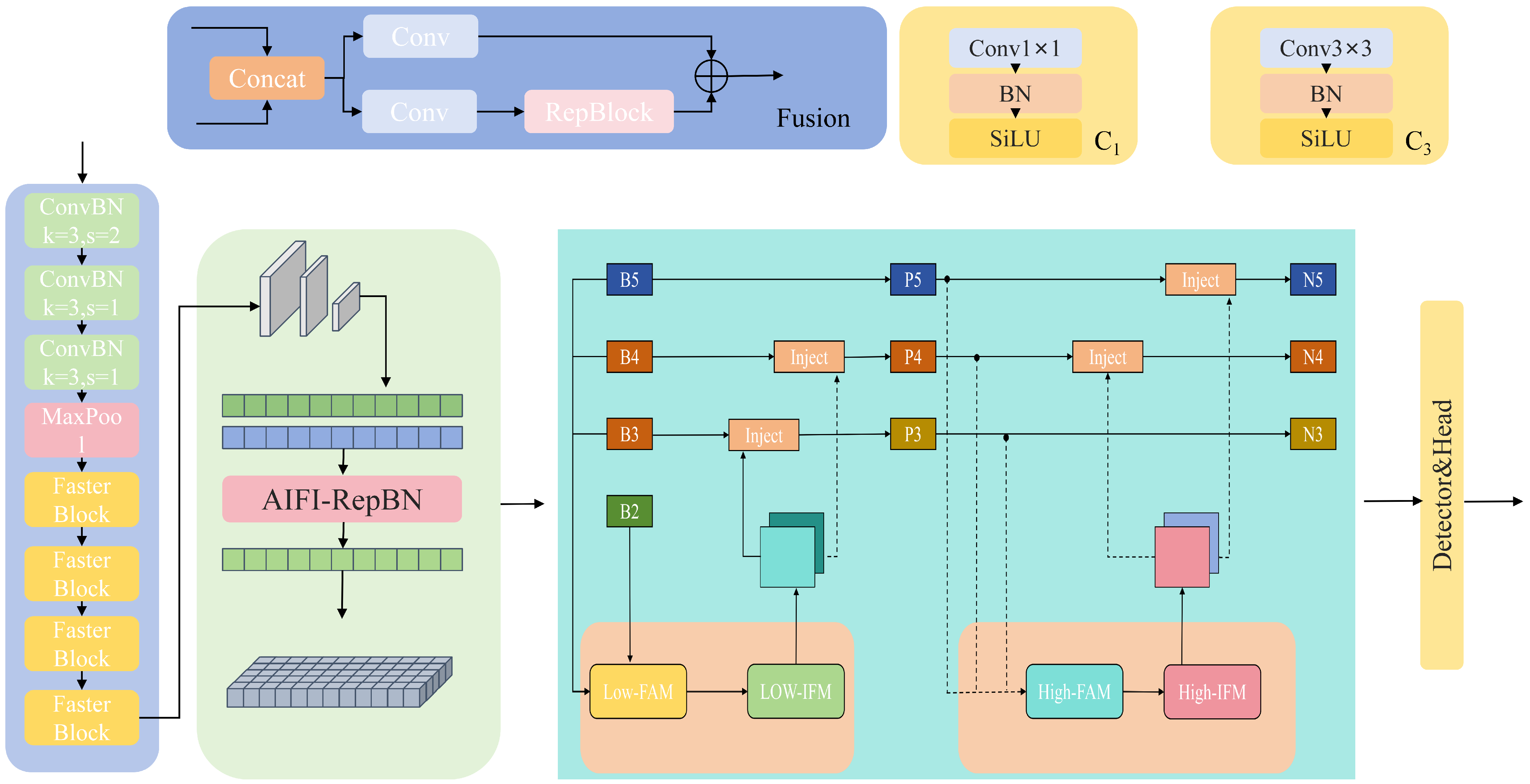
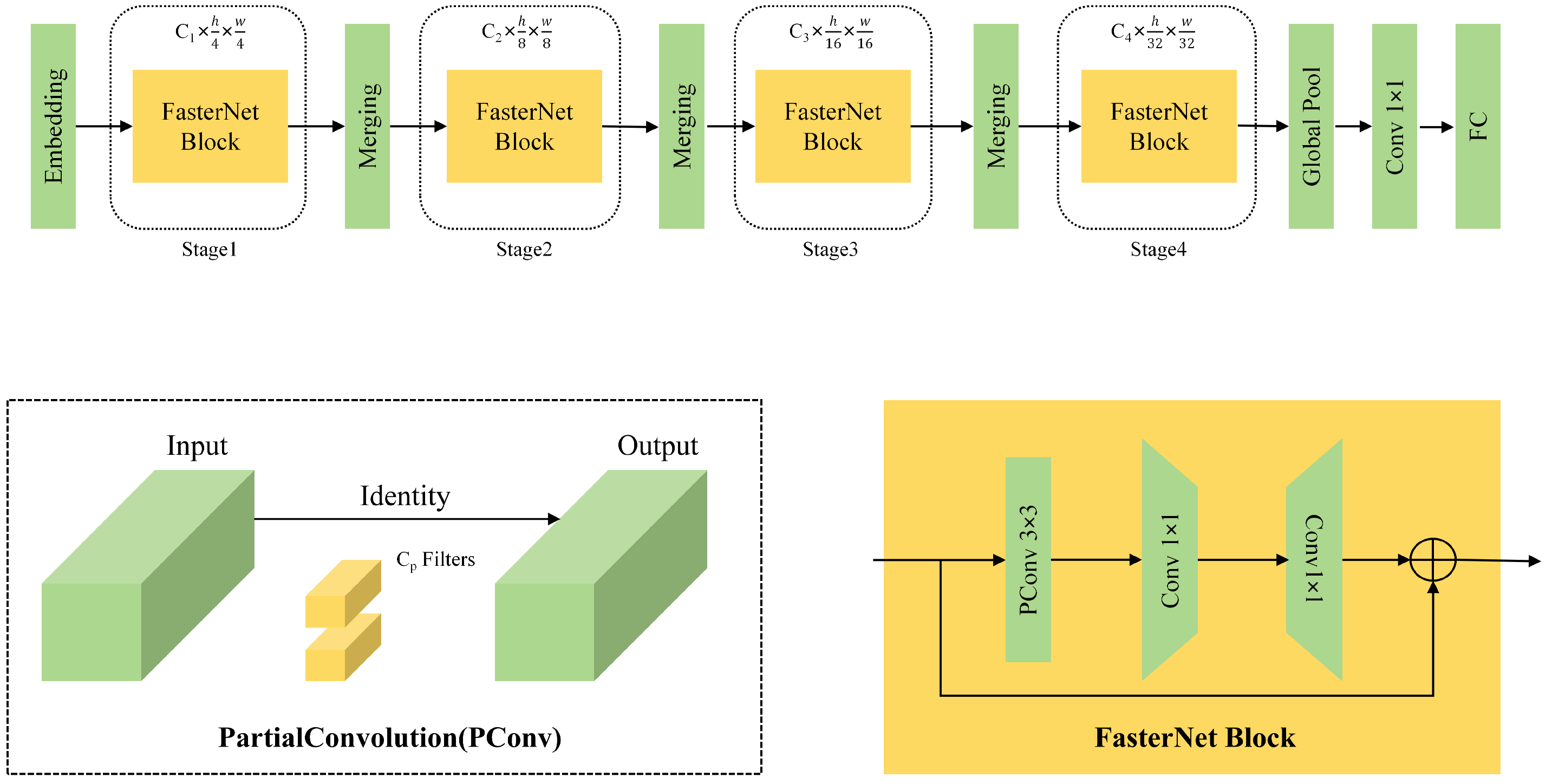
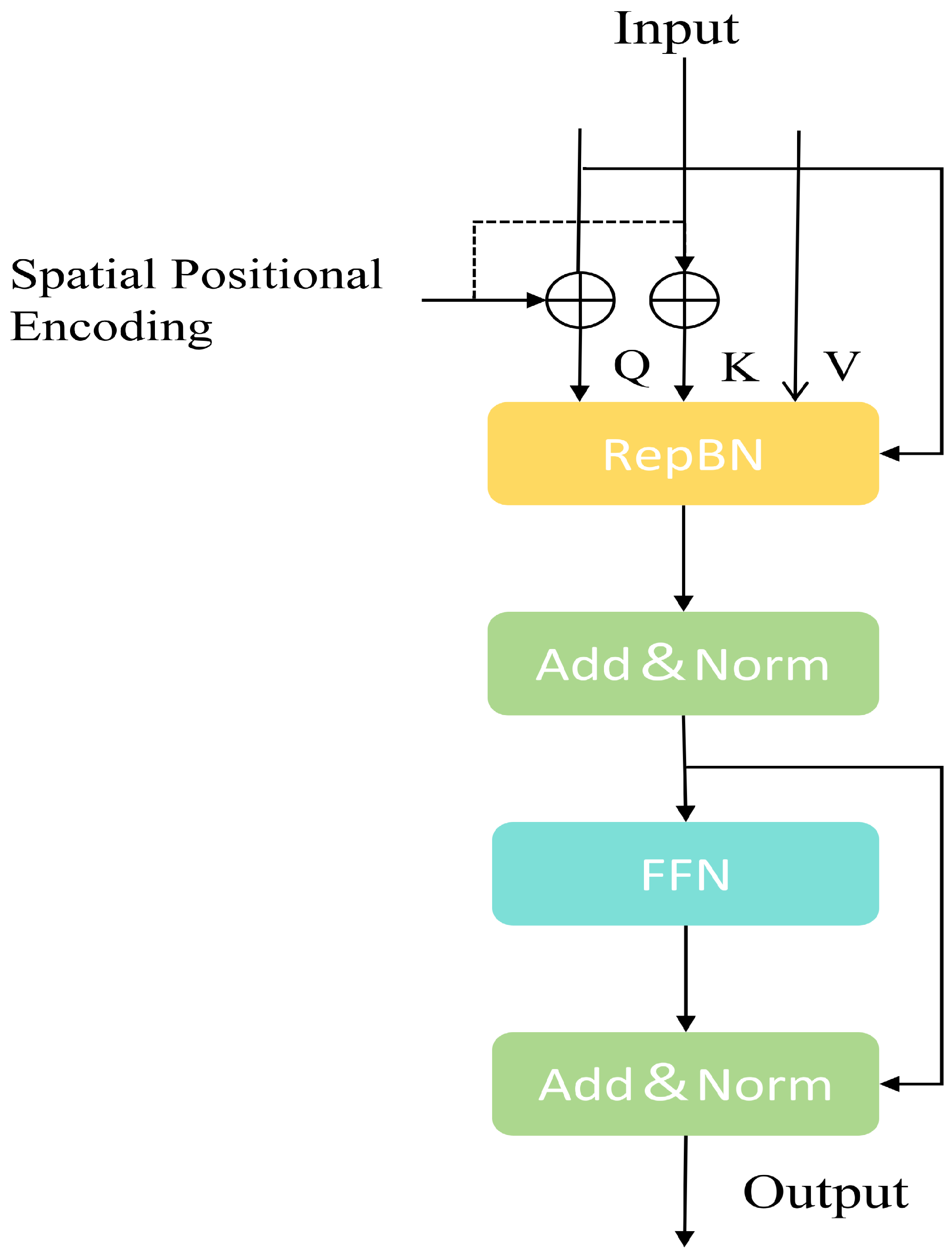
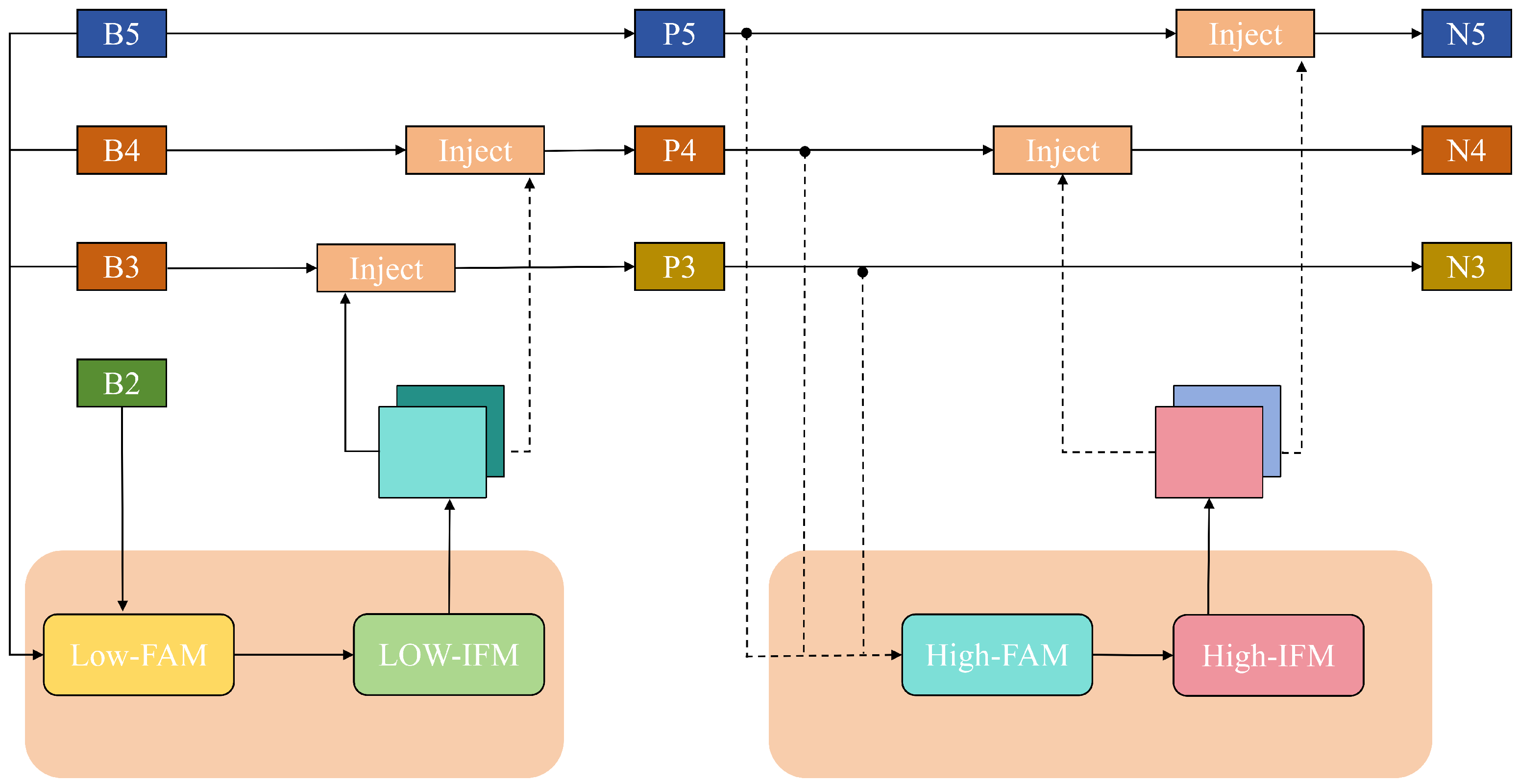
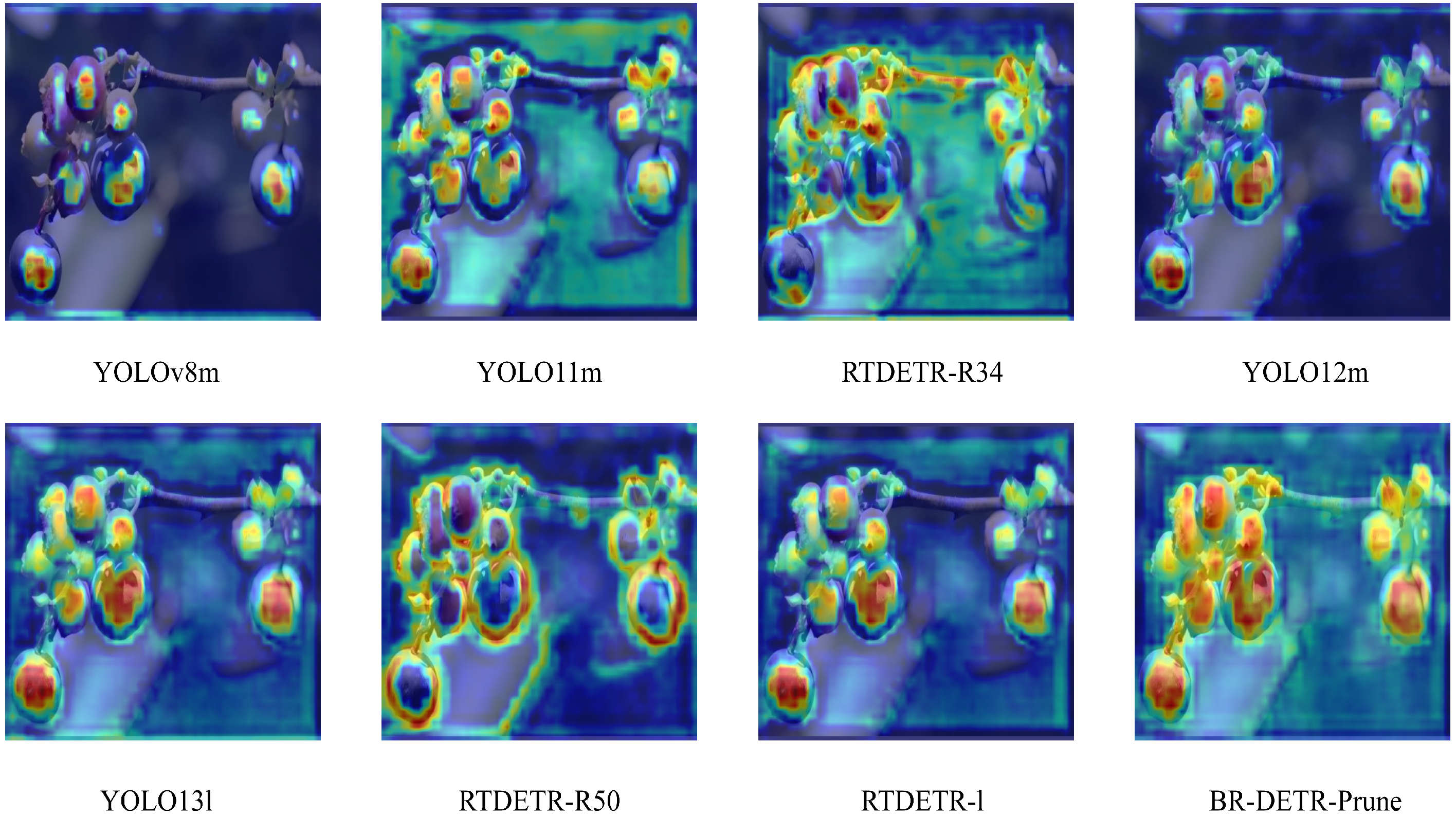
- An efficient feature extraction and fusion architecture for the edge is proposed: To overcome the high latency of traditional CNN backbones, this study introduces FasterNet based on Partial Convolution (PConv) as the backbone, effectively reducing Memory Access Costs (MACs) and enhancing Floating Point Operations (FLOPs) efficiency. Simultaneously, to address the loss of features for small-target fruits in deep networks, a “Gather-and-Distribute” (GD) mechanism was innovatively employed to reconstruct the feature fusion neck. This significantly enhances the model’s perception of densely occluded targets through unified global information aggregation and multi-branch distribution. Additionally, an AIFI-RepBN module was designed, integrating re-parameterization techniques into the hybrid encoder to maintain the global receptive field advantages of Transformers while further reducing computational redundancy [17,18].
- The superiority of the random channel pruning strategy in the Transformer architecture is verified: This study explores a new path for model compression, confirming that the Random pruning strategy based on the “Lottery Ticket Hypothesis” outperforms traditional importance-based methods such as L1-Norm or Lamp in blueberry detection tasks. By generating random masks to physically eliminate redundant channels and combining this with a fine-tuning strategy, this method not only drastically compresses the model size but also introduces a structured regularization effect. This successfully resolves the overfitting issues caused by over-parameterization, achieving simultaneous model “slimming” and accuracy enhancement [19].
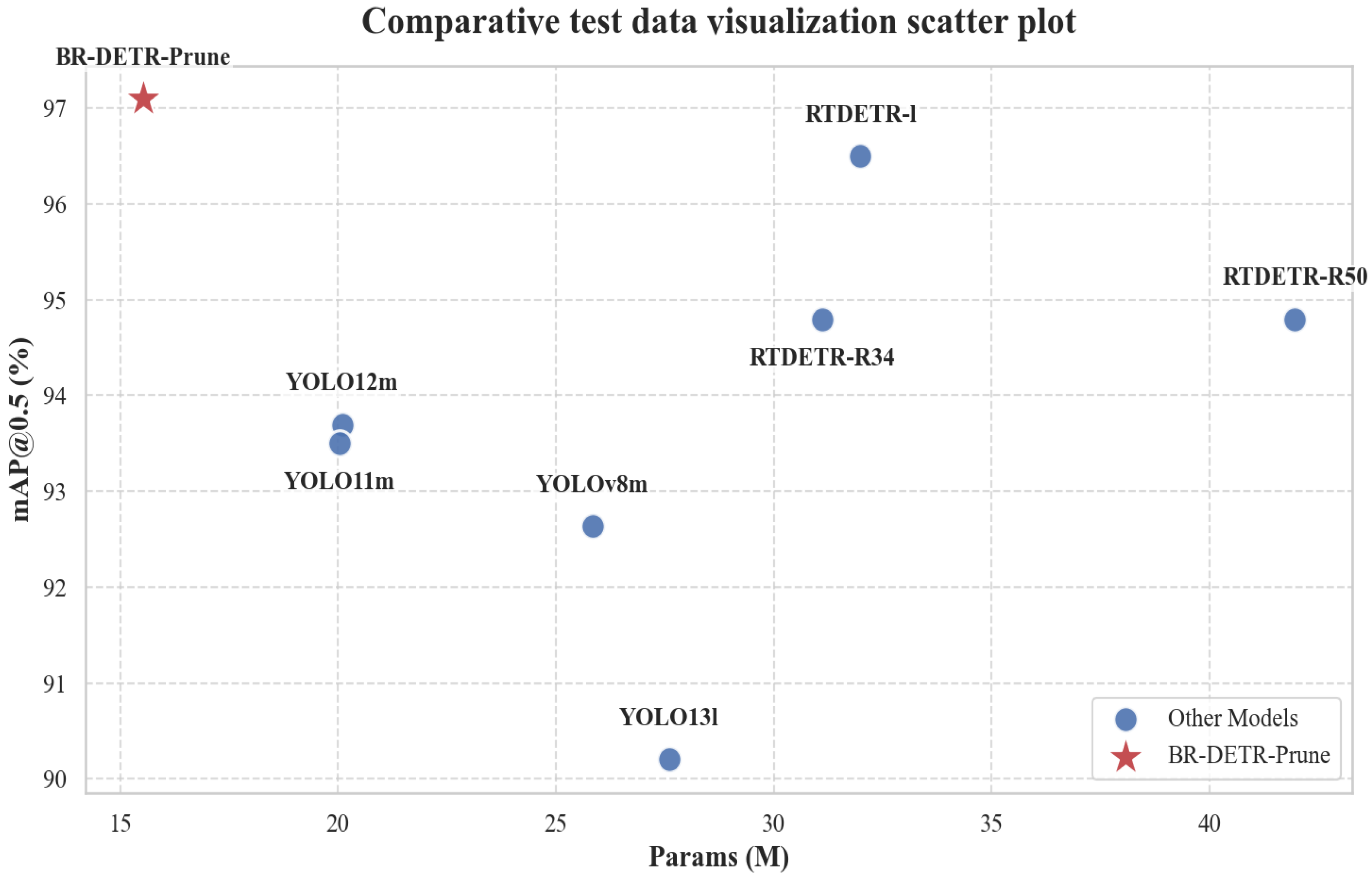
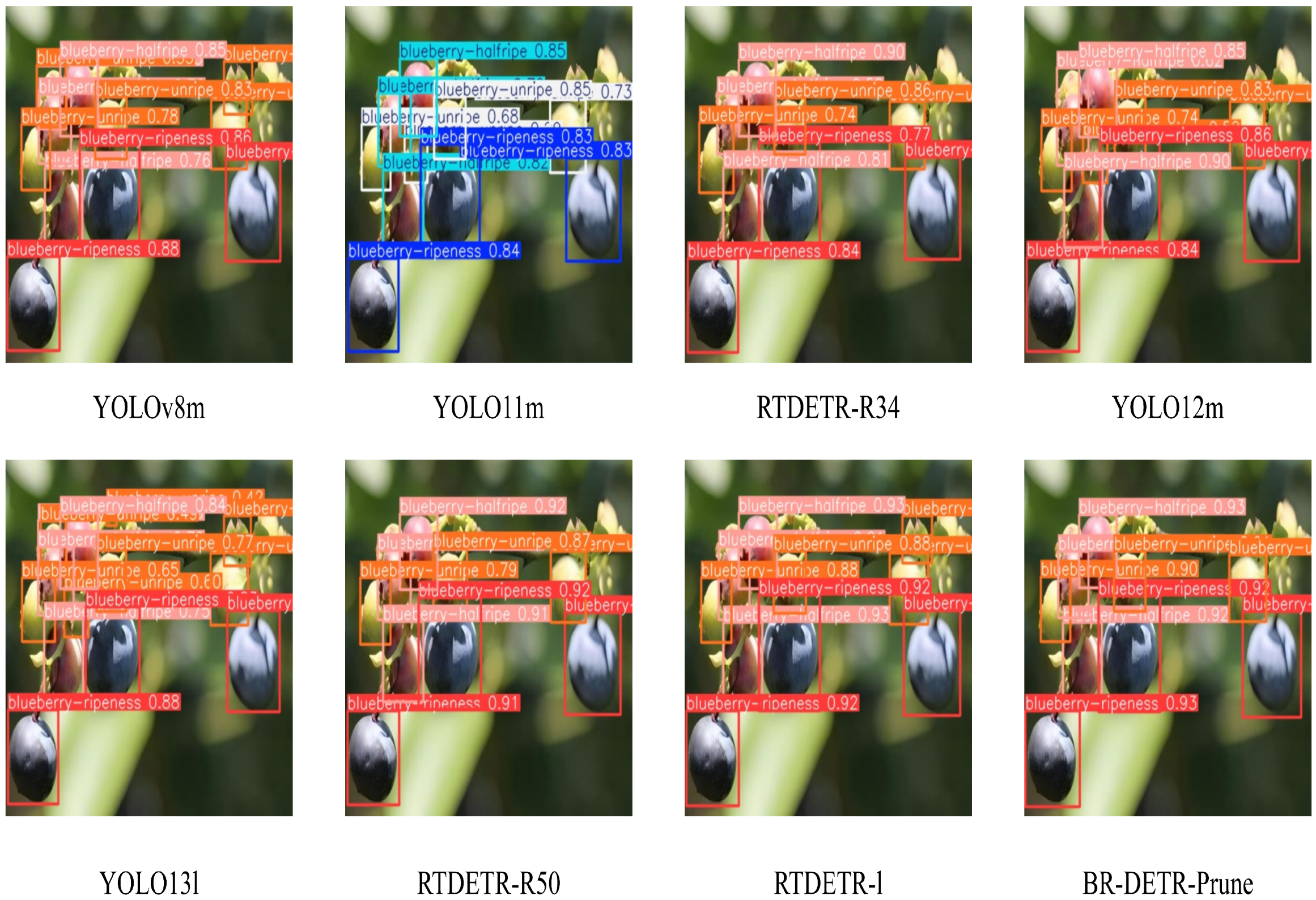
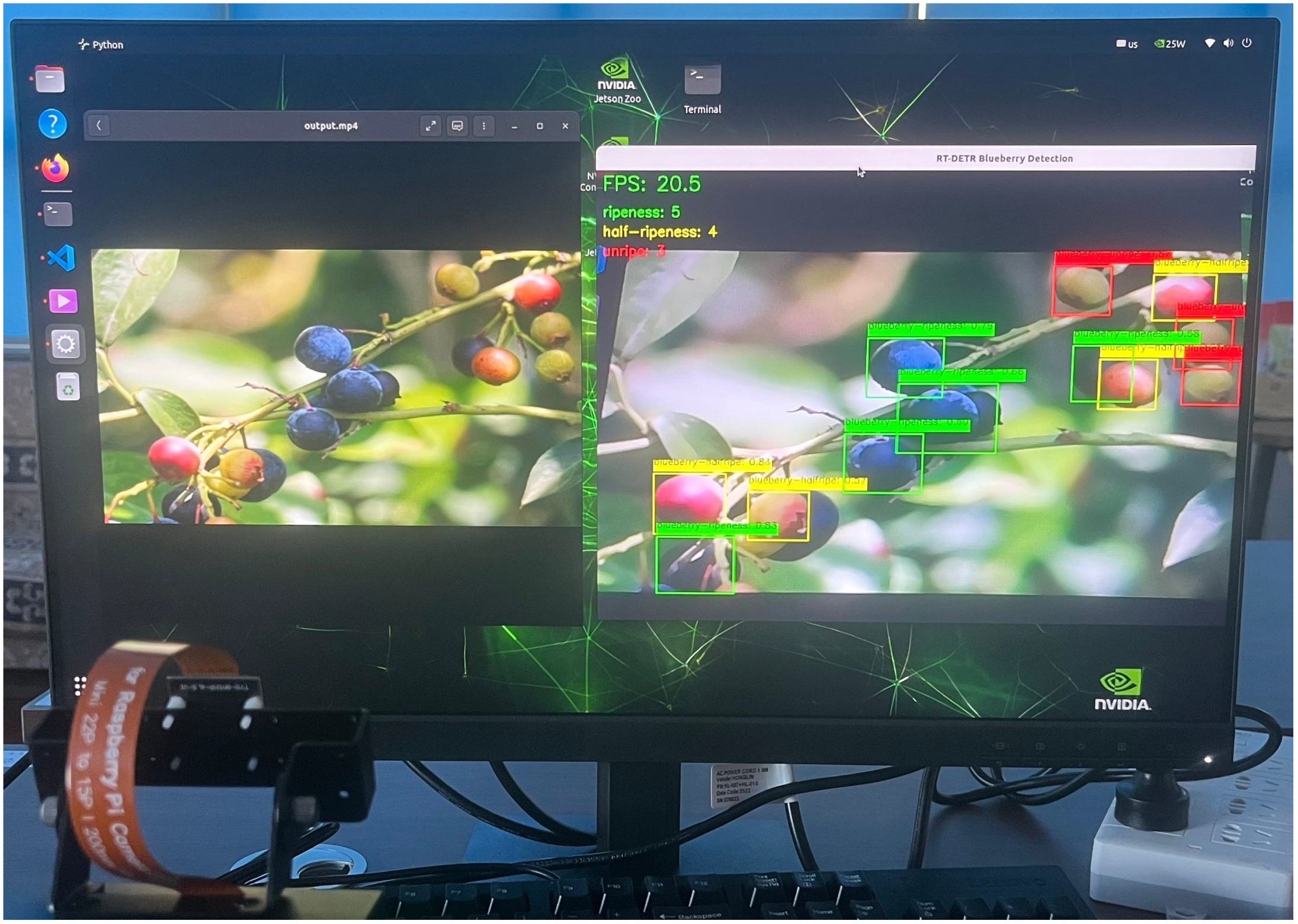
- An SOTA-level balance between detection accuracy and inference speed is achieved: Through the synergistic optimization of architecture reconstruction and deep pruning, BR-DETR-Prune demonstrated exceptional comprehensive performance on a high-quality self-built blueberry dataset. The experimental results show that while maintaining only 15.52 M parameters and 34.0 GFLOPs, the model achieved an mAP@0.5 of 97.1%. This result comprehensively surpasses mainstream detection models like YOLOv8, YOLO11, and the original RT-DETR, proving that a targeted lightweight Transformer architecture can perfectly adapt to resource-constrained agricultural embedded devices, providing robust technical support for real-time precise monitoring in smart orchards [20,21].
2. Materials and Methods
2.1. Dataset Construction and Data Preprocessing
2.2. RT-DETR and BR-DETR-Prune
2.3. FasterNet
2.4. AIFI-RepBN
2.5. Gather-and-Distribute Mechanism(GD)
2.6. Random Pruning Method
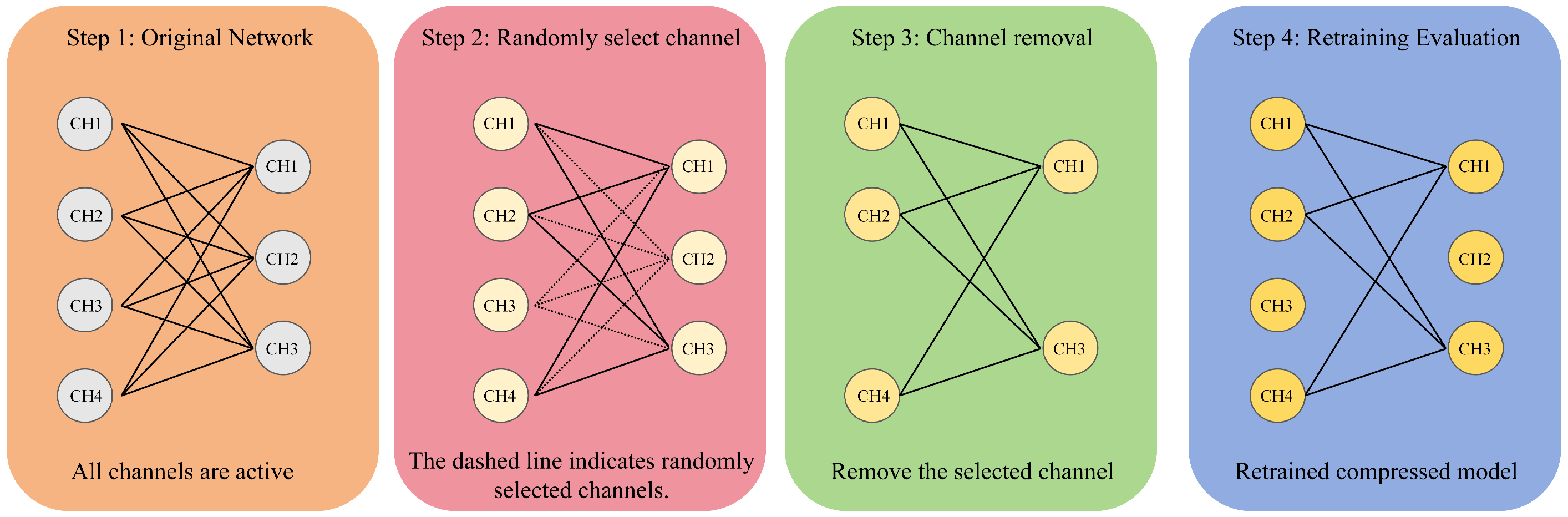
- Random Mask Generation: A pruning rate is predefined. For each convolutional or linear layer in the network, a binary mask vector following a Bernoulli distribution is generated, where represents the number of channels in that layer and .
- Structural Elimination: The mask is applied to the corresponding weight matrix to physically eliminate channels with a mask value of 0 and their corresponding input/output connections, thereby reconstructing a “slimmed” network architecture. This process directly reduces the model’s FLOPs and parameter count, rather than merely zeroing out the weights.
- Fine-tuning: Since random pruning disrupts the original feature transmission paths, it leads to a temporary decline in model accuracy. Therefore, it is essential to fine-tune the pruned network on the training set. Using an SGD optimizer, the remaining parameters are allowed to re-adapt and seek the optimal solution under the new topological structure, thereby recovering or even surpassing the performance of the original model.
3. Results
3.1. Experimental Environment
3.2. Evaluation Metrics
3.3. Pruning Experiments
3.4. Ablation Studies
3.5. Comparative Experiments
3.6. Deployment Experiments
3.7. Discussion
4. Conclusions
Author Contributions
Funding
Data Availability Statement
Acknowledgments
Conflicts of Interest
Correction Statement
References
- Zhang, Y.; Li, X.; Ge, Y.; Hu, Y.; Zhu, R.; Yang, X.; Chen, S.; Peng, H.; Wang, C. Blueberry Leaf Polysaccharide/Gelatin Composite Gel: Preparation, Characterization, and Formation Mechanism. Int. J. Biol. Macromol. 2025, 304, 141020. [Google Scholar] [CrossRef]
- Gai, R.; Liu, Y.; Xu, G. TL-YOLOv8: A Blueberry Fruit Detection Algorithm Based on Improved YOLOv8 and Transfer Learning. IEEE Access 2024, 12, 86378–86390. [Google Scholar] [CrossRef]
- Nguyen, H.D.; McHenry, B.; Nguyen, T.; Zappone, H.; Thompson, A.; Tran, C.; Segrest, A.; Tonon, L. Accurate Crop Yield Estimation of Blueberries using Deep Learning and Smart Drones. J. Big Data Artif. Intell. 2025, 3, 5–24. [Google Scholar] [CrossRef]
- Arellano, C.; Sagredo, K.; Muñoz-Schick, C.E.; Govan, J.E. Deep learning models to detect wax bloom on blueberry fruits from images. Chil. J. Agric. Res. 2025, 85, 601–610. [Google Scholar] [CrossRef]
- Cao, J.; Bao, W.; Shang, H.; Yuan, M.; Cheng, Q. GCL-YOLO: A GhostConv-Based Lightweight YOLO Network for UAV Small Object Detection. Remote Sens. 2023, 15, 4932. [Google Scholar] [CrossRef]
- Khan, Z.; Liu, H.; Shen, Y.; Zeng, X. Deep Learning Improved YOLOv8 Algorithm: Real-Time Precise Instance Segmentation of Crown Region Orchard Canopies in Natural Environment. Comput. Electron. Agric. 2024, 224, 109168. [Google Scholar] [CrossRef]
- Khan, A.T.; Jensen, S.M.; Khan, A.R. Advancing Precision Agriculture: A Comparative Analysis of YOLOv8 for Multi-Class Weed Detection in Cotton Cultivation. Artif. Intell. Agric. 2025, 15, 182–191. [Google Scholar] [CrossRef]
- You, H.; Li, Z.; Wei, Z.; Zhang, L.; Bi, X.; Bi, C.; Li, X.; Duan, Y. A Blueberry Maturity Detection Method Integrating Attention-Driven Multi-Scale Feature Interaction and Dynamic Upsampling. Horticulturae 2025, 11, 600. [Google Scholar] [CrossRef]
- Shi, L.; Wei, Z.; You, H.; Wang, J.; Bai, Z.; Yu, H.; Ji, R.; Bi, C. OMC-YOLO: A Lightweight Grading Detection Method for Oyster Mushrooms. Horticulturae 2024, 10, 742. [Google Scholar] [CrossRef]
- Sun, H.; Wang, R.-F. BMDNet-YOLO: A Lightweight and Robust Model for High-Precision Real-Time Recognition of Blueberry Maturity. Horticulturae 2025, 11, 1202. [Google Scholar] [CrossRef]
- Yuan, J.; Fan, J.; Sun, Z.; Liu, H.; Yan, W.; Li, D.; Liu, H.; Wang, J.; Huang, D. Deployment of CES-YOLO: An Optimized YOLO-Based Model for Blueberry Ripeness Detection on Edge Devices. Agronomy 2025, 15, 1948. [Google Scholar] [CrossRef]
- Xu, Y.; Li, H.; Zhou, Y.; Zhai, Y.; Yang, Y.; Fu, D. GLL-YOLO: A Lightweight Network for Detecting the Maturity of Blueberry Fruits. Agriculture 2025, 15, 1877. [Google Scholar] [CrossRef]
- Wu, N.; Wu, J.; Wang, Z.; Zhao, Y.; Xu, X.; Wang, Y.; Skobelev, P.; Mi, Y. Maturity Detection and Counting of Blueberries in Real Orchards Using a Novel STF-YOLO Model Integrated with ByteTrack Algorithm. Front. Plant Sci. 2025, 16, 1682024. [Google Scholar] [CrossRef]
- Deng, B.; Lu, Y.; Li, Z. Detection, Counting, and Maturity Assessment of Blueberries in Canopy Images Using YOLOv8 and YOLOv9. Smart Agric. Technol. 2024, 9, 100620. [Google Scholar] [CrossRef]
- Zhao, Y.; Li, Y.; Xu, X. Object Detection in High-Resolution UAV Aerial Remote Sensing Images of Blueberry Canopy Fruits. Agriculture 2024, 14, 1842. [Google Scholar] [CrossRef]
- MacEachern, C.B.; Esau, T.J.; Schumann, A.W.; Hennessy, P.J.; Zaman, Q.U. Detection of Fruit Maturity Stage and Yield Estimation in Wild Blueberry Using Deep Learning Convolutional Neural Networks. Smart Agric. Technol. 2023, 3, 100099. [Google Scholar] [CrossRef]
- Chen, J.; Kao, S.; He, H.; Zhuo, W.; Wen, S.; Lee, C.-H.; Chan, S.-H.G. Run, Don’t Walk: Chasing Higher FLOPS for Faster Neural Networks. In Proceedings of the 2023 IEEE/CVF Conference on Computer Vision and Pattern Recognition (CVPR), Vancouver, BC, Canada, 18–22 June 2023; pp. 12021–12031. [Google Scholar]
- Chen, K.; Du, B.; Wang, Y.; Wang, G.; He, J. The Real-Time Detection Method for Coal Gangue Based on YOLOv8s-GSC. J. Real-Time Image Proc. 2024, 21, 37. [Google Scholar] [CrossRef]
- Li, Y.; Adamczewski, K.; Li, W.; Gu, S.; Timofte, R.; Gool, L.V. Revisiting Random Channel Pruning for Neural Network Compression. arXiv 2022, arXiv:2205.05676. [Google Scholar] [CrossRef]
- Jiang, F.; Lu, K.; Wang, W.; Pan, X.; Zhang, J.; Chen, P.; Wang, B. FPDNet: A Fast and High-Precision Detection Network for Hot-Rolled Strip Surface Defects. Measurement 2025, 253, 117309. [Google Scholar] [CrossRef]
- Liu, L.; Li, P.; Wang, D.; Zhu, S. A Wind Turbine Damage Detection Algorithm Designed Based on YOLOv8. Appl. Soft Comput. 2024, 154, 111364. [Google Scholar] [CrossRef]
- Joine, M.; Sakar, E.H. Floral and Fruit Phenology in Three Young Olive (Olea europaea L.) Cultivars Grown in Central Northern Morocco. Part I: Reproductive Phenological Calendar and Agroclimatic Requirements According to the Olive Specific BBCH Scale. Appl. Fruit Sci. 2025, 67, 116. [Google Scholar] [CrossRef]
- Santos, R.F.; Chagas, P.C.; Moura, E.A.; Moraes Lima, M.E.; Rocha Araújo, M.C.; Chagas, E.A. Phenological Growth Stages Based on the BBCH Scale and Thermal Requirements of Spondias Dulcis Parkinson. Appl. Fruit Sci. 2025, 67, 207. [Google Scholar] [CrossRef]
- Li, X.; Cai, M.; Tan, X.; Yin, C.; Chen, W.; Liu, Z.; Wen, J.; Han, Y. An Efficient Transformer Network for Detecting Multi-Scale Chicken in Complex Free-Range Farming Environments via Improved RT-DETR. Comput. Electron. Agric. 2024, 224, 109160. [Google Scholar] [CrossRef]
- Zhao, Y.; Lv, W.; Xu, S.; Wei, J.; Wang, G.; Dang, Q.; Liu, Y.; Chen, J. DETRs Beat YOLOs on Real-Time Object Detection. In Proceedings of the 2024 IEEE/CVF Conference on Computer Vision and Pattern Recognition (CVPR), Seattle, WA, USA, 16–22 June 2024; pp. 16965–16974. [Google Scholar]
- Saltık, A.O.; Allmendinger, A.; Stein, A. Comparative Analysis of YOLOv9, YOLOv10 and RT-DETR for Real-Time Weed Detection. arXiv 2024, arXiv:2412.13490. [Google Scholar]
- Shi, R.; Zhang, L.; Wang, G.; Jia, S.; Zhang, N.; Wang, C. GD-Det: Low-Data Object Detection in Foggy Scenarios for Unmanned Aerial Vehicle Imagery Using Re-Parameterization and Cross-Scale Gather-and-Distribute Mechanisms. Remote Sens. 2025, 17, 783. [Google Scholar] [CrossRef]
- Shi, Q.; Hu, M.; Suganthan, P.N.; Katuwal, R. Weighting and Pruning Based Ensemble Deep Random Vector Functional Link Network for Tabular Data Classification. Pattern Recognit. 2022, 132, 108879. [Google Scholar] [CrossRef]
- Guo, A.; Sun, K.; Zhang, Z. A Lightweight YOLOv8 Integrating FasterNet for Real-Time Underwater Object Detection. J. Real-Time Image Proc. 2024, 21, 49. [Google Scholar] [CrossRef]
- Chen, X.; Wang, G. FP-RTDETR: Enhancing Infrared Ship Detection with Multi-Scale Feature Fusion and Lightweight Design. J. Supercomput. 2025, 81, 984. [Google Scholar] [CrossRef]
- Kong, X.; Chen, X. CLEAR-DETR: Cross-Weather Low-Visibility Enhanced Atmospheric Recognition Transformer for Robust Traffic Sign Detection. Signal Image Video Process. 2026, 20, 73. [Google Scholar] [CrossRef]
- Xu, C.; Liao, Y.; Liu, Y.; Tian, R.; Guo, T. Lightweight Rail Surface Defect Detection Algorithm Based on an Improved YOLOv8. Measurement 2025, 242, 115922. [Google Scholar] [CrossRef]
- Dai, S.; Bai, T.; Zhao, Y. Keypoint Detection and 3D Localization Method for Ridge-Cultivated Strawberry Harvesting Robots. Agriculture 2025, 15, 372. [Google Scholar] [CrossRef]
- You, H.; Wang, H.; Wei, Z.; Bi, C.; Zhang, L.; Li, X.; Yin, Y. VBP-YOLO-Prune: Robust Apple Detection under Variable Weather via Feature-Adaptive Fusion and Efficient YOLO Pruning. Alex. Eng. J. 2025, 128, 992–1014. [Google Scholar] [CrossRef]
- Yang, X.; Wang, Z.; Dong, M. PRE-YOLO: A Lightweight Model for Detecting Helmet-Wearing of Electric Vehicle Riders on Complex Traffic Roads. Appl. Sci. 2024, 14, 7703. [Google Scholar] [CrossRef]
- Song, B.; Chen, J.; Liu, W.; Fang, J.; Xue, Y.; Liu, X. YOLO-ELWNet: A Lightweight Object Detection Network. Neurocomputing 2025, 636, 129904. [Google Scholar] [CrossRef]



| Component | Specifications |
|---|---|
| CPU | Intel(R) Xeon(R) Gold 5218 CPU @ 2.30 GHz |
| GPU | NVIDIA GeForce RTX 4060 Ti 16 GB × 2 |
| Memory | 64 GB (Training) |
| OS | Windows 10 |
| Framework | PyTorch 2.1.2 |
| Language | Python 3.8 |
| CUDA Version | 11.8 |
| Component | Specifications |
|---|---|
| Main Configuration | NVIDIA Jetson Orin Nano Super Development Kit |
| (NVIDIA, Santa Clara, CA, USA) | |
| Memory | 8 GB |
| OS | Ubuntu 22.04 |
| Tensor Version | TensorRT 12 |
| Framework | PyTorch 2.1.2 |
| Language | Python 3.10 |
| CUDA Version | 11.8 |
| Camera | CLB IMX219 (Sony Corporation, Tokyo, Japan) |
| Method | mAP@0.5 (%) | mAP@0.5:0.95 (%) | Params (M) | GFLOPs |
|---|---|---|---|---|
| L1-Norm | 96.4 | 73.6 | 15.72 | 35.9 |
| DepGraph | 96.6 | 72.8 | 15.81 | 35.4 |
| Lamp | 96.2 | 74.1 | 16.01 | 36.9 |
| Random (Ours) | 97.1 | 74.5 | 15.52 | 34.0 |
| No. | FasterNet | AIFI-RepBN | GD | Pruning | mAP@0.5 | mAP@0.5:0.95 | Params (M) | GFLOPs |
|---|---|---|---|---|---|---|---|---|
| 1 | × | × | × | × | 94.4 | 71.1 | 19.88 | 57.0 |
| 2 | × | ✓ | × | × | 95.1 | 72.6 | 20.09 | 58.3 |
| 3 | × | × | ✓ | × | 95.4 | 72.4 | 22.50 | 61.4 |
| 4 | ✓ | × | × | × | 94.9 | 73.1 | 16.79 | 49.5 |
| 5 | ✓ | ✓ | × | × | 95.8 | 73.5 | 17.00 | 50.9 |
| 6 | ✓ | ✓ | ✓ | × | 96.6 | 73.8 | 19.42 | 54.1 |
| 7 | ✓ | ✓ | ✓ | ✓ | 97.1 | 74.5 | 15.52 | 34.0 |
| Model | mAP@0.5 (%) | mAP@0.5:0.95 (%) | Params (M) | GFLOPs | FPS |
|---|---|---|---|---|---|
| BR-DETR-Prune | 97.1 | 74.5 | 15.52 | 34.0 | 69.5 |
| RTDETR-l | 96.5 | 73.8 | 31.99 | 103.4 | 40.5 |
| RTDETR-R50 | 94.8 | 73.3 | 41.96 | 129.6 | 36.7 |
| RTDETR-R34 | 94.8 | 72.9 | 31.11 | 88.8 | 46.2 |
| YOLO13l | 90.2 | 66.7 | 27.6 | 64.0 | 63.8 |
| YOLO12m | 93.7 | 70.7 | 20.10 | 67.1 | 67.4 |
| YOLO11m | 93.5 | 69.8 | 20.03 | 67.7 | 67.2 |
| YOLOv8m | 92.64 | 66.98 | 25.84 | 78.7 | 66.4 |
Disclaimer/Publisher’s Note: The statements, opinions and data contained in all publications are solely those of the individual author(s) and contributor(s) and not of MDPI and/or the editor(s). MDPI and/or the editor(s) disclaim responsibility for any injury to people or property resulting from any ideas, methods, instructions or products referred to in the content. |
© 2026 by the authors. Licensee MDPI, Basel, Switzerland. This article is an open access article distributed under the terms and conditions of the Creative Commons Attribution (CC BY) license.
Share and Cite
Shi, L.; Bai, Z.; Zhang, Y.; Wang, S.; Fu, Q.; Li, Z.; Cui, Y.; Dong, Y.; Yang, Z.; Ye, Y. An Edge-Oriented RT-DETR Integrated with Efficient Feature Extraction and Fusion Architecture and Lightweight Processing for Blueberry Maturity Detection. Horticulturae 2026, 12, 664. https://doi.org/10.3390/horticulturae12060664
Shi L, Bai Z, Zhang Y, Wang S, Fu Q, Li Z, Cui Y, Dong Y, Yang Z, Ye Y. An Edge-Oriented RT-DETR Integrated with Efficient Feature Extraction and Fusion Architecture and Lightweight Processing for Blueberry Maturity Detection. Horticulturae. 2026; 12(6):664. https://doi.org/10.3390/horticulturae12060664
Chicago/Turabian StyleShi, Lei, Zhuo Bai, Yinyi Zhang, Shuai Wang, Qiyuan Fu, Ziyue Li, Yuhang Cui, Yiman Dong, Zhiyin Yang, and Yuxin Ye. 2026. "An Edge-Oriented RT-DETR Integrated with Efficient Feature Extraction and Fusion Architecture and Lightweight Processing for Blueberry Maturity Detection" Horticulturae 12, no. 6: 664. https://doi.org/10.3390/horticulturae12060664
APA StyleShi, L., Bai, Z., Zhang, Y., Wang, S., Fu, Q., Li, Z., Cui, Y., Dong, Y., Yang, Z., & Ye, Y. (2026). An Edge-Oriented RT-DETR Integrated with Efficient Feature Extraction and Fusion Architecture and Lightweight Processing for Blueberry Maturity Detection. Horticulturae, 12(6), 664. https://doi.org/10.3390/horticulturae12060664