


Abstract
Daddow is a macadamia cultivar that yields poorly because flowers and fruitlets frequently abort early in development. The objective was to determine whether resource availability limits fruitlet retention in this cultivar. Racemes of Daddow and three other cultivars, 849, A38, and A203, were sampled weekly during flowering and fruit set, and trends in nutrients and non-structural carbohydrates were assessed. Starch concentrations in the flowers and rachis were lower in Daddow than in the other cultivars before fruit set. Rachis concentration of glucose, an important signalling molecule, was also lower in Daddow at flowering. Most flower and fruitlet nutrient concentrations in Daddow were comparable to those of the other cultivars. However, potassium concentrations were lower in both the rachis and leaves of Daddow, while boron concentration, important for pollen tube growth, was higher. These results suggest altered signalling mechanisms, inadequate carbohydrate supply and deficiencies in specific nutrients may have been contributing factors to the high flower and fruitlet abortion rates of Daddow.
1. Introduction
Successful flowering and fruit set affect yield in perennial horticultural crops. High flower production but low fruit retention are characteristic of crops such as avocado [1], mango [2], and citrus [2]. This can be caused by insufficient pollinators or environmental factors, but physiological regulation can also occur. Resource limitations include carbohydrates and mineral nutrients. Source–sink relationships are complex in perennial crops with competition among competing ‘sinks’ (tissues that import and use or store assimilates), including the reproductive tissues, as well as vegetative [3] and root flushes [4]. Non-structural carbohydrates such as starch and sugars derived from ‘sources’ (tissues that produce and export assimilates) are important to floral initiation, anthesis, pollination, fertilisation and early fruit growth [5]. In mango [6], avocado [7,8], apple [9] and orange [10], insufficient carbohydrate availability before, during or after flowering results in poor yield, and this can be caused by high vegetative demand competing with reproductive sinks [11]. These carbohydrates can be sourced from newly acquired photoassimilates or from stored starch reserves [12,13].
Nutrients also have an important role in flowering and fruit set [14]. For instance, zinc (Zn) is required for pollen formation [15], boron (B) for pollen germination and pollen tube growth [16], and calcium (Ca) for signalling processes during pollen tube growth [17,18]. Potassium (K) regulates carbohydrate transport to resource sinks to support flower retention and fruit development [19,20]. Phosphorus (P) is essential for reproductive development [21] due to its role in ATP production and metabolic processes [22]. The transport and partitioning of these nutrients are influenced by vascular transport pathways [23], transpiration [22], and membrane transporters [24], and overseen by hormonal signalling [25].
Macadamia integrifolia and its hybrids have several hundred flowers on each raceme but very low final fruit set [16]. Abortion can occur from the flower stage through to full maturity, but intensive abortion occurs at the early fruitlet stage [26]. The embryo and the maternal husk surrounding the shell and kernel are nutrient and carbon-intensive organs, and competition with vegetative flushes—triggered by soil moisture, temperature and orchard management—may contribute to high abortion rates [27]. Daddow is an older cultivar with a dense canopy [28] that allocates more resources to vegetative growth than to reproductive structures. Daddow produces few racemes per unit canopy, has low floral density and poor fruit set [29], and consequently, nut yield and nut size of Daddow are generally inferior to those of other cultivars [30]. However, Daddow has a broad flowering period, starting early and extending late [28]. It is used in commercial orchards to improve cross-pollination and fruit set in other cultivars, rather than for its own yield. Many crops, including macadamia [29], show higher fruit set and lower early fruit drop when cross-pollinated. Cross-pollination can result in faster pollen tube growth, and more successful ovule fertilisation than self-pollination. Cross-pollinated fruit often have larger embryos, faster development and stronger sink demands. This increases the fruit’s ability to compete with vegetative sinks, reducing abscission [5]. The objective of this work is to characterise the carbohydrate and nutrient allocation to Daddow flowers and fruitlets, and determine if low sink strength, or source failure is the cause of this cultivar’s inability to produce high yields.
2. Materials and Methods
2.1. Study Site
The experiment was conducted at the Southern Cross University’s Morelia Lane Farm, Wollongbar, NSW, Australia (28°49′53.8″ S, 153°24′52.9″ E). Trees were six years old, grafted onto H2 rootstock, and established in a red Ferralsol [31] with a pH (water) of 5.1 and an effective cation exchange capacity of 2.5 cmolc kg−1. In the 0–10 cm soil layer, organic matter content was 5.4%, with 3.2 mg kg−1 P (Bray), 4.3 mg kg−1 nitrate-N, and 15 mg kg−1 ammonium-N (KCl). Concentrations of exchangeable cations (ammonium acetate extraction) included: 228 mg kg−1 Ca, 65 mg kg−1 Mg, 68 mg kg−1 K, <15 mg kg−1 Na, 24 mg kg−1 Al, and 3.1 mg kg−1 H (acidity titration). No fertiliser was applied during the experimental period to avoid artificial spikes in nutrient uptake. Trees were not pruned or hedged.
Environmental conditions were monitored hourly using an iMETOS 3.3 weather station (Pessl Instruments, Weiz, Austria) situated within 1 km of the experimental area, recording air temperature, solar radiation and rainfall. Seasonal climatic conditions during the study period are presented in Figure A1. Average maximum and minimum temperatures were 24.0 °C and 11.5 °C in September, and 24.5 °C and 13.3 °C in October 2024. Daily vapour pressure deficit (VPD) (averaged over 24 h) was 0.49 kPa in September and 0.39 kPa in October. Average solar radiation increased from 212 W m−2 in September to 235 W m−2 in October. There was significant rainfall over a few days in September, with a total monthly precipitation of 418 mm, while 102 mm fell in October 2024.
2.2. Plant Sampling
Racemes of the cultivars Daddow, 849, A38, and A203 were collected weekly for 10 weeks (from 4 September 2024 to 4 November 2024), commencing at anthesis. Those cultivars were chosen based on their availability and popularity in Australian macadamia cultivation. The experimental design was a randomised block with four replicate rows per cultivar, each row comprising 30 trees. Each row was considered one true replicate. For each row, 30 entire racemes were excised at the branch junction, placed immediately into plastic bags, and bulked into one composite sample for subsequent analysis. Samples were maintained under cool conditions and processed within 1 h of collection. On the final sampling date, two recently matured, fully expanded leaves were collected from each tree at the second to third youngest node position [32].
Flowers and fruitlets were removed from the raceme and were dried until constant weight at 60 °C. The tissues were ground with a coffee grinder (Anko CG9701B-SA, Kmart, Ballina, Australia), followed by a tissue lyser (Qiagen Retsch TissueLyser II, Richmond Scientific, Lancashire, Great Britain, UK). The powdered tissues (<2mm) were redried in an oven at 40 °C until constant weight before weighing for nutrient or carbohydrate analyses.
2.3. Plant Carbohydrate Analysis
Starch and soluble sugars (sucrose, glucose and fructose) were quantified enzymatically using commercial assay kits from Megazyme (Bray, Ireland) according to the manufacturer’s protocols. Soluble sugars were extracted in aqueous ethanol (80%) at 80 °C; glucose and fructose were measured sequentially via hexokinase/glucose-6-phosphate dehydrogenase with NADPH detection at 340 nm, and sucrose was determined following enzymatic hydrolysis with invertase. Concentrations were calculated from glucose or NADPH equivalents and expressed on a dry weight basis. Starch in the remaining sample was solubilized in dimethylsulfoxide and hydrolysed to glucose using thermostable α-amylase and amyloglucosidase, and glucose was quantified colourimetrically using glucose oxidase/peroxidase at 510 nm with a microplate spectrophotometer (Multiskan Skyhigh, ThermoFisher Scientific, Brisbane, Australia).
2.4. Plant Nutrient Analysis
Nitric acid-digested samples were analysed by inductively coupled plasma mass spectrometry (NexION 2000B ICPMS, PerkinElmer, Shelton, CT, USA) using the standard method APHA 3125 for the quantification of macro- and micronutrients at the Environmental Analysis Laboratory, Southern Cross University, Lismore. Nitrogen (N) and Sulfur (S) were assessed on dried tissue with a combustion elemental analyser (TruMac CNS, Leco Corp, St. Joseph, MI, USA).
2.5. Data Analysis
Data were analysed using linear mixed models (LMMs) in Genstat (v. 23.1). The experiment followed a randomised complete block design (RCBD) with four cultivars replicated across four blocks and 6–9 sequential sampling dates per row, depending on the variable measured. Models were fitted using residual maximum likelihood (REML) to account for spatial and temporal dependence in the dataset. Fixed effects included cultivar, sampling date, and their interaction (cultivar × sampling date), while the random structure was specified as Block/RowID to reflect rows nested within blocks. Repeated measurements over time were modelled using a first-order autoregressive covariance structure applied to sampling date, allowing correlations to decline with increasing temporal separation.
Principal component analysis (PCA) was performed using the correlation matrix to examine patterns of covariation among nutrient variables across cultivars and sampling dates. The analysis incorporated all observations from the four cultivars over the first 30 days after flowering (DAF). Principal components were derived by eigenanalysis, generating orthogonal linear combinations of the original variables that successively maximised explained variance. Component loadings were used to assess the contribution of individual nutrients to each principal component, thereby identifying key parameter associations. The interpretation focused on the first two principal components, supported by biplot visualisation to illustrate nutrient and TNSC interrelationships.
3. Results
3.1. Raceme Development
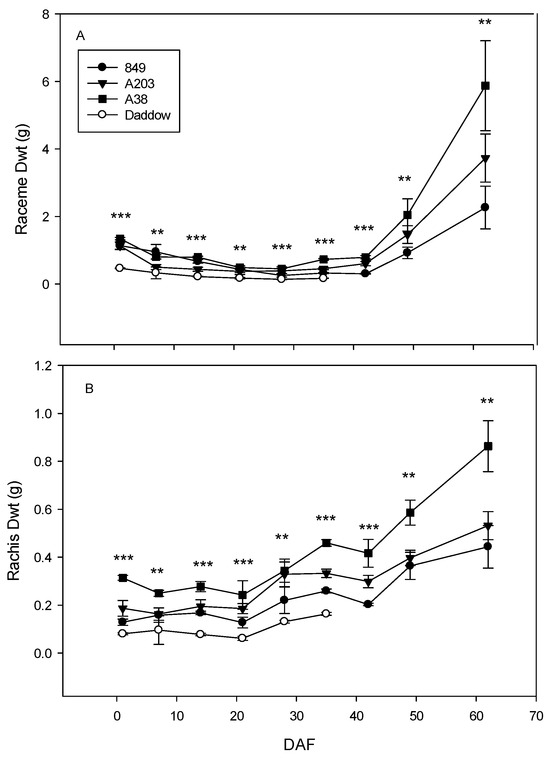
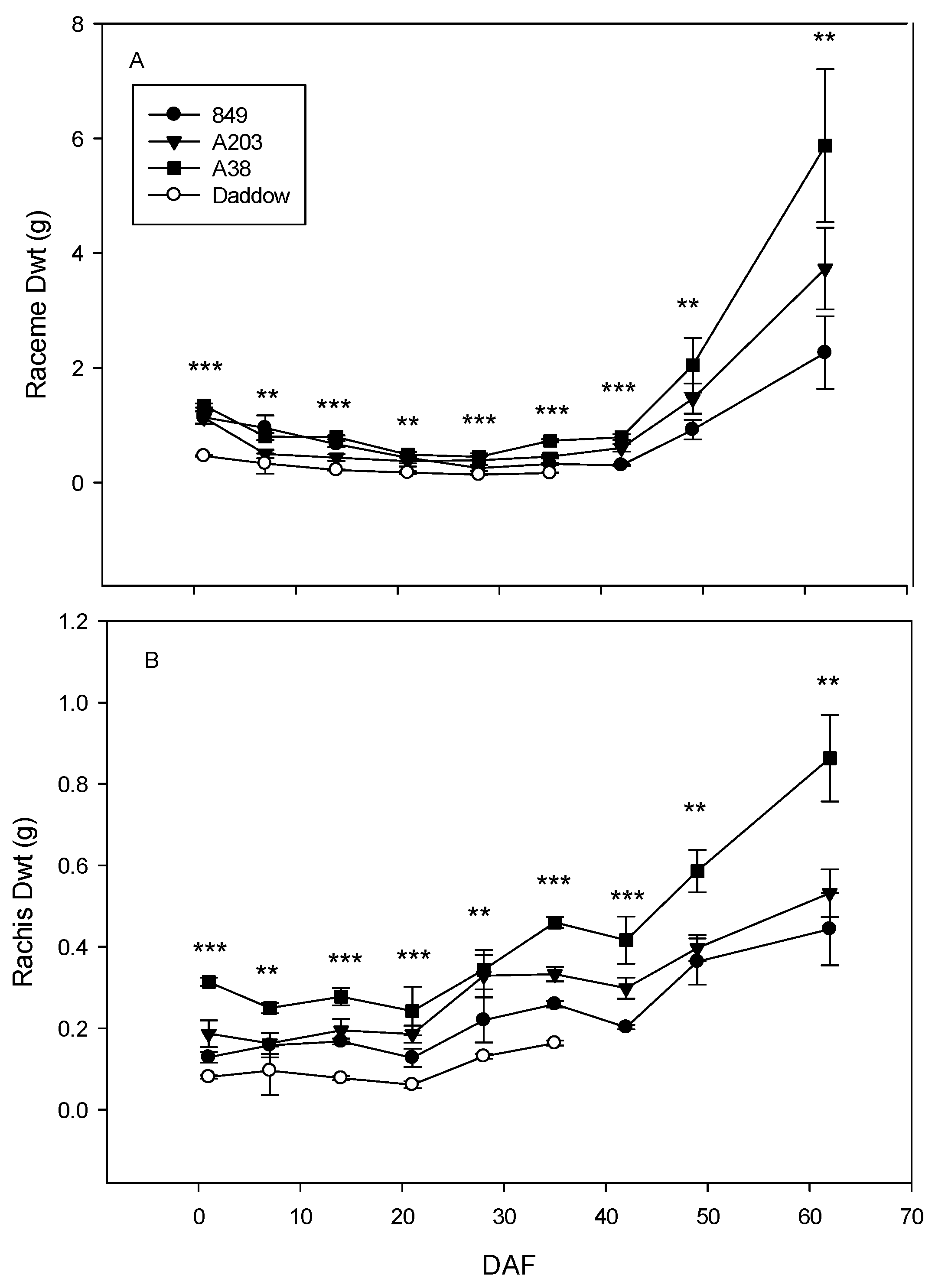
At anthesis (0 DAF), Daddow raceme dry weight was lowest at 0.47 ± 0.01 g, compared to 1.13–1.34 g for the other three cultivars (F3,9 = 24.8, p = 0.001) (Figure 1A). Raceme dry weight declined in all four cultivars over the first month of sampling. As Daddow racemes senesced and abscised after 35 DAF, no data were available for this cultivar beyond this time.
Figure 1.
Developmental changes in (A) raceme and (B) rachis dry weight (Dwt) in cultivars 849, A203, A38, and Daddow. Means ± SEM, n = 4. Sampling date and cultivar were significant for both parameters (p < 0.001). There were no significant cultivar × sampling date interactions. DAF refers to days after flowering. ** and *** indicate significance of cultivar differences at p < 0.01 and 0.001, respectively, at each DAF.
Beyond 42 days after flowering (DAF), raceme dry weight rose exponentially in the other three cultivars, attaining 5.87 ± 1.3 g for cv. A38, 3.73 ± 0.71 g for cv. A203 and 2.26 ± 0.63 g for cv. 849 (F3,9 = 5.75, p = 0.040). Rachis dry weight at anthesis was lowest for cv. Daddow (F3,9 = 31.8, p = 0.001) but increased in all four cultivars from 21 DAF onwards attaining 0.86 ± 0.1 g in cv. A38, 0.53 ± 0.06 g in cv. A203 and 0.44 ± 0.09 g in cv. 849 by 63 DAF (F3,9 = 7.08, p = 0.026) (Figure 1B).
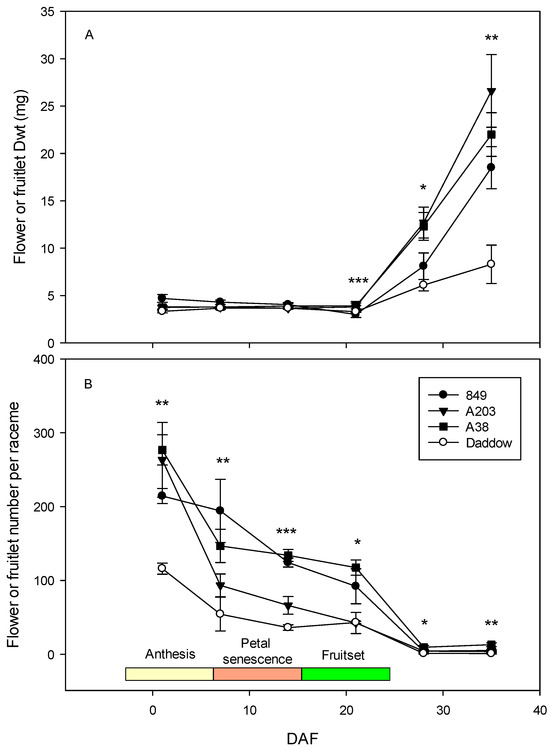
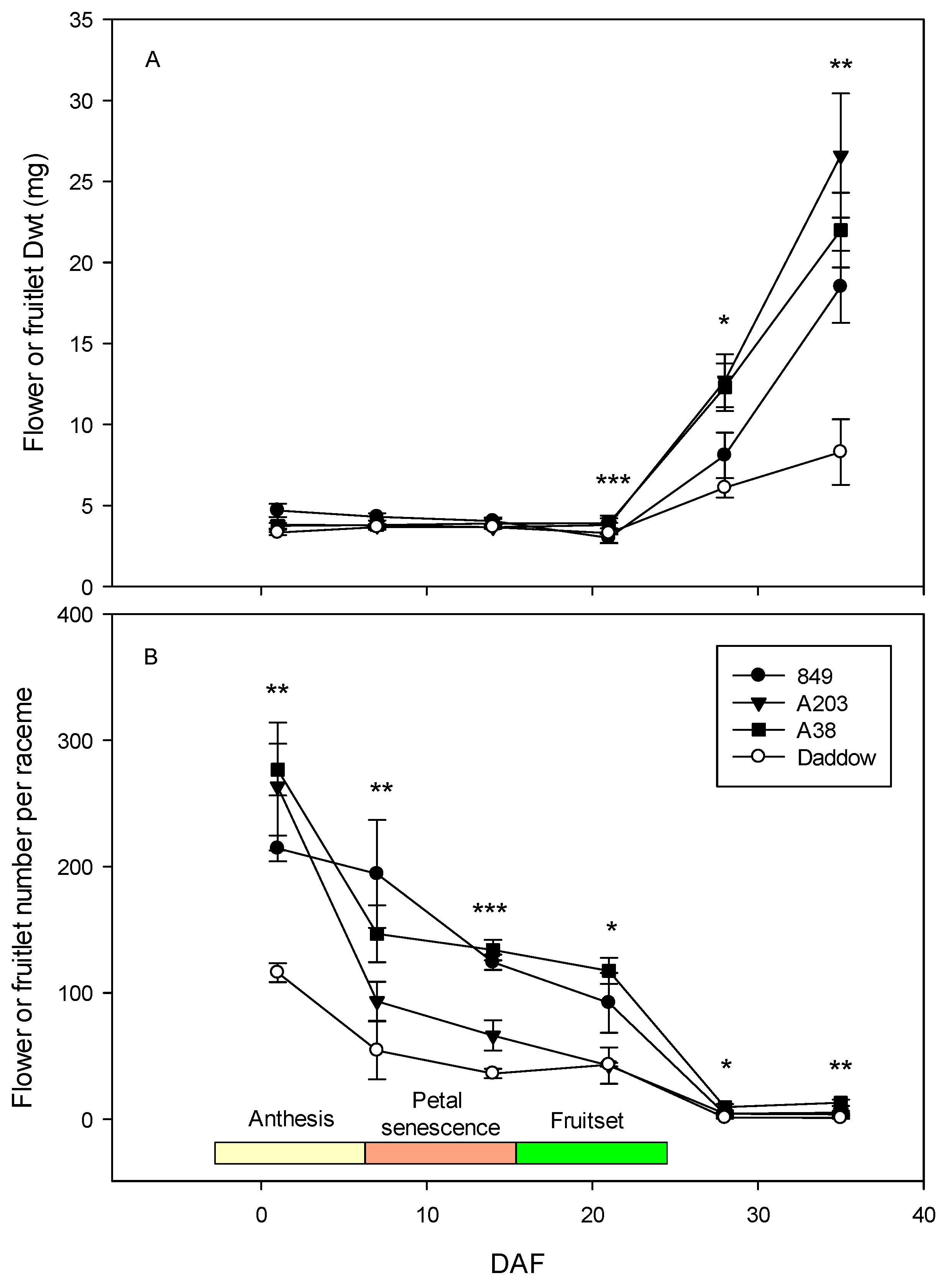
At full bloom (0 DAF), flower dry weight was lowest for cv. Daddow at 3.34 ± 0.16 mg flower−1 while flower dry weight of cultivars A38, A203 and 849 was 3.75 ± 0.17, 3.82 ± 0.45 and 4.71 ± 0.41 mg flower−1, respectively; however, this was not significant (F3,9 = 3.1, p = 0.08) (Figure 2A). Ovaries initiated biomass accumulation by 28 DAF, and it was lowest for Daddow at 6.1 ± 0.6 mg ovary−1, followed by cv. 849 at 8.1 ± 0.1, cv. A38 at 12.3 ± 1.5, and cv. A203 at 12.7 ± 1.6 mg ovary−1 (F3,9 = 4.45, p = 0.035). After 35 DAF, ovaries of cv. Daddow were no longer present, indicating complete abortion thereafter. At this stage ovaries weighed 55-70% less than the other three cultivars (F3,9 = 6.51, p = 0.012). By 42 DAF, cv. A203 weighted 98.9 ± 12.4 mg ovary−1, cv. A38 attained 61.8 ± 9.4 mg ovary−1, and cv. 849 attained 53.1 ± 1.4 mg ovary−1 (F3,9 = 10.90, p = 0.010).
Figure 2.
Developmental changes in (A) individual fruitlet dry weight and (B) fruitlet number raceme−1 in cultivars 849, A203, A38, and Daddow. Means ± SEM, n = 4. Sampling date, cultivar, and cultivar × sampling date interaction were significant for both parameters (p < 0.001). *, ** and *** indicate significance of cultivar differences at p < 0.05, 0.01 and 0.001, respectively, at each DAF.
At bloom, cv. Daddow had the lowest numbers of flowers raceme−1 at 116 ± 7, while the other three cultivars had double this, with the highest for cv. A38 and cv. A203 having 276 ± 20 and 263 ± 51 flowers raceme−1, respectively (F3,9 = 9.35, p = 0.004) (Figure 2B). By 28 DAF the remaining ovaries had reduced to less than 10 and averaged 4.1± 1.3 ovaries raceme−1 for cv. 849, 4.4 ± 1.4 for cv. A203, 9.5 ± 2.5 for cv. A38, but only 1.0 ± 0.7 ovaries raceme−1 for cv. Daddow (F3,9 = 5.66, p = 0.019).
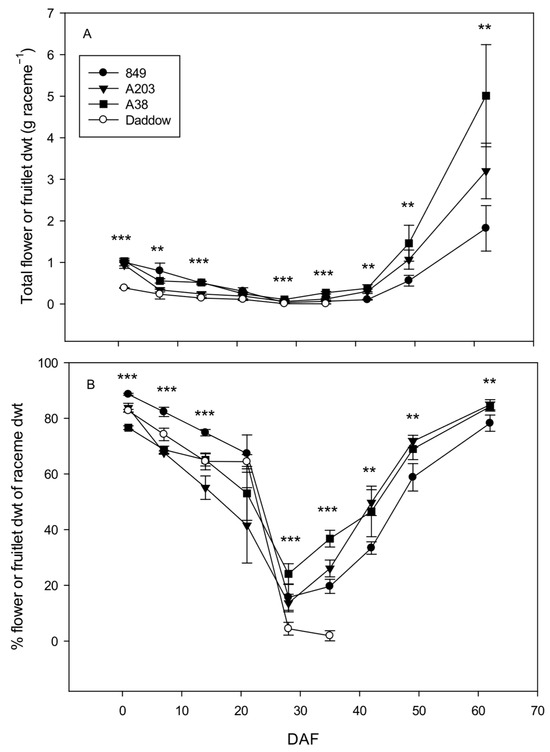
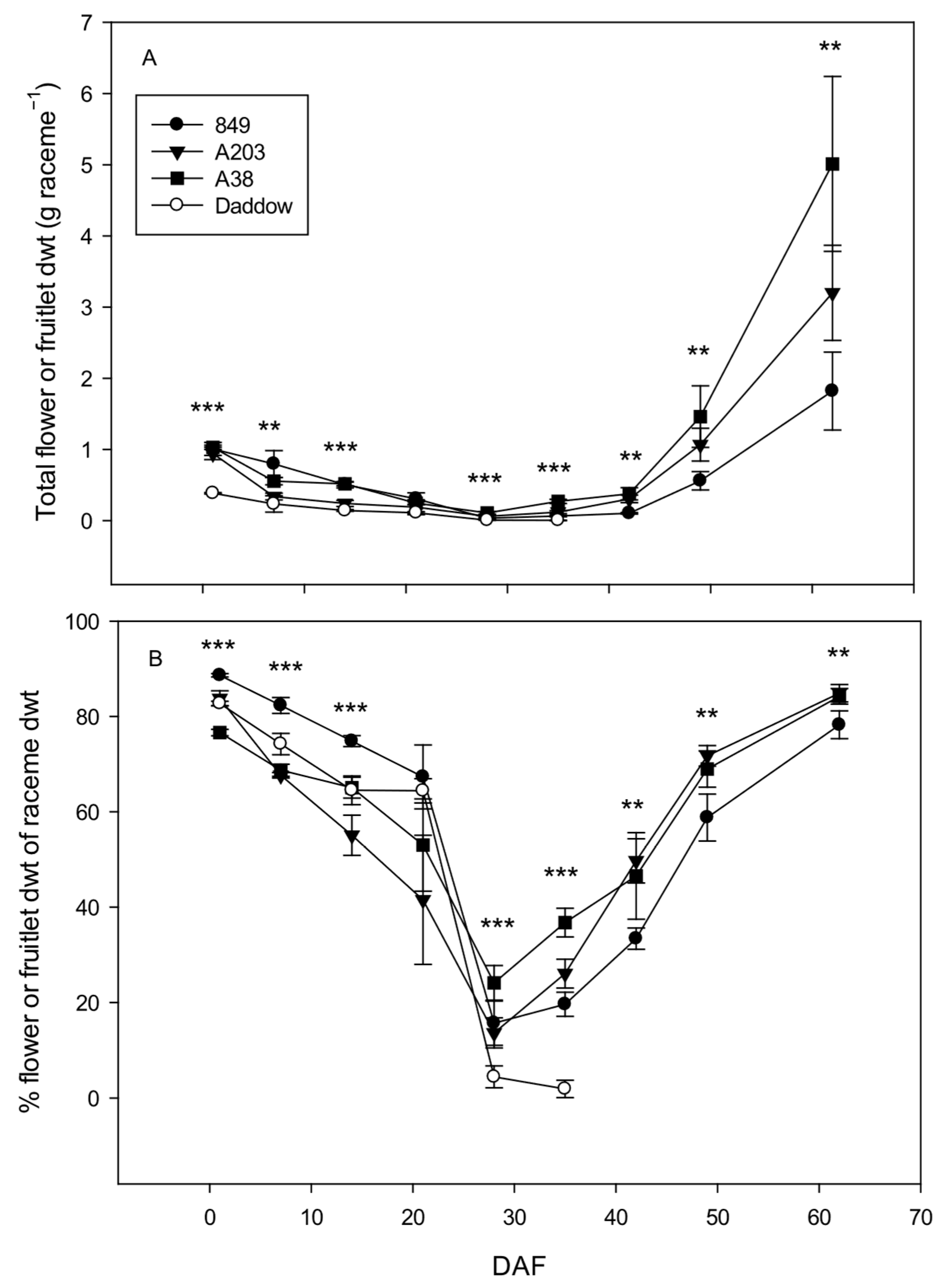
As a result of abortion, the raceme total flower and fruitlet dry weight declined in all cultivars by 60–80%, falling to the lowest values at 28 DAF (Figure 3A,B). Cultivar Daddow ovary weight as a percentage of raceme dry weight did not increase beyond 28 DAF and continued to decline. However, this date was a turning point for the other cultivars with rapid increases to 78 ± 3% in cv. 849 and 84–85 ± 2% in the other two cultivars (F3,9 = 4.23, p = 0.071). See Figure A2 for relative raceme size as well as flower and fruitlet numbers in the four cultivars.
Figure 3.
Total flower (pre-fertilisation) or fruitlet (post-fertilisation) dry weight (A), and percentage of flower or fruitlet dry weight of total raceme weight (B) during flowering and fruit set of cultivars 849, A203, A38, and Daddow. Means ± SEM, n = 4. Sampling date, cultivar and sampling date × cultivar interaction were significant for all parameters (p < 0.001). As Daddow racemes senesced and abscised after 35 DAF, no data were available for this cultivar beyond this time. ** and *** indicate significance of cultivar differences at p < 0.01 and 0.001, respectively, at each DAF.
3.2. Tissue Carbohydrates
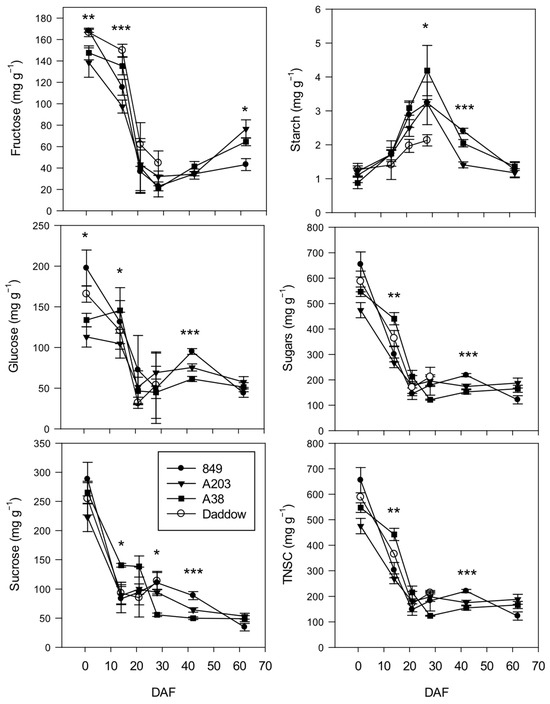
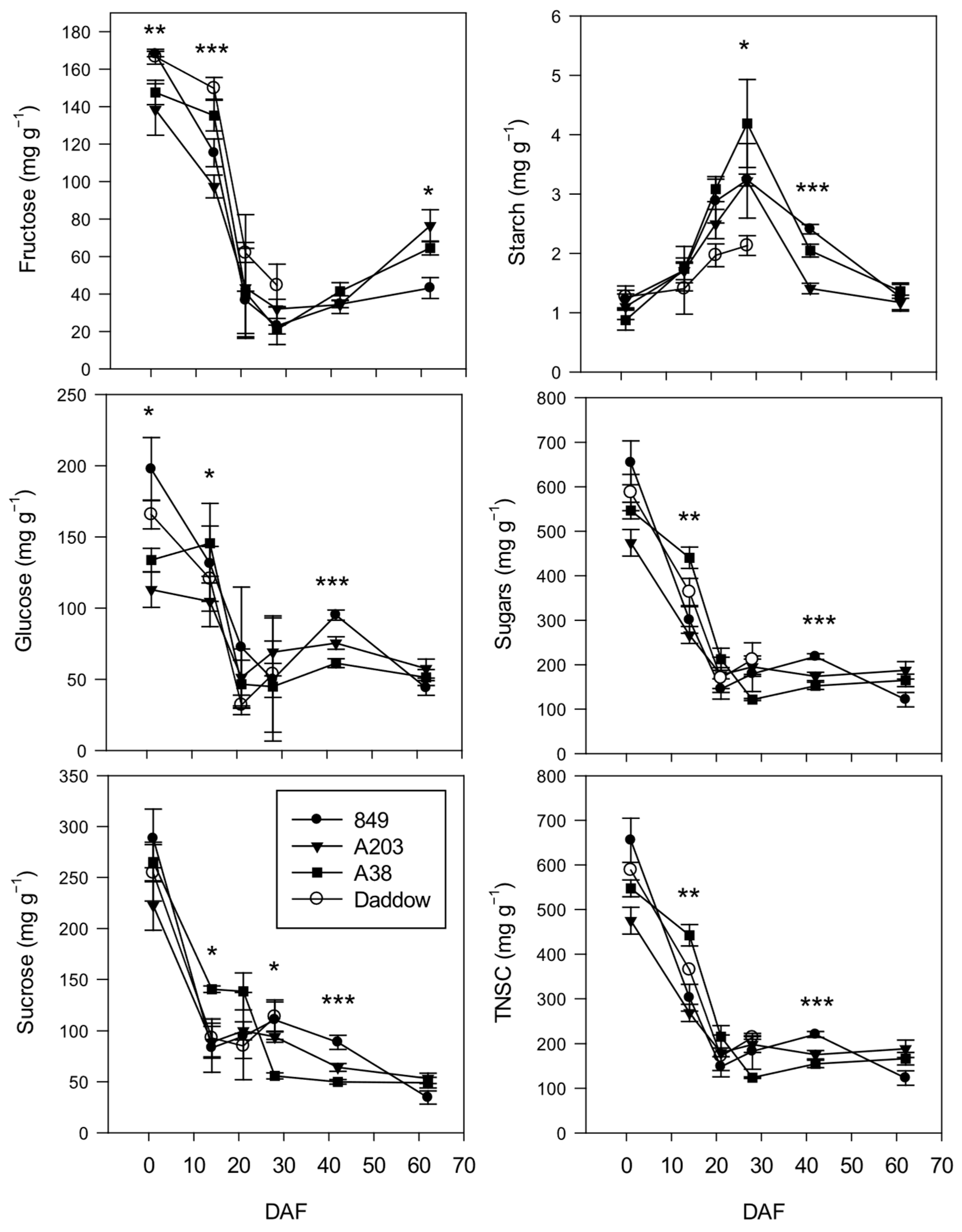
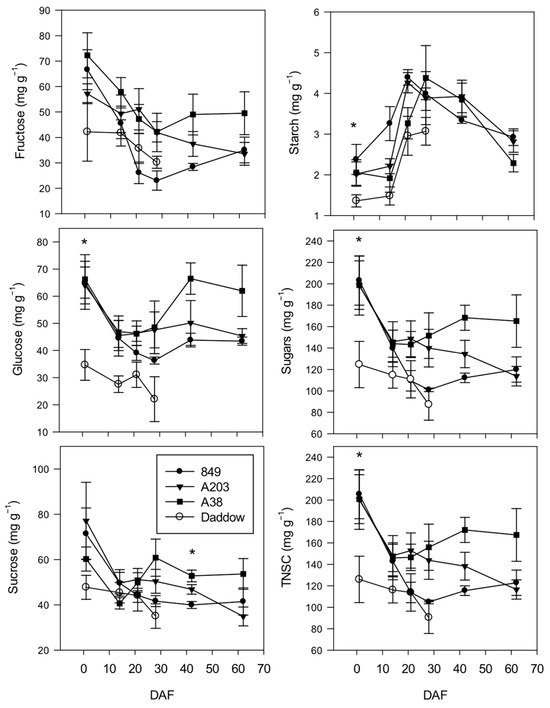
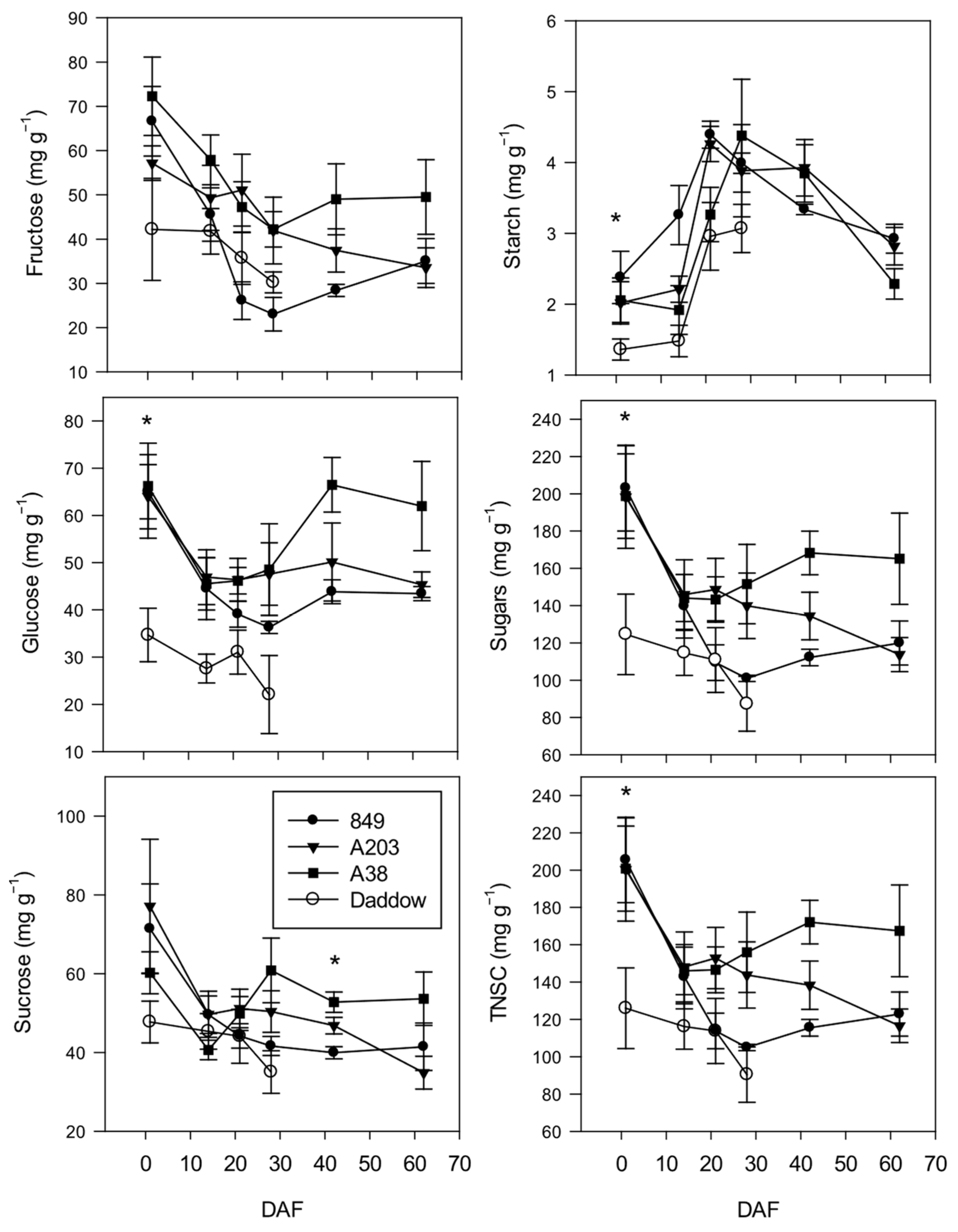
Flower and fruitlet fructose (F3,38 = 101.45, p = 0.001), glucose (F3,38 = 35.35, p = 0.001), sucrose (F3,38 = 53.02, p = 0.001) and total sugar (F3,38 = 48.79, p = 0.001) concentrations declined by more than half in all four cultivars from full bloom to 28 DAF (Figure 4). At bloom, sucrose concentrations, were between 220 and 290 mg g−1, which was 1.5–2-fold higher than fructose or glucose. Daddow sugar concentrations were in the same range as the other three cultivars, declining from 600 mg g−1 to 150 mg g−1. Starch concentrations in all cultivars were 100-fold lower than the sugars at flowering but subsequently increased approximately 4-fold to be between 2 and 3.5 mg g−1 (F3,38 = 20.05, p = 0.001). Starch concentrations were 30–50% lower for Daddow at 28 DAF (F3,9 = 4.19, p = 0.041). Abscission of Daddow ovules occurred by 28 DAF, precluding data collection beyond this stage. As a result of the relatively minute concentrations of starch relative to the sugars, flower and fruitlet total non-structural carbohydrates (TNSCs) also declined 2–5-fold over this period (F3,38 = 138.49, p = 0.001).
Figure 4.
Developmental changes in flower (pre-fertilisation) and fruitlet (post-fertilisation) total non-structural carbohydrate concentrations (mg g−1) in cultivars 849, A203, A38, and Daddow. Means ± SEM, n = 4. Sampling date was significant for fructose (p < 0.001), glucose (p < 0.001), sucrose (p < 0.001), starch (p < 0.001), sugars (p < 0.001), and TNSCs (p < 0.001). Cultivar was significant for fructose (p < 0.01), sugars (p < 0.05), and TNSCs (p < 0.01). The cultivar × sampling date interaction was significant for sucrose (p < 0.01), sugars (p < 0.001), and TNSCs (p < 0.001). *, ** and *** indicate significance of cultivar differences at p < 0.05, 0.01 and 0.001, respectively, at each DAF.
The fructose (F3,45 = 2.13, p = 0.109) and sucrose (F3,45 = 1.72, p = 0.177) concentrations in the rachis of Daddow racemes were not unlike those of the other cultivars (Figure 5). However, Daddow rachis glucose concentrations were 45% lower than the other three cultivars for the first sampling date, at 35 relative to 65 mg g−1 (F3,9 = 4.19, p = 0.041). At less than 5 mg g−1, rachis starch concentrations were a fraction of that of the sugars. Prior to senescing, Daddow rachis starch concentrations increased from 1.3 to 3.1 mg g−1, but it was significantly lower from the other cultivars only at anthesis (F3,9 = 3.94, p = 0.048). The other cultivars also peaked between 21 and 28 DAF, prior to declining.
Figure 5.
Developmental changes in rachis total non-structural carbohydrate concentrations (%) in cultivars 849, A203, A38, and Daddow. Means ± SEM, n = 4. Sampling date was significant for fructose (p < 0.001), glucose (p < 0.001), sucrose (p < 0.001), sugars (p < 0.001,) starch (p < 0.001) and TNSCs (p < 0.001). Cultivar was significant for fructose (p < 0.05), glucose (p < 0.01), sugars (p < 0.05), starch (p < 0.001), and TNSCs (p < 0.05). The cultivar × sampling date interaction was not significant for any parameter. * indicates significance of cultivar differences at p < 0.05 at each DAF.
A PCA of ovary number, ovary dry weight, ovary TNSCs and rachis TNSCs over the first four sampling dates (up to 30 DAF) of the combined four-cultivar dataset indicates that ovary fructose and rachis fructose concentrations were more closely associated with ovary number in comparison with the starch and the other sugars (Figure A3 and Figure A4). However, ovary sucrose and rachis starch concentrations were more closely associated with ovary dry weight than fructose or glucose concentrations.
3.3. Tissue Nutrient Concentrations
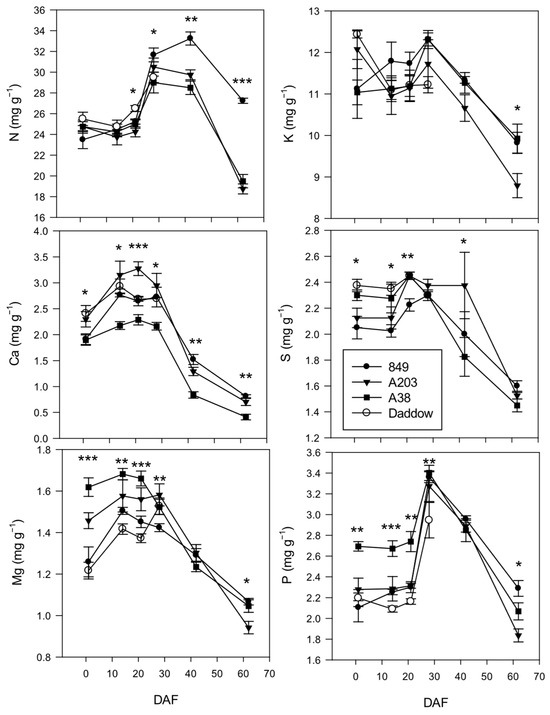
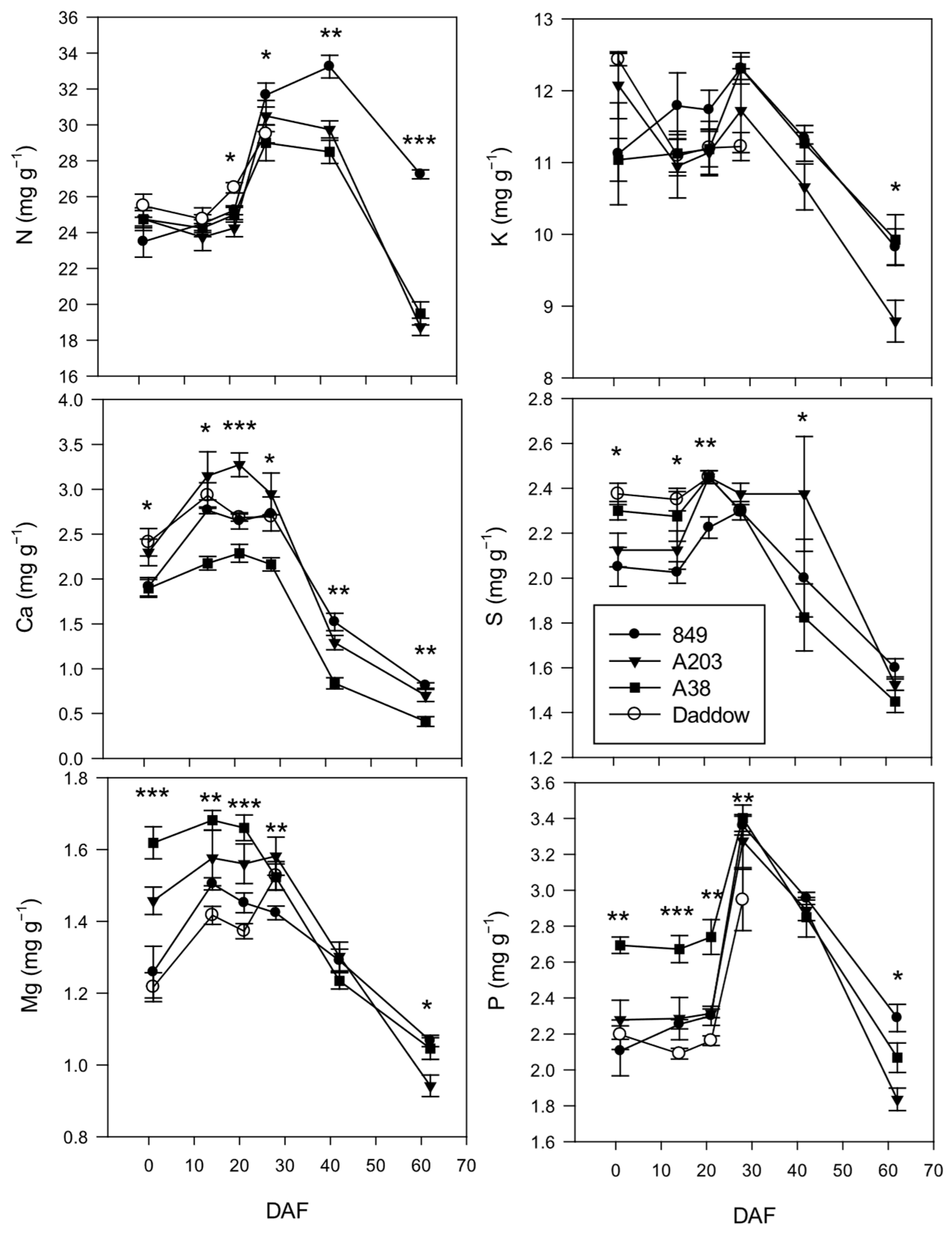
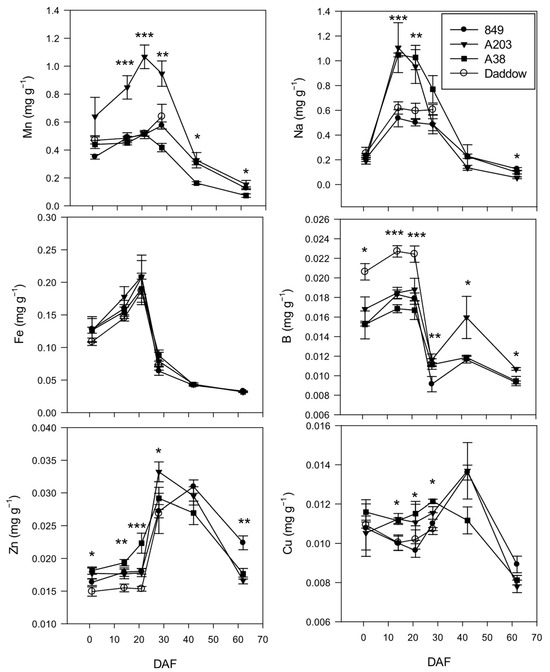
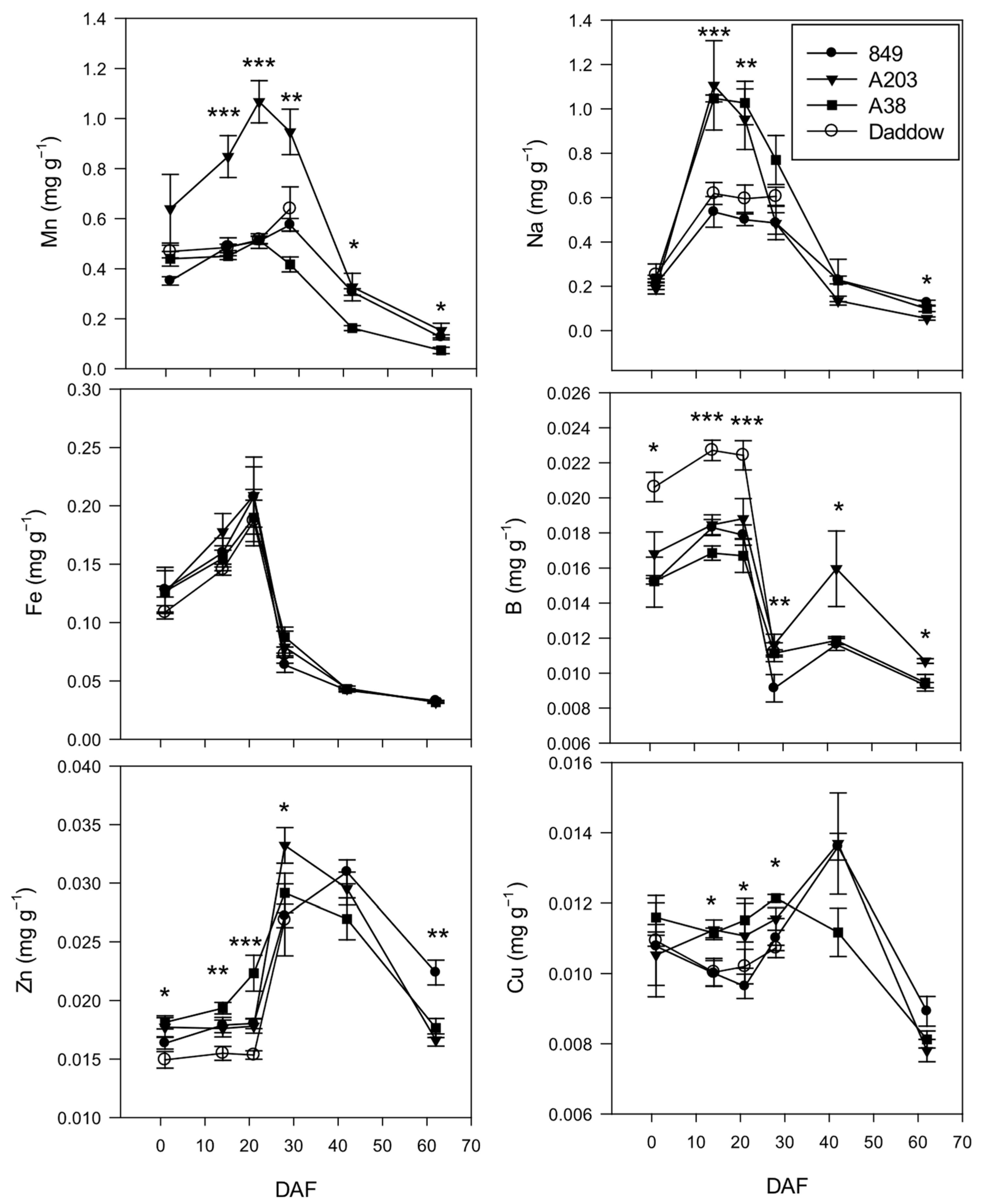
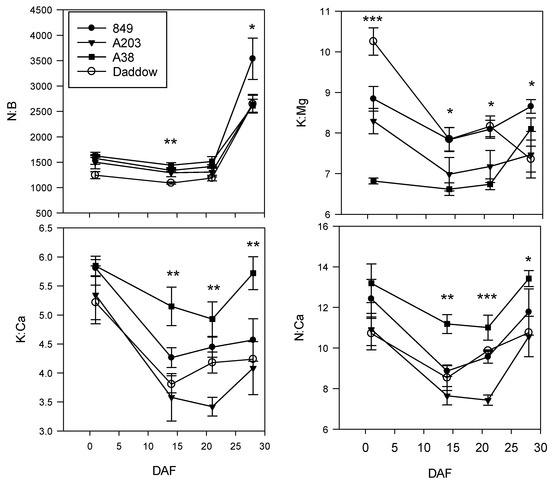
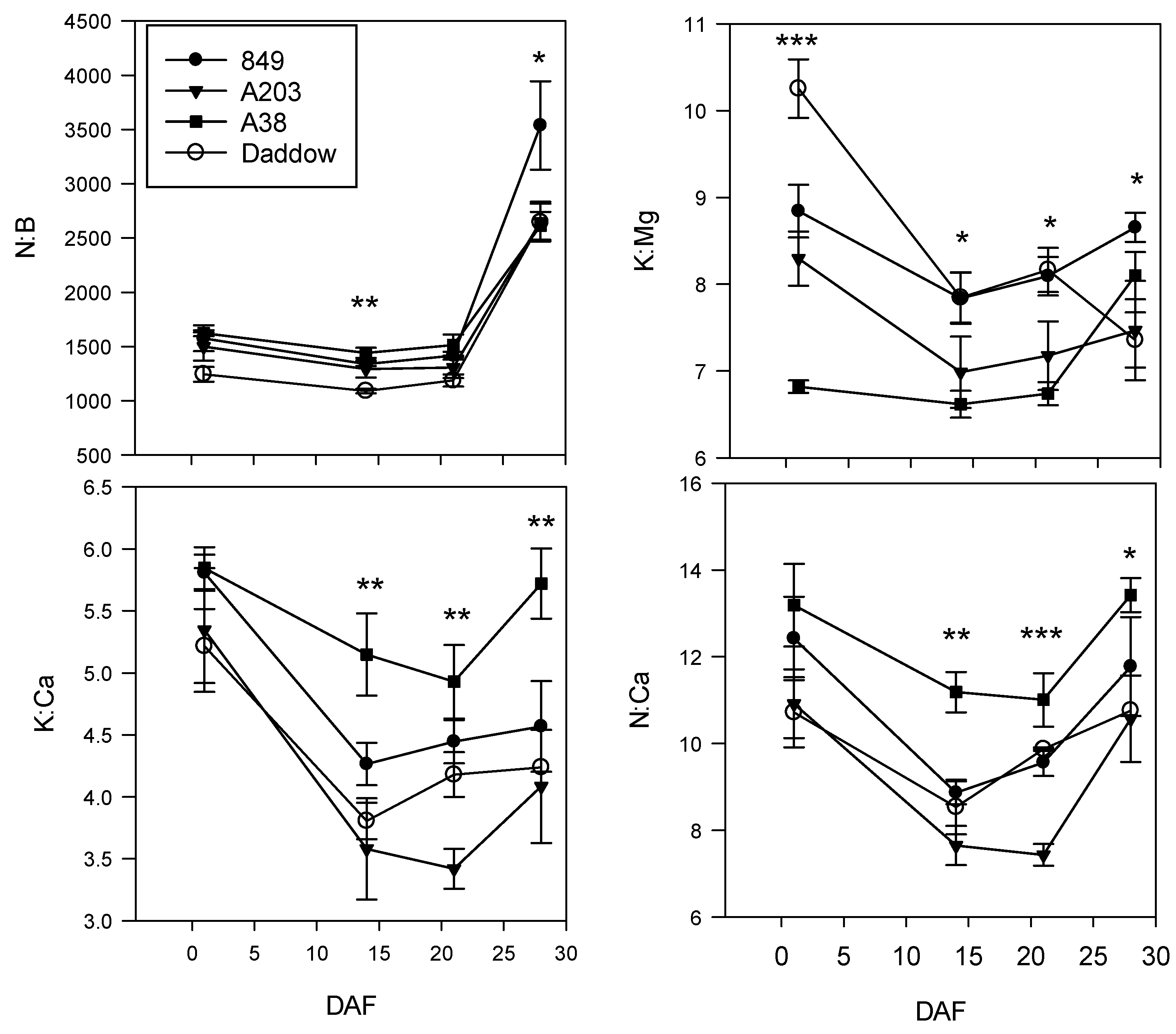
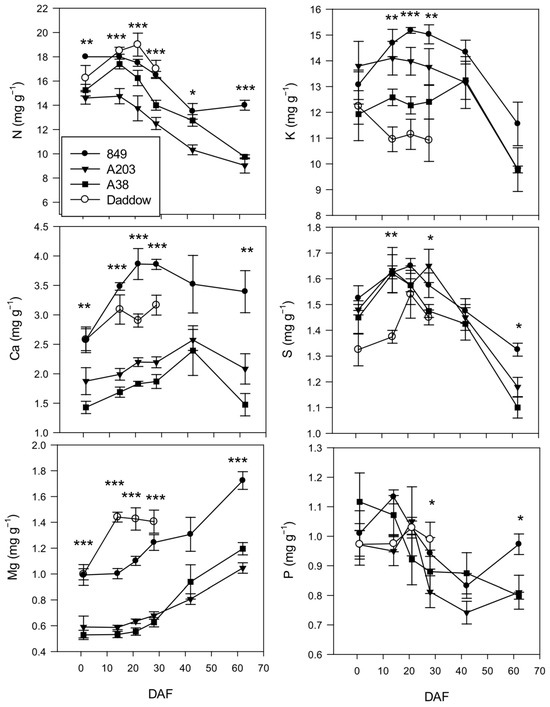
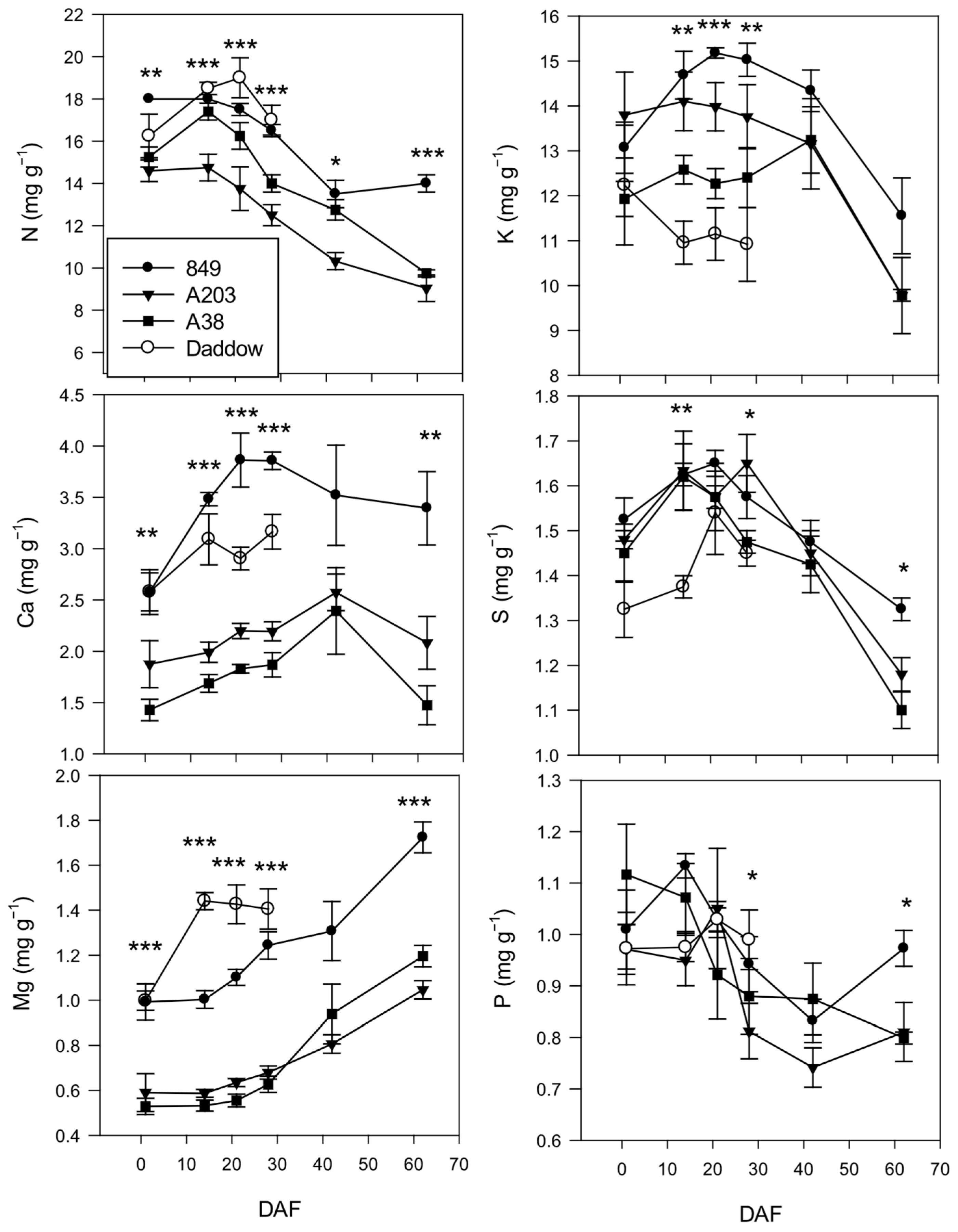
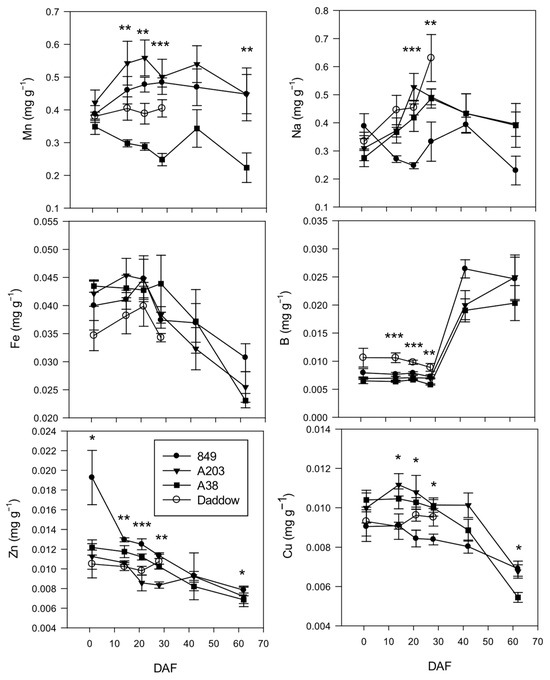
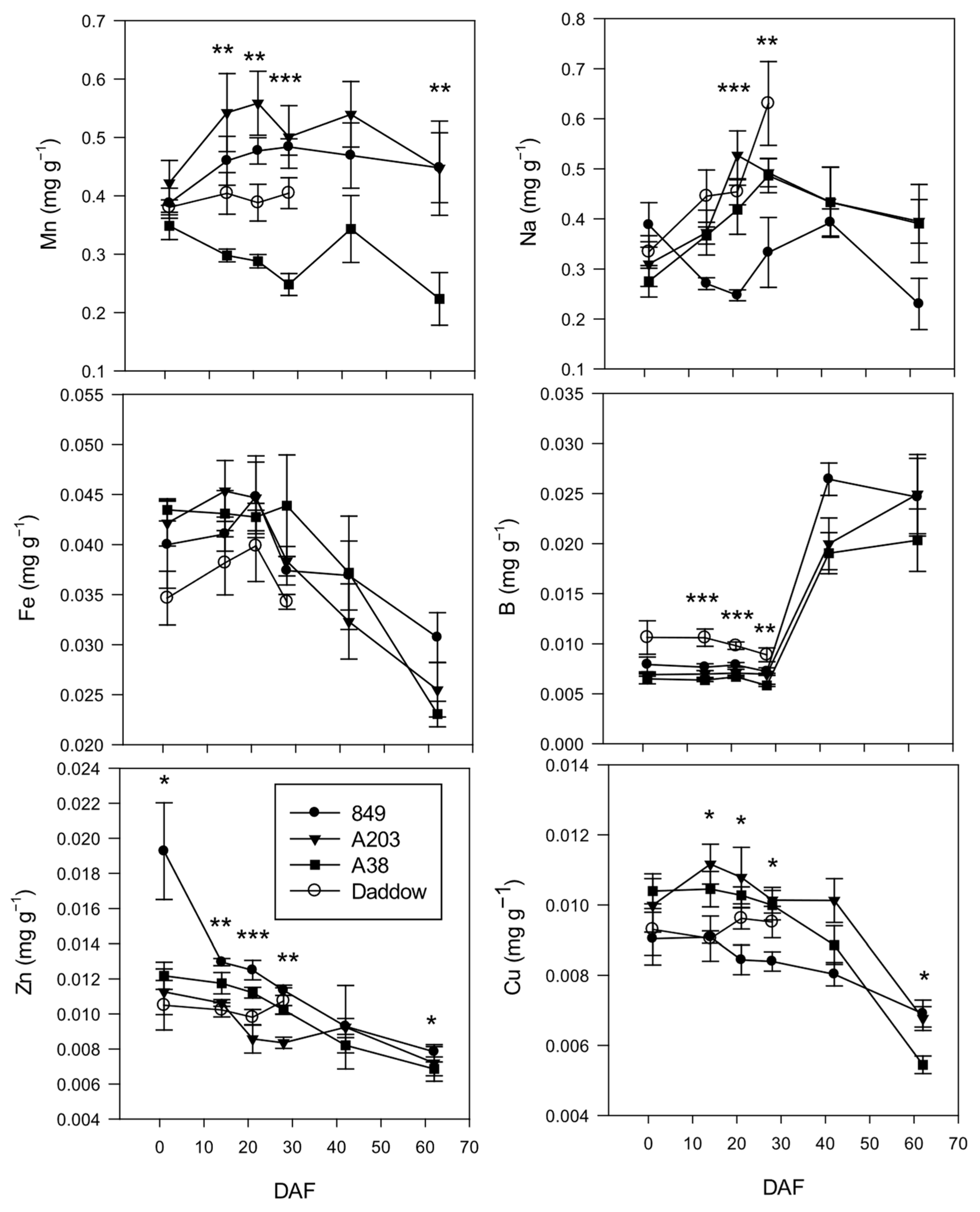
During the first month following full bloom, flower and fruitlet nutrient concentrations remained stable or increased. However, upon the onset of rapid ovary growth, nutrient concentrations declined by 50 to 75% (Figure 6 and Figure 7). Daddow N, K, Ca and S concentrations and trends were not unlike those of the other cultivars; however, magnesium (Mg) was 0.1–0.2 mg g−1 lower at 21 DAF (F3,9 = 13.26, p = 0.001). Boron was the only element in higher concentration for Daddow, about 20–40% higher than the other cultivars (F3,9 = 8.63, p = 0.005). This resulted in a 25–20% lower N:B ratio 14 DAF (F3,9 = 7.91, p = 0.01) (Figure 8). The K:Mg, K:Ca and N:Ca ratios were not unlike those of the other cultivars except for K:Mg at full bloom, which was 10–30% higher (F3,9 = 31.97, p = 0.001) (Figure 8).
Figure 6.
Developmental changes in flower (pre-fertilisation) and fruitlet (post-fertilisation) macronutrient concentrations (mg g−1) in cultivars 849, A203, A38, and Daddow. Means ± SEM, n = 4. Ovary enlargement began at 14 DAF. Sampling date was significant for N (p < 0.001), K (p < 0.001), P (p < 0.001), S (p < 0.001), Mg (p < 0.001), and Ca (p < 0.001). Cultivar was significant for N (p < 0.001), P (p < 0.001), Mg (p < 0.001), S (p < 0.05) and Ca (p < 0.001). The cultivar × sampling date interaction was significant for N (p < 0.001, K (p < 0.05), P (p < 0.001), Mg (p < 0.001), S (p < 0.01), and Ca (p < 0.05). *, ** and *** indicate significance of cultivar differences at p < 0.05, 0.01 and 0.001, respectively, at each DAF.
Figure 7.
Developmental changes in fruitlet micronutrient concentrations (mg g−1) in cultivars 849, A203, A38, and Daddow. Means ± SEM, n = 4. Sampling date was significant for Mn (p < 0.001), Na (p < 0.001), Fe (p < 0.001), B (p < 0.001), Zn (p < 0.001), and Cu (p < 0.001). Cultivar was significant for Mn (p < 0.001), Na (p < 0.01), Fe (p < 0.05), B (p < 0.001), Zn (p < 0.001), and Cu (p < 0.001). The cultivar × sampling date interaction was significant for Mn (p < 0.001), Na (p < 0.001), Fe (p < 0.001), B (p < 0.05), Zn (p < 0.001), and Cu (p < 0.001). *, ** and *** indicate significance of cultivar differences at p < 0.05, 0.01 and 0.001, respectively, at each DAF.
Figure 8.
Developmental changes in fruitlet N:B, K:Mg, K:Ca and N:Ca in cultivars 849, A203, A38, and Daddow. Means ± SEM, n = 4. Sampling date was significant for N:B (p < 0.001), K:Mg (p < 0.001), K:Ca (p < 0.001), and N:Ca (p < 0.001). Cultivar was significant for N:B (p < 0.001), K:Mg (p < 0.001), K:Ca (p < 0.001), and N:Ca (p < 0.001). The cultivar × sampling date interaction was significant for N:B (p < 0.001), K:Mg (p < 0.001), K:Ca (p < 0.001), and N:Ca (p < 0.001). *, ** and *** indicate significance of cultivar differences at p < 0.05, 0.01 and 0.001, respectively, at each DAF.
A PCA of ovary number, ovary dry weight and ovary nutrients over the first four sampling dates (up to 30 DAF) of the combined four-cultivar dataset indicates that none of the nutrients were tightly correlated with ovary number (Figure A5). Ovary Mn, Ca and Mg concentrations were negatively correlated with ovary number. However, P, N and Zn concentrations were most closely correlated with ovary dry weight. Of the three different ratios, the K:Ca ratio was most closely correlated with ovary number.
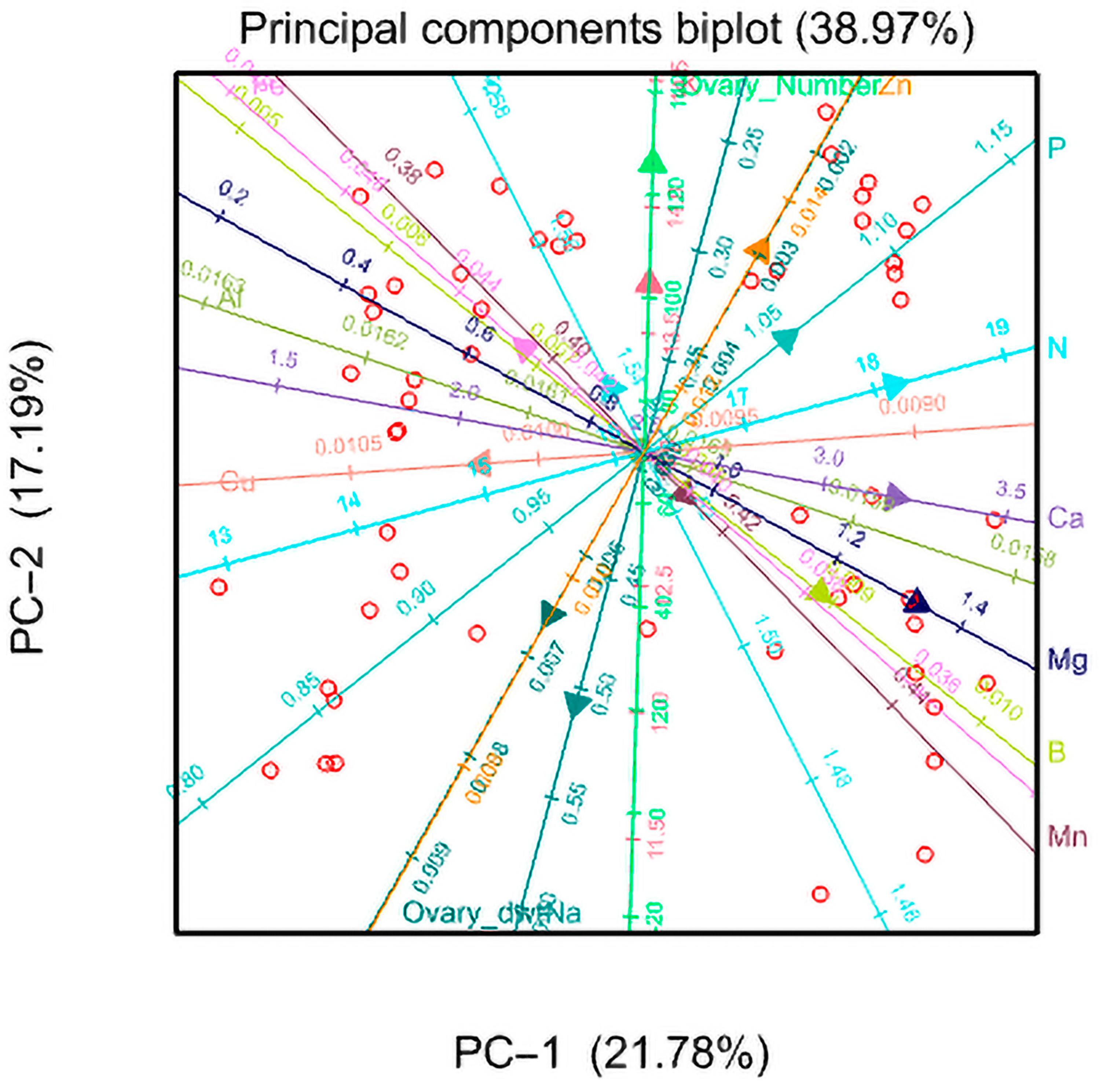
Rachis macronutrient concentrations were in the same range as those of the flowers or fruitlets apart from N and P which were approximately 50% lower (Figure 9). Of the micronutrients, iron (Fe), aluminium (Al), and Zn were also significantly lower in the rachis (Figure 10). As averaged across the sampling dates, the rachis of cv. Daddow contained lower K (F3,57 = 18.24, p = 0.001), S (F3,57 = 5.47, p = 0.002), and Fe (F3,56 = 3.96, p = 0.012) concentrations relative to the other cultivars, while Mg (F3,57 = 90.51, p = 0.001) and B (F3,56 = 29.83, p = 0.001) concentrations were higher. A PCA of the rachis nutrients indicated that there was no strong driver for ovary number with only 39% of the variation accounted for (Figure A6). Rachis Mn and Na concentrations were negatively correlated with ovary number.
Figure 9.
Developmental changes in rachis macronutrient concentrations (mg g−1) in cultivars 849, A203, A38, and Daddow. Means ± SEM, n = 4. Sampling date was significant for N (p < 0.001), K (p < 0.001), P (p < 0.001), S (p < 0.001), Mg (p < 0.001), and Ca (p < 0.001). Cultivar was significant for N (p < 0.001), K (p < 0.001), Mg (p < 0.001), and Ca (p < 0.001). The cultivar × sampling date interaction was significant for N (p < 0.01, P (p < 0.05), Mg (p < 0.001), and S (p < 0.05). *, ** and *** indicate significance of cultivar differences at p < 0.05, 0.01 and 0.001, respectively, at each DAF.
Figure 10.
Developmental changes in rachis micronutrient concentrations (mg g−1) in cultivars 849, A203, A38, and Daddow. Means ± SEM, n = 4. Sampling date was not significant for Mn but was significant for Na (p < 0.001), Fe (p < 0.001), B (p < 0.001), Zn (p < 0.001), and Cu (p < 0.001). Cultivar was significant for Mn (p < 0.001), Na (p < 0.01), Zn (p < 0.001), and Cu (p < 0.01). The cultivar × sampling date interaction was significant for Na (p < 0.001), Fe (p < 0.001), Zn (p < 0.001), and Cu (p < 0.05). *, ** and *** indicate significance of cultivar differences at p < 0.05, 0.01 and 0.001, respectively, at each DAF.
Leaf nutrient concentrations at 63 DAF are presented in Table 1. Leaf N concentration was highest for Daddow and A38 at 17–18 mg g−1 (F3,12 = 10.86, p = 0.001) (Figure 1A). Conversely, leaf Ca and Mg were lower for Daddow as well as cv. 849. Manganese (Mn) and sodium (Na) concentrations were also lower for Daddow and cv. 849 relative to the two other cultivars. The remaining nutrients in Daddow leaves were in the same range as the other cultivars.
Table 1.
Leaf nutrient concentrations at 63 DAF in cultivars 849, A203, A38, and Daddow. Means ± SEM, n = 4.
4. Discussion
The macadamia racemes in this study contained 100–300 flowers, but less than 3% developed into mature nuts. Flower and fruitlet abortion was extensive in all four cultivars examined, but in Daddow, this was nearly complete so that no fruit developed on these racemes. At 100% anthesis, Daddow racemes were shorter with lower rachis dry weight and up to 50% fewer flowers. Pollination, ovule fertilisation, petal senescence and visible onset of fruit growth occurred within 2 weeks of bloom for the three other cultivars, but not for Daddow. Very few ovaries initiated growth, and those that did were aborted soon after. This could be due to a sink failure or a source failure. A sink failure suggests failed fertilisation due to ineffective pollination, or early embryo abortion due to external biotic or abiotic stresses. Heavy rain (200 mm) from 23 to 25 DAF did not hinder the onset of ovary expansion in the other three cultivars. Given their synchronised phenology, this weather event was likely not the cause of Daddow’s high abortion rates. Instead, its chronic low yield suggests internal constraints, potentially related to the resources required for fruit development. A source failure leads to a nutrient or carbohydrate deficit within the fruitlet and its subsequent abortion [16,33]. Carbohydrate availability is critical for fruitlet retention, not only as a metabolic substrate for growth but also through its regulatory role in sugar signalling pathways [34]. For instance, low carbohydrate availability is associated with reduced auxin signalling while enhancing ethylene biosynthesis and sensitivity, thereby promoting abscission [35]. Sink competition, including between vegetative and reproductive tissues, may exacerbate carbohydrate depletion [36]. Daddow’s vigorous canopy [28] likely increases competition with reproductive organs for resources. Moreover, the dense canopy results in significant shading, potentially further reducing the canopy net C assimilation rate and exacerbating carbohydrate limitation.
To investigate the sink failure hypothesis, pollination and fertilisation were assessed. At anthesis, the flowers of all four cultivars contained high sugar concentrations, and this is likely because these delicate structures with low biomass are nectar-producing [37]. The nectary disc is positioned on the base of the ovary inside the perianth and produces sugars to attract insects [38,39]. The sugar concentration in the flowers of Daddow were similar to the other three cultivars, suggesting there was sufficient insect attractant. The sugars of the stigma and style may also provide energy for pollen germination and tube growth [40]. Given the success of Daddow as a cross-pollinating cultivar [28], these results indicate that rather than pollination, fertilisation or post-fertilisation factors are likely important to the low yields of this cultivar.
To assess the source failure hypothesis, rachis and fruitlet TNSCs were considered. In macadamia, there is good evidence that carbohydrate effects are local rather than whole-tree [41]. However, the extent of this localisation may depend on source–sink relationships. In tree crops more broadly, mobilisation of carbohydrate reserves from distal tissues, including roots, trunk and structural branches, has been shown to partially contribute to reproductive sink requirements under periods of high demand, such as intense flowering or heavy crop load [6,42]. In a macadamia pruning study, increased post-pruning shoot growth decreased stem TNSCs and increased fruit abscission [41]. These effects were localised to the same branches, suggesting that carbohydrate supply within the immediate axis (shoot/inflorescence system) matters.
Rachis glucose and starch concentrations were lower for Daddow relative to the other cultivars. While there is limited direct evidence that TNSC concentration within the rachis itself regulates fertilisation or fruit set, this portion of the raceme can gain reasonable increases in secondary girth over the season, acting as potential sites for TNSC storage and mobilisation. The considerably lower dry weight of the Daddow raceme from the onset of anthesis may be contributing to lower TNSC availability for pollination, fruit set and retention. Moreover, because the rachis holds the conduits for carbohydrate transport [43], the low TNSC concentrations in the rachis may suggest limited source supply from its local branches. Given that glucose functions as an important signalling molecule during fruit set, its reduced concentration in the rachis of Daddow may further constrain fruitlet retention by limiting cell division and promoting cell death [44]. In addition to its signalling role, glucose provides a key substrate for cellular respiration and biosynthetic processes supporting cell division and expansion during tissue growth and development [45].
Starch concentrations of Daddow flowers at anthesis were similar to those of the other cultivars but did not increase as rapidly over the first month following anthesis, resulting in up to 50% lower concentrations prior to abortion. This suggests sluggish accumulation of carbon reserves to support fruit retention. In other tree crops, including avocado [46] and apricot [47], flowers with a lower percentage of subsequent fruit set also tend to contain less starch. Starch accumulated in floral tissues can be remobilised during and after anthesis, supporting fertilisation and early fruit development, including ovary growth, pollen tube progression and early embryo development [47]. As such, lower starch reserves may reduce sink strength and increase the likelihood of early fruitlet abortion [48].
Boron is critical for pollen tube growth and fertilisation [49,50]. Leaf B was low for all cultivars compared to recommended standards [32], but not significantly lower for Daddow. Examining nutrient levels within the flowers and fruitlets themselves could provide further insight into Daddow’s inferior fruit set rates. However, as with leaf, flower and fruitlet B concentrations, Daddow’s concentrations were not lower than those of the other cultivars, suggesting that B was not limiting. Fruitlet Zn was somewhat lower for Daddow compared to the fruitlets of the other cultivars. Zn is critical for auxin production [51,52] to maintain fruit retention [53]. Additionally, Ca is critical for membrane stability and cell division shortly after pollination [54,55]. Leaf Ca was low in Daddow and in cv. 849, however fruitlet Ca was not lower for Daddow compared to the others. Overall fruitlet Ca was higher than leaf Ca, which is consistent with successful transport to the fruitlet.
The nutrients of the Daddow rachis were in the same range as the other cultivars, with the exception of K. This macronutrient was lower in Daddow leaves relative to the other cultivars. Potassium plays a central role in phloem loading and transport of sugars [19]. It regulates osmotic gradients that drive sucrose movement, and when K is low, fruitlets may become carbon starved. Potassium also regulates osmotic potential, thereby promoting cell expansion in the fruitlet. If the rachis cannot supply adequate K, the fruitlets cannot maintain adequate turgor. Furthermore, adequate K supports auxin activity [56], a hormone that suppresses abscission zone formation [57]. Taken together, low K in the rachis may tip the balance towards higher fruit drop.
5. Conclusions
We can infer from these results that Daddow plants committed nutrient and carbohydrate resources to the rachis and flowers. However, this commitment ceased at around fruit set and the formation of abscission zones was not suppressed. The high rate of fruitlet abscission in Daddow shortly after anthesis is consistent with inadequate maternal carbohydrate rather than low sink strength. Additionally, lower levels of K may have contributed to the low fruit set rates of this cultivar.
Author Contributions
Conceptualisation, S.Y.R. and T.J.R.; methodology and data collection, S.Y.R., J.T.P., M.T., G.C.R. and K.J.; formal analysis, S.Y.R.; writing—original draft preparation, S.Y.R.; writing—review and editing, all authors; funding acquisition T.J.R. All authors have read and agreed to the published version of the manuscript.
Funding
This research was funded by the ARC Linkage Program, grant number LP220100073 in partnership with the Australian Macadamia Society and NSW Department of Primary Industries and Regional Development.
Data Availability Statement
The original contributions presented in this study are included in the article. Further inquiries can be directed to the corresponding author.
Acknowledgments
We thank David Robertson, Zoe Groom and Yen Tu for the technical support they provided to this study. We also thank Jeremy Bright for critically reviewing the manuscript.
Conflicts of Interest
The authors declare no conflicts of interest.
Abbreviations
The following abbreviations are used in this manuscript:
| DAF | Days After Flowering |
| VPD | Vapour Pressure Deficit |
Appendix A
Figure A1.
Daily maximum and minimum temperature, precipitation (A) and average daily VPD and solar radiation (B) during the sampling period.
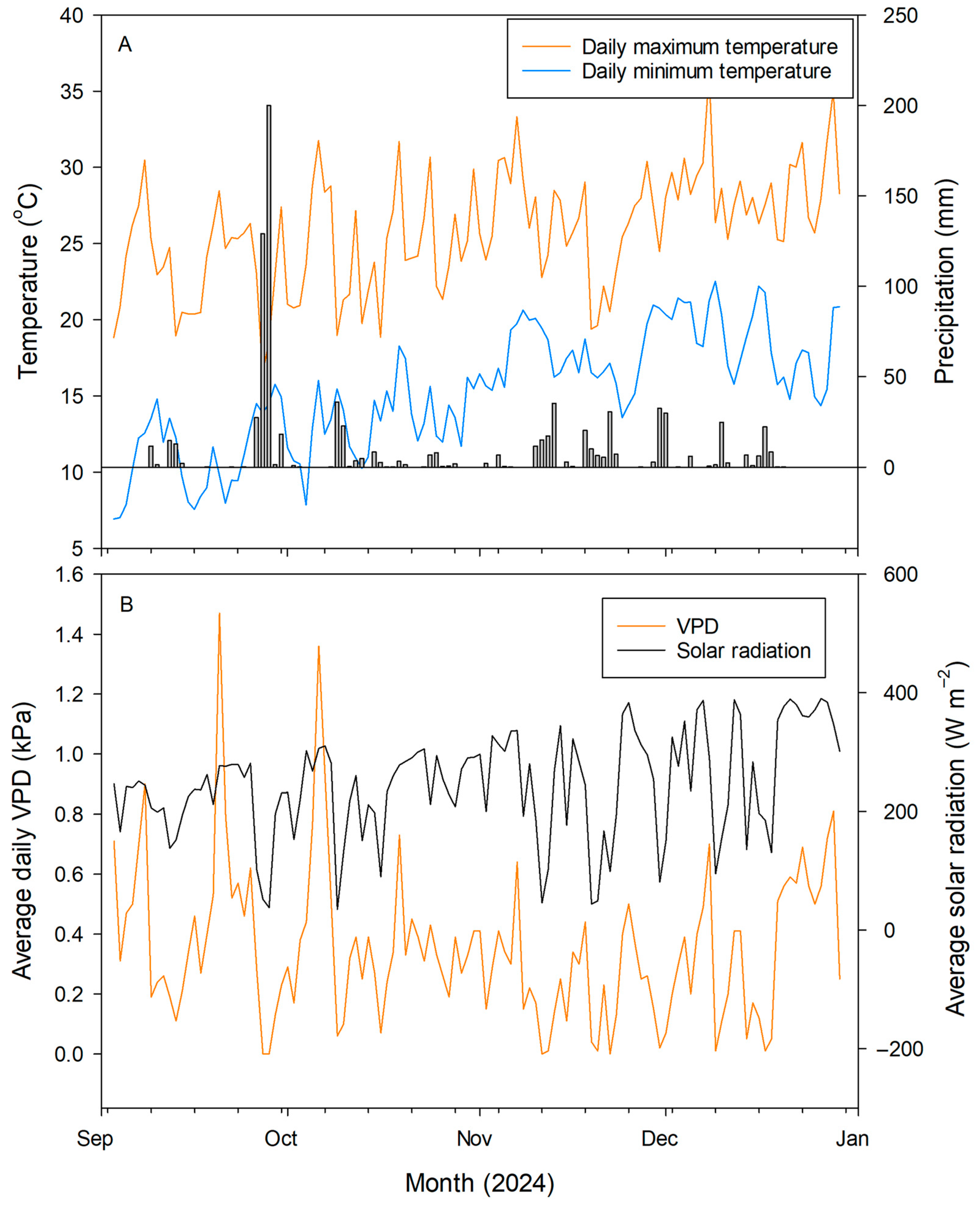
Figure A2.
Flowering, fruit set, abortion and fruit growth of four macadamia cultivars. The panels on the left compare all four cultivars in order from left to right: Daddow, 849, A203 and A38. The panels on the right are a close-ups of Daddow racemes until 28 DAF, beyond this are close-ups of A38 as Daddow racemes had senesced beyond this point.
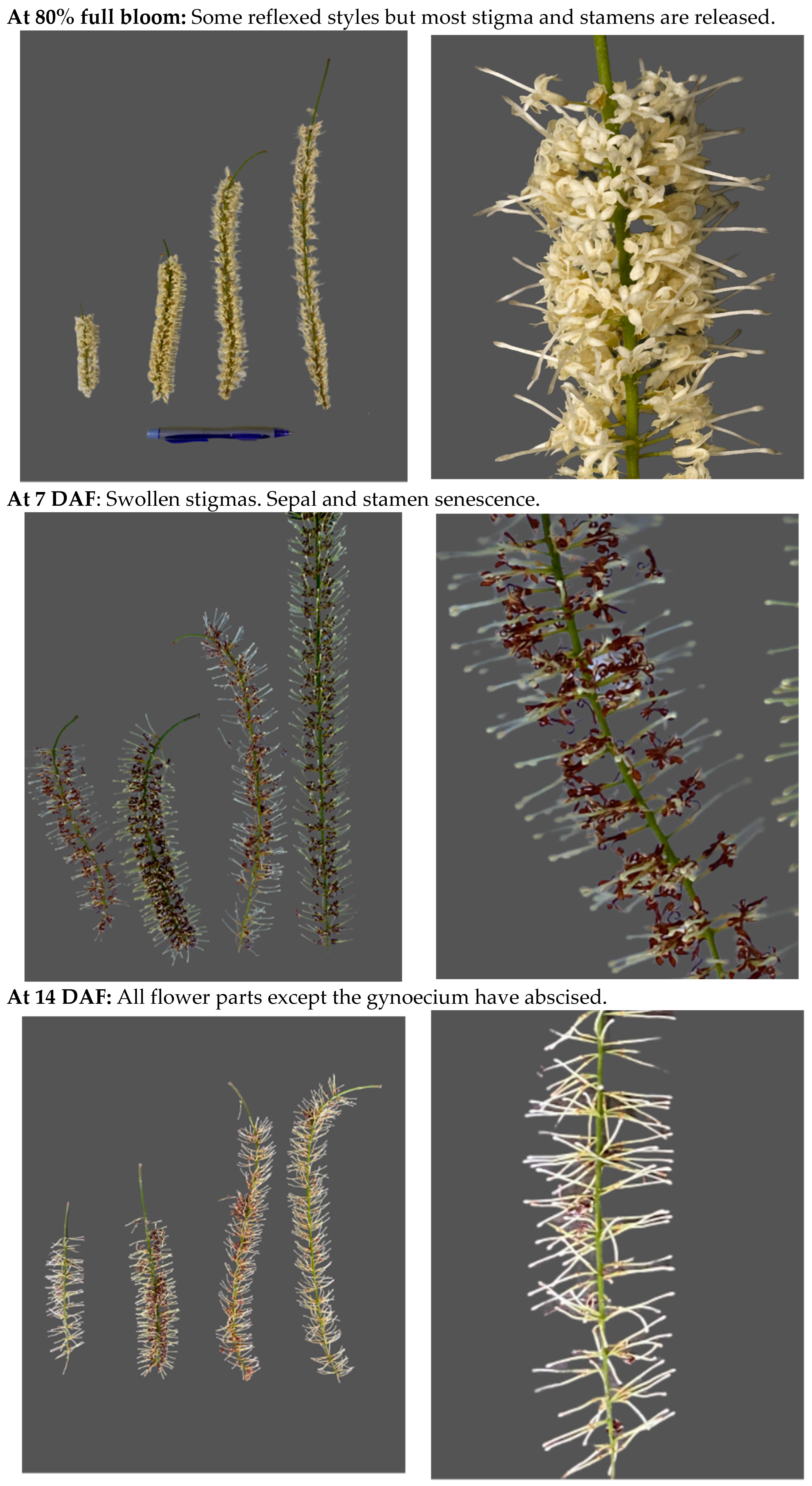
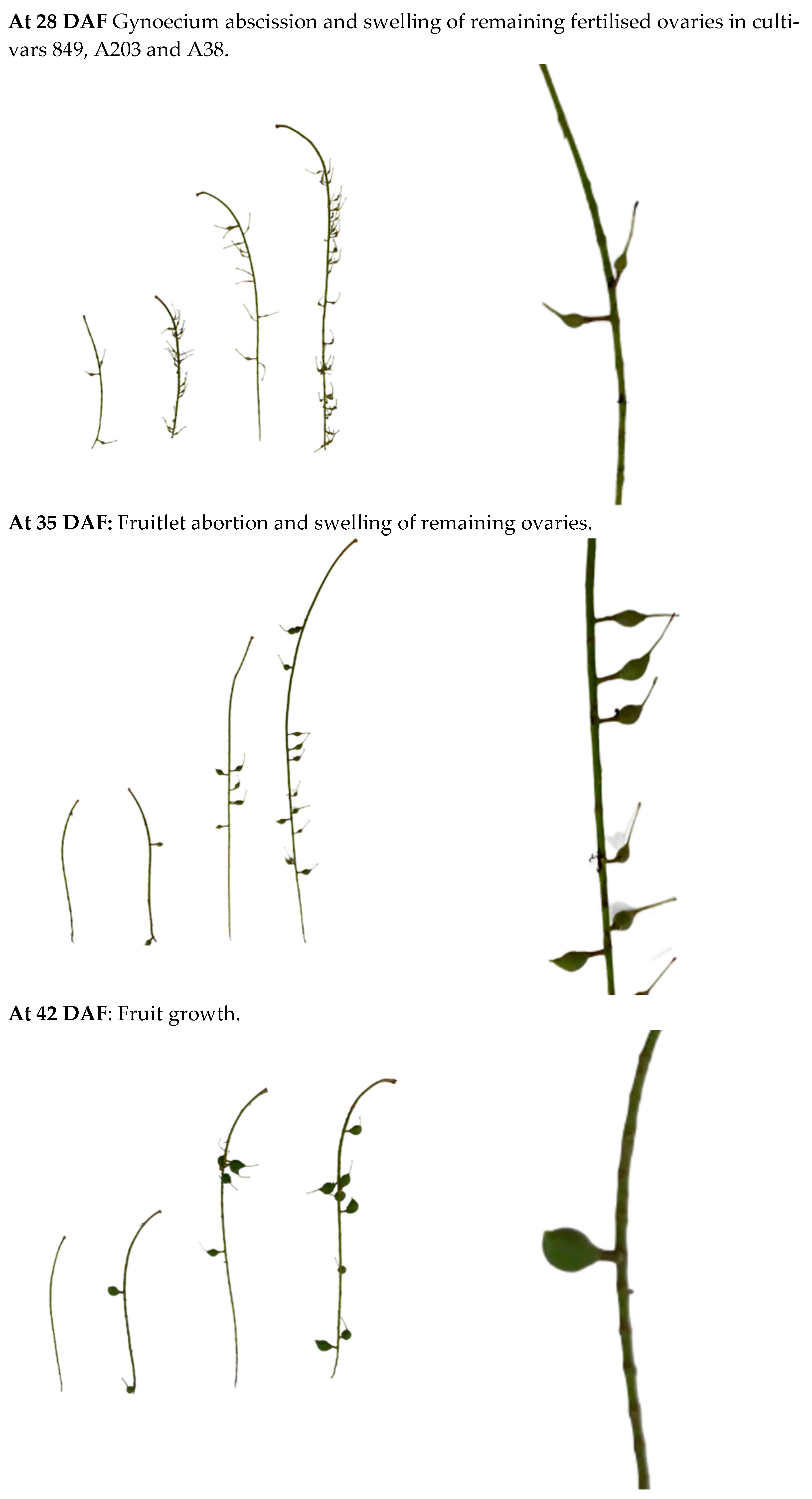
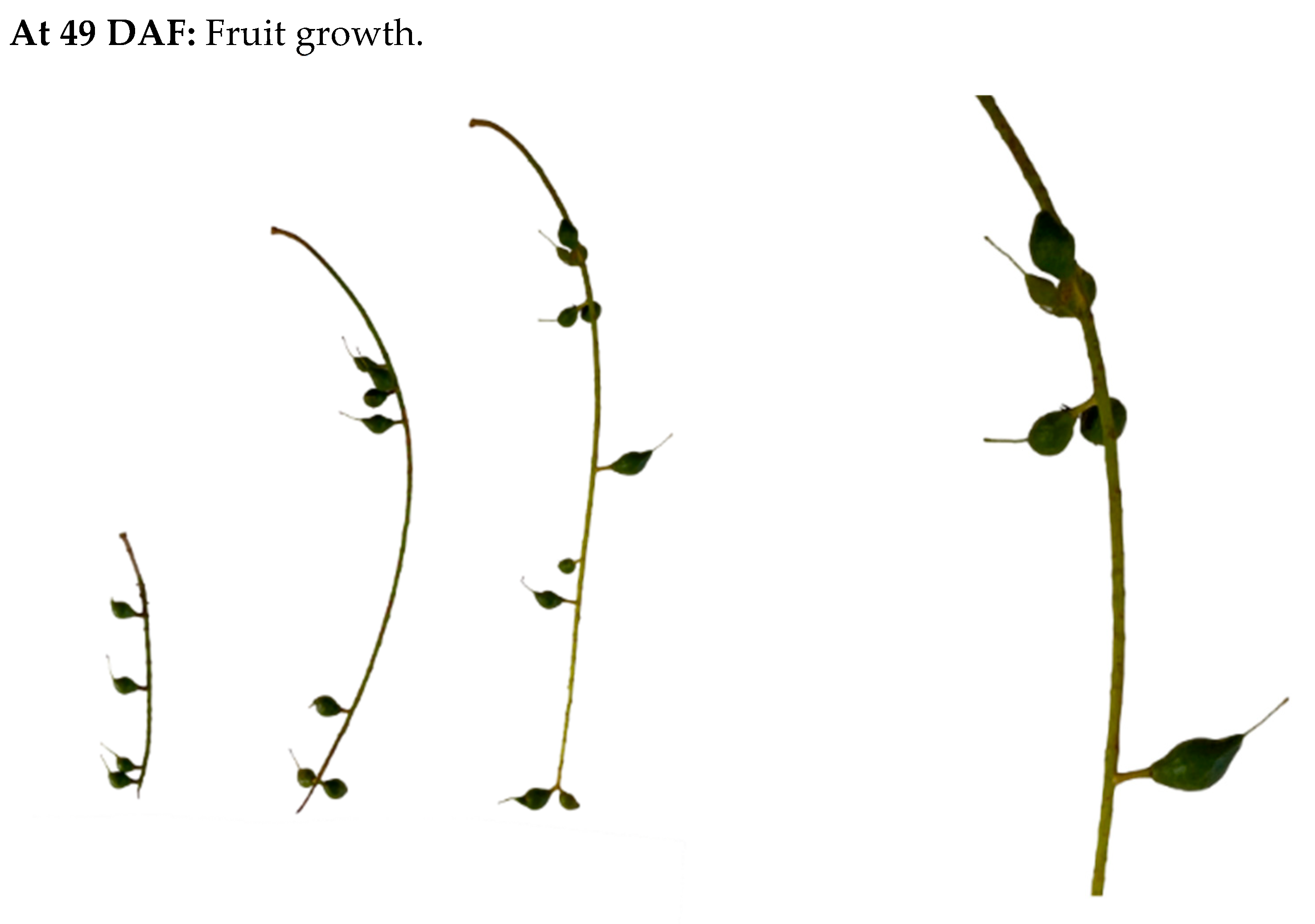
Figure A3.
PCA of ovary number, ovary dry weight and ovary TNSCs over the first four sampling dates (up to 30 DAF) of the combined four-cultivar dataset. Vector length reflects the strength of each nutrient’s contribution to the principal components. The angle between vectors indicates the correlation among parameters (acute angles = positive correlation; obtuse angles = negative correlation; right angles ≈ no correlation).
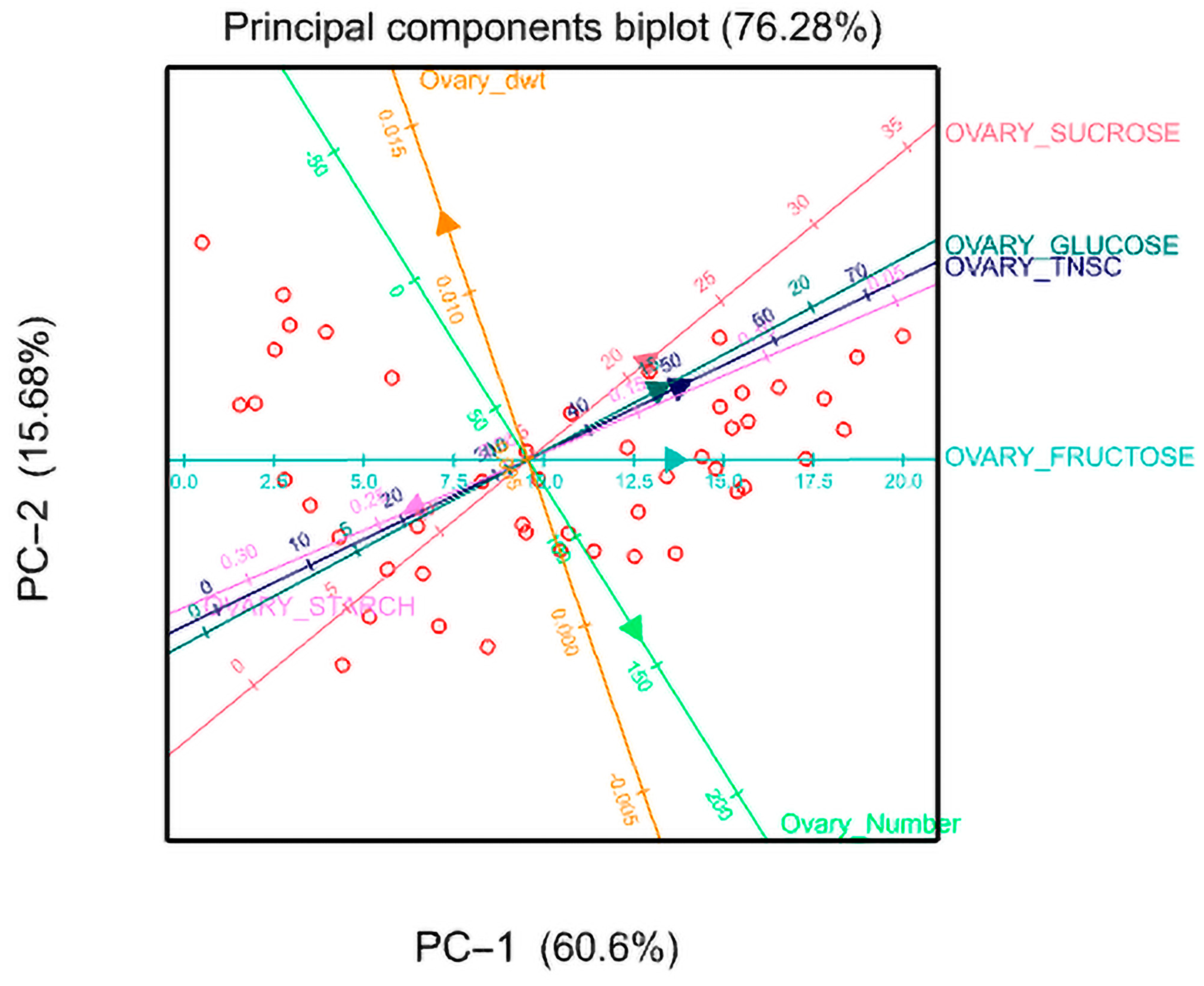
Figure A4.
PCA of ovary number, ovary dry weight and rachis TNSC over the first four sampling dates (up to 30 DAF) of the combined four-cultivar dataset. Vector length reflects the strength of each nutrient’s contribution to the principal components. The angle between vectors indicates the correlation among parameters (acute angles = positive correlation; obtuse angles = negative correlation; right angles ≈ no correlation).
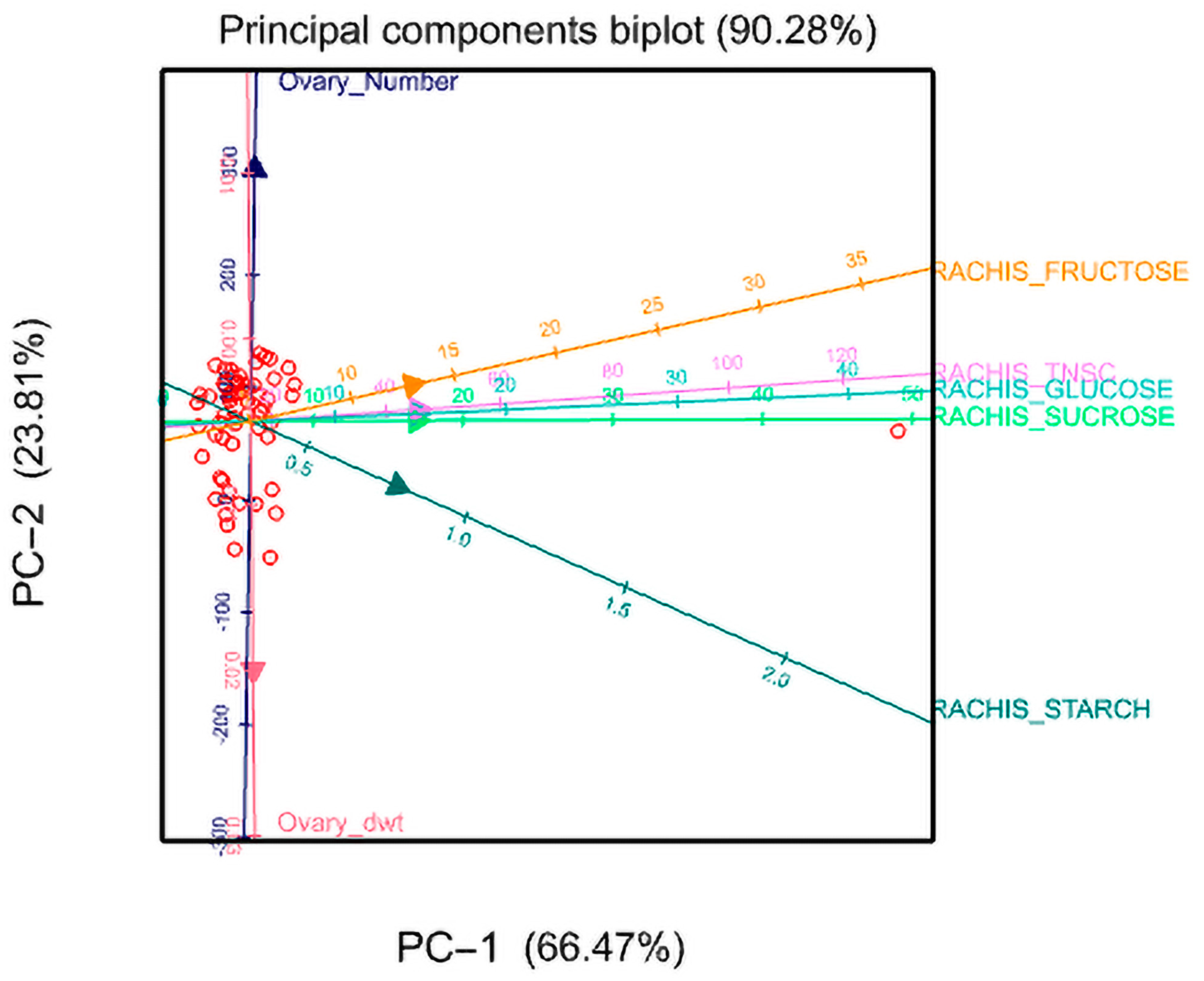
Figure A5.
PCA of ovary number, ovary dry weight and ovary nutrients over the first four sampling dates (up to 30 DAF) of the combined four-cultivar dataset. Vector length reflects the strength of each nutrient’s contribution to the principal components. The angle between vectors indicates the correlation among parameters (acute angles = positive correlation; obtuse angles = negative correlation; right angles ≈ no correlation).
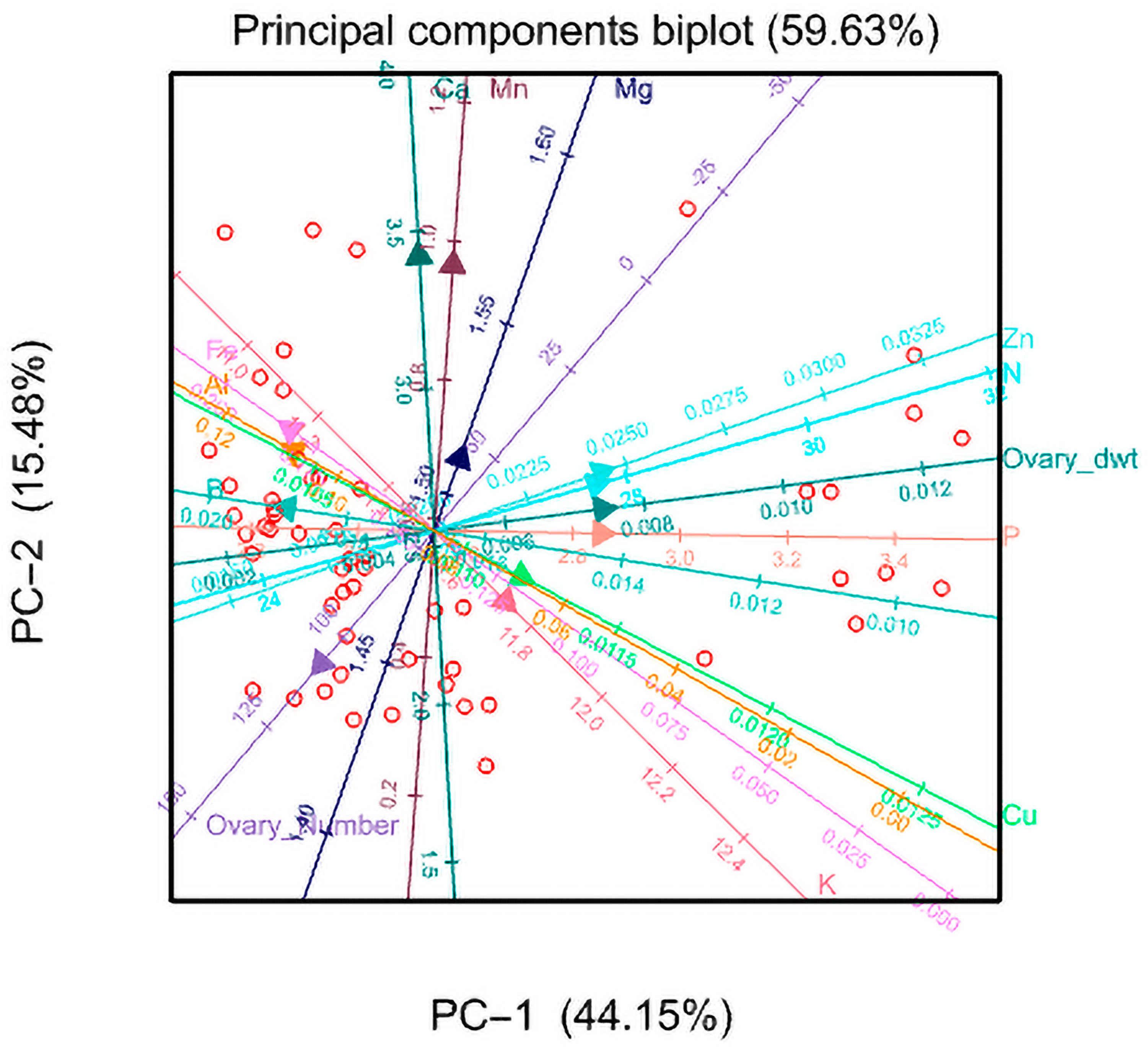
Figure A6.
PCA of ovary number, ovary dry weight and rachis nutrients over the first four sampling dates (up to 30 DAF) of the combined four-cultivar dataset. Vector length reflects the strength of each nutrient’s contribution to the principal components. The angle between vectors indicates the correlation among parameters (acute angles = positive correlation; obtuse angles = negative correlation; right angles ≈ no correlation).
References
- Garner, L.C.; Lovatt, C.J. Physiological factors affecting flower and fruit abscission of ‘Hass’ avocado. Sci. Hortic. 2016, 199, 32–40. [Google Scholar] [CrossRef] [Scilit]
- Ramírez, F.; Davenport, T.L. Mango (Mangifera indica L.) pollination: A review. Sci. Hortic. 2016, 203, 158–168. [Google Scholar] [CrossRef] [Scilit]
- McFadyen, L.; Robertson, D.; Sedgley, M.; Kristiansen, P.; Olesen, T. Time of pruning affects fruit abscission, stem carbohydrates and yield of macadamia. Funct. Plant Biol. 2012, 39, 481–492. [Google Scholar] [CrossRef] [Scilit]
- Li, S.Y.; Vincent, C. Root:shoot balance controls flush phenology and carbohydrate translocation dynamics in citrus (Citrus x sinensis) trunk. Physiol. Plant. 2022, 174, e13601. [Google Scholar] [CrossRef] [Scilit]
- Stephenson, A.G. Flower and fruit abortion: Proximate causes and ultimate functions. Annu. Rev. Ecol. Syst. 1981, 12, 253–279. [Google Scholar] [CrossRef] [Scilit]
- Rossouw, G.C.; Orr, R.; Bennett, D.; Bally, I.S.E. The roles of non-structural carbohydrates in fruiting: A review focusing on mango (Mangifera indica). Funct. Plant Biol. 2024, 51, FP23195. [Google Scholar] [CrossRef] [Scilit] [PubMed]
- Scholefield, P.B.; Sedgley, M.; Alexander, D.M. Carbohydrate cycling in relation to shoot growth, floral initiation and development and yield in the avocado. Sci. Hortic. 1985, 25, 99–110. [Google Scholar] [CrossRef] [Scilit]
- Whiley, A.; Wolstenholme, B. Carbohydrate Management in Avocado Trees for Increased Production; South African Growers Avocado Growers Association Yearbook: Tzaneen, South Africa, 1990; Volume 13, pp. 25–27. [Google Scholar]
- Breen, K.; Tustin, S.; Palmer, J.; Boldingh, H.; Close, D. Revisiting the role of carbohydrate reserves in fruit set and early-season growth of apple. Sci. Hortic. 2020, 261, 109034. [Google Scholar] [CrossRef] [Scilit]
- Ruiz, R. Carbohydrate Availability in Relation to Fruitlet Abscission in Citrus. Ann. Bot. 2001, 87, 805–812. [Google Scholar] [CrossRef] [Scilit]
- Falchi, R.; Bonghi, C.; Drincovich, M.F.; Famiani, F.; Lara, M.V.; Walker, R.P.; Vizzotto, G. Sugar Metabolism in Stone Fruit: Source-Sink Relationships and Environmental and Agronomical Effects. Front. Plant Sci. 2020, 11, 573982. [Google Scholar] [CrossRef] [Scilit]
- Olesen, T.; Robertson, D.; Muldoon, S.; Meyer, R. The role of carbohydrate reserves in evergreen tree development, with particular reference to macadamia. Sci. Hortic. 2008, 117, 73–77. [Google Scholar] [CrossRef] [Scilit]
- Borghi, M. Roles of sugar metabolism and transport in flower development. Curr. Opin. Plant Biol. 2025, 85, 102722. [Google Scholar] [CrossRef] [Scilit]
- Bons, H.K.; Sharma, A. Impact of foliar sprays of potassium, calcium, and boron on fruit setting behavior, yield, and quality attributes in fruit crops: A review. J. Plant Nutr. 2023, 46, 3232–3246. [Google Scholar] [CrossRef] [Scilit]
- Pandey, N.; Pathak, G.C.; Sharma, C.P. Zinc is critically required for pollen function and fertilisation in lentil. J. Trace Elem. Med. Biol. 2006, 20, 89–96. [Google Scholar] [CrossRef] [Scilit]
- De Silva, A.L.; Kämper, W.; Wallace, H.M.; Ogbourne, S.M.; Hosseini Bai, S.; Nichols, J.; Trueman, S.J. Boron Effects on Fruit Set, Yield, Quality and Paternity of Macadamia. Agronomy 2022, 12, 684. [Google Scholar] [CrossRef] [Scilit]
- Guo, Y.; Qu, H. Research progress on calcium ion in gametophytic self-incompatibility. J. Hortic. Res. 2022, 30, 13–22. [Google Scholar] [CrossRef] [Scilit]
- Guan, Y.; Guo, J.; Li, H.; Yang, Z. Signaling in pollen tube growth: Crosstalk, feedback, and missing links. Mol. Plant 2013, 6, 1053–1064. [Google Scholar] [CrossRef] [Scilit] [PubMed]
- Rogiers, S.Y.; Coetzee, Z.A.; Walker, R.R.; Deloire, A.; Tyerman, S.D. Potassium in the Grape (Vitis vinifera L.) Berry: Transport and Function. Front. Plant Sci. 2017, 8, 1629. [Google Scholar] [CrossRef] [Scilit]
- Dreyer, I.; Gomez-Porras, J.L.; Riedelsberger, J. The potassium battery: A mobile energy source for transport processes in plant vascular tissues. New Phytol. 2017, 216, 1049–1053. [Google Scholar] [CrossRef] [Scilit]
- Erel, R.; Dag, A.; Ben-Gal, A.; Schwartz, A.; Yermiyahu, U. Flowering and Fruit Set of Olive Trees in Response to Nitrogen, Phosphorus, and Potassium. J. Am. Soc. Hortic. Sci. 2008, 133, 639–647. [Google Scholar] [CrossRef] [Scilit]
- Poirier, Y.; Jaskolowski, A.; Clua, J. Phosphate acquisition and metabolism in plants. Curr. Biol. 2022, 32, R623–R629. [Google Scholar] [CrossRef] [Scilit]
- Holbrook, N.M.; Zwieniecki, M.A. Vascular Transport in Plants; Elsevier: Amsterdam, The Netherlands, 2011. [Google Scholar]
- Mitra, G. Essential plant nutrients and recent concepts about their uptake. In Essential Plant Nutrients: Uptake, Use Efficiency, and Management; Springer: Cham, Switzerland, 2017; pp. 3–36. [Google Scholar]
- Yu, S.M.; Lo, S.F.; Ho, T.D. Source-Sink Communication: Regulated by Hormone, Nutrient, and Stress Cross-Signaling. Trends Plant Sci. 2015, 20, 844–857. [Google Scholar] [CrossRef] [Scilit]
- Stephenson, R.; Gallagher, E. Effects of temperature on premature nut drop in macadamia. Qld. J. Agric. Anim. Sci. 1986, 43, 97–100. [Google Scholar]
- Wilkie, J.D.; Sedgley, M.; Olesen, T. Aspects of macadamia flowering and the applications to canopy management. In Proceedings of the IX International Symposium on Integrating Canopy, Rootstock and Environmental Physiology in Orchard Systems, Geneva, NY, USA, 4–8 August 2008; pp. 987–991. [Google Scholar]
- Bright, J.; Alt, S. Cultivars. In Macadamia Grower’s Guide; NSW Department of Primary Industries: Orange, Australia, 2024. [Google Scholar]
- Trueman, S.J.; Kamper, W.; Nichols, J.; Ogbourne, S.M.; Hawkes, D.; Peters, T.; Hosseini Bai, S.; Wallace, H.M. Pollen limitation and xenia effects in a cultivated mass-flowering tree, Macadamia integrifolia (Proteaceae). Ann. Bot. 2022, 129, 135–146. [Google Scholar] [CrossRef] [Scilit]
- O’Hare, P.; Stephenson, R.; Quinlan, K.; Vock, N. Macadamia Grower’s Handbook; Queensland Department of Primary Industries and Fisheries: Nambour, Australia, 2004. [Google Scholar]
- IUSS Working Group. World Reference Base for Soil Resources. In International Soil Classification System for Naming Soils and Creating Legends for Soil Maps, 4th ed.; International Union of Soil Sciences (IUSS): Vienna, Austria, 2022. [Google Scholar]
- Bright, J.; Alt, S. Nutrition and soil health—Part 2: The next level. In Macadamia Grower’s Guide; NSW Department of Primary Industries: Orange, Australia, 2023; p. 64. [Google Scholar]
- Yang, W.; Xiang, P. Changes of Fruit Abscission and Carbohydrates, Hormones, Related Gene Expression in the Fruit and Pedicel of Macadamia under Starvation Stress. Horticulturae 2022, 8, 398. [Google Scholar] [CrossRef] [Scilit]
- Eveland, A.L.; Jackson, D.P. Sugars, signalling, and plant development. J. Exp. Bot. 2012, 63, 3367–3377. [Google Scholar] [CrossRef] [Scilit]
- Jones, S.C.; Orr, R.; Rossouw, G.C.; Smith, H.M.; Beveridge, C.A.; Shaw, L.M. Insights into the molecular regulation of premature fruit drop—What we have learned from mango (Mangifera indica) and other fruit crops. Sci. Hortic. 2026, 355, 114572. [Google Scholar] [CrossRef] [Scilit]
- Ryan, M.G.; Oren, R.; Waring, R.H. Fruiting and sink competition. Tree Physiol. 2018, 38, 1261–1266. [Google Scholar] [CrossRef] [Scilit]
- Heard, T.A. Behaviour and pollinator efficiency of stingless bees and honey bees on macadamia flowers. J. Apic. Res. 2015, 33, 191–198. [Google Scholar] [CrossRef] [Scilit]
- Urata, U. Pollination Requirements of Macadamia; University of Hawaii: Honolulu, HI, USA, 1954; Volume 22, p. 40. [Google Scholar]
- Sedgley, M.; Griffin, A.R. Sexual Reproduction of Tree Crops; Academic Press: London, UK, 2013. [Google Scholar]
- Borghi, M.; Fernie, A.R. Floral Metabolism of Sugars and Amino Acids: Implications for Pollinators’ Preferences and Seed and Fruit Set. Plant Physiol. 2017, 175, 1510–1524. [Google Scholar] [CrossRef] [Scilit]
- McFadyen, L.M.; Robertson, D.; Sedgley, M.; Kristiansen, P.; Olesen, T. Post-pruning shoot growth increases fruit abscission and reduces stem carbohydrates and yield in macadamia. Ann. Bot. 2011, 107, 993–1001. [Google Scholar] [CrossRef] [Scilit] [PubMed]
- Loescher, W.H.; McCamant, T.; Keller, J.D. Carbohydrate Reserves, Translocation, and Storage in Woody Plant Roots. HortScience 1990, 25, 274–281. [Google Scholar] [CrossRef] [Scilit]
- Hall, G.E.; Bondada, B.R.; Keller, M. Loss of rachis cell viability is associated with ripening disorders in grapes. J. Exp. Bot. 2011, 62, 1145–1153. [Google Scholar] [CrossRef] [Scilit] [PubMed]
- Ruan, Y.L.; Patrick, J.W.; Bouzayen, M.; Osorio, S.; Fernie, A.R. Molecular regulation of seed and fruit set. Trends Plant Sci. 2012, 17, 656–665. [Google Scholar] [CrossRef] [Scilit]
- Siddiqui, H.; Sami, F.; Hayat, S. Glucose: Sweet or bitter effects in plants-a review on current and future perspective. Carbohydr. Res. 2020, 487, 107884. [Google Scholar] [CrossRef] [Scilit]
- Alcaraz, M.L.; Hormaza, J.I.; Rodrigo, J. Pistil starch reserves at anthesis correlate with final flower fate in avocado (Persea americana). PLoS ONE 2013, 8, e78467. [Google Scholar] [CrossRef] [Scilit]
- Rodrigo, J.; Herrero, M.; Hormaza, J.I. Pistil traits and flower fate in apricot (Prunus armeniaca). Ann. Appl. Biol. 2009, 154, 365–375. [Google Scholar] [CrossRef] [Scilit]
- MacNeill, G.J.; Mehrpouyan, S.; Minow, M.A.A.; Patterson, J.A.; Tetlow, I.J.; Emes, M.J. Starch as a source, starch as a sink: The bifunctional role of starch in carbon allocation. J. Exp. Bot. 2017, 68, 4433–4453. [Google Scholar] [CrossRef] [Scilit]
- Wang, Q.; Lu, L.; Wu, X.; Li, Y.; Lin, J. Boron influences pollen germination and pollen tube growth in Picea meyeri. Tree Physiol. 2003, 23, 345–351. [Google Scholar] [CrossRef] [Scilit] [PubMed]
- Fang, K.F.; Du, B.S.; Zhang, Q.; Xing, Y.; Cao, Q.Q.; Qin, L. Boron deficiency alters cytosolic Ca2+ concentration and affects the cell wall components of pollen tubes in Malus domestica. Plant Biol. 2019, 21, 343–351. [Google Scholar] [CrossRef] [Scilit]
- Xu, Y.; Sui, Z.H.; Ye, Y.P.; Wu, L.; Qi, K.J.; He, M.; Guo, L.; Gu, C.; Zhang, S.L. An involvement of a new zinc finger protein PbrZFP719 into pear self-incompatibility reaction. Plant Cell Rep. 2025, 44, 37. [Google Scholar] [CrossRef] [Scilit] [PubMed]
- Wang, J.; Moeen-ud-din, M.; Yang, S. Dose-dependent responses of Arabidopsis thaliana to zinc are mediated by auxin homeostasis and transport. Environ. Exp. Bot. 2021, 189, 104554. [Google Scholar] [CrossRef] [Scilit]
- Costantini, E.; Landi, L.; Silvestroni, O.; Pandolfini, T.; Spena, A.; Mezzetti, B. Auxin synthesis-encoding transgene enhances grape fecundity. Plant Physiol. 2007, 143, 1689–1694. [Google Scholar] [CrossRef] [Scilit]
- White, P.J.; Broadley, M.R. Calcium in plants. Ann. Bot. 2003, 92, 487–511. [Google Scholar] [CrossRef] [Scilit]
- Hepler, P.K. Calcium: A central regulator of plant growth and development. Plant Cell 2005, 17, 2142–2155. [Google Scholar] [CrossRef] [Scilit] [PubMed]
- Claussen, M.; Blatt, M.; Lüthe, H.; Böttger, M. Auxin-induced growth and its linkage to potassium channels. Planta 1997, 201, 227–234. [Google Scholar] [CrossRef] [Scilit]
- Taylor, J.E.; Whitelaw, C.A. Signals in abscission. New Phytol. 2001, 151, 323–340. [Google Scholar] [CrossRef] [Scilit]

Disclaimer/Publisher’s Note: The statements, opinions and data contained in all publications are solely those of the individual author(s) and contributor(s) and not of MDPI and/or the editor(s). MDPI and/or the editor(s) disclaim responsibility for any injury to people or property resulting from any ideas, methods, instructions or products referred to in the content. |
© 2026 by the authors. Licensee MDPI, Basel, Switzerland. This article is an open access article distributed under the terms and conditions of the Creative Commons Attribution (CC BY) license.