Article

Dolomite-Loaded Vermicompost Improves Acidic Soil Health and Promotes Panax quinquefolius L. Growth in Pine Agroforestry Systems

1
College of Resources and Environment, Yunnan Agricultural University, Kunming 650201, China
2
National-Local Joint Engineering Research Center on Germplasm Innovation & Utilization of Chinese Medicinal Materials in Southwest China, Yunnan Agricultural University, Kunming 650201, China
3
The Key Laboratory of Medicinal Plant Biology of Yunnan Province, Yunnan Agricultural University, Kunming 650201, China
4
College of Agriculture, South China Agricultural University, Guangzhou 510642, China
5
College of Biological and Agricultural Sciences, Honghe University, Mengzi 661199, China
6
Council for Scientific and Industrial Research (CSIR)- Soil Research Institute, Academy Post Office, Private Mail Bag, Kumasi AK-420-7890, Ghana
7
Department of Soil Resources Management, CSIR College of Science and Technology (CCST), Kumasi AK-420-7890, Ghana
*
Author to whom correspondence should be addressed.
Horticulturae 2026, 12(6), 645; https://doi.org/10.3390/horticulturae12060645
Submission received: 20 April 2026 / Revised: 14 May 2026 / Accepted: 19 May 2026 / Published: 22 May 2026
(This article belongs to the Special Issue Bioresource for Sustainable Cultivation of Medicinal Herbs)

Abstract

Agriforestry systems are essential for improving the quality of medicinal herbs and ensuring the sustainable management of forests. Forest soil acidification inhibits the growth of medicinal plants. The application of novel dolomite-loaded vermicompost (DOVC) is considered a potential method for promoting plants growth. However, the mechanisms by which it promotes the growth of medicinal plants are poorly understood. This study combined observational analysis and field experimentation, to first elucidate the correlation between under-forest soil pH and root dry weight of American ginseng (Panax quinquefolius L.). Subsequently, the mechanisms by which DOVC promotes the growth of P. quinquefolius were analyzed from the perspectives of plant physiology and soil microbiome. The results indicate: (1) Field survey results demonstrated when the pH was between 5.28 and 5.99, the root dry weight of P. quinquefolius gradually increased with increasing soil pH. (2) Compared with Control, DOVC increased the soil pH by 1.48 units and promoted the growth of P. quinquefolius, with a net photosynthetic rate increase of 60.26%, malondialdehyde content decrease of 71.07%, and root dry weight increase of 50.33%. (3) Compared with Control, DOVC enhanced bacterial community diversity, with Ace and Chao 1 indices increasing significantly by 33.88% and 25.18%, respectively; and increased the relative abundance of Chloroflexi and Basidiomycota. (4) Partial Least Squares Path Modeling revealed that DOVC positively influenced P. quinquefolius growth via the improvement of soil health index and microbial community diversity. The development of this novel soil amendment offers a new approach to improving soil health in agroforestry systems.

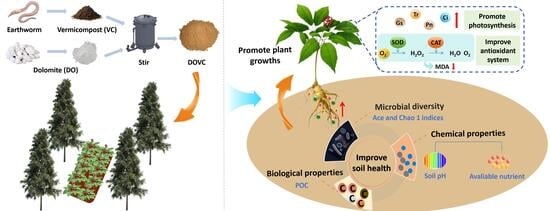
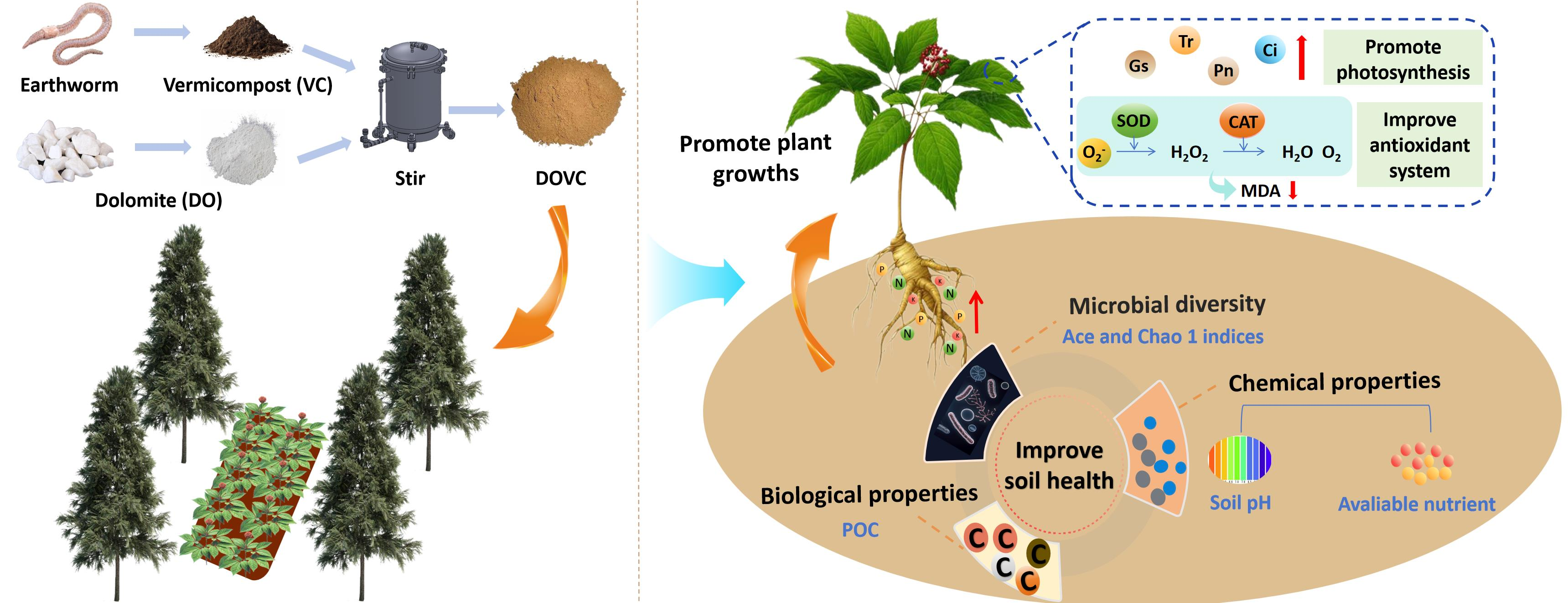
Graphical Abstract

1. Introduction

Soil acidification is recognized as a critical threat to the sustainability of agricultural ecosystems [1,2]. Globally, approximately 50% of arable soils exhibit acidic pH ≤ 6.5, with this proportion continuing to increase [3]. Soil acidification exerts multiple adverse effects, including restricted availability of essential nutrients, such as phosphorus and nitrogen required for plant development [4]. It elevates concentrations of phytotoxic elements (e.g., aluminum, manganese, and iron) while inducing deficiencies in vital mineral nutrients, particularly when the pH drops to <5.5, wherein excessive soluble aluminum ions are mobilized to inhibit root growth and nutrient uptake [4,5]. Furthermore, acidification enhances the mobility and bioavailability of heavy metals (e.g., cadmium, lead), posing risks to food safety and human health [5].
According to traditional Chinese medicine, American ginseng (Panax quinquefolius L.) possesses the functions of nourishing yin, tonifying qi, promoting fluid production to relieve thirst, and combating fatigue [6,7,8]. In recent years, P. quinquefolius has been widely applied in pharmaceuticals and health-related products, leading to a sharp increase in demand and a continuous expansion of its cultivation area [9]. Against this backdrop, the under-forest cultivation of P. quinquefolius has developed rapidly [10]. Such a cultivation model provides a suitable growth environment and rich biodiversity, which can alleviate the quality and safety issues arising from the heavy use of chemical fertilizers and pesticides in conventional artificial cultivation [11,12]. However, improper forest management practices can lead to soil acidification. Previous studies have shown that management measures, such as clear-cutting, may result in the loss of soil nutrients, including the leaching of base cations and their removal through timber harvesting, thereby causing soil acidification [13]. Excessive disturbance may also enhance the decomposition and nitrification of soil organic matter, further accelerating acidification [13]. In addition, the accumulation of allelochemicals (such as phenolic acids) in pine forest soils is considered one of the main contributors to the decrease in forest soil pH [14]. Nevertheless, whether soil acidification has a negative impact on the growth of P. quinquefolius remains unresolved.
Technologies for ameliorating acidic soils primarily focus on enhancing soil pH and improving physicochemical properties through agronomic management practices and amendments to alleviate the detrimental effects of acid stress on plant growth and soil health [14,15,16]. Examples include reducing excessive nitrogen fertilizer application, implementing rational irrigation management, adopting crop rotation, and incorporating straw return [17,18]. Furthermore, amendment-based strategies for acidic soil remediation, such as liming materials (e.g., agricultural lime (CaCO3), calcium oxide (CaO), and dolomite (e.g., CaMg(CO3)2)), have been widely applied; these neutralize hydrogen ions (H+) in soils to elevate the pH and reduce acidity [3]. Individual organic amendments (e.g., manure, straw, and biochar), either applied alone or in combination with lime, release alkaline substances to consume H+ and enhance soil pH [3,19]. Calcium-based polymers inhibit nitrification processes by reducing microorganisms such as ammonia-oxidizing bacteria, thereby decelerating soil acidification rates [5]. Calcium-magnesium phosphate fertilizers effectively increase the soil pH while mitigating soil-borne plant diseases [3]. Seaweed-derived biostimulants improve nitrogen bioavailability, activate antioxidant enzyme systems, regulate photosynthetic and water use efficiency, and ultimately promote plant growth and yield [4].
In recent years, organic amendments have garnered significant attention in the field of acidic soil improvement because they cannot only effectively improve the chemical properties of the soil by regulating soil pH, but also comprehensively enhance the physical, chemical, and biological properties of the soil, supply nutrients, and sustain long-term soil health and productivity [3,4,14]. Vermicompost can increase soil porosity and water-holding capacity, improve soil pH and organic carbon content, and raise levels of available nitrogen, phosphorus, and potassium [20,21]. At the same time, vermicompost can alter bacterial community composition, such as increasing the relative abundance of Actinobacteria and Proteobacteria, and reducing the abundance of Acidobacteria, thereby enhancing soil ecological functions [22,23]. Furthermore, vermicompost has been documented to improve physiological and biochemical traits, including antioxidant enzymes, non-enzymatic antioxidants, photosynthetic pigments, osmolytes, and secondary metabolites, in tomato seedlings [24]. Carbonate minerals (e.g., dolomite) are recognized as “green materials” for acidified soil remediation, characterized by cost-effectiveness, environmental compatibility, and operational efficiency [25]. Despite their widespread application in soil acidification mitigation and control, natural minerals reportedly exhibit limited stabilization efficacy compared to engineered composites tailored for acid-neutralizing applications [25,26,27].
Consequently, mineral-functionalized vermicompost systems, such as vermicomposting reactors utilizing cattle manure and modified minerals (e.g., calcium oxide (CaO) and magnesium oxide (MgO)) as substrates, have been explored for Eisenia fetida to produce functional vermicompost [28]. Recent studies have explored the integration of three organic substrates (water hyacinth, rice straw, and cattle manure) with three mineral additives (phosphate rock, dolomite, and mica) for vermicomposting over 105 days to produce functional vermicompost for acidified soil remediation [29]. Research demonstrates that vermicompost derived from mineral–organic waste composites significantly enhances soil urease and acid phosphatase activities, microbial biomass carbon, and nutrient availability compared to mineral-only amendments [29]. At present, the primary measures to ameliorate soil acidity in pine forests include the application of lime and calcium-magnesium phosphate fertilizers, which are mainly focused on inorganic soil amendments, and have led to a prevailing view: “regulating under-forest soil pH with ameliorants can effectively improve soil chemical properties” [30]. However, the effect of vermicompost—possessing both organic and mineral functionalities—on improving soil acidity in pine forests and its impact on the growth of P. quinquefolius remains unclear.
Current methodologies for functional vermicompost synthesis predominantly involve blending minerals or functional materials with cattle manure (the primary feedstock for earthworms) [31]. However, minerals ingested by earthworms may undergo mineral phase transformations during digestion, yielding more stable but potentially less reactive forms that compromise their acid-neutralizing efficacy and mineral reactivity [31]. However, the effect of vermicompost—possessing both organic and mineral functionalities—on improving soil acidity in pine forests and its impact on the growth of P. quinquefolius remains unclear.
In this study, a field survey was conducted to analyze the relationship between the forest under-soil pH and the dry root weight of P. quinquefolius. Vermicompost is a stable humus product created by earthworms digesting organic waste (such as cow manure, straw, etc.). The standard production process includes pre-fermentation of organic materials, inoculation with earthworms, controlled temperature and moisture cultivation, and post-maturation [32]. In this study, a novel organic–inorganic composite soil amendment—dolomite-loaded vermicompost (DOVC)—was developed by fermenting ground dolomite (a naturally occurring, carbonate-rich, alkaline mineral with a pH of 9.62, known for its low cost and excellent acid-neutralizing capacity) with vermicompost (VC). Whether this novel amendment exerts a positive effect on improving the health of acidic soils and promoting the growth of P. quinquefolius in the pine-P. quinquefolius agroforestry system remains an open scientific question. To address this issue, the objectives of this study are as follows: (i) evaluating the effects of dolomite-loaded vermicompost on the health of acidic soils in the P. quinquefolius agroforestry system; (ii) assessing the impact of dolomite-loaded vermicompost on the growth of P. quinquefolius within this system; and (iii) analyzing the factors influencing the role of dolomite-loaded vermicompost in improving soil health and promoting P. quinquefolius growth in the context of acidic soils under pine agroforestry systems.

2. Materials and Methods

2.1. Field Survey

Acidic soils negatively affect the growth and function of medicinal plants through multiple pathways, including nutrient immobilization, alteration of root architecture, and suppression of microbial activity [33,34]. To further verify this impact, this study conducted field surveys in two main understory P. quinquefolius production areas: Luquan County, Kunming City, Yunnan Province (25°38′ N, 102°22′ E) and Zhaojue County, Liangshan Prefecture, Sichuan Province (27°57′ N, 102°87′ E). In Luquan County, 9 sampling points were set up, and in Zhaojue County, 19 sampling points were established, covering the main local P. quinquefolius planting areas. At each sampling point, 5 two-year-old understory P. quinquefolius plants were randomly selected, and their entire root systems were carefully excavated. The dry weight of each P. quinquefolius root was measured individually, and the average value of the 5 plants was taken as the root dry weight data for that sampling point [35]. At the same time, collect the rhizosphere soil of each P. quinquefolius plant (soil attached to within 2 mm of the root surface) for soil pH measurement [35].

2.2. Preparation and Characterization of DOVC

The earthworm manure (VC) used in this study is made from cow manure as the raw material, transformed through vermicomposting by Eisenia fetida, with the preparation process referring to the standard earthworm composting method [32]. DOVC was prepared through a one-pot method. The dolomite was crushed and passed through a 100-mesh sieve. The dolomite and vermicompost were stirred and mixed at a weight ratio of 1:9 at a speed of 200 r min–1 at 40 °C, then fermented for 6 h, and finally, the air-dried sample was ground through a 2 mm sieve to prepare DOVC [36,37]. The basic physicochemical properties of both DOVC and VC are listed in Table 1. After freeze-drying, the microstructure and elemental distribution of the two materials were observed using a scanning electron microscope (SEM) (SU8020, ZEISS, Tokyo, Japan) in combination with energy-dispersive spectroscopy (EDS) (Sigma 300, ZEISS, Oberkochen, Germany).

2.3. Site Description and Experimental Design

A field experiment was conducted in a Huashan pine (Pinus armandii) forest in Keti Village, Luquan County, Kunming City, Yunnan Province, China (25°64′ N, 102°38′ E), at an elevation of 2470 m. The study area has a subtropical plateau monsoon climate, with an average annual temperature of 12.3 °C and an average annual precipitation of 968 mm. The basic physicochemical properties of the surface soil in this area are shown in Table S1.
A completely randomized block design was adopted. Two treatments were established: VC and DOVC, and a control group (CK) with no fertilizer application was also included. Each treatment and the control had four replicates. Plots of 4 m2 (1 m × 4 m) were set up under the forest canopy, with a 0.5 m buffer zone between adjacent plots to avoid interference from irrigation water. A rain shelter was constructed above the raised beds to mitigate the risk of P. quinquefolius diseases and excessive rainfall during the wet season [11]. VC and DOVC were separately incorporated into the surface soil (0–20 cm) at an application rate of 64.80 t ha−1. Fifteen days after application (February 2024), seedlings of P. quinquefolius were transplanted at a spacing of 15 cm × 10 cm. In October 2024, one-year-old P. quinquefolius plants and the rhizosphere soil samples from the corresponding plots were collected for subsequent analysis.

2.4. Soil Analysis

Collection of rhizosphere soil of P. quinquefolius using the root shaking method: Gently shake the collected American ginseng root balls until all loosely attached non-rhizosphere soil is removed. Then, collect the soil still tightly adhering to the root surface, within 2 mm of the root, into sterile sampling bags by shaking [38]. The collected rhizosphere soil is immediately sieved through a 2 mm mesh, and all visible plant debris and impurities are removed using sterile tweezers [35]. Each sample is composed of rhizosphere soil mixed from five P. quinquefolius plants within the same plot [39]. The mixed rhizosphere soil sample is divided into two parts: one part is stored at −80 °C for microbiological analysis, and the other part is used for determining soil physicochemical properties.

2.4.1. Measurements of Soil Physicochemical and Biological Properties

Soil pH was measured using a pH meter (pHS-3C, Shanghai, China) at a soil-to-water ratio of 1:2.5. cation exchange capacity (CEC) was determined using the ammonium acetate method. nitrate nitrogen (NO3–N) and ammonium nitrogen (NH4+–N) were extracted in 2 mol L–1 KCl solution with a water-to-soil ratio of 5:1, and determined using a flow analyzer (SmartChem 200, Roma, Italy). Available phosphorus (AP) was analyzed using the NaHCO3 extraction-molybdenum-antimony anti-colorimetric method. available potassium (AK) was determined by the NH4OAc extraction-flame photometry method. Exchangeable calcium (ECa) and magnesium (EMg) ions were quantified using atomic absorption spectrophotometry. Exchangeable sodium (ENa) ions were quantified using the flame photometry method. Available iron (AFe), available manganese (AMn), available copper (ACu), and available zinc (AZn) were extracted using the diethylenetriaminepentaacetic acid (DTPA) method and subsequently measured [40,41,42].
Dissolved organic carbon (DOC) was analyzed using a TOC analyzer (Elementar Vario TOC Select, Langenselbold, Germany). easily oxidizable organic carbon (EOC) was determined by the potassium permanganate oxidation method. particulate organic carbon (POC) was measured using the physical fractionation method [43,44].

2.4.2. Soil Quality Assessment

Three soil indicator selection methods were employed to determine appropriate evaluation indices [45]: (1) the Total Dataset (TDS), (2) the Minimum Dataset (MDS), and (3) the Modified Minimum Dataset (M-MDS). A one-way ANOVA was conducted on 19 soil indicators to evaluate the effects of different treatments, and only those showing significant differences (p < 0.05) were included in the TDS. Principal component analysis (PCA) was applied to the TDS to extract components with eigenvalues > 1, and the variables with the highest factor loadings were retained in the MDS. PCA was also conducted separately for physical, chemical, and biological properties of soil to identify potential indicators representing the M-MDS. The weight (Wi) of each selected variable was calculated as the ratio of its communality to the total communality of all selected variables. Based on these, the soil quality index (SQI) was calculated using the following formula:
S Q I = i = 1 n S i · W i
where Wi is the weight of the soil indicator, Si is the standardized score of the indicator, and n is the number of soil indicators.

2.4.3. Soil DNA Extraction and Sequencing

Total genomic DNA was extracted from 0.5 g soil samples using the TGuide S96 Magnetic Soil Kit. The quality and quantity of the extracted DNA were assessed by 1.8% agarose gel electrophoresis, and DNA concentration and purity were measured using a NanoDrop 2000 UV-Vis spectrophotometer (Thermo Scientific, Wilmington, DE, USA). The hypervariable V3-V4 region of the bacterial 16S rRNA gene was amplified by polymerase chain reaction (PCR) using primers 338F (5′-ACTCCTACGGGAGGCAGCA-3′) and 806R (5′-GGACTACHVGGGTWTCTAAT-3′) [46]. The fungal ITS1 region was amplified using primers ITS1F (5′-CTTGGTCATTTAGAGGAAGTAA-3′) and ITS2 (5′-GCTGCGTTCTTCATCGATGC-3′) [46]. The PCR products were purified using the Omega DNA Purification Kit (Omega Inc., Norcross, GA, USA) and sequenced on the Illumina NovaSeq 6000 platform (Beijing Biomarker Technologies Co., Ltd., Beijing, China).
According to the quality of the single nucleotide, raw data were primarily filtered by Trimmomatic (version 0.33). Identification and removal of primer sequences was performed by Cutadapt (version 1.9.1). PE reads obtained from previous steps were assembled by USEARCH (version 10) and followed by chimera removal using UCHIME (version 8.1). The high-quality reads generated from the above steps were used in the following analysis. Sequences with similarity >97% were clustered into the same operational taxonomic unit (OTU) by USEARCH (v10), and the OTUs with fewer than 2 counts across all samples were filtered.
Taxonomic annotation of the OTUs was performed based on the Naive Bayes classifier in QIIME2, based on the SILVA database (release 138.1), with a confidence threshold of 70%. Alpha was performed to identify the complexity of species diversity in each sample utilizing QIIME2 (version 2020.6) software. Beta diversity, which assesses species complexity among samples, was evaluated using principal coordinate analysis (PCoA) based on Bray–Curtis dissimilarity calculated from the relative abundance of OTUs. Spearman correlation analysis was used to investigate the associations between soil properties and the 10 most abundant microbial phyla at the phylum level.

2.5. Plant Sampling and Analysis

Whole P. quinquefolius plants were carefully excavated to avoid damage to the root systems. Soil and debris were gently removed using deionized water. Ten plants were randomly selected from each treatment group for measurement. Plant height, leaf length, and leaf width were measured using a ruler with a precision of 0.1 cm. Fresh roots were subjected to enzyme deactivation at 105 °C for 30 min, followed by drying at 50 °C until a constant weight was achieved. Finally, the root dry weight was measured using an analytical balance with a precision of 0.0001 g.
The P. quinquefolius plants were dried at 50 °C, ground, and passed through a 40-mesh sieve. Total nitrogen (TN), total phosphorus (TP), and total potassium (TK) contents were determined using the Kjeldahl method, the phosphorus-vanadium-molybdenum (P-V-Mo) colorimetric method, and flame photometry, respectively [44].
Approximately 0.1 g of leaf samples was weighed, and 1 mL of pre-chilled acetone was added. The sample was homogenized in an ice bath, transferred to an EP tube, and the volume was adjusted to 1 mL with acetone. The mixture was then centrifuged at 8000× g at 4 °C for 10 min. Malondialdehyde (MDA) and hydrogen peroxide (H2O2) levels, and superoxide dismutase (SOD) and catalase (CAT) activities were measured using a spectrophotometer (UV-2450, SHIMADZU, Kyoto, Japan) at 450 nm, 532 nm, 600 nm, 410 nm, 560 nm, and 240 nm, wavelengths, respectively [47,48].
Photosynthetic parameters were measured using a LI-6400XT Portable Photosynthesis System (LI-COR, Lincoln, NE, USA) between 9:00 and 11:00 a.m. (Beijing Time). Fully expanded fresh leaves were selected to determine the net photosynthetic rate (Pn), stomatal conductance (Gs), intercellular CO2 concentration (Ci), and transpiration rate (Tr). The leaf chamber conditions were set as follows: CO2 concentration of 400 μmol mol−1, photosynthetically active radiation (PAR) at 500 μmol m−2 s−1, and temperature at 28 °C. Prior to measurement, the leaves were pre-illuminated under saturated light (500 μmol m−2 s−1) for 30 min to induce steady-state photosynthesis [11].

2.6. Statistical Analysis

Experimental data were organized using Excel Office 2021. One-way ANOVA was conducted using SPSS 26.0 to analyze P. quinquefolius growth and physiological indicators, as well as soil parameters. Duncan’s test was performed to analyze the differences between treatments at p < 0.05. PCA was used to calculate the weights of selected soil indicators. Figures were generated using Origin 2022, and Partial Least Squares Path Modeling (PLS-PM) was performed using the “plspm” package in R version 4.4.2.

3. Results

3.1. Effects of Soil pH on P. quinquefolius Growth in the Pine Agroforestry Systems

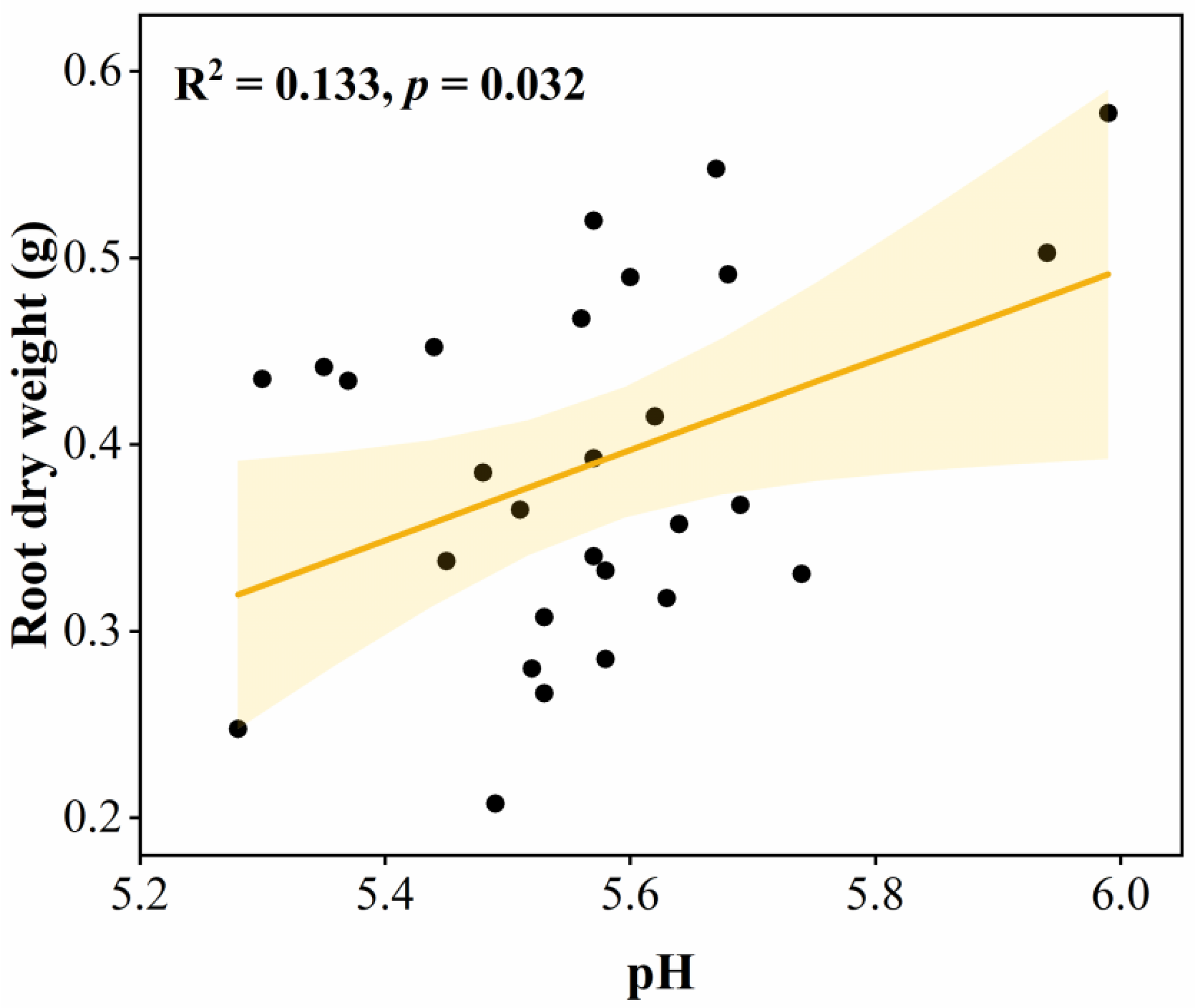
Root dry weight directly reflects the biomass accumulation in the underground part of P. quinquefolius, and is closely related to plant growth and nutrient uptake [35]. In this study, This study investigated and analyzed the root dry weight of 28 two-year-old P. quinquefolius plants from two regions and the pH values of their soils. It was found that when the pH was between 5.28 and 5.99, there was a significant positive correlation between the pH and the root dry weight of P. quinquefolius (R2 = 0.133, p < 0.05; Figure 1).

3.2. Characterization of DOVC

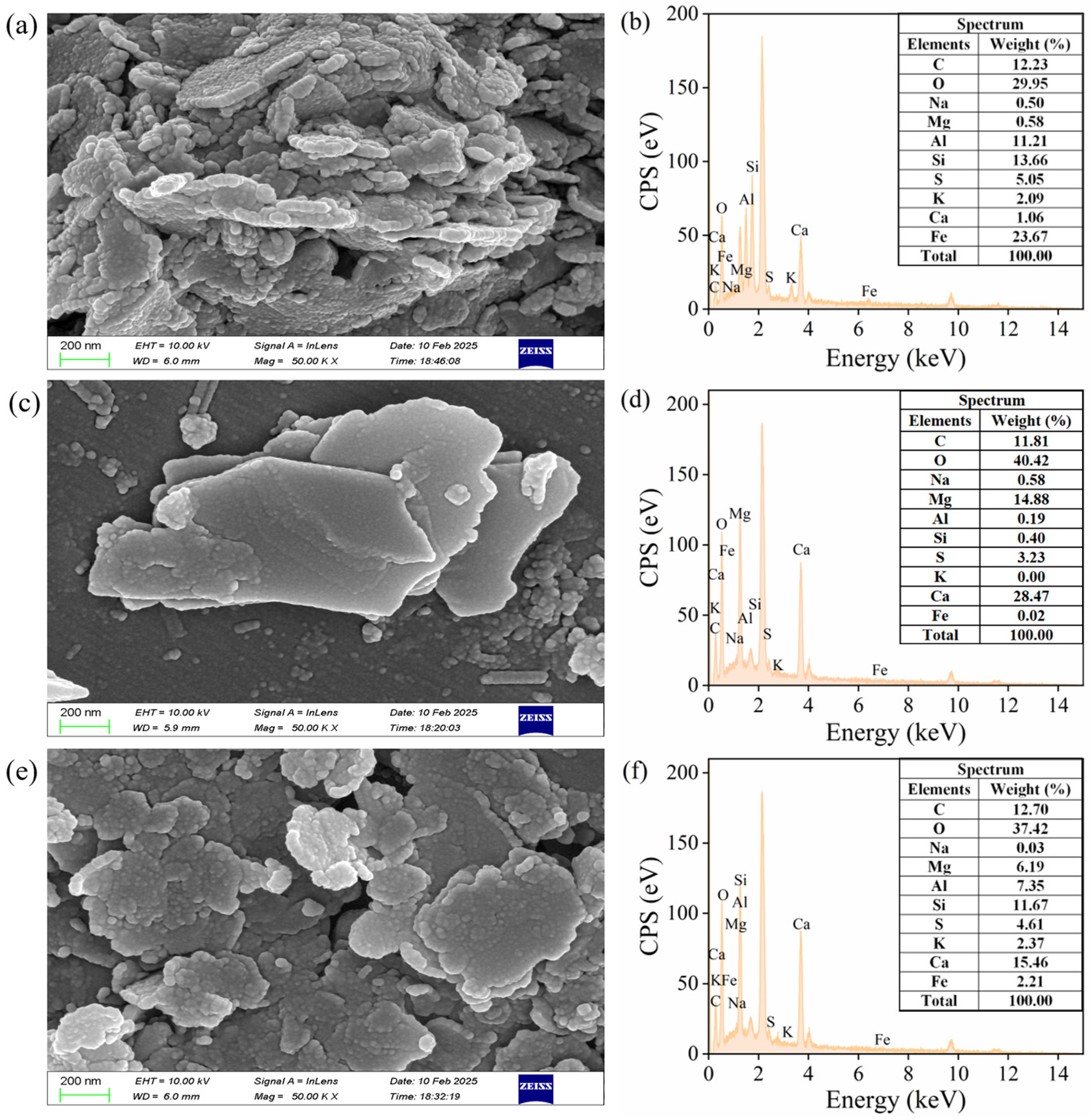
Through SEM analysis of VC, dolomite, and DOVC surface morphology and structure (Figure 2a,c,e), both dolomite and DOVC exhibit irregular layered structures, but the surface of dolomite is smooth, while the surface of DOVC is rough. Element distribution analysis conducted by EDS (Figure 2b,d,f) shows that compared with VC, the weight percentages of Na (0.47%), Al (3.86%), Si (1.99%), S (0.44%), and Fe (21.64%) in DOVC decrease, while C, O, Mg, K, and Ca increase by 0.47%, 7.47%, 5.61%, 0.28%, and 14.4%, respectively. In dolomite, the mass percentages of O (40.42%), Ca (28.47%), and Mg (14.88%) are relatively high. Combining the SEM and EDS results, it is demonstrated that VC was loaded onto the surface of dolomite.

3.3. Changes in the Properties of Acidic Under-Forest Soil

VC and DOVC treatments had certain effects on soil texture, but neither reached a significant level (p > 0.05; Table S2). The forest soil texture belongs to sandy loam. Among them, CK had the highest sand content (76.49%); VC treatment reduced the sand content to 74.69%, increased the silt content to 17.50%, and the clay content was 7.82%. The sand content under DOVC treatment (76.37%) rebounded slightly compared to VC but was still slightly lower than in CK. The silt content remained relatively high (17.28%), and the clay content decreased to 6.36%.
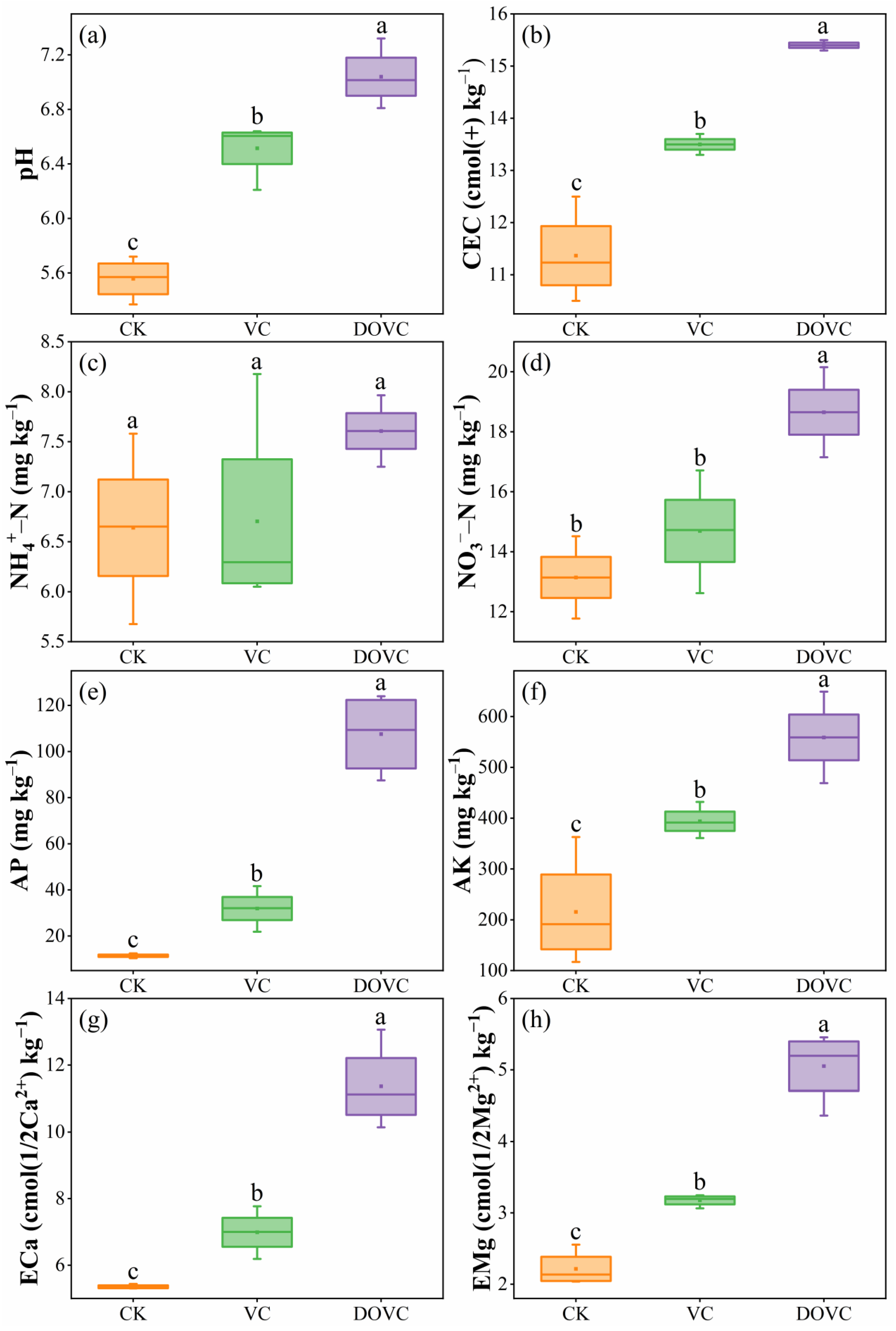
Both VC and DOVC treatments significantly affected the basic chemical properties of the soil (pH, CEC) and nutrient contents (NO3–N, AP, AK, ECa, EMg, etc.) (p < 0.05, Figure 3 and Figures S1 and S2). Compared to CK, the soil pH increased by 0.96 and 1.48 units upon VC and DOVC treatments, respectively. CEC increased by 18.77% and 35.48%, NH4+–N increased by 0.97% and 14.56%, NO3–N increased by 11.81% and 41.91%, AP increased by 178.79% and 838.64%, and AK increased by 82.69% and 159.20%, respectively, and both ACu and AZn significantly increased. However, AFe and AMn showed no significant change. ECa and EMg increased by 30.59% and 112.29%, and by 43.33% and 128.03%, respectively, while ENa showed no significant change.
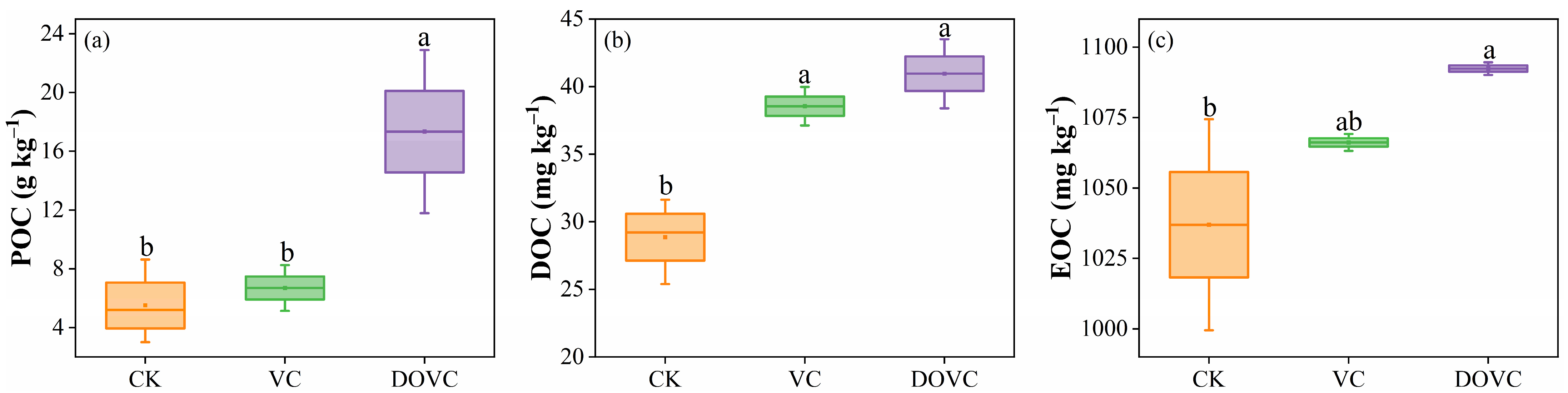
VC and DOVC treatments had a significant effect on soil carbon components (except for EOC, p < 0.05, Figure 4). The soil POC under the VC and DOVC treatments increased by 21.50% and 214.34%, respectively; DOC increased by 33.59% and 41.91%; and EOC increased by 2.82% and 5.35%.

3.4. Soil Microbial Diversity and Community Structure

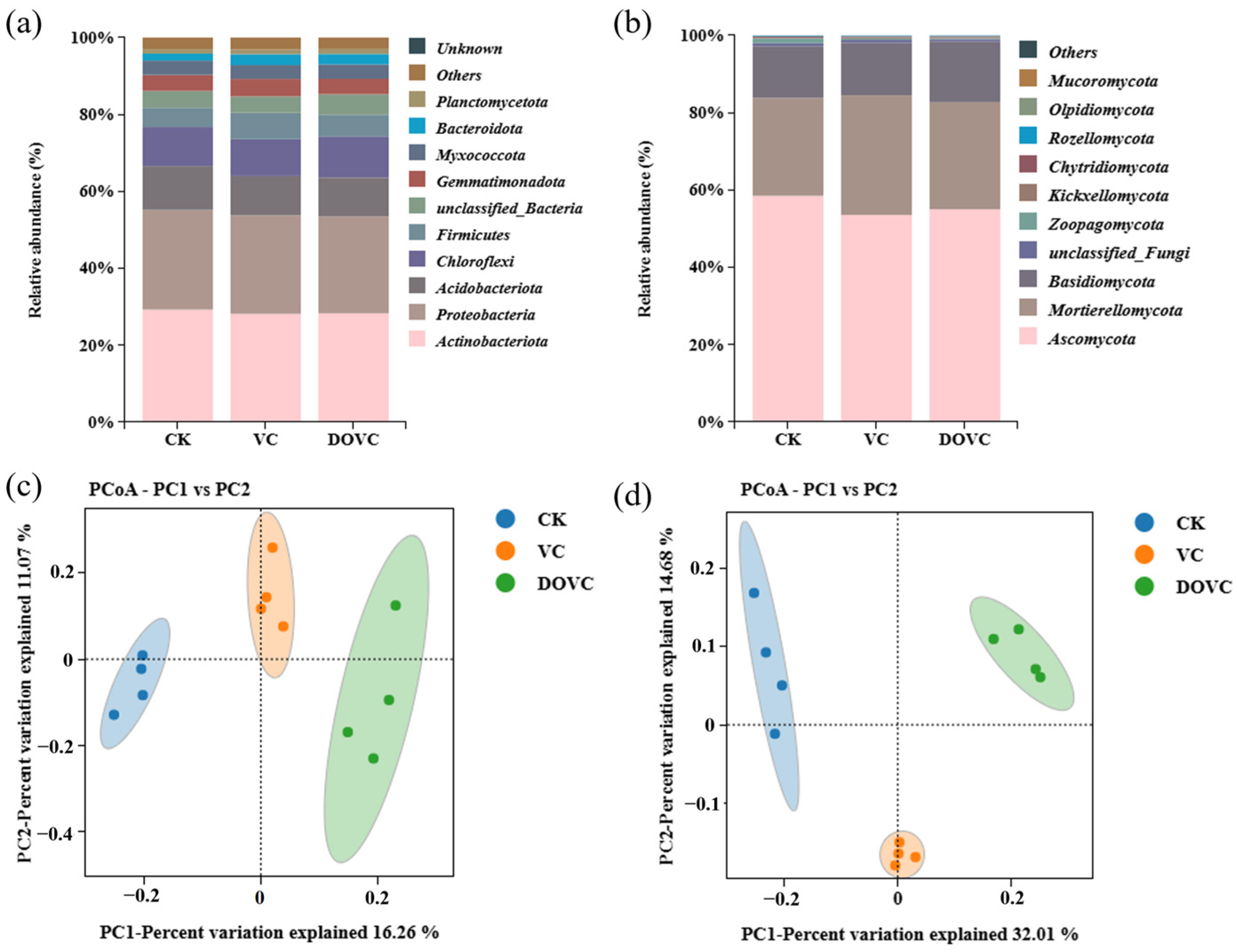
VC and DOVC treatments had certain effects on the soil microbial community structure (Figure 5a,b). In the bacterial community, Actinobacteria and Proteobacteria were the dominant phyla, and their relative abundances remained stable across treatments. VC treatment significantly enriched Firmicutes (from 5.02% to 6.88%) and Bacteroidota (from 1.83% to 2.84%). DOVC treatment promoted Chloroflexi (from 10.13% to 10.74%) and unclassified_Bacteria (from 4.32% to 5.28%). In the fungal community, although Ascomycota is the predominant phylum (53.54–58.49%), its relative abundance slightly decreased under VC and DOVC treatments. Mortierellomycota increased under VC treatment (from 25.34% to 30.96%), becoming the second most abundant group. Basidiomycota reached the highest level under DOVC treatment (15.66%). Among rare phyla, Zoopagomycota accounted for 1.27% in CK but sharply decreased to 0.37% and 0.25% under VC and DOVC treatments, respectively; in contrast, Kickelmycota was enriched under both treatments (from 0.14% to 0.37% and 0.35%).
The Ace, Chao 1, and Simpson indices of soil bacteria in VC and DOVC were all higher than those in CK (Table 2). Among them, the Ace index increased significantly by 25.60% and 33.88%, respectively, and the Chao 1 index in DOVC was significantly increased by 25.18% (p < 0.05). For fungal alpha diversity, there was no significant difference between the VC treatment and the CK group, while in the DOVC treatment, the Ace and Chao 1 indices decreased significantly by 15.74% and 15.23%, respectively, and the Simpson index increased significantly by 0.98% (p < 0.05, Table 2). The beta diversity of soil bacterial and fungal communities was assessed using PCoA (Figure 5c,d). The results showed that PC1 and PC2 explained 27.33% of the bacterial community variance, and PC1 and PC2 explained 46.69% of the fungal community variance.
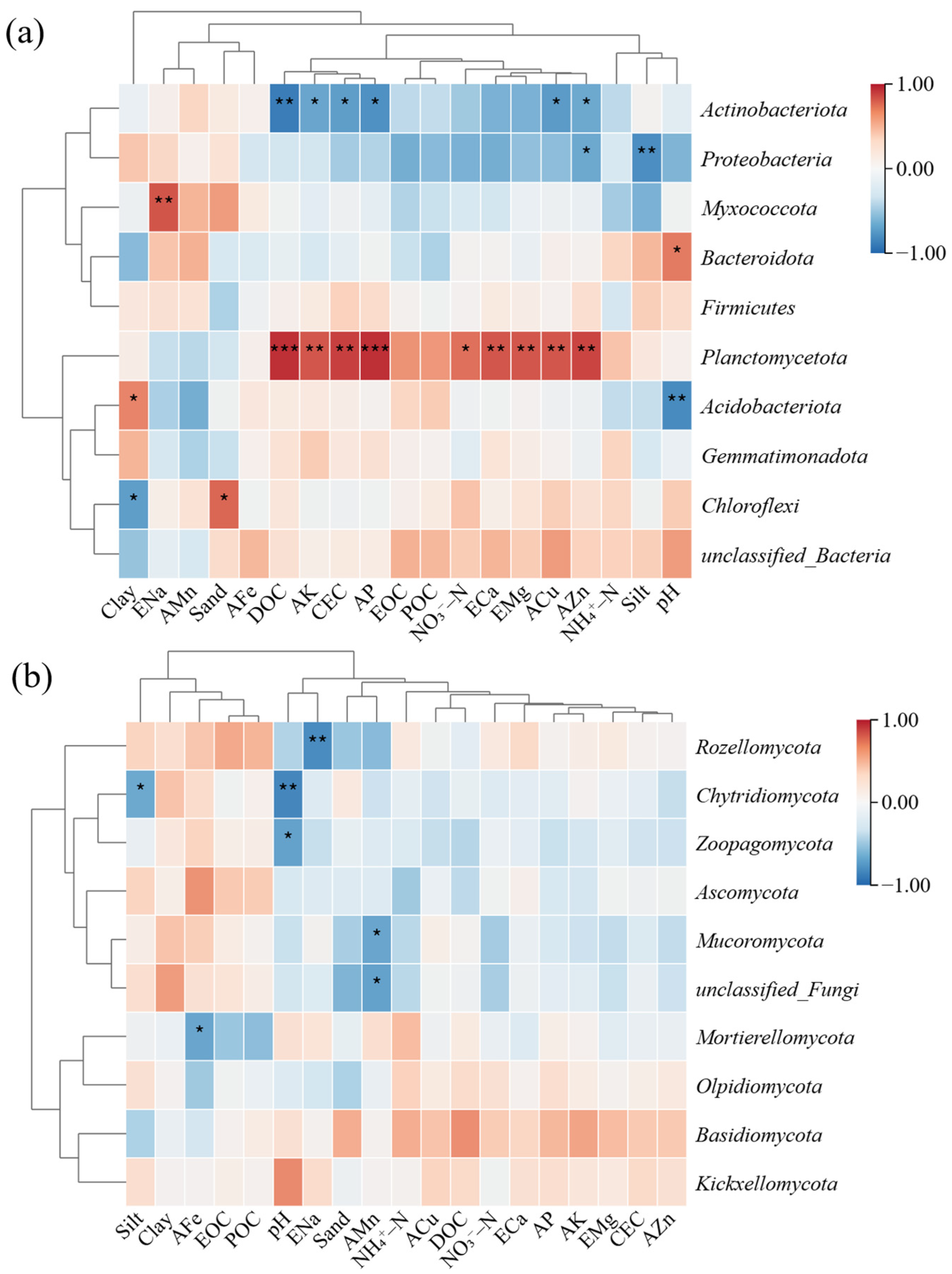
Combined with the correlation analysis of under-forest soil environmental factors (Figure 6), this further revealed the potential driving factors of bacterial and fungal community responses to VC and DOVC treatments. The results showed that changes in the abundance of different microbial phyla were closely related to soil physicochemical properties. In the bacterial community, the dominant phyla Actinobacteriota and Proteobacteria were significantly negatively correlated with Silt, AK, AP, CEC, DOC, ACu, and AZn (p < 0.05). Bacteroidota, enriched under VC treatment, were significantly positively correlated with pH (p < 0.05). Chloroflexi, elevated under DOVC treatment, was significantly positively correlated with Sand (p < 0.05). Planctomycetota showed a highly significant positive correlation with various soil environmental factors (CEC, AP, AK, ECa, EMg, ACu, AZn, DOC) (p < 0.01). The fungal community showed a smaller response to environmental factors; under VC treatment, the enrichment of Mortierellomycota was significantly negatively correlated with soil AFe (p < 0.05). Zoopagomycota was relatively abundant in CK and was significantly negatively correlated with pH (p < 0.05).

3.5. Promotion of P. quinquefolius Growth by DOVC

This study compared the effects of different treatments (CK, VC, DOVC) on P. quinquefolius growth indicators (Table 3). Specifically, compared to the CK, VC, and DOVC significantly increased leaf width (increased by 14.29% and 19.05%, respectively) and plant height (increased by 14.84% and 17.31%, respectively) (p < 0.05). Moreover, DOVC significantly increased leaf length, root dry weight, and root volume by 18.12%, 50.33%, and 37.65%, respectively (p < 0.05). In summary, DOVC treatment has a significant promoting effect on the growth of P. quinquefolius. In summary, DOVC treatment has a significant promoting effect on the growth of P. quinquefolius.

3.6. DOVC Improves Physiological Traits of P. quinquefolius

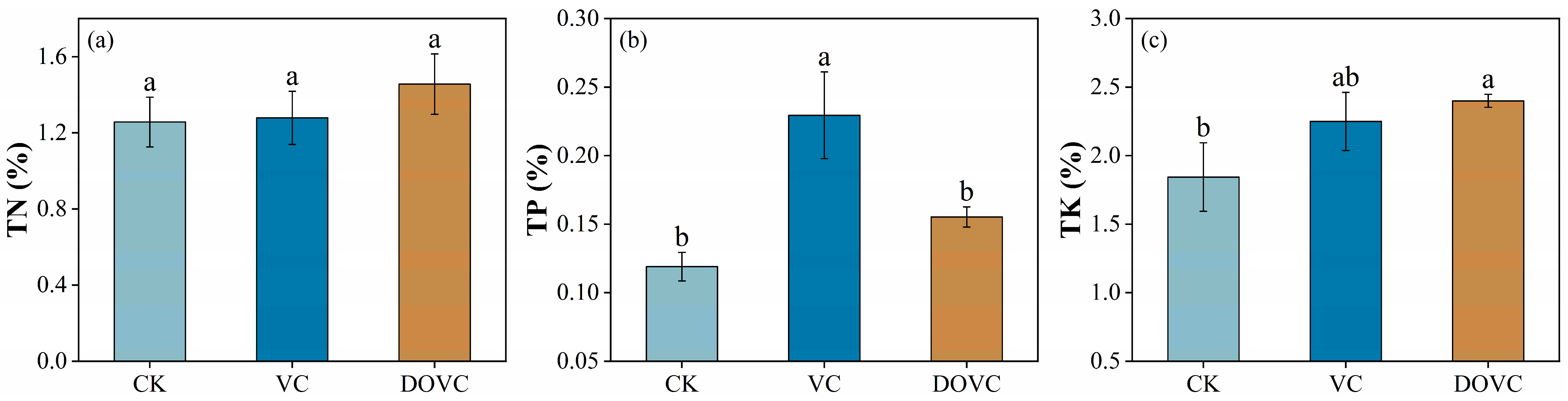
Both VC and DOVC treatments significantly increased the underground total phosphorus (TP) and total potassium (TK) contents of under-forest P. quinquefolius, while total nitrogen (TN) content also increased, although not significantly (p < 0.05, Figure 7). Compared to the CK, TP, and TK contents increased by 92.86% and 14.46%, respectively, upon VC treatment, and by 30.50% and 30.12%, respectively, upon DOVC treatment.
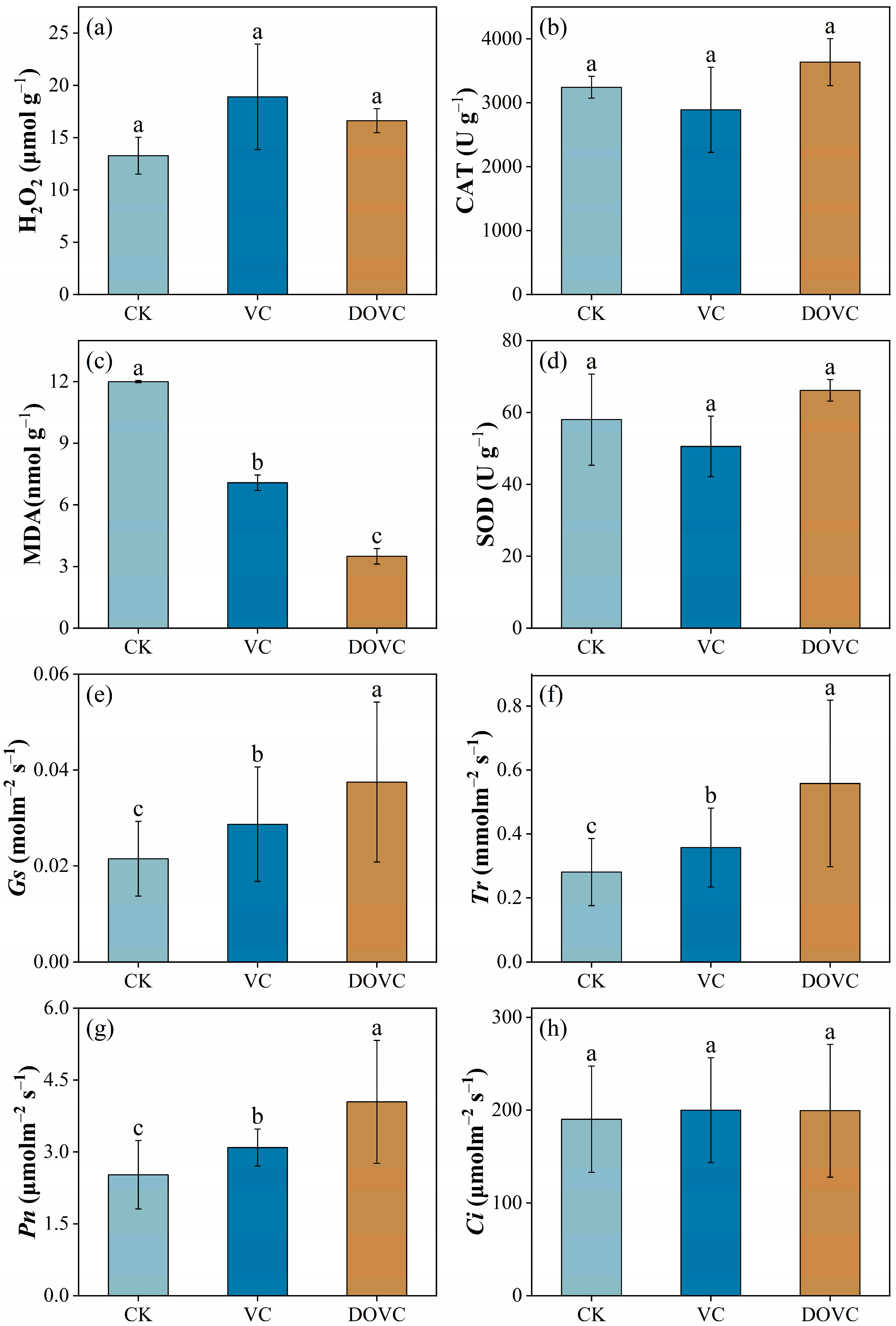
Compared with CK, the H2O2 content in P. quinquefolius leaves increased by 42.34% and 25.16% under VC and DOVC treatments, respectively, but the differences were not significant (p < 0.05, Figure 8a). In contrast, both treatments significantly reduced MDA content: compared to CK, MDA levels decreased by 42.53% under VC and by 71.07% under DOVC (p < 0.05, Figure 8c), with the lowest MDA content (3.52 nmol g−1) observed in the DOVC group. Compared with CK, VC treatment reduced the activities of CAT and SOD in P. quinquefolius leaves by 10.87% and 12.86%, respectively, while DOVC treatment increased them by 12.12% and 14.00%, respectively, but the differences were not statistically significant (p < 0.05, Figure 8b,d).
Both VC and DOVC treatments effectively improved the photosynthetic performance of P. quinquefolius (Figure 8e–h). Compared to CK, VC treatment significantly increased Tr and Pn by 27.31% and 22.47%, respectively (p < 0.05). Although there were no significant changes in Gs and Ci, they increased by 33.48% and 5.20%, respectively. DOVC treatment demonstrated a more significant effect on photosynthetic promotion, with Gs, Tr, and Pn increasing by 74.42%, 98.68%, and 60.26%, respectively (p < 0.05), while Ci increased slightly by 4.85%. These results indicate that both treatments, particularly DOVC, significantly optimize the photosynthetic traits of P. quinquefolius, with the DOVC treatment having a particularly prominent effect on enhancing Gs and Tr.

3.7. Soil Quality Index and Partial Least Squares Path Modeling

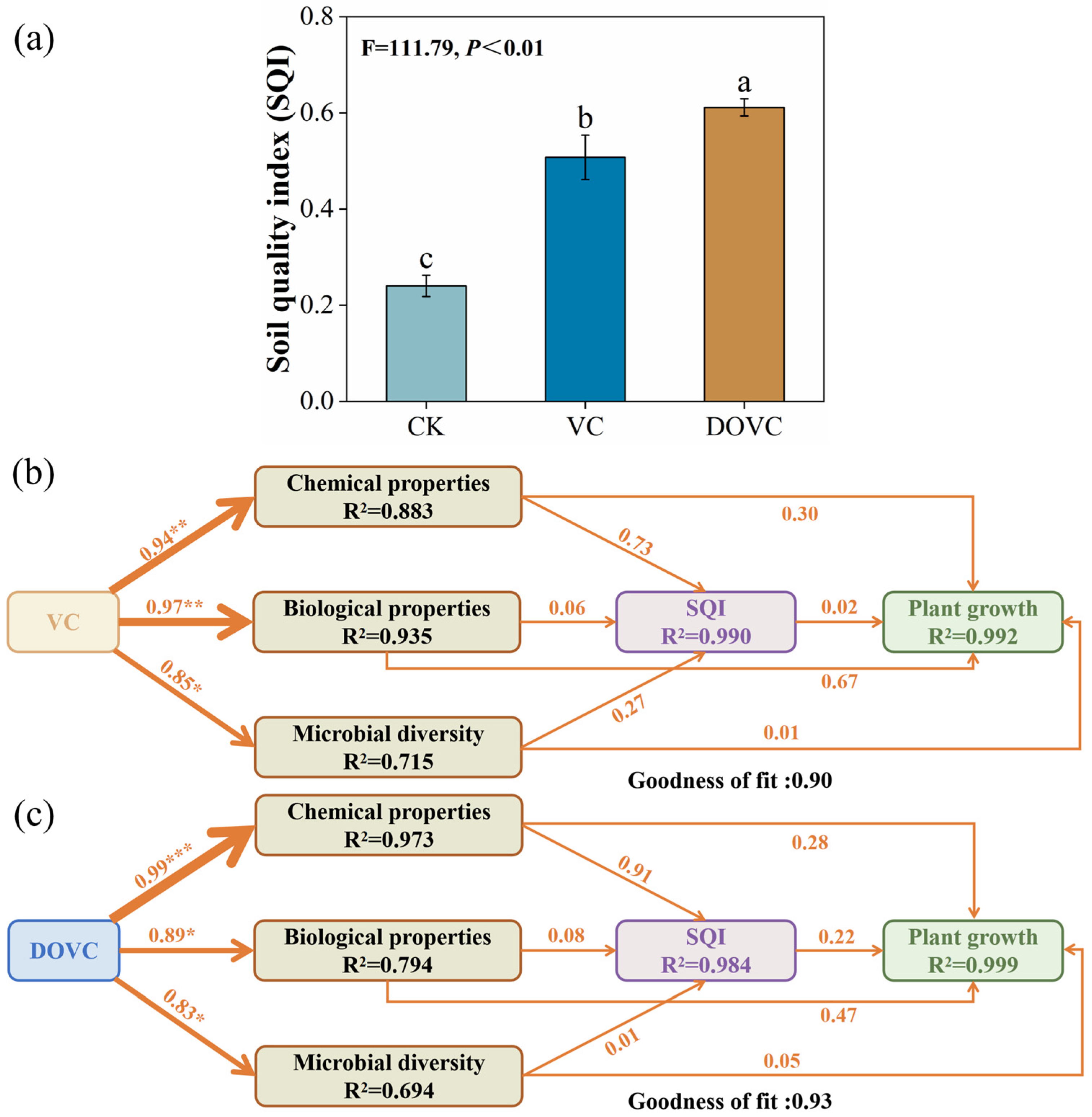
After significance analysis and PCA of 19 soil physical, chemical, and biological indicators, the selected indicators for M-MDS were silt, clay, pH, EMg, ENa, AFe, and POC. These indicators were converted using linear scoring methods, and their weights are shown in Table S3. The SQI value was then calculated based on the Formula (1). The results indicate that VC and DOVC treatments significantly increased the SQI values of the acidic under-forest soil. Compared to CK, the SQI values under VC and DOVC treatments increased by 111.14% and 154.30%, respectively, with a significant difference between the two groups (F = 111.79, p < 0.01, Figure 9a).
The Partial Least Squares Path Modeling (PLS-PM) analysis quantified the relationships of soil properties, soil microbial diversity, SQI, and P. quinquefolius growth under two treatments (VC, DOVC) (Figure 9b,c). The VC treatment significantly improved soil chemical properties (pH, CEC, NO3–N, ECa, AZn), biological properties (DOC), and microbial diversity (bacterial Ace index) (p < 0.05), thereby directly promoting the growth of under-forest P. quinquefolius, while also indirectly promoting it by improving SQI. The DOVC treatment significantly enhanced soil chemical properties (pH, CEC, AP, ECa, EMg), biological properties (POC), and microbial diversity (bacterial Ace and Chao 1 indices, fungal Simpson index) (p < 0.05), directly promoting the growth of under-forest P. quinquefolius and also indirectly promoting its growth by increasing the SQI.

4. Discussion

4.1. Acidic Soil Under-Forest Inhibits the Growth of P. quinquefolius

Soil acidification often inhibits crop growth. Zama et al. [49] found that extreme soil acidification led to increased concentrations of toxic heavy metals, such as aluminum, thereby reducing plant biomass, nutrient concentrations, and nitrogen use efficiency. This field survey found that the under-forest soil is generally acidic and can inhibit the growth of P. quinquefolius. Similar studies have shown that acidic soils can trigger aluminum toxicity in maize, inhibiting root growth and, consequently, leading to poor water and nutrient absorption [50]. Using soil amendments in acidic soils under the forest can obviously reduce the mortality rate of Panax notoginseng seedlings, increase their survival rate, and enhance dry biomass [30].

4.2. Effect of DOVC on Under-Forest Acidic Soil Health

Soil acidification can lead to nutrient imbalance, root damage, disruption of microbial communities, crop yield reduction, and environmental pollution [51]. Soil pH is a core factor influencing the chemical, biological, and physical properties of soil and plays a significant role in regulating CEC, nutrient availability, and the transformation and function of soil organic carbon [52]. This study found that both VC and DOVC treatments not only increased the pH of acidic soils but also significantly raised other soil properties such as CEC, ECa, and DOC (Figure 3 and Figure 4). Similar studies have shown that appropriate amounts of soil amendments can increase pH levels and alter other chemical properties of the soil (such as AK and AN) [30]. Vermicompost improves soil properties in plastic-shed soil continuously cropped for different years (increased soil pH and the content of DOC and NH4+–N) [53]. This suggests that DOVC can improve the physical, chemical, and biological properties of under-forest acidic soils.
SQI is an indicator system used to comprehensively evaluate soil functional status, reflecting the soil’s ability to maintain productivity, environmental protection, and ecological services [45,54]. It quantifies soil health through multi-dimensional parameters such as physical, chemical, and biological properties, providing a scientific basis for agricultural management, land restoration, and other practices [45]. Previous studies have shown that soil amendments can improve soil quality by enhancing soil properties [55,56]. Similarly, we found that both VC and DOVC treatments effectively improved soil quality (Figure 9a), with DOVC having a stronger overall effect on improving soil health, indicating that the application of dolomite with VC can enhance its functionality.

4.3. Effects of DOVC on Microbial Diversity and Community Structure of Under-Forest Acidic Soil

The Ace, Chao 1, and Simpson index values of soil bacteria in VC and DOVC were all higher than those in CK, indicating that both treatments increased the species richness and diversity of soil bacteria. For the alpha diversity of fungi, Ace and Chao 1 indices were significantly reduced in the DOVC treatment, but the Simpson index was significantly increased, indicating that the DOVC treatment reduced the total number of species while also changing the evenness of species, possibly because a few species proliferated massively and occupied a dominant ecological niche [57].
This study improved acidic soil under the forest through VC and DOVC treatments, with an increase in the relative abundance of Firmicutes (Figure 5a). Similar research has shown that, after soil pH and moisture content were improved using Fe2O3@leather scraps-derived biochar, the dominant bacteria in the soil shifted toward Firmicutes, increasing soil organic carbon content [58]. This further demonstrates that VC and DOVC may promote an increase in soil pH and improve acidic soils. DOVC treatment favored the enrichment of Basidiomycota in fungi; Basidiomycota can promote decomposition of recalcitrant organic matter, thereby benefiting soil organic matter stability and carbon sequestration, improving soil structure, and releasing nutrients that indirectly support plant growth [59]. The dominant phyla Actinobacteriota and Proteobacteria were significantly negatively correlated with silt, AP, DOC, etc. (p < 0.05); similar results indicate that Proteobacteria are positively correlated with AP, TN, AK, and SOC [57]. Planctomycetota were significantly positively correlated with various environmental factors (p < 0.01); by decomposing organic matter, they drive nutrient cycling to promote soil health and form close interactions with plants, and their community dynamics are an important indicator reflecting changes in soil quality [60]. VC and DOVC treatments improved acidic soil and promoted the enrichment of key microbial groups, such as Firmicutes, and the fungal phylum Basidiomycota, and these changes are closely related to nutrient cycling, carbon sequestration, and soil health.

4.4. DOVC Promotes the growth of P. quinquefolius Under-Forest

This study systematically evaluated the effects of VC and DOVC on the growth and physiological characteristics of under-forest P. quinquefolius. The results showed that VC and DOVC significantly promoted biomass accumulation (root and stem weight), optimized nutrient uptake, enhanced photosynthetic capacity, and effectively improved the antioxidant defense system, thereby reducing membrane lipid peroxidation damage. Furthermore, this study demonstrated that the effect of DOVC treatment on P. quinquefolius growth was more significant than the single VC treatment, with the most prominent increase being in root dry weight (50.33%). The primary medicinal components of P. quinquefolius (such as ginsenosides) are mainly concentrated in the roots; thus, an increase in root dry weight usually indicates an enhancement in the content of effective compounds [61]. Suriyagoda et al. [62] showed that the application of dolomite in fields affected by Fe2+ toxicity could increase rice plant height and root dry weight. Joshi et al. [63] found that applying VC improved plant leaf area, root length, and root number. The accumulation of N, P, and K is an important indicator of the nutritional status and cultivation management of P. quinquefolius [64]. Studies have shown that applying humic acid fertilizer and vermicompost to coastal saline soils can improve the absorption of N during the vegetative growth stage and P and K during the reproductive stage in maize [65].
Photosynthesis plays a key role in the synthesis and accumulation of organic substances, plant growth, nutrient absorption, and responses to abiotic and biotic stresses [66,67]. Changes in photosynthetic parameters (Gs, Tr, Pn, Ci) affect the growth, medicinal compound accumulation, and stress resistance of P. quinquefolius [11]. Liu et al. [68] indicated that the application of biochar and vermicompost effectively improved photosynthetic parameters (Pn, Ci, and Tr), producing the organic matter needed for crops, thereby increasing yield. H2O2 and MDA levels can reflect the oxidative stress level of P. quinquefolius under normal conditions [47]. Higher H2O2 and MDA indicate that the plant is under environmental stress [47]. This study shows that under VC and DOVC treatments, the H2O2 content in under-forest P. quinquefolius did not show significant changes compared to the CK, but the MDA content decreased significantly (p < 0.05; Figure 8a,c). This suggests that the degree of lipid peroxidation damage to the membrane is reduced, thus protecting cell integrity, which is consistent with previous research in soybean [69]. Additionally, VC treatments reduced the CAT and SOD activities of under-forest P. quinquefolius, while DOVC treatment increased CAT and SOD activities (Figure 8b,d), indicating that VCDO can effectively enhance P. quinquefolius stress resistance [69].

4.5. Main Factors of DOVC Affecting Under-Forest Acidic Soil Health and Promoting P. quinquefolius Growth

Based on the above findings, this study further validated through PLS-PM that both VC and DOVC can improve soil health by influencing soil properties (chemical, biological, and microbial diversity), thereby promoting the growth of under-forest P. quinquefolius (Figure 9b,c). Similar research results have shown that after changes in agricultural land-use practices, organic amendments can improve wheat yield by enhancing soil quality [44]. Appropriate application of soil amendments, such as lime, calcium carbonate, and magnesium, can promote the growth of Panax notoginseng by increasing pH and altering other chemical properties of the soil [30]. The application of modified flue gas desulfurization ash effectively increased soil pH, enhanced the contents of available phosphorus, potassium, calcium, magnesium, and silicon in the soil, and promoted rice growth [70]. In this study, VCDO improves acidic soil health and enhances plant growth more effectively than VC.
VC is a high-quality organic fertilizer and soil conditioner that can slowly release nutrients, improve the physical, chemical, and biological properties of soil, and promote plant growth [20]. Its promoting effects mainly come from two aspects: VC itself is rich in N, P, K, Ca, Mg, S, and various trace elements essential for plants, and also contains biologically active substances such as humic acid and plant growth regulators, directly providing nutrients and growth stimulation for plants, and inhibiting the activity of pathogens [20,71]. In addition, after VC is applied to the soil, its abundant organic matter and active microbial communities can continuously enhance the availability and content of soil nutrients through nitrogen fixation, mineralization, and dissolution processes [71]. This process also simultaneously improves soil aggregate structure and the micro-ecological environment, thereby comprehensively promoting crop growth and yield improvement [53,71]. Compared with inorganic fertilizers, the main limitation of VC is its lower nutrient content [20].
As a soil conditioner, dolomite, with its high pH value, can improve acidic soils and quickly provide plants with nutrients such as Mg and Ca. However, excessive use can have negative effects on the physical, chemical, and biological properties of the soil [20,62]. EDS analysis indicates that compared with VC, DOVC shows a decrease in the weight percentages of Al and Fe, while the weight percentages of O, Mg, and Ca increase (Figure 2b,f), O, Ca, and Mg were the main components of dolomite (Figure 2d), suggesting that vermicompost was successfully loaded onto the dolomite surface. Loading dolomite onto worm castings can combine the slow-release characteristics of VC with the high nutrient content and high pH advantage of dolomite, thereby producing a synergistic effect that allows DOVC to have a mild, long-lasting acid-regulating ability, resulting in better performance. However, whether DOVC has superior effects compared with other soil amendments such as limestone, biochar, and calcium oxide still requires further experimental verification.

5. Conclusions

Field investigations in this study revealed a significantly positive correlation between soil pH, which ranged from 5.28 to 5.99, and root dry weight of P. quinquefolius (p < 0.05). Based on this, field experiments were conducted, and it was found that DOVC in acidic soils can improve soil physical, chemical, and biological properties (Increase pH and CEC values, promote the availability of N, P, K, Ca, and Mg, and enhance the formation of organic carbon), and improve the composition and diversity of microbial communities. In addition, DOVC promotes the growth of P. quinquefolius by improving its physiological characteristics (such as enhancing nutrient absorption, increasing photosynthetic rate, and reducing leaf cell membrane damage). PLS-PM further demonstrated that DOVC promoted P. quinquefolius growth via soil properties (pH, CEC, AP, ECa, EMg, POC) and microbial diversity (bacterial Ace and Chao 1 indices, fungal Simpson index) enhancement. These findings complement and extend prior assertions that “amendment-mediated regulation of under-forest soil pH effectively improves soil chemical characteristics.” Collectively, the results demonstrate that DOVC application represents a viable strategy for ameliorating under-forest acidic soils and optimizing P. quinquefolius productivity.

Supplementary Materials

The following supporting information can be downloaded at: https://www.mdpi.com/article/10.3390/horticulturae12060645/s1. Text S1: Complete R code for partial least squares path modeling (PLS-PM). Figure S1: Changes in soil nutrient contents among different treatments.; Figure S2: Changes in exchangeable sodium (ENa) among different treatments. Table S1. Physicochemical properties (mean ± SD, n = 4) of surface soil from the experimental field in Keti Village, Luquan County, Yunnan, China. Table S2: Changes in soil physical properties across different treatments; Table S3: The SQI was calculated under different treatments; the principal component analysis results show the principal components with their eigenvalues and proportion of variance explained, along with rotated factor loadings and communalities of soil indicators.

Author Contributions

Conceptualization, A.Y., S.Z., P.Z., W.F. and S.H.; methodology, G.T., Y.O., J.C., S.Y., S.Z., P.Z. and W.F.; software, G.T.; validation, A.Y., W.T. and S.H.; formal analysis, G.T. and W.T.; investigation, A.Y., G.T., W.T., X.S., Y.J. and Y.H.; resources, J.C. and S.Y.; data curation, A.Y.; writing—original draft preparation, A.Y. and Y.O.; writing—review and editing, F.I. and S.H.; visualization, A.Y.; supervision, J.C.; project administration, S.H.; funding acquisition, S.H. All authors have read and agreed to the published version of the manuscript.

Funding

This work was financially supported by the Central Finance Demonstration Fund for Forest and Grass Science and Technology Promotion, (No. YUN [2026]TG01), Yunnan Provincial Science and Technology Department (No. 202403AC100042), National Key R&D Program of China (No. 2021YFD1601003), Construction Project for Postgraduate Tutor Team of Yunnan Province in 2024 (Yunnan Academic Degrees Committee Document [2024] No. 19).

Data Availability Statement

The original contributions presented in this study are included in the article/Supplementary Materials. Further inquiries can be directed to the corresponding author.

Conflicts of Interest

The authors declare no conflicts of interest.

Abbreviations

The following abbreviations are used in this manuscript:
P. quinquefoliusPanax quinquefolius L.
VCVermicompost
DOVCDolomite-loaded vermicompost
SEMScanning electron microscope
EDSEnergy-dispersive spectroscopy
CECCation exchange capacity
NO3–NNitrate nitrogen
NH4+–NAmmonium nitrogen
APAvailable phosphorus
AKAvailable potassium
AFeAvailable iron
AMnAvailable manganese
ACuAvailable copper
AZnAvailable zinc
DOCDissolved organic carbon
POCParticulate organic carbon
EOCEasily oxidizable organic carbon
TNTotal nitrogen
TPTotal phosphorus
TKTotal potassium
MDAMalondialdehyde
H2O2Hydrogen peroxide
SODSuperoxide dismutase
CATCatalase
PnNet photosynthetic rate
GsStomatal conductance
CiIntercellular CO2 concentration
TrTranspiration rate
ECaExchangeable calcium
EMgExchangeable magnesium
ENaExchangeable sodium
TDSTotal dataset
MDSMinimum dataset
M-MDSModified minimum dataset
PCAPrincipal component analysis
SQISoil quality assessment
PLS-PMPartial least squares path modeling

References

  1. Qu, J.; Liu, Y.; Heng, P.; Hao, M.; Feng, H.; Qu, Z.; Lv, D.; Gao, Y.; Ren, J.; Wu, W.; et al. Polyhalite Compound Fertilizer Improves Apple Yield and Fruit Quality by Enhancing Leaf Photosynthesis and Alleviating Soil Acidification: A Three-Year Field Study. Horticulturae 2026, 12, 126. [Google Scholar] [CrossRef]
  2. Zou, H.; Li, W.; Guo, X.; Jiang, Y.; Cai, Y.; Wang, H.; Zhu, Q. Spatial heterogeneity of soil acidification driven by cropping patterns and soil types in red soil dryland of Southern China. Eur. J. Agron. 2025, 170, 127783. [Google Scholar] [CrossRef]
  3. Zhang, S.; Zhu, Q.; de Vries, W.; Ros, G.H.; Chen, X.; Muneer, M.A.; Zhang, F.; Wu, L. Effects of soil amendments on soil acidity and crop yields in acidic soils: A world-wide meta-analysis. J. Environ. Manag. 2023, 345, 118531. [Google Scholar] [CrossRef]
  4. Chanthini, K.M.-P.; Pavithra, G.-S.; Murugan, P.; Malarvizhi, P.; Deva-Andrews, A.; Ramasubramanian, R.; Thulasi-Raman, N.; Malafaia, G.; Senthil-Nathan, S.; Prockow, J. Management of excessive soil H+ ion induced toxicities by application of organic seaweed amendment enhances photosynthesis and resource use efficiencies in rice (Oryza sativa). Environ. Res. 2024, 247, 118179. [Google Scholar] [CrossRef]
  5. Kang, F.; Meng, Y.; Ge, Y.; Zhang, Y.; Gao, H.; Ren, X.; Wang, J.; Hu, S. Calcium-based polymers for suppression of soil acidification by improving acid-buffering capacity and inhibiting nitrification. J. Environ. Sci. 2024, 139, 138–149. [Google Scholar] [CrossRef]
  6. Wang, Y.; Choi, H.-K.; Brinckmann, J.A.; Jiang, X.; Huang, L. Chemical analysis of Panax quinquefolius (North American ginseng): A review. J. Chromatogr. A. 2015, 1426, 1–15. [Google Scholar] [CrossRef]
  7. Xie, L.; Yan, H.; Han, L.; Cui, L.; Hussain, H.; Feng, Q.; Zhao, Y.; Zhang, Z.; Li, J.; Aziz, S.; et al. Structural characterization and anti-inflammatory activity of neutral polysaccharides from American ginseng. Int. J. Biol. Macromol. 2023, 248, 125586. [Google Scholar] [CrossRef] [PubMed]
  8. Yu, Y.; Zhang, W.-B.; Li, X.-Y.; Piao, X.-C.; Jiang, J.; Lian, M.-L. Pathogenic fungal elicitors enhance ginsenoside biosynthesis of adventitious roots in Panax quinquefolius during bioreactor culture. Ind. Crop. Prod. 2016, 94, 729–735. [Google Scholar] [CrossRef]
  9. Szczuka, D.; Nowak, A.; Zakłos-Szyda, M.; Kochan, E.; Szymańska, G.; Motyl, I.; Blasiak, J. American Ginseng (Panax quinquefolium L.) as a Source of Bioactive Phytochemicals with Pro-Health Properties. Nutrients 2019, 11, 1041. [Google Scholar] [CrossRef]
  10. Wang, Y.; Liu, Z.; Wang, R.; Yu, H.; Fang, L.; Guo, L.; Zhou, J. Effects of Understory Planting Patterns on the Accumulation of Secondary Metabolites in Panax quinquefolius L. and Their Possible Mechanisms. Physiol. Plant. 2025, 177, e70394. [Google Scholar] [CrossRef] [PubMed]
  11. Ma, Q.; Tian, G.; Yang, S.; Chen, J.; Fan, W.; Zhao, P.; Wang, Y.; Liu, J.; Liu, Y.; Zi, S.; et al. Nanosilicon-based vermicompost leachate and Trichoderma harzianum promote the growth of Panax quinquefolius L. cultivated under forests by improving soil enzyme activity. Plant Physiol. Biochem. 2025, 223, 109811. [Google Scholar] [CrossRef]
  12. Zhu, L.; Xu, J.; Dou, P.; Dou, D.; Huang, L. The rhizosphere soil factors on the quality of wild-cultivated herb and its origin traceability as well as distinguishing from garden-cultivated herb: Mountainous forest cultivated ginseng for example. Ind. Crop. Prod. 2021, 172, 114078. [Google Scholar] [CrossRef]
  13. Fujii, K.; Funakawa, S.; Kosaki, T. Effects of forest management on soil acidification in cedar plantation. Geoderma 2022, 424, 115967. [Google Scholar] [CrossRef]
  14. Zhang, Y.; Ye, C.; Su, Y.; Peng, W.; Lu, R.; Liu, Y.; Huang, H.; He, X.; Yang, M.; Zhu, S. Soil Acidification caused by excessive application of nitrogen fertilizer aggravates soil-borne diseases: Evidence from literature review and field trials. Agric. Ecosyst. Environ. 2022, 340, 108176. [Google Scholar] [CrossRef]
  15. Dong, Y.; Adingo, S.; Song, X.; Liu, S.; Hu, Y.; Zhang, J.; Wang, L.; Ji, C.; Wang, J. Characteristics and quantifications of soil acidification under different land uses and depths in northern subtropical China. Soil Tillage Res. 2025, 250, 106527. [Google Scholar] [CrossRef]
  16. Dong, Y.; Liu, S.; Hu, Y.; Mulder, J.; Adingo, S.; Nie, Y.; Yin, L.; Ma, Y.; Peng, X. Effects of long-term straw application and groundwater management on acidification of paddy soils in subtropical China: Insight from a 35-year field experiment. Agric. Water Manag. 2025, 309, 109337. [Google Scholar] [CrossRef]
  17. Bohoussou, N.D.Y.; Zheng, G.; Zhang, S.; Wu, W.; Ju, F.; Ayenikafo, O.M.; Boboua, S.Y.B.; Dang, Y.P. Influence of fertilization, tillage, and residue management on soil organic carbon, total nitrogen, and soil pH in black soils of Northeast China. Eur. J. Agron. 2026, 173, 127911. [Google Scholar] [CrossRef]
  18. Rambaut, L.-A.E.; Tillard, E.; Vayssières, J.; Lecomte, P.; Salgado, P. Trade-off between short and long-term effects of mineral, organic or mixed mineral-organic fertilisation on grass yield of tropical permanent grassland. Eur. J. Agron. 2022, 141, 126635. [Google Scholar] [CrossRef]
  19. Chen, D.; Wang, X.; Carrión, V.J.; Yin, S.; Yue, Z.; Liao, Y.; Dong, Y.; Li, X. Acidic amelioration of soil amendments improves soil health by impacting rhizosphere microbial assemblies. Soil Biol. Biochem. 2022, 167, 108599. [Google Scholar] [CrossRef]
  20. Manzoor, A.; Naveed, M.S.; Ali, R.M.A.; Naseer, M.A.; Ul-Hussan, M.; Saqib, M.; Hussain, S.; Farooq, M. Vermicompost: A potential organic fertilizer for sustainable vegetable cultivation. Sci. Hortic. 2024, 336, 113443. [Google Scholar] [CrossRef]
  21. Manivannan, S.; Balamurugan, M.; Parthasarathi, K.; Gunasekaran, G.; Ranganathan, L.S. Effect of vermicompost on soil fertility and crop productivity--beans (Phaseolus vulgaris). J. Environ. Biol. 2009, 30, 275–281. [Google Scholar] [CrossRef]
  22. Qian, F.; Lu, F.; Yang, L.; Li, T. Cultivation of earthworms and analysis of associated bacterial communities during earthworms’ growth using two types of agricultural wastes. Soil Biol. Biochem. 2024, 11, 66. [Google Scholar] [CrossRef]
  23. Mu, M.; Yang, F.; Han, B.; Li, Q.; Ding, Y.; Zhang, K. Implications of vermicompost on antibiotic resistance in tropical agricultural soils—A study in Hainan Island, China. Sci. Total Environ. 2023, 891, 164607. [Google Scholar] [CrossRef] [PubMed]
  24. Tikoria, R.; Kaur, A.; Ohri, P. Physiological, biochemical and structural changes in tomato plants by vermicompost application in different exposure periods under glass house conditions. Soil Biol. Biochem. 2023, 197, 107656. [Google Scholar] [CrossRef] [PubMed]
  25. de Oliveira, E.L.; Pavan, M.A. Control of soil acidity in no-tillage system for soybean production. Soil Tillage Res. 1996, 38, 47–57. [Google Scholar] [CrossRef]
  26. Ouhadi, V.R.; Yong, R.N.; Shariatmadari, N.; Saeidijam, S.; Goodarzi, A.R.; Safari-Zanjani, M. Impact of carbonate on the efficiency of heavy metal removal from kaolinite soil by the electrokinetic soil remediation method. J. Hazard. Mater. 2010, 173, 87–94. [Google Scholar] [CrossRef]
  27. Wang, D.; Guo, W.; Zhang, G.; Zhou, L.; Wang, M.; Lu, Y.; Cai, D.; Wu, Z. Remediation of Cr(VI)-Contaminated Acid Soil Using a Nanocomposite. ACS Sustain. Chem. Eng. 2017, 5, 2246–2254. [Google Scholar] [CrossRef]
  28. Wang, F.; Miao, L.; Wang, Y.; Zhang, M.; Zhang, H.; Ding, Y.; Zhu, W. Using cow dung and mineral vermireactors to produce vermicompost for use as a soil amendment to slow Pb2+ migration. Appl. Soil Ecol. 2022, 170, 104299. [Google Scholar] [CrossRef]
  29. Das, D.; Abbhishek, K.; Banik, P.; Swain, D.K. Comparative evaluation of changes in soil bio-chemical properties after application of traditional and enriched vermicompost. Environ. Technol. Innov. 2022, 28, 102956. [Google Scholar] [CrossRef]
  30. Deng, W.; Gong, J.; Peng, W.; Luan, W.; Liu, Y.; Huang, H.; Mei, X.; Yang, M.; Zhu, S. Alleviating soil acidification to suppress Panax notoginseng soil-borne disease by modifying soil properties and the microbiome. Plant Soil. 2024, 502, 653–669. [Google Scholar] [CrossRef]
  31. Mandera, S.; Coronado, I.; Fernández-Díaz, L.; Mazur, M.; Cruz, J.A.; Januszewicz, B.; Fernández-Martínez, E.; Cózar, P.; Stolarski, J. Earthworm granules: A model of non-classical biogenic calcium carbonate phase transformations. Acta Biomater. 2023, 162, 149–163. [Google Scholar] [CrossRef]
  32. Lim, S.L.; Wu, T.Y.; Lim, P.N.; Shak, K.P.Y. The use of vermicompost in organic farming: Overview, effects on soil and economics. J. Sci. Food Agric. 2015, 95, 1143–1156. [Google Scholar] [CrossRef]
  33. Lan, Y.; Zhang, M.; Han, M.; Yang, L. Differences in the Quality, Yield, and Soil Microecology of Ginseng in Different Planting Environments. Horticulturae 2023, 9, 520. [Google Scholar] [CrossRef]
  34. Lv, B.; Sun, H.; Cao, W.; Zhu, J.; Liang, H.; Long, H.; Cui, Y.; Shao, C.; Zhang, Y. Intercropping Between Panax ginseng and Arisaema amurense Improves Ginseng Quality by Improving Soil Properties and Microbial Communities. Horticulturae 2025, 11, 172. [Google Scholar] [CrossRef]
  35. Liu, N.; Shao, C.; Sun, H.; Liu, Z.; Guan, Y.; Wu, L.; Zhang, L.; Pan, X.; Zhang, Z.; Zhang, Y.; et al. Arbuscular mycorrhizal fungi biofertilizer improves American ginseng (Panax quinquefolius L.) growth under the continuous cropping regime. Geoderma 2020, 363, 114155. [Google Scholar] [CrossRef]
  36. Tian, G.-L.; Bi, Y.-M.; Jiao, X.-L.; Zhang, X.-M.; Li, J.-F.; Niu, F.-B.; Gao, W.-W. Application of vermicompost and biochar suppresses Fusarium root rot of replanted American ginseng. Appl. Microbiol. Biotechnol. 2021, 105, 6977–6991. [Google Scholar] [CrossRef]
  37. Wang, L.; Li, X.; Tsang, D.C.W.; Jin, F.; Hou, D. Green remediation of Cd and Hg contaminated soil using humic acid modified montmorillonite: Immobilization performance under accelerated ageing conditions. J. Hazard. Mater. 2020, 387, 122005. [Google Scholar] [CrossRef]
  38. Edwards, J.; Johnson, C.; Santos-Medellín, C.; Lurie, E.; Podishetty, N.K.; Bhatnagar, S.; Eisen, J.A.; Sundaresan, V. Structure, variation, and assembly of the root-associated microbiomes of rice. Proc. Natl. Acad. Sci. USA 2015, 112, E911–E920. [Google Scholar] [CrossRef]
  39. Yang, M.; Wan, M.; Yang, L. Ecological strategies determine continuous cropping susceptibility in Panax and Achyranthes. Front. Plant Sci. 2026, 17, 1791596. [Google Scholar] [CrossRef]
  40. Liu, B.; Jia, P.; Zou, J.; Ren, H.; Xi, M.; Jiang, Z. Improving soil properties and Sesbania growth through combined organic amendment strategies in a coastal saline-alkali soil. J. Environ. Manag. 2025, 374, 124041. [Google Scholar] [CrossRef]
  41. Liu, J.; Wu, L.; Chen, D.; Yu, Z.; Wei, C. Development of a soil quality index for Camellia oleifera forestland yield under three different parent materials in Southern China. Soil Tillage Res. 2018, 176, 45–50. [Google Scholar] [CrossRef]
  42. Wang, T.; Cao, X.; Chen, M.; Lou, Y.; Wang, H.; Yang, Q.; Pan, H.; Zhuge, Y. Effects of Soil Acidification on Bacterial and Fungal Communities in the Jiaodong Peninsula, Northern China. Agronomy 2022, 12, 927. [Google Scholar] [CrossRef]
  43. Ferreira, C.d.R.; Silva Neto, E.C.d.; Pereira, M.G.; Guedes, J.d.N.; Rosset, J.S.; Anjos, L.H.C.d. Dynamics of soil aggregation and organic carbon fractions over 23 years of no-till management. Soil Tillage Res. 2020, 198, 104533. [Google Scholar] [CrossRef]
  44. He, H.; Peng, M.; Hou, Z.; Li, J. Organic amendment substitution improves the sustainability of wheat fields changed from cotton and vegetable fields. Agric. Ecosyst. Environ. 2024, 359, 108769. [Google Scholar] [CrossRef]
  45. Yu, P.; Han, D.; Liu, S.; Wen, X.; Huang, Y.; Jia, H. Soil quality assessment under different land uses in an alpine grassland. Catena 2018, 171, 280–287. [Google Scholar] [CrossRef]
  46. Liu, S.; Gao, J.; Wang, S.; Li, W.; Wang, A. Community differentiation of rhizosphere microorganisms and their responses to environmental factors at different development stages of medicinal plant Glehnia littoralis. PeerJ 2023, 11, e14988. [Google Scholar] [CrossRef]
  47. Okla, M.K.; Mumtaz, S.; Javed, S.; Saleh, I.A.; Zomot, N.; Alwasel, Y.A.; Abdel-Maksoud, M.A.; Song, B.; Adil, M.F. Elucidating the role of rice straw biochar in modulating Helianthus annuus L. antioxidants, secondary metabolites and soil post-harvest characteristics in different types of microplastics. Plant Physiol. Biochem. 2024, 213, 108865. [Google Scholar] [CrossRef]
  48. Shah, A.A.; Khan, W.U.; Yasin, N.A.; Akram, W.; Ahmad, A.; Abbas, M.; Ali, A.; Safdar, M.N. Butanolide alleviated cadmium stress by improving plant growth, photosynthetic parameters and antioxidant defense system of brassica oleracea. Chemosphere 2020, 261, 127728. [Google Scholar] [CrossRef]
  49. Zama, N.; Kirkman, K.; Mkhize, N.; Tedder, M.; Magadlela, A. Soil Acidification in Nutrient-Enriched Soils Reduces the Growth, Nutrient Concentrations, and Nitrogen-Use Efficiencies of Vachellia sieberiana (DC.) Kyal. & Boatwr Saplings. Plants 2022, 11, 3564. [Google Scholar] [CrossRef]
  50. Mattiello, L.; Kirst, M.; da Silva, F.R.; Jorge, R.A.; Menossi, M. Transcriptional profile of maize roots under acid soil growth. BMC Plant Biol. 2010, 10, 196. [Google Scholar] [CrossRef]
  51. Guo, J.H.; Liu, X.J.; Zhang, Y.; Shen, J.L.; Han, W.X.; Zhang, W.F.; Christie, P.; Goulding, K.W.T.; Vitousek, P.M.; Zhang, F.S. Significant Acidification in Major Chinese Croplands. Science 2010, 327, 1008–1010. [Google Scholar] [CrossRef]
  52. Kemmitt, S.J.; Wright, D.; Goulding, K.W.T.; Jones, D.L. pH regulation of carbon and nitrogen dynamics in two agricultural soils. Soil Biol. Biochem. 2006, 38, 898–911. [Google Scholar] [CrossRef]
  53. Wang, F.; Wang, X.; Song, N. Biochar and vermicompost improve the soil properties and the yield and quality of cucumber (Cucumis sativus L.) grown in plastic shed soil continuously cropped for different years. Agric. Ecosyst. Environ. 2021, 315, 107425. [Google Scholar] [CrossRef]
  54. Song, J.; Jiao, Y.; Wu, W.; Wang, X.; Gu, K.; Liu, Q.; Bao, S.; Kong, X.; Yue, S.; Li, S.; et al. Legume straw incorporation with optimal nitrogen fertilizer improves soil quality and reduces the carbon footprint of farmland ecosystems in semiarid areas. Ind. Crop. Prod. 2025, 230, 121081. [Google Scholar] [CrossRef]
  55. Oladele, S.O. Changes in physicochemical properties and quality index of an Alfisol after three years of rice husk biochar amendment in rainfed rice–Maize cropping sequence. Geoderma 2019, 353, 359–371. [Google Scholar] [CrossRef]
  56. Zhang, X.; Qu, J.; Li, H.; La, S.; Tian, Y.; Gao, L. Biochar addition combined with daily fertigation improves overall soil quality and enhances water-fertilizer productivity of cucumber in alkaline soils of a semi-arid region. Geoderma 2020, 363, 114170. [Google Scholar] [CrossRef]
  57. Ali, N.; Jiang, Q.; Akhtar, K.; Luo, R.; Jiang, M.; He, B.; Wen, R. Biochar and manure co-application improves soil health and rice productivity through microbial modulation. BMC Plant Biol. 2025, 25, 914. [Google Scholar] [CrossRef]
  58. Li, J.; Ji, C.; Wang, Y.; Peng, C.; Yang, S.; Li, Y.; Tao, E. Study on the synergistic carbon sequestration mechanism of Firmicutes in soil induced by highly conjugated Fe2O3@leather scraps-derived collagen-based biochar. Int. J. Biol. Macromol. 2025, 311, 143760. [Google Scholar] [CrossRef]
  59. Manici, L.M.; Caputo, F.; De Sabata, D.; Fornasier, F. The enzyme patterns of Ascomycota and Basidiomycota fungi reveal their different functions in soil. Appl. Soil Ecol. 2024, 196, 105323. [Google Scholar] [CrossRef]
  60. Kumar, M.; Ansari, W.A.; Singh, A.; Kumar, S.C.; Zeyad, M.T.; Chakdar, H.; Farooqi, M.S.; Sharma, A.; Srivastava, S.; Jha, G.K.; et al. Impact of genotype and soil fertility on wheat rhizosphere microbiota under the trans-gangetic plain. Sci. Rep. 2026, 16, 14953. [Google Scholar] [CrossRef]
  61. Chopra, P.; Himanshu, C.; Yu-Jin, K.; Hyun, J.I.; Tae, K.S.; Gupta, R. Phytochemistry of ginsenosides: Recent advancements and emerging roles. Crit. Rev. Food Sci. Nutr. 2023, 63, 613–640. [Google Scholar] [CrossRef]
  62. Suriyagoda, L.D.B.; Sirisena, D.N.; Somaweera, K.A.T.N.; Dissanayake, A.; De Costa, W.A.J.M.; Lambers, H. Incorporation of dolomite reduces iron toxicity, enhances growth and yield, and improves phosphorus and potassium nutrition in lowland rice (Oryza sativa L). Plant Soil. 2017, 410, 299–312. [Google Scholar] [CrossRef]
  63. Joshi, R.; Singh, J.; Vig, A.P. Vermicompost as an effective organic fertilizer and biocontrol agent: Effect on growth, yield and quality of plants. Rev. Environ. Sci. Bio-Technol. 2015, 14, 137–159. [Google Scholar] [CrossRef]
  64. Liu, S.; Wang, Z.; Niu, J.; Dang, K.; Zhang, S.; Wang, S.; Wang, Z. Changes in physicochemical properties, enzymatic activities, and the microbial community of soil significantly influence the continuous cropping of Panax quinquefolius L. (American ginseng). Plant Soil. 2021, 463, 427–446. [Google Scholar] [CrossRef]
  65. Liu, M.; Wang, C.; Wang, F.; Xie, Y. Maize (Zea mays) growth and nutrient uptake following integrated improvement of vermicompost and humic acid fertilizer on coastal saline soil. Appl. Soil Ecol. 2019, 142, 147–154. [Google Scholar] [CrossRef]
  66. Jiao, X.; Yu, X.; Ding, J.; Du, Q.; Zhang, J.; Song, X.; Bai, P.; Li, J. Effects of rising VPD on the nutrient uptake, water status and photosynthetic system of tomato plants at different nitrogen applications under low temperature. Sci. Hortic. 2022, 304, 111335. [Google Scholar] [CrossRef]
  67. Shi, Y.; Guo, E.; Cheng, X.; Wang, L.; Jiang, S.; Yang, X.; Ma, H.; Zhang, T.; Li, T.; Yang, X. Effects of chilling at different growth stages on rice photosynthesis, plant growth, and yield. Environ. Exp. Bot. 2022, 203, 105045. [Google Scholar] [CrossRef]
  68. Liu, X.; Zhang, J.; Wang, Q.; Chang, T.; Shaghaleh, H.; Hamoud, Y.A. Improvement of Photosynthesis by Biochar and Vermicompost to Enhance Tomato (Solanum lycopersicum L.) Yield under Greenhouse Conditions. Plants 2022, 11, 3214. [Google Scholar] [CrossRef]
  69. Malik, I.; Ashraf, K.; Hassan, F.; Ali Khan, A.A.; Sultan, K.; Siddiqui, M.H.; Zaman, Q.u. Nano-selenium and compost vitalized morpho-physio-biochemical, antioxidants and osmolytes adjustment in soybean under tannery effluent polluted soil. Plant Physiol. Biochem. 2024, 213, 108807. [Google Scholar] [CrossRef]
  70. He, J.; Shi, L. Modified flue gas desulfurization residue (MFGDR)—A new type of acidic soil ameliorant and its effect on rice planting. J. Clean Prod. 2012, 24, 159–167. [Google Scholar] [CrossRef]
  71. Cruz, G.S.J.; Hermes, P.H.; Miriam, S.V.; López, A.M. Benefits of Vermicompost in Agriculture and Factors Affecting its Nutrient Content. J. Soil Sci. Plant Nutr. 2024, 24, 4898–4917. [Google Scholar] [CrossRef]
Figure 1. Linear relationships between the rhizosphere soil pH and root dry weight of P. quinquefolius.
Horticulturae 12 00645 g001
Figure 2. Characterization of VC, dolomite, and DOVC. (a) SEM micrograph of VC; (b) EDS elemental analysis of VC; (c) SEM micrograph of dolomite; (d) EDS elemental analysis of dolomite; (e) SEM micrograph of DOVC; (f) EDS elemental analysis of DOVC.
Horticulturae 12 00645 g002
Figure 3. Changes in soil chemical properties and nutrient contents among different treatments. (a) pH; (b) cation exchange capacity (CEC); (c) ammonium nitrogen (NH4+–N); (d) nitrate nitrogen (NO3–N); (e) soil available phosphorus (AP); (f) soil available potassium (AK); (g) exchangeable calcium ions (ECa); (h) exchangeable magnesium ions (EMg). The error bar indicates standard deviation. Lowercase letters above the error bars represent significant differences among different treatments (p < 0.05).
Horticulturae 12 00645 g003
Figure 4. Changes in soil biological properties among different treatments. (a) Particulate organic carbon (POC); (b) Dissolved organic carbon (DOC); (c) Easily oxidizable organic carbon (EOC). The error bar indicates standard deviation. Lowercase letters above the error bars represent significant differences among different treatments (p < 0.05).
Horticulturae 12 00645 g004
Figure 5. Relative abundance of bacteria (a) and fungi (b) at the phylum level under different treatments; Beta diversity analysis of (c) bacteria and (d) fungi communities in soil from different treatments by using principal coordinate analysis (PCoA) based on Bray–Curtis distances.
Horticulturae 12 00645 g005
Figure 6. Spearman correlation heatmap between dominant bacterial (a) and fungal (b) phylum and soil physicochemical properties. *, ** and *** indicate significance levels of p < 0.05, 0.01 and 0.001, respectively.
Horticulturae 12 00645 g006
Figure 7. Total nutrient contents of P. quinquefolius obtained from different treatments. (a) Total nitrogen (TN); (b) Total phosphorus (TP); (c) Total potassium (TK). The error bar indicates standard deviation. Lowercase letters above the error bars represent significant differences among different treatments (p < 0.05).
Horticulturae 12 00645 g007
Figure 8. Effect of different treatments on hydrogen peroxide contents (a), superoxide dismutase (b), malondialdehyde content (c), catalase (d), and photosynthetic parameters of P. quinquefolius. The photosynthetic parameters include (e) stomatal conductance (Gs); (f) transpiration rate (Tr); (g) net photosynthetic rate (Pn); (h) intercellular CO2 concentration (Ci). The error bar indicates standard deviation. Lowercase letters above the error bars represent significant differences among different treatments (p < 0.05).
Horticulturae 12 00645 g008
Figure 9. (a) Changes in soil quality index (SQI) among different treatments. Partial least squares path model (PLS-PM) revealed the effects of key soil factors (chemical, biological properties, and microbial diversity) on soil quality and P. quinquefolius growth under (b) VC treatments and (c) DOVC treatments. Orange arrows denote positive causal relationships. The numbers next to the arrows represent the standardized path coefficient, and the arrow width is positively correlated with the standardized path coefficient. *, **, and *** next to the number indicate that the significance level is at p < 0.05, p < 0.01, and p < 0.001, respectively. The R2 value represents the explained variation. Lowercase letters above the error bars represent significant differences among different treatments (p < 0.05).
Horticulturae 12 00645 g009
Table 1. Basic properties of vermicompost and dolomite-loaded vermicompost.
ParameterVCDOVC
pH8.55 ± 0.028.63 ± 0.01
CEC (cmol+ kg–1)101.86 ± 16.20107.26 ± 8.88
TN (g kg–1)4.58 ± 0.383.61 ± 0.13
TP (g kg–1)9.42 ± 0.016.15 ± 0.01
TK (g kg–1)12.74 ± 0.2711.57 ± 0.42
ECa (cmol) (1/2Ca2+) kg–131.75 ± 0.9134.61 ± 0.59
EMg (cmol) (1/2Mg2+) kg–19.12 ± 0.019.48 ± 0.14
VC, vermicompost; DOVC, dolomite-loaded vermicompost, CEC, cation exchange capacity; TN, total nitrogen; TP, total phosphorus; TK, total potassium; ECa, exchangeable calcium; EMg, exchangeable magnesium.
Table 2. Effects of different treatments on alphadiversity indices of soilbacteria and fungi.
KingdomsTreatmentACEChao 1Simpson
BacteriaCK2575.09 ± 358.63 b2774.86 ± 482.85 b0.9983 ± 0.00015 a
VC3234.28 ± 32.65 a3201.77 ± 42.26 ab0.9983 ± 0.00015 a
DOVC3447.45 ± 129.28 a3435.89 ± 129.14 a0.9983 ± 0.00012 a
FungiCK822.94 ± 76.60 a806.24 ± 72.86 a0.963 ± 0.0050 b
VC809.14 ± 32.17 a793.98 ± 31.58 a0.962 ± 0.0031 b
DOVC693.45 ± 32.05 b683.47 ± 73.08 b0.972 ± 0.0058 a
Different letters in the same column indicate significant differences (p < 0.05) between treatments according to Duncan’s test. Values shown are presented as mean ± SD of four replicates. CK, control; VC, vermicompost; DOVC, dolomite-loaded vermicompost.
Table 3. Effect of different treatments on growth indices of P. quinquefolius.
TreatmentControl (CK)Vermicompost (VC)Dolomite-Loaded Vermicompost (DOVC)
Leaf length (cm)4.00 ± 0.08 b4.23 ± 0.21 ab4.73 ± 0.58 a
Leaf width (cm)2.10 ± 0.08 b2.40 ± 0.08 a2.50 ± 0.08 a
Plant height (cm)7.08 ± 0.13 b8.13 ± 0.17 a8.30 ± 0.29 a
Root dry weight (g)0.09 ± 0.01 b0.13 ± 0.03 ab0.14 ± 0.02 a
Root length (cm)13.67 ± 1.86 a15.57 ± 3.46 a15.19 ± 2.38 a
Root surface area (cm2)6.52 ± 1.46 a6.98 ± 1.05 a7.00 ± 0.57 a
Root volume (cm3)0.16 ± 0.02 b0.17 ± 0.05 ab0.22 ± 0.06 a
Different letters in the same column indicate significant differences (p < 0.05) between treatments according to Duncan’s test. Values shown are presented as mean ± SD of four replicates. CK, control; VC, vermicompost; DOVC, dolomite-loaded vermicompost.
Disclaimer/Publisher’s Note: The statements, opinions and data contained in all publications are solely those of the individual author(s) and contributor(s) and not of MDPI and/or the editor(s). MDPI and/or the editor(s) disclaim responsibility for any injury to people or property resulting from any ideas, methods, instructions or products referred to in the content.