Article

Differences in Characteristics of Biogenic Volatile Organic Compounds and Phytoncides Among Eight Subtropical Landscape Tree Species

1
College of Forestry, Fujian Agriculture and Forestry University, Fuzhou 350002, China
2
Kaisen Millennium Ancient Tree Garden, Huizhou 516000, China
*
Author to whom correspondence should be addressed.
Horticulturae 2026, 12(5), 632; https://doi.org/10.3390/horticulturae12050632
Submission received: 21 April 2026 / Revised: 10 May 2026 / Accepted: 18 May 2026 / Published: 20 May 2026
(This article belongs to the Topic Nutritional and Phytochemical Composition of Plants)

Abstract

Phytoncides are major bioactive compounds in biogenic volatile organic compounds (BVOCs) from landscape plants and benefit human health. However, interspecific differences in phytoncides and their associations with leaf functional traits remain unclear. We analyzed BVOCs from eight landscape trees using dynamic headspace adsorption and gas chromatography-mass spectrometry (GC-MS). Results showed that a total of 32 BVOCs were identified at the same site and during the same season. Eucalyptus robusta (E. robusta) exhibited the highest phytoncide content, with gamma-terpinene, DL-limonene, and 3-carene. Ficus religiosa (F. religiosa) showed the highest isoprene. Schima superba (S. superba) was rich in alpha-pinene and beta-pinene, and Cunninghamia lanceolata (C. lanceolata) was dominated by alpha-terpinene. Lagerstroemia indica (L. indica) displayed the largest leaf length (LL), leaf area (LA), leaf dry weight (LDW), and specific leaf weight (SLW). F. religiosa had the greatest leaf width (LW) and leaf fresh weight (LFW). C. lanceolata and E. robusta had the smallest leaf traits. Correlations showed that LA was positively correlated with isoprene and five monoterpenes in S. superba. SLW was positively correlated with isoprene and three monoterpenes in F. religiosa, and leaf temperature (LT) was negatively correlated with isoprene and four monoterpenes in E. robusta. PCA revealed covariation and opposing trends between leaf traits and phytoncides. This study suggests that E. robusta, C. lanceolata, F. religiosa and S. superba are potential tree species of high-phytoncide content for scientific and rational planting of landscape forests.

1. Introduction

Volatile organic compounds (VOCs) are organic molecules with high vapor pressure and low water solubility that evaporate readily at room temperature, participate actively in atmospheric photochemical reactions and originate from both biogenic and anthropogenic sources [1,2]. Biogenic volatile organic compounds (BVOCs) are secondary metabolites released by plants during physiological metabolism or as a defense response against external stressors [3]. Unlike anthropogenic volatile organic compounds (AVOCs), BVOCs are a core bioactive medium [4], and account for 75–90% of global VOCs [5]. Forests are the predominant source of BVOCs, and they contribute over 70% of BVOC release amount from terrestrial vegetation [6,7]. The release characteristics of foliar BVOCs are synergistically regulated by the intrinsic biological factors of the species and extrinsic environmental drivers [8,9]. Foliar-released phytoncides, as major bioactive components, are important for forest therapy and have considerable potential for applications in urban landscaping and the selection of high-functional horticultural plants.
Phytoncides are volatile substances released by plants to defend against pathogens and herbivores, and are therefore commonly referred to as “plant antibiotics” [10]. Their chemical composition primarily includes isoprene, monoterpenes and sesquiterpenes [11]. The therapeutic effects of phytoncides depend strongly on specific bioactive compounds, and terpenoid-dominated phytoncides serve as the pivotal functional carriers for forest therapy and health promoting landscaping [12]. Phytoncides possess antimicrobial, antioxidant, and physiological regulatory activities [13], including alleviating anxiety, improving sleep quality, and enhancing immune function, and these health promoting effects have been widely documented [14,15,16,17]. In particular, α-pinene, β-pinene, DL-limonene, and 3-carene benefit human physiological and psychological health [18,19,20].
Tree species differ greatly in volatile emission patterns due to distinct metabolic pathways and secondary metabolism capacities. This leads to large interspecific variations in BVOC and phytoncide profiles [21]. For instance, subtropical pine forests predominantly release monoterpenes [22], while certain broad-leaved tree species are characterized by the release of sesquiterpenes. These variations are closely associated with the biological characteristics of the species as well as environmental factors including geography and vegetation types [23,24,25]. Understanding BVOC differences aids the selection of suitable landscape tree species for therapeutic greening and vegetation-atmosphere interaction research.
According to the Leaf Economics Spectrum (LES) theory, leaves are the primary organs for gas exchange and phytoncide synthesis and release. Their release characteristics were influenced by leaf functional traits. Leaf area (LA) is a key morphological determinant of volatile release [26]. Furthermore, BVOC emission rates are correlate with specific leaf weight (SLW) [27] and leaf age also affects BVOC profiles in Betula platyphylla [28]. Leaf functional traits are important for understanding BVOC release among tree species and clarifying the roles in leaf morphology, biomass allocation, and physiological traits.
Due to pressures from rapid urbanization, population aging, and increasing public health challenges [29], phytoncides, as key active agents have emerged as a widely recognized empirical intervention [30]. Consequently, elucidating the phytoncide profiles of representative tree species is fundamental to evaluating forest therapeutic potential and offering insights for the strategic design of urban green spaces. Research on BVOC emissions in subtropical China remains limited, leaving interspecific variations in relative and absolute BVOC content poorly understood. Moreover, the regulatory mechanisms linking leaf functional traits to phytoncides remain unclear, hindering the accurate evaluation of species-specific therapeutic efficacy and the informed selection of ornamental species for health-promoting landscapes. Against this research background and current status, this study proposes two core hypotheses:
(1)
Significant interspecific differences exist in the compositional and content characteristics of phytoncide release among eight subtropical landscape tree species.
(2)
Leaf functional traits are the key intrinsic factors influencing phytoncide release characteristics.
Based on these considerations, eight subtropical landscape tree species were selected from Huizhou, Guangdong Province, China. BVOCs were collected and analyzed using dynamic headspace adsorption and gas chromatography-mass spectrometry (GC-MS). The objective was to reveal interspecific differences in phytoncide content characteristics and their correlations with leaf functional traits. This study aims to provide quantitative data for clarifying species-specific phytoncide release mechanisms and to offer a scientific basis for species selection, urban greening, and landscape design.

2. Materials and Methods

2.1. Study Site and Species

The study site is located in the Kaisen Millennium Ancient Tree Garden, Baitang Town, Boluo County, Huizhou City, Guangdong Province, China (23°03′33″–23°43′20″ N, 113°49′50″–114°45′50″E) Centered on millennial ancient trees, the garden covers approximately 270,000 m2 and experiences a typical humid subtropical monsoon climate. Warm and moist conditions influenced by the combined effects of land-sea distribution, elevation, and mountainous topography. The annual average temperature ranges from 21.5 °C to 23.5 °C, reaching a maximum of 28.3 °C in July and a minimum of 13.0 °C in January. Annual precipitation is abundant, ranging from 1900 to 2700 mm, and both temperature and precipitation exhibit pronounced seasonal and interannual variability, indicative of substantial hydrothermal resources. Mean annual relative humidity is 78%, peaking at 82% in July and declining to 70% in January. The region also benefits from considerable solar radiation, with an average of 2054 annual sunshine hours, a sunshine rate of 46%, and a frost-free period of 342 days per year.
Representative tree species widely distributed in subtropical China were identified through a comprehensive literature review. Based on their actual distribution in the Kaisen Millennium Ancient Tree Garden, eight species were sampled: Cunninghamia lanceolata, Ficus concinna, Lagerstroemia indica, Bischofia javanica, Ficus religiosa, Aquilaria sinensis, Schima superba, and Eucalyptus robusta. Detailed information regarding Latin names, families, genera, tree heights, and diameter at breast height (DBH) for eight species is presented (Table 1).

2.2. Sample Collection

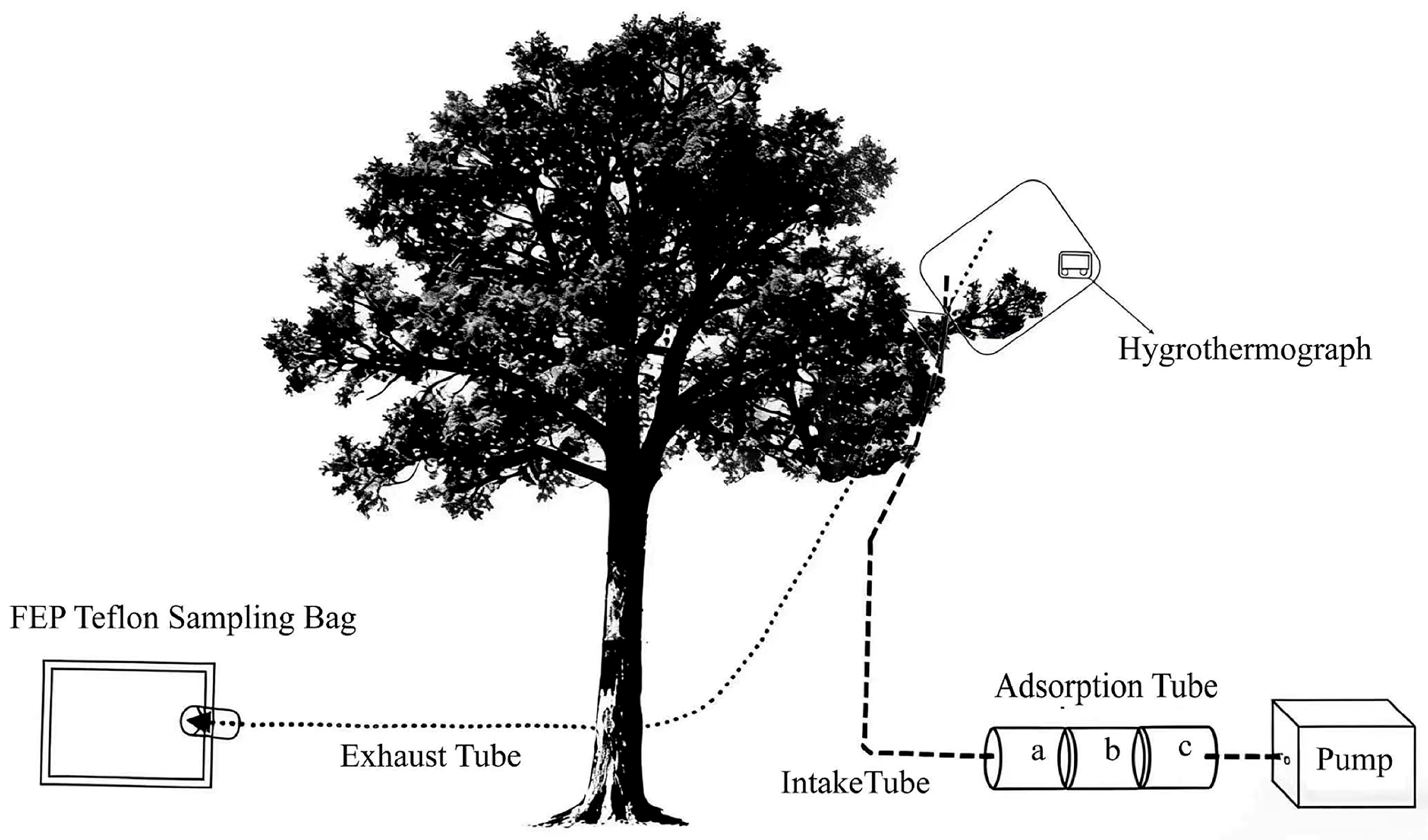
Sampling was performed in autumn under clear and calm conditions. For each tree species, three healthy, vigorously growing trees without signs of pest infestation or disease were selected, and leaves from branches were used as the sampling targets. Sampling was conducted between 08:00 and 12:00 to ensure temporal consistency, with three replicates per species collected concurrently. Sites were preselected in undisturbed forest areas, far from residential and industrial zones. To accurately capture BVOC emissions under ambient conditions, an open dynamic headspace collection system was employed (Figure 1), with each individual tree sampled for 30 min. Under strictly identical sampling conditions across all species, BVOC concentrations (ng·m−3) were measured in a unified closed system using Teflon® bags (Volume 2L, Dalian Delin Gas Packaging Co., Ltd., Dalian, China), enabling direct interspecific comparison of BVOC concentrations without normalization to leaf area or biomass.
The sampling device consisted of a portable atmospheric sampling pump (Model 10L-D, Dalian Delin Gas Packaging Co., Ltd., Dalian, China) positioned on level ground, with silicone tubes were connected to its intake and exhaust ports. An adsorption-purification system containing silica gel, potassium iodide (for ozone removal), and activated carbon was incorporated into the intake line to ensure uncontaminated inflow air. Branch leaves were enclosed in a Teflon sampling bag fitted with two apertures for the intake and exhaust tubes, with the intake tube kept shorter than the exhaust tube to optimize airflow. We sealed all connections tightly with Parafilm to keep the closed-loop system intact.
The operational procedure for gas sampling was as follows: Upon activating the sampling pump, the flow rate was adjusted to 10 L/min. Purified air was continuously pumped into the sampling bag until nearly full, and then the pump was switched off. Throughout the sampling period, we used a small digital hygrothermograph to monitor the temperature and relative humidity within the bag in real time suspended from the branch, and the mean values were recorded as the representative microclimate data at the leaf surface. After gas collection was completed, the targets were excised, placed in clean and self-sealing bags, and transported to the laboratory for subsequent measurement of leaf functional traits.

2.3. Sample Analysis

2.3.1. Gas Sample Extraction and Analysis

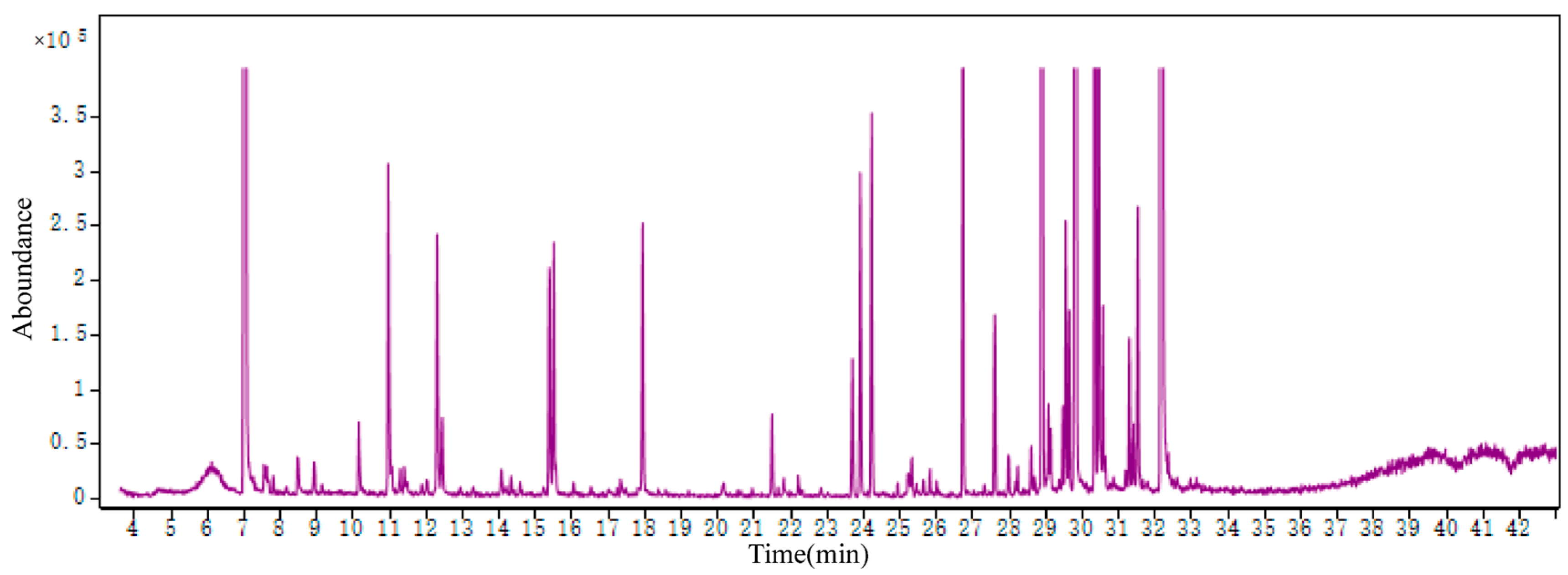
Gas samples were extracted and analyzed using gas chromatograph (Agilent 7890 B, Agilent Technologies Inc., Santa Clara, CA, USA) coupled with mass spectrometer (Agilent 5977 A, Agilent Technologies Inc., Santa Clara, CA, USA). The GC–MS was equipped with a pre-concentrator (Entech 7200, Entech Instruments Inc., Simi Valley, CA, USA). A three-stage liquid nitrogen cryogenic trapping system selectively removed interfering matrix components, including H2O, N2, O2, and CO2. Following purification, the analytes were cryogenically focused at −150 °C to ensure sharp chromatographic peaks before transfer to the GC-MS system for separation and detection. Data acquisition was performed in Selected Ion Monitoring (SIM) mode, with PAMS, TO-15, and monoterpene standards (comprising a total of 113 compounds) serving as reference materials. Compound identification employed a dual verification strategy, integrating mass spectral matching against the NIST14 library (Figure 2) with retention times of standard gases for qualitative confirmation. For quantitative analysis, an internal standard method was used, wherein peak areas and a release amount standard curve were applied to calculate the concentrations of individual compounds, including biogenic volatile organic compounds (BVOCs) such as isoprene, alpha-pinene (α-pinene), beta-pinene (β-pinene), alpha-terpinene (α-terpinene), gamma-terpinene (γ-terpinene), DL-limonene and 3-carene [31], which is calculated using the following formula:
Relative   Content   ( % ) = S P A S × 100 %
Absolute   Content   ( ng   m 3 ) = S P A S S A × S S I V S P I V × S S I S A S P I S A × S S C o n c .   ( 20 ppb )
In the equation, SPA refers to the Sample Peak Area, S refers to the Total Sample Peak Area, SSA refers to the Standard Sample Peak Area, SSIV refers to the Standard Sample Injection Volume, SPIV refers to the Sample Injection Volume, SSISA refers to the Standard Sample Internal Standard Peak Area, SPISA refers to the Sample Internal Standard Peak Area and SS Conc. refers to the Standard Sample Concentration. The standard gas concentration was 20 ppb, and the mass concentration of the standard sample was calculated in accordance with the basic conditions of the experiment, with the conversion relationship: 1 ppb = 1000 ng m−3. All samples were analyzed under identical experimental conditions. For simplicity, a uniform conversion factor of 1000 was applied. This uniform conversion factor is acceptable for interspecific comparison, although it may cause minor inaccuracies in absolute concentrations.

2.3.2. Leaf Functional Trait Analysis

Leaf saturated fresh weight was measured using an analytical balance (CP224C, Ohaus, Parsippany, NJ, USA). Leaf functional traits including leaf length (LL), leaf width (LW), leaf area (LA), and leaf fresh weight (LFW), were measured and analyzed using ImageJ (Version 1.8.0, National Institutes of Health, Bethesda, MD, USA) and Leaf Byte (Version 1.4.0, developed by Zoe Getman-Pickering and Adam Campbell at Cornell University, Ithaca, NY, USA).
Leaf samples were then oven-dried to constant weight, and the drying procedure consisted of an initial enzyme inactivation at 105 °C for 30 min, followed by continuous drying at 65–80 °C until mass stabilization. yielding leaf dry weight (LDW). Leaf humidity (LH) and leaf temperature (LT) were also recorded. Specific leaf area (SLW) was calculated as follows:
SLW = leaf dry weight/leaf area

2.4. Data Analysis

Data organization and entry were performed using Microsoft Excel 2010. Statistical analyses were conducted using SPSS 22.0, which was employed to perform a one-way analysis of variance (ANOVA) and LSD (Least Significant Difference) post hoc tests to determine significant differences in phytoncide gas among different tree species. All experimental data are presented as the mean ± standard deviation. Graphical representations were generated using Origin 2024. Furthermore, Mantel tests and associated visualizations were performed using the “vegan” and “ggcor” packages in R software (Version 4.5.2). Principal component analysis (PCA) was used to analyze the multivariate relationships between phytoncides and leaf functional traits across eight subtropical landscape tree species.

3. Results

3.1. Differences in the Relative and Absolute Content of BVOCs Among Eight Subtropical Landscape Trees

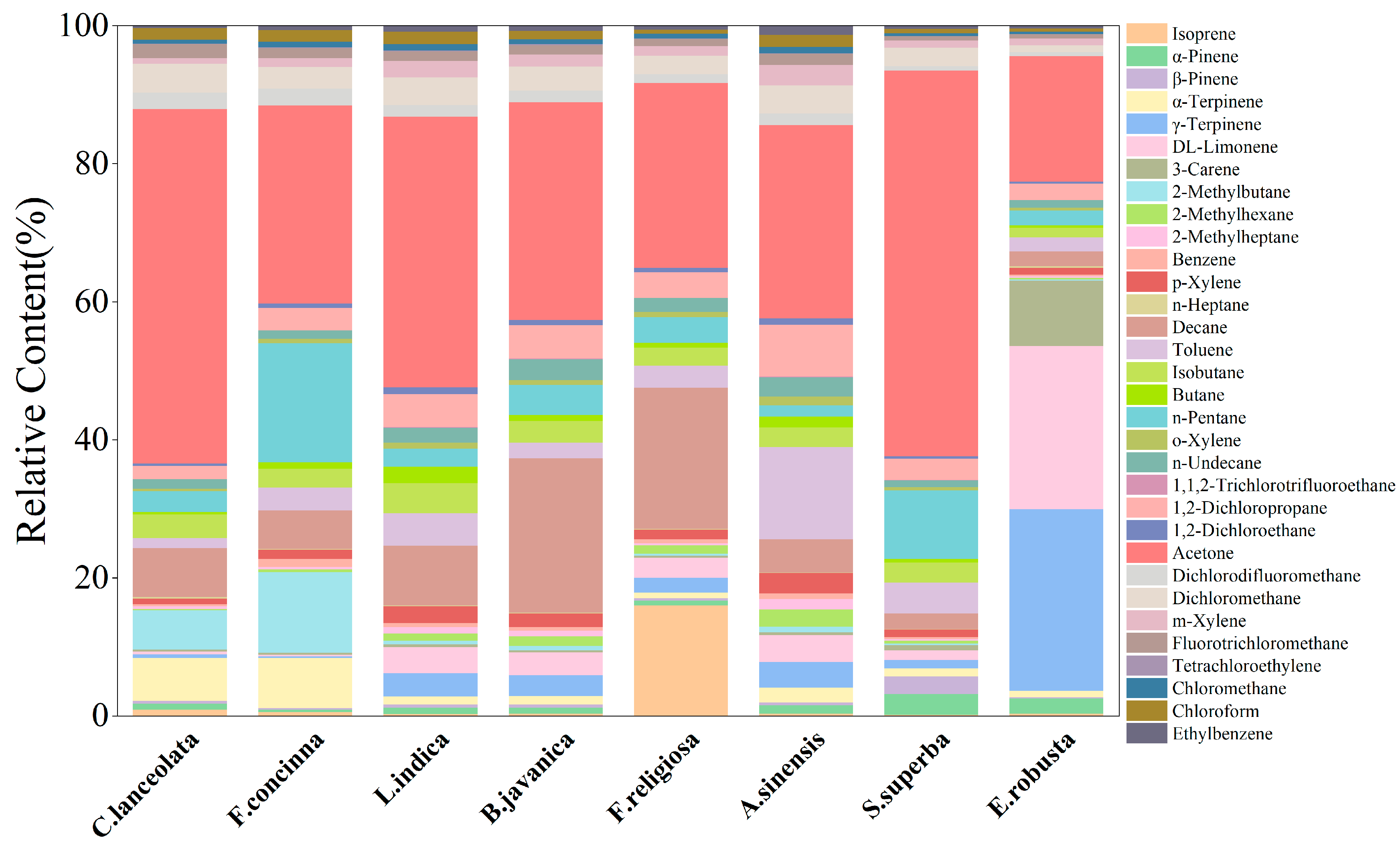
A total of thirty-two common BVOCs were identified across eight tree species (Figure 3), primarily comprising ketones, terpenes, alkanes, and alkenes. Acetone exhibited the highest relative content, following the order: S. superba (55.9%) > C. lanceolata (51.4%) > L. indica (39.3%) > B. javanica (31.5%) > F. concinna (28.7%) > A. sinensis (28.0%) > F. religiosa (26.7%) > E. robusta (18.2%). High proportions of n-decane were observed in B. javanica (22.3%) and F. religiosa (20.5%), and F. concinna showed relative content of isopentane (11.7%) and n-pentane (17.2%).
The distribution of terpenoids exhibited distinct species-specific patterns. E. robusta showed a marked dominance in monoterpene release, and it was primarily characterized by γ-terpinene (26.4%) and DL-limonene (23.7%). In contrast, F. religiosa released a substantial proportion of isoprene (16.1%). α-terpinene was mainly distributed in C. lanceolata (6.2%) and F. concinna (7.2%), whereas α-pinene reached its highest relative content in S. superba (3.0%). Furthermore, L. indica, B. javanica, and A. sinensis displayed high consistency in their terpenoid relative compositional profiles.
Absolute content of the thirty-two common BVOCs identified in eight tree species differed significantly (Table 2). These compounds included seven phytoncide components and 25 other components. Notably, the most abundant components in each tree species were as follows: isoprene in F. religiosa, n-decane in B. javanica, acetone in L. indica and S. superba, 1,2-dichloropropane in A. sinensis, DL-limonene in E. robusta, and α-terpinene in both C. lanceolata and F. concinna. Conversely, 1,1,2-trichlorotrifluoroethane exhibited the lowest absolute release levels among all identified common compounds across all tree species.
Regarding release characteristics, the eight landscape tree species exhibited distinct variations in their chemical compositions. C. lanceolata and F. concinna were predominantly characterized by α-terpinene, and the absolute content was significantly higher than that of the other 31 compounds, exceeding the levels of 1,1,2-trichlorotrifluoroethane by 4585 and 7029 times, respectively. L. indica and S. superba were dominated by acetone, with absolute content 400 and 3500 times greater than that of 1,1,2-trichlorotrifluoroethane, respectively. Furthermore, the principal released components from B. javanica, F. religiosa, A. sinensis, and E. robusta were identified as n-decane, isoprene, 1,2-dichloropropane, and DL-limonene. Their content was significantly higher than that of the other 31 constituents, reaching 370, 2260, 200, and 5300 times that of 1,1,2-trichlorotrifluoroethane. Notably, E. robusta exhibited the highest content, which was 1.24–3.71 times higher than the other seven tree species.

3.2. Differences in the Content of Seven Phytoncides Among Eight Subtropical Landscape Trees

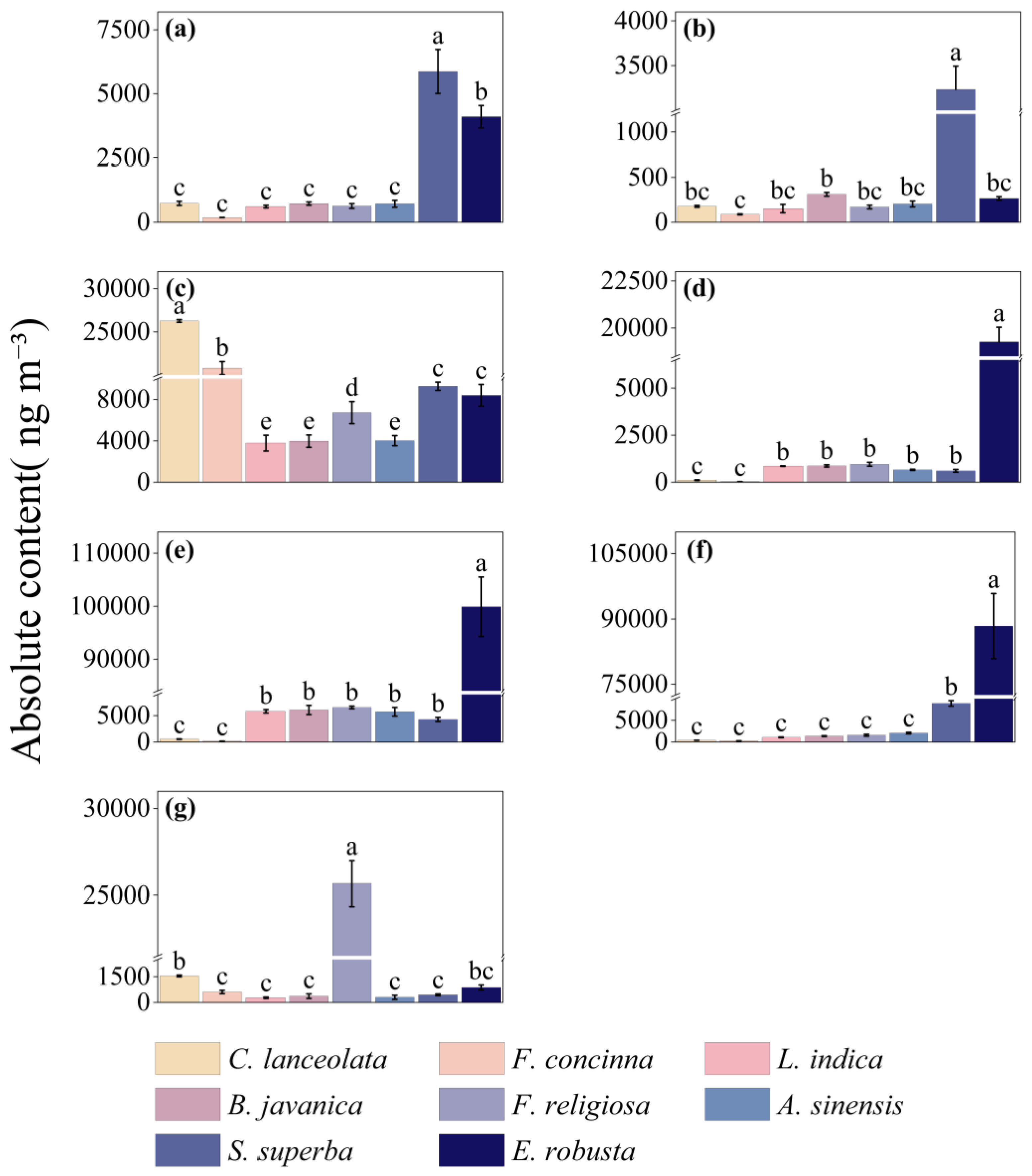
The absolute content of phytoncide components varied significantly among the eight tree species (Figure 4). The absolute content of α-pinene and β-pinene in S. superba were significantly higher than those in the other seven tree species, exceeding them by 0.43–8.54 and 16.76–35.62 times, respectively (Figure 4a,b). In C. lanceolata, the absolute content of α-terpinene was significantly higher than that in the other seven tree species, exceeding them by 0.26–5.94 times, whereas the content in L. indica, B. javanica, and A. sinensis were significantly lower than those in the other tree species (Figure 4c). E. robusta exhibited significantly higher absolute content of γ-terpinene, DL-limonene, and 3-carene, which were 19.21–701.81, 14.26–573.94, and 8.93–306.31 times higher than those of the other species, respectively (Figure 4d,e). Furthermore, the absolute content of isoprene in F. religiosa was 15.62–92.06 times higher than that observed in the remaining species (Figure 4f).
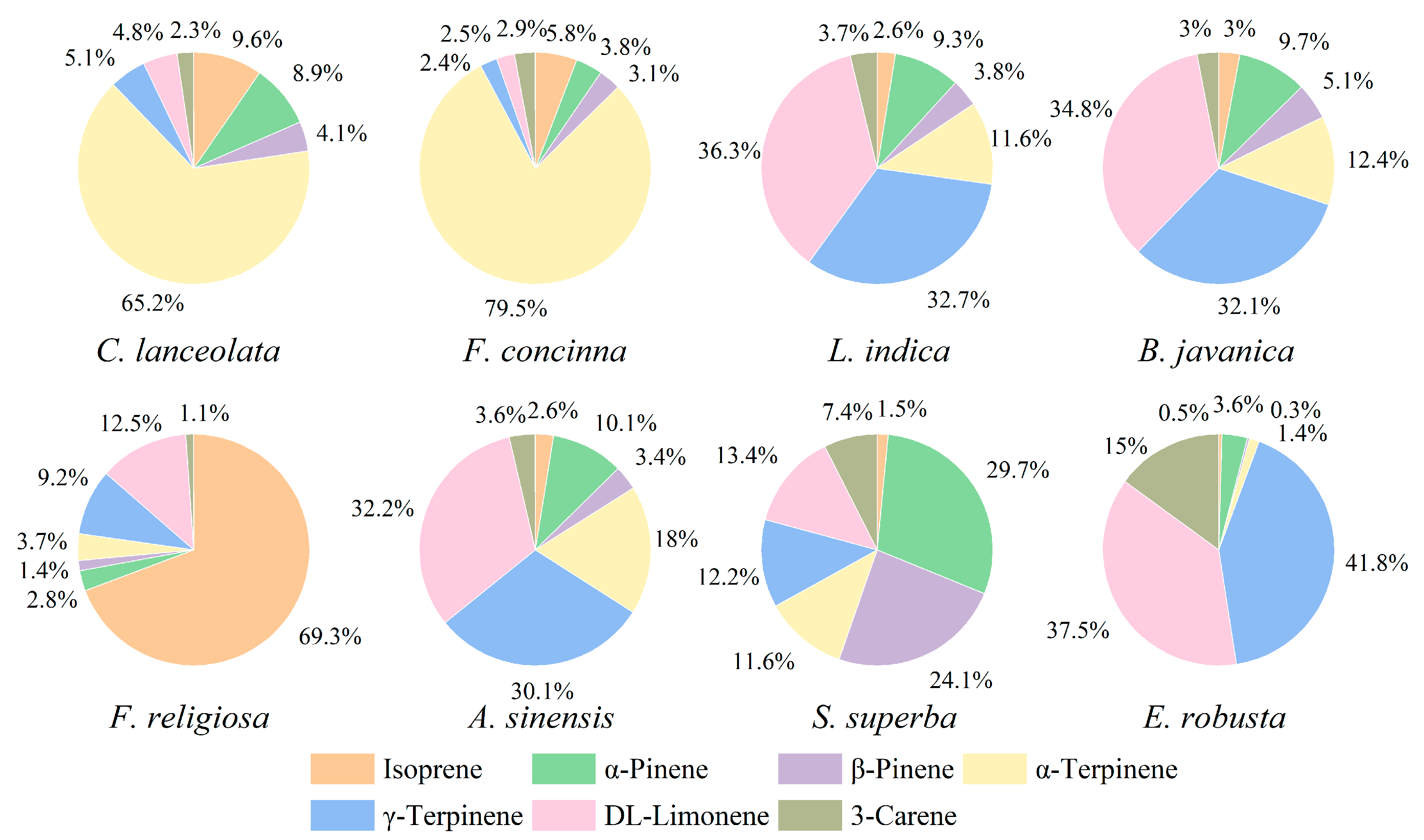
Eight tree species exhibited significant differences in the relative content of the seven phytoncides (Figure 5). The phytoncide profiles of C. lanceolata and F. concinna were both dominated by α-terpinene, which accounted for 65.2% and 79.5% of their respective total content. In L. indica, B. javanica, and A. sinensis, the chemical compositions were primarily characterized by DL-limonene (32.2–36.3%), γ-terpinene (30.1–32.7%), and α-terpinene (11.6–18.0%). In contrast to the other species, S. superba had the highest content of α-pinene (29.7%), and showed a relatively balanced phytoncide composition with small differences among components. Furthermore, isoprene constituted 69.3% of the total phytoncide content in F. religiosa, while the primary components in E. robusta were identified as γ-terpinene (41.8%), DL-limonene (37.5%), and 3-carene (15%).

3.3. Differences in Leaf Functional Traits Among Eight Subtropical Landscape Trees

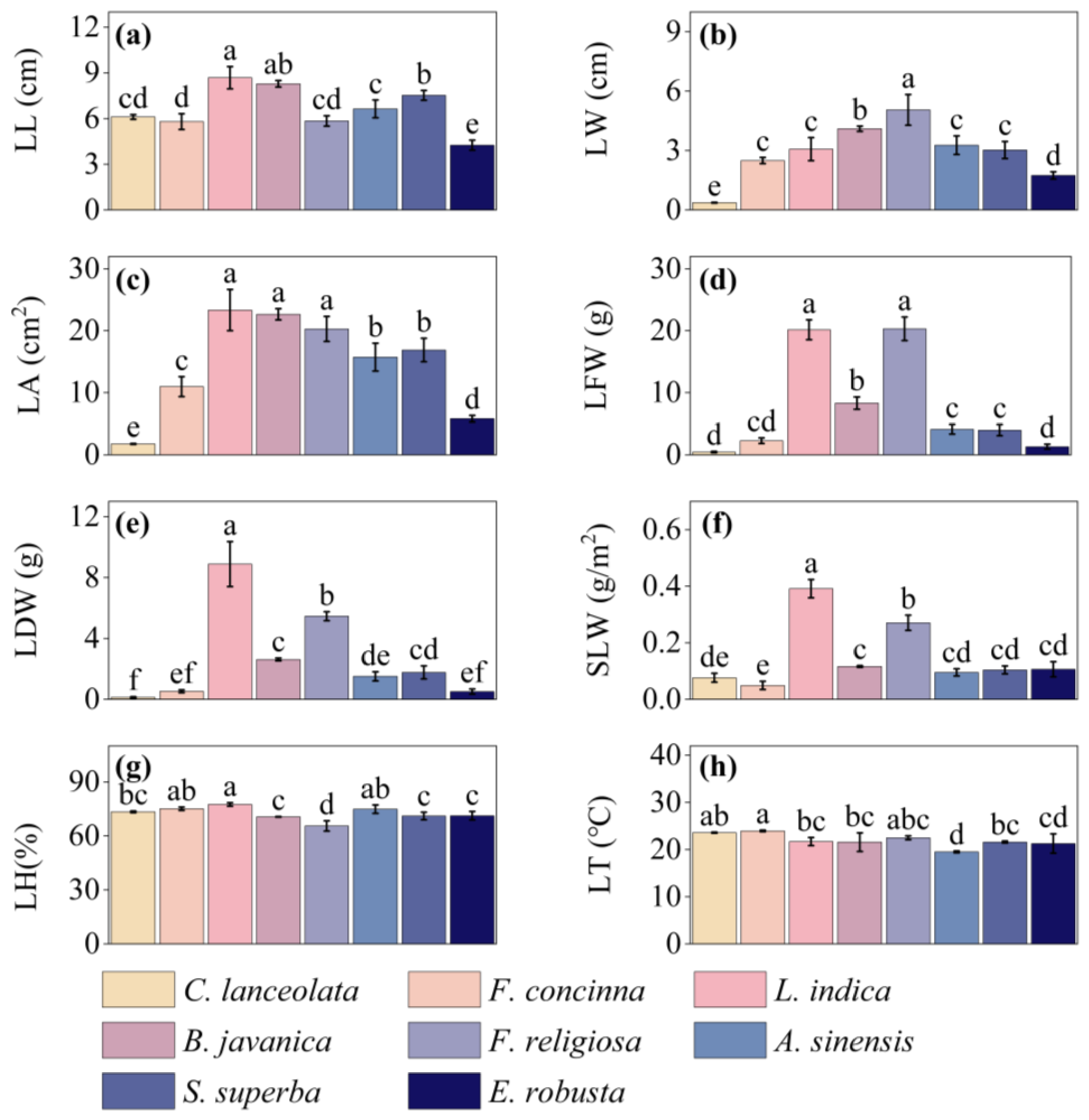
Leaf functional traits, including morphological (LL, LW, LA), biomass (LFW, LDW, SLW), and physiological (LH, LT) indices were systematically compared among eight tree species: C. lanceolata, F. concinna, L. indica, B. javanica, F. religiosa, A. sinensis, S. superba, and E. robusta. Results indicated that L. indica had the highest LL, exceeding them by 0.15–1.04 times, while E. robusta had the lowest (Figure 6a). F. religiosa exhibited the highest LW, exceeding 0.23–12.77 times greater than others, whereas C. lanceolata had the lowest (Figure 6b). LA was significantly larger in L. indica, B. javanica, and F. religiosa, surpassing the remaining species by 0.03–12.24, 0.12–11.86, and 0.20–10.51 times, respectively (Figure 6c). LFW was highest in L. indica and F. religiosa (1.43–44.88 and 0.01–45.23 times greater), and both LDW and SLW were greatest in L. indica (0.63–68.56 and 0.45–6.94 times greater) (Figure 6d–f). No significant differences in either LH or LT were observed between F. concinna and A. sinensis (Figure 6g,h).

3.4. Correlations Among Phytoncides and Between Phytoncides and Leaf Functional Traits in Eight Subtropical Landscape Trees

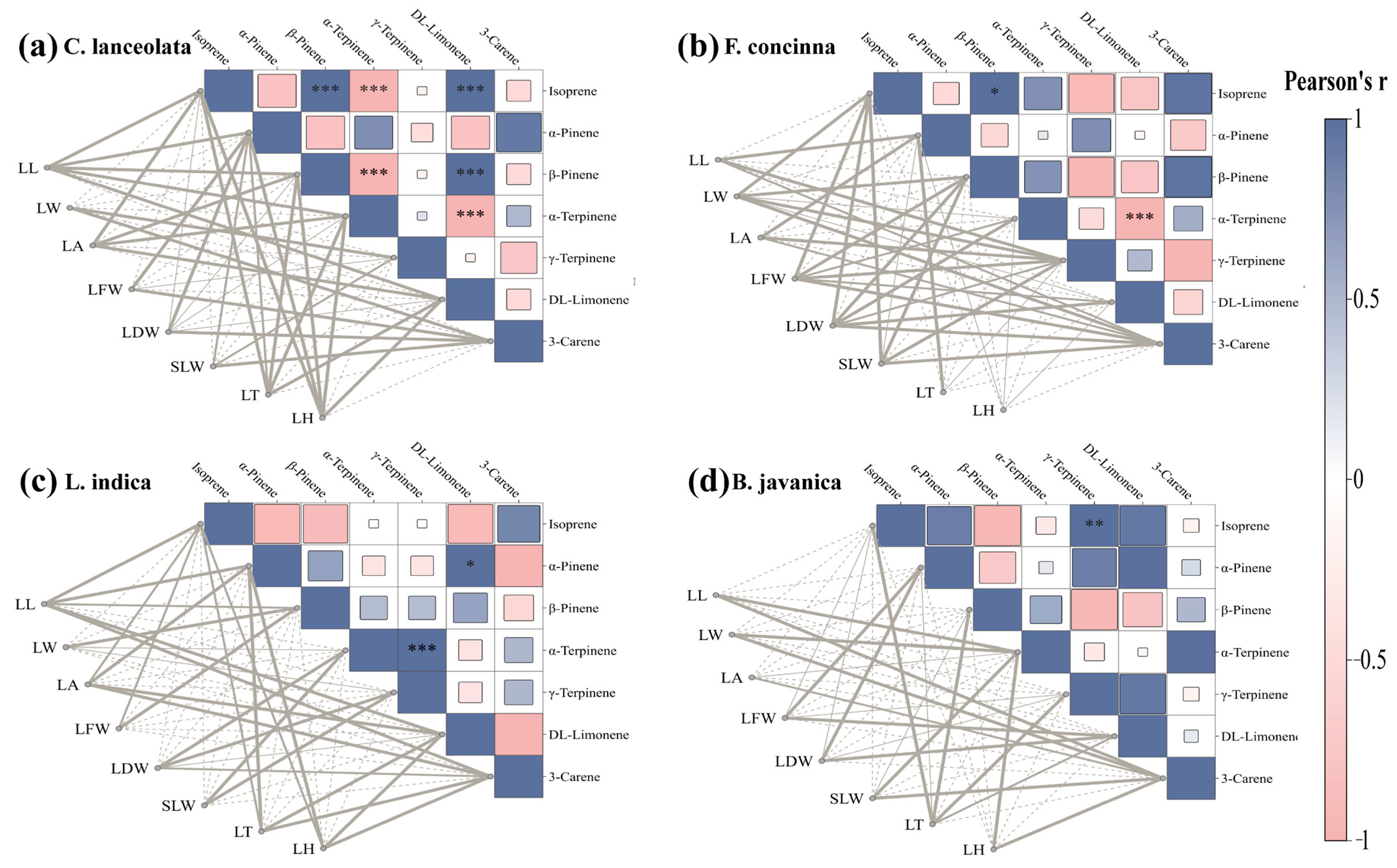
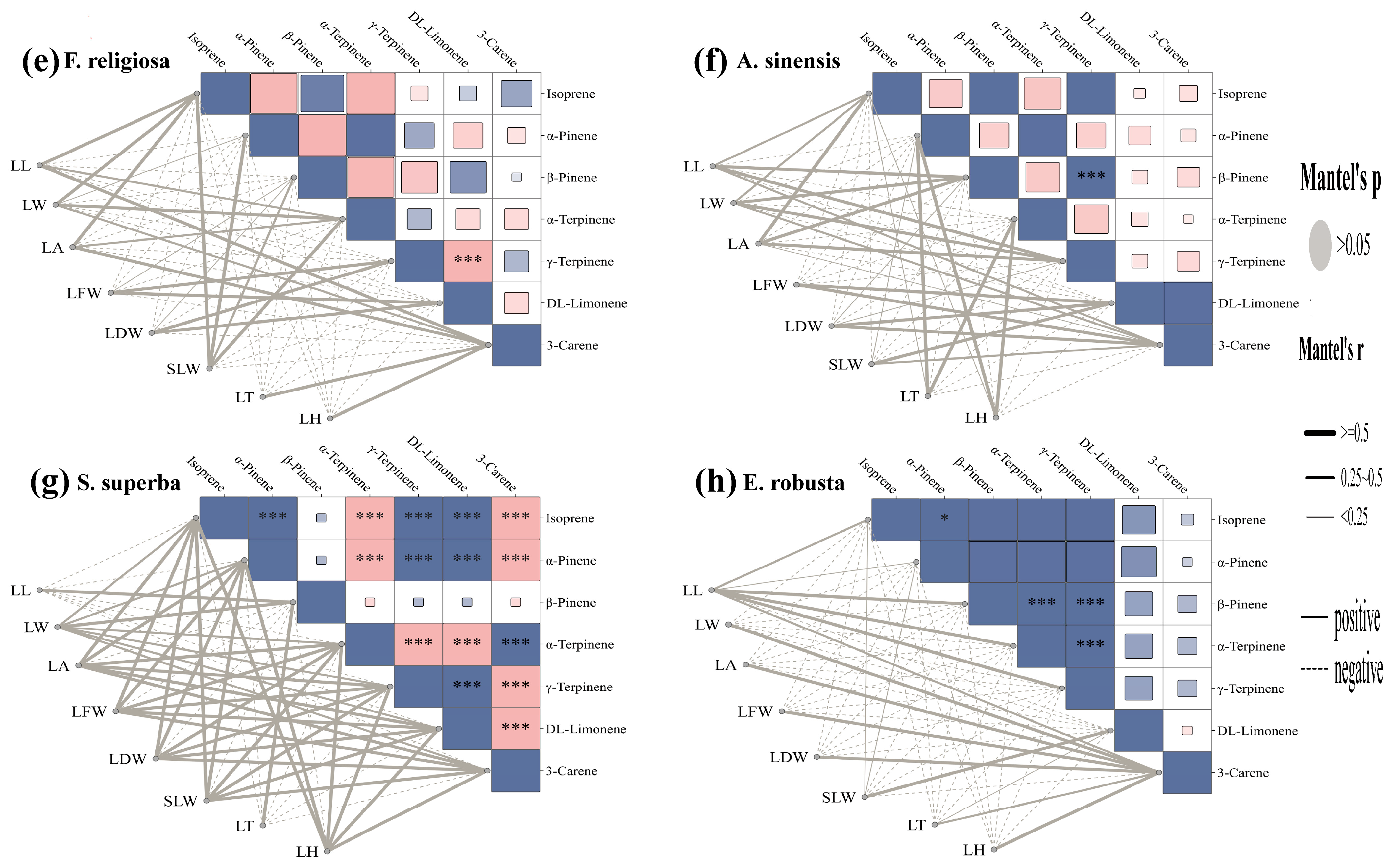
Significant interspecific correlations were detected among phytoncides. In C. lanceolata and F. concinna, isoprene and β-pinene were positively correlated, while α-terpinene and DL-limonene were highly significantly negatively correlated. Isoprene was highly significantly positively correlated with γ-terpinene in B. javanica and S. superba, but negatively with α-terpinene in C. lanceolata and S. superba. In F. religiosa, γ-terpinene and DL-limonene were highly negatively correlated, contrasting with a positive correlation in S. superba. α-terpinene and γ-terpinene were highly positively correlated in L. indica and E. robusta. Other notable correlations included α-terpinene and 3-carene showing opposite patterns in S. superba. In E. robusta, isoprene correlated positively with α-pinene, and β-pinene was highly positively correlated with α-terpinene and γ-terpinene (Figure 7).
Mantel tests revealed relationships between leaf functional traits and seven phytoncides across eight species. In C. lanceolata, most traits were positively correlated with phytoncides, while LA and LT correlated with γ-terpinene and 3-carene (Figure 7a). In F. concinna, LL, LW, LA, LFW, and LDW showed positive correlations with γ-terpinene and 3-carene, whereas LH was not significantly correlated (Figure 7b). In L. indica, LL was positively and SLW negatively correlated with five phytoncides, with LT and LH showing similar patterns (Figure 7c). In B. javanica, LL, LW and LA were positively correlated with α-terpinene and 3-carene, with LFW, LDW and LT displaying similar patterns (Figure 7d). In F. religiosa exhibited positive correlations of LL, LW, and LA with α-terpinene, isoprene, or 3-carene, along with consistent LT and LH patterns (Figure 7e). In A. sinensis, LL, LW, and LA correlated positively with four same phytoncides (Figure 7f). In S. superba, LW was positively associated with all phytoncides, while other traits were negatively correlated with β-pinene (Figure 7g). In E. robusta, LL correlated positively with six phytoncides, whereas the remaining traits were mostly negative except for 3-carene (Figure 7h).

3.5. Multivariate Relationships Between Phytoncides and Leaf Functional Traits

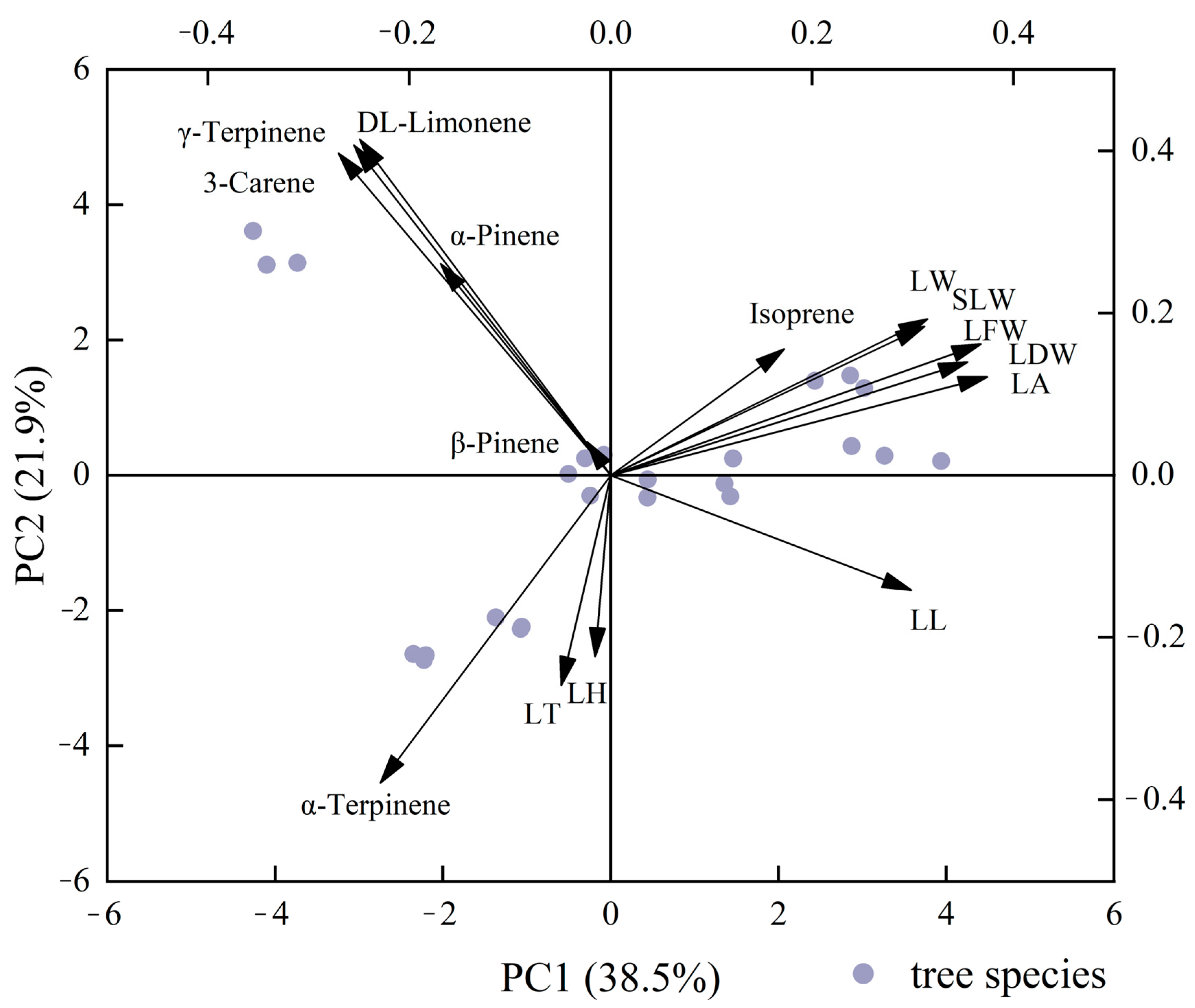
Principal component analysis (PCA) was conducted to assess the multivariate relationships between phytoncides and leaf functional traits across subtropical tree species (Figure 8). PC1 and PC2 accounted for 38.5% and 21.9% of the total variance, respectively, with a cumulative contribution of 60.4%.
PC1 primarily reflected a gradient of leaf morphology, biomass allocation traits and isoprene content. LA showed the highest positive contribution to PC1, followed by LFW, LDW, LW, SLW, and isoprene. By contrast, monoterpenes exhibited strong negative contributions to PC1, indicating an inverse relationship between leaf functional traits and monoterpene content. PC2 was mainly associated with monoterpene components and leaf physiological traits. DL-limonene showed the highest positive contribution to PC2, followed by γ-terpinene, 3-carene, α-pinene and β-pinene. In contrast, α-terpinene, LT, and LH showed strong negative contributions to PC2. In brief, PCA revealed opposing trends between some leaf functional traits and monoterpene content, as well as key gradients related to phytoncide composition and leaf physiology.

4. Discussion

4.1. Interspecific Variation in BVOCs Release Characteristics Among Eight Subtropical Landscape Trees

This study found significant interspecific differences in BVOC release profiles, highlighting the high heterogeneity of forest BVOC sources. Consistent with previous research, variations in leaf BVOC absolute content are influenced by genetic background, physiological state [32,33], and extrinsic environmental factors [34]. High acetone release observed across all eight species may be linked to intense light and seasonal water stress in subtropical regions, as acetone plays a critical effect in osmotic adjustment and the maintenance of cell membrane stability, thereby enhancing plant resilience to drought and high-temperature conditions [35]. Species-specific BVOC release reflects differentiated ecological niche dynamics. C. lanceolata and F. concinna were characterized by the predominant release of α-terpinene (a monoterpene), with peak absolute content reaching 26.3 × 10³ ng m−3 and 20.8 × 10³ ng m−3, respectively [36]. These values are closely associated with their leaf functional traits, anatomical structures and ecological adaptation strategies [37]. E. robusta exhibited a robust terpene release capacity, and its content of DL-limonene (99.8 × 10³ ng m−3), 3-carene (88.3 × 10³ ng m−3), and γ-terpinene (19.3 × 10³ ng m−3) were significantly, which agrees with the findings of Zini et al. [38]. This phenomenon is related to the high BVOC release potential, environmental adaptability and allelopathy of the species [39], and aligns with its adaptive traits to high temperature and high light [40]. F. religiosa displayed the highest isoprene release level reaching 25.6 × 10³ ng m−3, agree with the results of Wang et al. [41]. Over geological timescales, climatic pressure, soil nutrients, and biotic interactions have repeatedly filtered and stabilized these chemical traits, ultimately contributing to phylogenetic diversity and the stability of ecosystem functions [42]. These interspecific differences also provide a scientific basis for selecting functionally diverse landscape tree species in urban greening and therapeutic landscape design.
In summary, BVOCs from different tree species in the same stand show significant interspecific differences in relative proportions and absolute concentrations. Besides genetic factors, microclimate and methodological variations may contribute to such differences [43,44]. Future studies should investigate BVOC responses to genetic and environmental gradients to clarify release regulatory mechanisms in subtropical landscape trees.

4.2. Differences in Phytoncide Content, Therapeutic Potential, and Practical Considerations Among Eight Subtropical Landscape Trees

Phytoncides are bioactive volatile organic compounds which can be absorbed by the human body via inhalation and thus trigger a variety of health-promoting effects [45]. For instance, a study [46] confirmed that phytoncides from typical forests in Yichun exhibit significant bioactivity. Tree-released phytoncides are predominantly terpenoids, which are key BVOCs and important plant secondary metabolites [47]. In this study, seven phytoncides were identified, including isoprene, α-pinene, β-pinene, α-terpinene, γ-terpinene, DL-limonene and 3-carene and their release characteristics differed significantly among species.
F. religiosa released isoprene as the dominant component, and its high concentrations may be influenced by the photosynthetic efficiency and heat stress of the plant in the subtropical zone [41,48]. As a low-molecular-weight hydrocarbon terpene, isoprene released by F. religiosa under high temperature conditions effectively protects the plant’s photosynthetic system from stress-induced damage [49]. This physiological trait not only enhances the ecological adaptability of F. religiosa in subtropical high-temperature environments but also highlights its unique potential application value in improving urban microclimates and forest therapy functions [50]. S. superba utilized pinenes (primarily α-pinene and β-pinene) as its major release components, with relative content of 29.7% and 24.1% and absolute content of 58.6 × 10² ng m−3 and 32.3 × 10² ng m−3, respectively, showing notably high monoterpene concentrations that are consistent with previous studies [51]. C. lanceolata and F. concinna were dominated by α-terpinene with content reaching 26.3 × 10³ ng m−3 and 20.8 × 10³ ng m−3, respectively, a finding that agrees with that of Son et al. [52], who noted that coniferous species generally exhibit high monoterpene release characteristics. E. robusta, a highly volatile species, released γ-terpinene, DL-limonene, and 3-carene, accounting for over 90% of total emissions, while L. indica, B. javanica and A. sinensis shared similar patterns with DL-limonene and terpinenes as primary components, forming distinctive volatile chemical signatures.
The interspecific differences in phytoncide release intensity determine the differentiated roles of each species in forest health intervention, and all terpenoids detected in the eight subtropical species show biological activity and great therapeutic potential. A-pinene and β-pinene can promote the release of anti-inflammatory factors and exert significant anti-inflammatory effects which align with the findings of Li [53]. Both γ-terpinene and α-terpinene are monoterpenes that possess significant immunomodulatory, antibacterial, anti-inflammatory and anti-tumor properties [54] and emit a characteristic pine-like aroma [55]. Furthermore, DL-limonene not only acts as an antibacterial and antimicrobial substance, but also stimulates the secretion of digestive fluids and alleviates respiratory discomfort [56,57]. 3-Carene possesses a unique aromatic profile [58] and exerts sedative effects on the human body, which can help improve sleep quality [59]. Consequently, the scientific and rational selection of tree species capable of stable phytoncide (terpenoid) release is of substantial practical significance for subtropical forest therapy bases and therapeutic landscape design. By clarifying the release characteristics of seven core terpenoid phytoncides across different species, this study reveals their synergistic benefits, including antibacterial activity, atmospheric particulate removal, and psychological stress alleviation, thereby providing essential pathways for enhancing the scientific rigor of therapeutic services [60]. Future studies should explore landscape effects on phytoncide release to guide urban greening species selection.
Based on the phytoncide content and advantages comparison, these four species (E. robusta, C. lanceolata, F. religiosa, and S. superba) show potential for landscaping. Nevertheless, their deployment should account for relevant trade-offs. For example, the pollen of E. robusta has been reported to cause allergic reactions [61], and the sap of F. religiosa and the bark of S. superba have been associated with dermal irritation or contact dermatitis [62]. Ecologically, E. robusta and F. religiosa can be invasive outside their native range [63,64], and monoculture of C. lanceolata causes soil degradation and disrupts microbial stability [65]. To minimize risks, we recommend mixed-species planting and consultation with local ecological guidelines, taking into account the phytoncide values of selected species.

4.3. Correlative and Multivariate Analyses of Leaf Functional Traits and Phytoncide Content

Leaves function as the biosynthetic and release hub for phytoncides, which are predominantly synthesized within chloroplasts, and their release is intrinsically linked to leaf functional traits [3,66,67]. Significant interspecific variations in the leaf functional traits were observed, with L. indica and F. religiosa showing distinct profiles, and the specific leaf weight (SLW) of L. indica was significantly higher than that of all other species. Such interspecific differentiation may reflect differential regulation of secondary metabolite synthesis [68]. Correspondingly, phytoncides released by leaves exhibited species-specific correlation patterns. Isoprene was significantly positively correlated with β-pinene and DL-limonene, whereas α-terpinene showed negative correlations with isoprene and DL-limonene. One possible explanation involves substrate competition among distinct terpene synthases (TPS) or transcriptional antagonistic regulation [69,70]. In S. superba, correlations among phytoncides were especially pronounced: isoprene displayed highly significant positive correlations with α-pinene, γ-terpinene, and DL-limonene, while showing highly significant negative correlations with α-terpinene and 3-carene. These patterns may reflect differences in secondary metabolic regulatory mechanisms and secondary metabolic pathways among tree species [70].
However, with only three biological replicates per species, these results are limited. Moreover, correlation does not imply causation, and no experimental validation was performed to verify causality. Furthermore, mantel tests revealed that the relationship between leaf functional traits and phytoncide content exhibits species specificity and significant correlations [71]. Leaf morphological traits (LL, LW, LA) are important indicators of plant adaptation [72]. For S. superba, leaf functional traits were positively correlated with most phytoncides, which may support the Carbon-Nutrient Balance (CNB) hypothesis [73]. In L. indica, LL and LA were positively correlated with several phytoncides, but total phytoncide content remained relatively low. This trend is consistent with the slow carbon economy strategy [74], suggesting that L. indica may preferentially allocate resources to leaf structural construction. In most species, LFW, LDW and SLW exhibited positive correlations with specific phytoncides. For instance, the SLW of F. religiosa was positively correlated with isoprene, α-pinene, β-pinene, and α-terpinene. These correlations suggest that leaf biomass accumulation may contribute to phytoncide synthesis, potentially providing energy supply for secondary metabolism [32]. LT of several species was negatively correlated with phytoncide release. These correlations are consistent with the functional role of certain terpenoids in lowering leaf temperature and protecting plants from heat stress, specifically, isoprene provides thermal protection by stabilizing cell membranes [75,76]. Among all species, E. robusta, as a high BVOC-emitting species, showed positive correlations of LT with DL-limonene and 3-carene, which is consistent with the findings of Komenda and Koppmann [77], but negative correlations with other phytoncides. Furthermore, all leaf functional traits except SLW were positively correlated with 3-carene in E. robusta. This may reflect a specialized secondary metabolic strategy [78], which appears consistent with its ecological characteristics of adapting to arid and high-temperature environments [79].
Principal component analysis (PCA) reinforced these findings as a descriptive method. PC1 (38.5%) and PC2 (21.9%) explained 60.4% of the total variance. PC1 positively linked leaf functional traits and isoprene but negatively correlated with monoterpenes. PC2 was positively associated with DL-limonene, γ-terpinene, 3-carene, α-pinene and β-pinene, while α-terpinene, LT and LH loaded negatively, suggesting potential species-specific patterns. The remaining variance (39.6%) may be attributed to habitat conditions, intra-specific genetic variation, seasonal or climatic influences, and other physiological traits [80]. In summary, the relationships between phytoncides and leaf functional traits display species specificity, which may be influenced by environmental and genetic factors [81]. This study may provide theoretical support and practical guidance for selecting landscape trees in urban greening and forest therapy. Future work should explore molecular mechanisms to improve forest management and horticultural planning.

5. Conclusions

Among the eight typical subtropical landscape trees, thirty-two BVOCs were identified and acetone was a dominant BVOC. E. robusta exhibited the highest BVOC content (1.24–3.71 times that of the other seven tree species) dominated by γ-terpinene, DL-limonene, and 3-carene (19.21–701.81, 14.26–573.94, and 8.93–306.31 times higher, respectively). L. indica, B. javanica, and A. sinensis showed similar phytoncide patterns, whereas S. superba released pinene-type compounds, C. lanceolata and F. concinna mainly emitted α-terpinene, and F. religiosa was distinguished by superior isoprene release (15.62–92.06 times higher). Leaf functional traits co-varied with phytoncide content: LA was positively correlated with several phytoncides, implying that larger leaves supply more photosynthates for secondary metabolite biosynthesis. By contrast, LT was negatively correlated with certain compounds, suggesting their involvement in leaf temperature regulation. PCA revealed opposing relationships between leaf functional traits and some monoterpene content, underscoring the role of leaf morphology and physiology in shaping interspecific phytoncide emission patterns. This study provides a preliminary basis for landscape species selection. Based on autumn sampling at a single site, E. robusta, C. lanceolata, F. religiosa, and S. superba showed higher phytoncide content and thus have potential for greening and landscape design to enhance air quality and health benefits. However, we should also consider the trade-offs according to local ecological conditions. This study only investigated gaseous release from leaves, lacked full-year seasonal data, ignored non-leaf organs, and was restricted to the individual plant level. Future work should conduct year-round monitoring, include multiple organs, and expand to stand and landscape scales, with careful consideration of local ecological conditions, to support ecological management and horticultural planning.

Author Contributions

Conceptualization, X.Y.; methodology, X.Y., L.Q. and K.Y.; software, K.Y., L.W. and Y.J.; validation, K.Y., L.W. and Y.J.; formal analysis, X.Y.; investigation, X.Y., L.Q., K.Y., L.W. and Y.J.; resources, X.Y. and M.Y.; data curation, K.Y., L.W. and Y.J.; writing—original draft preparation, K.Y.; writing—review and editing, X.Y., K.Y., L.W. and Y.J.; visualization, K.Y.; supervision, X.Y.; project administration, X.Y. and M.Y.; funding acquisition, X.Y. and M.Y. All authors have read and agreed to the published version of the manuscript.

Funding

This research received no external funding.

Data Availability Statement

The data presented in this study are available on request from the corresponding author due to the data being part of an ongoing degree thesis.

Acknowledgments

The authors thank the KaiSen Millennium Ancient Tree Garden, Huizhou City, Guangdong Province, for their support, as well as those who provided assistance during sampling.

Conflicts of Interest

Author Mengchuan Yang was employed by Shenzhen Kaisen Holding Co., Ltd., which operates the Kaisen Millennium Ancient Tree Garden study site. The remaining authors declare that the research was conducted in the absence of any commercial or financial relationships that could be construed as a potential conflict of interest.

References

  1. Montejano-Ramírez, V.; Ávila-Oviedo, J.L.; Campos-Mendoza, F.J.; Valencia-Cantero, E. Microbial volatile organic compounds: Insights into plant defense. Plants 2024, 13, 2013. [Google Scholar] [CrossRef] [PubMed]
  2. Mangotra, A.; Singh, S.K. Volatile organic compounds: A threat to the environment and health hazards to living organisms—A review. J. Biotechnol. 2024, 382, 51–69. [Google Scholar] [CrossRef]
  3. Loreto, F.; Schnitzler, J.-P. Abiotic stresses and induced BVOCs. Trends Plant Sci. 2010, 15, 154–166. [Google Scholar] [CrossRef]
  4. Kessler, A.; Mueller, M.B.; Kalske, A.; Chautá, A. Volatile-mediated plant-plant communication and higher-level ecological dynamics. Curr. Biol. 2023, 33, R519–R529. [Google Scholar] [CrossRef] [PubMed]
  5. Hallquist, M.; Wenger, J.C.; Baltensperger, U.; Rudich, Y.; Simpson, D.; Claeys, M.; Dommen, J.; Donahue, N.M.; George, C.; Goldstein, A.H. The formation, properties and impact of secondary organic aerosol: Current and emerging issues. Atmos. Chem. Phys. 2009, 9, 5155–5236. [Google Scholar] [CrossRef]
  6. Sindelarova, K.; Granier, C.; Bouarar, I.; Guenther, A.; Tilmes, S.; Stavrakou, T.; Müller, J.F.; Kuhn, U.; Stefani, P.; Knorr, W. Global data set of biogenic VOC emissions calculated by the MEGAN model over the last 30 years. Atmos. Chem. Phys. 2014, 14, 9317–9341. [Google Scholar] [CrossRef]
  7. Guenther, A.B.; Jiang, X.; Heald, C.L.; Sakulyanontvittaya, T.; Duhl, T.; Emmons, L.K.; Wang, X. The Model of Emissions of Gases and Aerosols from Nature version 2.1 (MEGAN2.1): An extended and updated framework for modeling biogenic emissions. Geosci. Model Dev. 2012, 5, 1471–1492. [Google Scholar] [CrossRef]
  8. Bao, X.; Zhou, W.; Xu, L.; Zheng, Z. A meta-analysis on plant volatile organic compound emissions of different plant species and responses to environmental stress. Environ. Pollut. 2022, 318, 120886. [Google Scholar] [CrossRef]
  9. Malik, T.G.; Gajbhiye, T.; Pandey, S.K. Plant specific emission pattern of biogenic volatile organic compounds (BVOCs) from common plant species of central India. Environ. Monit. Assess. 2018, 190, 631. [Google Scholar] [CrossRef]
  10. Choi, Y.; Kim, G.; Kim, S.; Cho, J.H.; Park, S. Real-time phytoncide monitoring in forests: A comparative study of SIFT-MS and conventional GC-MS methods. Forests 2023, 14, 2184. [Google Scholar] [CrossRef]
  11. Yang, W.; Cao, J.; Wu, Y.; Kong, F.; Li, L. Review on plant terpenoid emissions worldwide and in China. Sci. Total Environ. 2021, 787, 147454. [Google Scholar] [CrossRef]
  12. Li, Q.; Morimoto, K.; Nakadai, A.; Inagaki, H.; Katsumata, M.; Shimizu, T.; Hirata, Y.; Hirata, K.; Suzuki, H.; Miyazaki, Y.; et al. Forest bathing enhances human natural killer activity and expression of anti-cancer proteins. Int. J. Immunopathol. Pharmacol. 2007, 20, 3–8. [Google Scholar] [CrossRef] [PubMed]
  13. Wang, H.; Su, Z.; Deng, P.; Chen, L.; Yang, M.; Xu, X. Characterization of volatile organic compounds and aroma of eight bamboo species leaves. Horticulturae 2024, 10, 394. [Google Scholar] [CrossRef]
  14. Lew, T.; Fleming, K.J. Phytoncides and immunity from forest to facility: A systematic review and meta-analysis. Pharmacol. Res.-Nat. Prod. 2024, 4, 100061. [Google Scholar] [CrossRef]
  15. Donelli, D.; Meneguzzo, F.; Antonelli, M.; Ardissino, D.; Niccoli, G.; Gronchi, G.; Baraldi, R.; Neri, L.; Zabini, F. Effects of plant-emitted monoterpenes on anxiety symptoms: A propensity-matched observational cohort study. Int. J. Environ. Res. Public Health 2023, 20, 2773. [Google Scholar] [CrossRef]
  16. Antonelli, M.; Donelli, D.; Barbieri, G.; Valussi, M.; Maggini, V.; Firenzuoli, F. Forest volatile organic compounds and their effects on human health: A state-of-the-art review. Int. J. Environ. Res. Public Health 2020, 17, 6506. [Google Scholar] [CrossRef]
  17. Woo, J.; Yang, H.; Yoon, M.; Gadhe, C.G.; Pae, A.N.; Cho, S.; Lee, C.J. 3-Carene, a phytoncide from pine tree has a sleep-enhancing effect by targeting the GABAA-benzodiazepine receptors. Exp. Neurobiol. 2019, 28, 593–601. [Google Scholar] [CrossRef] [PubMed]
  18. Bach Pagès, A.; Peñuelas, J.; Clarà, J.; Llusià, J.; Campillo i López, F.; Maneja, R. How should forests be characterized in regard to human health? Evidence from existing literature. Int. J. Environ. Res. Public Health 2020, 17, 1027. [Google Scholar] [CrossRef]
  19. Li, Q.; Nakadai, A.; Matsushima, H.; Miyazaki, Y.; Krensky, A.M.; Kawada, T.; Morimoto, K. Phytoncides (wood essential oils) induce human natural killer cell activity. Immunopharmacol. Immunotoxicol. 2006, 28, 319–333. [Google Scholar] [CrossRef]
  20. Angioy, A.M.; Desogus, A.; Barbarossa, I.T.; Anderson, P.; Hansson, B.S. Extreme sensitivity in an olfactory system. Chem. Senses 2003, 28, 279–284. [Google Scholar] [CrossRef][Green Version]
  21. Baek, D.-H.; Seo, Y.-B.; Yu, S.-J.; Choi, I.-Y.; Lee, S.-W.; Son, Y.-S.; Dinh, T.-V.; Kim, J.-C. Comparison of biogenic volatile organic compounds emissions from representative urban tree species in South Korea and evaluation of standard emission rate models. Atmos. Environ. 2024, 333, 120654. [Google Scholar] [CrossRef]
  22. Bai, J.; Guenther, A.; Turnipseed, A.; Duhl, T.; Greenberg, J. Seasonal and interannual variations in whole-ecosystem BVOC emissions from a subtropical plantation in China. Atmos. Environ. 2017, 161, 176–190. [Google Scholar] [CrossRef]
  23. Kim, E.; Park, S.; Kim, S.; Choi, Y.; Cho, J.; Cho, S.; Chun, H.; Kim, G. Can different forest structures lead to different levels of therapeutic effects? A systematic review and meta-analysis. Healthcare 2021, 9, 1427. [Google Scholar] [CrossRef]
  24. Choi, Y.; Kim, G.; Park, S.; Lee, S.; Kim, S.; Kim, E. Statistical evidence for managing forest density in consideration of natural volatile organic compounds. Atmosphere 2021, 12, 1113. [Google Scholar] [CrossRef]
  25. Ciccioli, P.; Brancaleoni, E.; Frattoni, M.; Di Palo, V.; Valentini, R.; Tirone, G.; Seufert, G.; Bertin, N.; Hansen, U.; Csiky, O. Emission of reactive terpene compounds from orange orchards and their removal by within-canopy processes. J. Geophys. Res. Atmos. 1999, 104, 8077–8094. [Google Scholar] [CrossRef]
  26. Szafranek, B.; Chrapkowska, K.; Pawińska, M.; Szafranek, J. Analysis of leaf surface sesquiterpenes in potato varieties. J. Agric. Food Chem. 2005, 53, 2817–2822. [Google Scholar] [CrossRef]
  27. Yuan, Y.; Sun, Z.; Kännaste, A.; Guo, M.; Zhou, G.; Niinemets, Ü. Isoprenoid and aromatic compound emissions in relation to leaf structure, plant growth form and species ecology in 45 East-Asian urban subtropical woody species. Urban For. Urban Green. 2020, 53, 126705. [Google Scholar] [CrossRef]
  28. Jaakkola, E.; Hellén, H.; Olin, S.; Pleijel, H.; Tykkä, T.; Holst, T. Ozone stress response of leaf BVOC emission and photosynthesis in mountain birch (Betula pubescens spp. czerepanovii) depends on leaf age. Plant Environ. Interact. 2024, 5, e10134. [Google Scholar] [CrossRef] [PubMed]
  29. Cacciatore, S.; Mao, S.; Nunez, M.V.; Massaro, C.; Spadafora, L.; Bernardi, M.; Perone, F.; Sabouret, P.; Biondi-Zoccai, G.; Banach, M. Urban health inequities and healthy longevity: Traditional and emerging risk factors across the cities and policy implications. Aging Clin. Exp. Res. 2025, 37, 143. [Google Scholar] [CrossRef]
  30. Xu, Y.H.; Peng, W.J.; He, W.J.; Li, X.Y.; Wang, L.; Weng, Y.L.; Yan, X.L. The content and the diurnal dynamic changes of phytoncide in two garden tree species. J. Sichuan For. Sci. Technol. 2024, 45, 37–43. [Google Scholar]
  31. Ma, F.; Zhang, G.; Zhang, J.; Luo, X.; Liao, L.; Wang, H.; Tang, X.; Yi, Z. Isoprenoid emissions from Schima superba and Cunninghamia lanceolata: Their responses to elevated temperature by two warming facilities. Sci. Total Environ. 2024, 930, 172669. [Google Scholar] [CrossRef]
  32. Pei, D.; Wang, A.; Shen, L.; Wu, J. Research on the emission of biogenic volatile organic compounds from terrestrial vegetation. Atmosphere 2025, 16, 885. [Google Scholar] [CrossRef]
  33. Persson, Y.; Schurgers, G.; Ekberg, A.; Holst, T. Effects of intra-genotypic variation, variance with height and time of season on BVOC emissions. Meteorol. Z. 2016, 25, 377–388. [Google Scholar] [CrossRef]
  34. Zeng, J.; Zhang, Y.; Pang, W.; Ran, H.; Mu, Z.; Guo, H.; Lu, Y.; Song, W.; Wang, X. Decoupling temperature and light effects on terpene emissions from subtropical eucalyptus: Insights from controlled field experiments. J. Geophys. Res. Atmos. 2025, 130, e2024JD042616. [Google Scholar] [CrossRef]
  35. Yuan, Y.; Mao, Y.; Yuan, H.; Guo, M.; Zhou, G.; Niinemets, Ü.; Sun, Z. Impacts of mechanical injury on volatile emission rate and composition in 45 subtropical woody broad-leaved storage and non-storage emitters. Plants 2025, 14, 821. [Google Scholar] [CrossRef] [PubMed]
  36. Yuan, X.; Xu, Y.; Calatayud, V.; Li, Z.; Feng, Z.; Loreto, F. Emissions of isoprene and monoterpenes from urban tree species in China and relationships with their driving factors. Atmos. Environ. 2023, 314, 120096. [Google Scholar] [CrossRef]
  37. Chen, X.; Li, X.; Qin, Y.; Cheng, D.; Hu, D. Light respiration characteristics of six Ficus species in subtropics. Acta Ecol. Sin. 2023, 44, 1613–1622. [Google Scholar]
  38. Zini, C.A.; Augusto, F.; Christensen, E.; Smith, B.P.; Caramão, E.B.; Pawliszyn, J. Monitoring biogenic volatile compounds emitted by Eucalyptus citriodora using SPME. Anal. Chem. 2001, 73, 4729–4735. [Google Scholar] [CrossRef]
  39. Fayez, S.; Gamal El-Din, M.I.; Moghannem, S.A.; Azam, F.; El-Shazly, M.; Korinek, M.; Chen, Y.-L.; Hwang, T.-L.; Fahmy, N.M. Eucalyptus-derived essential oils alleviate microbes and modulate inflammation by suppressing superoxide and elastase release. Front. Pharmacol. 2023, 14, 1218315. [Google Scholar] [CrossRef]
  40. Ma, F.; Zhang, G.; Guo, H.; Liao, L.; Huang, X.; Yi, Z. Transient interaction effects of temperature and light intensity on isoprene and monoterpene emissions from Schima superba and Phoebe bournei. Sci. Total Environ. 2023, 894, 165082. [Google Scholar] [CrossRef]
  41. Wang, Z.H.; Bai, Y.H.; Liu, Z.R.; Wang, X.S.; Li, Q.J.; Klinger, L.F. Investigation of natural VOC emitted from tropical vegetations in China. J. Environ. Sci. 2005, 17, 8–13. [Google Scholar]
  42. Tripathi, N.; Krumm, B.E.; Edtbauer, A.; Ringsdorf, A.; Wang, N.; Kohl, M.; Vella, R.; Machado, L.A.T.; Pozzer, A.; Lelieveld, J. Impacts of convection, chemistry, and forest clearing on biogenic volatile organic compounds over the Amazon. Nat. Commun. 2025, 16, 4692. [Google Scholar] [CrossRef]
  43. Gao, C.; Zhang, X.; Yang, H.; Huang, L.; Zhao, H.; Zhang, S.; Xiu, A. Quantifying the impacts of environmental stress factors on biogenic volatile organic compound emissions in China. Agric. For. Meteorol. 2025, 366, 110480. [Google Scholar] [CrossRef]
  44. Tholl, D.; Boland, W.; Hansel, A.; Loreto, F.; Röse, U.S.R.; Schnitzler, J.P. Practical approaches to plant volatile analysis. Plant J. 2006, 45, 540–560. [Google Scholar] [CrossRef]
  45. Yau, K.K.-Y.; Loke, A.Y. Effects of forest bathing on pre-hypertensive and hypertensive adults: A review of the literature. Environ. Health Prev. Med. 2020, 25, 23. [Google Scholar] [CrossRef]
  46. Cai, H.; Wang, Y.; Huang, X.; Zhang, S.; Liu, Y.; Zhang, J.; Zhao, D.; Zhao, P.; Zhao, X. Seasonal emission patterns of airborne phytoncides in temperate forests from autumn to early spring: A case study of Xishui National Forest Park (Yichun, Northeast China). J. For. Res. 2025, 36, 103. [Google Scholar] [CrossRef]
  47. Guimarães, A.G.; Serafini, M.R.; Quintans-Júnior, L.J. Terpenes and derivatives as a new perspective for pain treatment: A patent review. Expert Opin. Ther. Pat. 2014, 24, 243–265. [Google Scholar] [CrossRef] [PubMed]
  48. Yáñez-Serrano, A.M.; Mahlau, L.; Fasbender, L.; Byron, J.; Williams, J.; Kreuzwieser, J.; Werner, C. Heat stress increases the use of cytosolic pyruvate for isoprene biosynthesis. J. Exp. Bot. 2019, 70, 5827–5838. [Google Scholar] [CrossRef]
  49. Taylor, T.C.; Smith, M.N.; Slot, M.; Feeley, K.J. The capacity to emit isoprene differentiates the photosynthetic temperature responses of tropical plant species. Plant Cell Environ. 2019, 42, 2448–2457. [Google Scholar] [CrossRef]
  50. Cho, K.S.; Lim, Y.; Lee, K.; Lee, J.; Lee, J.H.; Lee, I.-S. Terpenes from forests and human health. Toxicol. Res. 2017, 33, 97–106. [Google Scholar] [CrossRef][Green Version]
  51. Chen, X.; Gong, D.; Lin, Y.; Xu, Q.; Wang, Y.; Liu, S.; Li, Q.; Ma, F.; Li, J.; Deng, S.; et al. Emission characteristics of biogenic volatile organic compounds in a subtropical pristine forest of southern China. J. Environ. Sci. 2025, 148, 665–682. [Google Scholar] [CrossRef]
  52. Son, Y.-S.; Kim, K.-J.; Jung, I.-H.; Lee, S.-J.; Kim, J.-C. Seasonal variations and emission fluxes of monoterpene emitted from coniferous trees in east Asia: Focused on Pinus rigida and Pinus koraiensis. J. Atmos. Chem. 2015, 72, 27–41. [Google Scholar] [CrossRef]
  53. Li, Q. Effect of forest bathing trips on human immune function. Environ. Health Prev. Med. 2010, 15, 9–17. [Google Scholar] [CrossRef] [PubMed]
  54. Ge, J.; Liu, Z.; Zhong, Z.; Wang, L.; Zhuo, X.; Li, J.; Jiang, X.; Ye, X.-Y.; Xie, T.; Bai, R. Natural terpenoids with anti-inflammatory activities: Potential leads for anti-inflammatory drug discovery. Bioorg. Chem. 2022, 124, 105817. [Google Scholar] [CrossRef] [PubMed]
  55. Yu, E.J.; Kim, T.H.; Kim, K.H.; Lee, H.J. Aroma-active compounds of Pinus densiflora (red pine) needles. Flavour Fragr. J. 2004, 19, 532–537. [Google Scholar] [CrossRef]
  56. Patel, M.; Narke, D.; Kurade, M.; Frey, K.M.; Rajalingam, S.; Siddiquee, A.; Mustafa, S.J.; Ledent, C.; Ponnoth, D.S. Limonene-induced activation of A2A adenosine receptors reduces airway inflammation and reactivity in a mouse model of asthma. Purinergic Signal. 2020, 16, 415–426. [Google Scholar] [CrossRef]
  57. Moraes, T.M.; Kushima, H.; Moleiro, F.C.; Santos, R.C.; Machado Rocha, L.R.; Marques, M.O.; Vilegas, W.; Hiruma-Lima, C.A. Effects of limonene and essential oil from Citrus aurantium on gastric mucosa: Role of prostaglandins and gastric mucus secretion. Chem.-Biol. Interact. 2009, 180, 499–505. [Google Scholar] [CrossRef]
  58. Api, A.M.; Belmonte, F.; Belsito, D.; Botelho, D.; Bruze, M.; Burton, G.A.; Buschmann, J.; Dagli, M.L.; Date, M.; Dekant, W.; et al. RIFM fragrance ingredient safety assessment, δ-3-carene, CAS Registry Number 13466-78-9. Food Chem. Toxicol. 2018, 122, S771–S779. [Google Scholar] [CrossRef]
  59. Woo, J.; Lee, C.J. Sleep-enhancing effects of phytoncide via behavioral, electrophysiological, and molecular modeling approaches. Exp. Neurobiol. 2020, 29, 120–129. [Google Scholar] [CrossRef]
  60. Wolf, K.L.; Lam, S.T.; McKeen, J.K.; Richardson, G.R.A.; van den Bosch, M.; Bardekjian, A.C. Urban trees and human health: A scoping review. Int. J. Environ. Res. Public Health 2020, 17, 4371. [Google Scholar] [CrossRef]
  61. Gibbs, J.E.M. Eucalyptus pollen allergy and asthma in children: A cross-sectional study in south-east Queensland, Australia. PLoS ONE 2015, 10, e0126506. [Google Scholar] [CrossRef] [PubMed]
  62. Kortekangas-Savolainen, O.; Kalimo, K.; Savolainen, J. Allergens of Ficus benjamina (weeping fig): Unique allergens in sap. Allergy 2006, 61, 393–394. [Google Scholar] [CrossRef] [PubMed]
  63. Vianna-Filho, M.D.; Alves, R.J.V.; Peng, Y.-Q.; Pereira, R.A.S. Naturalization of the bodhi fig tree (Ficus religiosa L.—Moraceae) in Brazil. Biosci. J. 2017, 33, 177–182. [Google Scholar] [CrossRef][Green Version]
  64. Wang, D.-Z.; Wang, C.-J.; Zhang, F.-X.; Li, H.-L. Risk assessment of alien woody plants in China’s national nature reserves under climate change. Plants 2025, 14, 3006. [Google Scholar] [CrossRef]
  65. Guo, J.H.; Feng, H.L.; Roberge, G.; Feng, L.; Pan, C.; McNie, P.; Yu, Y.C. The negative effect of Chinese fir (Cunninghamia lanceolata) monoculture plantations on soil physicochemical properties, microbial biomass, fungal communities, and enzymatic activities. For. Ecol. Manag. 2022, 519, 120297. [Google Scholar] [CrossRef]
  66. Sharkey, T.D.; Monson, R.K. Isoprene research—60 years later, the biology is still enigmatic. Plant Cell Environ. 2017, 40, 1671–1678. [Google Scholar] [CrossRef]
  67. Wright, I.J.; Reich, P.B.; Westoby, M.; Ackerly, D.D.; Baruch, Z.; Bongers, F.; Cavender-Bares, J.; Chapin, T.; Cornelissen, J.H.C.; Diemer, M. The worldwide leaf economics spectrum. Nature 2004, 428, 821–827. [Google Scholar] [CrossRef]
  68. Abdala-Roberts, L.; Galmán, A.; Petry, W.K.; Covelo, F.; de la Fuente, M.; Glauser, G.; Moreira, X. Interspecific variation in leaf functional and defensive traits in oak species and its underlying climatic drivers. PLoS ONE 2018, 13, e0202548. [Google Scholar] [CrossRef]
  69. Huang, R.; Zhang, T.; Ge, X.; Cao, Y.; Li, Z.; Zhou, B. Emission trade-off between isoprene and other BVOC components in Pinus massoniana saplings may be regulated by content of chlorophylls, starch and NSCs under drought stress. Int. J. Mol. Sci. 2023, 24, 8946. [Google Scholar] [CrossRef]
  70. Zhao, L.; Chang, W.; Xiao, Y.; Liu, H.; Liu, P. Methylerythritol phosphate pathway of isoprenoid biosynthesis. Annu. Rev. Biochem. 2013, 82, 497–530. [Google Scholar] [CrossRef]
  71. Holisova, P.; Vecerova, K.; Pallozzi, E.; Guidolloti, G.; Esposito, R.; Calfapietra, C.; Urban, O. Comparison of emissions of biogenic volatile organic compounds from leaves of three tree species. In Proceedings of the 4th Annual Global Change—A Complex Challenge, Brno, Czech Republic, 23–24 March 2015. [Google Scholar]
  72. Xing, Y.; Deng, S.; Bai, Y.; Wu, Z.; Luo, J. Leaf functional traits and their influencing factors in six typical vegetation communities. Plants 2024, 13, 2423. [Google Scholar] [CrossRef]
  73. Bryant, J.P.; Chapin, F.S.; Klein, D.R. Carbon nutrient balance of boreal plants in relation to vertebrate herbivory. Oikos 1983, 40, 357–368. [Google Scholar] [CrossRef]
  74. Robin, M.; Gomes Alves, E.; Taylor, T.C.; Pinheiro Oliveira, D.; Duvoisin, S.; Gonçalves, J.F.C.; Schöngart, J.; Wittmann, F.; Piedade, M.T.F.; Trumbore, S. Leaf isoprene and monoterpene emissions vary with fast-slow carbon economics strategies in central Amazon woody species. Front. Plant Sci. 2025, 16, 1561316. [Google Scholar] [CrossRef]
  75. Pollastri, S.; Tsonev, T.; Loreto, F. Isoprene improves photochemical efficiency and enhances heat dissipation in plants at physiological temperatures. J. Exp. Bot. 2014, 65, 1565–1570. [Google Scholar] [CrossRef] [PubMed]
  76. Sharkey, T.D.; Singsaas, E.L. Why plants emit isoprene. Nature 1995, 374, 769. [Google Scholar] [CrossRef]
  77. Komenda, M.; Koppmann, R. Monoterpene emissions from Scots pine (Pinus sylvestris): Field studies of emission rate variabilities. J. Geophys. Res. 2002, 107, 4161. [Google Scholar] [CrossRef]
  78. Khaiper, M.; Poonia, P.K.; Dhanda, S.K.; Beniwal, R.; Verma, P.; Nasir, M. Seasonal variation in chemical composition and bioactivity of Eucalyptus tereticornis leaf essential oil. Biochem. Syst. Ecol. 2025, 121, 104988. [Google Scholar] [CrossRef]
  79. Guidolotti, G.; Pallozzi, E.; Gavrichkova, O.; Scartazza, A.; Mattioni, M.; Loreto, F.; Calfapietra, C. Emission of constitutive isoprene, induced monoterpenes, and other volatiles under high temperatures in Eucalyptus camaldulensis: A13C labelling study. Plant Cell Environ. 2019, 42, 1929–1938. [Google Scholar] [CrossRef]
  80. Yang, L.; Wen, K.-S.; Ruan, X.; Zhao, Y.-X.; Wei, F.; Wang, Q. Response of plant secondary metabolites to environmental factors. Molecules 2018, 23, 762. [Google Scholar] [CrossRef]
  81. Dudareva, N.; Negre, F.; Nagegowda, D.A.; Orlova, I. Plant volatiles: Recent advances and future perspectives. Crit. Rev. Plant Sci. 2006, 25, 417–440. [Google Scholar] [CrossRef]
Figure 1. Schematic diagram of sampling device. a Silica gel. b Potassium iodide. c Activated carbon.
Horticulturae 12 00632 g001
Figure 2. The TIC of BVOCs from sample.
Horticulturae 12 00632 g002
Figure 3. Relative content of thirty-two Biogenic Volatile Organic Compounds among eight tree landscape species.
Horticulturae 12 00632 g003
Figure 4. Analysis of differences in absolute content of the same phytoncide among eight tree species. Values are means ± SE. Different letters indicate the significant differences in absolute content among the eight tree species for the same phytoncide (p < 0.05). Panels show (ag): α-Pinene; β-Pinene; α-Terpinene; γ-Terpinene; DL-Limonene; 3-Carene; Isoprene. The multiple calculation formula = (mean content of the most abundant tree species − mean content of the second most/least abundant tree species)/mean content of the second most and least abundant tree species.
Horticulturae 12 00632 g004
Figure 5. Relative content of seven phytoncides in eight tree species.
Horticulturae 12 00632 g005
Figure 6. Analysis of differences in leaf functional traits among eight tree species. Values are means ± SE. Different letters indicate the significant differences in the same leaf functional trait among the eight tree species (p < 0.05). Panels show (ah): LL; LW; LA; LFW; LDW; SLW; LH; LT. The multiple calculation formula = (mean content of the most abundant tree species − mean content of the second most/least abundant tree species)/mean content of the second most and least abundant tree species.
Horticulturae 12 00632 g006
Figure 7. Mantel tests and Pearson’s correlations of different phytoncide content within the same trees and their relationships with leaf functional traits. Panels (ah) show: Correlations between different phytoncide content of C. lanceolata, F. concinna, L. indica, B. javanica, F. religiosa, A. sinensis, S. superba, E. robusta and their relationships with leaf functional traits. The width of the lines corresponds to the Partial Mantel’s r statistic for the respective correlations. The solid and dashed lines correspond to the positive and negative relationships of each related relationship. * p < 0.05, ** p < 0.01, and *** p < 0.001.
Horticulturae 12 00632 g007aHorticulturae 12 00632 g007b
Figure 8. Principal component analysis (PCA) biplot of phytoncides and leaf functional traits. The analysis was based on 24 individual samples (three replicates per species, eight subtropical tree species pooled), with species identity not treated as a grouping variable. PC1 and PC2 explained 38.5% and 21.9% of the total variance, respectively. Arrows indicate variable loadings with arrow length indicating contribution magnitude. Purple dots primarily represent individual samples.
Horticulturae 12 00632 g008
Table 1. Basic characteristics of eight tree species in subtropical forests.
Latin NameFamilyGenusTree Height (m)DBH (cm)
Cunninghamia lanceolataTaxodiaceaeCunninghamia3030
Ficus concinnaMoraceaeFicus1535
Lagerstroemia indicaLythraceaeLagerstroemia15150
Bischofia javanicaPhyllanthaceaeBischofia16135
Ficus religiosaMoraceaeFicus23180
Aquilaria sinensisThymelaeaceaeAquilaria15125
Schima superbaTheaceaeSchima18115
Eucalyptus robustaMyrtaceaeEucalyptus20160
Table 2. Analysis of differences for the absolute content of thirty-two Biogenic Volatile Organic Compounds among eight tree species.
CompoundsAbsolute Content (ng m−3)
C. lanceolataF. concinnaL. indicaB. javanicaF. religiosaA. sinensisS. superbaE. robusta
Isoprene1545.44 ±
50.22 h
611.69 ± 98.46 hi276.03 ± 42.25 gh368.25 ± 134.50 h25686.51 ± 1316.51 a301.77 ± 121.92 hijk446.03 ±
53.63 ef
870.79 ±
145.49 fg
α-Pinene739.16 ±
81.66 jk
184.37 ±
4.24 ij
615.02 ± 53.59 gh729.67 ± 63.70 gh636.56 ± 93.36 k723.35 ± 134.14 fghijk5868.97 ± 859.18 cd4098.69 ±
438.32 ef
β-Pinene177.63 ±
10.29 lmn
88.31 ±
5.69 ij
152.89 ± 46.62 gh311.48 ± 21.24 h228.32 ± 103.21 k204.26 ± 32.56 jk3233.73 ± 260.40 def265.71 ±
19.59 g
α-Terpinene26270.70 ±
154.61 a
20805.46 ± 761.04 a3785.23 ± 765.23 cd3975.66 ± 599.62 ef6723.78 ± 1062.81 de4019.05 ± 491.46 c9268.21 ± 403.34 c8385.64 ±
1051.49 d
γ-Terpinene108.11 ±
18.65 n
27.41 ±
4.65 j
856.74 ± 15.76 gh867.20 ± 60.48 gh953.22 ± 102.69 jk659.44 ± 29.92 ghijk605.19 ±
73.33 ef
19264.02 ±
779.85 c
DL-Limonene546.56 ±
44.09 jklm
173.76 ±
3.45 ij
5812.95 ± 332.02 b6066.19 ± 871.43 d6546.94 ± 256.13 e5726.65 ± 819.89 b4270.36 ± 383.73 de99899.58 ±
5642.37 a
3-Carene418.52 ±
14.32 klmn
287.59 ±
8.95 ij
1088.40 ± 87.97 fgh1371.46 ± 101.01 gh1579.97 ± 230.92 ij2077.62 ± 184.26 e8901.74 ± 640.28 ef88379.52 ±
7505.98 b
2-Methylbutane10808.84 ±
431.43 b
14217.48 ± 1186.23 b641.34 ± 56.14 gh983.60 ± 44.99 gh609.96 ± 71.50 k1164.78 ± 164.55 fg535.33 ±
164.74 ef
649.98 ±
140.26 g
2-Methylhexane134.94 ±
11.46 mn
165.79 ± 40.81 ij520.15 ± 29.43 gh773.22 ± 24.26 gh873.17 ± 105.59 jk1141.27 ± 261.85 fg535.55 ±
134.61 ef
287.28 ±
7.20 g
2-Methylheptane348.12 ±
8.00 lmn
179.03 ± 32.84 ij789.01 ± 65.27 gh735.19 ± 111.46 gh363.61 ± 46.23 k991.82 ± 33.76 fghi360.74 ±
44.60 ef
510.34 ±
73.85 g
Benzene191.30 ±
20.79 lmn
448.93 ± 60.50 hij235.67 ± 25.68 gh309.95 ± 65.76 h392.91 ± 33.74 k353.11 ± 90.40 hijk311.07 ±
80.07 ef
359.18 ±
17.02 g
p-Xylene249.66 ±
23.47 lmn
264.88 ± 31.43 ij407.44 ± 105.45 gh399.11 ± 62.69 h352.75 ± 76.52 k465.17 ± 65.50 ghijk373.58 ±
33.85 ef
458.05 ±
35.89 g
n-Heptane561.83 ±
67.10 jkl
158.72 ± 38.48 ij266.45 ± 61.15 gh283.78 ± 52.83 h169.08 ± 15.11 k103.70 ± 21.57 jk285.89 ± 33.23 ef657.51 ±
53.67 g
Decane7413.58 ±
212.87 c
3455.63 ± 465.73 d5336.90 ± 624.87 b20624.45 ± 2589.60 a19242.23 ± 1222.13 b2788.01 ± 460.37 d2881.53 ± 593.11 def4357.06 ±
187.81 e
Toluene837.13 ±
34.32 ij
1456.18 ± 121.50 f1632.68 ± 257.55 efgh1234.78 ± 68.03 gh2457.24 ± 529.54 h5404.19 ± 1124.98 b4030.22 ± 1083.81 def2466.78 ±
237.65 efg
Isobutane2237.88 ±
244.60 g
1234.64 ± 103.01 fg2644.93 ± 119.75 def2043.67 ± 31.17 fg2081.51 ± 66.47 hi1418.03 ± 137.45 f3268.11 ± 599.18 def2139.34±
215.78 efg
Butane319.88 ±
31.94 lmn
597.55 ± 137.69 hi1147.64 ± 185.81 fgh533.76 ± 162.58 h507.18 ± 94.10 k534.55 ± 54.76 ghijk491.15 ±
75.88 ef
451.48 ±
47.91 g
n-Pentane2672.42 ±
112.74 f
10761.97 ± 325.11 c1821.04 ± 352.43 efg3704.96 ± 117.13 f3921.59 ± 72.00 g1031.46 ± 86.20 fgh15158.95 ± 2957.08 b5134.38 ±
955.96 e
o-Xylene226.94 ±
19.70 lmn
263.68 ± 37.37 ij267.39 ± 66.53 gh269.96 ± 37.47 h361.38 ± 10.06 k384.84 ± 44.79 hijk290.16 ±
16.16 ef
358.28 ±
36.16 g
n-Undecane6634.46 ±
984.72 d
3905.54 ± 319.75 d2904.81 ± 20.06 de5870.19 ± 838.83 cd5078.48 ± 863.14 f4286.15 ± 585.32 c3581.74 ± 815.18 def4685.54 ±
743.19 e
1,1,2-Trichlorotrifluoroethane5.73 ±
0.86 n
2.96 ±
0.67 j
34.87 ±
11.37 h
56.02 ±
3.24 h
11.36 ±
5.03 k
44.59 ±
2.42 k
8.93 ±
0.52 f
18.94 ±
1.00 g
1,2-Dichloropropane854.53 ±
64.70 ij
869.04 ± 31.95 gh6328.70 ± 928.79 b7855.88 ± 720.44 c7518.13 ± 440.95 d9207.95 ± 878.96 a8441.41 ±
82.90 c
9024.57 ±
724.17 d
1,2-Dichloroethane50.82 ±
1.10 n
67.86 ±
11.83 ij
427.10 ± 53.20 gh474.57 ± 120.98 h447.59 ± 63.05 k404.45 ± 67.17 hijk351.98 ±
12.32 ef
417.15 ±
24.69 g
Acetone6138.02 ±
385.80 e
2248.71 ± 187.62 e13644.93 ± 4280.21 a13595.13 ± 1405.89 b14175.63 ± 1413.44 c9006.84 ± 835.17 a41037.89 ± 10970.33 a17869.08 ± 3051.70 c
Dichlorodifluoromethane146.69 ±
24.99 lmn
94.50 ±
9.41 ij
384.48 ± 119.21 gh481.97 ± 102.68 h472.90 ± 96.51 k364.37 ± 26.08 hijk332.72 ±
32.77 ef
408.61 ±
22.95 g
Dichloromethane1139.89 ±
69.23 i
601.63 ± 151.00 hi4858.19 ± 2021.77 bc5080.26 ± 2319.19 de3381.96 ± 612.49 g2846.21 ± 56.32 d6374.33 ± 1481.71 cd3347.36 ±
190.05 efg
m-Xylene76.20 ±
7.11 n
75.40 ±
2.10 ij
842.33 ± 218.00 gh768.61 ± 185.17 gh729.26 ± 158.19 jk961.68 ± 135.42 fghi772.33 ±
69.99 ef
946.95 ±
74.19 fg
Fluorotrichloromethane109.68 ±
24.43 n
49.05 ±
7.27 ij
330.08 ± 104.87 gh321.91 ± 107.31 h303.45 ± 18.93 k287.10 ± 94.60 ijk259.40 ±
56.93 ef
346.38 ±
131.68 g
Tetrachloroethylene21.02 ±
6.18 n
30.05 ±
6.43 j
56.34 ±
22.01 gh
122.16 ± 39.43 h62.56 ±
23.54 k
65.93 ±
0.37 jk
19.78 ±
0.56 ef
28.17 ±
2.47 g
Chloromethane169.57 ±
25.86 lmn
164.22 ±
4.77 ij
839.02 ± 274.17 gh835.46 ± 138.97 gh1000.39 ± 148.96 jk770.69 ± 171.62 fghijk768.93 ±
76.33 ef
801.21 ±
131.76 fg
Chloroform152.51 ±
6.66 lmn
98.04 ±
19.41 ij
615.05 ± 106.12 gh441.05 ±
5.68 h
231.26 ± 10.75 k466.81 ± 3.65 ghijk408.42 ±
188.91 ef
422.22 ±
20.54 g
Ethylbenzene71.49 ±
4.50 n
77.88 ±
10.28 ij
554.52 ± 57.86 gh596.45 ± 137.14 h610.49 ± 41.11 k801.86 ± 158.24 fghi597.12 ±
113.44 ef
762.25 ±
73.73 fg
Note: Different lowercase letters indicate significant differences among thirty-two types of Biogenic Volatile Organic Compounds (BVOCs) (p < 0.05). The multiple calculation formula = (mean content of the most abundant tree species—mean content of the second most and least abundant tree species)/mean content of the second most and least abundant tree species.
Disclaimer/Publisher’s Note: The statements, opinions and data contained in all publications are solely those of the individual author(s) and contributor(s) and not of MDPI and/or the editor(s). MDPI and/or the editor(s) disclaim responsibility for any injury to people or property resulting from any ideas, methods, instructions or products referred to in the content.