Article

Exogenous Melatonin Application Enhances Growth and Floral Traits of Zinnia elegans Under Drought Stress


by
Pablo Henrique de Almeida Oliveira
,
João Everthon da Silva Ribeiro
*,
Elania Freire da Silva
,
Ester dos Santos Coêlho
,
Antonio Gideilson Correia da Silva
,
John Victor Lucas Lima
,
Ayslan do Nascimento Fernandes
,
Aurélio Paes Barros Júnior
and
Lindomar Maria da Silveira
Agricultural Sciences Center, Federal Rural University of the Semi-Arid Region, Mossoró 59625-900, Brazil
*
Author to whom correspondence should be addressed.
Horticulturae 2026, 12(5), 612; https://doi.org/10.3390/horticulturae12050612 (registering DOI)
Submission received: 26 March 2026 / Revised: 21 April 2026 / Accepted: 13 May 2026 / Published: 14 May 2026
(This article belongs to the Section Biotic and Abiotic Stress)

Abstract

Zinnia (Zinnia elegans) is a widely cultivated ornamental plant whose growth and floral traits can be compromised by abiotic stresses, especially water deficit. Melatonin (MEL) has stood out as a plant growth regulator with antioxidant potential, capable of mitigating the adverse effects of water stress. This study aimed to evaluate the effects of foliar MEL application on the growth and floral characteristics of Z. elegans under different water regimes. The experiment was carried out in a greenhouse using a randomized block design in a 4 × 2 factorial scheme with five replications. The first factor consisted of four water conditions: 80% of field capacity (FC) (no stress), 20% of field capacity (severe stress), early water restriction (20% of FC followed by 80% of FC), and late water restriction (80% of FC followed by 20% of FC). The second factor corresponded to the foliar application of MEL at two concentrations (0.0 and 1.0 mM). Growth variables (plant height, stem diameter, number of leaves, leaf area, and dry mass of different organs) and floral characteristics (number of petals, area, perimeter, and diameter) were evaluated. Water deficit, especially under severe stress (20% FC), significantly reduced plant growth and floral traits, decreasing the total dry mass by 60.27% and total floral area by 47.57% compared to the control. However, the application of 1.0 mM MEL attenuated the deleterious effects of water deficit, increasing total dry mass by 50.26% and total floral area by 25.56% under severe stress (20% FC) compared to untreated plants, making it a promising strategy for zinnia production in environments with limited water availability.

1. Introduction

Water limitation is among the main factors that negatively affect plant physiology, interfering with crucial processes such as water balance, photosynthesis, and redox metabolism [1]. In deficit situations, stomatal closure is among the first responses of the plant, reducing the entry of CO2 into the mesophyll and, therefore, limiting photosynthetic assimilation [2,3]. This impairment in photosynthesis is accompanied by morphophysiological changes, such as lower vegetative growth, accumulation of compatible solutes, disturbances in the Calvin–Benson cycle, and increased oxidative damage caused by excess reactive oxygen species (ROS) [4,5]. In addition, water scarcity can affect the expression of genes related to both the antioxidant system and hormonal pathways, thereby compromising cell signaling and directly affecting reproductive structures and biomass production [6,7].
The adaptation of plants to water stress involves a complex network of signals, in which phytohormones, redoxins, and various secondary metabolism compounds participate [8]. Among these regulators, melatonin (N-acetyl-5-methoxytryptamine) has gained prominence for its pleiotropic effects on plant metabolism, influencing diverse physiological and biochemical pathways [9]. In addition to its function as a direct antioxidant, with the ability to neutralize reactive oxygen species, such as superoxide anion (O2•), hydrogen peroxide (H2O2) and hydroxyl radical (OH•), MEL also acts as an important molecular signal, inducing the expression of genes associated with the production of antioxidant enzymes, such as superoxide dismutase (SOD), catalase (CAT) and ascorbate peroxidase (APX) [10]. In addition, studies indicate that its application is associated with improvements in physiological parameters, such as stomatal regulation, maintenance of membrane integrity, osmotic balance, and delayed senescence, especially in reproductive structures under water deficit [11].
Ornamental species, due to their aesthetic and economic value, require high-quality standards in their reproductive organs, being particularly susceptible to environmental factors that compromise floral morphology, coloration, leaf area, and postharvest longevity [12]. Among them, zinnia (Zinnia elegans Jacq.) has stood out for its widespread use in landscaping, its visual appeal from the variety of colors, and its ease of cultivation [13]. Originally from Central America and Mexico, this species is cultivated mainly for the production of beds, vases, and floral arrangements, and is also recognized for its contribution to pollination [14]. Although its cultivation in Brazil is still limited, there has been a trend of expansion in recent years [15]. In addition to its growing economic importance in the cut flower and potted plant markets, Z. elegans serves as an excellent horticultural model for stress studies due to its rapid life cycle and high sensitivity to environmental fluctuations. However, zinnia is sensitive to water deficit, which causes significant reductions in dry matter production, the number of floral capitula, and the vigor of the flower stems [16].
Previous investigations with dicots show that exogenous application of MEL can stimulate root and stem growth, preserve photosynthetic pigments, improve photosynthesis performance, and delay floral ageing under harsh conditions [17,18]. Similar results were observed in chrysanthemums (Chrysanthemum morifolium), with increased photosynthesis and antioxidant activity in plants under drought [19]. These effects are significant in ornamental plants, whose quality is directly related to the preservation of visual and structural attributes [20]. In the case of zinnia, Toscano and Romano [21] found that water deficit compromised vegetative growth, dry biomass, and physiological variables, including net photosynthesis and stomatal conductance. In addition, they observed an increase in stomatal density, a reduction in stomatal size, greater antioxidant activity, and proline accumulation, indicating mechanisms of adaptation to drought.
Although genetic improvement is an important strategy to increase drought tolerance in ornamental plants, it is a process that requires significant time and cost. As highlighted by Chachar et al. [20], this approach still faces practical limitations, especially when seeking faster responses. Therefore, it is important to consider more agile and viable alternatives that can maintain plants’ visual attributes even under stress. In the case of zinnia, there is still a lack of studies exploring practical strategies to mitigate the impacts of water shortages, especially through the use of bioactive substances. While previous studies have shown that MEL can improve general physiological responses and antioxidant activity in some ornamental species under stress, its specific capacity to preserve aesthetic and marketable floral traits, which are the primary determinants of their economic value, remains poorly understood. Furthermore, identifying how exogenous MEL modulates floral organogenesis and biomass allocation in Z. elegans across different developmental stages of water restriction, such as early versus late stress, represents a significant research gap. This study advances current knowledge by moving beyond basic vegetative survival to focus on the practical preservation of commercial ornamental quality. Therefore, the present study aimed to evaluate the novel effects of foliar application of MEL on the growth and floral characteristics of Z. elegans under distinct water-deficit regimes.

2. Materials and Methods

2.1. Location and Climatic Conditions of the Experiment

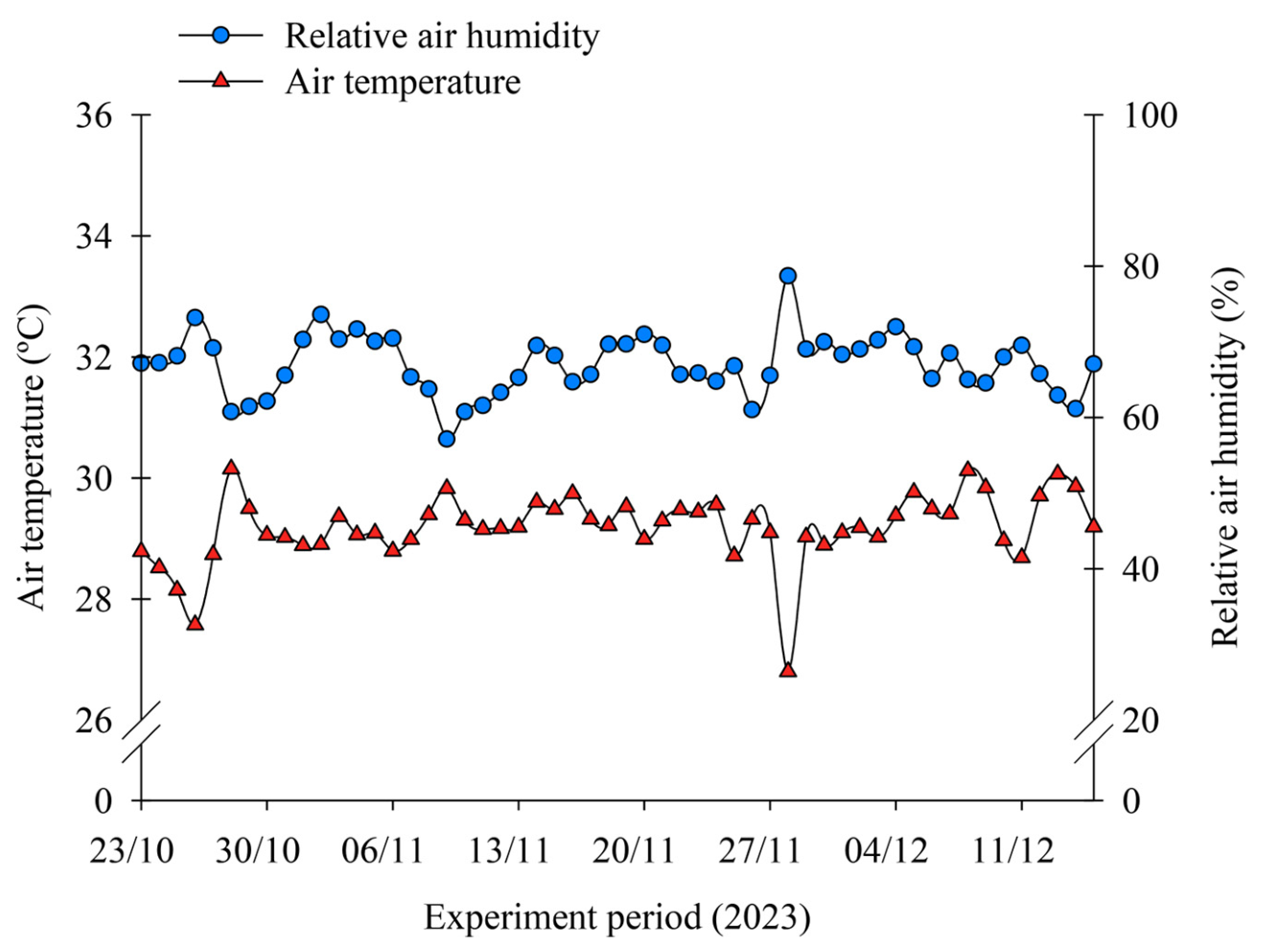
The experiment was carried out between 23 October and 15 December 2023, in a greenhouse of the Department of Agronomic and Forestry Sciences of the Federal Rural University of the Semi-Arid Region, located in Mossoró, RN, Brazil (5°11′56″ S, 37°20′23″ W). The region has a hot, dry climate, classified as BSh according to Köppen [22], characterized by a dry season and summer rainfall. During the experiment, daily temperature and relative humidity data were collected with a digital thermo-hygrometer (Minipa, model MT-241). The averages of these data are shown in Figure 1.

2.2. Plant Material and Experimental Design

Seeds of Z. elegans were sown in polyethylene trays with 162 cells, filled with a homogeneous mixture of soil and commercial substrate in a 1:1 (v/v) ratio. At 10 days after sowing (DAS), when the seedlings had the first pair of fully expanded leaves, they were transplanted to plastic pots with a capacity of 5.0 dm3 containing soil previously moistened to field capacity (FC). The physicochemical characteristics of the soil used are presented in Table 1. The analysis was conducted at the Laboratory of Analysis of Water, Soil, and Plants of the Semi-Arid of the Federal Rural University of the Semi-Arid Region. The composition of the commercial substrate used was maintained according to the manufacturer’s specifications.
The experiment adopted a randomized block design, arranged in a 4 × 2 factorial scheme, with four levels of water condition: no stress (80% of field capacity, FC, representing the optimal soil moisture for zinnia cultivation), severe stress (20% of FC, representing an extreme drought scenario designed to test the limits of stress tolerance), early water restriction (EWR, which biologically targets the initial vegetative establishment phase), consisting of 20% of FC for 20 consecutive days (from 12 to 32 DAS), followed by 80% of FC up to 52 DAS, and late water restriction (LWR, which biologically targets the critical reproductive and floral development phase), consisting of 80% of FC up to 32 DAS, followed by 20% of FC up to 52 DAS. Two melatonin (MEL) concentrations were used: 0.0 and 1.0 mM. This concentration was selected based on previous studies demonstrating its effectiveness in mitigating abiotic stress [23,24,25,26]. Each treatment had five replications, totaling 40 experimental units. The treatments were applied at 12 DAS, 2 days after transplanting the seedlings.
Irrigation was carried out daily using the weighing lysimeter method, with pots weighed to determine water loss and maintain soil moisture according to the water regimes established for each treatment [27]. To avoid underestimating soil moisture caused by the continuous increase in plant biomass, additional pots were grown under identical experimental conditions. These plants were destructively sampled at 15-day intervals to estimate the dynamics of fresh mass accumulation. The estimated daily fresh mass of the plants was subsequently subtracted from the pot’s total weight before calculating the exact volume of water needed for replenishment.
MEL was applied weekly by manual spraying in the late afternoon (around 5 p.m.) under lower light intensity and milder temperatures to minimize rapid evaporation and potential photodegradation of the molecule, with a standardized volume of 20 mL per plant, ensuring complete coverage of the adaxial and abaxial leaf surfaces until the leaves were fully moistened. Eight applications were carried out throughout the experiment. The MEL solution was prepared in deionized water, containing the adjuvant surfactant Tween 80 at 0.05% to improve leaf adhesion and absorption. For the treatment without MEL application, only deionized water with the surfactant was used.

2.3. Variables Analyzed

At 58 days after sowing (DAS), the following growth parameters were evaluated: plant height (PH), measured with a ruler graduated in centimeters (cm); stem diameter (SD), measured with a digital caliper with an accuracy of 0.01 mm; number of leaves (NL) and number of nodes (NN), counted manually; shoot diameter (ShD) and root length (RL), measured with a ruler graduated in centimeters.
The leaf area (LA) was obtained by scanning all leaves from plants in each treatment, with leaf area for each leaf calculated in ImageJ software version 1.53e and expressed in cm2. With the values of leaf area and dry mass, the specific leaf area (SLA) was calculated in cm2 g−1, the leaf area ratio (LAR) in cm2 g−1, and the leaf weight ratio (LWR) in g g−1, according to Benincasa [28].
Then, the plants were separated into flowers, leaves, stems, and roots for drying in a forced circulation oven at 65 °C for 72 h. After drying, the parts were weighed on a semi-analytical scale with a precision of 0.01 g to obtain flower dry mass (FDM), leaf dry mass (LDM), stem dry mass (SDM), root dry mass (RDM), and total dry mass (TDM), expressed in g plant−1.
From the digitized images of the flowers, the number of petals (NP), the total floral area (TFA) in cm2, the floral perimeter (FP) in cm, and the floral diameter (FD) in cm were measured.
The Dickson Quality Index (DQI) was calculated according to Dickson [29] by the following equation:
D Q I = T D M   ( g ) P H   ( c m ) S D   ( m m ) + S D M   ( g ) R D M   ( g )
where
  • TDM—Total dry mass;
  • PH—Plant height;
  • SD—Stem diameter;
  • SDM—Shoot dry mass;
  • RDM—Root dry mass.

2.4. Data Analysis

The data were initially submitted to the Shapiro–Wilk normality test and the Bartlett test of homogeneity of variances to ensure the adequacy of the statistical assumptions. Analysis of variance (ANOVA) was performed, and the means were compared using Tukey’s test at the 5% significance level. In addition, principal component analysis and Pearson’s correlation were performed to verify the relationships between the variables. The analyses were performed using R software v. 4.3.2 [30].

3. Results

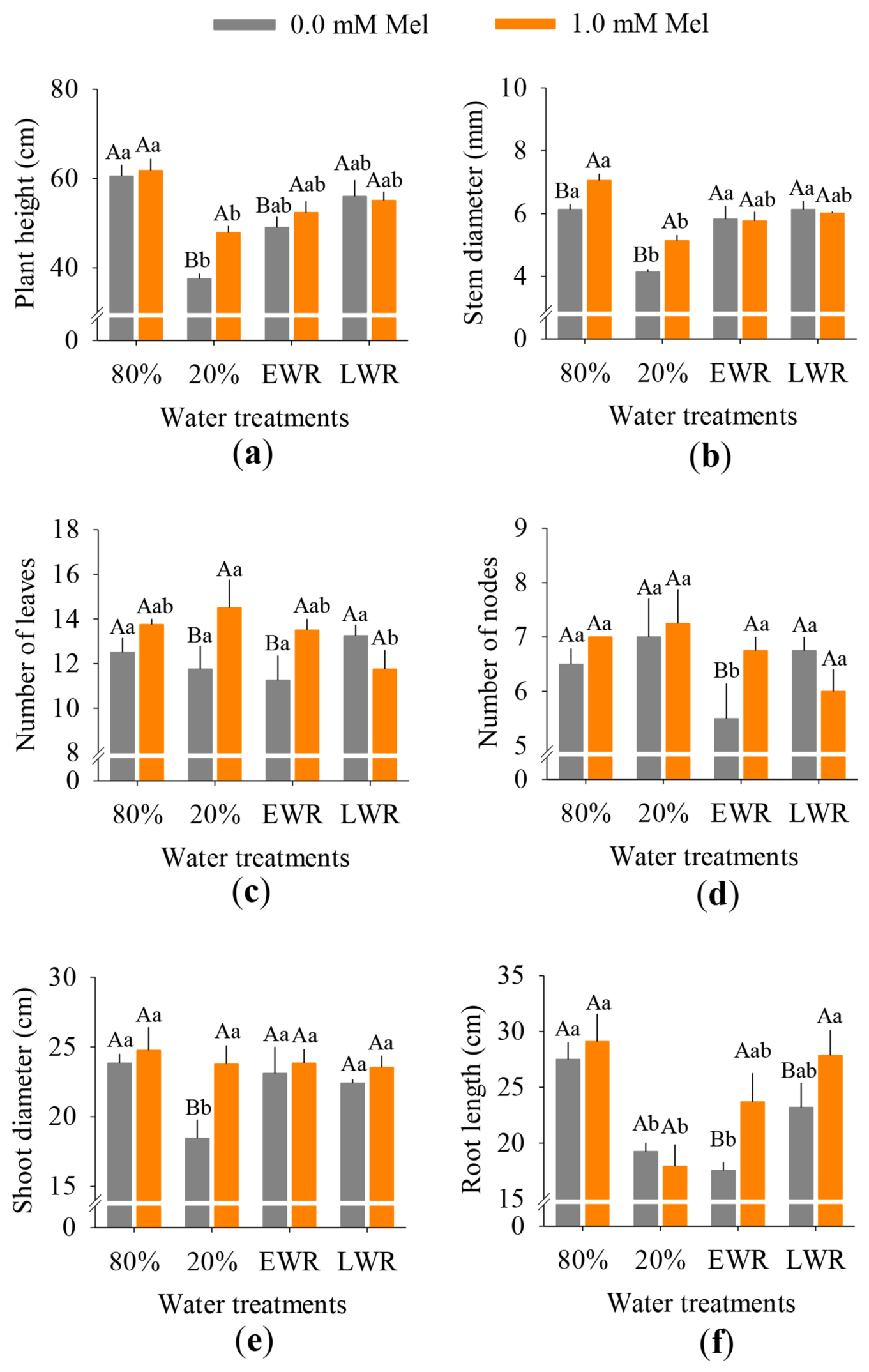
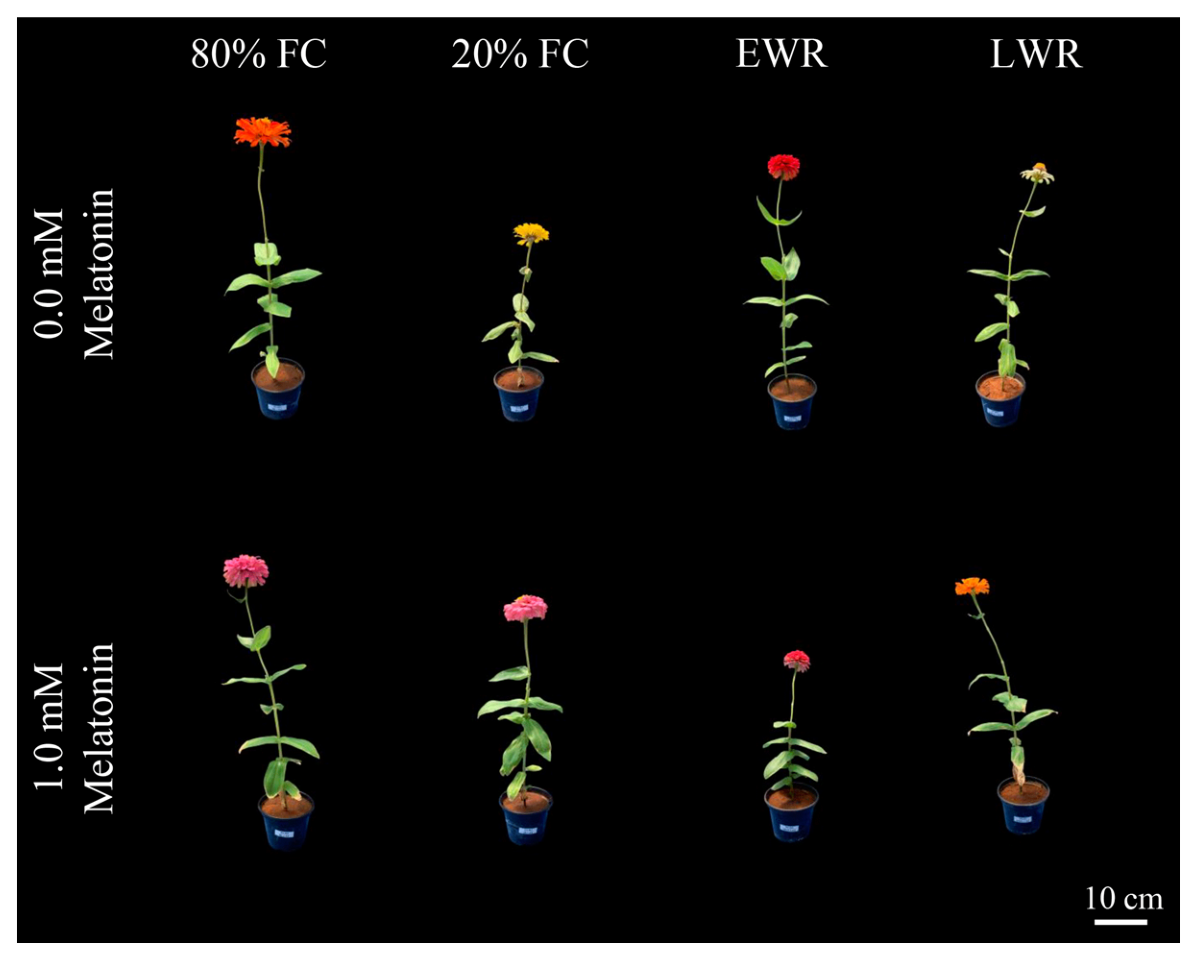
Plant height, stem diameter, shoot diameter, and root length decreased with the increase in water stress, showing decreases of 37.98%, 32.42%, 22.56% and 30.00%, respectively, in the condition of 20% FC, compared to 80% FC, in the treatments without application of MEL (Figure 2a,b,e,f). However, in this more severe condition (20% FC), the application of 1.0 mM of MEL promoted increases of 21.56% in height, 19.27% in stem diameter, 18.96% in leaf number, and 22.39% in shoot diameter (Figure 2a–c,e). In early water restriction (EWR), there was an increase of 6.43% in height, 16.66% in the number of leaves, 18.51% in the number of nodes, and 25.94% in root length, when the concentration of 1.0 mM of MEL was used in the absence of the substance (Figure 2a,c,d,f). For late water restriction (LWR), the same MEL concentration increased root length by 16.69% compared to the control (Figure 2f). In general, the application of 1.0 mM MEL improved zinnia plant growth parameters, as evidenced in Figure 3.
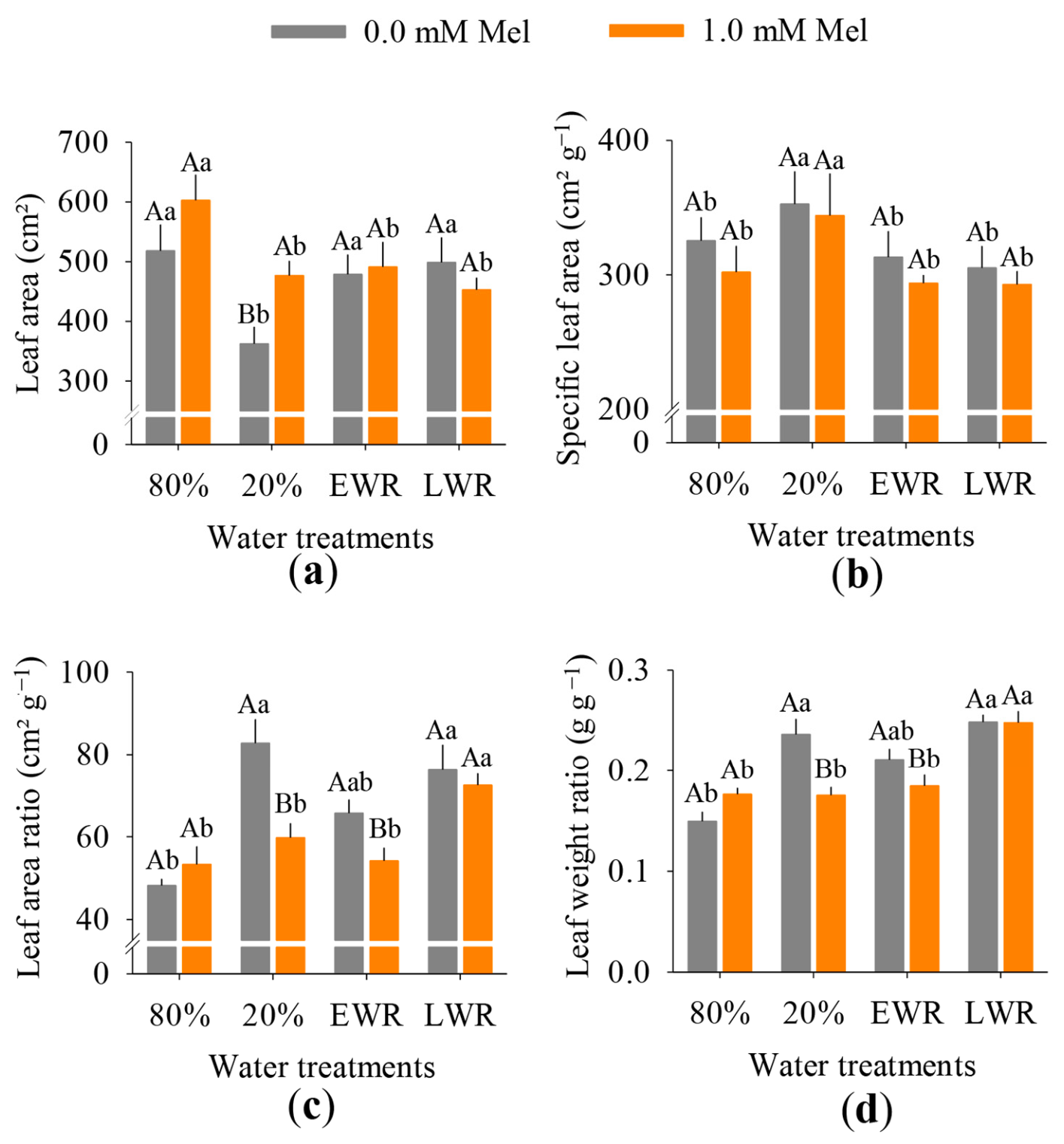
With reduced water availability, the leaf area of zinnia plants decreased by 30.06% at 20% FC and by about 80% at 80% FC in treatments without MEL application (Figure 4a). On the other hand, the specific leaf area, the leaf area ratio, and the leaf weight ratio showed increases of 7.72%, 41.74%, and 36.86%, respectively, under severe stress (20% FC), when compared to the condition without stress (80% FC) and without MEL (Figure 4b–d). In the 20% FC condition, the application of 1.0 mM of MEL increased the leaf area by 23.87%. It reduced the specific leaf area, leaf area ratio, and leaf weight ratio by 2.44%, 27.79%, and 26.08%, respectively, compared with 0.0 mM (Figure 4). In early water restriction (EWR), the concentration of 1.0 mM of MEL reduced the leaf area ratio and the leaf weight ratio by 17.58% and 14.28%, respectively, compared to the control (Figure 4c,d).
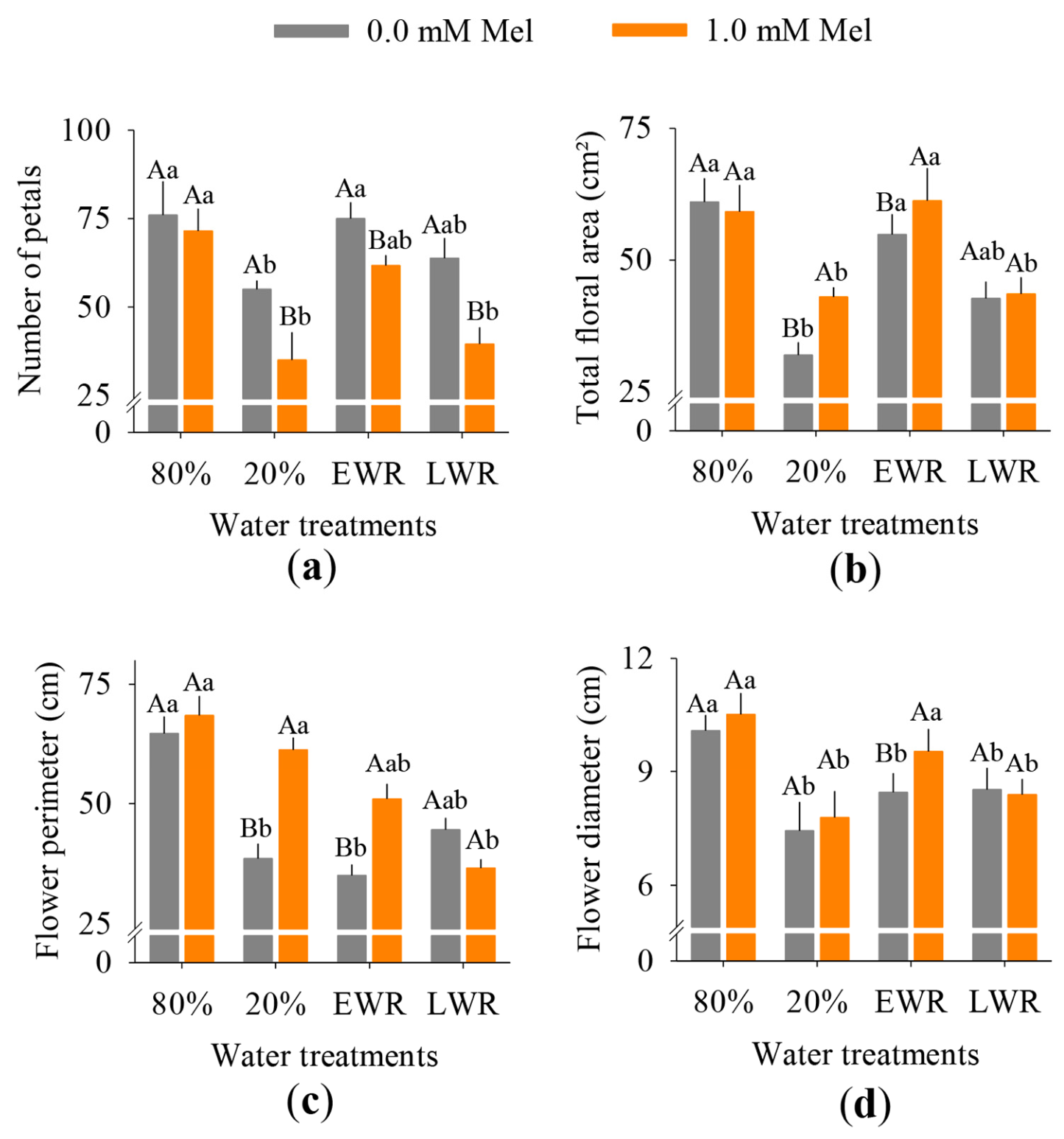
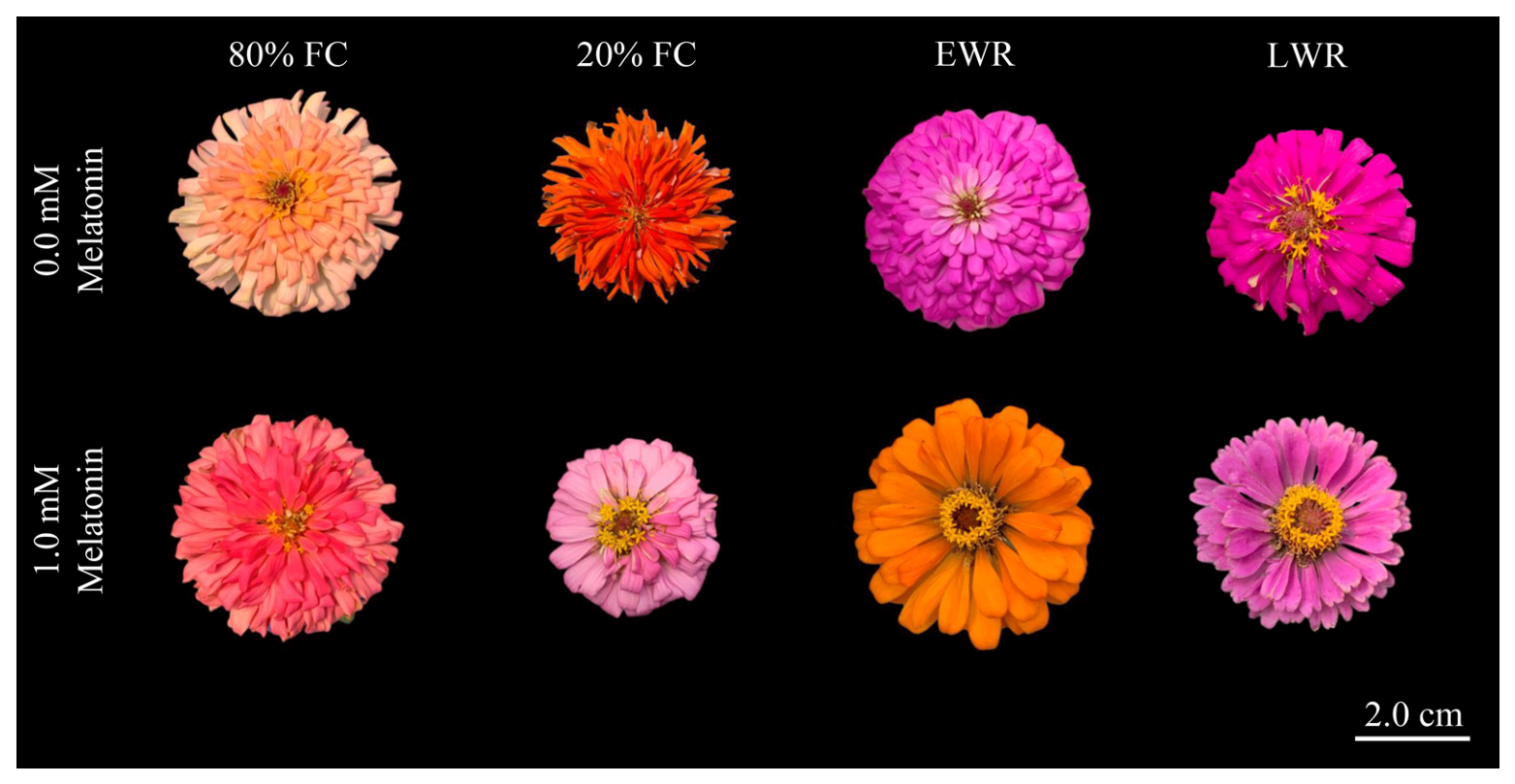
The number of petals, total floral area, floral perimeter, and floral diameter decreased with the increase in the intensity of water stress, with decreases of 27.63%, 47.57%, 40.40%, and 26.36%, respectively, in the condition of 20% FC compared to 80% FC in the treatments without MEL (Figure 5). Under severe stress (20% FC), the application of 1.0 mM of MEL promoted increases of 25.56% in the total floral area and 37.09% in the floral perimeter, about 0.0 mM (Figure 5b,c). In early water restriction (EWR), the same concentration increased total floral area, floral perimeter, and floral diameter by 10.40%, 31.12%, and 11.42%, respectively, compared with the control (Figure 5b–d). These differences in floral characteristics are also evident in Figure 6.
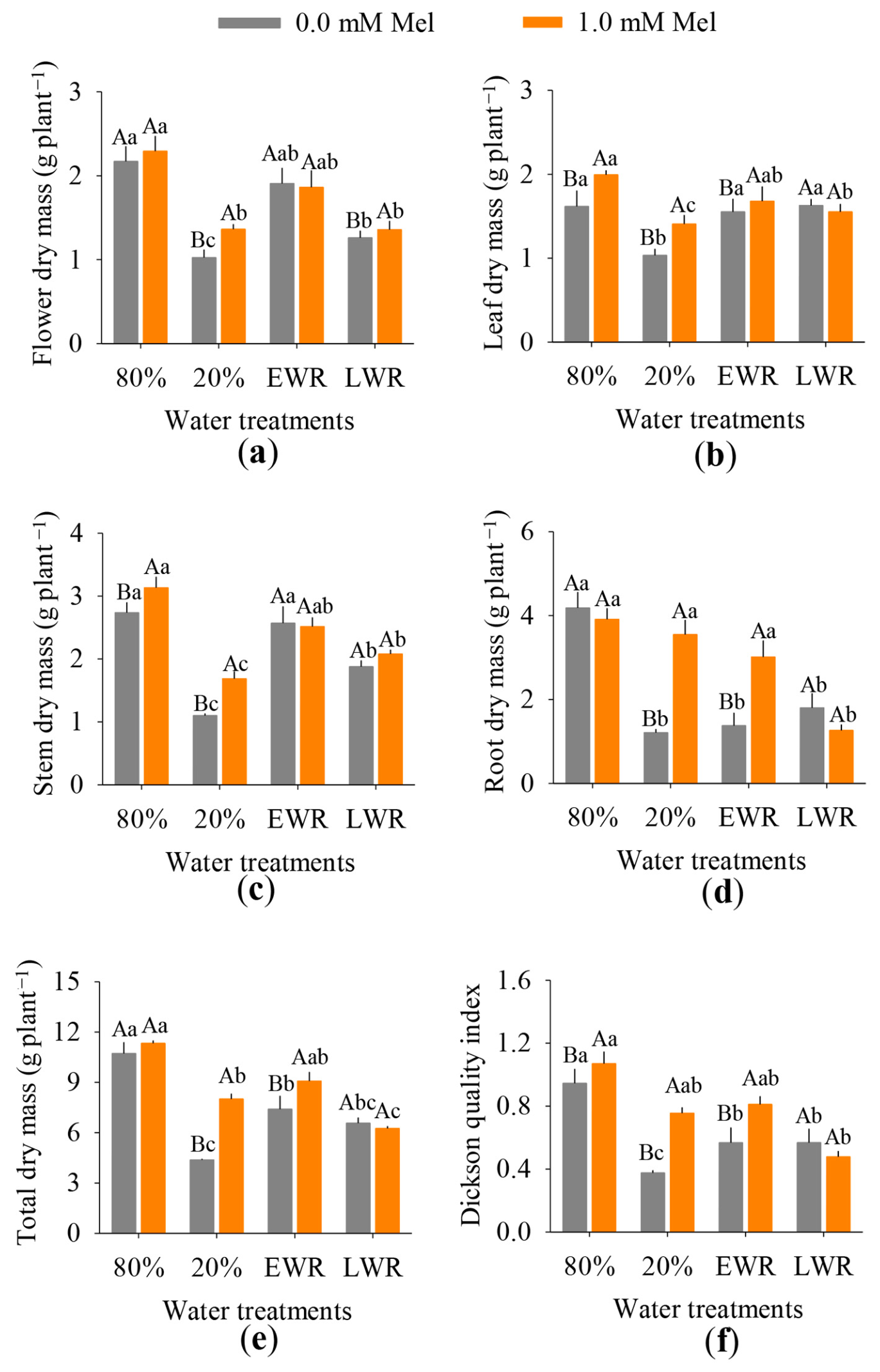
The floral, leaf, stem, root and total dry mass, in addition to the Dickson quality index, decreased with the increase in the severity of water stress, showing decreases of 52.80%, 36.01%, 59.81%, 71.08%, 59.19% and 60.27%, respectively, in the condition of 20% FC compared to 80% FC, without exogenous application of MEL (Figure 7). However, under severe stress (20% FC) and with the application of 1.0 mM of MEL, there were increases of 24.77%, 26.46%, 34.71%, 65.87%, 45.38% and 50.26% for the same variables, respectively (Figure 7). Still in EWR condition, the concentration of 1.0 mM increased the leaf dry mass, root, total, and the Dickson quality index by 7.58%, 54.47%, 18.40%, and 30.12%, respectively, compared to 0.0 mM (Figure 7b,d–f).
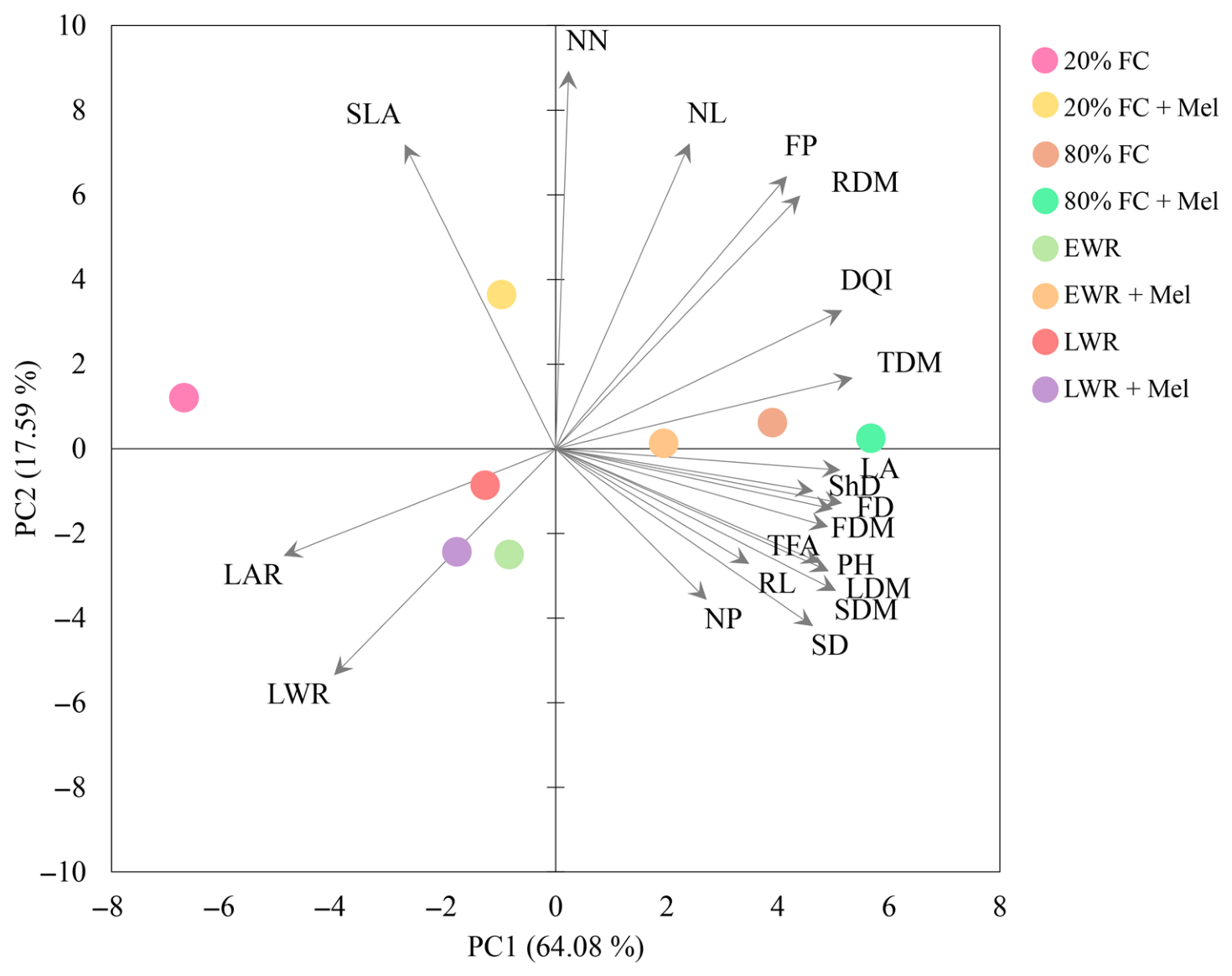
The sum of the principal components (PC1 and PC2) accounted for 81.67% of the total inertia (Figure 8). PC1 explained 64.08% of the total variation. It showed positive correlations with the variables PH, SD, NP, RL, LA, ShD, FD, FDM, TFA, LDM, SDM, TDM, DQI, RDM, FP, NL, and NN, especially in the water conditions of 80% FC and 80% FC with application of MEL. PC2, on the other hand, accounted for 17.59% of the total variation and showed negative correlations with the LAR and LWR variables, indicating associations among the EWR, LWR, and MEL conditions. The water condition of 20% FC did not show a significant association with the variables analyzed.
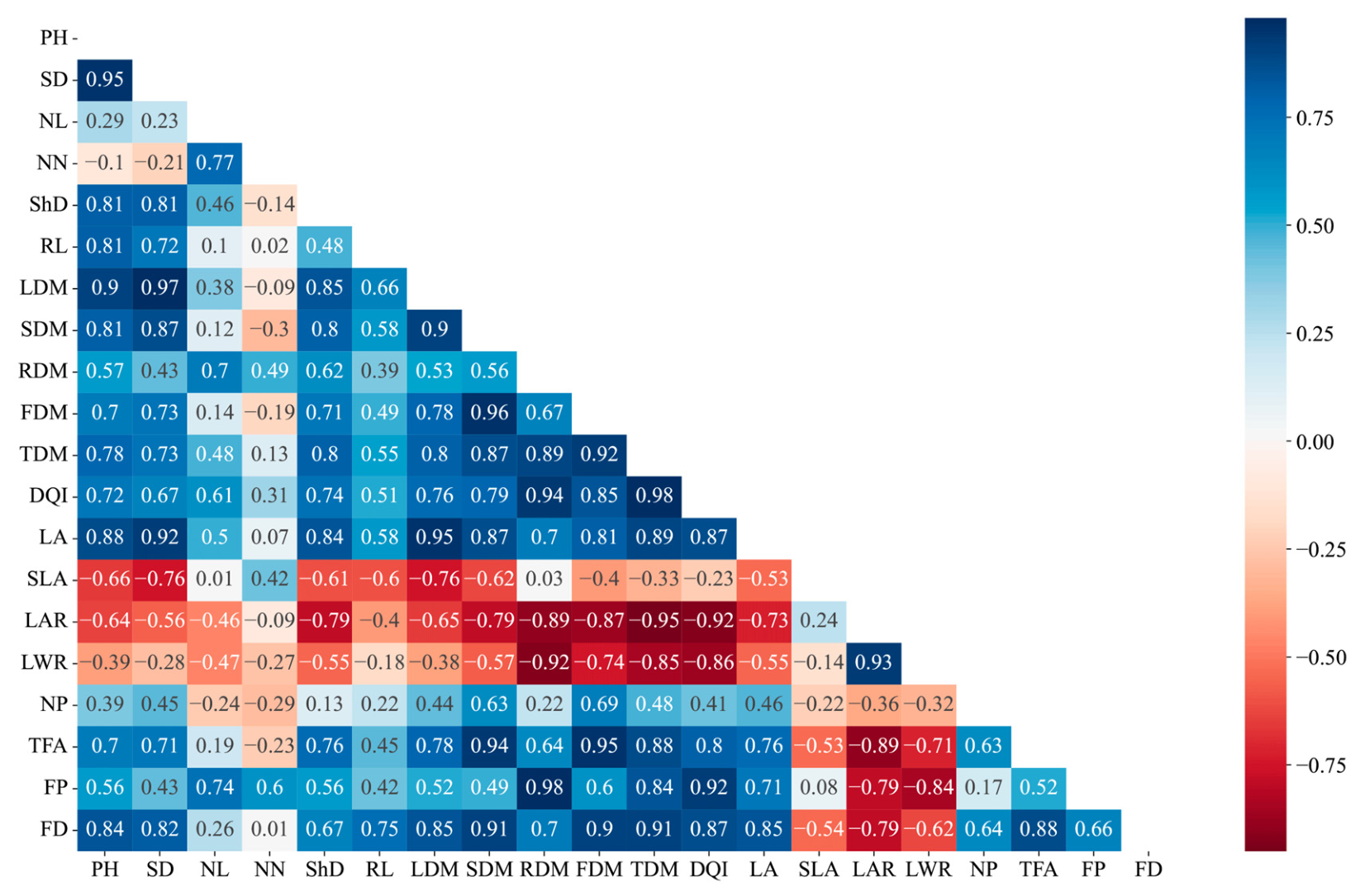
The variable PH showed strong positive correlations with ShD (0.81), RL (0.81), SDM (0.81), LA (0.88), and FD (0.84), and very strong positive correlations with SD (0.95) and LDM (0.90) (Figure 9). The variables SLA, LAR, and LWR correlated negatively with NP, TFA, and FD, with values ranging from −0.22 to −0.89, indicating weak to strong negative correlations. In addition, SLA, LAR, and LWR showed negative correlations with the dry mass variables (LDM, SDM, RDM, FDM, TDM, and DQI), with coefficients ranging from −0.23 to −0.95, reinforcing the inverse relationship between these dry mass variables and SLA, LAR, and LWR.

4. Discussion

Water stress is one of the main environmental factors that limit plant growth, development, and productivity, especially in ornamental species such as zinnia, which have high commercial value and require specific conditions for maintaining floral and vegetative quality [20,21,31]. Restriction in water availability affects several essential physiological processes, including nutrient absorption, photosynthetic activity, and overall metabolism, triggering a range of morphological and biochemical adaptations for survival in harsh conditions [32,33,34].
In plants subjected to severe stress, represented by the 20% field capacity (20% FC) regime, significant growth impairment was observed, evidenced by reductions in height, stem diameter, number of leaves, shoot diameter, and root growth. This limitation in development can be explained by a decrease in soil water potential, which reduces water availability to the roots, leading to reduced cell turgidity and stomatal closure as a preventive mechanism to minimize transpiration losses [35,36]. Therefore, CO2 uptake decreases, directly affecting photosynthesis and the production of sugars, which are essential for plant growth and development [37].
In addition, water stress increases ROS production, highly reactive molecules that can cause oxidative damage to cell membranes, proteins, and genetic material [38,39]. This increase in oxidative stress, if not controlled by antioxidant mechanisms, can lead to cell death and reduced regenerative capacity of tissues, which translates into lower vegetative and productive vigor [40,41,42]. Thus, the set of negative responses to water scarcity limits leaf expansion, branching, and root growth, thereby directly affecting the plant’s ability to exploit the soil for resources [43,44].
In the early water restriction (EWR) and late water restriction (LWR) stress regimes, characterized by alternating periods of deficit and favorable conditions, the plants showed intermediate responses, indicating that the duration and timing of stress in the development cycle influence the dimension of adverse effects [45,46]. Early water restriction, which occurs soon after seedling establishment, compromises initial growth and structural development. In contrast, late water restriction mainly affects the flowering and maturation phases, interfering with the quality and quantity of floral production [47,48]. This temporal differentiation in the response to water deficit is essential for proper irrigation management, aiming to minimize losses and ensure the quality of the final product [49].
The exogenous application of MEL played a fundamental role in mitigating the adverse effects of water stress across all variables analyzed. This molecule (MEL), recognized as a multifunctional regulator, may be associated with the activation of enzymatic and non-enzymatic antioxidant systems, reducing ROS accumulation and protecting cellular components from oxidative damage [50,51,52]. In addition, the effects of MEL may also be linked to the modulation of gene expression related to water deficit tolerance, potentially promoting the synthesis of heat shock proteins, aquaporins, and enzymes involved in osmoprotective metabolism, thereby helping maintain cellular water potential and the functional stability of tissues [9,53,54].
In the morphological aspect, the significant increase in height, stem diameter, number of leaves, and root growth in plants treated with MEL, even under severe water-deficit regimes, indicates that the substance favors the maintenance of cell division and elongation, potentially through hormonal regulation and improved intracellular redox state. Studies on a variety of crops, including pea, wheat, citrus fruits, and tomatoes, demonstrate that MEL treatment increases plant height, root length, and biomass under water-limited conditions [54,55,56,57]. Root growth, especially when MEL is applied, is a crucial response that increases the plant’s ability to exploit larger soil volumes and optimize water and nutrient absorption, which is vital for adaptation to environments with low water availability [58,59].
Regarding leaf characteristics, reducing leaf area under stress conditions is an adaptive strategy that minimizes water loss while maintaining transpiration [60]. However, this reduction also limits light capture and, consequently, photosynthesis, affecting energy balance and biomass production [61]. Specific leaf area (SLA), leaf area ratio (LAR), and leaf weight ratio (LWR) are important indicators of efficiency in the relationship between area and leaf mass [62,63]. Increasing SLA under severe stress suggests that leaves become thinner and less dense, possibly to maximize light capture at the expense of water savings [64,65]. The reduction in these variables after MEL application indicates an improvement in the structural integrity of the leaves, associated with greater resistance to stress and greater resource efficiency [66,67].
Regarding floral characteristics, water deficit affects the development and quality of flowers, a critical aspect for the commercial cultivation of zinnia, as aesthetic appearance is directly linked to economic viability [68,69]. The decrease in total floral area, perimeter, and floral diameter in treatments with 20% FC, EWR, and LWR reflects the impact of water stress on floral organogenesis and the expansion of reproductive tissues, which can compromise the attractiveness of flowers to the market [47,70,71]. MEL is efficient at stimulating floral development, possibly by influencing the biosynthesis of gibberellic acid and other hormones that promote flowering and cell expansion [72,73]. This hormonal effect, combined with antioxidant protection, contributes to maintaining floral quality even under adverse conditions [74,75].
Another important point is related to biomass allocation, where MEL promoted significant increases in the dry mass of different organs, including flowers, leaves, stems, and roots, in addition to the total dry mass. This indicates that the exogenous application of this molecule favors plant growth, with better assimilate distribution and greater vigor [76]. The Dickson Quality Index (DQI), which integrates various aspects of plant growth and quality, was also significantly improved with MEL use under stress, indicating greater uniformity, which is desirable for commercial production [77]. By demonstrating that MEL not only sustains vegetative biomass but also rescues critical floral dimensions, such as petal number and total floral area, under severe drought and specific stages of water restriction, this study significantly advances the current understanding of stress tolerance mediated by MEL in ornamental horticulture. These findings fill a crucial research gap by shifting the focus from physiological metrics based on survival to the practical preservation of aesthetic and marketable traits in Z. elegans.
While the present study clearly demonstrates the mitigative effects of exogenous melatonin under severe water stress (20% FC) and optimal conditions (80% FC), it is important to acknowledge the limitation of not including moderate drought treatments and of evaluating only a single melatonin concentration (1.0 mM). Therefore, future studies should evaluate smoother water gradients to determine the optimal melatonin concentrations required across different intensities of water deficit, further refining this agronomic strategy for commercial flower production.

5. Conclusions

The exogenous application of MEL improved zinnia development and floral traits under different water regimes, especially under deficit conditions, attenuating the negative effects of stress and preserving key physical attributes for commercial value. The adoption of this practice represents a promising strategy for optimizing water-use efficiency in controlled environment agriculture, particularly for potted ornamental plant production and greenhouse cut-flower cultivation. However, it is important to acknowledge that this study was limited to a single-season trial, which is a limitation of the current research. Additionally, the evaluation of floral quality in this study was restricted to physical dimensions; thus, the lack of colorimetric parameters and vase-life assessments constitutes another limitation. It is recommended that future studies deepen the understanding of their interactions with other growth regulators; evaluate their effects on post-harvest quality, anthocyanin content, colorimetry, and the yield cycle length; and conduct multiple independent trials across different seasons to validate these findings.

Author Contributions

P.H.d.A.O.: Investigation, Data curation, Formal analysis, Visualization, Writing—original draft; J.E.d.S.R.: Conceptualization, Methodology, Formal analysis, Visualization, Writing—review and editing, Supervision, Project administration; E.F.d.S.: Investigation, Data curation; E.d.S.C.: Investigation, Data curation, Formal analysis; A.G.C.d.S.: Investigation, Data curation; J.V.L.L.: Investigation, Data curation; A.d.N.F.: Investigation, Data curation; A.P.B.J.: Supervision, Resources, Funding acquisition, Writing—review and editing; L.M.d.S.: Supervision, Resources, Funding acquisition, Writing—review and editing. J.E.d.S.R. is the corresponding author. All authors have read and agreed to the published version of the manuscript.

Funding

This study was financed in part by the Coordenação de Aperfeiçoamento de Pessoal de Nível Superior (CAPES–Finance Code 001) and by the Conselho Nacional de Desenvolvimento Científico e Tecnológico (CNPq—152061/2024-0).

Data Availability Statement

The data presented in this study are openly available in Zenodo at https://doi.org/10.5281/zenodo.19241321.

Acknowledgments

The authors would like to thank the Coordenação de Aperfeiçoamento de Pessoal de Nível Superior (CAPES–Finance Code 001) and the Conselho Nacional de Desenvolvimento Científico e Tecnológico (CNPq) for the financial support and research fellowships. We also acknowledge Universidade Federal Rural do Semi-Árido for providing the necessary facilities and technical support for the execution of this study.

Conflicts of Interest

The authors declare no conflicts of interest.

References

  1. Felisberto, G.; Schwerz, F.; Umburanas, R.C.; Dourado-Neto, D.; Reichardt, K. Physiological and yield responses of soybean under water deficit. J. Crop Sci. Biotechnol. 2023, 26, 27–37. [Google Scholar] [CrossRef]
  2. Jan, M.F.; Altaf, M.T.; Liaqat, W.; Liu, C.; Mohamed, H.I.; Li, M. Approaches for the amelioration of adverse effects of drought stress on soybean plants: From physiological responses to agronomical, molecular, and cutting-edge technologies. Plant Soil 2025, 513, 17–69. [Google Scholar] [CrossRef]
  3. Khorsand, A.; Rezaverdinejad, V.; Asgarzadeh, H.; Majnooni-Heris, A.; Rahimi, A.; Besharat, S.; Sadraddini, A.A. Linking plant and soil indices for water stress management in black gram. Sci. Rep. 2021, 11, 869. [Google Scholar] [CrossRef] [PubMed]
  4. Galaverni, M.; Hadj Saadoun, J.; Ganino, T.; Levante, A.; Rodolfi, M.; Marchioni, I.; Bettera, L.; Beghè, D.; Lazzi, C. Changes in Soil Microbiome Composition and Tomato Plant’s Physiological Response to Water Deficit and Excess. Agronomy 2025, 15, 915. [Google Scholar] [CrossRef]
  5. Ahluwalia, O.; Singh, P.C.; Bhatia, R. A review on drought stress in plants: Implications, mitigation and the role of plant growth promoting rhizobacteria. Resour. Environ. Sustain. 2021, 5, 100032. [Google Scholar] [CrossRef]
  6. McDowell, N.G.; Sapes, G.; Pivovaroff, A.; Adams, H.D.; Allen, C.D.; Anderegg, W.R.L.; Arend, M.; Breshears, D.D.; Brodribb, T.; Choat, B. Mechanisms of woody-plant mortality under rising drought, CO2 and vapour pressure deficit. Nat. Rev. Earth Environ. 2022, 3, 294–308. [Google Scholar] [CrossRef]
  7. Wahab, A.; Abdi, G.; Saleem, M.H.; Ali, B.; Ullah, S.; Shah, W.; Mumtaz, S.; Yasin, G.; Muresan, C.C.; Marc, R.A. Plants’ physio-biochemical and phyto-hormonal responses to alleviate the adverse effects of drought stress: A comprehensive review. Plants 2022, 11, 1620. [Google Scholar] [CrossRef] [PubMed]
  8. Jogawat, A.; Yadav, B.; Chhaya; Lakra, N.; Singh, A.K.; Narayan, O.P. Crosstalk between phytohormones and secondary metabolites in the drought stress tolerance of crop plants: A review. Physiol. Plant. 2021, 172, 1106–1132. [Google Scholar] [CrossRef]
  9. Luo, C.; Min, W.; Akhtar, M.; Lu, X.; Bai, X.; Zhang, Y.; Tian, L.; Li, P. Melatonin enhances drought tolerance in rice seedlings by modulating antioxidant systems, osmoregulation, and corresponding gene expression. Int. J. Mol. Sci. 2022, 23, 12075. [Google Scholar] [CrossRef] [PubMed]
  10. Song, R.; Ritonga, F.N.; Yu, H.; Ding, C.; Zhao, X. Plant melatonin: Regulatory and protective role. Horticulturae 2022, 8, 810. [Google Scholar] [CrossRef]
  11. Gamalero, E.; Glick, B.R. How Melatonin Affects Plant Growth and the Associated Microbiota. Biology 2025, 14, 371. [Google Scholar] [CrossRef]
  12. Mircea, D.-M.; Boscaiu, M.; Sestras, R.E.; Sestras, A.F.; Vicente, O. Abiotic stress tolerance and invasive potential of ornamental plants in the Mediterranean area: Implications for sustainable landscaping. Agronomy 2025, 15, 52. [Google Scholar] [CrossRef]
  13. Bandurska, H.; Breś, W.; Zielezińska, M.; Mieloszyk, E. Does potassium modify the response of zinnia (Zinnia elegans Jacq.) to long-term salinity? Plants 2023, 12, 1439. [Google Scholar] [CrossRef]
  14. Pêgo, R.G.; Antunes, L.F.S.; Silva, A.R.C. Vigor of zinnia seedlings produced in alternative substrate in trays with different cell size. Ornam. Hortic. 2019, 25, 417–424. [Google Scholar] [CrossRef]
  15. Moreira, K.F.A.; Pêgo, R.G.; Schultz, N.; Medici, L.O.; Carvalho, D.F. Production, quality, and longevity of zinnia cultivated under silicate fertilization and water restriction. Cienc. Agrotecnol. 2025, 49, e021424. [Google Scholar] [CrossRef]
  16. Martins, R.C.F.; Pêgo, R.G.; Cruz, E.S.; Abreu, J.F.G.; Carvalho, D.F. Production and quality of zinnia under different growing seasons and irrigation levels. Cienc. Agrotecnol. 2021, 45, e033720. [Google Scholar] [CrossRef]
  17. Karumannil, S.; Khan, T.A.; Kappachery, S.; Gururani, M.A. Impact of exogenous melatonin application on photosynthetic machinery under abiotic stress conditions. Plants 2023, 12, 2948. [Google Scholar] [CrossRef]
  18. Nawaz, K.; Chaudhary, R.; Sarwar, A.; Ahmad, B.; Gul, A.; Hano, C.; Abbasi, B.H.; Anjum, S. Melatonin as master regulator in plant growth, development and stress alleviator for sustainable agricultural production: Current status and future perspectives. Sustainability 2020, 13, 294. [Google Scholar] [CrossRef]
  19. Luo, Y.; Hu, T.; Huo, Y.; Wang, L.; Zhang, L.; Yan, R. Effects of exogenous melatonin on chrysanthemum physiological characteristics and photosynthesis under drought stress. Horticulturae 2023, 9, 106. [Google Scholar] [CrossRef]
  20. Chachar, S.; Ahmed, N.; Hu, X. Drought-induced aesthetic decline and ecological impacts on ornamentals: Mechanisms of damage and innovative strategies for mitigation. Plant Biol. 2026, 28, 578–600. [Google Scholar] [CrossRef] [PubMed]
  21. Toscano, S.; Romano, D. Morphological, physiological, and biochemical responses of zinnia to drought stress. Horticulturae 2021, 7, 362. [Google Scholar] [CrossRef]
  22. Alvares, C.A.; Stape, J.L.; Sentelhas, P.C.; Gonçalves, J.L.M.; Sparovek, G. Köppen’s climate classification map for Brazil. Meteorol. Z. 2013, 22, 711–728. [Google Scholar] [CrossRef] [PubMed]
  23. Oliveira, P.H.d.A.; Sá, S.A.d.; Ribeiro, J.E.d.S.; da Silva, J.P.P.; Lima, F.F.d.; Silva, L.; Silveira, L.M.d.; Barros Júnior, A.P. Exogenous application of melatonin mitigates salt stress in soybean. Rev. Caatinga 2025, 38, e12698. [Google Scholar] [CrossRef]
  24. Oliveira, P.H.d.A.; Lima, F.F.d.; Silva, J.P.P.d.; Silva, I.B.M.; Silva, T.I.d.; Silveira, L.M.d.; Barros, A.P.; Ribeiro, J.E.d.S. Growth and water status of cowpea under salt stress and exogenous ex melatonin application. Rev. Bras. Eng. Agrícola Ambient. 2025, 29, e293009. [Google Scholar] [CrossRef]
  25. Coêlho, E.d.S.; Ribeiro, J.E.d.S.; Oliveira, P.H.d.A.; da Silva, E.F.; da Silva, A.G.C.; de Oliveira, A.K.S.; dos Santos, G.L.; da Silva, T.I.; Rodriguez, R.M.; Bezerra, A.L. Application of biostimulants modulates photosynthesis responses, and chlorophyll fluorescence under salt stress in radish. J. Plant Growth Regul. 2025, 44, 5063–5078. [Google Scholar] [CrossRef]
  26. Ribeiro, J.E.d.S.; da Silva, A.G.C.; Coêlho, E.d.S.; Oliveira, P.H.d.A.; Silva, E.F.d.; de Oliveira, A.K.S.; Santos, G.L.d.; Lima, J.V.L.; Silva, T.I.d.; Silveira, L.M.d. Melatonin mitigates salt stress effects on the growth and production aspects of radish. Rev. Bras. Eng. Agríc. Ambient. 2024, 28, e279006. [Google Scholar] [CrossRef]
  27. Girardi, L.B.; Peiter, M.X.; Bellé, R.A.; Robaina, A.D.; Torres, R.R.; Kirchner, J.H.; Ben, L.H.B. Evapotranspiration and crop coefficients of potted Alstroemeria × hybrida grown in greenhouse. Irriga 2016, 21, 817–829. [Google Scholar] [CrossRef]
  28. Benincasa, M.M.P. Análise de Crescimento de Plantas: Noções Básicas; FUNEP: Jaboticabal, Brazil, 1988. [Google Scholar]
  29. Dickson, A.; Leaf, A.L.; Hosner, J.F. Quality appraisal of white spruce and white pine seedling stock in nurseries. For. Chron. 1960, 36, 10–13. [Google Scholar] [CrossRef]
  30. R Core Team. R: A Language and Environment for Statistical Computing; R Foundation for Statistical Computing: Vienna, Austria, 2023. [Google Scholar]
  31. Zhao, Z.; Liu, A.; Zhang, Y.; Yang, X.; Yang, S.; Zhao, K. Effects of Progressive Drought Stress on the Growth, Ornamental Values, and Physiological Properties of Begonia semperflorens. Horticulturae 2024, 10, 405. [Google Scholar] [CrossRef]
  32. Morales, F.; Ancín, M.; Fakhet, D.; González-Torralba, J.; Gámez, A.L.; Seminario, A.; Soba, D.; Ben Mariem, S.; Garriga, M.; Aranjuelo, I. Photosynthetic metabolism under stressful growth conditions as a bases for crop breeding and yield improvement. Plants 2020, 9, 88. [Google Scholar] [CrossRef]
  33. Kaur, H.; Kohli, S.K.; Khanna, K.; Bhardwaj, R. Scrutinizing the impact of water deficit in plants: Transcriptional regulation, signaling, photosynthetic efficacy, and management. Physiol. Plant. 2021, 172, 935–962. [Google Scholar] [CrossRef] [PubMed]
  34. d’Oria, A.; Courbet, G.; Billiot, B.; Jing, L.; Pluchon, S.; Arkoun, M.; Maillard, A.; Roux, C.P.L.; Trouverie, J.; Etienne, P. Drought specifically downregulates mineral nutrition: Plant ionomic content and associated gene expression. Plant Direct 2022, 6, e402. [Google Scholar] [CrossRef]
  35. Kashtoh, H.; Baek, K.-H. Structural and functional insights into the role of guard cell ion channels in abiotic stress-induced stomatal closure. Plants 2021, 10, 2774. [Google Scholar] [CrossRef] [PubMed]
  36. Knipfer, T.; Bambach, N.; Hernandez, M.I.; Bartlett, M.K.; Sinclair, G.; Duong, F.; Kluepfel, D.A.; McElrone, A.J. Predicting stomatal closure and turgor loss in woody plants using predawn and midday water potential. Plant Physiol. 2020, 184, 881–894. [Google Scholar] [CrossRef]
  37. Krämer, K.; Kepp, G.; Brock, J.; Stutz, S.; Heyer, A.G. Acclimation to elevated CO2 affects the C/N balance by reducing de novo N-assimilation. Physiol. Plant. 2022, 174, e13615. [Google Scholar] [CrossRef] [PubMed]
  38. Schneider, J.R.; Caverzan, A.; Chavarria, G. Water deficit stress, ROS involvement, and plant performance. Arch. Agron. Soil Sci. 2019, 65, 1160–1181. [Google Scholar] [CrossRef]
  39. Panda, S.K.; Gupta, D.; Patel, M.; Vyver, C.V.D.; Koyama, H. Functionality of reactive oxygen species (ROS) in plants: Toxicity and control in Poaceae crops exposed to abiotic stress. Plants 2024, 13, 2071. [Google Scholar] [CrossRef]
  40. Xie, X.; He, Z.; Chen, N.; Tang, Z.; Wang, Q.; Cai, Y. The roles of environmental factors in regulation of oxidative stress in plant. BioMed Res. Int. 2019, 2019, 9732325. [Google Scholar] [CrossRef]
  41. Ye, C.; Zheng, S.; Jiang, D.; Lu, J.; Huang, Z.; Liu, Z.; Zhou, H.; Zhuang, C.; Li, J. Initiation and execution of programmed cell death and regulation of reactive oxygen species in plants. Int. J. Mol. Sci. 2021, 22, 12942. [Google Scholar] [CrossRef]
  42. Šoln, K.; Klemenčič, M.; Koce, J.D. Plant cell responses to allelopathy: From oxidative stress to programmed cell death. Protoplasma 2022, 259, 1111–1124. [Google Scholar] [CrossRef]
  43. Dinneny, J.R. Developmental responses to water and salinity in root systems. Annu. Rev. Cell Dev. Biol. 2019, 35, 239–257. [Google Scholar] [CrossRef] [PubMed]
  44. Mehra, P.; Fairburn, R.; Leftley, N.; Banda, J.; Bennett, M.J. Turning up the volume: How root branching adaptive responses aid water foraging. Curr. Opin. Plant Biol. 2023, 75, 102405. [Google Scholar] [CrossRef]
  45. Song, L.; Jin, J.; He, J. Effects of severe water stress on maize growth processes in the field. Sustainability 2019, 11, 5086. [Google Scholar] [CrossRef]
  46. Dietz, K.J.; Zörb, C.; Geilfus, C.M. Drought and crop yield. Plant Biol. 2021, 23, 881–893. [Google Scholar] [CrossRef]
  47. Ma, X.; Wang, J.; Su, Z.; Ma, H. Developmentally dependent reprogramming of the Arabidopsis floral transcriptome under sufficient and limited water availability. BMC Plant Biol. 2024, 24, 273. [Google Scholar] [CrossRef] [PubMed]
  48. Brunet, J.; Inouye, D.W.; Wilson Rankin, E.E.; Giannini, T.C. Global change aggravates drought, with consequences for plant reproduction. Ann. Bot. 2025, 135, 89–104. [Google Scholar] [CrossRef] [PubMed]
  49. Anderson, R.G.; Girona, J.; Gucci, R. Using water for best product quality in fruit and nut trees and vines. Irrig. Sci. 2023, 41, 449–452. [Google Scholar] [CrossRef]
  50. Wang, B.; Zuo, X.; Peng, L.; Wang, X.; Zeng, H.; Zhong, J.; Li, S.; Xiao, Y.; Wang, L.; Ouyang, H. Melatonin ameliorates oxidative stress-mediated injuries through induction of HO-1 and restores autophagic flux in dry eye. Exp. Eye Res. 2021, 205, 108491. [Google Scholar] [CrossRef]
  51. Altaf, M.A.; Sharma, N.; Singh, J.; Samota, M.K.; Sankhyan, P.; Singh, B.; Kumar, A.; Naz, S.; Lal, M.K.; Tiwari, R.K. Mechanistic insights on melatonin-mediated plant growth regulation and hormonal cross-talk process in solanaceous vegetables. Sci. Hortic. 2023, 308, 111570. [Google Scholar] [CrossRef]
  52. Manzoor, M.A.; Xu, Y.; Xu, J.; Wang, Y.; Sun, W.; Liu, X.; Wang, L.; Wang, J.; Liu, R.; Whiting, M.D. Melatonin: A multi-functional regulator of fruit crop development and abiotic stress response. Sci. Hortic. 2023, 321, 112282. [Google Scholar] [CrossRef]
  53. Tiwari, R.K.; Lal, M.K.; Kumar, R.; Chourasia, K.N.; Naga, K.C.; Kumar, D.; Das, S.K.; Zinta, G. Mechanistic insights on melatonin-mediated drought stress mitigation in plants. Physiol. Plant. 2021, 172, 1212–1226. [Google Scholar] [CrossRef]
  54. Mushtaq, N.; Iqbal, S.; Hayat, F.; Raziq, A.; Ayaz, A.; Zaman, W. Melatonin in micro-tom tomato: Improved drought tolerance via the regulation of the photosynthetic apparatus, membrane stability, osmoprotectants, and root system. Life 2022, 12, 1922. [Google Scholar] [CrossRef]
  55. Korkmaz, N.; Aşkın, M.A.; Altunlu, H.; Polat, M.; Okatan, V.; Kahramanoğlu, İ. The effects of melatonin application on the drought stress of different citrus rootstocks. Turk. J. Agric. For. 2022, 46, 585–600. [Google Scholar] [CrossRef]
  56. Ahmad, R.; Manzoor, M.; Muhammad, H.M.D.; Altaf, M.A.; Shakoor, A. Exogenous melatonin spray enhances salinity tolerance in Zizyphus germplasm: A brief theory. Life 2023, 13, 493. [Google Scholar] [CrossRef] [PubMed]
  57. Zhang, Z.; Guo, L.; Sun, H.; Wu, J.; Liu, L.; Wang, J.; Wang, B.; Wang, Q.; Sun, Z.; Li, D. Melatonin increases drought resistance through regulating the fine root and root hair morphology of wheat revealed with RhizoPot. Agronomy 2023, 13, 1881. [Google Scholar] [CrossRef]
  58. Ren, S.; Rutto, L.; Katuuramu, D. Melatonin acts synergistically with auxin to promote lateral root development through fine tuning auxin transport in Arabidopsis thaliana. PLoS ONE 2019, 14, e0221687. [Google Scholar] [CrossRef] [PubMed]
  59. Sun, C.; Sun, N.; Ou, Y.; Gong, B.; Jin, C.; Shi, Q.; Lin, X. Phytomelatonin and plant mineral nutrition. J. Exp. Bot. 2022, 73, 5903–5917. [Google Scholar] [CrossRef] [PubMed]
  60. Toscano, S.; Ferrante, A.; Romano, D. Response of Mediterranean ornamental plants to drought stress. Horticulturae 2019, 5, 6. [Google Scholar] [CrossRef]
  61. Quetin, G.R.; Anderegg, L.D.L.; Boving, I.; Trugman, A.T. A moving target: Trade-offs between maximizing carbon and minimizing hydraulic stress for plants in a changing climate. New Phytol. 2024, 244, 1788–1800. [Google Scholar] [CrossRef]
  62. Stotz, G.C.; Salgado-Luarte, C.; Escobedo, V.M.; Valladares, F.; Gianoli, E. Phenotypic plasticity and the leaf economics spectrum: Plasticity is positively associated with specific leaf area. Oikos 2022, 2022, e09342. [Google Scholar] [CrossRef]
  63. Liu, Z.; Zhao, M.; Zhang, H.; Ren, T.; Liu, C.; He, N. Divergent response and adaptation of specific leaf area to environmental change at different spatio-temporal scales jointly improve plant survival. Glob. Change Biol. 2023, 29, 1144–1159. [Google Scholar] [CrossRef]
  64. Zhou, H.; Zhou, G.; He, Q.; Zhou, L.; Ji, Y.; Zhou, M. Environmental explanation of maize specific leaf area under varying water stress regimes. Environ. Exp. Bot. 2020, 171, 103932. [Google Scholar] [CrossRef]
  65. Shen, W.; Xu, Z.; Qin, N.; Chen, L.; Yang, Y.; Zhang, H.; Yu, X.; He, A.; Sun, L.; Li, X. Changing Relationship between Specific Leaf Area and Leaf Matter Dry Content of Moso Bamboo Phyllostachys pubescens syn. edulis (Poales: Poaceae) under the Stress of Pantana phyllostachysae (Lepidoptera: Lymantriidae). Forests 2024, 15, 540. [Google Scholar] [CrossRef]
  66. Gholami, R.; Hoveizeh, N.F.; Zahedi, S.M.; Gholami, H.; Carillo, P. Melatonin alleviates the adverse effects of water stress in adult olive cultivars (Olea europea cv. Sevillana & Roughani) in field condition. Agric. Water Manag. 2022, 269, 107681. [Google Scholar] [CrossRef]
  67. Zeng, W.; Mostafa, S.; Lu, Z.; Jin, B. Melatonin-mediated abiotic stress tolerance in plants. Front. Plant Sci. 2022, 13, 847175. [Google Scholar] [CrossRef]
  68. Kuppler, J.; Kotowska, M.M. A meta-analysis of responses in floral traits and flower–visitor interactions to water deficit. Glob. Change Biol. 2021, 27, 3095–3108. [Google Scholar] [CrossRef] [PubMed]
  69. Guan, Y.; Wong, C.E.; Zhang, Q.; Peng, D.; Lan, S.; Chen, F.; Liu, Z.-J.; Yu, H. Sizing up beauty: Mechanisms of petal size regulation in ornamental plants. Plant Physiol. 2025, 198, kiaf198. [Google Scholar] [CrossRef]
  70. Fernandes, L.; Casal, S.; Pereira, J.A.; Saraiva, J.A.; Ramalhosa, E. An overview on the market of edible flowers. Food Rev. Int. 2020, 36, 258–275. [Google Scholar] [CrossRef]
  71. Descamps, C.; Boubnan, N.; Jacquemart, A.-L.; Quinet, M. Growing and flowering in a changing climate: Effects of higher temperatures and drought stress on the bee-pollinated species Impatiens glandulifera Royle. Plants 2021, 10, 988. [Google Scholar] [CrossRef]
  72. Arnao, M.B.; Hernández-Ruiz, J. Melatonin as a regulatory hub of plant hormone levels and action in stress situations. Plant Biol. 2021, 23, 7–19. [Google Scholar] [CrossRef]
  73. Samanta, S.; Roychoudhury, A. Crosstalk of melatonin with major phytohormones and growth regulators in mediating abiotic stress tolerance in plants. S. Afr. J. Bot. 2023, 163, 201–216. [Google Scholar] [CrossRef]
  74. Gao, T.; Liu, X.; Tan, K.; Zhang, D.; Zhu, B.; Ma, F.; Li, C. Introducing melatonin to the horticultural industry: Physiological roles, potential applications, and challenges. Hortic. Res. 2022, 9, uhac094. [Google Scholar] [CrossRef]
  75. Liu, Y.; Xu, J.; Lu, X.; Huang, M.; Yu, W.; Li, C. The role of melatonin in delaying senescence and maintaining quality in postharvest horticultural products. Plant Biol. 2025, 27, 3–17. [Google Scholar] [CrossRef]
  76. Wang, K.; Xing, Q.; Ahammed, G.J.; Zhou, J. Functions and prospects of melatonin in plant growth, yield, and quality. J. Exp. Bot. 2022, 73, 5928–5946. [Google Scholar] [CrossRef]
  77. Rajora, N.; Vats, S.; Raturi, G.; Thakral, V.; Kaur, S.; Rachappanavar, V.; Kumar, M.; Kesarwani, A.K.; Sonah, H.; Sharma, T.R. Seed priming with melatonin: A promising approach to combat abiotic stress in plants. Plant Stress 2022, 4, 100071. [Google Scholar] [CrossRef]
Figure 1. Average temperature and relative humidity data during the experimental period.
Horticulturae 12 00612 g001
Figure 2. Plant height (a), stem diameter (b), number of leaves (c), number of nodes (d), shoot diameter (e), and root length (f) of zinnia plants under different water conditions and exogenous MEL application. Lowercase letters compare water conditions, and uppercase letters compare MEL concentrations, both at 5% significance by Tukey’s test. The error bars represent the standard error of the mean.
Horticulturae 12 00612 g002
Figure 3. Visual aspects of zinnia plants under different water conditions and exogenous melatonin application.
Horticulturae 12 00612 g003
Figure 4. Leaf area (a), specific leaf area (b), leaf area ratio (c), and leaf weight ratio (d) of zinnia plants under different water conditions and exogenous melatonin application. Lowercase letters compare water conditions, and uppercase letters compare melatonin concentrations, both at 5% significance by Tukey’s test. The error bars represent the standard error of the mean.
Horticulturae 12 00612 g004
Figure 5. Number of petals (a), total floral area (b), floral perimeter (c), and floral diameter (d) of zinnia plants under different water conditions and exogenous application of melatonin. Lowercase letters indicate differences in water conditions, and uppercase letters indicate differences in melatonin concentrations, both at the 5% significance level by Tukey’s test. The error bars represent the standard error of the mean.
Horticulturae 12 00612 g005
Figure 6. Visual aspect of zinnia plant flowers under different water conditions and exogenous melatonin application.
Horticulturae 12 00612 g006
Figure 7. Flower dry mass (a), leaf dry mass (b), stem dry mass (c), root dry mass (d), total dry mass (e), and Dickson’s quality index (f) of zinnia plants under different water conditions and exogenous melatonin application. Lowercase letters indicate differences in water conditions, and uppercase letters indicate differences in melatonin concentrations, both at the 5% significance level by Tukey’s test. The error bars represent the standard error of the mean.
Horticulturae 12 00612 g007
Figure 8. Principal Component Analysis (PCA) of growth variables (PH—Plant height; SD—Stem diameter; NL—Number of leaves; NN—Number of nodes; ShD—Shoot diameter; RL—Root length; LA—Leaf area; SLA—Specific leaf area; LAR—Leaf area ratio; LWR—Leaf weight ratio; LDM—Leaf dry mass; SDM—Stem dry mass; RDM—Root dry mass; FDM—Flower dry mass; TDM—Total dry mass; DQI—Dickson quality index) and floral characteristics (NP—Number of petals; TFA—Total floral area; FP—Flower perimeter; FD—Flower diameter) of zinnia plants under different water conditions and exogenous application of melatonin.
Horticulturae 12 00612 g008
Figure 9. Pearson’s correlation of growth variables (PH—Plant height; SD—Stem diameter; NL—Number of leaves; NN—Number of nodes; ShD—Shoot diameter; RL—Root length; LA—Leaf area; SLA—Specific leaf area; LAR—Leaf area ratio; LWR—Leaf weight ratio; LDM—Leaf dry mass; SDM—Stem dry mass; RDM—Root dry mass; FDM—Flower dry mass; TDM—Total dry mass; DQI—Dickson quality index) and floral characteristics (NP—Number of petals; TFA—Total floral area; FP—Flower perimeter; FD—Flower diameter) of zinnia plants under different water conditions and exogenous application of melatonin. Very weak (0–0.19); weak (0.20–0.39); moderate (0.40–0.79); strong (0.80–0.89) and very strong (0.90–1).
Horticulturae 12 00612 g009
Table 1. Physicochemical characteristics of the soil used in the experiment.
ParameterUnitValue
pH (water)6.90
ECdS m−10.05
Pmg dm−375.3
K+mg dm−3109.8
Na+mg dm−320.8
Ca2+cmolc dm−33.54
Mg2+cmolc dm−30.66
Al3+cmolc dm−30.00
H + Alcmolc dm−30
SBcmolc dm−34.57
tcmolc dm−34.57
CECcmolc dm−34.57
V%100
m%0
ESP%2
EC = electrical conductivity of the soil:water extract at a ratio of 1:2.5; SB = sum of exchangeable bases; t = effective cation exchange capacity; CEC = cation exchange capacity; V = base saturation; m = aluminum saturation; ESP = exchangeable sodium percentage.
Disclaimer/Publisher’s Note: The statements, opinions and data contained in all publications are solely those of the individual author(s) and contributor(s) and not of MDPI and/or the editor(s). MDPI and/or the editor(s) disclaim responsibility for any injury to people or property resulting from any ideas, methods, instructions or products referred to in the content.