Acclimatization of In Vitro Potato Plantlets: A Systematic Review of Media Formulation, Light Quality, and Bio-Priming Strategies
 ,
,  ,
,  and
and
Abstract
1. Introduction
2. Materials and Methods
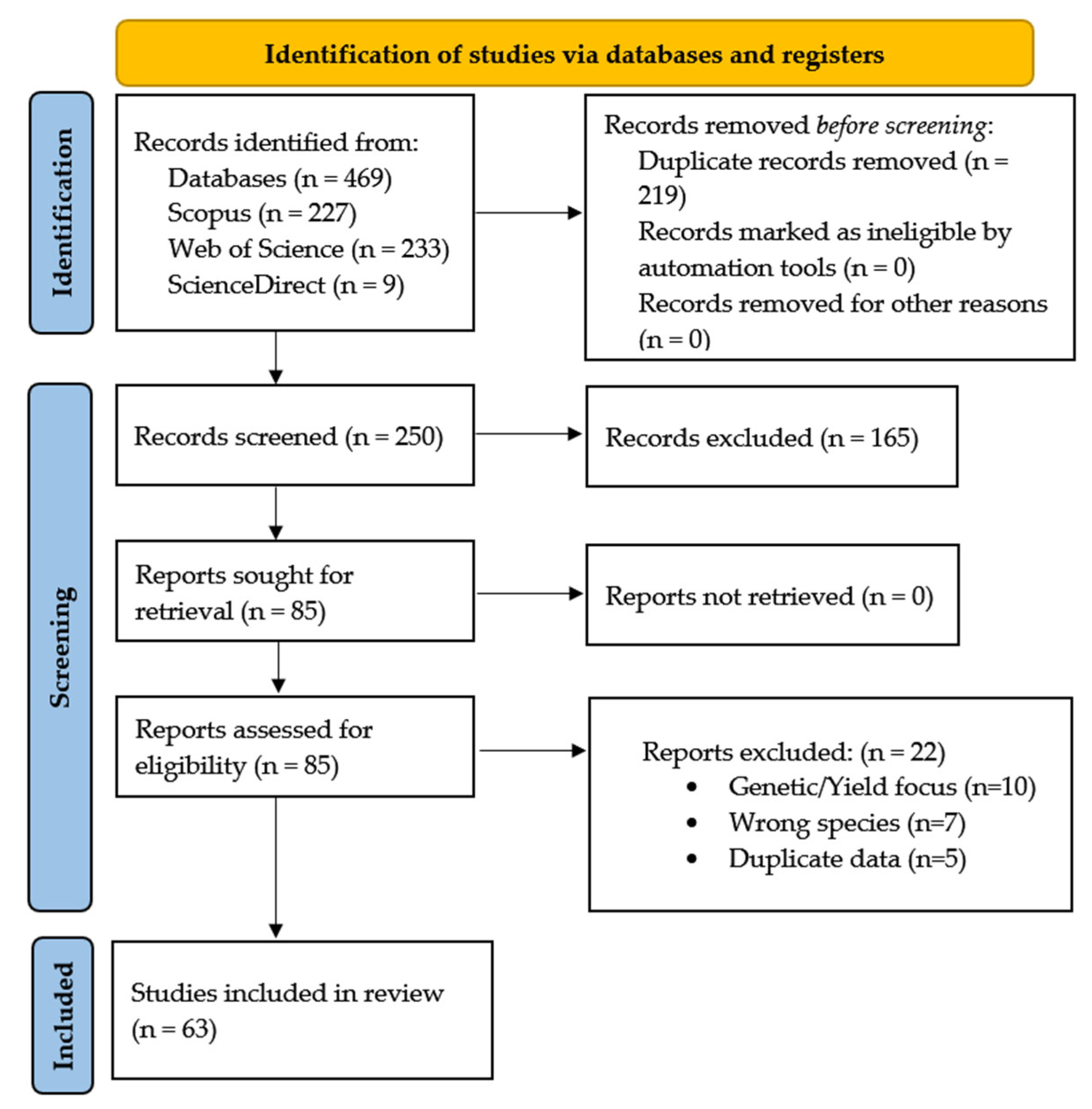
2.1. Search Strategy
2.2. Eligibility Criteria
- Inclusion Criteria: (i) Original research articles published in indexed journals (Q1–Q3); (ii) Studies reporting quantitative data on ex vitro survival rates (%); (iii) Investigations analyzing physiological markers (chlorophyll content, fluorescence, stomatal closure) or morphological traits (root architecture, cuticle thickness); (iv) Comparative studies on culture media formulations (e.g., MS vs. WPM) and their subsequent effect in the greenhouse; (v) Studies detailing specific pre-conditioning treatments, including the types and dosages of exogenous plant growth regulators (PGRs) applied during the in vitro phase.
- Exclusion Criteria: (i) Studies focused solely on in vitro multiplication rates (number of shoots/nodes) without greenhouse follow-up; (ii) Conference abstracts, non-indexed book chapters, and unpublished theses; (iii) Studies on genetic transformation (GMOs) or virus elimination that do not specifically address acclimatization physiology.
- The systematically included studies are limited to Solanum tuberosum; however, cross-species evidence (e.g., tomato, sweet potato) is explicitly cited in the discussion to provide exploratory perspectives and future directions.
- Foundational references older than ten years were selectively included only when they represent seminal descriptions of physiological principles (e.g., classical photobiology or fundamental in vitro disorders) that remain the undisputed basis for current applied research.
2.3. Study Selection and Data Extraction
2.4. Quality Assessment and Risk of Bias
2.5. Synthesis Methods and Heterogeneity
3. Results
3.1. Phase I: Nutritional Hardening and the Nitrogen Paradox
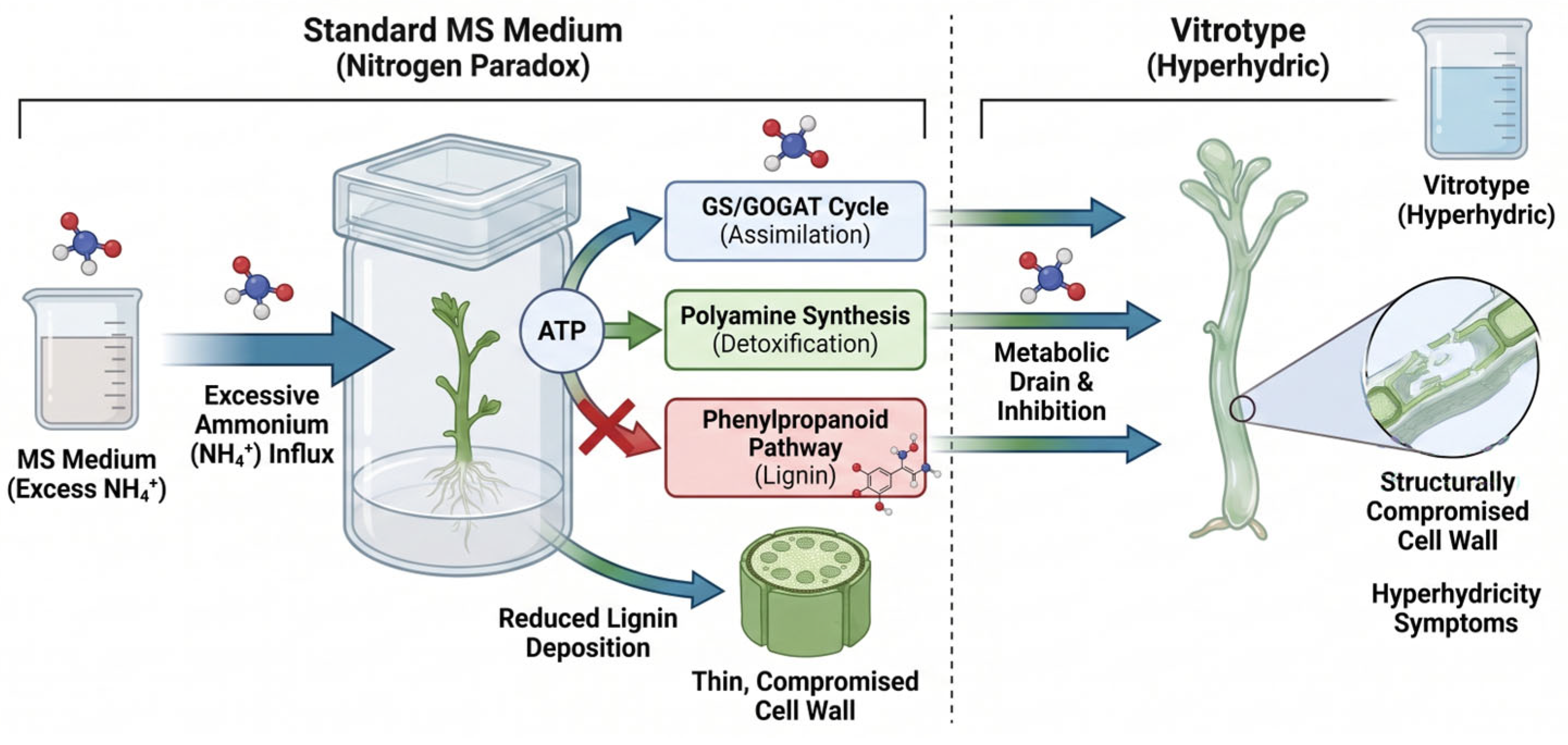
3.1.1. The Nitrogen Paradox: Ammonium Toxicity and Hyperhydricity
3.1.2. Nutritional Mitigation Strategies and Stress Priming
3.1.3. PGR Residual Effects (The “Carry-Over” Risk)
3.2. Phase II: Photo-Autotrophic Induction via Spectral Modulation
3.2.1. The Failure of Fluorescent Lighting
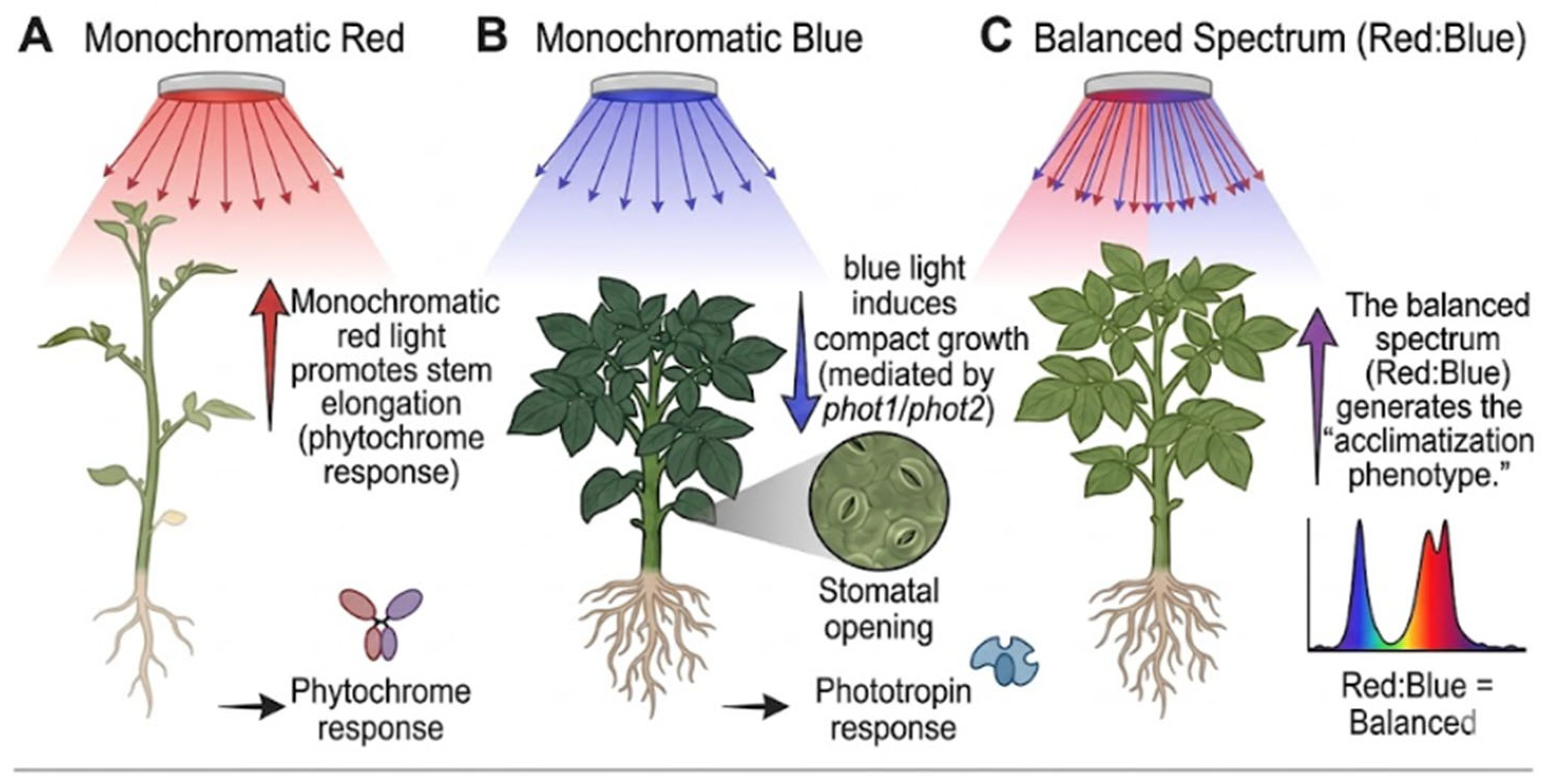
3.2.2. Spectral Quality, Gas Exchange, and Morphological Plasticity
3.3. Phase III: Rhizosphere Engineering and the Biotic Shield
3.3.1. PGR Pulse Treatments and Substrate Optimization
3.3.2. Bio-Priming: Installing a Biotic Shield
3.3.3. Chemical Priming and Emerging Frontiers: Nanotechnology
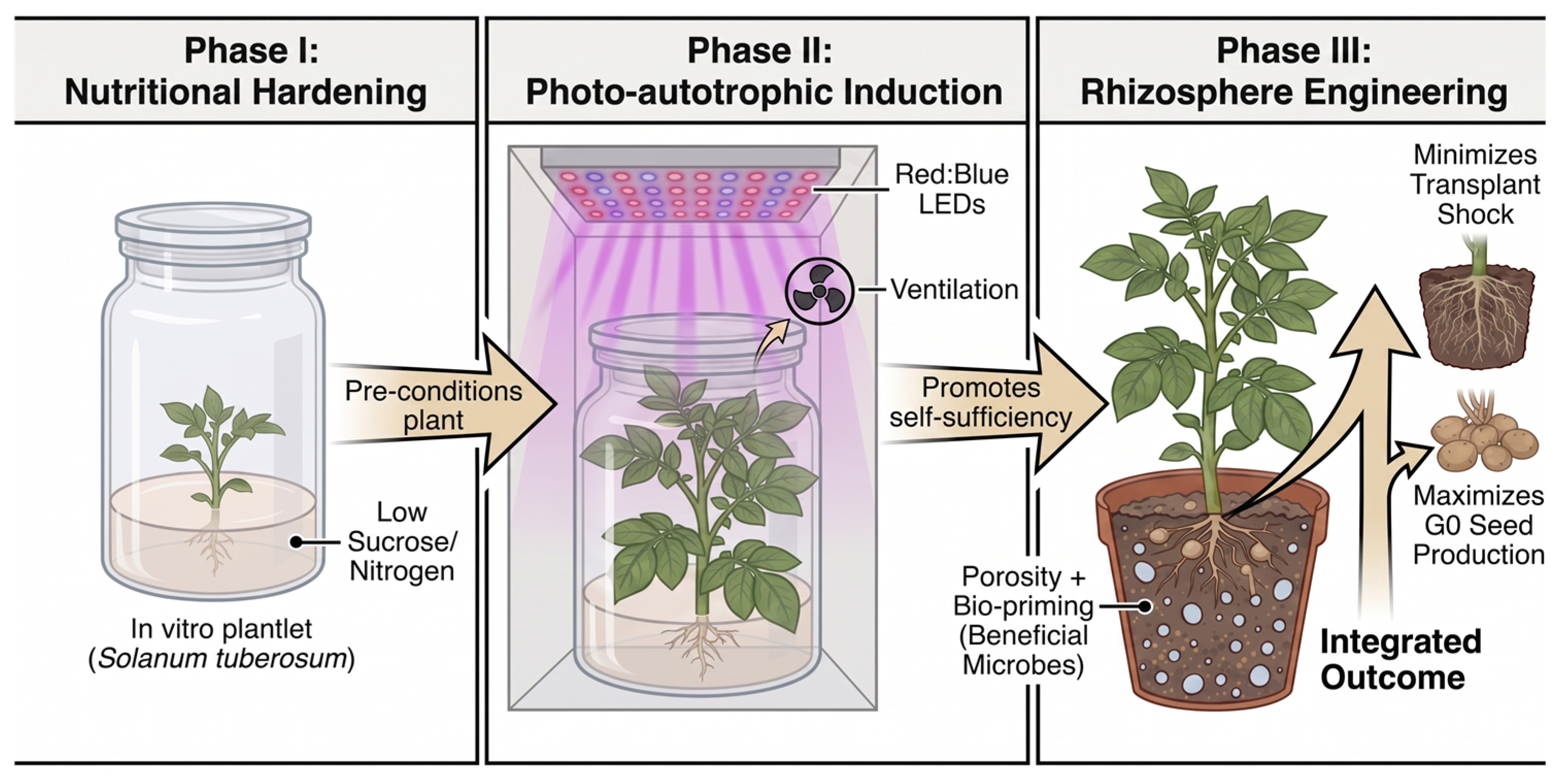
3.3.4. Integration into the Physiological Competence Protocol
4. Discussion
4.1. Summary of Evidence
4.2. Genotype Dependence and Microbiome Specificity
4.3. The Biotic Shield: Beyond Simple Inoculation
4.4. Stress Alleviation Mechanisms
4.5. Protocol and Study Limitations
4.6. Relationship to Previous Reviews
4.7. Future Research Directions
- To what extent does the NH4+:NO3− ratio during the final in vitro stage determine the activity of Phenylalanine Ammonia-Lyase (PAL) and total lignin content in potato stems?
- Can specific PGPR-derived metabolites, such as ACC-deaminase, effectively substitute synthetic plant growth regulators (PGRs) to induce ex vitro mechanical robustness?
- What is the optimal Red–Blue LED ratio that maximizes stomatal conductance while minimizing hyperhydricity across diverse potato genotypes?
5. Conclusions
Supplementary Materials
Author Contributions
Funding
Institutional Review Board Statement
Informed Consent Statement
Data Availability Statement
Acknowledgments
Conflicts of Interest
Abbreviations
| ABA | Abscisic Acid |
| AgNPs | Silver Nanoparticles |
| ATP | Adenosine Triphosphate |
| BA | Benzyladenine |
| CaCl2 | Calcium Chloride |
| CAT | Catalase |
| CFL | Compact Fluorescent Lamps |
| G0 | Pre-basic Seed Tubers (Generation 0) |
| GA3 | Gibberellic Acid |
| GS/GOGAT | Glutamine Synthetase/Glutamate Synthase |
| IAA | Indole-3-Acetic Acid |
| IBA | Indole-3-Butyric Acid |
| ISR | Induced Systemic Resistance |
| LEDs | Light-Emitting Diodes |
| MDA | Malondialdehyde |
| MS | Murashige & Skoog Medium |
| NH4+ | Ammonium Ion |
| NO3− | Nitrate Ion |
| PAL | Phenylalanine Ammonia-Lyase |
| PAR | Photosynthetically Active Radiation |
| PGPR | Plant Growth-Promoting Rhizobacteria |
| PRISMA | Preferred Reporting Items for Systematic Reviews and Meta-Analyses |
| PVY | Potato Virus Y |
| ROS | Reactive Oxygen Species |
| SA | Salicylic Acid |
| SEM | Scanning Electron Microscopy |
| SOD | Superoxide Dismutase |
| TDZ | Thidiazuron |
| TIS | Temporary Immersion Systems |
| VPD | Vapor Pressure Deficit |
| WPM | Woody Plant Medium |
| ZnO-NPs | Zinc Oxide Nanoparticles |
References
- Devaux, A.; Kromann, P.; Ortiz, O. Potatoes for Sustainable Global Food Security. Potato Res. 2014, 57, 185–199. [Google Scholar] [CrossRef]
- Jácome Sarchi, G.A.; Coronel Montesdeoca, N.T.; Hernández, F.; Martínez, R.T.S. In Vitro Techniques for Seed Potato (Solanum tuberosum L.) Tuber Production: A Systematic Review. Plants 2025, 14, 2777. [Google Scholar] [CrossRef]
- Hazarika, B.N. Morpho-Physiological Disorders in In Vitro Culture of Plants. Sci. Hortic. 2006, 108, 105–120. [Google Scholar] [CrossRef]
- Buckseth, T.; Sharma, A.K.; Pandey, K.K.; Singh, B.P.; Muthuraj, R. Methods of Pre-Basic Seed Potato Production with Special Reference to Aeroponics—A Review. Sci. Hortic. 2016, 204, 79–87. [Google Scholar] [CrossRef]
- Struik, P.C.; Wiersema, S.G. Seed Potato Technology, 1st ed.; Wageningen Academic Publishers: Wageningen, The Netherlands, 1999. [Google Scholar]
- Debergh, P.; Aitken-Christie, J.; Cohen, D.; Grout, B.; von Arnold, S.; Zimmerman, R.; Ziv, M. Reconsideration of the Term “vitrification” as Used in Micropropagation. Plant Cell Tissue Organ Cult. 1992, 30, 135–140. [Google Scholar] [CrossRef]
- Pospíšilová, J.; Tichá, I.; Kadleček, P.; Haisel, D.; Plzáková, Š. Acclimatization of Micropropagated Plants to Ex Vitro Conditions. Biol. Plant. 1999, 42, 481–497. [Google Scholar] [CrossRef]
- Kevers, C.; Franck, T.; Strasser, R.J.; Dommes, J.; Gaspar, T. Hyperhydricity of Micropropagated Shoots: A Typically Stress-Induced Change of Physiological State. Plant Cell Tissue Organ Cult. 2004, 77, 181–191. [Google Scholar] [CrossRef]
- Martinez, L.I.R.; Visser, R.G.F.; de Klerk, G.J.M. The Hyperhydricity Syndrome: Waterlogging of Plant Tissues as a Major Cause. Propag. Ornam. Plants 2010, 10, 169–175. [Google Scholar]
- Sutter, E.; Langhans, R.W. Epicuticular Wax Formation on Carnation Plantlets Regenerated from Shoot Tip Culture. J. Am. Soc. Hortic. Sci. 1979, 104, 493–496. [Google Scholar] [CrossRef]
- Chen, L.L.; Zhang, K.; Gong, X.C.; Wang, H.Y.; Gao, Y.H.; Wang, X.Q.; Zeng, Z.H.; Hu, Y.G. Effects of Different LEDs Light Spectrum on the Growth, Leaf Anatomy, and Chloroplast Ultrastructure of Potato Plantlets In Vitro and Minituber Production after Transplanting in the Greenhouse. J. Integr. Agric. 2020, 19, 108–119. [Google Scholar] [CrossRef]
- Gururani, M.A.; Upadhyaya, C.P.; Baskar, V.; Venkatesh, J.; Nookaraju, A.; Park, S.W. Plant Growth-Promoting Rhizobacteria Enhance Abiotic Stress Tolerance in Solanum tuberosum Through Inducing Changes in the Expression of ROS-Scavenging Enzymes and Improved Photosynthetic Performance. J. Plant Growth Regul. 2012, 32, 245–258. [Google Scholar] [CrossRef]
- Castro Molina, Y.; Dória, J.; Gómez Sepúlveda, A.M.; Carvalho, L.Q.; Pasqual, M.; Jesus, E.d.C. Biotization with Plant Growth-Promoting Bacteria Benefits the Survival and Production of Potato (Solanum tuberosum L.) In Vitro and In Vivo. Horticulturae 2025, 11, 393. [Google Scholar] [CrossRef]
- Chandra, S.; Bandopadhyay, R.; Kumar, V.; Chandra, R. Acclimatization of Tissue Cultured Plantlets: From Laboratory to Land. Biotechnol. Lett. 2010, 32, 1199–1205. [Google Scholar] [CrossRef]
- Page, M.J.; McKenzie, J.E.; Bossuyt, P.M.; Boutron, I.; Hoffmann, T.C.; Mulrow, C.D.; Shamseer, L.; Tetzlaff, J.M.; Akl, E.A.; Brennan, S.E.; et al. The PRISMA 2020 Statement: An Updated Guideline for Reporting Systematic Reviews. BMJ 2021, 372, n71. [Google Scholar] [CrossRef]
- Schum, A.; Jansen, G. In Vitro Method for Early Evaluation of Nitrogen Use Efficiency Associated Traits in Potato. J. Appl. Bot. Food Qual. 2014, 87, 256–264. [Google Scholar] [CrossRef]
- Nguyen, T.T.T.; Alizadeh, H.; Leung, D.W.M. Response of Potato (Solanum tuberosum L., Cv. Iwa) Nodal Explants to Low Inorganic Nitrogen Supply In Vitro. Biocatal. Agric. Biotechnol. 2021, 38, 102215. [Google Scholar] [CrossRef]
- Phillips, G.C.; Garda, M. Plant Tissue Culture Media and Practices: An Overview. Vitr. Cell. Dev. Biol.-Plant 2019, 55, 242–257. [Google Scholar] [CrossRef]
- Cao, W.; Tibbitts, T.W. Study of Various NH4+/NO3− Mixtures for Enhancing Growth of Potatoes. J. Plant Nutr. 1993, 16, 1691–1704. [Google Scholar] [CrossRef]
- Ozgen, S.; Palta, J.P. Supplemental Calcium Application Influences Potato Tuber Number and Size. HortScience 2005, 40, 102–105. [Google Scholar] [CrossRef]
- Abu Zeid, I.M.; Soliman, H.I.A.; Metwali, E.M.R. In Vitro Evaluation of Some High Yield Potato (Solanum tuberosum L.) Cultivars under Imposition of Salinity at the Cellular and Organ Levels. Saudi J. Biol. Sci. 2022, 29, 2541–2551. [Google Scholar] [CrossRef] [PubMed]
- Ticona, S.A.; Oropeza, M. Effect of Culture Medium Consistence and Silver Nitrate on Micropropagation of Two Potato (Solanum tuberosum) Cultivars. Rev. Colomb. Biotecnol. 2013, 15, 55–62. [Google Scholar] [CrossRef]
- Khalid, A.; Aftab, F. Effect of Exogenous Application of IAA and GA3 on Growth, Protein Content, and Antioxidant Enzymes of Solanum tuberosum L. Grown In Vitro under Salt Stress. Vitr. Cell. Dev. Biol.-Plant 2020, 56, 377–389. [Google Scholar] [CrossRef]
- Daurov, D.; Daurova, A.; Sapakhova, Z.; Kanat, R.; Akhmetzhanova, D.; Abilda, Z.; Toishimanov, M.; Raissova, N.; Otynshiyev, M.; Zhambakin, K.; et al. The Impact of the Growth Regulators and Cultivation Conditions of Temporary Immersion Systems (TISs) on the Morphological Characteristics of Potato Explants and Microtubers. Agronomy 2024, 14, 1782. [Google Scholar] [CrossRef]
- Chen, L.; Lu, Y.; Hu, Y.; Xue, X. RNA-Seq Reveals That Sucrose-Free Medium Improves the Growth of Potato (Solanum tuberosum L.) Plantlets Cultured In Vitro. Plant Cell Tissue Organ Cult. 2020, 140, 505–521. [Google Scholar] [CrossRef]
- Mohamed, M.A.H.; Alsadon, A.A. Influence of Ventilation and Sucrose on Growth and Leaf Anatomy of Micropropagated Potato Plantlets. Sci. Hortic. 2010, 123, 295–300. [Google Scholar] [CrossRef]
- Yang, X.; Liu, Z.; Chen, J.; Zhang, W.; Yang, W.; Shen, C.; Kang, Y.; Qin, S. PP2C-Mediated ABA Signaling Pathway Underlies Exogenous Abscisic Acid-Induced Enhancement of Saline–Alkaline Tolerance in Potato (Solanum tuberosum L.). Plants 2025, 14, 1921. [Google Scholar] [CrossRef]
- Hanafy, M.S.; Desouky, A.F.; Asker, M.S.; Zaki, E.R. Impact of Homologous Overexpression of PR10a Gene on Improving Salt Stress Tolerance in Transgenic Solanum tuberosum. J. Genet. Eng. Biotechnol. 2024, 22, 100437. [Google Scholar] [CrossRef]
- Nicolas, M.; Bouma, J.; Venema, J.H.; van der Schoot, H.; Verstappen, F.; de Zeeuw, T.; Langedijk, S.E.; Boer, D.; Bucher, J.; Staal, M.; et al. Potato Cultivars Use Distinct Mechanisms for Salt Stress Acclimation. Plant Stress 2025, 15, 100798. [Google Scholar] [CrossRef]
- Dénes, T.É.; Molnár, I.; Vass, I.Z.; Vass, I.; Rákosy-Tican, E. Selection and Phenotyping for Drought Tolerance in Somatic Hybrids between Solanum tuberosum and Solanum bulbocastanum That Show Resistance to Late Blight, by Using a Semi-Automated Plant Phenotyping Platform. Agriculture 2024, 14, 48. [Google Scholar] [CrossRef]
- Rezende, R.K.S.; Pasqual, M.; Paiva, L.V.; Paiva, R.; Masetto, T.E. Organogênese In Vitro de Batata (Solanum tuberosum L.) Cultivar Atlantic Visando Transformação Genética [In Vitro Organogenesis of Potato (Solanum tuberosum L.) Cultivar Atlantic for Genetic Transformation. Semin. Cienc. Agrar. 2013, 34, 1055–1064. [Google Scholar] [CrossRef][Green Version]
- Lin, C.; Zheng, S.; Liu, K.; Yu, R.; Guan, P.; Hu, B.; Jiang, L.; Su, M.; Hu, G.; Chen, Q.; et al. Elucidating the Molecular Basis of Salt Tolerance in Potatoes through MiRNA Expression and Phenotypic Analysis. Sci. Rep. 2025, 15, 2635. [Google Scholar] [CrossRef]
- Wei, J.; Zhang, N.; Deng, Y.; Liu, S.; Yang, L.; Wang, X.; Wen, R.; Si, H. Functional Analysis of the StERF79 Gene in Response to Drought Stress in Potato (Solanum tuberosum L.). BMC Plant Biol. 2025, 25, 387. [Google Scholar] [CrossRef]
- Herrera-Isidron, L.; Uribe-Lopez, B.; Barraza, A.; Cabrera-Ponce, J.L.; Valencia-Lozano, E. Analysis of Stress Response Genes in Microtuberization of Potato Solanum tuberosum L.: Contributions to Osmotic and Combined Abiotic Stress Tolerance. Plants 2024, 13, 2996. [Google Scholar] [CrossRef]
- Melyan, G.H.; Martirosyan, Y.T.; Sahakyan, A.J.; Sayadyan, H.Y.; Melikyan, A.S.; Barseghyan, A.H.; Vardanyan, A.S.; Martirosyan, H.S.; Harutyunyan, M.G.; Mkrtchyan, A.L.; et al. Influence of Nutrient Medium Components on In Vitro Tuberization of Solanum tuberosum L. and Subsequent Minituber Production in Aeroponic and Greenhouse Conditions. Life 2025, 15, 241. [Google Scholar] [CrossRef]
- Bashi, A.A.K.; Bashi, B.Z.K.; AL-Bayati, H.J. Production of Minitubers of Potato (Solanum tuberosum L.) Cv. Arizona Class A In Vitro. Agric. Sci. Dig. 2026, 1–7. [Google Scholar] [CrossRef]
- Laslo, É.; György, É.; András, C.D.; Szabó, K. In Vitro Cultivation of Purple-Fleshed Potato Varieties: Insights into Their Growth and Development. Horticulturae 2023, 9, 425. [Google Scholar] [CrossRef]
- Saxena, L.; Manchanda, P.; Kaur, M.; Kalia, A.; Sharma, S.P. Standardization of Indirect Regeneration Protocol in Lady Rosetta Cultivar of Potato (Solanum tuberosum). Indian J. Agric. Sci. 2025, 95, 637–642. [Google Scholar] [CrossRef]
- Guo, R.; Jin, Y.; Liu, J.; Yang, H.; Cheng, L.; Yu, B. Harnessing Light Quality for Potato Production: Red and Blue Light as Key Regulators of Growth and Yield. Plants 2025, 14, 1039. [Google Scholar] [CrossRef]
- Jao, R.-C.; Fang, W. Growth of Potato Plantlets In Vitro Is Different When Provided Concurrent Versus Alternating Blue and Red Light Photoperiods. HortScience 2004, 39, 380–382. [Google Scholar] [CrossRef]
- Morrow, R.C. LED Lighting in Horticulture. HortScience 2008, 43, 1947–1950. [Google Scholar] [CrossRef]
- Edesi, J.; Jokipii-Lukkari, S.; Salo, H.M.; Häggman, H.M.; Pirttilä, A.M. Light Spectrum Modulates Stress and Defense Gene Expression in Potato (Solanum tuberosum L.) Shoot Tips during Post-Cryopreservation Recovery. Sci. Rep. 2025, 15, 34570. [Google Scholar] [CrossRef]
- Pedrosa, V.M.D.; Izidoro, M.; da Silva, M.B.; Lossolli, N.A.B.; Cecílio Filho, A.B.; Carvalho, R.F.; Bacha, A.L.; Teixeira, G.H.d.A. Far-Red LED Light Treatment at Harvest and during Storage to Control Sprouting in ‘Asterix’ Potatoes. Postharvest Biol. Technol. 2025, 230, 113722. [Google Scholar] [CrossRef]
- Rahman, M.H.; Islam, M.J.; Mumu, U.H.; Ryu, B.R.; Lim, J.D.; Azad, M.O.K.; Cheong, E.J.; Lim, Y.S. The Growth and Tuber Yield of Potatoes (Solanum tuberosum L.) under Varying LED Light Spectrums in Controlled Greenhouse Conditions. Horticulturae 2024, 10, 254. [Google Scholar] [CrossRef]
- Valencia-Lozano, E.; Herrera-Isidrón, L.; Flores-López, J.A.; Recoder-Meléndez, O.S.; Barraza, A.; Cabrera-Ponce, J.L. Solanum tuberosum Microtuber Development under Darkness Unveiled through RNAseq Transcriptomic Analysis. Int. J. Mol. Sci. 2022, 23, 13835. [Google Scholar] [CrossRef] [PubMed]
- Long, J.; Yu, F.; Wu, Y.; Xu, Z.; Liu, X. Regulation of Different Lights on Energy Acquisitions, Microtuber Formation, and Growth of In Vitro-Grown Solanum tuberosum L. Agronomy 2024, 14, 1232. [Google Scholar] [CrossRef]
- Puppe, D.; Busse, J.; Stein, M.; Kaczorek, D.; Buhtz, C.; Schaller, J. Silica Accumulation in Potato (Solanum tuberosum L.) Plants and Implications for Potato Yield Performance—Results from Field Experiments in Northeast Germany. Biology 2024, 13, 828. [Google Scholar] [CrossRef] [PubMed]
- Ma, Z.; Ji, J.; Zhu, X.; Yi, L.; Li, Q.; Wang, G.; Jin, C.; Guan, C. Salicylic Acid Mitigates Hyperhydricity in Newly Developed Potato Shoots through Reduced Oxidation. Can. J. Bot. 2018, 96, 793–803. [Google Scholar] [CrossRef]
- Peña, H.; Santos, M.; Ramírez, B.; Sulbarán, J.; Arias, K.; Huertas, V.; Diánez, F. Essential Quality Attributes of Culture Media Used as Substrates in the Sustainable Production of Pre-Basic Potato Seeds. Sustainability 2024, 16, 8552. [Google Scholar] [CrossRef]
- Bharti, K.; Devi, S.; Kukreja, S.; Singh, S. Influence of Growing Media on the Performance of In Vitro Potato Varieties: Evaluation of Growth, Yield, and Harvest Index under an Insect-Proof Net House in the Northwestern Plains of India. Am. J. Potato Res. 2025, 102, 433–439. [Google Scholar] [CrossRef]
- Andreote, F.D.; De Araújo, W.L.; De Azevedo, J.L.; Van Elsas, J.D.; Da Rocha, U.N.; Van Overbeek, L.S. Endophytic Colonization of Potato (Solanum tuberosum L.) by a Novel Competent Bacterial Endophyte, Pseudomonas Putida Strain P9, and Its Effect on Associated Bacterial Communities. Appl. Environ. Microbiol. 2009, 75, 3396–3406. [Google Scholar] [CrossRef]
- Lastochkina, O.; Baymiev, A.; Shayahmetova, A.; Garshina, D.; Koryakov, I.; Shpirnaya, I.; Pusenkova, L.; Mardanshin, I.; Kasnak, C.; Palamutoglu, R. Effects of Endophytic Bacillus Subtilis and Salicylic Acid on Postharvest Diseases (Phytophthora infestans, Fusarium oxysporum) Development in Stored Potato Tubers. Plants 2020, 9, 76. [Google Scholar] [CrossRef]
- Tkachenko, O.V.; Evseeva, N.V.; Kargapolova, K.Y.; Denisova, A.Y.; Pozdnyakova, N.N.; Kulikov, A.A.; Burygin, G.L. Rhizobacteria Increase the Adaptation Potential of Potato Microclones under Aeroponic Conditions. Microorganisms 2023, 11, 1866. [Google Scholar] [CrossRef]
- Jalal, A.S.; Sumayli, M.; Alshaharni, M.O.; AlGheffari, H.K.; Bukhari, G.; Alqahtani, A.N.; Mosa, W.F.A.; Ashry, N.M.; El-Zehery, H.R.A.; Abdelnaby, A.S.; et al. Trichoderma Viride AT85 as a Sustainable Biocontrol Strategy for Early Blight in Potato: Influences on Morphological, Physicochemical, Molecular, and Quality Traits. J. Plant Pathol. 2025, 108, 469–484. [Google Scholar] [CrossRef]
- Pusenkova, L.I.; Lastochkina, O.V. Improving the Yield and Quality of Potato Tubers through Preplant Inoculation of Healthy Hydroponic Minitubers with Bacillus Subtilis Endophytic Bacteria. Izv. Vuzov. Prikl. Khim. Biotekhnol. 2025, 15, 6–16. [Google Scholar] [CrossRef]
- Alahmari, A.S.; Magdy, M.; El-Mansy, A.B.; Awad, N.S.; Eldenary, M.E.; Alshamrani, R.; Almuziny, M.; Abuzaid, A.O.; Aboud, N.M.A.; Abd El Moneim, D. Evaluation of Nanoparticle Biostimulants in Alleviating Salinity-Induced Stress: A Study on Morphological and Molecular Responses in Potato Cultivars. Chil. J. Agric. Res. 2025, 85, 414–423. [Google Scholar] [CrossRef]
- Sokolova, D.O.; Królicka, A.; Czajkowski, R. Elicitation of Potato Plants to Increase Their Resistance against Soft Rot Pectobacteriaceae Bacteria. Eur. J. Plant Pathol. 2024, 171, 67–80. [Google Scholar] [CrossRef]
- Rani, L.U.; Parameshwari, P.; George, A.R.; Mallappa, N.; Saravanakumari, K.; Anand, T.; Geetha, N.; Mhatre, P.H.; Mylonakis, E.; Singh, V.K.; et al. Green Synthesis of Demethoxycurcumin-Loaded Chitosan Nanoparticles for the Management of Potato Late Blight Caused by Phytophthora Infestans. Int. J. Biol. Macromol. 2025, 322, 146990. [Google Scholar] [CrossRef]
- Mikhail, M.S.; Abd-Alim, A.I.; Balabel, N.M.; Abbas, A.M. Evaluation of the Antibacterial Activity of Some Plant Essential Oils against Ralstonia solanacearum and the Molecular Diagnosis of the Bacterium. Egypt. Pharm. J. 2025, 24, 207–215. [Google Scholar] [CrossRef]
- Rivas, S.; Fincheira, P.; González, F.; Santander, C.; Meier, S.; Santos, C.; Contreras, B.; Ruiz, A. Assessment of the Photosynthetic Response of Potato Plants Inoculated with Rhizoctonia Solani and Treated with Flesh-Colored Potato Extracts Nanoencapsulated with Solid Lipid Nanoparticles. Plants 2025, 14, 156. [Google Scholar] [CrossRef]
- Khan, M.A.; Naveed, N.H.; Ali, A.; Adeel, M.; Batool, A.I.; Shahzad, T.; Khan, M.R.; Majeed, S. Optimization of Tissue Culture Media for Microtuber Development Incorporating Sugars and Zinc Nanoparticles. Am. J. Potato Res. 2025, 103, 148–163. [Google Scholar] [CrossRef]
- Ollio, I.; Zornoza, R.; Gallego, J.C.; Egea-Gilabert, C.; Fernández, J.A.; Lloret, E. Combined Microbial Inoculation and Reduced Inorganic Fertilization Enhances Diversity and Functionality in Potato Rhizosphere Microbiome at Field Scale. Chem. Biol. Technol. Agric. 2025, 12, 113. [Google Scholar] [CrossRef]
- Evseeva, N.V.; Denisova, A.Y.; Tkachenko, O.V.; Shirokov, A.A.; Pozdnyakova, N.N.; Burygin, G.L.; Matora, L.Y.; Shchyogolev, S.Y. Rhizobacteria in the Regulation of the Pro- and Antioxidant Systems of Potato Osmotically Stressed In Vitro. Russ. J. Plant Physiol. 2025, 72, 59. [Google Scholar] [CrossRef]
- de la Paz-Osorio, D.M.; de la Portilla-Lopez, N.; Vaca-Paulín, R.; Lugo-de la Fuente, J.; Wong-Villarreal, A.; Della Mónica, I.F.; del Águila-Juárez, P.; Mora-Herrera, M.E.; Yañez-Ocampo, G. Bacillus Sp. Strain Fo03, a Phosphate Solubilizing Bacterial Strain, Promotes Potato Growth and Decrease Inorganic Fertilizer. Curr. Microbiol. 2025, 82, 228. [Google Scholar] [CrossRef]
- Baltazar Bernal, O.; Spinoso-Castillo, J.L.; Mancilla-Álvarez, E.; Muñoz-Márquez Trujillo, R.A.; Bello-Bello, J.J. In Vitro Conservation and Regeneration of Potato (Solanum tuberosum L.): Role of Paclobutrazol and Silver Nanoparticles. Horticulturae 2023, 9, 676. [Google Scholar] [CrossRef]
- Farrag, A.M.; Taha, S.S.; Darwish, O.S.; Ashour, S.; Mahmoud, A.W.M. Improvement of Potato (Solanum tuberosum L.) Micro-Tubers Formation as Effected by Nano-Particles in-Vitro. Egypt. Pharm. J. 2024, 23, 319–328. [Google Scholar] [CrossRef] [PubMed]
- Asghari-Zakaria, R.; Maleki-Zanjani, B.; Sedghi, E. Effect of In Vitro Chitosan Application on Growth and Minituber Yield of Solarium tuberosum L. Plant Soil Environ. 2009, 55, 252–256. [Google Scholar] [CrossRef]
- Kudrinsky, A.A.; Mikhaylov, D.M.; Shapoval, O.A.; Lisichkin, G.V.; Krutyakov, Y.A. Surface-Functionalized Silver Nanoparticles Boost Oxidative Stress and Prime Potatoes Against Phytopathogens. Plants 2026, 15, 203. [Google Scholar] [CrossRef]
- James-Forest, M.; Ojeda-Zacarías, M.d.C.; Cham, A.K.; Lozoya-Saldaña, H.; Vázquez-Alvarado, R.E.; Olivares-Sáenz, E.; Ibarra-López, A. Biotic Elicitor-Driven Enhancement of In Vitro Micropropagation and Organogenesis in Solanum tuberosum L. Cv. Fianna. BioTech 2025, 14, 77. [Google Scholar] [CrossRef] [PubMed]
- Naik, R.; Bhushan, A.; Singh, B.; Kumar, S.; Sharma, S.; Kumar, R.; Nishant. Enhancing Acclimatization of In Vitro Raised Potato Seedlings via Biological Hardening. Indian J. Hortic. 2025, 82, 291–296. [Google Scholar] [CrossRef]
- Marquez Cazorla, J.I.; Moreno Roque, C.S.; Vera Gonzales, C.A.; Pereira da Costa, L.; Carnero Canales, C.S. Controlled-Release Nanofertilizer Using Chitosan Nanoparticles Loaded with NPK: Development and Impact on the Yield and Nutritional Quality of Solanum tuberosum. Sci. Agropecu. 2025, 16, 633–645. [Google Scholar] [CrossRef]
- Abdollahi, F.; Motallebi-Azar, A.; Gohari, G.; Dehdar Masjedlou, B. The Effect of Nanoparticle Graphene Oxide on Micropropagation and In Vitro Microtuberization in Potato (Solanum tuberosum Cv. Agria). J. Hortic. Sci. 2023, 38, 101–115. [Google Scholar] [CrossRef]
- Naqqash, T.; Hameed, S.; Imran, A.; Hanif, M.K.; Majeed, A.; van Elsas, J.D. Differential Response of Potato toward Inoculation with Taxonomically Diverse Plant Growth Promoting Rhizobacteria. Front. Plant Sci. 2016, 7, 164522. [Google Scholar] [CrossRef]
- Dao, V.H.T.; Do, K.P.; Van Nguyen, H.; Nguyen, C.M.; Tran, D.T.T.; Dang, T.T.T.; Nguyen, T.X.; Dinh, S.T. Identification and Evaluation of the Growth Promotion of Endophytic Bacteria on In Vitro Potato Plants. Pak. J. Biol. Sci. 2023, 26, 371–379. [Google Scholar] [CrossRef] [PubMed]
- Sukweenadhi, J.; Wiranata, E.V.; Artadana, I.B.M.; Chang, K.S. Isolation and In Vitro Screening of Plant Growth Promoting Bacteria from Rhizosphere and Root Tissues of Potato Tuber (Solanum tuberosum L.). AIMS Agric. Food 2023, 8, 1028–1037. [Google Scholar] [CrossRef]
- Mamani-Rojas, L.; Rengifo, R.; Velarde-Apaza, L.; Ramírez-Rojas, M.; Cántaro-Segura, H. Biocontrol and Plant Growth-Promoting Potential of Bacillus and Actinomycetes Isolated from the Rhizosphere and Phyllosphere of Potato (Solanum tuberosum L.) from Different Agroecological Zones of Peru. Appl. Microbiol. 2025, 6, 2. [Google Scholar] [CrossRef]
- Batool, T.; Ali, S.; Seleiman, M.F.; Naveed, N.H.; Ali, A.; Ahmed, K.; Abid, M.; Rizwan, M.; Shahid, M.R.; Alotaibi, M.; et al. Plant Growth Promoting Rhizobacteria Alleviates Drought Stress in Potato in Response to Suppressive Oxidative Stress and Antioxidant Enzymes Activities. Sci. Rep. 2020, 10, 16975. [Google Scholar] [CrossRef]
- Abdul Mutalib, F.; Kassim, R.; Mazlan, Z.; Yeong, W.C. Effect of Growing Media on the Acclimatization and Adaptation of In Vitro Potato (Solanum tuberosum L.) Genotypes to Warm Tropical Agroecosystems. Int. J. Agric. For. Plant. 2025, 16, 232–237. [Google Scholar]
- Kozai, T. Photoautotrophic micropropagation—Environmental control for promoting photosynthesis. Propag. Ornam. Plants 2010, 10, 188–204. [Google Scholar]
- Lone, R.; Shuab, R.; Sharma, V.; Kumar, V.; Mir, R.; Koul, K.K. Effect of arbuscular mycorrhizal fungi on growth and development of potato (Solanum tuberosum) plant. Asian J. Crop Sci. 2015, 7, 233–243. [Google Scholar] [CrossRef]
- Sivanesan, I.; Park, S.U. The role of silicon in plant tissue culture. Front. Plant Sci. 2014, 5, 571. [Google Scholar] [CrossRef]



| Reference | Potato Cultivar(s) | In Vitro Treatment | Validation Environment | Target Physiological Trait | Key Outcome/Survival Rate | Sample (n) | Quality |
|---|---|---|---|---|---|---|---|
| I. Nutritional Hardening and Media Modification (The Nitrogen Paradox & Stress) | |||||||
| [16] | Multiple (10+) | Modified Medium (Low N, 15–30 mM) | In vitro (Growth analysis) | Adaptive root elongation & NUE | Higher Root–Shoot ratio; early screening for nutrient efficiency | 120 | Low |
| [17] | cv. Iwa | Low Inorganic Nitrogen (3.75–7.5 mM) | In vitro (Pre-acclimatization) | Biomass partitioning & Root plasticity | Enhanced lateral root development; maintained biomass despite low N | 60 | Low |
| [18] | Solanum spp. | MS vs. Modified Basal Media | General (Review) | Oxidative stress & Hyperhydricity | Mitigation of ammonium toxicity and glassy stem appearance | N/R | Low |
| [19] | S. tuberosum | NH4+/NO3− mixtures (4 mM total N) | Controlled environment (Nutrient film) | Growth, biomass & mineral uptake | Mixed nitrogen (8–20% NH4+) significantly enhanced dry weight, tuber growth, and total N uptake | 48 | Low |
| [20] | cv. Russet Burbank | Supplemental Ca (168 kg·ha−1) | Greenhouse/Pots | Tuberization signaling & size | Significant reduction in tuber number; increased mean tuber weight/size | 100 | Low |
| [21] | cv. Victoria, cv. Rosetta | NaCl stress (0–200 mM) + TDZ/GA3/Kin/PBZ | In vitro (Regeneration & Microtuberization) | Osmotic adjustment (Proline) & Na+/K+ index | Victoria identified as more tolerant (survived 150 mM NaCl) vs. Rosetta (125 mM) | 150 | Low |
| [22] | Granola, Arbolona negra | AgNO3 (2 mg/L) | In vitro (Growth analysis) | Ethylene inhibition & leaf development | Highest leaf area values; mitigation of epinasty/hyperhydricity | 40 | Low |
| [23] | Cardinal, Desiree | IAA & GA3 under NaCl stress | In vitro (Salinity tolerance) | Antioxidant machinery (SOD, CAT, POD) | Amelioration of salt stress; improved biomass and protein content | 45 | Low |
| [24] | cv. Taisiya | TIS (RITA®) System | In vitro/Microtubers | Multiplication efficiency | TIS optimizes nutrient uptake and increases microtuber biomass | 30 | Low |
| [25] | cv. Zhongshu 20 | Sucrose-Free Medium (S0) | In vitro (Photoautotrophic) | Photosynthetic performance & Anatomy | Improved leaf anatomy, chloroplast ultrastructure, and upregulated photosynthesis genes | 60 | Low |
| [26] | cv. Sandy | Vented Vessel + Low Sucrose (20 g/L) | In vitro (Pre-acclimatization) | Stomatal Anatomy & Chlorophyll | Transformation from spherical to elliptical stomata with narrow openings; well-developed palisade layer | 45 | High |
| [27] | cv. Desiree | Exogenous ABA (38 µM) + NaHCO3 stress | In vitro (Saline-alkali stress) | Root architecture & Ion homeostasis | Alleviated saline-alkali damage; PP2C gene suppression enhanced tolerance and antioxidant defense | 90 | Low |
| [28] | S. tuberosum | Homologous overexpression of PR10a gene | In vitro/Ex vitro (Salt stress) | Molecular signaling & Salt tolerance | Improved plant growth parameters and antioxidant defense under abiotic stress | 120 | Low |
| [29] | cv. Innovator, Desirée, Mozart | Salt stress acclimation | Ex vitro (Salt stress) | Root architecture & Suberization | Cultivar-specific salt tolerance; Innovator showed highest resilience with distinct root responses | 75 | Low |
| [30] | S. tuberosum × S. bulbocastanum (Somatic hybrids) | Drought stress phenotyping | Ex vitro (Phenotyping platform) | Photosynthetic efficiency & Drought tolerance | Identified drought-resilient hybrids with combined late blight resistance using semi-automated phenotyping | 180 | Low |
| [31] | cv. Atlantic | WPM medium + NAA (1.0 mg/L) + Zeatin riboside (5.0 mg/L) | In vitro (Organogenesis) | Shoot regeneration capacity | Internodal segments showed superior organogenic capacity compared to leaf explants for shoot induction | 50 | High |
| [32] | 17 tetraploid cultivars (e.g., Z1264-1, Z1076-1) | NaCl-induced salt stress (80 mM) | In vitro (Salt stress screening) | Salt tolerance & miRNA expression | Identified highly tolerant cultivars; 68 miRNAs regulated osmotic adjustment and ROS clearance | 340 | Low |
| [33] | cv. Atlantic (Transgenic lines) | StERF79 gene overexpression and RNAi silencing | Ex vitro (Greenhouse/Pots) | Drought tolerance & Antioxidant defense | Overexpression enhanced drought tolerance, upregulated StDHN-2 gene, and improved ROS scavenging | 60 | Low |
| [34] | S. tuberosum | Combined abiotic stresses (Osmotic, Heat, Cold, Salt) | In vitro (Microtuberization) | Gene expression & microtuber yield | Identified ancestral stress genes (TPI, RPL4) whose expression dictates microtuber diameter under combined stresses | N/R | Low |
| [35] | S. tuberosum | 80 g/L sucrose + 3.0 mg/L BAP pre-treatment | Ex vitro (Aeroponic vs. Greenhouse) | Minituber yield & biochemical quality | Aeroponic acclimatization resulted in significantly higher pathogen-free minituber yields compared to soil-based systems | 120 | High |
| [36] | cv. Arizona | MS medium + BA (1.0–2.0 mg/L) and Zeatin (0.5 mg/L) | In vitro/Ex vitro (Greenhouse) | Shoot multiplication & minituberization | 2.0 mg/L BA maximized shoot multiplication (17.2 shoots/explant), while 0.5 mg/L Zeatin optimized minituber production | 40 | Low |
| [37] | Purple-fleshed cvs. | PGRs (NAA, GA3) and Glycine | In vitro (Multiplication) | Shoot multiplication rate | Optimized PGR combinations significantly enhanced the in vitro multiplication efficiency and plantlet vigor | 30 | High |
| [38] | cv. Lady Rosetta | 4.0 mg/L 2,4-D + 0.5 mg/L Kinetin | In vitro (Indirect regeneration) | Callus induction & plantlet regeneration | Standardized somatic embryogenesis protocol achieving 9.78% callus induction and 48.9% plantlet regeneration | 200 | Low |
| II. Photo-autotrophic Induction via Spectral Modulation (Light & LEDs) | |||||||
| [39] | Multiple | Red–Blue (1:1) Light Spectrum | Controlled Env. (LEDs) | Stomatal development | Blue light is essential for functional stomatal anatomy and chloroplasts | 60 | Low |
| [40] | S. tuberosum | 100% Red Light | Controlled Env. (LEDs) | Stem elongation | Phytochrome-driven elongation; Red light alone inhibits root development | 45 | Low |
| [41] | S. tuberosum | 100% Blue Light | Controlled Env. (LEDs) | Stomatal signaling | Phototropin-mediated opening; results in compact, robust plantlets | 45 | Low |
| [42] | cv. Pito | 90% Red + 10% Blue | Post-cryo recovery | Morphogenesis genes | RB light spectrum activates defense and recovery genes for faster regeneration | 30 | Low |
| [43] | cv. Asterix | Far-red LED light spectrum | Postharvest storage | Morphological regulation (Sprouting) | Far-red LED treatments effectively modulated and controlled tuber sprouting | 150 | Low |
| [44] | cv. Happy King | Varying LED light spectrums (Red, Blue, Green, White, Far-red combinations) | Ex vitro/Controlled Greenhouse (Plant factory) | Photosynthetic activity, biomass & tuberization | Red and blue light combined with far-red or white optimized plant biomass and tuber yield, while green light enhanced photosynthetic pigments | 120 | Low |
| [45] | S. tuberosum | Microtuberization under complete darkness | In vitro (Transcriptomic profiling) | Gene expression & microtuber development | RNAseq analysis unveiled key gene expression networks regulating early microtuber development in the absence of light | 100 | Low |
| [46] | cv. Shepody | Monochromatic lights (Blue, Green, Yellow, Red, White) | In vitro (Microtuberization) | Microtuber formation, heterotrophy & StSUT gene expression | Blue, Green, and White lights induced rapid microtuberization; Blue light enhanced heterotrophic growth, root activity, and StSUT1 expression | 60 | Low |
| III. Rhizosphere Engineering and Stress Priming (PGPRs, Substrates & Nanotechnology) | |||||||
| [47] | cv. Talent | Amorphous silica (ASi) soil amendment (0.5–1.0%) | Field experiment | Silica accumulation & yield performance | Low Si accumulation; benefits ascribed to soil physicochemical changes (P and water availability) | 40 | Low |
| [48] | cv. Atlantic | Salicylic acid (1 micromol/L) | In vitro (Physiological recovery) | ROS scavenging & Polyamines | Mitigation of BA-induced hyperhydricity; increased SOD, CAT, and GR | 60 | Low |
| [49] | cv. María Bonita | Trichoderma asperellum + Compost/Coir substrates | Ex vitro (Greenhouse) | Stem thickness & Minituber yield | Trichoderma increased stem thickness; optimized physical substrate properties maximized minituber production | 80 | Low |
| [50] | Kufri Pukhraj, Kufri Himalini | Microplants in Soilless media (Cocopeat) vs. Soil | Ex vitro (Net house) | Harvest Index & Minituber yield | Soilless media increased Harvest Index (85–86%) and improved proportion of seed-size tubers (>3 g) | 160 | Low |
| [51] | cv. Robijn, Eersteling, Karnico | Pseudomonas putida (Strain P9) root dip | Ex vitro (Greenhouse) | Pathogen suppression & Community shift | Reduced P. infestans lesions by 45% (cv. Robijn); robust endophytic colonization | 48 | Low |
| [52] | cv. Bashkirsky | Bacillus subtilis (10-4, 26D) + Salicylic Acid | Postharvest storage | Oxidative stress & Disease resistance | Mitigated postharvest P. infestans and F. oxysporum; decreased MDA and proline levels | 60 | Low |
| [53] | cv. Nevsky | A. baldaniorum Sp245 + O. cytisi IPA7.2 | Aeroponics (ex vitro) | Antioxidant machinery & Stomatal adaptation | Decreased MDA/H2O2; enhanced stomatal functionality and increased minituber yield by 11% | 45 | Low |
| [54] | cv. Lady Rosetta | Trichoderma viride AT85 (Foliar application) | Ex vitro (Greenhouse) | Pathogen suppression & Defense gene regulation | Reduced Alternaria solani severity by 93%; decreased proline/MDA; upregulated LOX1 and PR1a genes | 120 | Low |
| [55] | S. tuberosum | Pre-planting inoculation with Bacillus subtilis 10-4 | Ex vitro (Hydroponics/Yield phase) | Tuber yield & Phytonutrient quality | Increased minituber yield and improved tuber quality/nutrition | 200 | Low |
| [56] | S. tuberosum | Nanoparticle biostimulants under salinity stress | Ex vitro/Greenhouse (Salinity stress) | Morphological and molecular responses | Alleviated salinity-induced stress and improved physiological traits | 90 | Low |
| [57] | S. tuberosum | Salicylic acid (50 µM)/Proline/UV-C light | In vitro (Pre-acclimatization) | Induced disease resistance | Salicylic acid in MS medium prevented soft rot infection symptoms in 21% of plants | 60 | High |
| [58] | S. tuberosum | Demethoxycurcumin-loaded Chitosan Nanoparticles | Ex vitro (Pathogen assay) | Biocontrol & Pathogen suppression | Effective management and controlled release against Phytophthora infestans (Late blight) | 100 | Low |
| [59] | S. tuberosum | Plant essential oils (Eucalyptus & Peppermint) | In vitro/In planta | Pathogen suppression (R. solanacearum) | Essential oils induced bacterial cell wall lysis and significantly impeded potato bacterial wilt | 40 | High |
| [60] | S. tuberosum | Solid Lipid Nanoparticles (SLNs) loaded with plant extracts | Ex vitro (Greenhouse) | Photosynthetic response & Biocontrol | SLNs mitigated Rhizoctonia solani infection and protected the photosynthetic machinery of the plants | 30 | High |
| [61] | S. tuberosum | Zinc Nanoparticles (ZnNPs, 40 mg/kg) + 6% Sucrose | In vitro (Microtuberization) | Microtuber yield & Development | ZnNPs and optimized sucrose maximized the number and average weight of microtubers | 120 | Low |
| [62] | S. tuberosum | Microbial consortia (Azospirillum, Bacillus, Pseudomonas) + 50% NPK | Ex vitro (Field scale) | Rhizosphere microbiome diversity & functionality | Enhanced microbial diversity and functionality; sustainable alternative to mineral fertilization | 450 | Low |
| [63] | cv. Nevsky | Azospirillum baldaniorum + Ochrobactrum cytisi under osmotic stress | In vitro (Osmotic stress) | Pro- and antioxidant systems | Regulated antioxidant enzyme activity and mitigated osmotic stress damage | 60 | Low |
| [64] | cv. Citlali | Bacillus sp. Strain Fo03 (Phosphate solubilizing) + 50% NPK | Ex vitro (Greenhouse) | Growth promotion & Tuber sprouting | Promoted plant growth and sprouting, allowing a 50% reduction in inorganic fertilizer | 90 | High |
| [65] | S. tuberosum | Paclobutrazol (PAC) and Silver Nanoparticles (AgNPs) | In vitro (Slow-growth conservation & regeneration) | Plant growth, stomatal density & regeneration capacity | 2 mg/L PAC + 50 mg/L AgNPs optimized in vitro conservation, while 1–2 mg/L PAC + 50 mg/L AgNPs maximized shoot regeneration | 120 | High |
| [66] | cv. Lady Rosetta, Spunta | Potassium (25–45 mM) and Phosphorus (2–4 mM) nanoparticles | In vitro (Microtuberization) | Microtuber yield, plant & root length | 25 mM K-NPs and 4 mM P-NPs maximized the number of microtubers and enhanced root length for both cultivars | 80 | Low |
| [67] | cv. Agria | Proline nanocomposite coated with chitosan + Moderate salinity (50 mM NaCl) | In vitro (Microtuberization under salinity stress) | Microtuber yield & developmental stimulation | 120 mg/L proline nanocomposite under moderate salinity significantly increased the number and yield of microtubers | 90 | Low |
| [68] | cv. Nevsky | Polymer-stabilized Silver Nanoparticles (AgNPs, 0.1–9.0 g/ha) foliar application | Ex vitro/Field scale (Pathogen challenge) | Immune priming, oxidative stress (POX/CAT) & disease resistance | AgNPs primed the immune system, increased peroxidase activity, and suppressed P. infestans and A. solani by >60% while maintaining yield | 300 | Low |
| [69] | cv. Fianna | Biotic elicitors (Activane, Micobiol, Stemicol) | In vitro (Organogenesis) | Shoot, root & callus development | Moderate levels of biotic elicitors enhanced in vitro development, serving as a sustainable alternative to synthetic regulators | 60 | High |
| [70] | S. tuberosum | Bio-agents (P. fluorescens, B. subtilis, T. viride) + 0.5% glycerol | Ex vitro (Acclimatization) | Plantlet survival & growth promotion | Consortia of bio-agents with glycerol significantly enhanced plantlet survival (73.33%) and plant height during hardening | 75 | Low |
| [71] | S. tuberosum | 1% Chitosan nanoparticles loaded with 5 ppm NPK | Ex vitro (Greenhouse) | Mass yield & nutrient absorption | Foliar application increased mass yield by 37% and significantly improved NPK absorption | 100 | Low |
| [72] | cv. Agria | Nanosheet Graphene Oxide (NGO, 25–75 mg/L) | In vitro (Micropropagation & microtuberization) | Microtuber yield, plantlet growth & proliferation | NGO enhanced microtuberization without growth regulators; 25 mg/L optimized length and diameter, while 75 mg/L maximized microtuber weight | 60 | Low |
| [73] | cv. Kuroda, cv. Cardin | PGPR Bio-priming (Azospirillum, Bacillus, Pseudomonas) | Ex vitro (Greenhouse/Pots) | Plantlet survival, root architecture & shoot growth | PGPR consortia significantly mitigated transplant shock, enhanced lateral root development, and increased ex vitro survival and final tuber yield | 150 | Low |
| [74] | cv. Solara | Endophytic bacteria inoculation (Bacillus & Paenibacillus) | In vitro (Plantlet inoculation) | Plant growth (biomass, stalk & root length) | Selected endophytes successfully established in vitro and significantly improved stalk length, root number, and total biomass | 45 | Low |
| [75] | S. tuberosum | PGPR screening from rhizosphere and root tissues | In vitro (Biochemical screening) | PGPR functional traits (IAA, ACC deaminase) | Identified high-potential inoculants (e.g., Serratia sp.) capable of producing IAA, ACC deaminase, and siderophores for sustainable biofertilization | 300 | Low |
| [76] | cv. Canchay × Ccompis | Bacillus halotolerans and Streptomyces decoyicus | In vitro/Ex vitro (Greenhouse) | Biocontrol (R. solani) & plant biomass | S. decoyicus strongly inhibited pathogens and enhanced root biomass; B. halotolerans significantly increased tuber yield and reduced stem canker | 120 | Low |
| [77] | S. tuberosum | PGPR inoculation (Bacillus spp.) under drought stress | Ex vitro (Greenhouse/Field) | Drought tolerance & antioxidant machinery | PGPR significantly improved shoot/root biomass, relative water content, and ex vitro survival by upregulating SOD and CAT under stress | 100 | Low |
| [78] | S. tuberosum | Evaluation of acclimatization substrates | Ex vitro (Warm tropical agroecosystems) | Acclimatization & plantlet adaptation | Optimized growing media provided essential aeration and moisture, ensuring successful adaptation to heat-stress environments | 48 | High |
Disclaimer/Publisher’s Note: The statements, opinions and data contained in all publications are solely those of the individual author(s) and contributor(s) and not of MDPI and/or the editor(s). MDPI and/or the editor(s) disclaim responsibility for any injury to people or property resulting from any ideas, methods, instructions or products referred to in the content. |
© 2026 by the authors. Licensee MDPI, Basel, Switzerland. This article is an open access article distributed under the terms and conditions of the Creative Commons Attribution (CC BY) license.
Share and Cite
Jácome Sarchi, G.A.; Coronel Montesdeoca, N.T.; De la Cruz Sarchi, S.A.; Hernández, F.; Martínez, R.T.S. Acclimatization of In Vitro Potato Plantlets: A Systematic Review of Media Formulation, Light Quality, and Bio-Priming Strategies. Horticulturae 2026, 12, 597. https://doi.org/10.3390/horticulturae12050597
Jácome Sarchi GA, Coronel Montesdeoca NT, De la Cruz Sarchi SA, Hernández F, Martínez RTS. Acclimatization of In Vitro Potato Plantlets: A Systematic Review of Media Formulation, Light Quality, and Bio-Priming Strategies. Horticulturae. 2026; 12(5):597. https://doi.org/10.3390/horticulturae12050597
Chicago/Turabian StyleJácome Sarchi, Guillermo Alexander, Nataly Tatiana Coronel Montesdeoca, Stalin Aldair De la Cruz Sarchi, Francisca Hernández, and Rafael Todos Santos Martínez. 2026. "Acclimatization of In Vitro Potato Plantlets: A Systematic Review of Media Formulation, Light Quality, and Bio-Priming Strategies" Horticulturae 12, no. 5: 597. https://doi.org/10.3390/horticulturae12050597
APA StyleJácome Sarchi, G. A., Coronel Montesdeoca, N. T., De la Cruz Sarchi, S. A., Hernández, F., & Martínez, R. T. S. (2026). Acclimatization of In Vitro Potato Plantlets: A Systematic Review of Media Formulation, Light Quality, and Bio-Priming Strategies. Horticulturae, 12(5), 597. https://doi.org/10.3390/horticulturae12050597