Article

Effects of Nutrient Solution Electromagnetic Properties, Droplet Size, and Spray Control Methods on the Growth Characteristics of Aeroponic Lettuce


School of Agricultural Engineering, Jiangsu University, Zhenjiang 212013, China
*
Author to whom correspondence should be addressed.
Horticulturae 2026, 12(5), 588; https://doi.org/10.3390/horticulturae12050588 (registering DOI)
Submission received: 27 March 2026 / Revised: 2 May 2026 / Accepted: 8 May 2026 / Published: 10 May 2026

Abstract

This study investigated the effects of nutrient solution magnetization, droplet size, and spray control strategy on the growth characteristics of aeroponically grown lettuce. Two experimental groups were established. Group A employed a two-factor design under timer control to evaluate the effects of magnetic field intensity and droplet size, whereas Group B adopted an incomplete block design to examine the combined effects of magnetic field intensity, droplet size, and spray control mode, including timer control and temperature–humidity-based intelligent control. The interaction between magnetic field intensity and droplet size significantly affected root length, shoot growth traits, and the root-to-shoot ratio. Magnetic field intensity significantly influenced root length, shoot length, canopy area, biomass, and the root-to-shoot ratio, while droplet size primarily affected canopy area and biomass. Spray control strategy had a highly significant effect on the root-to-shoot ratio, and intelligent control improved biomass allocation compared with timer control. The results from Group B generally confirmed the trends observed in Group A, indicating that moderate magnetic field intensity and an appropriate droplet size were more favorable for lettuce growth than excessively high magnetic field intensity or unsuitable droplet size. Multi-objective optimization indicated that a moderate magnetic field intensity of approximately 260 mT, a droplet size of approximately 57.55 μm, and temperature–humidity-based intelligent control provided the most favorable balance between shoot growth and root-to-shoot allocation. These findings provide a preliminary reference for parameter selection in aeroponic system design and protected vegetable production under controlled conditions. However, the optimized parameters should be further validated across different lettuce cultivars, growth stages, and larger-scale production systems.

1. Introduction

The global population is projected to reach 9 billion by 2050, with food demand expected to increase by 70%, necessitating the exploration of innovative solutions to meet this rapid growth. Aeroponics is a promising agricultural technology in which plant roots are suspended in air and nutrient solutions are intermittently supplied through spraying. This technique has been widely applied in scientific research and commercial crop production owing to its potential for year-round cultivation [1,2,3,4,5]. Although two-stage induction electrostatic spraying technology combined with pneumatic atomization can significantly improve the charge-to-mass ratio and produce finer droplets, its systematic application in crop cultivation remains in its infancy [6,7]. However, current studies have mainly focused on individual aspects of aeroponic systems, while the integrated effects of root-zone physical conditions, magnetic field treatments, and atomization characteristics on plant growth remain insufficiently explored, indicating a clear scientific gap.
Tunio et al. investigated the effects of droplet size and spray intervals on the root-to-shoot ratio, photosynthetic efficiency, and nutritional quality of aeroponic lettuce, but did not examine the application of magnetized water [5]. The Earth’s magnetic field has direct effects on various organisms, and magnetic technology has been applied across numerous scientific fields since the 19th century. Historically, researchers have extensively explored the properties and potential applications of electromagnetic fields, especially pulsed magnetic fields, in physics, engineering, medicine, biology, and food processing [8,9,10].
Currently, magnetic technology is used to improve the quality of water and liquid solutions by inducing magnetization through magnetic forces. This technology is considered safe, easy to operate, environmentally friendly, economical, and harmless [11]. According to Martínez et al., magnetic fields can stimulate enzyme activity and influence plant growth processes [12,13]. Ma et al. reported that pulsed magnetic fields (PMF, 5–7 T, 5–30 pulses) represent a potential technique for enzyme inactivation in apple and orange juices while maintaining high product quality [14,15]. Lin et al. and Qian et al. indicated that PMF can be used as a non-thermal sterilization technology [16,17]. Guo et al. found that PMF exhibits antibacterial effects against E. coli and offers advantages in preserving food nutrition and flavor [18]. Li et al. showed that pulsed electromagnetic fields (PEF) protect the fiber structure of frozen Atlantic salmon, significantly shorten thawing time, and enhance water-holding capacity [19].
Magnetic fields can also indirectly affect plant physiological processes through the production of magnetized water, which is achieved by placing water within a precisely regulated magnetic field. Previous studies [20,21,22,23,24,25,26] have confirmed that magnetized water treatment significantly affects various physiological and biochemical processes related to plant growth. Studies have also shown that the application of magnetized water can enhance nutrient uptake and utilization in specific crops [27,28,29]. Ni et al. specifically investigated the effect of potassium on lettuce metabolism, but did not examine the impact of magnetic fields on growth [30]. However, relevant studies have reported positive roles of magnetic fields in various other agricultural scenarios [31,32]. In aeroponic cultivation, critical factors influencing plant development include magnetic field intensity and droplet size, both of which have been extensively studied for their effects on plant growth characteristics, particularly in lettuce. In addition, spray control strategy, such as timer-based versus intelligent control, determines the temporal distribution of nutrient solution and may further interact with droplet size and magnetic treatment to influence root-zone conditions. Taken together, magnetic field intensity, droplet size, and spray control represent interconnected factors that may jointly regulate plant growth in aeroponic systems.
Nevertheless, previous studies have generally examined droplet size, magnetic treatment, or spraying strategies independently, and limited understanding remains regarding their combined or interactive effects within a unified aeroponic framework. This lack of integration makes it difficult to establish optimized parameter combinations for improving plant growth performance.
This study aimed to investigate the individual and interactive effects of magnetized nutrient solution, droplet size, and spray control mode on the growth characteristics and root-to-shoot ratio of aeroponically grown lettuce. Through this research, we sought to identify suitable parameter combinations that promote the growth of edible shoot tissues while reducing excessive root biomass, thereby providing a reference for optimizing aeroponic lettuce production.

2. Materials and Methods

2.1. Design of the Aeroponic System

2.1.1. Experimental Site and Climatic Conditions

The experiment was conducted from late June to early October 2025 in Laboratory F107, Leisi Building, Jiangsu University, Zhenjiang, Jiangsu Province, China 32°12′23.57″ N, 119°30′55.11″ E; altitude: 17 m. Two experimental cycles were conducted, each lasting 40 days. Throughout the experiment, the laboratory was maintained under controlled environmental conditions, with day and night temperatures of 20 °C and 16 °C, respectively.

2.1.2. Aeroponic Structure and Workflow

This study developed an aeroponic apparatus that meets the technical requirements of aeroponic cultivation. The system regulates spray frequency using rhizosphere temperature and humidity within the aeroponic cultivation tank as feedback signals, thereby achieving the following functions:
(1) The aeroponic apparatus can generate droplets of different sizes, enable nutrient solution recycling, and allow magnetization treatment of the nutrient solution.
(2) The spray mode is controlled by a timer and can be adjusted according to temperature and humidity. Sensor-detected data are displayed and stored in real time.
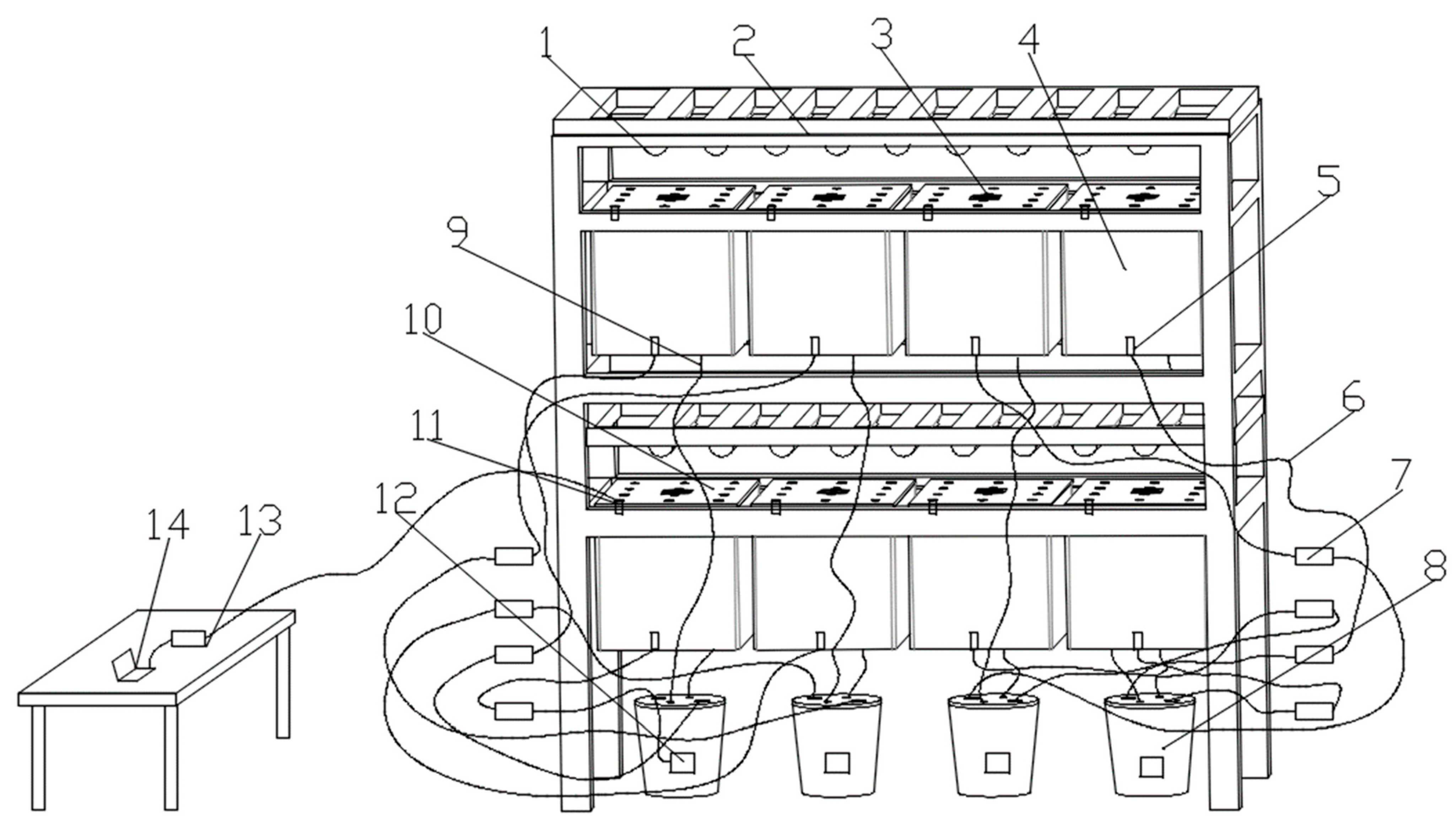
The structural schematic of the aeroponic apparatus is shown in Figure 1. The device consists of five layers: the bottom layer serves as the nutrient storage tank, while the remaining four layers are aeroponic cultivation box installation layers, arranged alternately with red and blue LED plant growth lights.
Once the aeroponic device is activated, it automatically sets the default temperature and humidity ranges. If the temperature or humidity inside the aeroponic box falls outside these ranges, the pump draws the corresponding nutrient solution from the storage tank and delivers it to the atomizing nozzle for atomization. Simultaneously, the nutrient solution from the storage tank is pumped through the magnetizing device at a specific flow velocity in the supply pipe. During this process, the nutrient solution stream cuts through the magnetic lines of force and becomes magnetized. Once the droplets adhering to the roots reach a sufficient volume, they detach under gravity, accumulate at the bottom of the aeroponic box, and flow back to the nutrient storage tank through the return pipe, thereby enabling nutrient solution recycling and repeated magnetization.

2.1.3. Atomizing Nozzle with Adjustable Droplet Size

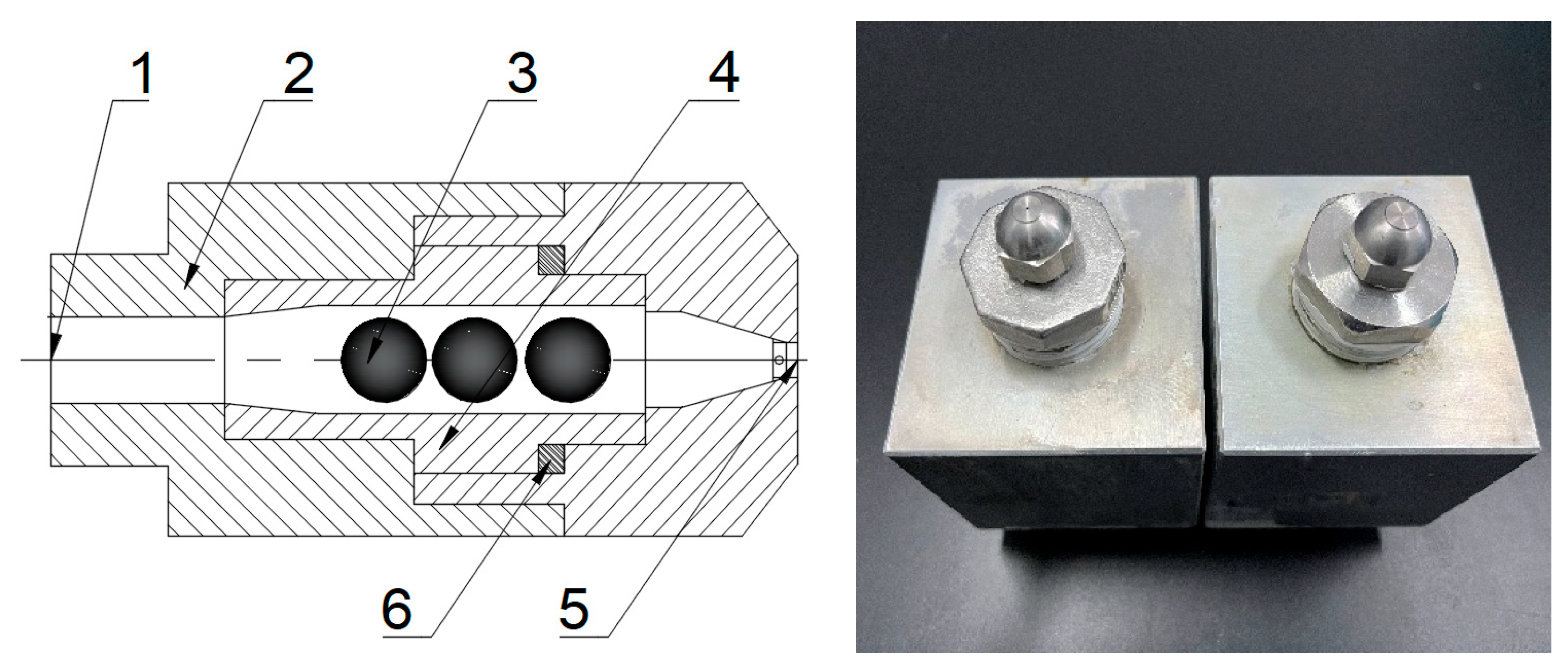
Based on relevant research on atomizing nozzles in aeroponic cultivation and the flow characteristics of incompressible fluids in variable-section flow channels, this study designed a single-phase-flow mechanical atomizing nozzle with a movable ball for adjustable droplet size, which is suitable for aeroponic cultivation. Under the same operating conditions, the droplet size can be adjusted by changing the nozzle orifice diameter. A schematic diagram of the nozzle structure is shown in Figure 2.
The working process is described as follows. First, when the nozzle is connected to a constant-flow reciprocating pump, the liquid enters the nozzle through the liquid inlet and passes through the converging passage formed by the movable ball and the flow channel wall, where the liquid velocity increases. The accelerated liquid is then ejected through the nozzle orifice to form droplets. Second, the liquid impacts the movable ball upon entering the flow channel. Because the movable ball is mounted in a non-fixed manner, it rotates under the impact of the liquid flow. In the circulating nutrient solution used for aeroponic cultivation, the rotating movable ball helps grind and break up agglomerated impurities, thereby reducing nozzle clogging to some extent. In addition, a high-pressure diaphragm pump was used to maintain a constant rated operating pressure of 0.5 MPa. This stable pressure environment ensured that variations in droplet size were determined solely by the specific orifice and internal structure of the selected nozzles, effectively eliminating the influence of pressure fluctuations on atomization characteristics.
Droplet size was effectively controlled by adjusting the number and radius of the movable balls, as well as the nozzle orifice diameter. Considering operational feasibility and response sensitivity, changing the nozzle orifice diameter was adopted as the primary method for regulating droplet size. Based on this approach, its effects on atomization performance and crop growth were investigated.
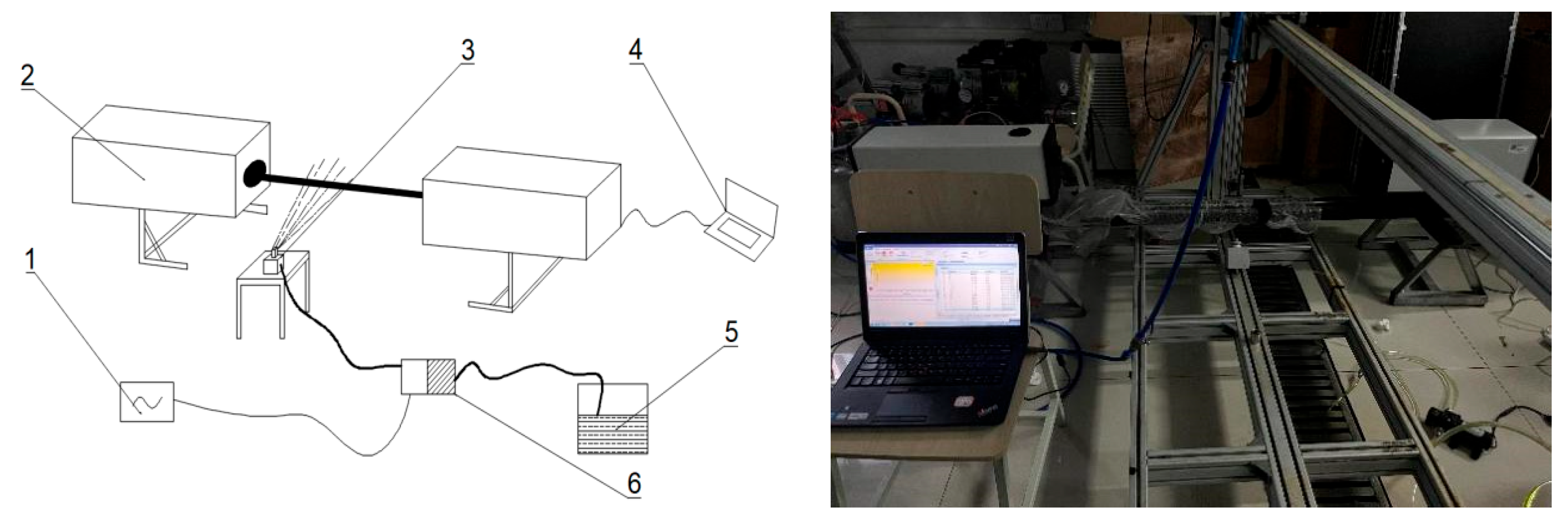
Droplet size was characterized using a DP-02 spray laser particle size analyzer (Zhuhai OMEC Instruments Co., Ltd., Zhuhai, China). After a 30 min preheating period to ensure system stability, the device was calibrated using the software’s automatic centering function to eliminate background light interference. The test nozzle was positioned 20 cm from the laser beam and precisely aligned within the same horizontal plane. While maintaining a constant plunger ball radius or supply voltage, each sample group was measured in triplicate, and the mean value was calculated to determine the representative droplet size. The measurement procedure is shown in Figure 3.

2.1.4. Design of an Aeroponics Spray Control System Based on Temperature and Humidity Control

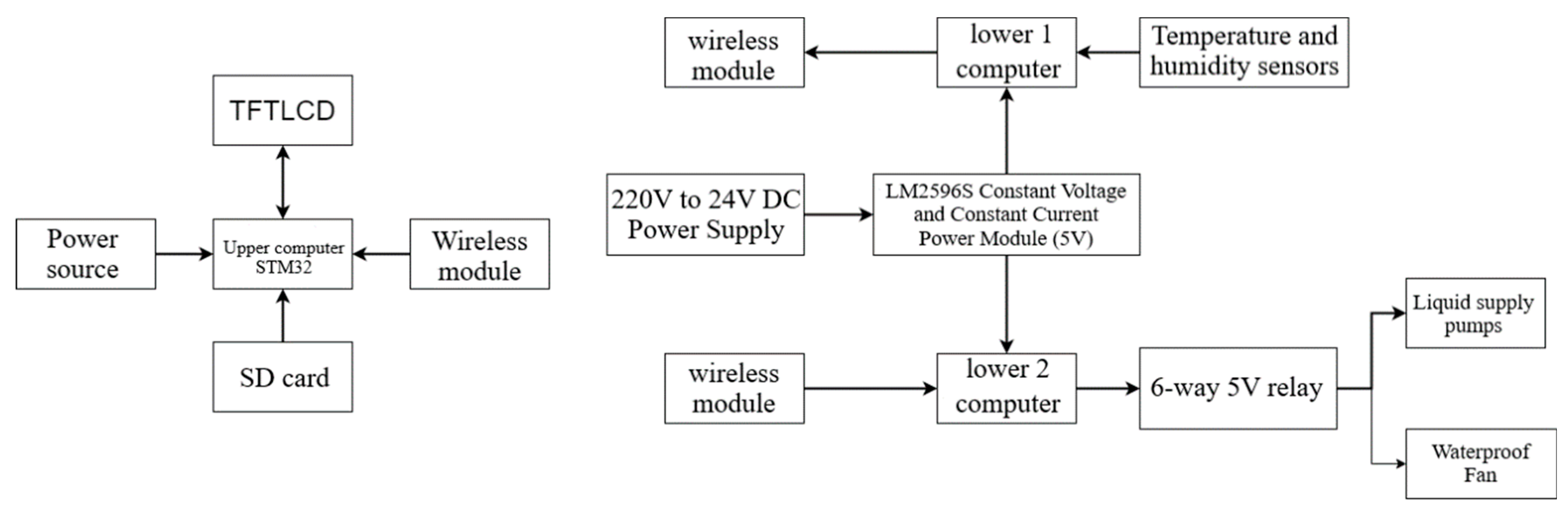
In this study, a temperature- and humidity-controlled aeroponic spray control system was designed using an STM32F103ZET6 ARM Cortex-M3 microcontroller (STMicroelectronics, Geneva, Switzerland) as the core controller. The system comprised one upper computer and two lower computers and was equipped with the UCOSIII real-time operating system and the EmWin graphical user interface. The lower computers were based on STC89C52 microcontrollers (STCmicro Technology Co., Ltd., Beijing, China). The first lower computer received temperature and humidity data from SHT20 temperature and humidity sensors (Sensirion AG, Stäfa, Switzerland) through a ZigBee serial transmission module, whereas the second lower computer controlled the actuators according to commands from the upper computer. The actuator module included a six-channel 5 V relay module using SRD-05VDC-SL-C relays (Ningbo Songle Relay Co., Ltd., Yuyao, China), a PLD-1205 liquid supply pump (Shijiazhuang Pulandi Mechanical and Electrical Equipment Co., Ltd., Shijiazhuang, China), a DC 12 V IP68 waterproof fan, and a power supply. Through the DL-20 wireless module (Shenzhen Hexin Technology Co., Ltd., Shenzhen, China), communication was established between the lower computer and the upper computer to achieve real-time adjustment of spray frequency control, including spray duration and interval.
The upper computer used the EmWin graphical user interface on an LCD screen to display, in real time, the temperature and humidity information collected by the lower computer. In addition, the system’s Chinese text libraries, temperature and humidity thresholds, spray time, and spray interval data were stored in the STM32 FLASH memory. The overall system architecture and interface are shown in Figure 4. The threshold for triggering spraying was set at a relative humidity (RH) of 70%, and spraying was stopped at 85% RH to maintain optimal root-zone moisture.

2.2. Experimental Materials and Design

2.2.1. Aeroponic Experiments with Variable Magnetic Intensities, Droplet Sizes, and Timed Mist Volumes

To investigate the effects of droplet size and the magnetic field intensity of the magnetization device on the growth, root characteristics, yield, and nutritional quality of aeroponically grown lettuce, Experimental Group A employed a two-factor factorial design under timer control. The experimental factors included nozzle outlet diameter and magnetic field intensity. The nozzle outlet diameters were 0.2 and 0.7 mm, corresponding to mean droplet sizes of 45.62 and 56.28 μm, respectively. The magnetic field intensities of the magnetization device were 0, 110, 260, and 420 mT. Therefore, Group A consisted of eight treatment combinations. The specific experimental groupings are detailed in Table 1.
The nozzle outlet diameters were selected with reference to previous aeroponic lettuce research and preliminary droplet-size measurements. Lakhiar et al. [1] reported that lettuce plants treated with the A2 atomizer, which generated an average droplet size of 46.386 μm, showed better growth performance than those treated with the other atomizers. Therefore, in Experimental Group A, nozzle outlet diameters of 0.2 and 0.7 mm were selected to generate two droplet-size levels of 45.62 and 56.28 μm, respectively. The 45.62 μm level was close to the previously reported favorable droplet size, while the 56.28 μm level was used to examine whether a slightly larger droplet size could further improve lettuce growth under the present aeroponic system.
The magnetic field intensity levels were selected based on previous evidence that magnetic field treatment and magnetized water can affect plant growth, physiological activity, and nutrient uptake [12,20,21,22,23,24,25,26,27,28,29], as well as the adjustable operating range of the NdFeB magnetization device used in this study. Because the present study focused on aeroponic lettuce, the magnetic field intensities of 0, 110, 260, and 420 mT were not directly copied from a single previous study. Instead, they were set as non-magnetized, low, medium, and high magnetic field levels within the adjustable range of the magnetization device to explore the response trend of aeroponic lettuce within the tested range.
The aeroponic apparatus used atomizing nozzles designed by our research group. Droplet size was adjusted by changing the nozzle outlet diameter under the same operating pressure. The nutrient solution was prepared according to the Hoagland formulation. The aeroponic system used 120 L blue high-density polyethylene (HDPE) boxes (Changzhou Treering Plastics Co., Ltd., Changzhou, China) as cultivation chambers and 10 L white polypropylene (PP) resin buckets (Changzhou Huapu Plastics Container Co., Ltd., Changzhou, China) as nutrient reservoirs. Polyvinyl chloride (PVC) pipes (Guangdong Lesso Technology Industrial Co., Ltd., Foshan, China) were used to transport the nutrient solution between the cultivation chambers and the reservoirs.
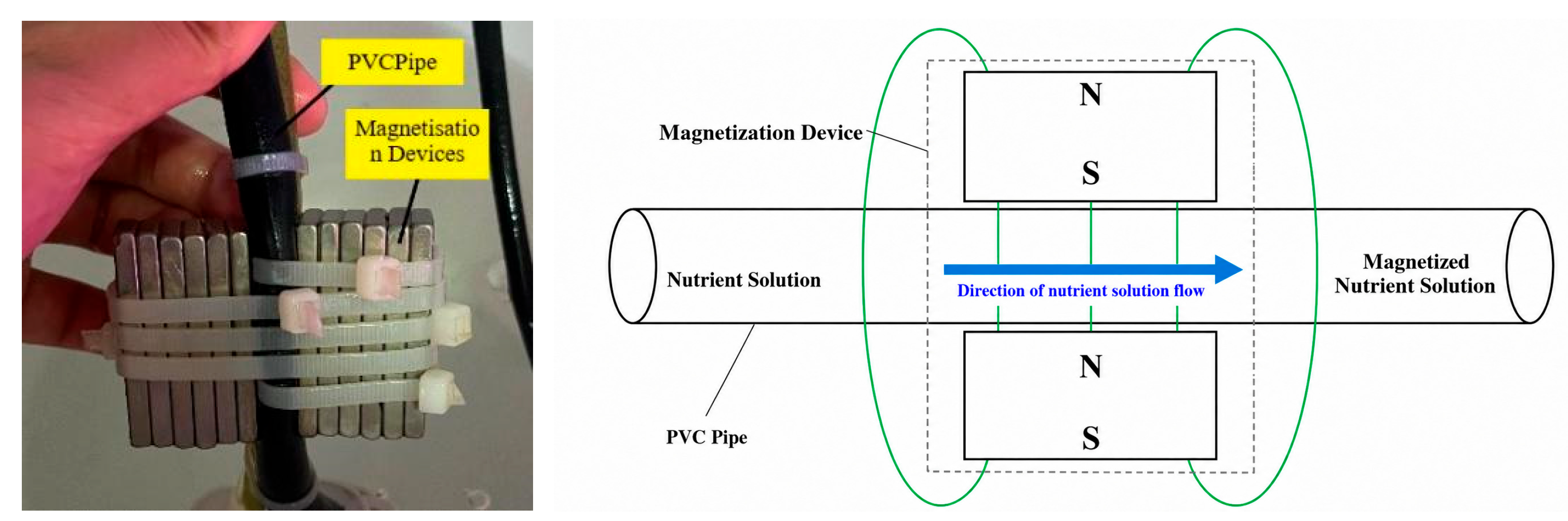
The magnetization device consisted of NdFeB permanent magnets and fixed components. Rectangular NdFeB permanent magnets (40 × 20 × 10 mm) were mounted in pairs on the exterior of the PVC delivery pipe and secured with plastic ties. The magnets were arranged symmetrically on both sides of the nutrient solution supply pipe so that the flowing nutrient solution passed through the magnetic field region before atomization. The static magnetic field intensities were adjusted by changing the magnet arrangement and verified using a Gaussmeter.
During system operation, the nutrient solution was pumped from the reservoir and passed through the magnetic field region before entering the atomizing nozzle. The supply pipe had an inner diameter of 10 mm, and the diaphragm pump had a maximum flow rate of 3.2 L min−1. Therefore, the estimated flow velocity of the nutrient solution in the supply pipe was approximately 0.68 m s−1, calculated as v = Q/A, where Q is the volumetric flow rate and A is the cross-sectional area of the pipe. If the effective magnetic exposure length is estimated as approximately 40 mm according to the magnet dimension and arrangement shown in Figure 5, the estimated single-pass residence time in the magnetic field region is approximately 0.06 s.
Because the magnetization device used static NdFeB permanent magnets and did not include an active heating component, the magnetization process was conducted under the same ambient laboratory temperature as the aeroponic cultivation system. Thus, the temperature of the magnetization section was considered close to the controlled laboratory temperature. After passing through the magnetic field region, the magnetized nutrient solution was delivered to the atomizing nozzle and sprayed into the root zone. Droplets adhering to the roots or chamber walls eventually returned to the reservoir through the return pipe, allowing the nutrient solution to circulate and undergo repeated magnetic treatment. The schematic and physical arrangement of the magnetization process are shown in Figure 5.
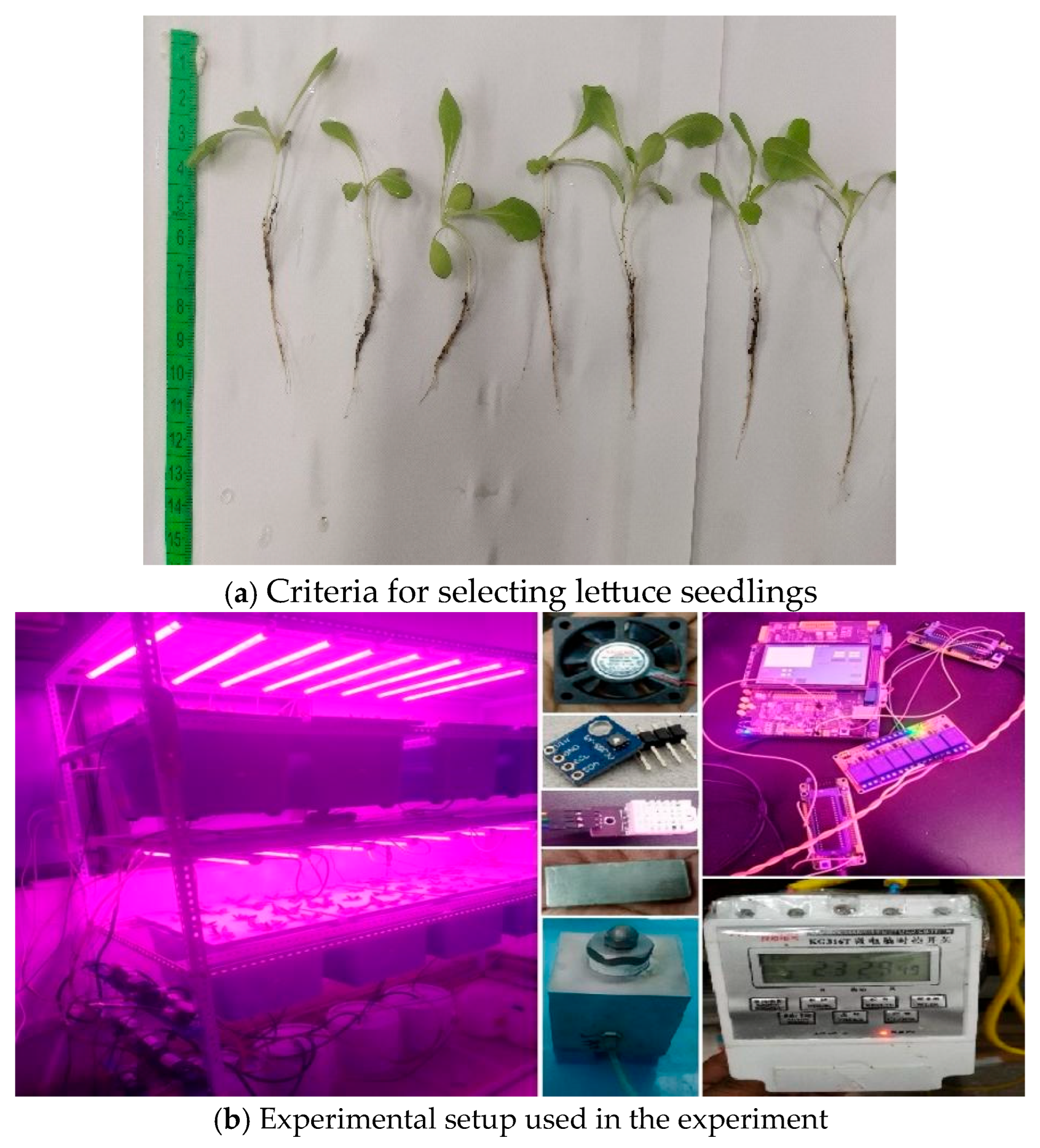
Cream lettuce seeds were germinated in substrate-filled seedling trays for 20 days. Seedlings with 4–5 true leaves and root lengths of approximately 5–7 cm were selected and transplanted into the aeroponic system according to a unified standard. The lettuce selection criteria and cultivation system are shown in Figure 6. The eight treatment combinations in Group A were assigned to independent aeroponic boxes. Each treatment included three independent aeroponic boxes as biological replicates, and three plants were randomly selected from each box for measurement. Therefore, each treatment included three independent replicates, with three subsampled plants per replicate, resulting in nine measured plants per treatment. The aeroponic box was defined as the experimental unit, while the individual plants measured within each box were treated as subsamples.
The timer-controlled spraying regime was set to spray for 5 min every 30 min [33]. The ambient temperature was maintained at 24 ± 1 °C, and LED lighting was provided for 20 h per day.

2.2.2. Aeroponic Experiments with Variable Magnetic Fields, Droplet Sizes, and Spray Control Methods

Experimental Group B was established after Group A to further evaluate whether the growth trends observed under timer control remained consistent under temperature–humidity-based intelligent control and to compare the effects of different spray control methods.
To investigate the effects of spray control methods on the growth parameters and nutritional quality of aeroponically grown lettuce, control and comparison groups (K1 and K2) were established. In addition, aeroponic experiments were conducted to determine the optimal magnetic field intensity and droplet size parameters suitable for aeroponic cultivation. The experiments included both timer control and temperature–humidity-based intelligent control. Based on the droplet-size response observed in Experimental Group A and the favorable droplet size reported in previous aeroponic lettuce research [1], the nozzle outlet diameters in Experimental Group B were further adjusted to 0.6, 0.8, and 1.0 mm, corresponding to droplet sizes of 54.84, 57.55, and 59.75 μm, respectively. These levels were used to evaluate the combined effects of droplet size, magnetic field intensity, and spray control method within a relatively narrow droplet-size range around the favorable level identified in Group A. Therefore, the factors considered in Experimental Group B were nozzle outlet diameter, magnetic field intensity, and spray control method. The magnetic field intensities of the magnetization device were set at 152, 304, and 456 mT, and the spray control methods included timer control and temperature–humidity-based intelligent control.
An incomplete block design was adopted to explore the combined effects of magnetic field intensity, droplet size, and spray control method on lettuce growth, with three replicates for each treatment. To effectively cover the parameter space within a limited number of experimental treatments, the experimental groups were divided into three logical levels (Table 2).
First, groups T1–T6 were designed to investigate the coupling effects of magnetic field intensity (152, 304, and 456 mT) and droplet size (54.84, 57.55, and 59.75 μm) under the intelligent control strategy. These groups represented low, medium, and high gradients of physical field characteristics. Second, the CR group was established as a central control point (304 mT, 57.55 μm), with intermediate physical parameters but using timer control. By comparing the CR group with the intelligent control groups at similar parameter levels, such as T3 and T5, the specific effect of the control method on growth indicators could be isolated. Finally, groups K1 and K2 served as validation groups (260 mT, 56.28 μm) for direct comparative verification between timer control and intelligent control under specific optimized parameters.
The pH and EC of the nutrient solution were maintained within specified ranges, and fresh nutrient solution was applied on the fourth day of the experiment. The detailed experimental arrangement for each treatment is presented in Table 2.
The ambient temperature and red and blue LED lighting parameters were the same as those used in Experimental Group A. The seedling method and selection criteria were consistent with those used in the first stage of the experiment. After 20 days of seedling cultivation in seedling trays, lettuce seedlings were transplanted into the timer-control boxes and temperature–humidity-control boxes, respectively. The timer-control treatments were sprayed for 5 min every 30 min, whereas the temperature–humidity-based intelligent control treatments were automatically regulated according to the real-time temperature and relative humidity in the aeroponic root-zone chamber. The temperature and relative humidity were set to 20–22 °C and 90–100%, respectively. The temperature and humidity sensors were surrounded by planting cotton and a perforated film to prevent water droplets from adhering to the sensor surfaces.
Each treatment included three independent aeroponic boxes as biological replicates, and three plants were randomly selected from each box for measurement. Therefore, each treatment included three independent replicates, with three subsampled plants per replicate, resulting in nine measured plants per treatment. The aeroponic box was defined as the experimental unit, while the individual plants measured within each box were treated as subsamples.

2.3. Measurement Indicators and Methods

The indicators measured in this aeroponic lettuce experiment included leaf canopy area, shoot length, root length, root-to-shoot ratio, and biomass. For each indicator, three lettuce plants were randomly selected from each aeroponic box for measurement.
For each aeroponic box, the mean value of the three measured plants was calculated and used as one replicate value for subsequent statistical analysis. Therefore, the aeroponic box, rather than the individual plant, was defined as the experimental unit, while the three measured plants within each box were treated as subsamples.

2.3.1. Parameters for the Area of the Lettuce Leaf Canopy

Three lettuce plants were randomly selected from each aeroponic box and photographed. During photography, the lettuce plants were positioned perpendicular to the desktop, and images were captured directly from above. The leaf canopy area in the images was calculated using the maximum between-class variance method, also known as the Otsu method, after grayscale processing to remove the white background and other interfering factors.
The formula for calculating leaf crown area is as follows:
L e t t u c e   l e a f   c r o w n   a r e a = N u m b e r   o f   p i x e l   p o i n t s   o f   l e t t u c e   l e a f   c r o w n   a r e a N u m b e r   o f   r e f e r e n c e   p i x e l   p o i n t s · S i z e   o f   r e f e r e n c e   a r e a

2.3.2. Characterisation Parameters for Shoot and Root Growth

Growth parameters, specifically root length and shoot length, were measured periodically. A 7-day interval was adopted for Group A, while a shorter 5-day interval was used for Group B to capture high-frequency dynamic responses. Three lettuce plants in each aeroponic box were randomly selected for measurement, and the lettuce root system was naturally placed in a vertical position during measurement.

2.3.3. Biomass and Root-to-Shoot Ratio

Harvesting was conducted after one month of aeroponic cultivation. The fresh and dry weights of the aboveground parts, including stems and leaves, and belowground parts, including roots, were measured using the same number of randomly selected plants from each box. For fresh weight measurement, the lettuce plants were harvested and cut along the upper plane flush with the planting cotton in the planting basket. Water droplets were then removed using absorbent paper, and the weights of stems, leaves, and roots were measured separately using an electronic balance. For dry weight measurement, the measured aboveground and belowground fresh samples were placed separately in envelopes and dried in an oven at 80 °C for 48 h. After complete drying, the dried stems, leaves, and roots were removed from the envelopes and weighed. The root-to-shoot ratio was calculated as follows [32]:
R D W S D W

2.4. Statistical Analysis

Experimental data were first organized using Microsoft Excel. Statistical analyses were performed using SPSS Statistics 26.0, and figures were prepared using Origin 2023. Before statistical analysis, the mean value of the three measured plants within each aeroponic box was calculated and used as one replicate value. Therefore, the aeroponic box was used as the experimental unit.
For Experimental Group A, two-way analysis of variance (ANOVA) was used to evaluate the effects of magnetic field intensity, droplet size, and their interaction on lettuce growth indicators. The statistical model was as follows:
Y i j k = μ + M i + D j + M D i j + ε i j k
where Yijk is the observed value, μ is the overall mean, Mi is the fixed effect of magnetic field intensity, Dj is the fixed effect of droplet size, MDij is the interaction effect between magnetic field intensity and droplet size, and εijk is the residual error.
For Experimental Group B, one-way ANOVA based on treatment combinations was used to compare differences among treatments involving magnetic field intensity, droplet size, and spray control method. The statistical model was as follows:
Y i j = μ + T i + ε i j
where Yij is the observed value, μ is the overall mean, Ti is the fixed effect of treatment combination, and εij is the residual error.
When significant differences were detected, Duncan’s multiple range test was used for multiple comparisons among treatments. Differences were considered significant at p < 0.05 and highly significant at p < 0.01. Data were presented as mean ± standard deviation.

3. Results

3.1. Effects of Magnetic Field, Spray Pattern, and Droplet Size on Lettuce Leaf Canopy Area

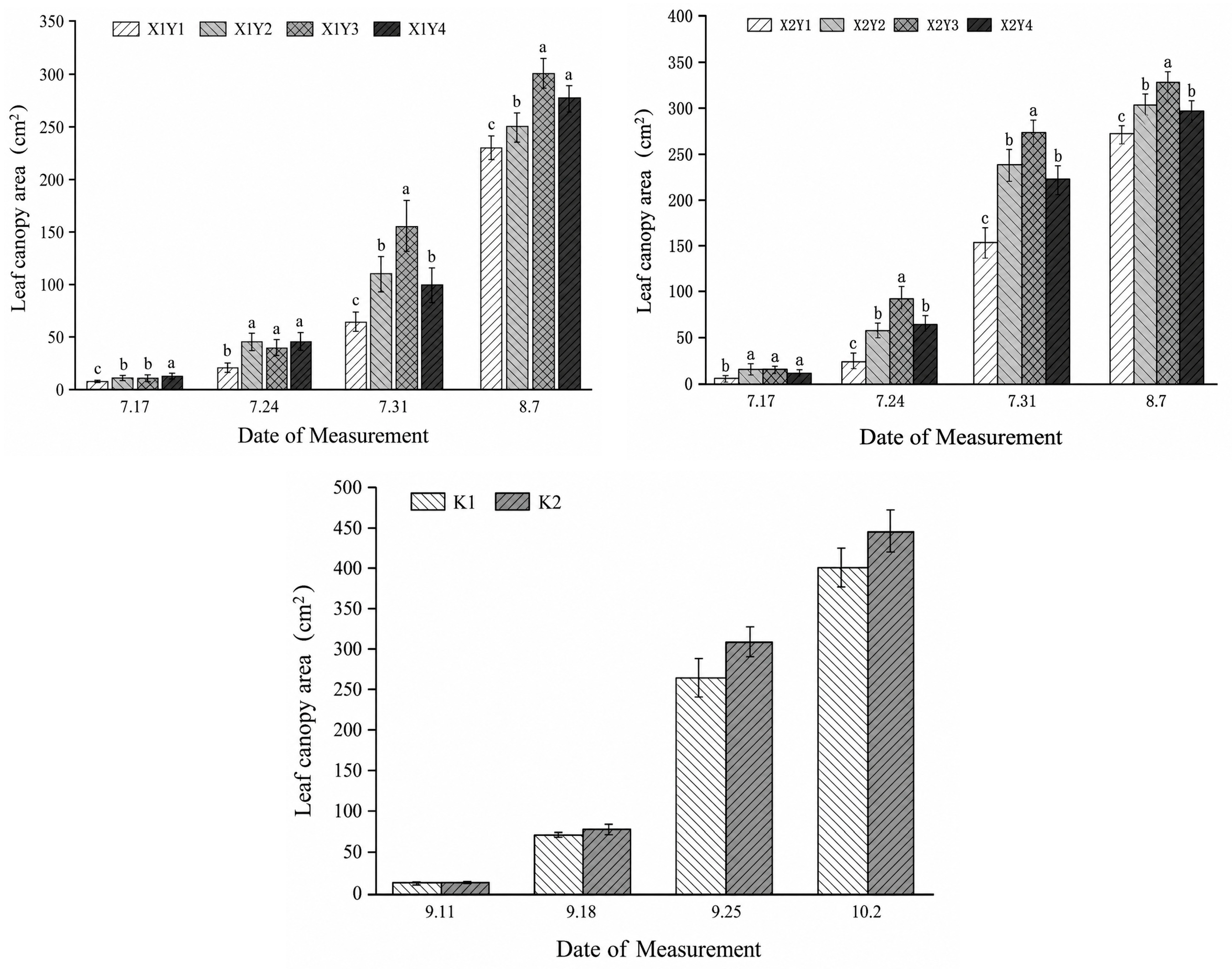
Figure 7 shows the average leaf canopy area measured at each stage of the timer-controlled aeroponic cycle in Experimental Group A, as well as the comparison between the K1 and K2 groups in Experimental Group B. The leaf canopy area of lettuce treated with magnetized nutrient solution was significantly higher than that of lettuce treated with non-magnetized nutrient solution (p < 0.01). At the same nozzle level, leaf canopy area initially increased and then decreased with increasing magnetic field intensity. The maximum leaf canopy area was observed under the Y3 treatment (260 mT), reaching 301.3 cm2 and 332.7 cm2 at the X1 and X2 levels, respectively. ANOVA showed that droplet size had a significant effect on leaf canopy area (p < 0.05). Under the same magnetic field intensity, the X2 level generally produced a larger leaf canopy area than the X1 level. Under the same droplet size and magnetic field intensity, intelligent control increased leaf canopy area by 11.32% compared with timer control.
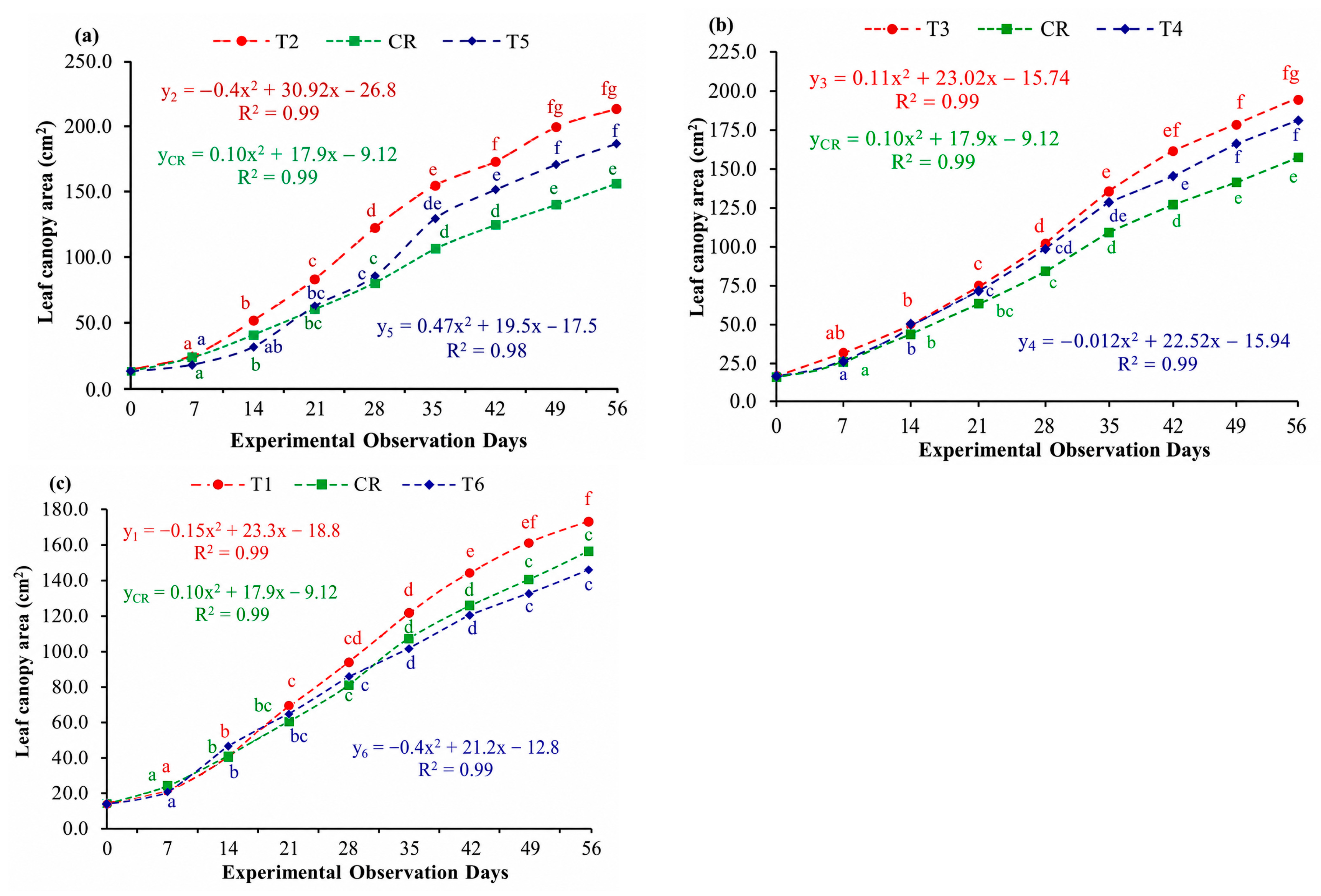
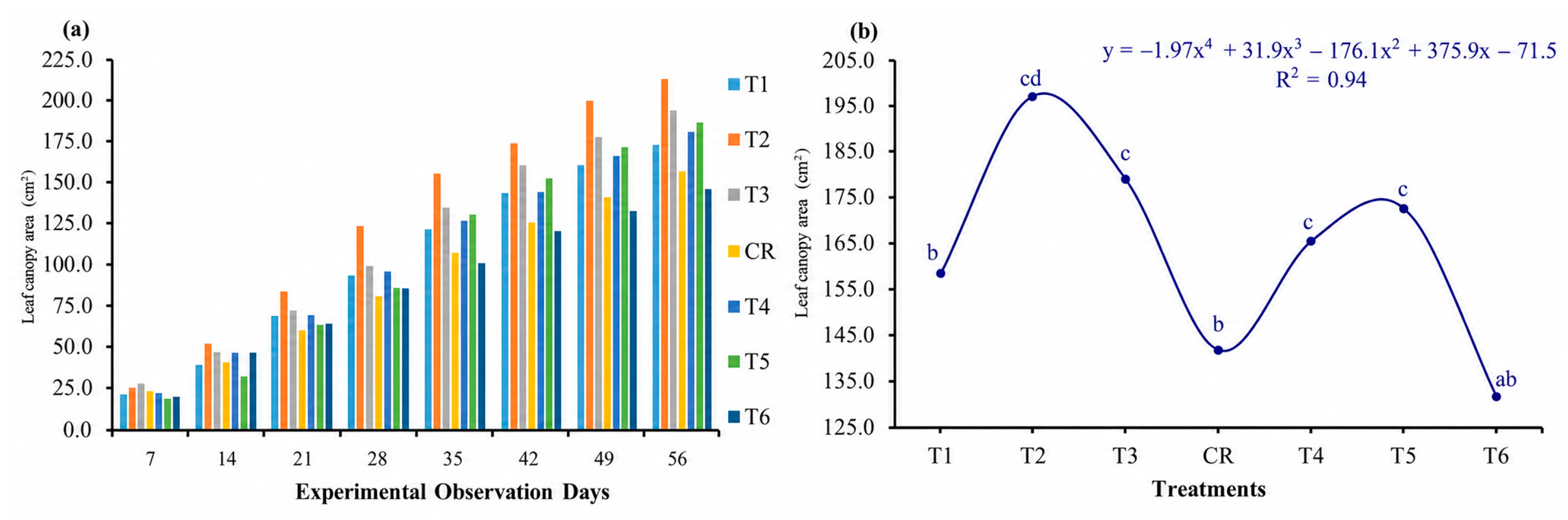
The leaf canopy area and comparison plots of T1–T6 and CR in Experimental Group B are shown in Figure 8 and Figure 9. Magnetic field intensity had a highly significant effect on leaf canopy area (p < 0.01), while droplet size and the combined treatment factors had significant effects (p < 0.05). As shown in Figure 8a, T2 was 26.6% and 12.3% higher than CR and T5, respectively. In Figure 8b, T3 was 19.2% and 6.6% higher than CR and T4, respectively. In Figure 8c, T1 was 9.1% and 5.2% higher than CR and T6, respectively. Under intelligent control, lower or moderate magnetic field intensity combined with smaller or medium droplet size resulted in a larger leaf canopy area than the treatment with high magnetic field intensity and large droplet size.
Figure 9 shows the comparative results of leaf canopy area for all treatments from T1 to T6 and CR throughout the experimental observation period in Group B. The T2 treatment had the largest leaf canopy area, reaching 212.6 cm2, whereas the T6 treatment had the smallest value, at 145.8 cm2. The leaf canopy area of T2 was 31.4% higher than that of T6 and 26.6% higher than that of CR. Under intelligent control, the treatment with a magnetic field intensity of 304 mT and a nozzle outlet diameter of 0.6 mm produced the largest leaf canopy area. The timer-control treatment CR produced a larger leaf canopy area than the intelligent-control treatment with a magnetic field intensity of 456 mT and a nozzle outlet diameter of 1.0 mm.
Overall, the results of Groups A and B showed a consistent trend: moderate magnetic field intensity produced a larger leaf canopy area than either no magnetic treatment or high magnetic field intensity. The favorable magnetic field intensities were 260 mT in Group A and 304 mT in Group B. Droplet size had a significant but smaller effect than magnetic field intensity, and intelligent control increased leaf canopy area under comparable magnetic field intensity and droplet size conditions.

3.2. Effects of Magnetic Field, Spray Pattern, and Droplet Size on Lettuce Shoot and Root Characteristics

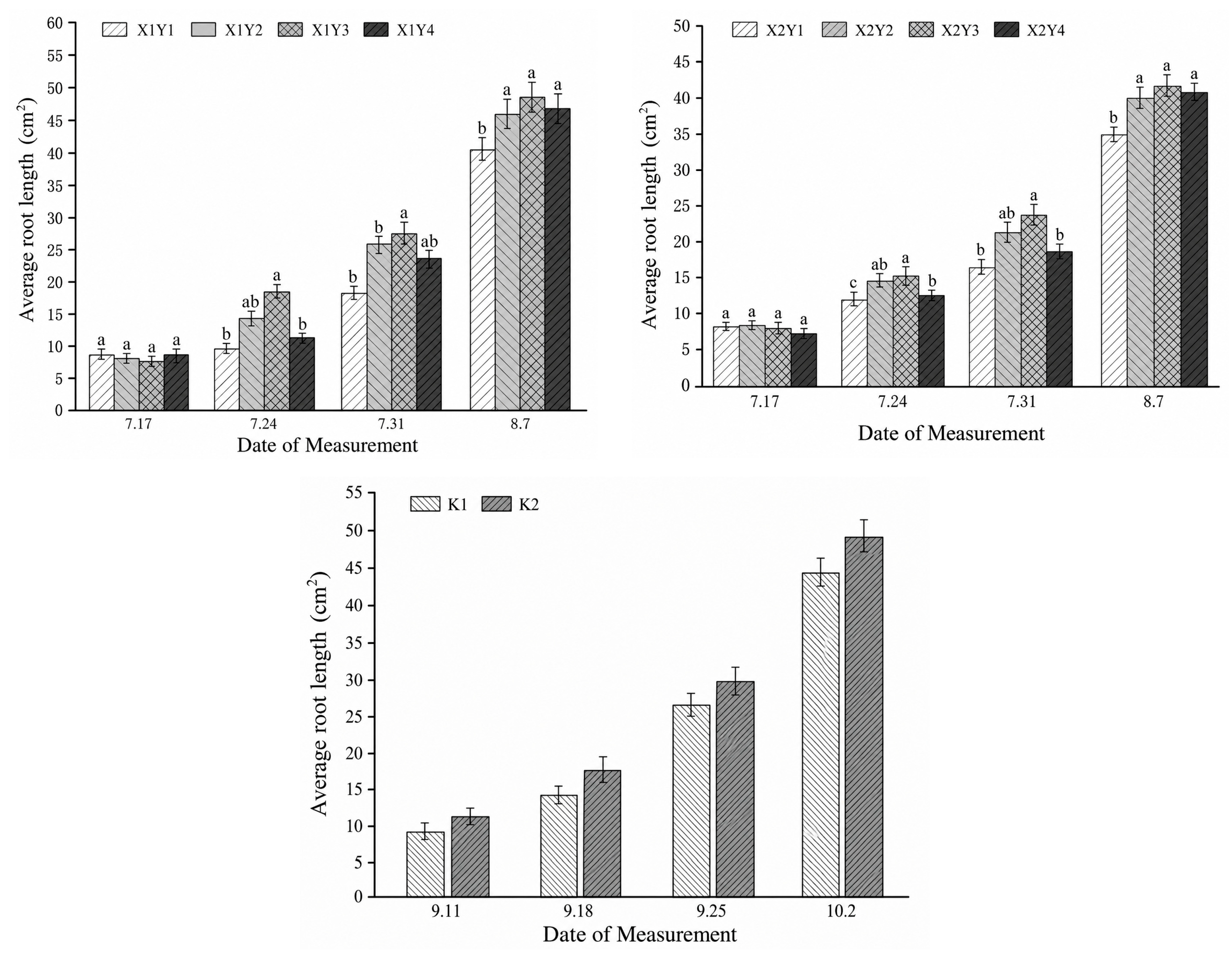
Figure 10 shows the average lettuce root length measured at each stage of the aeroponic cycle in Experimental Group A, as well as the comparison between the K1 and K2 groups in Experimental Group B. At the same droplet size, the average root length of lettuce treated with magnetized nutrient solution was slightly greater than that of lettuce treated with non-magnetized nutrient solution. At the same magnetic field intensity, the average root length at the X2 level was slightly lower than that at the X1 level. However, the differences among droplet-size treatments were not significant (p > 0.05). Under the same droplet size and nutrient solution magnetic field intensity, temperature–humidity-based intelligent control increased average root length by 11.36% compared with timer control.
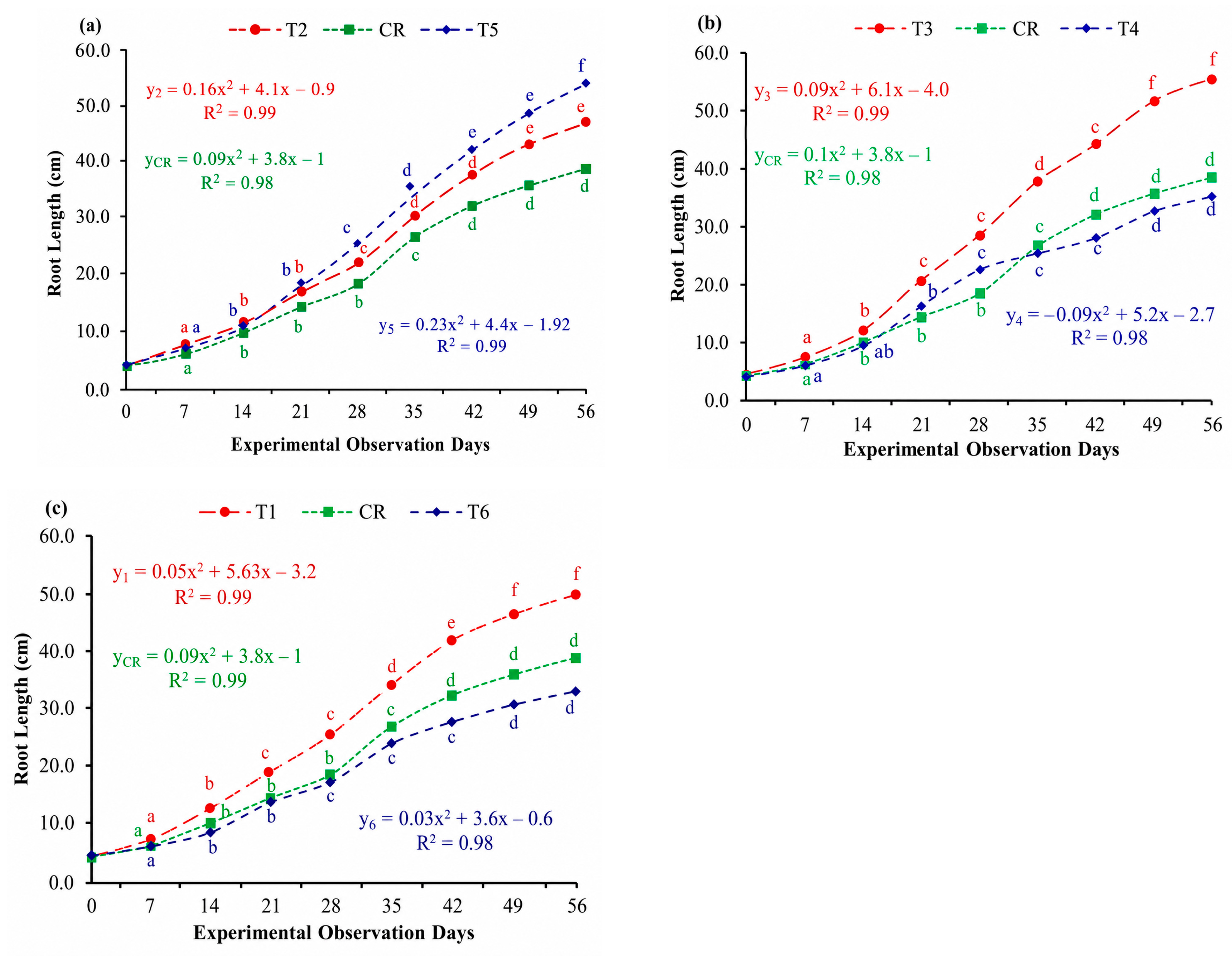
Figure 11, Figure 12, Figure 13 and Figure 14 show the results of treatments T1–T6 and CR in Experimental Group B. Figure 11 presents the comparative results of root length for all treatments at different days after transplanting. Magnetic field intensity had a significant effect on root length (p < 0.05), whereas droplet size did not have a significant effect (p > 0.05). The combined treatment factors also significantly affected lettuce root length. As shown in Figure 11a, the greatest root length was recorded in T5, whereas the smallest root length was observed in CR. As shown in Figure 11b, T3 exhibited the longest root length, whereas T4 showed the shortest root length. Figure 11c illustrates the combined effects of the variables on root length, with T1 showing slightly greater root length values than CR and T6.
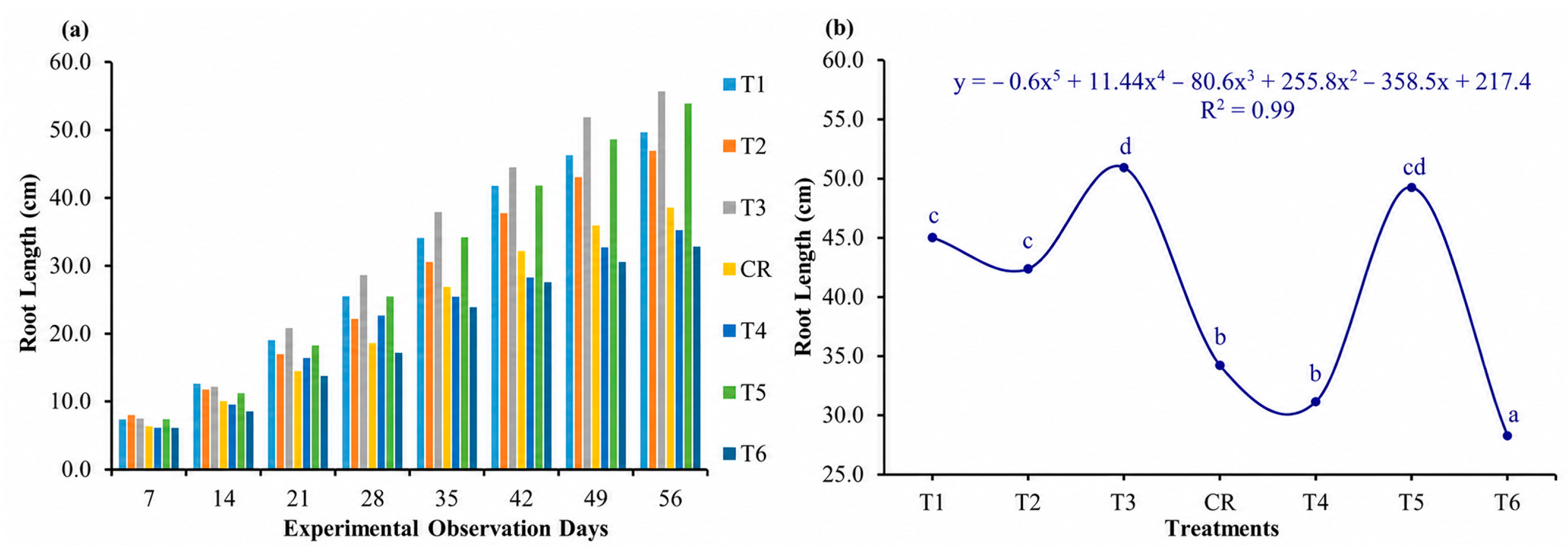
Figure 12 presents the comparison of root length among treatments T1–T6 and CR in Group B. The longest and shortest root lengths were observed in T3 and T6, measuring 55.5 cm and 32.8 cm, respectively. Under intelligent control, the treatment with lower magnetic field intensity and medium droplet size produced the greatest root length.
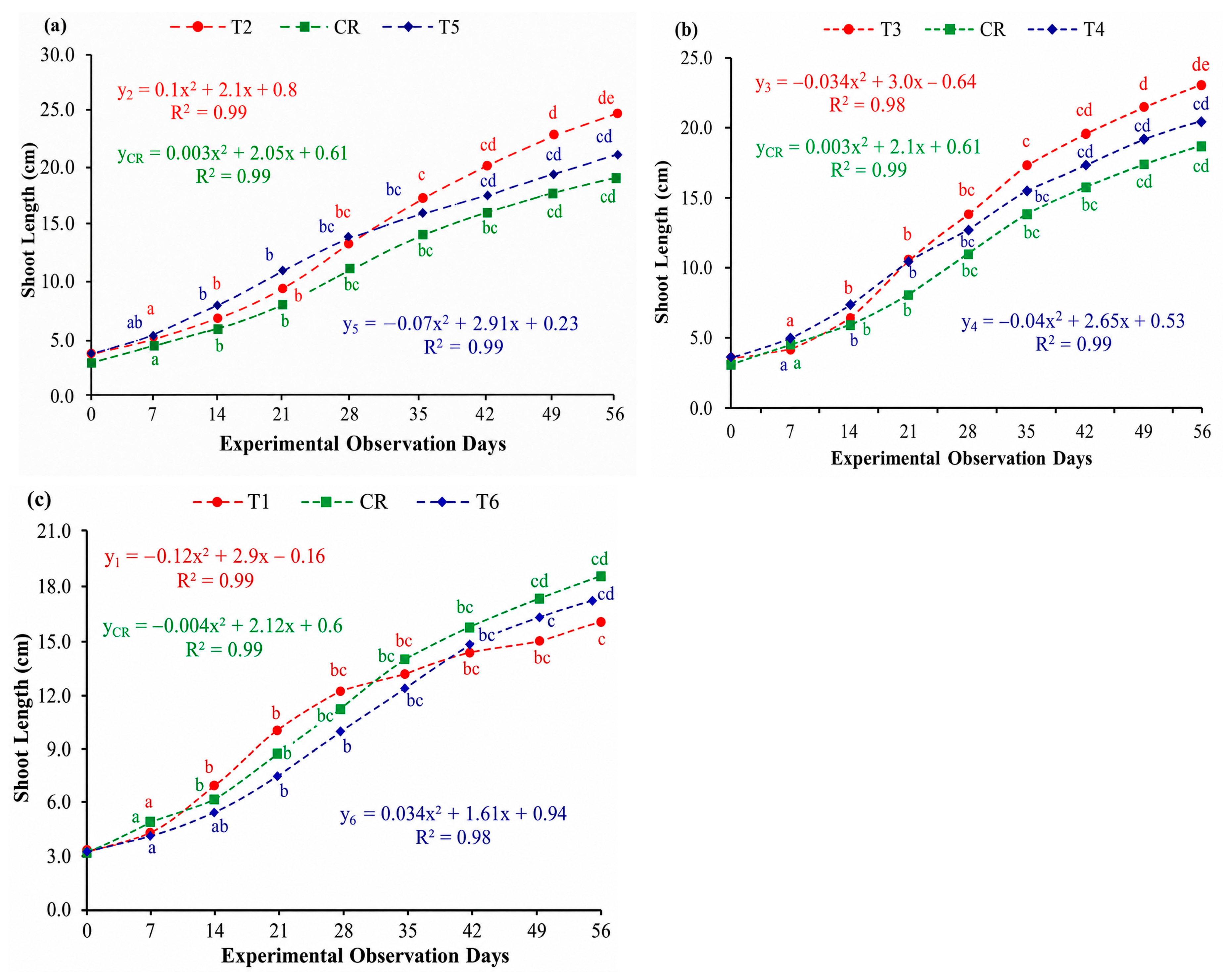
Figure 13 illustrates the effects of treatments T1–T6 and CR on shoot length in Group B. Magnetic field intensity had a significant effect on shoot length (p < 0.05), whereas droplet size and the combined treatment factors did not significantly affect shoot length (p > 0.05). As shown in Figure 13a, no significant differences in shoot length were observed during the first 20 days after transplanting (p > 0.05), while differences among treatments became apparent later in the experiment. At the end of the experiment, T2 produced the greatest shoot length, whereas CR produced the shortest shoot length. In Figure 13b, T3 showed a greater shoot length than CR and T4. In Figure 13c, CR showed slightly greater shoot length values than T1 and T6, although the differences were small.
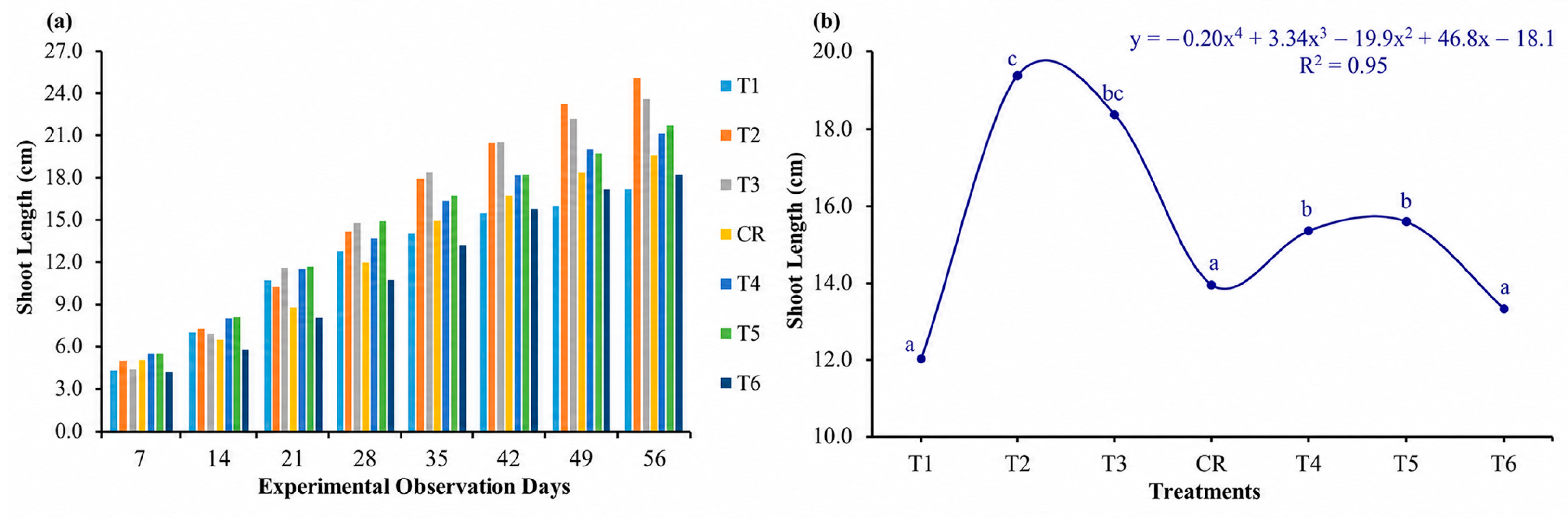
Figure 14 illustrates the comparative results of shoot length for all treatments over the experimental period. Under intelligent control, treatments with low or moderate magnetic field intensity combined with small or medium droplet size produced greater shoot length values. The timer-control treatment CR also produced relatively greater shoot length than some intelligent-control treatments.
Overall, Groups A and B showed that magnetic field intensity had a significant effect on both root length and shoot length (p < 0.05), whereas droplet size alone had no significant effect on these two indicators (p > 0.05). The results from Group B were generally consistent with those from Group A, indicating that moderate or lower magnetic field intensity produced greater root and shoot growth values than excessive magnetic field intensity.

3.3. Effects of Magnetic Field, Spray Pattern, and Droplet Size on Lettuce Biomass and Root-to-Shoot Ratio

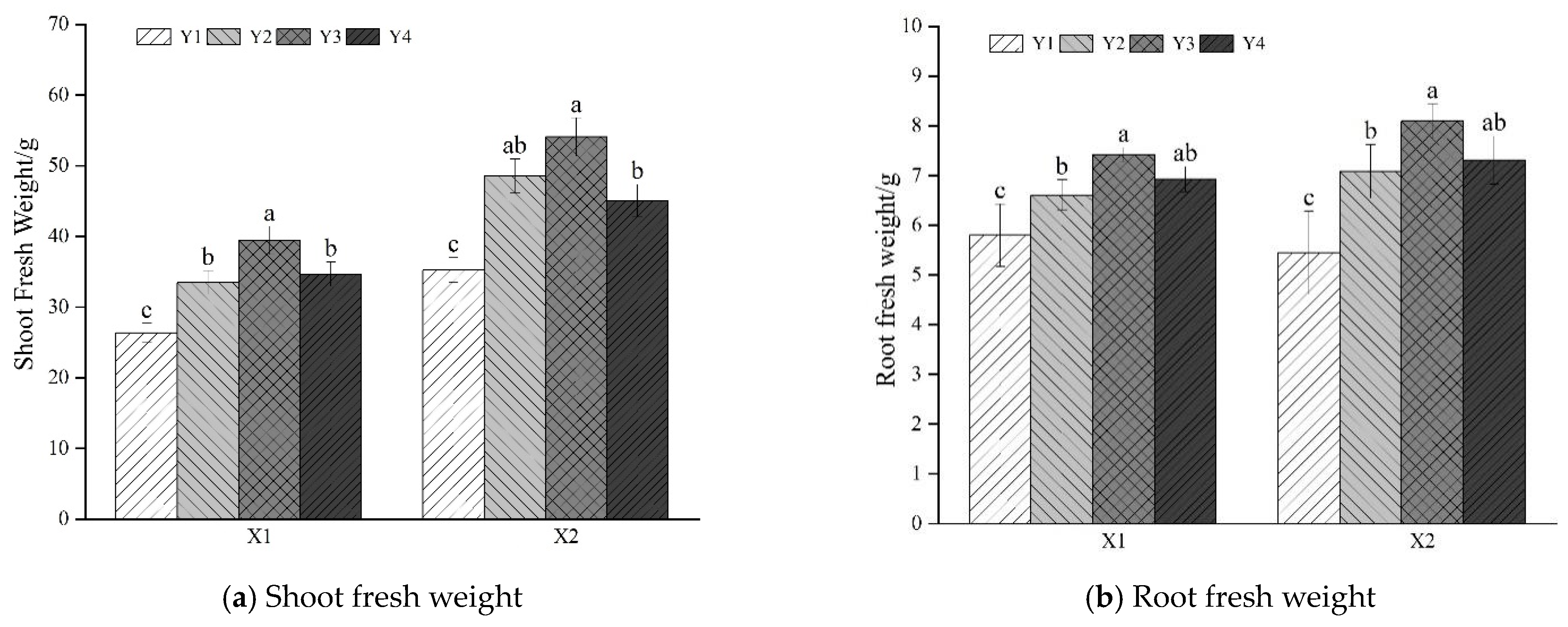
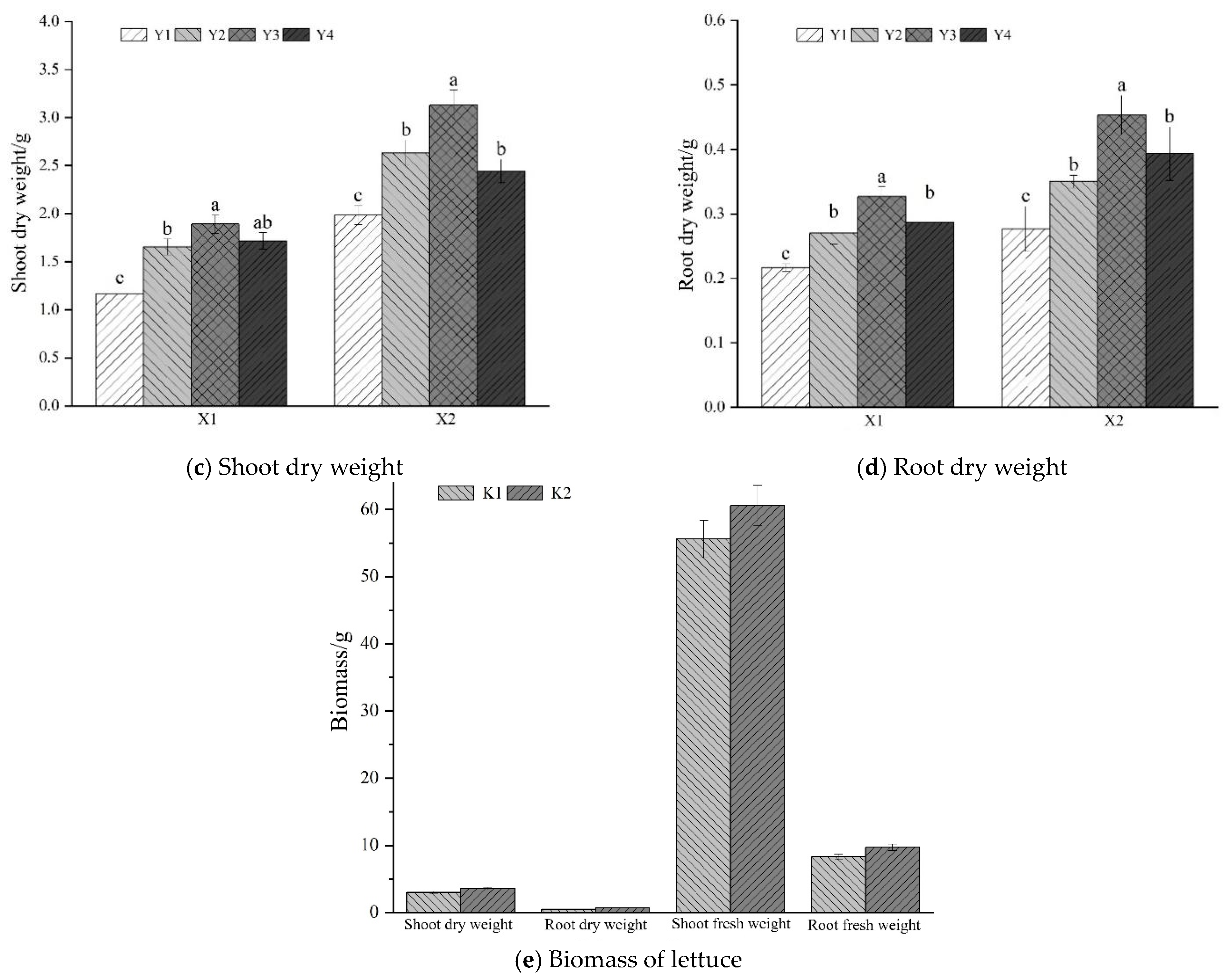
Figure 15 presents the fresh and dry weights of lettuce shoots and roots in Experimental Group A, as well as the comparison between K1 and K2 in Experimental Group B. At the same droplet-size level, the fresh and dry weights of shoots and roots in the magnetized nutrient solution treatments were significantly higher than those in the non-magnetized nutrient solution treatments (p < 0.05). The maximum shoot and root biomass values were observed under the Y3 treatment (260 mT). At the X1 level, the maximum shoot fresh weight, shoot dry weight, root fresh weight, and root dry weight were 39.42 g plant−1, 1.89 g plant−1, 7.42 g plant−1, and 0.33 g plant−1, respectively. At the X2 level, the corresponding maximum values were 54.06 g plant−1, 3.13 g plant−1, 8.09 g plant−1, and 0.45 g plant−1, respectively. At the same magnetic field intensity, the X2Y3 treatment produced higher shoot fresh weight and root fresh weight than the X1Y3 treatment. Under the same droplet size and magnetic field intensity, temperature–humidity-based intelligent control increased shoot fresh weight, shoot dry weight, root fresh weight, and root dry weight by 8.99%, 10.58%, 17.13%, and 23.46%, respectively, compared with timer control.
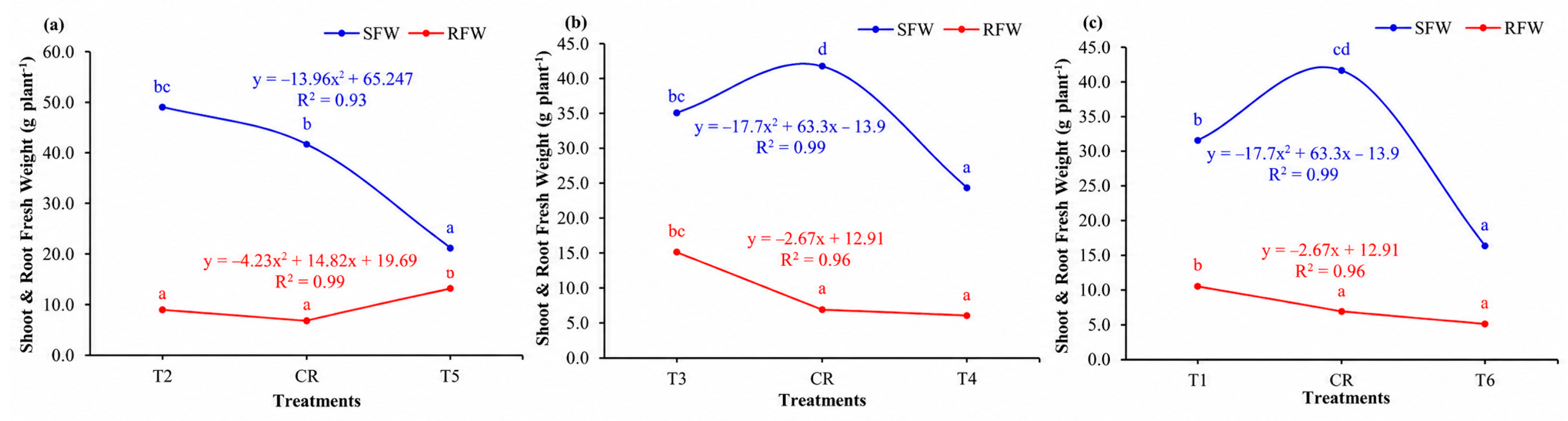
Figure 16 and Figure 17 show the biomass results of treatments T1–T6 and CR in Experimental Group B. Figure 16 presents shoot fresh weight and root fresh weight. Droplet size had a significant effect on both shoot fresh weight and root fresh weight (p < 0.05). The highest shoot fresh weight was observed in T2, reaching 49.1 g plant−1, whereas the lowest value was observed in T5, at 21.2 g plant−1. The highest root fresh weight was observed in T5, reaching 13.3 g plant−1, whereas the lowest value was observed in CR, at 9.1 g plant−1. Magnetic field intensity also had a significant effect on shoot fresh weight and root fresh weight (p < 0.05). The combined treatment factors had a significant effect on shoot fresh weight (p < 0.05), but not on root fresh weight (p > 0.05).
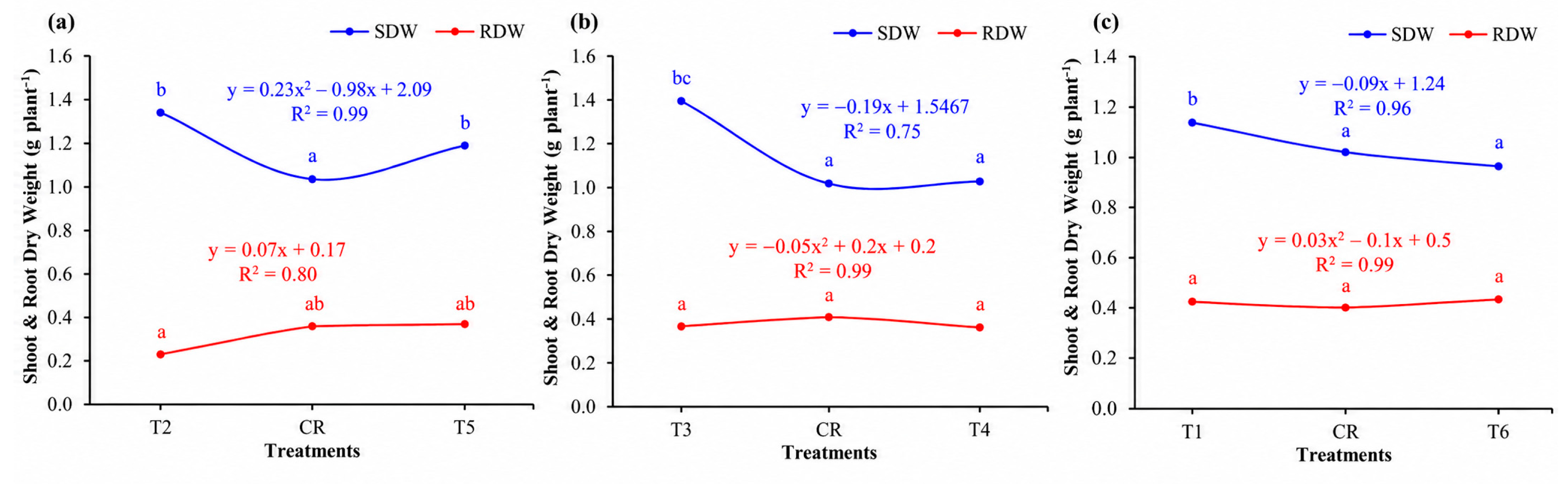
Figure 17 shows the shoot dry weight and root dry weight of treatments T1–T6 and CR in Experimental Group B. Droplet size had a significant effect on shoot dry weight (p < 0.05), but not on root dry weight (p > 0.05). The highest shoot dry weight was recorded in T2, reaching 1.34 g plant−1, whereas the lowest value was recorded in CR, at 1.04 g plant−1. Root dry weight was higher in CR and T5 and lower in T2. Magnetic field intensity had a significant effect on shoot dry weight (p < 0.05), but its effect on root dry weight was not significant (p > 0.05). The combined treatment factors did not significantly affect either shoot dry weight or root dry weight (p > 0.05).
The experimental results of Groups A and B showed that magnetic field intensity had a significant effect on shoot and root biomass (p < 0.05). Droplet size also had a significant effect on biomass (p < 0.05), particularly on shoot biomass.
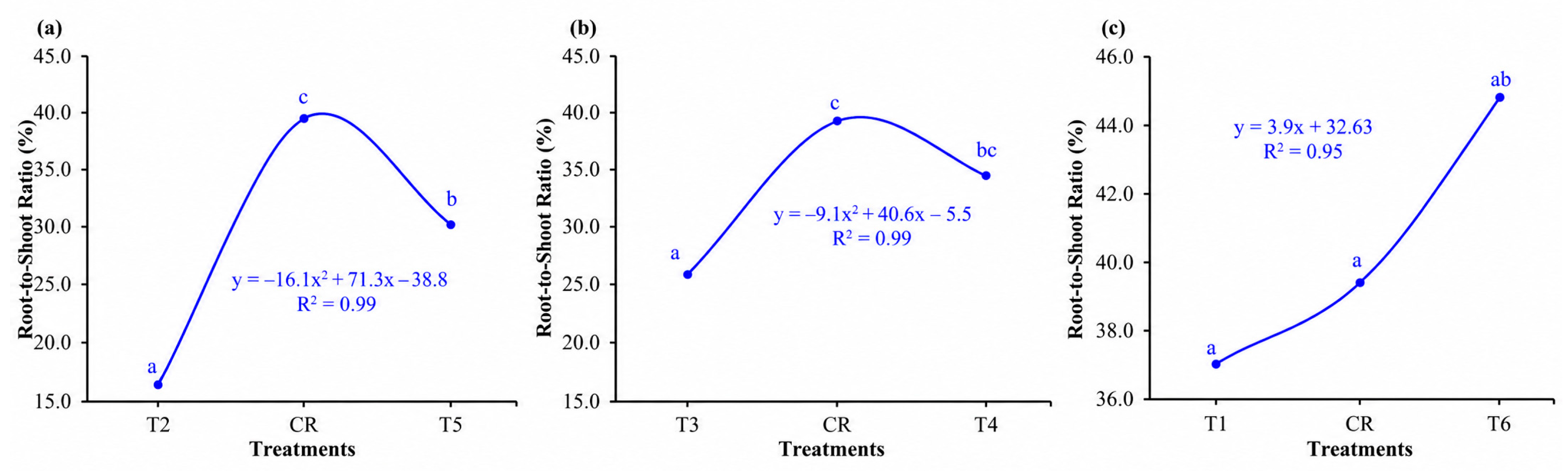
Figure 18 presents the root-to-shoot ratio of treatments T1–T6 and CR in Experimental Group B. The spray control method had a highly significant effect on the root-to-shoot ratio (p < 0.01), while magnetic field intensity and the combined treatment factors had significant effects (p < 0.05). As shown in Figure 18a, CR had the highest root-to-shoot ratio, reaching 39.42%, whereas T2 had the lowest value, at 16.42%. In Figure 18b, the root-to-shoot ratio ranged from 39.42% in CR to 26.06% in T3. In Figure 18c, T6 had the highest root-to-shoot ratio, reaching 44.9%, whereas T1 showed a lower value of 37.07%.
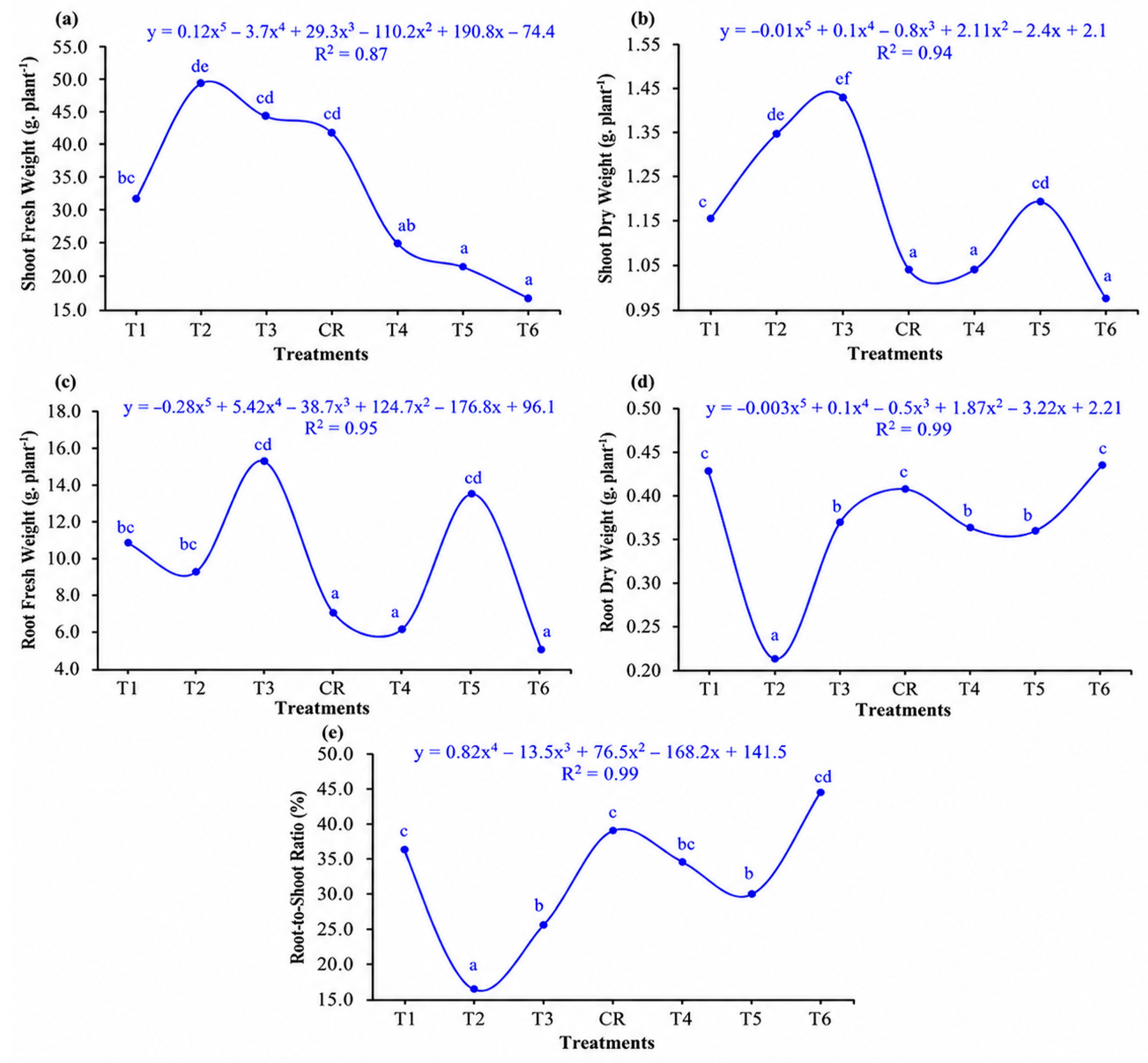
Figure 19 presents the comparison of biomass and root-to-shoot ratio among all treatments. The highest root-to-shoot ratio was observed in T6, reaching 44.9%, whereas the lowest value was observed in T2, at 16.4%. The T3 treatment had the second-lowest root-to-shoot ratio, at 26.1%. Both T2 and T3 were under temperature–humidity-based intelligent control. The root-to-shoot ratio followed the order T2 < T3 < T5 < T4 < T1 < CR < T6.
Overall, the biomass results of Group B were consistent with the trends observed in Group A. Moderate magnetic field intensity increased shoot and root biomass compared with non-magnetized or excessive magnetic field treatments. Compared with timer control, temperature–humidity-based intelligent control reduced the root-to-shoot ratio under comparable magnetic field intensity and droplet size conditions, indicating greater biomass allocation to the edible shoot parts.

4. Discussion

This study aimed to investigate the effects of magnetic field intensity, spray control method, and droplet size on the growth and developmental characteristics of aeroponic lettuce, including leaf canopy area, shoot and root length, biomass, and root-to-shoot ratio. Experimental Group A was used to evaluate the effects of magnetic field intensity and droplet size under timer control, whereas Experimental Group B further examined the combined effects of magnetic field intensity, droplet size, and spray control method. The results showed that magnetic field intensity significantly affected leaf canopy area, root and shoot growth, biomass, and root-to-shoot ratio. Droplet size mainly affected leaf canopy area and biomass, while spray control method had a strong effect on the root-to-shoot ratio.
Based on the literature, few studies have investigated the causal relationship between magnetic field treatment and plant growth [33,34]. In studies on the effects of magnetic fields on plant metabolism and growth, the observed responses depended on several factors, including the type of magnet used, magnetic field strength, polarity, direction, and duration of exposure. This may explain why the response of lettuce to magnetic treatment in the present study was not linear. In Group A, magnetized nutrient solution treatments produced greater lettuce shoot length, leaf canopy area, and biomass accumulation than the non-magnetized treatment. However, the highest growth values were generally observed at the moderate magnetic field intensity of 260 mT rather than at the highest magnetic field intensity. Similarly, in Group B, treatments with moderate magnetic field intensity generally produced better shoot growth and a lower root-to-shoot ratio than treatments with excessive magnetic field intensity. These results indicate that magnetic field intensity has an appropriate range for promoting lettuce growth in aeroponic systems.
Another related study reported that magnetic fields have been widely used to promote crop growth and increase crop yield [35]. The results of the present study are consistent with this general conclusion, as treatments Y2, Y3, and Y4 produced greater lettuce shoot length, leaf canopy area, and biomass accumulation than treatment Y1. However, this study further showed that the positive effects of magnetic treatment depended on intensity. The 260 mT treatment in Group A and the 304 mT treatment in Group B were more favorable than the higher-intensity treatments. This may be because moderate magnetic treatment alters the physicochemical properties of the nutrient solution within a favorable range, thereby improving nutrient uptake and biomass accumulation, whereas excessive magnetic intensity may not further enhance these processes.
Ma et al. [36] studied the feasibility of low-intensity alternating magnetic-field-assisted solid-state fermentation and reported that magnetic fields helped increase peptide production. Guo et al. [37] investigated the effects of low-intensity alternating magnetic fields on submerged fermentation of Grifola frondosa, and scale-up magnetic-field-assisted fermentation increased mycelial biomass by 12%. Although these studies were not conducted in plant cultivation systems, they show that magnetic fields can influence biological processes and biomass formation. In the present study, magnetized nutrient solution also increased lettuce biomass under aeroponic conditions. This result suggests that magnetic treatment may influence biological growth processes across different systems; however, in crop production, its effect is closely related to nutrient solution delivery, root-zone conditions, and plant physiological responses.
Iqbal et al. investigated the effects of magnetic field treatments on crop growth, chlorophyll content, and enzyme activities in melon [38]. In the present study, lettuce growth responses were mainly reflected in leaf canopy area, shoot and root length, biomass, and root-to-shoot ratio. The increase in canopy area and shoot biomass under moderate magnetic field intensity may be associated with improved physiological activity, such as enhanced photosynthetic capacity or enzyme activity, as reported in previous magnetic field studies. However, physiological indicators such as enzyme activity, chlorophyll fluorescence, and photosynthetic rate were not fully measured in this study. Therefore, the mechanism by which magnetic treatment promoted lettuce growth still requires further verification.
Mohamed et al. investigated the effects of magnetized water treated with different magnetic field strengths on strawberries grown in aeroponic and hydroponic systems and found that magnetized water increased strawberry yield, improved water use efficiency, and positively affected plant growth and quality [39]. The conclusions of the present study are similar, as magnetized nutrient solution improved several growth indicators of aeroponic lettuce. Compared with the study on strawberry, the present study focused on leafy vegetables and further incorporated droplet size and the spray control method into the same aeroponic framework. Therefore, this study extends the application of magnetized water from yield improvement alone to the optimization of growth allocation in aeroponic leafy vegetable production.
In addition to magnetic field intensity, this study investigated the effects of droplet size on aeroponic lettuce growth. Within the droplet size range of 45.62–59.75 μm, droplet size had a relatively small effect on root and shoot length, but it significantly affected canopy area and biomass. This result may be related to the distribution and deposition of nutrient droplets in the root zone. Smaller or medium droplets may improve the contact between the nutrient solution and roots, whereas larger droplets may reduce suspension time and root-zone coverage. However, the effect of droplet size was generally weaker than that of magnetic field intensity, indicating that droplet size should be optimized together with magnetic treatment rather than considered as an independent factor.
The effect of spray control method was mainly reflected in biomass allocation. Based on Group B and the K1/K2 comparison, lettuce grown under temperature–humidity-based intelligent control had more developed edible shoot parts and a lower root-to-shoot ratio than lettuce grown under timer control. In aeroponic systems, roots are suspended in air and are sensitive to fluctuations in root-zone moisture and temperature. Timer control supplies nutrient solution at fixed intervals, whereas intelligent control adjusts spraying according to the root-zone environment. Therefore, intelligent control may provide a more stable water and nutrient supply, helping to reduce excessive root growth and promote shoot biomass accumulation.
The combined results of Groups A and B showed that the favorable parameters were moderate magnetic field intensity, suitable droplet size, and temperature–humidity-based intelligent control. The preferred magnetic field intensities were 260 and 304 mT, the preferred droplet sizes were approximately 56.28–57.55 μm, and the preferred spray method was temperature–humidity-based intelligent control. These results indicate that magnetic field intensity, droplet size, and spray control method should be considered together when optimizing aeroponic lettuce production. This integrated parameter optimization is the main contribution of the present study. It should be noted that the optimal magnetic field intensity identified in this study represents the best-performing level within the tested experimental range, rather than a universal optimum. Although 260 mT in Group A and 304 mT in Group B were more favorable than the highest tested intensities of 420 mT and 456 mT, respectively, this does not exclude the possibility that other magnetic field intensities or exposure conditions may produce different responses. Future studies should therefore evaluate a wider magnetic field range, such as 500 mT or higher, together with nutrient solution flow velocity and magnetic exposure time.
This study still has some limitations. First, the experiment was conducted using one lettuce cultivar under controlled laboratory conditions, and the optimized parameters may vary with cultivar, growth stage, and production scale. Second, although the nutrient solution flow velocity through the magnetization section was estimated based on the pump and pipe parameters, the effects of nutrient solution flow velocity and single-pass magnetic exposure time were not independently evaluated as experimental factors. Third, this study mainly focused on growth indicators and biomass allocation; physiological indicators such as photosynthetic rate, nutrient uptake efficiency, enzyme activity, and changes in nutrient solution properties should be further examined in future studies.

5. Conclusions

This study investigated the effects of magnetic field intensity, droplet size, and spray control method on the growth characteristics of aeroponically grown lettuce, including leaf canopy area, shoot and root length, biomass, and root-to-shoot ratio. The results showed that magnetized nutrient solution significantly improved lettuce growth compared with the non-magnetized treatment. Magnetic field intensity had significant effects on canopy development, shoot and root growth, biomass accumulation, and root-to-shoot ratio, while droplet size mainly affected canopy area and biomass. The spray control method had a highly significant effect on the root-to-shoot ratio.
The results of Groups A and B showed that lettuce growth did not improve continuously with increasing magnetic field intensity. Moderate magnetic field intensity produced better growth performance than excessive magnetic field intensity. Under comparable magnetic field intensity and droplet size conditions, temperature–humidity-based intelligent control promoted shoot growth and reduced the root-to-shoot ratio compared with timer control, indicating more favorable biomass allocation toward the edible shoot parts.
The main contribution of this study is that it integrated nutrient solution magnetization, droplet size, and spray control method within the same aeroponic lettuce production system. This provides a more comprehensive basis for optimizing aeroponic system parameters than evaluating these factors separately. Based on the statistical optimization and regression analysis of both experimental phases, the combination of a magnetic field intensity of 260 mT, a droplet size of 57.55 μm, and temperature–humidity-based intelligent control was identified as the predicted optimal configuration for lettuce growth in this aeroponic system.
These findings provide a practical reference for the design of efficient aeroponic systems and protected leafy vegetable production. However, this study was conducted using one lettuce cultivar under controlled laboratory conditions, and the effects of nutrient solution flow velocity, magnetic exposure time, and physiological mechanisms were not independently evaluated. Future studies should validate the optimized parameters across different lettuce cultivars, growth stages, and larger-scale production systems and further examine the physiological and physicochemical mechanisms underlying the effects of magnetized nutrient solution in aeroponics.

Author Contributions

Conceptualization, L.Y. and J.G.; Methodology, L.Y.; Software, L.Y.; Validation, L.Y. and J.G.; Formal Analysis, L.Y.; Investigation, L.Y.; Resources, J.G.; Data Curation, L.Y.; Writing—Original Draft Preparation, L.Y.; Writing—Review and Editing, L.Y. and J.G.; Supervision, J.G.; Project Administration, J.G.; Funding Acquisition, J.G. All authors have read and agreed to the published version of the manuscript.

Funding

The authors acknowledged that this work was financially supported by the Priority Academic Program Development of Jiangsu Higher Education Institutions (No. PAPD2023-87).

Data Availability Statement

The original contributions presented in this study are included in the article. Further inquiries can be directed to the corresponding author.

Conflicts of Interest

The authors declare that there are no financial or personal conflicts of interest that could affect the research or results of this paper.

References

  1. Lakhiar, I.A.; Gao, J.; Xu, X.; Syed, T.N.; Chandio, F.A.; Jing, Z.; Buttar, N.A. Effects of various aeroponic atomizers (droplet sizes) on growth, polyphenol content, and antioxidant activity of leaf lettuce (Lactuca sativa L.). Trans. ASABE 2019, 62, 1475–1487. [Google Scholar] [CrossRef]
  2. Montoya, A.; Obando, F.A.; Morales, J.; Vargas, G. Automatic aeroponic irrigation system based on Arduino’s platform. IOP Conf. Ser. J. Phys. Conf. Ser. 2017, 850, 012003. [Google Scholar] [CrossRef]
  3. Shukla, S.; Wagh, S.; Vaishamapayan, V.; Gaopande, M.; Vishnoi, S. Magnetic field effect on plant growth in hydroponic farming. J. Basic Appl. Res. Int. 2016, 19, 259–262. [Google Scholar]
  4. Youssef, M.; Abou Kamer, M.E. Effectiveness of different nutrition sources and magnetic fields on lettuce grown under hydroponic system. Sci. J. Agric. Sci. 2019, 1, 62–71. [Google Scholar] [CrossRef]
  5. Tunio, M.H.; Gao, J.; Qureshi, W.A.; Sheikh, S.A.; Chen, J.; Chandio, F.A.; Lakhiar, I.A.; Solangi, K.A. Effects of droplet size and spray interval on root-to-shoot ratio, photosynthesis efficiency, and nutritional quality of aeroponically grown butterhead lettuce. Int. J. Agric. Biol. Eng. 2022, 15, 79–88. [Google Scholar] [CrossRef]
  6. Dai, S.; Zhang, J.; Jia, W.; Ou, M.; Zhou, H.; Dong, X.; Chen, H.; Wang, M.; Chen, Y.; Yang, S. Experimental Study on the Droplet Size and Charge-to-Mass Ratio of an Air-Assisted Electrostatic Nozzle. Agriculture 2022, 12, 889. [Google Scholar] [CrossRef]
  7. Li, Y.; Li, Q.; Hu, J.; Liu, C.; Zhao, S.; Zhang, W.; Wang, Y. An Experimental Study on the Charging Effects and Atomization Characteristics of a Two-Stage Induction-Type Electrostatic Spraying System for Aerial Plant Protection. Agronomy 2025, 15, 1641. [Google Scholar] [CrossRef]
  8. Zhang, R.; Ding, F.; Zhang, Y.; Zhou, C.; Zhang, W.; Shi, J.; Zou, X.; Xiao, J. Freezing characteristics and relative permittivity of rice flour gel in pulsed electric field assisted freezing. Food Chem. 2022, 373, 131449. [Google Scholar] [CrossRef] [PubMed]
  9. Arslan, M.; Zareef, M.; Afzal, M.; Tahir, H.E.; Li, Z.; Aalim, H.; Abaker, H.M.A.; Zou, X. Innovative Non-Thermal Processing Technologies for Shelf Life Extension and Retention of Bioactive Compounds in Liquid Foods: Current Status and Future Prospects. Foods 2025, 14, 2953. [Google Scholar] [CrossRef]
  10. Osae, R.; Essilfie, G.; Alolga, R.N.; Akaba, S.; Song, X.; Owusu-Ansah, P.; Zhou, C. Application of non-thermal pretreatment techniques on agricultural products prior to drying: A review. J. Sci. Food Agric. 2020, 100, 2585–2599. [Google Scholar] [CrossRef]
  11. Loraine, A.; Huchler, P. Non-chemical water treatment systems: Histories, principles and literature review. Pap. Technol. 2006, 47, 23–34. [Google Scholar]
  12. Martínez, E.; Flórez, M.; Maqueda, R.; Carbonell, M.V.; Amaya, J.M. Pea (Pisum sativum, L.) and lentil (Lens culinaris, Medik) growth stimulation due to exposure to 125 and 250 mT stationary fields. Pol. J. Environ. Stud. 2009, 18, 657–663. [Google Scholar]
  13. Stange, B.; Rowland, R.; Rapley, B.; Podd, J. ELF magnetic fields increase amino acid uptake into Vicia faba L. roots and alter ion movement across the plasma membrane. Bioelectromagnetics 2002, 23, 347–354. [Google Scholar] [CrossRef]
  14. Qian, J.; Chen, S.; Huo, S.; Dai, C.; Zhou, C.; Ma, H. Impact of pulsed magnetic field treatment on enzymatic inactivation and quality of cloudy apple juice. J. Food Sci. Technol. 2021, 58, 2982–2991. [Google Scholar] [CrossRef]
  15. Qian, J.; Yan, G.; Huo, S.; Dai, C.; Ma, H.; Kan, J. Effects of pulsed magnetic field on microbial and enzymic inactivation and quality attributes of orange juice. J. Food Process. Preserv. 2021, 45, e15533. [Google Scholar] [CrossRef]
  16. Lin, L.; Wang, X.; He, R.; Cui, H. Action mechanism of pulsed magnetic field against E-coli O157:H7 and its application in vegetable juice. Food Control 2019, 95, 150–156. [Google Scholar] [CrossRef]
  17. Qian, J.; Zhou, C.; Ma, H.; Li, S.; Yagoub, A.E.A.; Abdualrahman, M.A.Y. Biological Effect and Inactivation Mechanism of Bacillus subtilis Exposed to Pulsed Magnetic Field: Morphology, Membrane Permeability and Intracellular Contents. Food Biophys. 2016, 11, 429–435. [Google Scholar] [CrossRef]
  18. Guo, L.; Azam, S.M.R.; Guo, Y.; Liu, D.; Ma, H. Germicidal efficacy of the pulsed magnetic field against pathogens and spoilage microorganisms in food processing: An overview. Food Control 2022, 136, 108496. [Google Scholar] [CrossRef]
  19. Li, J.; Shi, J.; Huang, X.; Zou, X.; Li, Z.; Zhang, D.; Zhang, W.; Xu, Y. Effects of pulsed electric field on freeze-thaw quality of Atlantic salmon. Innov. Food Sci. Emerg. Technol. 2020, 65, 102454. [Google Scholar] [CrossRef]
  20. Maheshwari, B.L.; Grewal, H.S. Magnetic treatment of irrigation water: Its effects on vegetable crop yield and water productivity. Agric. Water Manag. 2009, 96, 1229–1236. [Google Scholar] [CrossRef]
  21. Tzortzakis, G. Effect of pre-sowing treatment on seed germination and seedling vigour in endive and chicory. Hortic. Sci. 2009, 36, 117–125. [Google Scholar] [CrossRef]
  22. Nair, R.; Varghese, S.H.; Nair, B.G.; Maekawa, T.; Yoshida, Y.; Kumar, D.S. Nanoparticulate material delivery to plants. Plant Sci. 2010, 179, 154–163. [Google Scholar] [CrossRef]
  23. El Sayed, H.; El Sayed, A. Impact of magnetic water irrigation for improve the growth, chemical composition and yield production of broad bean (Vicia faba L.) plant. Am. J. Exp. Agric. 2014, 4, 476–496. [Google Scholar] [CrossRef]
  24. da Silva, J.T.; Dobránszki, J. Impact of magnetic water on plant growth. Environ. Exp. Biol. 2014, 12, 137–142. [Google Scholar]
  25. Taimourya, H.; Oussible, M.; Baamal, L.; El Harif, A.; Zaid, E.H.; Guedira, A.; Smoun, A. Magnetic treatment of culture medium enhance growth and minerals uptake of strawberry (Fragaria × ananassa Duch.) and tomato (Solanum lycopersicum). Int. J. Sci. Eng. Res. 2017, 8, 1414–1436. [Google Scholar]
  26. Liu, B.; Zhang, Y.; He, D.; Li, Y. Identification of apple leaf diseases based on deep convolutional neural networks. Symmetry 2017, 10, 11. [Google Scholar] [CrossRef]
  27. Carbonell, M.V.; Martinez, E.; Amaya, J.M. Stimulation of germination in rice (Oryza sativa L.) by a static magnetic field. Electro- Magnetobiol. 2000, 19, 121–128. [Google Scholar] [CrossRef]
  28. Radhakrishnan, R.; Kumari, B.D.R. Pulsed magnetic field: A contemporary approach offers to enhance plant growth and yield of soybean. Plant Physiol. Biochem. 2012, 51, 139–144. [Google Scholar] [CrossRef]
  29. Tunio, M.H.; Gao, J.; Lakhiar, I.A.; Solangi, K.A.; Qureshi, W.A.; Shaikh, S.A.; Chen, J. Influence of Atomization Nozzles and Spraying Intervals on Growth, Biomass Yield, and Nutrient Uptake of Butter-Head Lettuce under Aeroponics System. Agronomy 2021, 11, 97. [Google Scholar] [CrossRef]
  30. Gao, H.; Gong, L.; Ni, J.; Li, Q. Metabolomics Analysis of Lettuce (Lactuca sativa L.) Affected by Low Potassium Supply. Agriculture 2022, 12, 1153. [Google Scholar] [CrossRef]
  31. Khan, S.; Islam, N.; Jan, Z.; Din, I.U.; Rodrigues, J.J.P.C. A novel deep learning based framework for the detection and classification of breast cancer using transfer learning. Pattern Recognit. Lett. 2019, 125, 1–6. [Google Scholar] [CrossRef]
  32. Audus, L. Magnetotropism: A new plant-growth response. Nature 1960, 185, 132–134. [Google Scholar] [CrossRef]
  33. Pittman, U. Effects of magnetic seed treatment on yields of barley, wheat, and oats in southern Alberta. Can. J. Plant Sci. 1977, 57, 37–45. [Google Scholar] [CrossRef]
  34. Phirke, P.; Patil, M.; Umbarkar, S.; Dudhe, Y. The application of magnetic treatment to seeds: Methods and responses. Seed Sci. Technol. 1996, 24, 365–373. [Google Scholar]
  35. ul Haq, Z.; Iqbal, M.; Jamil, Y.; Anwar, H.; Younis, A.; Arif, M.; Fareed, M.Z.; Hussain, F. Magnetically treated water irrigation effect on turnip seed germination, seedling growth and enzymatic activities. Inf. Process. Agric. 2016, 3, 99–106. [Google Scholar] [CrossRef]
  36. Guo, L.; Guo, Y.; Wu, P.; Liu, S.; Gu, C.; Yolandani; Wu, M.; Ma, H.; He, R. Enhancement of Polypeptide Yield Derived from Rapeseed Meal with Low-Intensity Alternating Magnetic Field. Foods 2022, 11, 2952. [Google Scholar] [CrossRef] [PubMed]
  37. Guo, L.; Li, X.; Zhang, X.; Ma, H. Effect of low-intensity magnetic field on the growth and metabolite of Grifola frondosa in submerged fermentation and its possible mechanisms. Food Res. Int. 2022, 159, 111537. [Google Scholar] [CrossRef]
  38. Iqbal, M.; ul Haq, Z.; Jamil, Y.; Nisar, J. Pre-sowing seed magnetic field treatment influence on germination, seedling growth and enzymatic activities of melon (Cucumis melo L.). Biocatal. Agric. Biotechnol. 2016, 6, 176–183. [Google Scholar] [CrossRef]
  39. Mohamed, T.M.K.; Gao, J.; Abuarab, M.E.; Kassem, M.; Wasef, E.; El-Ssawy, W. Applying Different Magnetic Water Densities as Irrigation for Aeroponically and Hydroponically Grown Strawberries. Agriculture 2022, 12, 819. [Google Scholar] [CrossRef]
Figure 1. Schematic diagram of aeroponics device. 1. Plant growth lamp; 2. aeroponics rack; 3. Waterproof fan; 4. aeroponics box; 5. Spray nozzle; 6. Liquid supply pipe of aeroponics box; 7. Water pump; 8. Liquid storage tank; 9. Return pipe of aeroponics box; 10. Planting board; 11. Temperature and humidity sensors; 12. Magnetization device; 13. 51 lower computer; 14. STM32 upper computer.
Horticulturae 12 00588 g001
Figure 2. Schematic diagram of nozzle design scheme. 1. Liquid inlet hole; 2. Base; 3. Movable ball; 4. Moving cavity; 5. Liquid outlet hole; 6. Sealing ring.
Horticulturae 12 00588 g002
Figure 3. Schematic diagram and on-site measurement process of fog droplet size. 1. Power supply; 2. Laser particle size analyzer; 3. Atomizing nozzle; 4. Computers; 5. Liquid storage tank; 6. Water pump.
Horticulturae 12 00588 g003
Figure 4. Control System Structure Diagram.
Horticulturae 12 00588 g004
Figure 5. Schematic and physical diagram of the process of magnetizing the nutrient solution. Note: The device utilizes NdFeB permanent magnets (40 × 20 × 10 mm). These magnets are mounted in pairs on the exterior of the delivery pipe to generate the required static magnetic field intensities, verified by a Gaussmeter. In the schematic diagram, N and S indicate the north and south poles of the permanent magnets, respectively; the green curves represent the magnetic field lines; the blue arrow indicates the direction of nutrient solution flow.
Horticulturae 12 00588 g005
Figure 6. Experimental Operation.
Horticulturae 12 00588 g006
Figure 7. Leaf canopy area measurements and comparison of K1 and K2. Note: Different letters in the graph represent significant differences between treatments at p < 0.05.
Horticulturae 12 00588 g007
Figure 8. The analyzed results of leaf canopy area concerning experimental days include (a) the effect of droplet sizes, (b) the effect of magnetic intensity, and (c) the effect of the combined variables. If the treatments have the same letter, it means that there is no statistically significant difference.
Horticulturae 12 00588 g008
Figure 9. Analysed results of leaf canopy area with two modes: (a) regarding experimental days, and (b) in all treatments. Identical letters indicate no significant difference between treatments (p > 0.05), while different letters indicate a significant difference at the p < 0.05 level.
Horticulturae 12 00588 g009
Figure 10. Root length measurement results and comparison of K1 and K2. Note: Different letters in the graph represent significant differences between treatments at p < 0.05.
Horticulturae 12 00588 g010
Figure 11. The analyzed results of root length (RL) concerning experimental days include (a) the effect of droplet sizes, (b) the effect of magnetic intensities, and (c) the effect of combined variables. Means with different letters are significantly different at the p < 0.05 level according to Duncan’s multiple range test.
Horticulturae 12 00588 g011
Figure 12. Analyzed results of root length with two modes: (a) regarding experimental days and (b) mean root length in all treatments. Means with different letters are significantly different at the p < 0.05 level according to Duncan’s multiple range test.
Horticulturae 12 00588 g012
Figure 13. The analyzed results of shoot length concerning experimental days include (a) the effect of droplet sizes, (b) the effect of magnetic intensities, and (c) the effect of combined variables. Means with different letters are significantly different at the p < 0.05 level according to Duncan’s multiple range test.
Horticulturae 12 00588 g013
Figure 14. The analyzed results for shoot length are categorized into two modes: (a) concerning experimental days and (b) in all treatments. Means with different letters are significantly different at the p < 0.05 level according to Duncan’s multiple range test.
Horticulturae 12 00588 g014
Figure 15. Comparison of biomass-related indicators under different treatments. (a) Shoot fresh weight; (b) Root fresh weight; (c) Shoot dry weight; (d) Root dry weight; (e) Biomass of lettuce. Different letters indicate significant differences at p < 0.05 according to Duncan’s multiple range test. Note: K1 in the figure indicates the timer control spray mode; K2 indicates the temperature and humidity control spray mode.
Horticulturae 12 00588 g015aHorticulturae 12 00588 g015b
Figure 16. Analysis results of shoot and root fresh weight (SFW & RFW) as affected by (a) droplet sizes, (b) magnetic intensity, and (c) combined variables. The identical alphabetical letters represent that the treatments are not statistically different (p > 0.05). Means with different letters are significantly different at the p < 0.05 level according to Duncan’s multiple range test.
Horticulturae 12 00588 g016
Figure 17. Analysis results of shoot and root dry weight (SDW & RDW) as affected by (a) droplet sizes, (b) magnetic intensity, and (c) combined variables. Means with different letters are significantly different at the p < 0.05 level according to Duncan’s multiple range test.
Horticulturae 12 00588 g017
Figure 18. Analyzed results of Root-to-Shoot ratio as affected by (a) droplet sizes, (b) magnetic intensity, and (c) combined variables. Means with different letters are significantly different at the p < 0.05 level according to Duncan’s multiple range test.
Horticulturae 12 00588 g018
Figure 19. Analysed results of biomass quantification and root-to-shoot ratio in all treatments, (a) shoot fresh weight (SFW), (b) shoot dry weight (SDW), (c) root fresh weight (RFW), (d) root dry weight (RDW), and (e) root-to-shoot ratio. Means with different letters are significantly different at the p < 0.05 level according to Duncan’s multiple range test.
Horticulturae 12 00588 g019
Table 1. Experimental Grouping A.
Magnetic Field Strength Y/mT
Y1
X1Y1
Y2
X1Y2
Y3
X1Y3
Y4
X1Y4
Droplet sizes XX1
X2X2Y1X2Y2X2Y3X2Y4
Note: X indicates the nozzle outlet diameter. X1 represents the nozzle with an outlet diameter of 0.2 mm, corresponding to a mean droplet size of 45.62 μm; X2 represents the nozzle with an outlet diameter of 0.7 mm, corresponding to a mean droplet size of 56.28 μm. Y indicates the magnetic field intensity of the magnetization device. Y1, Y2, Y3, and Y4 represent magnetic field intensities of 0, 110, 260, and 420 mT, respectively.
Table 2. Experimental Grouping B.
Group NameMagnetic Field Strength (mT)Nozzle Size (mm)Type of Control
T11520.6intelligent
T23040.6intelligent
T31520.8intelligent
CR3040.8timers
T44560.8intelligent
T53041.0intelligent
T64561.0intelligent
K12600.7timers
K22600.7intelligent
Disclaimer/Publisher’s Note: The statements, opinions and data contained in all publications are solely those of the individual author(s) and contributor(s) and not of MDPI and/or the editor(s). MDPI and/or the editor(s) disclaim responsibility for any injury to people or property resulting from any ideas, methods, instructions or products referred to in the content.