Review

Advances in Fruit Organic Acid Metabolism and Molecular Regulation in Fruit Trees

Pomology Institute, College of Horticulture, Shanxi Agricultural University, Jinzhong 030800, China
*
Authors to whom correspondence should be addressed.
Horticulturae 2026, 12(5), 566; https://doi.org/10.3390/horticulturae12050566
Submission received: 16 March 2026 / Revised: 30 April 2026 / Accepted: 2 May 2026 / Published: 5 May 2026

Abstract

Organic acids are the core of fruit flavor quality and cell metabolism, but a comprehensive review of their metabolism and regulatory networks in fruit trees is still limited. Here, we systematically summarized the biosynthesis, degradation and transport of major organic acids in fruits of horticultural crops. We focused on the distribution and molecular regulation of organic acids in citrus, pome fruits, stone fruits, grapes and tropical–subtropical fruits, and emphasized the regulation of transcription factors, epigenetic modifications and environmental signals. We also evaluated the progress of various omics strategies for dissecting organic acid metabolism and identifying key regulatory genes. Finally, we discuss the current research gaps and propose future directions for multi-gene editing and molecular design breeding. This review provides a theoretical framework for improving fruit flavor quality and breeding excellent varieties.

1. Introduction

Fruit flavor quality is a primary determinant of consumer preference and market value. With continued economic development and improvements in living standards, consumer demand for fresh fruits has shifted from a focus on yield alone to a comprehensive evaluation of overall quality [1]. The harmonious balance between sugars and organic acids is critical in shaping the flavor of fruits [2]. Fruit sweetness is determined not only by sugar content but also by organic acid content and composition. The overall flavor and taste of fruits are determined by total acidity, organic acid composition and sugar–acid ratio, which also directly affect consumer acceptance and repurchase intention [3]. Therefore, the sugar–acid ratio of fruit has become the core quantifiable reference index to determine the best harvest time of fruit and guide the breeding of new fruit varieties [4]. In addition to determining the flavor quality of fruits, organic acids are also the core components of plant cell metabolism. They are not only widely involved in plant energy synthesis and material metabolism, but can also be used as a signal molecule to regulate the response of plants to biotic and abiotic stresses. They also directly affect the postharvest storage performance and processing adaptability of fruits [5].
The core processes of organic acid metabolism in fruits are synthesis, decomposition, transmembrane transport and storage. These processes involve a variety of metabolic pathways and organelles, which cooperate with each other to finally achieve a dynamic equilibrium state of organic acids in fruits [6]. The accumulation patterns of organic acids in fruits of different varieties are different. Citrus fruits mainly accumulate citric acid, while pome fruits such as apples and pears mainly accumulate malic acid [7,8]. Tartaric acid and malic acid are the main organic acids in grape fruit [9]. These differences are not only due to different genetic backgrounds, but are also influenced by species specificity, developmental stage, tissue specificity and environmental conditions, which together determine the diversity of fruit flavor [10]. In recent years, with the rapid development of multi-omics technologies such as genomics, transcriptomics, metabolomics and proteomics, not only have the key regulatory genes and transcription factors of organic acids been identified at the genome level, but the global regulation network of organic acid metabolism in fruits has been further analyzed. This has laid an important theoretical foundation for directional improvement and molecular breeding of fruit flavor quality [11].
The purpose of this review is to systematically analyze the molecular mechanisms of organic acid synthesis, degradation and transport in fruit trees, to determine the metabolic characteristics and accumulation rules of organic acids in different fruit trees, to clarify their transcriptional and epigenetic regulation mechanisms and environmental influencing factors, to summarize the research progress of multi-omics technology, and to put forward future research directions of molecular breeding of high-quality fruit trees.

2. Organic Acid Metabolism

Organic acids are products of the incomplete oxidation of photosynthetic assimilates. They can be converted back into carbohydrates or further oxidized to generate CO2 and H2O. The carbon skeletons of organic acids also serve as precursors for amino acid biosynthesis. Their intermediate status within cellular metabolism makes them crucial for maintaining redox balance, regulating adenosine triphosphate (ATP) production and consumption, and sustaining proton and ion gradients across membranes [12,13].

2.1. Synthesis, Degradation, and Transport of Malic and Citric Acids

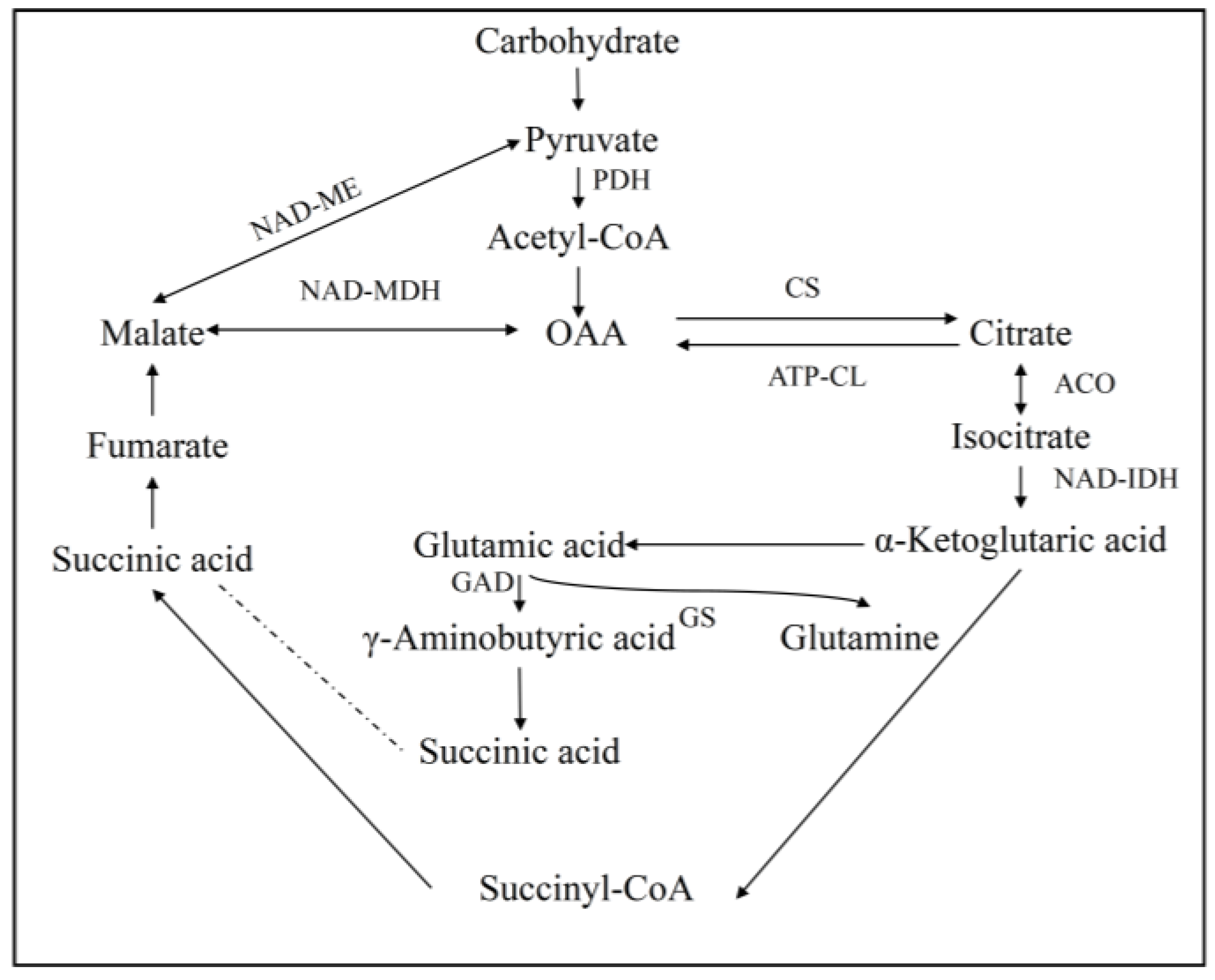
Malic acid and citric acid are not only the primary determinants of fruit flavor and acidity but also central metabolic nodes connecting carbon metabolism, energy homeostasis, and cellular pH regulation in horticultural crops, particularly fruit trees. Their metabolic pathways are strongly dynamic, involving several cellular compartments, complex enzymatic reaction networks, and specialized transport systems, all of which integrate developmental cues and environmental signals (Figure 1).
Malate and citrate are primarily synthesized and degraded via the tricarboxylic acid (TCA) cycle. The accumulation of these acids in fruit and plant cells is influenced by many factors, such as climatic conditions, nutrient supply and tissue metabolic needs [15]. As shown in Figure 1, the synthesis of malic acid begins in the cytoplasm. Phosphoenolpyruvate carboxylase (PEPC) catalyzes the carboxylation of phosphoenolpyruvate (PEP) to produce oxaloacetic acid (OAA), which can then be reduced to malic acid by nicotinamide adenine dinucleotide (NAD)-dependent malate dehydrogenase (NAD-MDH) or transported to mitochondria to enter the TCA cycle. Malic acid can also be decarboxylated by the NAD-malic enzyme (NAD-ME) within the mitochondria to generate pyruvate, producing NADH to supply the respiratory chain with reducing power [16]. The synthesis of citric acid mainly takes place in the mitochondrial matrix, in which citric acid synthase (CS) catalyzes the condensation of OAA and acetyl-CoA to produce citric acid. Pyruvate dehydrogenase complex (PDH) is a key step connecting glycolysis and the TCA cycle by oxidative decarboxylation of pyruvate to acetyl-CoA [14]. The degradation of malic acid can occur in a variety of ways. In the cytoplasm, malic acid can be decarboxylated by nicotinamide adenine dinucleotide phosphate (NADP)-ME to produce pyruvic acid and CO2 and to produce NADPH, which provides reducing power for biosynthesis processes such as fatty acid synthesis. Malic acid can also be oxidized into the TCA cycle through NAD-ME in mitochondria, which in turn promotes ATP production and provides a carbon skeleton for other metabolic processes. The degradation of citric acid mainly takes place through the TCA cycle. Citric acid is first isomerized by aconitase (ACO) to isocitric acid and then oxidized by NAD-dependent isocitrate dehydrogenase (NAD-IDH) to produce α-ketoglutarate. Subsequently, through GABA shunt metabolism, α-ketoglutarate is converted to glutamic acid and glutamic acid is decarboxylated by glutamic acid decarboxylase (GAD) to produce γ-aminobutyric acid (GABA). GABA is then converted to succinic acid and reenters the TCA cycle. This pathway has been well documented in citrus and plays important roles in fruit ripening, stress responses, and cytoplasmic pH regulation [17]. ATP citrate lyase (ATP-CL) can directly cleave citric acid into OAA and acetyl-CoA, which are precursors of cytoplasmic fatty acid biosynthesis, in the lipid metabolism of oil-producing crops and peels.
The accumulation of malic and citric acid in vacuoles is essential for maintaining cytoplasmic pH homeostasis and regulating fruit acidity [18]. In the model plant Arabidopsis thaliana, malic acid is transported as a divalent anion (Mal2−) via tonoplast dicarboxylate transporters (tDT) on the vacuolar membrane and through alum-activated malate transporter (ALMT) family channels on the plasma membrane and tonoplast. Citric acid, which is present as a trivalent anion (Cit3−), is primarily transported by multidrug and toxic compound extrusion (MATE) family transporters [19]. The acidic environment of vacuoles (pH~2.0–3.5) can promote the protonation of organic acids, reduce membrane permeability, and produce ‘ion capture’, which is conducive to the accumulation of organic acids [12]. The function of these transport systems is strictly controlled by intracellular pH, calcium-mediated signaling pathways and fruit development stages.
Potassium regulates malic acid metabolism by regulating cell pH and enzyme activity. Moderate potassium levels increase PEPC activity, while excessive potassium may impair the transport of malic acid to vacuoles. In addition, light indirectly regulates the biosynthesis of malic acid by affecting the availability of photosynthetic products and PEPC activity [20]. The synthesis, degradation and transport of malic acid and citric acid metabolic networks are dynamically regulated in response to fruit development and environmental conditions [21].

2.2. Synthesis, Degradation, and Transport of Tartaric Acid

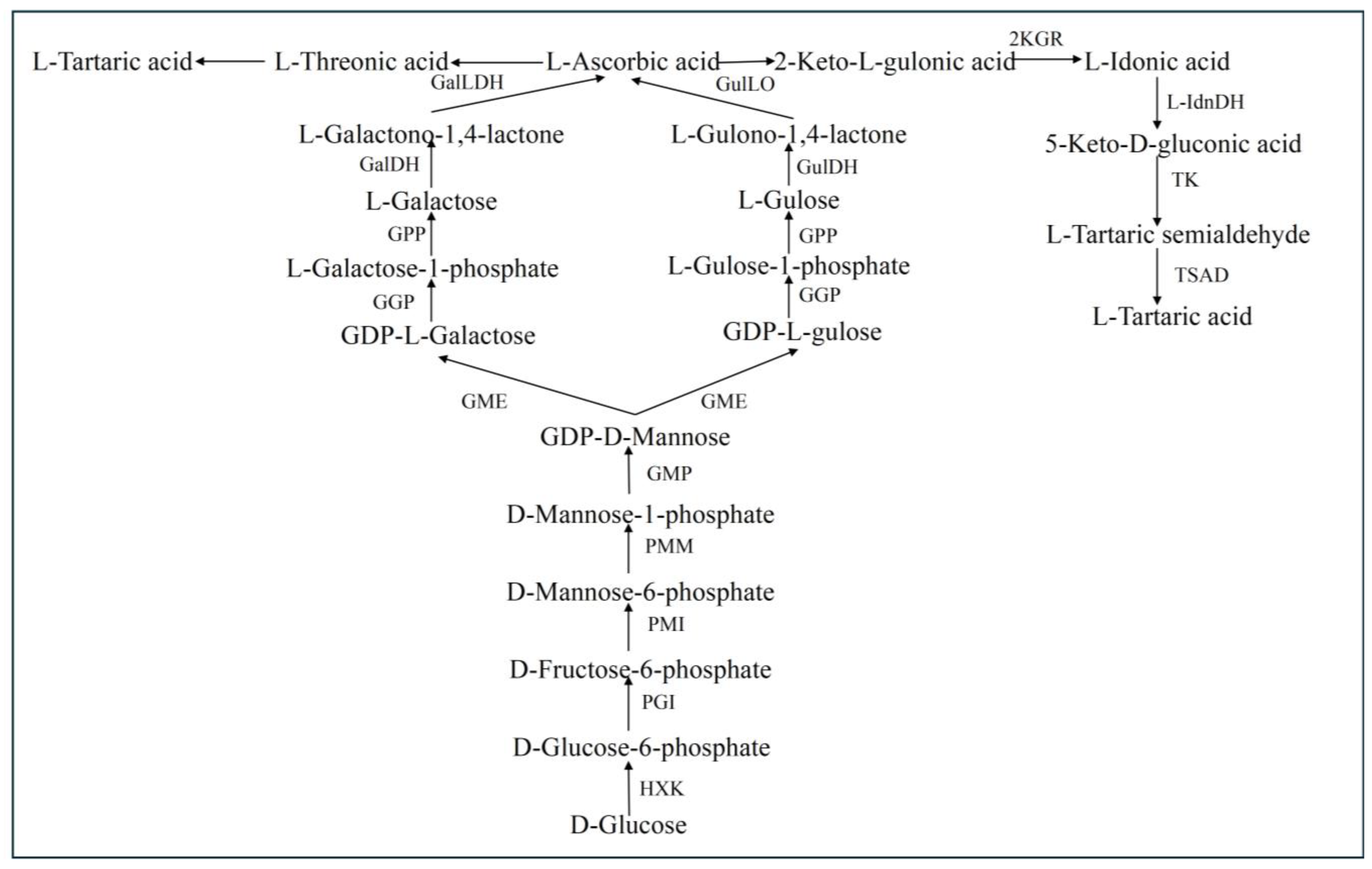
While tartaric acid (TA) is relatively rare among temperate fruit trees, it is the predominant organic acid in grapes (Vitis vinifera L.). Beyond the Vitaceae family, significant TA accumulation has also been characterized in tropical species such as tamarind (Tamarindus indica), where TA levels can reach up to 18% of the fruit’s weight [22]. In the context of molecular research, most of our current understanding of the TA biosynthetic pathway—including the roles of L-idonate dehydrogenase (L-IdnDH)—is derived from studies on specific grape cultivars, primarily ‘Cabernet Sauvignon’. These studies have highlighted that TA is metabolically stable during the ripening phase, providing a consistent tartness that distinguishes these species from fruits dominated by the more respiratory-labile malic acid [23]. Once synthesized, it is stably retained within plant cells and does not substantially re-enter the central carbon metabolic pathways. TA is the principal determinant of titratable acidity in grape berry and a key factor influencing wine pH and long-term aging stability. TA biosynthesis occurs predominantly in grapes during the early stages of berry development, after which it is largely sequestered in vacuoles, mainly in the form of potassium salts, following fruit maturation [24,25]. Its accumulation is governed primarily by the genetic background at the cultivar level, while environmental factors, such as temperature and light, also exert modulatory effects [23]. To date, L-ascorbic acid (AsA; vitamin C) has been identified as the only known precursor for TA biosynthesis [26]. AsA is mainly synthesized de novo in the cytoplasm of grape berries via the Smirnoff–Wheeler pathway, which exhibits high activity during early fruit development, from the fruit setting stage to the pre-veraison stage (Figure 2).
The key steps in L-ascorbic acid biosynthesis involve a series of enzymatic reactions. D-glucose-6-phosphate is converted to GDP-L-galactose through sequential catalysis by GDP-mannose pyrophosphorylase (GMP) and GDP-mannose-3,5-epimerase (GME) [28]. GDP-L-galactose is subsequently converted to L-galactose-1-phosphate by GDP-galactose phosphorylase (GGP, also known as VTC2), which is then dephosphorylated by L-galactose-1-phosphate phosphatase (GPP) to yield L-galactose. L-galactose is further oxidized by L-galactosyl dehydrogenase (L-GalDH) and L-galactono-1,4-lactone dehydrogenase (L-GalLDH), ultimately producing AsA [29,30,31]. Grape leaves represent an important site of AsA biosynthesis in addition to fruit tissues. The AsA synthesized in leaves can be transported over long distances to developing berries via the phloem, thereby supplying precursors for TA formation in the fruit [27,32]. The specific pathway of TA biosynthesis in grapes starts with the non-oxidative cleavage of AsA at the C4-C5 bond. This process begins with the cleavage of AsA to generate the unstable intermediate 2-keto-L-gulonic acid (2-KGA), which is subsequently converted to L-idonic acid. L-idonic acid is oxidized to 5-keto-D-gluconic acid (5-KGA) by L-idonic acid dehydrogenase (L-IdnDH) in the key dehydrogenation step. L-IdnDH is the only enzyme in this pathway whose function has been unequivocally characterized. Notably, its expression peak closely coincides with the rapid TA accumulation period during early fruit development, indicating that this step represents a major rate-limiting node in the TA biosynthetic pathway [33]. The final step in TA biosynthesis begins with 5-KGA, which undergoes lactoneization, isomerization and oxidation. These reactions produce L-tartaric acid hemialdehyde, which is then oxidized to L-tartaric acid [34].
TA metabolism has obvious spatial and temporal specificity, and its synthesis activity mainly occurs in the early stage of fruit development, that is, from after flowering to before color change. At this stage, the concentration of AsA in the cytoplasm is high, and the expression of key synthetases such as L-IdnDH increases, which causes carbon metabolism to flow to TA synthesis [34]. The newly synthesized TA is temporarily stored in the cytoplasm in a protonated form and actively transported to vacuoles on the tonoplast through specific anion/proton reverse transporters. In the acidic vacuolar environment, TA is complexed with potassium ions and calcium ions to form stable tartaric acid crystals, mainly potassium hydrogen tartrate, effectively realizing the compartmentalization of the metabolic zone. After veraison and fruit ripening, the expression of key genes in TA biosynthesis is significantly downregulated and the synthesis essentially stops. At this stage, TA content in the fruit becomes largely stable, with changes driven primarily by dilution from fruit expansion and minor microbial degradation or precipitation, rather than participation in cytoplasmic metabolic cycles. Genetic background is the primary determinant of TA accumulation, governed by allelic variation and expression levels of critical enzymes such as L-IdnDH and GGP [35].
In summary, TA metabolism in grapes is a highly compartmentalized and specialized pathway characterized by one-time synthesis during the young fruit stage and stable storage within vacuoles (cytoplasmic synthesis followed by vacuolar sequestration). The AsA-dependent biosynthetic pathway, the pivotal catalytic role of L-IdnDH, and the efficient vacuolar compartmentalization mechanism are at the core of this process. Nevertheless, several critical knowledge gaps remain: (1) the enzymes catalyzing the subsequent steps from 5-KGA to TA have not yet been identified; (2) the gene encoding the specific transporter responsible for TA vacuolar sequestration remains uncharacterized; and (3) the transcriptional regulatory network connecting environmental cues such as elevated temperature to the expression of key biosynthetic genes is poorly understood. Future research should aim to elucidate these unknown components and leverage CRISPR-Cas9 and other gene editing approaches to validate the functions of key nodes, including L-IdnDH. Such efforts will provide a robust theoretical foundation for the precise modulation of grape acidity and facilitate the molecular design breeding of superior cultivars adapted to climate change.

3. Distribution and Molecular Regulation of Organic Acids in Different Fruits

3.1. Citrus Fruits

Citric acid is the predominant organic acid in citrus fruits, accounting for 70–90% of the total acidity, followed by malic acid [36]. Its accumulation and degradation are regulated at multiple levels. The integrated transcriptomic and metabolomic analyses indicate that the TCA cycle, glycolysis, and vacuolar acidification pathways constitute the central metabolic networks governing fruit acidity [36,37]. Varietal differences manifest as shared and unique regulatory mechanisms [37]. Structural genes, together with corresponding enzyme activity changes, directly influence the dynamic accumulation of citric and malic acids [36,38]. At the transcriptional level, in kumquat (Citrus hindsii), CitPH4 functions as a key activator, promoting citric acid accumulation and exhibiting synergistic associations with acidity and disease resistance via the CitPH4-NHP/Pip pathway [39]. In sweet orange (C. sinensis ‘Newhall’), CitGATA7, acting as a positive regulator, improves GS pathway-related gene acetylation and facilitates citric acid degradation in coordination with the histone acetyltransferase CitHAG28 [37]. Conversely, using 18 diverse citrus germplasm resources, the CsAIL6-CsAN11 module negatively regulates the expression of vacuolar acidification genes by inhibiting the MBW complex activity, thereby decreasing acidity [40]. Additional transcription factors, including members of the WRKY, bHLH, and MYB families (e.g., CitTRL, CsWRKY3/47, and the CitMYB52–CitbHLH2 complex), have been validated across multiple citrus cultivars to modulate organic acid transport and metabolism through cooperative or competitive interactions, forming a complex regulatory network of positive and negative feedback loops [41,42,43]. In satsuma mandarin (C. unshiu ‘YL’), epigenetic regulation also contributes to acidity control, with histone acetyltransferases, such as CitHAG11 and CitHAG28, acting as potential negative regulators of citric acid accumulation [44]. Meanwhile, N6-methyladenosine (m6A), a key reversible epitranscriptomic modification, adds a novel post-transcriptional regulatory layer to citrus fruit metabolism: a genome-wide study in pomelo (Citrus grandis) identified 26 m6A regulatory genes, which showed developmental stage-specific expression in fruits and significant expression divergence between pomelo varieties with distinct fruit quality traits [45]. Comparative analyses across related taxa and citrus types (e.g., Chinese box orange, ‘WSY’ pummelo, ‘Huapi’ crassifolia, and ‘Sw1’ lemon) revealed evolutionary differences in regulatory strategies. Most citrus species (sweet orange, pomelo, and lemon) depended on the CitPH4–CitPH5 vacuolar acidification module, whereas kumquat primarily relied on carbon allocation and citric acid biosynthetic pathways, highlighting lineage-specific routes to achieve high acidity [46].

3.2. Apples and Pears

Malic acid is the main organic acid in apple and pear fruits, and its accumulation and metabolism play a central role in determining fruit acidity and flavor quality. Malic acid is strictly regulated by metabolic enzymes, membrane transporters, proton pumps and various transcription factors in the process of synthesis, transportation, storage and degradation. In apple (Malus domestica ‘Qinguan’), the tonoplast P3A-ATPase proton pump MdMa11 and the malate transporter MdMa1 are core determinants of fruit acidity, and their expression is subject to multilayered transcriptional controls. For instance, MdMYB123 positively regulates MdMa1 and MdMa11 expression [47], whereas MdMYB21 represses that of MdMa1, leading to reduced acidity [48]. Multi-omics approaches have significantly advanced our understanding of malic acid regulation in apples. Transcriptome analysis across nine apple accessions identified key regulatory networks, with MdMa12 and MDH12 showing coordinated expression patterns [49]. Integrated genomic and transcriptomic studies have revealed that allelic variations in malate dehydrogenase genes contribute to natural variation in fruit acidity [50]. In ‘Honeycrisp’, MdESE3 activates MdMa11, MdtDT, and MdMDH12 expression, thereby promoting malic acid accumulation [51]. In ‘Gala’ and ‘Fuji’, MdWRKY126 modulates cytosolic malic acid synthesis by activating MdMDH5 expression [52], while MdNAC18.1 directly binds to the MdMa11 promoter and simultaneously regulates the transcription of several genes involved in acid metabolism, including MdWRKY126, MdMDH5, and MdtDT [53]. The cytosolic malate dehydrogenase MdcyMDH enhanced malic acid accumulation and simultaneously promoted sucrose synthesis [54]. Furthermore, in nine apple accessions, the mitochondrial proton pump MdMa12 has been shown to cooperate with MDH12 to regulate fruit acidity [49]. MdMa7 and MdNADP-ME influence the balance between malic acid and sugar through promoter mutation or metabolic pathway modulation [50].
Beyond transcriptional regulation, epigenetic modifications also contribute to acidity variation. In ‘Honeycrisp’, methylation patterns are associated with organic acid levels: lower promoter methylation of key organic acid metabolism genes (e.g., MDH and ME) correlates with their transcriptional upregulation and enhanced malate accumulation, and reduced methylation of the vacuolar transport gene MdMa11 has also been reported [55]. In kiwifruit, dynamic m6A mRNA modification modulates ripening-related gene expression, and the m6A demethylase AcALKBH10 participates in post-transcriptional control of organic-acid-related pathways during ripening; together, DNA methylation and m6A form a multi-layered epigenetic regulatory network linked to ethylene signaling and fruit quality traits [56].
Exogenous treatments also influenced malic acid metabolism [57]. In ‘Golden Delicious’, γ-aminobutyric acid (GABA) has been shown to delay acidity decline and suppress ethylene production during postharvest storage, whereas methyl jasmonate (MeJA) suppresses the GABA shunt and modulates organic acid metabolism to maintain fruit quality [58]. In five pear cultivars, the vacuolar proton pump gene PbPH5 directly promotes malic acid accumulation within vacuoles [59], while cyNAD-MDH and cyNADP-ME are involved in malic acid synthesis and degradation, respectively, and are significantly regulated by postharvest treatments such as 1-methylcycloprepene (MCP) and ethephon [60]. Additionally, in pear (Pyrus pyrifolia ‘Chuxialv’), the application of organic and bio-organic fertilizers altered the sugar-to-acid ratio by modulating the expression of genes associated with sugar and organic acid metabolism (e.g., SPS, VAP, and cyACO) in pear fruits, thereby improving flavor quality [61].

3.3. Peach, Apricot, and Plum

Fruit acidity in peaches and apricots is primarily determined by malic and citric acids, and the mechanisms underlying their accumulation and regulation have recently been systematically investigated. The major organic acids in peach include malic acid, citric acid, and quinic acid, with their relative contents varying significantly among cultivars [8]. In peach (Prunus persica), malic acid accumulation is jointly regulated by NAD-MDH1-mediated biosynthesis and vacuolar sequestration involving ALMT9 and its transcriptional repressor WRKY14 [8]. Further multi-omics analyses revealed that the allelic variation (Q528H) in the vacuolar sugar transporter gene PpTST1 was selected during peach domestication [62]. This variation significantly reduces fruit acidity by modulating vacuolar acidification and organic acid transport. In addition, metabolic and postharvest studies indicated that PEPC and associated enzymes are critical for carbon metabolism during fruit development and postharvest storage [63]. Similarly, apricot acidity is a quantitative trait governed by multiple genes, with malic acid being the predominant organic acid, followed by citric acid. Using an apricot breeding germplasm collection of 131 accessions, QTL mapping demonstrated that the major loci controlling malic and citric acid contents were primarily located on linkage group LG8 [64]. Candidate genes identified within these regions include NAD-MDH, IDH, and vacuolar transport-associated genes, confirming that apricot fruit acidity was regulated through coordinated metabolic enzyme activity and vacuolar sequestration mechanisms [65]. The molecular orchestration of fruit quality in Prunus species involves a complex interplay between sugar accumulation and organic acid metabolism. Evidence from Prunus genetics indicates that acidity behaves as a quantitative trait with major and stable QTLs reported on specific linkage groups, supporting the view that a limited number of loci with moderate-to-large effects can strongly modulate the final sugar-to-acid ratio [66]. In Japanese plum (Prunus salicina), transcriptome-based studies have identified candidate genes and co-expression signatures associated with malate/acid accumulation, with repeated emphasis on the coordinated regulation of tonoplast malate channels/transporters (e.g., ALMT-family members) and tonoplast dicarboxylate transport (tDT), together with acidification-related components, as plausible determinants of high- vs. low-acid phenotypes [67,68]. These insights provide practical molecular targets for marker-assisted selection or genomic approaches aiming to optimize plum fruit flavor. Recent genomic and transcriptomic integrative studies have highlighted that NAC and MYB transcription factors are central regulators in coordinating these pathways, particularly in modulating the expression of genes associated with malate and citrate flux [69]. Furthermore, comparative analysis across peach, apricot, and plum has identified conserved regulatory elements and species-specific loci that govern the sugar-to-acid ratio, offering robust molecular targets for marker-assisted breeding aimed at enhancing the organoleptic properties of stone fruits [70].

3.4. Grape

Tartaric acid and malic acid are the dominant organic acids in grape berries, and their accumulation levels are regulated by the genetic backgrounds of varieties, fruit development processes and environmental conditions. Tartaric acid is an iconic characteristic component of grapes, and is mainly accumulated in the early stage of berry development and remains relatively stable after ripening. It is the core material for maintaining the stability of acidity during the ripening of grapes. In grape (V. vinifera ‘Beichun,’ ‘Gewürztraminer’), the transketolase gene VvTK2 acts as a positive regulator of TA biosynthesis by modulating key downstream enzymatic steps [71]. In ‘Aragonez’, the VvALMT9 channel mediates tartaric and malic acid storage through an ion-trap mechanism at the vacuolar membrane, which is essential for maintaining fruit acidity [72].
Malic acid in grapes accumulates in the early stage of fruit development, but degrades rapidly after veraison. This decrease reflects the coordinated transformation of the malic acid turnover pathway [16,73,74]. By analyzing the multi-year phenotypes of different grape varieties, it was found that there were significant differences in the degradation rate of malic acid after veraison [75]. Genotypic and phenotypic analyses of a biparental mapping population (‘Riesling’ × ‘Gewürztraminer’) identified QTLs associated with the malate-to-tartrate ratio on chromosomes 6 and 8, which affected acid composition but did not significantly alter berry pH. The pH value of grape fruit is dominated by the balance of tartaric acid and K+, and the change in pH value is significantly correlated with the loci regulating the ratio of [K+]: [tartaric acid] on chromosomes 10,11 and 13 [76]. Similarly, QTL mapping in an interspecific hybrid background (‘Norton’ × ‘Cabernet Sauvignon’) showed that both malic acid QTLs and pH QTLs were located on LG8, but were controlled by different parental alleles, indicating that the genetic regulation of acidity and pH was independent [77].

3.5. Tropical and Subtropical Fruits

The metabolic characteristics of organic acids in Annonaceae fruits were significantly different from those in temperate fruits. The accumulation of organic acids in Annonaceae fruits showed an atypical change pattern during fruit ripening. In cherimoya (Annona cherimola), it exhibits an ‘acid accumulation’ ripening behavior; malic acid, especially citrate, can be strongly increased during ripening, contrary to the conventional pattern of acidity decline during most fruit ripening processes. This special acid accumulation phenotype is directly related to synergistic changes in gene transcription levels and key enzyme activities related to citric acid and malic acid synthesis and catabolism in fruits. Among them, the cytoplasmic cyNAD-MDH activity was increased, directly promoting the biosynthesis of malic acid; the activity of NAD-ME was inhibited, which significantly reduced the degradation of malic acid. The activity of mitochondrial citrate synthase (mCS) was increased, promoting the synthesis of citric acid. At the same time, the activity of ACO decreased, which blocked the decomposition pathway of citric acid. This result fully confirmed that the acid content balance during the fruit ripening of Annonaceae was the result of active regulation at the molecular level, rather than the simple dilution effect caused by fruit enlargement [78]. During the postharvest ripening of soursop (Annona muricata), malic acid content increased by seven times and citric acid increased by three times. Both of them reached the peak at three days after harvest, which was synchronized with the respiratory jump. About 50% of the total organic acid exists in the form of salt, and malic acid is the main contributor to a sour taste [79].
While direct TF-to-acid targets remain sparsely validated in Annonaceae, evidence from other fleshy fruits indicates that acidity can be transcriptionally controlled through modules that regulate organic-acid transporters and metabolic enzymes, especially NAC-family TFs [80]. These mechanistic precedents motivate systematic identification and validation of Annonaceae orthologs of NAC together with candidate transporter families [53].

4. Effects of External Factors on Organic Acid Content in Plants

4.1. Light

Light is a key environmental factor regulating the organic acid content of fruits. In general, the limited availability of light constrains carbohydrate accumulation, which is often accompanied by increased acidity in the fruit. In strawberry, low-light conditions decreased photosynthetic efficiency and enhanced organic acid accumulation [81]. Variations in light intensity within different canopy positions of the same plant also lead to spatial heterogeneity in fruit acidity. Fruits exposed to higher light levels in the upper canopy typically exhibit lower acidity, whereas fruits located in shaded inner canopy regions tend to accumulate higher levels of organic acids [82]. Postharvest light-quality treatments can delay the depletion of organic acids, thereby maintaining flavor balance [83]. During cherry fruit development, low-light stress suppressed sugar accumulation and elevated the levels of organic acids, such as malic acid, resulting in increased fruit acidity [84]. Overall, light indirectly shaped patterns of organic acid accumulation in fruits by regulating photosynthate supply and associated sugar–acid metabolism [85].

4.2. Water

Water availability significantly influenced organic acid accumulation in fruits. Inadequate water supply often increases organic acid content, particularly of malic and citric acids. These organic acids are primarily metabolized during fruit development via the TCA cycle, glycolysis, and gluconeogenesis pathways. The elevated organic acid levels under water stress were principally attributed to slower citric acid degradation and enhanced enzyme activity involved in citric acid metabolism [86]. Water deficit promotes malic acid accumulation in grape fruits during early fruit development; however, malic acid degradation is accelerated after maturation, leading to a reduction in its content [74]. In addition, water stress suppressed the degradation of certain organic acids under drought conditions by modulating metabolic enzyme activities, thereby maintaining overall organic acid levels [86]. These observations indicate that water status directly regulates the temporal and spatial accumulation patterns of organic acids, which are critical for fruit ripening and sugar–acid balance maintenance.

4.3. Mineral Nutrition and Exogenous Substances

Mineral nutrients and exogenous compounds can modulate fruit organic acid content and flavor formation at multiple levels by influencing photosynthate allocation, sugar- and acid-metabolizing enzyme activity, and associated gene expression. The sugar-to-acid ratio largely determines fruit flavor quality, and mineral nutrients and exogenous treatments play pivotal roles in regulating organic acid metabolism. Moderate molybdenum application significantly enhances photosynthetic efficiency and mineral nutrient accumulation in strawberry, thereby fostering the synthesis and accumulation of sugars and organic acids, increasing soluble solids and titratable acidity, and improving the overall flavor profile [87]. Organic fertilizers not only improve soil nutrient status and photosynthetic performance but also effectively increase soluble solids, vitamin C content, and sugar-to-acid ratio, thereby substantially enhancing fruit flavor [88].
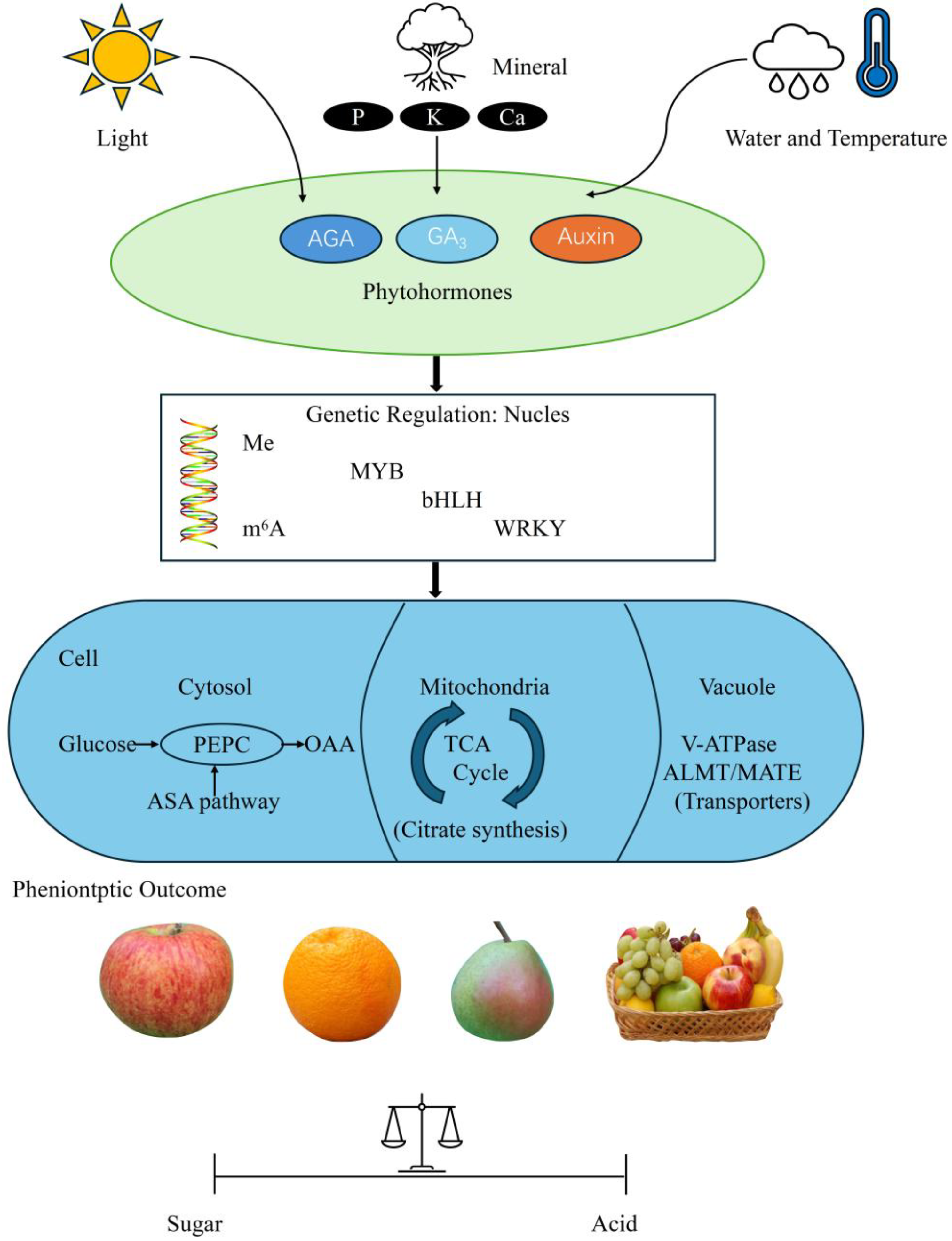
Regarding exogenous substances, melatonin (MT) improves fruit flavor and enhances stress tolerance by modulating sugar and acid metabolism, increasing soluble sugar content, and reducing organic acid levels in fruits such as plums [89]. Gibberellic acid (GA3) application in grapes promotes sugar unloading and accumulation and enhances fruit sink strength. Although its direct impact on tartaric, malic, and citric acid contents is limited, GA3 indirectly influences organic acid metabolism [90]. Similarly, salicylic acid (SA) treatment sustained elevated levels of malic and citric acids in postharvest blueberries by regulating the enzymatic systems responsible for organic acid synthesis and degradation, thereby delaying acidity decline and preserving fruit quality [91]. Exogenous ABA treatment increased soluble sugar accumulation and decreased organic acid content in grapes through interaction with sucrose synthase (VvSS3), highlighting the central role of ABA in coordinating sugar and acid metabolism [92] (Figure 3).

5. Conclusions and Prospects

As a key component of fruit quality, organic acid metabolic regulation has seen substantial advances. The integration of genomics, transcriptomics, metabolomics, and other multi-omics technologies has gradually constructed a comprehensive regulatory network controlling the organic acid metabolism in fruits. These networks have provided valuable targets for the molecular design of superior fruit varieties. Gene editing and molecular marker-assisted breeding offer promising approaches for modulating fruit acidity at the applied level. These regulatory networks provide potential molecular targets for precision breeding aimed at optimizing fruit acidity and flavor quality. Using CRISPR/Cas9 gene editing technology to regulate the promoter of key genes, breeders are expected to adjust the acidity of fruits and avoid simultaneous softening of fruits. In the practice of orchard management, understanding organic acid metabolism can guide the stabilization of fruit flavor under changing environmental conditions. Light, temperature, moisture, mineral nutrition, plant growth regulators and postharvest treatment all affect the accumulation or degradation of organic acids. Therefore, according to the dominant organic acid types and metabolic characteristics of each fruit crop, canopy management, regulated deficit irrigation, fertilizer application, harvest time and postharvest storage strategies can be optimized.
Despite these advances, several research challenges remain. The commonalities and species-specific features of organic acid regulatory mechanisms across different fruit trees are not yet fully understood. Furthermore, the interaction between organic acids and other metabolites, such as sugars, calcium, and flavonoids, requires further investigation. Many candidate genes identified by omics methods still need functional verification. Future research should integrate multi-omics analysis, gene editing, physiological experiments and field production experiments to establish a more comprehensive regulatory framework for fruit organic acid content. These efforts will provide a more solid theoretical and practical basis for flavor optimization, stress adaptability improvement and high-quality fruit varieties.

Author Contributions

The authors confirm their contributions to the paper as follows: study conception and design: X.G., Q.Z. and Z.D.; literature review: X.G., Y.Z. and M.T.; draft manuscript preparation: X.G. and Y.Z.; critical revision: Z.D., Z.L., J.H. and Q.Z. All authors have read and agreed to the published version of the manuscript.

Funding

This research was funded by the Basic Research Plan Project of Shanxi Province (202403021222098), Shanxi Province Key Research and Development Plan Project (202302140601006), Ningxia Hui Autonomous Region Key Research and Development Plan Project (2024BBF01002), the Ministry of Finance and Ministry of agriculture and rural areas: National Modern Agricultural Industrial Technology System (CARS-29-yc-5).

Data Availability Statement

No new data were created or analyzed in this study.

Acknowledgments

The authors would like to thank the anonymous reviewers for their comments on this manuscript.

Conflicts of Interest

The authors declare no conflicts of interest.

References

  1. Finkemeier, I.; König, A.-C.; Heard, W.; Nunes-Nesi, A.; Pham, P.A.; Leister, D.; Fernie, A.R.; Sweetlove, L.J. Transcriptomic Analysis of the Role of Carboxylic Acids in Metabolite Signaling in Arabidopsis Leaves. Plant Physiol. 2013, 162, 239–253. [Google Scholar] [CrossRef]
  2. Zhou, J.; Yang, S.; Ma, Y.; Liu, Z.; Tu, H.; Wang, H.; Zhang, J.; Chen, Q.; He, W.; Li, M.; et al. Soluble sugar and organic acid composition and flavor evaluation of Chinese cherry fruits. Food Chem. X 2023, 20, 100953. [Google Scholar] [CrossRef] [PubMed]
  3. Wang, N.; Zhang, X.; Guo, Q.; Yan, G.; Wang, J.; Wu, C.; Zhou, Y.; Zhou, J.; Zhang, K.; Li, T.; et al. Effects of different rootstocks on fruit quality and non-volatile flavor-related compounds of sweet cherry ‘summit. Food Chem. 2025, 463, 141512. [Google Scholar] [CrossRef] [PubMed]
  4. Itakura, K.; Saito, Y.; Suzuki, T.; Kondo, N.; Hosoi, F. Estimation of citrus maturity with fluorescence spectroscopy using deep learning. Horticulturae 2018, 5, 2. [Google Scholar] [CrossRef]
  5. Panchal, P.; Miller, A.J.; Giri, J. Organic acids: Versatile stress-response roles in plants. J. Exp. Bot. 2021, 72, 4038–4052. [Google Scholar] [CrossRef]
  6. Aslam, M.M.; Yu, W.; Jiang, F.; Zhang, J.; Yang, L.; Zhang, M.; Sun, H. The sugar-acid-aroma balance: Integrating the key components of fruit quality and their implications in stone fruit breeding. Horticulturae 2026, 12, 170. [Google Scholar] [CrossRef]
  7. Ma, B.; Chen, J.; Zheng, H.; Fang, T.; Ogutu, C.; Li, S.; Han, Y.; Wu, B. Comparative assessment of sugar and malic acid composition in cultivated and wild apples. Food Chem. 2015, 172, 86–91. [Google Scholar] [CrossRef]
  8. Zheng, B.; Zhao, L.; Jiang, X.; Cherono, S.; Liu, J.; Ogutu, C.; Ntini, C.; Zhang, X.; Han, Y. Assessment of organic acid accumulation and its related genes in peach. Food Chem. 2021, 334, 127567. [Google Scholar] [CrossRef]
  9. Guo, D.-L.; Zhao, H.-L.; Li, Q.; Zhang, G.-H.; Jiang, J.-F.; Liu, C.-H.; Yu, Y.-H. Genome-wide association study of berry-related traits in grape [vitis vinifera L.] based on genotyping-by-sequencing markers. Hortic. Res. 2019, 6, 11. [Google Scholar] [CrossRef]
  10. Fu, B.-L.; Chen, L.-Y. Molecular orchestration of malate and citrate metabolism: Regulatory networks governing organic acid dynamics and fruit quality attributes. Hortic. Res. 2026, 13, uhaf292. [Google Scholar] [CrossRef]
  11. Lomax, J.; Ford, R.; Bar, I. Multi-omic applications for understanding and enhancing tropical fruit flavour. Plant Mol. Biol. 2024, 114, 83. [Google Scholar] [CrossRef] [PubMed]
  12. Igamberdiev, A.U.; Eprintsev, A.T. Organic acids: The pools of fixed carbon involved in redox regulation and energy balance in higher plants. Front. Plant Sci. 2016, 7, 1042. [Google Scholar] [CrossRef]
  13. Hardy, P.J. Metabolism of sugars and organic acids in immature grape berries. Plant Physiol. 1968, 43, 224–228. [Google Scholar] [CrossRef]
  14. Aprile, A.; Federici, C.; Close, T.J.; De Bellis, L.; Cattivelli, L.; Roose, M.L. Expression of the H+-ATPase AHA10 proton pump is associated with citric acid accumulation in lemon juice sac cells. Funct. Integr. Genom. 2011, 11, 551–563. [Google Scholar] [CrossRef]
  15. Thewes, F.R.; Büchele, F.; Uhlmann, L.O.; Lugaresi, A.; de Oliveria Neuwald, D.Q.; Brackmann, A.; Both, V.; Wagner, R.; Neuwald, D.A. Metabolic profiling of ‘elstar’ and ‘nicoter’ apples: Impact of storage time, dynamic controlled atmosphere and 1-MCP treatment. Horticulturae 2024, 10, 1372. [Google Scholar] [CrossRef]
  16. Sweetman, C.; Deluc, L.G.; Cramer, G.R.; Ford, C.M.; Soole, K.L. Regulation of malate metabolism in grape berry and other developing fruits. Phytochemistry 2009, 70, 1329–1344. [Google Scholar] [CrossRef]
  17. Etienne, A.; Génard, M.; Lobit, P.; Mbeguié-A-Mbéguié, D.; Bugaud, C. What controls fleshy fruit acidity? A review of malate and citrate accumulation in fruit cells. J. Exp. Bot. 2013, 64, 1451–1469. [Google Scholar] [CrossRef]
  18. Lüttge, U.; Ball, E. Electrochemical investigation of active malic acid transport at the tonoplast into the vacuoles of the CAM plant Kalanchoë daigremontiana. J. Membr. Biol. 1979, 47, 401–422. [Google Scholar] [CrossRef]
  19. Meyer, S.; De Angeli, A.; Fernie, A.R.; Martinoia, E. Intra- and extra-cellular excretion of carboxylates. Trends Plant Sci. 2010, 15, 40–47. [Google Scholar] [CrossRef]
  20. Ali, M.M.; Alam, S.M.; Anwar, R.; Ali, S.; Shi, M.; Liang, D.; Lin, Z.; Chen, F. Genome-wide identification, characterization and expression profiling of aluminum-activated malate transporters in Eriobotrya japonica lindl. Horticulturae 2021, 7, 441. [Google Scholar] [CrossRef]
  21. Kliewer, W.M. Effect of day temperature and light intensity on concentration of malic and tartaric acids in vitis vinifera L. Grapes. J. Am. Soc. Hortic. Sci. 1971, 96, 372–377. [Google Scholar] [CrossRef]
  22. Reddy, A.G.K.; Prasad, T.V.; Shankar, K.S.; Pushpanjali, M.; Jyothilakshmi, N.; Salini, K.; Babu, R.R.; Singh, V.K.; Yadagiri, J. Morpho-biochemical characterization of tamarind (Tamarindus indica L.). Legume Res. —Int. J. 2024, 47, 990–995. [Google Scholar] [CrossRef]
  23. Li, M.; Su, J.; Yang, H.; Feng, L.; Wang, M.; Xu, G.; Shao, J.; Ma, C. Grape tartaric acid: Chemistry, function, metabolism, and regulation. Horticulturae 2023, 9, 1173. [Google Scholar] [CrossRef]
  24. Cholet, C.; Claverol, S.; Claisse, O.; Rabot, A.; Osowsky, A.; Dumot, V.; Ferrari, G.; Gény, L. Tartaric acid pathways in Vitis vinifera L. (cv. Ugni blanc): A comparative study of two vintages with contrasted climatic conditions. BMC Plant Biol. 2016, 16, 144. [Google Scholar] [CrossRef]
  25. Ford, C.M. The Biochemistry of Organic Acids in the Grape. In The Biochemistry of the Grape Berry; Gerós, H., Chaves, M.M., Delrot, S., Eds.; Bentham Science Publishers: Sharjah, Saudi Arabia, 2012; pp. 67–88. [Google Scholar]
  26. Wang, C.; García-Caparros, P.; Li, Z.; Chen, F. A comprehensive review on plant ascorbic acid. Trop. Plants 2024, 3, e042. [Google Scholar] [CrossRef]
  27. DeBolt, S.; Cook, D.R.; Ford, C.M. l-tartaric acid synthesis from vitamin C in higher plants. Proc. Natl. Acad. Sci. USA 2006, 103, 5608–5613. [Google Scholar] [CrossRef]
  28. Tamim, S.A.; Li, F.; Wang, Y.; Shang, L.; Zhang, X.; Tao, J.; Wang, Y.; Gai, W.; Dong, H.; Ahiakpa, J.K.; et al. Effect of shading on ascorbic acid accumulation and biosynthetic gene expression during tomato fruit development and ripening. Veg. Res. 2022, 2, 1. [Google Scholar] [CrossRef]
  29. Vargas, J.A.; Sculaccio, S.A.; Pinto, A.P.A.; Pereira, H.D.; Mendes, L.F.S.; Flores, J.F.; Cobos, M.; Castro, J.C.; Garratt, R.C.; Leonardo, D.A. Structural insights into the smirnoff–wheeler pathway for vitamin C production in the amazon fruit camu-camu. J. Exp. Bot. 2024, 75, 2754–2771. [Google Scholar] [CrossRef] [PubMed]
  30. Melino, V.J.; Soole, K.L.; Ford, C.M. Ascorbate metabolism and the developmental demand for tartaric and oxalic acids in ripening grape berries. Bmc Plant Biol. 2009, 9, 145. [Google Scholar] [CrossRef] [PubMed]
  31. Narnoliya, L.K.; Sangwan, R.S.; Singh, S.P. Transcriptome mining and in silico structural and functional analysis of ascorbic acid and tartaric acid biosynthesis pathway enzymes in rose-scanted geranium. Mol. Biol. Rep. 2018, 45, 315–326. [Google Scholar] [CrossRef]
  32. Burbidge, C.A.; Ford, C.M.; Melino, V.J.; Wong, D.C.J.; Jia, Y.; Jenkins, C.L.D.; Soole, K.L.; Castellarin, S.D.; Darriet, P.; Rienth, M.; et al. Biosynthesis and cellular functions of tartaric acid in grapevines. Front. Plant Sci. 2021, 12, 643024. [Google Scholar] [CrossRef]
  33. Hancock, R.D.; Viola, R. Biosynthesis and Catabolism ofL-Ascorbic Acid in Plants. Crit. Rev. Plant Sci. 2005, 24, 167–188. [Google Scholar] [CrossRef]
  34. Melino, V.J.; Soole, K.L.; Ford, C.M. A method for determination of fruit-derived ascorbic, tartaric, oxalic and malic acids, and its application to the study of ascorbic acid catabolism in grapevines. Aust. J. Grape Wine Res. 2009, 15, 293–302. [Google Scholar] [CrossRef]
  35. Bulley, S.M.; Rassam, M.; Hoser, D.; Otto, W.; Schünemann, N.; Wright, M.; MacRae, E.; Gleave, A.; Laing, W. Gene expression studies in kiwifruit and gene over-expression in arabidopsis indicates that GDP-L-galactose guanyltransferase is a major control point of vitamin C biosynthesis. J. Exp. Bot. 2009, 60, 765–778. [Google Scholar] [CrossRef]
  36. Tang, X.; Huang, M.; Deng, L.; Li, Y.; Jin, X.; Xu, J.; Xiong, B.; Liao, L.; Zhang, M.; He, J.; et al. Comparative transcriptome analysis reveals potential molecular regulation of organic acid metabolism during fruit development in late-maturing hybrid citrus varieties. Int. J. Mol. Sci. 2025, 26, 803. [Google Scholar] [CrossRef]
  37. Lin, X.; Li, S.; Shi, Y.; Ma, Y.; Li, Y.; Tan, H.; Zhang, B.; Xu, C.; Chen, K. CitGATA7 interact with histone acetyltransferase CitHAG28 to promote citric acid degradation by regulating the glutamine synthetase pathway in citrus. Mol. Hortic. 2025, 5, 8. [Google Scholar] [CrossRef] [PubMed]
  38. Guo, L.; Liu, Y.; Luo, L.; Hussain, S.B.; Bai, Y.; Alam, S.M. Comparative metabolites and citrate-degrading enzymes activities in citrus fruits reveal the role of balance between ACL and cyt-ACO in metabolite conversions. Plants 2020, 9, 350. [Google Scholar] [CrossRef] [PubMed]
  39. Lu, Z.; Hu, B.; He, J.; Yuan, T.; Wu, Q.; Yang, K.; Zheng, W.; Huang, Y.; Xu, Y.; Wang, X.; et al. The transcription factor CitPH4 regulates plant defense-related metabolite biosynthesis in citrus. Plant Physiol. 2025, 197, kiaf027. [Google Scholar] [CrossRef] [PubMed]
  40. Han, H.; Li, Y.-J.; Alam, S.M.; Zhou, T.; Khan, M.A.; Thu, A.M.; Liu, Y.-Z. AP2 transcription factor CsAIL6 negatively regulates citric acid accumulation in citrus fruits by interacting with a WD40 protein CsAN11. Hortic. Res. 2025, 12, uhaf002. [Google Scholar] [CrossRef]
  41. He, J.; Xu, Y.; Huang, D.; Fu, J.; Liu, Z.; Wang, L.; Zhang, Y.; Xu, R.; Li, L.; Deng, X.; et al. TRIPTYCHON-LIKE regulates aspects of both fruit flavor and color in citrus. J. Exp. Bot. 2022, 73, 3610–3624. [Google Scholar] [CrossRef]
  42. Zhang, M.; Lu, W.; Yang, X.; Li, Q.; Lin, X.; Liu, K.; Yin, C.; Xiong, B.; Liao, L.; Sun, G.; et al. Comprehensive analyses of the citrus WRKY gene family involved in the metabolism of fruit sugars and organic acids. Front. Plant Sci. 2023, 14, 1264283. [Google Scholar] [CrossRef]
  43. Liu, S.; Liu, X.; Gou, B.; Wang, D.; Liu, C.; Sun, J.; Yin, X.; Grierson, D.; Li, S.; Chen, K. The interaction between CitMYB52 and CitbHLH2 negatively regulates citrate accumulation by activating CitALMT in citrus fruit. Front. Plant Sci. 2022, 13, 848869. [Google Scholar] [CrossRef]
  44. Lin, X.; Shi, Y.; Liu, S.; Liu, X.; Zhang, M.; Zhang, B.; Li, S.; Chen, K. Genome-wide identification of the histone acetyltransferase gene family in Citrus clementina and its potential roles in citrate metabolism. Food Qual. Saf. 2024, 8, fyad052. [Google Scholar] [CrossRef]
  45. Tian, Y.; Zeng, J.; Fan, R. Comprehensive analysis of N6-methyladenosine regulatory genes from citrus grandis and expression profilings in the fruits of “huajuhong” (C. grandis “tomentosa”) during various development stages. Horticulturae 2022, 8, 462. [Google Scholar] [CrossRef]
  46. He, J.; Sun, J.; Huang, Y.; Wang, L.; Liu, S.; Jiang, Z.; Wang, X.; Xu, Q. Transcriptome analysis reveals the common and specific pathways of citric acid accumulation in different citrus species. Hortic. Plant J. 2025, 11, 520–534. [Google Scholar] [CrossRef]
  47. Zheng, L.; Liao, L.; Duan, C.; Ma, W.; Peng, Y.; Yuan, Y.; Han, Y.; Ma, F.; Li, M.; Ma, B. Allelic variation of MdMYB123 controls malic acid content by regulating MdMa1 and MdMa11 expression in apple. Plant Physiol. 2023, 192, 1877–1891. [Google Scholar] [CrossRef]
  48. Peng, Y.; Yuan, Y.; Chang, W.; Zheng, L.; Ma, W.; Ren, H.; Liu, P.; Zhu, L.; Su, J.; Ma, F.; et al. Transcriptional repression of MdMa1 by MdMYB21 in ma locus decreases malic acid content in apple fruit. Plant J. 2023, 115, 1231–1242. [Google Scholar] [CrossRef] [PubMed]
  49. Gao, M.; Zhao, H.; Zheng, L.; Zhang, L.; Peng, Y.; Ma, W.; Tian, R.; Yuan, Y.; Ma, F.; Li, M.; et al. Overexpression of apple Ma12 , a mitochondrial pyrophosphatase pump gene, leads to malic acid accumulation and the upregulationof malate dehydrogenase in tomato and apple calli. Hortic. Res. 2022, 9, uhab053. [Google Scholar] [CrossRef]
  50. Gao, M.; Yang, N.; Shao, Y.; Shen, T.; Li, W.; Ma, B.; Wei, X.; Ruan, Y.-L.; Ma, F.; Li, M. An insertion in the promoter of a malate dehydrogenase gene regulates malic acid content in apple fruit. Plant Physiol. 2024, 196, 432–445. [Google Scholar] [CrossRef]
  51. Zheng, L.; Ma, W.; Liu, P.; Song, S.; Wang, L.; Yang, W.; Ren, H.; Wei, X.; Zhu, L.; Peng, J.; et al. Transcriptional factor MdESE3 controls fruit acidity by activating genes regulating malic acid content in apple. Plant Physiol. 2024, 196, 261–272. [Google Scholar] [CrossRef]
  52. Zhang, L.; Ma, B.; Wang, C.; Chen, X.; Ruan, Y.-L.; Yuan, Y.; Ma, F.; Li, M. MdWRKY126 modulates malate accumulation in apple fruit by regulating cytosolic malate dehydrogenase (MdMDH5). Plant Physiol. 2022, 188, 2059–2072. [Google Scholar] [CrossRef]
  53. Liu, P.; Shao, C.; Ren, H.; Yang, W.; Duan, C.; Wang, Y.; Liao, L.; Wei, X.; Zhu, L.; Ma, F.; et al. Transcription factor MdNAC18.1 regulates malic acid accumulation in apple fruits. Int. J. Biol. Macromol. 2025, 308, 142332. [Google Scholar] [CrossRef] [PubMed]
  54. Zhang, L.; Wang, C.; Jia, R.; Yang, N.; Jin, L.; Zhu, L.; Ma, B.; Yao, Y.; Ma, F.; Li, M. Malate metabolism mediated by the cytoplasmic malate dehydrogenase gene MdcyMDH affects sucrose synthesis in apple fruit. Hortic. Res. 2022, 9, uhac194. [Google Scholar] [CrossRef] [PubMed]
  55. Ma, W.; Li, B.; Zheng, L.; Peng, Y.; Tian, R.; Yuan, Y.; Zhu, L.; Su, J.; Ma, F.; Li, M.; et al. Combined profiling of transcriptome and DNA methylome reveal genes involved in accumulation of soluble sugars and organic acid in apple fruits. Foods 2021, 10, 2198. [Google Scholar] [CrossRef] [PubMed]
  56. Su, D.; Shu, P.; Hu, N.; Chen, Y.; Wu, Y.; Deng, H.; Du, X.; Zhang, X.; Wang, R.; Li, H.; et al. Dynamic m6A mRNA methylation reveals the involvement of AcALKBH10 in ripening-related quality regulation in kiwifruit. New Phytol. 2024, 243, 2265–2278. [Google Scholar] [CrossRef]
  57. Fu, W.; Zhao, L.; Qiu, W.; Xu, X.; Ding, M.; Lan, L.; Qu, S.; Wang, S. Whole-genome resequencing identifies candidate genes and allelic variation in the MdNADP-ME promoter that regulate fruit malate and fructose contents in apple. Plant Commun. 2024, 5, 100973. [Google Scholar] [CrossRef]
  58. Fan, Y.; Li, C.; Zhu, J.; Sun, L.; Huang, R.; Guo, M.; Wu, Y.; Ge, Y. Organic acids metabolism and GABA shunt involved in maintaining quality of malus domestica by methyl jasmonate treatment. Food Res. Int. 2022, 160, 111741. [Google Scholar] [CrossRef]
  59. Jun-xing, S.; Ying-can, C.; Zhao-hui, L.; Guang-ping, Z.; Xiao-li, W.; Rui, Z.; Zhi-gang, W.; Cheng-quan, Y.; Ling-fei, X. PbPH5, an H+ P-ATPase on the tonoplast, is related to malic acid accumulation in pear fruit. J. Integr. Agric. 2022, 21, 1645–1657. [Google Scholar] [CrossRef]
  60. Wang, L.; Ma, M.; Zhang, Y.; Wu, Z.; Guo, L.; Luo, W.; Wang, L.; Zhang, Z.; Zhang, S. Characterization of the genes involved in malic acid metabolism from pear fruit and their expression profile after postharvest 1-MCP/ethrel treatment. J. Agric. Food Chem. 2018, 66, 8772–8782. [Google Scholar] [CrossRef]
  61. Wang, Z.; Yang, H.; Ma, Y.; Jiang, G.; Mei, X.; Li, X.; Yang, Q.; Kan, J.; Xu, Y.; Yang, T.; et al. WGCNA analysis revealing molecular mechanism that bio-organic fertilizer improves pear fruit quality by increasing sucrose accumulation and reducing citric acid metabolism. Front. Plant Sci. 2022, 13, 1039671. [Google Scholar] [CrossRef]
  62. Wang, Q.; Cao, K.; Cheng, L.; Li, Y.; Guo, J.; Yang, X.; Wang, J.; Khan, I.A.; Zhu, G.; Fang, W.; et al. Multi-omics approaches identify a key gene, PpTST1 , for organic acid accumulation in peach. Hortic. Res. 2022, 9, uhac026. [Google Scholar] [CrossRef]
  63. Moing, A.; Rothan, C.; Svanella, L.; Just, D.; Diakou, P.; Raymond, P.; Gaudillère, J.; Monet, R. Role of phospho enol pyruvate carboxylase in organic acid accumulation during peach fruit development. Physiol. Plant. 2000, 108, 1–10. [Google Scholar] [CrossRef]
  64. Baccichet, I.; Chiozzotto, R.; Tura, D.; Tagliabue, A.G.; Tartarini, S.; Da Silva Linge, C.; Spinardi, A.; Rossini, L.; Bassi, D.; Cirilli, M. Dissection of acidity-related traits in an apricot (Prunus armeniaca L.) germplasm collection revealed the genetic architecture of organic acids content and profile. Fruit. Res. 2025, 5, e005. [Google Scholar] [CrossRef]
  65. Dondini, L.; Domenichini, C.; Dong, Y.; Gennari, F.; Bassi, D.; Foschi, S.; Lama, M.; Adami, M.; De Franceschi, P.; Cervellati, C.; et al. Quantitative trait loci mapping and identification of candidate genes linked to fruit acidity in apricot (Prunus armeniaca L.). Front. Plant Sci. 2022, 13, 838370. [Google Scholar] [CrossRef] [PubMed]
  66. Gracia, C.; Calle, A.; Gasic, K.; Arias, E.; Wünsch, A. Genetic and QTL analyses of sugar and acid content in sweet cherry (Prunus avium L.). Hortic. Res. 2025, 12, uhae310. [Google Scholar] [CrossRef]
  67. Yu, X.; Ali, M.M.; Gull, S.; Fang, T.; Wu, W.; Chen, F. Transcriptome data-based identification and expression profiling of genes potentially associated with malic acid accumulation in plum (Prunus salicina Lindl.). Sci. Hortic. 2023, 322, 112397. [Google Scholar] [CrossRef]
  68. Wu, W.; Chen, M.; Chen, F. Codon Bias Analysis of Prunus salicina ‘Huangguan’ Malate Transporter ALMT4, ALMT9 and tDT Genes. J. Agric. Biotechnol. 2020, 28, 42–57. [Google Scholar]
  69. García-Gómez, B.E.; Salazar, J.A.; Nicolás-Almansa, M.; Razi, M.; Rubio, M.; Ruiz, D.; Martínez-Gómez, P. Molecular bases of fruit quality in prunus species: An integrated genomic, transcriptomic, and metabolic review with a breeding perspective. Int. J. Mol. Sci. 2021, 22, 333. [Google Scholar] [CrossRef]
  70. Ortuño-Hernández, G.; Sandoval-Belmar, P.; Ruiz, D.; Martínez-Gómez, P.; Meneses, C.; Salazar, J.A. Insights into the molecular basis of fruit development in prunus species. Plant Mol. Biol. Report. 2025, 43, 1397–1413. [Google Scholar] [CrossRef]
  71. Su, J.; Li, M.; Yang, H.; Shu, H.; Yu, K.; Cao, H.; Xu, G.; Wang, M.; Zhu, Y.; Zhu, Y.; et al. Enrichment of grape berries and tomato fruit with health-promoting tartaric acid by expression of the Vitis vinifera transketolase VvTK2 gene. Int. J. Biol. Macromol. 2024, 257, 128734. [Google Scholar] [CrossRef]
  72. De Angeli, A.; Baetz, U.; Francisco, R.; Zhang, J.; Chaves, M.M.; Regalado, A. The vacuolar channel VvALMT9 mediates malate and tartrate accumulation in berries of Vitis vinifera. Planta 2013, 238, 283–291. [Google Scholar] [CrossRef] [PubMed]
  73. Yang, B.; Yao, H.; Zhang, J.; Li, Y.; Ju, Y.; Zhao, X.; Sun, X.; Fang, Y. Effect of regulated deficit irrigation on the content of soluble sugars, organic acids and endogenous hormones in cabernet sauvignon in the ningxia region of China. Food Chem. 2020, 312, 126020. [Google Scholar] [CrossRef]
  74. Zhan, Z.; Zhang, Y.; Geng, K.; Xue, X.; Deloire, A.; Li, D.; Wang, Z. Effects of vine water status on malate metabolism and γ-aminobutyric acid (GABA) pathway-related amino acids in marselan (Vitis vinifera L.) grape berries. Foods 2023, 12, 4191. [Google Scholar] [CrossRef]
  75. Plantevin, M.; Merpault, Y.; Lecourt, J.; Destrac-Irvine, A.; Dijsktra, L.; van Leeuwen, C. Characterization of varietal effects on the acidity and pH of grape berries for selection of varieties better adapted to climate change. Front. Plant Sci. 2024, 15, 1439114. [Google Scholar] [CrossRef] [PubMed]
  76. Duchêne, É.; Dumas, V.; Butterlin, G.; Jaegli, N.; Rustenholz, C.; Chauveau, A.; Bérard, A.; Le Paslier, M.C.; Gaillard, I.; Merdinoglu, D. Genetic variations of acidity in grape berries are controlled by the interplay between organic acids and potassium. Theor. Appl. Genet. 2020, 133, 993–1008. [Google Scholar] [CrossRef]
  77. Negus, K.L.; Chen, L.-L.; Fresnedo-Ramírez, J.; Scott, H.A.; Sacks, G.L.; Cadle-Davidson, L.; Hwang, C.-F.; Negus, K.L.; Chen, L.-L.; Fresnedo-Ramírez, J.; et al. Identification of QTLs for berry acid and tannin in a Vitis aestivalis-derived ’norton’-based population. Fruit Res. 2021, 1, 8. [Google Scholar] [CrossRef]
  78. González-Agüero, M.; Tejerina Pardo, L.; Zamudio, M.S.; Contreras, C.; Undurraga, P.; Defilippi, B.G. The unusual acid-accumulating behavior during ripening of cherimoya (Annona cherimola mill.) is linked to changes in transcription and enzyme activity related to citric and malic acid metabolism. Molecules 2016, 21, 398. [Google Scholar] [CrossRef]
  79. Paull, R.E.; Deputy, J.; Chen, N.J. Changes in organic acids, sugars, and headspace volatiles during fruit ripening of soursop (annona muricata L.). J. Am. Soc. Hortic. Sci. 1983, 108, 931–934. [Google Scholar] [CrossRef]
  80. Fu, B.; Wang, W.; Li, X.; Qi, T.; Shen, Q.; Li, K.; Liu, X.; Li, S.; Allan, A.C.; Yin, X. A dramatic decline in fruit citrate induced by mutagenesis of a NAC transcription factor, AcNAC1. Plant Biotechnol. J. 2023, 21, 1695–1706. [Google Scholar] [CrossRef]
  81. Choi, H.G. Correlation among phenotypic parameters related to the growth and photosynthesis of strawberry (fragaria × ananassa duch.) grown under various light intensity conditions. Front. Plant Sci. 2021, 12, 647585. [Google Scholar] [CrossRef]
  82. Feng, F.; Li, M.; Ma, F.; Cheng, L. Effects of location within the tree canopy on carbohydrates, organic acids, amino acids and phenolic compounds in the fruit peel and flesh from three apple (malus × domestica) cultivars. Hortic. Res. 2014, 1, 14019. [Google Scholar] [CrossRef]
  83. Zhang, W.; Jiang, Y.; Zhang, Z. The role of different natural organic acids in postharvest fruit quality management and its mechanism. Food Front. 2023, 4, 1127–1143. [Google Scholar] [CrossRef]
  84. Tang, W.; Chen, C.; Zhang, Y.; Chu, Y.; Yang, W.; Cui, Y.; Kou, G.; Chen, H.; Song, H.; Gong, R. Effect of low-light stress on sugar and acid accumulation during fruit development and ripening of sweet cherry. Horticulturae 2023, 9, 654. [Google Scholar] [CrossRef]
  85. Mi, H.; Zhou, X.; Yang, J.; Chen, J.; Liu, B. LED white light treatment delays postharvest senescence of ‘zaosu’ pear fruit with inhibited chlorophyll degradation. Horticulturae 2023, 10, 32. [Google Scholar] [CrossRef]
  86. Ma, W.-F.; Li, Y.-B.; Nai, G.-J.; Liang, G.-P.; Ma, Z.-H.; Chen, B.-H.; Mao, J. Changes and response mechanism of sugar and organic acids in fruits under water deficit stress. Peerj 2022, 10, e13691. [Google Scholar] [CrossRef]
  87. Liu, L.; Xiao, W.; Ji, M.; Yang, C.; Li, L.; Gao, D.; Fu, X. Effects of molybdenum on nutrition, quality, and flavour compounds of strawberry (Fragaria×ananassa duch. cv. Akihime) fruit. J. Integr. Agric. 2017, 16, 1502–1512. [Google Scholar] [CrossRef]
  88. Ye, S.; Peng, B.; Liu, T. Effects of organic fertilizers on growth characteristics and fruit quality in pear-jujube in the loess plateau. Sci. Rep. 2022, 12, 13372. [Google Scholar] [CrossRef]
  89. Xiao, Y.; Wu, Y.; Huang, Z.; Guo, M.; Zhang, L.; Luo, X.; Xia, H.; Zhang, X.; Liang, D.; Lv, X.; et al. Mechanism of induced soluble sugar accumulation and organic acid reduction in plum fruits by application of melatonin. BMC Plant Biol. 2024, 24, 1208. [Google Scholar] [CrossRef]
  90. Li, X.; Cai, Z.; Liu, X.; Wu, Y.; Han, Z.; Yang, G.; Li, S.; Xie, Z.; Liu, L.; Li, B. Effects of gibberellic acid on soluble sugar content, organic acid composition, endogenous hormone levels, and carbon sink strength in shine muscat grapes during berry development stage. Horticulturae 2024, 10, 346. [Google Scholar] [CrossRef]
  91. Jiang, B.; Fang, X.; Fu, D.; Wu, W.; Han, Y.; Chen, H.; Liu, R.; Gao, H. Exogenous salicylic acid regulates organic acids metabolism in postharvest blueberry fruit. Front. Plant Sci. 2022, 13, 1024909. [Google Scholar] [CrossRef]
  92. Huang, T.; Zheng, T.; Hong, P.; He, J.; Cheng, Y.; Yang, J.; Zhou, Y.; Wang, B.; Zhou, S.; Cheng, G.; et al. Sucrose synthase 3 improves fruit quality in grape. Plant Physiol. Biochem. 2025, 221, 109590. [Google Scholar] [CrossRef]
Figure 1. A model for the synthesis, degradation, and transport of malic and citric acids. PDH, pyruvate dehydrogenase; CS, citrate synthase; ATP-CL, ATP-citrate lyase; ACO, aconitase; NAD-IDH, NAD-dependent isocitric dehydrogenase; GS, glutamine synthetase; GAD, glutamic acid decarboxylase; NAD-ME, NAD-malic enzyme; NAD-MDH, NAD-dependent malate dehydrogenase. Figure modified from [14].
Horticulturae 12 00566 g001
Figure 2. A model for the synthesis, degradation, and transport of tartaric acid (TA) in grape berries. The pathway illustrates the conversion of D-glucose-6-phosphate through the Smirnoff–Wheeler pathway to L-ascorbic acid (AsA), followed by non-oxidative cleavage to form TA. GalLDH, galactono-1,4-lactone dehydrogenase; GulLO, L-gulonolactone oxidase; L-IdnDH, L-idonic acid dehydrogenase; GalDH, galactosyl dehydrogenase; GulDH, L-gulonate dehydrogenase; TK, transketolase; GPP, GDP-L-galactose phosphorylase; GGP, GDP-galactose phosphorylase; TSAD, tartronate semialdehyde dehydrogenase; GME, GDP-mannose-3,5-epimerase; GMP, GDP-mannose pyrophosphorylase; PMM, phosphomannomutase; PMI, phosphomannose isomerase; PGI, phosphoglucose isomerase; HXK, hexokinase. Figure modified from [23,27].
Horticulturae 12 00566 g002
Figure 3. A working model illustrating the molecular network through which environmental factors regulate fruit quality. External environmental factors (light, temperature, water, and fertilizer) act as initial signals which are transmitted via plant hormones (e.g., ABA and ethylene) to activate nuclear transcription factors (e.g., MYB) and epigenetic modifications. These regulators finely tune organic acid synthesis, degradation, and transport processes in the cytoplasm, mitochondria (TCA cycle), and vacuoles, ultimately determining fruit flavor by altering the sugar–acid ratio.
Horticulturae 12 00566 g003
Disclaimer/Publisher’s Note: The statements, opinions and data contained in all publications are solely those of the individual author(s) and contributor(s) and not of MDPI and/or the editor(s). MDPI and/or the editor(s) disclaim responsibility for any injury to people or property resulting from any ideas, methods, instructions or products referred to in the content.