Genetic Characterization and Core Collection Development of Litchi chinensis var. fulvosus Using Leaf Phenotypic Traits and ISSR Markers

 ,
,
Abstract
1. Introduction
2. Materials and Methods
2.1. Resource Survey and Sample Collection
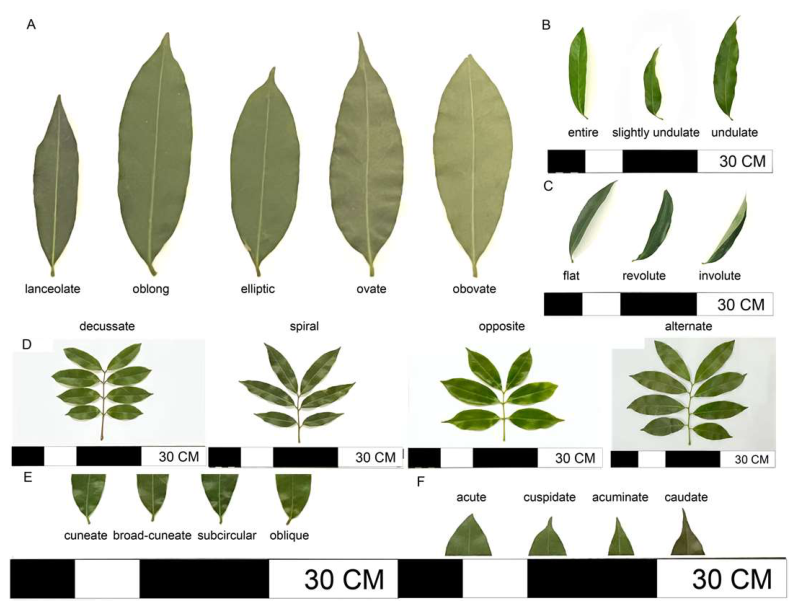
2.2. Evaluation of Leaf Traits
2.3. DNA Extraction and ISSR Genotyping
2.4. Evaluation of Genetic Parameters
2.5. Clustering Analysis
2.6. Core Collection Development
3. Results
3.1. Geographic Distribution of L. chinensis var. fulvosus Germplasm Resources
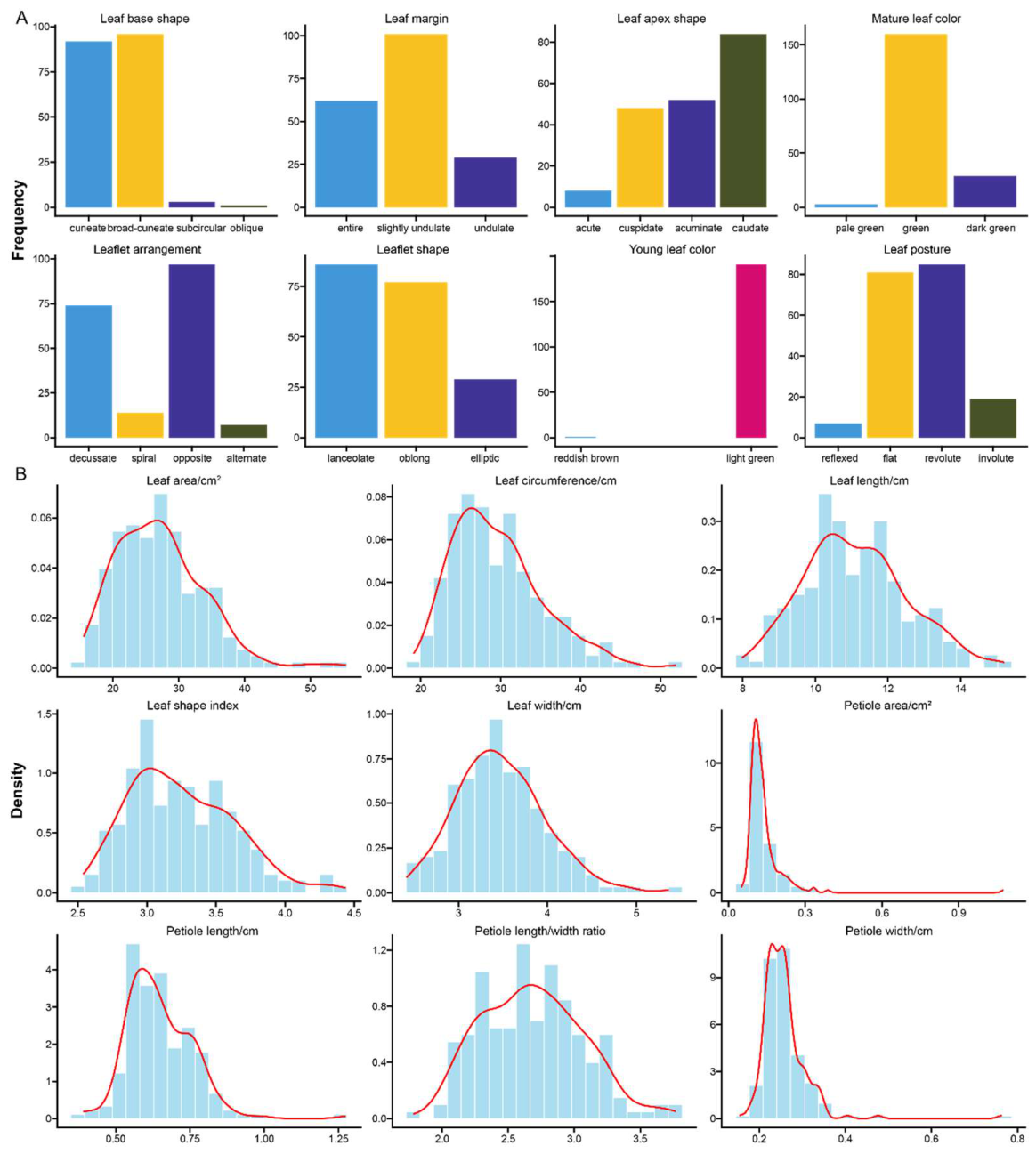
3.2. Variation in Leaf Traits of L. chinensis var. fulvosus Germplasm Resources
3.3. Molecular Variation in L. chinensis var. fulvosus
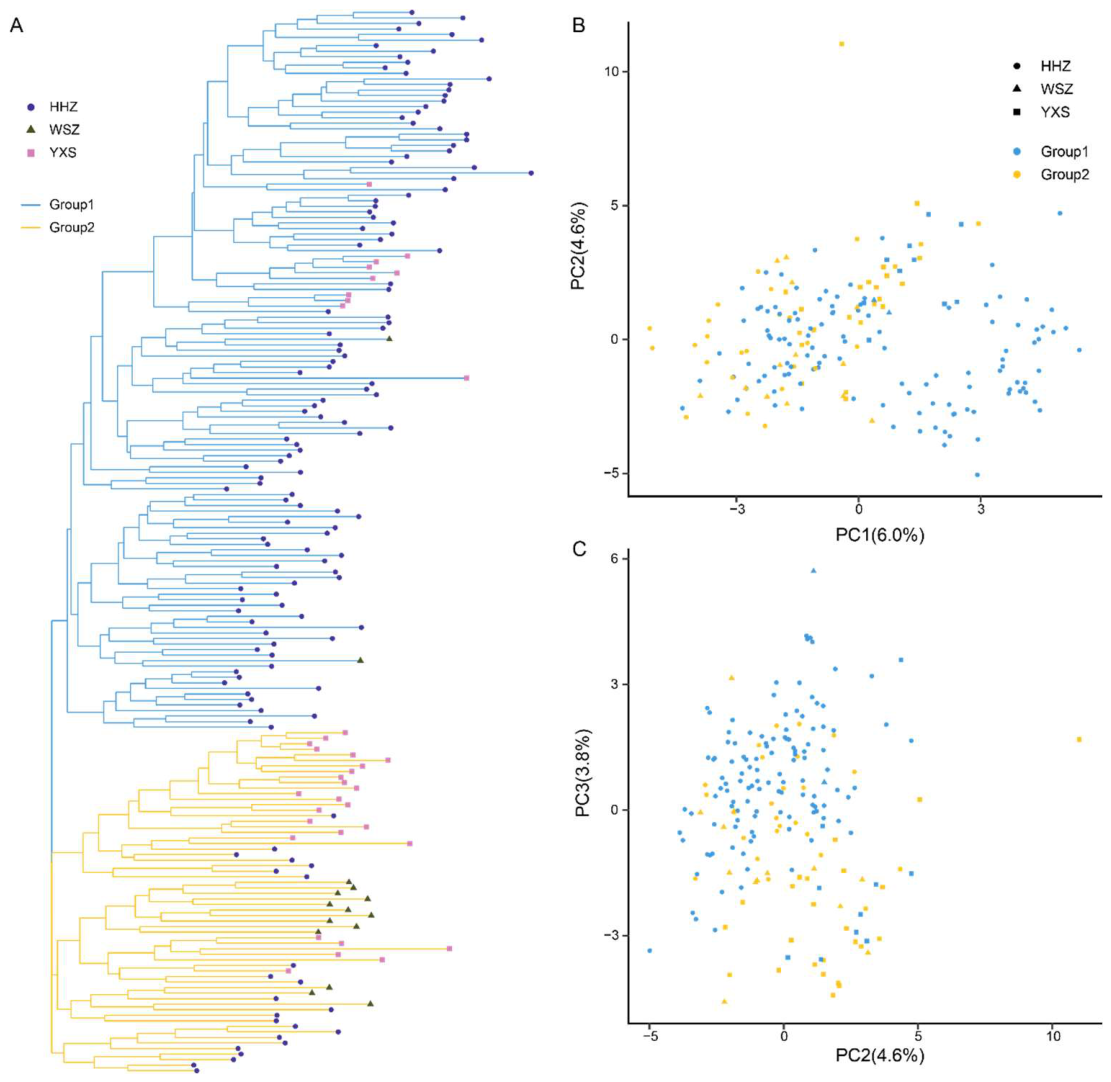
3.4. Clustering Analysis of L. chinensis var. fulvosus
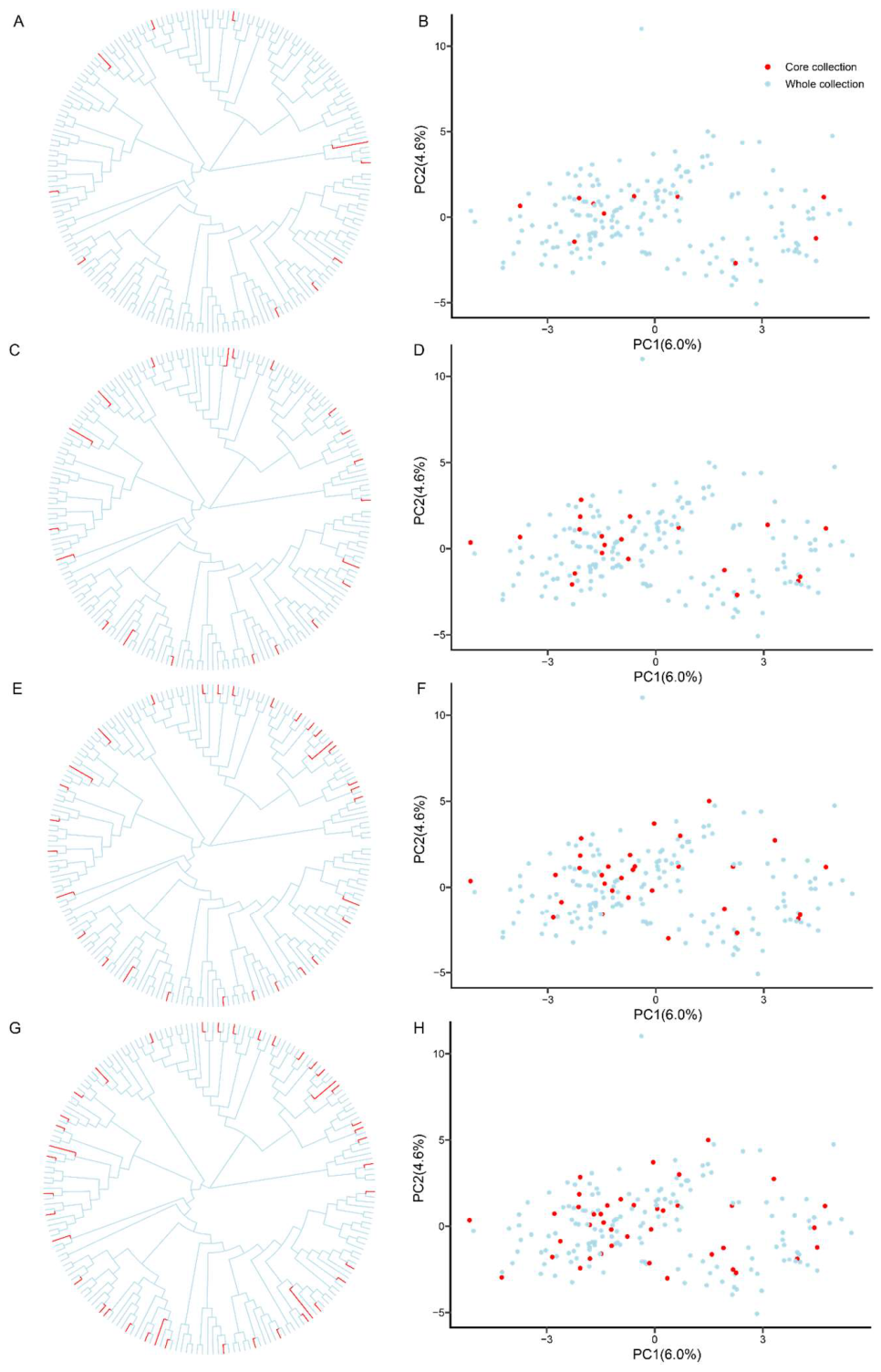
3.5. Development and Evaluation of the Core Collection
4. Discussion
Supplementary Materials
Author Contributions
Funding
Data Availability Statement
Conflicts of Interest
References
- Hu, G.; Feng, J.; Xiang, X.; Wang, J.; Salojarvi, J.; Liu, C.; Wu, Z.; Zhang, J.; Liang, X.; Jiang, Z.; et al. Two divergent haplotypes from a highly heterozygous lychee genome suggest independent domestication events for early and late-maturing cultivars. Nat. Genet. 2022, 54, 73–83. [Google Scholar] [CrossRef]
- Zhang, H.; Gao, X.; Wang, Y.; Wang, Y.; Song, Y.; Zuo, Y.; Zhang, C.; Li, X.; Rao, X.; Luo, X. Ancient Trees of Litchi chinensis var. fulvosus: Resource Investigation. J. Agric. Sci. 2020, 10, 77. [Google Scholar]
- Nadeem, M.A.; Nawaz, M.A.; Shahid, M.Q.; Doğan, Y.; Comertpay, G.; Yıldız, M.; Hatipoğlu, R.; Ahmad, F.; Alsaleh, A.; Labhane, N. DNA molecular markers in plant breeding: Current status and recent advancements in genomic selection and genome editing. Biotechnol. Biotechnol. Equip. 2018, 32, 261–285. [Google Scholar] [CrossRef]
- Botstein, D.; White, R.L.; Skolnick, M.; Davis, R.W. Construction of a genetic linkage map in man using restriction fragment length polymorphisms. Am. J. Hum. Genet. 1980, 32, 314. [Google Scholar] [PubMed]
- Hadrys, H.; Balick, M.; Schierwater, B. Applications of random amplified polymorphic DNA (RAPD) in molecular ecology. Mol. Ecol. 1992, 1, 55–63. [Google Scholar] [CrossRef]
- Rafalski, A. Applications of single nucleotide polymorphisms in crop genetics. Curr. Opin. Plant Biol. 2002, 5, 94–100. [Google Scholar] [CrossRef]
- Powell, W.; Machray, G.C.; Provan, J. Polymorphism revealed by simple sequence repeats. Trends Plant Sci. 1996, 1, 215–222. [Google Scholar] [CrossRef]
- Pradeep Reddy, M.; Sarla, N.; Siddiq, E. Inter simple sequence repeat (ISSR) polymorphism and its application in plant breeding. Euphytica 2002, 128, 9–17. [Google Scholar] [CrossRef]
- Ebana, K.; Kojima, Y.; Fukuoka, S.; Nagamine, T.; Kawase, M. Development of mini core collection of Japanese rice landrace. Breed. Sci. 2008, 58, 281–291. [Google Scholar] [CrossRef]
- Li, Y.; Shi, Y.; Cao, Y.; Wang, T. Establishment of a core collection for maize germplasm preserved in Chinese National Genebank using geographic distribution and characterization data. Genet. Resour. Crop Evol. 2005, 51, 845–852. [Google Scholar] [CrossRef]
- Balfourier, F.; Roussel, V.; Strelchenko, P.; Exbrayat-Vinson, F.; Sourdille, P.; Boutet, G.; Koenig, J.; Ravel, C.; Mitrofanova, O.; Beckert, M. A worldwide bread wheat core collection arrayed in a 384-well plate. Theor. Appl. Genet. 2007, 114, 1265–1275. [Google Scholar] [CrossRef] [PubMed]
- Oliveira, M.F.; Nelson, R.L.; Geraldi, I.O.; Cruz, C.D.; de Toledo, J.F.F. Establishing a soybean germplasm core collection. Field Crops Res. 2010, 119, 277–289. [Google Scholar] [CrossRef]
- Chandra, S.; Huaman, Z.; Hari Krishna, S.; Ortiz, R. Optimal sampling strategy and core collection size of Andean tetraploid potato based on isozyme data–a simulation study. Theor. Appl. Genet. 2002, 104, 1325–1334. [Google Scholar] [CrossRef]
- Wang, P.; Cao, X.; Zhang, H.; Li, H.; Zhang, H.; Li, S.; Hong, J.; Zheng, J.; Luo, X.; Chen, C. Genomic insights into selective signals and local adaptation of a litchi subspecies. Mol. Hortic. 2026, 6, 23. [Google Scholar] [CrossRef]
- Lu, G.; Huang, C.; Liu, Y.; Liao, H.; Ding, F.; Luo, H.; Li, D.; Li, H.; Peng, H.; Zhu, J. Genetic diversity of 24 ancient litchi germplasm resources using ISSR molecular marker. J. South. Agric. 2017, 48, 197. [Google Scholar]
- Long, Y.; Cheng, J.; Mei, Z.; Zhao, L.; Wei, C.; Fu, S.; Khan, M.A.; Fu, J. Genetic analysis of litchi (Litchi chinensis Sonn.) in southern China by improved random amplified polymorphic DNA (RAPD) and inter-simple sequence repeat (ISSR). Mol. Biol. Rep. 2015, 42, 159–166. [Google Scholar] [CrossRef]
- Shen, Q.; Zhu, J.; Peng, H.; He, X. Genetic diversity of early-maturing seedling litchi resources in southwest Guangxi by ISSR. Guihaia 2013, 33, 225. [Google Scholar]
- Degani, C.; Deng, J.; Beiles, A.; El-Batsri, R.; Goren, M.; Gazit, S. Identifying lychee (Litchi chinensis Sonn.) cultivars and their genetic relationships using intersimple sequence repeat (ISSR) markers. J. Am. Soc. Hortic. Sci. 2003, 128, 838–845. [Google Scholar] [CrossRef]
- Shannon, C.E. A mathematical theory of communication. Bell Syst. Tech. J. 1948, 27, 379–423. [Google Scholar] [CrossRef]
- Smouse, P.E.; Banks, S.C.; Peakall, R. Converting quadratic entropy to diversity: Both animals and alleles are diverse, but some are more diverse than others. PLoS ONE 2017, 12, e0185499. [Google Scholar] [CrossRef] [PubMed]
- Paradis, E.; Claude, J.; Strimmer, K. APE: Analyses of phylogenetics and evolution in R language. Bioinformatics 2004, 20, 289–290. [Google Scholar] [CrossRef] [PubMed]
- Kaufman, L.; Rousseeuw, P.J. Finding Groups in Data: An Introduction to Cluster Analysis; John Wiley & Sons: Hoboken, NJ, USA, 1990. [Google Scholar]
- Yu, G.; Smith, D.K.; Zhu, H.; Guan, Y.; Lam, T.T.-Y. ggtree: An r package for visualization and annotation of phylogenetic trees with their covariates and other associated data. Methods Ecol. Evol. 2017, 8, 28–36. [Google Scholar] [CrossRef]
- Lê, S.; Josse, J.; Husson, F. FactoMineR: An R Package for Multivariate Analysis. J. Stat. Softw. 2008, 25, 1–18. [Google Scholar] [CrossRef]
- Revell, L.J. phytools: An R package for phylogenetic comparative biology (and other things). Methods Ecol. Evol. 2012, 3, 217–223. [Google Scholar] [CrossRef]
- Devi, A.; Iqbal, T.; Wani, I.A.; Sharma, G.; Verma, S.; Noureldeen, A.; Darwish, H. Assessment of variability among morphological and molecular characters in wild populations of mint [Mentha longifolia (L.) L.] germplasm. Saudi J. Biol. Sci. 2022, 29, 3528–3538. [Google Scholar] [CrossRef]
- Duminil, J.; Di Michele, M. Plant species delimitation: A comparison of morphological and molecular markers. Plant Biosyst. 2009, 143, 528–542. [Google Scholar] [CrossRef]
- Patzak, J. Comparison of RAPD, STS, ISSR and AFLP molecular methods used for assessment of genetic diversity in hop (Humulus lupulus L.). Euphytica 2001, 121, 9–18. [Google Scholar] [CrossRef]
- Crespel, L.; Pernet, A.; Le Bris, M.; Gudin, S.; Oyant, L.H.S. Application of ISSRs for cultivar identification and assessment of genetic relationships in rose. Plant Breed. 2009, 128, 501–506. [Google Scholar] [CrossRef]
- Venkat, S.K.; Bommisetty, P.; Patil, M.S.; Reddy, L.; Chennareddy, A. The genetic linkage maps of Anthurium species based on RAPD, ISSR and SRAP markers. Sci. Hortic. 2014, 178, 132–137. [Google Scholar] [CrossRef]
- Assefa, K.; Merker, A.; Tefera, H. Inter simple sequence repeat (ISSR) analysis of genetic diversity in tef [Eragrostis tef (Zucc.) Trotter]. Hereditas 2003, 139, 174–183. [Google Scholar] [CrossRef] [PubMed]
- Li, H.; Ruan, C.-J.; da Silva, J.A.T. Identification and genetic relationship based on ISSR analysis in a germplasm collection of sea buckthorn (Hippophae L.) from China and other countries. Sci. Hortic. 2009, 123, 263–271. [Google Scholar] [CrossRef]
- Zhang, L.; Wang, P.; Li, F.; Xu, L.; Zhao, J.; Fu, J.; Wang, J.; Zhang, H.; Li, S.; Hong, J.; et al. Litchi40K v1.0: A cost-effective, flexible and versatile liquid SNP chip for genetic analysis and digitalization of germplasm resources in litchi. Hortic. Res. 2025, 12, uhaf038. [Google Scholar] [CrossRef] [PubMed]
- Sun, Q.-M.; Bai, L.; Ke, L.; Xiang, X.; Zhao, J.; Ou, L. Developing a core collection of litchi (Litchi chinensis Sonn.) based on EST-SSR genotype data and agronomic traits. Sci. Hortic. 2012, 146, 29–38. [Google Scholar] [CrossRef]
- Wang, J.; Hu, J.; Xu, H.-M.; Zhang, S. A strategy on constructing core collections by least distance stepwise sampling. Theor. Appl. Genet. 2007, 115, 1–8. [Google Scholar] [CrossRef]
- Odong, T.L.; Jansen, J.; Van Eeuwijk, F.A.; van Hintum, T.J. Quality of core collections for effective utilisation of genetic resources review, discussion and interpretation. Theor. Appl. Genet. 2012, 126, 289–305. [Google Scholar] [CrossRef] [PubMed]



| No. | Origin | Accession | Latitude and Longitude | Altitude/m | Tree Height/m | Trunk Girth/m | Crown Diameter/m × m | Tree Age |
|---|---|---|---|---|---|---|---|---|
| 1~50 | Pinbian | 50 | 103°37′~103°45′ E, 23°00′~23°02′ N | 337.87~1160.14 | 3.50~14.50 | 0.86~5.31 | 1.80 × 1.50 ~16.20 × 15.30 | 50~500 |
| 51~78 | Xinpin | 28 | 101°24′~101°47′ E, 23°47′~24°14′ N | 475.20~1209.68 | 7.30~10.00 | 0.87~3.70 | 4.50 × 3.90 ~19.80 × 20.80 | 50~400 |
| 79~86 | Yuanjiang | 8 | 102°03′~102°07′ E, 23°29′~23°39′ N | 520.17~1422.11 | 10.50~16.20 | 0.77~4.50 | 5.40 × 6.20 ~16.00 × 14.30 | 50~500 |
| 87~148 | Yuanyang | 62 | 102°38′~103°01′ E, 22°59′~23°16′ N | 239.90~1214.77 | 6.20~16.90 | 0.80~4.92 | 6.20 × 5.10 ~19.83 × 20.23 | 50~300 |
| 149~150 | Shiping | 2 | 102°21′ E, 23°51′ N | 1123.40~1129.46 | 5.40~8.00 | 1.15~1.55 | 6.70 × 7.20 ~8.89 × 7.87 | 100~200 |
| 151~163 | Jianshui | 13 | 102°38′~102°51′ E, 23°12′~23°20′ N | 237.22~1302.14 | 7.80~17.20 | 1.14~4.36 | 6.23 × 7.35 ~16.45 × 16.90 | 100~400 |
| 164~170 | Jinping | 7 | 103°14′~103°34′ E, 22°50′~23°02′ N | 130.86~1129.36 | 9.00~22.00 | 1.55~4.65 | 8.70 × 7.50 ~26.20 × 25.70 | 200~500 |
| 171~173 | Hekou | 3 | 103°53′~103°54′ E, 22°33′~22°34′ N | 102.87~149.55 | 12.00~13.00 | 1.28~1.68 | 8.25 × 7.76 ~10.26 × 15.75 | 100~200 |
| 174~188 | Malipo | 15 | 104°40′~104°53′ E, 22°59′~23°12′ N | 489.72~908.38 | 12.30~20.20 | 1.70~4.92 | 7.30 × 14.65 ~21.35 × 20.50 | 100~500 |
| 189~192 | Lvchun | 4 | 102°11′~102°32′ E, 22°39′~22°50′ N | 1055.80~1470.34 | 9.70~17.30 | 1.09~2.64 | 5.50 × 6.12 ~12.60 × 14.20 | 100~300 |
| Trait | Initial Population | CC1 | CC2 | CC3 | CC4 |
|---|---|---|---|---|---|
| Sampling ratio (%) | 100 | 5 | 10 | 15 | 20 |
| Number of accessions | 192 | 10 | 20 | 30 | 40 |
| Leaflet arrangement | 1.48 | 1.30 | 1.22 | 1.14 | 1.26 |
| Leaflet shape | 1.46 | 1.52 | 1.56 | 1.52 | 1.52 |
| Leaf base shape | 1.14 | 1.30 | 1.37 | 1.35 | 1.38 |
| Leaf apex shape | 1.73 | 1.97 | 1.86 | 1.89 | 1.89 |
| Leaf posture | 1.55 | 1.57 | 1.35 | 1.89 | 1.84 |
| Leaf margin | 1.43 | 1.37 | 1.35 | 1.46 | 1.48 |
| Young leaf color | 0.05 | 0.69 | 0.29 | 0.21 | 0.17 |
| Mature leaf color | 0.72 | 1.16 | 0.88 | 0.77 | 0.71 |
| Leaf length | 3.01 | 2.45 | 2.80 | 2.95 | 2.87 |
| Leaf width | 2.96 | 2.45 | 2.71 | 2.74 | 2.85 |
| Leaf shape index | 2.92 | 2.65 | 2.56 | 2.61 | 2.55 |
| Leaf area | 2.90 | 2.45 | 2.73 | 2.69 | 2.68 |
| Leaf circumference | 2.84 | 1.69 | 2.63 | 2.69 | 2.61 |
| Petiole length | 2.74 | 2.65 | 2.47 | 2.81 | 2.78 |
| Petiole width | 2.42 | 2.45 | 2.52 | 2.57 | 2.72 |
| Petiole length/width ratio | 2.91 | 2.52 | 2.57 | 2.71 | 2.85 |
| Petiole area | 0.73 | 1.16 | 0.88 | 0.77 | 0.71 |
| Allele number (Na) | 1.71 | 1.45 | 1.49 | 1.55 | 1.55 |
| Number of effective alleles (Ne) | 1.35 | 1.30 | 1.32 | 1.34 | 1.32 |
| Shannon-Wiener diversity index (I) | 0.32 | 0.26 | 0.27 | 0.30 | 0.29 |
| Expected heterozygosity (He) | 0.21 | 0.17 | 0.18 | 0.20 | 0.19 |
Disclaimer/Publisher’s Note: The statements, opinions and data contained in all publications are solely those of the individual author(s) and contributor(s) and not of MDPI and/or the editor(s). MDPI and/or the editor(s) disclaim responsibility for any injury to people or property resulting from any ideas, methods, instructions or products referred to in the content. |
© 2026 by the authors. Licensee MDPI, Basel, Switzerland. This article is an open access article distributed under the terms and conditions of the Creative Commons Attribution (CC BY) license.
Share and Cite
Wang, P.; Cao, X.; Zhang, H.; Li, H.; Zhang, H.; Li, S.; Hong, J.; Zheng, J.; Luo, X.; Yang, Z.; et al. Genetic Characterization and Core Collection Development of Litchi chinensis var. fulvosus Using Leaf Phenotypic Traits and ISSR Markers. Horticulturae 2026, 12, 556. https://doi.org/10.3390/horticulturae12050556
Wang P, Cao X, Zhang H, Li H, Zhang H, Li S, Hong J, Zheng J, Luo X, Yang Z, et al. Genetic Characterization and Core Collection Development of Litchi chinensis var. fulvosus Using Leaf Phenotypic Traits and ISSR Markers. Horticulturae. 2026; 12(5):556. https://doi.org/10.3390/horticulturae12050556
Chicago/Turabian StyleWang, Pengfei, Xueren Cao, Hui Zhang, Huanling Li, Huiyun Zhang, Songgang Li, Jiwang Hong, Jian Zheng, Xinping Luo, Ziqin Yang, and et al. 2026. "Genetic Characterization and Core Collection Development of Litchi chinensis var. fulvosus Using Leaf Phenotypic Traits and ISSR Markers" Horticulturae 12, no. 5: 556. https://doi.org/10.3390/horticulturae12050556
APA StyleWang, P., Cao, X., Zhang, H., Li, H., Zhang, H., Li, S., Hong, J., Zheng, J., Luo, X., Yang, Z., Zhang, L., & Wang, J. (2026). Genetic Characterization and Core Collection Development of Litchi chinensis var. fulvosus Using Leaf Phenotypic Traits and ISSR Markers. Horticulturae, 12(5), 556. https://doi.org/10.3390/horticulturae12050556