Article

Effects of Rootstock Selection on Growth, Yield, and Fruit Quality of ‘IAPAR 73’ Sweet Orange Under Subtropical Conditions

by
Deived Uilian de Carvalho
1,2,*,
Maria Aparecida da Cruz-Bejatto
1,2,
Ronan Carlos Colombo
3,
Inês Fumiko Ubukata Yada
1,
Rui Pereira Leite Junior
1 and
Zuleide Hissano Tazima
1
1
Instituto de Desenvolvimento Rural do Paraná—IAPAR/Emater (IDR-Paraná), km 375 Celso Garcia Cid Road, Londrina 86047-902, Paraná, Brazil
2
Centro de Ciências Agrárias, Universidade Estadual de Londrina (UEL), km 380 Celso Garcia Cid Road, Londrina 86057-970, Paraná, Brazil
3
Centro de Ciências Agrárias, Universidade Estadual de Maringá (UEM), 5790 Avenida Colombo, Maringá 87020-900, Paraná, Brazil
*
Author to whom correspondence should be addressed.
Horticulturae 2026, 12(5), 542; https://doi.org/10.3390/horticulturae12050542
Submission received: 26 March 2026 / Revised: 21 April 2026 / Accepted: 24 April 2026 / Published: 29 April 2026
(This article belongs to the Special Issue Effect of Rootstock on Fruit Production and Quality)

Abstract

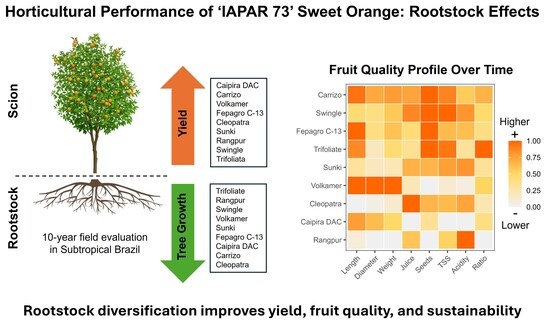
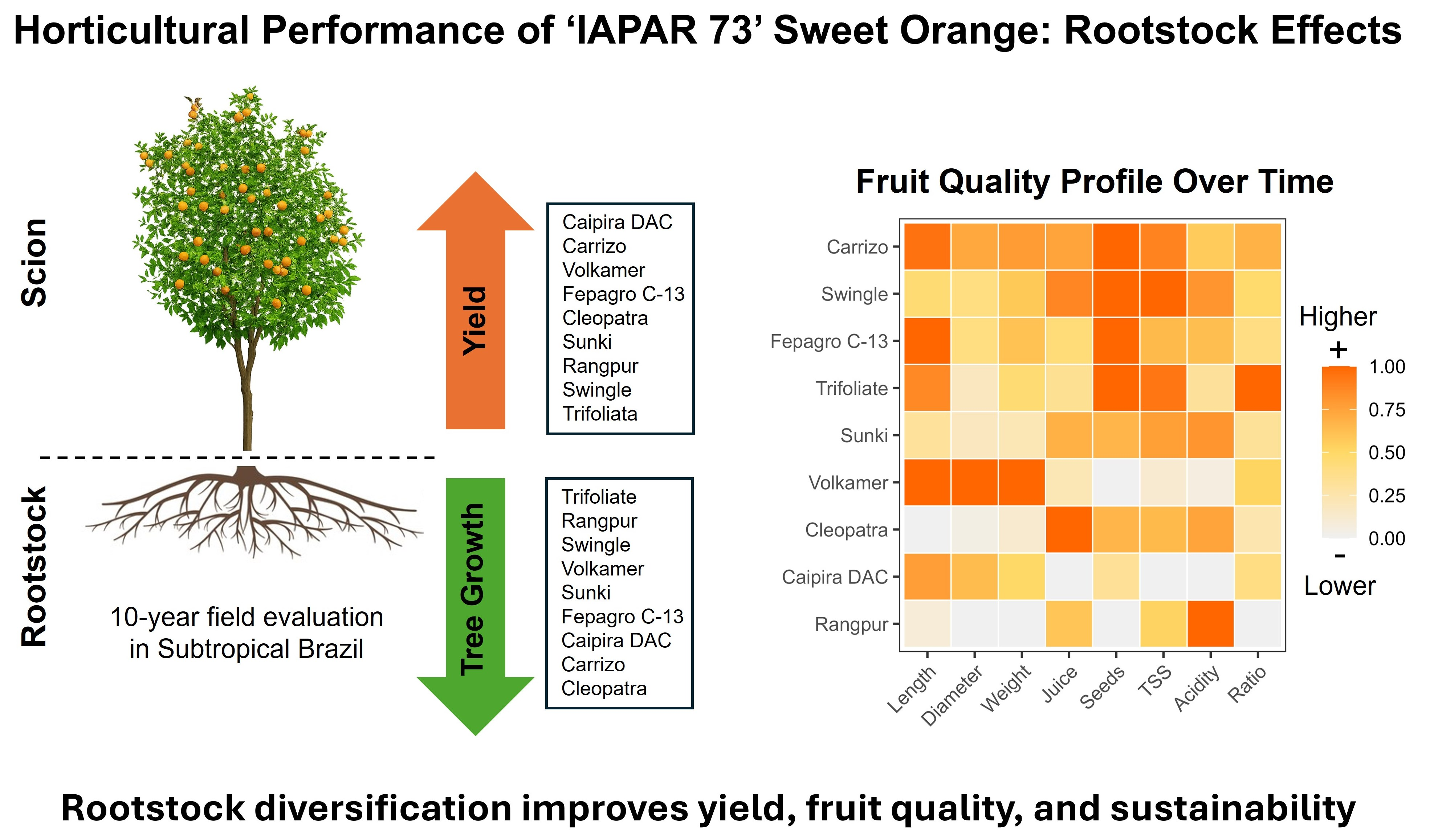
Rootstock strongly influences citrus tree performance, but information remains limited for some regionally important cultivars. ‘IAPAR 73’, an early-season sweet orange commonly grown in Paraná, Brazil, has not been previously evaluated for rootstock responses. This study assessed the long-term effects of nine rootstocks, including ‘Rangpur’ lime, ‘Swingle’ citrumelo, ‘Volkamer’ lemon, ‘Caipira DAC’ and ‘Trifoliate’ oranges, ‘Cleopatra’ and ‘Sunki’ mandarins, ‘Carrizo’ and ‘Fepagro C-13’ citranges, on vegetative growth, yield, production stability, and fruit quality under Brazilian subtropical conditions. Tree growth was monitored annually for 10 years (2003–2013) and analyzed at establishment (5 years) and full production (10 years) phases of the orchard. Yield and fruit quality were evaluated across multiple harvests, and total soluble solids (TSS) stability was quantified using the coefficient of variation. Rootstock effects were analyzed using linear mixed-effects models in a randomized complete block design, considering rootstock and year as fixed effects and blocks as random effects. Rootstock significantly influenced all evaluated traits. ‘Carrizo’, ‘Cleopatra’, ‘Sunki’, and ‘Caipira DAC’ induced vigorous canopy growth and higher cumulative yields to the scion, while ‘Volkamer’ showed high yield efficiency and production stability. ‘Swingle’ and ‘Trifoliate’ enhanced TSS, TSS/TA ratios, and juice quality stability but induced lower vigor and yield, similar to ‘Rangpur’. This study provides the first evidence-based guidance for ‘IAPAR 73’ production, demonstrating that rootstock diversification can maximize productivity, stability, and sustainability in citrus orchards.

Graphical Abstract

1. Introduction

Citrus cultivation in the warm-humid subtropical and tropical regions of Brazil is strongly influenced by environmental conditions and management practices, which together determine orchard productivity, longevity, and fruit quality. In this context, the state of Paraná stands out as an important citrus-producing area in Brazil, ranking as the third-largest producer of sweet orange (Citrus × sinensis [L.] Osbeck), with approximately 715 thousand tons harvested, behind the states of São Paulo and Minas Gerais [1]. The expansion and consolidation of citrus production in Paraná have been supported by favorable edaphoclimatic conditions and the adoption of improved management practices over the last few decades. Until the late 1980s, citrus cultivation was prohibited across most regions of Paraná due to the widespread incidence of citrus canker (caused by the Xanthomonas citri subsp. citri) and the absence of effective control strategies [2]. The implementation of integrated management practices since the 1990s enabled the expansion and consolidation of citrus production in the state [2,3].
Rootstock selection is an important factor in citrus production systems, as it regulates multiple horticultural traits of citrus trees, including vigor, yield, adaptation to soil and climatic conditions, resistance to pests and diseases, and fruit quality attributes such as size, acidity, and soluble solids content (TSS) [4]. In Brazil, the prevalent use of specific rootstocks for orange production, particularly ‘Rangpur’ lime (C. × limonia Osb.) and ‘Swingle’ citrumelo (C. paradisi Macfad. cv. Duncan × Poncirus trifoliata (L.) Raf.) reflects their historical importance in supporting commercial growers. Although these rootstocks have been largely used for decades in Brazil, their performance can vary substantially depending on genotype × environment interactions, soil and climatic conditions, as well as orchard management practices, and scion–rootstock compatibility, which can significantly influence long-term productivity and stability.
Early studies have emphasized the importance of evaluating alternative rootstocks to improve citrus productivity and resilience across diverse regions worldwide [5,6,7]. In particular, long-term field trials are essential to capture cumulative effects on tree growth, yield efficiency, and fruit quality, which may vary over time due to environmental variability and plant developmental stages [8]. Additionally, rootstock diversification has been increasingly recognized as a key strategy to enhance orchard resilience and sustainability, reducing dependence on a limited number of genotypes and improving adaptability to different production environments.
More recently, advances in rootstock selection and evaluation have highlighted substantial genetic variation for traits related to vigor, yield efficiency, and stress tolerance, enabling the identification of promising new hybrids for commercial use [9]. In addition, the adoption of dwarfing and semi-dwarfing rootstocks has gained attention as a strategy to support high-density plantings, improve land-use efficiency, and enhance orchard management efficiency [10,11,12,13,14,15,16].
The ‘IAPAR 73’ sweet orange, an early-season cultivar developed and evaluated at research stations of the Instituto de Desenvolvimento Rural do Paraná (IDR-Paraná), has demonstrated promising agronomic performance and early harvest under subtropical conditions, enabling an early onset of industrial juice processing [17,18,19]. Despite its regional importance, information on its long-term performance when grafted onto different rootstocks remains limited, particularly under the environmental conditions of southern Brazil.
Moreover, assessing a broad range of rootstocks under local climatic conditions provides critical insight into their long-term performance and adaptability. In this context, the present study evaluates the horticultural performance of nine rootstocks grafted with ‘IAPAR 73’ sweet orange in southern Brazil over ten years (2003–2013). Tree vigor, yield, and fruit quality were systematically analyzed to identify rootstock combinations that improve productivity and fruit quality while promoting diversification and long-term sustainability. These findings offer practical guidance to citrus growers and industry stakeholders seeking to enhance orchard resilience, profitability, and management efficiency through rootstock selection.

2. Materials and Methods

2.1. Location and Environmental Conditions

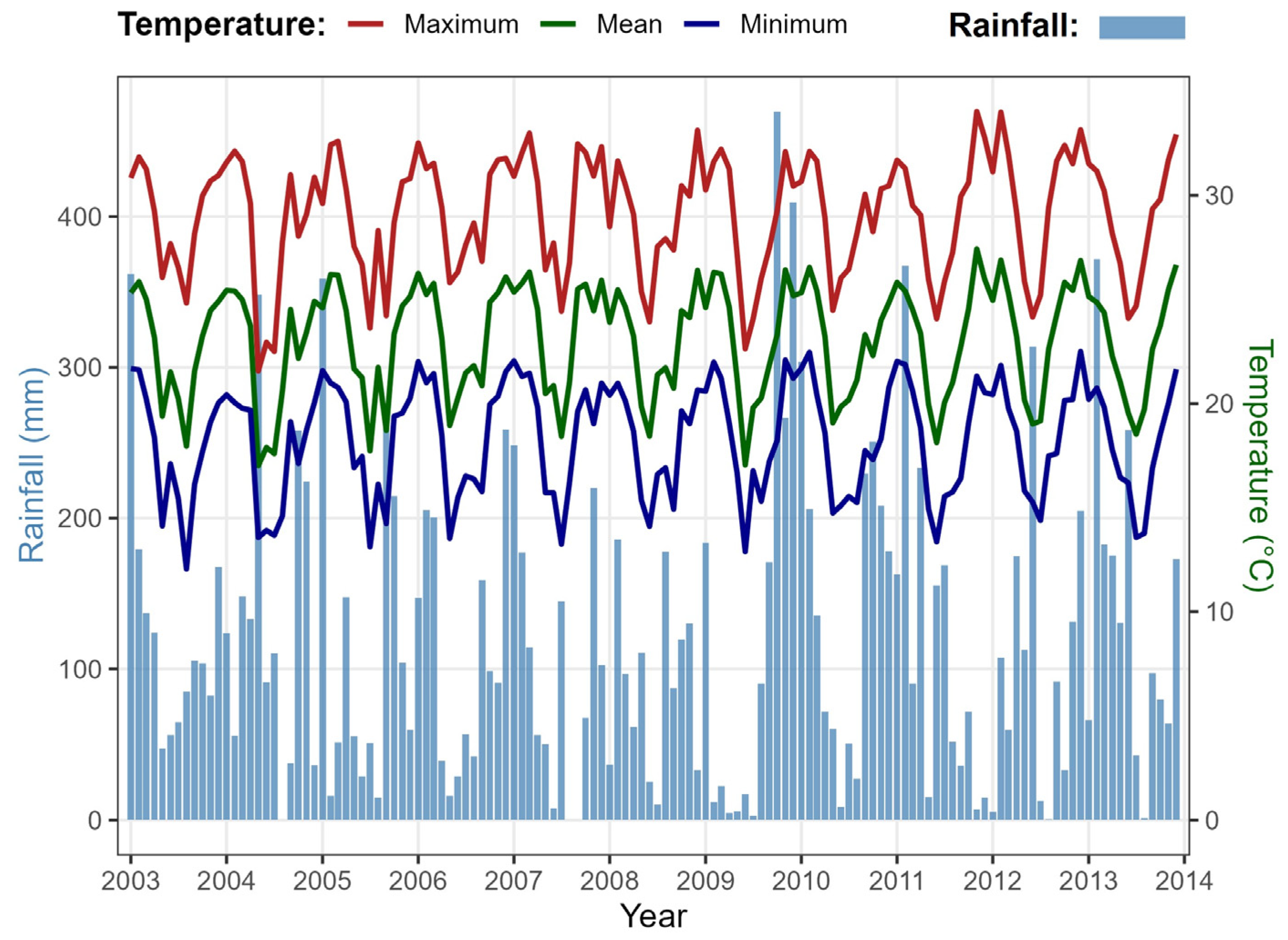
The study was conducted at the research station of the Instituto de Desenvolvimento Rural do Paraná (IDR-Paraná) located in Paranavaí, northwestern of the state of Paraná, southern Brazil (23°05′43.65″ S; 52°26′35.29″ W; 465 m a.s.l.), a major citrus-producing region in the state. According to the Köppen–Geiger classification, the regional climate is humid subtropical (Cfa), characterized by warm summers and mild winters. The soil at the location is classified as a Typic Hapludox, corresponding to a Latossolo Vermelho Eutrófico with sandy texture [20], consisting of approximately 87% sand, 11% clay, and 2% silt with a base saturation (V%) of 59, in the 0–40 cm soil layer, under flat to gently undulating relief (Table S1). Weather variables were recorded daily throughout the experimental period using a meteorological station located within approximately 1.0 km of the experimental area (Figure 1).

2.2. Plant Material and Treatments

Certified propagative materials were obtained from the Active Germplasm Bank of Citrus (AGB-Citrus) maintained by the IDR-Paraná in Londrina, Paraná, Brazil. Nursery trees of ‘IAPAR 73’ sweet orange [C. × sinensis [L.] Osb.; accession I-179] were grafted onto nine rootstocks: ‘Rangpur’ lime (C. × limonia Osb.), ‘Cleopatra’ mandarin (C. reshni hort. ex Tanaka), ‘Sunki’ mandarin (C. sunki hort. ex Tanaka), ‘Volkamer’ lemon (C. volkameriana [Risso] V. Ten. & Pasq.), ‘Carrizo’ citrange (C. × sinensis [L.] Osb. × P. trifoliata [L.] Raf.), ‘Fepagro C-13’ citrange (C. × sinensis [L.] Osb. × P. trifoliata [L.] Raf.), ‘Swingle’ citrumelo (C. paradisi Macfad. cv. Duncan × P. trifoliata [L.] Raf.), ‘Trifoliate’ orange (P. trifoliata [L.] Raf.), and ‘Caipira DAC’ sweet orange (C. × sinensis [L.] Osb.). Trees were established in February 2003 at a spacing of 7.0 m between rows and 6.5 m between trees (220 trees∙ha−1). The experimental layout followed a randomized complete block design with nine rootstock treatments, six blocks, and four trees per experimental plot. In each plot, the two central trees were used for data collection, while the two outer trees served as border trees to minimize edge effects. No tree mortality occurred during the 10-year evaluation period.

2.3. Orchard Management Practices

The orchard was managed according to the standard recommendations for commercial citrus production in the state of Paraná [18]. Nutrient management was guided by periodic soil chemical analyses, and fertilizers supplying nitrogen, phosphorus, potassium, boron, and zinc were applied about three times annually (August to March), with rates adjusted according to tree age and nutritional demand. Disease and pest control followed preventive and curative strategies recommended for the region [18], including routine copper sprays for citrus canker (caused by X. citri subsp. citri). Weed control consisted of mechanical mowing between rows (approximately four to six times per year) and chemical control within rows when necessary. Trees were rainfed throughout the experimental period and were neither irrigated nor subjected to pruning, thinning, or canopy training.

2.4. Vegetative Growth and Tree Size Measurements

Tree growth was assessed annually from August to September, from six months to ten years after planting (2003–2013). Tree height and mean canopy diameter were measured and used to estimate canopy volume (CV) according to the geometric model proposed by Mendel [21]:
C V = 2 3 × π   ×   C R 2 × T H ,
where CR is the canopy radius (m), and TH is the tree height (m).
Trunk circumference was measured using a flexible measuring tape at 10 cm above and below the graft union and subsequently converted to trunk diameter. The trunk index was calculated as the ratio between scion and rootstock trunk diameters, providing an indicator of graft compatibility and vigor balance.

2.5. Fruit Yield Assessment

Fruit yield was recorded annually in May from 2005 to 2013, covering nine consecutive harvest seasons. Cumulative yield per tree was calculated as the sum of annual yields across the experimental period. Yield efficiency was determined for the 2007–2013 seasons by relating fruit yield (kg∙tree−1) to canopy volume (m3), when trees had reached regular bearing, and expressed as kg∙m−3. Alternate bearing behavior was quantified using the alternate bearing index (ABI) described by Pearce and Doberšek-Urbanc [22]:
A B I = 1 n 1 × a 2 a 1 a 2 + a 1 + a 3 a 2 a 3 + a 2 + + a n a n 1 a n + a n 1 ,
where n represents the number of harvest years, and a1…an correspond to yields in successive seasons.

2.6. Fruit Sampling and Quality Evaluation

Fruit quality was assessed using samples of ten fruits per plot, randomly collected from the two central trees of each plot at a height of 1–2 m. Sampling was performed annually before harvests, typically in May, from 2007 to 2013. Data was averaged across the seven evaluated seasons. Fruit weight was determined using a digital scale, while fruit length and diameter were measured with a digital caliper (Mitutoyo Corporation, Kawasaki, Japan). Juice was extracted using a mechanical juicer (Croydon, Duque de Caxias, Brazil). Juice content (JC) was calculated as:
J C = J W F W × 100 ,
where JW is juice weight (g), and FW is fruit weight (g).
Total soluble solids (TSS) were measured in undiluted juice using a digital refractometer (PAL-3, Atago Co., Ltd., Tokyo, Japan) with automatic temperature correction to 20 °C, and results were expressed in °Brix. Titratable acidity (TA) was determined by titration with 0.1 N NaOH using an automatic titrator (TitroLine® easy, SCHOTT Instruments GmbH, Mainz, Germany), with phenolphthalein as the endpoint indicator, and expressed as grams of citric acid per 100 mL of juice [23]. The maturity index was calculated as the TSS/TA ratio. The technological index (TI, kg TSS∙box−1), representing the amount of TSS per standard citrus box (40.8 kg), was calculated following Di Giorgi et al. [24]:
T I = T S S × J C × 40.8 10,000 ,
where TSS is the total soluble solids (°Brix), and JC is the juice content (%).

2.7. Data Analyses and Graphical Visualizations

Vegetative growth, yield, and fruit quality data were analyzed using linear mixed-effects models under a randomized complete block design. Before analysis, model assumptions of normality and homoscedasticity were evaluated through residual diagnostics. For yield and fruit quality variables, rootstock and year were considered fixed effects, while blocks were treated as random effects to account for experimental variability. When significant effects were detected (p ≤ 0.05), means were compared using Tukey-adjusted pairwise comparisons based on estimated marginal means (emmeans).
Canopy volume dynamics were evaluated using regression models fitted to eleven consecutive annual measurements (2003–2013) to characterize age-dependent growth trends. Yield was assessed from the second to the tenth year after planting (2005–2013), while fruit quality attributes were assessed from the fourth to the tenth year (2007–2013). The temporal stability of TSS over the seasons was evaluated using the coefficient of variation (CV%), and rootstocks were grouped based on TSS stability relative to the median CV.
To integrate multiple traits and identify overall rootstock performance patterns, a principal component analysis (PCA) was conducted using standardized numeric variables. Mean PCA scores were calculated for each rootstock, with the proportion of variance explained by the first two principal components. All statistical analyses were performed in R (version 4.4.0; R Foundation for Statistical Computing, Vienna, Austria).

3. Results

3.1. Vegetative Growth

Rootstock significantly affected all vegetative growth parameters of ‘IAPAR 73’ orange trees during both the orchard establishment (five-year-old trees; 2008) and full production (ten-year-old trees; 2013) phases (Table 1 and Table 2). At both evaluation periods, rootstock effects were highly significant (p ≤ 0.001) for rootstock and scion trunk diameters, trunk diameter index, tree height, canopy diameter, and canopy volume. Five years after planting (2008), rootstock trunk diameter ranged from 10.1 cm for ‘Rangpur’ lime to 14.2 cm for ‘Fepagro C-13’ citrange (Table 1). ‘Caipira DAC’, ‘Carrizo’, ‘Cleopatra’, ‘Fepagro C-13’, ‘Sunki’, and ‘Volkamer’ induced significantly larger rootstock trunk diameters compared with ‘Rangpur’, ‘Swingle’, and ‘Trifoliate’. Scion trunk diameter followed a similar pattern, with ‘Caipira DAC’, ‘Cleopatra’, ‘Sunki’, and ‘Volkamer’ promoting the largest scion diameters (≥10.0 cm), whereas ‘Swingle’ and ‘Trifoliate’ resulted in the smallest values (≤7.4 cm). The trunk diameter index ranged from 0.59 to 0.85, with higher scion-to-rootstock ratios observed for ‘Rangpur’, ‘Caipira DAC’, ‘Cleopatra’, and ‘Sunki’, and lower indices for ‘Fepagro C-13’, ‘Swingle’, and ‘Trifoliate’.
Tree height was also influenced by rootstock, with ‘Caipira DAC’, ‘Carrizo’, ‘Cleopatra’, ‘Sunki’, and ‘Volkamer’ promoting the tallest trees (2.82–3.18 m). In contrast, ‘Rangpur’, ‘Swingle’, and ‘Trifoliate’ resulted in significantly shorter trees (<2.60 m). Canopy diameter showed a similar trend, with larger canopies observed for ‘Caipira DAC’, ‘Carrizo’, ‘Cleopatra’, ‘Sunki’, and ‘Volkamer’ (2.87–3.02 m), whereas smaller canopy diameters were recorded for ‘Rangpur’, ‘Swingle’, and ‘Trifoliate’ (2.33–2.48 m). Consequently, canopy volume varied from 6.7 to 15.0 m3, with the greatest volumes recorded for ‘Caipira DAC’, ‘Cleopatra’, ‘Sunki’, ‘Carrizo’, and ‘Volkamer’, and the smallest for ‘Trifoliate’, ‘Swingle’, and ‘Rangpur’ (Table 1).
Ten years after planting (2013), rootstock trunk diameter ranged from 13.6 to 21.4 cm (Table 2). ‘Carrizo’, ‘Cleopatra’, and ‘Fepagro C-13’ produced the largest rootstock trunk diameters (≥21.0 cm), whereas ‘Rangpur’ and ‘Trifoliate’ remained significantly smaller (≤15.4 cm). Scion trunk diameter also differed among rootstocks, with the highest values observed for ‘Cleopatra’, ‘Caipira DAC’, and ‘Sunki’ (≥15.7 cm) and the lowest for ‘Trifoliate’ and ‘Swingle’ (≤10.6 cm). Trunk diameter index values ranged from 0.55 to 0.85, with ‘Rangpur’ and ‘Caipira DAC’ showing the highest indices and ‘Fepagro C-13’, ‘Swingle’, and ‘Trifoliate’ the lowest.
Tree height during the full production phase was also influenced by rootstock, with ‘Cleopatra’, ‘Caipira DAC’, ‘Carrizo’, ‘Sunki’, and ‘Fepagro C-13’ inducing greater scion vigor with the tallest trees (3.99–4.30 m). ‘Trifoliate’ resulted in the shortest trees (2.88 m), followed by ‘Rangpur’ (3.21 m). Canopy diameter ranged from 3.31 to 4.66 m, with the largest canopies observed for ‘Cleopatra’ and ‘Carrizo’ and the smallest for ‘Trifoliate’, ‘Rangpur’, and ‘Swingle’. As a result, canopy volume varied largely among rootstocks, from 16.9 to 46.3 m3, with ‘Cleopatra’, ‘Carrizo’, ‘Caipira DAC’, ‘Sunki’, and ‘Fepagro C-13’ inducing the largest canopies, and ‘Trifoliate’, ‘Rangpur’, and ‘Swingle’ the smallest.
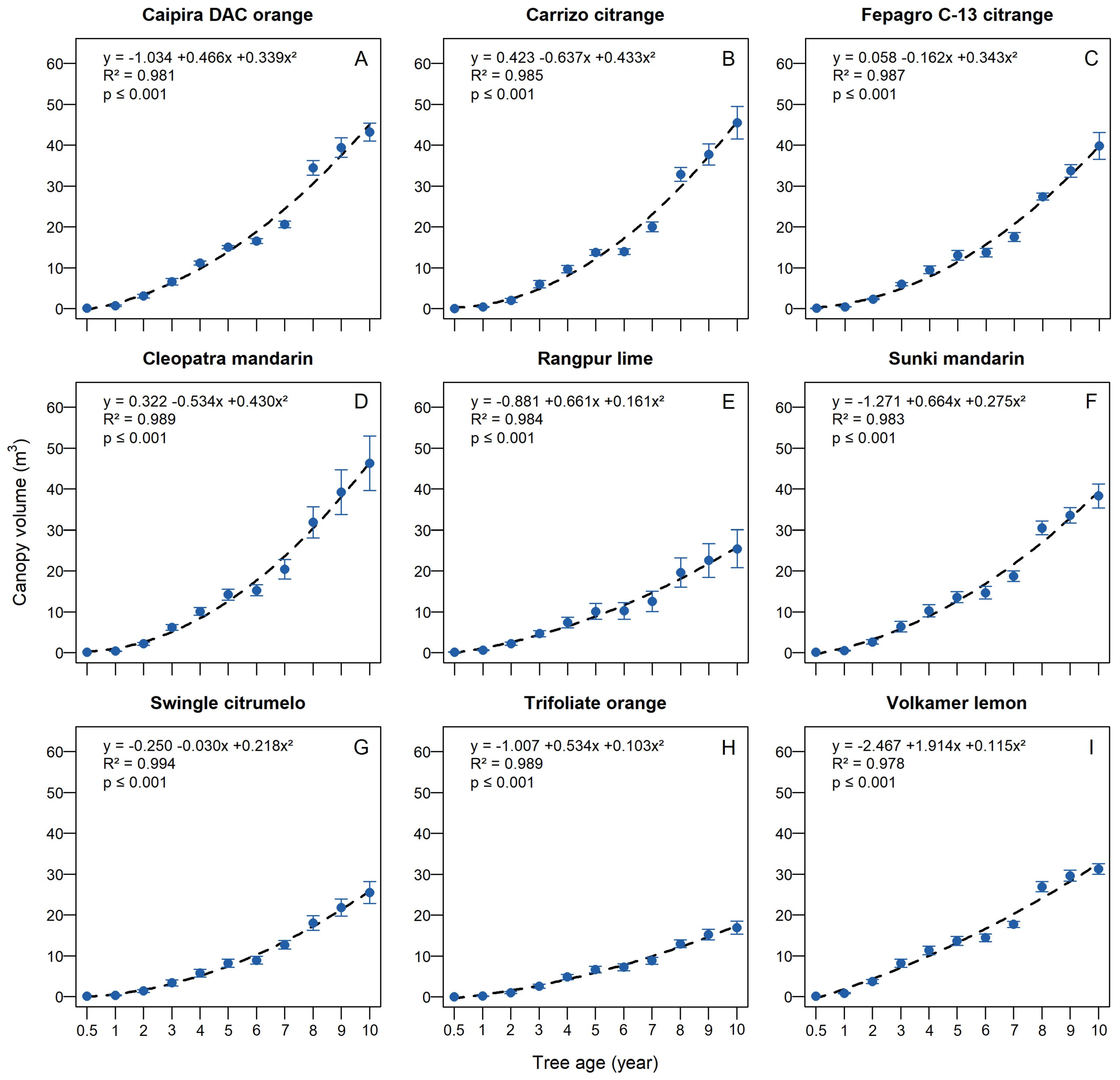
Regression analysis of canopy volume over time further supported these results (Figure 2). For all rootstocks, canopy volume increased nonlinearly with tree age and was best described by quadratic models, with high coefficients of determination (R2 = 0.978–0.994; p ≤ 0.001). Rootstocks that produced larger trees at five and ten years after planting, such as ‘Cleopatra’, ‘Carrizo’, ‘Caipira DAC’, and ‘Sunki’, consistently showed steeper growth curves and higher predicted canopy volumes over time. In contrast, ‘Trifoliate’, ‘Swingle’, and ‘Rangpur’ showed slower canopy expansion rates throughout the orchard lifespan. These temporal growth patterns indicate that rootstock effects on canopy size were established early and persisted or intensified as trees matured, reinforcing the differences observed in discrete measurements at five and ten years after planting.

3.2. Yield Performance and Bearing Behavior

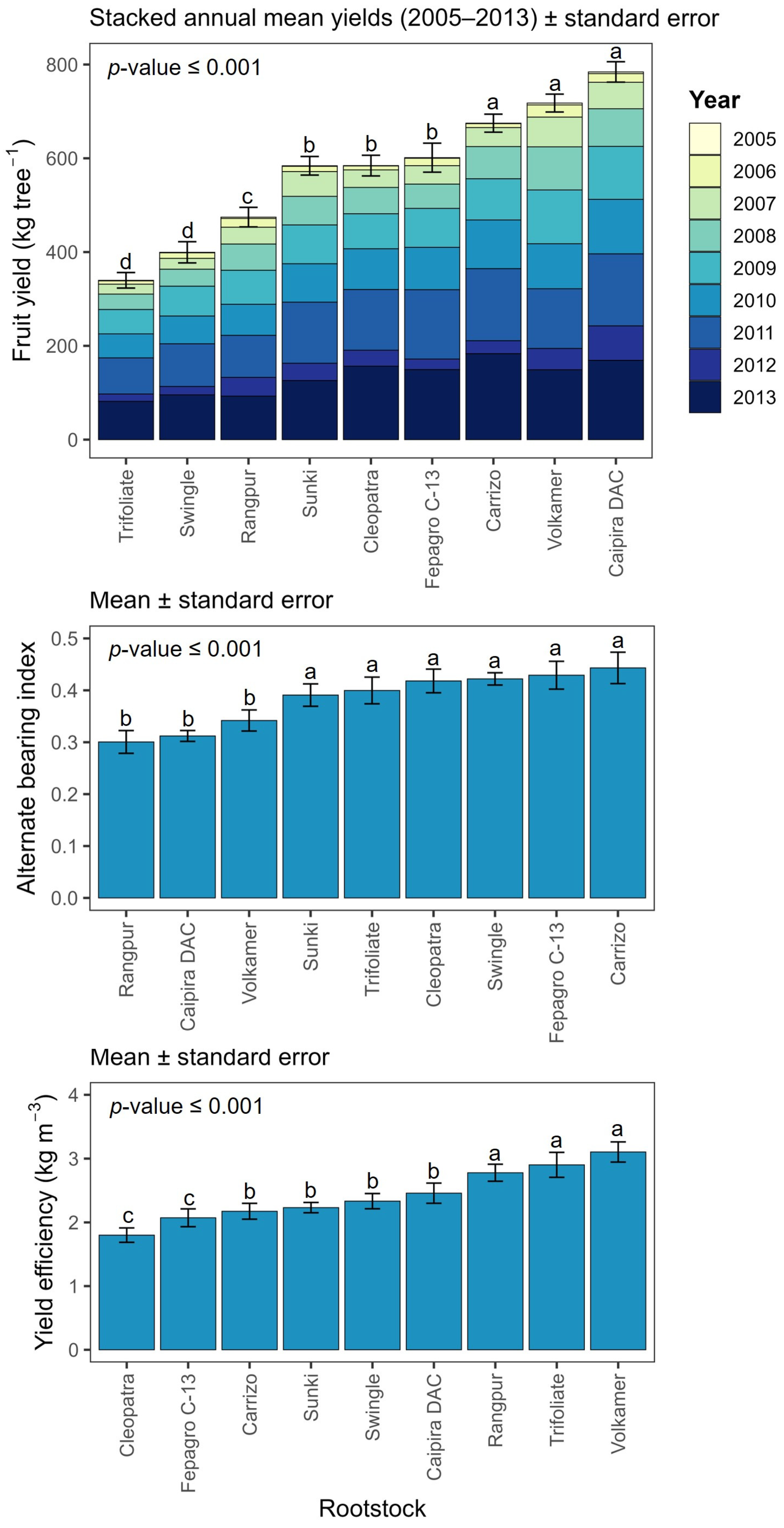
Fruit yield was significantly affected by rootstock and year throughout the evaluation period (2005 to 2013), with a significant rootstock × year interaction (p ≤ 0.001; Figure 3; Table 3 and Table S2). However, as the interaction did not alter the overall ranking of rootstocks across years, main effects are presented for clarity. Yield differences among rootstocks were evident from the initial bearing years and became more pronounced as trees matured (Table 3). During the early production phase (2005–2007), ‘Volkamer’ and ‘Caipira DAC’ consistently produced the highest yields, whereas ‘Carrizo’, ‘Cleopatra’, ‘Swingle’, and ‘Trifoliate’ had reduced early yields (Table S2). From 2008 onward, yield increased markedly across rootstocks; however, ‘Volkamer’, ‘Caipira DAC’, and ‘Carrizo’ maintained superior annual yields during peak production years, particularly from 2009 to 2013.
When averaged across years, rootstock effects on yield remained evident. ‘Caipira DAC’ (87.1 kg∙tree−1) and ‘Volkamer’ (79.8 kg∙tree−1) ranked among the most productive rootstocks, followed by ‘Carrizo’ (75.0 kg∙tree−1). Intermediate yields were observed for ‘Cleopatra’, ‘Fepagro C-13’, and ‘Sunki’, whereas ‘Swingle’ and ‘Trifoliate’ had the lowest means annual yields (≤44.4 kg∙tree−1). Across years, production increased progressively from planting, reaching peak values in 2011 (122.2 kg∙tree−1) and 2013 (133.7 kg∙tree−1), with a marked reduction in 2012, likely associated with intense drought conditions during fruit growth and development for this season (Figure 1).
Cumulative yield varied substantially among rootstocks over the nine years of evaluation (Figure 3). Trees grafted on ‘Caipira DAC’, ‘Volkamer’, and ‘Carrizo’ resulted in the highest cumulative yields, exceeding 670 kg∙tree−1, whereas ‘Swingle’ and ‘Trifoliate’ induced the lowest cumulative yields. Intermediate performance was observed for ‘Cleopatra’, ‘Fepagro C-13’, and ‘Sunki’. The alternate bearing index (ABI), a metric of inter-annual yield variability associated with biennial bearing, differed among rootstocks. Trees on ‘Carrizo’, ‘Cleopatra’, ‘Fepagro C-13’, ‘Sunki’, ‘Swingle’, and ‘Trifoliate’ showed higher ABI values (0.39–0.44), indicating higher yield variability across years. In contrast, trees grafted on ‘Caipira DAC’, ‘Rangpur’, and ‘Volkamer’ showed lower ABI values (0.30–0.34), reflecting more stable production patterns.
Yield efficiency was also influenced by rootstock (Figure 3). ‘Volkamer’, ‘Trifoliate’, and ‘Rangpur’ induced the highest yield efficiency (≥2.78 kg∙m−3), indicating greater yield per unit of canopy volume, whereas ‘Cleopatra’ and ‘Fepagro C-13’ showed the lowest efficiency (1.80 and 2.07 kg∙m−3, respectively). Therefore, rootstocks combining high cumulative yield with lower alternate bearing and greater efficiency, particularly ‘Volkamer’ and ‘Caipira DAC’, demonstrated excellent long-term yield performance for ‘IAPAR 73’.

3.3. Fruit and Juice Quality

Fruit and juice quality attributes were significantly influenced by rootstock, year, and their interaction across the seven evaluated seasons (2007–2013) (p ≤ 0.05; Table 4 and Table 5). Differences in fruit size among rootstocks were relatively small but consistent across years. Trees grafted on ‘Carrizo’, ‘Fepagro C-13’, ‘Trifoliate’, and ‘Volkamer’ produced larger fruits in terms of length (≥67.0 mm) and diameter (≥68 mm), whereas ‘Rangpur’, ‘Sunki’, and ‘Cleopatra’ tended to produce slightly smaller fruits. Fruit weight showed a modest but significant rootstock effect, ranging from 164 g in ‘Rangpur’ to 177 g in ‘Volkamer’, while seed number varied low, ranging from 2.1 to 2.4 seeds fruit−1. Juice content was strongly affected by rootstock. Higher juice percentages were observed in fruits from trees grafted on ‘Cleopatra’, ‘Carrizo’, ‘Sunki’, and ‘Swingle’ (≈49–50%), whereas ‘Caipira DAC’ and ‘Volkamer’ exhibited lower values (≤47%).
Seasonal variation had a pronounced impact on all physical fruit attributes. Fruit size and weight fluctuated markedly among years, with the largest and heaviest fruits recorded in 2012 (212 g; 69–71 mm), whereas reduced fruit size and weight were observed in 2009 and 2011 (≈140–142 g; 63–65 mm). Juice content also varied substantially, reaching higher values in 2007–2008 (≥51%) and declining sharply in 2010 (37%). Seed number followed a similar trend, with higher values in early seasons and lower values in later ones. The significant rootstock × year interaction indicates that the magnitude of rootstock effects varied across seasons, although general trends among rootstocks were maintained.
Internal juice quality was also significantly affected by rootstock, year, and their interaction (Table 5). Total soluble solids (TSS) were higher in fruits from trees on ‘Swingle’, ‘Trifoliate’, and ‘Carrizo’ (≥10.2 °Brix), whereas ‘Caipira DAC’ and ‘Volkamer’ had the lowest values (≤8.9 °Brix). Titratable acidity (TA) followed a similar pattern, with higher acidity in ‘Rangpur’, ‘Sunki’, ‘Swingle’, ‘Cleopatra’, ‘Carrizo’, and ‘Fepagro C-13’ (≥0.79 g∙100 mL−1). In comparison, lower acidity was observed in ‘Caipira DAC’, ‘Trifoliate’, and ‘Volkamer’ (≤0.75 g∙100 mL−1). As a result of these combined effects, the TSS/TA ratio varied significantly among rootstocks. On average, ‘Trifoliate’ showed the highest ratio (14.1), indicating a more favorable balance between sugar and acidity, whereas ‘Rangpur’ showed the lowest value (11.6). Intermediate ratios were observed for the other rootstocks (12.2–13.3).
Seasonal effects on internal quality were also pronounced. TSS peaked in 2009 (11.4 °Brix), while the highest acidity values were observed in 2009 and 2011 (≈0.97–0.98 g∙100 mL−1), resulting in lower ratios in those seasons, particularly in 2011 (9.0). In contrast, higher ratios were recorded in 2007–2008 (≥14.2). The technological index (TI), which integrates juice content and TSS and reflects industrial juice yield, differed significantly among rootstocks and years. Fruits from trees on ‘Swingle’ and ‘Carrizo’ showed the highest TI values (≥2.03 kg TSS∙box−1), indicating excellent performance for juice processing, whereas ‘Caipira DAC’ and ‘Volkamer’ scored the lowest indices (≤1.73 kg TSS∙box−1). Across years, TI peaked in 2009 (2.30 kg TSS∙box−1) and 2012 (2.15 kg TSS∙box−1), and reached its lowest index in 2010 (1.42 kg TSS∙box−1), reflecting strong seasonal influence. Overall, rootstocks such as ‘Carrizo’ and ‘Swingle’ consistently improved traits associated with juice content and processing efficiency, whereas ‘Trifoliate’ combined high sweetness and a favorable TSS/TA ratio with adequate fruit size, suggesting suitability for premium fresh-fruit markets.
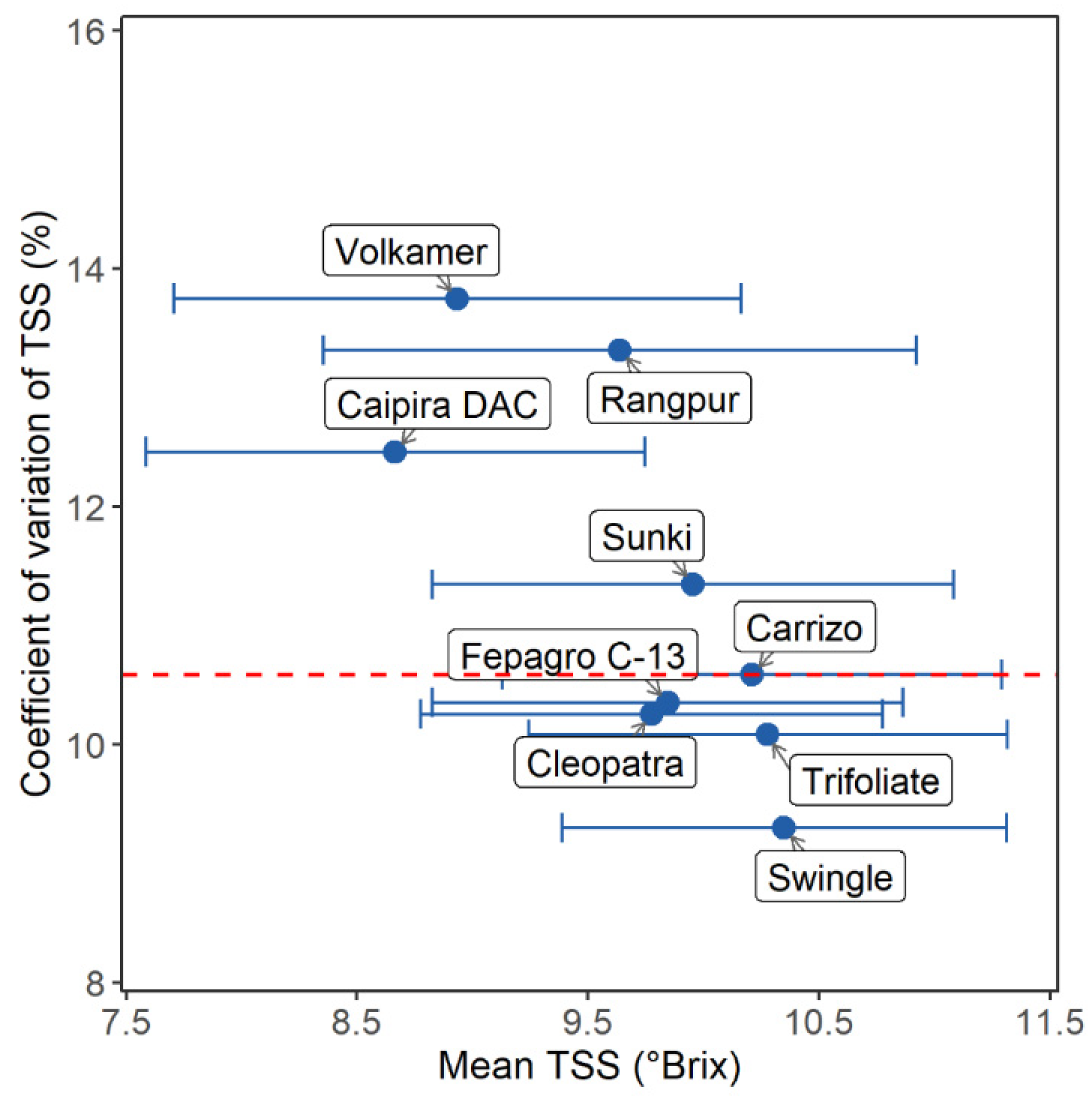
TSS differed among rootstocks in both magnitude and temporal stability when evaluated across annual measurements collected from 2007 (four-year-old trees) to 2013 (ten-year-old trees) (Figure 4). Mean TSS values ranged from 8.66 °Brix in fruits collected from trees on ‘Caipira DAC’ to 10.4 °Brix in ‘Swingle’. The coefficient of variation (CV) revealed clear differences in TSS stability among rootstocks. ‘Swingle’ showed the lowest variability (CV = 9.3%), followed by ‘Trifoliate’ (10.1%), ‘Cleopatra’ (10.3%), and ‘Fepagro C-13’ (10.4%), indicating relatively stable sugar accumulation over time. In contrast, ‘Volkamer’ and ‘Rangpur’ scored the highest CV (13.7% and 13.3%, respectively), reflecting greater year-to-year variability in TSS. Intermediate stability was observed for ‘Carrizo’ (10.6%), ‘Sunki’ (11.3%), and ‘Caipira DAC’ (12.5%). When mean TSS and variability were considered jointly, ‘Swingle’ and ‘Trifoliate’ combined higher average TSS with lower temporal variability, whereas ‘Volkamer’ and ‘Caipira DAC’ exhibited both lower mean TSS and greater instability across years.

3.4. Multivariate Analysis

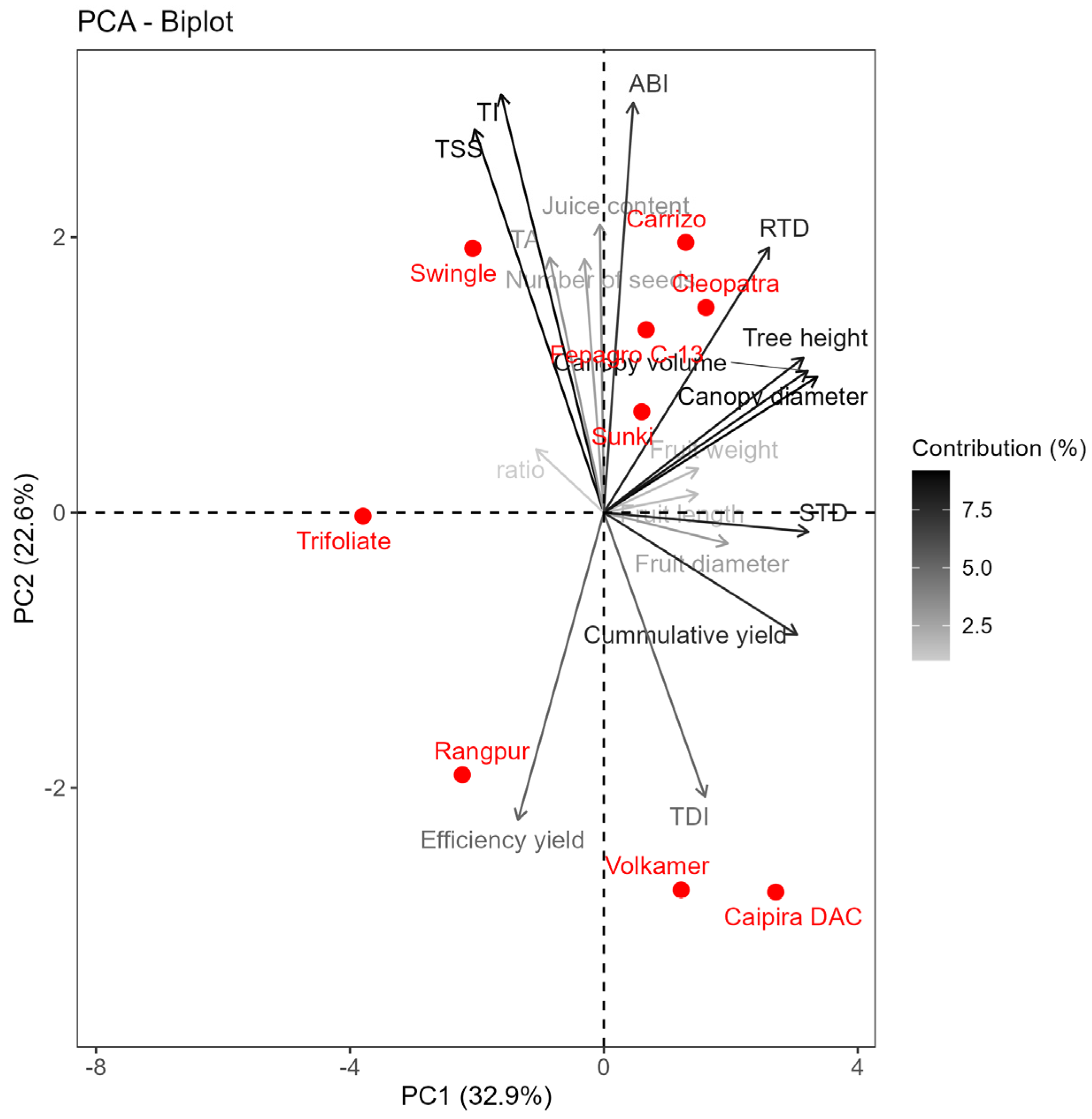
Principal component analysis (PCA) was conducted to evaluate the overall performance of the ‘IAPAR 73’ trees grafted on multiple rootstocks across vegetative growth, yield, and fruit quality traits. The first two principal components (PC1 and PC2) explained 32.9% and 22.6% of the total variance, respectively, cumulatively capturing 55.5% of the multivariate variation among rootstocks (Figure 5). PC1 predominantly separated rootstocks based on vegetative vigor and canopy development, with higher values associated with larger canopy volume and diameter, taller trees, and thicker rootstock and scion trunk diameters. PC2 largely distinguished rootstocks according to yield-related traits, including cumulative yield, yield efficiency, and alternate bearing index, as well as the juice quality attributes such as TSS and technological index.
The biplot (Figure 5) indicated differentiation among rootstocks. ‘Caipira DAC’, ‘Volkamer’, ‘Cleopatra’, ‘Carrizo’, ‘Fepagro C-13’, and ‘Sunki’ were generally positioned on the positive side of PC1 and PC2, suggesting an association with greater vegetative growth, higher cumulative yield, and favorable fruit size. In contrast, ‘Trifoliate’, ‘Swingle’, and ‘Rangpur’ were positioned on the negative side of PC1, indicating reduced vegetative growth and smaller canopy size. Although ‘Swingle’ and ‘Trifoliate’ were associated with higher TSS and favorable juice-processing traits, their lower cumulative yield and reduced tree size may limit overall productivity under the conditions of Paranavaí. However, their smaller canopy size and relatively higher yield efficiency suggest potential suitability for higher-density planting systems in new orchards. The PCA suggests trends with the univariate analyses, providing an integrated view of rootstock performance across multiple traits, although they do not fully capture the total variability among treatments.

4. Discussion

The results of this study clearly demonstrate that the performance of ‘IAPAR 73’ sweet orange is strongly dependent on rootstock selection, with significant and consistent effects on vegetative growth, yield dynamics, fruit and juice quality attributes. Rootstock effects were highly significant across nearly all evaluated variables (p ≤ 0.01), confirming that rootstock-scion interactions are a primary determinant of orchard performance, as extensively reported for various sweet orange cultivars in diverse environments [25,26,27,28,29,30,31]. Importantly, this study provides the first detailed evaluation of the horticultural and physiological performance of ‘IAPAR 73’ sweet orange on different rootstocks in subtropical Brazil, bridging a critical knowledge gap. Although widely adopted by growers in Paraná, particularly in the Paranavaí region, ‘IAPAR 73’ remains poorly documented, compelling growers to rely on observations from other citrus cultivars. Taken together, these findings represent a significant contribution to both the scientific understanding of rootstock-scion interactions and the advancement of citrus production.
Additionally, it is important to acknowledge that long-term field evaluations of citrus rootstocks are inherently influenced by interacting environmental factors, including soil variability, irrigation management, and seasonal climate fluctuations [4,32]. In perennial tree crops such as citrus, rootstock performance is generally recognized as the result of genotype × environment interactions rather than purely genetic effects, particularly under field conditions [8,12]. Under field environment, where abiotic factors cannot be fully controlled, spatial and temporal variability may influence the expression of horticultural traits, thereby limiting the clear isolation of treatment effects in long-term trials [33,34]. Multi-site studies have further demonstrated that differences in soil texture, water availability, and management practices can alter rootstock performance and ranking stability across environments [8,12,25,35,36]. Likewise, citrus physiological responses to water stress and nutrient uptake are governed by root system architecture and soil–water dynamics, evidencing the importance of environmental context in rootstock evaluation [37,38,39,40]. Therefore, the results presented here should be interpreted as integrated field performance responses under commercial subtropical conditions, where rootstock effects are expressed in interaction with prevailing environmental variability rather than under controlled experimental isolation. Importantly, the consistency of rootstock effects across multiple years and production cycles suggests that the observed trends are robust and agronomically meaningful for regional citrus production systems.
Rootstock-induced differences in vegetative growth were evident as early as five years after planting (2008) and became more pronounced by ten years (2013), indicating that rootstock effects were determined during orchard establishment and persisted through the full production stage of the orchard. Rootstocks such as ‘Cleopatra’ mandarin, ‘Carrizo’ citrange, ‘Caipira DAC’ orange, ‘Sunki’ mandarin, and ‘Volkamer’ lemon consistently promoted greater trunk diameters, taller trees, and larger canopy diameters and volumes compared with ‘Rangpur’ lime, ‘Swingle’ citrumelo, and ‘Trifoliate’ orange. These rootstocks are classified as vigorous or moderately vigorous [32] and have been consistently associated with vigorous growth in citrus under subtropical conditions [36,41,42]. In contrast, ‘Trifoliate’ rootstock is known to induce more compact and dwarf trees [13,14,43], which aligns with its reduced trunk diameter and canopy size observed in the present study. ‘Rangpur’ and ‘Swingle’ have also induced low to medium vigor for various cultivars in subtropical Brazil [31,44,45]. Furthermore, no symptoms of graft incompatibility or structural abnormalities were observed among the scion-rootstock combinations up to ten years after planting, indicating good compatibility under the evaluated conditions.
The most vigorous growth observed on ‘Cleopatra’ mandarin, ‘Caipira DAC’ sweet orange, ‘Carrizo’ citrange, ‘Sunki’ mandarin, and ‘Fepagro C-13’ citrange has been mechanistically associated with differences in root system architecture, enhanced water uptake and hydraulic conductivity, and greater nutrient acquisition capacity, which together improve the physiological status of the scion and favor vegetative development [40,46,47]. Vigorous rootstocks typically promote larger canopy volumes and induce multiple vegetative flushes throughout the year [10], which can increase management demands, as each new flush requires additional sprays to maintain effective pest and disease control. This is particularly relevant in regions affected by huanglongbing (also known as HLB or citrus greening), where the vector Asian citrus psyllid Diaphorina citri Kuwayama (Hemiptera: Psyllidae) preferentially feeds and reproduces on new flushes [48,49,50], making thorough coverage of young shoots critical. In contrast, low- to medium-vigor rootstocks, as ‘Trifoliate’ orange, ‘Rangpur’ lime, and ‘Swingle’ citrumelo in this study, produce more compact trees with regular and smaller flushes [36,43], which facilitate better spray coverage, enhance pest management efficiency, and allow higher-density plantings, enabling more trees per hectare and maximizing land use [11,16]. Consequently, growers must weigh these trade-offs: vigorous rootstocks may be advantageous for sustained vegetative growth, long-term productivity, and higher fruit load depending on the rootstock, whereas low- to medium-vigor rootstocks may be preferred in high-density orchards or in production systems where effective pest and disease management, particularly against HLB, is a priority.
Yield responses reflected the patterns observed in vegetative growth but also revealed important trade-offs among rootstocks. Trees grafted on ‘Volkamer’, ‘Caipira DAC’, and ‘Carrizo’ produced the highest cumulative yields across nine cropping seasons (>670 kg·tree−1), confirming their strong yield potential under the local conditions. These results align with reports describing these rootstocks as high-yielding rootstocks due to their capacity to sustain large canopies and high fruit load [25,51,52]. However, yield efficiency, expressed as yield per unit canopy volume, revealed a more nuanced response among rootstocks. ‘Volkamer’, ‘Rangpur’, and ‘Trifoliate’ scored the highest efficiency values, indicating superior conversion of vegetative growth into fruit production. This phenomenon has been reported previously for these rootstocks, which, despite inducing smaller canopies, often promote high yield efficiency due to favorable source-sink relationships and reduced vegetative demand [8,53,54]. This pattern also suggests that, under higher planting densities, these less vigorous but more efficient rootstocks could achieve higher productivity per unit area, as their smaller canopy size allows greater tree population without excessive competition, thereby enhancing overall orchard yield efficiency.
The alternate bearing index (ABI) further differentiated rootstocks. The lowest ABI values, as those observed for ‘Caipira DAC’, ‘Volkamer’, and ‘Rangpur’, indicate more stable year-to-year production, a critical attribute for commercial growers [55]. Yield stability is particularly important in regions such as those in tropical and subtropical Brazil, where market planning and industrial processing rely on a predictable fruit supply. The Brazilian citrus industry directs most of its orange production to industrial processing, with more than 70% of harvested fruit used for orange juice production [56,57], making annual consistency in fruit yield essential for sustaining processing operations and meeting contractual supply obligations [58].
Rootstock effects on fruit physical traits were significant but relatively modest, which is consistent with the broadly reported lower plasticity of fruit size compared with vegetative growth and yield in sweet orange [14,59,60]. In the present study, ‘Carrizo’, ‘Volkamer’, and ‘Caipira DAC’ consistently promoted slightly larger equatorial diameters (≈68.8–69.6 mm) and heavier fruits (≥170 g). Although these differences were small in absolute terms, they are commercially relevant because fruit size remains a primary determinant of grade classification and market value in both domestic [61] and international fresh-fruit markets [62,63]. Even incremental increases in average fruit diameter can substantially raise the proportion of fruit meeting premium size classes, thereby improving packout efficiency and grower returns [64,65].
Beyond fresh-market considerations, internal quality attributes were more influenced by rootstock, illustrating their significance in determining juice-processing suitability. This finding is particularly important for ‘IAPAR 73’, the early-season cultivar that serves as the first source of sweet orange for juice processing in Paraná. Early availability of fruit with adequate juice content and TSS is fundamental for sustaining continuous plant operation and maximizing extraction efficiency in citrus processing [66]. Juice content, considered a marker for industrial yield [24], varied significantly among rootstocks. ‘Carrizo’, ‘Swingle’, ‘Sunki’, ‘Fepagro C-13’, and ‘Rangpur’ promoted higher juice percentages (>48%), confirming that rootstock-mediated differences in water relations and pulp development influence extractable juice volume [67]. In contrast, ‘Caipira DAC’, ‘Cleopatra’, ‘Trifoliate’, and ‘Volkamer’ resulted in comparatively lower juice content (≈46.4–47.8%), potentially limiting industrial yield.
Total soluble solids (TSS) and titratable acidity (TA), which together determine juice sweetness, acidity, flavor balance, and processing potential, had pronounced rootstock effects in our trial. Fruits from trees grafted on ‘Carrizo’, ‘Swingle’, and ‘Trifoliate’ reached higher TSS levels (≥10.2 °Brix), which is particularly advantageous for early-season production when sugar accumulation can be limiting [68,69]. Higher TSS directly enhances the technological index, as observed in our trial (Table 5), by increasing extractable juice solids per box and reducing the amount of fruit required to produce a given volume of concentrate at 66 °Brix, thereby improving processing efficiency and reducing energy and handling costs [24,70]. In contrast, fruits from trees grafted onto ‘Caipira DAC’ and ‘Volkamer’ produced slightly lower TSS values (8.7–8.9 °Brix). Nevertheless, these values remain within an adequate range for industrial processing [66,71]. The lower TSS observed in fruits from these rootstock combinations is likely related to their higher yields (Figure 3) and larger fruit size (Table 4), as higher fruit loads per tree and larger individual fruits can dilute sugar concentration in oranges [72,73], a classic dilution effect that has also been reported in other fruit species [74].
The Food and Agriculture Organization of the United Nations standards indicate that orange juice intended for industrial processing requires a minimum Brix/acidity ratio of 10–12 to ensure proper sugar–acid balance and optimize extraction efficiency, while lower ratios may require blending to meet concentrate quality standards [75]. In our study, average Brix/acidity ratios for all rootstock combinations exceeded this threshold (Table 5), demonstrating suitability for industrial processing. By strategically selecting rootstocks that maximize TSS and juice content at the start of the season, processors can enhance throughput, maintain consistent concentrate quality, and reduce reliance on later-harvested fruit or external juice sources. Temporal TSS stability further refined rootstock performance (Figure 4). ‘Swingle’ and ‘Trifoliate’ combined higher TSS averages with lower year-to-year variability, indicating stable sugar accumulation across seasons. This stability is particularly valuable for the juice industry, where predictable raw material quality facilitates harvest scheduling, blending strategies, and consistent product standards [76]. By contrast, ‘Volkamer’ and ‘Rangpur’ showed greater interannual variability in TSS, which may limit industrial planning despite favorable performance in other traits. Taken together, our results indicate that ‘Swingle’, ‘Trifoliate’, and ‘Carrizo’ rootstocks are highly suited for early-season juice production because they combine high TSS, stable sugar accumulation, favorable juice content, technological index, and balanced sugar–acid ratios. While ‘Caipira DAC’ and ‘Volkamer’ produce fruit with slightly lower TSS, their higher yields compensate for this difference, resulting in comparable TSS per hectare and maintaining processing efficiency. These findings reinforce the importance of considering both fruit quality and yield when selecting rootstocks for orange production.
The PCA provided an integrative framework to interpret the complex interactions among vegetative, yield, and quality traits. ‘Carrizo’, ‘Cleopatra’, ‘Sunki’, ‘Caipira DAC’, and ‘Volkamer’ clustered positively along PC1 and PC2, reflecting their balanced performance across vigor, yield, and fruit attributes. In contrast, ‘Rangpur’ and ‘Swingle’, the most widely used rootstocks in the Brazilian citrus belt, occupied more peripheral positions in the multivariate space. Although these rootstocks excelled in specific traits (e.g., yield efficiency, TSS, or stability), they did not consistently optimize the full set of horticultural variables. This finding strongly supports the hypothesis that ‘IAPAR 73’ responds positively to a broader range of rootstocks than those traditionally used, and that reliance on a narrow rootstock base may limit orchard performance.
From a practical standpoint, this study provides growers and industry stakeholders with evidence-based guidance for diversifying rootstock selections for ‘IAPAR 73’. The identification of alternative rootstocks that outperform or complement ‘Rangpur’ and ‘Swingle’ offers opportunities to improve yield, stability, and fruit quality while mitigating biotic and abiotic stresses, including disease pressure and climate variability [4]. Future studies should build upon these findings by assessing rootstock performance under disease and pest pressure, high-density orchards, and by incorporating economic analyses to further refine recommendations for commercial use.

5. Conclusions

Rootstock selection is a decisive factor for boosting the horticultural performance of ‘IAPAR 73’ sweet orange under the Brazilian subtropical conditions. The results of this long-term study demonstrate that under low-density orchard systems, where larger canopy development is not restrictive, and yield per tree is prioritized, rootstocks such as ‘Volkamer’ lemon, ‘Caipira DAC’ sweet orange, and ‘Carrizo’ citrange are recommended. These rootstocks consistently produced the highest cumulative yields and promoted vigorous canopy growth, supporting sustained fruit load over time. In particular, ‘Volkamer’ and ‘Caipira DAC’ combined high cumulative yield with lower alternate bearing, indicating greater production stability, which is desirable for long-term commercial planning.
In contrast, for high-density planting systems, where compact tree size, efficient canopy management, and optimized land use are essential, ‘Swingle’ citrumelo and ‘Trifoliate’ orange represent suitable rootstock alternatives. Although these rootstocks induced lower cumulative yield per tree, they showed higher yield efficiency and TSS stability, suggesting greater productivity per unit canopy volume and potential advantages when planted at higher tree densities. Therefore, rootstock choice for ‘IAPAR 73’ should be aligned with orchard design and production goals, balancing vigor, yield potential, and fruit quality requirements.
The commonly used ‘Rangpur’ lime showed comparatively limited long-term productivity for ‘IAPAR 73’ under these conditions. For growers and industry stakeholders, these findings provide clear evidence that rootstock diversification can improve orchard productivity, stability, and resilience, reducing reliance on a narrow set of traditional rootstocks.

Supplementary Materials

The following supporting information can be downloaded at: https://www.mdpi.com/article/10.3390/horticulturae12050542/s1, Table S1: Physical and chemical analyses of soil samples collected from the experimental area in Paranavaí, state of Paraná, Brazil, at different soil depth layers (0–20 and 20–40 cm) in July 2007; Table S2: Fruit yield performance of ‘IAPAR 73’ sweet orange trees grafted onto nine rootstocks, evaluated from 2005 to 2013 in Paranavaí, Paraná, Brazil (tree ages: 2–10 years).

Author Contributions

Conceptualization, Z.H.T. and R.P.L.J.; methodology, D.U.d.C., M.A.d.C.-B. and Z.H.T.; formal analysis and data curation, D.U.d.C., R.C.C. and I.F.U.Y.; investigation and writing—original draft preparation, D.U.d.C. and M.A.d.C.-B.; writing—review and editing, Z.H.T., R.P.L.J., I.F.U.Y. and R.C.C.; supervision and funding acquisition, Z.H.T. and R.P.L.J. All authors have read and agreed to the published version of the manuscript.

Funding

This research received no external funding.

Data Availability Statement

The original contributions presented in this study are included in the article/Supplementary Material. Further inquiries can be directed to the corresponding author.

Acknowledgments

The authors thank the collaborators from the Instituto de Desenvolvimento Rural do Paraná (IDR-Paraná) for technical support in the maintenance of the experimental area and data collection. The first and second authors thank the Coordenação de Aperfeiçoamento de Pessoal de Nível Superior (CAPES) for their Ph.D. scholarships (Deived Uilian de Carvalho: grant no. 88887.634597/2021-00; and Maria Aparecida da Cruz-Bejatto: grant no. 8881.361826/2019–01).

Conflicts of Interest

The authors declare no conflicts of interest.

References

  1. IBGE–Instituto Brasileiro de Geografia e Estatística. Levantamento Sistemático da Produção Agrícola; IBGE: Rio de Janeiro, Brazil, 2025.
  2. Behlau, F. An Overview of Citrus Canker in Brazil. Trop. Plant Pathol. 2021, 46, 1–12. [Google Scholar] [CrossRef]
  3. Leite, R.P., Jr.; Mohan, S.K. Integrated Management of the Citrus Bacterial Canker Disease Caused by Xanthomonas campestris pv. citri in the State of Paraná, Brazil. Crop Prot. 1990, 9, 3–7. [Google Scholar] [CrossRef]
  4. Castle, W.S. A Career Perspective on Citrus Rootstocks, Their Development, and Commercialization. HortScience 2010, 45, 11–15. [Google Scholar] [CrossRef]
  5. Castle, W.S.; Phillips, R.L. Performance of ‘Marsh’ Grapefruit and ‘Valencia’ Orange Trees on Eighteen Rootstocks in a Closely Spaced Planting1,2. J. Amer. Soc. Hort. Sci. 1980, 105, 496–499. [Google Scholar] [CrossRef]
  6. Soares Filho, W.D.S.; Cunha Sobrinho, A.P.D.; Passos, O.S. Rootstocks for ‘Natal’ Sweet Orange. Pesqui. Agropecu. Bras. 1980, 15, 471–474. [Google Scholar]
  7. Marloth, R.H. Rootstocks For Jaffa and Joppa Oranges. J. Hortic. Sci. 1957, 32, 162–171. [Google Scholar] [CrossRef]
  8. Carvalho, D.U.; Cruz-Bejatto, M.A.; Tardivo, C.; Yada, I.F.U.; Leite Junior, R.P.; Tazima, Z.H. Long-Term Performance of ‘Valencia’ Sweet Orange Grafted onto Nine Rootstocks under Two Subtropical Environments in Brazil: Effects of Orchard Age on Growth, Yield, Fruit Quality, and Planting Estimates. Sci. Hortic. 2025, 351, 114405. [Google Scholar] [CrossRef]
  9. Bowman, K.D.; McCollum, G.; Seymour, D.K. Genetic Modulation of Valencia Sweet Orange Field Performance by 50 Rootstocks under Huanglongbing-Endemic Conditions. Front. Plant Sci. 2023, 14, 1061663. [Google Scholar] [CrossRef]
  10. Carvalho, E.V.; Cifuentes-Arenas, J.C.; Raiol-Junior, L.L.; Stuchi, E.S.; Girardi, E.A.; Lopes, S.A. Modeling Seasonal Flushing and Shoot Growth on Different Citrus Scion-Rootstock Combinations. Sci. Hortic. 2021, 288, 110358. [Google Scholar] [CrossRef]
  11. Girardi, E.A.; Sola, J.G.P.; Scapin, M.D.S.; Moreira, A.S.; Bassanezi, R.B.; Ayres, A.J.; Peña, L. The Perfect Match: Adjusting High Tree Density to Rootstock Vigor for Improving Cropping and Land Use Efficiency of Sweet Orange. Agronomy 2021, 11, 2569. [Google Scholar] [CrossRef]
  12. Kunwar, S.; Grosser, J.; Gmitter, F.G.; Castle, W.S.; Albrecht, U. Field Performance of ‘Hamlin’ Orange Trees Grown on Various Rootstocks in Huanglongbing-Endemic Conditions. HortScience 2021, 56, 244–253. [Google Scholar] [CrossRef]
  13. Donadio, L.C.; Lederman, I.E.; Roberto, S.R.; Stucchi, E.S. Dwarfing-Canopy and Rootstock Cultivars for Fruit Trees. Rev. Bras. Frutic. 2019, 41, e997. [Google Scholar] [CrossRef]
  14. Hayat, F.; Li, J.; Iqbal, S.; Peng, Y.; Hong, L.; Balal, R.M.; Khan, M.N.; Nawaz, M.A.; Khan, U.; Farhan, M.A.; et al. A Mini Review of Citrus Rootstocks and Their Role in High-Density Orchards. Plants 2022, 11, 2876. [Google Scholar] [CrossRef]
  15. Hervalejo, A.; Arjona-López, J.M.; Romero-Rodríguez, E.; Arenas-Arenas, F.J. Suitability of Two Dwarfing Citrus Rootstocks for ‘Salustiana’ Orange Trees Grown under Super-High-Density Conditions with Mechanical Harvesting. N. Z. J. Crop Hortic. Sci. 2024, 52, 64–75. [Google Scholar] [CrossRef]
  16. Pereira Costa, D.; Sanches Stuchi, E.; Girardi, E.A.; Moreira, A.S.; Da Silva Gesteira, A.; Coelho Filho, M.A.; Da Silva Ledo, C.A.; Da Silva, A.L.V.; De Leão, H.C.; Sampaio Passos, O.; et al. Less Is More: A Hard Way to Get Potential Dwarfing Hybrid Rootstocks for Valencia Sweet Orange. Agriculture 2021, 11, 354. [Google Scholar] [CrossRef]
  17. Gottwald, T.R.; Graham, J.H.; Schubert, T.S. Citrus Canker: The Pathogen and Its Impact. Plant Health Prog. 2002, 3, 15. [Google Scholar] [CrossRef]
  18. IAPAR—Instituto Agronômico do Paraná. A Citricultura No Paraná; Fundação Instituto Agronômico do Paraná: Londrina, Brazil, 1992. [Google Scholar]
  19. Tazima, Z.H.; Leite, R.P., Jr. IAPAR-73: Nova Cultivar Precoce de Laranja (Citrus sinensis (L.) Osb.) para o Estado do Paraná. In Proceedings of the Anais; Embrapa Agroindústria Tropical: Fortaleza, Brazil, 2000; Volume 16. [Google Scholar]
  20. Santos, H.G.; Jacomine, P.K.T.; Anjos, L.H.C.; Oliveira, V.A.; Lumbreras, J.F.; Coelho, M.R.; Almeida, J.A.; Araújo Filho, J.C.; Lima, H.N.; Marques, F.A.; et al. Brazilian Soil Classification System, 6th ed.; Embrapa: Brasília, Brazil, 2025. [Google Scholar]
  21. Mendel, K. Rootstock-Scion Relationships in Shamouti Trees on Light Soil. Ktavim 1956, 6, 35–60. [Google Scholar]
  22. Pearce, S.C.; Doberšek-Urbanc, S. The Measurement of Irregularity in Growth and Cropping. J. Hortic. Sci. 1967, 42, 295–305. [Google Scholar] [CrossRef]
  23. AOAC—Association of Official Analytical Chemists. Official Methods of Analysis; AOAC: Arlington, MA, USA, 1990. [Google Scholar]
  24. Di Giorgi, F.; Ide, B.Y.; Dib, K.; Marchi, R.J.; Triboni, H.R.; Wagner, R.L. Contribuição ao Estudo do Comportamento de Algumas Variedades de Citros e Suas Implicações Agroindustriais. Citrus Res. Technol. 1990, 11, 567–612. [Google Scholar]
  25. Castle, W.S.; Baldwin, J.C.; Muraro, R.P.; Littell, R. Performance of ‘Valencia’ Sweet Orange Trees on 12 Rootstocks at Two Locations and an Economic Interpretation as a Basis for Rootstock Selection. HortScience 2010, 45, 523–533. [Google Scholar] [CrossRef]
  26. Fadel, A.L.; Stuchi, E.S.; Couto, H.T.Z.; Ramos, Y.C.; Mourão Filho, F.D.A.A. Trifoliate Hybrids as Alternative Rootstocks for ‘Valencia’ Sweet Orange under Rainfed Conditions. Sci. Hortic. 2018, 235, 397–406. [Google Scholar] [CrossRef]
  27. Forner-Giner, M.A.; Alcaide, A.; Primo-Millo, E.; Forner, J.B. Performance of ‘Navelina’ Orange on 14 Rootstocks in Northern Valencia (Spain). Sci. Hortic. 2003, 98, 223–232. [Google Scholar] [CrossRef]
  28. Roose, M.L.; Cole, D.A.; Atkin, D.; Kupper, R.S. Yield and Tree Size of Four Citrus Cultivars on 21 Rootstocks in California. J. Amer. Soc. Hort. Sci. 1989, 114, 678–684. [Google Scholar] [CrossRef]
  29. Zekri, M.; Al-Jaleel, A. Evaluation of Rootstocks for Valencia and Navel Orange Trees in Saudi Arabia. Fruits 2004, 59, 91–100. [Google Scholar] [CrossRef]
  30. Zhu, S.; Huang, T.; Yu, X.; Hong, Q.; Xiang, J.; Zeng, A.; Gong, G.; Zhao, X. The Effects of Rootstocks on Performances of Three Late-Ripening Navel Orange Varieties. J. Integr. Agric. 2020, 19, 1802–1812. [Google Scholar] [CrossRef]
  31. Carvalho, D.U.; Neves, C.S.V.J.; Da Cruz, M.A.; Colombo, R.C.; Yada, I.F.U.; Leite Junior, R.P.; Tazima, Z.H. Performance of ‘Salustiana’ Sweet Orange on Different Rootstocks under Brazilian Subtropical Conditions. Sci. Hortic. 2021, 287, 110226. [Google Scholar] [CrossRef]
  32. Bowman, K.D.; Joubert, J. Citrus Rootstocks. In The Genus Citrus; Elsevier: Amsterdam, The Netherlands, 2020; pp. 105–127. [Google Scholar]
  33. Mészáros, M.; Laňar, L.; Kosina, J.; Náměstek, J. Aspects Influencing the Rootstock-Scion Performance during Long Term Evaluation in Pear Orchard. Hortic. Sci. 2019, 46, 1–8. [Google Scholar] [CrossRef]
  34. Lawrence, B.T.; Fazio, G.; Nieto, L.G.; Robinson, T.L. Rootstock Effect on Horticultural Performance and Fruit Quality Is Not Uniform across Five Commercial Apple Cultivars in Western New York. Front. Plant Sci. 2025, 16, 1552625. [Google Scholar] [CrossRef] [PubMed]
  35. Bowman, K.D.; Faulkner, L.; Kesinger, M. New Citrus Rootstocks Released by USDA 2001–2010: Field Performance and Nursery Characteristics. HortScience 2016, 51, 1208–1214. [Google Scholar] [CrossRef]
  36. Carvalho, D.U.; Da Cruz, M.A.; Vidal, T.C.M.; Colombo, R.C.; Yada, I.F.U.; Neves, C.S.V.J.; Leite Junior, R.P.; Tazima, Z.H. Rootstock Selection for ‘Swatow’ Mandarin Trees Grown at Different Locations throughout the Brazilian Subtropics. Heliyon 2024, 10, e36791. [Google Scholar] [CrossRef]
  37. Sampaio, A.H.R.; Silva, R.O.; Brito, R.B.F.; Filho, W.D.S.S.; Gesteira, A.D.S.; Souza, L.D.; Filho, M.A.C. Sweet Orange Acclimatization to Water Stress: A Rootstock Dependency. Sci. Hortic. 2021, 276, 109727. [Google Scholar] [CrossRef]
  38. Romero, P.; Navarro, J.M.; Perez-Perez, J.; Garcia-Sanchez, F.; Gomez-Gomez, A.; Porras, I.; Martinez, V.; Botia, P. Deficit Irrigation and Rootstock: Their Effects on Water Relations, Vegetative Development, Yield, Fruit Quality and Mineral Nutrition of Clemenules Mandarin. Tree Physiol. 2006, 26, 1537–1548. [Google Scholar] [CrossRef]
  39. Zekri, M.; Parsons, L.R. Growth and Root Hydraulic Conductivity of Several Citrus Rootstocks under Salt and Polyethylene Glycol Stresses. Physiol. Plant. 1989, 77, 99–106. [Google Scholar] [CrossRef]
  40. Rodríguez-Gamir, J.; Primo-Millo, E.; Forner, J.B.; Forner-Giner, M.A. Citrus Rootstock Responses to Water Stress. Sci. Hortic. 2010, 126, 95–102. [Google Scholar] [CrossRef]
  41. Tazima, Z.H.; Neves, C.S.V.J.; Yada, I.F.U.; Leite Júnior, R.P. Performance of “Okitsu” Satsuma Mandarin on Nine Rootstocks. Sci. Agric. 2013, 70, 422–427. [Google Scholar] [CrossRef]
  42. Stenzel, N.M.C.; Neves, C.S.V.J.; Gomes, J.C.; Medina, C.C. Performance of “Ponkan” Mandarin on Seven Rootstocks in Southern Brazil. HortScience 2003, 38, 176–178. [Google Scholar] [CrossRef]
  43. Gu, Q.; Wei, Q.; Hu, Y.; Chen, M.; Chen, Z.; Zheng, S.; Ma, Q.; Luo, Z. Physiological and Full-Length Transcriptome Analyses Reveal the Dwarfing Regulation in Trifoliate Orange (Poncirus trifoliata L.). Plants 2023, 12, 271. [Google Scholar] [CrossRef]
  44. Cruz, M.A.D.; Neves, C.S.V.J.; Carvalho, D.U.D.; Colombo, R.C.; Leite Júnior, R.P.; Tazima, Z.H. ‘Navelina’ Sweet Orange Trees on Five Rootstocks in Northern Parana State, Brazil. Rev. Bras. Frutic. 2019, 41, e-006. [Google Scholar] [CrossRef]
  45. Girardi, E.A.; Ayres, A.J.; Girotto, L.F.; Peña, L. Tree Growth and Production of Rainfed Valencia Sweet Orange Grafted onto Trifoliate Orange Hybrid Rootstocks under Aw Climate. Agronomy 2021, 11, 2533. [Google Scholar] [CrossRef]
  46. Mesquita, G.L.; Zambrosi, F.C.B.; Tanaka, F.A.O.; Boaretto, R.M.; Quaggio, J.A.; Ribeiro, R.V.; Mattos, D. Anatomical and Physiological Responses of Citrus Trees to Varying Boron Availability Are Dependent on Rootstock. Front. Plant Sci. 2016, 7, 224. [Google Scholar] [CrossRef] [PubMed]
  47. Ghimire, L.; Grosser, J.; Vashisth, T. Differences in Nutrient Uptake Can Influence the Performance of Citrus Rootstocks under Huanglongbing Conditions. HortScience 2023, 58, 40–46. [Google Scholar] [CrossRef]
  48. Patt, J.M.; Sétamou, M. Responses of the Asian Citrus Psyllid to Volatiles Emitted by the Flushing Shoots of Its Rutaceous Host Plants. Environ. Entomol. 2010, 39, 618–624. [Google Scholar] [CrossRef]
  49. Sétamou, M.; Simpson, C.R.; Alabi, O.J.; Nelson, S.D.; Telagamsetty, S.; Jifon, J.L. Quality Matters: Influences of Citrus Flush Physicochemical Characteristics on Population Dynamics of the Asian Citrus Psyllid (Hemiptera: Liviidae). PLoS ONE 2016, 11, e0168997. [Google Scholar] [CrossRef] [PubMed]
  50. Sétamou, M.; Alabi, O.J.; Kunta, M.; Jifon, J.L.; Da Graça, J.V. Enhanced Acquisition Rates of ‘Candidatus Liberibacter Asiaticus’ by the Asian Citrus Psyllid (Hemiptera: Liviidae) in the Presence of Vegetative Flush Growth in Citrus. J. Econ. Entomol. 2016, 109, 1973–1978. [Google Scholar] [CrossRef] [PubMed]
  51. Castle, W.S.; Baldwin, J.C.; Muraro, R.P. Rootstocks and the Performance and Economic Returns of ‘Hamlin’ Sweet Orange Trees. HortScience 2010, 45, 875–881. [Google Scholar] [CrossRef]
  52. Incesu, M.; Cimen, B.; Yilmaz, B.; Yesiloglu, T.; Akgol, C. Differential Effects of Rootstock Genotype on Photosynthetic Parameters and Fruit Quality in Grafted ‘W. Murcott’ Mandarin. Sci. Rep. 2025, 16, 767. [Google Scholar] [CrossRef]
  53. Castle, W.S.; Youtsey, C.O.; Hutchison, D.J. Rangpur Lime x Troyer Citrange, a Hybrid Citrus Rootstock for Closely Spaced Trees. In Proceedings of the Florida State Horticultural Society; Florida State Horticultural Society: Fort Lauderdale, FL, USA, 1986; Volume 99, pp. 33–35. [Google Scholar]
  54. Cantuarias-Avilés, T.; Mourão Filho, F.D.A.A.; Stuchi, E.S.; Da Silva, S.R.; Espinoza-Núñez, E.; Neto, H.B. Rootstocks for High Fruit Yield and Quality of ‘Tahiti’ Lime under Rain-Fed Conditions. Sci. Hortic. 2012, 142, 105–111. [Google Scholar] [CrossRef]
  55. Shalom, L.; Samuels, S.; Zur, N.; Shlizerman, L.; Zemach, H.; Weissberg, M.; Ophir, R.; Blumwald, E.; Sadka, A. Alternate Bearing in Citrus: Changes in the Expression of Flowering Control Genes and in Global Gene Expression in ON-versus OFF-Crop Trees. PLoS ONE 2012, 7, e46930. [Google Scholar] [CrossRef]
  56. Fundecitrus–Fundo de defesa da Citricultura. 2024-2025 Tree Inventory and Orange Crop Forecast for the São Paulo and West-Southwest Minas Gerais Citrus Belt. 2025. Available online: https://www.fundecitrus.com.br/wp-content/uploads/2025/01/2024_06_10_Tree_Inventory_and_Orange_Crop_Forecast_2024-2025.pdf (accessed on 15 January 2026).
  57. USDA/FAS—United States Department of Agriculture/Foreign Agricultural Service. Citrus: World Markets and Trade. 2025. Available online: https://www.fas.usda.gov/sites/default/files/2025-02/citrus.pdf (accessed on 12 January 2026).
  58. Santos, R.M.D.; Nääs, I.D.A.; Mollo Neto, M.; Vendrametto, O. An Overview on the Brazilian Orange Juice Production Chain. Rev. Bras. Frutic. 2013, 35, 218–225. [Google Scholar] [CrossRef]
  59. Castle, W.S. Rootstock as a Fruit Quality Factor in Citrus and Deciduous Tree Crops. N. Z. J. Crop Hortic. Sci. 1995, 23, 383–394. [Google Scholar] [CrossRef]
  60. Forner-Giner, M.A.; Hueso, J.J.; Agüera, J.M.; Legua, P.; Forner, J.B. Effects of Citrus Rootstocks on Growth, Yield and Fruit Quality of Navelate Orange. J. Food Agric. Environ. 2011, 9, 400–403. [Google Scholar]
  61. CEAGESP—Companhia de Entrepostos e Armazéns de São Paulo. Normas de Classificação de Citros de Mesa; CEAGESP: São Paulo, Brazil, 2011. [Google Scholar]
  62. Codex Alimentarius Commission. Codex Standard for Oranges; Food and Agriculture Organization of the United Nations & World Health Organization: Rome, Italy, 2004. [Google Scholar]
  63. European Commission. Commission Delegated Regulation (EU) 2023/2429 of 17 August 2023 Supplementing Regulation (EU) No 1308/2013 as Regards Marketing Standards for the Fruit and Vegetables Sector, Certain Processed Fruit and Vegetable Products and the Bananas Sector 2023; European Commission: Brussels, Belgium, 2023.
  64. Lado, J.; Rodrigo, M.J.; Zacarías, L. Maturity Indicators and Citrus Fruit Quality. Stewart Postharvest Rev. 2014, 10, 1–6. [Google Scholar]
  65. Ladaniya, M. Citrus Fruit: Biology, Technology and Evaluation, 2nd ed.; Academic Press: Amsterdam, The Netherlands, 2023. [Google Scholar]
  66. Kimball, D.A. Citrus Processing: A Complete Guide; Aspen Publishers: Gaithersburg, MD, USA, 1999. [Google Scholar]
  67. Morales Alfaro, J.; Bermejo, A.; Navarro, P.; Quiñones, A.; Salvador, A. Effect of Rootstock on Citrus Fruit Quality: A Review. Food Rev. Int. 2023, 39, 2835–2853. [Google Scholar] [CrossRef]
  68. Albrigo, L.G.; Stelinski, L.L.; Timmer, L.W. (Eds.) Citrus, 2nd ed.; CABI: Wallingford, UK, 2019. [Google Scholar]
  69. Arenas-Arenas, F.J.; González-Chimeno, A.B.; Romero-Rodríguez, E.; Hervalejo, A. Characterization of Different Cultivars of Citrus Fruit for Juice in the South of Spain. Citrus Res. Technol. 2017, 38, 1–9. [Google Scholar] [CrossRef]
  70. Caixeta-Filho, J.V. Orange Harvesting Scheduling Management: A Case Study. J. Oper. Res. Soc. 2006, 57, 637–642. [Google Scholar] [CrossRef]
  71. FAO—Food and Agriculture Organization of the United Nations. Crops and Livestock Products. 2024. Available online: https://www.fao.org/faostat/en/#data/QCL/visualize (accessed on 25 January 2026).
  72. Barry, G.H.; Castle, W.S.; Davies, F.S. Soluble Solids Accumulation in ‘Valencia’ Sweet Orange as Related to Rootstock Selection and Fruit Size. J. Am. Soc. Hortic. Sci. 2004, 129, 594–598. [Google Scholar] [CrossRef]
  73. Barry, G.H.; Castle, W.S.; Davies, F.S. Rootstocks and plant water relations affect sugar accumulation of “Valencia” sweet orange via osmotic adjustment. Acta Hortic. 2004, 632, 159–165. [Google Scholar] [CrossRef]
  74. Guerra, M.; Álvarez-Taboada, F.; Marabel, V.; Felices, A.M.; Rodríguez-González, Á.; Casquero, P.A. Organic Agricultural Practice: Crop Load Management Enhancing Quality and Storability of High-Russet Pears. Horticulturae 2024, 10, 686. [Google Scholar] [CrossRef]
  75. Bates, R.P.; Morris, J.R.; Crandall, P.G. Principles and Practices of Small- and Medium-Scale Fruit Juice Processing; FAO agricultural services bulletin; Food and Agriculture Organization of the United Nations: Rome, Italy, 2001. [Google Scholar]
  76. Borghoff, L.M.; Strassner, C.; Herzig, C. Organic Juice Processing Quality from the Processors’ Perspective: A Qualitative Study. Foods 2023, 12, 377. [Google Scholar] [CrossRef]
Figure 1. Monthly rainfall (bars) and monthly average maximum, mean, and minimum air temperatures (lines) recorded during the experimental period (2003–2013) at the Paranavaí Experimental Station of the Instituto de Desenvolvimento Rural do Paraná (IDR-Paraná), Paranavaí, state of Paraná, Brazil.
Horticulturae 12 00542 g001
Figure 2. Temporal changes in canopy volume (m3) of ‘IAPAR 73’ sweet orange trees grafted onto nine rootstocks from six months (year 0.5, 2003) to ten years (year 10, 2013) after planting in Paranavaí, Paraná, Brazil. Points represent mean canopy volume (±standard error) for each tree age, and dashed lines indicate fitted quadratic regression models for each rootstock. Regression equations, coefficients of determination (R2), and overall model significance (p-values) are shown within each panel. All models were significant at p ≤ 0.001.
Horticulturae 12 00542 g002
Figure 3. Fruit yield performance of ‘IAPAR 73’ sweet orange trees grafted onto nine rootstocks and evaluated from 2005 to 2013 (tree ages: 2–10 years) in Paranavaí, Paraná, Brazil. The upper panel shows stacked annual mean fruit yield (kg∙tree−1) ± standard error across years. The middle panel presents the alternate bearing index (mean ± standard error), and the lower panel shows yield efficiency (kg∙m−3 canopy volume; mean ± standard error). Different letters above bars indicate significant differences among rootstocks according to Tukey’s test at α = 0.05.
Horticulturae 12 00542 g003
Figure 4. Total soluble solids (TSS, °Brix) stability in ‘IAPAR 73’ sweet orange fruits harvested from trees grafted onto nine rootstocks based on annual measurements collected from 2007 (tree ages: four years) to 2013 (tree ages: ten years). Points represent mean TSS plotted against the coefficient of variation (CV) for each rootstock. Horizontal bars indicate ± standard deviation of TSS, and arrows connect labels to individual rootstocks. The red dashed line represents the median CV across rootstocks and is shown as a visual reference of relative TSS stability over time.
Horticulturae 12 00542 g004
Figure 5. Principal component analysis (PCA) biplot summarizing relationships among vegetative growth, yield, and fruit quality variables of ‘IAPAR 73’ sweet orange trees grafted onto nine rootstocks. Vectors represent the original variables, with their direction and length indicating the magnitude and contribution to the principal components; vector color intensity reflects variable contribution (%, black to grey). Red points represent the mean PCA scores of each rootstock. TI, technological index (kg TSS⋅box−1); TSS, total soluble solids (°Brix); ABI, alternate bearing index; RTD, rootstock trunk diameter (cm); STD, scion trunk diameter (cm); TDI, trunk diameter index; TI, titratable acidity (g⋅100 mL−1).
Horticulturae 12 00542 g005
Table 1. Mean tree size (mean ± standard error) of five-year-old ‘IAPAR 73’ sweet orange trees grafted onto nine rootstocks, assessed during the orchard establishment phase in Paranavaí, Paraná, Brazil, in the 2008 growing season.
RootstockRootstock Trunk Diameter 1 (cm)Scion Trunk
Diameter (cm)
Trunk
Diameter
Index 2
Tree
Height (m)
Canopy
Diameter (m)
Canopy
Volume (m3)
Caipira DAC orange13.7 ± 0.9 a 311.2 ± 1.2 a0.81 ± 0.07 a3.18 ± 0.2 a3.00 ± 0.1 a15.0 ± 1.0 a
Carrizo citrange13.7 ± 0.8 a9.8 ± 0.7 a0.72 ± 0.02 b2.95 ± 0.2 a2.97 ± 0.1 a13.7 ± 1.8 a
Cleopatra mandarin13.5 ± 1.0 a10.7 ± 0.9 a0.80 ± 0.03 a2.96 ± 0.3 a2.98 ± 0.2 a14.2 ± 3.3 a
Fepagro C-13 citrange14.2 ± 0.7 a8.5 ± 0.4 b0.60 ± 0.01 c2.83 ± 0.2 a2.87 ± 0.2 a13.0 ± 2.9 a
Rangpur lime10.1 ± 1.8 b8.6 ± 1.8 b0.85 ± 0.07 a2.58 ± 0.4 b2.48 ± 0.5 b10.1 ± 4.8 b
Sunki mandarin13.4 ± 1.5 a10.7 ± 1.0 a0.80 ± 0.04 a2.93 ± 0.2 a2.90 ± 0.3 a13.6 ± 3.4 a
Swingle citrumelo12.1 ± 1.8 b7.4 ± 1.2 c0.61 ± 0.03 c2.58 ± 0.2 b2.40 ± 0.3 b8.2 ± 2.5 b
Trifoliate orange11.1 ± 1.0 b6.6 ± 0.8 c0.59 ± 0.04 c2.30 ± 0.3 c2.33 ± 0.3 b6.7 ± 2.0 b
Volkamer lemon13.6 ± 1.4 a10.5 ± 1.0 a0.77 ± 0.02 b2.82 ± 0.2 a3.02 ± 0.2 a13.6 ± 2.6 a
p-value≤0.001≤0.001≤0.001≤0.001≤0.001≤0.001
1 Trunk diameter values were calculated from trunk circumference measurements taken 10 cm above and below the graft union. 2 Trunk index was expressed as the ratio of scion to rootstock trunk diameters. 3 Different letters within columns indicate statistically significant differences among rootstocks according to Tukey-adjusted pairwise comparisons (emmeans) at α = 0.05.
Table 2. Mean tree size (mean ± standard error) of 10-year-old ‘IAPAR 73’ sweet orange trees grafted onto nine rootstocks, assessed during the orchard full production phase in Paranavaí, Paraná, Brazil, in the 2013 growing season.
RootstockRootstock Trunk Diameter 1 (cm)Scion Trunk
Diameter (cm)
Trunk
Diameter
Index 2
Tree
Height (m)
Canopy
Diameter (m)
Canopy
Volume (m3)
Caipira DAC orange19.4 ± 1.4 b 316.0 ± 1.3 a0.82 ± 0.02 a4.13 ± 0.1 a4.45 ± 0.3 a43.2 ± 5.4 a
Carrizo citrange21.3 ± 1.4 a14.1 ± 0.9 b0.66 ± 0.05 c3.99 ± 0.2 a4.62 ± 0.4 a45.5 ± 9.6 a
Cleopatra mandarin21.0 ± 1.7 a16.8 ± 1.0 a0.80 ± 0.03 b4.30 ± 0.4 a4.66 ± 0.4 a46.3 ± 16.4 a
Fepagro C-13 citrange21.4 ± 2.1 a12.4 ± 0.5 c0.58 ± 0.04 d4.03 ± 0.4 a4.26 ± 0.2 b39.8 ± 8.0 a
Rangpur lime13.6 ± 3.0 c11.6 ± 2.7 c0.85 ± 0.08 a3.21 ± 0.6 c3.38 ± 0.7 c25.4 ± 11.3 b
Sunki mandarin20.1 ± 1.3 b15.7 ± 1.3 a0.78 ± 0.03 b4.10 ± 0.3 a4.16 ± 0.3 b38.3 ± 7.2 a
Swingle citrumelo19.4 ± 1.4 b10.6 ± 0.8 c0.55 ± 0.02 d3.51 ± 0.4 b3.65 ± 0.3 c25.5 ± 6.6 b
Trifoliate orange15.4 ± 1.8 c8.7 ± 1.0 d0.56 ± 0.04 d2.88 ± 0.2 c3.31 ± 0.3 c16.9 ± 4.0 c
Volkamer lemon18.6 ± 1.9 b14.5 ± 1.2 b0.78 ± 0.04 b3.55 ± 0.3 b4.08 ± 0.1 b31.2 ± 3.2 b
p-value≤0.001≤0.001≤0.001≤0.001≤0.001≤0.001
1 Trunk diameter values were calculated from trunk circumference measurements taken 10 cm above and below the graft union. 2 Trunk index was expressed as the ratio of scion to rootstock trunk diameters. 3 Different letters within columns indicate statistically significant differences among rootstocks according to Tukey-adjusted pairwise comparisons (emmeans) at α = 0.05.
Table 3. Mean annual fruit yield (mean ± standard error) of ‘IAPAR 73’ sweet orange trees grafted onto nine rootstocks, evaluated over nine growing seasons (2005–2013) in Paranavaí, Paraná, Brazil (tree ages 2–10 years).
Source of VarianceMean Annual Fruit Yield
(2005–2013)
Rootstock
     Caipira DAC orange87.1 ± 7.6 a 1
     Carrizo citrange75.0 ± 8.5 bc
     Cleopatra mandarin64.9 ± 7.2 c
     Fepagro C-13 citrange66.8 ± 7.8 c
     Rangpur lime52.7 ± 4.5 d
     Sunki mandarin64.9 ± 6.2 c
     Swingle citrumelo44.4 ± 5.0 de
     Trifoliate orange37.8 ± 4.2 e
     Volkamer lemon79.8 ± 6.6 ab
Year
     20051.9 ± 0.2 g
     200614.0 ± 1.1 f
     200741.1 ± 2.6 e
     200859.4 ± 3.0 d
     200982.7 ± 3.8 c
     201083.6 ± 3.4 c
     2011122.2 ± 5.0 b
     201234.9 ± 3.3 e
     2013133.7 ± 5.7 a
p-value
     Rootstock≤0.001
     Year≤0.001
     Rootstock × Year≤0.001
1 Different letters within columns indicate statistically significant differences among rootstocks and years according to Tukey-adjusted pairwise comparisons (emmeans) at α = 0.05.
Table 4. Mean fruit quality attributes (mean ± standard error) of ‘IAPAR 73’ sweet orange harvested from trees grafted onto nine rootstocks, evaluated over seven growing seasons (2007–2013) in Paranavaí, Paraná, Brazil (tree ages 4–10 years).
Source of VarianceFruit Length
(mm)
Fruit Diameter
(mm)
Fruit Weight
(g)
Number of SeedsJuice Content
(%)
Rootstock
     Caipira DAC orange66 ± 0.4 a–c 169 ± 0.4 ab171 ± 3.2 ab2.2 ± 0.1 a46 ± 1.1 d
     Carrizo citrange67 ± 0.5 a69 ± 0.5 ab174 ± 3.9 ab2.4 ± 0.1 a49 ± 0.7 a–c
     Cleopatra mandarin65 ± 0.5 c68 ± 0.5 b166 ± 4.6 ab2.3 ± 0.1 a50 ± 0.9 a
     Fepagro C-13 citrange67 ± 0.7 a68 ± 0.7 ab172 ± 5.8 ab2.4 ± 0.1 a48 ± 0.8 a–d
     Rangpur lime65 ± 0.7 bc67 ± 0.6 b164 ± 4.2 b2.1 ± 0.2 a48 ± 0.9 a–c
     Sunki mandarin65 ± 0.5 a–c68 ± 0.5 b167 ± 3.9 ab2.3 ± 0.1 a49 ± 0.8 a–c
     Swingle citrumelo66 ± 0.5 a–c68 ± 0.6 ab172 ± 5.0 ab2.4 ± 0.1 a49 ± 0.8 ab
     Trifoliate orange67 ± 0.8 ab 68 ± 0.7 b170 ± 6.9 ab2.4 ± 0.1 a48 ± 0.7 b–d
     Volkamer lemon67 ± 0.4 a70 ± 0.5 a 177 ± 3.9 a 2.1 ± 0.1 a47 ± 0.9 cd
Year
     200767 ± 0.3 a–c70 ± 0.2 b179 ± 1.7 bc2.9 ± 0.1 a52 ± 0.4 a
     200868 ± 0.3 ab70 ± 0.3 ab185 ± 1.8 b 2.7 ± 0.1 ab 51 ± 0.3 a
     200963 ± 0.3 d65 ± 0.3 d140 ± 1.9 e2.5 ± 0.1 b 49 ± 0.4 b
     201067 ± 0.3 bc 69 ± 0.3 bc 174 ± 2.0 c1.7 ± 0.1 c37 ± 0.4 c
     201163 ± 0.2 d65 ± 0.2 d142 ± 1.4 e2.7 ± 0.1 ab 49 ± 0.3 b
     201269 ± 0.8 a 71 ± 0.7 a 212 ± 5.5 a1.8 ± 0.1 c49 ± 0.3 b
     201366 ± 0.3 c 68 ± 0.3 c 160 ± 2.3 d 1.7 ± 0.1 c49 ± 0.6 b
p-value
     Rootstock≤0.001≤0.0010.0230.028≤0.001
     Year≤0.001≤0.001≤0.001≤0.001≤0.001
     Rootstock × Year≤0.001≤0.001≤0.0010.007≤0.001
1 Different letters within columns indicate statistically significant differences among rootstocks and years according to Tukey-adjusted pairwise comparisons (emmeans) at α = 0.05.
Table 5. Mean juice quality attributes (mean ± standard error) of ‘IAPAR 73’ sweet oranges harvested from trees grafted onto nine rootstocks, evaluated over seven growing seasons (2007–2013) in Paranavaí, Paraná, Brazil (tree ages 4–10 years).
Source of VarianceTotal Soluble Solids
TSS (°Brix)
Titratable Acidity
TA (g⋅100 mL−1)
Ratio
(TSS⋅TA−1)
Technological Index
TI (kg TSS⋅box−1)
Rootstock
     Caipira DAC orange8.7 ± 0.2 d 10.70 ± 0.02 c12.6 ± 0.3 bc 1.65 ± 0.06 d
     Carrizo citrange10.2 ± 0.2 ab0.79 ± 0.02 b 13.3 ± 0.4 b2.03 ± 0.04 ab
     Cleopatra mandarin9.8 ± 0.2 c 0.82 ± 0.02 ab 12.2 ± 0.3 cd1.98 ± 0.05 a–c
     Fepagro C-13 citrange9.8 ± 0.2 bc 0.80 ± 0.02 b 12.6 ± 0.3 bc 1.92 ± 0.04 c
     Rangpur lime9.6 ± 0.2 c 0.86 ± 0.03 a11.6 ± 0.3 d1.90 ± 0.05 c
     Sunki mandarin10.0 ± 0.2 a–c 0.83 ± 0.02 ab 12.4 ± 0.3 cd1.97 ± 0.05 bc
     Swingle citrumelo10.4 ± 0.1 a0.83 ± 0.02 ab 12.8 ± 0.3 bc 2.08 ± 0.05 a
     Trifoliate orange10.3 ± 0.2 a0.75 ± 0.02 c14.1 ± 0.4 a1.99 ± 0.04 a–c
     Volkamer lemon8.9 ± 0.2 d0.71 ± 0.02 c12.9 ± 0.3 bc 1.73 ± 0.06 d
Year
     20079.3 ± 0.1 cd 0.66 ± 0.01 d14.2 ± 0.2 a 1.99 ± 0.03 c
     20089.5 ± 0.1 c0.66 ± 0.01 d14.4 ± 0.2 a 1.99 ± 0.02 c
     200911.4 ± 0.1 a 0.97 ± 0.01 a11.9 ± 0.1 d 2.30 ± 0.03 a
     20109.4 ± 0.1 c0.74 ± 0.01 c 12.7 ± 0.2 c1.42 ± 0.03 e
     20118.8 ± 0.1 e0.98 ± 0.02 a 9.0 ± 0.2 e1.76 ± 0.03 d
     201210.8 ± 0.1 b0.81 ± 0.01 b13.5 ± 0.2 b2.15 ± 0.02 b
     20139.0 ± 0.1 de0.69 ± 0.01 d13.2 ± 0.2 bc1.81 ± 0.03 d
p-value
     Rootstock≤0.001≤0.001≤0.001≤0.001
     Year≤0.001≤0.001≤0.001≤0.001
     Rootstock × Year0.0400.0070.039≤0.001
1 Different letters within columns indicate statistically significant differences among rootstocks and years according to Tukey-adjusted pairwise comparisons (emmeans) at α = 0.05.
Disclaimer/Publisher’s Note: The statements, opinions and data contained in all publications are solely those of the individual author(s) and contributor(s) and not of MDPI and/or the editor(s). MDPI and/or the editor(s) disclaim responsibility for any injury to people or property resulting from any ideas, methods, instructions or products referred to in the content.