Taxonomical, Molecular and Phytochemical Characterization of an Endangered Medicinal Plant Species Gathered from the Puebla-Tlaxcala Valley in Mexico

 , , ,
, , ,
Abstract
1. Introduction
2. Material and Methods
2.1. Sampling of Plant Material and Soil Analysis
2.2. Taxonomic Characterization
2.3. Extraction of Total DNA and DNA Barcoding
2.4. Multiple Sequence Alignment and Phylogenetic Analysis
2.5. Phytochemical Extraction
2.6. Phytochemical Analysis Through Mass Spectrometry
2.7. Greenhouse Surviving Evaluation and Seed Germination of Calanca Plants
3. Results
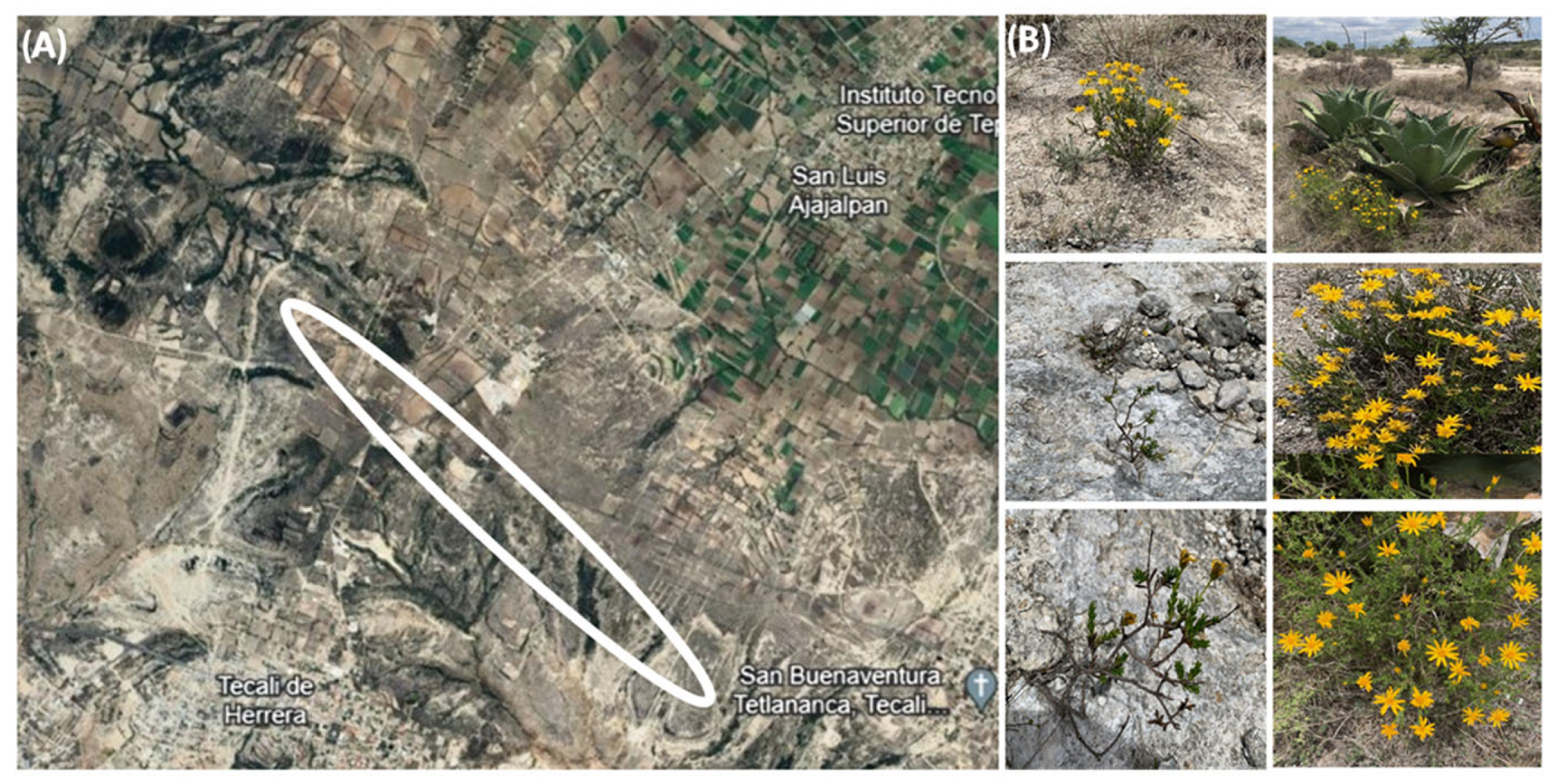
3.1. Plant and Soil Taxonomic Analyses by Conventional Approaches
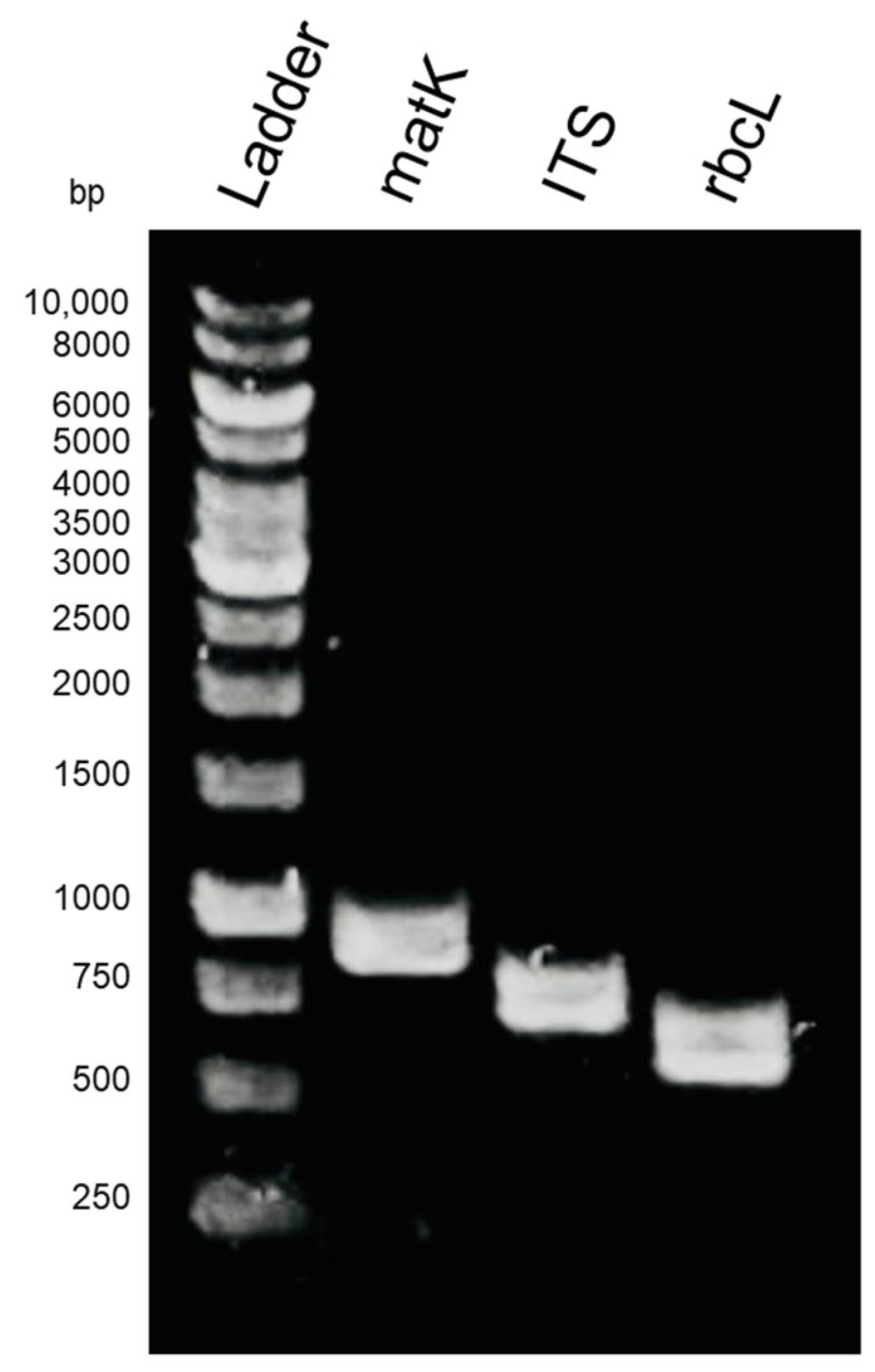
3.2. Molecular Taxonomy of Calanca: Information from Gene Markers
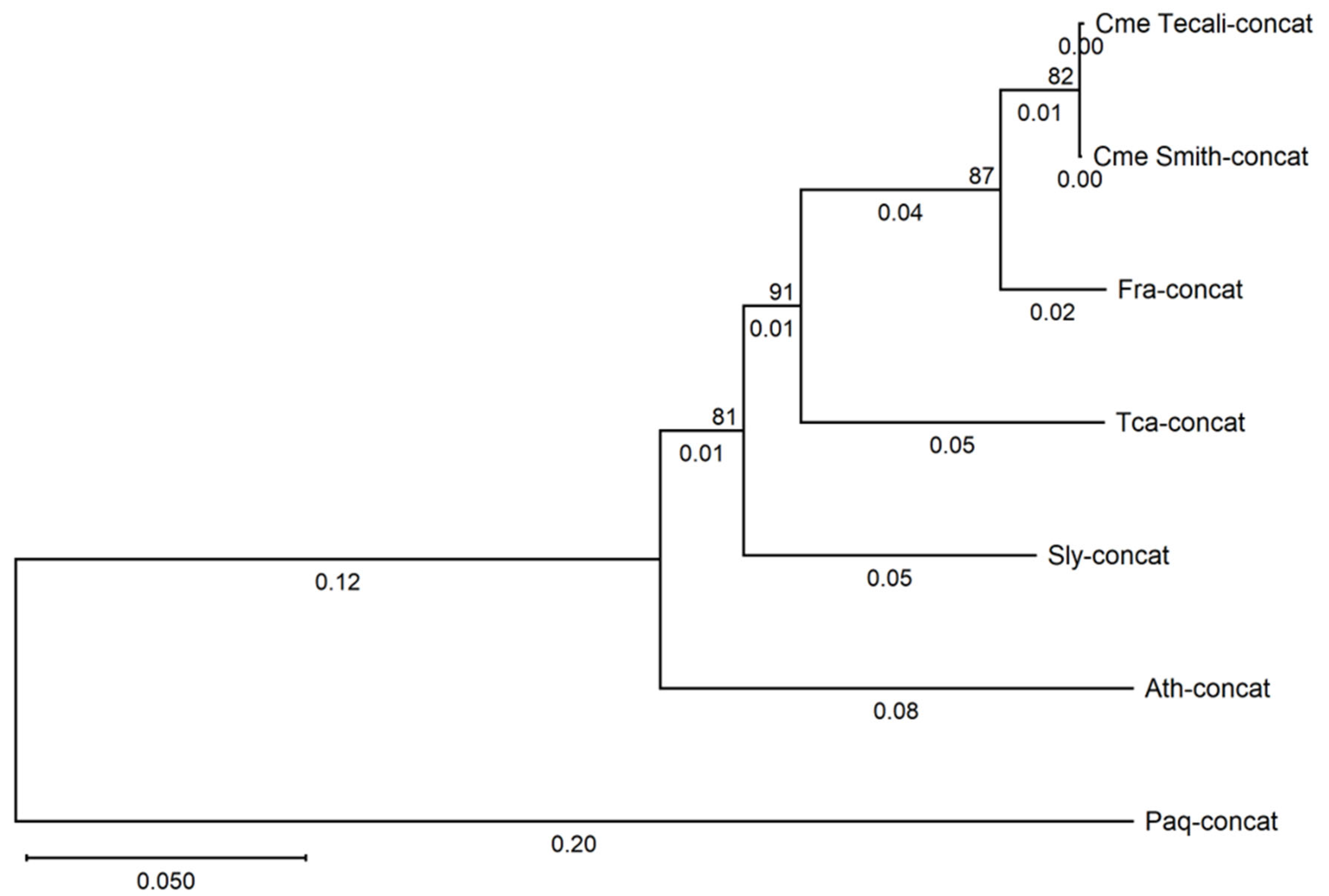
3.3. Molecular Phylogenetic Analysis and Taxonomic Positioning of C. mexicana Isolated in This Study
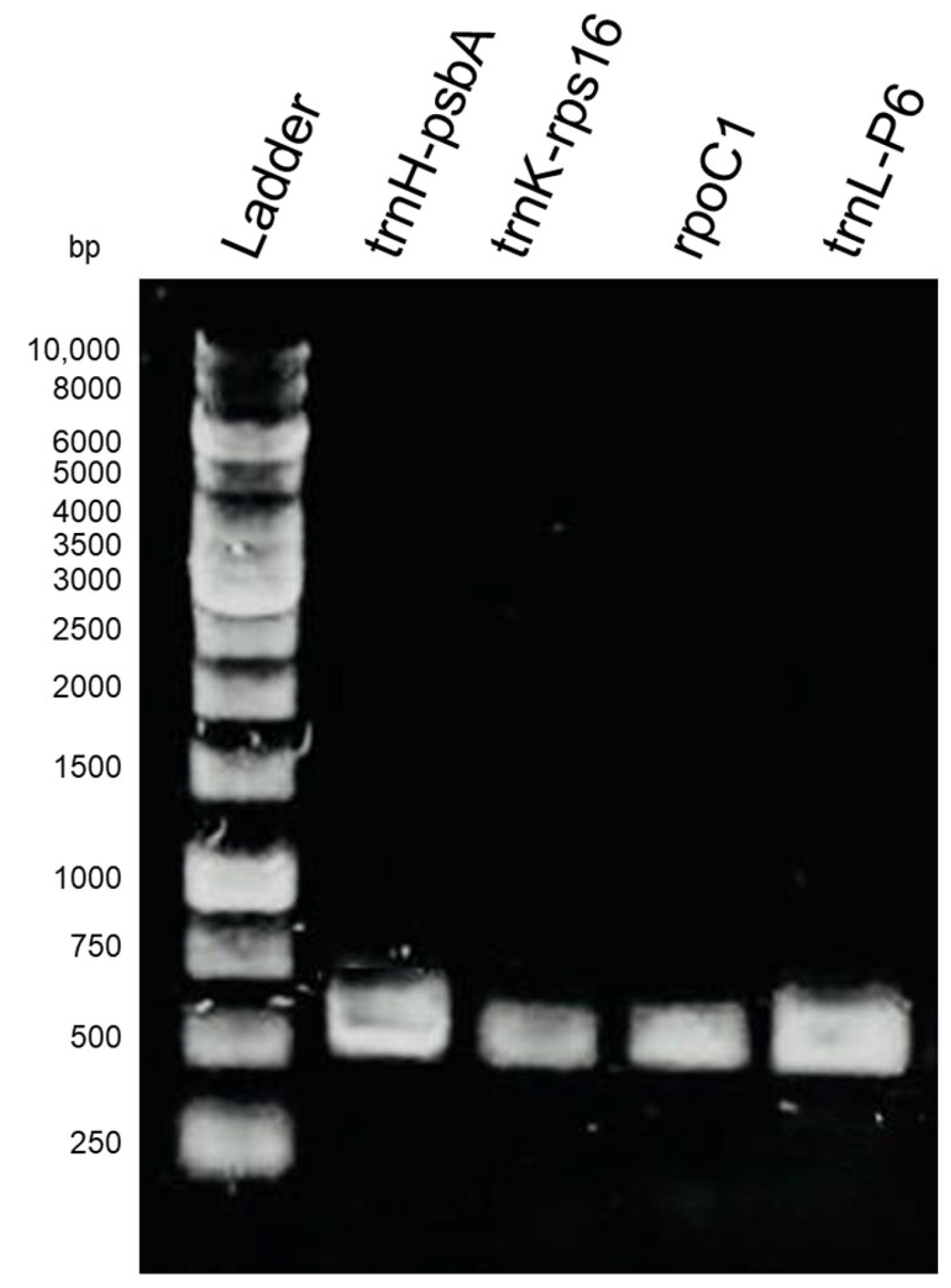
3.4. Additional Gene Markers of C. mexicana: Non-Published Barcodes
3.5. Quantitative Determination of the Chemical Constituency
3.6. Adaptive Capacity of C. mexicana Under Greenhouse Conditions
4. Discussion
4.1. Molecular Identification of Calanca (C. mexicana)
4.2. Expansion of the Genetic Toolkit for C. mexicana Identification
4.3. Phytochemical Diversity of C. mexicana
4.4. Edaphic Influence on the Phytochemical Constituency of C. mexicana
4.5. Propagation of C. mexicana and Challenges: Conservation Implications
5. Conclusions
Supplementary Materials
Author Contributions
Funding
Data Availability Statement
Acknowledgments
Conflicts of Interest
References
- Petrovska, B.B. Historical Review of Medicinal Plants’ Usage. Pharmacogn. Rev. 2012, 6, 1–5. [Google Scholar] [CrossRef] [PubMed]
- Heinrich, M. Medicinal Plants. In The International Encyclopedia of Anthropology; John Wiley & Sons, Ltd.: Hoboken, NJ, USA, 2018; pp. 1–3. [Google Scholar]
- Maldonado Miranda, J.J. Chapter 7—Medicinal Plants and Their Traditional Uses in Different Locations. In Phytomedicine; Bhat, R.A., Hakeem, K.R., Dervash, M.A., Eds.; Academic Press: Cambridge, MA, USA, 2021; pp. 207–223. [Google Scholar]
- Schippmann, U.; Leaman, D.; Cunningham, A. Impact of Cultivation and Gathering of Medicinal Plants on Biodiversity: Global Trends and Issues. In Biodiversity and the Ecosystem Approach in Agriculture, Forestry and Fisheries; FAO: Rome, Italy, 2002; pp. 142–167. [Google Scholar]
- Chen, S.-L.; Yu, H.; Luo, H.-M.; Wu, Q.; Li, C.-F.; Steinmetz, A. Conservation and Sustainable Use of Medicinal Plants: Problems, Progress, and Prospects. Chin. Med. 2016, 11, 37. [Google Scholar] [CrossRef]
- Gras, A.; Hidalgo, O.; D’Ambrosio, U.; Parada, M.; Garnatje, T.; Vallès, J. The Role of Botanical Families in Medicinal Ethnobotany: A Phylogenetic Perspective. Plants 2021, 10, 163. [Google Scholar] [CrossRef]
- Rolnik, A.; Olas, B. The Plants of the Asteraceae Family as Agents in the Protection of Human Health. Int. J. Mol. Sci. 2021, 22, 3009. [Google Scholar] [CrossRef]
- Lozoya, X. Two Decades of Mexican Ethnobotany and Research in Plant Drugs. Ciba Found. Symp. 1994, 185, 130–140; discussion 140–152. [Google Scholar] [CrossRef]
- Aguilar, A. Guía México Desconocido: Herbolaria mexicana; CID (Centro de Información y Documentación Alberto Beltrán): Ciudad de México, Mexico, 1999; Volume 6, p. 64. [Google Scholar]
- Lappas, L.; Gustafson, C.B. Investigation of Chrysactinia mexicana, A. Gray. J. Am. Pharm. Assoc. 1950, 39, 591–594. [Google Scholar] [CrossRef]
- Villaseñor, J.L.; del Rosario Redonda-Martínez, M. The Genus Chrysactinia (Asteraceae, Tribe Tageteae) in Mexico. Rev. Mex. Biodivers. 2009, 80, 29–37. [Google Scholar]
- Strother, J.L. Taxonomy of Chrysactinia, Harnackia, and Lescaillea (Compositae: Tageteae). Madroño 1977, 24, 129–139. [Google Scholar]
- Rocha, L.; Ribeiro, P.L.; Endress, P.K.; Rapini, A. A Brainstorm on the Systematics of Turnera (Turneraceae, Malpighiales) Caused by Insights from Molecular Phylogenetics and Morphological Evolution. Mol. Phylogenetics Evol. 2019, 137, 44–63. [Google Scholar] [CrossRef] [PubMed]
- Arletti, R.; Benelli, A.; Cavazzuti, E.; Scarpetta, G.; Bertolini, A. Stimulating Property of Turnera Diffusa and Pfaffia Paniculata Extracts on the Sexual Behavior of Male Rats. Psychopharmacology 1999, 143, 15–19. [Google Scholar] [CrossRef] [PubMed]
- Estrada-Reyes, R.; Carro-Juárez, M.; Martínez-Mota, L. Pro-Sexual Effects of Turnera Diffusa Wild (Turneraceae) in Male Rats Involves the Nitric Oxide Pathway. J. Ethnopharmacol. 2013, 146, 164–172. [Google Scholar] [CrossRef]
- Estrada-Reyes, R.; Ferreyra-Cruz, O.A.; Jiménez-Rubio, G.; Hernández-Hernández, O.T.; Martínez-Mota, L. Prosexual Effect of Chrysactinia mexicana A. Gray (Asteraceae), False Damiana, in a Model of Male Sexual Behavior. BioMed Res. Int. 2016, 2016, 2987917. [Google Scholar] [CrossRef]
- Cassani, J.; Ferreyra-Cruz, O.A.; Dorantes-Barrón, A.M.; Villaseñor, R.M.V.; Arrieta-Baez, D.; Estrada-Reyes, R. Antidepressant-like and Toxicological Effects of a Standardized Aqueous Extract of Chrysactinia mexicana A. Gray (Asteraceae) in Mice. J. Ethnopharmacol. 2015, 171, 295–306. [Google Scholar] [CrossRef] [PubMed]
- Zavala-Mendoza, D.; Grasa, L.; Zavala-Sánchez, M.Á.; Pérez-Gutiérrez, S.; Murillo, M.D. Antispasmodic Effects and Action Mechanism of Essential Oil of Chrysactinia mexicana A. Gray on Rabbit Ileum. Molecules 2016, 21, 783. [Google Scholar] [CrossRef] [PubMed]
- Medina-de la Cruz, O.; Leal-Morales, C.A.; Meza-Menchaca, T.; Guillen, L.; Juárez-Flores, B.I.; Gallegos-García, V. Efecto del aceite esencial de Chrysactinia mexicana A. Gray sobre aislados clínicos de Candida glabrata. Biotecnia 2021, 23, 28–35. [Google Scholar] [CrossRef]
- Cárdenas-Ortega, N.C.; Zavala-Sánchez, M.A.; Aguirre-Rivera, J.R.; Pérez-González, C.; Pérez-Gutiérrez, S. Chemical Composition and Antifungal Activity of Essential Oil of Chrysactinia mexicana Gray. J. Agric. Food Chem. 2005, 53, 4347–4349. [Google Scholar] [CrossRef]
- Molina-Salinas, G.M.; Pérez-López, A.; Becerril-Montes, P.; Salazar-Aranda, R.; Said-Fernández, S.; de Torres, N.W. Evaluation of the Flora of Northern Mexico for in Vitro Antimicrobial and Antituberculosis Activity. J. Ethnopharmacol. 2007, 109, 435–441. [Google Scholar] [CrossRef]
- Magallán-Hernández, F.; Valencia-Hernández, J.A.; Sánchez-Castillo, R. Estudios para la conservación y aprovechamiento de Chrysactinia mexicana, planta aromática y medicinal nativa de México. Polibotánica 2023, 55, 145–159. [Google Scholar] [CrossRef]
- Funk, V.A.; Susanna, A.; Steussy, T.F.; Robinson, H.E. Classification of Compositae. In Systematics, Evolution, and Biogeography of Compositae; International Association for Plant Taxonomy (IAPT): Vienna, Austria, 2009. [Google Scholar]
- van Reeuwijk, L.P. Procedures for Soil Analysis, 6th ed.; Technical paper/International Soil Reference an Information Centre; International Soil Reference and Information Centre: Wageningen, The Netherlands, 2002. [Google Scholar]
- Rzedowski, J.; Lemos, R.M.; Rzedowski, G.C. de Inventario del conocimiento taxonómico, así como de la diversidad y del endemismo regionales de las especies mexicanas de Bursera (Burseraceae). Acta Bot. Mex. 2005, 70, 85–111. [Google Scholar] [CrossRef]
- Pérez-López, E.; Olivier, C.Y.; Luna-Rodríguez, M.; Rodríguez, Y.; Iglesias, L.G.; Castro-Luna, A.; Adame-García, J.; Dumonceaux, T.J. Maize Bushy Stunt Phytoplasma Affects Native Corn at High Elevations in Southeast Mexico. Eur. J. Plant Pathol. 2016, 145, 963–971. [Google Scholar] [CrossRef]
- Amin, S.; Ghosh, S.; Biswas, B.; Arifuzzaman, M.; Azad, M.A.K.; Siddiki, A. Molecular Identification of Four Medicinal Plants Using DNA Barcoding Approach from Chittagong, Bangladesh. J. Adv. Biotechnol. Exp. Ther. 2020, 3, 268–272. [Google Scholar] [CrossRef]
- Howarth, D.G.; Gustafsson, M.H.G.; Baum, D.A.; Motley, T.J. Phylogenetics of the Genus Scaevola (Goodeniaceae): Implication for Dispersal Patterns across the Pacific Basin and Colonization of the Hawaiian Islands. Am. J. Bot. 2003, 90, 915–923. [Google Scholar] [CrossRef]
- Naim, D.M.; Mahboob, S. Molecular Identification of Herbal Species Belonging to Genus Piper within Family Piperaceae from Northern Peninsular Malaysia. J. King Saud. Univ.—Sci. 2020, 32, 1417–1426. [Google Scholar] [CrossRef]
- Costion, C.; Ford, A.; Cross, H.; Crayn, D.; Harrington, M.; Lowe, A. Plant DNA Barcodes Can Accurately Estimate Species Richness in Poorly Known Floras. PLoS ONE 2011, 6, e26841. [Google Scholar] [CrossRef]
- Zhu, S.; Liu, Q.; He, J.; Nakajima, N.; Samarakoon, S.P.; Swe, S.; Zaw, K.; Komatsu, K. Genetic Identification of Medicinally Used Salacia Species by nrDNA ITS Sequences and a PCR-RFLP Assay for Authentication of Salacia-Related Health Foods. J. Ethnopharmacol. 2021, 274, 113909. [Google Scholar] [CrossRef] [PubMed]
- Taberlet, P.; Coissac, E.; Pompanon, F.; Gielly, L.; Miquel, C.; Valentini, A.; Vermat, T.; Corthier, G.; Brochmann, C.; Willerslev, E. Power and Limitations of the Chloroplast trnL (UAA) Intron for Plant DNA Barcoding. Nucleic Acids Res. 2007, 35, e14. [Google Scholar] [CrossRef]
- Altschul, S.F.; Madden, T.L.; Schäffer, A.A.; Zhang, J.; Zhang, Z.; Miller, W.; Lipman, D.J. Gapped BLAST and PSI-BLAST: A New Generation of Protein Database Search Programs. Nucleic Acids Res. 1997, 25, 3389–3402. [Google Scholar] [CrossRef]
- Kumar, R.; Li, D.; Mishra, P.; Zhao, J.; Tyagi, R.D.; Wong, J.W.C. Harnessing Economical Biopolymer Extrusion: The Bacillus Clade as Endotoxin-Free Platforms for next-Generation Bioprocesses. Rev. Environ. Sci. Biotechnol. 2024, 23, 189–221. [Google Scholar] [CrossRef]
- Cole, T.C.H.; Hilger, H.H.; Stevens, P. Angiosperm Phylogeny Poster (APP)—Flowering Plant Systematics, 2019. PeerJPreprints 2019, 7, e2320v6. [Google Scholar] [CrossRef]
- Zherebker, A.Y.; Rukhovich, G.D.; Kharybin, O.N.; Fedoros, E.I.; Perminova, I.V.; Nikolaev, E.N. Fourier Transform Ion Cyclotron Resonance Mass Spectrometry for the Analysis of Molecular Composition and Batch-to-Batch Consistency of Plant-Derived Polyphenolic Ligands Developed for Biomedical Application. Rapid Commun. Mass. Spectrom. 2020, 34, e8850. [Google Scholar] [CrossRef]
- Granados-Balbuena, S.Y.; Díaz-Pacheco, A.; García-Meza, M.G.; Tapia-López, L.; Cruz-Narváez, Y.; Ocaranza-Sánchez, E. Phytochemical Profile of Petals from Black Dahlia Pinnata by Flow Injection Analysis-Electrospray Ionization-Fourier Transform Ion Cyclotron Resonance Mass Spectrometry. Phytochem. Anal. 2023, 34, 1009–1021. [Google Scholar] [CrossRef] [PubMed]
- CBOL Plant Working Group; Hollingsworth, P.M.; Forrest, L.L.; Spouge, J.L.; Hajibabaei, M.; Ratnasingham, S.; van der Bank, M.; Chase, M.W.; Cowan, R.S.; Erickson, D.L.; et al. A DNA Barcode for Land Plants. Proc. Natl. Acad. Sci. USA 2009, 106, 12794–12797. [Google Scholar] [CrossRef]
- Argueta, A.; Gallardo Vázquez, M.C.; Instituto Nacional Indigenista (Mexico) (Eds.) Atlas de Las Plantas de La Medicina Tradicional Mexicana, 1st ed.; Biblioteca de la Medicina Tradicional Mexicana: Ciudad de México, México; Instituto Nacional Indigenista: Ciudad de México, México, 1994. [Google Scholar]
- Redonda-Martínez, R. Flora del Valle de Tehuacán—Cuicatlán; Asteraceae; Instituto de Biología, Universidad Nacional Autónoma de México (UNAM): Ciudad de México, México, 2019. [Google Scholar]
- Gao, T.; Yao, H.; Song, J.; Zhu, Y.; Liu, C.; Chen, S. Evaluating the Feasibility of Using Candidate DNA Barcodes in Discriminating Species of the Large Asteraceae Family. BMC Evol. Biol. 2010, 10, 324. [Google Scholar] [CrossRef]
- Hollingsworth, P.M.; Graham, S.W.; Little, D.P. Choosing and Using a Plant DNA Barcode. PLoS ONE 2011, 6, e19254. [Google Scholar] [CrossRef]
- Kress, W.J. Plant DNA Barcodes: Applications Today and in the Future. J. Syst. Evol. 2017, 55, 291–307. [Google Scholar] [CrossRef]
- Li, X.; Yang, Y.; Henry, R.J.; Rossetto, M.; Wang, Y.; Chen, S. Plant DNA Barcoding: From Gene to Genome. Biol. Rev. 2015, 90, 157–166. [Google Scholar] [CrossRef]
- Gomez-Macias, E.; Mellado-Bosque, M.A.; Ascacio-Valdes, J.A.; Aguirre-Arzola, V.E.; Martinez-Avila, G.C.G.; Aguilar, C.N.; Aaguilera-Carbo. Polyphenolic profile antioxidant potential and antimicrobial activity of Chrysactinia mexicana A. gray (Hierba de san nicolas). Int. J. Pharmacogn. 2019, 6, 390–396. [Google Scholar] [CrossRef]
- Clifford, M.N. Anthocyanins—Nature, Occurrence and Dietary Burden. J. Sci. Food Agric. 2000, 80, 1063–1072. [Google Scholar] [CrossRef]
- Rivas da Silva, A.C.; Lopes, P.M.; Barros de Azevedo, M.M.; Costa, D.C.M.; Alviano, C.S.; Alviano, D.S. Biological Activities of α-Pinene and β-Pinene Enantiomers. Molecules 2012, 17, 6305–6316. [Google Scholar] [CrossRef]
- Salehi, B.; Upadhyay, S.; Erdogan Orhan, I.; Kumar Jugran, A.; L D Jayaweera, S.; A Dias, D.; Sharopov, F.; Taheri, Y.; Martins, N.; Baghalpour, N.; et al. Therapeutic Potential of α- and β-Pinene: A Miracle Gift of Nature. Biomolecules 2019, 9, 738. [Google Scholar] [CrossRef]
- Delgado, P.L.; Charney, D.S.; Price, L.H.; Aghajanian, G.K.; Landis, H.; Heninger, G.R. Serotonin Function and the Mechanism of Antidepressant Action. Reversal of Antidepressant-Induced Remission by Rapid Depletion of Plasma Tryptophan. Arch. Gen. Psychiatry 1990, 47, 411–418. [Google Scholar] [CrossRef] [PubMed]
- Acikgul, F.C.; Duran, N.; Kutlu, T.; Ay, E.; Tek, E.; Bayraktar, S. The Therapeutic Potential and Molecular Mechanism of Alpha-Pinene, Gamma-Terpinene, and P-Cymene against Melanoma Cells. Heliyon 2024, 10, e36223. [Google Scholar] [CrossRef]
- Herms, D.A.; Mattson, W.J. The Dilemma of Plants: To Grow or Defend. Q. Rev. Biol. 1992, 67, 283–335. [Google Scholar] [CrossRef]
- Dixon, R.; Paiva, N. Stress-Induced Phenylpropanoid Metabolism. Plant Cell 1995, 7, 1085–1097. [Google Scholar] [CrossRef]
- Chaves, M.M.; Maroco, J.P.; Pereira, J.S. Understanding Plant Responses to Drought—From Genes to the Whole Plant. Funct. Plant Biol. 2003, 30, 239–264. [Google Scholar] [CrossRef] [PubMed]
- Wink, M. Introduction. In Annual Plant Reviews Volume 39: Functions and Biotechnology of Plant Secondary Metabolites; John Wiley & Sons, Ltd.: Hoboken, NJ, USA, 2010; pp. 1–20. [Google Scholar][Green Version]
- Ramakrishna, A.; Ravishankar, G.A. Influence of Abiotic Stress Signals on Secondary Metabolites in Plants. Plant Signal Behav. 2011, 6, 1720–1731. [Google Scholar] [CrossRef] [PubMed]
- Yadav, A.; Aijaz, A. Cultivation and propagation trails of threatened commericial medicinal forest plants of bundelkhand. Indian J. Sci. Res. 2021, 8, 35–39. [Google Scholar]
- Yuan, Y.; Tang, X.; Jia, Z.; Li, C.; Ma, J.; Zhang, J. The Effects of Ecological Factors on the Main Medicinal Components of Dendrobium Officinale under Different Cultivation Modes. Forests 2020, 11, 94. [Google Scholar] [CrossRef]



| Target Gene | Oligonucleotide Sequence | Expected PCR Product (bp) | Reference |
|---|---|---|---|
| matK | FW 5′ CGTACAGTACTTTTGTGTTTACGAG 3′ | 850 | [27] |
| RV 5′ ACCCAGTCCATCTGGAAATCTTGGTTC3′ | |||
| ITS | FW 5’ TATGCTTAAAYTCAGCGGGT 3′ | 628 | [28] |
| RV 5’ AACAAGGTTTCCGTAGGTGA 3′ | |||
| rbcL | FW 5’ ATGTCACCACAAACAGAGACTAAAGC 3′ | 550 | [29] |
| RV 5′ GTAAAATCAAGTCCACCRCG 3′ | |||
| trnH-psbA | FW 5′ CGCGCATGGTGGATTCACAATCC 3′ | 550 | [30] |
| RV 5′ GTTATGCATGAACGTAATGCTC 3′ | |||
| trnK-rps16 | FW 5′ TACTCTACCATTGAGTTAGCAAC 3′ | 645 | [31] |
| RV 5′ AAAGGTGCTCAACCTACAAGAAC 3′ | |||
| rpoC1 | FW 5′ GGCAAAGAGGGAAGATTTCG 3′ | 550 | [29] |
| RV 5′ CCATAAGCATA TCTTGAGTTGG 3′ | |||
| trnLP6 | FW 5′ CGAAATCGGTAGACGCTACG 3′ | 653 | [32] |
| RV 5′ GGGGATAGAGGGACTTGAAC 3′ |
| Parameters | Results | Unit | Interpretation | Range | ||
|---|---|---|---|---|---|---|
| Texture | Clay | Silt | Sand | % | Sandy loam (coarse) | Medium soil type |
| 11.6 | 27.3 | 61.1 | ||||
| Bulk density | 1.34 | g/cm3 | Sandy loam | 1.1–1.60 | ||
| Organic matter | 1.8 | % | Medium | 1.6–3.5 | ||
| Porosity | 8.96 | % | Very low | 30–60 | ||
| pH | 8.1 | --- | Slightly basic | 7.5–8.5 | ||
| Electric conductivity | 2.27 | dS/m | Moderately saline | 2.1–4.0 | ||
| Nitrogen | 0.9 | mg/L | Very low | <0.5 | ||
| P | 0.1 | mg/L | Very low | <0.5 | ||
| K+ | 0.1 | mg/L | Very low | <0.5 | ||
| Mg2+ | 0.8 | mg/L | Very low | <0.5 | ||
| CaCO3 | 220 | mg/L | Moderate | >100 | ||
| SO42+ | 0.8 | mg/L | Very low | <0.5 | ||
| (A) ITS | ||||||
|---|---|---|---|---|---|---|
| Query Subject | Subject Species | Subject ID | Acc. Length | Query Coverage % | Identity % | E-Value |
| Chrysactinia mexicana voucher Edwin L. Bridges 13067 18S ribosomal RNA gene, partial sequence | Chrysactinia mexicana | KJ524912.1 | 701 | 100 | 99.77 | 0 |
| Chrysactinia mexicana internal transcribed spacer 1, partial sequence | Chrysactinia mexicana | AF413607.1 | 642 | 100 | 99.53 | 0 |
| (B) matK | ||||||
| Query Subject | Subject Species | Subject ID | Acc. Length | Query Coverage % | Identity % | E-Value |
| Chrysactinia mexicana voucher Edwin L. Bridges 13067 maturase K (matK) gene, complete cds | Chrysactinia mexicana | KJ525212.1 | 1824 | 100 | 99.69 | 0 |
| Chrysactinia mexicana voucher BRIT:Gostel459 maturase K (matK) gene, partial cds | Chrysactinia mexicana | OL537844.1 | 847 | 100 | 99.69 | 0 |
| (C) rbcL | ||||||
| Query Subject | Subject Species | Subject ID | Acc. Length | Query Coverage % | Identity % | E-Value |
| Chrysactinia mexicana voucher BRIT:Gostel459 ribulose-1,5-bisphosphate carboxylase/oxygenase large subunit (rbcL) gene, partial cds | Chrysactinia mexicana | OL537591.1 | 553 | 100 | 100 | 0 |
| Flaveria pringlei chloroplast rbcL gene for the rubisco large subunit (EC 4.1.1.39) | Flaveria pringlei | X55829.1 | 1842 | 100 | 100 | 0 |
| (A) Negative Mode | ||||||||||
|---|---|---|---|---|---|---|---|---|---|---|
| Compound | Element Formula | Theoretical | Measured (m/z) | Error (ppm) | ||||||
| Group | Name (Reported molecules) | [M − H]− | A* | (m/z) | H | DM | M | H | DM | M |
| Phenolic acids | 3,5-O-dicaffeoylquinic acid | C25H23O12 | 27 | 515.113932 | NF | NF | 515.11991 | - | - | 11.61 |
| Chlorogenic acid | C16H17O9 | 100 | 352.078884 | NF | 352.07873 | NF | - | 0.44 | - | |
| 17.31 | 353.082238 | 353.08656 | 353.08821 | 353.08803 | 12.24 | 16.91 | 16.40 | |||
| Caffeic acid | C9H7O4 | 100 | 178.02606 | 178.02265 | NF | NF | 19.15 | - | - | |
| Flavonoids | 6-hydroxykaempferol 7-acetylglucoside | C21H19O12 | 22.71 | 463.082632 | NF | 463.08933 | 463.08861 | - | 14.46 | 12.91 |
| 6-hydroxykaempferol 7-O-ß-glucoside | ||||||||||
| (4S)-7-acetoxypiperitone | C8H12NO3 | 100 | 169.073345 | 169.07005 | NF | NF | 19.49 | - | - | |
| Terpenes | alpha-pinene | C10H15 | 100 | 134.109002 | NF | 134.10829 | NF | - | 5.31 | - |
| beta-pinene | ||||||||||
| Myrcene | ||||||||||
| alfa-terpinene | ||||||||||
| Terpinolene | 10.82 | 135.112357 | 135.11981 | 135.11578 | NF | 55.16 | 25.33 | - | ||
| gamma-terpinene | ||||||||||
| d-carene | ||||||||||
| cis-limonene | ||||||||||
| Piperitone | C10H15O | 100 | 150.103916 | 150.10618 | NF | NF | 15.08 | - | - | |
| alpha-Thujone | ||||||||||
| Eucalyptol | C10H17O | 100 | 152.119567 | NF | 152.11663 | NF | - | 19.31 | - | |
| Terpinen-4-ol | ||||||||||
| Alfa-terpineol | 10.82 | 153.122921 | 153.12082 | 153.1215 | 153.1208 | 13.72 | 9.28 | 13.85 | ||
| Linalool | ||||||||||
| a-terpineol | ||||||||||
| exo-2-Hydroxycineole | C10H17O2 | 100 | 168.114481 | NF | 168.117 | NF | - | 14.98 | - | |
| 10.82 | 169.117836 | 169.11549 | 169.11494 | NF | 13.87 | 17.12 | - | |||
| Anthocyanins | Petunidin 3,5-diglucoside | C28H32ClO17 | 32.00 | 676.121479 | 676.12149 | NF | NF | 0.02 | - | - |
| Cyanidin 3-O-rutinoside | C27H30O15 | 100 | 593.150097 | 593.15412 | 593.15306 | 593.1527 | 6.78 | 5.00 | 4.39 | |
| 29.20 | 594.153451 | NF | 594.15655 | 594.15602 | - | 5.22 | 4.32 | |||
| Malvidin 3-O-glucoside | C23H24O12 | 100 | 491.118403 | 491.12197 | NF | NF | 7.26 | - | - | |
| 24.88 | 492.121757 | 492.12559 | NF | NF | 7.79 | - | - | |||
| (B) Positive Mode | ||||||||||
| Compound | Element Formula | Theoretical | Measured (m/z) | Error (ppm) | ||||||
| Group | Name | [M − H]+ | A* | (m/z) | H | DM | M | H | DM | M |
| Terpenes | Piperitone | C10H17O | 100 | 154.135217 | 154.13652 | 154.13766 | 154.13637 | 8.45 | 15.85 | 7.48 |
| alpha-Thujone | ||||||||||
| Year Collection | Greenhouse Surviving (%) | Seed Germination (%) | Tetrazolium Test (%) | |
|---|---|---|---|---|
| Empty Seeds (%) | Non-Viable Seeds (%) | |||
| 2022 | 40 | 8 | 76 | 16 |
| 2023 | 75 | 4 | 85 | 11 |
| 2024 | 75 | 6 | 84 | 10 |
Disclaimer/Publisher’s Note: The statements, opinions and data contained in all publications are solely those of the individual author(s) and contributor(s) and not of MDPI and/or the editor(s). MDPI and/or the editor(s) disclaim responsibility for any injury to people or property resulting from any ideas, methods, instructions or products referred to in the content. |
© 2026 by the authors. Licensee MDPI, Basel, Switzerland. This article is an open access article distributed under the terms and conditions of the Creative Commons Attribution (CC BY) license.
Share and Cite
Sánchez-Cuapio, S.E.; Gregorio-Jorge, J.; García-Barrera, L.J.; Tapia-López, L.; Martínez y Pérez, J.L.; Ocaranza-Sánchez, E. Taxonomical, Molecular and Phytochemical Characterization of an Endangered Medicinal Plant Species Gathered from the Puebla-Tlaxcala Valley in Mexico. Horticulturae 2026, 12, 541. https://doi.org/10.3390/horticulturae12050541
Sánchez-Cuapio SE, Gregorio-Jorge J, García-Barrera LJ, Tapia-López L, Martínez y Pérez JL, Ocaranza-Sánchez E. Taxonomical, Molecular and Phytochemical Characterization of an Endangered Medicinal Plant Species Gathered from the Puebla-Tlaxcala Valley in Mexico. Horticulturae. 2026; 12(5):541. https://doi.org/10.3390/horticulturae12050541
Chicago/Turabian StyleSánchez-Cuapio, Salvador Emmanuel, Josefat Gregorio-Jorge, Laura Jeannette García-Barrera, Lilia Tapia-López, José Luis Martínez y Pérez, and Erik Ocaranza-Sánchez. 2026. "Taxonomical, Molecular and Phytochemical Characterization of an Endangered Medicinal Plant Species Gathered from the Puebla-Tlaxcala Valley in Mexico" Horticulturae 12, no. 5: 541. https://doi.org/10.3390/horticulturae12050541
APA StyleSánchez-Cuapio, S. E., Gregorio-Jorge, J., García-Barrera, L. J., Tapia-López, L., Martínez y Pérez, J. L., & Ocaranza-Sánchez, E. (2026). Taxonomical, Molecular and Phytochemical Characterization of an Endangered Medicinal Plant Species Gathered from the Puebla-Tlaxcala Valley in Mexico. Horticulturae, 12(5), 541. https://doi.org/10.3390/horticulturae12050541