Article

Species-Specific Photoresponses of Different Leafy Vegetables to Light Spectrum: Integrating Chlorophyll Fluorescence with Growth, Antioxidant, and Pigment Traits


by
Akvilė Viršilė
,
Gediminas Kudirka
,
Kristina Laužikė
,
Audrius Pukalskas
and
Giedrė Samuolienė
*
Lithuanian Research Centre for Agriculture and Forestry, Instituto al. 1, Akademija, LT-58344 Kėdainiai, Lithuania
*
Author to whom correspondence should be addressed.
Horticulturae 2026, 12(5), 533; https://doi.org/10.3390/horticulturae12050533
Submission received: 12 March 2026 / Revised: 23 April 2026 / Accepted: 25 April 2026 / Published: 27 April 2026

Abstract

Artificial lighting is a central and resource-intensive component of controlled environment agriculture, directly regulating plant physiological processes while influencing energy efficiency and production outcomes. Chlorophyll fluorescence analysis, particularly pulse-amplitude-modulated fluorometry, provides a rapid and non-destructive method for assessing plants’ photosynthetic efficiency. However, the extent to which chlorophyll fluorescence reflects plant responses to different light spectra across species remains insufficiently understood. In this study, species-specific photoresponses of leafy vegetables (Amaranthus tricolor, Barbarea verna, Chrysanthemum coronarium, Perilla frutescens) to different light spectra were investigated by integrating chlorophyll fluorescence with growth, antioxidant, and pigment traits. Plants were cultivated under monochromatic red, blue, and combined red–blue light, with additional far-red supplementation. Correlation analysis was performed among growth, antioxidant parameters, pigment contents, and chlorophyll fluorescence parameters. The obtained results show that chlorophyll fluorescence parameters respond selectively, but species-specifically, to applied lighting-spectrum conditions. Relationships between fluorescence indices and physiological traits varied between species, and no single parameter consistently reflected plant performance across all crops. Therefore, to employ chlorophyll fluorescence as a useful proxy for assessing plant responses to lighting spectrum, a species-specific and context-dependent approach is required.

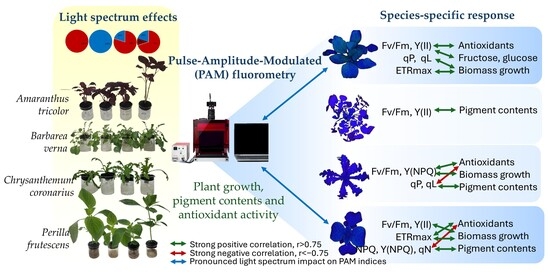
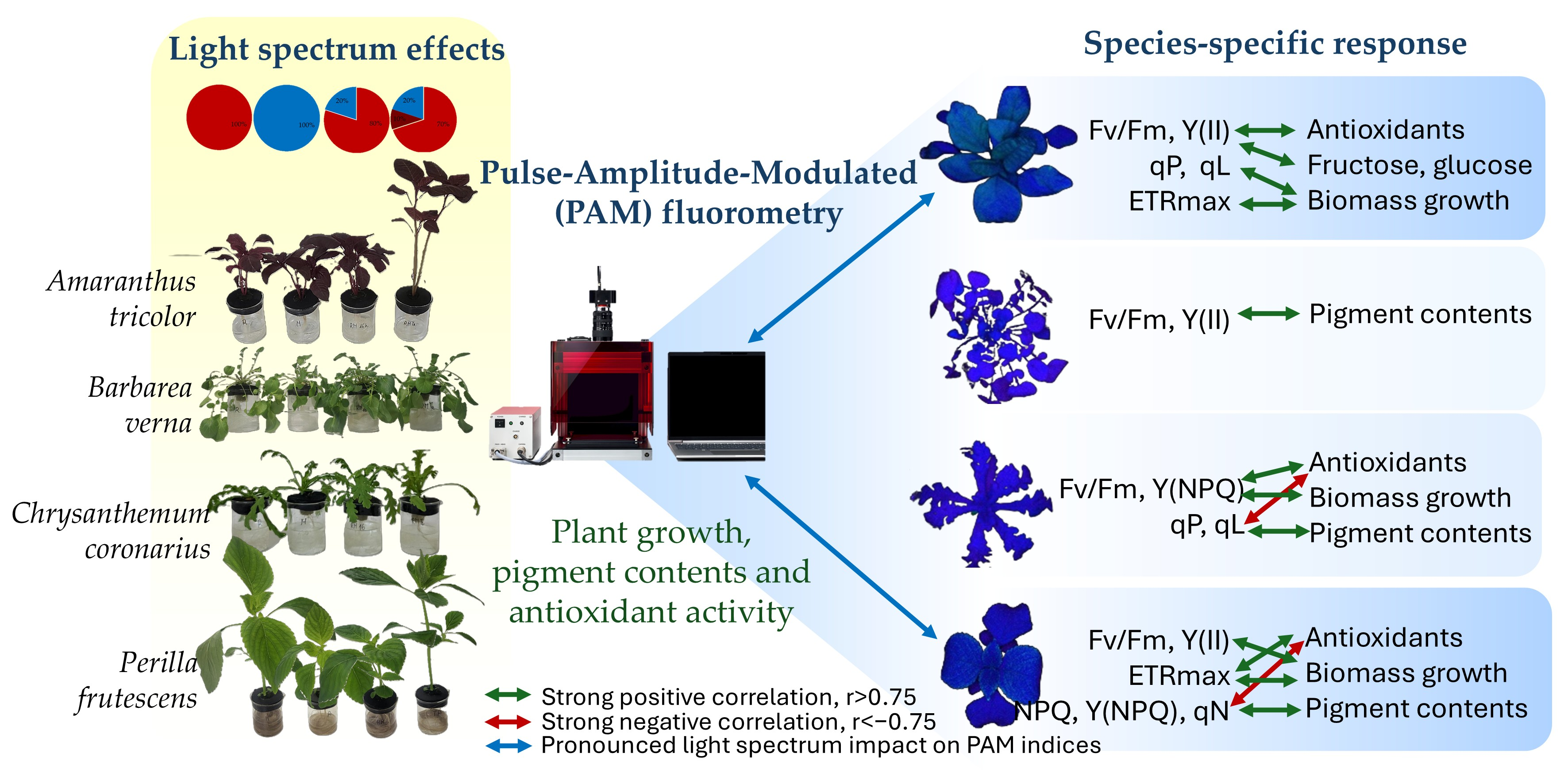
Graphical Abstract

1. Introduction

Controlled environment agriculture (CEA) is a rapidly evolving field of precision agriculture. CEA provides a sustainable and efficient solution to the increasing demand for food and agricultural products [1]. By isolating crops from fluctuations in the natural external environment, CEA creates constant, tailored cultivation conditions to optimize plant productivity, physiology, and, not least, resource-use efficiency [2]. Technological innovations are often proposed as the primary solution to the global challenge of improving the efficiency and automation of cultivation processes [3], as well as conserving natural resources [4]. While offering significant advantages, the widespread adoption of such technologies also faces considerable challenges, including high initial investment costs, information security risks, infrastructural limitations, and, most importantly, the need for specialized biological know-how [5,6]. Among these challenges, artificial lighting is one of the most critical and resource-intensive components of CEA systems, as it directly regulates plant physiological processes and substantially influences energy efficiency, operational costs, and infrastructure requirements. Current light-emitting diode (LED) technology enables the tailoring of light intensity, spectrum, and photoperiod on a plant-specific basis, as well as the creation of dynamic lighting strategies and the stimulation of specific photoreceptors [7]. The composition of light spectra, also known as light quality, is crucial in influencing plant morphology and physiology, as well as the overall costs of lighting in Controlled Environment Agriculture (CEA) farms. Different spectral components of light have varying effects on plant photosynthetic performance and display inconsistent photon efficacy (µmol J−1) [8,9]. Different wavelengths have been shown to influence photosynthetic energy partitioning, photoprotection mechanisms, and plant morphology, leading to species-specific responses to monochromatic and combined light spectra [10,11]. Red light is typically associated with efficient photochemical energy conversion, whereas blue light contributes to stomatal regulation, pigment synthesis, and photoprotective responses [12]. The inclusion of far-red radiation further modifies photosystem interactions and plant architecture and may enhance photosynthetic efficiency under certain conditions [13]. These spectral effects are closely linked to the regulation of PSII energy partitioning and photoprotective mechanisms [14]. Chlorophyll a fluorescence analysis, particularly pulse-amplitude-modulated (PAM) fluorometry, provides a rapid, non-destructive method for assessing plant photosynthetic efficiency under different lighting conditions [15,16,17,18]. It provides information on PSII light-harvesting and energy-use efficiency and can therefore serve as an indicator of photosynthetic capacity and plant responses to abiotic stress factors, including light [19]. It was employed as a dynamic biofeedback tool to assess the impacts of diverse environmental stressors on the photosynthetic functioning of various agricultural plants [20,21,22]. In CEA, it was also used as photo-feedback to regulate lighting conditions for lettuce [15,23,24] and basil [25]. The outcomes of these studies show that using chlorophyll fluorescence-based lighting control resulted in higher biomass yield while reducing energy consumption, thereby improving light and energy-use efficiency.
Chlorophyll fluorescence is a comprehensive indicator of performance across photosynthetic organisms and is applicable to many crops. Its delivered indices, such as maximum photosynthetic efficiency (Fv/Fm), photochemical efficiency of Photosystem II (ΦPSII, synonymous with Y(II)), and electron transport rate (ETR) [15,17,26], can be employed as a photo-feedback technology across any agricultural system [25]. However, a knowledge gap remains regarding whether PAM indices are universal indicators or specific to the crop/cultivation system and the applied environmental stressor. Although research data confirm that ETR and ΦPSII are suitable indicators for tuning optimal plant lighting intensity (expressed as photosynthetic photon flux density, PPFD) [15,23,24,26], only limited research has examined how chlorophyll fluorescence parameters are affected by lighting spectrum [27]. Moreover, the integration of fluorescence-derived responses with growth, biochemical, and pigment traits under defined spectral conditions remains insufficiently explored, particularly across different plant species.
Following this, in the present study, we hypothesized that light spectral composition would differentially affect chlorophyll fluorescence indices in plants. These responses were expected to vary among species due to their distinct phenotypic plasticity under artificial lighting conditions. Therefore, the aim of this study was to investigate species-specific photoresponses of leafy vegetables to different light spectra by integrating chlorophyll fluorescence measurements with growth, antioxidant, and pigment traits. Particular attention was given to evaluating how fluorescence-derived indices reflect plant physiological responses to spectral variation and how these relationships differ between species. The experiment included monochromatic light treatments, as well as the commonly applied red/blue spectrum combination [28] and supplemental far-red radiation. To extend beyond model species such as lettuce, the study was conducted on underutilized leafy vegetables with diverse morphology and physiological characteristics and potential for cultivation in CEA. Although some of the investigated species are also known as ornamental plants, their young, tender leaves are consumed as “baby leaf” vegetables and represent promising candidates for diversifying leafy vegetable production in controlled environments.

2. Materials and Methods

2.1. Cultivation and Lighting Conditions

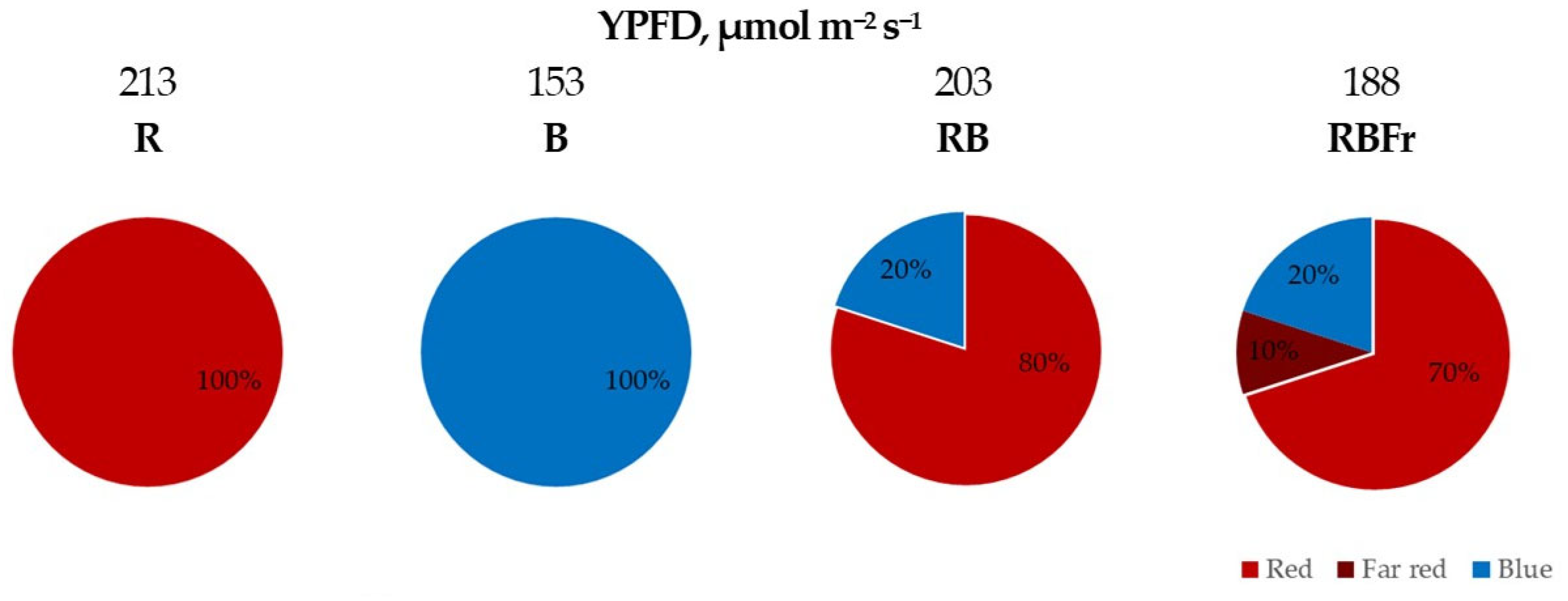
Experiments were performed in a walk-in controlled environment chamber. Here, a day/night temperature of 21/17 ± 2 °C with a 16-h thermoperiod and photoperiod was set. The relative humidity was kept at 60–65%. Tunable LED lighting units HLRD (Hortiled, Kaunas, Lithuania) were used as the source of artificial lighting (three lamps per each spectrum treatment). The photosynthetic photon flux density (PPFD) was maintained at 250 ± 10 µmol m−2 s−1 at the top of the plant using a spectrometer (WaveGo, Wave Illumination, Oxford, Oxfordshire, UK). Experimental light-spectrum treatments consisted of the following: (i) monochromatic red (R, 660 nm); (ii) monochromatic blue (B, 447 nm); (iii) their combination (RB); and (iv) RB with supplemental far-red (Fr, 740 nm) light (Figure 1).
The seeds of amaranth (Amaranthus tricolor ‘Red Aztec’; Amaranthaceae), land cress (Barbarea verna; Brassicaceae), chrysanthemum greens (Chrysanthemum coronarium; Asteraceae), green leaf perilla (Perilla frutescens; Lamiaceae) (all from CN Seeds, Pymoor, Cambridgeshire, UK) were germinated in water-soaked rockwool cubes (20 × 20 × 40 mm, Grodan, Roermond, The Netherlands). Because the species differed in seedling size and early growth habit, three seedlings of amaranth and barbarea, and one seedling of perilla and chrysanthemum, were maintained per cube to obtain sufficiently developed plant material under the available cultivation volume. Ten days after germination, the seedlings were transplanted into 40 L deep-water culture (DWC) hydroponic tanks (12 net pots per tank). Hydroponic nutrient solution was prepared from commercial concentrate (Plagron, Ospel, The Netherlands): Hydro a (NPK 3-0-1, Ca 4.2%, MgO 0.4%) and Hydro b (NPK 1-3-6, MgO 1.4%) were diluted with deionized water at a ratio of 1:1:400. pH was maintained at 5.5–6.0 and adjusted daily using acid-base titration.
The experiment included four light spectrum treatments (R, B, RB, and RBFr), each provided by three independent lamps. Under each lamp, one hydroponic tank of each plant species was placed, resulting in three replicate tanks per spectrum treatment for each species. Thus, for each species, the experimental design consisted of four spectral treatments with three biological replicates (n = 3), with one tank exposed to one lamp considered a single experimental unit.

2.2. Measurements and Analyses

Biometric, chlorophyll fluorescence measurements, and biochemical analyses were performed after four weeks of transplanting. Plants were harvested at the baby leaf stage, when they had developed five to six fully expanded leaves, and all above-ground plant material was used for analysis. For chlorophyll fluorescence and biometric measurements, three plants were used from each replicate (nine subsamples nested within three biological replicates). The biomass of the remaining plants within each biological replicate was pooled into a bulk sample and homogenized. From each replicate, three independent extraction samples for biochemical analysis were prepared. Due to the pooling of biomass for biochemical analysis, integration with plant-level measurements was performed at the biological replicate level. All biochemical analyses were performed in three technical replicates, and the mean was used for subsequent statistical analysis.
The fresh weight (FW) and dry weight (DW) of the plants were evaluated using an electronic scale (Mettler Toledo AG64, Columbus, OH, USA) before and after freeze-drying (FD-7, SIA Cryogenic and Vacuum Systems, Ventspils, Latvia). The leaf area of the plants was assessed with a benchtop automatic leaf area meter (AT Delta-T leaf area meter, AT Delta-T Devices, Burwell, UK), while the height was measured using a ruler.
Yield photosynthetic photon flux density (YPFD) was calculated by multiplying the PPFD of each light spectra component by the corresponding wavelength-specific relative quantum efficiency [29] (Figure 1).
Light-use efficiency (LUE, g mol−1 m−2) [30] was determined using the following formula:
LUE = (DW × N)/(DLI × T)
where DW—dry plant weight, N—number of plants per square meter, DLI—daily light integral, and T—number of days plants were cultivated.
Light-use efficiency was evaluated based on PPFD (LUEPPFD) and YPFD (LUEYPFD) values.
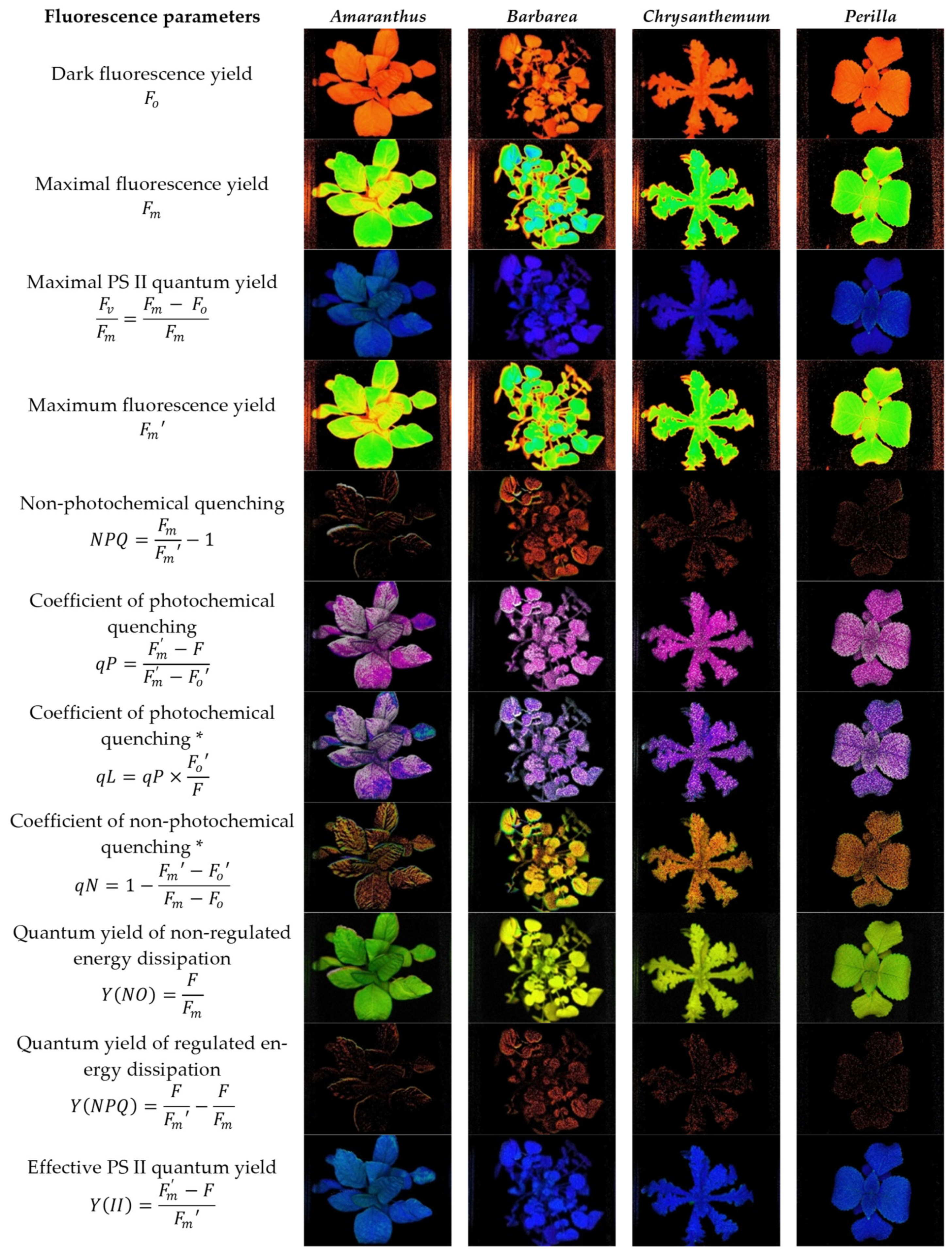
Chlorophyll fluorescence parameters, presented in Figure 2, were determined using an imaging-PAM (Pulse-Amplitude Modulation) fluorometer (M-Series MAXI-Version (Walz, Effeltrich, Germany) and Imaging Win software v. 2.56zc (Walz, Effeltrich, Germany). Measurements were recorded on the second and third fully expanded leaves of three selected, 30 min dark-acclimated plants per treatment. Circular regions of interest (ROIs) were manually selected on the central part of the leaf blade, avoiding leaf veins, and the ROI selection was standardized across all species. The ETR (electron transport rate) was determined on light-acclimated (30 min) plants, with light intensity gradually increased at fixed time intervals to 0, 2, 18, 54, 140, 285, 481, 728, 910, and 1196 µmol s−1 m−2. ETRmax (maximum electron transport rate) values were estimated graphically from rapid light curves as the maximum electron transport rate achieved under saturating actinic irradiance (the intersection of the extrapolated initial linear phase with the plateau region) [31].
Regarding the biochemical properties, antioxidant potential, and contents of sugars, proteins, chlorophylls, and carotenoids were evaluated.
To evaluate antioxidant properties, DPPH (2-diphenyl-1-picrylhydrazyl) [32], ABTS (2,2-azino-bis (3-ethylbenzothiazoline-6-sulphonic acid) [33] free radical scavenging activities and FRAP (ferric reduction antioxidant power) [34] were determined in 80% aqueaous methanol extracts, using Trolox as equivalent (mmol TE g–1 DW), as described in a previous study [35]. Total contents of phenolic compounds (TPC) were measured according to the Folin-Ciocalteu method [36] and the results expressed in terms of gallic acid equivalent (mg g–1 DW). All measurements were performed using the Spectrostar Nano microplate reader (BMG Labtech, Ortenberg, Germany).
Soluble sugar determination. The previously described HPLC method with evaporative light scattering detection (ELSD) for soluble sugar determination in aqueous extracts was used [37]. Fructose and glucose contents were expressed as mg of sugar per g of plant dry weight (mg g−1 DW).
Total protein (TP) contents. The modified spectrophotometric Bradford method was employed [36]. Total protein contents (mg g−1) in the DW were determined according to the bovine serum albumin calibration curve.
Contents of chlorophylls and carotenoids. HPLC method for chlorophyll a, b and β carotene, violaxanthin contents in 80% aqueous acetone extracts was used [36]. Compounds were quantified in mg g−1 DW, using external standards for calibration.

2.3. Statistical Evaluation

Statistical evaluation. Results are presented as mean ± standard deviation based on three biological replicates (n = 3). For chlorophyll fluorescence (PAM) and biometric measurements, three plants per biological replicate were measured individually (total n = 9). These measurements were treated as subsamples nested within biological replicates and included in the analysis to capture within-replicate variability. The interpretation of these results takes into account the nested structure of the data. The significant differences between means of measured parameters were distinguished using one-way and two-way ANOVA, and Tukey’s HSD test analysis at the confidence level of p ≤ 0.05. For result modeling, multivariate principal component analysis (PCA) test and correlation analysis were performed. Data were evaluated using Microsoft Excel and XLStat 2022.3.1 (Addinsoft, Paris, France).

3. Results

3.1. Lighting Spectrum Impacts on Plant Growth Parameters

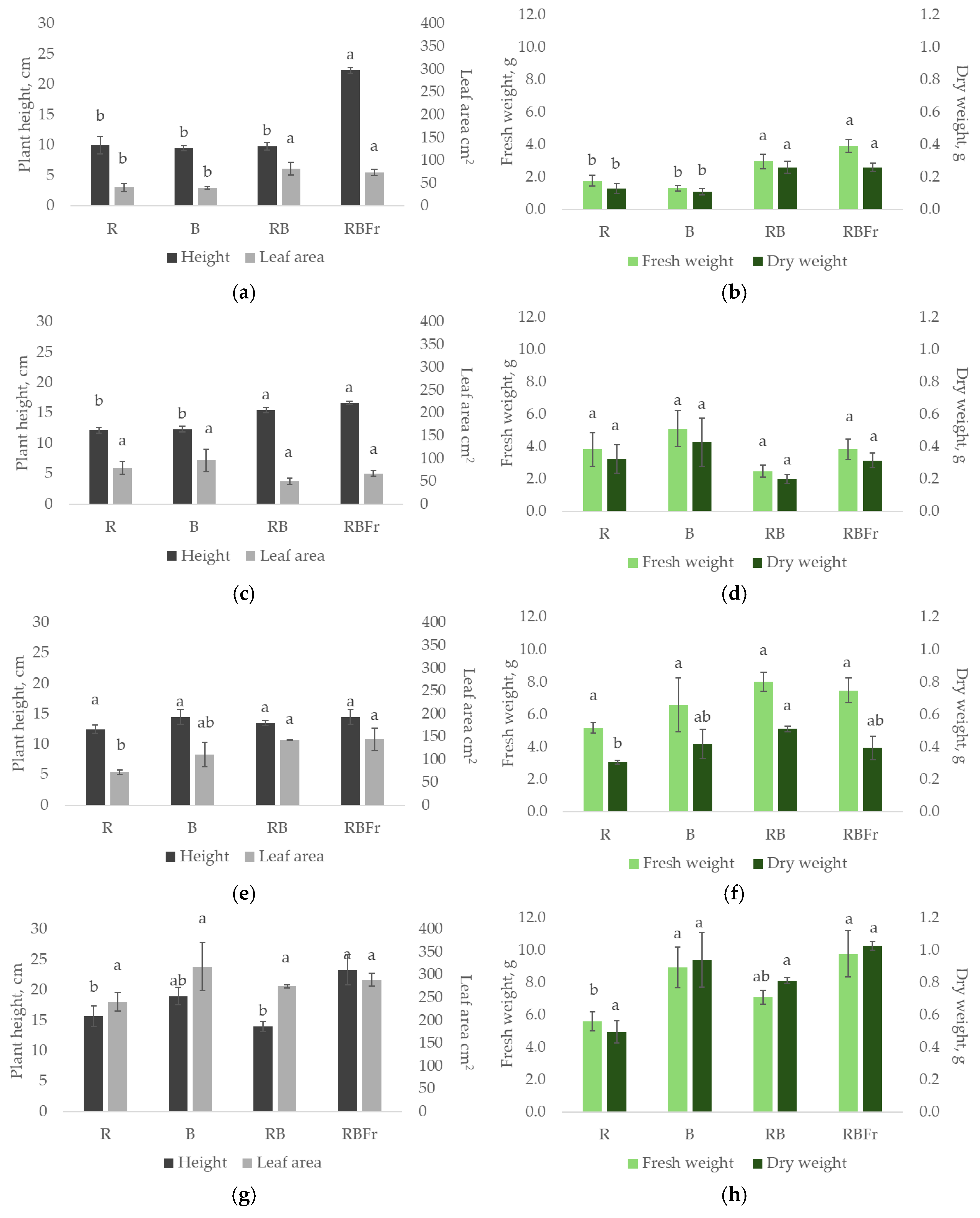
Investigated light-spectrum conditions had a pronounced impact on plant growth parameters (Figure 3). Amaranth (Figure 3a) showed a significant effect of far-red light on stem elongation: it was 2.2 times higher under RBFr treatment than under RB. The height of the chrysanthemum and perilla (Figure 3e,g) was not markedly affected by the lighting spectrum, but barbarea (Figure 3c) plants were ~20% lower than under combined RB treatments. The impact on leaf area is less pronounced; however, monochromatic R and B light in amaranth (Figure 3a) and R light in chrysanthemum (Figure 3e) tend to reduce leaf area. In amaranth (Figure 3b), this trend is also reflected in the fresh and dry weights: they are determined to be 50–40% lower under R and B treatments than under the combined RB effect. Due to high result variation, the light spectrum’s impact on plant weight in other plants is insignificant, except for lower dry weight in chrysanthemum (Figure 3f) and lower fresh weight in perilla (Figure 3h) under monochromatic red light.

3.2. Lighting Spectrum Effects on Chlorophyll Fluorescence Indices in Different Plants

The lighting spectrum has also significantly affected the chlorophyll fluorescence parameters (Table 1). Two-way ANOVA results indicate that chlorophyll fluorescence parameters show strong species × spectrum interactions (p ≤ 0.001, except for qN, where p ≤ 0.05). The primary measured PAM parameters (Fo’, Fm’) were less consistent indicators, responding to lighting spectrum, compared to derivative photochemical efficiency (Fv/Fm, Y(II), ETRmax), energy dissipation (Y(NPQ), Y(NO), NPQ), and photochemical fluorescence quenching (qP, qL) indices. However, although Fv/Fm and Y(NO) exhibited the most consistent variation across species in response to the lighting spectrum, ANOVA interactions confirm that there is no “universal” indicator that reflects the photoresponse of all investigated species. The degree and pattern of response to light spectra differ significantly among species. PAM fluorescence parameters varied in Amaranthus tricolor and Perilla frutescens, cultivated under differential light spectrum conditions more sensitively than Barbarea verna and Chrysanthemum coronarium. In amaranth (Table 1), monochromatic red (R) light resulted in ~15–20% lower Fv/Fm and Y(II) values, compared to blue-light containing light treatments. ETRmax is also slightly higher under the combined RB treatment than under monochromatic red (R) or blue (B). Monochromatic B and RB lighting resulted in 30% lower non-photochemical quenching (NPQ) values than monochromatic R and ~40% lower than supplemental far-red (RBFr) light exposure. The coefficient of photochemical quenching, qL, was 33% lower than in the RB treatment. In barbarea (Table 1), fluorescence parameters were less responsive to lighting spectrum treatments. Although minor statistically significant differences were observed in Fv/Fm, Y(II), and qL, the magnitude of spectral effects was smaller than in the other species. Notably, monochromatic R resulted in 33% higher Y(NO) and 21% lower ETRmax values, while supplemental far red (RBFr treatment) resulted in a 32% reduction in ETRmax. In chrysanthemum (Table 1), the least statistically significant differences in measured PAM indices were observed, except for 5% higher qP and 20% higher qL photochemical quenching coefficients compared to the RB lighting treatment. In perilla (Table 1), the impact of monochromatic R light was pronounced: 4% lower Fv/Fm value, 50% higher Y(NPQ), 36% higher NPQ and qN values, while 41% lower ETR max, compared to RB treatment, suggesting reduced PSII performance under monochromatic red light.

3.3. Correlation Between Fluorescence Indices and Biochemical Traits in Different Plants Under Light Spectral Treatments

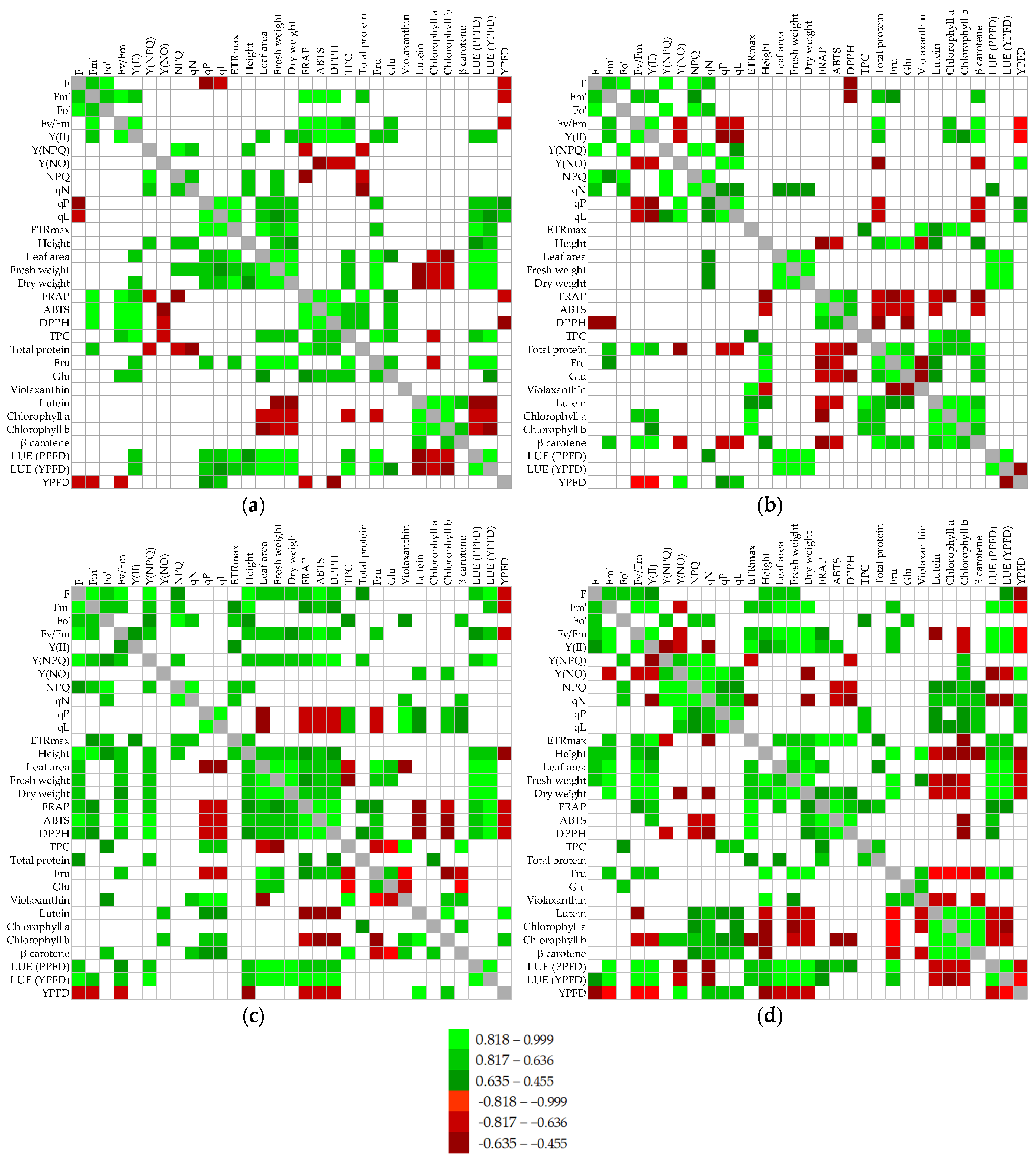
Correlation analysis (Table S1, Figure 4) reveals significant differences in correlation patterns across species. Intrinsic relationships between fluorescence parameters (e.g., positive correlations between Fv/Fm and Y(II), or between NPQ and qN) were observed across all four investigated species. For all four of them, Fv/Fm values strongly negatively correlate with YPFD values (r from −0.64 to −0.89); however, their associations with growth and biochemical traits (Table S2) were species−specific. In amaranth (Figure 4a, Table S1A), Fv/Fm and Y(II) (r = 0.84–0.89 and r = 0.69–0.86) were strongly linked to antioxidant parameters and moderately associated with biomass traits. Antioxidant analysis results indicate 40%, 27%, and 30% lower FRAP antioxidant power and ABTS and DPPH free radical scavenging activity under monochromatic red light, compared to the RB combination (Table S2). Supplemental Fr light also reduced FRAP antioxidant power by 24% compared to RB, but other antioxidant traits were less affected. Y(II), qP, and ETRmax were moderately correlated with growth parameters (r from 0.60 to 0.79)—leaf area, fresh and dry weight, as well as NPQ and qN correlated (r = 0.64 and 0.67, respectively) with fresh plant weight. In contrast, barbarea (Figure 4b, Table S1B) exhibited a distinct pigment-centered correlation structure: Fv/Fm and Y(II) are closely related to chlorophyll a (r = 0.68 and 0.70), and β carotene (r = 0.89 and 0.84) contents, when only qN moderately correlates (r~0.61) with plant leaf area and biomass. It is also reflected in primary biochemical analysis results (Table S2), where minor light-spectrum effects on the antioxidant system contrast with lower chlorophyll and β-carotene values under monochromatic red (R) and supplemental far-red (RBFr).
In chrysanthemum, the least statistically significant impact of lighting spectrum on differences in measured PAM indices was observed (Table 1); however, biochemical analysis (Table S2) and correlation analysis (Figure 4c, Table S1C) show a dual pattern. Fv/Fm and Y (NPQ) moderately positively correlate with growth, LUE (r 0.59–0.81) and antioxidant (r 0.73–0.83) parameters, whereas photochemical quenching indices (qP, qL) were negatively associated with antioxidant properties (−0.65–−0.69) but positively related to selected pigment traits. Strong positive correlation of qP and qL (r~0.90) was determined with violaxanthin contents; moderate with lutein (r~0.60), chlorophyll A (r~0.72), β carotene (r 0.58–0.62), as well as with total phenolic content (r~0.77). Compared to the other species, pigment composition and antioxidant traits exhibited greater and statistically significant variation across the investigated light-spectrum treatments (Table S2).
The most extensive integration between photochemical efficiency and plant performance was observed in perilla (Figure 4d, Table S1D). Fv/Fm, Y(II), and ETRmax were consistently and strongly (r = 0.67–0.94) correlated with biomass and fructose, and, consequently, with light-use efficiency. NPQ, qN, qP, and qL (r = 0.60 –0.80) show moderate correlations with chlorophylls and carotenoids. Y(NPQ), NPQ, and qN negatively correlate with ABTS and DPPH free radical scavenging activities (r = −0.64 to −0.82), while ETRmax shows a strong positive correlation (r = 0.85 to 0.93). Pronounced negative impact of monochromatic red light on antioxidant properties (45% lower FRAP antioxidant power, 54% lower ABTS free radical scavenging activity) was observed, while monochromatic blue had only a slight effect.

3.4. Principal Component Analysis

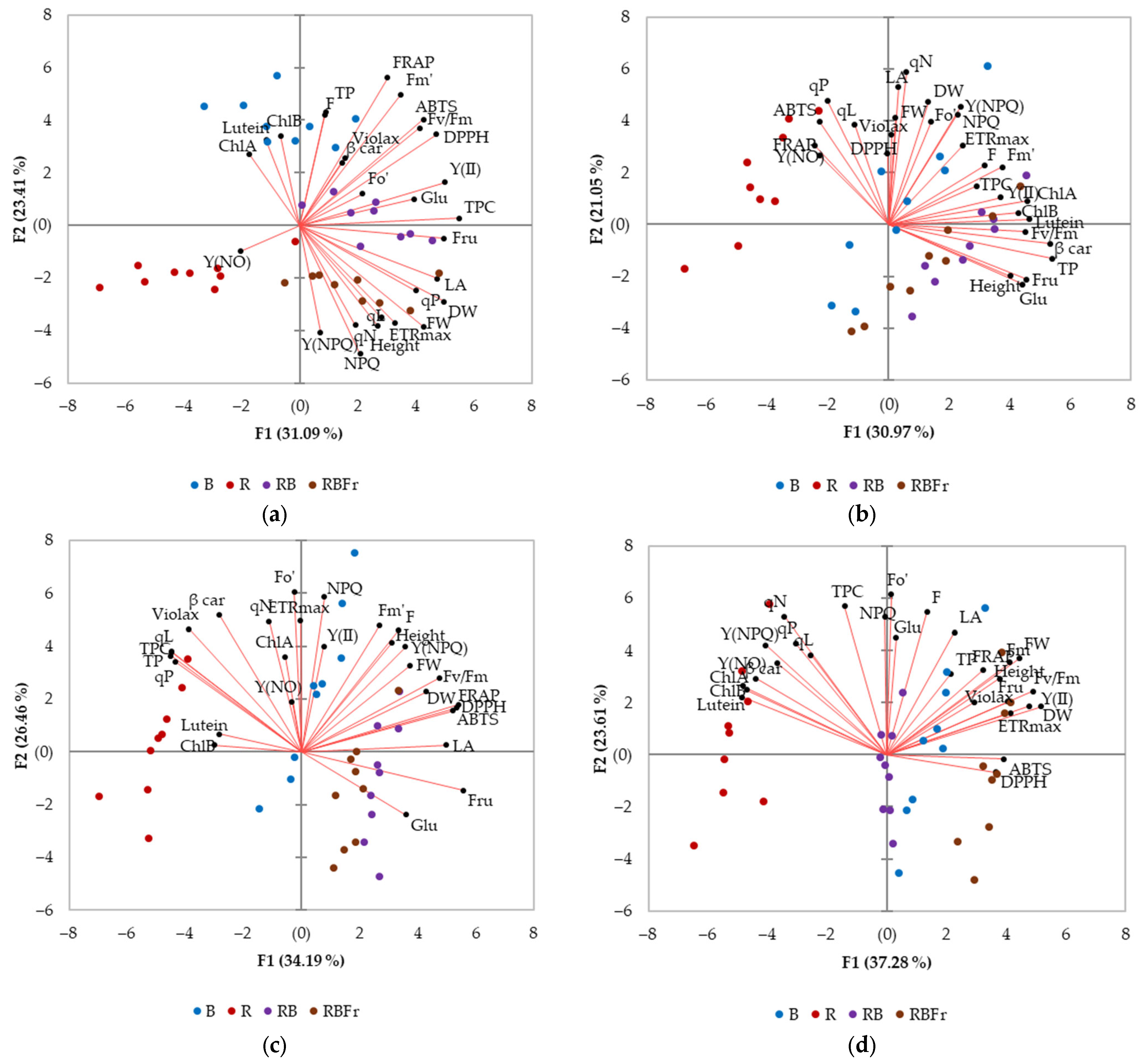
Principal component analysis (Figure 5) confirms previous results on the species-specific effects of lighting spectra on the investigated plants, with the first two components explaining 51–61% of the total variance, depending on species. In amaranth (Figure 5a), a PCA scatter plot reveals differential physiological impacts across all four light spectral treatments. In other plants (Figure 5b–d), only monochromatic R light has a markedly different impact compared to other lighting treatments.
In amaranth PC1 (31.09%) (Figure 5a, Table S2) axis integrated biomass (FW, DW, LA), photochemical parameters (Fv/Fm, Y(II), qP, ETRmax), soluble sugar, DPPH and ABTS, TPC antioxidant measures, and thus differentiated monochromatic and combined spectrum light impacts on amaranth. Distribution according to PC2 (23.41%) axis responded to FRAP antioxidant properties, total protein contents, NPQ, qN indices, and thus separated the impact of monochromatic R and RBFr impact from B and RB. In barbarea (Figure 5b, Table S2), the main differentiation between monochromatic red and other lighting conditions, according to PC1 (30.97%), is driven by Fv/Fm, Y(II), total protein, sugar, and pigment contents. A scattered distribution along PC2 (29.89%) is mainly attributed to growth parameters and Y(NPQ), NPQ, and coefficients of photochemical quenching qN, qP, and qL.
In chrysanthemum (Figure 5c, Table S2), PC1 (34.19%) explained the differentiation of monochromatic RED from other treatments based on PAM parameters, including Fv/Fm, Y(NPQ), qP, qL, as well as biometric and antioxidant parameters. In perilla (Figure 5d, Table S2), red light was excluded from others by PC1 (37.28%) across all main fluorescence parameters, ETRmax, as well as biometric parameters, and chlorophyll, lutein and β carotene contents.

4. Discussion

The present study explored how light spectral composition affects plant physiological responses by integrating chlorophyll fluorescence with growth, biochemical, and pigment traits across diverse leafy vegetables. This integrative approach allows fluorescence-derived parameters to be interpreted in relation to whole-plant performance, providing insight into species-specific responses to controlled lighting spectrum. In this context, chlorophyll fluorescence sensing is a non-destructive, continuous-monitoring approach that enables assessment of plant physiological status without disrupting growth, supporting its use as a proxy sensing method in controlled environments. Although this technique presents certain limitations, including signal sensitivity, high instrument precision requirements, and complex data interpretation [22], the results of this study demonstrate that fluorescence parameters respond selectively to light spectral conditions in a species-dependent manner.

4.1. Light Spectrum Effects on Plant Growth and PSII Photochemistry

Photosystem II (PSII) plays a central role in the light-dependent reactions of photosynthesis, initiating the conversion of light energy into chemical energy [26]; therefore, PAM fluorometry serves as a valuable approach for examining photosynthetic responses to a range of biotic and abiotic factors. Concurring with other studies [15,24,38,39,40], Fv/Fm, the quantum yield of the photosynthetic electron transport chain ΦPSII (synonym of Y(II) used in PAM measurements), regulated non-photochemical energy dissipation Y(NPQ), photochemical quenching coefficients qP, qL, and electron transport rate ETR were responsive to applied treatments in our experiments. At the same time, the primary measured PAM parameters (Fo’, Fm’) were less consistent indicators, responding to the lighting spectrum. Fv/Fm is the ratio of variable fluorescence (Fv) (Table 1 and Figure 2) to maximum fluorescence (Fm) and therefore reflects the maximum efficiency of Photosystem II (PSII) [17]. Under optimal conditions, Fv/Fm values generally fall within the range of 0.74–0.85 [41], while reductions in this parameter indicate disruptions in electron transport or impairment of the PSII reaction center, commonly associated with abiotic stresses such as excessive light, drought, salinity, and temperature extremes. However, as a wide range of factors can influence Fv/Fm values, it is not a specific index, and its interpretation is context-dependent [42]. Several studies report Fv/Fm values below 0.8 to be consistent with acceptable plant growth performance under monochromatic light in CEA [38,43]. In our data, the Fv/Fm value ranged from 0.70 in amaranth and perilla to 0.76–0.78 in barbarea and chrysanthemum, when cultivated under an RB spectrum. Only monochromatic red light reduced values in all plants, indicating unfavorable conditions. This reduction was accompanied by increased non-photochemical energy dissipation parameters, including non-photochemical quenching NPQ and quantum yield of regulated energy dissipation Y(NPQ), indicating enhanced photoprotective energy dissipation under red-dominant light conditions, as well as significantly reduced fresh and dry weight in amaranth, under R treatment. Such responses may reflect imbalances in the distribution of excitation energy between photosystem I and photosystem II, which is described as part of photoprotection and light acclimation processes [44], and can occur under spectrally narrow light sources.
According to our results, combined red–blue spectra generally maintained higher photochemical efficiency Y (II) and electron transport rates (ETRmax). It is documented that blue light contributes to the regulation of stomatal conductance, chloroplast movement, and photoprotective responses, which together support more stable PSII performance [14]. The weaker spectral sensitivity of chlorophyll fluorescence parameters observed in our results in barbarea and chrysanthemum indicates that the photochemical apparatus of these species may be less sensitive to spectral variation under the applied growth conditions. The most pronounced morphological response to lighting spectrum was observed in Amaranthus tricolor, where supplemental far-red radiation markedly stimulated stem elongation. This response is consistent with well-known phytochrome-mediated shade-avoidance mechanisms, where far-red light shifts the phytochrome equilibrium toward the inactive form and promotes elongation growth [45].
In contrast, plant height in Chrysanthemum coronarium remained largely unaffected by spectral treatments, indicating reduced morphological sensitivity to far-red supplementation under the conditions investigated. Following, no significant correlation was determined between measured PAM indices and growth parameters in barbarea, while in chrysanthemum and perilla, biomass yield strongly correlated with Fv/Fm, and in amaranth, with qP and qL. In amaranth, a strong positive correlation was also determined between ETRmax values and leaf area, fresh and dry plant weight. However, Kim and van Iersel, (2022) [15] proposed, that photons, absorbed by non-photosynthetic pigments do not contribute to electron transport, therefore, the physiological relevance of ΦPSII and ETR measurements of plants with significant anthocyanin levels, such as red leaf amaranth, is questionable, especially when anthocyanin contents in leaves are also significantly affected by applied light parameters [46,47]. Moreover, ETR measurements are complex and time-consuming, therefore less suitable for proxy sensing in CEA.

4.2. Species-Specific Integration of Photochemistry and Metabolism

Correlation analysis revealed pronounced species-specific relationships between chlorophyll fluorescence parameters and plant physiological traits in our study. In amaranth, photochemical efficiency parameters (Fv/Fm and Y(II)) were strongly and positively associated with antioxidant activity and soluble sugar content. This confirms existing knowledge, that enhanced PSII efficiency may support an antioxidative response to unfavorable conditions, helping maintain ROS homeostasis in chloroplasts [42,48]. This relationship is supported by the observed spectral effects on antioxidant capacity, where monochromatic red light significantly reduced FRAP and radical scavenging activity compared to combined spectra. In contrast, barbarea in this study exhibited a pigment-centered correlation structure, where fluorescence parameters, according to the correlation analysis results, were primarily linked to chlorophyll and carotenoid contents rather than to biomass traits. This interpretation is consistent with the relatively minor spectral effects on antioxidant traits in this species, while pigment composition, particularly chlorophylls and carotenoids, showed greater sensitivity to spectral variation.
Chrysanthemum displayed a dual correlation pattern, with maximal PSII efficiency associated with biomass and antioxidant parameters, whereas photochemical quenching coefficients (qP and qL) were negatively related to antioxidant capacity but positively correlated with pigment composition, thus indicating the high level of complexity of photosynthetic response [49]. This dual response is further supported by pronounced variation in both antioxidant capacity and pigment composition across light treatments, suggesting that spectral regulation of metabolism in this species involves a complex balance between photochemical activity, pigment accumulation, and antioxidative processes.
The most extensive integration between photochemical performance and plant productivity was observed in Perilla, where Fv/Fm, Y(II), and ETRmax showed strong correlations with biomass accumulation, antioxidant activity, and light-use efficiency. In contrast, NPQ, qN, qL, and qP showed strong correlations with chlorophyll, carotenoid, and total phenolic contents. These findings are consistent with the strong spectral modulation of antioxidant capacity observed in this species, highlighting the tight coupling between photochemical performance and metabolic responses. Overall, the results indicate that the functional coupling between PSII performance and plant metabolism varies substantially between species.

4.3. Universal and Species-Specific Fluorescence Indicators

Performed multivariate analysis confirms that there is no “universal” indicator that reflects the photoresponse of all investigated species. The degree and pattern of response to light spectra differ significantly depending on species, as well as responsive PAM parameters. Even Fv/Fm, often considered a universal indicator of PSII functionality, was predictive of growth performance only in perilla and chrysanthemum. Similarly, Y(II) and ETRmax demonstrated strong predictive value in perilla but not consistently in the other species. One consistent relationship was observed across all investigated species: the maximum quantum efficiency of PSII (Fv/Fm) was strongly negatively correlated with yield photon flux density (YPFD) in all four species. This is in line with the other published studies on lettuce, where negative interaction between PPFD and Fv/Fm in the case of high light was reported [19,43]. However, the predictive value of specific fluorescence parameters varies strongly across plant species and physiological contexts. Despite fluorescence parameters being successfully adapted as a biofeedback system for light intensity control [15,23,24,25], for wider practical implications, it is also necessary to state that lighting spectrum and intensity are related to similar fluorescence parameters; therefore, they should be tailored individually.

5. Conclusions

This study demonstrated that light spectral composition significantly influences plant photoresponses, as reflected by integrated changes in chlorophyll fluorescence, growth, antioxidant, and pigment traits. Fv/Fm, Y(II) Y(NPQ), photochemical quenching coefficients qP, qL, and ETR were responsive to applied lighting spectrum treatments, with monochromatic red light generally reducing photochemical efficiency and increasing non-photochemical energy dissipation, while combined red–blue spectra supported more stable PSII performance. Far-red radiation primarily affected plant morphology and species-specific responses. No single fluorescence parameter consistently reflected plant performance across all crops. However, the degree and pattern of responses to light spectra differed substantially among species, with Perilla frutescens and Amaranthus tricolor generally exhibiting stronger PAM index responses to spectral variation than Chrysanthemum coronarium and Barbarea verna, indicating that the integration of photochemical and whole-plant responses is species-dependent. Overall, chlorophyll fluorescence can serve as a useful proxy for assessing plant responses under controlled lighting conditions; however, its interpretation requires a species-specific and context-dependent approach.

Supplementary Materials

The following supporting information can be downloaded at: https://www.mdpi.com/article/10.3390/horticulturae12050533/s1, Table S1: Correlation coefficients and p-values between measured variables in A—Amaranthus tricolor, B—Barbarea verna, C—Chrysanthemum coronarius, D—Perilla frutescens, cultivated under different lighting spectrum conditions. Values in bold represent statistically significant relations, when p < 0.05; Table S2: Biochemical analysis and light use efficiency indices in different leafy vegetables in response to different lighting spectra ( x ¯ , n = 3 biological replications). Results presented in dry plant weight (DW). Different superscript letters indicate statistically significant differences between means according to a two-way ANOVA and Tukey’s test (p ≤ 0.05). DW—dry plant weight, Fru—fructose, Glu—glucose, TP—total protein contents, TPC—total phenolic contents, ChlA—chlorophyll A, ChlB—chlorophyll B, Violax—violaxanthin, β car—β carotene; Table S3: The Principal component analysis factor loadings exploring lighting parameters impact on different plants. Bold values represent statistically significant (p < 0.05) relations.

Author Contributions

Conceptualization, A.V. and G.S.; methodology, G.S. and A.P.; formal analysis, G.K., K.L. and A.P.; investigation, G.K. and A.V.; resources, G.S.; data curation, A.V.; writing—original draft preparation, A.V.; writing—review and editing, G.S.; funding acquisition, G.S. All authors have read and agreed to the published version of the manuscript.

Funding

This research was funded by Lithuanian Research Council, grant number S-MIP-22-55.

Data Availability Statement

The original contributions presented in this study are included in the article/Supplementary Materials. Further inquiries can be directed to the corresponding author.

Conflicts of Interest

The authors declare no conflicts of interest. The funders had no role in the design of the study, in the collection, analysis, or interpretation of data, in the writing of the manuscript, or in the decision to publish the results.

Abbreviations

The following abbreviations are used in this manuscript:
PAMPulse-amplitude-modulated fluorometry
CEAControlled environment agriculture
RRed
BBlue
FrFar red
PSIIPhotosystem II
Fv/Fm Maximal PS II quantum yield
ΦPSII (syn. Y(II)Effective PS II quantum yield
NPQNon-photochemical quenching
Y(NPQ)Quantum yield of regulated energy dissipation
Y(NO)Quantum yield of non-regulated energy dissipation
qP, qLand qN Photochemical fluorescence quenching indices
ETRmaxMaximal electron transport rate
PPFDPhotosynthetic photon flux density
YPFDYield photosynthetic photon flux density
LUELight-use efficiency
DPPHdiphenyl-1-picrylhydrazyl free radical scavenging activity
ABTS2,2-azino-bis (3-ethylbenzothiazoline-6-sulphonic acid free radical scavenging activity
TPCTotal phenolic contents

References

  1. Zhao, S.; Song, W. Sustainable Development of Controlled Environment Agriculture. Agronomy 2025, 15, 2129. [Google Scholar] [CrossRef]
  2. Rahman, M.H.; Ayipio, E.; Lukwesa, D.; Zheng, J.; Wells, D.E.; Syed, H.H.; Rehman, T.U. Forecasting Growth Dynamics of Hydroponic Kale in Controlled Environment Agriculture through Vision-Based Phenotyping and Time-Series Modeling. Smart Agric. Technol. 2025, 11, 101039. [Google Scholar] [CrossRef]
  3. Chen, W.; Decardi-Nelson, B.; Kubota, C.; You, F. AI Applications in the Environmental Control of Controlled Environment Agriculture in the Digital Age. Mod. Agric. 2025, 3, e70027. [Google Scholar] [CrossRef]
  4. Ruder, S.L.; Faxon, H.O.; Orzel, E.C.; Devkota, R.; Bronson, K. Reviewing the Evidence on Precision Agriculture and Environmental Sustainability. npj Sustain. Agric. 2026, 4, 9. [Google Scholar] [CrossRef]
  5. Cohen, A.R.; Chen, G.; Berger, E.M.; Warrier, S.; Lan, G.; Grubert, E.; Dellaert, F.; Chen, Y. Dynamically Controlled Environment Agriculture: Integrating Machine Learning and Mechanistic and Physiological Models for Sustainable Food Cultivation. ACS ES&T Eng. 2022, 2, 3–19. [Google Scholar] [CrossRef]
  6. Mansoor, S.; Iqbal, S.; Popescu, S.M.; Kim, S.L.; Chung, Y.S.; Baek, J.-H. Integration of Smart Sensors and IOT in Precision Agriculture: Trends, Challenges and Future Prospectives. Front. Plant Sci. 2025, 16, 1587869. [Google Scholar] [CrossRef]
  7. Azizi, S.; Aliniaeifard, S.; Zarbakhsh, S.; Esmaeili, S.; Baghalian, K.; Gruda, N.S. Photobiology, Photosynthesis, and Plant Responses under Artificial Lighting in Controlled Environment Agriculture. Sci. Hortic. 2025, 349, 114248. [Google Scholar] [CrossRef]
  8. Sena, S.; Kumari, S.; Kumar, V.; Husen, A. Light Emitting Diode (LED) Lights for the Improvement of Plant Performance and Production: A Comprehensive Review. Curr. Res. Biotechnol. 2024, 7, 100184. [Google Scholar] [CrossRef]
  9. Cai, W.; Bu, K.; Zha, L.; Zhang, J.; Lai, D.; Bao, H. Energy Consumption of Plant Factory with Artificial Light: Challenges and Opportunities. Renew. Sustain. Energy Rev. 2025, 210, 115235. [Google Scholar] [CrossRef]
  10. Landi, M.; Zivcak, M.; Sytar, O.; Brestic, M.; Allakhverdiev, S.I. Plasticity of Photosynthetic Processes and the Accumulation of Secondary Metabolites in Plants in Response to Monochromatic Light Environments: A Review. Biochim. Biophys. Acta Bioenerg. 2020, 1861, 148131. [Google Scholar] [CrossRef]
  11. Lauria, G.; Ceccanti, C.; Lo Piccolo, E.; El Horri, H.; Guidi, L.; Lawson, T.; Landi, M. “Metabolight”: How Light Spectra Shape Plant Growth, Development and Metabolism. Physiol. Plant. 2024, 176, e14587. [Google Scholar] [CrossRef]
  12. Kaiser, E.; Ouzounis, T.; Giday, H.; Schipper, R.; Heuvelink, E.; Marcelis, L.F.M. Adding Blue to Red Supplemental Light Increases Biomass and Yield of Greenhouse-Grown Tomatoes, but Only to an Optimum. Front. Plant Sci. 2019, 9, 2002. [Google Scholar] [CrossRef]
  13. Zhen, S.; Bugbee, B. Substituting Far-Red for Traditionally Defined Photosynthetic Photons Results in Equal Canopy Quantum Yield for CO2 Fixation and Increased Photon Capture During Long-Term Studies: Implications for Re-Defining PAR. Front. Plant Sci. 2020, 11, 581156. [Google Scholar] [CrossRef]
  14. Khan, I.; Sohail; Zaman, S.; Li, G.; Fu, M. Adaptive Responses of Plants to Light Stress: Mechanisms of Photoprotection and Acclimation. A Review. Front. Plant Sci. 2025, 16, 1550125. [Google Scholar] [CrossRef]
  15. Kim, C.; Van Iersel, M.W. Morphological and Physiological Screening to Predict Lettuce Biomass Production in Controlled Environment Agriculture. Remote Sens. 2022, 14, 316. [Google Scholar] [CrossRef]
  16. Zhang, C.; Pfündel, E.E.; Atherton, J.; Aalto, J.; Bai, J.; Pohja, T.; Rajewicz, P.A.; Porcar-Castell, A. A Practical Guide to Long-Term Field PAM Chlorophyll Fluorescence Measurements: Setup, Installation, Data Processing with R Package ‘LongTermPAM’ and Interpretation. Photosynth. Res. 2025, 163, 45. [Google Scholar] [CrossRef]
  17. Pappert, I.; Klir, S.; Jokic, L.; Ühlein, C.; Tran Quoc, K.; Kaldenhoff, R. Plant Photosynthesis in Basil (C3) and Maize (C4) under Different Light Conditions as Basis of an AI-Based Model for PAM Fluorescence/Gas-Exchange Correlation. Front. Plant Sci. 2025, 16, 1590884. [Google Scholar] [CrossRef] [PubMed]
  18. Bhattarai, K.; Ogden, A.B.; Pandey, S.; Sandoya, G.V.; Shi, A.; Nankar, A.N.; Jayakodi, M.; Huo, H.; Jiang, T.; Tripodi, P.; et al. Improvement of Crop Production in Controlled Environment Agriculture through Breeding. Front. Plant Sci. 2025, 15, 1524601. [Google Scholar] [CrossRef] [PubMed]
  19. Zha, L.; Liu, W.; Zhang, Y.; Zhou, C.; Shao, M. Morphological and Physiological Stress Responses of Lettuce to Different Intensities of Continuous Light. Front. Plant Sci. 2019, 10, 1440. [Google Scholar] [CrossRef] [PubMed]
  20. Lysenko, V.; Rajput, V.D.; Kumar Singh, R.; Guo, Y.; Kosolapov, A.; Usova, E.; Varduny, T.; Chalenko, E.; Yadronova, O.; Dmitriev, P.; et al. Chlorophyll Fluorometry in Evaluating Photosynthetic Performance: Key Limitations, Possibilities, Perspectives and Alternatives. Physiol. Mol. Biol. Plants 2022, 28, 2041–2056. [Google Scholar] [CrossRef]
  21. Moustaka, J.; Moustakas, M. Early-Stage Detection of Biotic and Abiotic Stress on Plants by Chlorophyll Fluorescence Imaging Analysis. Biosensors 2023, 13, 796. [Google Scholar] [CrossRef]
  22. Ma, L.; Yin, M.; Chen, X.; Wan, Z.; Zhang, R.; Yang, Z.; Xiao, X. Chlorophyll Fluorescence Sensing for Smart Agriculture. Sens. Actuators A Phys. 2025, 394, 116930. [Google Scholar] [CrossRef]
  23. Nam, S.; Van Iersel, M.W.; Soranz Ferrarezi, R. Dynamic Adjustment of LED Lighting Through Real-Time Chlorophyll Fluorescence Monitoring Across an Entire Lettuce Growth Cycle. Physiol. Plant. 2026, 178, e70805. [Google Scholar] [CrossRef] [PubMed]
  24. Nam, S.; Van Iersel, M.W.; Ferrarezi, R.S. Biofeedback Control of Photosynthetic Lighting Using Real-time Monitoring of Leaf Chlorophyll Fluorescence. Physiol. Plant. 2025, 177, e70073. [Google Scholar] [CrossRef] [PubMed]
  25. Stevens, J.; Davey, P.; Kasznicki, P.; Hofmann, T.A.; Lawson, T. Green Instructions: Intelligent Lighting via Real-Time Chlorophyll Fluorescence Feedback: Enhancing Yield and Energy Efficiency in Controlled Environment Agriculture. Smart Agric. Technol. 2026, 13, 101593. [Google Scholar] [CrossRef]
  26. Yang, X.-L.; An, T.; Ye, Z.-W.-Y.; Kang, H.-J.; Robakowski, P.; Ye, Z.-P.; Wang, F.-B.; Zhou, S.-X. Modeling Light Response of Effective Quantum Efficiency of Photosystem II for C3 and C4 Crops. Front. Plant Sci. 2025, 16, 1478346. [Google Scholar] [CrossRef]
  27. Park, J.U.; Zheng, Y.; Kim, J. Spectral Overlap of Far-Red Light with Chlorophyll Fluorescence Causes Artifacts in PAM-Based ΦPSII Determination. Front. Plant Sci. 2026, 17, 1703422. [Google Scholar] [CrossRef]
  28. Van Brenk, J.B.; Vanderwolk, K.R.; Seo, S.; Choi, Y.H.; Marcelis, L.F.; Verdonk, J.C. Blue Light Sonata: Dynamic Variation of Red:Blue Ratio during the Photoperiod Differentially Affects Leaf Photosynthesis, Pigments, and Growth in Lettuce. Plant Physiol. Biochem. 2025, 223, 109861. [Google Scholar] [CrossRef]
  29. Sager, J.C.; Smith, W.O.; Edwards, J.L.; Cyr, K.L. Photosynthetic Efficiency and Phytochrome Photoequilibria Determination Using Spectral Data. Trans. ASAE 1988, 31, 1882–1889. [Google Scholar] [CrossRef]
  30. Jayalath, T.C.; Van Iersel, M.W. Canopy Size and Light Use Efficiency Explain Growth Differences between Lettuce and Mizuna in Vertical Farms. Plants 2021, 10, 704. [Google Scholar] [CrossRef]
  31. White, A.J.; Critchley, C. Rapid Light Curves: A New Fluorescence Method to Assess the State of the Photosynthetic Apparatus. Photosynth. Res. 1999, 59, 63–72. [Google Scholar] [CrossRef]
  32. Sharma, O.P.; Bhat, T.K. DPPH Antioxidant Assay Revisited. Food Chem. 2009, 113, 1202–1205. [Google Scholar] [CrossRef]
  33. Re, R.; Pellegrini, N.; Proteggente, A.; Pannala, A.; Yang, M.; Rice-Evans, C. Antioxidant Activity Applying an Improved ABTS Radical Cation Decolorization Assay. Free Radic. Biol. Med. 1999, 26, 1231–1237. [Google Scholar] [CrossRef] [PubMed]
  34. Benzie, I.F.F.; Strain, J.J. The Ferric Reducing Ability of Plasma (FRAP) as a Measure of “Antioxidant Power”: The FRAP Assay. Anal. Biochem. 1996, 239, 70–76. [Google Scholar] [CrossRef] [PubMed]
  35. Viršilė, A.; Gudžinskaitė, I.; Laužikė, K.; Kudirka, G.; Pukalskas, A.; Samuolienė, G. Light Intensity Effects on Productivity and Post-Harvest Quality in Perilla frutescens Cultivated in CEA. Agriculture 2024, 14, 2079. [Google Scholar] [CrossRef]
  36. Ainsworth, E.A.; Gillespie, K.M. Estimation of Total Phenolic Content and Other Oxidation Substrates in Plant Tissues Using Folin–Ciocalteu Reagent. Nat. Protoc. 2007, 2, 875–877. [Google Scholar] [CrossRef]
  37. Samuolienė, G.; Viršilė, A.; Miliauskienė, J.; Haimi, P.J.; Laužikė, K.; Brazaitytė, A.; Duchovskis, P. The Physiological Response of Lettuce to Red and Blue Light Dynamics Over Different Photoperiods. Front. Plant Sci. 2021, 11, 610174. [Google Scholar] [CrossRef] [PubMed]
  38. Janeeshma, E.; Johnson, R.; Amritha, M.S.; Noble, L.; Aswathi, K.P.R.; Telesiński, A.; Kalaji, H.M.; Auriga, A.; Puthur, J.T. Modulations in Chlorophyll a Fluorescence Based on Intensity and Spectral Variations of Light. Int. J. Mol. Sci. 2022, 23, 5599. [Google Scholar] [CrossRef]
  39. Zait, Y.; Shemer, O.E.; Cochavi, A. Dynamic Responses of Chlorophyll Fluorescence Parameters to Drought across Diverse Plant Families. Physiol. Plant. 2024, 176, e14527. [Google Scholar] [CrossRef]
  40. Zhuang, J.; Wang, Q.; Song, G.; Jin, J. Validating and Developing Hyperspectral Indices for Tracing Leaf Chlorophyll Fluorescence Parameters under Varying Light Conditions. Remote Sens. 2023, 15, 4890. [Google Scholar] [CrossRef]
  41. Park, B.G.; Lee, J.H.; Shin, E.J.; Kim, E.A.; Nam, S.Y. Light Quality Influence on Growth Performance and Physiological Activity of Coleus Cultivars. Int. J. Plant Biol. 2024, 15, 807–826. [Google Scholar] [CrossRef]
  42. Jiao, Q.; Hu, X. Recent Advances and Emerging Trends in Chlorophyll Fluorescence Parameter Fv/Fm. Phyton 2025, 94, 2615–2630. [Google Scholar] [CrossRef]
  43. Chen, D.; Zhang, J.; Zhang, Z.; Wan, X.; Hu, J. Analyzing the Effect of Light on Lettuce Fv/Fm and Growth by Machine Learning. Sci. Hortic. 2022, 306, 111444. [Google Scholar] [CrossRef]
  44. Bos, P.R.; Van Amerongen, H.; Wientjes, E. Wavelength-Dependent Excitation Ratio of Photosystem I and II in Arabidopsis thaliana. J. Photochem. Photobiol. B 2025, 272, 113278. [Google Scholar] [CrossRef] [PubMed]
  45. Romanowski, A.; Furniss, J.J.; Hussain, E.; Halliday, K.J. Phytochrome Regulates Cellular Response Plasticity and the Basic Molecular Machinery of Leaf Development. Plant Physiol. 2021, 186, 1220–1239. [Google Scholar] [CrossRef] [PubMed]
  46. Bucky, A.; Pičmanová, M.; Porley, V.; Pont, S.; Austin, C.; Khan, T.; McDougall, G.; Johnstone, A.; Stewart, D. Light Manipulation as a Route to Enhancement of Antioxidant Properties in Red Amaranth and Red Lettuce. Front. Nutr. 2024, 11, 1386988. [Google Scholar] [CrossRef]
  47. Meas, S.; Luengwilai, K.; Thongket, T. Enhancing Growth and Phytochemicals of Two Amaranth Microgreens by LEDs Light Irradiation. Sci. Hortic. 2020, 265, 109204. [Google Scholar] [CrossRef]
  48. Chauhan, J.; Prathibha, M.; Singh, P.; Choyal, P.; Mishra, U.N.; Saha, D.; Kumar, R.; Anuragi, H.; Pandey, S.; Bose, B.; et al. Plant Photosynthesis under Abiotic Stresses: Damages, Adaptive, and Signaling Mechanisms. Plant Stress 2023, 10, 100296. [Google Scholar] [CrossRef]
  49. Garab, G.; Magyar, M.; Sipka, G.; Lambrev, P.H. New Foundations for the Physical Mechanism of Variable Chlorophyll a Fluorescence. Quantum Efficiency versus the Light-Adapted State of Photosystem II. J. Exp. Bot. 2023, 74, 5458–5471. [Google Scholar] [CrossRef]
Figure 1. Experimental light-spectrum treatments and corresponding yield photosynthetic photon flux density (YPFD) values. R—red, B—blue, Fr—far—red light. PPFD (Photosynthetic photon flux density) was 250 µmol m−2 s−1 in all treatments.
Horticulturae 12 00533 g001
Figure 2. Measured chlorophyll fluorescence parameters and visual representation on plants, cultivated under RB light spectra. * Where F o (minimal fluorescence yield of the illuminated sample) is calculated F o = F o F v F m + F o F m .
Horticulturae 12 00533 g002
Figure 3. The light spectrum impact on biometric indices in different leafy vegetables ( x ¯ ± S D ,   n = 9   subsamples   within   3   biological   replications ) . Amaranthus tricolor (a,b), Barbarea verna (c,d), Chrysanthemum coronarium (e,f), and Perilla frutescens (g,h), cultivated under different lighting spectra. R—red light, B—blue light, Fr—far-red light. Different letters indicate statistically significant differences in the means of different lighting spectrum treatments according to one-way ANOVA, Tukey’s test, when p ≤ 0.05.
Horticulturae 12 00533 g003
Figure 4. The correlation analysis of Amaranthus tricolor (a), Barbarea verna (b), Chrysanthemum coronarium (c), and Perilla frutescens (d), cultivated under different lighting spectra. Blank squares indicate statistically insignificant (p > 0.05) relations. Corresponding correlation coefficients and p-values are explored in Table S1. Fru—fructose, Glu—glucose, TPC—total phenolic contents, LUE—light use efficiency, PPFD = photosynthetic photon flux density, YPFD—yield photosynthetic photon flux density.
Horticulturae 12 00533 g004
Figure 5. The principal component analysis (PCA) biplots (n = 9 sub-samples within 3 biological replications) of Amaranthus tricolor (a), Barbarea verna (b), Chrysanthemum coronarius (c), and Perilla frutescens (d), cultivated under different lighting spectra. Corresponding factor loadings are presented in Table S3. R −red light, B—blue light, Fr—far-red light. FW—fresh weight, DW—dry weight, LA—leaf area, Fru—fructose, Glu—glucose, TP—total protein contents, TPC—total phenolic contents, ChlA—chlorophyll A, ChlB—chlorophyll B, Violax—violaxanthin, β car—β carotene, ETRmax—maximal electron transport rate.
Horticulturae 12 00533 g005
Table 1. PAM indices in different leafy vegetables in response to different lighting spectra ( x ¯ ,   n = 9   subsamples   within   3   biological   replications ) . Different superscript letters indicate statistically significant differences between means according to a two-way ANOVA and Tukey’s test (p ≤ 0.05). Significant interaction effects are marked by asterix: * p ≤ 0.05, *** p ≤ 0.001.
FFm’Fo’Fv/FmY(II)Y(NPQ)Y(NO)NPQqNqPqLETRmax
Amaranthus tricolor
R0.13 b0.26 f0.108 abc0.60 f0.51 d0.040 ab0.44 a0.030 abc0.14 ab0.89 e0.77 d9.0 e
B0.16 a0.41 abcde0.115 abc0.74 abcd0.60 c0.025 bc0.38 b0.021 c0.09 b0.83 f0.58 e7.4 e
RB0.12 bc0.34 def0.105 abc0.70 cde0.65 bc0.027 bc0.33 bcd0.022 bc0.11 b0.95 cd0.87 bcd10.6 e
RBFr0.13 b0.33 ef0.108 abc0.69 de0.61 c0.043 a0.36 bc0.035 abc0.25 a0.90 de0.75 d9.6 e
Barbarea verna
R0.12 bc0.41 abcde0.118 abc0.75 abcd0.72 ab0.037 ab0.25 fg0.040 a0.19 ab1.00 abc0.99 a21.6 bc
B0.12 bc0.47 ab0.111 abc0.79 a0.75 a0.034 ab0.21 g0.038 ab0.18 ab0.98 abc0.92 abc26.7 ab
RB0.12 bc0.45 abc0.113 abc0.78 ab0.74 a0.035 ab0.23 fg0.037 ab0.17 ab0.98 abc0.93 abc27.8 a
RBFr0.13 b0.48 a0.119 abc0.78 ab0.74 a0.036 ab0.22 g0.039 a0.17 ab0.98 abc0.92 abc18.9 c
Chrysanthemum coronarium
R0.10 c0.37 cde0.105 abc0.73 bcde0.72 a0.016 c0.26 efg0.027 abc0.14 ab1.02 a1.02 a19.4 c
B0.13 b0.47 ab0.116 abc0.77 ab0.73 a0.031 abc0.23 fg0.033 abc0.15 ab0.97 abc0.90 abc19.9 c
RB0.11 bc0.39 bcde0.101 c0.76 ab0.71 ab0.029 abc0.26 efg0.033 abc0.13 ab0.97 cd0.84 cd17.2 cd
RBFr0.13 bc0.43 abcd0.103 bc0.78 ab0.73 a0.025 bc0.25 fg0.033 abc0.12 ab0.96 bc0.85 bcd19.1 c
Perilla frutescens
R0.12 bc0.34 def0.122 a0.67 e0.65 bc0.039 ab0.31 cde0.038 ab0.19 ab1.01 ab1.01 a12.9 de
B0.13 b0.46 abc0.120 ab0.75 abc0.72 a0.027 bc0.25 fg0.028 abc0.14 ab0.99 abc0.97 ab22.4 abc
RB0.11 bc0.37 cde0.118 abc0.70 cde0.69 ab0.026 bc0.29 def0.028 abc0.14 ab1.01 a1.01 a22.8 abc
RBFr0.12 bc0.43 abcd0.119 abc0.75 abcd0.71 ab0.029 abc0.26 efg0.028 abc0.14 ab0.99 abc0.95 abc20.0 c
Interaction effects (two-way ANOVA)
Spectra**********************************
Species**********************************
Spectra × Species**********************************
Disclaimer/Publisher’s Note: The statements, opinions and data contained in all publications are solely those of the individual author(s) and contributor(s) and not of MDPI and/or the editor(s). MDPI and/or the editor(s) disclaim responsibility for any injury to people or property resulting from any ideas, methods, instructions or products referred to in the content.