


Lineage-Specific WGD and SINEs Are Associated with Gene Family Dynamics and Stress Responsiveness in White Clover (Trifolium repens)

Abstract
1. Introduction
2. Materials and Methods
2.1. Genome Data Collection and Processing
2.2. Gene Family Identification and Phylogenetic Analysis
2.3. Transposable Element Annotation and Gene Family Dynamics Correlation
2.4. Gene Duplication and Whole-Genome Duplication Analysis
2.5. Gene Ontology Annotation and Enrichment Analysis
2.6. RNA-Seq Data Processing, Differential Expression and Homology Analysis
3. Results
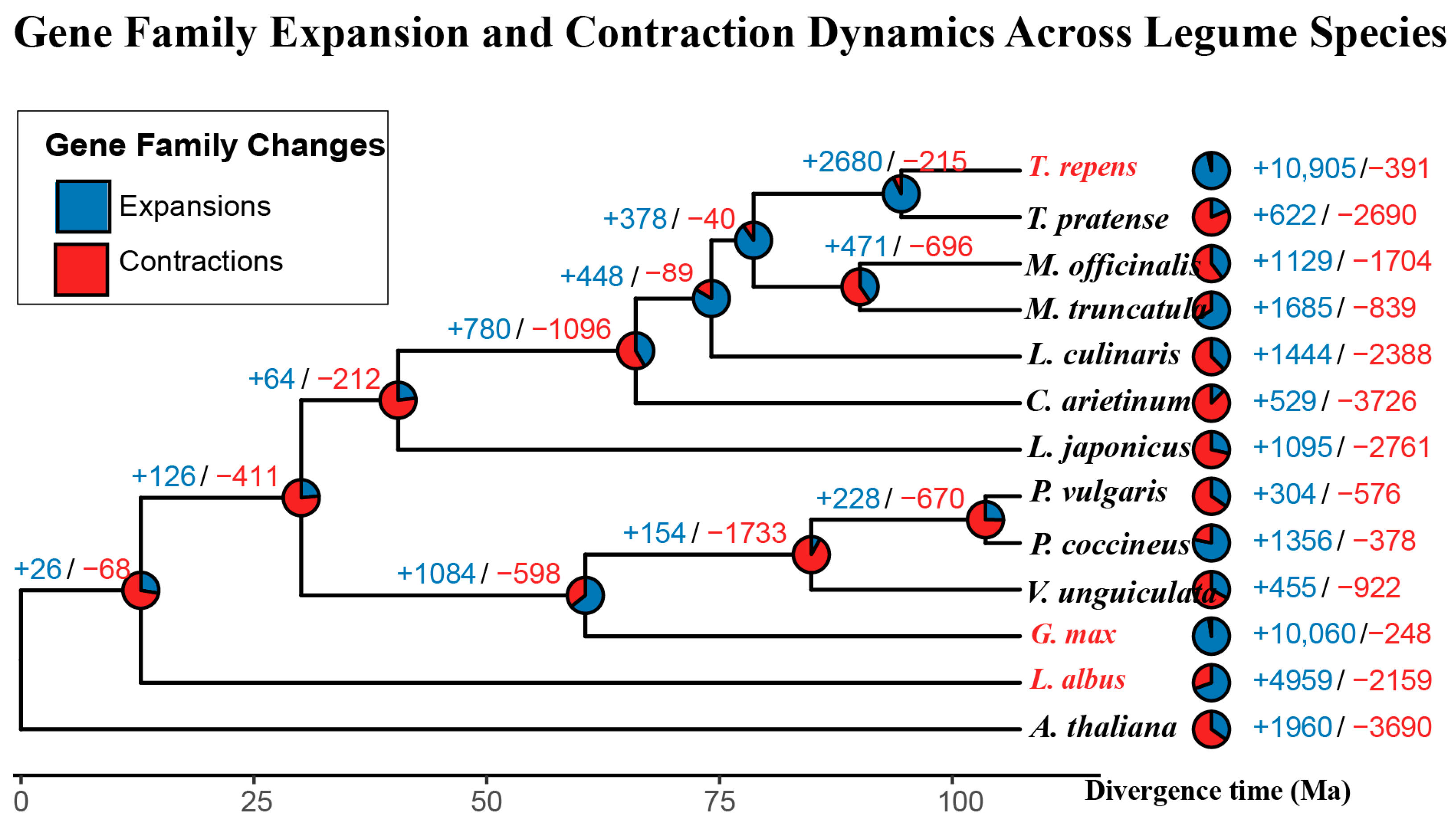
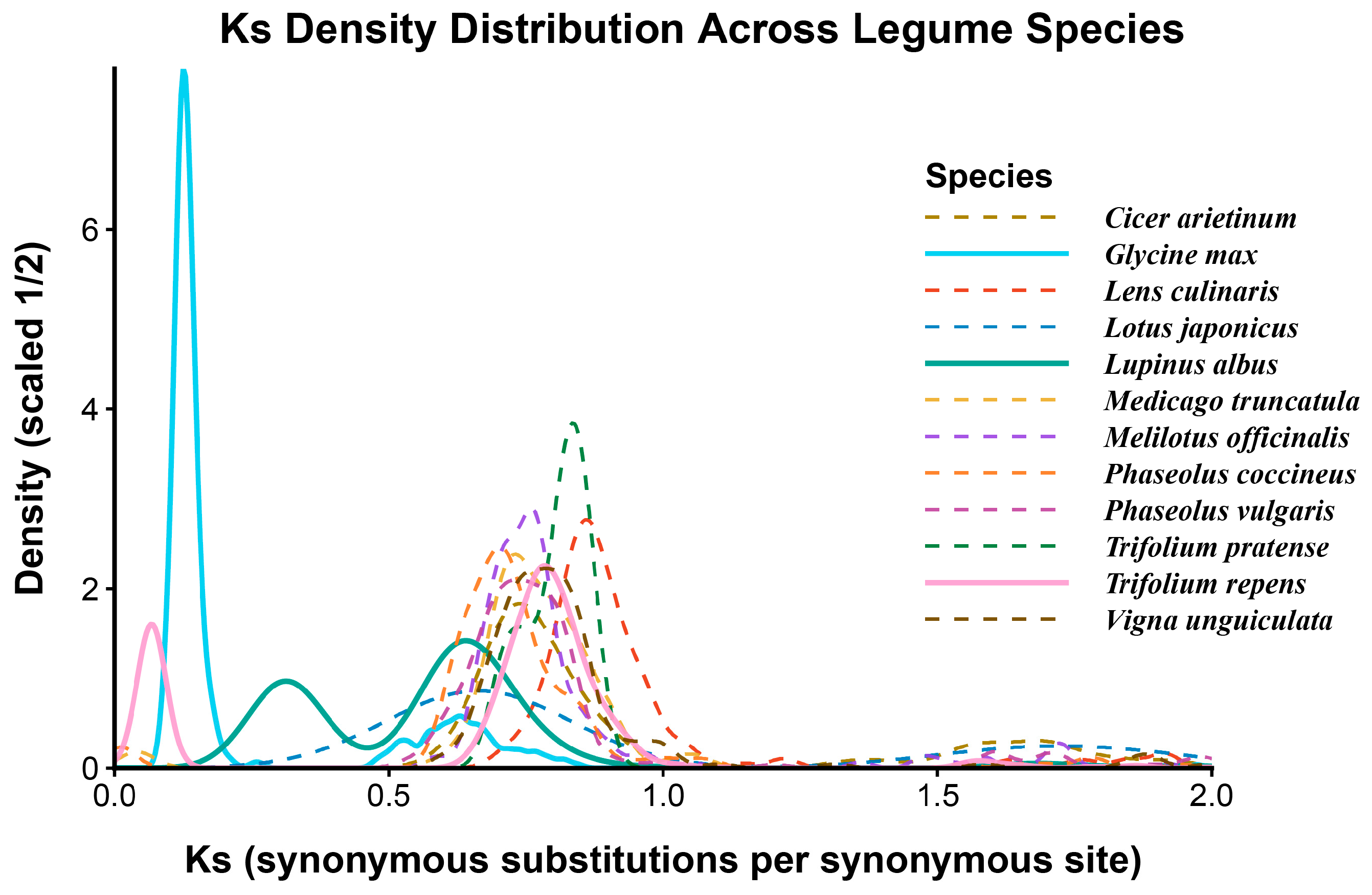
3.1. Phylogenomics and Ks Analysis of Gene Family Dynamics in Legumes
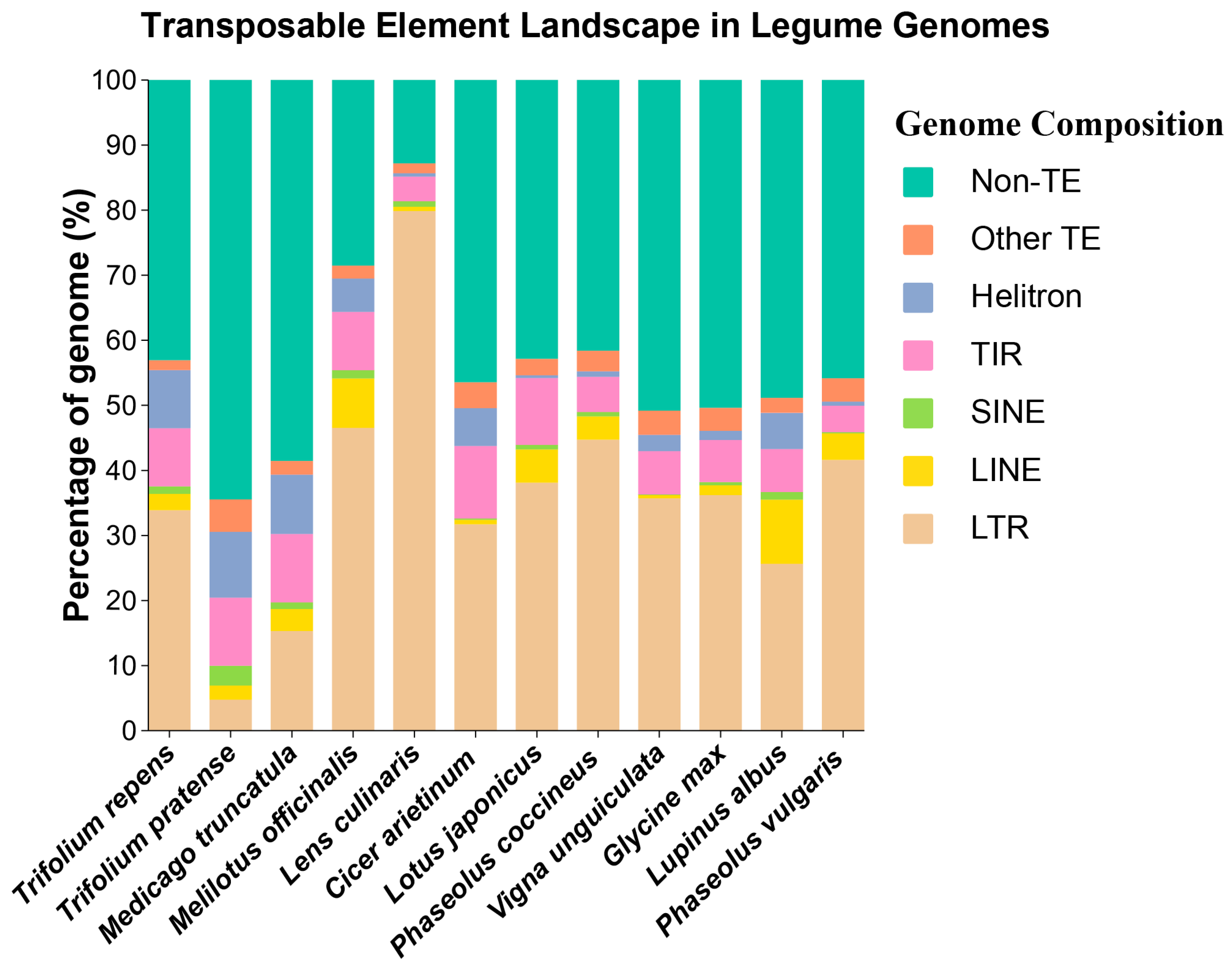
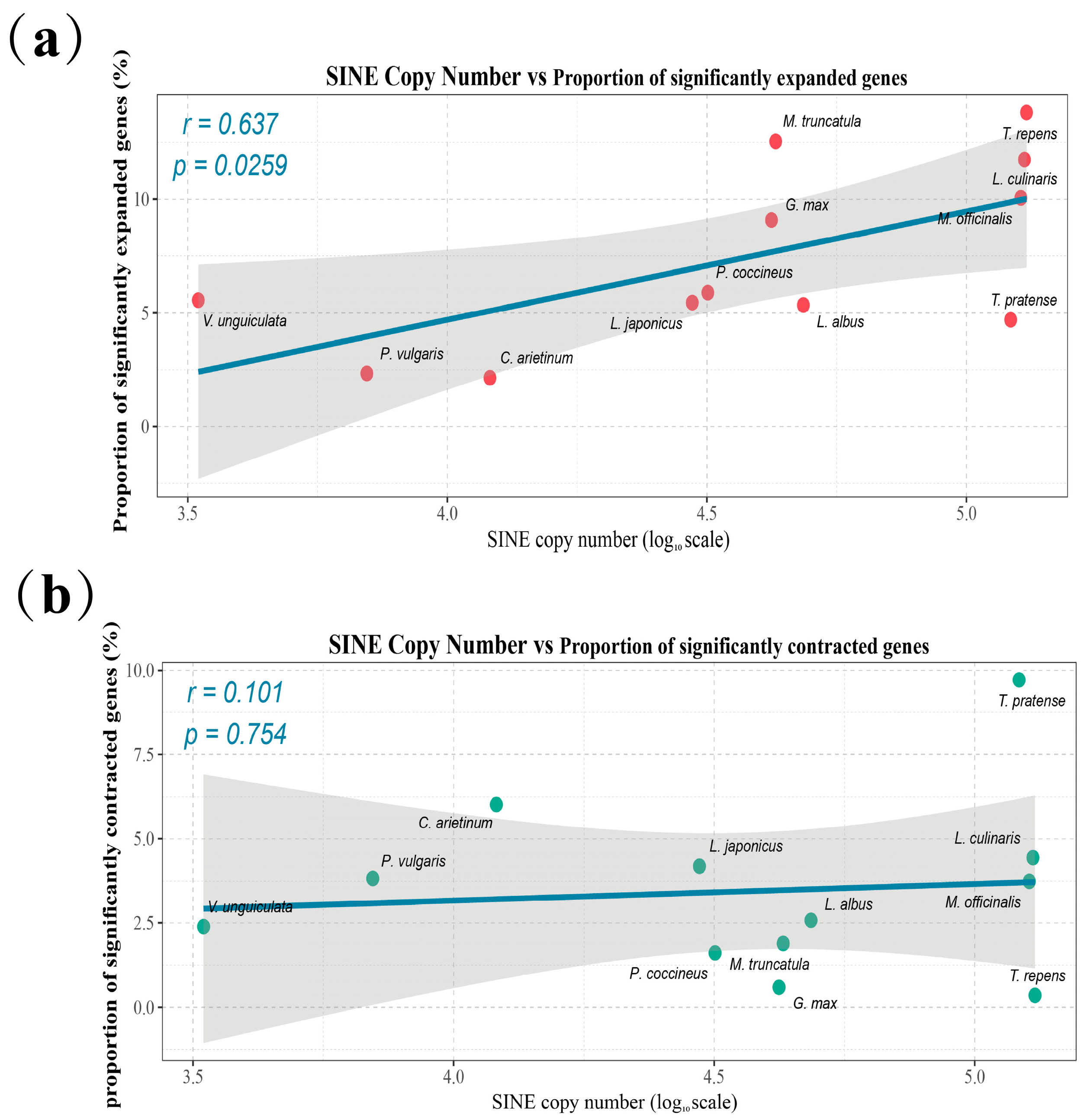
3.2. Transposable Element Distribution and Correlation with Gene Family Change Rate in Legumes
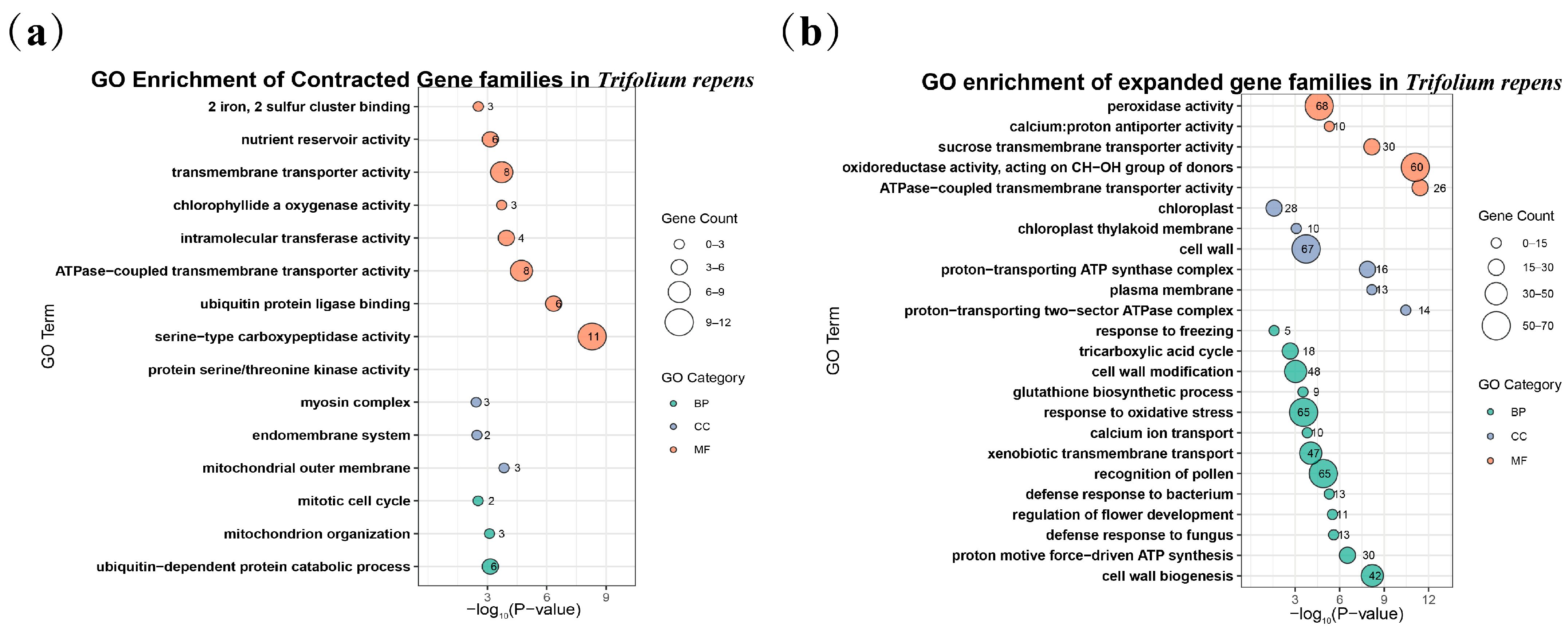
3.3. Functional Enrichment Patterns of Significantly Expanded and Contracted Gene Families in Trifolium repens
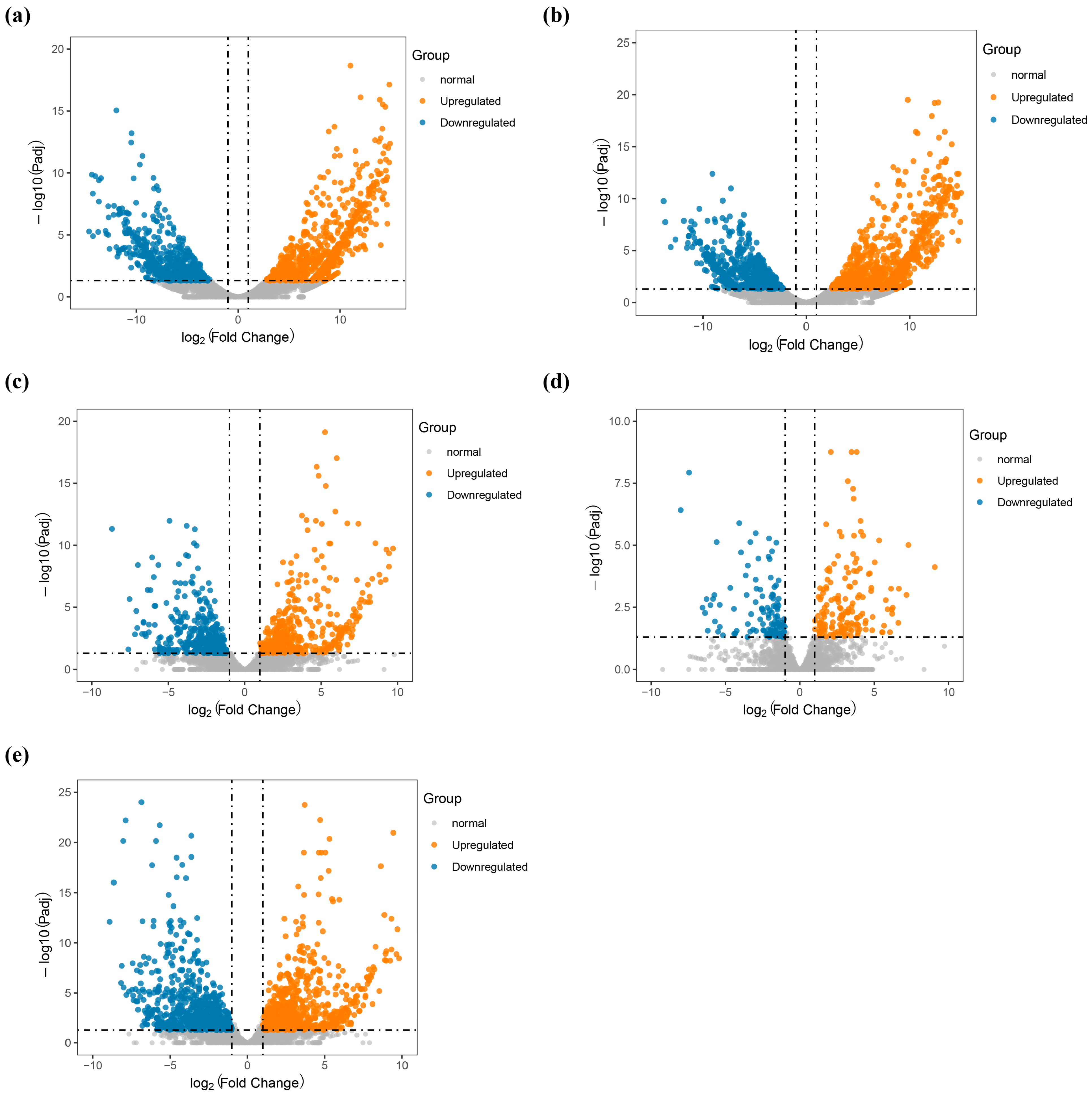
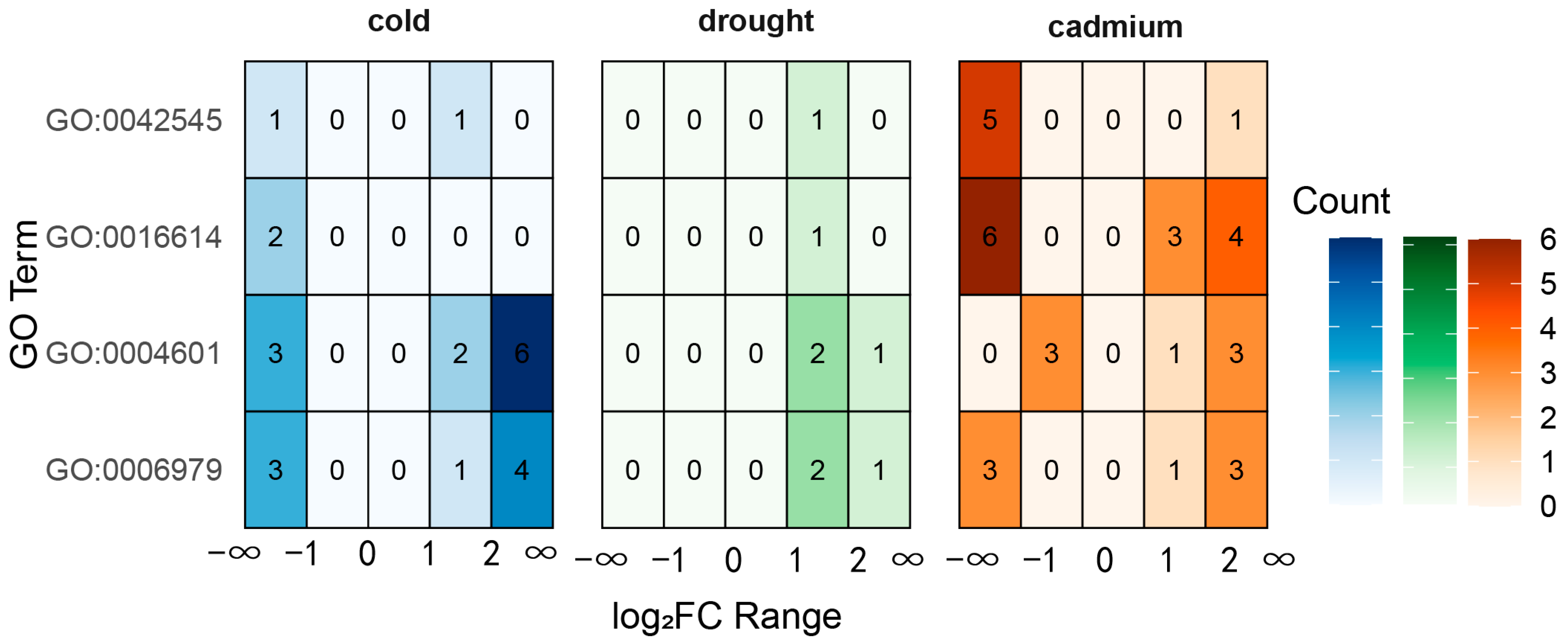
3.4. Expression Patterns and Potential Roles of Significantly Expanded Gene Families in Trifolium repens Under Abiotic Stress and Floral Development
4. Discussion
5. Conclusions
Author Contributions
Funding
Data Availability Statement
Acknowledgments
Conflicts of Interest
Appendix A

| Species | Source | Assembly Version | BUSCO | N50 | Protein Count |
|---|---|---|---|---|---|
| Glycine max Wm82.a2 | Phytozome | V1.0 | 99.5% | 48.6 Mb | 56,004 |
| Trifolium pratense | Phytozome | V2.0 | 90.5% | 22.7 Mb | 39,762 |
| Trifolium repens | figshare | V1.0 | 98.4% | 64.5 Mb | 90,128 |
| Medicago truncatula | Phytozome | Mt4.0v1 | 97.4% | 49.2 Mb | 50,883 |
| Vigna unguiculata | Phytozome | V1.1 | 99.9% | 41.7 Mb | 29,773 |
| Melilotus officinalis | PlantGIR | V1.0 | 98% | 131.6 Mb | 47,873 |
| Lotus japonicus | Phytozome | Lj1.0v1 | 96.3% | 85.6 Mb | 28,251 |
| Lens culinaris | Phytozome | V1 | 96.9% | 482.2 Mb | 38,992 |
| Cicer arietinum | Phytozome | 492_v1.0. | 99.4% | 40 Mb | 28,269 |
| Phaseolus vulgaris | Phytozome | v2.1 | 99.6% | 49.7 Mb | 27,443 |
| Phaseolus coccineus | Phytozome | v1.1 | 99.4% | 56.8 Mb | 29,443 |
| Lupinus albus | Phytozome | V1 | 91.9% | 17.3 Mb | 38,258 |
| Species | LTR (%) | LINE (%) | SINE (%) | TIR (%) | Helitron (%) | Other TE (%) | Non-TE (%) |
|---|---|---|---|---|---|---|---|
| Glycine max Wm82.a2 | 36.21 | 1.51 | 0.48 | 6.47 | 1.42 | 3.52 | 50.38 |
| Trifolium pratense | 4.77 | 2.17 | 3.05 | 10.46 | 10.13 | 4.99 | 64.44 |
| Trifolium repens | 33.89 | 2.51 | 1.15 | 8.94 | 8.93 | 1.52 | 43.06 |
| Medicago truncatula | 15.33 | 3.35 | 1.04 | 10.52 | 9.13 | 2.1 | 58.53 |
| Vigna unguiculata | 35.73 | 0.49 | 0.09 | 6.65 | 0.52 | 3.72 | 50.8 |
| Melilotus officinalis | 46.54 | 7.59 | 1.28 | 8.96 | 5.13 | 1.98 | 28.52 |
| Lotus japonicus | 38.12 | 5.11 | 0.7 | 10.28 | 0.41 | 2.54 | 42.84 |
| Lens culinaris | 79.86 | 0.68 | 0.84 | 3.77 | 0.54 | 1.50 | 12.8 |
| Cicer arietinum | 31.72 | 0.67 | 0.21 | 11.15 | 5.81 | 3.98 | 46.45 |
| Phaseolus vulgaris | 41.63 | 4.06 | 0.19 | 4.06 | 0.64 | 3.57 | 45.84 |
| Phaseolus coccineus | 44.74 | 3.57 | 0.68 | 5.42 | 0.83 | 3.16 | 41.61 |
| Lupinus albus | 25.66 | 9.84 | 1.19 | 6.59 | 5.57 | 2.3 | 48.85 |
| Analysis | Sample Size (n) | p-Value | Significance |
|---|---|---|---|
| Phylogenetic control (PGLS) | 12 | 0.0576 | Marginally significant |
| Removing V. unguiculata | 11 | 0.0402 | Significant |
| Removing G. max | 11 | 0.0288 | Significant |
| Removing C. arietinum | 11 | 0.0603 | Marginally significant |
| Removing L. japonicus | 11 | 0.0426 | Significant |
| Removing P. coccineus | 11 | 0.0409 | Significant |
| Removing M. truncatula | 11 | 0.0086 | Significant |
| Removing L. albus | 11 | 0.0389 | Significant |
| Removing P. vulgaris | 11 | 0.0645 | Marginally significant |
| Removing T. pratense | 11 | 0.0042 | Significant |
| Removing M. officinalis | 11 | 0.0472 | Significant |
| Removing L. culinaris | 11 | 0.0687 | Marginally significant |
| Protein ID | Best Hit in Arabidopsis thaliana | E-Value | Per. Ident (%) | Functional Annotation |
|---|---|---|---|---|
| Chr01.g03159.m1 | NP_187212.1 | 0 | 48.6 | Pectinesterase inhibitor activity |
| Chr01.g02746.m1 | NP_187212.1 | 0 | 48.77 | Pectinesterase inhibitor activity |
| Chr03.g17570.m1 | NP_187212.1 | 0 | 47.55 | Pectinesterase inhibitor activity |
| Chr03.g17573.m1 | NP_187212.1 | 0 | 48.07 | Pectinesterase inhibitor activity |
| Chr03.g17557.m1 | NP_187212.1 | 0 | 48.15 | Pectinesterase inhibitor activity |
| Chr08.g42581.m1 | NP_187212.1 | 0 | 47.7 | Pectinesterase inhibitor activity |
| Chr12.g68114.m1 | NP_187212.1 | 0 | 48.21 | Pectinesterase inhibitor activity |
| Chr12.g69319.m1 | NP_187212.1 | 0 | 48.21 | Pectinesterase inhibitor activity |
| Chr14.g77068.m1 | NP_187212.1 | 0 | 48.51 | Pectinesterase inhibitor activity |
| Chr14.g77058.m1 | NP_187212.1 | 0 | 48.42 | Pectinesterase inhibitor activity |
| Chr14.g77063.m1 | NP_187212.1 | 0 | 47.9 | Pectinesterase inhibitor activity |
| scaffold1.g00545.m1 | NP_187212.1 | 0 | 48.25 | Pectinesterase inhibitor activity |
References
- Panchy, N.; Lehti-Shiu, M.; Shiu, S.H. Evolution of Gene Duplication in Plants. Plant Physiol. 2016, 171, 2294–2316. [Google Scholar] [CrossRef] [PubMed]
- Freeling, M. Bias in plant gene content following different sorts of duplication: Tandem, whole-genome, segmental, or by transposition. Annu. Rev. Plant Biol. 2009, 60, 433–453. [Google Scholar] [CrossRef]
- Vlasova, A.; Capella-Gutiérrez, S.; Rendón-Anaya, M.; Hernández-Oñate, M.; Minoche, A.E.; Erb, I.; Câmara, F.; Prieto-Barja, P.; Corvelo, A.; Sanseverino, W.; et al. Genome and transcriptome analysis of the Mesoamerican common bean and the role of gene duplications in establishing tissue and temporal specialization of genes. Genome Biol. 2016, 17, 32. [Google Scholar] [CrossRef]
- Young, N.D.; Bharti, A.K. Genome-enabled insights into legume biology. Annu. Rev. Plant Biol. 2012, 63, 283–305. [Google Scholar] [CrossRef]
- Rizzon, C.; Ponger, L.; Gaut, B.S. Striking similarities in the genomic distribution of tandemly arrayed genes in Arabidopsis and rice. PLoS Comput. Biol. 2006, 2, e115. [Google Scholar] [CrossRef]
- Tan, S.; Ma, H.; Wang, J.; Wang, M.; Wang, M.; Yin, H.; Zhang, Y.; Zhang, X.; Shen, J.; Wang, D.; et al. DNA transposons mediate duplications via transposition-independent and -dependent mechanisms in metazoans. Nat. Commun. 2021, 12, 4280. [Google Scholar] [CrossRef]
- Mc, C.B. The origin and behavior of mutable loci in maize. Proc. Natl. Acad. Sci. USA 1950, 36, 344–355. [Google Scholar] [CrossRef]
- Wicker, T.; Sabot, F.; Hua-Van, A.; Bennetzen, J.L.; Capy, P.; Chalhoub, B.; Flavell, A.; Leroy, P.; Morgante, M.; Panaud, O.; et al. A unified classification system for eukaryotic transposable elements. Nat. Rev. Genet. 2007, 8, 973–982. [Google Scholar] [CrossRef]
- Tan, S.; Cardoso-Moreira, M.; Shi, W.; Zhang, D.; Huang, J.; Mao, Y.; Jia, H.; Zhang, Y.; Chen, C.; Shao, Y. LTR-mediated retroposition as a mechanism of RNA-based duplication in metazoans. Genome Res. 2016, 26, 1663–1675. [Google Scholar] [CrossRef] [PubMed]
- Jiang, N.; Bao, Z.; Zhang, X.; Eddy, S.R.; Wessler, S.R. Pack-MULE transposable elements mediate gene evolution in plants. Nature 2004, 431, 569–573. [Google Scholar] [CrossRef] [PubMed]
- Thomas, J.; Phillips, C.D.; Baker, R.J.; Pritham, E.J. Rolling-Circle Transposons Catalyze Genomic Innovation in a Mammalian Lineage. Genome Biol. Evol. 2014, 6, 2595–2610. [Google Scholar] [CrossRef]
- Dewannieux, M.; Esnault, C.; Heidmann, T. LINE-mediated retrotransposition of marked Alu sequences. Nat. Genet. 2003, 35, 41–48. [Google Scholar] [CrossRef]
- Hong, W.; Wang, M.; Tian, J.; Zhu, X.; Zhang, R.; Guo, C.; Shu, Y. High-Copy SINE Transposons Facilitate Broad Ecological Adaptation in White Clover (Trifolium repens). Horticulturae 2026, 12, 6. [Google Scholar] [CrossRef]
- Bailey, J.A.; Liu, G.; Eichler, E.E. An Alu transposition model for the origin and expansion of human segmental duplications. Am. J. Hum. Genet. 2003, 73, 823–834. [Google Scholar] [CrossRef]
- Witherspoon, D.J.; Watkins, W.S.; Zhang, Y.; Xing, J.; Tolpinrud, W.L.; Hedges, D.J.; Batzer, M.A.; Jorde, L.B. Alu repeats increase local recombination rates. BMC Genom. 2009, 10, 530. [Google Scholar] [CrossRef] [PubMed]
- Sen, S.K.; Han, K.; Wang, J.; Lee, J.; Wang, H.; Callinan, P.A.; Dyer, M.; Cordaux, R.; Liang, P.; Batzer, M.A. Human genomic deletions mediated by recombination between Alu elements. Am. J. Hum. Genet. 2006, 79, 41–53. [Google Scholar] [CrossRef] [PubMed]
- Lynch, M.; Conery, J.S. The evolutionary fate and consequences of duplicate genes. Science 2000, 290, 1151–1155. [Google Scholar] [CrossRef] [PubMed]
- Innan, H.; Kondrashov, F. The evolution of gene duplications: Classifying and distinguishing between models. Nat. Rev. Genet. 2010, 11, 97–108. [Google Scholar] [CrossRef]
- Ohno, S. Evolution by Gene Duplication; Springer Science & Business Media: Berlin, Germany, 2013. [Google Scholar]
- Birchler, J.A.; Veitia, R.A. Gene balance hypothesis: Connecting issues of dosage sensitivity across biological disciplines. Proc. Natl. Acad. Sci. USA 2012, 109, 14746–14753. [Google Scholar] [CrossRef]
- Birchler, J.A.; Yang, H. The multiple fates of gene duplications: Deletion, hypofunctionalization, subfunctionalization, neofunctionalization, dosage balance constraints, and neutral variation. Plant Cell 2022, 34, 2466–2474. [Google Scholar] [CrossRef]
- Hanada, K.; Zou, C.; Lehti-Shiu, M.D.; Shinozaki, K.; Shiu, S.H. Importance of lineage-specific expansion of plant tandem duplicates in the adaptive response to environmental stimuli. Plant Physiol. 2008, 148, 993–1003. [Google Scholar] [CrossRef] [PubMed]
- Lin, X.; Feng, C.; Lin, T.; Harris, A.J.; Li, Y.; Kang, M. Jackfruit genome and population genomics provide insights into fruit evolution and domestication history in China. Hortic. Res. 2022, 9, uhac173. [Google Scholar] [CrossRef]
- Lin, J.; Zhang, W.; Zhang, X.; Ma, X.; Zhang, S.; Chen, S.; Wang, Y.; Jia, H.; Liao, Z.; Lin, J.; et al. Signatures of selection in recently domesticated macadamia. Nat. Commun. 2022, 13, 242. [Google Scholar] [CrossRef]
- Hias, N.; Svara, A.; Keulemans, J.W. Effect of polyploidisation on the response of apple (Malus × domestica Borkh.) to Venturia inaequalis infection. Eur. J. Plant Pathol. 2018, 151, 515–526. [Google Scholar] [CrossRef]
- Hannweg, K.; Steyn, W.; Bertling, I. In vitro-induced tetraploids of Plectranthus esculentus are nematode-tolerant and have enhanced nutritional value. Euphytica 2016, 207, 343–351. [Google Scholar] [CrossRef]
- Zhang, L.; Wang, L.; Yang, Y.; Cui, J.; Chang, F.; Wang, Y.; Ma, H. Analysis of Arabidopsis floral transcriptome: Detection of new florally expressed genes and expansion of Brassicaceae-specific gene families. Front. Plant Sci. 2014, 5, 802. [Google Scholar] [CrossRef] [PubMed]
- Burdon, J.J. Trifolium repens L. J. Ecol. 1983, 71, 307–330. [Google Scholar] [CrossRef]
- Ellison, N.W.; Liston, A.; Steiner, J.J.; Williams, W.M.; Taylor, N.L. Molecular phylogenetics of the clover genus (Trifolium—Leguminosae). Mol. Phylogenetics Evol. 2006, 39, 688–705. [Google Scholar] [CrossRef] [PubMed]
- Tashiro, R.M.; Bouton, J.H.; Parrott, W.A.J.H. ‘Frosty Morning’,‘Patchwork Quilt’,‘Irish Mist’, and ‘Pistachio Ice Cream’Ornamental White Clover (Trifolium repens L.). HortScience 2009, 44, 1779–1782. [Google Scholar] [CrossRef]
- Zhang, H.; Tian, H.; Chen, M.; Xiong, J.; Cai, H.; Liu, Y. Transcriptome analysis reveals potential genes involved in flower pigmentation in a red-flowered mutant of white clover (Trifolium repens L.). Genomics 2018, 110, 191–200. [Google Scholar] [CrossRef]
- Williams, W.M.; Ellison, N.W.; Ansari, H.A.; Verry, I.M.; Hussain, S.W. Experimental evidence for the ancestry of allotetraploid Trifolium repens and creation of synthetic forms with value for plant breeding. BMC Plant Biol. 2012, 12, 55. [Google Scholar] [CrossRef]
- Ansari, H.A.; Ellison, N.W.; Williams, W.M. Molecular and cytogenetic evidence for an allotetraploid origin of Trifolium dubium (Leguminosae). Chromosoma 2008, 117, 159–167. [Google Scholar] [CrossRef]
- Wang, H.; Wu, Y.; He, Y.; Li, G.; Ma, L.; Li, S.; Huang, J.; Yang, G. High-quality chromosome-level de novo assembly of the Trifolium repens. BMC Genom. 2023, 24, 326. [Google Scholar] [CrossRef]
- Simão, F.A.; Waterhouse, R.M.; Ioannidis, P.; Kriventseva, E.V.; Zdobnov, E.M. BUSCO: Assessing genome assembly and annotation completeness with single-copy orthologs. Bioinformatics 2015, 31, 3210–3212. [Google Scholar] [CrossRef]
- Emms, D.M.; Kelly, S. OrthoFinder: Phylogenetic orthology inference for comparative genomics. Genome Biol. 2019, 20, 238. [Google Scholar] [CrossRef] [PubMed]
- Katoh, K.; Standley, D.M. MAFFT Multiple Sequence Alignment Software Version 7: Improvements in Performance and Usability. Mol. Biol. Evol. 2013, 30, 772–780. [Google Scholar] [CrossRef] [PubMed]
- Talavera, G.; Castresana, J. Improvement of phylogenies after removing divergent and ambiguously aligned blocks from protein sequence alignments. Syst. Biol. 2007, 56, 564–577. [Google Scholar] [CrossRef] [PubMed]
- Shen, W.; Sipos, B.; Zhao, L. SeqKit2: A Swiss army knife for sequence and alignment processing. IMeta 2024, 3, e191. [Google Scholar] [CrossRef]
- Darriba, D.; Posada, D.; Kozlov, A.M.; Stamatakis, A.; Morel, B.; Flouri, T. ModelTest-NG: A New and Scalable Tool for the Selection of DNA and Protein Evolutionary Models. Mol. Biol. Evol. 2019, 37, 291–294. [Google Scholar] [CrossRef]
- Stamatakis, A. RAxML version 8: A tool for phylogenetic analysis and post-analysis of large phylogenies. Bioinformatics 2014, 30, 1312–1313. [Google Scholar] [CrossRef]
- Yang, Z. PAML 4: Phylogenetic Analysis by Maximum Likelihood. Mol. Biol. Evol. 2007, 24, 1586–1591. [Google Scholar] [CrossRef]
- Kumar, S.; Suleski, M.; Craig, J.M.; Kasprowicz, A.E.; Sanderford, M.; Li, M.; Stecher, G.; Hedges, S.B. TimeTree 5: An Expanded Resource for Species Divergence Times. Mol. Biol. Evol. 2022, 39, msac174. [Google Scholar] [CrossRef]
- Mendes, F.K.; Vanderpool, D.; Fulton, B.; Hahn, M.W. CAFE 5 models variation in evolutionary rates among gene families. Bioinformatics 2020, 36, 5516–5518. [Google Scholar] [CrossRef]
- Tarailo-Graovac, M.; Chen, N. Using RepeatMasker to Identify Repetitive Elements in Genomic Sequences. Curr. Protoc. Bioinform. 2009, 25, 4.10.11–14.10.14. [Google Scholar] [CrossRef] [PubMed]
- Liao, H.; Sun, Y.; Ou, S. Accelerating de novo SINE annotation in plant and animal genomes. Mob. DNA 2024, 15, 24. [Google Scholar] [CrossRef] [PubMed]
- Ou, S.; Su, W.; Liao, Y.; Chougule, K.; Agda, J.R.A.; Hellinga, A.J.; Lugo, C.S.B.; Elliott, T.A.; Ware, D.; Peterson, T.; et al. Benchmarking transposable element annotation methods for creation of a streamlined, comprehensive pipeline. Genome Biol. 2019, 20, 275. [Google Scholar] [CrossRef]
- Benjamini, Y.; Hochberg, Y. Controlling the False Discovery Rate: A Practical and Powerful Approach to Multiple Testing. J. R. Stat. Soc. Ser. B (Methodol.) 1995, 57, 289–300. [Google Scholar] [CrossRef]
- Camacho, C.; Coulouris, G.; Avagyan, V.; Ma, N.; Papadopoulos, J.; Bealer, K.; Madden, T.L. BLAST+: Architecture and applications. BMC Bioinform. 2009, 10, 421. [Google Scholar] [CrossRef]
- Sun, P.; Jiao, B.; Yang, Y.; Shan, L.; Li, T.; Li, X.; Xi, Z.; Wang, X.; Liu, J. WGDI: A user-friendly toolkit for evolutionary analyses of whole-genome duplications and ancestral karyotypes. Mol. Plant 2022, 15, 1841–1851. [Google Scholar] [CrossRef] [PubMed]
- Wang, Y.; Tang, H.; Debarry, J.D.; Tan, X.; Li, J.; Wang, X.; Lee, T.H.; Jin, H.; Marler, B.; Guo, H.; et al. MCScanX: A toolkit for detection and evolutionary analysis of gene synteny and collinearity. Nucleic Acids Res. 2012, 40, e49. [Google Scholar] [CrossRef]
- Consortium, T.U. UniProt: The Universal Protein Knowledgebase in 2023. Nucleic Acids Res. 2022, 51, D523–D531. [Google Scholar] [CrossRef]
- Supek, F.; Bošnjak, M.; Škunca, N.; Šmuc, T. REVIGO summarizes and visualizes long lists of gene ontology terms. PLoS ONE 2011, 6, e21800. [Google Scholar] [CrossRef] [PubMed]
- Li, M.; Zhang, X.; Zhang, T.; Bai, Y.; Chen, C.; Guo, D.; Guo, C.; Shu, Y. Genome-wide analysis of the WRKY genes and their important roles during cold stress in white clover. PeerJ 2023, 11, e15610. [Google Scholar] [CrossRef]
- Wu, F.; Fan, J.; Ye, X.; Yang, L.; Hu, R.; Ma, J.; Ma, S.; Li, D.; Zhou, J.; Nie, G.; et al. Unraveling Cadmium Toxicity in Trifolium repens L. Seedling: Insight into Regulatory Mechanisms Using Comparative Transcriptomics Combined with Physiological Analyses. Int. J. Mol. Sci. 2022, 23, 4612. [Google Scholar] [CrossRef]
- Kuo, W.-H.; Wright, S.J.; Small, L.L.; Olsen, K.M. De novo genome assembly of white clover (Trifolium repens L.) reveals the role of copy number variation in rapid environmental adaptation. BMC Biol. 2024, 22, 165. [Google Scholar] [CrossRef]
- Bhachu, K.; Santangelo, J.S.; Johnson, M.T.J.; Fadul, H.E. Tissue-specific expression of HCN and its metabolic precursors in Trifolium repens. Botany 2024, 102, 470–477. [Google Scholar] [CrossRef]
- Pertea, G.; Pertea, M. GFF Utilities: GffRead and GffCompare. F1000Research 2020, 9, 304. [Google Scholar] [CrossRef]
- Patro, R.; Duggal, G.; Love, M.I.; Irizarry, R.A.; Kingsford, C. Salmon provides fast and bias-aware quantification of transcript expression. Nat. Methods 2017, 14, 417–419. [Google Scholar] [CrossRef] [PubMed]
- Soneson, C.; Love, M.I.; Robinson, M.D. Differential analyses for RNA-seq: Transcript-level estimates improve gene-level inferences. F1000Research 2015, 4, 1521. [Google Scholar] [CrossRef] [PubMed]
- Love, M.I.; Huber, W.; Anders, S. Moderated estimation of fold change and dispersion for RNA-seq data with DESeq2. Genome Biol. 2014, 15, 550. [Google Scholar] [CrossRef]
- Ren, R.; Wang, H.; Guo, C.; Zhang, N.; Zeng, L.; Chen, Y.; Ma, H.; Qi, J. Widespread Whole Genome Duplications Contribute to Genome Complexity and Species Diversity in Angiosperms. Mol. Plant 2018, 11, 414–428. [Google Scholar] [CrossRef]
- Xu, W.; Zhang, Q.; Yuan, W.; Xu, F.; Muhammad Aslam, M.; Miao, R.; Li, Y.; Wang, Q.; Li, X.; Zhang, X.; et al. The genome evolution and low-phosphorus adaptation in white lupin. Nat. Commun. 2020, 11, 1069. [Google Scholar] [CrossRef]
- Yin, G.; Xu, H.; Xiao, S.; Qin, Y.; Li, Y.; Yan, Y.; Hu, Y. The large soybean (Glycine max) WRKY TF family expanded by segmental duplication events and subsequent divergent selection among subgroups. BMC Plant Biol. 2013, 13, 148. [Google Scholar] [CrossRef]
- Lewis, E.B. Pseudoallelism and gene evolution. Cold Spring Harb. Symp. Quant. Biol. 1951, 16, 159–174. [Google Scholar] [CrossRef]
- Hardison, R.C. Evolution of hemoglobin and its genes. Cold Spring Harb. Perspect. Med. 2012, 2, a011627. [Google Scholar] [CrossRef] [PubMed]
- Birchler, J.A.; Bhadra, U.; Bhadra, M.P.; Auger, D.L. Dosage-dependent gene regulation in multicellular eukaryotes: Implications for dosage compensation, aneuploid syndromes, and quantitative traits. Dev. Biol. 2001, 234, 275–288. [Google Scholar] [CrossRef] [PubMed]
- Janoušek, V.; Laukaitis, C.M.; Yanchukov, A.; Karn, R.C. The Role of Retrotransposons in Gene Family Expansions in the Human and Mouse Genomes. Genome Biol. Evol. 2016, 8, 2632–2650. [Google Scholar] [CrossRef]
- Cheng, Q.; Dong, S.; Guo, L.; Jiang, S.; Yin, N.; Sun, D.; Cheng, F.; Yu, C.; Wan, Z. Intronic transposon insertion within the MYB transcription factor gene BjPur disturbs anthocyanin accumulation by inducing epigenetic modification in Brassica juncea. New Phytol. 2026, 249, 325–341. [Google Scholar] [CrossRef] [PubMed]
- Negi, P.; Rai, A.N.; Suprasanna, P. Moving through the stressed genome: Emerging regulatory roles for transposons in plant stress response. Front. Plant Sci. 2016, 7, 1448. [Google Scholar] [CrossRef]
- Li, Q.; Zhang, Y.; Zhang, Z.; Li, X.; Yao, D.; Wang, Y.; Ouyang, X.; Li, Y.; Song, W.; Xiao, Y. A D-genome-originated Ty1/Copia-type retrotransposon family expanded significantly in tetraploid cottons. Mol. Genet. Genom. 2018, 293, 33–43. [Google Scholar] [CrossRef]
- Han, G.; Zhang, N.; Jiang, H.; Meng, X.; Qian, K.; Zheng, Y.; Xu, J.; Wang, J. Diversity of short interspersed nuclear elements (SINEs) in lepidopteran insects and evidence of horizontal SINE transfer between baculovirus and lepidopteran hosts. BMC Genom. 2021, 22, 226. [Google Scholar] [CrossRef]
- Fawcett, J.A.; Innan, H. High Similarity between Distantly Related Species of a Plant SINE Family Is Consistent with a Scenario of Vertical Transmission without Horizontal Transfers. Mol. Biol. Evol. 2016, 33, 2593–2604. [Google Scholar] [CrossRef]
- Pickeral, O.K.; Makałowski, W.; Boguski, M.S.; Boeke, J.D. Frequent human genomic DNA transduction driven by LINE-1 retrotransposition. Genome Res. 2000, 10, 411–415. [Google Scholar] [CrossRef]
- Kim, S.; Choi, D. New role of LTR-retrotransposons for emergence and expansion of disease-resistance genes and high-copy gene families in plants. BMB Rep. 2018, 51, 55–56. [Google Scholar] [CrossRef]
- Holligan, D.; Zhang, X.; Jiang, N.; Pritham, E.J.; Wessler, S.R.J.G. The transposable element landscape of the model legume Lotus japonicus. Genetics 2006, 174, 2215–2228. [Google Scholar] [CrossRef]
- Ferguson, A.A.; Zhao, D.; Jiang, N. Selective Acquisition and Retention of Genomic Sequences by Pack-Mutator-Like Elements Based on Guanine-Cytosine Content and the Breadth of Expression. Plant Physiol. 2013, 163, 1419–1432. [Google Scholar] [CrossRef] [PubMed]
- Rogers, L.W.; Koehler, A.M.; Crouch, J.A.; Cubeta, M.A.; LeBlanc, N.R. Comparative genomic analysis reveals contraction of gene families with putative roles in pathogenesis in the fungal boxwood pathogens Calonectria henricotiae and C. pseudonaviculata. BMC Ecol. Evol. 2022, 22, 79. [Google Scholar] [CrossRef]
- Wang, N.; Yang, Y.; Moore, M.J.; Brockington, S.F.; Walker, J.F.; Brown, J.W.; Liang, B.; Feng, T.; Edwards, C.; Mikenas, J.; et al. Evolution of Portulacineae Marked by Gene Tree Conflict and Gene Family Expansion Associated with Adaptation to Harsh Environments. Mol. Biol. Evol. 2019, 36, 112–126. [Google Scholar] [CrossRef] [PubMed]
- Hernandez, D.J.; Pohlmann, G.B.; Afkhami, M.E. Gene Family Expansions Provide Molecular Flexibility Required for Context-Dependent Species Interactions. Ecol. Lett. 2025, 28, e70213. [Google Scholar] [CrossRef]
- Zhang, G.Y.; Feng, J.; Wu, J.; Wang, X.W. BoPMEI1, a pollen-specific pectin methylesterase inhibitor, has an essential role in pollen tube growth. Planta 2010, 231, 1323–1334. [Google Scholar] [CrossRef] [PubMed]
- Zhou, L.; Zawaira, A.; Lu, Q.; Yang, B.; Li, J. Transcriptome analysis reveals defense-related genes and pathways during dodder (Cuscuta australis) parasitism on white clover (Trifolium repens). Front. Genet. 2023, 14, 1106936. [Google Scholar] [CrossRef] [PubMed]
- Li, Z.; Geng, W.; Tan, M.; Ling, Y.; Zhang, Y.; Zhang, L.; Peng, Y. Differential Responses to Salt Stress in Four White Clover Genotypes Associated With Root Growth, Endogenous Polyamines Metabolism, and Sodium/Potassium Accumulation and Transport. Front. Plant Sci. 2022, 13, 896436. [Google Scholar] [CrossRef] [PubMed]
- Hendrickson, B.T.; Stamps, C.; Patterson, C.M.; Strickland, H.; Foster, M.; Albano, L.J.; Kim, A.Y.; Kim, P.Y.; Kooyers, N.J. Evolution of drought resistance strategies following the introduction of white clover (Trifolium repens L.). Ann. Bot. 2025, 135, 1377–1392. [Google Scholar] [CrossRef] [PubMed]
- Oleńska, E.; Małek, W.; Sujkowska-Rybkowska, M.; Szopa, S.; Włostowski, T.; Aleksandrowicz, O.; Swiecicka, I.; Wójcik, M.; Thijs, S.; Vangronsveld, J. An Alliance of Trifolium repens-Rhizobium leguminosarum bv. trifolii-Mycorrhizal Fungi From an Old Zn-Pb-Cd Rich Waste Heap as a Promising Tripartite System for Phytostabilization of Metal Polluted Soils. Front. Microbiol. 2022, 13, 853407. [Google Scholar] [CrossRef] [PubMed]


| Duplication Type | Number of Genes | Percentage (%) |
|---|---|---|
| WGD/segmental | 6192 | 52.3 |
| Dispersed | 3166 | 26.7 |
| Tandem | 1321 | 11.1 |
| Proximal | 1167 | 9.9 |
| Total | 11,846 | 100 |
| Gene Category | Total Genes | With SINE Insertion | Without SINE Insertion | SINE Insertion (%) | FDR | Odds Ratio |
|---|---|---|---|---|---|---|
| Expanded genes | 11,867 | 5307 | 6560 | 44.72 | 0.045 | 1.04 |
| Contracted genes | 303 | 159 | 144 | 52.48 | 0.0075 | 1.42 |
| Background genes | 90,128 | 39,431 | 50,697 | 43.75 | – | – |
| Comparisons | Number of Upregulated Genes | Number of Down Genes | Mean log2 Fold Change |
|---|---|---|---|
| Tissue: Flower vs. Root | 838 | 626 | 1.82 |
| Tissue: Flower vs. Leaf | 990 | 562 | 3.00 |
| Stress: Cold vs. Control | 446 | 395 | 0.50 |
| Stress: Drought vs. Control | 157 | 120 | 0.67 |
| Stress: Cadmium vs. Control | 435 | 328 | 0.30 |
Disclaimer/Publisher’s Note: The statements, opinions and data contained in all publications are solely those of the individual author(s) and contributor(s) and not of MDPI and/or the editor(s). MDPI and/or the editor(s) disclaim responsibility for any injury to people or property resulting from any ideas, methods, instructions or products referred to in the content. |
© 2026 by the authors. Licensee MDPI, Basel, Switzerland. This article is an open access article distributed under the terms and conditions of the Creative Commons Attribution (CC BY) license.
Share and Cite
Hong, W.; Wu, K.; Tian, J.; Bai, Y.; Guo, C.; Shu, Y. Lineage-Specific WGD and SINEs Are Associated with Gene Family Dynamics and Stress Responsiveness in White Clover (Trifolium repens). Horticulturae 2026, 12, 531. https://doi.org/10.3390/horticulturae12050531
Hong W, Wu K, Tian J, Bai Y, Guo C, Shu Y. Lineage-Specific WGD and SINEs Are Associated with Gene Family Dynamics and Stress Responsiveness in White Clover (Trifolium repens). Horticulturae. 2026; 12(5):531. https://doi.org/10.3390/horticulturae12050531
Chicago/Turabian StyleHong, Wei, Kaiyue Wu, Jun Tian, Yan Bai, Changhong Guo, and Yongjun Shu. 2026. "Lineage-Specific WGD and SINEs Are Associated with Gene Family Dynamics and Stress Responsiveness in White Clover (Trifolium repens)" Horticulturae 12, no. 5: 531. https://doi.org/10.3390/horticulturae12050531
APA StyleHong, W., Wu, K., Tian, J., Bai, Y., Guo, C., & Shu, Y. (2026). Lineage-Specific WGD and SINEs Are Associated with Gene Family Dynamics and Stress Responsiveness in White Clover (Trifolium repens). Horticulturae, 12(5), 531. https://doi.org/10.3390/horticulturae12050531