Biochemical, Phytochemical, and Mineral Constituents of African Horned Cucumber (Cucumis metuliferus E. Mey. ex Naudin) Fruit in Comparison to Selected Cucurbitaceae Fruits: A Review

 , ,
, ,
Abstract
1. Introduction
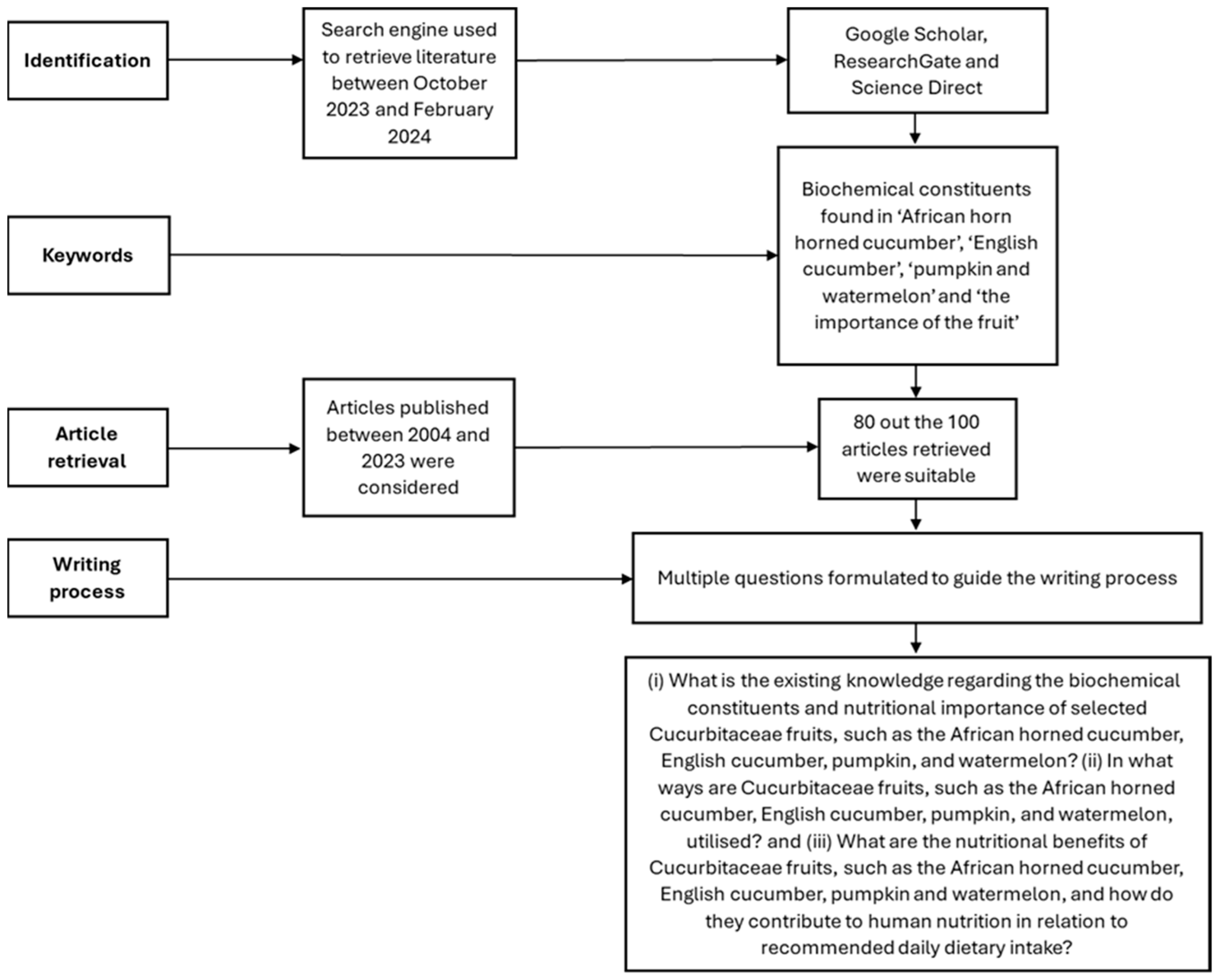
2. Materials and Methods
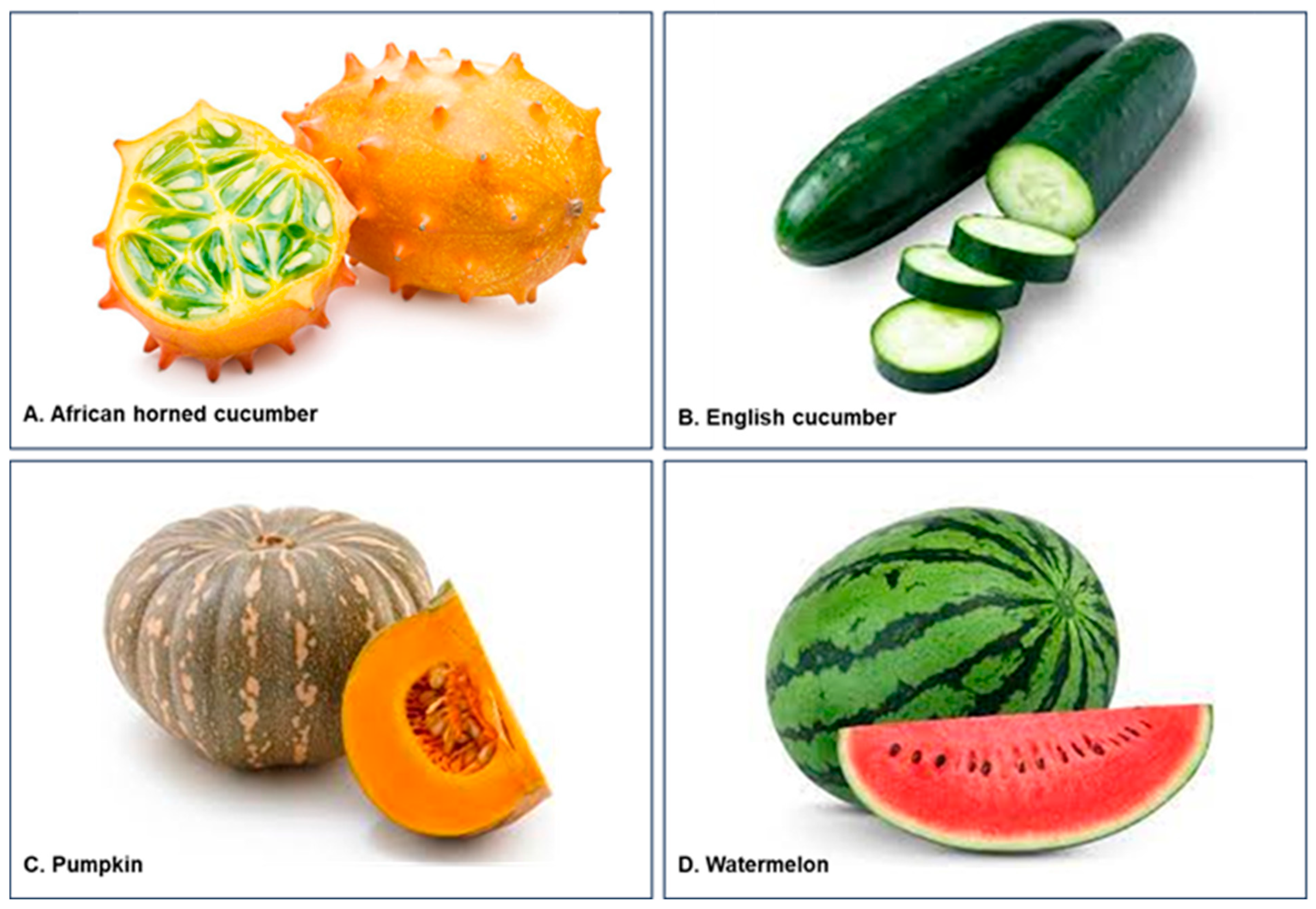
3. Botanical Description of Selected Cucurbitaceae Fruits
3.1. Botanical, Physical Attributes and Habitat of the African Horned Cucumber
3.2. Botanical, Physical Attributes and Habitat of the English Cucumber
3.3. Botanical, Physical Attributes and Habitat of the Pumpkin
3.4. Botanical, Physical Attributes and Habitat of the Watermelon
4. Results and Discussion
4.1. Literature Discussion
4.1.1. Phytochemical Constituents and Their Potential Contribution in Human Nutrition
Lycopene, Total Flavonoids, and Total Phenols
4.1.2. Biochemical Constituents of Various Cucurbitaceae Fruits and Their Potential Contribution to Human Nutrition
Beta Carotene, Vitamin C and Vitamin E
Macro-Nutrients and Their Potential Contribution to Human Nutrition
Micronutrients and Their Potential Contribution to Human Nutrition
5. Prospective Outlook for the African Horned Cucumber in the Biotechnology and Food Industries
5.1. Postharvest Treatment of the African Horned Cucumber
5.2. Value-Added Products of the African Horned Cucumber
5.3. Programmes to Improve the African Horned Cucumber Plant in Preparation for Possible Crop Commercialisation
6. Conclusions
Author Contributions
Funding
Institutional Review Board Statement
Informed Consent Statement
Data Availability Statement
Conflicts of Interest
Abbreviations
| RDI | Recommended daily intake |
| SDG | Sustainable Development Goal |
| GAE | Gallic acid equivalent |
| CE | Catechin equivalent |
| NR | Not reported |
References
- Maluleke, M.K.; Moja, S.J.; Nyathi, M.; Modise, D.M. Nutrient concentration of African Horned Cucumber (Cucumis metuliferus L.) fruit under different soil types, environments, and varying irrigation water levels. Horticulturae 2021, 7, 76. [Google Scholar] [CrossRef]
- Akinola, R.; Pereira, L.M.; Mabhaudhi, T.; De Bruin, F.M.; Rusch, L. A review of indigenous food crops in Africa and the implications for more sustainable and healthy food systems. Sustainability 2020, 12, 3493. [Google Scholar] [CrossRef]
- Olowo, S.F.; Omotayo, A.O.; Lawal, I.O.; Aremu, A.O. Improving rural livelihood through the cultivation of indigenous fruits and vegetables: Evidence from Ondo State, Nigeria. Agriculture 2022, 12, 372. [Google Scholar] [CrossRef]
- Omotayo, A.O.; Aremu, A.O. Underutilized African indigenous fruit trees and food–nutrition security: Opportunities, challenges, and prospects. Food Energy Secur. 2020, 9, e220. [Google Scholar] [CrossRef]
- Maluleke, M.K.; Ralulimi, T.S.; Machete, M. Biochemical constituents and the role of African wild medlar (Vangueria infausta) in human nutrition: A review. Discov. Sustain. 2024, 5, 37. [Google Scholar] [CrossRef]
- Montagnini, F.; Metzel, R. The contribution of agroforestry to Sustainable Development Goal 2: End hunger, achieve food security and improved nutrition, and promote sustainable agriculture. In Integrating Landscapes: Agroforestry for Biodiversity Conservation and Food Sovereignty; Springer: New York, NY, USA, 2017; pp. 11–45. [Google Scholar] [CrossRef]
- Maluleke, M.K. Metabolite profile of African horned cucumber (Cucumis metuliferus E. May. Ex Naudin) fruit grown under differing environmental conditions. Sci. Rep. 2022, 12, 3722. [Google Scholar] [CrossRef]
- Manjunathagowda, D.C.; Pitchaimuthu, M.; Hiremata, V.; Sathisha, G.C.; Soni, S.; Dhananjaya, M.V.; Lakshmana Reddy, D.C. Horny gourd (Cucumis metuliferus L.): A hidden vegetable boon for human nutrition. Genet. Resour. Crop Evol. 2023, 70, 1903–1911. [Google Scholar] [CrossRef]
- Wannang, N.N.; Jimam, N.S.; Omale, S.; Dapar, M.L.; Gyang, S.S.; Aguiyi, J.C. Effects of Cucumis metuliferus (Cucurbitaceae) fruits on enzymes and haematological parameters in albino rats. Afr. J. Biotechnol. 2007, 6, 2515–2518. [Google Scholar] [CrossRef]
- Achikanu, C.E.; Ani, O.N.; Akpata, E.I. Proximate, vitamin and phytochemical composition of Cucumis metuliferus seed. Steroids 2020, 2, 20–24. [Google Scholar] [CrossRef]
- Lim, T.K.; Lim, T.K. Cucumis metuliferus. In Edible Medicinal and Non-Medicinal Plants; Springer: Dordrecht, The Netherlands, 2012; Volume 1, pp. 285–292. [Google Scholar] [CrossRef]
- Usman, J.G.; Sodipo, O.A.; Kwaghe, A.V.; Sandabe, U.K. Uses of Cucumis metuliferus: A review. Cancer Biol. 2015, 5, 24–34. [Google Scholar]
- Vieira, E.F.; Grosso, C.; Rodrigues, F.; Moreira, M.M.; Fernandes, V.C.; Delerue-Matos, C. Bioactive compounds of Horned melon (Cucumis metuliferus E. Meyer ex Naudin). In Bioactive Compounds in Underutilized Vegetables and Legumes; Springer: Cham, Switzerland, 2020; pp. 1–21. [Google Scholar] [CrossRef]
- Sambou, A.; Samb, N.W.; Ayessou, N. Nutritional values of green and white cucumber (Cucumis sativus L.) and African horned cucumber (Cucumis metuliferus E.). J. Hortic. Postharvest Res. 2023, 6, 221–234. [Google Scholar] [CrossRef]
- Šeregelj, V.; Šovljanski, O.; Tumbas Šaponjac, V.; Vulić, J.; Ćetković, G.; Markov, S.; Čanadanović-Brunet, J. Horned melon (Cucumis metuliferus E. Meyer Ex. Naudin)—Current knowledge on its phytochemicals, biological benefits, and potential applications. Processes 2022, 10, 94. [Google Scholar] [CrossRef]
- Nnenna Ani, O.; Achikanu, C.E. Phytochemical and vitamin composition of Cucumis metuliferus juice. Asian J. Biochem. Genet. Mol. Biol. 2021, 9, 92–98. [Google Scholar] [CrossRef]
- Maurya, G.P.; Vivek Pal, V.P.; Singh, G.P.; Meena, L.K. An economic analysis of cucumber cultivation in Sultanpur District of Uttar Pradesh (India). Int. J. Agric. Sci. Res. 2015, 5, 23–28. [Google Scholar]
- Mallik, J.; Das, P.; Das, S. Pharmacological activity of Cucumis sativus L.—A complete overview. Asian J. Pharm. Res. Dev. 2013, 1, 1–6. [Google Scholar] [CrossRef]
- Zhang, J.; Feng, S.; Yuan, J.; Wang, C.; Lu, T.; Wang, H.; Yu, C. The formation of fruit quality in Cucumis sativus L. Front. Plant Sci. 2021, 12, 729448. [Google Scholar] [CrossRef]
- Maršić, N.K.; Akše, M. Growth and yield of grafted cucumber (Cucumis sativus L.) on different soilless substrates. J. Food Agric. Environ. 2010, 8, 654–658. [Google Scholar]
- Mallick, P.K. Evaluating potential importance of cucumber (Cucumis sativus L.-Cucurbitaceae): A brief review. Int. J. Appl. Sci. Biotechnol. 2022, 10, 12–15. [Google Scholar] [CrossRef]
- Perl-Treves, R. Male to female conversion along the cucumber shoot: Approaches to studying sex genes and floral development in Cucumis sativus. In Sex Determination in Plants; Garland Science: New York, NY, USA, 2004; pp. 193–221. [Google Scholar] [CrossRef]
- Hanh, T.T.M.; Sharma, S.K.; Rana, M.K. Pollination efficiency of native bee pollinators of cucumber (Cucumis sativus L.) in India. J. Apic. 2014, 29, 199–205. [Google Scholar] [CrossRef]
- Liu, X.; Pan, Y.; Liu, C.; Ding, Y.; Wang, X.; Cheng, Z.; Meng, H. Cucumber fruit size and shape variations explored from the aspects of morphology, histology, and endogenous hormones. Plants 2020, 9, 772. [Google Scholar] [CrossRef]
- Ugwu, C.; Suru, S. Cosmetic, culinary and therapeutic uses of cucumber (Cucumis sativus L.). In Cucumber Economic Values and Its Cultivation and Breeding; IntechOpen: Rijeka, Croatia, 2021; p. 39. [Google Scholar] [CrossRef]
- Paris, H.S. Genetic resources of pumpkins and squash, Cucurbita spp. In Genetics and Genomics of Cucurbitaceae; Springer: Cham, Switzerland, 2017; pp. 111–154. [Google Scholar] [CrossRef]
- Wiart, C. Lead Compounds from Medicinal Plants for the Treatment of Cancer; Academic Press: New York, NY, USA, 2012; pp. 1–13. [Google Scholar] [CrossRef]
- Splawski, C.E. Mulch Effects on Squash (Cucurbita pepo L.) and Pollinator (Peponapis pruinosa Say.) Performance. Ph.D. Thesis, Ohio State University, Columbus, OH, USA, 2012. [Google Scholar] [CrossRef]
- Mondal, B.; Mondal, C.K.; Mondal, P.; Mondal, B.; Mondal, C.K.; Mondal, P. Weed and its management in Cucurbitaceous vegetables. In Stresses of Cucurbits: Status and Management; Springer: Singapore, 2020; pp. 223–237. [Google Scholar] [CrossRef]
- Castellanos-Morales, G.; Ruiz-Mondragón, K.Y.; Hernández-Rosales, H.S.; Sánchez-de la Vega, G.; Gámez, N.; Aguirre-Planter Montes-Hernández, S.; Lira-Saade, R.; Eguiarte, L.E. Tracing back the origin of pumpkins (Cucurbita pepo ssp. pepo L.) in Mexico. Proc. R. Soc. B 2019, 286, 20191440. [Google Scholar] [CrossRef] [PubMed]
- Singh, S. Agrometeorological requirements for sustainable vegetable crops production. J. Food Prot. 2018, 15, 4747. [Google Scholar] [CrossRef]
- Yavuz, D.; Seymen, M.; Yavuz, N.; Türkmen, Ö. Effects of irrigation interval and quantity on the yield and quality of confectionary pumpkin grown under field conditions. Agric. Water Manag. 2015, 159, 290–298. [Google Scholar] [CrossRef]
- Dhatt, A.S.; Sharma, M.; Kaur, B. Advances in improvement of pumpkin and squashes. In Accelerated Plant Breeding; Springer: Cham, Switzerland, 2020; Volume 2, pp. 301–335. [Google Scholar] [CrossRef]
- Ott, C. Pumpkin: The Curious History of an American Icon; University of Washington Press: Seattle, WA, USA, 2012; pp. 1–309. [Google Scholar]
- Batool, M.; Ranjha, M.M.A.N.; Roobab, U.; Manzoor, M.F.; Farooq, U.; Nadeem, H.R.; Kanwal, R.; AbdElgawad, H.; Al Jaouni, S.K.; Selim, S. Nutritional value, phytochemical potential, and therapeutic benefits of pumpkin (Cucurbita sp.). Plants 2022, 11, 1394. [Google Scholar] [CrossRef]
- Chuwa, C.; Dhiman, A.K. Nutrition and health benefits of ripe pumpkin fruit, pulp and powder. Recent Res. Sci. Technol. 2023, 4, 123–133. [Google Scholar] [CrossRef]
- Wehner, T.C. Watermelon. In Vegetables I: Asteraceae, Brassicaceae, Chenopodicaceae, and Cucurbitaceae; Springer: New York, NY, USA, 2008; pp. 381–418. [Google Scholar] [CrossRef]
- Tabiri, B.; Agbenorhevi, J.K.; Wireko-Manu, F.D.; Ompouma, E.I. Watermelon seeds as food: Nutrient composition, phytochemicals and antioxidant activity. Int. J. Nutr. Food Sci. 2016, 5, 139–144. [Google Scholar] [CrossRef]
- Fell, D. Vertical Gardening: Grow Up, Not Out, for More Vegetables and Flowers in Much Less Space; Rodale: Emmaus, PA, USA, 2011; pp. 1–359. [Google Scholar]
- Kyriacou, M.C.; Leskovar, D.I.; Colla, G.; Rouphael, Y. Watermelon and melon fruit quality: The genotypic and agro-environmental factors implicated. Sci. Hortic. 2018, 234, 393–408. [Google Scholar] [CrossRef]
- Dahake, L.Z.; Sonkamble, A.M.; Meshram, L.T.; Patil, S.R. Effect of spacing on growth and yield of watermelon. J. Pharmacogny Phytochem. 2020, 9, 751–753. [Google Scholar] [CrossRef]
- Noh, J.; Kim, J.M.; Sheikh, S.; Lee, S.G.; Lim, J.H.; Seong, M.H.; Jung, G.T. Effect of heat treatment around the fruit set region on growth and yield of watermelon [Citrullus lanatus (Thunb.) Matsum. and Nakai]. Physiol. Mol. Biol. Plants 2013, 19, 509–514. [Google Scholar] [CrossRef]
- Sinojiya, A.G.; Kacha, H.L.; Jethaloja, B.P.; Giriraj, J. Effect of plant growth regulators on growth, flowering, yield and quality of watermelon (Citrullus lanatus Thunb.) cv Shine Beauty. Environ. Ecol. 2015, 33, 1774–1778. [Google Scholar]
- Tamburini, E.; Costa, S.; Rugiero, I.; Pedrini, P.; Marchetti, M.G. Quantification of lycopene, β-carotene, and total soluble solids in intact red-flesh watermelon (Citrullus lanatus) using on-line near-infrared spectroscopy. Sensors 2017, 17, 746. [Google Scholar] [CrossRef]
- Przybylska, S. Lycopene–A bioactive carotenoid offering multiple health benefits: A review. Int. J. Food Sci. Technol. 2020, 55, 11–32. [Google Scholar] [CrossRef]
- Lamidi, W.A.; Oyedun, T.D.; Adesigbin, A.J. Comparison of Physicochemical Properties of Two Varieties of Cucumber (Cucumis sativus); Osun State University: Osogbo, Nigeria, 2019; pp. 914–928. [Google Scholar] [CrossRef]
- Sangeeta Nayik, G.A.; Muzaffar, K. Watermelon. In Antioxidants in Fruits: Properties and Health Benefits; Springer: Singapore, 2020; pp. 333–364. [Google Scholar] [CrossRef]
- Awuchi, C.G.; Igwe, V.S.; Amagwula, I.O. Nutritional diseases and nutrient toxicities: A systematic review of diets and nutrition for prevention and treatment. Int. J. Adv. Acad. Res. 2020, 6, 1–46. [Google Scholar] [CrossRef]
- Adwas, A.A.; Elsayed, A.; Azab, A.E.; Quwaydir, F.A. Oxidative stress and antioxidant mechanisms in human body. J. Appl. Biotechnol. Bioeng. 2019, 6, 43–47. [Google Scholar] [CrossRef]
- Alenzi, N. Phytochemical Studies on Natural Products and Their Biological Activities Against Trypanosoma. Ph.D. Thesis, University of Strathclyde, Glasgow, UK, 2018; pp. 1–236. [Google Scholar] [CrossRef]
- Călinoiu, L.F.; Vodnar, D.C. Whole grains and phenolic acids: A review on bioactivity, functionality, health benefits and bioavailability. Nutrients 2018, 10, 1615. [Google Scholar] [CrossRef]
- Johra, F.T.; Bepari, A.K.; Bristy, A.T.; Reza, H.M. A mechanistic review of β-carotene, lutein, and zeaxanthin in eye health and disease. Antioxidants 2020, 9, 1046. [Google Scholar] [CrossRef]
- Maina, E.W. Efficacy of Muthokoi Pounded with Green Leafy Vegetables in Improving the Vitamin A Status Using Rats. Ph.D. Thesis, University of Nairobi, Nairobi, Kenya, 2012; pp. 1–70. [Google Scholar]
- Chambial, S.; Dwivedi, S.; Shukla, K.K.; John, P.J.; Sharma, P. Vitamin C in disease prevention and cure: An overview. Indian J. Clin. Biochem. 2013, 28, 314–328. [Google Scholar] [CrossRef]
- Kandasamy, P.; Shanmugapriya, C. Medicinal and nutritional characteristics of fruits in human health. J. Med. Plants Stud. 2015, 4, 124–131. [Google Scholar]
- Rizvi, S.; Raza, S.T.; Ahmed, F.; Ahmad, A.; Abbas, S.; Mahdi, F. The role of vitamin E in human health and some diseases. Sultan Qaboos Univ. Med. J. 2014, 14, 157–165. [Google Scholar] [CrossRef]
- Tuckeldoe, R.B.; Maluleke, M.K.; Adriaanse, P.J.S.R. The effect of coconut coir substrate on the yield and nutritional quality of sweet peppers (Capsicum annuum) varieties. Sci. Rep. 2023, 13, 2742. [Google Scholar] [CrossRef]
- Shlisky, J.; Mandlik, R.; Askari, S.; Abrams, S.; Belizan, J.M.; Bourassa, M.W.; Cormick, G.; Driller-Colangelo, A.; Gomes, F.; Khadilkar, A.; et al. Calcium deficiency worldwide: Prevalence of inadequate intakes and associated health outcomes. Ann. N. Y. Acad. Sci. 2022, 1, 10–28. [Google Scholar] [CrossRef]
- Alamgir, A.N.M.; Alamgir, A.N.M. Vitamins, nutraceuticals, food additives, enzymes, anesthetic aids, and cosmetics. In Therapeutic Use of Medicinal Plants and Their Extracts: Hytochemical Bioactive Compounds; Springer: Cham, Switzerland, 2018; Volume 2, pp. 407–534. [Google Scholar] [CrossRef]
- Kuo, I.Y.; Ehrlich, B.E. Signaling in muscle contraction. In Cold Spring Harbor Perspectives in Biology; Cold Spring Harbor Labortory Press: Woodbury, NY, USA, 2015; Volume 7, pp. 1–15. [Google Scholar] [CrossRef]
- Rigo, J.; Pieltain, C.; Viellevoye, R.; Bagnoli, F. Calcium and phosphorus homeostasis: Pathophysiology. In Neonatology: A Practical Approach to Neonatal Diseases; Springer: Milano, Italy, 2012; pp. 333–353. [Google Scholar] [CrossRef]
- Mishra, A.; Chandel, A.K.; Bhalani, D.V.; Shrivastava, R. Importance of dietary supplements to the health. Nutr. Food Sci. 2021, 17, 583–600. [Google Scholar] [CrossRef]
- De Baaij, J.H.; Hoenderop, J.G.; Bindels, R.J. Magnesium in man: Implications for health and disease. Physiol. Rev. 2015, 95, 1–46. [Google Scholar] [CrossRef]
- Khater, H. Herbal and Horticultural Remedies: Gardening for the Elderly and Physically and Mentally Disabled; AuthorHouse: Bloomington, IN, USA, 2020; pp. 1–85. [Google Scholar]
- Myint, Z.W.; Oo, T.H.; Thein, K.Z.; Tun, A.M.; Saeed, H. Copper deficiency anemia. Ann. Hematol. 2018, 97, 1527–1534. [Google Scholar] [CrossRef]
- Niyi, O.H.; Jonathan, A.A.; Ibukun, A.O. Comparative Assessment of the proximate, mineral composition and mineral safety index of peel, pulp and seeds of Cucumber (Cucumis sativus). Open J. Appl. Sci. 2019, 9, 691–701. [Google Scholar] [CrossRef]
- Jomova, K.; Makova, M.; Alomar, S.Y.; Alwasel, S.H.; Nepovimova, E.; Kuca, K.; Rhodes, C.J.; Valko, M. Essential metals in health and disease. Chem.-Biol. Interact. 2022, 367, 110173. [Google Scholar] [CrossRef] [PubMed]
- Cui, P.; Li, M.; Yu, M.; Liu, Y.; Ding, Y.; Liu, W.; Liu, J. Advances in sports food: Sports nutrition, food manufacture, opportunities and challenges. Food Res. Int. 2022, 157, 111258. [Google Scholar] [CrossRef]
- Li, J.; Cao, D.; Huang, Y.; Chen, B.; Chen, Z.; Wang, R.; Dong, Q.; Wei, Q.; Liu, L. Zinc intakes and health outcomes: An umbrella review. Front. Nutr. 2022, 9, 798078. [Google Scholar] [CrossRef]
- Arah, I.K.; Ahorbo, G.K.; Anku, E.K.; Kumah, E.K.; Amaglo, H. Postharvest handling practices and treatment methods for tomato handlers in developing countries: A mini review. Adv. Agric. 2016, 2016, 6436945. [Google Scholar] [CrossRef]
- Siddiq, M.; Greiby, I. Overview of date fruit production, postharvest handling, processing, and nutrition. In Dates: Postharvest Science, Processing Technology and Health Benefits; Wiley-Blackwell: Hoboken, NJ, USA, 2013; pp. 1–28. [Google Scholar] [CrossRef]
- Kassim, A.; Workneh, T.S.; Bezuidenhout, C.N. A review on postharvest handling of avocado fruit. Afr. J. Agric. Res. 2013, 8, 2385–2402. [Google Scholar] [CrossRef]
- Ganesh, K.S.; Sridhar, A.; Vishali, S. Utilization of fruit and vegetable waste to produce value-added products: Conventional utilization and emerging opportunities—A review. Chemosphere 2022, 284, 132221. [Google Scholar] [CrossRef]
- Wadhwa, M.; Bakshi, M.P.S.; Makkar, H.P.S. Wastes to worth: Value added products from fruit and vegetable wastes. CABI Rev. 2016, 10, 1–25. [Google Scholar] [CrossRef]
- Liu, B.; Ren, J.; Zhang, Y.; An, J.; Chen, M.; Chen, H.; Ren, H. A new grafted rootstock against root-knot nematode for cucumber, melon, and watermelon. Agron. Sustain. Dev. 2015, 35, 251–259. [Google Scholar] [CrossRef]
- Expósito, A.; Munera, M.; Giné, A.; López-Gómez, M.; Cáceres, A.; Picó, B.; Sorribas, F.J. Cucumis metuliferus is resistant to root-knot nematode Mi1. 2 gene (a) virulent isolates and a promising melon rootstock. Plant Pathol. 2018, 67, 1161–1167. [Google Scholar] [CrossRef]
- Owino, M.H. Agro-Morphological and Nutritional Characterization of Horned Melon Accessions from Selected Agro-Ecological Zones in Kenya. Ph.D. Thesis, University of Embu, Embu, Kenya, 2020; pp. 1–98. [Google Scholar]
- Nordey, T.; Schwarz, D.; Kenyon, L.; Manickam, R.; Huat, J. Tapping the potential of grafting to improve the performance of vegetable cropping systems in sub-Saharan Africa. A review. Agron. Sustain. Dev. 2020, 40, 23. [Google Scholar] [CrossRef]
- Arogundade, O.; Ajose, T.; Matthew, J.O.; Osijo, I.A. Current and emerging pests and diseases of cucumber (Cucumis). In Cucumber Economic Values and Its Cultivation and Breeding; IntechOpen: London, UK, 2021; p. 179. [Google Scholar] [CrossRef]



| Lycopene (mg/100 g) | Total Flavonoids (CE/100 g) | Total Phenols (GAE/100 g) | Reference | |
|---|---|---|---|---|
| African horned cucum-ber | 0.09–0.4 | 0.2–0.7 | 3.1–5.8 | [1,14,16] |
| English cucumber | NR | 0.02–2.7 | 0.97–1.8 | [14,46] |
| Pumpkin | 0.7–0.8 | 1.07–139.4 | 4.4–496.9 | [35,36] |
| Watermelon | 0.03–3.5 | 0.04–3.4 | 0.02–0.17 | [38,47] |
| RDI | 21 | 250 | 246 | [1,5,48] |
| Beta-Carotene | Vitamin C | Vitamin E | Reference | |
|---|---|---|---|---|
| African horned cucumber | 1.5–1.7 | 0.5–3.4 | 1.9–2.28 | [1,14,16] |
| English cucumber | 0.2–0.9 | 0.03–4.9 | NR | [14,46] |
| Pumpkin | 0.3–10.8 | 0.3–9 | 1.1–12.4 | [35,36] |
| Watermelon | 0.3–8.9 | 0.03–14.2 | 0.001–37.5 | [38,47] |
| RDI | 11 | 83 | 15 | [1,5,48] |
| Calcium | Potassium | Phosphorus | Magnesium | Sodium | Reference | |
|---|---|---|---|---|---|---|
| African horned cucumber | 13–247 | 123–1174 | 37–44.7 | 23–289 | 2–245 | [1,8,14] |
| English cucumber | 5.2–17.2 | 30.3–39.3 | 1.3–7.3 | 0.2–16.8 | 0.6–15.9 | [14,46] |
| Pumpkin | 21–26 | 340–439 | 13–17 | 7.4–37.8 | 2.6–27.3 | [35,36] |
| Watermelon | 26.1–7 | 24.4–36.2 | 11–175.8 | 10–3.45 | 0.8–1 | [38,47] |
| RDI | 1300 | 4100 | 3500 | 370 | 2300 | [1,5,48] |
| Copper | Iron | Manganese | Zinc | Reference | |
|---|---|---|---|---|---|
| African horned cucumber | 0.5–0.9 | 0.20–3.8 | 0.04–0.2 | 0.2–12.7 | [1,8,14,16] |
| English cucumber | 0.00–0.01 | 4.7–12.4 | 0.2–11.6 | 0.19–4.9 | [14,66] |
| Pumpkin | 0.8–1.4 | 0.8–11.1 | 0.13–0.4 | 0.04–0.3 | [35,36] |
| Watermelon | 0.09–0.4 | 0.24–3.1 | 0.1–0.6 | 0.1–3.5 | [38,47] |
| RDI | 800 | 17 | 2 | 10 | [1,5,48] |
Disclaimer/Publisher’s Note: The statements, opinions and data contained in all publications are solely those of the individual author(s) and contributor(s) and not of MDPI and/or the editor(s). MDPI and/or the editor(s) disclaim responsibility for any injury to people or property resulting from any ideas, methods, instructions or products referred to in the content. |
© 2026 by the authors. Licensee MDPI, Basel, Switzerland. This article is an open access article distributed under the terms and conditions of the Creative Commons Attribution (CC BY) license.
Share and Cite
Magwaza, N.G.; Figlan, S.; Mphahlele, R.R.; Maluleke, M.K. Biochemical, Phytochemical, and Mineral Constituents of African Horned Cucumber (Cucumis metuliferus E. Mey. ex Naudin) Fruit in Comparison to Selected Cucurbitaceae Fruits: A Review. Horticulturae 2026, 12, 508. https://doi.org/10.3390/horticulturae12050508
Magwaza NG, Figlan S, Mphahlele RR, Maluleke MK. Biochemical, Phytochemical, and Mineral Constituents of African Horned Cucumber (Cucumis metuliferus E. Mey. ex Naudin) Fruit in Comparison to Selected Cucurbitaceae Fruits: A Review. Horticulturae. 2026; 12(5):508. https://doi.org/10.3390/horticulturae12050508
Chicago/Turabian StyleMagwaza, Nkosikhona Goodman, Sandiswa Figlan, Rebogile Ramaesele Mphahlele, and Mdungazi Knox Maluleke. 2026. "Biochemical, Phytochemical, and Mineral Constituents of African Horned Cucumber (Cucumis metuliferus E. Mey. ex Naudin) Fruit in Comparison to Selected Cucurbitaceae Fruits: A Review" Horticulturae 12, no. 5: 508. https://doi.org/10.3390/horticulturae12050508
APA StyleMagwaza, N. G., Figlan, S., Mphahlele, R. R., & Maluleke, M. K. (2026). Biochemical, Phytochemical, and Mineral Constituents of African Horned Cucumber (Cucumis metuliferus E. Mey. ex Naudin) Fruit in Comparison to Selected Cucurbitaceae Fruits: A Review. Horticulturae, 12(5), 508. https://doi.org/10.3390/horticulturae12050508