


Abstract
Salt stress poses a major environmental challenge that leads to ecological imbalance and reduced agricultural productivity globally. Sapium sebiferum, a highly valued ornamental and perennial woody oil species, shows promise for saline land utilization due to its natural salt stress adaptability. However, the underlying mechanisms remain largely unexplored. This study investigated the responses of S. sebiferum to salt stress by integrating RNA sequencing and Non-invasive Micro-test Technology (NMT). Comparative transcriptome analysis identified 693, 1061, and 1851 differentially expressed genes at 1 h, 3 h and 6 h after salt treatment, respectively. Functional analysis of DEGs revealed that genes related to ion binding, transmembrane transport, and signal transduction were significantly enriched. Notably, genes involved in calcium (Ca2+) and phytohormone signaling were altered, activating stress-response pathways. Furthermore, the dynamic effects of salt stress on nitrate (NO3−) and ammonium (NH4+) uptake were assessed. After salinity stress (150 mM NaCl), an increase in the net influx of NO3− was observed under the conditions of the assay, while the net flux of NH4+ did not show a significant change. The differential expression of NRT genes suggests that NO3− may play a multifaceted role in salinity tolerance, potentially contributing to nutrition, ion homeostasis, and signaling pathways. The coordinated signaling network likely allows S. sebiferum to effectively cope with salinity stress and sustain physiological functions under challenging conditions. These findings provide valuable insights into the molecular basis of salt tolerance in S. sebiferum, thereby supporting sustainable practices in saline environments.
1. Introduction
Salt stress is a major environmental stressor worldwide that hinders plant growth and development. Increasing soil salinity leads to reduced crop production and ecosystem degradation, particularly in coastal areas [1]. Addressing global food security requires enhancing crop salinity tolerance and utilizing cash crops capable of thriving on non-agricultural lands, which are effective and sustainable strategies [2]. Understanding the mechanisms of plant response to salt stress and developing stress-tolerant crops are crucial. This knowledge enables the use of marginal lands, yielding both economic and ecological benefits. Unlike annual model species, woody perennials have evolved complex adaptive strategies, such as extensive root systems, to endure long-term environmental stress. However, insights into the underlying mechanisms remain limited.
Sapium sebiferum, commonly known as the Chinese tallow tree, is an economically significant woody oil plant belonging to the family Euphorbiaceae. Native to China, Japan, and India, it has become widely established across the southern coastal United States [3,4]. S. sebiferum is widely used as an ornamental landscape tree, known for its brilliant red to orange-red foliage in autumn. It is also cultivated as a source of vegetable oil and herbal medicine, and its high seed yield makes it a promising renewable resource for oil production, including biodiesel [5]. The tree is viable to grow in marginal land and adapts well to a variety of soil and climate conditions [6]. In the southeastern U.S., the Chinese tallow tree aggressively invades and dominates coastal habitats, largely due to its greater salinity tolerance compared to native trees [7]. In-depth research is necessary to explore the molecular basis of salt response and to identify salt tolerance candidate genes in S. sebiferum. As a woody ornamental and bioenergy species capable of greening wastelands and marginal saline lands, S. sebiferum offers a sustainable strategy that combines non-food biofuel production with ecological restoration, thereby avoiding competition with agriculture for arable land. Furthermore, given its inherent salinity tolerance, it serves as a valuable genetic resource for the utilization of saline soils, as well as for the genetic improvement of other economic crops.
Salinity stress causes ionic imbalance, osmotic stress, oxidative damage, and nutritional deficiency, collectively disrupting normal plant physiological functions [2]. To mitigate these impacts, plants have evolved several adaptive strategies, including the maintenance of ion homeostasis. Proper regulation of ion flux is critical for minimizing the toxicity of ions such as Na+ and Cl−, while maintaining adequate levels of essential ions like K+ and Ca2+. This regulation is largely achieved through the activity of specific ion transporters and channels. Beyond these major ions, high salinity also interferes with nutrient uptake and metabolism. A significant relationship between nitrogen availability and salt tolerance has been observed in many plant species [8]. In glycophytes, salt stress typically disrupts N metabolism. For instance, salt stress inhibits both nitrate (NO3−) and ammonium (NH4+) uptake in maize [9], whereas it reduces NO3− content and increases NH4+ uptake in rice [10] and tomato [11]. In contrast, NO3− fulfills dual roles, performing nutritional and osmotic functions that enhance salt tolerance in halophytes [12]. For woody species, limited studies have reported N uptake patterns under salinity, such as the increased NH4+ uptake observed in Chinese poplar [13]. However, the specific N utilization strategies and their contributions to salt tolerance remain poorly understood, particularly for the woody oil tree S. sebiferum.
In addition, salt stress triggers a cascade of signaling events that activate various transduction mechanisms to coordinate the plant’s defense. Ca2+ signaling serves as a versatile mechanism shared by plant nutrient and ion-sensing and adaptation processes. As a second messenger, Ca2+ is closely linked to stress perception and plays a pivotal role in subsequent signal transduction [14]. Phytohormones are also crucial for plant responses to salt stress. Hormones such as auxin, ethylene, gibberellin (GA), abscisic acid (ABA), and jasmonic acid (JA) are integral components of the complex molecular signaling pathways induced by salinity [15]. The biological functions of these hormones are pleiotropic, exerting distinct effects across various plant species, tissues, developmental stages, and environmental conditions.
Research on plant responses and tolerance to salt stress has mainly focused on model species such as Arabidopsis thaliana, rice, and tomato [16,17,18]. However, salinity stress in S. sebiferum remains largely unexplored, and the genomic and transcriptomic data available for this species are still scarce. In this study, we conducted RNA-seq analysis on S. sebiferum at 1, 3, and 6 h post-salt treatment to identify and characterize salinity-induced gene expression profiles. Concurrently, non-invasive micro-test technology (NMT) was employed to directly quantify the real-time ion fluxes of NO3− and NH4+ at the root surface under salinity stress. Specifically, we aimed to correlate transcriptomic changes with inorganic nitrogen flux and verify whether nitrate could be associated with stress tolerance. Our results will provide valuable insights into the mechanisms of salt tolerance in S. sebiferum and identify candidate genes relevant to early salt responses.
2. Materials and Methods
2.1. Plant Material and Seedling Preparation
Seedlings of the Chinese tallow tree were cultivated at the Institute of Botany, Jiangsu Province, and Chinese Academy of Sciences (32°3′ N, 118°50′ E). The seeds were originally collected from Muyang, Jiangsu Province, China. They were stored at room temperature until use. To prepare the seeds, the white tallow coating was manually scrubbed off. The seeds were then soaked in distilled water at 24 °C for 1 week. Subsequently, the treated seeds were sown in 53 × 53 mm plug trays containing a medium of peat, vermiculite, and perlite in a 2:1:1 ratio. After germinating and growing in a greenhouse for 4 months, the seedlings were hydroponically cultured and transplanted into a 20% Hoagland solution. This was maintained in a growth chamber (PGX-450C, Ningbo Southeast Instrument Co., Ningbo, China) at 25 °C with a 16 h light/8 h dark photoperiod. Fully artificial light was supplied by LED lamps, with a light intensity of 260 μmol m−2 s−1. After 2 weeks under these conditions, seedlings with four fully expanded leaves were selected for the salt treatment.
2.2. Sample Preparation and Total RNA Isolation
Transcriptomic analysis was performed using RNA-seq to explore the molecular mechanisms involved. Twelve transcriptome samples were constructed to identify early responsive genes of S. sebiferum under salt stress. Specifically, the salt treatment solution was prepared by dissolving NaCl in 20% Hoagland solution to a final concentration of 150 mM. Whole seedlings were collected at 0, 1, 3, and 6 h after treatment, with the 0 h sample used as the control. These samples were immediately frozen in liquid nitrogen and stored at −80 °C. Each treatment was replicated with three independent biological samples. Total RNA was isolated using TRIzol reagent (Invitrogen, Carlsbad, CA, USA), and RNA integrity was assessed with the RNA Nano 6000 Assay Kit on the Bioanalyzer 2100 system (Agilent Technologies, Santa Clara, CA, USA).
2.3. Library Preparation, Sequencing and Transcriptome Assembly
Sequencing libraries were prepared using the NEBNext Ultra RNA Library Prep Kit for Illumina (NEB, Ipswich, MA, USA). mRNA was enriched and fragmented from the total RNA. After adapter ligation, library fragments were purified with the AMPure XP system (Beckman Coulter, Beverly, MA, USA) to select cDNA fragments primarily in the range of 370–420 bp. Library quality was assessed using the Qubit 2.0 Fluorometer, Agilent Bioanalyzer 2100 system (Agilent Technologies, Santa Clara, CA, USA), and qRT-PCR. Paired-end sequencing was conducted on the Illumina NovaSeq 6000 platform (Illumina Inc., San Diego, CA, USA). To obtain clean reads, raw reads were processed by filtering out those containing adapters, N bases, and low-quality sequences using in-house Perl scripts. Error rate, Q20, Q30 and GC content were calculated to verify the sequence quality. A de novo transcriptome assembly was performed using Trinity (v2.4.0) with min_kmer_cov set to 3 and other parameters set to default. Corset was used to hierarchically cluster the transcripts based on shared reads and expression patterns.
2.4. Gene Functional Annotation and Expression Analysis
The assembled transcripts were aligned against seven major databases, including the NCBI non-redundant protein database (Nr), NCBI non-redundant nucleotide sequences (Nt), Swiss-Prot, Protein family (Pfam), euKaryotic Ortholog Groups (KOG), Gene Ontology (GO), and Kyoto Encyclopedia of Genes and Genomes (KEGG). Transcripts were annotated to the Nr, Swiss-Prot, and KOG databases using Diamond v0.8.22 with an E-value threshold of 1 × 10⁻⁵ (1 × 10⁻³ for KOG), while the Nt database was searched using NCBI BLAST 2.2.28+ with an E-value of 1 × 10⁻⁵. GO annotation was performed using Blast2GO v2.5, and Pfam analysis was conducted using HMMER 3.0 with an E-value of 0.01. KEGG annotation was performed using KAAS (KEGG Automatic Annotation Server) with an E-value threshold of 1 × 10⁻¹⁰.
For expression quantification, clean reads from each sample were mapped to the Trinity-assembled transcriptome using RSEM (v1.2.15) and bowtie2 with the mismatch parameter set to 0. Reads with low mapping quality (<10), non-paired reads, and multi-mapped reads were filtered out. Gene expression levels were estimated by normalizing read counts to FPKM (Fragments Per Kilobase of transcript per Million mapped reads). Differential expression analysis was performed using DESeq2 R package (v1.20.0). Gene-wise dispersions were estimated from the biological replicates, and the experimental design was modeled upon treatment time (0, 1, 3, and 6 h post-treatment), enabling pairwise comparisons between each time point and the control (0 h). Read counts were modeled using a negative binomial distribution implemented in DESeq2 to determine statistical significance. The resulting p-values were adjusted using the Benjamini–Hochberg method for controlling the false discovery rate. Differentially expressed genes (DEGs) were identified based on the criteria of |log2FoldChange| > 1 and padj < 0.05.
To further analyze the differences in gene expression levels, we identified differentially expressed genes (DEGs) in three specific comparisons: S1 vs. C, S3 vs. C, and S6 vs. C, as well as the overlapping DEGs among them. To gain a deeper understanding of the functions of the DEGs and to observe functional transitions over time following salt stress, Gene Ontology (GO) and Kyoto Encyclopedia of Genes and Genomes (KEGG) pathway enrichment analyses were performed using GOseq (1.10.0) and KOBAS (v2.0.12), respectively. GO terms and KEGG pathways with a corrected p-value < 0.05 were considered significantly enriched. The expression patterns of differentially expressed genes (DEGs) were visualized using a heatmap generated by the HeatMap with Dendrogram extension (v2.0) in Origin 2024. Hierarchical clustering was performed using the average linkage method with Euclidean distance as the similarity metric.
2.5. Net Flux of NO3− and NH4+ Measurement
The seedlings were treated with 0, 50, and 150 mM NaCl. After 6 h, the roots were used for measuring NO3− and NH4+ flux. These flux profiles were assessed using NMT Physiolyzer®, in conjunction with imFluxes V2.0 software (Younger USA LLC, Amherst, MA, USA, and Xuyue Company, Beijing, China). Fine, white roots were selected and immobilized at the bottom of a Petri dish. The measurement solution comprised 1.0 mM NH4NO3 and 2.0 mM Ca(NO3)2, with a pH of 6.0. To determine the optimal measurement site, preliminary tests were conducted under non-saline conditions at distances of 300, 800, 1500, 2500, and 7500 µm from the root tip. The position at 2500 μm exhibited peak activity levels and was thus determined to be the optimal site. Consequently, this measurement distance was utilized for the subsequent NO3− and NH4+ flux measurements under salt stress. For each treatment, three biological replicates were performed, with eight fine roots measured. Net fluxes were recorded for a stable period of 5 min at each measurement point, and 50 measurement time points in each repetition were considered to calculate the mean flux.
3. Results
3.1. Transcriptome Sequencing of S. sebiferum in Response to Salt Treatment
After removing reads with adapters, N bases, and low-quality sequences, each library yielded 6.26–8.19 GB of clean data with Q30 values exceeding 89.73% (Table S1). The assembly produced a total of 228,164 transcripts and 64,205 unigenes, with an N50 length of 2177 bp and an N90 length of 537 bp (Table 1). Unigenes with lengths of 300–500 bp, 500–1000 bp, 1000–2000 bp, and >2000 bp accounted for 28.89, 29.05, 20.61, and 21.45%, respectively. The alignment rate of clean reads to the assembled transcriptome ranged from 65.72% to 73.87% across all samples (Table S2). BUSCO analysis was performed to evaluate assembly completeness (Figure S1). Functionally annotated unigenes amounted to 43,470 (67.7%), matching known genes in at least one database. The Nr database contained the highest proportion of matches, with 37,405 (58.25%) unigenes, followed by the Nt database with 33,410 (52.03%) (Table S3).
Table 1.
Summary statistics for the assembled transcriptome of S. sebiferum.
3.2. Analysis of Differentially Expressed Genes
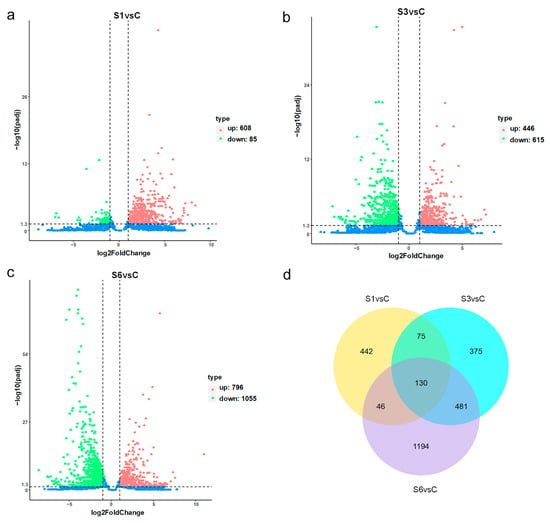
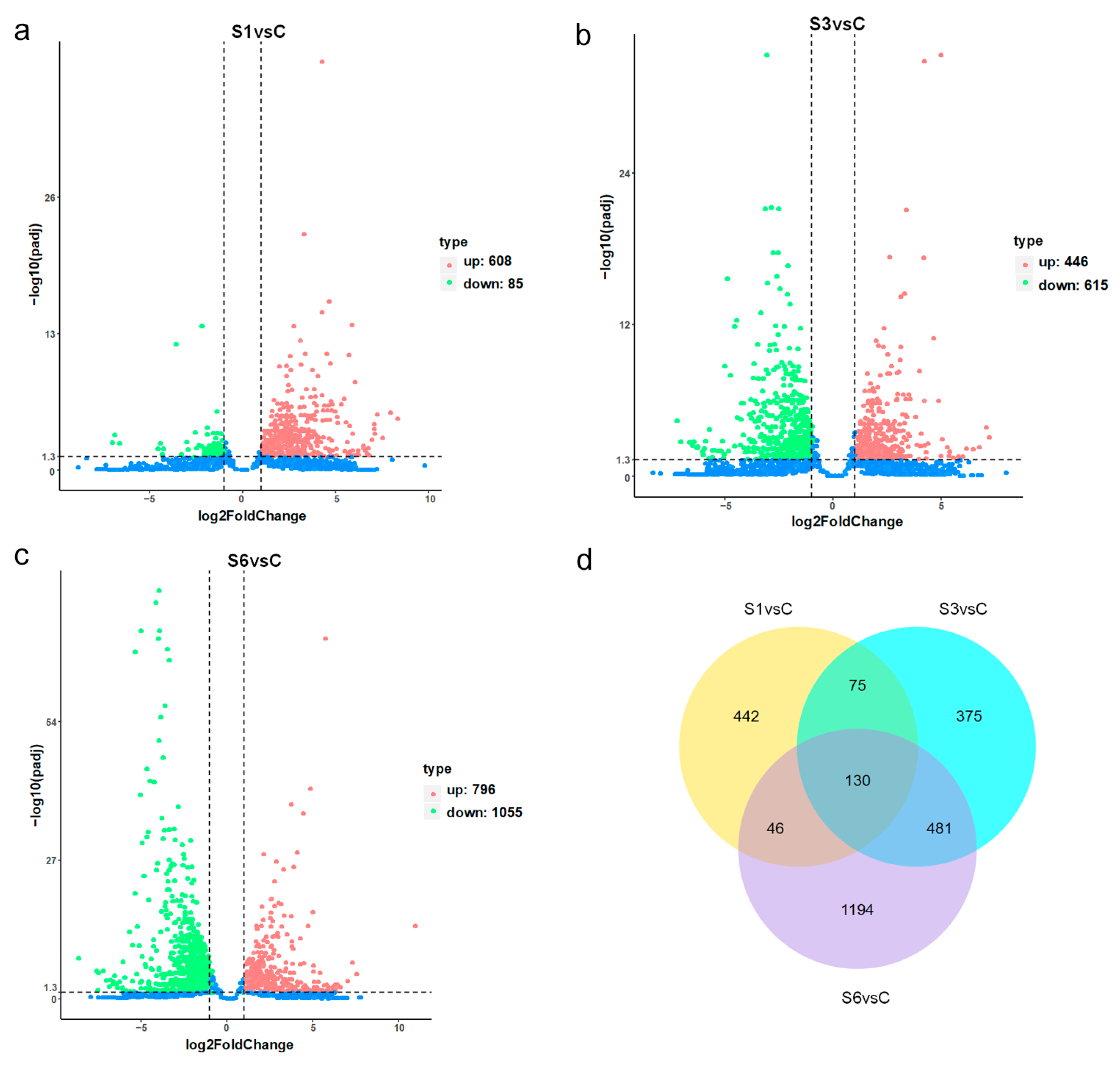
A total of 693, 1061, and 1851 DEGs were identified at 1, 3, and 6 h after salt treatment, respectively (Figure 1). Among these DEGs, 100 genes were upregulated and 29 were downregulated across all time points (Figure S2). Furthermore, the number of downregulated genes increased with prolonged exposure to salt.
Figure 1.
Numbers of differentially expressed genes at 1, 3, and 6 h after salt treatment. (a–c): Volcano plot of DEGs; (d): Venn diagram of DEGs. Red, green and blue dots represent upregulated, downregulated, and non-significantly differentially expressed genes, respectively.
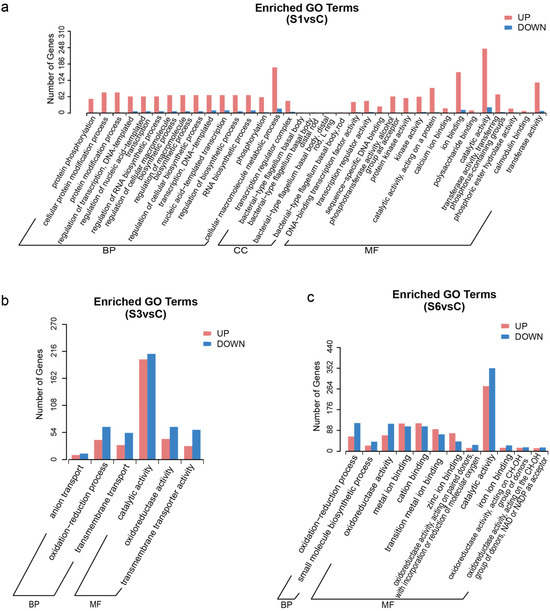
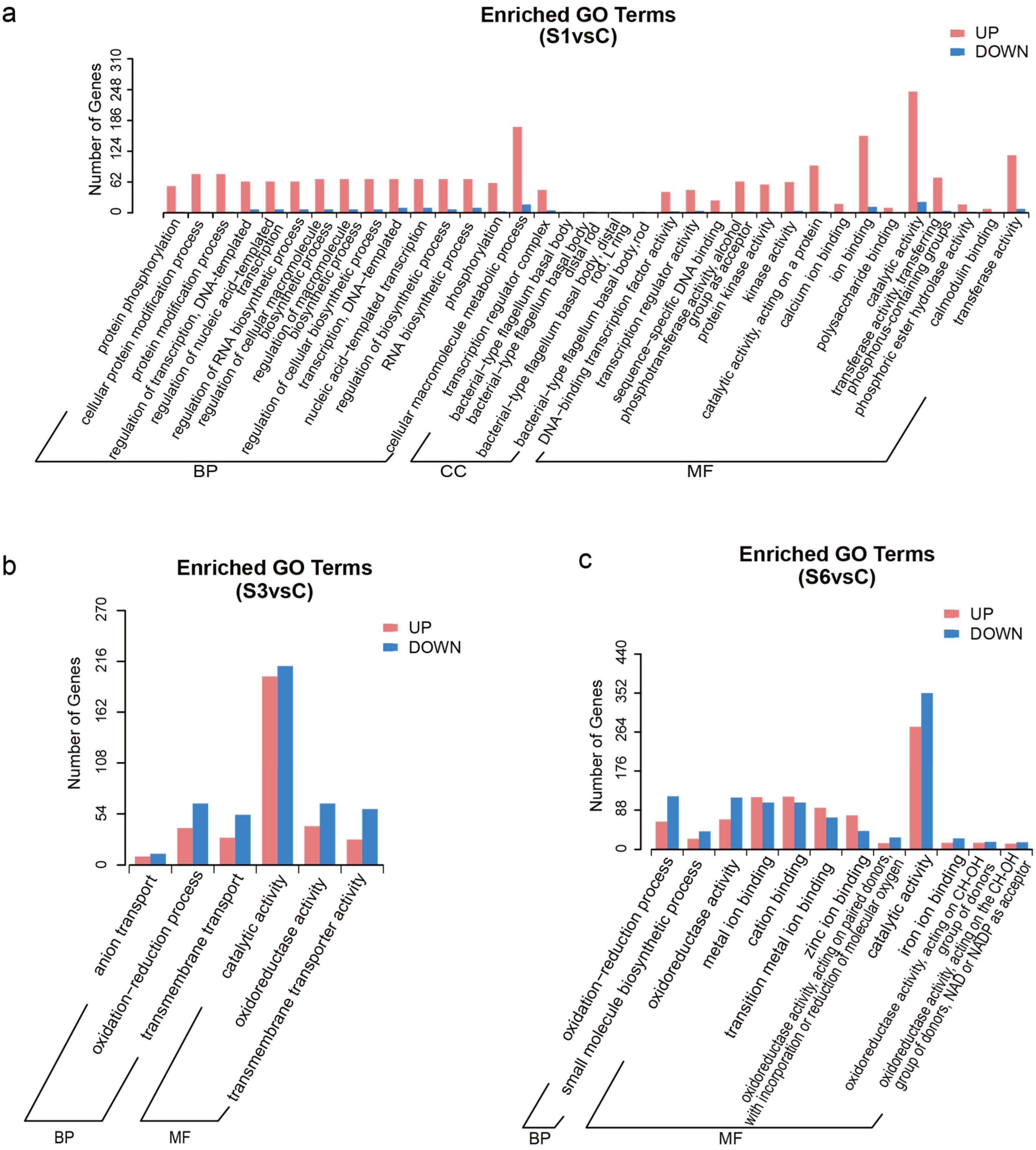
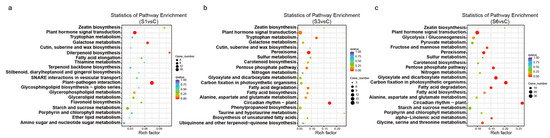
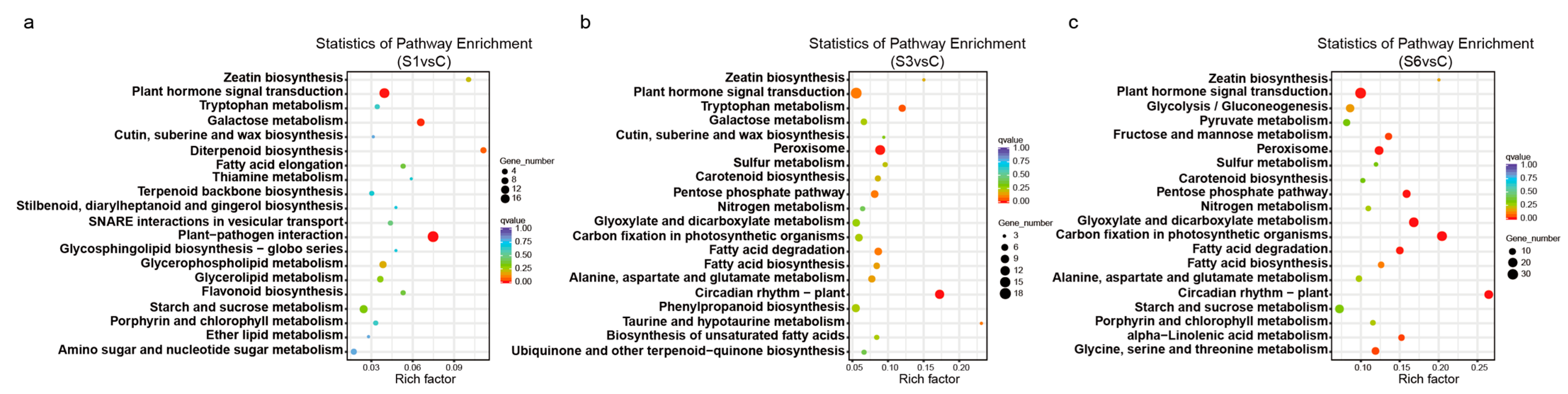
As shown in Figure 2, the significantly enriched terms primarily included catalytic activity (GO:0003824), cellular macromolecule metabolic processes (GO:0044260), ion binding (GO:0043167), and transferase activity (GO:0016740) at 1 h post-treatment. And the upregulated genes were far more than the downregulated genes. The categories of catalytic activity (GO:0003824), cation binding (GO:0043169), metal ion binding (GO:0046872), oxidation-reduction process (GO:0055114), and transmembrane transport (GO:0055085) showed significant enrichment at 3 or 6 h post-treatment. Further, Kyoto Encyclopedia of Genes and Genomes (KEGG) analysis (Figure 3) revealed enriched pathways including plant-pathogen interaction, plant hormone signal transduction, galactose metabolism, circadian rhythm in plants, peroxisome function, tryptophan metabolism, and carbon fixation in photosynthetic organisms. Notably, DEGs associated with plant hormone signal transduction were identified at all time points, suggesting the sustained activation of this pathway in mediating salt adaptation in S. sebiferum.
Figure 2.
Go enrichment analysis of DEGs in S. sebiferum at 1 h (a), 3 h (b), and 6 h (c) after salt treatment. The terms are categorized into Biological Process (BP), Cellular Component (CC), and Molecular Function (MF). Terms with an adj. p-value < 0.05 were considered significantly enriched.
Figure 3.
KEGG analysis of DEGs in S. sebiferum. at 1 h (a), 3 h (b) and 6 h (c) after salt treatment. The size of the dots indicates the number of genes enriched in the pathway, while the color gradient represents the adj. p-value. Pathways with adj. p-value < 0.05 were considered significantly enriched.
3.3. DEGs Related to Ion Transport and Ca2+ Signaling in S. sebiferum Under Salt Stress
The maintenance of ion homeostasis is a critical biological pathway in response to salinity stress. The DEGs were associated with ion binding and transmembrane transport, including several cation and anion transporters, anion channel proteins, and ABC transporters (Table 2). The upregulation of SsSLC4, SsALMT2 and two SsNCLs after 1 h of treatment suggests their key role in early-phase pH regulation and ionic homeostasis. Furthermore, after 3 h of salt treatment, several genes, such as a silicon efflux transporter (SsLSI2), a metal-nicotianamine transporter (SsYSL6), and five ABCG transporter genes, were upregulated. This upregulation might be involved in silicon efflux, essential metal ion transport, and the export of harmful ions and metabolites. Such a concerted response could regulate cellular homeostasis, activate detoxification pathways, and alleviate osmotic stress, thereby enhancing stress resistance. Notably, the expression levels of five nitrate transporters (NRT1/PTRs, also known as NPFs) and a high-affinity nitrate transporter were significantly upregulated at 6 h post-exposure to salt stress. These genes may be associated with nitrate transport in S. sebiferum under salinity conditions.
Table 2.
DEGs involved in ion transport in S. sebiferum under salt stress.
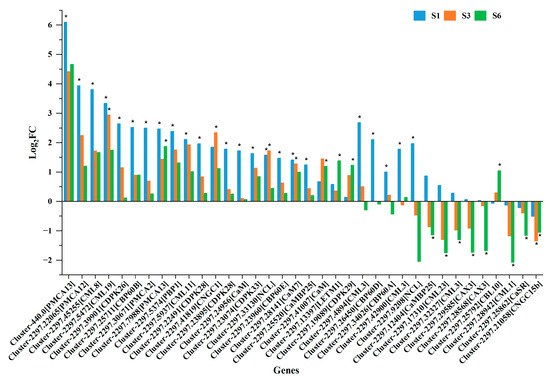
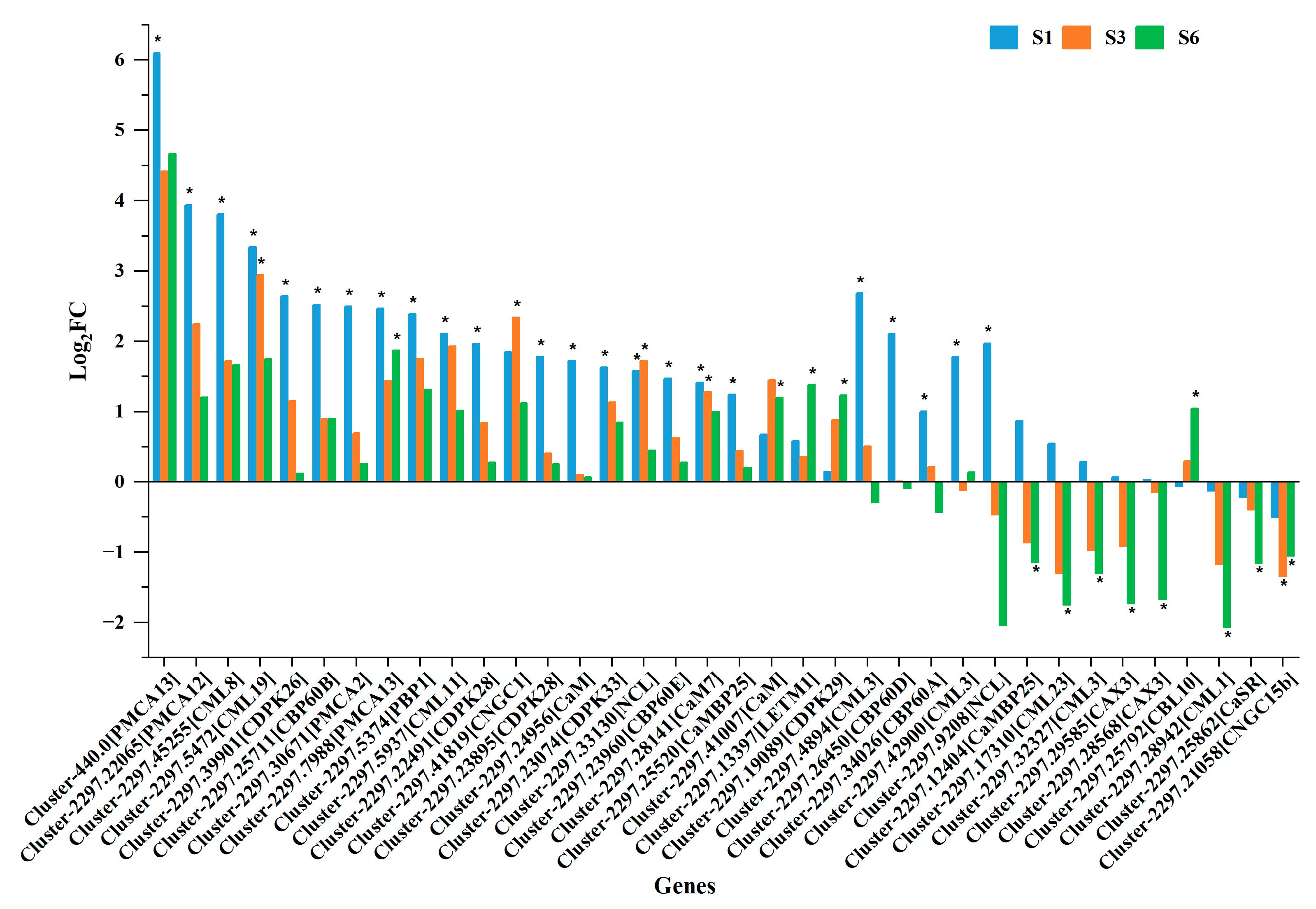
A total of 36 genes related to Ca2+ signaling were differentially expressed (Figure 4), particularly during the early stages of NaCl treatment. This suggests the transcriptional reprogramming of Ca2+ signaling in response to salinity in S. sebiferum. Among these DEGs, a cyclic nucleotide-gated ion channel (SsCNGC), two sodium/calcium exchangers (SsNCLs), and four calcium-transporting ATPases (SsPMCAs) were significantly upregulated. This expression pattern suggests a transcriptional response aimed at modulating Ca2+ transport and intracellular calcium homeostasis. Additionally, upregulation was observed in genes linked to calcium sensors, such as three calmodulins (SsCaMs), five calmodulin-like proteins (SsCMLs), and five calcium-dependent protein kinases (SsCDPKs), implying their putative involvement in the calcium signaling pathway under salt stress.
Figure 4.
DEGs related to Ca2+ signaling in S. sebiferum after salt treatment. Blue, orange, and green bars represent the log2 (fold change) values of DEGs at 1 h, 3 h, and 6 h after salt treatment compared to the control, respectively. Asterisks above the bars indicate significant differences (adj. p-value < 0.05).
3.4. DEGs Associated with Phytohormone Signal Transduction in S. sebiferum Under Salt Stress
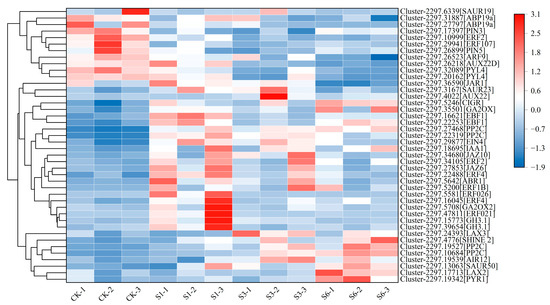
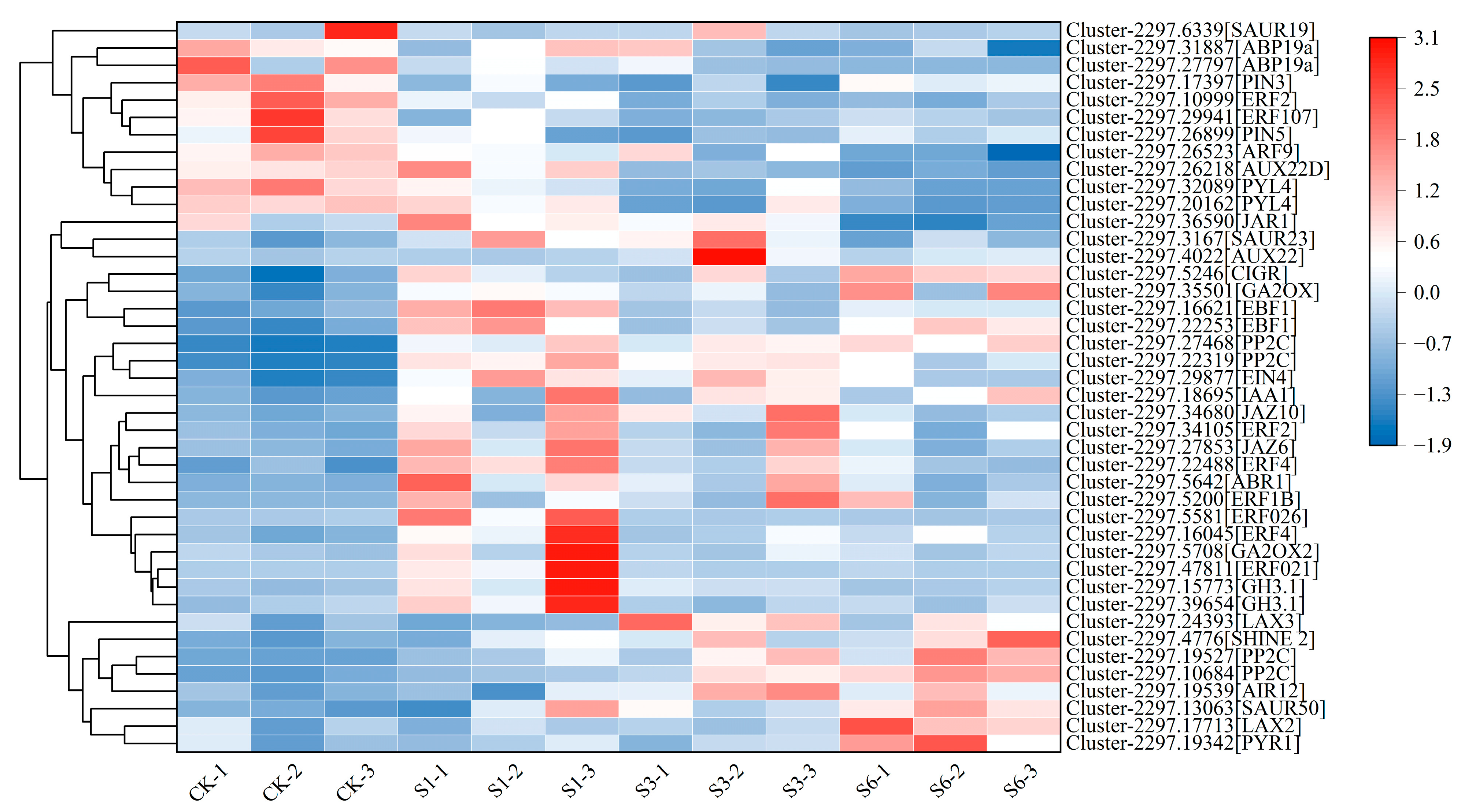
Phytohormones serve as crucial signaling molecules, with their complex signaling systems playing pivotal roles in plant adaptation to salinity stress. In S. sebiferum, genes associated with the signaling pathways of phytohormones—specifically ethylene, auxins, abscisic acid (ABA), gibberellins (GA), and jasmonic acid (JA)—exhibited differential expression under salinity stress (Figure 5). Notably, during the early stage of salt treatment, genes encoding hormone signaling components and stress response regulators were significantly upregulated. In particular, seven ethylene-responsive transcription factor (SsERF) genes were induced, suggesting their potential role as key transcriptional regulators that may activate downstream stress-responsive genes. Concurrently, the upregulation of two EIN3-binding F-BOX1 (SsEBF1) genes and an ethylene receptor (SsEIN4) implies a potential mechanism for fine-tuning ethylene signaling to maintain a balance between growth and stress responses. The increased expression of two gibberellin 2-beta-dioxygenase (SsGA2ox) genes and two IAA-amido synthetase (SsGH3.1) genes points to a likely reduction a reduction in active gibberellin levels and a possible modulation of auxin homeostasis, respectively. The expression of nine genes associated with the auxin signaling pathway changed significantly after 6 h of NaCl treatment. Among these, four genes were upregulated, including an auxin transporter-like 2 gene (SsLAX2) and three auxin-responsive genes (SsIAA1, SsAIR12 and SsSAUR). Based on these transcriptional profiles, we hypothesize that auxin signaling may be finely modulated in response to salt stress in S. sebiferum, potentially through the regulation of auxin transportation and downstream signaling components. Additionally, four protein phosphatase 2C-related genes, which are known to participate in stress signal transduction pathways, were significantly upregulated following salt stress treatments in S. sebiferum.
Figure 5.
Heatmap of DEGs related to phytohormone signaling pathways in S. sebiferum under salt stress.
3.5. Effect of Salinity Stress on the NO3− and NH4+ Uptake in S. sebiferum
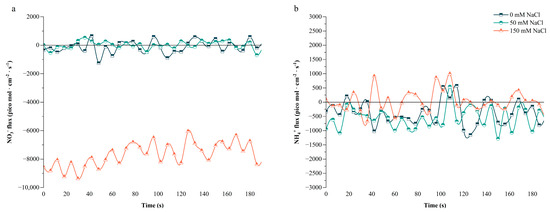
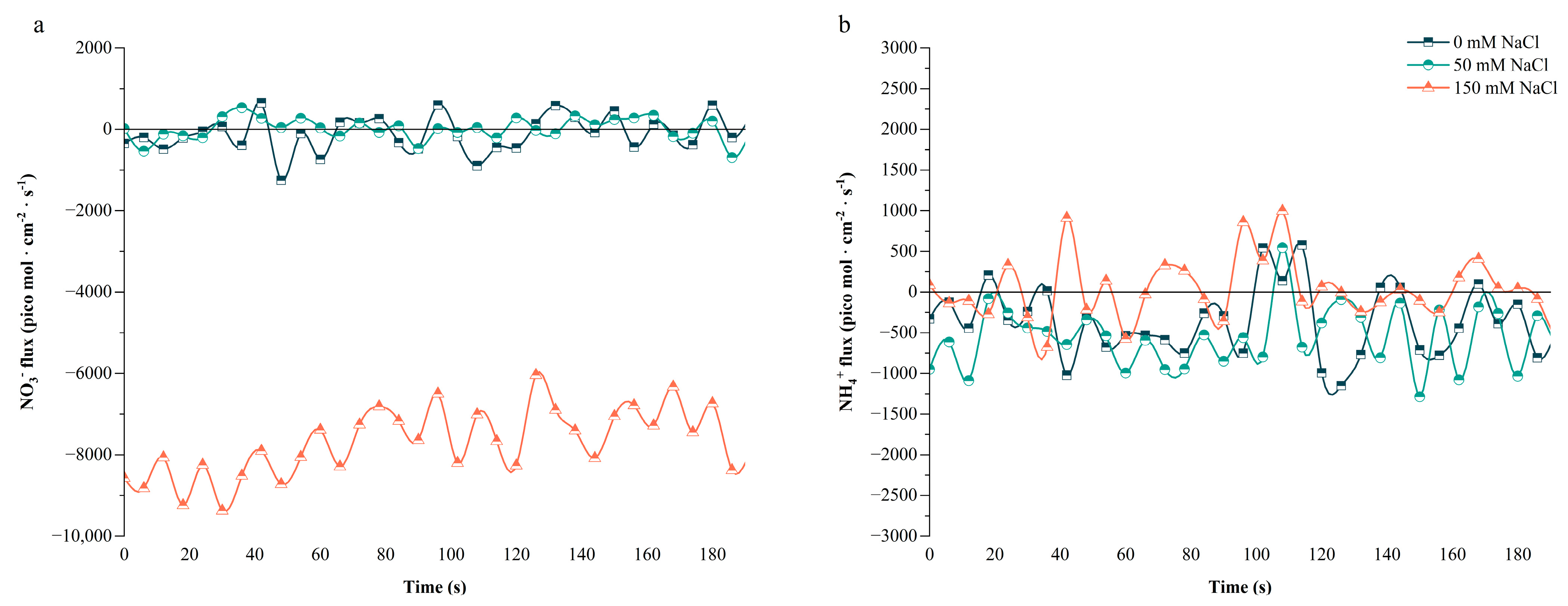
NO3− and NH4+ are the two main forms of inorganic nitrogen in plants. Transcriptome data showed that the genes for nitrate and ammonium transporters were differentially expressed under salt stress. To further investigate the effect of salt stress on NO3− and NH4+ uptake, the net fluxes of these ions in the roots of S. sebiferum were measured using NMT. The results indicated that 50 mM NaCl treatment did not significantly affect NO3− uptake compared to the control. However, a significant net influx of NO3− was observed after exposure to 150 mM NaCl. In contrast, NH4+ uptake was not significantly affected by either 50 mM or 150 mM NaCl treatments (Figure 6).
Figure 6.
The net fluxes of NO3− (a) and NH4+ (b) in the roots of S. sebiferum after treatment with different concentrations of NaCl. The Y-axis represents the net ion flux rate, where negative values indicate influx and positive values indicate efflux. Data are recorded from eight fine roots from three independent plants per treatment.
4. Discussion
4.1. Plant Ions and Signal Molecules Transporters’ Response to Salt Stress in S. sebiferum
Salinity stress generally involves osmotic pressure and ion toxicity, which impair crucial plant processes such as nutrient acquisition, cellular metabolism, and photosynthesis [19]. The ionic imbalance induced by salinity is principally due to the increased ions, notably Na+ and Cl− [20]. When plants are exposed to high NaCl concentrations, Na+ rapidly enters root cells, leading to a substantial increase in Na+ influx. This influx disrupts the uptake and transport of other essential ions like K+ and Ca2+ and impacts the function of ion transport proteins [21]. We identified numerous DEGs associated with ion transport in S. sebiferum following salt stress. Maintaining ion homeostasis and osmotic balance is vital for plants to effectively manage salt stress.
Plant transporters play a crucial role in nutrient absorption, cellular balance maintenance, and stress response. They facilitate the exchange of chemicals and signals across plant membranes [22]. Under salinity stress, our transcriptomic analysis revealed that numerous transporter-related genes in S. sebiferum were differentially expressed, likely involved in regulating the uptake, transport, efflux, influx, and accumulation of various ions, as well as signal molecule transport. Notably, 14 ABC transporter members were identified as responsive to salt stress. Studies have found that ABC transporters function as both exporters and importers, regulating various biological processes, including nutrient uptake and phytohormone transport, thereby aiding plant survival under adverse environmental conditions [23]. In S. sebiferum, the expression of four SsABCG29s was significantly increased at 1 h or 3 h, whereas their expression returned to non-significant levels at 6 h. This transient induction is often associated with early stress responses, raising the possibility that these transporters participate in the rapid transport of signaling molecules for defense cascade activation or the exclusion of toxic compounds. In contrast, six other members were significantly down-regulated at 6 h, with no significant changes at earlier time points. This late-stage suppression could be interpreted as part of a feedback mechanism to assist in the re-establishment of cellular homeostasis. These ABCG genes may play important roles in the response to salt stress by coordinating early defense activation and later homeostasis restoration.
4.2. The Multifaceted Roles of NO3− in Response to Salt Stress of S. sebiferum
NO3− serves not only as a major nitrogen source but also as a crucial regulator in enhancing plant resilience to salinity. In the present study, salt stress induced the expression of several NRT genes and caused an increased net NO3− influx in the roots of S. sebiferum, which is consistent with previous reports that salinity promotes NO3− uptake in certain salt-tolerant plants and halophytes [12,24,25]. It should be noted that the NMT measurements were performed in a solution without NaCl to minimize background interference. The observed NO3− influx indicates the capacity for nitrate uptake after salt stress removal. The ability to rapidly restore nutrient uptake after saline exposure is often associated with salt tolerance. The enhanced NO3− uptake capacity in S. sebiferum may contribute to its adaptability under salt stress conditions. Various studies have suggested that NPF members have the potential for low-affinity nitrate transport in many species [26]. Thus, we hypothesize that the upregulated NPFs in S. sebiferum may act as NO3− influx transporters, playing a critical role in nitrate acquisition and salinity response.
NRT1.1, the first nitrate transporter identified in plants, has been shown to transport both nitrate and auxin. It functions as a sensor mediating nitrate signal transduction and contributes to plant tolerance to various adverse environmental conditions [27,28]. In S. sebiferum, members of the nitrate transporter family (NRTs) exhibited different expression patterns under high salt conditions, suggesting functional divergence and the potential for broad substrate specificity. The differential expression of NRT1 family members suggests their potential role in the integration of NO3− signaling and phytohormones like auxin. This transcriptional regulation may serve to link nutrient signaling with hormonal pathways, thereby modulating stress-responsive networks. These pathways are extensively involved in ion transport and salt signaling networks, aiding plants in coping with salt stress [26].
It has been reported that NO3− interacts antagonistically with Cl−, helping to alleviate excessive chloride toxicity and maintain ion homeostasis under salt stress [29]. Beyond its nutritional role, NO3− also performs osmotic functions, contributing to cellular osmotic balance under high salinity conditions [12,30]. Such multifaceted roles suggest a complex response to salt stress. In the present study, the expression of a chloride channel protein (SsCLC) was downregulated after salt treatment. Whether similar antagonistic or osmotic mechanisms exist remains to be verified, as our study is limited to transcriptional data. Further research is needed to elucidate the specific molecular mechanisms of NO3−-mediated salt tolerance, offering valuable insights for breeding salt-resistant crops.
4.3. The Signal Regulating Network Response to Salt Stress in S. sebiferum
Various signaling and signal transduction mechanisms under salinity stress play important roles in improving salt resistance. In this study, DEGs related to Ca2+ and phytohormone signaling pathways were identified, highlighting the activation of complex signaling networks in response to salt stress. Calcium is a crucial component for both the structural and physiological functions of cells. It also serves as a versatile secondary messenger in signal transduction pathways, regulating salt perception, ion homeostasis, and adaptive responses to salinity [19,31]. During the initial phases of salt stress, multiple sensors and signaling components are activated, many of which are closely linked to Ca2+ signaling. Cytosolic Ca2+ concentration can increase within seconds of NaCl exposure, facilitating downstream signaling by either downregulating or upregulating stress-responsive genes [32,33]. The rapid transcriptional activation of calcium signaling components such as CaMs, CMLs, and CDPKs within 1 h of salt stress suggests their involvement in initiating salt tolerance mechanisms in S. sebiferum, likely triggering downstream transcriptional cascades (e.g., phytohormone signaling genes) for subsequent adaptation phases. Our results highlight the critical role of Ca2+-mediated signaling in coordinating early salt responses.
Downstream of the initial salt-sensing phase, phytohormones act as chemical messengers that play crucial roles in salt-induced signaling cascades, ultimately leading to adaptive responses [34]. The intricate hormone signaling systems and their ability to engage in crosstalk make them ideal candidates for facilitating defense responses [35]. Salt stress has been shown to alter hormone levels, thereby regulating plant responses and adaptation through various mechanisms. In this study, two SsGA2ox genes, which encode enzymes that convert bioactive gibberellins (GAs) into their inactive form, were upregulated under salt stress. Additionally, the SsCIGR gene, which encodes a gibberellin-responsive protein, was also upregulated. Thus, genes involved in GA metabolism and signaling were activated by salt stress, a result that aligns with previous reports [36,37]. Adaptation to salt stress is supported by reduced GA levels, driven by the induction of GA2ox genes [38].
Ethylene is perceived by receptors like EIN4, initiating signaling cascades that alter the expression of ethylene-responsive genes. It has been reported that EIN4, which is a negative regulator of ethylene signal transduction, can enhance salt tolerance, while a mutant of the ethylene-positive regulator EIN3/EIL1 is more sensitive to salt in Arabidopsis [39,40]. Salt stress stabilizes the EIN3/EIL1 protein by promoting EBF1 proteasomal degradation. However, studies in rice and Cucurbita pepo suggest that the ethylene signaling pathway plays a negative regulatory role [41,42]. In the current study, we observed the upregulation of both negative regulators (SsEIN4, SsEBF1) and downstream responsive genes SsERFs under salt stress. It is plausible that this simultaneous activation represents a complex feedback mechanism, wherein the plant activates defense responses while engaging negative feedback loops to fine-tune signal intensity. These data are consistent with the notion that S. sebiferum employs a dynamic balance between positive and negative regulators to optimize stress tolerance. Furthermore, some research has found that ERFs act as integrative nodes in various signaling pathways, including ethylene, JA, and ABA signals, and regulate stress-responsive genes [43]. Consequently, the observed upregulation likely reflects a homeostatic adjustment rather than a simple suppression of ethylene signaling, a hypothesis that warrants further functional validation.
When exposed to a salt gradient, plant roots demonstrate a salt avoidance response. This response is swiftly mediated by salt-induced changes in auxin distribution, primarily through alterations in auxin transport [20]. In this study, our transcriptomic data revealed that the auxin influx carriers AUX/LAX (SsLAX2 and SsLAX3) were induced in S. sebiferum following salt treatment, while the expression of auxin efflux carriers, specifically PIN proteins, was downregulated. This pattern aligns with previous studies in Arabidopsis, where PIN1, PIN3, and PIN7 are negatively regulated under salt stress [44]. And salt-induced NO accumulation down-regulates PIN, resulting in reduced auxin concentrations [45]. We hypothesize that the differential expression of AUX/LAX and PIN in response to salinity likely co-facilitates the rapid change in auxin flow, thereby regulating the asymmetric distribution of auxin and influencing plant growth rates. Additionally, two GH3.1 genes, encoding for IAA-amido synthetase, which conjugates IAA to amino acids, were induced under salt stress, suggesting their role in modulating cellular auxin availability. Moreover, members of the Aux/IAA and SAUR family, which are primary auxin-responsive genes, were differentially expressed at the transcriptional level following salt treatment in S. sebiferum. Notably, Aux/IAA genes play important roles in response to salt stress. For instance, the overexpression of IAA17 confers salt stress resistance in Arabidopsis [46,47]. Aux/IAA proteins form dimers with ARF proteins and inhibit ARF activity, thereby repressing downstream genes. At the transcriptional level, our results suggest that the inhibition of auxin signaling is likely a critical component in the regulation of plant growth and development during salt stress.
ABA modulation is a critical factor in the balance between plant defense and growth responses under stressful conditions. Our transcriptomic data indicate that PYL receptor genes, core components of the ABA signaling pathway, respond intensively to salt stress. In particular, PYR1 and PYL4 receptors exhibit distinct response patterns, suggesting their specialized functions in S. sebiferum’s response to salt stress. Notably, PYL4 is known to act as a key node in the JA-ABA signaling cascade [48]. Concurrently, two JAZ genes (SsJAZ6 and SsJAZ10) showed significant up-regulation at 1 h and 3 h, respectively, returning to near-control levels by 6 h, whereas SsJAR1 was significantly down-regulated at 6 h. The salt-mediated activation of JA signaling involves the destabilization of JAZ protein via a JAR1-dependent mechanism in Arabidopsis roots [49]. Given that JAZ proteins facilitate synergistic crosstalk between JA-ABA, JA-GA, and JA-ET pathways through interactions with various transcription factors [50,51], the specific expression dynamics of PYL4, JAZ, and JAR1 observed here suggest a complex regulatory network. While these results indicate the involvement of phytohormones in the signaling network of S. sebiferum under salt stress, further investigation is needed to elucidate the performance and interactions of these hormones.
Taken together, our results suggest a coordinated adaptation network in S. sebiferum in response to salt stress. The rapid induction of Ca2+ signaling components within 1 h likely activates downstream transcriptional cascades. This early signaling is tightly interconnected with extensive phytohormone signaling and ion transport. The potential role of NRTs in integrating nitrate signaling with hormonal pathways, alongside the function of key nodes (e.g., JAZ and ERF) in mediating multiple hormonal signals, highlights the complex crosstalk within the network. This integrated network likely contributes to effective signal transduction and ion homeostasis, allowing the plant to fine-tune the balance between growth and defense, thereby contributing to the salt tolerance of S. sebiferum.
5. Conclusions
Our results revealed that the response of S. sebiferum to salinity stress involves the differential expression of genes related to ion homeostasis, signal transduction, and metabolic reprogramming. These findings suggest the potential involvement of a regulatory network mediated by signaling molecules such as Ca2+ and phytohormones. Additionally, S. sebiferum exhibits an increased uptake of NO3− after high salinity stress. These transcriptomic associations support the hypothesis that NO3− may play a multifaceted role, acting not only as a nutrient but also as a signaling molecule, thereby potentially assisting the plant in coping with salinity stress. These findings provide valuable information for further investigations into candidate genes and molecular mechanisms of salt stress responses in S. sebiferum.
Supplementary Materials
The following supporting information can be downloaded at https://www.mdpi.com/article/10.3390/horticulturae12040507/s1. Table S1: Sequence statistics of S. sebiferum; Table S2: Summary of read mapping rates and expressed unigene statistics for each sample; Table S3: Statistics of the annotated unigenes number in S. sebiferum; Table S4: Adjusted p-values for ion transport-related DEGs in S. sebiferum under salt stress; Figure S1: BUSCO Evaluation of Assembled Transcripts; Figure S2: Upset plots of the overlapped DEGs among comparisons in S. sebiferum under different salt-treatments.
Author Contributions
Conceptualization, X.L. (Xiaojing Liu) and D.Y.; methodology, F.D. and X.L. (Xiaojing Liu); validation, X.K. and X.L. (Xixi Li); formal analysis, J.L. and X.K.; investigation, F.D. and J.L.; resources, D.Y.; data curation, F.D. and J.L.; writing—original draft preparation, F.D.; writing—review and editing, X.L. (Xiaojing Liu) and X.L. (Xixi Li); visualization, X.K. and X.L. (Xixi Li); supervision, X.L. (Xiaojing Liu); project administration, X.L. (Xiaojing Liu); funding acquisition, D.Y. All authors have read and agreed to the published version of the manuscript.
Funding
This research was funded by Natural Resources Development Funds of Jiangsu Province (JSZRHYKJ202310) and the National Natural Science Foundation of China (Grant No. 32201619).
Data Availability Statement
The raw data have been deposited in the Genome Sequence Archive (GSA) in the National Genomics Data Center (NGDC) under accession number CRA027348.
Conflicts of Interest
The authors declare no conflicts of interest.
References
- Mukhopadhyay, R.; Sarkar, B.; Jat, H.S.; Sharma, P.C.; Bolan, N.S. Soil salinity under climate change: Challenges for sustainable agriculture and food security. J. Environ. Manag. 2021, 280, 111736. [Google Scholar] [CrossRef] [Scilit]
- Atta, K.; Mondal, S.; Gorai, S.; Singh, A.; Kumari, A.; Ghosh, T.; Roy, A.; Hembram, S.; Gaikwad, D.; Mondal, S.; et al. Impacts of salinity stress on crop plants: Improving salt tolerance through genetic and molecular dissection. Front. Plant Sci. 2023, 14, 1241736. [Google Scholar] [CrossRef] [Scilit]
- Atabani, A.E.; Silitonga, A.S.; Ong, H.C.; Mahlia, T.M.I.; Masjuki, H.H.; Badruddin, I.A.; Fayaz, H. Non-edible vegetable oils: A critical evaluation of oil extraction, fatty acid compositions, biodiesel production, characteristics, engine performance and emissions production. Renew. Sustain. Energy Rev. 2013, 18, 211–245. [Google Scholar] [CrossRef] [Scilit]
- Gao, R.; Su, Z.; Yin, Y.; Sun, L.; Li, S. Germplasm, chemical constituents, biological activities, utilization, and control of Chinese tallow (Triadica sebifera (L.) Small). Biol. Invasions 2016, 18, 809–829. [Google Scholar] [CrossRef] [Scilit]
- Bhonsle, A.K.; Rawat, N.; Trivedi, J.; Singh, R.; Singh, J.; Atray, N. Biodiesel production using novel solvent from agricultural crop Cannabis sativa L. and Sapium sebiferum L. and their fuel properties characterisation using blends. Bioresour. Technol. Rep. 2023, 23, 101555. [Google Scholar] [CrossRef] [Scilit]
- Barrilleaux, T.C.; Grace, J.B. Growth and invasive potential of Sapium sebiferum (Euphorbiaceae) within the coastal prairie region: The effects of soil and moisture regime. Am. J. Bot. 2000, 87, 1099–1106. [Google Scholar] [CrossRef] [Scilit] [PubMed]
- Yang, Q.; Li, B.; Siemann, E. Positive and negative biotic interactions and invasive Triadica sebifera tolerance to salinity: A cross-continent comparative study. Oikos 2014, 124, 216–224. [Google Scholar] [CrossRef] [Scilit]
- Nazir, F.; Mahajan, M.; Khatoon, S.; Albaqami, M.; Ashfaque, F.; Chhillar, H.; Chopra, P.; Khan, M.I.R. Sustaining nitrogen dynamics: A critical aspect for improving salt tolerance in plants. Front. Plant Sci. 2023, 14, 1087946. [Google Scholar] [CrossRef] [Scilit]
- Fuertes-Mendizábal, T.; Bastías, E.I.; González-Murua, C.; González-Moro, M.B. Nitrogen Assimilation in the Highly Salt- and Boron-Tolerant Ecotype Zea mays L. Amylacea. Plants 2020, 9, 322. [Google Scholar] [CrossRef] [Scilit]
- Huang, J.; Zhu, C.; Hussain, S.; Huang, J.; Liang, Q.; Zhu, L.; Cao, X.; Kong, Y.; Li, Y.; Wang, L.; et al. Effects of nitric oxide on nitrogen metabolism and the salt resistance of rice (Oryza sativa L.) seedlings with different salt tolerances. Plant Physiol. Biochem. 2020, 155, 374–383. [Google Scholar] [CrossRef] [Scilit]
- Abouelsaad, I.; Weihrauch, D.; Renault, S. Effects of salt stress on the expression of key genes related to nitrogen assimilation and transport in the roots of the cultivated tomato and its wild salt-tolerant relative. Sci. Hortic. 2016, 211, 70–78. [Google Scholar] [CrossRef] [Scilit]
- Liu, R.; Cui, B.; Lu, X.; Song, J. The positive effect of salinity on nitrate uptake in Suaeda salsa. Plant Physiol. Biochem. 2021, 166, 958–963. [Google Scholar] [CrossRef] [Scilit]
- Min, X.J.; Meng, S.; Su, L.; Li, Y.; Wang, Y.; Zhang, C.; Zhao, Z. Nitrate and Ammonium Contribute to the Distinct Nitrogen Metabolism of Populus simonii during Moderate Salt Stress. PLoS ONE 2016, 11, e0150354. [Google Scholar] [CrossRef] [Scilit]
- Dong, Q.; Wallrad, L.; Almutairi, B.O.; Kudla, J. Ca2+ signaling in plant responses to abiotic stresses. J. Integr. Plant Biol. 2022, 64, 287–300. [Google Scholar] [CrossRef] [Scilit] [PubMed]
- Yu, Z.; Duan, X.; Luo, L.; Dai, S.; Ding, Z.; Xia, G. How Plant Hormones Mediate Salt Stress Responses. Trends Plant Sci. 2020, 25, 1117–1130. [Google Scholar] [CrossRef] [Scilit] [PubMed]
- Balasubramaniam, T.; Shen, G.; Esmaeili, N.; Zhang, H. Plants’ Response Mechanisms to Salinity Stress. Plants 2023, 12, 2253. [Google Scholar] [CrossRef] [Scilit] [PubMed]
- Yu, J.; Zhu, C.; Xuan, W.; An, H.; Tian, Y.; Wang, B.; Chi, W.; Chen, G.; Ge, Y.; Li, J.; et al. Genome-wide association studies identify OsWRKY53 as a key regulator of salt tolerance in rice. Nat Commun. 2023, 14, 3550. [Google Scholar] [CrossRef] [Scilit]
- Guo, M.; Wang, X.S.; Guo, H.D.; Bai, S.Y.; Khan, A.; Wang, X.M.; Gao, Y.M.; Li, J.S. Tomato salt tolerance mechanisms and their potential applications for fighting salinity: A review. Front. Plant Sci. 2022, 13, 949541. [Google Scholar] [CrossRef] [Scilit]
- Joshi, S.; Nath, J.; Singh, A.K.; Pareek, A.; Joshi, R. Ion transporters and their regulatory signal transduction mechanisms for salinity tolerance in plants. Physiol. Plant. 2022, 174, e13702. [Google Scholar] [CrossRef] [Scilit]
- van Zelm, E.; Zhang, Y.; Testerink, C. Salt Tolerance Mechanisms of Plants. Annu. Rev. Plant Biol. 2020, 71, 403–433. [Google Scholar] [CrossRef] [Scilit]
- Keisham, M.; Mukherjee, S.; Bhatla, S.C. Mechanisms of Sodium Transport in Plants-Progresses and Challenges. Int. J. Mol. Sci. 2018, 19, 647. [Google Scholar] [CrossRef] [Scilit] [PubMed]
- Mishra, G.; Mohapatra, S.K.; Rout, G.R. Plant membrane transporters function under abiotic stresses: A review. Planta 2024, 260, 125. [Google Scholar] [CrossRef] [Scilit] [PubMed]
- Dahuja, A.; Kumar, R.R.; Sakhare, A.; Watts, A.; Singh, B.; Goswami, S.; Sachdev, A.; Praveen, S. Role of ATP-binding cassette transporters in maintaining plant homeostasis under abiotic and biotic stresses. Physiol. Plant. 2021, 171, 785–801. [Google Scholar] [CrossRef] [Scilit] [PubMed]
- Huang, G.; Sun, Y.; Zhang, X.; Rodríguez, L.G.; Luo, J.; Chen, Z.; Ou, Y.; Gao, Y.; Ghaffari, H.; Yao, Y. Adaptation to low nitrogen and salt stresses in the desert poplar by effective regulation of nitrogen assimilation and ion balance. Plant Physiol. Biochem. 2022, 193, 14–24. [Google Scholar] [CrossRef] [Scilit]
- Liu, M.; Zhao, Y.; Liu, X.; Korpelainen, H.; Li, C. Ammonium and nitrate affect sexually different responses to salt stress in Populus cathayana. Physiol. Plant. 2022, 174, e13626. [Google Scholar] [CrossRef] [Scilit]
- Zhao, Z.; Li, M.; Xu, W.; Liu, J.-H.; Li, C. Genome-Wide Identification of NRT Gene Family and Expression Analysis of Nitrate Transporters in Response to Salt Stress in Poncirus trifoliata. Genes 2022, 13, 1115. [Google Scholar] [CrossRef] [Scilit]
- Wang, W.; Hu, B.; Li, A.; Chu, C.; Xu, G. NRT1.1s in plants: Functions beyond nitrate transport. J. Exp. Bot. 2020, 71, 4373–4379. [Google Scholar] [CrossRef] [Scilit]
- Fang, X.Z.; Fang, S.Q.; Ye, Z.Q.; Liu, D.; Zhao, K.L.; Jin, C.W. NRT1.1 Dual-Affinity Nitrate Transport/Signalling and its Roles in Plant Abiotic Stress Resistance. Front. Plant Sci. 2021, 12, 715694. [Google Scholar] [CrossRef] [Scilit]
- Xiao, Q.; Chen, Y.; Liu, C.W.; Robson, F.; Roy, S.; Cheng, X.; Wen, J.; Mysore, K.; Miller, A.J.; Murray, J.D. MtNPF6.5 mediates chloride uptake and nitrate preference in Medicago roots. EMBO J. 2021, 40, e106847. [Google Scholar] [CrossRef] [Scilit]
- Song, J.; Ding, X.; Feng, G.; Zhang, F. Nutritional and osmotic roles of nitrate in a euhalophyte and a xerophyte in saline conditions. New Phytol. 2006, 171, 357–366. [Google Scholar] [CrossRef] [Scilit]
- Seifikalhor, M.; Aliniaeifard, S.; Shomali, A.; Azad, N.; Hassani, B.; Lastochkina, O.; Li, T. Calcium signaling and salt tolerance are diversely entwined in plants. Plant Signal. Behav. 2019, 14, 1665455. [Google Scholar] [CrossRef] [Scilit] [PubMed]
- Knight, H.; Trewavas, A.J.; Knight, M.R. Calcium signaling in Arabidopsis thaliana responding to drought and salinity. Plant J. 1997, 12, 1067–1078. [Google Scholar] [CrossRef] [Scilit] [PubMed]
- Manishankar, P.; Wang, N.; Köster, P.; Alatar, A.A.; Kudla, J. Calcium signaling during salt stress and in the regulation of ion homeostasis. J. Exp. Bot. 2018, 69, 4215–4226. [Google Scholar] [CrossRef] [Scilit] [PubMed]
- Liu, C.; Mao, B.; Yuan, D.; Chu, C.; Duan, M. Salt tolerance in rice: Physiological responses and molecular mechanisms. Crop J. 2022, 10, 13–25. [Google Scholar] [CrossRef] [Scilit]
- Jalil, S.U.; Ansari, M.I. Role of Phytohormones in Recuperating Salt Stress. In Salt Stress, Microbes, and Plant Interactions: Mechanisms and Molecular Approaches; Akhtar, M.S., Ed.; Springer Singapore: Singapore, 2019; Volume 2, pp. 91–104. [Google Scholar]
- Ahmad, I.; Zhu, G.; Zhou, G.; Song, X.; Hussein Ibrahim, M.E.; Ibrahim Salih, E.G.; Hussain, S.; Younas, M.U. Pivotal Role of Phytohormones and Their Responsive Genes in Plant Growth and Their Signaling and Transduction Pathway under Salt Stress in Cotton. Int. J. Mol. Sci. 2022, 23, 7339. [Google Scholar] [CrossRef] [Scilit]
- Colebrook, E.H.; Thomas, S.G.; Phillips, A.L.; Hedden, P. The role of gibberellin signalling in plant responses to abiotic stress. J. Exp. Biol. 2014, 217, 67–75. [Google Scholar] [CrossRef] [Scilit]
- Zhou, Y.; Underhill, S.J.R. Breadfruit (Artocarpus altilis) gibberellin 2-oxidase genes in stem elongation and abiotic stress response. Plant Physiol. Biochem. 2016, 98, 81–88. [Google Scholar] [CrossRef] [Scilit]
- Riyazuddin, R.; Verma, R.; Singh, K.; Nisha, N.; Keisham, M.; Bhati, K.K.; Kim, S.T.; Gupta, R. Ethylene: A Master Regulator of Salinity Stress Tolerance in Plants. Biomolecules 2020, 10, 959. [Google Scholar] [CrossRef] [Scilit]
- Peng, J.; Li, Z.; Wen, X.; Li, W.; Shi, H.; Yang, L.; Zhu, H.; Guo, H. Salt-Induced Stabilization of EIN3/EIL1 Confers Salinity Tolerance by Deterring ROS Accumulation in Arabidopsis. PLoS Genet. 2014, 10, e1004664. [Google Scholar] [CrossRef] [Scilit]
- Cebrián, G.; Iglesias-Moya, J.; García, A.; Martínez, J.; Romero, J.; Regalado, J.J.; Martínez, C.; Valenzuela, J.L.; Jamilena, M. Involvement of ethylene receptors in the salt tolerance response of Cucurbita pepo. Hortic. Res. 2021, 8, 73. [Google Scholar] [CrossRef] [Scilit]
- Dou, M.; Fan, S.; Yang, S.; Huang, R.; Yu, H.; Feng, X. Overexpression of AmRosea1 Gene Confers Drought and Salt Tolerance in Rice. Int. J. Mol. Sci. 2017, 18, 2. [Google Scholar] [CrossRef] [Scilit]
- Klay, I.; Gouia, S.; Liu, M.; Mila, I.; Khoudi, H.; Bernadac, A.; Bouzayen, M.; Pirrello, J. Ethylene Response Factors (ERF) are differentially regulated by different abiotic stress types in tomato plants. Plant Sci. 2018, 274, 137–145. [Google Scholar] [CrossRef] [Scilit] [PubMed]
- Fu, Y.; Yang, Y.; Chen, S.; Ning, N.; Hu, H. Arabidopsis IAR4 Modulates Primary Root Growth Under Salt Stress Through ROS-Mediated Modulation of Auxin Distribution. Front. Plant Sci. 2019, 10, 522. [Google Scholar] [CrossRef] [Scilit] [PubMed]
- Ribba, T.; Garrido-Vargas, F.; O’Brien, J.A. Auxin-mediated responses under salt stress: From developmental regulation to biotechnological applications. J. Exp. Bot. 2020, 71, 3843–3853. [Google Scholar] [CrossRef] [Scilit] [PubMed]
- Korver, R.A.; Koevoets, I.T.; Testerink, C. Out of Shape During Stress: A Key Role for Auxin. Trends Plant Sci. 2018, 23, 783–793. [Google Scholar] [CrossRef] [Scilit]
- Shi, H.; Liu, W.; Wei, Y.; Ye, T. Integration of auxin/indole-3-acetic acid 17 and RGA-LIKE3 confers salt stress resistance through stabilization by nitric oxide in Arabidopsis. J. Exp. Bot. 2017, 68, 1239–1249. [Google Scholar] [CrossRef] [Scilit]
- Li, X.; Huang, D.; Lin, X. Interlinked regulator loops of ABA and JA respond to salt and drought stress in Caragana korshinskii. Environ. Exp. Bot. 2024, 225, 105829. [Google Scholar] [CrossRef] [Scilit]
- Liu, S.; Zhang, P.; Li, C.; Xia, G. The moss jasmonate ZIM-domain protein PnJAZ1 confers salinity tolerance via crosstalk with the abscisic acid signalling pathway. Plant Sci. 2019, 280, 1–11. [Google Scholar] [CrossRef] [Scilit]
- Kazan, K.; Manners, J.M. JAZ repressors and the orchestration of phytohormone crosstalk. Trends Plant Sci. 2012, 17, 22–31. [Google Scholar] [CrossRef] [Scilit]
- Valenzuela, C.E.; Acevedo-Acevedo, O.; Miranda, G.S.; Vergara-Barros, P.; Holuigue, L.; Figueroa, C.R.; Figueroa, P.M. Salt stress response triggers activation of the jasmonate signaling pathway leading to inhibition of cell elongation in Arabidopsis primary root. J. Exp. Bot. 2016, 67, 4209–4220. [Google Scholar] [CrossRef] [Scilit]

Disclaimer/Publisher’s Note: The statements, opinions and data contained in all publications are solely those of the individual author(s) and contributor(s) and not of MDPI and/or the editor(s). MDPI and/or the editor(s) disclaim responsibility for any injury to people or property resulting from any ideas, methods, instructions or products referred to in the content. |
© 2026 by the authors. Licensee MDPI, Basel, Switzerland. This article is an open access article distributed under the terms and conditions of the Creative Commons Attribution (CC BY) license.