Co-Inoculation of Bacillus subtilis and Priestia megaterium Promotes Growth and Shapes Rhizosphere Microbial Community of Rosa × Hybrida ‘Ruby’ Under Multiple Substrate Formulations

Abstract
1. Introduction
2. Materials and Methods
2.1. Experimental Material
2.1.1. Cultivation Substrate Composition and Properties
2.1.2. Plant Material
2.1.3. Source of Bacterial Isolates and Inoculum Preparation
2.2. Experimental Framework and Design
2.2.1. Experimental Two-Stage Framework
2.2.2. Experimental Design: Stage 1
2.2.3. Experimental Design: Stage 2
2.3. Measurement Methods
2.3.1. Morphological Traits and Biomass
2.3.2. Physiological Indicators
2.3.3. Soil Properties
2.3.4. Analysis of the Microbiota by 16S rRNA Gene Sequencing
2.3.5. Bioinformatics Analysis
2.4. Data Processing and Statistical Analysis
3. Results
3.1. Factorial ANOVA Overview
3.2. Growth Characteristics Analysis
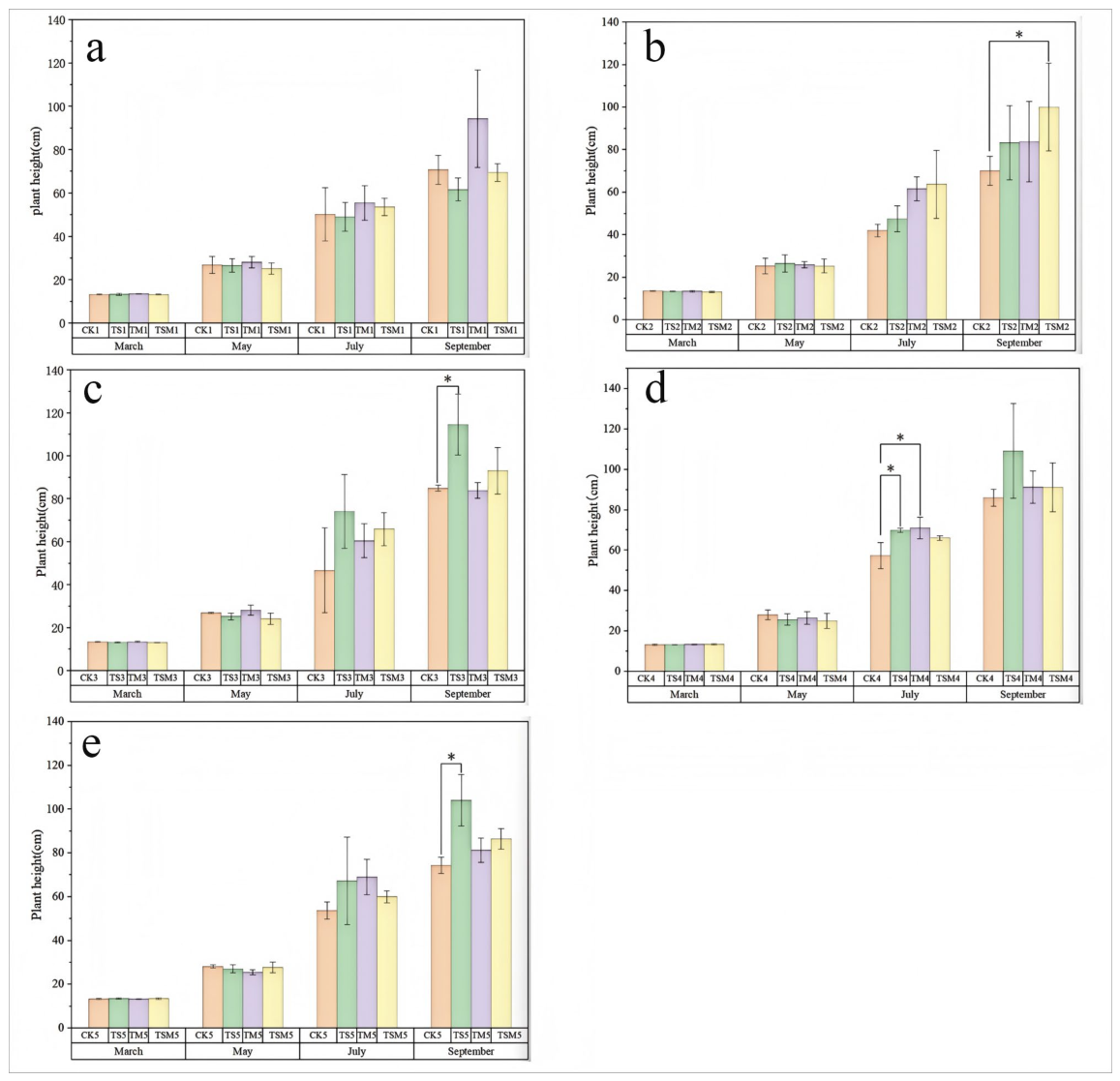
3.2.1. Plant Height
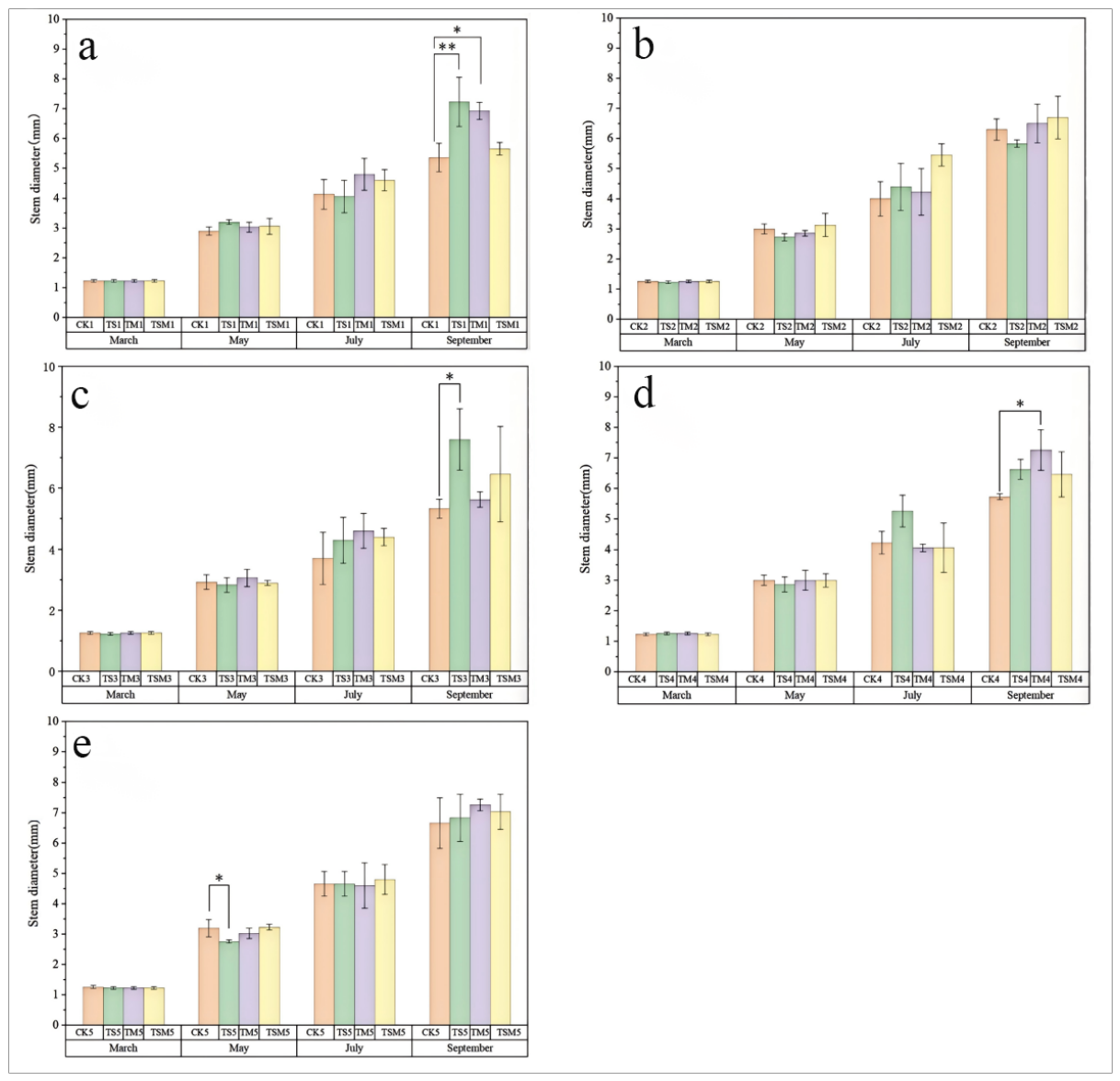
3.2.2. Stem Diameter
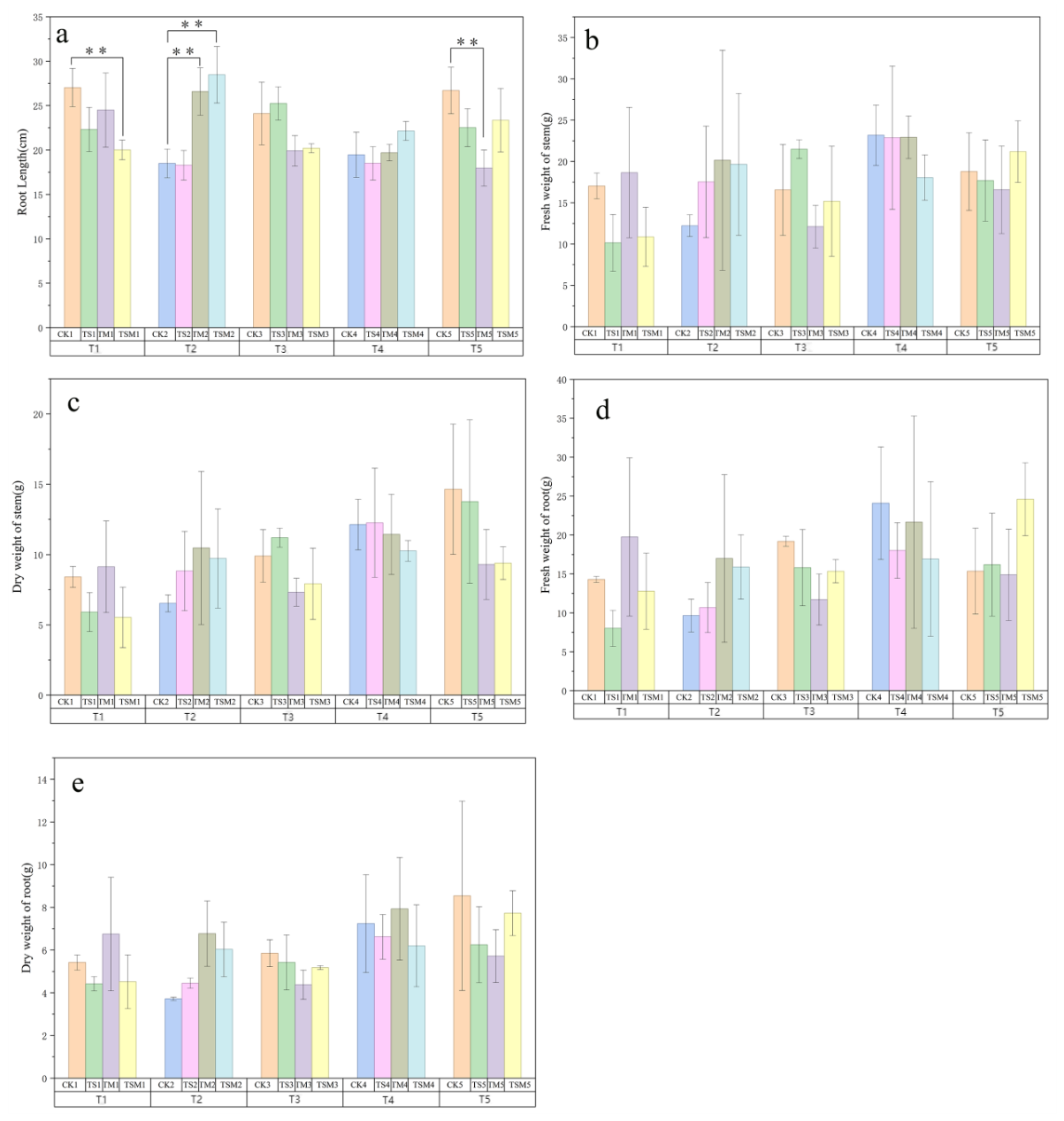
3.2.3. Root Length
3.2.4. Aboveground and Belowground Biomass
3.3. Analysis of Photosynthesis and Physiological Characteristic
3.3.1. Photosynthetic Pigments
3.3.2. Chlorophyll Fluorescence
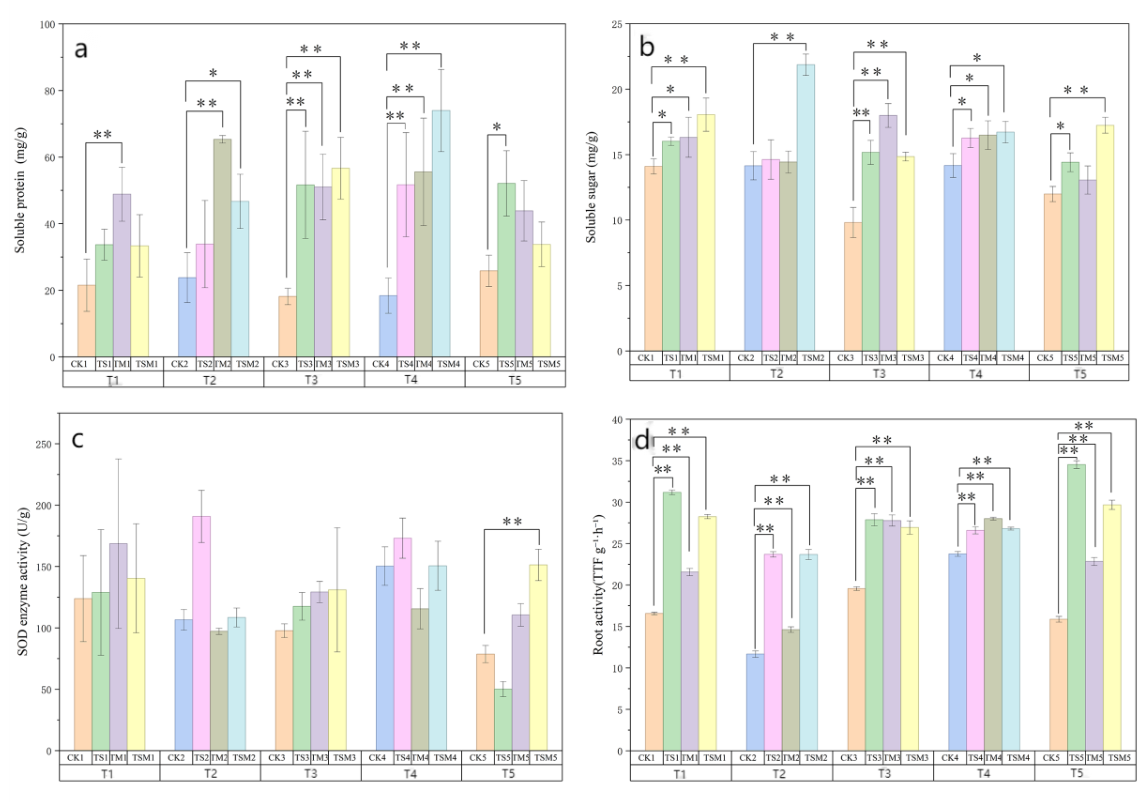
3.3.3. Soluble Sugar and Soluble Protein
3.3.4. Antioxidant Enzyme Activity
3.3.5. Root Activity
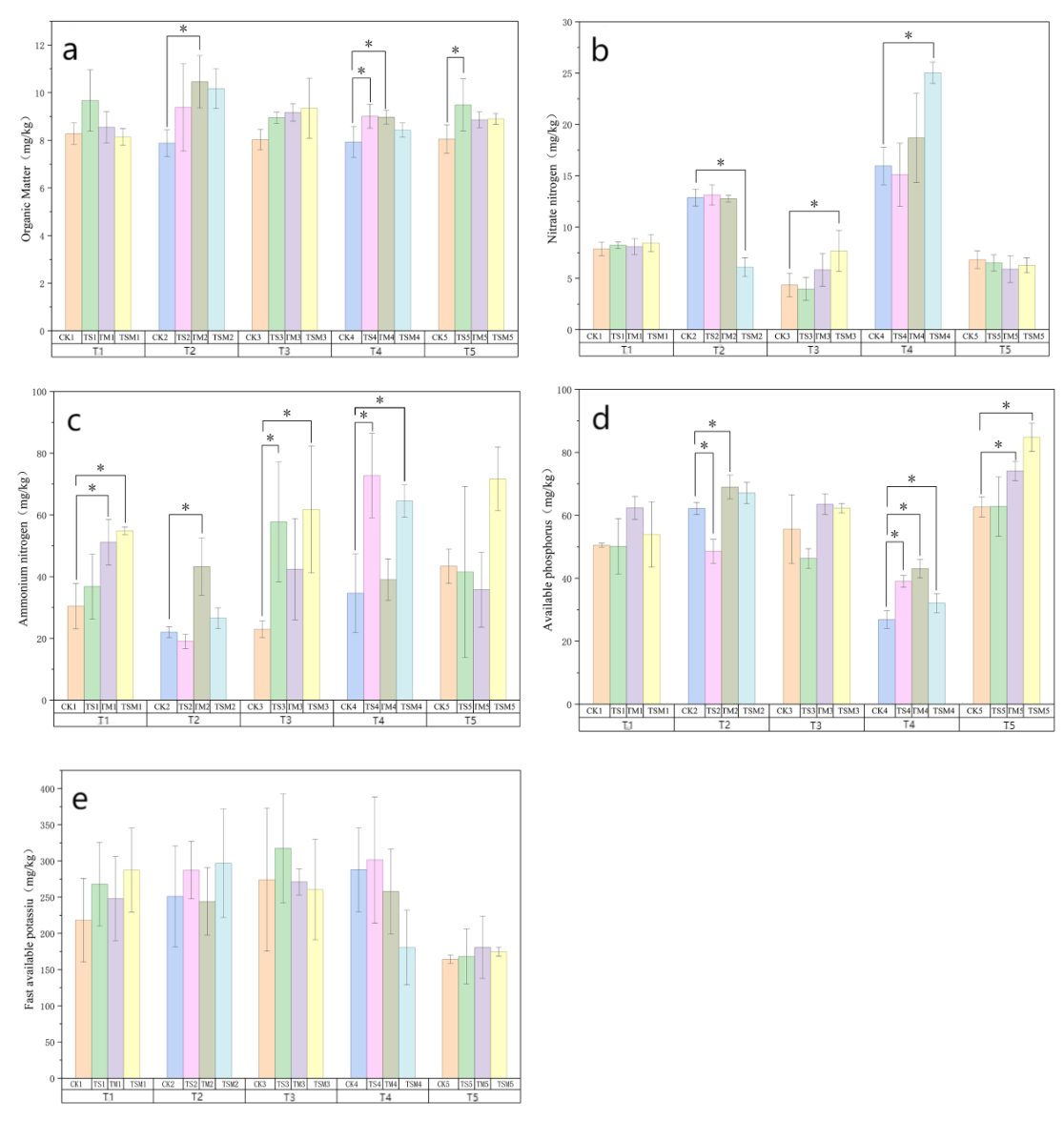
3.4. Soil Physicochemical Analysis
3.4.1. Soil Organic Matter
3.4.2. Soil Ammonium and Nitrate Nitrogen Content
3.4.3. Soil Available Phosphorus and Available Potassium Content
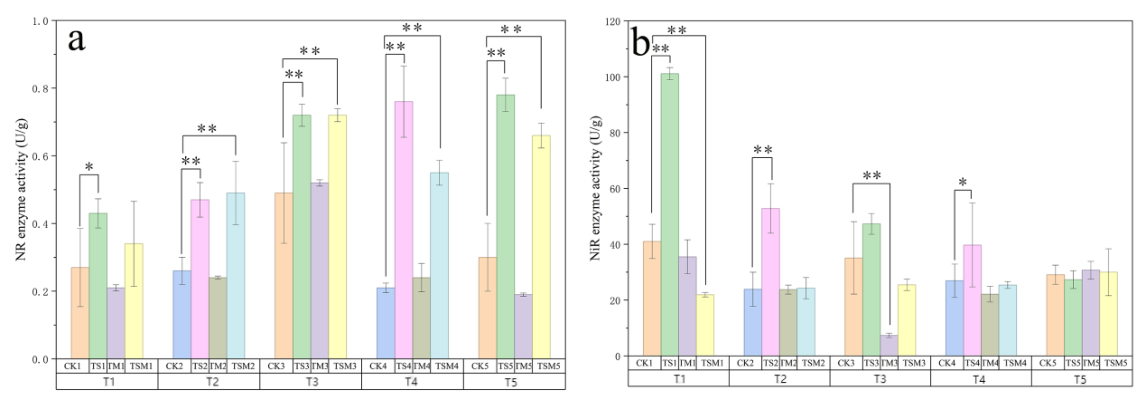
3.4.4. Soil NR
3.4.5. Soil NiR
3.5. Comprehensive Evaluation Analysis
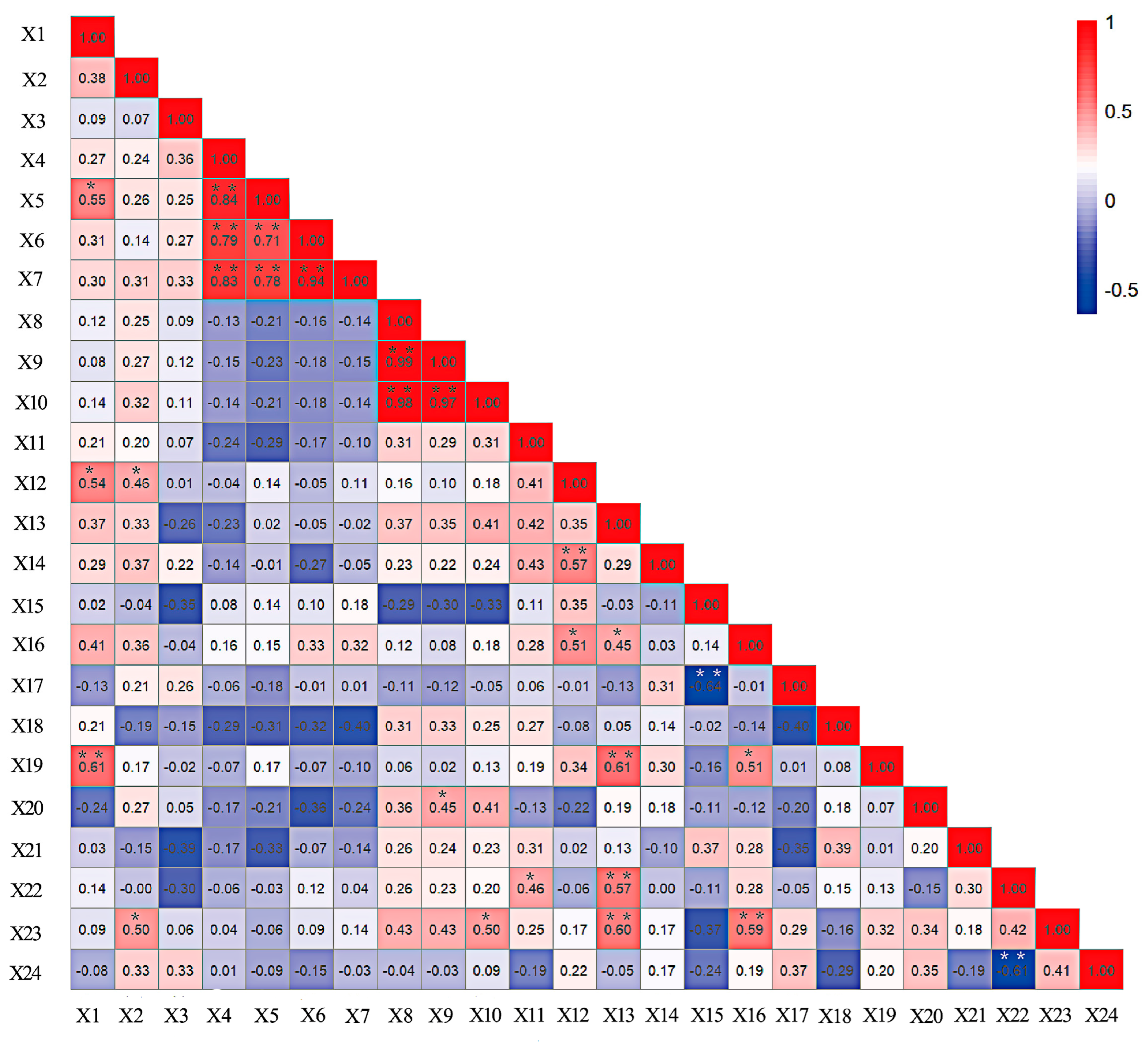
3.5.1. Correlation Analysis
3.5.2. Principal Component Analysis
3.5.3. Membership Function Analysis
3.6. Rhizosphere Microbial Community Structure Analysis
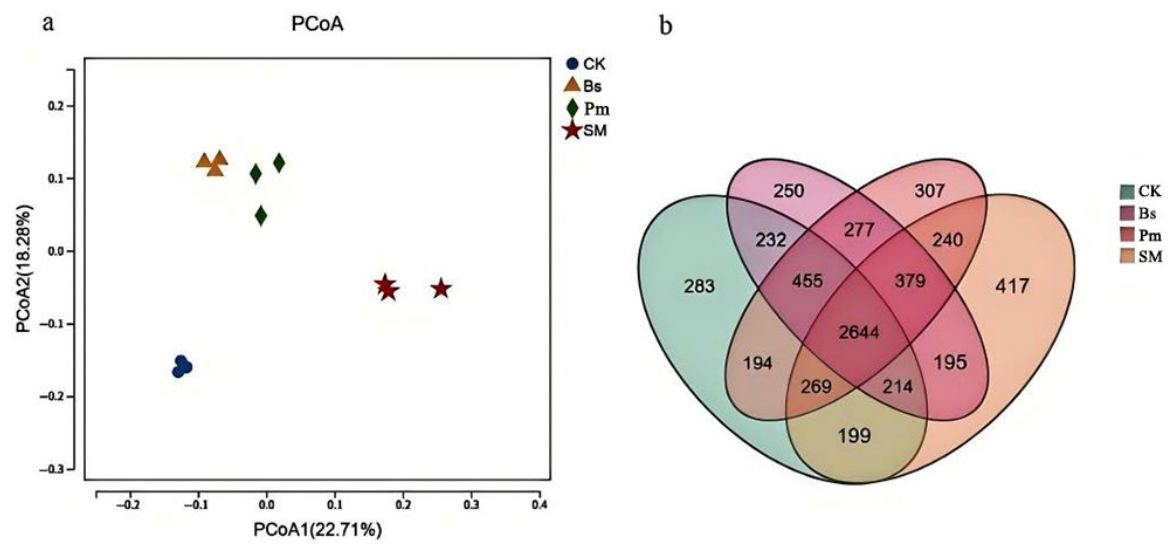
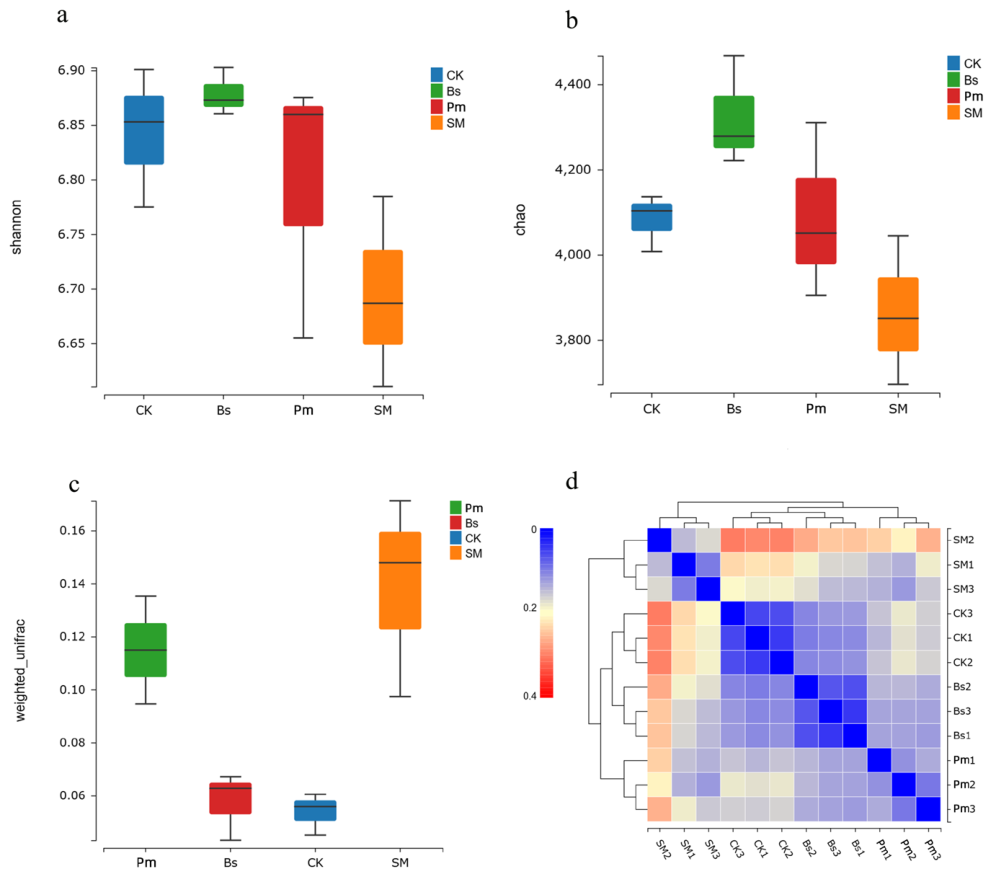
3.6.1. Dimensionality Reduction Analysis
3.6.2. Rhizosphere Microbial Diversity
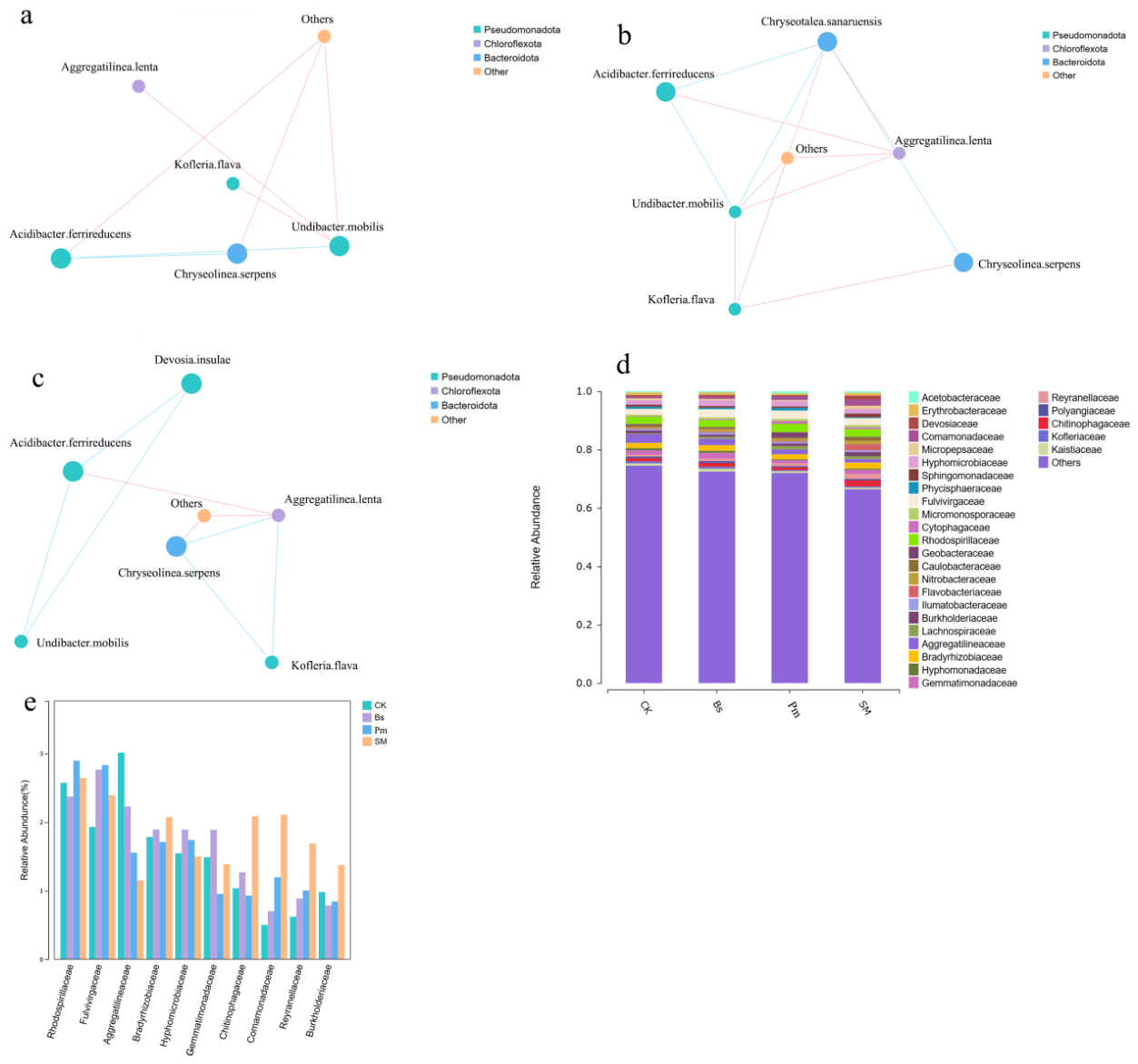
3.6.3. Root Microbial Community Structure Characteristics
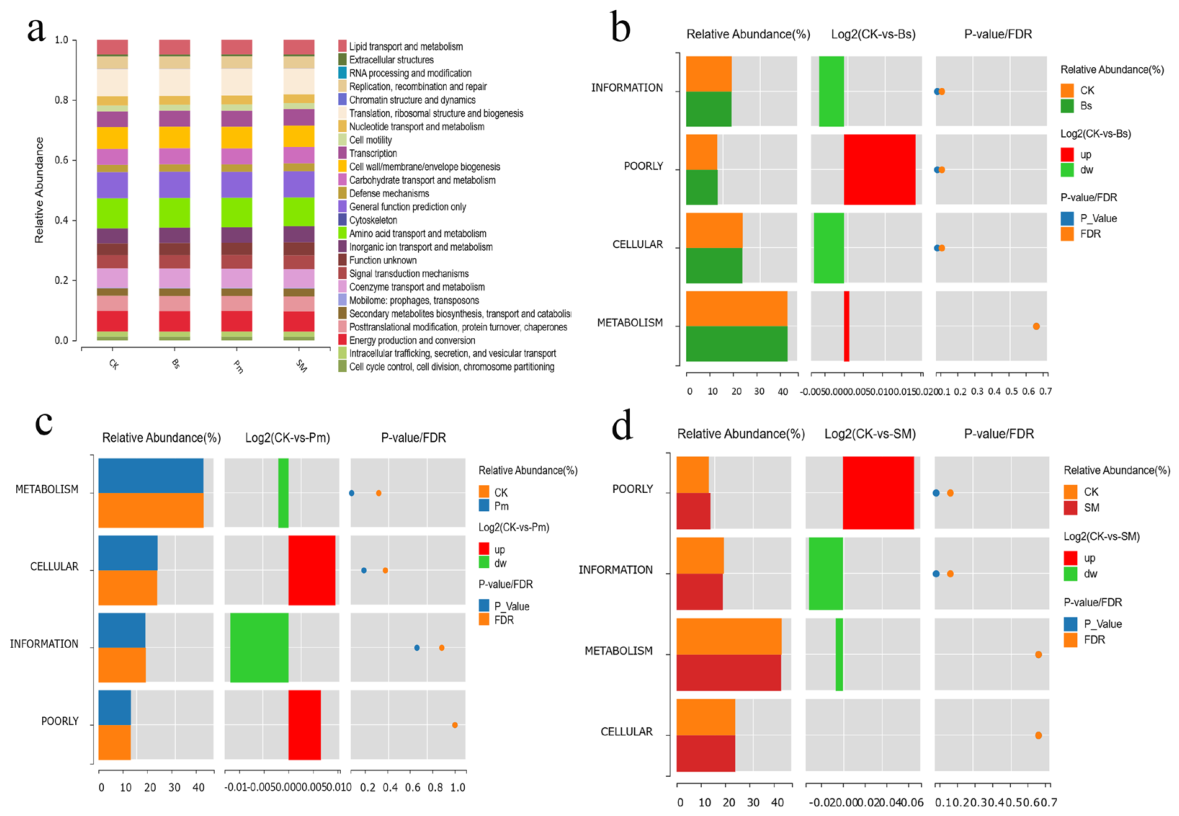
3.6.4. LEfSe Analysis and PICRUSt2 Functional Prediction
4. Discussion
4.1. Combined Effects of PGPR and Substrate Formulations on Rose Growth and Soil Properties
4.2. Effects of Rhizosphere Growth-Promoting Bacteria on the Soil Microbial Community Structure
4.3. Rhizosphere Regulation and Agronomic Implications Under Substrate-Microbe Synergy
4.4. Research Limitations and Future Prospects
5. Conclusions
Supplementary Materials
Author Contributions
Funding
Data Availability Statement
Conflicts of Interest
References
- Geng, L.; Yu, S.; Zhang, Y.; Su, L.; Lu, W.; Zhu, H.; Jiang, X. Transcription factor RcNAC091 enhances rose drought tolerance through the abscisic acid–dependent pathway. Plant Physiol. 2023, 193, 1695–1712. [Google Scholar] [CrossRef]
- Yuan, X.; Feng, Z.; Hu, C.; Zhang, K.; Qu, L.; Paoletti, E. Effects of elevated ozone on the emission of volatile isoprenoids from flowers and leaves of rose (Rosa sp.) varieties. Environ. Pollut. 2021, 291, 118141. [Google Scholar] [CrossRef]
- Ma, W.; Zhao, B.; Ma, J. Comparison of heavy metal accumulation ability in rainwater by 10 sponge city plant species. Environ. Sci. Pollut. Res. 2019, 26, 26733–26747. [Google Scholar] [CrossRef]
- de Haas, B.; Dhooghe, E.; Geelen, D. Root exudates in soilless culture conditions. Plants 2025, 14, 479. [Google Scholar] [CrossRef] [PubMed]
- Vallance, J.; Déniel, F.; Floch, G.L.; Guérin-Dubrana, L.; Blancard, D.; Rey, P. Pathogenic and Beneficial Microorganisms in Soilless Cultures. In Sustainable Agriculture Volume 2; Lichtfouse, E., Hamelin, M., Navarrete, M., Debaeke, P., Eds.; Springer: Dordrecht, The Netherlands, 2011; Volume 2, pp. 711–726. [Google Scholar] [CrossRef]
- Fussy, A.; Papenbrock, J. An overview of soil and soilless cultivation techniques—Chances, challenges and the neglected question of sustainability. Plants 2022, 11, 1153. [Google Scholar] [CrossRef]
- Faria, R.T.d.; Stegani, V.; Bertoncelli, D.J.; Alvess, G.A.C.; Assis, A.M.d. Substrates for the cultivation of epiphytic orchids. Semin. Ciências Agrárias 2018, 39, 2851–2866. [Google Scholar] [CrossRef]
- Liang, X.; Zhong, D.; Zhang, C.; Pan, Y.; Zhang, C.; Guo, H.; Zhu, X.; Li, X.; He, Y.; Huang, S.; et al. Effects of different cultivation substrates on the growth of Podocarpus macrophyllus and the rhizo-sphere soil microbial community structure. Agronomy 2025, 15, 1055. [Google Scholar] [CrossRef]
- Xu, S.; Shi, D.; Chen, H.; Ma, F.; Tao, G.; Wu, W.; Lin, D.; Wu, S.; Fei, Q.; Hu, Y.; et al. Substrate cultivation system im-proved the quality of ‘Hongyan’ strawberry fruits compared with the soil cultivation system. Food Chem. 2025, 485, 144430. [Google Scholar] [CrossRef] [PubMed]
- Wang, Y.G.; Cao, T.T.; Li, J.; Zhou, H.; Zhang, H. Study on the main physicochemical characteristics of different plant cultivation substrates and their effects on standard roses. Plant Soil. Environ. 2024, 70, 799–808. [Google Scholar] [CrossRef]
- Shi, X.; Tian, X.; Zhang, K.; Zhou, Z.; Lu, X. The Study on screening of Rosa cultivation substrate of vertical greening plant. In Proceedings of the 2019 International Symposium on Agriculture, Food and Biotechnology (ISAFB 2019), Dubai, United Arab Emirates, 9–10 August 2019; pp. 130–135. [Google Scholar]
- Roosta, H.R.; Sharifi Azad, H.; Mirdehghan, S.H. Comparison of the growth, fruit quality and physiological characteristics of cucumber fertigated by three different nutrient solutions in soil culture and soilless culture systems. Sci. Rep. 2025, 15, 203. [Google Scholar] [CrossRef]
- Van Gerrewey, T.; Navarrete, O.; Vandecruys, M.; Perneel, M.; Boon, N.; Geelen, D. Bacterially enhanced plant-growing media for controlled environment agriculture. Microb. Biotechnol. 2024, 17, e14422. [Google Scholar] [CrossRef]
- İkiz, B.; Dasgan, H.Y.; Balik, S.; Kusvuran, S.; Gruda, N.S. The use of biostimulants as a key to sustainable hydroponic lettuce farming under saline water stress. BMC Plant Biol. 2024, 24, 808. [Google Scholar] [CrossRef]
- Laishram, B.; Devi, O.R.; Dutta, R.; Senthilkumar, T.; Goyal, G.; Paliwal, D.K.; Panotra, N.; Rasool, A. Plant-microbe interactions: PGPM as microbial inoculants/biofertilizers for sustaining crop productivity and soil fertility. Curr. Res. Microbiol. Sci. 2025, 8, 100333. [Google Scholar] [CrossRef]
- Seth, K.; Vyas, P.; Deora, S.; Gupta, A.K.; Meena, M.; Swapnil, P.; Harish. Chapter 11-Understanding plant-plant growth-promoting rhizobacteria (PGPR) interactions for in-ducing plant defense. In Plant-Microbe Interaction—Recent Advances in Molecular and Biochemical Approaches; Swapnil, P., Meena, M., Harish, Marwal, A., Vijayalakshmi, S., Zehra, A., Eds.; Academic Press: Cambridge, MA, USA, 2023; Volume 2, pp. 201–226. [Google Scholar] [CrossRef]
- Wang, Z.; Hu, X.; Solanki, M.K.; Pang, F. A synthetic microbial community of plant core microbiome can be a potential biocotrol tool. J. Agric. Food Chem. 2023, 71, 5030–5041. [Google Scholar] [CrossRef]
- Ali, S.; Moon, Y. Advances in PGPR-Mediated plant-pathogen control for food security and ecosystem stability. Phyton 2025, 94, 1419–1451. [Google Scholar] [CrossRef]
- Khan, M.F. Microbial remediation of agrochemical-contaminated soils: Enzymatic mechanisms, quorum sensing, and emerging opportunities. Integr. Environ. Assess. Manag. 2025, 167, vjaf167. [Google Scholar] [CrossRef] [PubMed]
- Deng, Z.; Zhang, Y.; Fang, L.; Zhang, M.; Wang, L.; Ni, X.; Li, X. Identification of the flavone-inducible counter-defense genes and their cis-elements in Helicoverpa armigera. Toxins 2023, 15, 365. [Google Scholar] [CrossRef] [PubMed]
- Nascimento, F.X.; Hernández, A.G.; Glick, B.R.; Rossi, M.J. Plant growth-promoting activities and genomic analysis of the stress-resistant Bacillus megaterium STB1, a bacterium of agricultural and biotechnological interest. Biotechnol. Rep. 2020, 25, e00406. [Google Scholar] [CrossRef]
- Zhao, Y.; Zhang, M.; Yang, W.; Wang, X.; Yang, Y.; Di, H.J.; Ma, L.; Liu, W.; Li, B. Priestia megaterium Inoculation Enhances the Stability of the Soil Bacterial Network and Pro-motes Cucumber Growth in a Newly Established Greenhouse. Agriculture 2026, 16, 361. [Google Scholar] [CrossRef]
- Zou, M.; Yu, K.; Liu, H.; Sheng, Q.; Zhang, Y. Effects of Bacillus subtilis on Rose growth promotion and rhizosphere microbial community changes under saline–alkaline stress. Agronomy 2024, 14, 730. [Google Scholar] [CrossRef]
- Zou, M.; Liu, H.; Yu, K.; Chen, Y.; Huang, Y.; Feng, N.; Bai, J.; Ma, D.; Xu, G.; Dou, D. Synergistic effects of low-concentration nanoparticles and Bacillus megaterium on the growth of roses and rhizosphere microbial communities. Plant Soil 2025, 512, 361–379. [Google Scholar] [CrossRef]
- Nanjing Meteorological Observatory, Jiangsu Meteorological Bureau. Monthly Climate Impact Assessment of Nanjing City 2024. Available online: http://js.cma.gov.cn/dsjwz/njs/njszfxxgk/sjfdzdgknr/sjtjxx/ (accessed on 31 January 2026).
- Lu, L.; Liu, N.; Fan, Z.; Liu, M.; Zhang, X.; Tian, J.; Yu, Y.; Lin, H.; Huang, Y.; Kong, Z. A novel PGPR strain, Streptomyces lasalocidi JCM 3373T, alleviates salt stress and shapes root architecture in soybean by secreting indole-3-carboxaldehyde. Plant Cell Environ. 2024, 47, 1941–1956. [Google Scholar] [CrossRef]
- Mawarda, P.; Roux, X.; Van Elsas, J.; Salles, J. Deliberate introduction of invisible in-vaders: A critical appraisal of the impact of microbial inoculants on soil microbial communities. Soil Biol. Biochem. 2020, 148, 107874. [Google Scholar] [CrossRef]
- Nunes, O.; Medeiros, D.; Oliveira, D.; Almeida, D.; Bettiol, W. Bacillus subtili and Ba-cillus licheniformis promote tomato growth. Braz. J. Microbiol. 2023, 54, 397–406. [Google Scholar] [CrossRef] [PubMed]
- Nurhidayati, N.; Machfudz, M.; Basit, A. Yield and nutritional quality of green leafy lettuce (Lactuca sativa L.) under soilless culture system using various composition of growing media and vermicompost rates. Caraka Tani J. Sustain. Agric. 2021, 36, 201–212. [Google Scholar] [CrossRef]
- Rezai, S.; Sabzalian, M.; Nikbakht, A.; Zarei, H. Red LED light improved the vase life of cut rose flowers during cold storage. Postharvest Biol. Technol. 2024, 210, 112752. [Google Scholar] [CrossRef]
- Roman, G.; Sestras, A.; Stoian-Dod, R.; Dan, C.; Mircea, D.; Boscaiu, M.; Sestras, R. Ornamental and landscape characteristics of Roses, their complexity, contribution to the overall value of cultivars, and potential applications of use in Rose breeding. Biol. Bull. 2025, 52, 73. [Google Scholar] [CrossRef]
- Sachin, T.; Thakur, N.; Sharma, P. Use of alternative growing media in ornamental plants. Int. J. Chem. Stud. 2020, 8, 188–194. [Google Scholar] [CrossRef]
- Santana, F.; Giuseppe, L.; Souza, A.; Poppi, R. Removing the moisture effect in soil organic matter determination using NIR spectroscopy and PLSR with external parameter orthogonalization. Microchem. J. 2019, 145, 1094–1101. [Google Scholar] [CrossRef]
- Shao, D.; He, Y.; Zhai, Y.; Yang, X.; Guo, Z.; Tan, J.; Wei, M. Mechanisms of tomato growth promotion in three soils after applying Bacillus combinations. Soil Tillage Res. 2025, 249, 106477. [Google Scholar] [CrossRef]
- Wang, X.; Song, L. Advances in the Study of NO3− Immobilization by Microbes in Agricultural Soils. Nitrogen 2024, 5, 927–940. [Google Scholar] [CrossRef]
- Sharma, I.; Sharma, S.; Sharma, V.; Singh, K.; Sharma, A.; Kumar, A.; Singh, J.; Sharma, A. PGPR-Enabled bioremediation of pesticide and heavy metal-contaminated soil: A review of recent advances and emerging challenges. Chemosphere 2024, 362, 142678. [Google Scholar] [CrossRef] [PubMed]
- Shi, S.; Zang, Z. Genetic and biochemical aspects of floral scents in Roses. Int. J. Mol. Sci. 2022, 23, 8014. [Google Scholar] [CrossRef] [PubMed]
- Six, J.; Bossuyt, H.; Degryze, S.; Denef, K. A history of research on the link between (micro) aggregates, soil biota, and soil organic matter dynamics. Soil Tillage Res. 2004, 79, 7–31. [Google Scholar] [CrossRef]
- Starr, E.P.; Shi, S.; Blazewicz, S.J.; Probst, A.J.; Herman, D.J.; Firestone, M.K.; Banfield, J.F. Stable isotope informed genome-resolved metagenomics reveals that Saccharibacteria utilize microbially-processed plant-derived carbon. Microbiome 2018, 6, 122. [Google Scholar] [CrossRef]
- Tabaszewska, M.; Najgebauer-Lejko, D. The content of selected phytochemicals and in vitro antioxidant properties of rose hip (Rosa canina L.) tinctures. NFS J. 2020, 21, 50–56. [Google Scholar] [CrossRef]
- Vejan, P.; Abdullaah, R.; Khadiran, T.; Ismail, S.; Nasrulhaq Boyce, A. Role of plant growth promoting rhizo-bacteria in agricultural sustainability-A review. Molecules 2016, 21, 573. [Google Scholar] [CrossRef]
- Wang, H.; Yang, Y.; Li, M.; Liu, J.; Jin, W. Residents’ preferences for roses, features of rose plantings and the relations between them in built-up areas of Beijing, China. Urban For. Urban Green. 2017, 27, 1–8. [Google Scholar] [CrossRef]
- Wang, M.; Sun, D.; Xu, Z. Effects of spent mushroom substrate treated with plant growth-promoting rhizobacteria on bluberry Growth and soil qualit. Microorganisms 2025, 13, 932. [Google Scholar] [CrossRef]
- Abis, L.; Loubet, B.; Ciuraru, R.; Lafouge, F.; Houot, S.; Nowak, V.; Tripied, J.; Dequiedt, S.; Maron, P.A. Reduced microbial diversity induces larger vola-tile organic compound emissions from soils. Sci. Rep. 2020, 10, 6104. [Google Scholar] [CrossRef]
- Young, G.; Schmidt, O.; Tracy, S.; Walsh, L.; Khan, M.F. Microbial and volatile organic compound profiles of peat and bark-based casing materials in Agaricus bisporus cultivation. Sci. Hortic. 2026, 358, 114727. [Google Scholar] [CrossRef]
- Danhorn, T.; Fuqua, C. Biofilm formation by plant-associated bacteria. Annu. Rev. Microbiol. 2007, 61, 401–422. [Google Scholar] [CrossRef] [PubMed]
- Dong, Y.-H.; Wang, L.-H.; Zhang, L.-H. Quorum-quenching microbial infections: Mechanisms and implications. Philos. Trans. R. Soc. Lond. B Biol. Sci. 2007, 362, 1201–1211. [Google Scholar] [CrossRef] [PubMed]
- Shen, W.; Li, J.Q.; Dauk, M.; Huang, Y.; Periappuram, C.; Wei, Y.; Zou, J. Metabolic and transcriptional responses of glycerolipid pathways to a perturbation of glycerol 3-Phosphate metabolism in Arabidopsis. J. Biol. Chem. 2010, 285, 22957–22965. [Google Scholar] [CrossRef]
- Castaldi, S.; Petrillo, C.; Donadio, G.; Piaz, F.D.; Cimmino, A.; Masi, M.; Evidente, A.; Isticato, R. Plant growth promotion function of Bacillus sp. strains isolated from salt-pan rhizosphere and their biocontrol potential against Macrophomina phaseolina. Int. J. Mol. Sci. 2021, 22, 3324. [Google Scholar] [CrossRef]
- Khan, M.F.; Rama, M.; Murphy, C.D. Biodegradation of fluorinated β-triketone herbicide tembotrione by a bacterial–fungal consortium. Biocatal. Agric. Biotechnol. 2025, 70, 103828. [Google Scholar] [CrossRef]
- Khan, A.R.; Mustafa, A.; Hyder, S.; Valipour, M.; Rizvi, Z.F.; Gondal, A.S.; Yousuf, Z.; Iqbal, R.; Daraz, U. Bacillus spp. as Bioagents: Uses and application for sustainable agriculture. Biology 2022, 11, 1763. [Google Scholar] [CrossRef]
- Khan, M.F.; Liao, J.; Liu, Z.; Chugh, G. Bacterial cytochrome P450 involvement in the biodegradation of fluorinated pyrethroids. J. Xenobiot. 2025, 15, 58. [Google Scholar] [CrossRef]
- Du, E.; Chen, Y.; Li, Y.; Sun, Z.; Gui, F. Rhizospheric bacillus-facilitated effects on the growth and competitive ability of the invasive plant Ageratina adenophora. Front. Plant Sci. 2022, 13, 882255. [Google Scholar] [CrossRef]



| Soilless Substrate | Bulk Density (g/cm3) | Porosity (%) | pH | Electrical Conductivity (mS/cm) | Maximum Water Holding Capacity (%, Gravimetric Basis) | Source |
|---|---|---|---|---|---|---|
| Humus | 0.68 | 76 | 6.8 | 0.7 | 462.3 | Guizhou Lvyuan Meijia Agricultural Technology Co., Ltd., Guiyang, China |
| Perlite | 0.27 | 78 | 7.2 | 0.1 | 423.6 | Lingshou County Haibin Mineral Products Trading Co., Ltd., Shijiazhuang, China |
| Vermiculite | 0.23 | 82 | 7.8 | 0.2 | 378.6 | Guangzhou Zhiyu Gardening Co., Ltd., Guangzhou, China |
| Coconut coir | 0.22 | 86 | 5.6 | 0.8 | 780.2 | Hangzhou Huaqihu Horticultural Technology Co., Ltd., Hangzhou, China |
| Peat | 0.21 | 90 | 6.6 | 0.5 | 802.2 | Shandong Flower Master Biotechnology Co., Ltd., Jinan, China |
| Biochar | 0.62 | 51 | 9.4 | 0.9 | 384.2 | Henan Lize Environmental Protection Technology Co., Ltd., Zhengzhou, China |
| Cultivation Substrate | Composition of Cultivation Substrate | Volume Ratio | Characteristic |
|---|---|---|---|
| T1 | humus, perlite, vermiculite, coconut coir, peat, biochar | 4:2:1:1.5:1:0.5 | Basic |
| T2 | humus, perlite, vermiculite, coconut coir, peat, biochar | 3:1.5:1:2:2:0.5 | Water-retaining |
| T3 | humus, perlite, vermiculite, coconut coir, peat, biochar | 3.5:2.5:1.5:1:1:0.5 | Excellent aeration |
| T4 | humus, perlite, vermiculite, coconut coir, peat, biochar | 5:1.5:1:1:1:0.5 | Organic matter-rich |
| T5 | humus, perlite, vermiculite, coconut coir, peat, biochar | 3:2:1.5:1.5:1.5:0.5 | Balanced |
| Substrate | Code | PGPR Treatment | Sterile Water (mL) | Bs (mL) | Pm (mL) |
|---|---|---|---|---|---|
| T1 | CK1 | Control | 20 | 0 | 0 |
| T1 | TS1 | Bs | 0 | 20 | 0 |
| T1 | TM1 | Pm | 0 | 0 | 20 |
| T1 | TSM1 | Bs + Pm | 0 | 10 | 10 |
| T2 | CK2 | Control | 20 | 0 | 0 |
| T2 | TS2 | Bs | 0 | 20 | 0 |
| T2 | TM2 | Pm | 0 | 0 | 20 |
| T2 | TSM2 | Bs + Pm | 0 | 10 | 10 |
| T3 | CK3 | Control | 20 | 0 | 0 |
| T3 | TS3 | Bs | 0 | 20 | 0 |
| T3 | TM3 | Pm | 0 | 0 | 20 |
| T3 | TSM3 | Bs + Pm | 0 | 10 | 10 |
| T4 | CK4 | Control | 20 | 0 | 0 |
| T4 | TS4 | Bs | 0 | 20 | 0 |
| T4 | TM4 | Pm | 0 | 0 | 20 |
| T4 | TSM4 | Bs + Pm | 0 | 10 | 10 |
| T5 | CK5 | Control | 20 | 0 | 0 |
| T5 | TS5 | Bs | 0 | 20 | 0 |
| T5 | TM5 | Pm | 0 | 0 | 20 |
| T5 | TSM5 | Bs + Pm | 0 | 10 | 10 |
| Measured Indicators | Cultivation Substrates (p-Value) | Inoculation Treatments (p-Value) | Substrate × Inoculation Treatments (p-Value) |
|---|---|---|---|
| Plant height | 0.012 * | 0.028 * | 0.073 |
| Stem diameter | 0.210 | 0.011 * | 0.069 |
| Root length | 0.046 * | 0.283 | <0.001 *** |
| Fresh weight of stem | 0.012 * | 0.318 | 0.038 * |
| Dry weight of stem | 0.016 * | 0.467 | 0.591 |
| Fresh weight of root | 0.202 | 0.565 | 0.859 |
| Dry weight of root | 0.044 * | 0.672 | 0.565 |
| Chlorophyll a | <0.001 *** | <0.001 *** | <0.001 *** |
| Chlorophyll b | <0.001 *** | <0.001 *** | <0.001 *** |
| Carotenoid | <0.001 *** | <0.001 *** | <0.001 *** |
| Soluble sugar | <0.001 *** | <0.001 *** | <0.001 *** |
| Soluble protein | 0.036 * | <0.001 *** | 0.024 * |
| Root activity | <0.001 *** | <0.001 *** | <0.001 *** |
| Soil organic matter | 0.071 | <0.001 *** | 0.253 |
| Nitrate nitrogen | <0.001 *** | 0.100 | <0.001 *** |
| Ammonium nitrogen | <0.001 *** | <0.001 *** | 0.002 ** |
| Available phosphorus | <0.001 *** | <0.001 *** | <0.001 *** |
| Fast available potassium | <0.001 *** | 0.451 | 0.551 |
| NR | <0.001 *** | <0.001 *** | <0.001 *** |
| NiR | <0.001 *** | <0.001 *** | <0.001 *** |
| SOD | 0.009 ** | 0.218 | 0.007 ** |
| Fo | 0.285 | 0.098 | 0.003 ** |
| Fm | 0.084 | 0.073 | 0.989 |
| Fv/Fm | 0.446 | 0.746 | 0.351 |
| Treatment Group | Treatment | Chlorophyll a (mg/kg) | Chlorophyll b (mg/kg) | Carotenoid (mg/kg) | Fo | Fm | Fv/Fm |
|---|---|---|---|---|---|---|---|
| T1 | CK1 | 19.20 ± 1.93 b | 11.16 ± 1.11 b | 5.27 ± 0.39 b | 464.00 ± 45.40 b | 2365.67 ± 325.26 b | 0.80 ± 0.04 a |
| TS1 | 27.15 ± 0.79 a | 17.32 ± 1.05 a | 7.45 ± 0.27 a | 476.00 ± 39.69 b | 3265.00 ± 96.14 a | 0.85 ± 0.01 a | |
| TM1 | 25.82 ± 1.08 a | 15.63 ± 1.00 a | 6.94 ± 0.43 a | 512.67 ± 83.53 b | 3180.00 ± 736.71 ab | 0.83 ± 0.07 a | |
| TSM1 | 17.99 ± 2.43 b | 10.11 ± 1.44 b | 4.54 ± 0.57 b | 660.33 ± 31.66 a | 3257.67 ± 60.43 a | 0.80 ± 0.01 a | |
| T2 | CK2 | 9.30 ± 1.00 d | 5.45 ± 0.51 d | 2.46 ± 0.28 c | 407.00 ± 45.04 b | 1997.00 ± 230.67 a | 0.79 ± 0.03 a |
| TS2 | 17.87 ± 0.83 b | 9.97 ± 0.43 b | 4.45 ± 0.24 b | 535.67 ± 51.73 a | 2696.00 ± 406.10 a | 0.80 ± 0.01 a | |
| TM2 | 12.99 ± 0.77 c | 7.34 ± 0.38 c | 3.09 ± 0.13 c | 418.33 ± 13.65 b | 2469.67 ± 309.95 a | 0.83 ± 0.02 a | |
| TSM2 | 23.59 ± 2.34 a | 13.87 ± 1.72 a | 6.02 ± 0.72 a | 521.33 ± 26.39 a | 2554.00 ± 887.52 a | 0.78 ± 0.08 a | |
| T3 | CK3 | 14.83 ± 1.34 b | 8.75 ± 0.7 b | 3.93 ± 0.25 b | 350.33 ± 42.03 b | 2375.67 ± 297.02 a | 0.85 ± 0.03 a |
| TS3 | 23.84 ± 1.52 a | 14.33 ± 1.21 a | 6.37 ± 0.40 a | 531.00 ± 112.01 a | 3075.67 ± 769.25 a | 0.82 ± 0.03 a | |
| TM3 | 23.2 ± 0.27 a | 13.25 ± 0.19 a | 6.12 ± 0.14 a | 574.33 ± 53.08 a | 2646.67 ± 675.8 a | 0.78 ± 0.05 a | |
| TSM3 | 25.85 ± 3.23 a | 14.4 ± 1.53 a | 6.78 ± 1.40 a | 505.00 ± 47.89 a | 2884.33 ± 1248.9 a | 0.80 ± 0.07 a | |
| T4 | CK4 | 20.44 ± 2.03 a | 12.21 ± 1.32 a | 4.58 ± 0.41 a | 661.33 ± 157.16 a | 2306.33 ± 927.07 a | 0.65 ± 0.23 a |
| TS4 | 17.46 ± 2.73 a | 9.85 ± 1.67 a | 4.87 ± 0.63 a | 510.67 ± 35.02 a | 2825.33 ± 700.05 a | 0.81 ± 0.07 a | |
| TM4 | 17.57 ± 2.78 a | 10.02 ± 1.60 a | 4.84 ± 0.67 a | 496.67 ± 171.00 a | 2554.67 ± 320.66 a | 0.80 ± 0.09 a | |
| TSM4 | 17.43 ± 2.58 a | 9.71 ± 1.43 a | 4.45 ± 0.75 a | 430.00 ± 60.36 a | 2621.67 ± 719.94 a | 0.83 ± 0.04 a | |
| T5 | CK5 | 17.98 ± 2.02 ab | 10.17 ± 1.16 ab | 4.75 ± 0.59 ab | 454.33 ± 145.71 a | 2977.00 ± 534.42 a | 0.85 ± 0.05 a |
| TS5 | 14.5 ± 2.17 b | 8.17 ± 1.16 b | 4.04 ± 0.60 b | 571.33 ± 32.04 a | 2890.00 ± 241.94 a | 0.80 ± 0.02 a | |
| TM5 | 21.92 ± 1.81 a | 12.47 ± 1.10 a | 5.66 ± 0.50 a | 512.67 ± 61.33 a | 2919.67 ± 964.11 a | 0.81 ± 0.08 a | |
| TSM5 | 14.07 ± 3.06 b | 7.94 ± 1.65 b | 3.99 ± 0.90 b | 599.33 ± 144.11 a | 3386.00 ± 320.63 a | 0.82 ± 0.04 a |
| Principal Component | Principal Component 1 | Principal Component 2 | Principal Component 3 | Principal Component 4 | Principal Component 5 | Principal Component 6 | Principal Component 7 |
|---|---|---|---|---|---|---|---|
| Eigenvalue | 5.98 | 4.48 | 3.08 | 2.59 | 1.84 | 1.68 | 1.34 |
| Contribution Rate | 25.93% | 17.94% | 12.31% | 10.37% | 7.34% | 6.71% | 5.34% |
| Cumulative Contribution Rate | 25.93% | 41.87% | 54.17% | 64.54% | 71.88% | 78.60% | 85.94% |
Disclaimer/Publisher’s Note: The statements, opinions and data contained in all publications are solely those of the individual author(s) and contributor(s) and not of MDPI and/or the editor(s). MDPI and/or the editor(s) disclaim responsibility for any injury to people or property resulting from any ideas, methods, instructions or products referred to in the content. |
© 2026 by the authors. Licensee MDPI, Basel, Switzerland. This article is an open access article distributed under the terms and conditions of the Creative Commons Attribution (CC BY) license.
Share and Cite
Huang, Y.; Ma, C.; Zou, M.; Shen, J.; Yang, F.; Zhao, Y.; Hao, L.; Sheng, Q.; Zhu, Z. Co-Inoculation of Bacillus subtilis and Priestia megaterium Promotes Growth and Shapes Rhizosphere Microbial Community of Rosa × Hybrida ‘Ruby’ Under Multiple Substrate Formulations. Horticulturae 2026, 12, 500. https://doi.org/10.3390/horticulturae12040500
Huang Y, Ma C, Zou M, Shen J, Yang F, Zhao Y, Hao L, Sheng Q, Zhu Z. Co-Inoculation of Bacillus subtilis and Priestia megaterium Promotes Growth and Shapes Rhizosphere Microbial Community of Rosa × Hybrida ‘Ruby’ Under Multiple Substrate Formulations. Horticulturae. 2026; 12(4):500. https://doi.org/10.3390/horticulturae12040500
Chicago/Turabian StyleHuang, Yu, Chunyan Ma, Meng Zou, Jinglin Shen, Feifei Yang, Yuping Zhao, Lili Hao, Qianqian Sheng, and Zunling Zhu. 2026. "Co-Inoculation of Bacillus subtilis and Priestia megaterium Promotes Growth and Shapes Rhizosphere Microbial Community of Rosa × Hybrida ‘Ruby’ Under Multiple Substrate Formulations" Horticulturae 12, no. 4: 500. https://doi.org/10.3390/horticulturae12040500
APA StyleHuang, Y., Ma, C., Zou, M., Shen, J., Yang, F., Zhao, Y., Hao, L., Sheng, Q., & Zhu, Z. (2026). Co-Inoculation of Bacillus subtilis and Priestia megaterium Promotes Growth and Shapes Rhizosphere Microbial Community of Rosa × Hybrida ‘Ruby’ Under Multiple Substrate Formulations. Horticulturae, 12(4), 500. https://doi.org/10.3390/horticulturae12040500