Micropropagation, Somatic Embryogenesis, and Haploid Induction in Passiflora: Advances, Biological Constraints, and Breeding Prospects
 ,
,  ,
,  , ,
, , 
Abstract
1. Introduction
- (i)
- Which regeneration systems in Passiflora are most reproducible across genotypes?
- (ii)
- What are the main biological constraints limiting regeneration efficiency?
- (iii)
- Why has haploid induction not yet been successfully established in Passiflora?
- (iv)
- How can current experimental approaches be translated into practical breeding applications?
2. Review Methodology
2.1. Literature Search Strategy
2.2. Inclusion and Exclusion Criteria
2.3. Data Analysis and Synthesis Approach
3. Botanical and Horticultural Significance of Passiflora spp.
4. In Vitro Micropropagation of Passiflora spp.
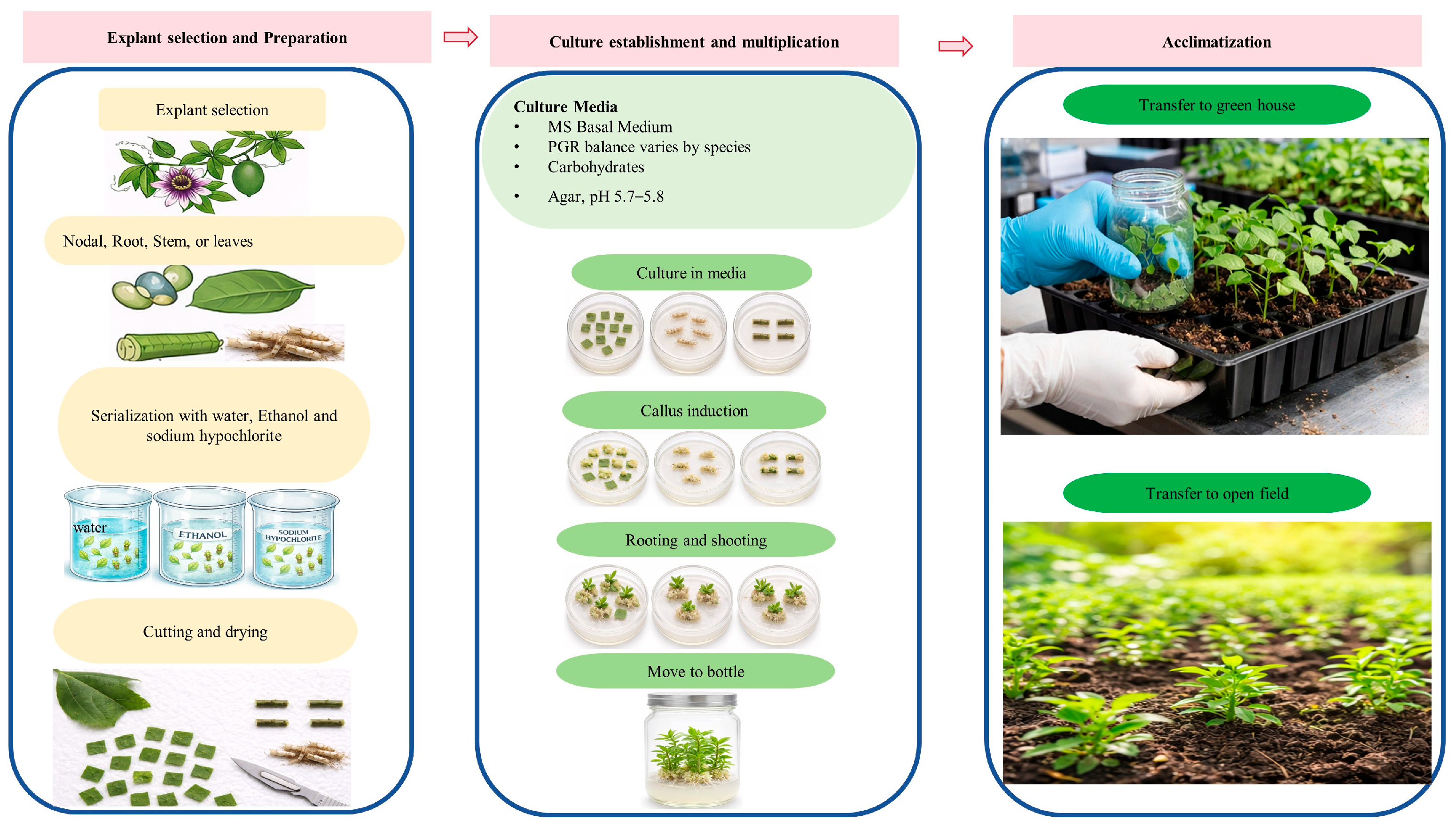
4.1. Explant Selection and Preparation
4.2. Culture Media and Plant Growth Regulators
4.3. Shoot Induction and Multiplication
4.4. Rooting and Acclimatization
4.5. Organogenesis and Alternative Explants
4.6. Persistent Constraints During Culture Establishment
5. Somatic Embryogenesis and Advanced Regeneration in Passiflora spp.
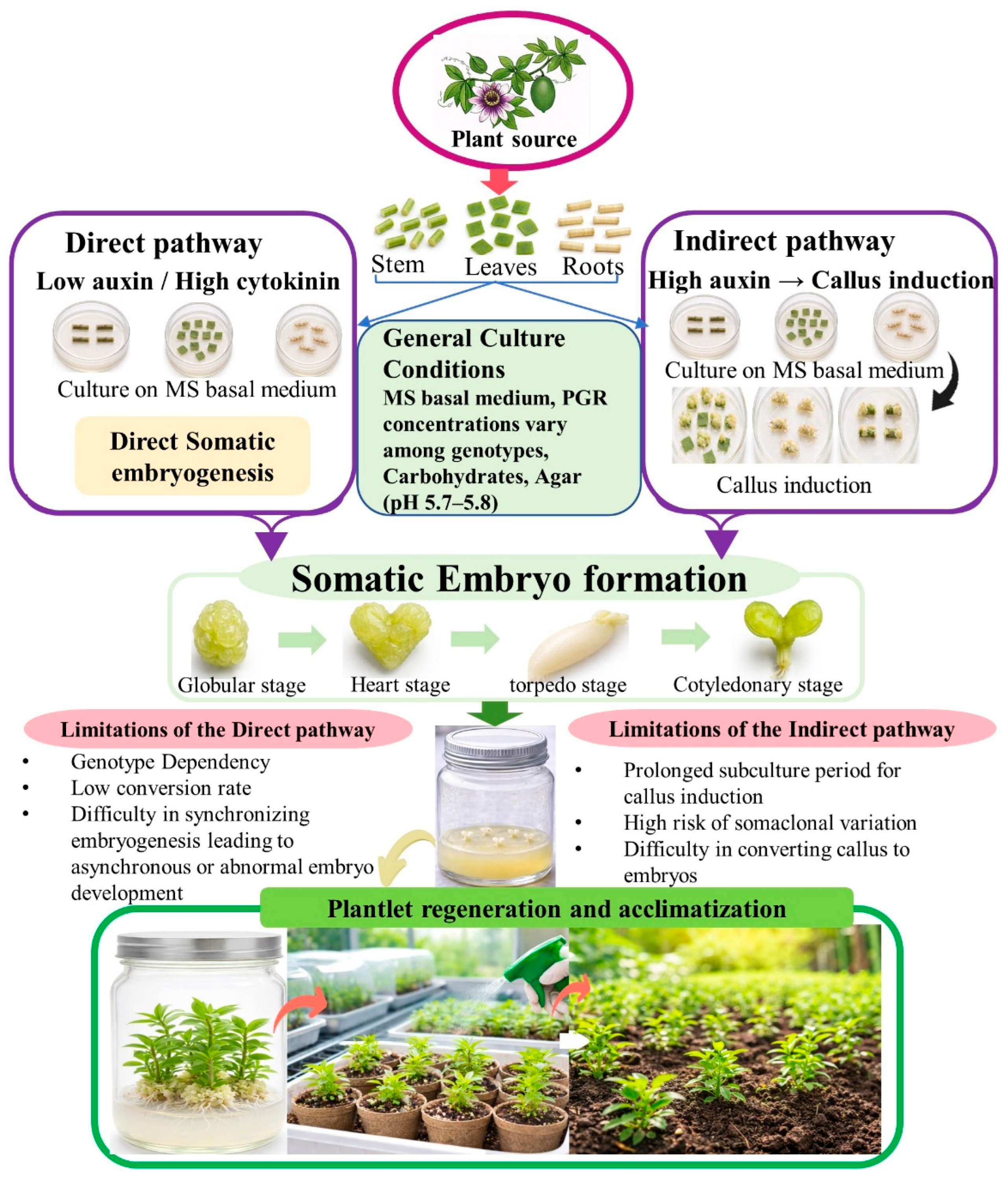
5.1. Evidence of Somatic Embryogenesis in Passion Fruit
5.2. Determinants of Embryogenic Competence
5.3. Developmental Progression and Histological Validation
5.4. Applications and Realistic Prospects
6. Haploid Induction and Microspore Culture: Comparative Perspectives
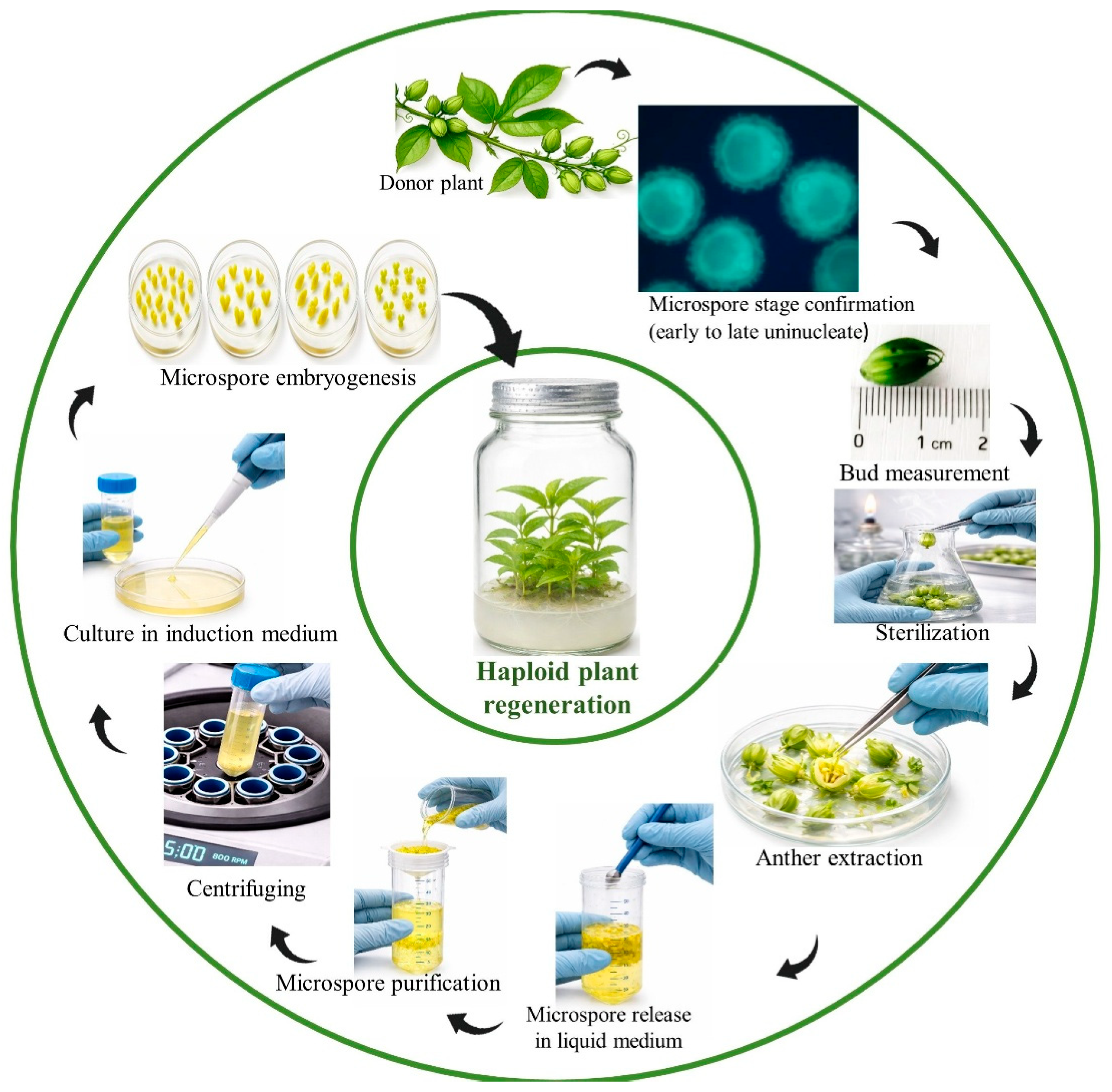
6.1. Androgenesis: Biological Basis, Technical Constraints, and Lessons from Model Crop Systems
6.2. Mechanisms of Microspore Embryogenesis
6.3. Current Status of Haploid Induction in Passiflora
6.4. Strategic Opportunities and Future Directions
6.5. Determinants and Constraints Limiting Haploid Induction in Passiflora
6.6. Genotype Dependency
6.7. Donor Plant Physiology
6.8. Developmental Stage and Explant Source
6.9. Culture Media and Hormonal Regulation
6.10. Stress Signaling and Environmental Factors
6.11. Oxidative Stress and Phenolic Compounds
6.12. Genetic and Epigenetic Regulation
6.13. Synthesis
7. Applications and Translational Potential of In Vitro Technologies in Passiflora
7.1. Rapid Clonal Propagation and Clean Stock Production
7.2. Germplasm Conservation
7.3. Breeding and Biotechnological Applications
7.4. Translational Perspective
8. Challenges and Future Directions in Passiflora Tissue Culture
9. Conclusions
Author Contributions
Funding
Data Availability Statement
Conflicts of Interest
References
- Mohammadi, M.A.; Wai, M.H.; Rizwan, H.M.; Qarluq, A.Q.; Xu, M.; Wang, L.; Cheng, Y.; Aslam, M.; Zheng, P.; Wang, X. Advances in micropropagation, somatic embryogenesis, somatic hybridizations, genetic transformation and cryopreservation for Passiflora improvement. Plant Methods 2023, 19, 50. [Google Scholar] [CrossRef]
- Ulmer, T.; MacDougal, J.M. Passiflora: Passionflowers of the World; Timber Press: Portland, OR, USA, 2004. [Google Scholar]
- Faleiro, F.G.; Junqueira, N.T.V.; Junghans, T.G.; Jesus, O.N.d.; Miranda, D.; Otoni, W.C. Advances in passion fruit (Passiflora spp.) propagation. Rev. Bras. Frutic. 2019, 41, e-155. [Google Scholar] [CrossRef]
- Ozarowski, M.; Thiem, B. Progress in micropropagation of Passiflora spp. to produce medicinal plants: A mini-review. Rev. Bras. Farmacogn. 2013, 23, 937–947. [Google Scholar] [CrossRef]
- George, E.F.; Hall, M.A.; De Klerk, G.-J. Plant Propagation by Tissue Culture, 3rd ed.; Springer: Amsterdam, The Netherlands, 2008; pp. 65–175. [Google Scholar]
- Jiménez, V.M. Involvement of plant hormones and plant growth regulators on in vitro somatic embryogenesis. Plant Growth Regul. 2005, 47, 91–110. [Google Scholar] [CrossRef]
- Oluoch, P. Genetic Characterization and Biochemical Assay of Passion Fruit (Passiflora edulis Sims) Varieties Grown in Selected Regions of Kenya for Drought Tolerance. Ph.D. Thesis, Jomo Kenyatta University of Agriculture and Technology, Juja, Kenya, 2020. [Google Scholar]
- Pacheco, G.; Simão, M.J.; Vianna, M.G.; Garcia, R.O.; Vieira, M.L.C.; Mansur, E. In vitro conservation of Passiflora—A review. Sci. Hortic. 2016, 211, 305–311. [Google Scholar] [CrossRef]
- Halkoglu-Hristova, P.; Garmidolova, A.; Yaneva, T.; Georgiev, V. Current Progress on Passiflora caerulea L. In Vitro Culturing. Sci 2025, 7, 90. [Google Scholar] [CrossRef]
- Shekhawat, M.S.; Manokari, M.; Ravindran, C. An improved micropropagation protocol by ex vitro rooting of Passiflora edulis Sims. f. flavicarpa Deg. through nodal segment culture. Scientifica 2015, 2015, 578676. [Google Scholar] [CrossRef] [PubMed][Green Version]
- Chen, Y.-C.; Chang, C.; Lin, H.-L. Topolins and red light improve the micropropagation efficiency of passion fruit (Passiflora edulis Sims) ‘Tainung No. 1’. HortScience 2020, 55, 1337–1344. [Google Scholar] [CrossRef]
- Debnath, S.C.; Teixeira da Silva, J. Strawberry culture in vitro: Applications in genetic transformation and biotechnology. Fruit Veg. Cereal Sci. Biotechnol. 2007, 1, 1–12. [Google Scholar]
- Wei, X.; Tang, Y.; Lai, J.; Li, L.; Zhou, P.; Yu, D.; Tang, L.; Xu, J. Efficient Production of Vigorous Scions by Optimizing Leaf Retention in Passiflora edulis. Plants 2025, 14, 2483. [Google Scholar] [CrossRef]
- Asande, L.K.; Ombori, O.; Oduor, R.O.; Nyaboga, E.N. Somatic embryogenesis and plant regeneration of farmer-preferred passion fruit varieties grown in Kenya. Int. J. Plant Biol. 2023, 14, 1180–1189. [Google Scholar] [CrossRef]
- Phong, T.H.; Hieu, T.; Tung, H.T.; Mai, N.T.N.; Khai, H.D.; Cuong, D.M.; Luan, V.Q.; Nam, N.B.; Nhut, D.T. Somatic embryogenesis as potential method for commercial propagation in Passiflora edulis Sims f. edulis-an important horticultural crop. Sci. Hortic. 2023, 316, 112020. [Google Scholar] [CrossRef]
- Ikeuchi, M.; Favero, D.S.; Sakamoto, Y.; Iwase, A.; Coleman, D.; Rymen, B.; Sugimoto, K. Molecular mechanisms of plant regeneration. Annu. Rev. Plant Biol. 2019, 70, 377–406. [Google Scholar] [CrossRef]
- Fehér, A. Somatic embryogenesis—Stress-induced remodeling of plant cell fate. Biochim. Biophys. Acta (BBA) Gene Regul. Mech. 2015, 1849, 385–402. [Google Scholar] [CrossRef]
- Elhiti, M.; Stasolla, C.; Wang, A. Molecular regulation of plant somatic embryogenesis. Vitr. Cell Dev. Biol. Plant 2013, 49, 631–642. [Google Scholar] [CrossRef]
- Nic-Can, G.I.; Loyola-Vargas, V.M. The role of the auxins during somatic embryogenesis. In Somatic Embryogenesis: Fundamental Aspects and Applications; Springer: Cham, Switzerland, 2016; pp. 171–182. [Google Scholar]
- Ramakrishnan, M.; Zhou, M.; Ceasar, S.A.; Ali, D.J.; Maharajan, T.; Vinod, K.K.; Sharma, A.; Ahmad, Z.; Wei, Q. Epigenetic modifications and miRNAs determine the transition of somatic cells into somatic embryos. Plant Cell Rep. 2023, 42, 1845–1873. [Google Scholar] [CrossRef]
- Otoni, W.C.; Soares, J.R.; Souza, C.S.; Silva, L.A.S.; Dias, L.L.L.; Robledo, K.J.M.; Paim-Pinto, D.L.; Koehler, A.D.; Sodrzeieski, P.A.; Fernandes, A.M. Advances in tissue culture and transformation studies in non-model species: Passiflora spp. (Passifloraceae). In Plant Cell Culture Protocols; Springer: Berlin/Heidelberg, Germany, 2024; pp. 207–222. [Google Scholar]
- Huh, Y.S.; Lee, J.K.; Nam, S.Y. Effect of plant growth regulators and antioxidants on in vitro plant regeneration and callus induction from leaf explants of purple passion fruit (Passifloraedulis Sims). J. Plant Biotechnol. 2017, 44, 335–342. [Google Scholar] [CrossRef]
- Dwivedi, S.L.; Britt, A.B.; Tripathi, L.; Sharma, S.; Upadhyaya, H.D.; Ortiz, R. Haploids: Constraints and opportunities in plant breeding. Biotechnol. Adv. 2015, 33, 812–829. [Google Scholar] [CrossRef]
- Altpeter, F.; Springer, N.M.; Bartley, L.E.; Blechl, A.E.; Brutnell, T.P.; Citovsky, V.; Conrad, L.J.; Gelvin, S.B.; Jackson, D.P.; Kausch, A.P. Advancing crop transformation in the era of genome editing. Plant Cell 2016, 28, 1510–1520. [Google Scholar] [CrossRef] [PubMed]
- Germanà, M. Microspore embryogenesis in Citrus and other fruit crops. In Proceedings of the IX International Symposium on In Vitro Culture and Horticultural Breeding 1187, Giza, Egypt, 13–17 March 2016. [Google Scholar]
- Islam, M.T.; Arif, M.R.; Hasan, M.T.; Robin, A.H.K. Anther culture in crop plants: Progress and perspectives. Plant Breed. Biotechnol. 2023, 11, 69–96. [Google Scholar] [CrossRef]
- Cerqueira-Silva, C.B.M.; Jesus, O.N.; Santos, E.S.; Corrêa, R.X.; Souza, A.P. Genetic breeding and diversity of the genus Passiflora: Progress and perspectives in molecular and genetic studies. Int. J. Mol. Sci. 2014, 15, 14122–14152. [Google Scholar] [CrossRef]
- Vieira, M.L.C.; Costa, Z.P.; Varani, A.M.; Sader, M.A.; Cauz-Santos, L.A.; Giopatto, H.A.; del Reátegui, A.C.E.; Bergès, H.; Monteiro-Vitorello, C.B.; Dornelas, M.C. The passion fruit genome. In Underutilised Crop Genomes; Springer: Berlin/Heidelberg, Germany, 2022; pp. 131–148. [Google Scholar]
- Rai, A.C.; Kumar, A.; Modi, A.; Singh, M. Advances in Plant Tissue Culture: Current Developments and Future Trends; Academic Press: Cambridge, MA, USA, 2022. [Google Scholar]
- Ocampo Pérez, J.; Coppens d’Eeckenbrugge, G. Morphological characterization in the genus Passiflora L.: An approach to understanding its complex variability. Plant Syst. Evol. 2017, 303, 531–558. [Google Scholar] [CrossRef]
- Vanderplank, R. The Sociology, Taxonomy and Ecology of the Passifloras and Factors Influencing the Long-Term Storage and Germination of Their Seed. Ph.D. Thesis, Open University, Milton Keynes, UK, 2004. [Google Scholar]
- Ferreira, A.F.N.; Krause, W.; Cordeiro, M.H.M.; Viana, A.P.; Santos, E.A.; Vieira, H.D. Multivariate analysis to quantify genetic diversity and family selection in sour passion fruit under recurrent selection. Euphytica 2021, 217, 11. [Google Scholar] [CrossRef]
- Thokchom, R.; Mandal, G. Production preference and importance of passion fruit (Passiflora edulis): A review. J. Agric. Eng. Food Technol. 2017, 4, 27–30. [Google Scholar]
- Talang, H.; Rymbai, H.; Lyngdoh, B. Organic cultivation of passion Fruit (Passiflora edulis Sims). In Organic Culture of Tropical and Subtropical Fruit Plants; Gyanavi Publishers & Distributors: Delhi, India, 2024; p. 415. [Google Scholar]
- Passiflora edulis (Passionfruit). CABI Digital Library. Available online: https://www.cabidigitallibrary.org (accessed on 16 April 2026).
- Lim, T. Passiflora edulis. In Edible Medicinal and Non-Medicinal Plants: Volume 4, Fruits; Springer: Berlin/Heidelberg, Germany, 2012; pp. 147–165. [Google Scholar]
- Khas, M.E.; Abbasifar, A.; ValizadehKaji, B. Optimization of In Vitro Propagation of Purple Passion Fruit (Passiflora edulis), an Important Medicinal and Ornamental Plant. Int. J. Hortic. Sci. Technol. 2020, 7, 305–314. [Google Scholar]
- Auxcilia, J.; Shabha, N. Breeding of Fruit and Plantation Crops; Agrimoon: Bareilly, India, 2017. [Google Scholar]
- Junior, E.M.; Rosado, L.D.S.; Costa, A.C.; Caixeta, E.T.; Dos Santos, C.E.M. Full-sib progenies show greater genetic diversity than half-sib progenies in sour passion fruit: An approach by ssr markers. Mol. Biol. Rep. 2023, 50, 4133–4144. [Google Scholar] [CrossRef] [PubMed]
- Joseph, A.V. Production Technology and Crop Improvement of Passion Fruit (Passiflora edulis Sims.); College of Agriculture: Kerala, India, 2019. [Google Scholar]
- Sane, A.; Laya, P.; Kumar, R.; Satisha, J.; Kumari, C.R.; Vasugi, C. Genetic enhancement approaches for rootstock development in fruit tree species. In Silkworm Host Plant Breeding: Trends, Challenges and Future Strategies; CSRTI: Mysuru, India, 2025; p. 87. [Google Scholar]
- Da Silva Nóbrega, D.; Peixoto, J.R.; Vilela, M.S.; Faleiro, F.G.; Gomes, K.d.P.S.; De Sousa, R.M.D.D.; Nogueira, I. Agronomic descriptors and ornamental potential of passion fruit species. Ornam. Hortic. 2017, 23, 357–362. [Google Scholar] [CrossRef]
- Amela García, M.T. Floral biology, pollinators and breeding system of Passiflora chrysophylla (Passifloraceae), a South American passion vine. Aust. J. Bot. 2024, 72, BT24016. [Google Scholar] [CrossRef]
- Gioppato, H.A.; da Silva, M.B.; Carrara, S.; Palermo, B.R.Z.; de Souza Moraes, T.; Dornelas, M.C. Genomic and transcriptomic approaches to understand Passiflora physiology and to contribute to passionfruit breeding. Theor. Exp. Plant Physiol. 2019, 31, 173–181. [Google Scholar] [CrossRef]
- Machado, M.D.; Souza, C.S.; Machado, M.; Reis, A.C.; de Sousa, S.M.; Matos, E.M.; Viccini, L.F.; Otoni, W.C.; de Carvalho, I.F.; Rocha, D.I. Novel avenues for passion fruit in vitro regeneration from endosperm culture, and morpho-agronomic and physiological traits of triploid Passiflora cincinnata Mast. emblings. Plant Cell Tissue Organ Cult. 2022, 150, 637–650. [Google Scholar] [CrossRef]
- Rathod, H.; Pohare, M.; Bhor, S.; Jadhav, K.; Batule, B.; Shahakar, S.; Wagh, S.; Wadekar, H.; Kelatkar, S.; Kulkarni, M. In vitro micro propagation of blue passion flower (Passiflora caerulea L.). Trends Biosci 2014, 7, 3079–3082. [Google Scholar]
- Jafari, M.; Daneshvar, M.H. Prediction and optimization of indirect shoot regeneration of Passiflora caerulea using machine learning and optimization algorithms. BMC Biotechnol. 2023, 23, 27. [Google Scholar] [CrossRef]
- Quiroz-Figueroa, F.R.; Rojas-Herrera, R.; Galaz-Avalos, R.M.; Loyola-Vargas, V.M. Embryo production through somatic embryogenesis can be used to study cell differentiation in plants. Plant Cell Tissue Organ Cult. 2006, 86, 285–301. [Google Scholar] [CrossRef]
- Cardoso, J.C.; Sheng Gerald, L.T.; Teixeira da Silva, J.A. Micropropagation in the Twenty-First Century. In Plant Cell Culture Protocols; Loyola-Vargas, V.M., Ochoa-Alejo, N., Eds.; Springer: New York, NY, USA, 2018; pp. 17–46. [Google Scholar]
- Meng, Y.-y.; Song, S.-j.; Landrein, S. In vitro organogenesis and plant regeneration of Passiflora xishuangbannaensis, a species with extremely small populations. Glob. Ecol. Conserv. 2021, 31, e01836. [Google Scholar] [CrossRef]
- Loyola-Vargas, V.M.; Ochoa-Alejo, N. Plant Cell Culture Protocols; Springer: Berlin/Heidelberg, Germany, 2006; Volume 318. [Google Scholar]
- Boboc Oros, P.; Cantor, M.; Cordea, M.I.; Cătană, C. Plant regeneration protocol for recalcitrant passionflower (Passiflora quadrangularis L.). Horticulturae 2022, 8, 337. [Google Scholar] [CrossRef]
- Ranjan, T.; Sahni, S.; Prasad, B.D.; Kumar, R.R.; Rajani, K.; Jha, V.K.; Sharma, V.; Kumar, M.; Kumar, V. Sterilization technique. In Plant Biotechnology; Apple Academic Press: Palm Bay, FL, USA, 2017; Volume 1, pp. 69–86. [Google Scholar]
- Bunn, E.; Tan, B. Microbial contaminants in plant tissue culture propagation. In Microorganisms in Plant Conservation and Biodiversity; Springer: Berlin/Heidelberg, Germany, 2002; pp. 307–335. [Google Scholar]
- Leifert, C.; Cassells, A. Microbial hazards in plant tissue and cell cultures. Vitr. Cell. Dev. Biol. Plant 2001, 37, 133–138. [Google Scholar] [CrossRef]
- Gago, D.; Vilavert, S.; Bernal, M.Á.; Sánchez, C.; Aldrey, A.; Vidal, N. The effect of sucrose supplementation on the micropropagation of Salix viminalis L. shoots in semisolid medium and temporary immersion bioreactors. Forests 2021, 12, 1408. [Google Scholar] [CrossRef]
- Gollagunta, V.; Adelberg, J.W.; Rieck, J.; Rajapakse, N. Sucrose in storage media and cultivar affects post-storage regrowth of in vitro Hosta propagules. Plant Cell Tissue Organ Cult. 2005, 80, 191–199. [Google Scholar] [CrossRef]
- Jayusman; Hakim, L.; Dalimunthe, A. Season, basal media and plant growth regulators effect in wood plant in vitro propagation: A comprehensive review. IOP Conf. Ser. Earth Environ. Sci. 2022, 115, 012051. [Google Scholar] [CrossRef]
- Kantharajah, A.; Dodd, W. In vitro micropropagation of Passiflora edulis (purple passionfruit). Ann. Bot. 1990, 65, 337–339. [Google Scholar] [CrossRef]
- Hieu, T.; Phong, T.H.; Khai, H.D.; Mai, N.T.N.; Cuong, D.M.; Luan, V.Q.; Tung, H.T.; Nam, N.B.; Tan Nhut, D. Efficient production of vigorous passion fruit rootstock for in vitro grafting. Plant Cell Tissue Organ Cult. 2022, 148, 635–648. [Google Scholar] [CrossRef]
- Kevers, C.; Franck, T.; Strasser, R.J.; Dommes, J.; Gaspar, T. Hyperhydricity of micropropagated shoots: A typically stress-induced change of physiological state. Plant Cell Tissue Organ Cult. 2004, 77, 181–191. [Google Scholar] [CrossRef]
- Do Bonfim, R.A.A.; Cairo, P.A.R.; Barbosa, M.P.; da Silva, L.D.; Sá, M.C.; Almeida, M.F.; de Oliveira, L.S.; Brito, S.d.P.; Gomes, F.P. Effects of plant growth regulators on mitigating water deficit stress in young yellow passion fruit plants. Acta Physiol. Plant. 2024, 46, 70. [Google Scholar] [CrossRef]
- Mabotja, M.B.; Aremu, A.O.; Doležal, K.; Ruzvidzo, O.; Amoo, S.O. Meta-Topolin as an Aromatic Cytokinin for In Vitro Propagation of Thymus vulgaris L. Plants 2025, 14, 3567. [Google Scholar] [CrossRef]
- Aremu, A.O.; Bairu, M.W.; Doležal, K.; Finnie, J.F.; Van Staden, J. Topolins: A panacea to plant tissue culture challenges? Plant Cell Tissue Organ Cult. 2012, 108, 1–16. [Google Scholar] [CrossRef]
- Sekhukhune, M.K.; Maila, Y.M. Growth Regulator Indole-3-Butyric Acid on Rooting Potential of Actinidia deliciosa Rootstock and Actinidia arguta Female Scion Species Stem Cuttings. Horticulturae 2025, 11, 53. [Google Scholar] [CrossRef]
- Kozai, T.; Afreen, F.; Zobayed, S.M.A. Photoautotrophic (Sugar-Free Medium) Micropropagation as a New Micropropagation and Transplant Production System; Springer Science & Business Media: Berlin/Heidelberg, Germany, 2005. [Google Scholar]
- Pradhan, S.; Tarai, R.; Panigrahi, I. Plant growth regulators in passion fruit. In Plant Growth Regulators in Tropical and Sub-Tropical Fruit Crops; CRC Press: Boca Raton, FL, USA, 2022; pp. 505–519. [Google Scholar]
- Reshma, B. Effect of Different Plant Growth Regulators on Rooting of Softwood Cuttings of Passion Fruit (Passiflora edulis Sims); University of Agricultural and Horticultural Sciences: Shivamogga, India, 2017. [Google Scholar]
- Miguel, C.; Marum, L. An epigenetic view of plant cells cultured in vitro: Somaclonal variation and beyond. J. Exp. Bot. 2011, 62, 3713–3725. [Google Scholar] [CrossRef]
- Sanyal, R.; Pandey, S.; Nandi, S.; Mondal, R.; Samanta, D.; Mandal, S.; Manokari, M.; Mishra, T.; Dhama, K.; Pandey, D.K. Biotechnology of Passiflora edulis: Role of Agrobacterium and endophytic microbes. Appl. Microbiol. Biotechnol. 2023, 107, 5651–5668. [Google Scholar] [CrossRef]
- Campiño, I.D.L.; López, N.M.; Hiencapié, A.M.V. Selection of somaclonal variants of maracuyá (Passiflora edulis var Flavicarpa. Deneger) tolerants to water deficit. Rev. Colomb. Biotecnol. 2020, 22, 44–52. [Google Scholar] [CrossRef]
- Dyduch-Siemińska, M.; Gawroński, J. The influence of cytokinin on the multiplication efficiency and genetic stability of Scutellaria baicalensis regenerants in in vitro culture conditions. Appl. Sci. 2024, 14, 4791. [Google Scholar] [CrossRef]
- Dunn, E. Cultivation, Propagation, Morphology, and Phytochemistry of Passiflora incarnata. Available online: https://www.electricveg.com/passifloraceae/passiflora-incarnata.html (accessed on 16 April 2026).
- Kaur, K.; Dolker, D.; Behera, S.; Pati, P.K. Critical factors influencing in vitro propagation and modulation of important secondary metabolites in Withania somnifera (L.) dunal. Plant Cell Tissue Organ Cult. 2022, 149, 41–60. [Google Scholar] [CrossRef] [PubMed]
- Sadeghi, F.; Yadollahi, A.; Kermani, M.J.; Eftekhari, M. Optimizing culture media for in vitro proliferation and rooting of Tetra (Prunus empyrean 3) rootstock. J. Genet. Eng. Biotechnol. 2015, 13, 19–23. [Google Scholar] [CrossRef] [PubMed]
- Jesus, C.A.S.d.; Lima, L.K.S.; Carvalho, E.V.d.; Rosa, R.C.C.; Jesus, O.N.d.; Girardi, E.A. Optimized cutting of yellow passion fruit and its potential for unstaked or trellised cultivation. Pesqui. Agropecuária Bras. 2020, 55, e01563. [Google Scholar] [CrossRef]
- Pospíšilová, J.; Synková, H.; Rulcová, J. Cytokinins and water stress. Biol. Plant. 2000, 43, 321–328. [Google Scholar] [CrossRef]
- Santos, J.L.; Matsumoto, S.N.; Oliveira, P.N.d.; Oliveira, L.S.d.; Silva, R.d.A. Morphophysiological analysis of passion fruit plants from different propagation methods and planting spacing. Rev. Caatinga 2016, 29, 305–312. [Google Scholar] [CrossRef]
- Cortés-Olmos, C.; Guerra-Sandoval, V.M.; Blanca-Giménez, V.; Rodríguez-Burruezo, A. Micropropagation and Acclimatization of Gymnocalycium cv. Fancy (Cactaceae): Developmental Responses to Different Explant Types and Hormone Conditions. Plants 2023, 12, 3932. [Google Scholar] [CrossRef]
- Deo, P.C.; Tyagi, A.P.; Taylor, M.; Harding, R.; Becker, D. Factors affecting somatic embryogenesis and transformation in modern plant breeding. South Pac. J. Nat. Appl. Sci. 2011, 28, 27–40. [Google Scholar] [CrossRef]
- Mikovski, A.I.; Silva, N.T.d.; Souza, C.d.S.; Machado, M.D.; Otoni, W.C.; Carvalho, I.F.; Rocha, D.I.; Silva, M.L. Tissue culture and biotechnological techniques applied to passion fruit with ornamental potential: An overview. Ornam. Hortic. 2019, 25, 189–199. [Google Scholar] [CrossRef]
- Kulus, D.; Tymoszuk, A. Induction of callogenesis, organogenesis, and embryogenesis in non-meristematic explants of bleeding heart and evaluation of chemical diversity of key metabolites from callus. Int. J. Mol. Sci. 2020, 21, 5826. [Google Scholar] [CrossRef]
- Long, Y.; Yang, Y.; Pan, G.; Shen, Y. New insights into tissue culture plant-regeneration mechanisms. Front. Plant Sci. 2022, 13, 926752. [Google Scholar] [CrossRef]
- Gemechu, E.C.; Amante, G. Control of browning in plant tissue culture: A Review. J. Sci. Innov. Res. 2021, 10, 89–93. [Google Scholar] [CrossRef]
- Gantait, S.; Mahanta, M. Hyperhydricity-induced changes among in vitro regenerants of gerbera. S. Afr. J. Bot. 2022, 149, 496–501. [Google Scholar] [CrossRef]
- Fehér, A. Callus, dedifferentiation, totipotency, somatic embryogenesis: What these terms mean in the era of molecular plant biology? Front. Plant Sci. 2019, 10, 536. [Google Scholar] [CrossRef]
- Mutlag, F.; Elaibi, H.; Halvaci, E.; Sen, F. Green synthesis of silver nanoparticles from Passiflora edulis: Comparison with conventional methods and biomedical applications. Int. J. Environ. Sci. Technol. 2026, 23, 145. [Google Scholar] [CrossRef]
- Rocha, D.I.; Pinto, D.L.P.; Vieira, L.M.; Tanaka, F.A.O.; Dornelas, M.C.; Otoni, W.C. Cellular and molecular changes associated with competence acquisition during passion fruit somatic embryogenesis: Ultrastructural characterization and analysis of SERK gene expression. Protoplasma 2016, 253, 595–609. [Google Scholar] [CrossRef]
- Ferreira, D.A.T.; Sattler, M.C.; Carvalho, C.R.; Clarindo, W.R. Embryogenic potential of immature zygotic embryos of Passiflora: A new advance for in vitro propagation without plant growth regulators. Plant Cell Tissue Organ Cult. 2015, 122, 629–638. [Google Scholar] [CrossRef]
- Rosa, Y.B.C.J.; Bello, C.C.M.; Dornelas, M.C. Species-dependent divergent responses to in vitro somatic embryo induction in Passiflora spp. Plant Cell Tissue Organ Cult. 2015, 120, 69–77. [Google Scholar] [CrossRef]
- Rocha, D.I.; Monte-Bello, C.C.; Dornelas, M.C. Alternative induction of de novo shoot organogenesis or somatic embryogenesis from in vitro cultures of mature zygotic embryos of passion fruit (Passiflora edulis Sims) is modulated by the ratio between auxin and cytokinin in the medium. Plant Cell Tissue Organ Cult. 2015, 120, 1087–1098. [Google Scholar] [CrossRef]
- Khai, H.D.; Hiep, P.P.M.; Tung, H.T.; Phong, T.H.; Mai, N.T.N.; Luan, V.Q.; Cuong, D.M.; Vinh, B.V.T.; Nhut, D.T. Selenium nanoparticles promote adventitious rooting without callus formation at the base of passion fruit cuttings via hormonal homeostasis changes. Sci. Hortic. 2024, 323, 112485. [Google Scholar] [CrossRef]
- Kwamboka, A.L. Passion Fruit Woodiness Disease in Coastal Lowlands of Kenya and Genetic Transformation System of Farmer Preferred Passion Fruit (Passiflora edulis Sims). Ph.D. Thesis, Kenyatta University, Nairobi, Kenya, 2021. [Google Scholar]
- Da Silva, M.L.; Pinto, D.L.P.; de Campos, J.M.S.; de Carvalho, I.F.; Rocha, D.I.; Batista, D.S.; Otoni, W.C. Repetitive somatic embryogenesis from wild passion fruit (Passiflora cincinnata Mast.) anthers. Plant Cell Tissue Organ Cult. 2021, 146, 635–641. [Google Scholar] [CrossRef]
- Da Silva, J.A.T.; Dobránszki, J. Plant thin cell layers: Update and perspectives. Folia Hortic. 2015, 27, 183–190. [Google Scholar] [CrossRef]
- Vieira, L.M.; Rocha, D.I.; Taquetti, M.F.; da Silva, L.C.; de Campos, J.M.S.; Viccini, L.F.; Otoni, W.C. In vitro plant regeneration of Passiflora setacea DC (Passifloraceae): The influence of explant type, growth regulators, and incubation conditions. Vitr. Cell. Dev. Biol. Plant 2014, 50, 738–745. [Google Scholar] [CrossRef]
- Pinto, D.L.P.; de Almeida Barros, B.; Viccini, L.F.; de Campos, J.M.S.; Silva, M.L.d.; Otoni, W.C. Ploidy stability of somatic embryogenesis-derived Passiflora cincinnata Mast. plants as assessed by flow cytometry. Plant Cell Tissue Organ Cult. 2010, 103, 71–79. [Google Scholar] [CrossRef]
- Ikeuchi, M.; Sugimoto, K.; Iwase, A. Plant callus: Mechanisms of induction and repression. Plant Cell 2013, 25, 3159–3173. [Google Scholar] [CrossRef] [PubMed]
- Cutri, L.; Nave, N.; Ami, M.B.; Chayut, N.; Samach, A.; Dornelas, M.C. Evolutionary, genetic, environmental and hormonal-induced plasticity in the fate of organs arising from axillary meristems in Passiflora spp. Mech. Dev. 2013, 130, 61–69. [Google Scholar] [CrossRef]
- Isah, T. Stress and defense responses in plant secondary metabolites production. Biol. Res. 2019, 52, 1–25. [Google Scholar] [CrossRef]
- De Oliveira Prudente, D.; Paiva, R.; Carpentier, S.; Swennen, R.; Nery, F.C.; Silva, L.C.; Panis, B. Characterization of the formation of somatic embryos from mature zygotic embryos of Passiflora ligularis Juss. Plant Cell Tissue Organ Cult. 2017, 131, 97–105. [Google Scholar] [CrossRef]
- Shahzad, A.; Sharma, S.; Siddiqui, S.A. Somatic embryogenesis: A valuable strategy for phyto-climbing diversity conservation. In Biotechnological Strategies for the Conservation of Medicinal and Ornamental Climbers; Springer: Cham, Switzerland, 2015; pp. 195–216. [Google Scholar]
- Xi, Y.-K.; Huang, H.-Y. In vitro organogenesis of basal stem cluster buds and callus culture of ϔ (P. edulis f. edulis Sims× P. edulis f. ϔ Degener). Eur. J. Hortic. Sci. 2022, 87, 029. [Google Scholar] [CrossRef] [PubMed]
- Moraes, T.d.S. Unravelling the Transition from Vegetative to Reproductive Stages Using Passiflora organensis as a Model Plant. Ph.D. Thesis, Universidade de São Paulo, São Paulo, Brazil, 2020. [Google Scholar]
- Abiri, R. Somaclonal variations for improvement in medicinally active plant species. In Tissue Culture Techniques and Medicinal Plants; CRC Press: Boca Raton, FL, USA, 2024; pp. 134–161. [Google Scholar]
- Wang, P.; Si, H.; Li, C.; Xu, Z.; Guo, H.; Jin, S.; Cheng, H. Plant genetic transformation: Achievements, current status and future prospects. Plant Biotechnol. J. 2025, 23, 2034–2058. [Google Scholar] [CrossRef]
- Rocha, D.I.; Batista, D.S.; Faleiro, F.G.; Rogalski, M.; Ribeiro, L.M.; Mercadante-Simões, M.O.; Yockteng, R.; Silva, M.d.; Soares, W.S.; Pinheiro, M.V.M. Passiflora spp. Passionfruit. In Biotechnology of Fruit and Nut Crops; CAB International: Wallingford, UK, 2020; pp. 381–408. [Google Scholar]
- Qu, Y.; Fernie, A.R.; Liu, J.; Yan, J. Doubled haploid technology and synthetic apomixis: Recent advances and applications in future crop breeding. Mol. Plant 2024, 17, 1005–1018. [Google Scholar] [CrossRef]
- Cleves-Leguízamo, J.-A. Functional analysis of trellising systems and their impact on quality and productivity in passion fruit (Passiflora edulis Sims f. Flavicarpa and f. Pupurea, Degener) cultivars in Colombia. Rev. Bras. De Frutic. 2021, 43, e-886. [Google Scholar] [CrossRef]
- Ribeiro, R.M.; Viana, A.P.; Santos, E.A.; Rodrigues, D.L.; da Costa Preisigke, S. Breeding passion fruit populations-review and perspectives. Funct. Plant Breed. J. 2019, 1, 2. [Google Scholar]
- Anderson, J. Genetic Improvement of Passionfruit to Achieve Improved Disease Resistance; Department of Primary Industries & Fisheries, Queensland: Brisbane, QLD, Australia, 2011. [Google Scholar]
- Hale, B.; Ferrie, A.M.; Chellamma, S.; Samuel, J.P.; Phillips, G.C. Androgenesis-based doubled haploidy: Past, present, and future perspectives. Front. Plant Sci. 2022, 12, 751230. [Google Scholar] [CrossRef] [PubMed]
- Ferrie, A.; Caswell, K. Isolated microspore culture techniques and recent progress for haploid and doubled haploid plant production. Plant Cell Tissue Organ Cult. 2011, 104, 301–309. [Google Scholar] [CrossRef]
- Hooghvorst, I.; Nogués, S. Chromosome doubling methods in doubled haploid and haploid inducer-mediated genome-editing systems in major crops. Plant Cell Rep. 2021, 40, 255–270. [Google Scholar] [CrossRef]
- Touraev, A.; Vicente, O.; Heberle-Bors, E. Initiation of microspore embryogenesis by stress. Trends Plant Sci. 1997, 2, 297–302. [Google Scholar] [CrossRef]
- Żur, I.; Gajecka, M.; Dubas, E.; Krzewska, M.; Szarejko, I. Albino plant formation in androgenic cultures: An old problem and new facts. In Doubled Haploid Technol: Volume 2: Hot Topics, Apiaceae, Brassicaceae, Solanaceae; Springer: Berlin/Heidelberg, Germany, 2021; pp. 3–23. [Google Scholar]
- Grela, M.; Czyczyło-Mysza, I.; Skrzypek, E. Crucial factors influencing the efficiency of androgenesis in oat (Avena sativa L.) through anther and microspore cultures. Agronomy 2024, 14, 2394. [Google Scholar] [CrossRef]
- Ahmadi, B.; Ebrahimzadeh, H. In vitro androgenesis: Spontaneous vs. artificial genome doubling and characterization of regenerants. Plant Cell Rep. 2020, 39, 299–316. [Google Scholar] [CrossRef]
- Bryxová, P.; Fernández-Cusimamani, E.; Klíma, M. Current insights into various in vitro dihaploidization techniques used in brassica oil crops. Agronomy 2025, 15, 179. [Google Scholar] [CrossRef]
- Yang, F.; Liu, X.; Qiao, Y.; Tang, X.; Luo, P. Microspore embryogenesis: In vitro cultivation induced cell reprogramming for plant breeding. Seed Biol. 2024, 3, e021. [Google Scholar] [CrossRef]
- Soriano, M.; Li, H.; Boutilier, K. Microspore embryogenesis: Establishment of embryo identity and pattern in culture. Plant Reprod. 2013, 26, 181–196. [Google Scholar] [CrossRef] [PubMed]
- Datta, S.K. Androgenesis in cereals. In Current Trends in the Embryology of Angiosperms; Springer: Dordrecht, The Netherlands, 2001; pp. 471–488. [Google Scholar]
- Silva, T.D. Microspore embryogenesis. In Embryogenesis; InTech: London, UK, 2012; pp. 573–596. [Google Scholar]
- Aionesei, T.; Touraev, A.; Heberle-Bors, E. Pathways to microspore embryogenesis. In Haploids in Crop Improvement II; Springer: Berlin/Heidelberg, Germany, 2005; pp. 11–34. [Google Scholar]
- Seguí-Simarro, J.M. Androgenesis revisited. Bot. Rev. 2010, 76, 377–404. [Google Scholar] [CrossRef]
- Antoniazzi, C.A.; de Faria, R.B.; de Carvalho, P.P.; Mikovski, A.I.; de Carvalho, I.F.; de Matos, E.M.; Reis, A.C.; Viccini, L.F.; Pinto, D.L.P.; Rocha, D.I. In vitro regeneration of triploid plants from mature endosperm culture of commercial passionfruit (Passiflora edulis Sims). Sci. Hortic. 2018, 238, 408–415. [Google Scholar] [CrossRef]
- Rêgo, M.; Rêgo, E.; Bruckner, C.; Otoni, W.; Pedroza, C. Variation of gynogenic ability in passion fruit (Passiflora edulis Sims.) accessions. Plant Breed. 2011, 130, 86–91. [Google Scholar] [CrossRef]
- Arjona, H.E.; Matta, F.B.; Garner, J.O., Jr. Physico-chemical comparisons of passion fruit and maypop. HortScience 1990, 25, 1100a–1100. [Google Scholar] [CrossRef]
- Batool, S.; Bukhari, S.M.R.; Ling, P.; Zahid, A.; Fozia; Salama, E.A.; Alrefaei, A.F.; Almutairi, M.H.; Ahmed, M.A.A. In vitro organogenesis through nodal shoot segments to produce virus-free (Passiflora edulis f. flavicarpa) cv Qinmei# 9 plants. Cogent Food Agric. 2024, 10, 2388570. [Google Scholar]
- Dornelas, M.C.; Carneiro Vieira, M.L. Tissue culture studies on species of Passiflora. Plant Cell Tissue Organ Cult. 1994, 36, 211–217. [Google Scholar] [CrossRef]
- Ghosh, S.; Tarai, R.K.; Ahlawat, T. Plant Growth Regulators in Tropical and Sub-Tropical Fruit Crops; CRC Press: Boca Raton, FL, USA, 2022. [Google Scholar]
- Ozarowski, M. Influence of the physico-chemical factors, plant growth regulators, elicitors and type of explants on callus cultures of medicinal climbers of Passiflora L. Herba Pol. 2011, 57, 58–75. [Google Scholar]
- Goldman, J.A.; Poss, K.D. Gene regulatory programmes of tissue regeneration. Nat. Rev. Genet. 2020, 21, 511–525. [Google Scholar] [CrossRef]
- Sharma, N.; Kumar, N.; James, J.; Kalia, S.; Joshi, S. Strategies for successful acclimatization and hardening of in vitro regenerated plants: Challenges and innovations in micropropagation techniques. Plant Sci. Today, 2023; in press.
- Bhardwaj, S.; Kumari, M.; Chethan, T.; Hosamani, M.; Paul, M.; Moirangthem, A.; Dash, A.P.; Verma, S. Advances in Micropropagation and Tissue Culture for Horticultural Crops: A Review. Plant Cell Biotechnol. Mol. Biol. 2025, 26, 166–182. [Google Scholar] [CrossRef]
- Vianna, M.G.; Garcia, R.O.; Mansur, E.; Engelmann, F.; Pacheco, G. Oxidative stress during the cryopreservation of Passiflora suberosa L. shoot tips using the V-Cryo-plate technique: Determination of the critical stages of the protocol. Plant Cell Tissue Organ Cult. 2019, 139, 369–379. [Google Scholar] [CrossRef]
- Chen, K.; Wang, Y.; Zhang, R.; Zhang, H.; Gao, C. CRISPR/Cas genome editing and precision plant breeding in agriculture. Annu. Rev. Plant Biol. 2019, 70, 667–697. [Google Scholar] [CrossRef] [PubMed]
- Gao, C. Genome engineering for crop improvement and future agriculture. Cell 2021, 184, 1621–1635. [Google Scholar] [CrossRef] [PubMed]
- Singh, A.; Ganapathysubramanian, B.; Singh, A.K.; Sarkar, S. Machine learning for high-throughput stress phenotyping in plants. Trends Plant Sci. 2016, 21, 110–124. [Google Scholar] [CrossRef]



| Species/ Genotype | Explant Type | Basal Medium | Key PGR (Plant Growth Regulators) Regime | Reported Regeneration Performance | Reproducibility Across Studies | Cross-Genotype Transferability | Major Technical Constraints | Reference |
|---|---|---|---|---|---|---|---|---|
| P. edulis f. flavicarpa | Nodal segments | MS (Murashige and Skoog) | BAP (6-benzylaminopurine) (≈1–2 mg L−1) | Consistent axillary shoot proliferation (≈4–8 shoots per explant per cycle) with reliable rooting | High; reported in several independent studies | Moderate; mainly validated within P. edulis accessions | Cytokinin-induced abnormalities at high concentrations; decline after repeated subcultures | [5,6] |
| Passiflora foetida | Nodal segments | MS | Cytokinin-based induction (BAP-dominant media) | Shoot regeneration reported but multiplication rates inconsistently quantified | Low–moderate due to limited independent validation | Limited; protocols tested in a few accessions | Strong genotype sensitivity and lack of multi-cycle evaluation | [9] |
| P. edulis ‘Tainung No. 1’ | Nodal segments | MS | Aromatic cytokinins combined with optimized light spectrum | Improved shoot quality and multiplication under controlled light–PGR interactions | Moderate; mainly validated within the tested cultivar | Low; not systematically evaluated across additional genotypes | Requires precise control of light spectrum and hormonal balance | [6,11] |
| P. edulis (various cultivars) | Nodal segments | MS | BAP-based cytokinin regimes with auxin-supported rooting | Reliable shoot multiplication and rooting reported under optimized culture conditions | Moderate–high across cultivar-level studies | Moderate but genotype-dependent | Phenolic exudation during establishment; contamination from field-derived explants | [8,29] |
| Crop/System | Culture Type | Key Induction Trigger | Typical Outcome | Technical Maturity | Major Bottleneck | Relevance to Passiflora | Reference |
|---|---|---|---|---|---|---|---|
| Capsicum annuum (pepper) | Anther culture/isolated microspore culture | Cold pretreatment combined with auxin-rich induction media | Haploid and doubled haploid (DH) plant regeneration reported, though strongly genotype-dependent | Moderately established | Low induction frequency and frequent albino plant formation | Provides methodological guidance for floral bud staging, genotype screening, and optimization of stress pretreatments | [25,113] |
| Solanum melongena (eggplant) | Anther culture and isolated microspore culture | Heat or cold shock applied to immature pollen | Doubled haploid production protocols developed in selected genotypes | Established but genotype-sensitive | Strong dependence on microspore developmental stage and donor plant physiology | Demonstrates stepwise optimization strategies required for androgenesis in recalcitrant species | [25] |
| Cereals (Hordeum vulgare, Triticum aestivum, Oryza sativa) | Isolated microspore culture | Heat shock, starvation stress, and optimized induction media | High-frequency haploid embryo production in responsive lines with efficient chromosome doubling | Highly established | Albino plant formation and persistent genotype dependency | Provides a mechanistic framework for stress-induced microspore embryogenesis and haploid production systems | [23,112] |
| Passiflora spp. | No validated androgenesis system | Not standardized | No reproducible microspore-derived haploid or DH regeneration reported | Exploratory stage | Lack of microspore developmental staging, unknown embryogenic responsiveness, and limited experimental studies | Represents a major research gap; future work should prioritize cytological microspore staging, donor plant conditioning, and stress-induction optimization | [1,15] |
| P. edulis (gynogenesis evidence) | Unfertilized ovule culture | Ovule culture under controlled in vitro conditions | Haploid embryos recovered and cytologically confirmed (2n = 1x = 9), with genotype-dependent response | Experimental | Low embryo induction frequency and strong genotype dependence | Demonstrates that haploid production is biologically possible in Passiflora, suggesting gynogenesis as a complementary pathway to explore | [127] |
Disclaimer/Publisher’s Note: The statements, opinions and data contained in all publications are solely those of the individual author(s) and contributor(s) and not of MDPI and/or the editor(s). MDPI and/or the editor(s) disclaim responsibility for any injury to people or property resulting from any ideas, methods, instructions or products referred to in the content. |
© 2026 by the authors. Licensee MDPI, Basel, Switzerland. This article is an open access article distributed under the terms and conditions of the Creative Commons Attribution (CC BY) license.
Share and Cite
Arabzai, M.G.; Wu, T.; Mohammadi, N.K.; Inqilabi, N.M.; Olunuga, O.A.; Qin, Y.; Wang, L. Micropropagation, Somatic Embryogenesis, and Haploid Induction in Passiflora: Advances, Biological Constraints, and Breeding Prospects. Horticulturae 2026, 12, 497. https://doi.org/10.3390/horticulturae12040497
Arabzai MG, Wu T, Mohammadi NK, Inqilabi NM, Olunuga OA, Qin Y, Wang L. Micropropagation, Somatic Embryogenesis, and Haploid Induction in Passiflora: Advances, Biological Constraints, and Breeding Prospects. Horticulturae. 2026; 12(4):497. https://doi.org/10.3390/horticulturae12040497
Chicago/Turabian StyleArabzai, Mohammad Gul, Ting Wu, Nazir Khan Mohammadi, Niaz Mohammad Inqilabi, Omotola Adebayo Olunuga, Yuan Qin, and Lulu Wang. 2026. "Micropropagation, Somatic Embryogenesis, and Haploid Induction in Passiflora: Advances, Biological Constraints, and Breeding Prospects" Horticulturae 12, no. 4: 497. https://doi.org/10.3390/horticulturae12040497
APA StyleArabzai, M. G., Wu, T., Mohammadi, N. K., Inqilabi, N. M., Olunuga, O. A., Qin, Y., & Wang, L. (2026). Micropropagation, Somatic Embryogenesis, and Haploid Induction in Passiflora: Advances, Biological Constraints, and Breeding Prospects. Horticulturae, 12(4), 497. https://doi.org/10.3390/horticulturae12040497